
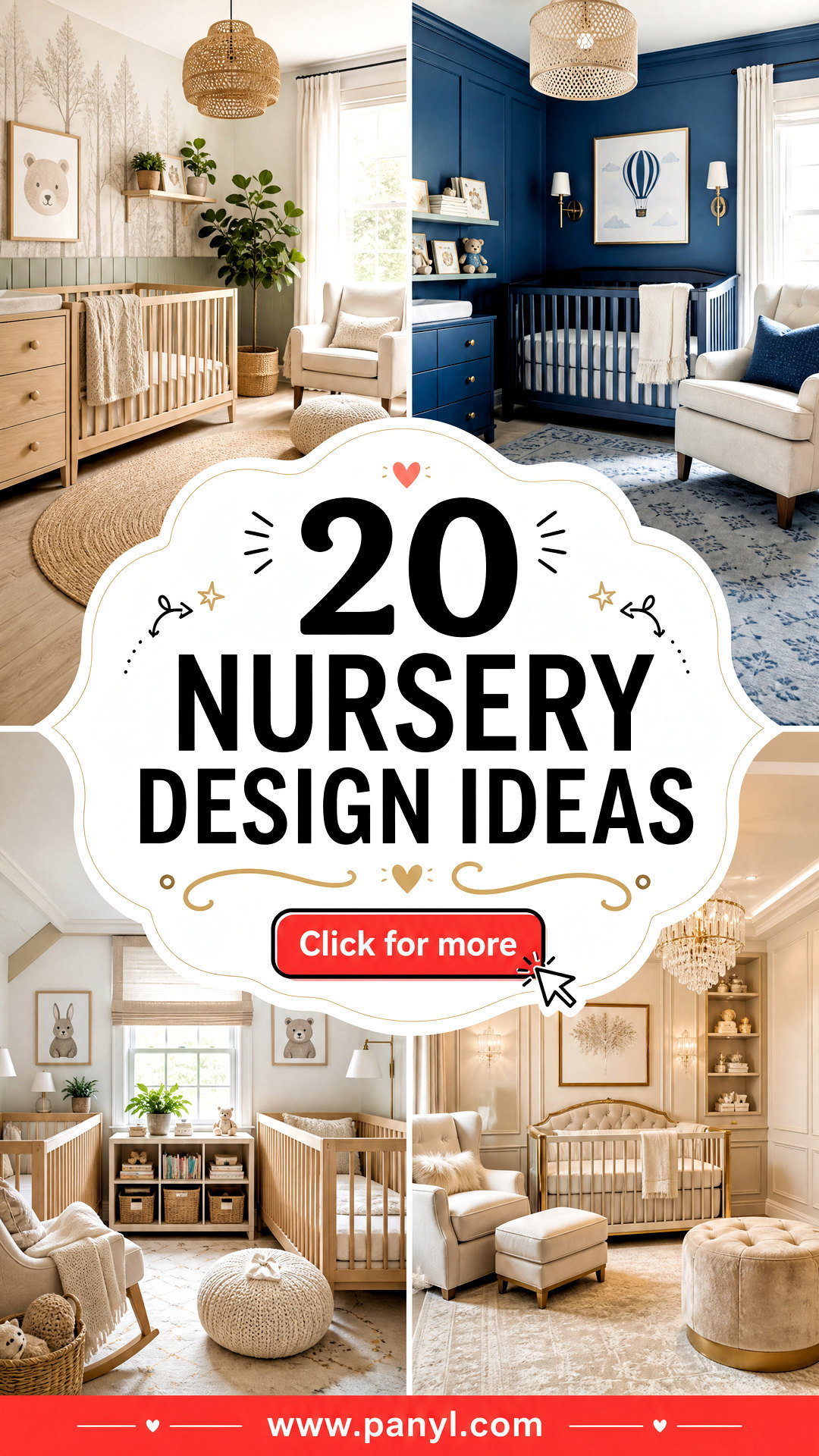
Creating a beautiful nursery means balancing comfort, function, personality, and room to grow. These 20 nursery design ideas offer complete looks rather than isolated decorating tips, making it easier to coordinate the crib, changing area, seating, storage, lighting, colors, and accessories. Current nursery trends favor warmer colors, natural materials, subtle themes, vintage character, and furniture that can transition beyond the baby years. () Whether you love peaceful neutrals, playful patterns, classic details, or nature-inspired rooms, each design below can be adjusted for your budget and available space. Practical layouts and controlled decorative layers also help the nursery remain calm during busy routines. Explore these complete, approachable, and stylish 20 nursery design ideas.
1. Sage Green Nursery
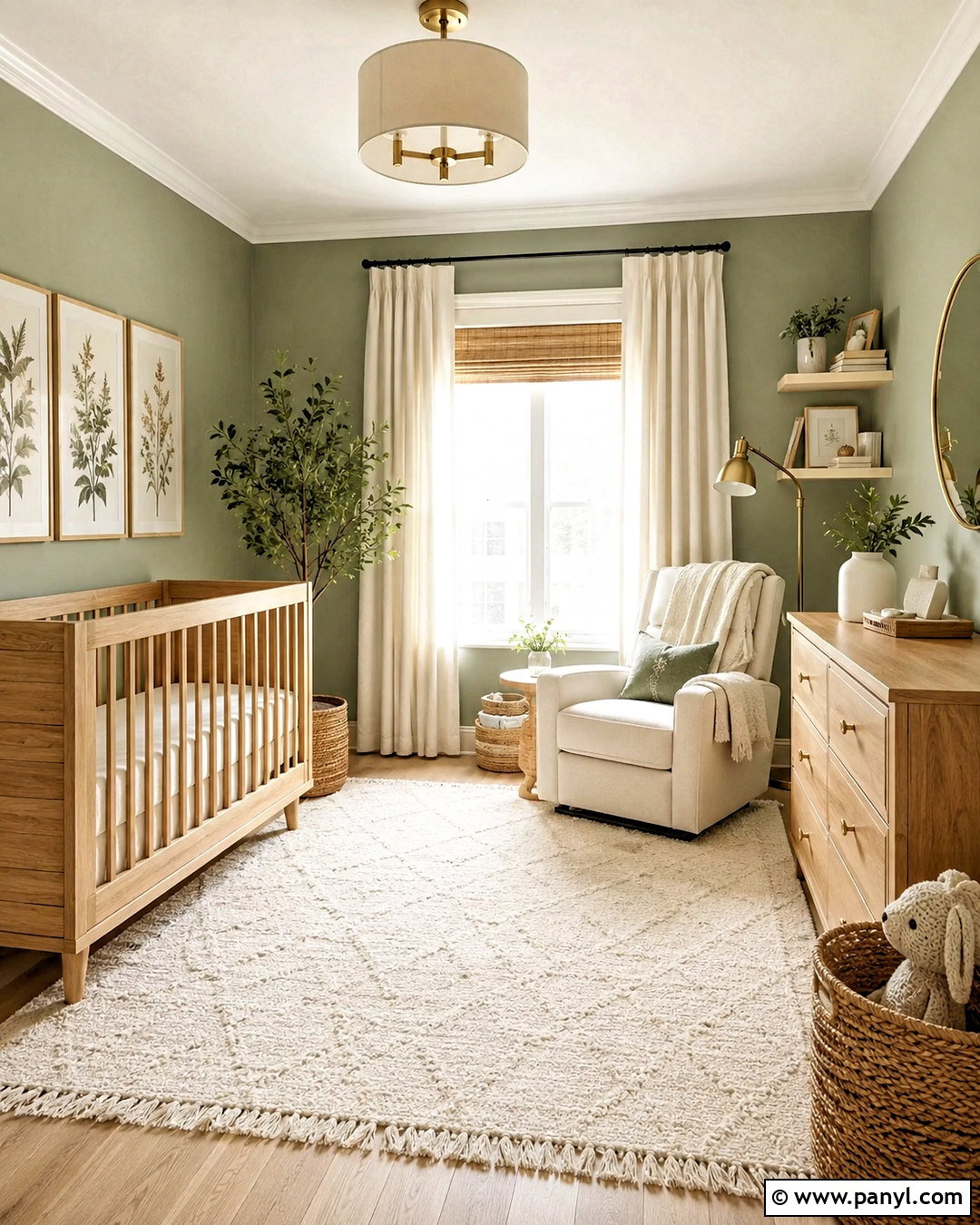
Soft sage walls create a peaceful foundation that feels colorful without overwhelming a small room. Choose a natural oak convertible crib and place it against the main uninterrupted wall. A cream upholstered glider, matching ottoman, and washable ivory rug will lighten the deeper green background. Use an oak dresser as the changing station, adding brushed brass knobs for a polished accent. Botanical prints, linen curtains, and woven baskets continue the natural theme without turning the nursery into a literal garden. Bring in subtle contrast through rust, ochre, or dusty blue accessories. Keep open decorations limited to one shelf or picture ledge so the room feels restful. Cordless shades, anchored furniture, and a bare crib maintain a safer, cleaner arrangement. ()
2. Neutral Nursery
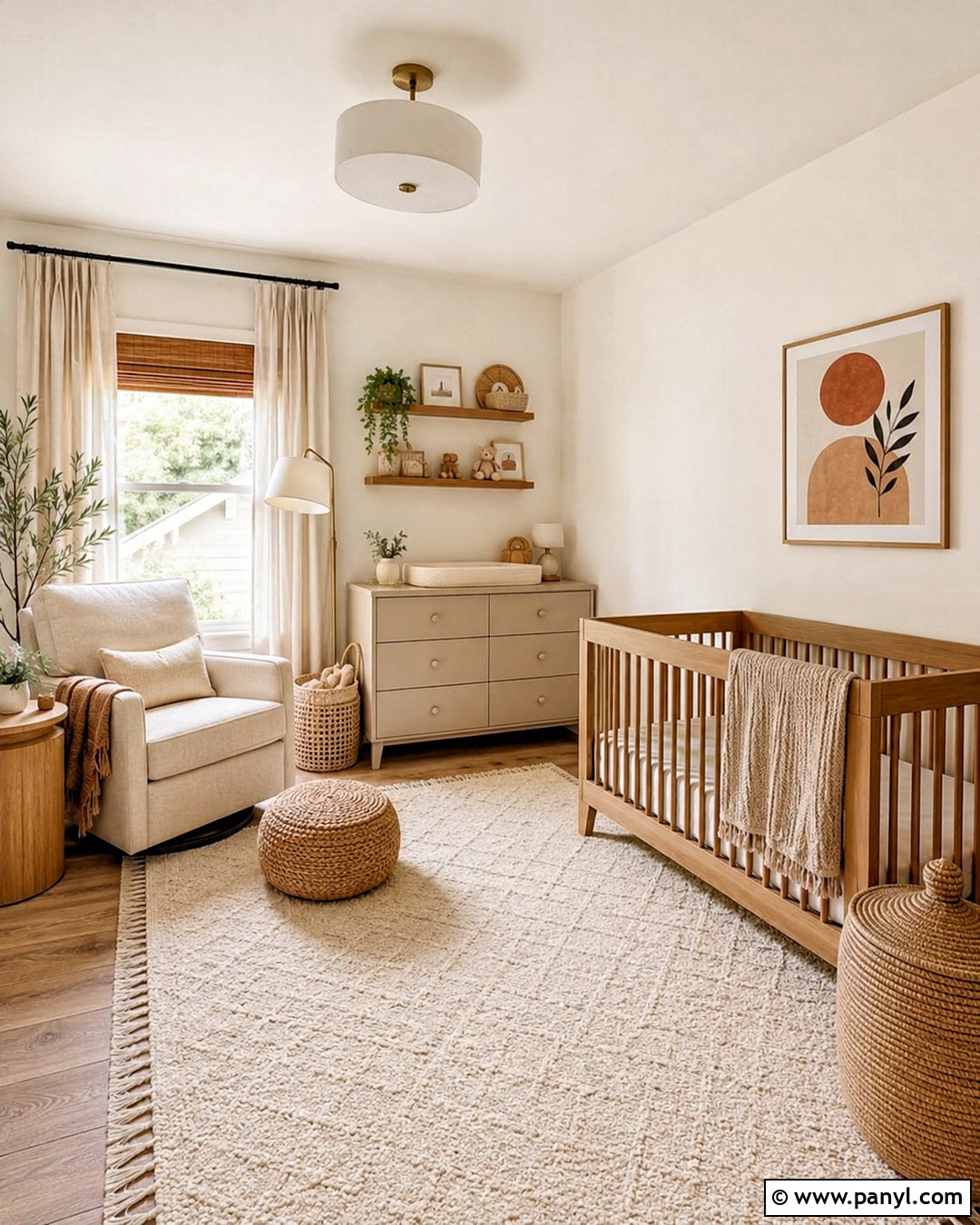
A neutral nursery feels inviting when several warm tones and tactile materials replace a flat beige-on-beige scheme. Paint the walls creamy off-white, then introduce mushroom, oatmeal, sand, and pale camel through the rug, curtains, glider, and storage baskets. A medium-tone wood crib gives the room definition, while a coordinating dresser creates visual balance across the layout. Add personality with one oversized abstract print in muted terracotta and taupe. A rounded floor lamp, linen window panels, and a softly curved chair keep the furniture from looking too rigid. Use black only in small amounts, such as a lamp base or picture frame. The finished nursery should feel layered and comfortable, with enough open floor space for future play.
3. Woodland Nursery
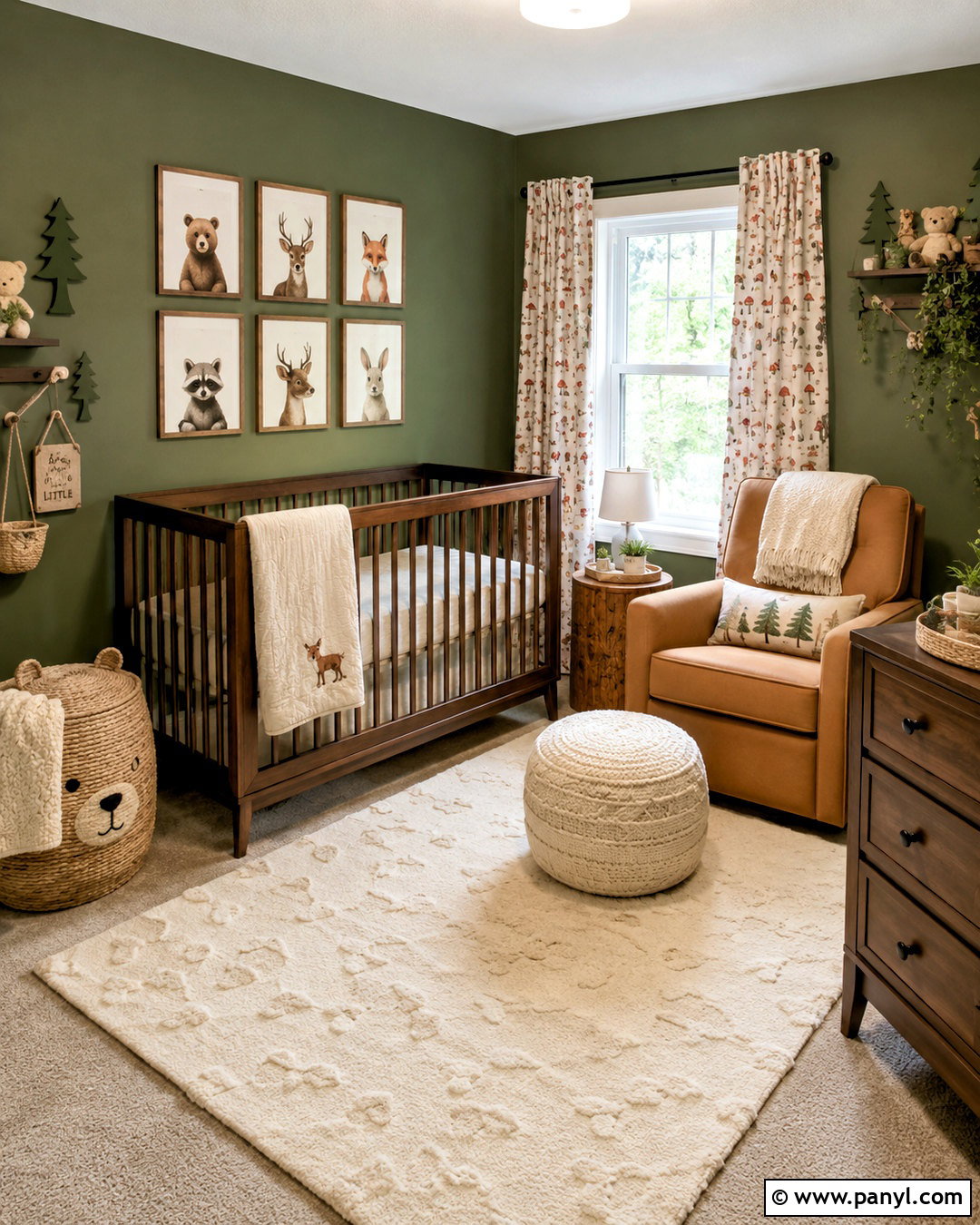
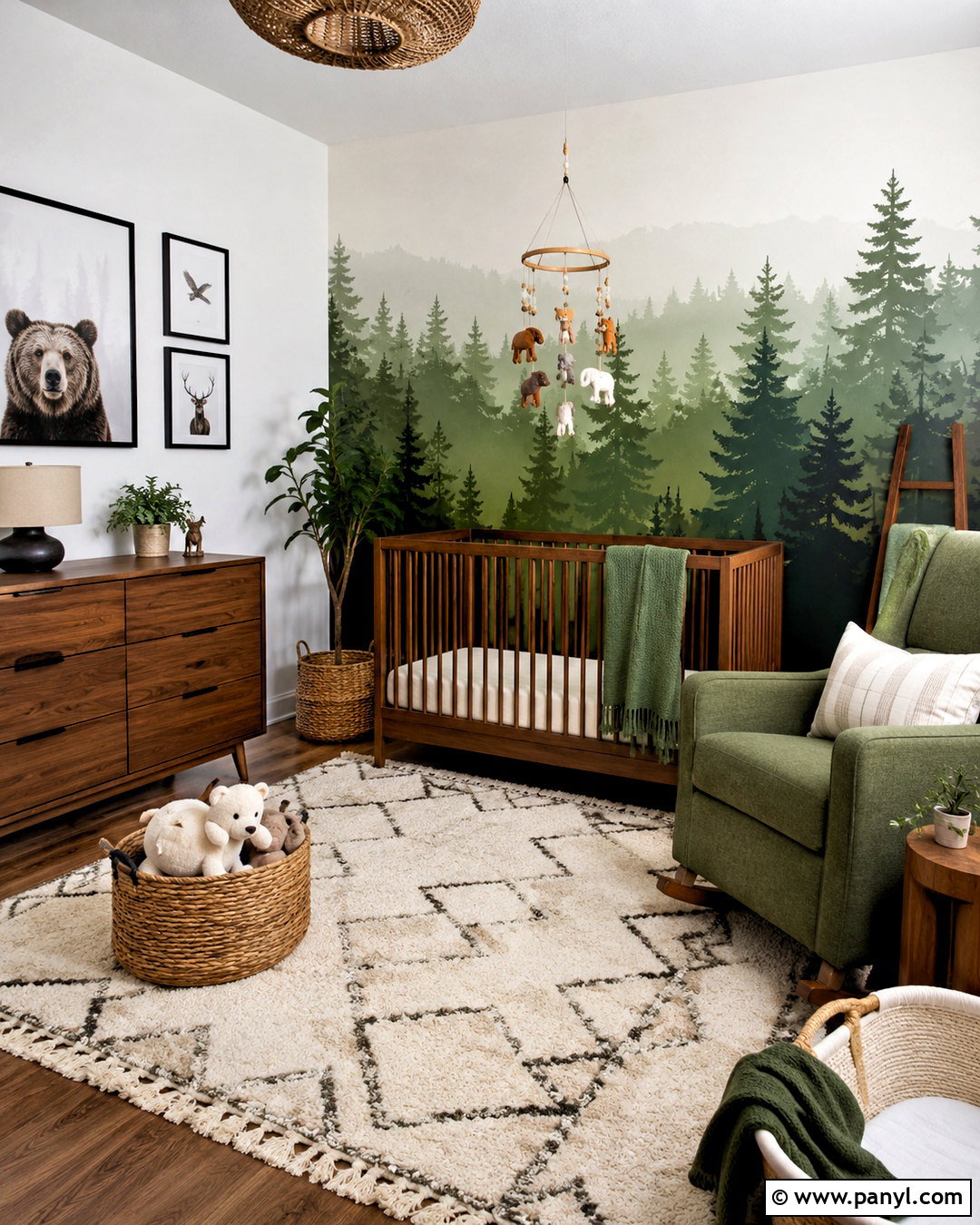
Imagine a cozy forest-inspired nursery with earthy color, warm wood, and a few carefully selected animal details. Begin with muted moss green walls or a woodland wallpaper mural behind the crib. Pair it with a walnut or warm oak crib, a camel-colored glider, and an ivory wool-look rug. Fox, deer, rabbit, and bear artwork can reinforce the theme without covering every surface. Complete the room with tree-shaped wall hooks, mushroom-toned curtains, and woven toy baskets. A wood dresser with simple black knobs grounds the changing area. Instead of filling the room with novelty decorations, let natural textures establish the woodland mood. Soft cream bedding on the mattress and clear crib rails keep the sleeping area visually quiet and uncluttered.
4. Coastal Nursery
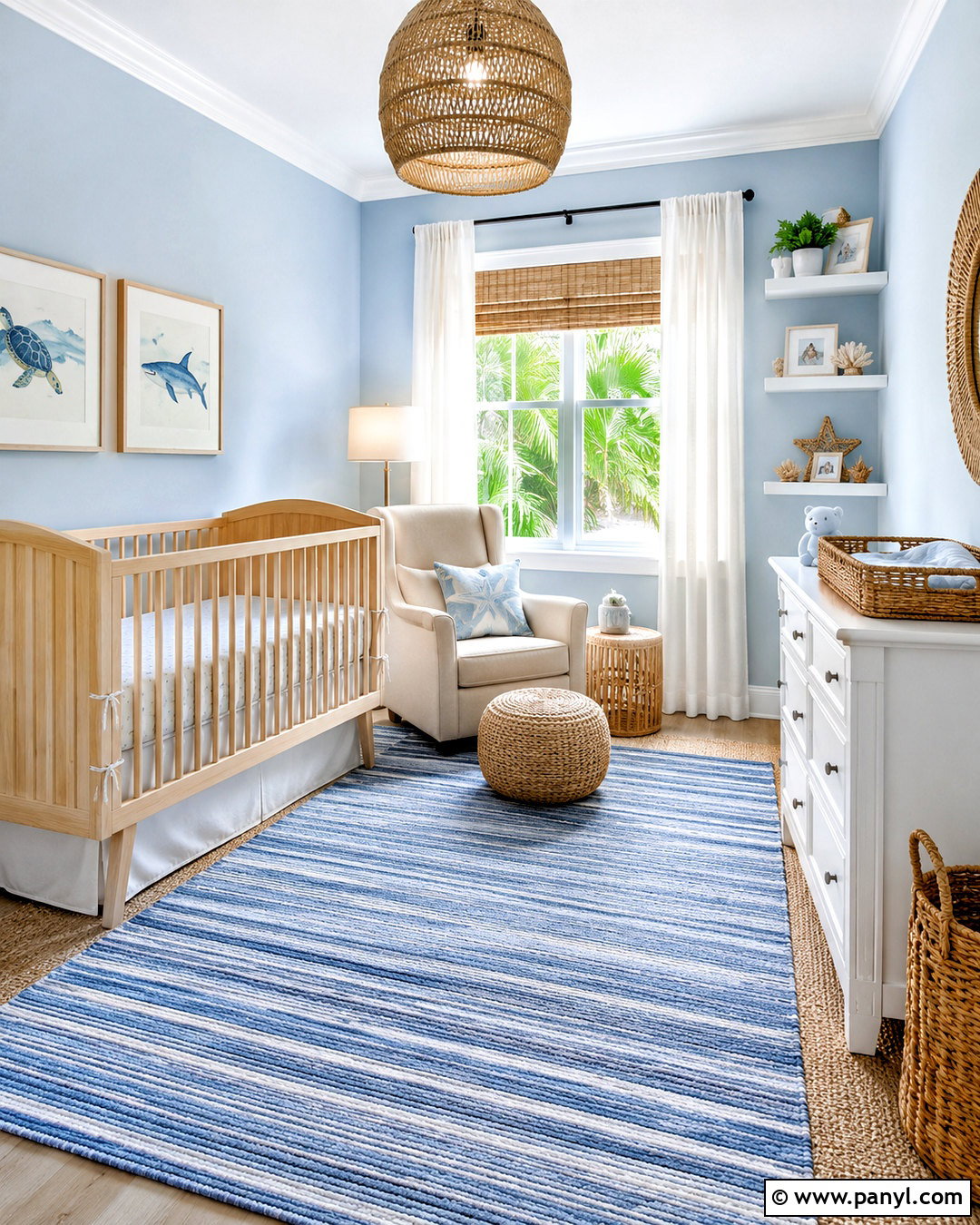
A coastal nursery can feel breezy and timeless without relying on obvious anchors or nautical signs. Use soft sky blue walls, crisp white trim, and a pale natural wood crib to establish an airy palette. Position a white dresser opposite the crib and add woven rattan knobs for subtle texture. A sandy beige glider, blue-and-cream striped rug, and lightweight white curtains complete the relaxed foundation. Decorate with watercolor ocean artwork, a woven ceiling light, and two or three sea-inspired objects on a high secured shelf. Muted coral or sea-glass green accents can add gentle color. Keep the center of the room open and bright. The final design should resemble a comfortable coastal bedroom that can easily transition into a toddler’s space.
5. Vintage Nursery
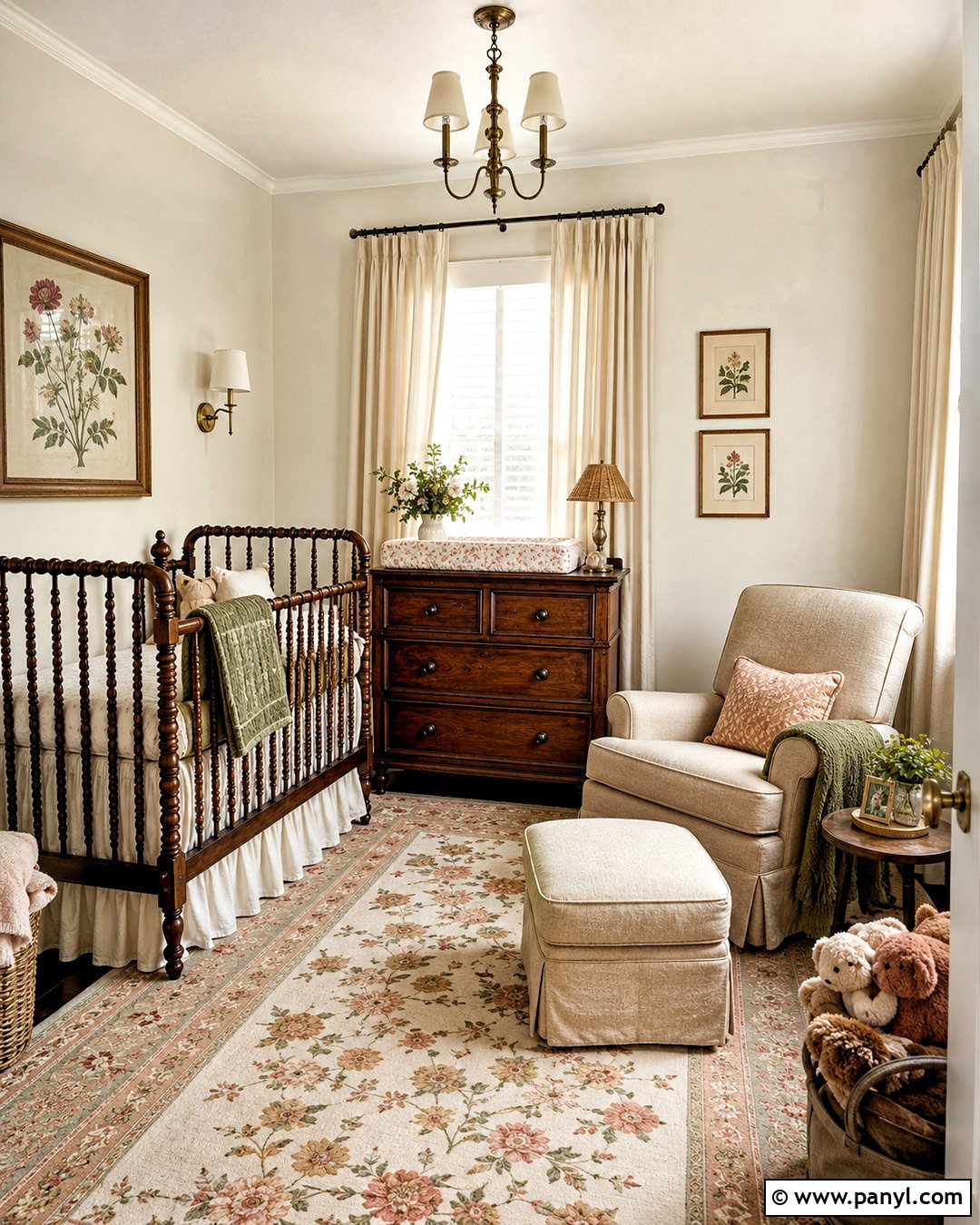
A vintage nursery should feel collected over time while still functioning for modern family routines. Start with warm ivory walls and add a deep wood crib with traditional spindle details. Place an antique-inspired dresser nearby, but ensure it is sturdy and properly anchored before using it as a changing station. A floral or faded Persian-style rug introduces color beneath a comfortable oatmeal glider. Use pleated curtains, framed botanical illustrations, and an aged brass ceiling fixture to build character. Soft dusty rose, muted blue, olive, and burgundy accents create a rich but controlled palette. Avoid filling every corner with small collectibles. One heirloom quilt displayed securely away from the crib, several framed prints, and a classic table lamp will provide enough nostalgic detail without creating clutter.
6. Modern Nursery
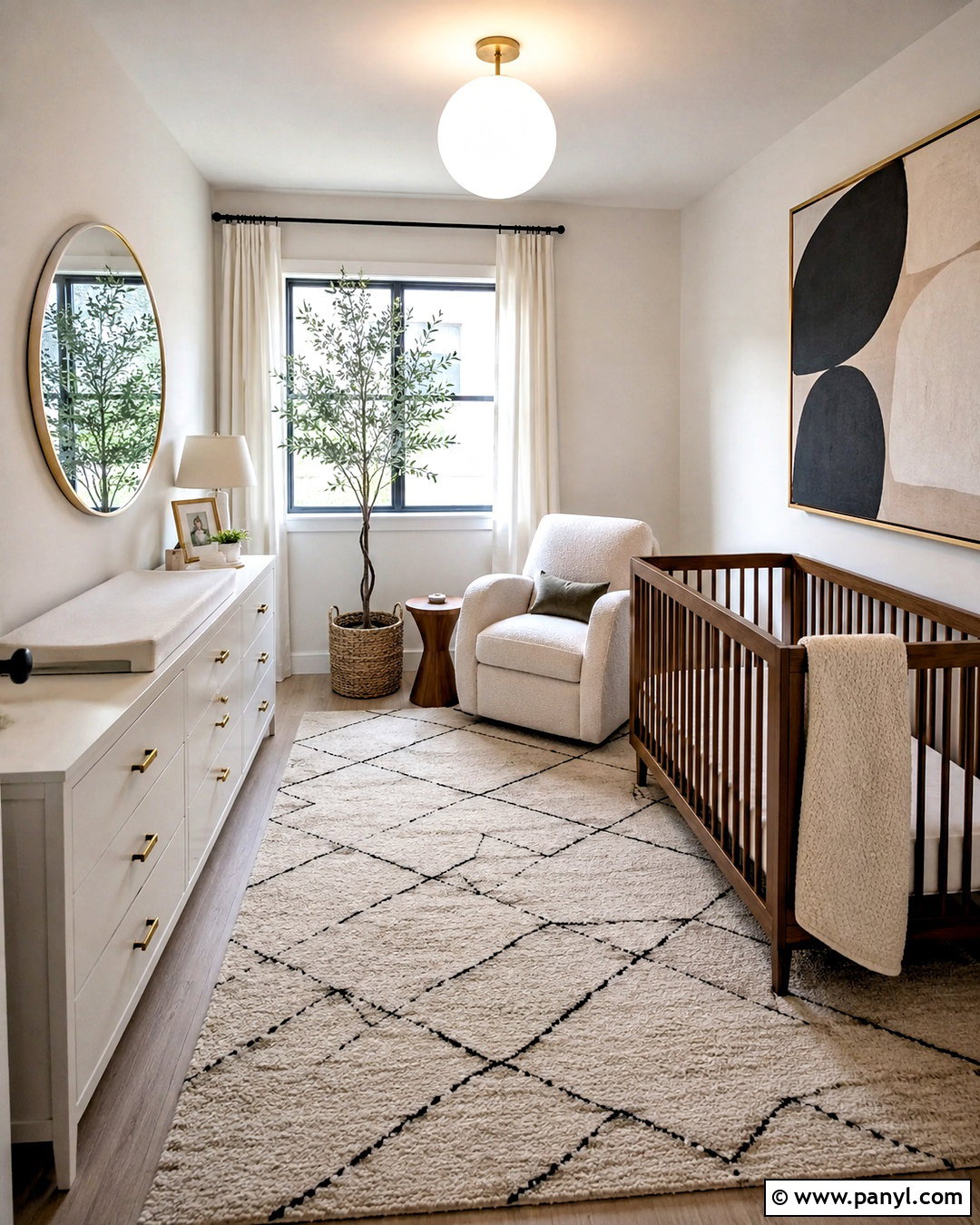
Clean shapes and intentional contrast give a modern nursery its calm, polished appearance. Paint the walls a soft warm white, then select a streamlined walnut crib and a long white dresser with minimal hardware. An ivory bouclé glider adds softness against the sharper furniture lines. Ground the arrangement with a large geometric rug in cream, camel, and black. Choose one oversized abstract artwork rather than a collection of small decorations. A globe ceiling light, sculptural floor lamp, and simple blackout shade provide practical lighting control. Keep toys and supplies inside closed drawers or matching bins. Rounded accessories, such as an oval mirror and curved side table, prevent the room from feeling severe. The result is uncluttered, comfortable, and easy to update as the child grows.
7. Boho Nursery
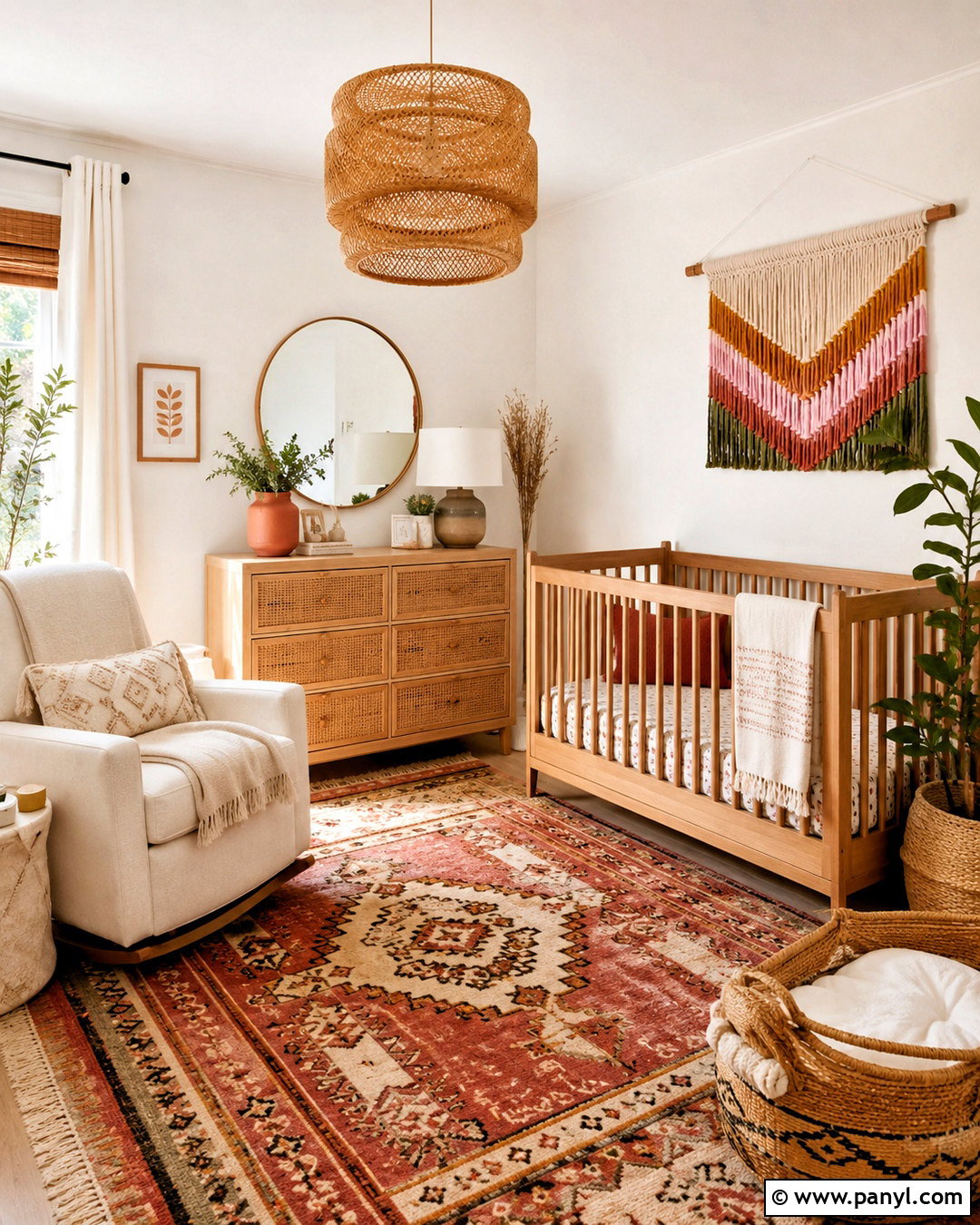
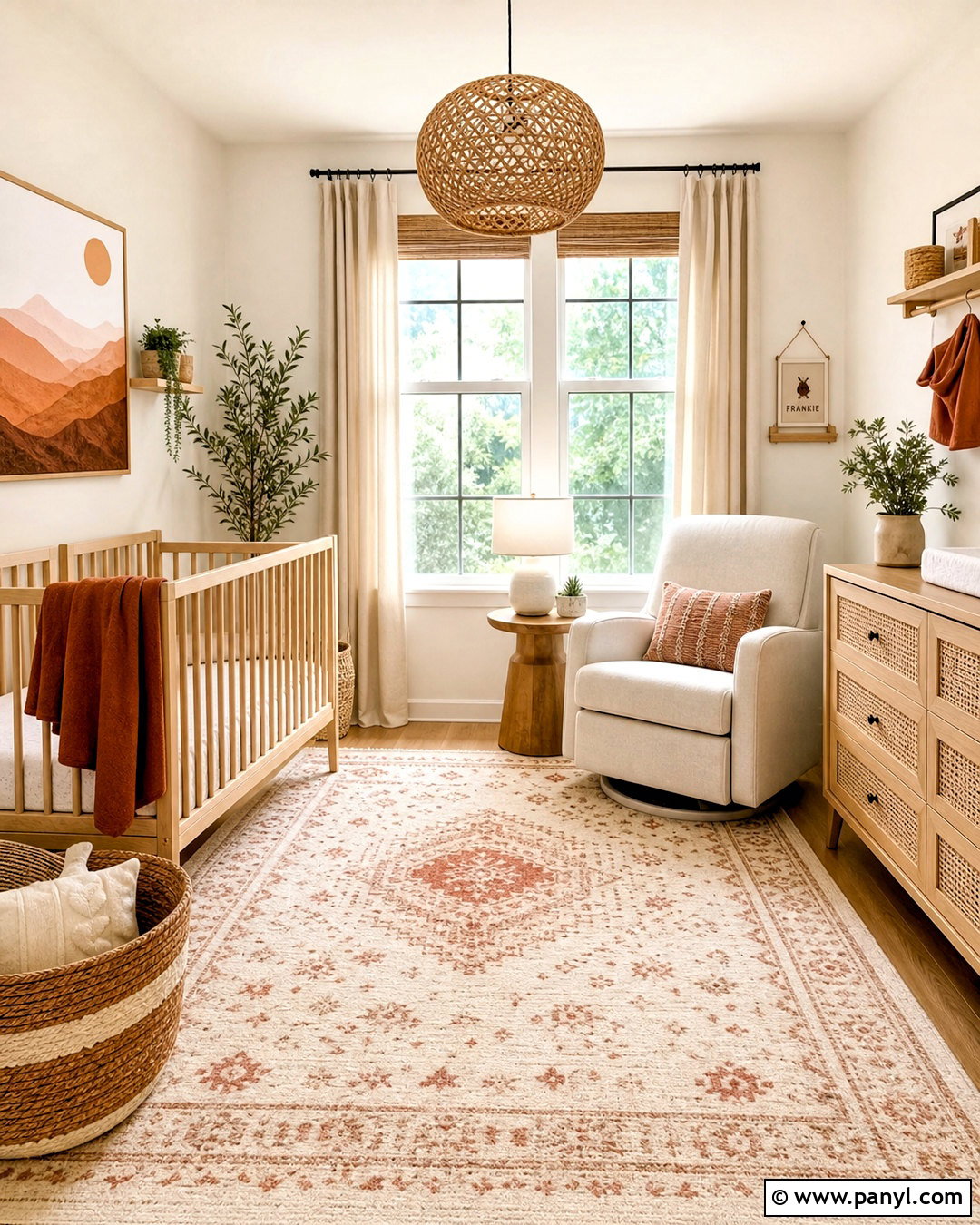
Layers of natural texture make a boho nursery feel relaxed, warm, and personal. Choose creamy white walls, a light oak crib, and a low oak dresser to form a bright neutral base. Add a rust-and-ivory patterned rug, a woven pendant, and a boucle or linen glider with rounded arms. Terracotta, mustard, muted pink, and olive accents can appear in artwork, baskets, and window treatments. Use one large fabric wall hanging or sun-shaped woven decoration as the focal point, securely mounted away from the crib. Cane-front storage and lidded seagrass baskets conceal everyday supplies while supporting the casual look. Leave some wall space empty so the various textures can breathe. This nursery works best when it feels curated rather than crowded with every bohemian accessory available.


8. Scandinavian Nursery
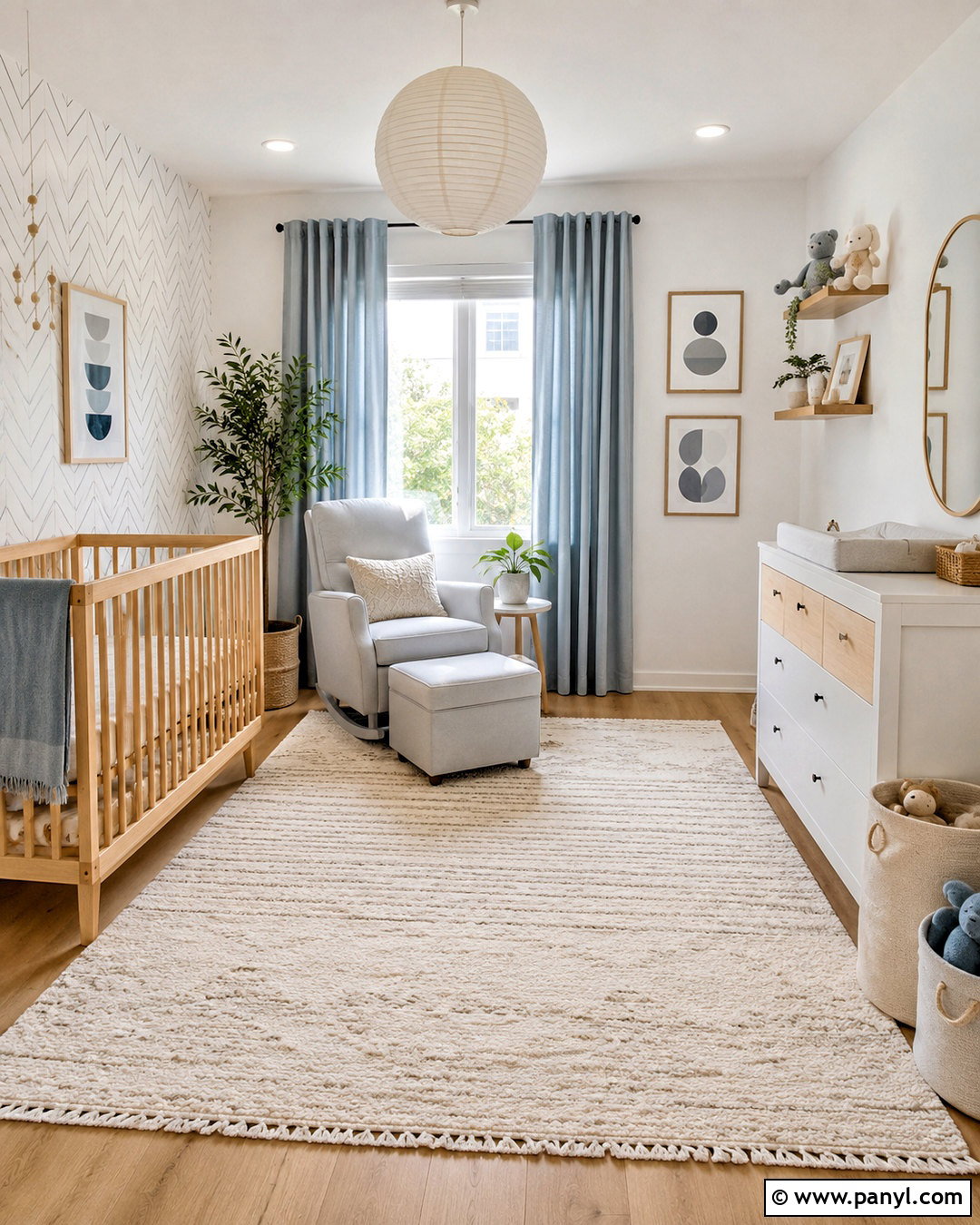
What makes a Scandinavian nursery so appealing is its balance of simplicity, warmth, and everyday usefulness. Begin with soft white walls and light oak flooring, then bring in a pale wood crib with clean, rounded lines. Place a compact white-and-oak dresser beside a comfortable light gray glider. A large cream rug adds warmth without interrupting the restrained palette. Introduce gentle color through dusty blue, pale green, or muted peach curtains and artwork. Use closed cabinets for supplies, plus one low storage unit with matching fabric bins. A paper-inspired pendant and small wood wall hooks provide practical character. Keep the decorative theme minimal, perhaps using clouds, trees, or simple geometric forms. The entire room should feel light, organized, and easy to navigate during nighttime care.
9. Cottage Nursery
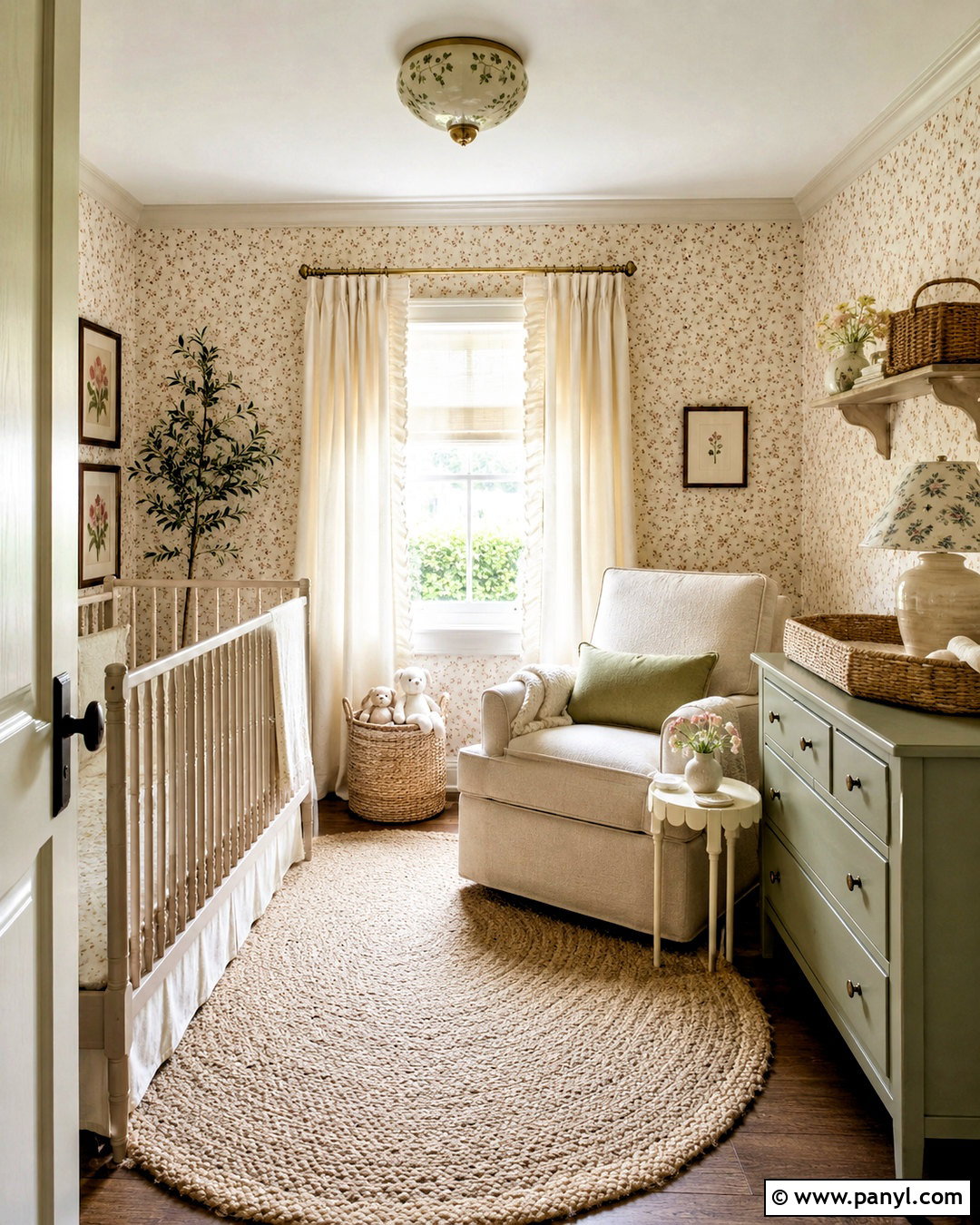
A cottage nursery brings together charming pattern, painted furniture, and familiar materials for a room that feels immediately welcoming. Cover one wall in small-scale floral or gingham wallpaper, then paint the remaining walls a coordinating cream. Choose a white or soft putty-colored spindle crib and a vintage-style dresser in pale sage. A comfortable slipcovered glider, scalloped side table, and braided wool rug reinforce the cozy look. Use ruffled linen curtains, framed flower prints, and a ceramic lamp to add traditional softness. Keep the palette restrained with sage, butter yellow, faded blue, and warm white. Built-in shelves or a low bookcase can display a small selection of books and toys. The overall nursery should feel sweet and detailed but not overly themed or visually busy.
10. Terracotta Nursery
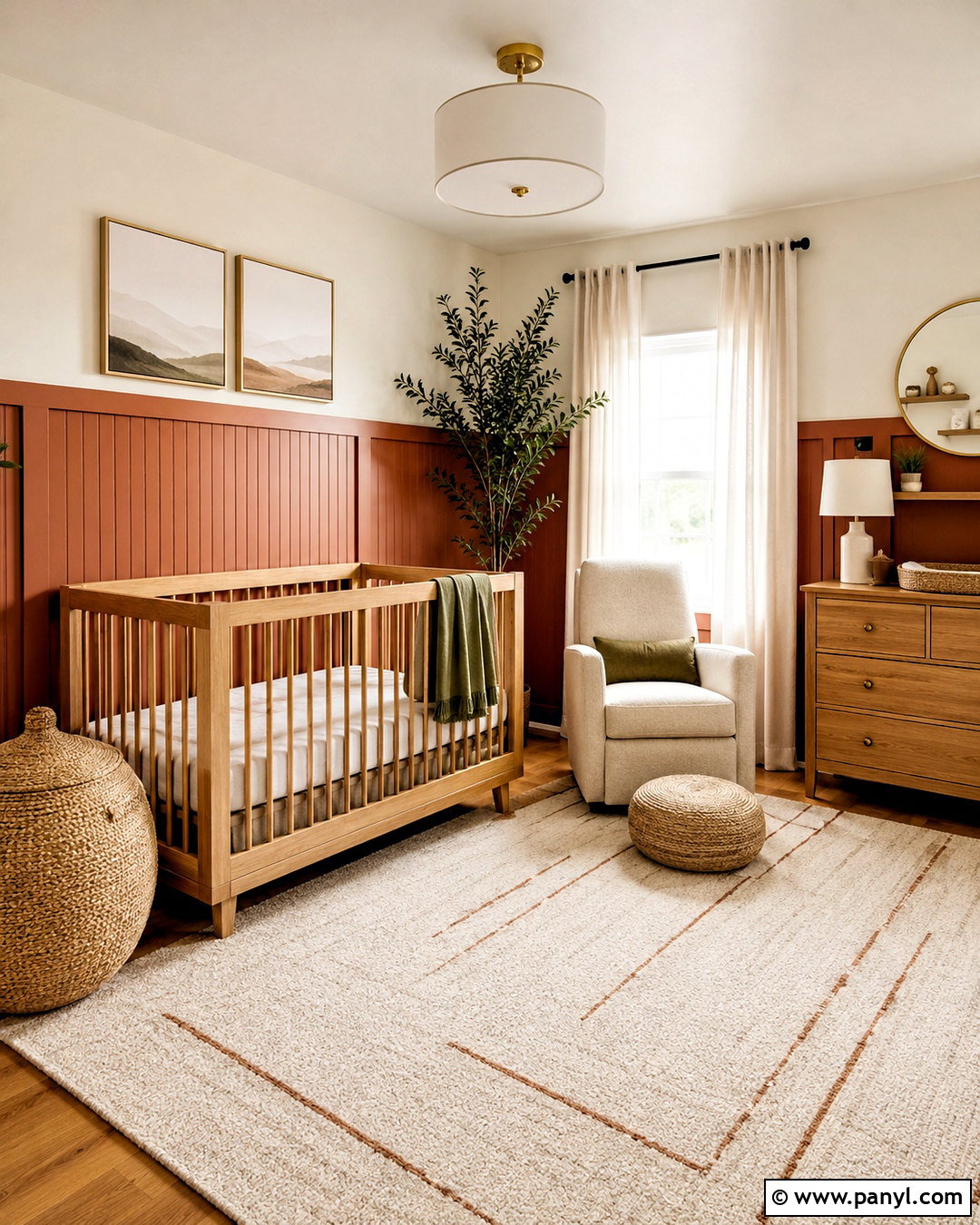
Warm terracotta can transform a plain nursery into a rich, comforting room with plenty of personality. Use the color on one feature wall or across painted wall paneling, balancing it with creamy white upper walls. A light oak crib and dresser prevent the warm backdrop from becoming too heavy. Add an oatmeal glider, ivory curtains, and a cream rug patterned with subtle rust lines. Small accents in olive green, dusty peach, and antique brass create depth while staying within the earthy palette. Choose abstract landscape artwork and rounded ceramic-style accessories to complete the design. Conceal diapers and supplies inside the dresser and use lidded woven baskets for toys. Bright white trim and an uncluttered layout keep this color-focused nursery fresh rather than dark or enclosed.
11. Blue Nursery
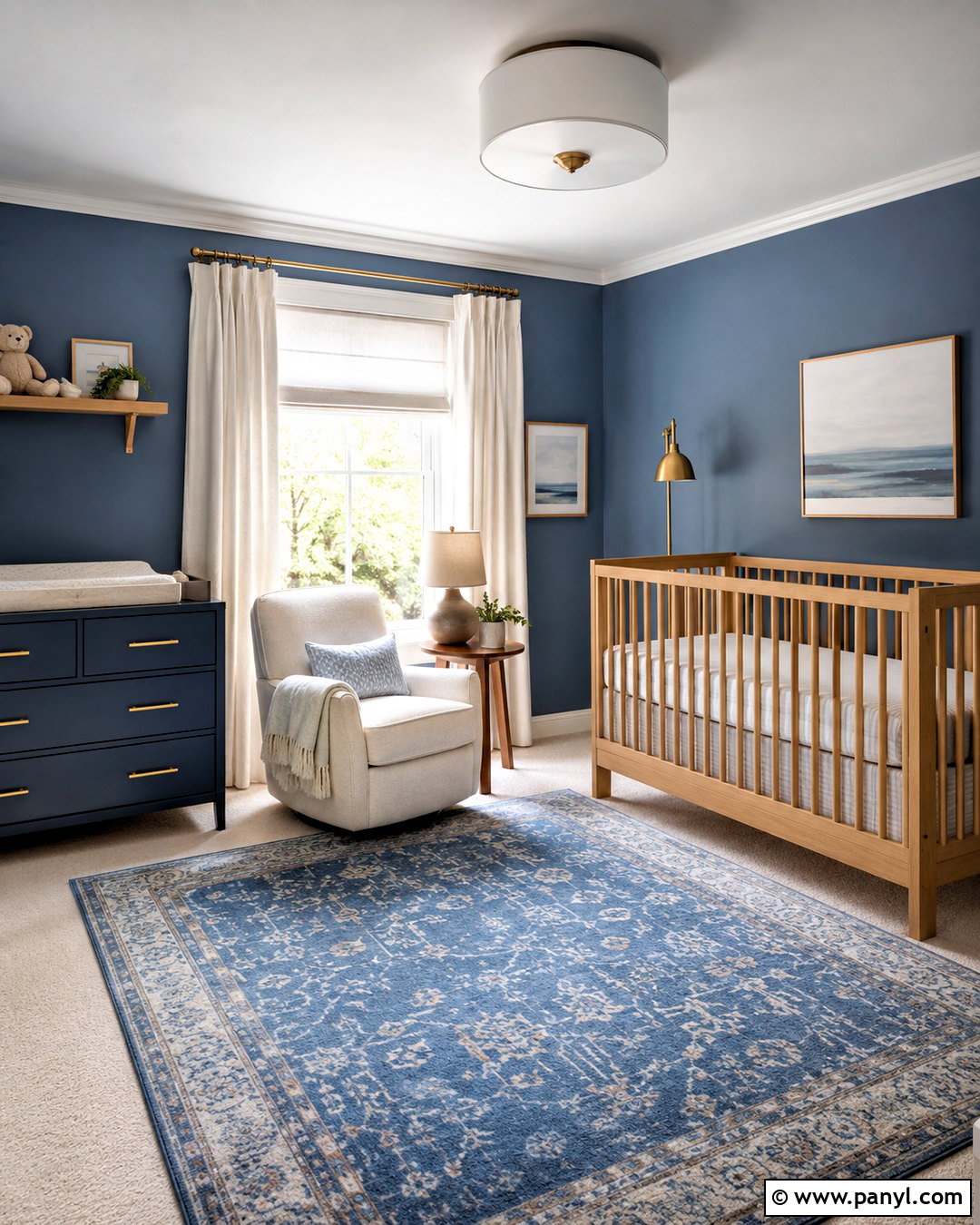
Blue works beautifully in a nursery when multiple shades create depth instead of one predictable theme. Paint the walls a soft smoky blue, then introduce deeper navy through the rug, curtains, or a painted dresser. A warm oak crib adds contrast and prevents the palette from feeling cold. Choose a cream glider with a small walnut side table to form a comfortable feeding corner. Simple cloud, landscape, or abstract artwork can combine blue with warm tan and ivory. Add brushed brass hardware and a white ceiling light for brightness. If the room is small, keep the ceiling and trim crisp white. Organize necessities in closed drawers and matching baskets. This complete blue nursery feels peaceful, adaptable, and suitable for both traditional and contemporary homes.
12. Pink Nursery
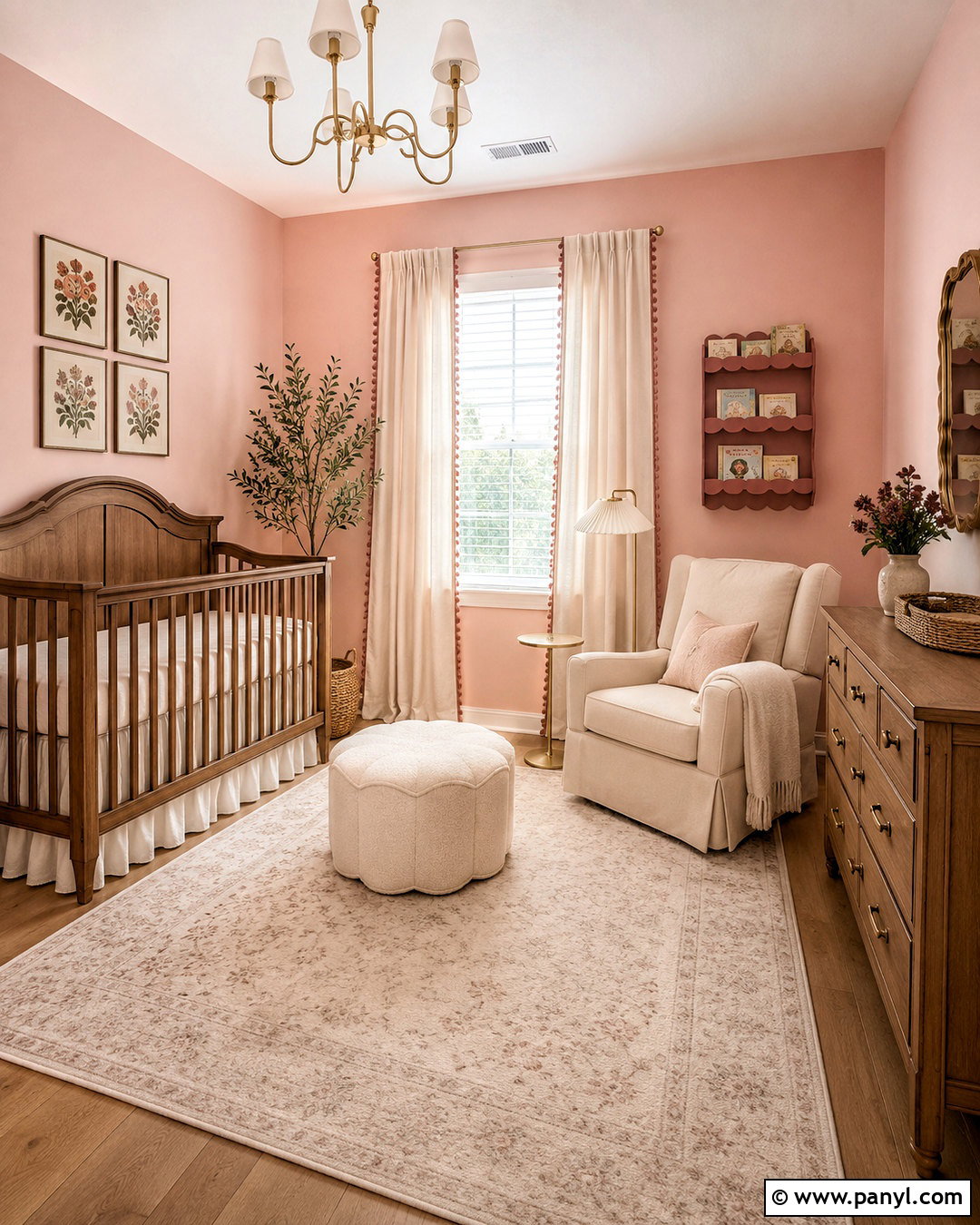
A sophisticated pink nursery relies on dusty, earthy shades rather than using bright pink across every surface. Paint the walls a soft clay pink and pair them with a natural walnut or medium oak crib. An ivory glider, cream rug, and warm white curtains balance the color and keep the room bright. Choose a wood dresser with aged brass hardware for the changing area. Introduce muted burgundy, peach, and sage through floral artwork or a restrained patterned rug. Scalloped details on a lampshade, mirror, or storage basket can add sweetness without becoming overly decorative. Keep stuffed animals and small accessories contained in baskets instead of placing them in the crib. The finished room feels warm, gentle, and polished enough to grow into a charming child’s bedroom.
13. Gender Neutral Nursery
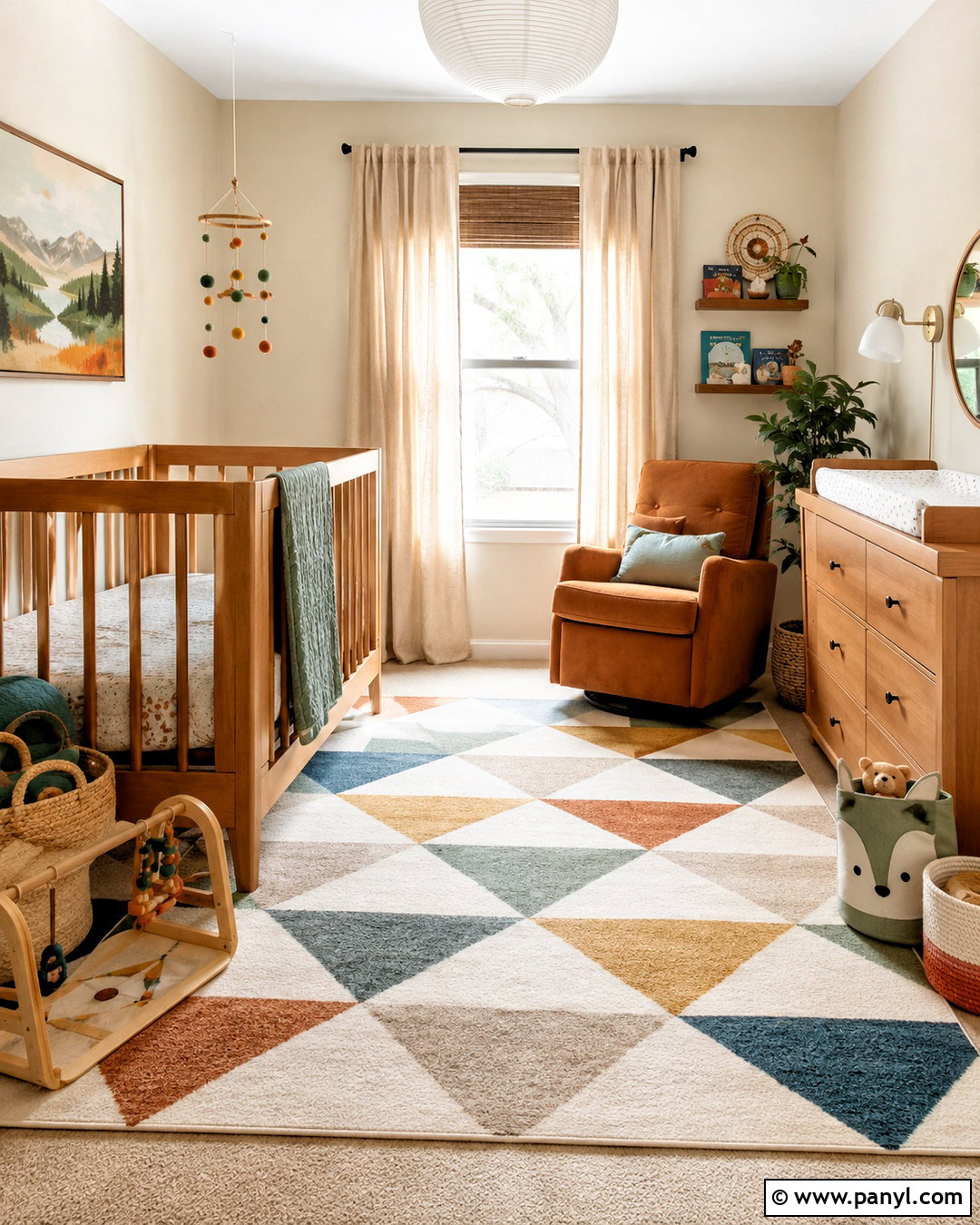
A gender neutral nursery can be colorful and expressive while remaining flexible for future changes. Start with warm cream walls and choose a medium oak crib with a coordinating dresser. Build the palette around ochre, sage, muted teal, and terracotta rather than relying entirely on gray. A striped or geometric washable rug can connect these colors across the floor. Add a caramel glider, linen curtains, and playful landscape artwork with simple shapes. Natural woven baskets and painted storage bins keep supplies organized while bringing additional texture. Avoid permanent decorations tied to one narrow theme. Instead, use removable art and accessories that can change as the child develops new interests. The completed space will feel lively, balanced, and personal without depending on traditional color expectations.
14. Small Nursery
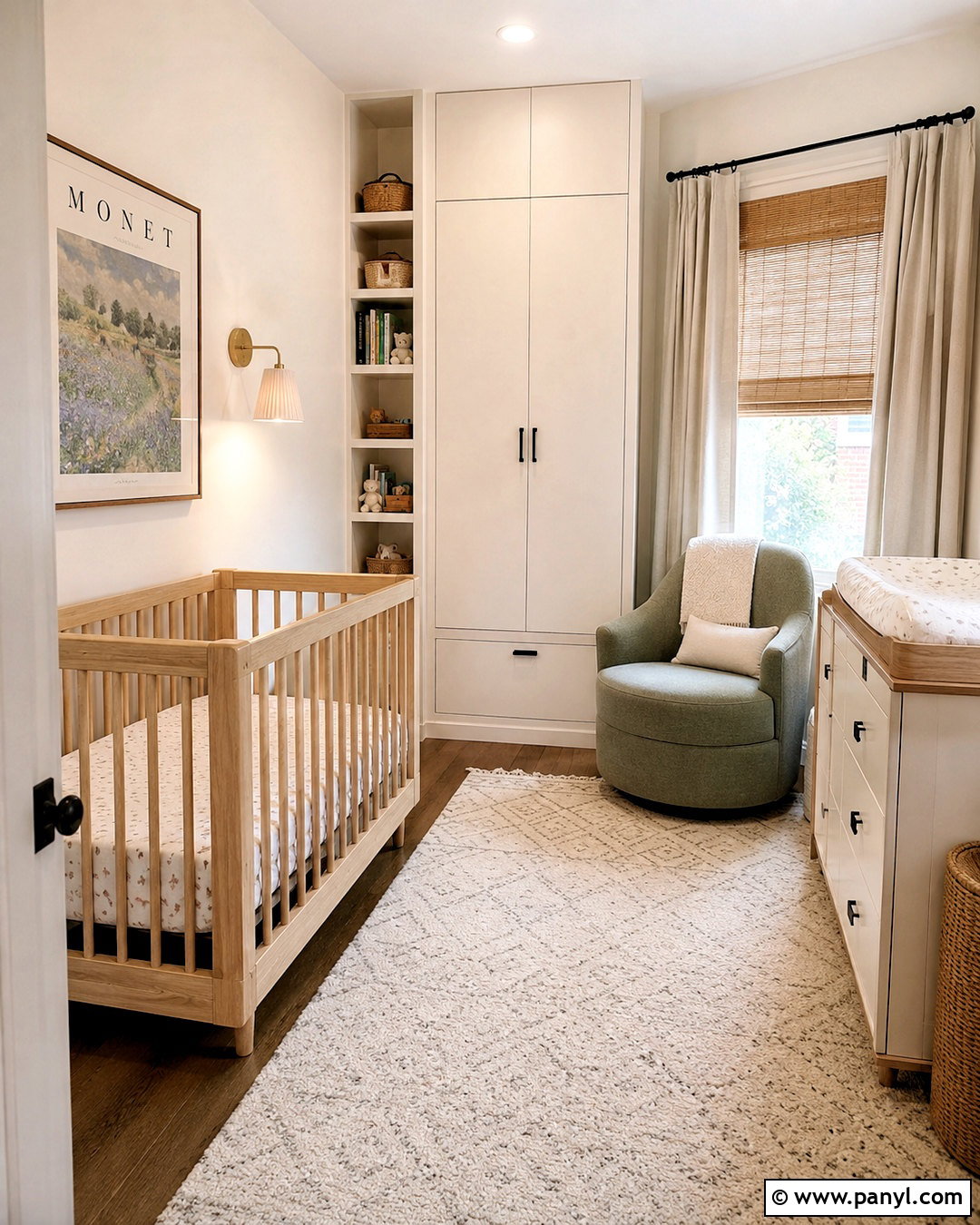
Limited square footage calls for a thoughtful nursery layout where every piece serves a clear purpose. Place a compact crib against the longest solid wall and use a narrow dresser as both storage and a changing surface. Choose a smaller swivel glider rather than a wide recliner, adding a wall-mounted reading light to free the floor from a lamp base. Soft off-white walls and pale wood furniture will make the room feel more open. Add color through a washable runner, one large print, and muted sage curtains. Use vertical wall shelving for display, but position it away from the crib and changing area. Under-crib storage can hold outgrown clothing. Maintain a clear walking path between the doorway, crib, chair, and dresser for easier nighttime movement.
15. Shared Bedroom Nursery
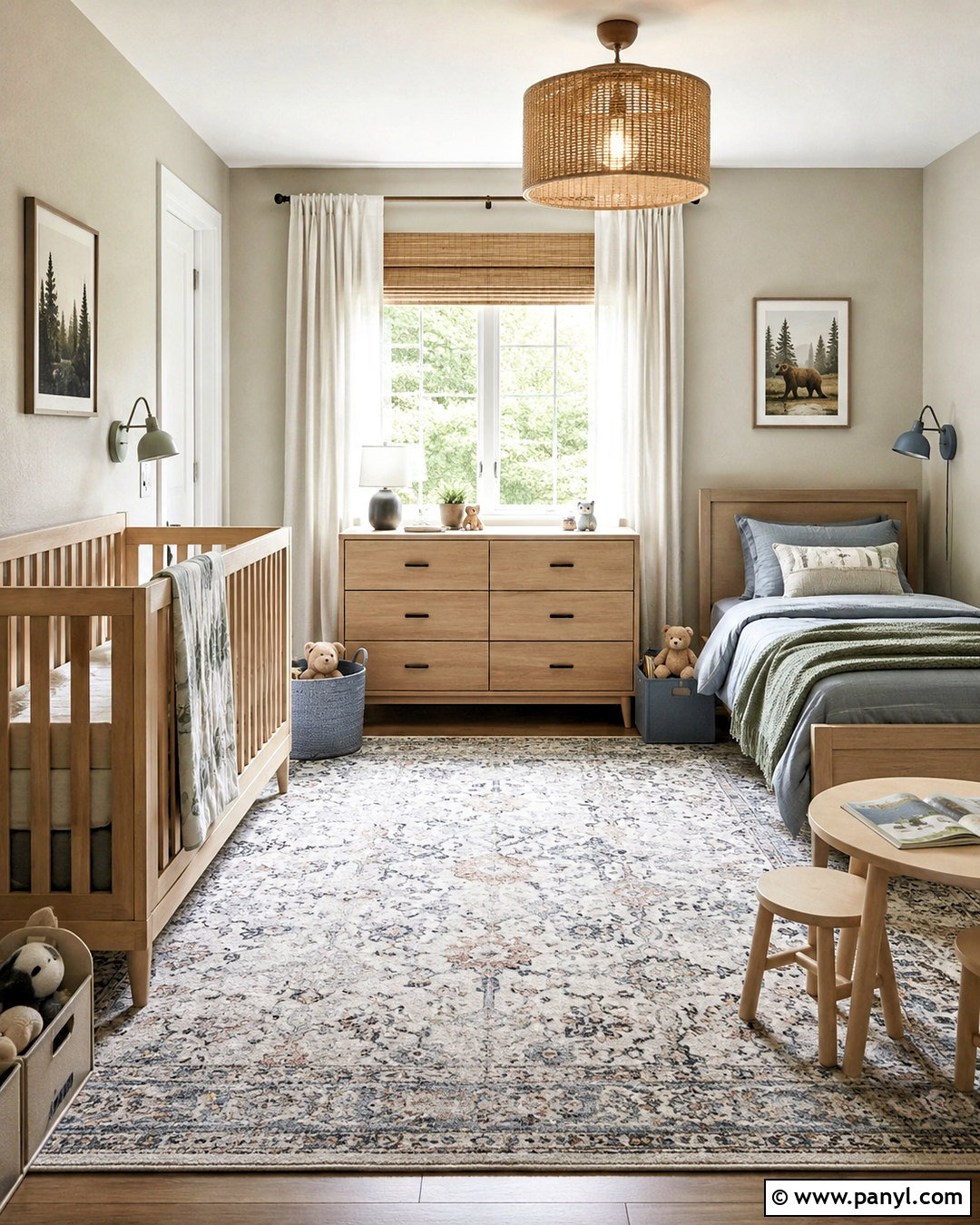
Combining a nursery with an older child’s room works best when each sleeping area feels distinct but connected. Choose matching wood tones for the crib and bed, then unify the room with soft greige walls and a large patterned rug. Place the crib on a solid wall away from the older child’s active play zone. Use a low dresser between the two areas to provide shared storage and gentle visual separation. Coordinated bedding colors, such as sage, cream, and muted blue, make the room cohesive without creating identical setups. Give the older child a reading corner and personal art near the bed. Use closed bins for toys to reduce nighttime clutter. A single ceiling fixture and separate wall-mounted reading lights allow the room to support different routines.
16. Rainbow Nursery
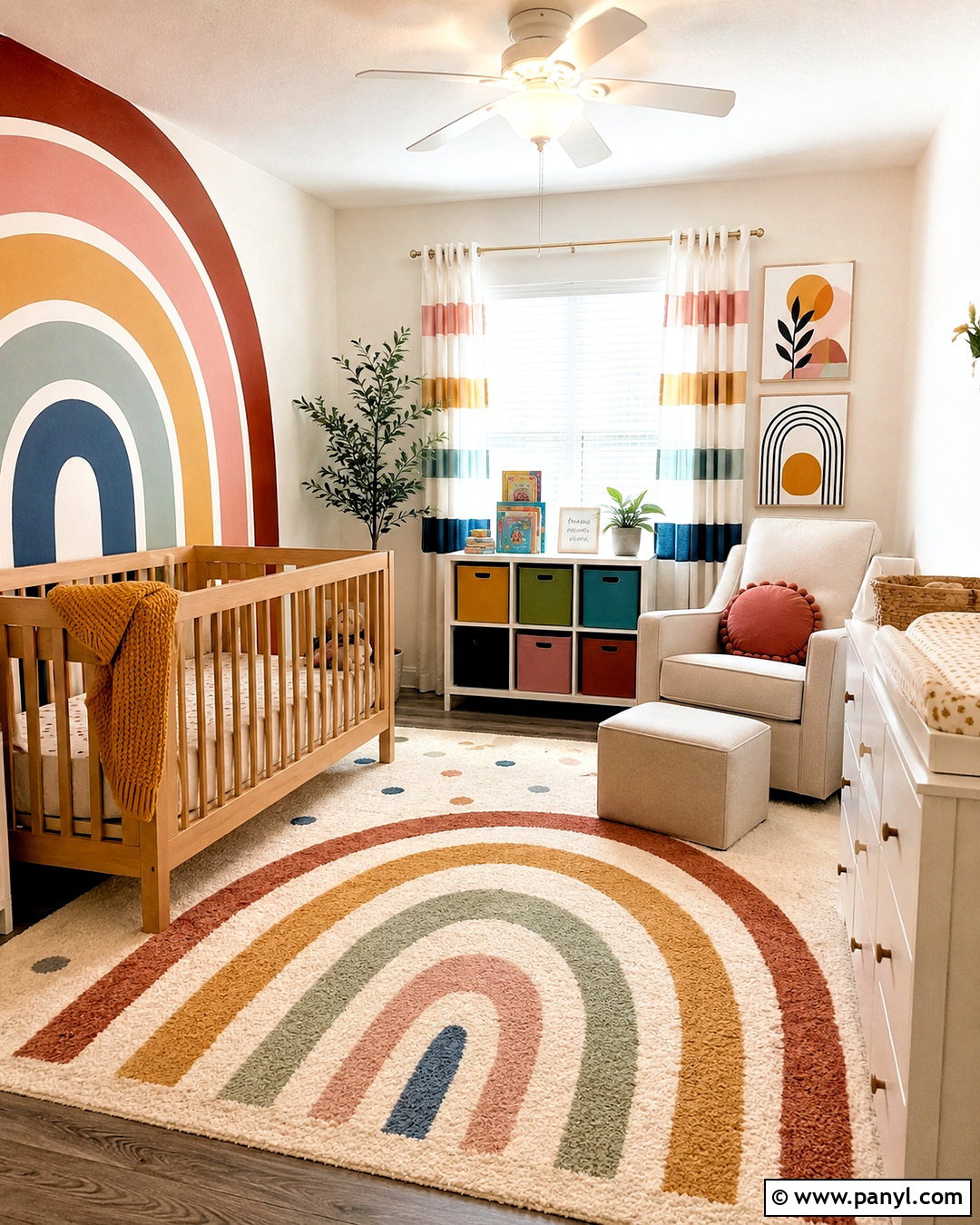
A rainbow nursery can feel cheerful and coordinated when color appears in controlled, repeated touches. Begin with warm white walls, a natural wood crib, and a simple white dresser. Add a large cream rug featuring curved bands of muted rust, mustard, sage, blue, and dusty pink. Repeat those shades in framed abstract prints, storage bins, and curtains with a narrow multicolor stripe. Choose a neutral beige glider so the stronger colors remain balanced. One painted arch or removable rainbow mural behind the dresser can serve as the main focal point. Keep the crib area simple and free of decorative objects. The overall design should look bright and playful, yet organized enough to remain restful. Natural wood and white surfaces prevent the layered color palette from becoming overwhelming.
17. Floral Nursery
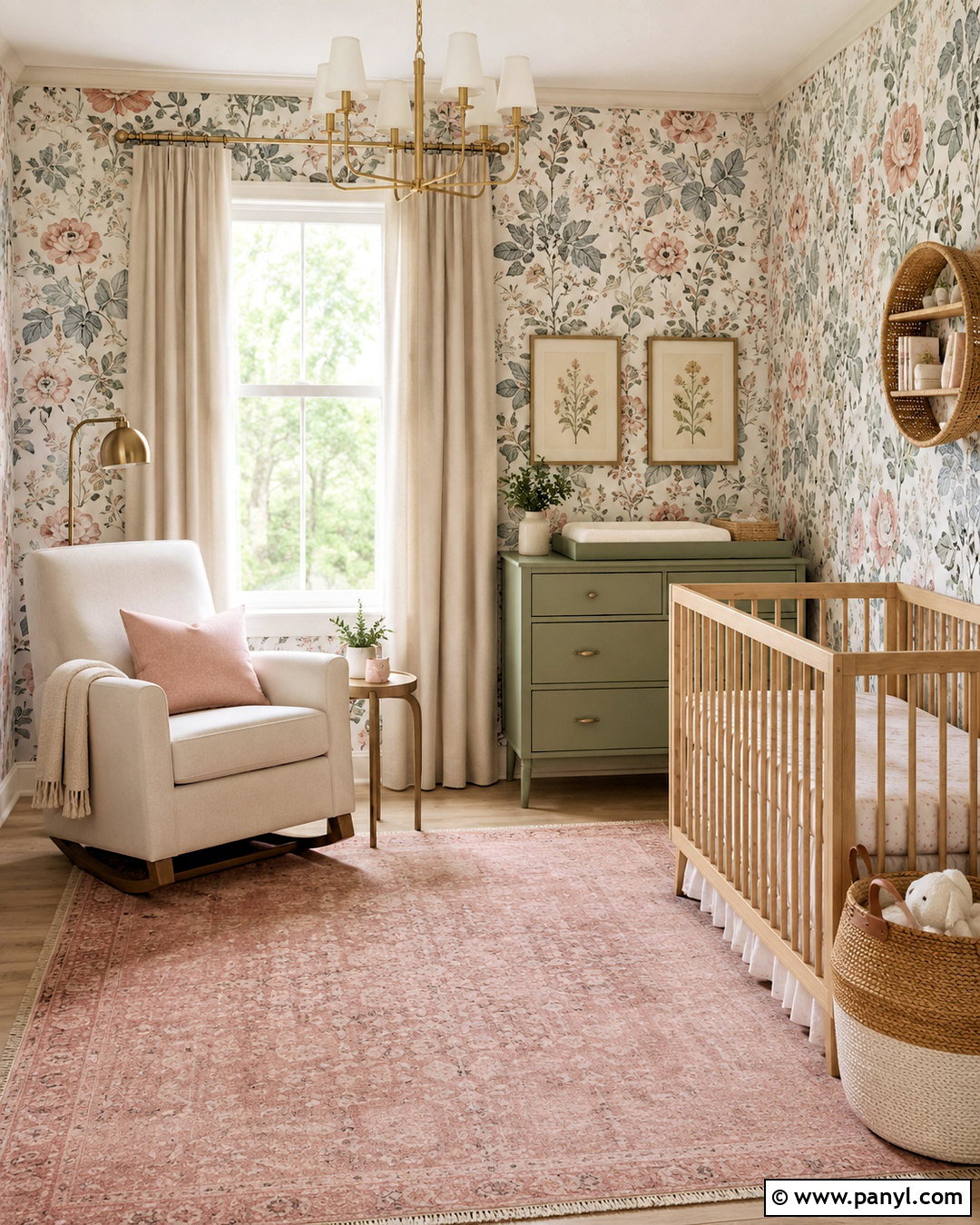
A floral nursery feels timeless when botanical pattern is balanced by solid colors and streamlined furniture. Install floral wallpaper on the wall behind a cream or natural oak crib, choosing a print with muted rose, sage, blue, and warm ivory. Paint the other walls in the wallpaper’s lightest background shade. A sage dresser, ivory glider, and dusty rose rug create a cohesive arrangement without competing with the focal wall. Choose solid linen curtains and simple brass lighting rather than adding more patterns. Framed botanical sketches can decorate the changing area, while woven baskets keep practical supplies contained. Use floral details in only a few places so the room remains calm. This approach creates a complete garden-inspired look that can transition gracefully beyond the nursery years.
18. Safari Nursery
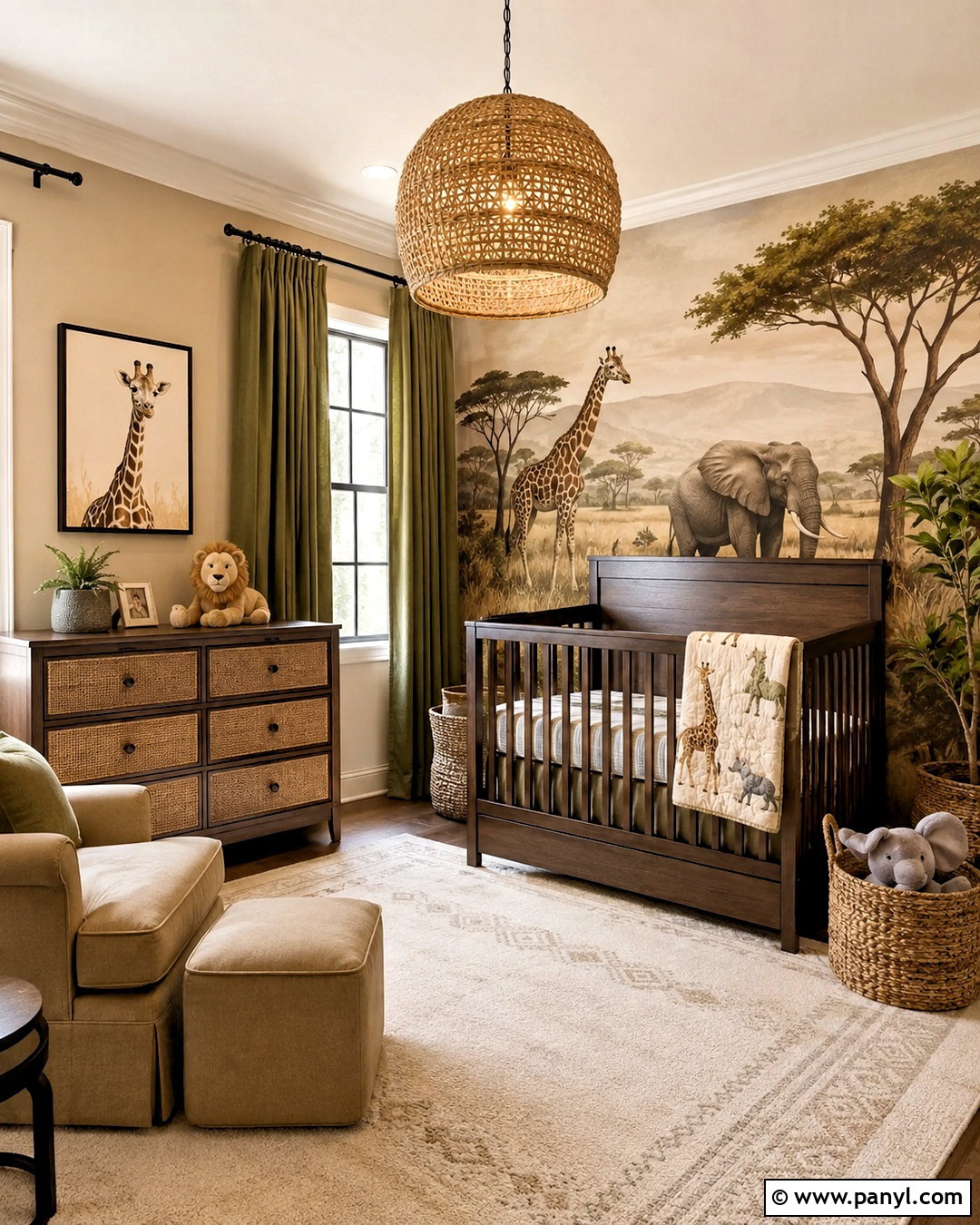
A safari nursery becomes more stylish and adaptable when the animal theme is paired with refined earth tones. Paint the walls sandy beige or muted khaki, then use a dark walnut crib as the visual anchor. Add a camel glider, cream rug, and olive green curtains for warm contrast. Feature one large savanna mural or a coordinated group of illustrated giraffe, elephant, and zebra prints. Woven baskets, a cane-front dresser, and a natural fiber ceiling light strengthen the travel-inspired atmosphere. Black metal details can outline the room through frames and hardware. Avoid filling every surface with animal figures. A few recognizable motifs, generous open space, and practical closed storage will create a nursery that feels adventurous, polished, and easy to update over time.
19. Midcentury Modern Nursery
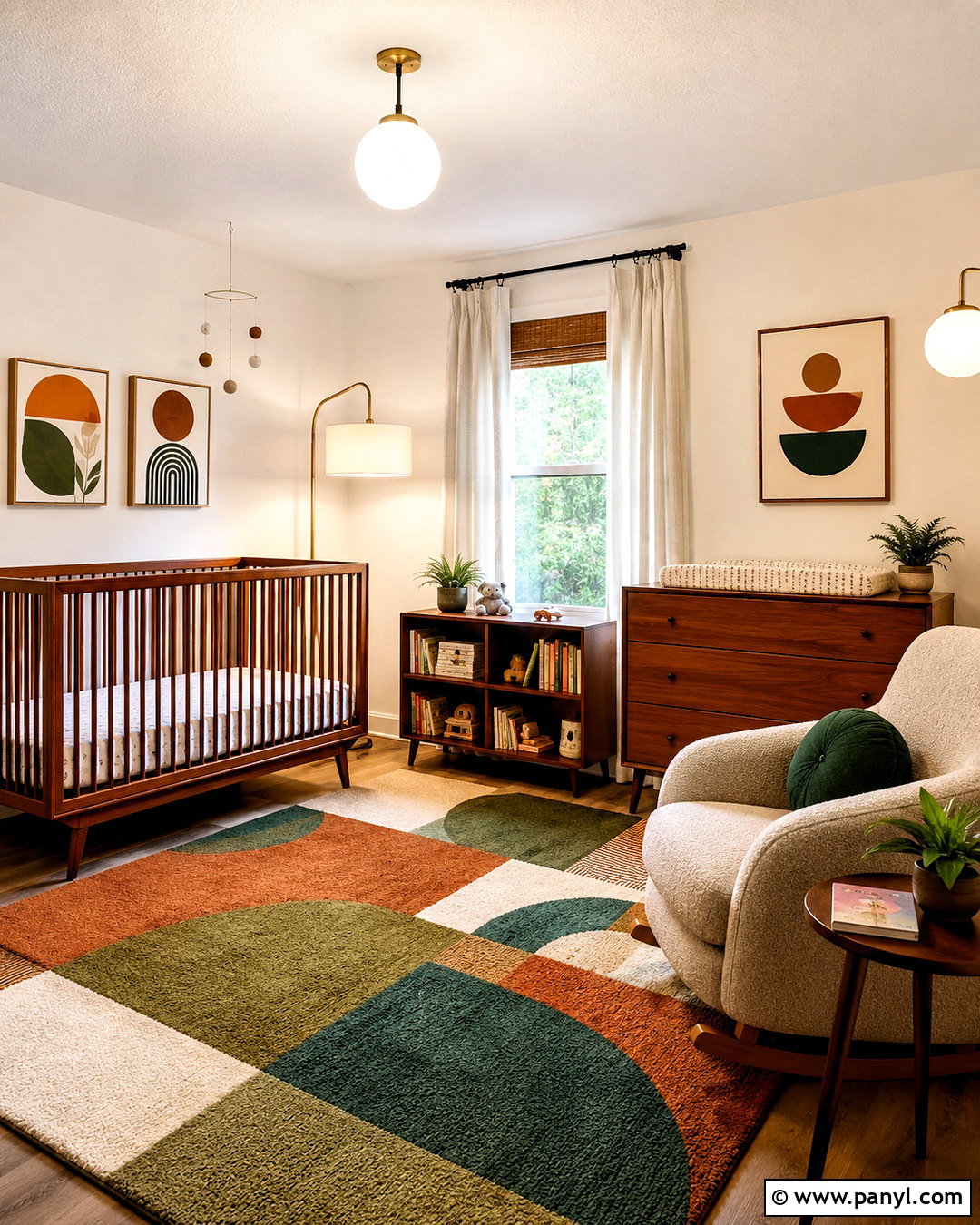
Rich wood, tapered furniture, and clean geometry create a midcentury modern nursery with lasting appeal. Select a walnut crib with slim spindles and pair it with a matching dresser on tapered legs. Paint the walls warm white or pale ochre, then ground the room with a geometric rug in rust, olive, cream, and muted teal. A curved oatmeal glider and small round side table soften the angular furniture. Add an opal globe ceiling light, abstract artwork, and simple floor-length curtains. Use one low bookcase for toys and reading materials, leaving enough open floor area for play. The room should feel connected to the rest of a thoughtfully decorated home. Anchoring the dresser and bookcase keeps the streamlined arrangement more secure as mobility increases.
20. Luxury Nursery
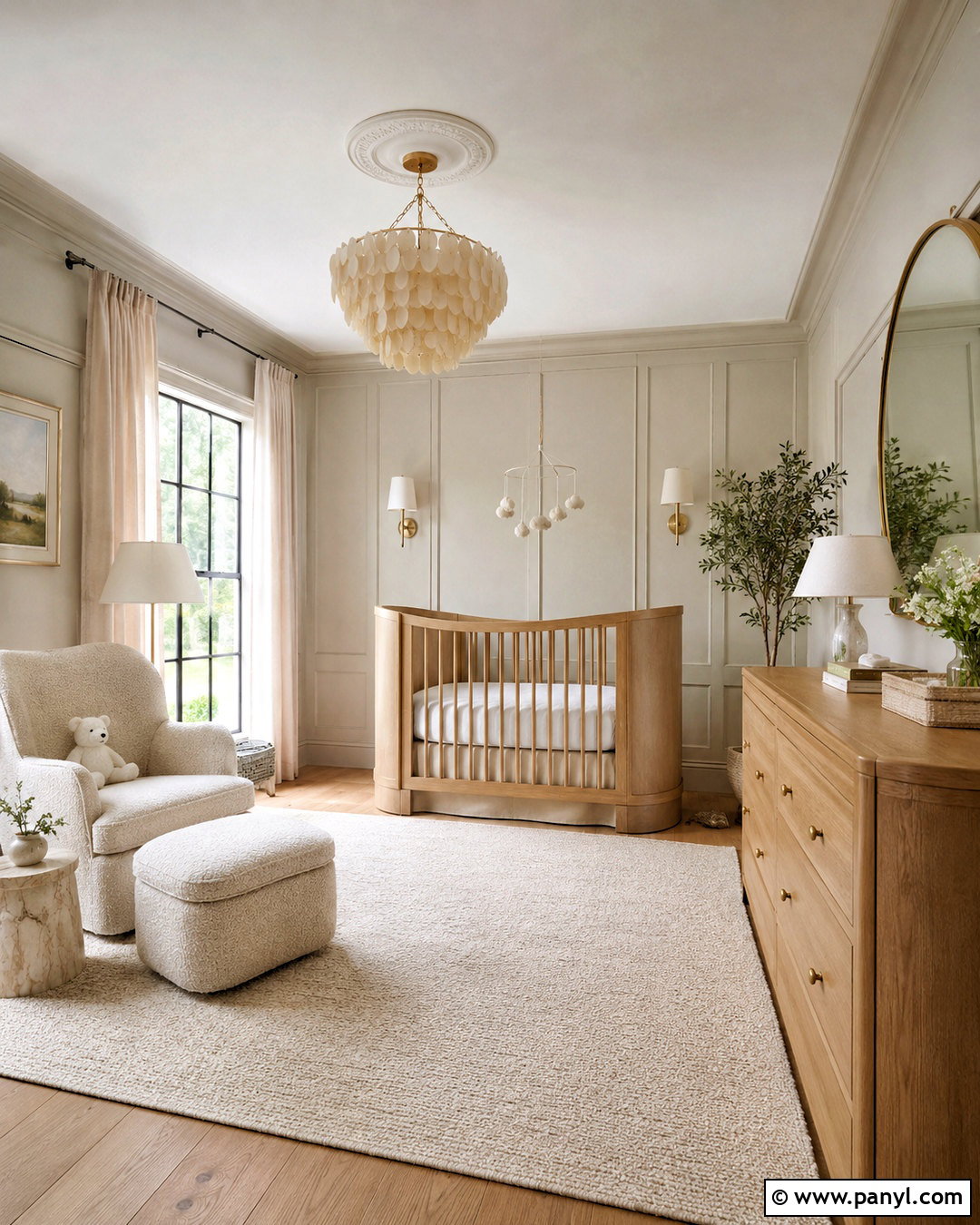
A luxurious nursery is defined by quality, comfort, and tailored details rather than excessive decoration. Install soft greige wall paneling and place a curved natural oak crib against the main wall. Choose a generously padded ivory glider with a matching ottoman and position it beside a marble-top or stone-look side table. A large wool rug in cream and taupe adds softness underfoot. Complete the changing zone with a wide oak dresser, brushed brass hardware, and an oversized rounded mirror. Full-length linen curtains and a sculptural chandelier create height, while subtle landscape artwork introduces muted sage and blue. Keep surfaces mostly clear and hide supplies in organized drawers. The finished room feels refined and restful, yet remains practical for feeding, changing, storage, and play.
Conclusion:
The best nursery feels comfortable for caregivers, calming for the baby, and flexible enough to change over time. These 20 nursery design ideas show how color, furniture, lighting, textiles, storage, and decoration can work together as one complete plan. Begin with the layout and essential furniture before choosing artwork or accessories. Select a limited palette, repeat materials across the room, and leave open space for everyday routines. Most importantly, keep the crib bare, use cordless window coverings, anchor furniture, and place cords beyond a child’s reach. A nursery does not need to be large or expensive to feel special. Thoughtful choices can create a beautiful, organized room your family genuinely enjoys using.

Related Ideas and Inspiration:
Leave a Reply