
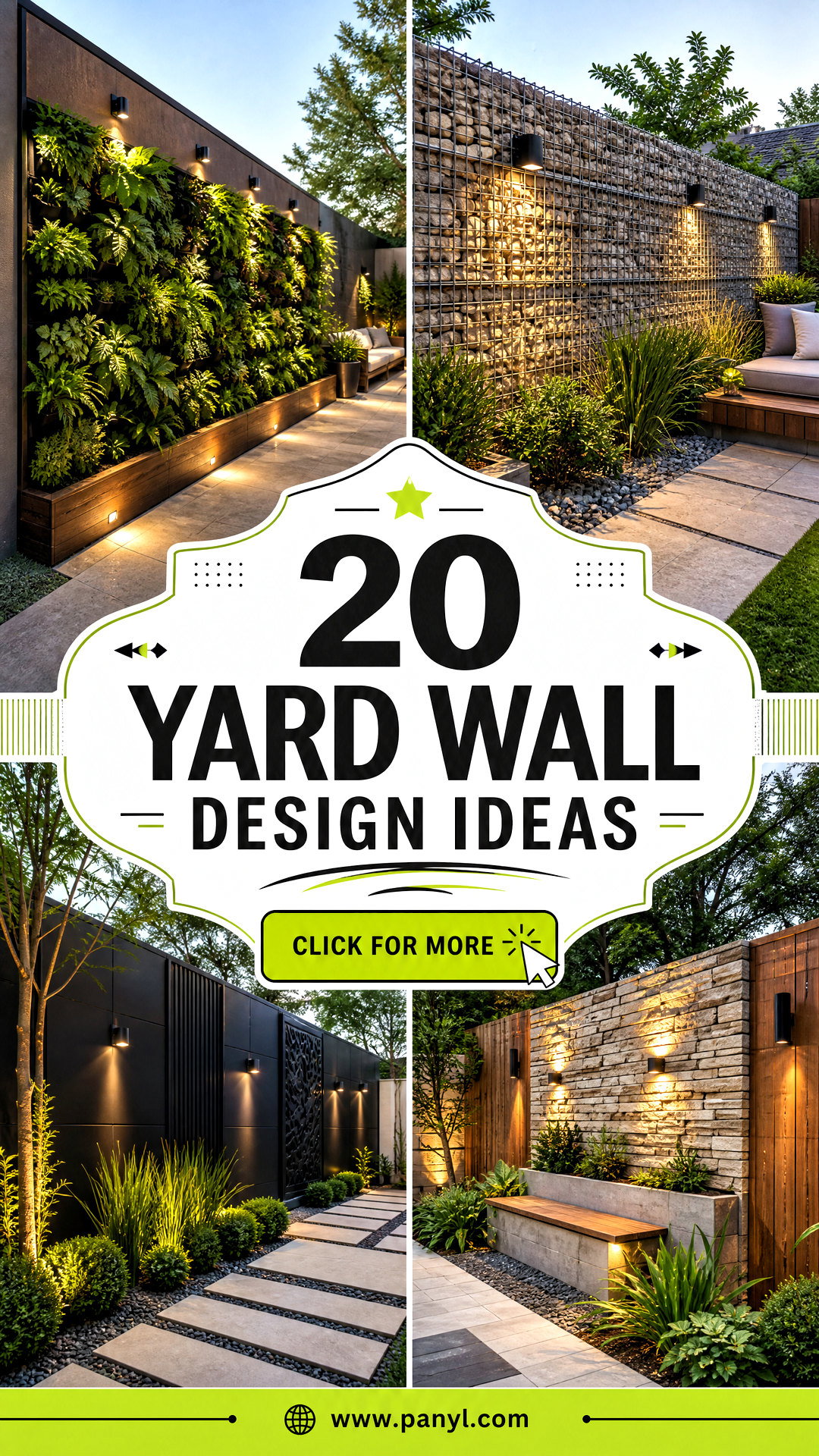
A well-designed yard wall can do much more than mark a property line. It can create privacy, manage a slope, frame outdoor rooms, support plants, and give the landscape a polished backdrop. The best wall designs connect visually with the home while responding to practical needs such as drainage, maintenance, security, and available space. Materials like stone, brick, concrete, wood, metal, and decorative blocks can also be combined for greater texture and character. Thoughtful lighting and layered landscaping make the structure feel integrated rather than imposing. Whether you are improving a compact courtyard or shaping a spacious backyard, these **20 yard wall design ideas** offer complete, achievable looks for many architectural styles and budgets.
1. Modern Concrete Yard Wall
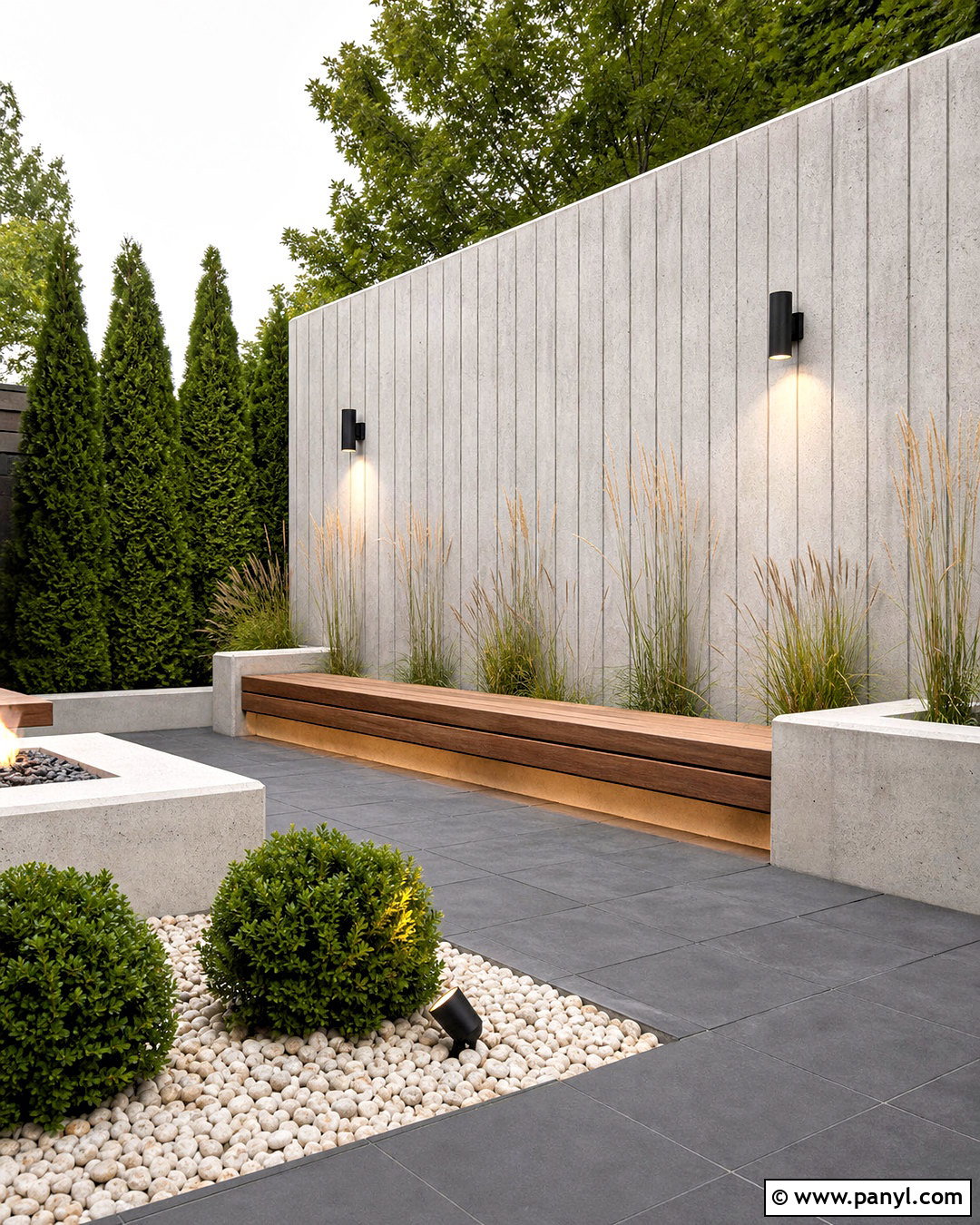
A smooth concrete wall creates a clean backdrop for a modern yard without demanding much visual attention. Choose a warm light gray finish instead of stark industrial gray, then break up the long surface with narrow vertical grooves. A built-in cedar bench brings warmth to the hard material and creates a practical seating area. In front, install a linear bed filled with feather reed grass, compact evergreen shrubs, and pale gravel. Large concrete pavers can connect the wall to a patio or walkway. Add evenly spaced matte black wall lights for a balanced appearance. This complete scheme works especially well with contemporary homes featuring simple rooflines, black windows, and restrained exterior colors.
2. Stone Yard Wall With Built-In Seating
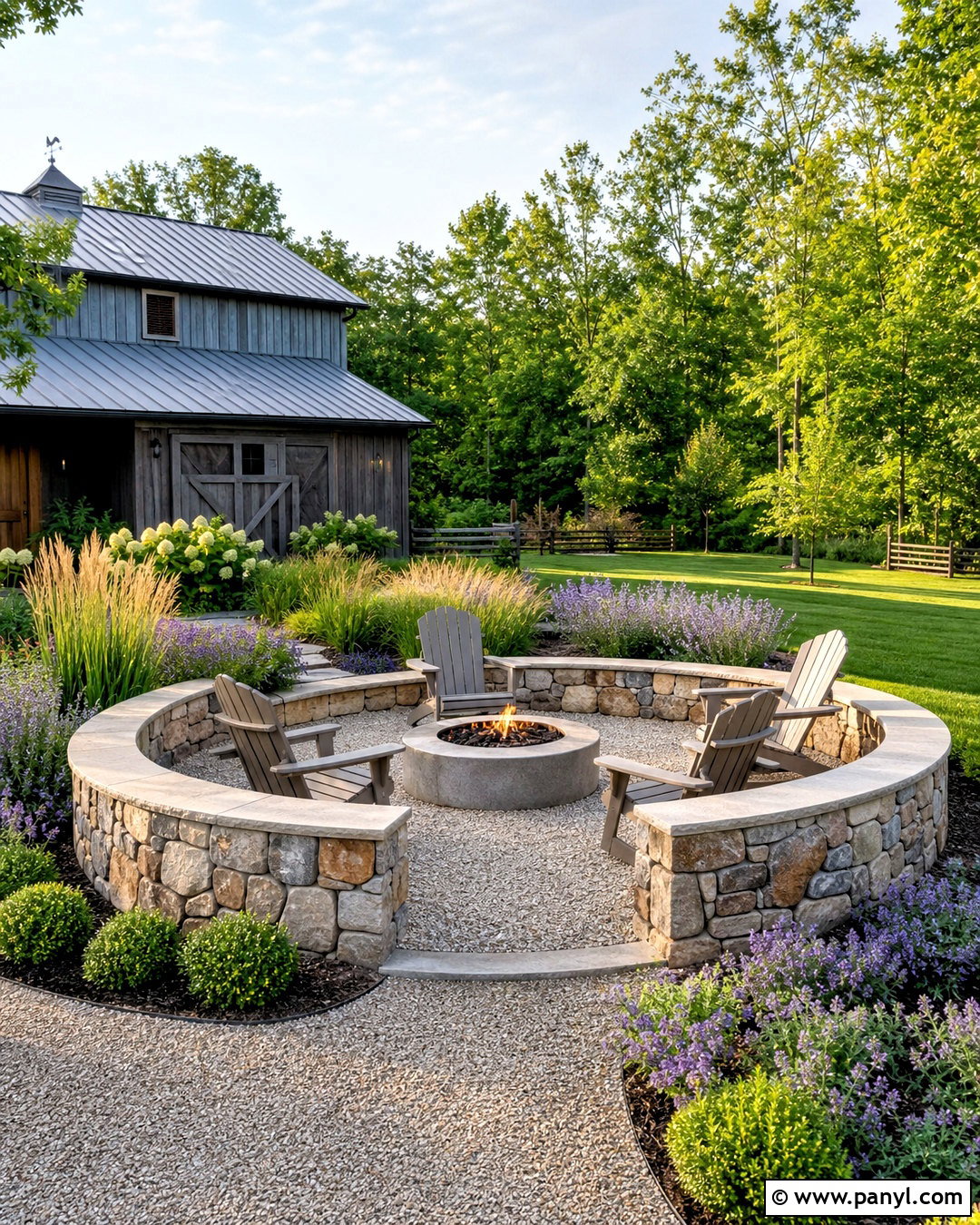
Natural stone can turn a necessary wall into the centerpiece of an inviting outdoor gathering area. Build a low wall from irregular gray and tan fieldstone, then cap it with smooth, flat slabs wide enough for casual seating. Position the wall around one side of a circular gravel patio to create a comfortable sense of enclosure. Adirondack chairs, a simple concrete fire bowl, and weather-resistant neutral cushions complete the space. Soften the stone with lavender, catmint, ornamental grasses, and low-growing ground cover planted around its base. Low-voltage lights tucked beneath the cap highlight the texture. This relaxed design suits farmhouse, cottage, Craftsman, and woodland-inspired landscapes.
3. White Stucco Yard Wall
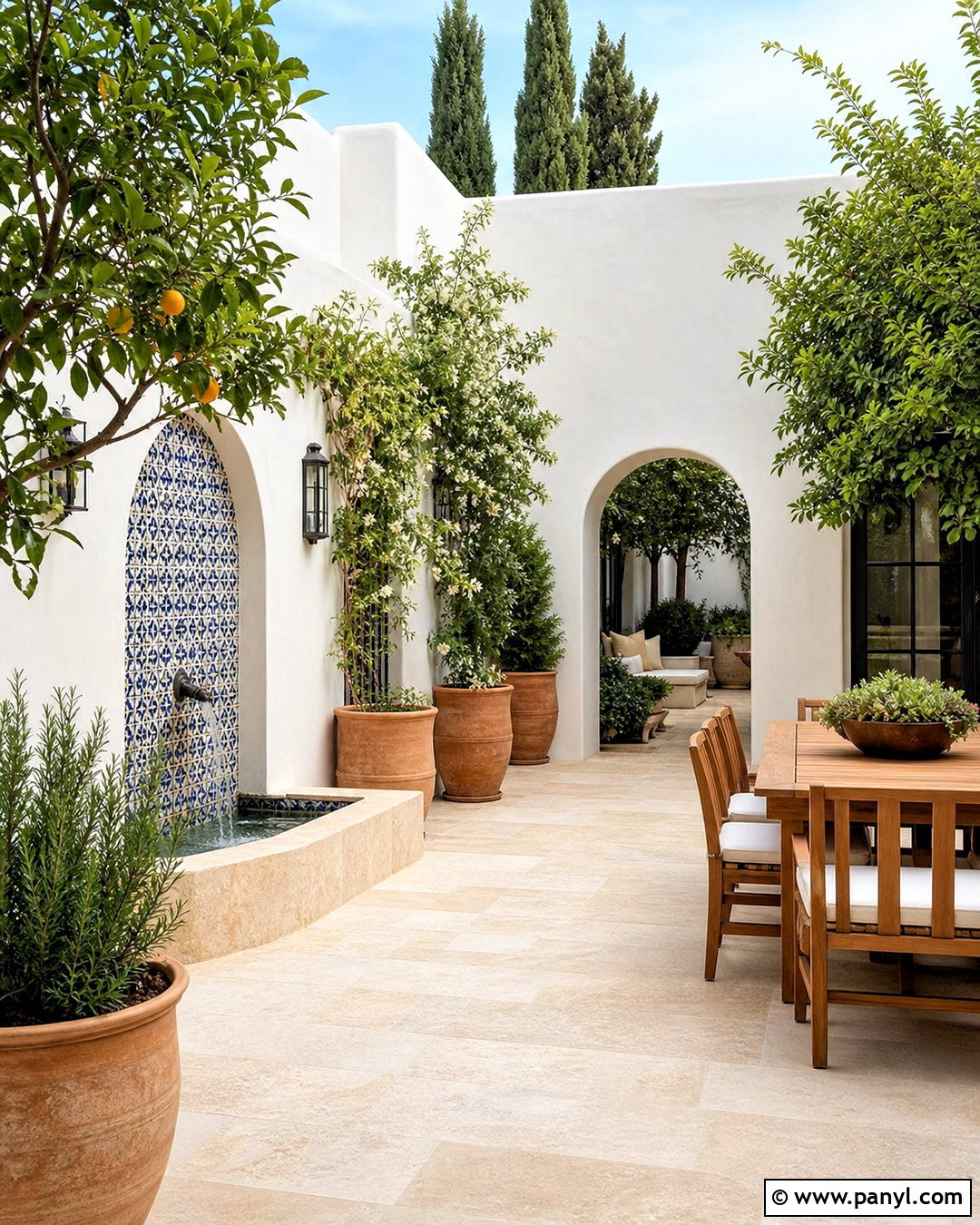
Bright white stucco gives a backyard the fresh character of a Mediterranean courtyard. Keep the wall smooth and simple, with rounded corners or a shallow arched opening for architectural interest. Terracotta planters filled with rosemary, lavender, and compact citrus trees add warm color against the white surface. Use pale limestone or sand-colored porcelain pavers underfoot, then arrange a natural teak dining table with woven outdoor chairs nearby. A slim tiled fountain can become the wall’s focal point without overwhelming the space. Finish the design with black metal sconces and climbing jasmine. Because white surfaces reveal dirt easily, place gravel along the base to reduce mud splashes during rain.
4. Brick Yard Wall With Garden Beds
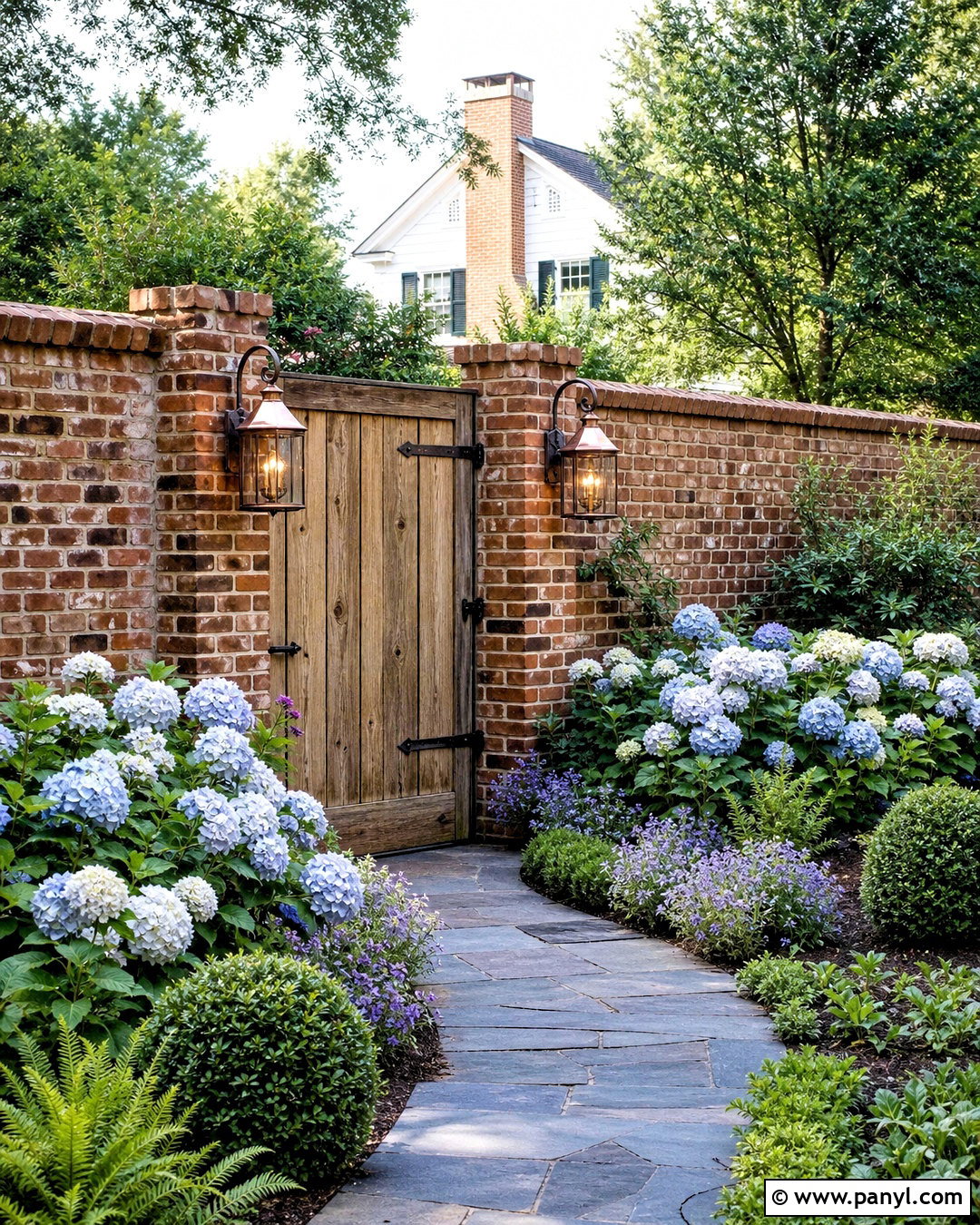
Traditional red brick feels especially welcoming when it is surrounded by abundant planting. Select a weathered red and brown brick with warm mortar joints, then add a slightly projecting brick cap for a finished edge. Create a deep curved garden bed along the wall rather than a narrow, rigid border. Layer compact flowering trees at the back, hydrangeas and evergreen shrubs in the middle, and seasonal perennials near the front. A brick or bluestone path can lead toward a small wooden gate that matches the home’s trim. Copper-finish wall lanterns provide gentle illumination. This complete yard wall design looks established and works beautifully with Colonial, Georgian, Tudor, and traditional suburban homes.
5. Wood Slat Yard Wall
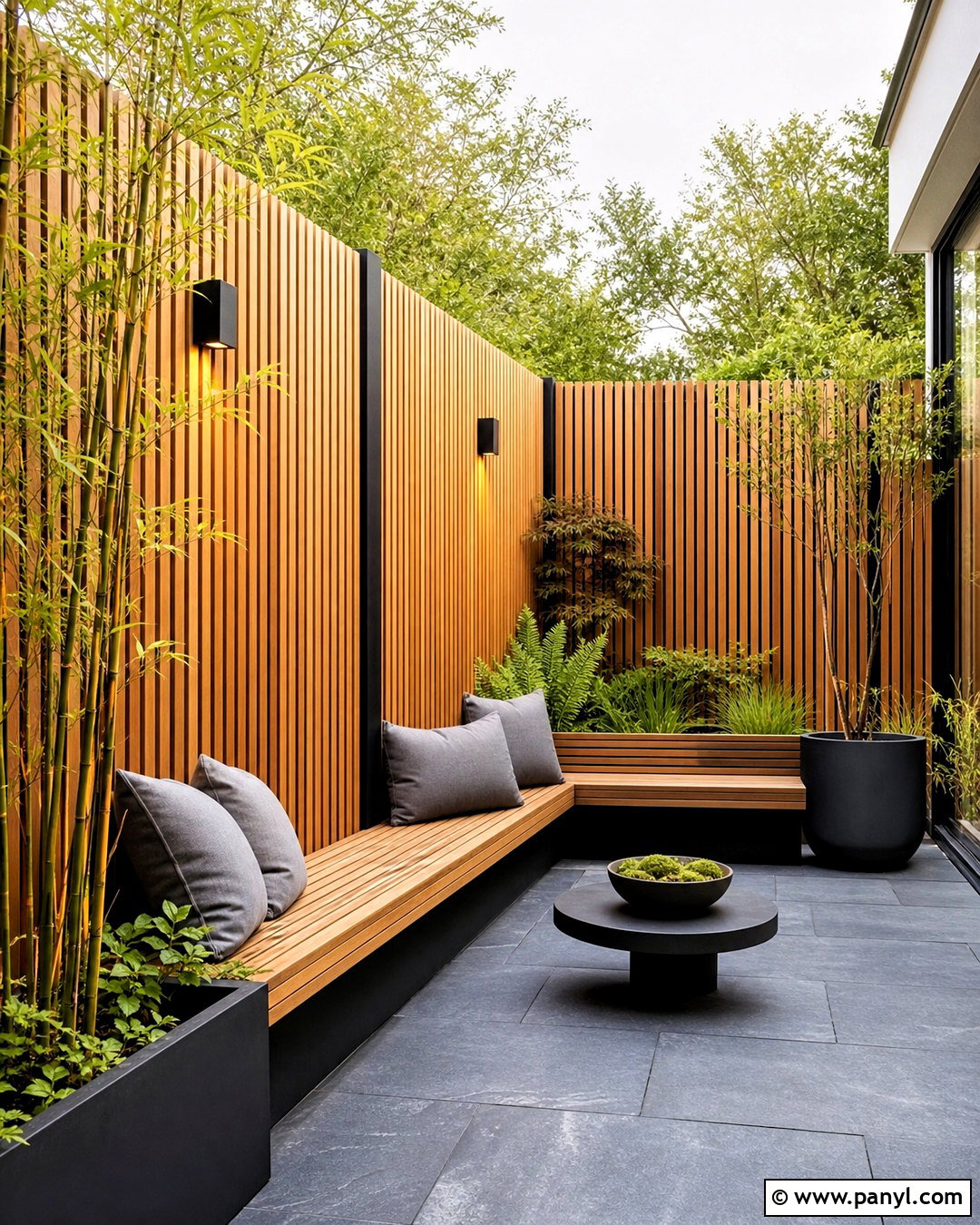
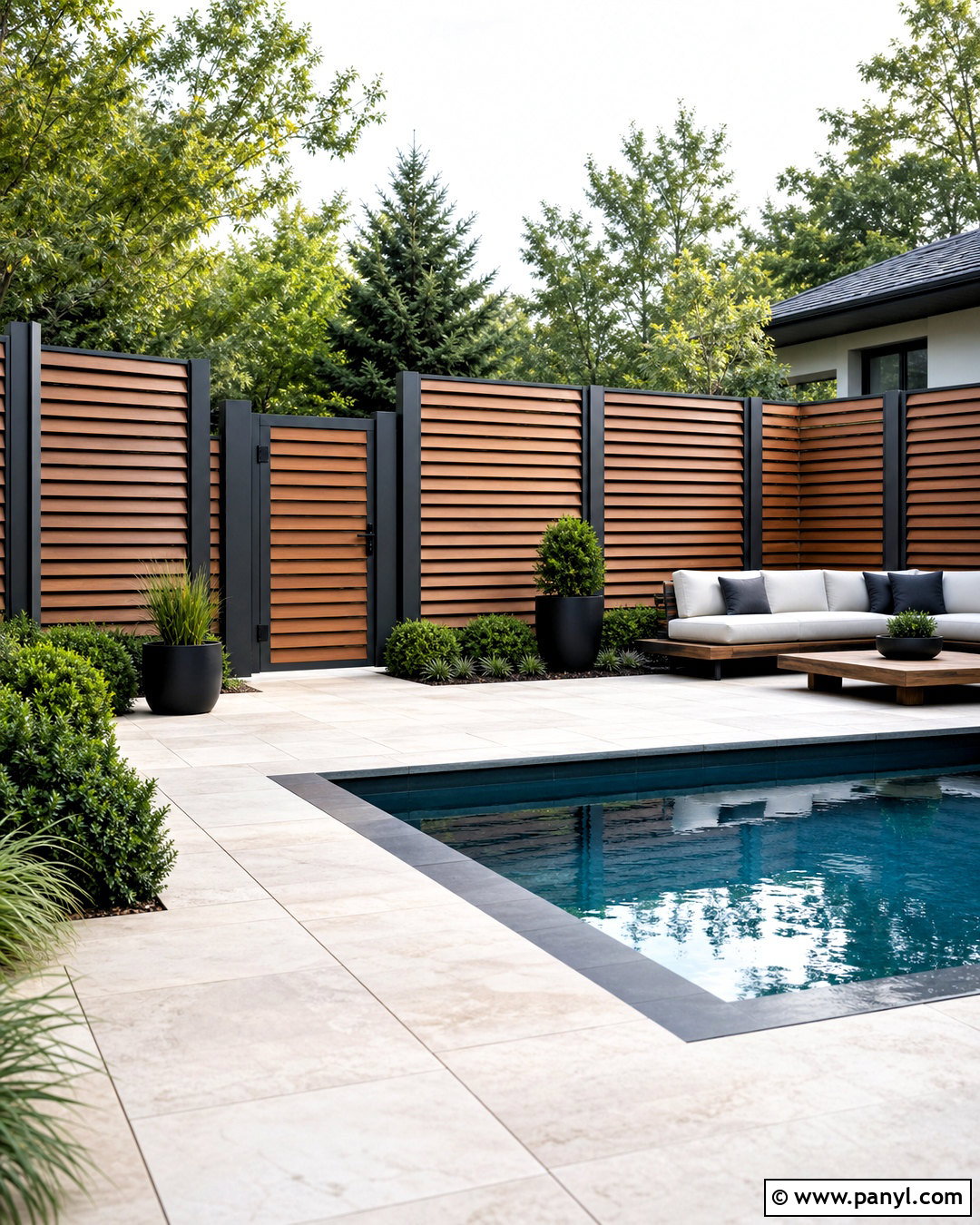
Vertical wood slats provide privacy while keeping a small yard warm and contemporary. Use naturally durable cedar boards with narrow, consistent gaps that allow limited airflow and filtered light. Frame the slats with matte black metal posts for definition and long-term stability. Continue the cedar finish on a built-in corner bench or compact storage cabinet so the wall feels connected to the entire patio. Large charcoal pavers, black planters, and soft gray cushions create a cohesive palette. Add bamboo, ferns, and shade-tolerant grasses in raised beds to soften the straight lines. Simple upward-facing lights emphasize the wood grain and make the boundary feel taller without introducing decorative clutter.
6. Yard Wall With Vertical Garden
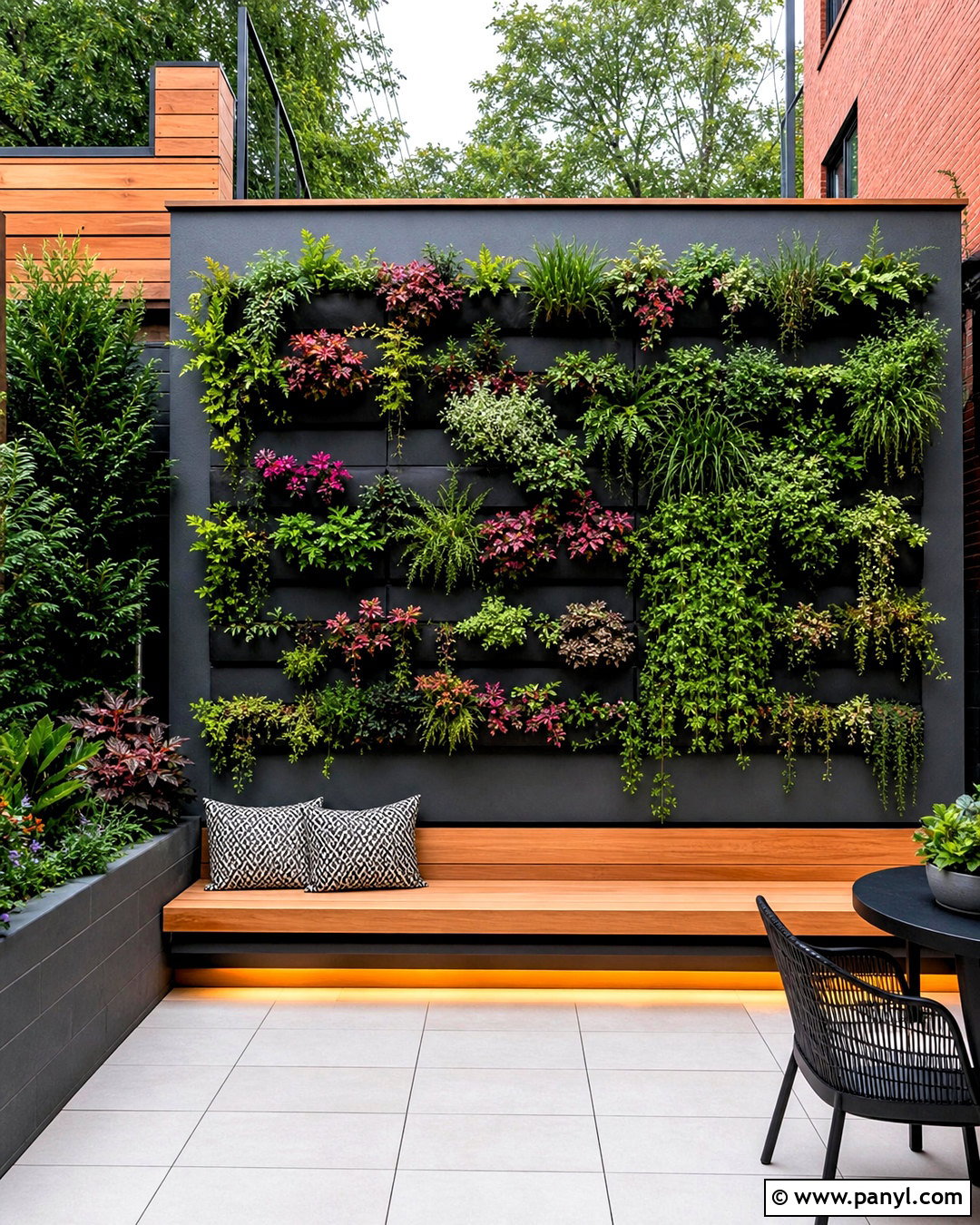
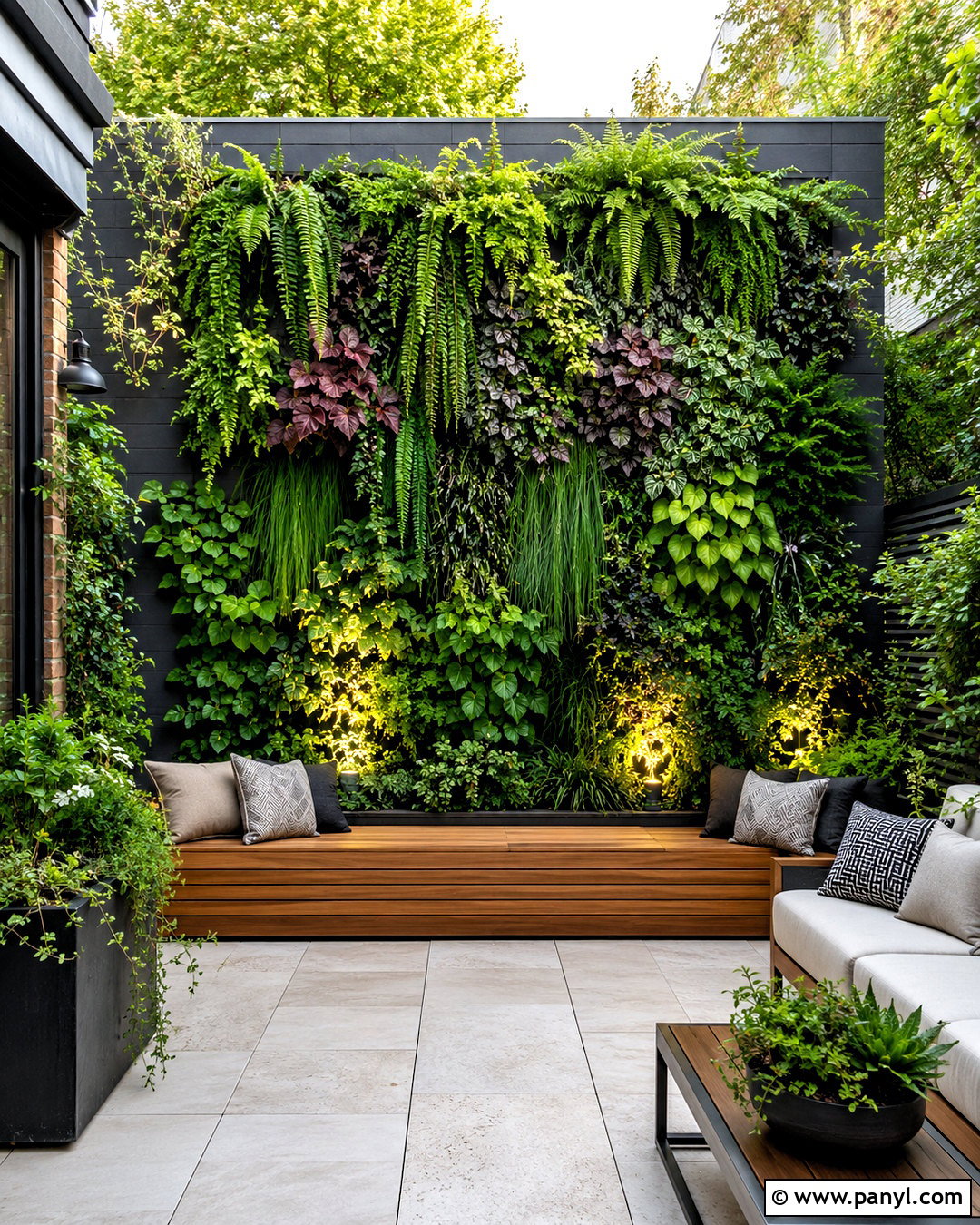
Turn a plain boundary into a lush feature by covering part of it with a structured vertical garden. Start with a moisture-resistant wall finished in charcoal gray, then install modular planting panels across the central section. Combine evergreen foliage, trailing plants, ornamental grasses, and seasonal flowers for varied color and texture. Keep the planting arrangement broad and natural rather than creating small, complicated patterns. Place a narrow porcelain patio in front with a light wood bench and two compact side tables. A drip irrigation system helps keep maintenance manageable. Frame the living section with warm wood trim and soft wall lighting. This design is particularly useful in urban yards where planting space is limited.
7. Gabion Yard Wall
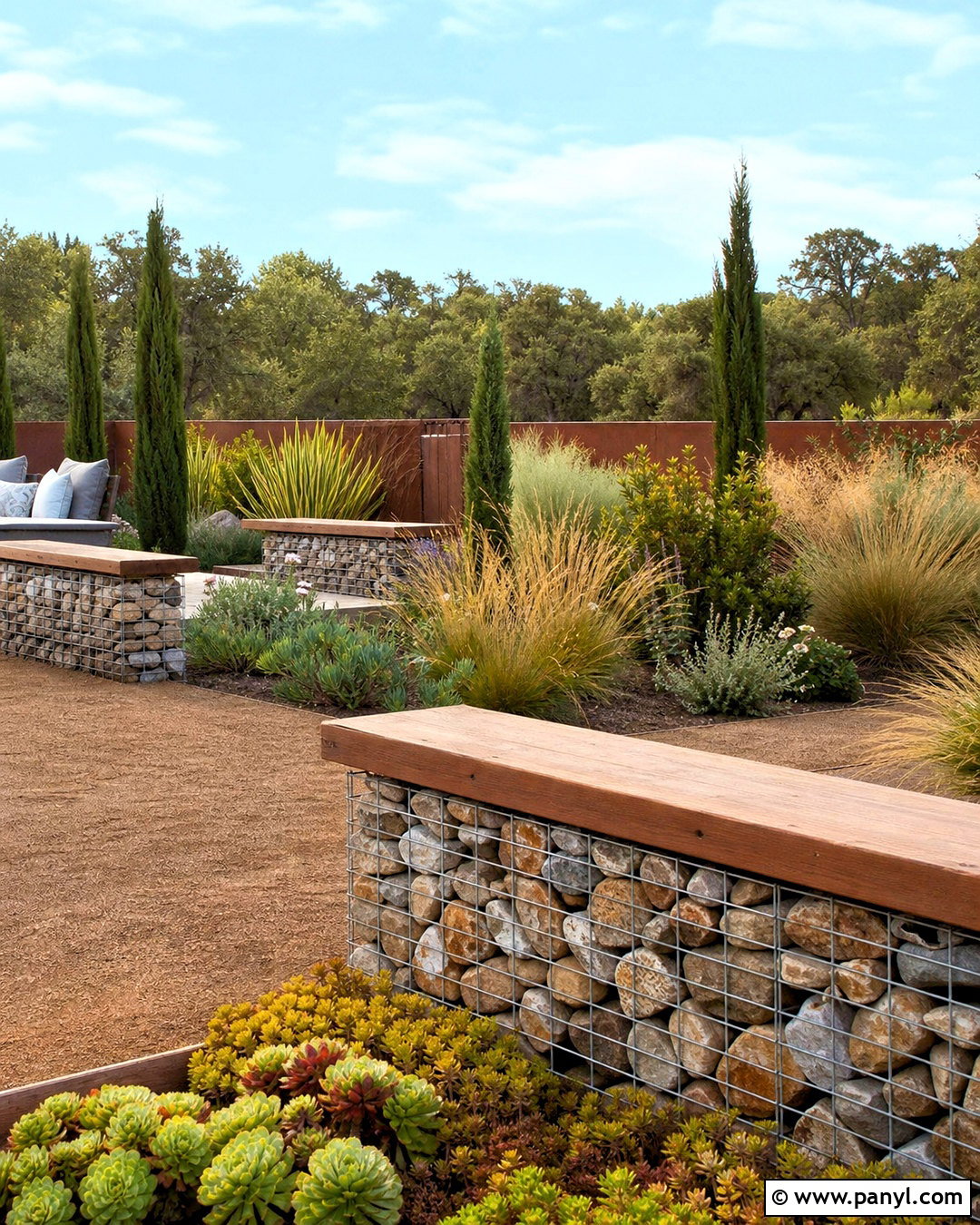
A gabion wall offers strong texture and an earthy, architectural appearance. Fill galvanized steel cages with local stone in mixed gray, beige, and rust tones, keeping the rocks tightly packed for a neat result. Use the gabions as a low retaining wall around an elevated planting bed rather than building one tall, uninterrupted barrier. Cap selected sections with thick wood boards to create informal seating. Behind the wall, plant drought-tolerant grasses, sedum, sage, and upright juniper for year-round structure. A decomposed granite path and simple steel edging complement the rugged materials. This complete landscape works with modern, rustic, desert, and industrial-inspired homes while requiring relatively restrained decoration.
8. Yard Wall With Decorative Breeze Blocks
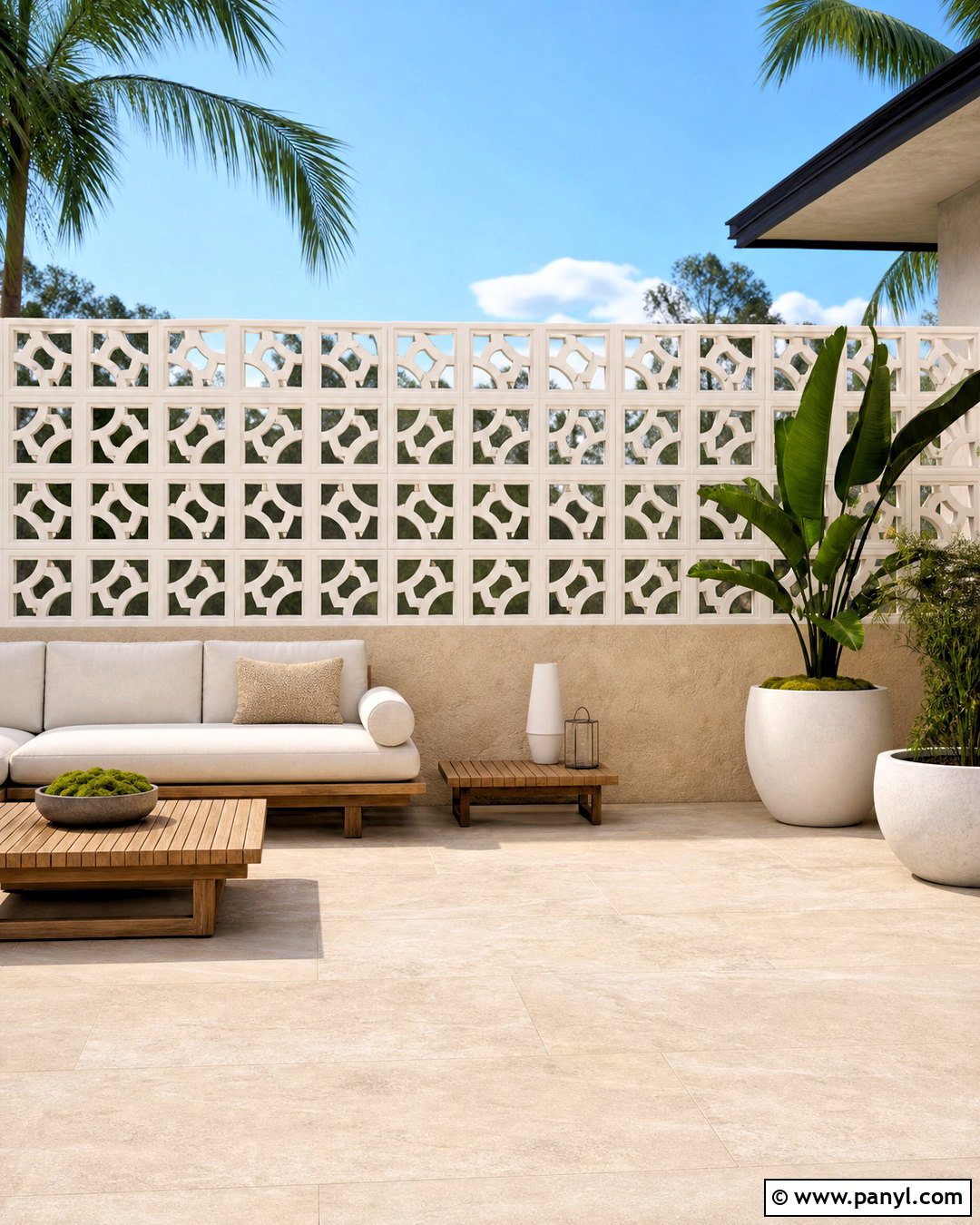
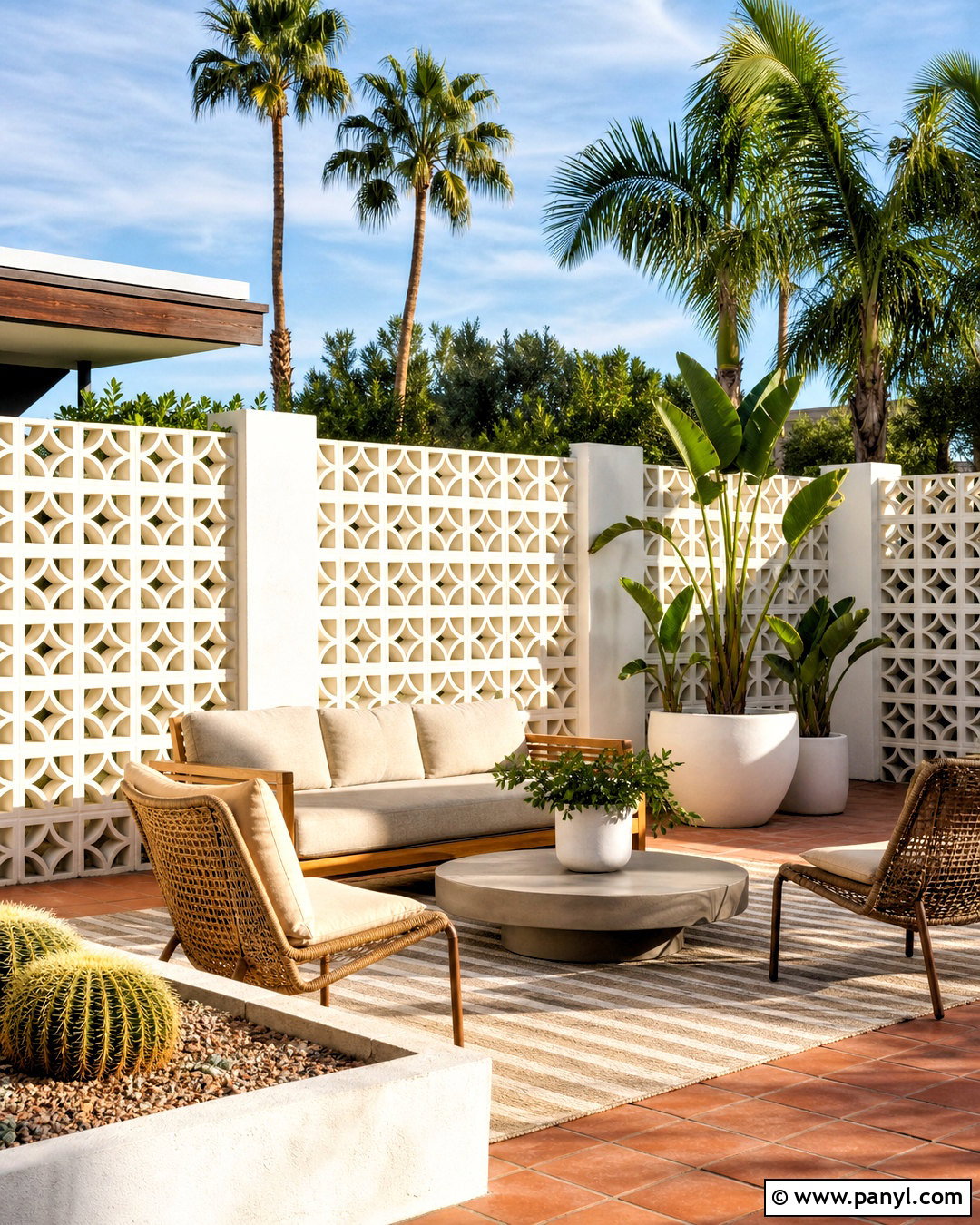
Decorative concrete blocks bring pattern, airflow, and filtered privacy to an enclosed yard. Choose a simple geometric block in warm white or sandy beige and install it above a solid stucco base. The combination gives the wall visual stability while allowing sunlight to pass through the upper section. Create a tiled patio beside it with a low-profile outdoor sofa, rounded coffee table, and textured cream cushions. Large planters containing palms, bird of paradise, or other climate-appropriate architectural plants reinforce the breezy look. Keep surrounding colors limited to beige, muted green, and natural wood. Discreet floor lights can project soft patterns through the blocks and make the wall attractive from both sides.
9. Black Metal Yard Wall
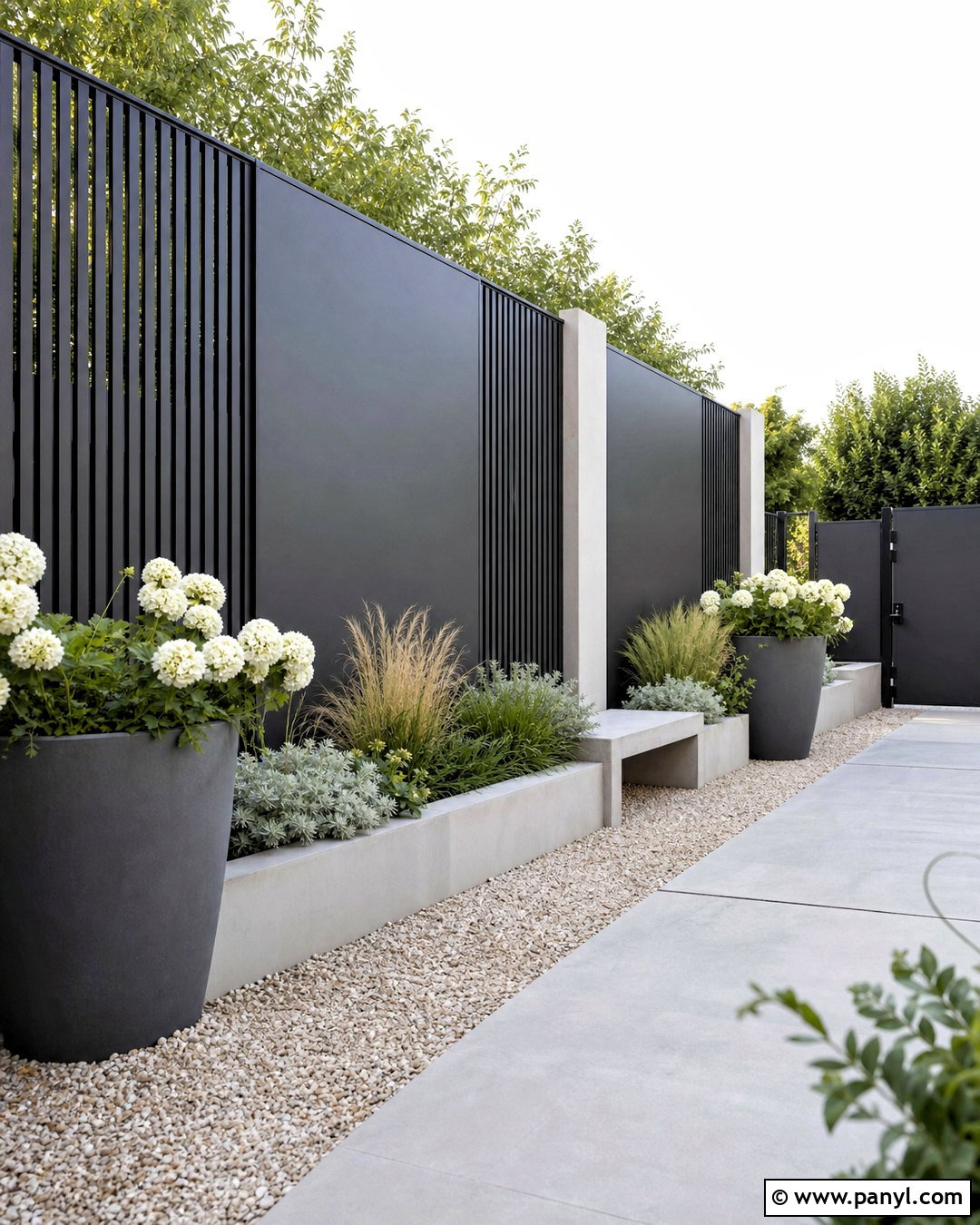
A black metal wall can look sleek rather than severe when it includes open sections and generous landscaping. Alternate solid charcoal metal panels with narrow vertical slats to create privacy without making the property feel completely closed. Use powder-coated finishes designed for outdoor exposure and coordinate the posts with black window frames or exterior lighting. In front of the wall, establish a layered border of pale grasses, white flowers, and silvery foliage. Light gravel creates contrast and improves the clean, graphic appearance. Add a simple concrete bench and oversized gray planters to complete the setting. This high-contrast combination is ideal for contemporary homes with restrained landscaping and strong architectural lines.
10. Yard Wall With Water Feature
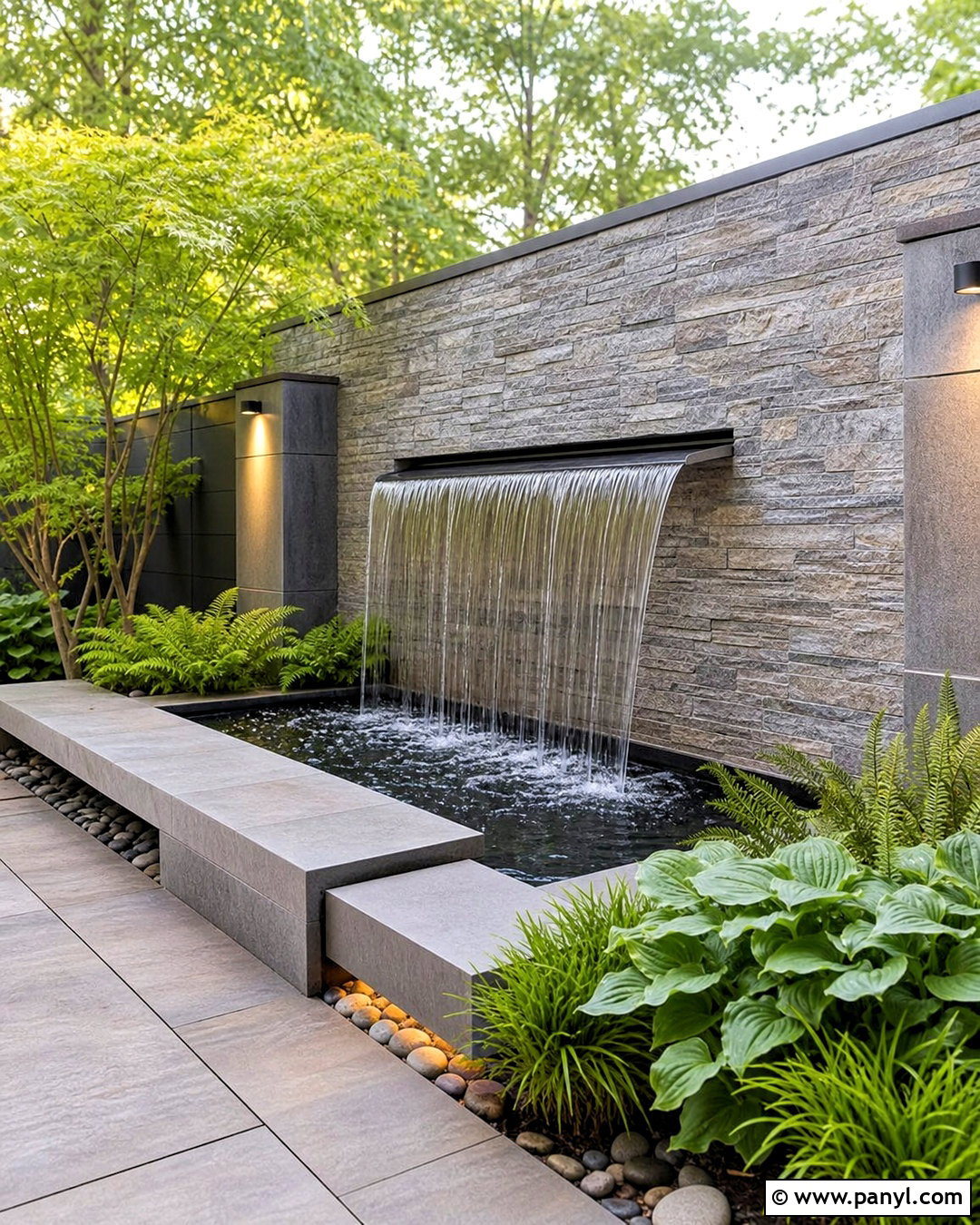
The sound of moving water can transform a basic wall into a calming backyard focal point. Finish the wall in warm gray stone tile and place one wide sheet-style water outlet at its center. Let the water fall into a long, shallow basin filled with dark river stones, keeping the feature proportional to the wall. Extend matching stone across a low bench on one side to connect the materials. Ferns, hostas, Japanese forest grass, and other moisture-loving plants can surround the basin in a shaded setting. Install concealed lighting beneath the water edge and low path lights nearby. A small lounge area positioned opposite the feature completes this peaceful, balanced outdoor room.
11. Yard Wall With Outdoor Fireplace
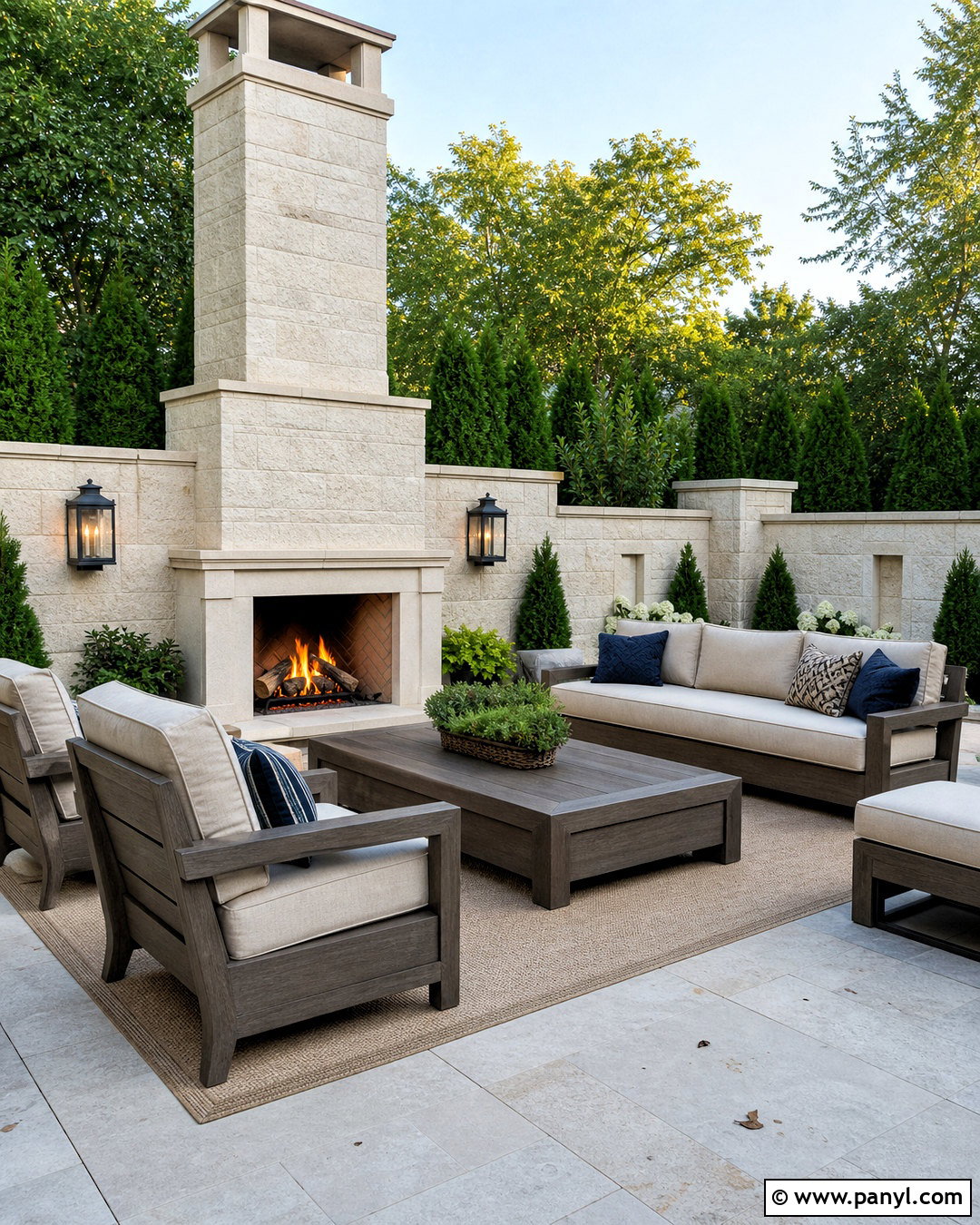
An outdoor fireplace can anchor a yard wall and create a comfortable destination for gathering. Build the fireplace from pale limestone or light gray masonry, with the chimney integrated into a matching low wall. Arrange weather-resistant lounge chairs and a deep outdoor sofa around a rectangular coffee table, leaving generous circulation space in front of the hearth. Neutral cushions, a textured outdoor rug, and small side tables make the patio feel like a complete living area. Use evergreen shrubs at both ends of the wall to balance the tall chimney. Wall-mounted lanterns and low landscape lights finish the scene. Check local building and fire requirements before selecting the fireplace location and construction method.
12. Yard Wall With Arched Openings
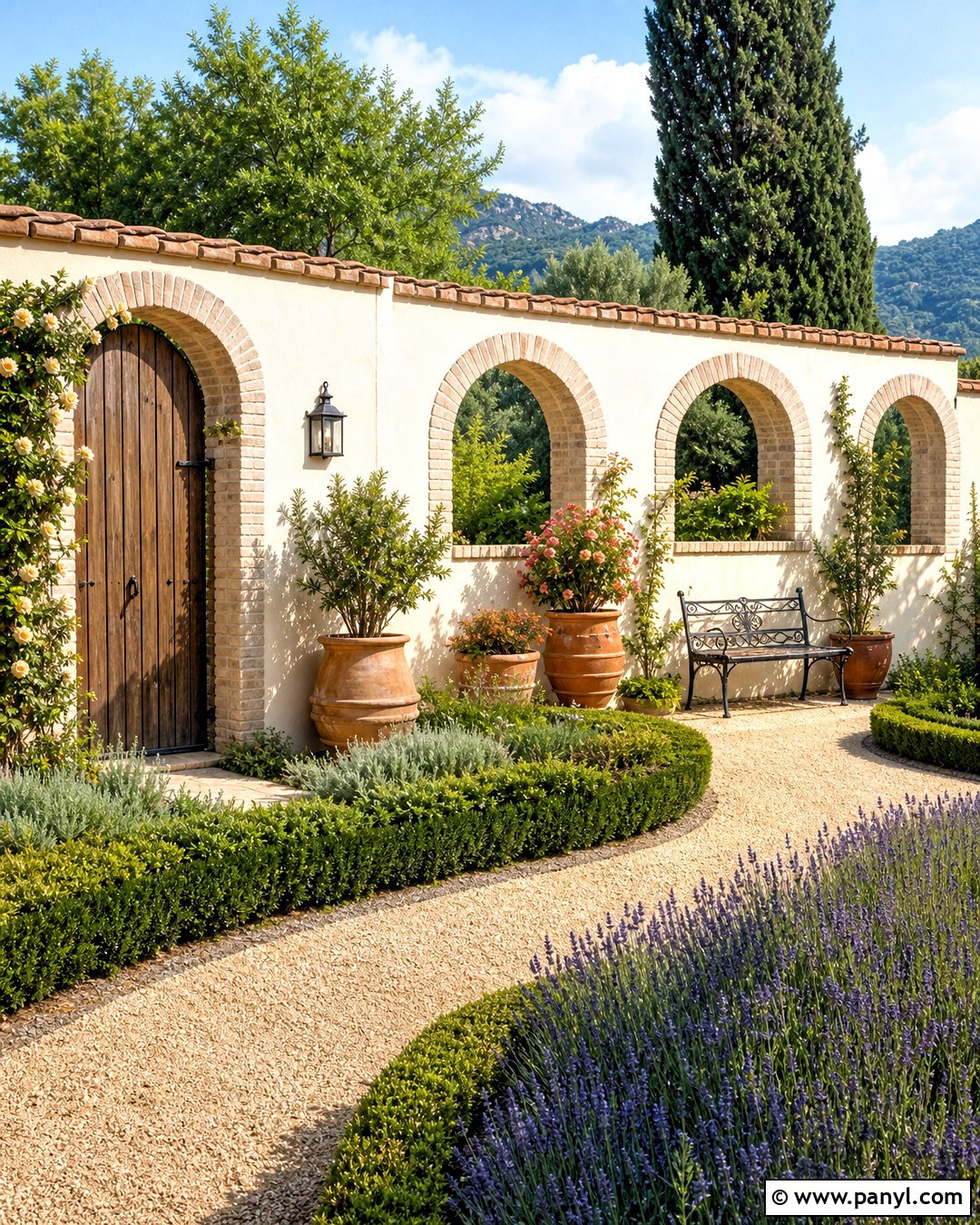
Arched openings can make a solid wall feel lighter while introducing timeless architectural character. Use warm cream stucco for the wall and line each opening with pale brick or natural stone. One arch can contain a wooden garden gate, while another frames a planted courtyard, distant tree, or decorative fountain. Repeat the curves through rounded planters, clipped shrubs, and a gently shaped gravel path. A wrought iron bench and terracotta containers reinforce the traditional look without making it overly formal. Keep planting loose around the structured architecture, using climbing roses, lavender, and soft ornamental grasses. This layered scheme works particularly well in Mediterranean, Spanish, and romantic cottage landscapes.
13. Tiered Retaining Yard Wall
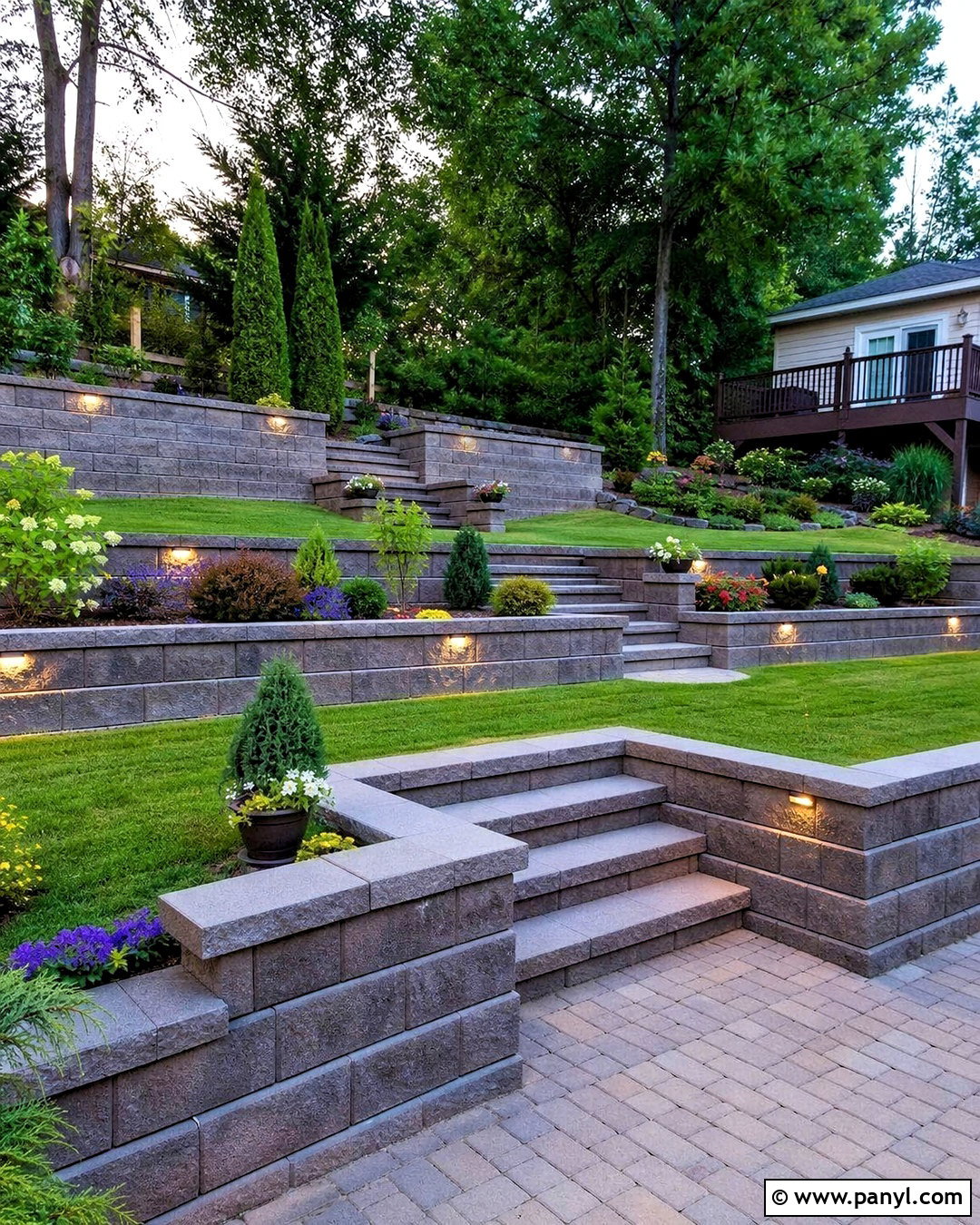
A steep yard becomes more usable when one tall retaining wall is replaced by several lower terraces. Construct two or three offset walls from warm gray concrete blocks or natural stone, with planting beds between each level. Use the lowest terrace for a lawn or patio, the middle level for colorful perennials, and the upper level for evergreen shrubs that provide screening. Wide steps should connect the spaces and match the wall caps for visual consistency. Add handrails where needed and integrate small recessed lights into the stair walls. Repeating the same plants in several areas creates unity. Proper drainage and professional structural planning are essential for retaining walls supporting significant soil or elevation changes.
14. Painted Yard Wall With Trellis
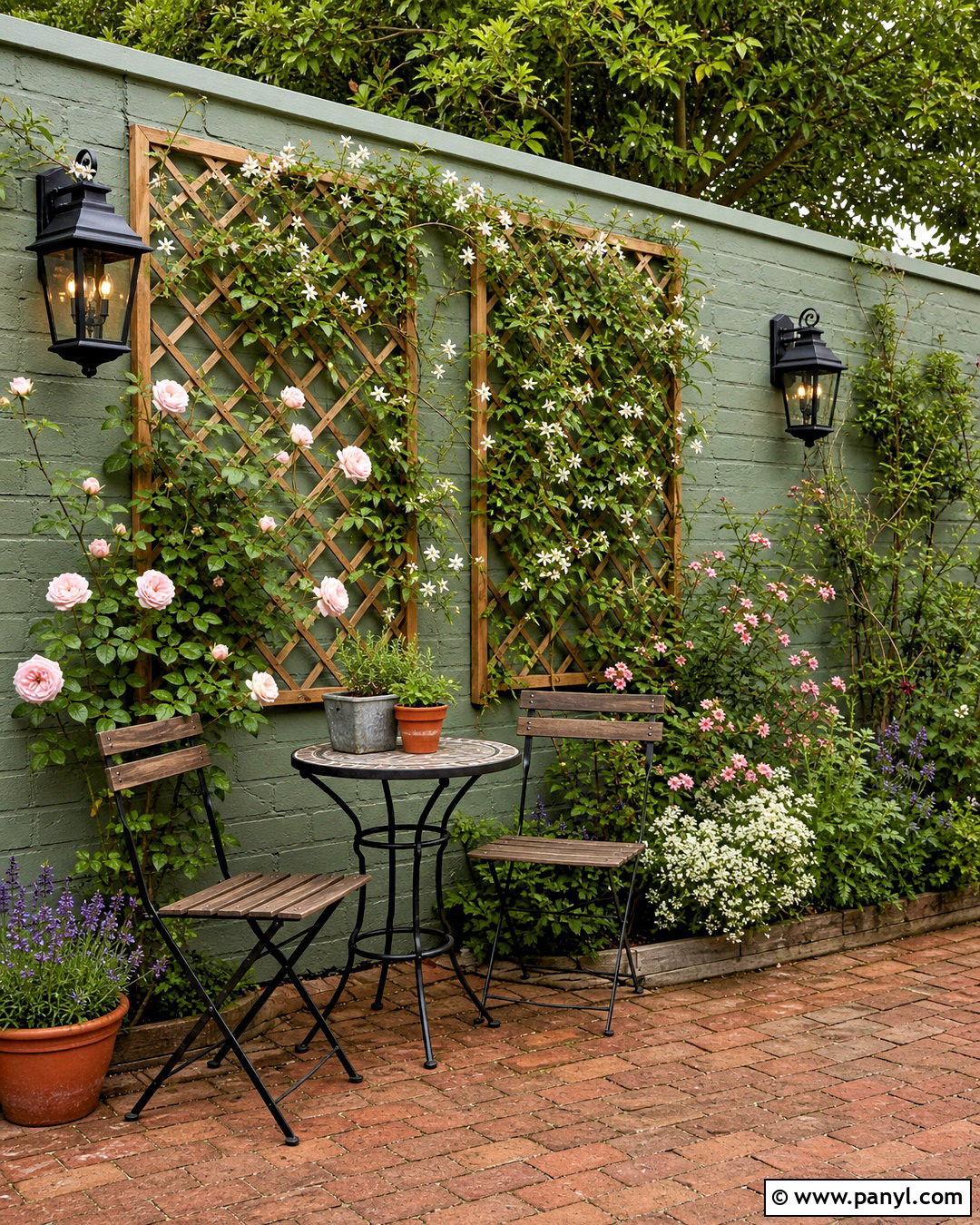
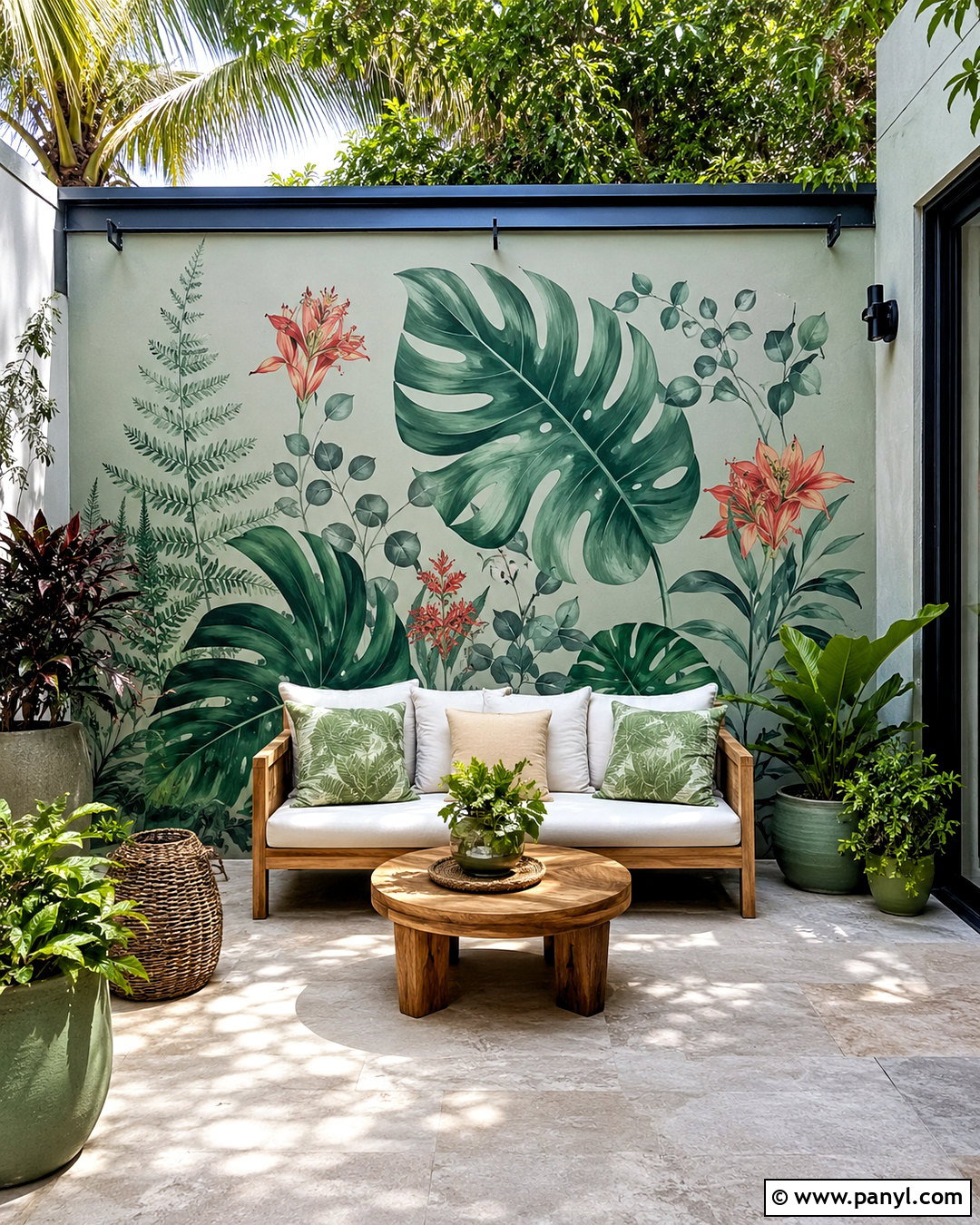
Paint can refresh an unattractive masonry wall, while a trellis adds depth and natural softness. Choose a muted sage green or warm off-white exterior masonry finish that coordinates with the house. Mount broad wood trellis panels several inches away from the surface, leaving room for climbing plants and air circulation. Star jasmine, climbing roses, clematis, or climate-appropriate vines can cover selected sections rather than hiding the entire wall. Place a small bistro set on a brick or gravel pad in front. Layer flowering shrubs and herbs around the seating area for a garden-room effect. Black wall lanterns and terracotta pots give the finished space a practical, collected appearance.
15. Yard Wall With Raised Planters
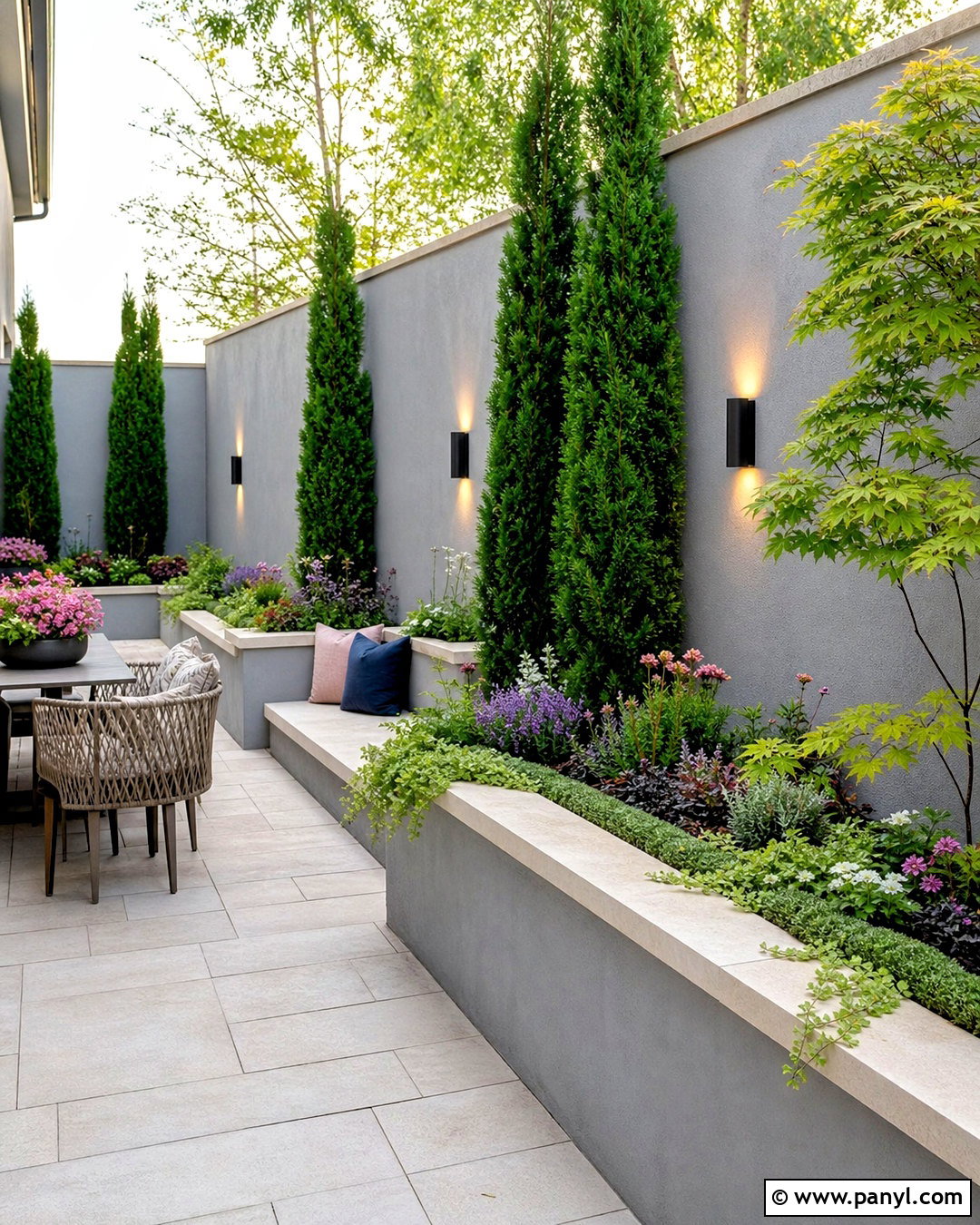
Integrated raised planters make a wall feel useful while creating planting space at an accessible height. Build a smooth, soft gray wall with long rectangular planters projecting from its base. Cap the planter edges with natural wood or pale stone, allowing wider sections to double as seating. Fill the beds with a balanced mix of upright evergreens, colorful perennials, trailing ground cover, and culinary herbs near the patio. Use large-format cream pavers to keep the area bright, then add a compact dining table and woven chairs. Concealed strip lighting beneath the planter caps provides subtle evening definition. This efficient layout is ideal for narrow yards where separate furniture and garden beds would take up too much room.
16. Yard Wall With Outdoor Kitchen
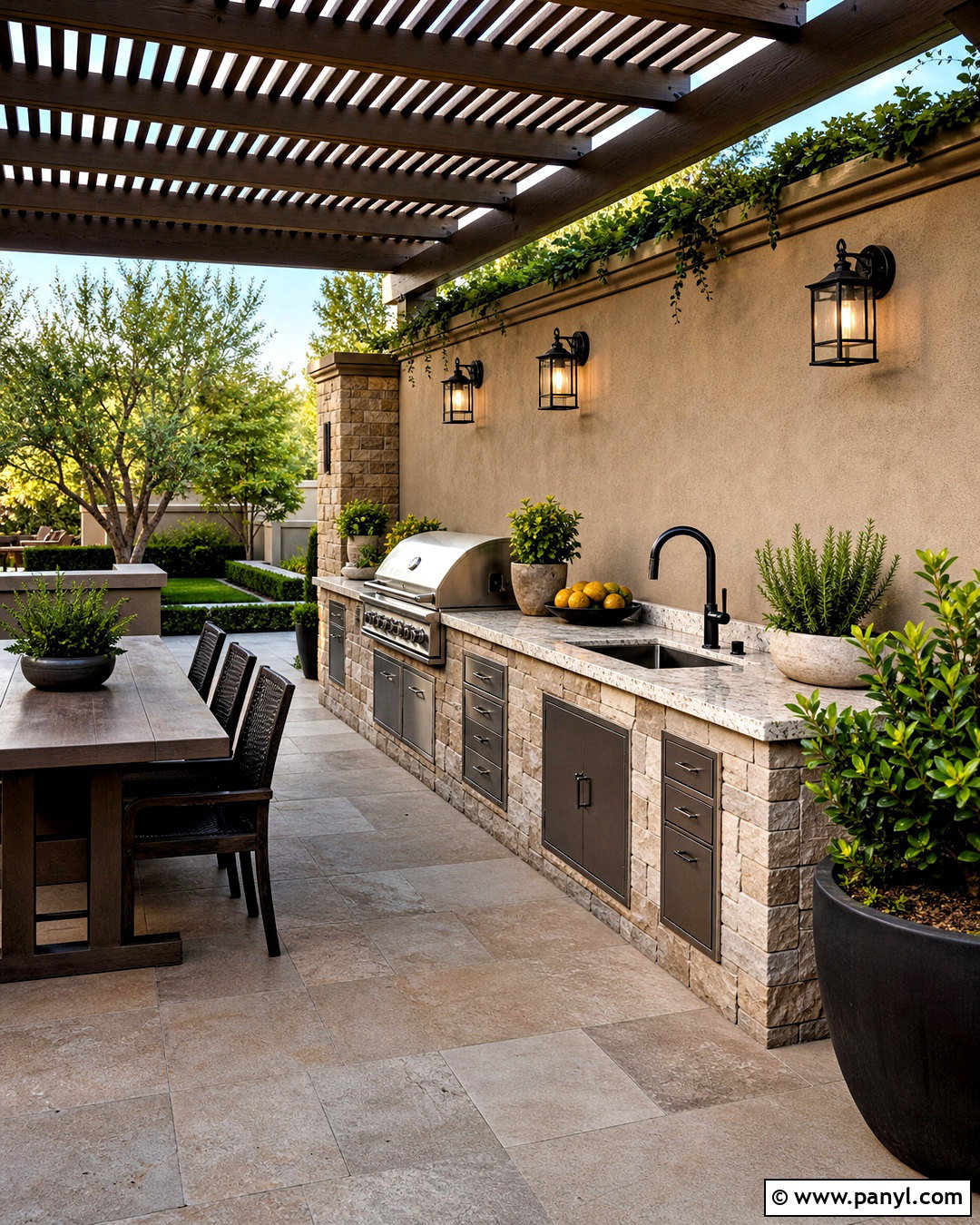
A sturdy wall can form the practical backbone of a complete outdoor cooking and dining zone. Cover the wall in warm taupe stucco, then install a long counter with stone cladding, weather-resistant cabinets, and a durable porcelain or granite work surface. Include a built-in grill, covered storage, and a compact sink where utilities allow. A slatted pergola overhead defines the kitchen and provides partial shade. Across from the counter, place a rectangular dining table with easy-care chairs and a large planter at each end. Recessed wall lights brighten the worktop, while herbs grow in raised beds nearby. Keep appliances properly ventilated and follow local placement, utility, and fire-safety requirements.
17. Yard Wall With Mosaic Tile
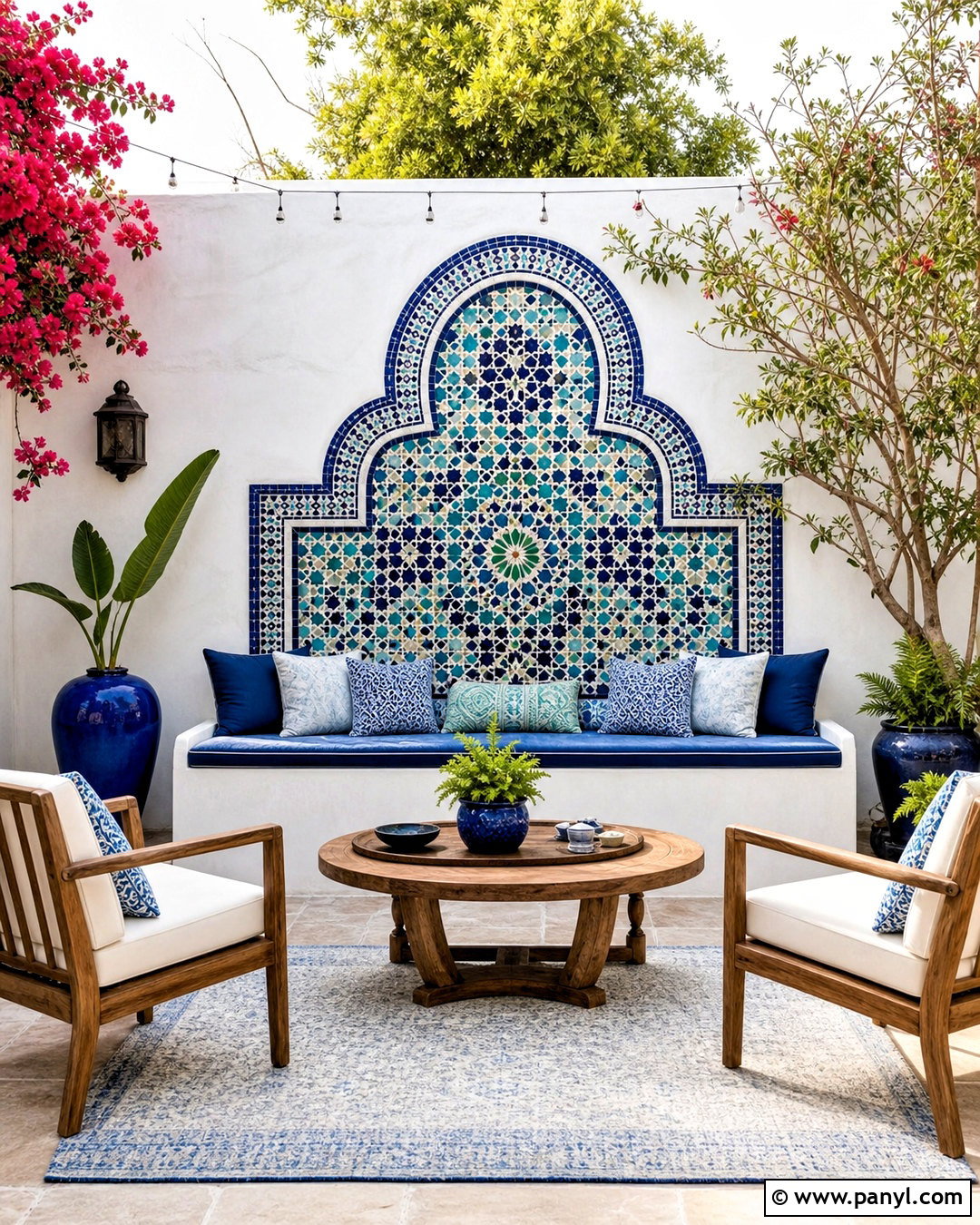
Colorful mosaic tile can make a compact courtyard wall feel intentional and lively. Cover one central section with weather-rated tile in deep blue, turquoise, white, and muted green, then surround it with smooth white stucco. Position a simple fountain or built-in bench against the tiled area so the pattern has a clear purpose. Use pale stone flooring and natural wood furniture to prevent the space from becoming visually busy. Blue ceramic planters filled with leafy green plants repeat the wall colors around the courtyard. Add understated white sconces instead of highly decorative lighting. This complete design works best when the mosaic is treated as one controlled focal point rather than repeated across every surface.
18. Rustic Timber Retaining Yard Wall
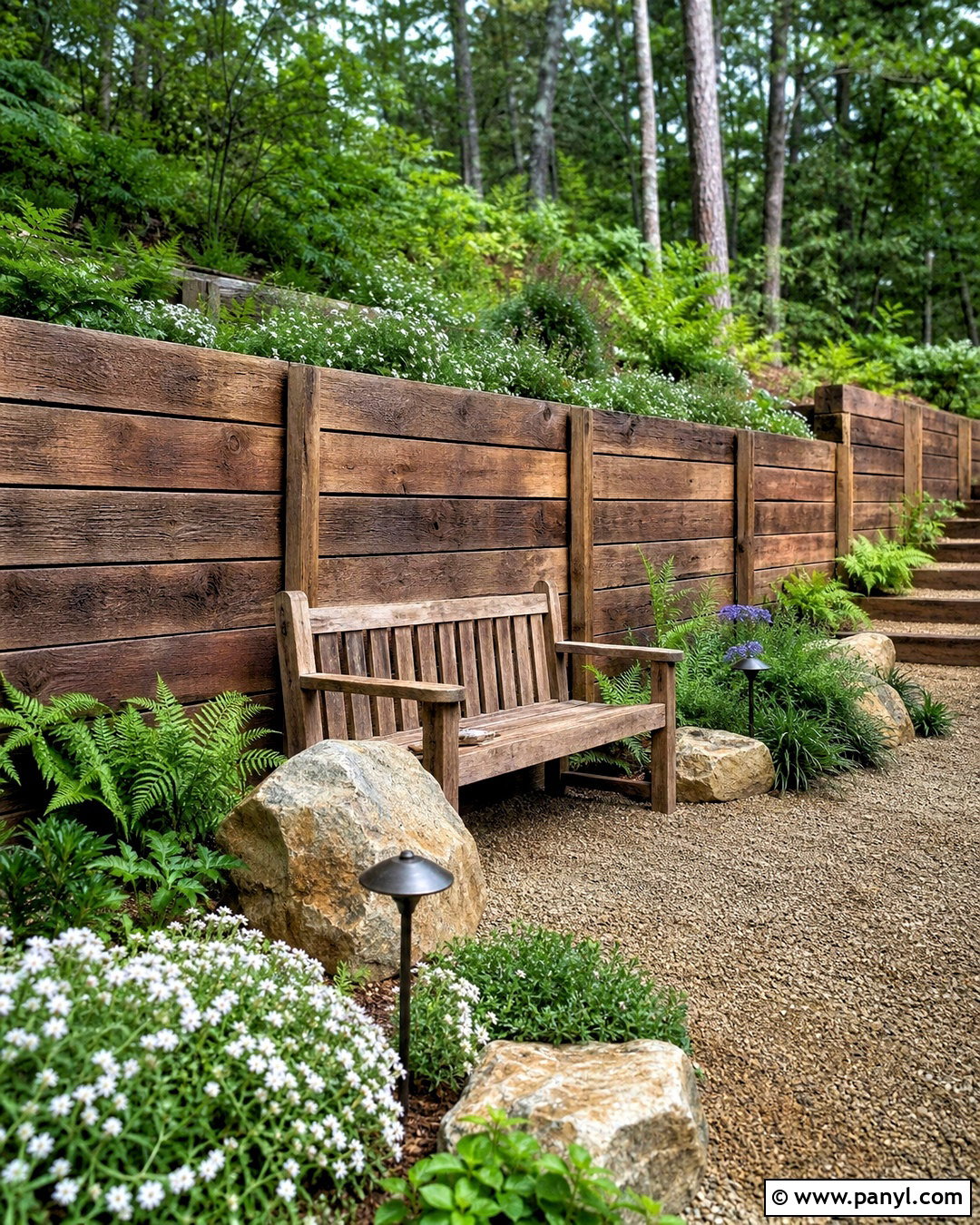
A timber retaining wall brings warmth to casual gardens and wooded properties. Use substantial pressure-treated or naturally durable timbers installed in clean horizontal courses, with visible grain and a medium brown finish. Create broad planting beds above the wall filled with native shrubs, ferns, woodland grasses, and flowering ground cover. A gravel path can follow the base, leading to a simple platform with a wooden bench and weather-resistant cushions. Add boulders at the ends of the wall to create a natural transition into the landscape. Low metal path lights provide visibility without competing with the rustic setting. Correct anchoring and drainage help protect the structure and the surrounding soil over time.
19. Yard Wall With Mirrors And Greenery
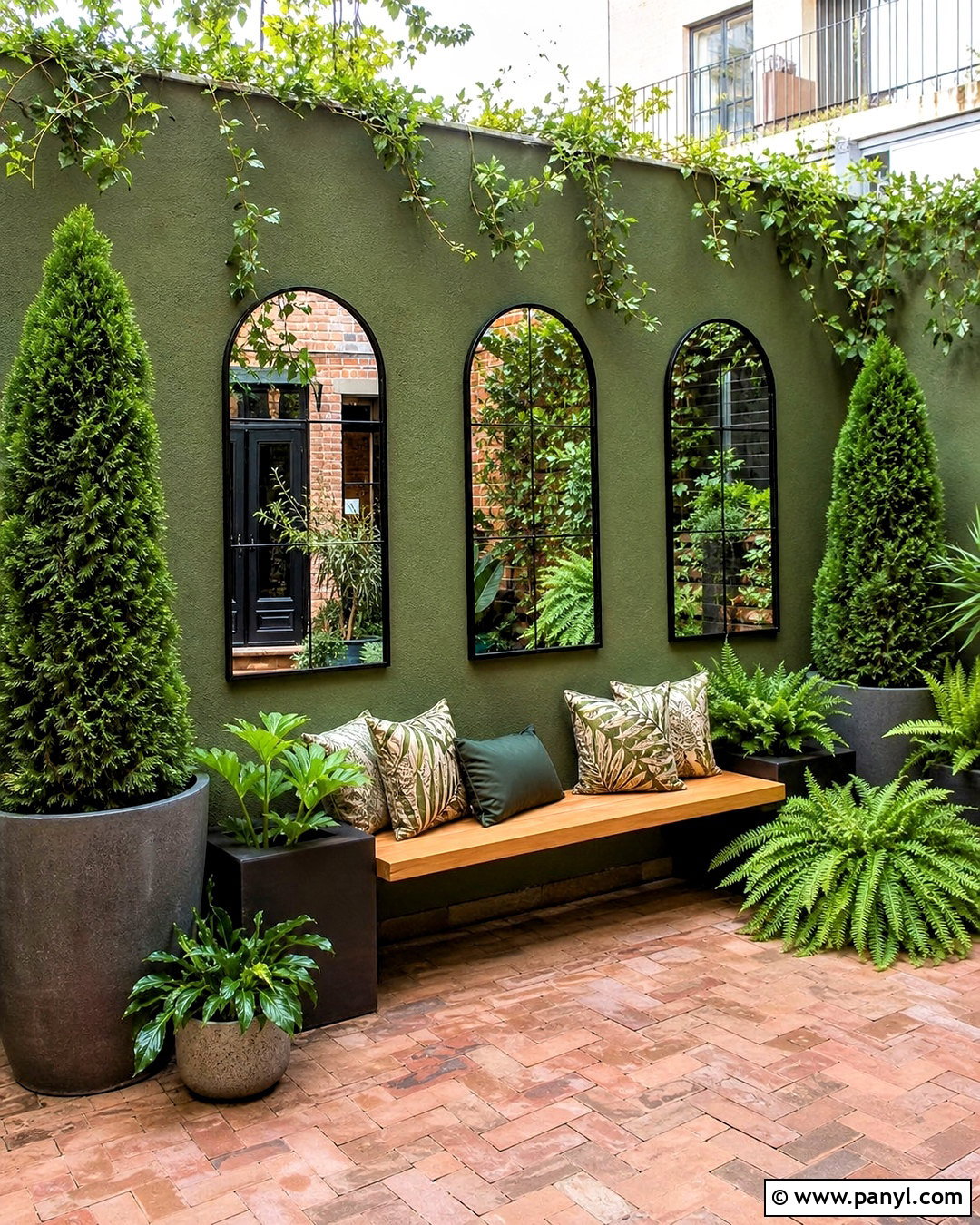
Outdoor mirrors can visually expand a small enclosed yard when they are positioned carefully. Paint the wall a deep olive green, then mount two or three weather-resistant arched mirrors where they reflect plants rather than direct sunlight or neighboring windows. Frame them with slim black metal or weathered wood for a garden-window effect. Arrange large containers of ferns, small evergreen trees, and trailing vines below the mirrors to soften their edges. A narrow teak bench and patterned outdoor cushions complete the intimate seating area. Use light gravel or warm brick flooring to brighten the ground plane. Keep the mirrors slightly shaded and place them where they will not confuse birds or create concentrated glare.
20. Mixed Material Yard Wall
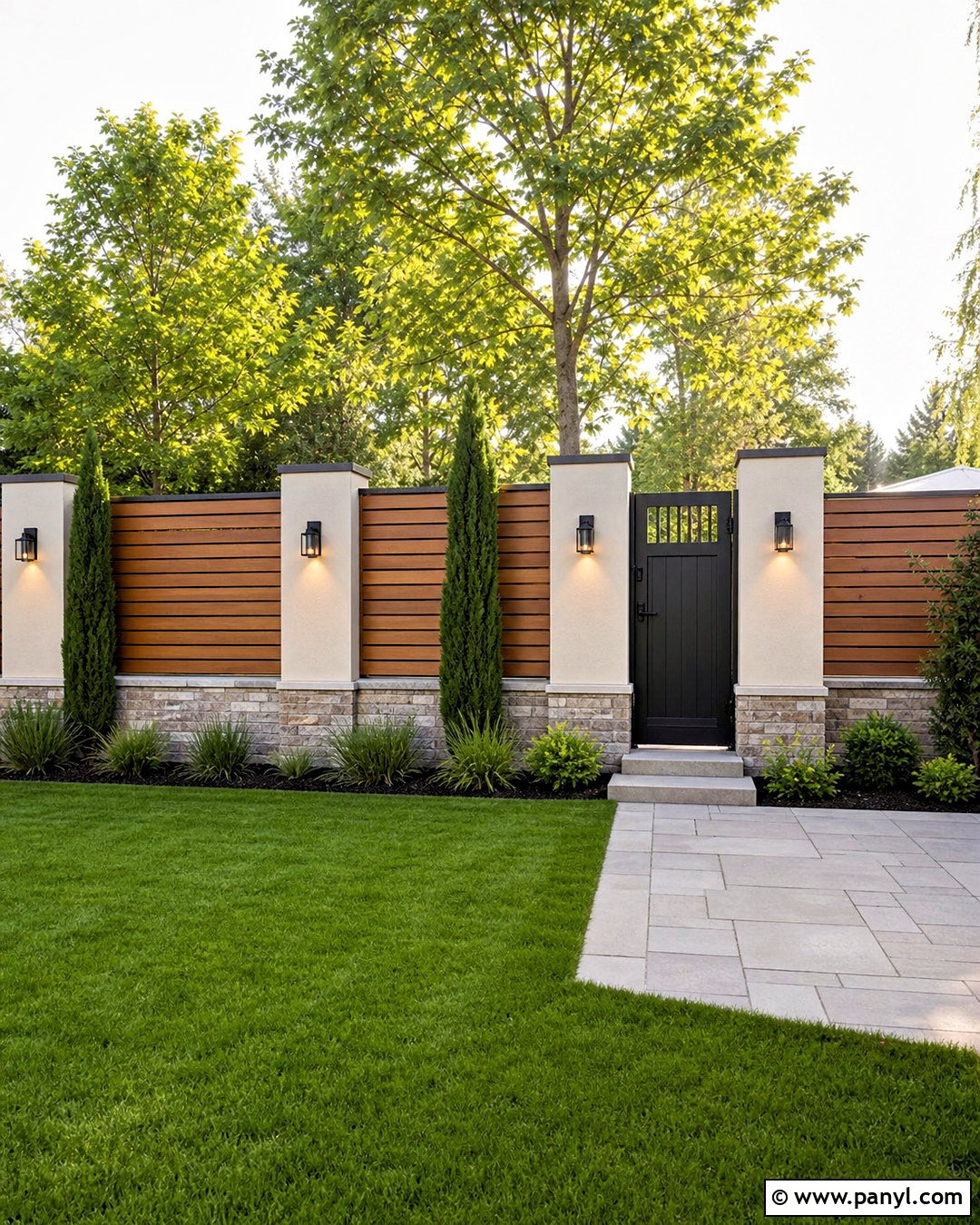
Combining several materials can connect a yard wall with both the house and surrounding landscape. Start with a low base of warm gray stone, add smooth cream stucco columns, and install horizontal cedar slats between them. Repeat these finishes on nearby planters, seating, or a garden gate so the wall does not appear disconnected. A wide lawn or simple paver patio keeps the detailed boundary from becoming overwhelming. Plant upright evergreens behind selected open sections and use low grasses along the stone base. Matte black lights and hardware provide a crisp finishing touch. Limit the design to three primary materials and a controlled color palette for a cohesive, carefully planned result.
Conclusion:
The most successful yard walls combine practical performance with a design that feels connected to the whole property. Before choosing materials, consider privacy, drainage, sunlight, maintenance, local requirements, and the architectural character of your home. Then complete the wall with coordinated planting, paving, seating, and lighting rather than treating it as an isolated structure. Smooth concrete and metal suit clean modern spaces, while brick, stone, timber, and stucco create warmer or more traditional settings. Features such as raised beds, fountains, fireplaces, and outdoor kitchens can add even more purpose. Use these **20 yard wall design ideas** to create a boundary that improves both the function and appearance of your outdoor space.

Related Ideas and Inspiration:
Leave a Reply