
Room doors may be practical, but their color can shape how polished, spacious, or welcoming an entire interior feels. The best 20 room door color ideas go beyond standard white and connect the door with the walls, flooring, furniture, trim, and hardware. Warm neutrals create gentle flow, while navy, charcoal, and earthy green add architectural definition. Color-drenched doors are also becoming a popular way to produce a seamless, enveloping room. () Before painting, test the color beside the wall and floor in daylight and evening light. Also consider a durable satin or semigloss finish that is easy to clean. The complete room schemes below make it easier to recreate these 20 room door color ideas.

1. Warm White Room Door
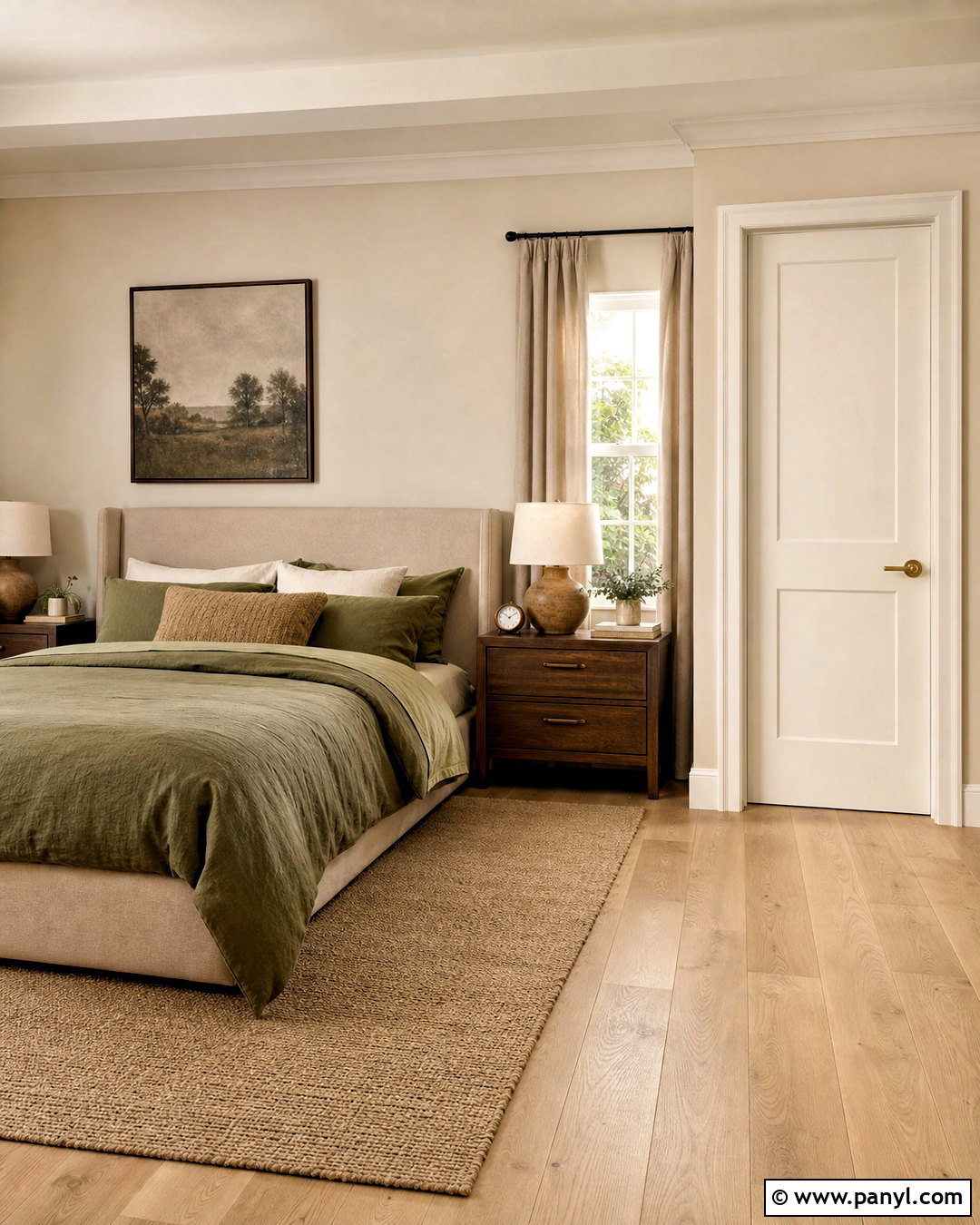
A warm white door creates a clean transition without the clinical appearance of a stark, blue-toned white. Use it in a bright bedroom with creamy walls, pale oak flooring, and a natural linen upholstered bed. Paint the door and surrounding trim the same warm white for a quiet, continuous frame. Brushed brass hardware adds subtle warmth, while oatmeal curtains and a beige wool rug support the soft palette. Introduce contrast through walnut nightstands, black ceramic lamps, and muted green bedding. Choose satin paint for the door so it reflects a little more light than the walls. This complete scheme feels relaxed and timeless, making it especially useful in rooms where natural materials and gentle neutrals are already the focus.
2. Soft Greige Room Door
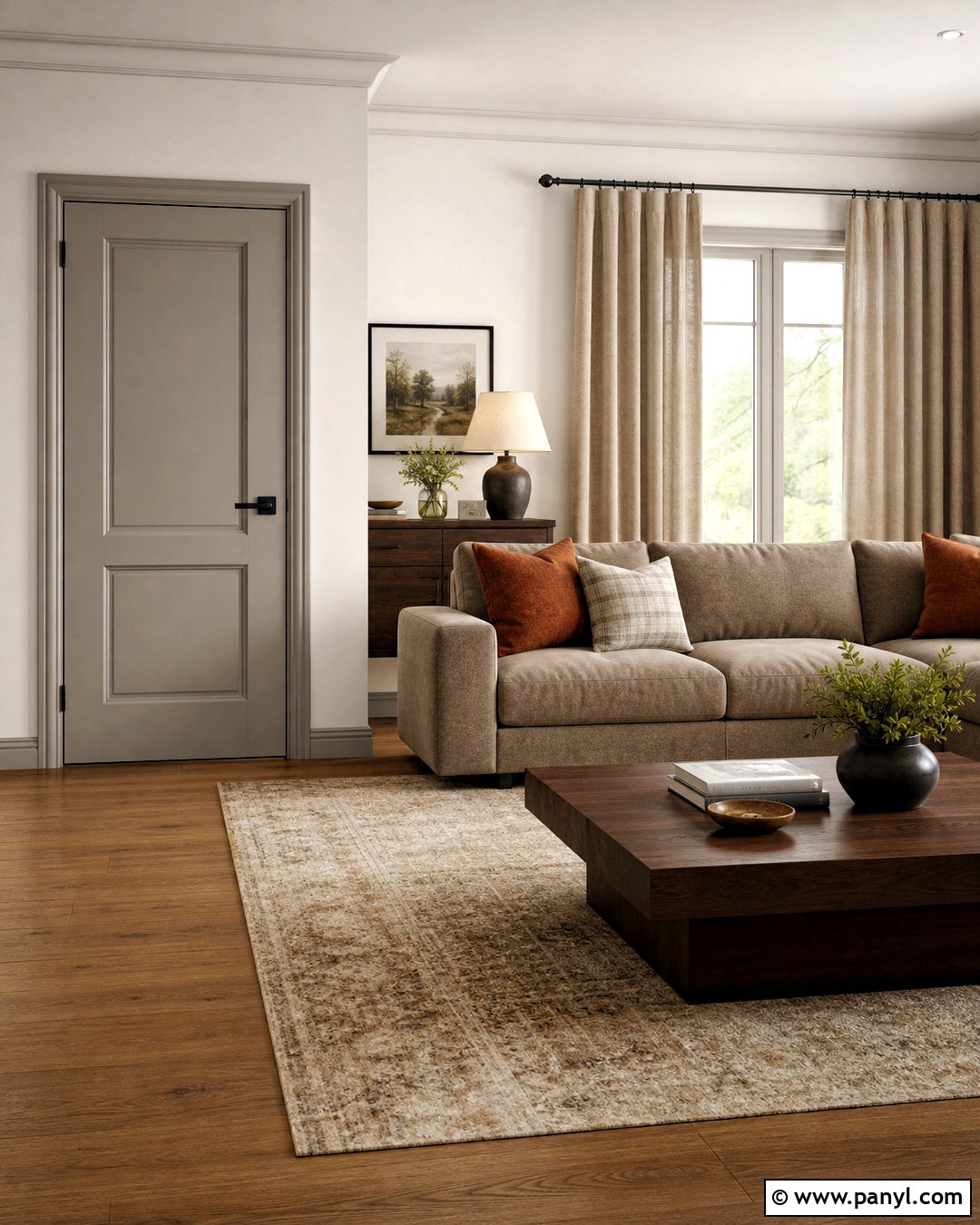
Soft greige offers more depth than white but remains neutral enough to connect rooms with different color schemes. In a transitional living room, pair the greige door with warm ivory walls, medium oak flooring, and a mushroom-colored sofa. Repeat the door color on the baseboards and window trim to make the architectural details feel intentional. Add a cream-and-taupe rug, walnut coffee table, and textured beige curtains for layered warmth. Matte black door hardware introduces a crisp finishing note without making the palette feel harsh. Keep decorative accents simple with muted rust pillows, ceramic vessels, and one large landscape print. The result is a balanced room where the door provides gentle contrast while still supporting a calm, open, and cohesive appearance.
3. Mushroom Beige Room Door
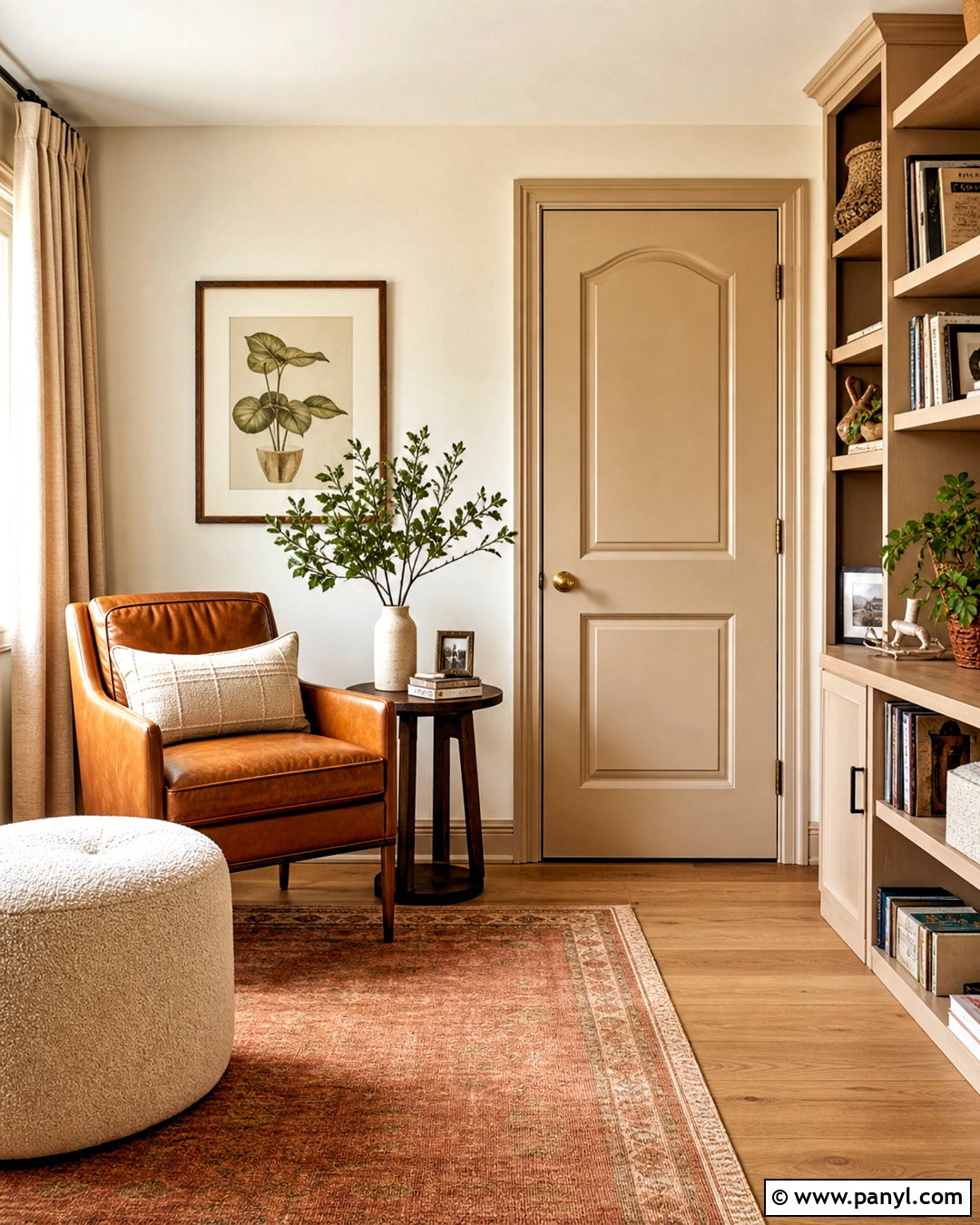
Imagine a cozy reading room where a mushroom beige door grounds the space with an earthy, natural tone. Pair it with soft cream walls and light brown oak flooring to establish a warm foundation. A caramel leather chair, rounded wood side table, and ivory boucle ottoman create an inviting seating arrangement. Use the same mushroom shade on the door casing, but keep the baseboards cream to preserve a light border around the room. Antique brass hardware gives the painted door an established, traditional character. Complete the look with a faded terracotta rug, flax linen curtains, and botanical artwork in dark wood frames. This door color works particularly well when beige furniture needs definition but black or charcoal would create too much visual weight.
4. Stone Gray Room Door
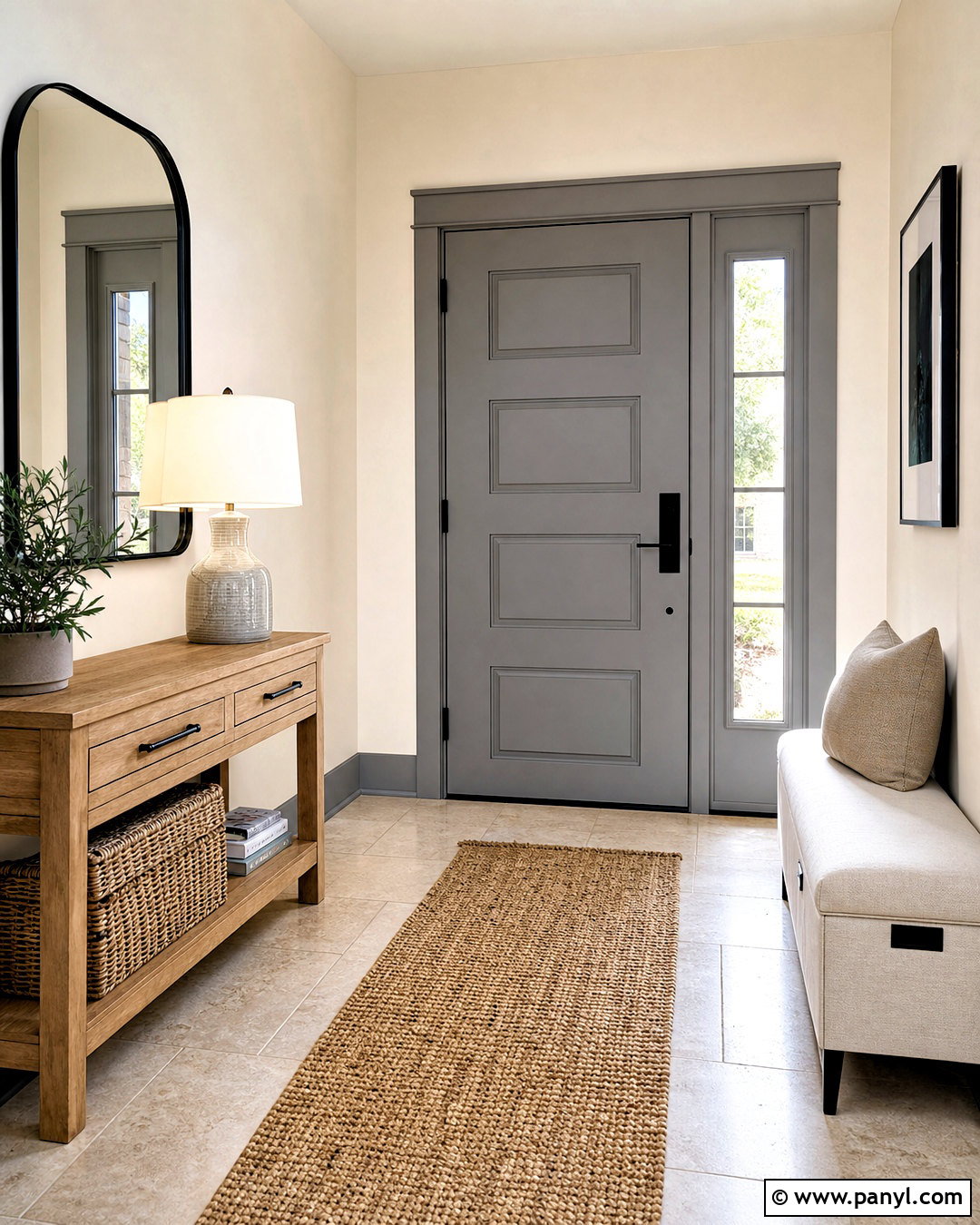
Stone gray brings soft structure to an entry room without making it feel cold. Choose a gray with warm beige undertones, then pair it with off-white walls, limestone-look tile, and a slim natural oak console. Paint both the door and its trim stone gray to create a clearly defined architectural feature. A black-framed mirror and black iron door lever sharpen the neutral palette. Add a woven runner, upholstered storage bench, and ceramic table lamp for practical comfort. Small accents in muted blue and sage keep the room from looking one-dimensional. This complete arrangement suits modern and transitional homes because the door feels distinctive but not overly dramatic. Test several gray samples first, since surrounding light can reveal unexpected blue, green, or purple undertones.
5. Charcoal Room Door
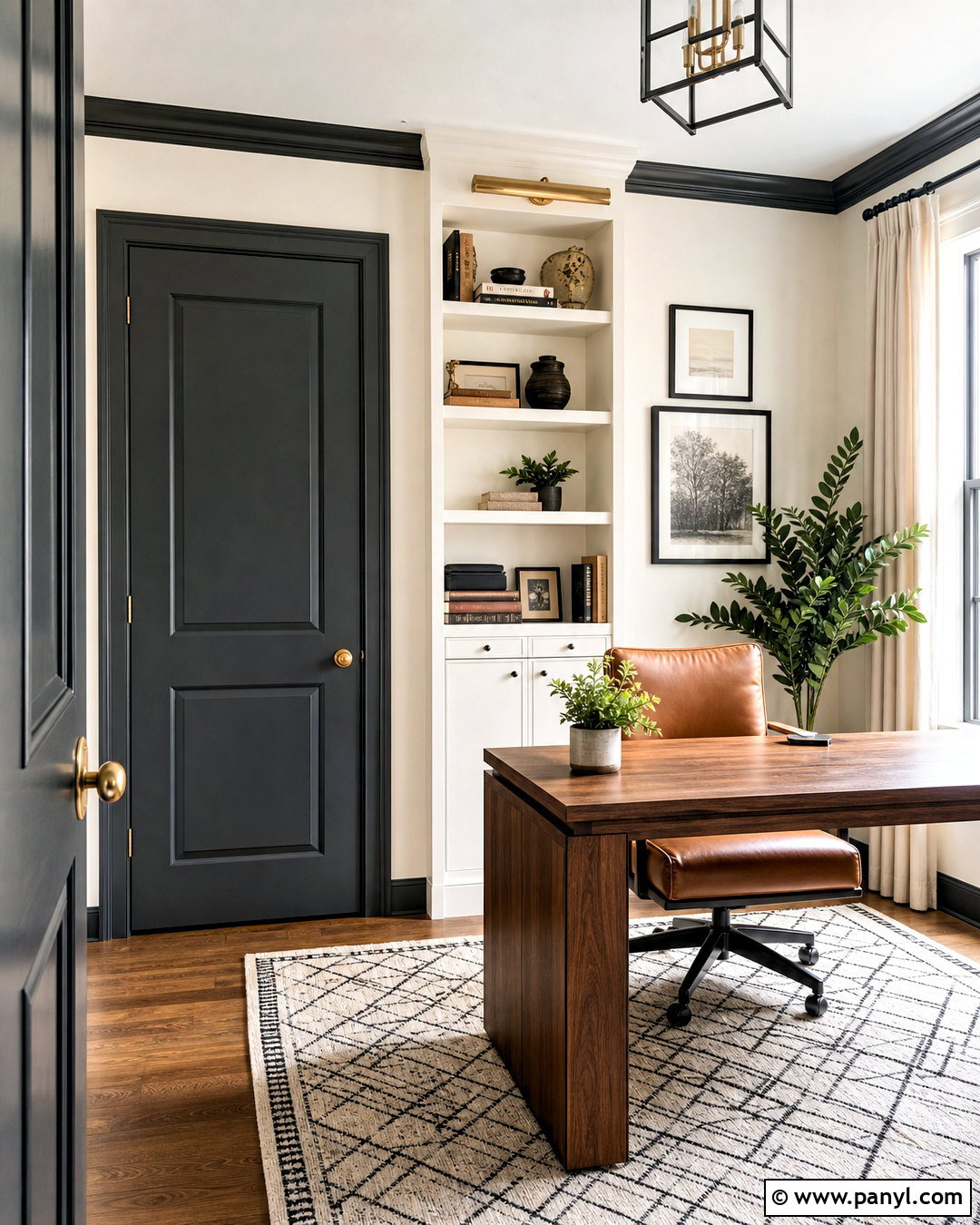
A charcoal door gives a modern home office a confident focal point while remaining easier to coordinate than pure black. Set it against warm white walls and medium-toned wood flooring for clear contrast. Carry the charcoal onto the door frame and baseboards, creating a strong outline around the room. A walnut desk, camel leather chair, and built-in white shelving keep the workspace practical and balanced. Use aged brass hardware to soften the dark paint and connect it with a brass desk lamp. Finish the scheme with a low-pile geometric rug, cream curtains, and restrained green plants. The dark door will feel deliberate because its color appears again in picture frames, storage boxes, and lighting. Satin paint keeps fingerprints easier to remove from this hardworking surface.
6. Soft Black Room Door
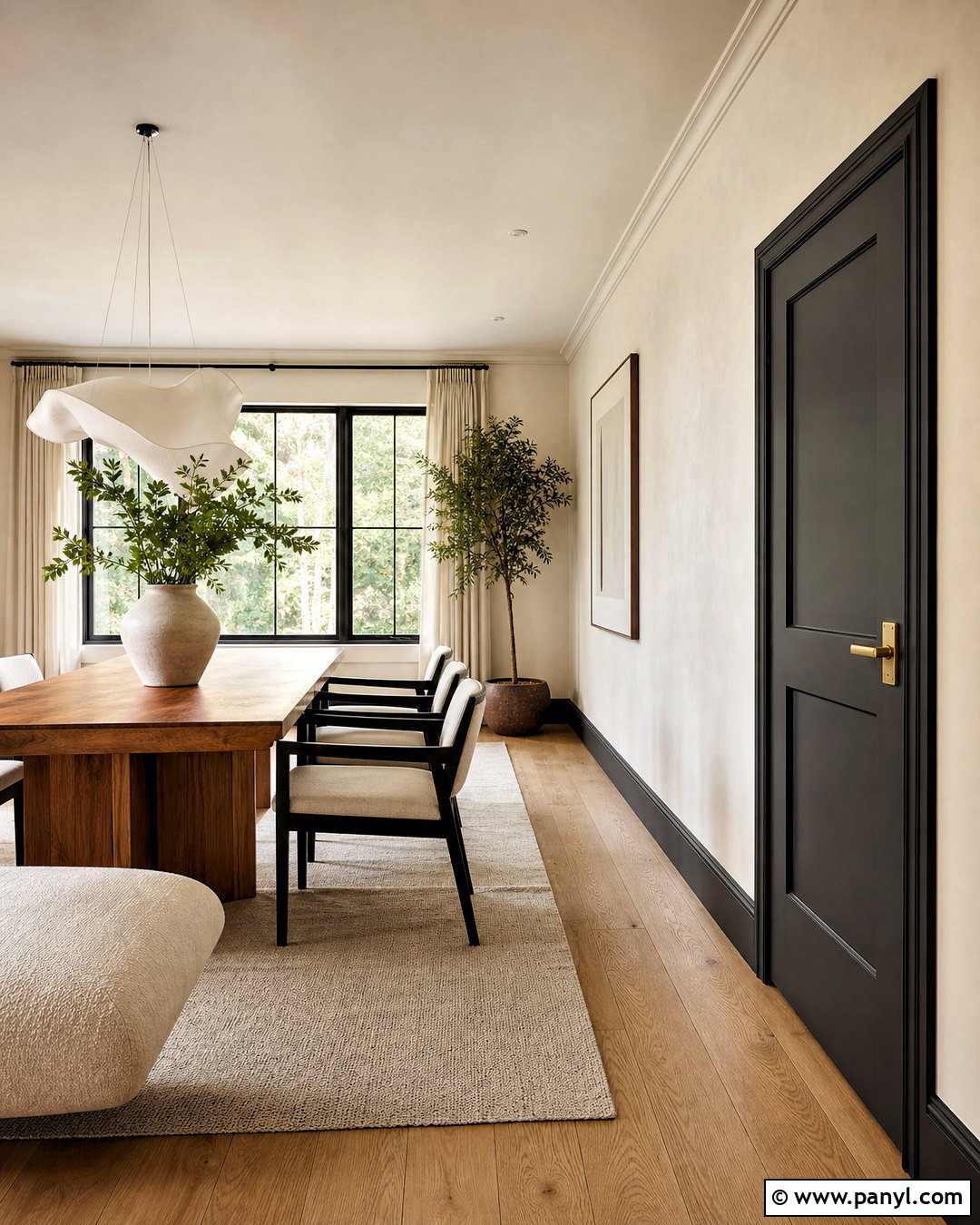
Soft black contains warm brown or gray undertones, allowing it to feel sophisticated rather than severe. Use this room door color in a modern dining space with ivory plaster walls, wide-plank oak flooring, and a long wood table. Paint the door and casing soft black, then repeat the shade on a narrow display cabinet and the dining chair frames. Natural linen upholstery and a large cream rug prevent the room from becoming too dark. Choose unlacquered brass hardware for a warm, gently aged contrast. A sculptural white pendant and simple ceramic centerpiece keep the design visually quiet. Because the door acts as a strong architectural anchor, limit the remaining palette to black, cream, brown, and olive. The finished room feels intimate, polished, and carefully connected.
7. Deep Navy Room Door
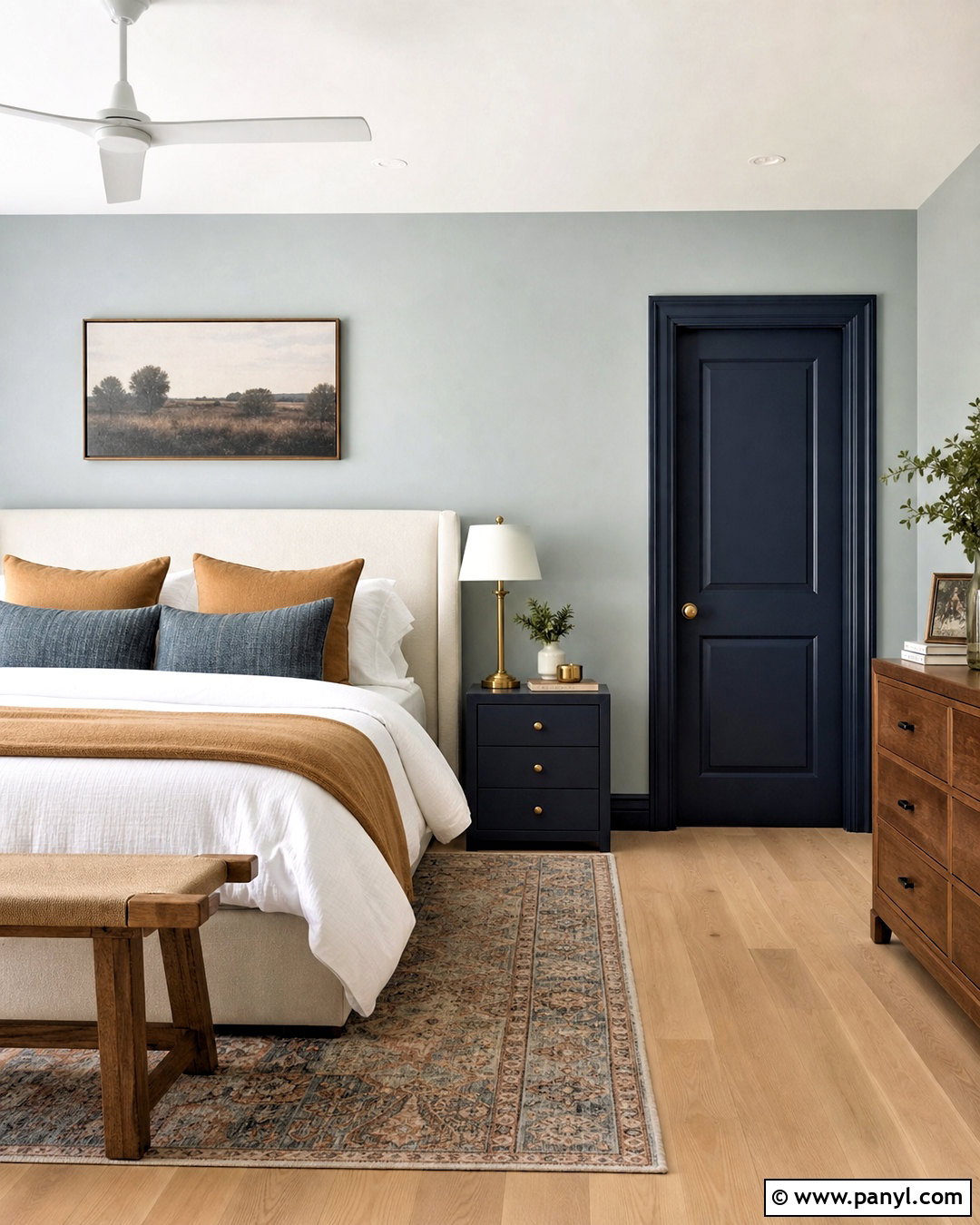
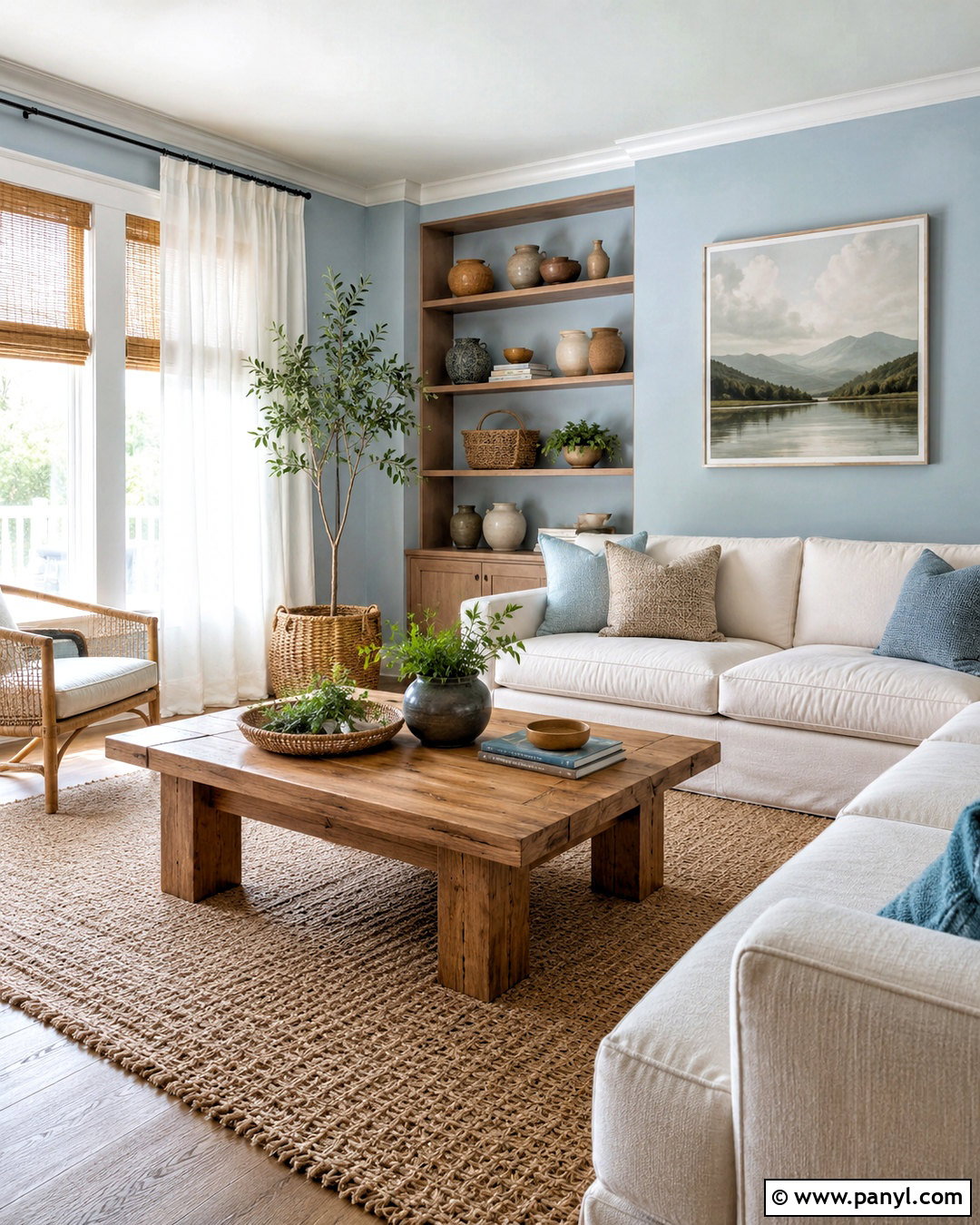
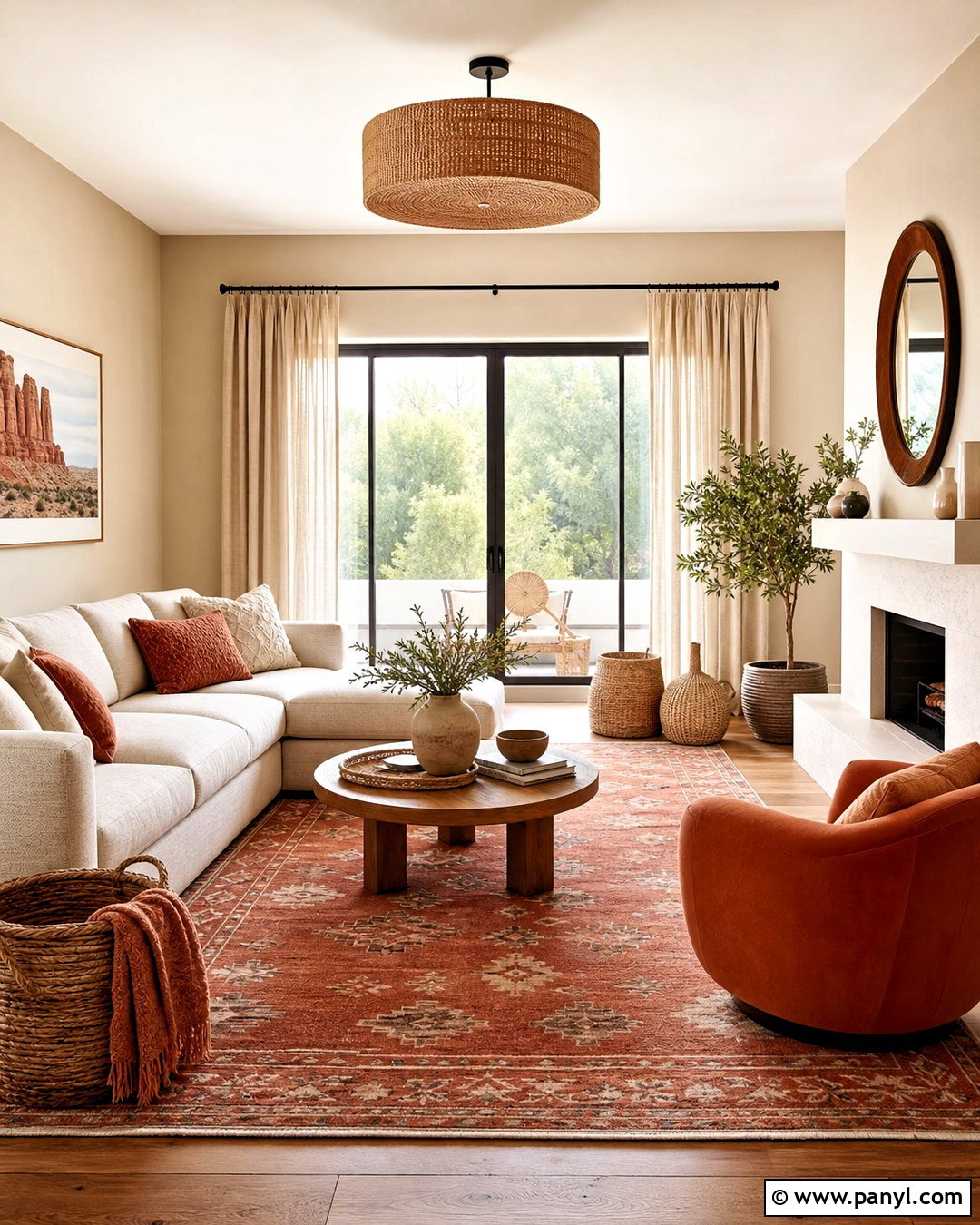
Deep navy adds color to a bedroom while maintaining the calm quality often associated with darker neutrals. Pair a navy door and matching casing with pale gray-blue walls, white oak flooring, and an upholstered bed in warm ivory. Repeat the navy through bedside tables or a narrow bench, but avoid covering every large surface with the same dark shade. Brushed nickel hardware creates a clean finish, while warm brass lamps can add a softer mixed-metal detail. Layer white bedding with dusty blue and camel accents to balance cool and warm tones. A faded traditional rug brings pattern underfoot without competing with the door. This design works best when the room receives moderate natural light and includes enough pale surfaces to keep the navy from visually closing in the space.
8. Dusty Blue Room Door
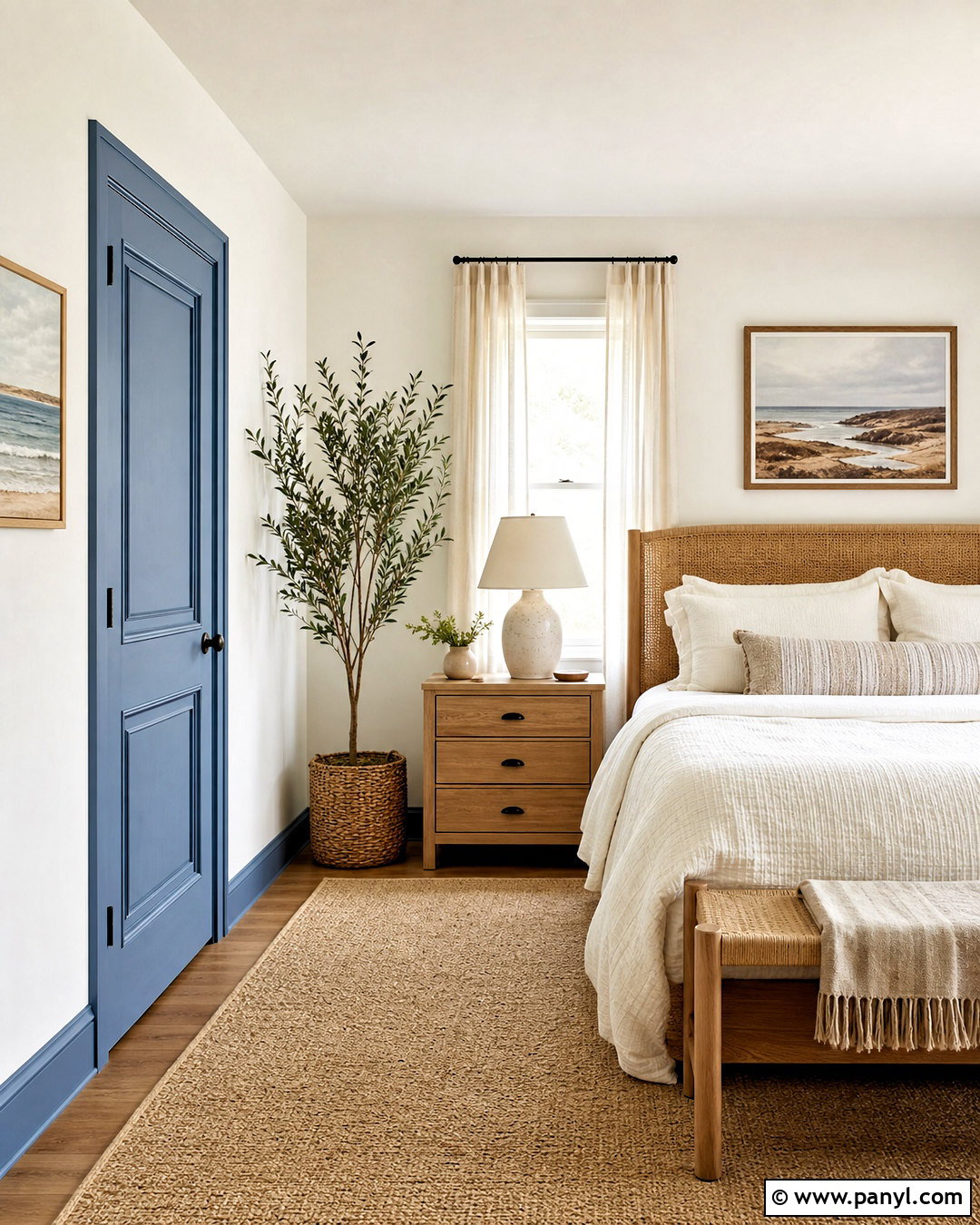
A dusty blue door can give a guest bedroom a peaceful, collected quality. Select a muted blue with noticeable gray undertones and place it against warm white walls. Light oak furniture, a woven cane headboard, and natural fiber flooring reinforce the relaxed character. Paint the door frame dusty blue as well, creating a complete feature instead of an isolated colored panel. Aged bronze hardware adds depth and coordinates with vintage-style bedside lamps. Bring the blue into the room through a patterned quilt, small ceramic vase, and framed coastal landscape, while keeping most textiles cream and sand colored. This controlled repetition helps the door belong within the overall palette. Soft linen curtains and a comfortable reading chair complete a room that feels airy, restful, and easy to maintain.
9. Powder Blue Room Door
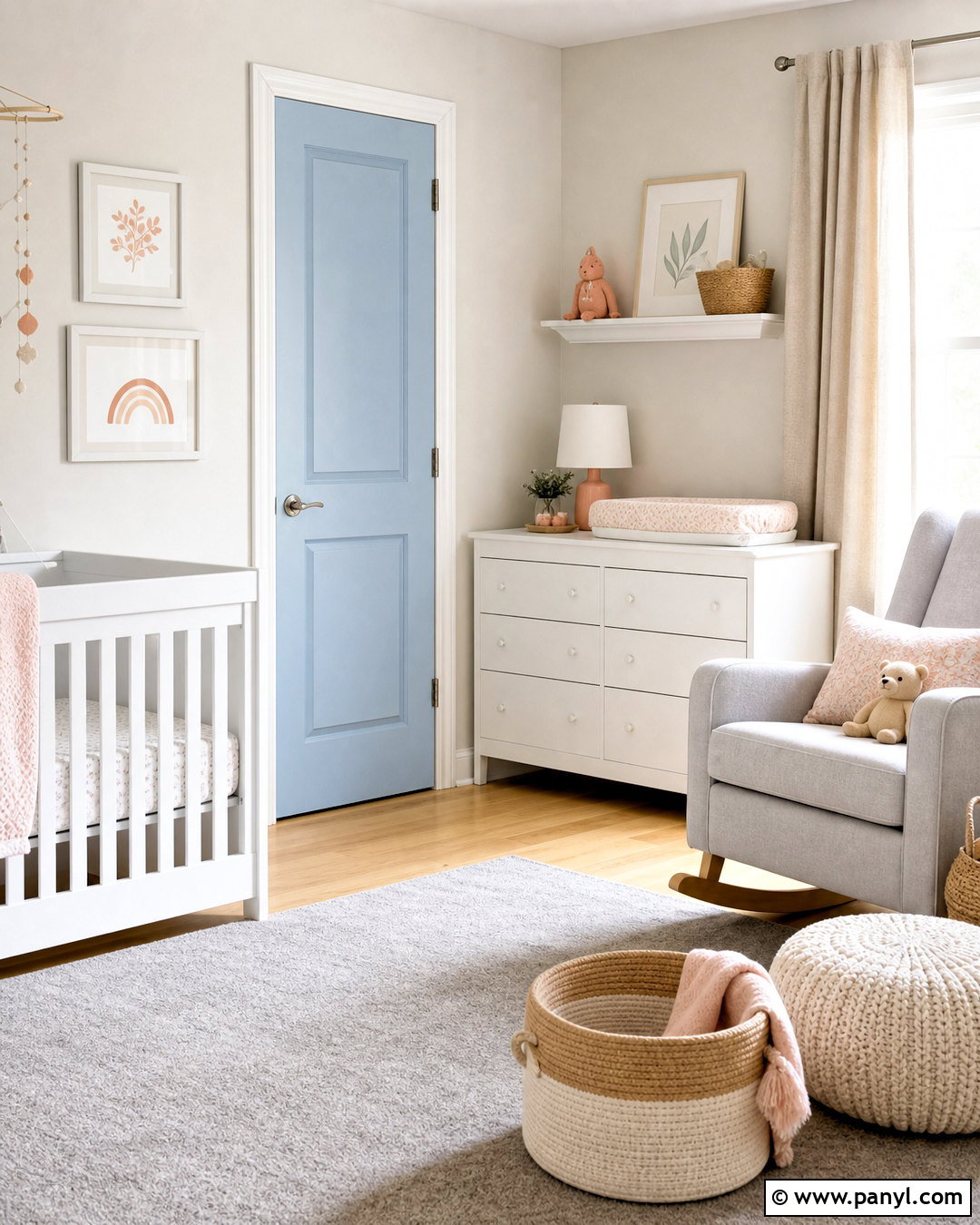
Powder blue gives a small nursery or child’s bedroom gentle color without overwhelming the space. Combine the door with creamy white walls, natural maple flooring, and simple white furniture for a bright foundation. Keep the casing white if you want the blue panel to read as a playful accent, or paint the casing blue for a more complete framed effect. A pale gray rug, oatmeal curtains, and light wood storage baskets make the design feel soft and practical. Choose brushed nickel or white hardware for a clean, understated finish. Repeat powder blue in bedding, wall art, and one small lamp rather than across every accessory. Warm peach or muted yellow details can prevent the palette from feeling too cool while creating a cheerful, balanced room.
10. Sage Green Room Door
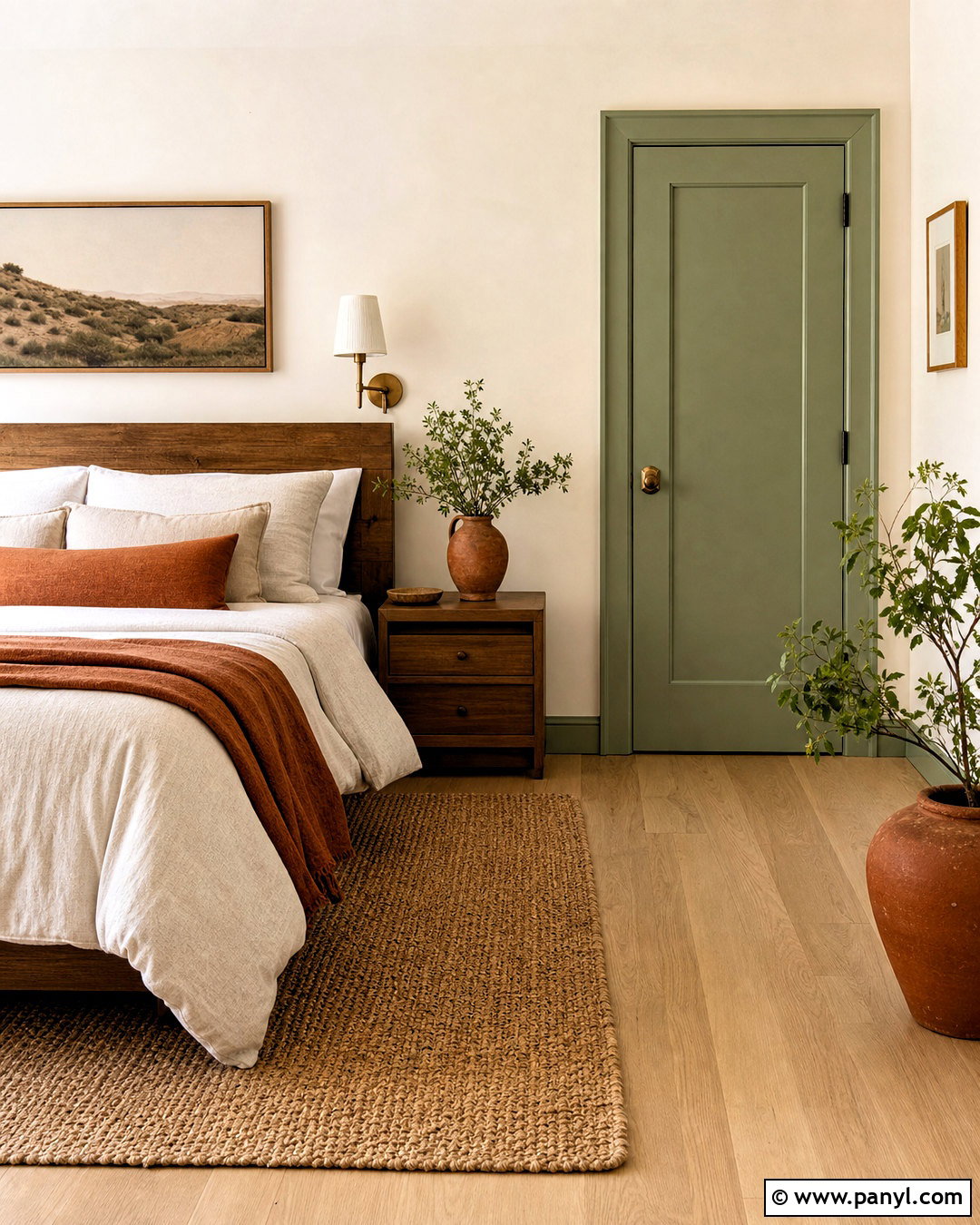
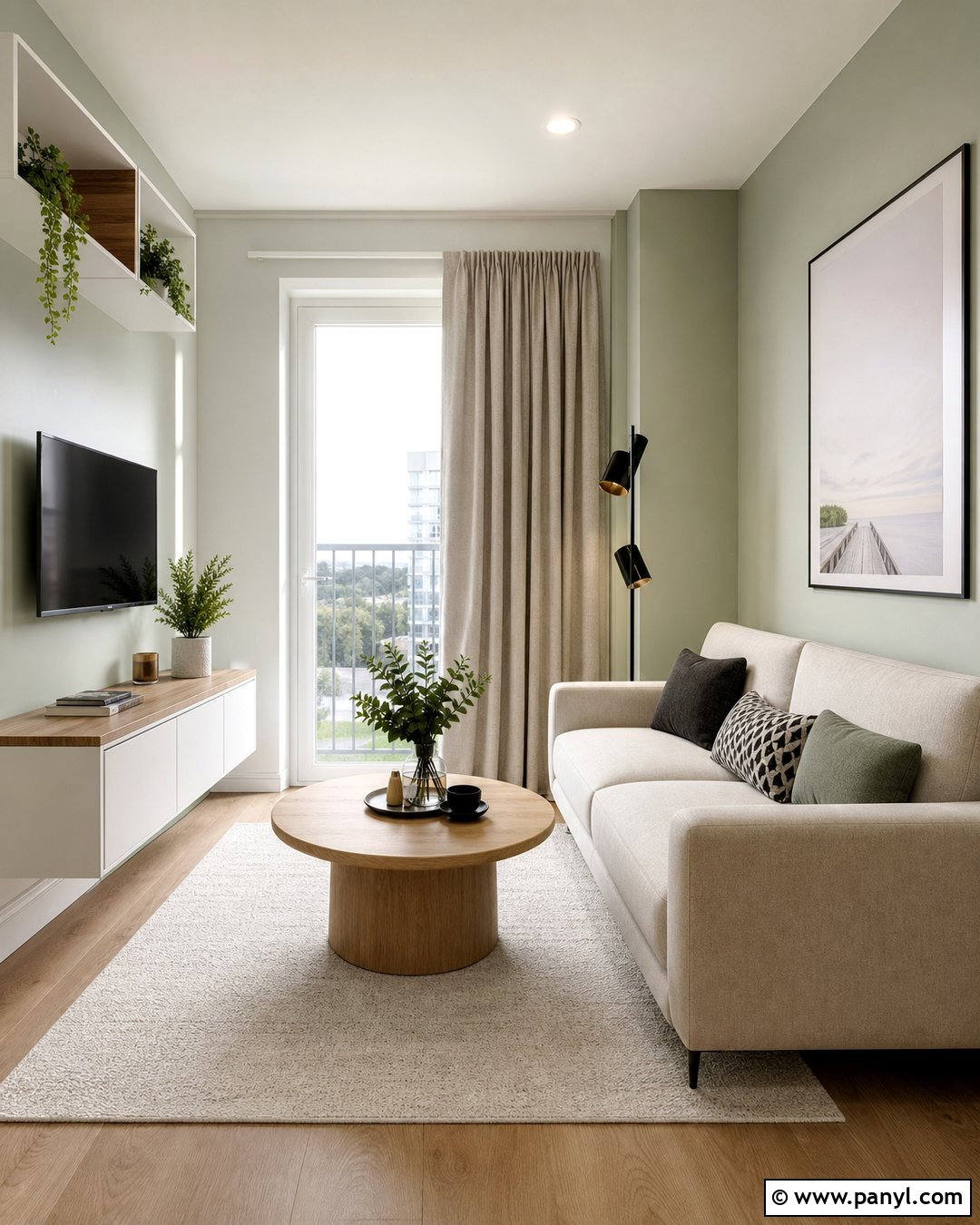
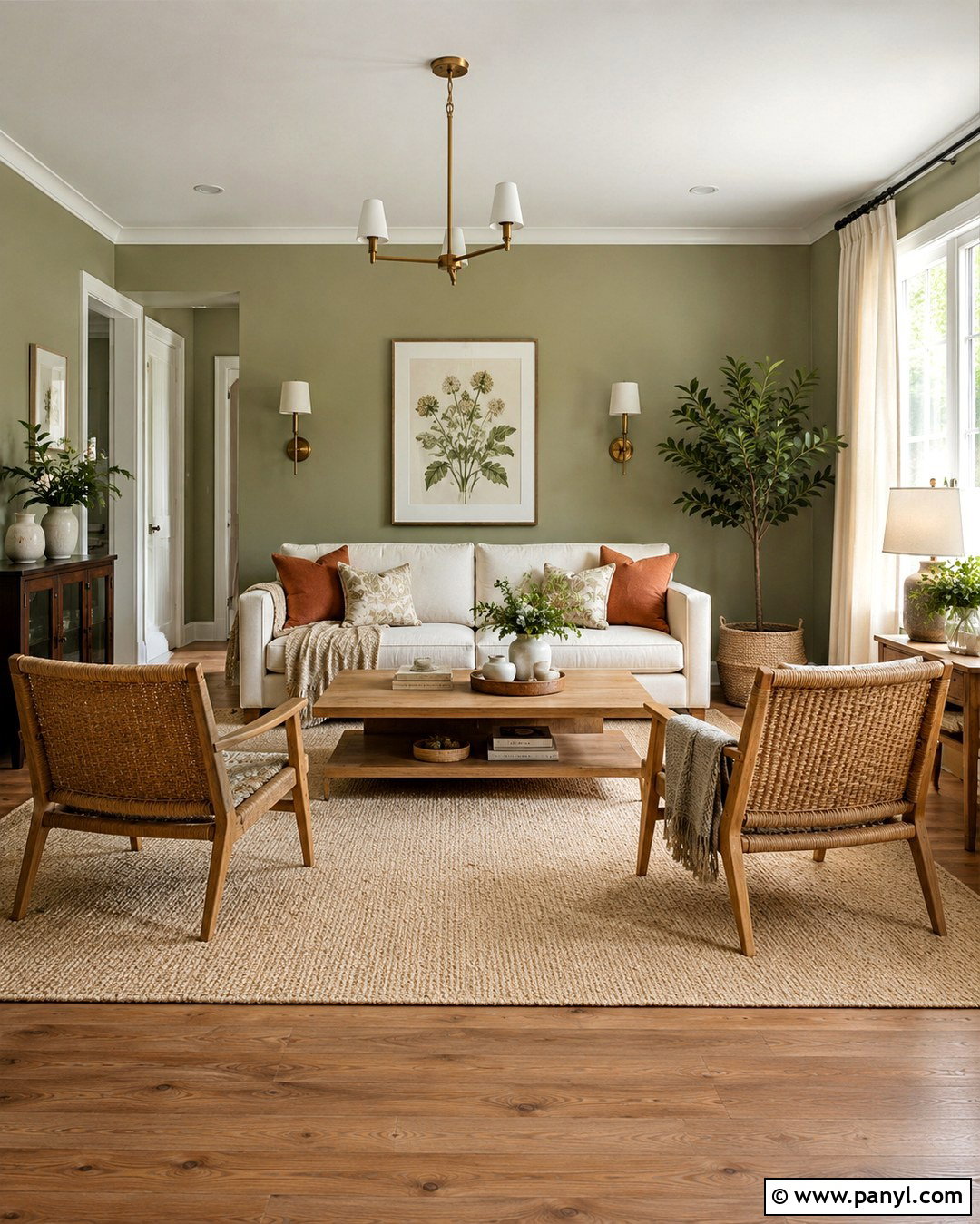
Sage green pairs beautifully with natural wood and warm neutrals, making it a flexible choice for a restful bedroom. Use a muted, gray-based sage on the door and trim, then surround it with creamy beige walls and light oak flooring. An oak bed, linen bedding, and a woven wool rug strengthen the nature-inspired palette. Add aged brass hardware, which brings warmth to the green without creating sharp contrast. Repeat sage in one patterned pillow and a small upholstered bench, while using terracotta pottery and rust-colored textiles as earthy accents. A few leafy plants can support the color story, but keep the arrangement uncluttered. Soft greens remain especially useful when homeowners want visible color that still behaves like a neutral throughout an interior. ()
11. Olive Green Room Door
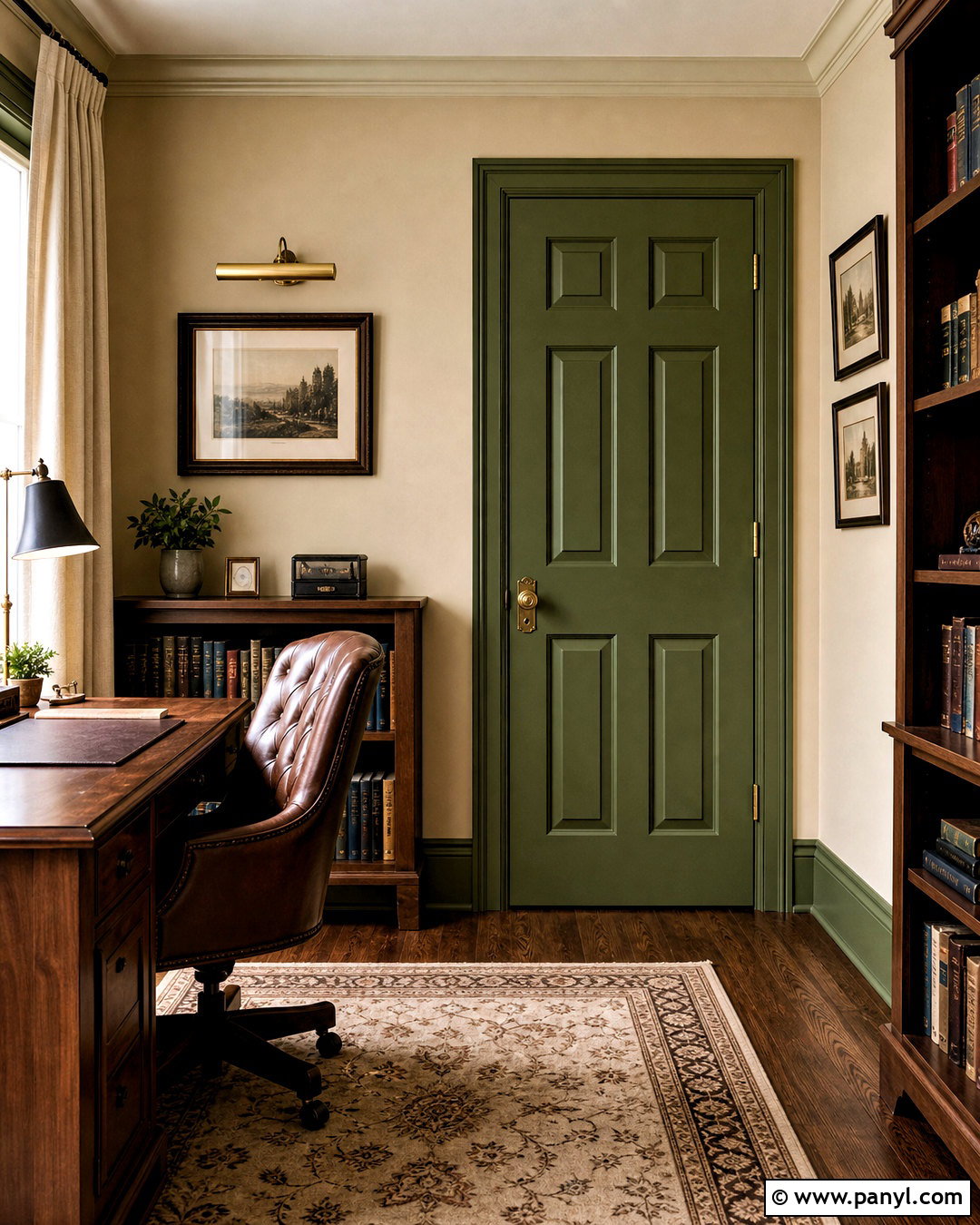
Olive green can transform an ordinary study into a grounded, character-rich retreat. Paint the paneled door and casing a deep, muted olive, then use warm beige walls and dark oak flooring around it. A substantial walnut desk, brown leather chair, and low bookcases produce a comfortable library-like layout. Antique brass hardware suits the earthy door color and connects with a classic picture light above framed artwork. Introduce cream curtains and a light patterned rug so the heavier wood finishes do not overpower the room. Repeat olive on storage boxes, a desk accessory, or the background of a textile pattern. This restrained repetition gives the room clear direction. The completed space feels established and cozy, yet the lighter walls maintain enough contrast for comfortable daytime work.
12. Forest Green Room Door
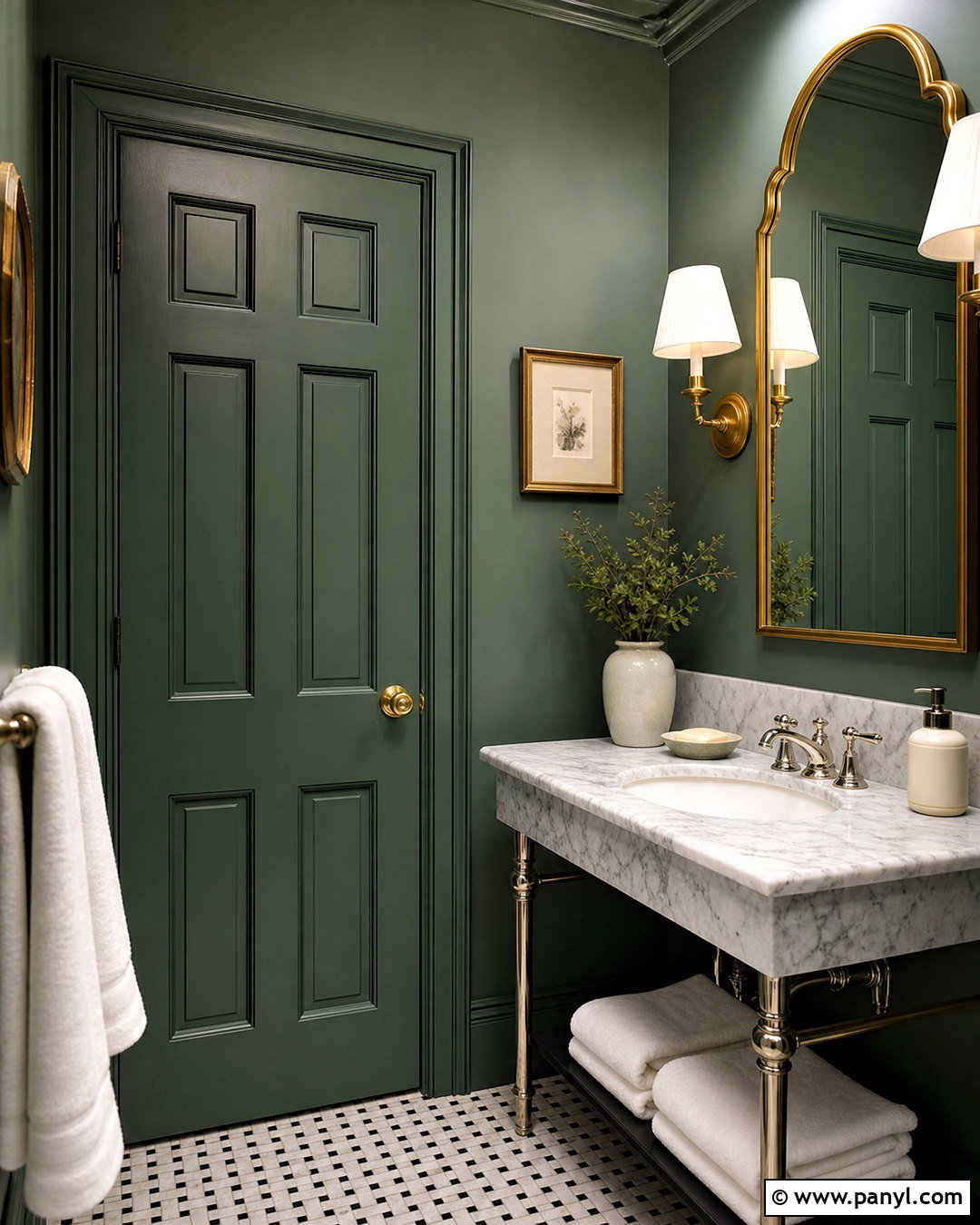
Forest green delivers drama in a compact powder room, especially when it becomes part of a color-drenched scheme. Paint the door, trim, walls, and narrow ceiling molding the same rich green for an enveloping effect. Balance the saturated color with a white marble-topped vanity, polished nickel faucet, and bright white sink. Small black-and-white floor tiles add pattern while keeping the limited palette crisp. Use a frameless or thin brass mirror to reflect light throughout the room. White towels and one pale ceramic accessory provide necessary visual relief. A semigloss finish on the door will withstand frequent touching and cleaning, while an eggshell wall finish creates subtle surface variation. The finished bathroom feels bold and coherent rather than busy because every detail follows one controlled material and color plan.
13. Muted Teal Room Door
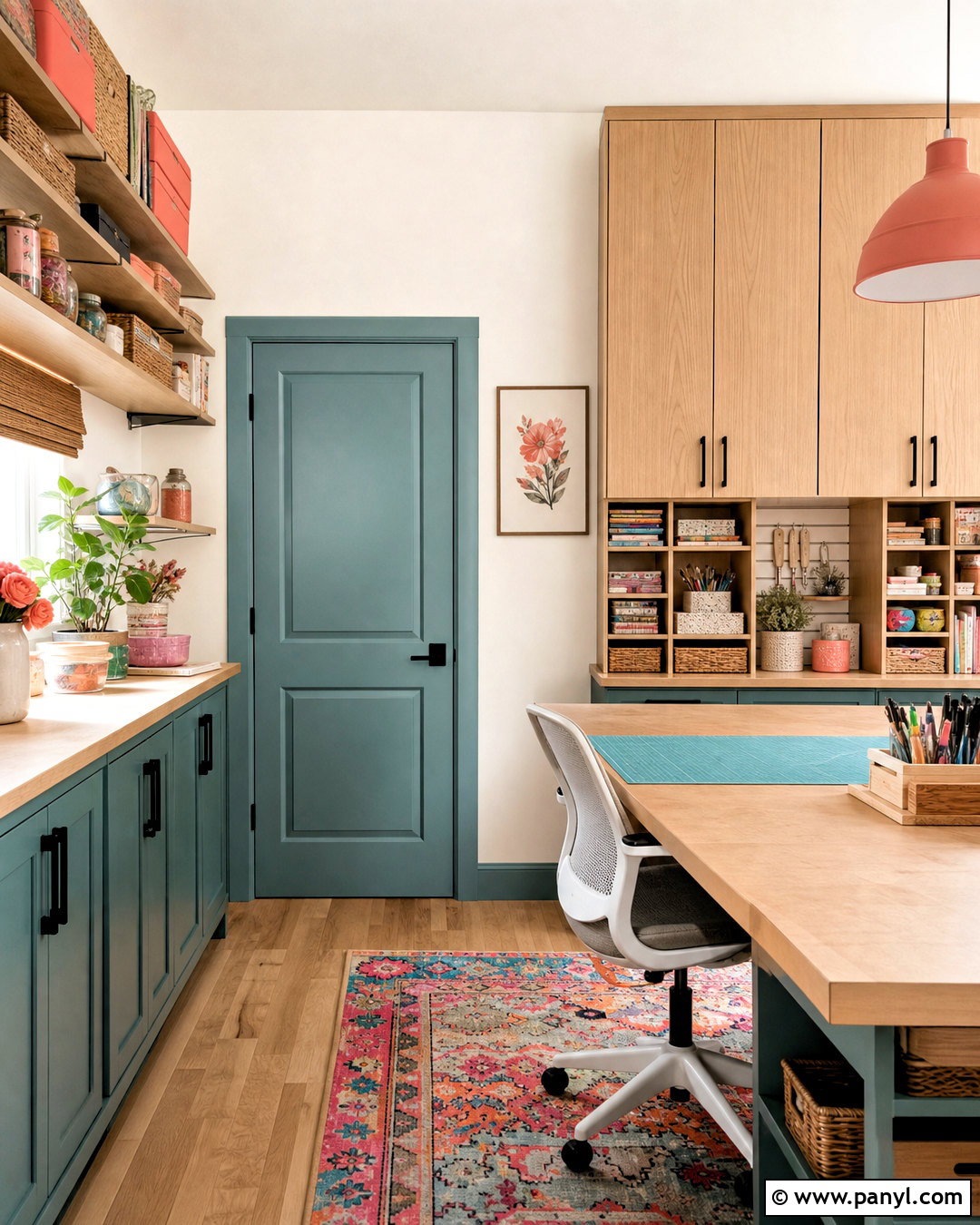
Muted teal sits between blue and green, giving a creative room noticeable color without the intensity of a bright turquoise. Use it on the door and casing in a craft room with soft white walls, maple flooring, and practical light wood cabinetry. Repeat the teal on lower cabinet fronts or a compact rolling cart to connect the entry with the work area. A large central table, comfortable white chair, and open wall shelving create an efficient layout. Choose matte black door hardware and black task lighting to provide definition. Coral, mustard, and natural rattan accessories add warmth in small amounts. Keep bins and tools neatly arranged so the teal remains the main visual statement. This complete design feels upbeat and personal while still supporting focused, organized work.
14. Terracotta Room Door
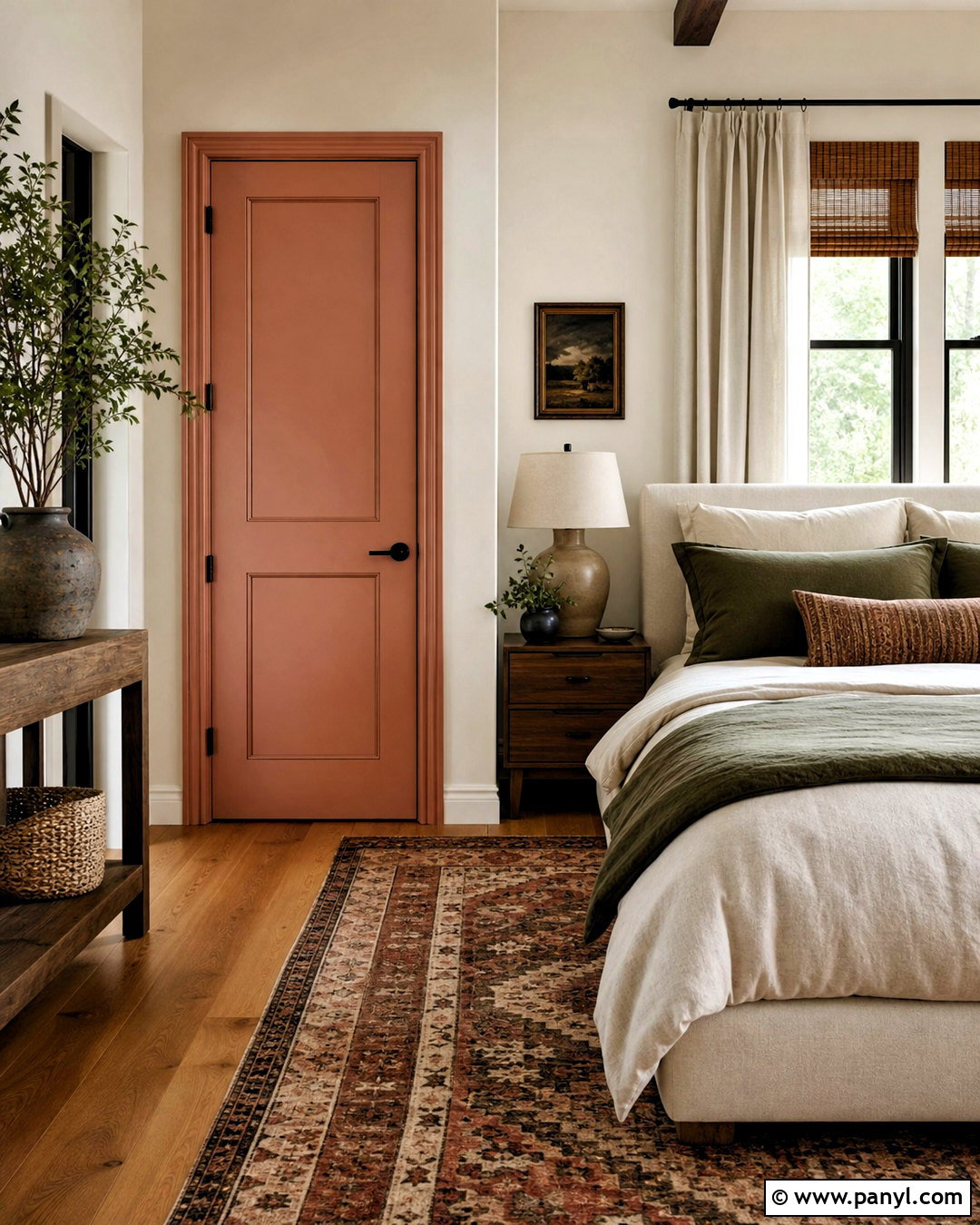
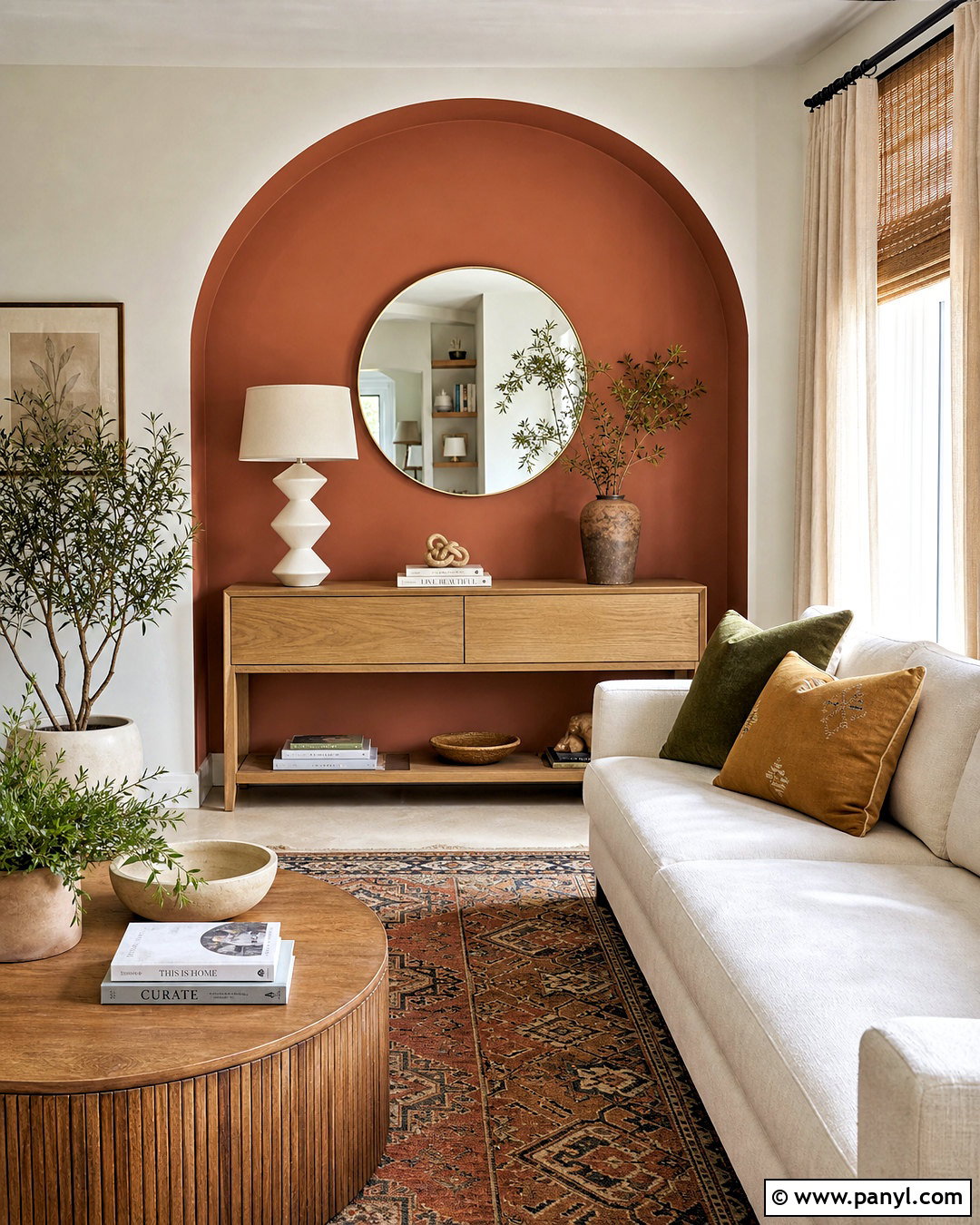
A terracotta door brings sunbaked warmth into a relaxed bedroom or den. Choose a dusty clay shade rather than a vivid orange, and pair it with warm white walls, oak flooring, and a low cream sofa or upholstered bed. Paint the casing terracotta for a stronger architectural statement, then repeat the color in a striped pillow or patterned rug. Dark bronze hardware complements the red-brown undertones and connects naturally with walnut furniture. Add woven shades, linen curtains, and hand-finished ceramics to strengthen the earthy character. Olive green textiles or plants provide a cooling counterpoint. Because terracotta can look more intense under warm artificial bulbs, test it in changing light. The completed room should feel grounded and welcoming, with the door integrated into a balanced natural palette.
15. Rust Red Room Door
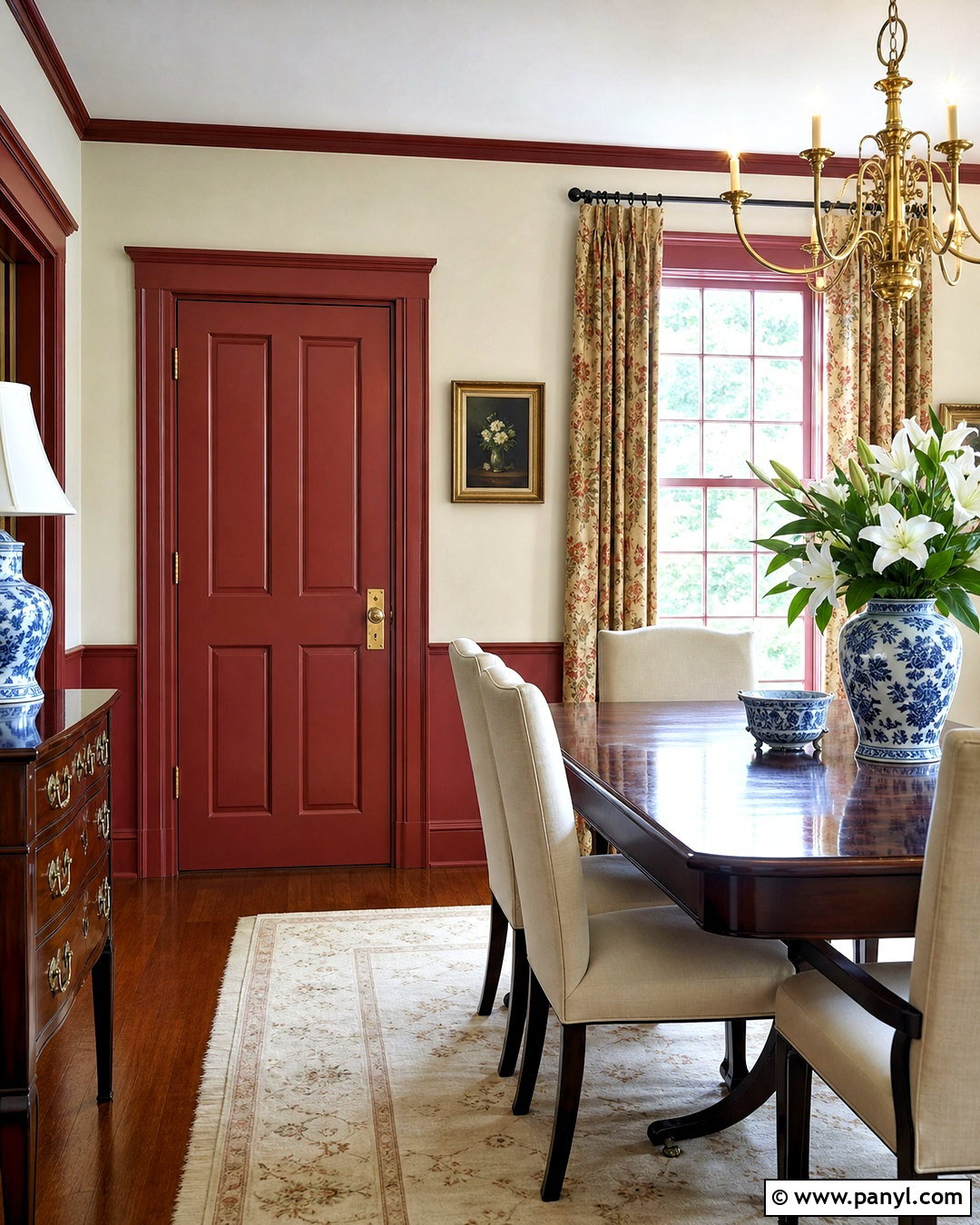
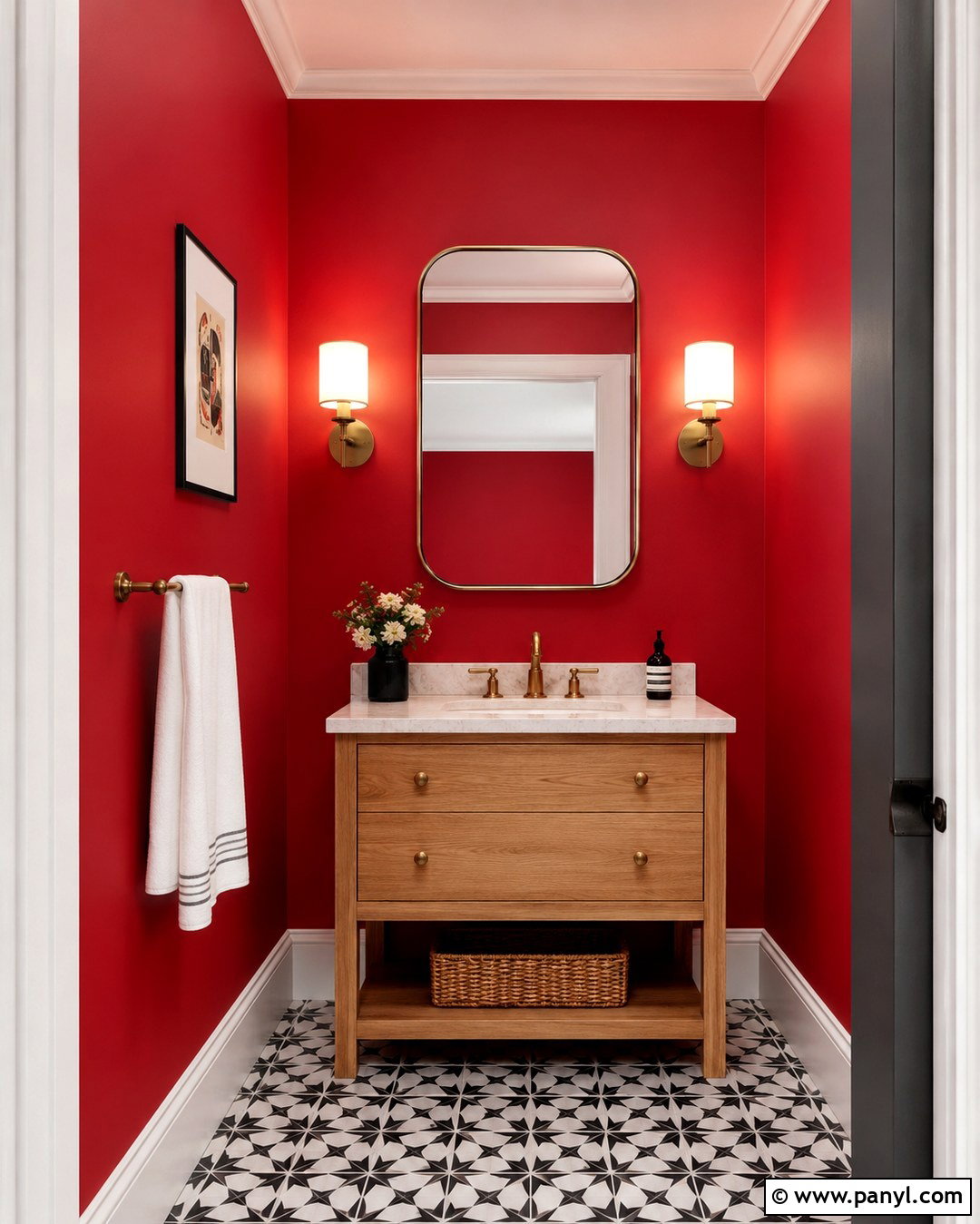
Rust red creates a warm, confident feature in a dining room inspired by traditional and vintage interiors. Pair the painted door and matching trim with pale putty walls, medium walnut flooring, and a substantial dark wood dining table. Cream upholstered chairs and an ivory area rug provide enough brightness to balance the saturated door. Choose antique brass hardware and a simple brass chandelier to reinforce the warm finish. Repeat rust red sparingly through a table runner, framed textile, or patterned curtain detail. Deep blue ceramics can add a complementary accent without making the room look overly colorful. Keep larger furnishings classic and uncluttered. This thoughtful combination turns the door into part of a complete decorative story, producing a room that feels welcoming, established, and suitable for everyday meals or gatherings.
16. Mustard Yellow Room Door
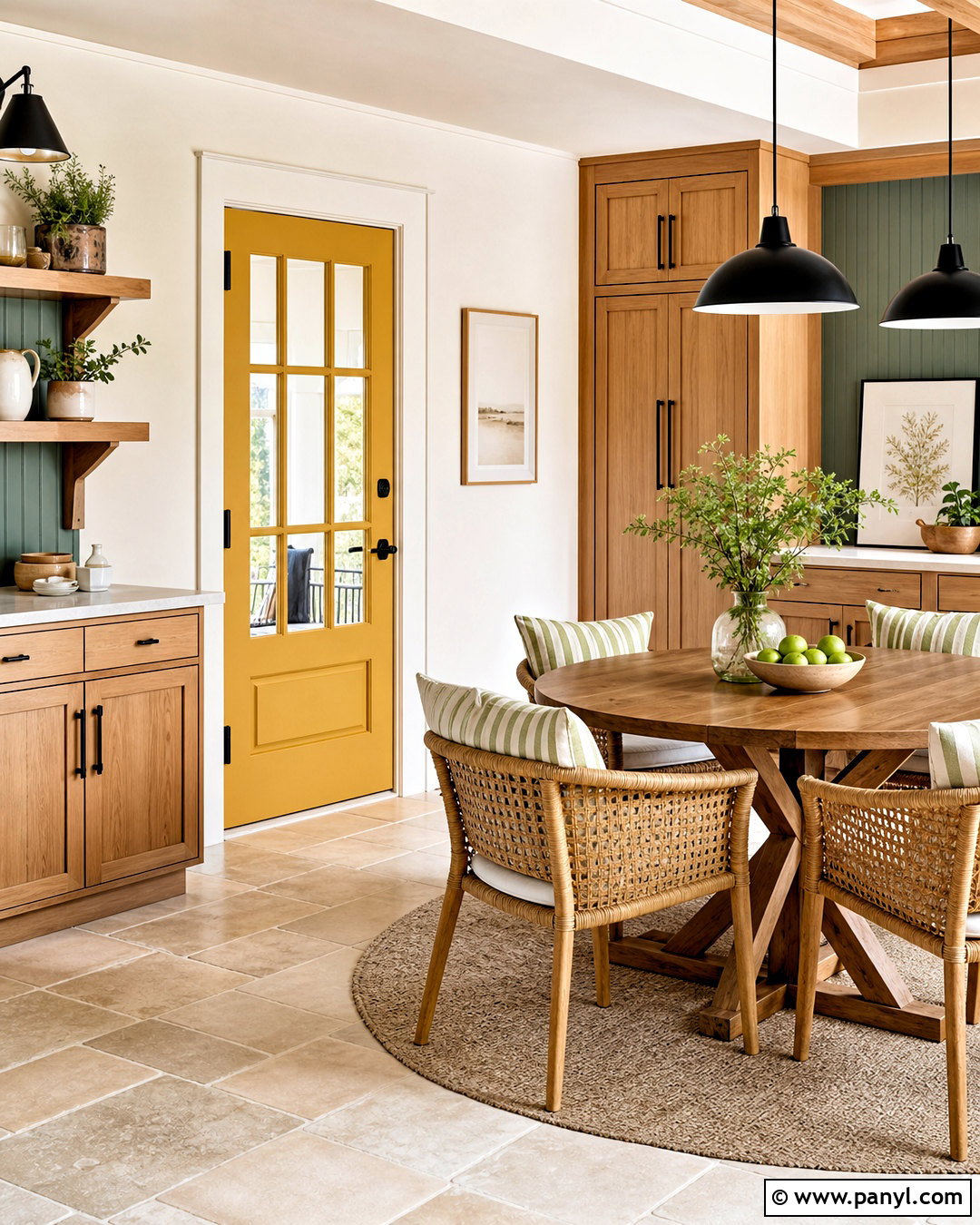
Mustard yellow gives a breakfast room or compact kitchen cheerful energy while remaining more grounded than lemon yellow. Paint the door mustard and keep the trim warm white for a crisp, graphic outline. Surround it with cream walls, natural oak cabinets, and pale stone flooring. Black hardware, simple black pendant lights, and dark chair frames provide necessary contrast. Repeat the yellow through a striped seat cushion or small ceramic accessory rather than matching every decorative detail. A round wood table and woven dining chairs soften the stronger color and create an approachable family-friendly layout. Add muted blue or sage accents for balance. The room will feel bright and intentional because the door is supported by a clear palette of mustard, cream, wood, black, and one quieter secondary color.
17. Blush Pink Room Door
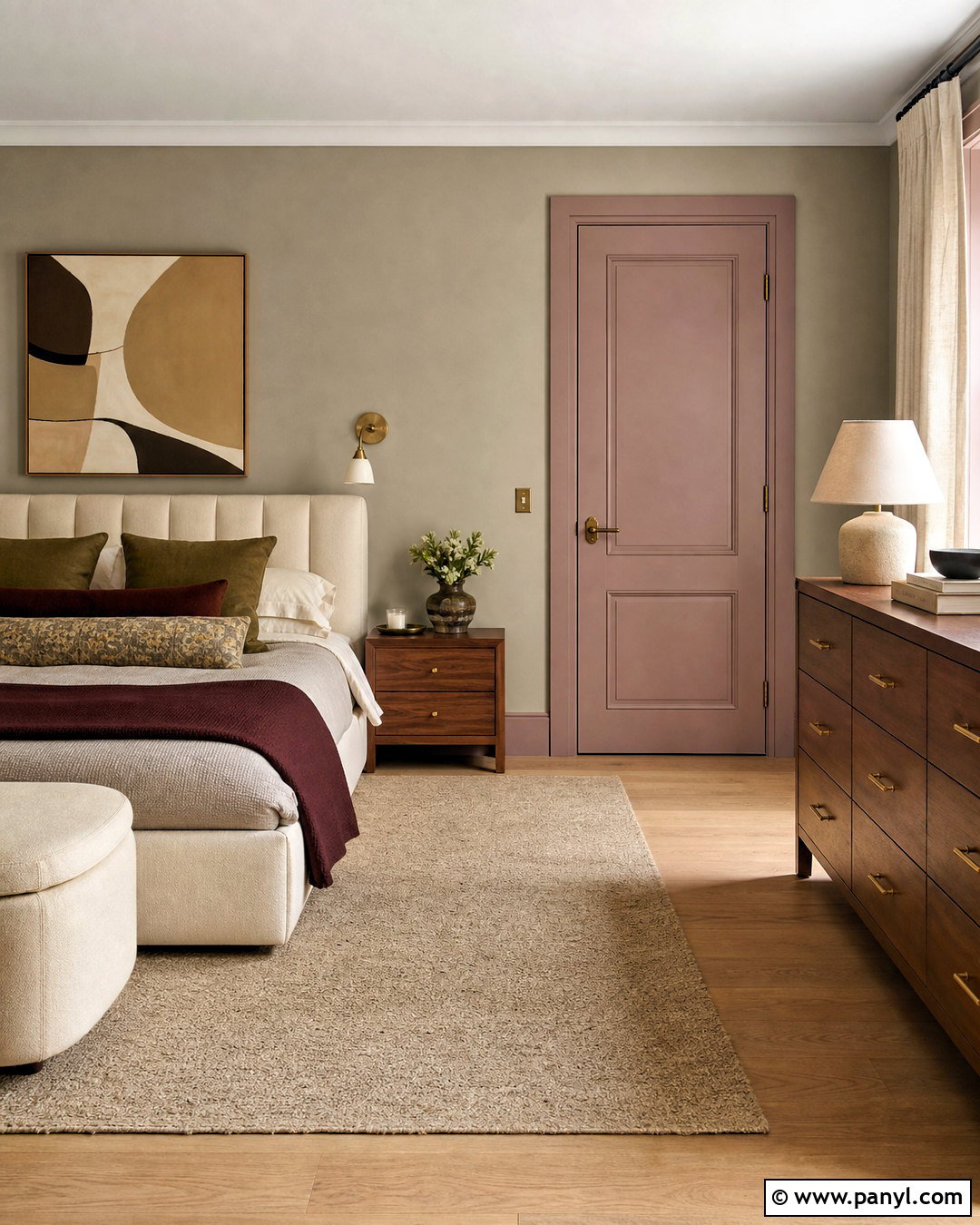
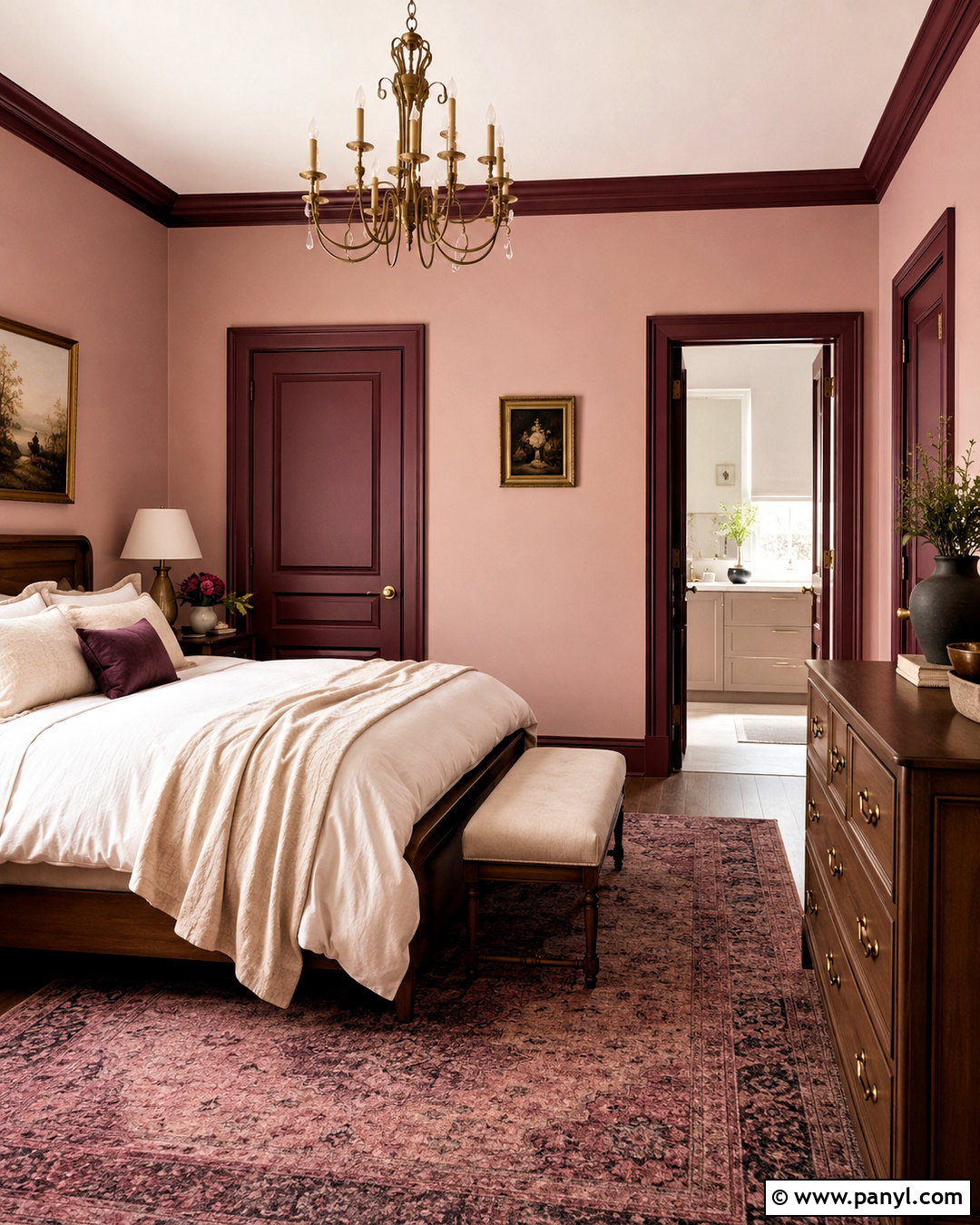
Blush pink can look mature and refined when its undertones are dusty rather than sugary. Use it on the door and casing in a dressing room or serene bedroom with soft taupe walls and pale oak flooring. A cream upholstered bed, walnut dresser, and oatmeal rug ground the delicate color with substantial neutral pieces. Select aged brass hardware and coordinating wall lights to bring warmth and polish. Repeat blush in one velvet cushion, a patterned throw, and understated artwork, but vary the shades slightly to avoid a matched appearance. Muted burgundy or olive accents can give the palette extra depth. Natural linen curtains filter daylight and help the door read as soft and warm. This complete room feels personal and graceful without relying on overly decorative or childish details.
18. Lavender Gray Room Door
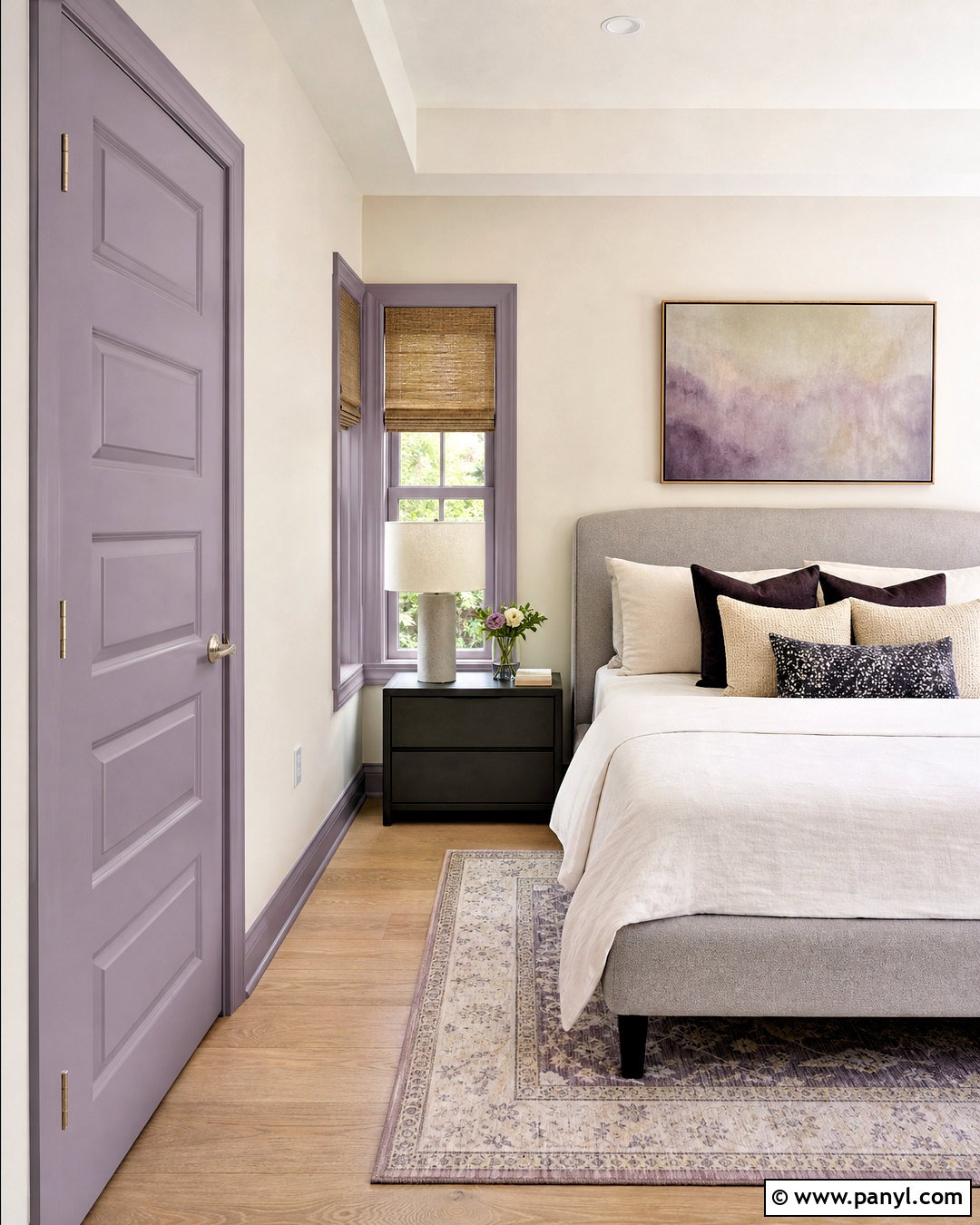
Lavender gray introduces an unexpected wash of color while remaining subdued enough for a quiet bedroom. Choose a grayish purple that changes gently with the light, then pair it with warm white walls and pale wood flooring. Paint the door and trim together to emphasize the soft hue. A light gray upholstered bed, ivory bedding, and a charcoal bedside table keep the room balanced and contemporary. Use polished nickel hardware for a cooler, cleaner result, or aged brass for added warmth. Repeat lavender through a small patterned rug, one cushion, and abstract artwork. Natural woven shades prevent the design from feeling overly formal. Since purple undertones can become stronger in shadow, test a large sample on the actual door before committing to the complete room palette.
19. Chocolate Brown Room Door
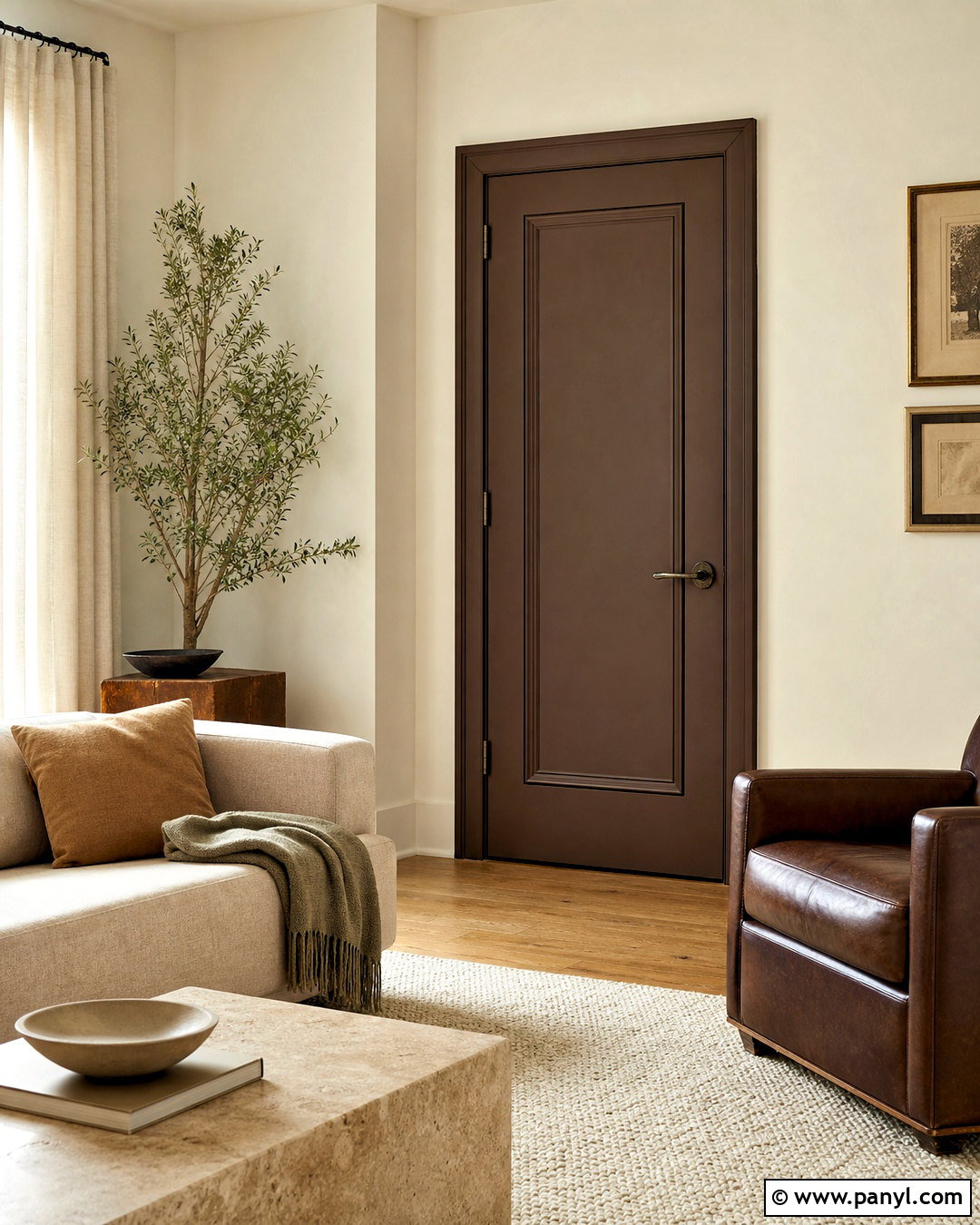
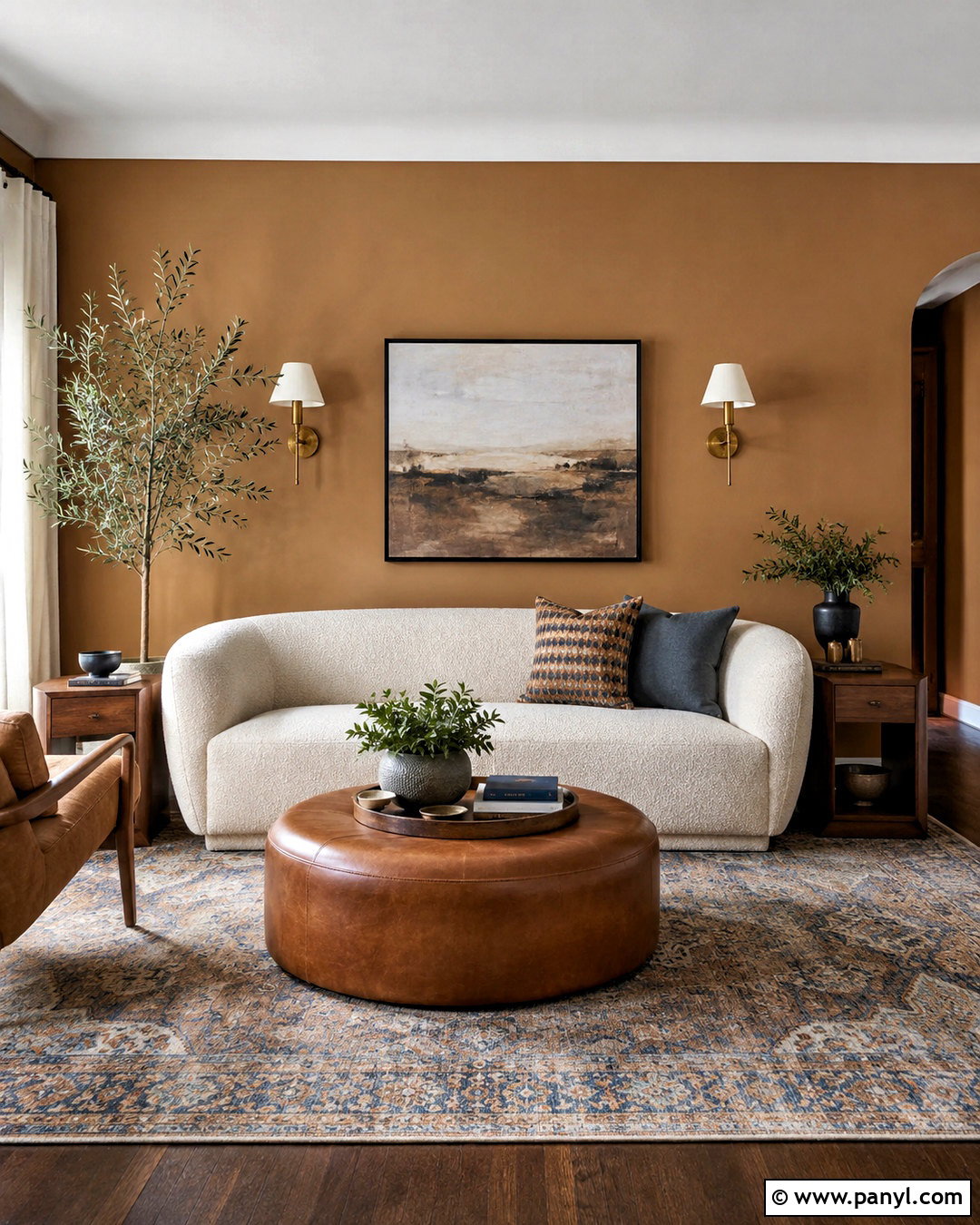
Chocolate brown can make a living room feel grounded and luxurious without depending on black accents. Apply a rich, warm brown to the door and casing, then pair it with creamy walls, medium oak floors, and a spacious oatmeal sofa. A dark brown leather chair echoes the door, while a travertine coffee table adds a lighter mineral surface. Choose antique bronze hardware to maintain a low-contrast, cohesive finish. Layer camel, ivory, and muted green pillows across the seating area. Linen curtains and a textured wool rug keep the room soft rather than heavy. The key is surrounding the dark door with generous light tones and tactile materials. This finished scheme suits organic modern, transitional, and midcentury-inspired interiors where brown can function as an architectural neutral.
20. Color-Drenched Room Door
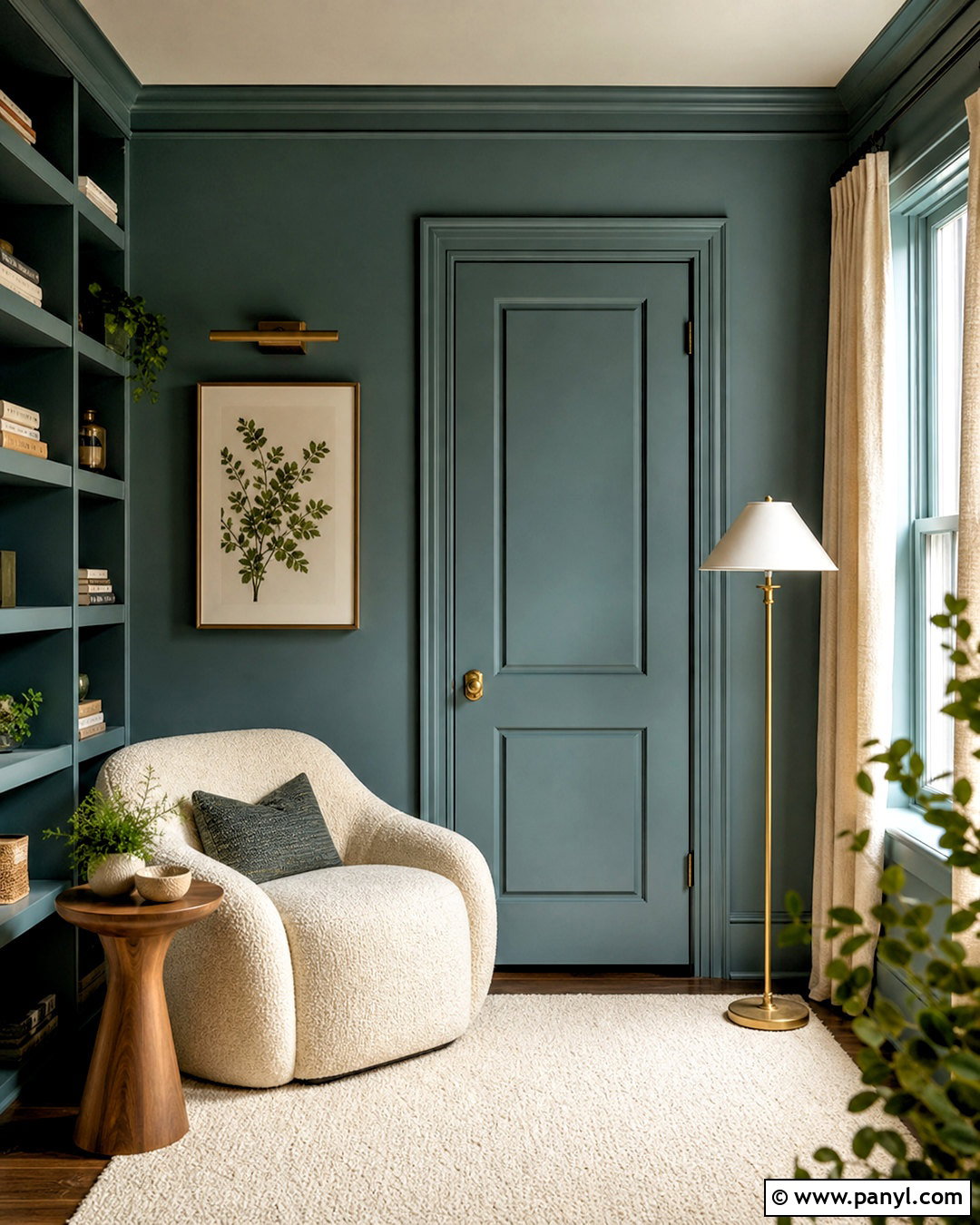
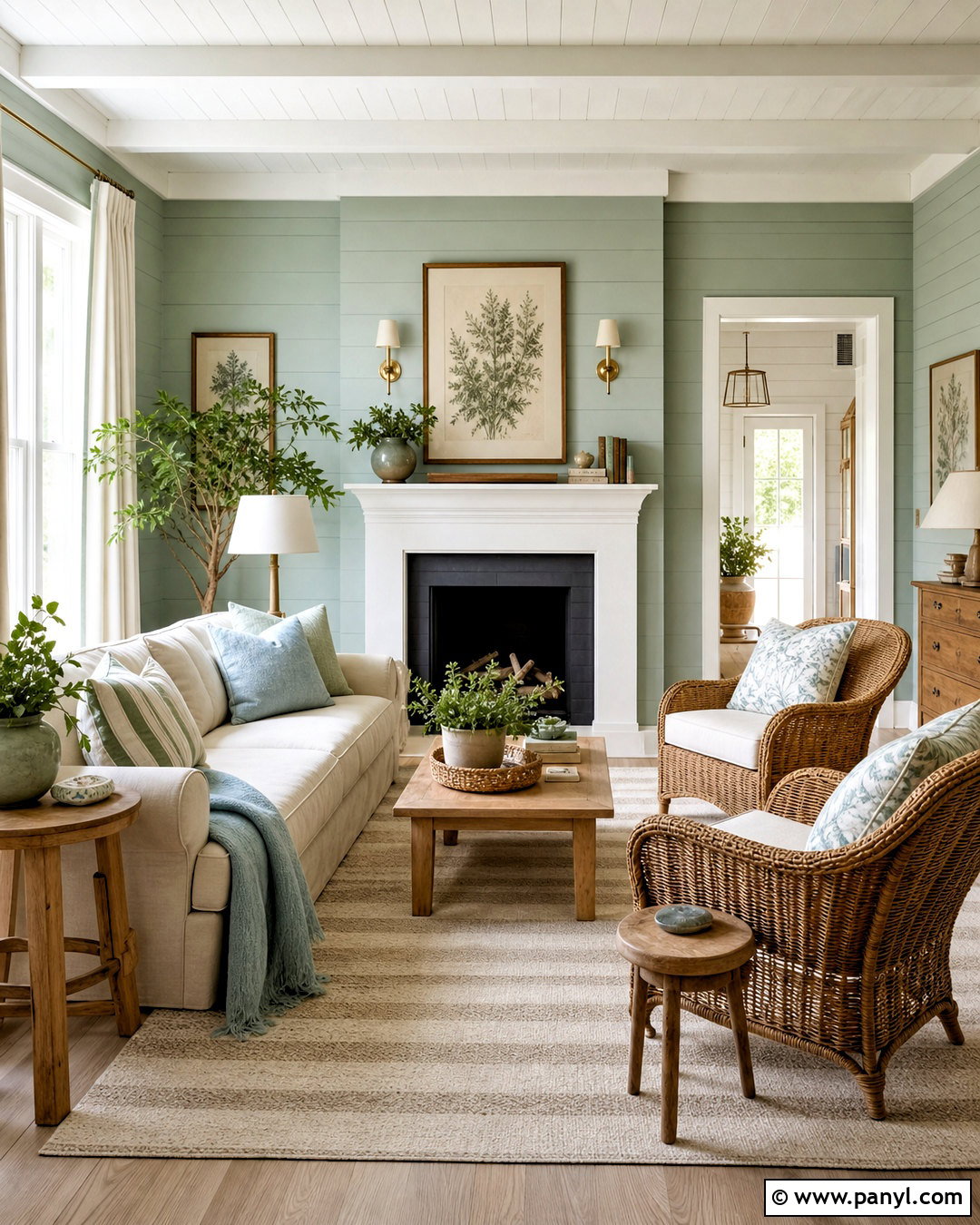
For a seamless statement, paint the room door, casing, walls, baseboards, and built-in storage in one muted blue-green shade. This approach works beautifully in a small reading room because reducing color changes can make the architecture appear calmer and more continuous. () Add a cream boucle chair, walnut side table, and ivory wool rug to break up the saturated surfaces. Antique brass door hardware and a matching floor lamp introduce warm highlights. Use different paint sheens to create subtle dimension: eggshell on walls, satin on cabinetry, and semigloss on the door and trim. Finish with linen curtains and restrained botanical artwork. The resulting room feels immersive but comfortable, with furniture, architectural details, and color working together as one complete design.
Conclusion:
Choosing among these 20 room door color ideas becomes easier when the door is treated as part of the complete interior rather than a separate painted surface. Warm white, greige, and stone gray support quiet rooms, while navy, forest green, terracotta, and rust create stronger focal points. Always compare the proposed door color with the walls, flooring, trim, furniture, and nearby rooms. Large samples reveal undertones more accurately than small paint chips. Consider whether the casing should match the door, coordinate with the walls, or provide contrast. Finally, select durable satin or semigloss paint and prepare the surface carefully. A well-chosen door color can give an ordinary room greater depth, continuity, and character.

Related Ideas and Inspiration:
Leave a Reply