
A purple accent wall can make a room feel calm, creative, sophisticated, or dramatic, depending on the shade and surrounding decor. The key is treating the wall as part of a complete color scheme rather than adding purple without a plan. Soft lavender works beautifully with light woods and creamy neutrals, while plum, aubergine, and blackberry create richer rooms with more depth. Furniture placement also matters. Positioning a bed, sofa, desk, or dining table against the colored wall gives it a clear purpose and creates a balanced focal point. Lighting, textiles, artwork, and metallic finishes can then reinforce the mood. The following 20 How To Style A Purple Accent Wall Ideas offer complete, practical looks for transforming bedrooms, living areas, offices, and more.

1. Lavender Purple Accent Wall Bedroom
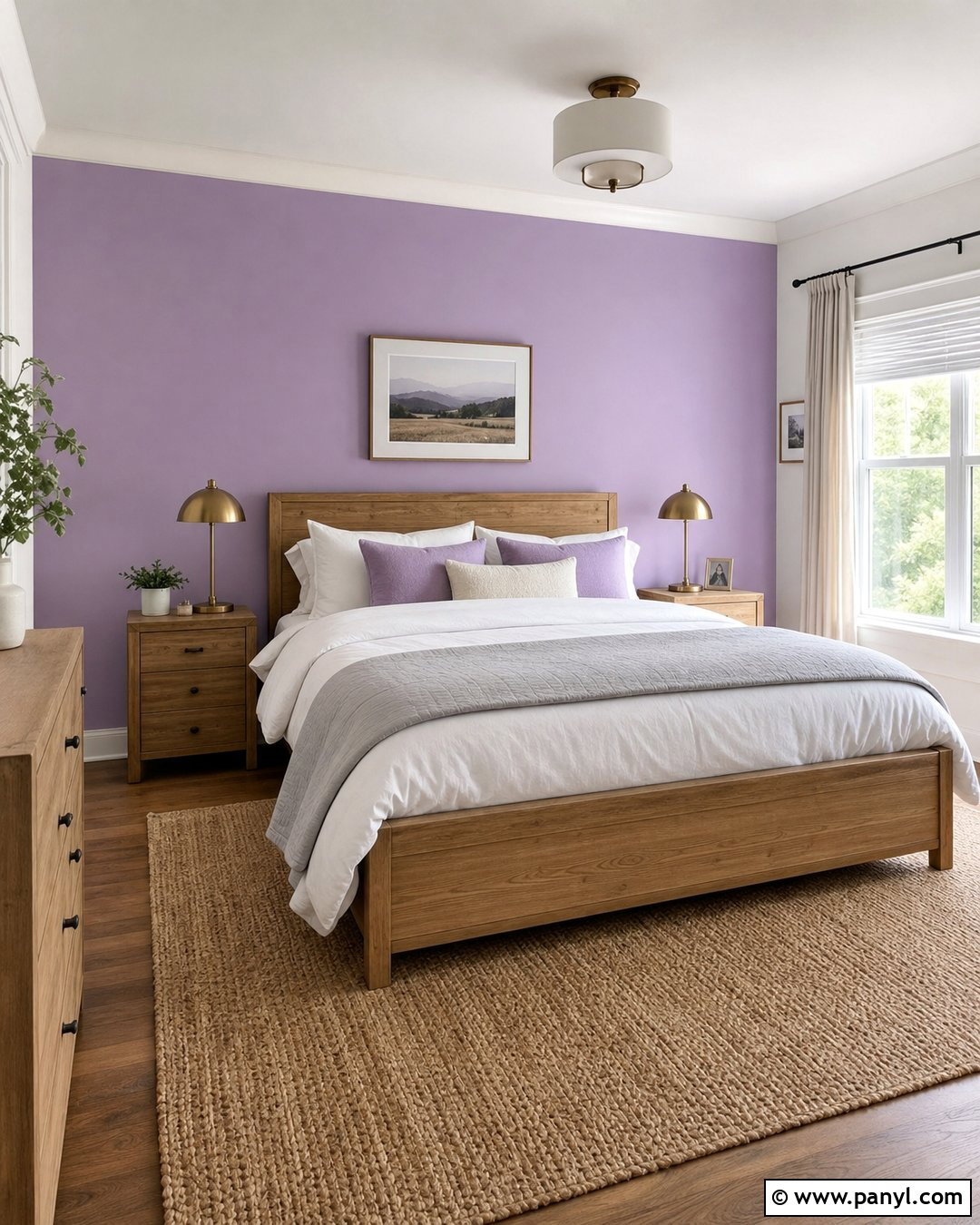
A soft lavender wall creates a restful bedroom without feeling plain or overly sweet. Place a natural oak bed against the purple surface so the warm wood balances its cooler undertones. Dress the bed with crisp white sheets, a light gray quilt, and two lavender pillows that repeat the wall color in a controlled way. Paint the remaining walls warm white to keep the room bright. Add oatmeal curtains, a woven rug, and simple oak nightstands for softness and texture. Brushed brass lamps provide a subtle polished finish without becoming too glamorous. Complete the wall with one wide landscape print in a slim white frame. This relaxed arrangement works especially well in bedrooms with moderate natural light and simple furniture.
2. Plum Purple Accent Wall Living Room
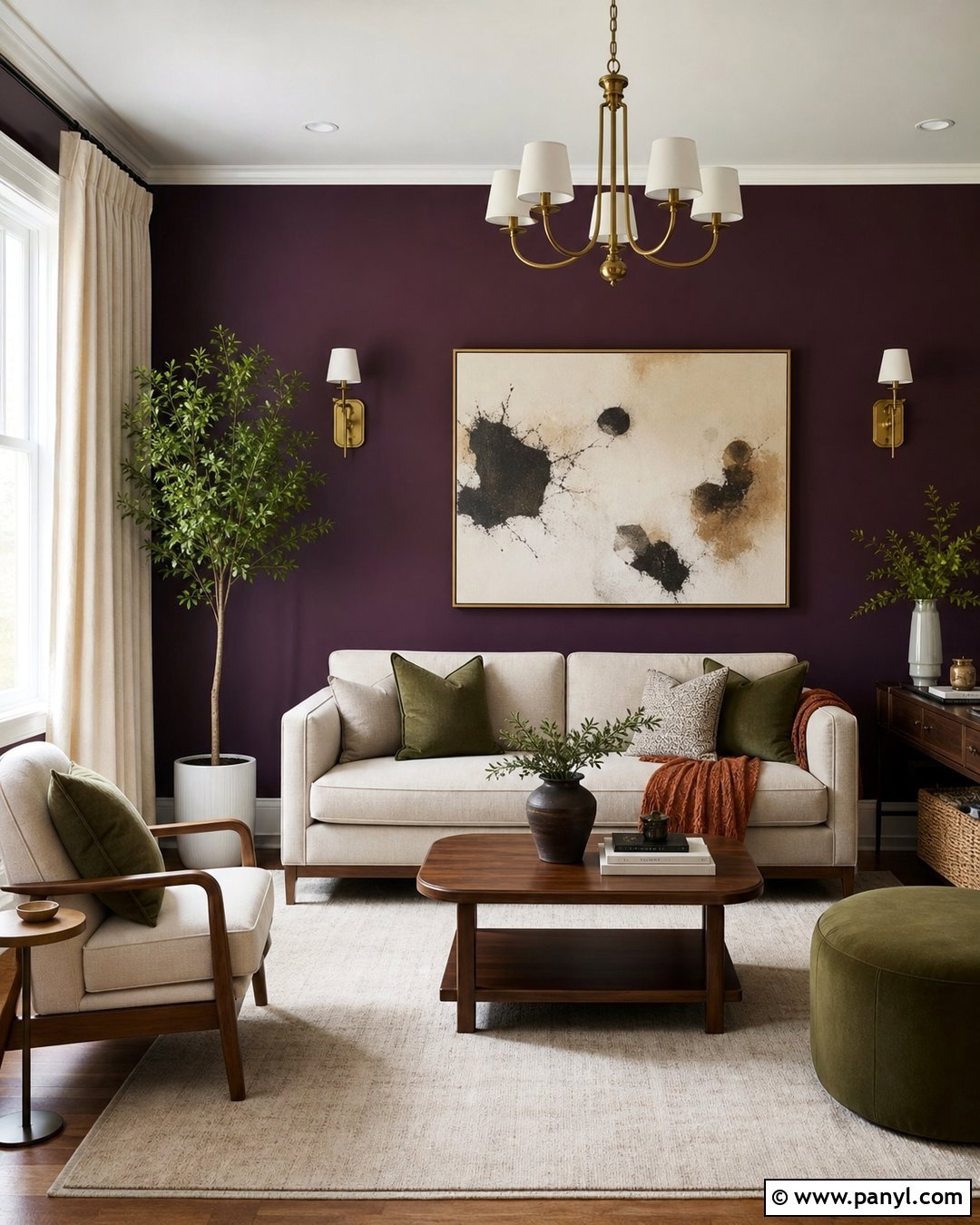
Deep plum gives a living room a cozy, sophisticated focal point when it is balanced with lighter furnishings. Position a warm beige sofa in front of the purple accent wall and anchor the seating area with a large ivory rug. Walnut side tables and a medium-toned wood coffee table bring out the red undertones in plum. Use cream curtains, off-white surrounding walls, and pale upholstery to prevent the room from becoming visually heavy. Add muted olive pillows and a rust-colored throw for earthy contrast. A large abstract canvas with cream, plum, and soft brown details will connect the palette. Finish with aged brass lighting and a leafy indoor plant, giving the complete room a comfortable, collected character.
3. Purple Accent Wall With Gray Furniture
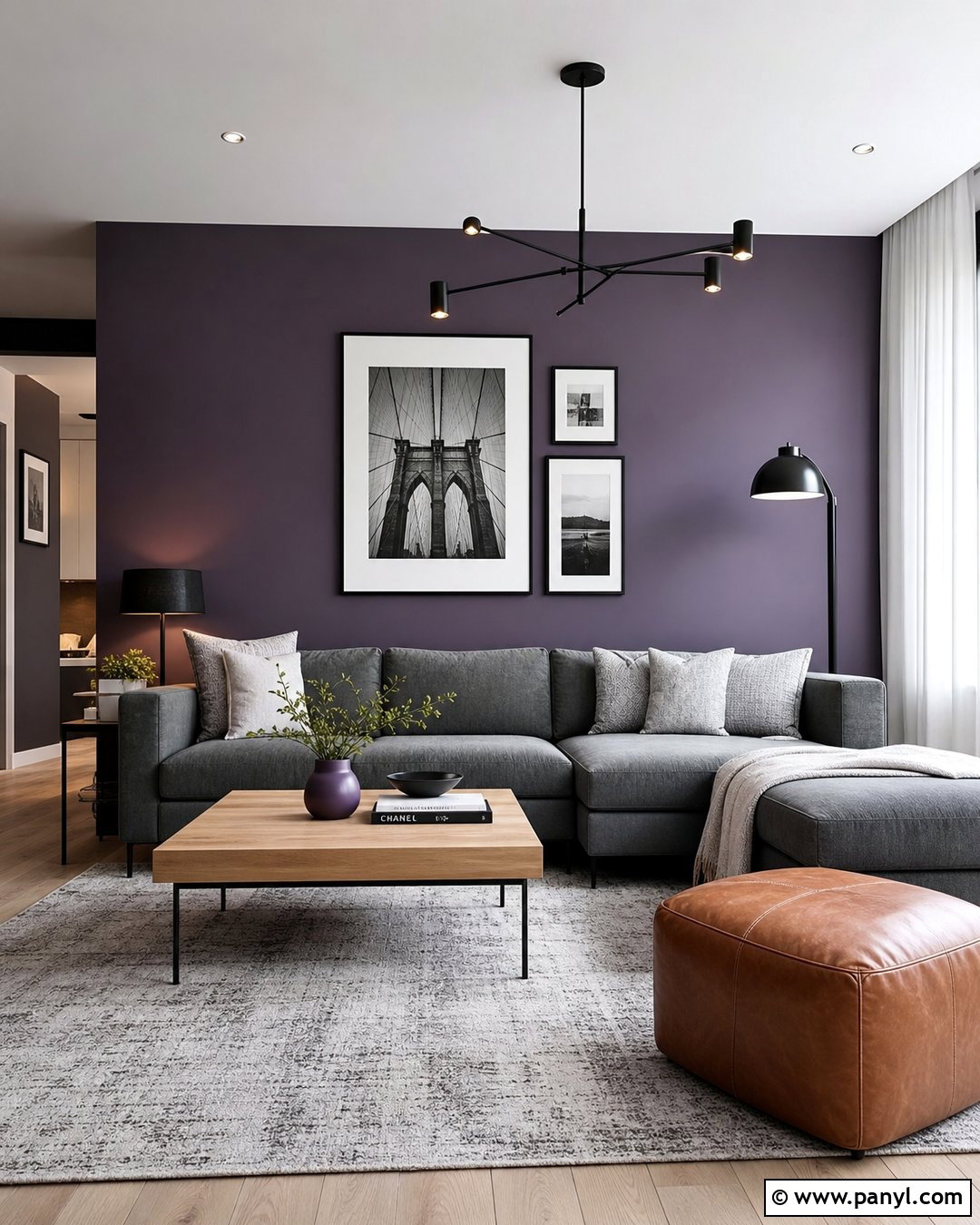
Gray furniture can calm a bold purple wall and create a clean, contemporary room. Choose a smoky violet paint rather than a highly saturated grape shade, then place a light charcoal sectional against it. A pale gray rug and soft white curtains create gradual transitions between the wall, upholstery, and surrounding surfaces. Introduce warmth through a round oak coffee table, tan leather ottoman, and a few muted camel accessories. Black metal lighting adds definition, while framed monochrome artwork keeps the focal wall polished. Repeat purple only once or twice through a patterned pillow or small ceramic vase. Limiting the repeated color allows the accent wall to remain important without making the entire living room look overly matched or themed.
4. Purple Accent Wall With Gold Decor
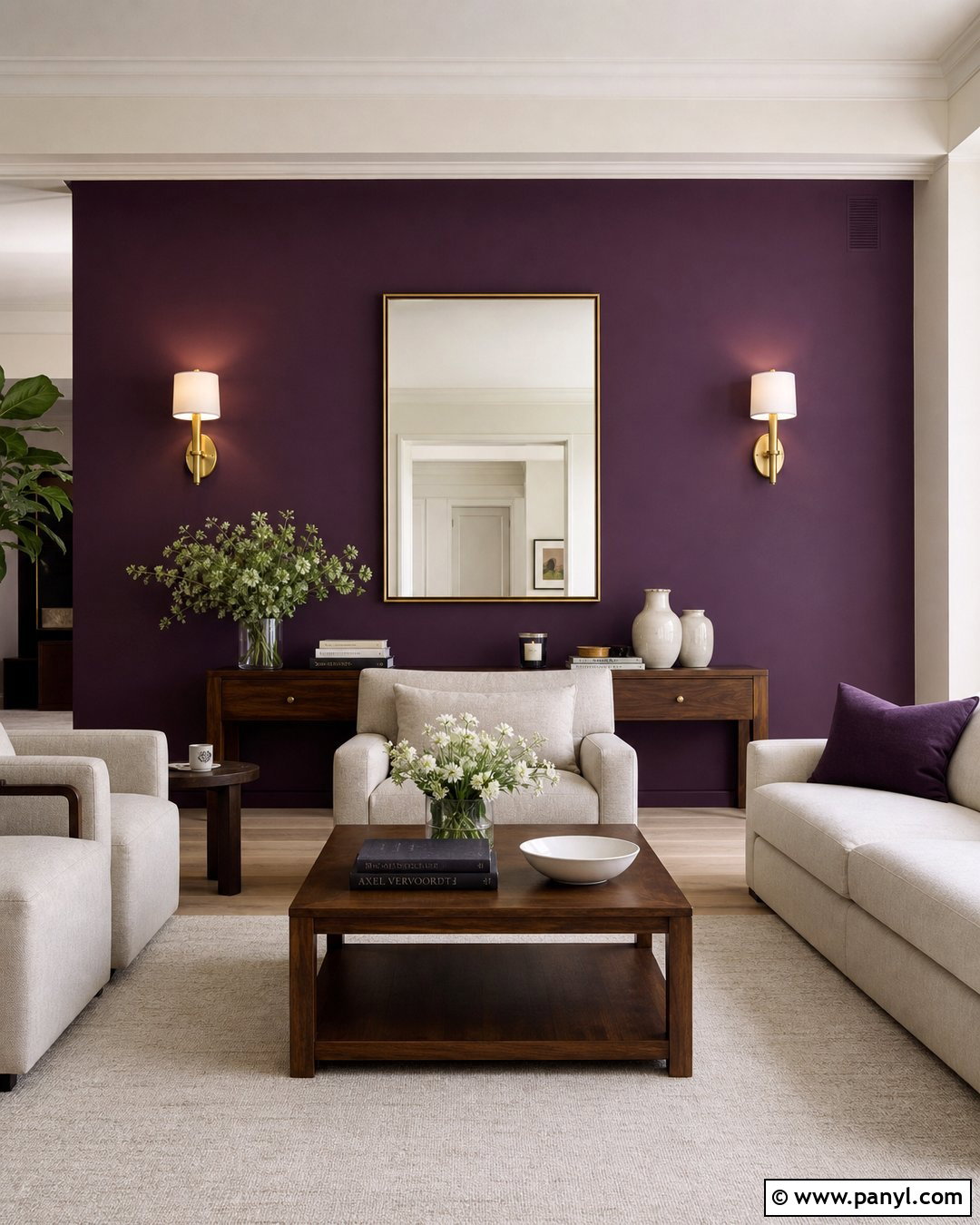
Pairing purple with gold creates a luxurious room, but simple shapes keep the result tasteful. Paint the focal wall a muted aubergine and place a cream upholstered bed or sofa directly in front of it. Add brushed gold sconces on both sides to create symmetry and highlight the depth of the paint. A thin gold-framed mirror or understated abstract artwork can fill the center without covering too much purple. Keep the remaining walls soft ivory and choose a light neutral rug to brighten the floor. Walnut furniture, white linen textiles, and one or two plum accessories will make the palette feel connected. Avoid excessive mirrored or sparkling surfaces. Matte fabrics and natural wood give the metallic details room to stand out.
5. Purple Accent Wall With Green Decor
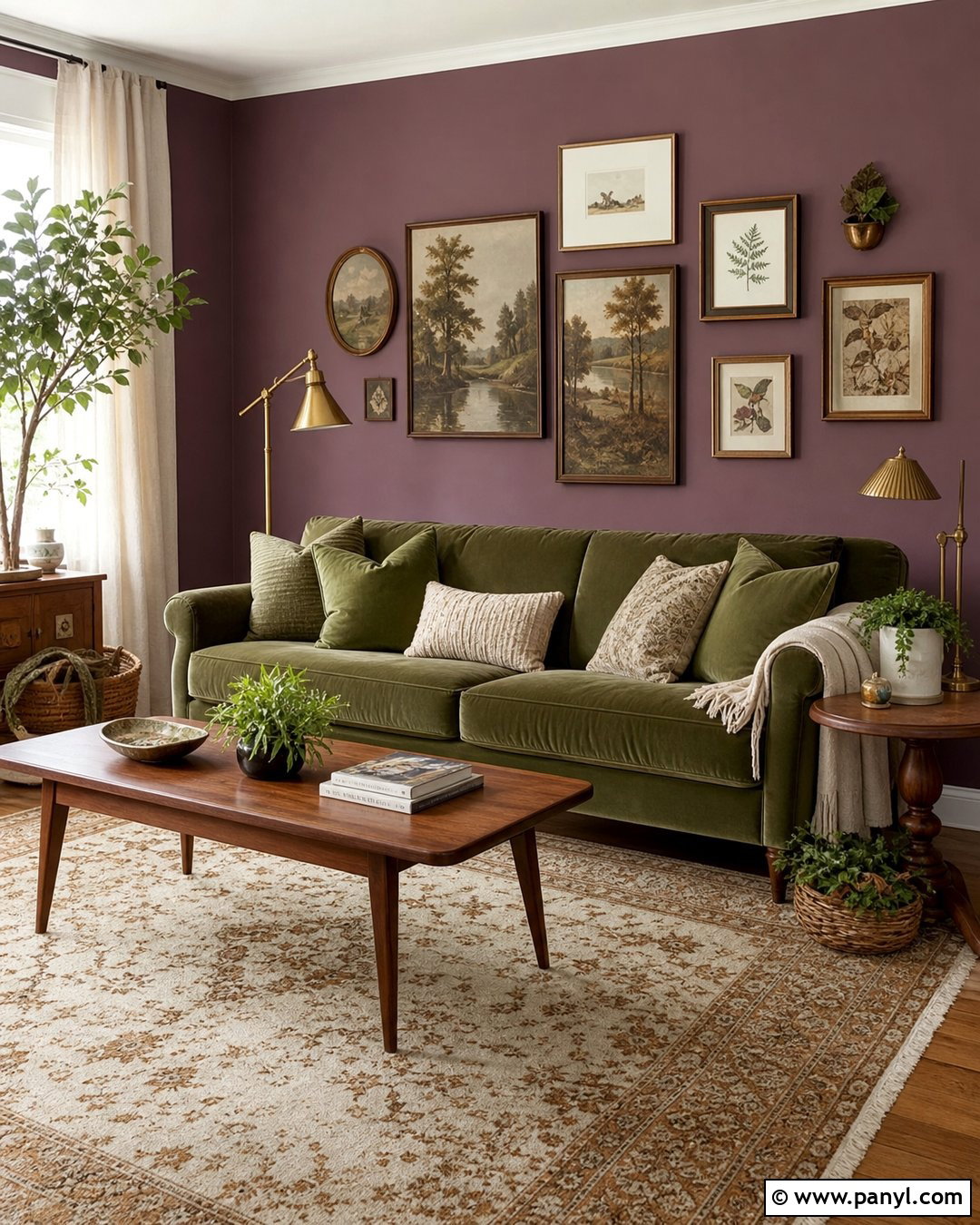
Purple and green can produce a rich, garden-inspired room when both colors have softened, natural undertones. Start with a dusty purple accent wall and place a moss green velvet sofa against it. Balance these saturated colors with warm white walls, linen curtains, and a large cream-and-tan rug. Walnut tables and woven baskets create an earthy bridge between the purple and green. Add pillows in olive, ivory, and a restrained botanical print rather than introducing several unrelated colors. Brass floor lamps offer a warm finish, while tall plants make the green feel intentional throughout the space. Choose artwork featuring muted landscapes or abstract organic shapes. The completed room feels colorful and layered while remaining grounded, comfortable, and suitable for everyday living.
6. Purple Accent Wall With White Furniture
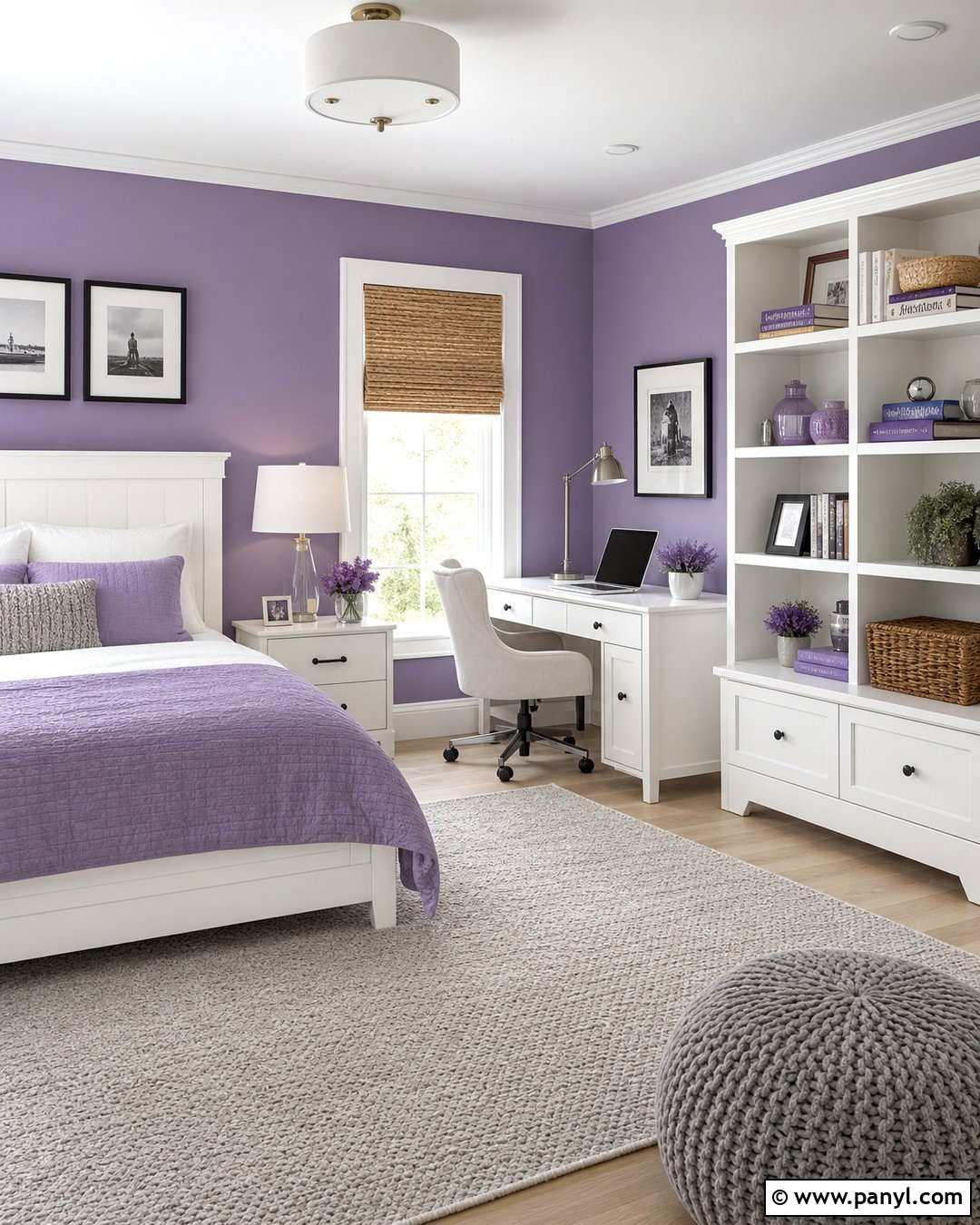
White furniture gives a purple accent wall a crisp, bright appearance that suits bedrooms, offices, and compact living spaces. Select a medium lilac or clear violet shade that provides visible contrast without making the room feel dark. Place a white painted bed, bookcase, or streamlined desk against the wall, depending on the room’s function. Use white trim and warm off-white paint on the remaining walls to create a unified frame. Pale oak flooring and a light gray rug prevent the combination from looking too sharp. Bring in texture through quilted bedding, woven shades, and soft boucle upholstery. A few black accents, such as picture frames or cabinet pulls, add definition. Finish with restrained lavender accessories for an organized, balanced design.
7. Dark Purple Accent Wall Dining Room
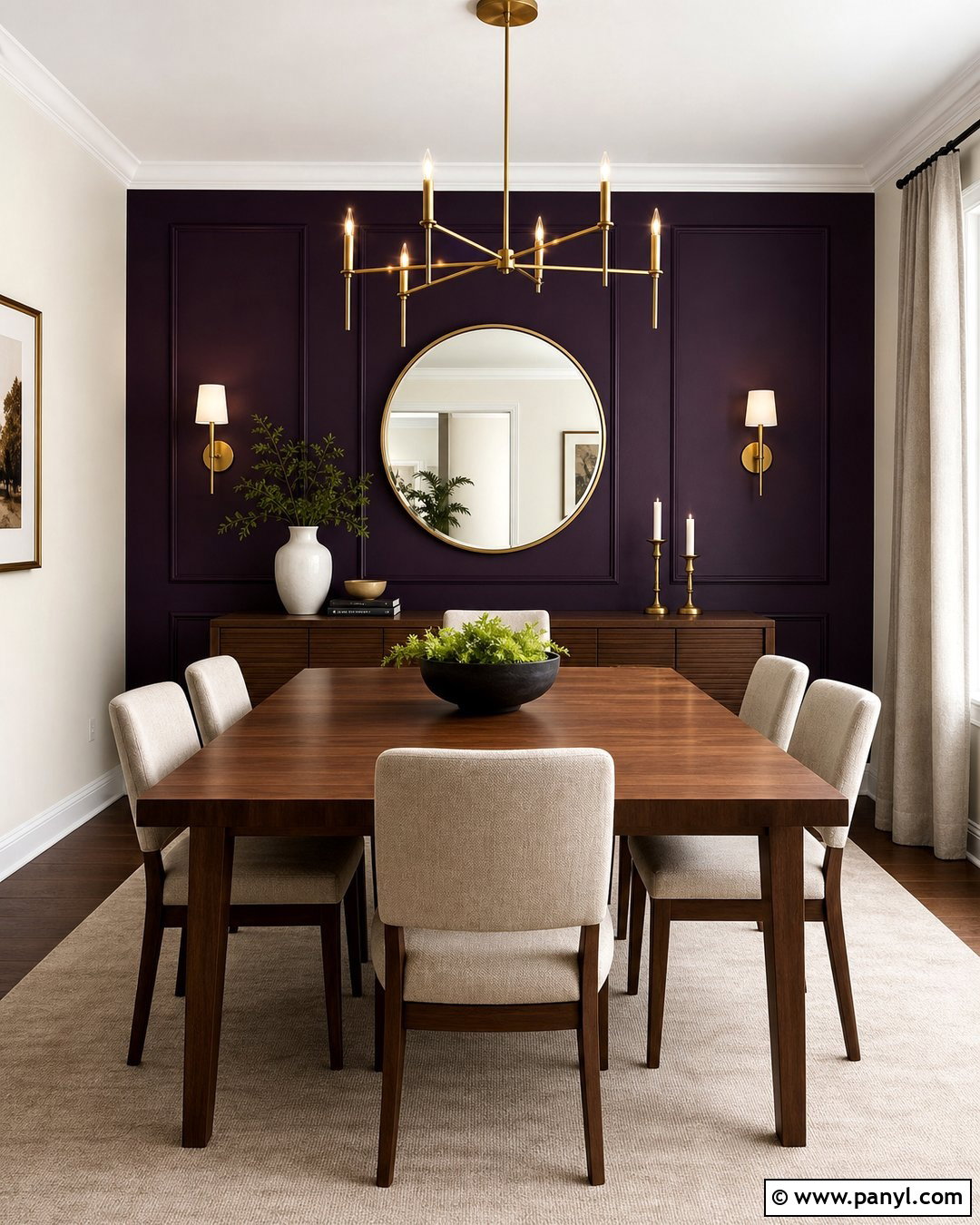
A dark purple dining wall can make ordinary meals feel more intimate while establishing a strong architectural focal point. Choose a near-black eggplant paint with warm undertones, then center a rectangular walnut dining table in front of it. Upholstered chairs in oatmeal or light taupe will brighten the arrangement and soften the contrast. Hang a modern brass chandelier above the table and place a large round mirror on the purple wall to reflect light across the room. Keep adjacent walls creamy white and use full-length neutral curtains. A low wood sideboard can provide storage without disappearing against the dark background. Finish the table with simple ceramic pieces and greenery. The combination feels dramatic, welcoming, and refined rather than formal or overly dark.
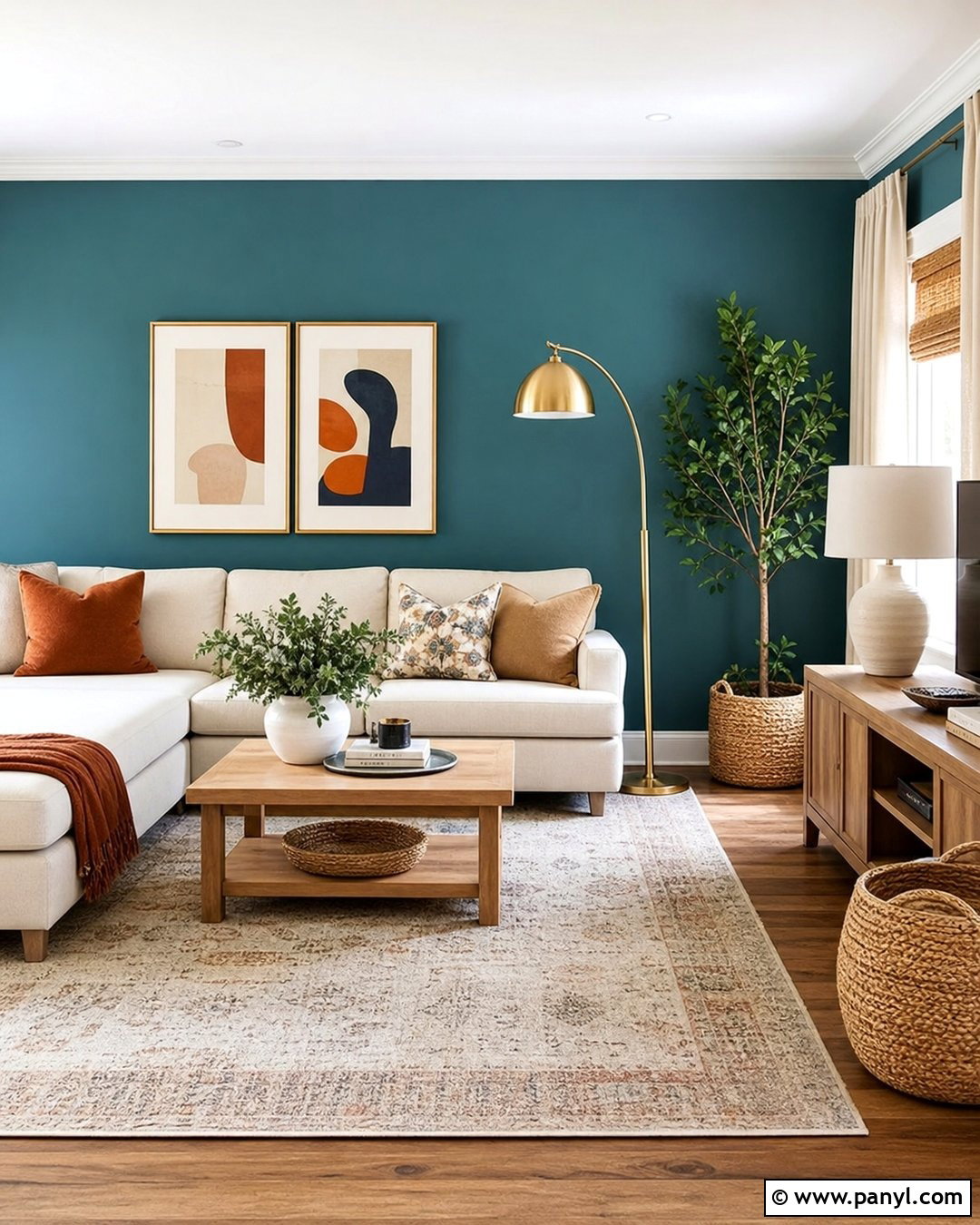
8. Purple Accent Wall Home Office
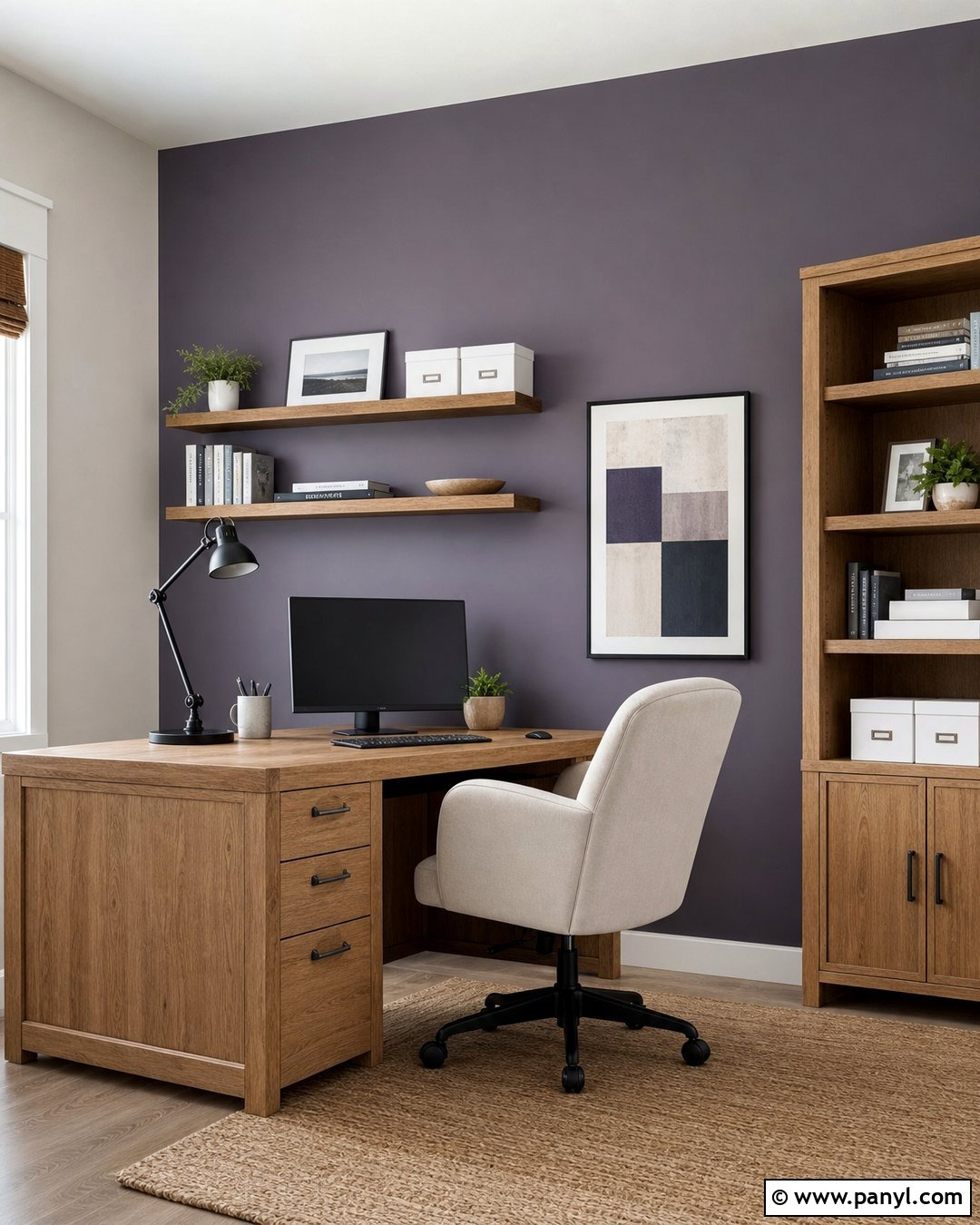
A muted purple wall can give a home office personality while maintaining a focused, professional atmosphere. Use a grayed violet or heather shade behind a medium oak desk, allowing the work area to become the clear focal point. Add a supportive cream upholstered chair and a low bookcase in matching wood for visual consistency. Floating shelves can hold a limited mix of books, white storage boxes, and small ceramics without creating distraction. Paint the other walls warm white and choose a beige flat-weave rug to soften sound and ground the furniture. A matte black task lamp provides contrast, while brass desk accessories introduce warmth. Hang one structured abstract print above the desk to complete an office that feels creative, calm, and organized.
9. Purple Accent Wall With Wood Paneling
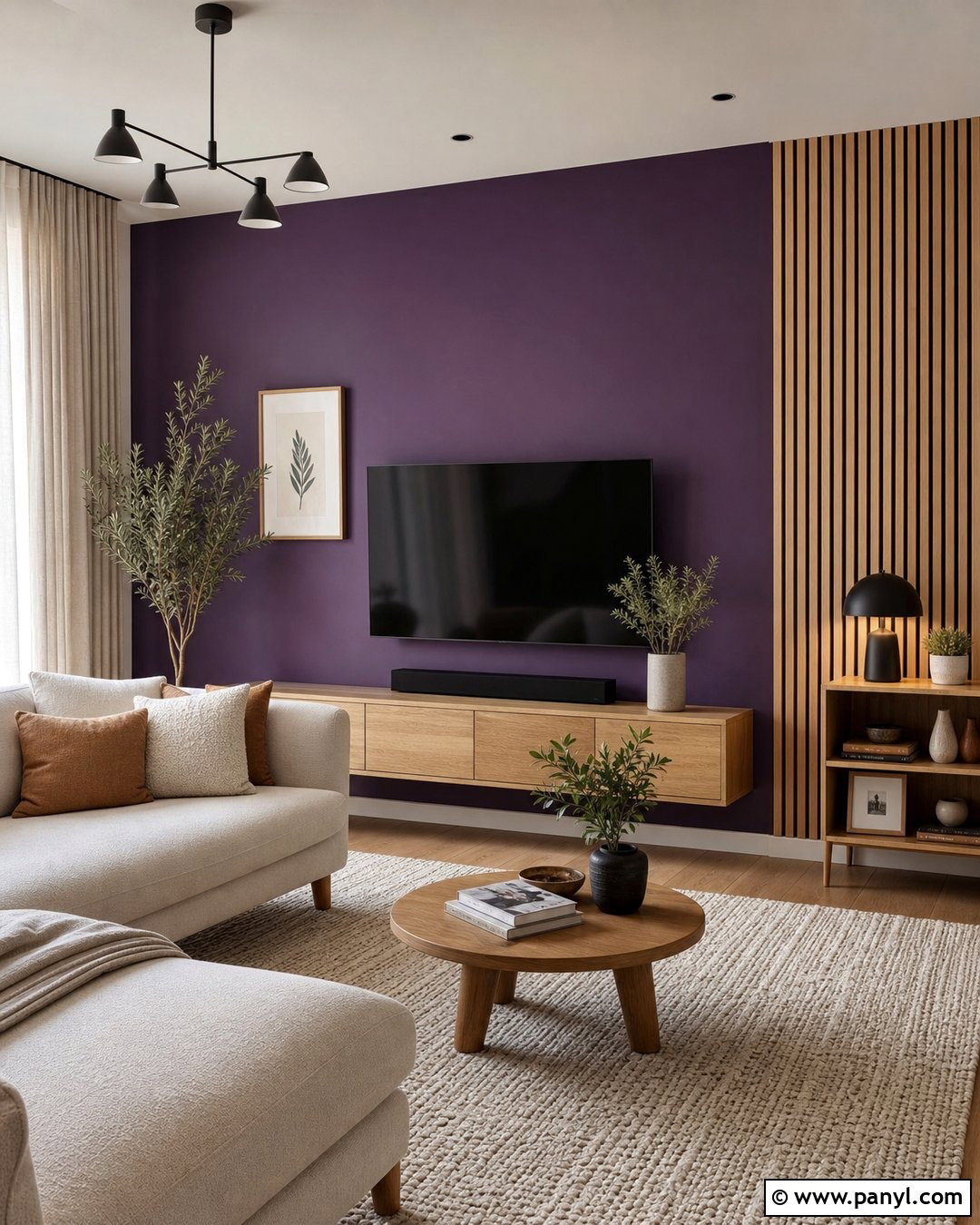
Wood paneling can make a purple accent wall feel architectural and custom rather than simply painted. Install narrow oak slats across part of a deep violet wall, leaving enough purple visible between or beside the wood to maintain strong color impact. In a living room, position a low cream sofa opposite the treatment and use an oak media console along the feature wall. Repeat the wood finish through side tables and picture frames. Warm white surrounding walls, a textured ivory rug, and linen curtains will keep the room light. Use black hardware and fixtures sparingly to sharpen the design. Soft beige, caramel, and muted purple pillows connect the furniture to the wall. The finished space feels modern, warm, and thoughtfully detailed.
10. Purple Wallpaper Accent Wall Bedroom
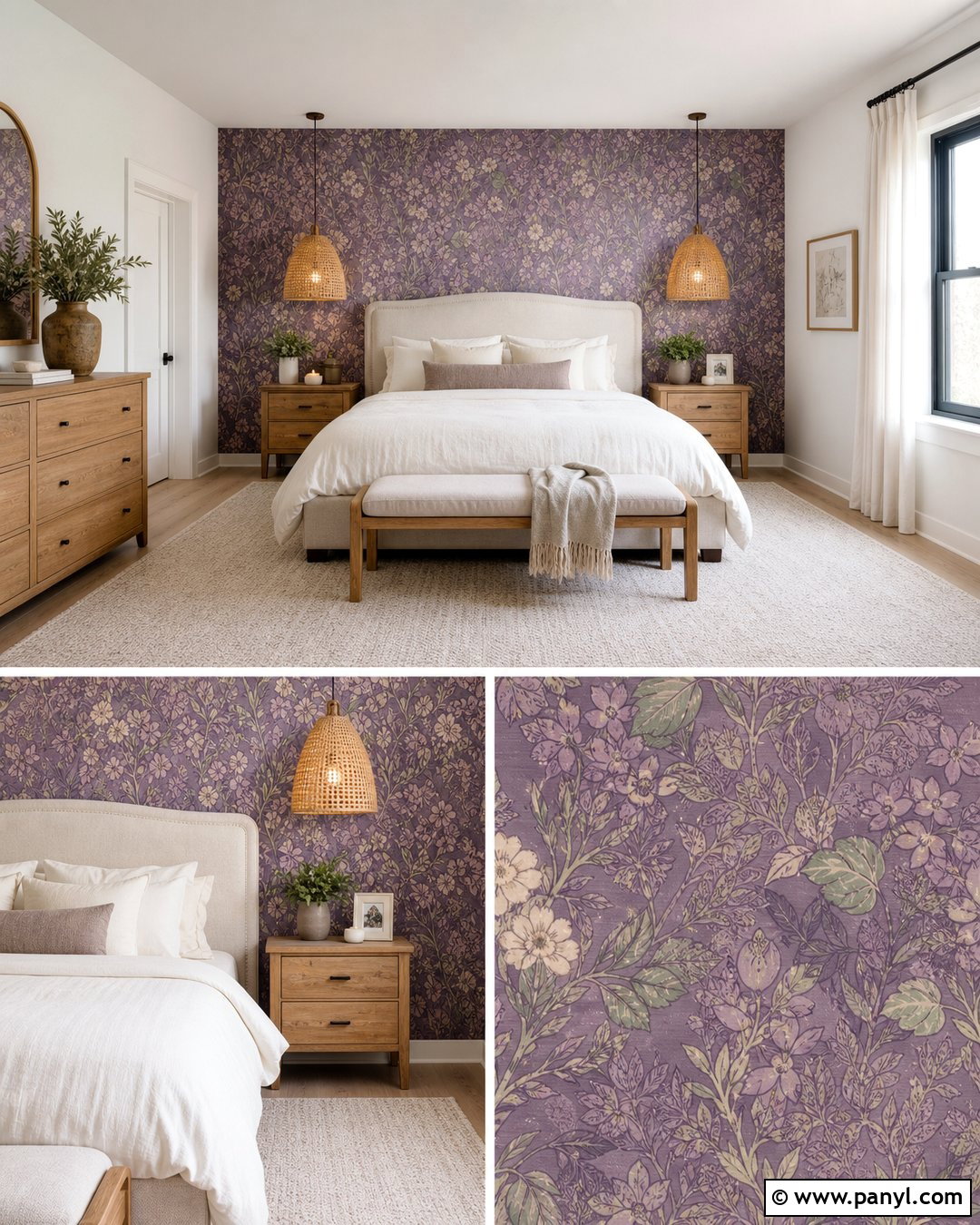
Purple wallpaper introduces pattern and depth while giving a bedroom a complete decorative direction. Choose a wallpaper with lavender, plum, and cream botanical shapes on a soft neutral background. Install it behind an upholstered oatmeal bed so the pattern frames the main furniture without competing with it. Keep the remaining walls warm white and use plain bedding in ivory, dusty lavender, and muted sage. Natural oak nightstands and woven pendant lights balance the decorative paper with relaxed materials. Select curtains that match the background color instead of the darkest purple in the pattern. This keeps the room visually open. Finish with a simple bench, a pale wool rug, and minimal wall accessories, allowing the wallpaper to remain the clear and carefully controlled focal point.
11. Purple Geometric Accent Wall
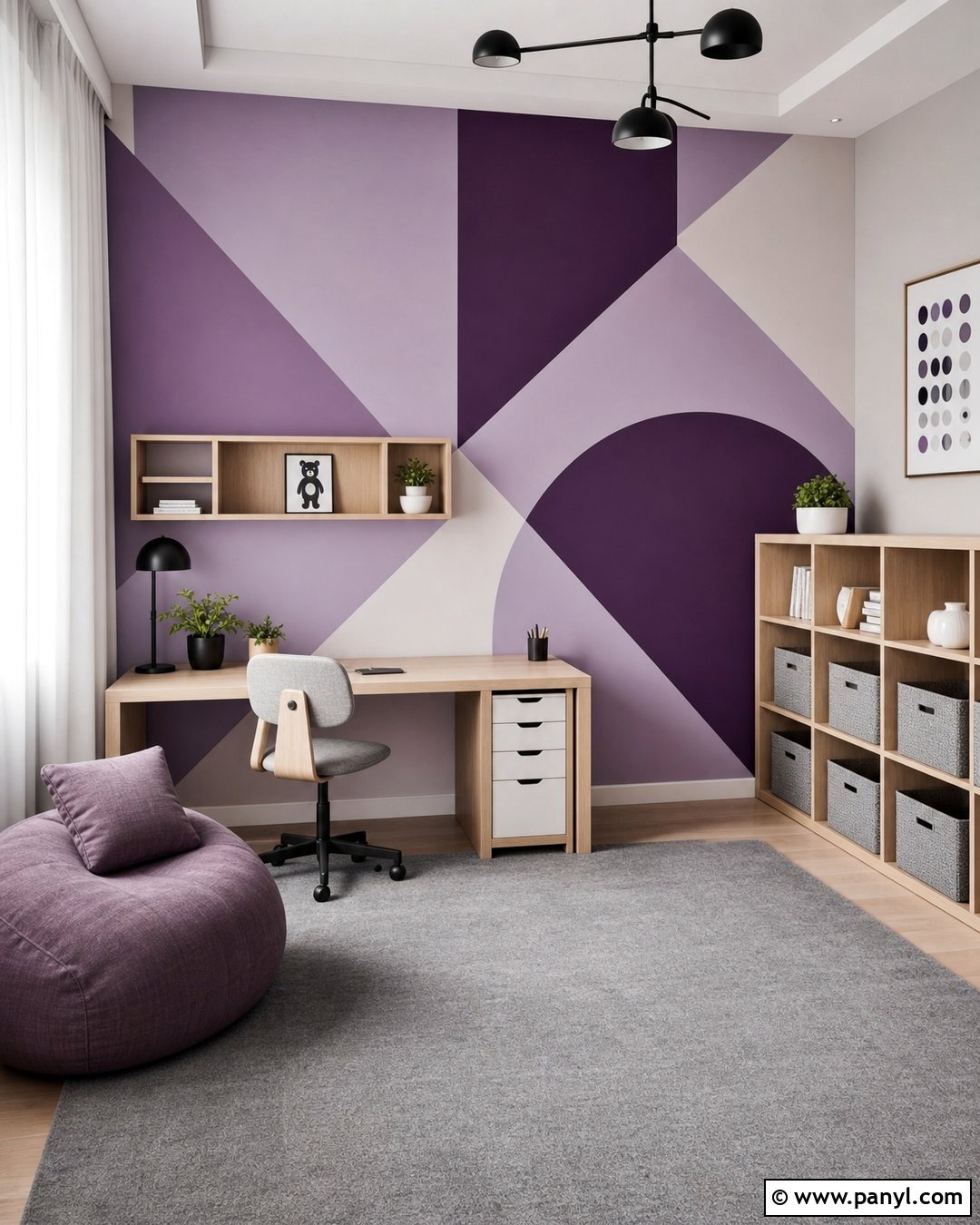
A geometric purple wall can energize a bedroom, playroom, or creative studio while still looking organized. Build the pattern with broad sections of lavender, dusty violet, warm white, and a small amount of plum. Use straight, simple shapes rather than many tiny angles, which can make the wall feel busy. Place streamlined furniture in white or pale oak against the design so its silhouette remains easy to see. A solid light gray rug and plain curtains will provide visual rest. Repeat only two wall colors in pillows, storage baskets, or desk accessories. Add matte black lighting for definition and keep artwork off the patterned surface. With controlled colors and uncluttered furniture, the entire room feels lively, contemporary, and intentionally coordinated.
12. Purple Accent Wall Behind The Bed
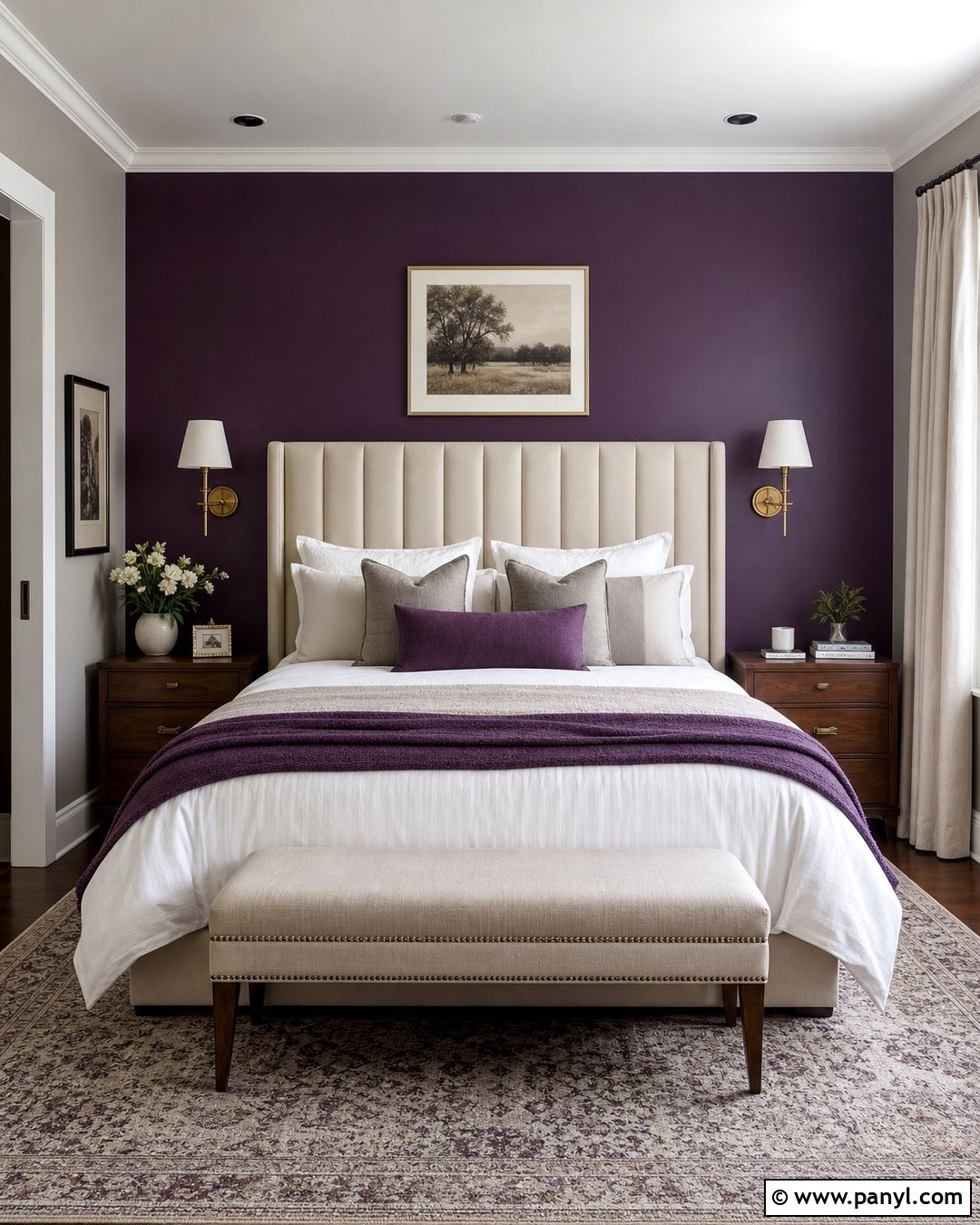
The wall behind a bed is a natural place for purple because the color immediately defines the room’s main focal point. Paint it a rich amethyst, then center a tall beige upholstered headboard against the surface. Choose white bedding layered with taupe, soft gray, and one deep purple throw to connect the bed with the wall. Matching wood nightstands and wall-mounted brass sconces create symmetry while keeping the floor area open. Use light greige on the other walls and install full-length cream curtains to balance the stronger color. Above the headboard, hang one wide piece of neutral artwork or leave the wall mostly clear. A textured beige rug and small wood bench complete a comfortable, polished bedroom with an easy sense of order.
13. Purple Accent Wall Behind The Sofa
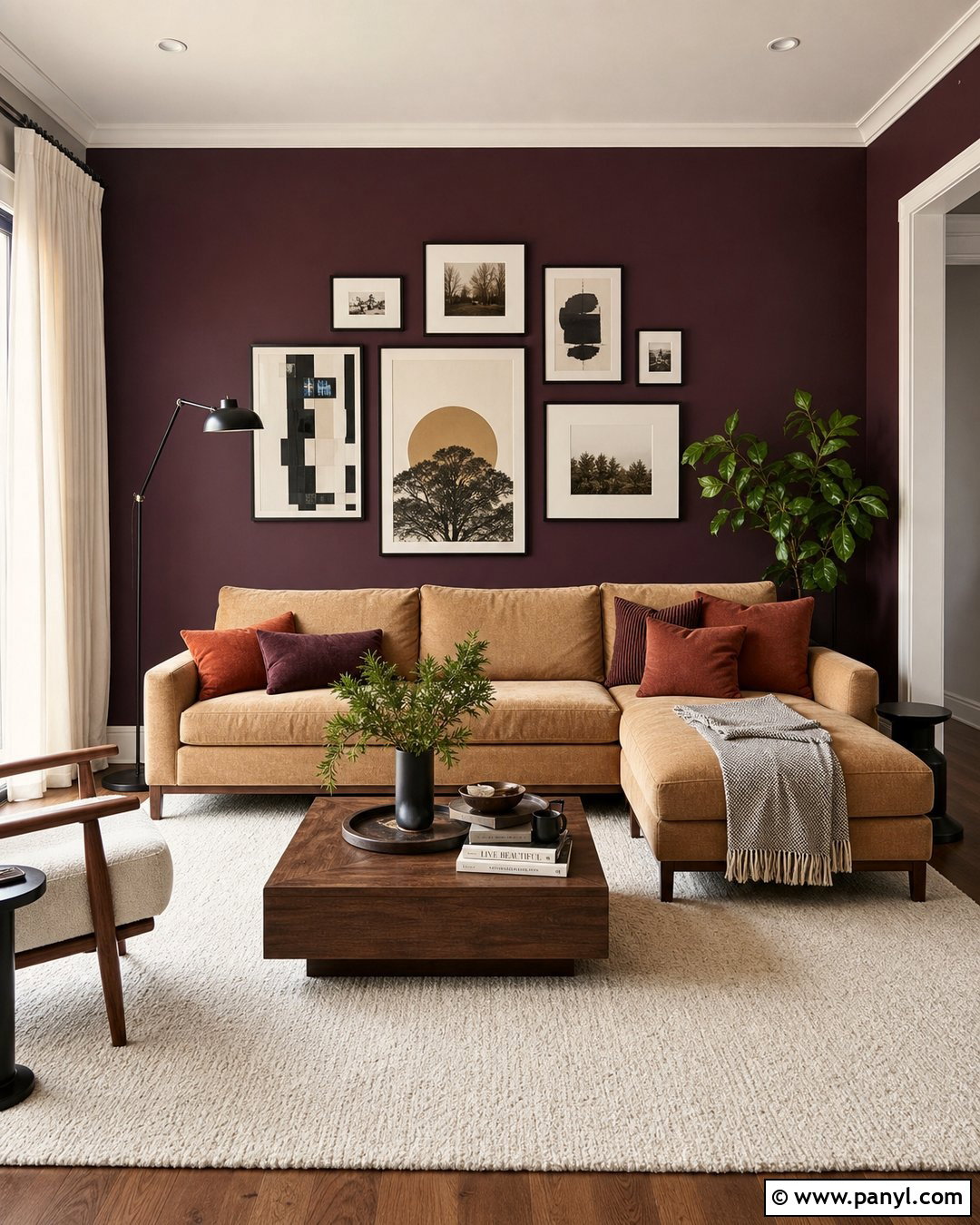
Placing a sofa against a purple accent wall gives the living room an immediate sense of structure. A muted blackberry shade works especially well behind a light camel or warm gray sofa. Center the seating carefully, then hang a large artwork or an evenly spaced gallery arrangement above it. Choose pieces containing cream, black, rust, and small touches of violet to unite the full palette. Add an ivory area rug, a walnut coffee table, and off-white curtains to lighten the room. Pillows in beige, terracotta, and plum will make the sofa feel connected without repeating purple everywhere. Finish with a black floor lamp and one leafy plant. This layout creates a defined conversation area that looks balanced from across the room.
14. Purple Accent Wall With Black Accents
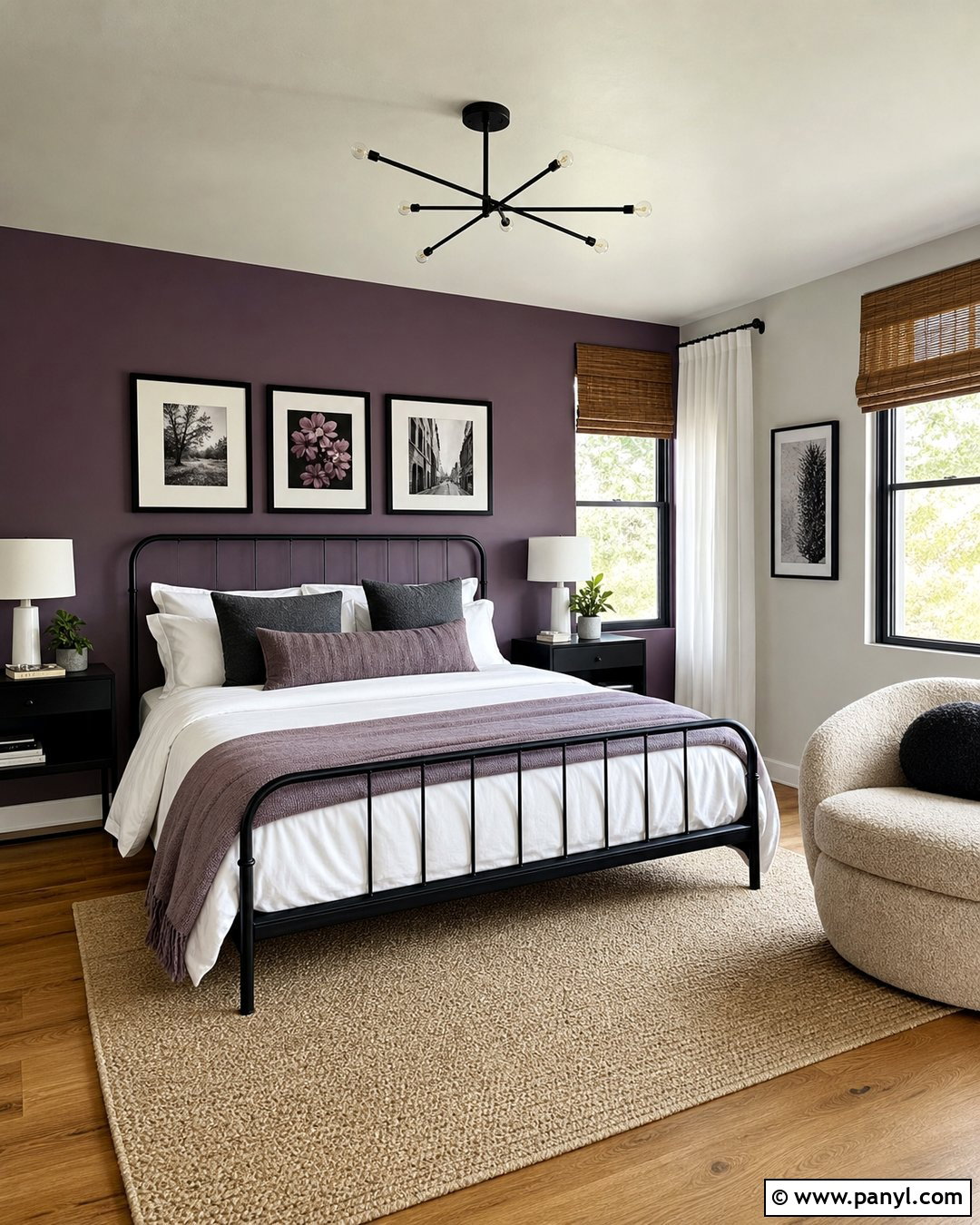
Black details give a purple accent wall a sharper, more modern edge. Select a smoky mauve or muted violet paint so the combination remains livable rather than harsh. In a bedroom, position a black metal bed against the wall and add white bedding with charcoal and lavender layers. Use black-framed artwork, slim nightstands, and a simple ceiling fixture to repeat the dark finish throughout the room. Warm oak flooring, a beige rug, and woven shades prevent the palette from becoming cold. Keep neighboring walls creamy white to maximize contrast and brightness. Add one soft leather or boucle chair for texture. The finished look feels graphic and contemporary, yet the natural materials and warm neutrals keep it comfortable enough for daily use.
15. Purple Accent Wall With Pink Decor
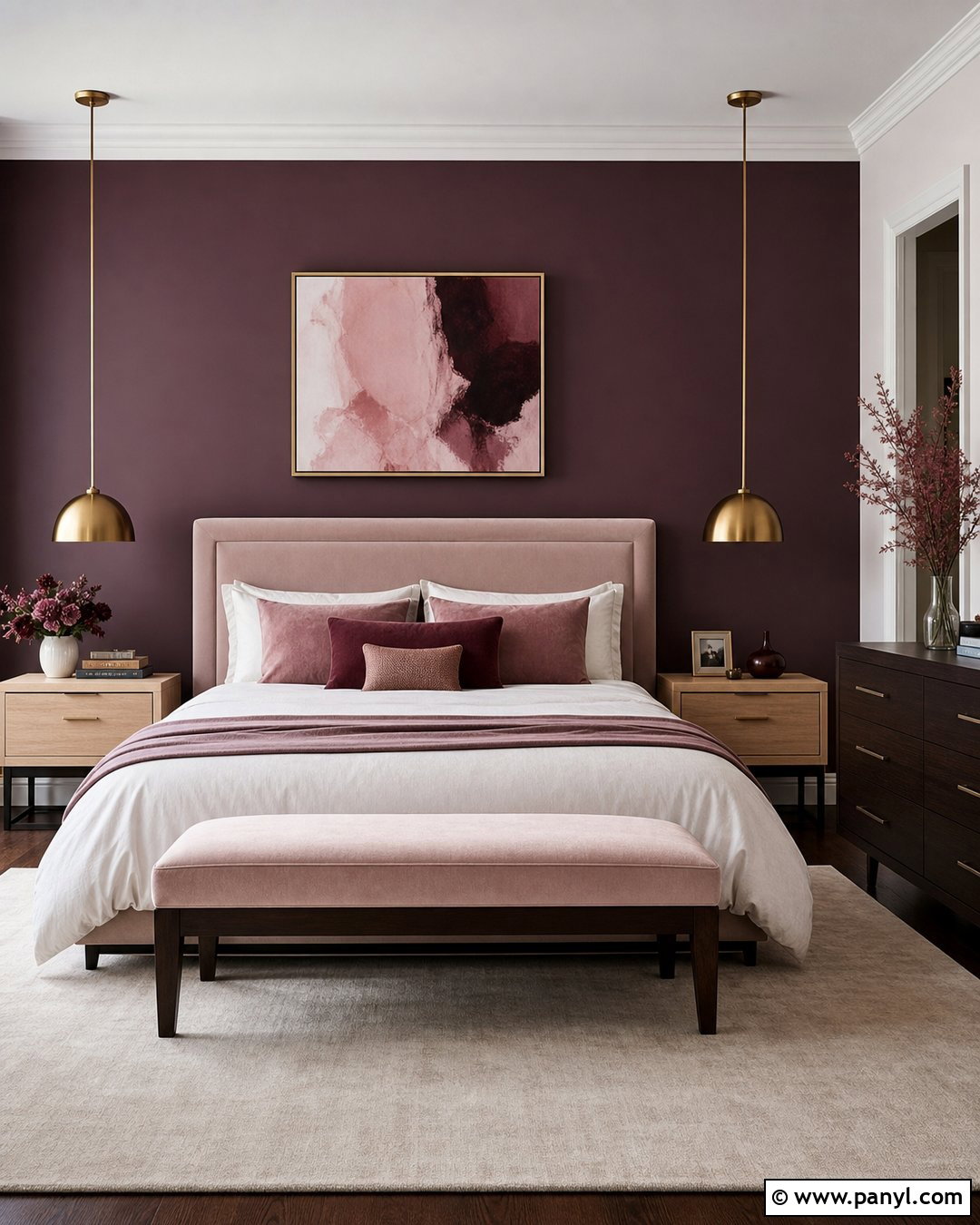
Purple and pink can look sophisticated when the shades are muted and supported by grown-up materials. Paint the accent wall dusty plum, then place a blush upholstered bed or curved sofa in front of it. Surround the combination with warm white walls, light oak furniture, and an ivory rug. Use rose, mauve, and cream textiles in solid fabrics instead of filling the room with colorful patterns. Brushed brass lighting provides warmth, while a dark wood side table adds enough contrast to ground the softer palette. Choose abstract artwork that includes faded pink, burgundy, and beige. A few ceramic accessories can repeat the colors subtly. This layered approach creates a welcoming, coordinated room without making the pink-and-purple pairing feel childish or overly decorative.
16. Purple Accent Wall With Blue Decor
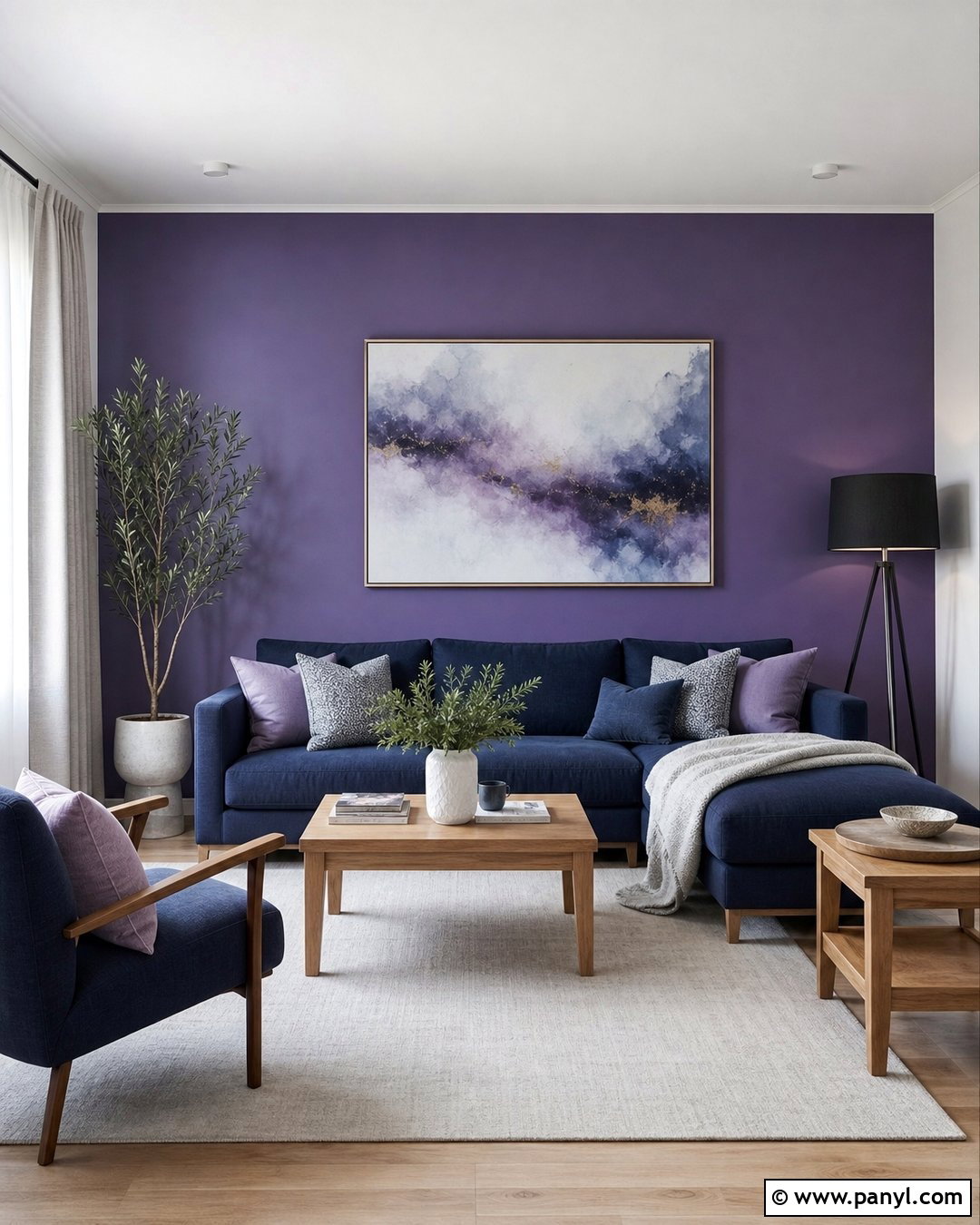
Purple and blue create a cool, calming palette that works best when their undertones feel connected. Choose a blue-based violet accent wall and pair it with a navy sofa, bench, or upholstered headboard. Break up the darker colors with white walls, pale gray textiles, and a large ivory rug. Medium oak furniture introduces warmth and keeps the room from feeling too cool. Add pillows in denim blue, soft lavender, and cream, using texture rather than busy patterns for variation. Silver or matte black lighting can complement the cooler scheme. Artwork featuring cloudy blue, purple, and gray tones will tie the wall and furniture together. The final room feels cohesive and serene, with enough neutral space to let both strong colors breathe.
17. Purple Accent Wall With Orange Decor
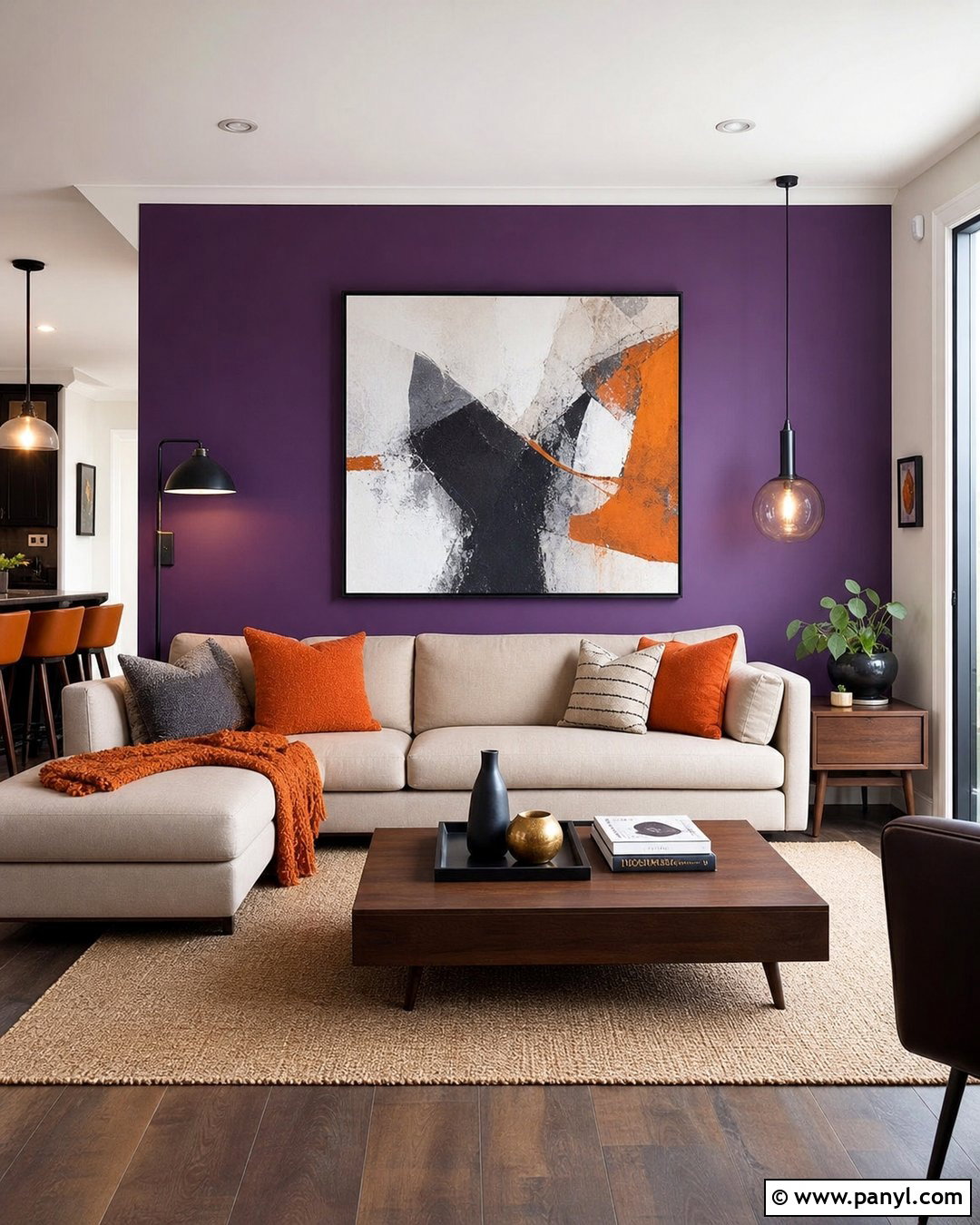
Orange offers lively contrast against purple, but a few earthy accents are more effective than large areas of bright color. Start with a deep violet accent wall and place a neutral beige sofa or upholstered bed in front of it. Introduce burnt orange through two pillows, a textured throw, and a small detail within the artwork. Use walnut furniture and a tan rug to soften the transition between the purple and orange. Warm white surrounding walls keep the palette fresh, while black lighting and frames add a clean outline. Avoid mixing in several additional bold hues. Repeating the orange in only two or three places creates rhythm without taking attention away from the wall. The completed room feels energetic, warm, and carefully balanced.
18. Purple Accent Wall Small Bedroom
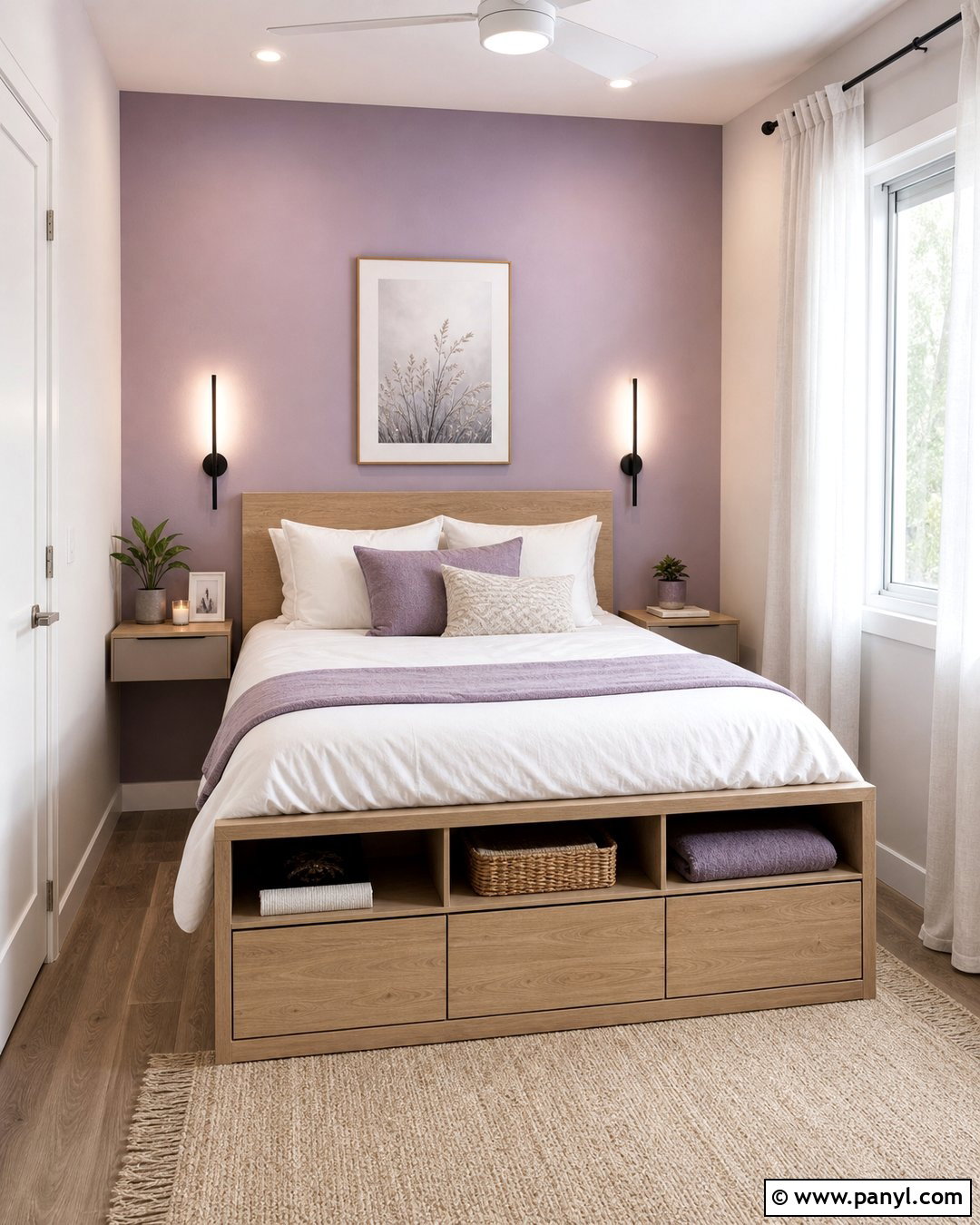
In a small bedroom, a purple accent wall works best when the surrounding surfaces and furniture remain light. Select a soft lilac or pale heather that reflects more light than deep plum. Paint the wall behind the bed, then use a compact white or light oak frame with built-in storage. White bedding, a light beige rug, and sheer curtains will help the limited floor area feel open. Mount narrow sconces instead of using table lamps, and choose floating nightstands to preserve visible space. One small framed print above the bed is enough decoration for the focal wall. Repeat lilac through a pillow and folded blanket. This efficient layout adds color and character without crowding the room or making its boundaries feel visually closer.
19. Textured Purple Accent Wall Living Room
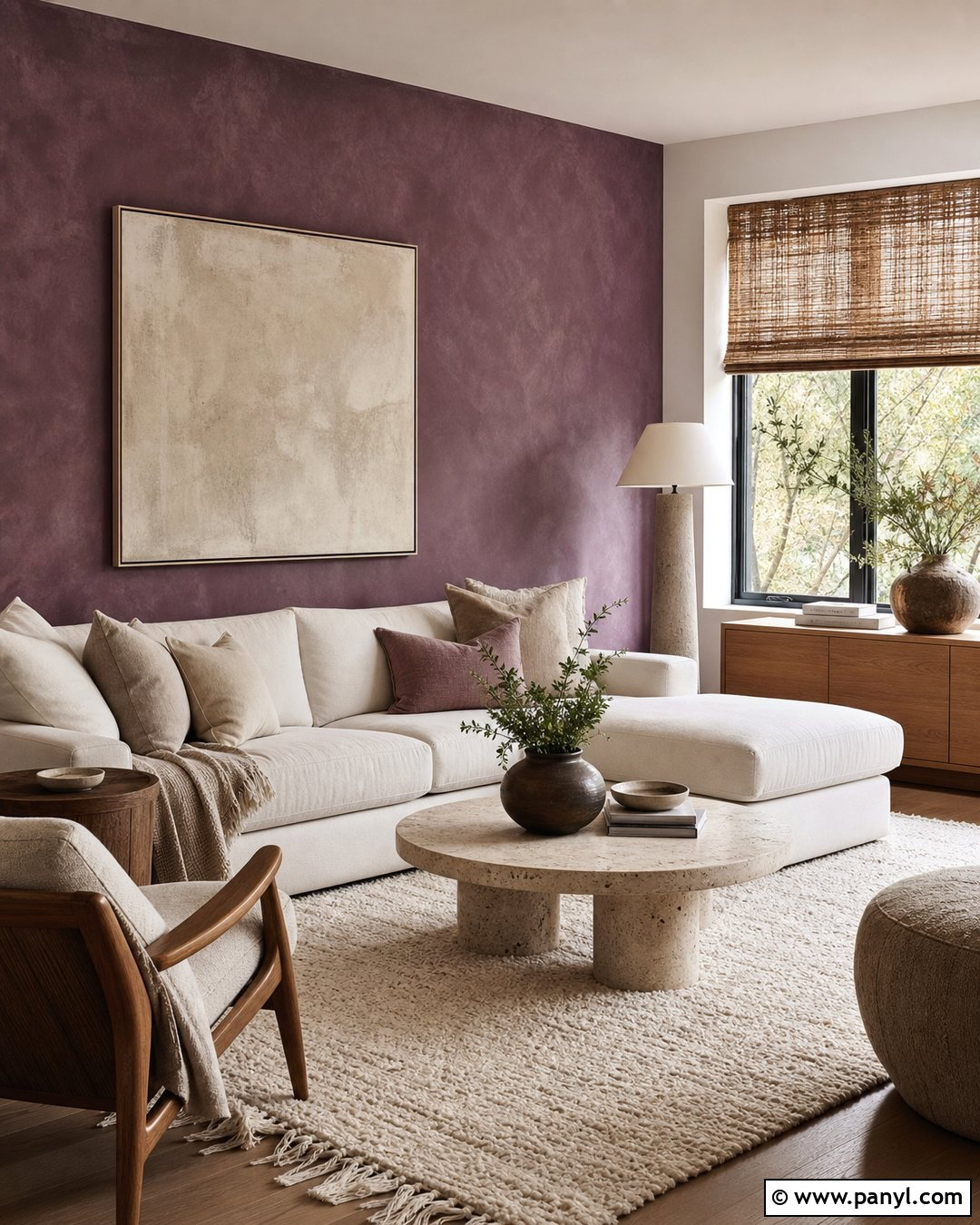
Texture gives purple more depth and helps a large living room wall feel substantial. Use a matte limewash-style finish in muted plum, allowing gentle variations in tone to create movement across the surface. Place a low cream linen sofa against the wall and add a chunky wool rug in warm ivory. Travertine side tables, oak furniture, and woven shades reinforce the natural, tactile direction. Keep pillows simple in taupe, dusty lavender, and warm brown so they complement rather than compete with the finish. A sculptural plaster lamp and one oversized neutral canvas provide dimension without visual clutter. Paint the remaining walls soft beige. The finished room feels organic, layered, and relaxed, with the textured purple wall acting as a quiet artistic backdrop.
20. Purple Accent Wall Gallery Display
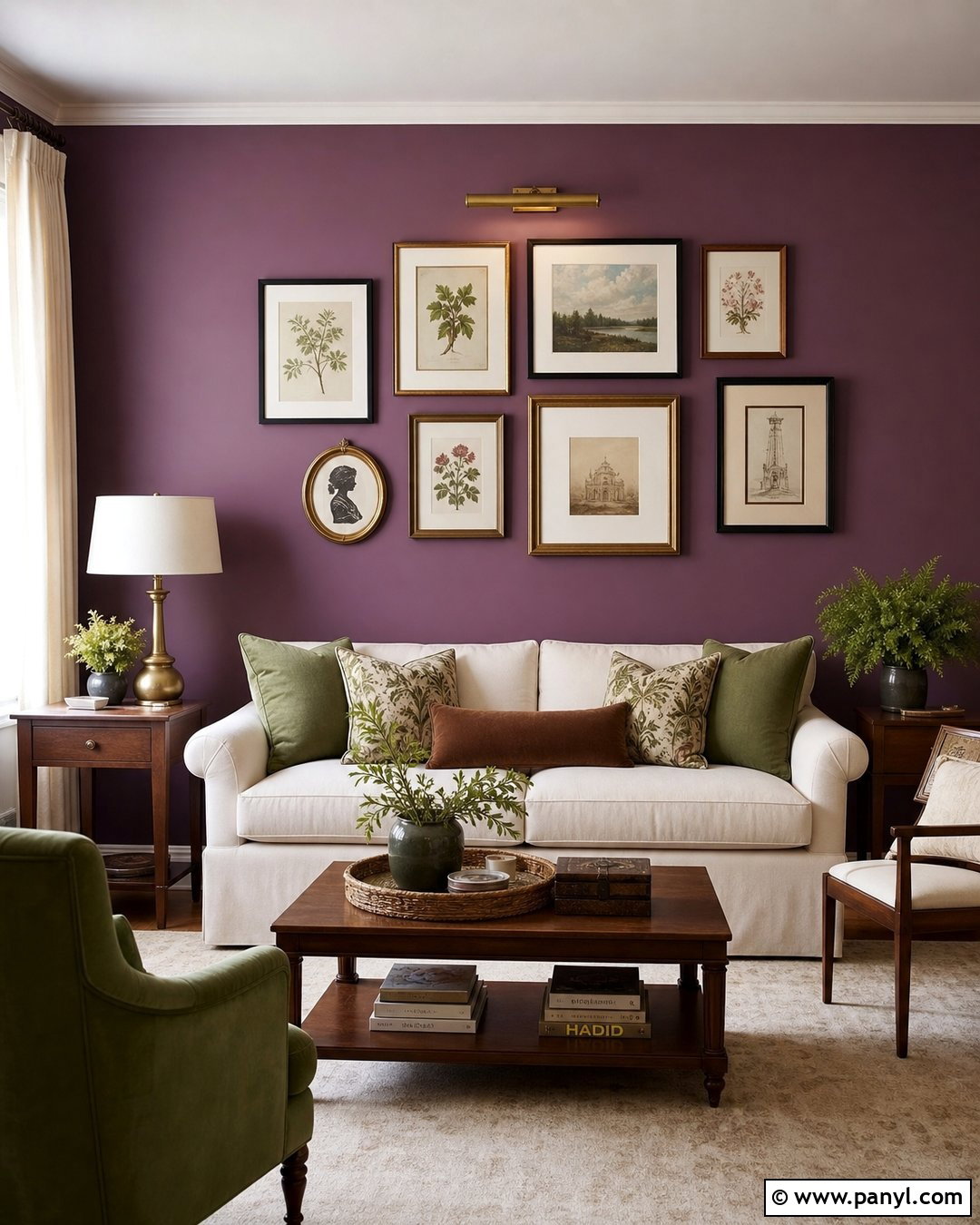
A gallery display can break up a broad purple wall while turning it into a personal focal point. Paint the wall a medium aubergine or warm violet, then arrange framed artwork above a cream sofa, sideboard, or console. Use a consistent mix of thin black, walnut, and antique brass frames to create variety without disorder. Select prints with cream backgrounds and touches of rust, green, purple, and charcoal. Lay out the full arrangement on the floor before hanging it, keeping the spacing even. Complete the room with an ivory rug, walnut furniture, white curtains, and muted green accessories. A picture light or nearby floor lamp can highlight the display. The result feels collected and expressive while remaining balanced, polished, and easy to update.
Conclusion:
Purple can be surprisingly flexible when its shade, placement, and supporting colors are chosen with care. Pale lilac creates a light and peaceful setting, while plum, violet, and aubergine establish greater depth and drama. Whichever tone you select, connect the wall to the room through furniture placement, repeated accents, natural materials, and balanced lighting. Neutral walls and textiles can soften purple, while green, orange, pink, blue, gold, or black details create a stronger design direction. Most importantly, build one complete palette rather than adding unrelated decorative pieces. These 20 How To Style A Purple Accent Wall Ideas can help you create a distinctive focal point that still feels comfortable, practical, and connected to the rest of your home.

Related Ideas and Inspiration:
Leave a Reply