
Purple gray sits between a soft neutral and a true statement color, giving rooms more personality than standard gray without feeling overly bright. The best **purple gray wall paint ideas** range from pale lavender-gray and dusty mauve to smoky violet and deep plum-charcoal. Because this color can shift noticeably with lighting, flooring, and nearby finishes, test large painted samples on several walls before committing. Physical samples are more reliable than colors viewed only on a screen. () Warm woods, crisp whites, muted greens, black accents, and brushed metals can all shape the final effect. The complete room schemes below make it easier to coordinate furniture, textiles, lighting, and trim while exploring 20 practical **purple gray wall paint ideas**.

1. Light Lavender Gray Living Room
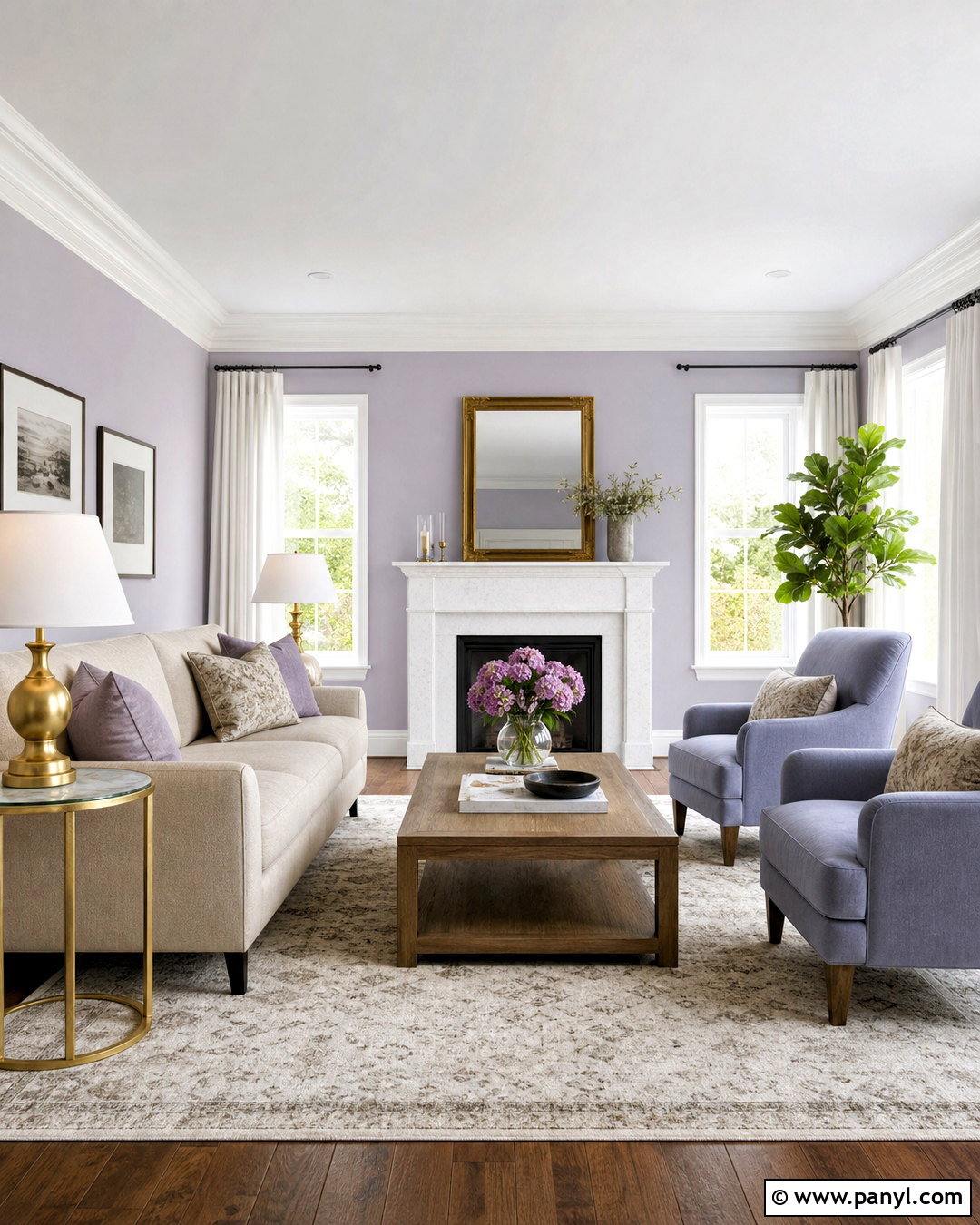
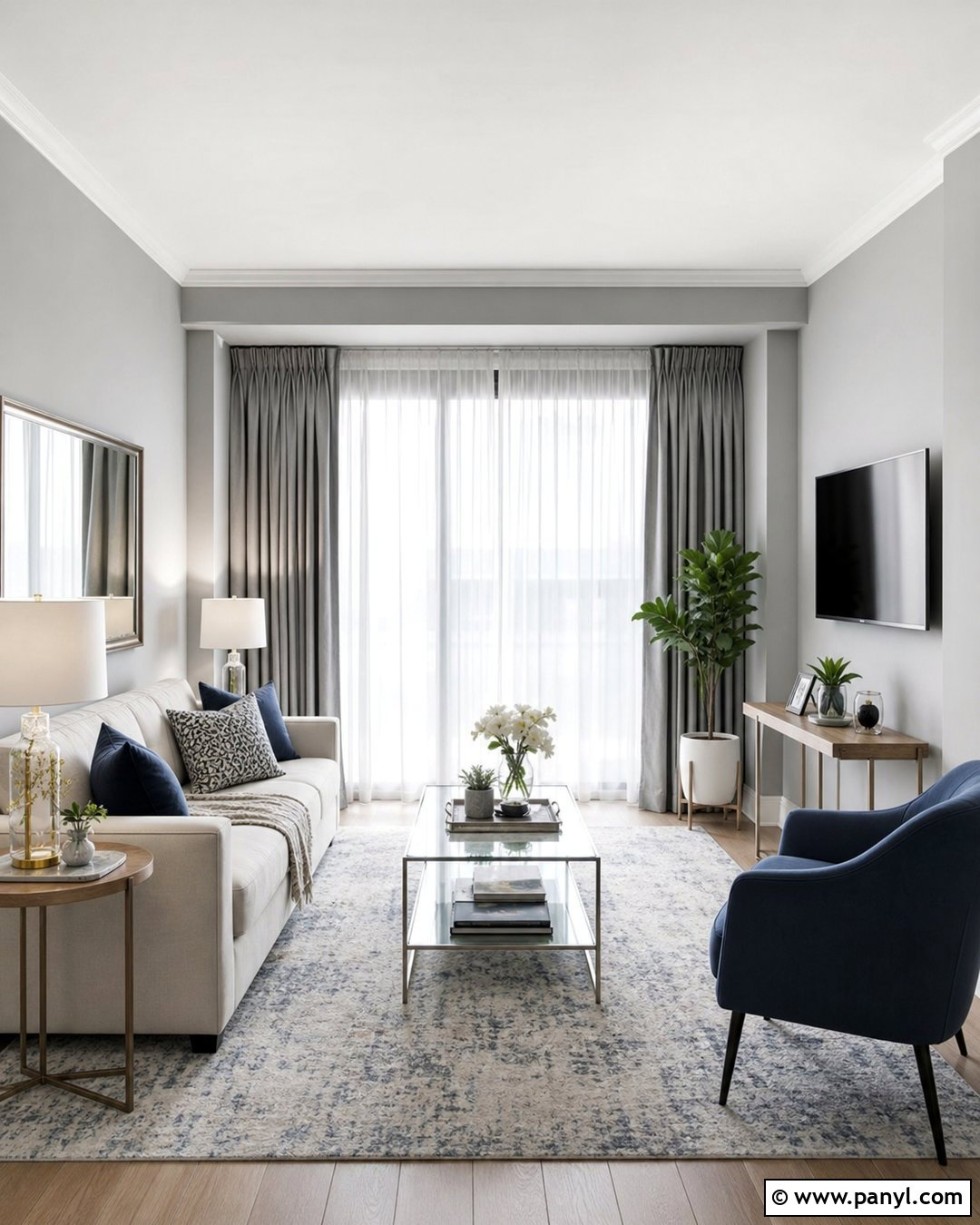
A light lavender-gray creates a calm living room that still feels distinctive. Paint every wall in a pale purple gray with a soft, balanced undertone, then use clean white on the ceiling and trim. Anchor the seating area with a light oatmeal sofa, two gray-blue armchairs, and a medium-toned oak coffee table. A cream rug with muted lavender lines connects the palette without making it too coordinated. Add brushed brass lamps, white linen curtains, and black picture frames for definition. Keep the layout open, with the sofa facing a simple media console or fireplace. This complete combination works especially well in a bright room because the warm wood and creamy textiles prevent the purple-gray walls from appearing chilly.
2. Warm Mauve Gray Bedroom
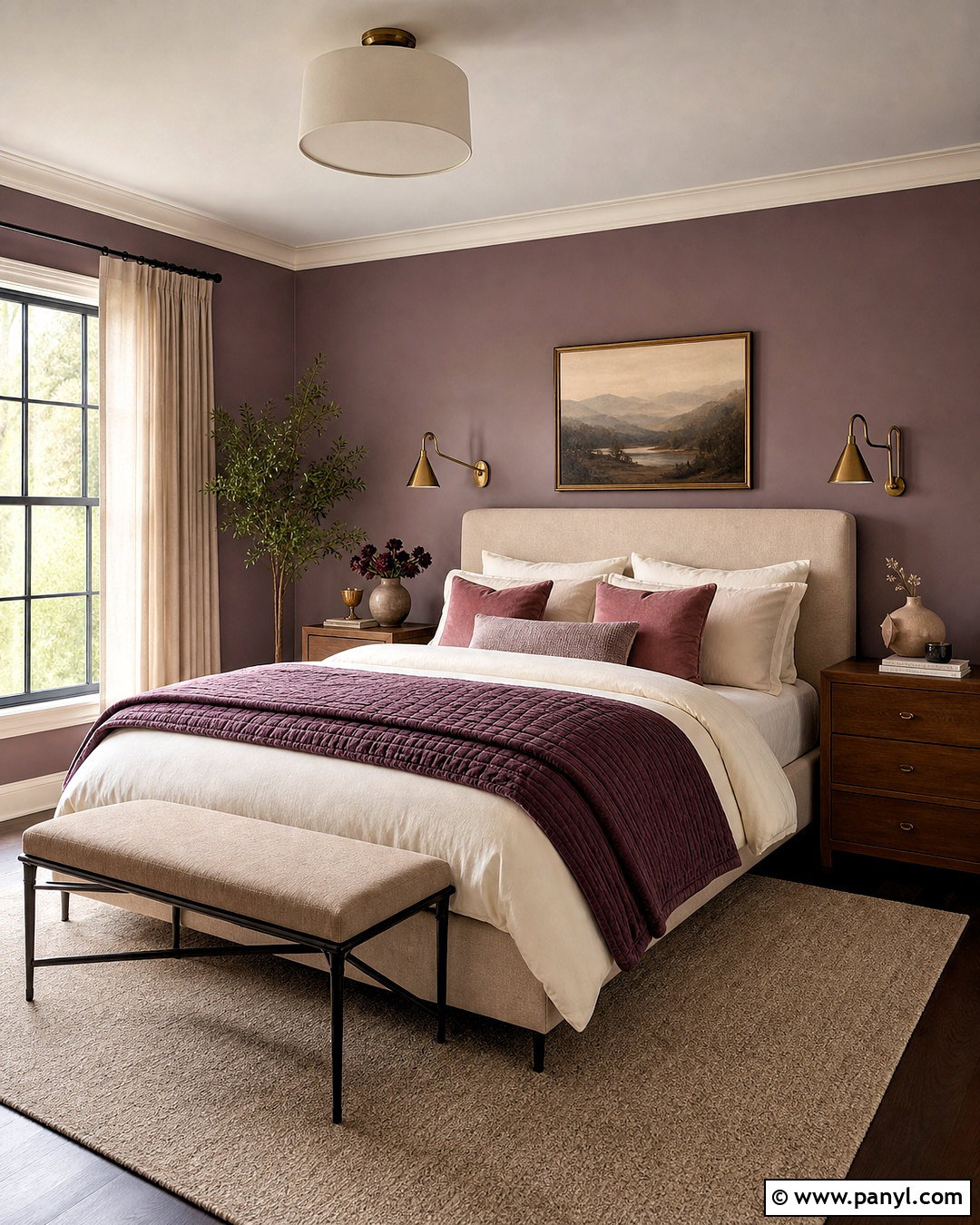
Imagine entering a bedroom wrapped in a gentle mauve-gray that feels warm rather than sugary. Use the color across all four walls and balance it with a creamy white ceiling, warm oak flooring, and an upholstered oatmeal bed. Choose ivory bedding with a muted plum quilt folded across the foot. Walnut nightstands introduce deeper brown tones that complement the reddish undertone in the paint. Add antique brass sconces, dusty rose cushions, and a taupe wool rug for subtle layering. Window treatments should stay simple, such as natural linen panels mounted close to the ceiling. A small landscape print above the bed completes the room. The result is a comfortable, mature bedroom where purple gray behaves like a soft, welcoming neutral.
3. Deep Plum Gray Dining Room
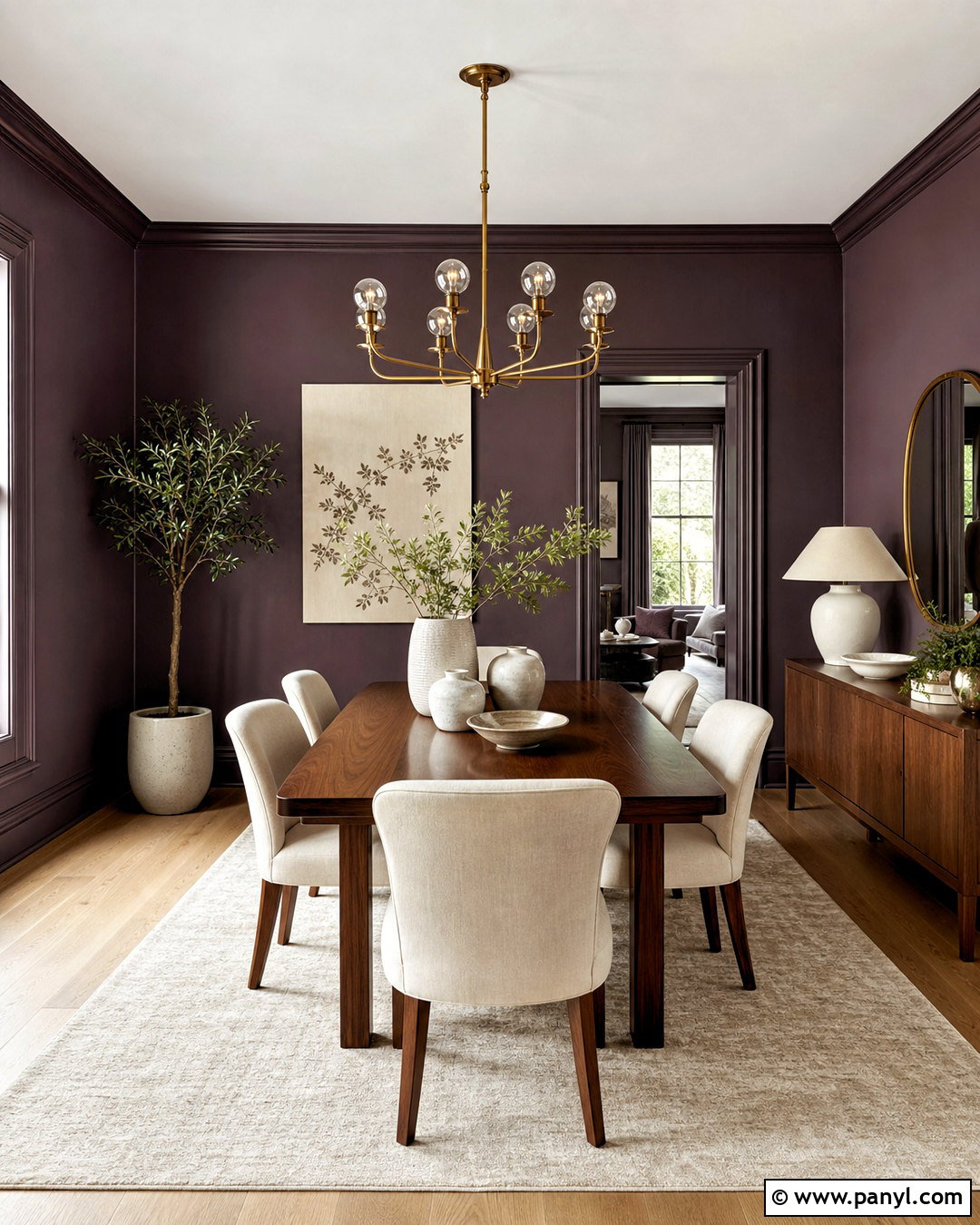
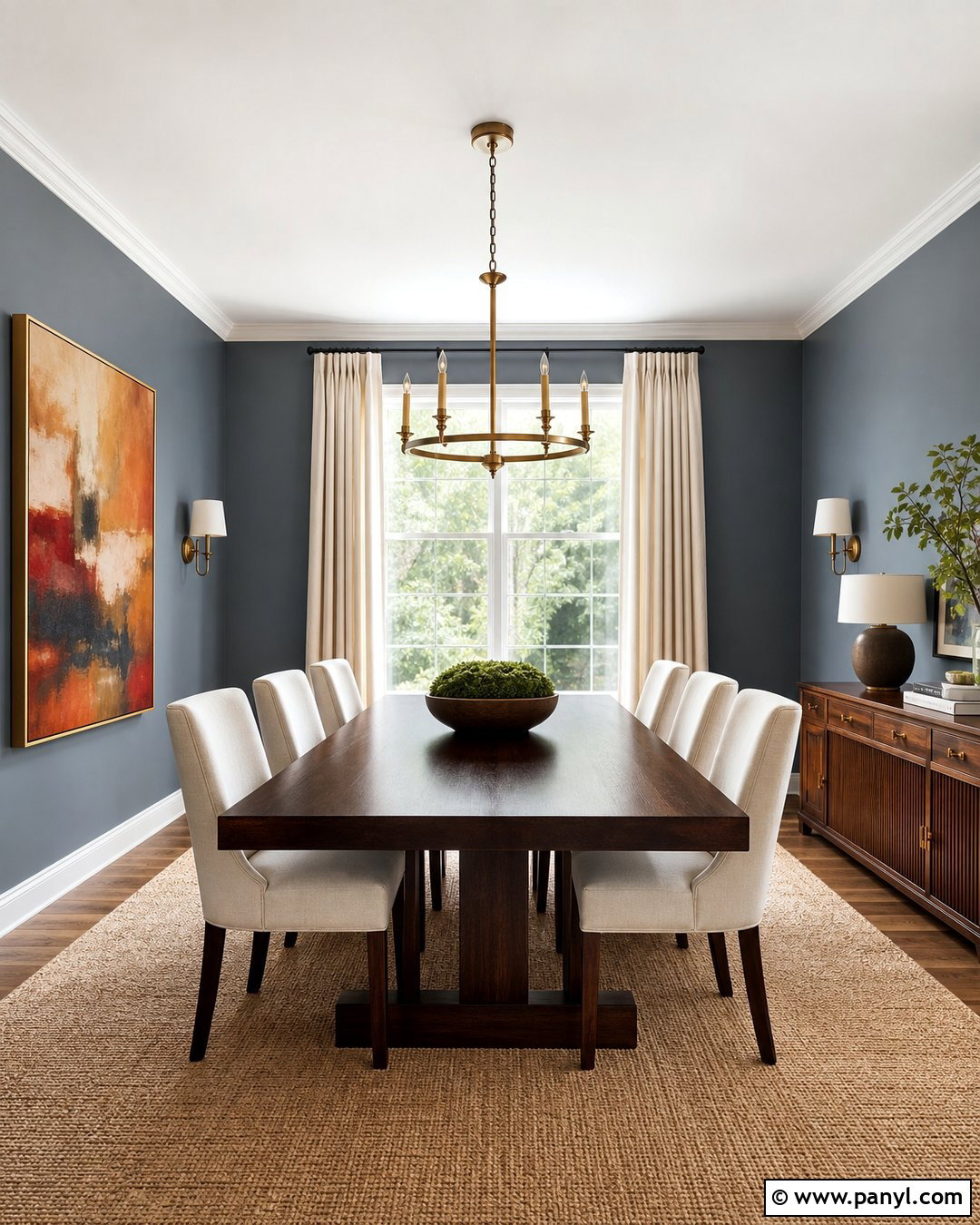
For a dining room with greater depth, choose a dark plum-gray that looks smoky instead of brightly purple. Cover the walls, baseboards, and door trim in the same matte or low-sheen color to create an enveloping background. Contrast that darkness with a warm walnut dining table and cream upholstered chairs. A large ivory rug keeps the lower half of the room light, while a sculptural aged-brass chandelier adds a reflective finish overhead. Display pale ceramics, clear glassware, and one oversized botanical artwork rather than many small accessories. White or light oak flooring will provide the strongest balance. This full dining room scheme feels dramatic but remains usable because every dark surface is offset by light fabric, warm wood, and carefully placed illumination.
4. Cool Violet Gray Home Office
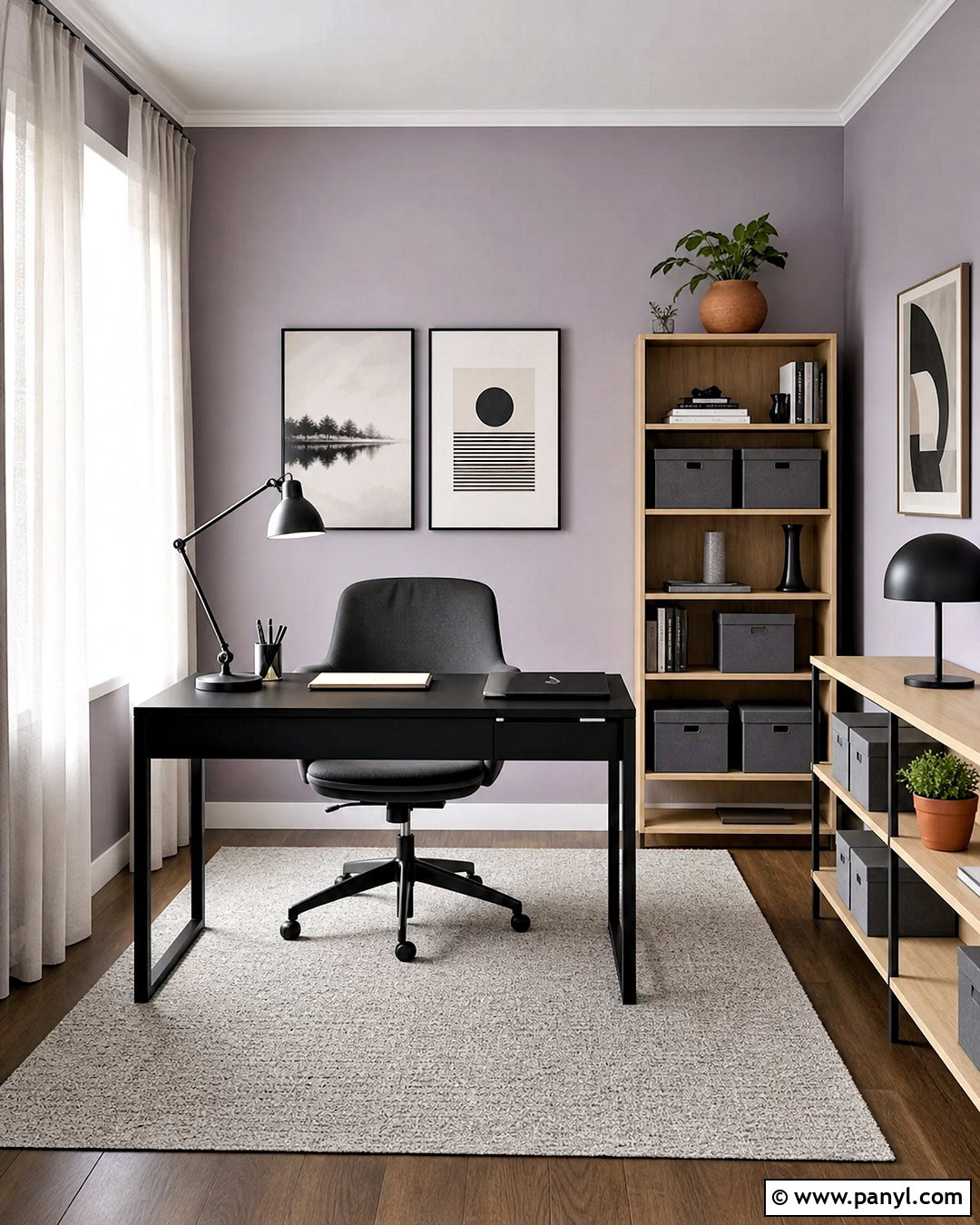
Could an office feel focused without relying on plain white walls? A cool violet-gray offers a sophisticated alternative. Use a medium-light shade on the walls, then introduce a streamlined black desk facing the room rather than the wall. Place light oak shelves behind it for storage and warmth. A charcoal desk chair, pale gray rug, and white ceiling keep the look practical and balanced. Add adjustable matte-black lighting and organize paperwork inside matching gray boxes. One rust-colored cushion or ceramic planter provides a small warm contrast. Keep curtains sheer so daylight reaches the painted surfaces. This office design works as a complete professional setting because the restrained furniture, closed storage, natural materials, and purple-gray backdrop support concentration without making the room feel sterile.
5. Dusty Lilac Gray Nursery
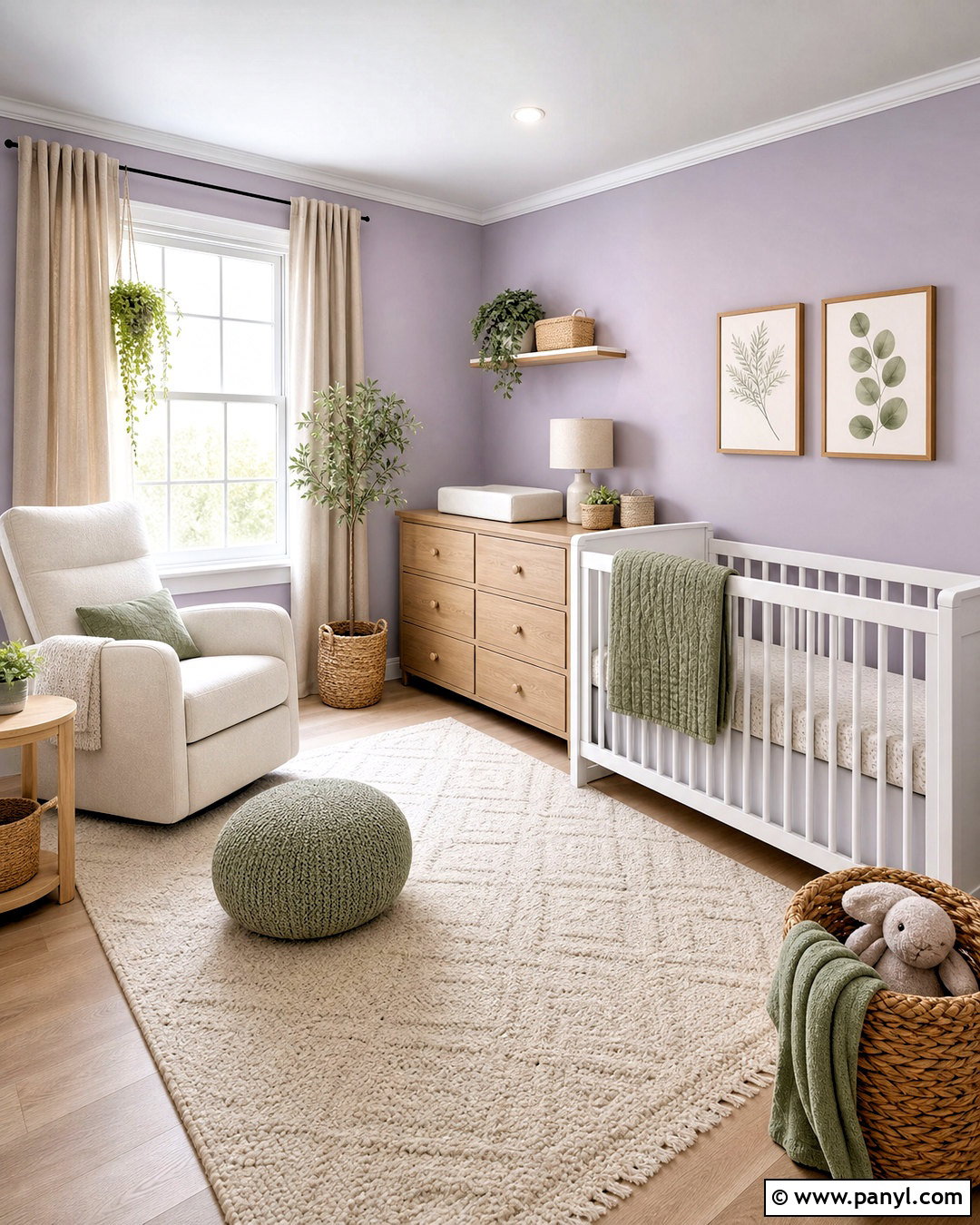
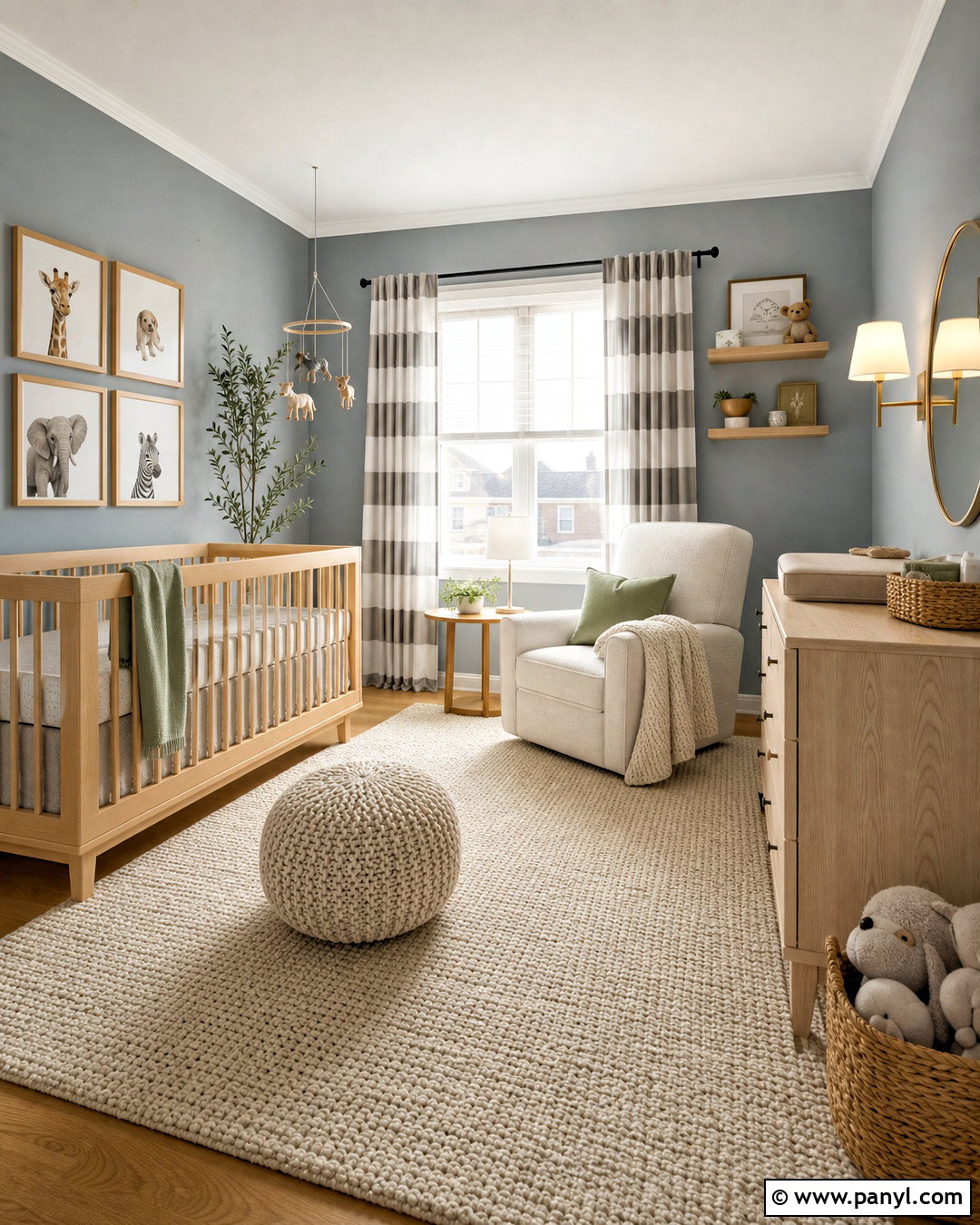
A dusty lilac-gray nursery can feel peaceful, flexible, and easy to update over time. Paint the walls in a light muted tone with more gray than purple, pairing it with warm white trim and a natural wood floor. Position a simple white crib against the clearest wall and place a light oak dresser nearby for convenient storage. Add a cream boucle glider, washable ivory rug, and floor-length oatmeal curtains. Soft sage green can appear in a blanket, storage baskets, and understated botanical artwork. Avoid filling every surface with small decorations. Instead, use a few larger pieces, closed baskets, and one warm ceiling fixture. The resulting nursery looks coordinated and gentle while remaining practical enough to transition into a child’s bedroom later.
6. Purple Gray Bathroom
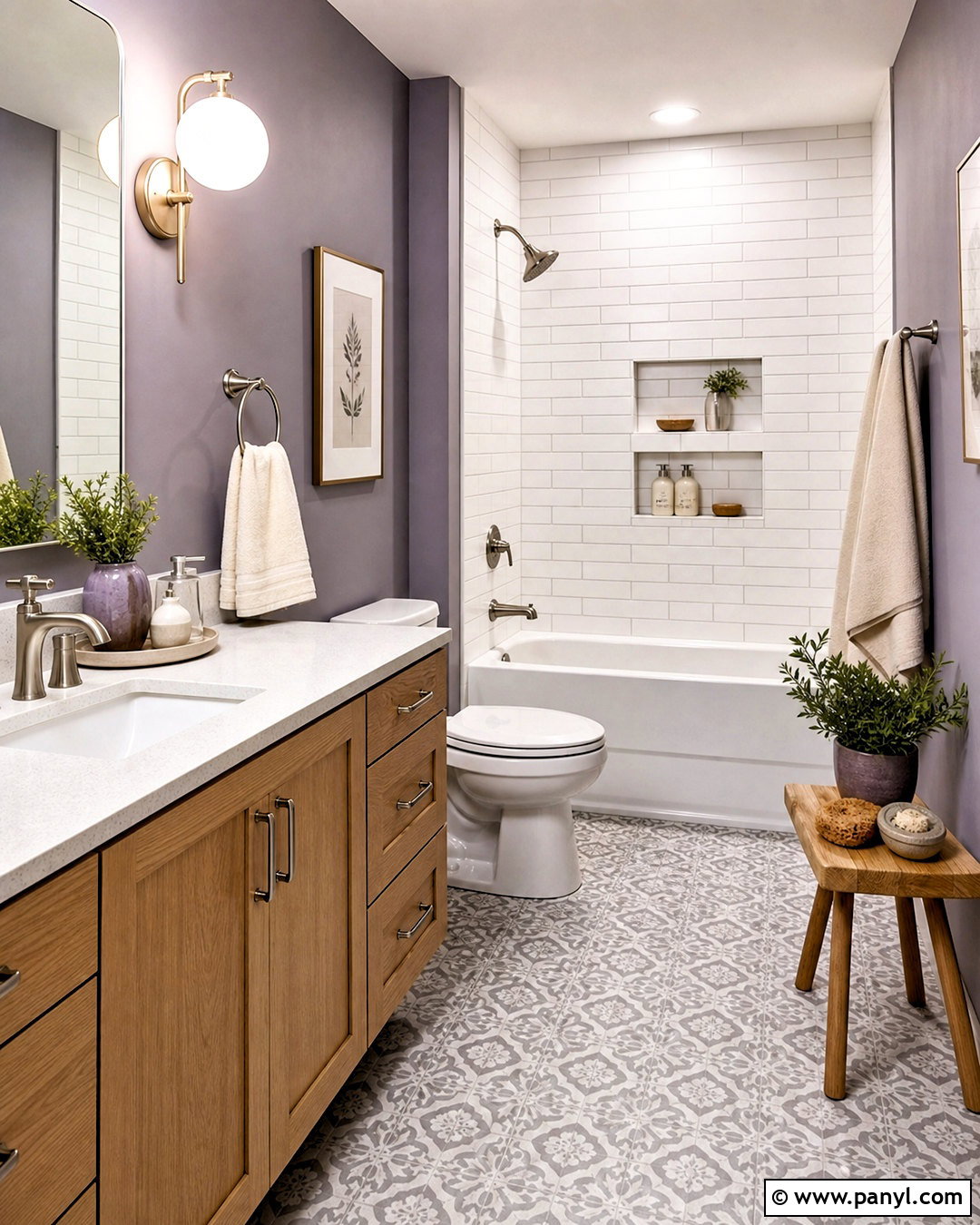
Turn an ordinary bathroom into a polished retreat with medium purple-gray walls, bright white fixtures, and pale stone finishes. Use moisture-appropriate wall paint above a white subway tile surround or simple marble-look shower tile. A natural oak vanity brings warmth, while a white quartz counter keeps the room fresh. Choose brushed nickel fixtures for a quiet finish that does not compete with the wall color. A frameless mirror, white globe sconces, and fluffy ivory towels brighten the space further. Ground the design with a gray-and-white patterned floor that includes only subtle movement. Add one small green plant and a wooden stool beside the tub. Together, these pieces create a complete bathroom where purple gray adds color without overwhelming a compact footprint.
7. Purple Gray Kitchen
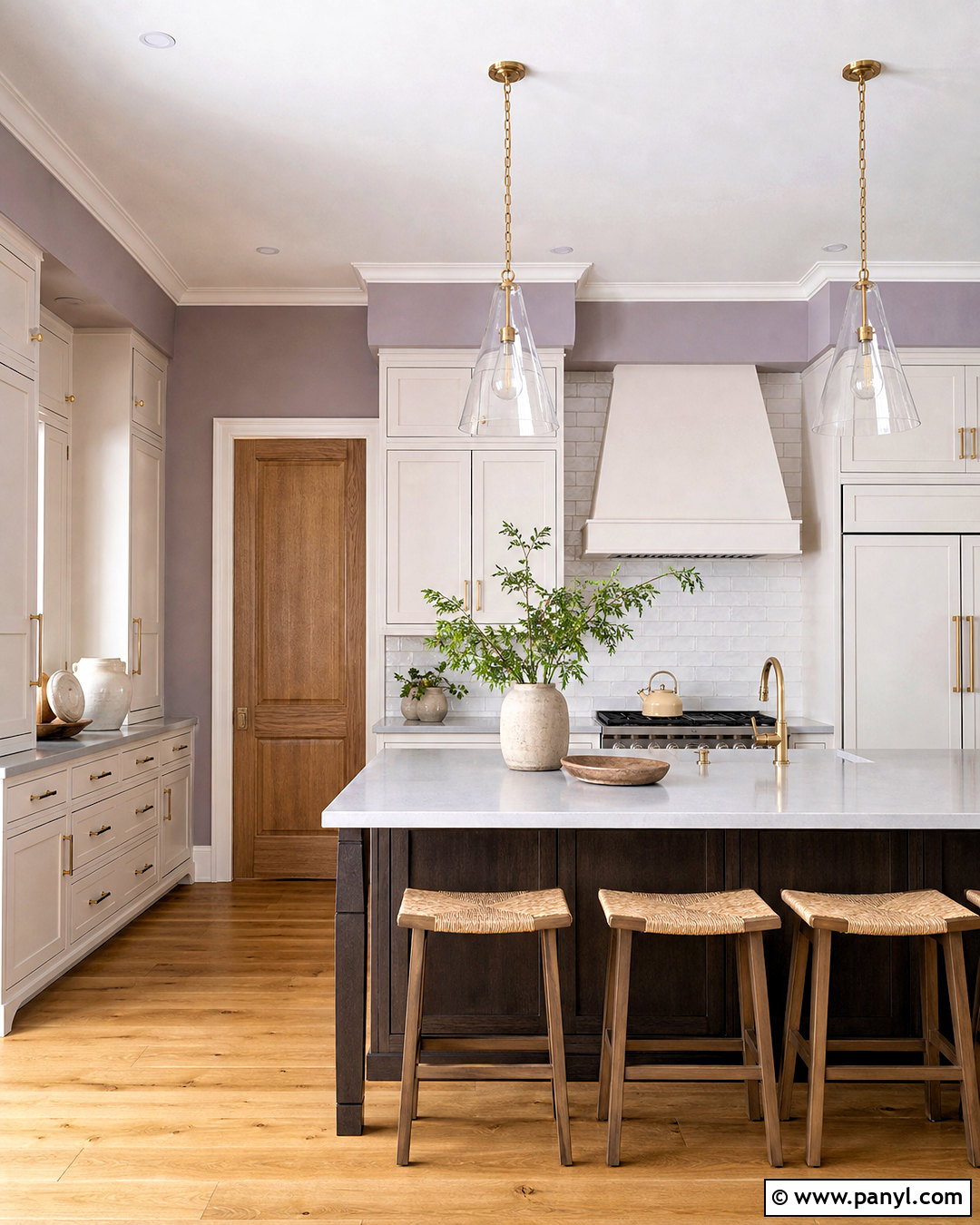
Purple-gray walls can soften a kitchen filled with white cabinetry and hard surfaces. Select a pale, slightly warm shade for the open wall areas, leaving cabinets in creamy white with understated brushed-brass hardware. Use a light gray quartz countertop and a simple handmade-look white tile backsplash. Medium oak flooring and counter stools prevent the palette from becoming too cool. Over the island, install clear glass pendants with warm metal fittings. Keep accessories functional and limited to wood cutting boards, cream ceramics, and a small arrangement of leafy branches. If the kitchen connects to another room, repeat the wall color in a nearby textile or artwork. This balanced scheme allows the unusual paint color to feel intentional while keeping the kitchen bright, practical, and welcoming.
8. Purple Gray Entryway
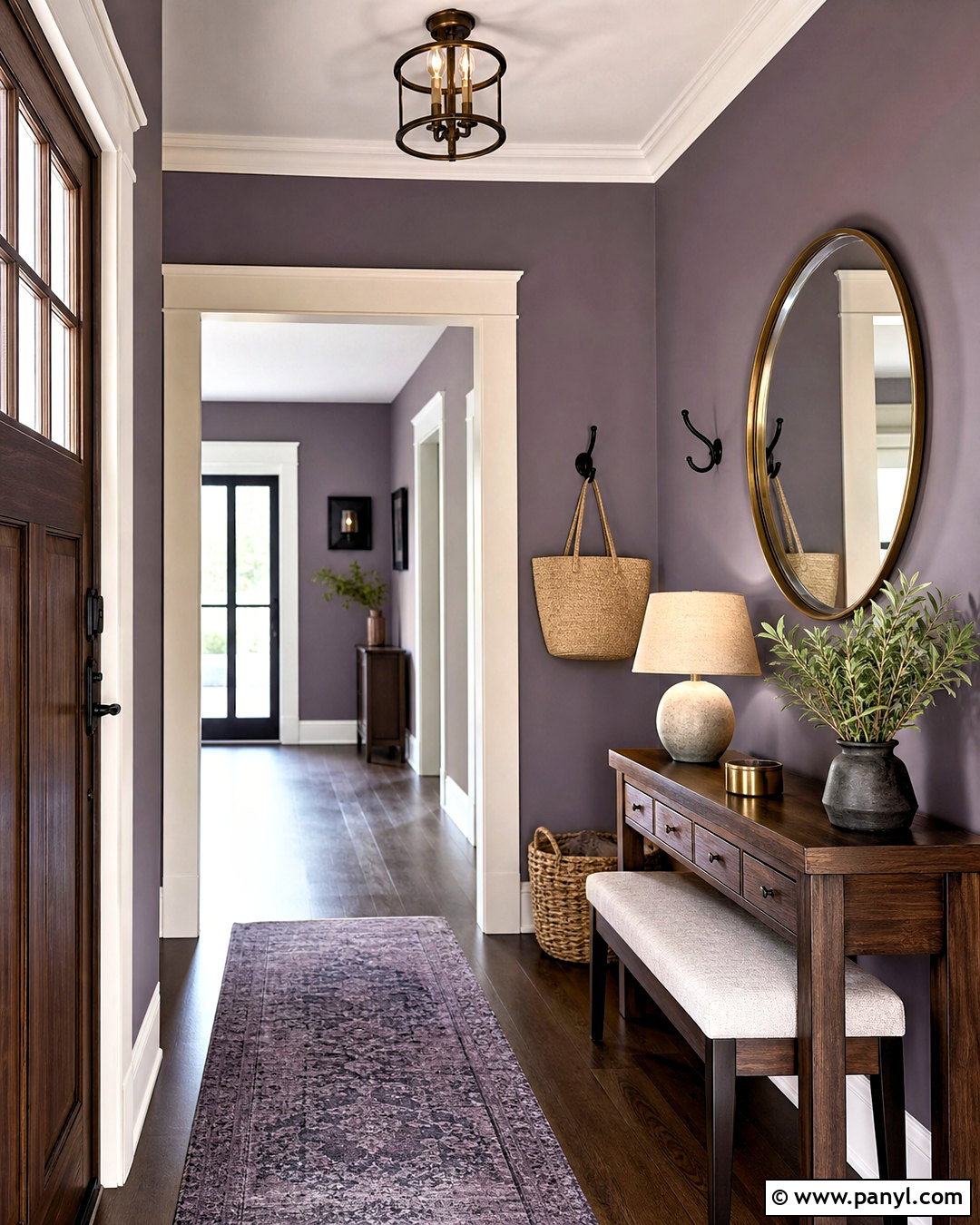
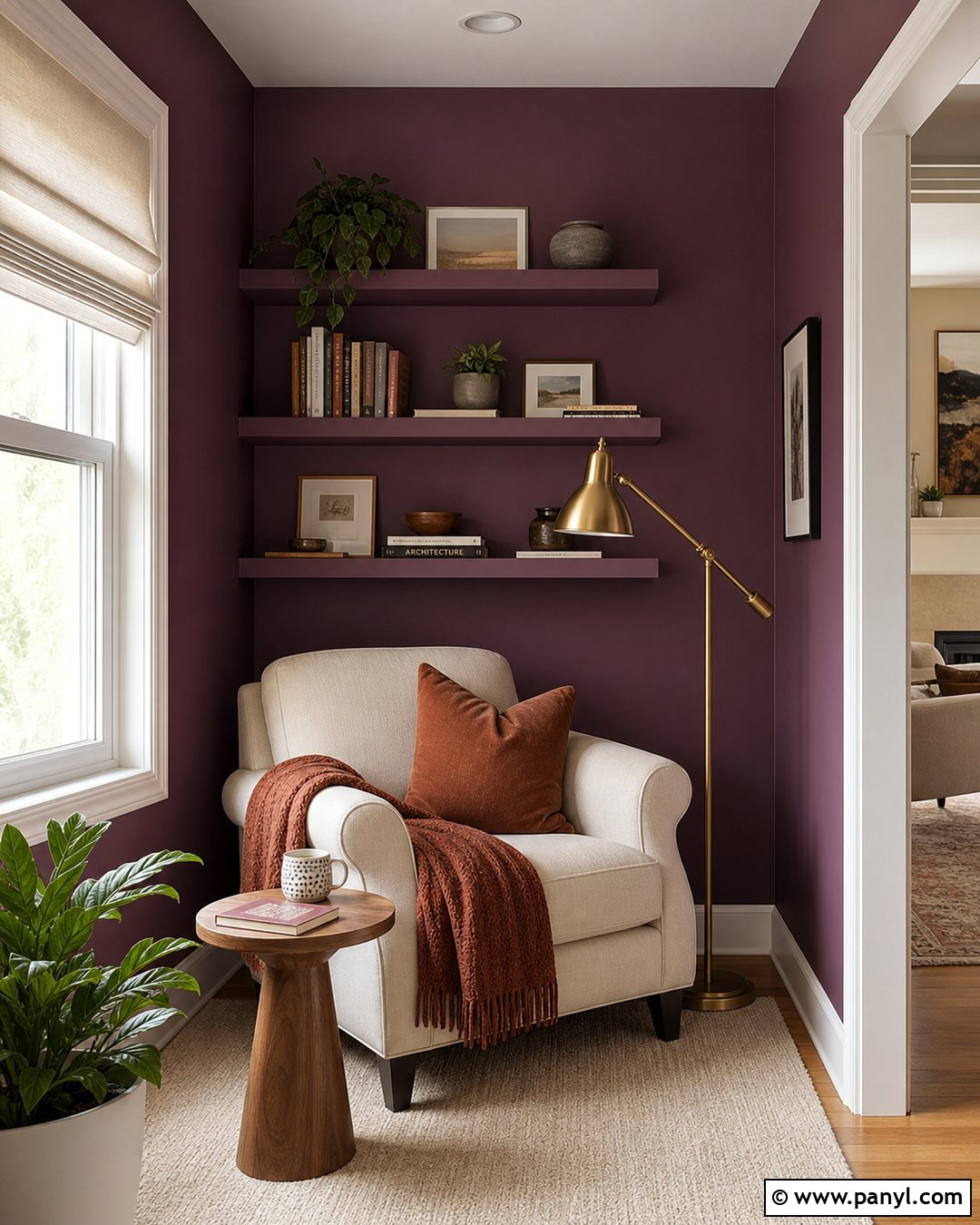
First impressions become softer and more memorable when an entryway uses a smoky purple-gray backdrop. Apply a medium shade to the walls and keep the ceiling, doors, and substantial baseboards warm white. Place a narrow walnut console along one side, leaving enough open floor space for an easy walkway. Above it, hang a large round mirror with a thin aged-brass frame. A washable runner featuring cream, muted violet, and charcoal can handle foot traffic while connecting the palette. Add a small upholstered bench, woven umbrella basket, and shaded table lamp for warmth. Black hooks or a black interior door provide useful contrast. This complete entry design combines storage, seating, lighting, and durable materials so the purple-gray walls look stylish rather than purely decorative.
9. Purple Gray Accent Wall Bedroom
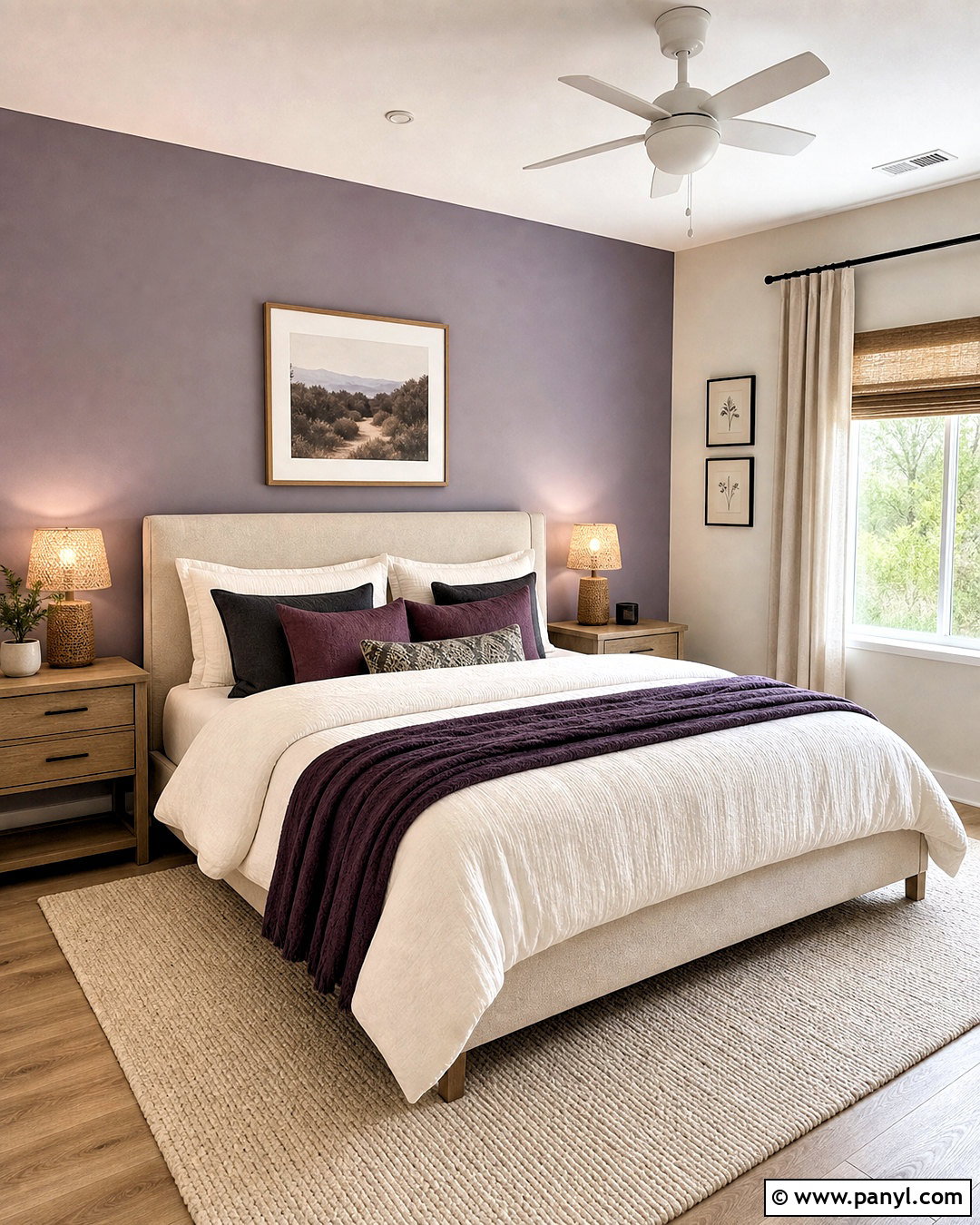
If four purple-gray walls feel like too much, concentrate the color behind the bed. Choose a medium smoky violet-gray for the accent wall and paint the remaining walls soft warm white. A tall oatmeal upholstered headboard will stand out clearly against the deeper background. Use white bedding layered with charcoal, lavender, and muted plum textiles. Light oak nightstands and woven lamps introduce natural warmth, while a large cream rug softens the floor. Keep artwork minimal because the painted wall already serves as a focal point. For balance, repeat the wall color once on the opposite side of the room through a chair or curtain detail. The completed bedroom gains depth and personality without losing the spacious quality created by the surrounding white walls.
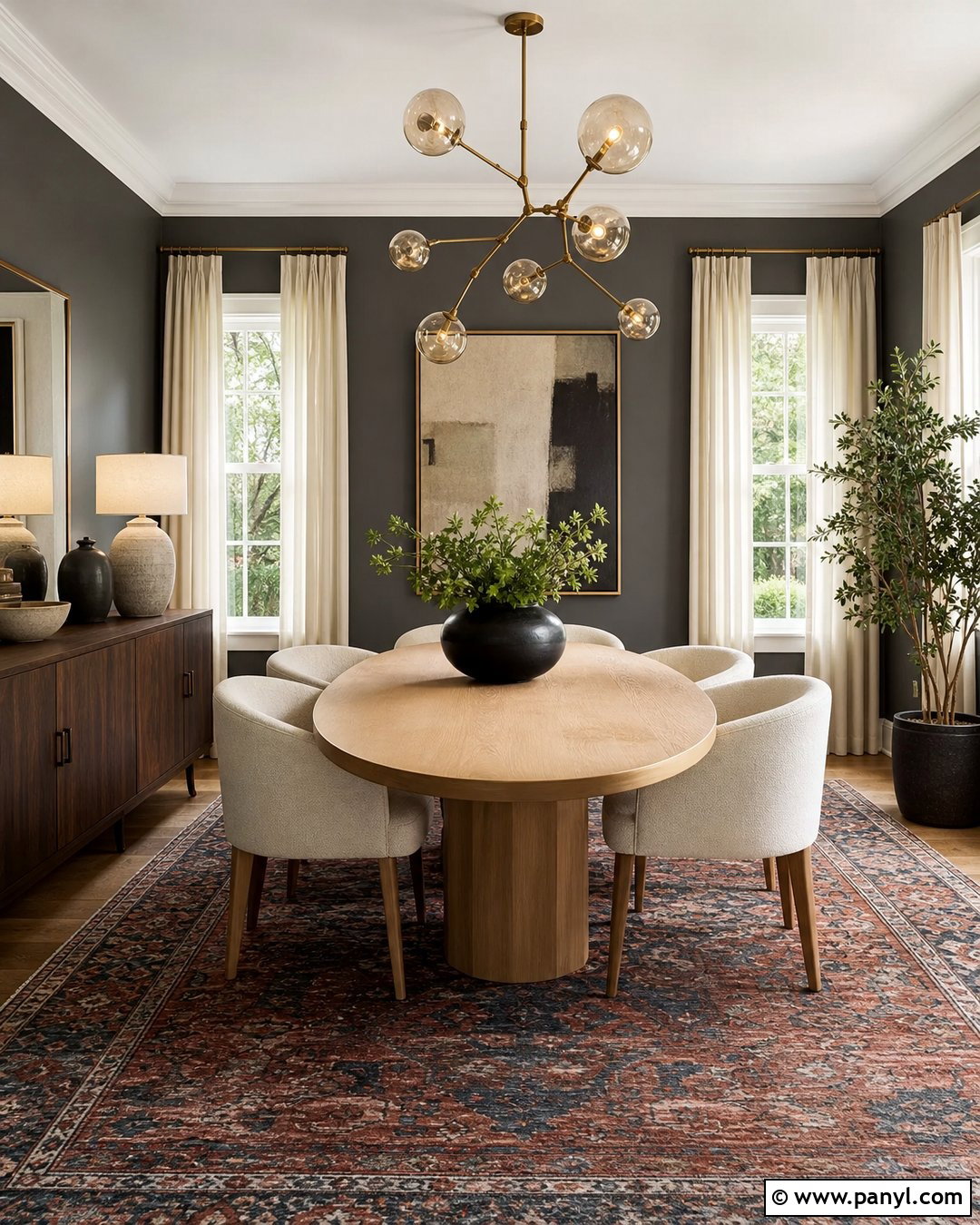
10. Purple Gray Color Drenching
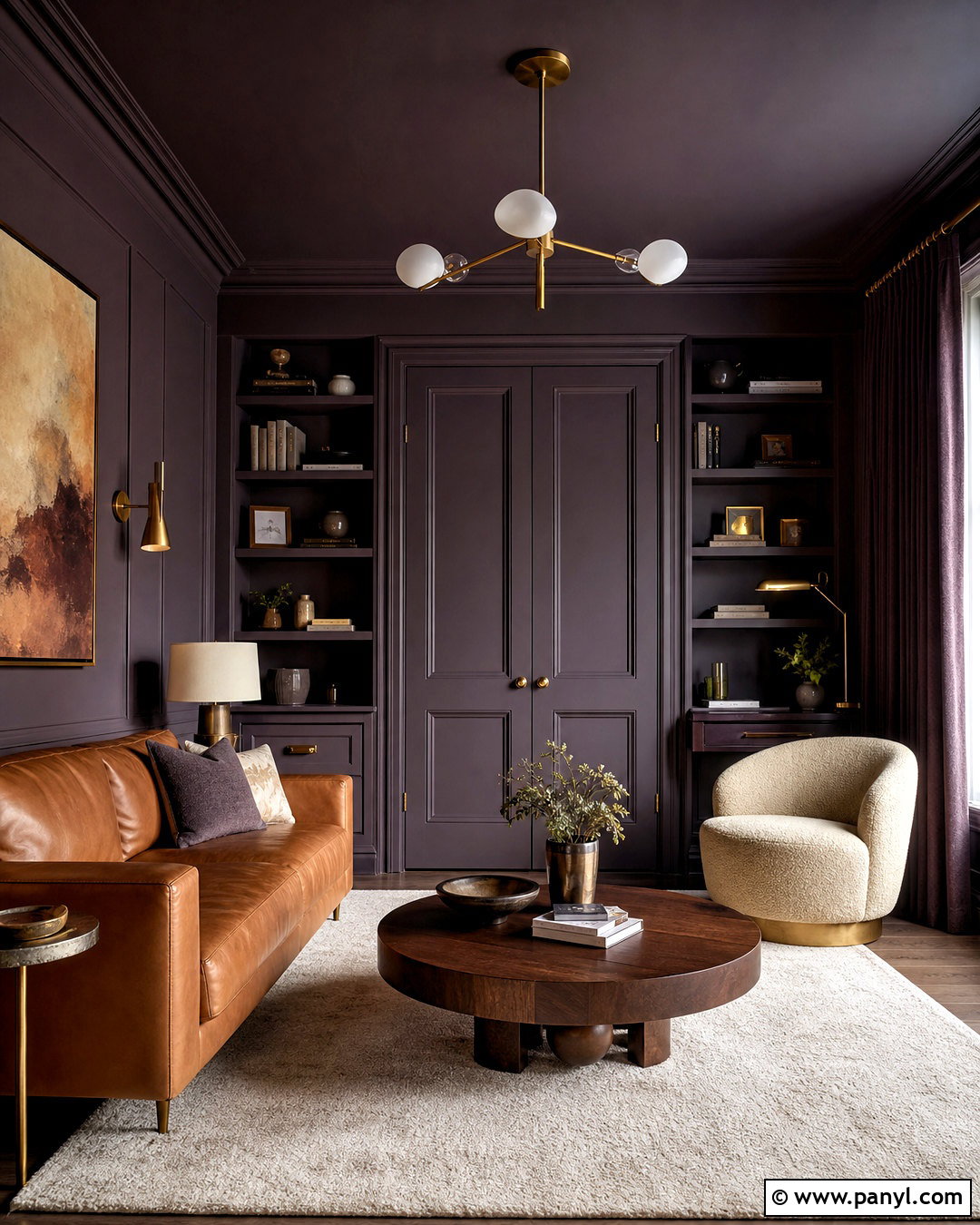
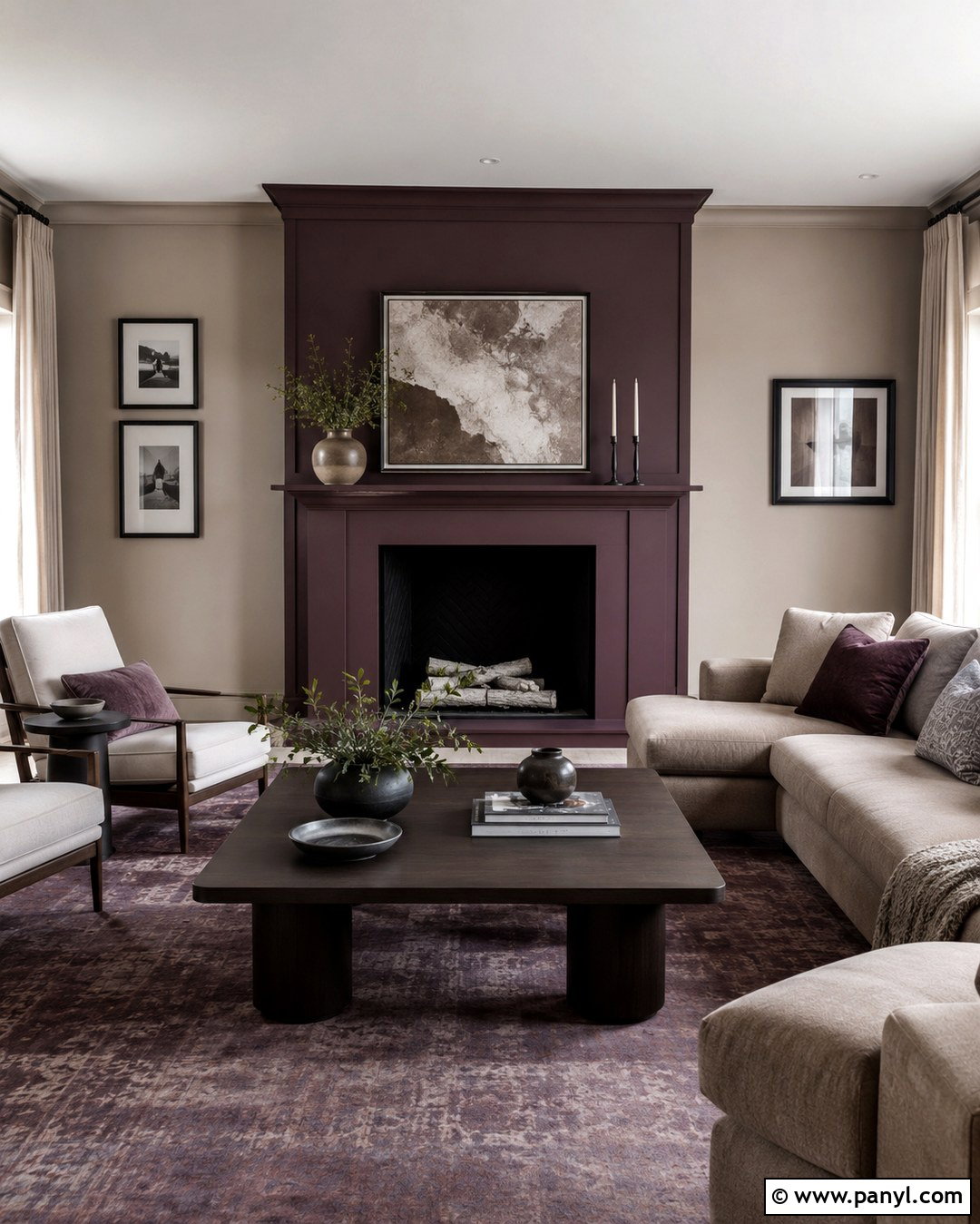
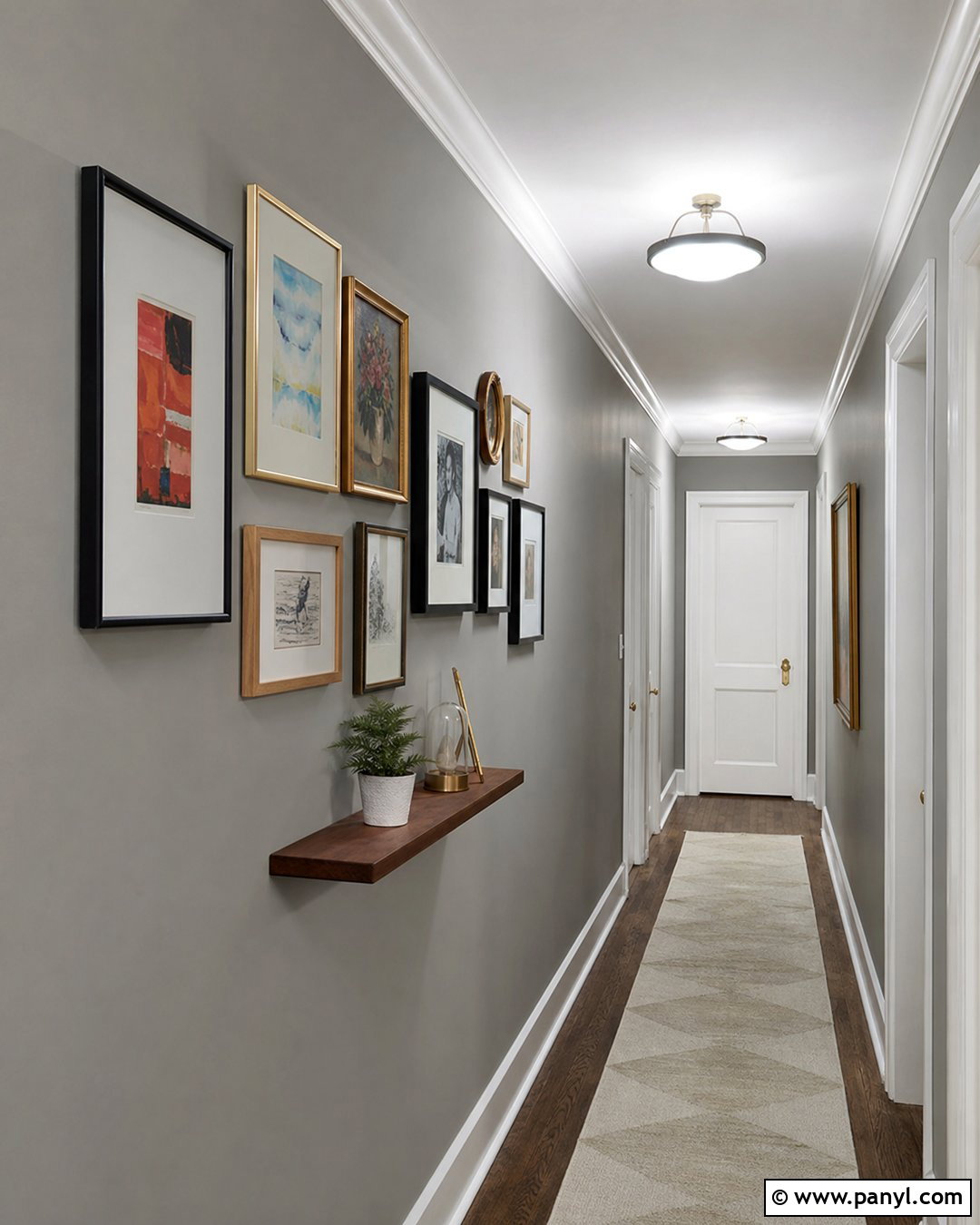
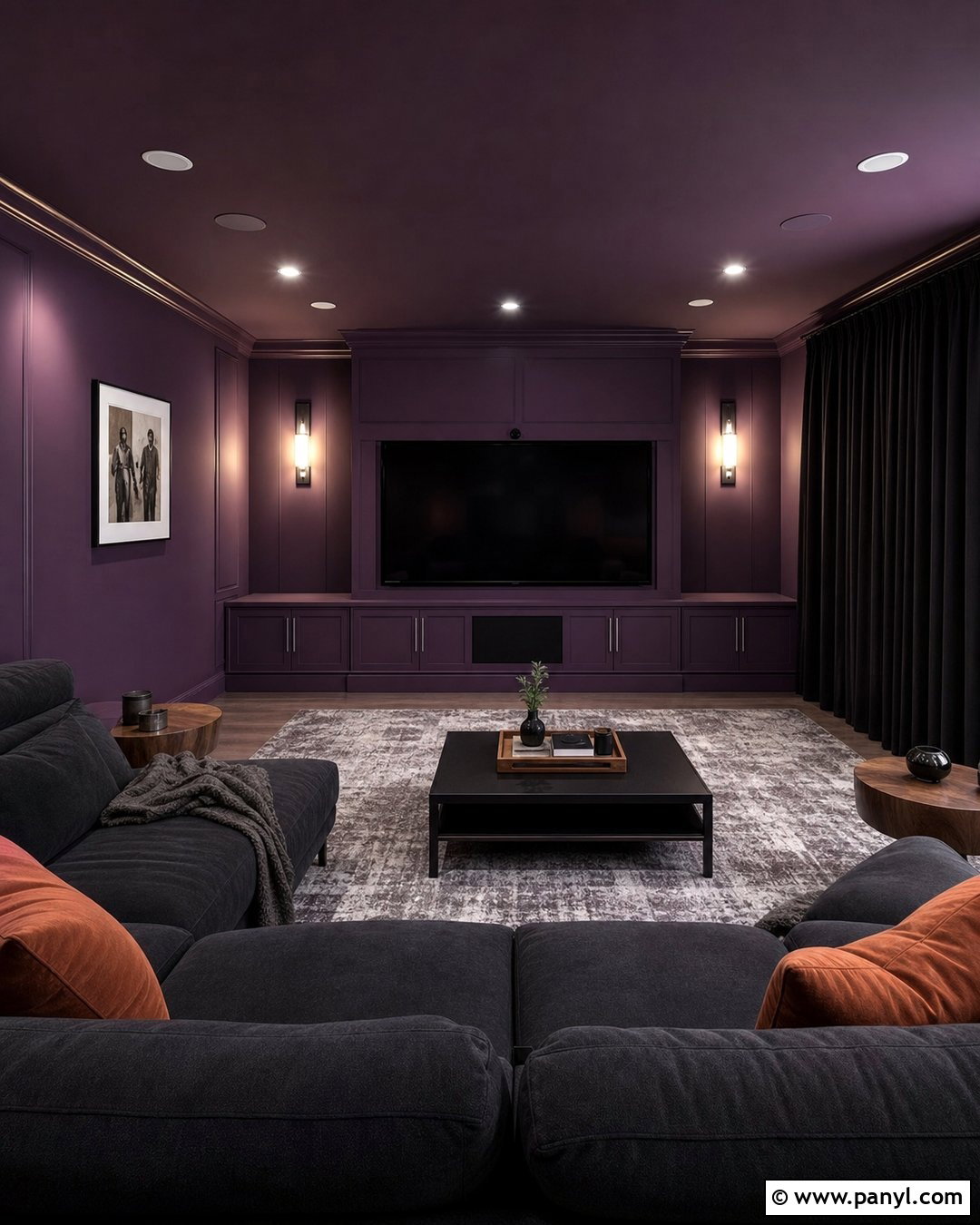
Color drenching creates a seamless room by extending one purple-gray shade beyond the walls. Choose a rich midtone with smoky plum undertones, then apply it to walls, trim, doors, built-in shelving, and the ceiling. Vary the paint sheen slightly so architectural details remain visible. Furnish the space with a camel leather sofa, cream boucle chair, and dark walnut coffee table. An ivory rug provides a large area of relief underfoot. Add sculptural brass lighting and artwork with warm beige, rust, and black. Curtains can closely match the walls to continue the immersive look. This approach is best in a den, library, or snug where a cocooning atmosphere feels appropriate. Warm furniture and strong lighting keep the finished room from appearing flat or overly dark.
11. Purple Gray Two Tone Walls
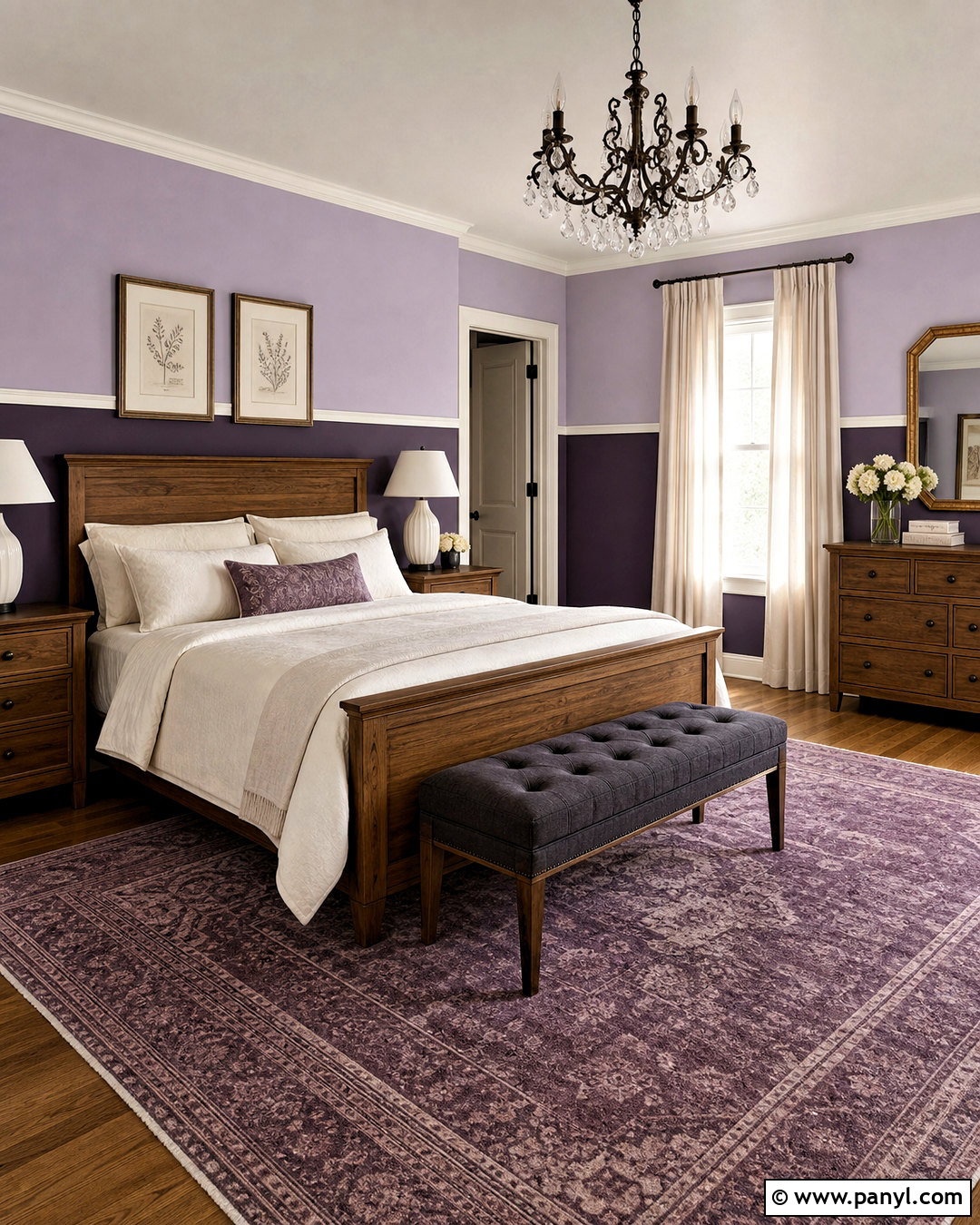
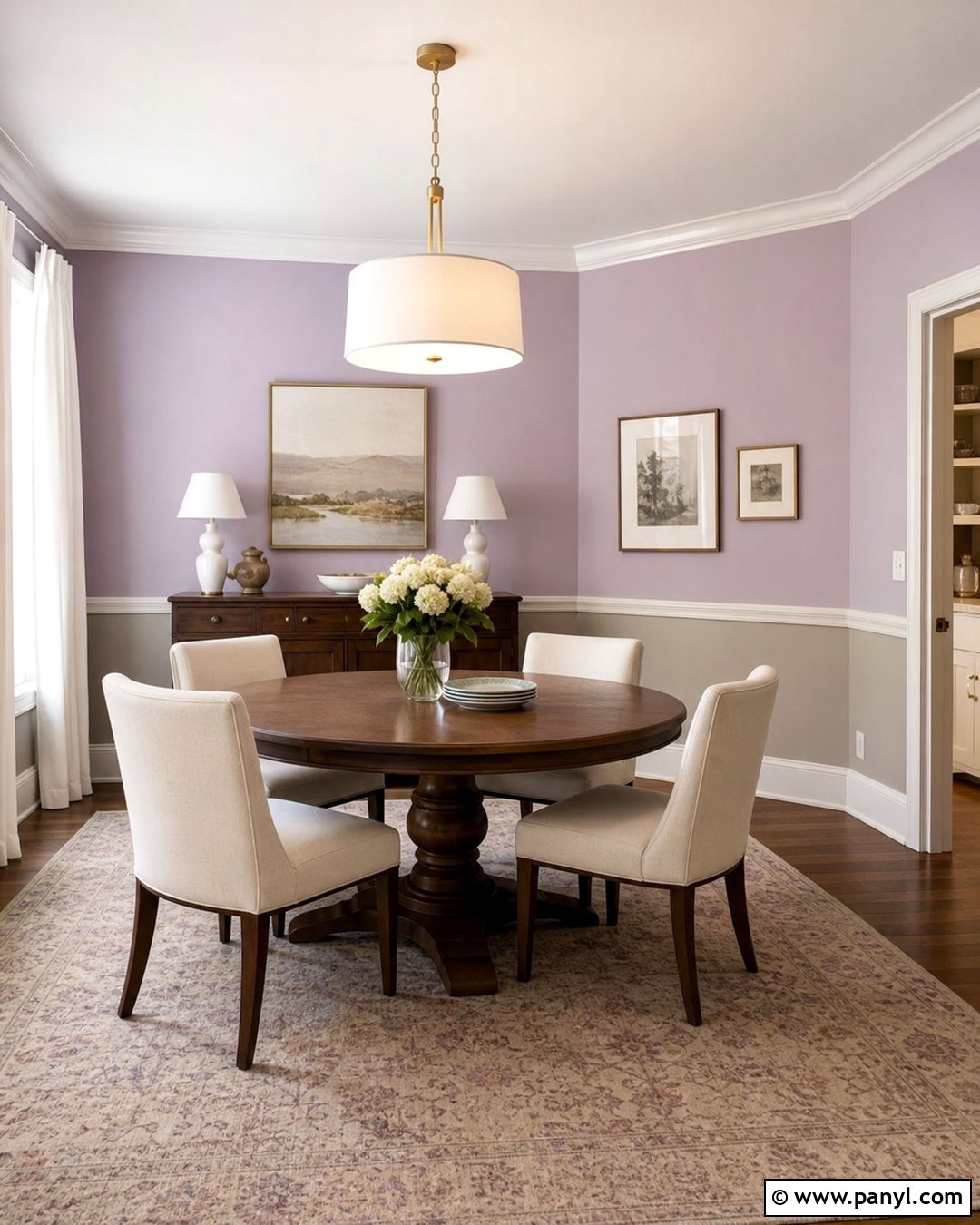
Two-tone walls are a practical way to introduce purple gray while preserving brightness. Paint the lower third of the room in a deeper violet-gray and the upper section in a pale lavender-gray. Separate the colors with a slim warm-white chair rail for a crisp transition. In a bedroom, place a simple oak bed against the wall so the darker paint visually anchors the furniture. Use ivory bedding, a charcoal bench, and curtains that match the lighter upper color. A vintage-inspired rug can combine faded plum, beige, and gray. Repeat warm white on the ceiling, doors, and window casing. The complete arrangement looks structured and intentional, while the lower dark section also helps disguise everyday marks in a busy guest room or family bedroom.
12. Purple Gray With White Trim
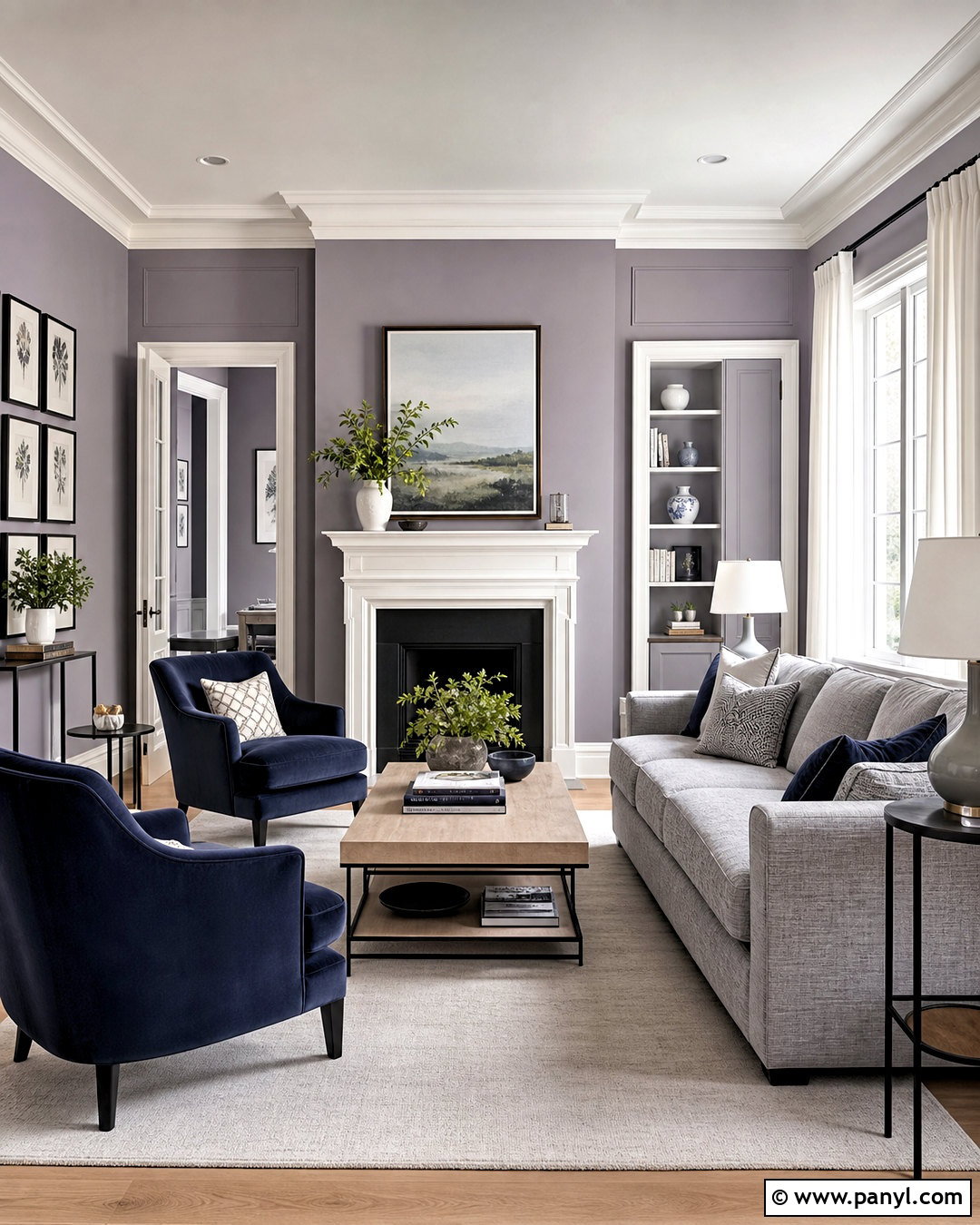
Crisp white trim gives purple-gray walls a cleaner, more architectural appearance. Select a medium-light gray with a noticeable lavender undertone, then outline it with bright white crown molding, baseboards, window casing, and paneled doors. Continue the contrast through white built-in shelves or a painted fireplace. Furnish the living room with a soft gray sofa, navy accent chairs, and a pale oak coffee table. A cream rug and white curtains maintain the fresh look, while black curtain rods and picture frames add thin lines of definition. Keep decorative color controlled through lavender cushions and one blue-gray throw. This full scheme suits traditional and transitional homes because the detailed white millwork gives the unusual wall color a familiar, polished framework.
13. Purple Gray With Black Accents
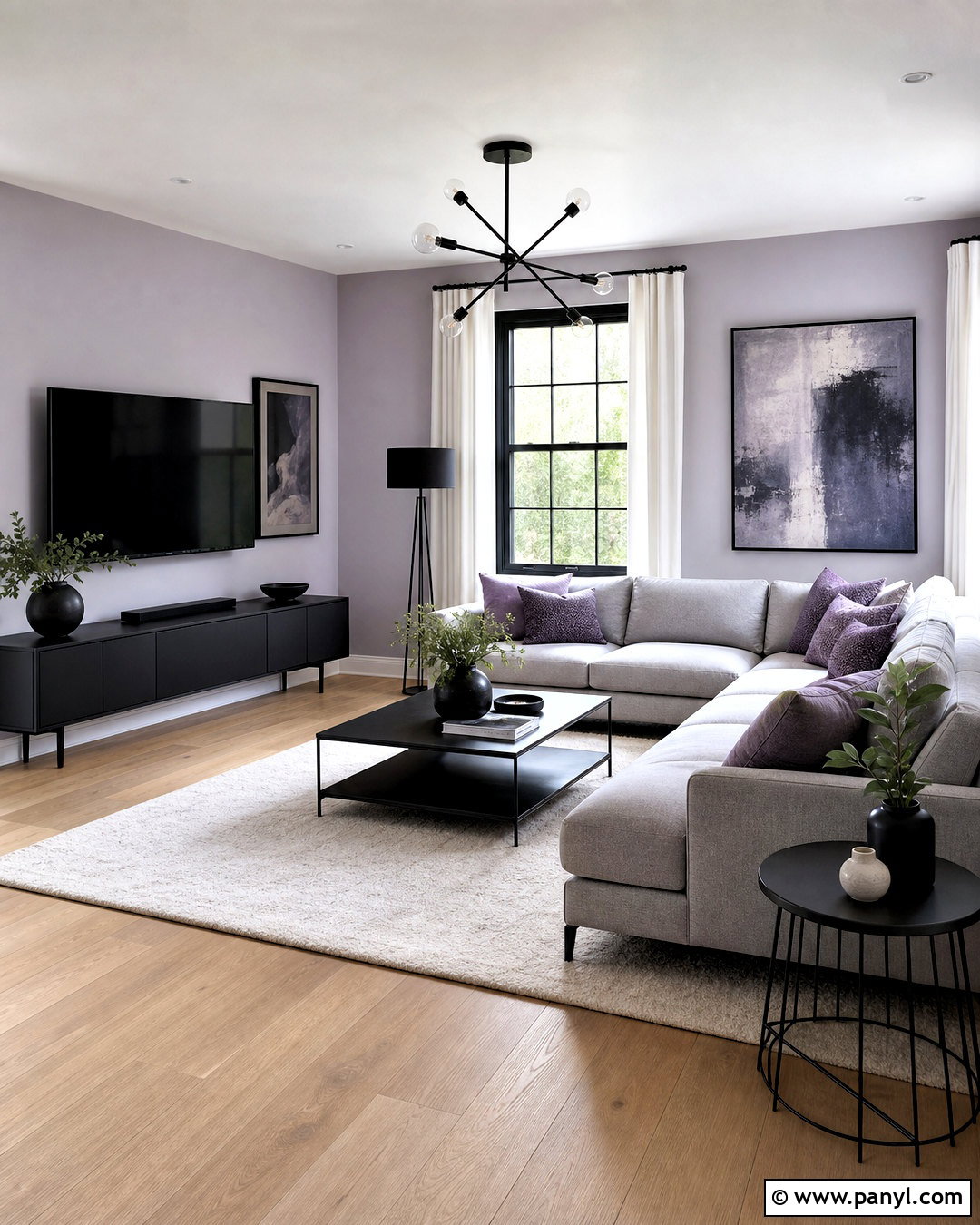
For a sharper modern look, combine pale purple-gray walls with carefully placed matte-black accents. Start with a soft wall color that reads mostly gray from a distance. Add black-framed windows or curtain rods, a slim black media console, and a black metal coffee table. Balance those strong lines with a light gray sectional, ivory rug, and medium oak flooring. Choose abstract artwork containing charcoal, cream, and small touches of muted violet. White linen curtains and a white ceiling protect the room’s brightness. Limit black to a few substantial pieces rather than scattering many tiny dark accessories. The finished living room feels graphic and contemporary, yet the subtle purple undertone gives it more warmth and character than a conventional black-and-gray interior.
14. Purple Gray With Warm Wood
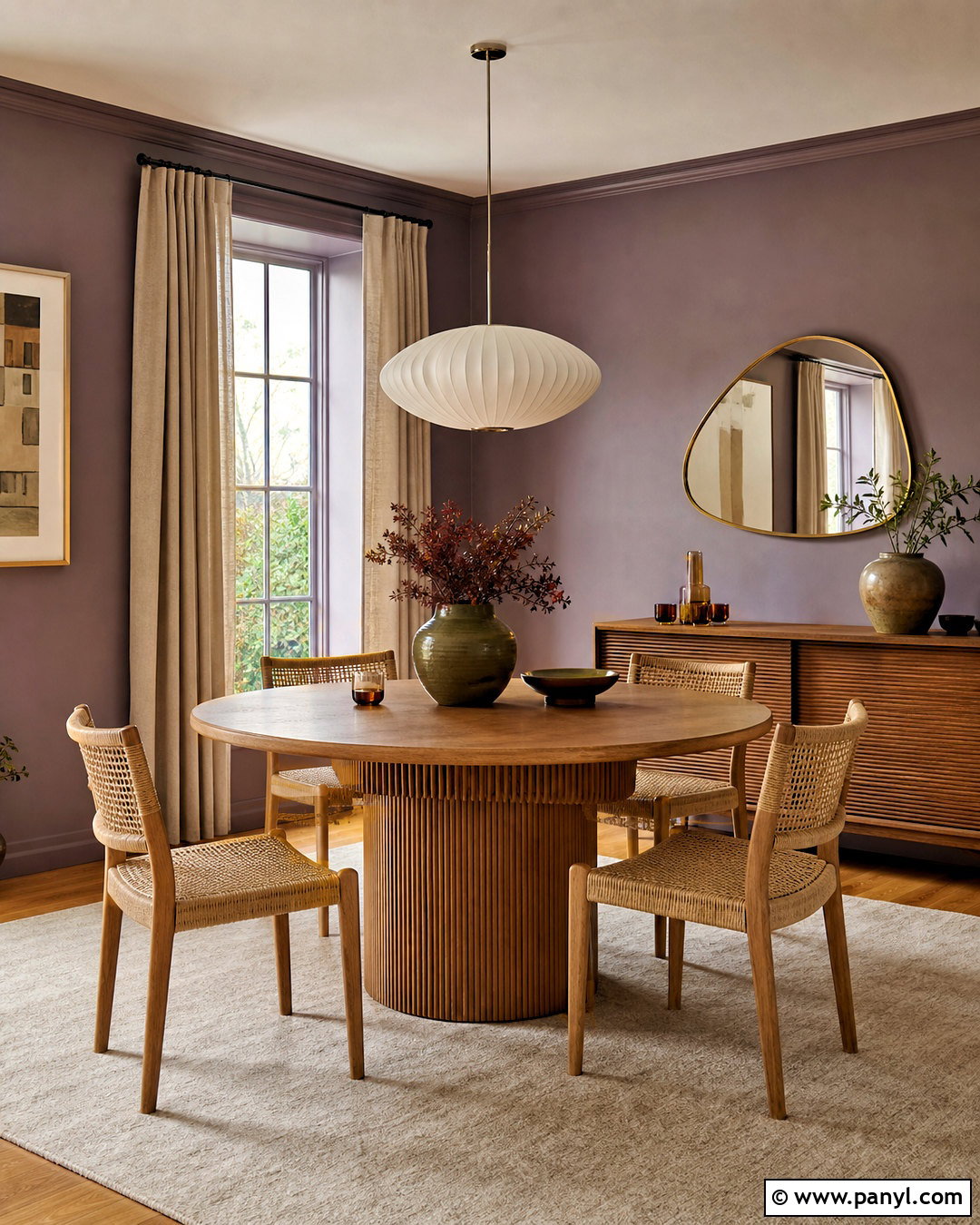
Warm wood can make a cool purple-gray room feel immediately more comfortable. Paint the walls in a misty violet-gray, then bring in honey oak through flooring, a low sideboard, and a round dining table. Choose woven dining chairs with natural cane seats to add texture. An off-white pendant, cream area rug, and oatmeal curtains keep the overall palette light. Use matte black only in small amounts, such as picture frames or chair legs. Decorative accents might include olive-green pottery, amber glass, and branches in a tall ceramic vase. The yellow and brown notes in the wood provide a natural counterpoint to the cool walls. As a complete dining space, the design feels casual, coordinated, and suitable for everyday meals rather than overly formal entertaining.
15. Purple Gray With Brass Accents
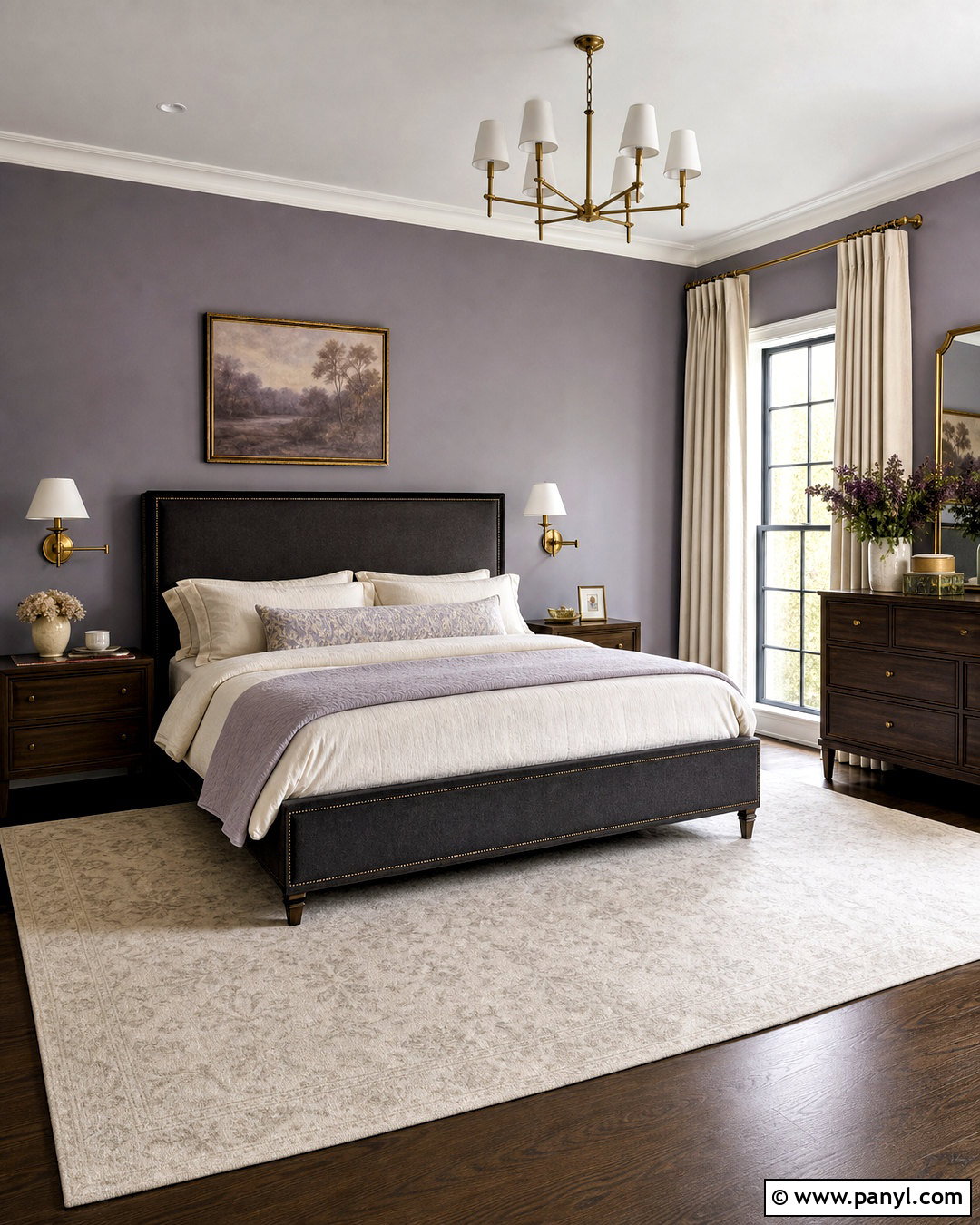
A little brass can elevate purple gray without turning the room into an overly glamorous setting. Use a medium mauve-gray on the bedroom walls and select brushed or aged brass for sconces, drawer pulls, and a slim curtain rod. Center a charcoal upholstered bed against the main wall and layer it with ivory sheets, a pale lavender coverlet, and warm taupe pillows. Dark walnut nightstands add weight on either side. Choose an understated cream rug and full-length linen curtains to soften the darker furniture. One brass-framed mirror can reflect light across the room, but avoid matching every accessory. This thoughtful mix of muted paint, warm metal, dark wood, and soft neutral fabrics creates a refined bedroom that remains comfortable and approachable.
16. Purple Gray With Sage Green
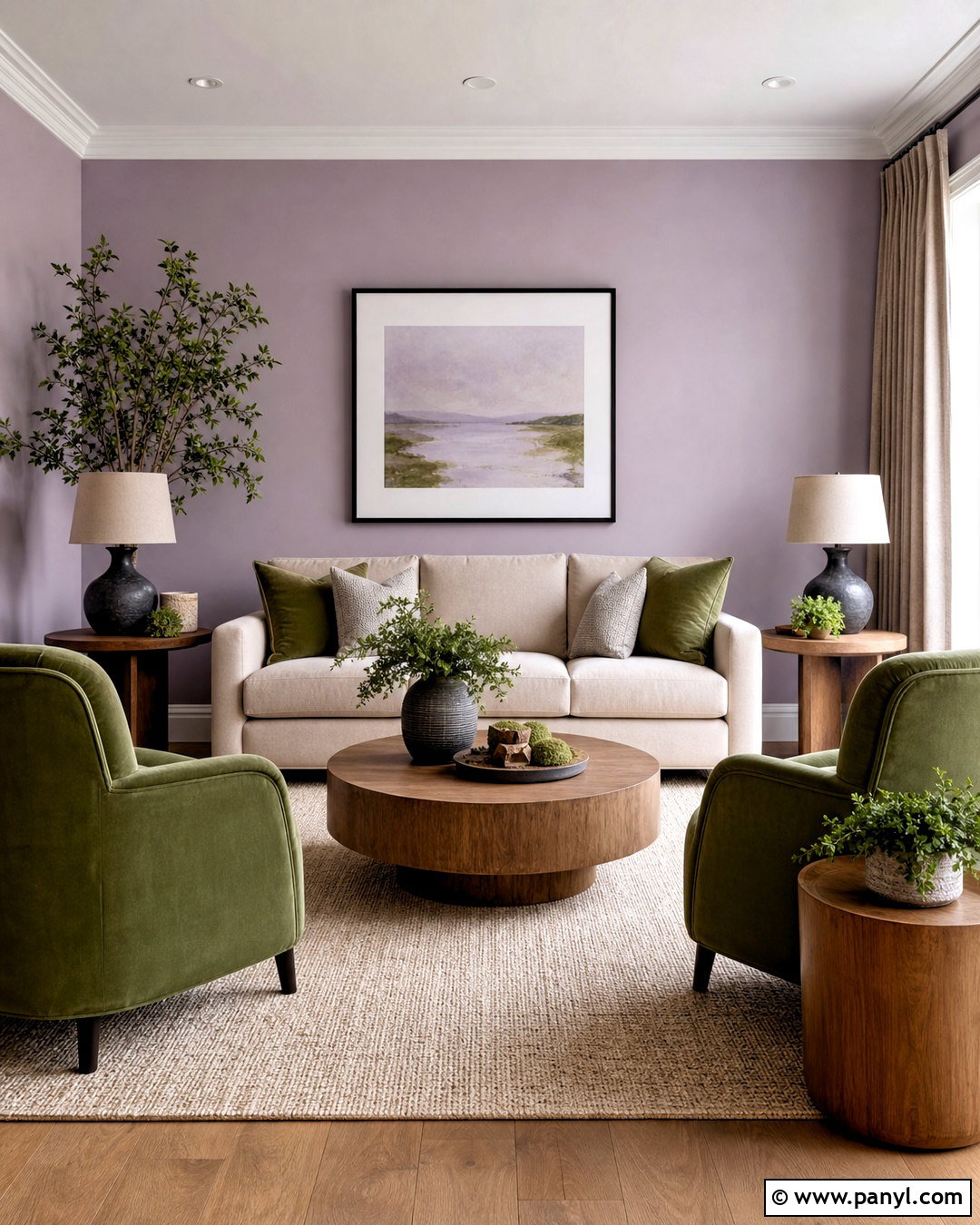
Purple gray and sage green can form a relaxed, nature-inspired palette when both colors stay muted. Cover the living room walls in a pale lavender-gray and use sage on two comfortable armchairs or a low storage cabinet. Add an oatmeal sofa, light oak tables, and a textured cream rug. Natural linen curtains allow soft daylight to brighten the wall color. Bring in deeper contrast through charcoal lamp bases and simple black-framed artwork. Plants should support the green notes without crowding the room; one tall floor plant and a smaller tabletop plant are enough. Finish with cushions combining ivory, dusty violet, and olive. The whole design feels layered but controlled, with furniture, plants, woods, and textiles balancing the purple-gray walls instead of competing with them.
17. Purple Gray With Blush Pink
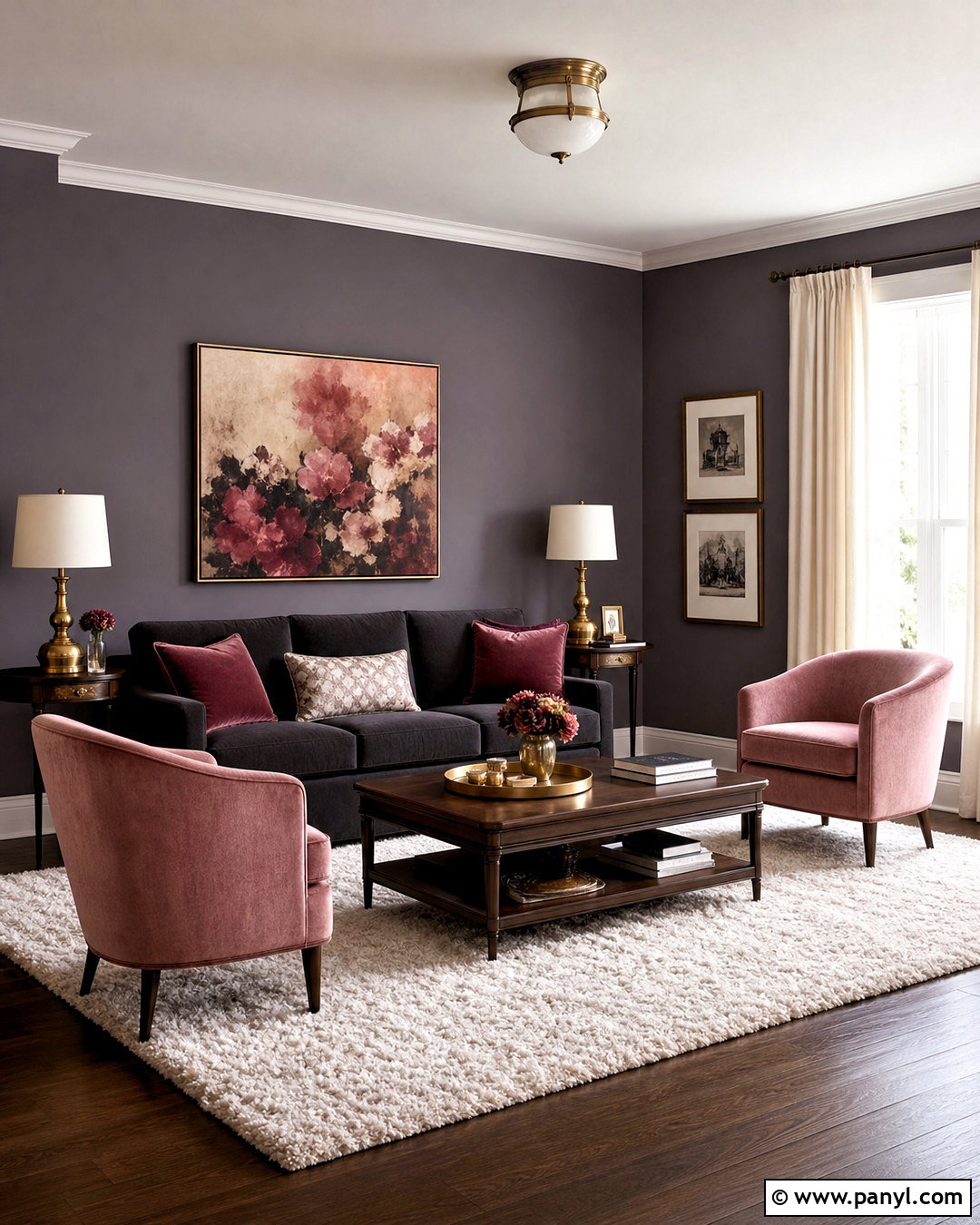
Blush pink adds warmth to purple gray, but the combination looks most mature when supported by strong neutrals. Begin with medium-light purple-gray walls and a tailored charcoal sofa. Add two dusty blush chairs with simple silhouettes rather than ornate detailing. Ground the seating arrangement with a cream wool rug and a walnut coffee table. Curtains in warm white will brighten the edges of the room, while antique brass lamps introduce a subtle golden note. Use artwork containing beige, burgundy, black, and faded rose to connect the furnishings. Keep extra accessories minimal and avoid using bright pink. With the right balance, this complete sitting room feels warm and modern, allowing blush and purple gray to complement each other without becoming overly sweet or themed.
18. Purple Gray Small Room
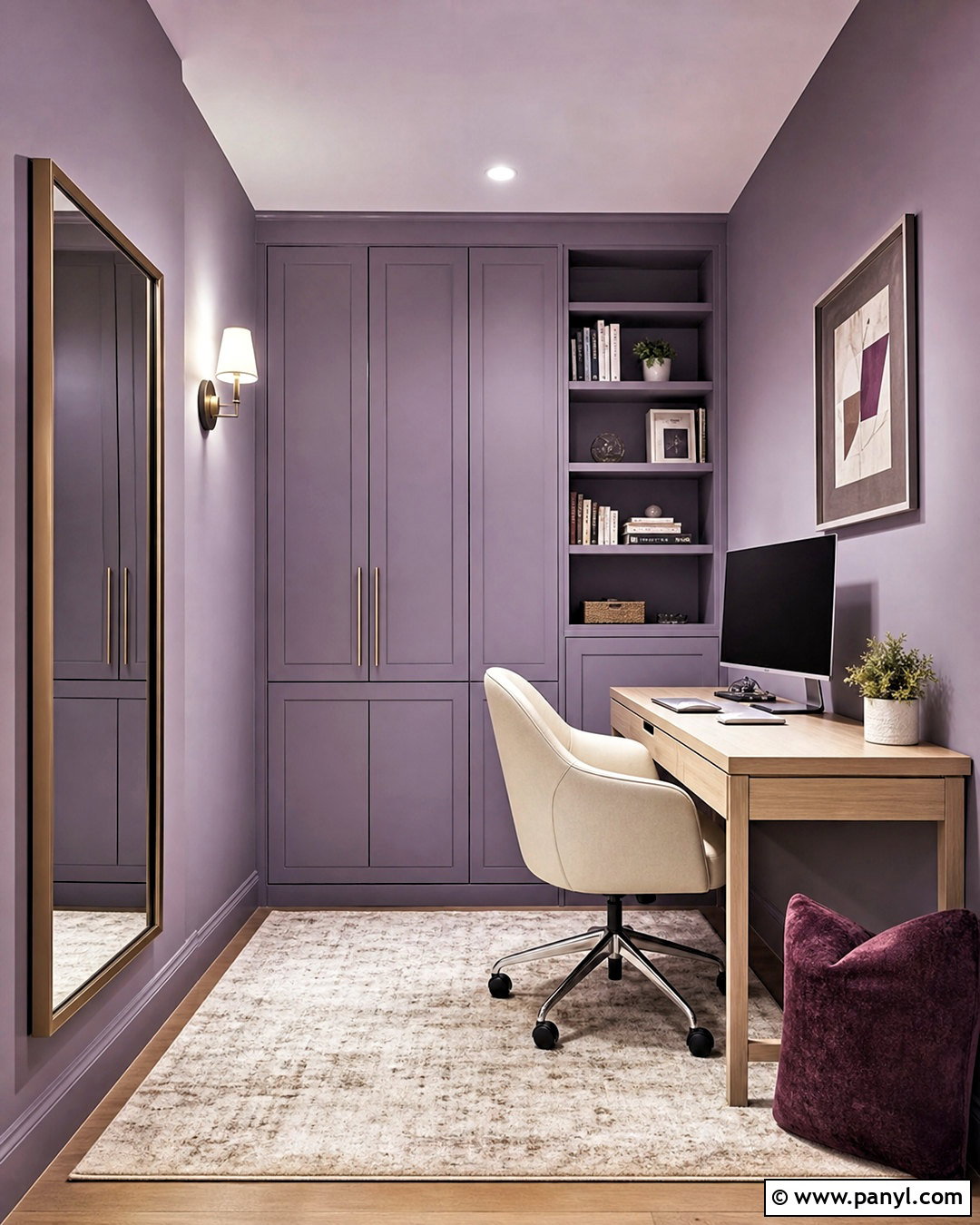
In a small room, pale purple gray can provide gentle definition without visually crowding the space. Paint the walls and ceiling in the same light lavender-gray to reduce abrupt color breaks. Keep doors and built-in storage close to the wall color so they blend into the background. Choose compact furniture with visible legs, such as a light oak desk, cream task chair, and narrow bookcase. A wall-mounted sconce saves surface space, while a large mirror opposite the window reflects light around the room. Add a simple ivory rug and one plum cushion for contrast. Closed storage is essential for maintaining a calm appearance. This complete small-office or reading-room layout feels intentional, functional, and more spacious because every major element follows a limited color palette.
19. Purple Gray North Facing Room
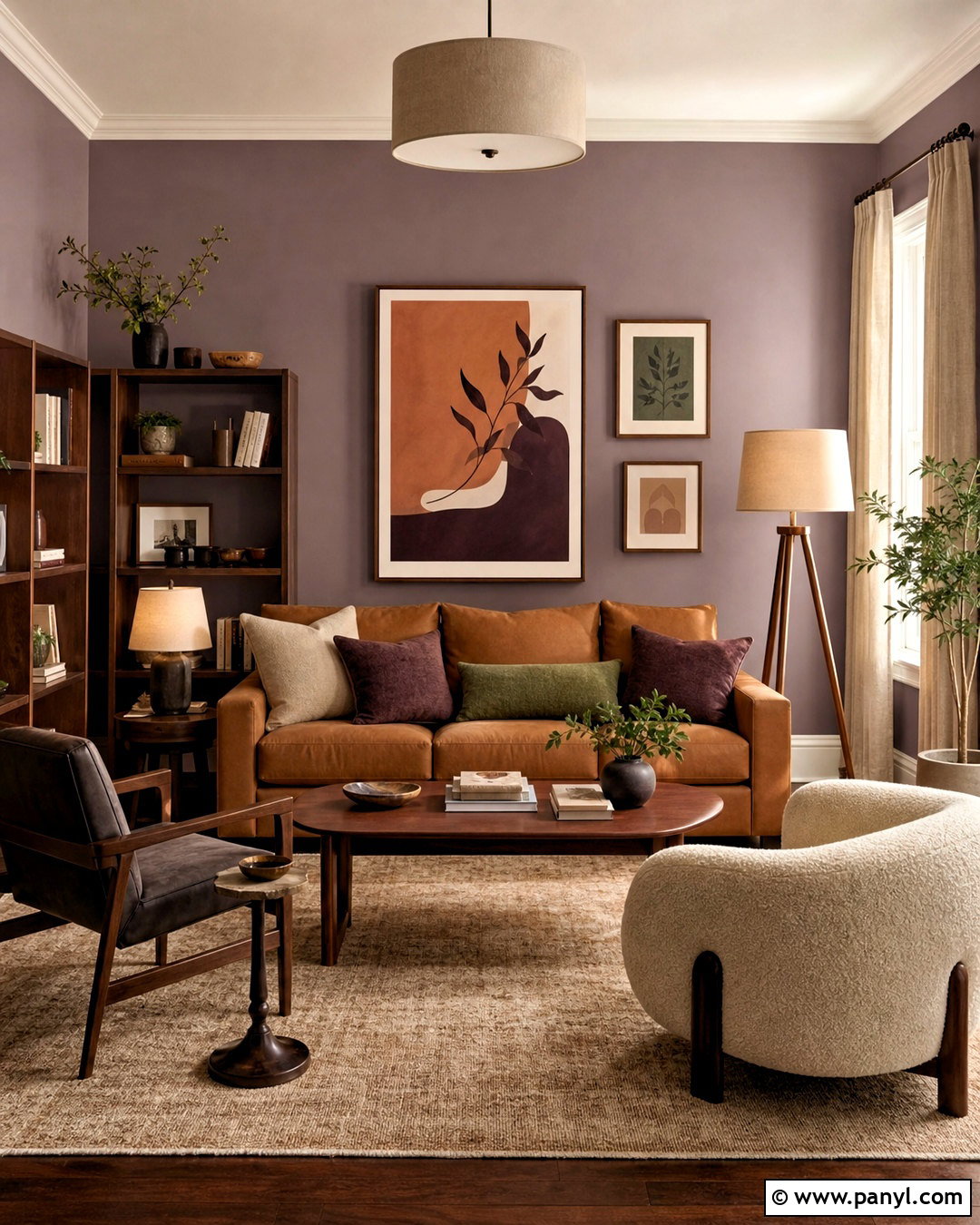
North-facing rooms often benefit from a warmer purple-gray rather than a blue-based violet. Choose a dusty mauve-gray with soft red or brown undertones, then combine it with creamy white trim instead of stark white. Furnish the room with a camel sofa, walnut shelving, and an ivory boucle chair. A warm beige rug will counterbalance the cooler natural light, while layered table lamps and wall sconces provide even illumination. Use linen curtains in oatmeal and hang artwork featuring terracotta, muted plum, and soft green. Avoid large amounts of icy blue or silver, which can make the palette feel colder. This complete living room design works with the room’s light conditions, using warm woods, textiles, and paint undertones to create a welcoming result.
20. Purple Gray Open Floor Plan
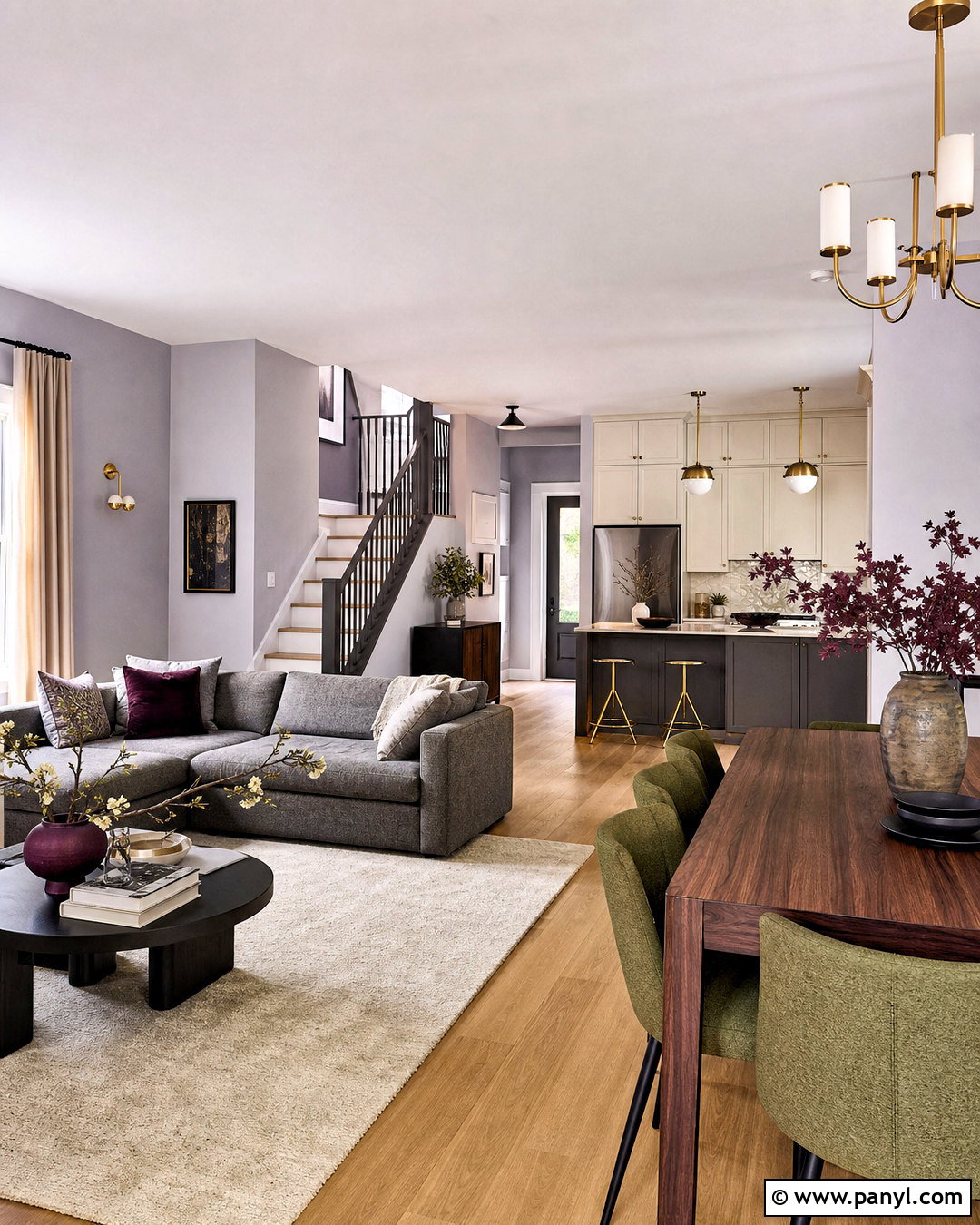
An open floor plan needs continuity, so use a light purple-gray as the main connecting wall color. Carry it through the living area, dining zone, and visible hallway while keeping the kitchen cabinetry warm white. Define each space through furnishings rather than abrupt paint changes. Place a gray sectional and cream rug in the living area, then use a walnut table with muted olive chairs in the dining section. Repeat light oak, charcoal, and aged brass across all zones to create rhythm. White ceilings and consistent trim maintain a clean boundary above the colored walls. Add deeper plum only in small accents, such as cushions or artwork. The finished layout feels unified, yet each functional area remains visually distinct through furniture placement, lighting, and texture.
Conclusion:
The most successful **purple gray wall paint ideas** treat wall color as one part of a complete room rather than an isolated decorating choice. Pale lavender-gray can brighten living areas and small offices, while mauve-gray brings warmth to bedrooms and north-facing rooms. Deeper plum-gray works beautifully in dining rooms, dens, and focused accent areas. Whatever depth you prefer, coordinate the paint with flooring, trim, furniture, lighting, and textiles from the beginning. Warm wood, cream fabric, black details, sage green, and brushed brass are especially useful partners. Most importantly, test the paint in morning, afternoon, and artificial light. A carefully sampled purple gray can deliver the softness of a neutral with far more depth and personality.

Related Ideas and Inspiration:
Leave a Reply