
A well-designed boundary wall can improve security, privacy, and curb appeal while creating a polished frame for the entire property. The best **boundary wall design exterior ideas** connect visually with the home through coordinated colors, materials, gates, lighting, and landscaping. Modern walls often combine solid masonry with lighter elements such as metal slats, decorative screens, timber-look panels, or planted sections. Traditional homes may look better with brick, natural stone, pillars, or ornamental metalwork. Before choosing a look, consider your local climate, maintenance needs, street visibility, and the amount of privacy required. The following complete schemes offer practical inspiration for different architectural styles, frontage sizes, and budgets, making it easier to explore **20 boundary wall design exterior ideas**.
1. Modern Concrete Boundary Wall
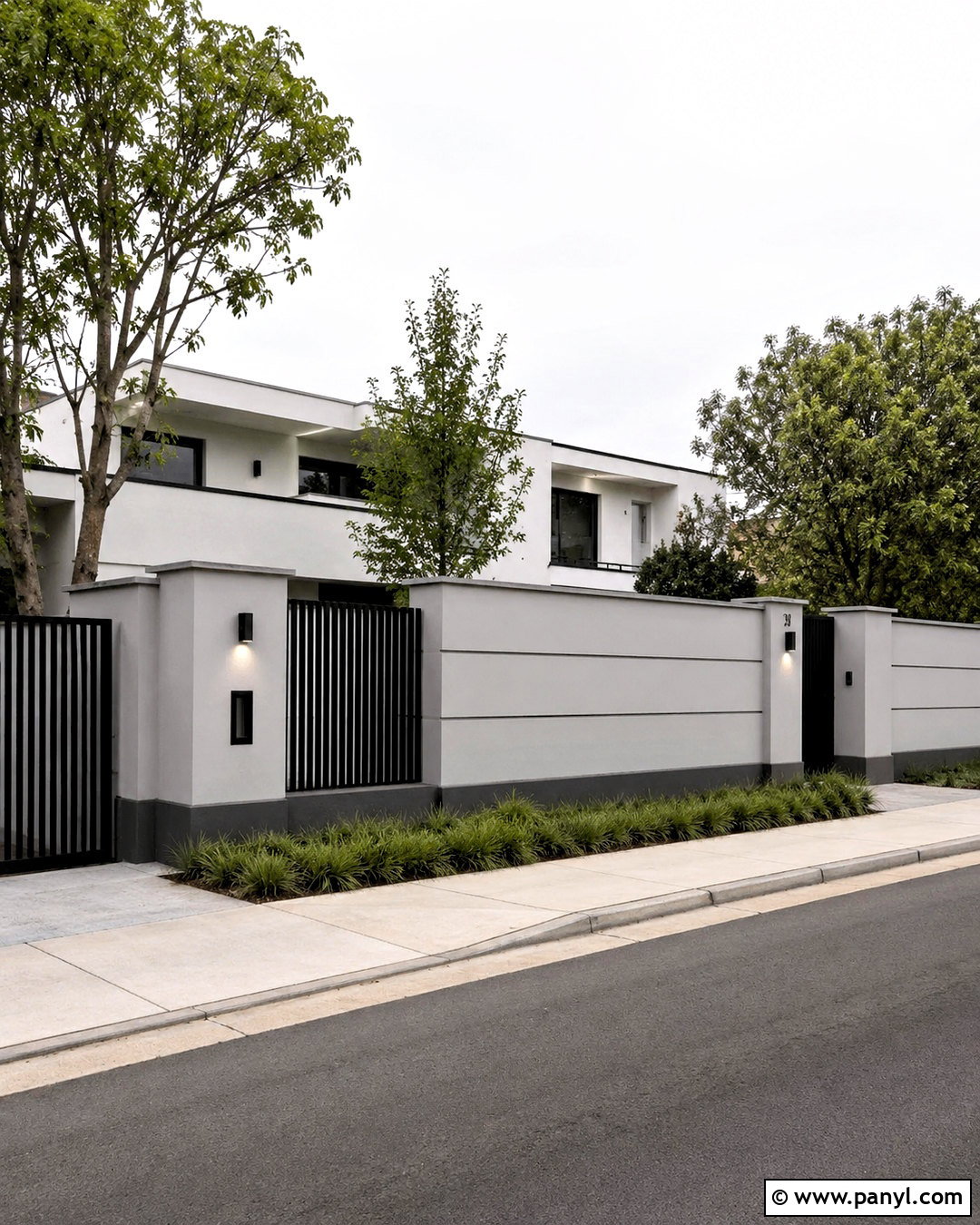
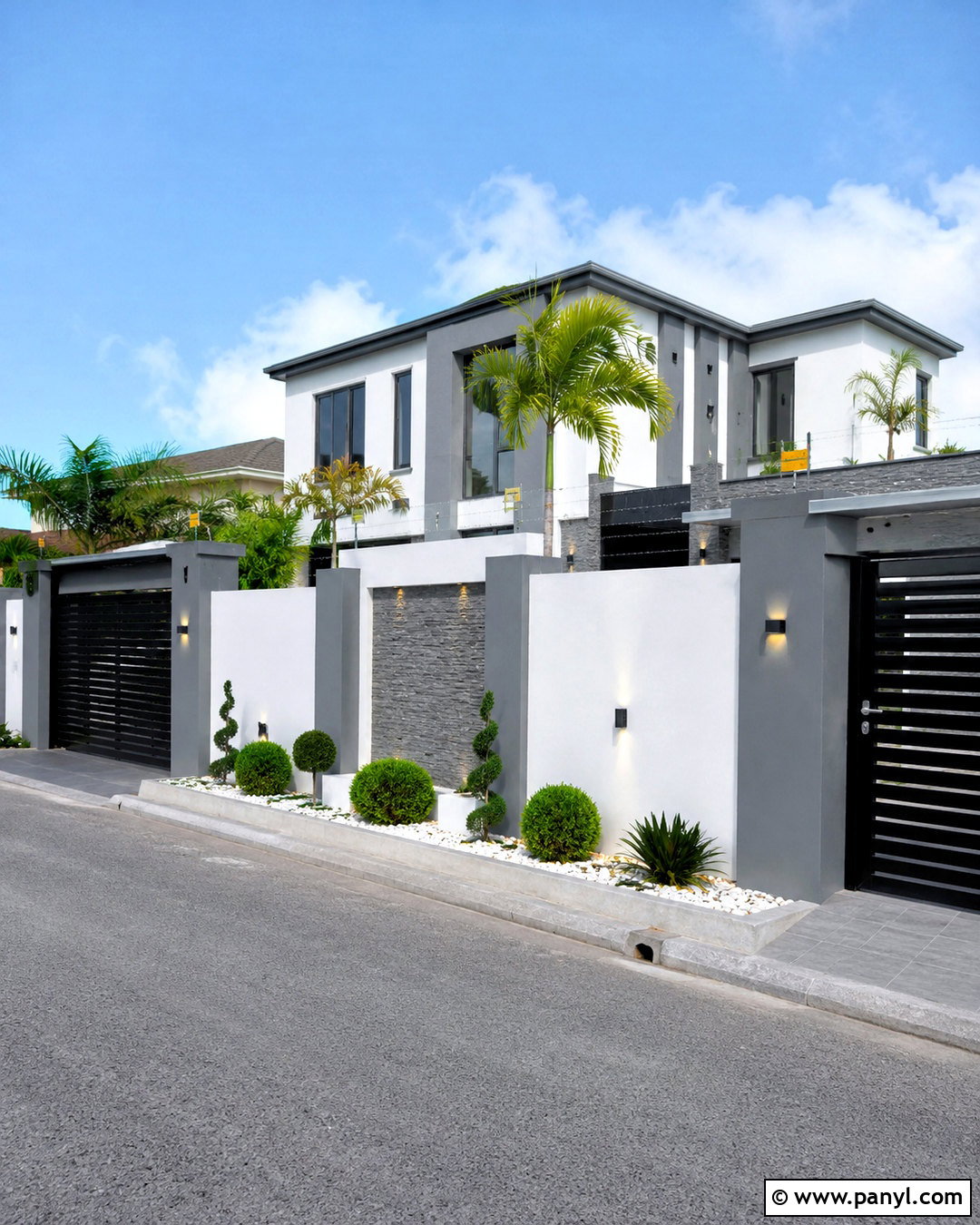
A smooth concrete boundary wall creates a clean foundation for a modern home exterior. Use light gray microcement or weather-resistant exterior plaster across broad wall sections. Add narrow recessed lines to divide the surface and prevent it from looking heavy. Matte black metal slats between solid panels provide airflow without exposing the entire yard. Continue the black finish on the sliding driveway gate and pedestrian gate for consistency. A darker charcoal base can conceal dirt near the sidewalk. Complete the scheme with square wall lights, pale concrete paving, and low ornamental grasses. This restrained combination works especially well with flat-roofed homes featuring white walls, dark window frames, and simple geometric architecture.
2. Stone Cladding Boundary Wall
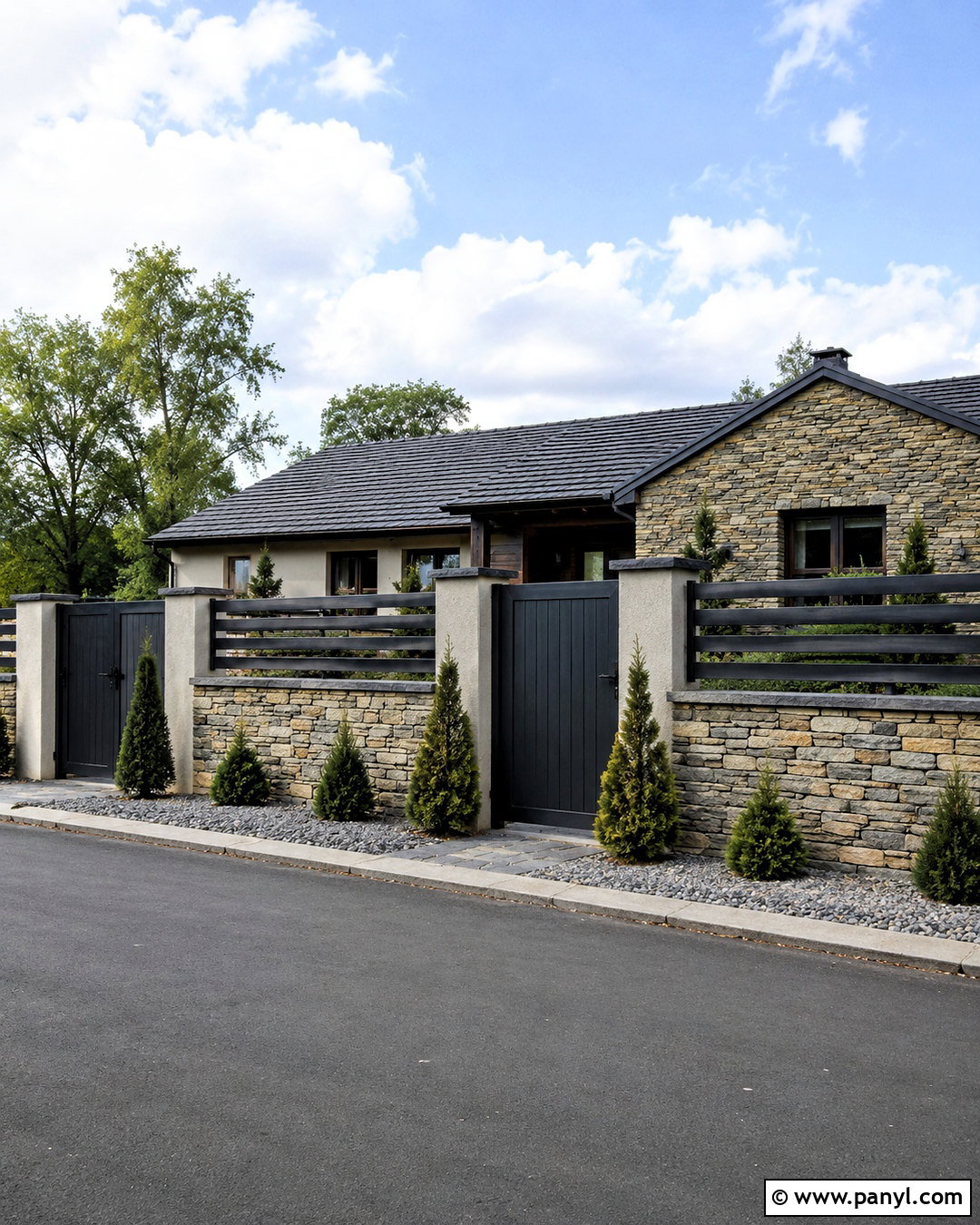
Natural stone gives a boundary wall warmth, texture, and a substantial appearance. Cover the main pillars and lower wall sections with stacked gray and warm beige stone. Keep the remaining surfaces in soft off-white plaster so the stone remains the main feature. Between the pillars, install horizontal charcoal metal rails or timber-look aluminum slats. A wide driveway gate in the same finish creates a coordinated exterior. Use flat stone coping along the top to protect the masonry and create a finished edge. Low uplights can emphasize the irregular stone texture without overcrowding the frontage. Finish the look with gravel beds, small evergreen shrubs, and matching stone accents near the home’s entrance.
3. Brick Boundary Wall
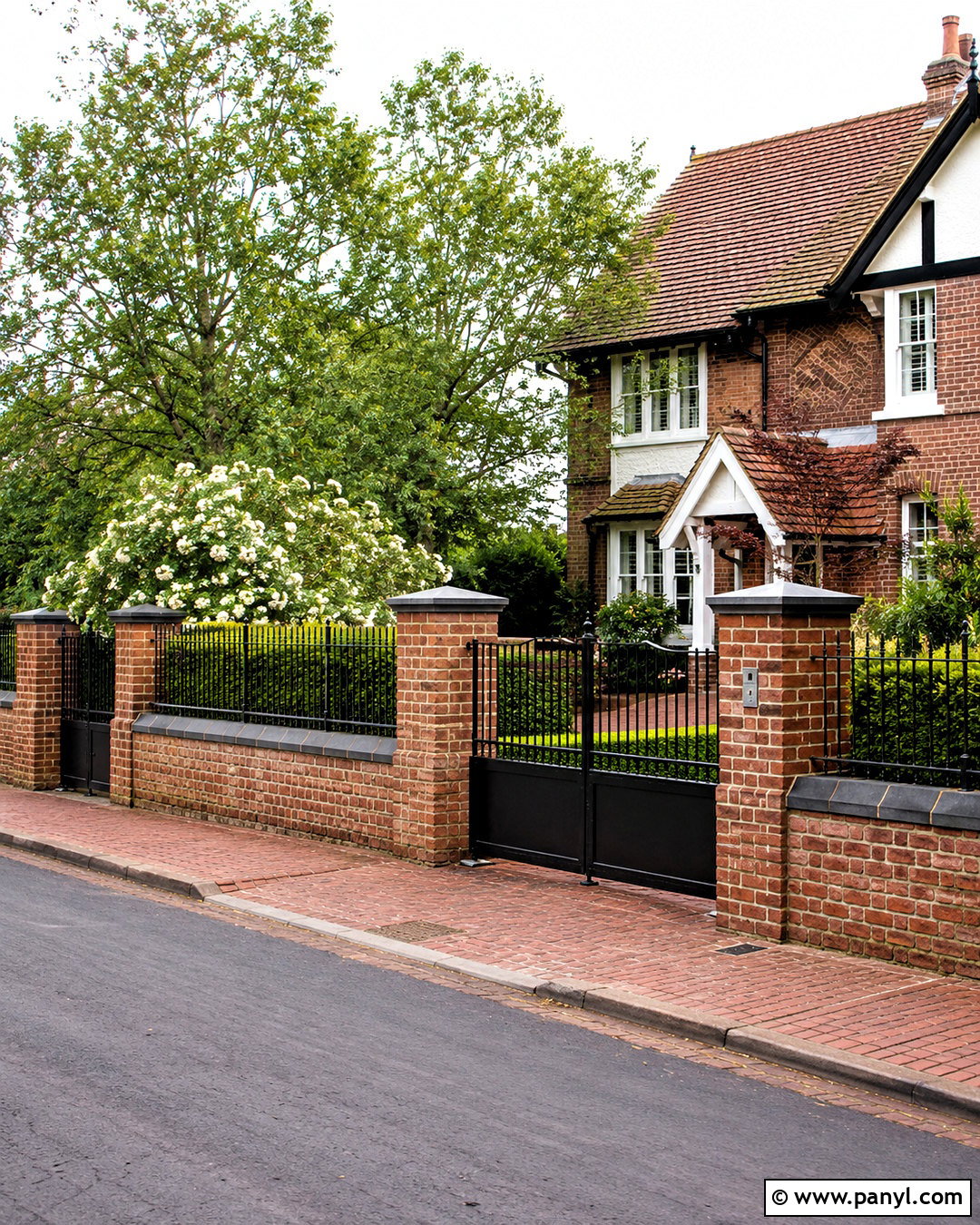
A brick boundary wall feels welcoming and established when its colors complement the house. Choose warm red, muted brown, or weathered reclaimed-style brick instead of mixing several unrelated tones. Build substantial brick pillars at regular intervals and connect them with lower brick panels topped by simple black metal railings. The combination provides security while allowing the frontage to feel open. A matte black pedestrian gate and sliding driveway gate keep the exterior classic but uncluttered. Use dark stone or precast concrete coping to prevent water from sitting on the brickwork. Along the inside edge, plant boxwood, dwarf holly, or flowering shrubs. Matching brick pathways and porch details will connect the boundary naturally to the main building.
4. Wood And Concrete Boundary Wall
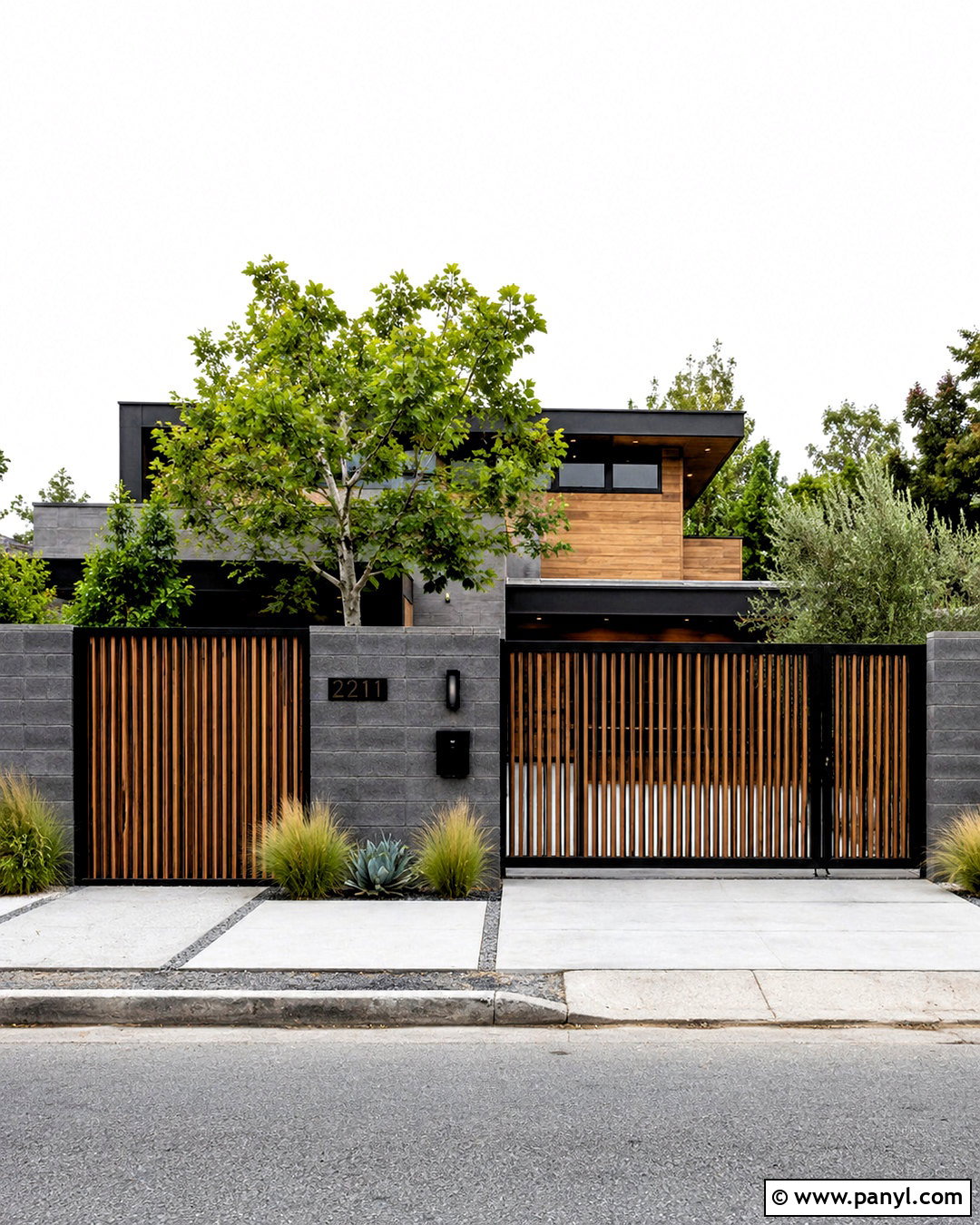
Warm wood tones can soften the hard lines of a concrete boundary wall. Start with a low charcoal or medium-gray masonry base and evenly spaced concrete pillars. Install vertical cedar boards or realistic wood-look aluminum battens between the pillars. Small gaps provide ventilation while maintaining useful privacy. Choose sealed cedar for natural character or powder-coated aluminum when lower maintenance is important. Carry the same vertical pattern across the pedestrian and vehicle gates. Black metal frames give the panels structure and coordinate with modern window frames. Add narrow planting beds with grasses, agave, or clipped shrubs to balance the straight lines. This complete scheme suits contemporary homes with concrete finishes, warm timber accents, and simple landscaping.
5. White Boundary Wall With Black Gate
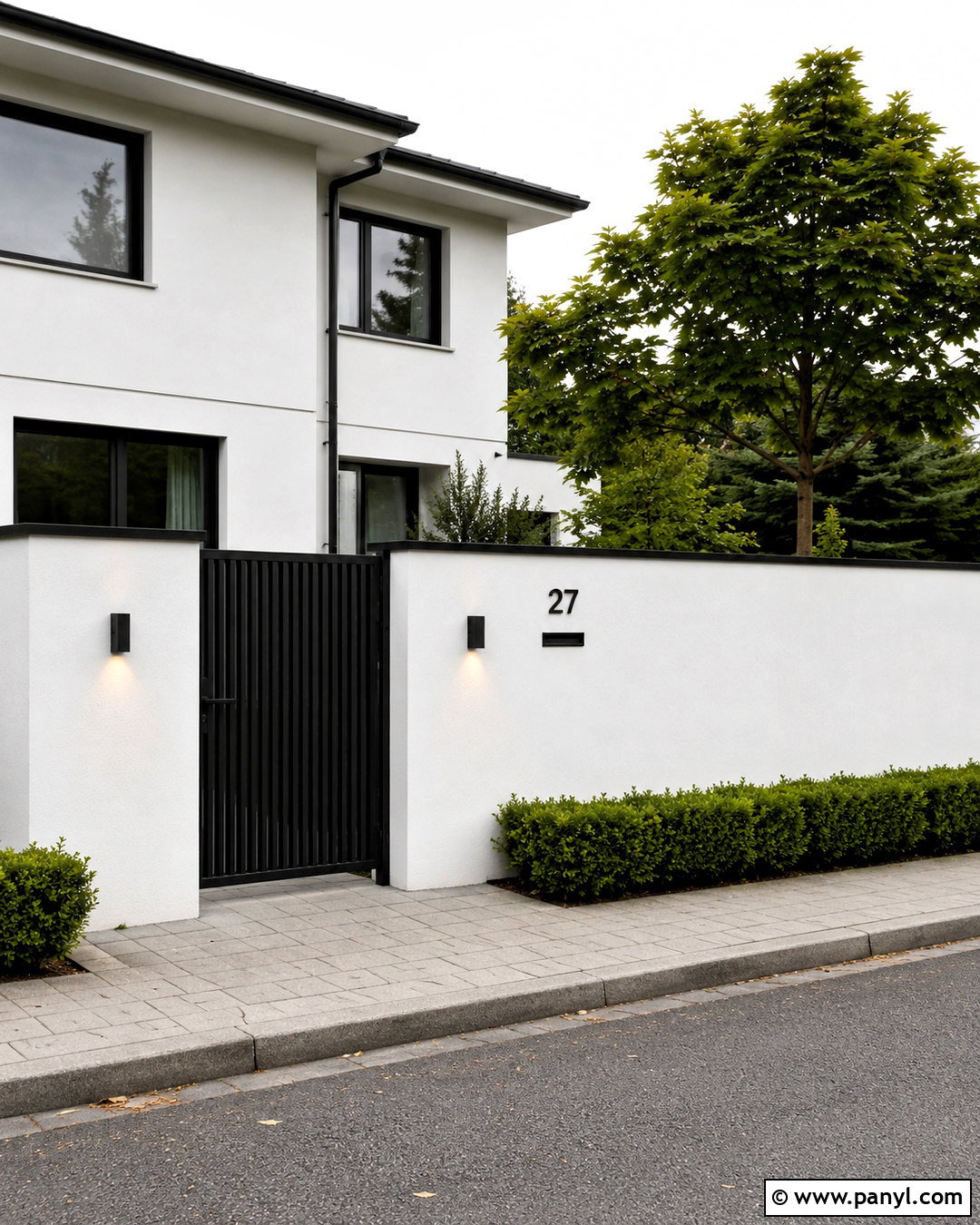
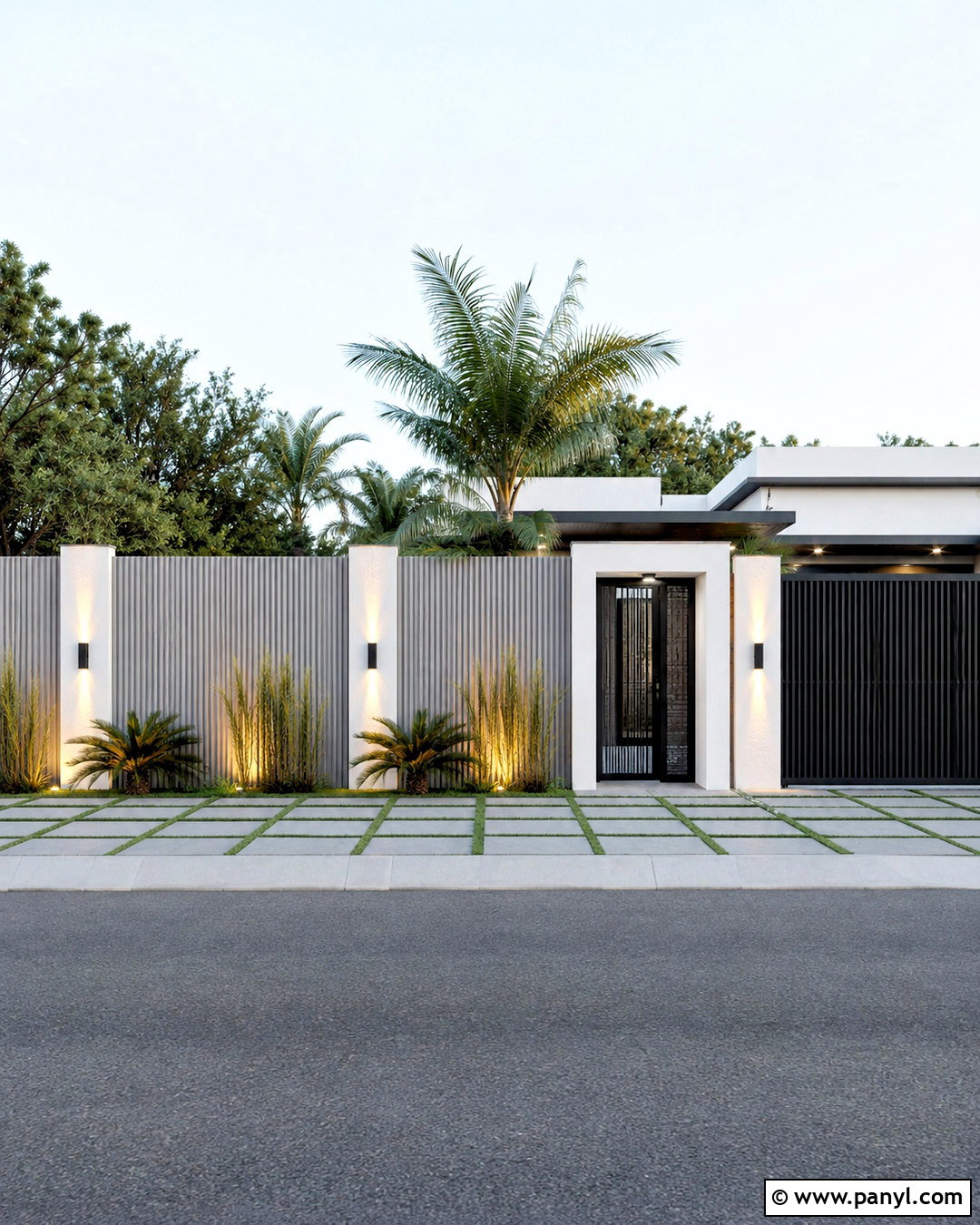
Crisp white walls and a black gate create a high-contrast exterior that is easy to coordinate with many homes. Use smooth white exterior plaster across the solid boundary sections, then add slim black coping for a sharp upper edge. A wide gate with vertical matte black slats provides security while repeating the color of the house’s windows, balcony rails, or roof trim. Keep the pedestrian gate slightly recessed to make the entrance easier to identify. Black rectangular wall lights can frame the gateway and improve visibility. Soften the strong contrast with green hedges, pale gray pavers, and one small ornamental tree. This boundary wall looks particularly balanced when the house uses a limited white, gray, and black palette.
6. Boundary Wall With Vertical Metal Slats
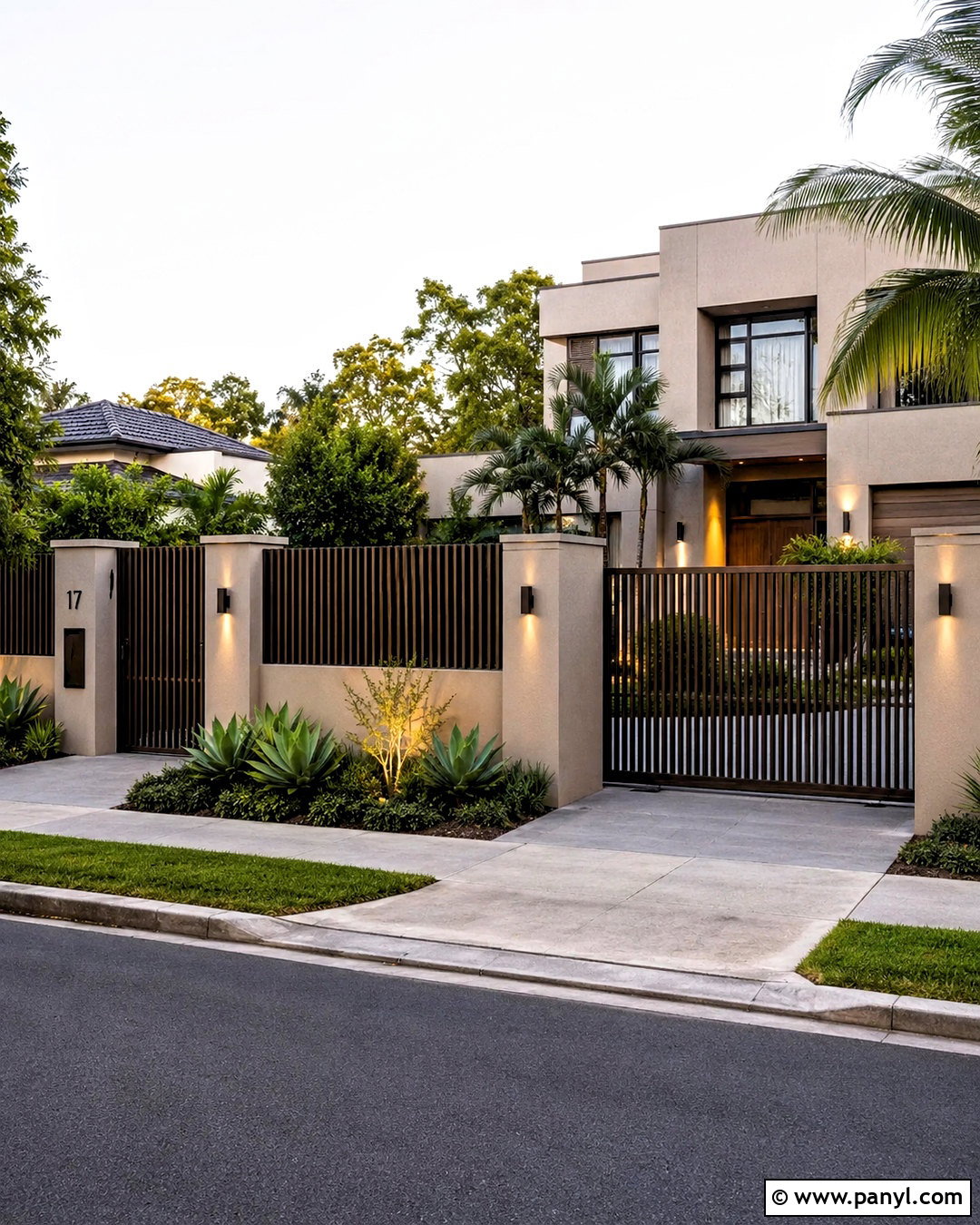
Vertical metal slats offer a practical balance between openness and privacy. Construct a solid masonry base in warm greige or charcoal, then add narrow powder-coated aluminum slats above it. Position the slats closely enough to screen the yard while leaving small gaps for airflow and daylight. Matte black creates bold contrast, while bronze or dark brown feels softer beside stone and beige exteriors. Repeat the same slat spacing across both gates for a seamless appearance. Square masonry pillars can hold simple downward-facing lights and clearly define the entrances. Complete the frontage with large-format concrete pavers, a narrow lawn strip, and architectural plants. The strong vertical rhythm can also make a low boundary appear taller and more structured.
7. Decorative Screen Boundary Wall
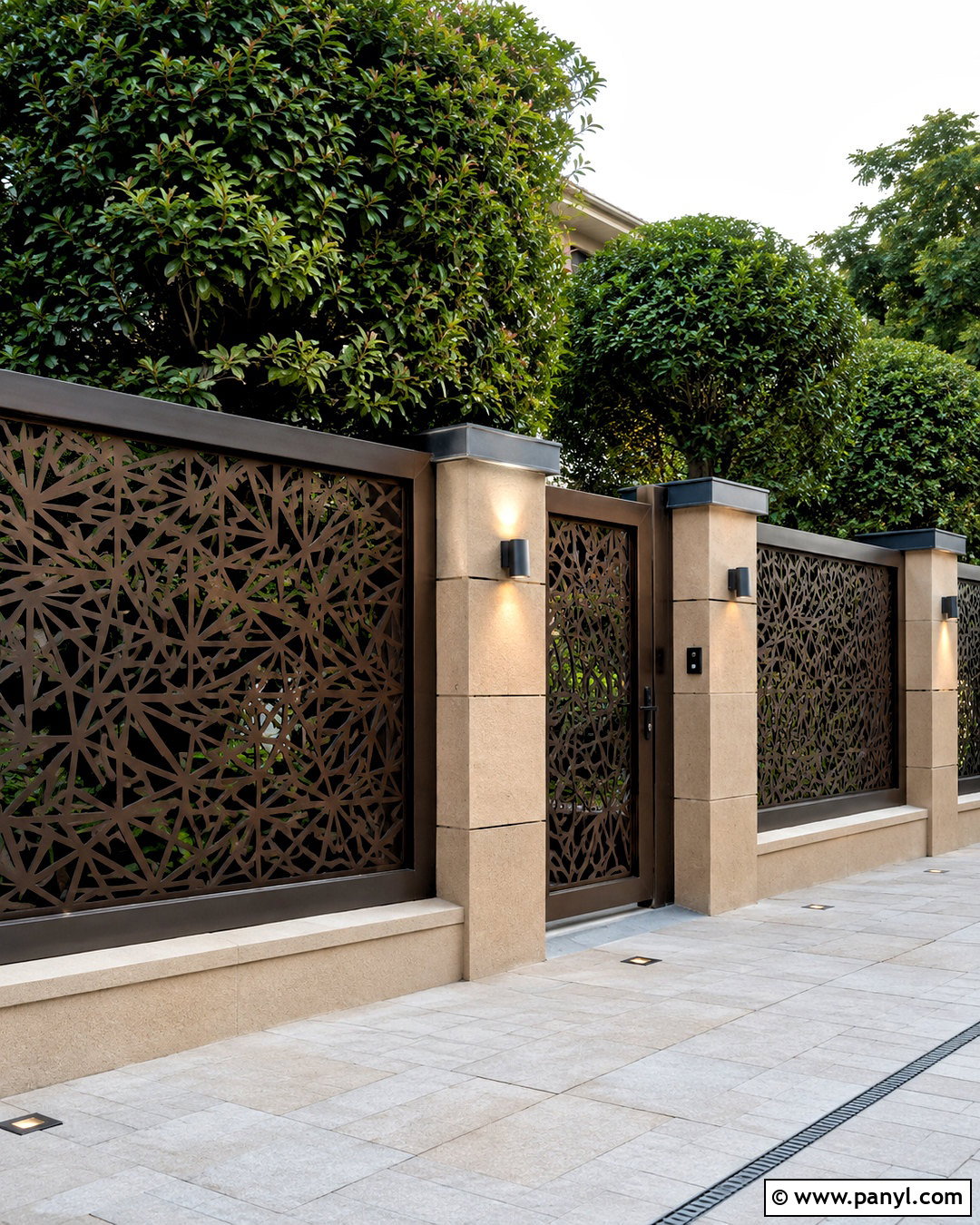
A decorative screen can turn a functional boundary into a detailed architectural feature. Use laser-cut aluminum or weather-resistant steel panels between solid plastered pillars. Select a restrained geometric pattern with enough closed area to protect privacy. Paint the screen matte black, deep bronze, or warm terracotta, depending on the house exterior. A low solid wall beneath the panels prevents the design from feeling visually fragile. Repeat a simplified version of the screen pattern on the pedestrian gate rather than introducing a competing detail. Soft beige masonry, charcoal coping, and concealed landscape lighting create a calm background. Add clipped greenery behind the screens so leaves appear through the openings, bringing movement and natural color to the complete exterior scheme.
8. Boundary Wall With Built-In Planters
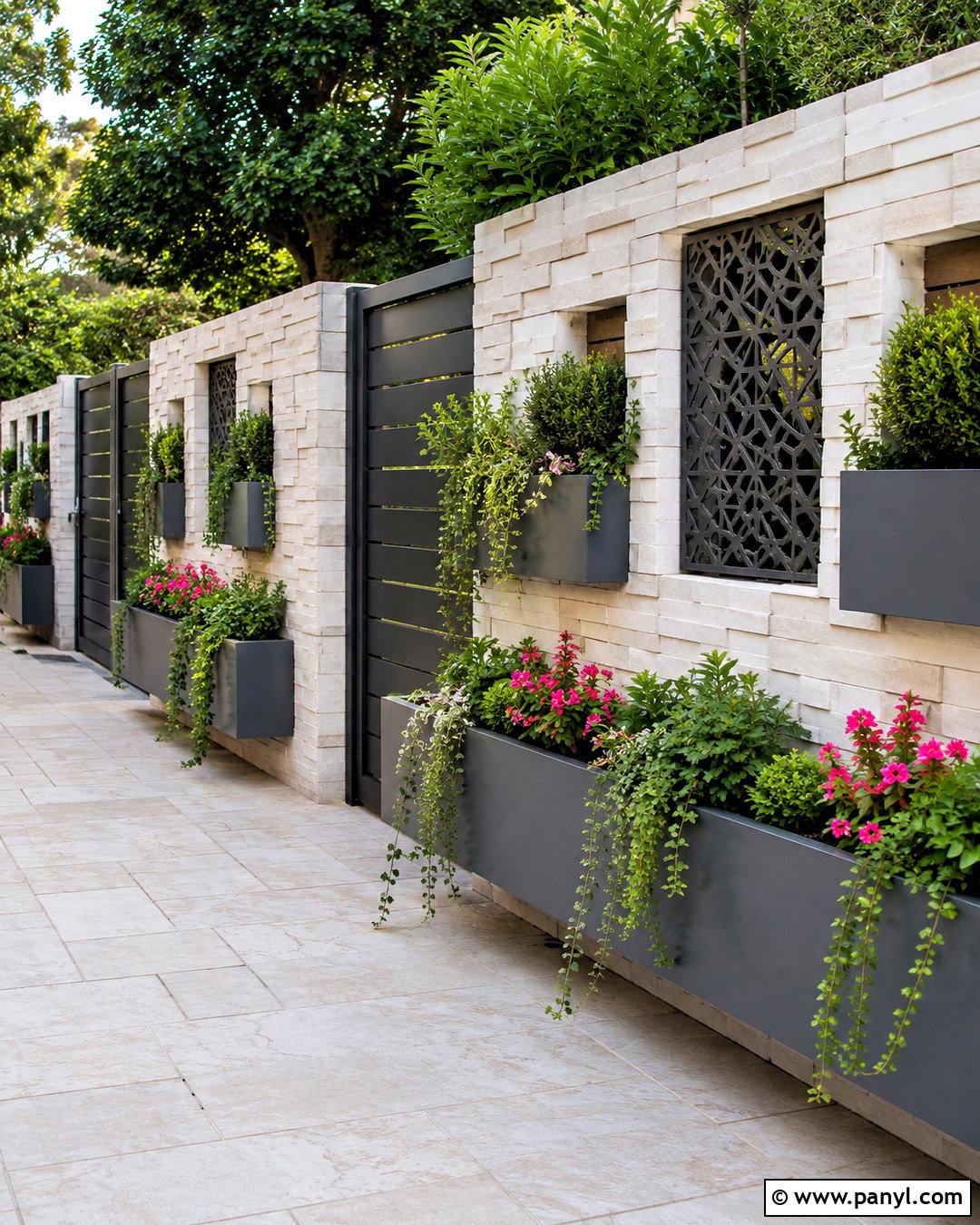
Built-in planters make a boundary wall feel integrated with the landscape rather than separate from it. Design the wall with staggered masonry sections in soft gray or warm white. Place long raised planters at the base and deeper planter boxes beside the entrance pillars. Use drought-tolerant grasses, trailing plants, compact shrubs, or regionally suitable flowering species. Keep the wall surfaces simple so the planting remains visually clear. Timber-look slats or dark metal screens can fill the spaces between solid sections. Include proper drainage outlets and waterproof planter interiors before adding soil. A matching dark gate, pale walkway, and understated wall lights complete the look. This design works particularly well where the front yard has limited planting space.
9. Exposed Concrete Boundary Wall
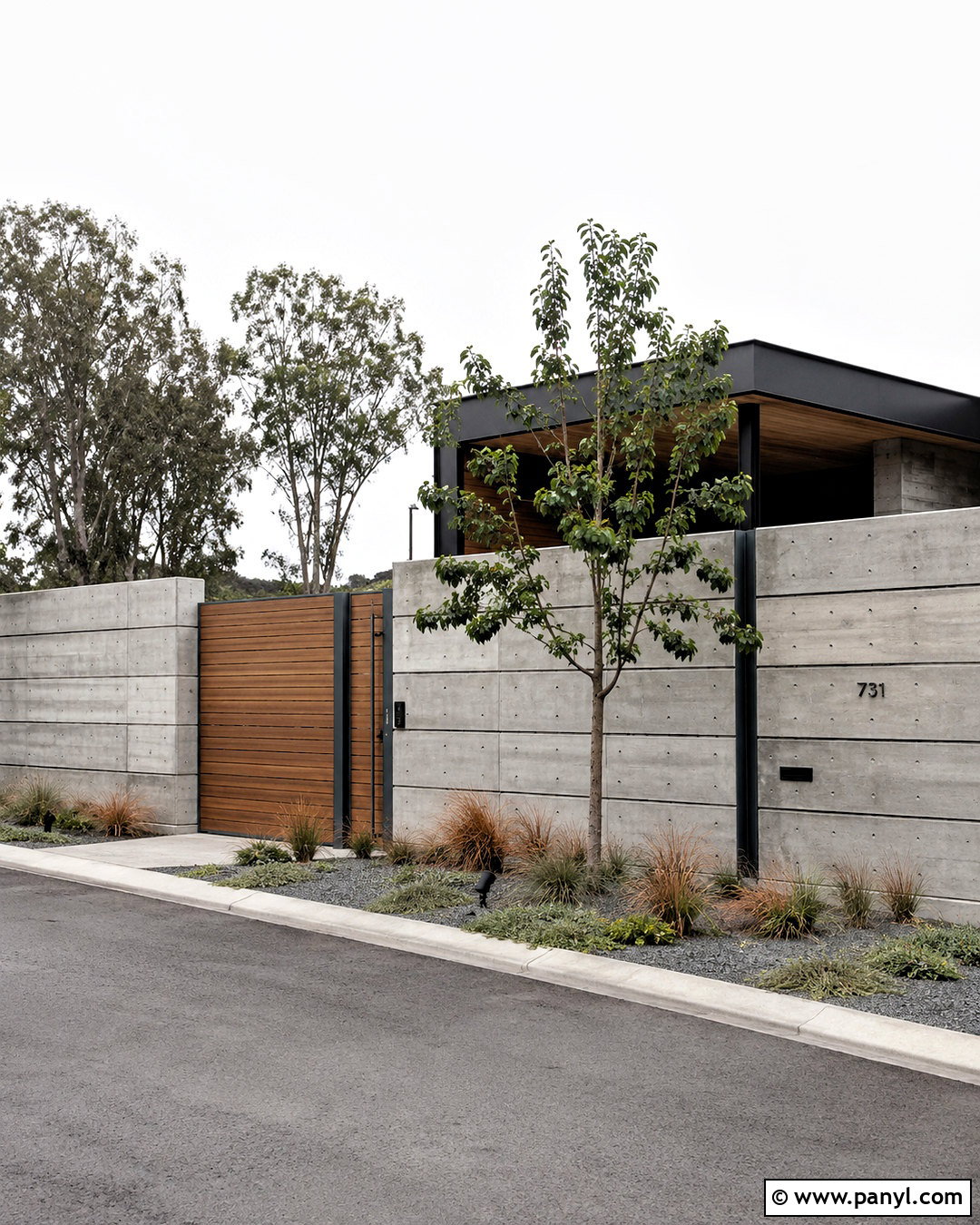
Exposed concrete delivers a strong architectural look without relying on added decoration. Use poured concrete panels with visible formwork lines, subtle tonal variation, and crisp rectangular proportions. Separate the panels with narrow black metal joints or recessed shadow gaps. Pair the wall with a solid timber-look gate to introduce warmth and prevent the exterior from feeling cold. A charcoal pedestrian gate can sit beside a concrete address pillar with integrated lighting. Keep the landscaping minimal but intentional, using gravel, sculptural grasses, and one compact tree. Concrete coping or a carefully sloped top helps produce a neat silhouette. This scheme complements industrial, minimalist, and contemporary houses, especially those with raw concrete, dark steel, and natural wood details.
10. Gabion Boundary Wall
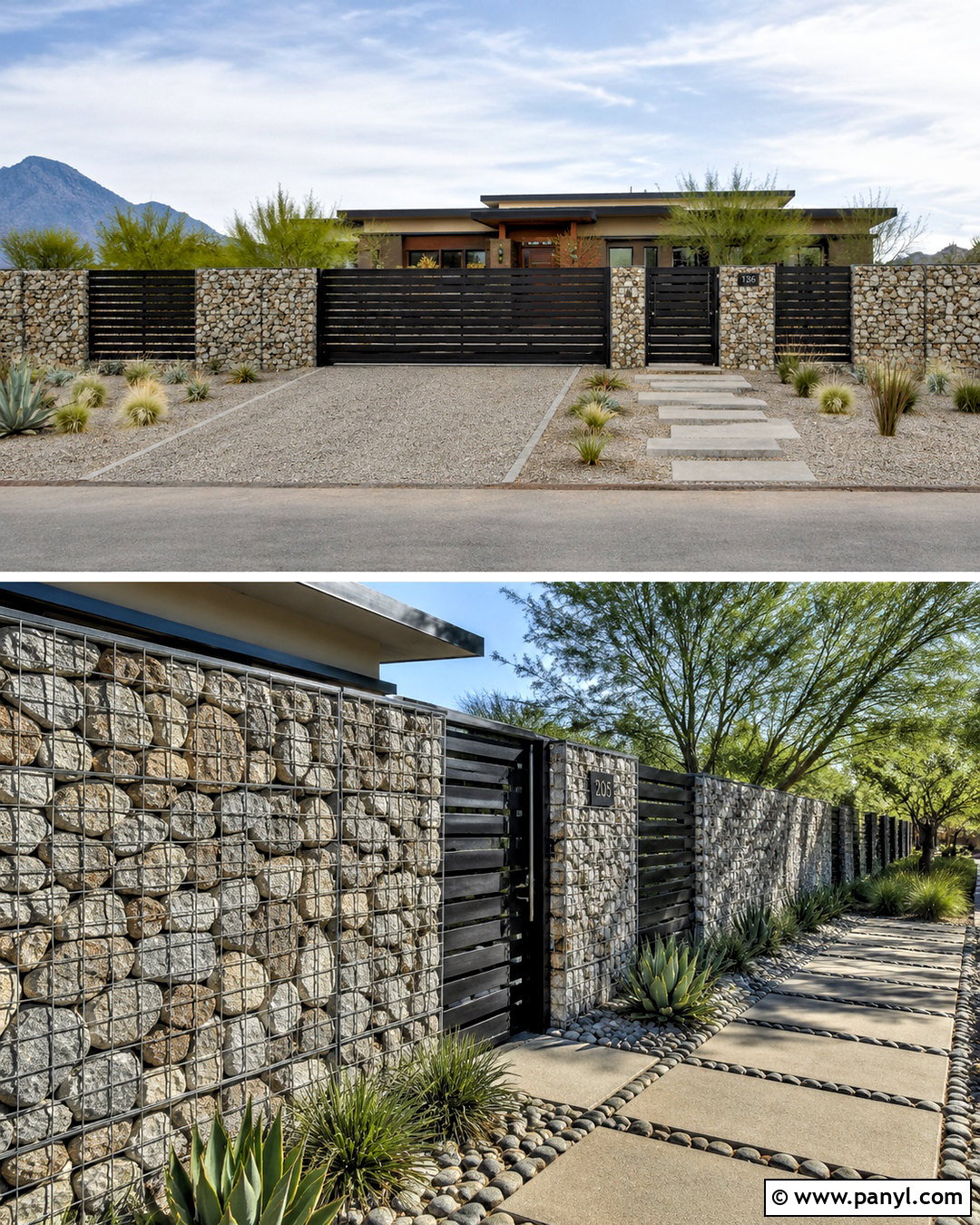
A gabion boundary wall brings rugged texture to a modern or landscape-focused home. Fill galvanized steel mesh cages with locally available gray, beige, or mixed natural stone. Use gabion pillars and lower wall sections rather than creating one uninterrupted heavy barrier. Connect them with black metal slats or sealed timber panels to improve privacy and reduce visual weight. A dark sliding gate with clean horizontal lines keeps the entrance modern. Place low grasses, succulents, or hardy ground cover around the stone bases to soften the transition to the yard. Warm integrated lights can highlight the rock texture near the pedestrian entrance. The finished design works best when similar stone appears in pathways, retaining walls, or facade accents.
11. Boundary Wall With Horizontal Slats
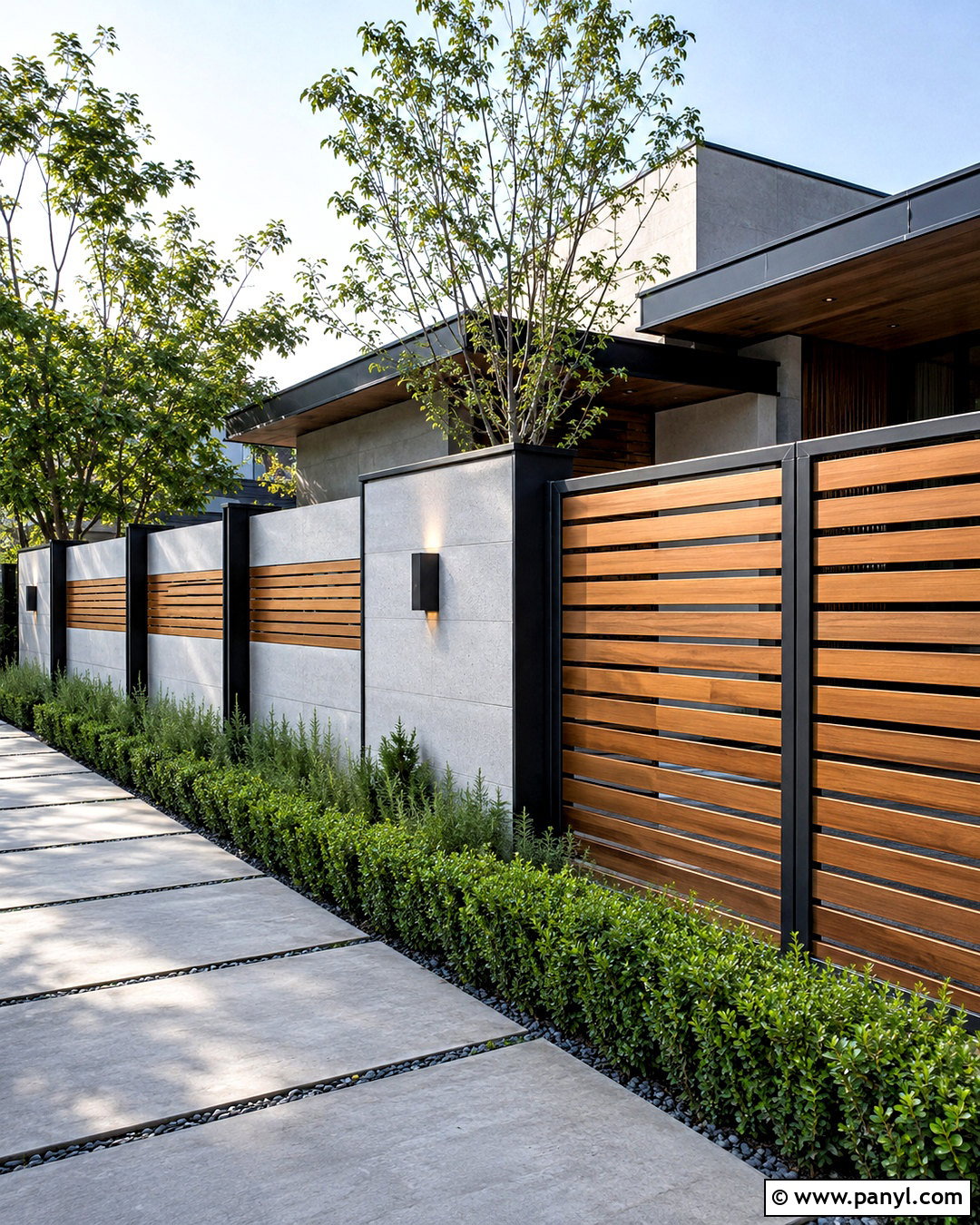
Horizontal slats give a boundary wall a broad, streamlined appearance. Begin with low masonry panels in light gray or off-white and add long cedar, composite, or wood-look aluminum slats above them. Use narrow, consistent gaps to maintain airflow without leaving the yard completely exposed. Continue the horizontal lines across the driveway gate so it blends into the surrounding wall. Dark steel frames provide contrast and prevent the wood finish from becoming visually dominant. Add broad rectangular pillars at the entrance and install simple wall lights at eye level. Low hedges, ground cover, and wide concrete pavers reinforce the horizontal composition. This complete design is especially effective for wide plots and homes with strong linear rooflines.
12. Curved Boundary Wall
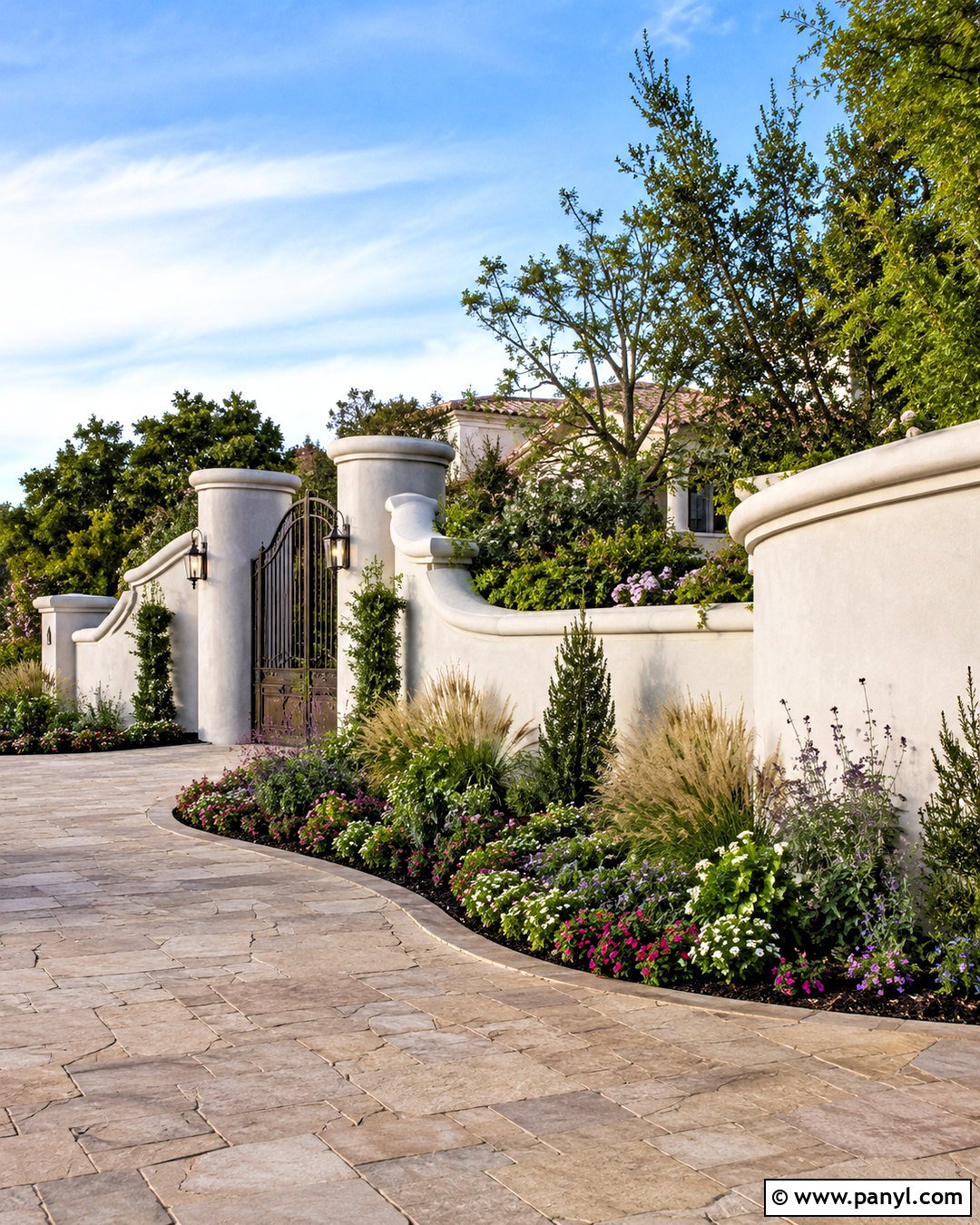
A curved boundary wall can soften a corner property or create a more welcoming entrance. Use smooth stucco in warm white, sand, or pale greige and shape the wall into gentle arcs rather than tight decorative curves. Build slightly taller rounded pillars beside the pedestrian gate and lower the adjoining sections to open views toward the landscaping. A simple bronze or matte black gate provides contrast without competing with the wall’s shape. Cap the masonry with rounded precast coping for a clean, weather-resistant finish. Follow the curve with a planted bed containing flowering shrubs, ornamental grasses, and compact evergreens. Curved paving near the entrance completes the composition and makes the frontage feel planned as one continuous design.
13. Boundary Wall With Geometric Panels
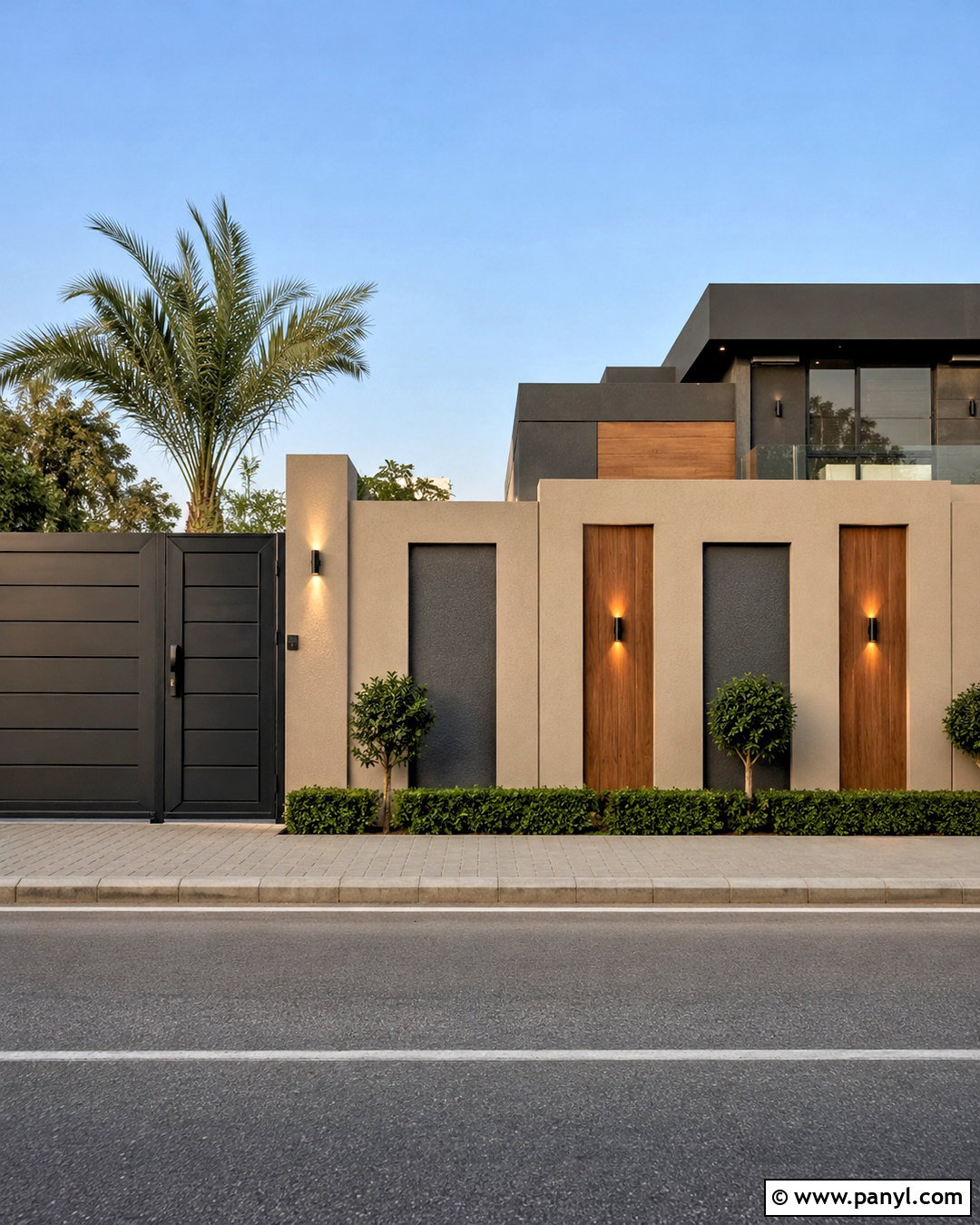
Geometric paneling introduces depth without requiring elaborate ornament. Build a solid masonry wall and divide its surface into large rectangles using shallow projections, recessed grooves, or framed plaster panels. Paint the main wall soft greige and use charcoal inside selected recessed areas. Add one warm wood-look panel near the entrance to keep the palette from appearing flat. The driveway gate should follow the same rectangular proportions, using dark metal frames and solid inserts. Position minimalist wall lights inside a few recessed sections for an orderly appearance. Finish the frontage with linear pavers, low hedges, and a narrow gravel border. Keeping the shapes large and repeated produces a cleaner result than using many small, unrelated patterns.
14. Boundary Wall With Perforated Brick
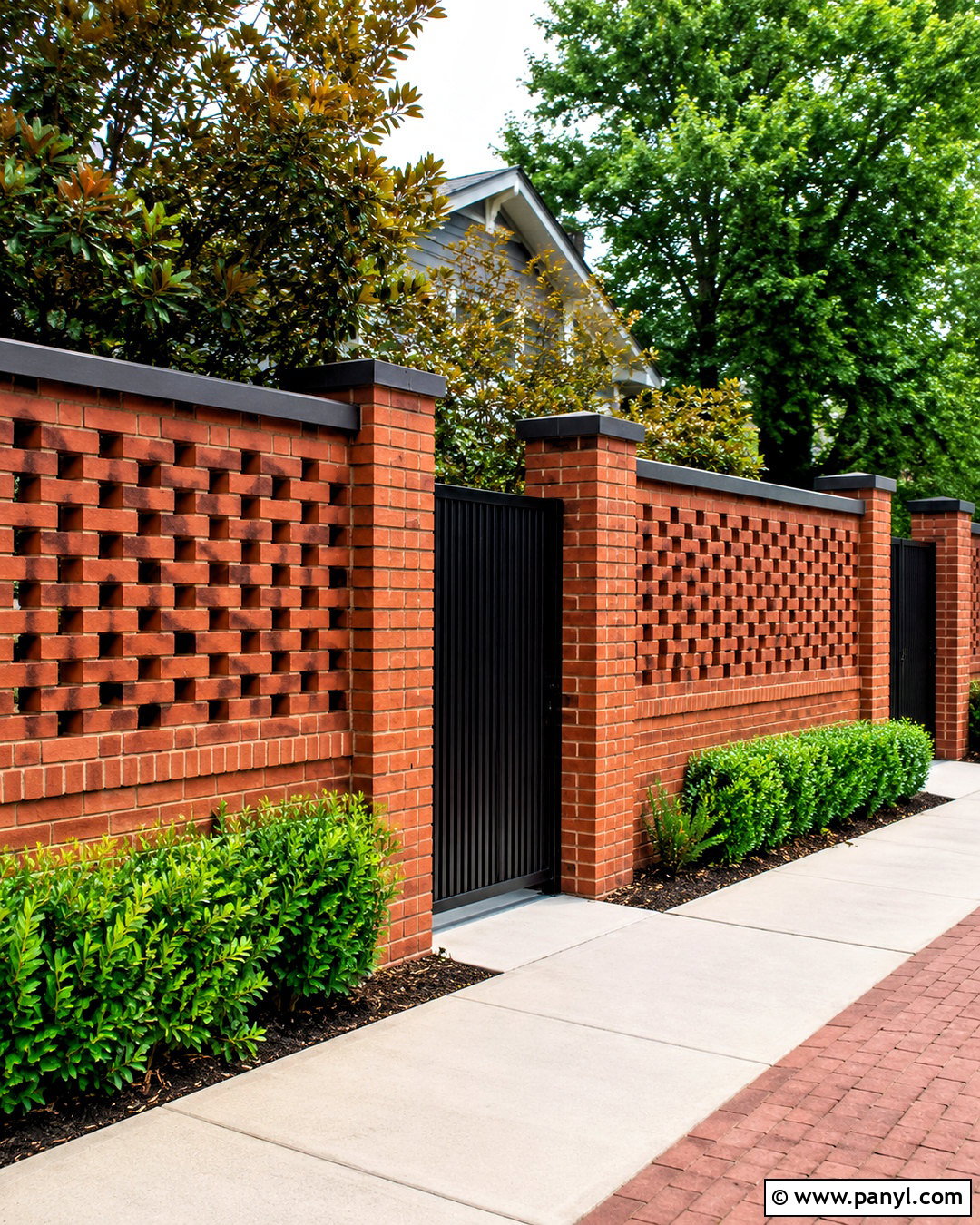
Perforated brickwork provides texture, ventilation, and filtered privacy in one cohesive boundary. Build solid brick pillars and a low brick base, then arrange selected bricks in an open lattice pattern across the upper sections. Warm red or earthy brown brick pairs naturally with charcoal metal gates and dark stone coping. For greater privacy, place dense hedging a short distance behind the openings rather than closing the pattern completely. Repeat the brick color on the house entrance, porch columns, or pathway edging to create visual continuity. Simple black wall lights and concrete paving give the traditional material a more contemporary setting. This wall is particularly attractive when sunlight creates changing patterns across the pathway and nearby planting.
15. Boundary Wall With Fluted Texture
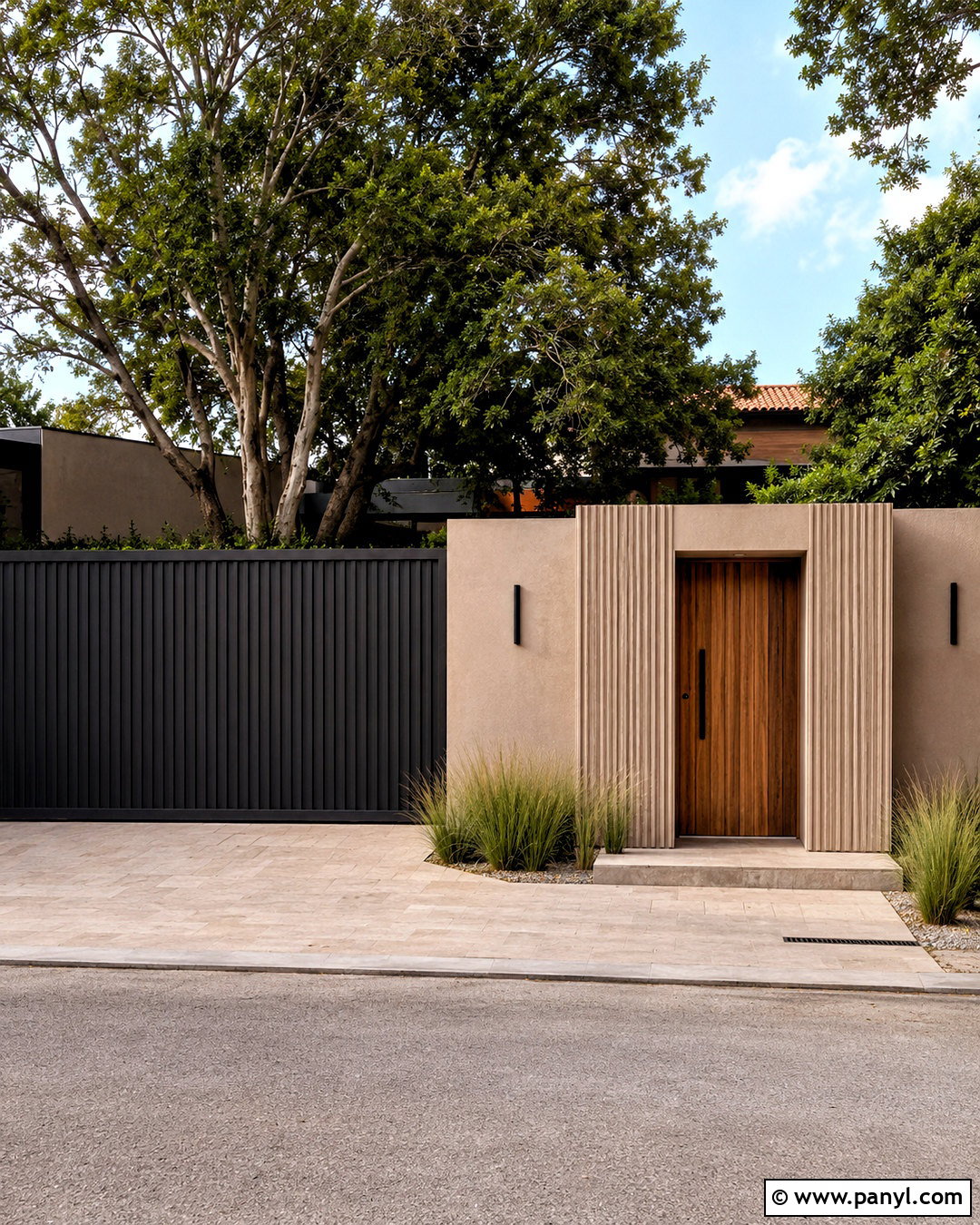
Fluted surfaces add subtle shadow and vertical movement to a solid boundary wall. Apply narrow vertical grooves to selected plaster or precast concrete sections instead of covering the entire frontage. Use warm beige, muted taupe, or medium gray to make the texture noticeable without becoming overpowering. Place plain wall sections between fluted panels so the composition has room to breathe. A smooth matte black gate creates contrast, while a timber pedestrian door adds warmth near the entrance. Slim vertical lights can reinforce the wall’s linear pattern. Complete the setting with tall grasses, column-shaped shrubs, and simple stone paving. This refined design complements contemporary homes that already feature ribbed panels, vertical cladding, or narrow architectural fins.
16. Traditional Boundary Wall With Ironwork
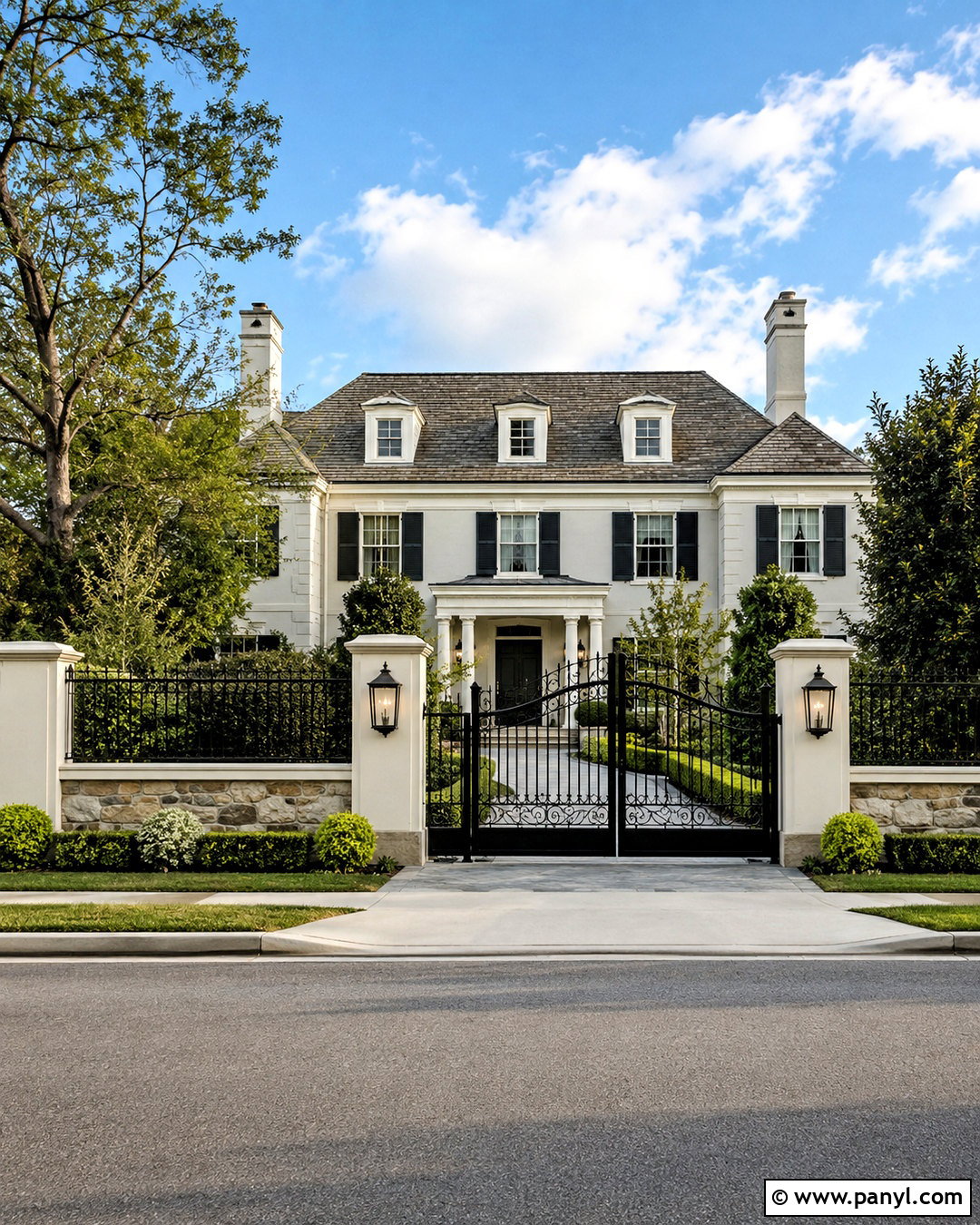
Traditional metalwork looks most balanced when paired with sturdy masonry and a restrained color palette. Build cream, beige, or light gray pillars with stone bases and molded coping. Connect them using low solid walls topped with black ornamental iron panels. Choose simple arches, vertical bars, and limited scrollwork rather than densely packed decoration. A matching double driveway gate creates a formal entrance, while capped gateposts provide clear structure. Repeat the black finish on lantern-style wall lights and porch railings. Plant evergreen hedges behind the ironwork to improve privacy and create a rich green backdrop. The complete scheme suits Colonial, Mediterranean, farmhouse, and traditional homes with pitched roofs, symmetrical windows, and defined entrance paths.
17. Boundary Wall With Vertical Garden
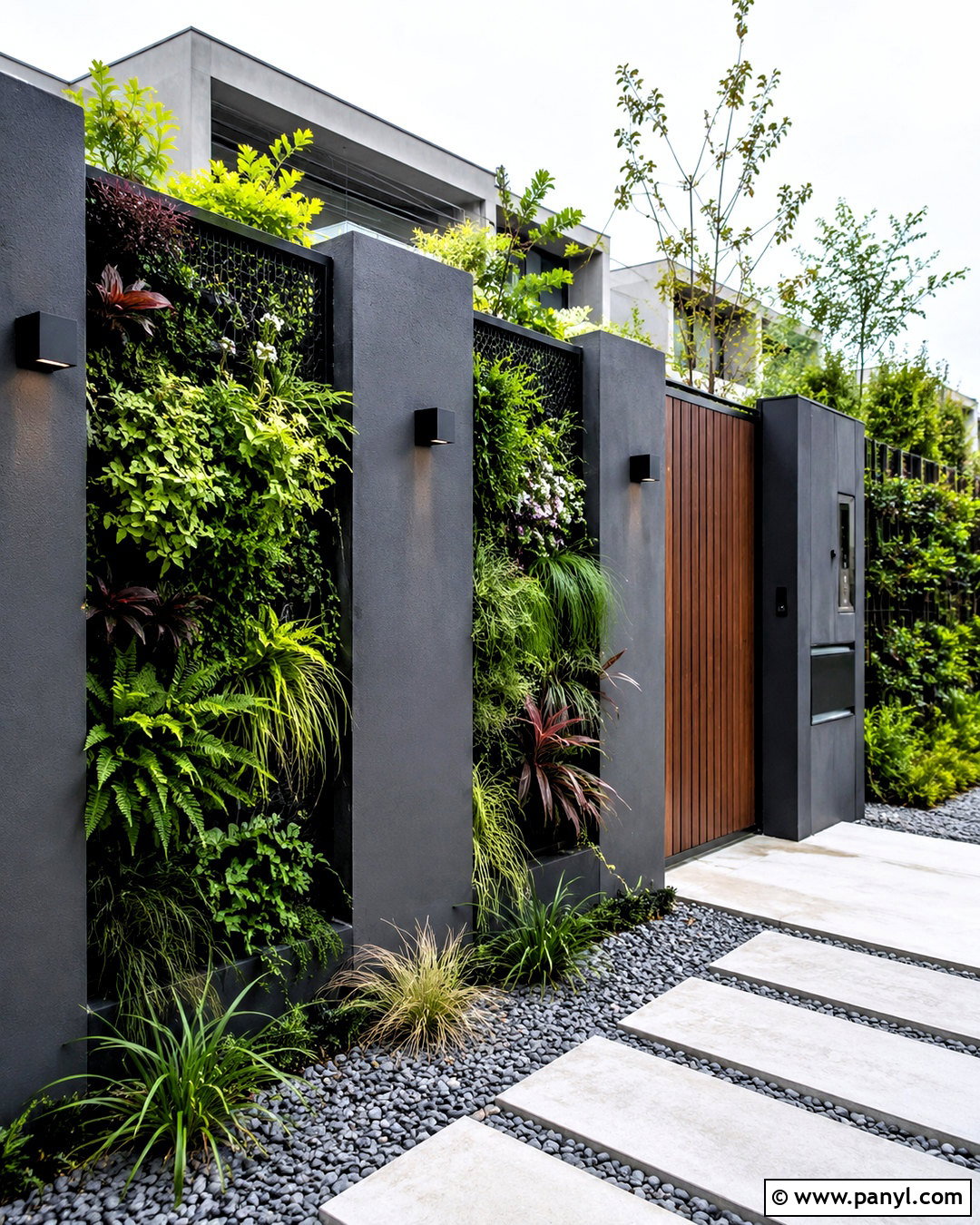
A vertical garden transforms a plain boundary wall into a living exterior feature. Keep the structural wall simple, using charcoal concrete, warm gray plaster, or sealed masonry. Install a modular planting system across one broad section and leave the entrance area more open and uncluttered. Combine trailing foliage, ferns, compact grasses, and climate-appropriate flowering plants in repeated groups. Include irrigation, drainage, and accessible maintenance points from the beginning. Frame the planted area with dark powder-coated metal and use the same finish on the driveway gate. Ground-level gravel, stepping stones, and a narrow bench can complete the green entrance. This design is most convincing when the planting appears intentional rather than scattered across every available surface.
18. Boundary Wall With Integrated Lighting
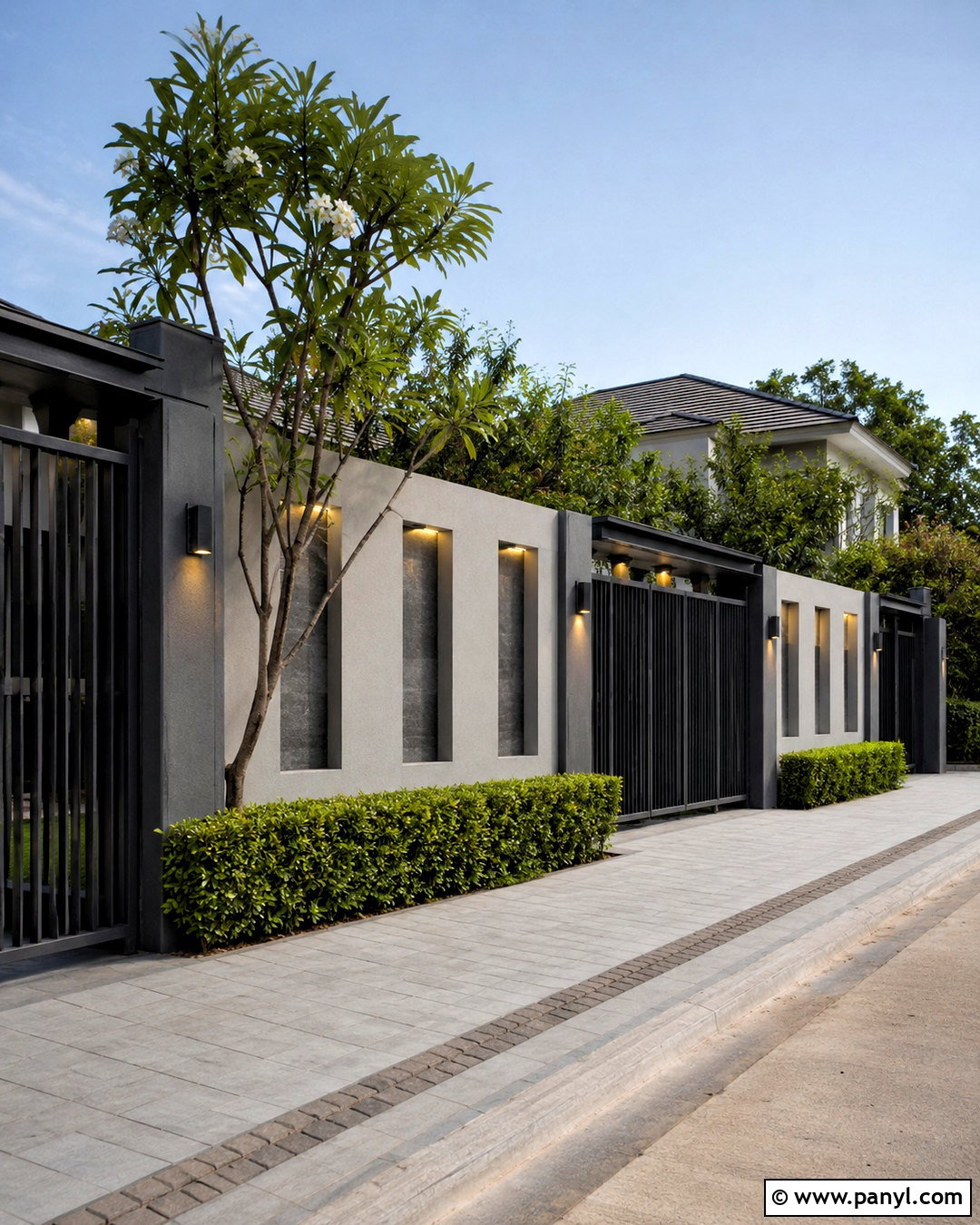
Integrated lighting can make a simple boundary wall feel more polished while improving nighttime visibility. Design a smooth charcoal and light gray masonry wall with recessed niches at regular intervals. Place shielded LED fixtures inside the niches so the light washes downward instead of producing harsh glare. Add small step lights near the pedestrian entrance and discreet fixtures beside the driveway gate. Keep the daytime appearance clean with concealed wiring and fixtures that match the wall color. Black metal slats between masonry panels can add ventilation and break up long surfaces. Complete the frontage with pale paving, neat hedges, and one highlighted ornamental tree. The lighting layout should guide movement while preserving a comfortable residential atmosphere.
19. Low Boundary Wall With Open Railings
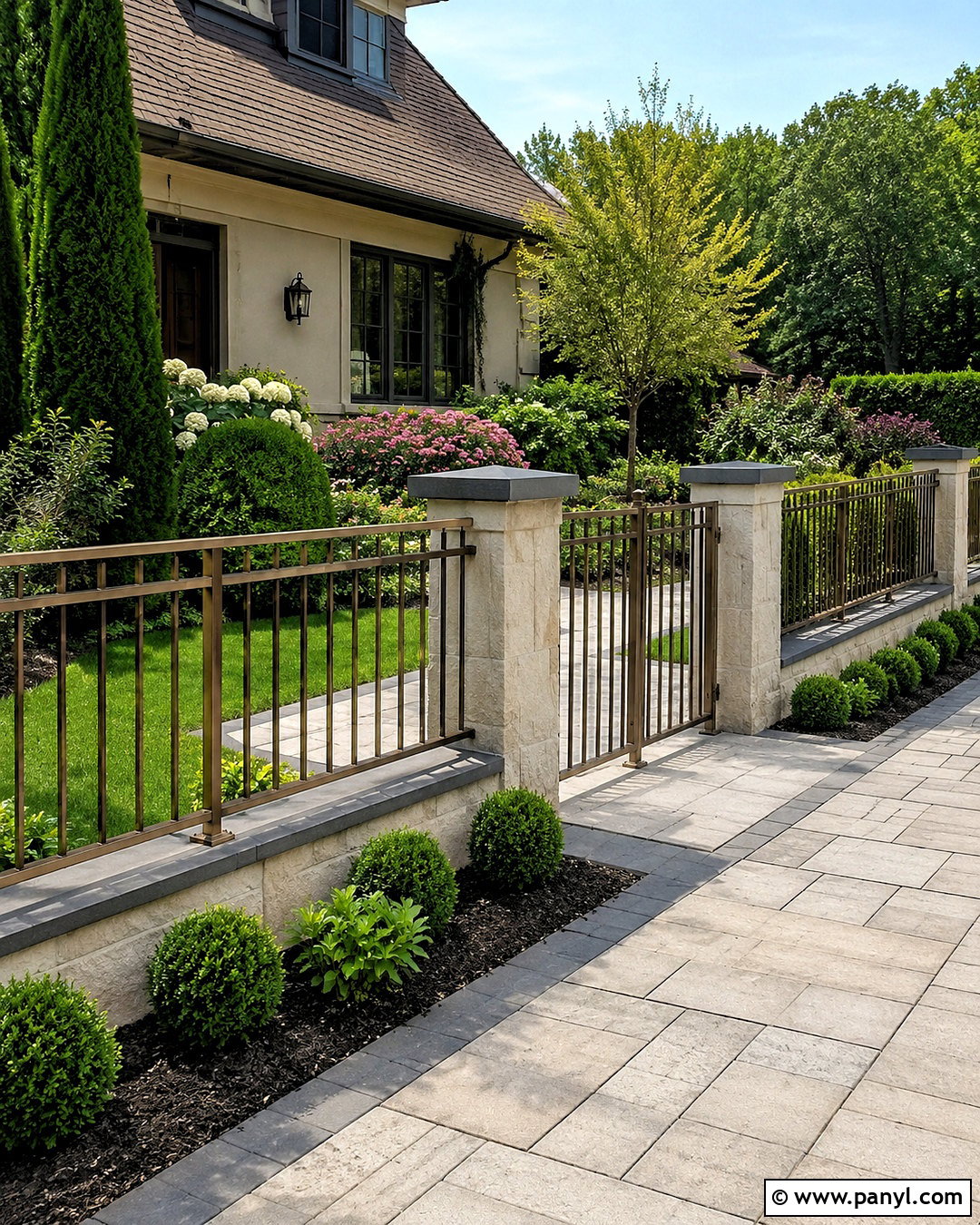
A low boundary wall is ideal when the goal is to define the property without hiding the home. Build a knee-height brick, stone, or plastered masonry base and top it with slender black or bronze metal railings. Use slightly taller pillars at the gates to create a clear entrance. Keep the bars simple and evenly spaced so the architecture and landscaping remain visible from the street. A matching transparent-style driveway gate maintains the open character. Inside the boundary, add a layered garden with lawn, flowering shrubs, and one small tree. Coordinate the masonry color with the house facade and use matching pavers along the walkway. This complete design suits welcoming neighborhoods and homes with attractive front-yard landscaping.
20. Mixed Material Boundary Wall
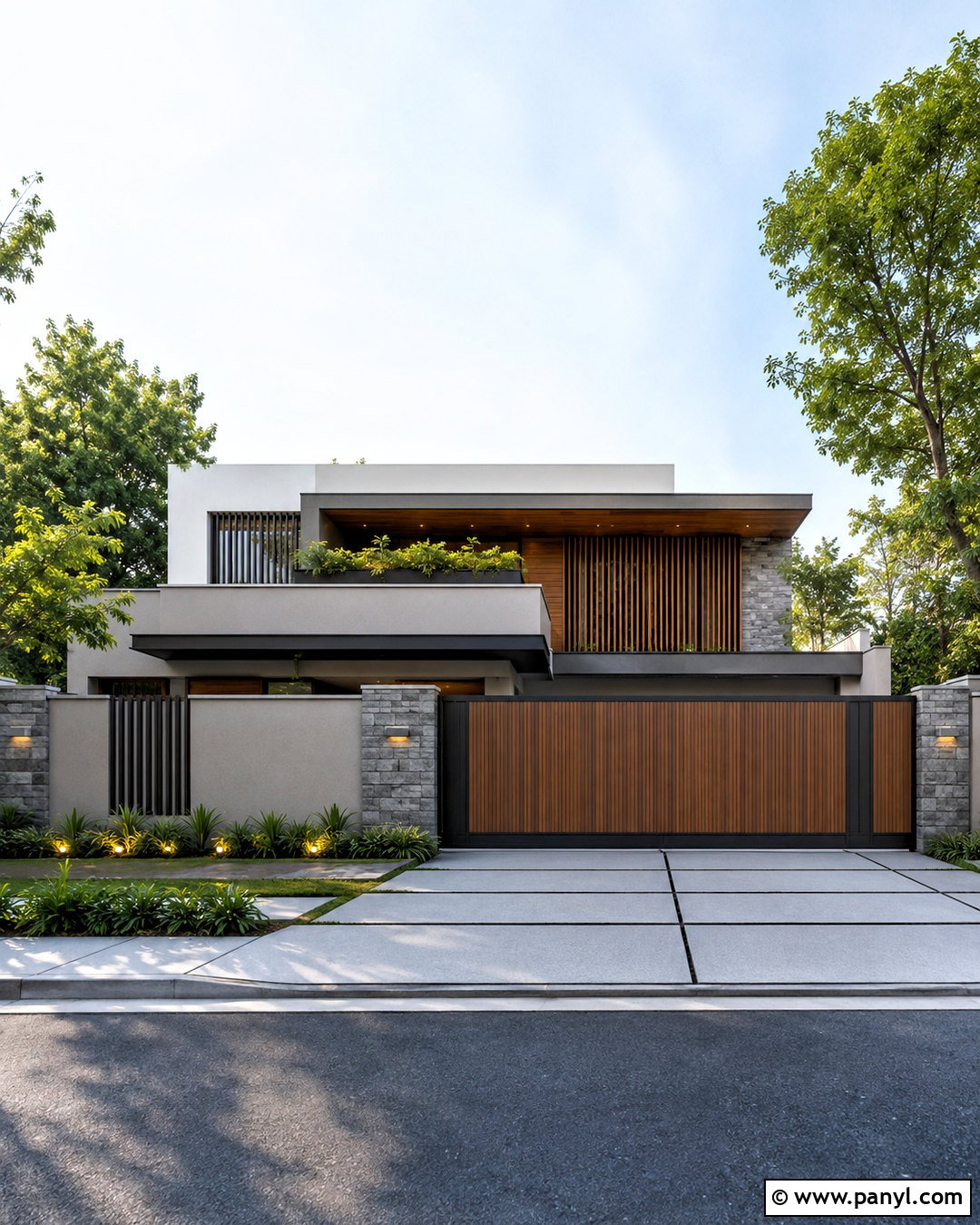
A mixed material wall can unite several exterior finishes when each one has a clear purpose. Use natural stone on the main entrance pillars, warm greige plaster on solid privacy sections, and dark vertical metal slats between them. Add a wood-look aluminum gate as the central warm feature. Keep the palette limited to three or four coordinated colors to prevent the frontage from becoming busy. Repeat the same stone, wood tone, and dark metal somewhere on the house facade for a connected appearance. Wide concrete pavers and linear planting beds support the modern composition. Integrated wall lights can emphasize the entrance after dark. This layered design works especially well for homes with contemporary facades combining multiple architectural materials.
Conclusion:
The strongest **boundary wall design exterior ideas** treat the wall, gate, landscaping, lighting, and house facade as one connected composition. Concrete and metal provide a crisp modern look, while brick, stone, and wood tones add warmth and natural texture. Decorative screens, open railings, or slatted panels can improve airflow without sacrificing useful privacy. Before construction begins, confirm property lines, local height requirements, drainage needs, gate clearance, and foundation conditions with qualified local professionals. Choose exterior-grade materials suited to your climate and consider how much maintenance each finish will require. With thoughtful planning, even a simple boundary wall can improve security and give the entire home a more complete, attractive street presence.

Related Ideas and Inspiration:
Leave a Reply