
A well-designed backyard wall can do much more than mark a property line. It can create privacy, support a sloped landscape, frame an outdoor room, or become an attractive focal point. The best **backyard wall design ideas** connect the wall with the entire yard, including the patio materials, seating, plants, lighting, and architectural style of the home. Current outdoor designs often combine practical structures with built-in planters, kitchens, water features, or seating to make every square foot more useful. () Whether your space is compact, spacious, flat, or steeply graded, the following complete looks offer inspiration you can adapt to your layout, climate, and budget. Explore these **20 backyard wall design ideas** to find the right approach.
1. Modern Wood Slat Backyard Wall
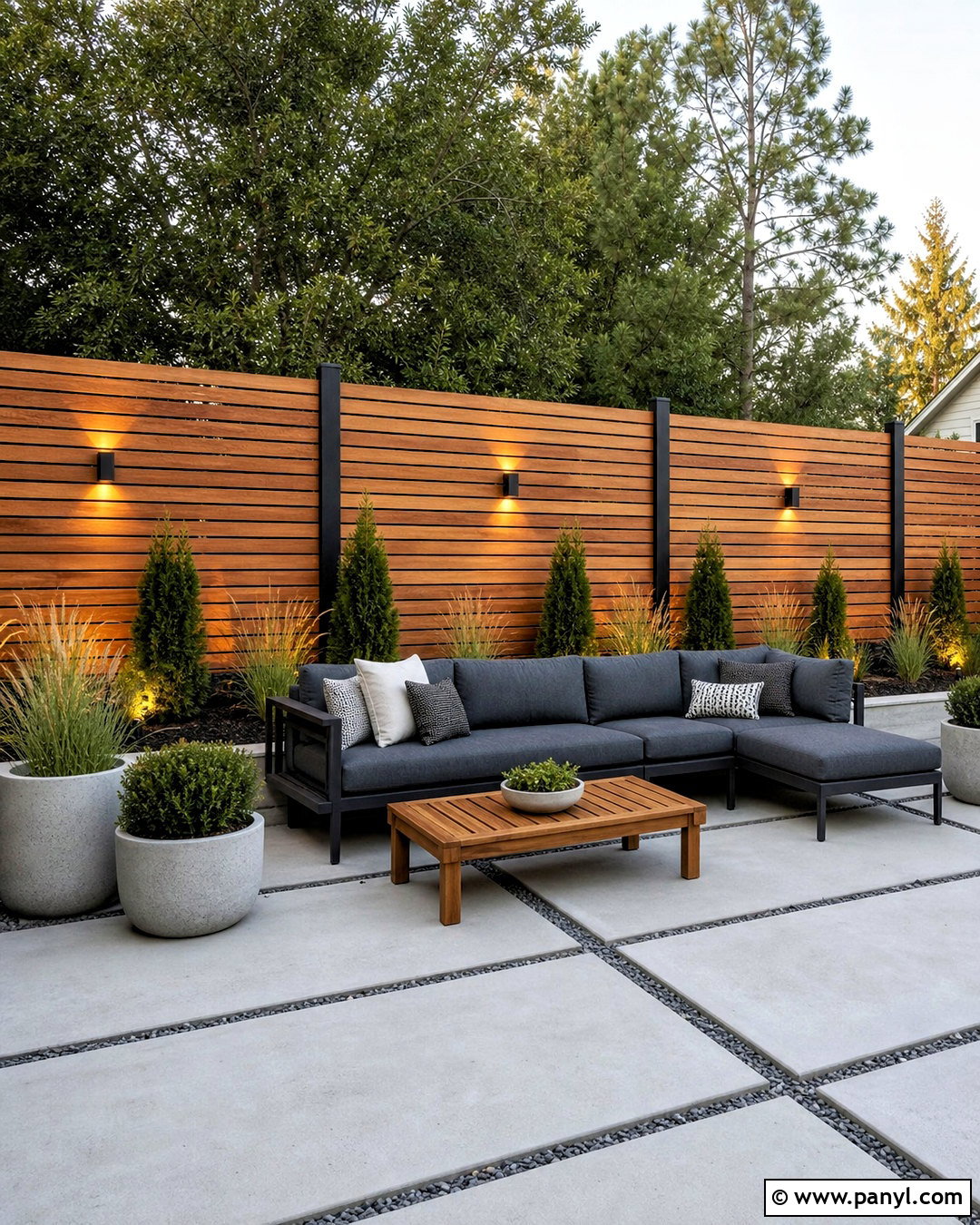
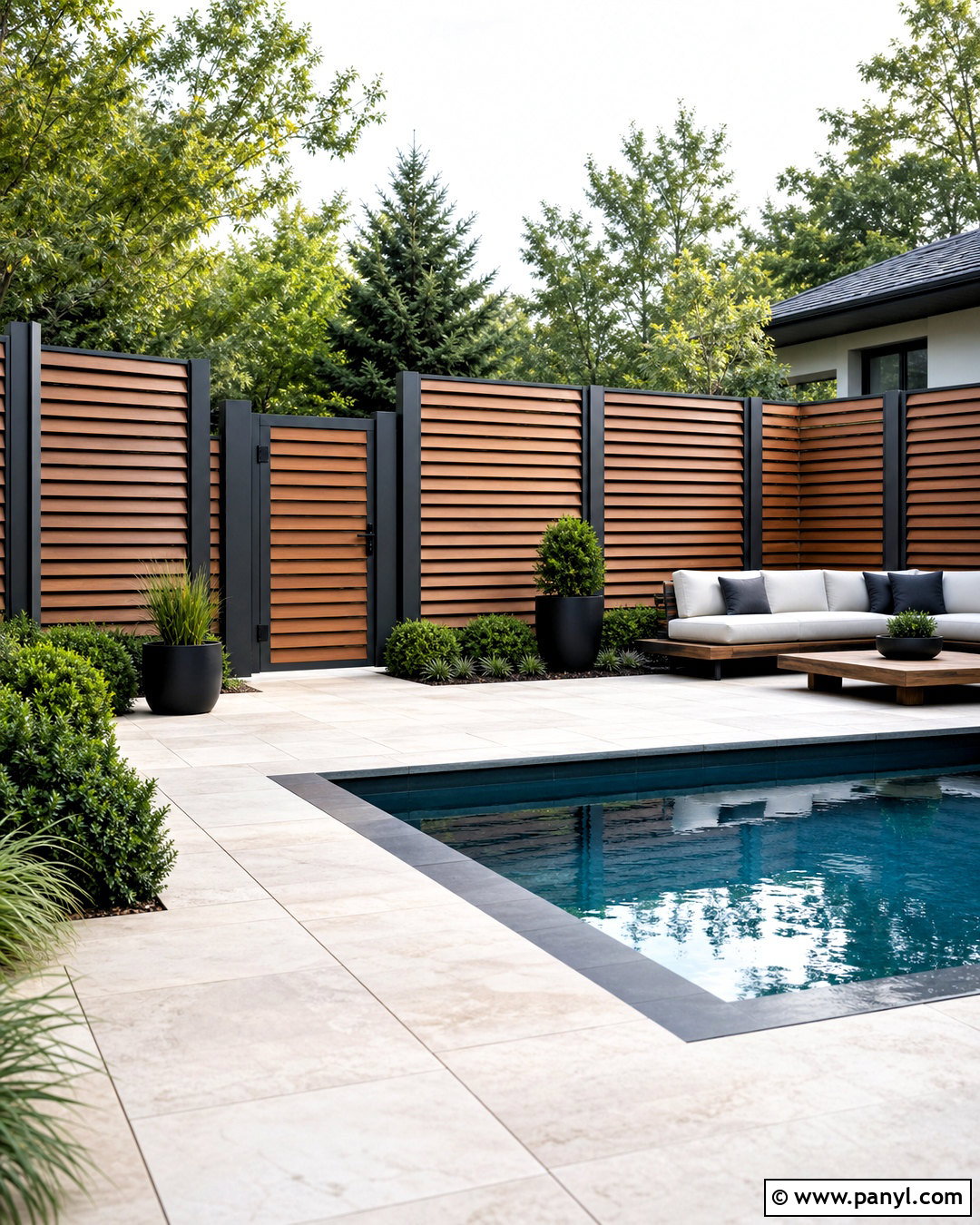
A horizontal wood slat wall gives a backyard privacy without making the area feel completely enclosed. Use warm cedar boards with narrow, consistent gaps and matte black posts for a clean modern structure. Place the wall behind a pale concrete patio furnished with a charcoal sectional, a low teak coffee table, and neutral outdoor cushions. A slim planting bed filled with ornamental grasses and compact evergreen shrubs softens the straight lines. Add warm white wall lights between selected posts for evening visibility. Finish the design with large concrete planters and a simple gravel border. Cedar should be sealed for exterior use, while posts and fasteners must be selected for local weather conditions. This complete arrangement works especially well beside urban patios and contemporary homes. ()
2. Vertical Cedar Privacy Wall
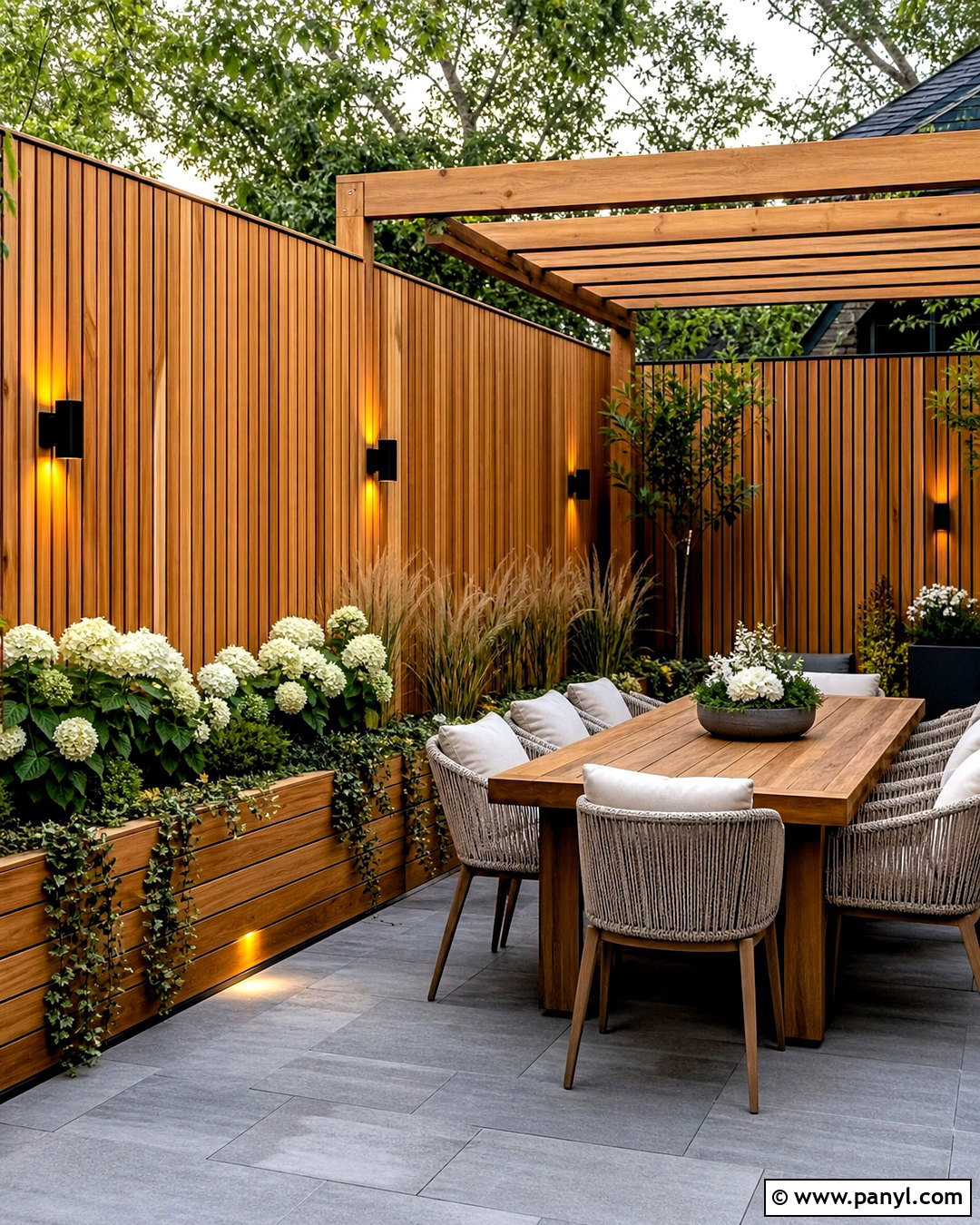
Vertical cedar boards can make a low backyard appear taller while giving the entertaining area a private, cozy backdrop. Choose boards in several narrow widths to add subtle rhythm without creating a busy pattern. Pair the honey-toned cedar with a medium-gray paver patio, black metal lounge chairs, and cream cushions. Along the base, install a continuous raised planter finished in matching wood. Fill it with feather reed grass, dwarf hydrangeas, and trailing ground cover for layered greenery. Slim black sconces provide practical lighting without distracting from the natural grain. A small pergola with matching cedar beams can visually connect the wall to the dining zone. Keep the furniture arrangement open so the patio remains easy to navigate and the wall feels architectural rather than heavy.
3. White Stucco Backyard Wall
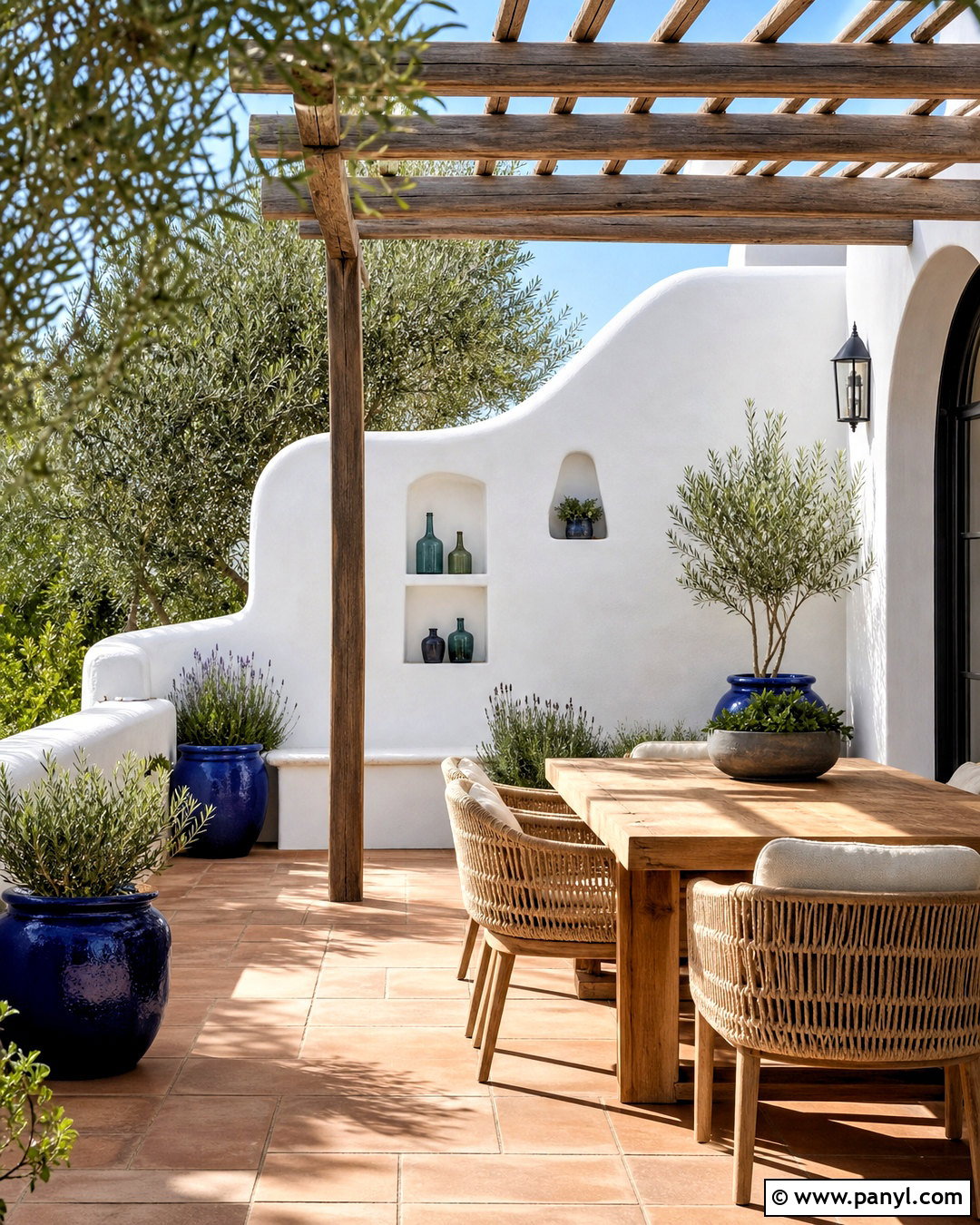
Crisp white stucco creates a bright backdrop that suits Mediterranean, coastal, and modern Southwestern yards. Build the design around a smooth wall with softly rounded corners and a terracotta tile patio. Place a natural teak dining table in the center, surrounded by woven chairs with oatmeal-colored cushions. At the base of the wall, use gravel beds containing olive trees, lavender, rosemary, and low ornamental grasses. Cobalt blue ceramic pots can add controlled color without overwhelming the calm palette. Recessed wall niches provide space for simple pottery or battery-powered lanterns. A pale wood pergola overhead completes the outdoor room while filtering strong sunlight. Choose an exterior finish appropriate for your climate, and plan drainage carefully so soil and irrigation do not stain the clean white surface.
4. Painted Cinder Block Wall
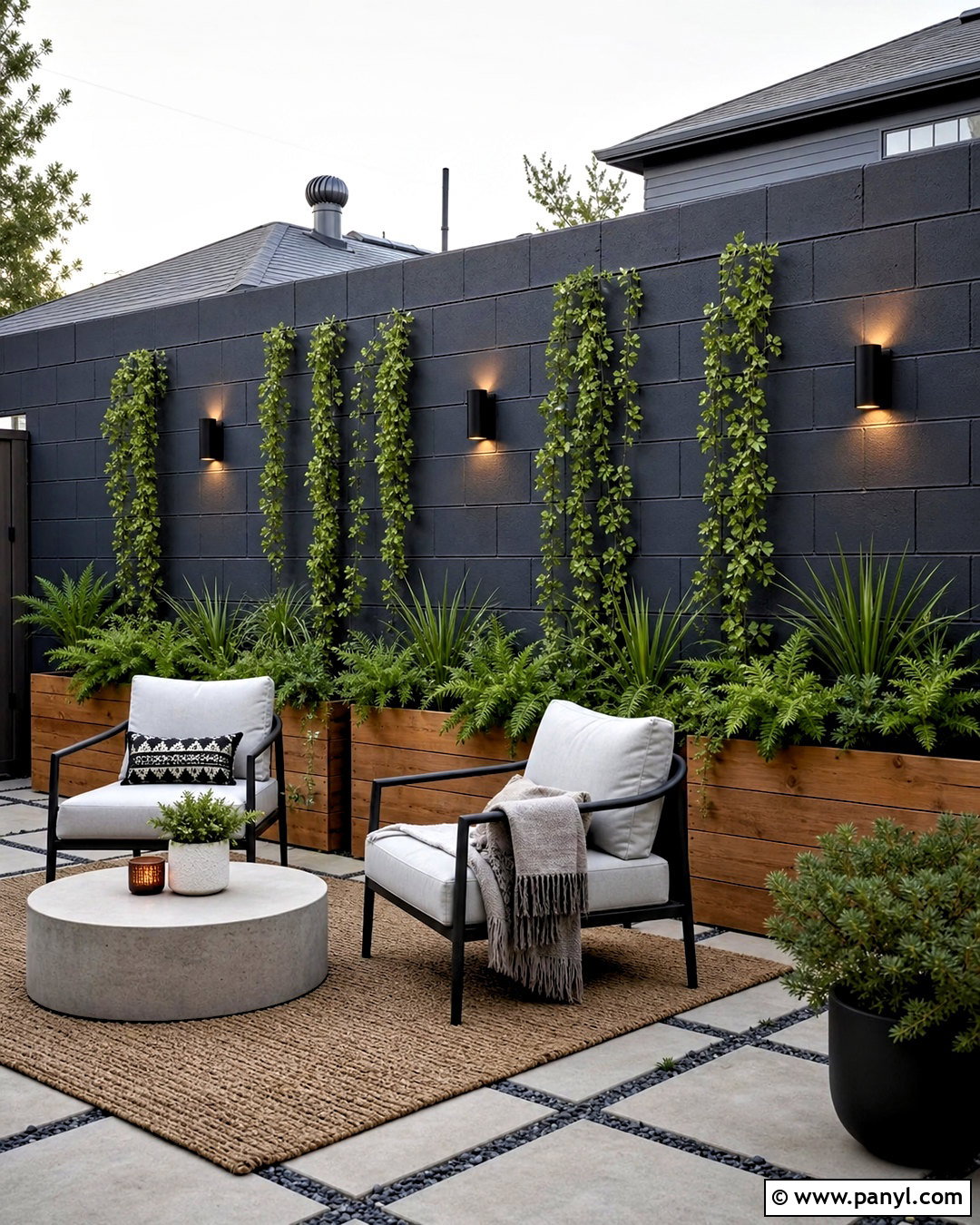
An existing cinder block wall can become a polished feature with masonry preparation, exterior paint, and thoughtful landscaping. Paint the blocks deep charcoal to create contrast with green foliage and light patio furniture. In front, arrange a compact conversation area using pale gray chairs, a round concrete table, and a textured outdoor rug. Break up the dark surface with evenly spaced cedar planter boxes containing ferns, trailing vines, and compact grasses. Warm wall-mounted lights prevent the charcoal color from feeling flat after sunset. Continue the palette with concrete pavers, black gravel joints, and one natural wood bench. Before painting, repair cracks and confirm that the surface is clean and suitable for the chosen coating. This affordable update makes a basic boundary feel deliberate and visually connected to the yard.
5. Red Brick Garden Wall
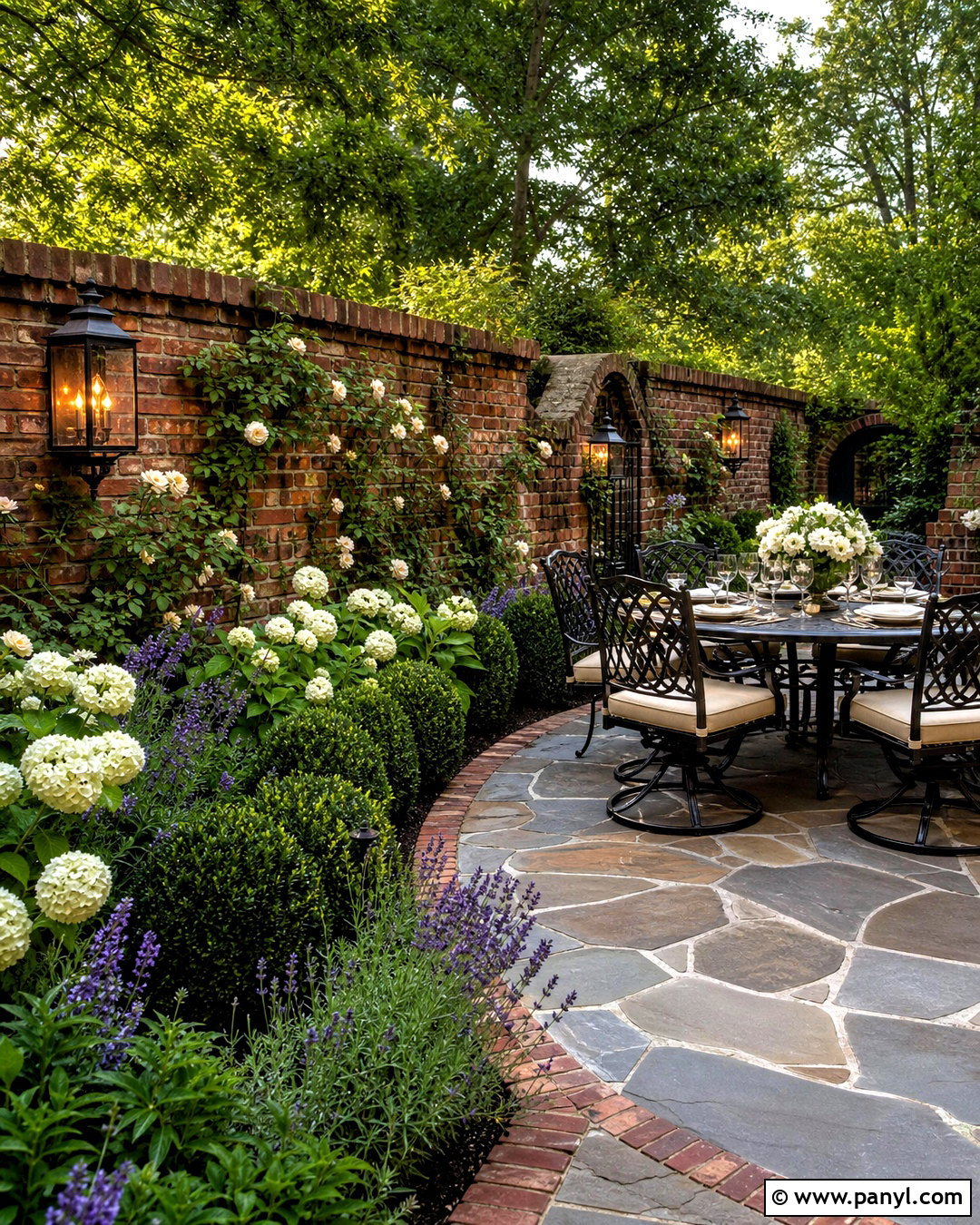
A traditional red brick wall creates warmth, character, and an established garden atmosphere. Pair weathered red and brown brick with a curved bluestone patio rather than using rigid straight edges everywhere. Position a black metal dining set near the wall and soften the seating with ivory cushions. Deep planting beds should contain boxwood, white hydrangeas, salvia, and climbing roses for a layered cottage look. Train the climbing plants on discreet black supports instead of allowing them to attach wherever they choose. Antique-style wall lanterns reinforce the classic appearance and illuminate the table. Repeat the brick in a low garden border or a simple pathway for continuity. The finished space should look welcoming rather than formal, with balanced plant heights, comfortable circulation, and enough open wall to display the brickwork.
6. Stacked Stone Retaining Wall
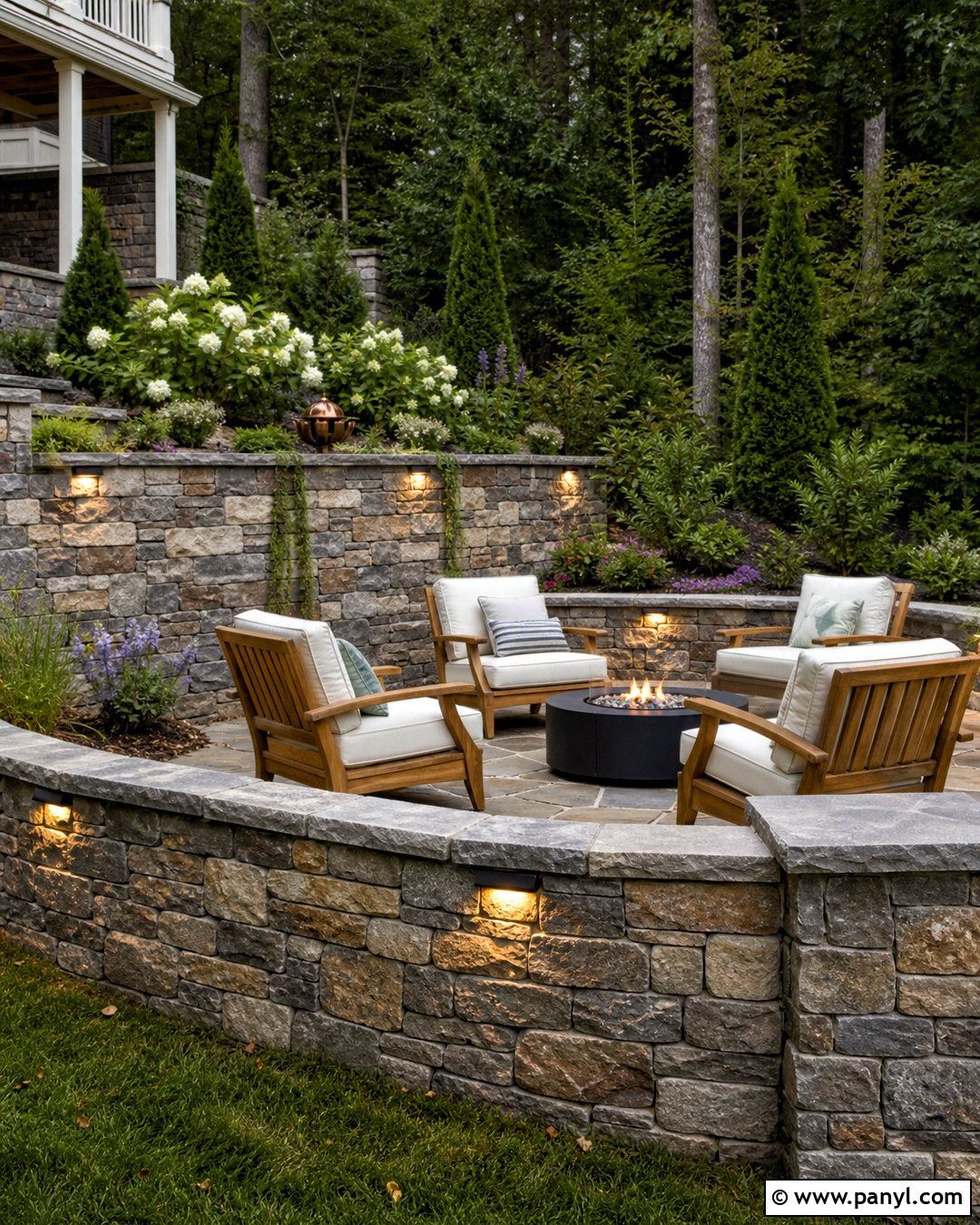
Natural stacked stone is an attractive way to connect a retaining wall with a wooded or rustic landscape. Choose locally compatible stone in warm gray, tan, and muted brown tones, then repeat those colors in a flagstone patio below. A low section of the wall can extend outward to form casual seating topped with smooth stone caps. Add deep planting pockets above the structure with evergreen shrubs, flowering perennials, and plants that trail gently over the edges. Furnish the patio with teak lounge chairs, cream cushions, and a black metal fire table placed at a safe distance. Small integrated wall lights can highlight the texture without dominating it. Because retaining walls manage soil pressure and drainage, taller structures should be properly engineered and built for site conditions. ()
7. Gabion Backyard Wall
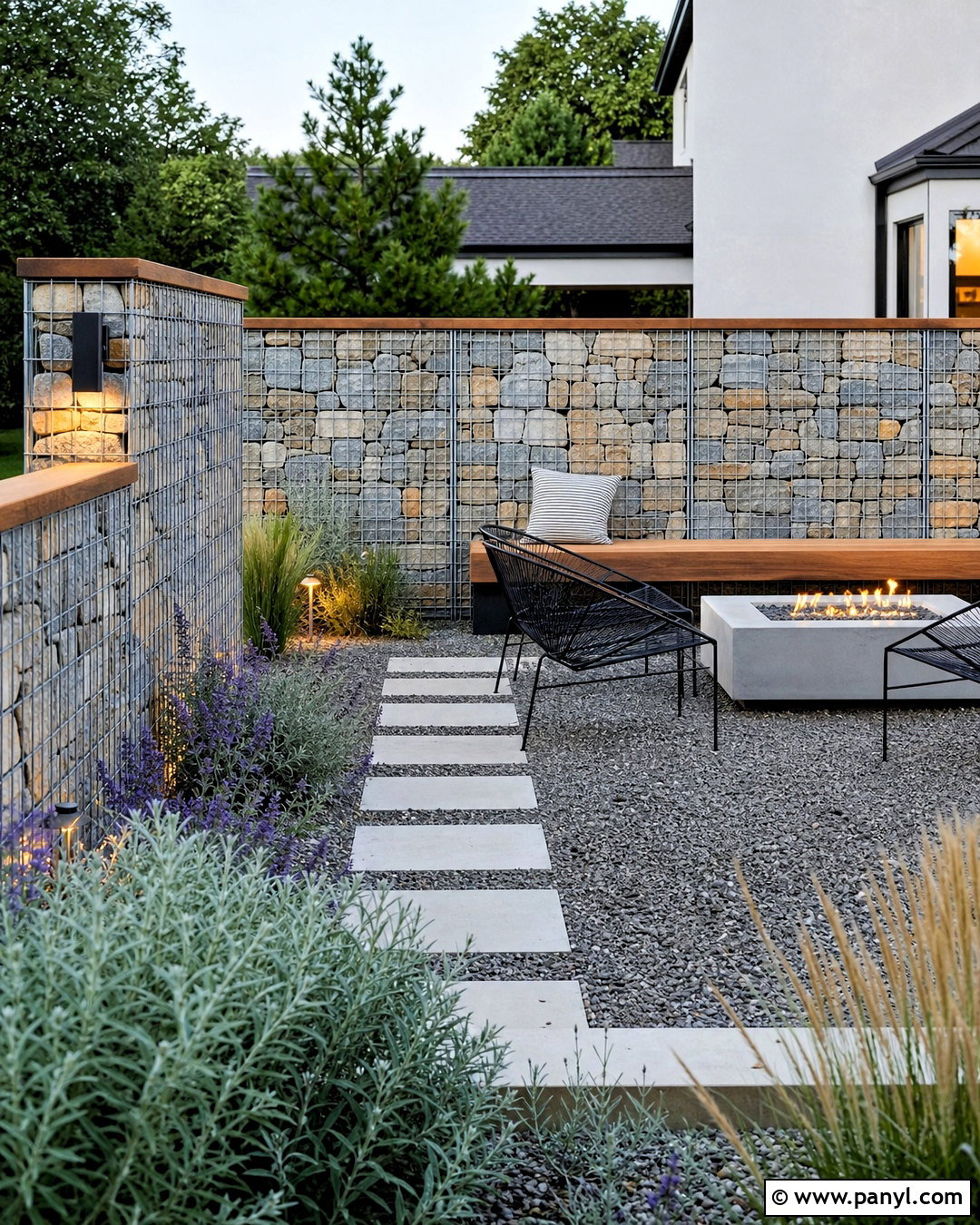
Gabion walls bring texture and strong visual structure to a contemporary backyard. Fill galvanized steel cages with medium-sized stones in mixed gray, cream, and sandy beige tones. Use the wall behind a rectangular gravel patio with large concrete stepping pads. Furnish the space with streamlined black chairs, a light wood bench, and a square concrete fire feature. To soften the industrial materials, plant airy grasses, lavender, and silvery foliage along both ends of the wall. A smooth timber cap can turn a lower gabion section into additional seating. Keep the surrounding palette restrained so the stone-filled cages remain the focal point. Proper cage specifications, stable foundations, drainage, and local construction requirements are important, especially when the wall retains soil rather than serving only as a decorative screen. ()
8. Board Formed Concrete Wall
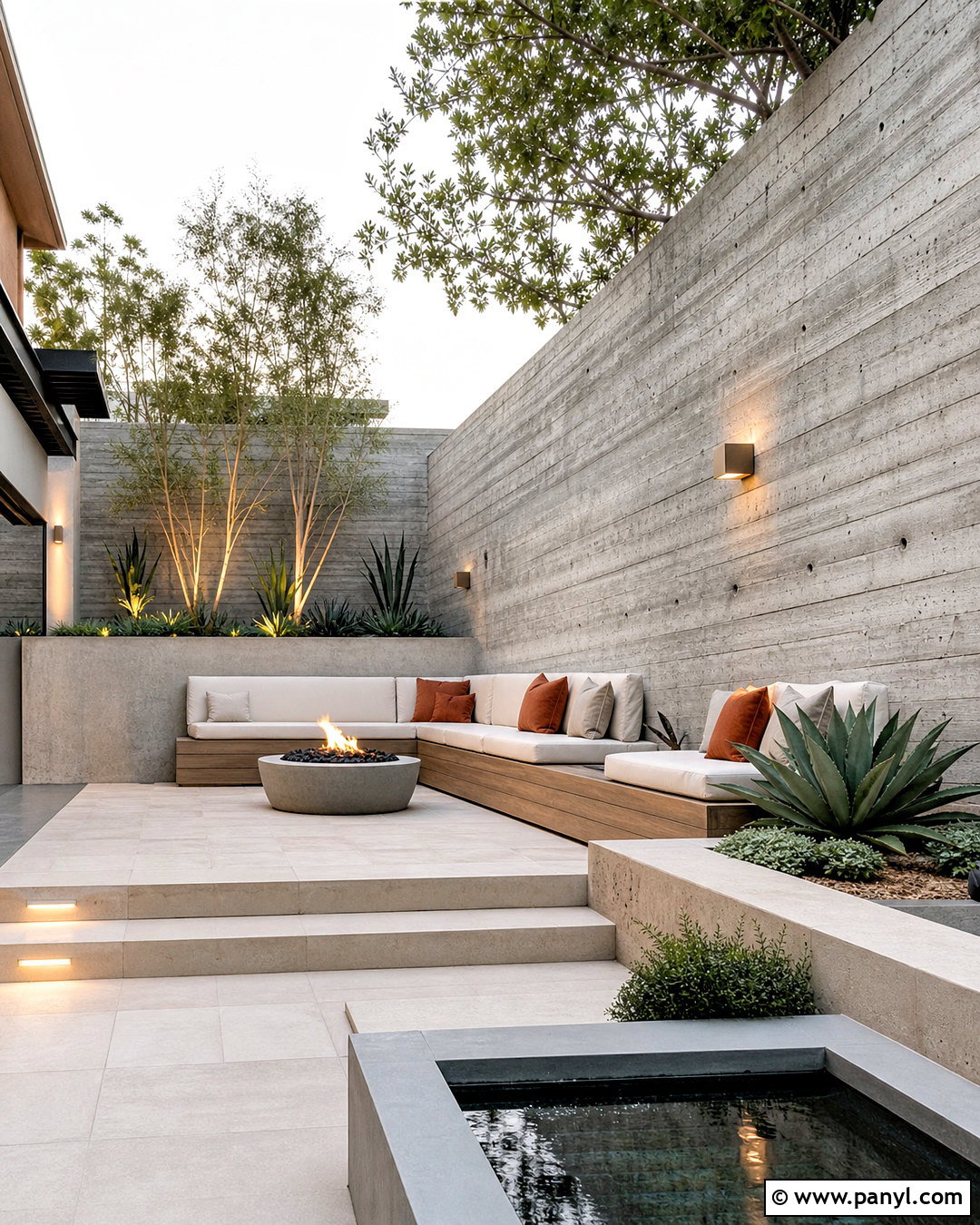
Board-formed concrete offers a strong modern look while retaining the subtle grain pattern left by timber molds. Use it as the backdrop for a simple sunken lounge with large-format limestone pavers and a low-profile teak sectional. Cream cushions and rust-colored accent pillows warm the gray concrete. Add narrow planting beds containing bamboo-like ornamental grasses, compact trees, and sculptural succulents. Integrated step lights and recessed wall lighting emphasize the horizontal texture after dark. A shallow reflecting basin at one end can introduce movement without requiring a large fountain. Keep decorative accessories minimal because the concrete pattern already provides visual detail. This design is most successful when the wall, patio levels, drainage, and seating area are planned together rather than treated as separate additions. ()
9. Breeze Block Privacy Wall
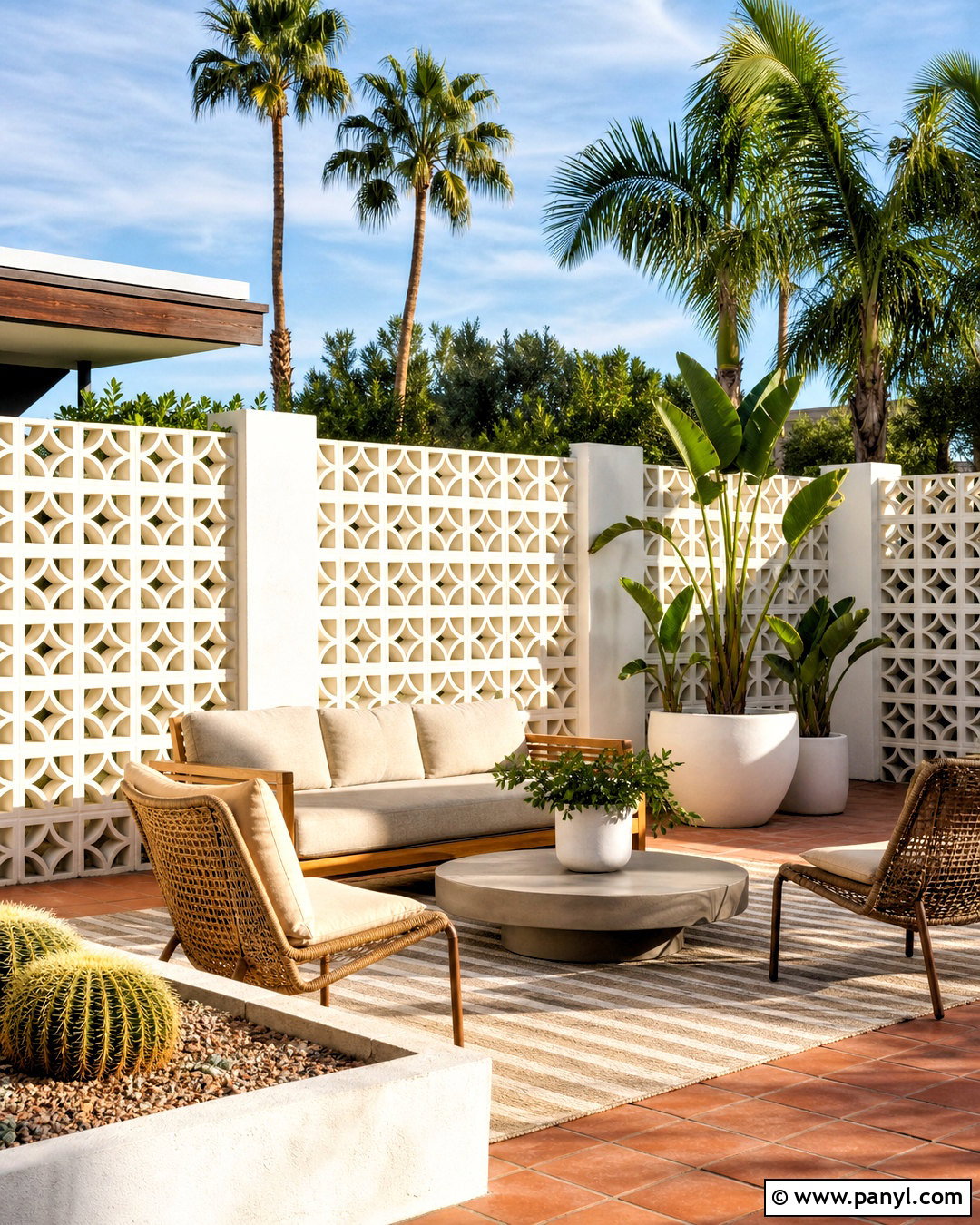
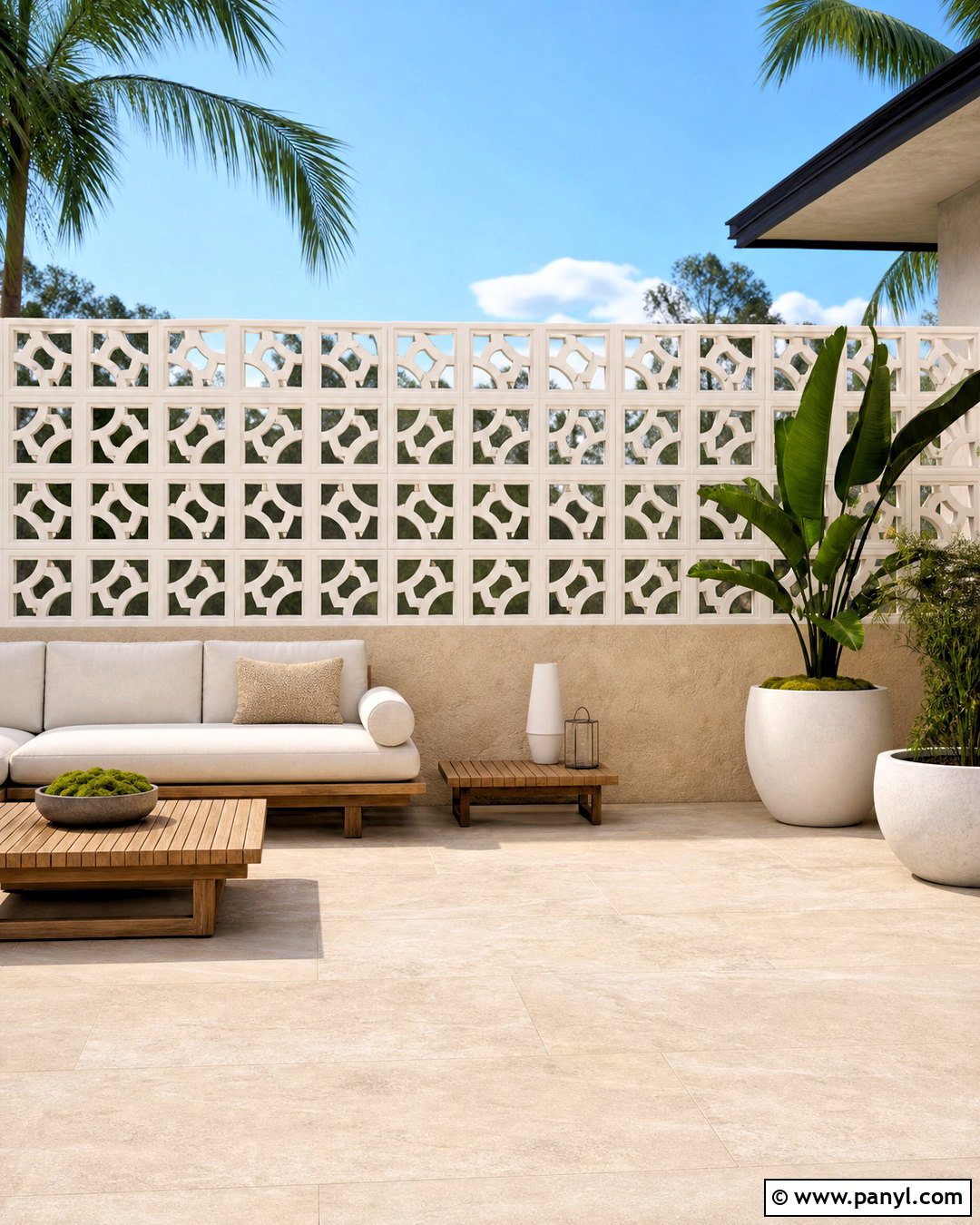
A breeze block wall creates partial privacy while allowing light and air to move through the backyard. Select off-white geometric blocks and frame them with smooth white stucco columns. Place the screen beside a terracotta or pale limestone patio furnished with a low teak sofa, woven lounge chairs, and sandy beige cushions. Behind the openings, greenery will create changing patterns throughout the day. Use large planters filled with bird of paradise, palms, or climate-appropriate leafy plants to strengthen the relaxed midcentury look. A round coffee table and a striped outdoor rug can soften the wall’s repeated geometry. Keep surrounding fences and structures simple so the block pattern does not compete with other details. Low landscape lighting near the base will illuminate the openings and make the entire screen feel lighter in the evening.
10. Living Plant Wall
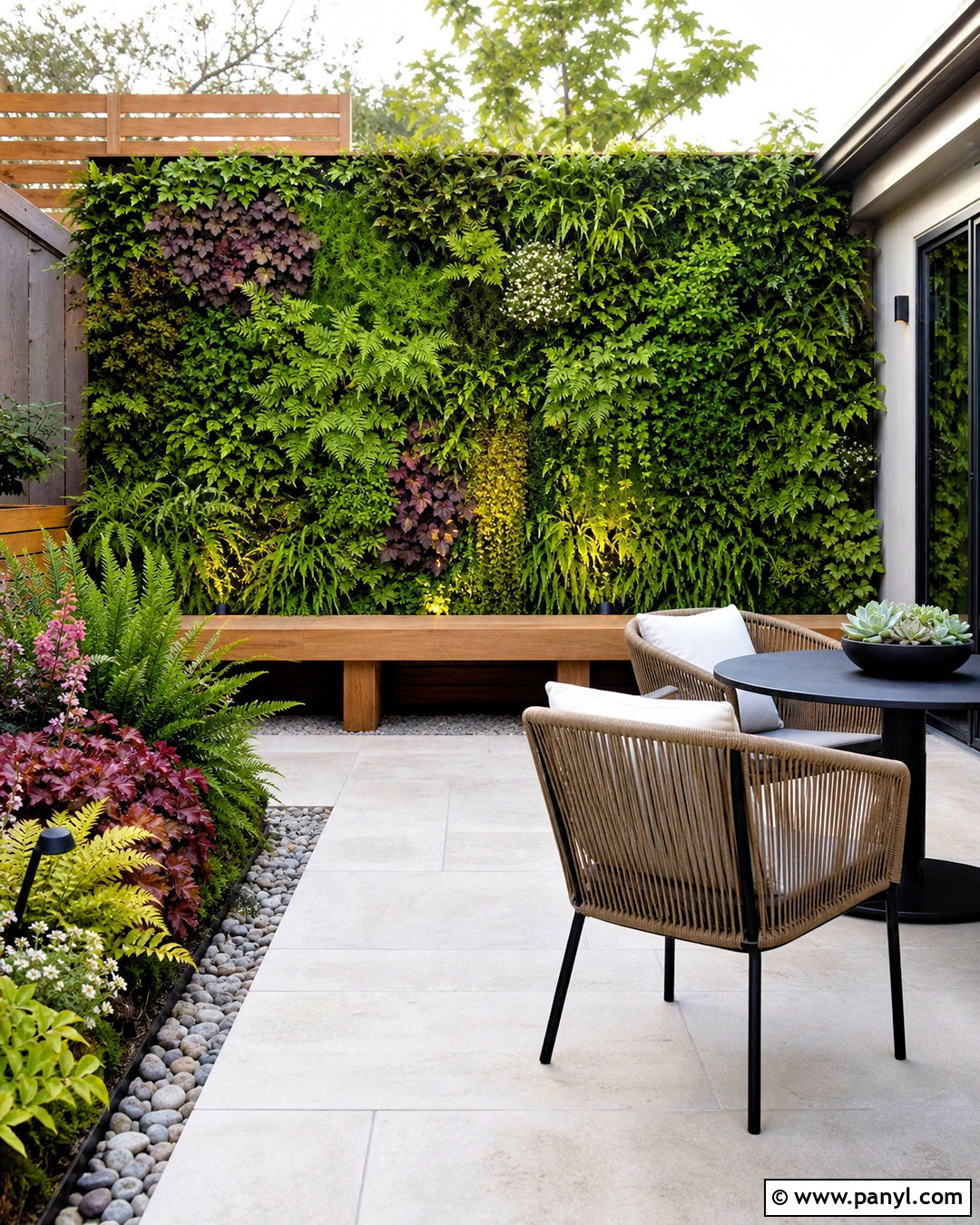
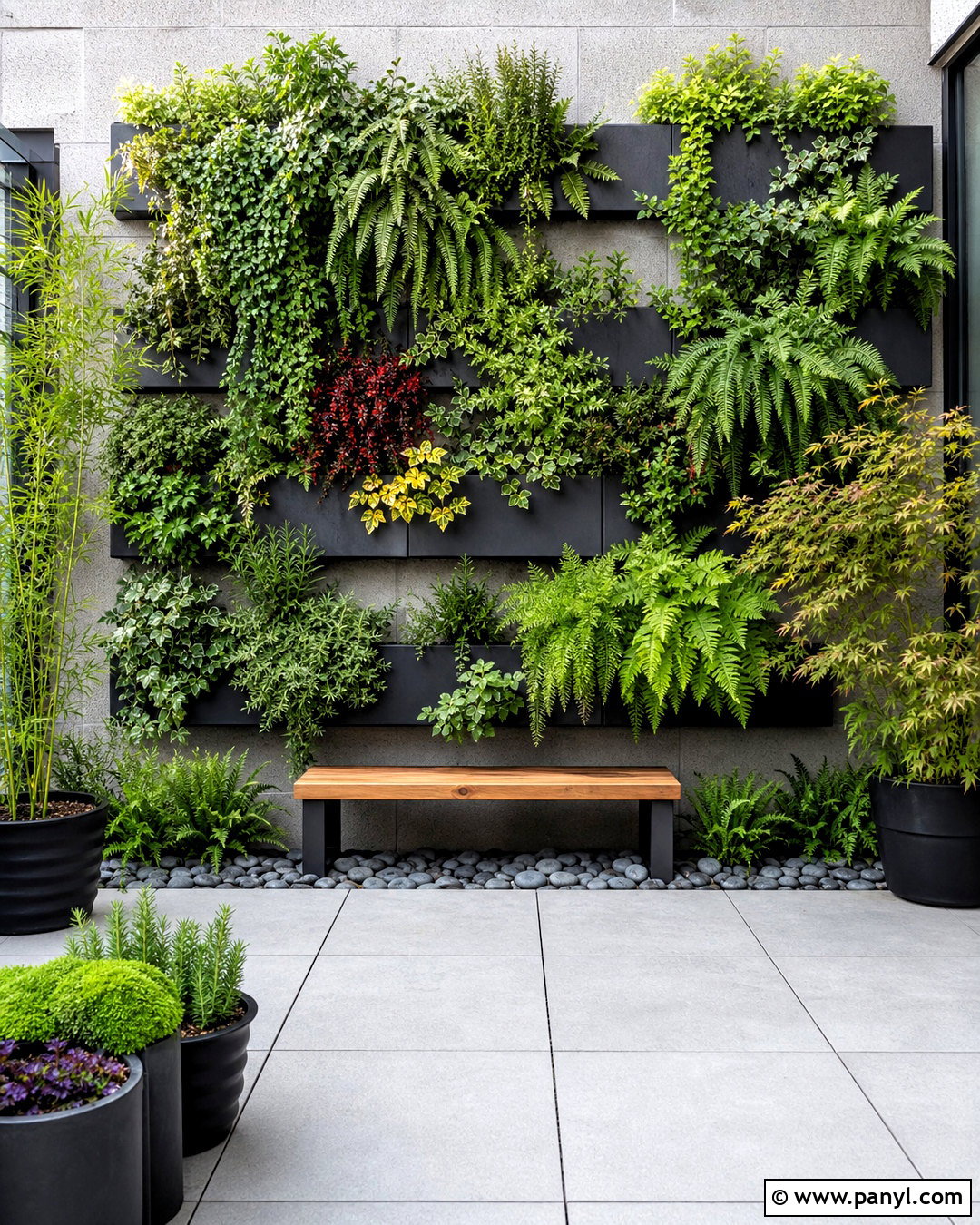
A living wall turns a plain backyard boundary into a lush focal point and can be especially useful where floor space is limited. Install a purpose-built modular planting system against a moisture-resistant support surface. Arrange plants in broad, natural-looking sweeps rather than tiny complicated patterns. Combine ferns, heuchera, sedges, trailing plants, and climate-suitable evergreen varieties. Position a small pale stone patio in front with a natural wood bench, two woven chairs, and a round black table. Large pavers surrounded by gravel keep the ground simple and allow the greenery to stand out. Include reliable irrigation, drainage, and easy maintenance access from the beginning. Repeat several plants in nearby ground-level beds so the vertical garden feels connected to the rest of the landscape rather than appearing like an isolated decoration.
11. Climbing Vine Trellis Wall
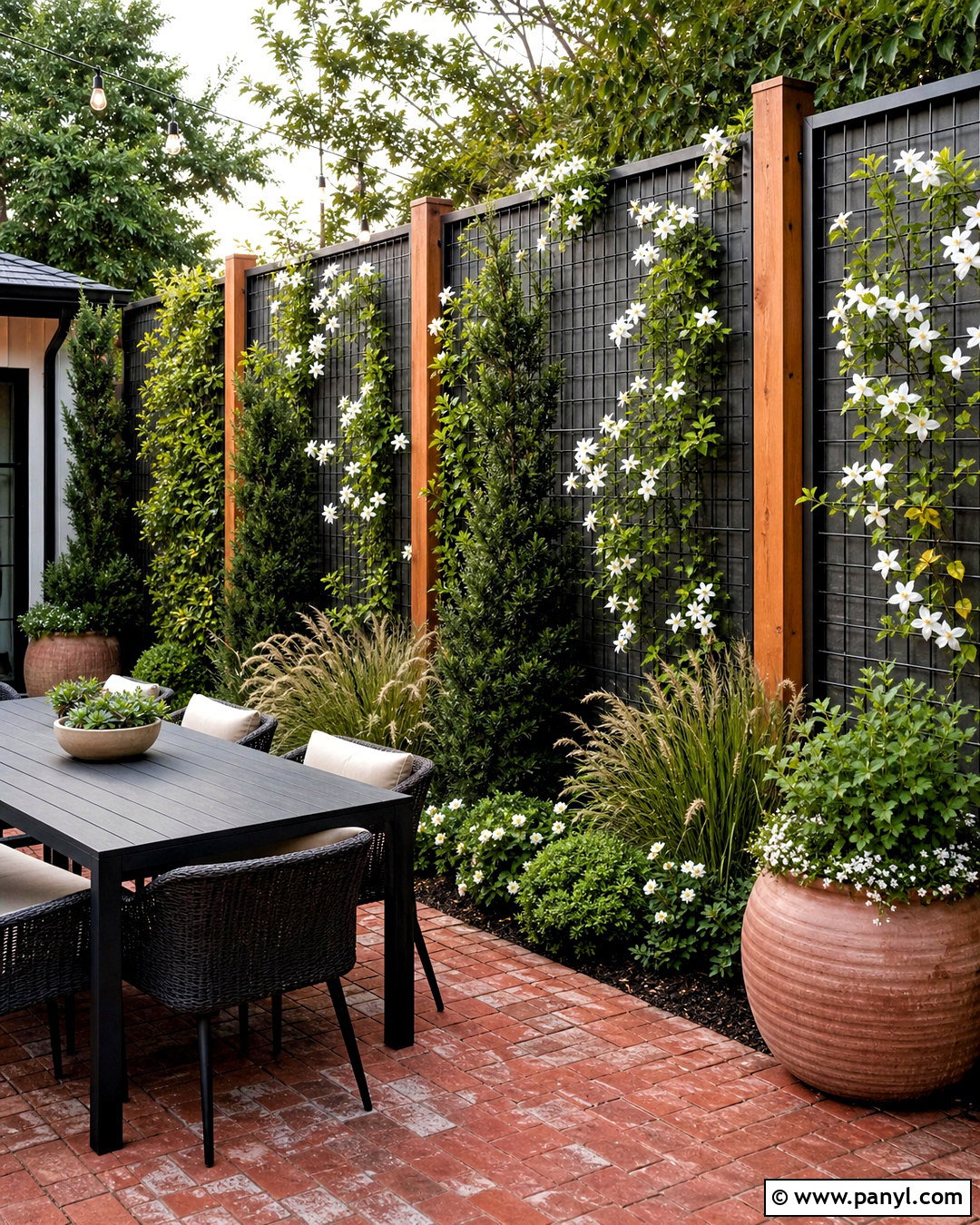
A trellis wall brings greenery and privacy to a backyard without the weight of solid construction. Mount black metal grid panels between warm cedar posts, leaving enough space for plant growth and maintenance. Train climate-appropriate flowering vines across the grids and add a narrow bed of evergreen shrubs and soft grasses below. In front, create a brick or stone patio with a black dining table and natural woven chairs. Cream seat cushions, clay planters, and simple overhead string lighting make the setting comfortable and relaxed. Avoid mixing too many climbing varieties, since one or two repeated plants will create a more cohesive result. The trellis, posts, patio, and furniture should share a limited color palette. Over time, the greenery will soften the structure while the visible grid maintains an organized architectural framework. ()
12. Backyard Water Feature Wall
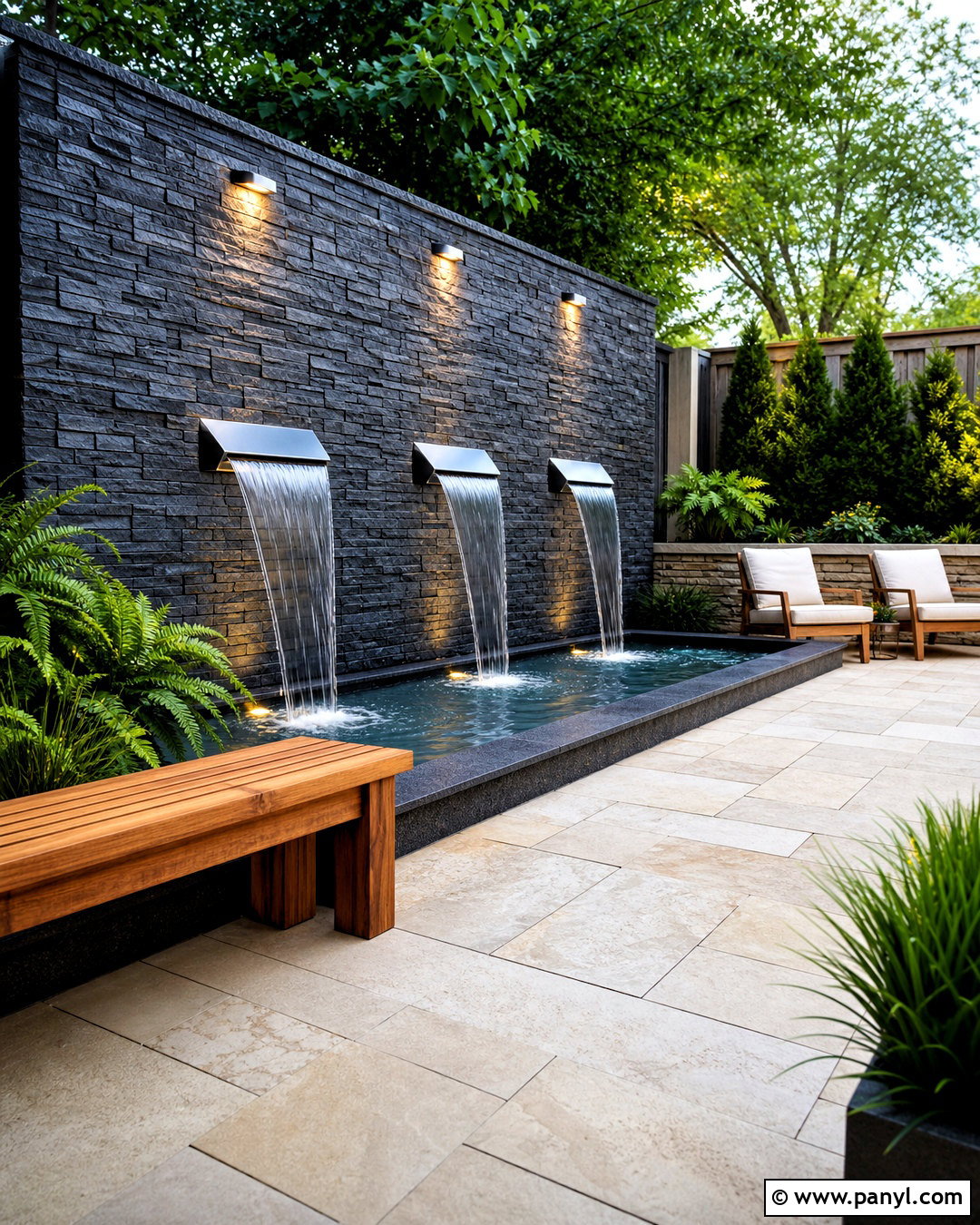
The gentle sound of moving water can transform a backyard wall into a calming destination. Use a dark charcoal stone wall with three narrow stainless steel scuppers pouring into a long rectangular basin. Surround the feature with pale limestone pavers to create crisp contrast and reflect additional light. Place a teak bench and two cream lounge chairs nearby, angled toward the water rather than lined up against it. Ferns, ornamental grasses, and compact evergreen shrubs soften both ends of the structure. Conceal the pump equipment while keeping it accessible for cleaning and seasonal care. Underwater lighting can brighten the basin, while discreet wall lights reveal the stone texture. Keep the rest of the backyard simple so the water remains the focal point and the space continues to feel peaceful rather than overly decorated.
13. Outdoor Fireplace Wall
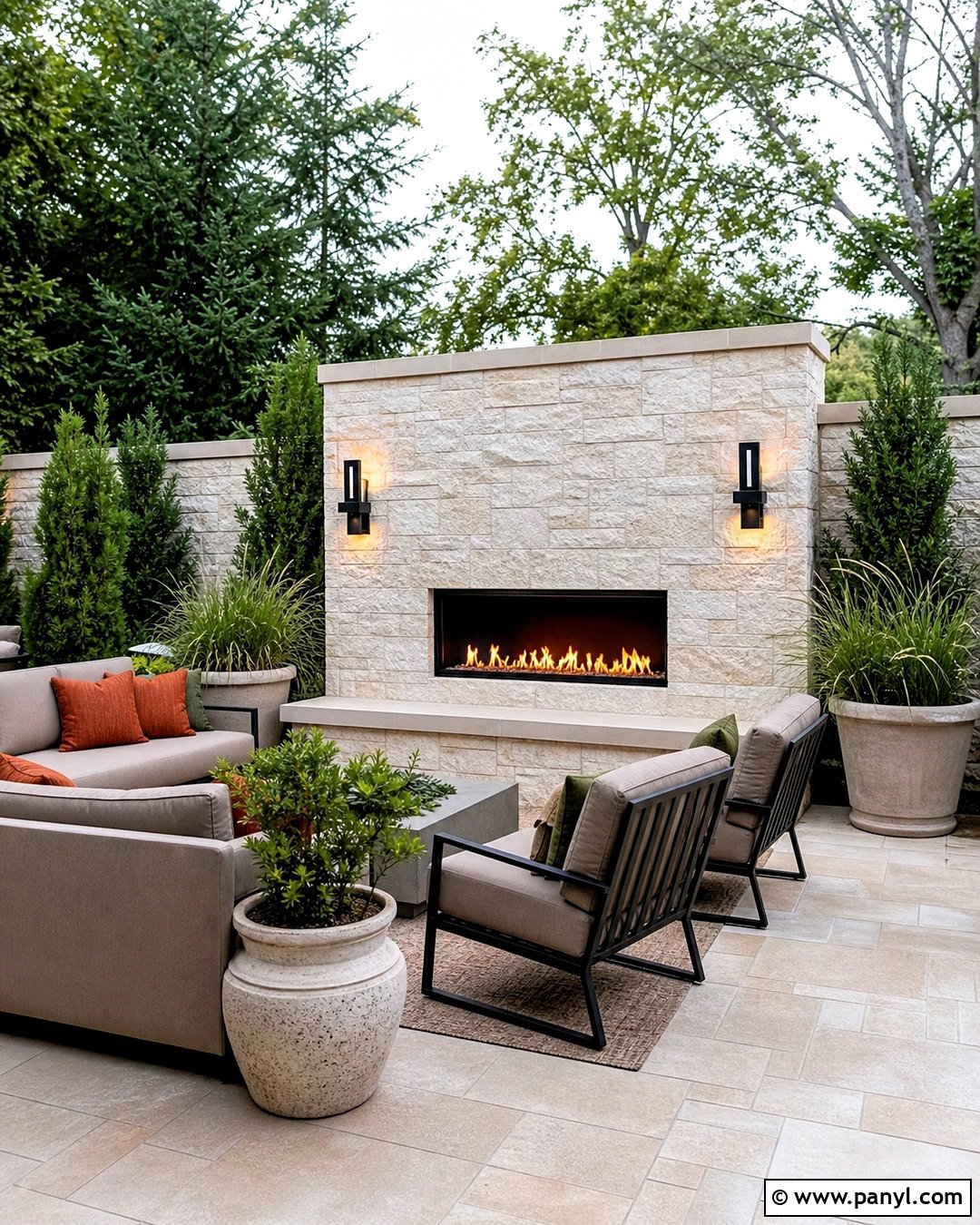
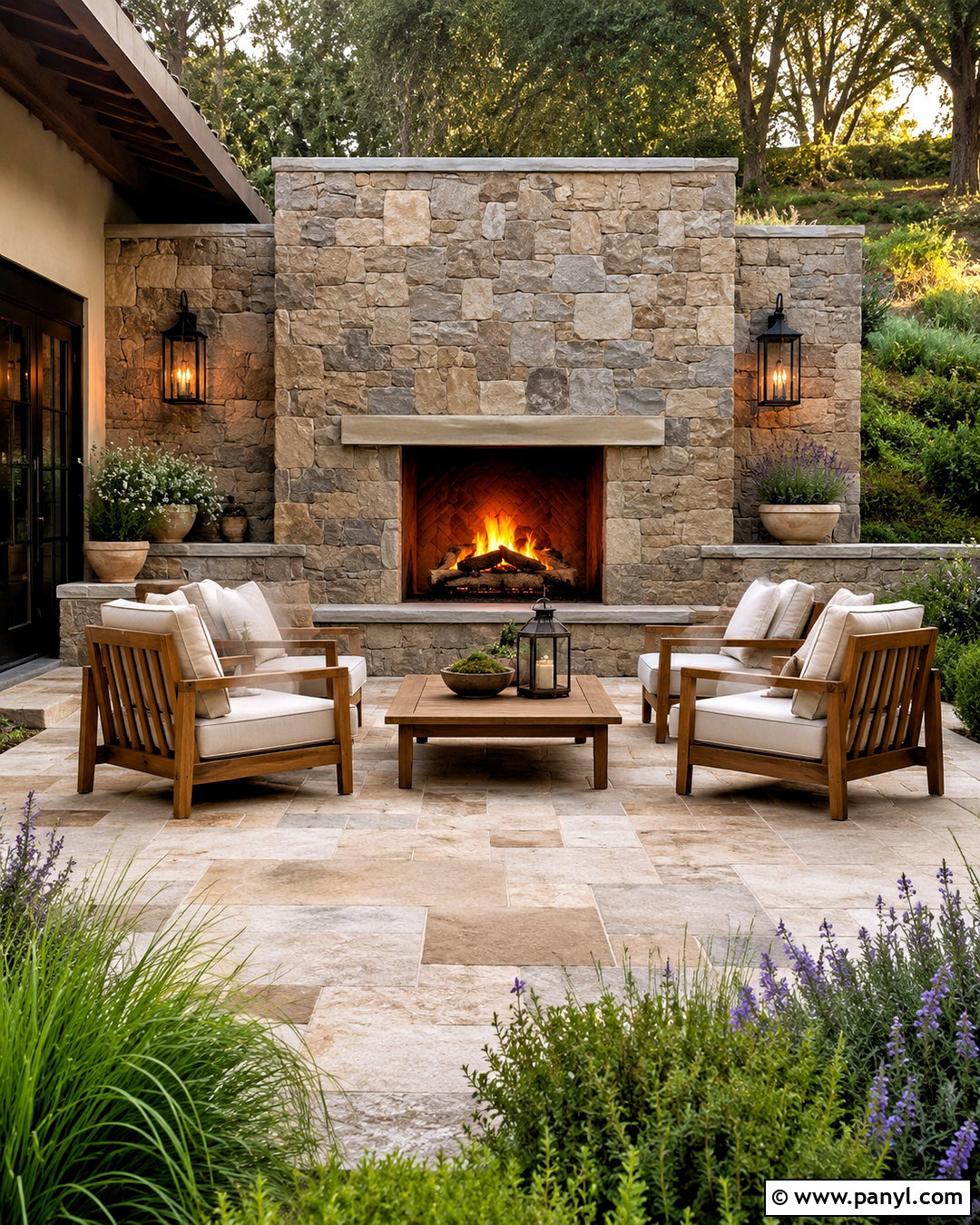
An outdoor fireplace wall creates a clear gathering zone and gives the backyard a strong visual center. Choose warm limestone veneer for the full wall, with a wide rectangular firebox and a simple concrete hearth. Arrange a deep outdoor sectional and two lounge chairs around a large coffee table, leaving comfortable circulation around the seating. Use taupe upholstery with rust, olive, and cream accent pillows to echo the stone. Matching limestone planters filled with grasses and evergreen shrubs can frame the fireplace without crowding it. Add wall sconces on each side for balanced lighting. Continue the floor with large tan pavers and gravel joints. A fireplace must be designed for outdoor use and positioned according to applicable safety requirements, clearances, fuel considerations, and local regulations.
14. Outdoor Kitchen Wall
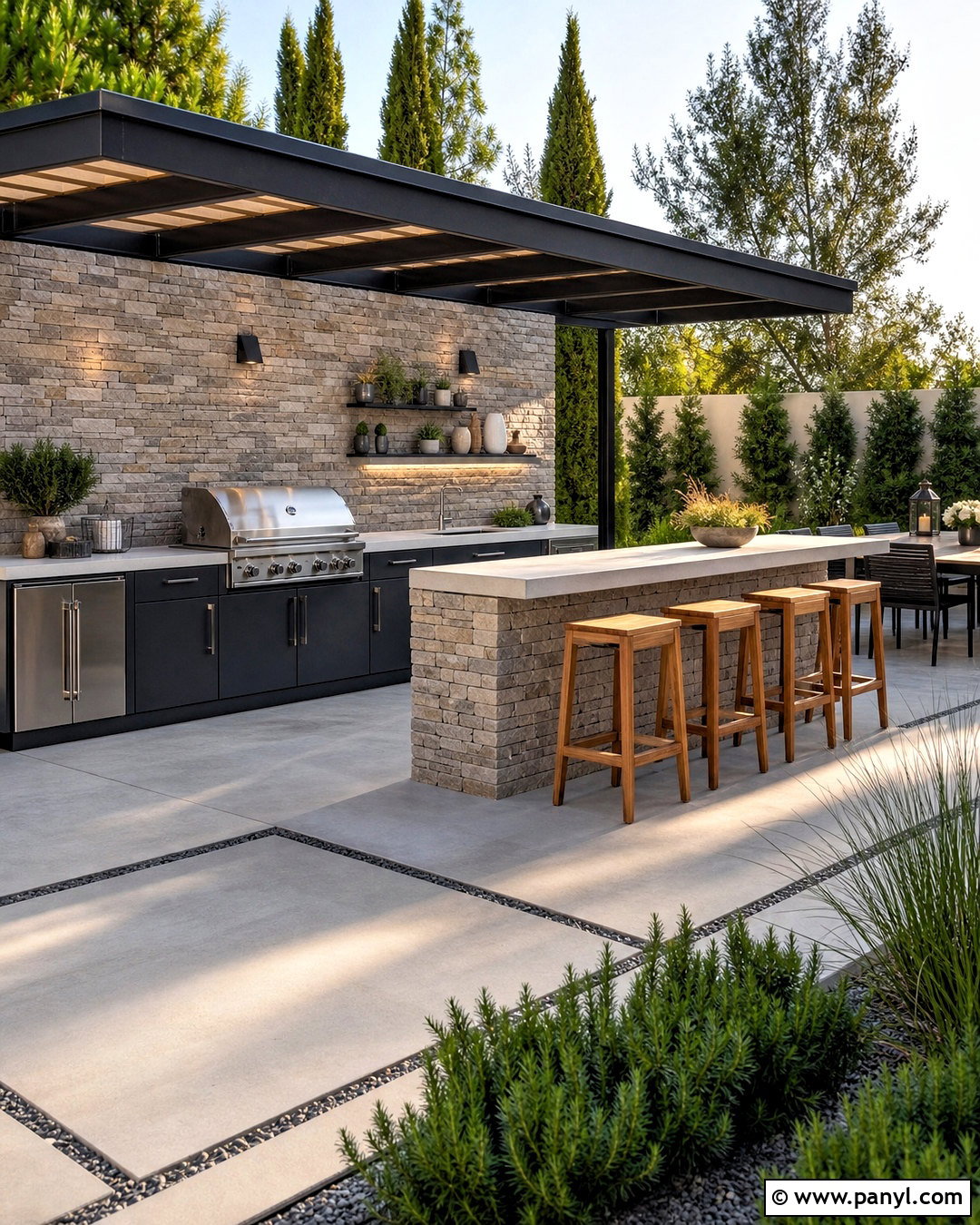
A hardworking backyard wall can support an entire outdoor cooking and dining setup. Cover the structure with light gray natural stone and install matte black cabinets, a stainless steel grill, a compact refrigerator, and a pale quartzite-style counter. Include a raised serving ledge where guests can sit on teak stools without entering the cooking zone. A slim pergola overhead defines the kitchen and supports bright task lighting. Place a rectangular dining table nearby on large concrete pavers, then frame the area with rosemary, ornamental grasses, and small evergreen trees. Keep storage doors and appliances visually aligned for a tidy appearance. Plan utilities, ventilation, drainage, weather protection, and food preparation surfaces before selecting decorative finishes. Retaining and boundary walls can also help define outdoor kitchen zones in larger landscapes. ()
15. Built-In Bench Wall
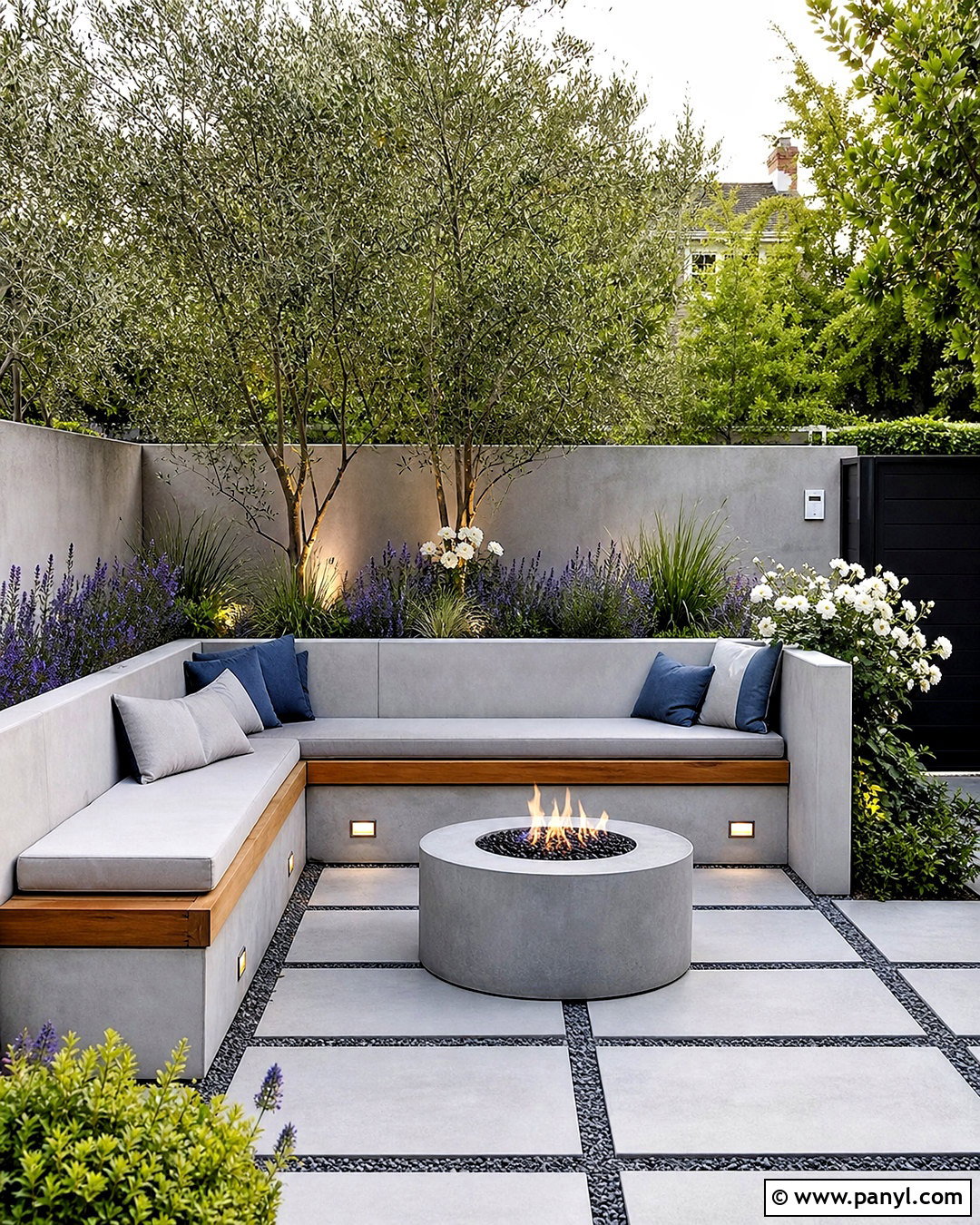
When backyard space is limited, a low wall with built-in seating can replace bulky freestanding furniture. Create an L-shaped smooth concrete wall around one corner of a small patio, then add weather-resistant wood seat slats and thick neutral cushions. Use soft gray concrete, warm teak, and muted blue textiles for a calm contemporary palette. Place a round fire table or coffee table in the center, leaving an open side for easy access. Behind the bench, install a raised bed filled with ornamental grasses, lavender, and compact flowering shrubs. Small recessed lights under the seat create a subtle floating effect and improve visibility. Finish the patio with rectangular concrete pavers and gravel joints. The seating dimensions should be planned carefully so the bench feels comfortable once the back and seat cushions are installed.
16. Raised Planter Wall
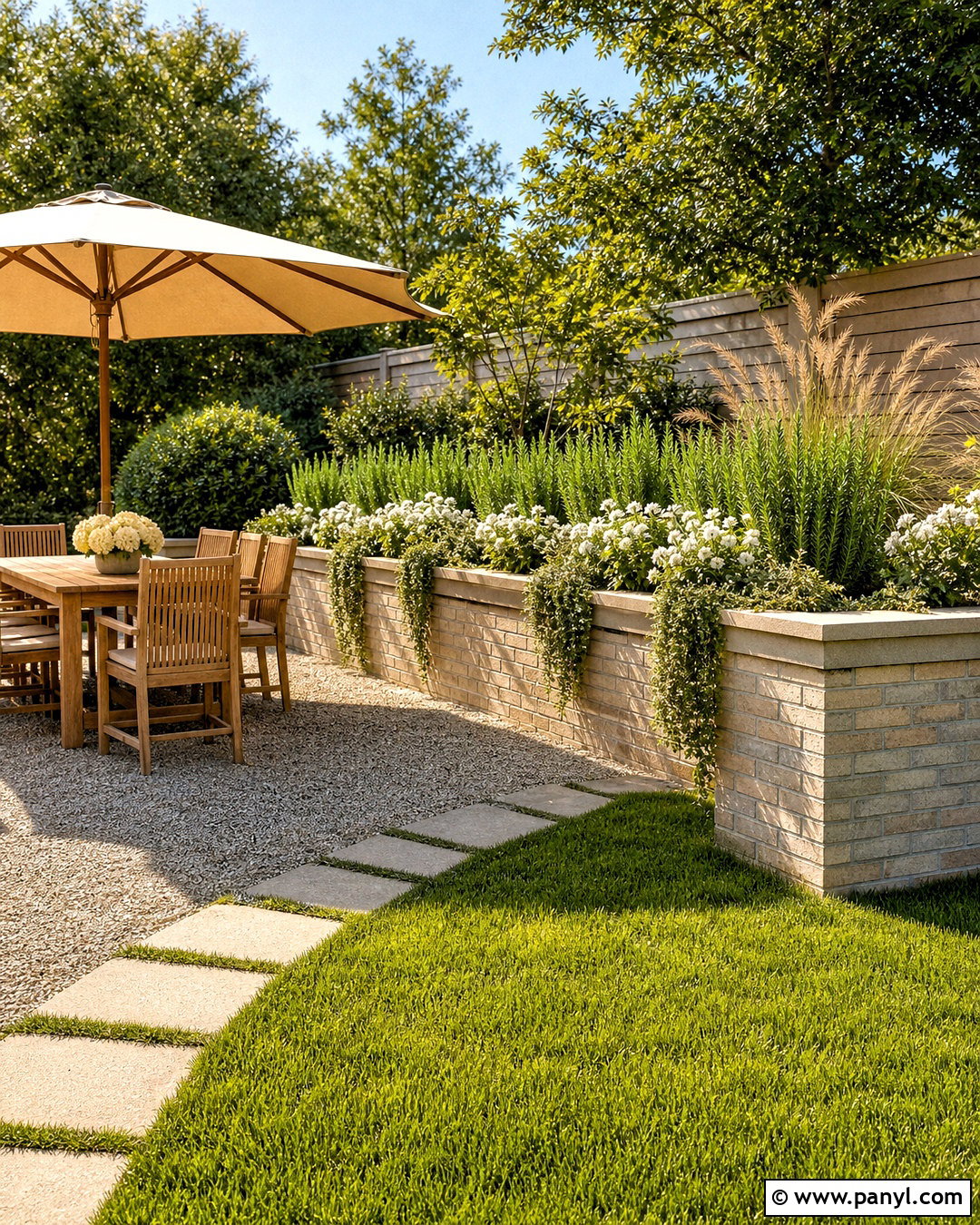
A raised planter wall gives a flat backyard greater depth while organizing flowers, herbs, and shrubs into a clear composition. Build a long, waist-high planter from warm buff brick or textured concrete block. Divide the planting into repeated groups of rosemary, ornamental grass, white flowers, and trailing greenery. A wide smooth cap can provide casual seating along part of the wall. In front, create a simple gravel patio with a compact teak dining set and a large market umbrella in warm beige. Add square stepping stones to connect the patio with the lawn and back door. Choose plants according to sunlight, mature size, irrigation needs, and local growing conditions. With coordinated materials and repeated planting, the wall becomes part of the complete entertaining space instead of looking like a separate gardening project.
17. Tiered Retaining Wall
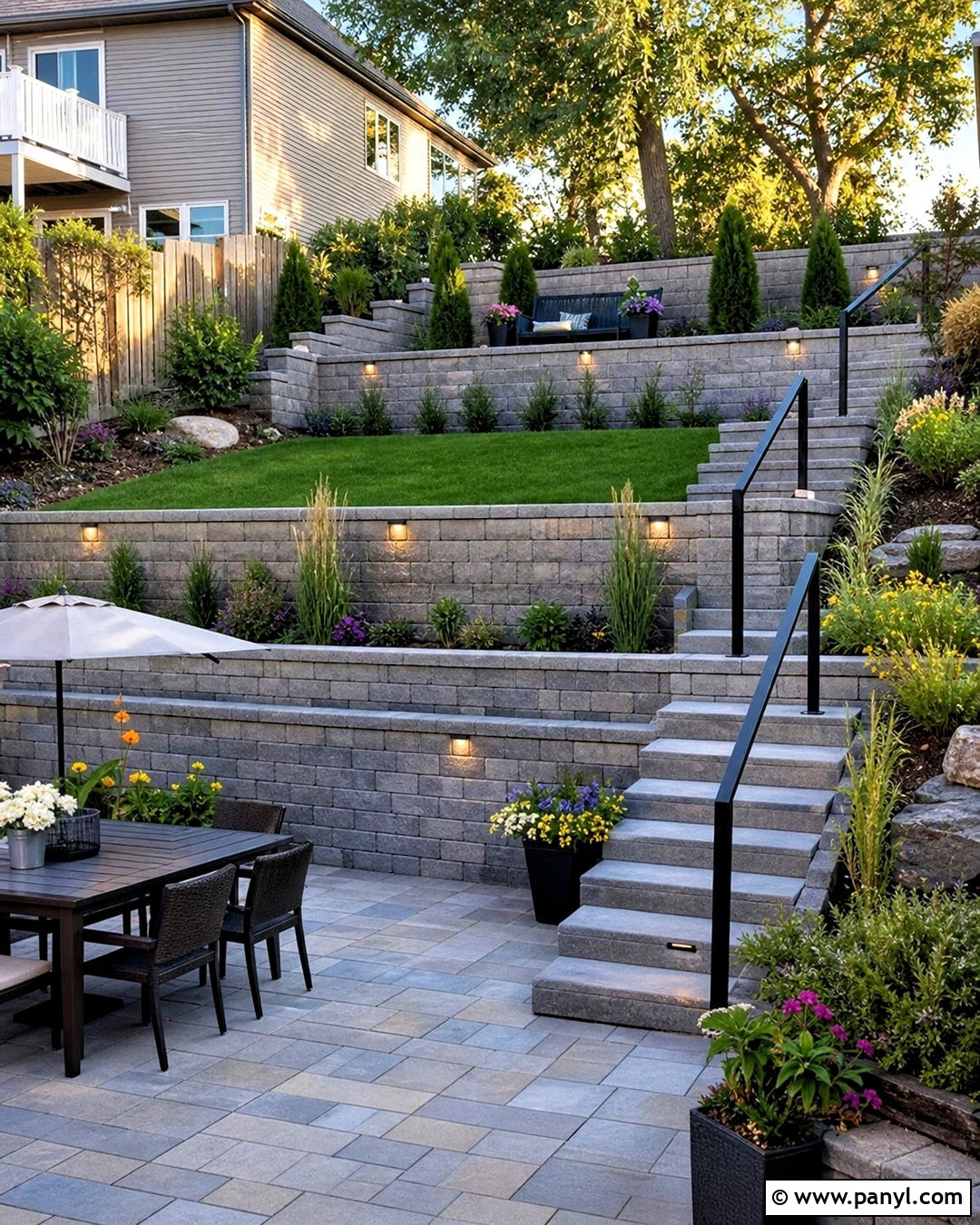
A steep yard becomes easier to use when one tall retaining wall is replaced with several carefully planned terraces. Create three low walls from warm gray concrete blocks, with wide planting beds between each level. Place a dining patio on the lowest terrace, a lawn or play area in the middle, and a quiet garden bench at the top. Connect the levels with broad stone steps and a simple black handrail where needed. Plant compact shrubs, grasses, and cascading perennials in repeated groups to unify the tiers. Integrated step and wall lighting improves the finished appearance. The block color should coordinate with the home’s foundation and patio paving. Terracing can create practical landscape zones, but drainage, soil conditions, wall height, loads, permits, and engineering requirements should be reviewed before construction begins. ()
18. Curved Garden Wall
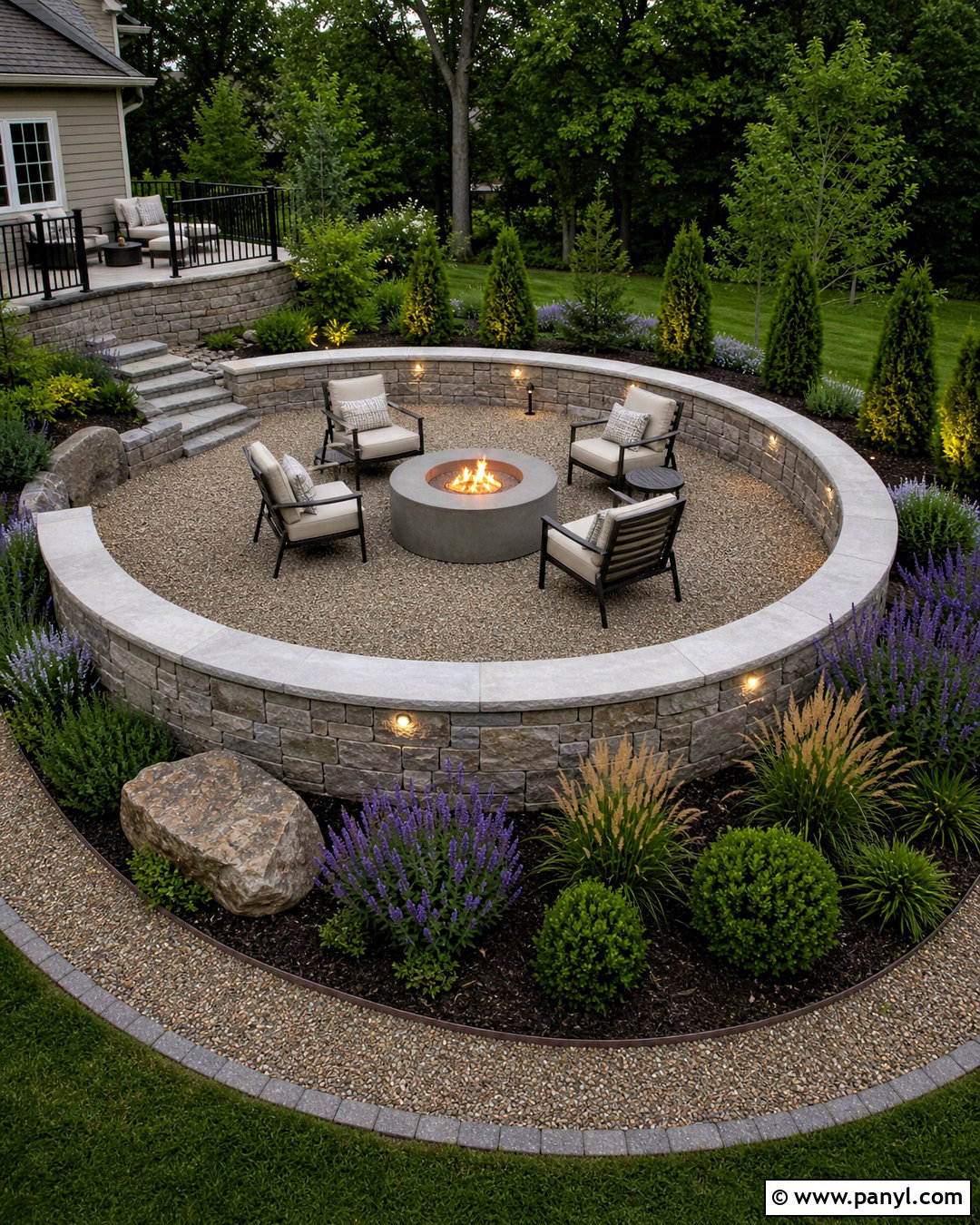
A curved wall introduces a softer shape into a backyard filled with straight property lines and rectangular patios. Build a low wall from tumbled limestone or warm gray masonry and use it to wrap around a circular seating area. Set a round gas fire feature in the center, surrounded by curved bench seating and several movable lounge chairs. Behind the wall, plant drifts of lavender, salvia, grasses, and compact evergreens that follow the same arc. Continue the curves with a gravel path leading toward the main patio or garden gate. Smooth capstones provide comfortable casual seating and a neat finished edge. Keep the wall low enough to preserve views across the yard unless privacy is the main goal. Repeating circles and gentle arcs makes the entire design feel intentional, welcoming, and easy to navigate.
19. Corrugated Metal Accent Wall
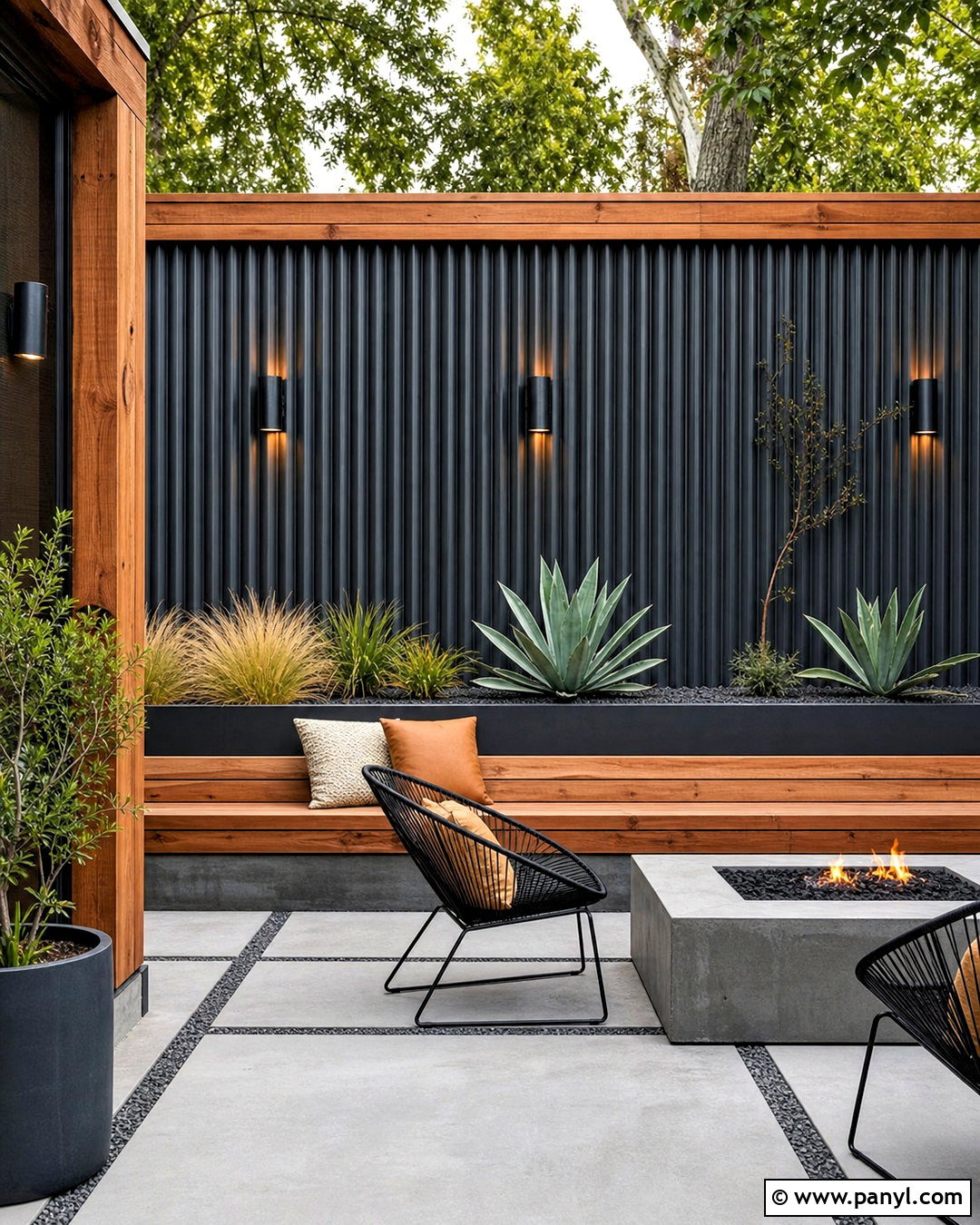
Corrugated metal can create a durable-looking accent wall when it is balanced with warm materials and generous planting. Use matte charcoal metal panels framed by natural cedar posts. Position the wall behind a compact patio made from pale concrete pavers, then add a cedar bench, black lounge chairs, and tan cushions. A narrow raised planter at the base should contain grasses, agave, or other plants suited to the local climate. Wall-mounted planters can be included sparingly, but leaving some metal visible preserves the clean graphic effect. Repeat charcoal finishes on light fixtures and furniture frames for consistency. Check that panel edges are safely finished and that exterior-grade fasteners are used. This combination works well for modern, industrial, and drought-conscious landscapes without making an average residential backyard feel overly harsh.
20. Backyard Mural Wall
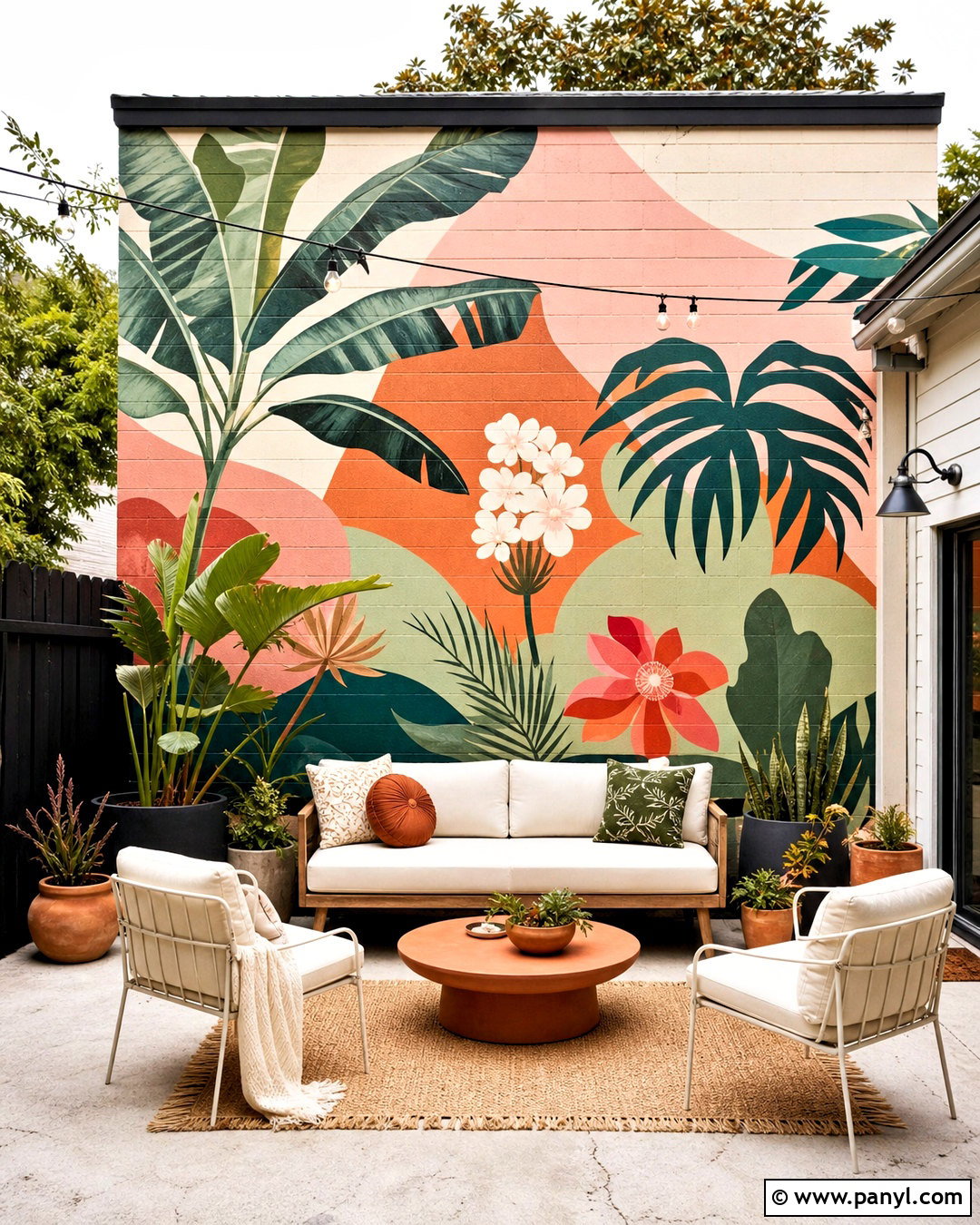
A painted mural can turn a plain backyard wall into a colorful centerpiece, especially in a compact courtyard. Start with a smooth exterior surface and choose a simple botanical design featuring warm sage green, deep teal, muted coral, cream, and terracotta. Keep the shapes large so the mural reads clearly from the seating area. Furnish the patio with a natural wood loveseat, two cream chairs, and a small terracotta coffee table. Add clay pots filled with leafy plants that repeat the mural’s colors and forms. Pale concrete flooring prevents the finished scene from becoming too busy. Use subtle overhead lighting and simple black planters rather than adding more patterns. Exterior preparation, durable coatings, and an appropriate protective finish will help preserve the wall while maintaining its bright, welcoming appearance.
Conclusion:
The most effective **20 backyard wall design ideas** treat the wall as part of a complete outdoor environment. Materials, plants, furniture, lighting, and paving should work together instead of competing for attention. Wood slats and trellises create lighter privacy, while stone, brick, and concrete provide a more permanent architectural presence. Living walls, planters, murals, and water features can transform an unattractive surface into a memorable focal point. Before building, consider your yard’s scale, drainage, sunlight, climate, and maintenance needs. Structural or retaining walls may also require professional planning and local approval. With a practical layout and a coordinated material palette, your backyard wall can add comfort, beauty, privacy, and useful outdoor living space.

Related Ideas and Inspiration:
Leave a Reply