
Choosing the right nursery color is about more than finding a pretty shade. The best baby room paint ideas create a calm background for sleep, feeding, play, and everyday family moments. Paint should also work with the crib, flooring, window treatments, lighting, storage, and decorative theme. Current nursery looks range from warm nature-inspired neutrals to playful murals, two-tone walls, painted ceilings, and rich color-drenched rooms. () Before committing, sample each color on several walls and view it throughout the day. Natural and artificial light can dramatically change how a shade appears. The complete room designs below offer practical, stylish, and flexible inspiration through 20 baby room paint ideas.
1. Sage Green Baby Room
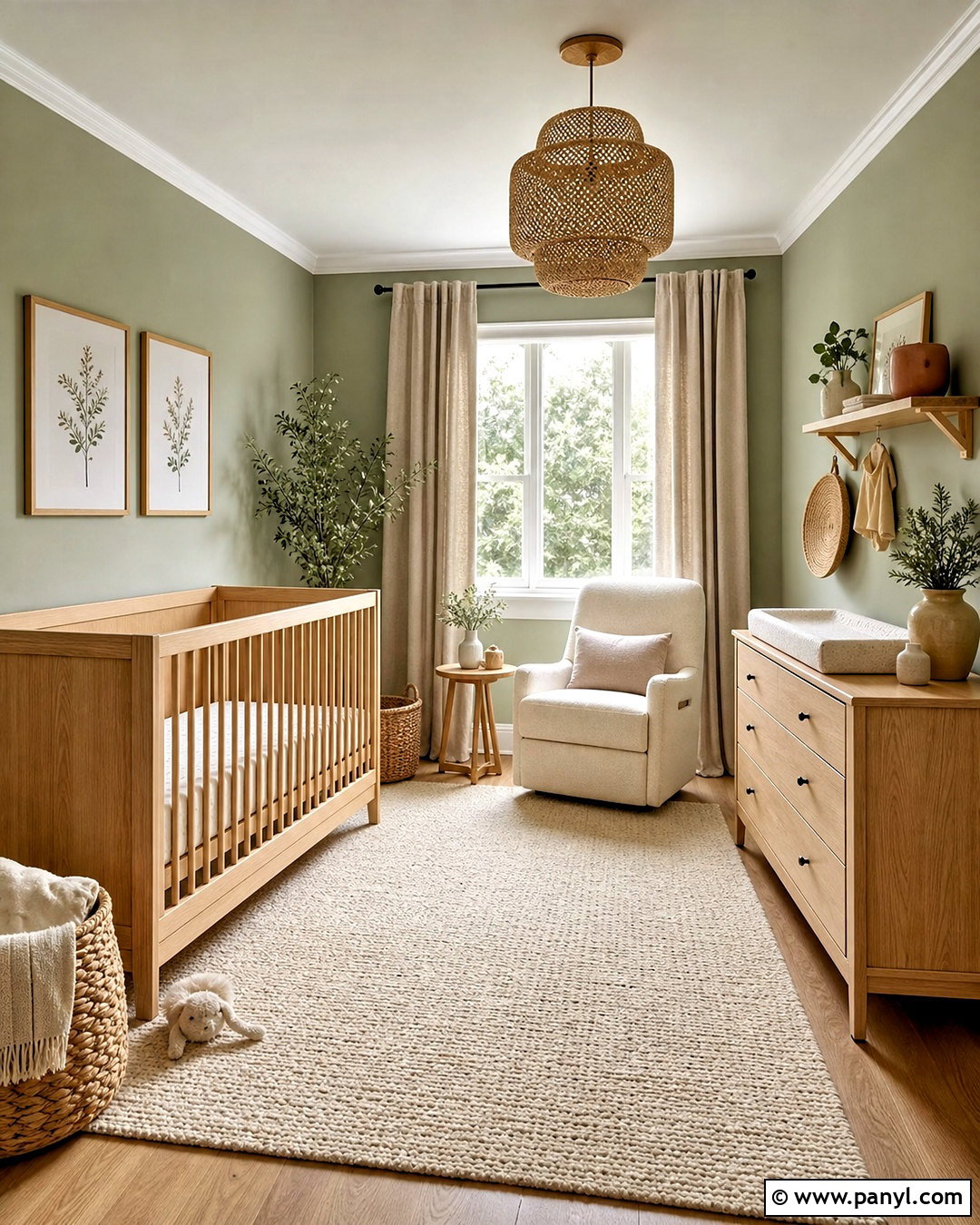
Soft sage green creates a peaceful baby room with a natural look that works for any gender. Paint all four walls in a muted sage, then use warm white across the ceiling, baseboards, doors, and window trim. A light oak crib and matching dresser bring warmth without making the room feel heavy. Add a cream boucle glider, an ivory washable rug, and oatmeal curtains for softness. Botanical prints, woven baskets, and a linen crib skirt continue the nature-inspired theme. Small accents in clay, mustard, or dusty blue keep the palette interesting. Choose simple wooden shelving and avoid crowding the walls. This complete scheme feels calm and modern while remaining flexible enough to transition into a toddler bedroom later.
2. Warm Beige Baby Room
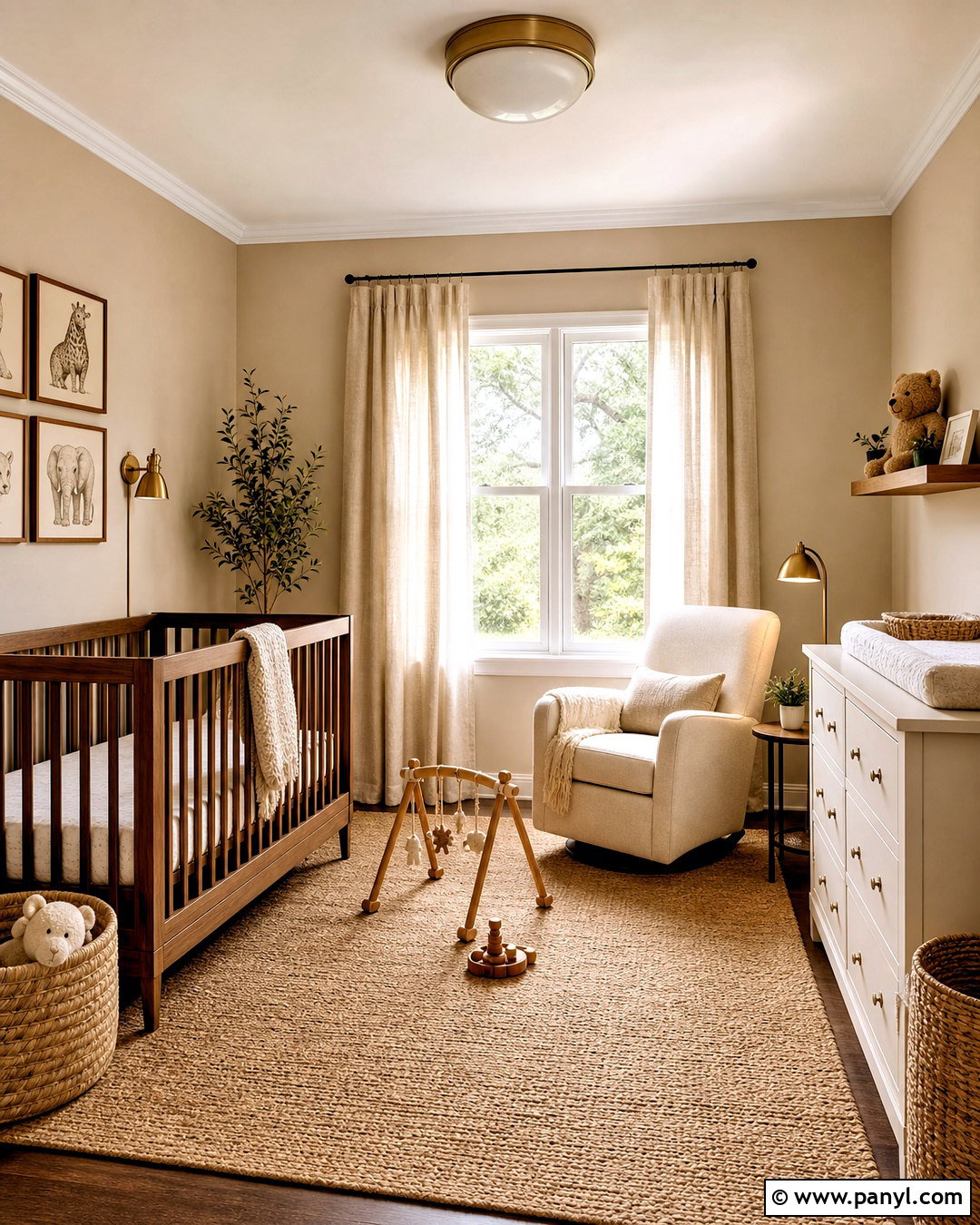
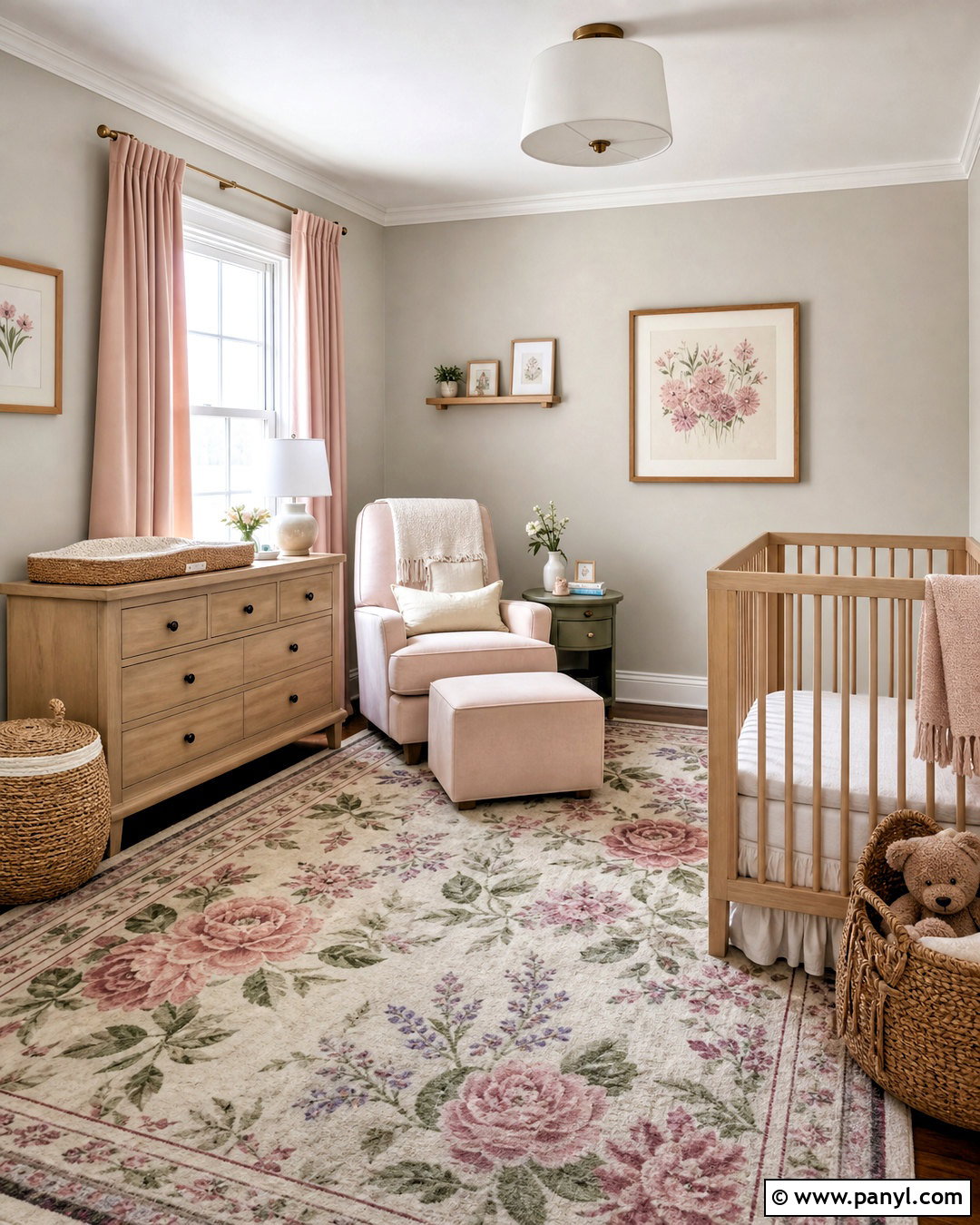
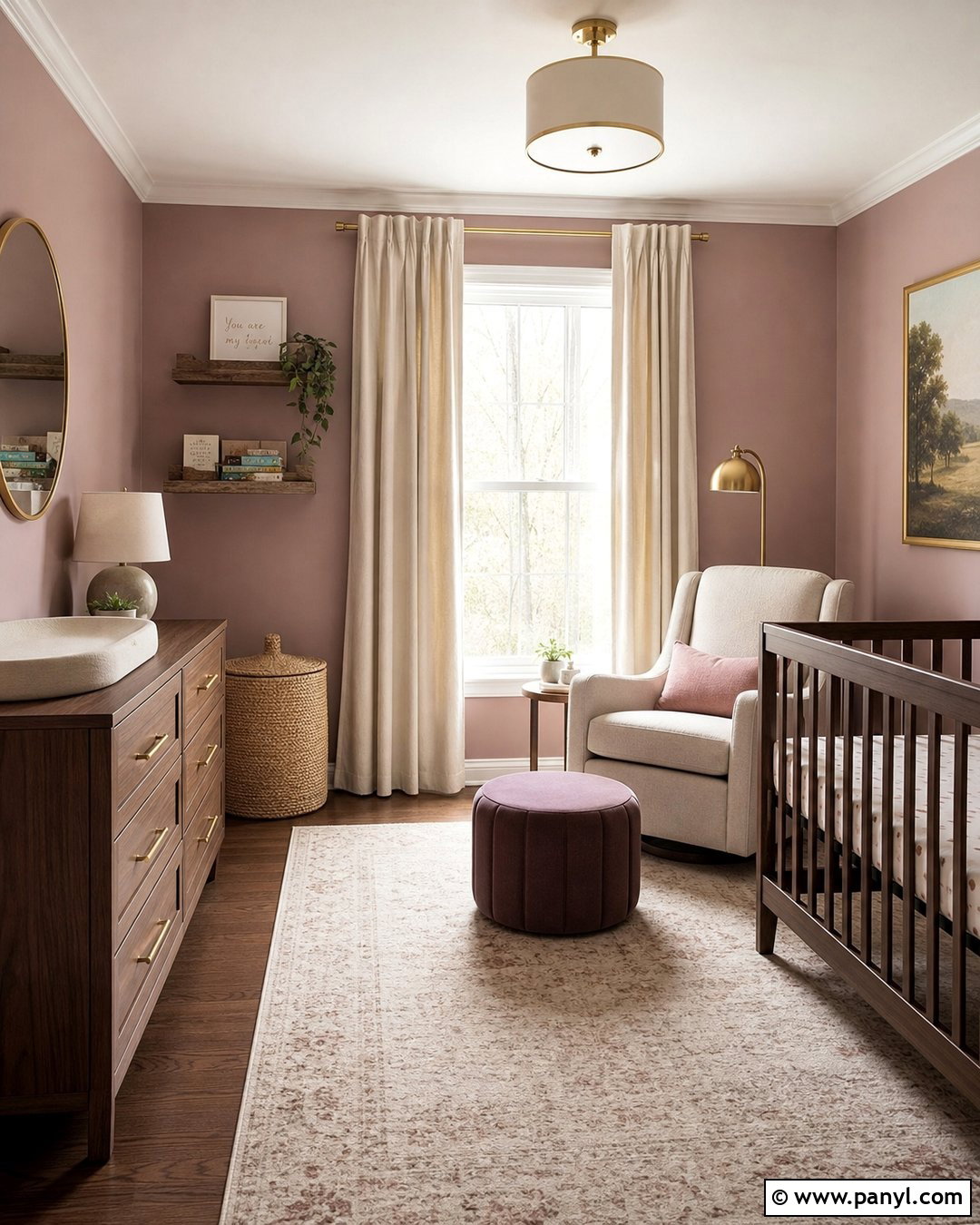
A warm beige baby room feels cozy, timeless, and easy to personalize. Select a creamy beige with gentle tan undertones rather than a flat or cool gray-beige. Carry it across every wall and pair it with soft white trim and a clean white ceiling. Use a medium-tone walnut crib to add contrast, then introduce a curved ivory glider and natural jute-blend rug. Linen curtains in warm white help filter daylight without disrupting the quiet palette. Decorate with framed animal sketches, wooden toys, and caramel-colored storage baskets. A small brass ceiling light adds a polished finish. Layer in muted terracotta, olive, or dusty blue through blankets and artwork so the finished room feels warm, dimensional, and welcoming rather than plain.
3. Dusty Blue Baby Room
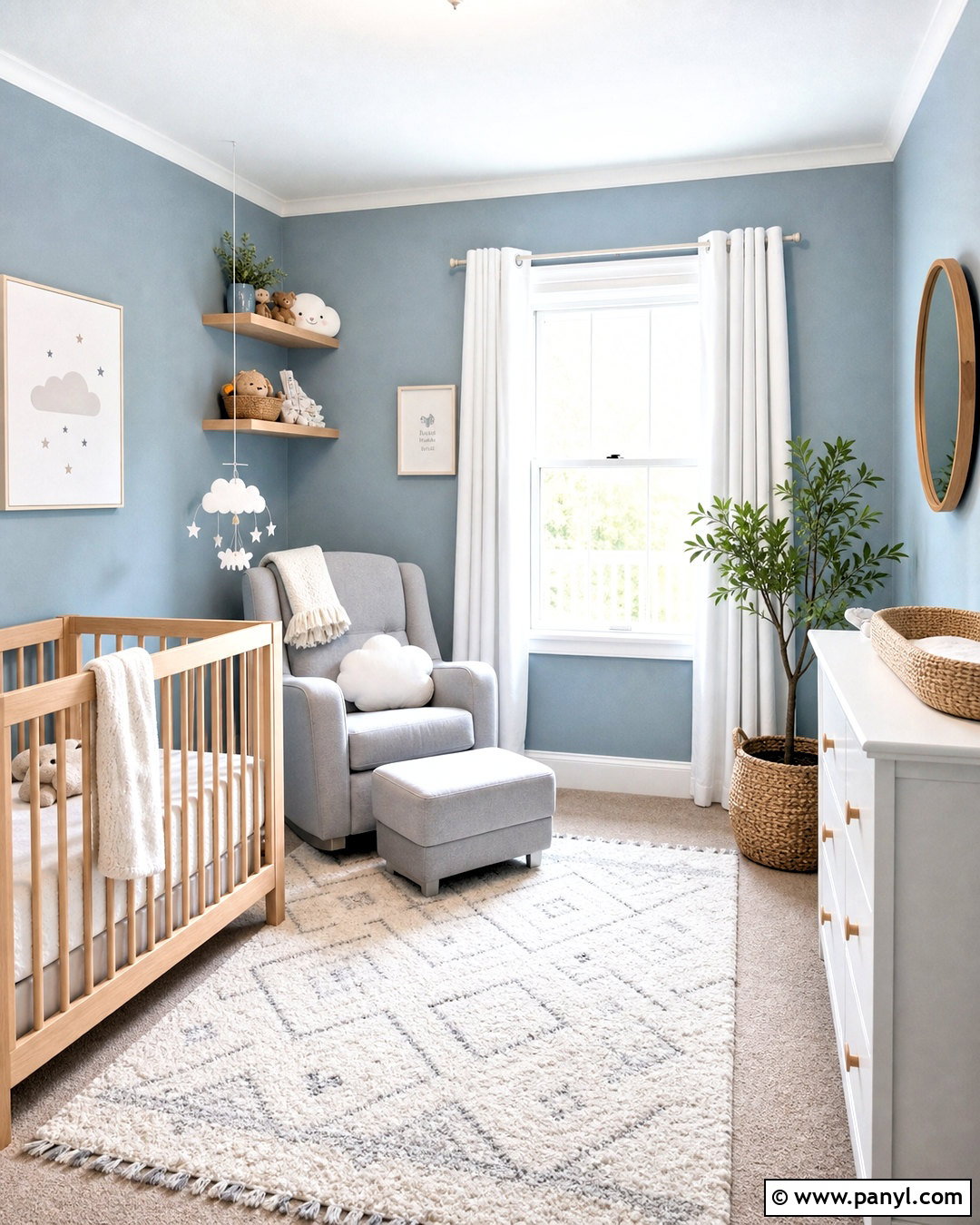
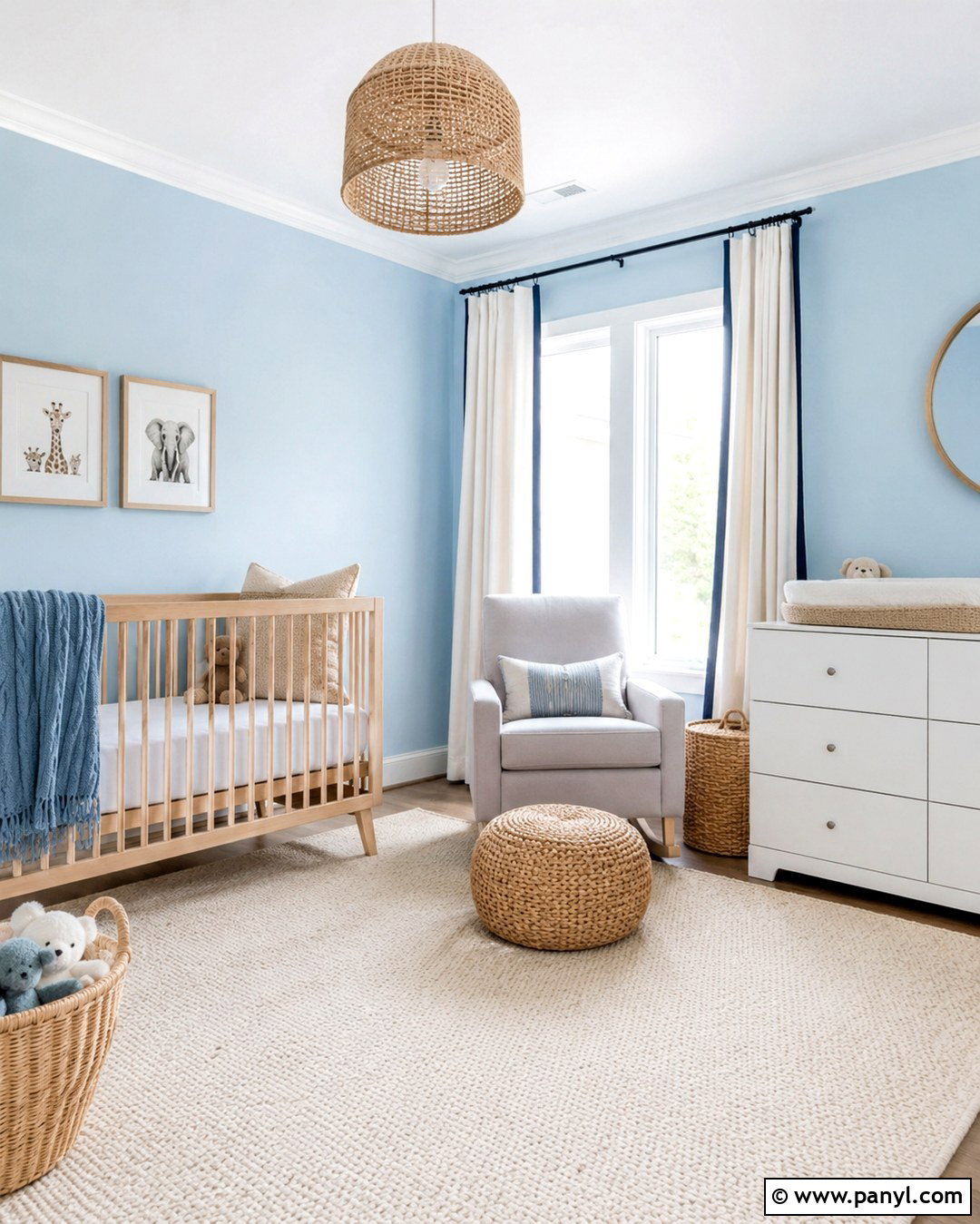
Imagine a quiet sky at the start of the day. Dusty blue walls can give a baby room that same soft, open feeling without looking overly themed. Choose a blue with subtle gray undertones and paint the walls from baseboard to ceiling. Keep the trim bright white for crisp definition. A natural maple crib, white dresser, and light gray glider create a balanced furniture arrangement. Ground the room with a cream rug featuring a small blue geometric pattern. White cotton curtains, cloud-shaped wall decor, and pale wood shelves add gentle character. Introduce small touches of warm tan through baskets and cushions to prevent the blue from feeling cold. The resulting nursery is fresh, soothing, and suitable for both small and spacious rooms.
4. Blush Pink Baby Room
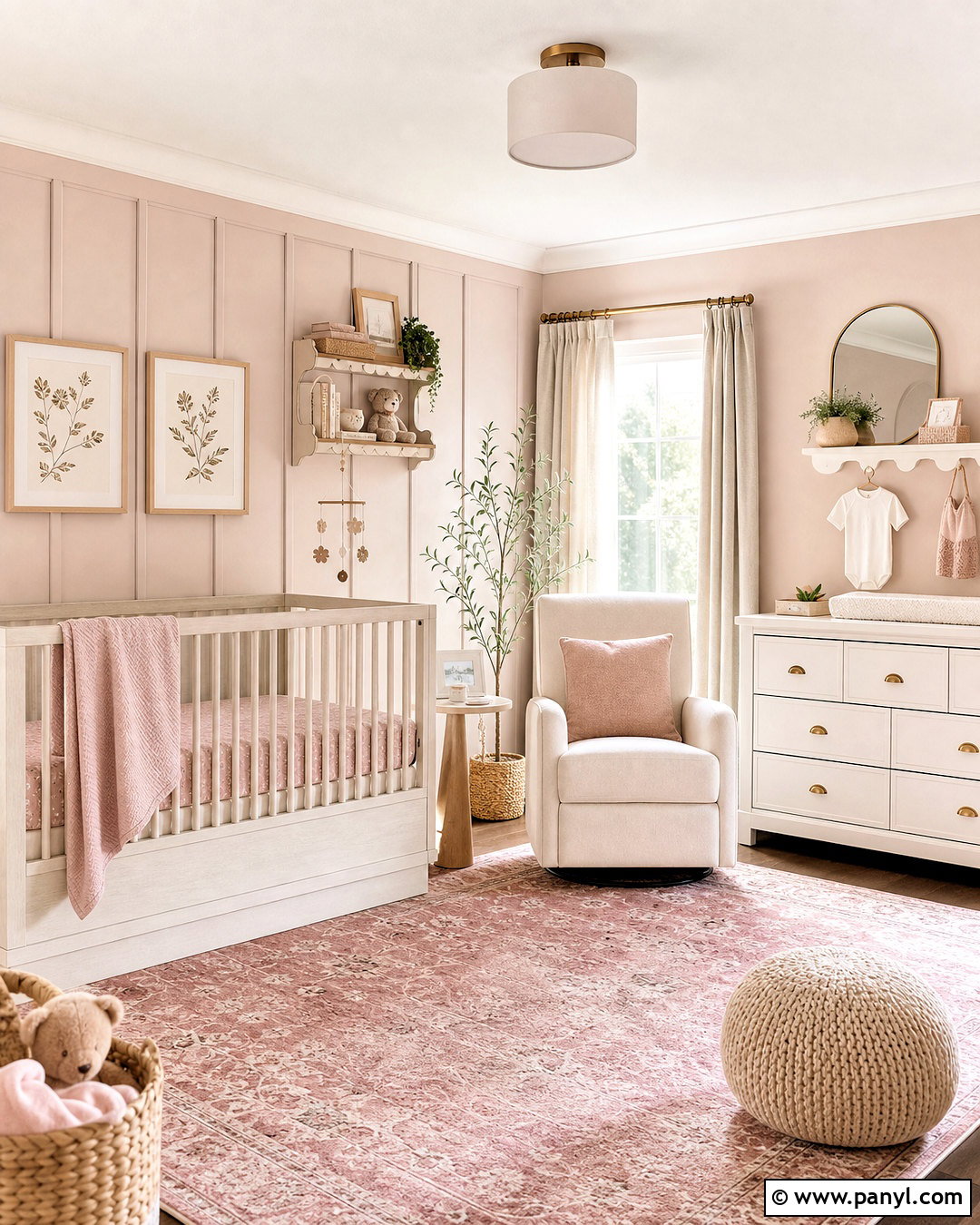
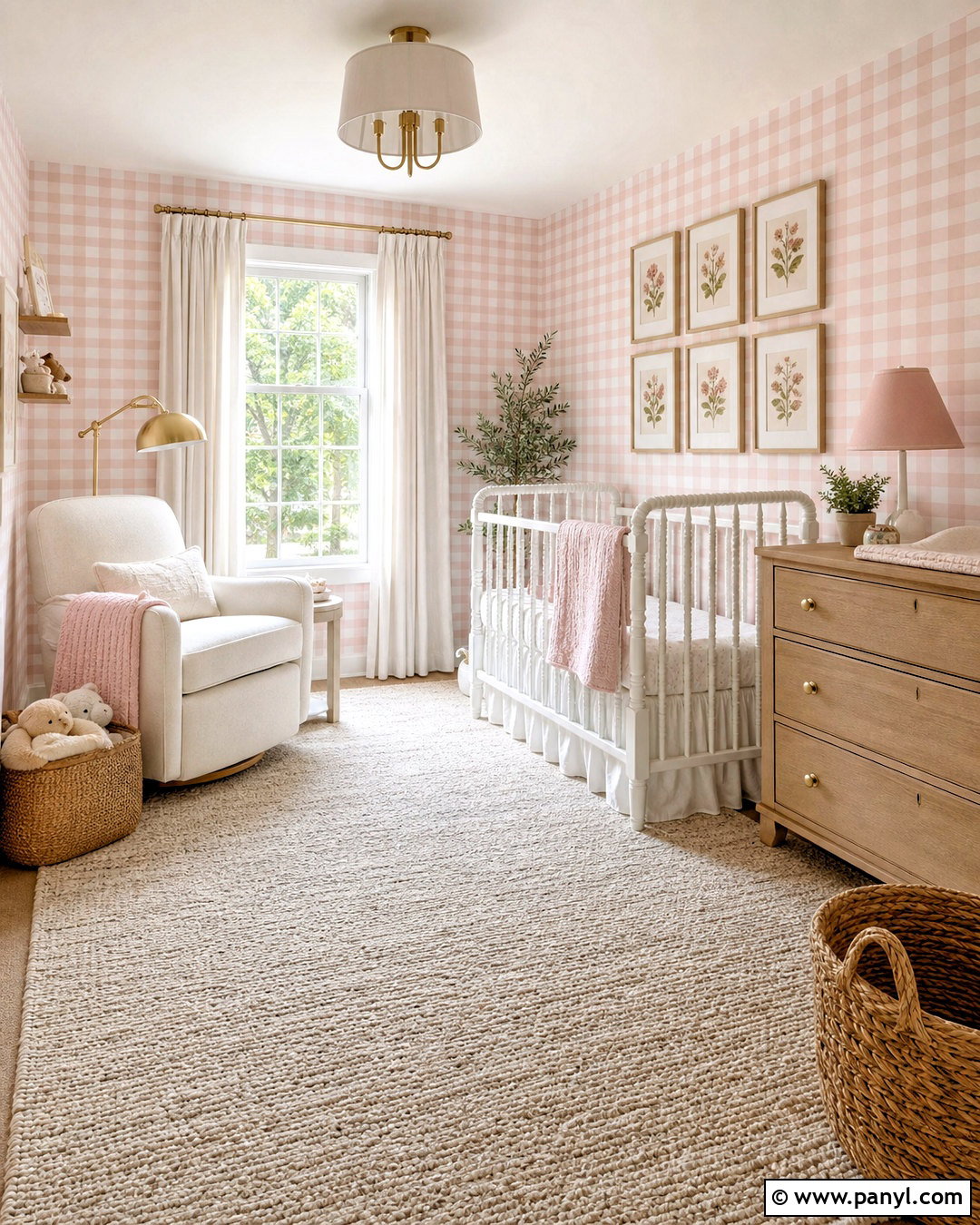
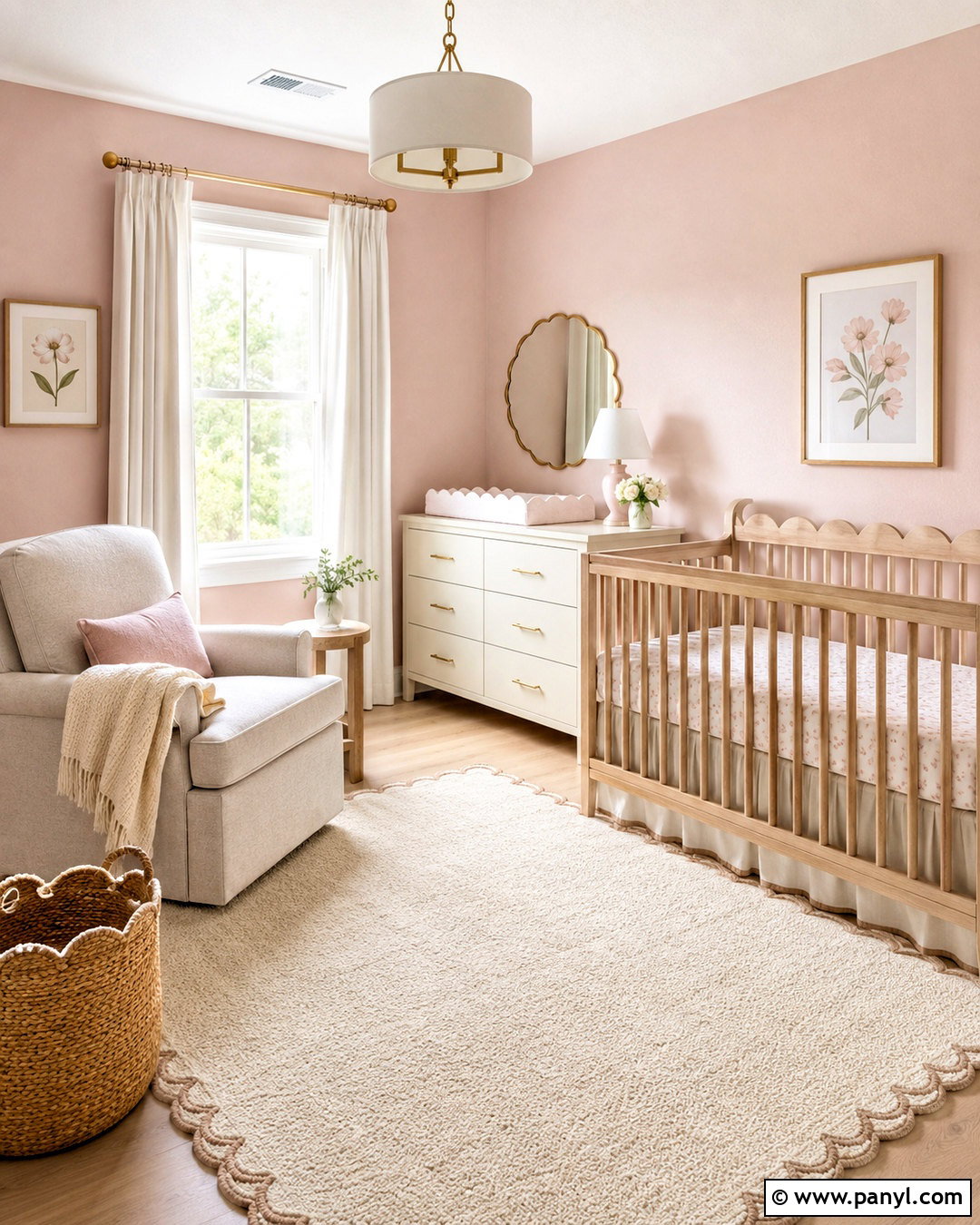
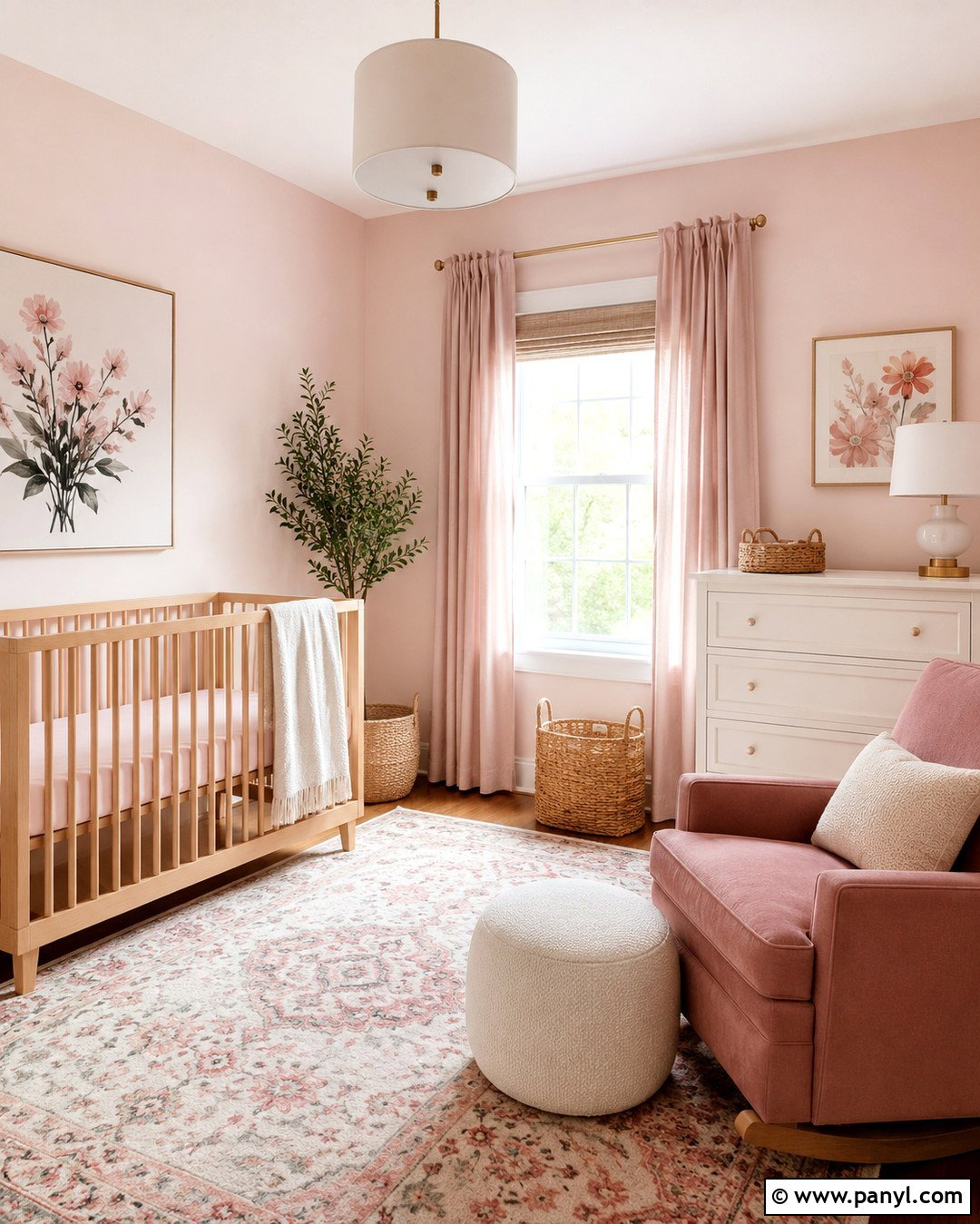
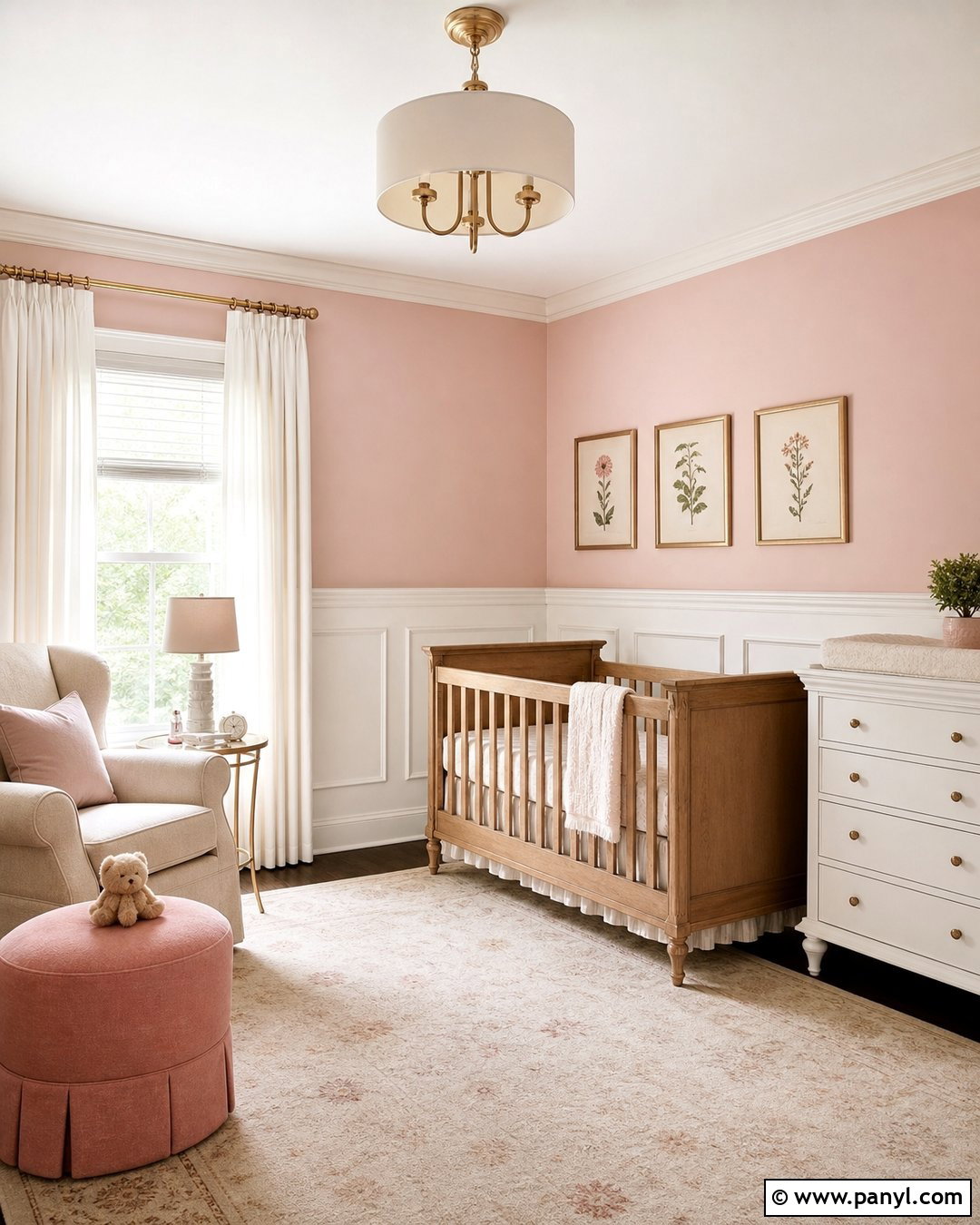
Blush pink can look soft and sophisticated when balanced with warm neutrals and simple furniture. Paint the walls a muted pink with beige or peach undertones, avoiding shades that appear overly bright. Use creamy white on the ceiling and trim to maintain an airy finish. Place a white oak crib against the longest wall, with a low matching dresser nearby for comfortable movement. Add an ivory upholstered glider, a faded rose rug, and full-length linen curtains. Brushed brass hardware and a delicate ceiling fixture provide subtle shine. Botanical artwork, scalloped shelving, and woven storage give the room personality without creating clutter. Complete the palette with dusty mauve, camel, and cream textiles for a layered baby room that can grow gracefully with the child.
5. Pale Yellow Baby Room
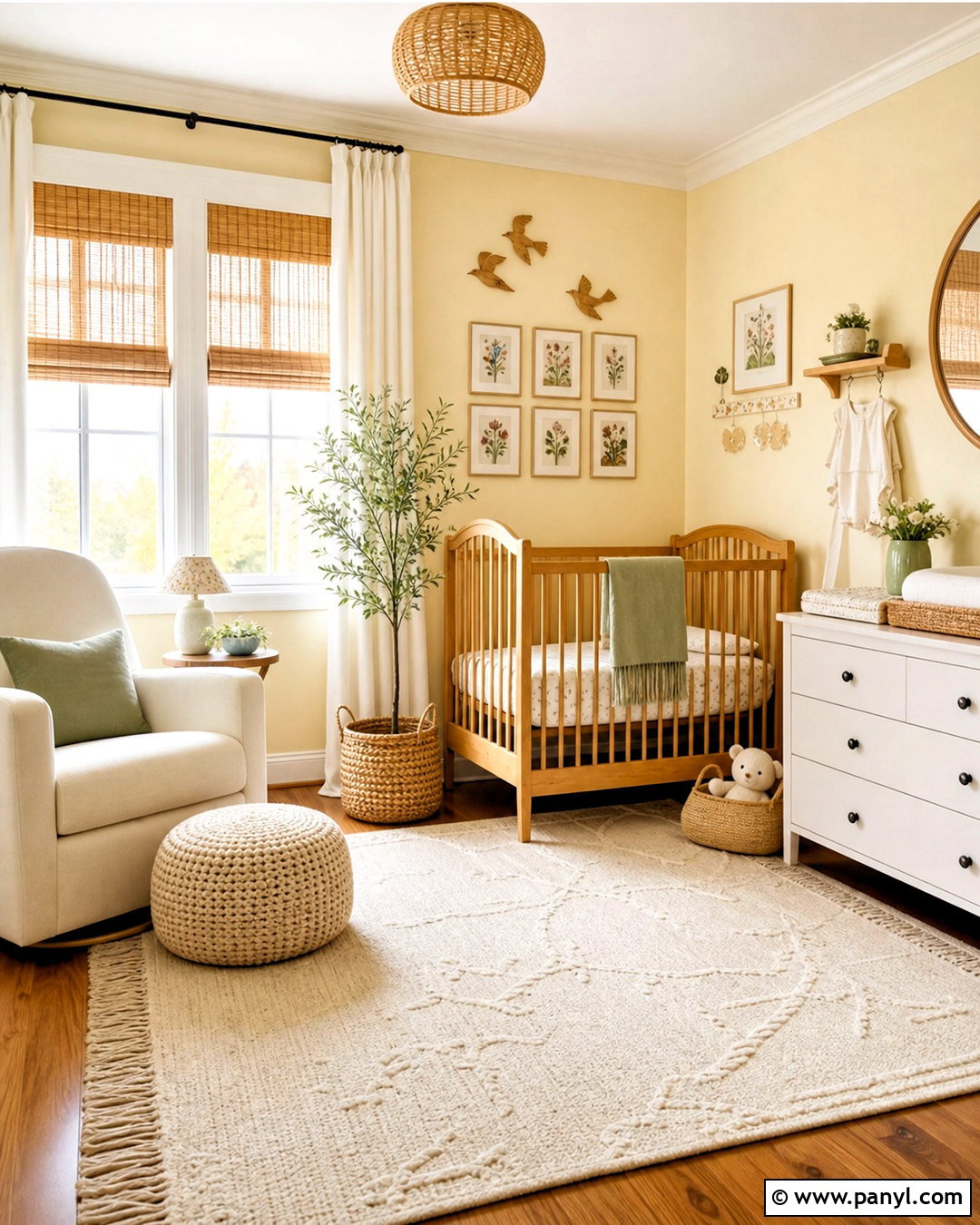
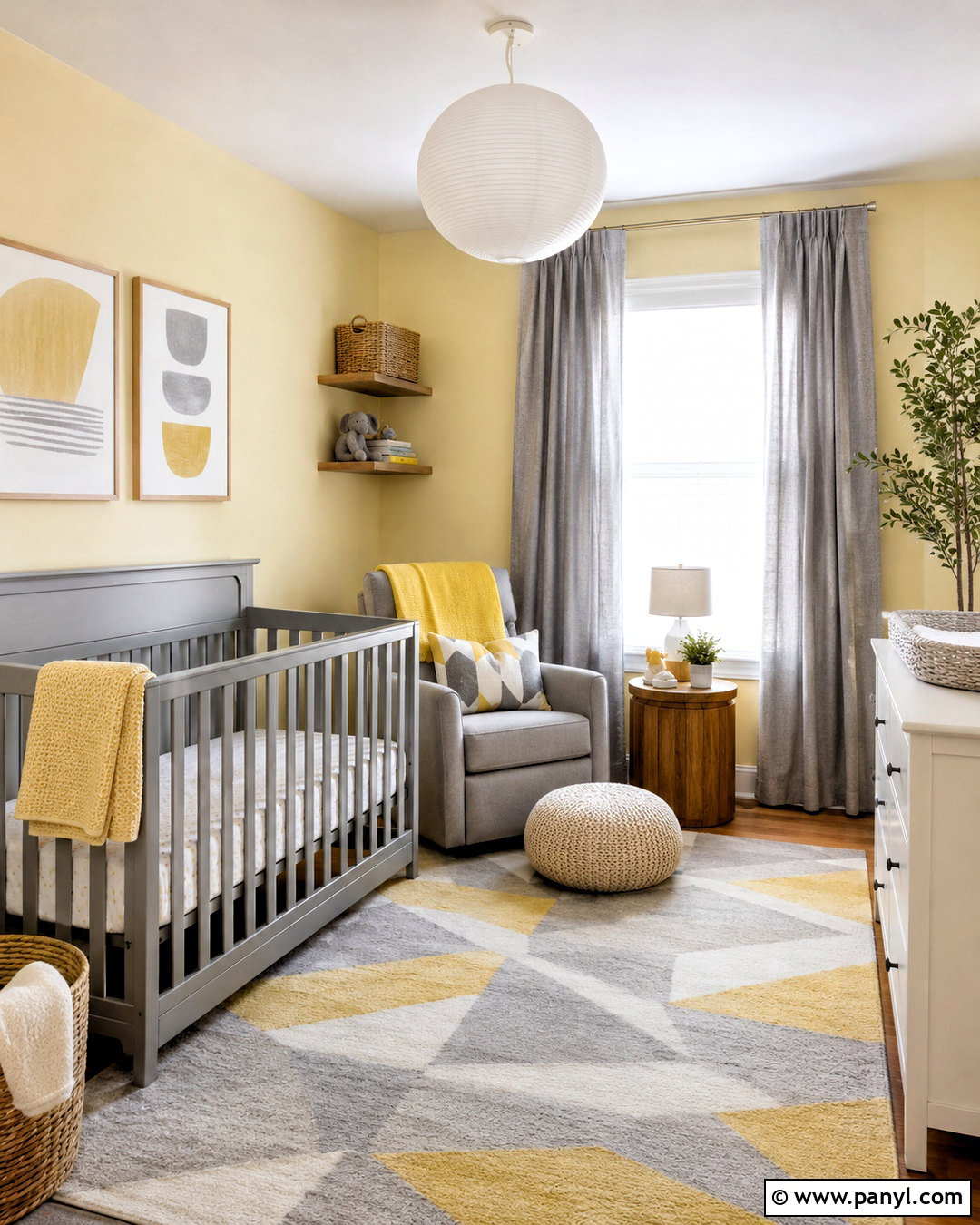
Pale yellow brings gentle warmth into a baby room, especially when the space receives limited natural light. Select a creamy, softened yellow instead of a sharp lemon shade. Paint all the walls yellow, then use warm white for the ceiling, trim, and built-in storage. A honey-toned wood crib complements the sunny background, while a white dresser keeps the arrangement light. Add a cream glider, an ivory rug with small golden details, and natural woven blinds under white curtains. Decorate with simple flower prints, wooden birds, and muted green accents. A few touches of soft blue can cool the palette and create balance. This complete scheme feels cheerful during playtime yet remains gentle enough for quiet nighttime routines and afternoon naps.
6. Lavender Baby Room
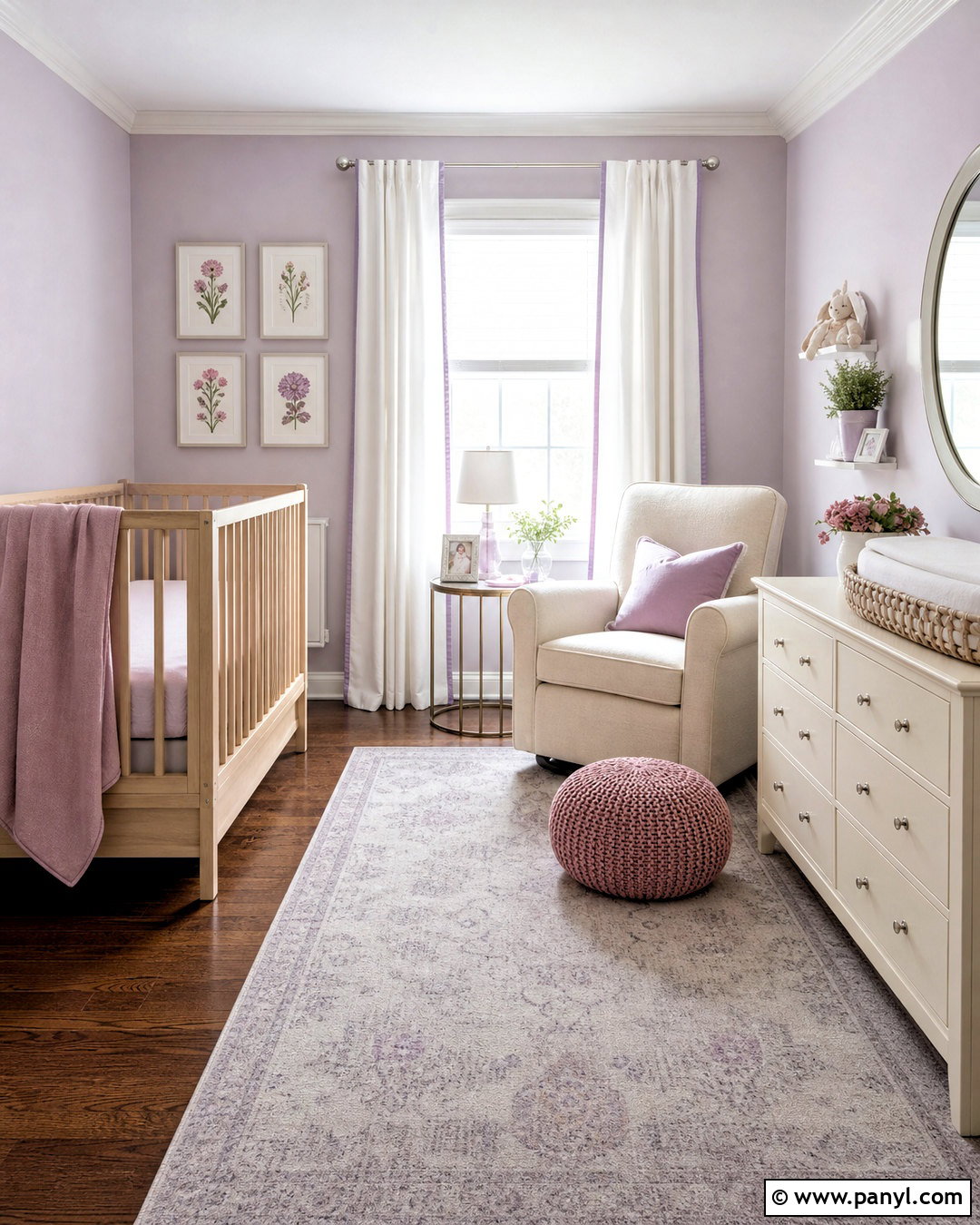
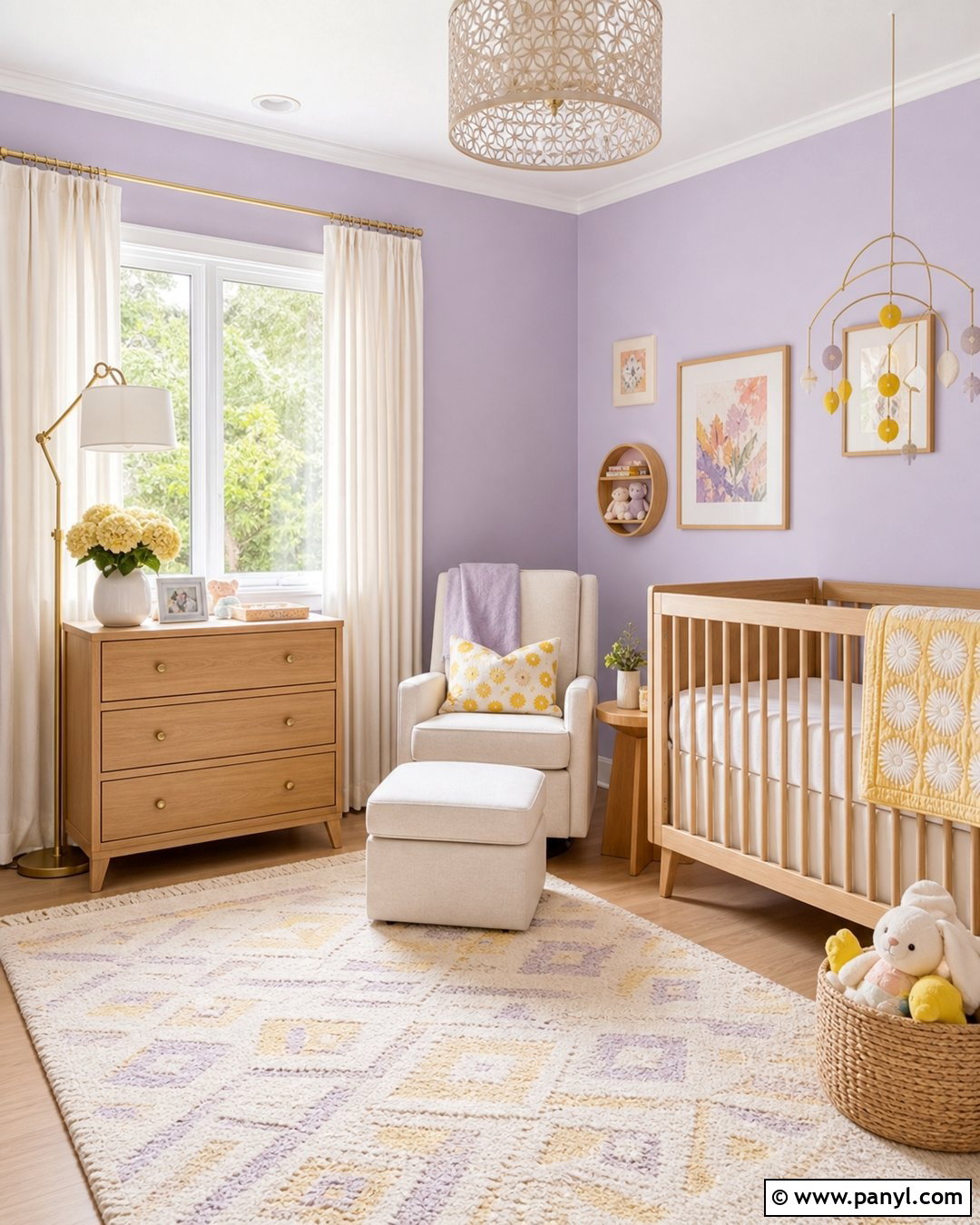
A pale lavender baby room offers color while maintaining a restful, delicate atmosphere. Look for lavender with gray undertones, which appears softer and more adaptable than a bright purple. Cover the walls in the chosen shade and finish the ceiling, doors, and molding in a clean warm white. Pair the paint with a light birch crib, an ivory dresser, and a comfortable cream glider. Use a soft gray rug to anchor the furniture without adding visual weight. White curtains with subtle lavender edging can reinforce the palette. Finish the room with floral artwork, brushed silver hardware, and small accents in dusty rose or muted green. The combination feels polished, peaceful, and versatile enough to suit traditional, cottage, or modern nursery furniture.
7. Terracotta Accent Wall Baby Room
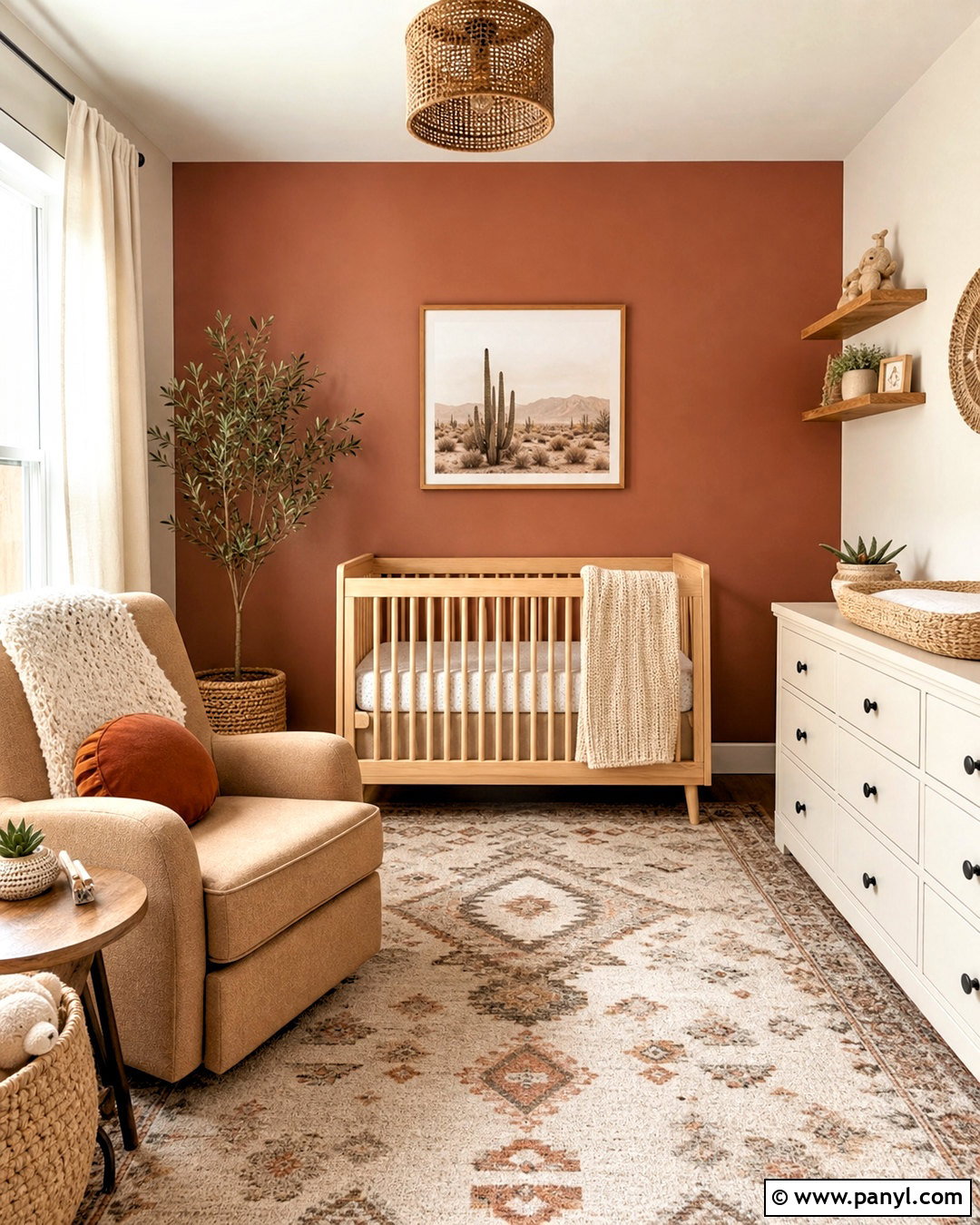
Warm terracotta makes a beautiful focal point when limited to the wall behind the crib. Choose a softened clay shade with brown undertones, then paint the remaining walls a creamy off-white. This keeps the baby room bright while giving the crib area clear visual importance. Use a natural oak crib, an ivory dresser, and a camel-colored glider to continue the earthy palette. A faded geometric rug can combine terracotta, beige, and muted sage. Add linen curtains, woven baskets, and simple desert-inspired artwork without overusing the theme. Matte black curtain rods and hardware offer clean contrast. Position open wooden shelves away from the crib and display only a few lightweight decorative objects. The completed room feels grounded, inviting, and comfortably modern.
8. Navy Blue Accent Wall Baby Room
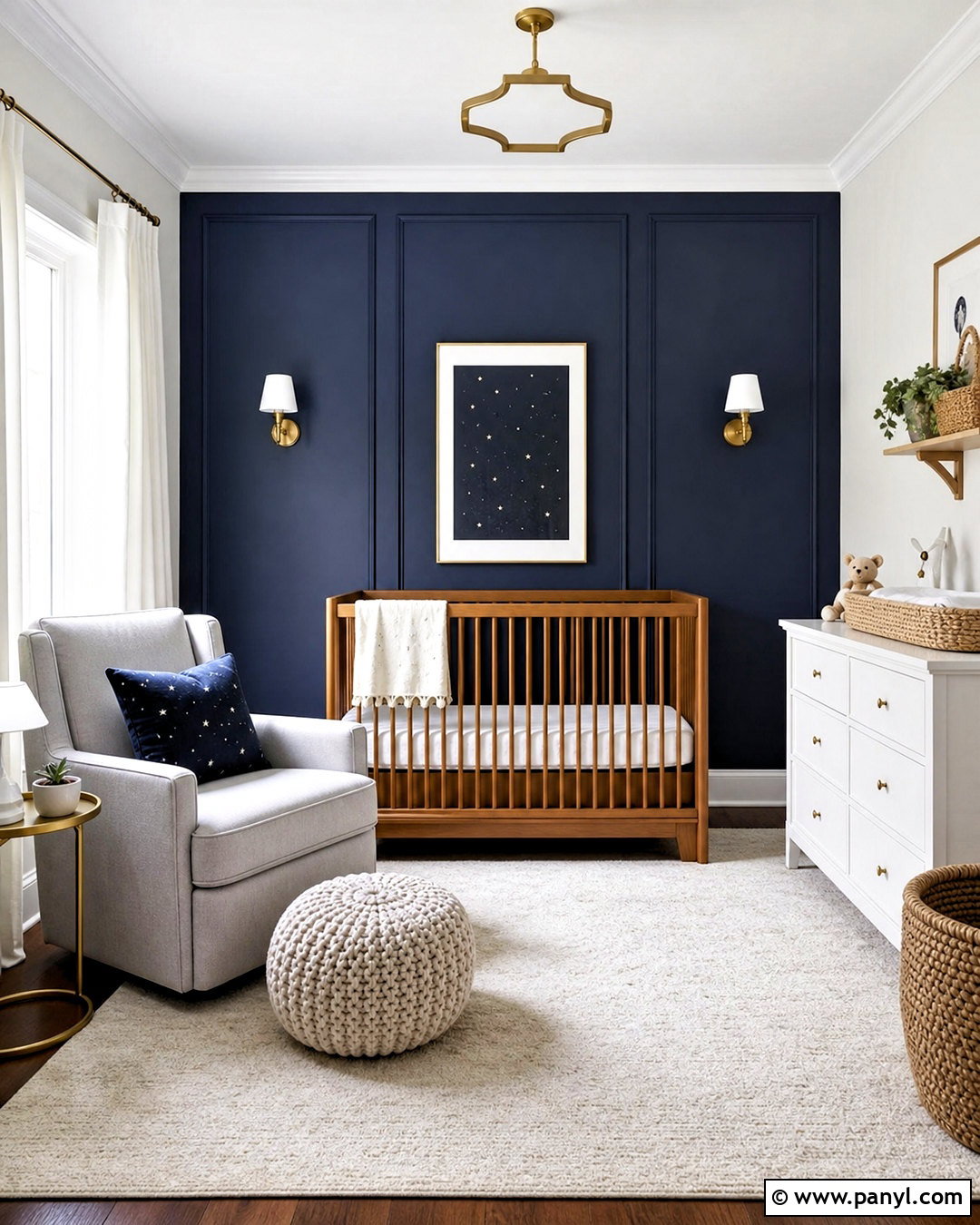
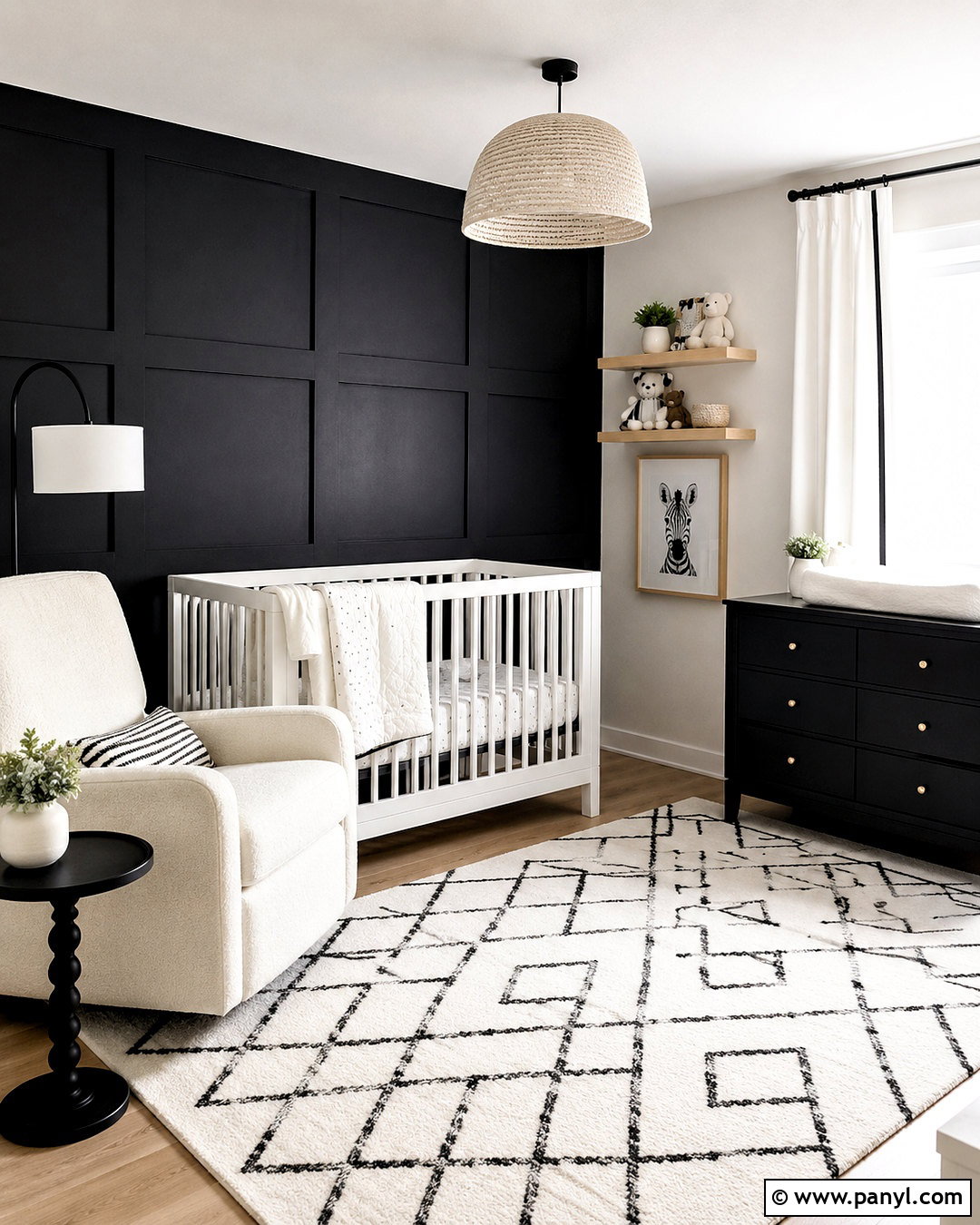
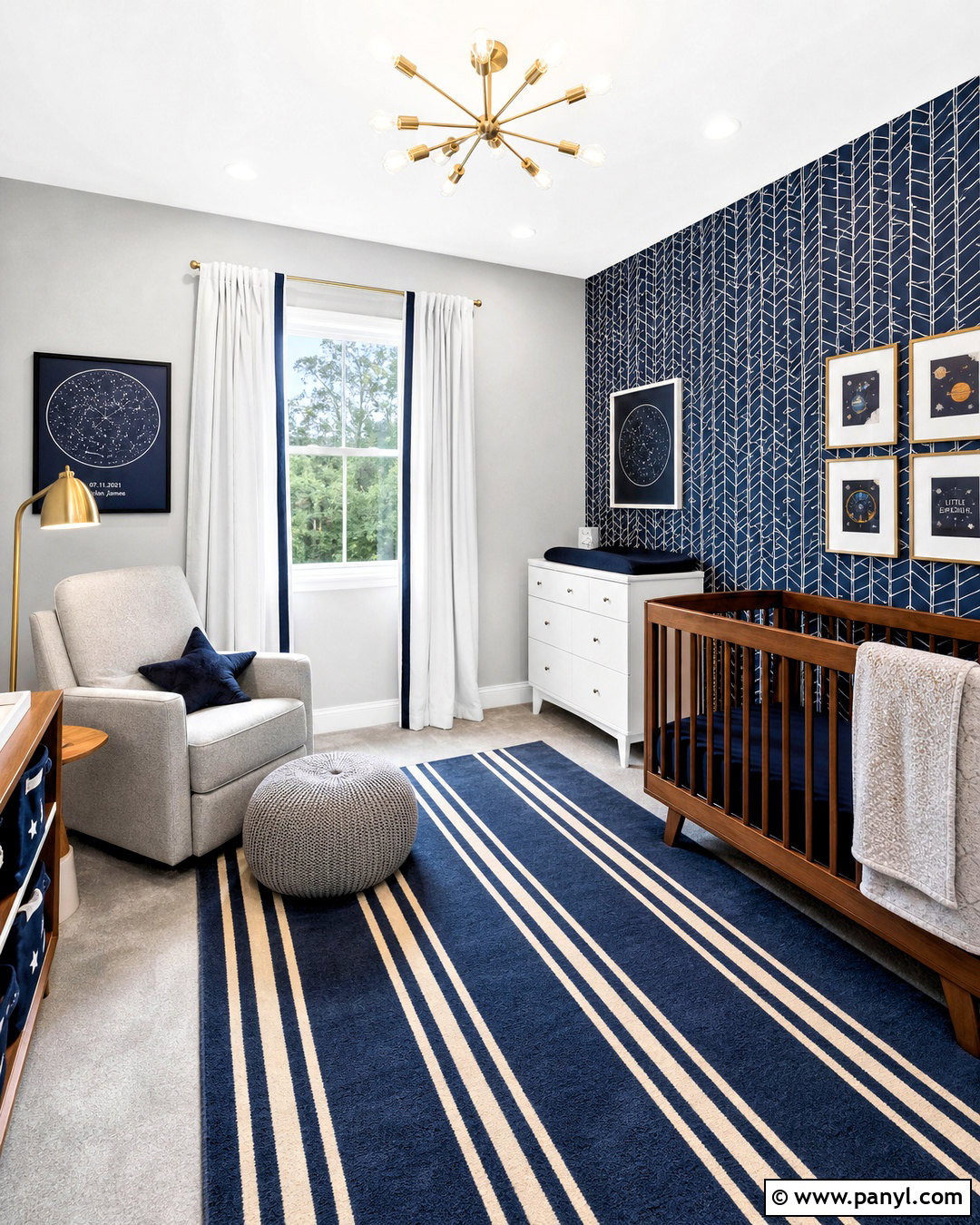
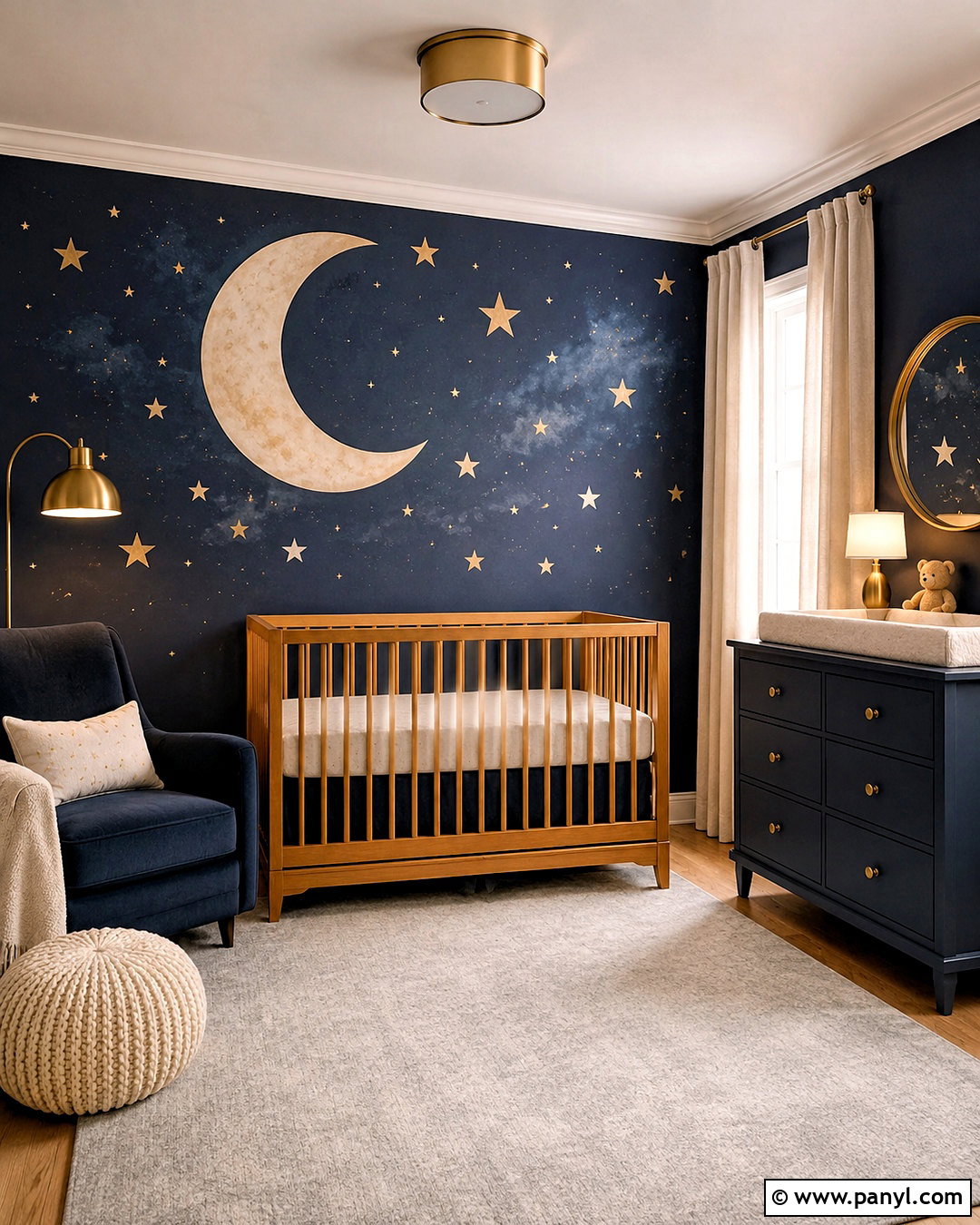
A navy blue accent wall can create depth without making the entire baby room feel dark. Paint the crib wall in a rich, slightly muted navy and keep the other three walls soft white or pale gray-blue. Use crisp white trim to define the architecture. A warm wood crib stands out beautifully against the darker background, while a white dresser balances the room. Add a light gray glider, an ivory rug, and white curtains with narrow navy edging. Star prints, sailboat artwork, or abstract shapes can support the color scheme without turning it into an overly literal theme. Bring in caramel leather, woven baskets, and brushed brass details for warmth. Strong contrast gives this nursery a polished look that can easily mature with the child.
9. Peach Baby Room
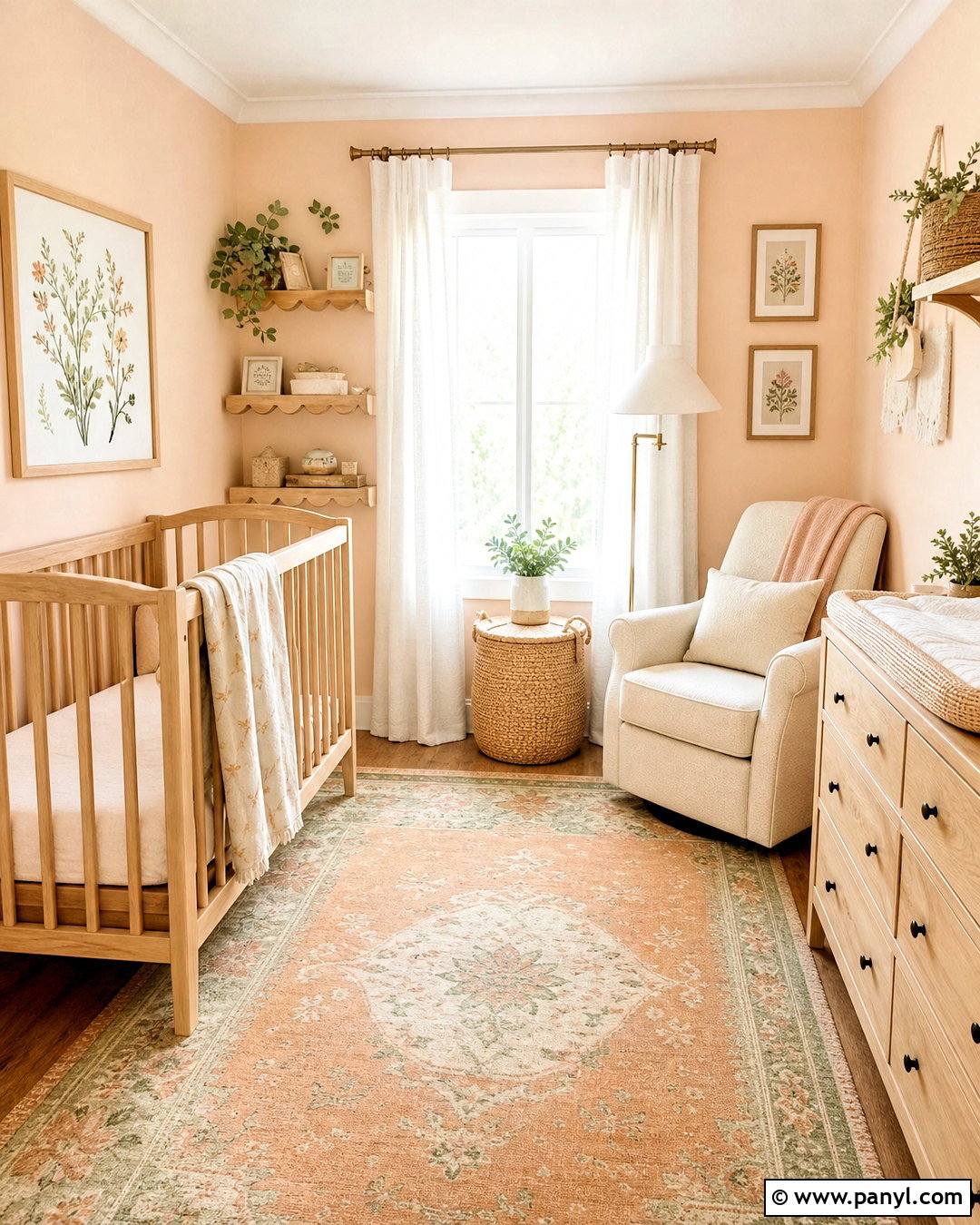
Soft peach paint creates a warm glow that feels cheerful without becoming overwhelming. Choose a pale peach with a balanced mix of pink, orange, and beige. Paint every wall in the color and use creamy white for the ceiling and woodwork. A light oak crib, matching dresser, and ivory glider keep the room relaxed and cohesive. Introduce a washable rug combining peach, cream, and faded green, then hang simple white linen curtains. Botanical prints, wooden frames, and scalloped wall shelves add gentle detail. Small accents in sage, dusty rose, or muted coral give the design extra depth. Keep the main furniture simple so the wall color remains the feature. This complete baby room feels sunny, comforting, and fresh throughout the day.
10. Greige Baby Room
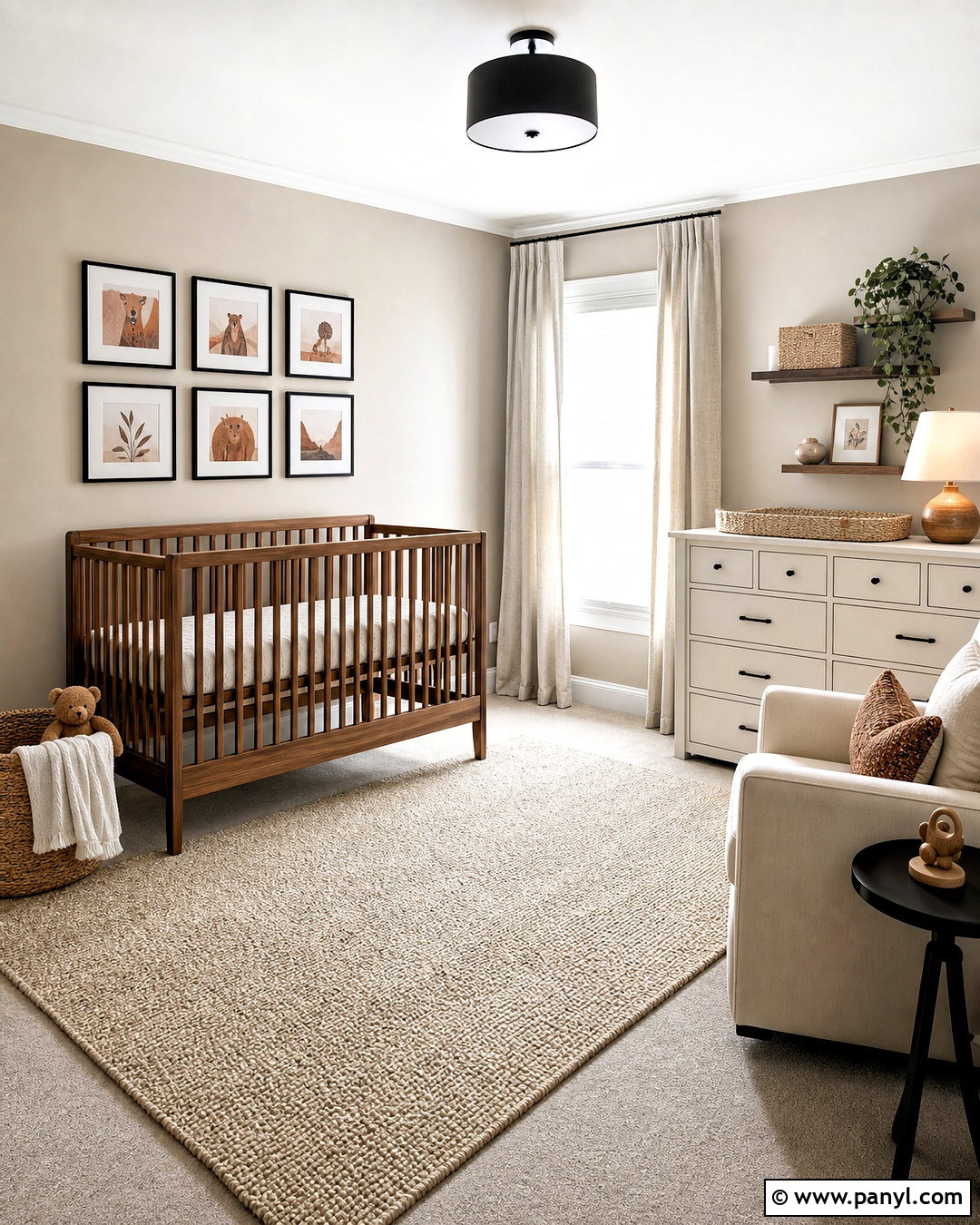
For a neutral nursery with more warmth than gray, consider soft greige walls. Select a light shade that blends beige and gray without looking muddy in low light. Paint all four walls greige and use warm white on the ceiling, doors, and baseboards. A walnut crib introduces rich contrast, while an ivory dresser and cream glider keep the layout light. Add an oatmeal rug, textured linen curtains, and woven baskets for dimension. Black picture frames and a simple black ceiling light bring definition to the quiet palette. Decorate with abstract artwork in muted rust, olive, and blue. These accents can be changed easily as the baby grows. The completed room looks calm and organized but still has enough contrast to feel welcoming and thoughtfully designed.
11. Two Tone Green Baby Room
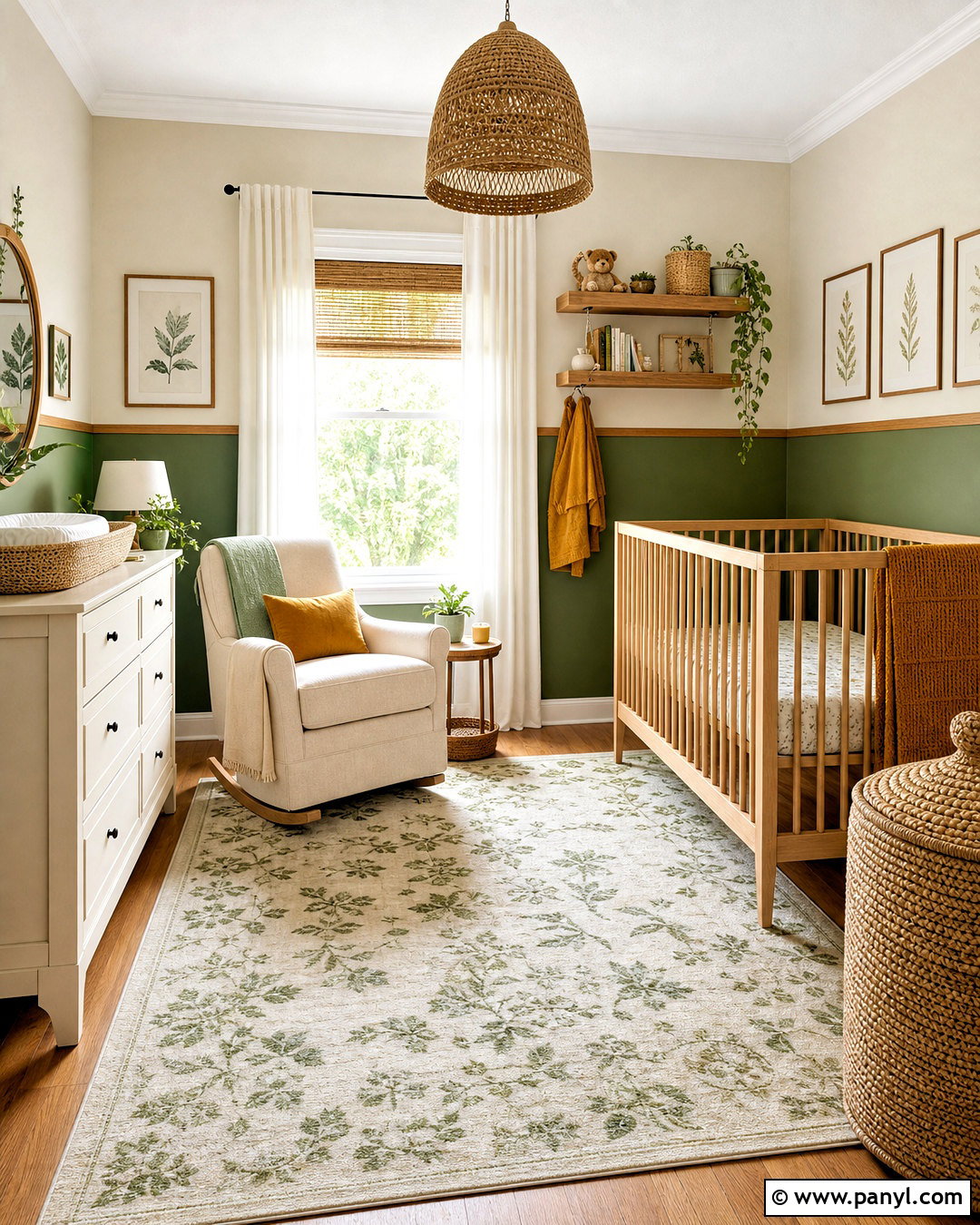
Two-tone green walls make a baby room playful while preserving a clean, structured appearance. Paint the lower portion of each wall in a medium muted green and the upper portion in soft cream. Place the dividing line slightly above the dresser height, using a narrow painted stripe or simple wood chair rail for a finished edge. Choose a natural wood crib and an ivory glider to soften the stronger lower color. A cream rug with small green details connects both wall shades. Add warm white curtains, botanical prints, and oak floating shelves. Mustard or rust accessories provide small areas of contrast. Keeping the darker shade below helps ground the furniture, while the lighter upper walls and ceiling maintain an open, balanced feeling throughout the room.
12. Blue And White Baby Room
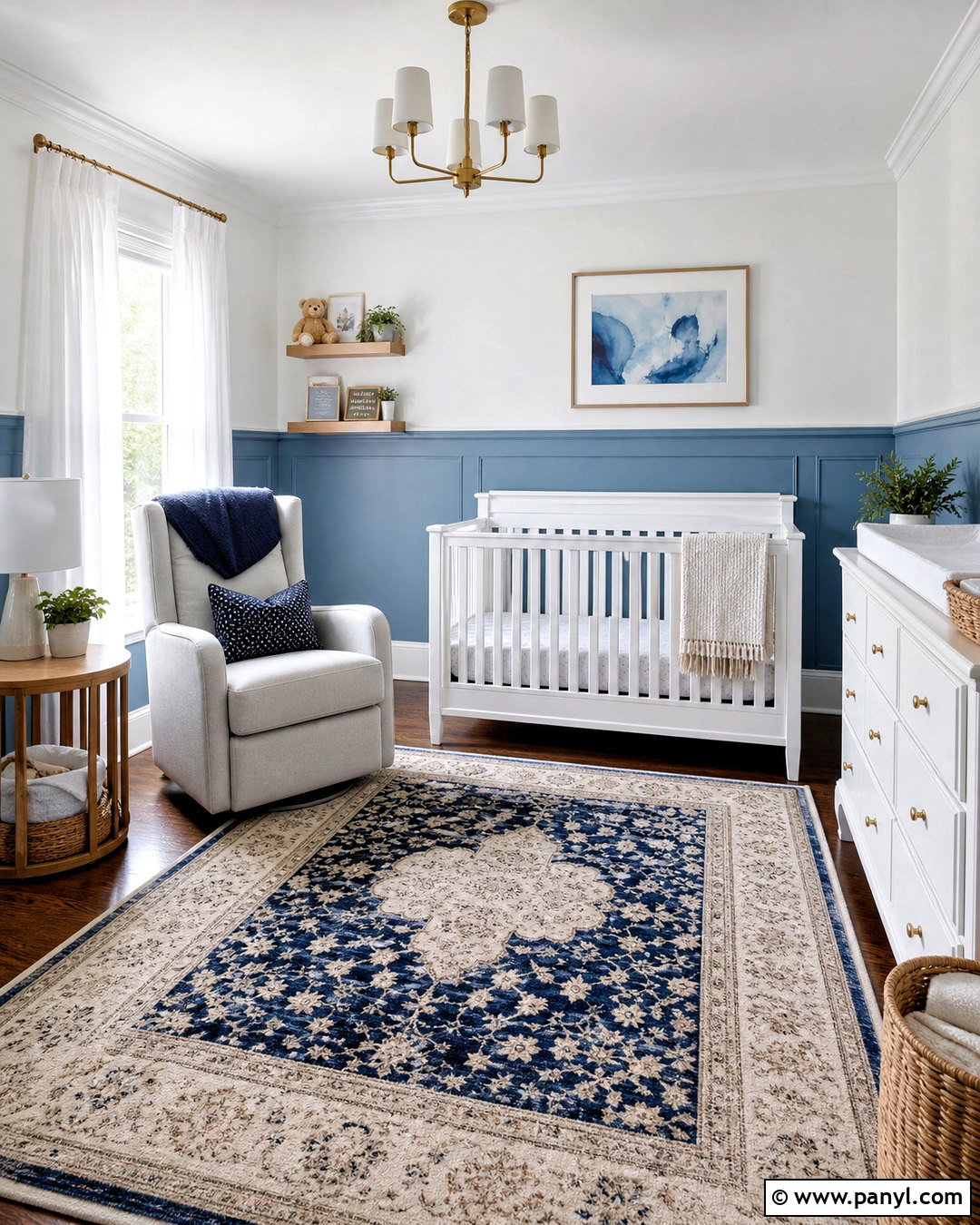
A blue and white palette gives a nursery a clean, classic look with plenty of brightness. Paint the lower two-thirds of the walls in pale powder blue and leave the upper section soft white. A narrow white molding strip can create a neat transition between the colors. Use a white crib and dresser for a seamless arrangement, then introduce natural wood through a side table and storage baskets. A navy-and-cream patterned rug anchors the room, while sheer white curtains soften the windows. Add simple artwork featuring clouds, woodland animals, or abstract blue shapes. A light gray glider prevents the scheme from appearing too matched. Small camel and brass accents supply warmth, resulting in a balanced baby room that feels crisp but not cold.
13. Green Color Drenched Baby Room
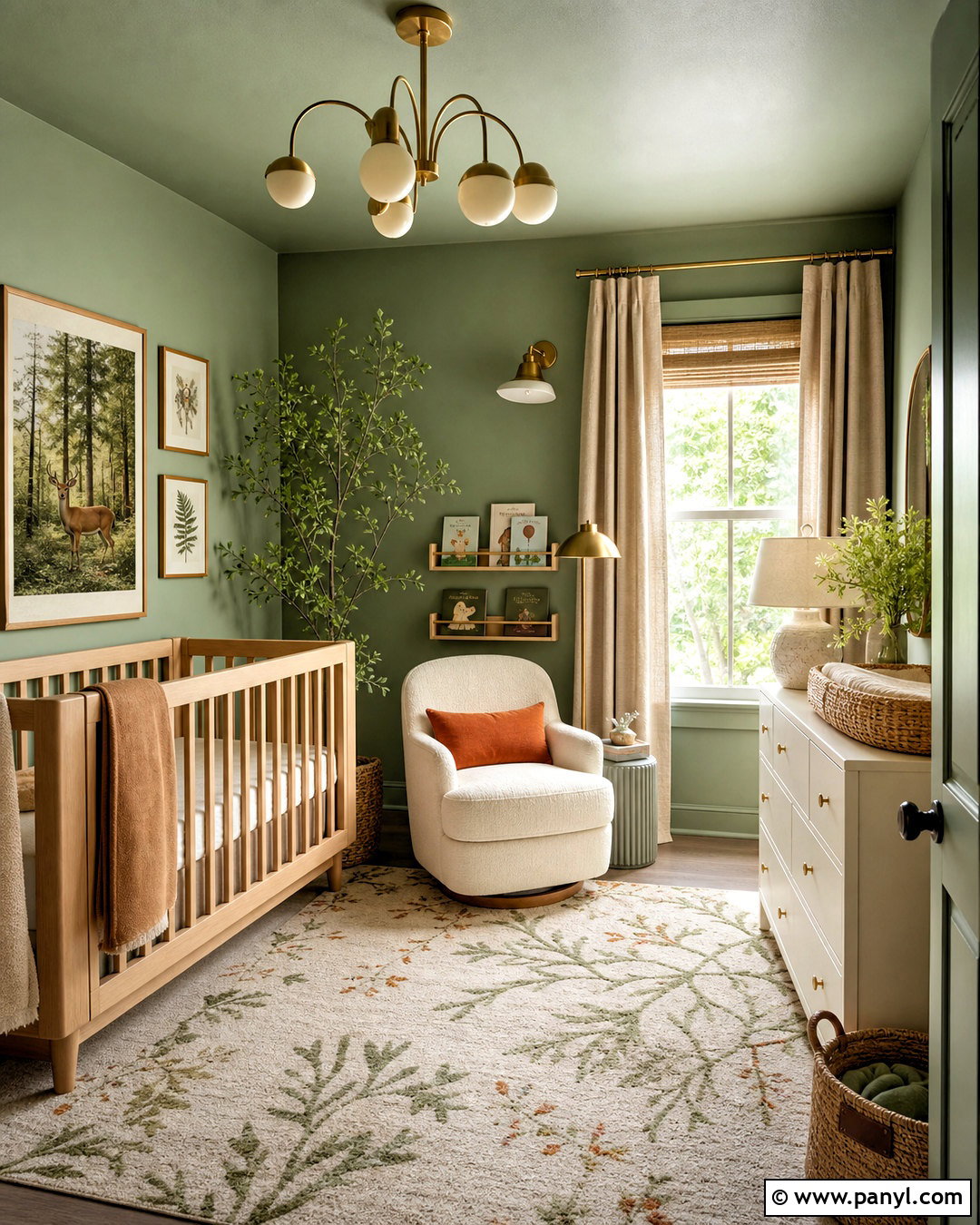
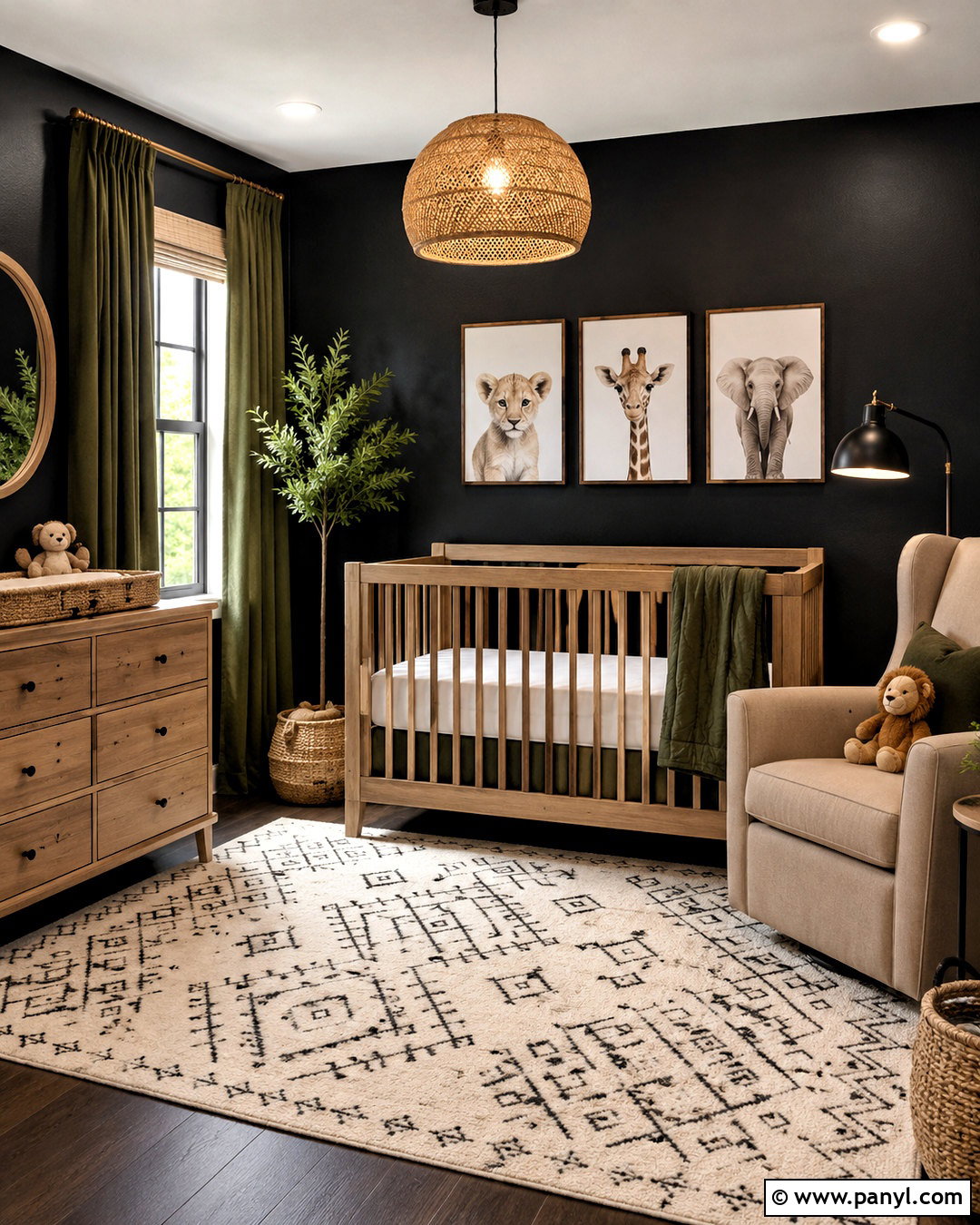
Color drenching creates a cozy nursery by wrapping the walls, trim, doors, and ceiling in one continuous shade. Choose a muted olive or midtone eucalyptus green that feels rich without appearing too dark. Use the same color across every painted surface, varying the sheen slightly on trim for durability and definition. A pale oak crib and cream dresser will stand out against the green background. Add an ivory boucle glider, a faded botanical rug, and oatmeal curtains to brighten the scheme. Decorative details should remain simple: framed nature prints, woven baskets, and a warm brass ceiling light are enough. Cream bedding and a rust-colored cushion introduce controlled contrast. The finished baby room feels immersive and comforting while maintaining a modern, uncluttered appearance.
14. Pale Blue Painted Ceiling Baby Room
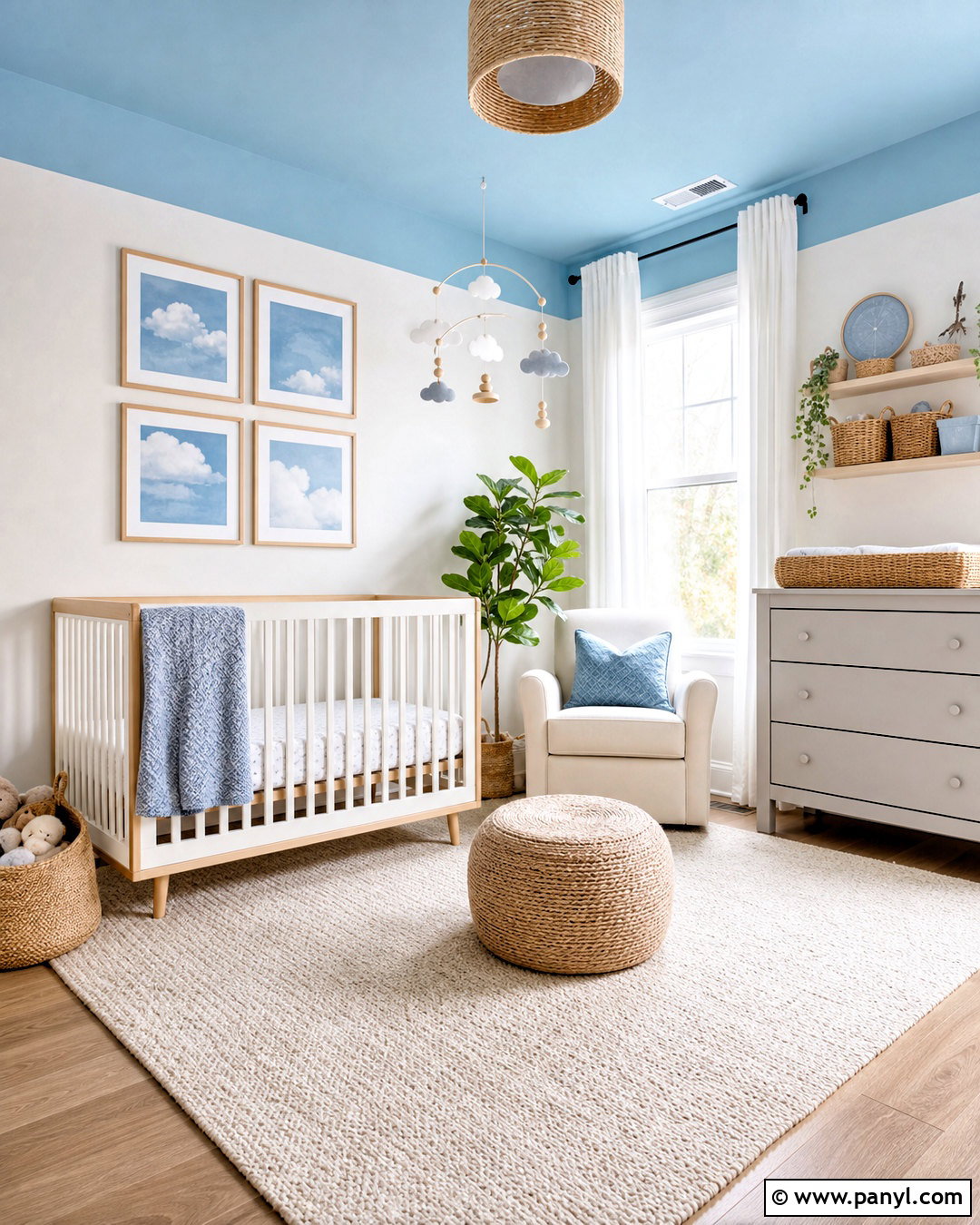
Painting the ceiling pale blue introduces color in an unexpected place while keeping the walls neutral. Cover the walls in warm white, then paint the entire ceiling a gentle sky blue. Continue the blue a few inches down the upper walls if you want a more enveloping effect. Use a white oak crib, a soft gray dresser, and an ivory glider to create an airy furniture plan. A cream rug with scattered blue details ties the upper and lower areas together. Hang white curtains near the ceiling to emphasize height. Minimal cloud artwork, natural baskets, and a mobile with white and pale wood shapes support the peaceful look. The painted ceiling becomes the room’s main feature without competing with practical furnishings or making the nursery feel busy.
15. Soft Rainbow Mural Baby Room
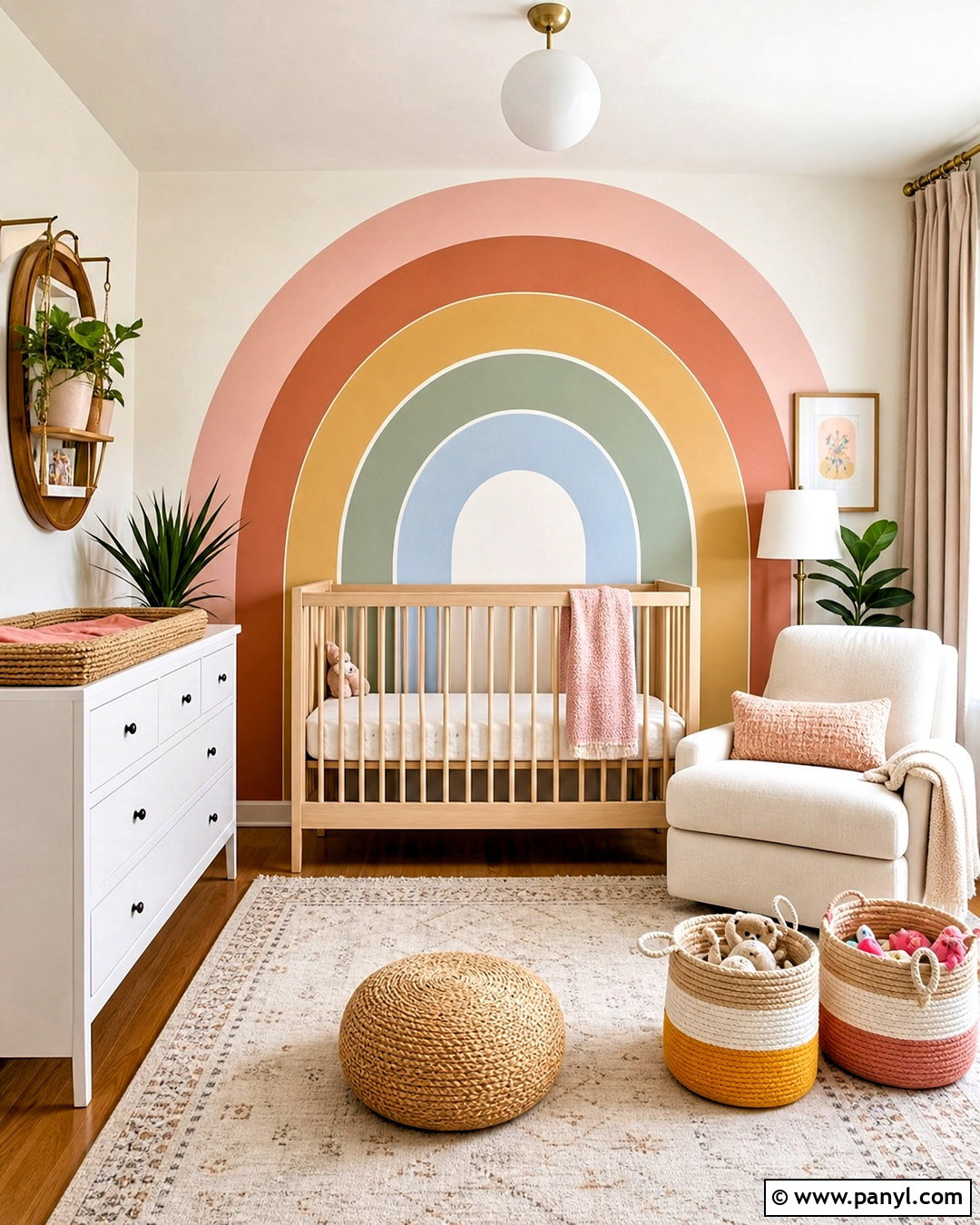
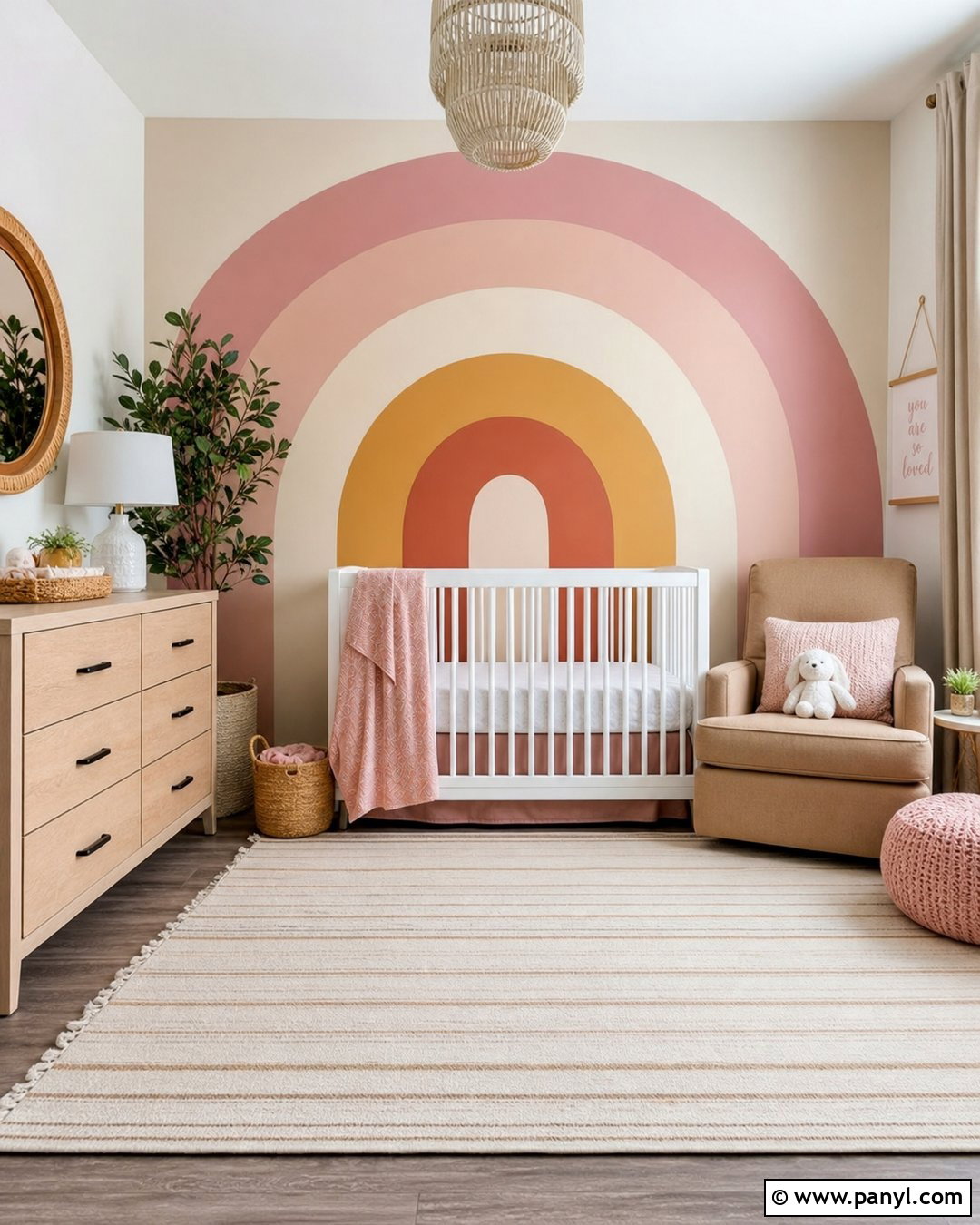
A painted rainbow mural can add personality when the colors remain soft and the surrounding room stays simple. Paint the main walls warm white, then create a large rainbow behind the crib using wide arches in dusty pink, muted terracotta, pale mustard, sage green, and powder blue. Keep the arch edges smooth and limit the design to one wall. A natural maple crib and white dresser allow the mural to take center stage. Add an ivory glider, neutral rug, and plain linen curtains. Storage baskets can repeat the rainbow colors in small doses. Choose minimal wall decor so the mural remains clear and uncluttered. This complete design feels joyful and imaginative while preserving a soothing background for sleep and daily care routines.
16. Mountain Mural Baby Room
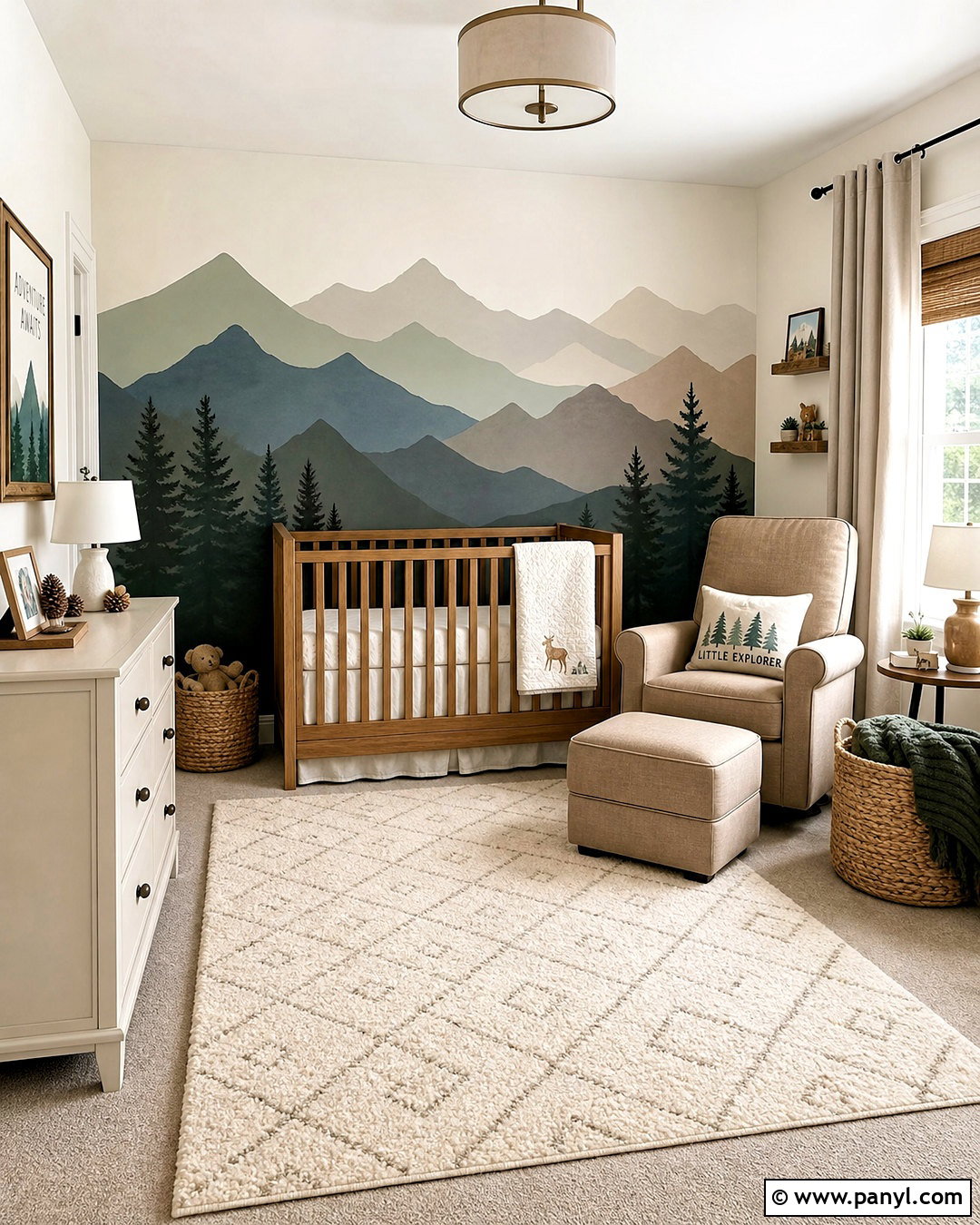
A mountain mural gives a baby room an adventurous theme without requiring elaborate decorations. Begin with warm white walls, then paint layered mountain shapes across the crib wall. Use muted shades of sage, blue-gray, taupe, and deep forest green, placing lighter peaks in the background and darker ones near the bottom. A medium-tone wood crib complements the outdoor palette. Add an ivory dresser, a tan glider, and a cream rug with a subtle geometric pattern. Linen curtains and woven baskets introduce natural texture. Complete the design with a simple wooden mobile, animal artwork, and forest green accents. Keeping the remaining walls quiet allows the painted landscape to feel spacious rather than busy, producing a nursery that can transition easily into a young child’s bedroom.
17. Painted Scallop Wall Baby Room
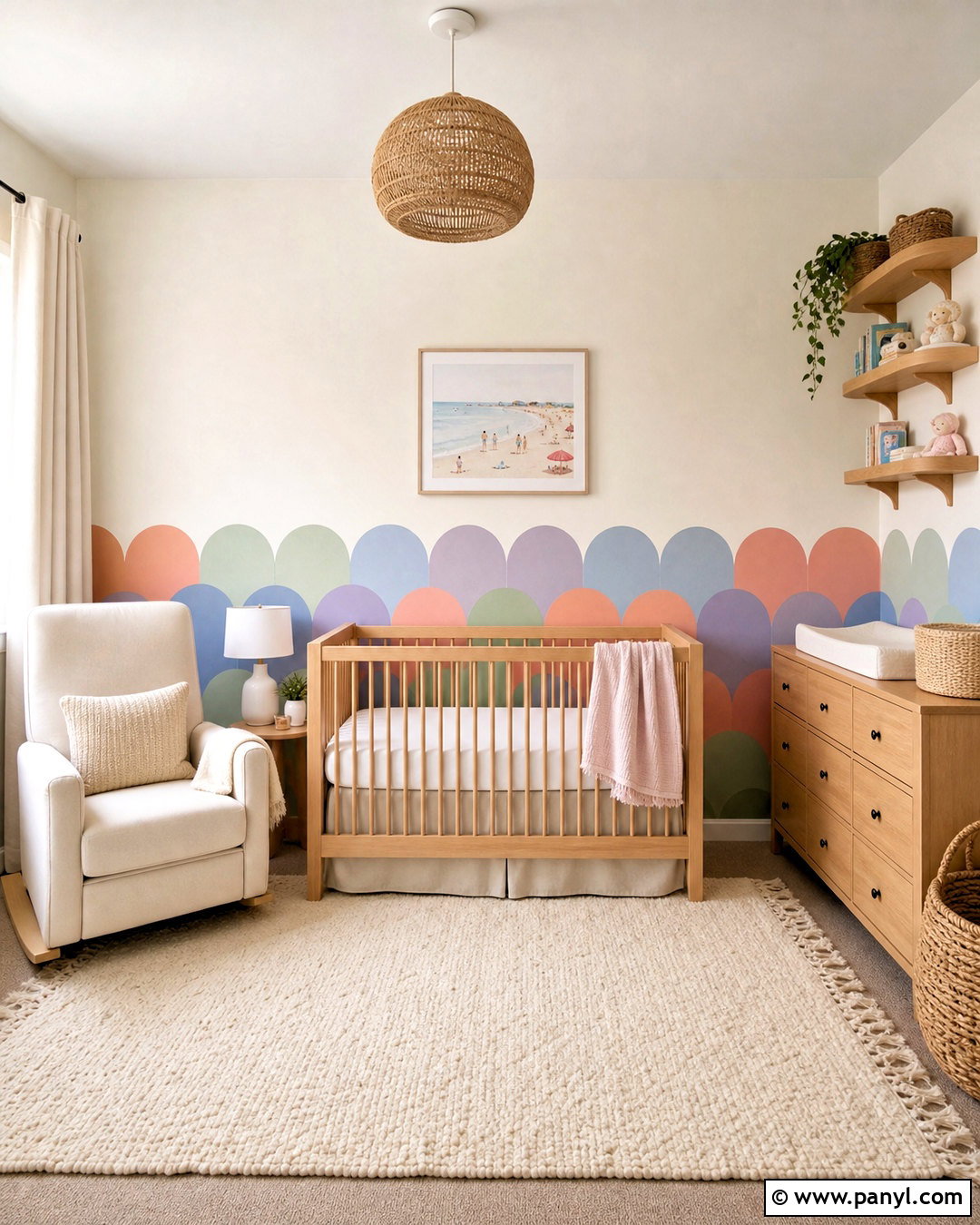
A painted scallop border brings a playful finish to a baby room while remaining relatively simple to recreate. Start with creamy white walls, then paint overlapping scallops around the lower third in muted coral, sage, dusty blue, or soft lavender. Use one color for a restrained look or alternate three coordinated shades for more energy. Place a white or pale wood crib against the clearest wall so the pattern remains visible. Add a neutral dresser, an ivory glider, and a solid cream rug to balance the decorative border. Plain linen curtains prevent the room from feeling overly detailed. Finish with rounded shelves, woven storage, and minimal artwork. The repeating curves create character while keeping the complete nursery light, organized, and comfortable.
18. Painted Striped Baby Room
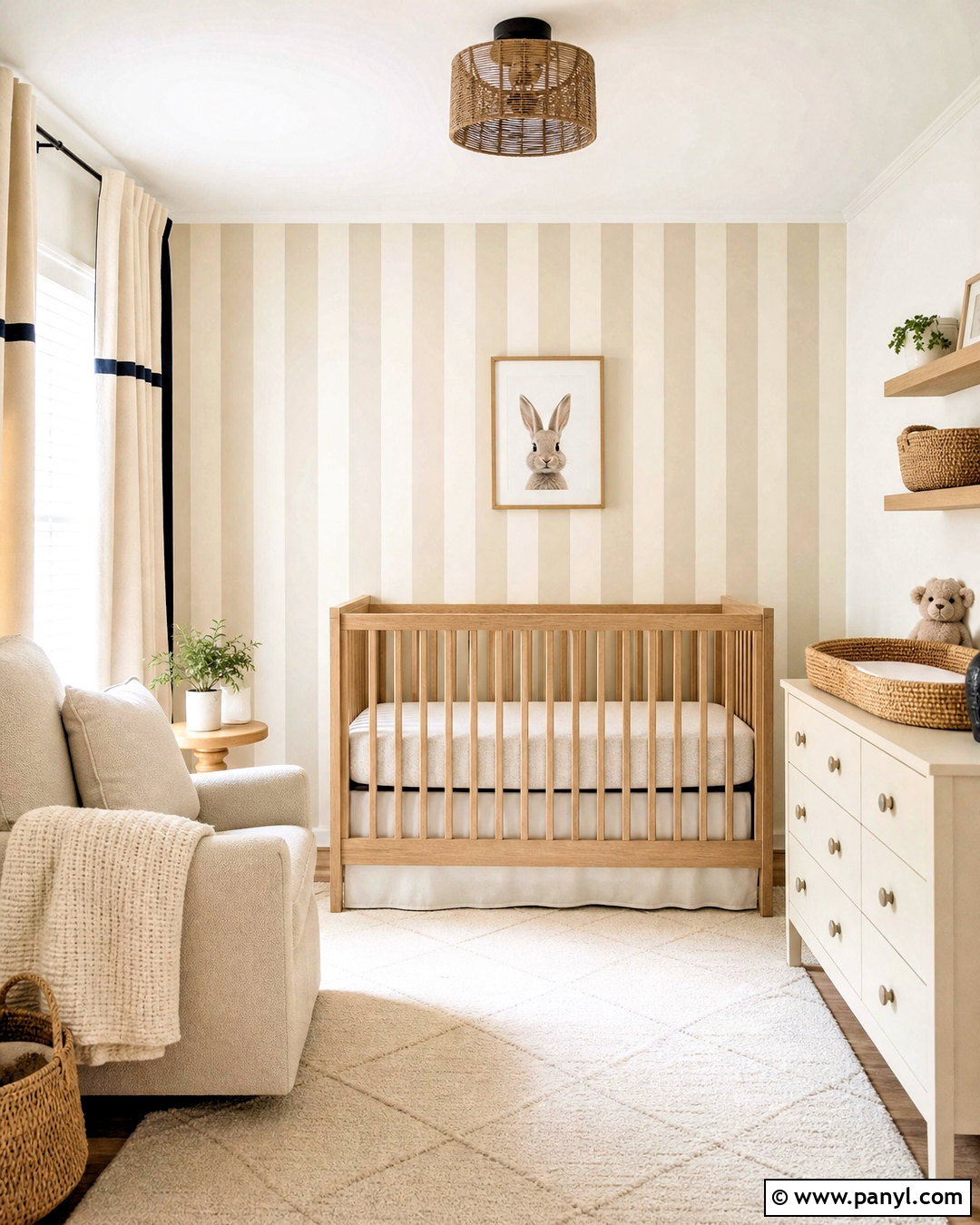
Vertical painted stripes can add height and pattern without relying on wallpaper. Choose two closely related colors, such as warm white and pale beige, dusty blue and soft white, or blush and creamy pink. Paint narrow, evenly spaced stripes on the crib wall and keep the other walls in the lighter shade. Pair the pattern with a simple natural wood crib and a solid ivory dresser. A neutral glider and low-contrast rug keep the room from becoming visually crowded. Repeat the darker stripe color through curtain trim, baskets, and one or two framed prints. Use careful measuring and painter’s tape for clean lines. The finished baby room feels tailored and lively while retaining a soothing palette suitable for both newborn and toddler years.
19. Forest Green Baby Room
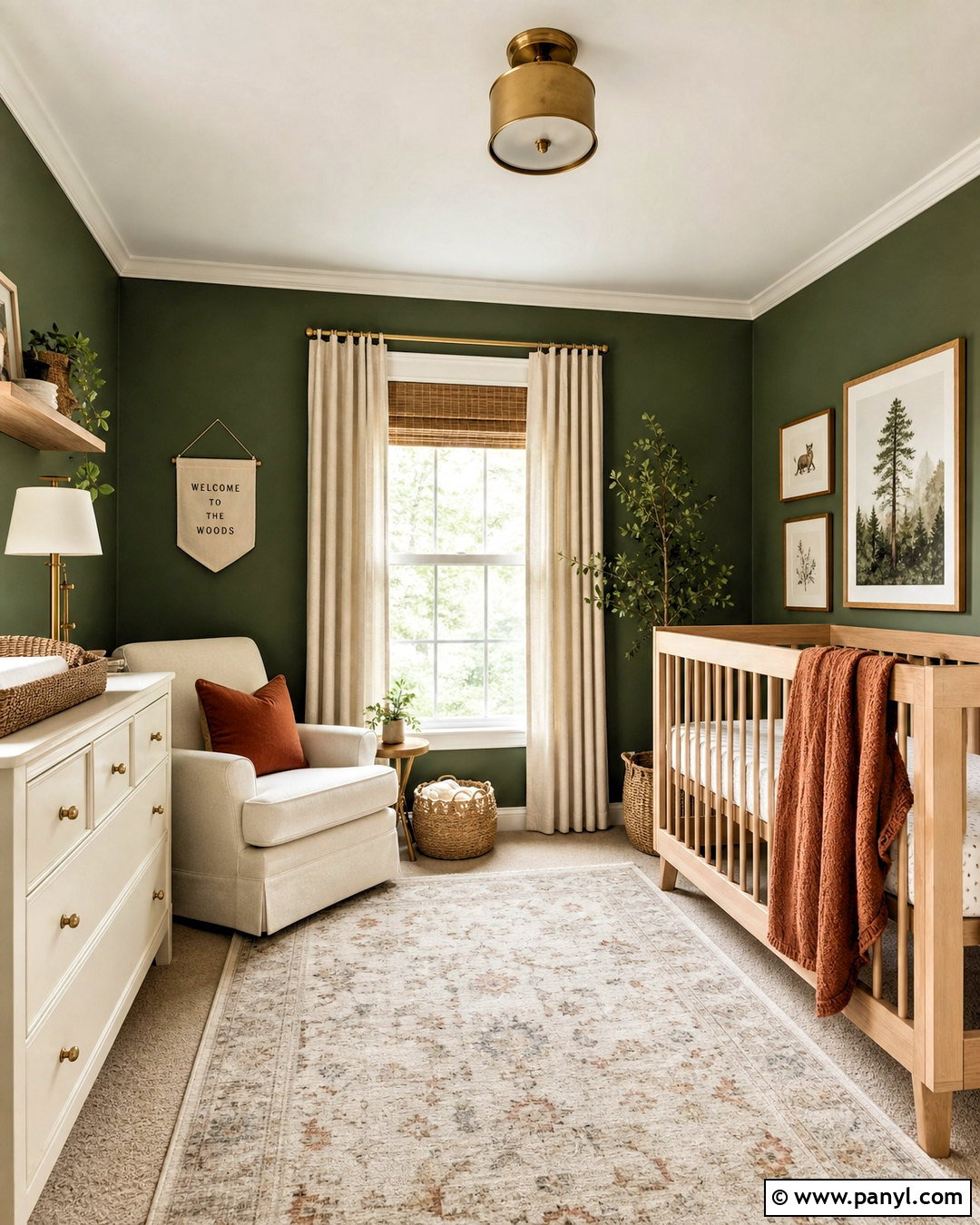
Forest green creates a rich, cocooning baby room when balanced with light furniture and warm natural materials. Paint the walls in a deep green with softened blue or gray undertones, then keep the ceiling and trim creamy white. In a small room, use the green on three walls and leave the window wall light to preserve brightness. Choose a white oak crib, an ivory dresser, and a cream upholstered glider. Layer in a pale patterned rug, oatmeal curtains, and woven storage baskets. Brass hardware and a warm white ceiling fixture prevent the darker paint from appearing flat. Add woodland artwork sparingly and introduce rust or mustard through textiles. The complete scheme feels dramatic yet comfortable, offering a sophisticated alternative to traditional pastel nursery colors.
20. Soft White Baby Room
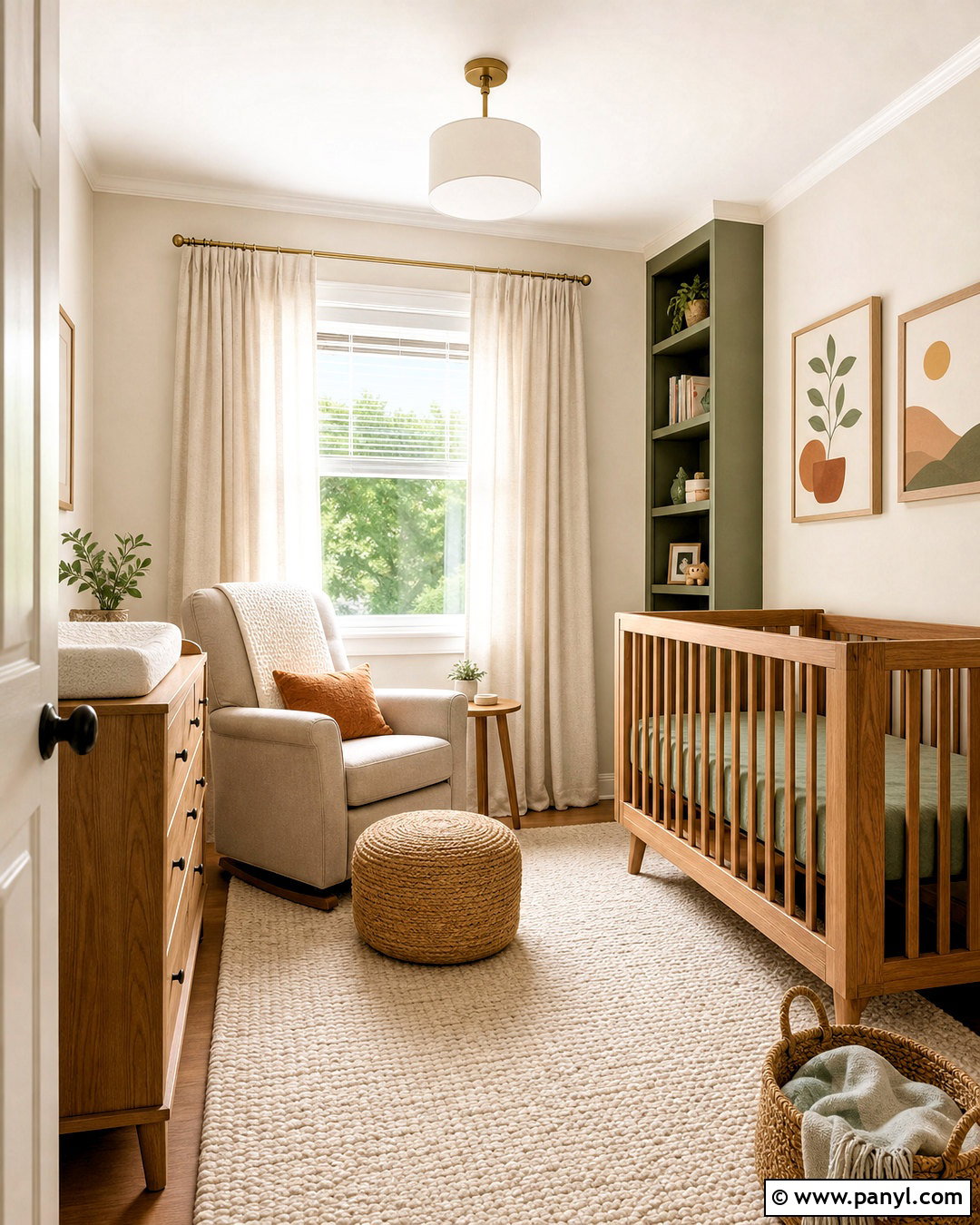
A soft white baby room can feel warm and layered rather than plain when texture and contrast are carefully planned. Choose a creamy white with subtle beige undertones for the walls, then use a slightly brighter white on the ceiling and trim. Bring in a medium oak crib, a matching dresser, and an oatmeal glider to establish natural warmth. A thick ivory rug defines the center of the room, while linen curtains add gentle movement around the windows. Decorate with woven baskets, light wood frames, and simple artwork in sage, terracotta, and dusty blue. A painted interior closet or bookshelf in muted green can provide one controlled color moment. This flexible nursery works beautifully with changing accessories and remains suitable well beyond the baby stage.
Conclusion:
Successful baby room paint ideas combine color, furniture, lighting, textiles, and storage into one comfortable design. Soft greens, dusty blues, warm neutrals, and gentle pastels offer flexible foundations, while murals, stripes, accent walls, and painted ceilings add personality. Consider the room’s natural light, existing flooring, and furniture finishes before selecting a final shade. Test large paint samples in several locations and check them during morning, afternoon, and evening light. Choose a practical finish according to the paint manufacturer’s directions, ventilate the space properly, and allow enough drying time before arranging the nursery. With thoughtful planning, the finished baby room can feel peaceful, functional, visually interesting, and ready to adapt as your child grows.

Related Ideas and Inspiration:
Leave a Reply