
Choosing exterior paint is easier when every color has a clear role. The wall color should connect naturally with the roof, trim, doors, masonry, and landscaping rather than compete with them. These outdoor wall painting ideas exterior colors cover warm neutrals, nature-inspired greens, coastal blues, dramatic dark shades, and cheerful accents. Each look is designed as a complete exterior palette you can adapt to a ranch, Craftsman, cottage, farmhouse, stucco home, or modern facade. Before committing, test large painted samples on different walls and view them throughout the day. Also consider fixed materials such as brick, stone, roofing, and concrete. Use the following complete schemes to explore outdoor wall painting ideas exterior colors for a more polished home.
1. Warm White Exterior With Black Trim
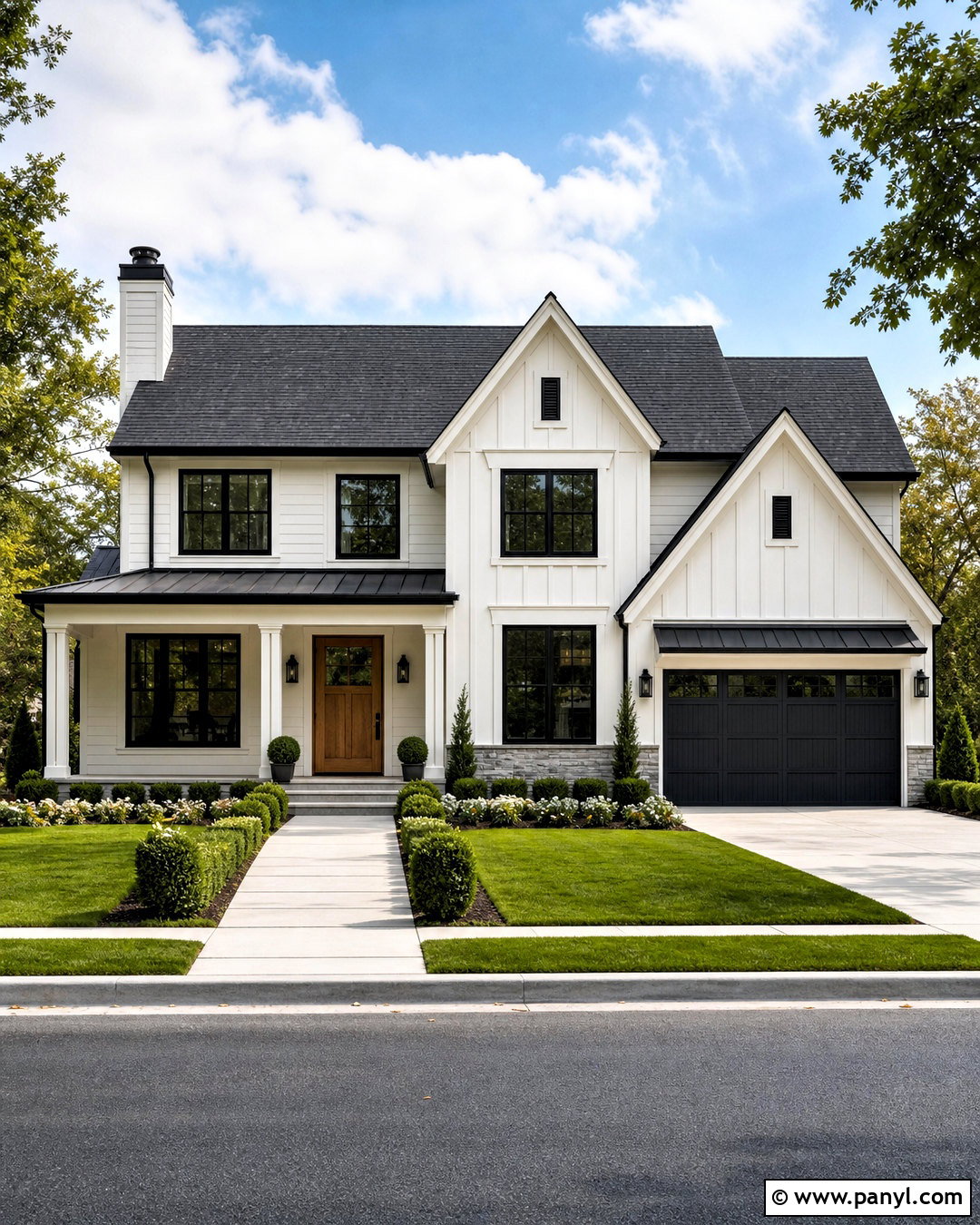
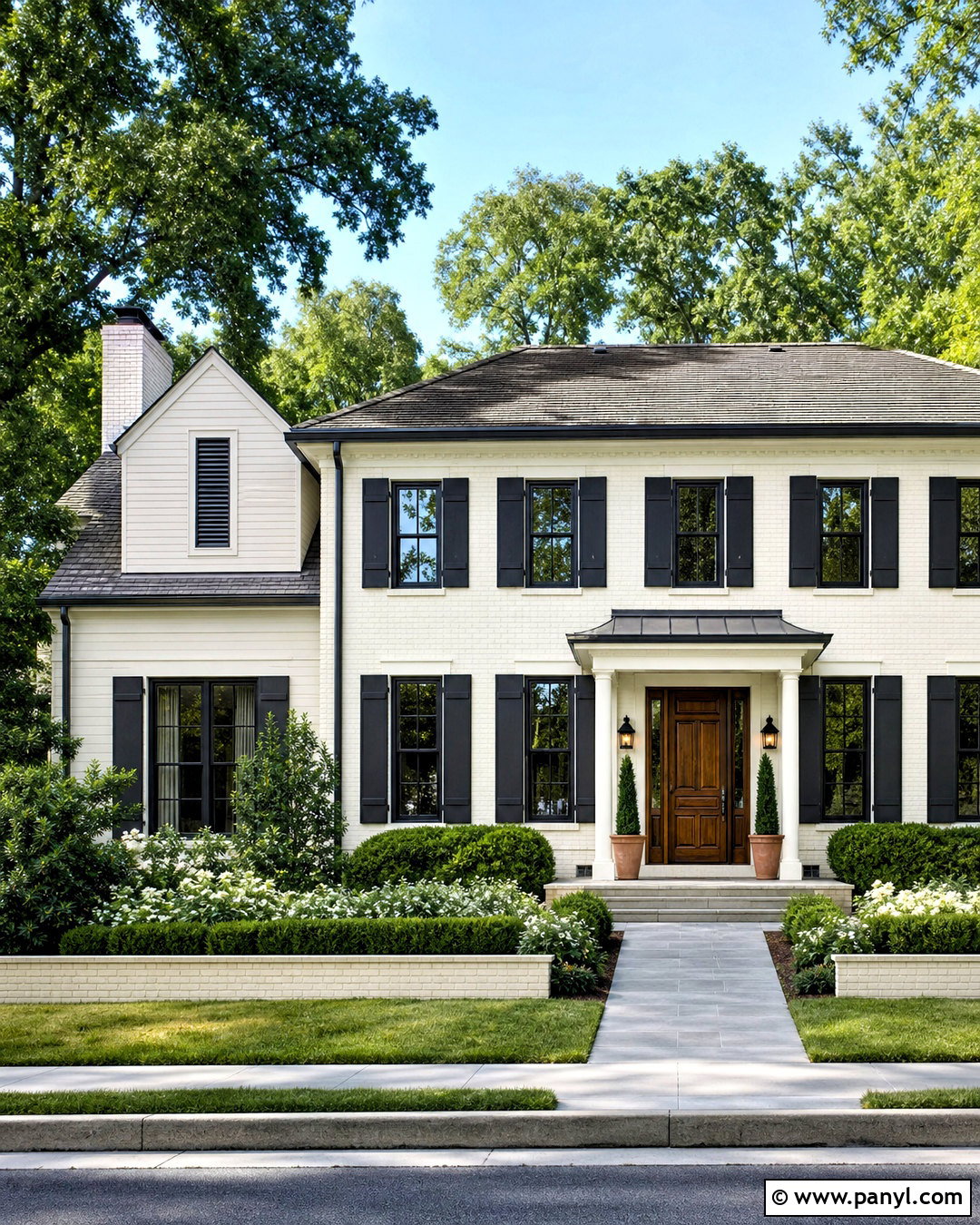
Warm white walls give a home a clean appearance without the sharpness of pure white. Choose a creamy white with subtle beige undertones for the main siding or stucco. Frame the windows, fascia, and gutters in matte black to create crisp definition. A medium-stained oak front door softens the contrast, while matching wood porch posts bring natural warmth across the facade. This palette looks balanced with a charcoal shingle roof and light gray stone around the foundation. Keep the garage door warm white so it blends into the wall instead of becoming the focal point. Finish the curb appeal with clipped evergreen shrubs, ornamental grasses, black sconces, and a simple concrete walkway leading to the entrance.
2. Sage Green Exterior With Cream Trim
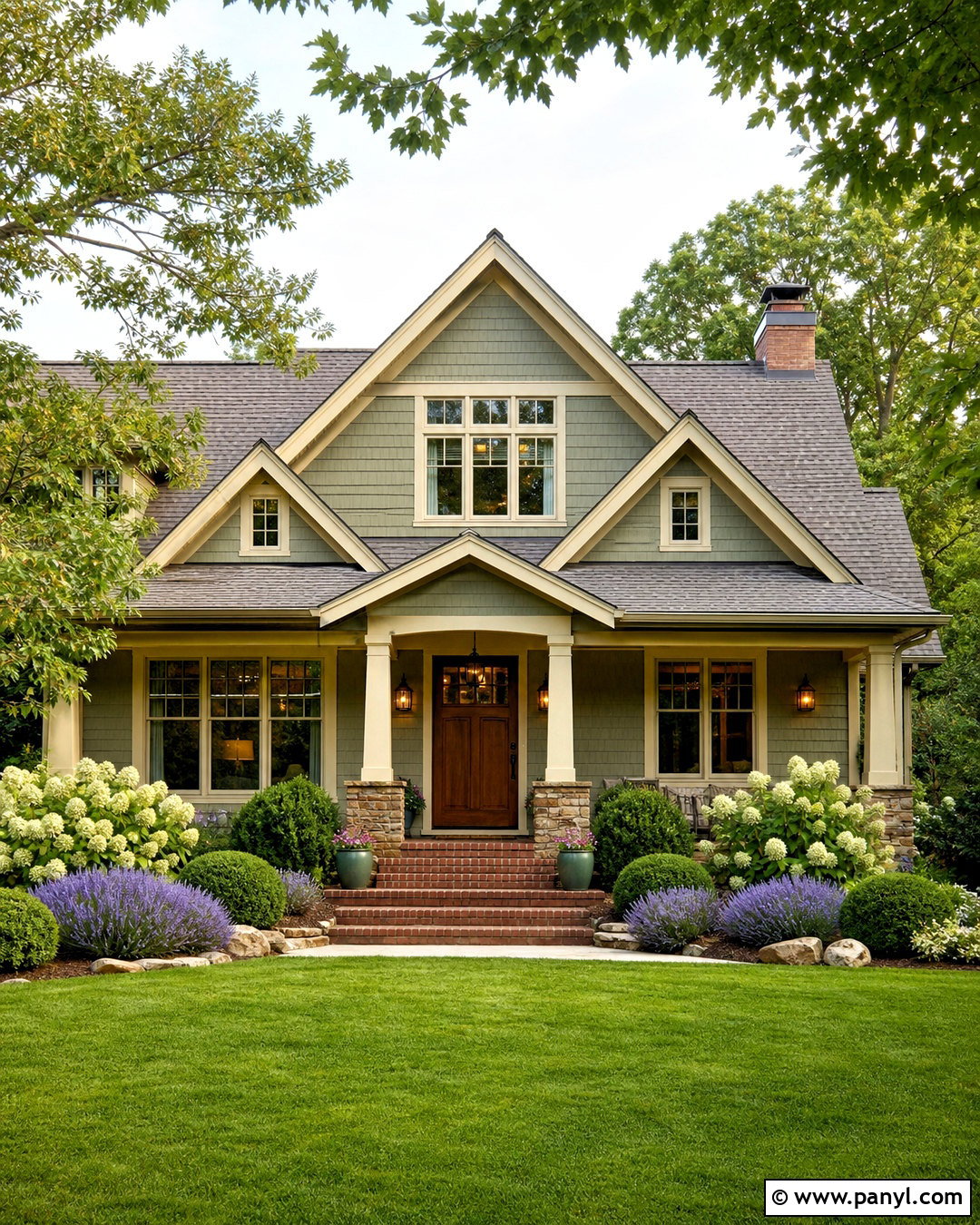
Soft sage green helps an exterior settle naturally into a leafy or garden-filled setting. Use a muted, gray-based sage across the main walls, then introduce warm cream on window trim, porch railings, columns, and the garage door. A stained walnut front door gives the scheme a rich focal point without feeling overly formal. Choose bronze exterior lights and hardware instead of harsh black fixtures. The combination works especially well with a weathered gray roof, red-brown brick steps, and natural fieldstone accents. Layer the landscaping with lavender, white hydrangeas, rosemary, and low evergreen shrubs. The finished house feels peaceful and established because the wall color, wood, masonry, and planting share soft, earthy undertones.
3. Navy Blue Exterior With White Trim
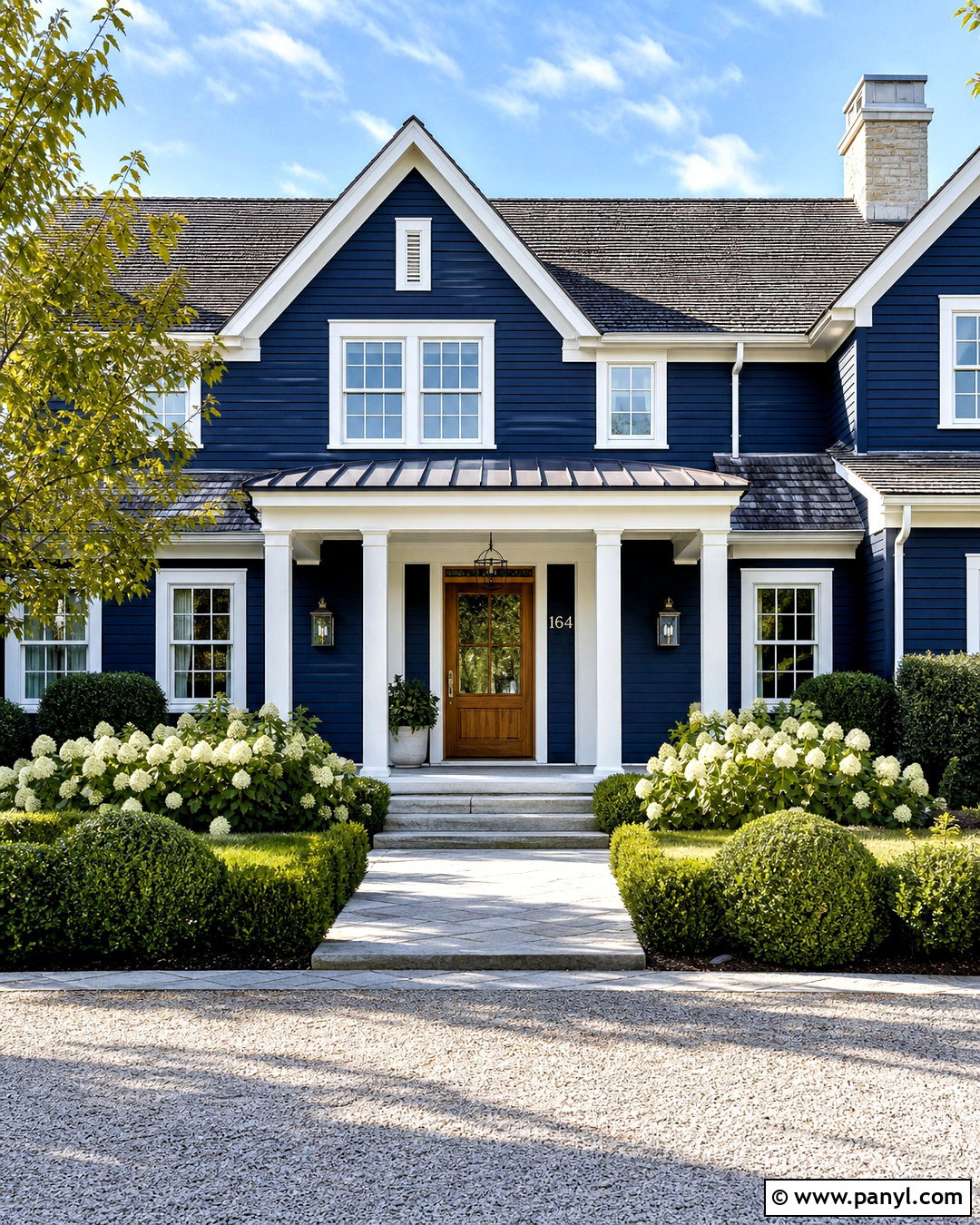
Deep navy walls can make a traditional home look sharper while preserving its welcoming character. Select a navy with a slightly softened gray undertone so it remains rich in strong daylight. Use bright white for window casings, porch columns, corner boards, fascia, and decorative gable details. A medium natural-wood door prevents the blue-and-white combination from becoming too nautical. Pair it with a dark charcoal roof, brushed nickel house numbers, and classic lantern-shaped sconces. If the home has shutters, paint them navy to match the walls rather than adding another competing color. White flowering plants, boxwood borders, and pale gravel around the foundation complete this structured exterior and keep the dark wall color visually fresh.
4. Greige Exterior With Charcoal Accents
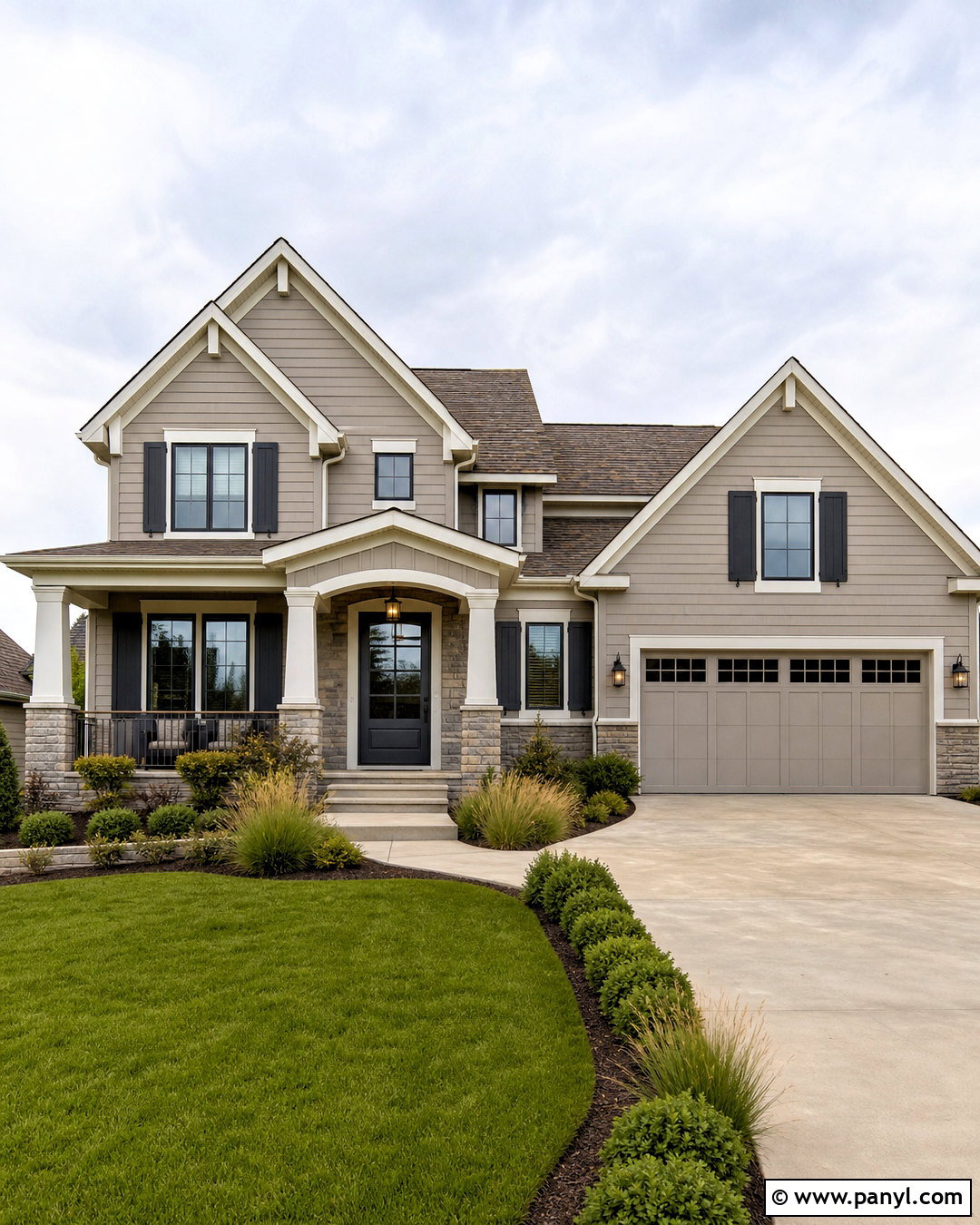
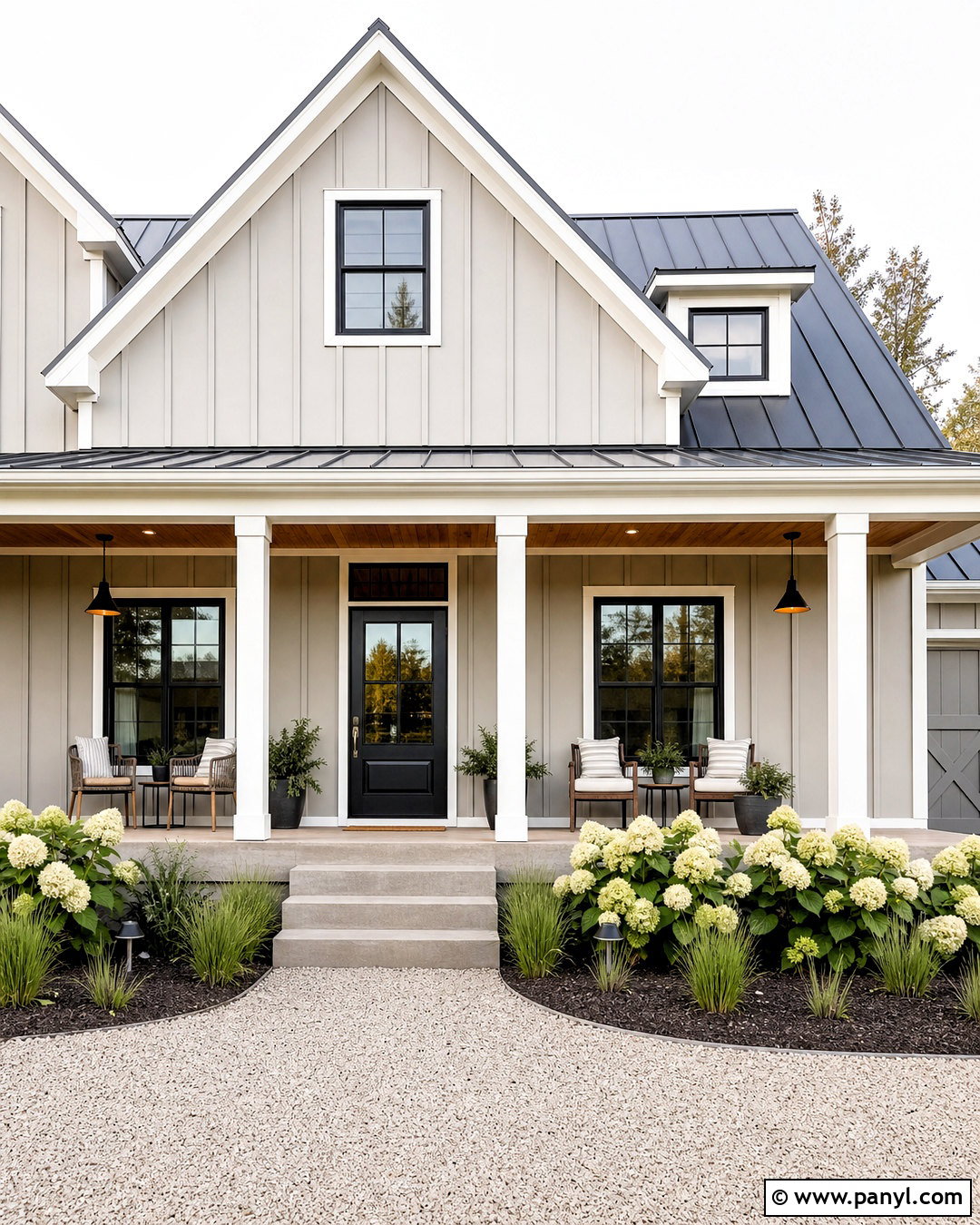
Greige offers the warmth of beige and the calm appearance of gray, making it useful for homes with mixed exterior materials. Cover the main walls in a medium-light greige, then use soft off-white on fascia, soffits, and window trim. Paint the front door, shutters, and garage door a deep charcoal for controlled contrast. If charcoal feels too heavy on a wide garage, keep the door greige and reserve the dark shade for smaller details. Add ledgestone in taupe, gray, and cream around the entry or lower foundation. A weathered brown roof, black metal lighting, and warm concrete paving will connect the palette. Rounded shrubs and ornamental grasses provide a relaxed finishing layer.
5. Terracotta Exterior With Ivory Trim
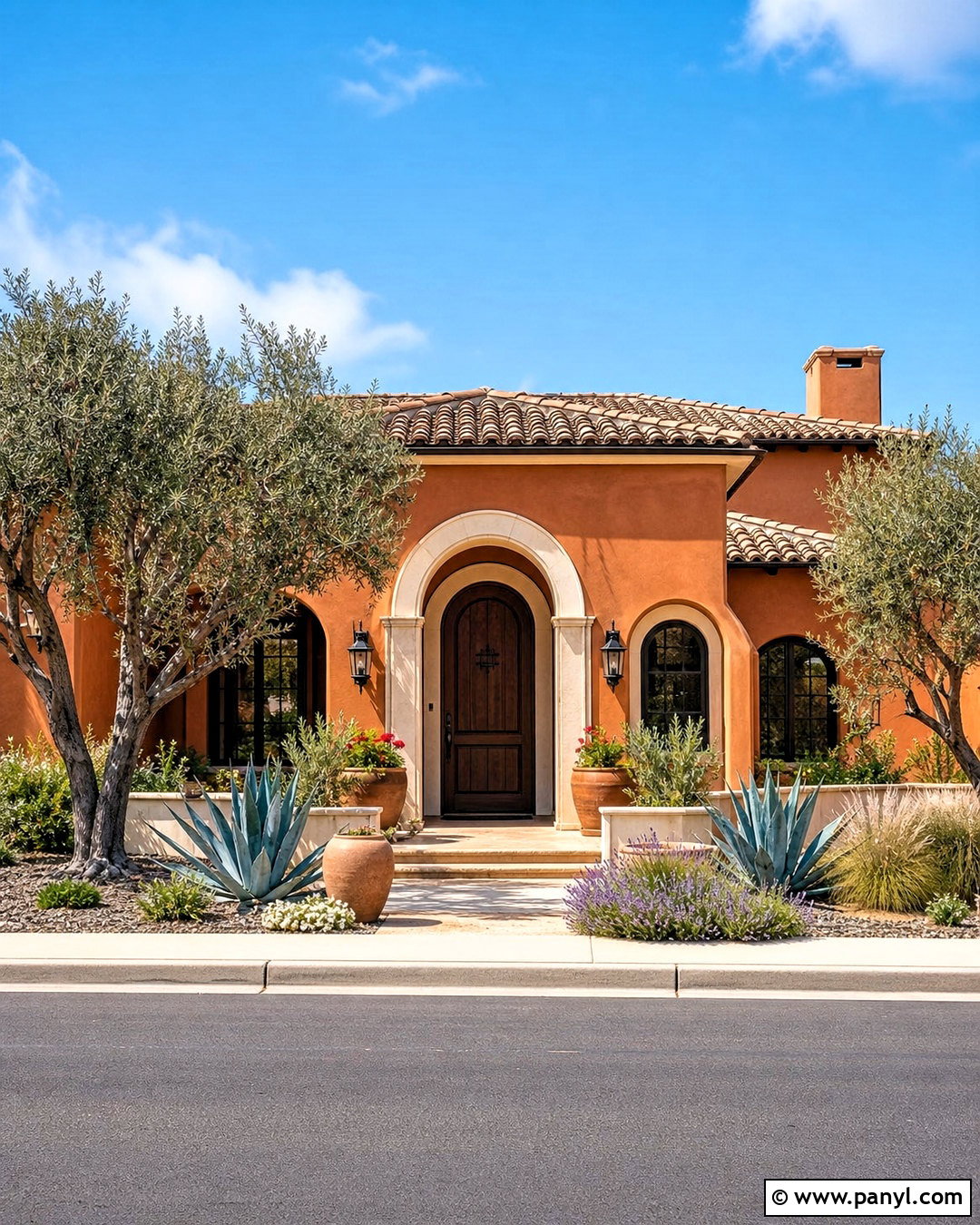
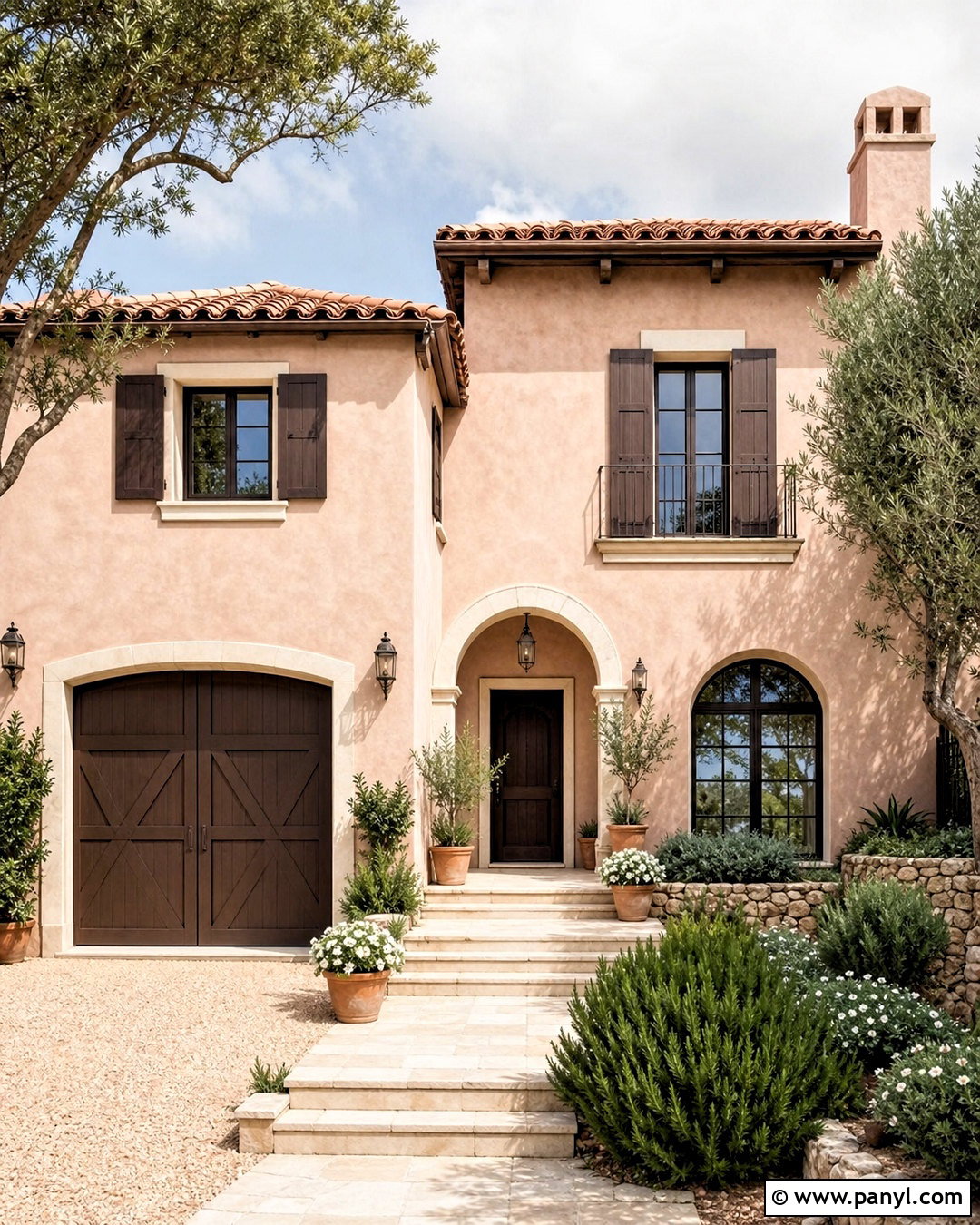
Sun-washed terracotta creates a warm exterior that works beautifully with stucco architecture and dry-climate landscaping. Choose a softened clay shade rather than a bright orange, allowing the walls to feel earthy and comfortable. Paint window surrounds, roofline trim, arches, and columns in warm ivory. A dark walnut front door and matching garage door add depth, while aged bronze lights support the rustic color story. Complete the house with a brown barrel-tile roof or medium-brown shingles. Sand-colored paving, gravel beds, large ceramic planters, and drought-tolerant plants strengthen the cohesive look. Olive trees, agave, lavender, and feathery grasses provide varied forms without distracting from the rich outdoor wall painting.
6. Light Blue Exterior With Soft White Trim
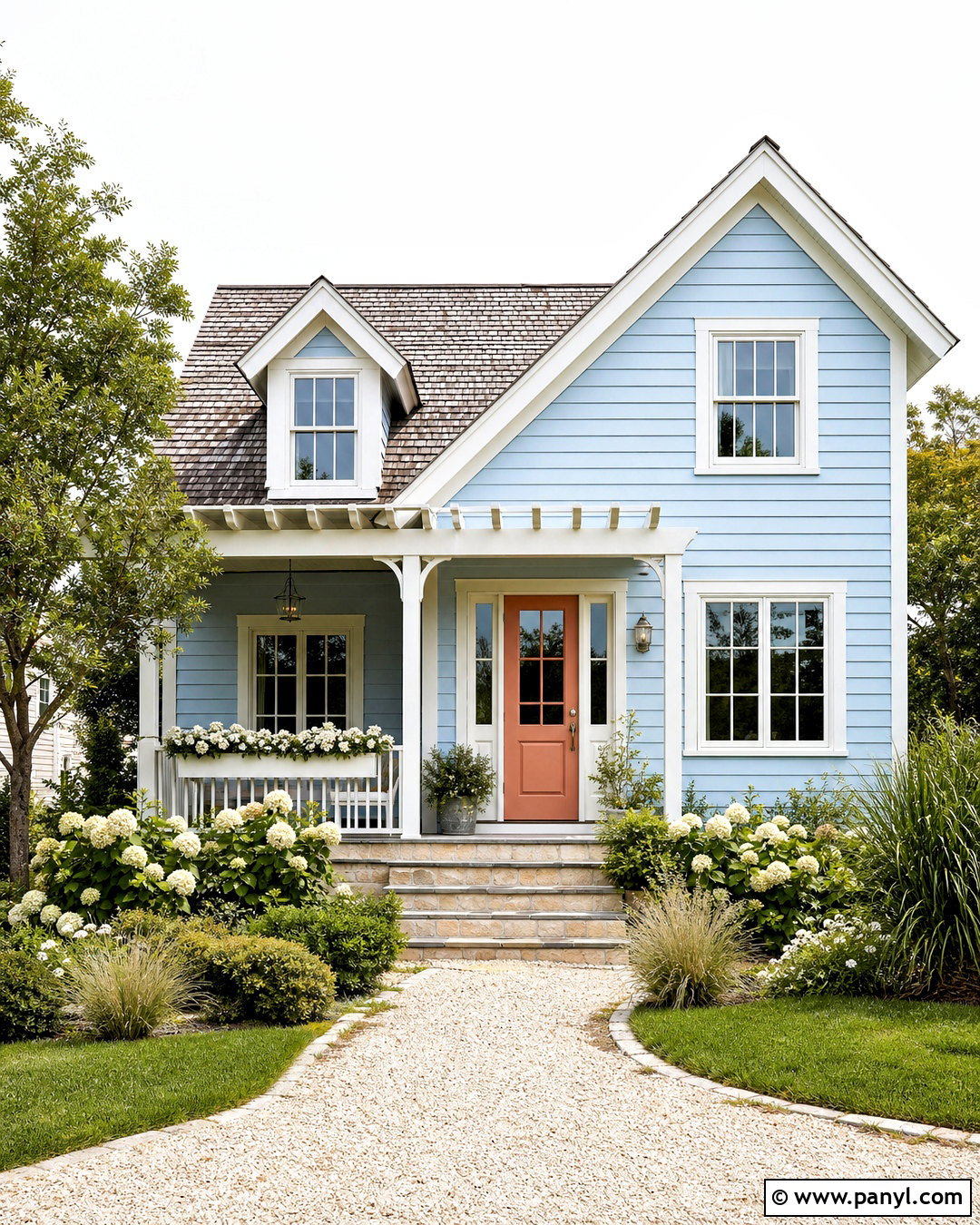
A pale blue exterior can make a smaller house feel open, cheerful, and connected to the sky. Look for a dusty blue with a gentle gray base so the color stays calm rather than turning overly bright. Use soft white on the porch, window frames, eaves, and garage door. A muted coral or warm red front door creates a friendly accent that is noticeable without overwhelming the facade. This palette pairs naturally with a medium-gray roof, nickel hardware, and pale stone steps. Keep shutters the same blue as the walls or paint them white for stronger definition. Hydrangeas, coastal grasses, white flowers, and a light gravel path reinforce the relaxed, airy character of the complete exterior.
7. Olive Green Exterior With Beige Trim
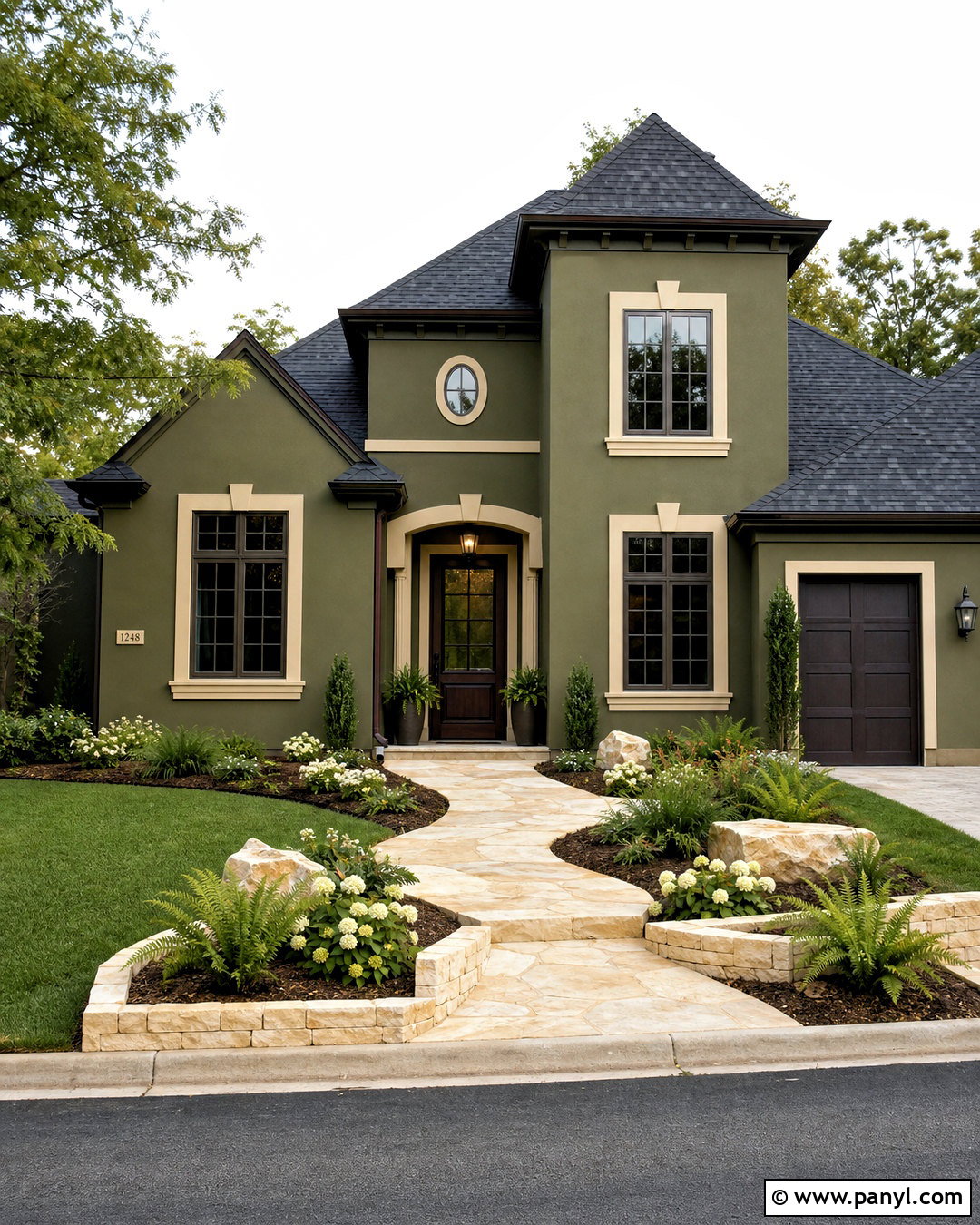
Olive green gives outdoor walls an earthy depth that looks especially attractive beside mature trees and natural stone. Choose a medium olive with brown-gray undertones for the siding or stucco. Apply sandy beige to window trim, fascia, porch columns, and the garage door to keep the contrast gentle. A deep espresso front door anchors the entrance, while dark bronze lighting and gutters blend quietly into the palette. Use warm limestone or irregular fieldstone around the foundation and porch steps. The scheme works with brown, bronze, or weathered charcoal roofing. Finish the yard with fern-like foliage, cream flowers, wood mulch, and curved planting beds. These details create a grounded exterior that feels connected to its surroundings.
8. Charcoal Exterior With Natural Wood
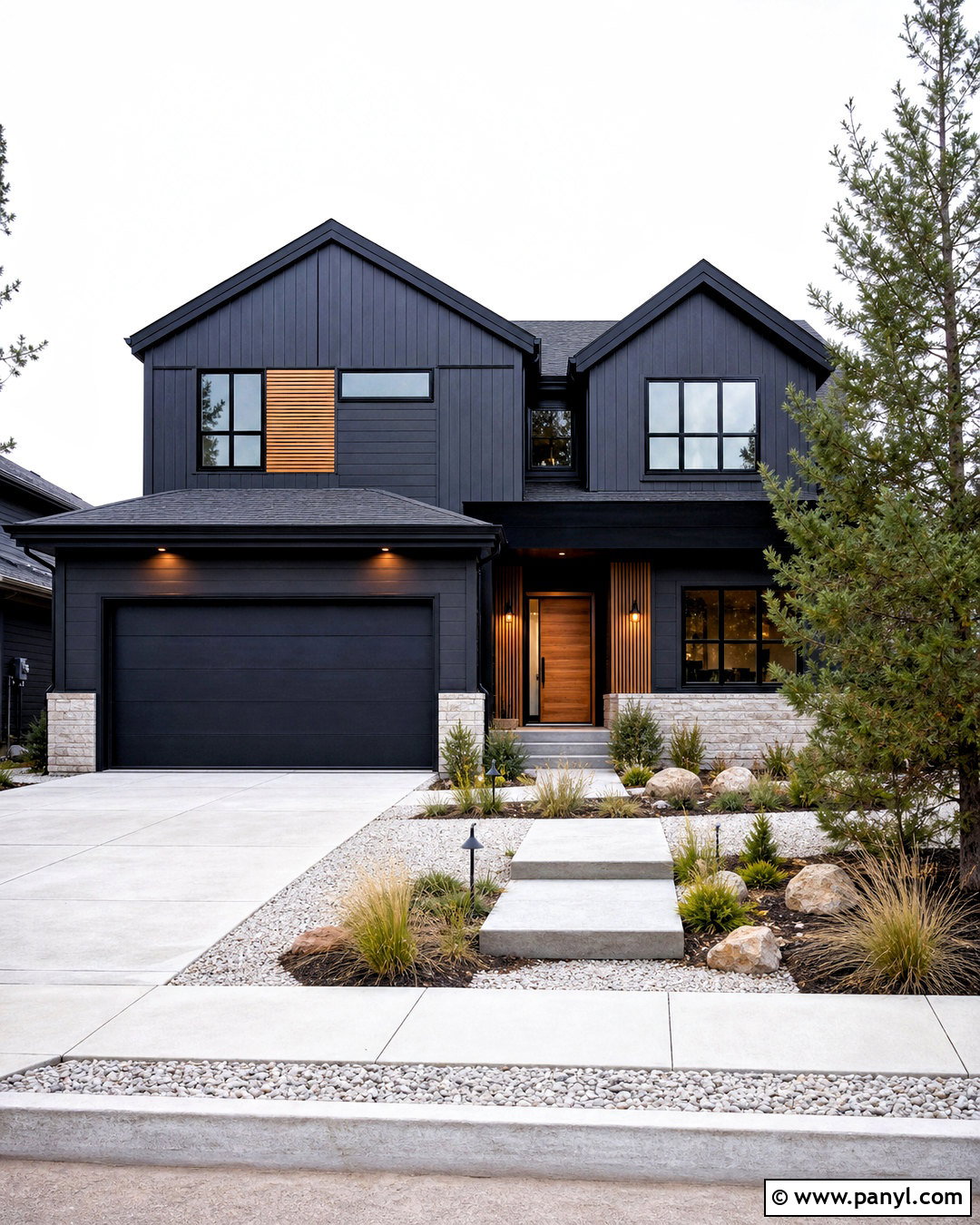
Charcoal exterior walls create a strong architectural backdrop, but natural wood is essential for keeping the house inviting. Select a deep charcoal that reads as dark gray instead of solid black. Use it across the walls, trim, gutters, and garage door for a streamlined appearance. Add cedar or white oak to the front door, porch ceiling, slatted screens, and selected gable areas. Black-framed windows can disappear neatly into the dark facade, allowing the wood to become the main accent. Choose a black metal roof or charcoal shingles to maintain the simple color story. Pale concrete, gravel, and light stone introduce necessary contrast. Soft grasses and loosely shaped evergreens keep the finished exterior approachable.
9. Cream Exterior With Brown Trim
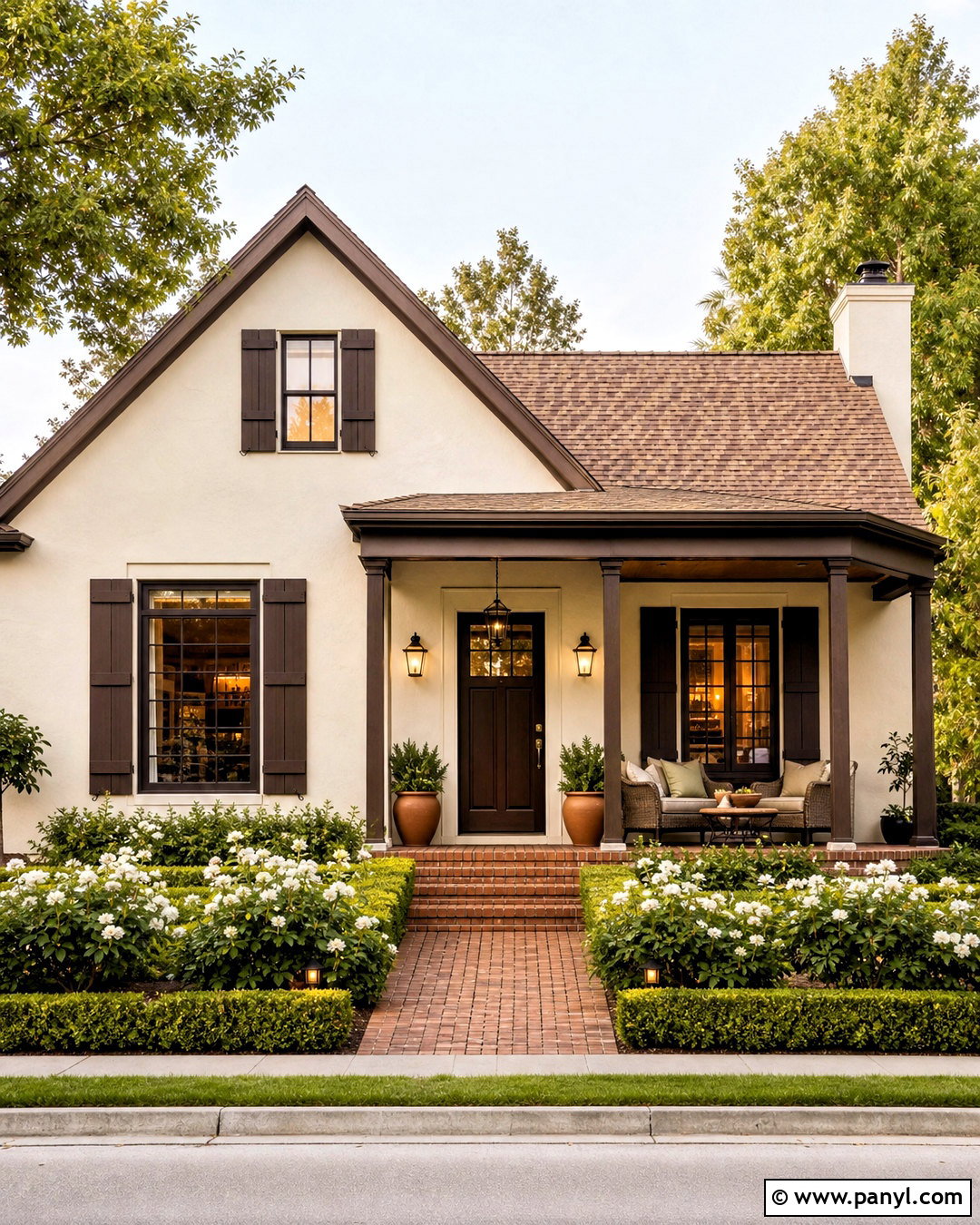
Cream walls and brown trim create a comfortable traditional palette that coordinates easily with warm roofing and brick. Paint the main exterior a buttery cream that is light but not yellow. Use chocolate brown on shutters, fascia, gutters, and the front door, then keep window frames slightly lighter to avoid outlining every opening too heavily. A brown shingle roof and red-brown brick steps will feel intentional within this scheme. If the garage dominates the front view, paint it cream and add simple brown handles or decorative hinges. Brass-toned lights, woven porch seating, and terracotta planters provide subtle warmth. Green hedges and white flowers balance the brown accents and prevent the exterior from looking overly dark.
10. Dusty Blue Exterior With Red Door
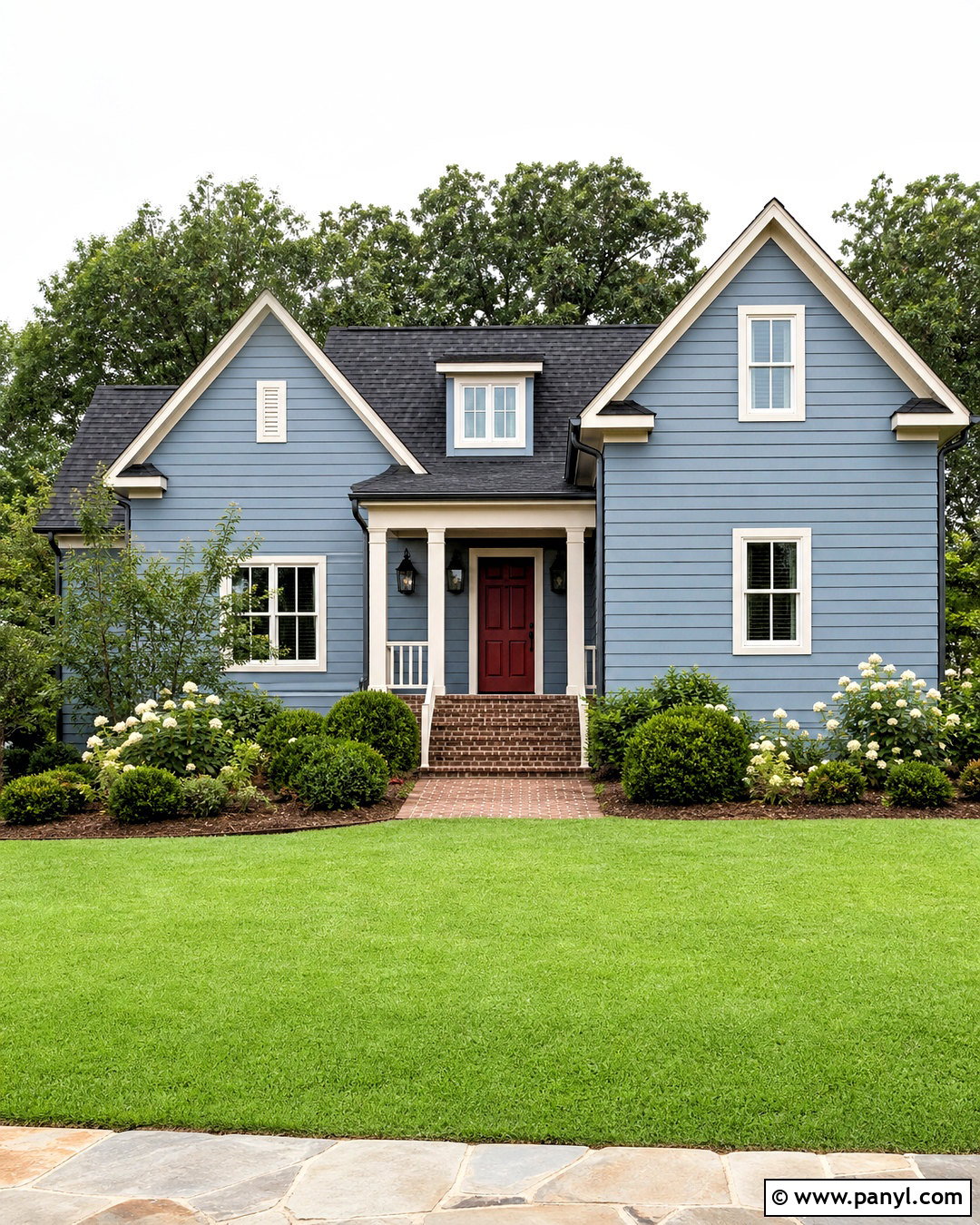
Dusty blue walls provide a relaxed base for a confident red front door. Choose a medium blue softened with gray so it coordinates with both traditional and casual architecture. Use creamy white for window trim, porch posts, fascia, and the garage door. Paint the entry door a deep barn red or muted cranberry rather than a vivid primary red. This controlled accent gives the facade personality while remaining easy to decorate around. Complete the palette with charcoal roof shingles, black lanterns, and weathered brick steps. Keep shutters blue to match the walls or remove them for a cleaner appearance. Boxwoods, white roses, and natural mulch create a tidy landscape that supports the colorful yet balanced exterior.
11. Taupe Exterior With Black Accents
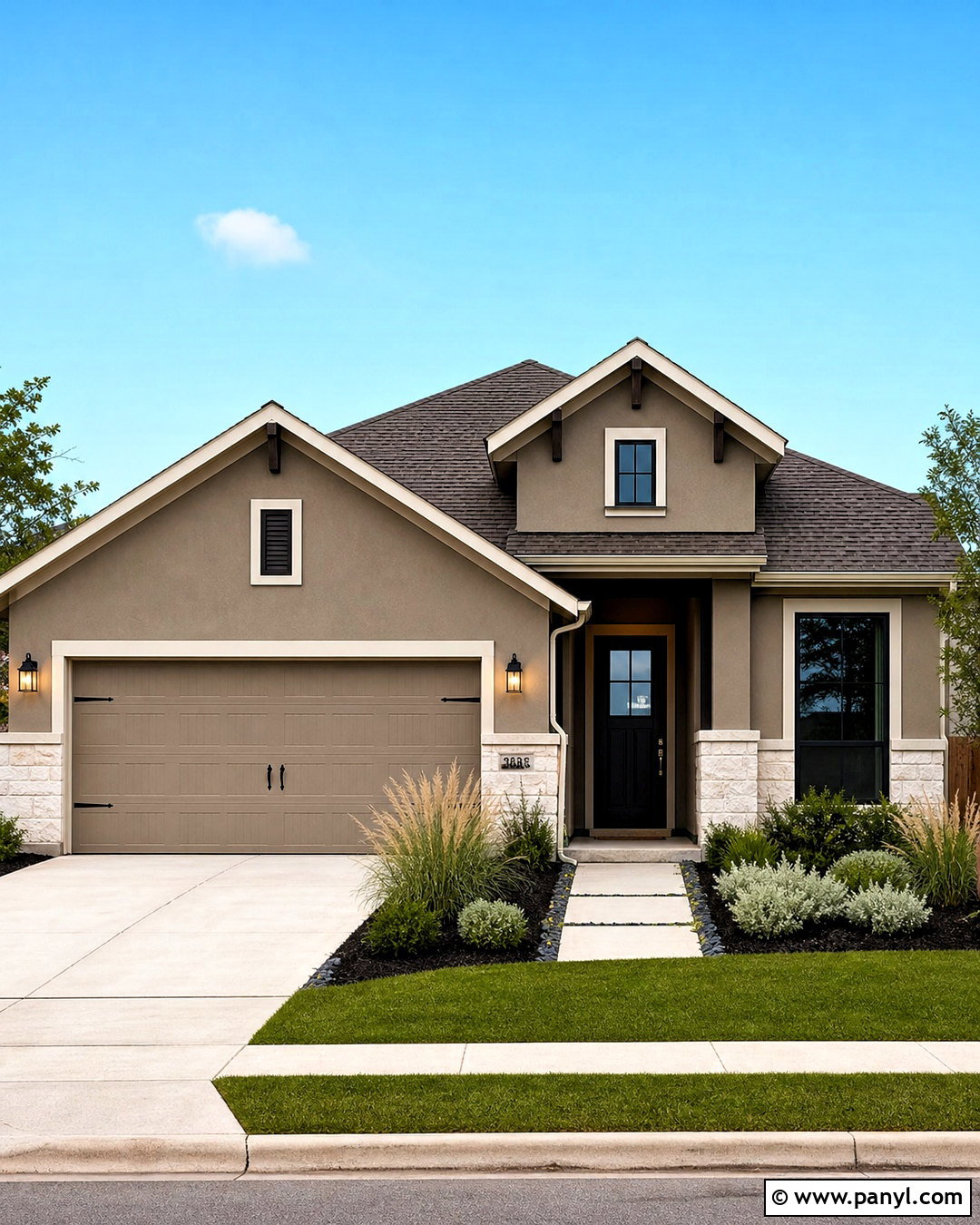
A taupe exterior provides more warmth than gray while remaining understated and versatile. Use medium taupe on the primary walls, selecting a shade that relates to the home’s stone, roof, or driveway. Paint window frames, gutters, exterior lights, and the front door matte black. Keep fascia and soffits in a lighter warm white to prevent the roofline from feeling too heavy. A garage door in the main taupe color will visually reduce its size, while narrow black hardware adds definition. Incorporate limestone, travertine, or warm gray ledgestone near the entrance for texture. Neatly spaced shrubs, pale ornamental grasses, and dark mulch finish the look. The result is tailored, practical, and well suited to modern suburban homes.
12. Soft Yellow Exterior With White Trim
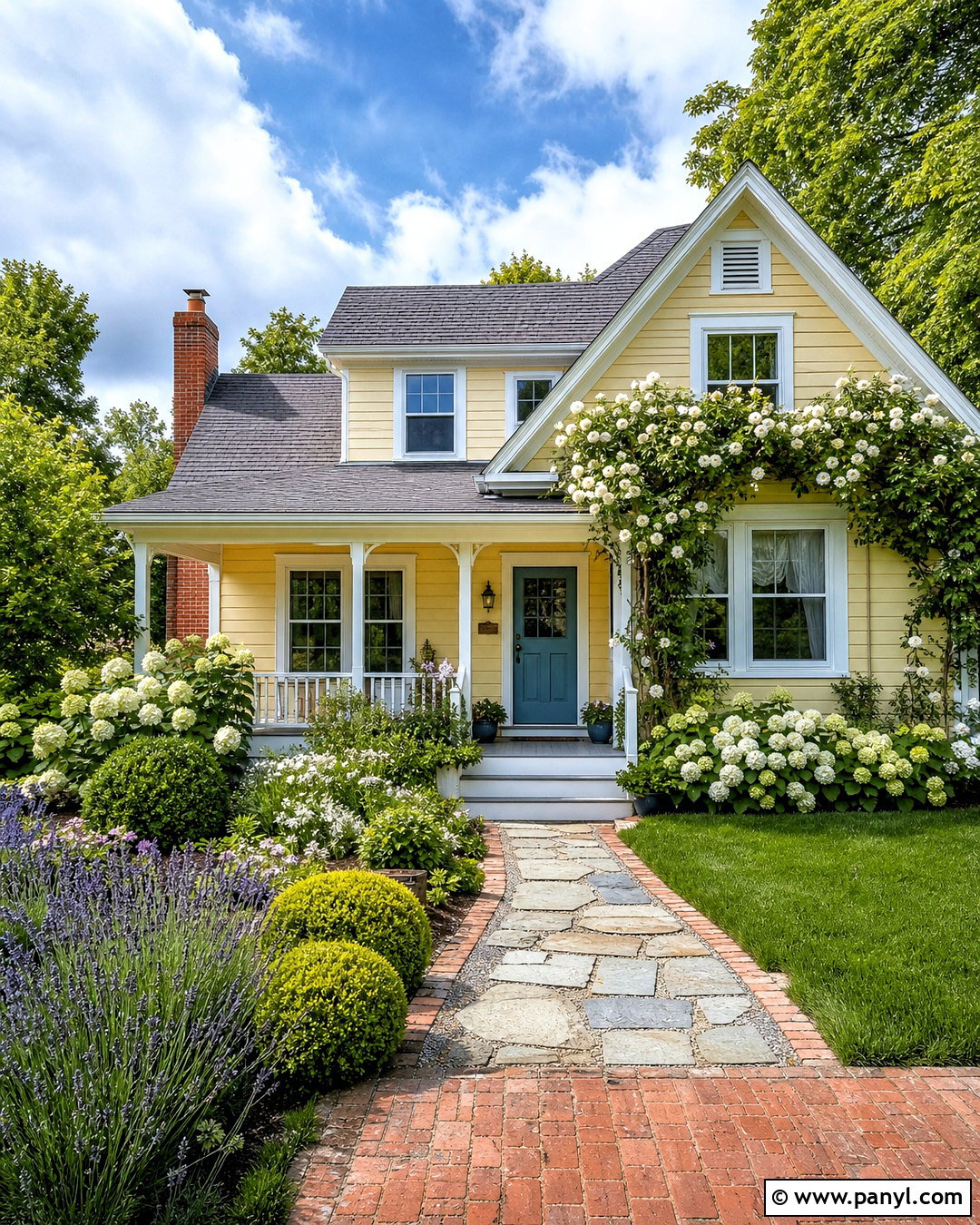
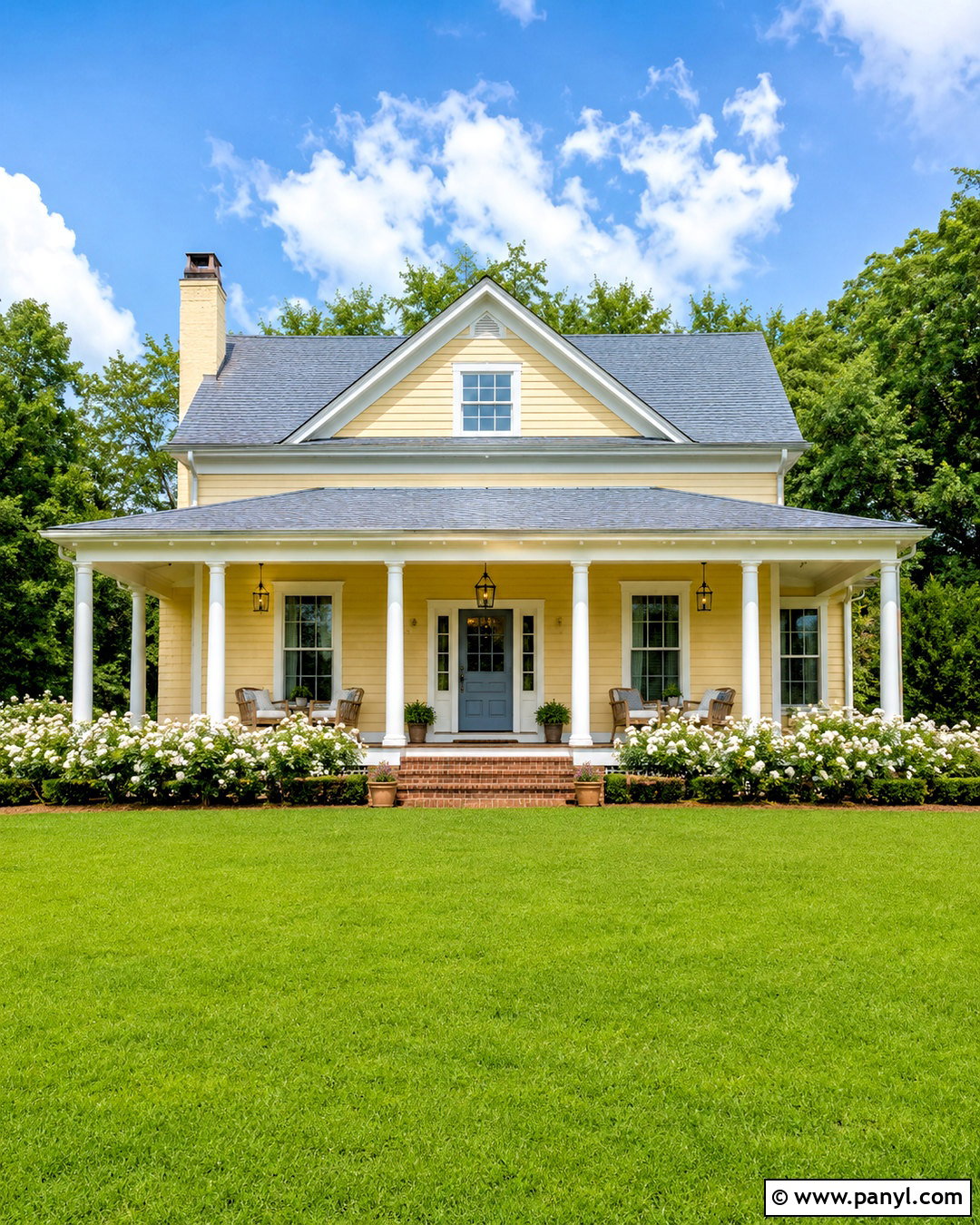
Soft yellow walls can make a cottage or older home feel bright and welcoming without looking overly colorful. Choose a pale, creamy yellow rather than a saturated lemon shade. Apply clean white to the porch railings, window trim, eaves, columns, and garage door. A muted blue-gray front door offers a gentle complementary accent, while brushed nickel or aged brass hardware keeps the entrance polished. Pair the colors with medium-gray roof shingles and a walkway made from brick or natural stone. White climbing roses, lavender, blue hydrangeas, and rounded green shrubs add a garden-focused finish. Keeping the main yellow subtle allows all these details to work together, creating a cheerful exterior that still feels calm and livable.
13. Forest Green Exterior With Stone Accents
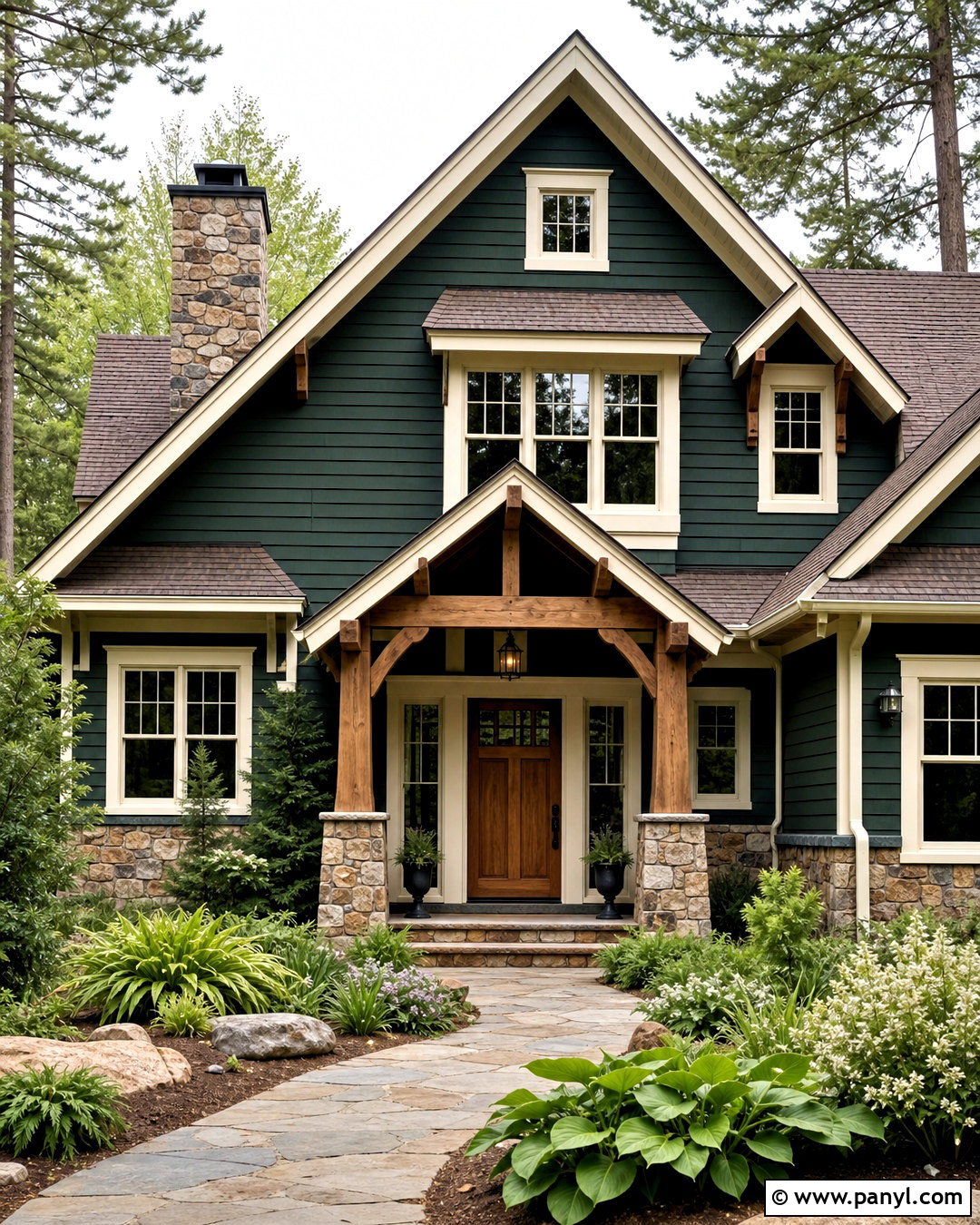
Deep forest green brings richness to an exterior while allowing warm stone and wood details to stand out. Paint the siding a dark, natural green with muted blue undertones. Use warm off-white on window trim, fascia, porch columns, and decorative brackets. A solid cedar front door and matching porch beams introduce warmth against the cool green walls. Add irregular stone in cream, brown, and gray around the lower facade or chimney to connect the house with the landscape. Dark bronze gutters and lights will blend more softly than pure black. Choose brown-gray roof shingles to unify the complete palette. Ferns, hostas, white flowering shrubs, and natural mulch reinforce the woodland character without making the entrance feel hidden.
14. White Exterior With Green Accents
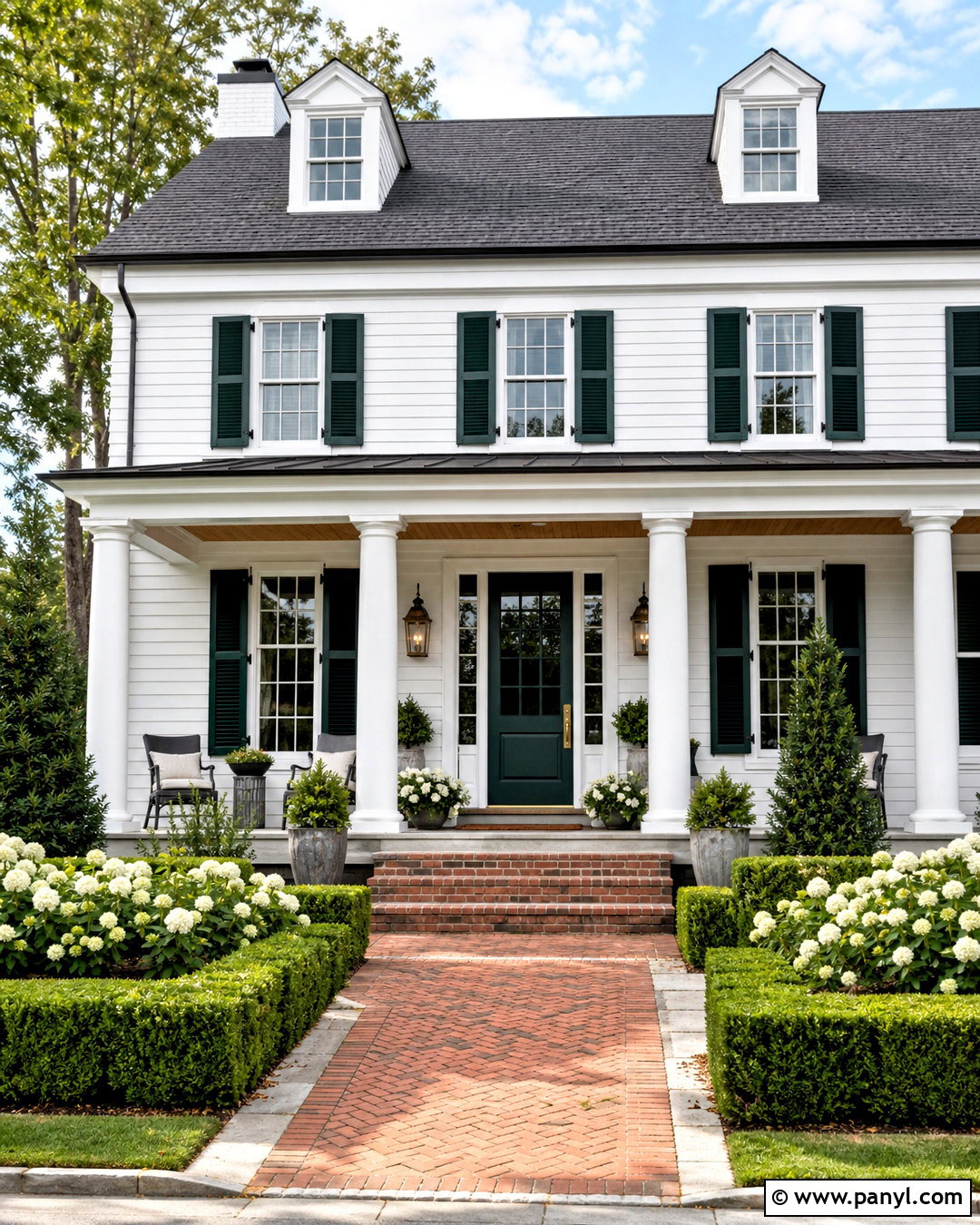
A white exterior becomes more distinctive when deep green replaces predictable black accents. Cover the main walls in warm white, using the same color on fascia and soffits for a unified background. Paint shutters, window sashes, and the front door a dark evergreen with subtle gray undertones. Keep porch columns white so the entry remains light, then add a natural wood porch ceiling for warmth. This palette pairs well with charcoal shingles, red brick steps, and aged brass lights. If there is a detached garage or garden gate, repeat the green there to distribute the accent around the property. Layered evergreens, white flowers, and clipped hedges create a fresh landscape that complements the classic painted facade.
15. Clay Beige Exterior With Bronze Details
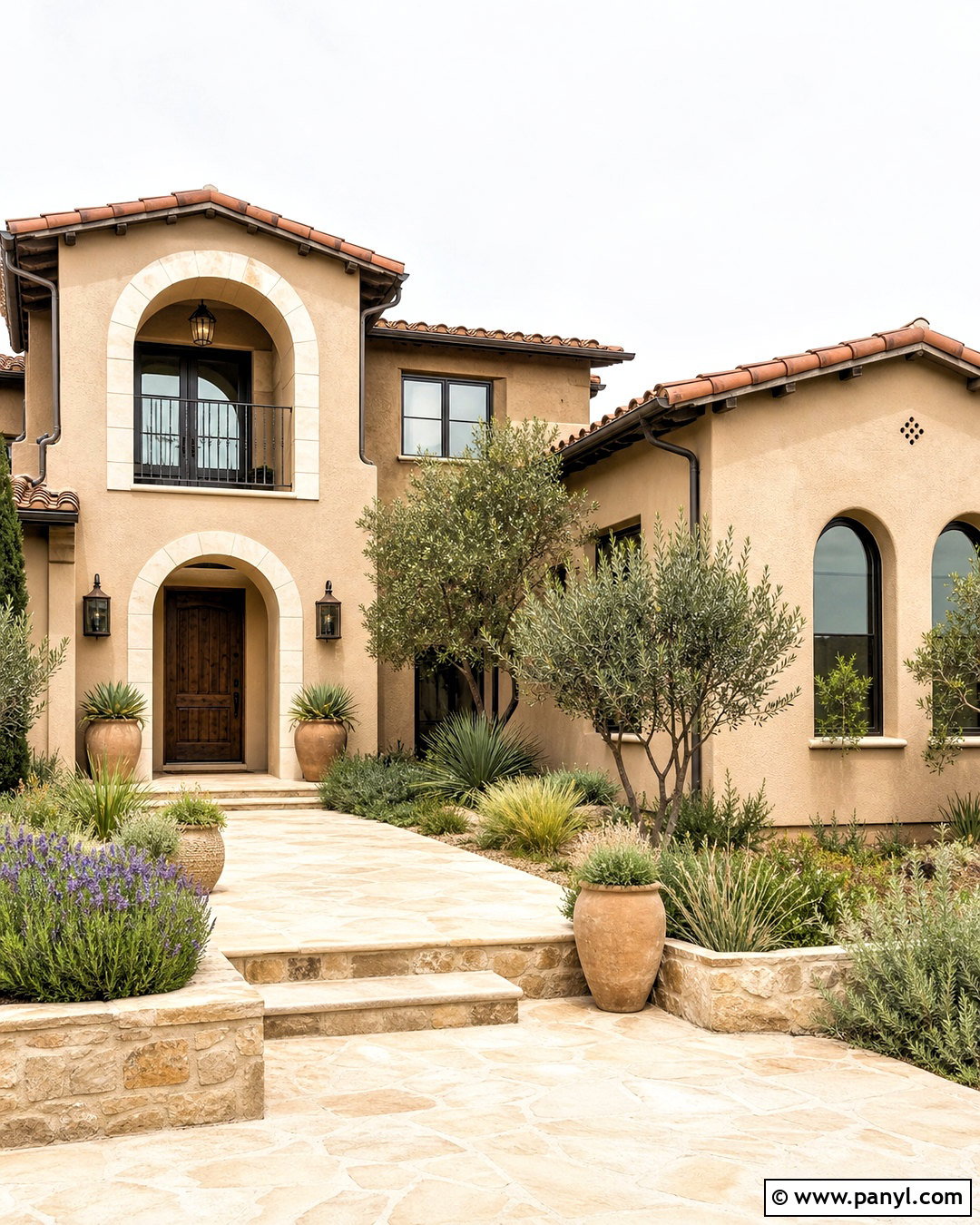
Clay beige gives exterior walls a warm, mineral quality that works well in sunny locations. Choose a medium-light beige with soft peach or terracotta undertones, avoiding shades that become dull gray outdoors. Use creamy off-white for window trim, columns, arches, and roof edges. Bronze window frames, gutters, lights, and door hardware add definition without producing severe contrast. Select a dark stained-wood front door and a matching garage door if the facade can support that much wood tone. The scheme feels especially cohesive with tan stone, reddish roof tiles, and sand-colored paving. Complete the setting with olive trees, rosemary, sage, grasses, and large earthen planters. Every element supports the wall color’s warm, grounded character.
16. Gray Blue Exterior With Cream Trim
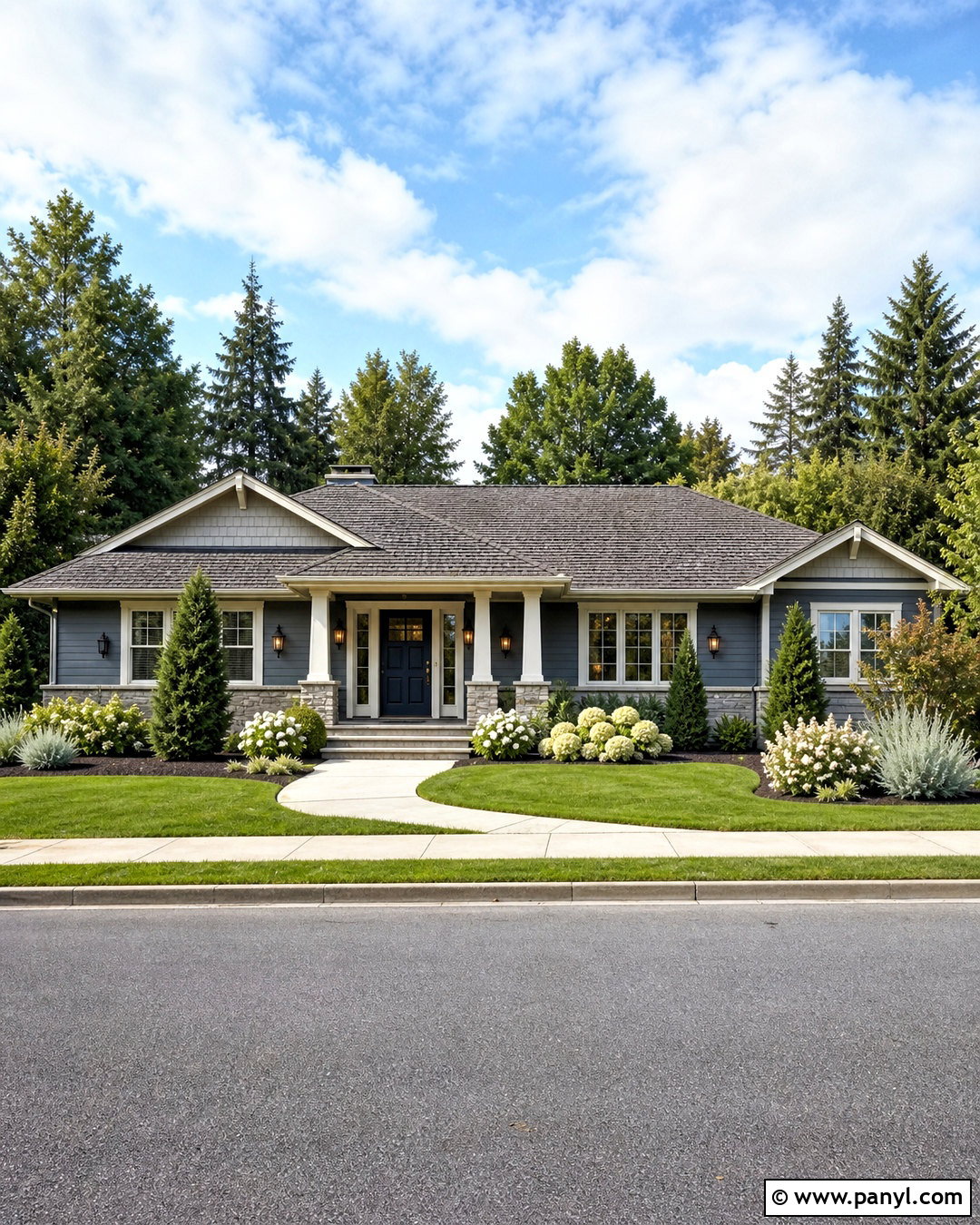
Gray-blue walls offer quiet color while remaining flexible enough for brick, stone, or wood accents. Select a medium shade that appears noticeably blue in sunlight but settles into soft gray in shaded areas. Use warm cream on windows, fascia, porch railings, and columns to avoid a cold blue-and-white contrast. Paint the front door dark navy or stained walnut, depending on whether you prefer a crisp or natural focal point. A weathered gray roof and pale stone foundation keep the palette balanced. Add black or bronze lighting with simple shapes. White flowering shrubs, silvery foliage, and deep green evergreens give the landscaping depth. This complete scheme suits both traditional facades and clean, updated ranch homes.
17. Muted Peach Exterior With White Trim
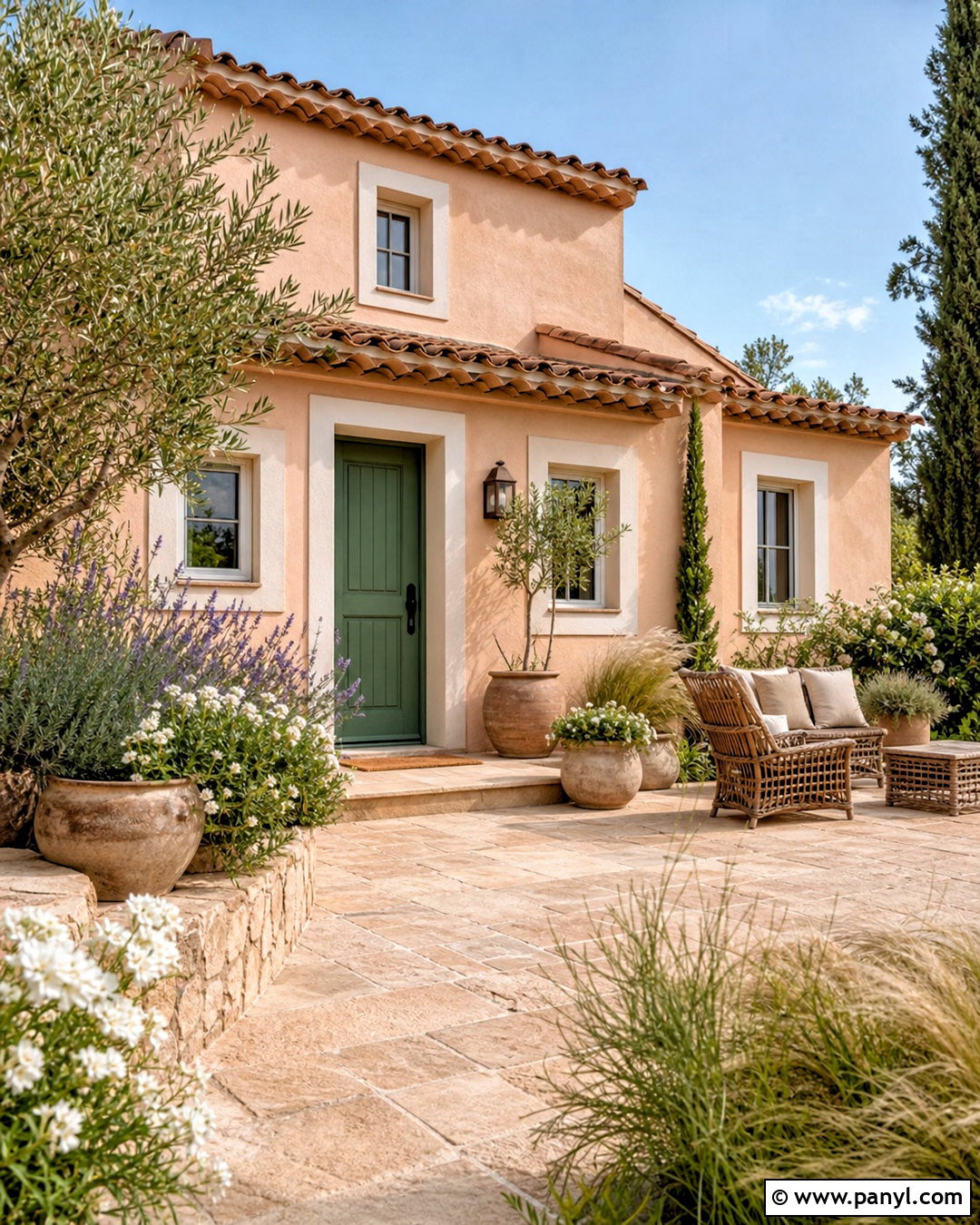
Muted peach can refresh stucco or cottage walls while creating a warm, sunlit appearance. The key is selecting a dusty peach mixed with beige, not a bright pink-orange shade. Use warm white around windows, on roof trim, porch posts, and the garage door. A sage green front door introduces a nature-inspired counterpoint, while dark bronze hardware gives the entrance definition. Terracotta roof tiles or warm brown shingles coordinate naturally with the peach walls. Add cream-colored stone paving, woven outdoor seating, and large planters in aged clay. The landscape can include olive foliage, lavender, white flowers, and low grasses. Together, these elements produce a friendly exterior with color, softness, and a clear visual structure.
18. Black Exterior With White Oak Accents
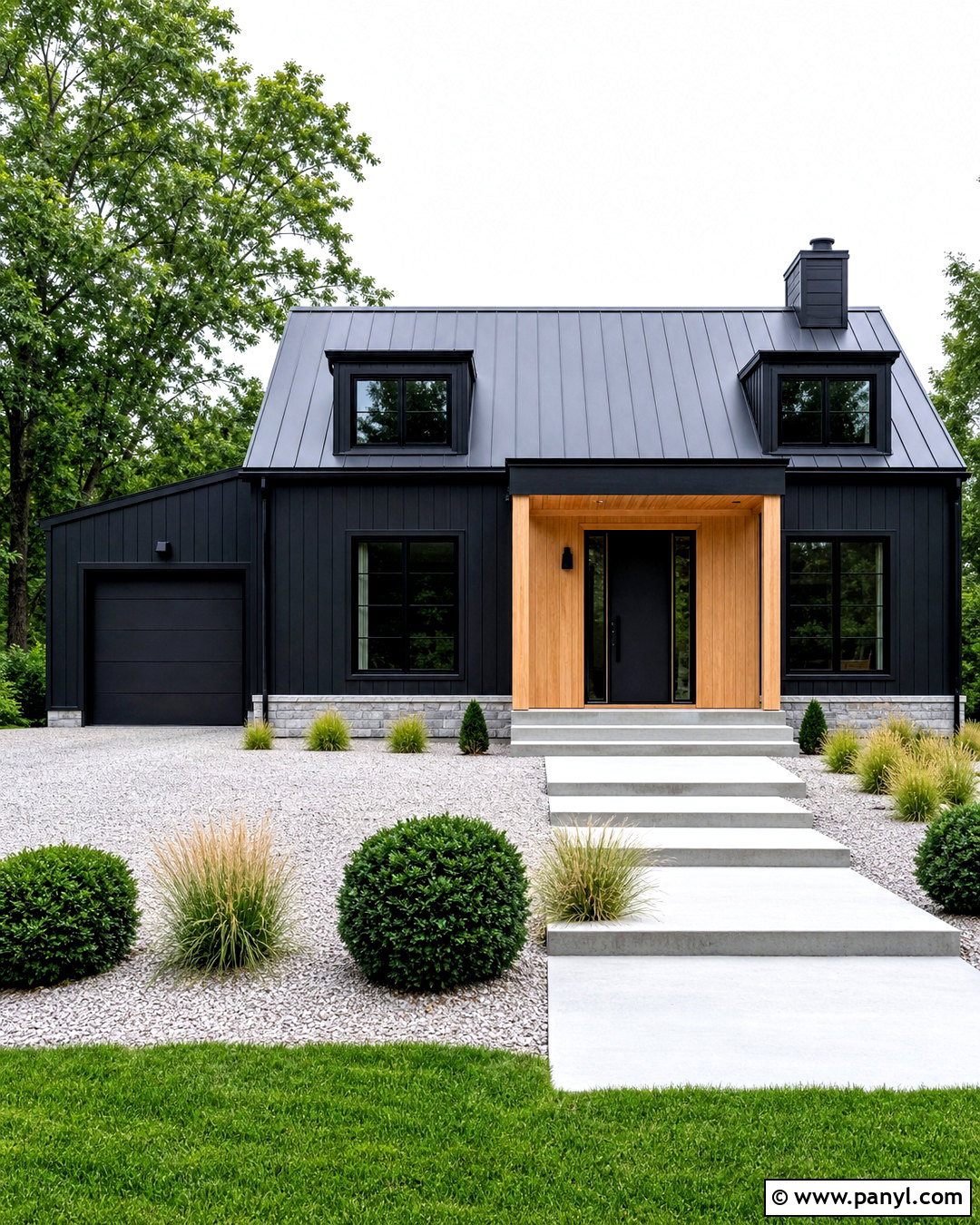
A black exterior looks most successful when texture and warm materials prevent the facade from appearing flat. Use a softened matte black on the walls, fascia, gutters, and garage door. Introduce white oak or light cedar at the front entrance, porch ceiling, privacy screen, and selected upper-level panels. Keep window frames black so they blend into the painted walls. Pale gray stone around the foundation and large concrete steps provide contrast near ground level. A black standing-seam roof continues the monochromatic architecture without adding another color. Use restrained landscaping with airy grasses, rounded evergreens, and light gravel. The finished exterior feels bold and modern, yet the wood and planting make it comfortable at a residential scale.
19. Brick Red Exterior With Cream Trim
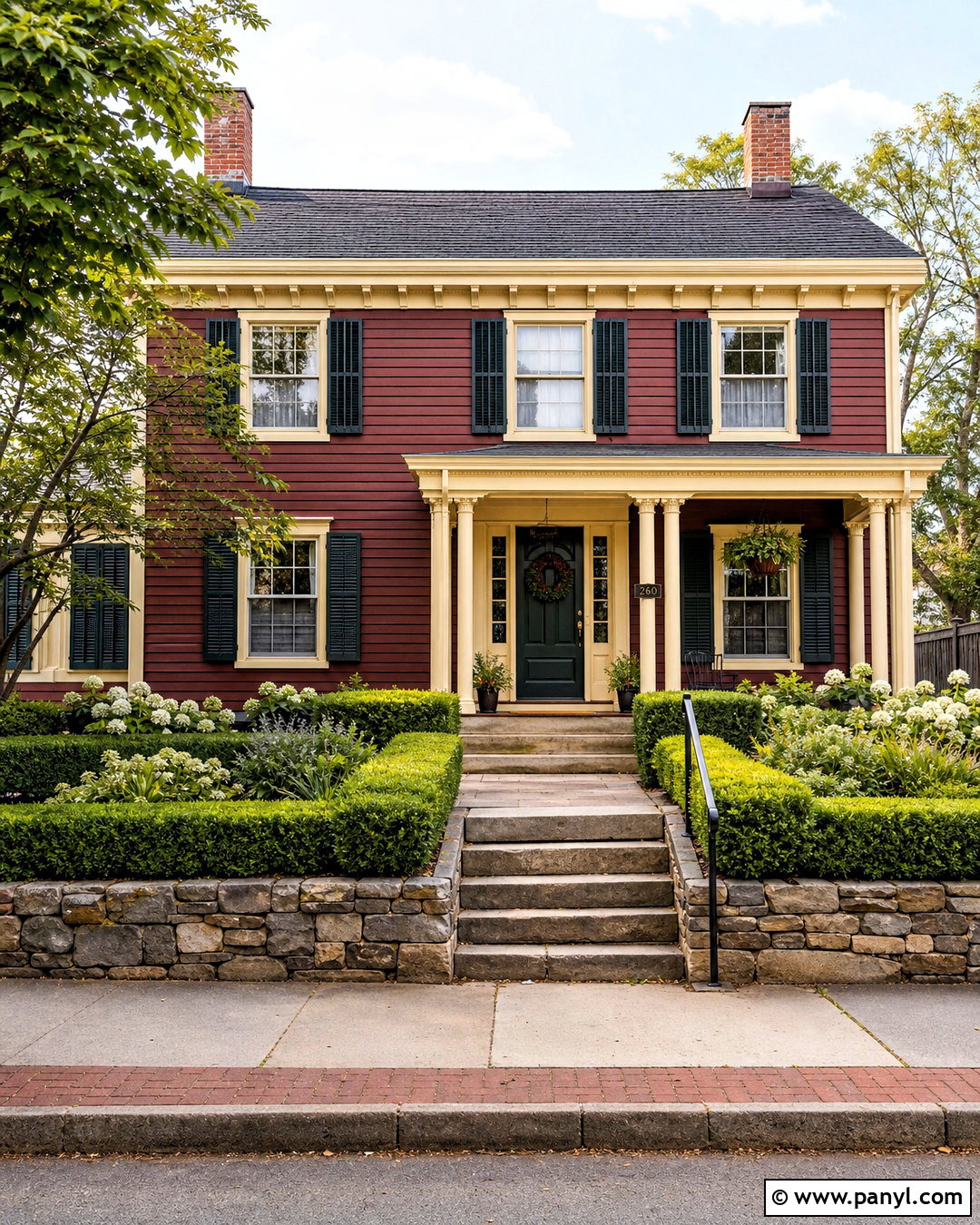
Brick red paint brings historic warmth to wood siding, stucco, or masonry without requiring actual red brick. Choose a muted, brown-based red that feels substantial rather than bright. Apply creamy ivory to the window frames, fascia, porch railings, and columns. A deep green or nearly black front door provides a traditional accent, while aged brass hardware supports the classic palette. Pair the walls with charcoal roof shingles and warm gray stone steps. If the home includes shutters, use the same dark green as the door to keep the colors controlled. Boxwood hedges, white flowering plants, and brick-edged garden beds complement the architecture. This complete scheme gives the facade character while maintaining a formal, balanced appearance.
20. Pale Mint Exterior With Natural Stone
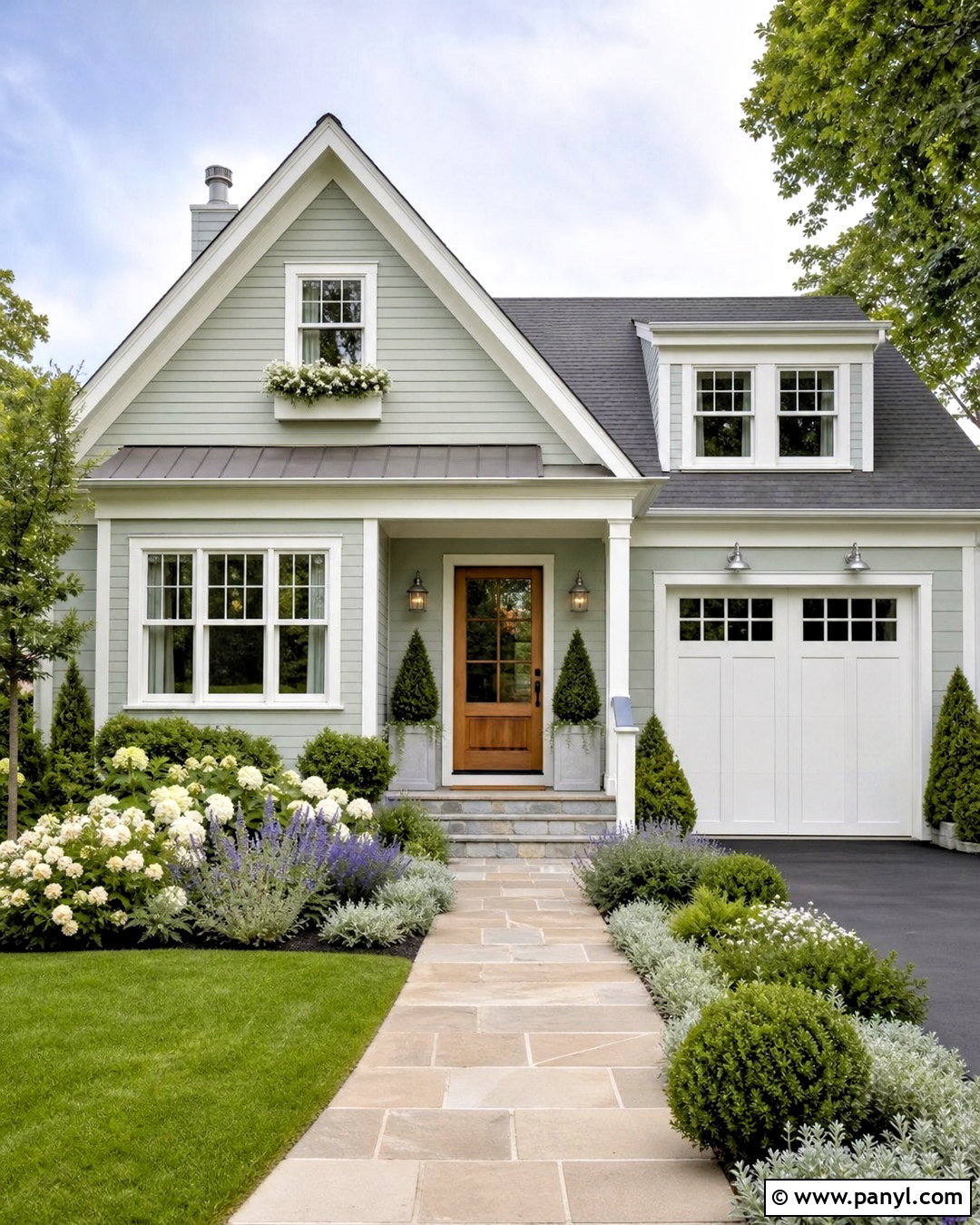
Pale mint walls create a light, garden-friendly exterior when the shade is softened with gray. Use mint across the main siding or stucco, then choose warm white for window trim, columns, eaves, and the garage door. A natural oak front door grounds the pastel color and adds an inviting focal point. Introduce pale limestone around the foundation, entry steps, or chimney to connect the walls with earthy materials. A medium-gray roof, brushed metal fixtures, and simple house numbers keep the scheme clean. Plant white hydrangeas, lavender, silvery foliage, and clipped evergreen shrubs around the facade. The finished look feels colorful but not sugary because natural wood, stone, and gray details balance the fresh mint exterior walls.
Conclusion:
The most effective exterior palette considers the whole property, not just the main wall color. Roof materials, trim, doors, windows, stone, brick, paving, and landscaping should support one coordinated direction. These outdoor wall painting ideas exterior colors provide options ranging from quiet cream and greige to forest green, navy, terracotta, and black. Once you have a favorite, paint large samples on sunny and shaded sides of the house. Observe them in morning, afternoon, and evening light before deciding. Confirm that the undertones work with permanent surfaces and nearby homes. With thoughtful testing and a limited palette, you can create an exterior that looks balanced, welcoming, and intentionally designed.

Related Ideas and Inspiration:
Leave a Reply