
These 20 painted brick house exterior before and after ideas show how color can completely reshape an outdated facade without hiding its architectural character. The strongest transformations go beyond painting the masonry. They coordinate the brick color with the roof, trim, windows, front door, lighting, landscaping, and existing stone or wood details. Current makeovers range from warm white and earthy greige to deep charcoal, muted green, and dramatic black, often balanced with natural materials. () Before selecting a finish, consider your home’s style, surroundings, fixed materials, and the amount of sunlight each wall receives. The complete looks below offer practical combinations for ranch homes, cottages, Colonials, Tudors, and more. Explore these 20 painted brick house exterior before and after ideas to find a transformation that fits your home.

1. White Painted Brick Ranch House
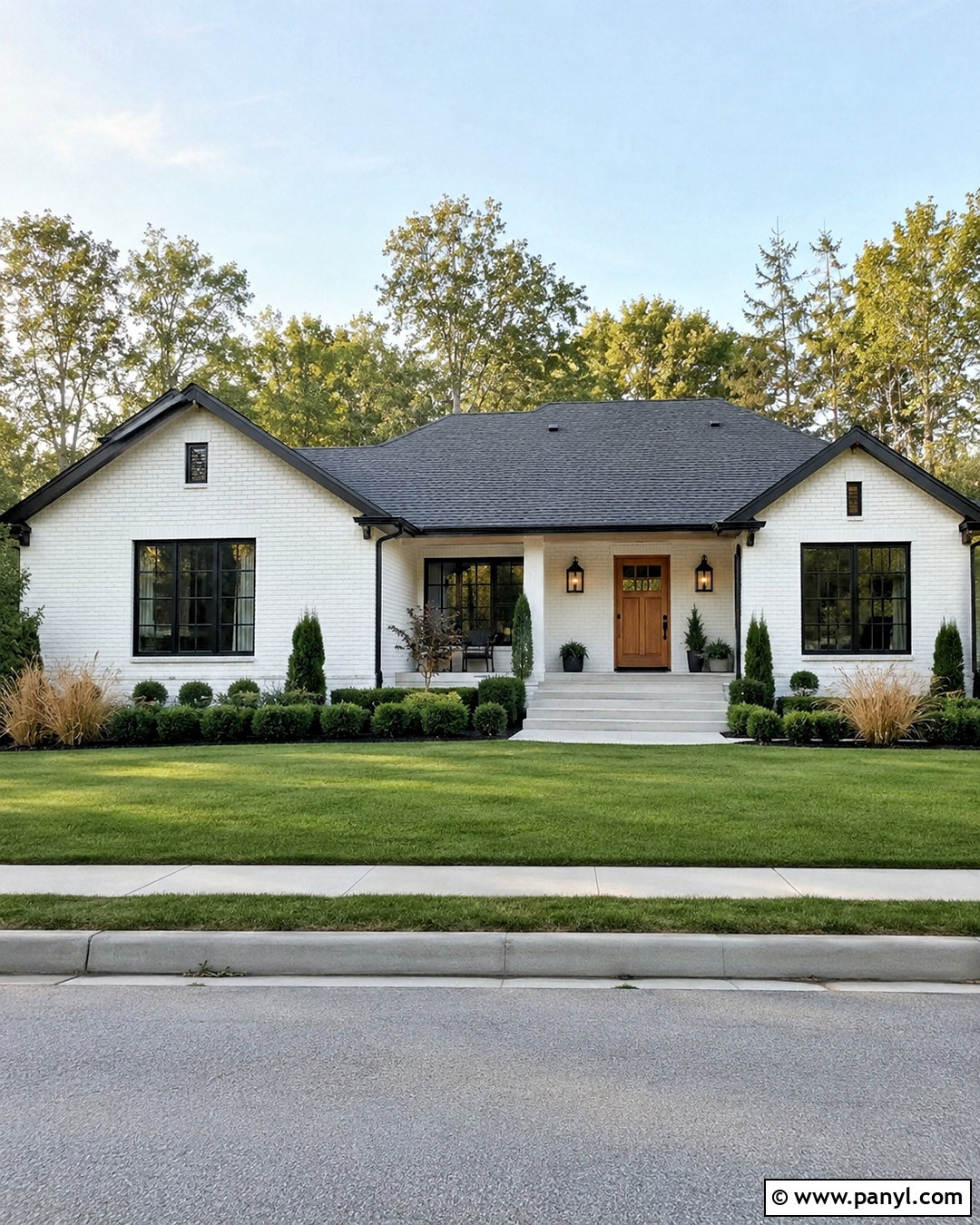
A long red brick ranch can feel heavy when dark masonry, faded shutters, and an aging roof create one continuous horizontal line. For the after look, paint the brick a soft white rather than a brilliant white. Add black window frames and gutters to sharpen the architecture, then introduce a medium-stained wood front door for warmth. A charcoal architectural-shingle roof keeps the palette grounded. Remove undersized shutters if they do not fit the windows, and replace dated porch lights with simple black lanterns. Wide concrete steps, rounded evergreen shrubs, and ornamental grasses complete the update. The finished exterior feels brighter and more balanced while preserving the relaxed, low-profile character that makes a ranch house practical and welcoming.
2. Warm White Painted Brick With Wood Accents
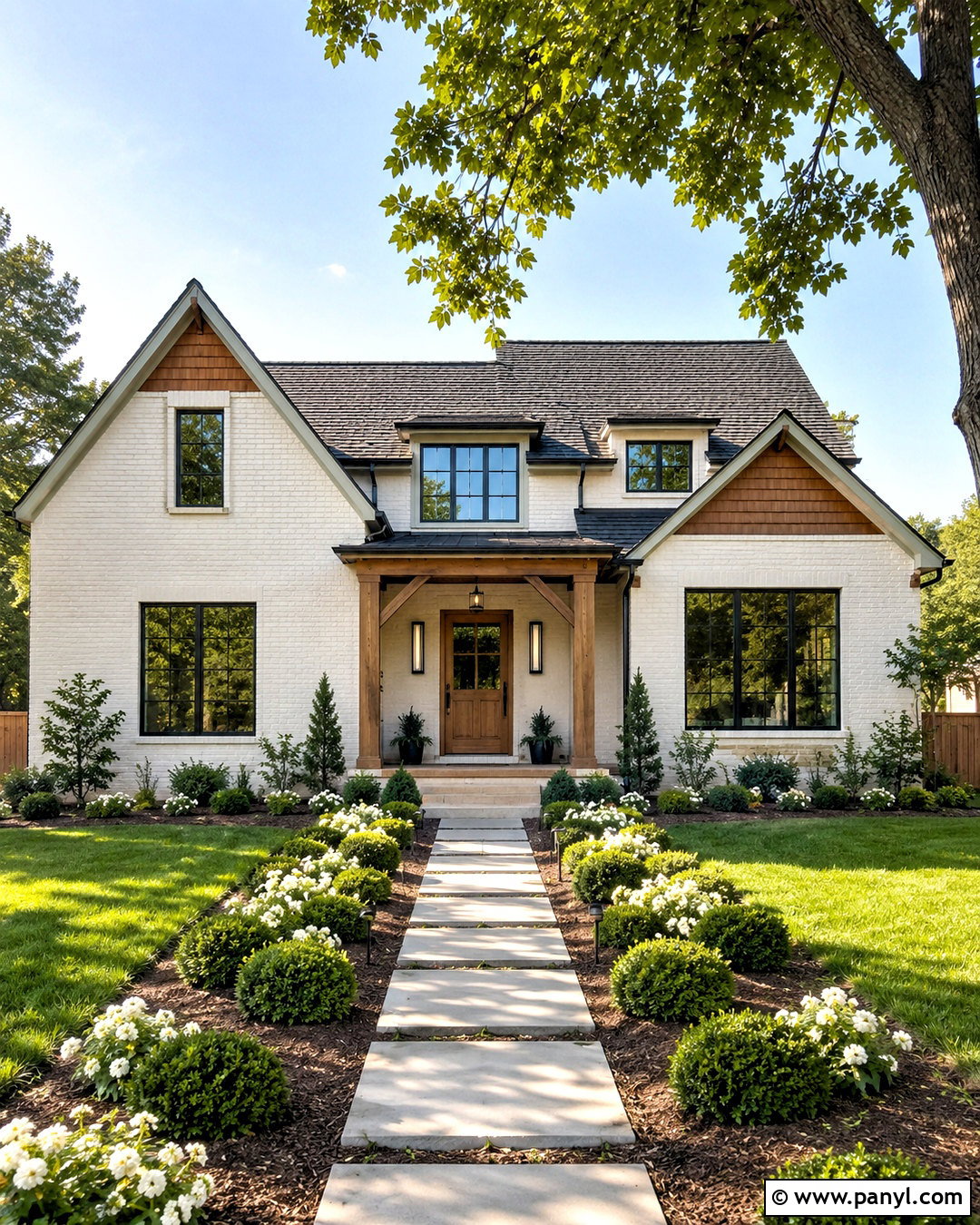
Peach or orange brick often looks especially dated beside beige trim and a pale garage door. A warm white painted brick exterior creates a cleaner foundation without feeling cold or overly stark. Carry the same creamy white onto the trim and garage door for a unified after appearance. Then add contrast through cedar gable siding, chunky wood porch posts, and a natural oak front door. Matte black windows, gutters, house numbers, and contemporary sconces give the design a crisp edge. Keep the roof dark brown or charcoal so it complements the wood tones. Layer the landscaping with boxwoods, white flowering shrubs, and fresh mulch. Together, these materials turn a mismatched exterior into a comfortable modern organic home.
3. Cream Painted Brick Colonial House
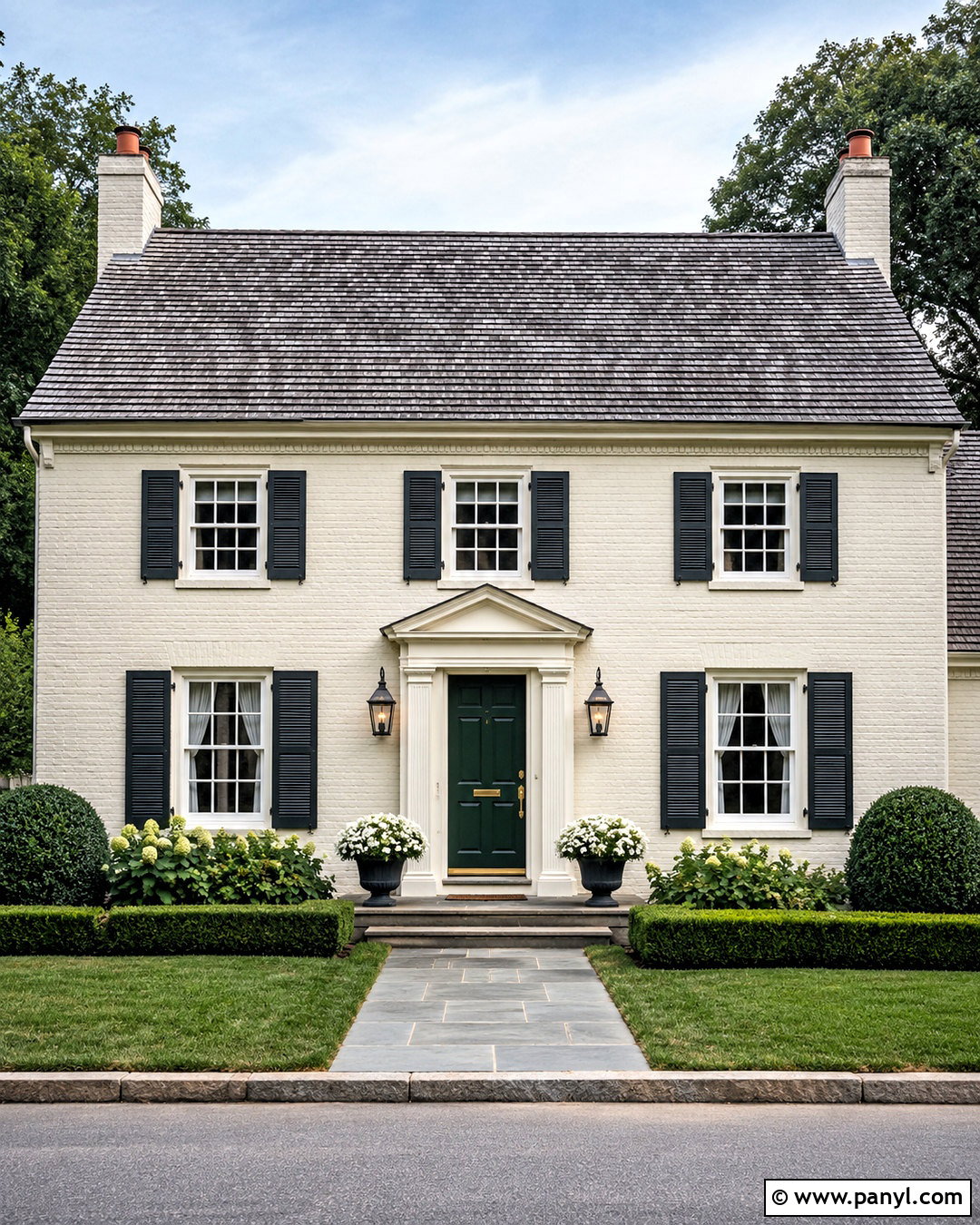
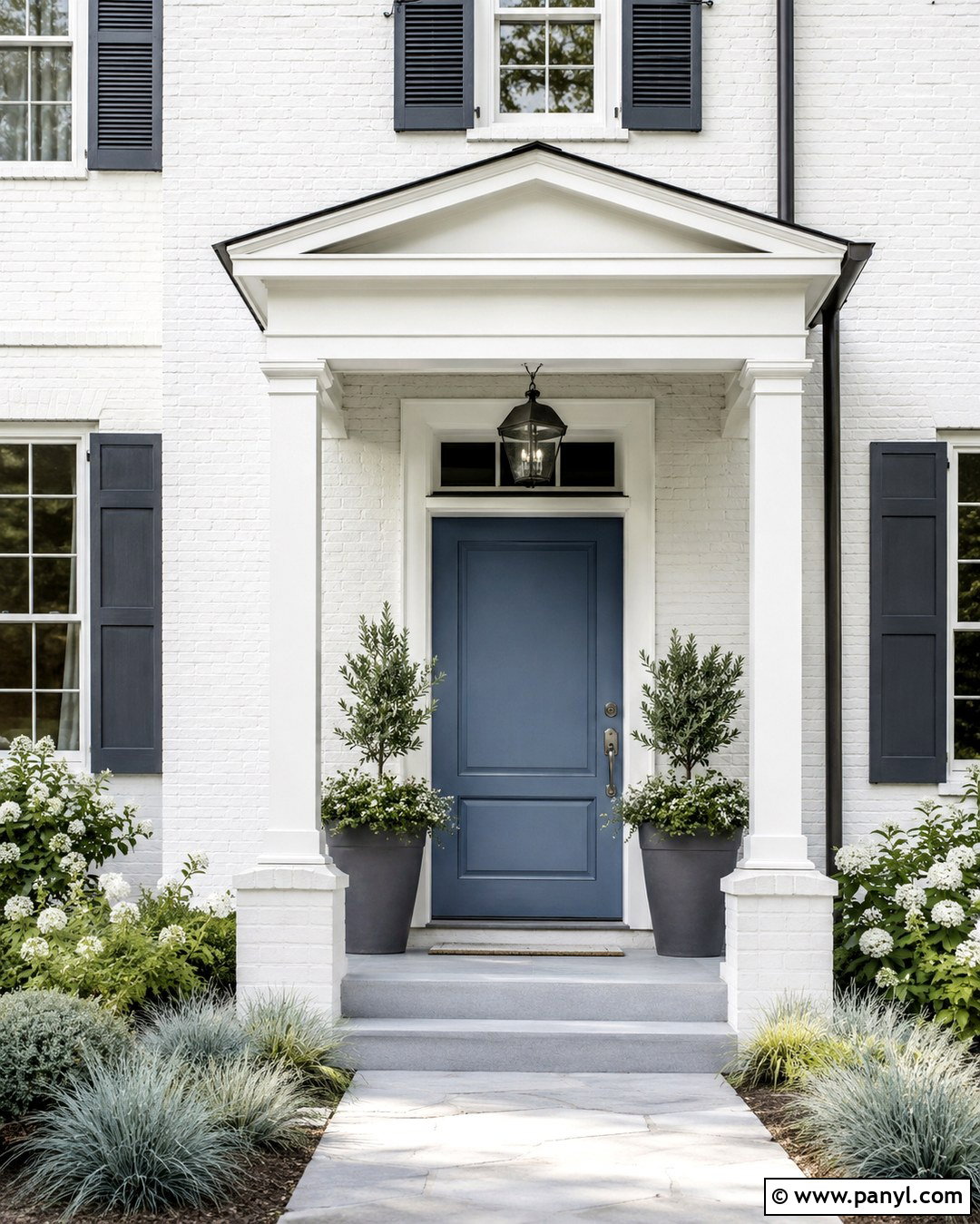
Does a formal brick Colonial feel too dark or visually busy? Replace the original red brick and faded black shutters with creamy painted masonry, crisp white trim, and correctly sized shutters in muted charcoal. The subtle contrast keeps the symmetrical facade clear without making it look harsh. Center the after design around a glossy deep green front door with polished brass hardware. Traditional lanterns, a simple pediment, and balanced planters reinforce the home’s architecture. A weathered gray roof works naturally with the soft neutral palette. Finish the front yard with clipped hedges, small flowering trees, and a straight brick or bluestone walkway. The transformation feels polished and updated, yet it still respects the orderly proportions and classic details of a Colonial exterior.
4. Greige Painted Brick House
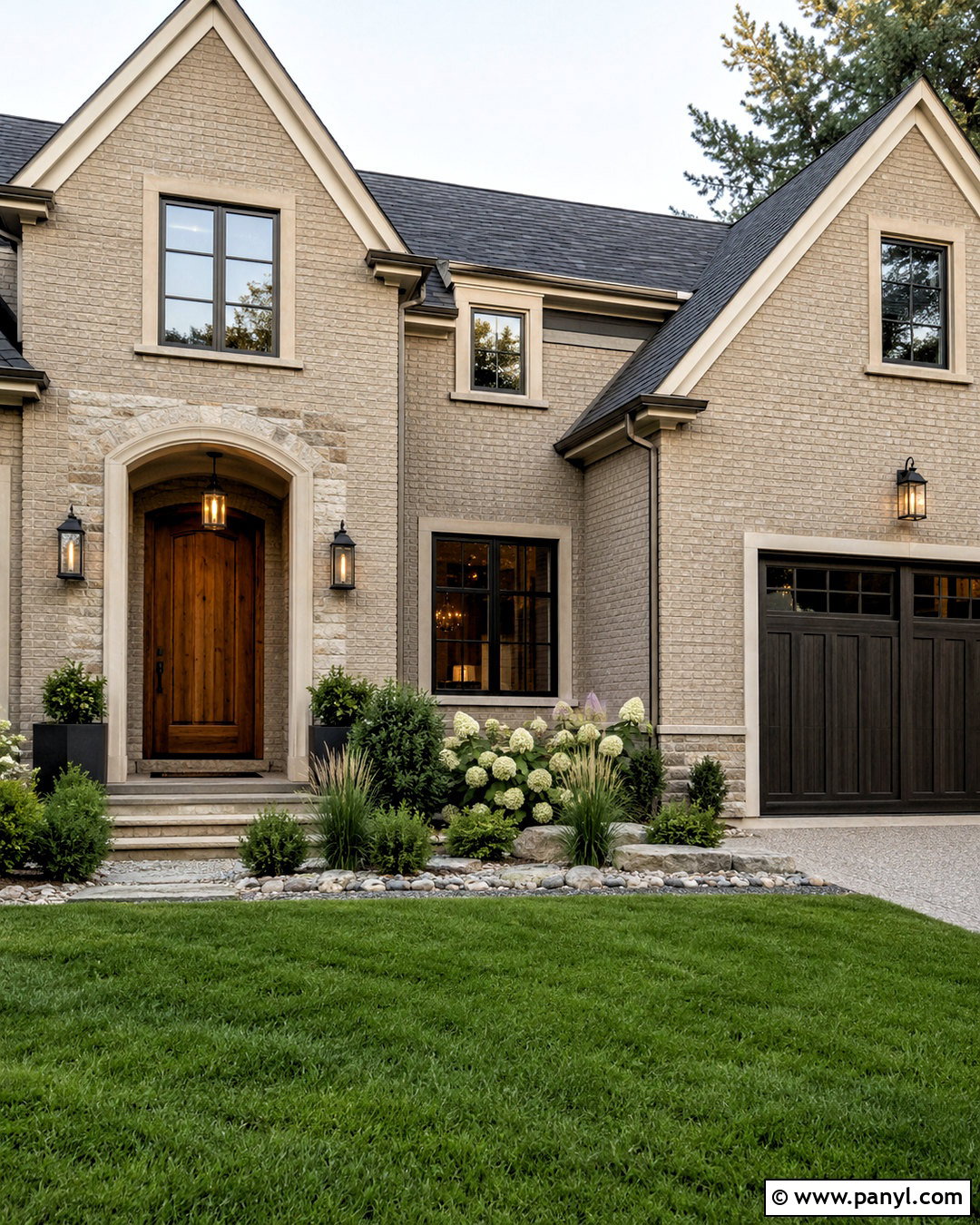
Mottled brown brick can compete with stonework, roofing, and landscaping, making the whole exterior appear unsettled. A medium-light greige paint unifies the brick while working with both warm and cool fixed materials. For the after scheme, pair greige masonry with creamy trim, bronze window frames, and a dark espresso garage door. Use a stained wood front door to introduce natural texture without adding another paint color. If the house includes stone, leave it unpainted and select a greige that echoes one of its quieter undertones. Dark bronze lights and simple metal railings complete the architecture. Low junipers, hydrangeas, ornamental grasses, and a clean gravel border create an understated landscape that supports the refined neutral exterior.
5. Light Gray Painted Brick Ranch House
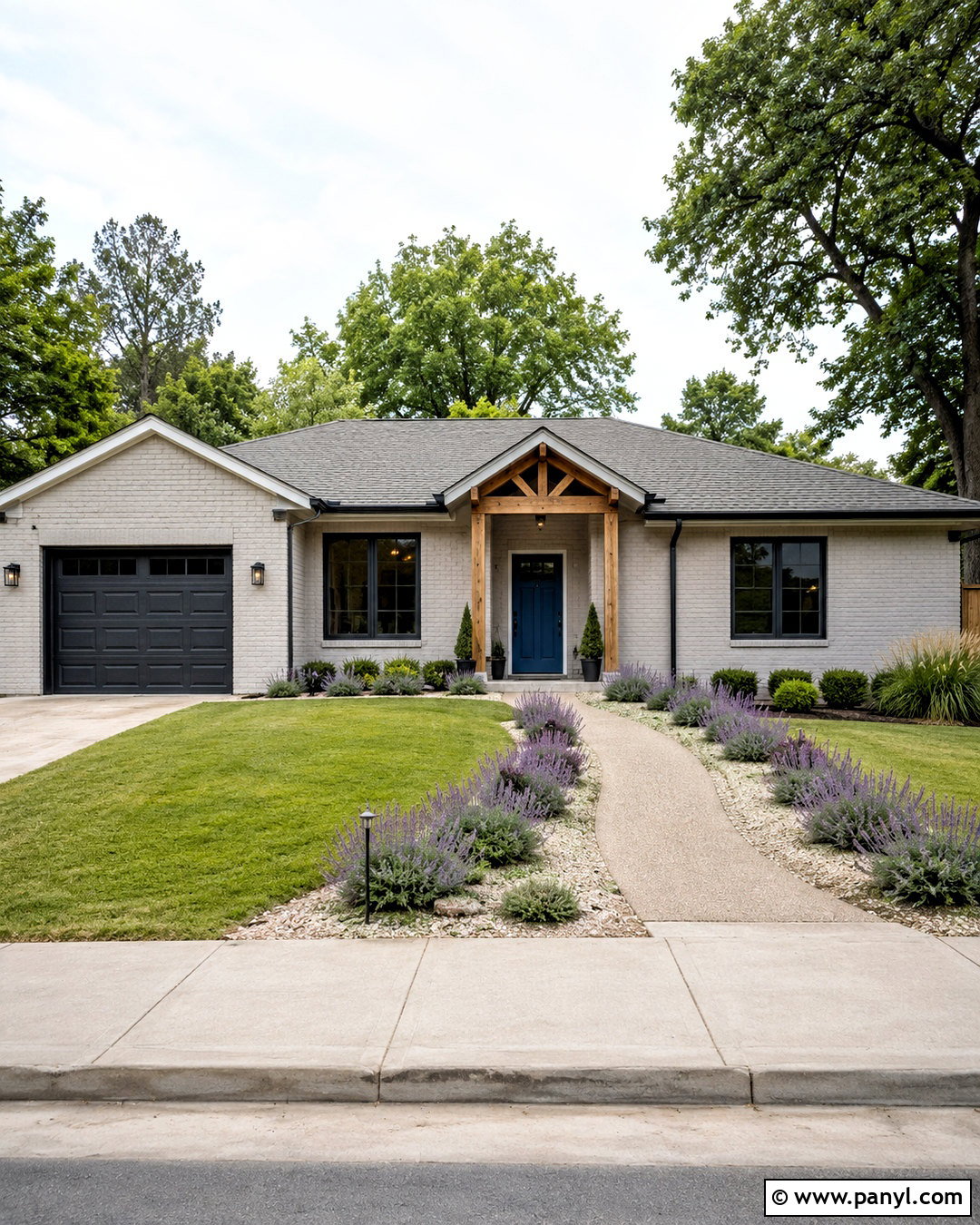
A small ranch with dark red brick, white shutters, and several disconnected accent colors can appear shorter and more crowded than it really is. Light gray painted brick creates a calm after look and helps the facade read as one cohesive surface. Choose a gray with a slightly warm undertone, then use bright white on the fascia and porch ceiling. Deep charcoal windows, gutters, and a streamlined garage door add definition. Paint the front door muted blue for a gentle focal point that does not overwhelm the modest architecture. Expand the entry with a simple wood awning or shallow portico. A curved walkway, compact evergreen shrubs, lavender, and pale gravel soften the home’s straight lines and make the renovated exterior feel open and approachable.
6. Charcoal Painted Brick Modern House
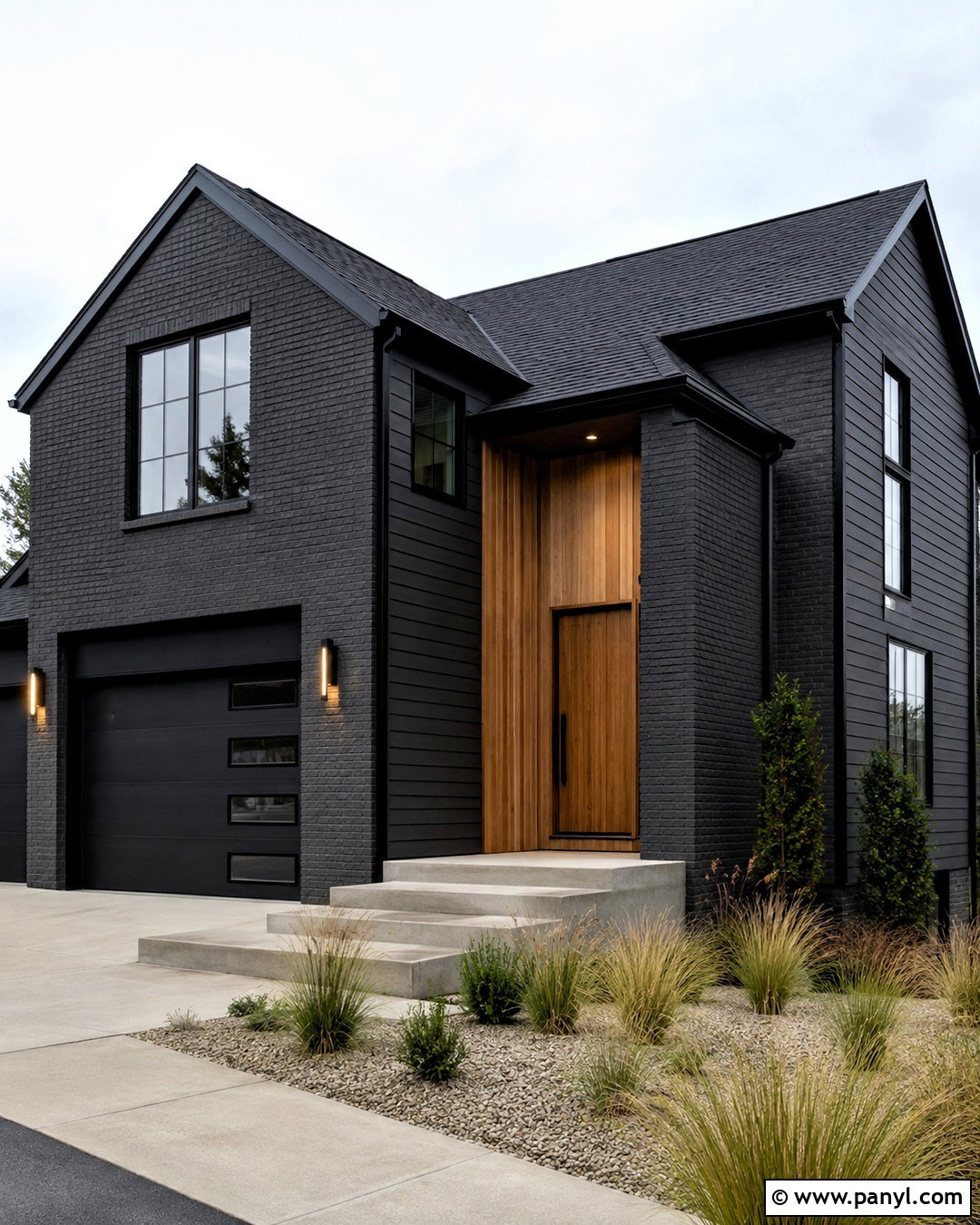
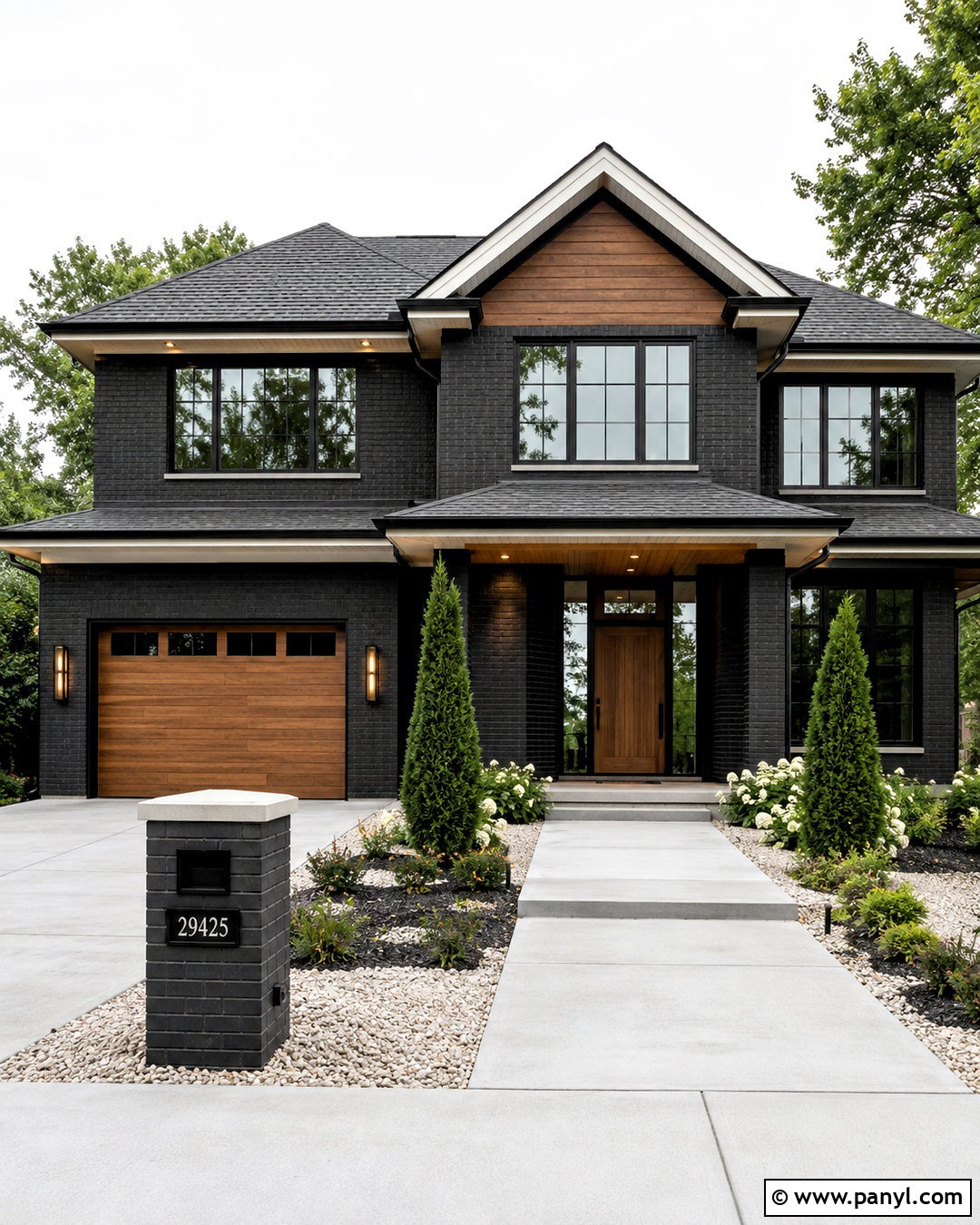
Dark charcoal paint can turn an ordinary brick exterior into a strong modern composition, especially when the original facade includes mismatched red brick and faded siding. Apply the charcoal across both materials to create one seamless after color. Keep the window frames, gutters, and garage door matte black so they visually recede. Warm the design with vertical cedar cladding around the entry, a natural wood pivot-style door, and wide concrete steps. A low-slope black roof or dark architectural shingles support the dramatic palette. Replace traditional lanterns with narrow contemporary sconces. Finish the yard with structured grasses, clipped shrubs, black planters, and pale gravel. The lighter landscaping and wood accents prevent the deep exterior from feeling flat or uninviting.
7. Black Painted Brick House
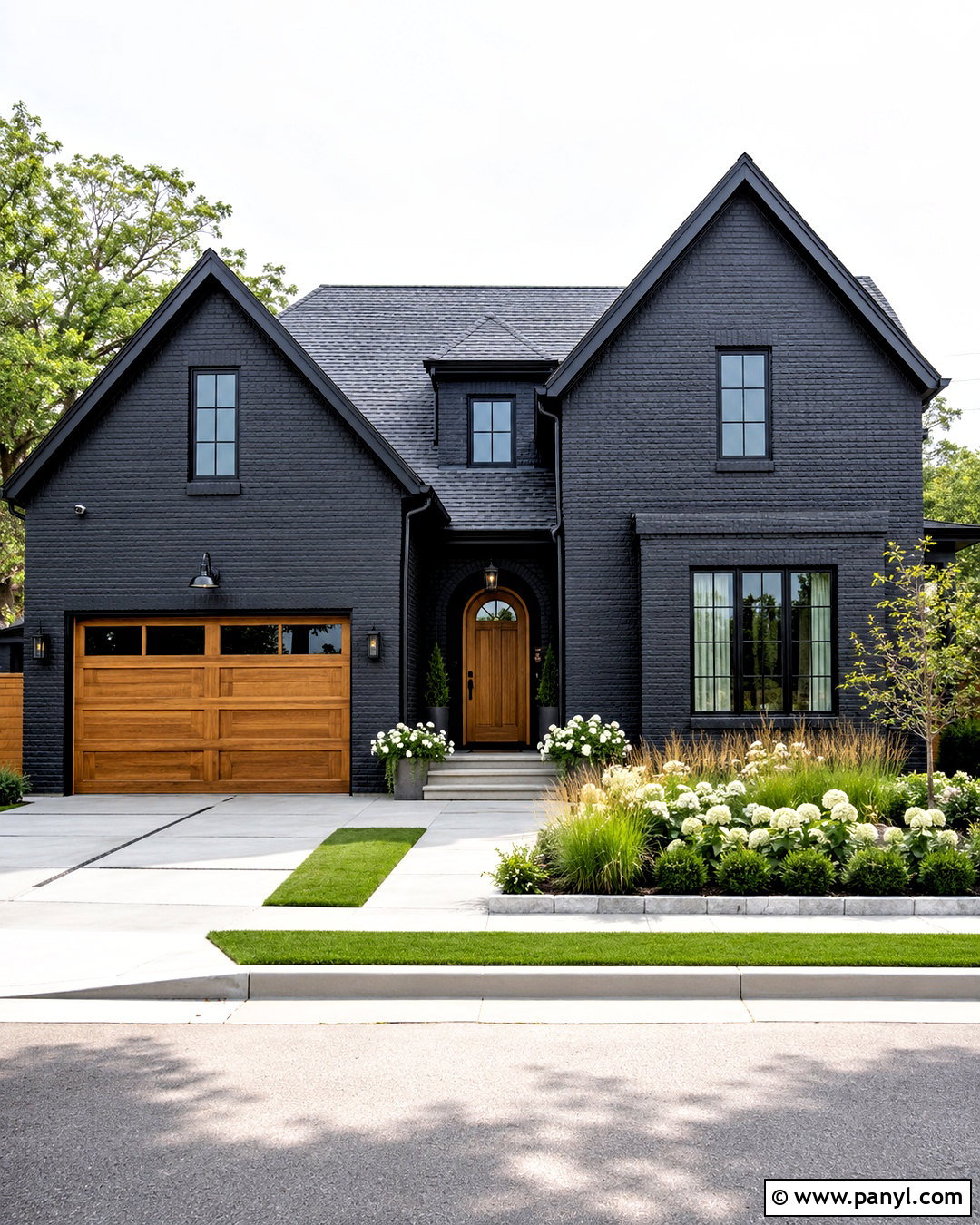
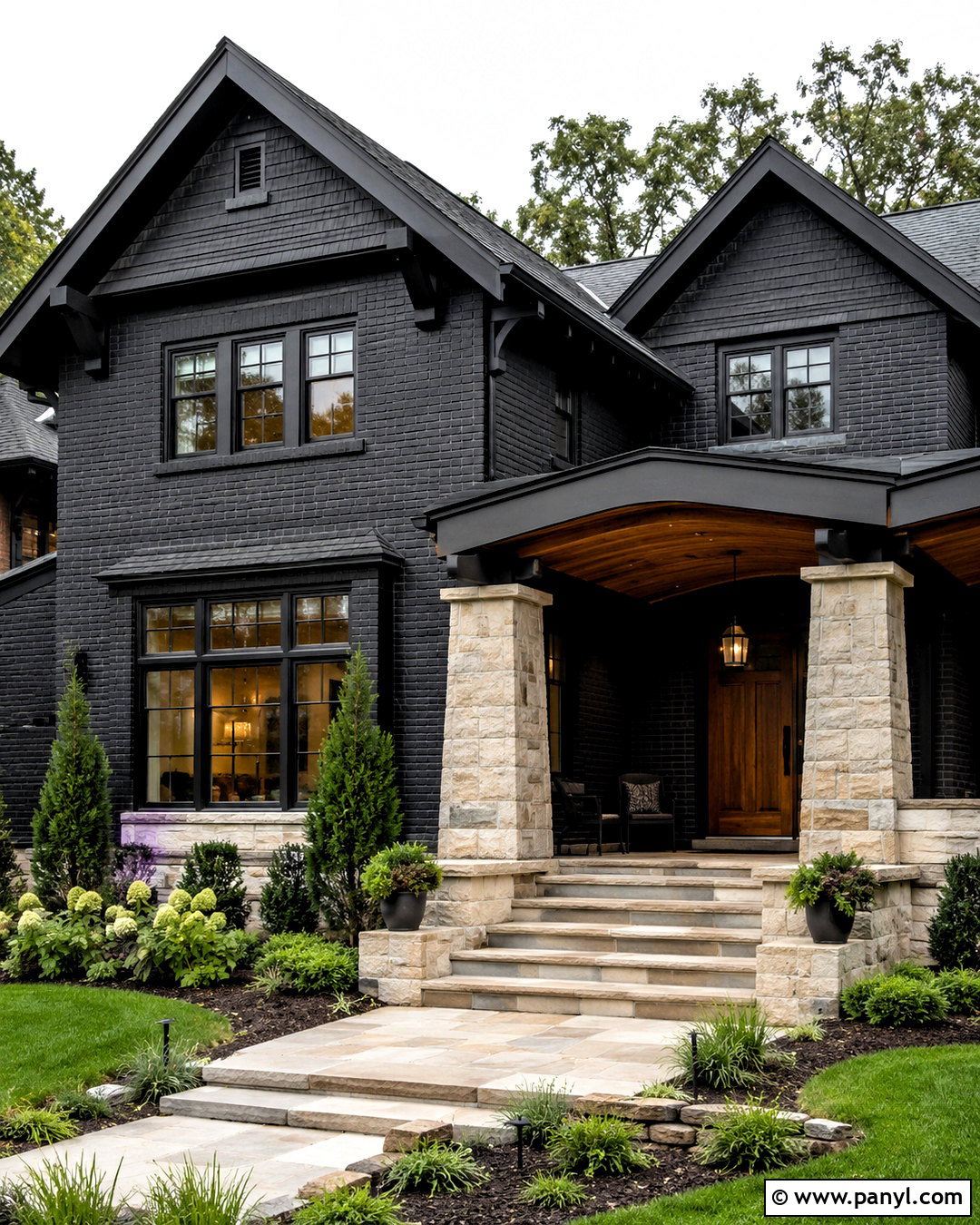
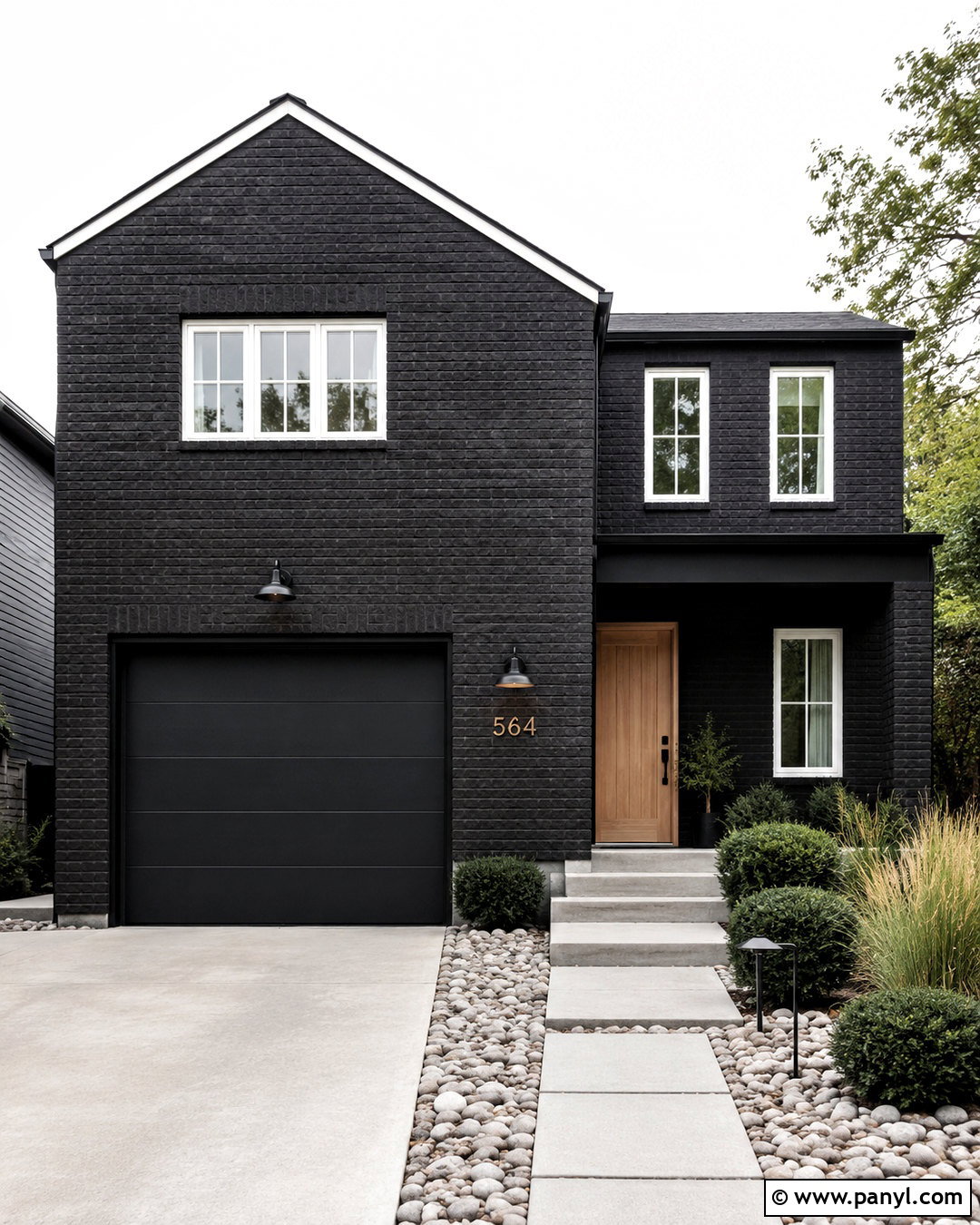
When a plain brick house has limited architectural detail, black paint can give it definition and confidence. The before exterior may feel washed out due to pinkish brick, white vinyl trim, and a pale roofline. For the after, coat the masonry in a soft off-black with subtle warm undertones. Match the trim and gutters for a color-drenched effect, but use natural cedar on the front door, porch ceiling, and garage door to break up the darkness. Add large black-framed windows and minimal downlighting around the entrance. A medium-gray roof provides quiet separation overhead. White flowering plants, feathery grasses, pale concrete pavers, and light stone edging brighten the foreground, creating a dramatic exterior that still feels residential and welcoming.
8. Sage Green Painted Brick House
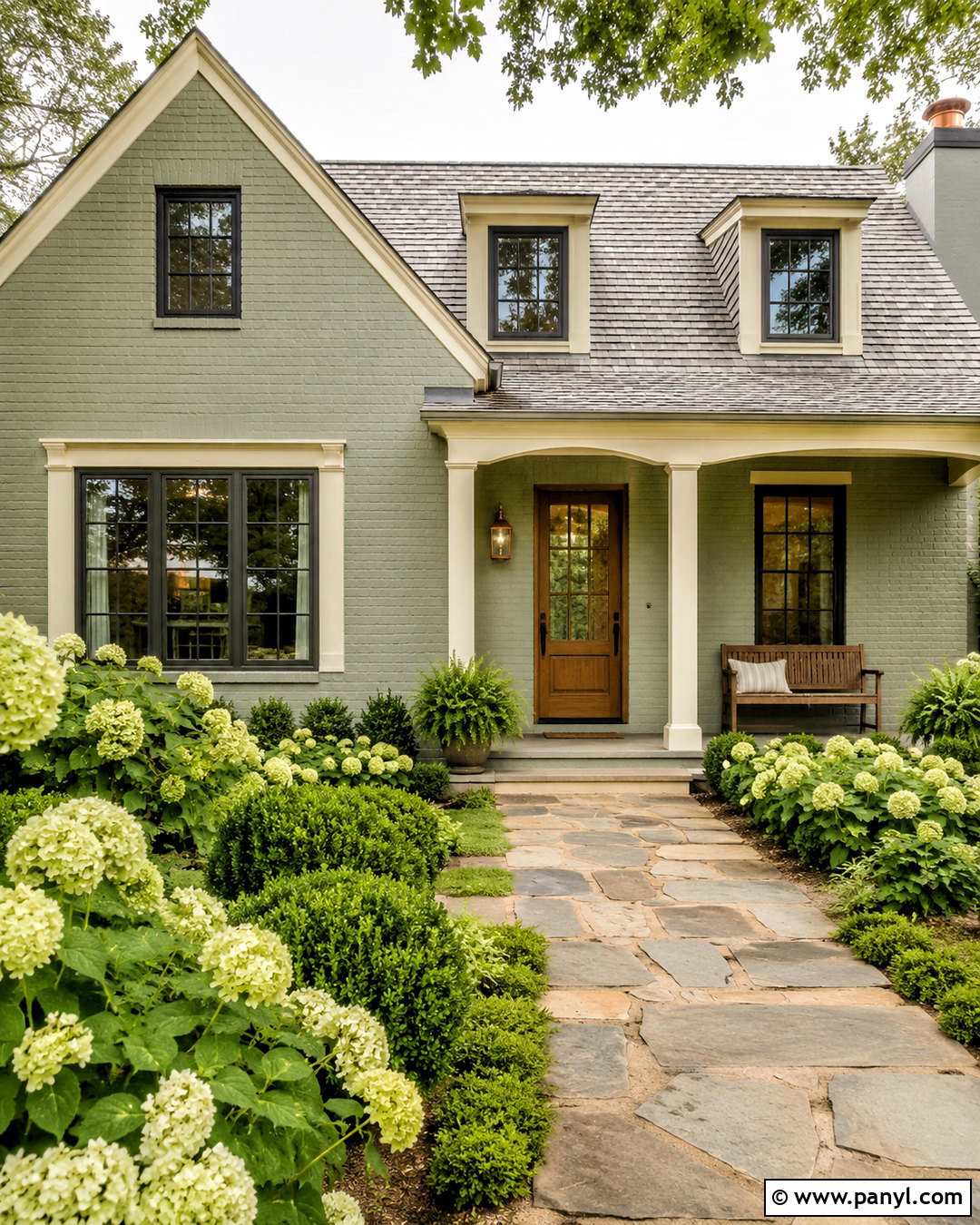
Muted sage green offers a natural alternative when white feels predictable and black seems too dramatic. It works especially well for a brick cottage surrounded by mature trees. Replace the before combination of red brick, tan trim, and maroon shutters with soft sage painted masonry and warm ivory trim. Use dark bronze windows and gutters for gentle contrast. A stained oak door, copper porch light, and simple wood bench introduce warmth. Keep an existing brown, weathered gray, or charcoal roof if its undertone complements the green. Build the surrounding landscape with ferns, hydrangeas, boxwoods, and a flagstone walkway. The complete after look feels connected to the garden while making the cottage’s windows, roofline, and welcoming entrance easier to appreciate.
9. Olive Green Painted Brick Ranch House
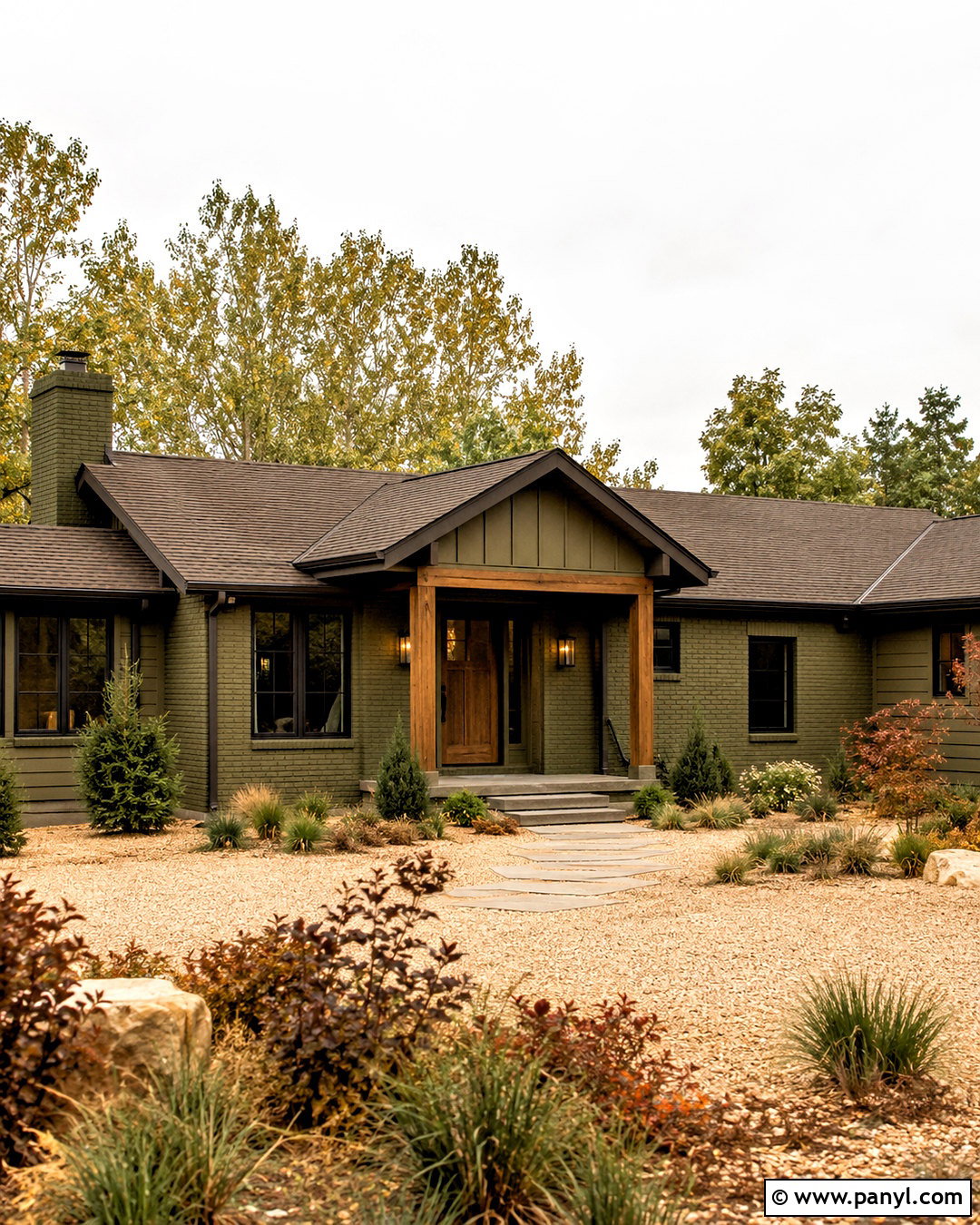
A sprawling ranch can handle a richer exterior color, particularly when the front elevation receives plenty of natural light. Change dull orange brick and cream aluminum trim into an earthy olive green painted exterior with matching siding. Add deep bronze fascia, windows, and gutters to create a layered but restrained palette. The after design gains warmth from a medium-stained walnut front door and cedar beams beneath a simple entry overhang. Choose a dark brown roof rather than pure black to maintain the organic direction. Horizontal house numbers and broad bronze sconces add a modern touch. In front, use tan gravel, native grasses, compact evergreens, and rust-colored foliage. These landscape colors connect the home to its surroundings and keep the olive brick from appearing overly dark.
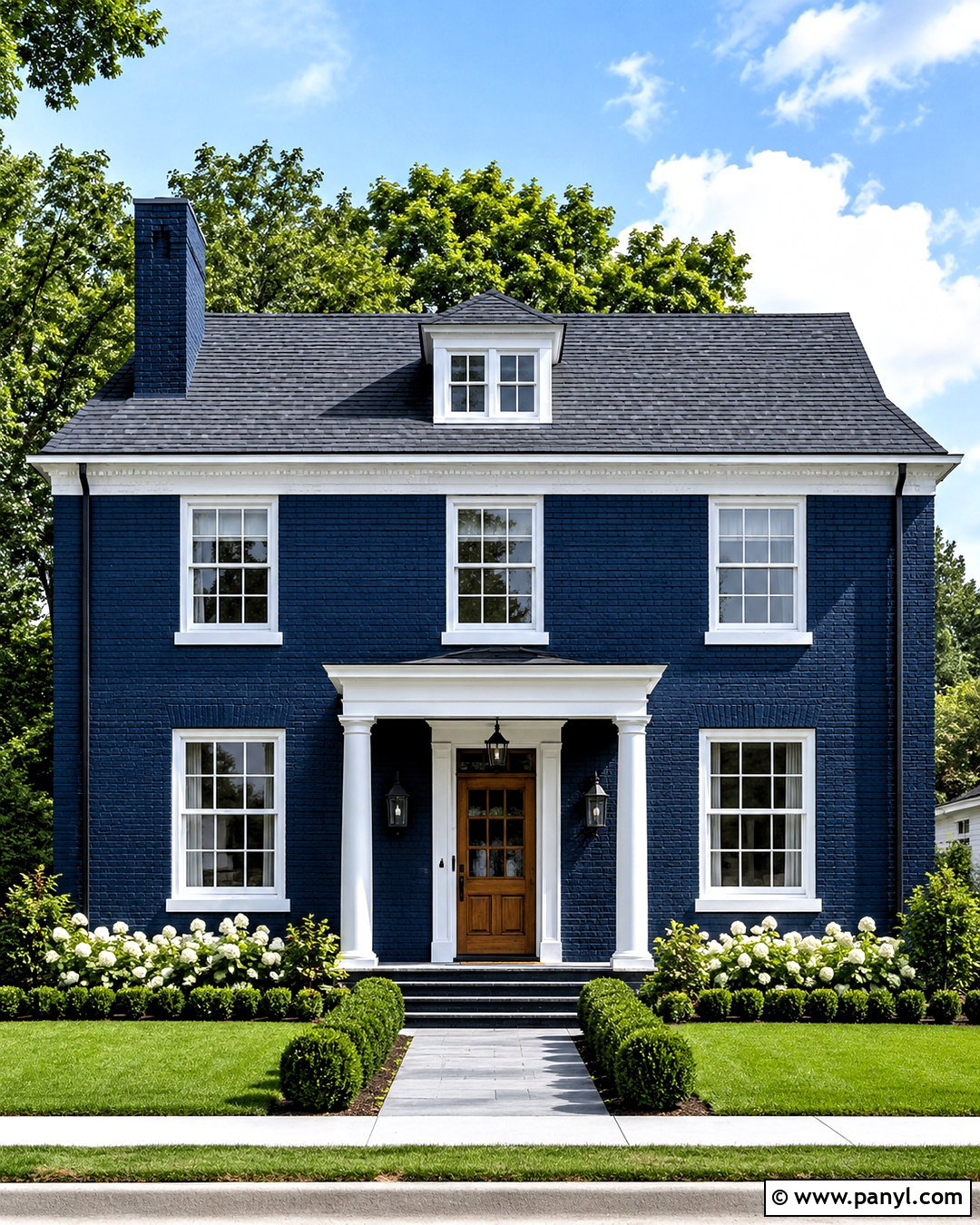
10. Navy Painted Brick House
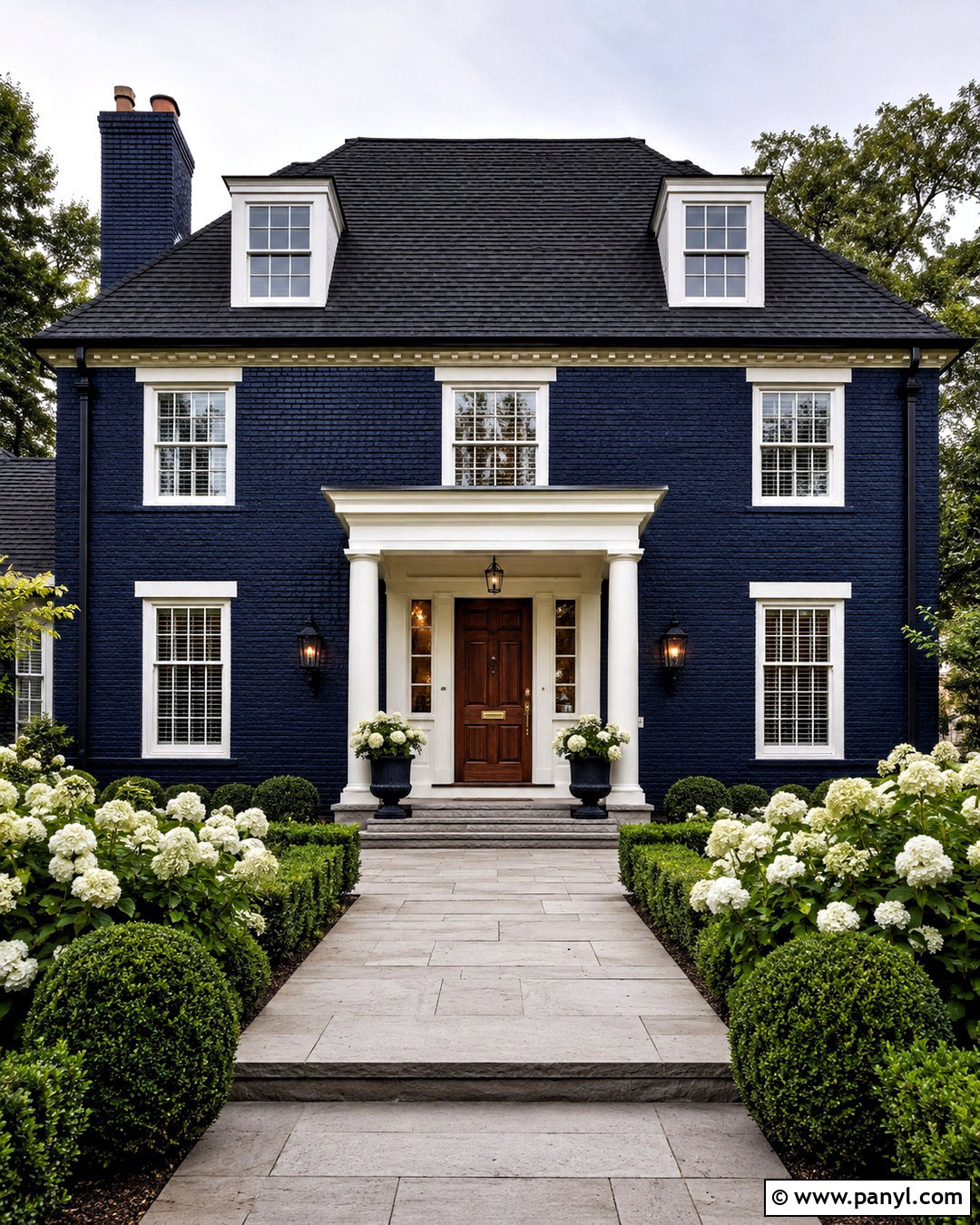
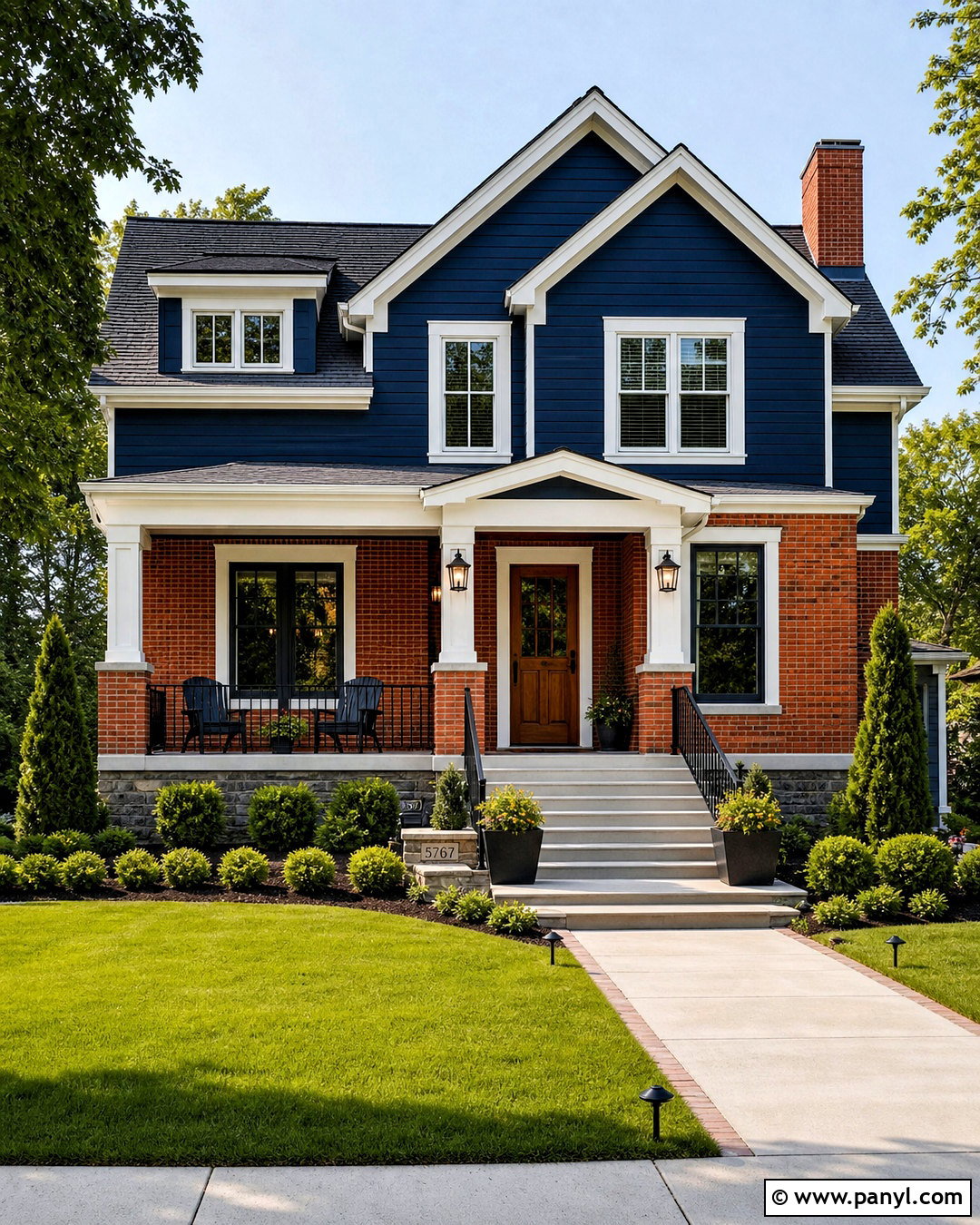
Navy paint gives a traditional brick home a noticeable transformation without pushing it fully into black. The before facade might combine faded red brick, yellowed trim, and undersized shutters. Paint the brick a deep navy blue, then outline the architecture with soft white fascia, window trim, and porch columns. Remove decorative shutters unless they are properly proportioned. A warm mahogany front door and brass hardware create a polished entry, while aged brass or black lanterns add balanced detail. Select a charcoal roof that does not introduce competing blue undertones. White hydrangeas, clipped boxwoods, and a light gray walkway brighten the base of the home. The resulting after exterior feels classic, substantial, and distinctive while remaining suitable for an average residential neighborhood.
11. Blue Gray Painted Brick Cottage
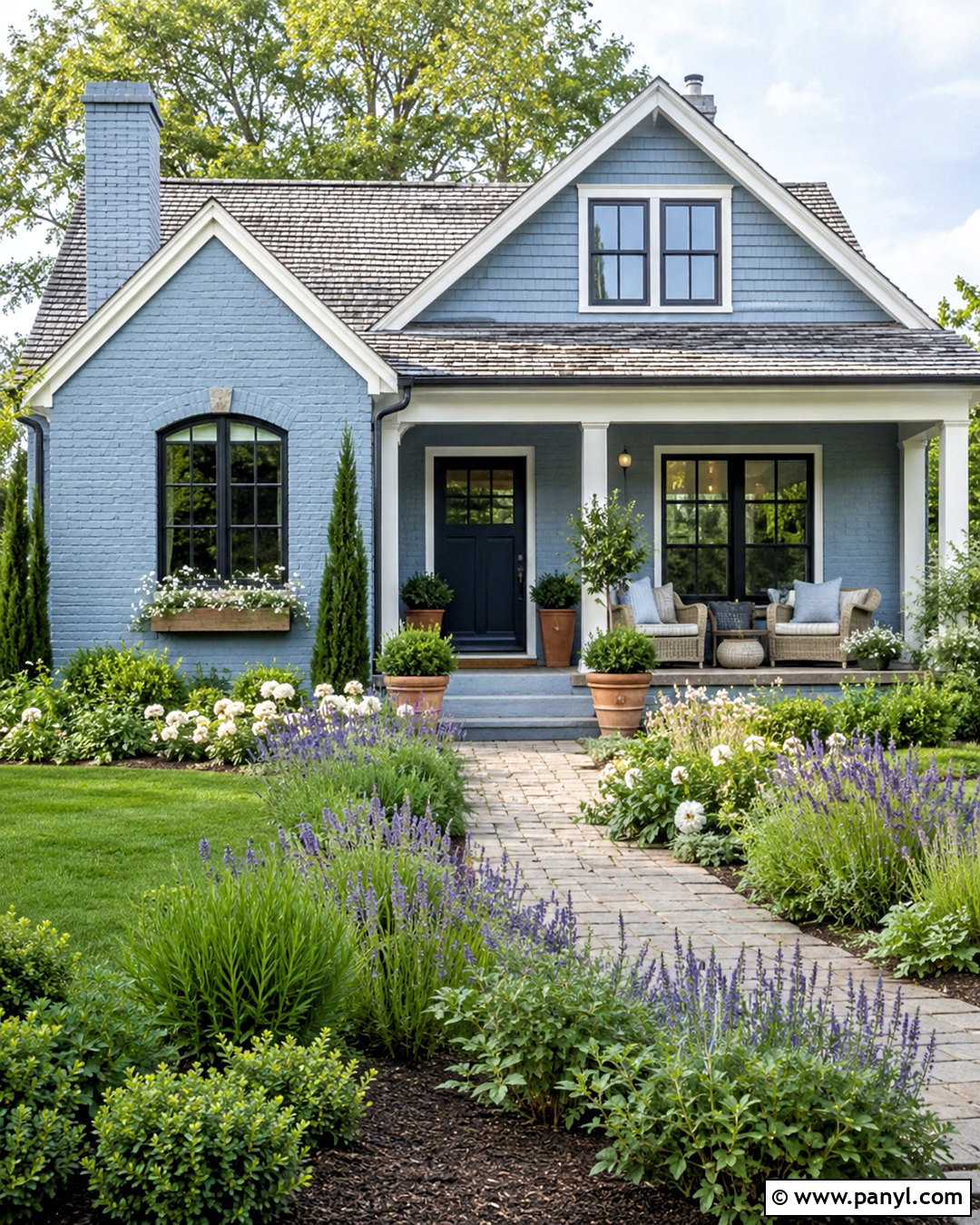
Soft blue-gray paint can rescue a small brick cottage from a mixture of reddish masonry, white vinyl, and aging brown accents. Use the blue-gray across the brick and any siding so the after facade appears wider and more connected. Paint the trim a gentle off-white, then add a navy front door for one deeper layer of color. Black window frames, slim gutters, and traditional lanterns provide structure without dominating the cottage. A weathered gray roof fits naturally into the cool palette. Introduce warmth through a small wood porch floor, wicker seating, and terracotta planters. Loose plantings of white flowers, lavender, grasses, and compact shrubs soften the walkway. The finished cottage feels fresh and cheerful rather than overly formal or trend-driven.
12. Taupe Painted Brick House
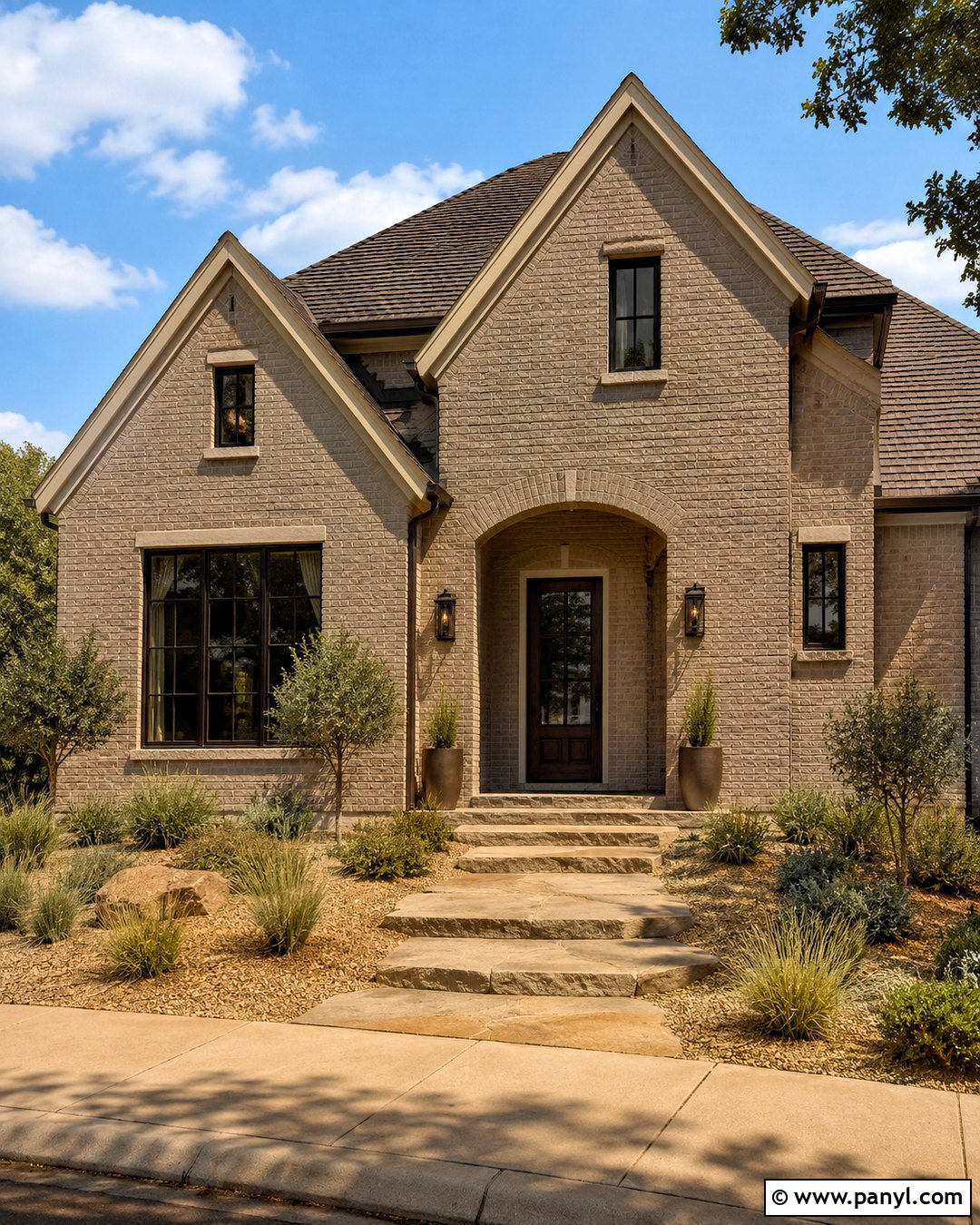
If the original brick has muddy brown, orange, and purple tones, a warm taupe finish can simplify the exterior while complementing an existing brown roof. Paint the masonry a medium-light mushroom taupe, and use creamy beige on the trim for a low-contrast after palette. Add dark bronze windows, gutters, and garage hardware to define the openings. A rich espresso front door works as the strongest focal point, especially when framed by substantial planters and updated sconces. Leave natural stone steps or foundation accents visible to add texture. Instead of bright landscaping, choose olive shrubs, white flowering plants, ornamental grasses, and warm gravel. This restrained combination gives the house a comfortable, high-end appearance without relying on sharp black-and-white contrast.
13. Beige Painted Brick Traditional House
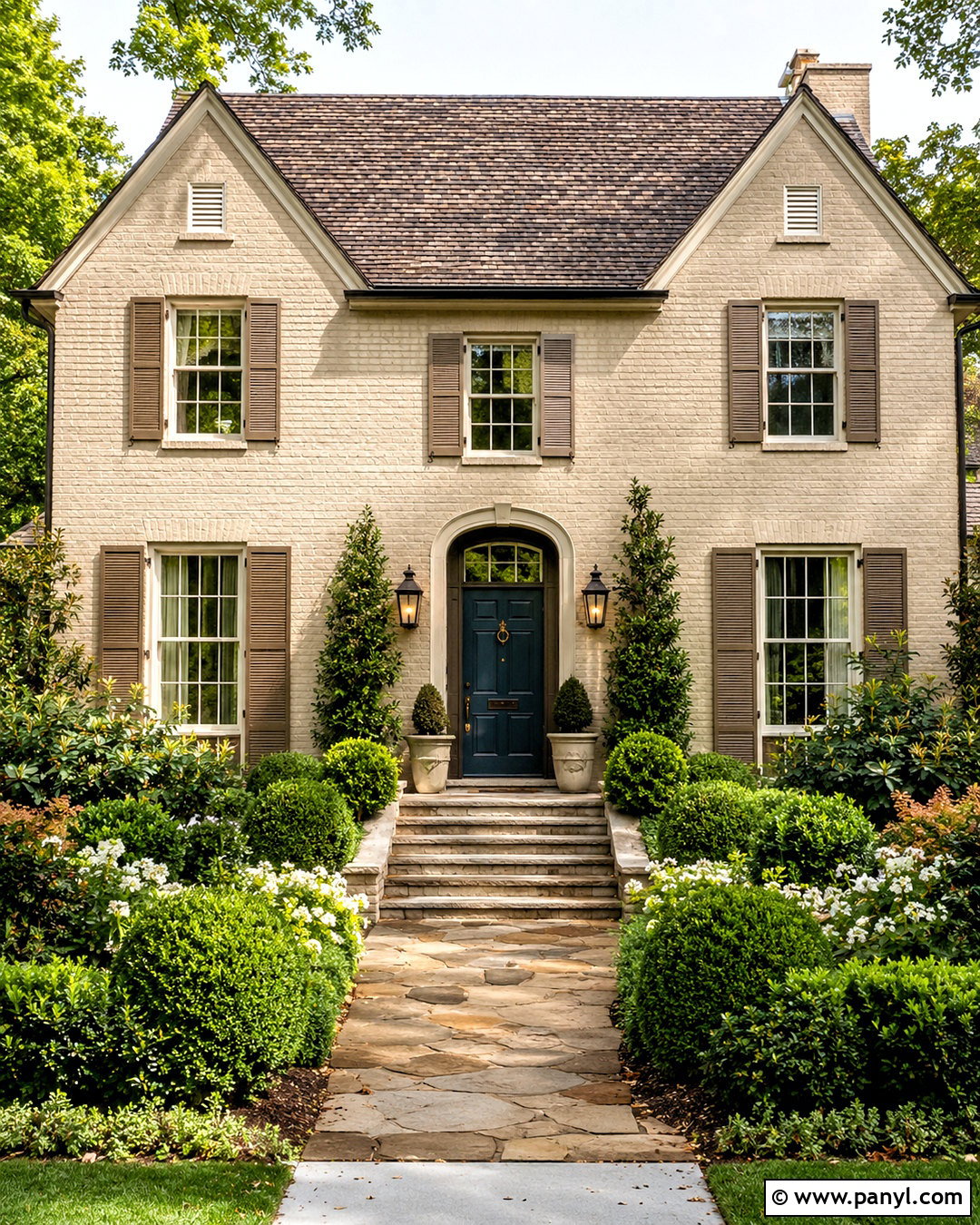
A traditional brick home does not need to become bright white to feel refreshed. Soft beige paint can cover uneven red brick while maintaining the warmth of the original exterior. In the after design, combine beige masonry with creamy white trim and muted brown shutters sized to match the windows. Paint the front door a deep blue-green for a tasteful focal point, then add antique brass hardware and classic lanterns. A brown or variegated neutral roof blends smoothly with this scheme. Update the entrance with wide stone steps, simple railings, and matching planters. Layer the yard with rounded boxwoods, flowering shrubs, and a defined walkway. The result feels lighter and cleaner, but it retains the familiar, welcoming character expected from a traditional home.
14. Soft Pink Painted Brick Cottage
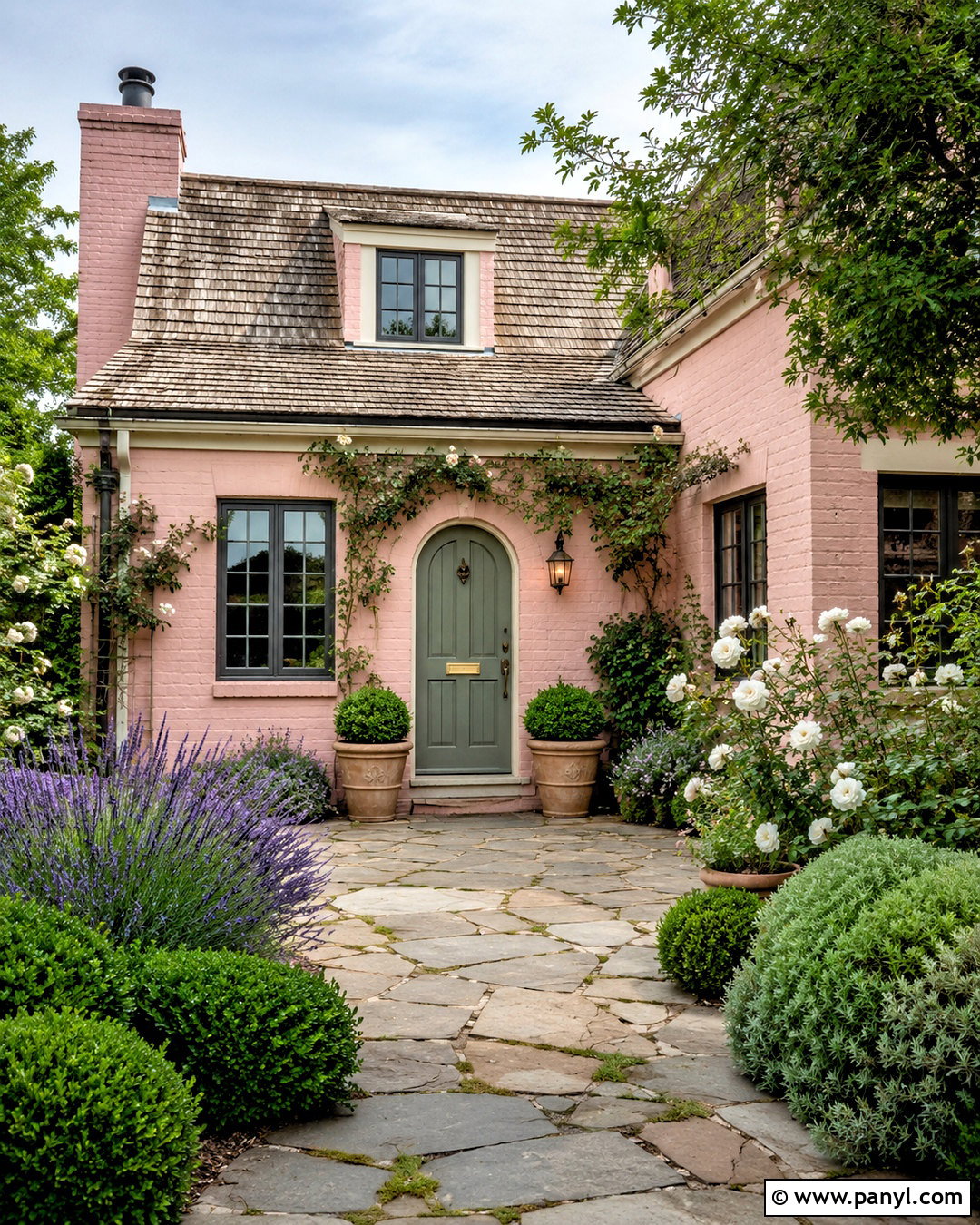
Faded brown brick can become surprisingly charming when transformed with a dusty blush-pink masonry paint. Keep the shade soft and earthy rather than bright so the finished cottage feels mature. Pair the pink brick with warm white trim, a muted sage green front door, and dark bronze window frames. A weathered gray roof prevents the palette from becoming overly sweet. Add unlacquered brass door hardware, simple wall lanterns, and terracotta pots for warmth. Replace a narrow concrete path with irregular flagstone bordered by lavender, white roses, herbs, and low evergreen shrubs. This complete after look is colorful but carefully balanced. It gives a small house more personality while the grounded materials and restrained landscaping preserve a realistic neighborhood-friendly appearance.
15. Two Tone Painted Brick House
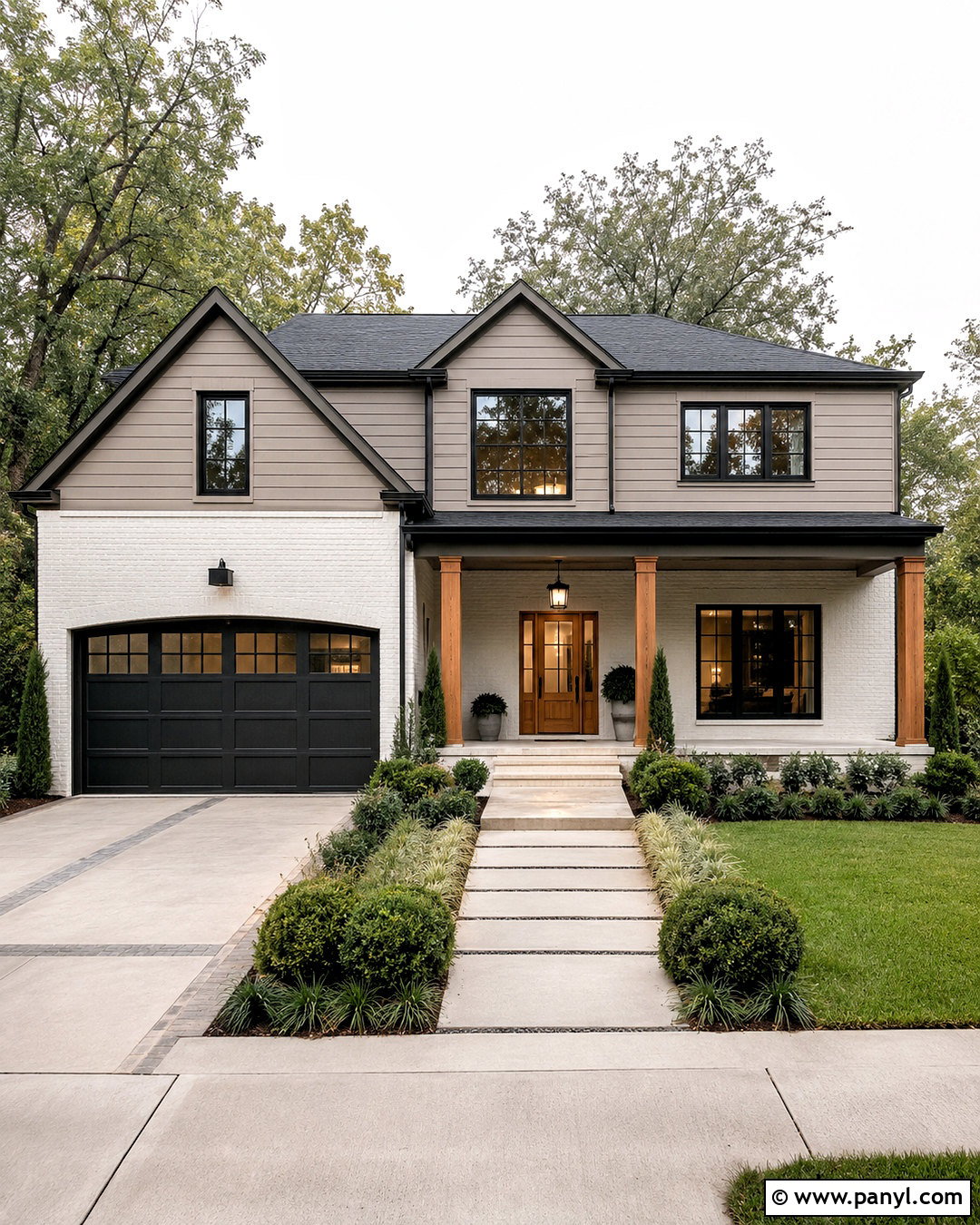
A house with brick on the lower level and siding above can look divided when the original materials feature unrelated colors. Create a more intentional after scheme by painting the brick warm white and the upper siding medium greige. Use charcoal window frames, gutters, and fascia to connect both levels. A deep black garage door grounds the lower facade, while a natural wood front door adds warmth near the center. Repeat that wood tone on porch posts or a small gable detail. Choose a charcoal roof that relates to the dark accents without overpowering the lighter walls. Structured boxwoods, layered grasses, and a broad concrete walkway finish the exterior. The two colors highlight the architecture while still reading as one coordinated home.
16. Whitewashed Brick Farmhouse
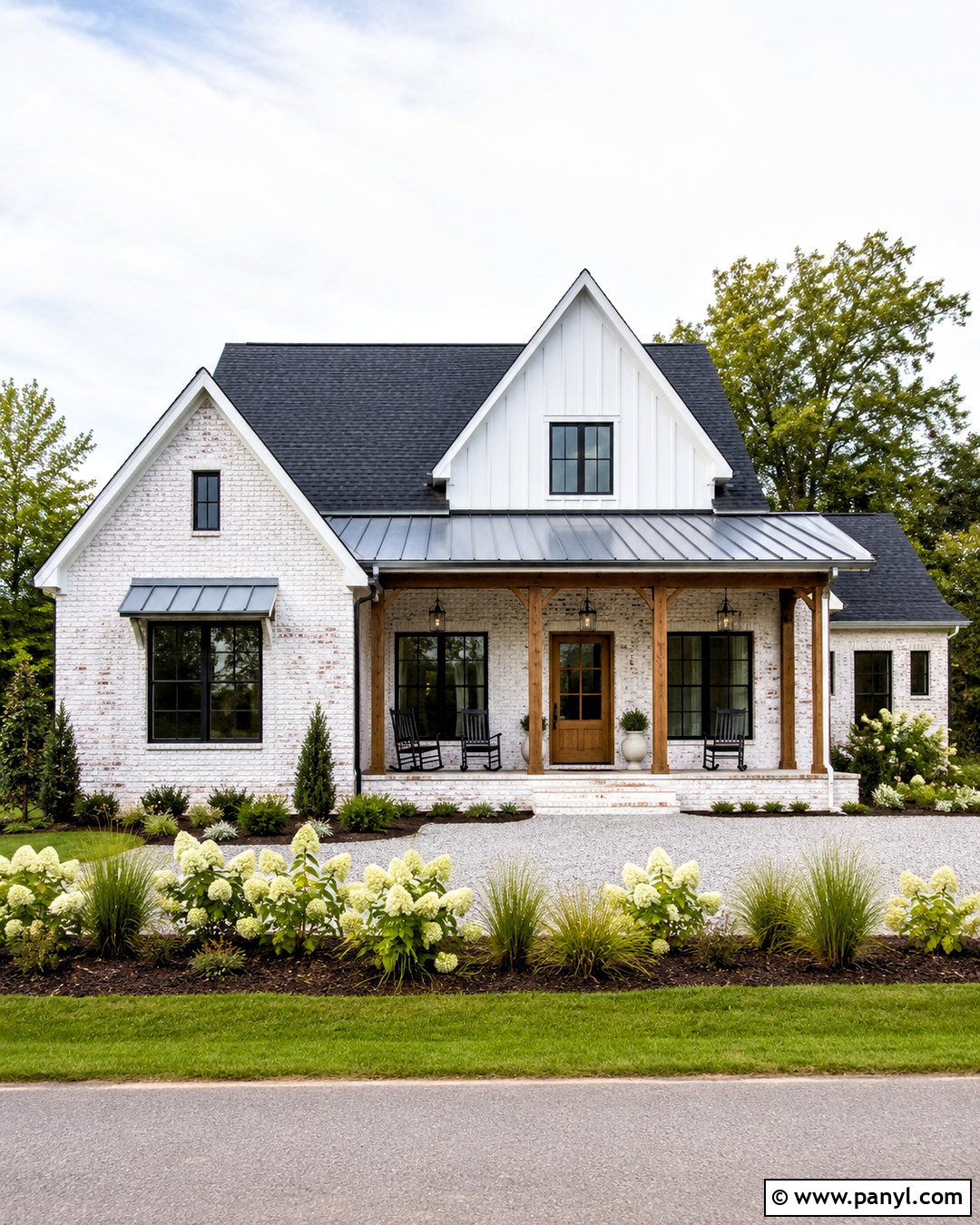
For brick with attractive texture but an overly strong red or orange tone, a translucent whitewashed appearance offers a softer transformation than an opaque finish. Let hints of the original masonry show through the warm white coating. Pair the after brick with crisp white board-and-batten gables, black windows, and a galvanized metal porch roof. Natural cedar posts, a stained plank door, and simple black lights reinforce the farmhouse character without becoming overly rustic. Keep the main roof charcoal for contrast. A gravel driveway, wide porch steps, rocking chairs, and black planters make the entrance feel complete. Use loose masses of hydrangeas, grasses, and evergreen shrubs around the foundation to create a relaxed landscape that complements the textured, timeworn brick surface.
17. Painted Brick With Stone Accents
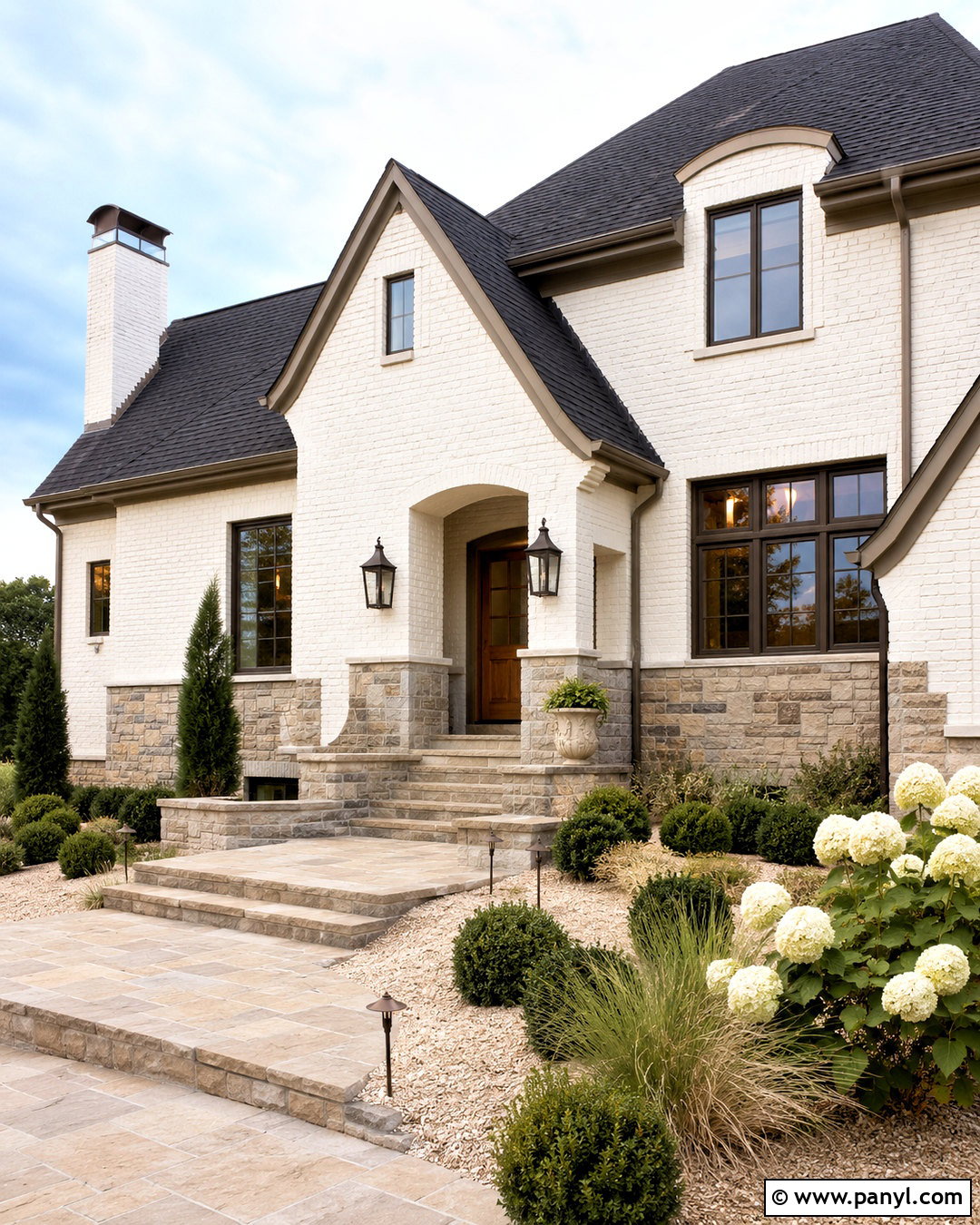
Painting brick can make existing stone details more noticeable when the colors are chosen carefully. If the before exterior combines busy red brick with gray-beige stone, paint only the brick a warm off-white that matches the stone’s lightest undertone. Keep the stone around the foundation, porch columns, or entry completely natural. Add taupe trim, dark bronze windows, and a medium-stained wood door to connect the two materials. A charcoal-brown roof provides enough contrast without fighting the stone. Choose streamlined bronze lights and simple garage doors rather than adding more decorative finishes. Complete the after view with broad stone steps, boxwoods, ornamental grasses, and pale gravel. The finished house feels layered and refined instead of visually crowded by competing masonry patterns.
18. Painted Brick Tudor House
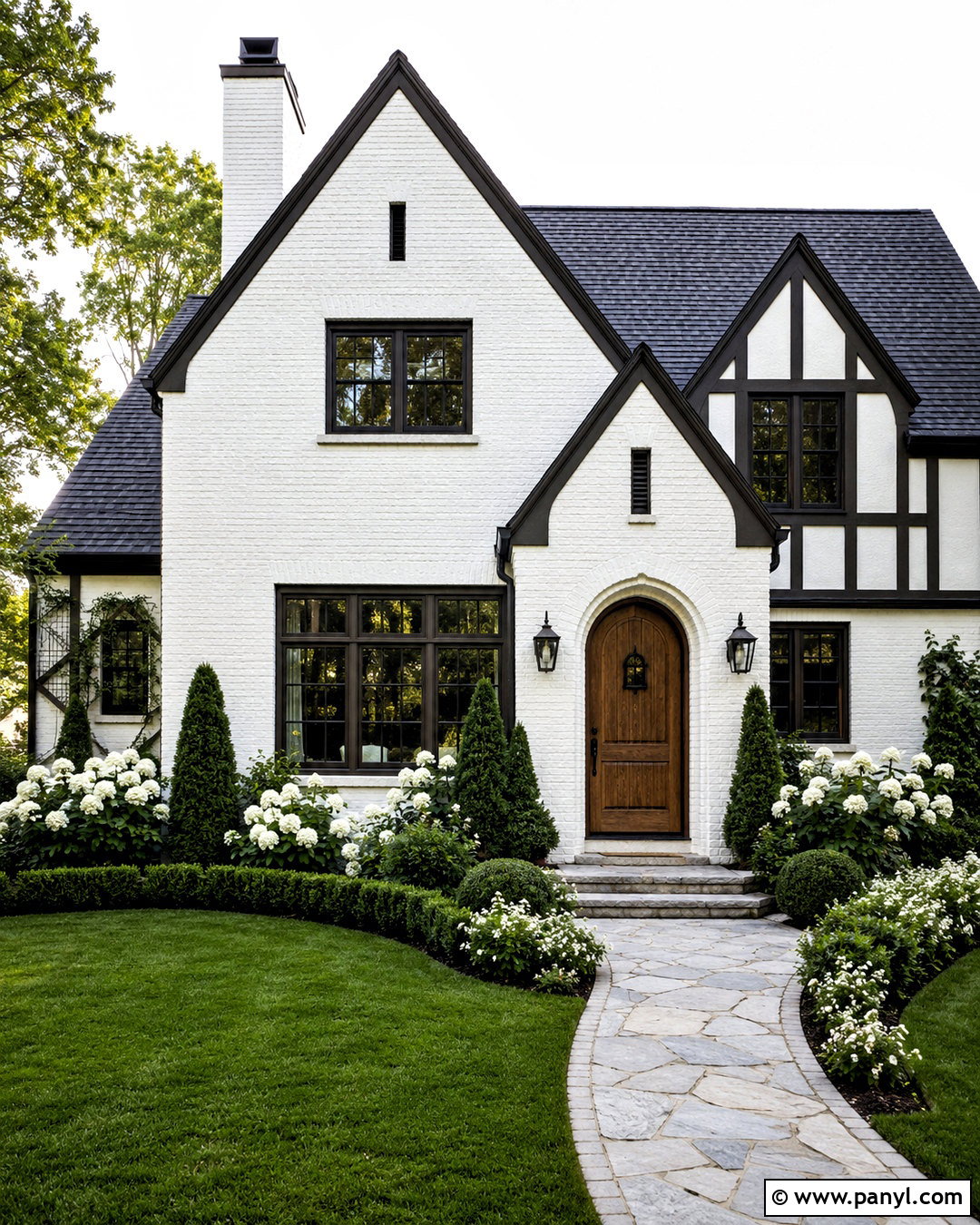
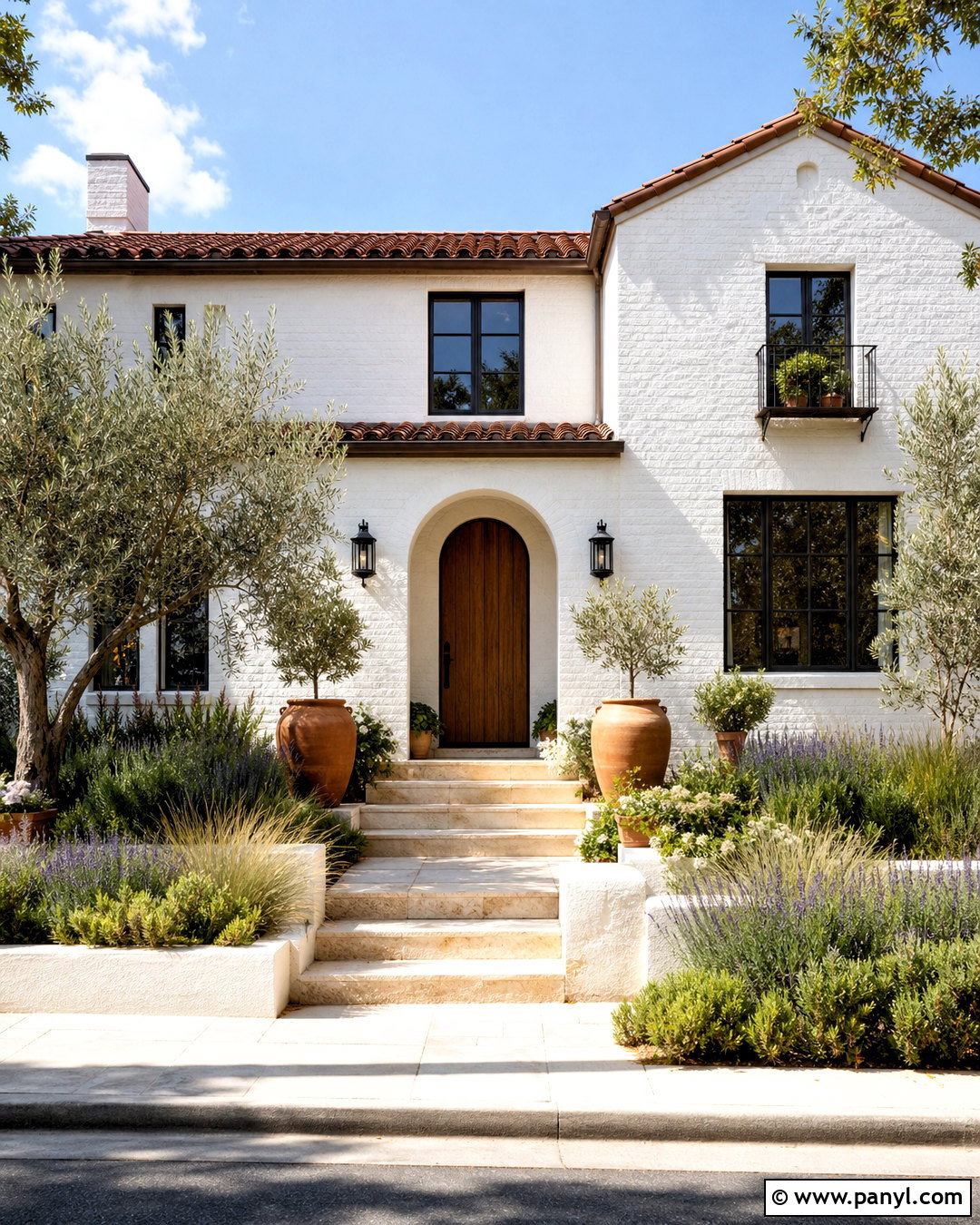
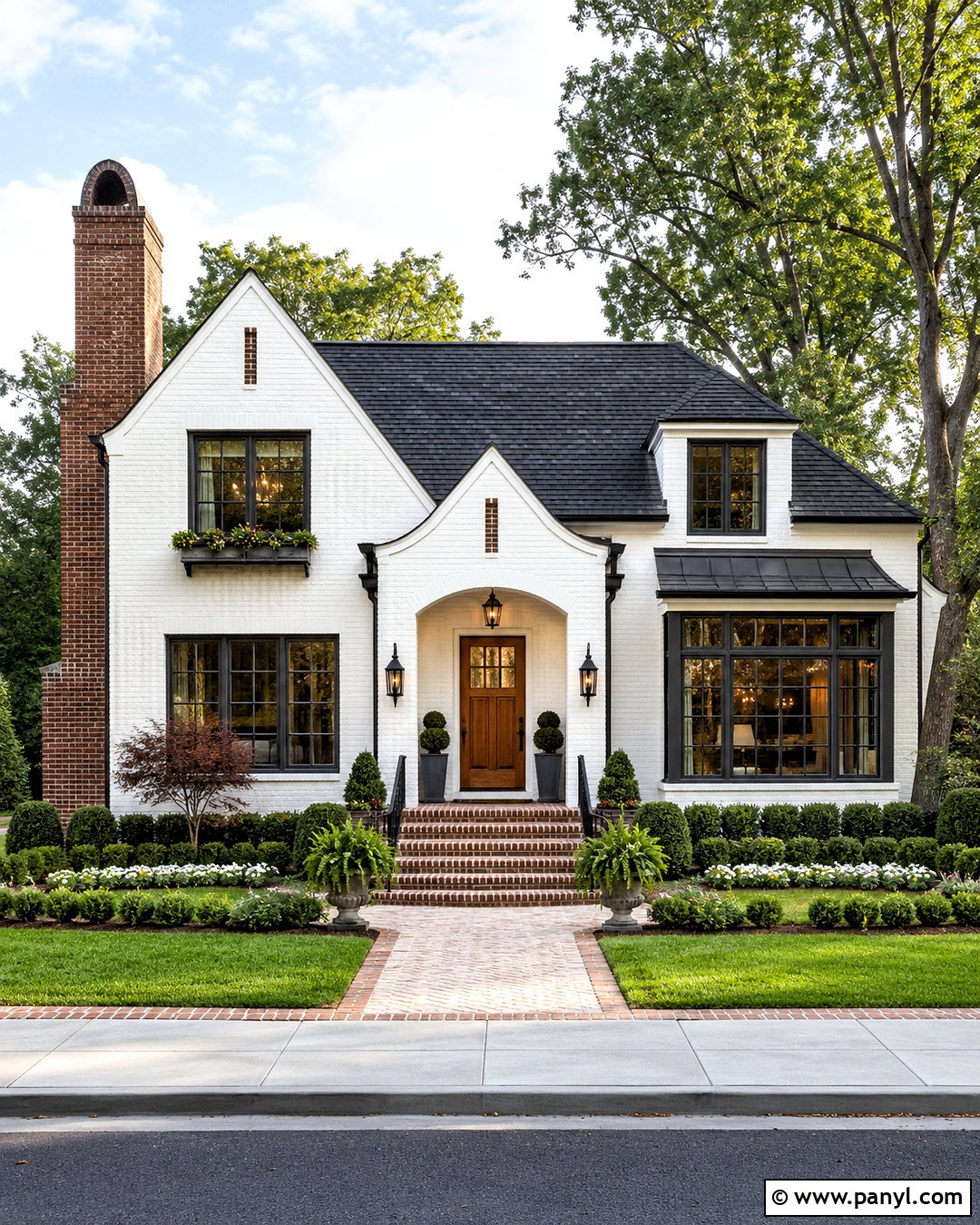
A Tudor exterior can be refreshed without erasing the contrast that defines its architecture. Begin with dark red brick, cream stucco, brown half-timbering, and a heavy roof in the before view. Paint the brick a warm creamy white and repeat that color on the stucco areas. Refinish the timber details, window frames, gutters, and trim in deep brown-black. The after facade gains warmth from an arched oak door with dark iron hardware and traditional lanterns. Preserve the steep charcoal roof and any brick chimney details that remain in good condition. Curved stone paths, clipped evergreens, white flowering shrubs, and loose cottage planting soften the strong lines. This approach brightens the home while retaining its recognizable Tudor proportions and historic-inspired character.
19. Painted Brick Split Level House
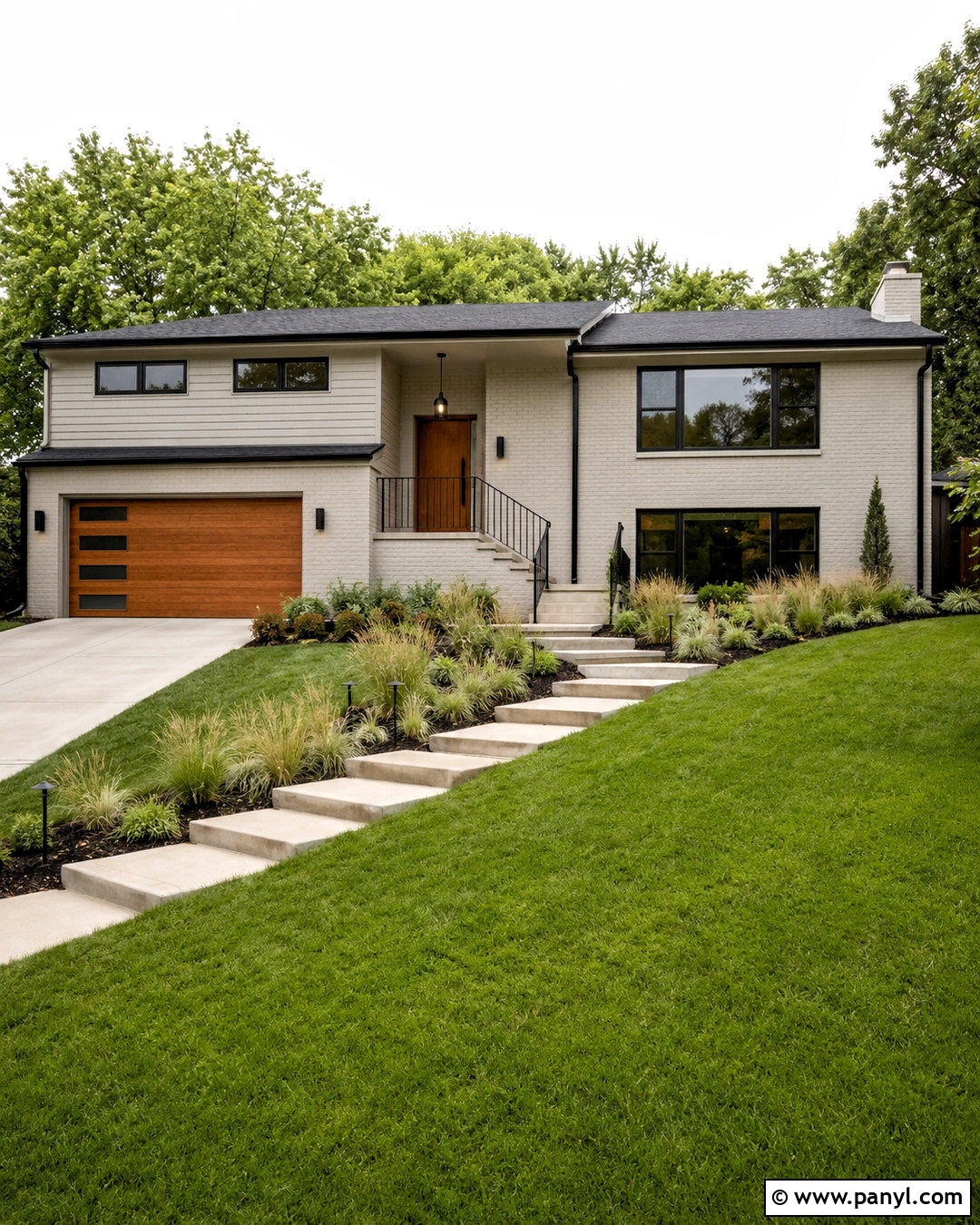
Split-level homes often look disconnected when each floor has a different combination of brick, siding, windows, and garage finishes. Unite the before facade by painting the lower brick and upper siding the same soft greige. Use creamy white around the roofline, then add black windows and gutters for consistent definition. A modern wood garage door and matching front door introduce a warm horizontal detail that complements the home’s shape. Replace delicate railings with simple black metal versions, and widen the front steps using light concrete or natural stone. A charcoal roof finishes the architectural palette. Layered grasses, compact shrubs, and a stepped walkway help manage the sloped yard. The after transformation feels cohesive while respecting the practical multi-level structure.
20. White Painted Brick Bungalow
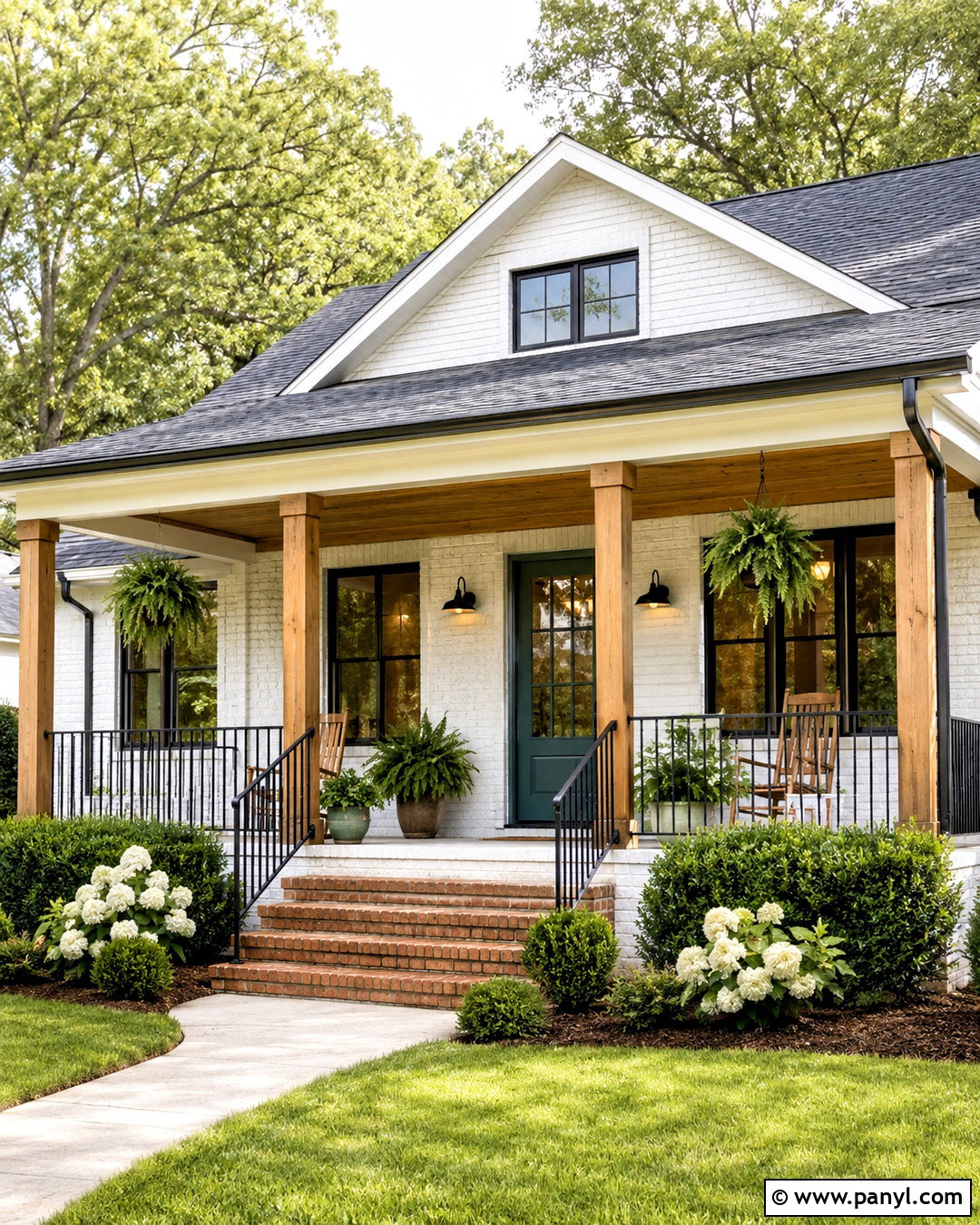
An older bungalow with dark brick, peeling trim, and a shadowy porch can feel closed off from the street. Paint the brick a gentle warm white and use the same color on the trim to create a clean after foundation. Define the windows, gutters, and porch railings with matte black. Refinish the porch ceiling and substantial square columns in natural cedar for warmth. A muted teal front door adds character without overwhelming the small facade. Keep the roof charcoal, and install simple schoolhouse-inspired lights beneath the porch. Complete the exterior with brick steps, layered ferns, hydrangeas, low hedges, and a curved walkway. The finished bungalow looks brighter and more welcoming while preserving its deep porch, handcrafted details, and comfortable neighborhood scale.
Conclusion:
The best painted brick transformations coordinate every visible detail rather than treating masonry color as a stand-alone decision. Roof undertones, window finishes, trim, doors, lighting, hardscaping, and landscaping should all support the new palette. Warm white offers versatility, while greige, taupe, green, navy, charcoal, and black create more distinctive results. Natural wood and unpainted stone can keep these exteriors from looking flat. Before committing, view large color samples on different sides of the house and consider how they appear throughout the day. Whether you prefer a subtle refresh or a dramatic makeover, these 20 painted brick house exterior before and after ideas provide complete, realistic looks that can guide a cohesive curb appeal update.

Related Ideas and Inspiration:
Leave a Reply