
A dated brick facade can make an otherwise attractive home feel heavy, faded, or disconnected from its surroundings. These **20 brick stain exterior before and after ideas** show how a carefully selected masonry stain can refresh the brick while coordinating the roof, trim, doors, windows, and landscaping. Unlike a thick painted finish, masonry stain can permanently alter the color while maintaining the brick’s natural surface texture. Proper cleaning, masonry repairs, moisture correction, and sample panels should come before the full application. () From warm white ranch homes to dramatic charcoal facades, each transformation below presents a complete exterior scheme you can adapt. Explore these practical **20 brick stain exterior before and after ideas**.

1. White Brick Stain With Black Trim
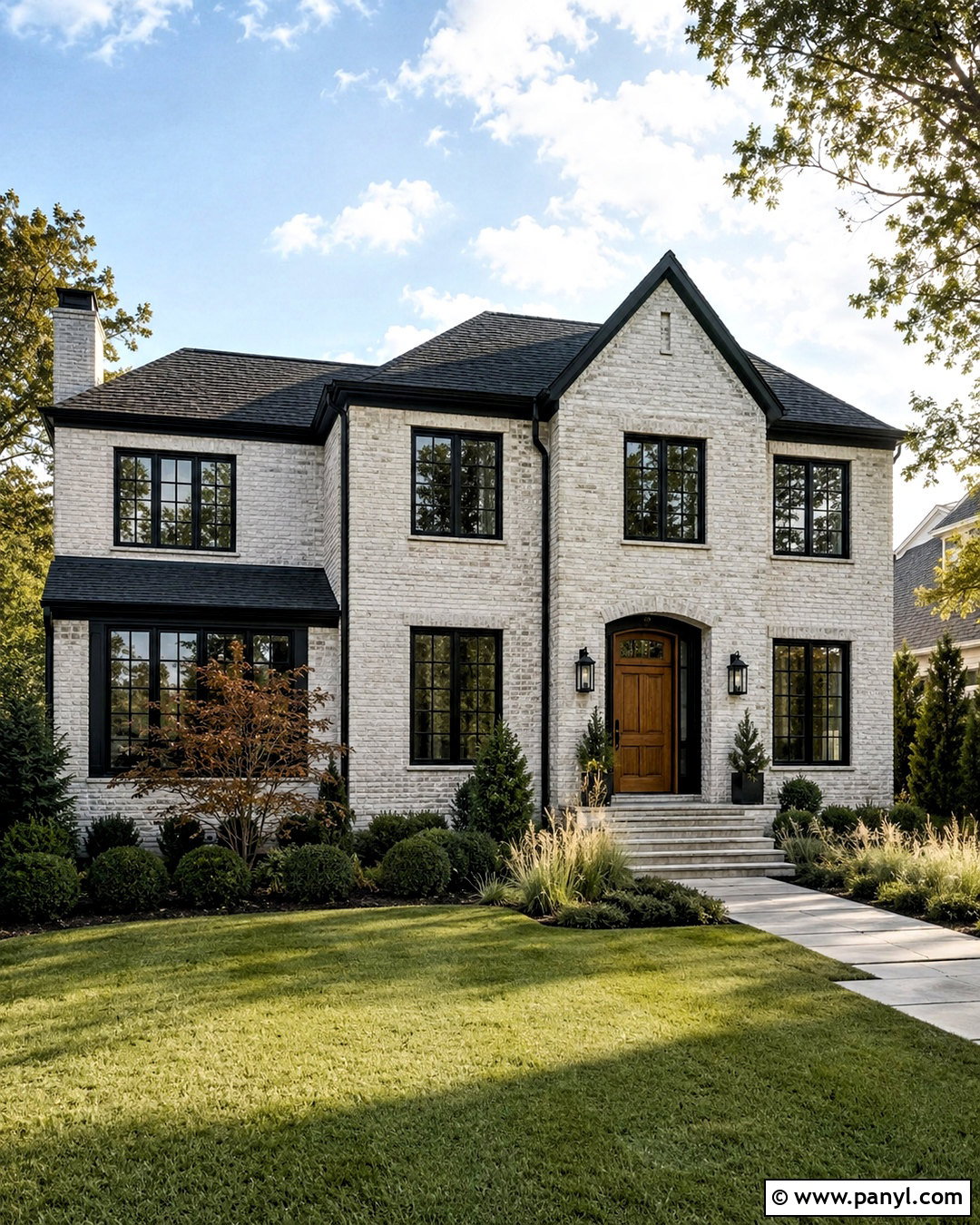
Dark red brick can overpower a simple facade, especially when it is paired with faded brown trim and an aging roof. The after look uses a soft white brick stain to brighten the masonry without hiding its original texture. Crisp black window frames, gutters, and porch lights introduce strong definition. A medium brown wood door keeps the contrast from feeling too cold. Finish the exterior with a charcoal architectural-shingle roof and pale gray concrete steps. Rounded evergreen shrubs, ornamental grasses, and a straight stone walkway create a clean foreground. This scheme works especially well on traditional and transitional homes because the white brick feels fresh while the black details emphasize windows, rooflines, and architectural symmetry.
2. Warm White Brick Stain With Wood Accents
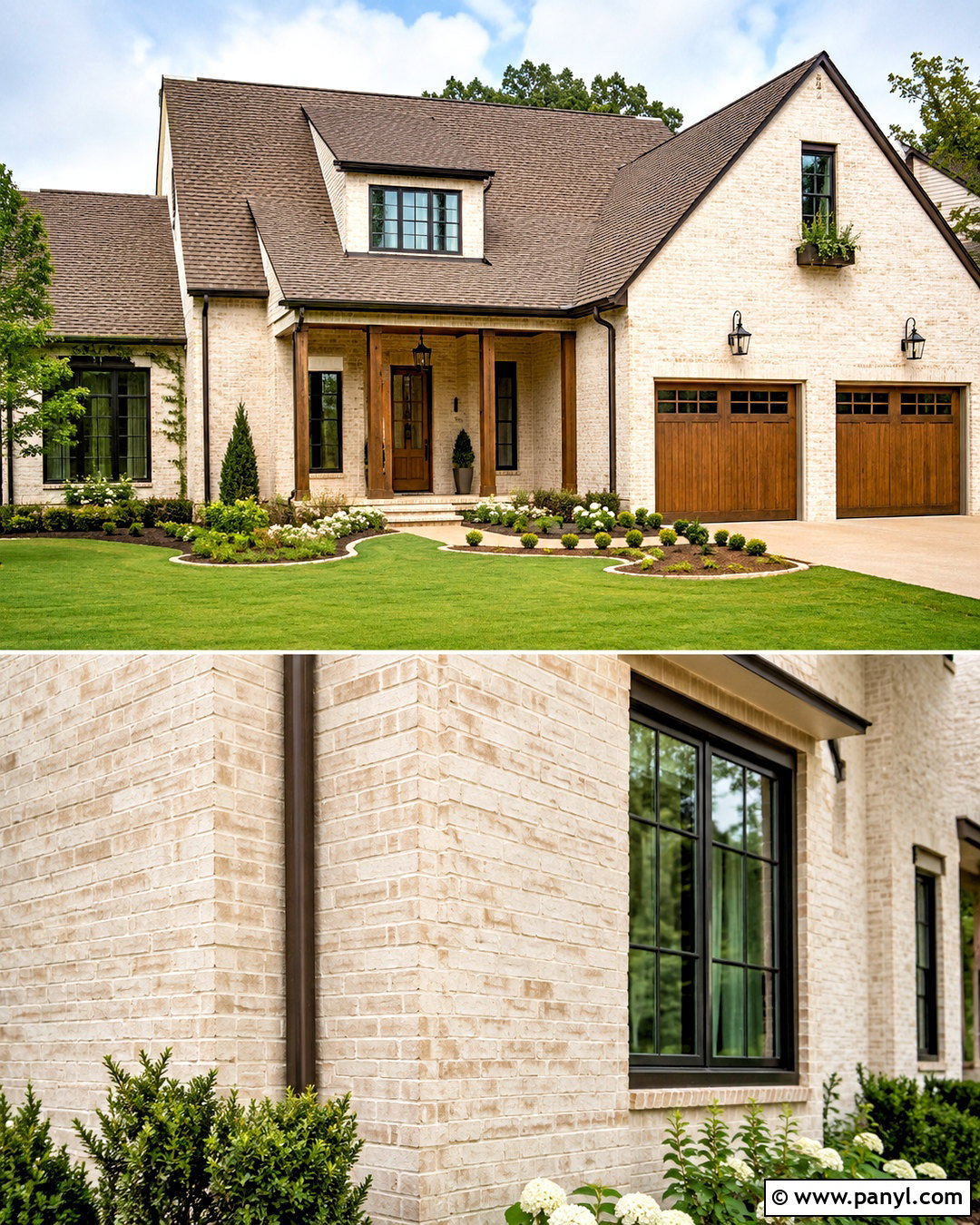
Does your orange or brown brick make the front of your home feel darker than it should? A warm white brick stain can soften those strong undertones while preserving subtle variations across the facade. Pair the stained brick with natural cedar porch posts, a medium oak front door, and matching wood garage doors. Choose creamy white trim instead of a stark white so every finish feels connected. Bronze gutters and outdoor lanterns add quiet contrast, while a weathered brown roof supports the warmer palette. Complete the transformation with curved garden beds, pale limestone edging, and layered green plants. The final exterior feels welcoming, relaxed, and updated without losing the earthy character that made the original brick appealing.
3. Greige Brick Stain With Charcoal Trim
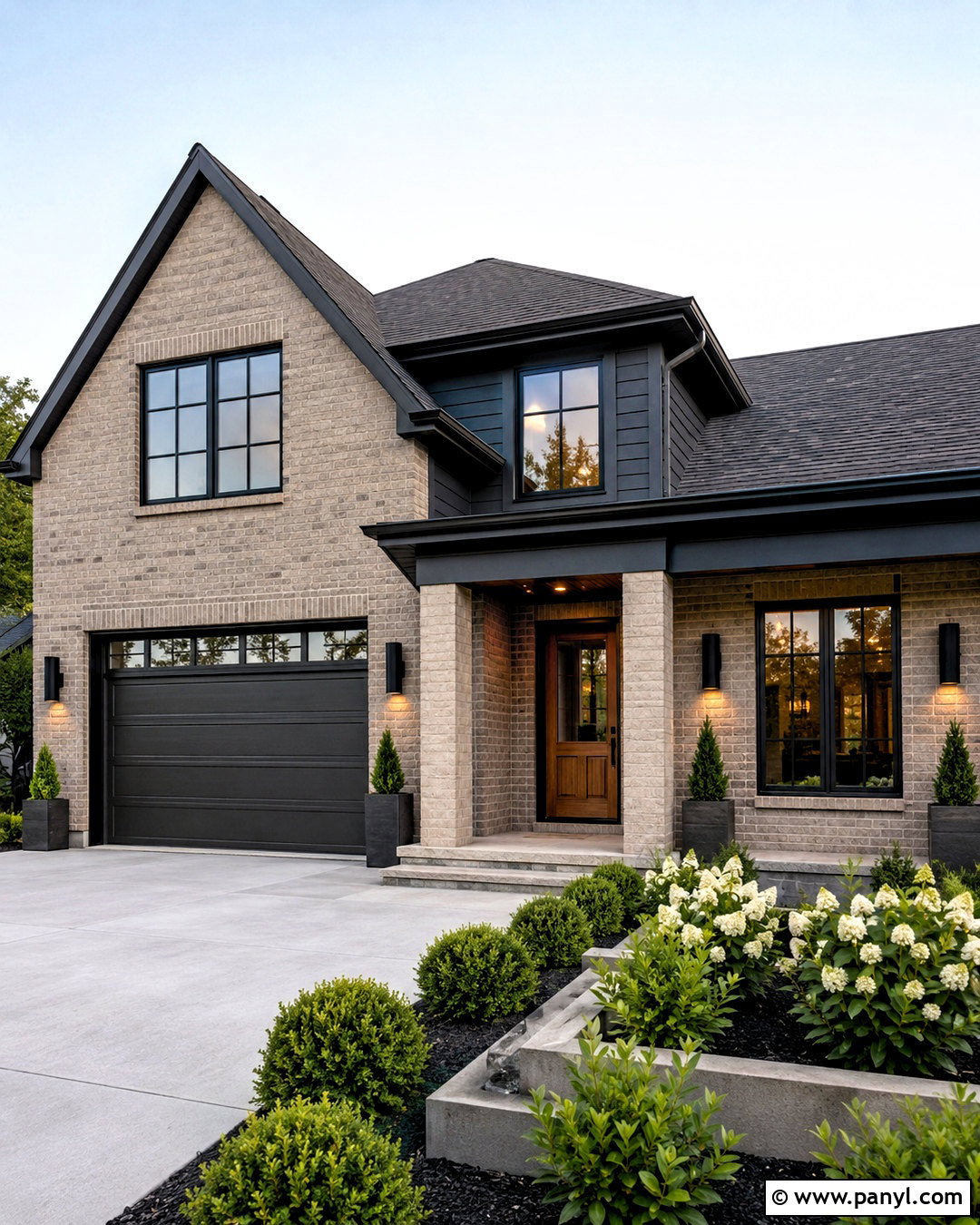
A mismatched combination of red brick, beige siding, and white trim can make an exterior appear visually divided. Greige brick stain creates a calmer foundation by blending warm beige and soft gray undertones. Continue the greige color onto nearby masonry columns so the lower facade reads as one connected surface. Use charcoal gray on the siding, window trim, gutters, and garage door for a structured after look. A natural walnut front door provides a warm focal point beneath the porch. Add matte black sconces and simple concrete planters for modern definition. Low boxwoods, white flowering shrubs, and dark mulch complete the curb appeal. This balanced palette works particularly well with black, charcoal, or weathered gray roofing.
4. Taupe Brick Stain With Cream Trim
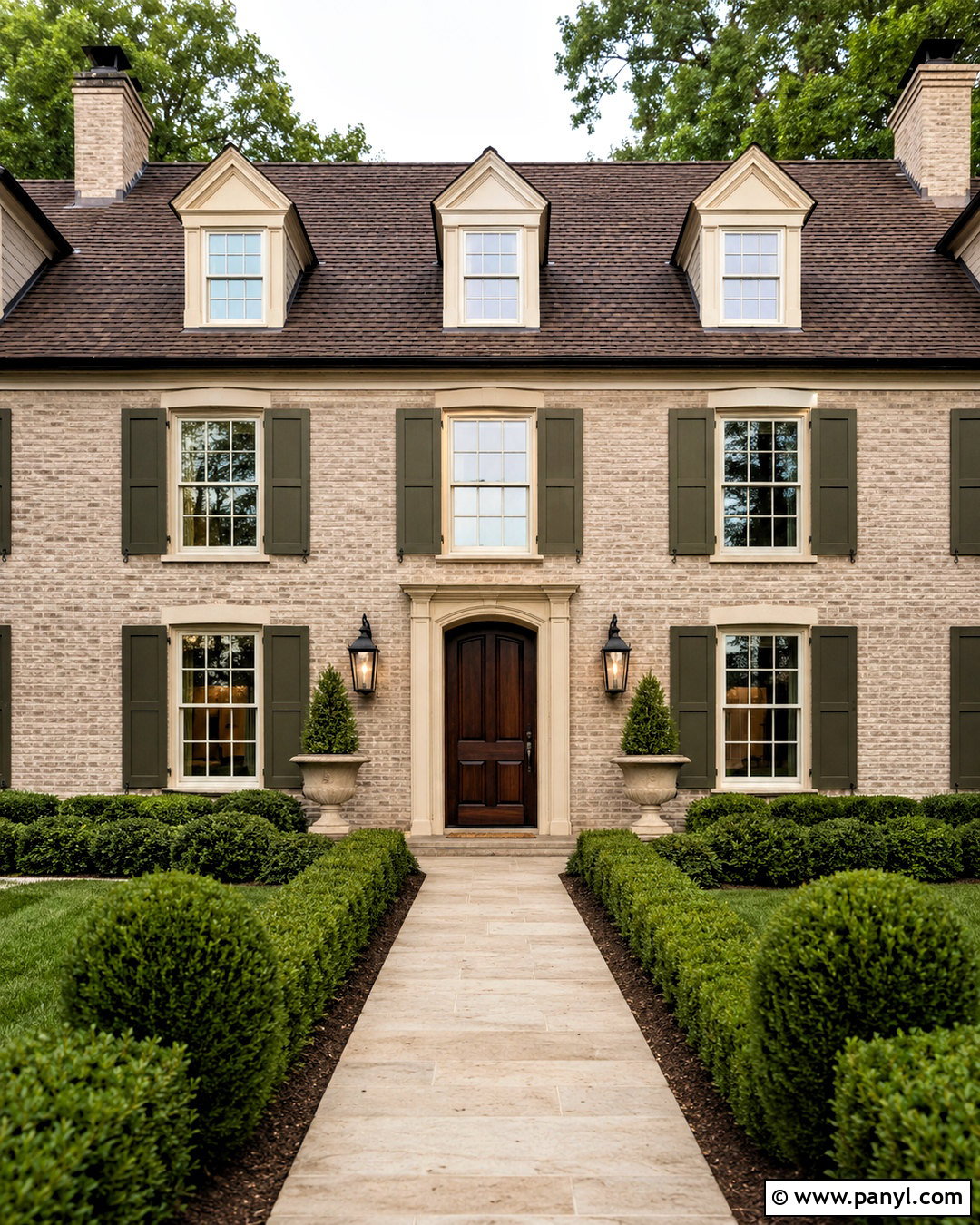
Picture a faded red brick Colonial with yellowed trim and shutters that disappear against the masonry. Taupe brick stain gives the facade a softer, more refined base without making it look painted. Choose a medium taupe containing both brown and gray so it complements an existing brown roof. Cream trim around the windows, cornice, and porch creates gentle contrast. Deep olive shutters and a dark stained wood door add traditional color without returning to the heaviness of the original exterior. Symmetrical lanterns, classic urn planters, and neatly trimmed hedges reinforce the architecture. In the after view, the home feels brighter and more cohesive, yet the visible brick texture keeps the large facade from appearing flat or overly formal.
5. Light Gray Brick Stain With Navy Shutters
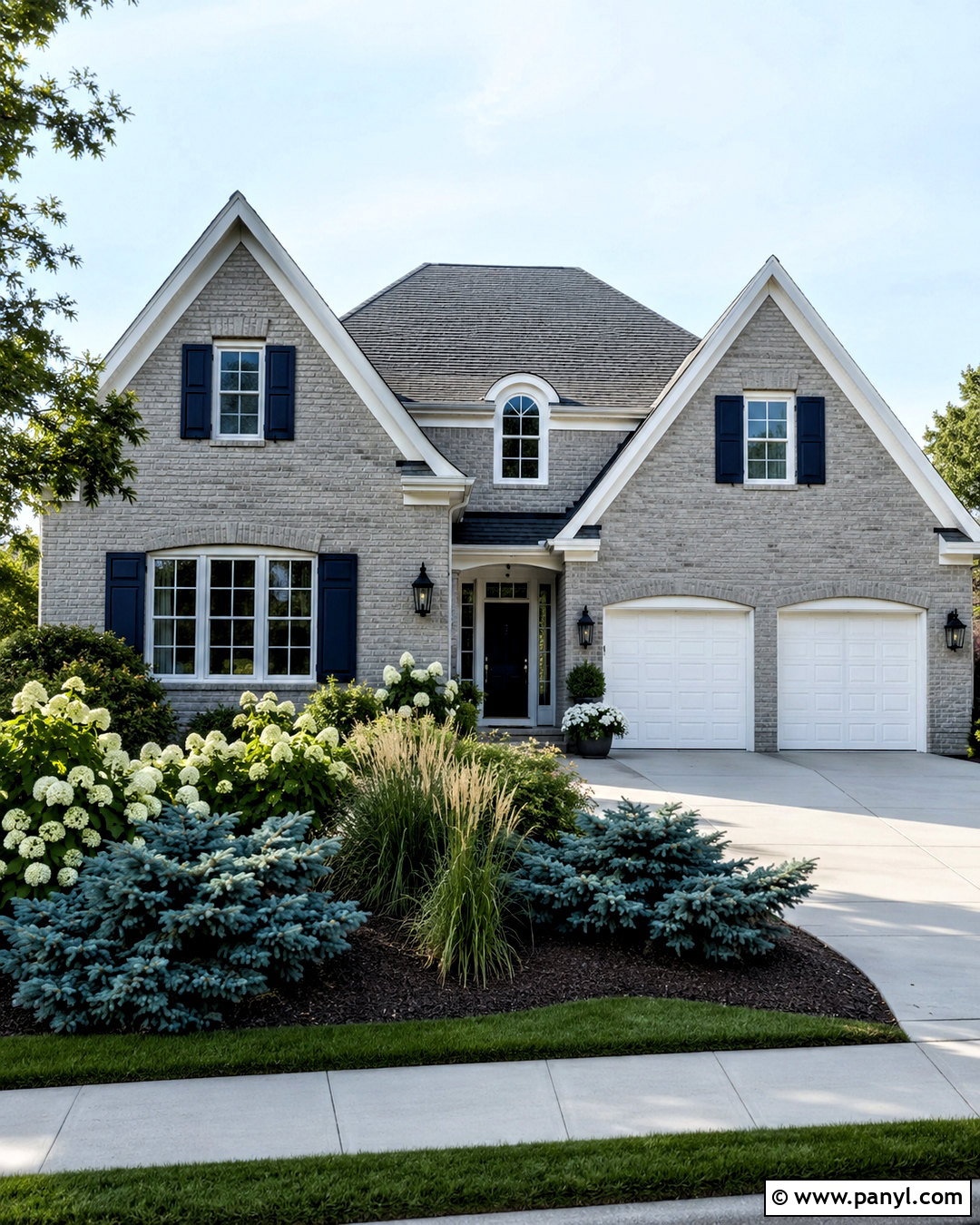
Cool light gray stain can transform uneven orange-red brick into a polished coastal-inspired exterior. Rather than covering every variation, select a semi-opaque result that allows muted brick tones to create natural depth. Paint the trim a clean soft white and introduce deep navy blue on the shutters and front door. These colors look especially balanced beneath a medium gray roof. Brushed nickel door hardware and simple black lanterns keep the facade updated without making it overly nautical. Replace overgrown foundation shrubs with blue-green junipers, white hydrangeas, and ornamental grasses. A pale gravel walkway or light concrete drive reinforces the cooler palette. The completed after look is airy, orderly, and suitable for Cape Cod, Colonial, or traditional suburban homes.
6. Charcoal Brick Stain With Warm Wood
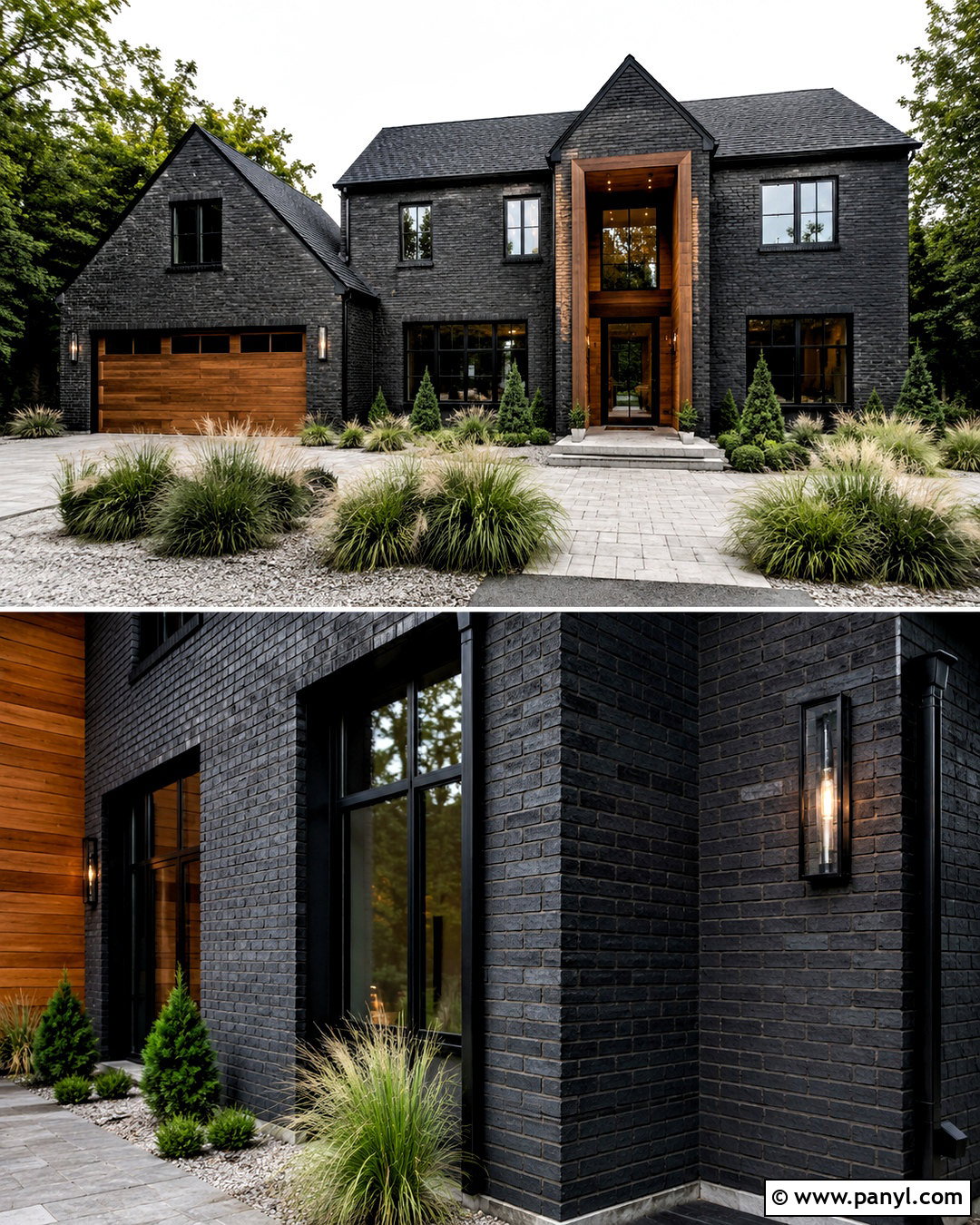
When pale pink brick clashes with a dark roof, leaning into a deeper exterior palette can create a far more intentional result. Apply charcoal brick stain across the main facade while leaving slight tonal differences between individual bricks. Use matching charcoal trim to simplify busy rooflines, then introduce warm cedar at the entry, porch ceiling, and garage door. The wood prevents the dark masonry from feeling severe. Black window frames and oversized rectangular sconces support the modern direction. Keep walkways light with natural concrete or pale limestone pavers. Feather reed grass, compact evergreens, and light gravel provide contrast near the foundation. The after exterior feels dramatic and contemporary, with the stained brick becoming a textured backdrop rather than a dated focal point.
7. Black Brick Stain With White Windows
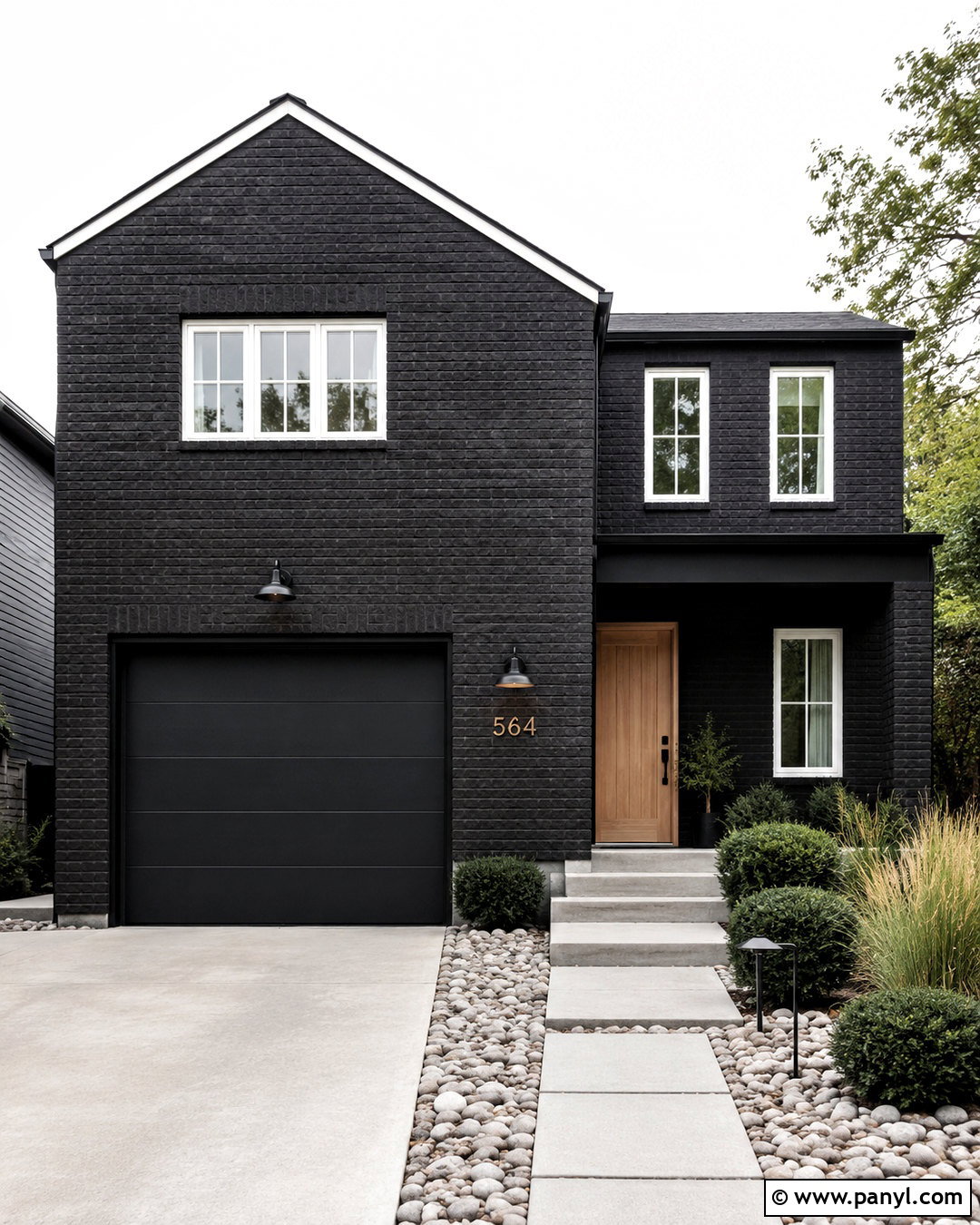
Few transformations are as dramatic as changing washed-out tan brick to a rich black finish. A deep black masonry stain preserves the brick pattern, giving the walls more character than a smooth painted surface. Keep existing white windows and use bright white trim sparingly around the roofline and entry. A white oak front door introduces warmth and immediately attracts attention. Choose a black garage door for continuity, then add streamlined brass or bronze house numbers and sconces. A medium gray roof prevents the upper portion from disappearing into the facade. Light concrete steps, pale river rock, clipped shrubs, and soft green grasses brighten the foreground. This complete scheme works best on homes with straightforward forms and plenty of natural daylight.

8. Deep Red Brick Stain With Black Shutters

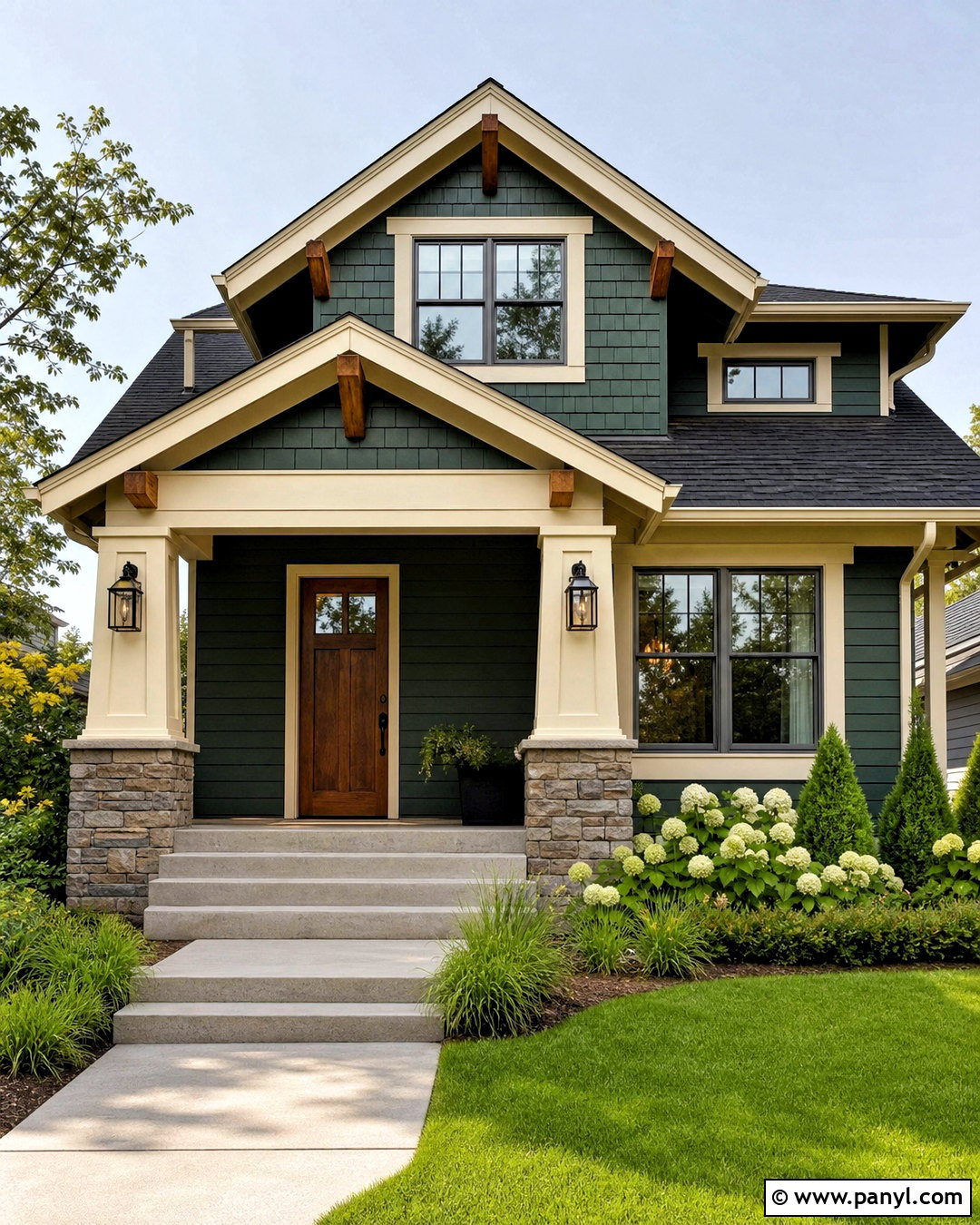
Not every before and after project needs to remove the traditional red brick appearance. Faded, sun-bleached, or mismatched masonry can be refreshed with a deep red brick stain that restores consistency while keeping natural variation. Select a muted burgundy-red rather than a bright cherry tone. Pair it with black shutters, black gutters, and a glossy black front door for a classic result. Warm white trim creates a clean outline around windows and roof edges. If the roof is brown, repeat that warmth through bronze lanterns and aged brass door hardware. Symmetrical boxwood hedges, red-leaf shrubs, and a brick-edged walkway complete the established look. The after facade appears maintained and intentional without losing its original architectural identity.
9. Chocolate Brown Brick Stain With Beige Siding
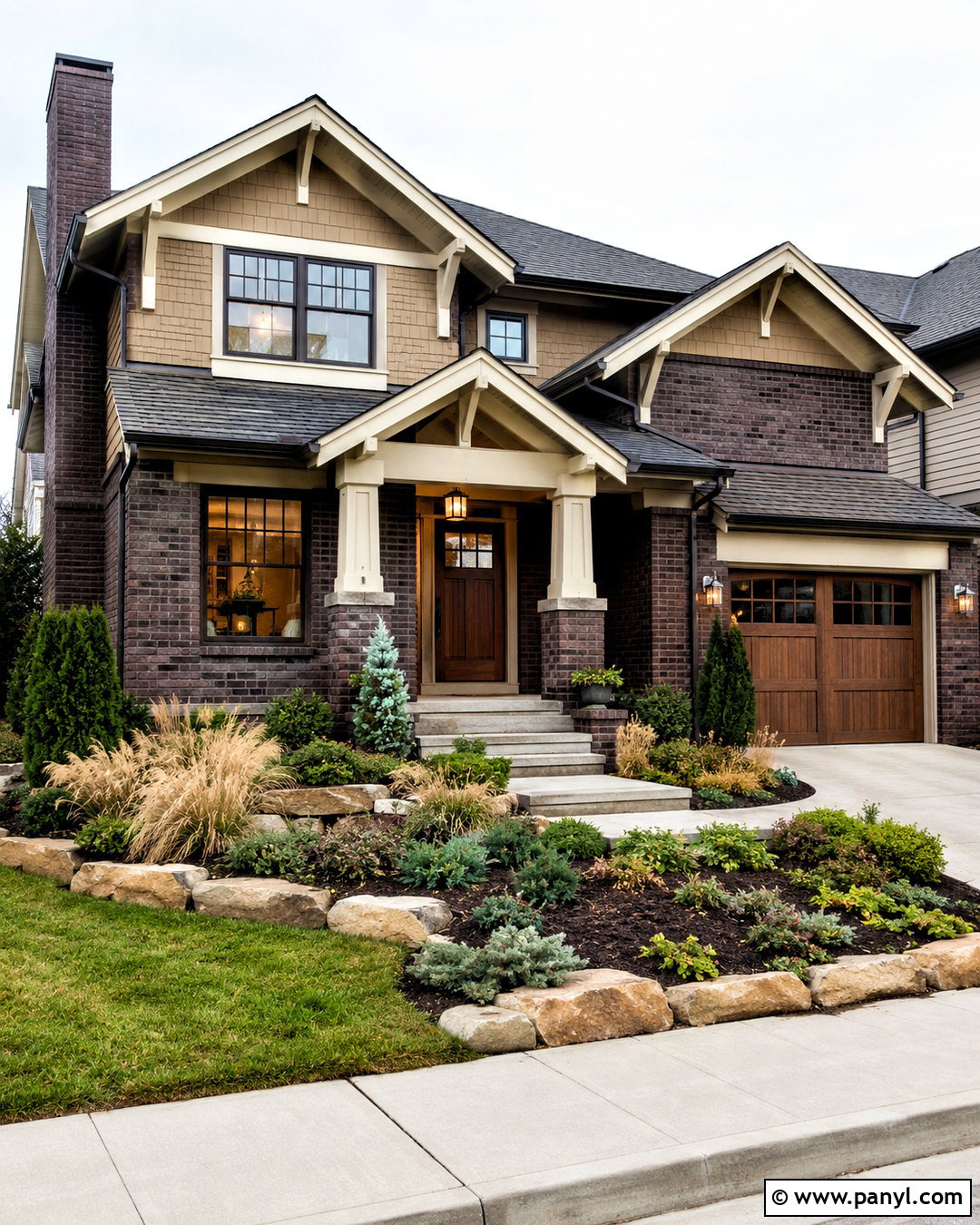
Bright orange brick beneath pale vinyl siding often makes a split-material exterior look disconnected. Chocolate brown brick stain can ground the lower story and relate it to a brown or weathered wood roof. Choose beige or mushroom-colored siding for the upper level, then use warm cream trim between the materials. A medium walnut garage door and matching front door create continuity across the facade. Add dark bronze gutters, lanterns, and window frames for subtle definition. The landscape should include rich green evergreens, tan ornamental grasses, and warm stone edging. In the after transformation, the brick acts as a strong base instead of competing with the siding. This earthy combination is especially effective for Craftsman, ranch, and mountain-influenced homes.

10. Cream Brick Stain With Sage Green Trim
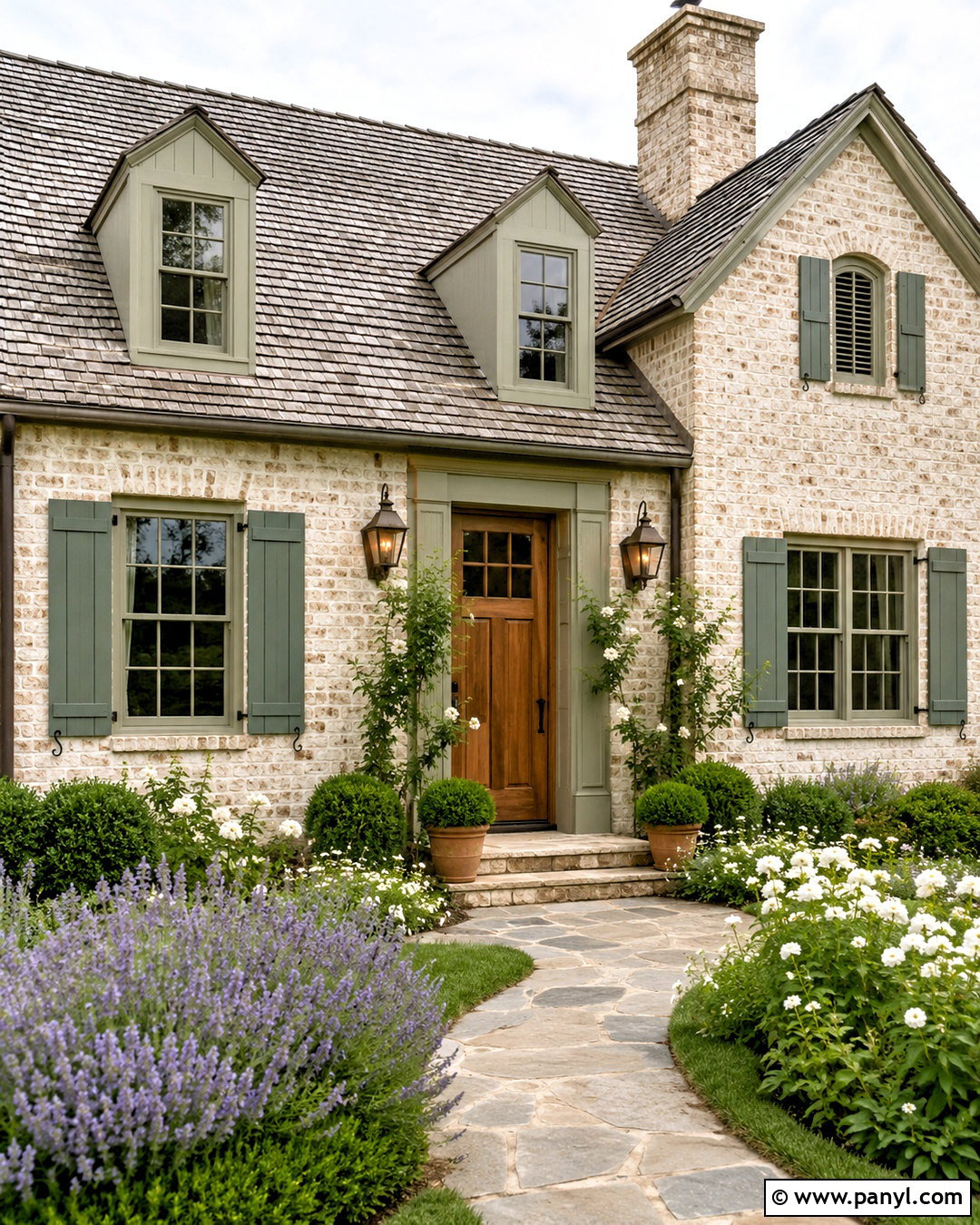
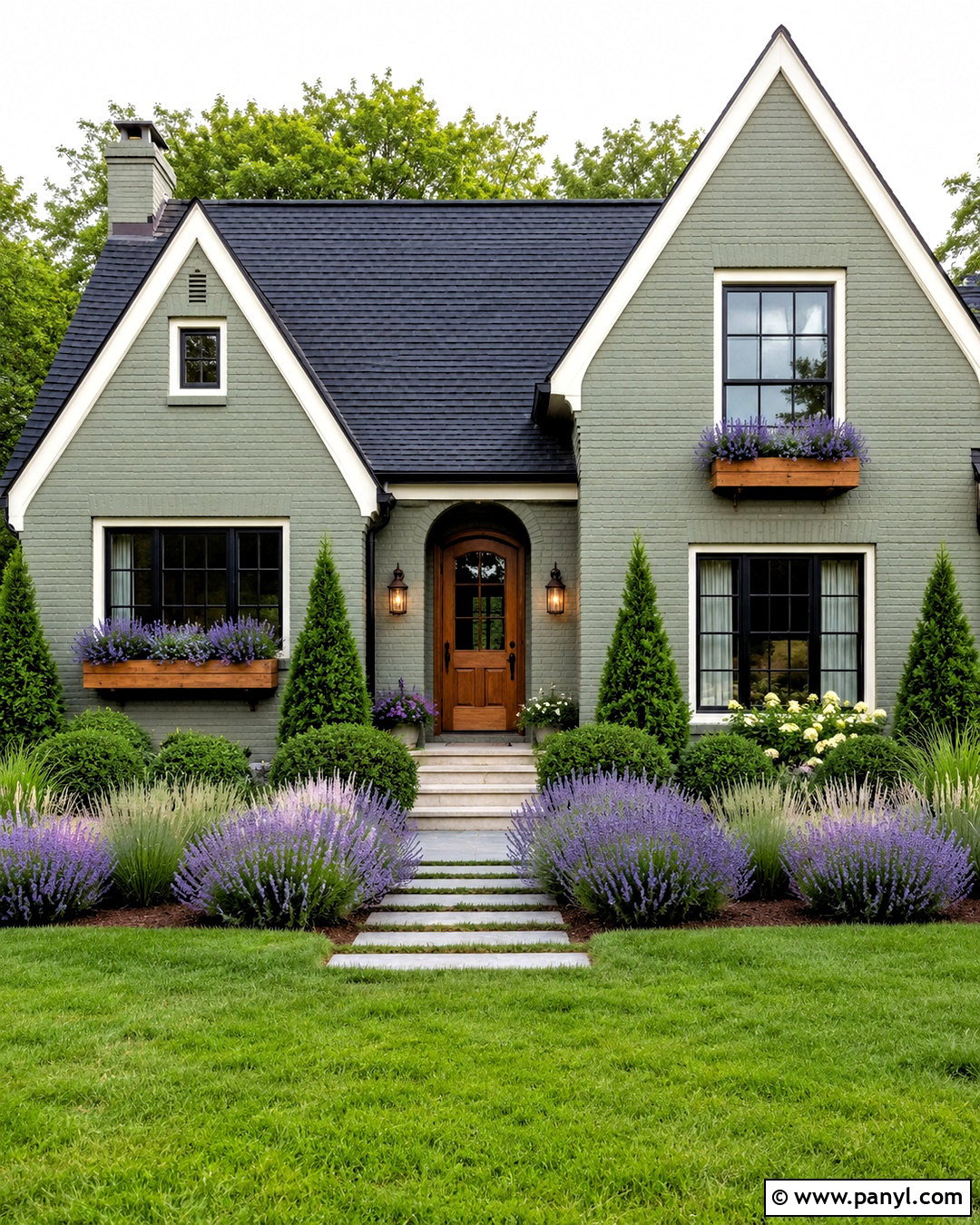
A cream brick stain can calm harsh red and purple masonry while producing a softer result than bright white. Use the cream tone across the brick body and repeat it on any masonry porch columns. Paint the trim and shutters a muted sage green to connect the home naturally with surrounding trees and garden beds. A medium brown wood front door adds warmth beneath the entry, while aged bronze lighting complements the relaxed palette. Choose a weathered gray or warm brown roof rather than a strong black one. Finish the setting with lavender, white flowering shrubs, boxwoods, and a gently curved flagstone walkway. The after exterior feels comfortable and established, making this scheme a strong choice for cottages, traditional homes, and country properties.
11. Beige Brick Stain With Dark Bronze Trim
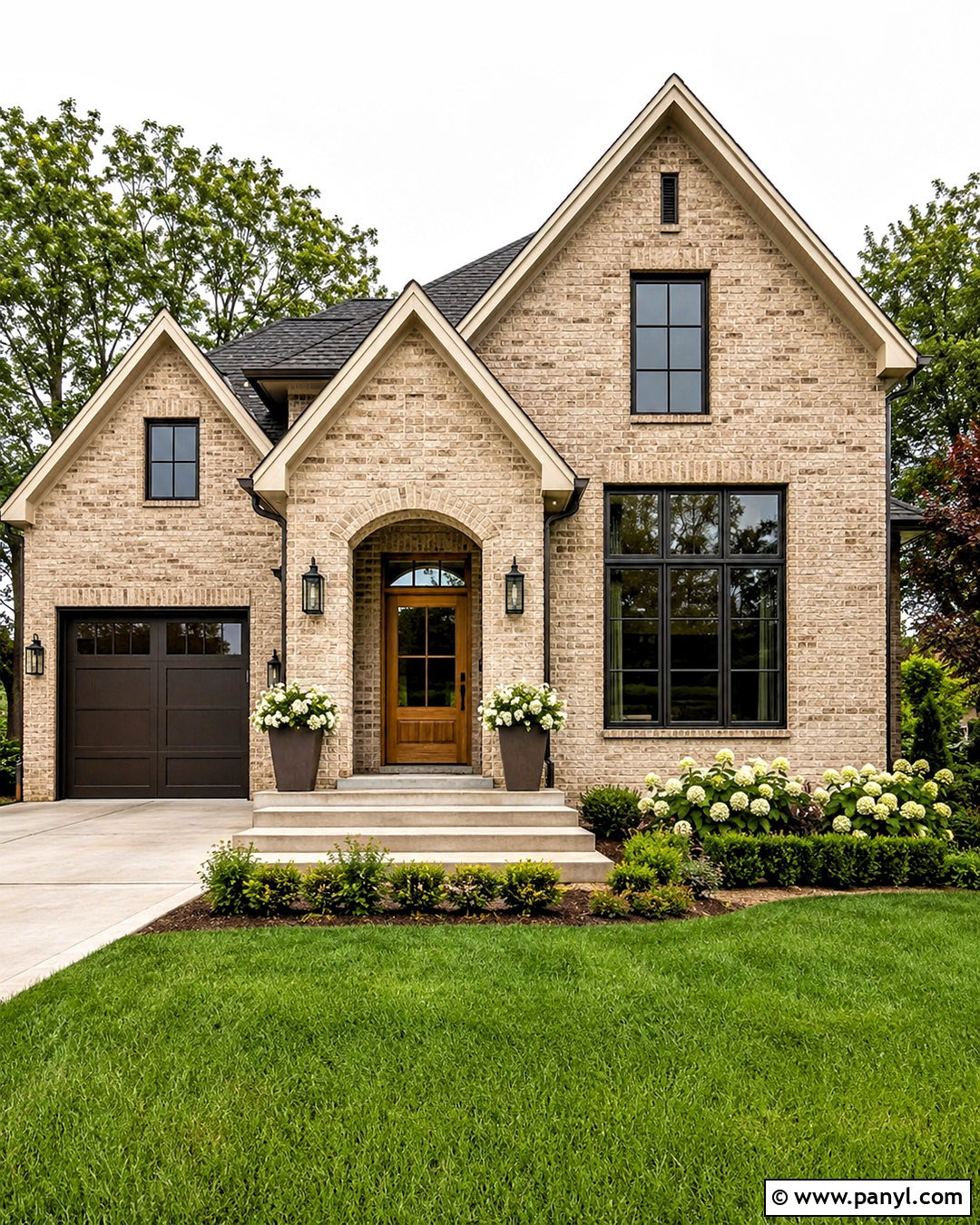
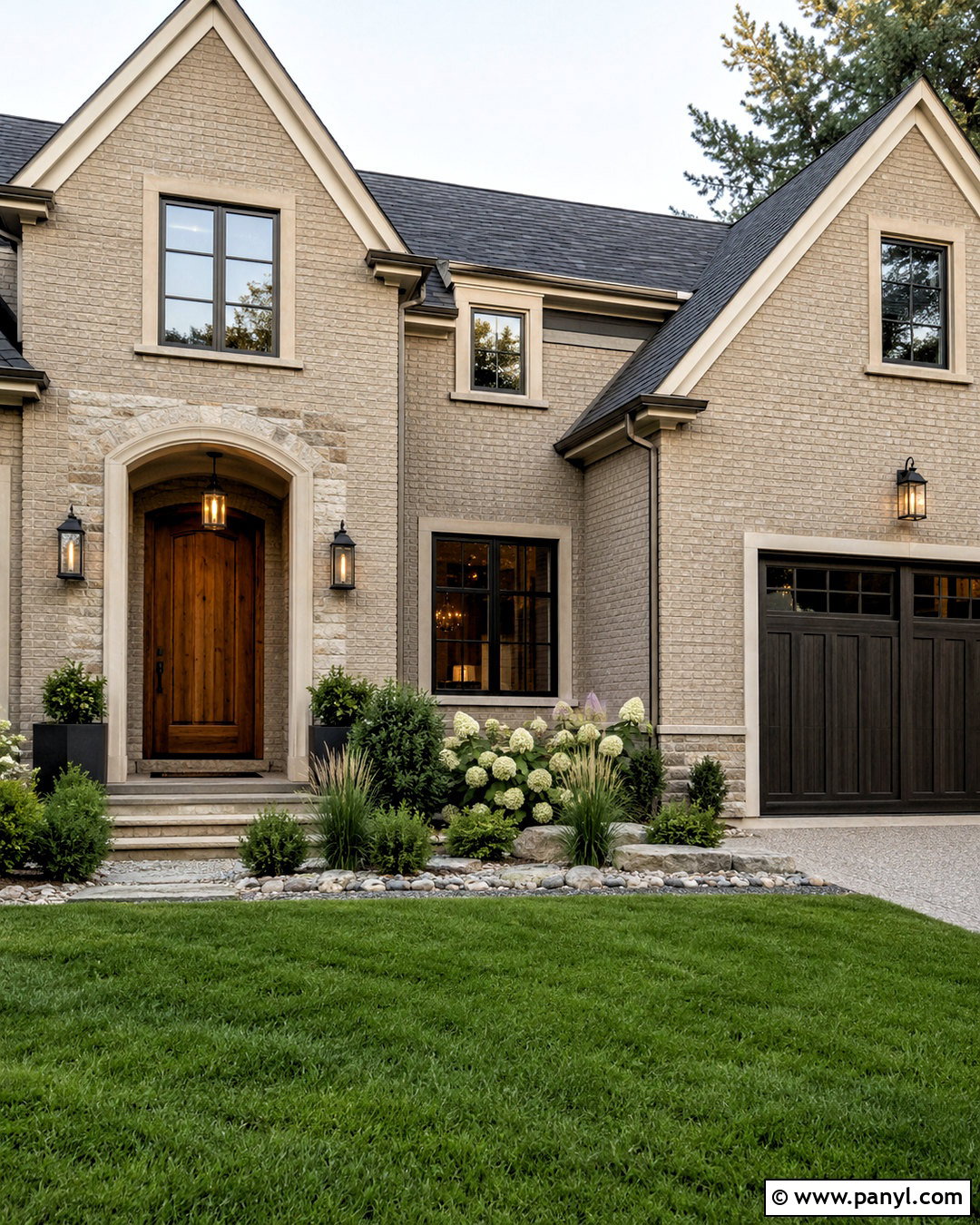
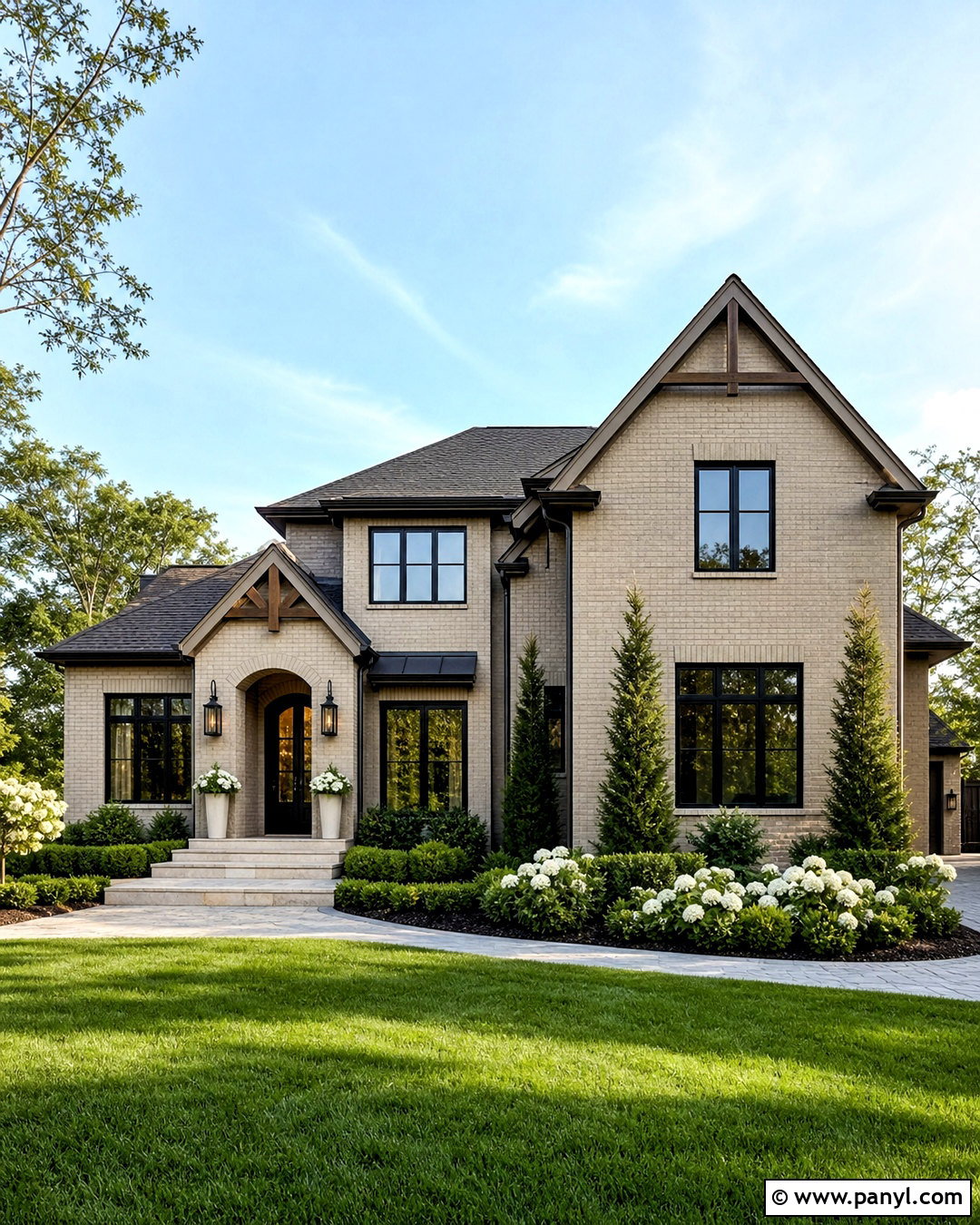
Sometimes the original brick is not too dark; it is simply too colorful. A neutral beige stain can unify yellow, orange, and red bricks while maintaining enough variation to avoid a flat finish. Dark bronze window frames, gutters, and exterior lights add contrast without the sharpness of black. Use warm ivory on the soffits and fascia, then choose a dark brown garage door that relates to the roof. A lightly stained oak front door becomes the central feature. To complete the after look, install wide concrete steps, large taupe planters, and tidy beds filled with green shrubs and white flowers. This restrained exterior scheme feels current but not trendy, helping a typical suburban house appear calmer, wider, and more thoughtfully coordinated.
12. Variegated Gray Brick Stain With Black Windows
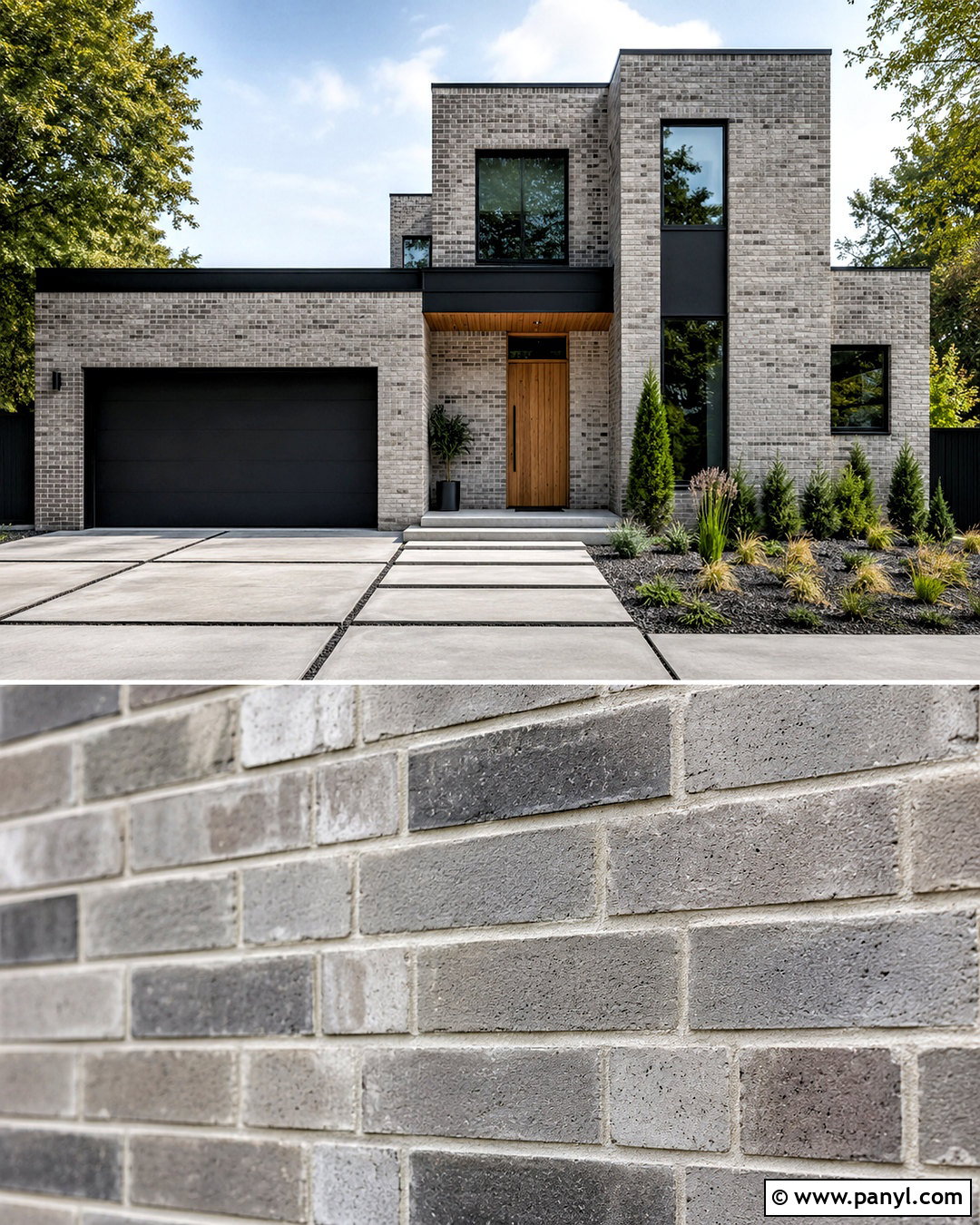
If uniform color feels too plain, create a custom variegated finish using several compatible gray stain tones. Begin with a medium warm gray across most bricks, then scatter charcoal and pale gray accents throughout the facade. Keep the mortar close to its existing light color so the brick pattern remains visible. Black windows, gutters, and a flat-panel garage door sharpen the new palette. Add a natural cedar front door and porch ceiling to balance the cooler masonry. Large-format concrete pavers and linear garden beds strengthen the contemporary design. Use compact evergreens, wispy grasses, and dark decorative gravel in the landscaping. The before brick may appear patchy and dated, but the after finish looks intentionally blended and resembles carefully selected modern masonry.
13. White Brick Stain Ranch House
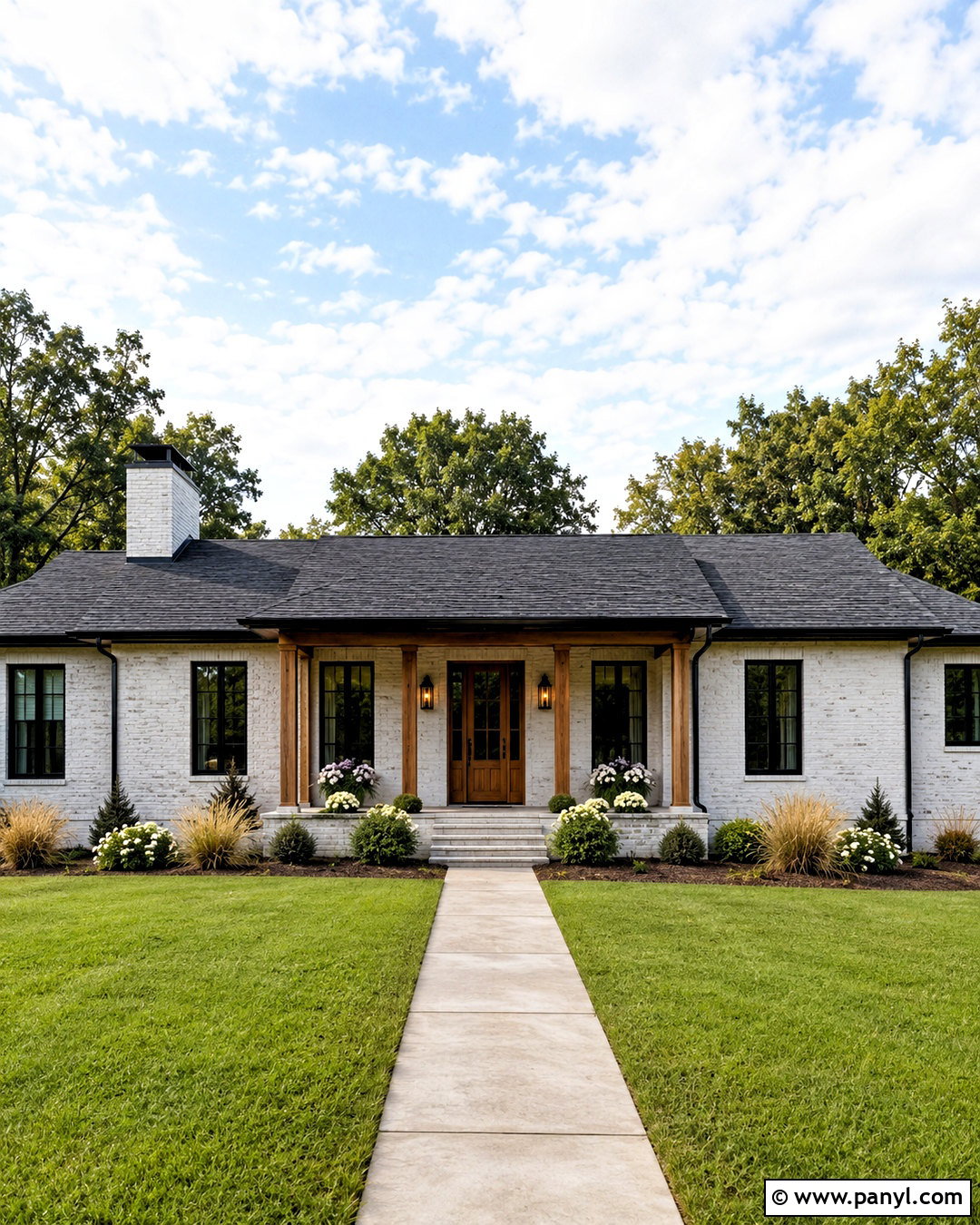
A long ranch facade can look low and heavy when dark brick runs uninterrupted beneath the roof. Soft white brick stain visually lightens the walls and helps the horizontal architecture feel more open. Continue the same color across the chimney and porch foundation for a seamless appearance. Use black window frames, simple black gutters, and a charcoal roof to outline the structure. A broad natural wood front door and cedar porch posts create a welcoming center point. Replace small shutters with larger versions or remove them when the windows have clean proportions. Extend a straight concrete walkway toward the sidewalk and add layered beds with dwarf evergreens, grasses, and white flowers. The complete after look feels wider, brighter, and more modern.
14. Greige Brick Stain Colonial House
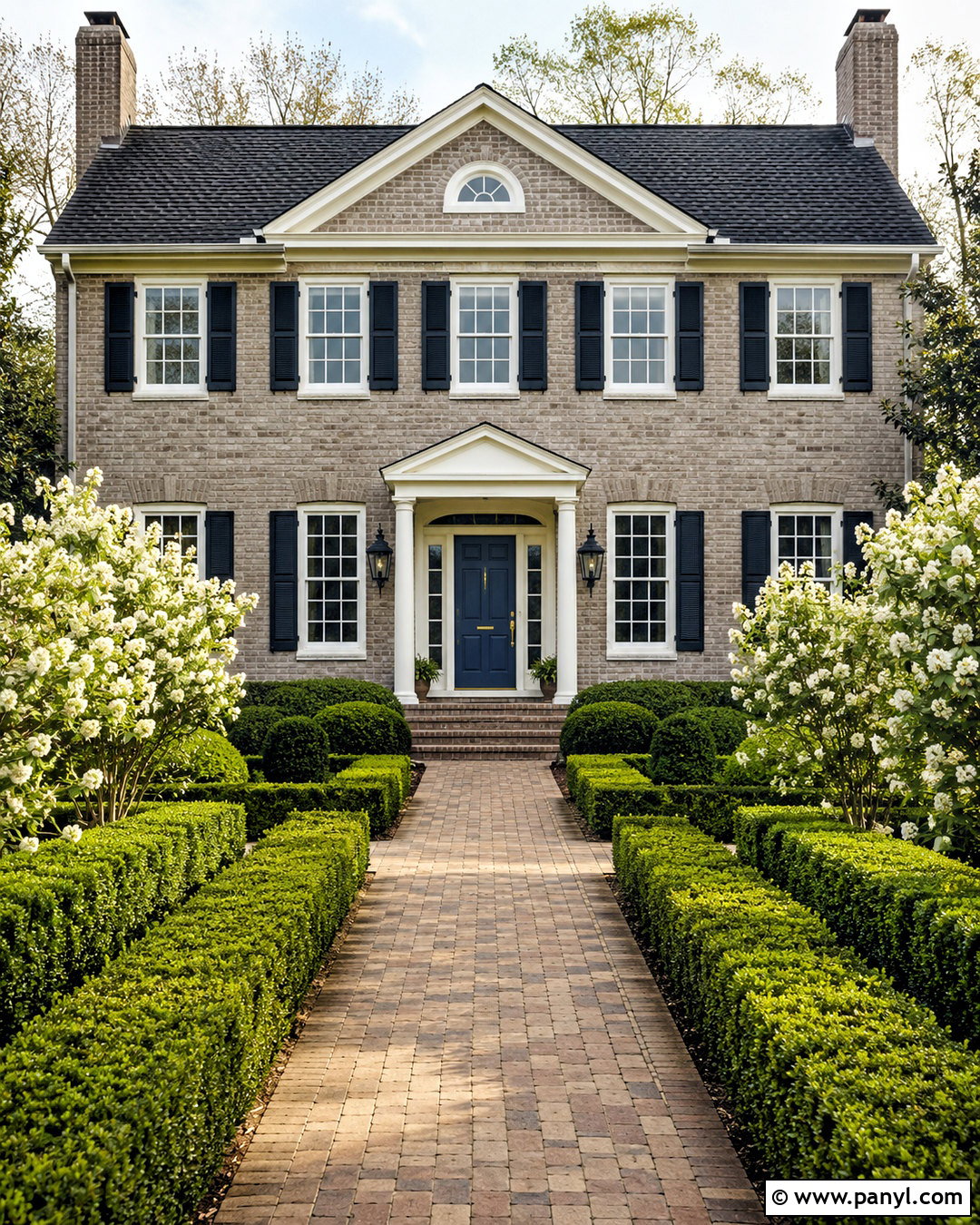
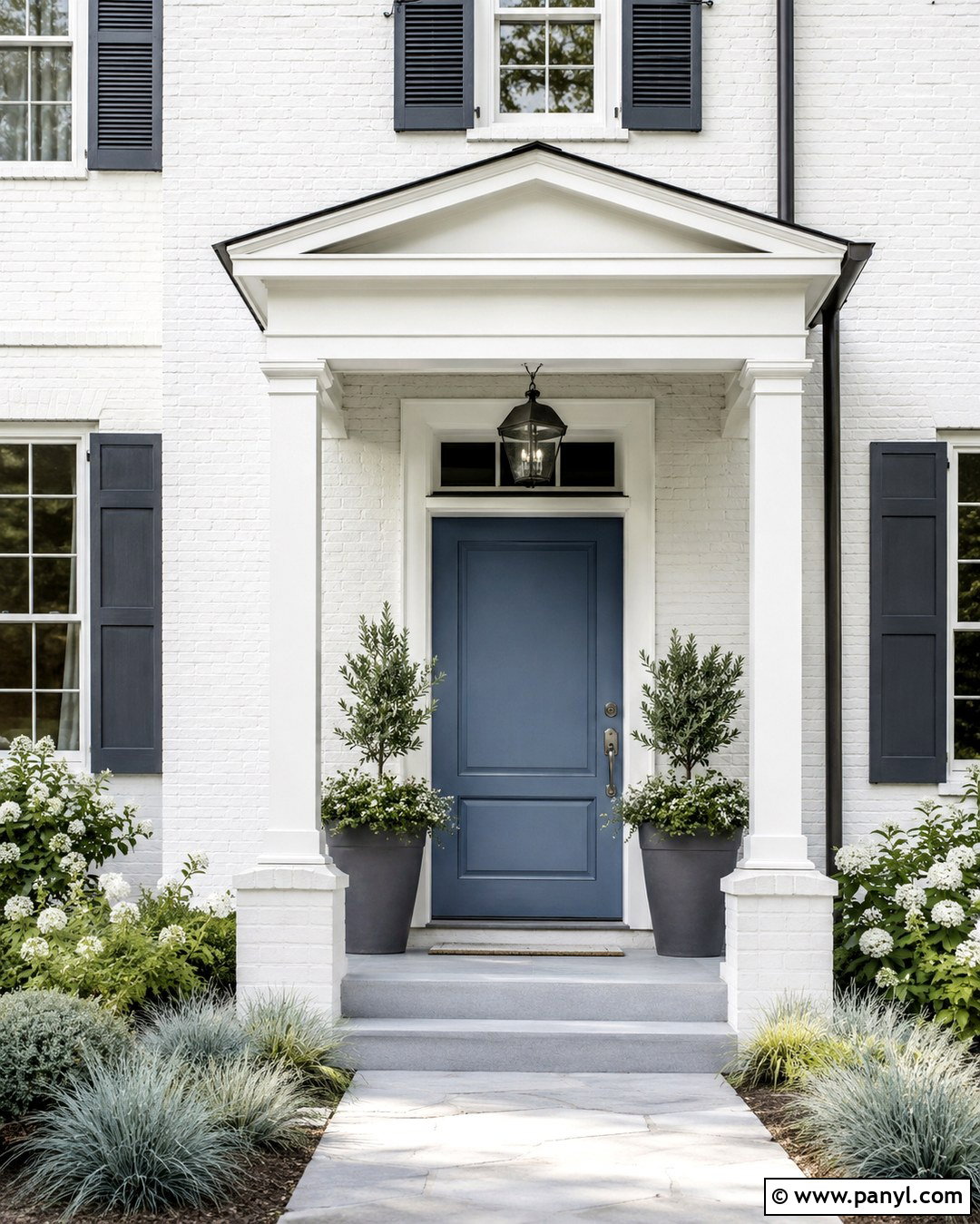
Symmetry is a Colonial home’s strongest feature, but mixed brick tones and faded shutters can distract from that balanced structure. A light greige brick stain creates a uniform background while keeping the mortar lines and rough masonry texture visible. Frame the facade with creamy white trim, then use deep charcoal shutters beside every window. A muted blue front door creates a restrained focal point without disrupting the classic palette. Add polished brass hardware and traditional black lanterns on each side of the entry. Keep the roof medium charcoal and the gutters close to the trim color. Matching boxwoods, small flowering trees, and a straight brick walkway reinforce the symmetry. The after exterior appears elegant, organized, and noticeably brighter than the original red brick facade.
15. Cream Brick Stain Tudor House
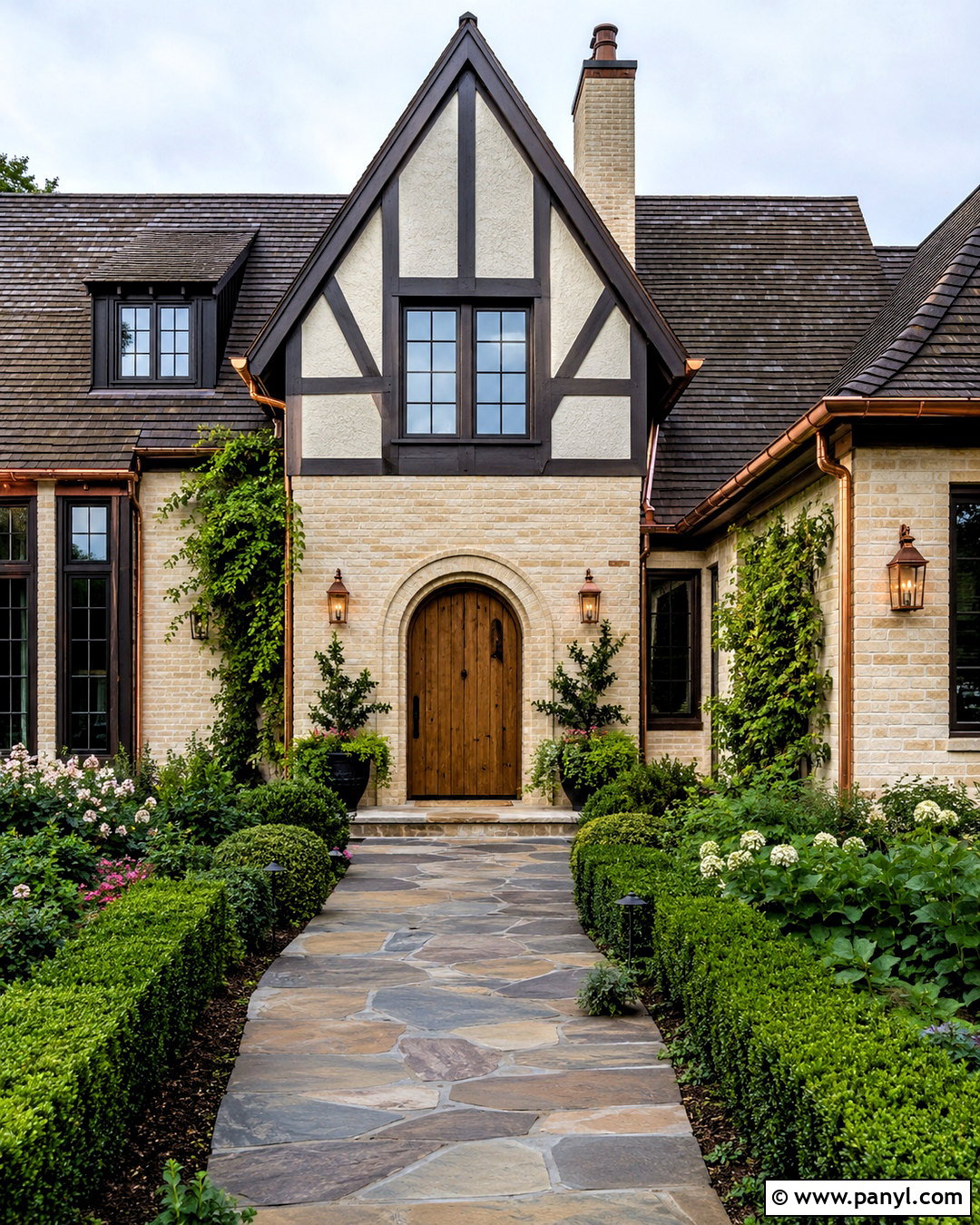
Heavy brown brick and dark timbering can make a Tudor exterior look crowded, particularly when the roof also contains several brown tones. Cream brick stain quiets the masonry and allows the architectural framework to become more distinct. Paint the half-timber trim a deep charcoal brown rather than solid black for a softer contrast. Use warm off-white stucco between the beams and install a rounded medium oak door beneath the entry arch. Copper gutters and lanterns develop a natural patina that suits the traditional architecture. Finish the property with an irregular flagstone path, clipped hedges, climbing greenery, and layered cottage plants. In the after view, the home retains its recognizable Tudor character but feels lighter, cleaner, and more connected across its different exterior materials.
16. White Brick Stain Farmhouse Exterior
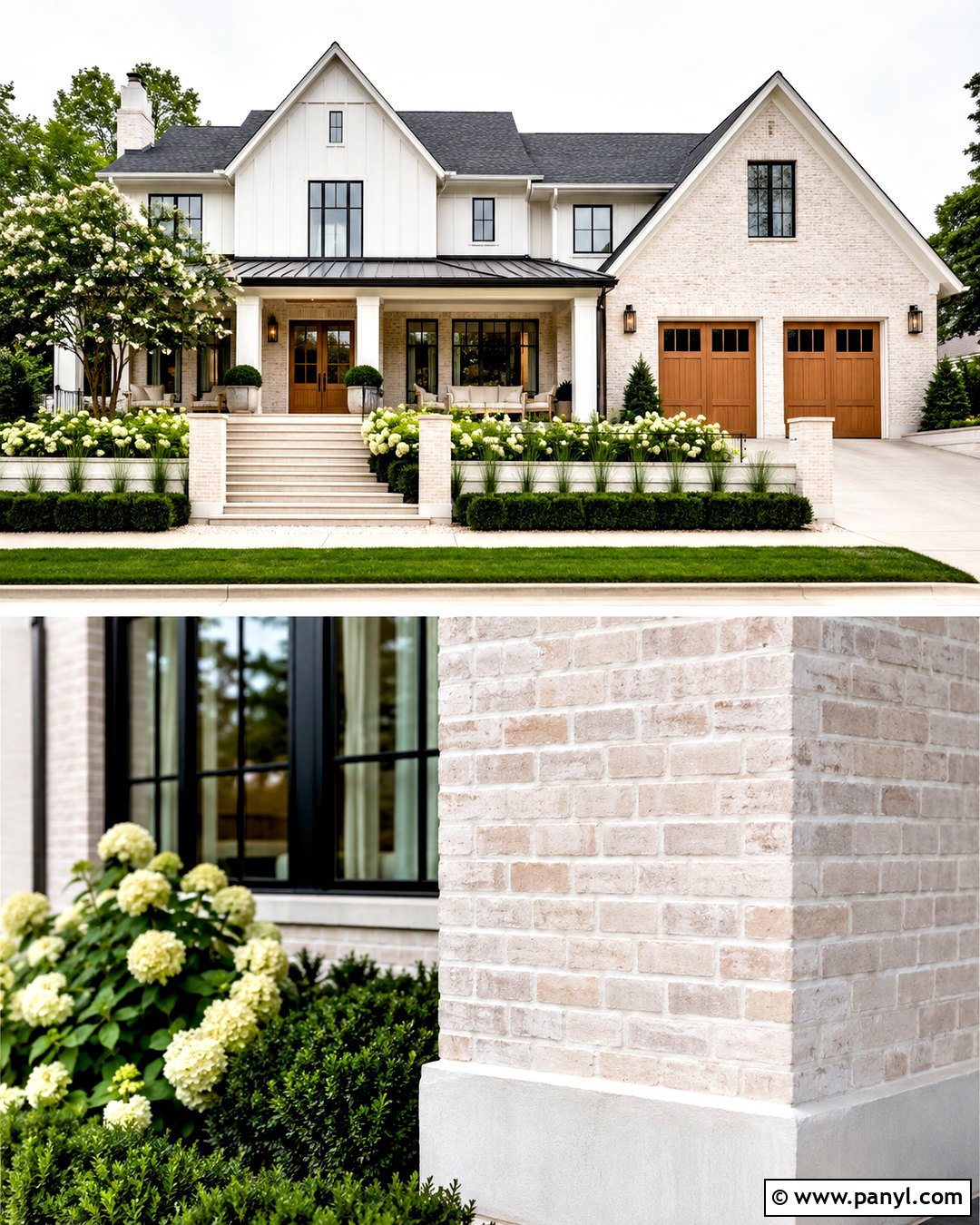
Red brick, cream siding, and brown shutters can make a farmhouse exterior feel more suburban than rural. A warm white stain across the brick foundation, chimney, and porch columns creates a consistent base for soft white board-and-batten siding. Introduce black metal roofing over the porch and use black-framed windows for crisp contrast. Natural cedar double doors, porch posts, and garage doors bring back the warmth removed from the old brick. Wide steps and a simple gravel-bordered walkway support the casual setting. Complete the transformation with hydrangeas, fountain grass, boxwoods, and a small flowering tree near the corner. The finished after look balances modern farmhouse contrast with enough brick texture and natural wood to keep the house approachable rather than overly stark.
17. Taupe Brick Stain Craftsman House
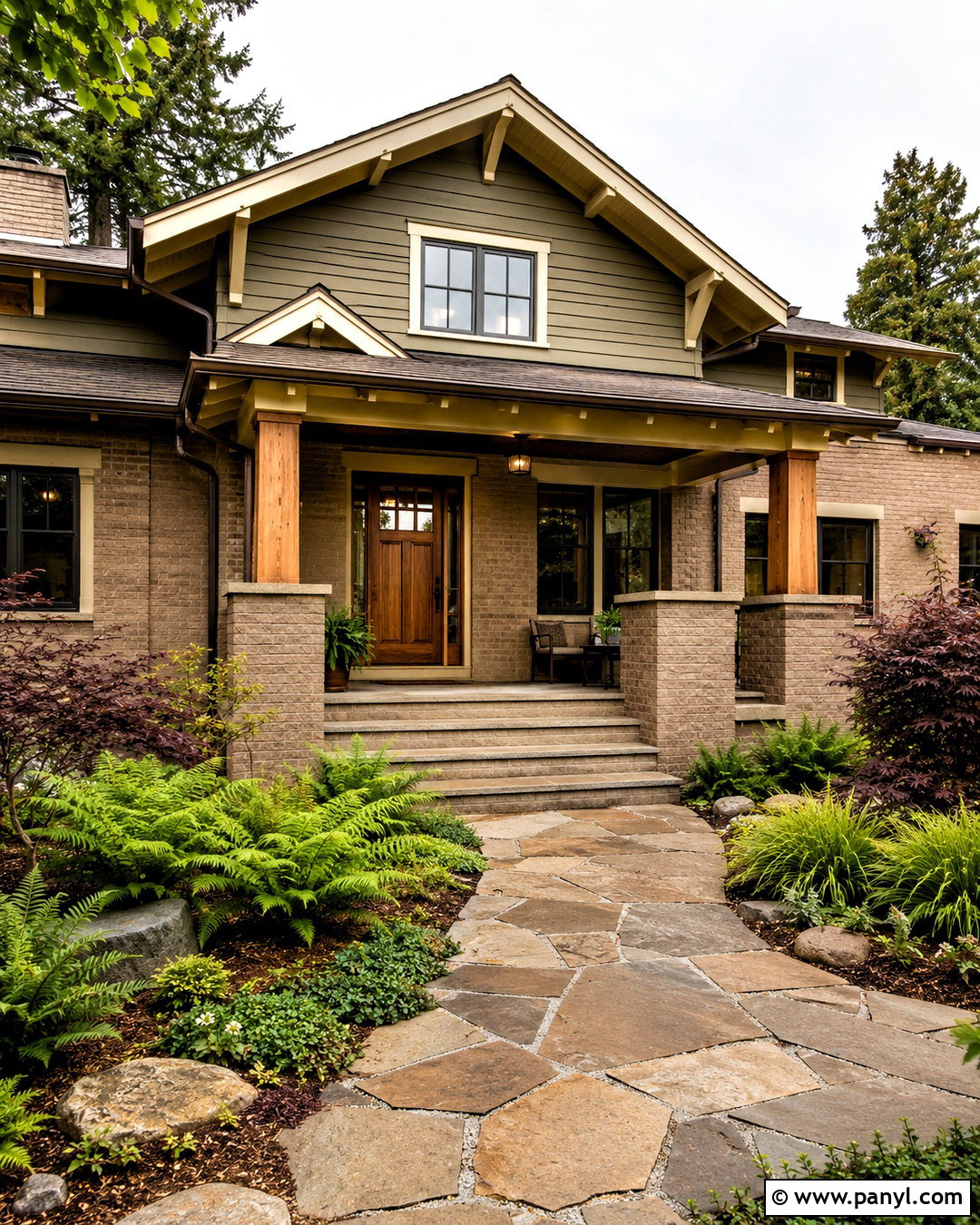
Craftsman homes benefit from earthy colors, but their details can disappear when orange brick, brown siding, and dark trim blend together. Use a medium taupe brick stain on the foundation, porch piers, and chimney. Pair it with muted olive siding and creamy trim around the windows, beams, and roofline. Stained cedar porch columns and a craftsman-style oak door should become the warm focal points. Dark bronze gutters and broad lanterns add definition while respecting the natural palette. Repeat the masonry color in a flagstone walkway and low retaining wall. Fill the landscape with ferns, evergreen shrubs, ornamental grasses, and burgundy foliage. The after transformation preserves the home’s handcrafted personality while giving each structural element a clearer role in the overall exterior.
18. Light Gray Brick Stain Split-Level House
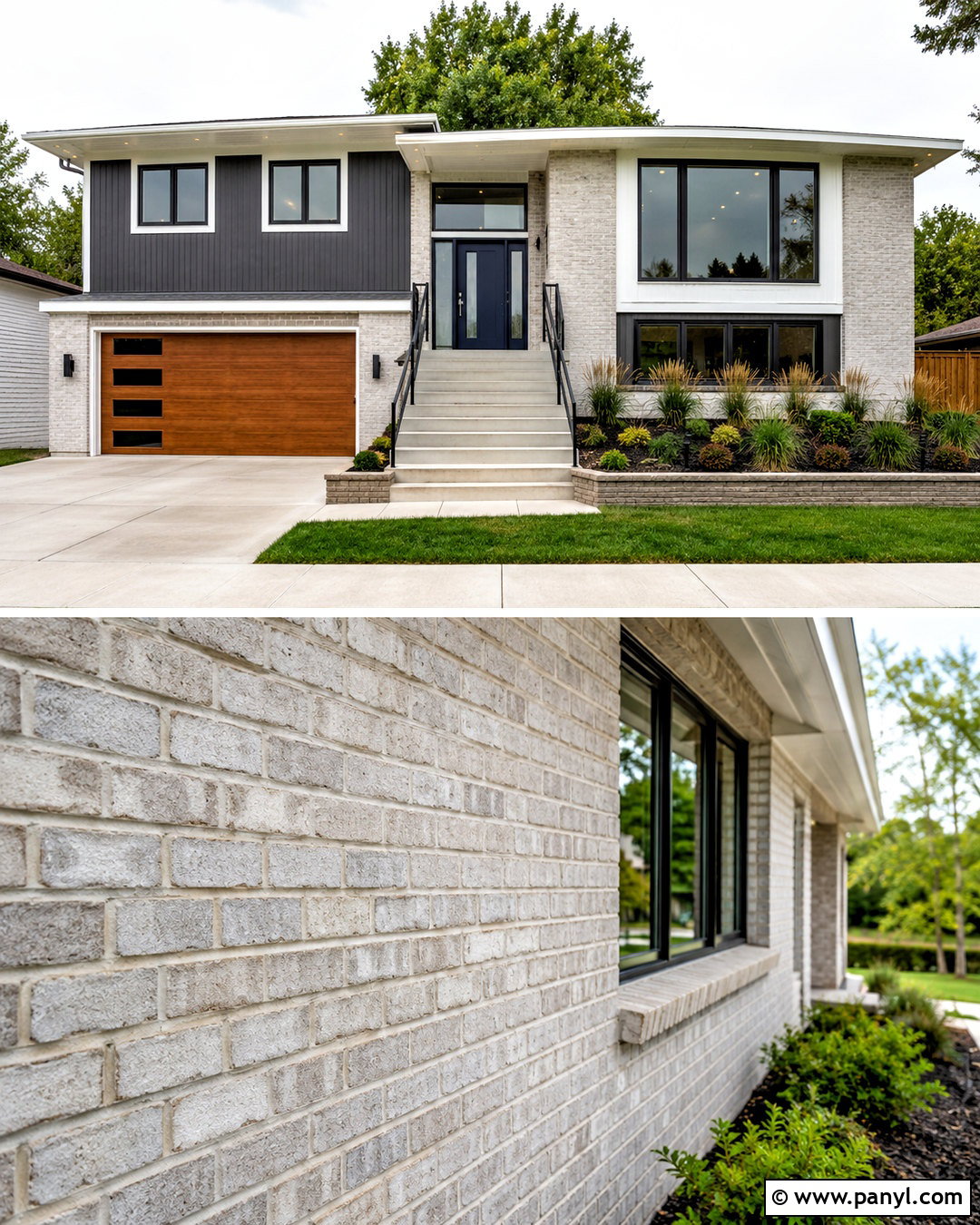
A split-level home can appear disjointed when red brick covers one section and faded siding covers another. Light gray brick stain provides a neutral bridge between the different levels. Install medium charcoal siding on the upper portion and use soft white trim to outline windows, doors, and roof edges. A warm wood garage door balances the cooler colors, while a deep navy front door gives the smaller entrance greater visibility. Black railings and simple cylinder sconces bring a clean contemporary touch. Expand the front steps with pale concrete slabs and create broad planting beds that visually connect both sides of the house. The completed after exterior feels balanced and deliberate, rather than looking like separate additions assembled at different times.
19. Greige Brick Stain With Natural Stone
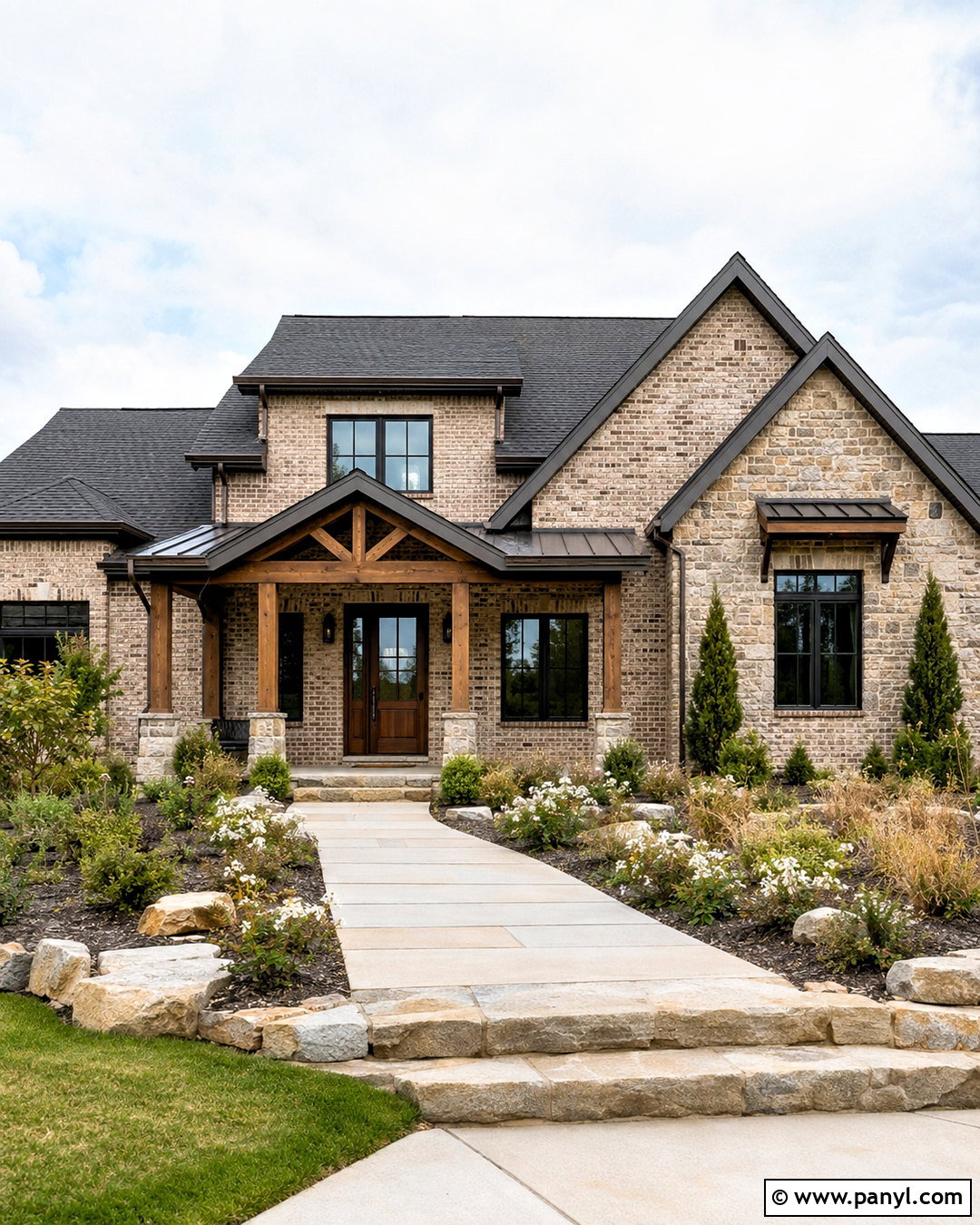
Brick and stone can compete when each material contains different red, orange, yellow, and gray undertones. A warm greige brick stain reduces that conflict and allows the natural stone to remain the feature. Select a stain color from the lightest neutral tone already visible in the stone. Use creamy trim, charcoal windows, and a dark gray roof to frame both materials. A medium walnut front door and cedar porch beams introduce warmth without adding another masonry color. Continue the stone in low walkway borders or porch steps for better visual flow. Soft grasses, evergreen shrubs, and white flowering plants keep the landscaping simple. In the after design, the brick and stone appear intentionally paired, giving the exterior a cohesive custom-built appearance.
20. Partial Brick Stain With Matching Siding
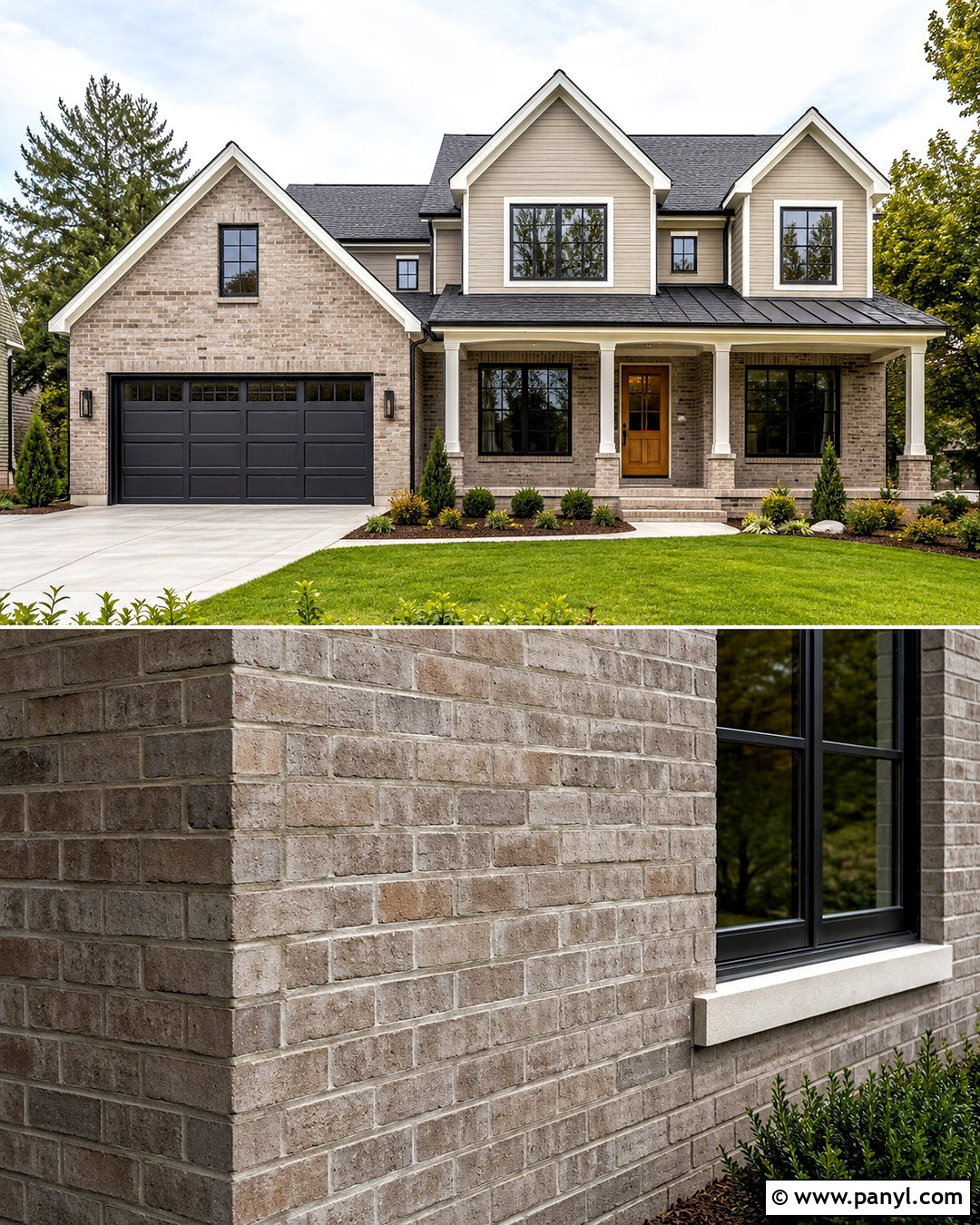
A full-house transformation is not always necessary. When brick appears only around the garage, porch, or lower foundation, stain it to coordinate with the dominant siding color. For example, change bright red brick to warm greige and pair it with slightly lighter greige siding. Use creamy white trim to separate the two surfaces, then add a charcoal garage door, black windows, and a natural wood front door. Keeping the brick and siding close in tone makes a smaller home feel less chopped into sections. Before staining, repair damaged mortar, correct moisture problems, clean the masonry, and test the chosen color on a sample area. These preparation steps help confirm that the brick can accept the treatment properly. ()
Conclusion:
The best **20 brick stain exterior before and after ideas** do more than change the color of the masonry. They create a complete exterior where the brick, trim, roof, doors, windows, hardscaping, and landscaping support one another. Warm white and cream can lighten heavy facades, while greige and taupe offer softer neutral results. Charcoal and black provide bold contrast for modern homes, and refreshed red or brown stains preserve traditional character. Always evaluate the masonry, address repairs and moisture, and test several samples before committing. Pay close attention to permanent features such as roofing and stone. With a coordinated plan, stained brick can look natural, intentional, and beautifully suited to the home.

Related Ideas and Inspiration:



Leave a Reply