
Red walls can make a living room feel warm, confident, and full of personality. The secret is choosing the right shade and building a balanced palette around it. Cream upholstery can soften brick red, while walnut, leather, and brass enhance deeper burgundy tones. Crisp white creates contrast, and sage, navy, teal, or blush can produce a more colorful result. Current inspiration also shows red working with natural wood, gallery arrangements, paneling, fireplaces, and layered lighting—not simply as a plain accent wall. () Whether you prefer traditional comfort or modern simplicity, these 20 living room red walls provide complete, practical looks that can be adapted to different homes, layouts, and budgets.

1. Brick Red Living Room With Cream Furniture
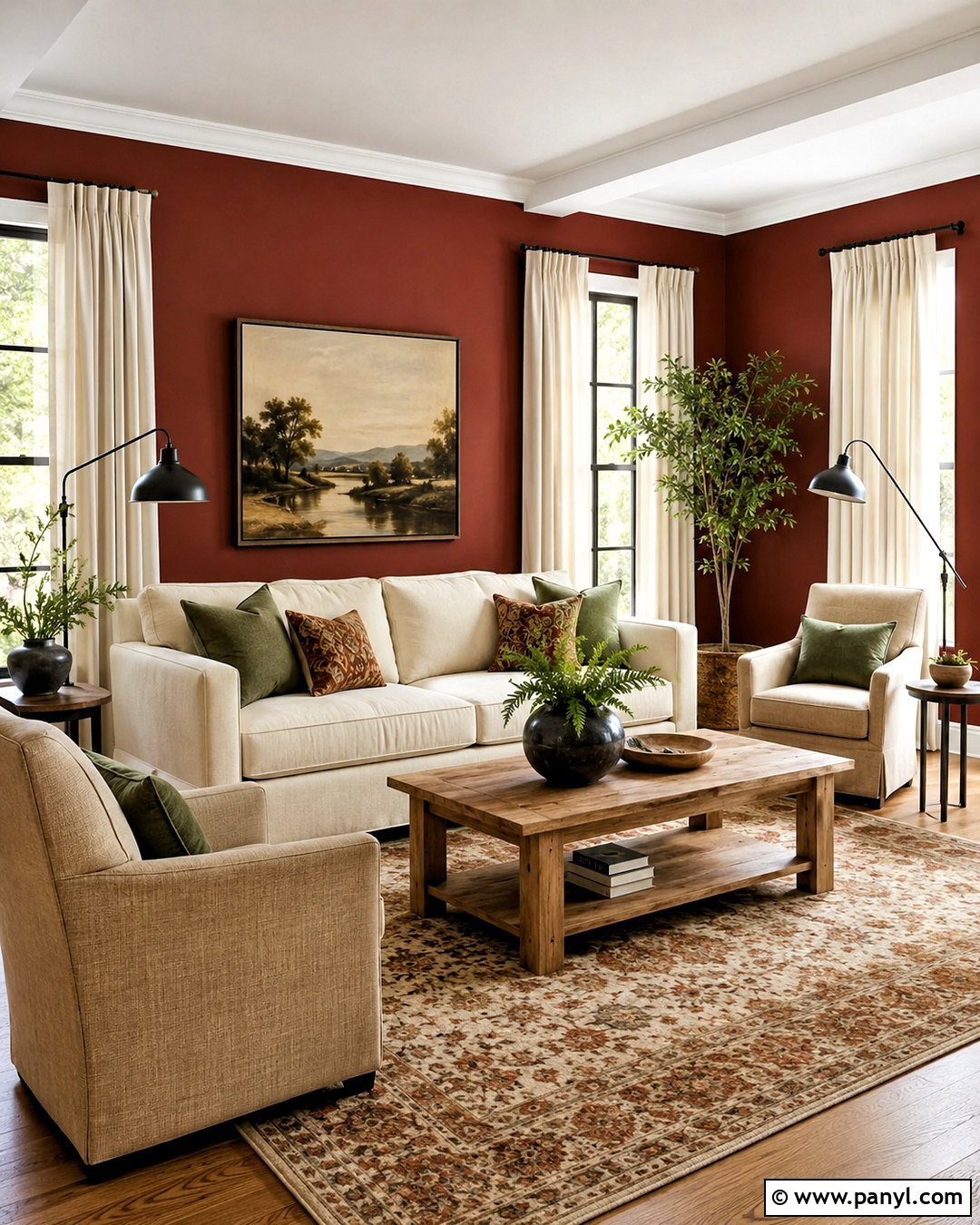
Brick red walls create a grounded backdrop that feels warmer and easier to decorate than a bright primary red. Paint all four walls, then use a cream sofa and two oatmeal armchairs to lighten the room. A medium-toned oak coffee table adds natural texture without competing with the walls. Ground the seating arrangement with a beige rug featuring a subtle rust pattern. Off-white curtains should hang near the ceiling so the windows appear taller and the room receives plenty of reflected light. Finish the look with black metal lamps, landscape art, and a few muted green pillows. The mix of creamy textiles, warm wood, and earthy accents makes the red feel inviting rather than overpowering.
2. Burgundy Living Room With Brass Accents
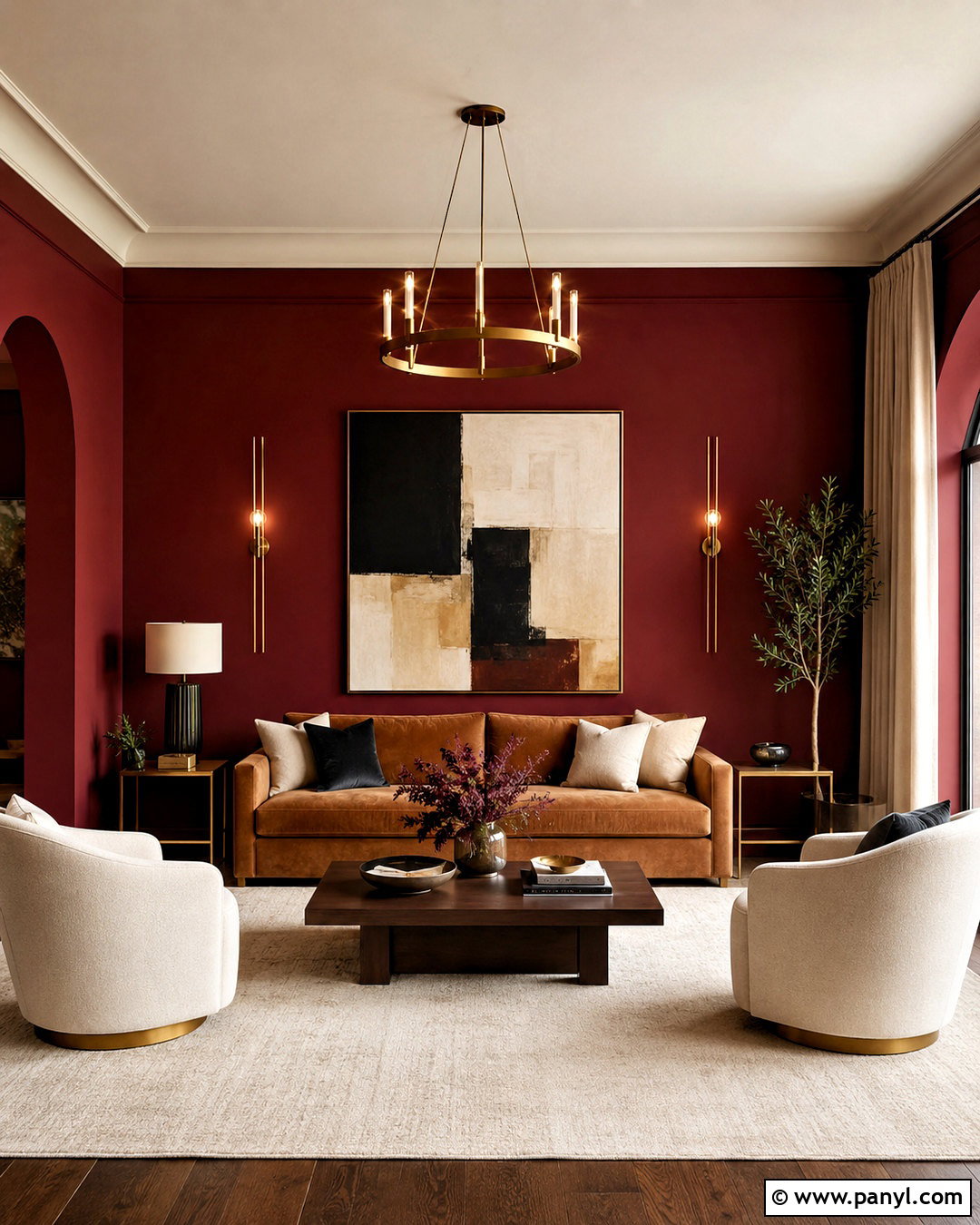
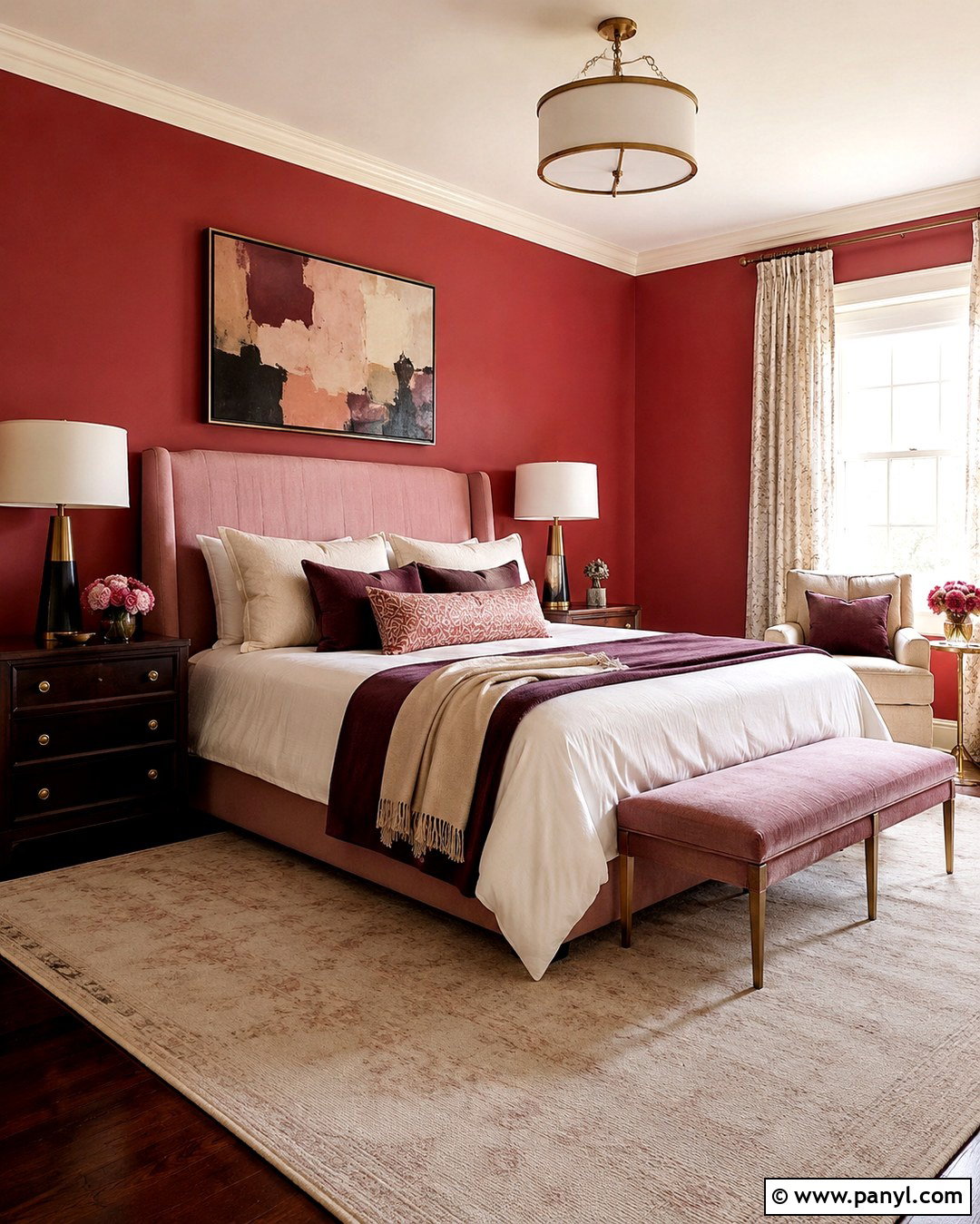
For a sophisticated living room, pair deep burgundy walls with brushed brass and warm neutral upholstery. Position a tailored camel sofa opposite two ivory swivel chairs to create an easy conversation area. A dark walnut coffee table gives the furniture a strong visual anchor, while a large cream rug prevents the lower half of the room from feeling heavy. Introduce brass through picture lights, a floor lamp, and slim side tables rather than using it everywhere. Linen curtains in a soft stone color keep the windows bright. Above the sofa, hang one oversized abstract piece containing beige, black, and muted burgundy. Layered lamps and warm white bulbs will reveal the richness of the wall color after sunset.
3. Terracotta Red Living Room With Natural Wood
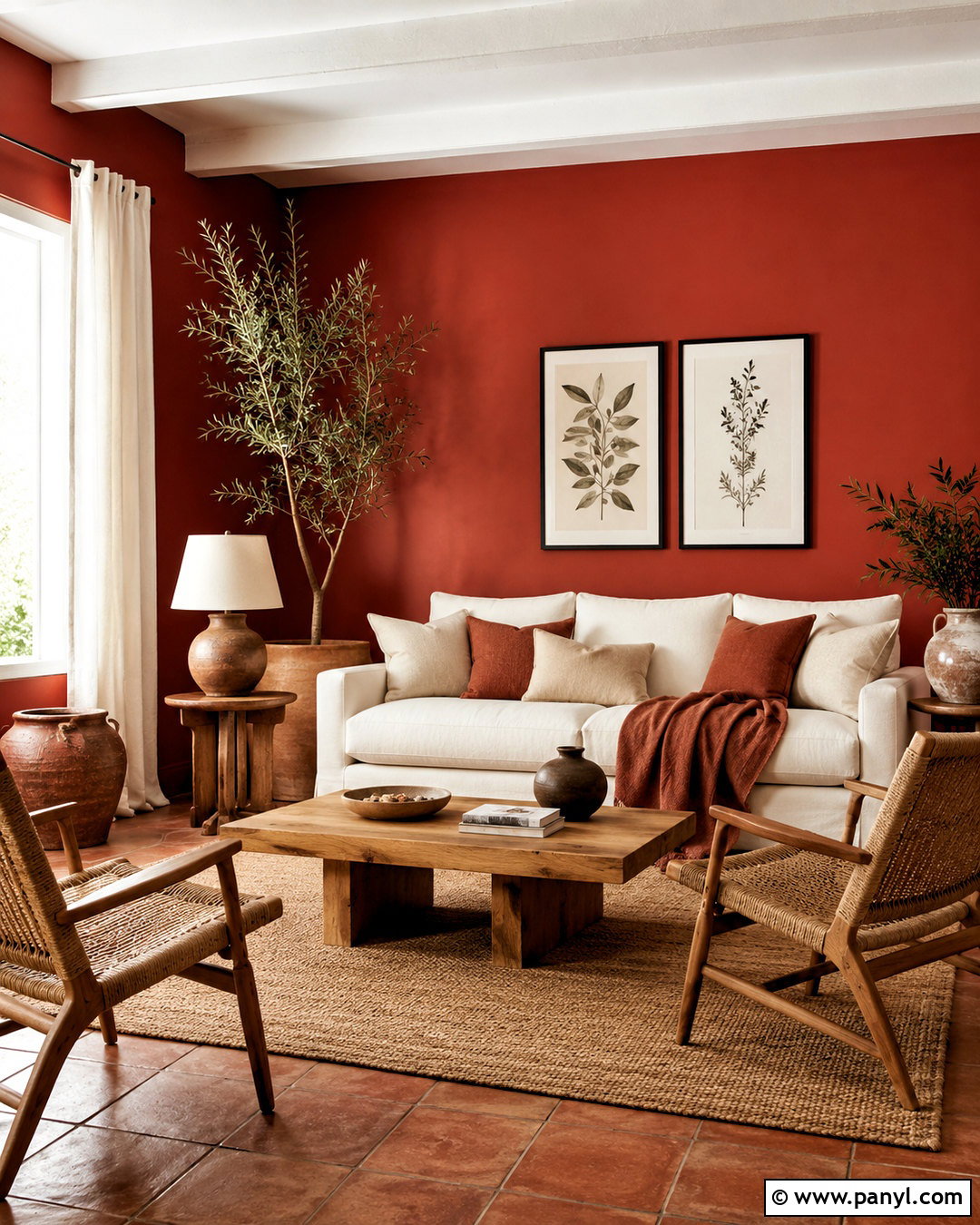
Imagine sun-warmed terracotta red walls surrounded by relaxed materials and clean, comfortable furniture. Start with a low-profile ivory linen sofa and a pair of woven rattan chairs. Choose a substantial oak coffee table with a simple shape and add a natural jute rug underneath. Clay pottery, linen pillows, and a wool throw continue the earthy palette without making the room feel themed. Use light cotton curtains that filter sunshine while keeping the space open. A large olive tree or rubber plant introduces fresh green against the red. Complete the arrangement with a woven pendant, black-framed botanical art, and small matte ceramic lamps. This balanced room feels casual, organic, and welcoming throughout the year.
4. Crimson Red Living Room With Black And White
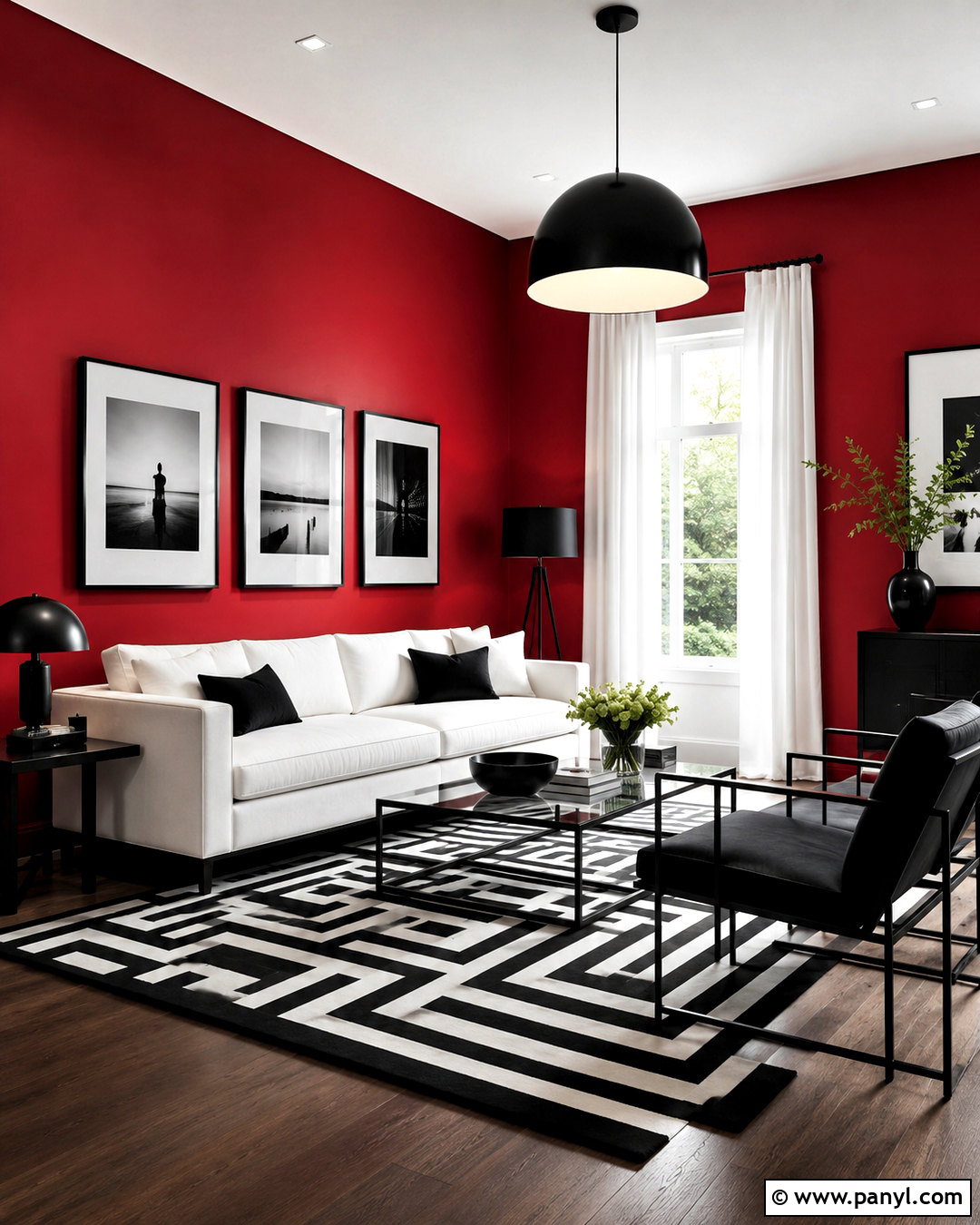
Crisp black and white details can turn crimson red walls into a bold contemporary statement. Select a structured white sofa with washable upholstery and place a slim black console behind it. Across from the sofa, use two black lounge chairs with open frames so they do not visually crowd the room. A geometric black-and-white rug connects the contrasting colors, while a round glass coffee table keeps the center feeling spacious. Display large monochrome photography in wide white mats and narrow black frames. White ceiling paint, simple white curtains, and bright lighting help control the intensity of the crimson. Add red only once more through a patterned pillow, allowing the painted walls to remain the clear focal point.
5. Cherry Red Mid-Century Living Room
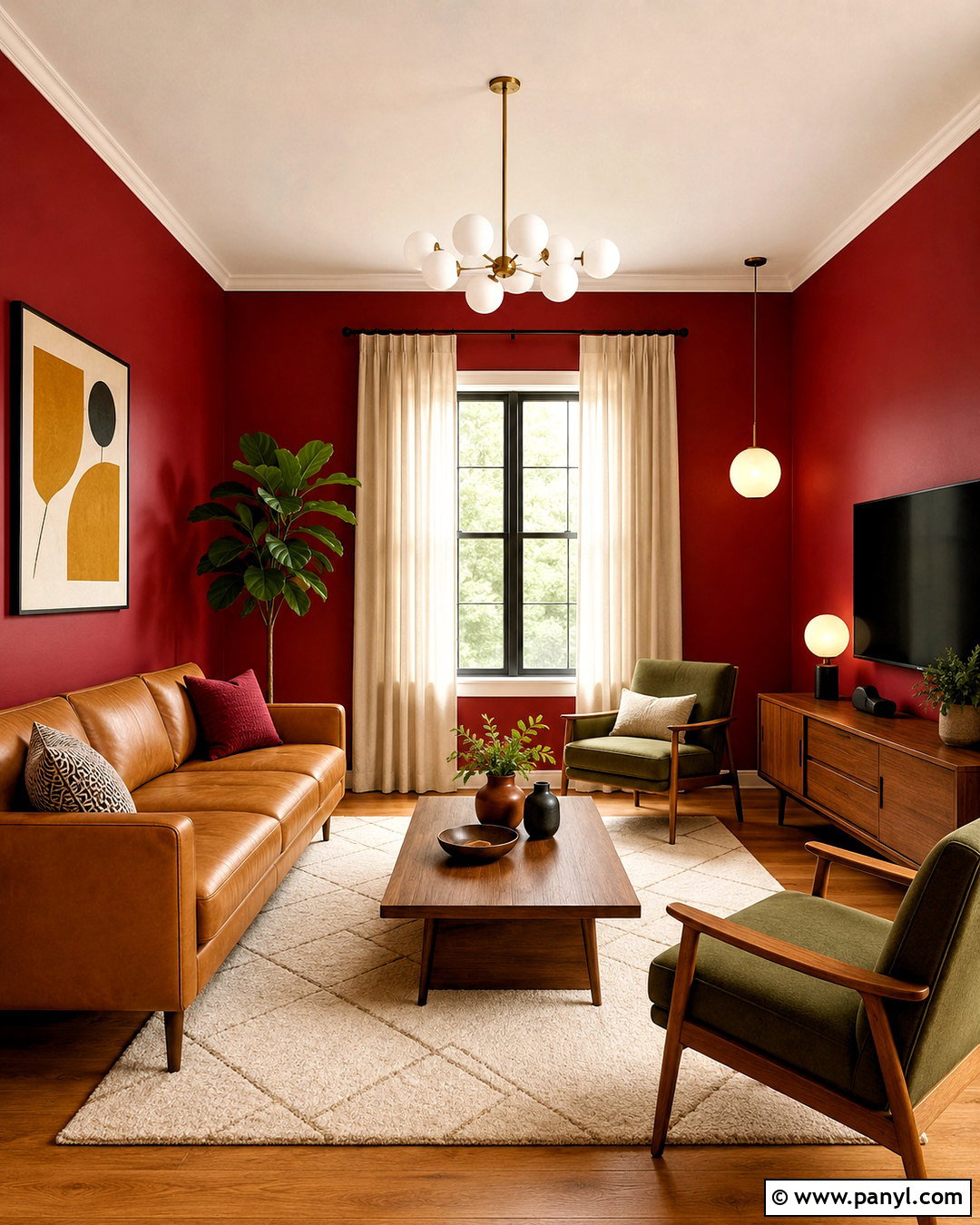
Cherry red walls bring lively energy to a mid-century living room filled with walnut furniture and streamlined shapes. Anchor the layout with a caramel-colored sofa on tapered wooden legs. Add two olive green armchairs, a low walnut coffee table, and a cream rug with a small geometric motif. A long teak media cabinet can provide closed storage while reinforcing the period influence. Choose globe-shaped lighting in opal glass and aged brass for a softer contrast against the walls. Abstract artwork containing mustard, cream, and black will connect the entire palette. Keep window treatments simple with off-white roller shades or full-length linen panels. The finished room should feel collected and functional, not like a strict historical recreation.
6. Muted Red Living Room With Light Oak
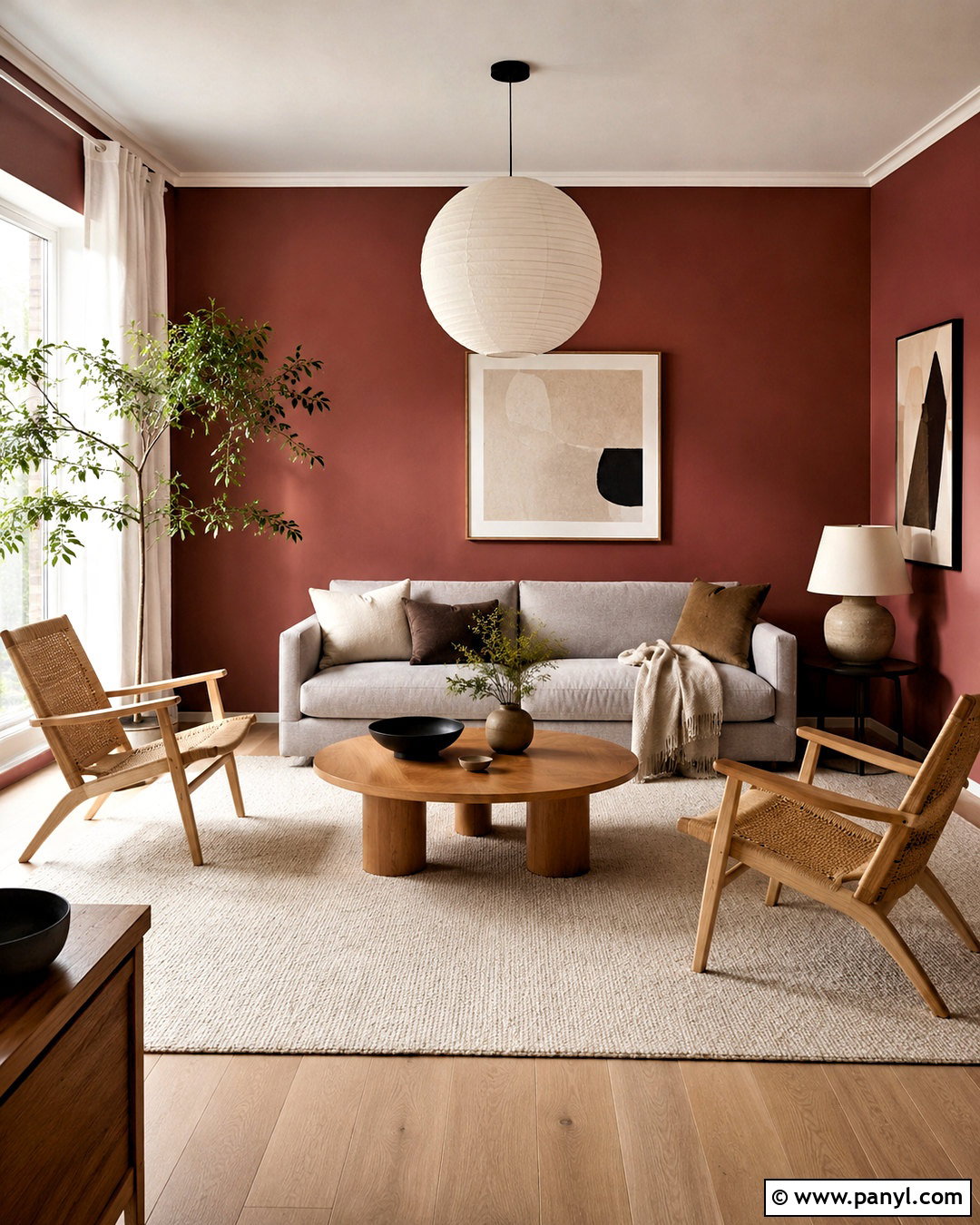
A dusty, muted red offers color without the visual intensity of scarlet or crimson. Pair it with pale oak furniture, soft gray upholstery, and plenty of simple negative space. A light gray sofa can sit against the longest wall, while two oak-framed lounge chairs face it across a rounded wooden coffee table. Choose a wool rug in ivory and warm gray to define the seating zone. Hang one large minimalist print instead of several small decorations. White linen curtains, a paper pendant light, and simple ceramic lamps keep the room feeling airy. Add texture through bouclé pillows, a knitted throw, and one leafy plant. The restrained materials create a calm living room that still feels distinctive and warm.
7. Red And Navy Living Room
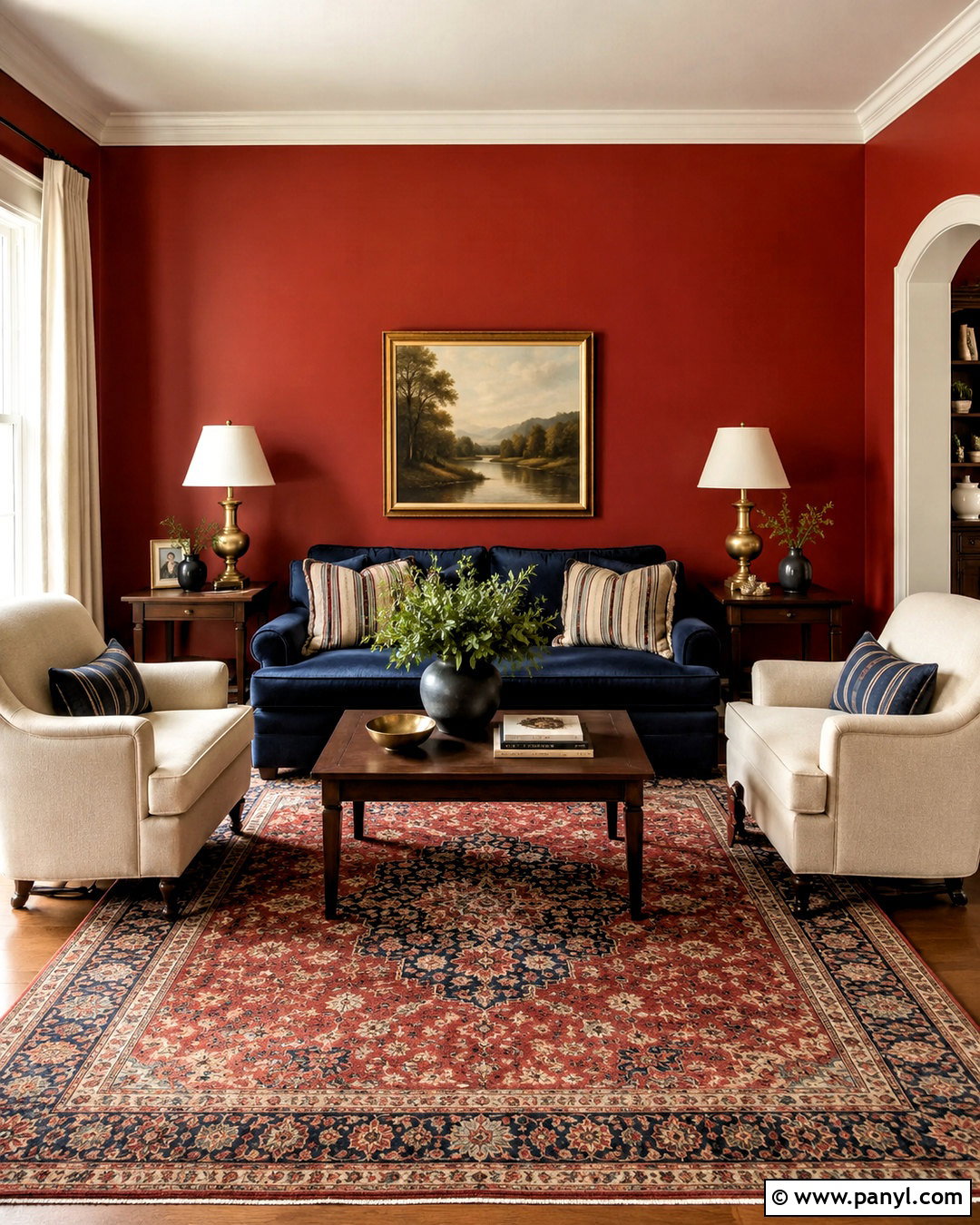
Red and navy can create a polished living room when both colors are separated by generous areas of cream. Cover the walls in a warm heritage red, then introduce a navy sofa as the main upholstered piece. Add two cream armchairs to prevent the darker colors from dominating the room. A faded Persian-style rug containing red, navy, and beige will connect the palette naturally. Use medium walnut tables and aged brass lamps for warmth. Off-white curtains should frame the windows and repeat the color of the chairs. Choose artwork with simple landscapes or abstract forms rather than strongly nautical accessories. With symmetrical furniture placement and a few tailored striped pillows, the room feels established, comfortable, and thoughtfully coordinated.
8. Red And Sage Green Living Room
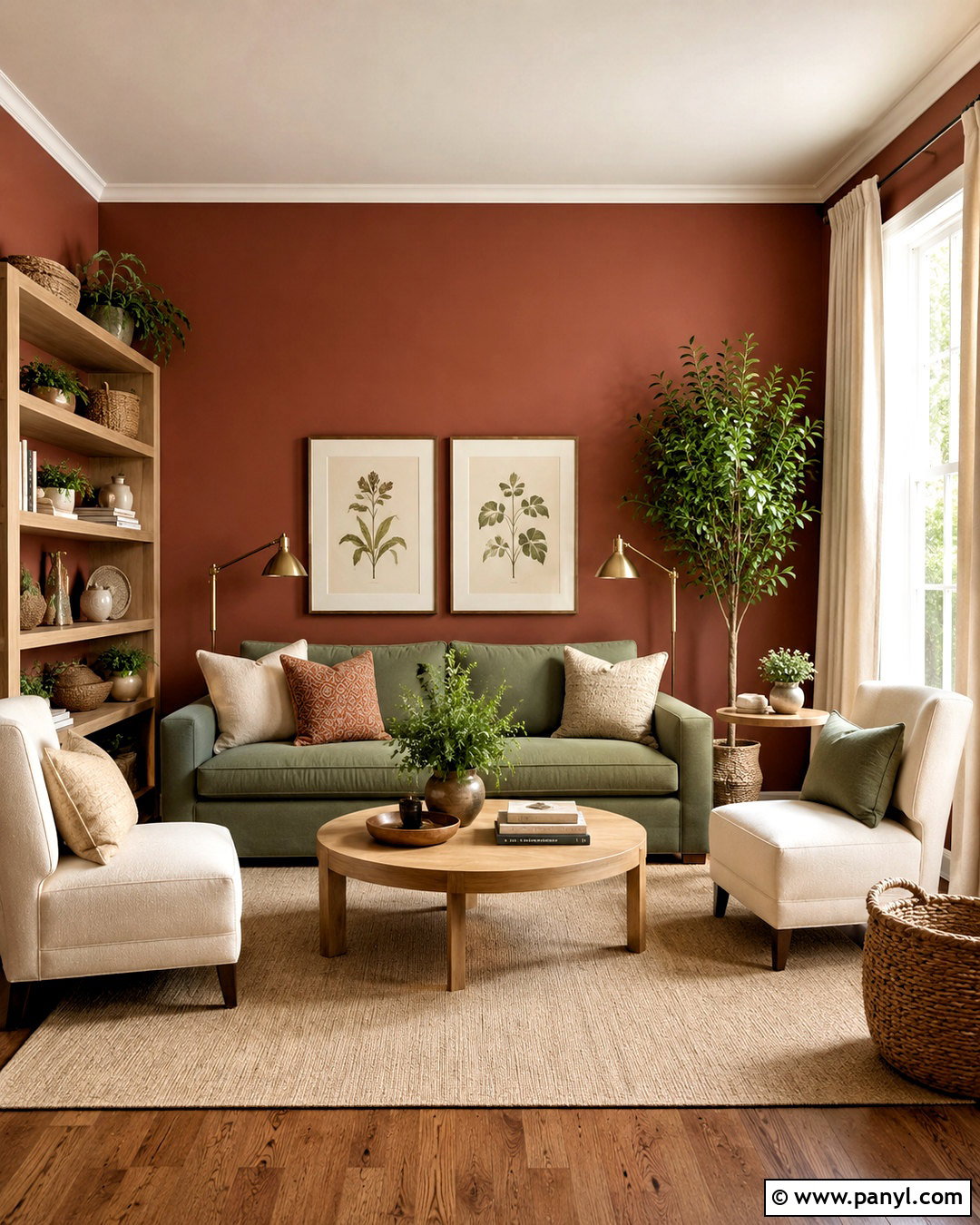
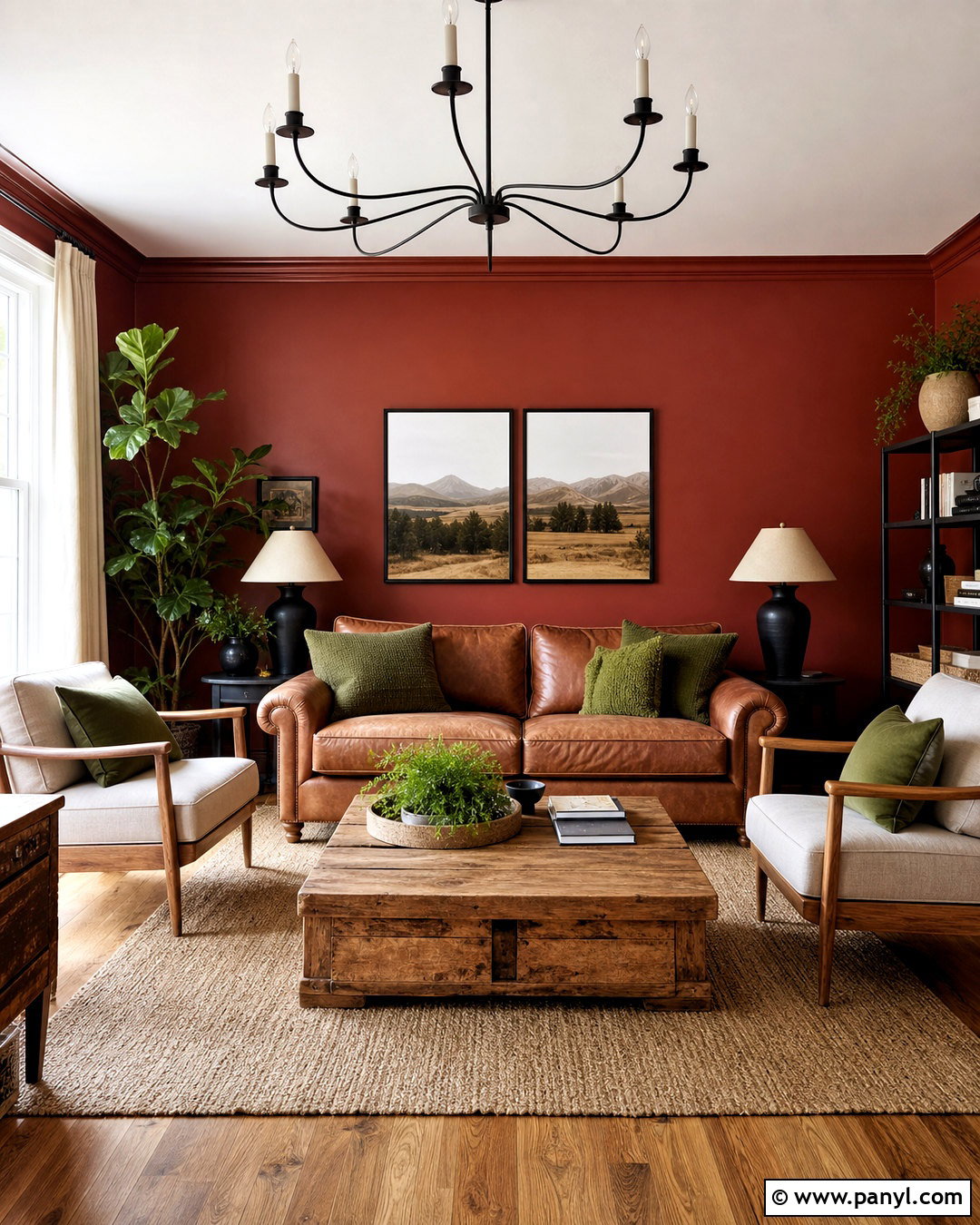
Could a red room also feel fresh and restful? A muted clay-red wall color paired with sage green furniture creates a balanced, nature-inspired scheme. Place a sage sofa against the red wall and add two cream slipper chairs angled toward a round oak coffee table. Use a warm beige rug with a delicate green border to hold the seating together. Natural linen curtains, woven baskets, and pale wood shelving bring lighter texture into the room. Add several plants, but vary their heights and leaf shapes for a more intentional display. Botanical prints in cream mats can decorate one wall without creating clutter. Finish with antique brass lamps and rust-colored pillows that quietly repeat the painted background.
9. Red And Blush Pink Living Room
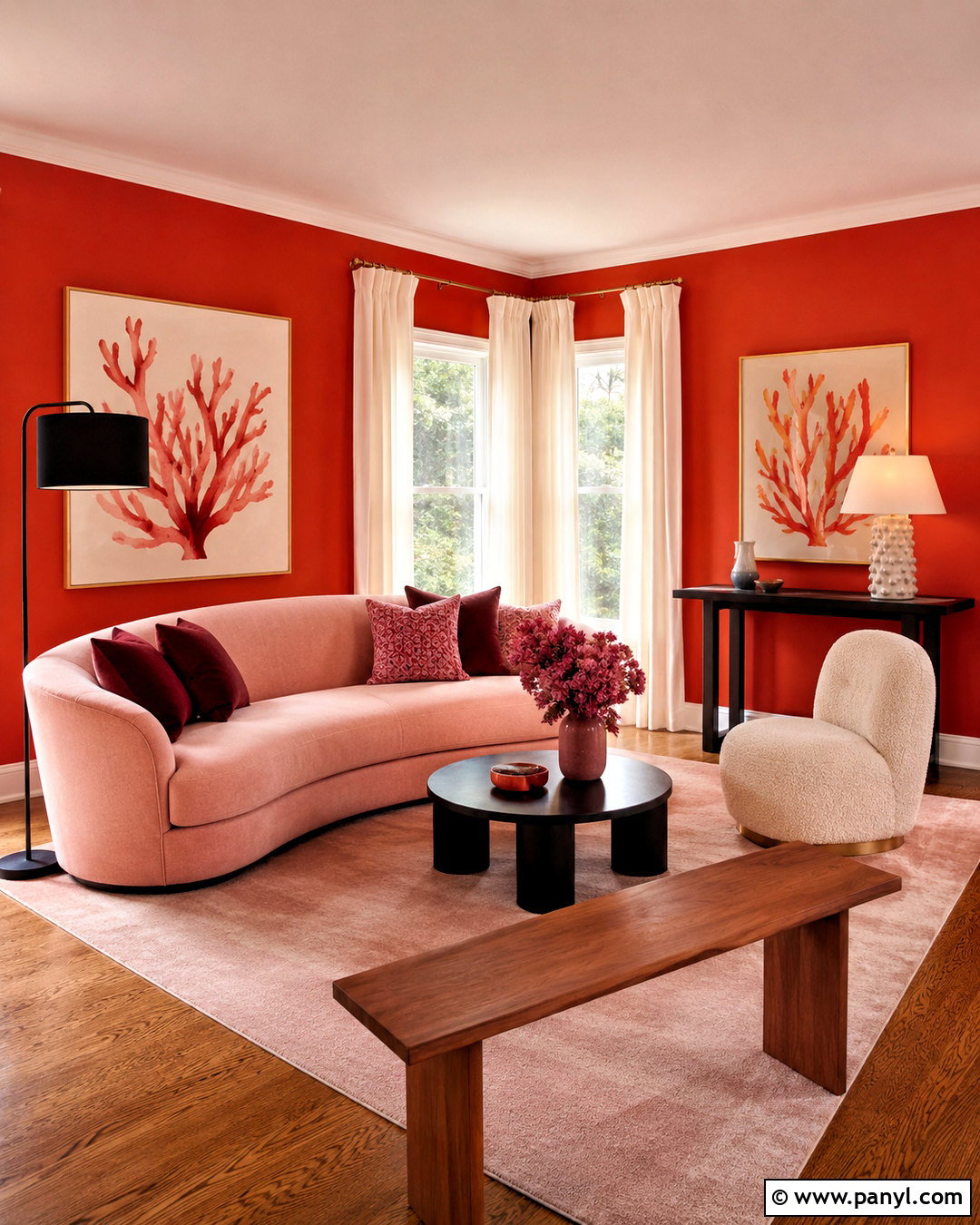
Blush pink softens red walls while preserving a colorful, layered atmosphere. Choose a warm tomato-red paint rather than a cool crimson, then bring in a curved blush sofa as the room’s central feature. Balance it with a cream bouclé chair and a slim walnut bench. A pale rose and beige rug will ease the transition between the furniture and walls. Use burgundy pillows sparingly to add depth, and include touches of black through a floor lamp and small side table. Full ivory curtains keep the composition bright and polished. Modern artwork featuring coral, pink, cream, and brown can unite the color family. The result feels playful and grown-up, with enough neutral space to remain comfortable.
10. Red And Teal Living Room
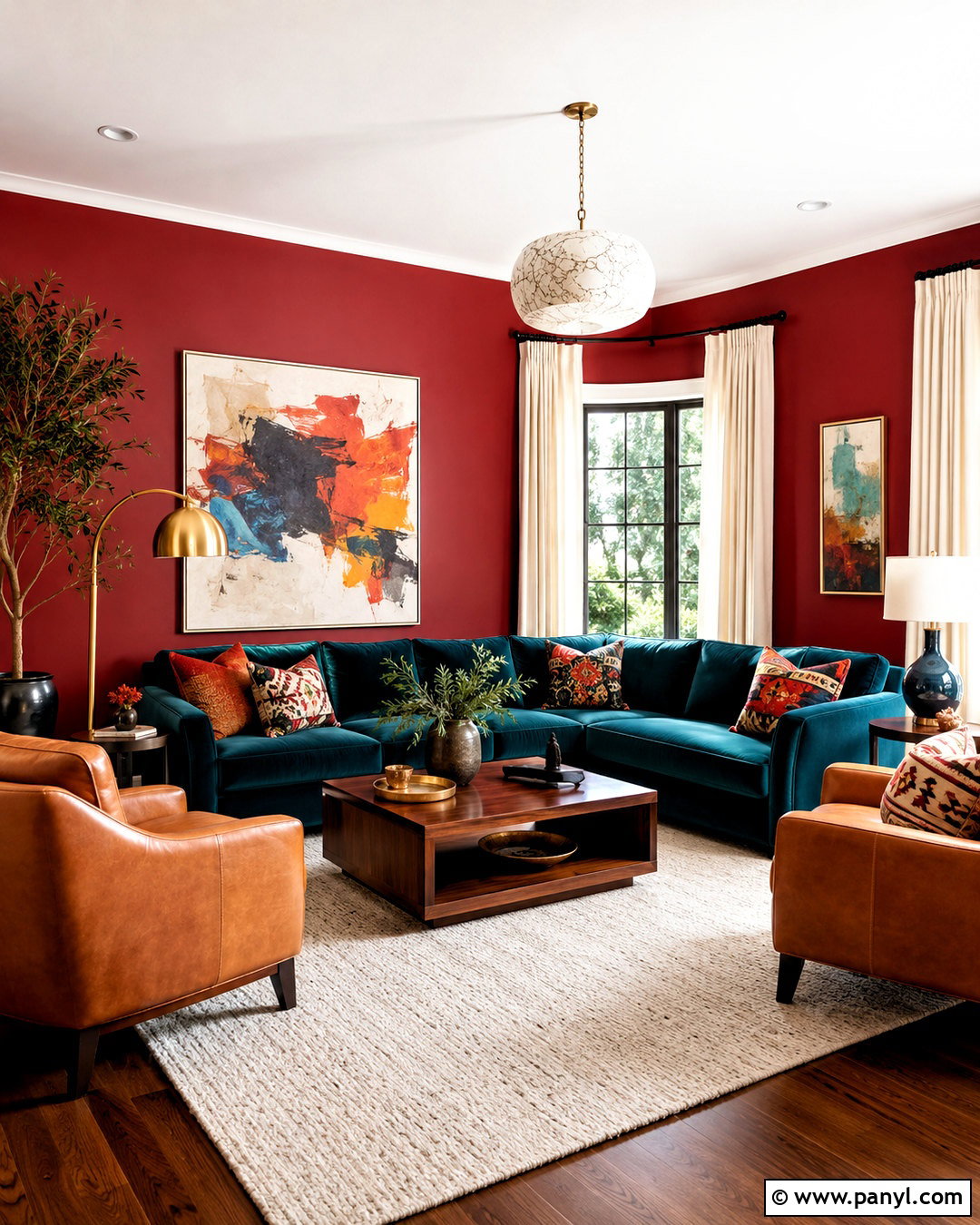
Deep teal furniture creates a striking contrast against warm red walls, especially in a room with strong natural light. Start with a teal velvet sofa and add two camel leather chairs for warmth and durability. A large ivory rug will prevent the rich palette from becoming visually dense. Choose a walnut coffee table, brass floor lamp, and cream curtains to bridge the bold colors. Artwork can include small amounts of teal, red, and gold, but leave some wall space uncovered. Place the seating in a conversational U-shaped arrangement rather than pushing every piece against the walls. A few patterned pillows and a glazed ceramic lamp complete the scheme. This colorful combination feels dramatic, coordinated, and intentionally layered.
11. Red And Gray Living Room
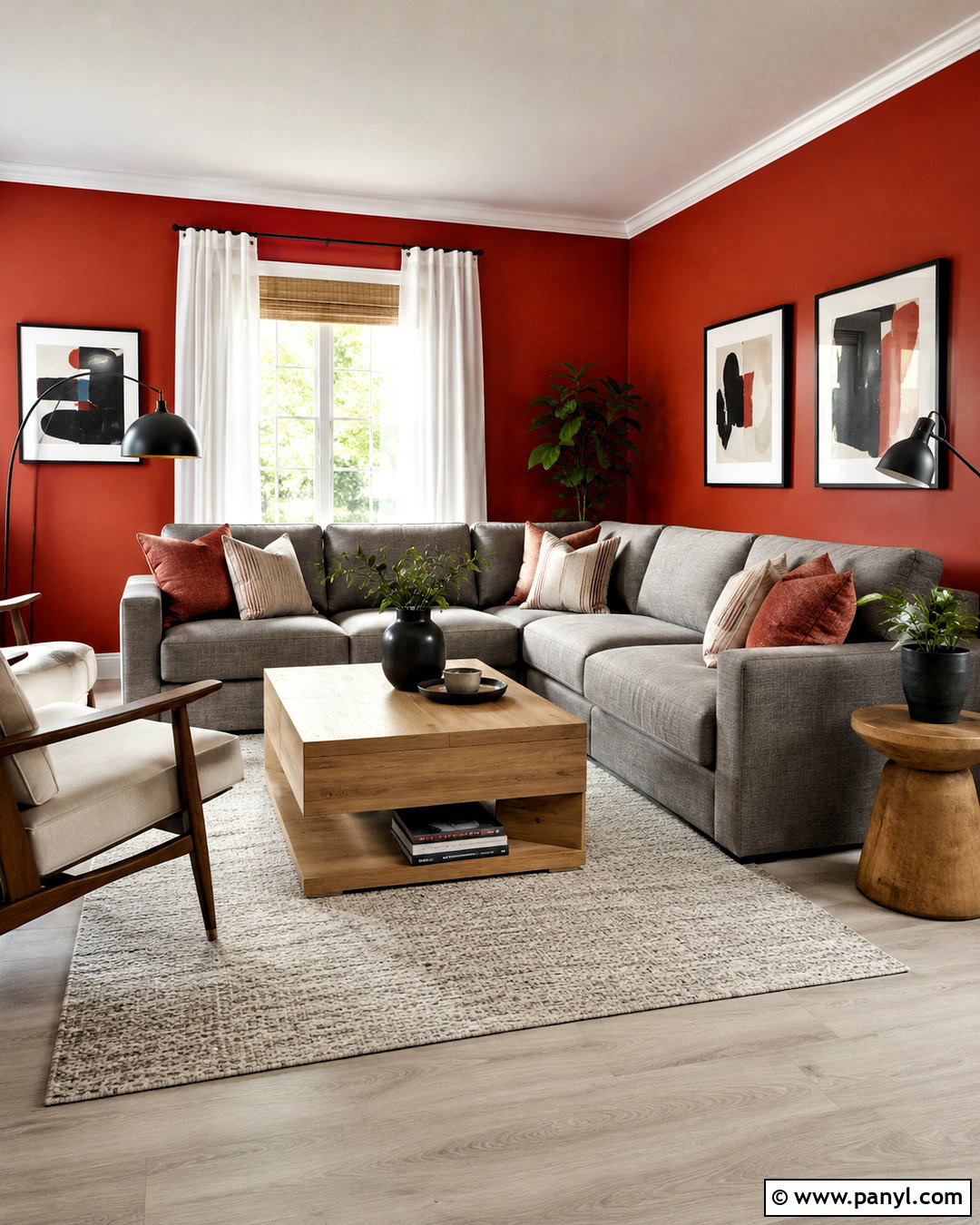
Gray furniture can cool red walls and give the room a clean, modern foundation. Use a warm medium-gray sectional rather than a blue-toned charcoal version, which may make the contrast feel harsh. Place a light oak coffee table in front and define the layout with an ivory and gray textured rug. White curtains, a white ceiling, and pale flooring will help brighten the overall composition. Introduce matte black through curtain rods, lamp bases, and picture frames. One rust pillow and a red detail in the artwork are enough to connect the sofa to the walls. Add a soft floor lamp near the sectional and a small wooden side table. The finished room feels practical, balanced, and suitable for everyday family use.
12. Red Living Room With Brown Leather Sofa
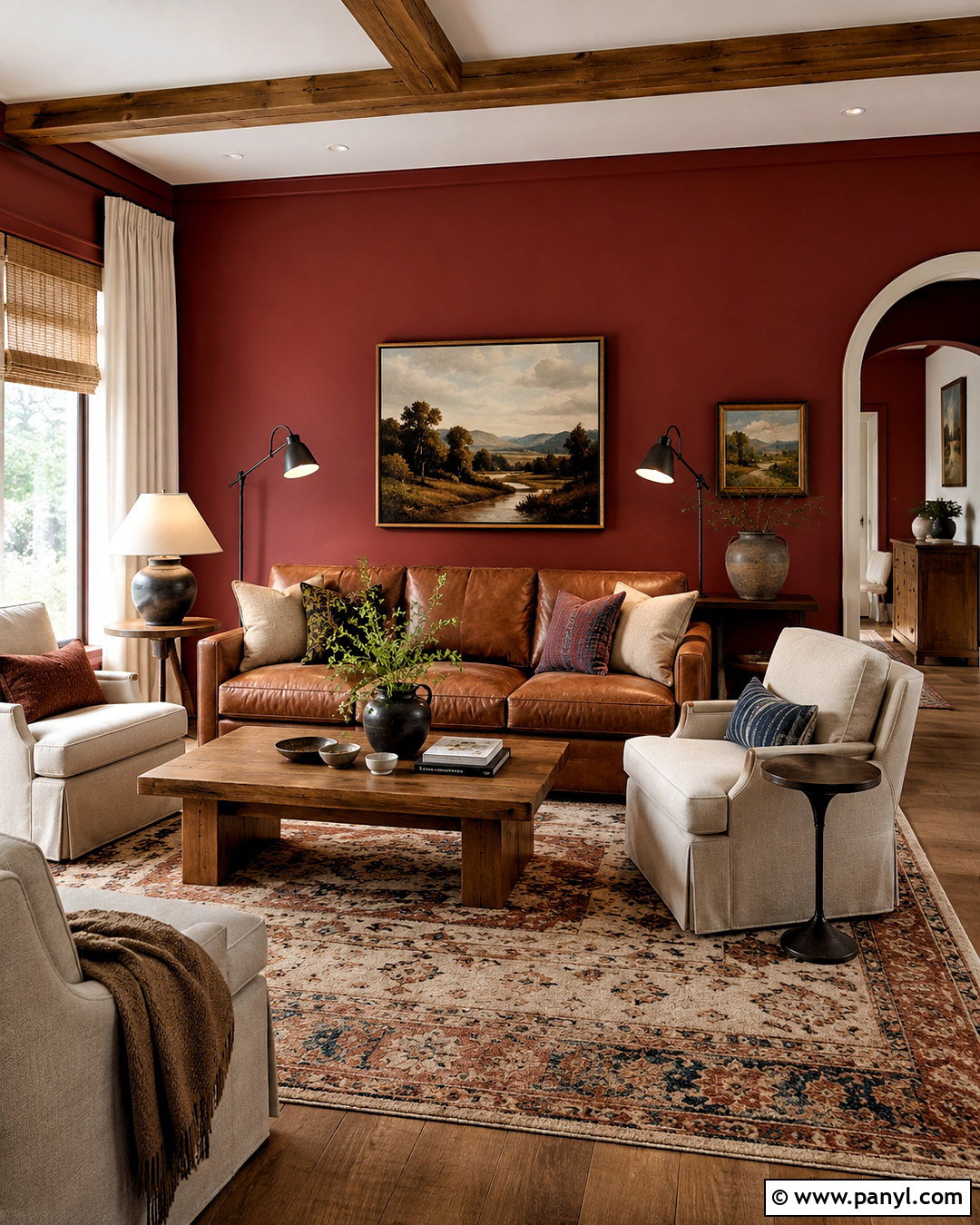
A cognac brown leather sofa looks especially natural against earthy red walls. Begin with a deep brick or barn-red paint that has warm brown undertones. Add two cream fabric chairs to lighten the seating group and arrange everything around a solid oak coffee table. A vintage-inspired rug containing beige, rust, and faded blue will give the room depth while hiding everyday wear. Use linen curtains in warm white and woven shades for flexible light control. Black metal lamps and a simple iron curtain rod add definition. Decorate with landscape paintings, handmade pottery, and textured wool pillows rather than shiny accessories. Together, the leather, wood, textiles, and red walls create a relaxed living room with lasting character.
13. Red Living Room With White Fireplace
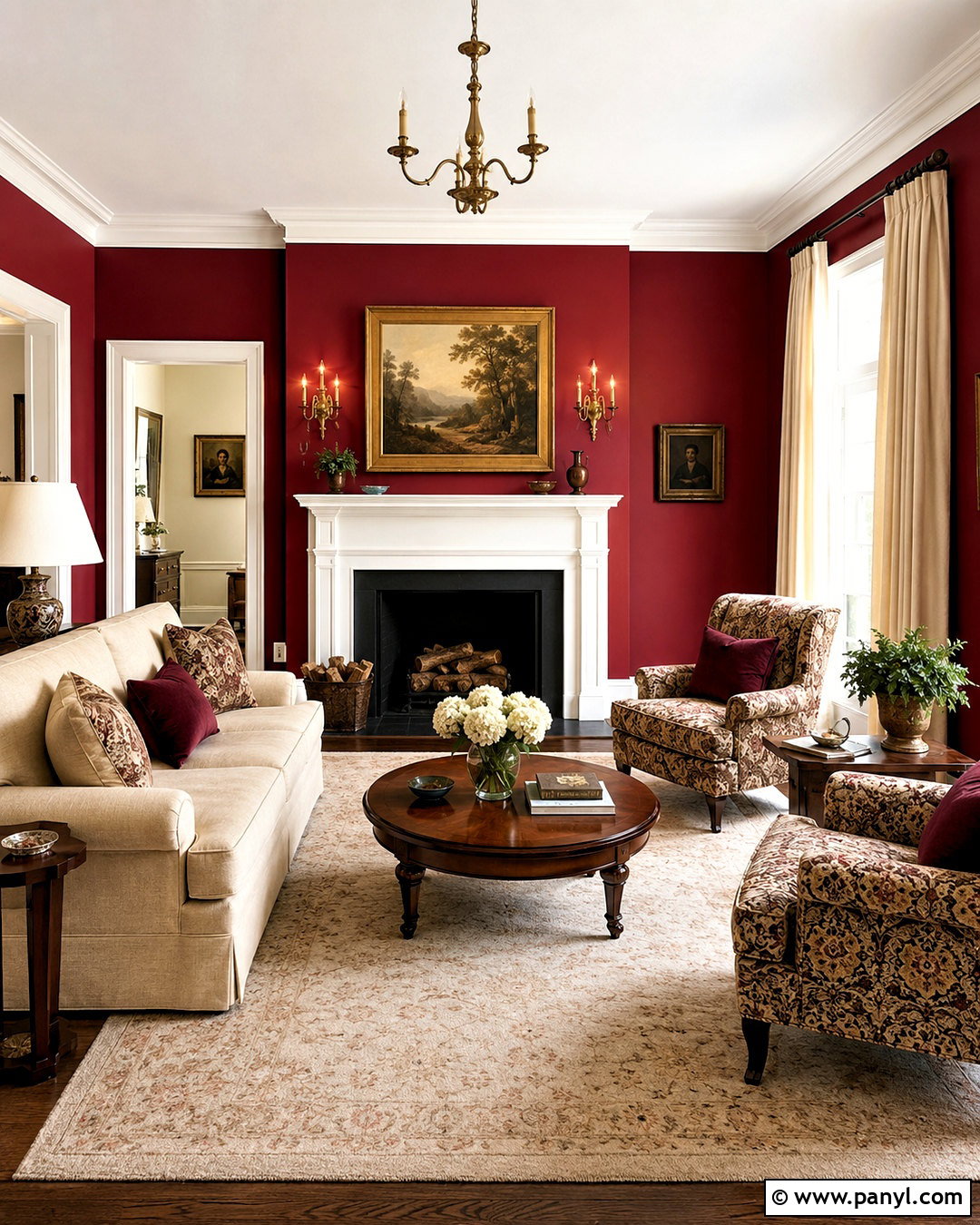
A white fireplace becomes a crisp architectural focal point when surrounded by rich red walls. Paint the walls a classic garnet shade while keeping the mantel, ceiling, baseboards, and window trim bright white. Center a light beige sofa opposite the fireplace and place two patterned armchairs perpendicular to it. A round wooden coffee table will soften the room’s straight architectural lines. Use a large neutral rug to define the arrangement and leave a comfortable path around every seat. Above the mantel, display one substantial mirror or artwork instead of many small objects. Brass sconces, cream curtains, and neatly stacked decorative logs complete the composition. This approach gives the room traditional structure without making it feel overly formal.
14. Red Paneled Living Room
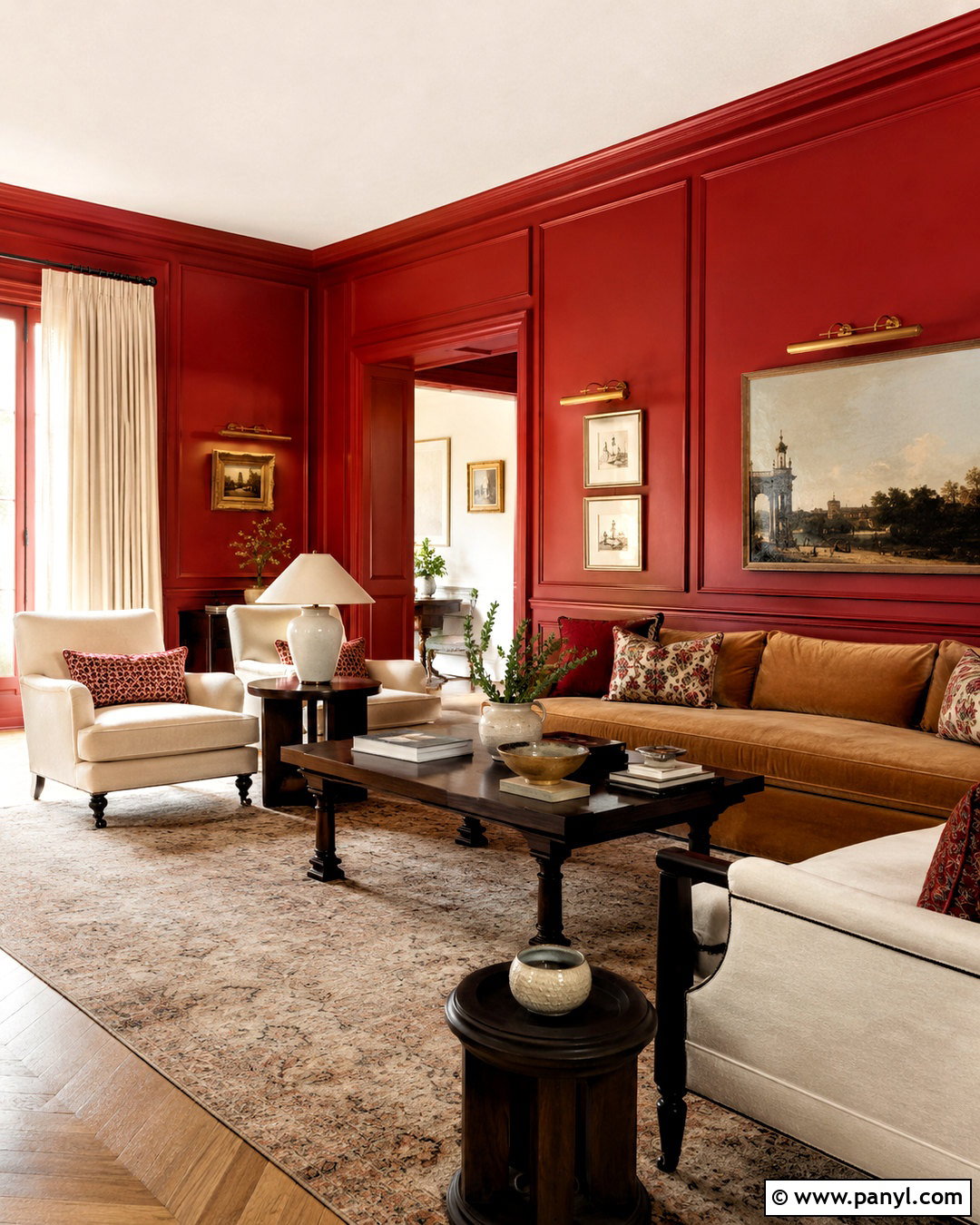
Wall paneling gives red paint extra dimension by creating highlights and shadows throughout the day. Install simple rectangular molding, then paint the walls, paneling, and baseboards in the same deep ruby red. A camel sofa and two ivory armchairs will stand out clearly against the saturated background. Choose dark walnut tables, a muted Oriental-style rug, and brass picture lights to build a classic foundation. Cream drapery should extend from ceiling to floor, adding softness and vertical emphasis. Hang framed artwork within the panel sections so the architecture organizes the display. Keep accessories limited to books, ceramic vessels, and a few patterned pillows. The complete room feels detailed and luxurious without requiring oversized furniture or an elaborate floor plan.
15. Red Color Drenched Living Room
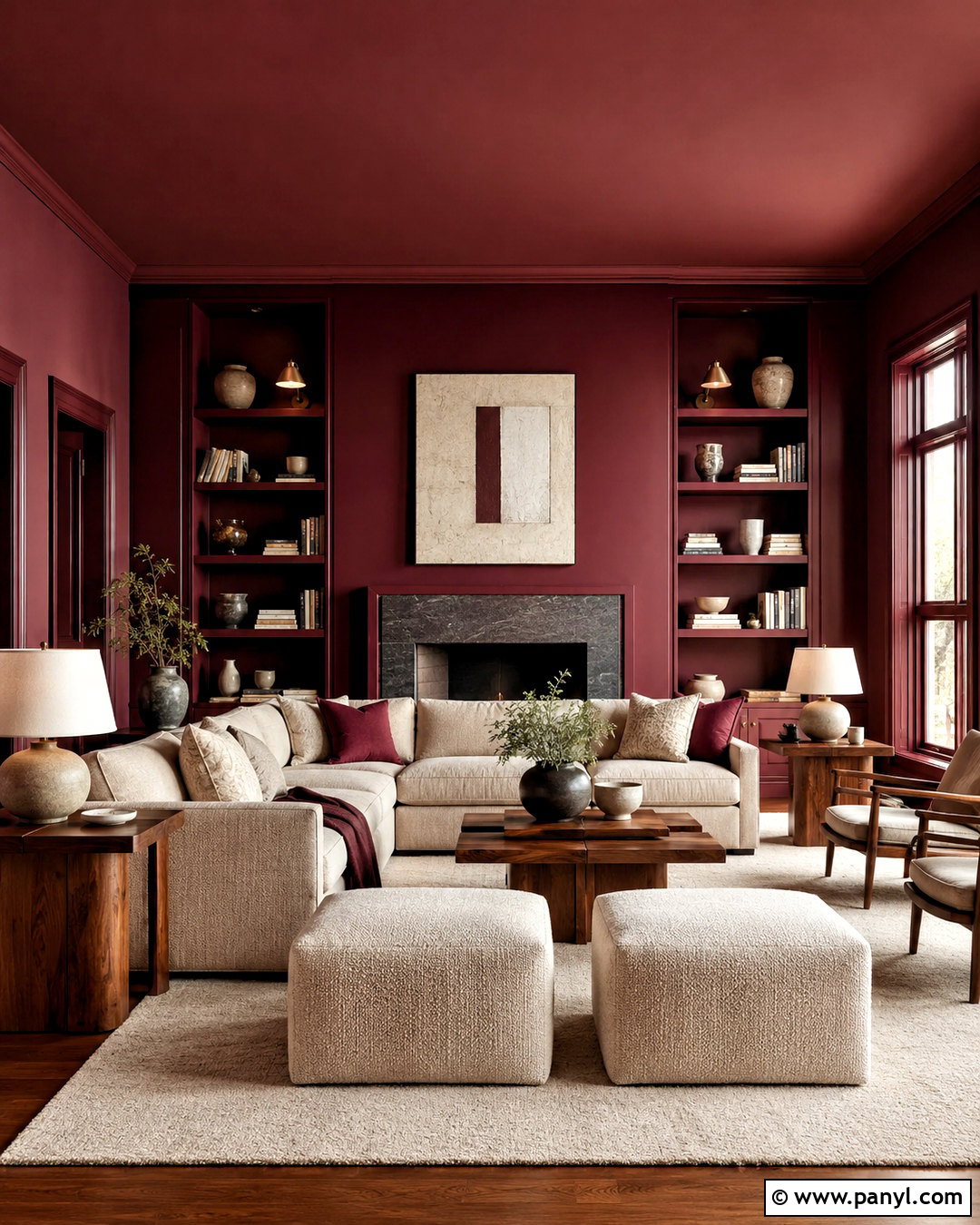
Color drenching wraps the walls, trim, doors, shelving, and ceiling in one continuous red shade. For a livable result, choose a softened oxblood or earthy berry rather than an extremely bright red. Bring contrast through a large oatmeal sectional, a cream rug, and pale upholstered ottomans. Built-in shelving painted the same red can hold books and light-colored pottery while blending into the architecture. Use walnut side tables and aged brass lighting to support the warm palette. Since the ceiling is also colored, include several light sources at different heights, such as sconces, table lamps, and a central pendant. The unified background can make irregular walls feel intentional, while the pale furnishings give the eye comfortable places to rest.
16. Red Accent Wall In A Small Living Room
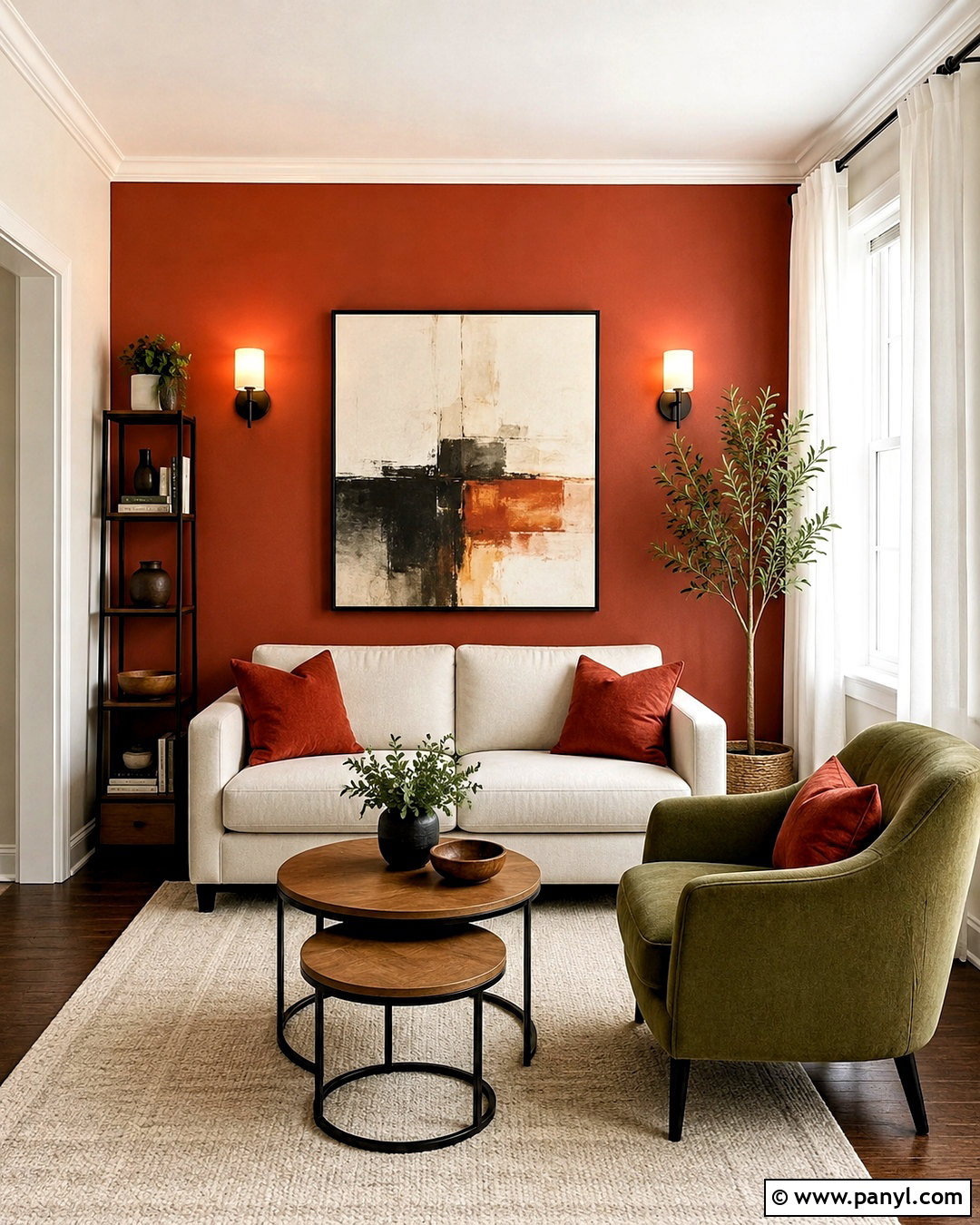
A small living room can handle red when one wall has a clear purpose. Paint the wall behind the sofa in warm paprika red, then keep the remaining walls and ceiling soft white. Choose a compact cream loveseat with visible legs to preserve a sense of openness. Add one small olive chair, a nesting coffee table, and a pale flat-weave rug instead of bulky furniture. Hang a large artwork above the loveseat so the red wall feels finished but not crowded. Use wall-mounted sconces when floor space is limited, and select narrow shelves for books and decor. White curtains hung high and wide will brighten the room. Repeating paprika in just two pillows makes the compact scheme feel connected.
17. Red Living Room Gallery Wall
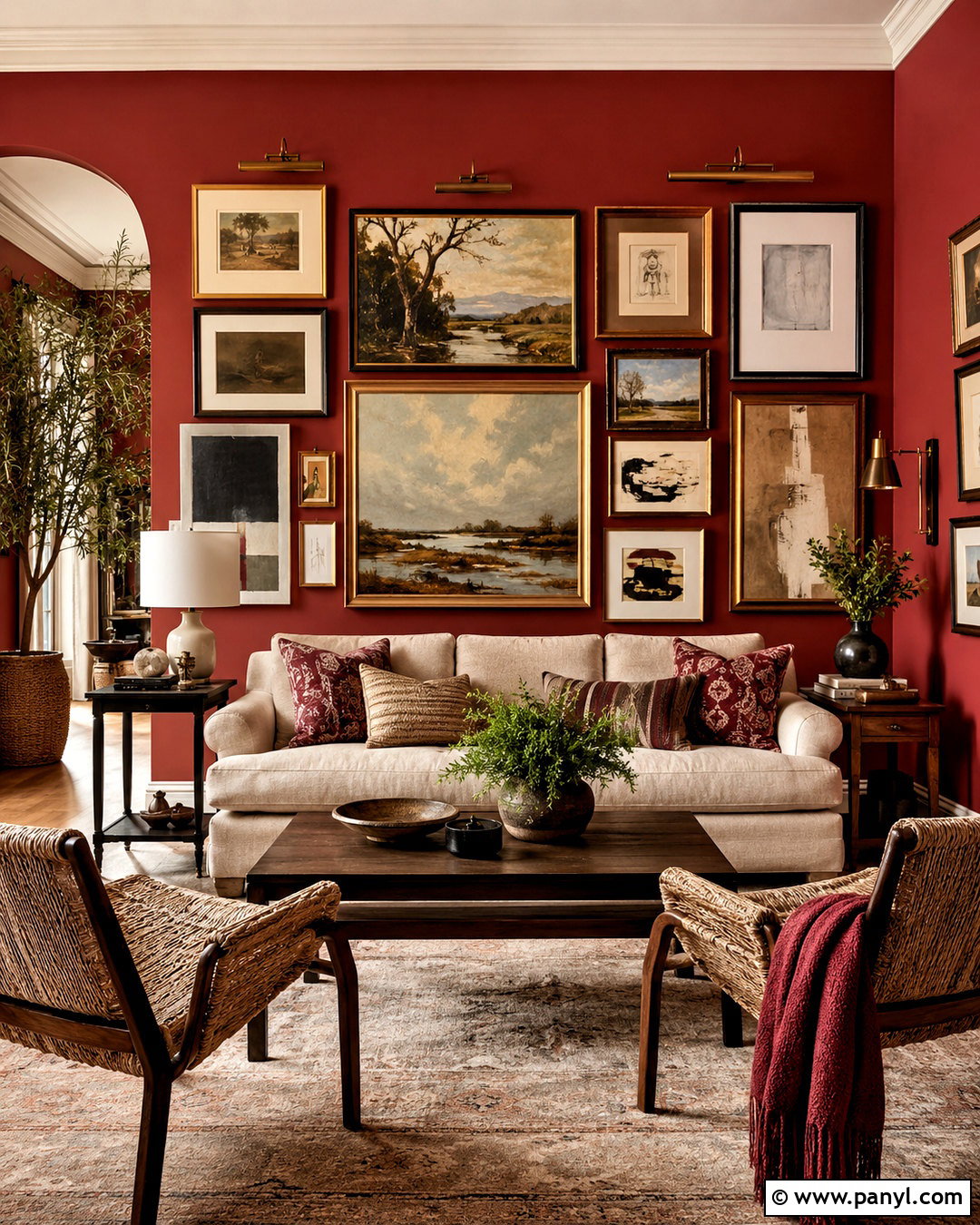
Red walls provide a strong backdrop for a gallery arrangement, while frames and artwork break up the color’s intensity. Choose an earthy crimson paint and create a large display above a neutral sofa. Combine black, walnut, and slim brass frames, but use cream or white mats to give individual pieces visual breathing room. Include landscapes, abstracts, sketches, and personal photographs with related muted colors. Below the display, place a light beige sofa with patterned pillows and a dark wooden coffee table. Two woven chairs and a faded neutral rug can complete the conversational layout. Add picture lights or adjustable ceiling fixtures so the artwork remains visible at night. Keep other walls simpler, allowing the curated gallery to command attention.
18. Boho Living Room With Red Walls
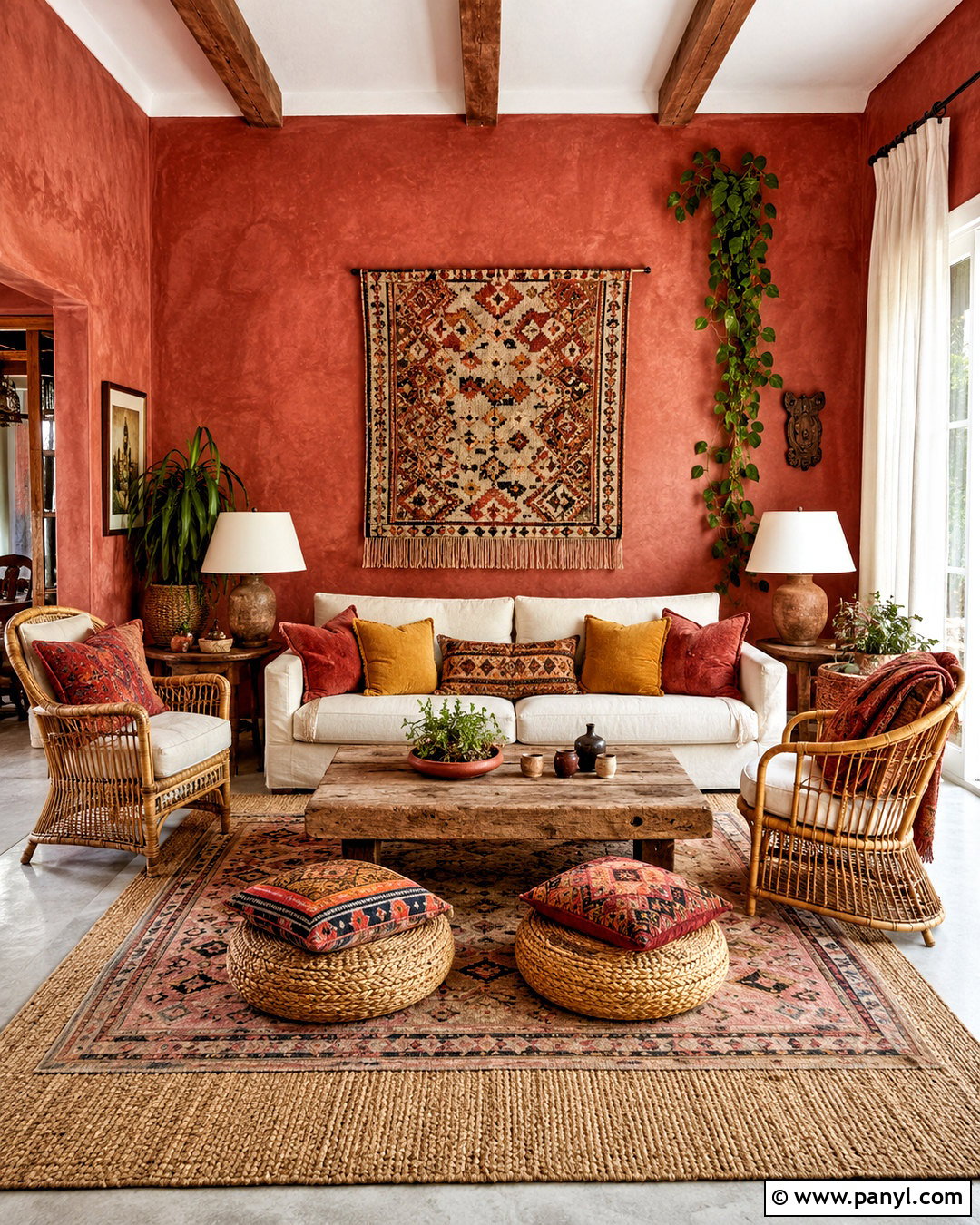
For a relaxed boho interior, use faded terracotta-red walls as the background for natural fibers, patterned textiles, and casual seating. Anchor the room with an oatmeal slipcovered sofa and two rattan lounge chairs. Layer a washable patterned rug over a larger jute rug for extra texture and warmth. A reclaimed wood coffee table, woven floor cushions, and ceramic lamps reinforce the handmade character. Mix rust, mustard, cream, and muted green pillows, but repeat each color at least twice so the room remains cohesive. Display a few framed textile pieces and baskets without covering every wall. Finish with trailing plants, off-white curtains, and open shelving. The completed living room feels personal and layered while maintaining comfortable pathways and useful surfaces.
19. Farmhouse Living Room With Red Walls
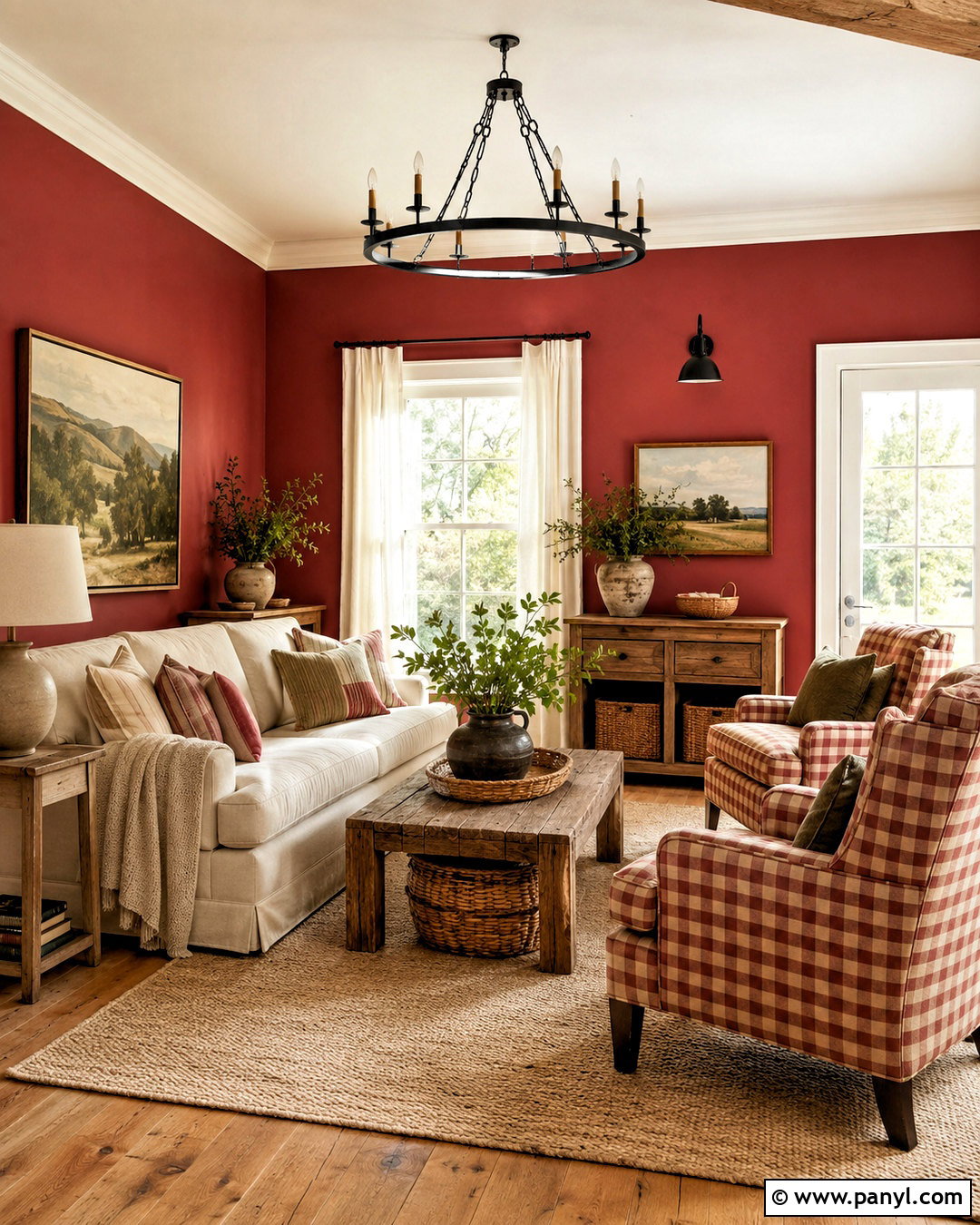
A farmhouse living room with red walls works best when the color is weathered and earthy rather than glossy or bright. Select a muted barn-red paint and combine it with a cream linen sofa, checked armchairs, and a chunky reclaimed-wood coffee table. Use a large beige wool rug to soften hardwood flooring and define the central seating area. White-painted trim and simple cotton curtains will introduce the crisp contrast associated with farmhouse interiors. Add black iron lighting, woven baskets, and a vintage-style landscape above the sofa. A wooden console can provide hidden storage while displaying pottery and greenery. Avoid filling the room with small themed signs. Honest materials, practical furniture, and restrained decoration create a warmer and more convincing result.
20. Contemporary Living Room With Red Walls
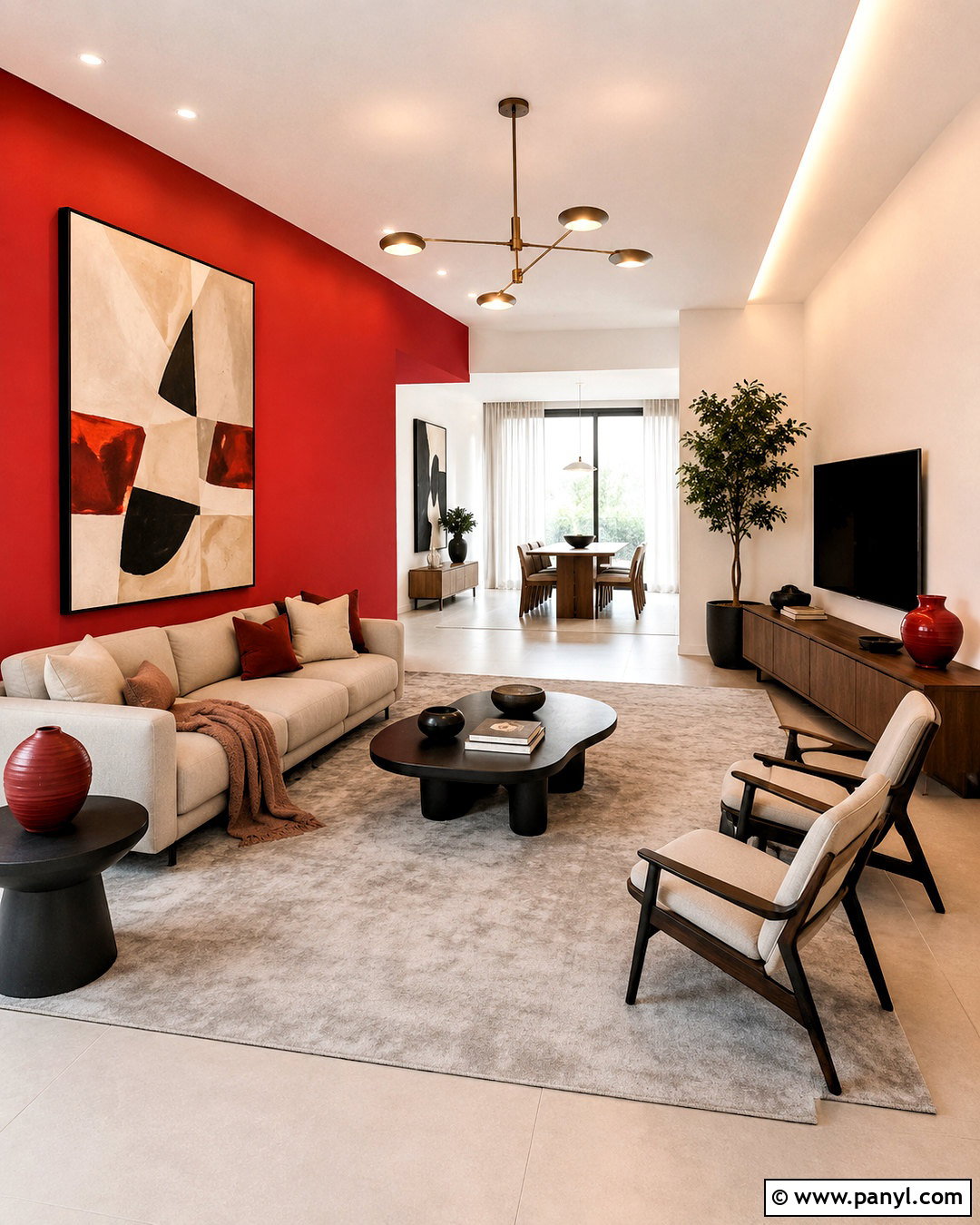
Clean lines allow a red living room to look modern without feeling cold. Paint one continuous wall in saturated tomato red and use it to frame a low cream sectional and streamlined walnut media unit. Keep adjacent walls warm white for contrast and choose a large pale gray rug with minimal pattern. A sculptural black coffee table and two slim lounge chairs can add definition while preserving open circulation. Use oversized abstract art rather than several small pieces, and include one tall plant to introduce an organic shape. Recessed ceiling lights, a simple floor lamp, and sheer white curtains provide even illumination. Limit decorative objects to a few bold ceramics and books, creating a finished space that remains uncluttered, comfortable, and visually confident.
Conclusion:
Successful red rooms depend on more than selecting an attractive paint shade. Furniture scale, natural light, flooring, textiles, and supporting colors all influence how the walls feel. Cream and beige make red softer, while navy, teal, sage, and blush create stronger personality. Walnut, oak, leather, rattan, and brass can add warmth and texture without fighting for attention. Before painting, test large samples on different walls and view them throughout the day. Then build the room around a clear furniture layout and a controlled palette. Whether you prefer muted brick, rich burgundy, or energetic crimson, these 20 living room red walls show how bold color can still feel balanced, functional, and welcoming.

Related Ideas and Inspiration:
Leave a Reply