
Dark walls can make a room feel deeper, cozier, and more intentional when every element works together. The best dark feature wall ideas balance rich color with thoughtful lighting, warm materials, and enough contrast to keep the space inviting. Black and charcoal offer a clean architectural look, while navy, forest green, brown, burgundy, and plum create softer forms of drama. Texture matters too. Wood slats, molding, brick, wallpaper, and concrete can give a dark surface more depth than flat paint alone. Choose a wall that already attracts attention, such as the wall behind a bed, sofa, dining table, or fireplace. Then build the furniture, textiles, lighting, and decorative accents around it. The following dark feature wall ideas offer complete, practical looks for rooms throughout the home. ()
1. Black Living Room Feature Wall
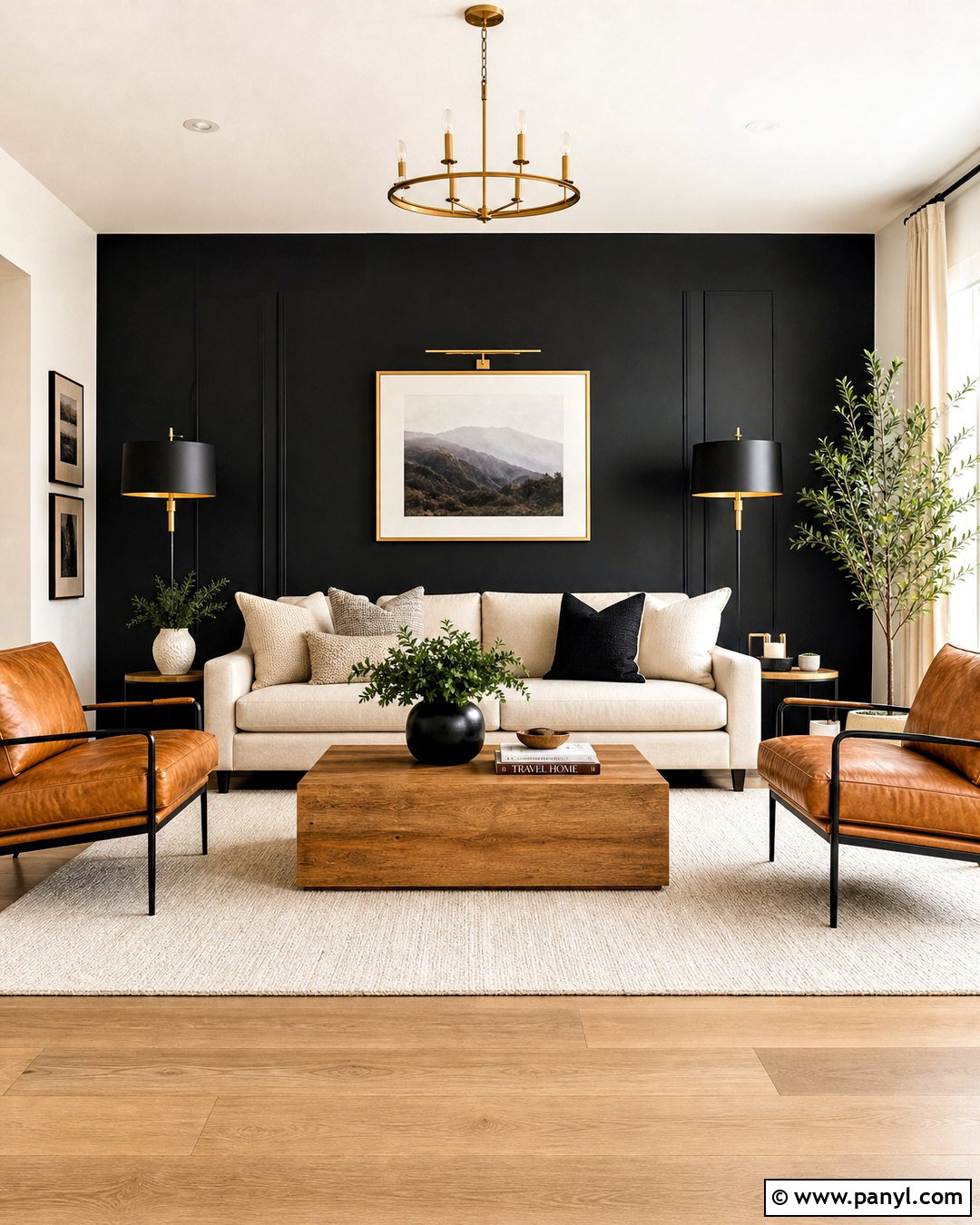
A matte black feature wall can turn a basic living room into a polished, contemporary space. Use it behind a cream or oatmeal-colored sofa so the furniture stands out clearly. Bring in a medium oak coffee table, a woven ivory rug, and camel leather accent chairs to soften the contrast. Black metal floor lamps and simple framed prints will connect the wall to the rest of the room without making everything feel heavy. Keep the remaining walls warm white rather than stark white for a gentler transition. Natural linen curtains allow daylight to spread through the space. Finish the room with green plants, textured pillows, and one or two brushed brass accents. These warmer materials keep the black wall sophisticated, comfortable, and suitable for everyday living.
2. Charcoal Bedroom Feature Wall
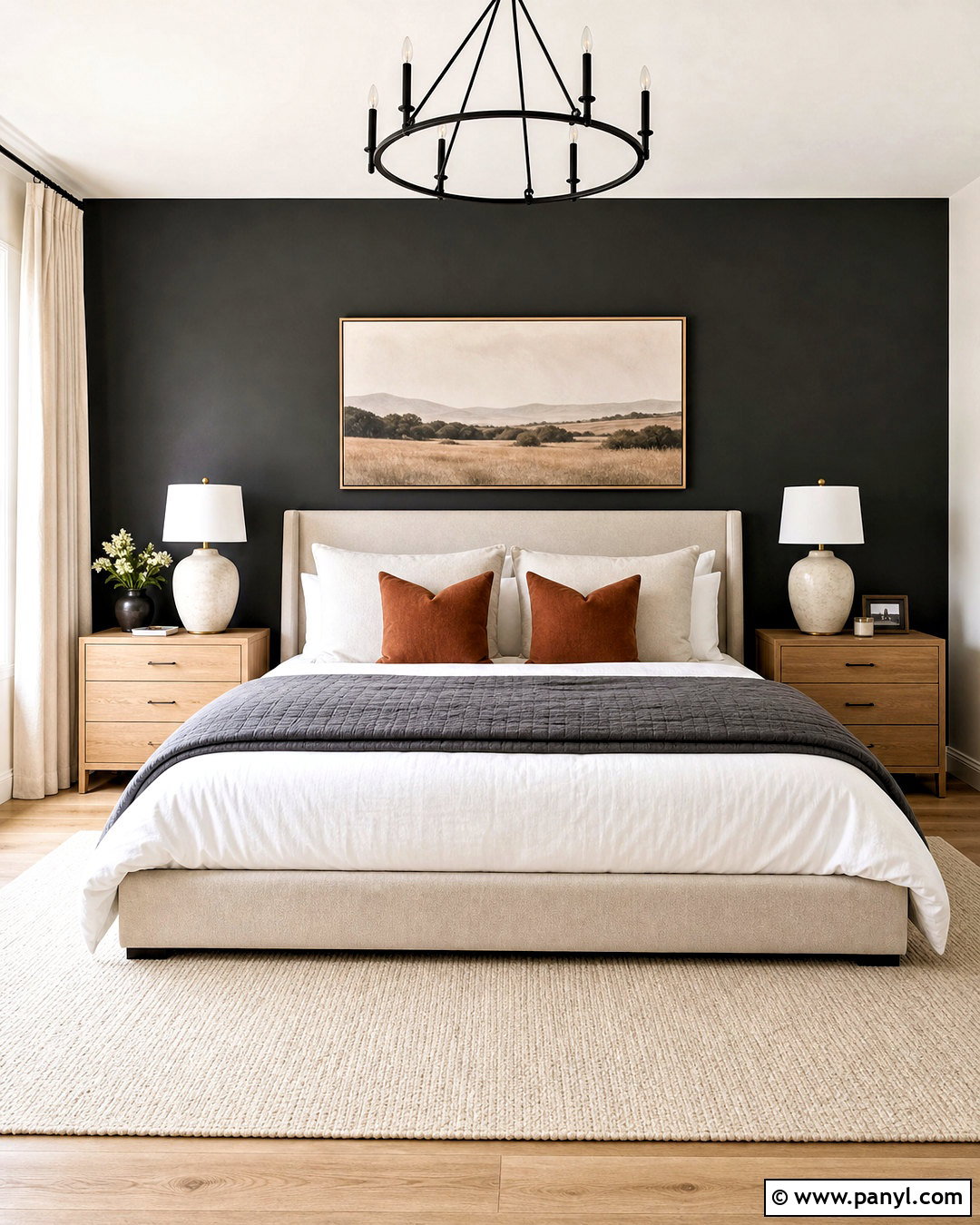
Charcoal gray creates a restful bedroom backdrop without the visual sharpness of pure black. Place the feature wall behind a low upholstered bed in light greige or soft beige. Layer the bed with white sheets, a gray quilt, and muted rust or clay-colored pillows for controlled warmth. Matching oak nightstands and cream ceramic lamps make the layout feel balanced. Instead of covering the wall with several small decorations, hang one wide landscape print or a pair of simple abstract pieces above the headboard. Light wood flooring and a large ivory rug prevent the lower half of the room from becoming too dark. Complete the look with off-white curtains and black hardware. The result feels calm and enveloping, especially when the charcoal has a slightly warm undertone.
3. Navy Dining Room Feature Wall
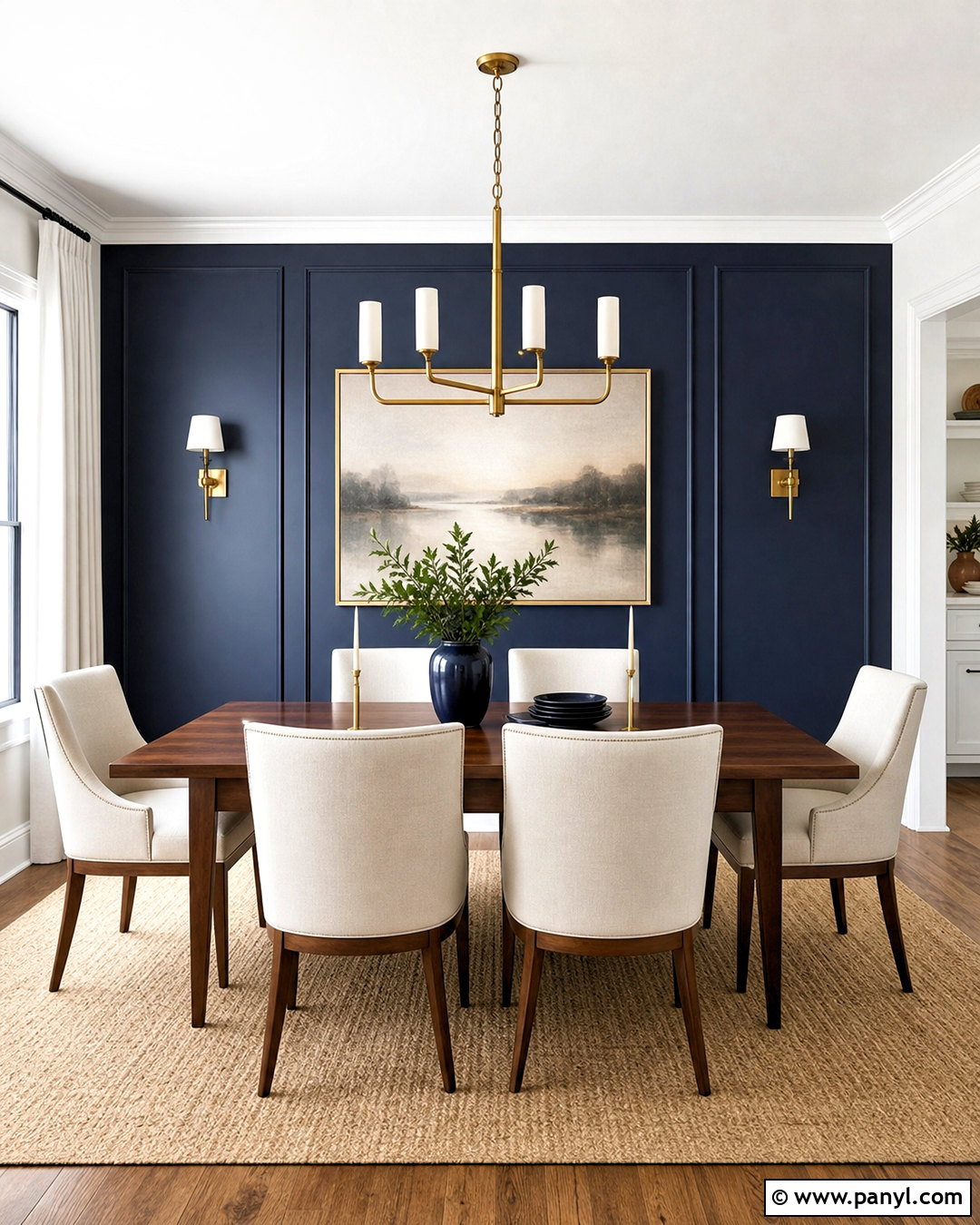
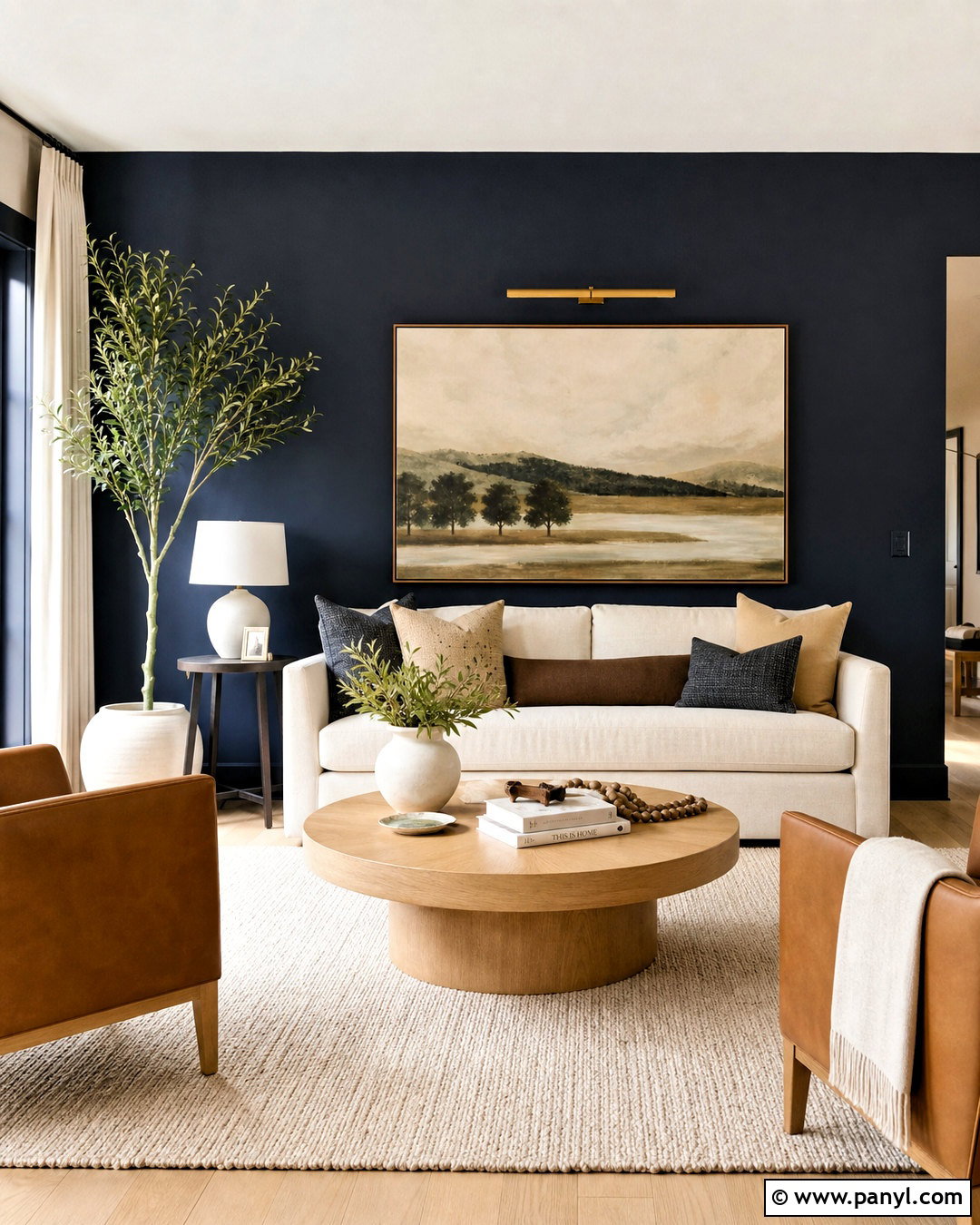
Deep navy blue gives a dining room a formal appearance while remaining more colorful and approachable than black. Center a warm walnut dining table against the feature wall and surround it with chairs upholstered in cream or light gray fabric. A large brass chandelier adds brightness and creates a strong focal point above the table. Consider adding narrow picture-frame molding to the navy wall for subtle dimension. A pale natural-fiber rug can define the dining zone and balance the darker background. Display a wide mirror or oversized artwork with warm white, tan, and muted blue tones. Keep the adjoining walls soft white and repeat navy through small accents, such as seat cushions or a table runner. This coordinated approach makes the dark wall look integrated rather than like a random patch of color.
4. Forest Green Home Office Feature Wall
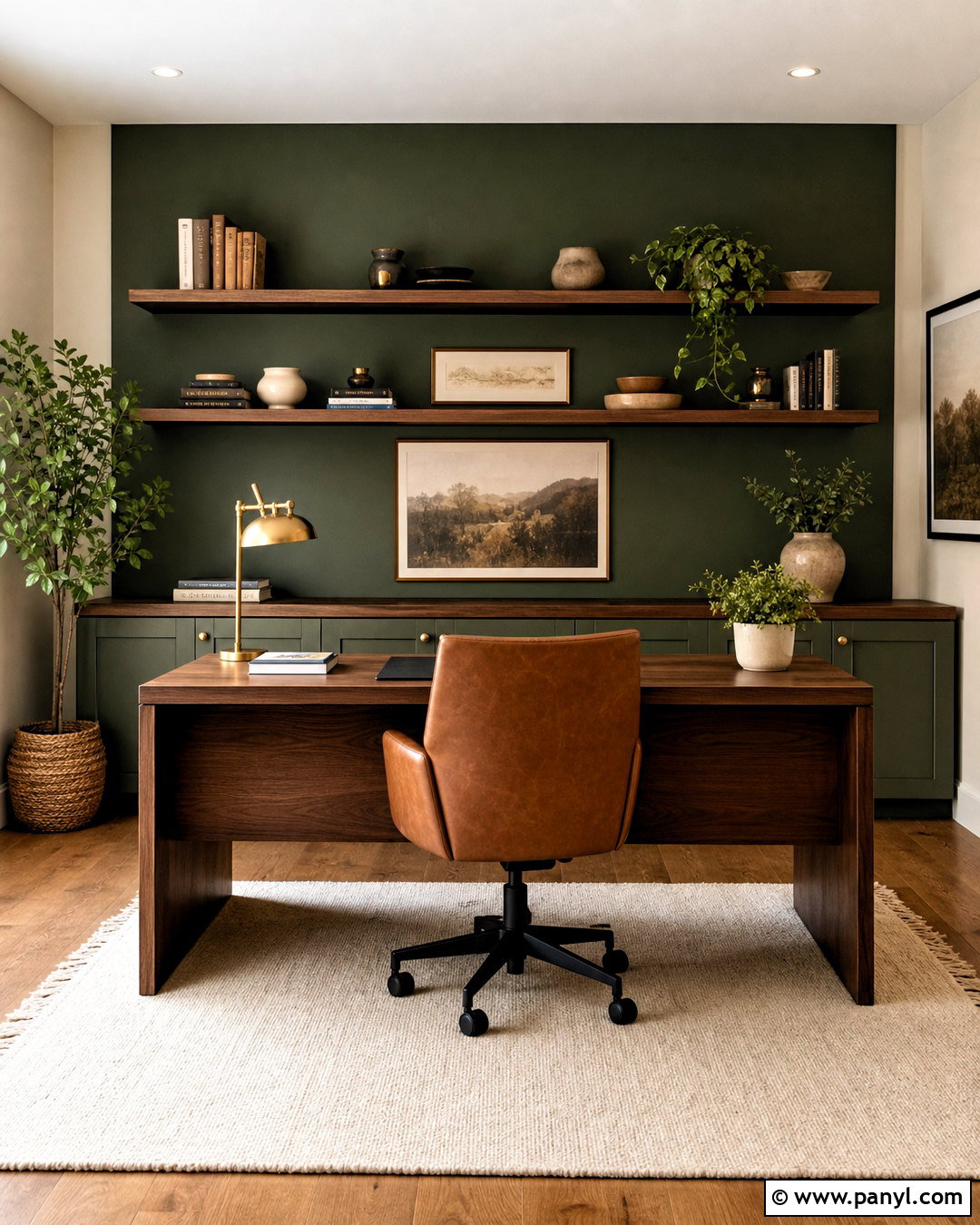
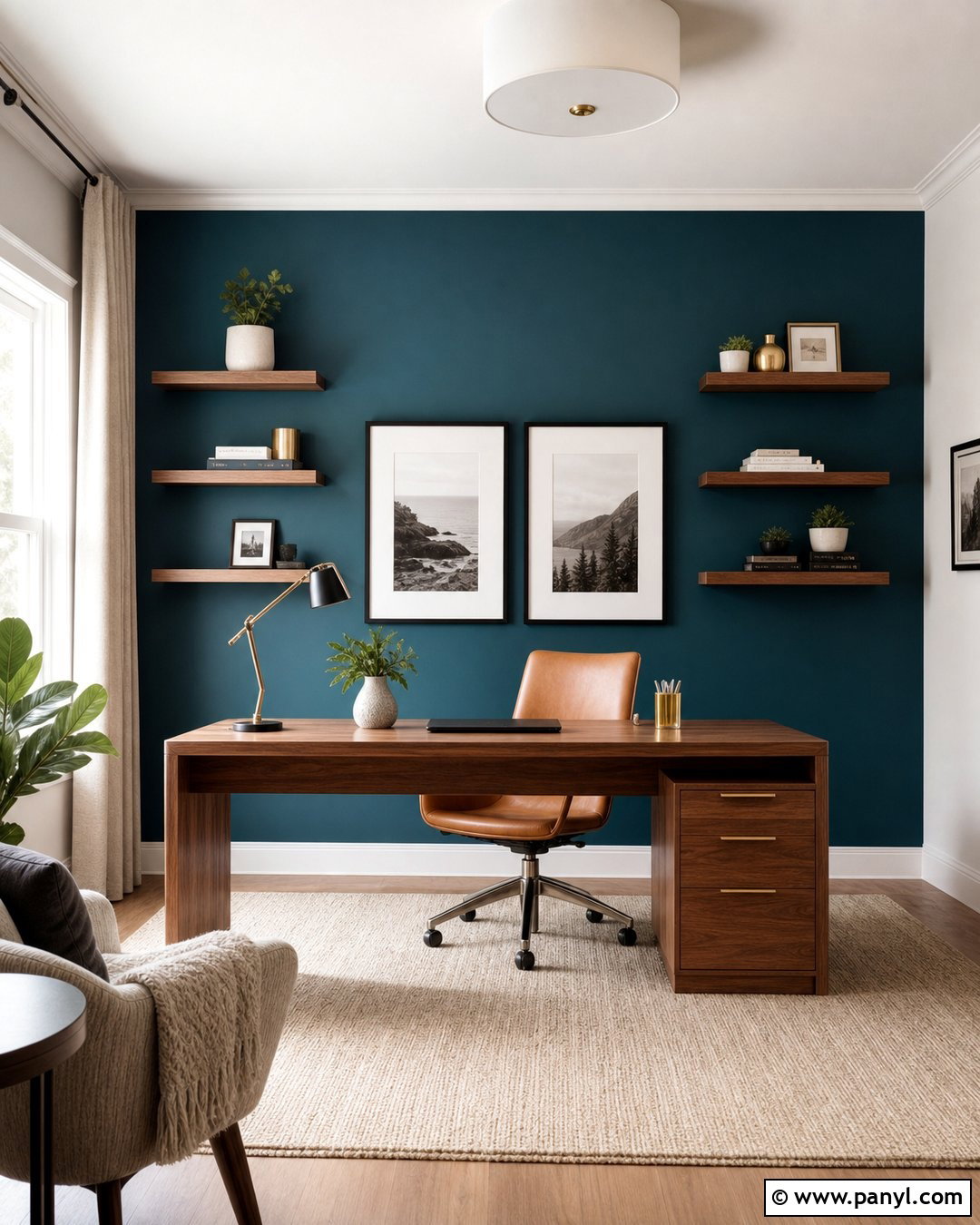
Could your workspace feel focused without looking cold? A forest green feature wall provides a grounded backdrop for a practical and inviting home office. Position a streamlined walnut desk against the wall and add shallow matching shelves above it. Choose a tan leather chair, a cream wool rug, and a brass desk lamp to warm the deep green. Storage cabinets painted the same color as the wall can blend into the background and reduce visual clutter. Use the shelves for a restrained mix of books, pottery, framed art, and trailing plants. Keep the other walls a warm off-white and use a light-filtering window shade to maintain brightness. The combination of green, walnut, leather, and brass creates a complete office that feels productive, comfortable, and connected to nature.
5. Dark Teal Bedroom Feature Wall
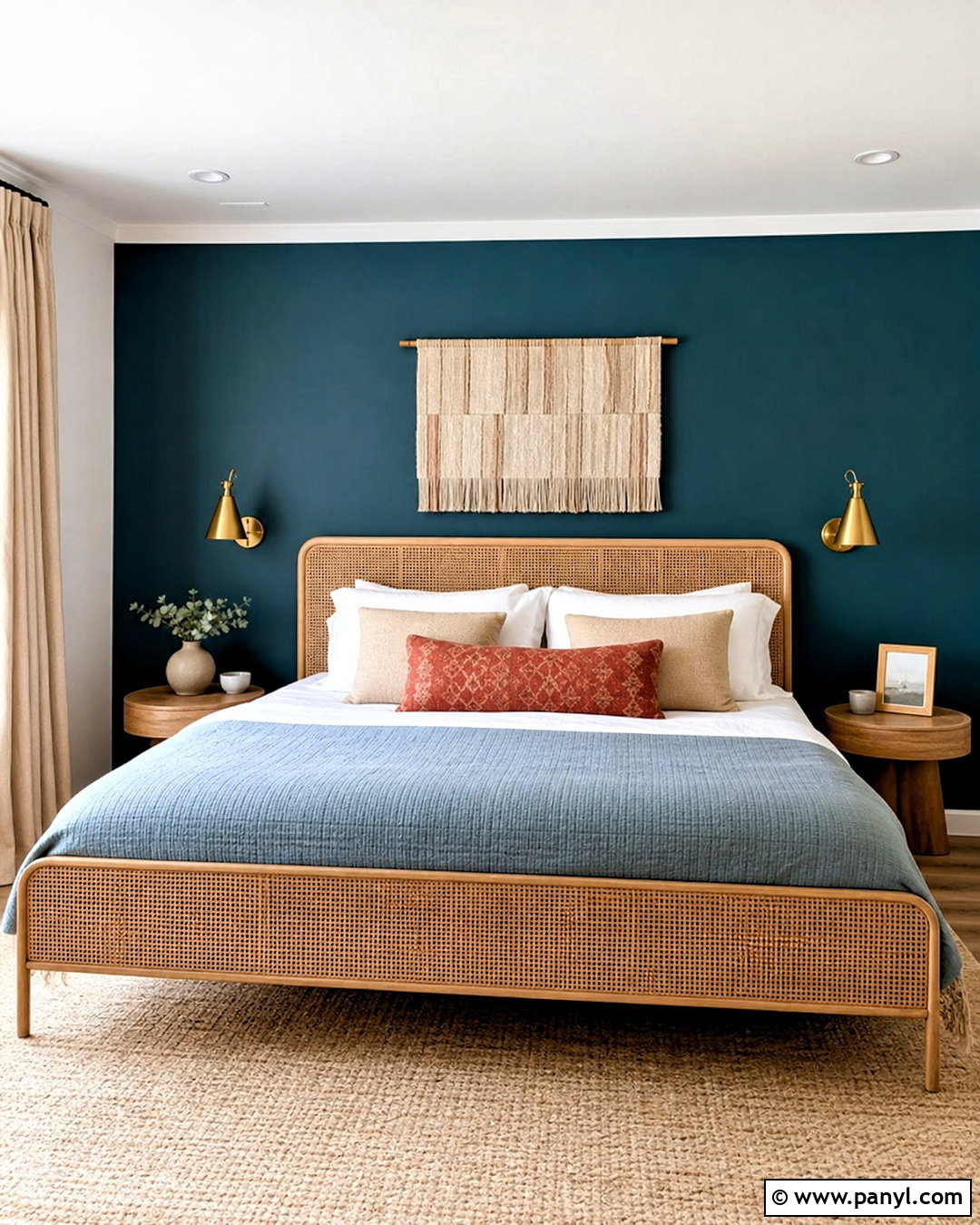
Dark teal brings together the calmness of blue and the richness of green, making it especially effective behind a bedroom headboard. Pair the wall with a natural cane bed or a medium-toned oak frame to create a relaxed contrast. Dress the bed in crisp white linens, a muted blue coverlet, and pillows in sand, terracotta, and teal. Round wood nightstands prevent the arrangement from feeling too rigid, while brushed brass sconces provide warm task lighting without using valuable tabletop space. Add a cream rug under the bed and hang lightweight beige curtains from ceiling height. One large textile artwork can introduce softness above the headboard. Keep accessories simple so the saturated wall remains the main feature. This palette works particularly well in modern, coastal, and globally inspired bedrooms.
6. Espresso Brown Living Room Feature Wall
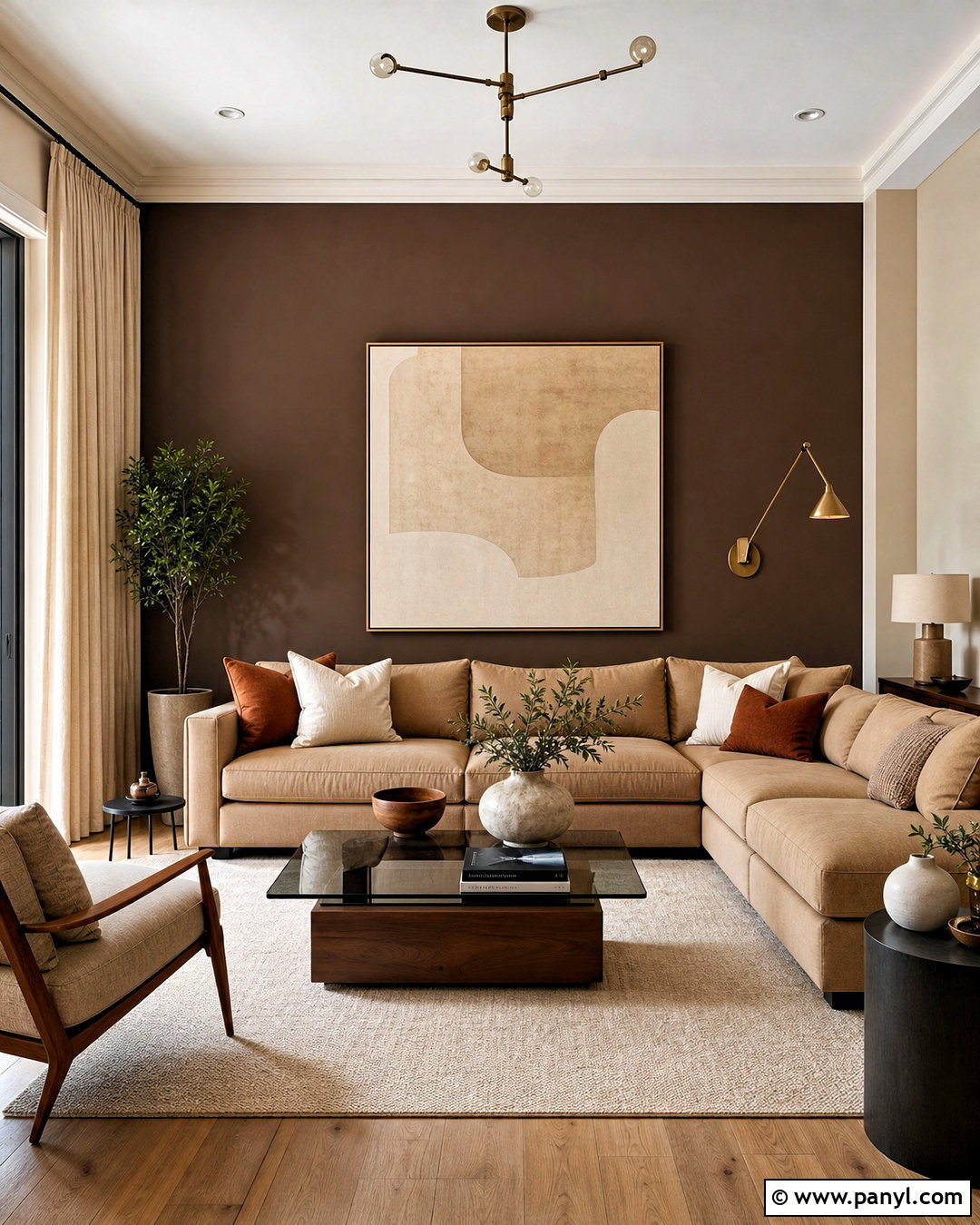
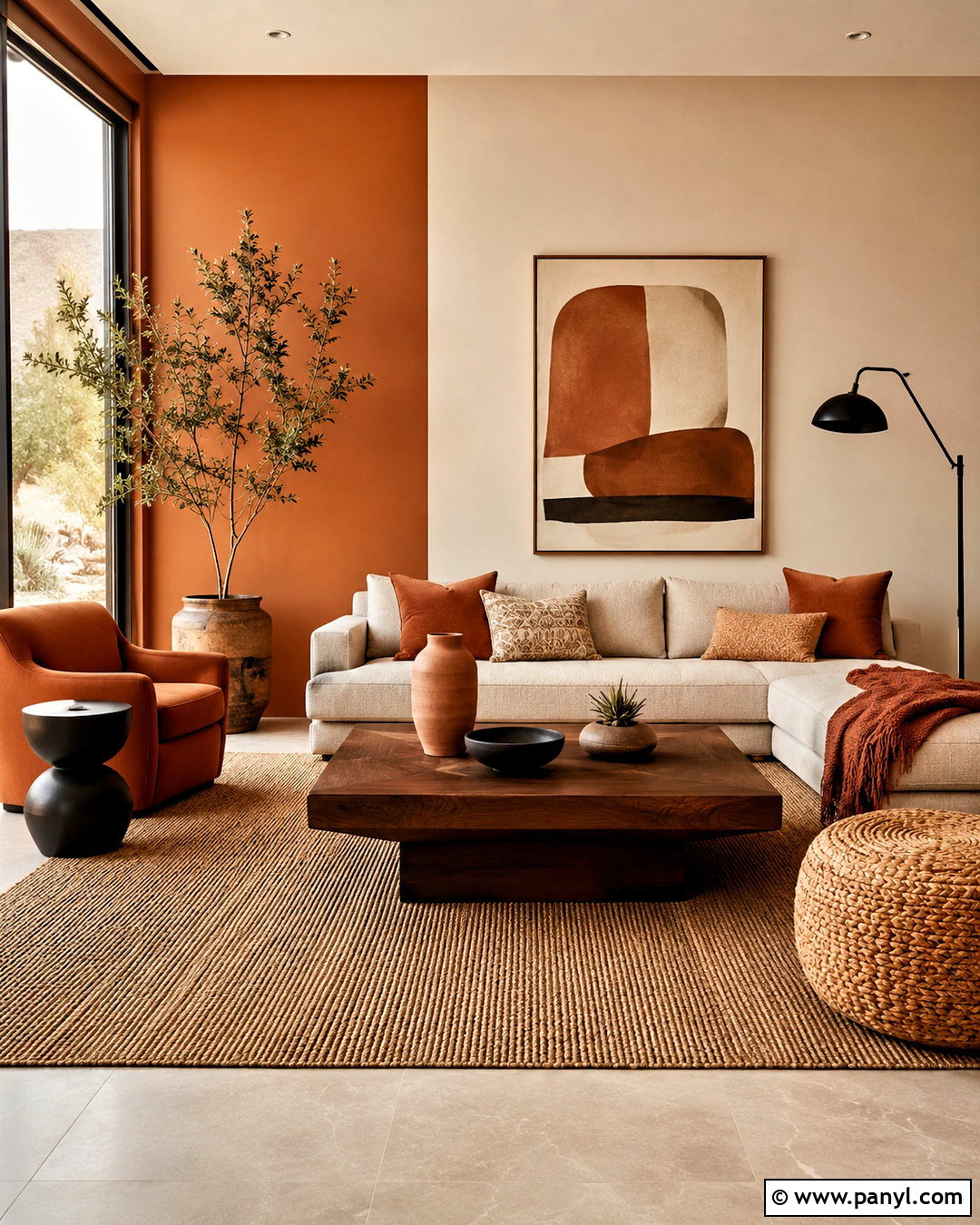
Rich espresso brown creates warmth and depth while offering an understated alternative to black. Use the color on the main sofa wall and pair it with a light camel sectional or two cream slipcovered sofas. Choose a walnut or smoked-glass coffee table, a beige wool rug, and cushions in rust, taupe, and ivory. Soft bronze lighting suits the brown undertones better than bright silver finishes. Large-scale abstract artwork with cream and earthy red details will break up the dark surface without hiding it. Add full-length linen curtains and a few sculptural ceramic pieces for a relaxed, collected finish. The surrounding walls should stay warm and pale. When brown is repeated through wood furniture and textiles, the feature wall feels deliberate, cozy, and connected to the entire living room scheme.
7. Black Paneled Bedroom Feature Wall
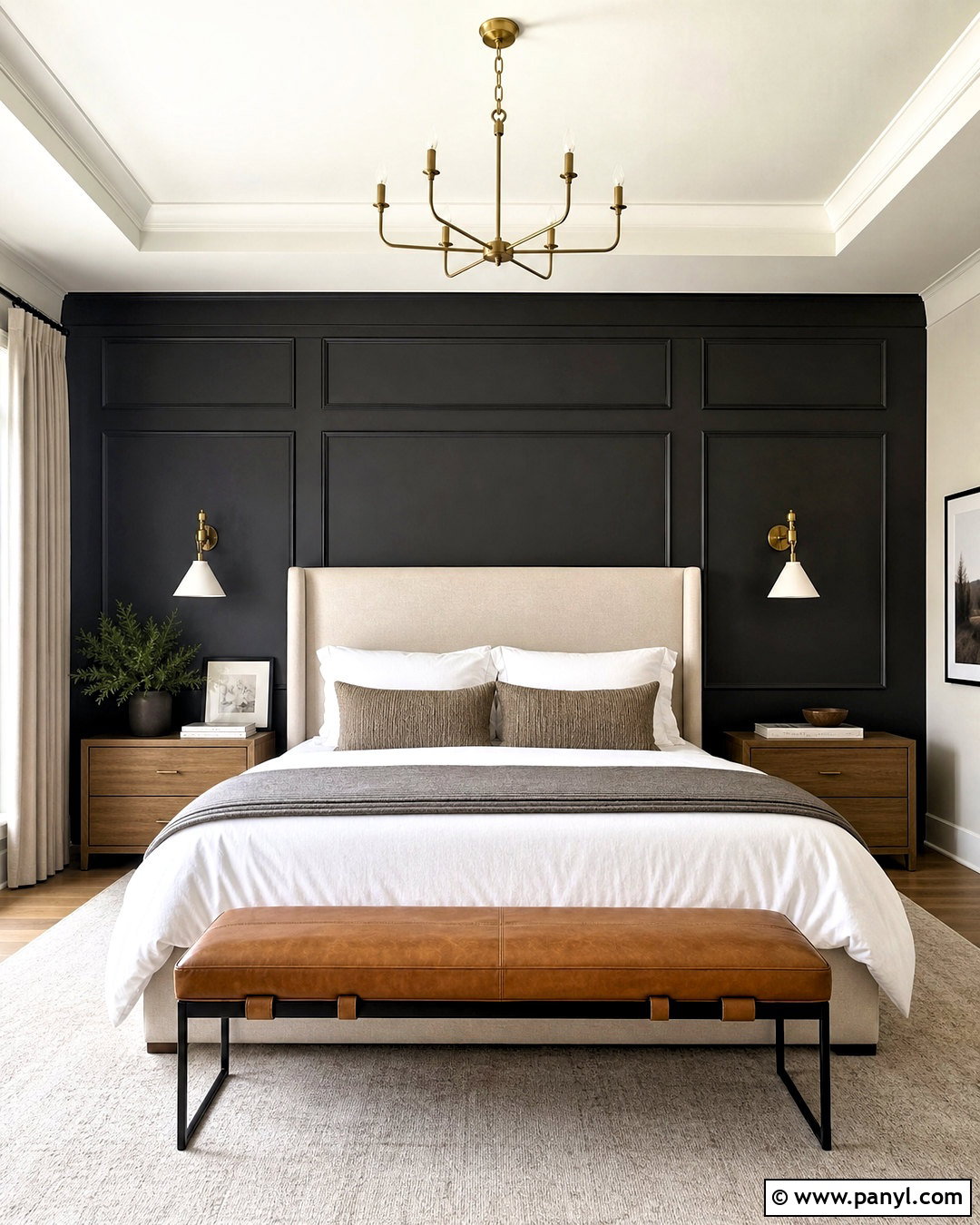
Wall paneling gives dark paint architectural depth, even in a newer or fairly simple bedroom. Install evenly spaced rectangular molding behind the bed, then paint the wall and trim in the same soft black finish. A tall oatmeal upholstered headboard creates a clear focal point against the panels. Use medium oak nightstands, white bedding, a mushroom-colored blanket, and subtle black piping to connect the palette. Brass wall sconces can highlight the raised molding and provide comfortable evening light. Keep the remaining walls light greige and use a pale rug to maintain an open feeling. A bench in tan leather or textured cream fabric completes the foot of the bed. This full arrangement feels refined and timeless without requiring ornate furniture, expensive artwork, or heavy decorative accessories.
8. Dark Floral Wallpaper Feature Wall
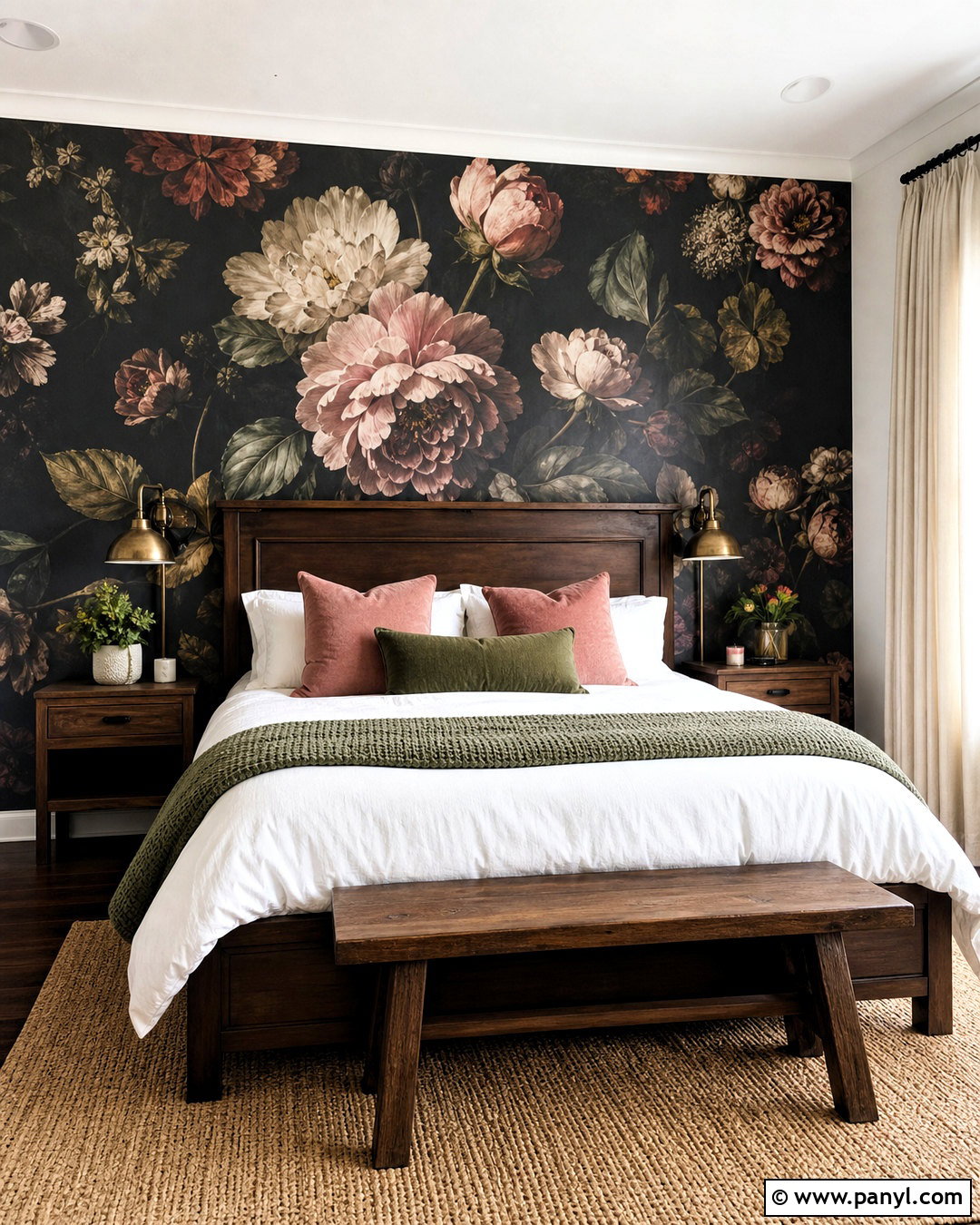
For a layered bedroom with more pattern, choose wallpaper featuring oversized flowers and foliage on a black or midnight background. Install it behind the bed and allow the pattern to establish the room’s color palette. A simple dark wood bed keeps the look grounded, while white bedding provides necessary breathing room. Pull muted rose, olive green, and dusty blue from the wallpaper for pillows and a folded quilt. Antique brass lamps and warm wood nightstands complement the botanical design without making the room overly traditional. Use plain cream curtains and a softly textured beige rug elsewhere. Avoid adding busy artwork to the wallpapered surface; the pattern already serves as the main decoration. Dark botanical wallpaper can produce a dramatic yet welcoming result when paired with restrained furniture and lighter textiles. ()
9. Dark Brick Fireplace Feature Wall
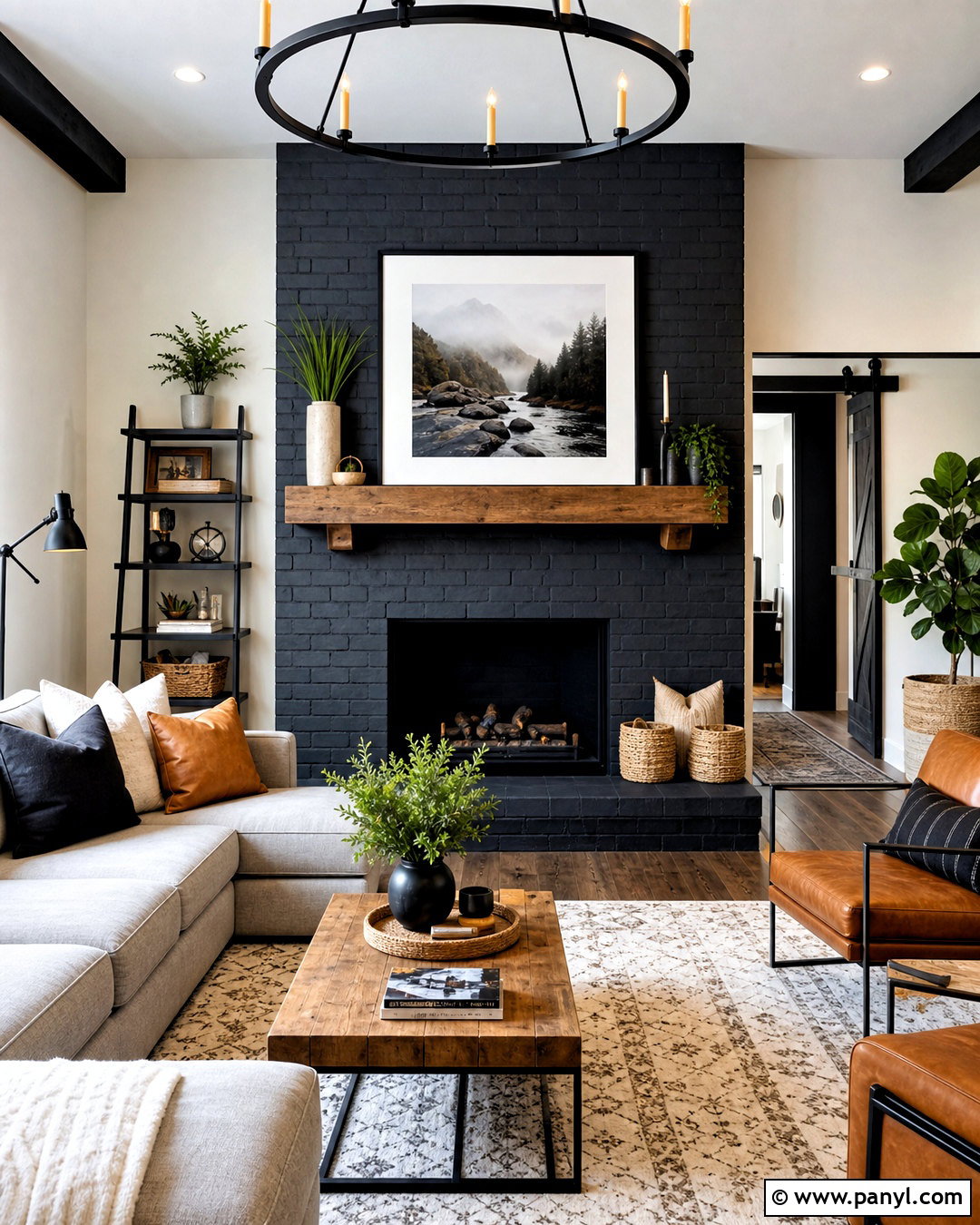
A fireplace wall covered in dark-painted brick can anchor an entire living room. Paint existing brick charcoal or soft black with a finish appropriate for masonry, leaving the natural texture visible. Add a thick reclaimed oak mantel to introduce warmth and create space for a few simple objects. Arrange a light gray sectional and two cognac leather chairs around a large wood coffee table. A cream patterned rug brightens the seating area, while black metal lighting repeats the wall color. Mount one substantial artwork above the mantel rather than filling the surface with many small pieces. Woven baskets, linen pillows, and green plants soften the industrial texture. Keeping the ceiling and nearby walls warm white ensures that the fireplace remains dramatic without making the whole living room feel enclosed.
10. Dark Wood Slat Feature Wall
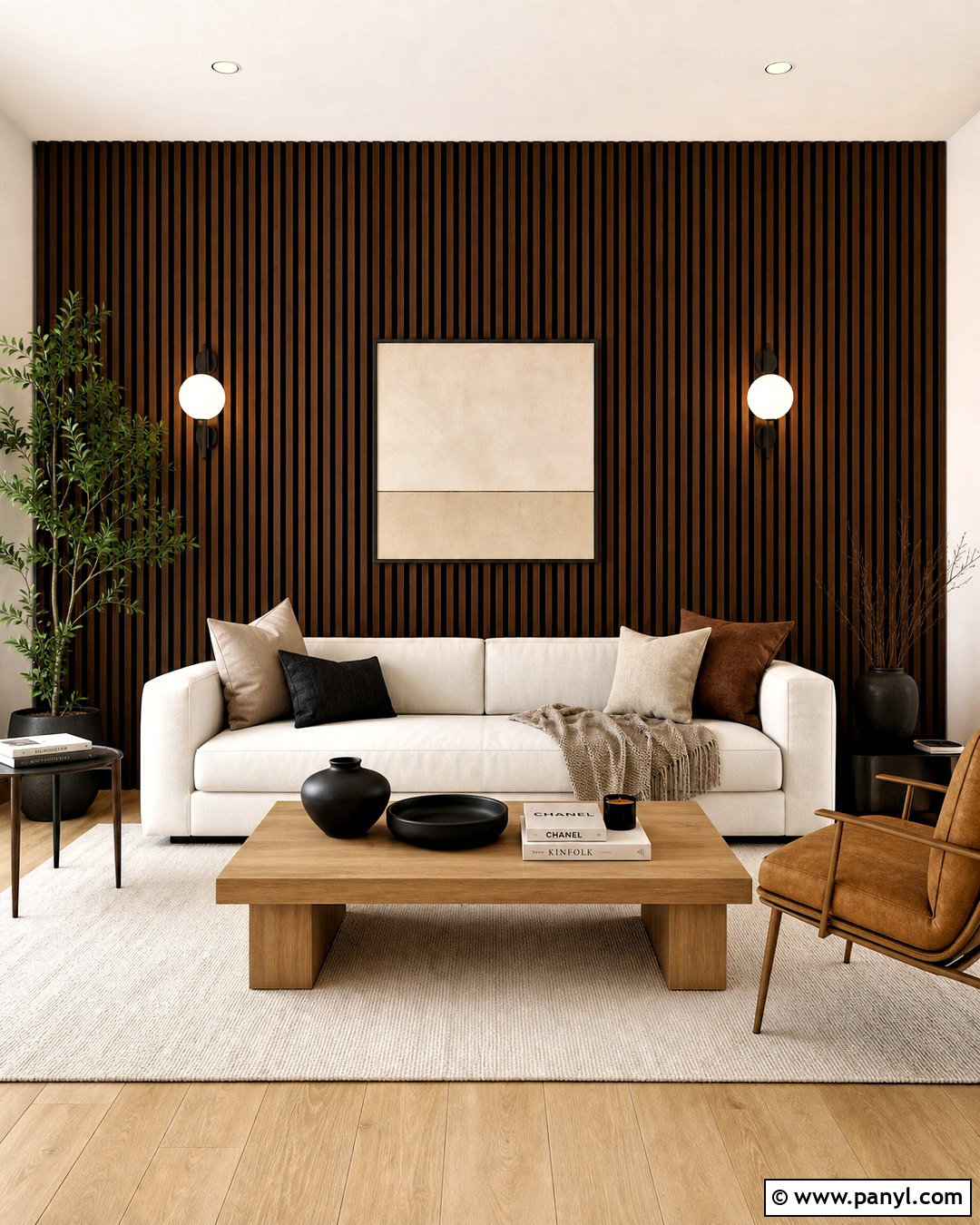
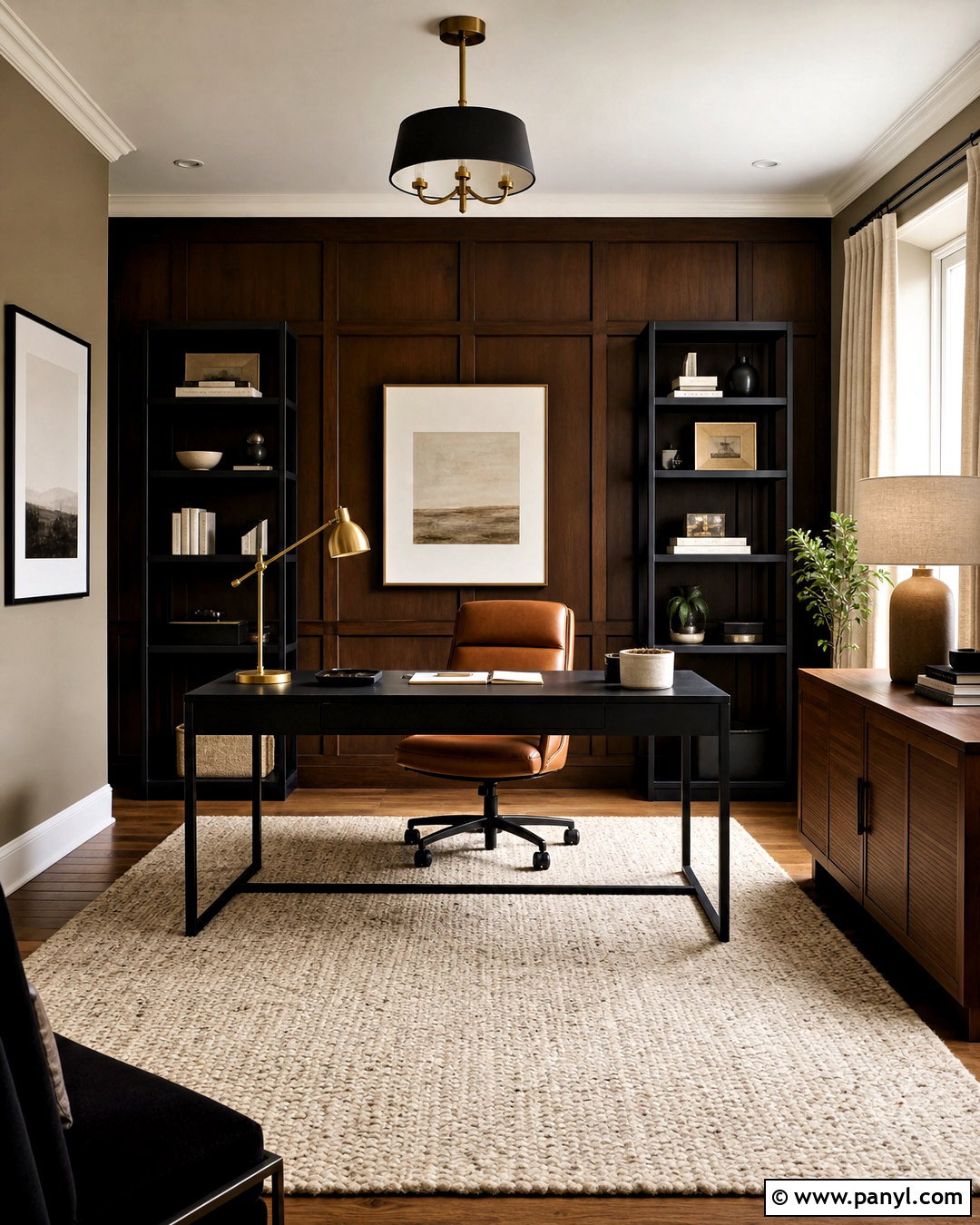
Vertical wood slats stained in dark walnut can make a living room feel taller while introducing natural texture. Use the slatted feature wall behind a streamlined cream sofa or a low media console. A narrow black backing between the slats adds depth and makes the wood grain easier to see. Balance the wall with a light oak coffee table, an ivory rug, and seating in soft gray or camel upholstery. Modern globe sconces can be installed directly on the slats to create gentle illumination across the surface. Keep artwork minimal because the linear pattern already provides visual movement. Add a large plant and a few matte black accessories to finish the room. This complete look suits modern, midcentury, and Japandi interiors while feeling warmer than a plain dark painted wall.
11. Charcoal TV Feature Wall
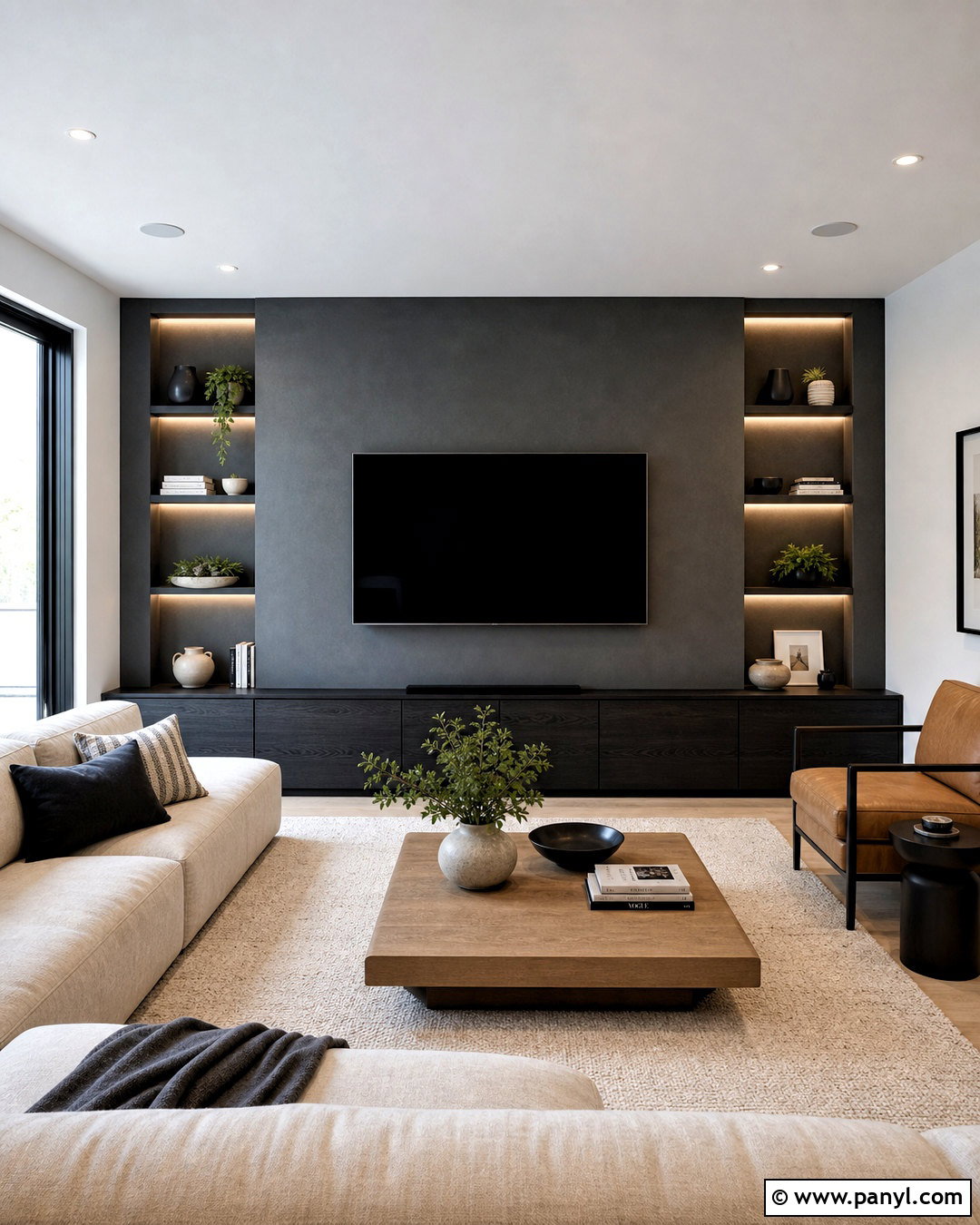
A charcoal TV wall helps the dark screen blend into the room instead of dominating it. Paint the full wall a deep matte gray and mount the television above a long, low cabinet in blackened oak or walnut. Hide cords inside the wall or use a neat cable channel painted to match. Add narrow floating shelves beside the television for a small number of books, ceramics, and plants. A light beige sectional, pale rug, and oak coffee table balance the darker media zone. Install dimmable wall washers or concealed LED lighting behind the cabinet to reduce harsh contrast in the evening. Keep decorative items low and uncluttered so they do not distract from viewing. This arrangement makes technology feel integrated while creating a polished, practical focal point for the living room. ()
12. Deep Plum Dining Room Feature Wall
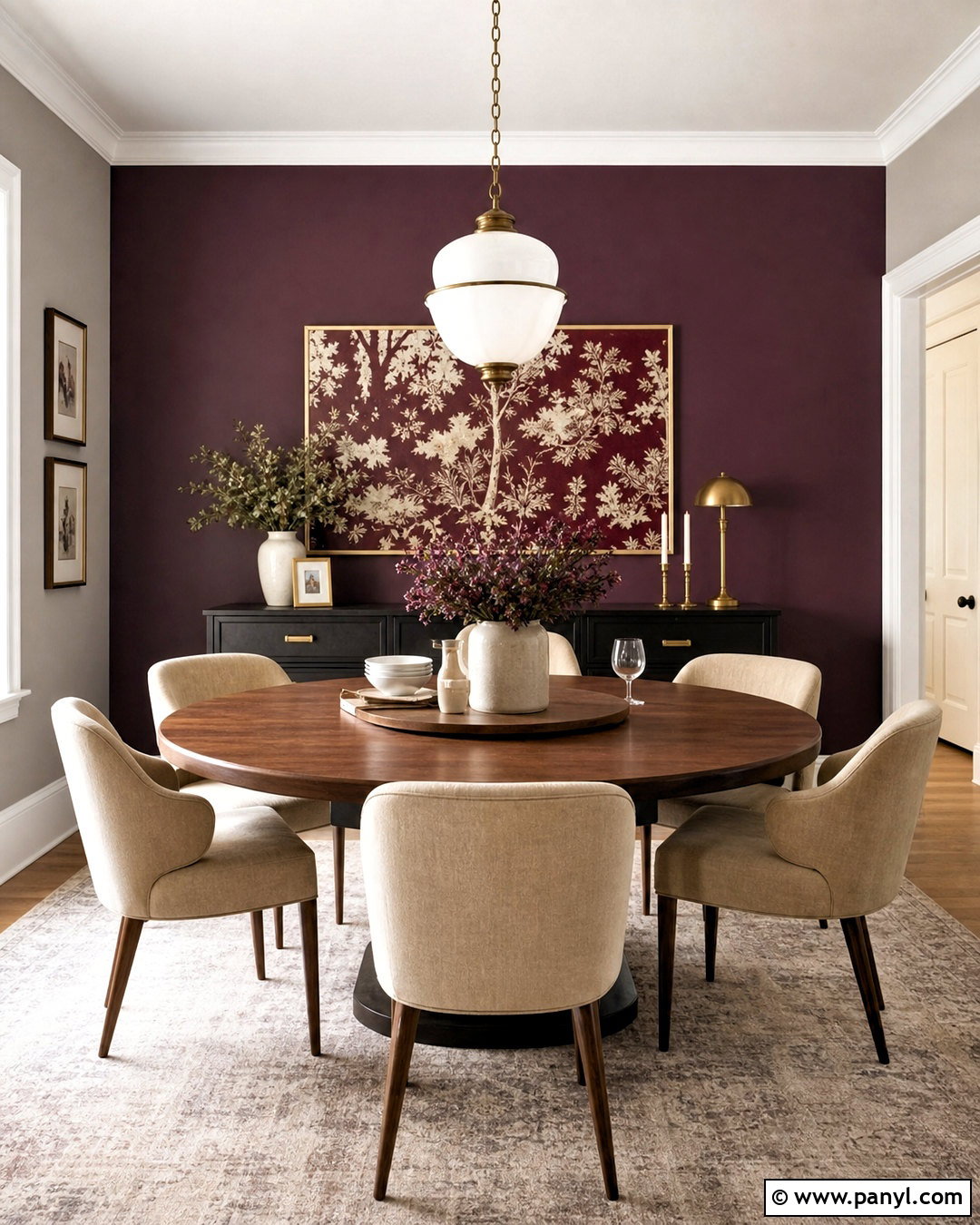
Deep plum can make a dining area feel intimate, colorful, and sophisticated without relying on standard blue or green. Paint the wall behind a round walnut dining table and use chairs covered in warm beige fabric. A sculptural pendant with opal glass shades will provide bright, diffused light against the rich background. Hang a large vintage-style landscape or an abstract canvas containing cream, burgundy, and muted pink. Soft gray walls elsewhere allow the plum to remain prominent without creating a sharp contrast. Ground the setting with a faded neutral rug and add a slim black sideboard for storage. Brass candlesticks, ceramic serving pieces, and a simple leafy arrangement complete the table. The finished room feels layered and welcoming while still being practical enough for casual meals and everyday use.
13. Black Kitchen Feature Wall
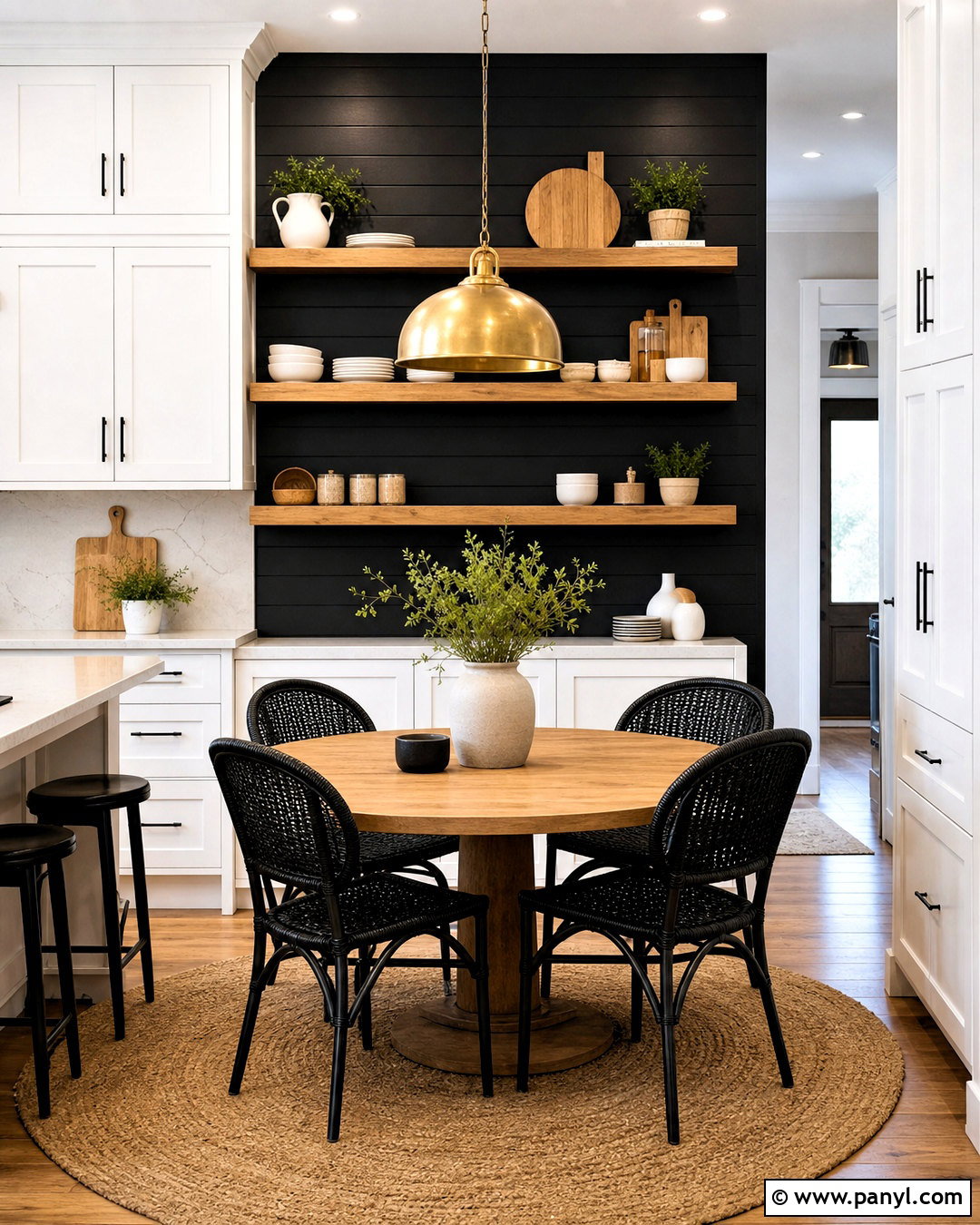
In a light kitchen, a black feature wall can create definition without requiring dark cabinets throughout the room. Use matte black paint behind a breakfast table or open shelving, away from the wettest cooking areas. Install two or three natural oak shelves and style them with white dishes, wood boards, small plants, and neutral pottery. Place a compact round oak table nearby with woven or light upholstered chairs. White cabinetry, pale quartz countertops, and warm wood flooring will keep the overall kitchen bright. A simple brass pendant can add warmth above the eating area. Repeat black through cabinet pulls, window frames, or a faucet for continuity. This full scheme turns an overlooked kitchen wall into a useful dining and display zone while maintaining a clean, balanced, and family-friendly appearance.
14. Dark Gray Bathroom Feature Wall
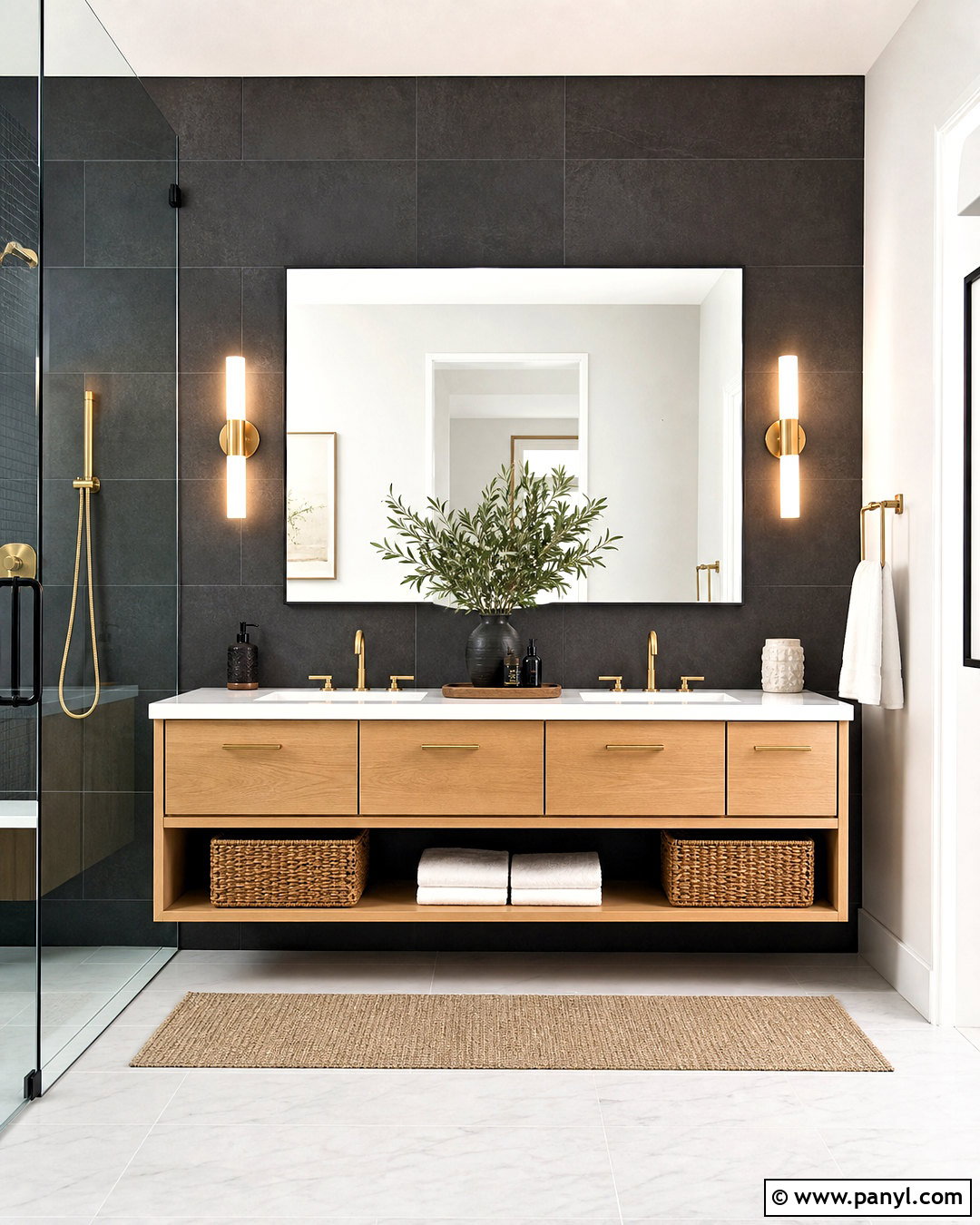
A dark gray feature wall can bring hotel-inspired depth to an ordinary bathroom when it is combined with reflective and pale surfaces. Cover the vanity wall with charcoal porcelain tile or moisture-resistant paint, then add a wide frameless mirror to bounce light around the room. Choose a floating light oak vanity with a white quartz top and brushed nickel or brass fixtures. White flooring and the remaining white walls will prevent the compact space from feeling closed in. Install bright sconces on both sides of the mirror rather than relying only on overhead lighting. A glass shower enclosure maintains open sightlines. Finish the room with folded white towels, a woven basket, and one small plant. The strong contrast creates a crisp, modern bathroom that still feels fresh and functional.
15. Midnight Blue Guest Room Feature Wall
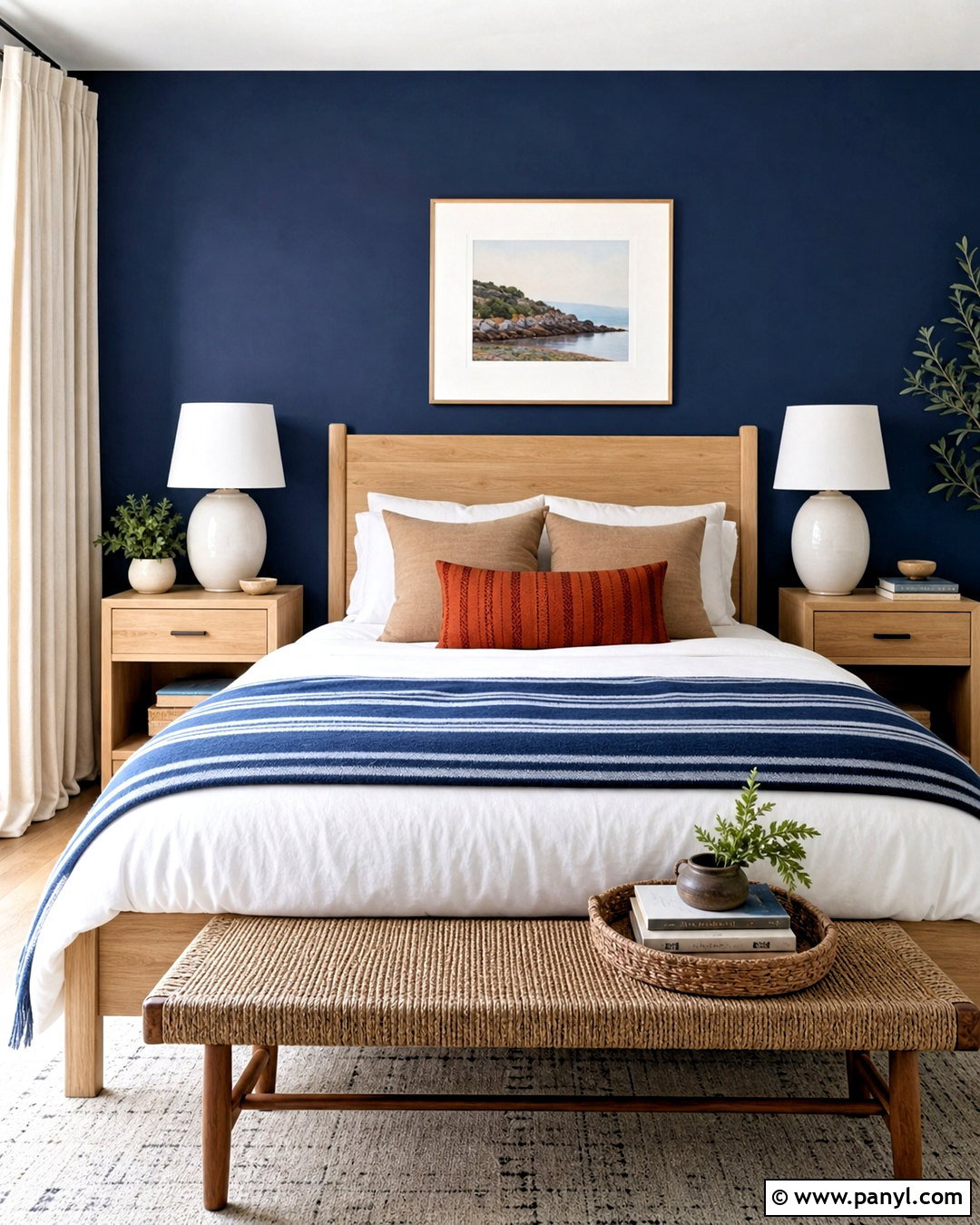
Midnight blue can give a guest bedroom a finished, comforting atmosphere without requiring a complicated decorating plan. Place the color behind a light wood or cream upholstered bed and keep the remaining walls soft white. Layer white bedding with a striped blue blanket, textured tan pillows, and a small rust-colored lumbar cushion. Use matching light oak nightstands and compact ceramic lamps to create symmetry. A woven bench at the foot of the bed provides a convenient place for bags. Hang two medium framed prints with broad white mats so they remain visible against the blue background. Add natural linen curtains, a pale rug, and a small reading chair if space allows. The room will feel thoughtfully designed, easy to maintain, and welcoming to visitors throughout the year.
16. Dark Green Entryway Feature Wall
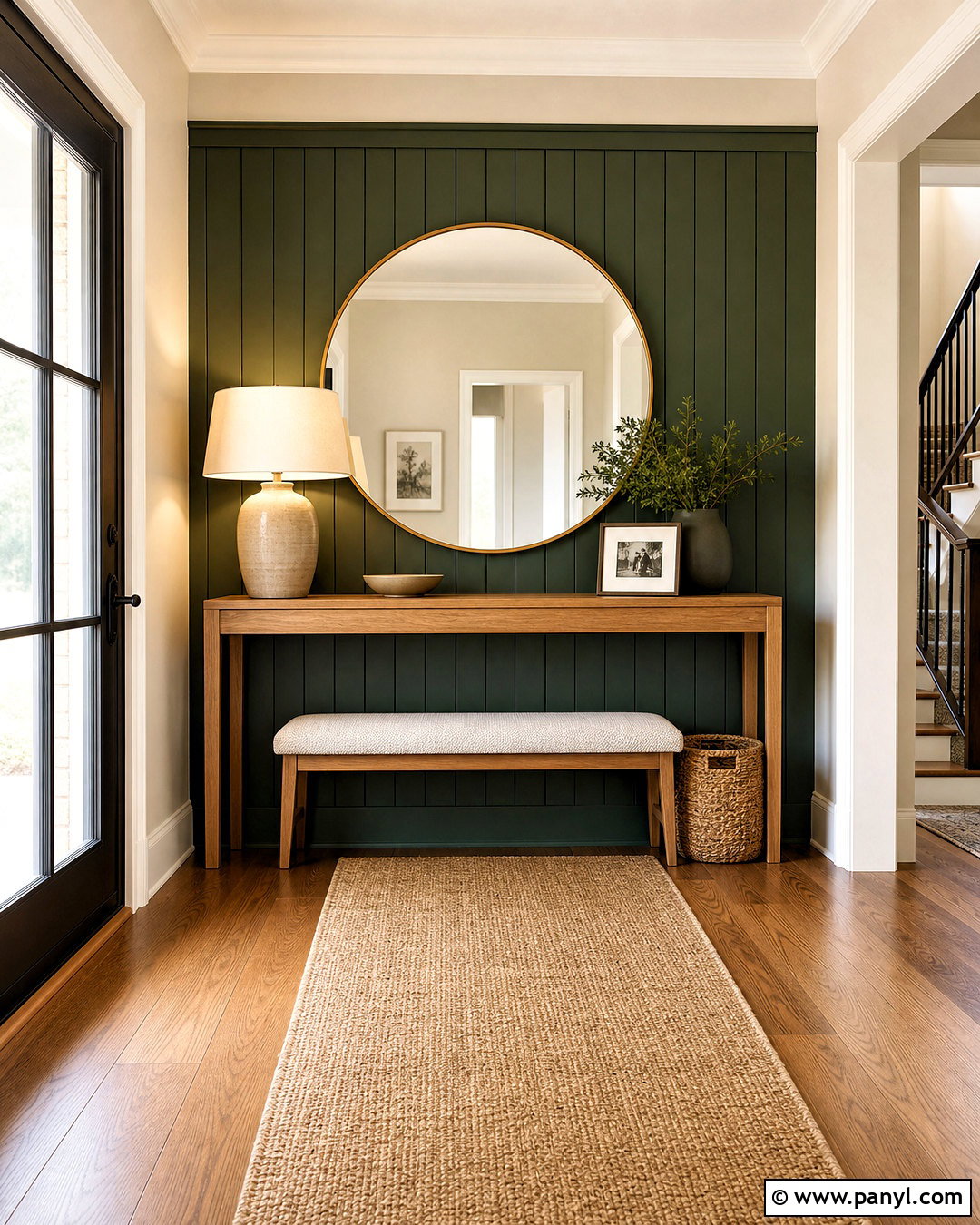
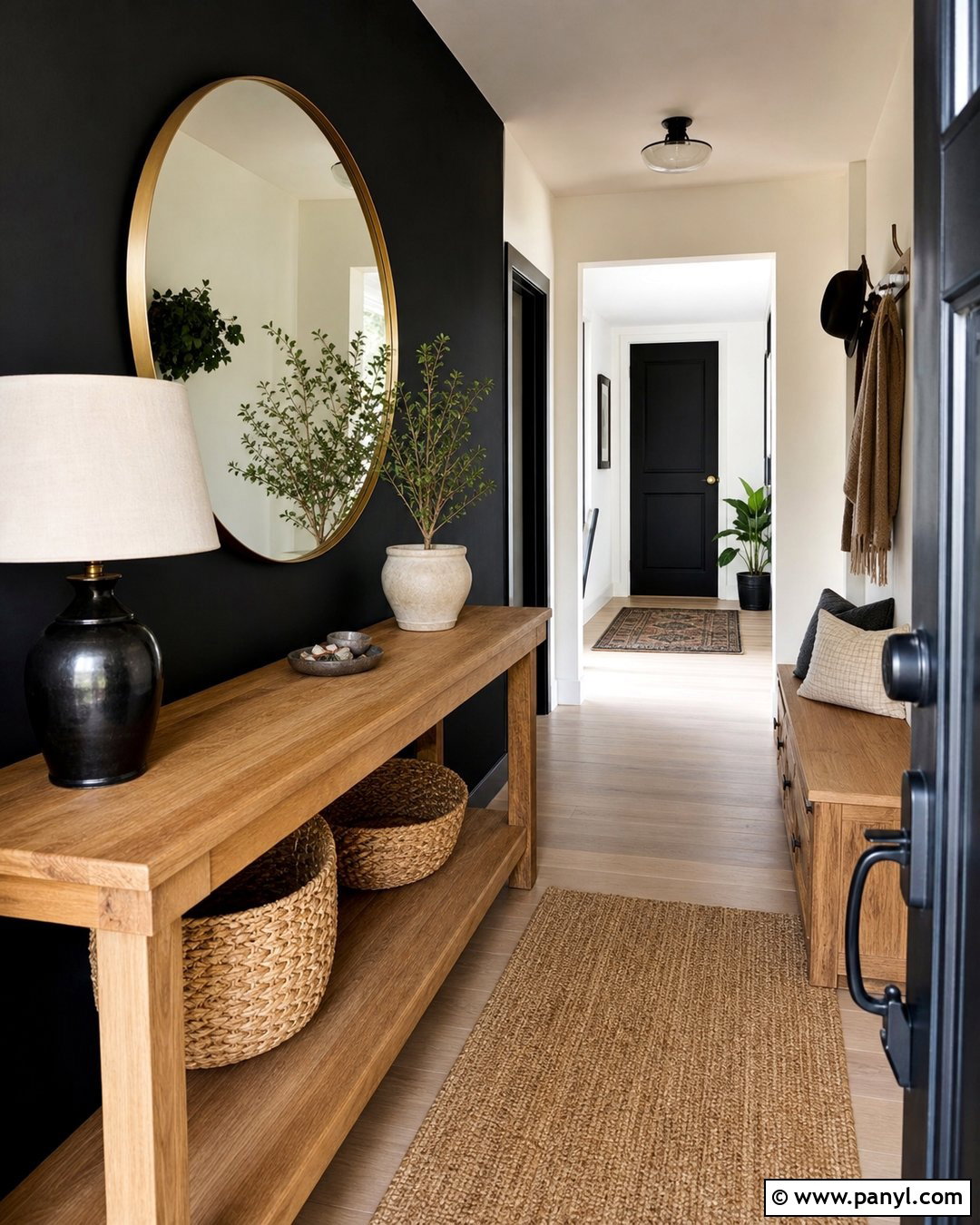
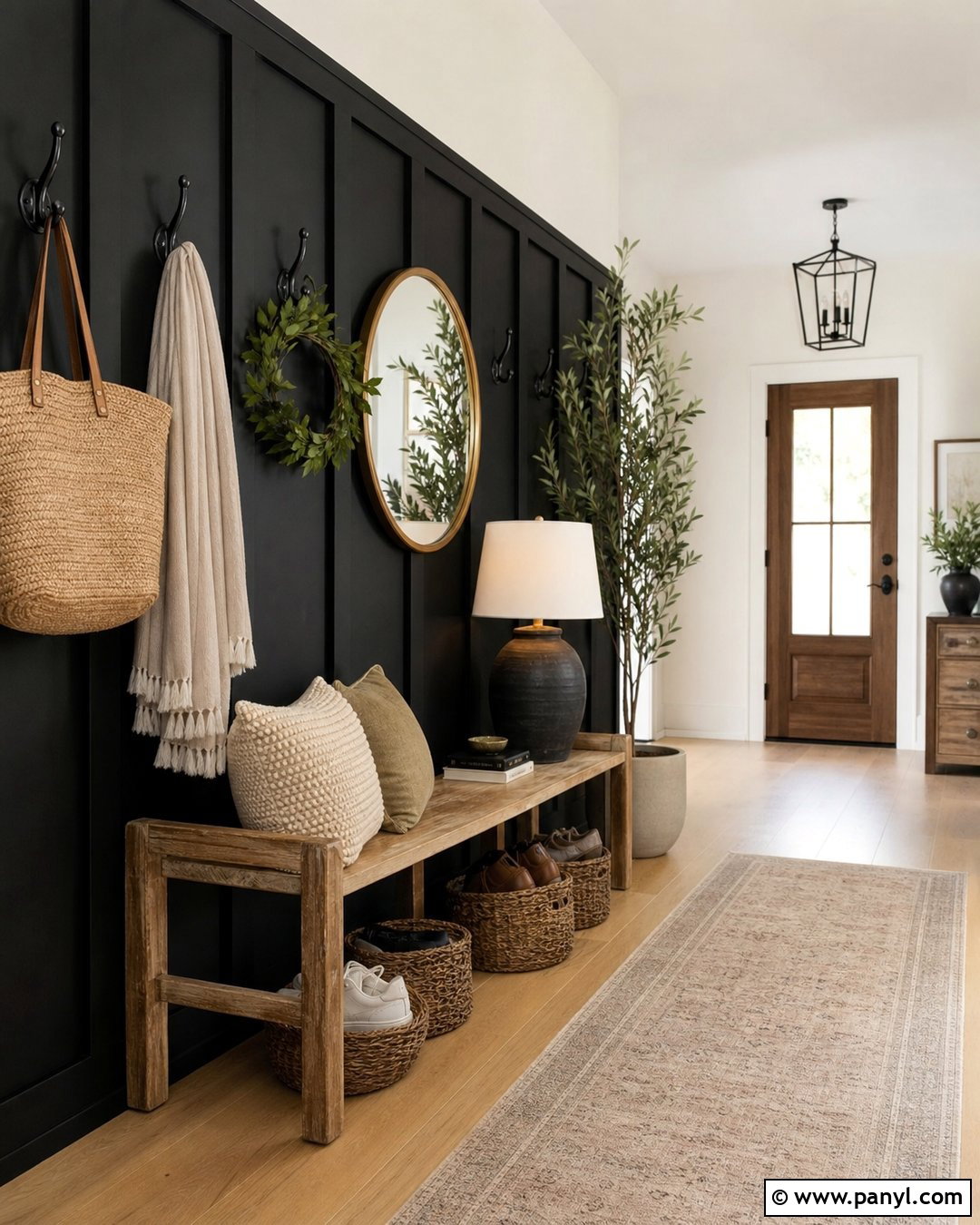
The wall facing the front door is a natural place to create a strong first impression. Paint it deep olive or dark forest green, then position a slim oak console table against it. Hang a large round mirror with a thin brass or black frame to reflect light and visually widen the entry. Add a woven runner, a ceramic table lamp, and a lidded basket for small everyday items. A narrow upholstered bench can provide seating without blocking the walkway. Keep nearby doors, trim, and remaining walls warm white for a clean border around the darker color. Use only a few decorative objects, such as a bowl, vase, and framed photograph. This complete entryway feels organized and welcoming while giving visitors an immediate sense of the home’s color palette and personality.
17. Burgundy Reading Nook Feature Wall
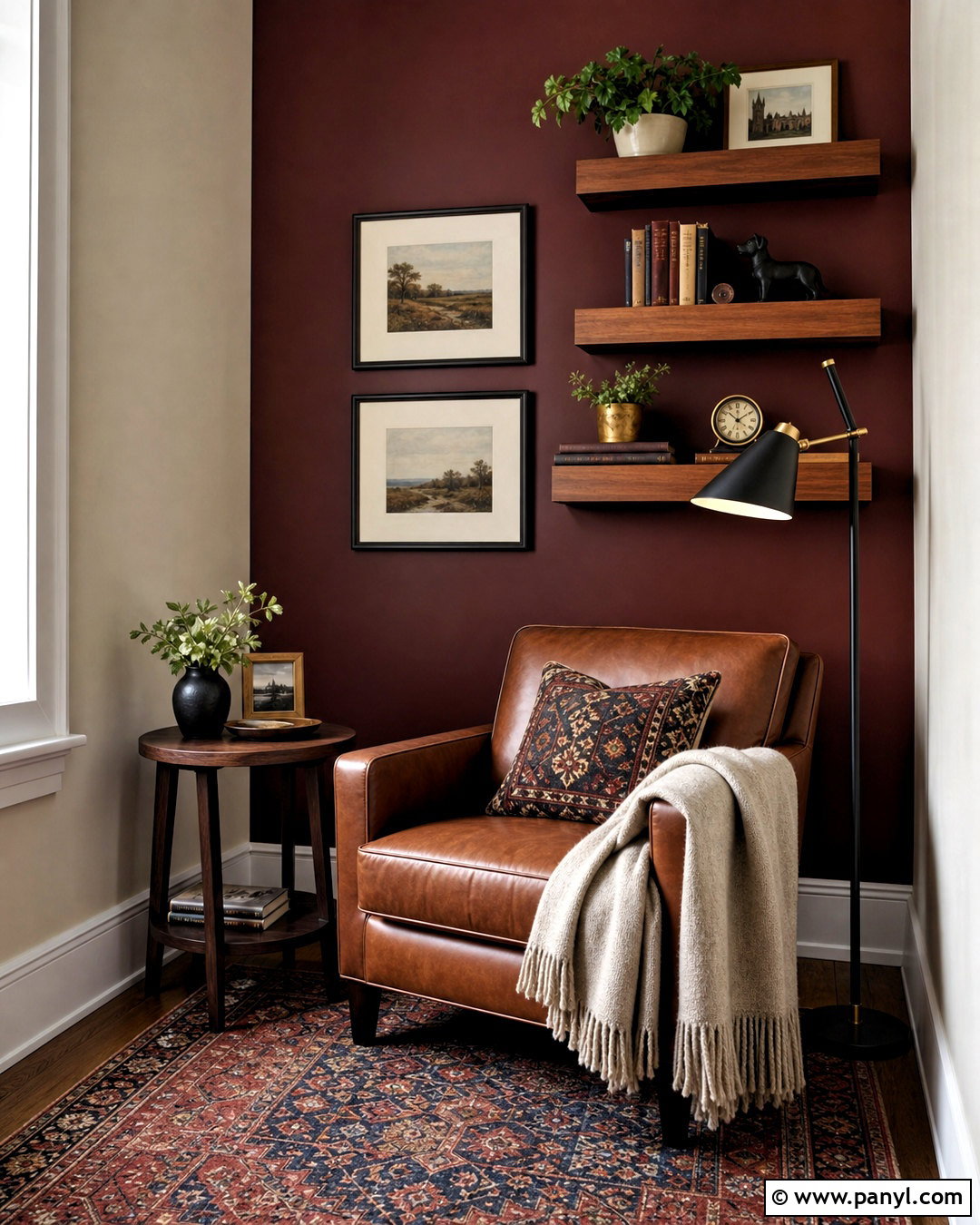
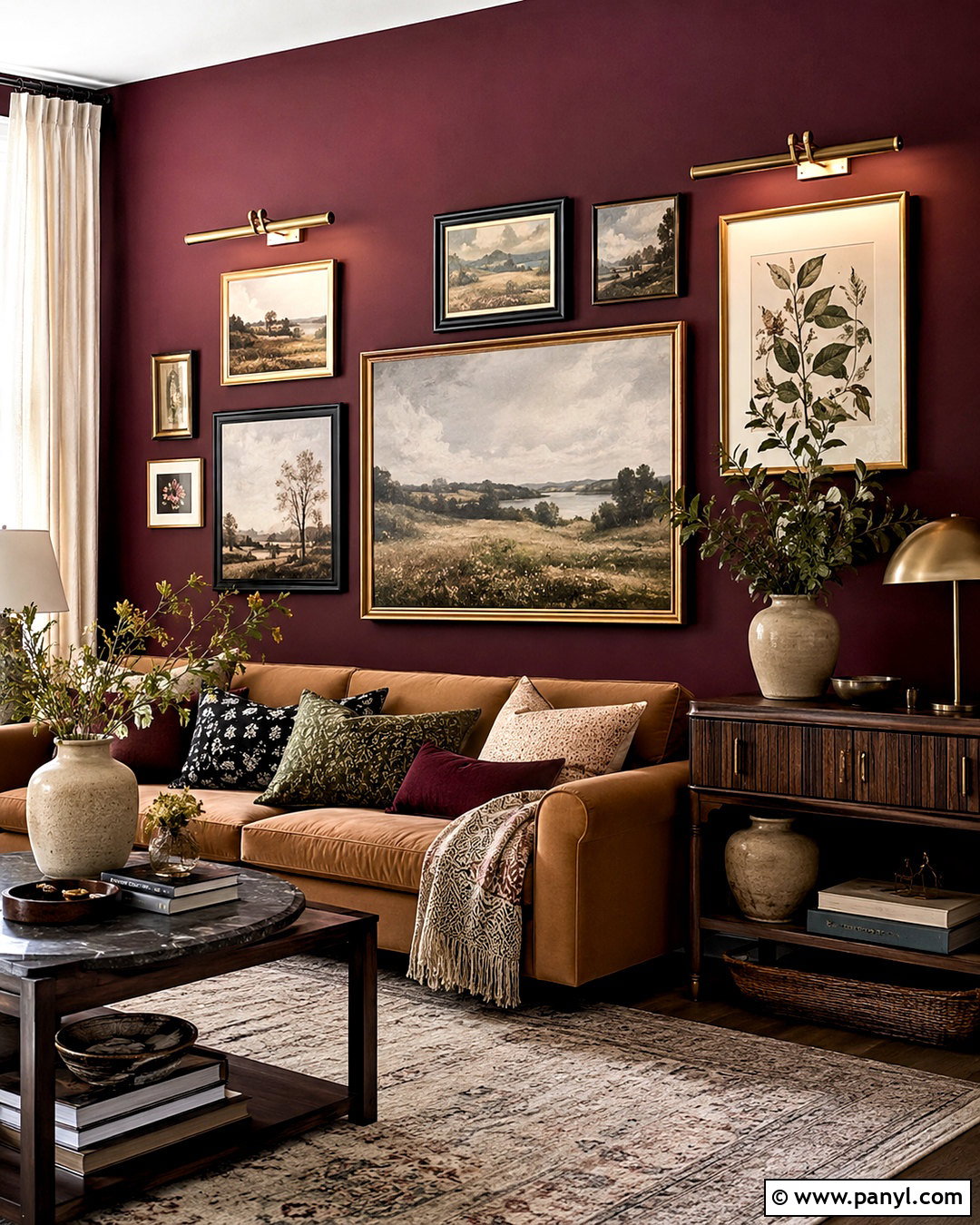
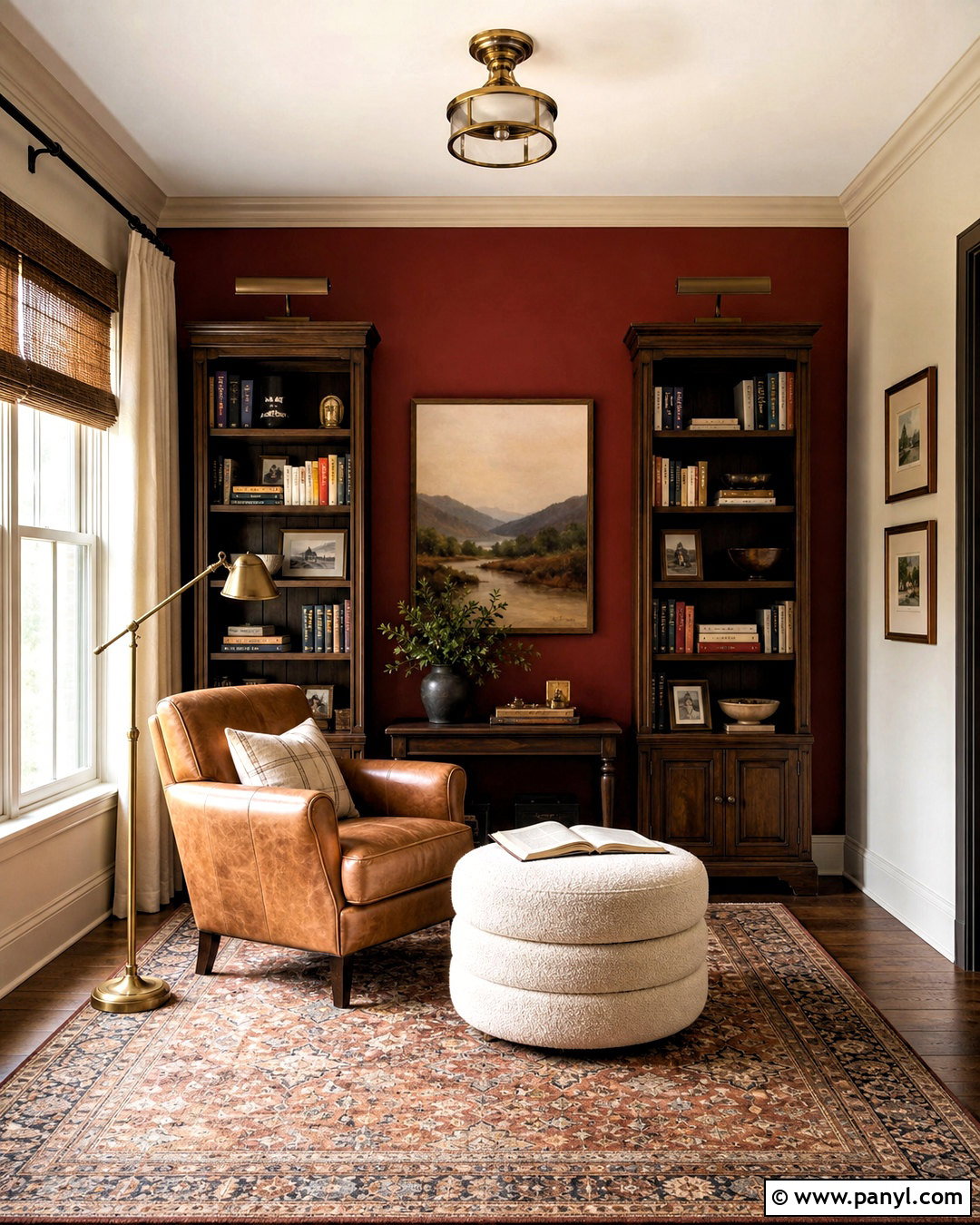
A rich burgundy feature wall can transform an unused corner into a warm reading area. Place a comfortable camel leather chair or deep cream armchair against the wall, angled toward a slim black floor lamp. Add a small walnut side table for books and a cup, then ground the nook with a vintage-style rug containing faded red, blue, and beige. Install two or three floating wood shelves above the chair, leaving enough open space so the arrangement does not feel crowded. A framed print with pale matting will stand out clearly against the burgundy. Use a soft throw and one patterned pillow for comfort. Surrounded by warm white walls and natural wood flooring, the completed nook feels cozy and defined while remaining visually connected to the larger room.
18. Dark Concrete Feature Wall
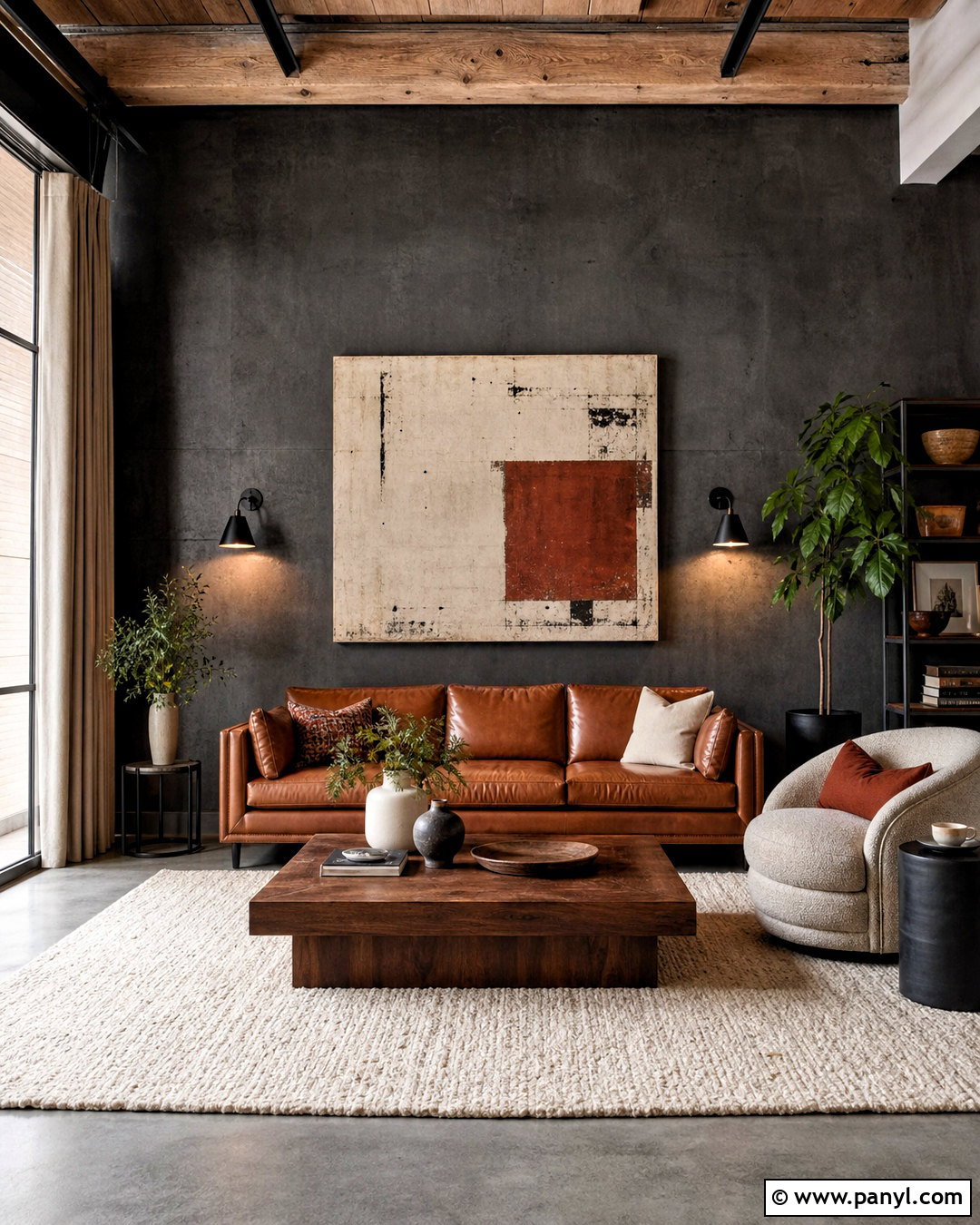
A dark concrete finish creates a textured architectural backdrop for modern living spaces. Apply charcoal microcement, concrete-look panels, or realistic wallpaper to the main wall behind a low-profile sofa. Pair the cool gray surface with warm materials, including a caramel leather couch, walnut coffee table, and thick ivory rug. Use linen curtains and rounded furniture to soften the wall’s harder industrial character. An oversized abstract canvas with cream, rust, and black details adds scale without competing with the concrete variation. Black track lighting or simple wall sconces can emphasize the textured finish. Keep the rest of the room light and uncluttered, with only a few plants and ceramic accessories. The finished scheme feels contemporary and substantial, yet the warm colors prevent it from looking cold or unfinished.
19. Black Gallery Feature Wall
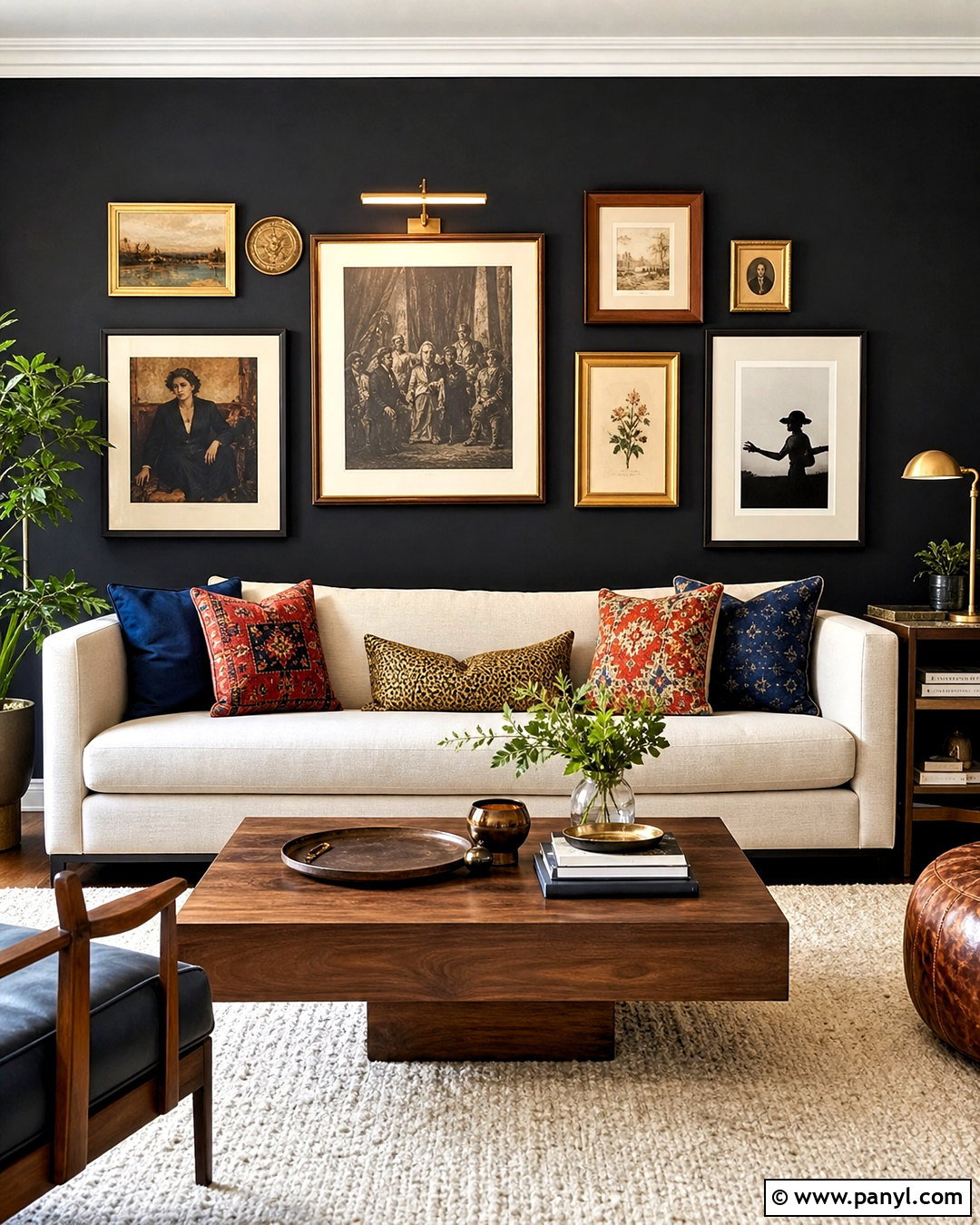
A black gallery wall works best when the frames, artwork, and furniture are planned as one composition. Paint the wall behind a light neutral sofa in matte black, then arrange framed art within the sofa’s width. Mix warm wood, antique brass, and slim black frames, but keep consistent spacing between them. Choose artwork with broad cream mats and a controlled palette of beige, rust, green, and soft blue so each piece remains readable. Add a walnut coffee table, an ivory rug, and pillows that repeat colors from the artwork. A brass picture light or nearby floor lamp will help illuminate the display. Avoid extending the gallery to every edge of the wall. Leaving a dark border around the arrangement makes it look intentional, balanced, and visually connected to the seating area.
20. Dark Geometric Feature Wall
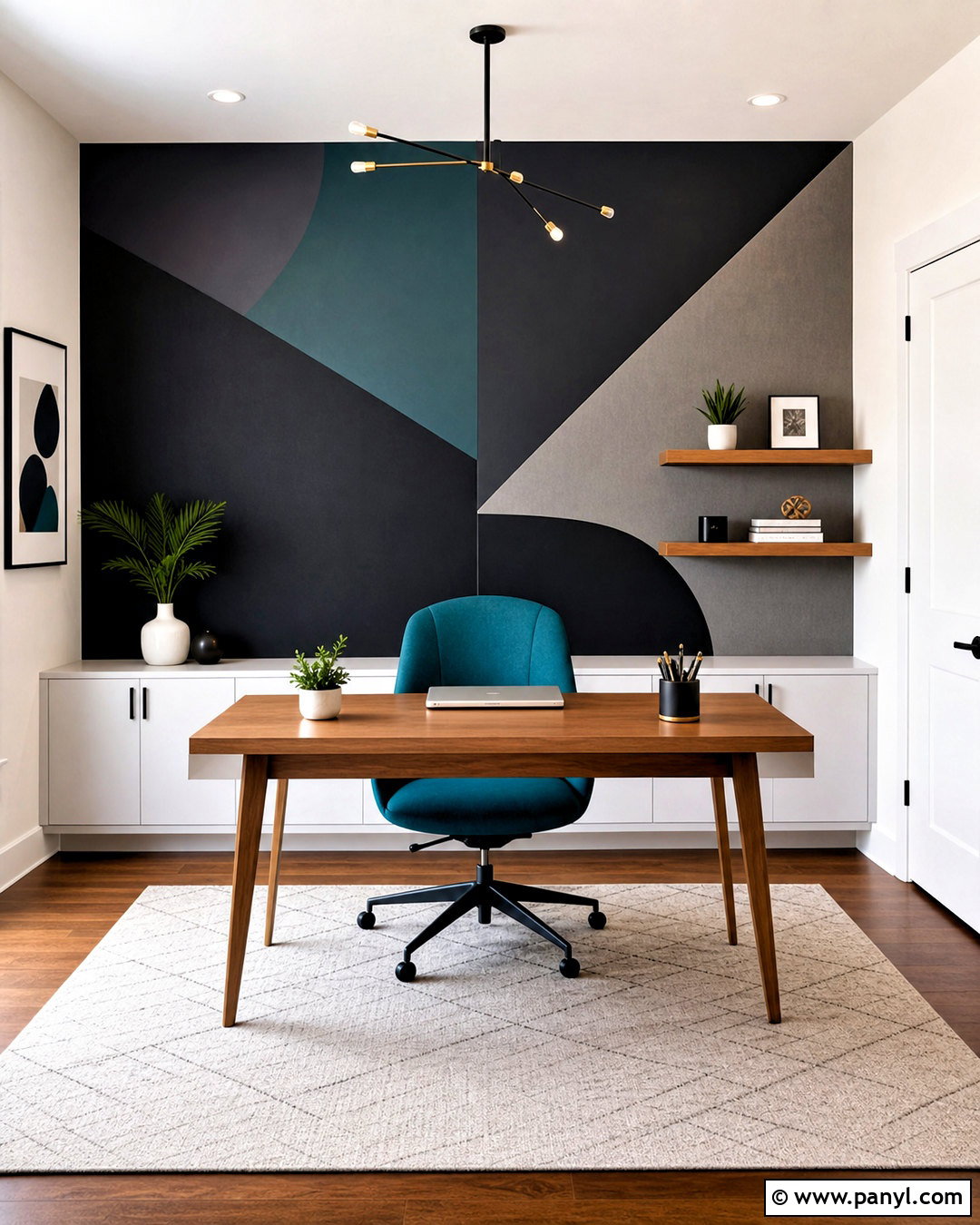
A painted geometric wall adds movement to a playroom, office, or contemporary bedroom without requiring wallpaper. Begin with a charcoal base, then add large angular shapes in black, dark teal, and muted gray. Limit the design to three or four colors so the wall stays cohesive. Pair it with simple furniture, such as a natural wood desk, low white storage cabinet, or upholstered gray bed. A pale rug and warm white surrounding walls will balance the bold pattern. Repeat one accent color through a lamp, cushion, or chair, but avoid adding other busy prints. Clean black hardware and a few solid-colored accessories complete the design. The final room feels energetic and modern while maintaining enough structure to remain comfortable, organized, and easy to live with.
Conclusion:
Successful dark feature wall ideas are about more than choosing a dramatic paint color. The furniture placement, lighting, materials, textiles, and surrounding wall colors must support the focal point. Pale upholstery can provide contrast, while wood, leather, brass, and woven fibers introduce warmth. Textured finishes such as paneling, brick, wallpaper, slats, and concrete add dimension when flat paint feels too simple. Before decorating, test the selected color on a large section of the wall and view it throughout the day. Then repeat the dark shade through a few smaller details to connect the room. With careful balance, a dark feature wall can feel cozy, refined, practical, and completely suited to your home.

Related Ideas and Inspiration:
Leave a Reply