
Honey oak cabinets bring natural grain and golden warmth to a kitchen, but their yellow-orange undertones can become stronger beside the wrong paint. The best 20 Honey Oak Cabinet Kitchen Wall Color Ideas balance that warmth while making the entire room feel intentional and updated. Soft whites, greiges, greens, blues, and earth tones can all work when they connect with the countertops, backsplash, flooring, hardware, and lighting. Warm neutrals create a gentle transition, while muted cool colors provide clearer contrast. Test large samples beside the cabinet doors because daylight, bulbs, and nearby finishes can change how paint appears. () Whether you prefer a bright farmhouse kitchen or a dramatic modern space, explore these 20 Honey Oak Cabinet Kitchen Wall Color Ideas.

1. Warm White Walls With Honey Oak Cabinets
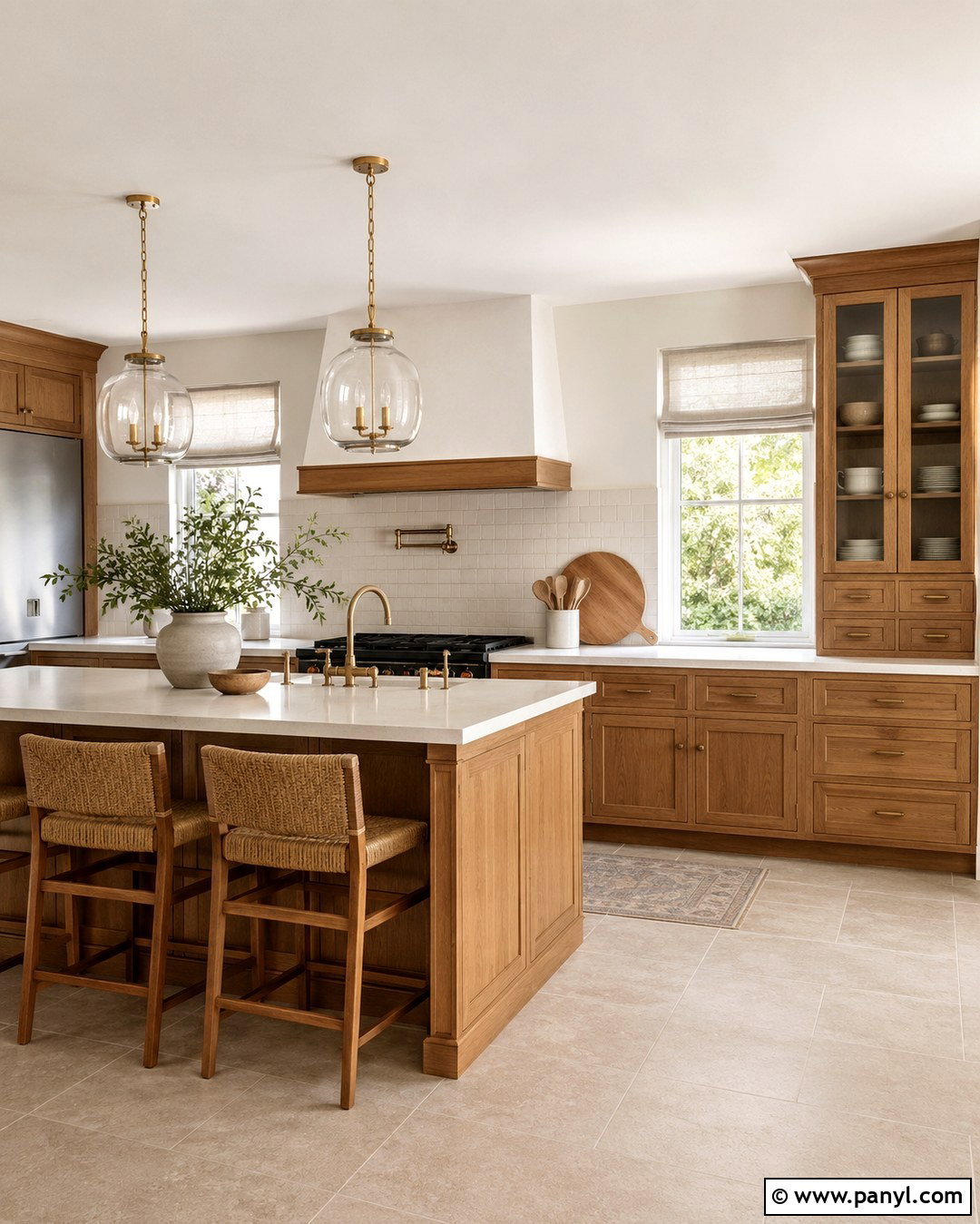
Warm white walls provide a clean backdrop without creating the harsh contrast that can happen with brilliant, blue-based white. Choose an off-white with subtle cream or beige undertones, then repeat it across the ceiling, trim, and backsplash grout for continuity. Complete the kitchen with creamy quartz counters, an ivory subway tile backsplash, and brushed brass hardware. Light oak or natural stone flooring keeps the overall palette airy while allowing the cabinet grain to remain visible. Add woven counter stools, simple ceramic accessories, and linen window shades for softness. Clear glass pendants or warm metal fixtures provide a polished finishing layer. This combination works especially well in smaller kitchens that need brighter walls but still benefit from warmth and texture.
2. Soft Greige Walls With Honey Oak Cabinets
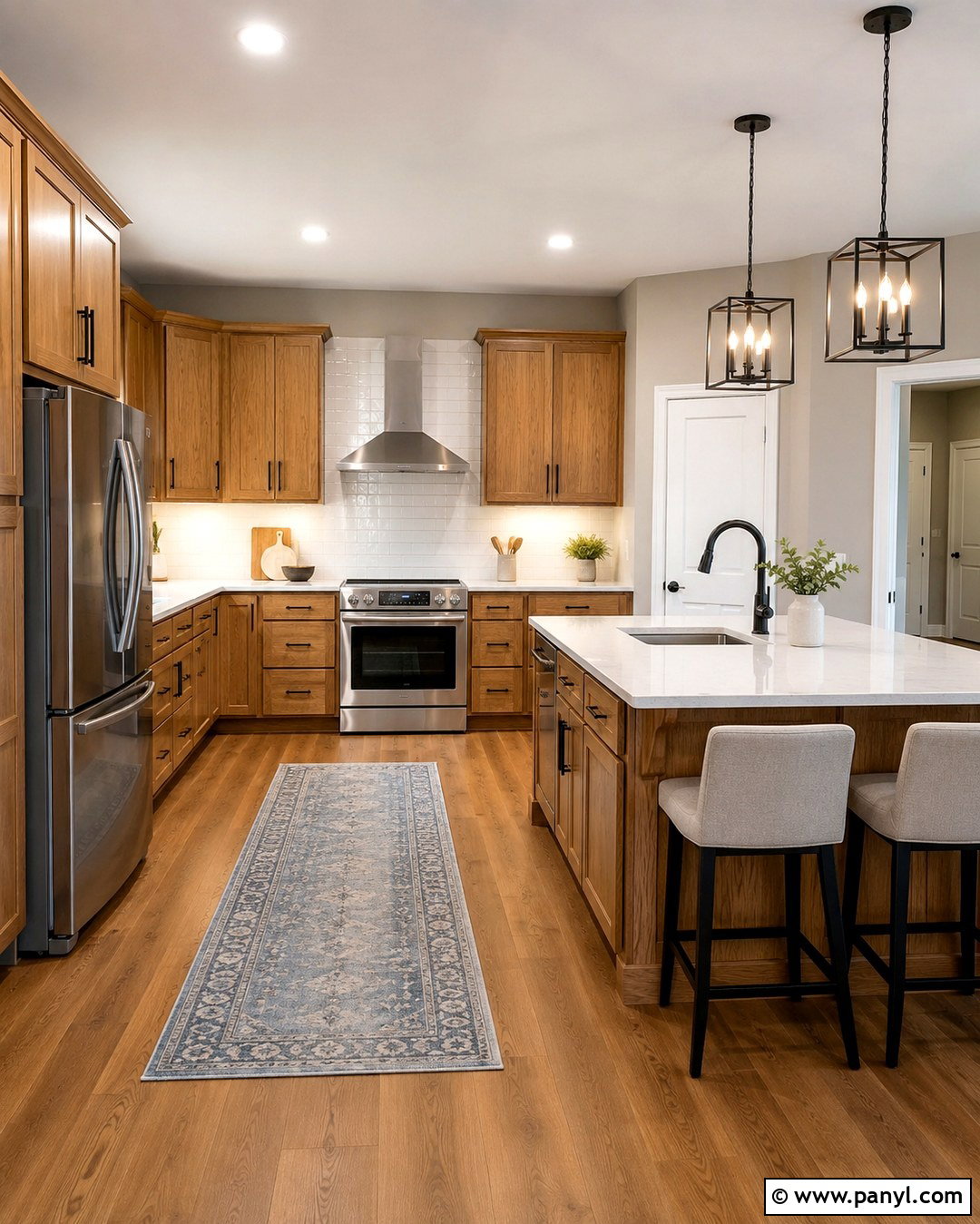
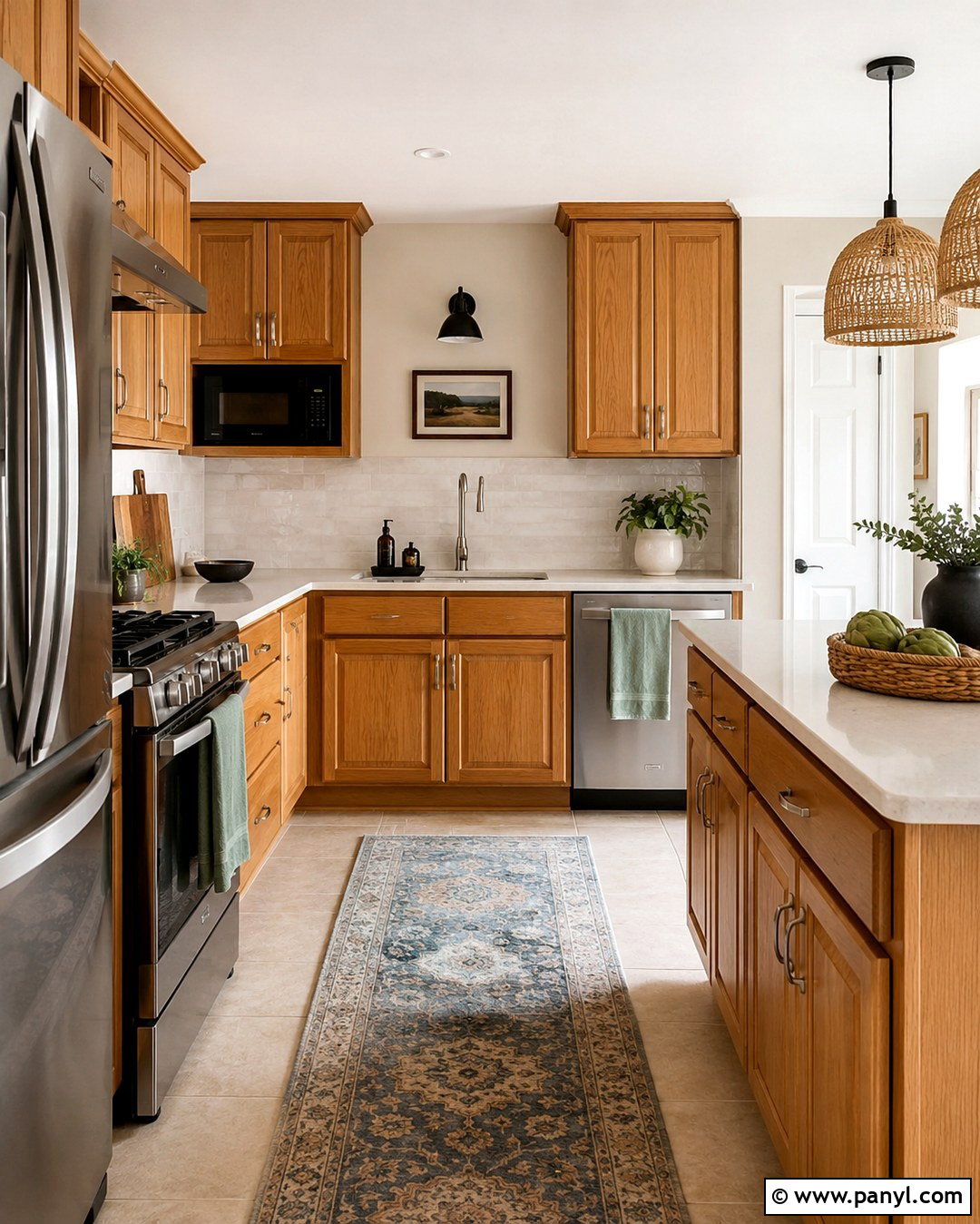
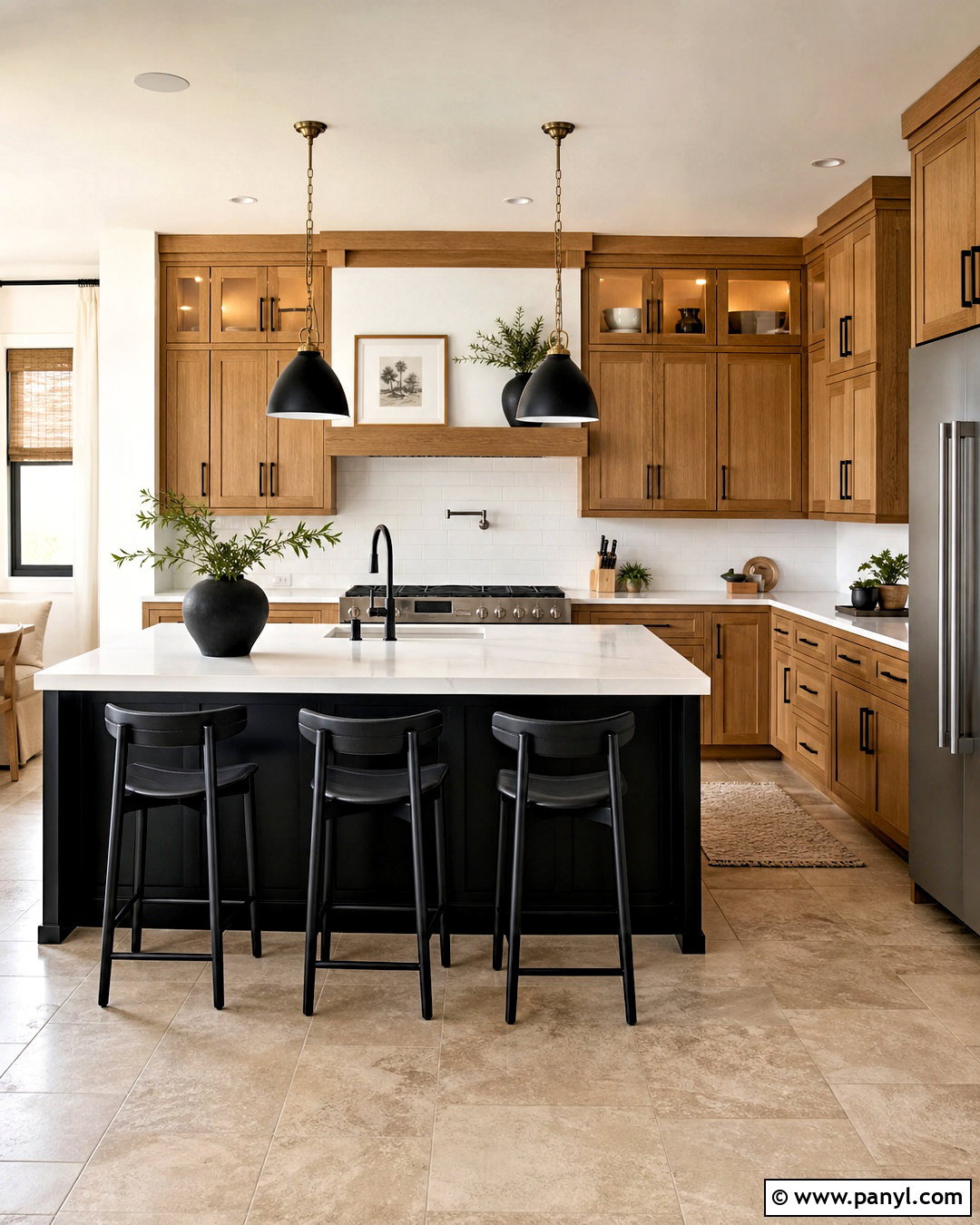
Soft greige creates a balanced bridge between golden oak and cooler contemporary finishes. Look for a light gray-beige that feels warm in daylight but does not turn yellow beside the cabinet doors. Pair the walls with off-white quartz countertops featuring delicate taupe veining. A matte white backsplash keeps the work area bright, while black cabinet pulls add clean definition. Use medium brown wood flooring or neutral stone-look tile so the room does not contain too many competing oak tones. Finish the space with black-framed pendants, oatmeal upholstery, and a small washable runner in gray, cream, and muted blue. The result feels modern and grounded, yet the existing honey oak cabinets still look like a deliberate part of the design.
3. Creamy Beige Walls With Honey Oak Cabinets
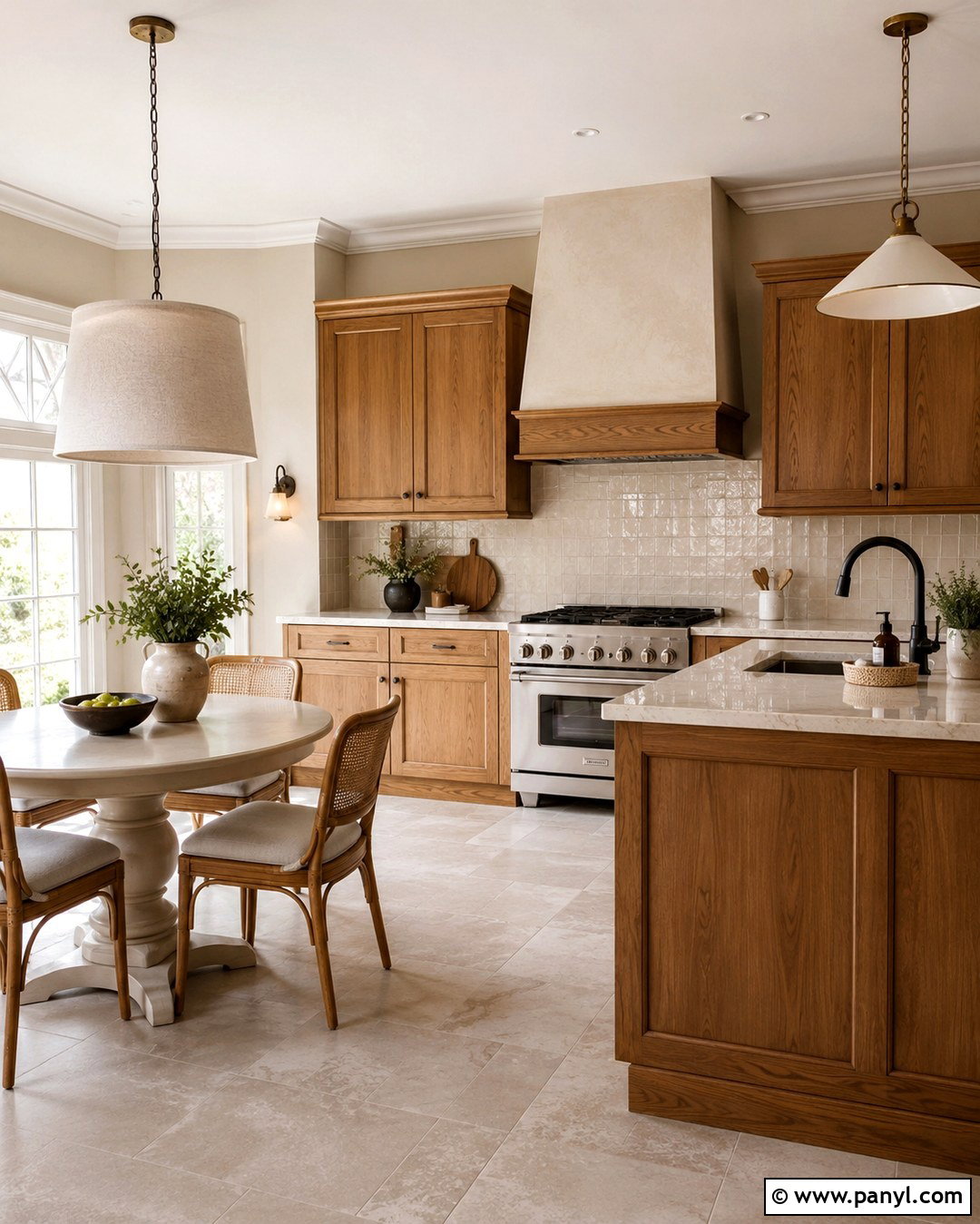
Creamy beige walls embrace the warmth of honey oak while creating a softer, more layered kitchen. The key is choosing a beige that feels light and neutral rather than strongly yellow. Build the room around warm white quartz counters, handmade cream backsplash tile, and antique brass cabinet hardware. A medium-toned stone or porcelain floor provides enough contrast to separate the cabinetry from the lower surfaces. For an eat-in area, add a painted ivory table with woven chairs and a simple linen pendant. Black accents can appear in the faucet, window frame, or small appliances to keep the palette from becoming overly warm. This complete look suits traditional, transitional, and relaxed farmhouse kitchens where comfort matters as much as visual freshness.
4. Sage Green Walls With Honey Oak Cabinets
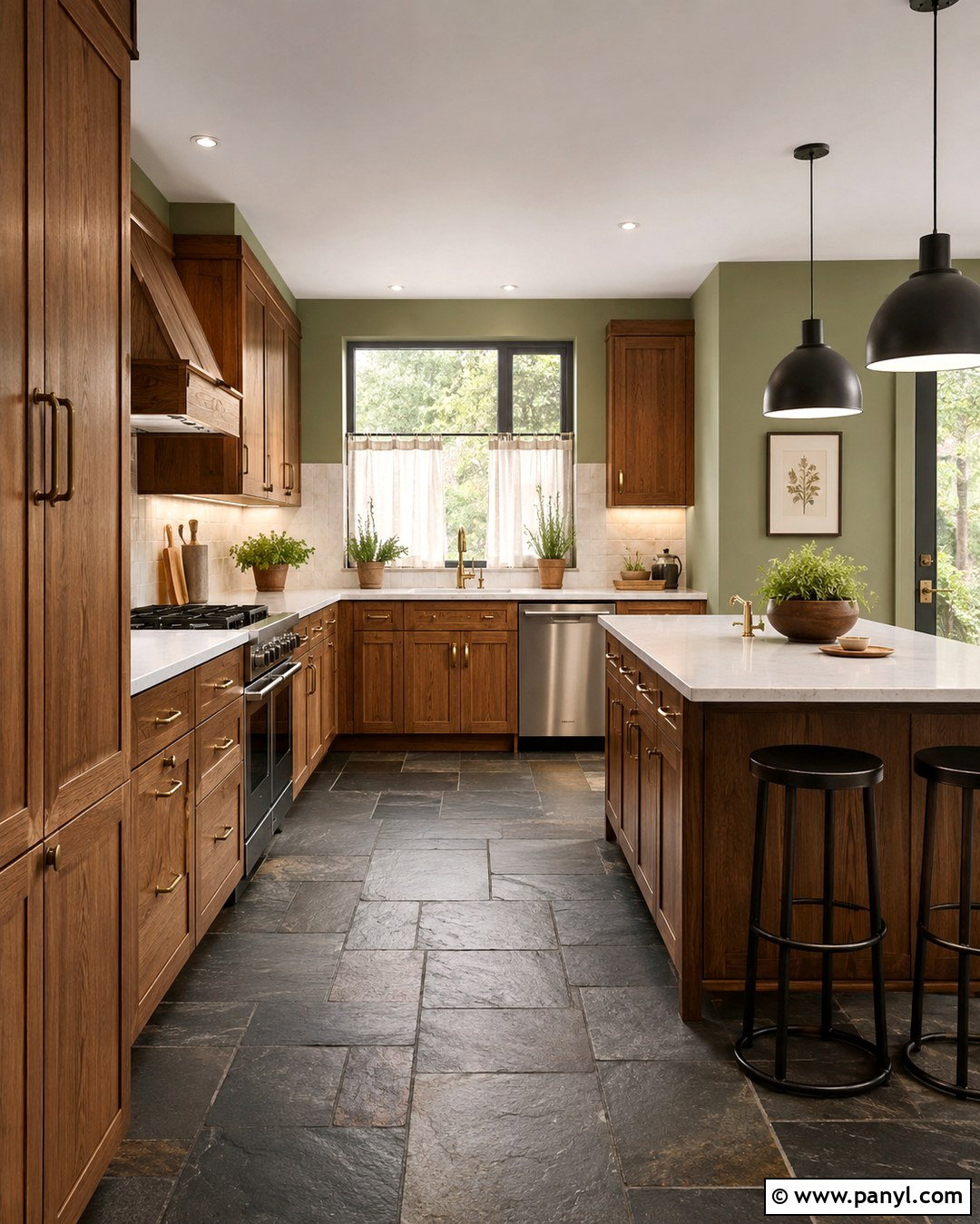
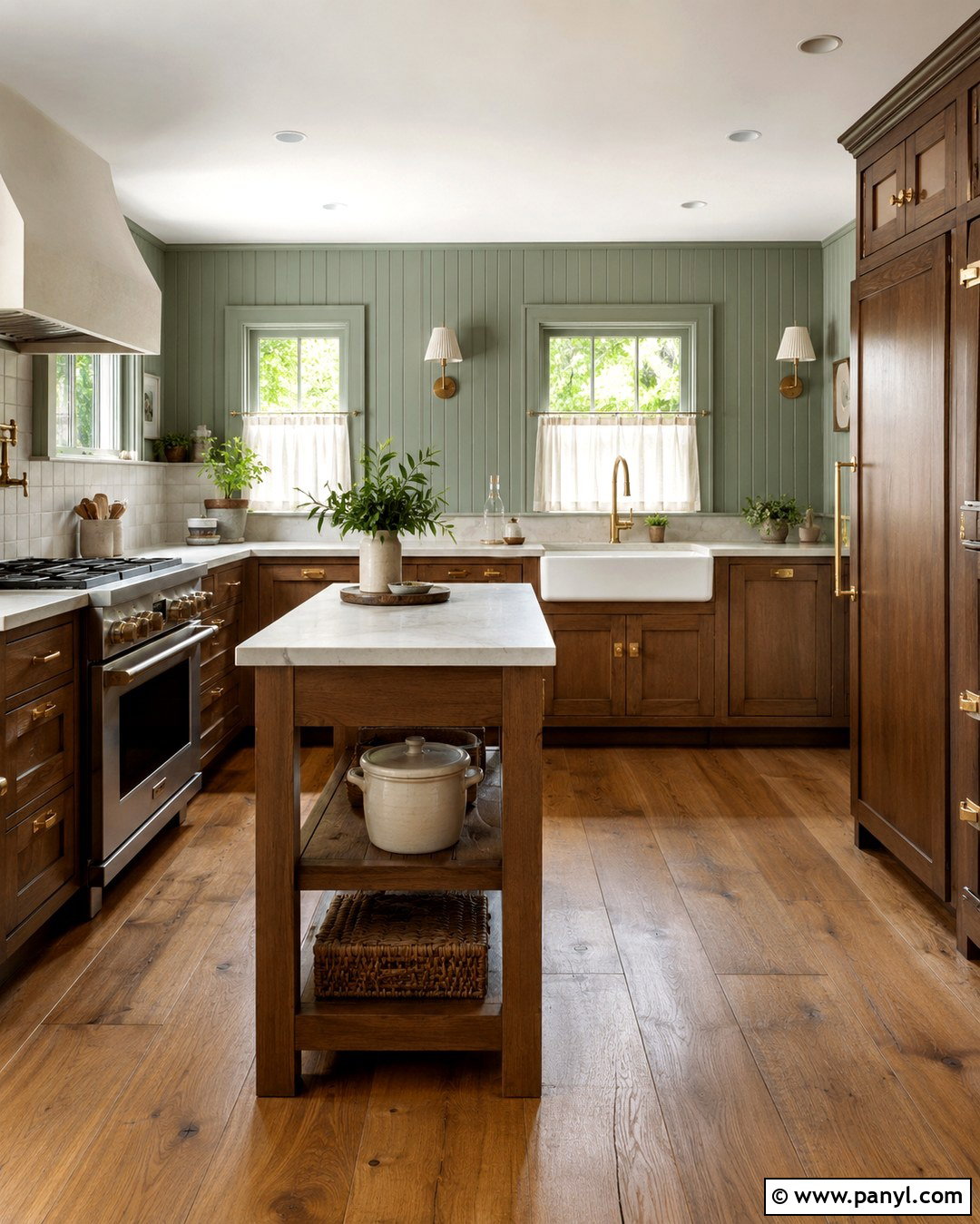
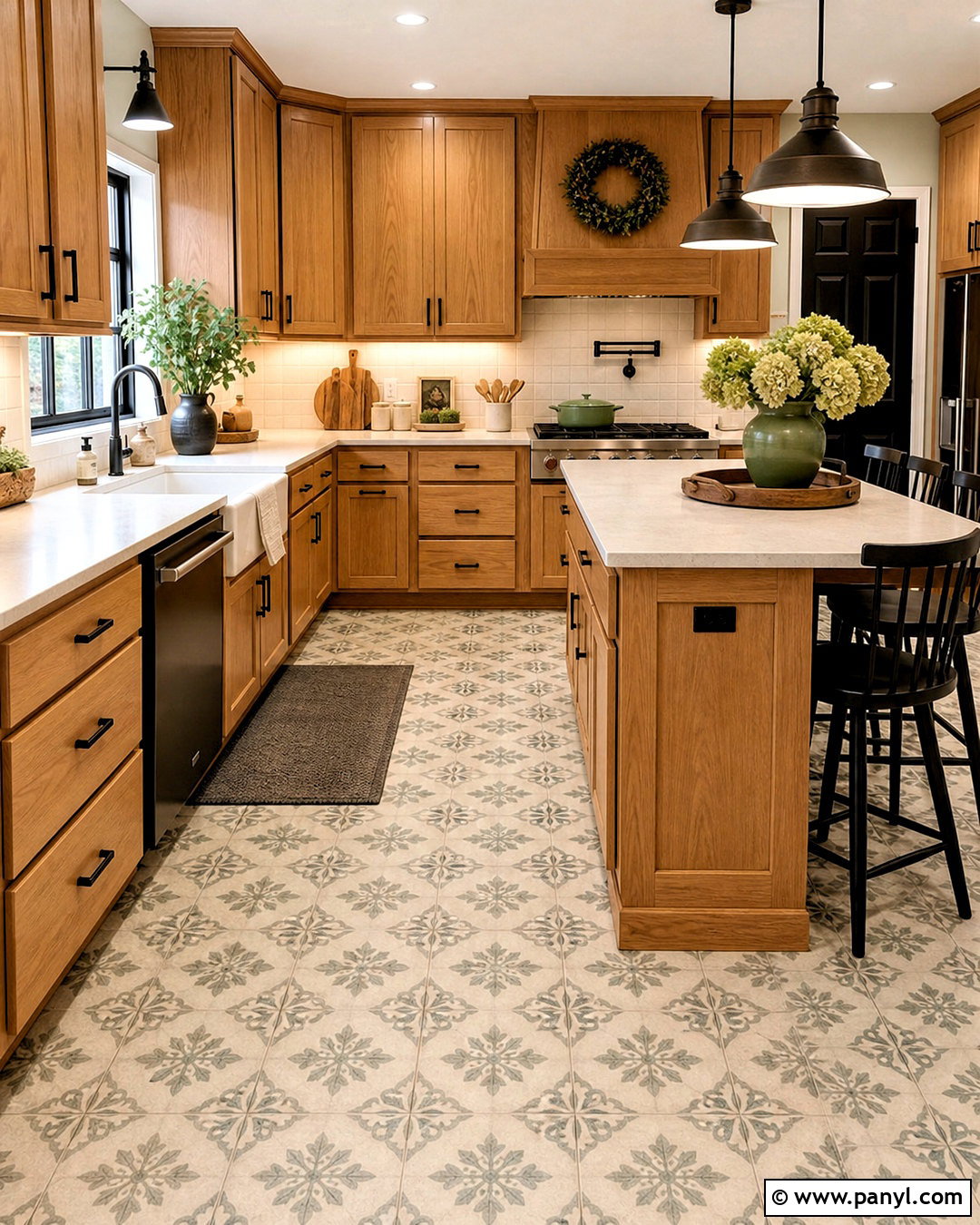
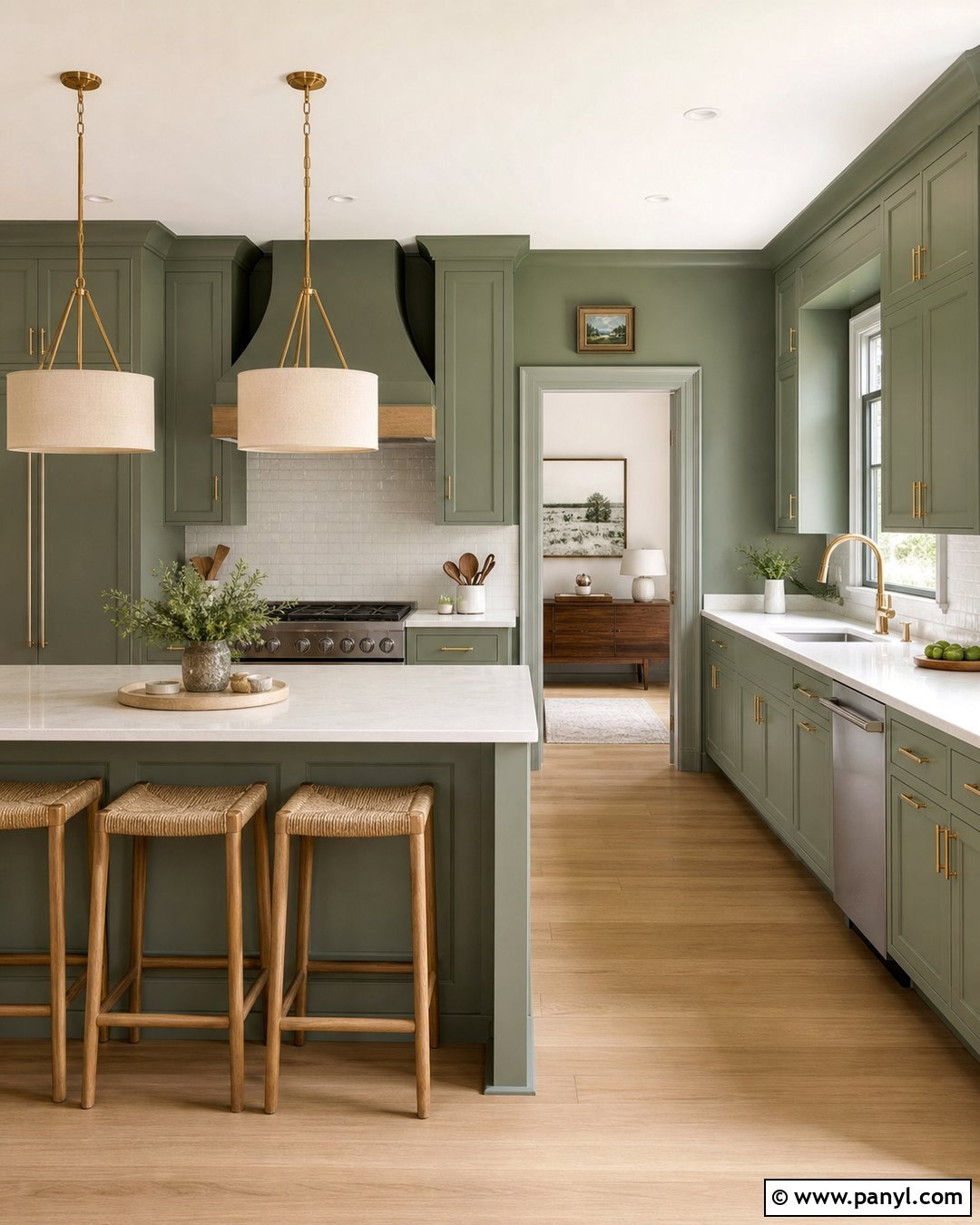
Soft sage green introduces a natural counterpoint to the golden color of honey oak. Select a muted shade with gray undertones rather than a bright or minty green. Continue the organic mood with warm white countertops, creamy zellige-style backsplash tile, and aged brass hardware. Natural slate or medium brown flooring grounds the light walls and visually separates them from the cabinets. Add a few charcoal details through pendant lights, a faucet, and thin metal stool frames. Linen café curtains and simple herb planters provide texture without making the room look themed. Sage is especially effective in kitchens overlooking a yard because the wall color visually connects the cabinets with outdoor greenery, creating a comfortable space that feels calm, balanced, and collected.
5. Blue Gray Walls With Honey Oak Cabinets
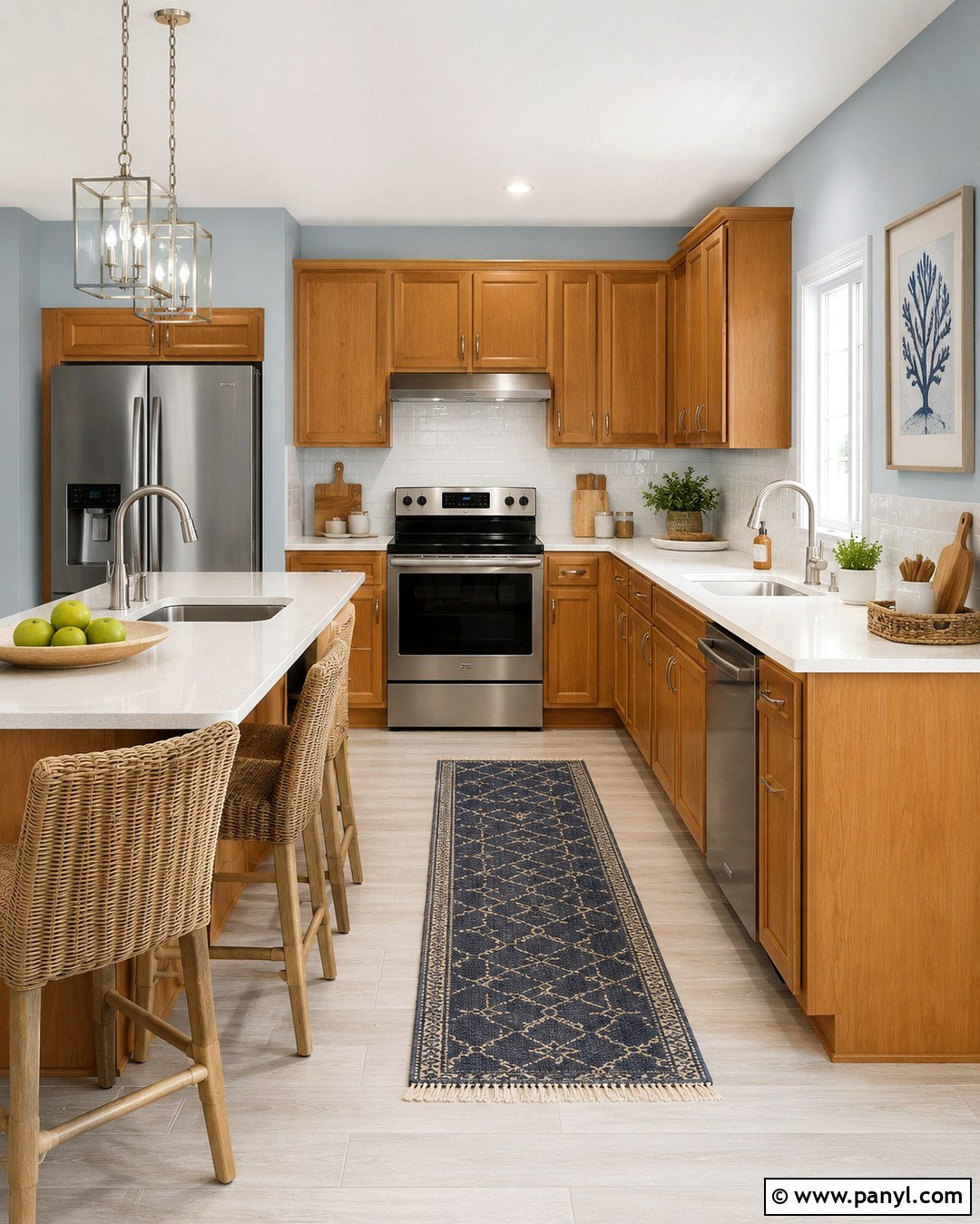
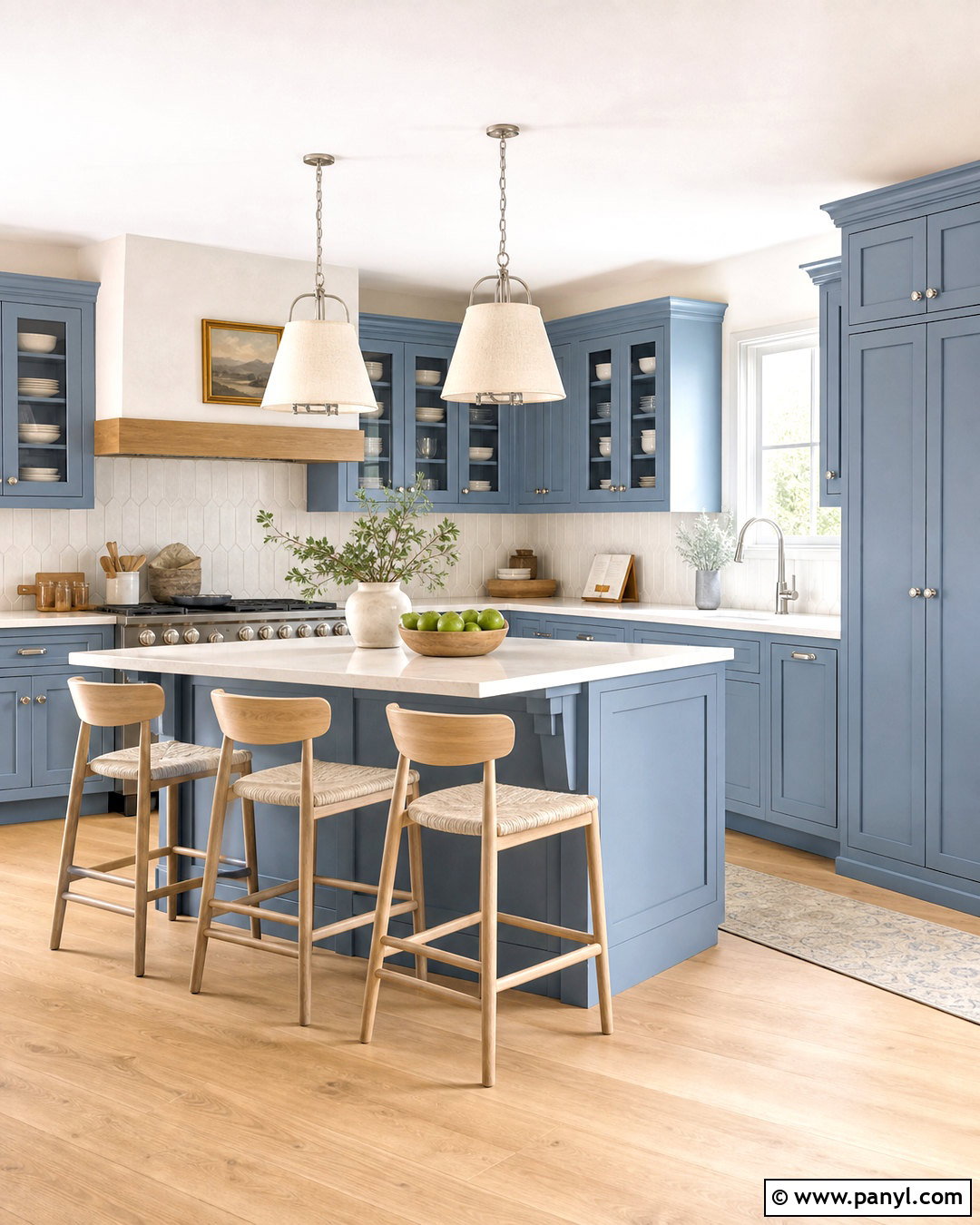
Blue-gray walls can cool the visual temperature of honey oak without making the kitchen feel cold. Choose a softened shade that reads as dusty blue in bright daylight and muted gray in the evening. Pair it with pale quartz countertops and a simple white backsplash to prevent the room from becoming too dark. Brushed nickel pulls, stainless steel appliances, and a polished chrome faucet repeat the cooler notes of the wall color. Use light neutral flooring instead of orange-toned wood, then add a navy and cream runner for depth. Warm the finished kitchen with woven stools, wood cutting boards, and soft white pendant lights. This balanced approach creates an updated coastal or transitional look without relying on obvious nautical decorations.
6. Pale Taupe Walls With Honey Oak Cabinets
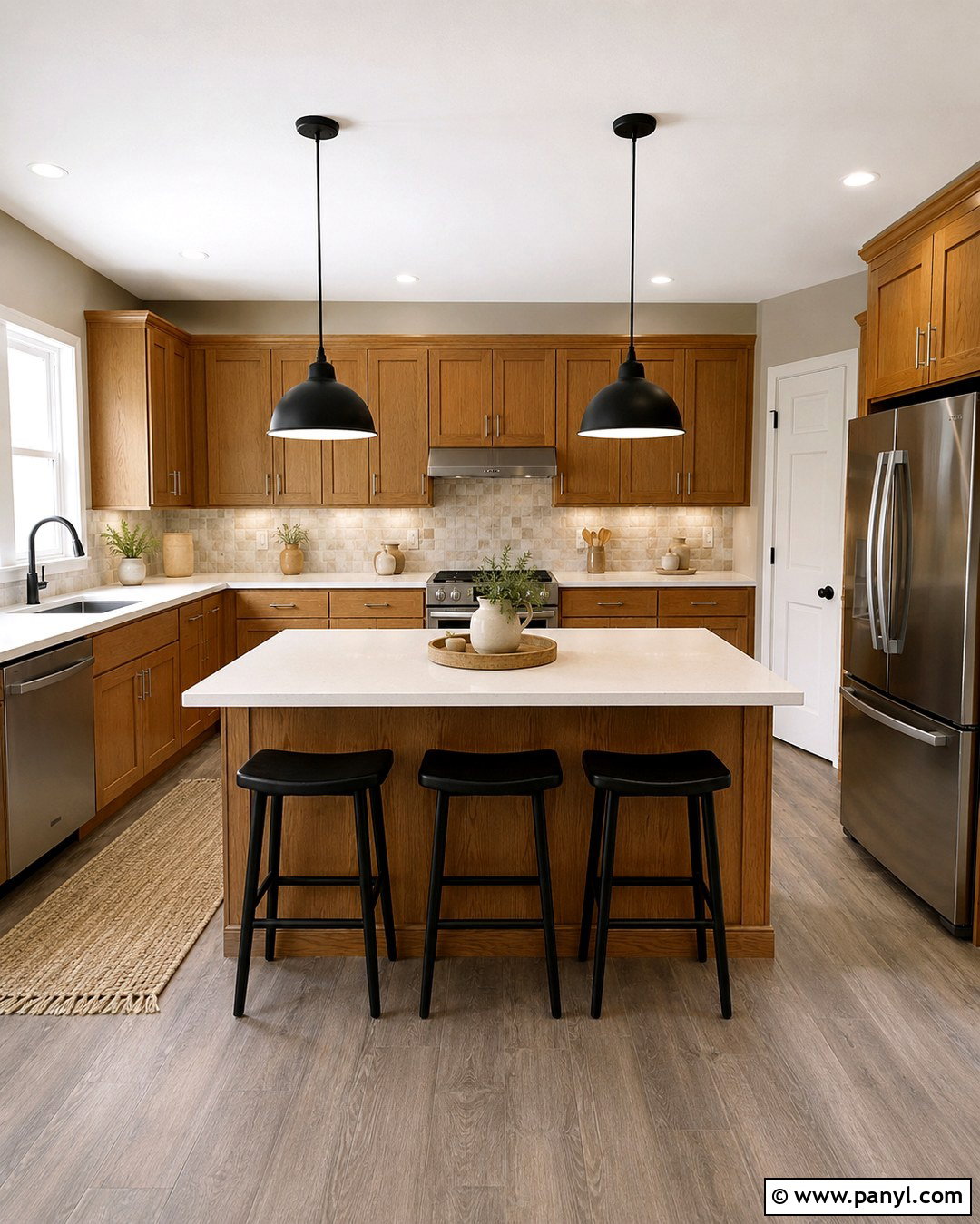
Pale taupe delivers more depth than off-white while remaining quiet enough for a busy kitchen. Its brown-gray base relates naturally to wood grain, helping honey oak cabinets feel less orange and more refined. Complete the palette with ivory quartz counters, a soft beige stone backsplash, and satin nickel hardware. If the cabinets meet honey-colored flooring, introduce a washable taupe runner to break up the repeated wood tones. Matte black pendant lights and a matching faucet add crisp structure against the gentle neutrals. Keep accessories minimal, using white pottery, clear glass containers, and one or two leafy plants. This design works particularly well in open-plan homes because taupe transitions smoothly into nearby living rooms furnished with cream, brown, black, or muted green.
7. Mushroom Walls With Honey Oak Cabinets
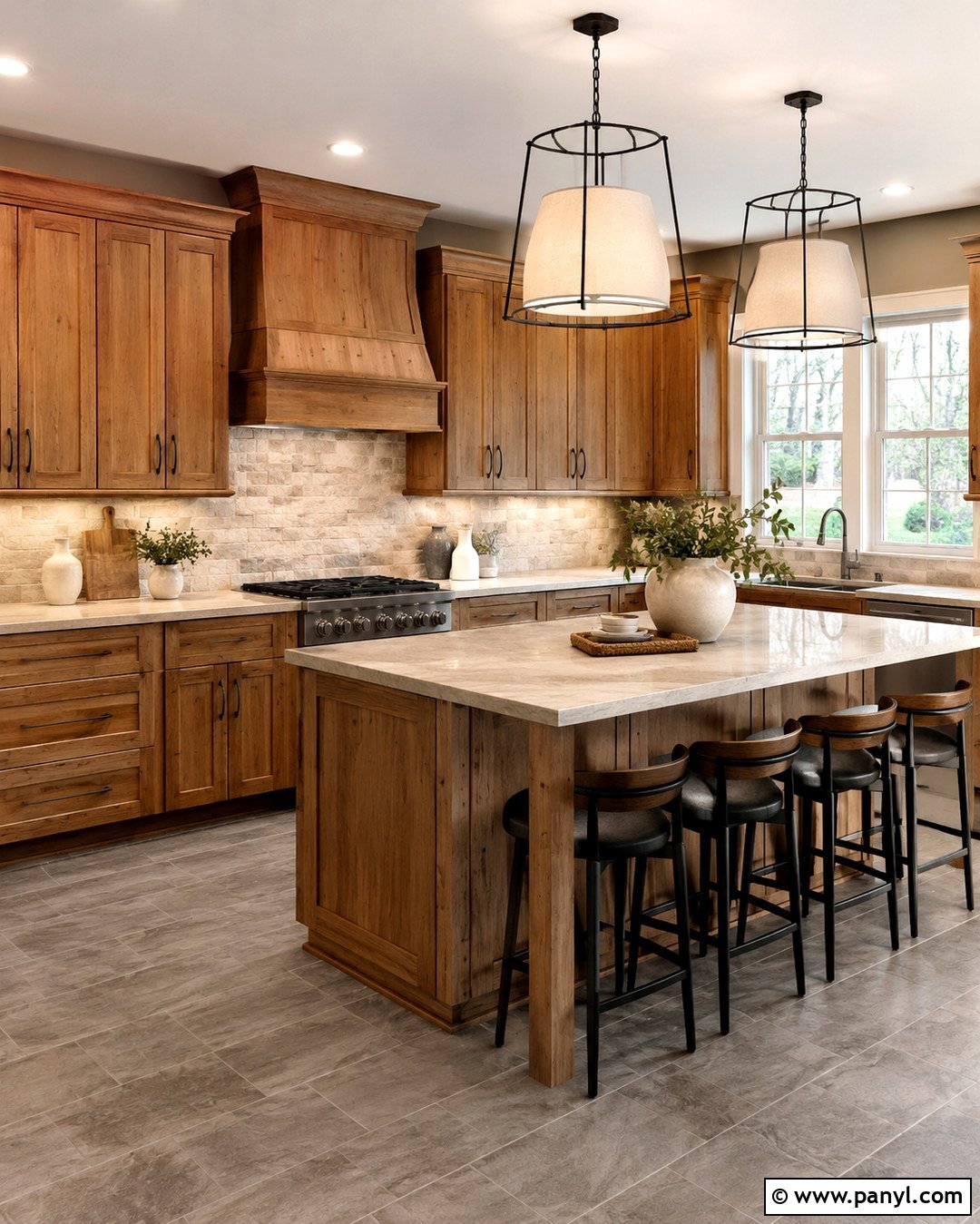
Mushroom paint combines earthy beige, taupe, and gray, making it a useful choice for kitchens with strongly golden cabinets. Choose a light to medium shade that remains clearly different from the oak. Pair it with creamy stone countertops and a backsplash containing subtle mushroom, ivory, and warm gray variation. Oil-rubbed bronze or matte black pulls create contrast while complementing the wood’s traditional character. Use warm gray porcelain floor tile for an easy-care surface that updates the room without introducing another wood finish. Over an island or breakfast table, hang simple black lantern pendants. Add oatmeal linen shades and textured cream ceramics to soften the darker accents. The completed kitchen feels earthy, tailored, and welcoming rather than overly rustic or dated.
8. Dusty Blue Walls With Honey Oak Cabinets
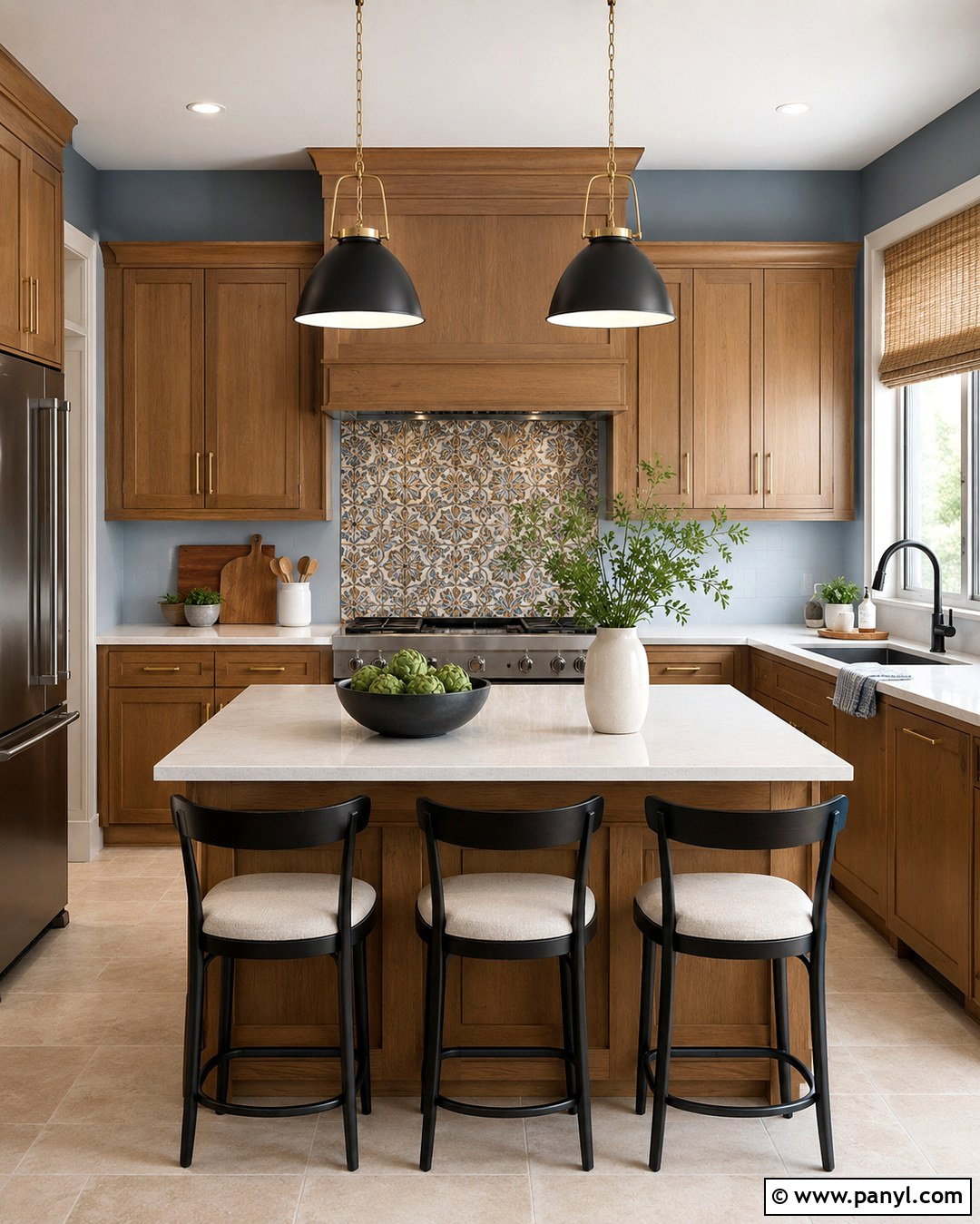
Dusty blue walls create gentle contrast that makes honey oak cabinetry appear warm and inviting. Avoid clear primary blue, which can look too sharp beside the wood. Instead, select a muted shade with a small amount of gray. Finish the counters with creamy white quartz and use glossy ivory tile to reflect light around the room. A patterned backsplash in blue, cream, and soft tan can work behind the range as a restrained focal point. Choose brushed brass pulls to connect with the cabinets, then introduce black through the faucet and pendant fixtures. Pale stone flooring keeps the lower half fresh. Natural woven shades, striped seat cushions, and white ceramic dishes complete a relaxed kitchen that feels colorful without becoming busy or overly coastal.
9. Muted Olive Walls With Honey Oak Cabinets
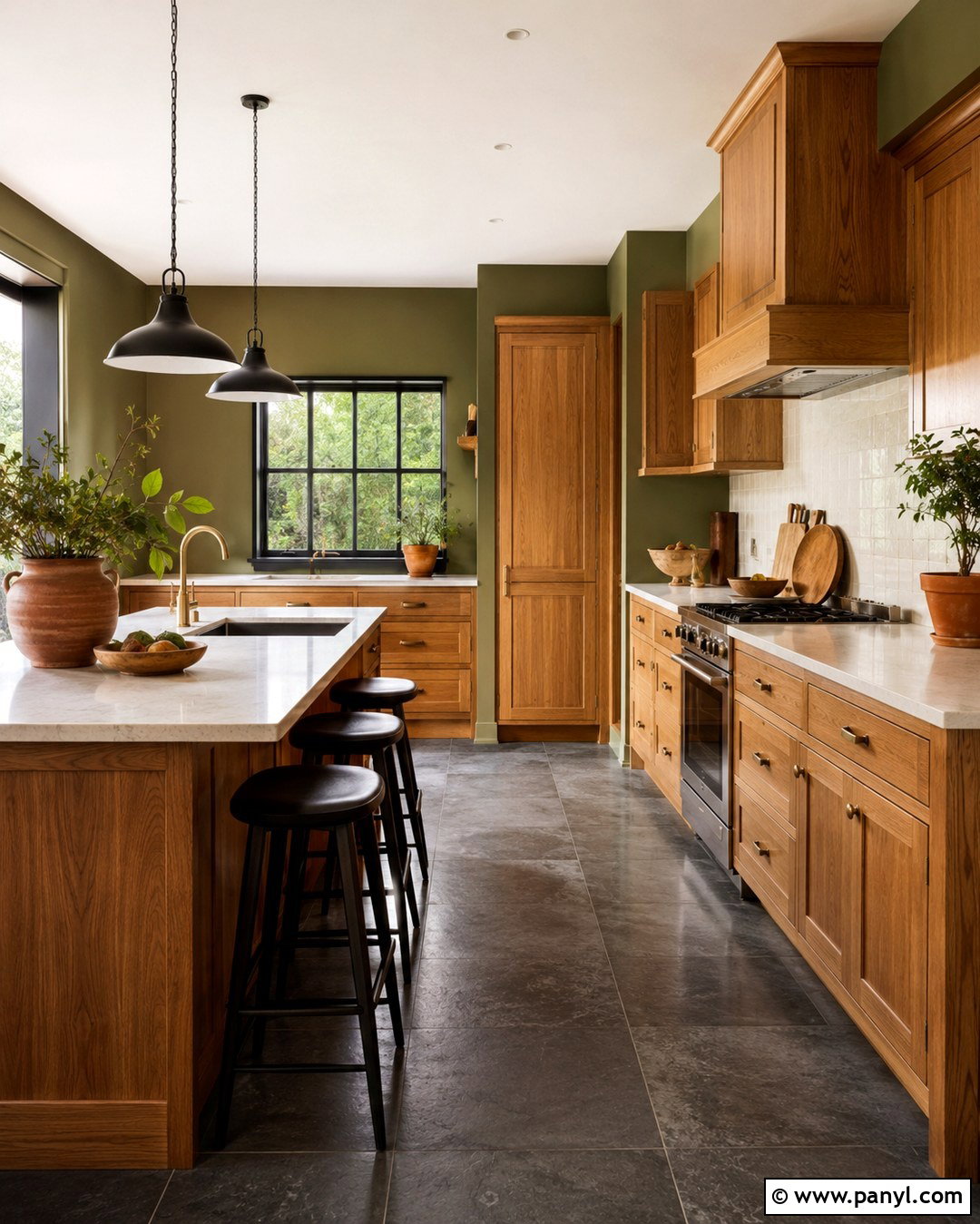
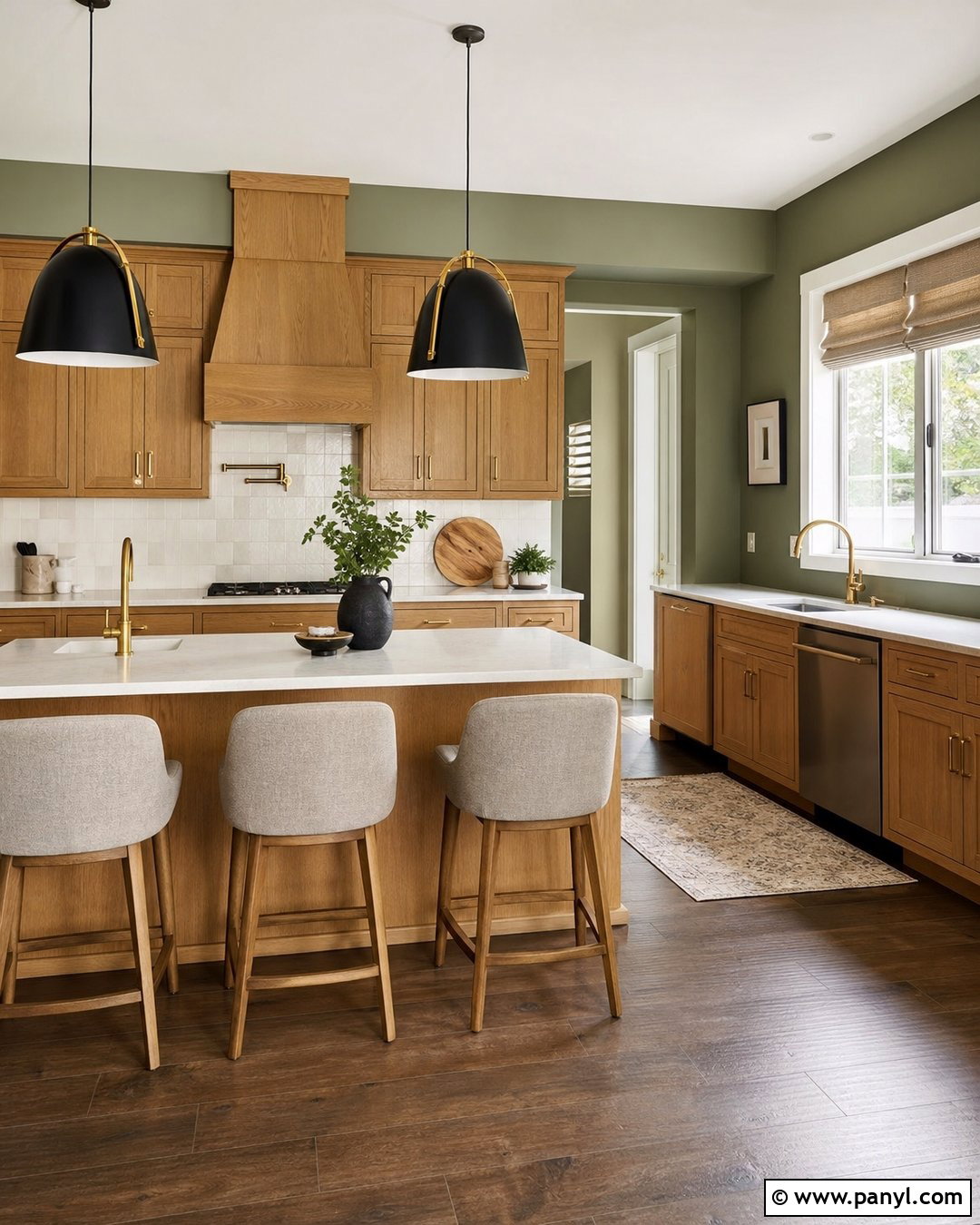
Muted olive gives honey oak cabinets a richer, earthier setting. This deeper green works best in kitchens with good natural light or generous white countertops. Use the color on all visible walls for an enveloping effect, then balance it with an ivory backsplash and pale quartz surfaces. Antique brass hardware reinforces the warm, organic palette, while black counter stools and lighting provide modern definition. Choose medium brown or charcoal stone flooring rather than yellow wood flooring to avoid excessive golden tones. Keep decorative details simple with cream pottery, wooden boards, and greenery in terracotta planters. The final kitchen has a grounded, nature-inspired character that suits traditional cabinetry while still feeling current, especially when dated decorative hardware is replaced with clean knobs and straightforward bar pulls.
10. Soft Ivory Walls With Honey Oak Cabinets
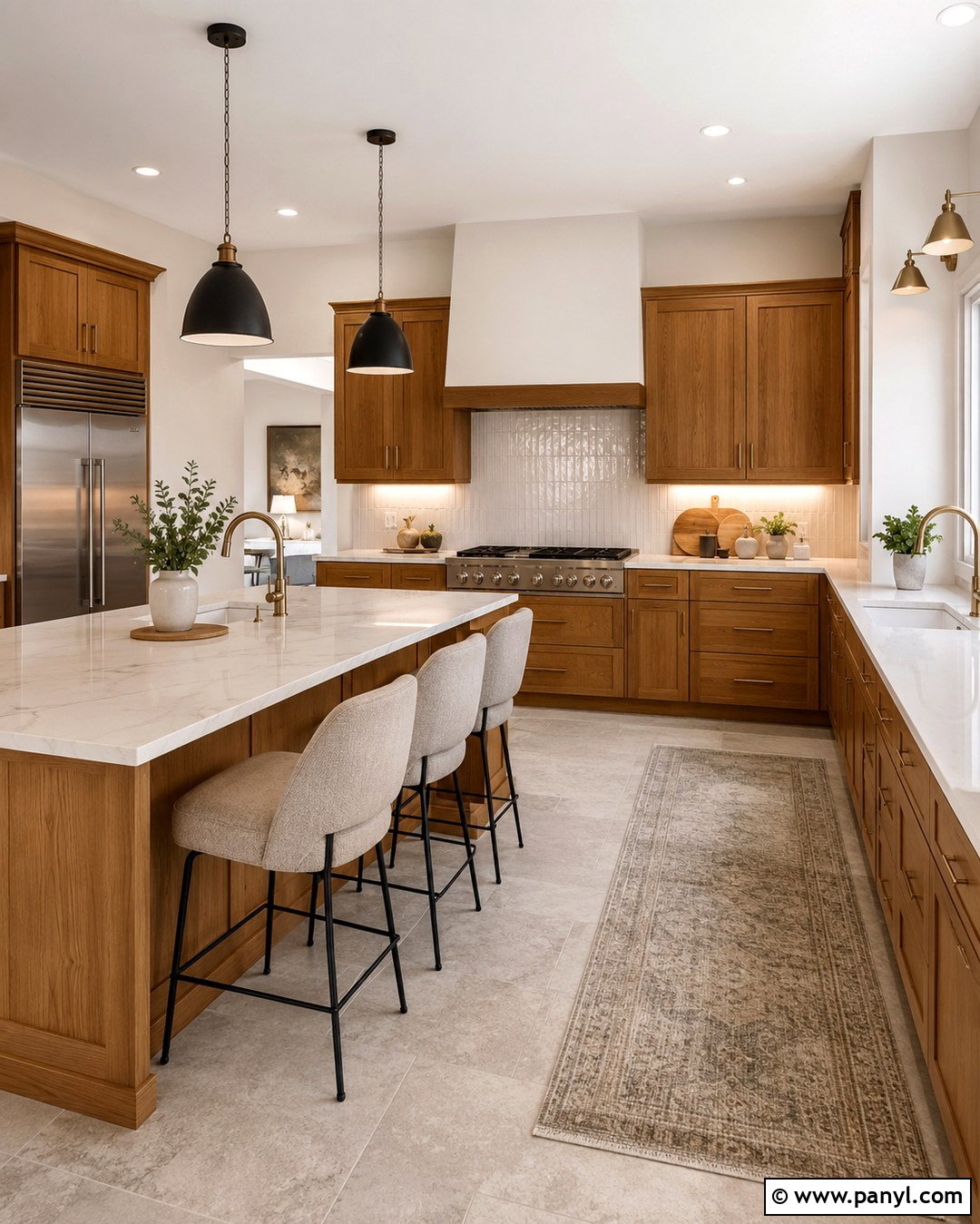
Soft ivory offers a warmer alternative to plain white and creates an inviting, light-filled kitchen. Select an ivory with a quiet neutral base, avoiding shades that appear strongly yellow next to the oak. Carry the color into the trim and ceiling for a smooth, spacious effect. Add white quartz countertops with soft beige veining and a backsplash of vertically stacked ivory tile. Brushed brass pulls blend comfortably with the cabinet color, while a matte black faucet and slim black pendants sharpen the scheme. Light limestone-look flooring prevents the room from becoming visually heavy. Complete the design with oatmeal counter stools, pale linen shades, and a muted vintage-style runner. The resulting kitchen is bright and classic but still has enough contrast, pattern, and texture to feel finished.
11. Light Pewter Gray Walls With Honey Oak Cabinets
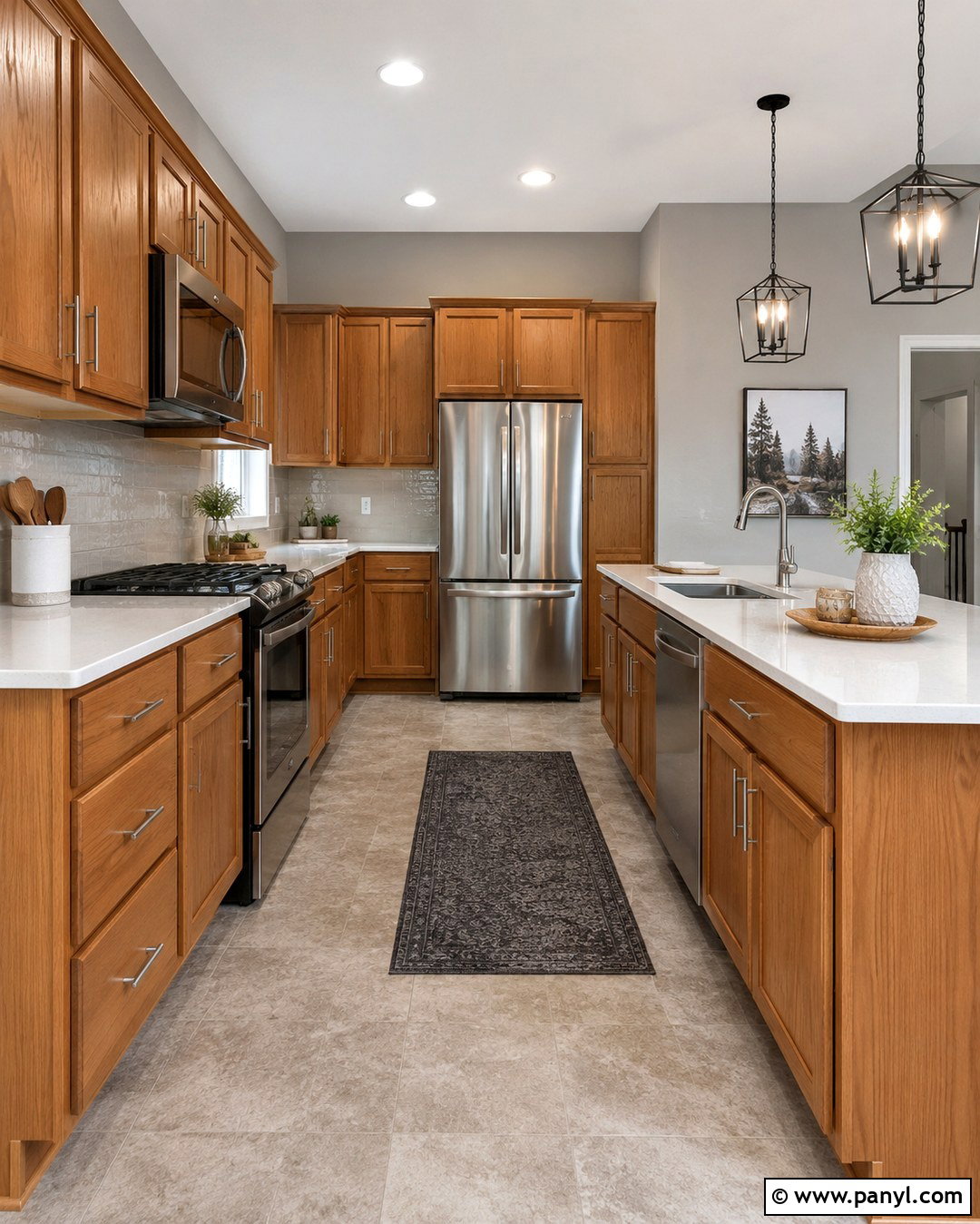
Light pewter gray can modernize honey oak when it contains balanced green or beige undertones. Avoid icy gray, which may make the cabinets appear more orange by comparison. Use the wall color with crisp off-white countertops and a pale gray backsplash that has slight tonal variation. Satin nickel hardware connects the cabinetry to stainless steel appliances, creating a more unified finish. Install warm gray stone-look flooring or keep existing neutral tile, then soften it with a cream and charcoal runner. Black-framed pendants and a black faucet add visual weight without overwhelming the space. A few wood accessories repeat the cabinets naturally. This complete design is clean and practical, making it suitable for transitional kitchens where homeowners want a noticeable update without replacing usable oak cabinetry.
12. Pale Aqua Walls With Honey Oak Cabinets
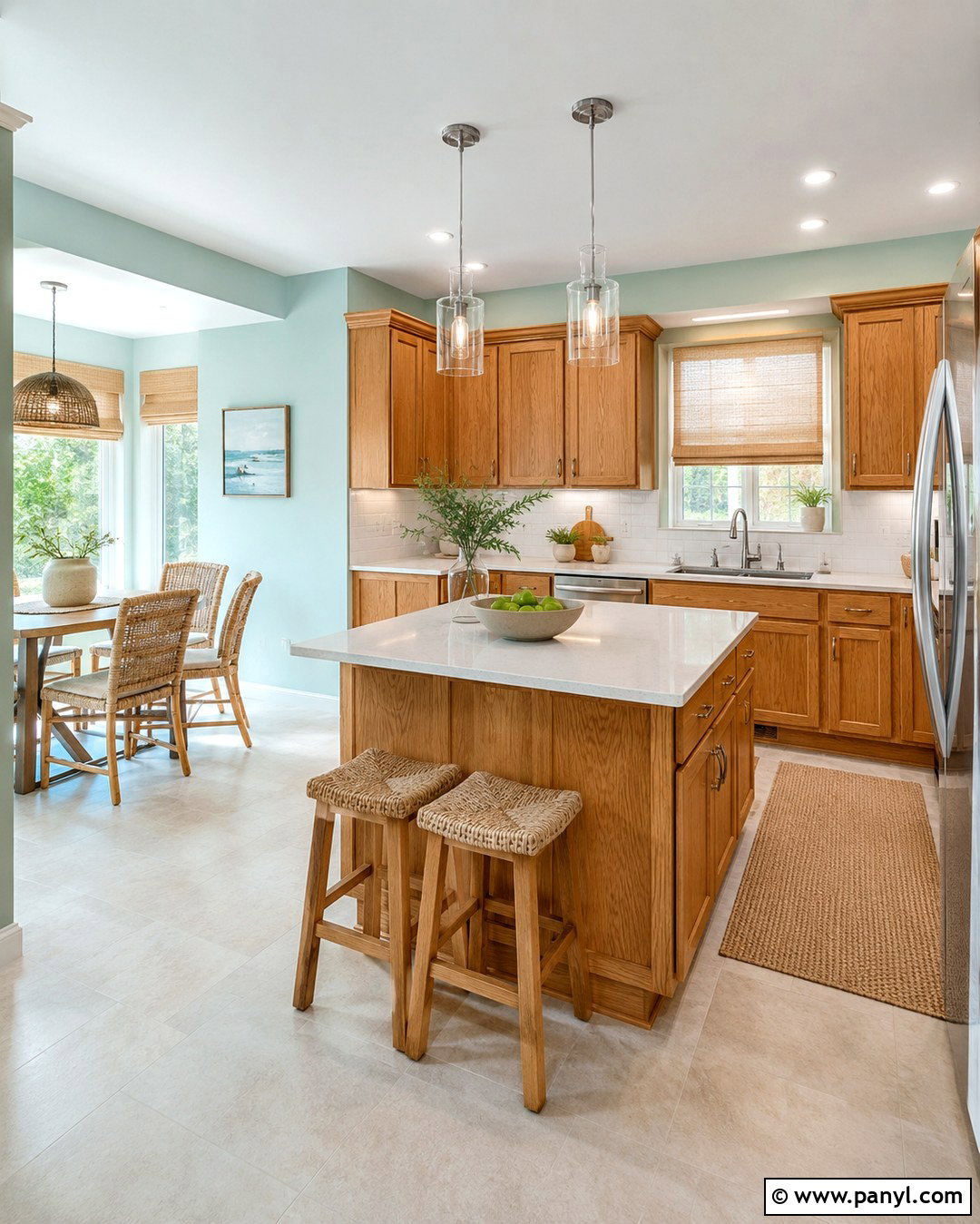
Pale aqua brings freshness to a honey oak kitchen while maintaining a soft, approachable atmosphere. Choose a subdued blue-green that looks slightly gray rather than bright turquoise. Pair it with creamy quartz countertops, white handmade-look backsplash tile, and brushed nickel hardware. Light beige porcelain flooring supports the airy palette and prevents the kitchen from looking overly cool. Introduce natural texture with woven counter stools, bamboo shades, and a jute-look washable runner. Clear glass pendants keep sightlines open, while a few matte black details add structure. Repeat the wall color sparingly through patterned towels or seat cushions instead of matching every accessory. The completed look feels light and cheerful, making it particularly useful for a small kitchen, breakfast nook, or room with limited architectural detail.
13. Dusty Rose Walls With Honey Oak Cabinets
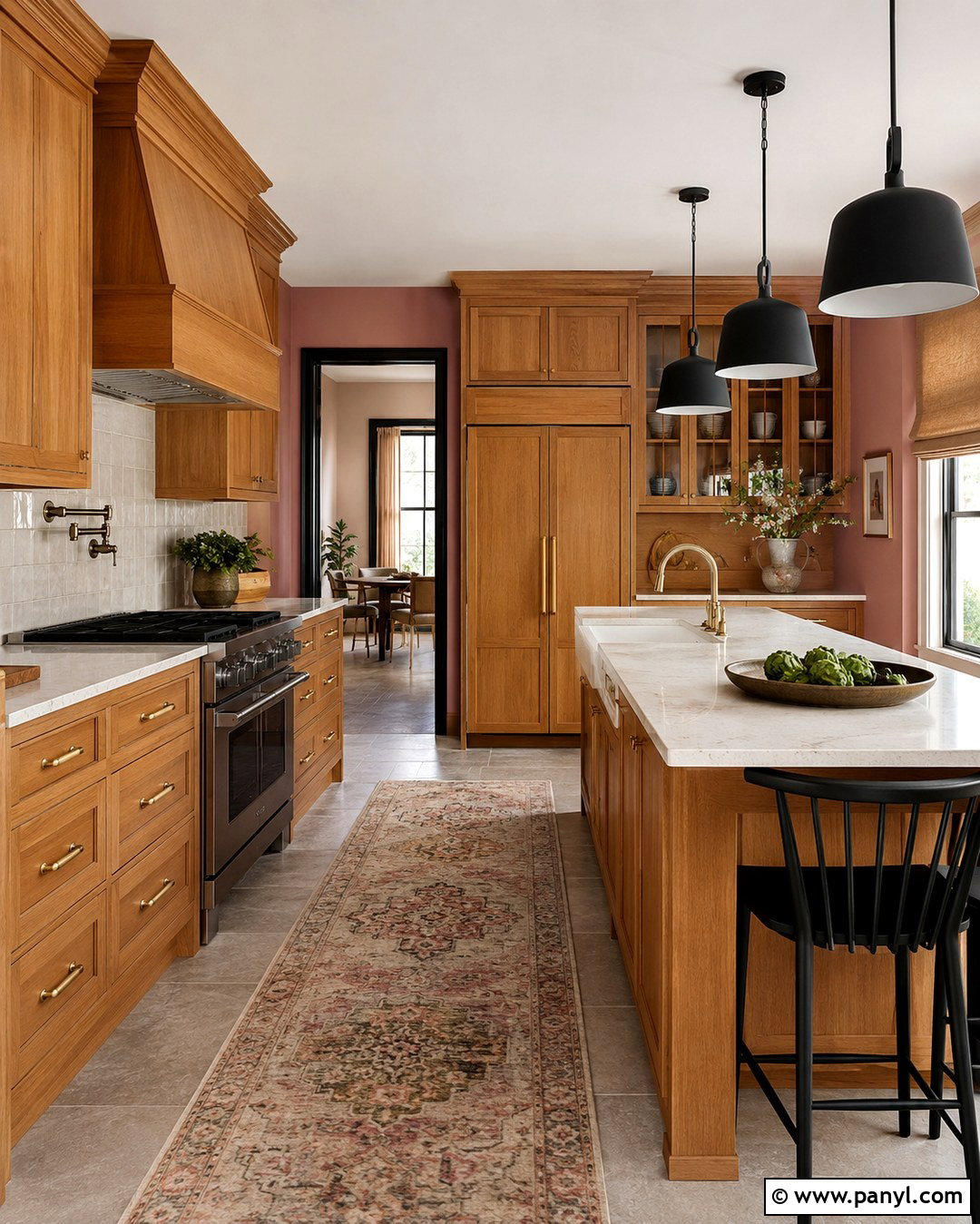
Dusty rose creates a warm, unexpected kitchen that feels sophisticated rather than overly sweet. Select a muted clay-pink shade with beige or brown undertones so it relates naturally to the honey oak. Keep the remaining finishes simple with cream quartz countertops and an ivory tile backsplash. Aged brass cabinet pulls reinforce the warmth, while matte black pendants, stools, and a faucet provide necessary contrast. Warm gray floor tile creates a neutral base and keeps the rosy walls from dominating. Add linen Roman shades, neutral ceramics, and a faded runner containing rose, olive, and cream. This palette works beautifully in a kitchen with abundant daylight, where the wall color can shift gently throughout the day. The complete room feels personal, layered, and thoughtfully updated.
14. Muted Terracotta Walls With Honey Oak Cabinets
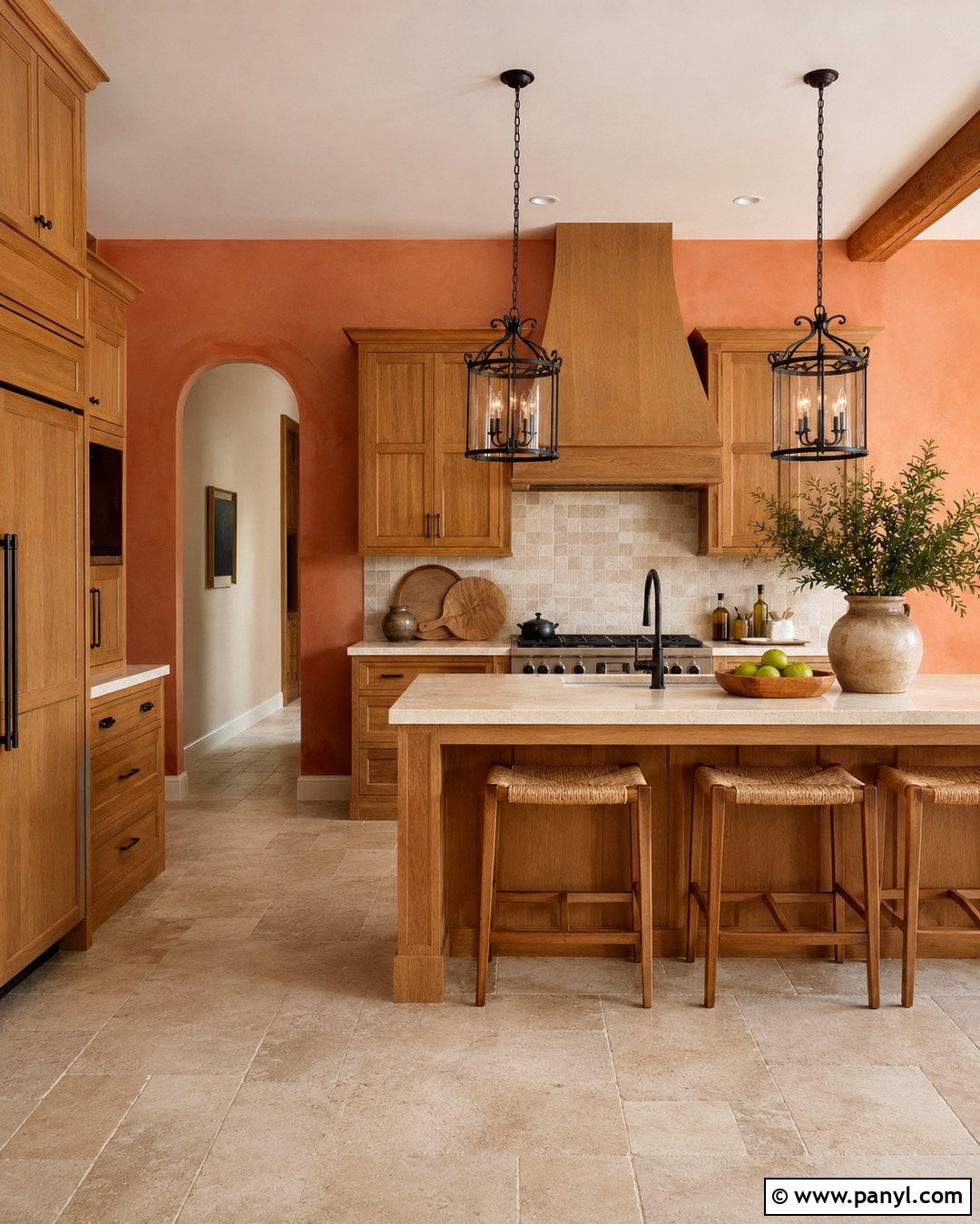
Muted terracotta walls lean into the warmth of honey oak for a kitchen inspired by sunbaked earth and natural materials. Choose a subdued clay shade rather than vivid orange, and use it where plenty of daylight can reveal its depth. Balance the walls with creamy plaster-look backsplash tile and pale stone countertops. Dark bronze pulls, a black faucet, and iron pendant lights add definition against the warm palette. Choose limestone-look flooring in a light sand color to keep the room from appearing too heavy. Incorporate woven stools, off-white linen shades, and simple pottery in cream and charcoal. Because both the cabinets and walls are warm, limit additional orange accessories. The finished kitchen feels cohesive and rich, with enough pale surfaces to remain comfortable and practical.
15. Navy Accent Wall With Honey Oak Cabinets
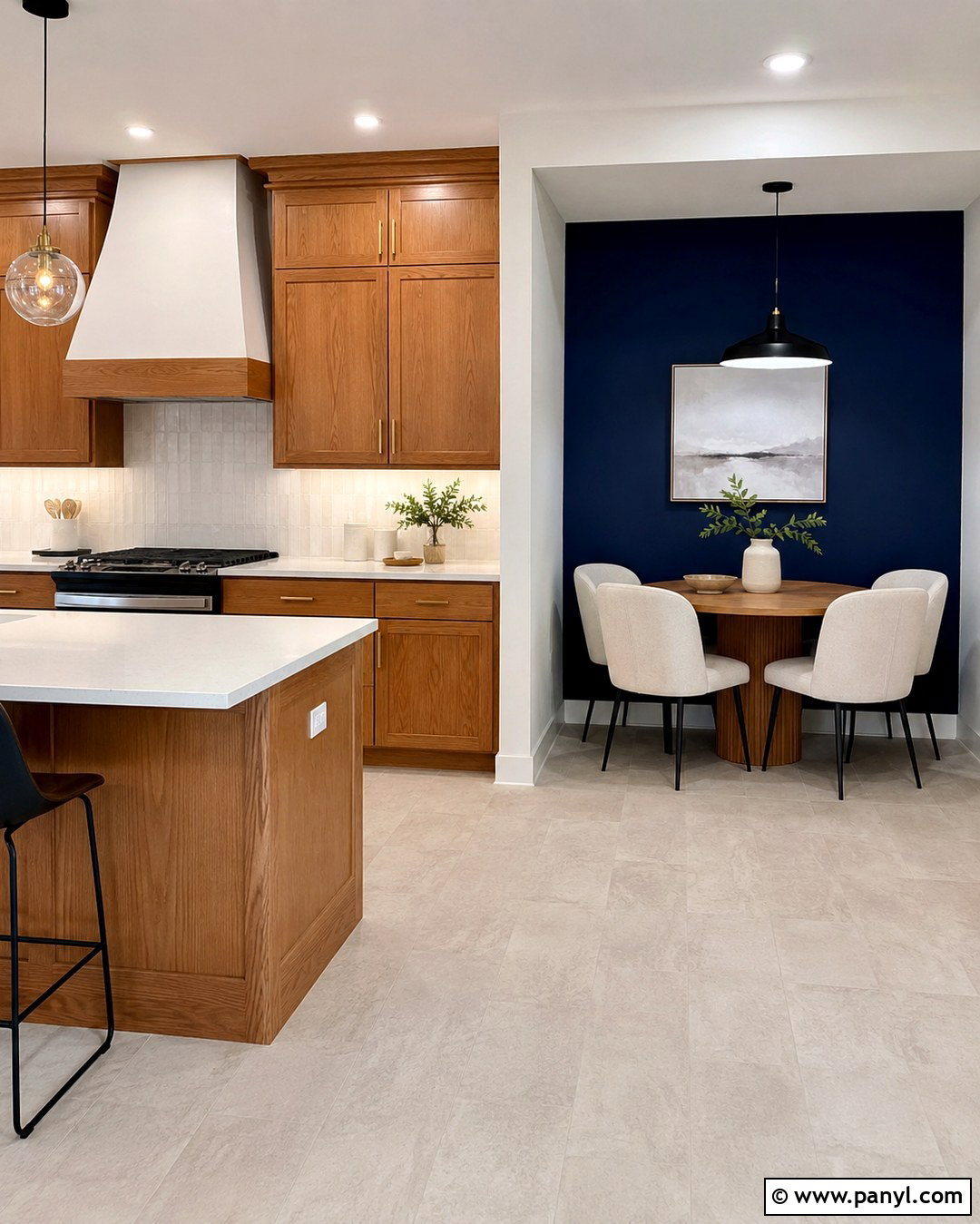
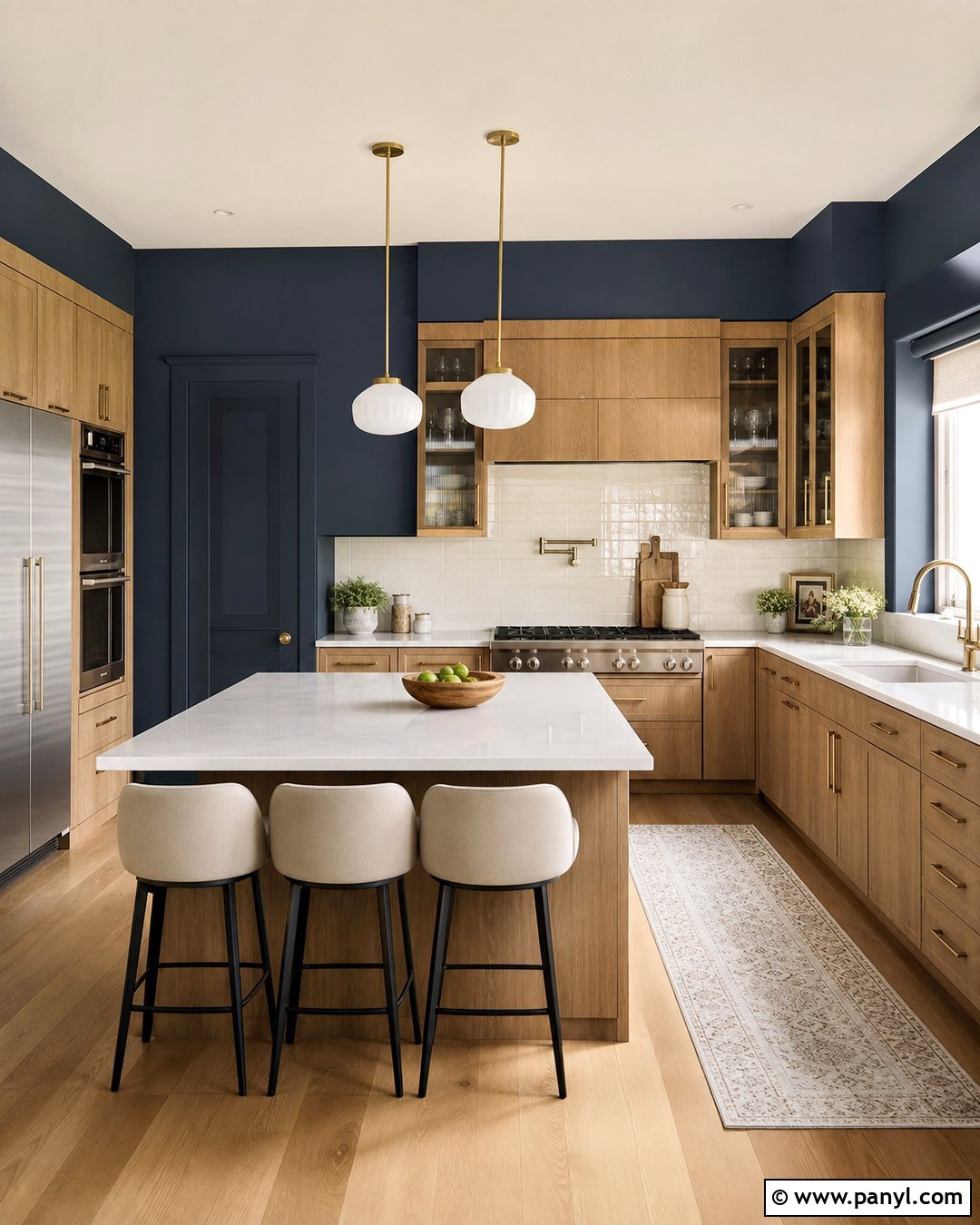
A navy accent wall creates a bold focal point and gives honey oak cabinetry a sharper, more contemporary presence. Apply navy to a breakfast nook, window wall, or open wall without upper cabinets so the color remains visible. Keep the other walls warm white to preserve brightness. Complete the design with pale quartz countertops, a white backsplash, and matte black or brushed brass hardware. Light neutral flooring prevents the dark wall from making the room feel smaller. Add a natural wood dining table with cream upholstered chairs beneath a black metal pendant. A patterned rug containing navy, ivory, and muted tan connects the dramatic wall to the cabinets. This controlled use of deep color delivers contrast without turning the entire kitchen dark or visually crowded.
16. Charcoal Accent Wall With Honey Oak Cabinets
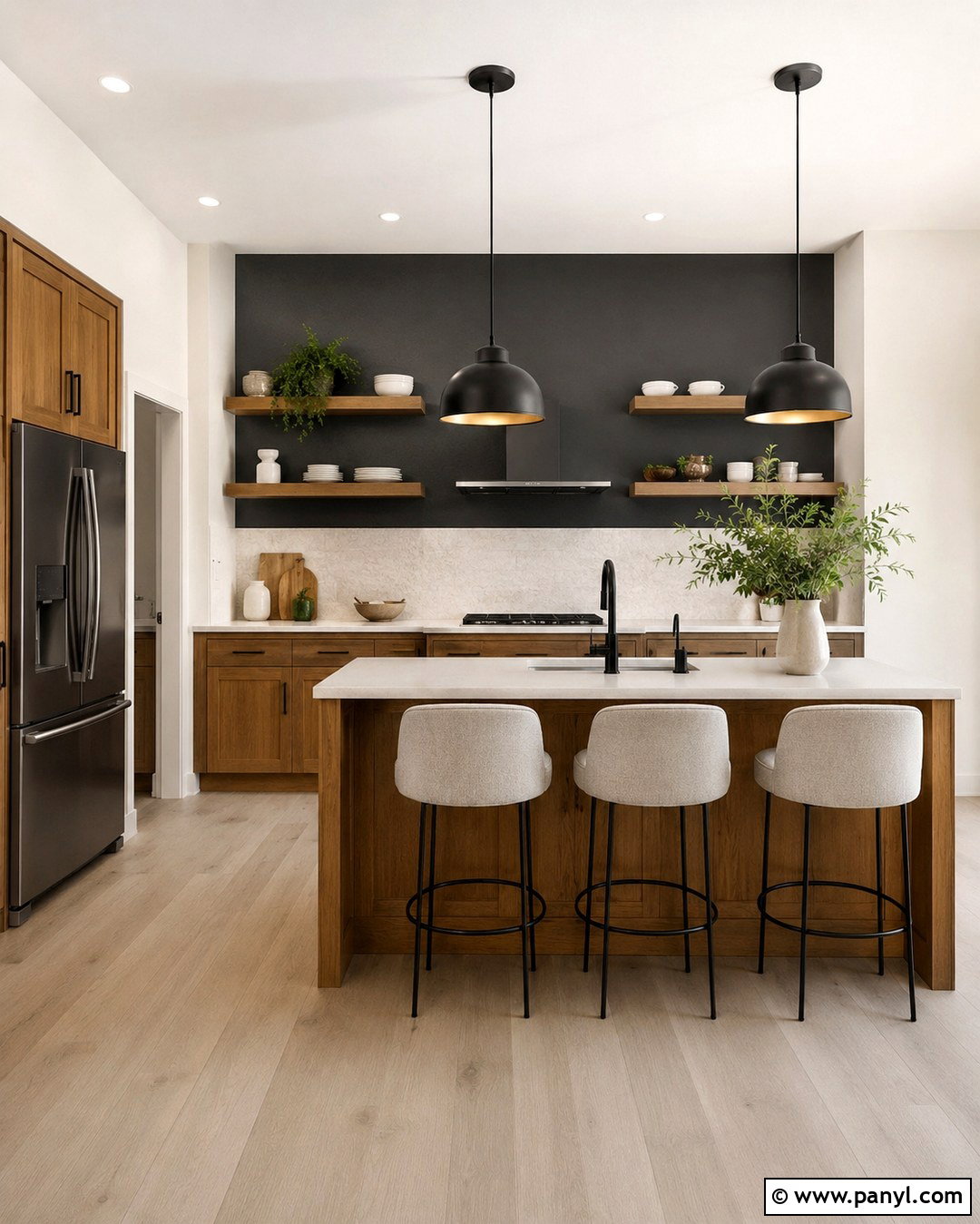
Charcoal provides strong contrast for honey oak, but it works best as a carefully placed accent rather than an all-over wall color. Use it behind open shelves, around a dining nook, or on a wall receiving generous daylight. Paint the remaining walls soft ivory and add creamy quartz countertops to maintain an open feeling. A simple off-white backsplash prevents competing patterns, while matte black hardware and lighting connect with the charcoal feature. Choose pale oak-look or warm gray flooring that is noticeably lighter than the wall. Add counter stools with oatmeal upholstery and black metal frames. Natural wood shelves, white dishes, and leafy plants soften the darker surface. The complete design feels streamlined and modern while allowing the cabinet grain to provide warmth and movement.
17. Lavender Gray Walls With Honey Oak Cabinets
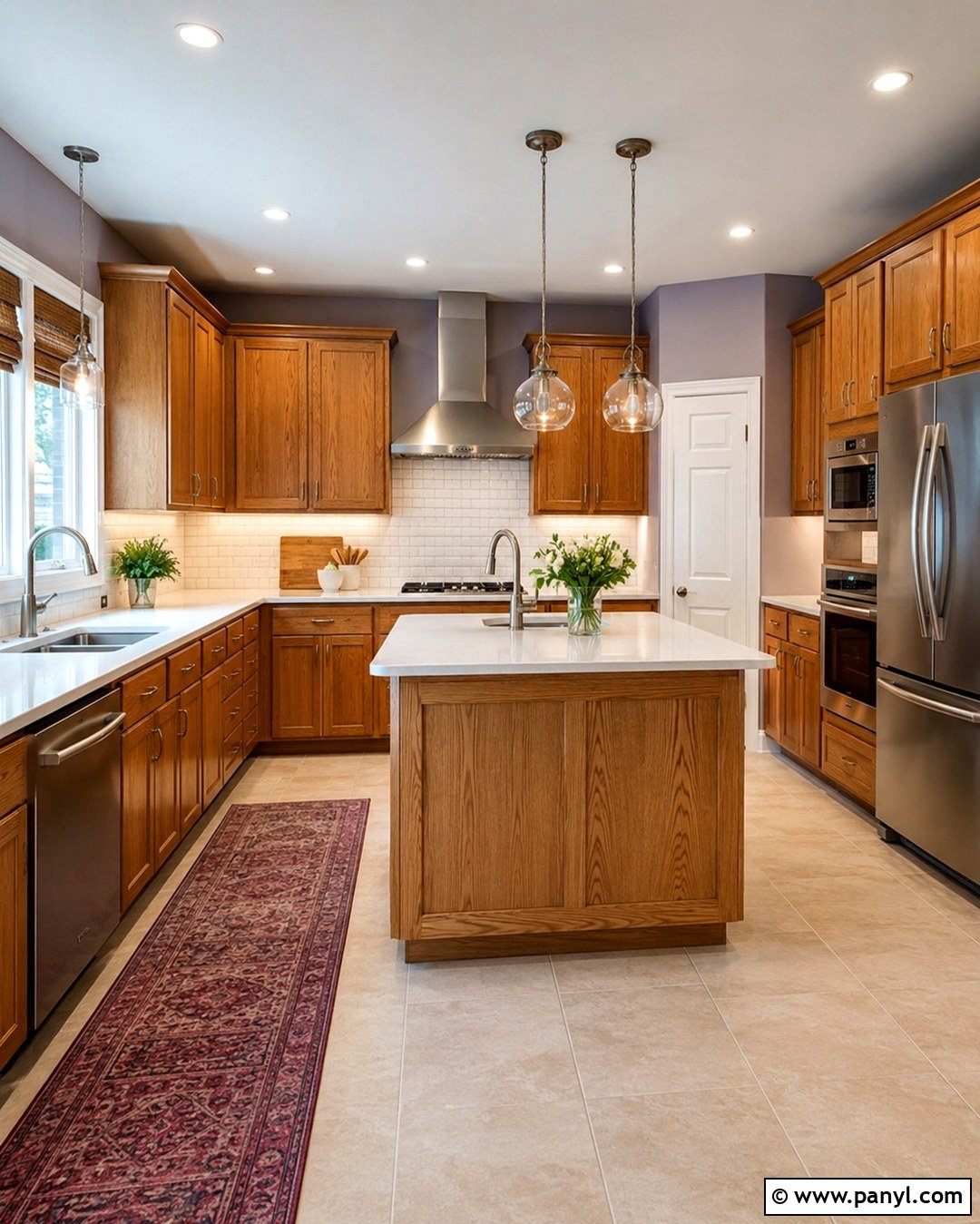
Soft lavender-gray offers a subtle alternative to standard gray and gives honey oak a gentle, balanced backdrop. Choose a shade with restrained violet undertones that appears mostly neutral from across the room. Pair it with white quartz counters and a backsplash featuring creamy white tile with light gray grout. Brushed nickel pulls, stainless steel appliances, and glass pendant lights support the cooler side of the palette. Warm beige floor tile and natural woven shades keep the kitchen from feeling chilly. Introduce muted plum only through a small runner or simple ceramic vase. Most accessories should remain cream, charcoal, or natural wood. This complete scheme feels quiet and distinctive, particularly in kitchens where homeowners want understated color without choosing another beige, white, blue, or green wall.
18. Pale Buttercream Walls With Honey Oak Cabinets
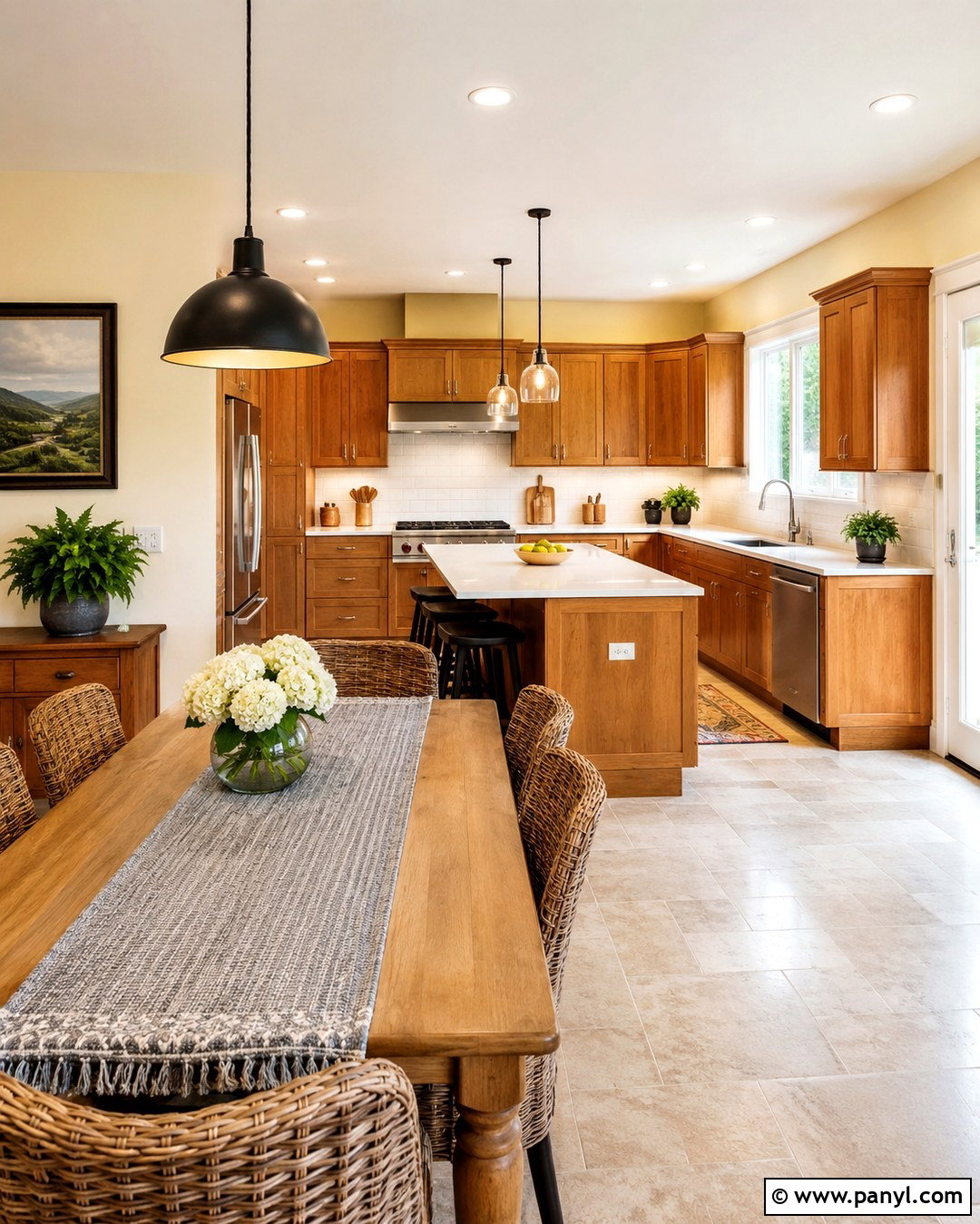
Pale buttercream creates a sunny traditional kitchen when used with restraint. Select a creamy shade that is lighter and softer than the cabinets, avoiding saturated yellow that could exaggerate the oak’s golden finish. Balance the warmth with white quartz countertops and a backsplash of soft white tile. Use polished nickel or black hardware for clearer contrast instead of additional gold finishes. Neutral stone flooring in beige and gray anchors the palette, while white trim keeps architectural edges crisp. Add a small breakfast table painted warm white, natural woven chairs, and a simple black pendant. Blue-gray textiles introduce a cooling accent through a runner or window shade. The finished kitchen feels cheerful and comfortable, especially in north-facing rooms that benefit from a warmer wall color.
19. Natural Linen Walls With Honey Oak Cabinets
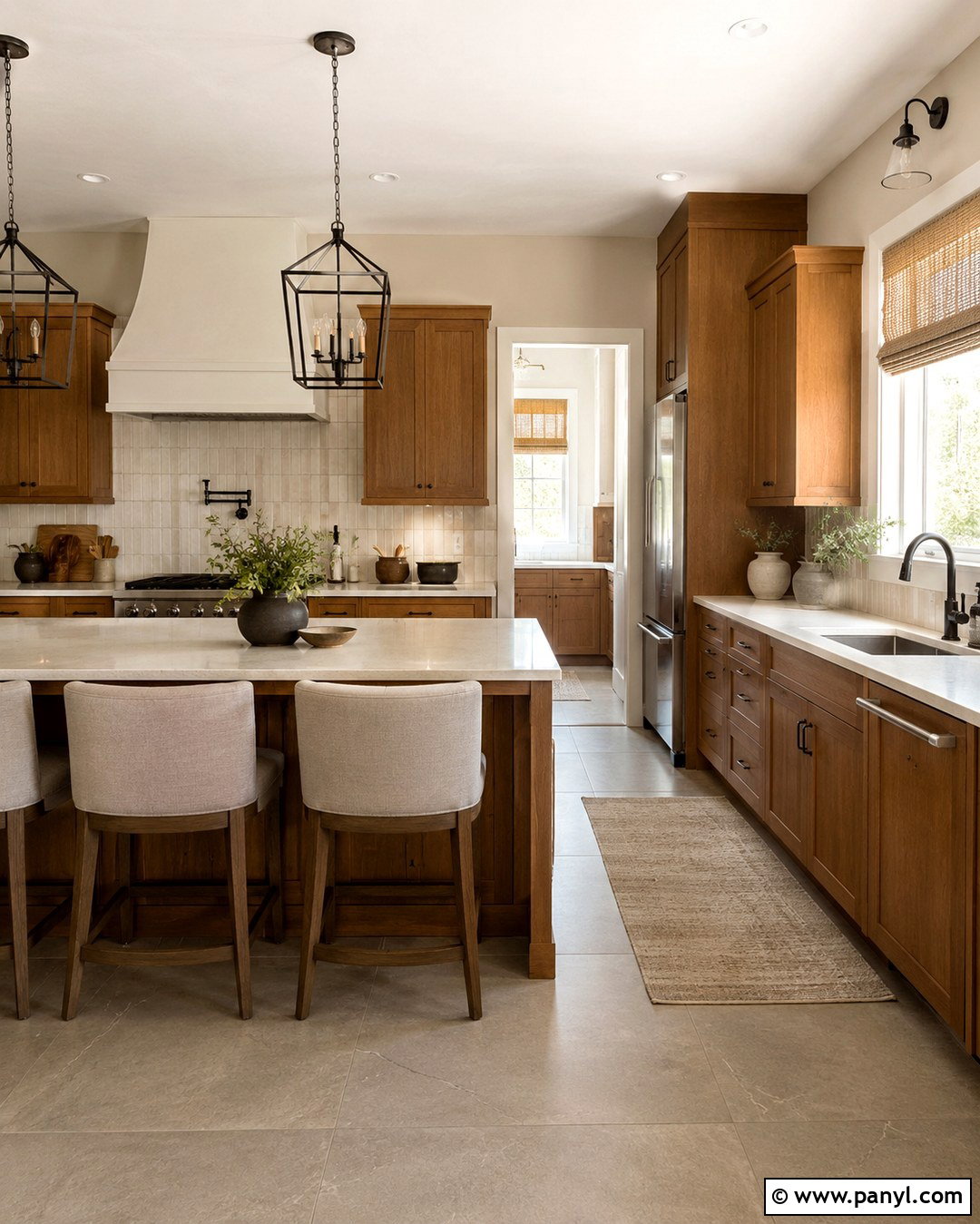
Natural linen paint has a soft fabric-like color that sits between cream and light beige. It complements honey oak without closely matching it, creating a warm kitchen with gentle tonal variation. Pair the walls with off-white quartz counters and a backsplash of matte ivory tile arranged in a clean vertical pattern. Use aged bronze hardware to define the cabinet doors, then add black lantern pendants and a black faucet for structure. Warm gray porcelain flooring breaks up the golden wood and provides a practical neutral foundation. Complete the space with oatmeal counter stools, woven shades, and ceramics in cream, brown, and muted green. This relaxed palette works across farmhouse, traditional, and transitional kitchens because it feels welcoming without depending on highly decorative or trend-specific details.
20. Soft Teal Walls With Honey Oak Cabinets
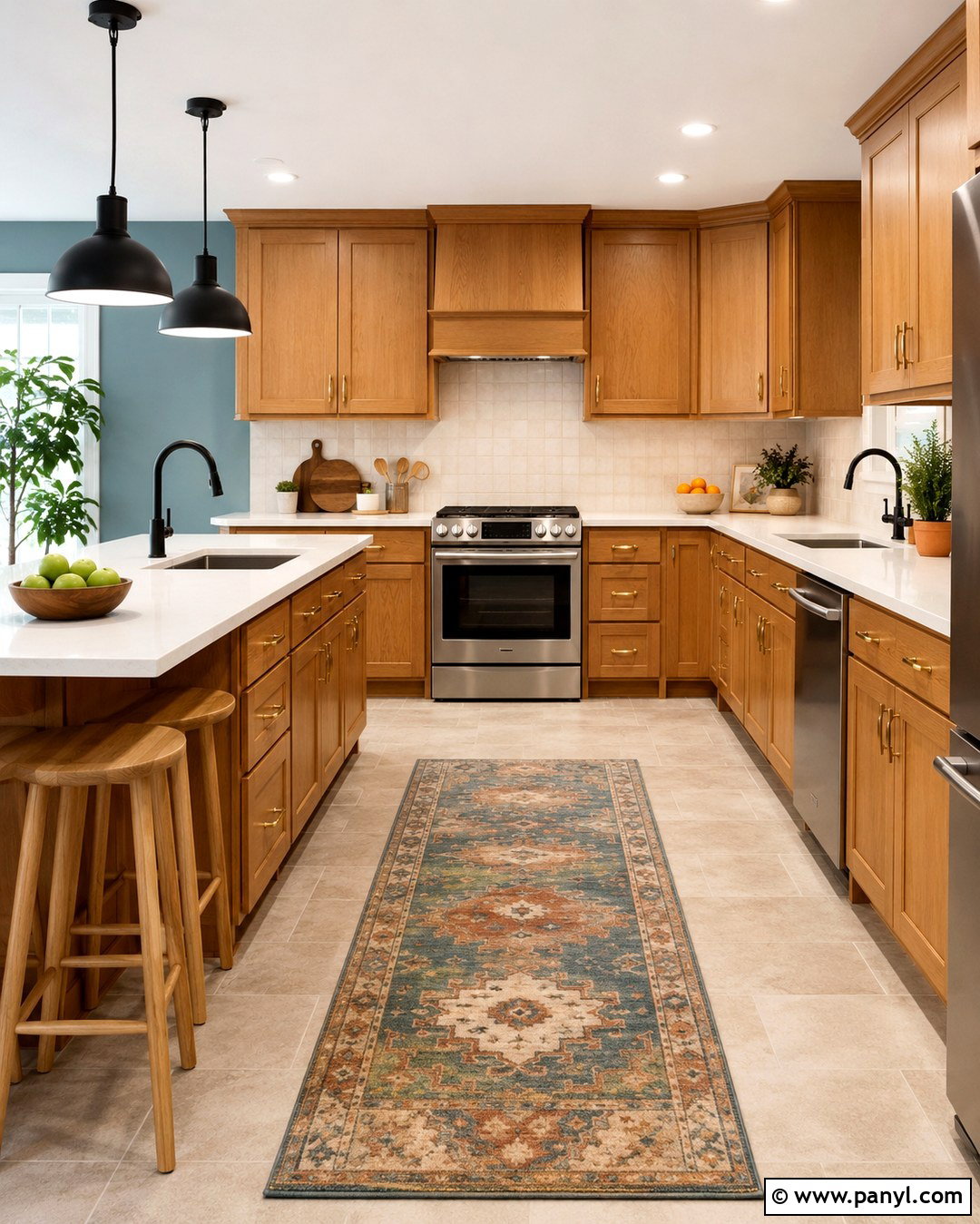
Soft teal provides the strongest color contrast in this collection while still working naturally with warm oak. Choose a muted blue-green with gray undertones, and apply it throughout a bright kitchen or on the walls surrounding a dining area. Keep countertops creamy white and use a plain ivory backsplash so the wall color remains the primary statement. Brushed brass hardware creates a warm connection to the cabinetry, while matte black pendants and a faucet add a modern edge. Pale stone flooring keeps the scheme balanced below eye level. Finish the room with light wood stools, neutral linen shades, and a patterned runner combining teal, cream, and small touches of rust. The result is energetic and memorable without requiring cabinet paint or an expensive renovation.
Conclusion:
Choosing among these 20 Honey Oak Cabinet Kitchen Wall Color Ideas becomes easier when you consider the entire room instead of selecting paint by itself. Look at the cabinets beside the countertops, backsplash, flooring, appliances, and trim before making a final decision. Warm white, greige, taupe, and linen create flexible neutral kitchens. Sage, blue-gray, aqua, and teal provide cooler contrast, while olive, terracotta, and dusty rose produce richer character. Dark navy or charcoal can add depth when limited to a bright accent wall. Most importantly, paint large sample areas and view them during the morning, afternoon, and evening. With coordinated finishes and thoughtful lighting, honey oak cabinets can feel warm, attractive, and completely intentional.

Related Ideas and Inspiration:
Leave a Reply