
If you are searching for **20 tv wall color ideas living room ideas**, the best starting point is a color that connects the television, furniture, flooring, and decor into one balanced look. Today’s strongest living room palettes favor warmer neutrals, earthy shades, muted blue-greens, and deep colors that give the screen a more intentional backdrop. () Dark paint can help a black television feel less dominant, while lighter colors keep compact rooms open and comfortable. The finish matters too. Matte or eggshell paint usually creates a softer background than shiny paint. From dramatic black walls to gentle sage, clay, and creamy white schemes, the following complete rooms offer practical inspiration through **20 tv wall color ideas living room ideas**.

1. Matte Black TV Wall
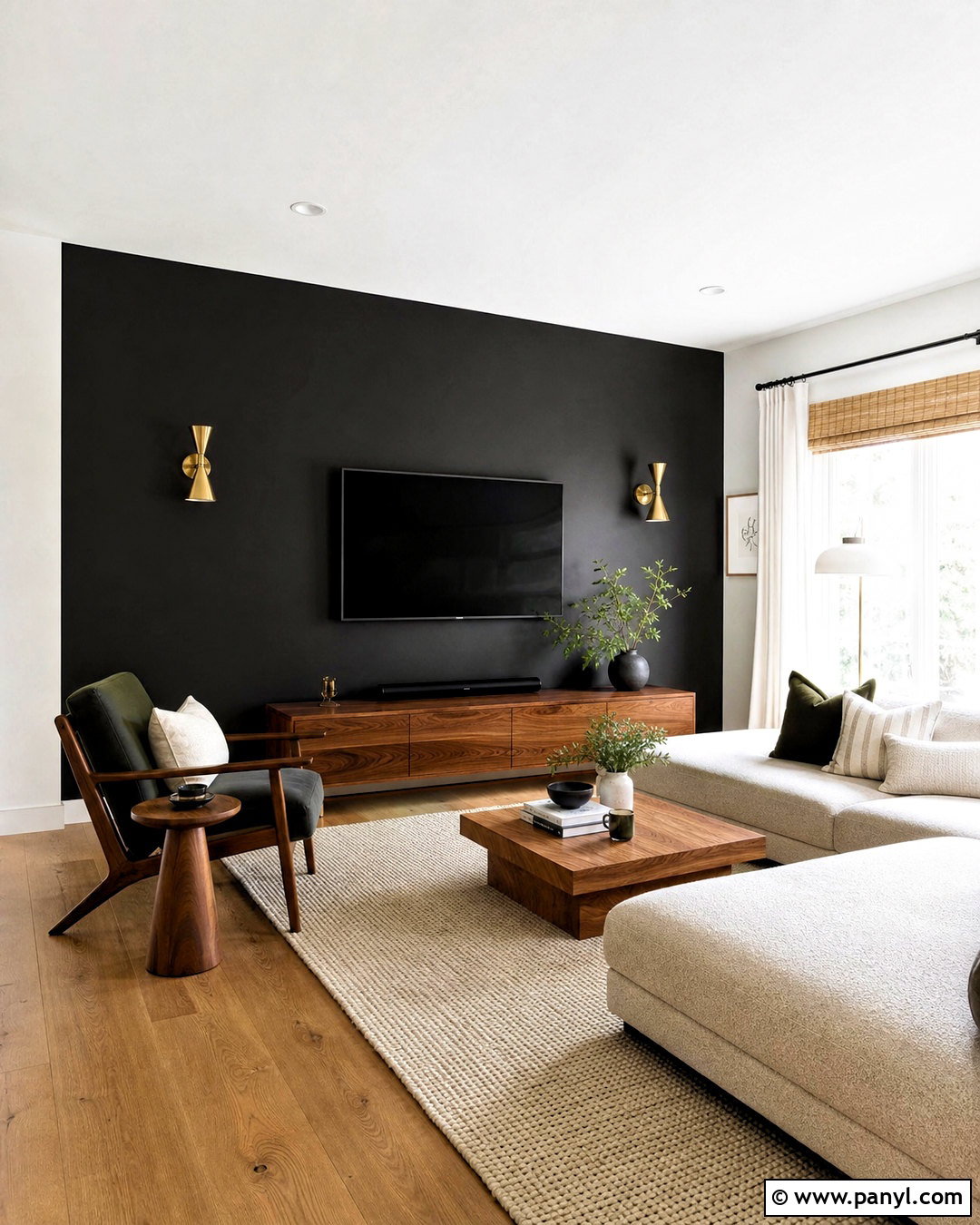
A matte black TV wall creates a clean, cinematic focal point without requiring complicated construction. Mount the television above a low walnut media console so the warm wood softens the dark paint. Keep the remaining walls warm white and choose a light beige sectional to prevent the room from feeling enclosed. A cream rug, linen curtains, and an oak coffee table add more brightness. Use two slim brass sconces or warm-white wall lights beside the screen for balanced illumination. Black picture frames and charcoal cushions can repeat the accent color around the room. Conceal the cables and keep accessories minimal, allowing the TV wall to look polished instead of busy. This complete scheme works especially well in modern and midcentury living rooms.
2. Charcoal Gray TV Wall
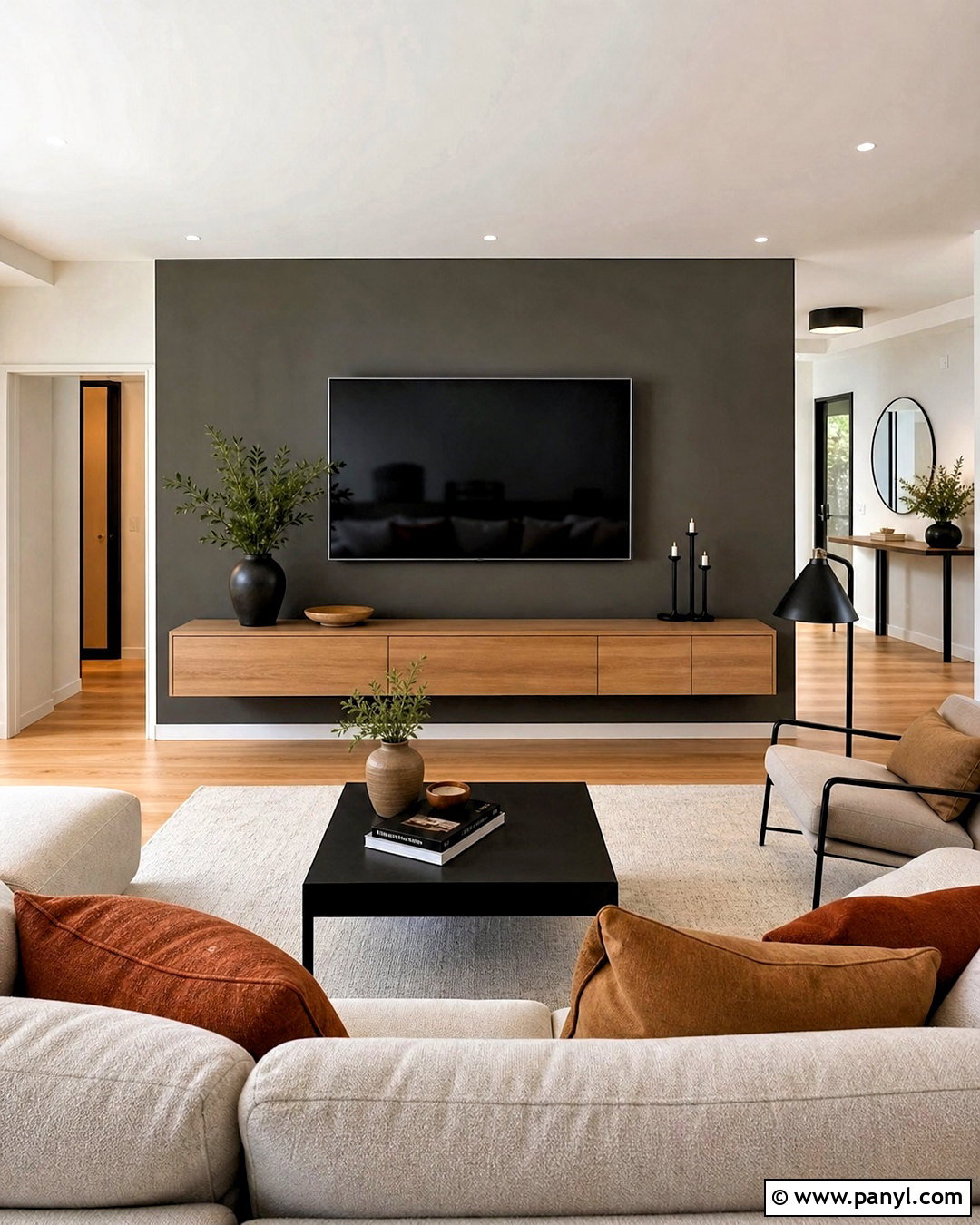
Charcoal gray offers much of the drama of black but feels slightly softer in an everyday living room. Select a deep gray with a neutral or warm undertone, then pair it with an oatmeal sofa and medium oak flooring. A long floating console in natural wood gives the television visual support while keeping the floor clear. Add rust, camel, and ivory pillows to warm the seating area. Matte black lamps and a simple round coffee table can connect the screen to the rest of the design. Paint the baseboards charcoal for a seamless feature-wall effect, but keep the ceiling and adjacent walls creamy white. A large textured rug and one tall plant complete this comfortable, contemporary arrangement without distracting from the viewing area.
3. Warm Greige TV Wall
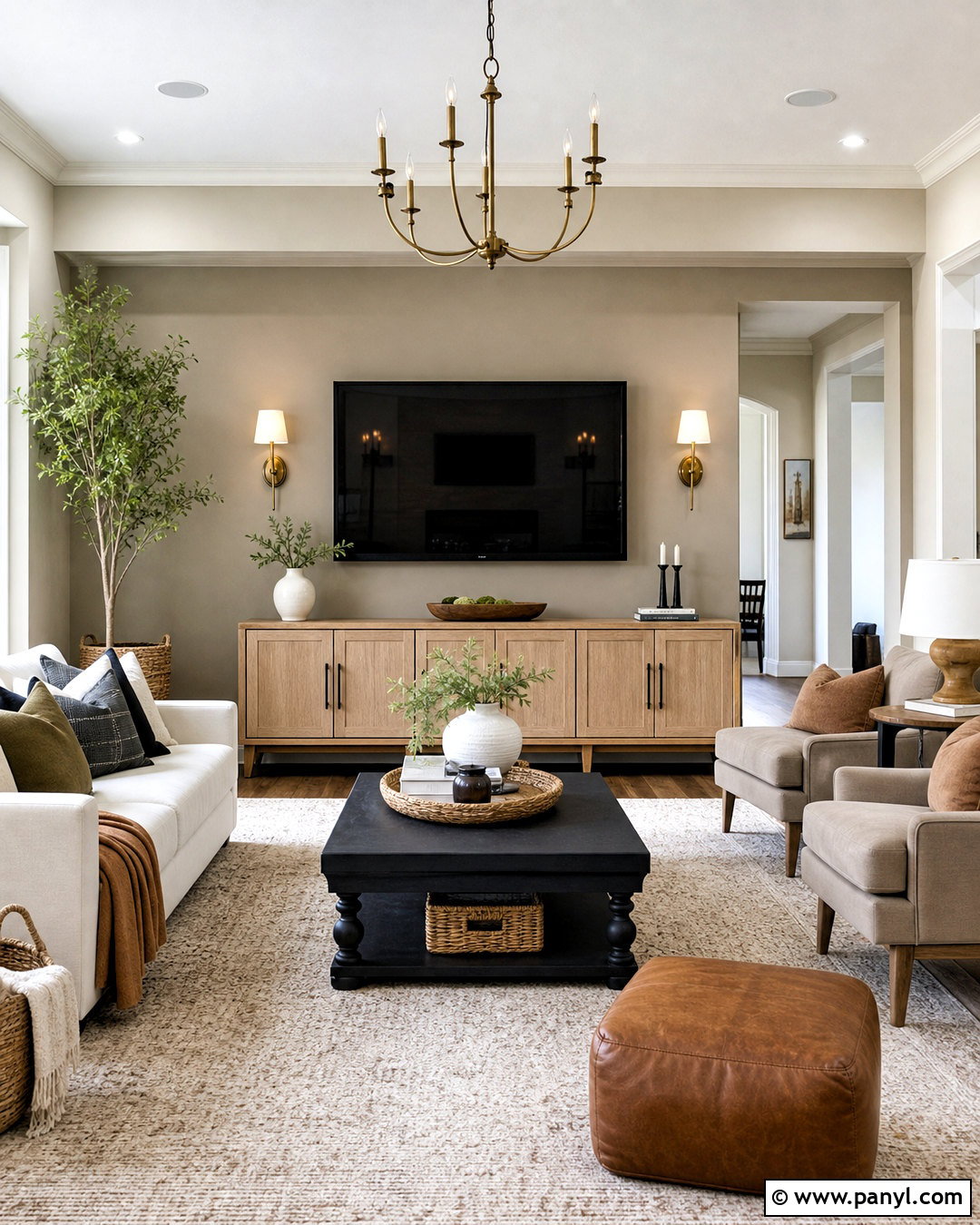
Warm greige is a practical TV wall color when you want gentle definition rather than strong contrast. It combines gray and beige tones, making it easy to coordinate with wood furniture, neutral upholstery, and changing seasonal decor. Place a black television above a light oak media cabinet with closed storage. Choose a cream sofa, taupe armchairs, and a textured ivory rug to build a soft layered palette. Brushed brass lighting and caramel leather accents keep the room from appearing flat. Paint the surrounding walls a lighter version of the same greige for a connected transition. Ceramic vases, woven baskets, and simple landscape art can finish the room. This balanced look suits family rooms, apartments, and open-plan living areas where colors need to flow naturally.
4. Creamy White TV Wall
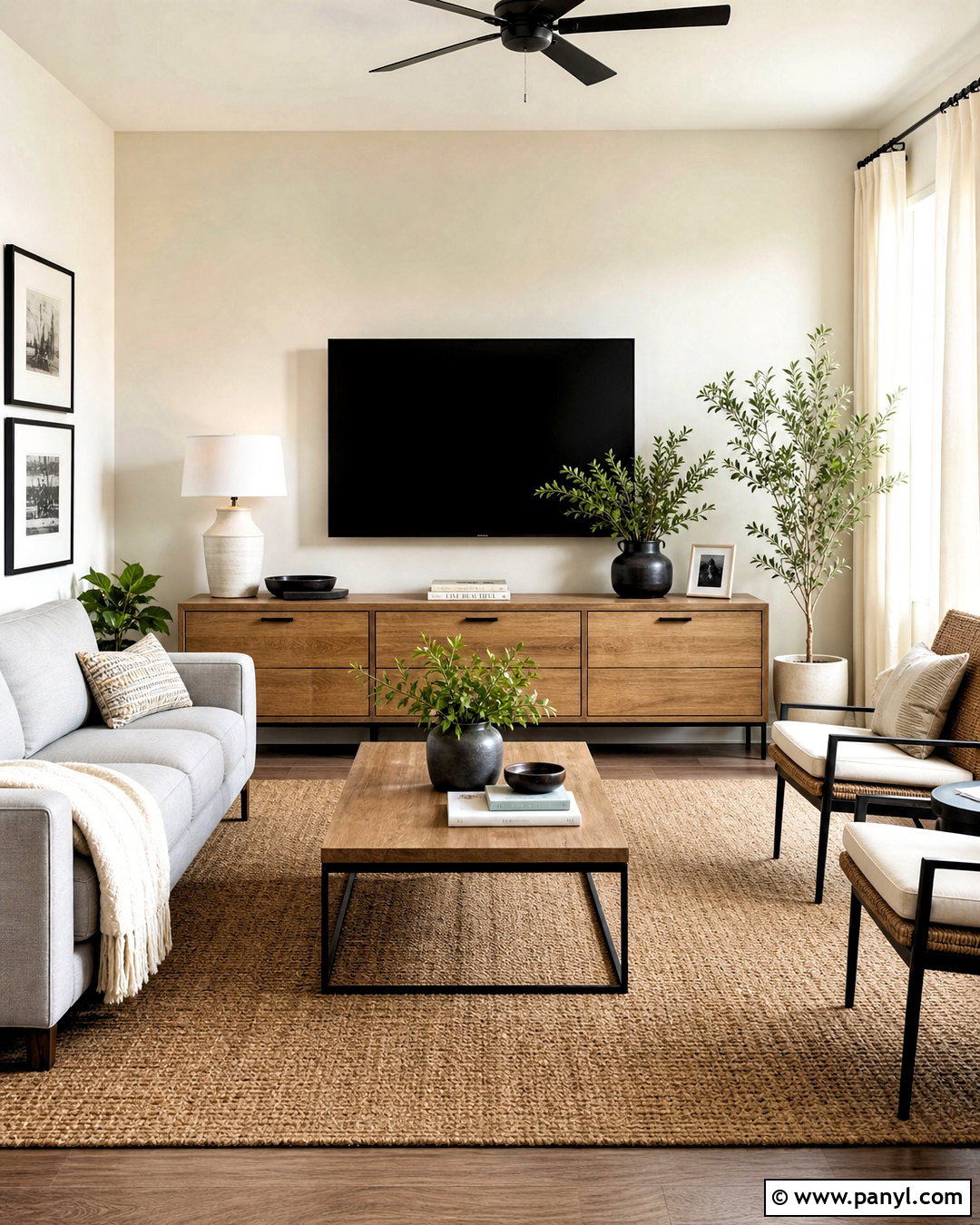
Does your living room need to feel brighter without becoming stark? A creamy white TV wall provides an airy background while its subtle yellow or beige undertone adds warmth. Use the same color across every wall for a calm, continuous look. Ground the black screen with a wide oak console and place tall ceramic lamps or leafy plants on either side. A light gray sofa, woven accent chairs, and a warm beige rug create enough tonal variation to keep the room interesting. Introduce black details through curtain rods, table legs, and small accessories. Soft linen drapes will diffuse natural light and reduce the sharp contrast between the television and wall. The finished space feels casual, comfortable, and suitable for smaller living rooms.
5. Deep Navy TV Wall
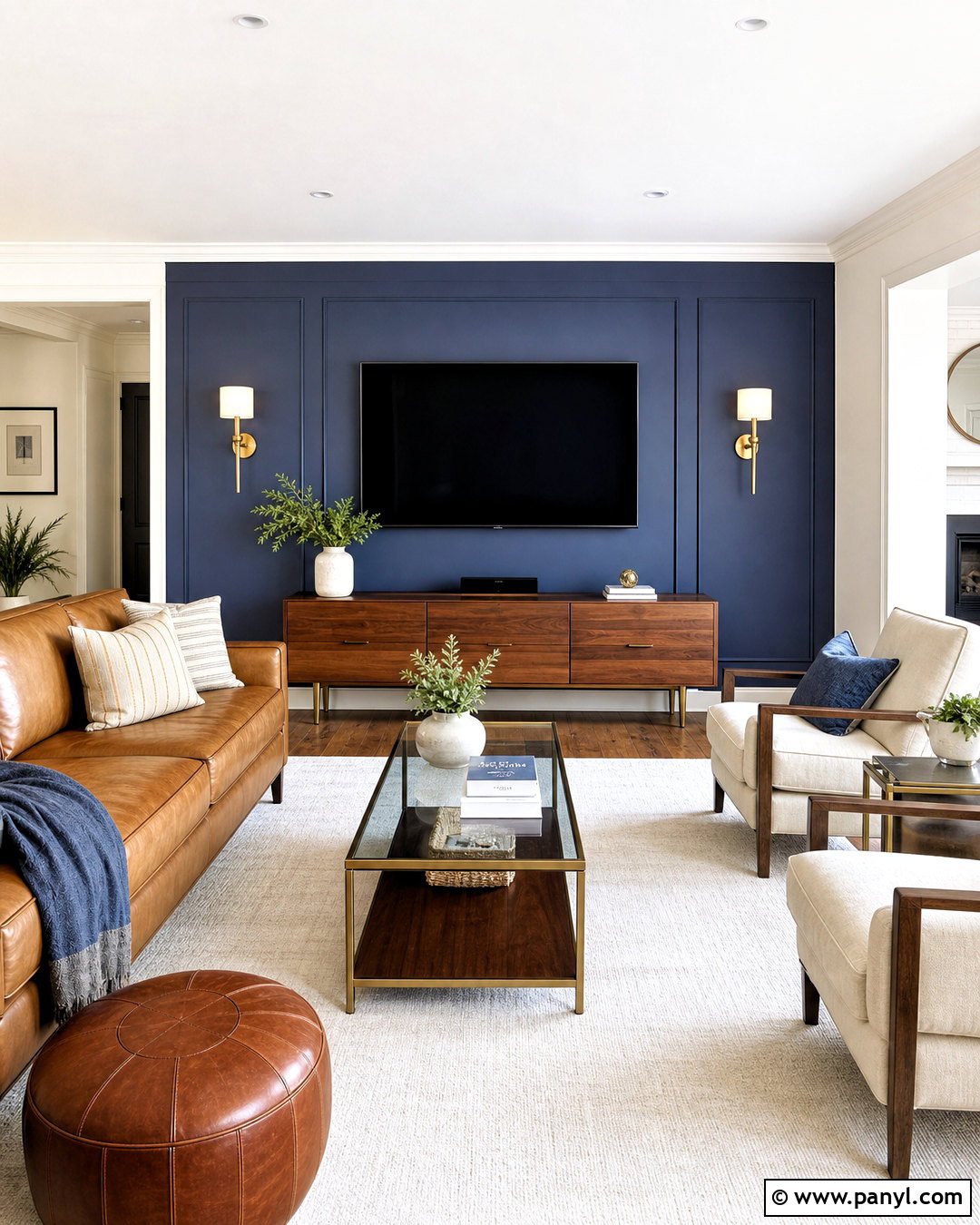
Deep navy gives a TV wall rich color while remaining easy to pair with familiar living room materials. Cover the full wall in matte navy paint and mount the screen above a walnut console with simple doors. A camel leather sofa brings warmth, while cream armchairs and an ivory rug keep the overall room balanced. Repeat navy through one or two pillows rather than adding it everywhere. Antique brass sconces, a glass coffee table, and medium-toned wood flooring create a polished transitional look. Keep nearby walls soft white so the blue feature remains clear and intentional. If the room has limited daylight, add a ceiling fixture and shaded table lamps. The completed palette feels tailored and dramatic without making the television area appear overly heavy.
6. Sage Green TV Wall
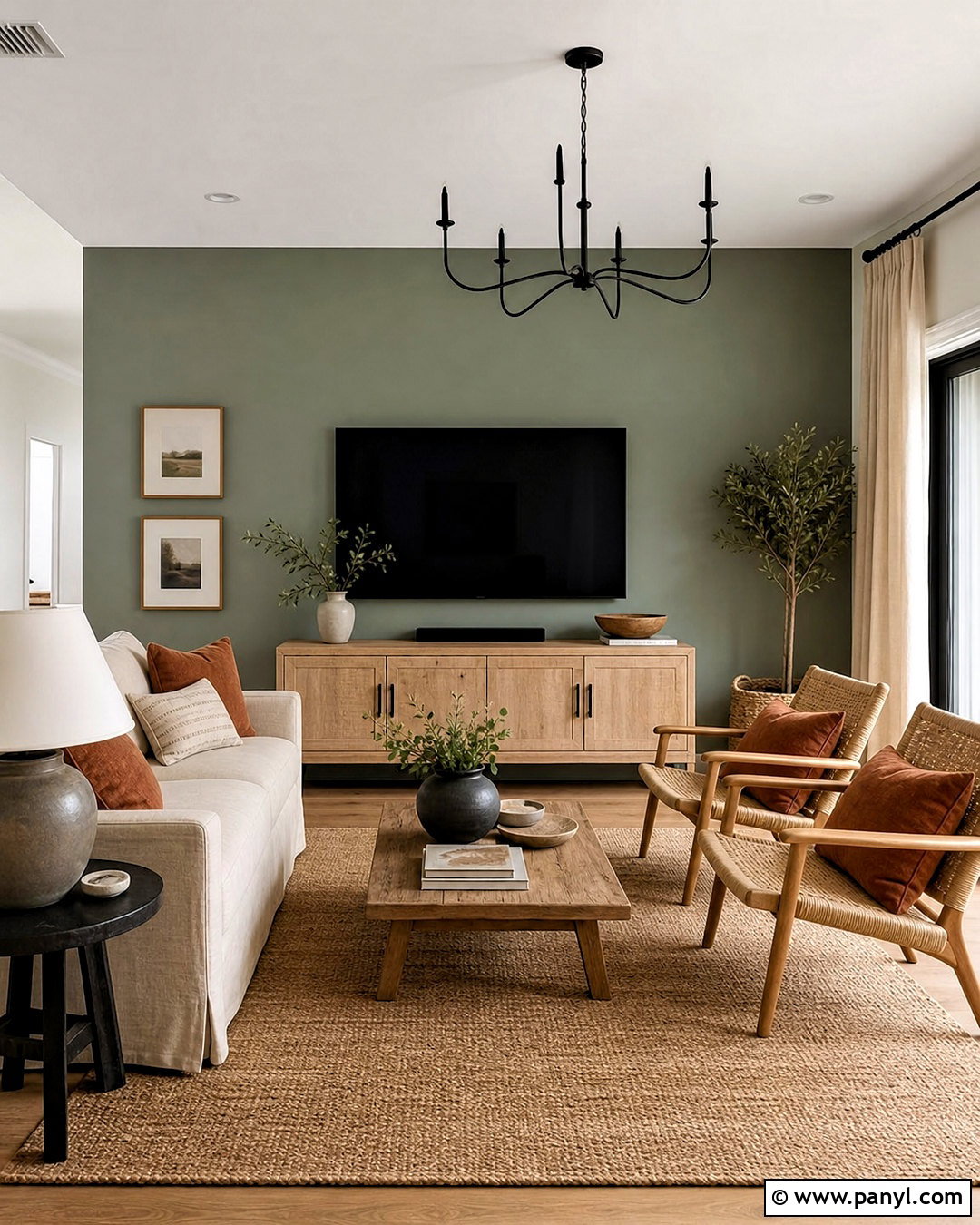
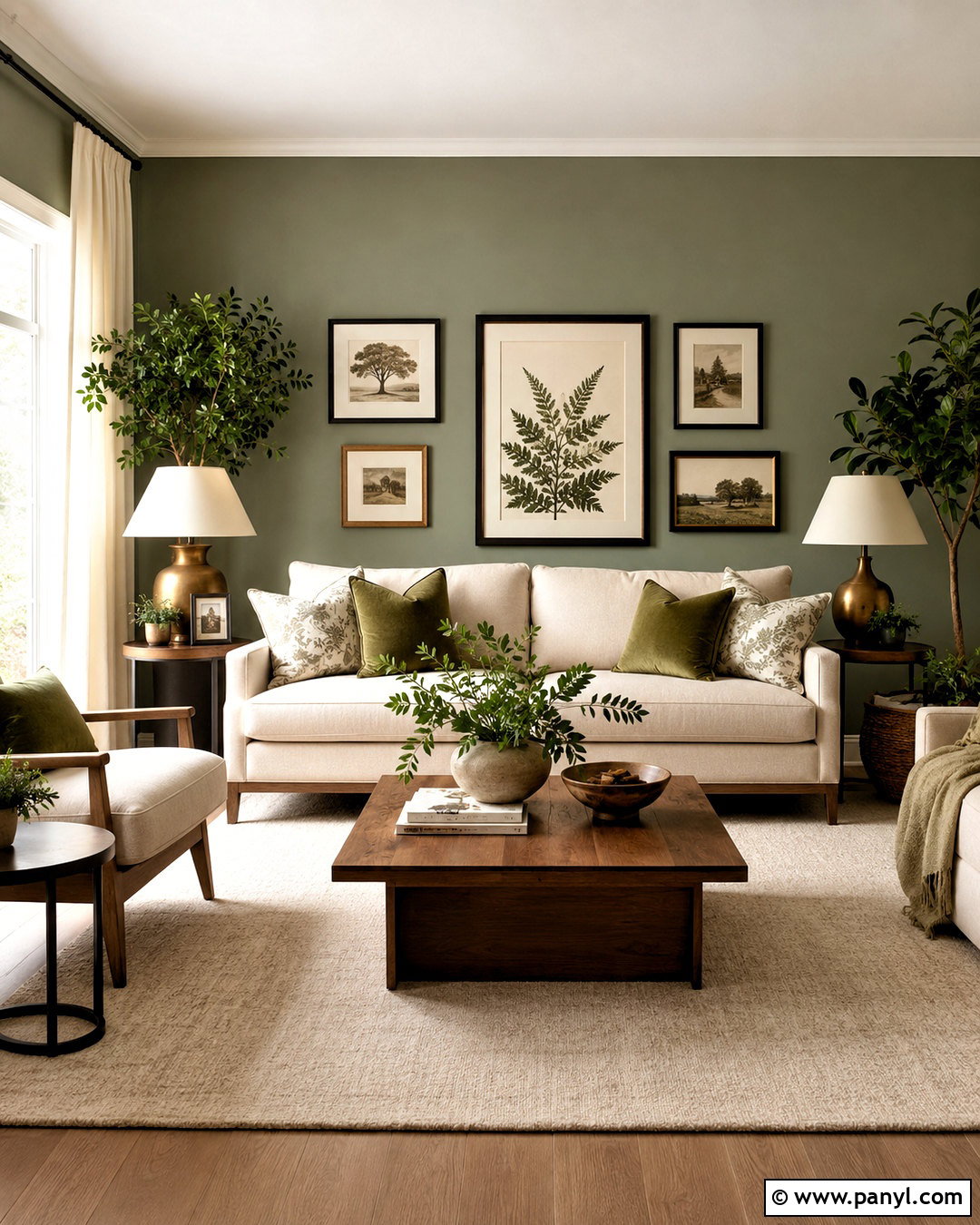
Soft sage green brings a relaxed, natural character to a television wall. Choose a muted sage with gray undertones, then combine it with a white oak media console and warm off-white walls. A beige slipcovered sofa, cane accent chairs, and a jute-blend rug reinforce the organic palette. Use oatmeal curtains that reach from ceiling to floor to make the room appear taller. Small black accents, including the coffee-table frame and curtain hardware, help the television feel connected rather than isolated. Decorate the console with low ceramic pieces so nothing blocks the screen. A few rust or muted terracotta cushions provide gentle contrast. This complete living room works particularly well with casual, Scandinavian, farmhouse, or nature-inspired interiors.
7. Forest Green TV Wall
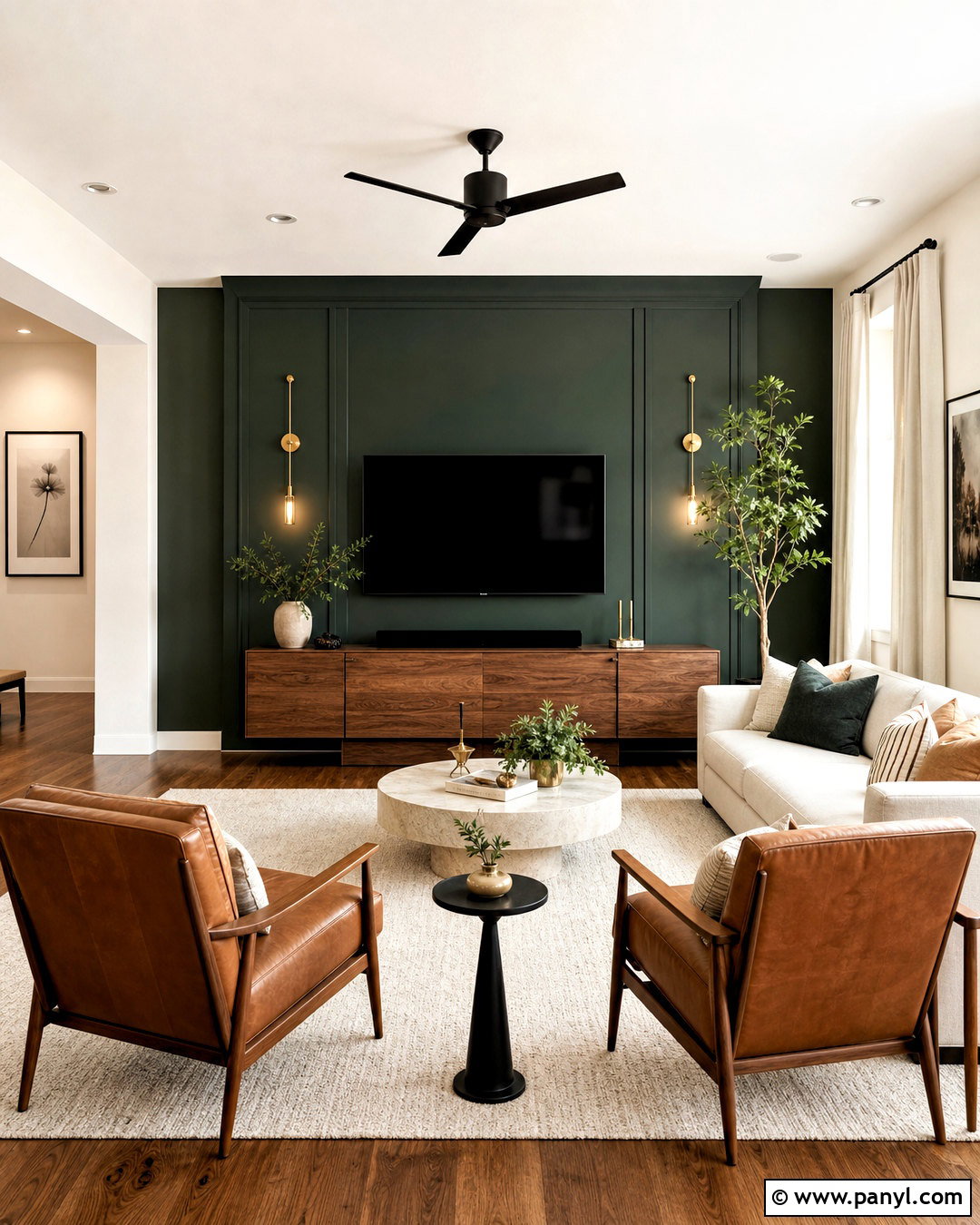
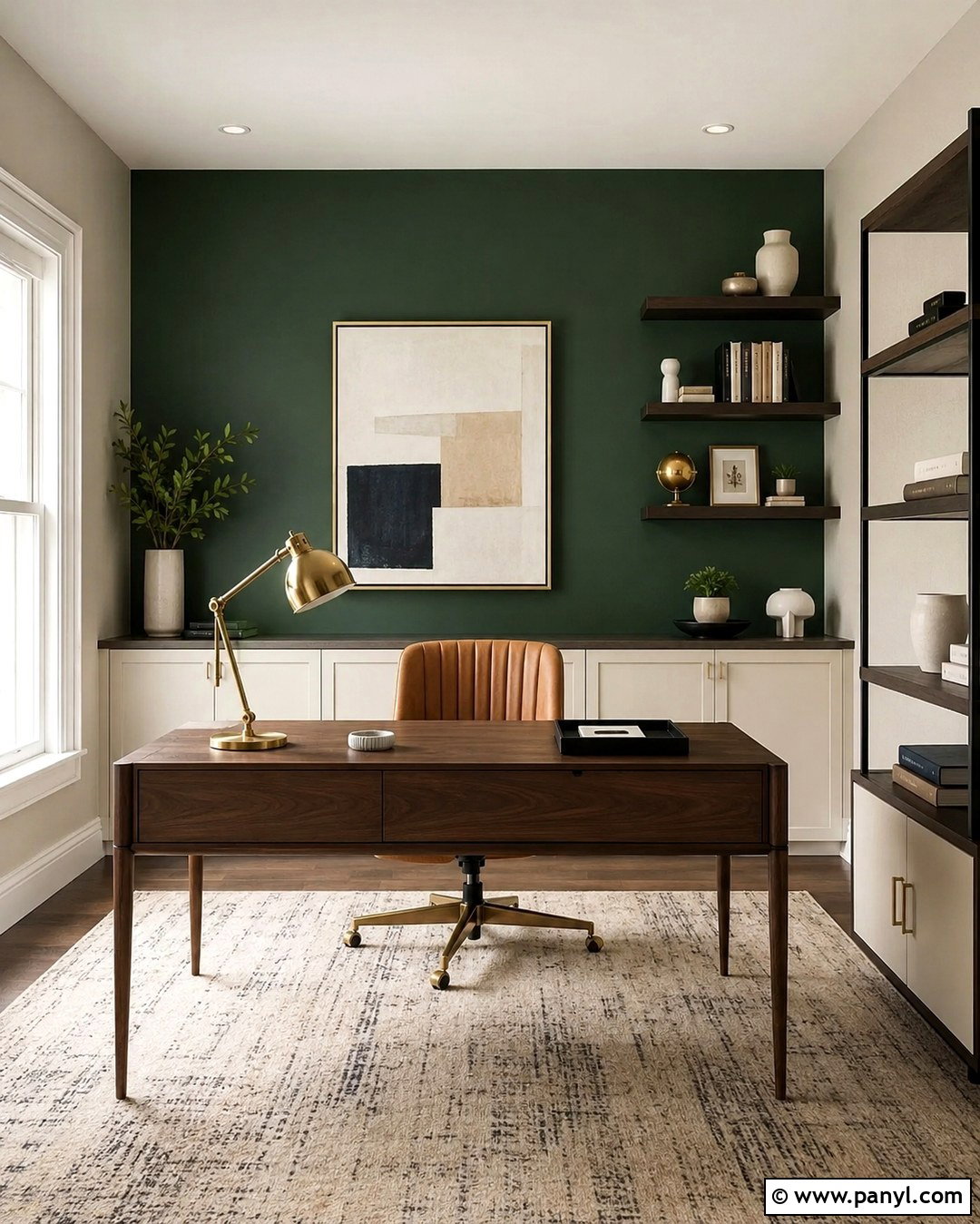
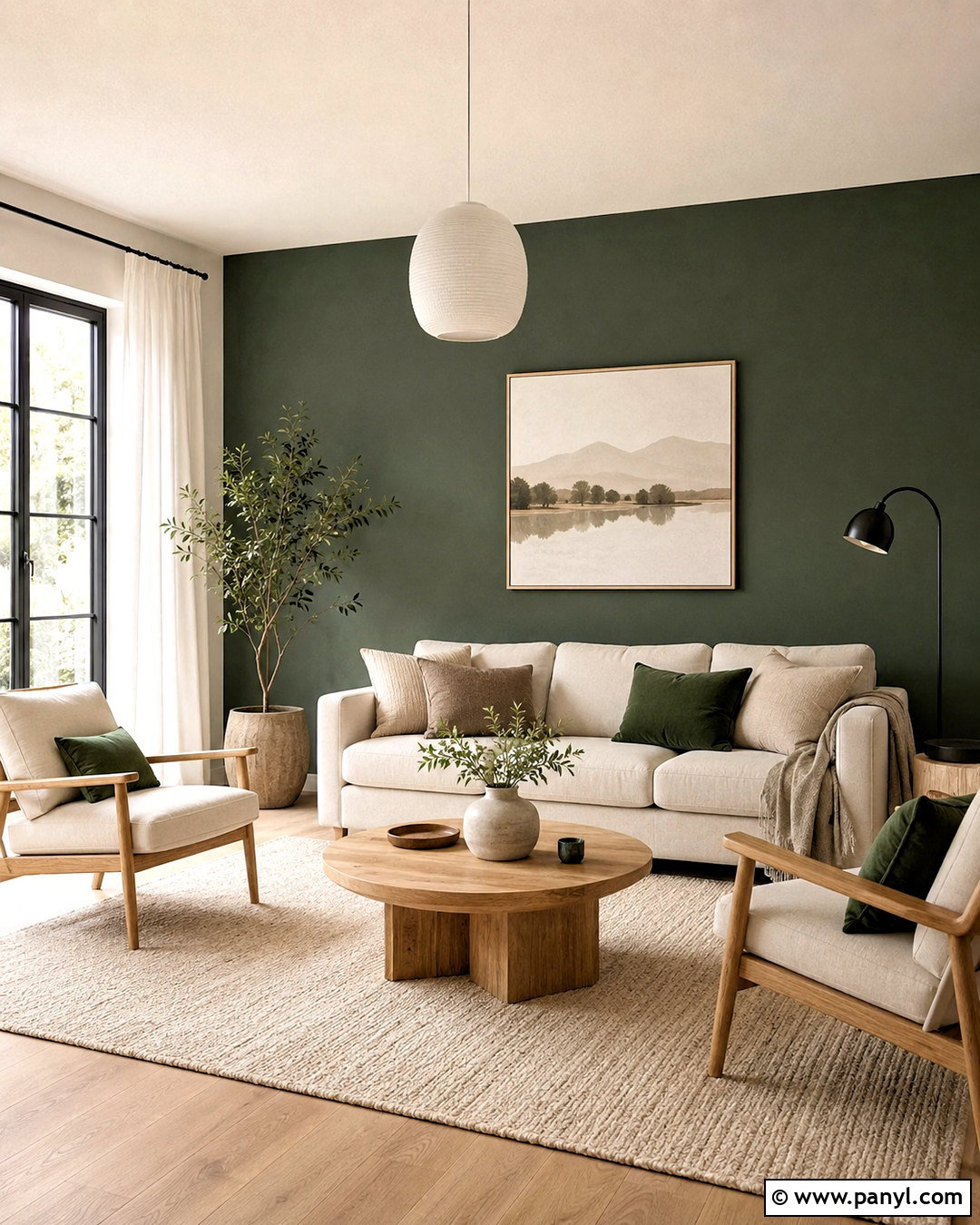
For a richer natural palette, use deep forest green behind the television and surround it with warm, light furnishings. A low walnut cabinet creates a smooth transition between the dark green paint and wood flooring. Position a parchment-colored sofa opposite the screen, then add cognac leather chairs and an ivory wool rug. Brass picture lights or compact sconces add a refined metallic detail. Keep the neighboring walls warm white and use off-white curtains to reflect daylight into the seating area. Botanical prints can hang on an adjacent wall, but leave the television wall mostly uncluttered. Include forest green in a patterned pillow or throw to distribute the color. The result is a cozy, sophisticated living room that still feels welcoming during the daytime.
8. Muted Teal TV Wall
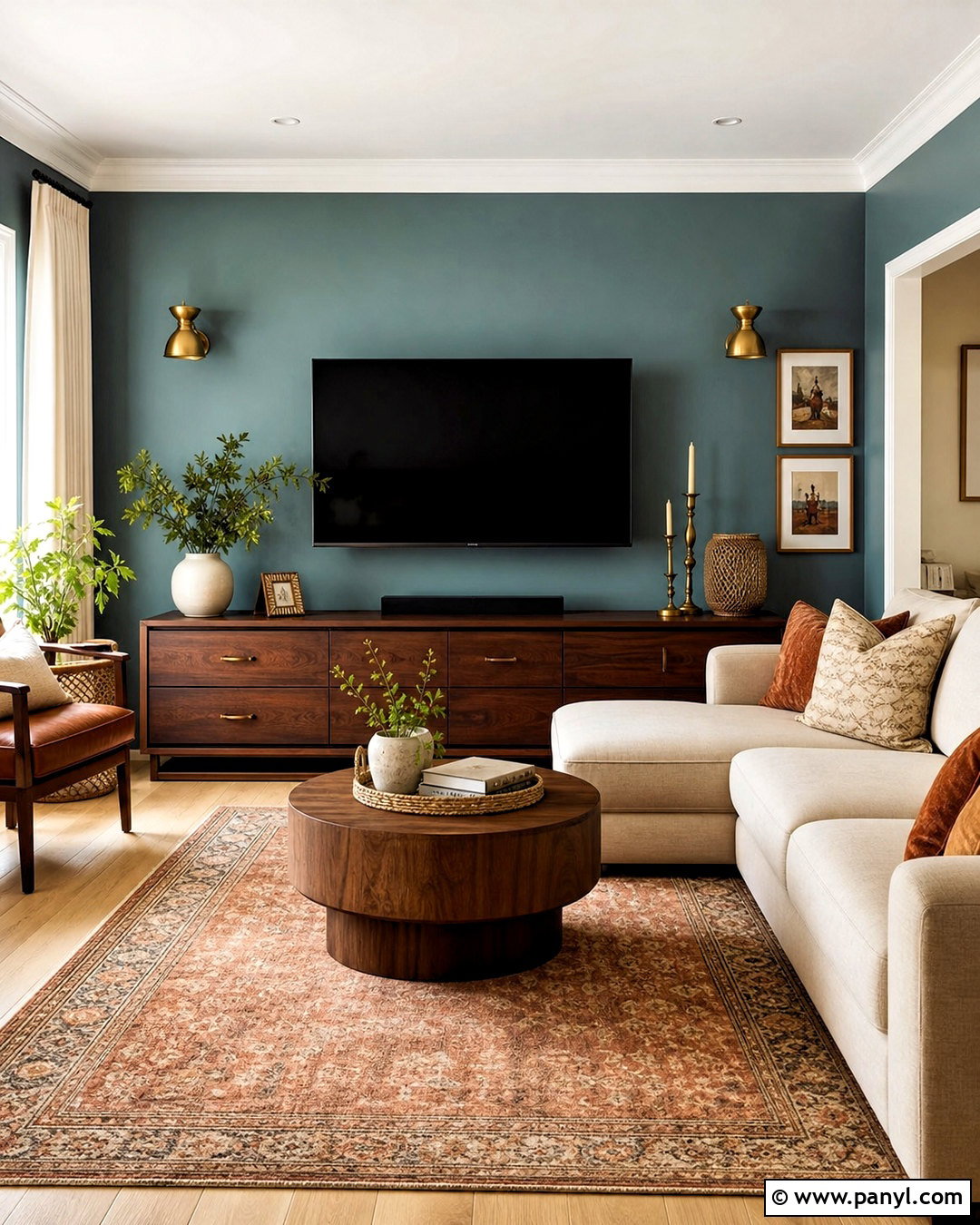
Muted teal sits between blue and green, giving the television wall personality without looking excessively bright. Select a dusty, gray-based teal and pair it with a slim dark walnut console. A warm beige sectional keeps the main seating neutral, while caramel cushions and a faded rust rug introduce earthy contrast. Hang simple brass sconces at equal heights on both sides of the screen. Cream curtains and pale oak flooring prevent the darker color from overwhelming the room. Use a round wood coffee table to soften the straight lines of the television and console. A few blue-green accessories can continue the palette, but avoid filling every surface. This coordinated room feels fresh, colorful, and comfortable enough for daily family use.
9. Terracotta TV Wall
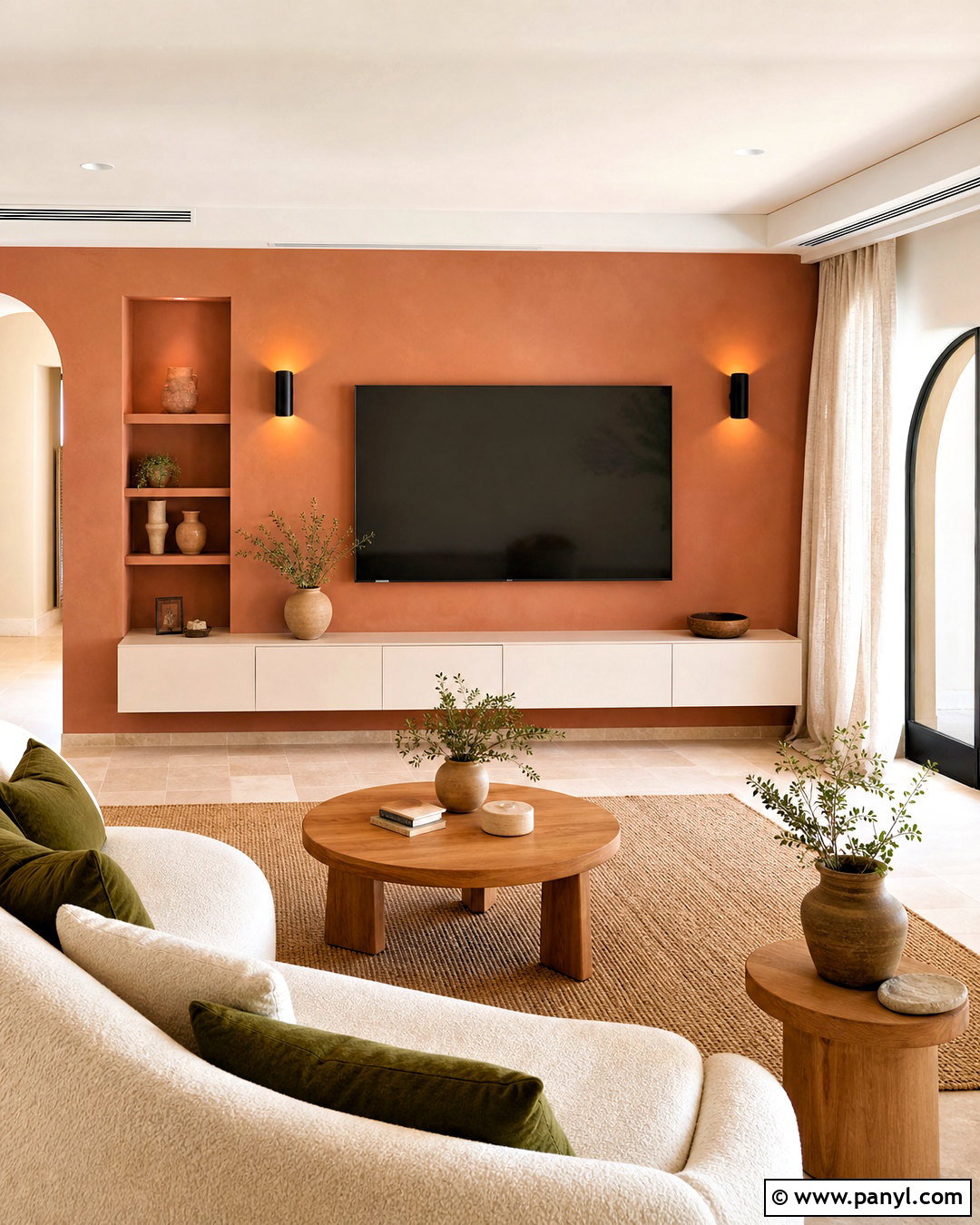
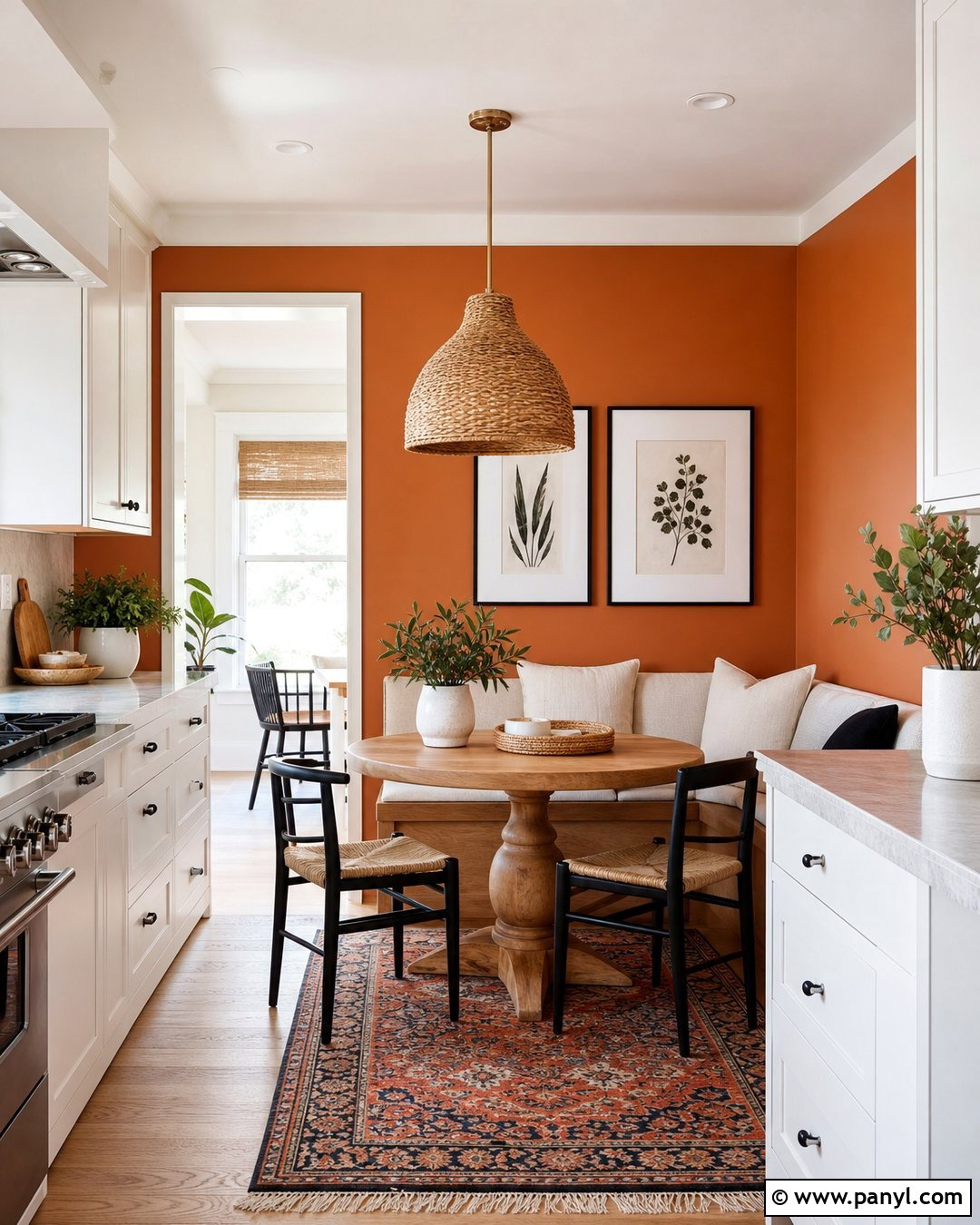
A terracotta TV wall can make a plain living room feel warm and grounded. Look for a softened clay shade rather than a highly saturated orange. Pair it with a cream boucle sofa, light oak tables, and a woven tan rug for an earthy Mediterranean-inspired setting. A floating media cabinet in warm white creates breathing room between the black screen and colored wall. Add olive green pillows, linen curtains, and handmade ceramic accessories to support the natural palette. Black wall lights can echo the television while providing useful evening illumination. Keep the other walls pale beige and choose simple furniture with rounded shapes. Together, these details create a welcoming, sun-washed living room where the feature wall adds warmth without becoming visually overwhelming.
10. Chocolate Brown TV Wall
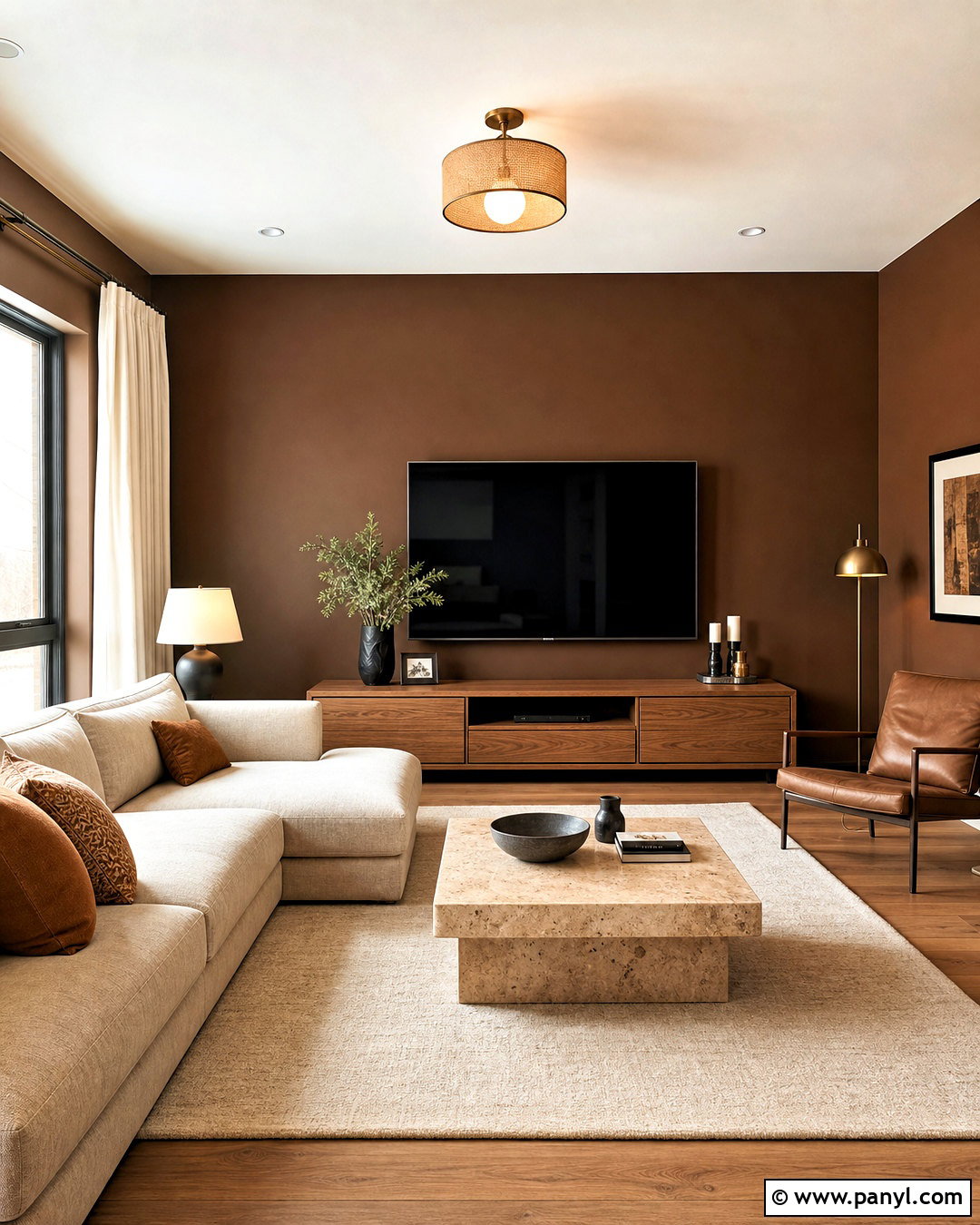
Chocolate brown gives the TV wall a cocooning appearance and allows the black screen to blend into a richer neutral background. Choose a deep brown with warm, earthy undertones and use an eggshell or matte finish. Balance it with a light oatmeal sectional, cream rug, and pale curtains. A long console in medium oak prevents the scheme from becoming too dark, while bronze lamps and amber-colored cushions add subtle warmth. Include a travertine or light stone coffee table for contrast and texture. Paint only the main TV wall brown if the room receives limited daylight. In a brighter room, repeat the shade on built-ins or trim. The finished design feels comfortable, modern, and more layered than a standard gray-and-white palette.
11. Mushroom Taupe TV Wall
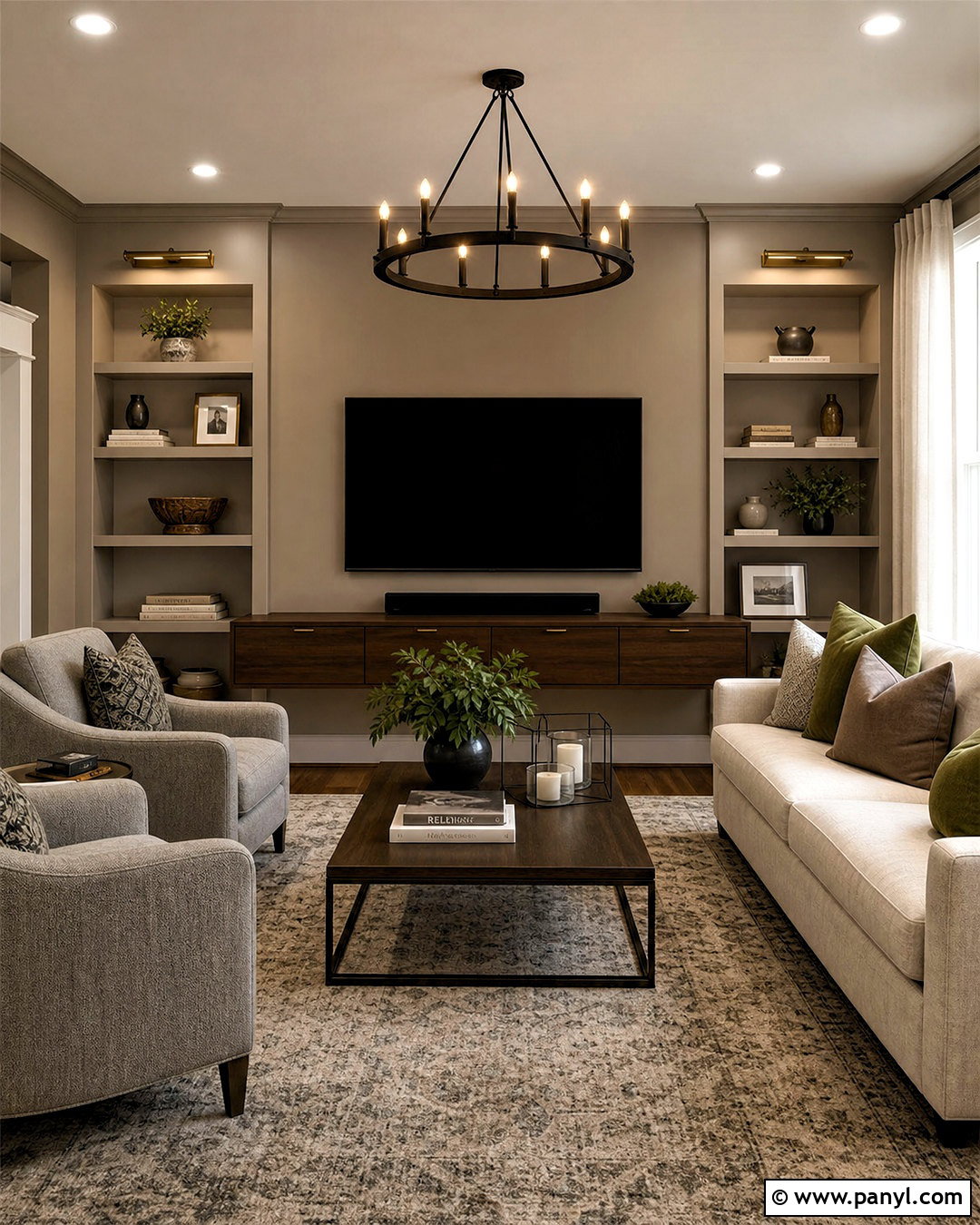
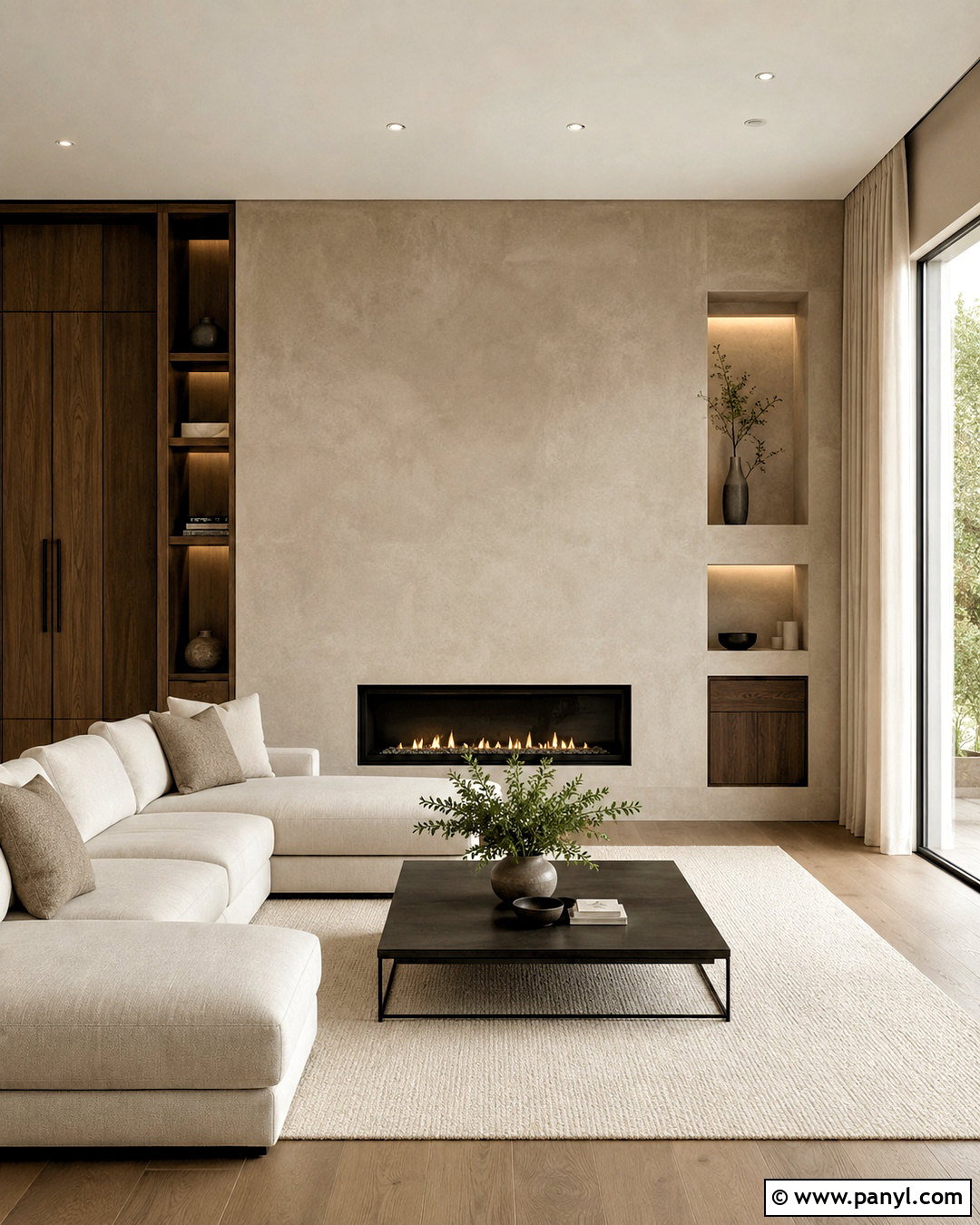
Mushroom taupe is an adaptable color that falls between beige, brown, and gray. It gives a TV wall quiet depth while coordinating with both warm and cool furnishings. Place a black screen above a floating walnut console and add narrow taupe-painted shelves at each side. Furnish the room with a soft ivory sofa, gray-beige chairs, and an understated patterned rug. Dark bronze lighting provides definition without the sharpness of bright black accents. Use muted olive and clay-colored pillows for gentle color, then finish the windows with natural linen curtains. Painting the trim in the same taupe creates a smooth, contemporary background. This sophisticated neutral scheme suits open-concept homes because it transitions easily into wood kitchens, beige dining spaces, and light hallways.
12. Dusty Blue TV Wall
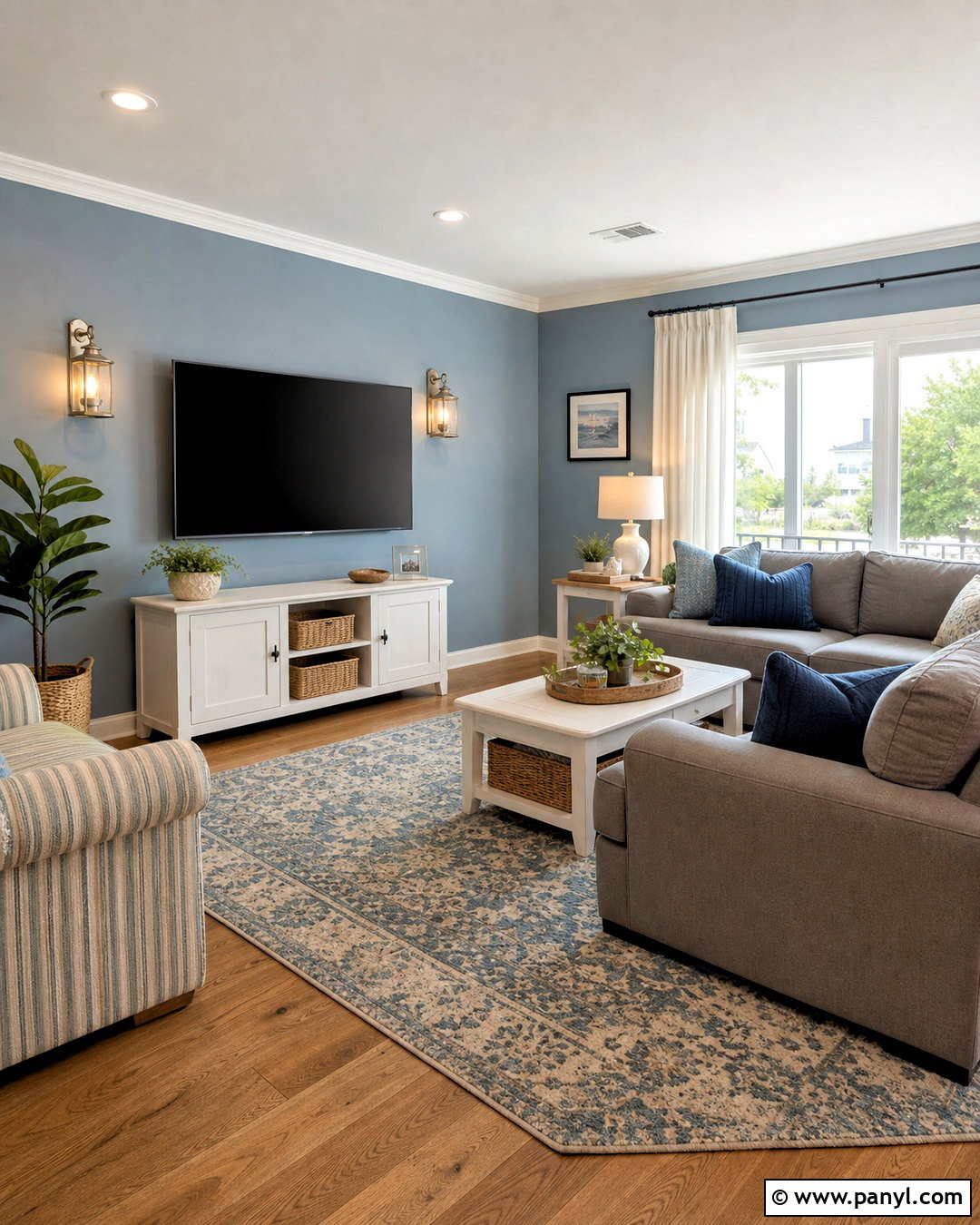
Dusty blue introduces soft color to the television area while maintaining a restful atmosphere. A blue with noticeable gray undertones will appear more mature and easier to decorate than a clear pastel. Combine it with a white media cabinet, natural oak flooring, and a warm gray sofa. Add navy pillows, cream curtains, and a faded blue-and-tan rug to layer several related tones. A pair of brushed nickel sconces can provide symmetry without making the wall feel formal. Keep the coffee table and side tables in medium wood to bring warmth into the cool palette. White or pale greige on the surrounding walls preserves an open feeling. This finished room is especially effective in coastal, cottage, and relaxed transitional homes.
13. Burgundy TV Wall
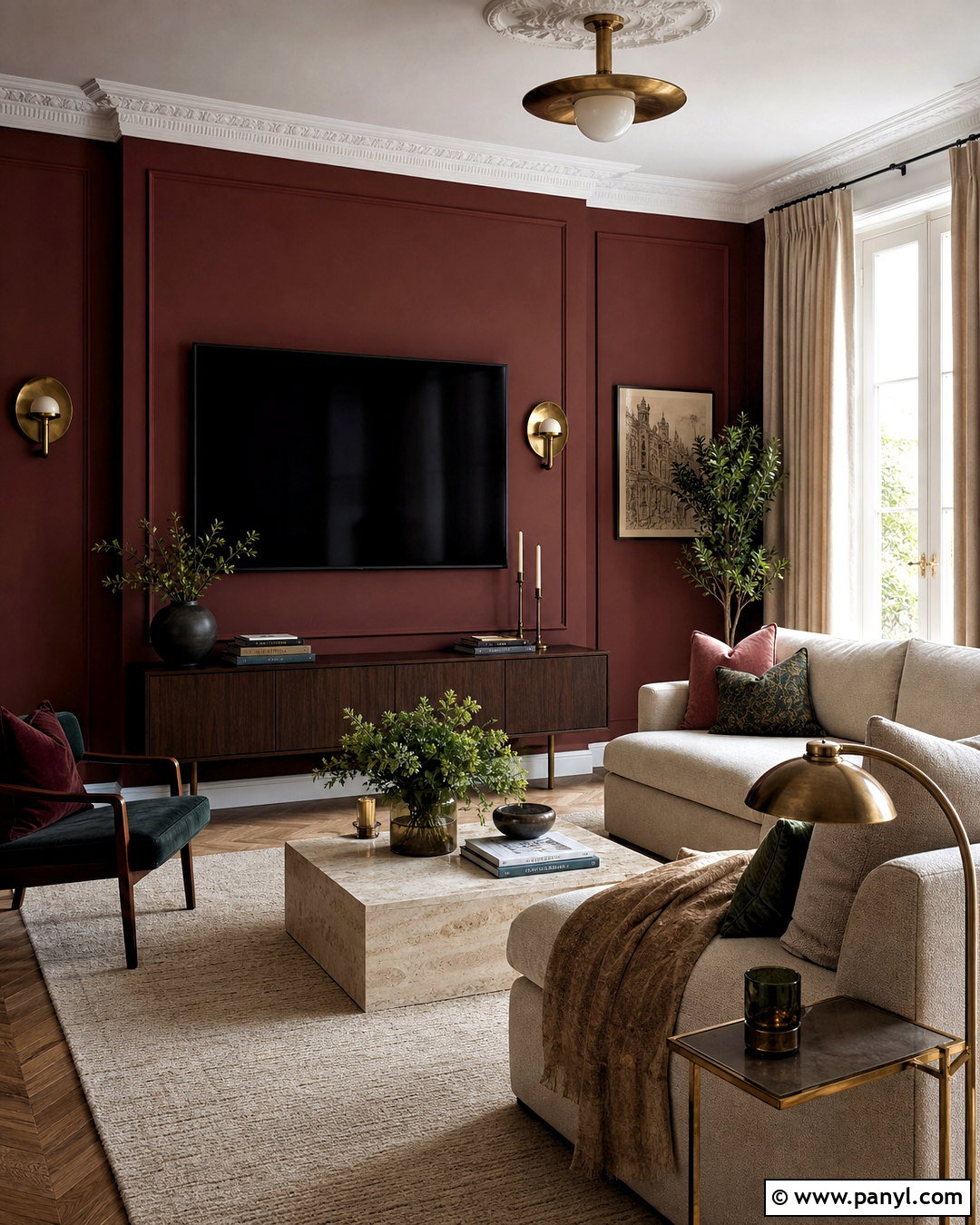
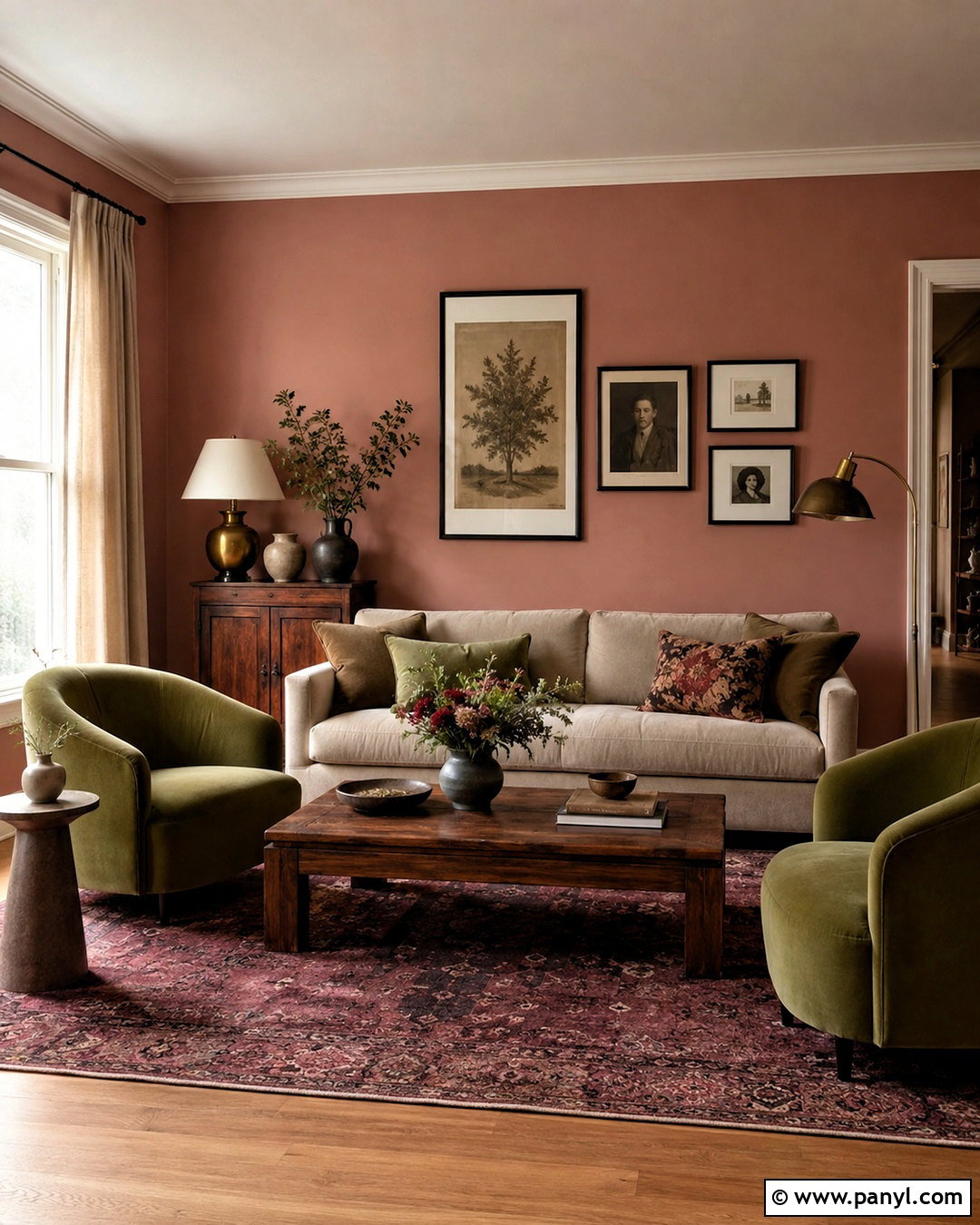
Burgundy creates an expressive TV wall that feels warm, tailored, and unexpected. Select a muted red with brown or plum undertones rather than a vivid primary red. A black television will sit naturally against this deeper shade, especially above a dark walnut console. Balance the room with a light beige sofa, oatmeal curtains, and a large cream rug. Add aged brass lamps and touches of dusty rose, caramel, and dark green through pillows and a throw. A pale stone coffee table breaks up the stronger colors and gives the seating area a lighter center. Keep artwork on neighboring walls simple and neutral. When thoughtfully balanced, this palette delivers character while remaining comfortable enough for a practical family living room.
14. Ochre Yellow TV Wall
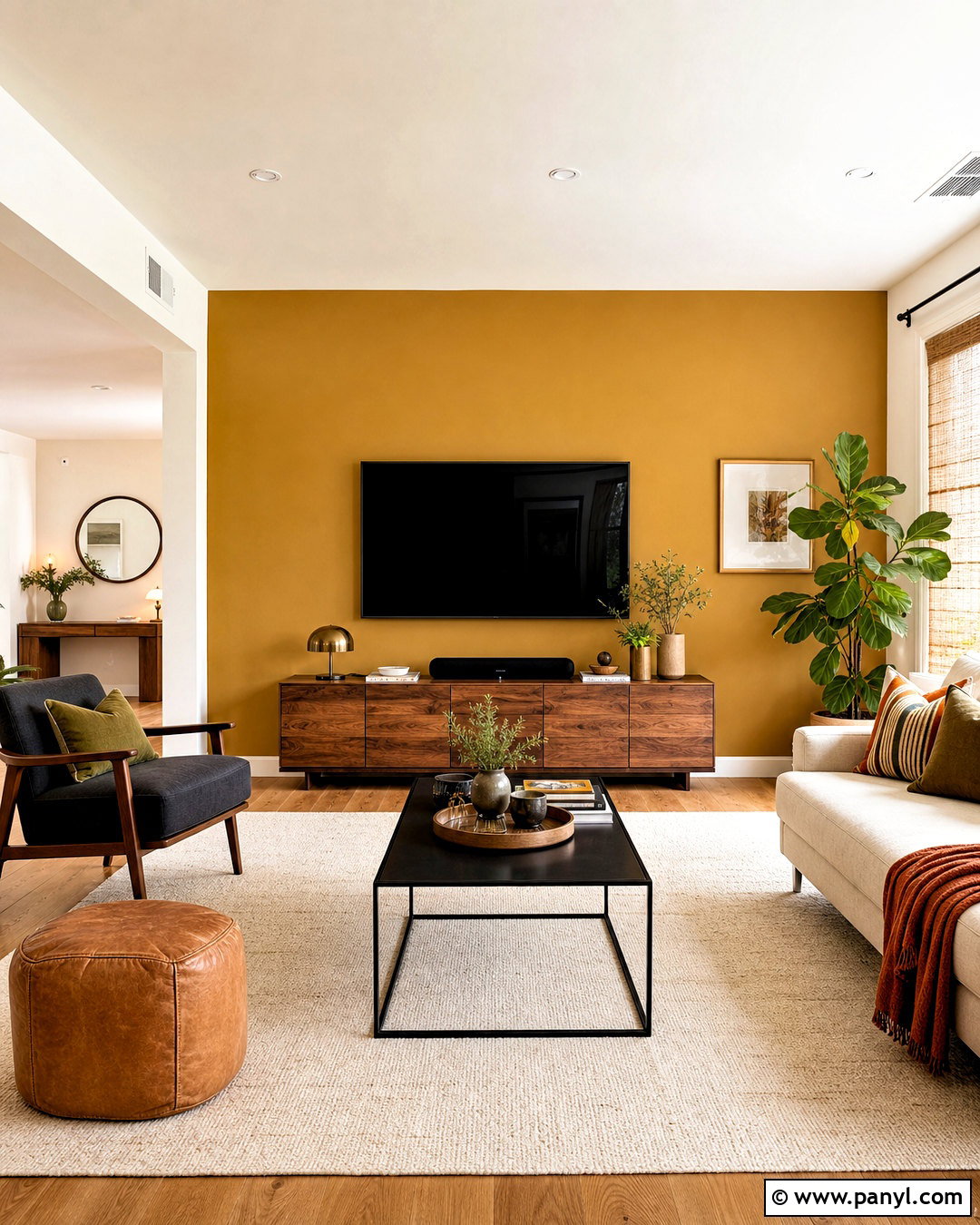
Warm ochre yellow can create a cheerful TV wall without the intensity of bright lemon paint. Choose a muted mustard or golden earth tone and combine it with walnut furniture, cream upholstery, and dark bronze accents. Mount the television over a closed media console to keep electronics and accessories hidden. A charcoal armchair and black metal coffee table help repeat the screen’s dark color throughout the room. Use an ivory rug and warm white surrounding walls to maintain brightness. Rust, olive, and beige cushions complete the earthy palette. Natural woven shades can soften daylight and complement the ochre wall. The result is an inviting, retro-influenced living room that feels sunny, grounded, and visually balanced throughout the year.
15. Soft Blush TV Wall
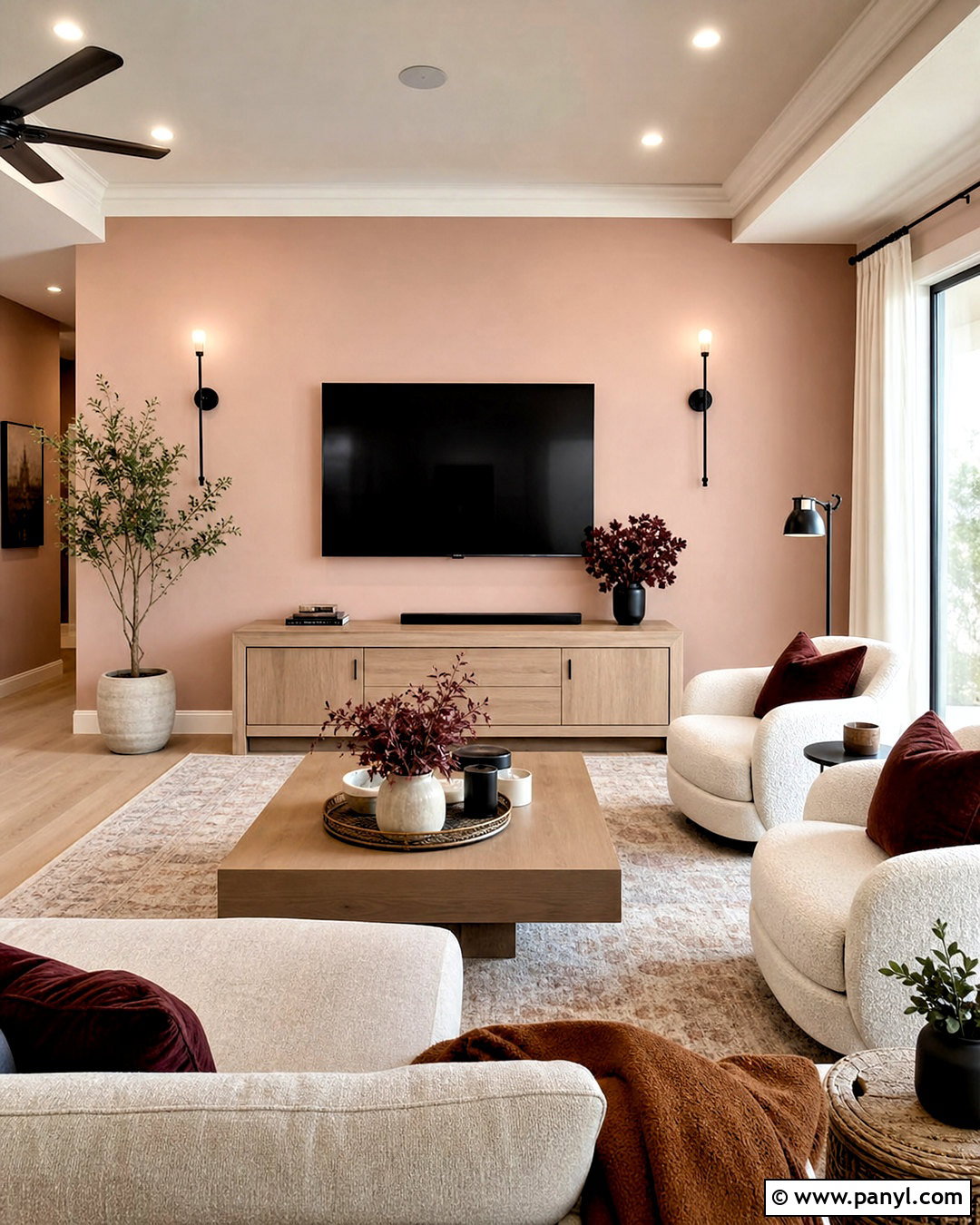
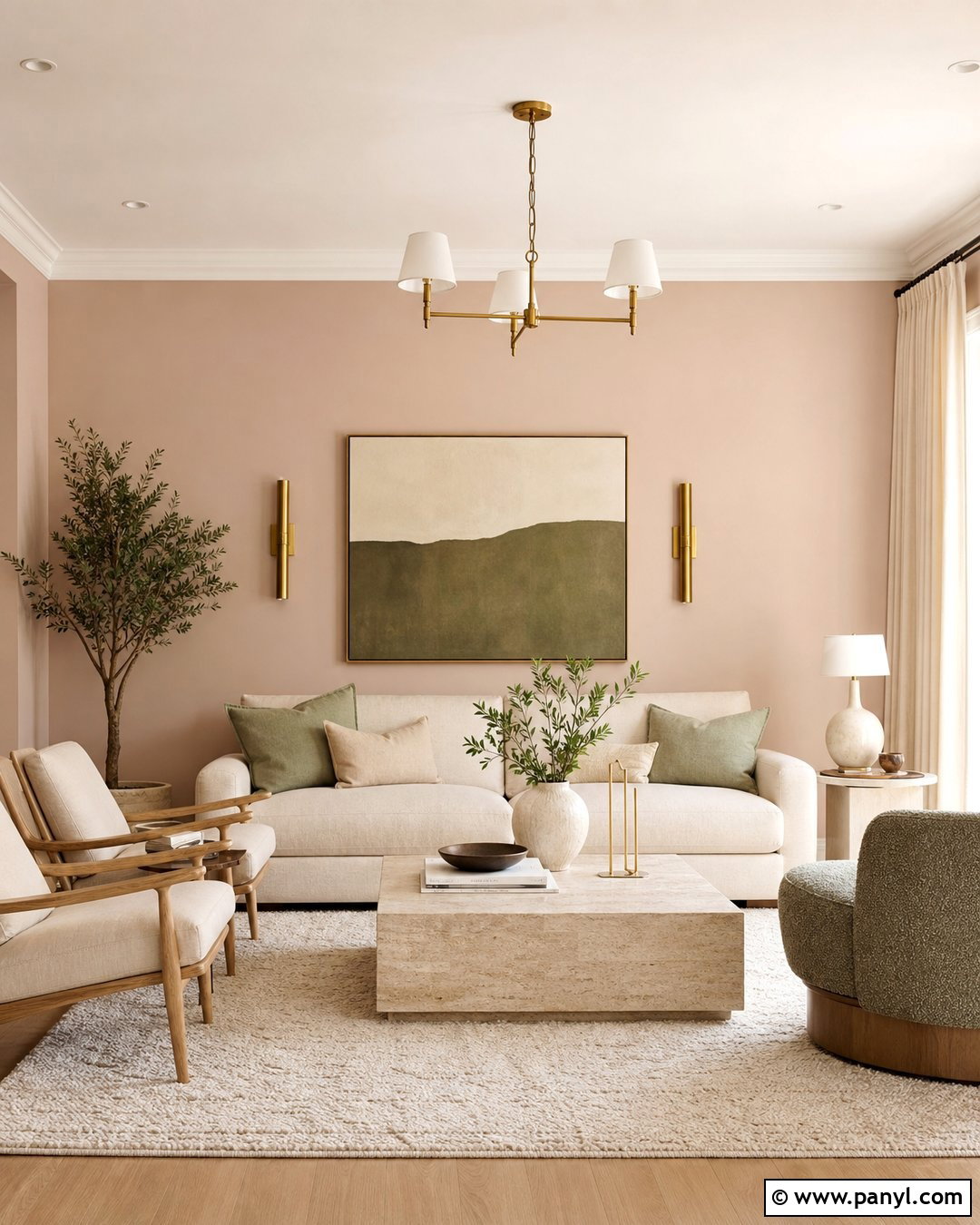
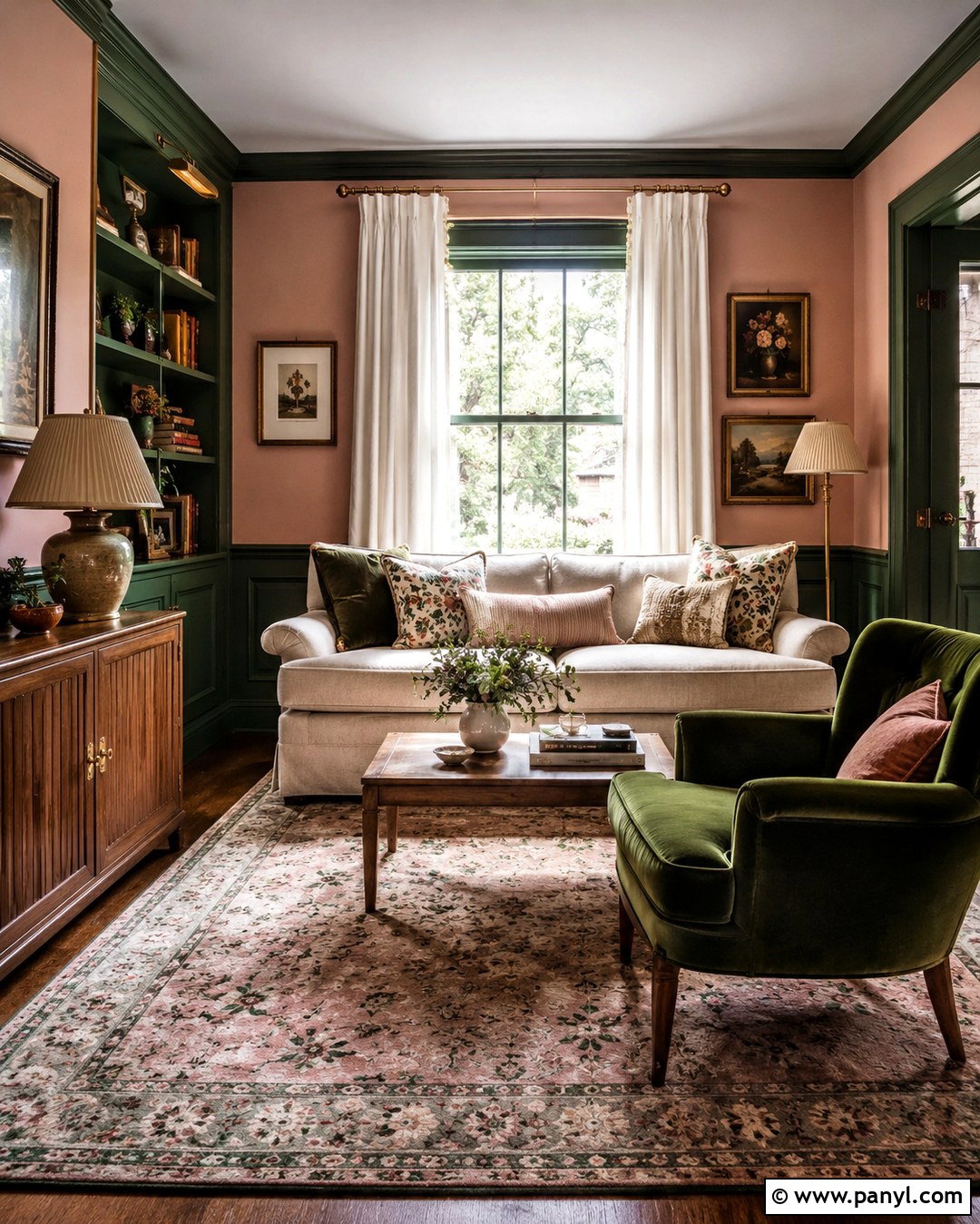
A soft blush TV wall adds warmth without making the living room appear overly sweet or themed. Look for a dusty pink containing beige, gray, or clay undertones. Pair it with a pale oak console, an oatmeal sofa, and ivory boucle chairs for a soft contemporary look. Black sconces and table legs create crisp connections to the television. Ground the seating area with a taupe rug, then introduce burgundy and warm brown through a few cushions. Off-white curtains keep the room bright, while matte ceramic decor gives the console a handcrafted finish. Avoid busy artwork immediately around the screen. With restrained accessories and natural materials, the completed blush living room feels calm, modern, and suitable for both small apartments and larger family spaces.
16. Blue Gray TV Wall
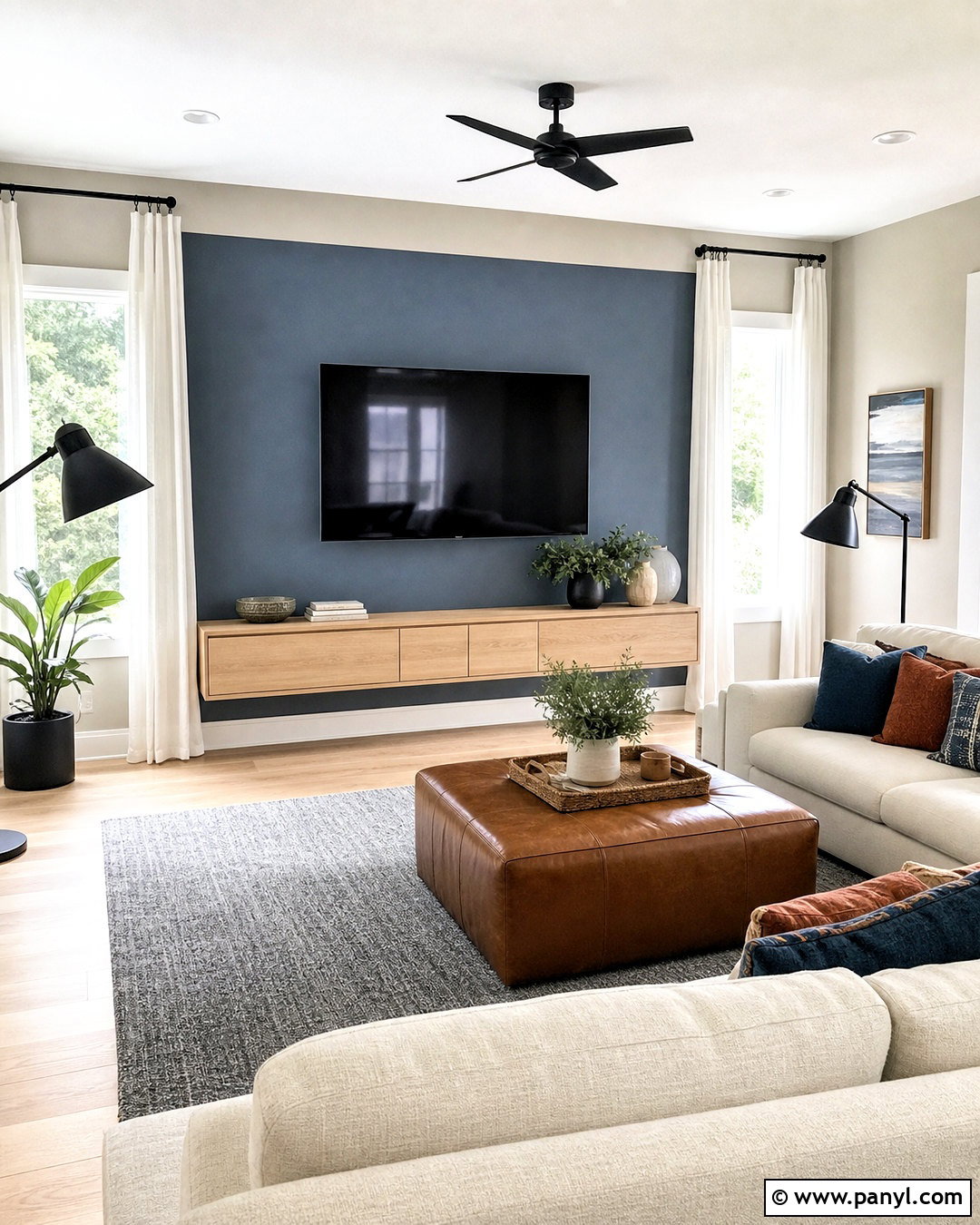
Blue gray is a smart choice when pure gray feels too plain but strong blue seems difficult to coordinate. Paint the TV wall a medium blue gray and use pale warm gray on the remaining walls. A floating white oak console keeps the feature wall light and practical. Furnish the room with a cream sectional, cognac leather ottoman, and textured gray rug. Matte black floor lamps and curtain rods echo the television, creating a consistent outline across the space. Add muted denim and rust pillows for a comfortable, lived-in finish. White linen curtains and a large mirror on an adjacent wall can help distribute daylight. The complete room feels clean and current without relying on a bold or high-contrast accent color.
17. Olive Green TV Wall
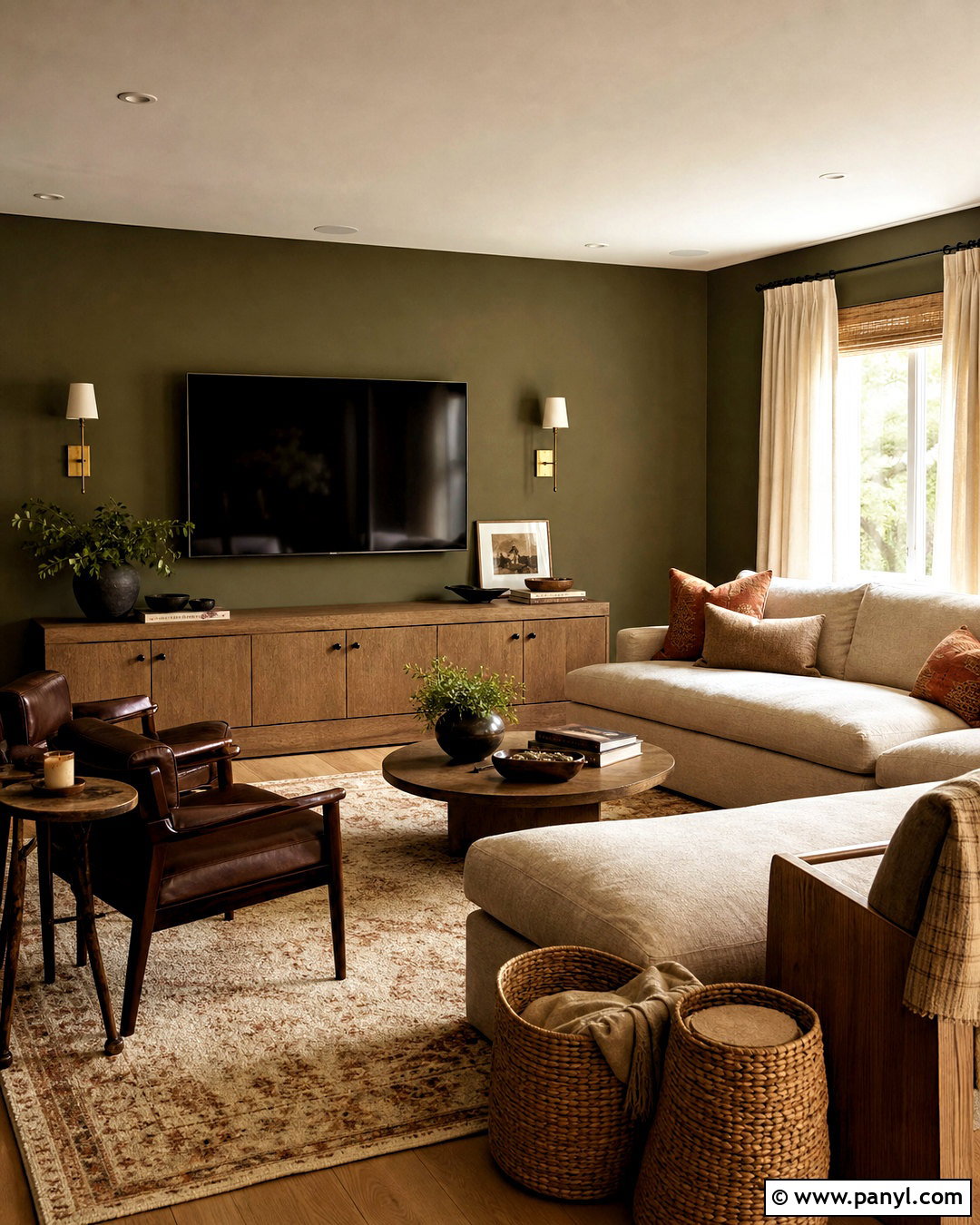
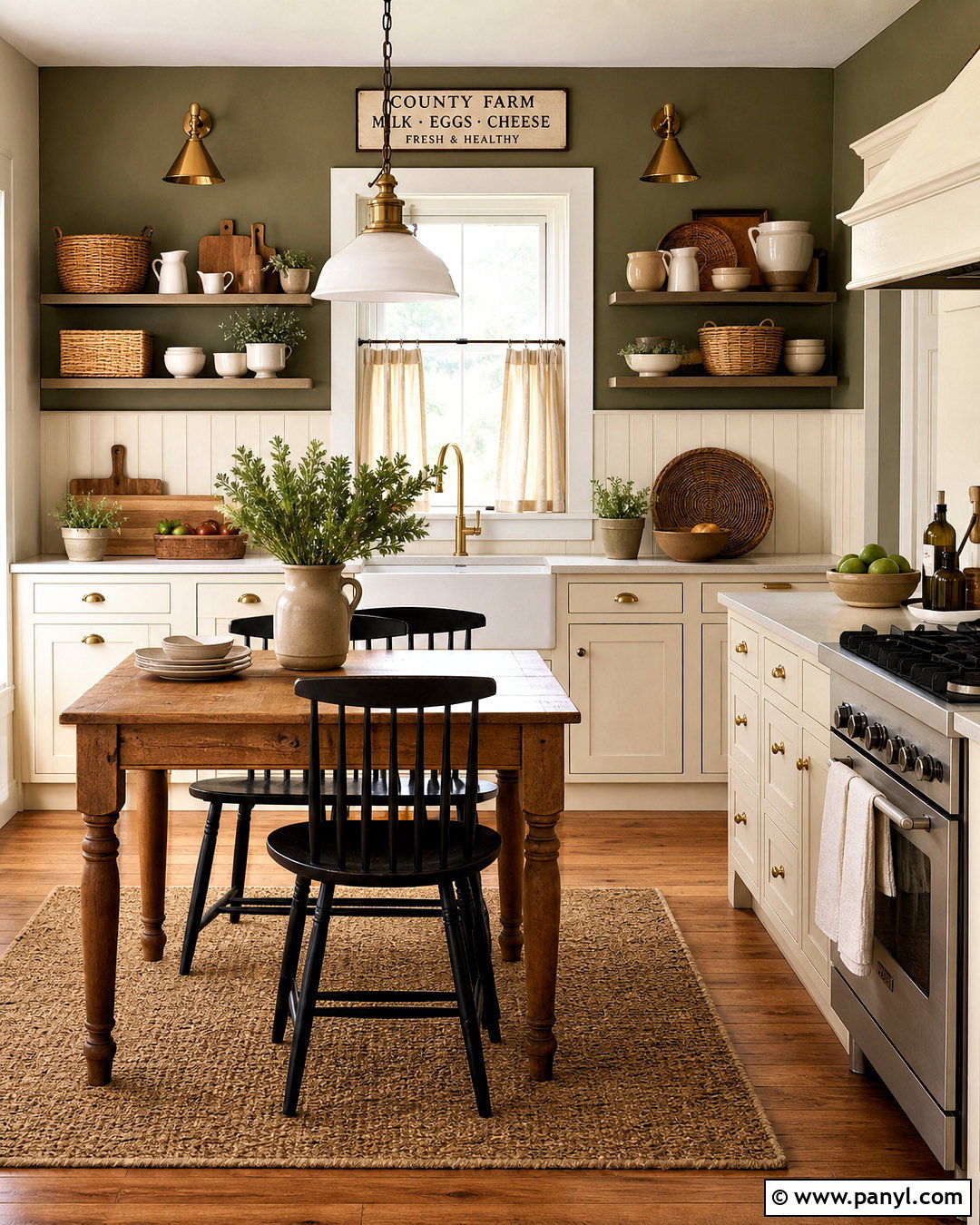
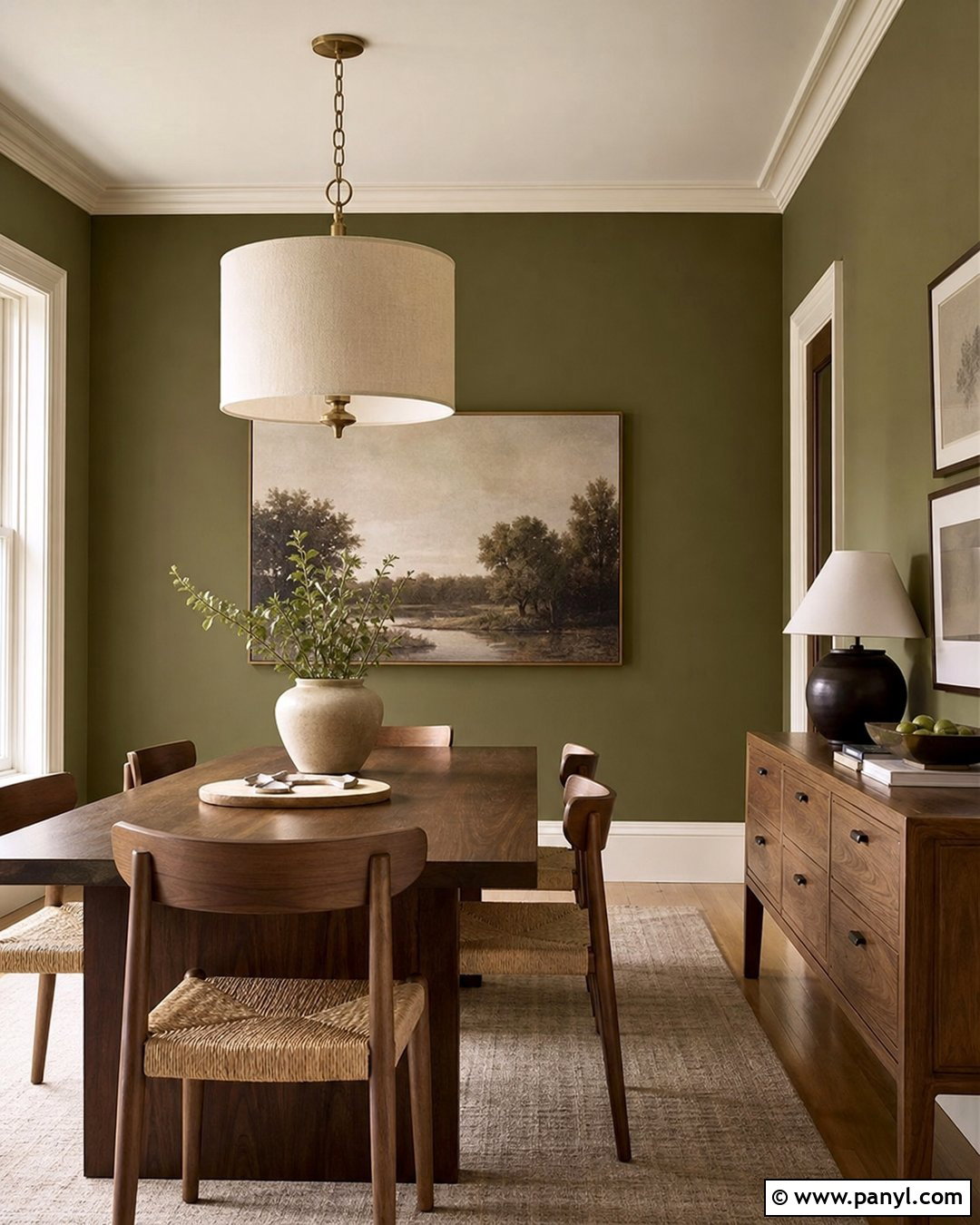
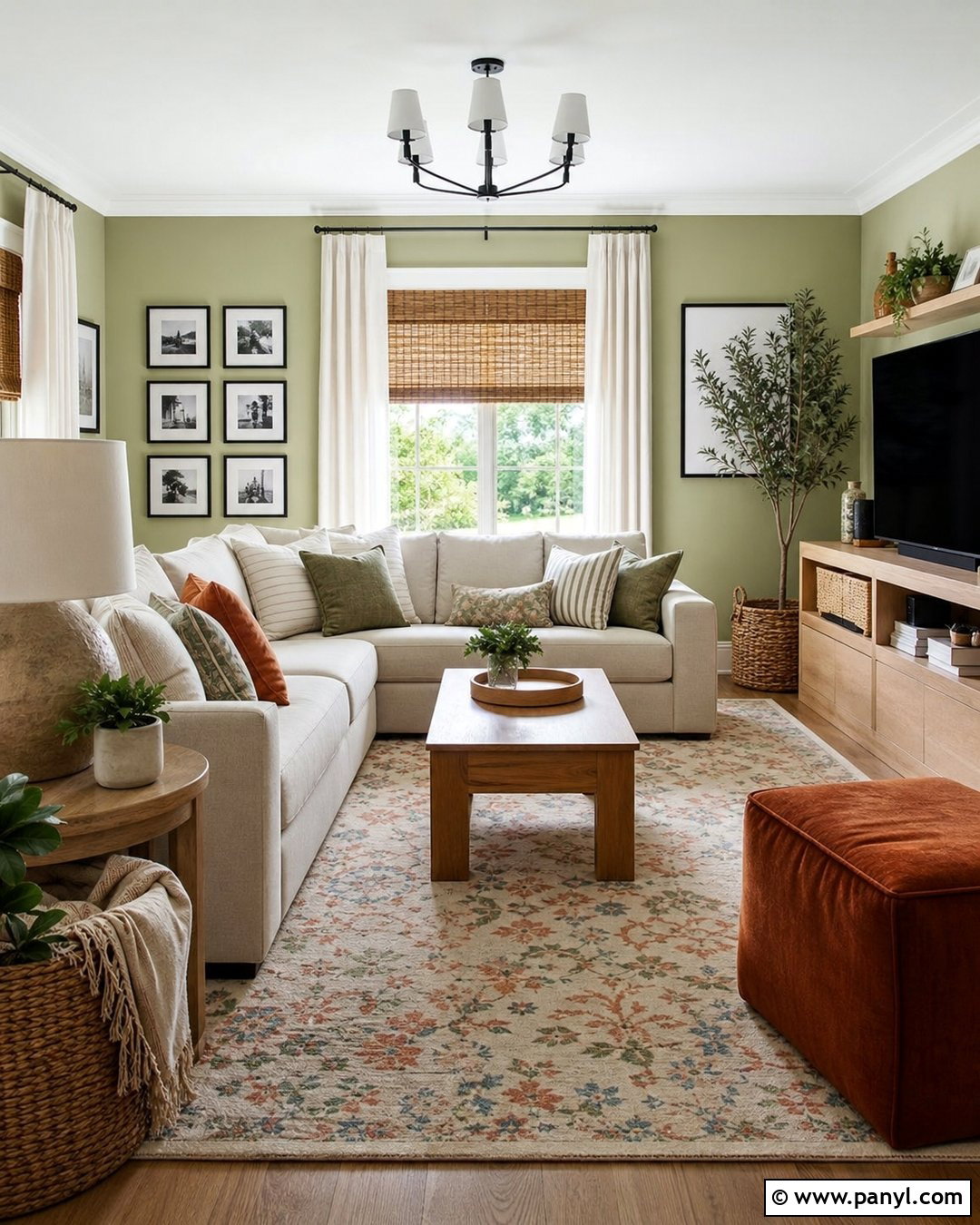
Olive green offers a warmer alternative to sage and creates an earthy background for the television. Use a medium olive shade with subtle brown undertones, then pair it with a long oak console and a beige modular sofa. A cream-and-tan patterned rug gives the seating area definition, while rust pillows and dark brown chairs add depth. Select aged brass sconces for the TV wall and keep decorative objects low and simple. Warm white paint on the remaining walls ensures the room still feels open. Natural linen curtains, woven baskets, and a round wood coffee table complete the relaxed scheme. This full living room look works beautifully in vintage-inspired, organic modern, and casual contemporary homes without feeling tied to a short-lived trend.
18. Sand Beige TV Wall
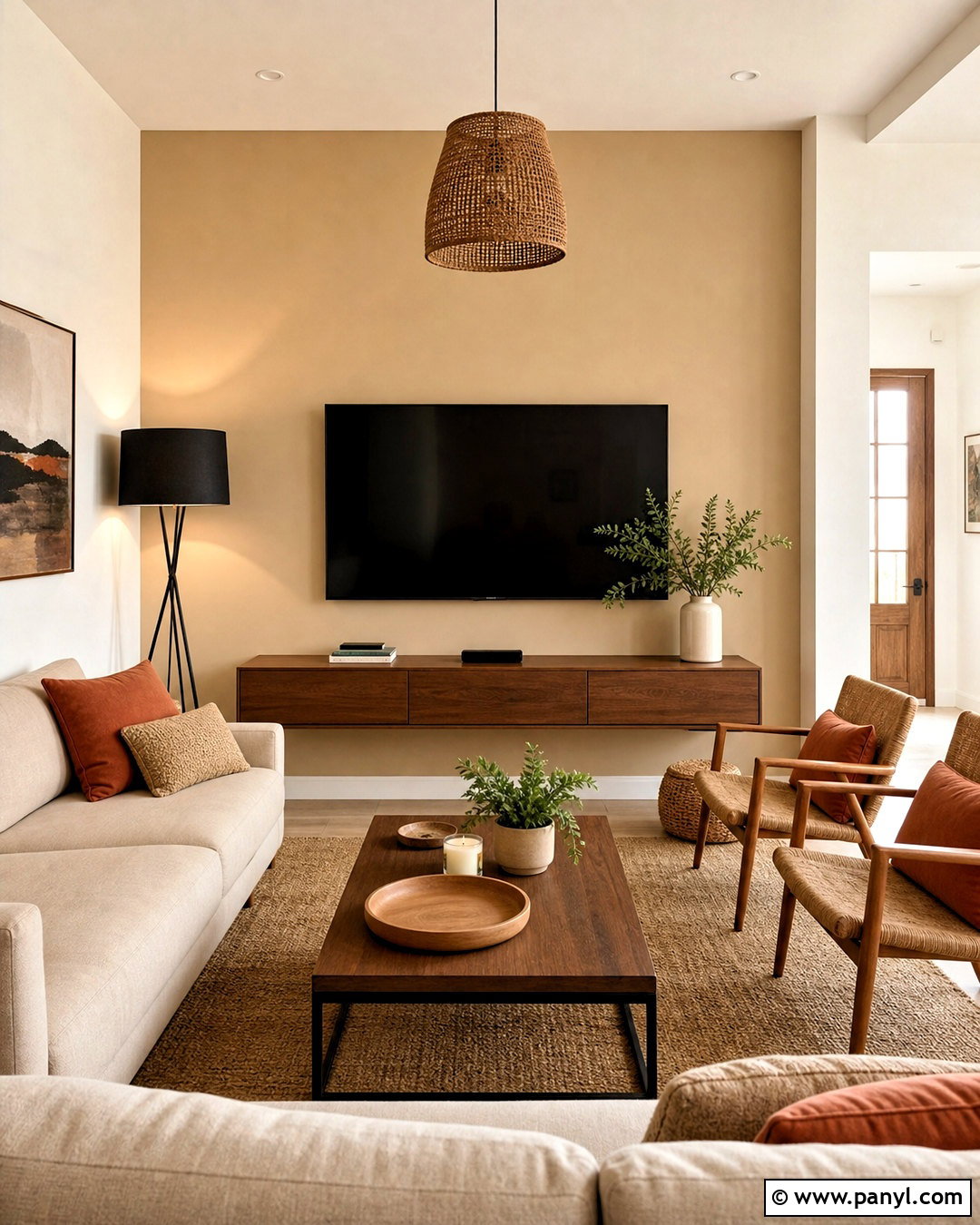
Sand beige provides a warm, understated TV wall for homeowners who prefer light neutral interiors. Choose a shade deeper than the surrounding creamy white walls so the entertainment zone remains visible. Install a floating walnut console beneath the screen and include closed cabinets for remotes, cords, and equipment. A white or flax-colored sofa, light brown armchairs, and a natural fiber rug create a soothing tonal foundation. Add black accents through lamps, frames, and table bases to connect the television to the room. Soft terracotta pillows bring in restrained color. Finish the windows with woven shades and light curtains. The completed space feels bright and easygoing, making this palette particularly useful for compact living rooms and rental-friendly decorating plans.
19. Slate Blue TV Wall
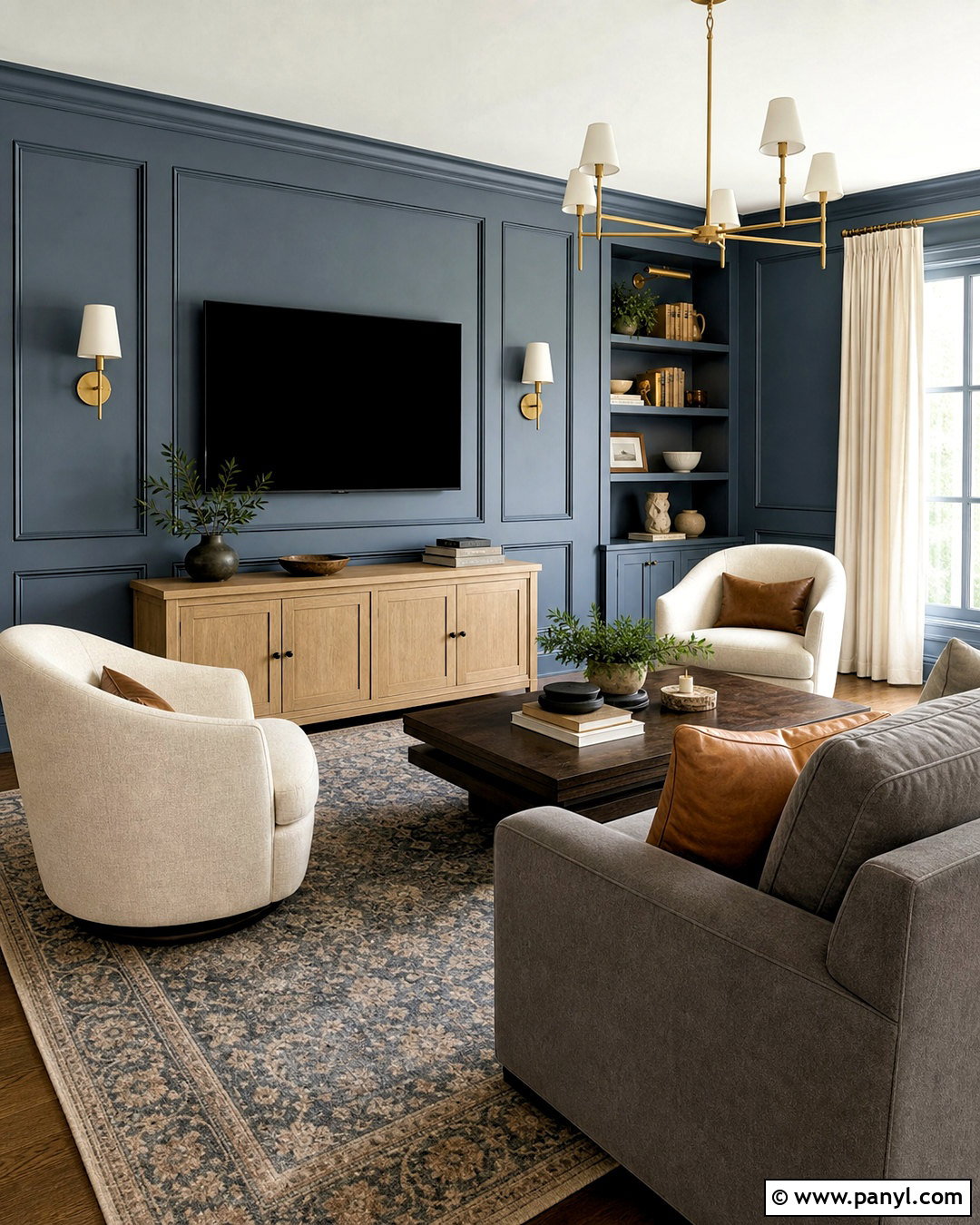
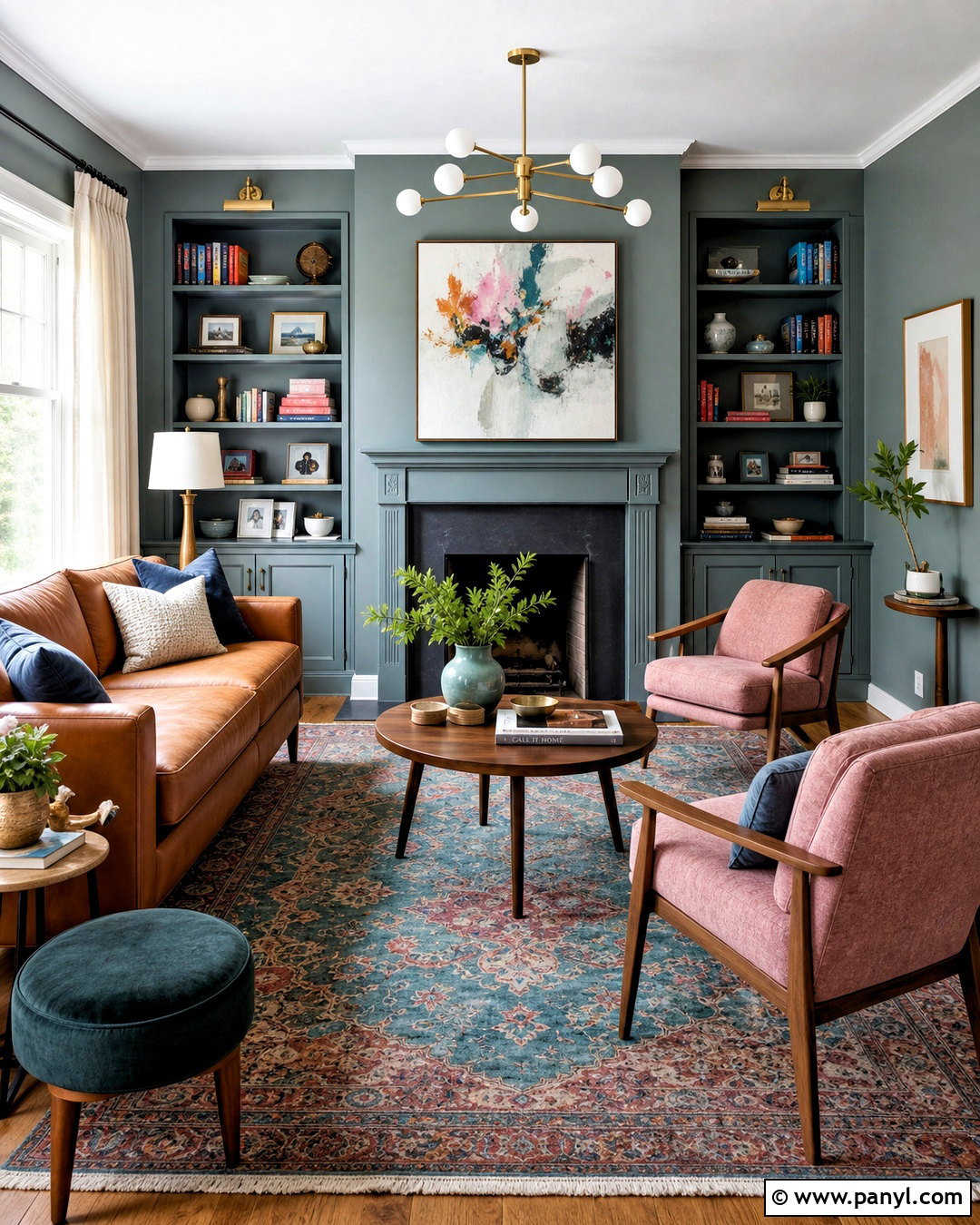
Slate blue has enough depth to frame a television while remaining softer than navy or charcoal. Use it on the full media wall, including any simple molding, for a tailored finish. Place a light oak console beneath the screen and furnish the room with a warm gray sofa, cream swivel chairs, and a faded vintage-style rug. Brass lighting and tan leather cushions warm the blue backdrop. Keep the other walls pale greige and use full-length ivory curtains to maintain a bright, balanced atmosphere. A dark wood coffee table can visually connect the television with the seating area. This complete combination suits traditional, transitional, and modern living rooms, offering noticeable color without creating an overly dramatic entertainment wall.
20. Plum TV Wall
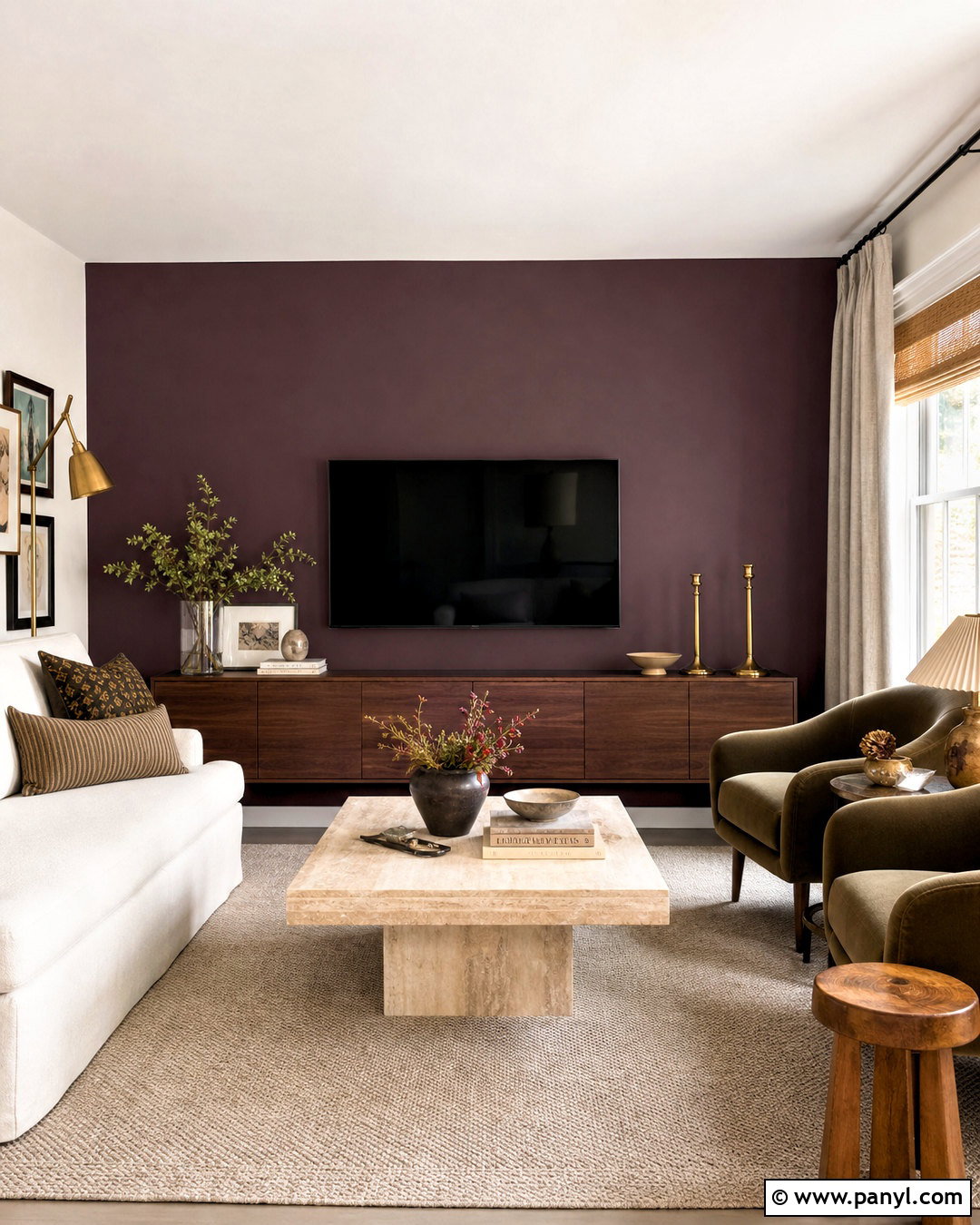
Muted plum gives a living room TV wall a rich, creative finish while still working like a deep neutral. Choose a brown-based plum rather than a vivid purple. Mount the television above a streamlined walnut cabinet and balance the darker wall with a cream sofa and pale beige rug. Add olive green chairs or cushions to create an earthy complementary palette. Antique brass lamps and a light travertine coffee table introduce warmth and contrast. Use warm white on the other walls and hang neutral linen curtains to brighten the room. Keep the plum wall free from excess artwork so the color remains the primary decorative feature. This finished scheme feels distinctive, comfortable, and sophisticated without becoming formal or difficult to maintain.
Conclusion:
Choosing the right TV wall color is about designing the entire living room rather than treating the screen as an isolated feature. Start with the room’s natural light, flooring, sofa color, and overall size. Then decide whether you want the television to blend into a dark background or stand against a lighter neutral. Matte black, navy, forest green, and chocolate brown deliver depth, while greige, creamy white, sage, and dusty blue create a softer effect. Complete the look with concealed cables, balanced lighting, practical storage, and repeated accent colors. These **20 tv wall color ideas living room ideas** can help you create a media area that feels cohesive, comfortable, and genuinely suited to your home.

Related Ideas and Inspiration:
Leave a Reply