
Choosing the right wall color can completely change how your living room looks, feels, and functions. These 20 living paint color ideas go beyond simple wall shades by pairing each color with coordinating furniture, flooring, trim, lighting, and decor. You will find airy neutrals for small rooms, earthy greens for relaxed spaces, and richer colors for cozy gathering areas. Before committing, test large painted samples beside your sofa, flooring, and window treatments. Check them during the morning, afternoon, and evening because natural and artificial light can shift undertones. Also consider whether your room needs more brightness, warmth, depth, or architectural definition. Use the complete schemes below to compare different moods and find your favorite among these 20 living paint color ideas.

1. Warm White Living Room Paint
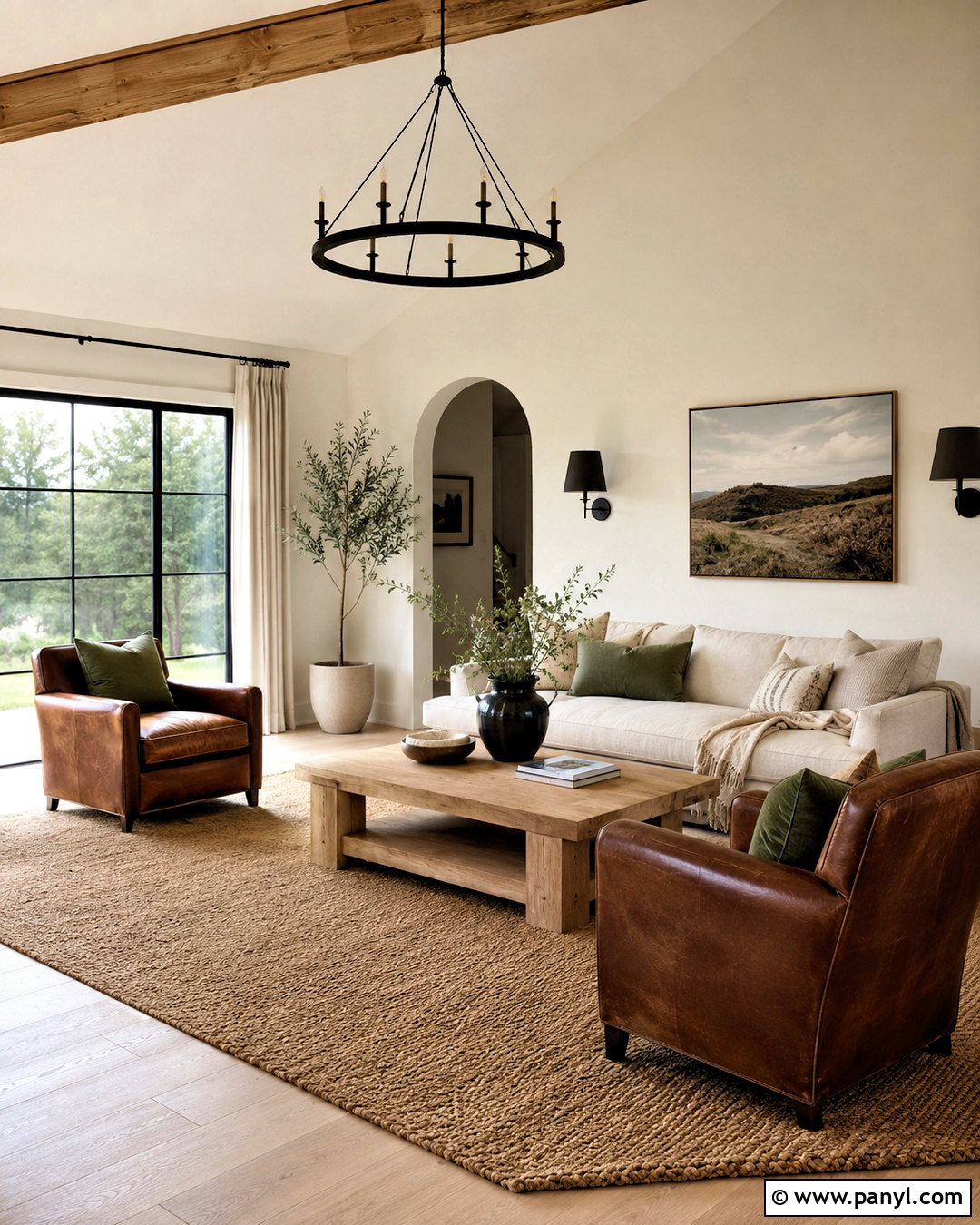
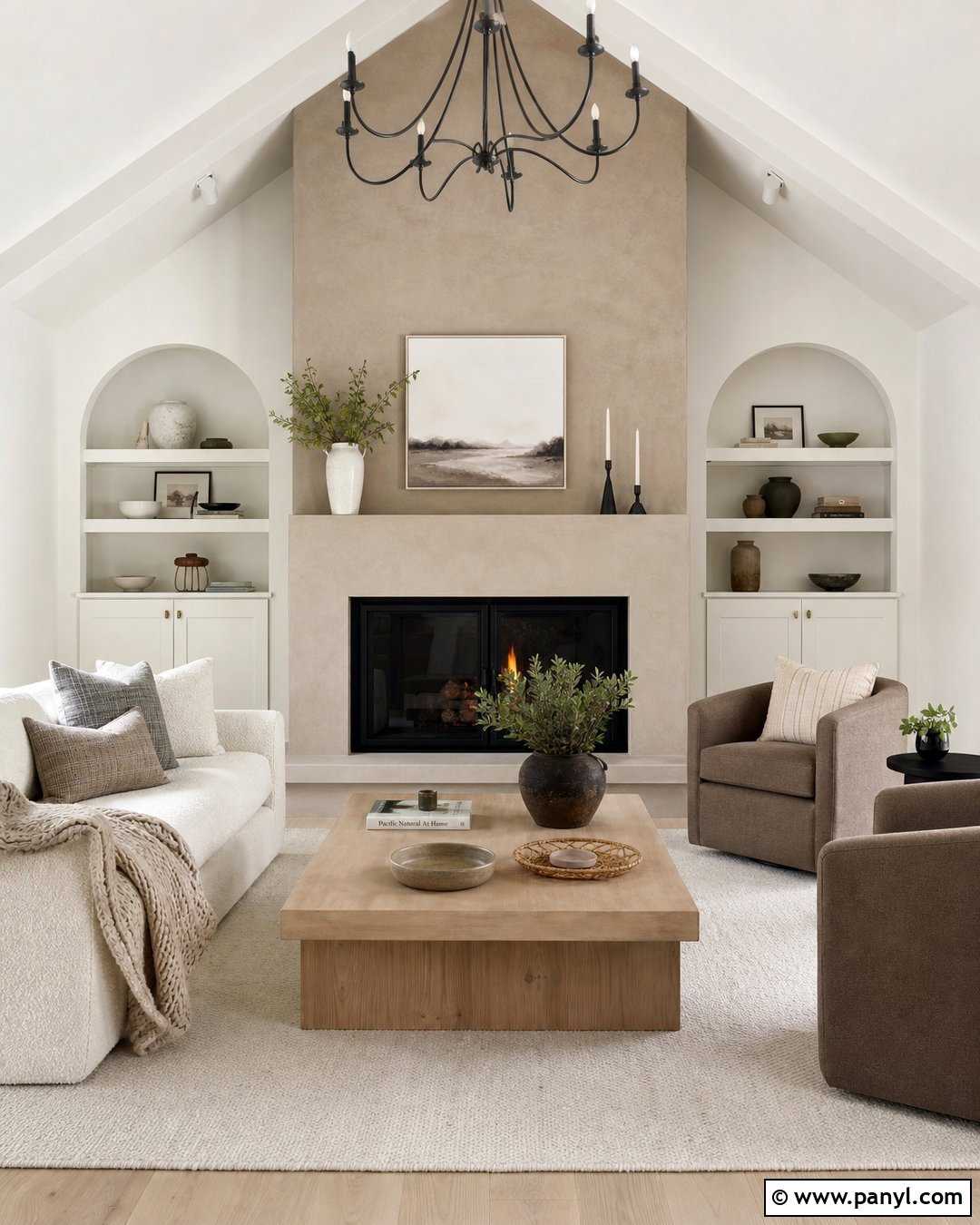
Warm white paint creates an open living room without the cold feeling that sometimes comes with brilliant white. Choose a shade with gentle cream or beige undertones, then repeat that warmth through an oatmeal sofa, natural oak coffee table, and woven jute rug. Paint the trim in the same color using a satin finish for quiet contrast against matte walls. Linen curtains allow daylight to filter into the room while keeping the overall look soft. Add black metal lighting, warm brown leather chairs, and a few olive green accents for definition. This complete palette suits small rooms, open layouts, and homes with limited sunlight. Avoid combining it with icy gray furniture, which can make the warm walls look unexpectedly yellow.
2. Cream Living Room Paint
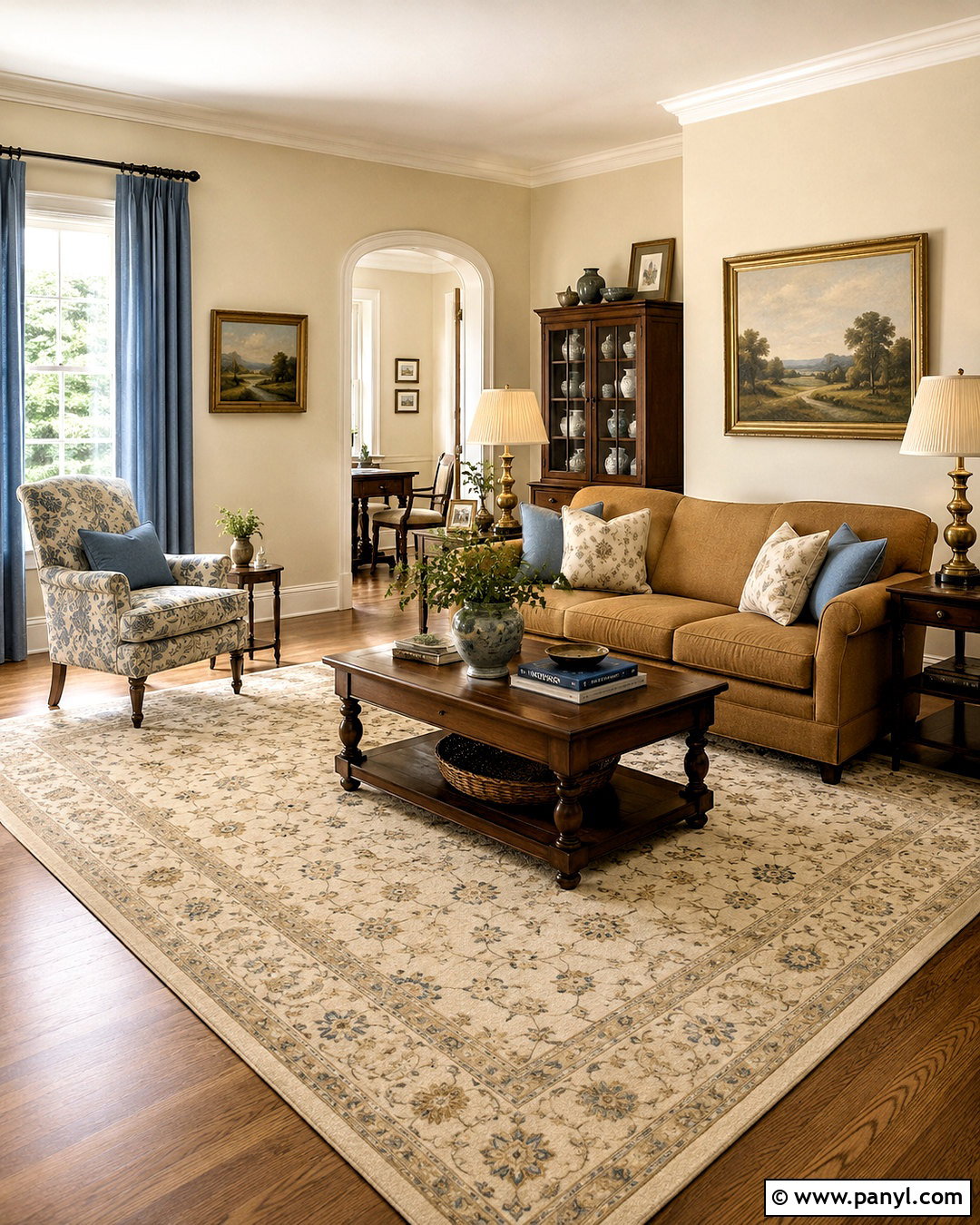
Cream walls provide a soft, welcoming foundation for a traditional or relaxed living room. Select a balanced cream that looks buttery rather than strongly yellow. Pair it with a camel-colored sofa, walnut side tables, and an ivory wool rug featuring a subtle pattern. Soft white trim keeps the architecture crisp without creating a harsh border. For window treatments, use muted blue or sage green curtains to introduce calm color. Antique brass lamps and framed landscape artwork add character, while ceramic accessories keep the arrangement approachable. Medium-tone wood flooring grounds the light palette and prevents the room from feeling washed out. This scheme works especially well around a brick fireplace, where cream paint balances the brick’s red and brown tones naturally.
3. Soft Greige Living Room Paint
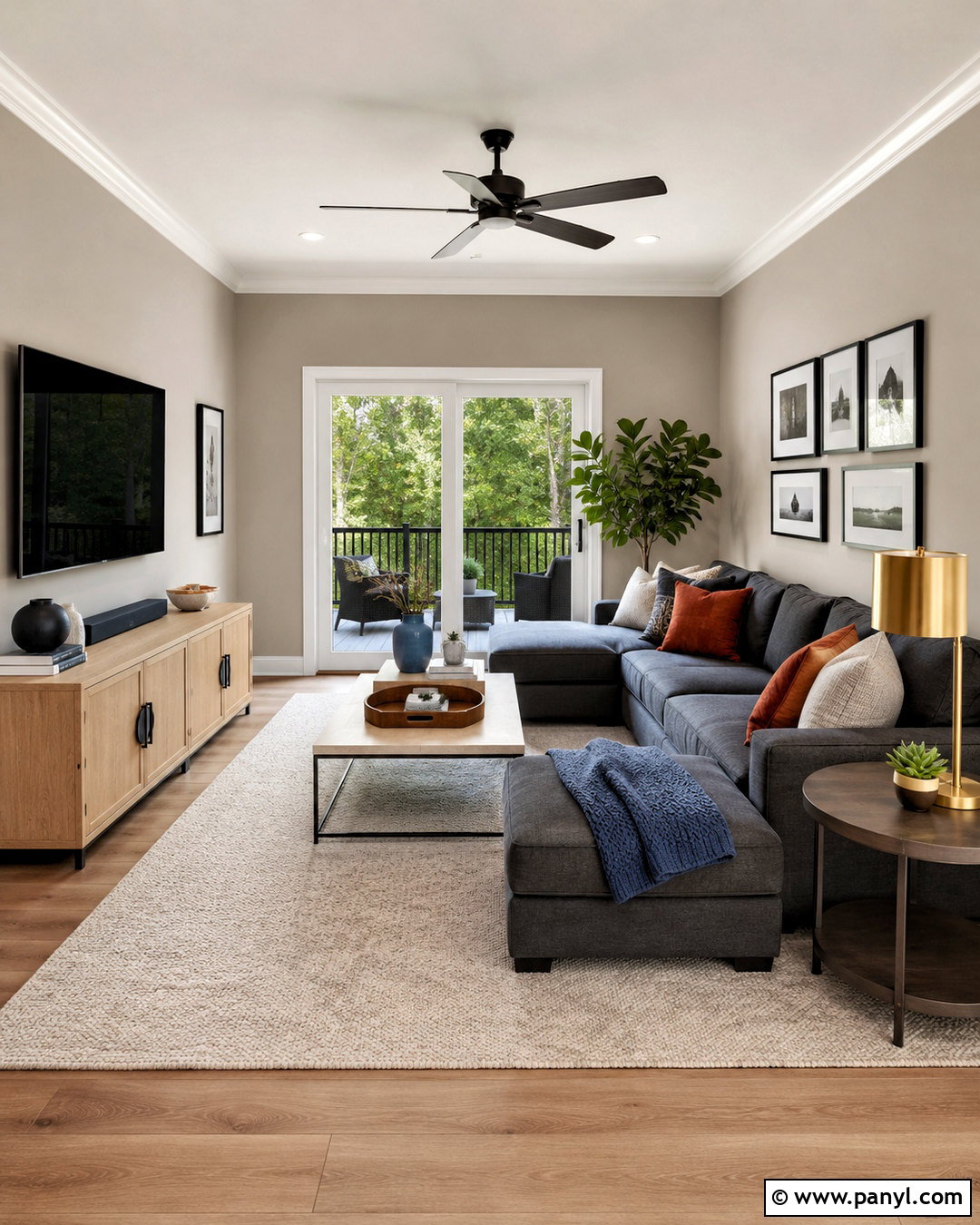
Can’t decide between gray and beige? Soft greige combines the calm quality of gray with enough brown warmth to create a comfortable gathering space. Use it across the walls with creamy white trim and a slightly lighter ceiling. Build the room around a charcoal sectional, pale oak media console, and textured ivory area rug. Rust-colored pillows and muted blue accessories prevent the neutral palette from looking flat. Add brushed brass floor lamps for subtle warmth and hang simple black-framed artwork to create clean definition. Greige works best when its undertone relates to the permanent finishes in the room, especially flooring and stone. Test several options beside those materials because some greiges can turn purple, green, or pink as the light changes.
4. Mushroom Taupe Living Room Paint
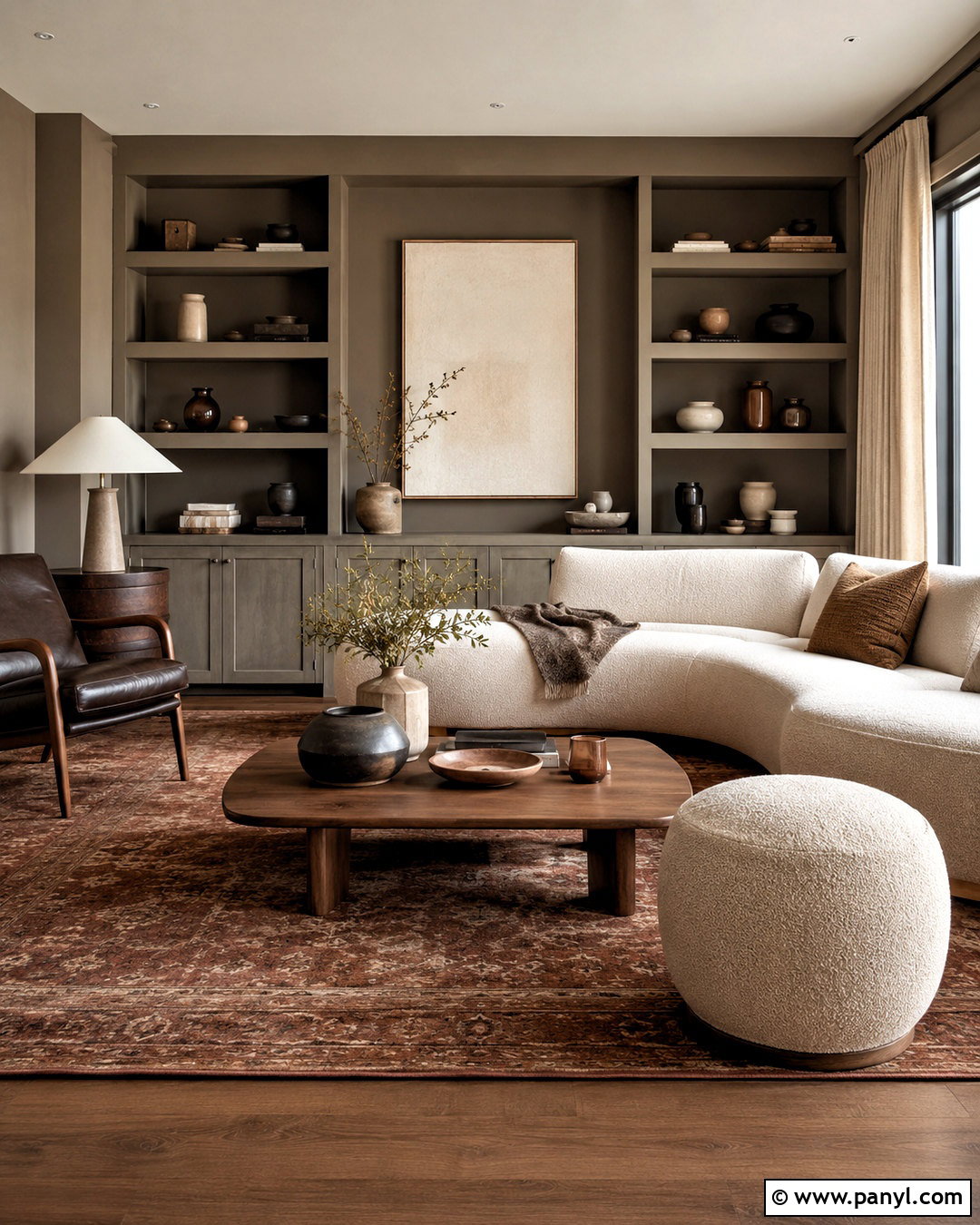
Mushroom taupe gives a living room earthy depth while remaining easy to decorate. This brown-gray shade looks especially polished with walnut furniture, ivory upholstery, and aged brass details. Paint the walls and built-in shelves the same color to make the architecture feel intentional. Keep the ceiling a warm off-white so the room remains visually open. A cream boucle sofa, chocolate leather chair, and faded rust rug create layers without overwhelming the muted backdrop. Finish the space with linen curtains, sculptural lamps, and pottery in chalky neutral tones. Because mushroom paint can appear darker in northern light, use several table and floor lamps instead of relying on one ceiling fixture. The result feels grounded, comfortable, and richer than a basic beige room.
5. Sage Green Living Room Paint
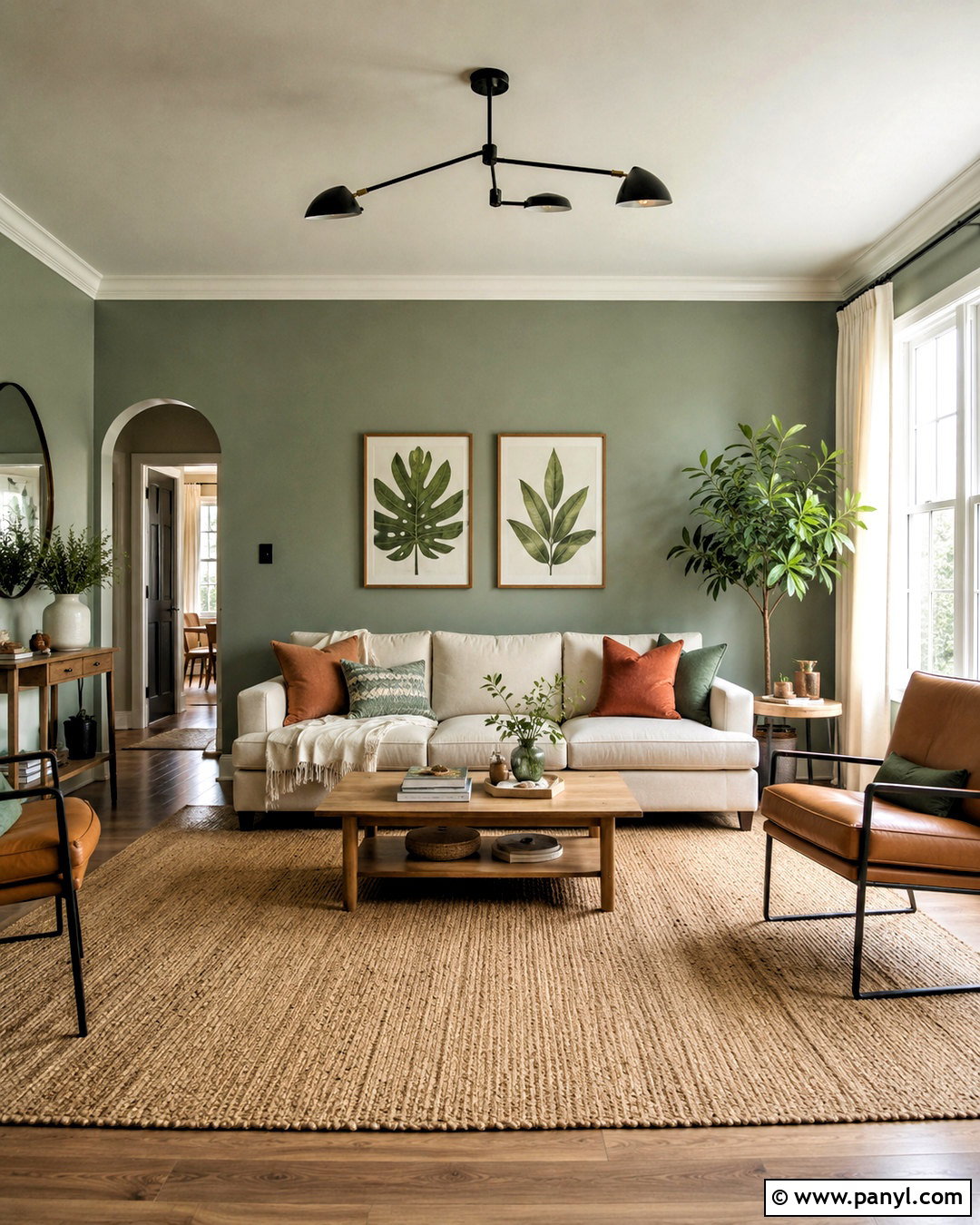
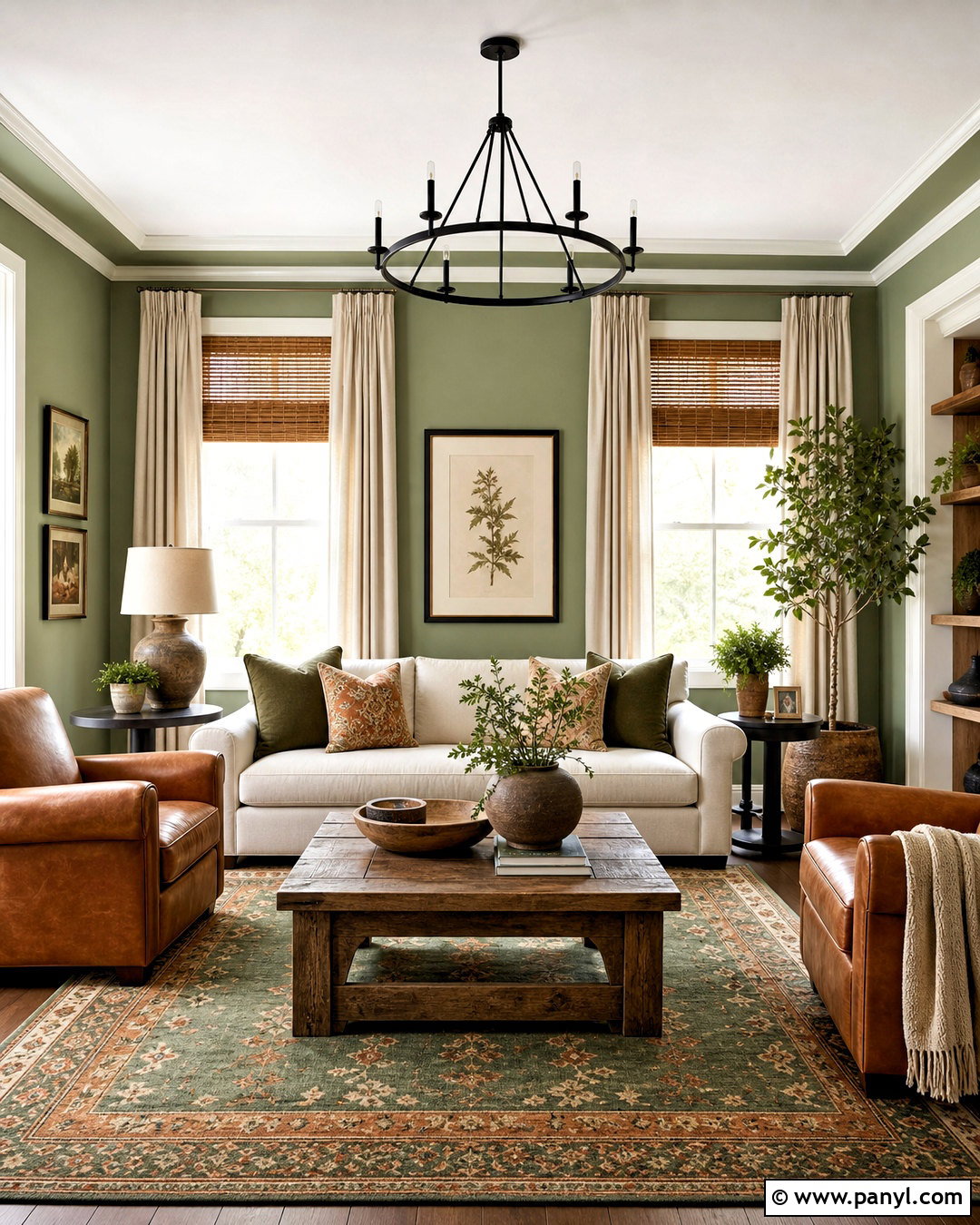
Soft sage green brings a garden-inspired calmness to the living room and pairs naturally with warm wood. Cover all four walls in a muted sage with subtle gray undertones, then use creamy white on the ceiling and trim. Choose a light beige sofa, oak coffee table, and woven natural-fiber rug to maintain the relaxed mood. Terracotta pillows, rust-colored ceramics, and tan leather accents provide warmth against the cooler green. Hang linen curtains slightly above the window frames to make the room appear taller. Matte black lighting and simple botanical artwork add contrast without making the scheme busy. This palette is particularly effective in a casual family room because it feels colorful yet restrained. Finish with healthy houseplants, but vary their leaf shapes for definition.
6. Olive Green Living Room Paint
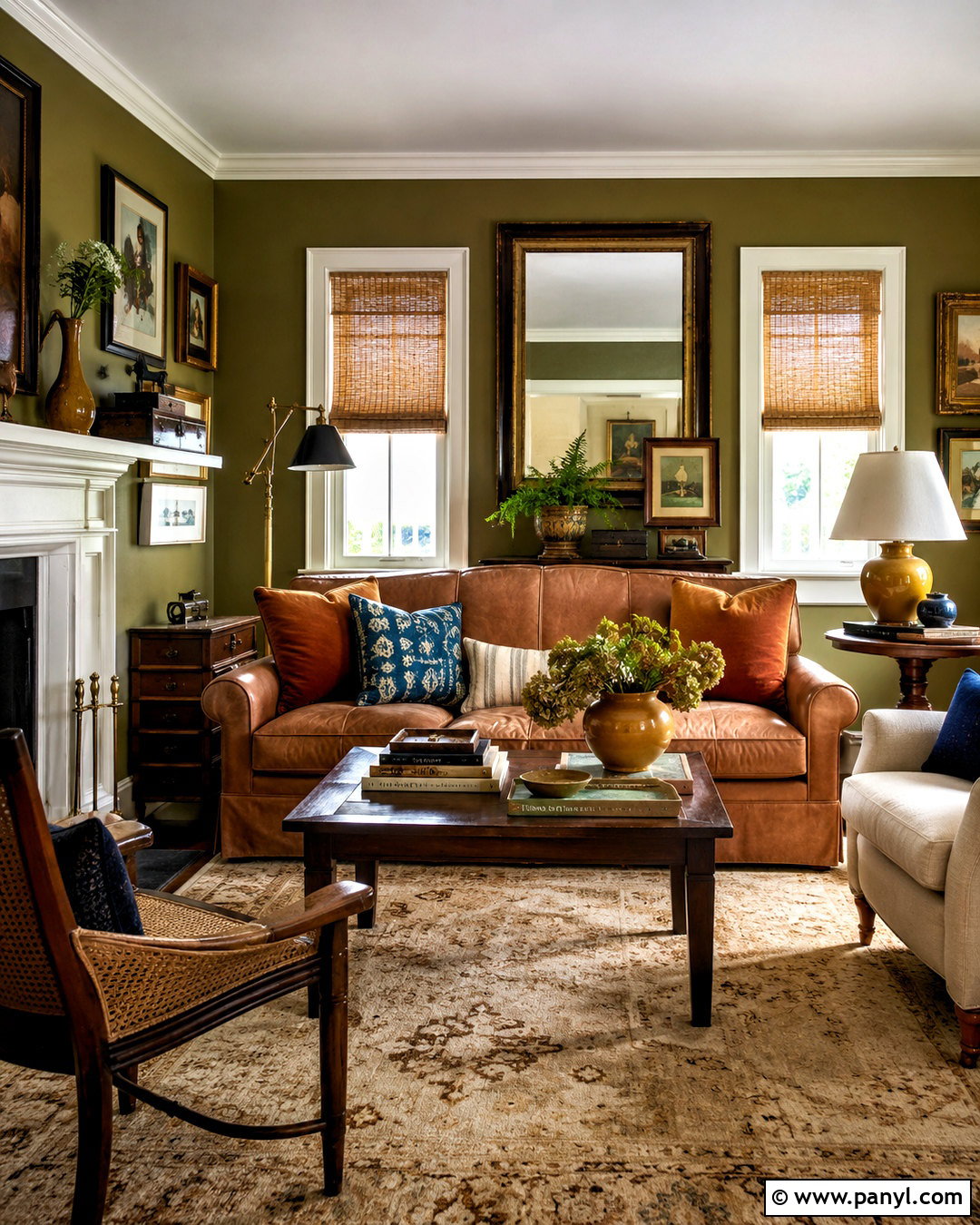
Olive green walls can transform a plain living room into a warm, layered retreat. Choose an olive with brown or gray undertones rather than a bright yellow-green. Pair the walls with a camel leather sofa, dark walnut tables, and an aged cream rug. Paint the trim in warm ivory for a traditional finish, or use the olive on trim and doors for a more enveloping result. Accents in burnt orange, ochre, and deep blue make the palette feel collected rather than overly matched. Include antique brass lamps and woven bamboo shades to reinforce the earthy character. Because olive absorbs more light than pale green, balance it with light upholstery and reflective surfaces. A large mirror opposite the windows can help distribute daylight throughout the room.
7. Muted Teal Living Room Paint
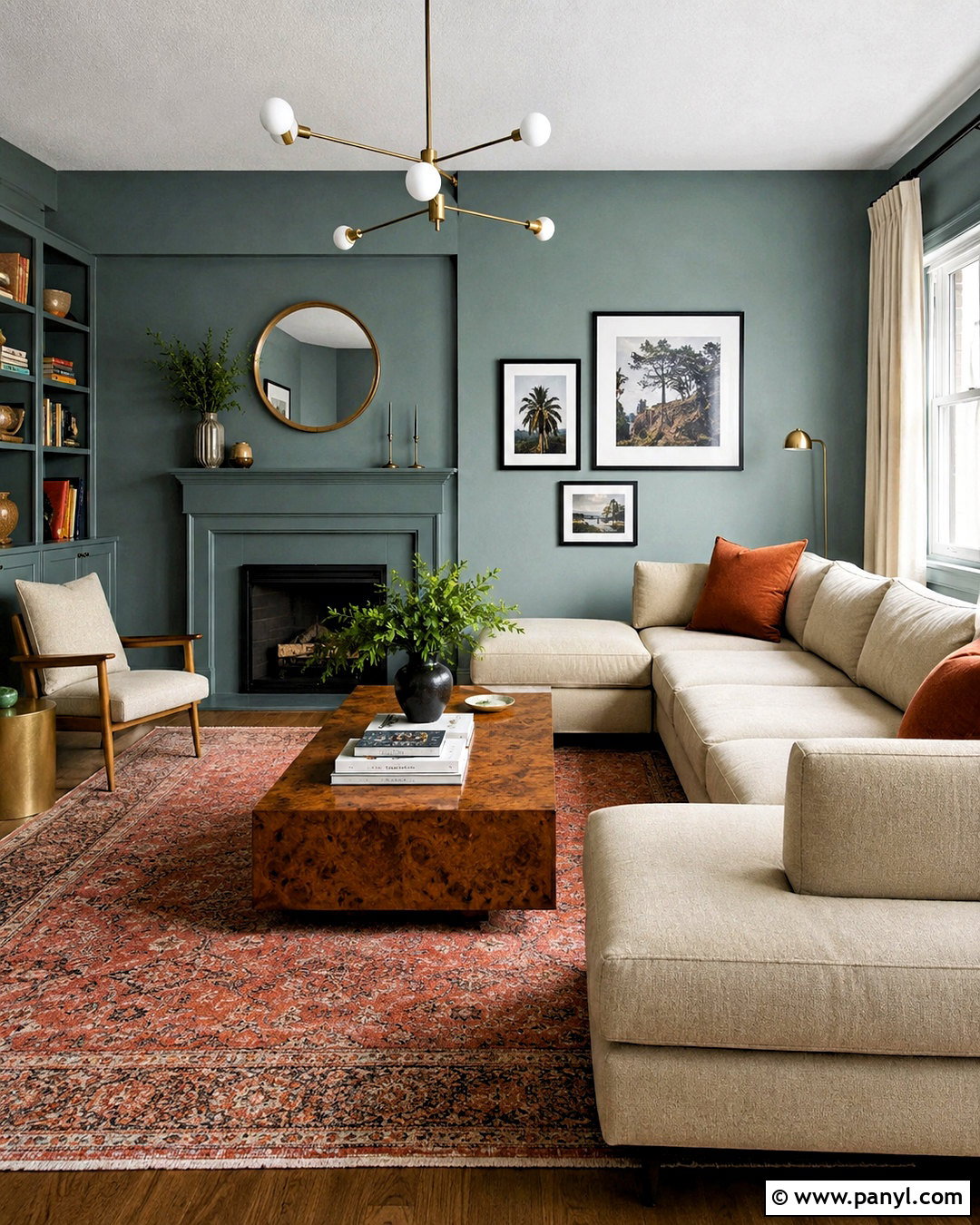
Muted teal offers noticeable color while still creating a calm and livable room. Look for a blue-green shade softened with gray, then use it on the walls and fireplace surround for a connected design. A warm beige sectional, burl wood coffee table, and faded rose rug create appealing contrast. Add rust, blush, and mustard accents through pillows or artwork rather than introducing several competing blue tones. Cream curtains and a warm white ceiling prevent the deeper walls from feeling heavy. Brushed brass lighting brings out teal’s warmth, while black picture frames provide structure. This full-room palette works beautifully with midcentury furniture and contemporary pieces alike. In a smaller space, keep larger furnishings light and leave some open floor area so the strong wall color feels intentional.
8. Pale Blue Living Room Paint
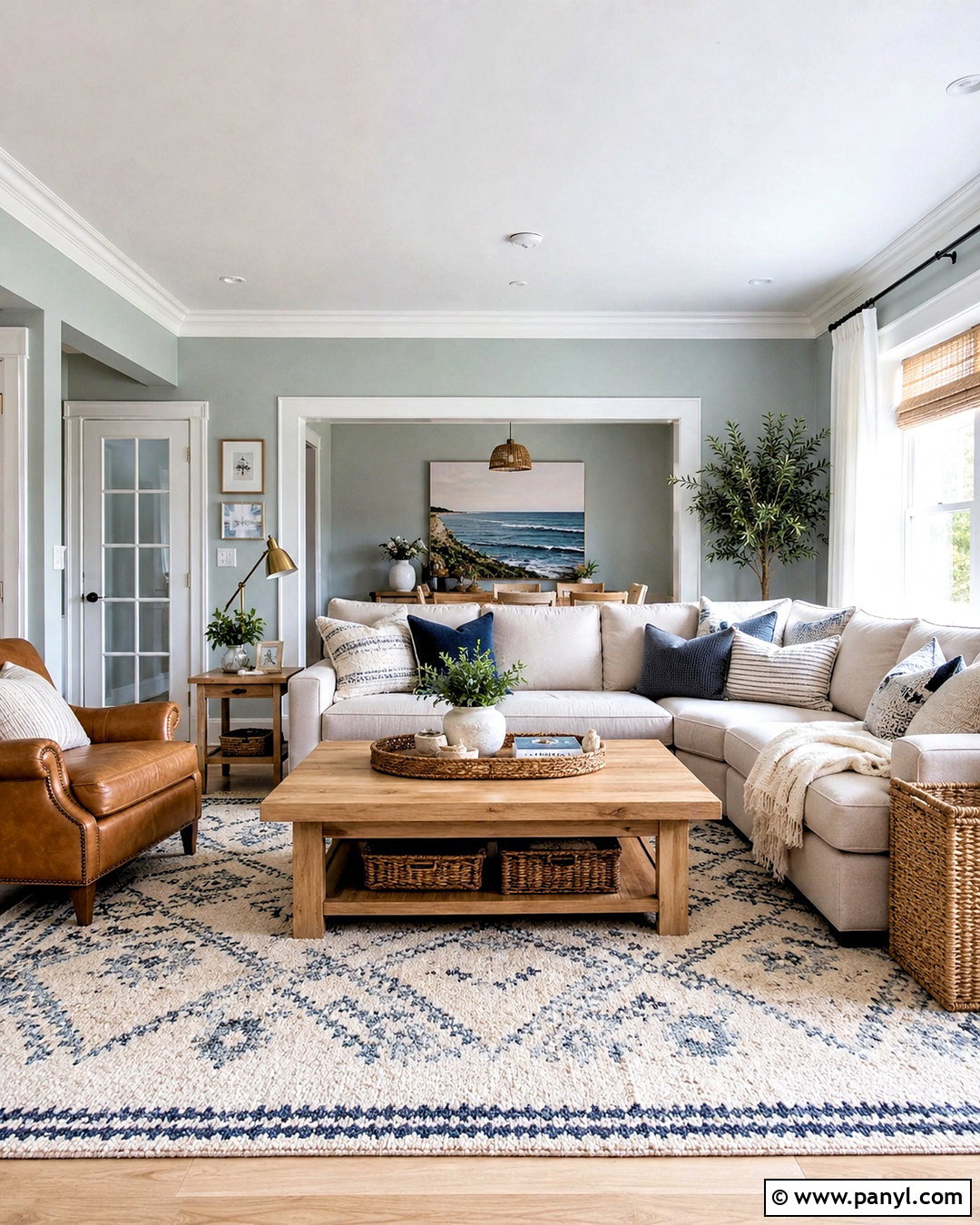
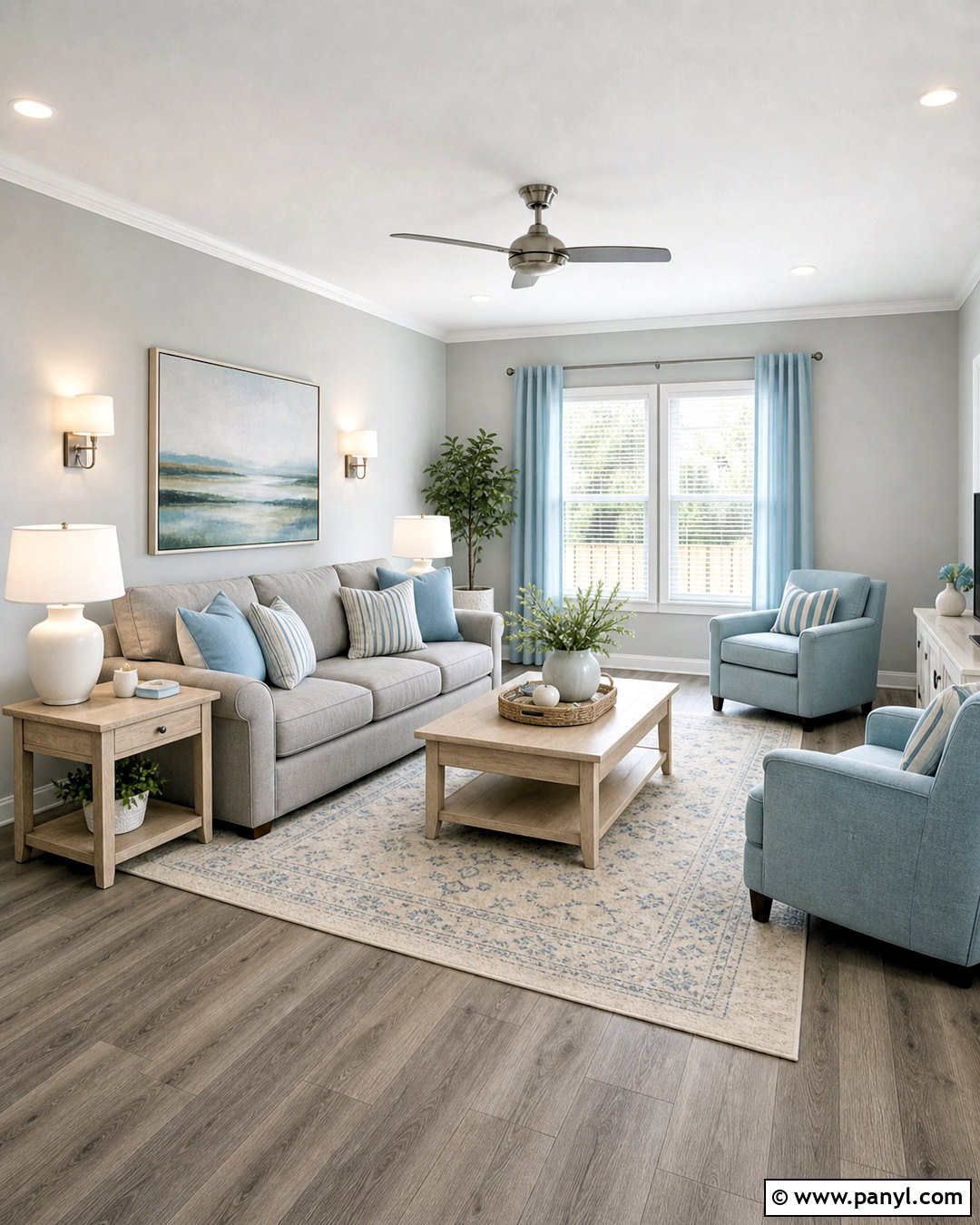
Pale blue paint makes a living room feel fresh, airy, and quietly colorful. Select a blue with a slight gray or green undertone so it does not resemble a nursery shade. Combine it with warm white trim, a flax linen sofa, and pale oak furniture. A cream rug with a simple navy pattern anchors the seating area while connecting to the walls. Bring in tan leather, woven baskets, and brass lighting to keep the blue from feeling chilly. Lightweight white curtains maximize natural light and soften the edges of the windows. For artwork, choose coastal landscapes, abstract prints, or botanical pieces with restrained blue and earthy tones. The finished room feels relaxed and open, making this scheme useful for smaller living rooms or spaces with low ceilings.
9. Dusty Blue Living Room Paint
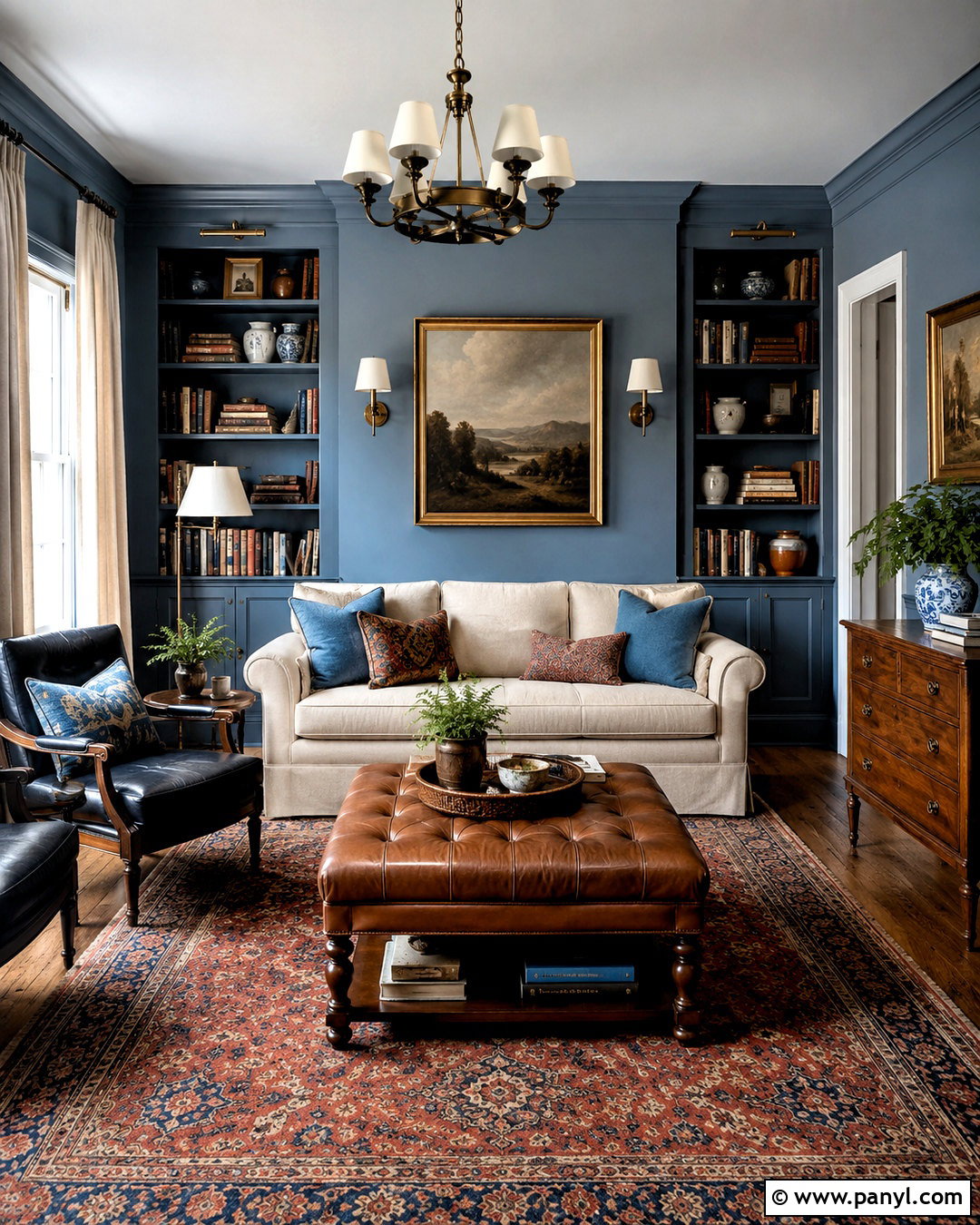
Dusty blue walls create more depth than pale blue without becoming as dramatic as navy. Use this muted shade throughout the room, including built-in bookcases, to produce a cohesive background. Balance it with a warm ivory sofa, medium walnut furniture, and a vintage-style rug containing faded red, tan, and blue. Natural linen curtains introduce softness, while antique brass sconces add a gentle glow. Keep the ceiling warm white to maintain visual height. Cognac leather chairs or ottomans provide a rich complement to the cooler walls. Display books, pottery, and framed art in small groups so the room remains organized. This palette works particularly well in living rooms with traditional molding because the medium blue highlights architectural details without creating an overly formal atmosphere.
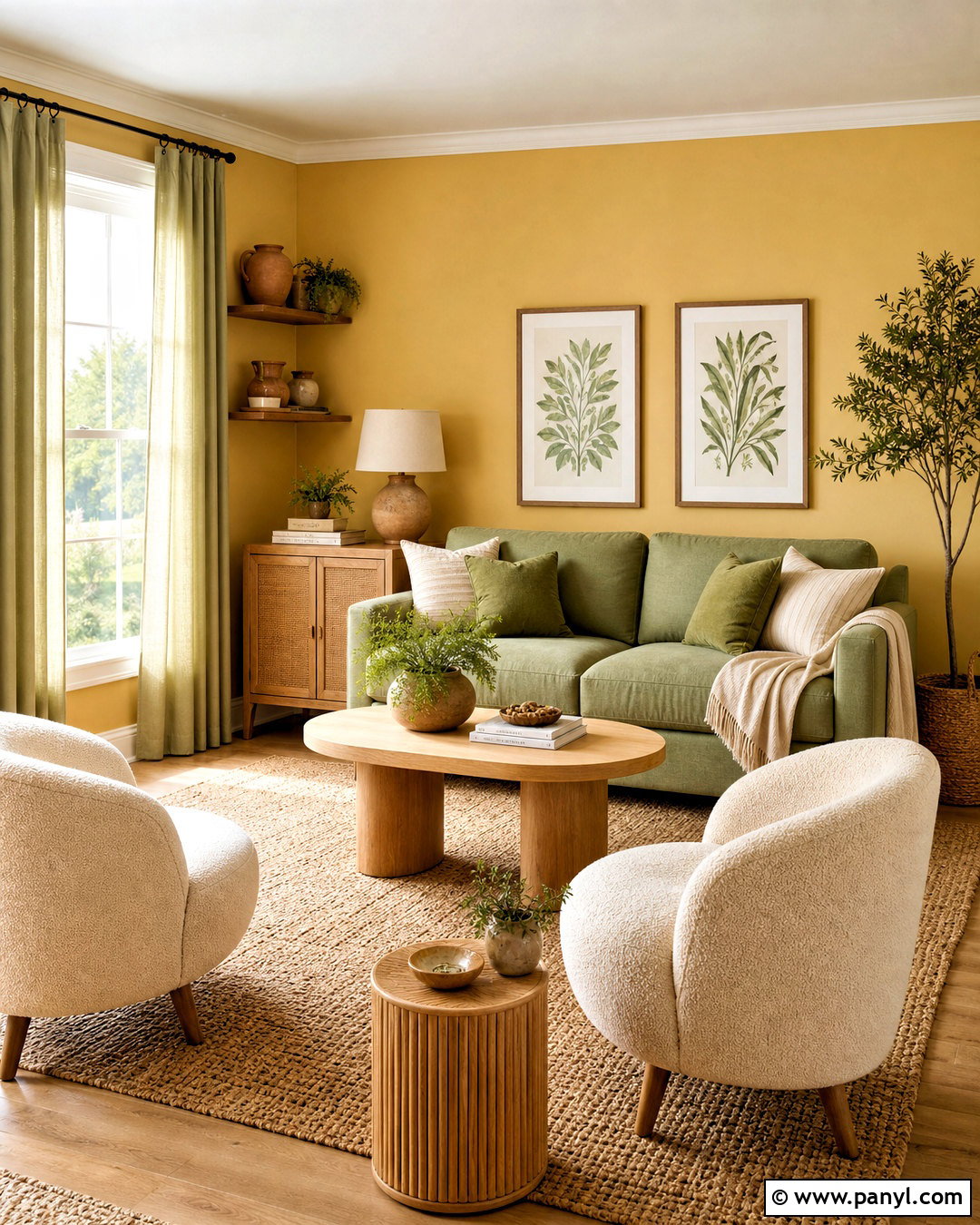
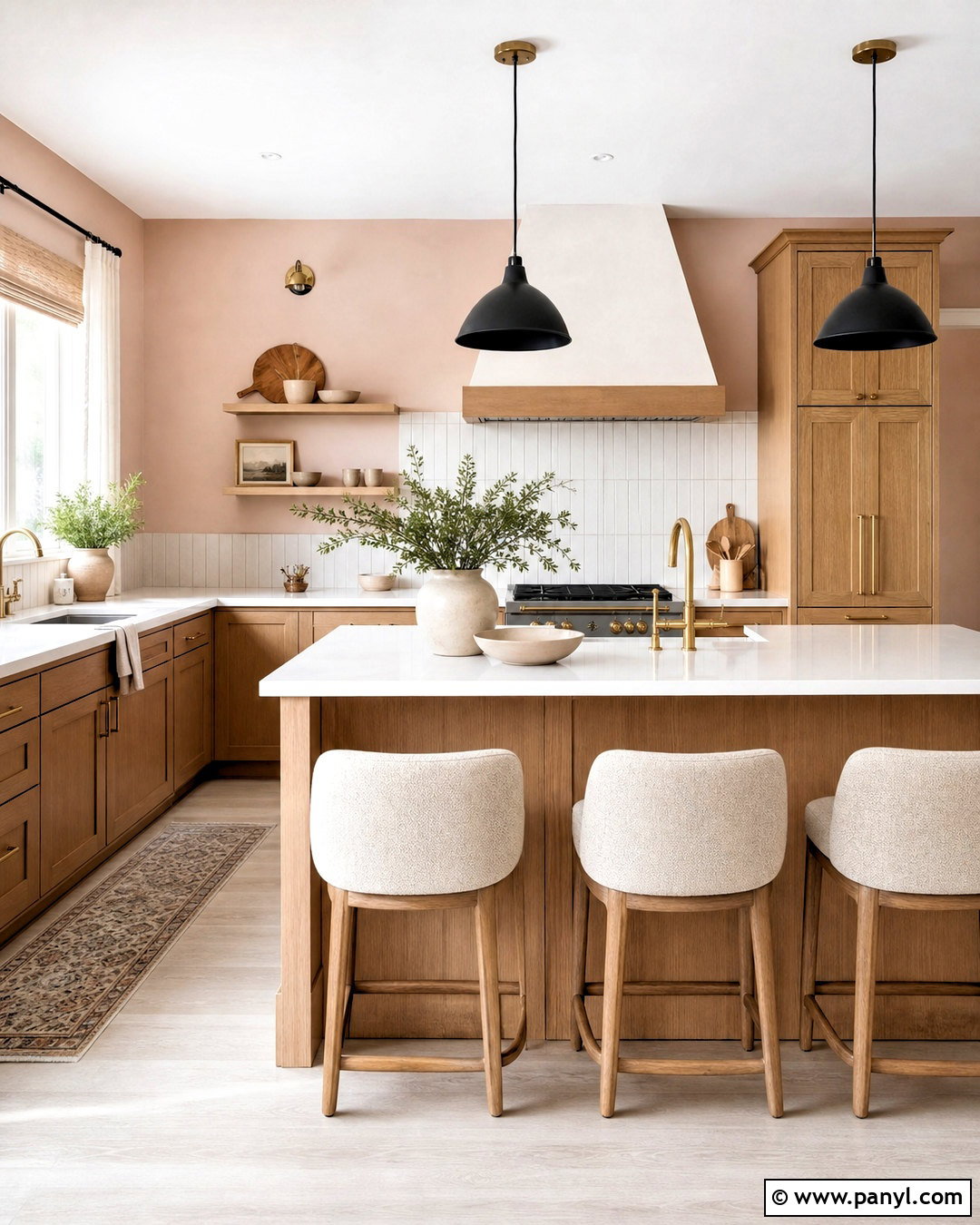
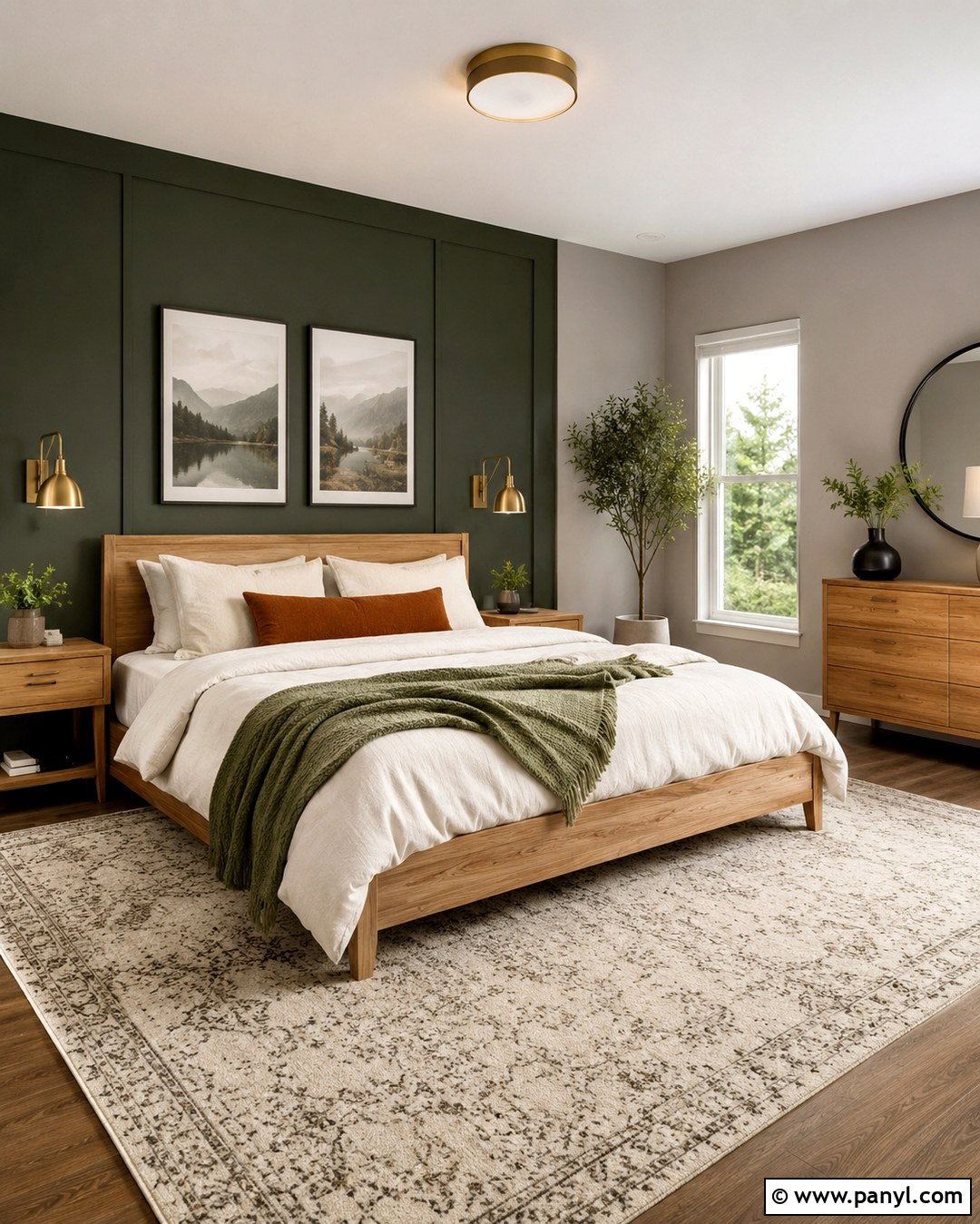
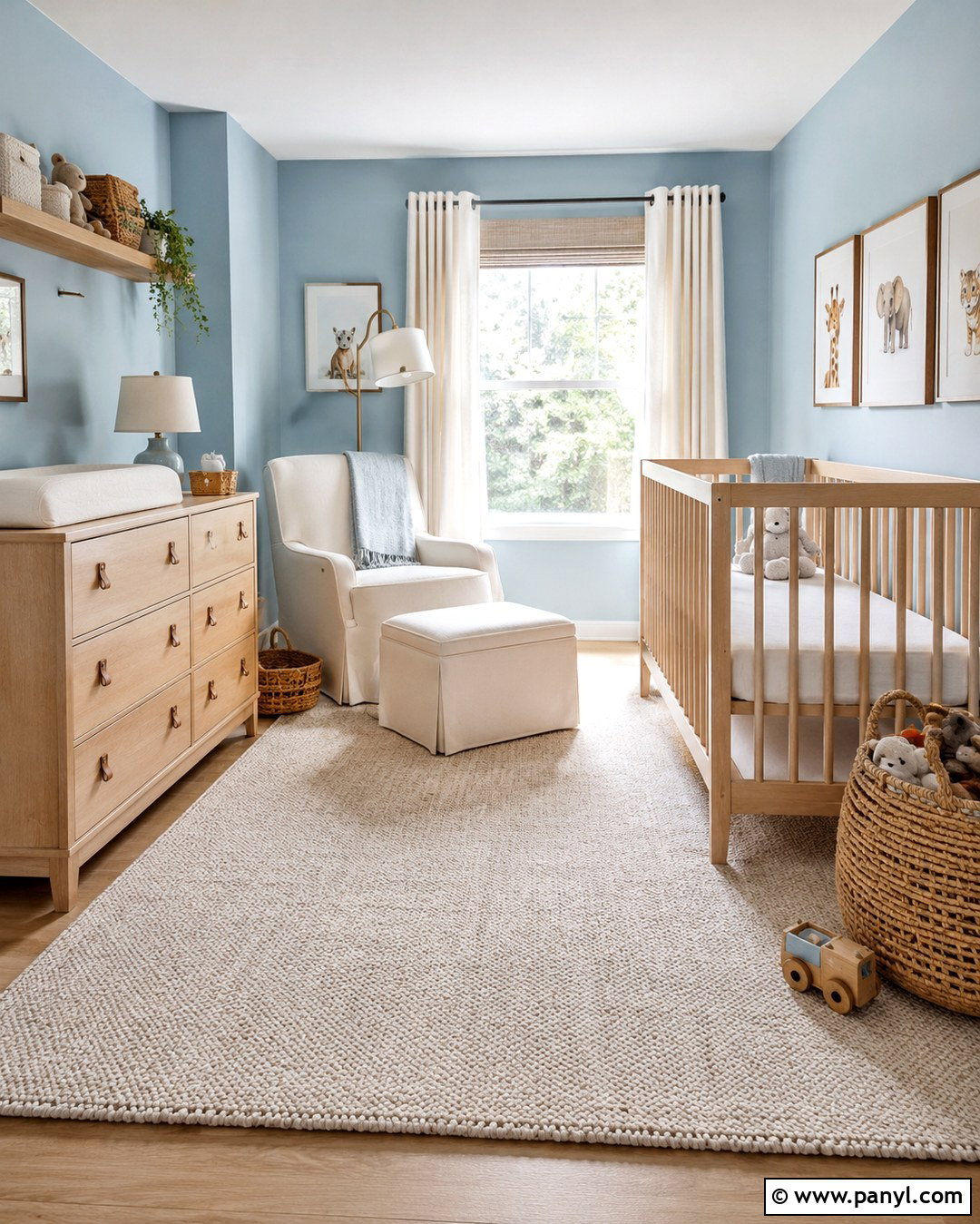
10. Navy Blue Living Room Paint
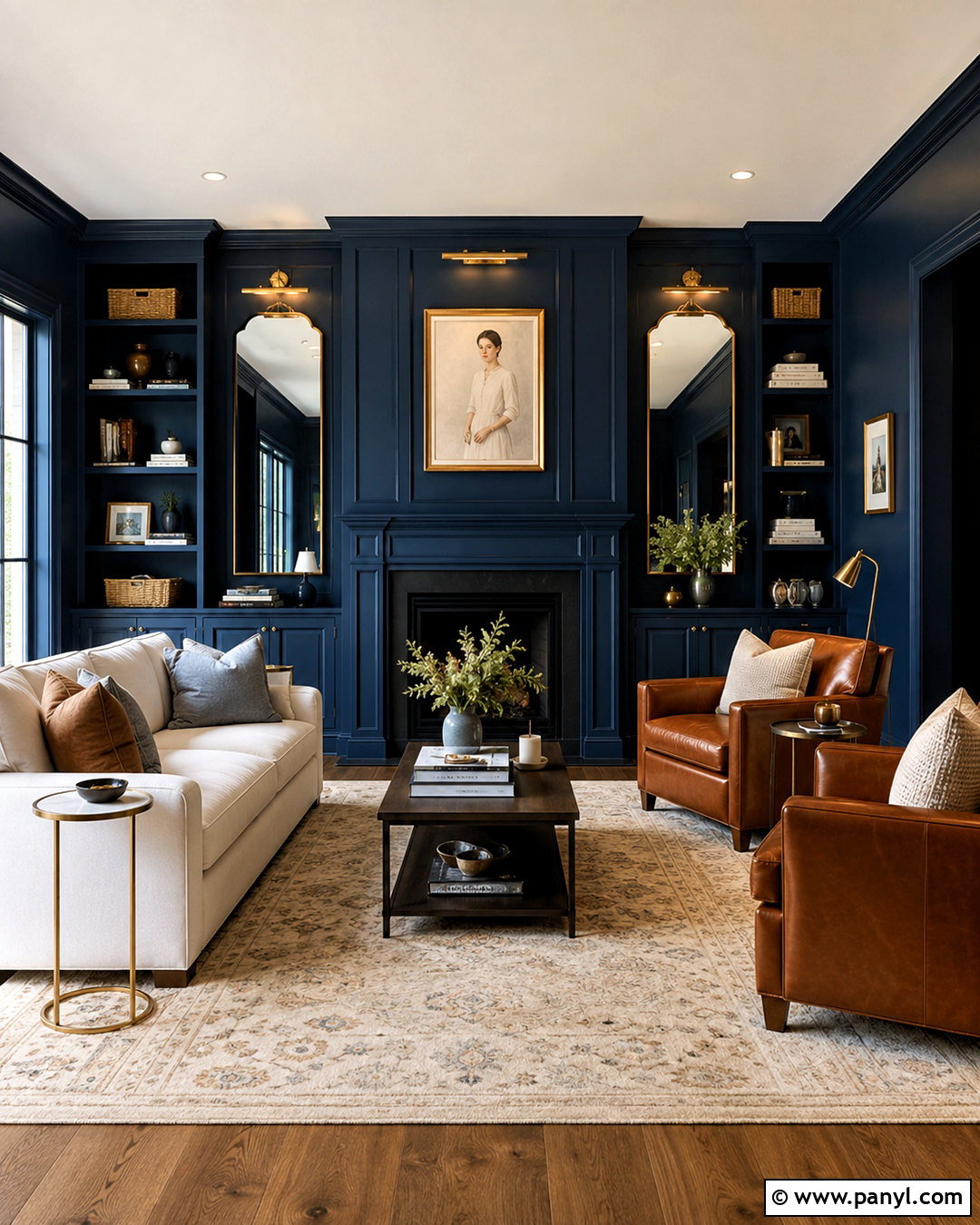
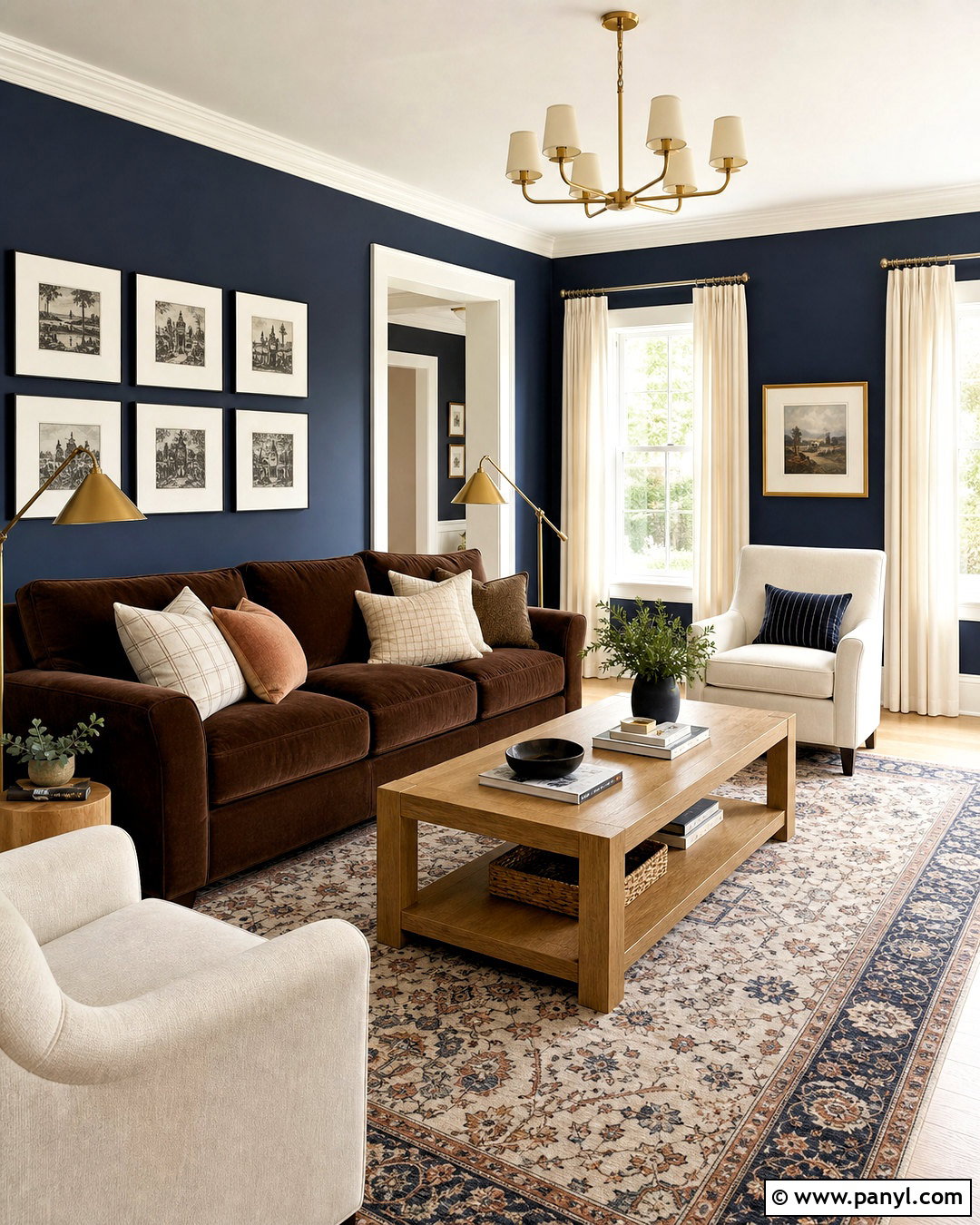
Deep navy paint can make a living room feel intimate, tailored, and surprisingly comfortable. Apply it to the walls, trim, and built-in storage for a unified color-drenched effect. Keep the ceiling warm white if the room is compact, or continue the navy overhead in a larger space with abundant windows. A cream sofa, cognac leather armchairs, and medium-tone wood floors prevent the palette from becoming too dark. Add a patterned rug containing ivory, faded red, and blue to connect the furnishings. Brass picture lights, table lamps, and mirrors reflect warmth across the painted surfaces. Choose larger artwork with light backgrounds so it stands out clearly. Layered lighting is essential here, so include ceiling, wall, table, and floor fixtures instead of one strong overhead light.
11. Forest Green Living Room Paint
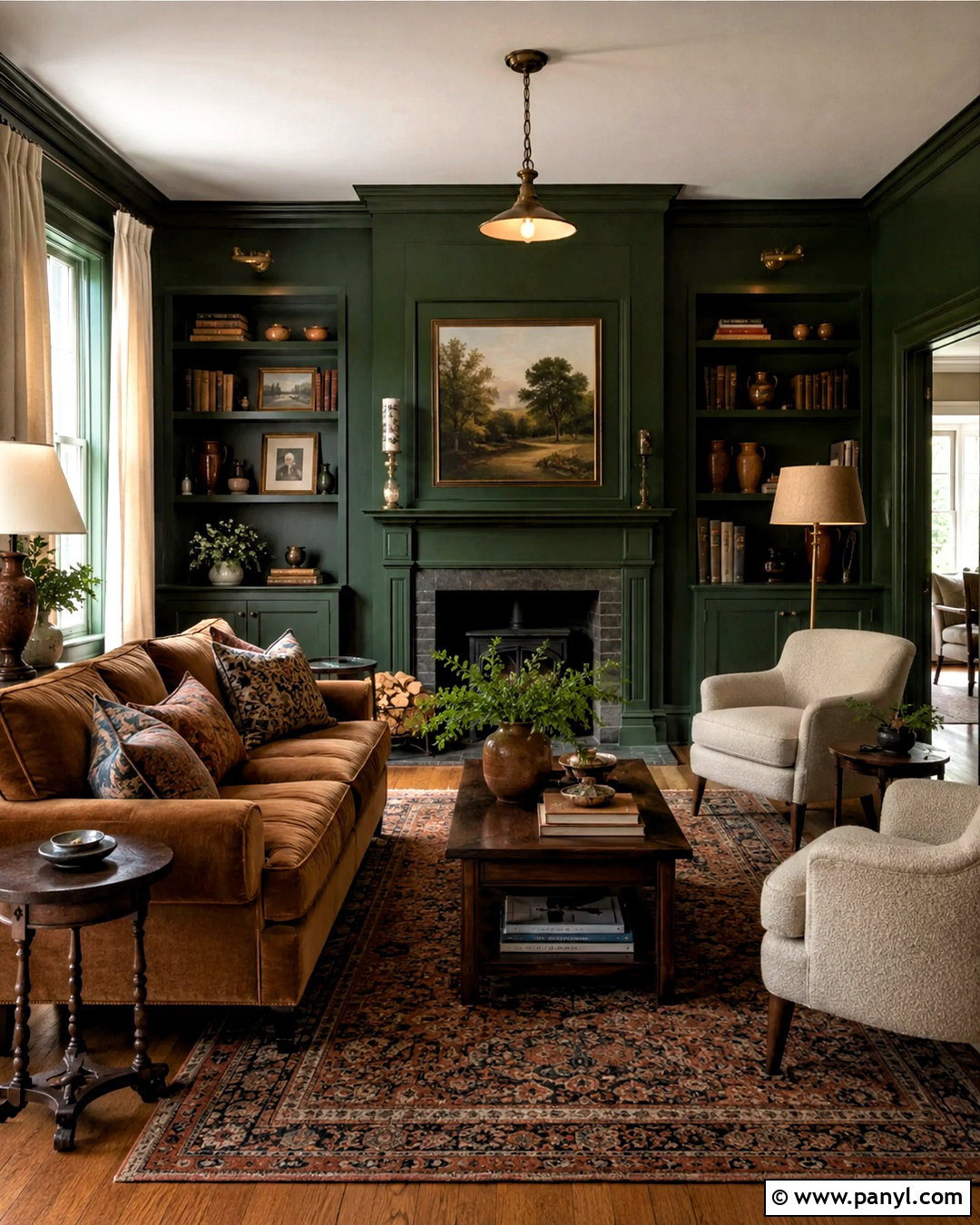
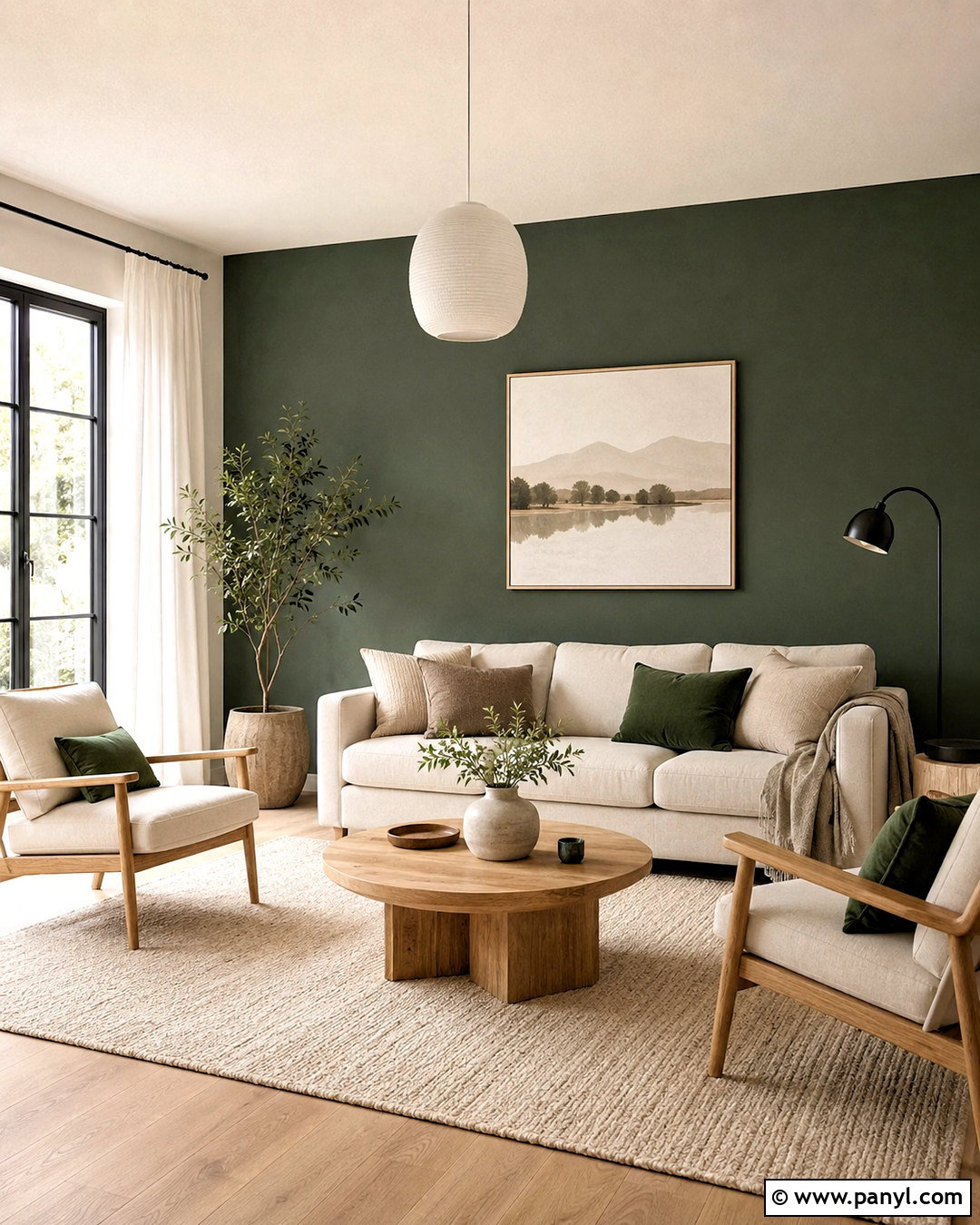
Forest green creates a dramatic living room that feels closely connected to nature. Choose a deep green with balanced undertones and apply it to the walls, fireplace mantel, and shelving. A camel velvet sofa, cream boucle chairs, and a patterned Persian-style rug will lighten the scheme while preserving its richness. Use dark walnut tables and aged brass lighting to support the traditional depth of the paint. Off-white curtains frame the windows and bring a necessary area of brightness into the room. Decorate with framed landscapes, ceramic vessels, and restrained rust accents. If the living room has little daylight, paint the ceiling a soft cream and use warm bulbs in multiple fixtures. The finished space should feel layered and cozy, not dark or visually crowded.
12. Terracotta Living Room Paint
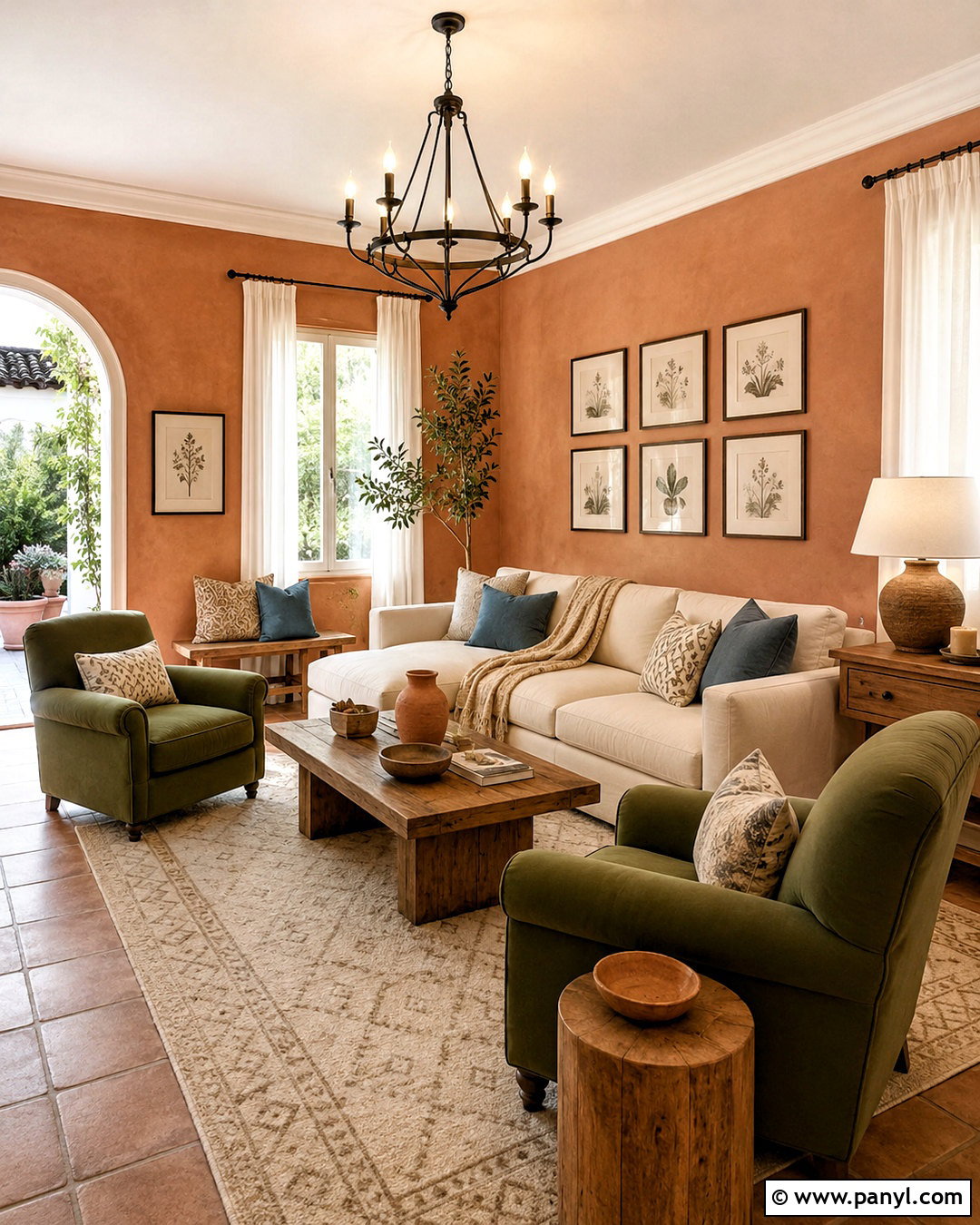
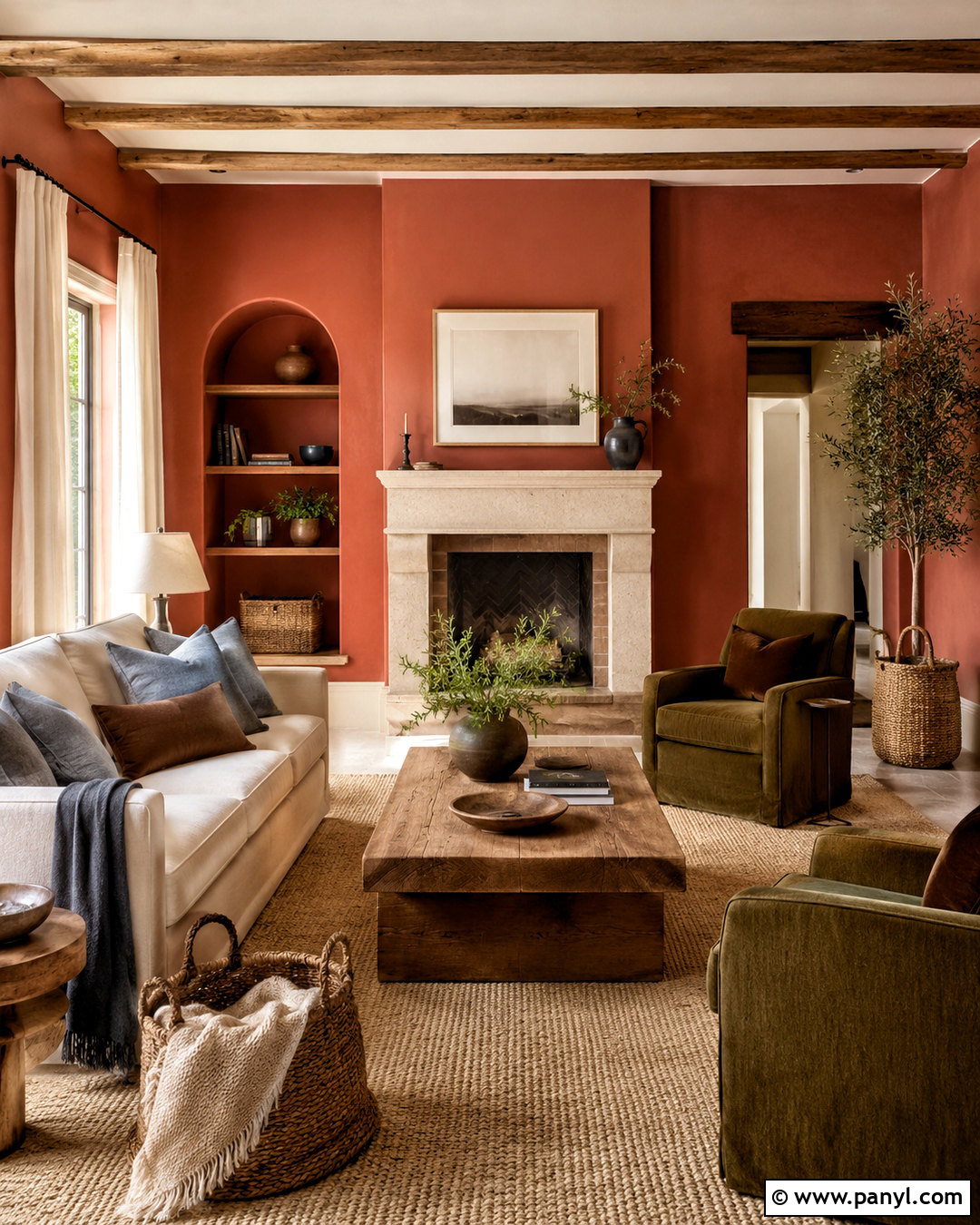
Imagine the warmth of sunbaked clay surrounding a comfortable seating area. Muted terracotta paint gives the living room energy while remaining earthy and relaxed. Pair it with an oatmeal sofa, olive green armchairs, and a cream rug with subtle geometric details. Medium oak furniture and woven accessories emphasize the natural palette, while matte black lighting adds a modern edge. Use warm white on the trim and ceiling to give the saturated walls a clean boundary. Linen curtains in ivory or pale beige soften the windows without competing with the paint. Add pottery, abstract artwork, and cushions in rust, tan, and muted blue. Terracotta performs especially well in rooms used during the evening because lamplight strengthens its warmth and creates an inviting atmosphere.
13. Clay Pink Living Room Paint
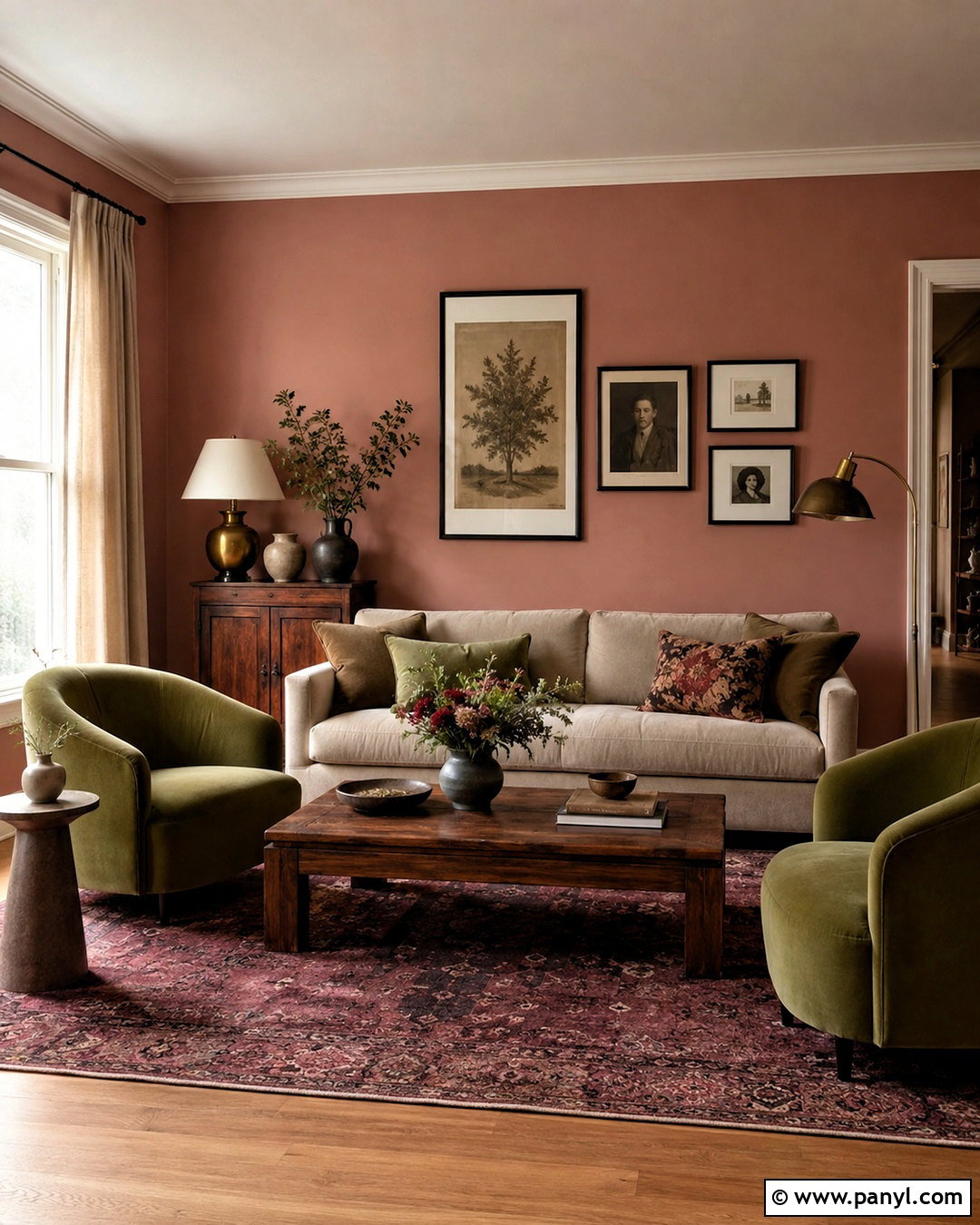
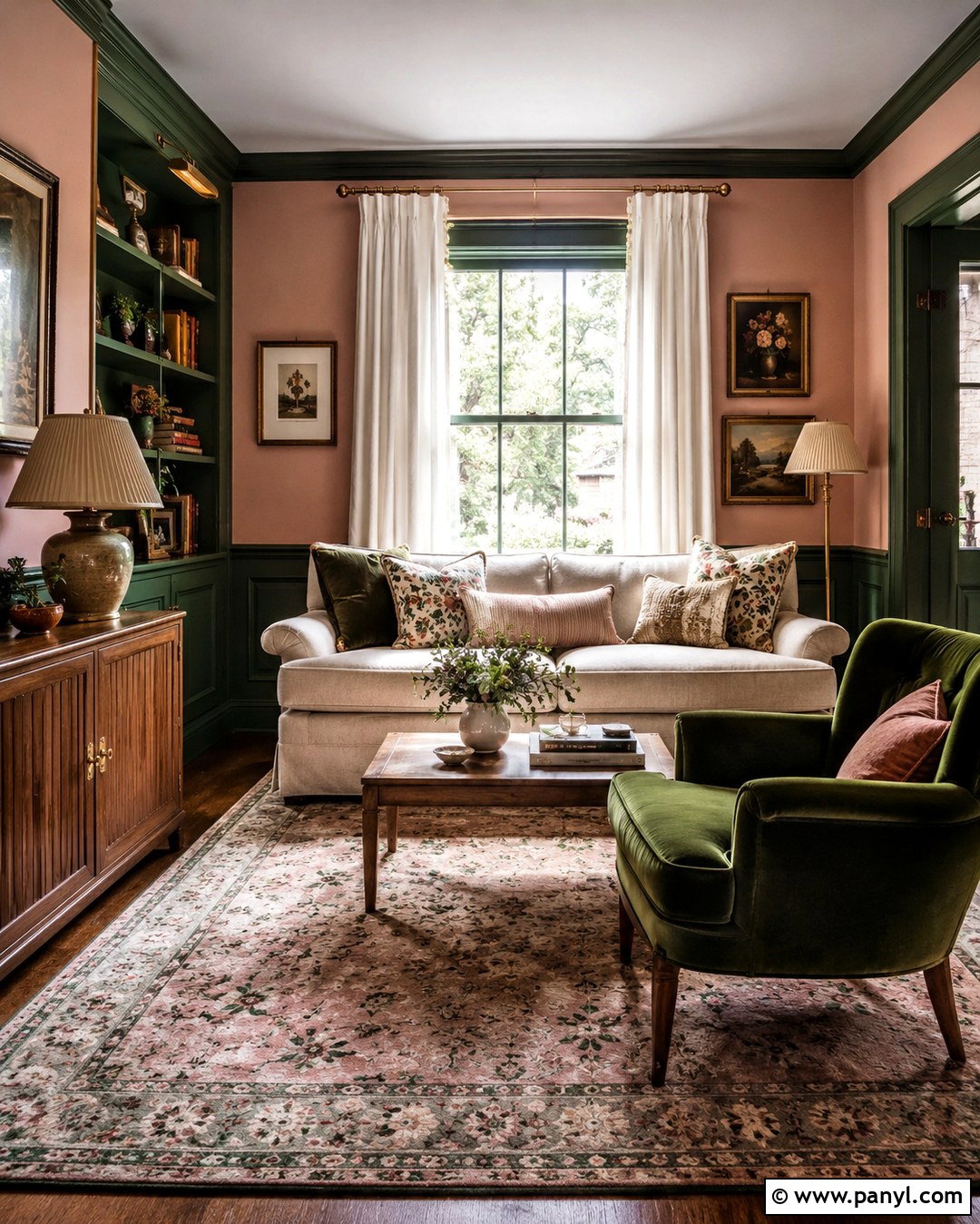
Clay pink offers a grown-up alternative to sugary pastel pink. Its muted brown undertone makes it easy to combine with natural materials and neutral furniture. Paint the walls in a dusty clay pink, then add warm white trim and a cream ceiling. Build the seating area around a light taupe sofa, walnut coffee table, and olive green accent chairs. A faded patterned rug containing rose, tan, and burgundy will tie the palette together. Use linen curtains, aged brass lamps, and handmade ceramics to create a soft, collected look. Black frames or a black fireplace insert provide enough contrast to keep the room from appearing overly delicate. This complete scheme works with modern, vintage, and eclectic furniture, especially when fabrics have visible texture rather than a shiny finish.
14. Dusty Rose Living Room Paint
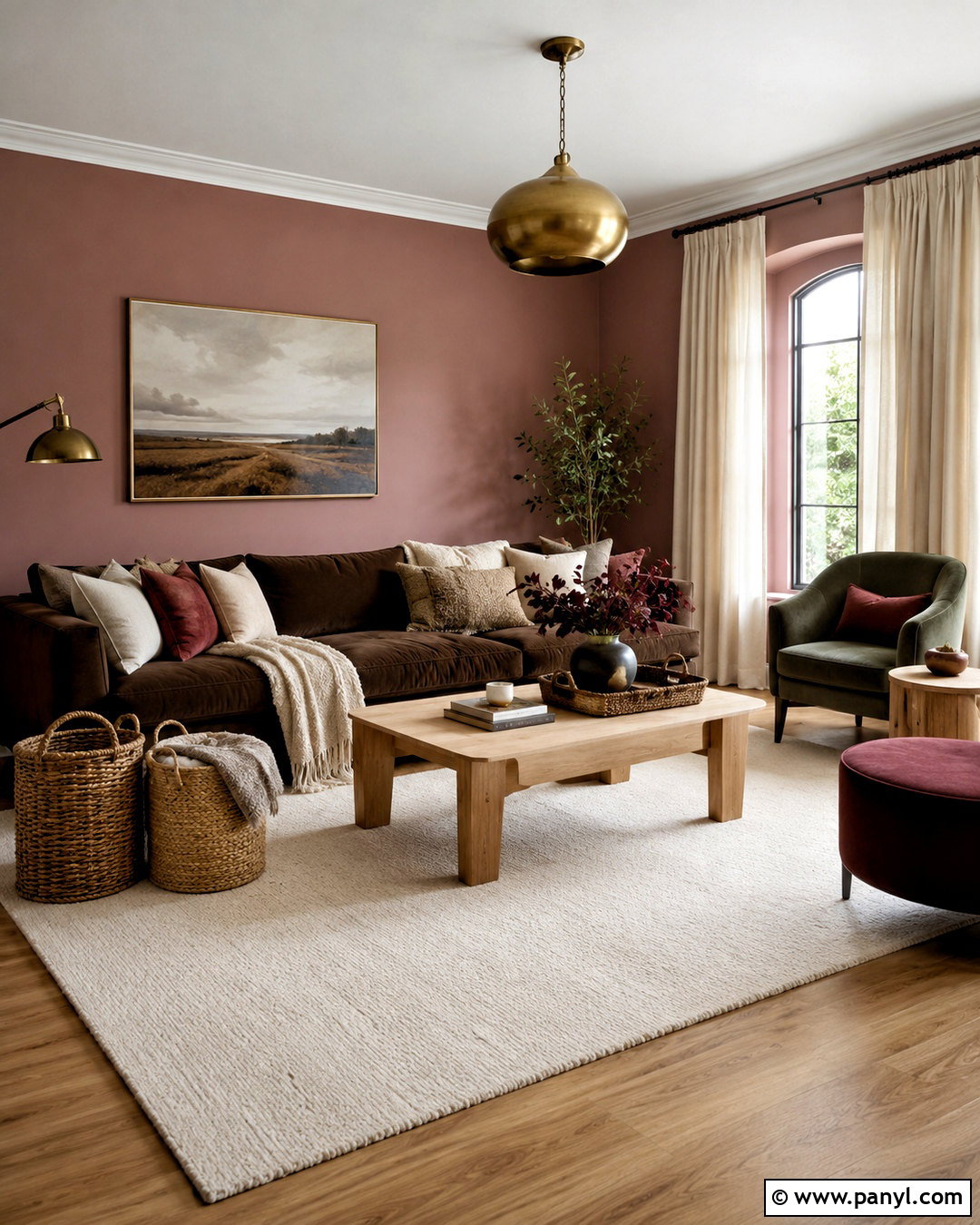
Dusty rose walls can make a living room feel warm and expressive without dominating the furniture. Choose a medium rose shade with gray or brown undertones, then balance it with a deep chocolate sofa and light oak tables. Cream curtains, an ivory rug, and warm white trim introduce brightness around the room’s edges. Bring in muted green through a velvet chair, artwork, or ceramic decor for a natural complementary accent. Brushed brass lighting adds polish, while woven baskets and linen pillows keep the space relaxed. Rather than repeating pink everywhere, allow the walls to remain the main statement. A few burgundy details can deepen the palette for fall and winter, while pale blue accessories can make it feel lighter during warmer months.
15. Butter Yellow Living Room Paint
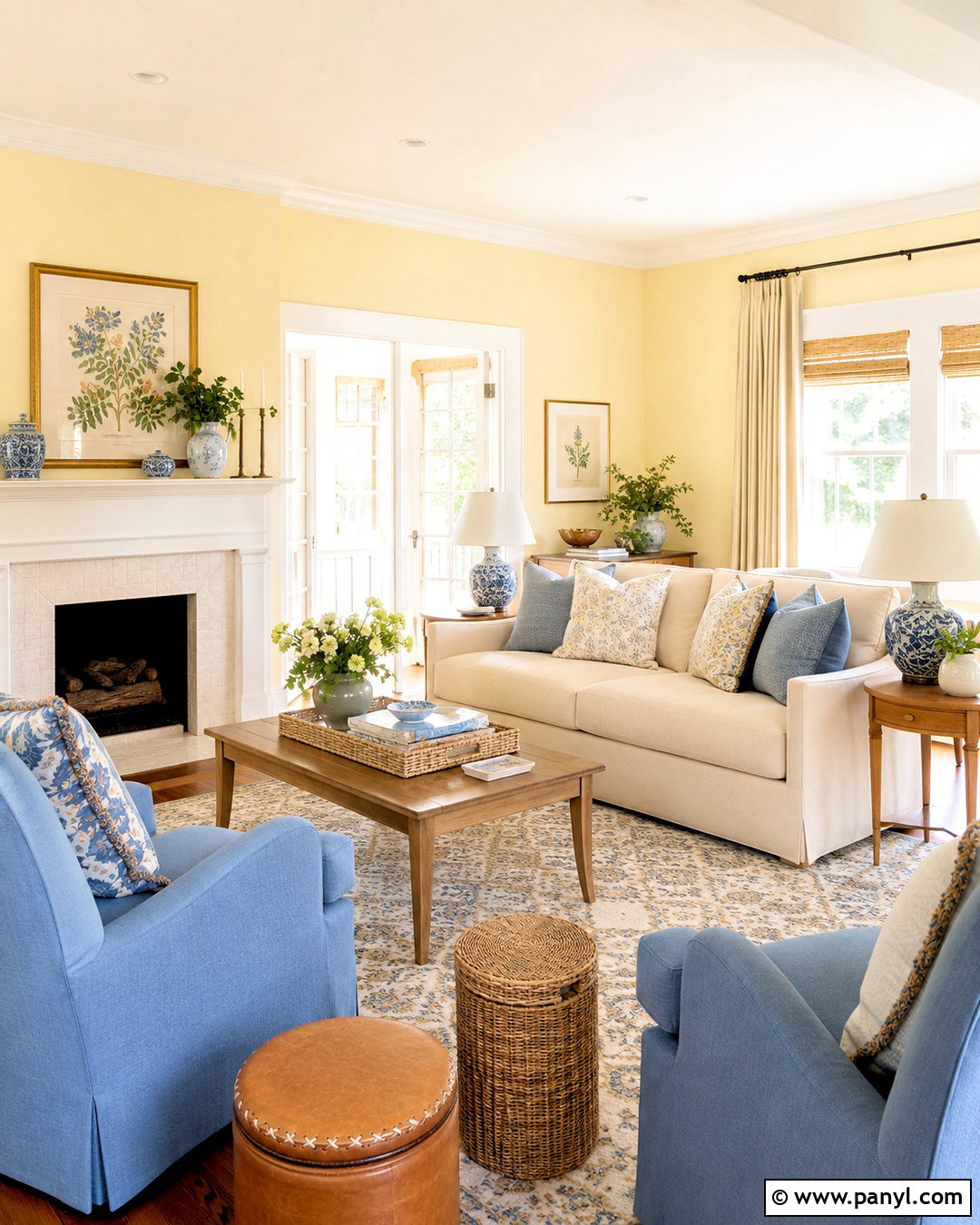
Butter yellow paint gives the living room a cheerful glow without the intensity of bright primary yellow. Select a pale, creamy version and use it with warm white trim, natural oak furniture, and a soft ivory sofa. Sky blue chairs or curtains create gentle contrast, while tan leather and woven textures add warmth. Ground the room with a light rug featuring small blue, gold, or brown details. Keep accessories simple because the wall color already contributes noticeable character. Ceramic lamps, framed botanical prints, and linen cushions are enough to complete the look. Butter yellow is helpful in rooms with limited natural light, but test it beside the windows first. A shade with too much green may look sharp, while excessive orange can appear heavier than expected.
16. Ochre Living Room Paint
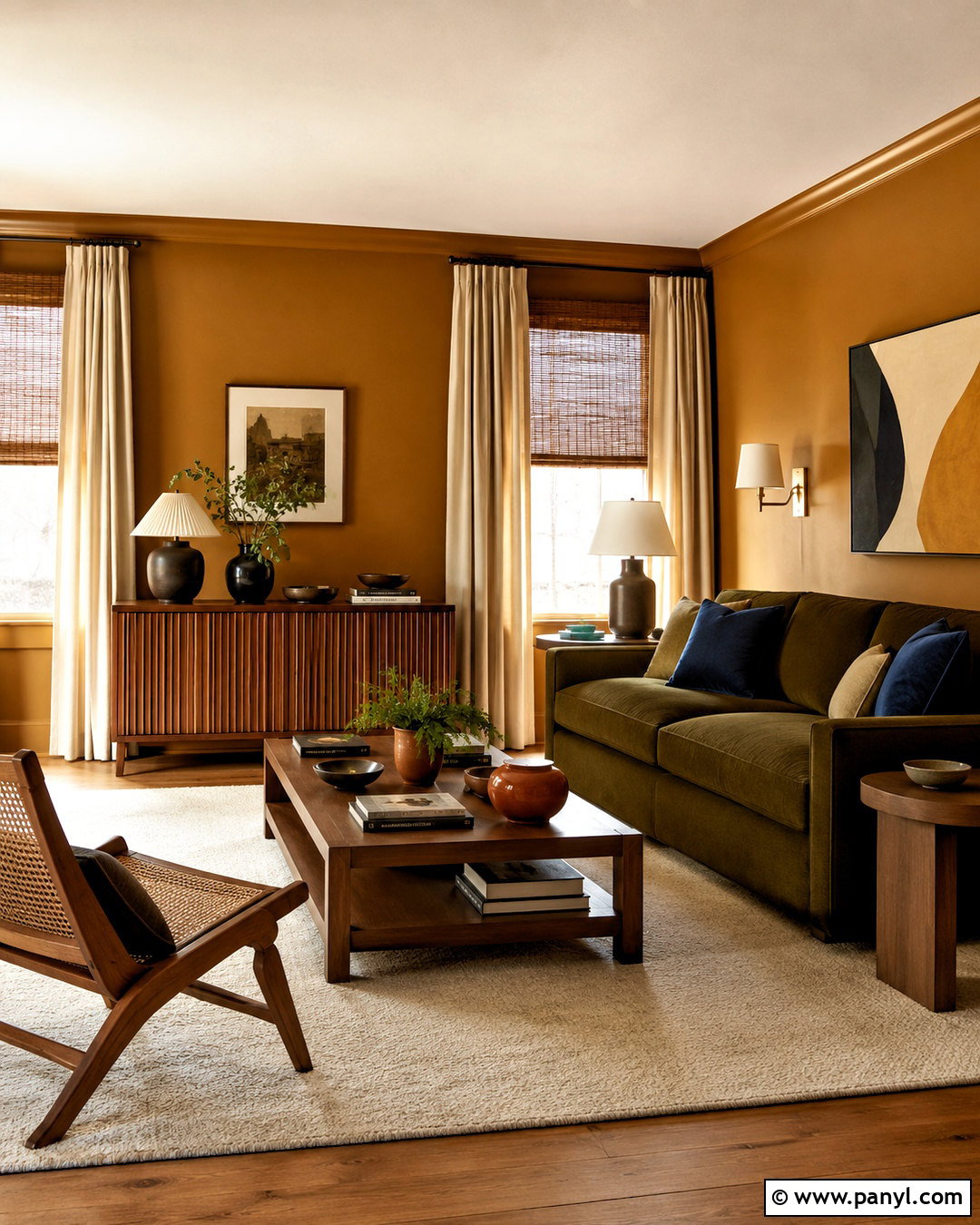
Ochre paint creates a rich, sun-warmed backdrop for an artistic and comfortable living room. Use a muted golden ochre rather than a highly saturated yellow. Pair it with a dark olive sofa, walnut furniture, and an ivory wool rug to balance the color. Deep blue pillows and artwork provide strong contrast, while rust and brown accessories maintain the earthy direction. Keep the ceiling creamy white, but consider painting the trim in the same ochre for a contemporary tone-on-tone effect. Woven shades, linen drapes, and antique brass lamps make the room feel layered. Since ochre can visually advance, leave breathing room around furniture and avoid filling every wall with decor. The finished design feels bold yet grounded when its surrounding materials remain natural and understated.
17. Chocolate Brown Living Room Paint
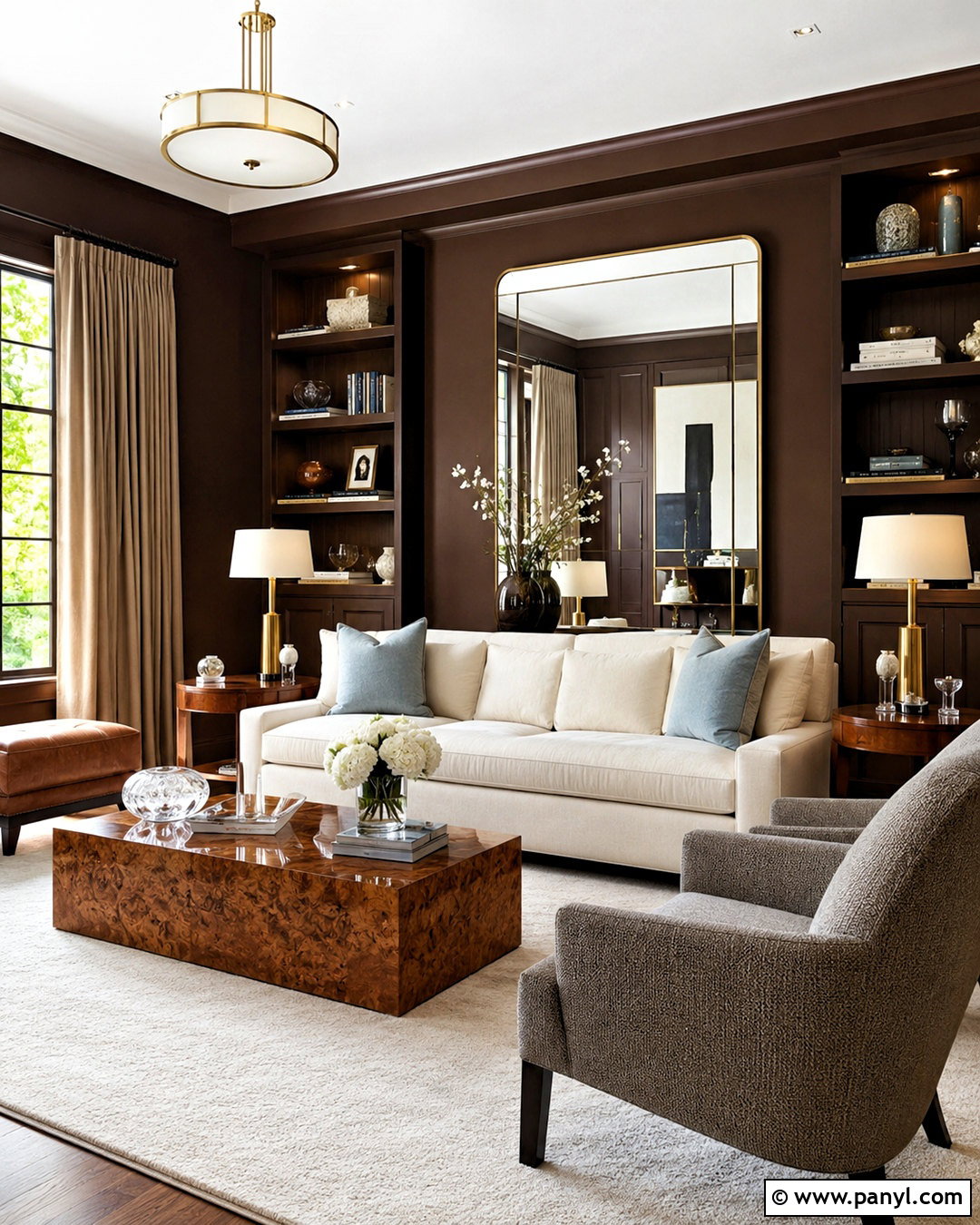
Chocolate brown walls can turn a bright but uninspiring living room into a sophisticated retreat. Choose a deep cocoa shade with warm undertones and apply it across the walls and built-ins. Contrast the dark background with a cream sofa, oatmeal curtains, and a large ivory rug. Add walnut or burl wood tables, but vary the wood tones slightly so the room does not appear overly coordinated. Pale blue pillows and artwork offer a fresh counterpoint to the brown. Brass lamps, glass accessories, and a large mirror help bounce light around the space. If the room is small, keep the ceiling and window trim warm white. This color looks best with generous layered lighting and uncluttered furniture placement that allows the dramatic walls to remain visible.
18. Burgundy Living Room Paint
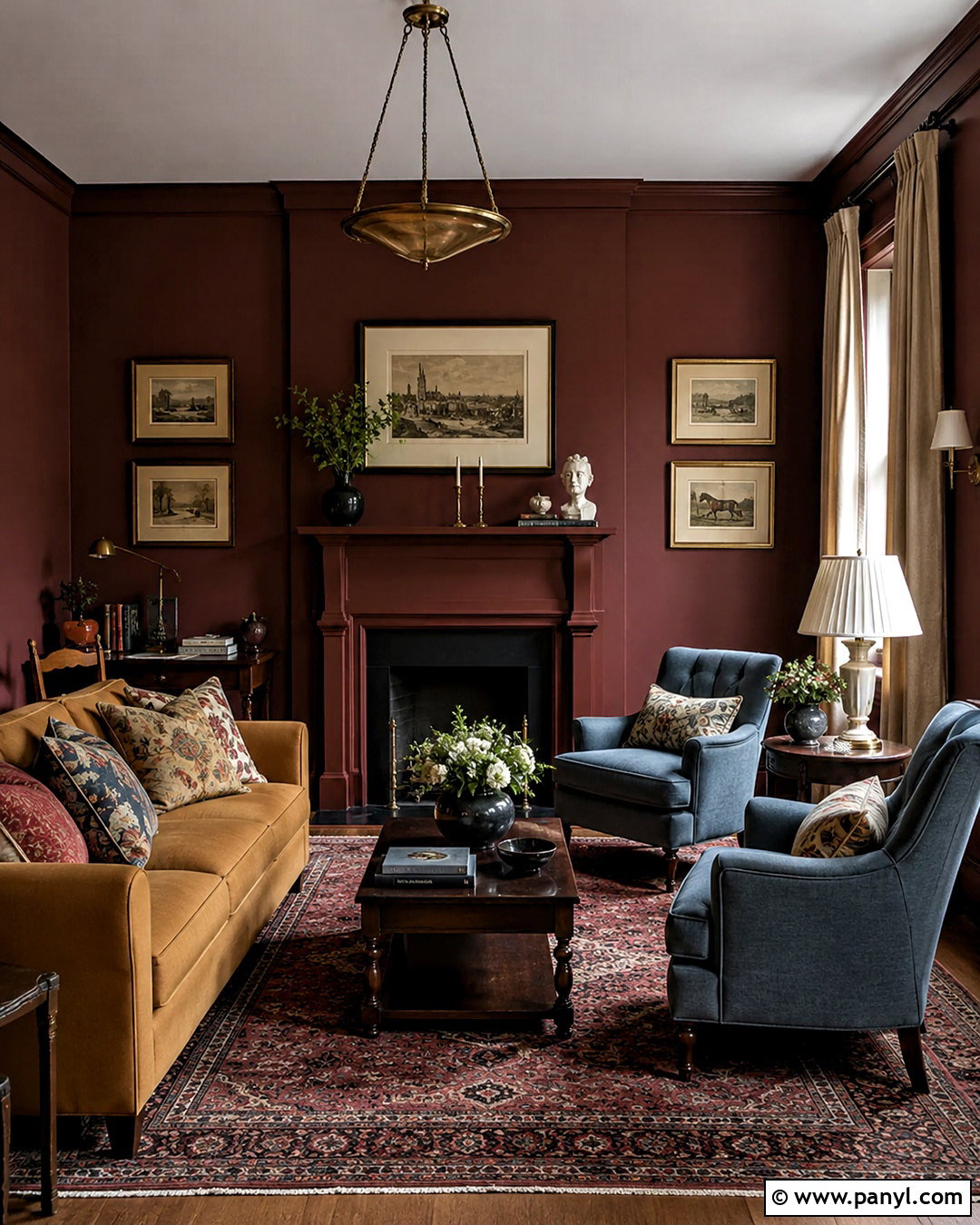
Burgundy paint creates an enveloping living room with depth, warmth, and a refined sense of color. Select a muted red with brown or plum undertones instead of a bright jewel tone. Use it on the walls and fireplace mantel, then keep the ceiling a soft cream. A camel sofa, dusty blue chairs, and a faded traditional rug will balance the burgundy beautifully. Dark wood tables reinforce the richness, while antique brass lighting introduces a subtle glow. Hang artwork with cream mats to create visual breathing room on the deep walls. Linen curtains in oatmeal or light taupe soften the windows. For a modern result, limit decorative accessories and emphasize strong furniture shapes. In a traditional room, layer books, patterned textiles, and framed landscapes more generously.
19. Lavender Gray Living Room Paint
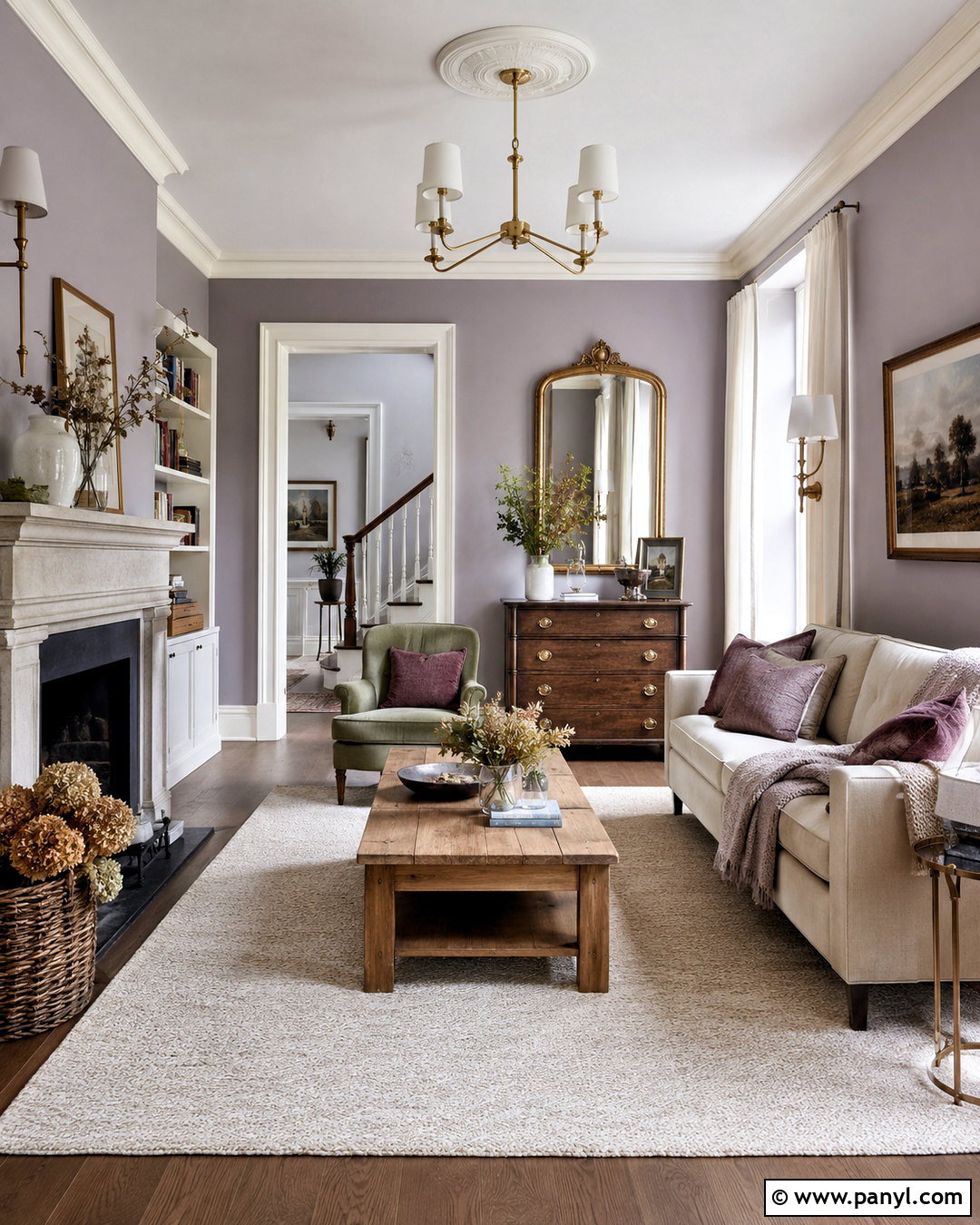
Lavender gray gives a living room an understated wash of color that changes gently throughout the day. Choose a muted lavender with plenty of gray, then pair it with warm white trim and a pale cream ceiling. A light gray-beige sofa, natural oak coffee table, and ivory textured rug create a quiet foundation. Introduce muted plum through pillows and use sage green in artwork or an accent chair. These neighboring colors add depth without disrupting the calm mood. Brushed nickel lighting feels clean, while aged brass creates a warmer, more traditional effect. Avoid cool blue-gray upholstery, which may make the walls appear overly purple. This complete palette is especially effective in rooms with soft natural light, elegant molding, and a mixture of modern and vintage furniture.
20. Charcoal Living Room Paint
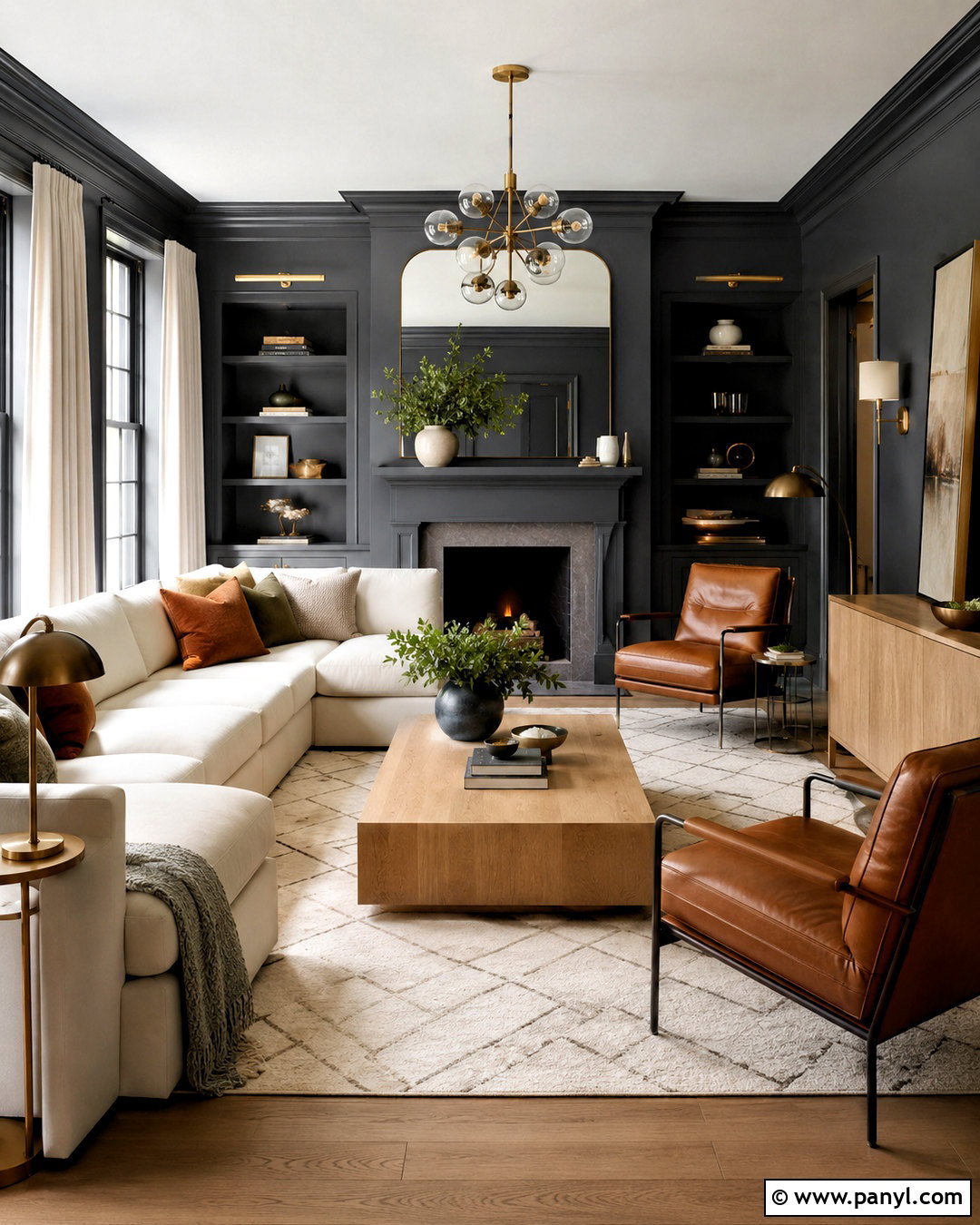
Charcoal paint delivers drama while remaining more flexible than pure black. Select a warm charcoal with brown undertones and use it on the walls, trim, and fireplace for a seamless background. Contrast it with a large ivory sectional, pale oak tables, and a cream rug with black geometric details. Cognac leather chairs add warmth, while rust and olive pillows introduce restrained color. Keep curtains light and full length to frame the windows clearly. Brass floor lamps, glass table lamps, and mirrors are important for distributing light throughout the room. If the ceiling is low, paint it warm white rather than charcoal. Leave some walls sparsely decorated so the deep color remains visible. The result feels modern, comfortable, and intentional instead of stark or industrial.
Conclusion:
The best living room color should support the way you use the space while complementing its light, furniture, and permanent finishes. Warm whites, cream, greige, and mushroom provide flexible foundations. Sage, olive, blue, and teal bring calm color, while terracotta, ochre, burgundy, brown, and charcoal create greater depth. Whatever palette you prefer, test large samples on more than one wall before buying the full amount. Observe each option beside your flooring and upholstery during different times of day. Then build a complete room through coordinated trim, textiles, wood tones, lighting, and decor. With careful testing and balanced styling, these 20 living paint color ideas can inspire a space that feels personal, polished, and comfortable.

Related Ideas and Inspiration:
Leave a Reply