
Texture can make color feel deeper, warmer, and more connected to the rest of a room. The best texture colour wall ideas combine a tactile finish with furniture, flooring, lighting, and decor that support the same mood. Soft limewash can calm a bedroom, while ridged plaster or painted brick can give a living room a stronger focal point. Even practical spaces benefit from washable textured finishes, dimensional panels, or carefully chosen wallcoverings. Before committing, test the color and texture under daytime and evening light because raised surfaces create changing highlights and shadows. Whether your home feels modern, rustic, coastal, or traditional, the following complete room looks show how to use texture colour wall ideas with balance, character, and realistic decorating details.

1. Sage Green Limewash Wall
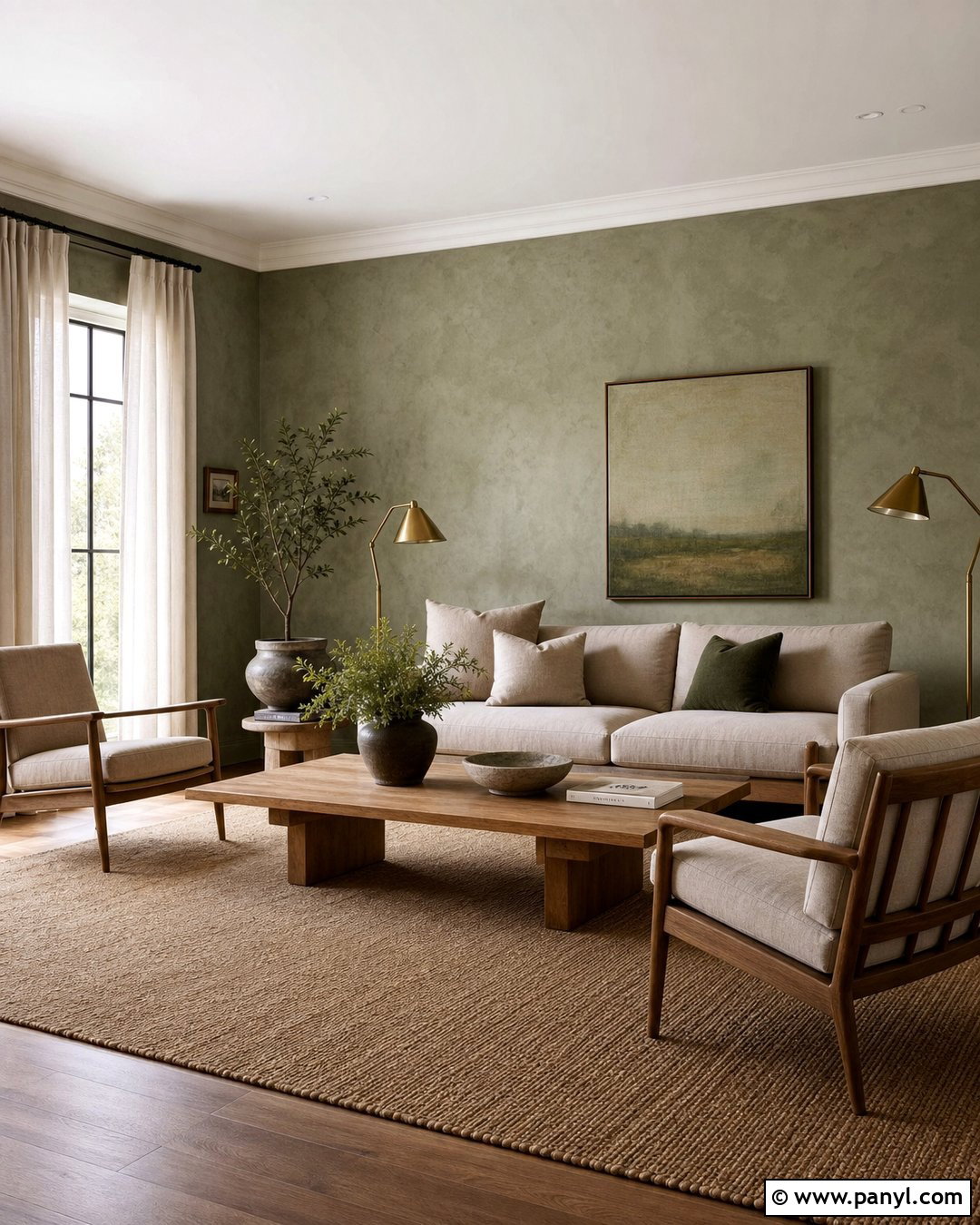
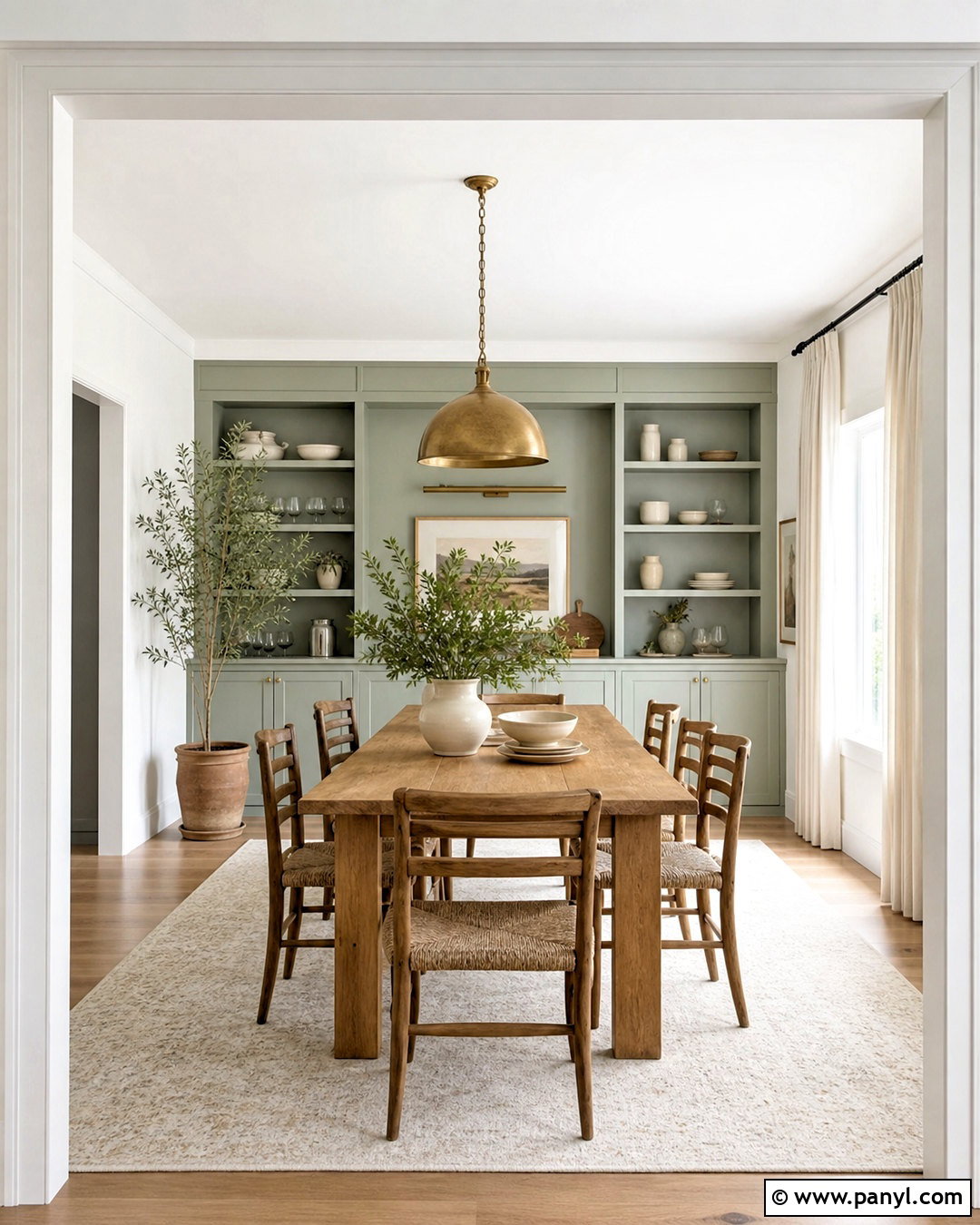
A sage green limewash wall brings gentle movement to a relaxed living room without making the space feel overly decorated. Apply the finish across the main seating wall, allowing soft brush marks and cloudy tonal shifts to remain visible. Pair it with a warm oatmeal sofa, two light oak armchairs, and a natural jute rug. Cream linen curtains keep the windows airy, while aged brass lamps add a subtle glow against the green. Use a low oak coffee table and handmade ceramic accessories to reinforce the organic character. Paint the remaining walls a warm off-white rather than bright white. This prevents harsh contrast and helps the textured sage surface blend naturally into the complete room.
2. Warm Beige Venetian Plaster Wall
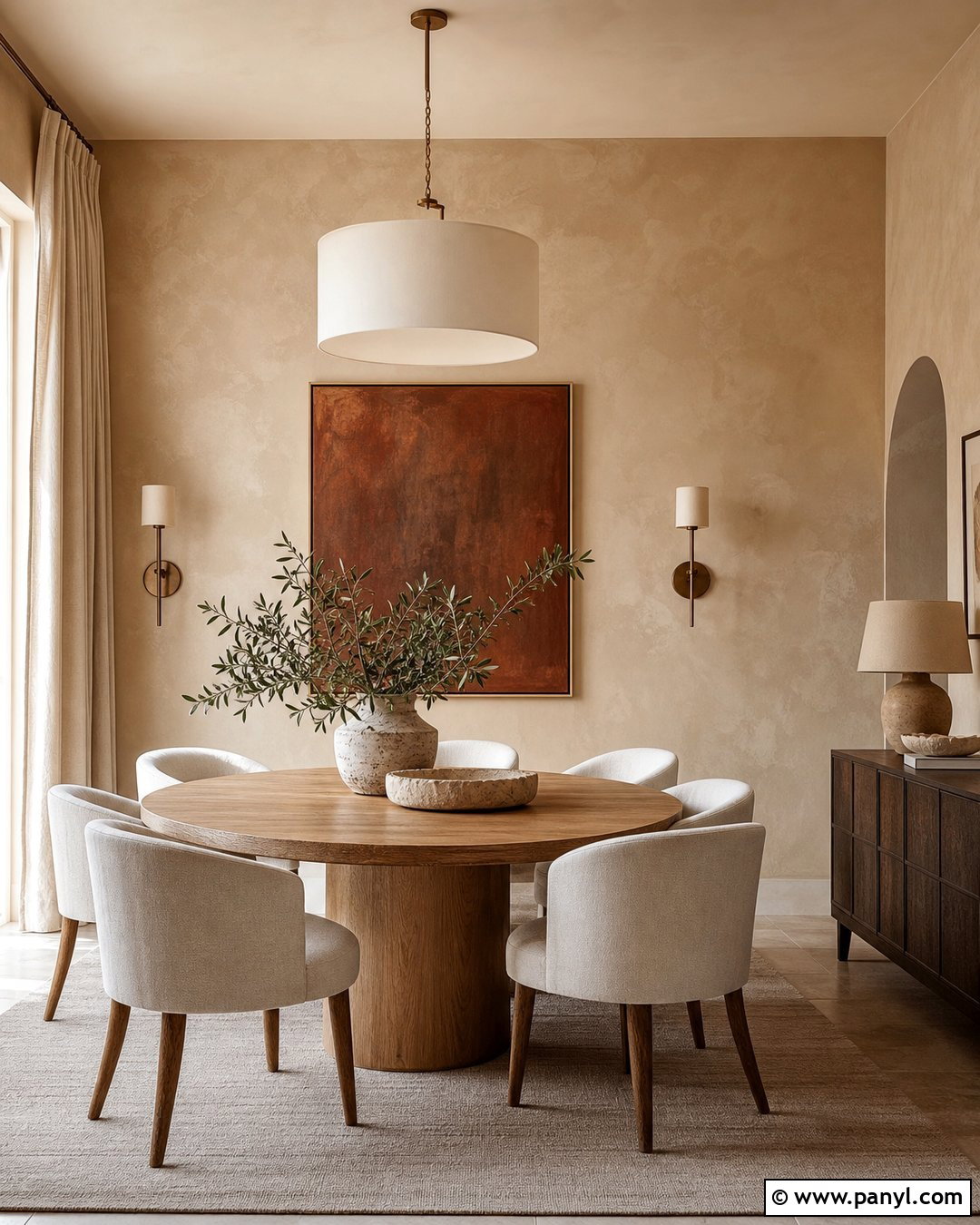
Venetian plaster in warm beige gives a dining room a polished look while remaining soft and welcoming. Use the finish on every wall for a seamless, enveloping effect, or feature it behind a rounded oak dining table. Gentle trowel marks should catch the light without looking glossy or heavily patterned. Add curved dining chairs upholstered in ivory fabric, a textured wool rug, and a sculptural cream pendant. Travertine accessories and brushed bronze hardware complement the mineral quality of the plaster. Keep window coverings simple with full-length flax linen panels. A large abstract artwork in rust, charcoal, and cream provides contrast. The result feels refined, but the earthy palette keeps it comfortable enough for everyday dining.
3. Terracotta Textured Bedroom Wall
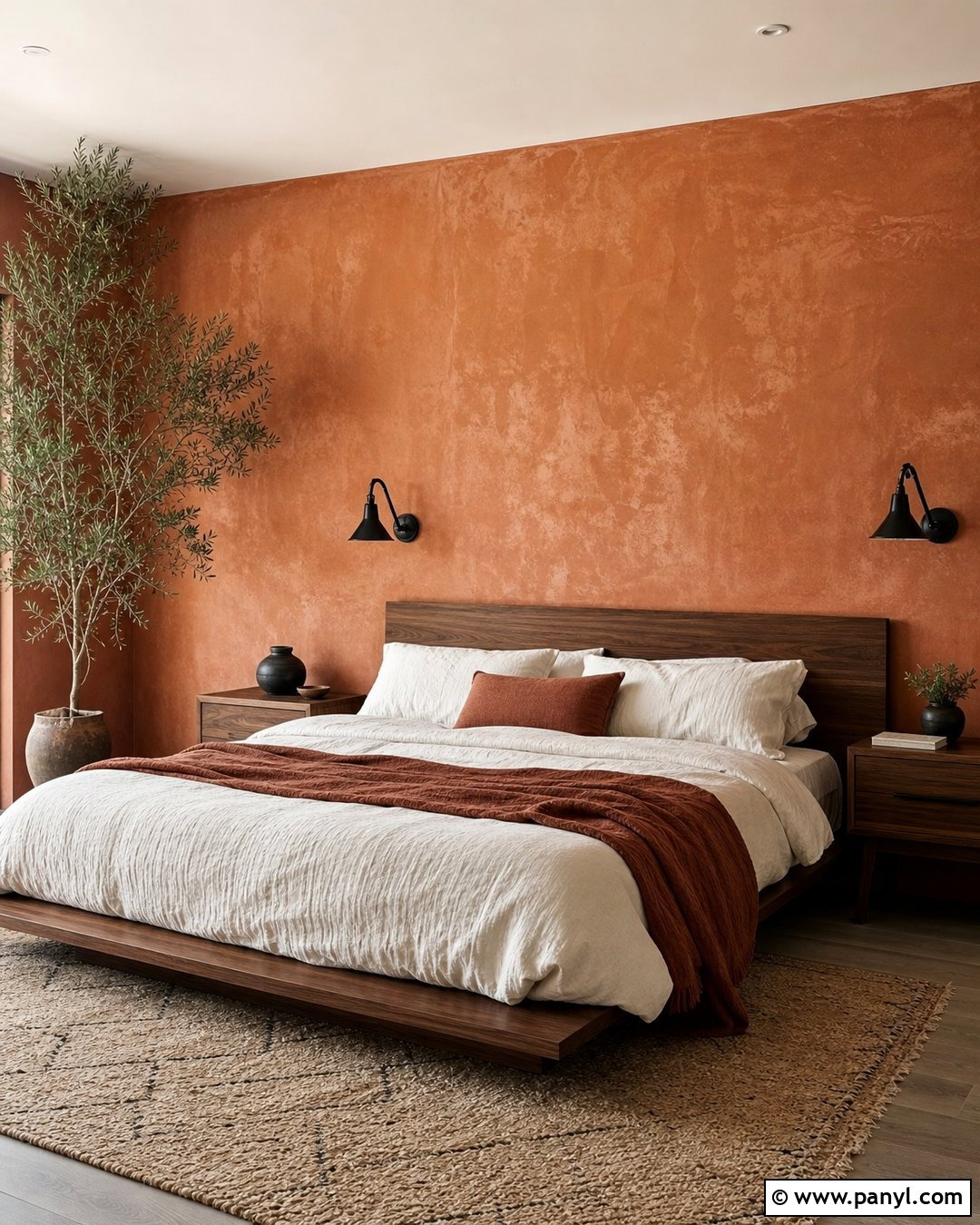
Imagine waking up beside a sunbaked terracotta wall with softly uneven plaster and rich clay undertones. Position the textured surface behind a low walnut bed so it becomes a warm backdrop rather than an overpowering feature. Dress the bed in cream linen, muted peach, and dusty rust textiles. Choose matching walnut nightstands and matte black reading sconces to sharpen the earthy palette. A woven wool rug with subtle geometric details can ground the room, while off-white walls and a light ceiling preserve brightness. Add one tall olive tree or leafy indoor plant near the window. Natural materials, restrained patterns, and warm neutral layers create a complete bedroom that feels grounded, restful, and thoughtfully connected.
4. Navy Blue Fluted Wall Panels
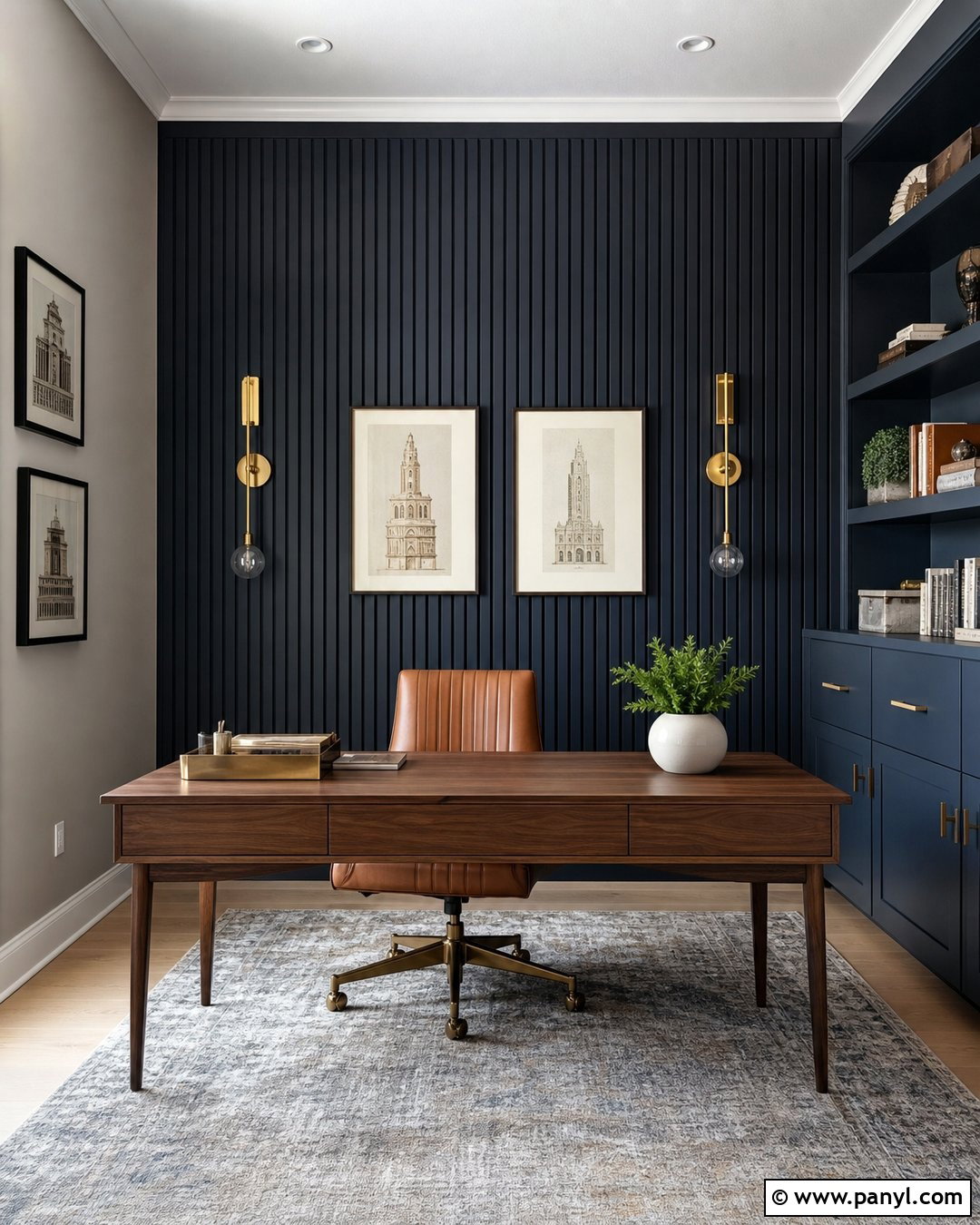
Deep navy blue fluted panels can transform a plain home office into a focused, tailored workspace. Install narrow vertical panels across the wall behind the desk, then paint them in a consistent matte navy finish. A streamlined walnut desk adds warmth, while a cognac leather chair prevents the room from becoming too cool. Use brushed brass picture lights or adjustable sconces to emphasize the panel grooves. Keep the other walls soft greige and choose a pale oak floor or neutral rug for balance. Closed storage in matching navy creates a built-in appearance. Finish the room with framed architectural prints, a ceramic desk lamp, and minimal accessories. The vertical texture also makes an average-height ceiling appear taller.
5. Soft Pink Clay Plaster Wall
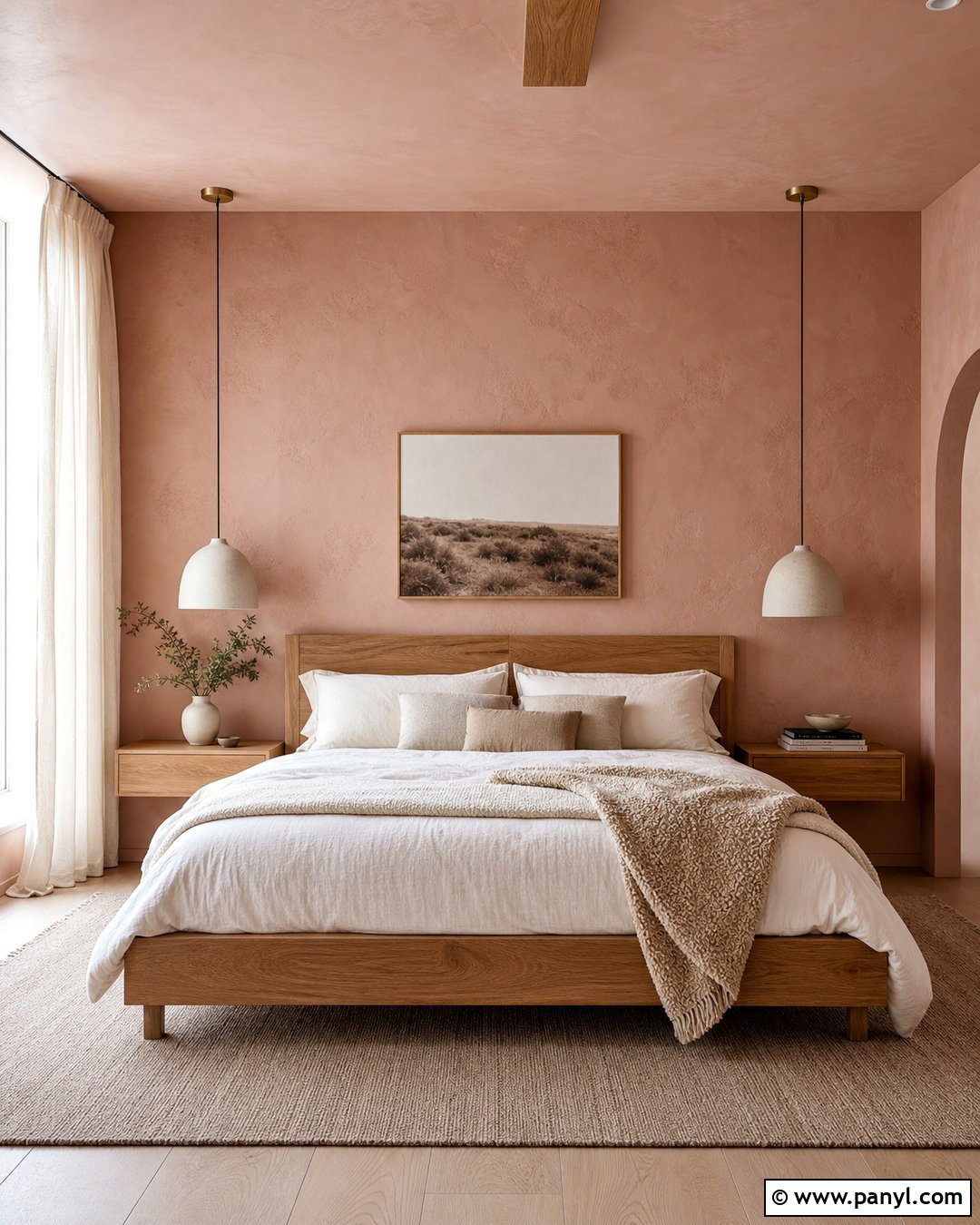
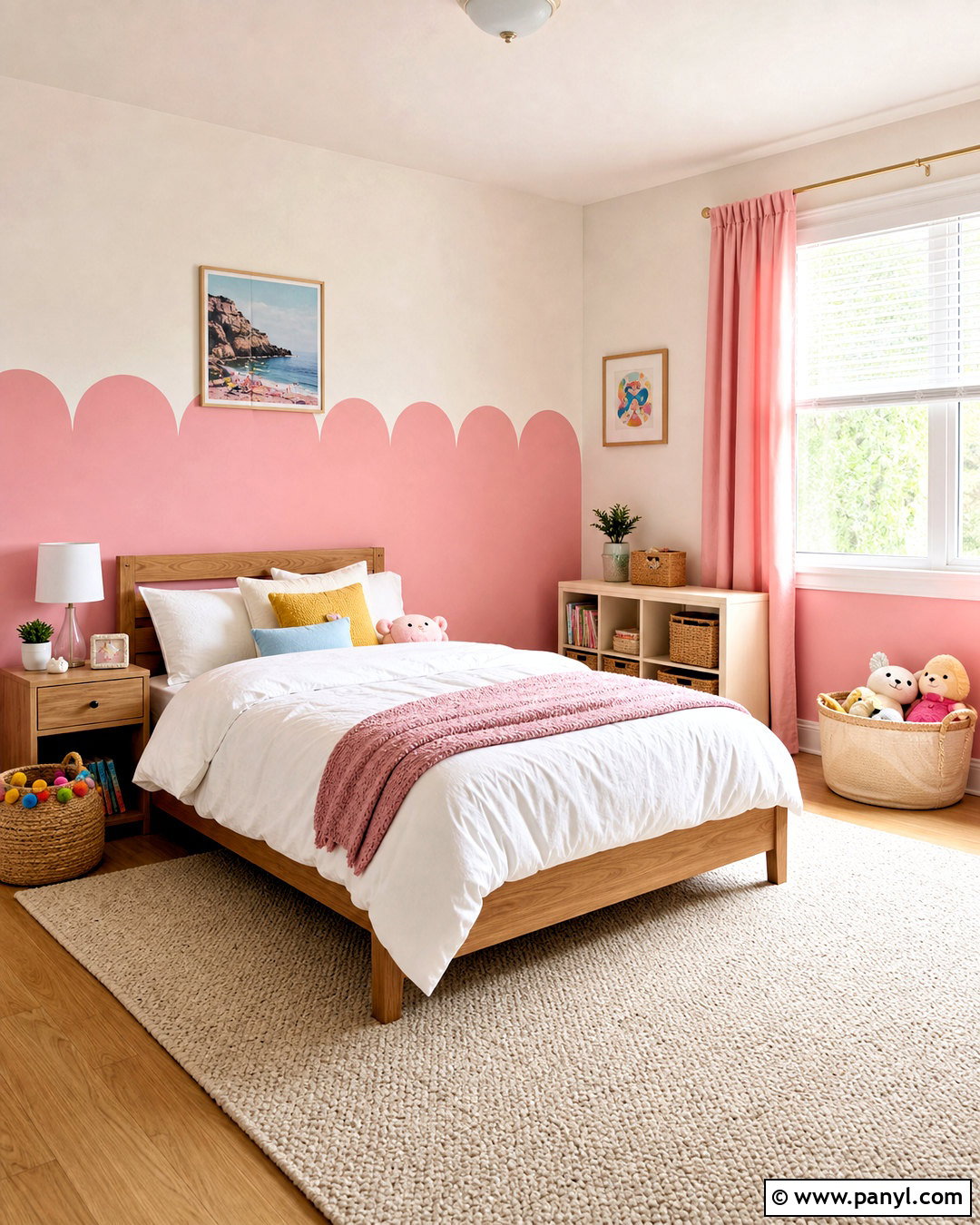
Could a pink wall feel calm rather than sweet? A muted dusty pink clay plaster finish creates a sophisticated bedroom when balanced with natural wood and understated textiles. Apply it behind the bed and continue it around one adjoining corner for a more immersive look. Choose an oak bed frame, warm white bedding, and a mushroom-colored wool throw. Small plaster pendant lights can hang above simple floating nightstands, leaving the wall texture clearly visible. Add a pale taupe rug and linen curtains in soft ivory. Avoid bright metallic accessories; aged bronze or dark wood creates a more grounded contrast. The finished room feels warm and personal, with enough texture to make the quiet color look layered.
6. Charcoal Concrete Living Room Wall
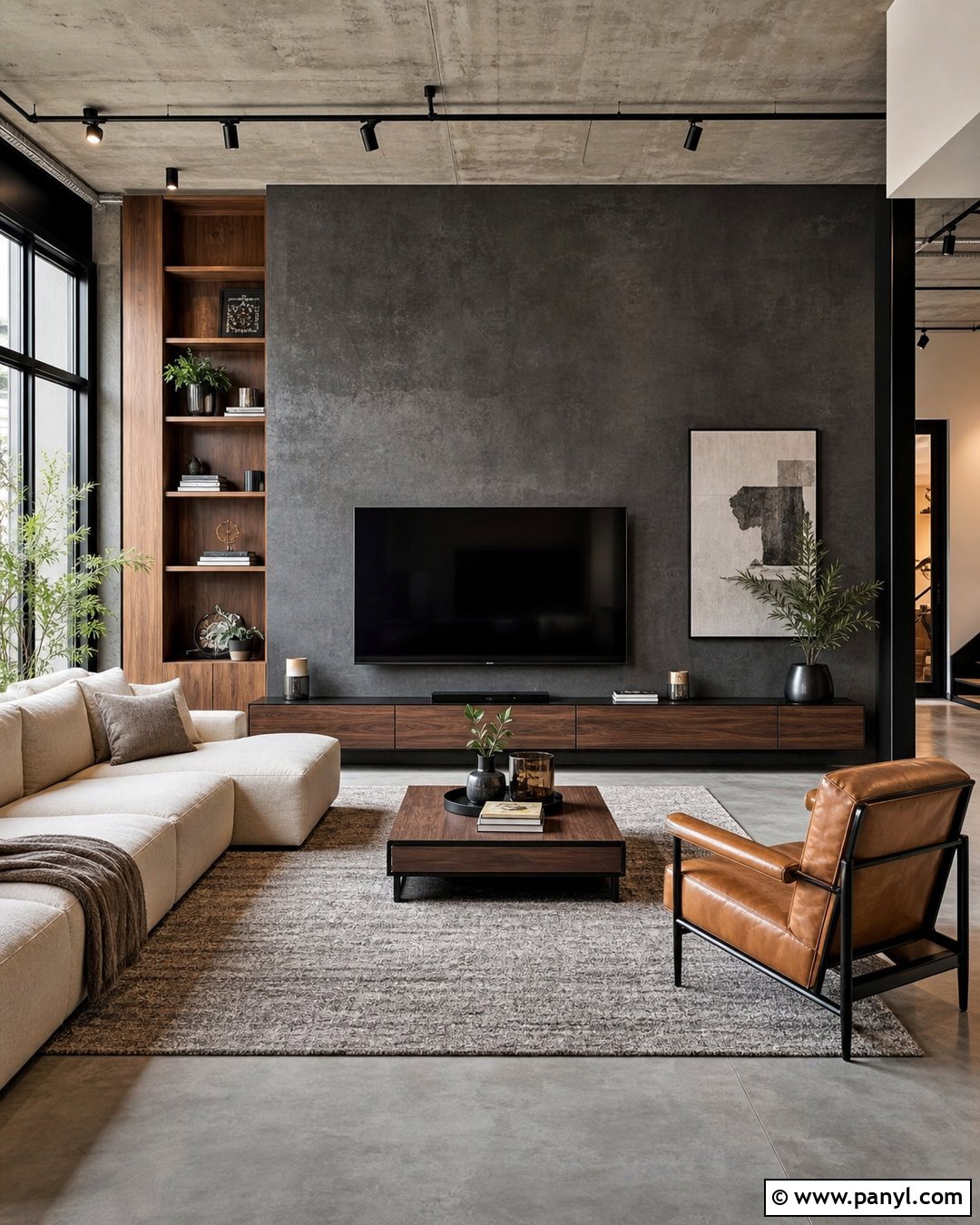
A charcoal concrete-effect wall creates an impressive focal point in a modern living room, especially when the remaining finishes are warm and tactile. Place the textured surface behind a low media console or streamlined fireplace. Choose a large cream sectional, a caramel leather lounge chair, and a thick gray-beige rug to soften the industrial character. A walnut coffee table and warm wood shelving stop the palette from feeling cold. Use black track lighting carefully, directing soft beams across the concrete rather than straight at it. Finish with large neutral artwork, charcoal cushions, and leafy green plants. The complete scheme balances rough and smooth materials, allowing the dark wall to appear architectural without making the room feel gloomy.
7. Cream Sand Texture Wall
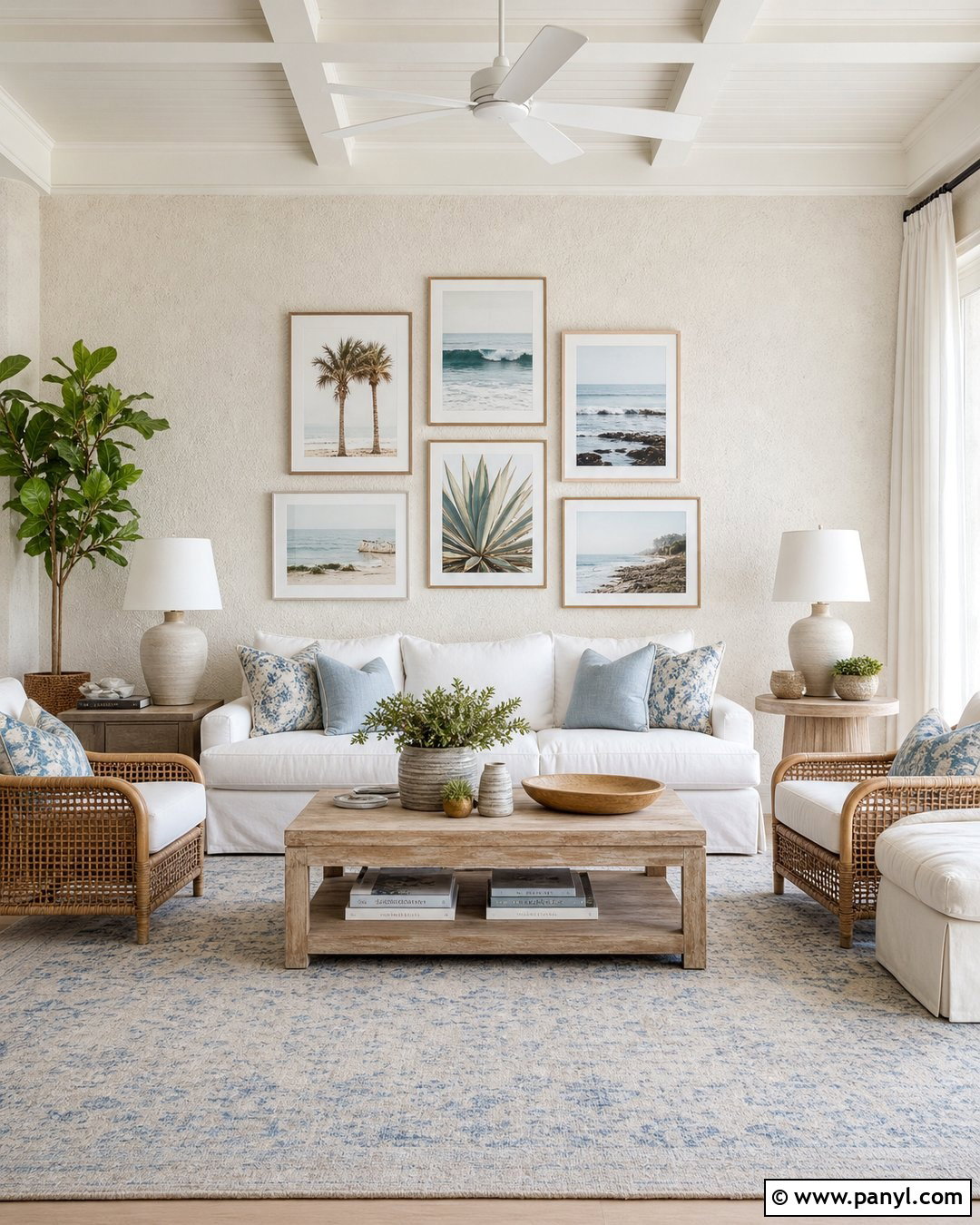
Cream sand-textured walls bring subtle depth to a coastal living room while keeping the overall design bright. Choose a fine, consistent texture rather than a heavy finish that collects dust or competes with the furniture. Pair the walls with a white slipcovered sofa, pale oak coffee table, and woven rattan armchairs. A faded blue-and-cream rug introduces coastal color without creating a themed appearance. Use linen curtains, ceramic table lamps, and a few pieces of driftwood-toned decor. Light blue cushions and a soft gray throw complete the seating area. Keep the ceiling smooth and crisp white to contrast gently with the textured cream walls. The room will feel relaxed, natural, and comfortable throughout the year.
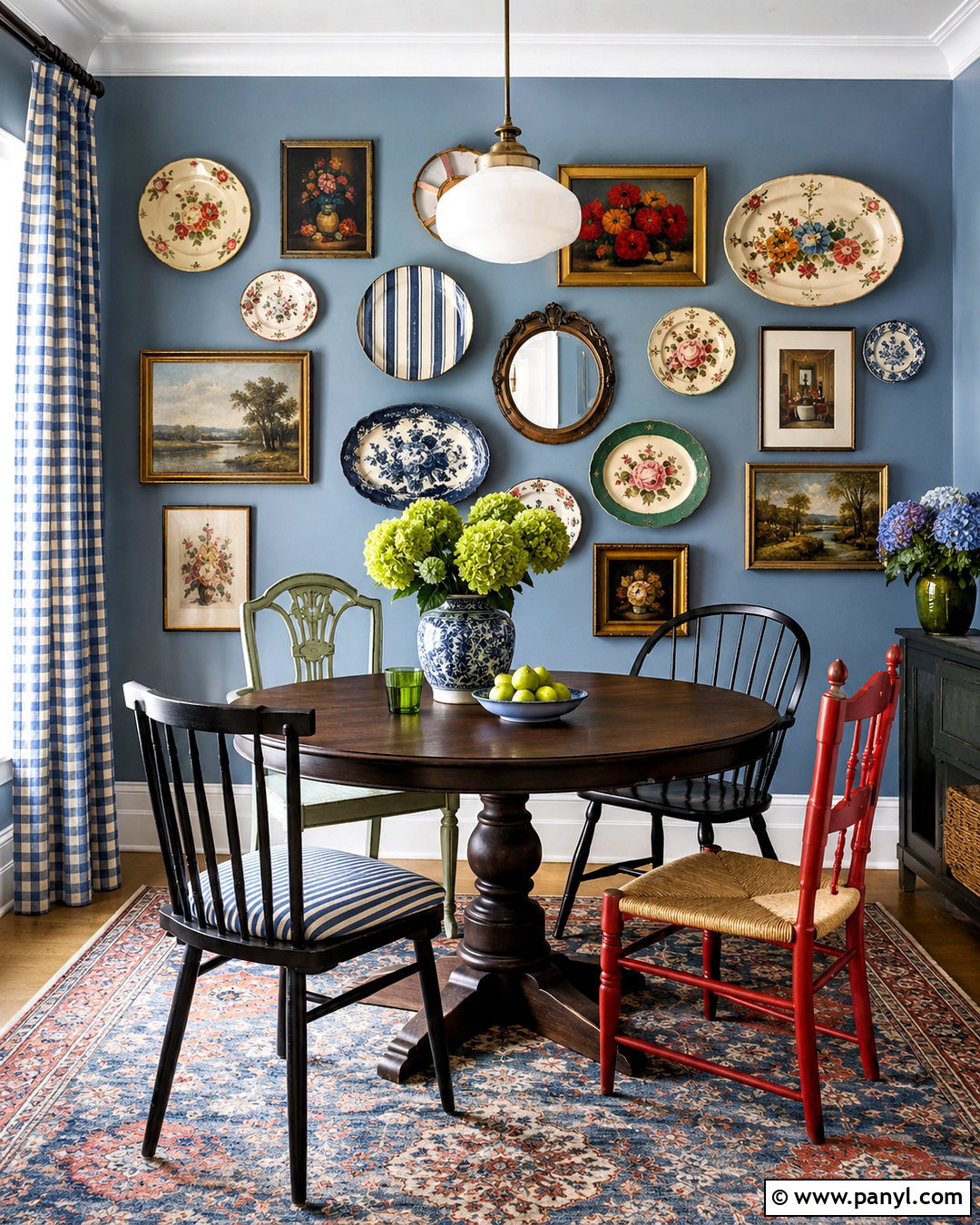
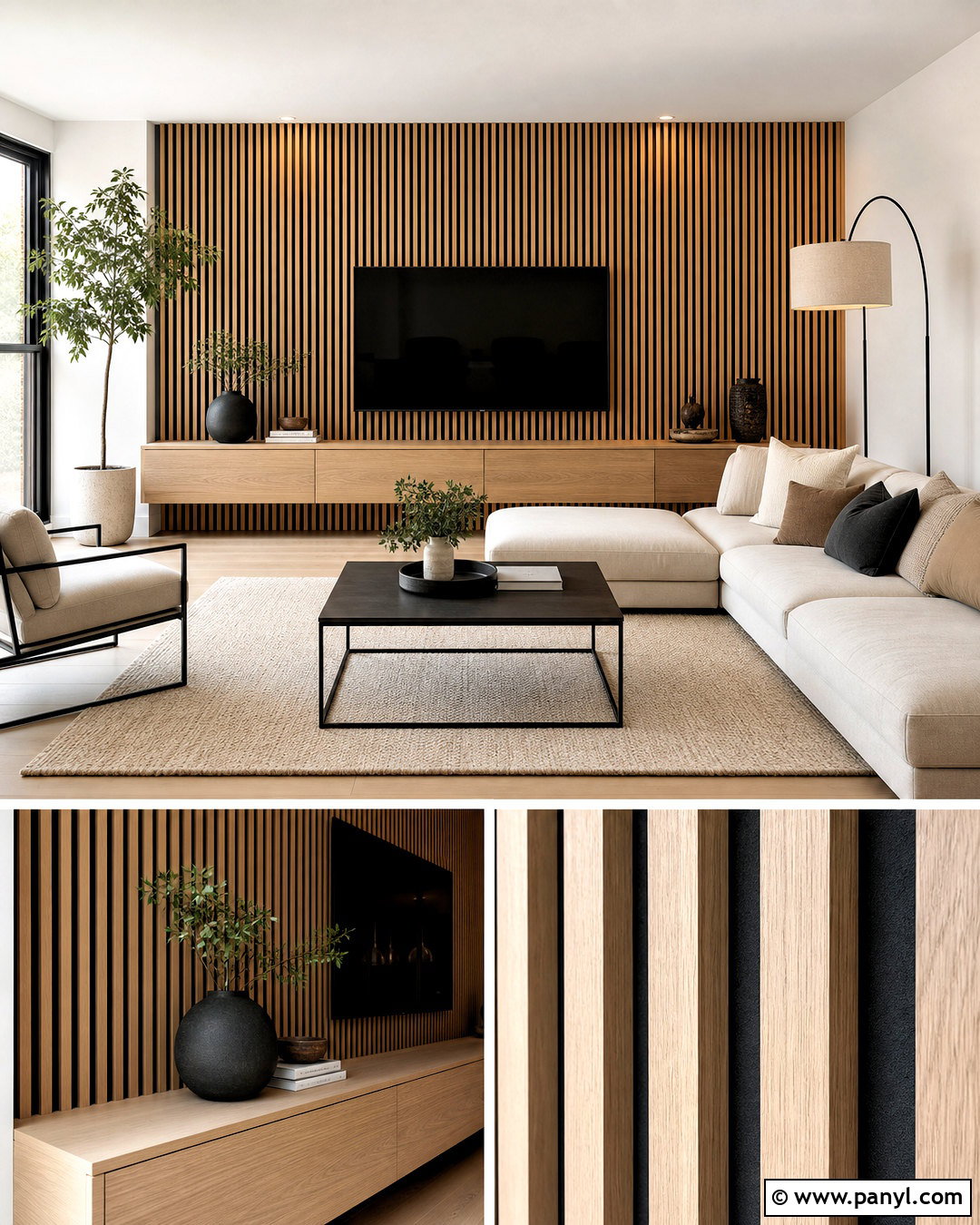
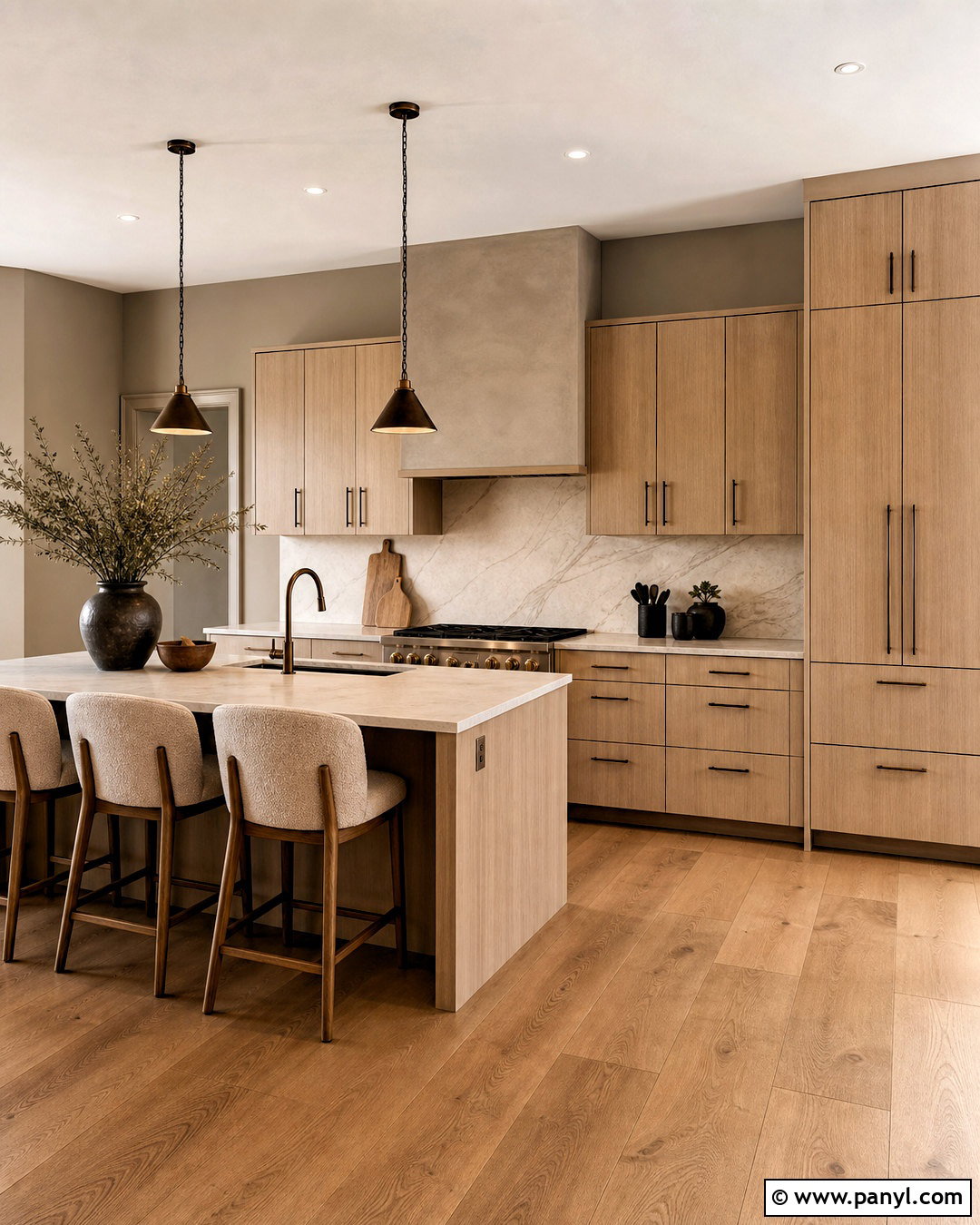
8. Olive Green Troweled Plaster Wall
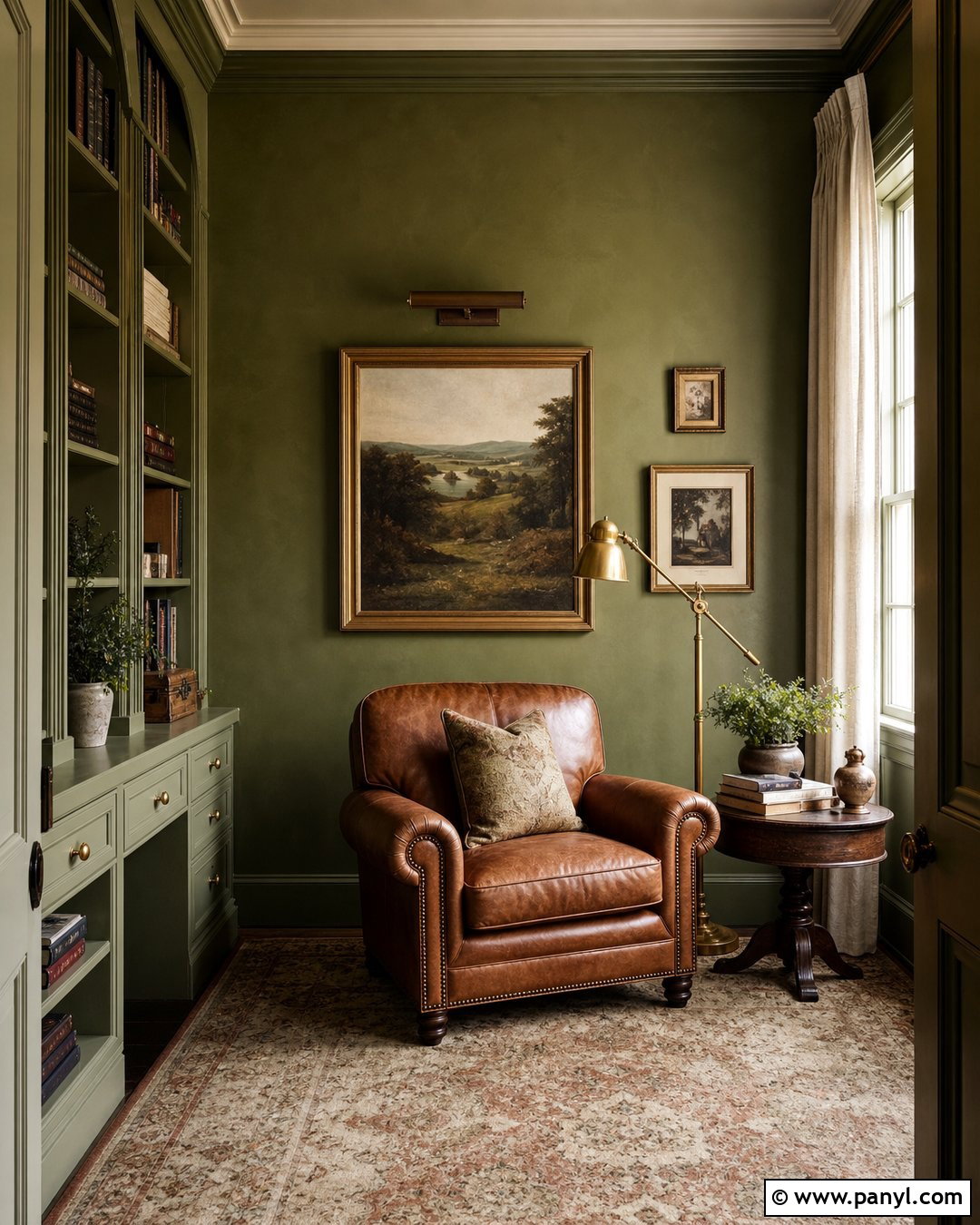
Olive green troweled plaster gives a reading room a rich, cocooning atmosphere without requiring elaborate decoration. Cover the wall behind a built-in bookcase or reading chair, preserving visible movement in the plaster. Choose a camel leather armchair, dark oak side table, and antique brass floor lamp. A patterned rug containing olive, beige, and faded red can tie the wall into the seating area. Paint nearby trim and shelving in a deeper olive for a color-drenched effect, while keeping the ceiling warm white. Add linen curtains and a few framed landscapes with muted colors. This complete look works because every element supports the earthy wall, yet the mix of leather, wood, fabric, and metal prevents the room from feeling flat.
9. White Textured Minimalist Wall
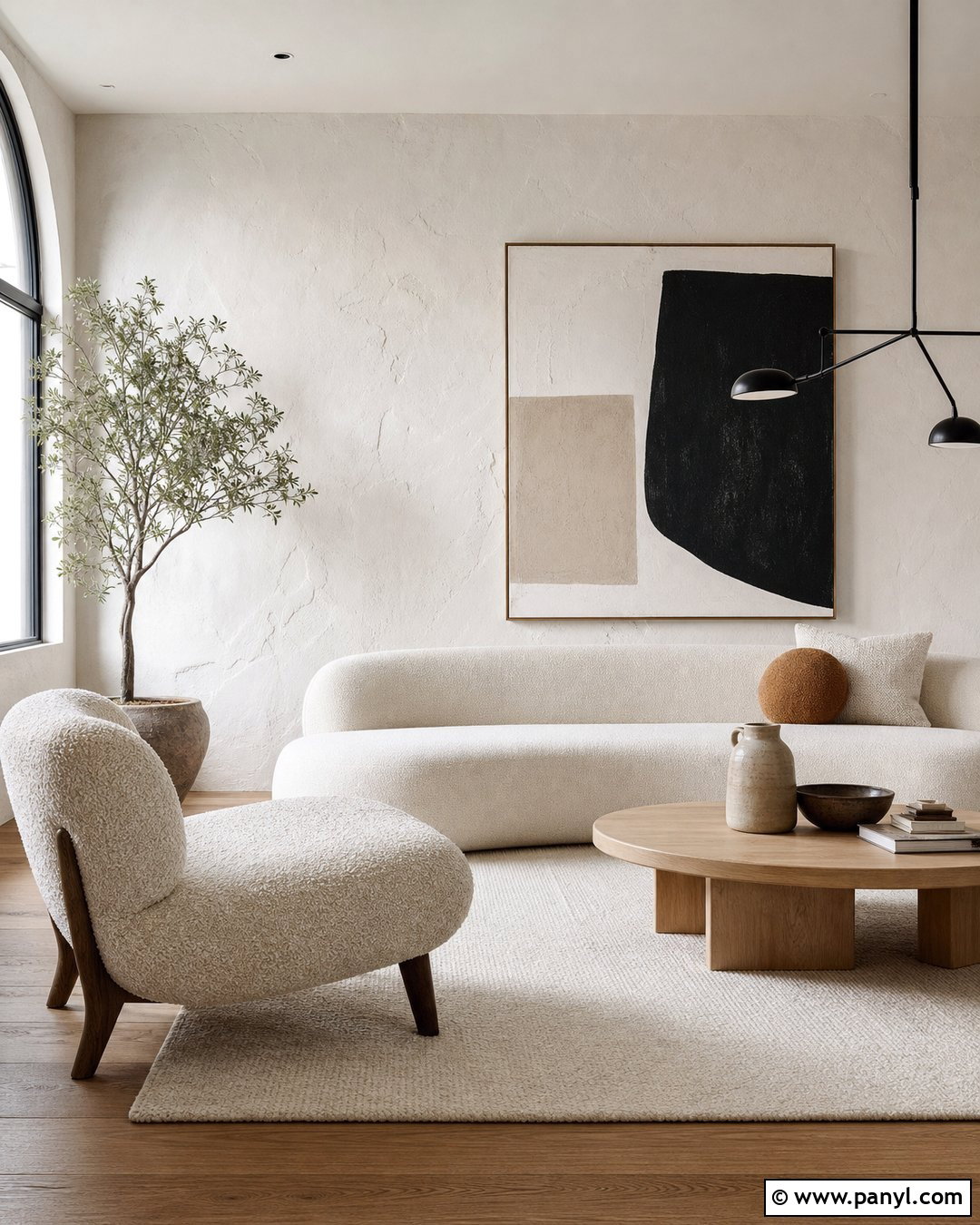
White does not have to look plain when texture, light, and furniture placement work together. Create a softly troweled off-white plaster wall behind a sculptural cream sofa in a minimalist living room. The finish should have subtle tonal variation rather than rough peaks or dramatic swirls. Add a pale oak coffee table, one boucle accent chair, and a large wool rug in warm ivory. Black metal lighting provides clean contrast, while a single oversized abstract artwork adds scale. Keep accessories limited to stoneware, clear glass, and one leafy branch. Warm wood flooring stops the white palette from appearing sterile. The finished room feels quiet and spacious, with shadows across the wall supplying visual depth throughout the day.
10. Burnt Orange Rough Plaster Wall
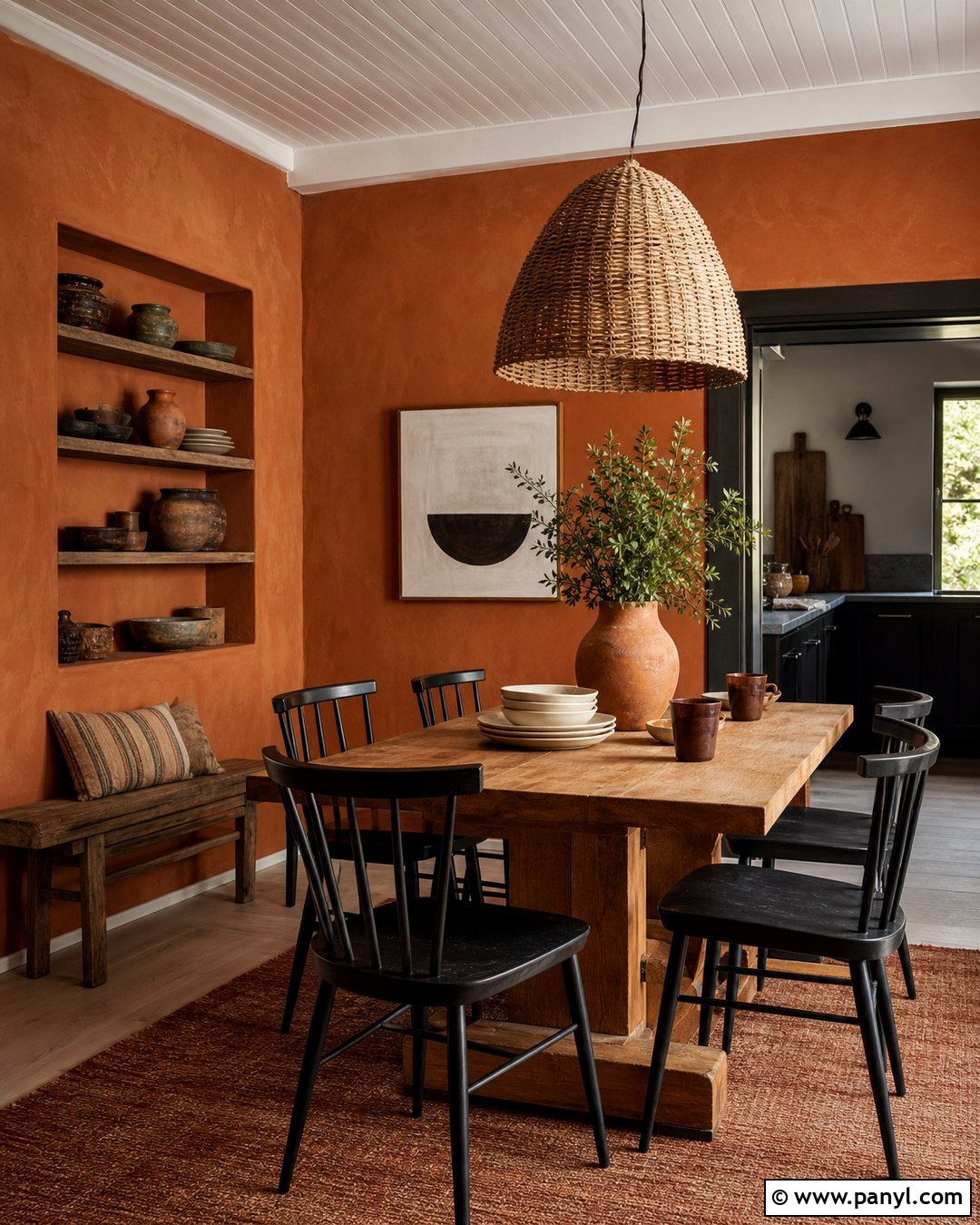
A burnt orange rough plaster wall can give a casual dining space warmth, energy, and an appealing handmade quality. Use the color behind a solid wood dining table, keeping the texture irregular but not excessively raised. Surround the table with black spindle-back chairs to create crisp definition. A woven pendant, cream tableware, and a flat-weave rug in rust and tan reinforce the earthy scheme. Paint adjoining walls a light warm beige and use natural linen shades at the windows. Open shelves displaying ceramics can break up the orange surface while leaving plenty of texture visible. Add a narrow bench on one side to keep the arrangement relaxed. The finished dining area feels inviting, practical, and visually connected.
11. Dusty Blue Suede Texture Wall
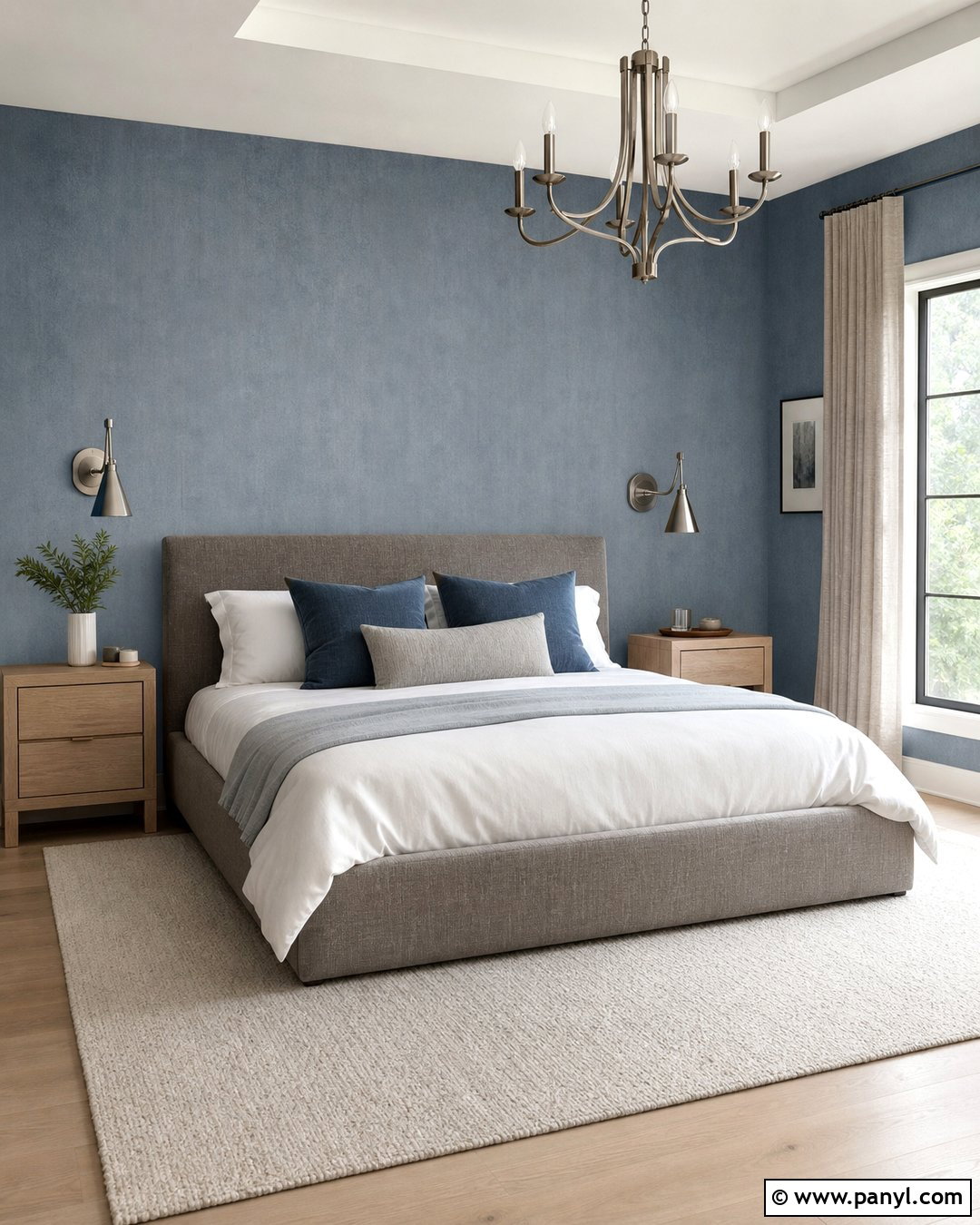
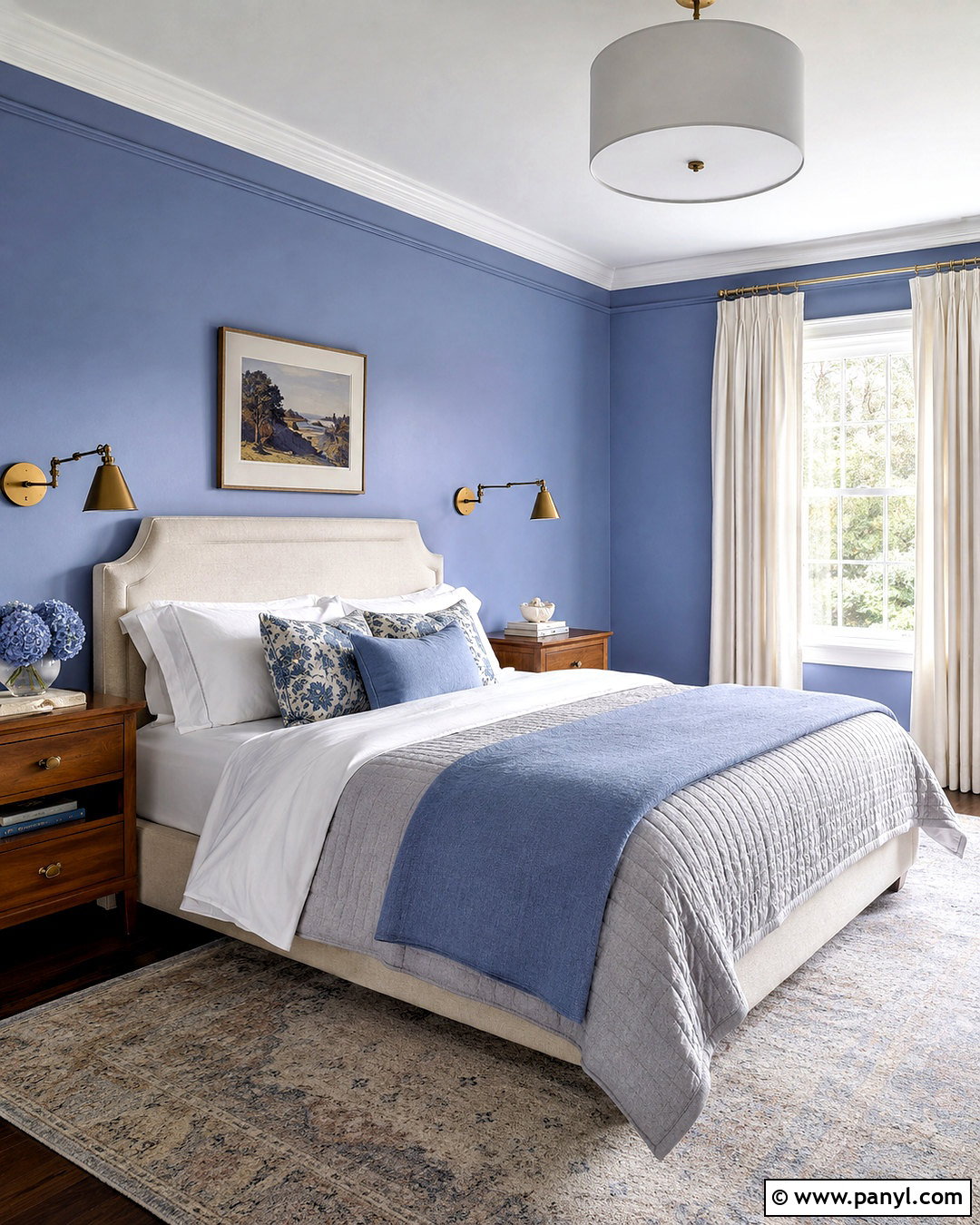
Dusty blue walls with a soft suede-like finish can make a bedroom feel restful while adding more dimension than standard matte paint. Use the textured color across the headboard wall and select a warm gray upholstered bed for gentle contrast. Layer white sheets with slate blue pillows, a taupe quilt, and a textured cream throw. Light oak nightstands and brushed nickel sconces keep the scheme fresh. Choose a pale wool rug and full-length oatmeal curtains to warm the cooler wall color. Simple framed prints in blue, sand, and charcoal can complete the wall without hiding its finish. By combining cool blue with warm neutral materials, the room gains a balanced atmosphere that feels peaceful rather than cold.
12. Burgundy Textured Dining Room Wall
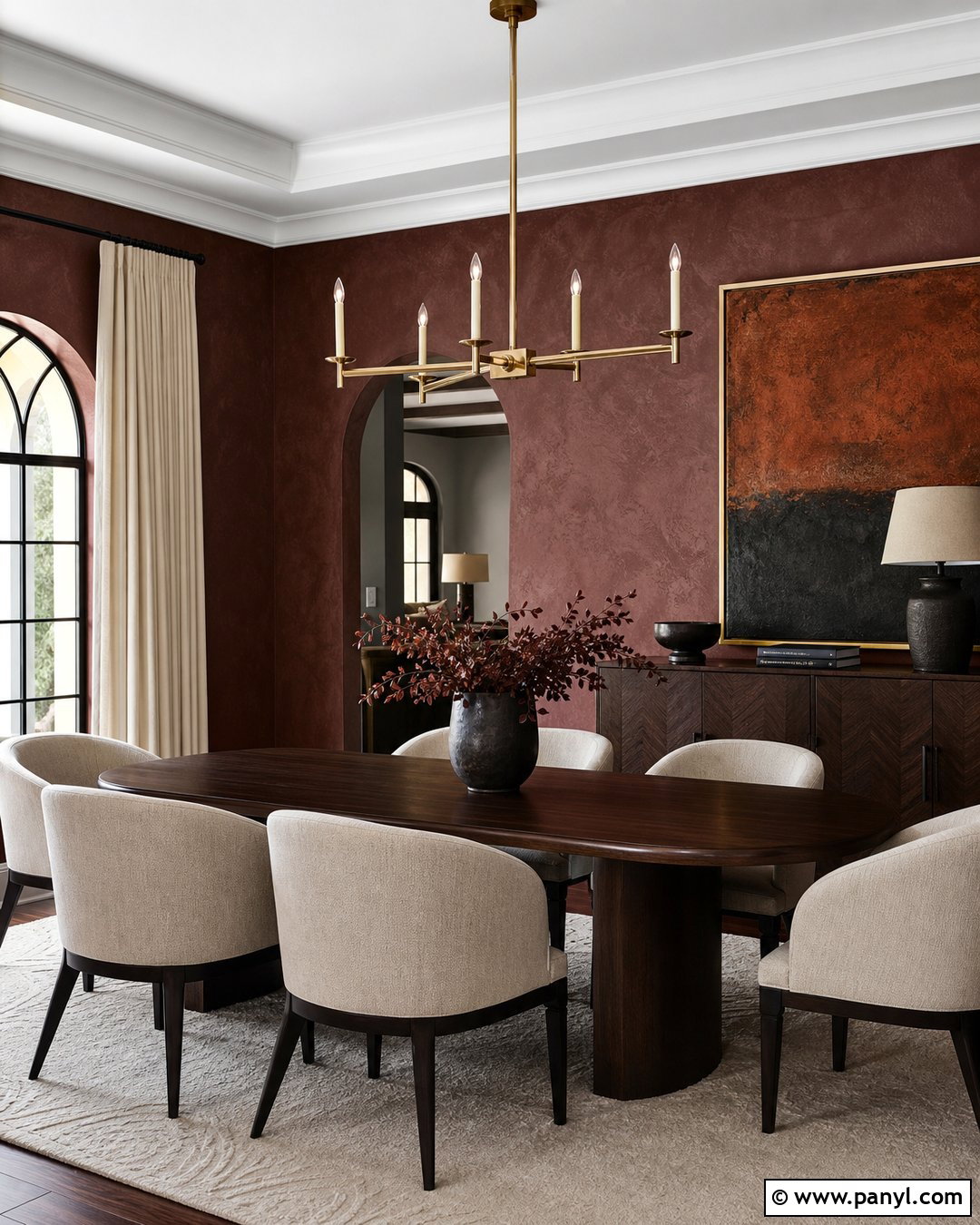
For a dining room with character, a burgundy textured wall offers depth that changes beautifully as light moves across it. Choose a fine plaster or brushed finish with brown-red undertones instead of a bright purple-red color. Pair it with a dark walnut dining table, oatmeal upholstered chairs, and a large cream rug. An aged brass chandelier introduces warmth, while ivory curtains keep the room from becoming heavy. Add a slim sideboard in matching walnut and hang one oversized artwork with muted cream, rust, and black details. Paint the remaining walls a light mushroom shade. This considered palette creates a complete dining space that feels dramatic enough for gatherings but still comfortable for regular family meals.
13. Greige Knockdown Texture Wall
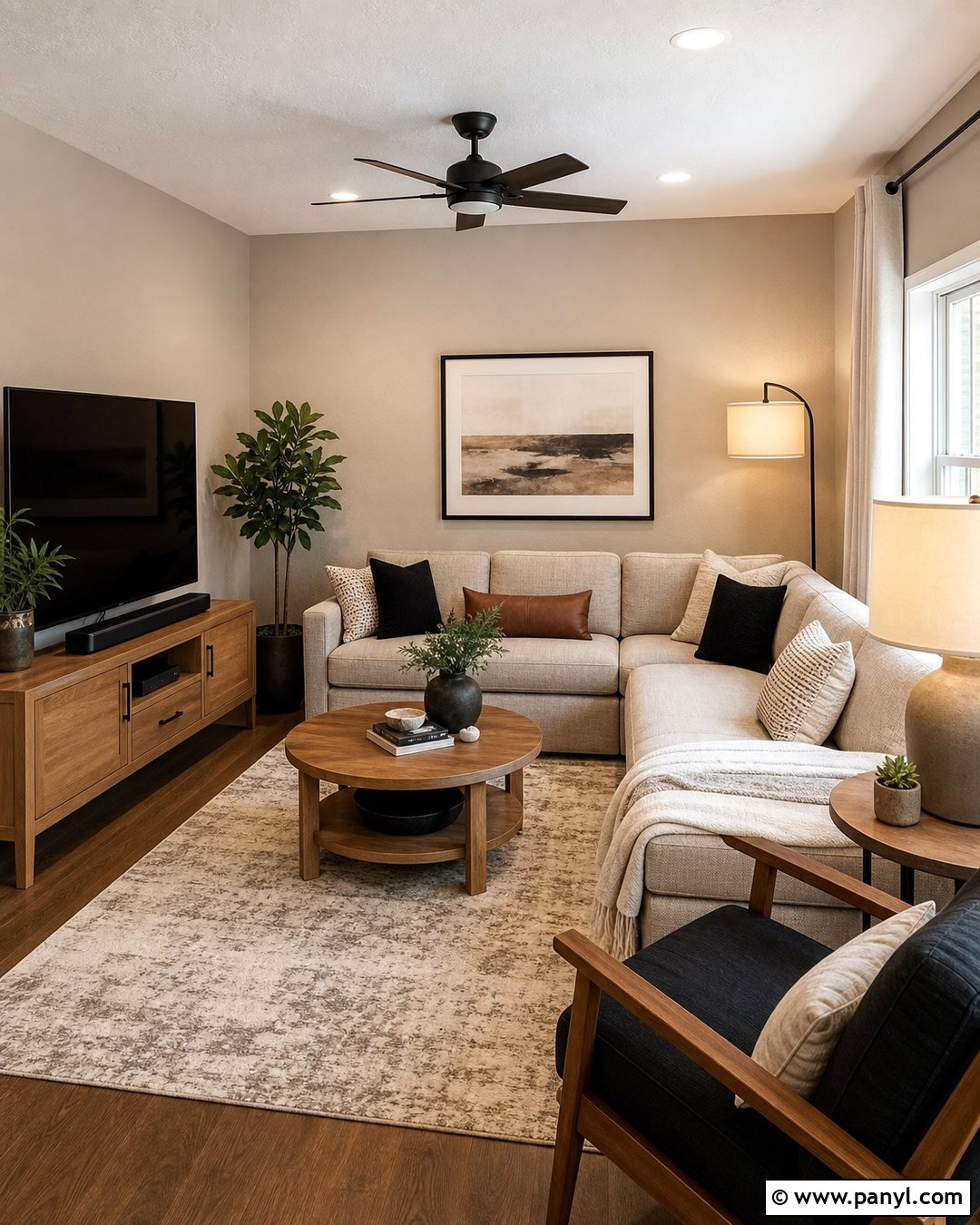
Existing knockdown texture becomes easier to appreciate when the right color and room design reduce harsh shadows. Paint the walls a balanced warm greige using a low-sheen finish, which softens the raised pattern and limits glare. In the living room, add a beige sectional, medium-toned oak furniture, and a soft rug containing cream and taupe. Use diffused floor lamps rather than strong spotlights directed at the walls. Off-white curtains and understated artwork keep the setting light, while black accents provide a few clean lines. Repeat the wall color on the baseboards for a smoother visual transition. The full room feels updated and cohesive without the mess and expense of removing the existing textured surface.
14. Mustard Yellow Brush Texture Wall
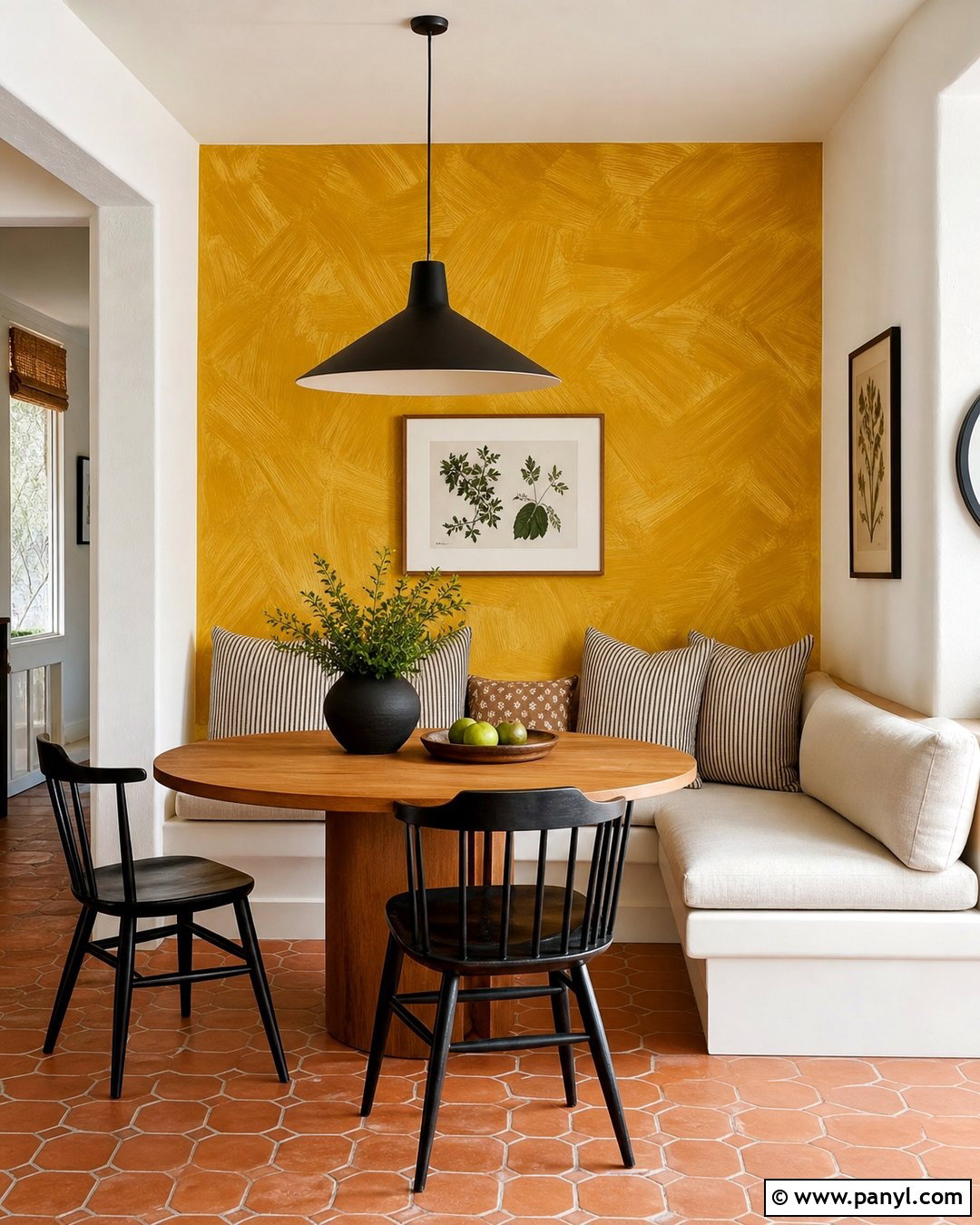
Mustard yellow brush texture can turn a breakfast nook into a cheerful destination rather than an overlooked corner. Apply the finish to the wall behind a built-in banquette, using broad overlapping strokes for controlled movement. Upholster the seating in warm cream fabric and add striped cushions in mustard, brown, and ivory. A small round oak table keeps the arrangement open, while black dining chairs and a black pendant create definition. Choose terracotta tile or light wood flooring to support the warm palette. Simple framed botanical prints add personality without covering too much of the textured surface. White adjoining walls and plenty of natural light balance the saturated color, creating a complete nook that feels bright, friendly, and practical.
15. Deep Teal Metallic Texture Wall
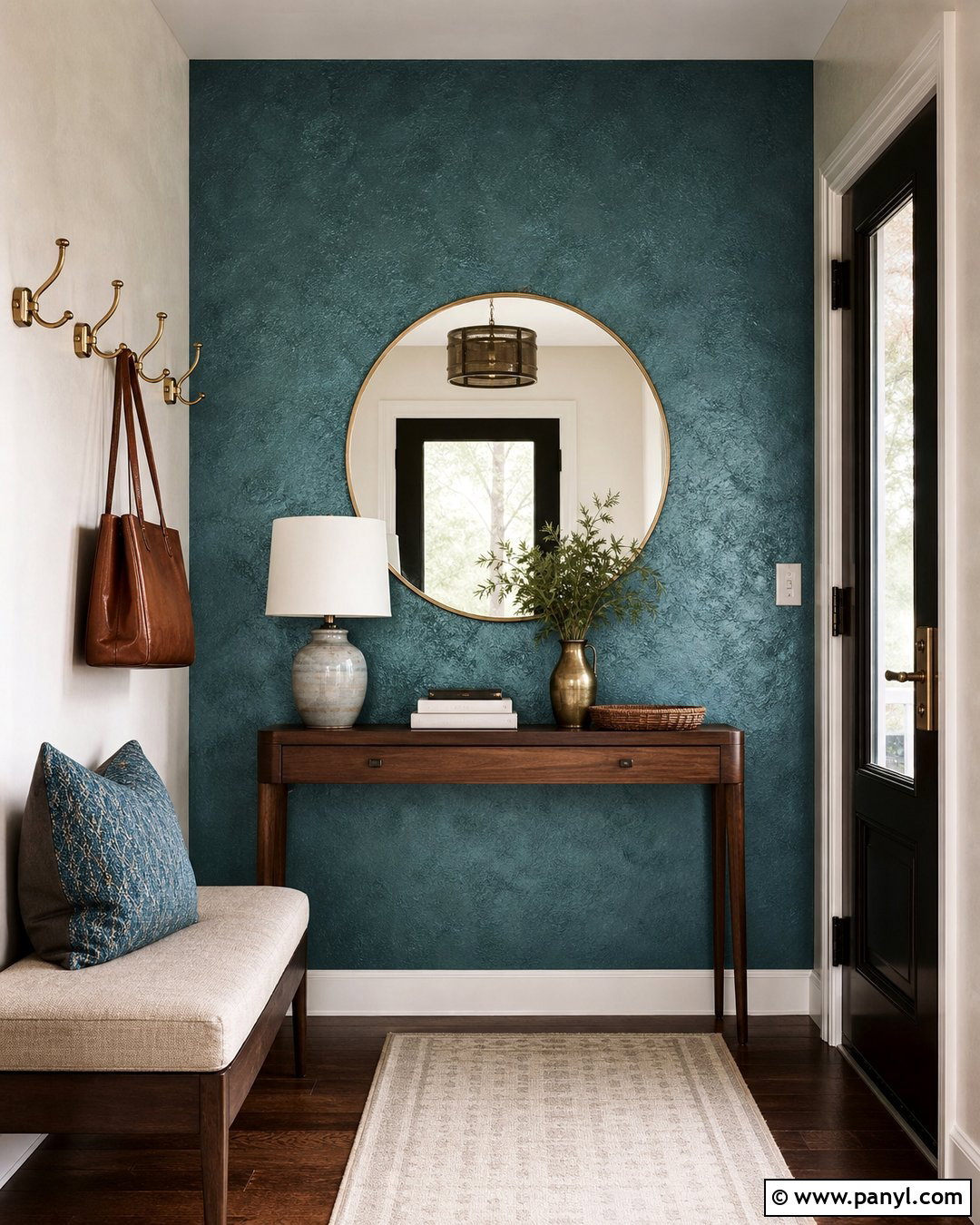
A deep teal metallic wall can look elegant in an entryway when its shimmer is subtle and carefully balanced. Select a textured finish with a soft pearlescent effect rather than obvious glitter. Place a slim walnut console against the wall and hang a large round mirror with an antique brass frame above it. A neutral runner, upholstered bench, and ceramic lamp make the narrow space more useful. Paint the remaining walls warm off-white and repeat teal through one small accessory or piece of artwork. Brass hooks and dark wood details reinforce the rich palette. With bright, even lighting, the surface develops gentle highlights that welcome visitors while keeping the average-size entry sophisticated, organized, and comfortable.
16. Black Textured Fireplace Wall
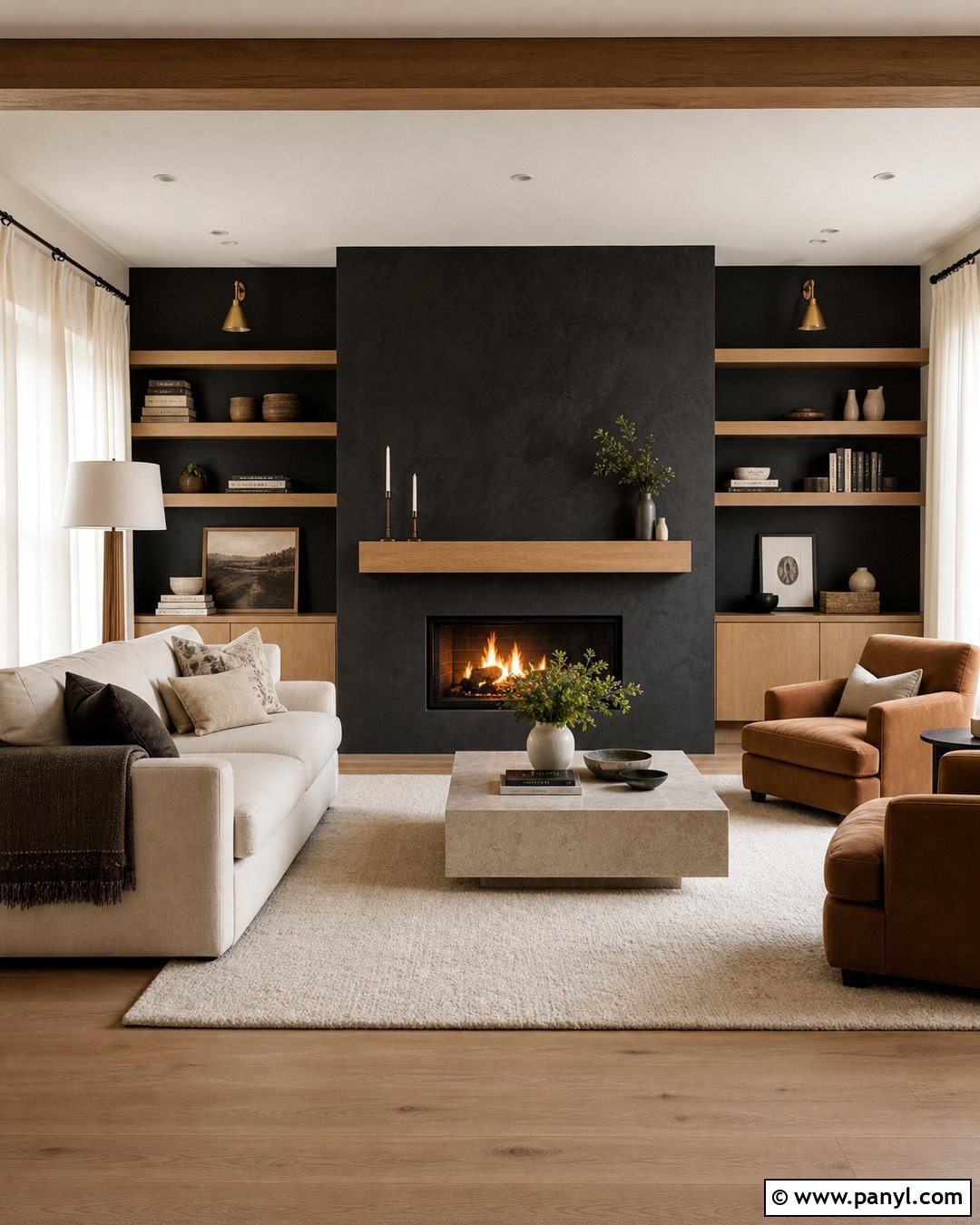
A black textured fireplace wall creates a strong living room anchor, but the rest of the scheme should remain light and approachable. Cover the fireplace surround and full wall in fine black microcement or textured plaster. Add a simple oak mantel to break up the dark surface and coordinate it with nearby shelving. Arrange an ivory sofa and two tan armchairs around a pale stone coffee table. A cream wool rug lifts the entire seating area. Use soft white curtains and warm metal lamps to keep the room bright. Minimal mantel decor allows the texture to remain visible. The combination of black, oak, ivory, and tan produces a complete look that feels modern, balanced, and suitable for an everyday home.
17. Peach Limewash Nursery Wall
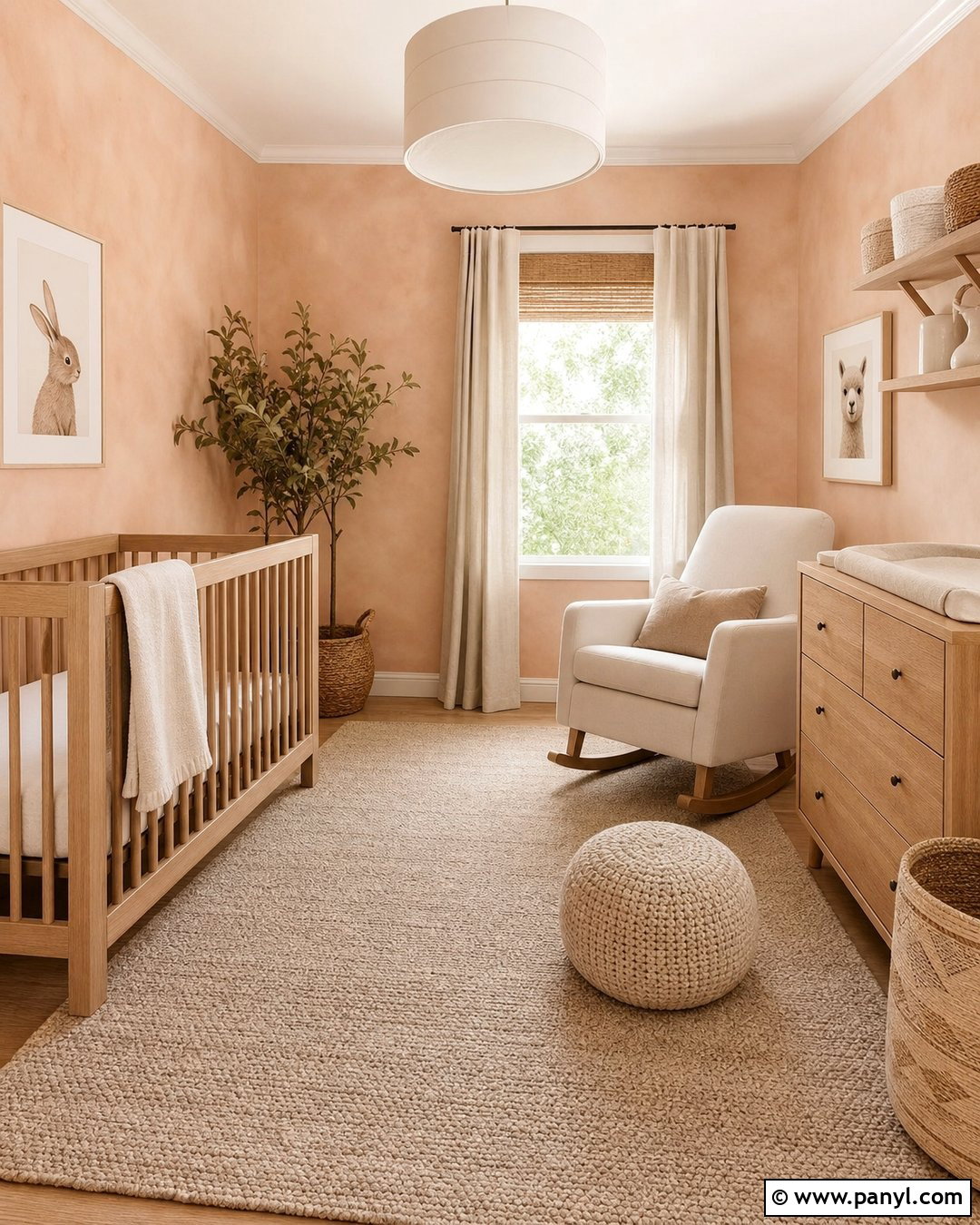
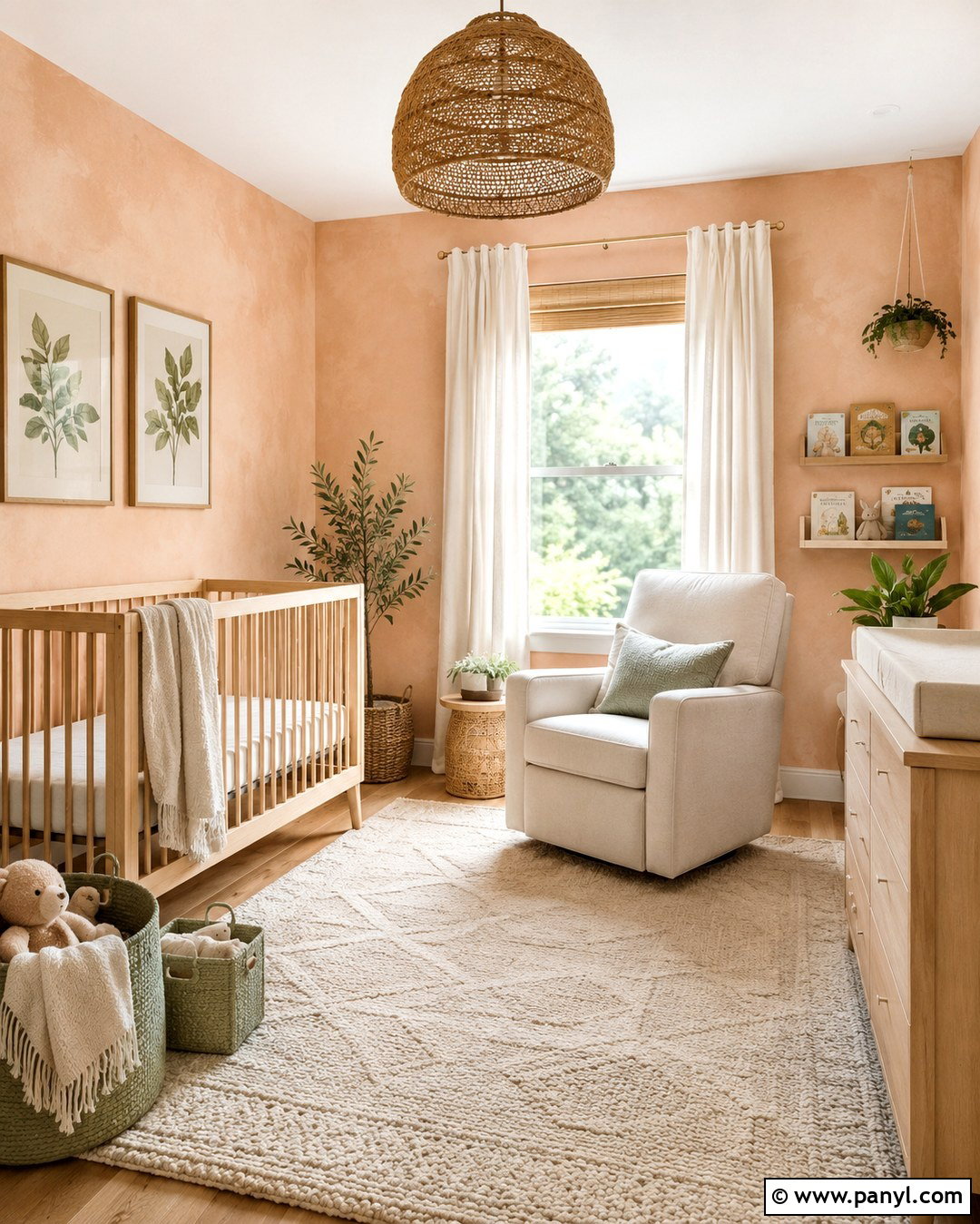
Soft peach limewash creates a warm nursery backdrop that can adapt as the child grows. Apply the finish across all four walls for gentle tonal movement, then keep the ceiling and trim creamy white. Choose a natural oak crib, matching dresser, and comfortable ivory rocking chair. A washable wool-blend rug in beige and muted peach adds softness underfoot. Use linen curtains, woven baskets, and simple animal artwork in warm neutral colors. Avoid crowding the room with too many decorative themes. Instead, let the peach walls, rounded furniture, and tactile fabrics establish a calm atmosphere. A dimmable white pendant and shaded floor lamp provide practical layers of light while softly emphasizing the hand-brushed wall texture.
18. Chocolate Brown Plaster Wall
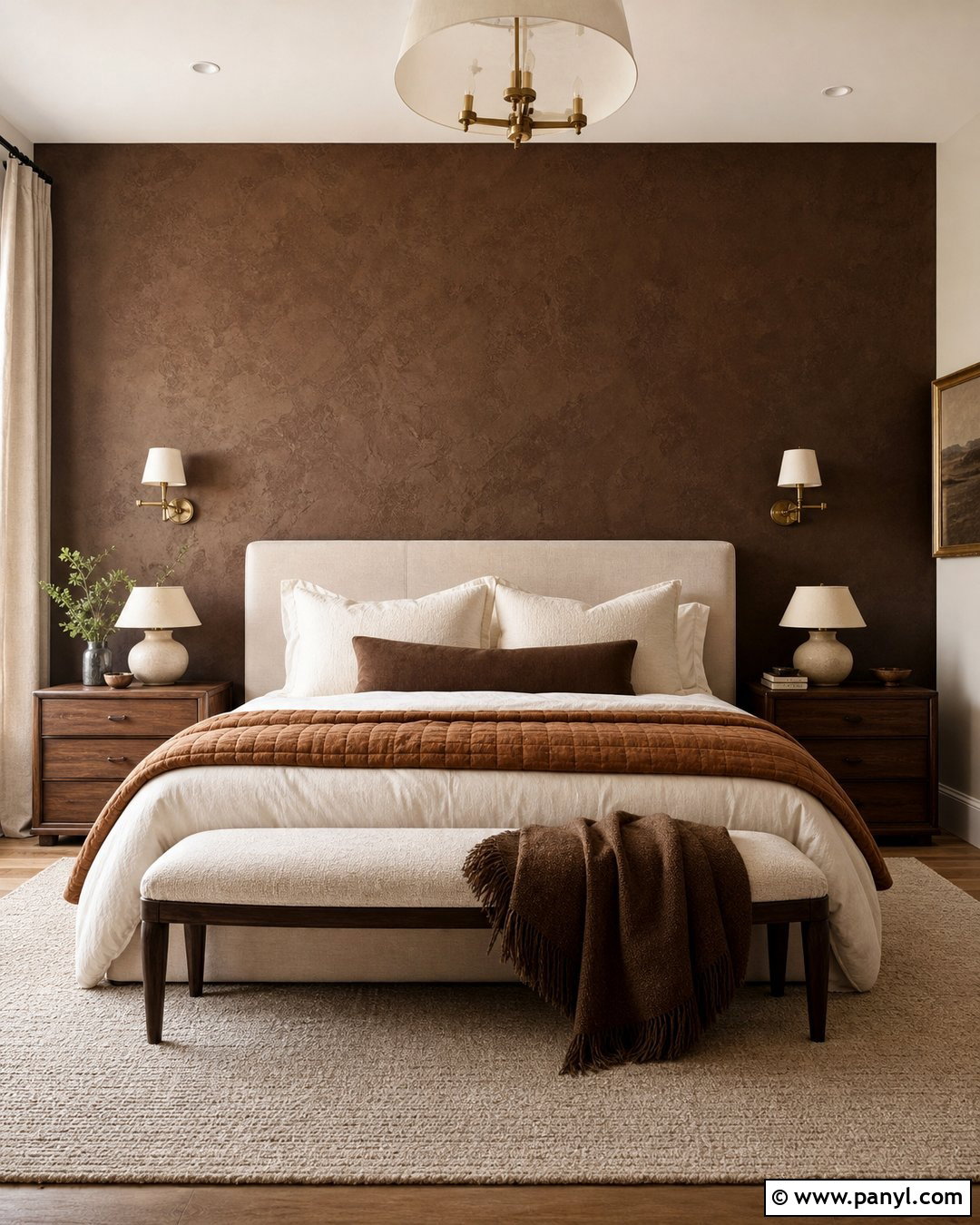
Chocolate brown plaster can make a bedroom feel enveloping and refined when it is paired with lighter bedding and warm wood. Use the textured finish behind the bed, then paint the remaining walls a soft putty color. Choose a tall oatmeal upholstered headboard, crisp cream bedding, and a caramel quilt. Dark oak nightstands blend gently with the feature wall, while alabaster lamps provide a pale contrast. Add a beige wool rug and natural linen curtains to prevent the room from feeling too dark. Small brass details introduce warmth without excessive shine. The plaster’s subtle variations give the brown color depth, producing a complete bedroom that feels restful, grounded, and more interesting than a conventional neutral scheme.
19. Pale Gray Stone Texture Wall
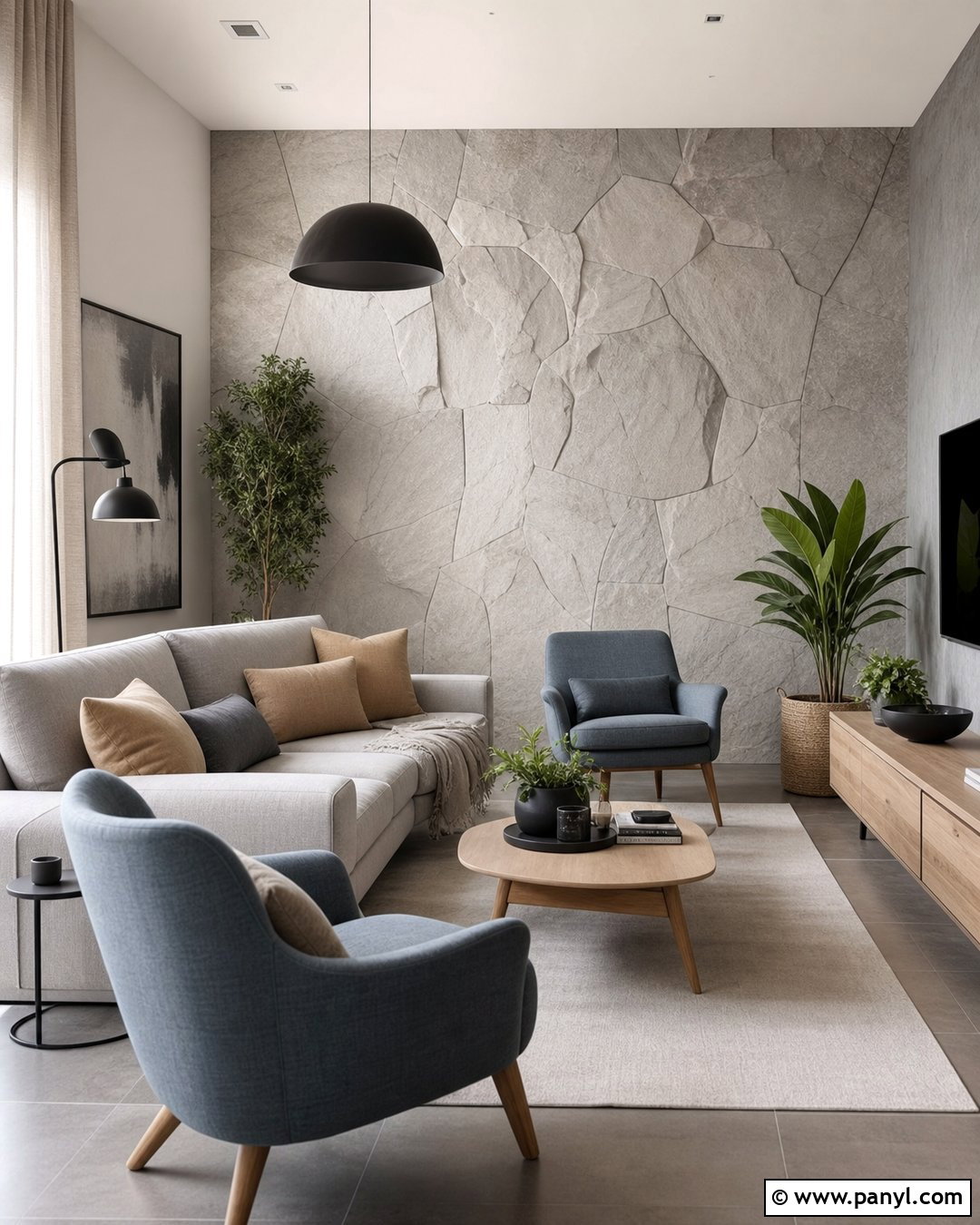
Pale gray stone texture brings architectural interest to a modern living room while maintaining an airy palette. Use thin stone veneer, textured panels, or a convincing mineral finish on the main wall. Place a streamlined light gray sofa in front of it, leaving enough exposed surface to display the irregular pattern. Add a blond oak media unit, soft ivory rug, and two blue-gray lounge chairs. Matte black lighting and window frames provide structure, while pale linen curtains soften the edges. Introduce natural greenery and a few warm beige cushions to keep the room from appearing cold. The completed space blends stone, fabric, wood, and metal, creating a clean look that still feels tactile and welcoming.
20. Coral Sponge Texture Wall
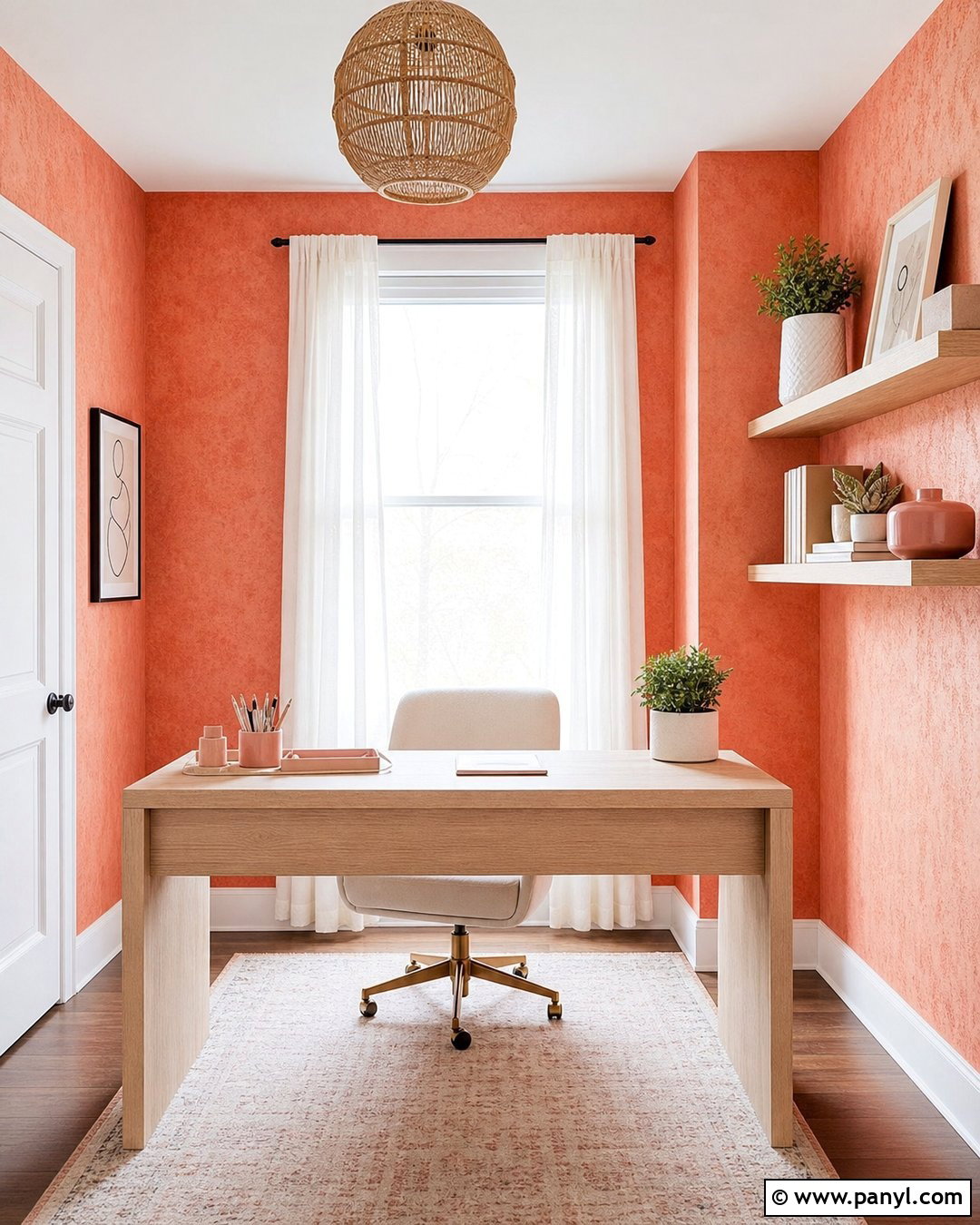
A coral sponge-textured wall can energize a small home office without overwhelming the compact space. Choose a muted coral base with a slightly lighter top layer, creating soft variation rather than a speckled pattern. Position a white oak desk against the wall and add a comfortable cream chair with simple lines. Use floating shelves in matching wood for practical storage, leaving open areas where the texture can breathe. A pale rug, white curtains, and warm off-white adjoining walls maintain brightness. Add ceramic organizers in blush and terracotta, plus one small green plant. The complete office feels optimistic and personal, while the controlled palette supports concentration better than a room filled with competing colors and decorative objects.
21. Forest Green Ridged Wall
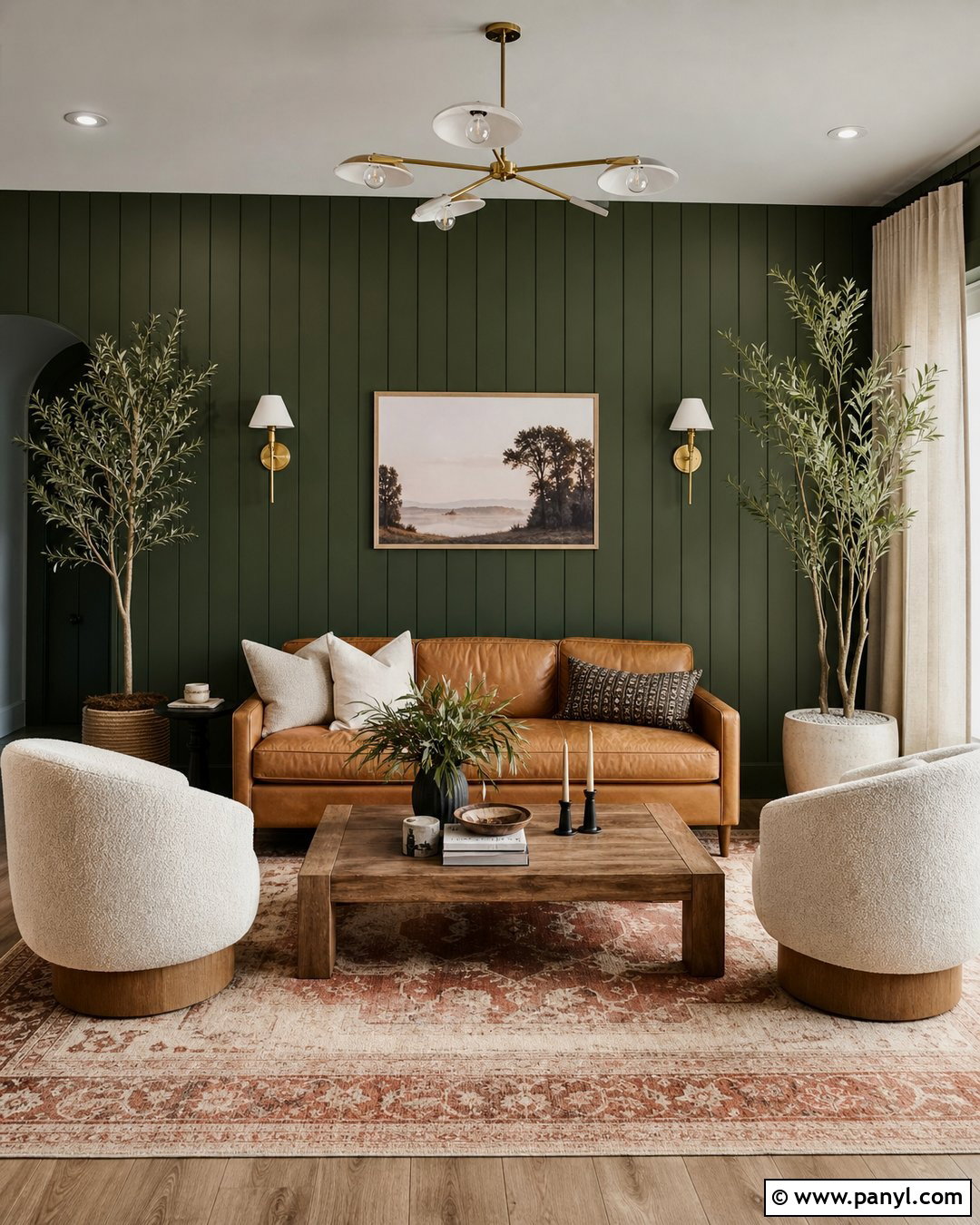
Vertical ridges painted forest green can give a living room wall architectural presence and make the ceiling appear higher. Install narrow wood strips or molded panels behind the sofa, then coat everything in the same deep matte green. Pair the wall with a camel leather sofa, oatmeal boucle chairs, and a substantial oak coffee table. A patterned rug in cream, green, and faded rust connects the furniture to the feature wall. Use aged brass sconces between selected ridges for warm highlights. Keep adjacent walls creamy white and use light linen curtains. Large plants strengthen the natural palette without feeling overly themed. This complete arrangement looks bold, but its familiar materials make it comfortable and easy to live with.
22. Lavender Plaster Bedroom Wall
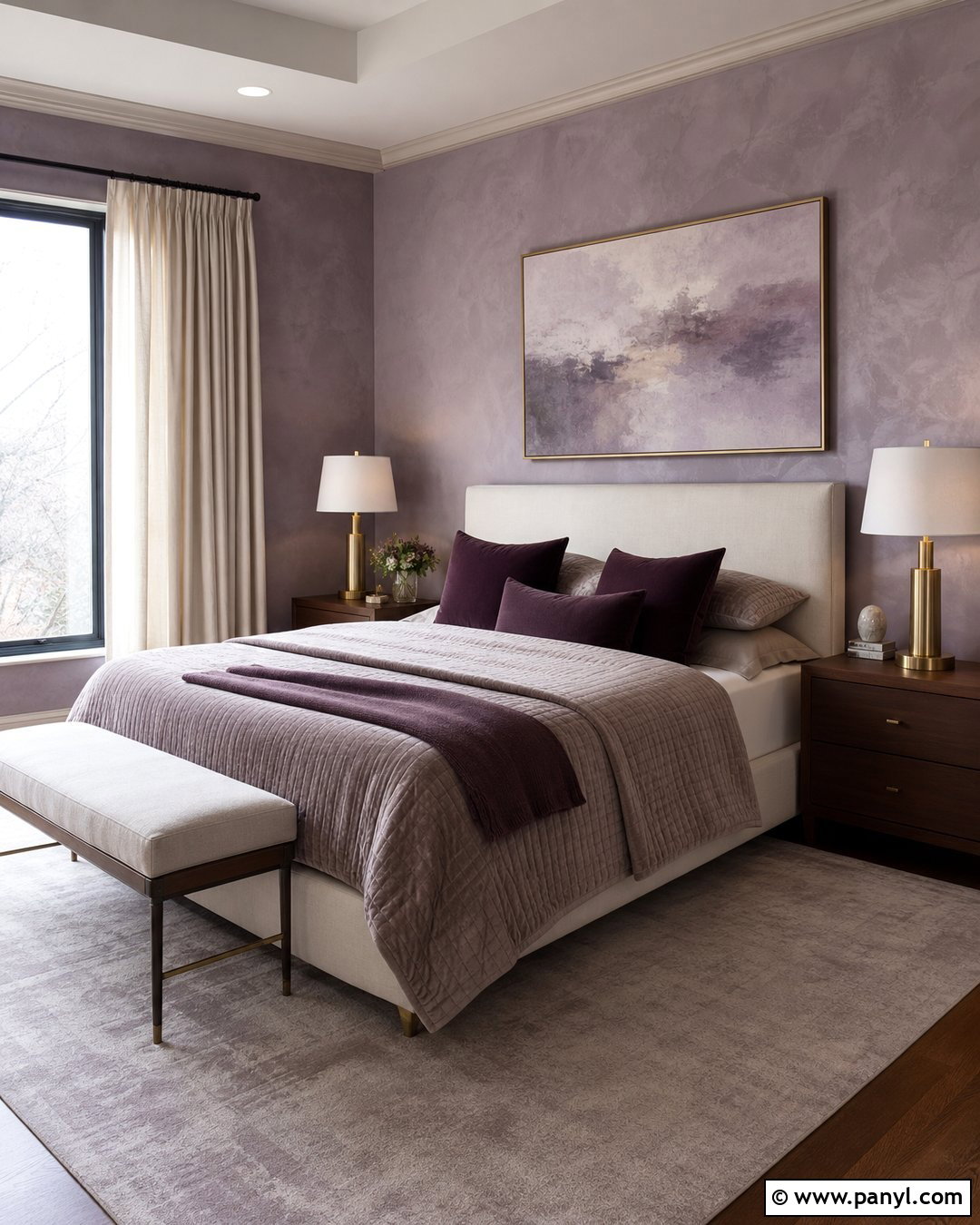
Lavender plaster can create a soothing bedroom that feels grown-up when the color carries muted gray undertones. Apply it across the wall behind a simple upholstered bed, allowing delicate trowel lines to remain visible. Select warm ivory bedding, a mushroom-colored quilt, and dark plum accent pillows for controlled contrast. Walnut nightstands bring needed warmth, while brushed brass lamps add a refined detail. Use a pale gray-beige rug and off-white curtains to lighten the room. One large abstract print can combine lavender, cream, and charcoal without covering the entire textured surface. The resulting bedroom feels gentle and layered, avoiding both an overly feminine look and the flat appearance that sometimes comes with conventional pastel paint.
23. Rust Red Textured Kitchen Wall
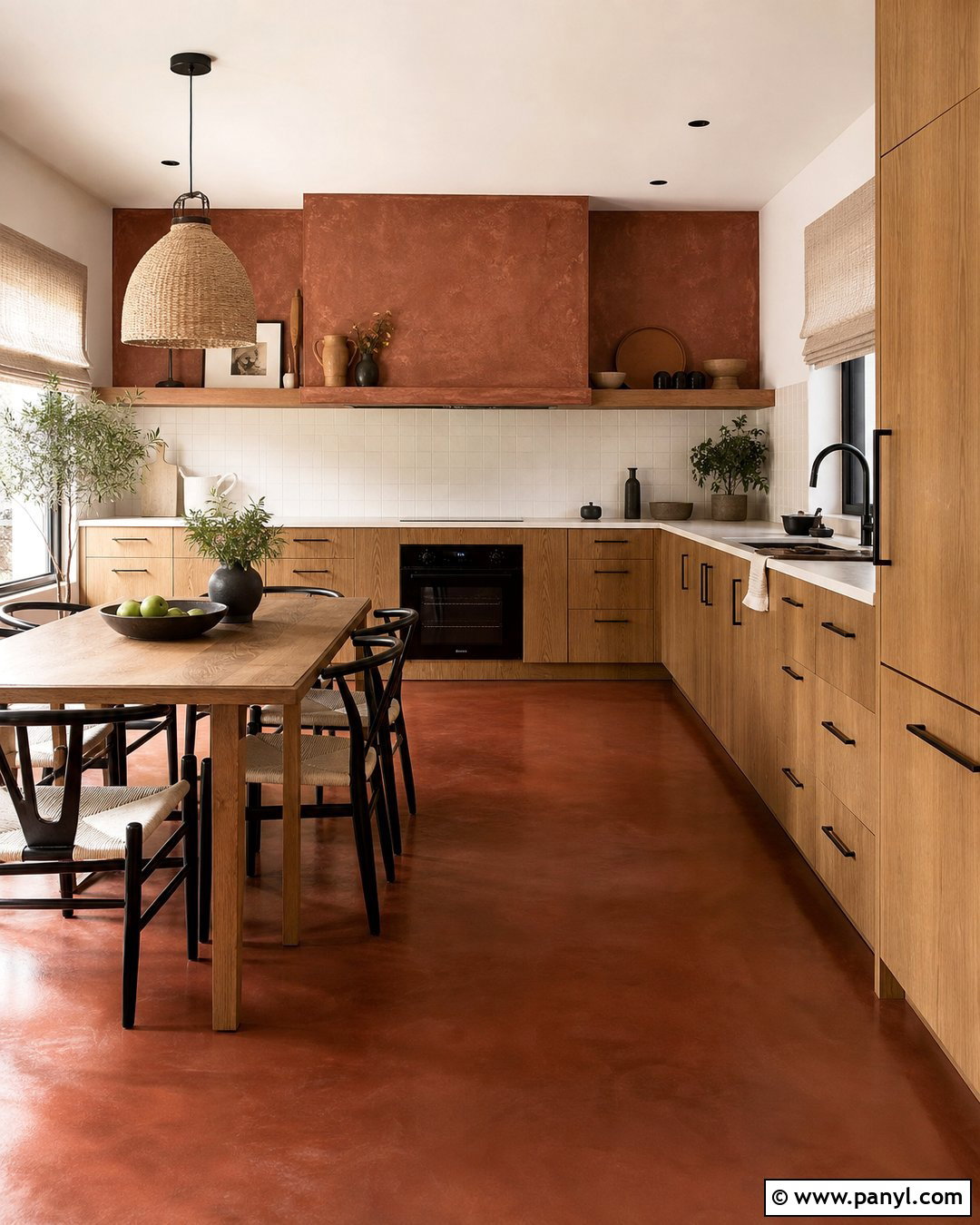
Rust red textured walls can warm up a kitchen when used away from direct water, grease, and heavy food preparation. Apply a washable mineral or microcement finish to the dining side of the room, pairing it with flat-panel oak cabinets and creamy quartz counters. Matte black hardware gives the warm materials a clean outline. Add a small wood table, black chairs, and a woven pendant to form a practical eating area. Use off-white tile around the sink and range for easier maintenance and visual balance. Terracotta accessories and linen Roman shades connect the wall color to the wider space. The finished kitchen feels earthy and contemporary, with texture placed where it can be enjoyed without complicating routine cleaning.
24. Aqua Blue Sand Swirl Wall
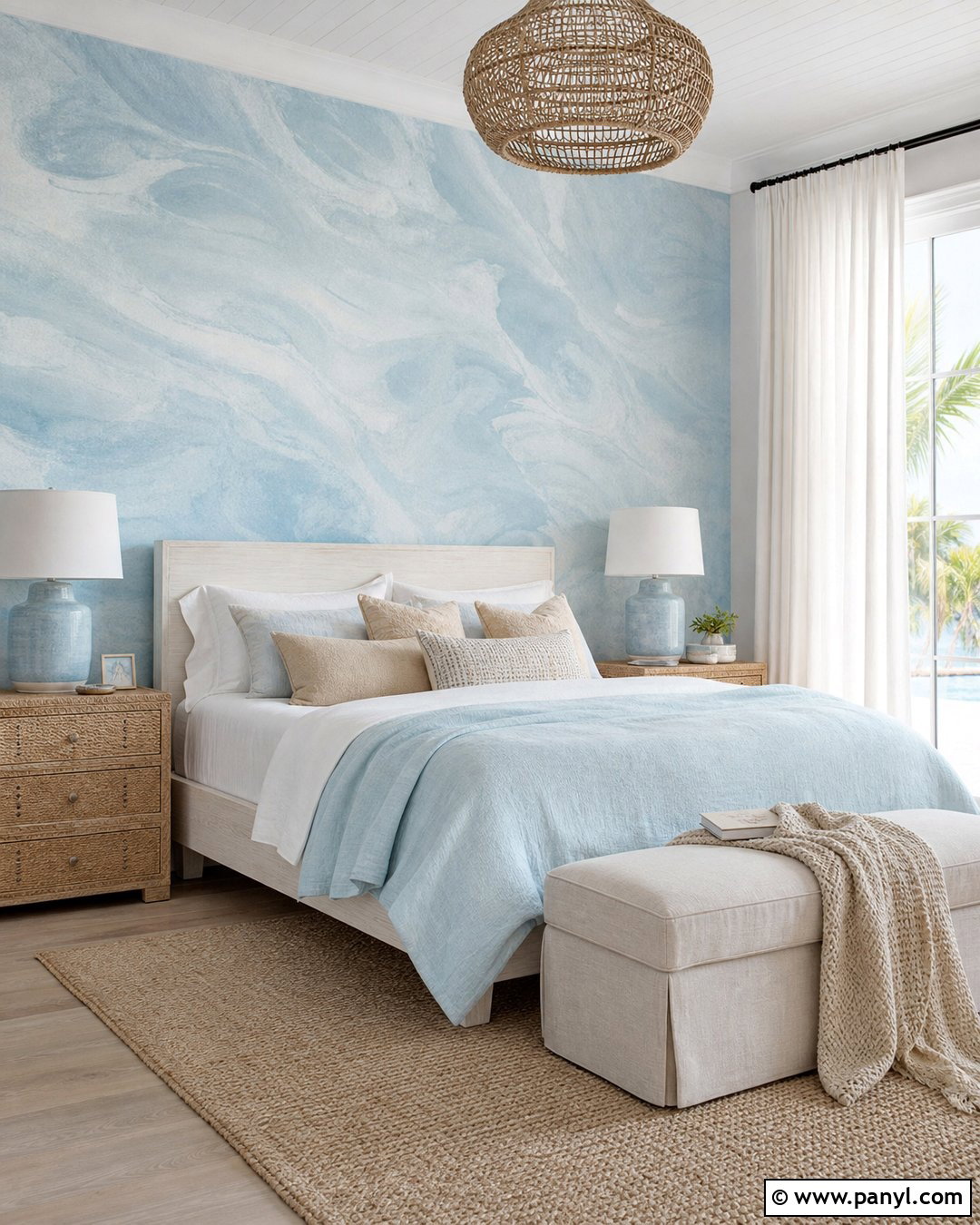
An aqua blue sand swirl wall suits a breezy bedroom when the pattern is broad, soft, and inspired by natural movement. Use the finish behind a white oak bed, keeping the remaining walls a pale warm white. Layer the bed with crisp white linen, a light blue quilt, and sandy beige cushions. Woven nightstands, ceramic lamps, and a natural fiber rug reinforce the coastal palette without relying on obvious seaside decorations. Install simple white curtains that allow plenty of daylight into the room. A small bench in oatmeal fabric can complete the foot of the bed. The coordinated mix of aqua, sand, white, and pale wood creates a refreshing bedroom that remains restful and uncluttered.
25. Golden Ochre Textured Entry Wall
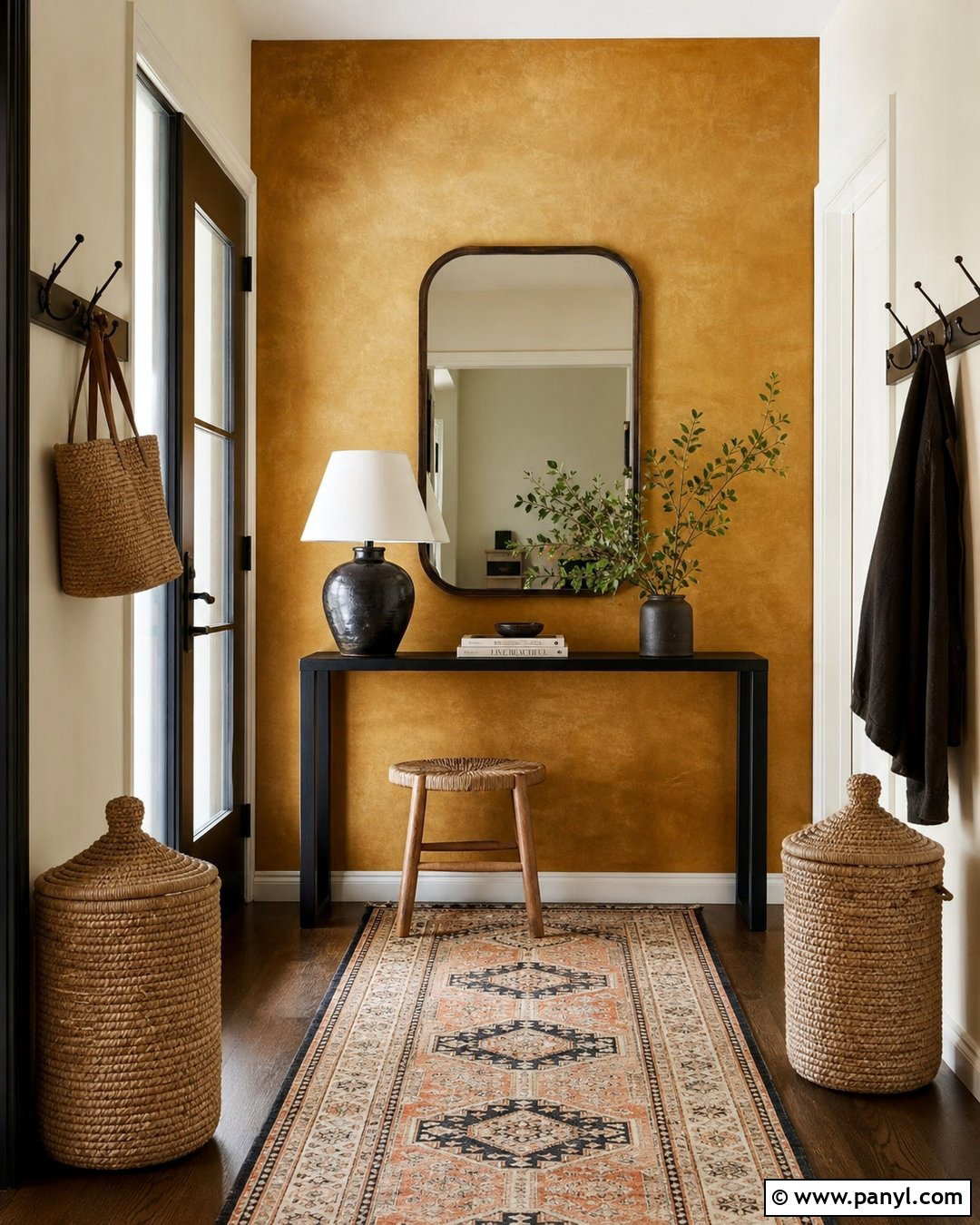
Golden ochre texture can bring warmth and definition to an entry without requiring a large amount of furniture. Use a lightly brushed plaster finish on the wall visible from the front door. Place a narrow black console against it and add a rounded mirror with a dark bronze frame. A small woven stool, patterned runner, and lidded storage baskets make the space functional. Choose cream for the surrounding walls and trim, allowing the ochre to stand out without dominating the hallway. Black hooks or a slim wall-mounted rail can organize daily essentials. Add one ceramic lamp and a simple leafy branch. The completed entry feels sunny, practical, and visually connected to earthy colors used elsewhere in the home.
26. Blue Gray Grasscloth Wall
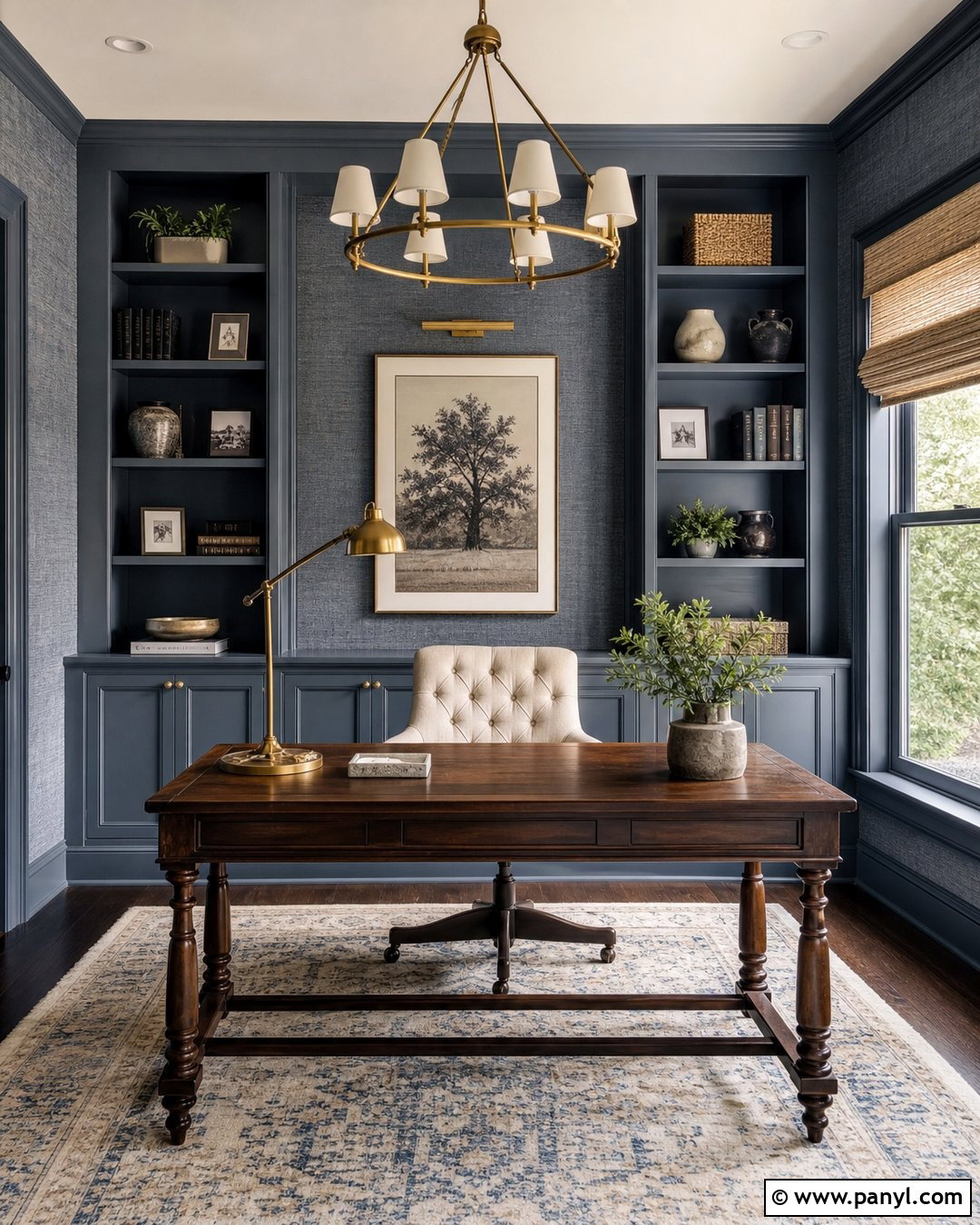
Blue-gray grasscloth brings refined texture to a home office or quiet reading room. Cover every wall for an immersive effect, or use it above painted paneling in a coordinating slate blue. Choose a medium walnut desk, an upholstered chair in warm beige, and built-in shelves painted to match the lower wall. A cream-and-blue rug softens the floor, while antique brass lighting adds warmth against the cooler wallcovering. Keep window treatments simple with natural linen shades. Because grasscloth has visible seams and tonal variation, use restrained artwork and uncluttered shelving. The finished room feels polished yet comfortable, with enough pattern from the woven surface to reduce the need for additional decorative layers.
27. Brick Red Washed Wall
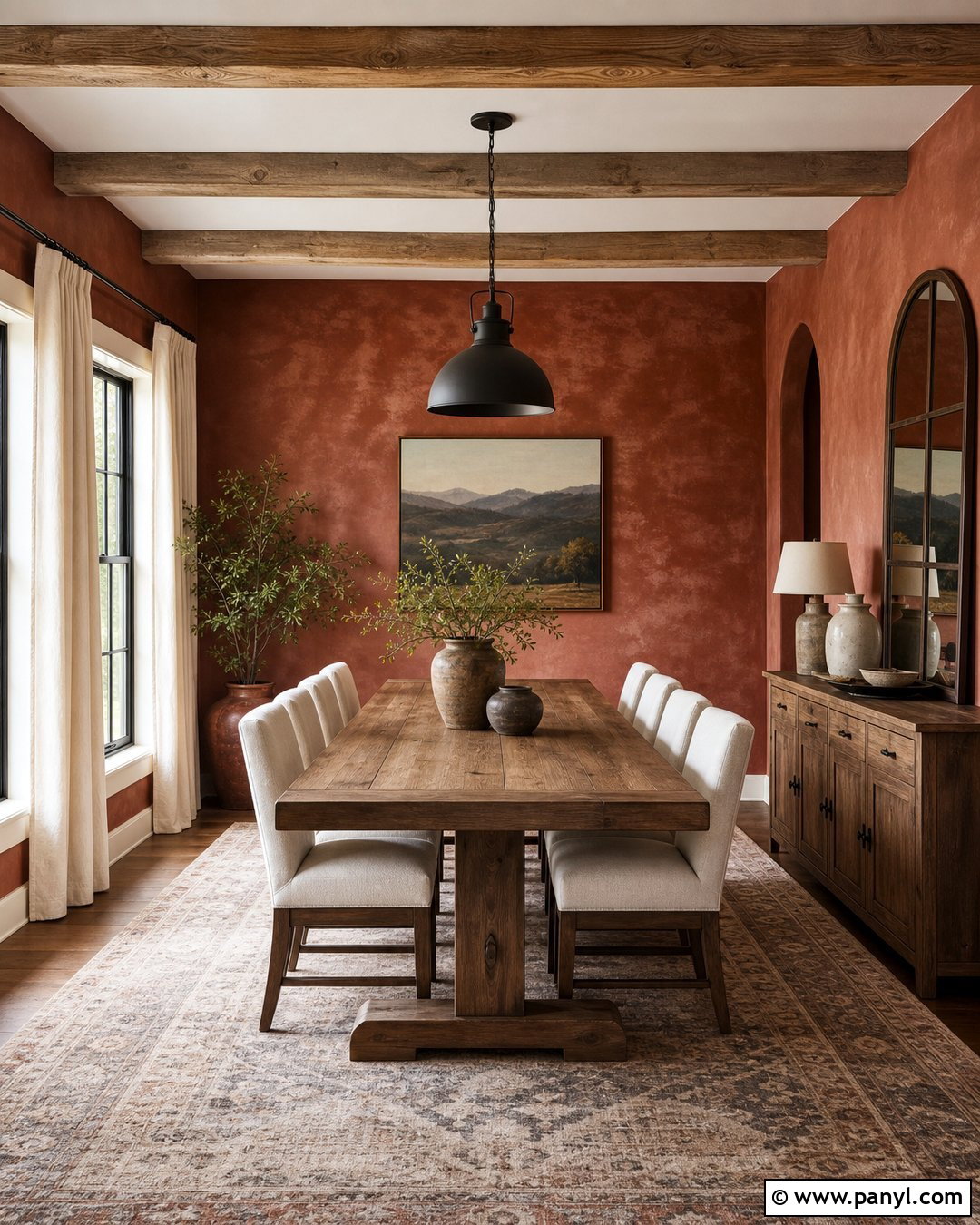
A washed brick red finish creates rustic depth in a dining room without the bulk of real masonry. Begin with a muted red-brown base and add uneven lighter washes that suggest aged plaster. Place a farmhouse-style oak table at the center, surrounded by simple cream upholstered chairs. A black metal pendant and dark window frames provide clean contrast. Use a faded neutral rug to soften the floor and hang one large landscape painting on the feature wall. Cream curtains and warm white adjoining walls prevent the red from closing in the space. Handmade pottery and a low wood sideboard complete the room. The overall look feels established and inviting rather than artificially distressed or heavily themed.
28. Emerald Green Geometric Wall Panels
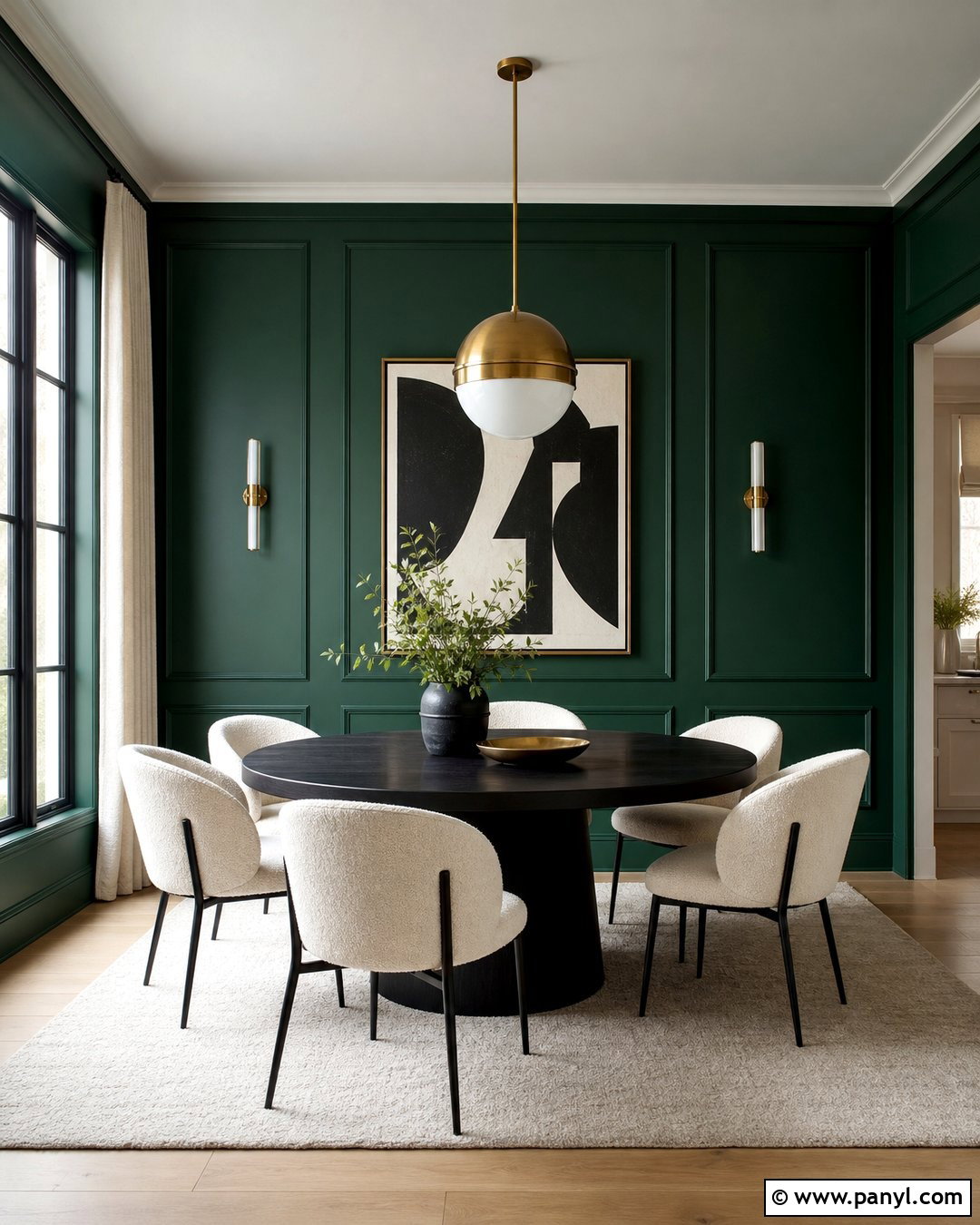
Emerald green geometric panels create a dramatic yet organized backdrop for a modern dining room. Use large rectangular molding or shallow dimensional panels, painting the wall and trim in the same satin or low-sheen green. Center a round black dining table in front of the feature, then add curved chairs upholstered in cream boucle. A brass globe pendant echoes the richness of the green and provides a warm focal point. Choose a pale neutral rug and light oak flooring to balance the stronger colors. Keep table decor simple and use one abstract artwork in cream, black, and emerald. This complete scheme feels bold and contemporary, while the repeated geometry gives the room a clear, controlled structure.
29. Warm White Textured Hallway Wall
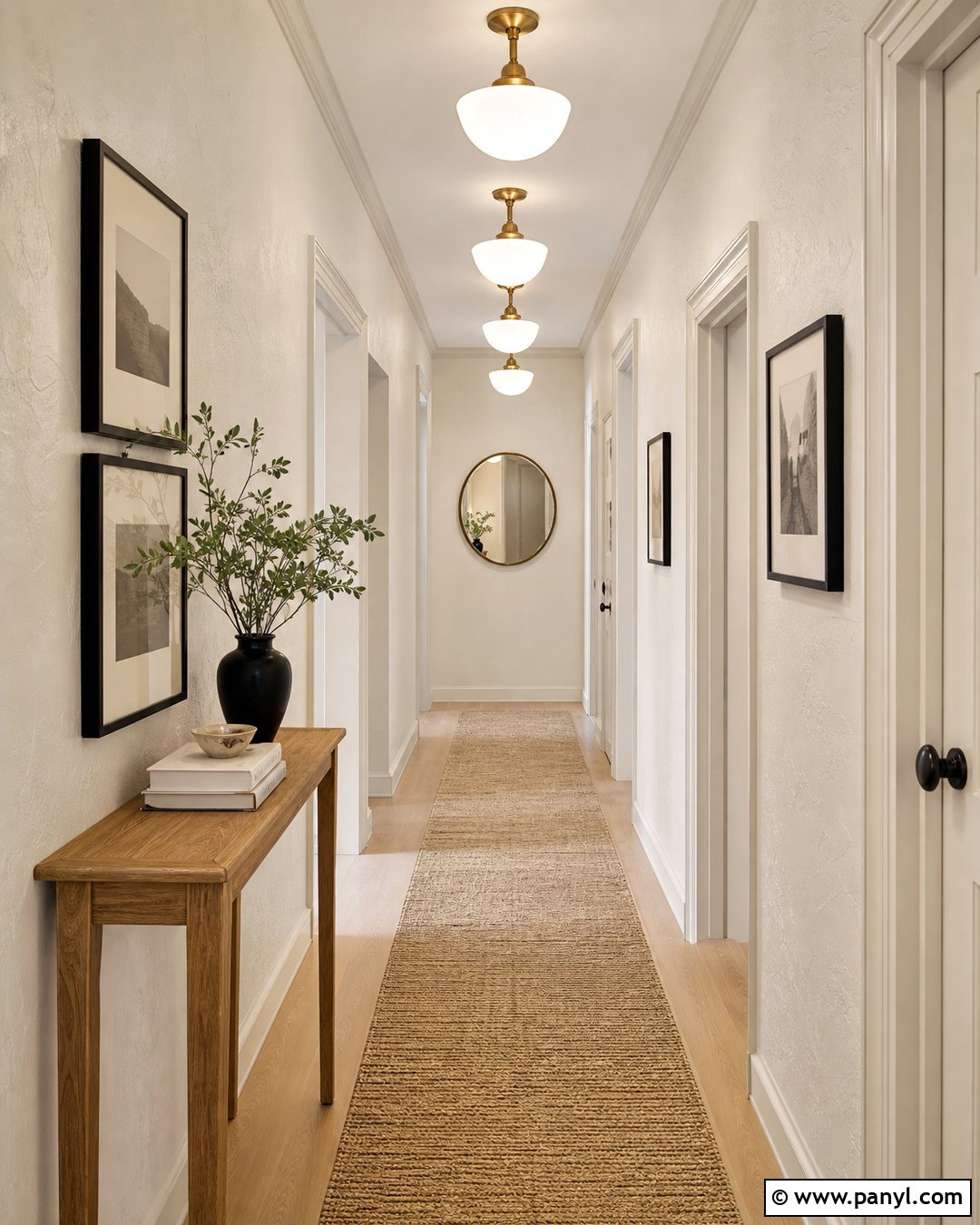
A narrow hallway can benefit from warm white texture when color alone might make the passage feel smaller. Use fine plaster with gentle tonal variation on both long walls, keeping the finish smooth enough for comfortable everyday traffic. Paint doors and trim in the same warm white to create visual continuity. Add a slim oak console, a natural runner, and black-framed artwork arranged in a clean row. A series of small brass ceiling lights distributes illumination evenly and prevents strong shadows from exaggerating the texture. Place a round mirror near the end of the hall to reflect light. This simple but complete design adds character, storage, and movement while preserving the open feeling of a compact transitional space.
30. Two Tone Textured Accent Wall
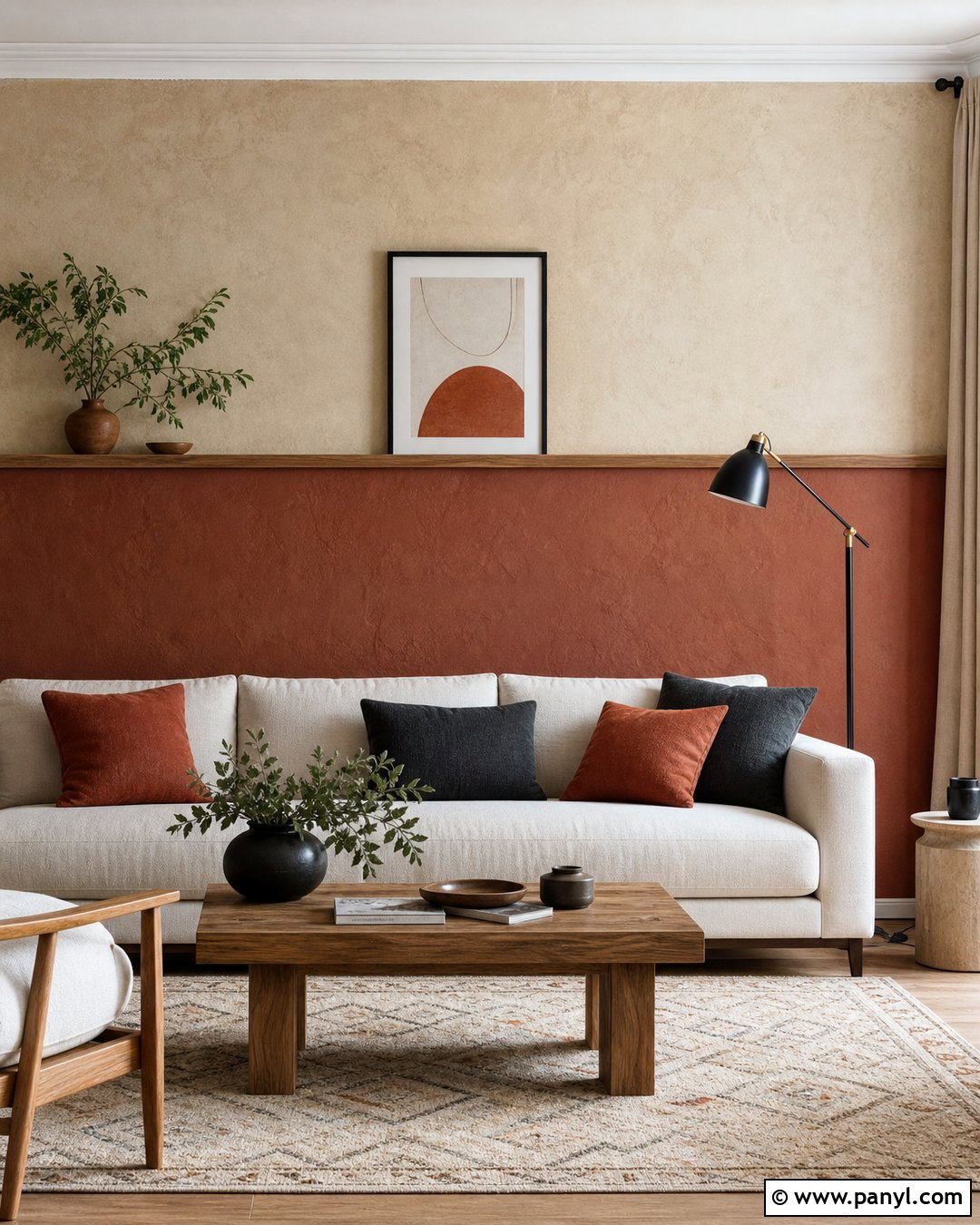
A two-tone textured wall offers color and dimension without covering a room in one strong shade. In a living room, use warm beige plaster on the upper two-thirds and muted clay red below, dividing the colors with a slim oak picture rail. Position a cream sofa against the wall and add rust, tan, and charcoal cushions. Choose an oak coffee table, black floor lamp, and neutral patterned rug to repeat the wall palette. Keep the adjoining walls soft ivory so the feature remains clear. Hang simple artwork above the rail and leave the textured lower section mostly unobstructed. The coordinated arrangement feels layered and intentional, giving an average room a distinctive focal point without complicated construction.
Conclusion:
Successful texture colour wall ideas do more than add a decorative finish. They shape the atmosphere of the entire room through color, light, furniture, and material choices. Soft limewash and clay plaster suit calm, natural spaces, while ridged panels, metallic finishes, and dark microcement create stronger focal points. Before decorating, prepare the surface correctly and sample the finish in several areas. Texture can alter how a color appears as shadows move throughout the day. Keep surrounding furniture and accessories balanced so the wall remains connected to the room rather than looking isolated. With thoughtful planning, textured color can make even a simple, average-size space feel warmer, more dimensional, and distinctly personal.

Related Ideas and Inspiration:
Leave a Reply