
Two toned bathroom walls can make a plain space feel more balanced, colorful, and thoughtfully finished. The key is treating both wall treatments as parts of one complete design. Paint may meet tile, wallpaper can sit above paneling, or two related colors can create a clean horizontal divide. Current bathroom inspiration favors warm neutrals, natural greens, tactile tile, and coordinated wall treatments that connect with the vanity, flooring, and fixtures. () Before choosing a combination, consider moisture exposure, natural light, ceiling height, and existing finishes. Darker lower walls often ground the room, while lighter upper walls keep it open. The following complete looks offer practical ways to recreate beautiful **two toned bathroom walls**.

1. Navy And White Bathroom Walls
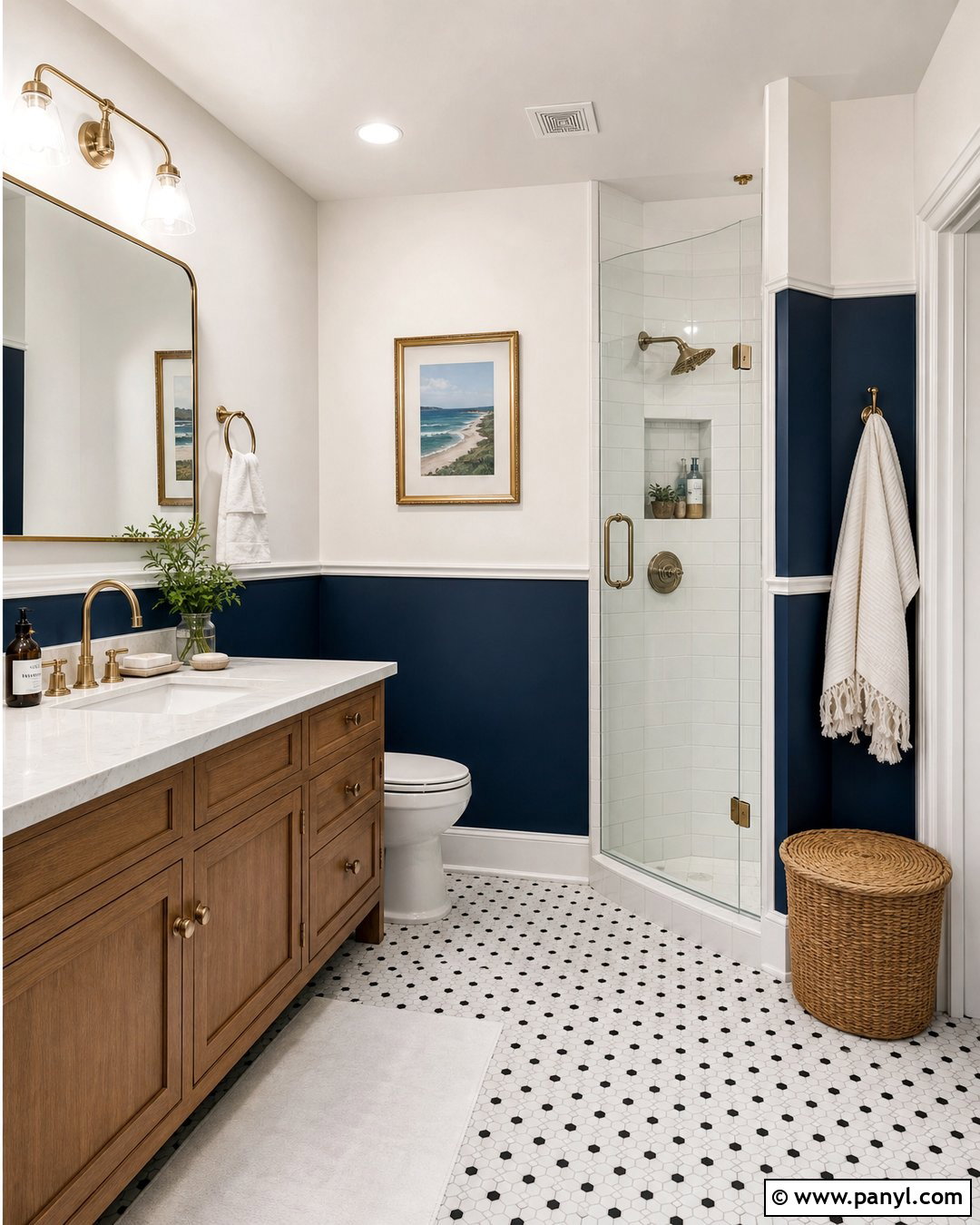
A crisp navy-and-white scheme gives an everyday bathroom a polished coastal look without relying on themed decorations. Paint the lower third of the walls deep navy blue and finish the upper area in clean warm white. A narrow white chair rail creates a sharp transition and connects with white baseboards. Add a medium oak vanity, white quartz countertop, and brushed brass faucet to warm the strong contrast. White hexagon floor tile with dark grout keeps the palette connected from top to bottom. Above the vanity, use a rounded brass mirror and simple milk-glass sconces. Folded white towels and a striped navy bath mat provide pattern in small doses, allowing the two toned walls to remain the room’s defining feature.
2. Sage Green And White Tile Bathroom Walls
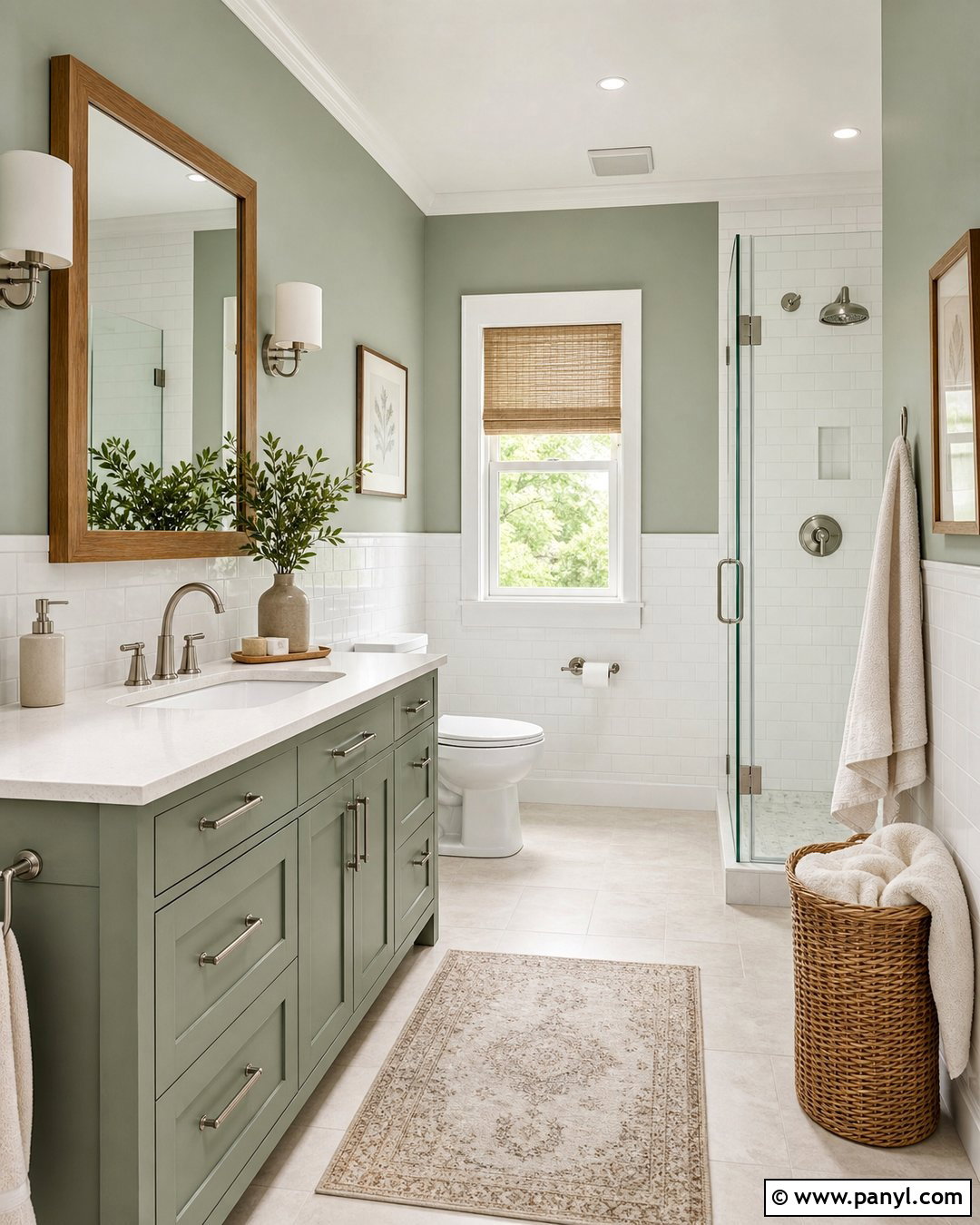
Soft sage paint above white subway tile creates a refreshing bathroom that feels calm rather than overly colorful. Run glossy white subway tile halfway up every wall, using warm gray grout for gentle definition. A slim ceramic edge piece gives the transition a finished appearance. Paint the upper walls muted sage green and repeat that color on a small shaker vanity. Choose a white porcelain sink, satin nickel fixtures, and a light oak-framed mirror to keep the room airy. Pale stone-look porcelain flooring introduces natural texture without adding another strong color. Place a woven basket beneath the vanity and add simple linen towels in cream. The coordinated wall, vanity, and wood finishes create a complete, practical design suitable for compact bathrooms.
3. Black Wainscoting And Warm White Bathroom Walls
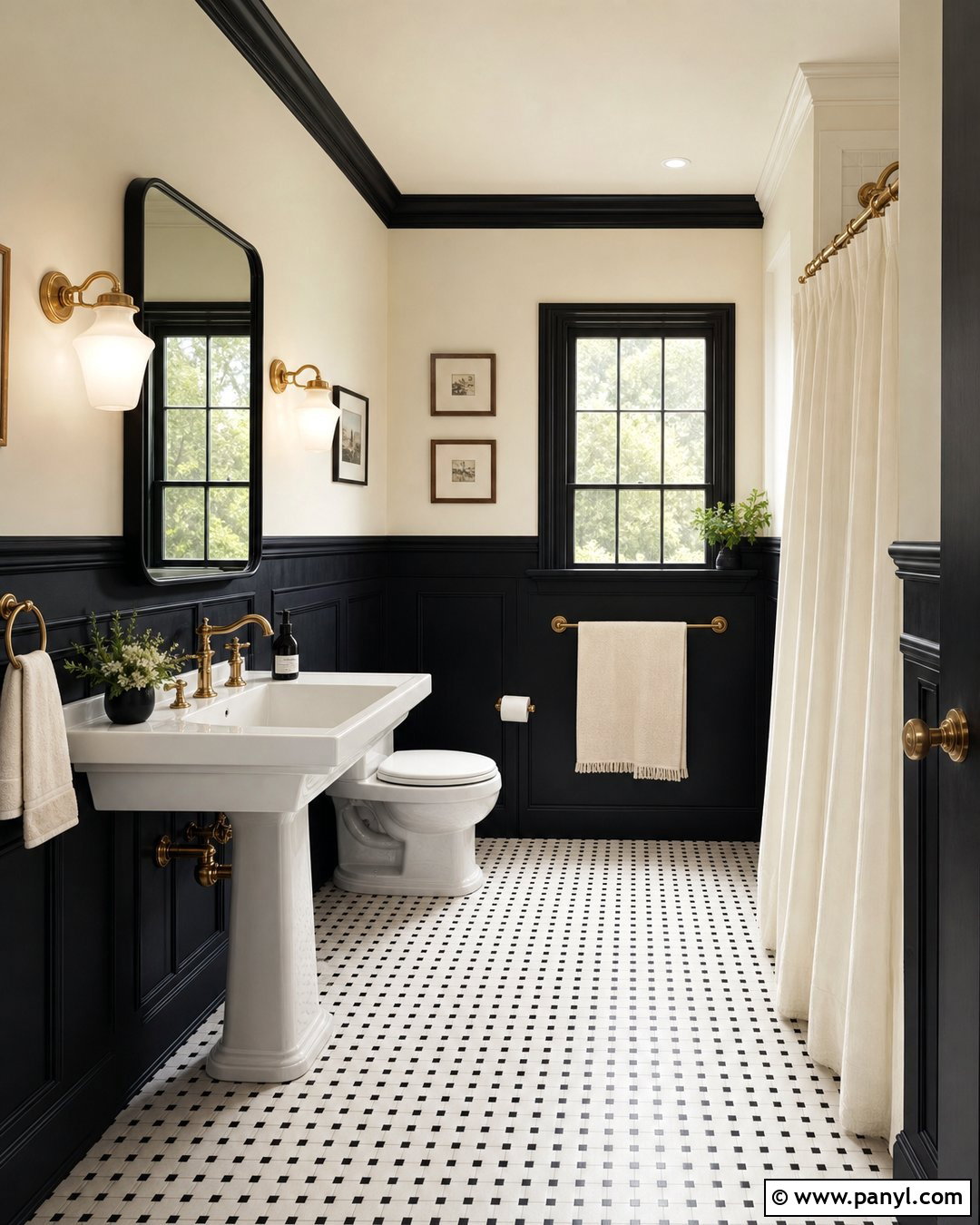
Black lower walls can feel surprisingly balanced when the rest of the bathroom is bright and warm. Install simple flat-panel wainscoting to approximately one-third of the wall height and paint it soft matte black. Use warm white above it instead of a stark, blue-toned white. A white pedestal sink prevents the floor plan from feeling heavy, while unlacquered brass fixtures add welcome warmth. Continue the black on the mirror frame and wall sconces so the lower color does not appear isolated. Small white and black mosaic floor tile ties both halves together. Keep towels, shower curtains, and window coverings creamy white. This coordinated approach produces a traditional two-tone bathroom with enough contrast to feel dramatic but enough lightness to remain comfortable.
4. Terracotta And Blush Bathroom Walls
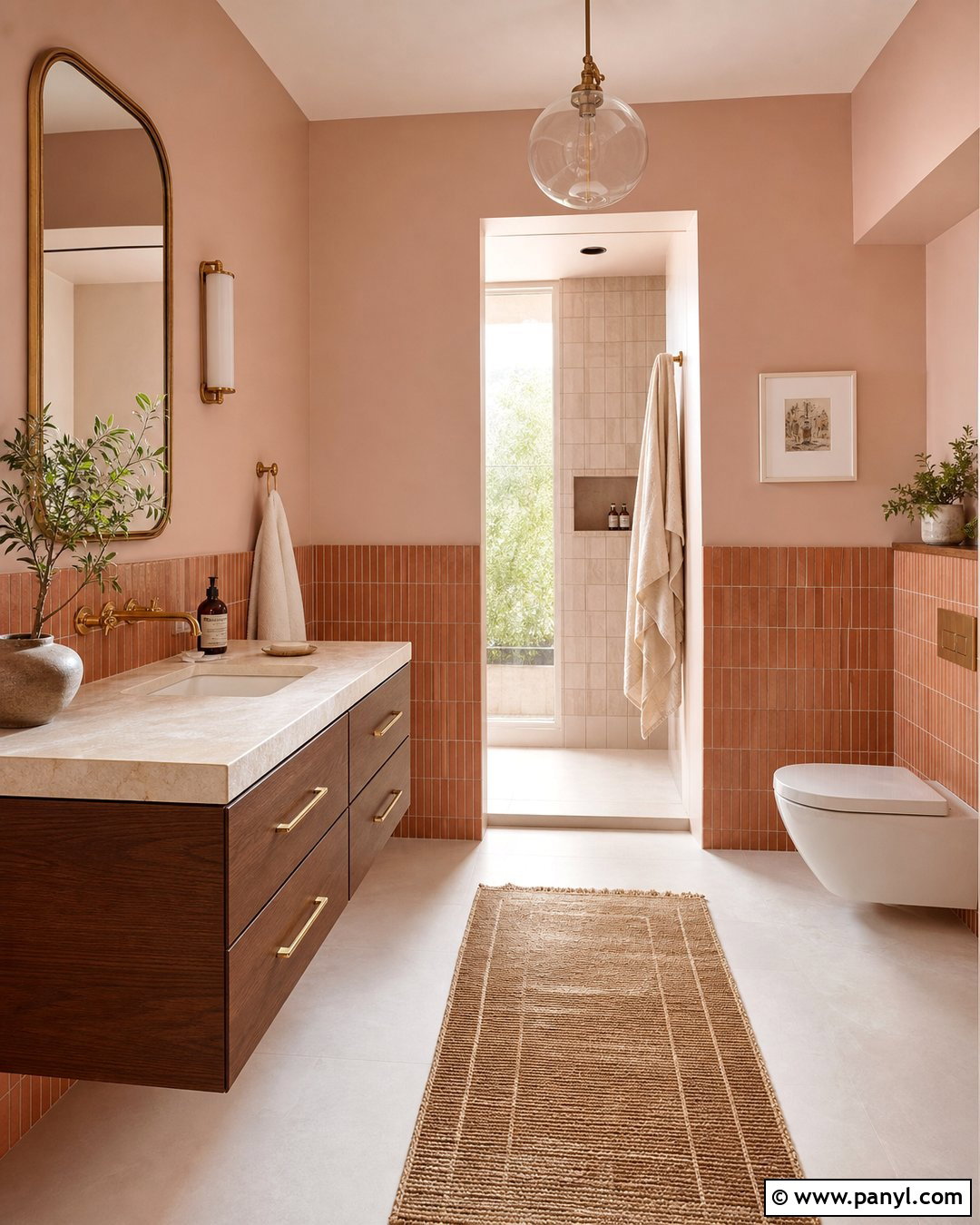
Warm terracotta and pale blush can transform a bathroom into a soft, sun-washed retreat. Cover the lower half of the walls with narrow terracotta ceramic tiles in a handmade finish. Their subtle color variations bring depth, while blush pink paint above keeps the scheme gentle. Select a floating walnut vanity with a creamy stone countertop and an oval mirror in aged brass. Warm white floor tile prevents the room from becoming too orange or pink. Use brushed brass faucets, ivory towels, and a natural woven runner to continue the earthy atmosphere. A simple linen Roman shade softens the window without blocking daylight. Because both wall colors share warm undertones, the transition feels cohesive, creating a welcoming bathroom that is colorful without becoming visually busy.
5. Green Wainscoting And Botanical Wallpaper Bathroom Walls
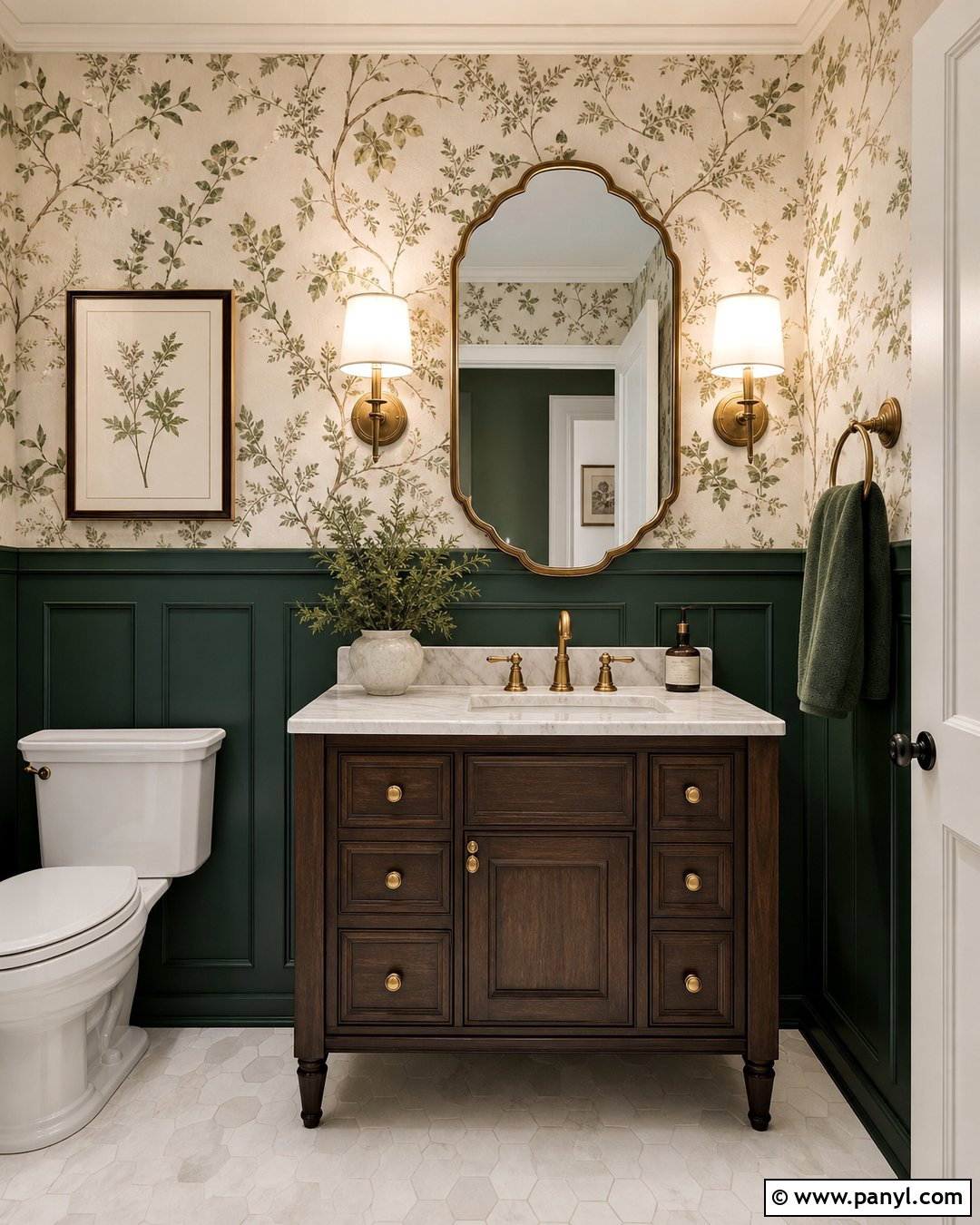
A botanical powder room feels more sophisticated when patterned wallpaper is balanced by solid lower paneling. Paint tall board-and-batten wainscoting deep forest green, then install botanical wallpaper above it featuring muted green leaves, cream backgrounds, and small touches of ochre. Pulling the lower color directly from the wallpaper creates an intentional connection. Add a dark wood vanity with a white marble top and an antique brass faucet. A scalloped brass mirror and compact shaded sconces reinforce the traditional look. Choose simple ivory floor tile so it does not compete with the walls. Green hand towels and a small ceramic vase complete the palette. This layered two-tone treatment works especially well in a powder room, where bold pattern can make a small space feel memorable.
6. Powder Blue Beadboard And Cream Bathroom Walls
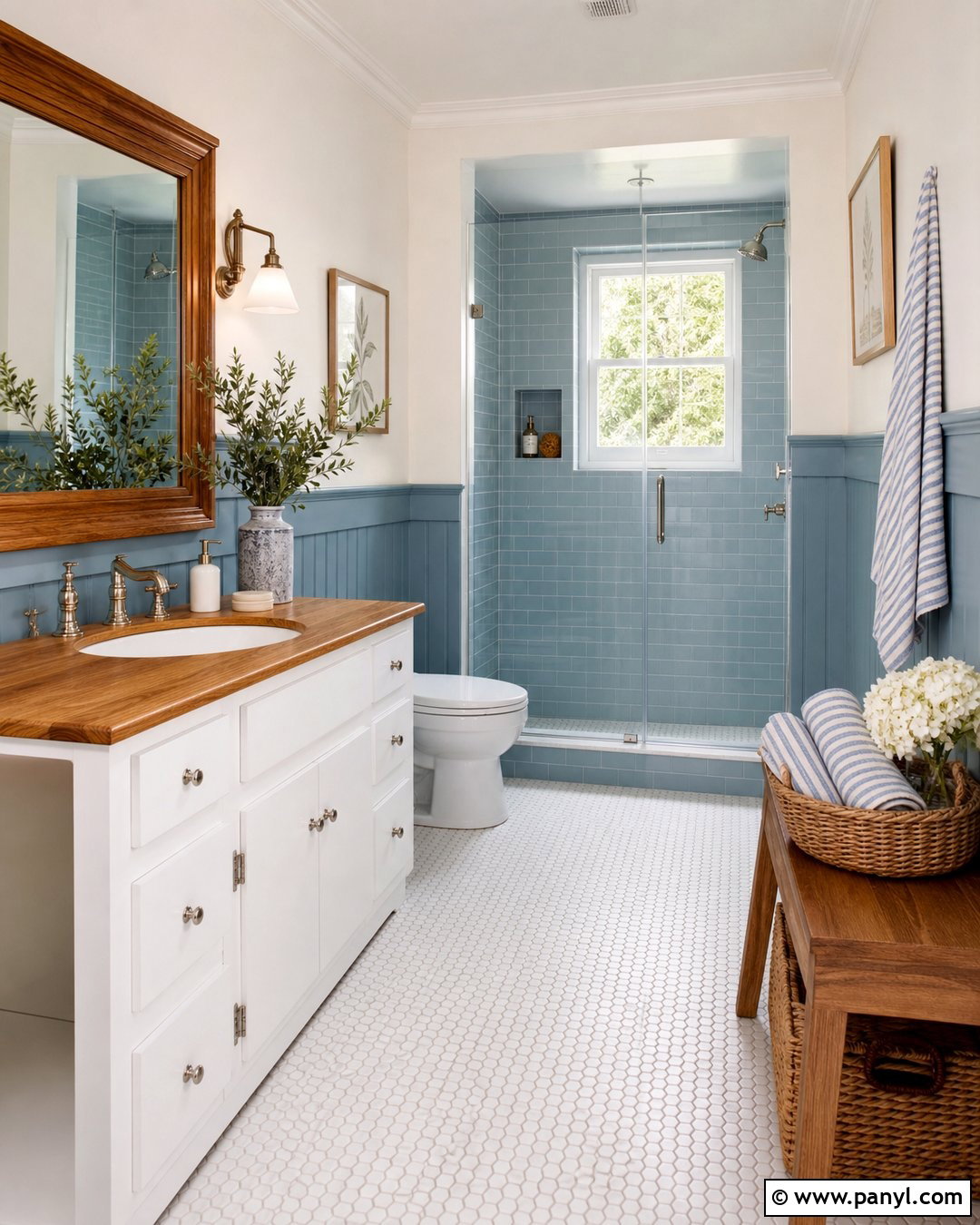
Imagine a light-filled cottage bathroom with soft colors and simple, familiar materials. Install moisture-resistant beadboard across the lower half of the room and paint it powder blue. Finish the upper walls in creamy white, allowing the subtle vertical lines below to provide texture. A small white vanity with a butcher-block-style oak top introduces warmth and keeps the color scheme casual. Use polished nickel hardware, a rectangular wood mirror, and clear glass sconces for a clean finish. White penny tile flooring with pale blue accents gently repeats the wall color. Add a white fabric shower curtain, woven storage baskets, and striped blue hand towels. The completed room feels bright, relaxed, and coordinated, with enough traditional character for a cottage, farmhouse, or older home.
7. Greige And Ivory Bathroom Walls
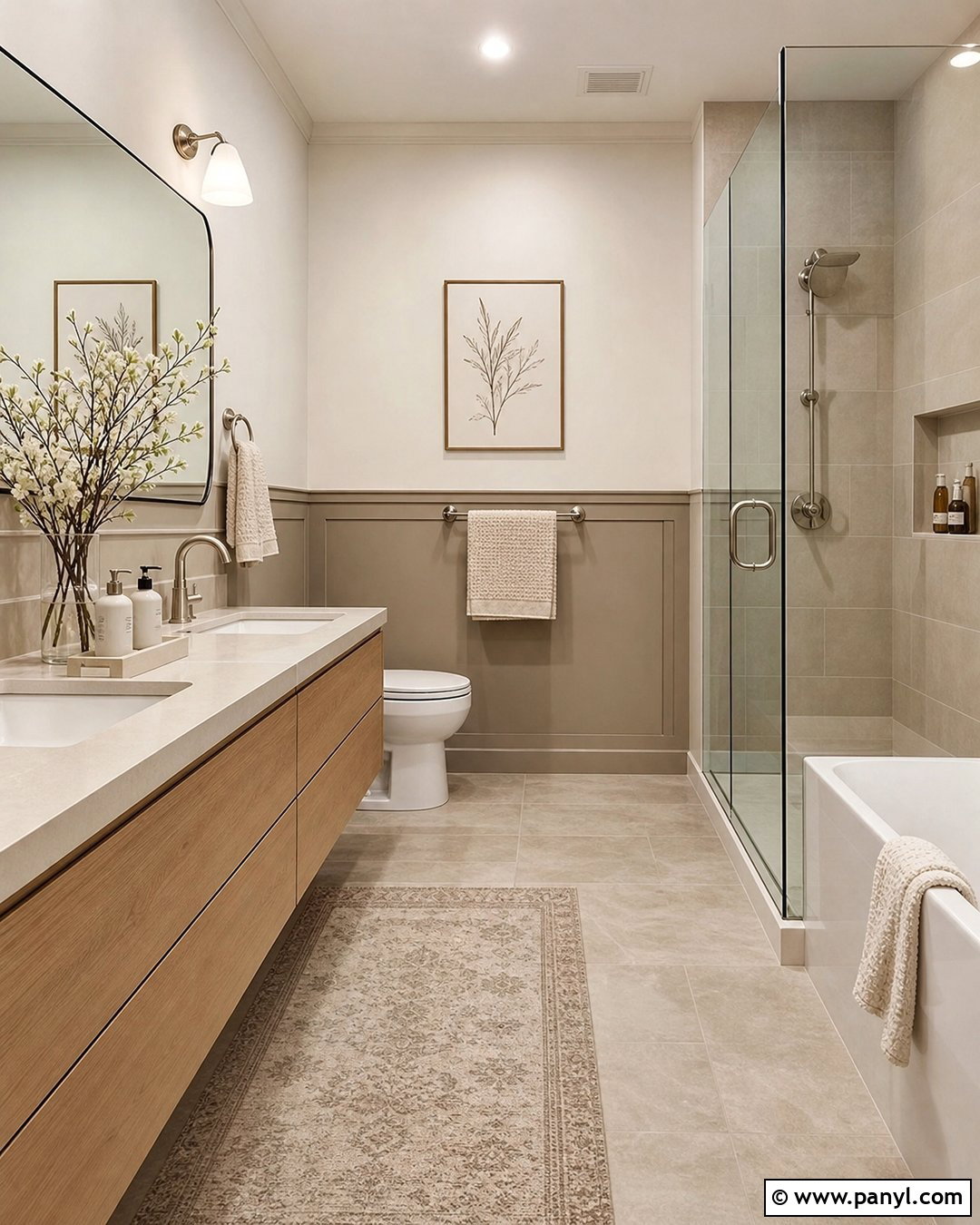
For a quiet neutral bathroom, combine warm greige on the lower walls with soft ivory above. Divide the colors with narrow decorative molding placed slightly below the midpoint, which makes the upper wall and ceiling feel more spacious. Paint the molding ivory so the transition looks crisp. Pair the walls with a light oak floating vanity, creamy quartz countertop, and brushed nickel faucets. Large beige porcelain floor tiles add subtle movement without disrupting the restrained palette. Use an oversized frameless mirror to bounce light throughout the room. Ivory towels, a textured cotton bath mat, and two small ceramic accessories provide softness. This complete scheme is ideal when permanent tile already contains beige, cream, or gray, because the two wall colors can bridge those different neutral undertones.
8. Teal Tile And White Bathroom Walls
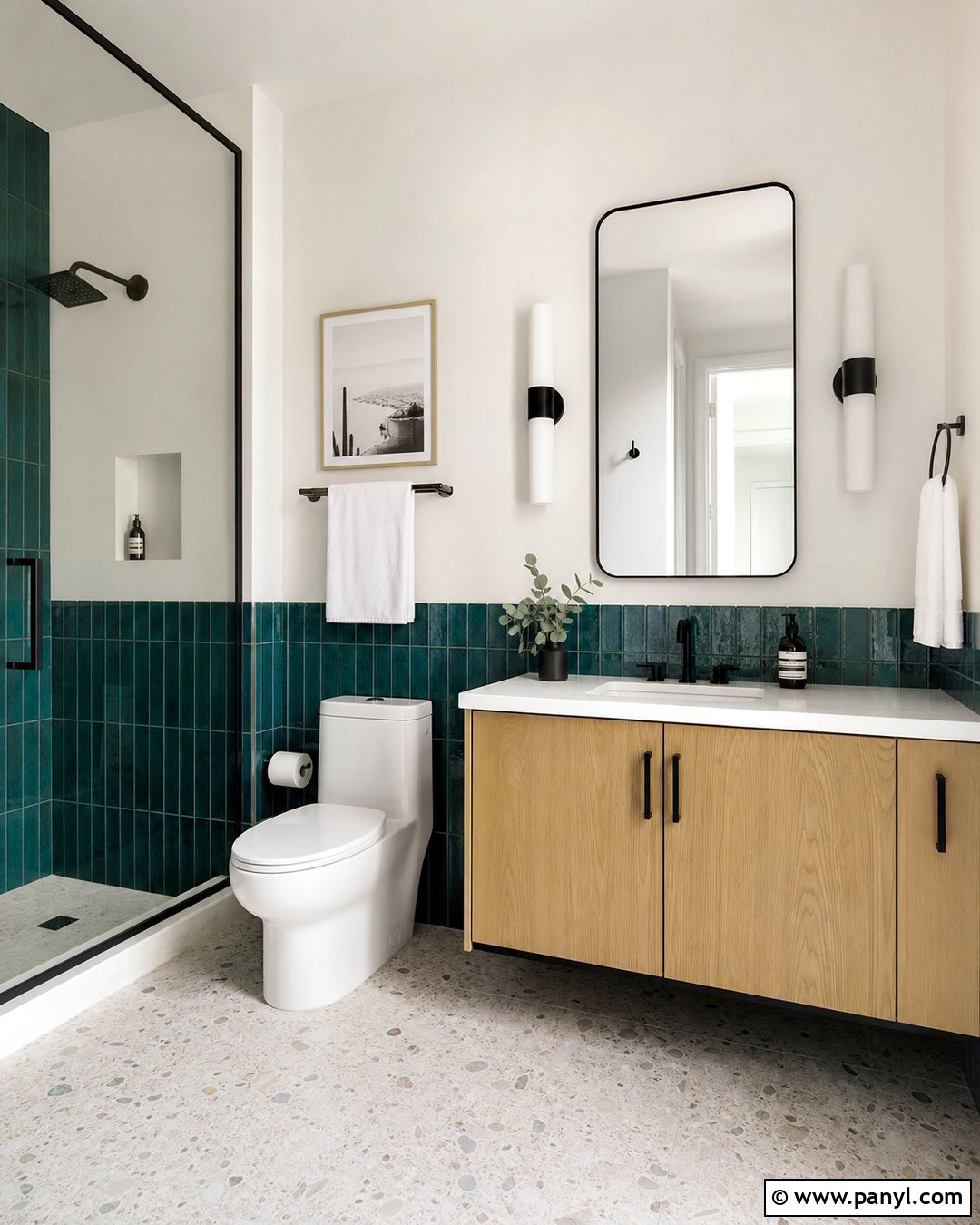
Glossy teal tile can become the main feature of a bathroom when it is balanced with uncomplicated white paint. Install deep teal zellige-style tile on the lower half of every wall, arranging it vertically to emphasize height. Use matching teal grout for a nearly continuous field of color. Paint the upper walls and ceiling soft white, then select a white oak vanity with slab-front drawers. A white quartz top and undermount sink provide a clean pause between the tile and wood. Choose matte black fixtures, a thin black-framed mirror, and restrained globe sconces. Pale terrazzo flooring adds interest through small gray and teal chips. Keep towels white and accessories minimal. The complete design feels modern, handmade, and vibrant without overwhelming the room.
9. Charcoal And Pale Gray Bathroom Walls
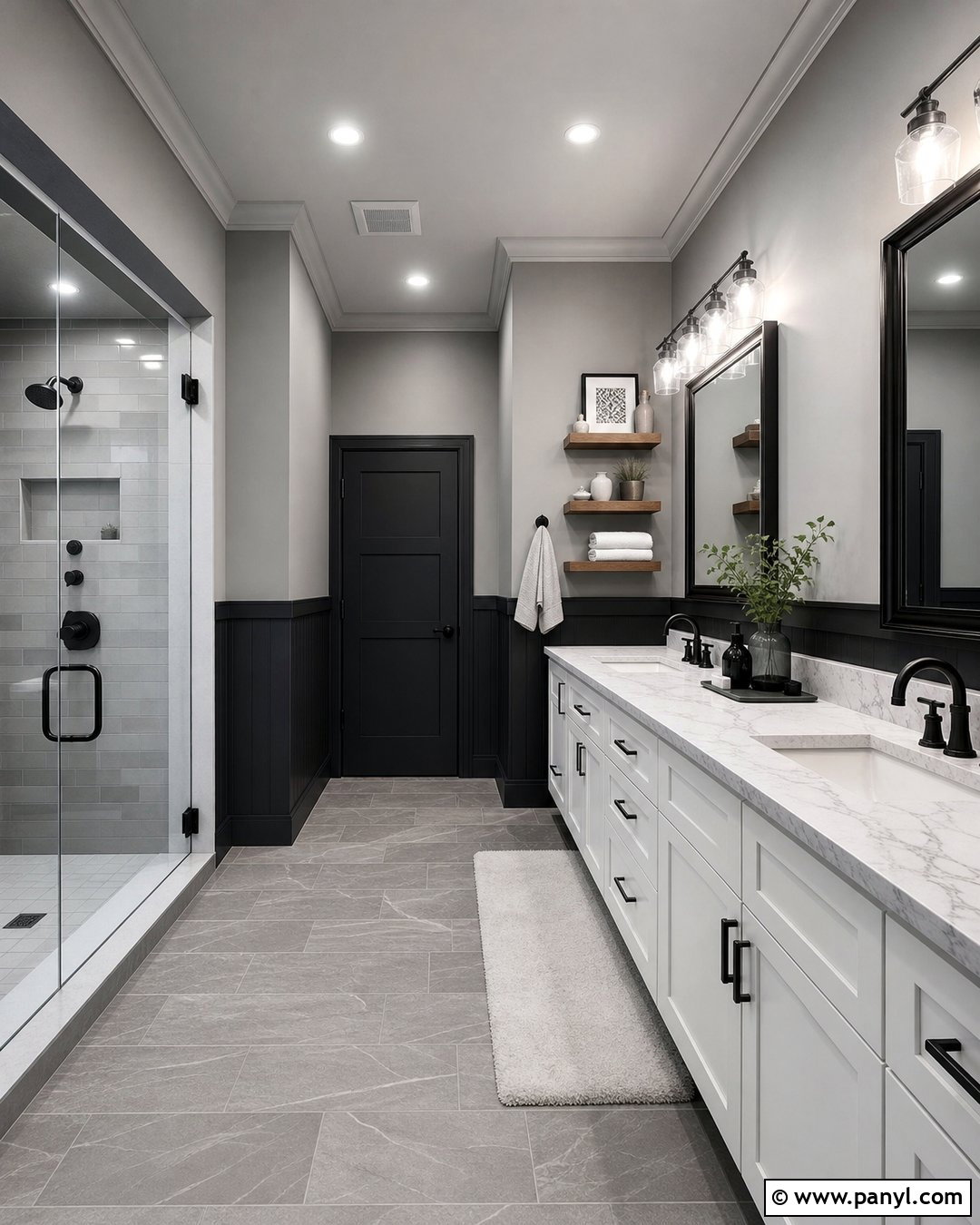
Charcoal lower walls and pale gray upper walls create depth while keeping the palette flexible. Use moisture-resistant flat paneling below, painted in a deep charcoal with a subtle warm undertone. Apply a soft dove gray above and continue it across the ceiling for a seamless finish. A white double vanity with a gray-veined quartz countertop brightens the center of the room. Add matte black faucets and mirrors, then introduce warmth through walnut drawer pulls, open shelving, and natural cotton towels. Medium gray stone-look floor tile grounds the bathroom without matching either wall exactly. Clear shower glass keeps sightlines open. This layered neutral design works best when multiple textures are included, ensuring that the closely related wall colors look dimensional rather than flat or unfinished.
10. Dusty Rose And Burgundy Bathroom Walls
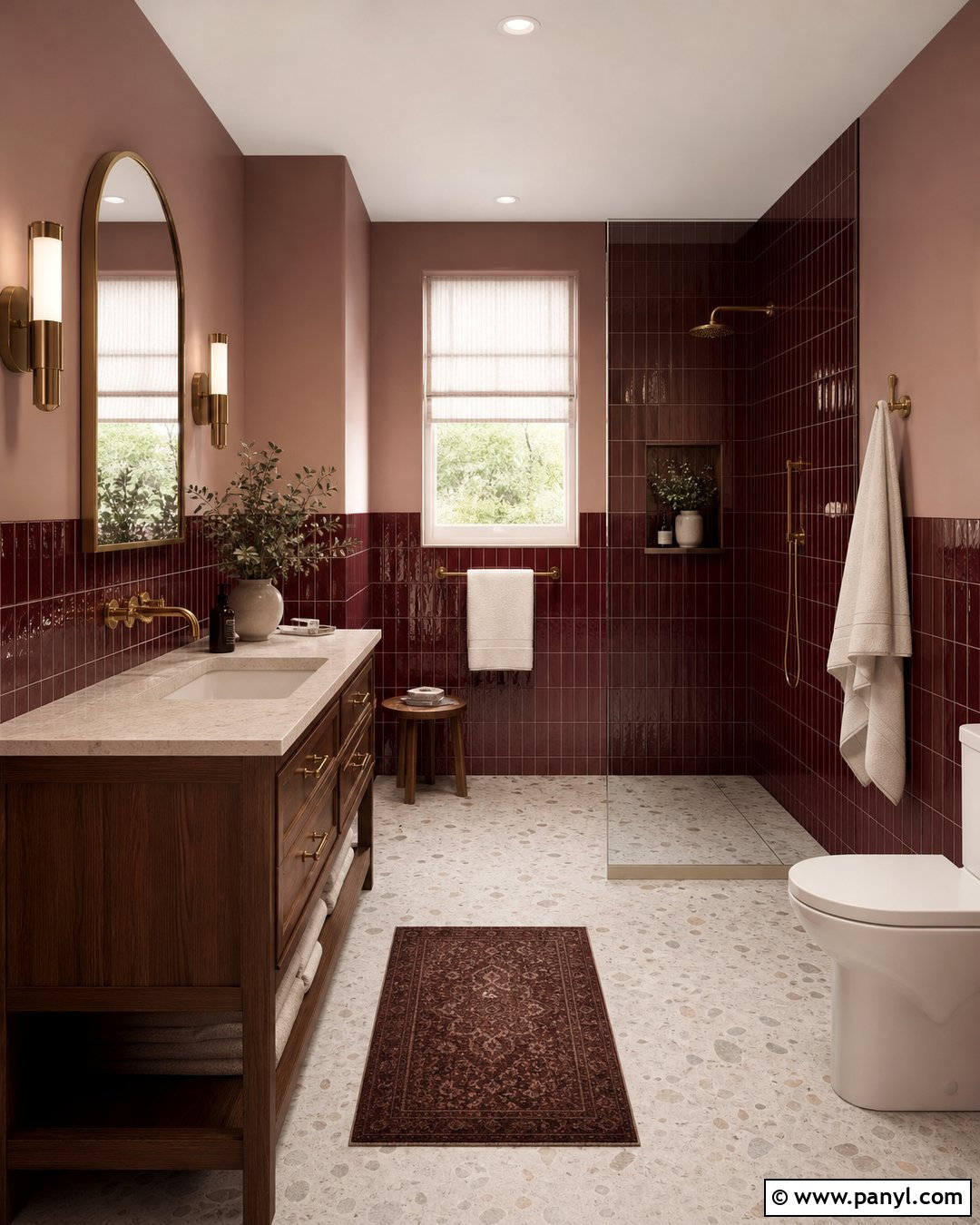
Dusty rose and burgundy create a rich bathroom when they are supported by warm metals and restrained furnishings. Paint the upper two-thirds of the walls muted dusty rose. Cover the lower third with glossy burgundy rectangular tile, using dark red grout to minimize visible lines. A slim burgundy tile ledge provides a practical place for small toiletries. Choose a walnut vanity with a cream marble top and brass wall-mounted faucet. An arched brass mirror softens the strong horizontal wall division. Cream terrazzo flooring, ivory towels, and a warm white ceiling prevent the palette from becoming too intense. Repeat burgundy once more in the bath mat or framed artwork. The resulting room feels colorful and collected, yet every surface remains part of the same coordinated design.
11. Limestone And White Plaster Bathroom Walls
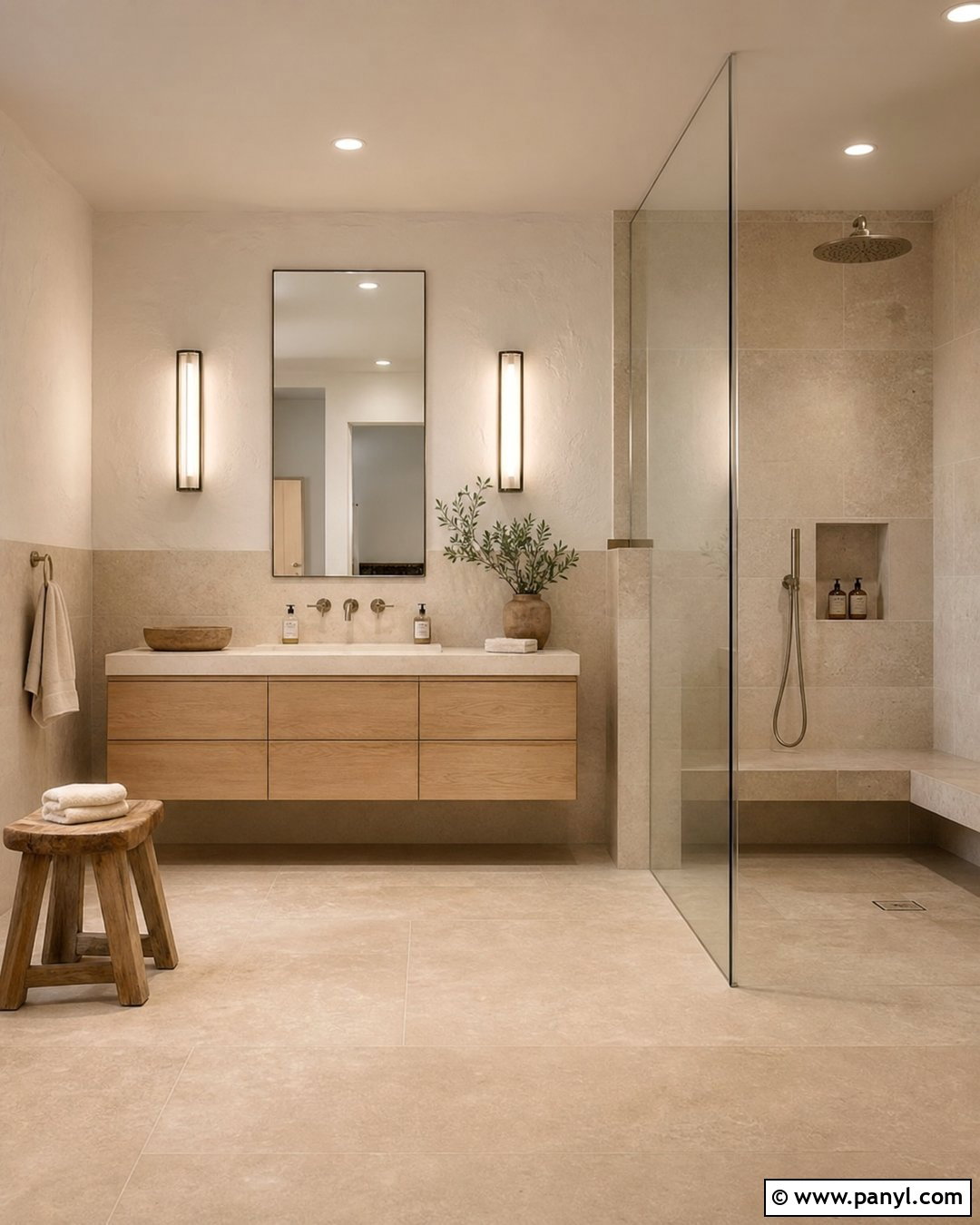
Natural stone and painted plaster produce a warm, spa-like version of two toned bathroom walls. Use beige limestone-look porcelain slabs across the lower half of the room, including the vanity backsplash and bathtub surround. Finish the upper walls in soft chalky white with a mineral-style texture. A floating white oak vanity complements the stone, while a cream solid-surface countertop maintains a quiet transition. Select brushed nickel fixtures for a gentle finish that does not compete with the materials. Continue the limestone tone through large-format floor tiles and add a frameless glass shower panel. Rolled ivory towels, a simple wood stool, and one leafy plant complete the space. The limited colors and repeated natural textures make the entire bathroom feel restful, cohesive, and easy to maintain.
12. Cobalt Blue And White Bathroom Walls
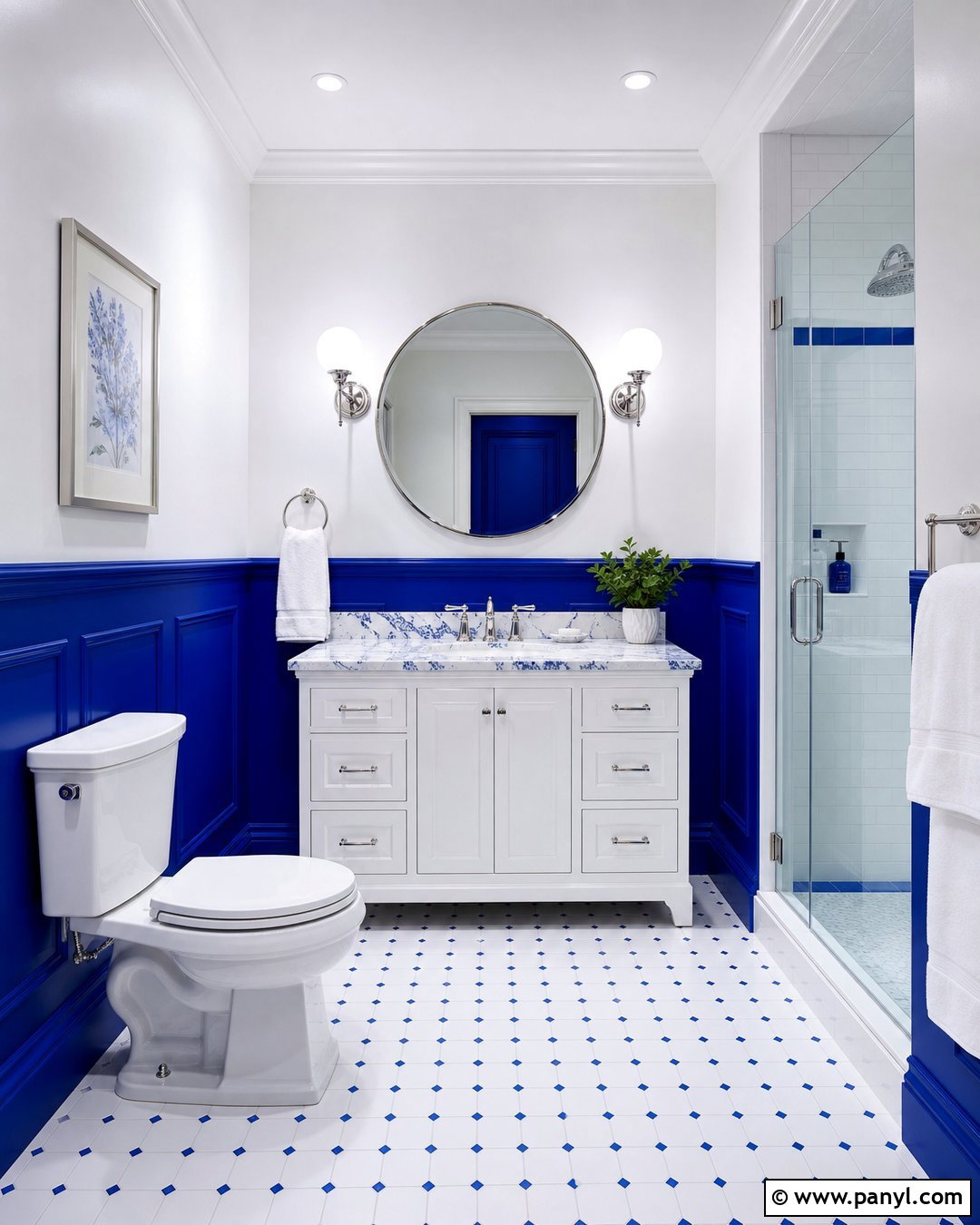
Cobalt blue brings energetic color to a bathroom, but white keeps it crisp and usable. Paint the lower half of the walls saturated cobalt, including simple applied molding for subtle architectural detail. Use bright white paint above, along with a white ceiling, trim, and door. Select a white vanity with a blue-veined quartz countertop to bridge the two colors naturally. Polished chrome hardware adds sparkle without introducing a competing metal tone. A large round mirror and streamlined sconces help the strong walls feel contemporary. Choose white porcelain floor tile with a small cobalt border or occasional blue insert. Finish with white towels, a blue runner, and clear countertop accessories. This complete high-contrast scheme works especially well in a bathroom with generous natural or overhead lighting.
13. Olive Paneling And Floral Wallpaper Bathroom Walls
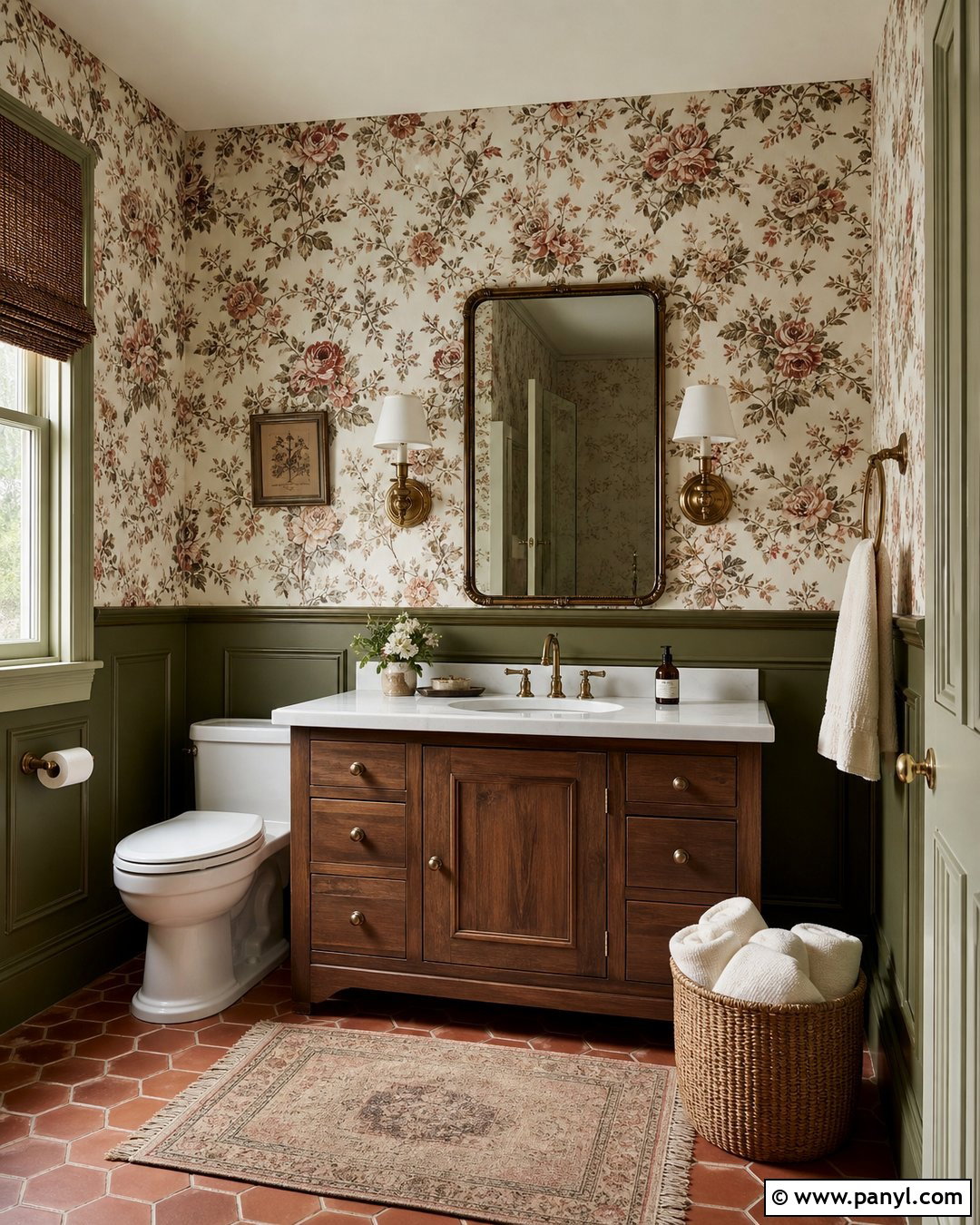
Olive green paneling provides a grounded base for delicate floral wallpaper. Install narrow-frame wall panels to chair-rail height and paint them a warm, earthy olive. Above, use cream wallpaper with small rust, blush, and green flowers. The controlled pattern adds detail without turning the room into a visually crowded space. A warm cherry or walnut vanity complements the olive tones, while a white stone countertop keeps the sink area fresh. Use aged brass fixtures, a vintage-inspired rectangular mirror, and small pleated sconces. Terracotta hexagon floor tile connects with the warmer colors in the wallpaper. Cream towels and a woven window shade complete the design. This combination creates a comfortable traditional bathroom that feels layered, personal, and connected to nature.
14. Lavender And Warm Gray Bathroom Walls
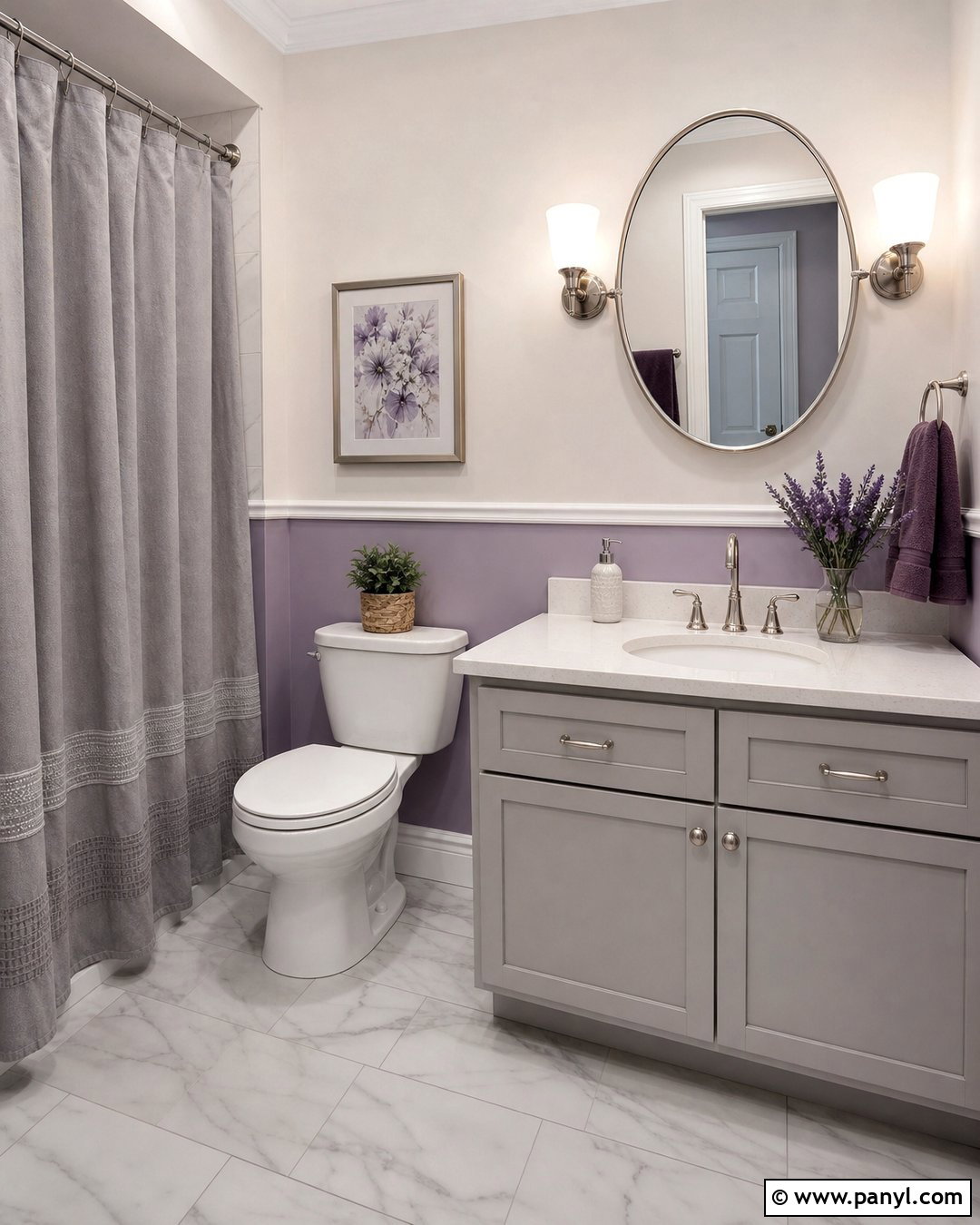
Lavender can feel grown-up and restful when paired with a balanced warm gray. Paint the lower half of the bathroom a muted lavender with gray undertones, then use pale warm gray above. Separate the colors with a narrow white picture rail for a neat architectural finish. A light gray vanity with a white quartz top keeps the room cohesive without matching either wall exactly. Choose polished nickel fixtures, a silver-framed oval mirror, and frosted globe lighting. White marble-look floor tile introduces subtle veining and brightness. Add plum hand towels, a soft gray shower curtain, and a small lavender glass vase for controlled color repetition. The overall bathroom remains light and practical, while the gentle purple lower walls provide more personality than a completely neutral paint scheme.
15. Sky Blue And Sand Bathroom Walls
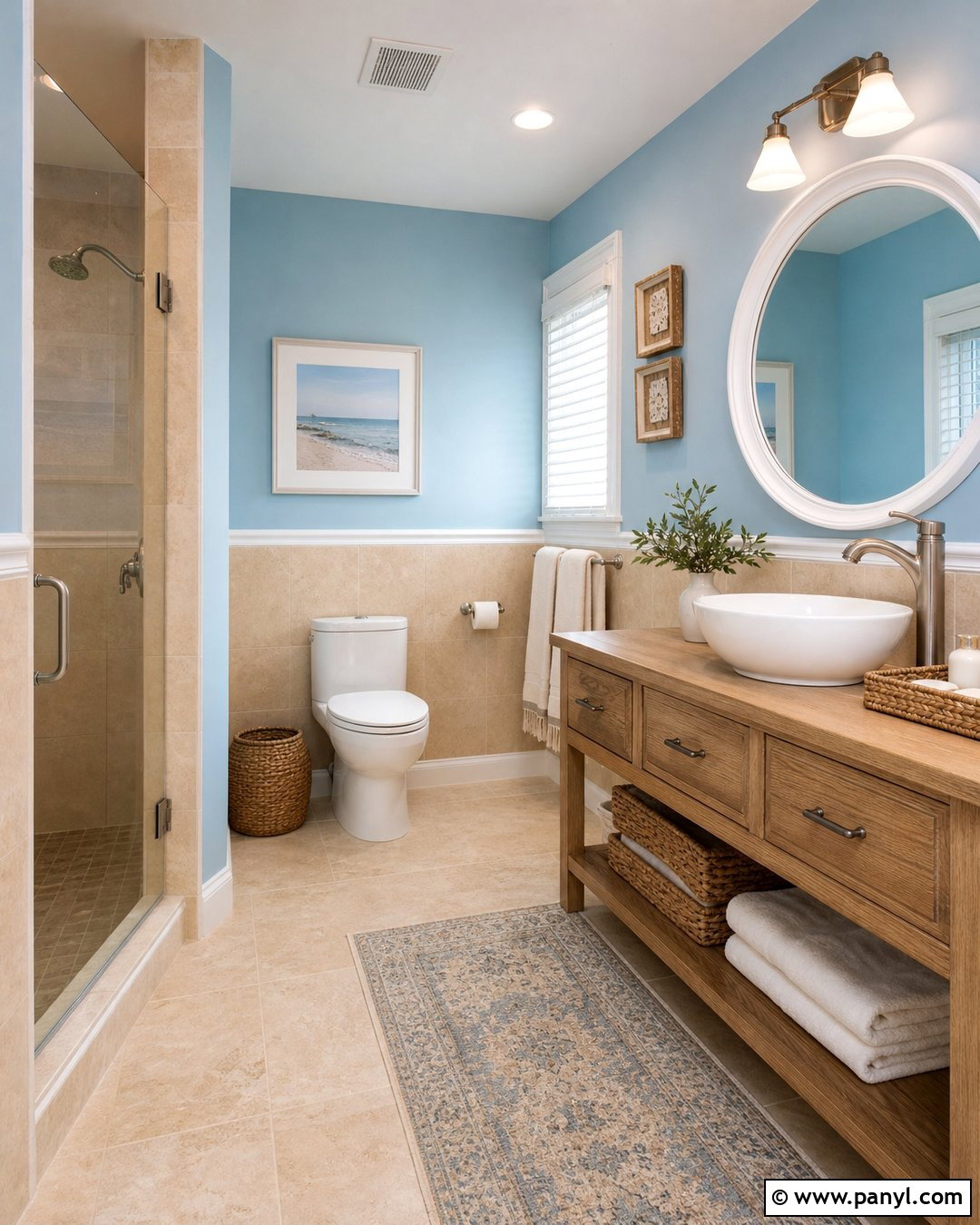
Sky blue and sandy beige bring a relaxed outdoor palette into the bathroom without using obvious coastal decorations. Paint the upper walls a clear, soft sky blue and cover the lower section with matte sand-colored ceramic tile. Use a narrow white tile trim where the finishes meet. A natural oak vanity, white vessel sink, and brushed nickel faucet continue the fresh look. Choose pale beige porcelain flooring with a stone texture to connect with the lower wall tile. A simple round mirror with a white frame keeps the sink area light. Finish the room with cream towels, a woven basket, and a subtle blue-and-tan runner. The complete design feels open and comfortable, making it particularly effective in a small bathroom with a window or strong white lighting.
16. Mocha And Cream Bathroom Walls
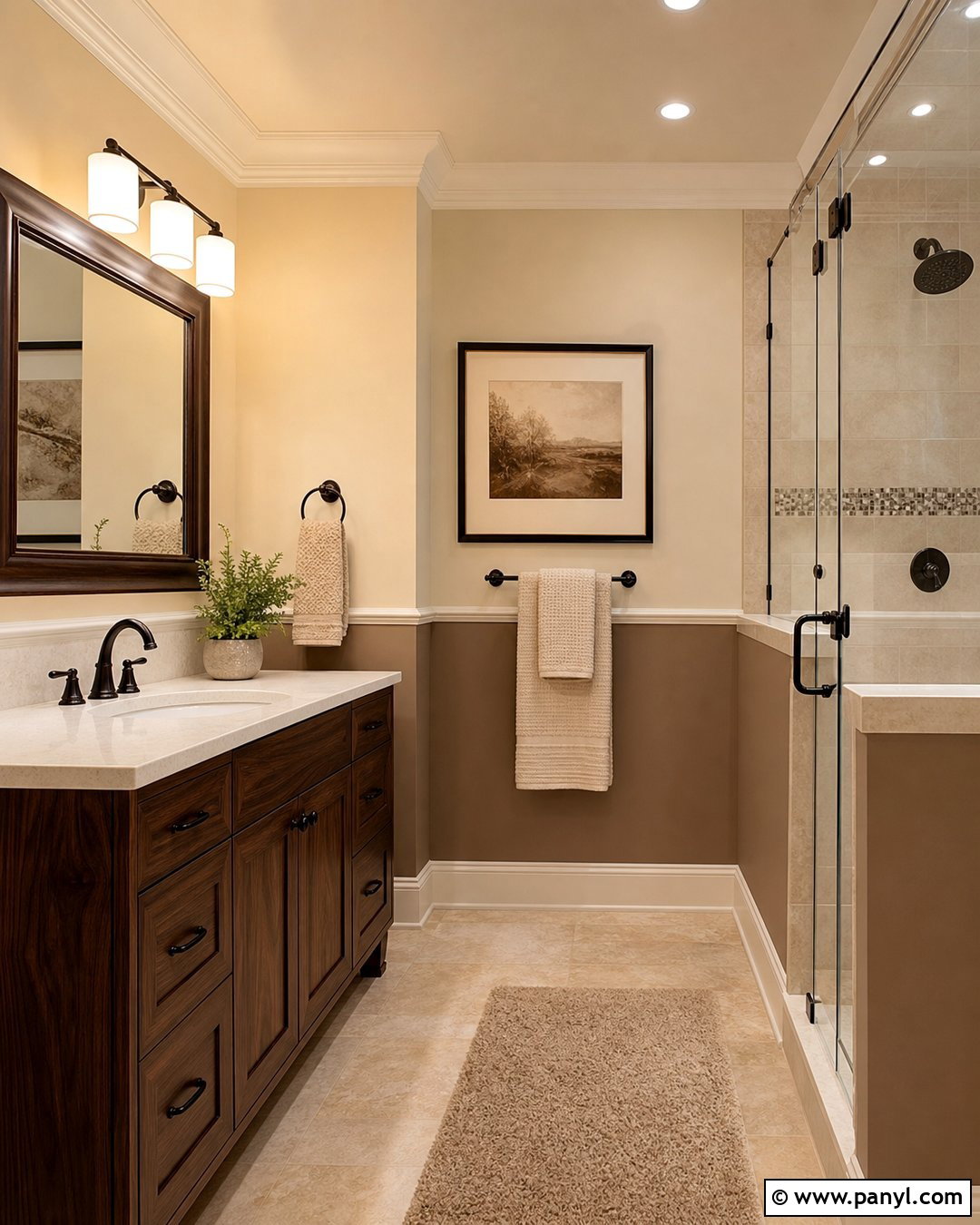
A mocha-and-cream bathroom offers warmth without becoming dark or rustic. Paint the lower two-fifths of the walls a medium mocha brown and the upper portion a soft, buttery cream. Add narrow cream molding at the dividing line to sharpen the transition. Pair the walls with a walnut vanity, off-white quartz counter, and bronze fixtures. Cream shower tile keeps the wet area bright, while mocha grout quietly repeats the lower wall color. Use warm beige porcelain flooring and a large frameless mirror to prevent the brown surfaces from feeling heavy. Textured cream towels, a tan bath mat, and a ceramic table lamp-style sconce complete the room. This layered neutral palette works beautifully with existing brown stone, bronze hardware, or medium-toned wood cabinetry.
17. Mustard And Off-White Bathroom Walls
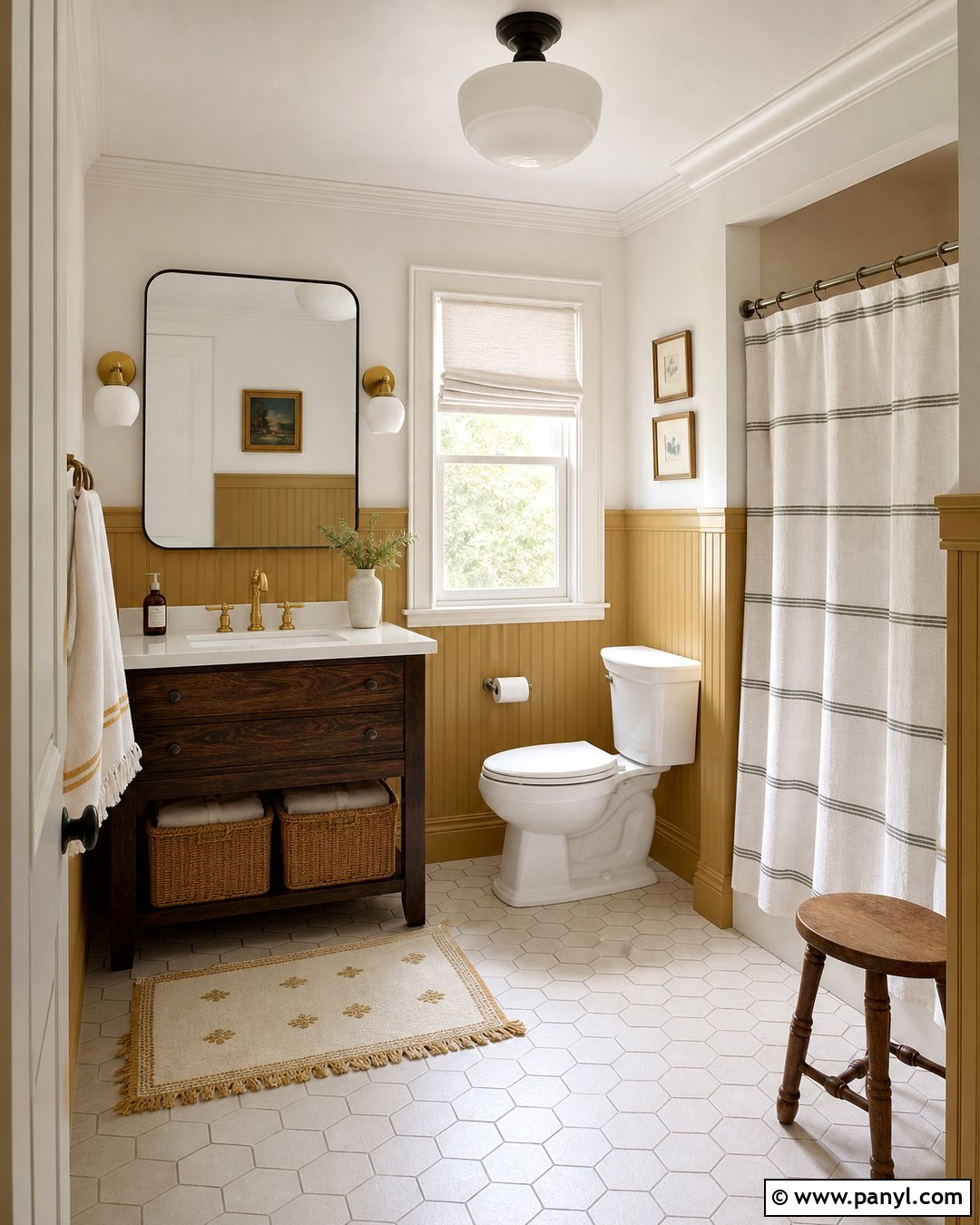
Muted mustard yellow can give a bathroom warmth and character when used below a calmer neutral. Paint tongue-and-groove paneling in an earthy mustard shade, stopping just below the room’s midpoint. Use soft off-white on the upper walls and ceiling to reflect light. A compact dark wood vanity creates contrast, while a white porcelain sink keeps the main fixtures clean and familiar. Choose aged brass faucets, a black-framed mirror, and simple opal glass sconces. Small cream hexagon floor tiles with tan grout support the vintage-inspired palette. Add white towels with mustard borders and a striped cotton shower curtain. The result is cheerful without appearing overly bright, offering a complete two-tone scheme that suits cottage bathrooms, traditional homes, and personality-filled powder rooms.
18. Aqua And Coral Bathroom Walls
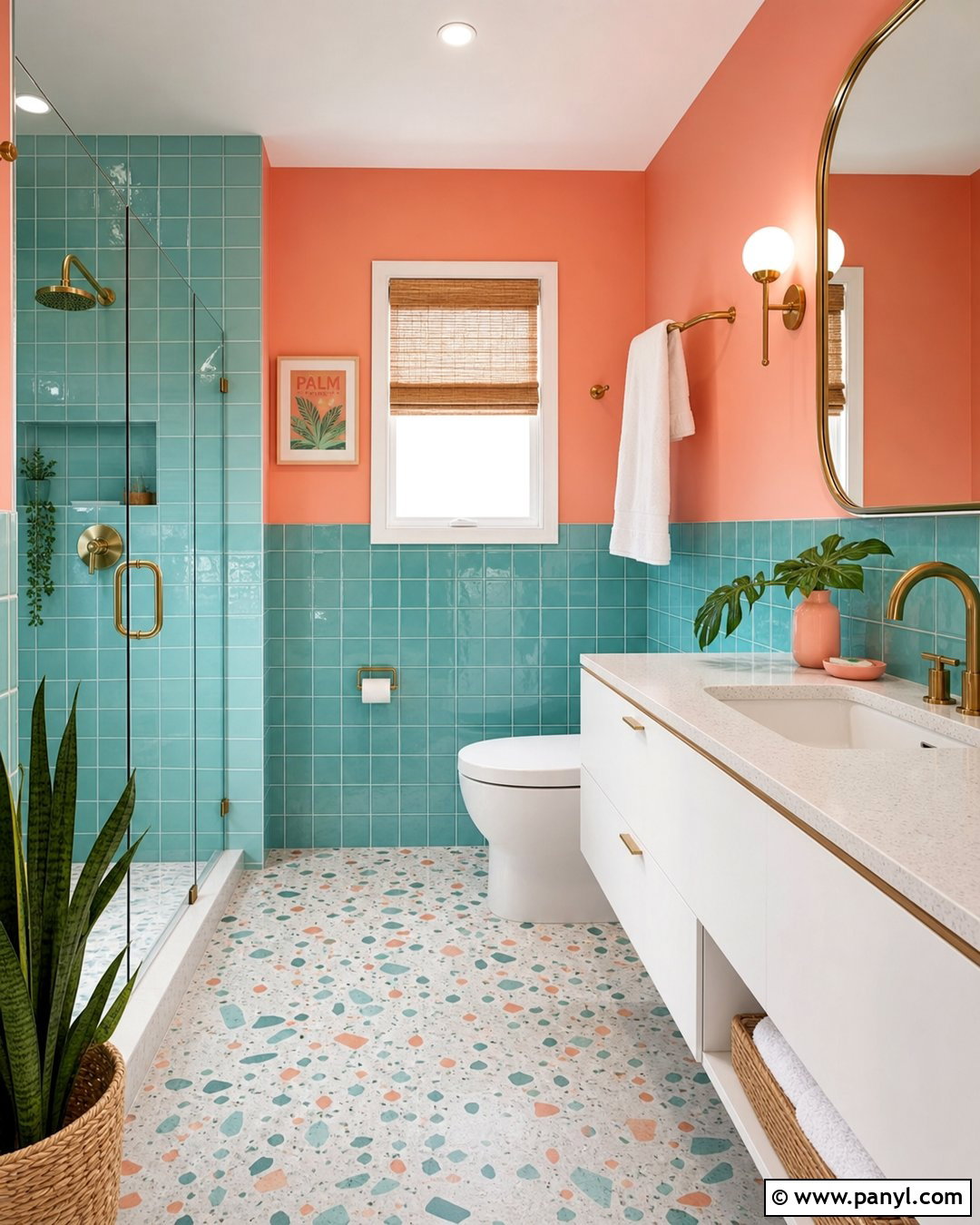
Aqua and coral can share one bathroom successfully when one shade leads and the other plays a supporting role. Cover the lower half of the walls in glossy aqua square tile, using pale grout to keep the layout visible. Paint the upper walls a softly muted coral rather than a vivid orange-pink. A white floating vanity and white quartz counter create breathing room between the two colors. Choose brushed brass hardware for warmth and hang a simple rounded mirror above the sink. White terrazzo flooring with scattered aqua and peach chips brings the palette together. Use crisp white towels, a natural woven shade, and only a few coral accessories. This finished room feels lively and modern while maintaining enough white space to prevent the colors from competing.
19. Mint Green And Black Bathroom Walls
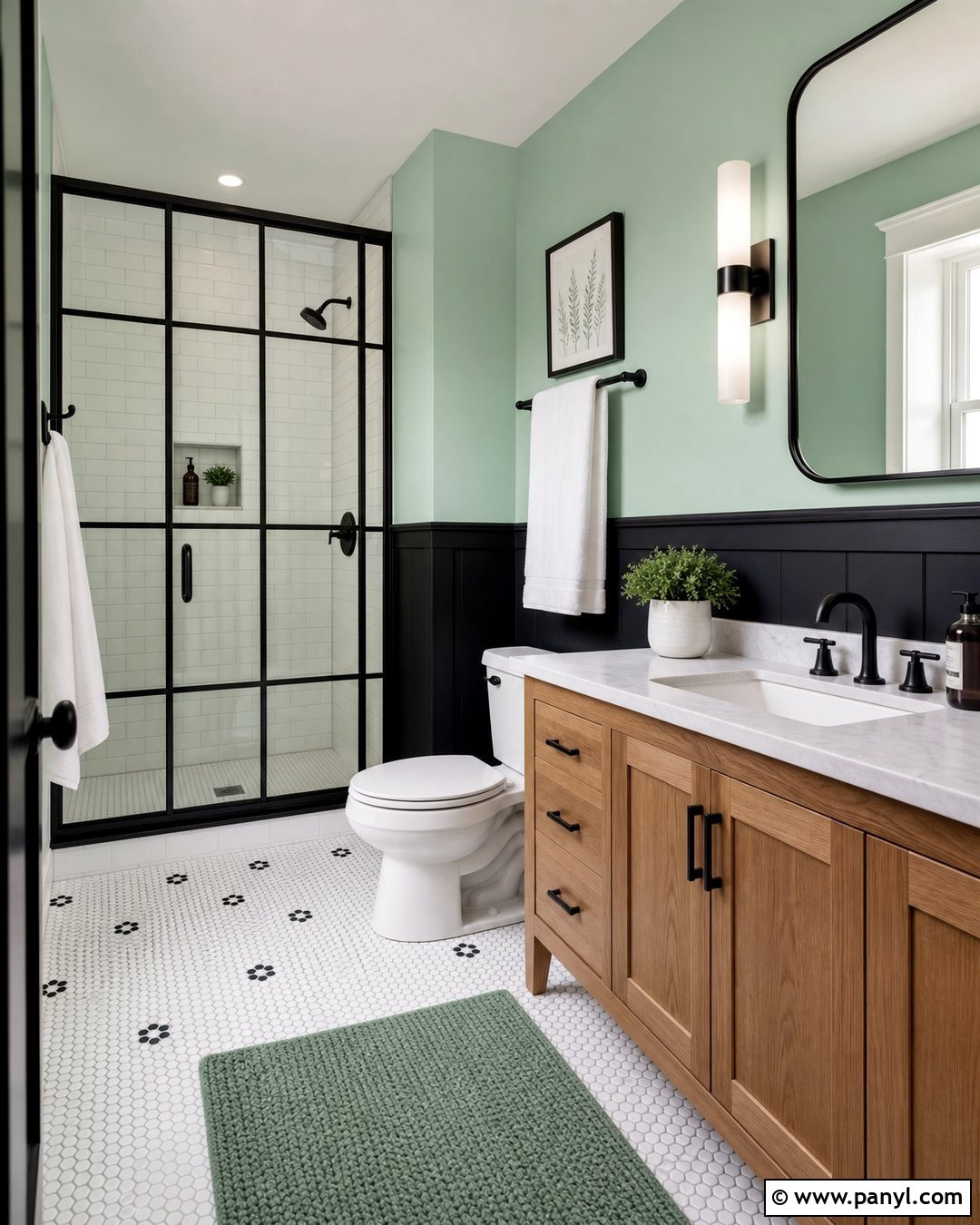
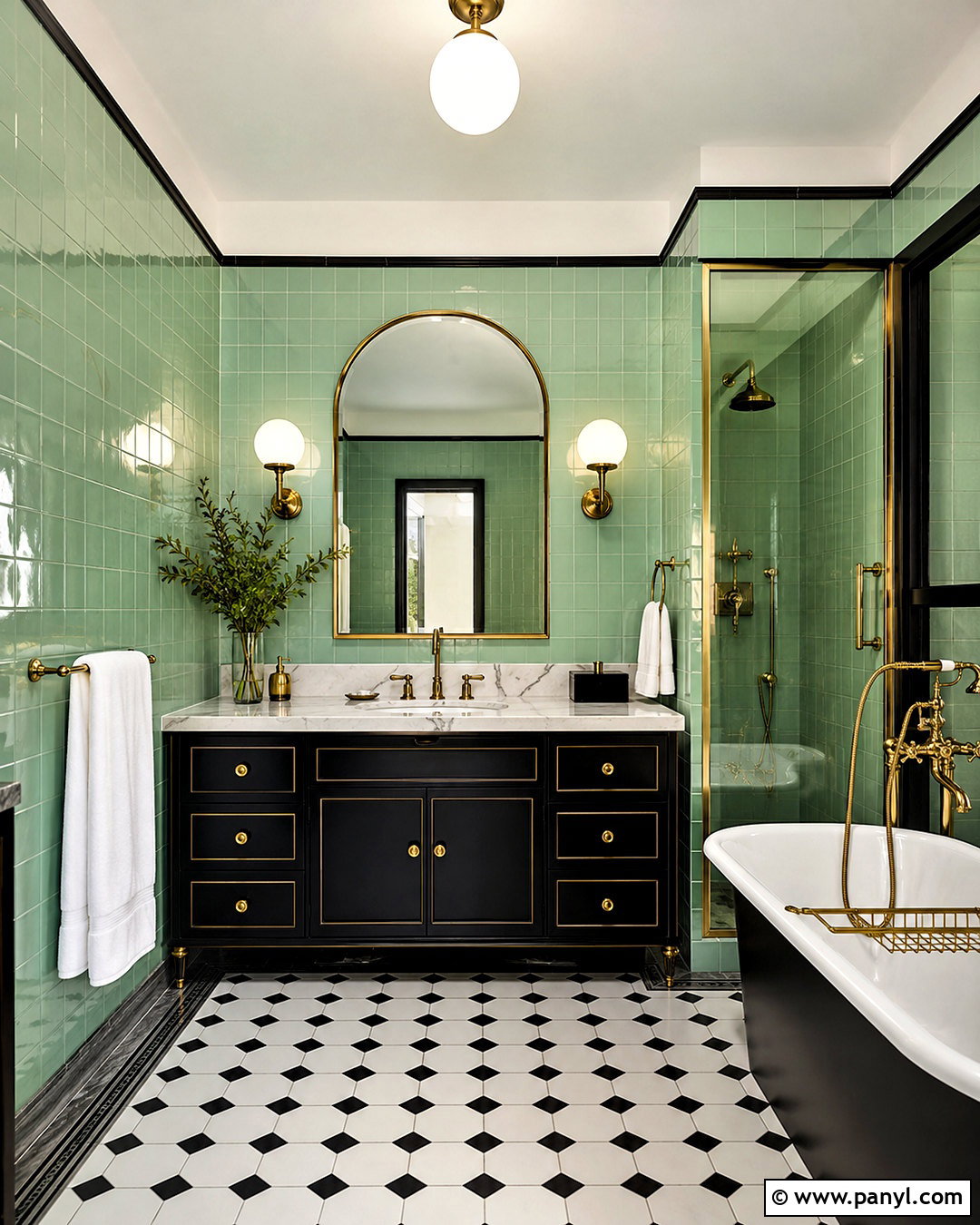
Mint green becomes sharper and more contemporary when contrasted with a controlled band of black. Paint the upper two-thirds of the walls fresh mint green. Use matte black paneling across the lower third, finished with a slim black cap rail. A light oak vanity prevents the strong contrast from feeling cold, while a white countertop and sink brighten the center of the room. Repeat black on the faucet, shower frame, mirror, and sconces to create visual consistency. White penny tile flooring with occasional black pieces links the walls to the floor. Add white towels and a simple mint bath mat rather than introducing another accent color. The finished bathroom feels playful but structured, making this combination useful for family bathrooms and compact guest spaces.
20. Burgundy Tile And Blush Bathroom Walls
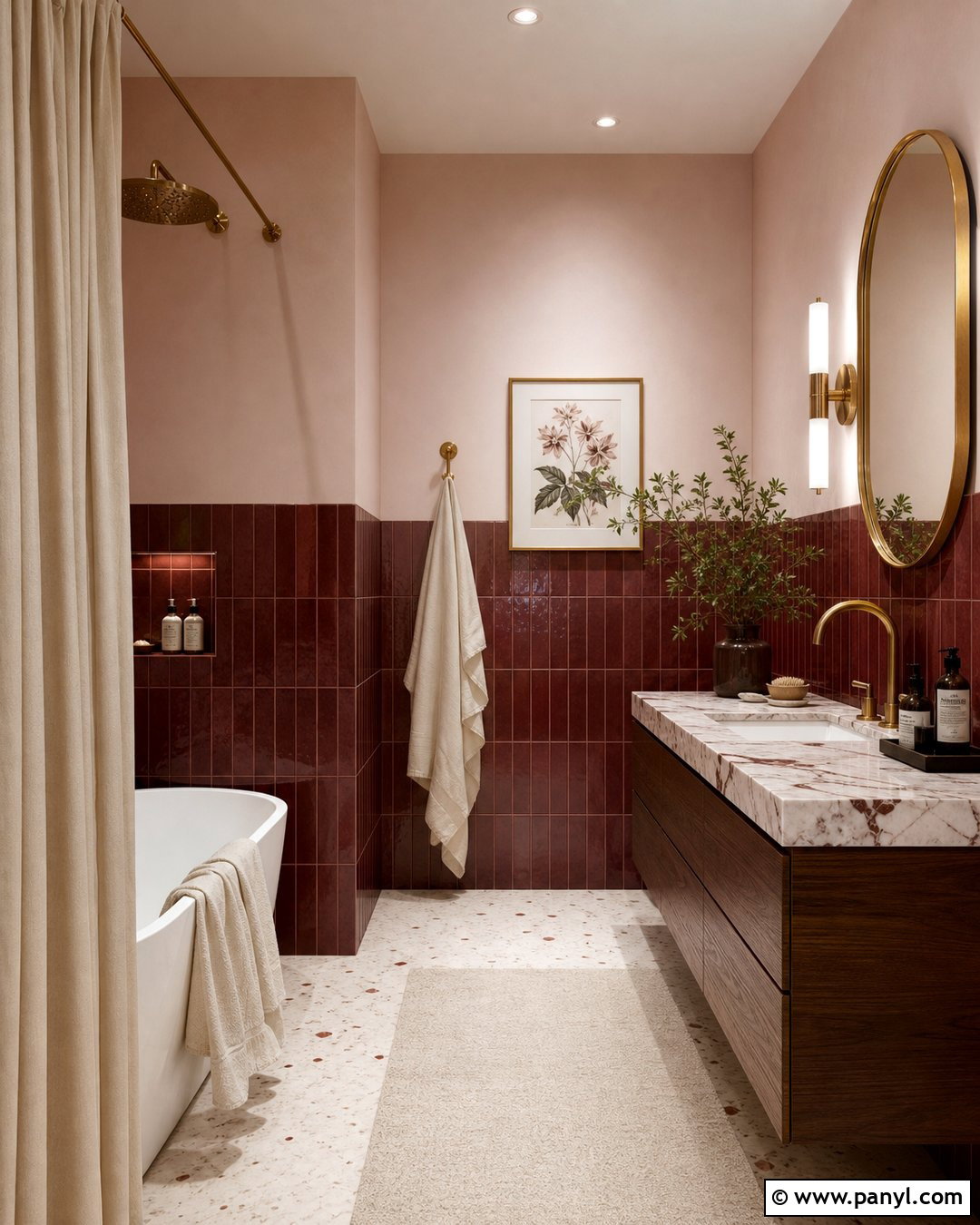
Deep burgundy tile beneath blush paint creates a bathroom that feels warm, dramatic, and carefully layered. Install slim burgundy tiles vertically around the room, stopping at approximately forty inches high. Their elongated layout provides height, while a matching tile trim gives the upper edge a professional finish. Paint the remaining wall area pale blush pink. Choose a dark walnut floating vanity with a creamy marble counter and brass faucet. A large pill-shaped brass mirror echoes the vertical tile direction. Use warm white floor tile with subtle burgundy veining or small red stone chips. Ivory towels and a cream shower curtain soften the darker lower walls. This complete palette feels luxurious without requiring oversized fixtures or an unusually large bathroom.
21. Vertical Green And Cream Bathroom Walls
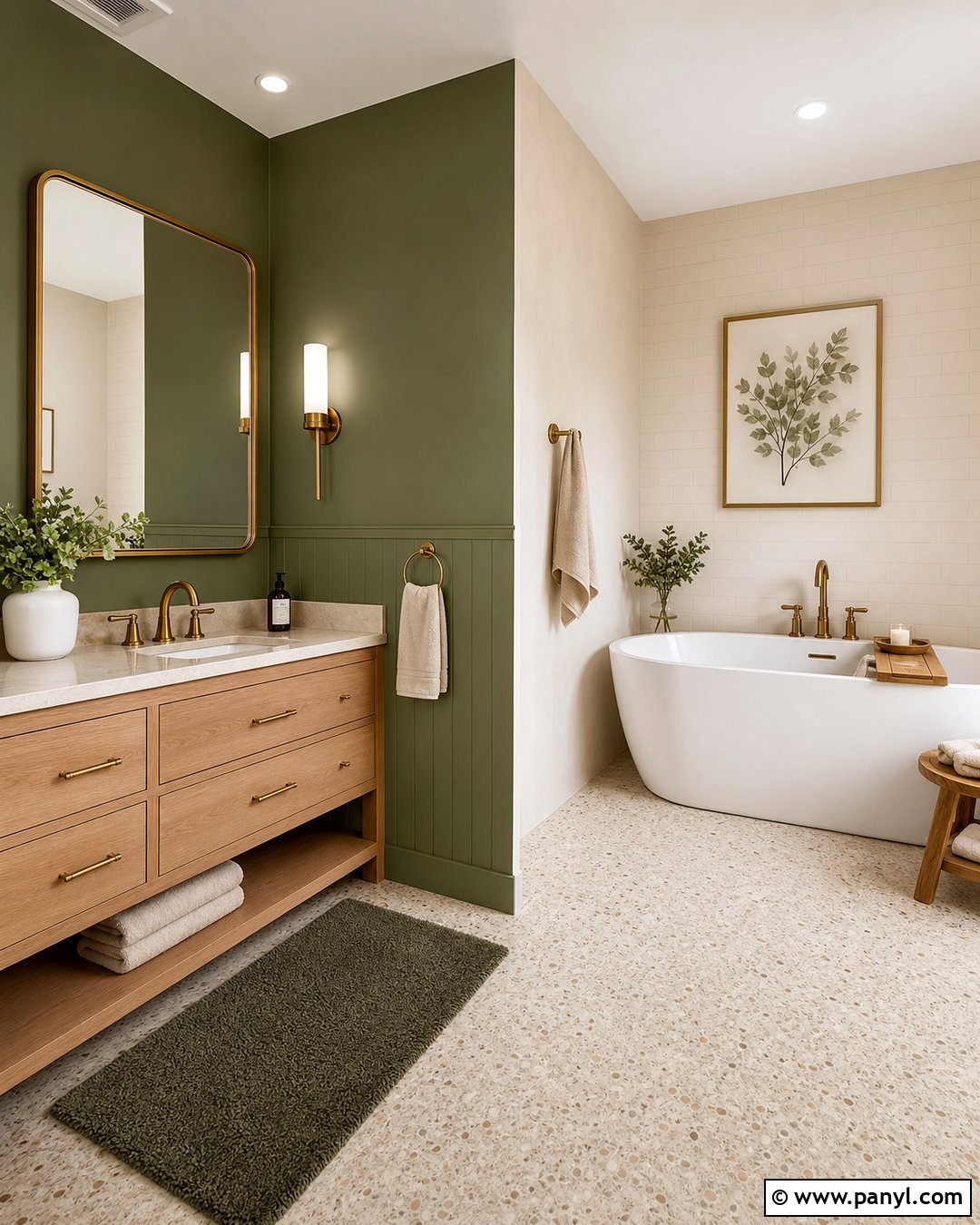
Two colors do not have to meet in a horizontal line. A vertical split can define functional areas in a long or narrow bathroom. Paint the vanity wall muted moss green, extending the color from corner to corner and across the section of ceiling directly above it. Finish the remaining walls in warm cream. Install a light oak vanity against the green area with a cream stone countertop and brushed brass hardware. Keep the bathtub, shower curtain, and storage cabinetry within the cream section so that side remains open and bright. Beige terrazzo flooring connects both zones. A brass-framed mirror, cream towels, and one moss bath mat reinforce the division. The completed layout uses wall color to organize the bathroom without adding physical partitions.
22. Diagonal Blue And White Bathroom Walls
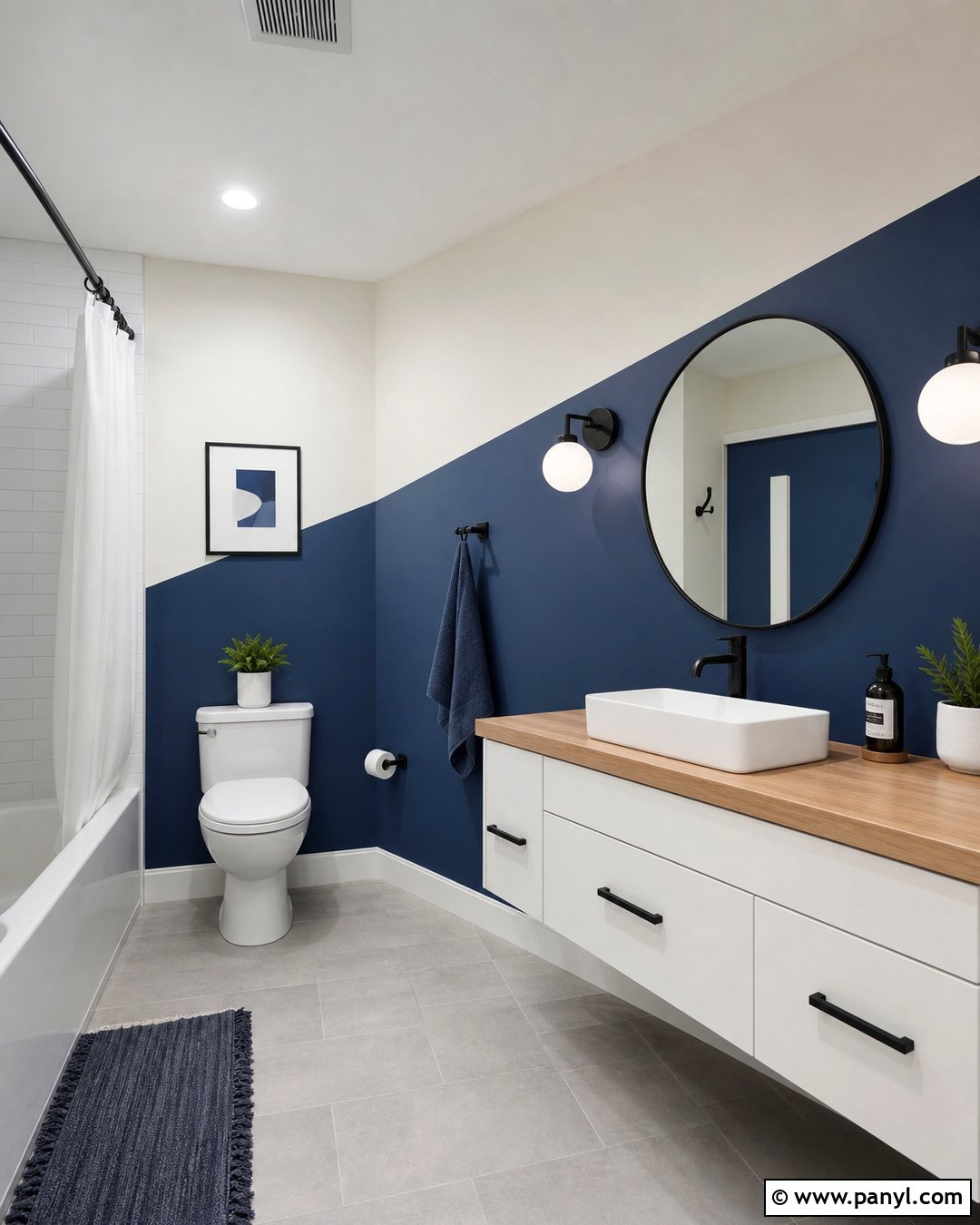
A diagonal color divide gives a simple bathroom controlled movement and a custom-painted appearance. Begin with deep denim blue near the floor, then angle the dividing line upward across the main vanity wall. Fill the upper section with warm white and repeat a simpler horizontal division on the remaining walls. Keep the angled edge crisp with careful masking rather than adding molding. A white floating vanity allows the painted geometry to remain visible, while a natural oak countertop warms the blue. Add matte black fixtures, a round black mirror, and clean globe lighting. Pale gray floor tile prevents additional patterns from competing with the walls. Blue towels and a white shower curtain complete this modern design, which works particularly well in a compact guest bathroom.
23. Arched Peach And Cream Bathroom Walls
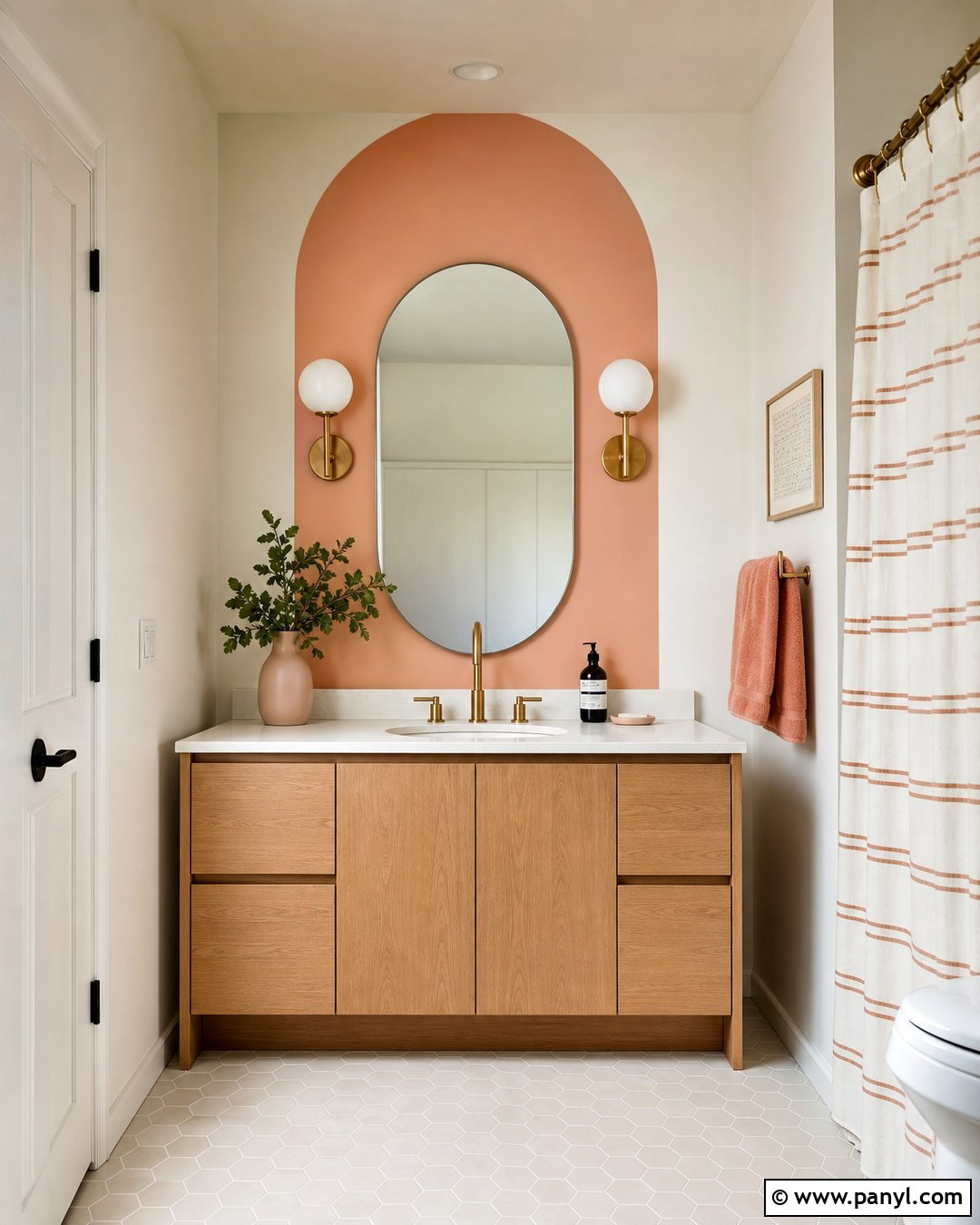
A painted arch offers a softer alternative to a straight two-tone division. Paint the bathroom walls warm cream, then create a large muted peach arch behind the vanity. Extend the peach from the floor upward and curve it around the mirror, making the sink area look intentionally framed. Choose a slim oak vanity with a cream countertop and brushed brass faucet. Hang an oval mirror inside the arch and use small globe sconces on each side. Cover the floor with matte ivory hexagon tile for a quiet backdrop. Repeat peach through one hand towel and a subtle striped shower curtain. Although the second color is concentrated on one wall, the vanity, lighting, flooring, and textiles turn it into a complete bathroom composition rather than an isolated painted shape.
24. Navy Paint And White Marble Bathroom Walls
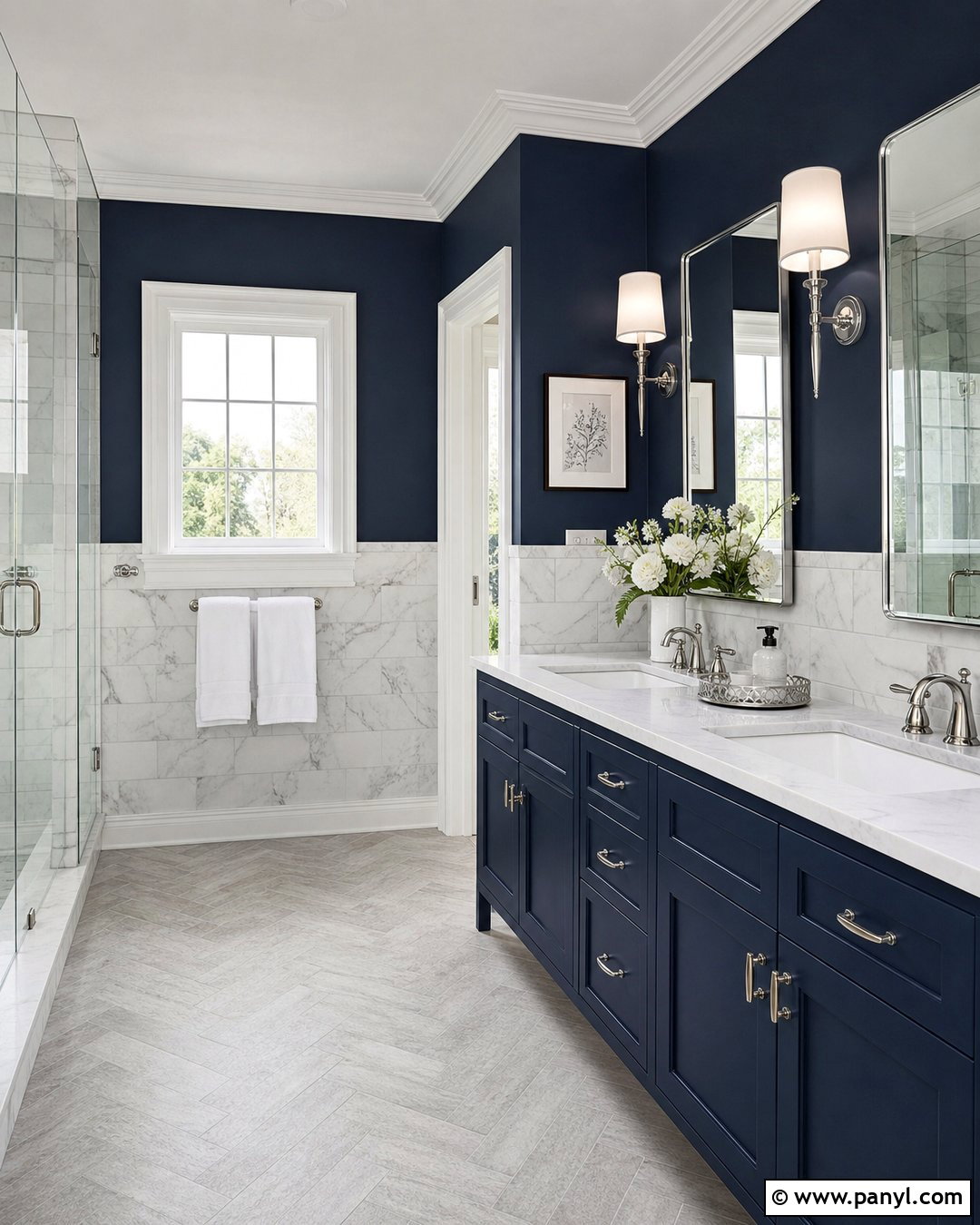
Navy paint and white marble create a tailored bathroom with a strong balance of color and pattern. Install white marble-look porcelain tile across the lower half of the walls, choosing material with soft gray veining. Paint the upper walls deep navy blue and keep the ceiling bright white. A dark navy double vanity makes the upper color feel integrated, while a white quartz top connects with the tile. Use polished nickel faucets, rectangular mirrors, and classic shaded sconces for a refined finish. Lay large pale gray floor tiles to avoid adding another marble pattern. White towels, a gray runner, and clear glass shower panels maintain visual order. The completed room feels substantial and elegant, yet durable porcelain can keep the design practical for everyday family use.
25. Terrazzo And Peach Bathroom Walls
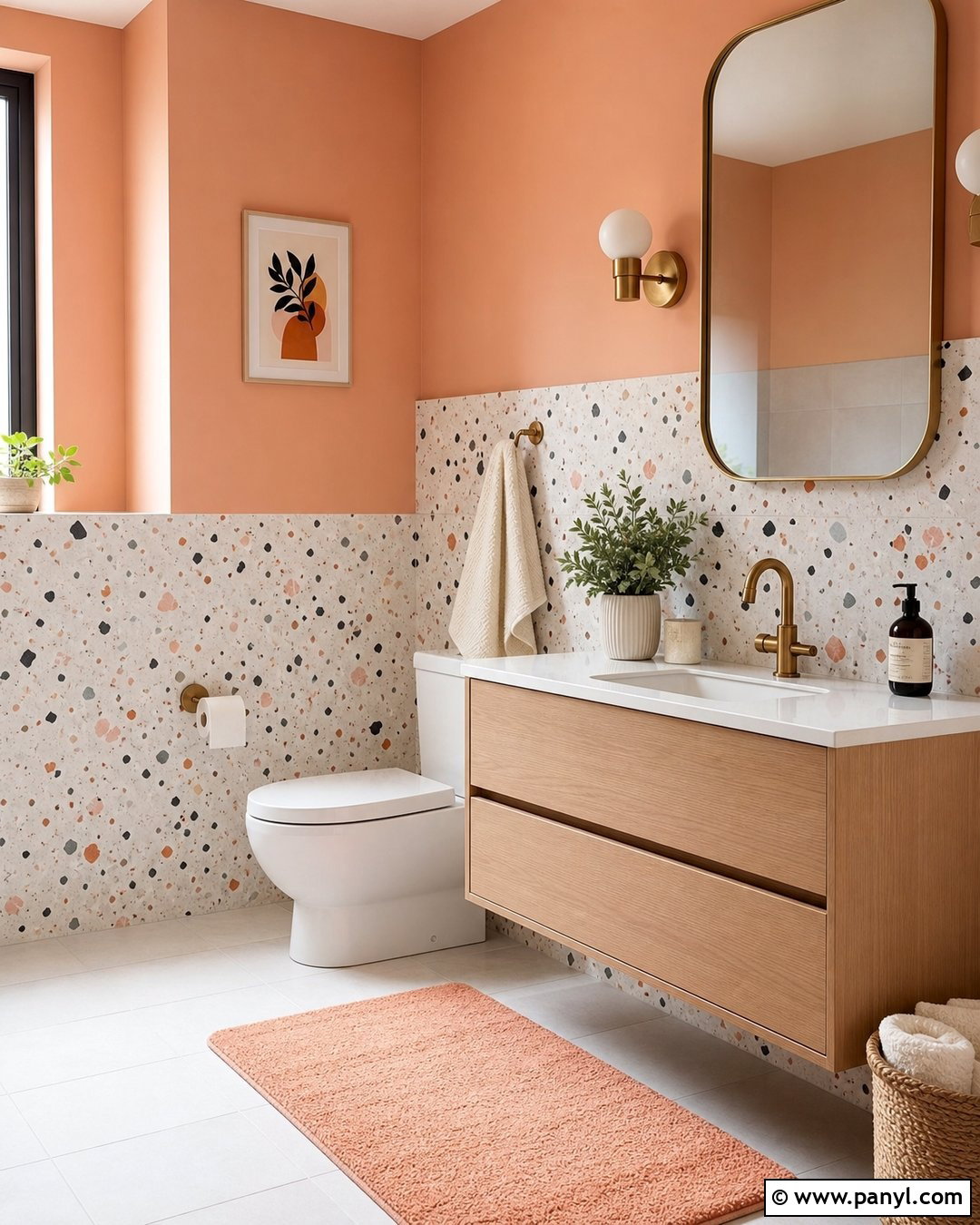
Terrazzo wall tile creates a lively foundation for soft peach paint. Cover the lower half of the bathroom with warm white terrazzo featuring small terracotta, beige, charcoal, and blush chips. Choose one of the quieter peach tones from the tile for the upper walls. This direct color connection keeps the pattern controlled. Add a pale oak floating vanity, white solid-surface countertop, and brushed brass faucet. A rounded rectangular mirror and simple white globe sconces maintain the modern shape language. Continue plain warm white porcelain across the floor rather than using more terrazzo. Finish with cream towels, a peach bath mat, and minimal ceramic accessories. The final bathroom feels fresh and playful while remaining balanced enough for a compact main bath or guest bathroom.
26. Wood Slat And Sage Bathroom Walls
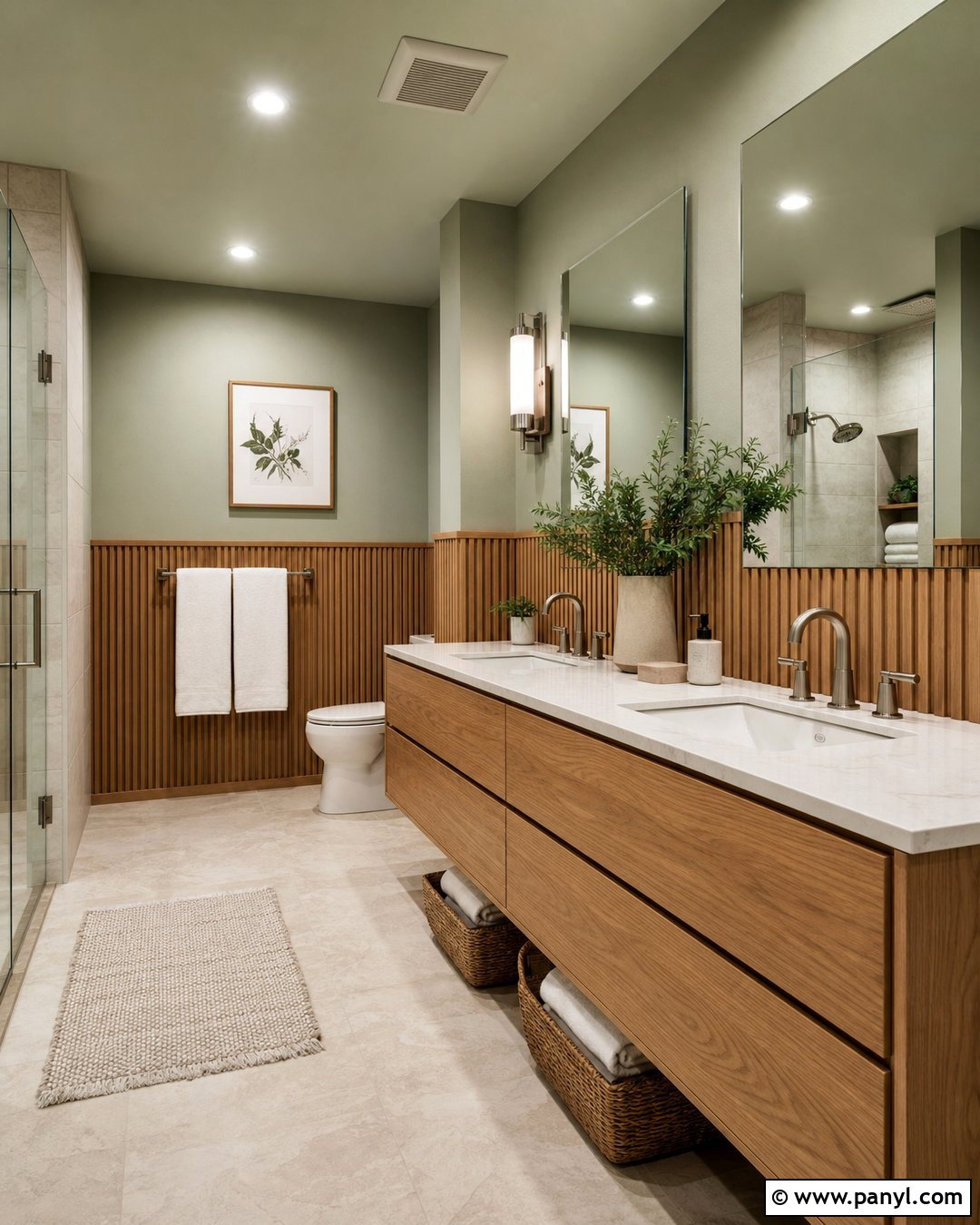
Wood and paint can create a soft two-tone effect while adding welcome texture. Install sealed vertical oak slats across the lower section of the driest bathroom walls, keeping them away from direct shower spray. Paint the upper walls muted sage green and use matching moisture-resistant paint on the ceiling for a wrapped, restful feel. Select a floating oak vanity in a similar wood tone so the lower treatment appears continuous. A white quartz counter, brushed nickel faucet, and frameless mirror brighten the center. Use large cream stone-look tiles on the floor and within the shower. Add white towels, woven baskets, and a simple cream bath mat. Careful repetition of oak, sage, and ivory produces a complete nature-inspired bathroom without unnecessary decorative clutter.
27. Fluted White Tile And Greige Bathroom Walls
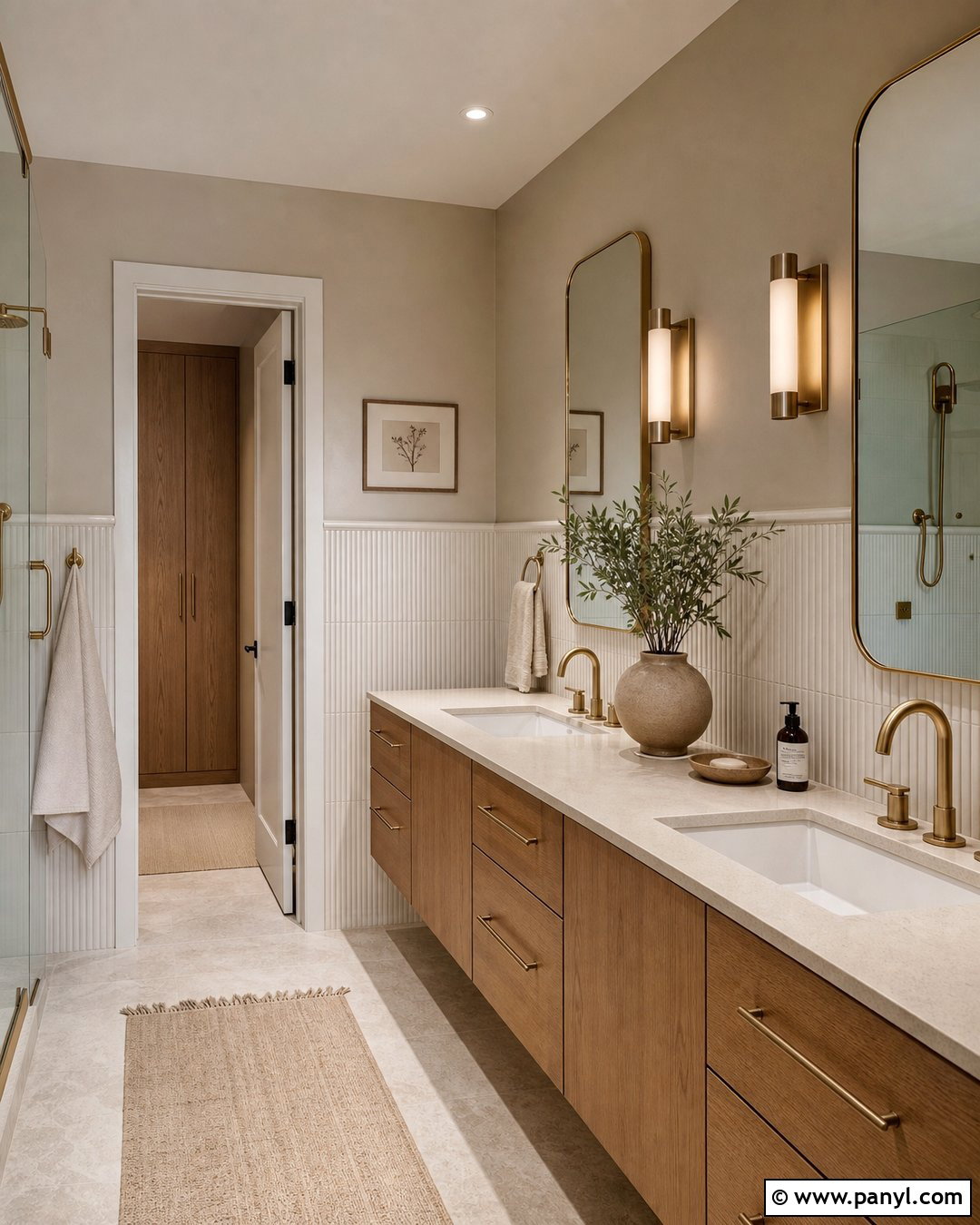
Fluted white tile adds subtle dimension to a quiet greige bathroom. Install vertically ridged ceramic tile around the lower half of the room, including behind the vanity and around the bathtub. Use warm white grout so the surface reads as texture rather than a strong grid. Paint the upper walls soft greige and continue that shade across the ceiling. Choose a medium oak vanity with slab-front drawers, a creamy quartz countertop, and satin brass fixtures. A thin brass-framed mirror and understated cylinder sconces complement the tile’s vertical lines. Pale limestone-look flooring grounds the space with gentle warmth. Finish with ivory towels and one textured beige runner. This coordinated design feels modern and detailed, even though the color palette remains restrained and easy to live with.
28. Checkerboard Tile And White Bathroom Walls
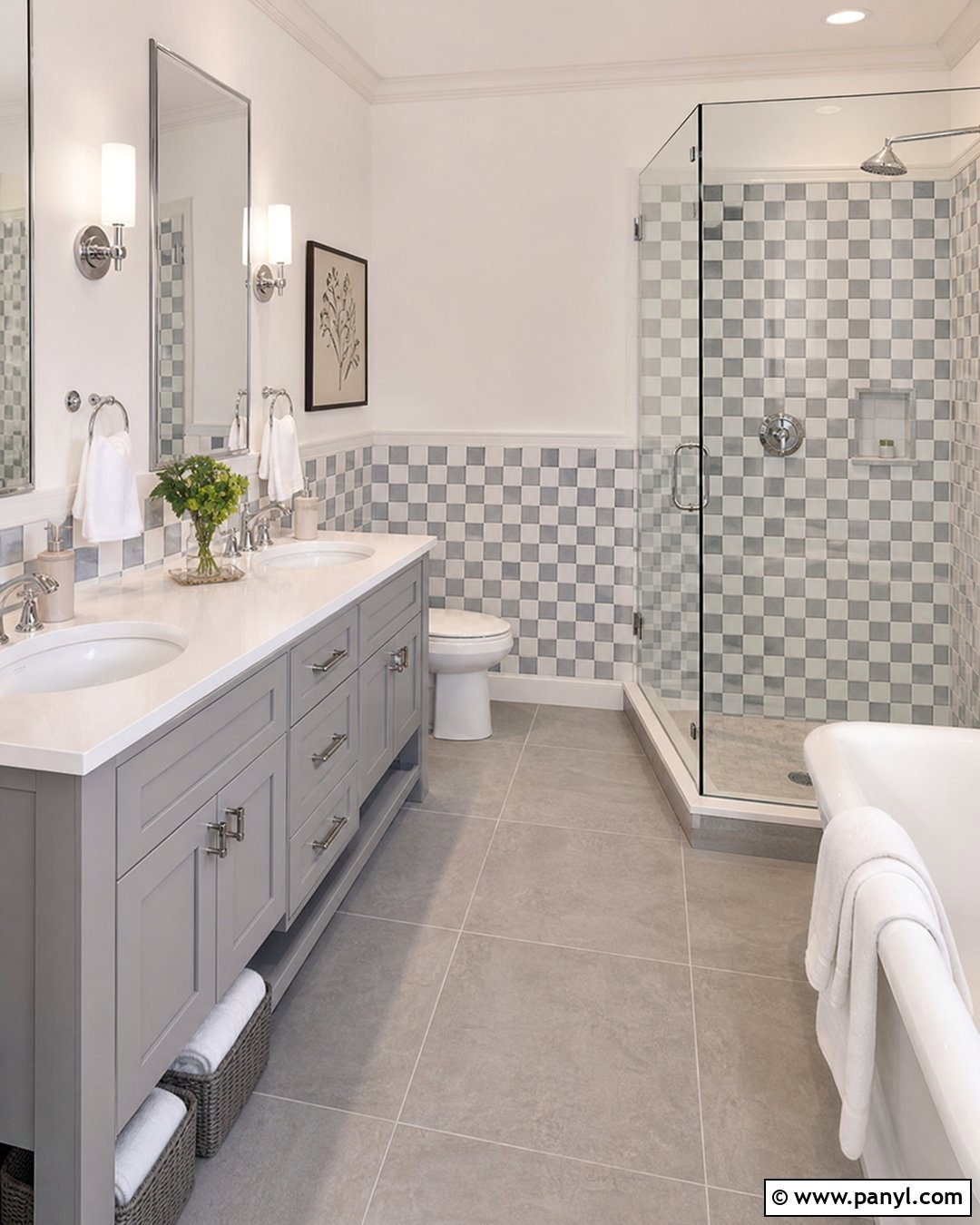
A checkerboard wall treatment can look clean rather than busy when it stays below chair-rail height. Install small warm white and muted gray square tiles in a simple alternating pattern across the lower third of the bathroom. Finish the upper walls in soft white to give the pattern enough open space. Add a light gray vanity with a white quartz counter and polished chrome faucet. A frameless rectangular mirror and clear glass sconces keep the sink wall visually light. Use plain medium-gray porcelain on the floor so the room does not contain competing checkerboard surfaces. White towels, gray storage baskets, and a minimal shower curtain finish the design. The complete bathroom feels graphic and cheerful while maintaining a practical, neutral palette suitable for long-term use.
29. Dark Green And Sage Bathroom Walls
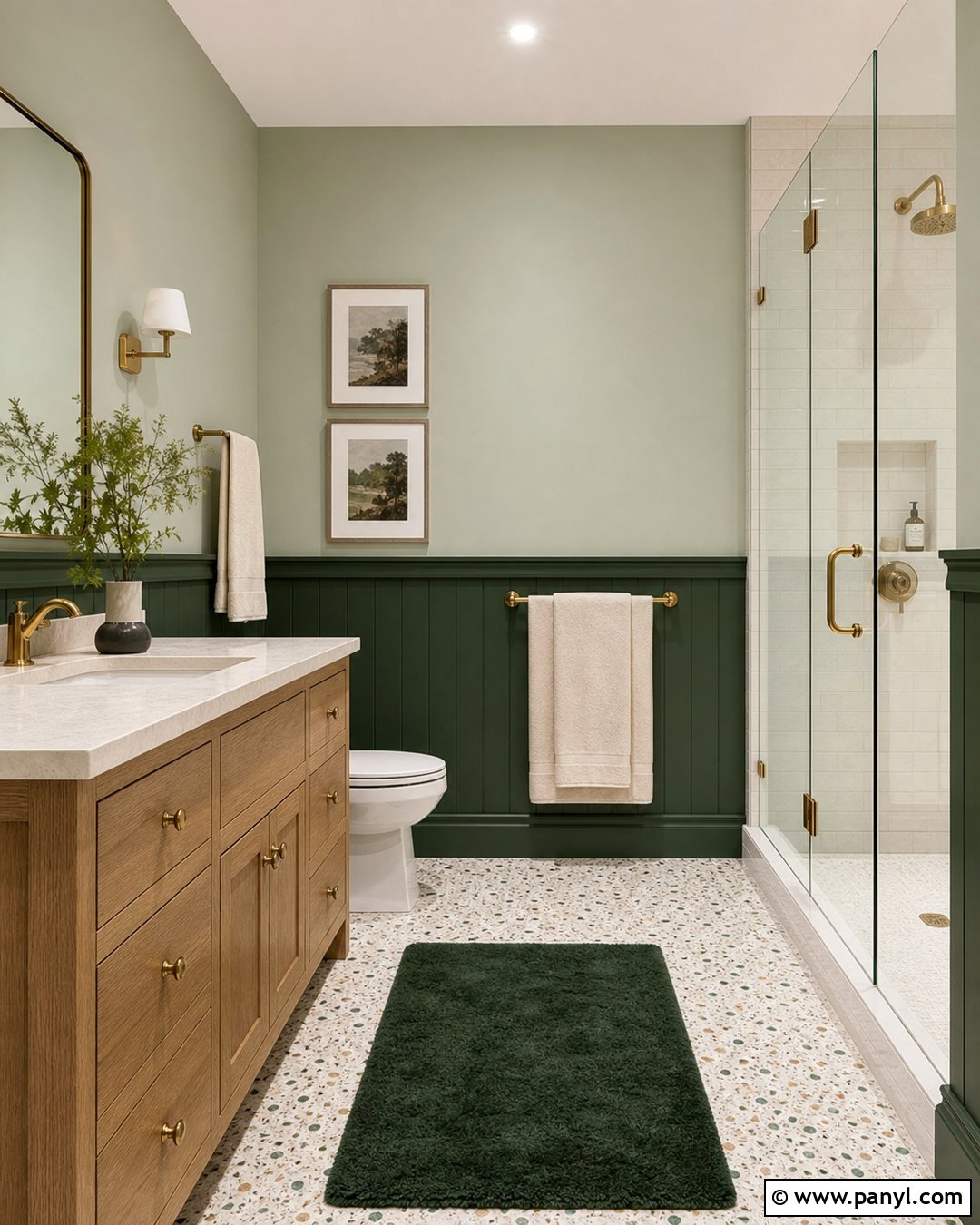
Layering two greens creates depth without the sharp contrast of unrelated colors. Paint the lower half of the bathroom deep pine green and the upper walls muted sage. Use a narrow pine-colored chair rail to define the transition. Pair the walls with a natural oak vanity, creamy stone countertop, and brushed brass fixtures. Warm white shower tile provides a neutral break, while pale terrazzo flooring with green and tan chips links the full palette. Hang a simple brass mirror and choose softly shaded sconces for balanced lighting. Cream towels and one deep green bath mat complete the room. Because both wall colors belong to the same family, the bathroom feels wrapped and cohesive, yet the lighter upper section prevents the darker green from visually lowering the ceiling.
30. Black And White Bathroom Walls
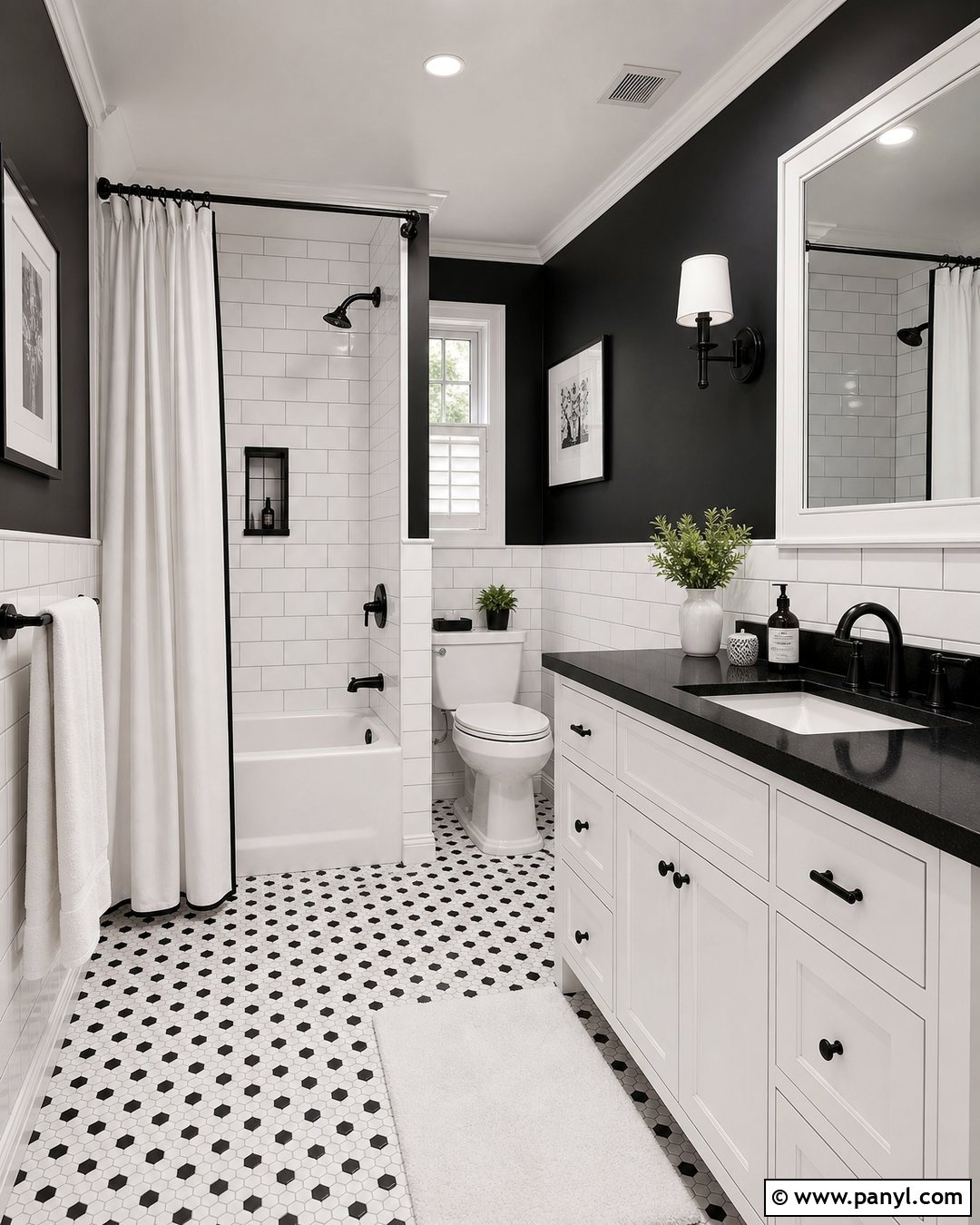
A classic black-and-white bathroom becomes more interesting when both colors are repeated through every major finish. Cover the lower half of the walls with glossy white rectangular tile and dark grout. Paint the upper walls soft black, then keep the ceiling and trim bright white for contrast. Choose a white vanity with a black quartz countertop and matte black faucet. A white-framed mirror provides a clear shape against the dark paint, while black sconces connect to the countertop and grout. Use small black-and-white mosaic tile on the floor, selecting a simple pattern that does not compete with the wall division. White towels and a black-edged shower curtain complete the coordinated look. The result feels timeless, practical, and bold without depending on temporary decorative accents.
Conclusion:
Successful two toned bathroom walls do more than place two colors beside each other. They connect the wall treatment with the vanity, flooring, fixtures, lighting, and textiles to form one finished room. Begin with the permanent surfaces you already have, then choose two tones that share an undertone or repeat colors found in the tile and countertop. Use a chair rail, tile edge, panel cap, or carefully painted line to create a clean transition. Darker shades generally feel grounded below, while light colors help upper walls remain open. Whether you prefer classic navy, natural green, warm terracotta, or quiet neutrals, these complete designs can help you create distinctive **two toned bathroom walls** with lasting visual balance.

Related Ideas and Inspiration:
Leave a Reply