
Searching for classic grey vs balboa mist ideas usually means choosing between two warm, flexible Benjamin Moore neutrals that look surprisingly different once they reach a full wall. Classic Gray OC-23 is an ultra-light gray that can function like an off-white, with an LRV of 73.67. Balboa Mist OC-27 has a lower LRV of 65.53, so it creates noticeably more depth. () Both colors can shift with daylight, flooring, furniture, and nearby finishes. Classic Gray works well when you want brightness and barely-there contrast. Balboa Mist is better when the room needs a richer greige backdrop. The complete room schemes below compare lighting, trim, materials, furnishings, and accents, making it easier to choose from these classic grey vs balboa mist ideas.
1. Classic Gray Vs Balboa Mist Living Room
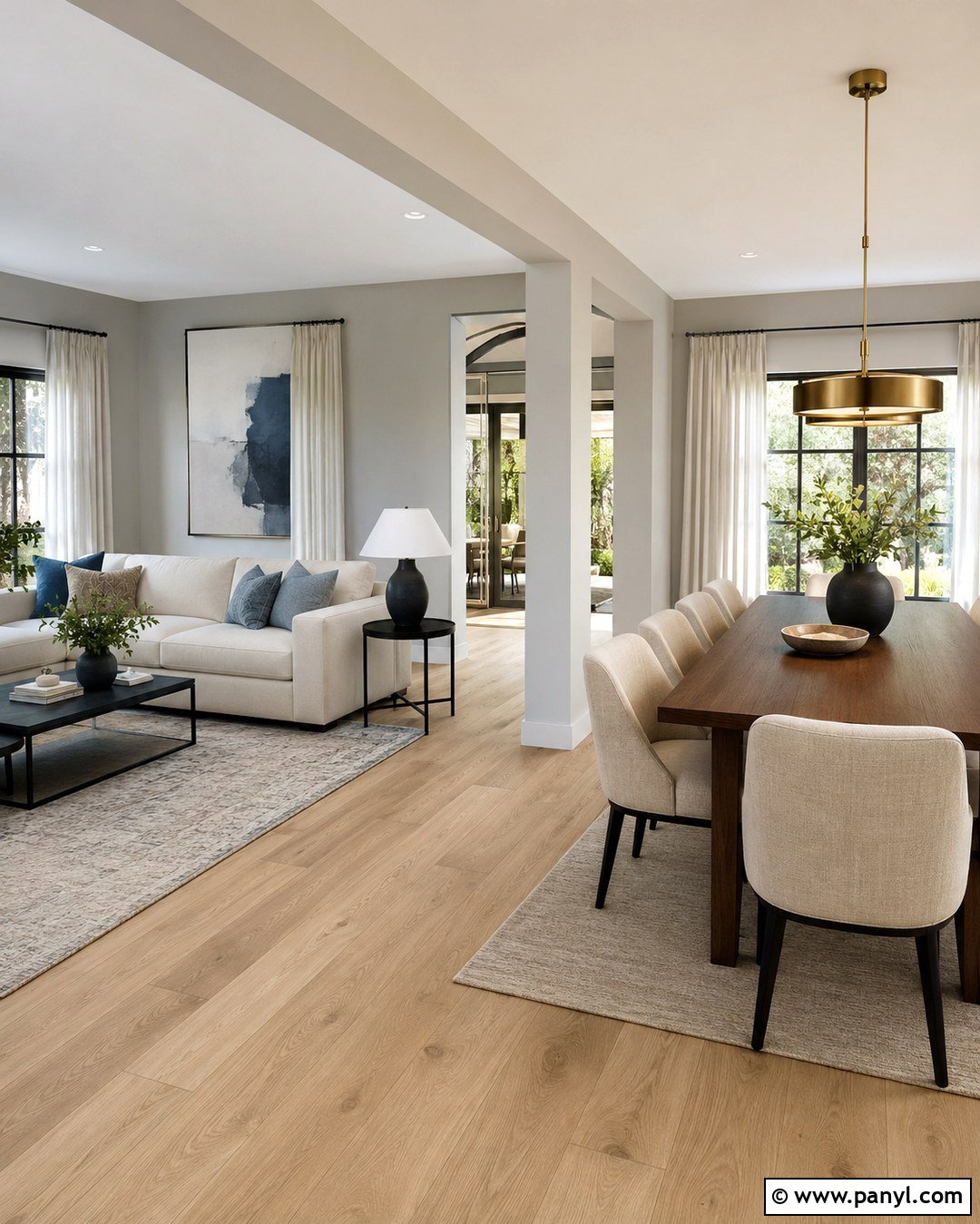
A connected living and dining space provides the clearest real-world comparison. Use Classic Gray in the brighter living room, where large windows, white oak flooring, and an ivory sectional emphasize its airy off-white character. Paint the adjoining dining area Balboa Mist to create gentle separation without interrupting the neutral flow. Its greater depth suits a walnut table, oatmeal chairs, and a brushed brass pendant. Repeat black accents, natural linen, and muted blue accessories across both zones to keep everything connected. Choose the same soft white for ceilings, trim, and doors. This balanced layout demonstrates how Classic Gray lifts an active gathering area while Balboa Mist gives the dining space a quieter, more grounded presence.
2. Classic Gray Living Room With White Oak
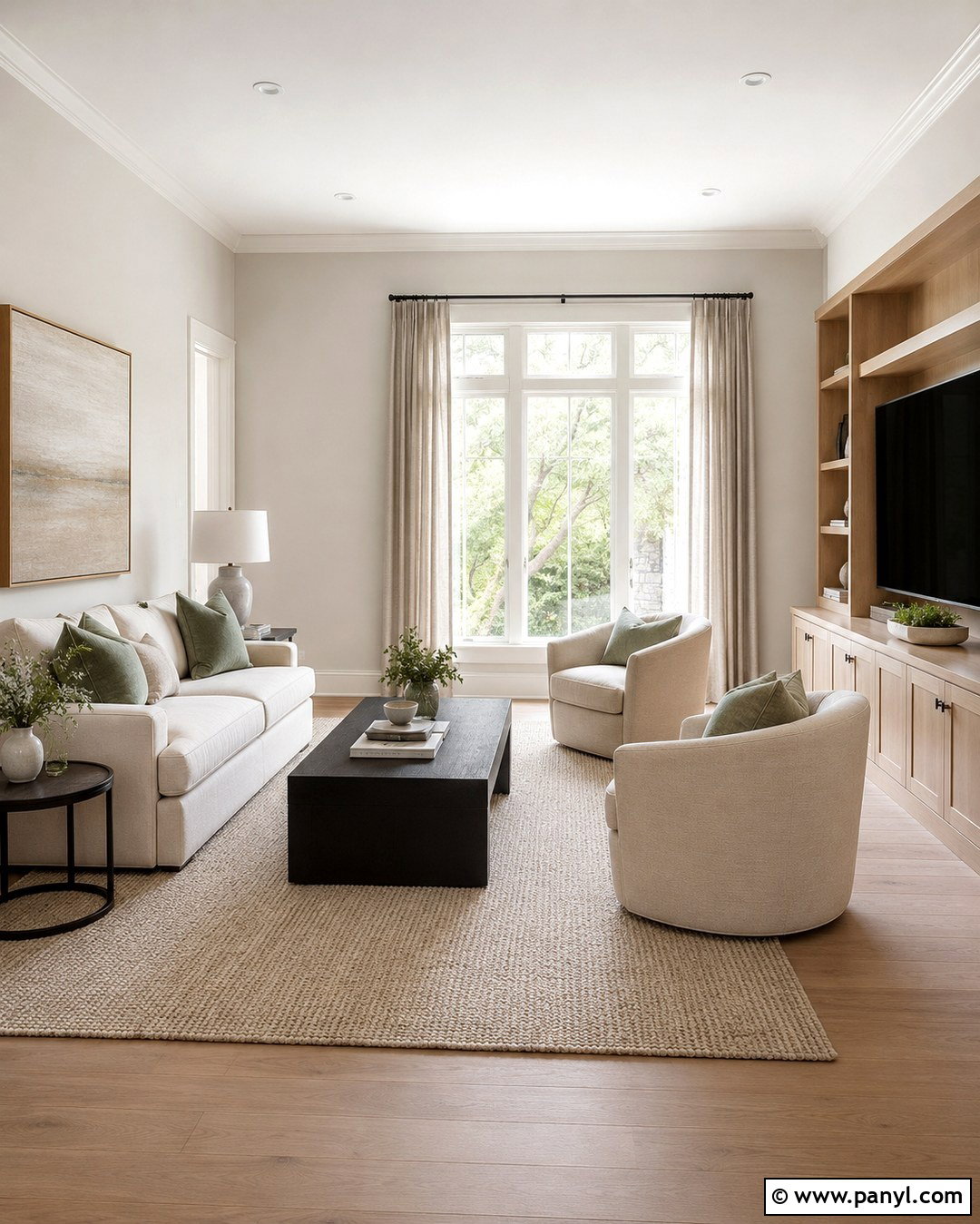
Sunlight moves easily through a Classic Gray living room furnished with pale natural materials. Cover the walls in Classic Gray and use a clean, slightly warm white on the trim, ceiling, and fireplace mantel. Add a low white oak media cabinet, an oatmeal sofa, and two light beige swivel chairs around a textured cream rug. A simple black coffee table provides enough contrast to keep the room from appearing washed out. Finish the space with flax linen curtains, ceramic lamps, and restrained sage green pillows. The combination feels open but not sterile. It works especially well in a smaller living room where the goal is to maximize brightness while preserving a comfortable, layered appearance.
3. Balboa Mist Living Room With Walnut
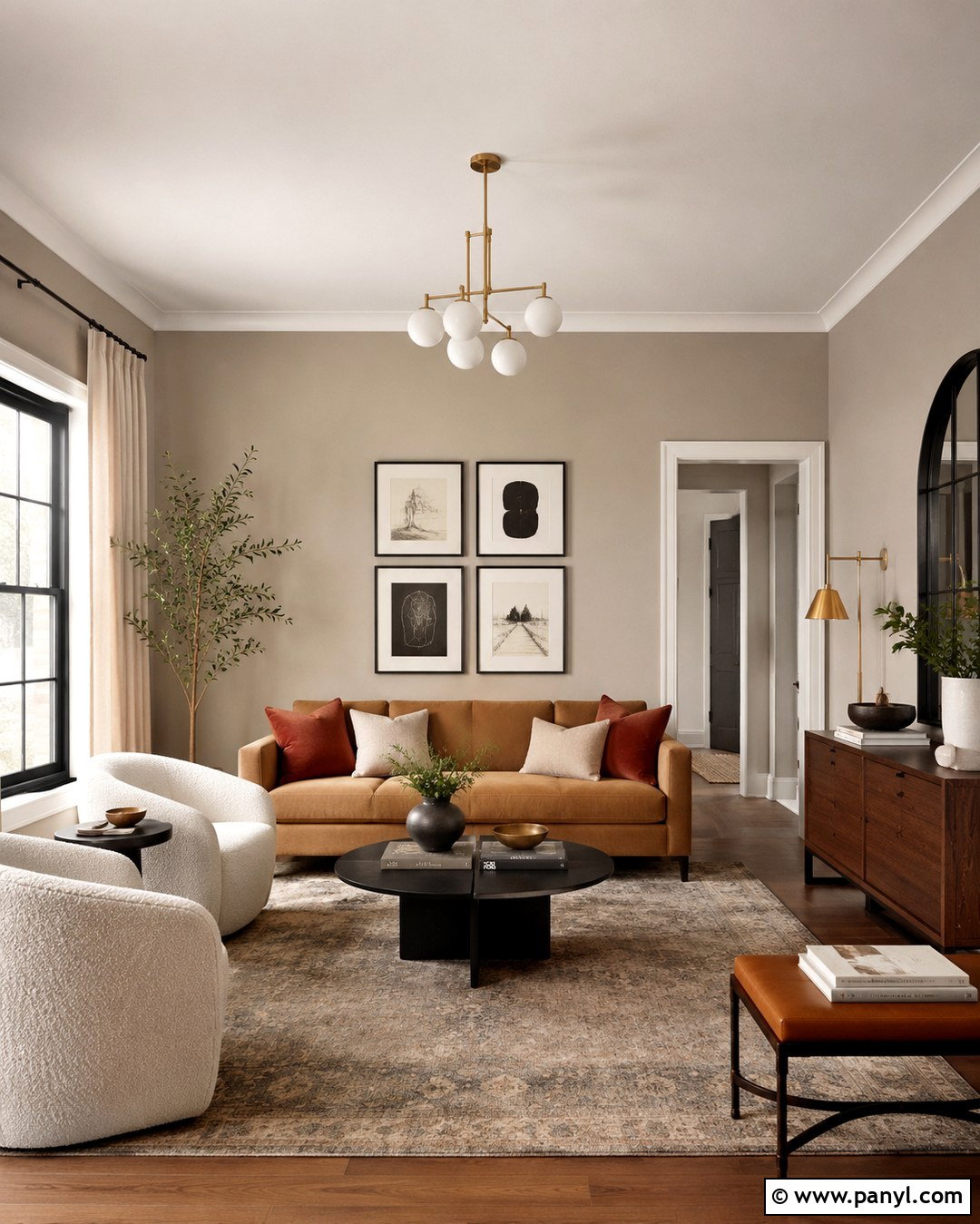
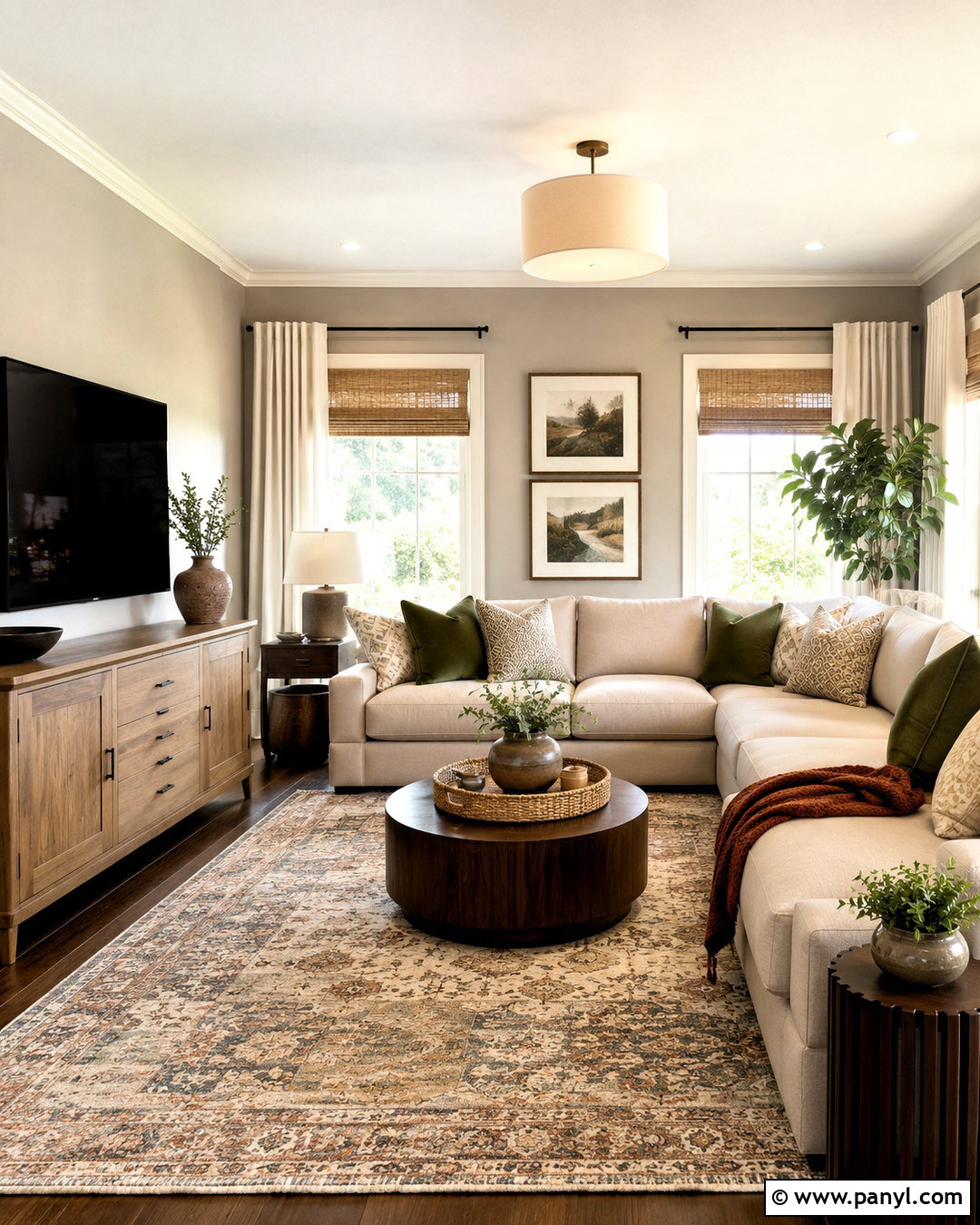
Balboa Mist creates a cozy living room when paired with medium and dark wood. Paint every wall in this warm greige, then add creamy white trim to define the windows and architectural details. Position a camel-colored sofa opposite a walnut console, with two ivory boucle chairs completing the conversation area. A faded beige and charcoal rug connects the furniture without introducing competing undertones. Use aged brass lighting, black-framed artwork, and rust-colored pillows for controlled warmth. Full-length natural linen curtains soften incoming sunlight. Because Balboa Mist has more visible body than Classic Gray, it can support substantial furniture and deeper accents while keeping the finished room calm, polished, and comfortable rather than heavy.
4. Classic Gray North-Facing Room
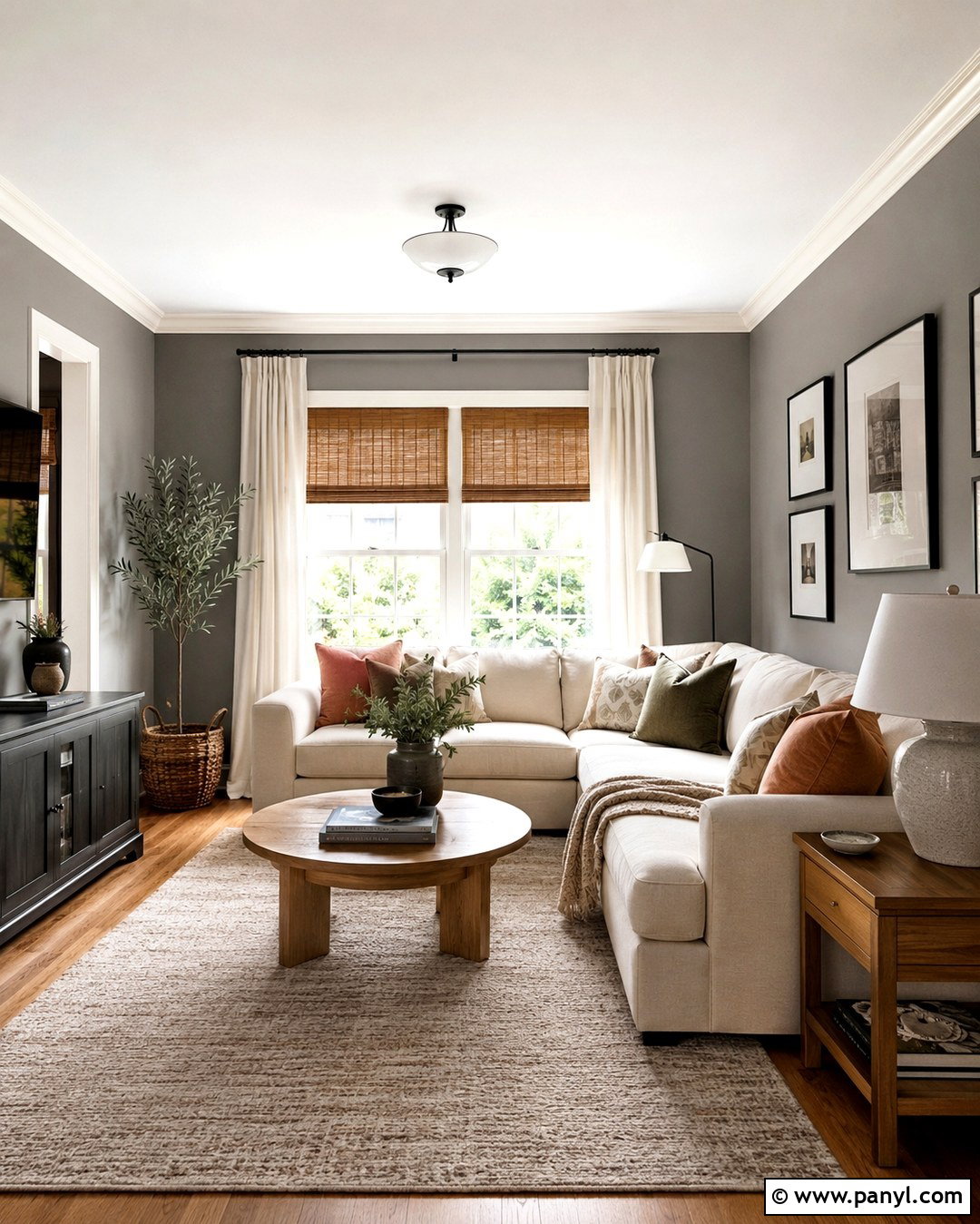
Can a pale neutral brighten a room without turning cold? In a north-facing family room, Classic Gray can create a soft background when the furnishings supply warmth. Pair the walls with creamy white trim instead of a sharp blue-white. Add a warm ivory sectional, honey oak side tables, a beige wool rug, and woven bamboo shades. Layer terracotta, muted olive, and soft camel accessories to counteract cool daylight. Table lamps with warm white bulbs help stabilize the color after sunset. Keep large furniture light, but introduce matte black frames and hardware for definition. Always test the paint beside flooring and windows, since reflected outdoor colors can influence this delicate shade throughout the day.
5. Balboa Mist South-Facing Room
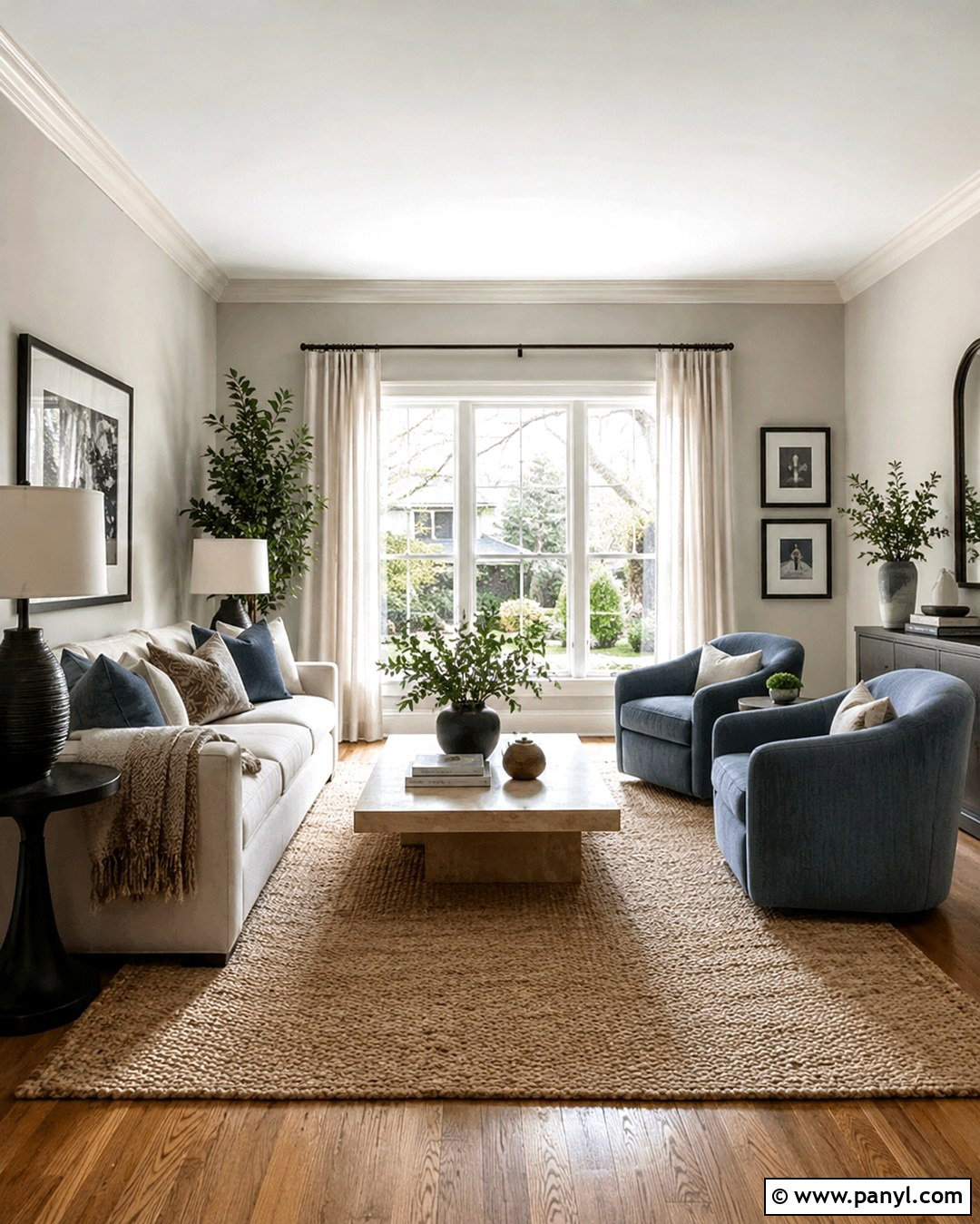
Strong southern light can make some neutrals appear overly creamy, but Balboa Mist has enough gray depth to hold a composed look. Create a relaxed sitting room with Balboa Mist walls, warm white trim, and medium oak flooring. Place a tailored cream sofa beneath the main window and balance it with two dusty blue armchairs. A natural jute-and-wool rug, travertine coffee table, and linen drapery maintain an understated palette. Add small touches of charcoal through picture frames and lamp bases. The room will feel warmer during bright afternoon hours and slightly grayer in indirect light. This complete scheme suits homeowners who want an inviting neutral that remains more visible and grounded than an off-white.
6. Classic Gray Bedroom With Soft Blue
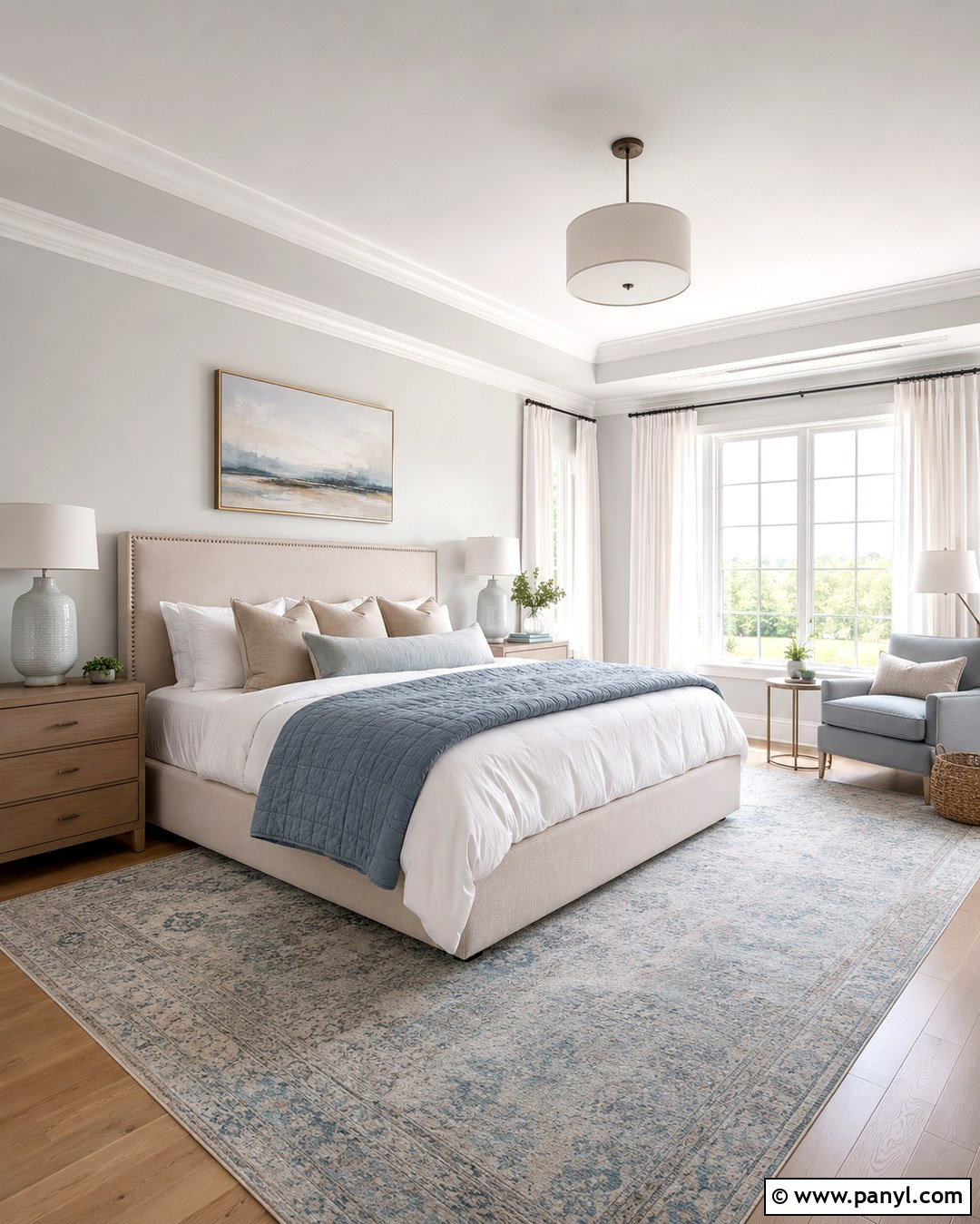
For a restful bedroom, surround Classic Gray walls with pale blue, warm white, and light wood. Center an upholstered oatmeal bed against the longest wall, using crisp white bedding layered with a dusty blue quilt and textured beige pillows. Choose white oak nightstands with simple ceramic lamps and install soft white curtains from ceiling to floor. A pale blue-gray rug adds quiet color without competing with the walls. Paint the ceiling and trim a gentle warm white to maintain subtle contrast. Limit dark accents to slim bronze curtain rods and small picture frames. This approach allows Classic Gray to feel fresh in the morning and comfortably warm under bedside lighting in the evening.
7. Balboa Mist Bedroom With Warm Taupe
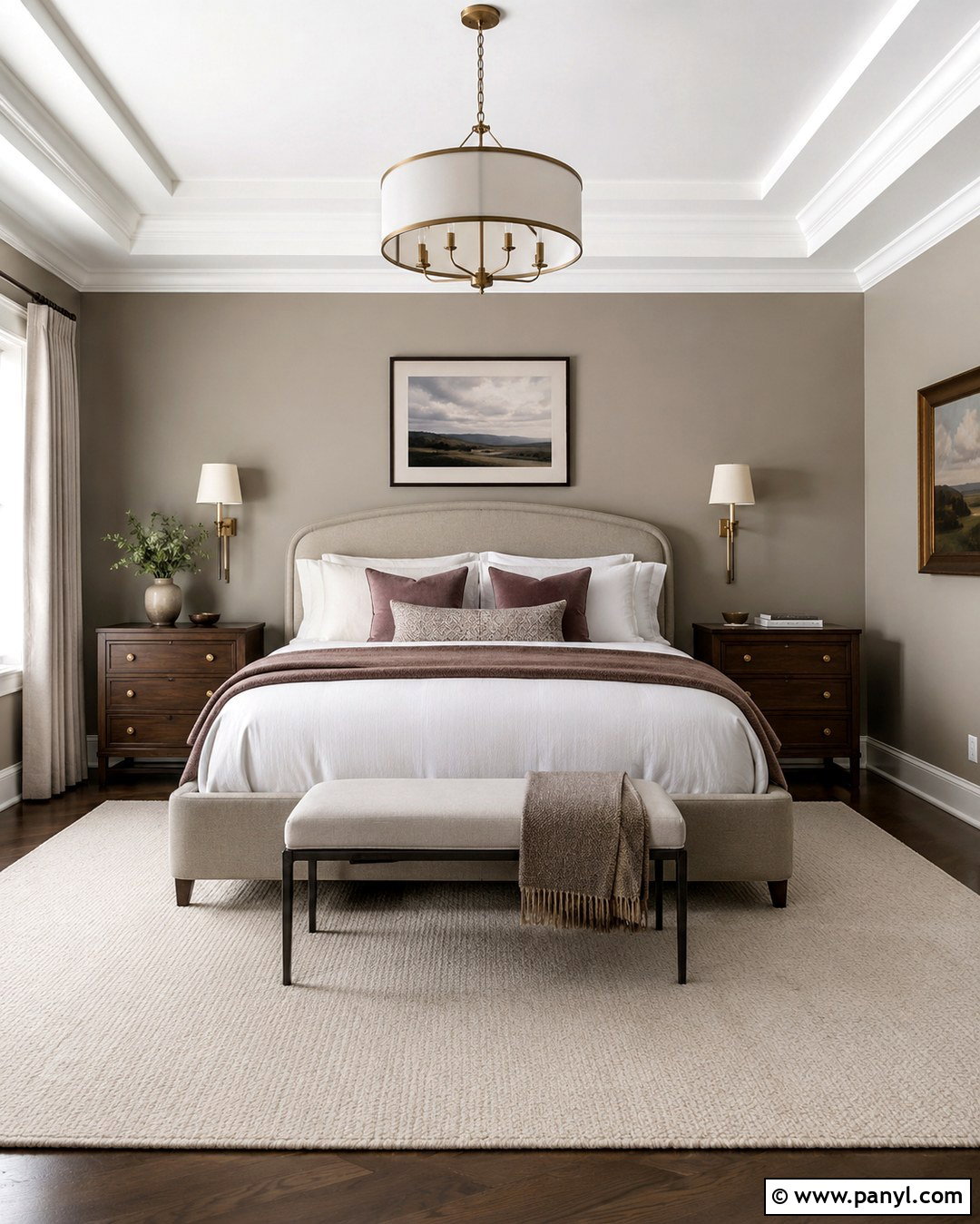
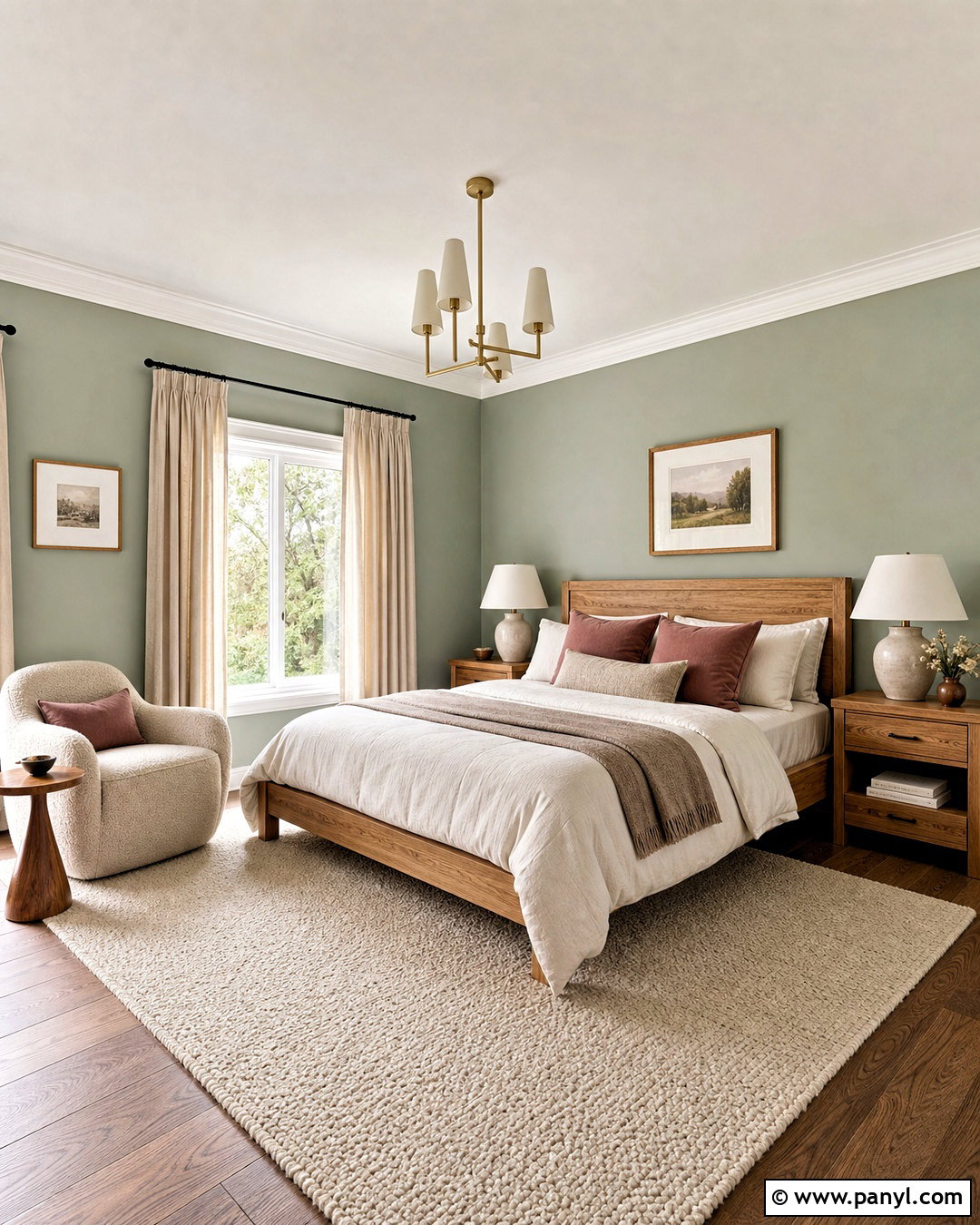
Balboa Mist can turn a large bedroom into a calm retreat without making it look dark. Use the color on all four walls, then repeat a creamy white across the ceiling, baseboards, and doors. Anchor the space with a taupe upholstered bed, walnut nightstands, and an ivory wool rug extending generously beyond the bed. Layer white sheets with mushroom, cocoa, and muted mauve textiles that relate to the paint’s warm greige character. Antique brass sconces create symmetry while leaving the nightstands uncluttered. Hang simple landscape art in dark wood frames. The completed palette feels enveloping and sophisticated, making Balboa Mist particularly effective in bedrooms that need more definition than Classic Gray would provide.
8. Classic Gray Kitchen With White Cabinets
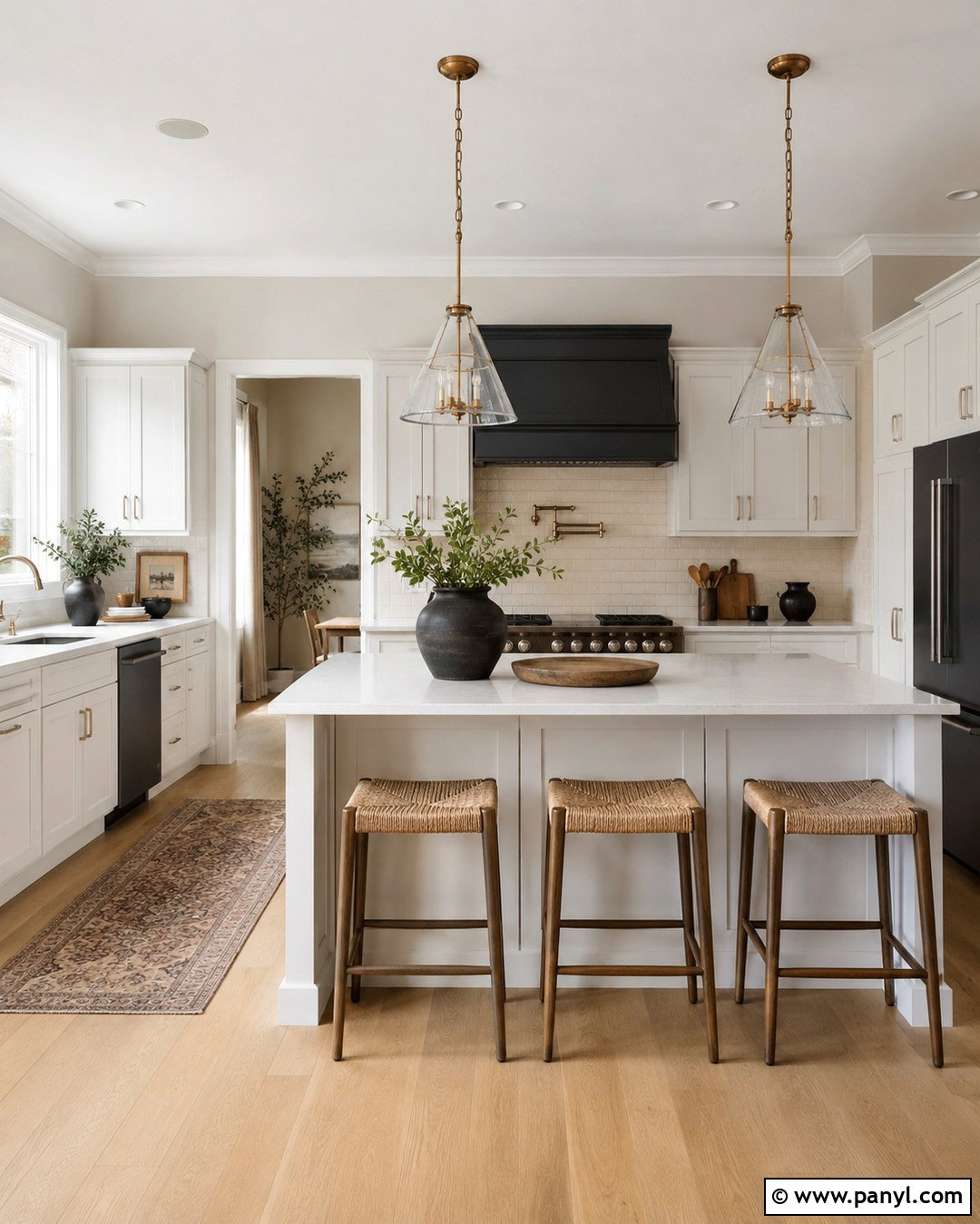
A Classic Gray kitchen feels bright and timeless when every finish supports its gentle warmth. Paint the walls Classic Gray and choose soft white Shaker cabinets rather than stark, cool white cabinetry. Add lightly veined quartz counters, a handmade cream subway tile backsplash, and brushed nickel hardware. White oak flooring and woven counter stools prevent the space from becoming too pale. Over the island, install simple glass pendants with aged brass fittings for a controlled mix of metals. Introduce contrast through a charcoal range, black window frames, or dark pottery. This full scheme is useful in compact kitchens because Classic Gray supplies a small amount of wall definition while reflecting enough light to maintain an open appearance.
9. Balboa Mist Kitchen With Wood Cabinets
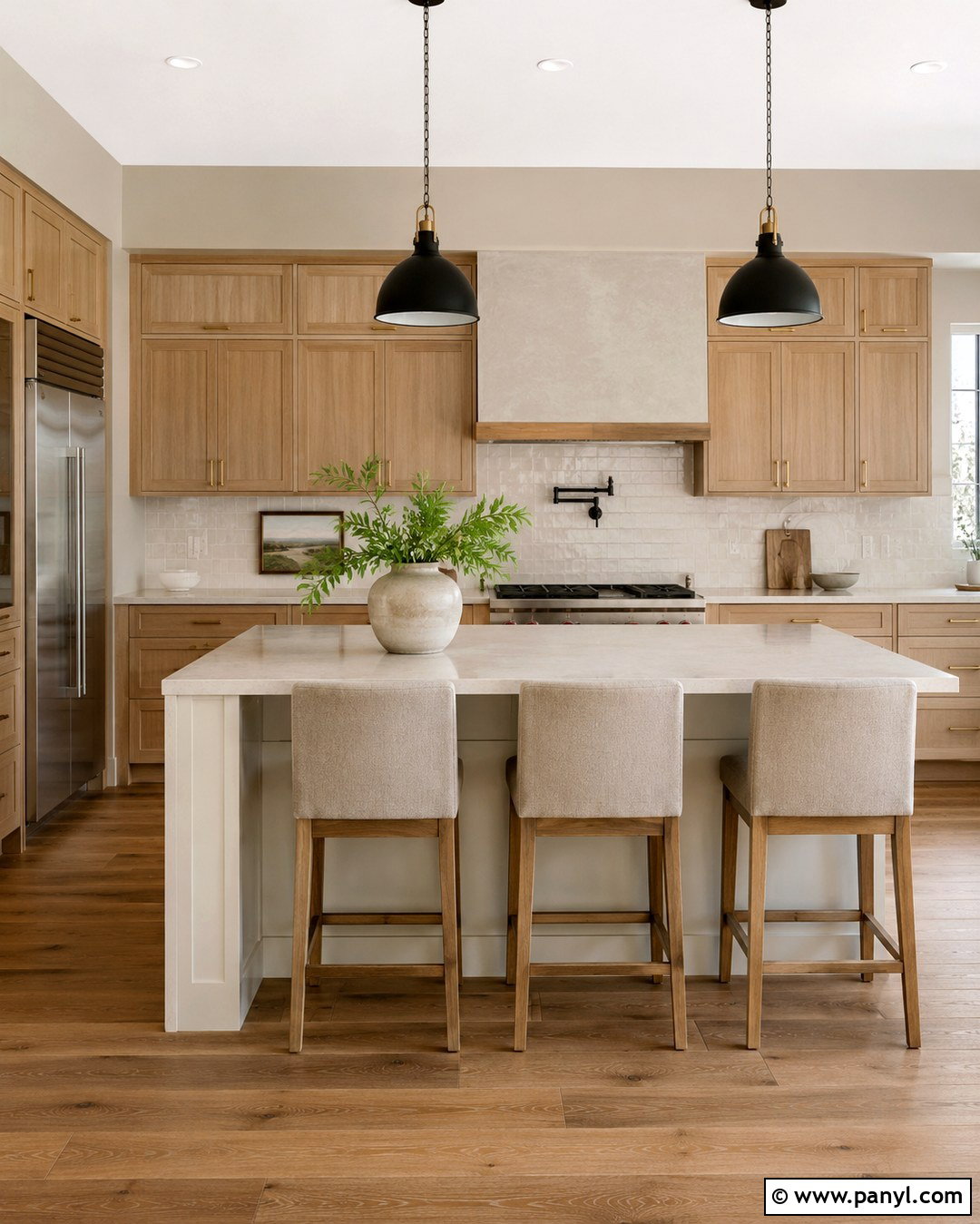
Warm wood cabinets and Balboa Mist create a natural kitchen that feels current without chasing trends. Use Balboa Mist on the walls around medium white oak cabinetry, then add creamy quartz countertops and an off-white zellige backsplash. A painted warm white island keeps the wood from overwhelming the room. Finish the cabinetry with aged brass pulls and select counter stools upholstered in oatmeal fabric. Medium-tone oak flooring creates a continuous, grounded base. Black pendant lights and a dark faucet add crisp structure. Because the wall color has more depth than Classic Gray, it will not disappear beside the wood grain. The finished kitchen feels layered, welcoming, and connected to adjoining neutral living spaces.
10. Classic Gray Bathroom With Marble
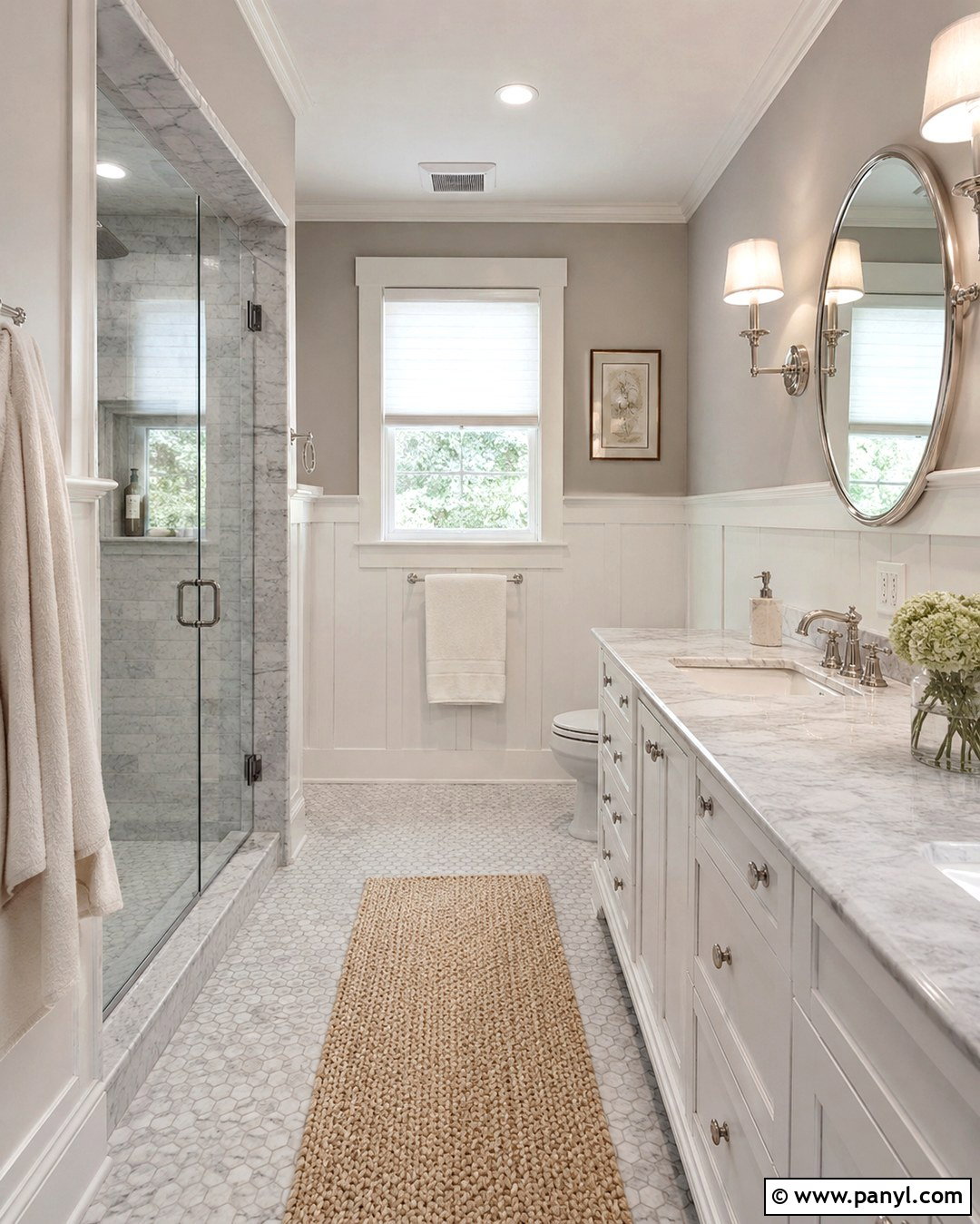
Classic Gray brings softness to a bathroom filled with white surfaces. Apply it to the walls above white paneled wainscoting, then install a marble-topped oak vanity with polished nickel fixtures. Use small warm white floor tiles or pale marble mosaic rather than cool blue-gray flooring. A frameless glass shower keeps the layout visually open, while fluffy ivory towels and a woven runner introduce comfortable texture. Choose a rounded mirror with a thin black or nickel frame and mount shaded sconces on both sides. The small contrast between Classic Gray and the white millwork highlights architectural detail without shrinking the bathroom. This scheme works beautifully when a clean white room feels too clinical or unfinished.
11. Balboa Mist Bathroom With Brass
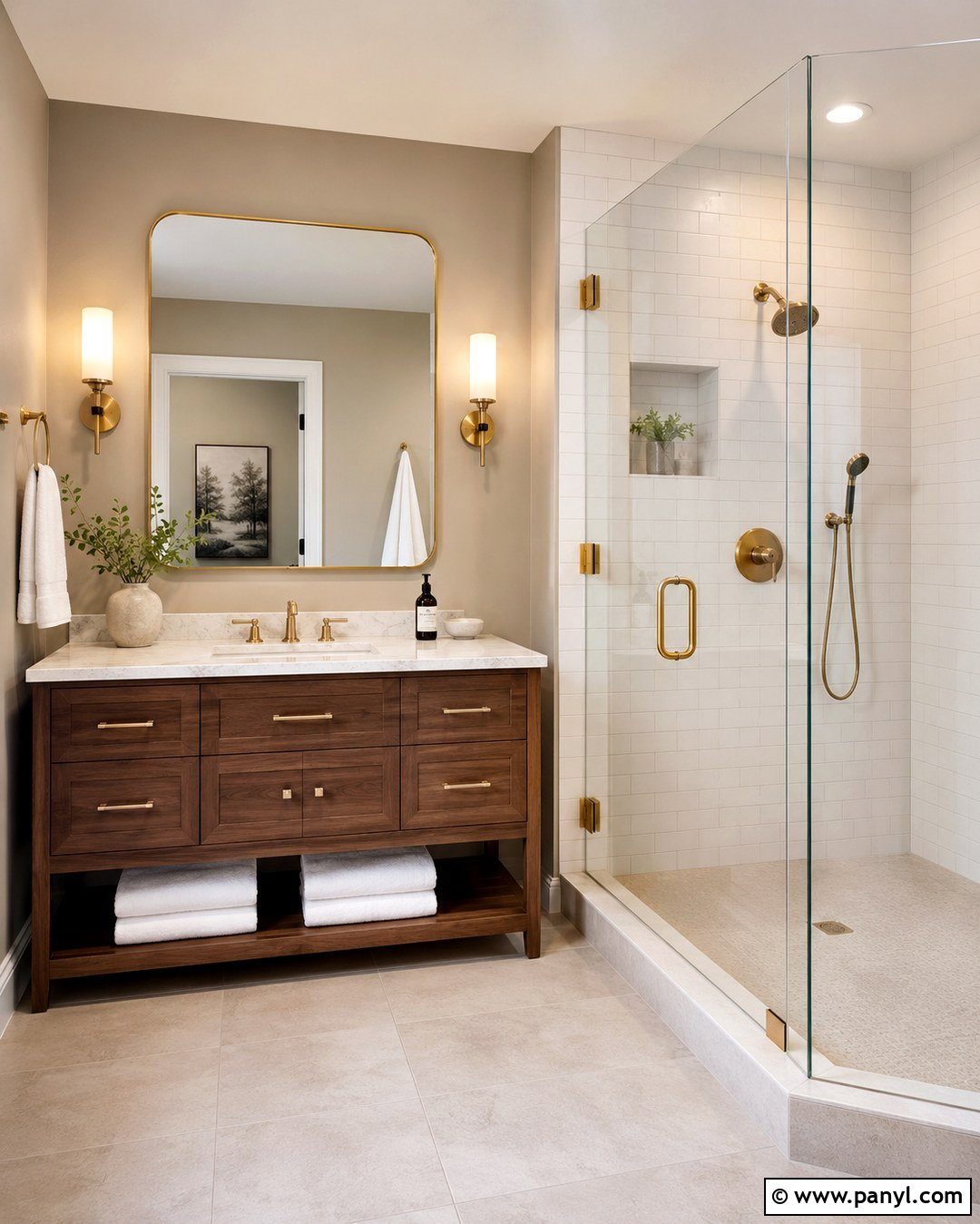
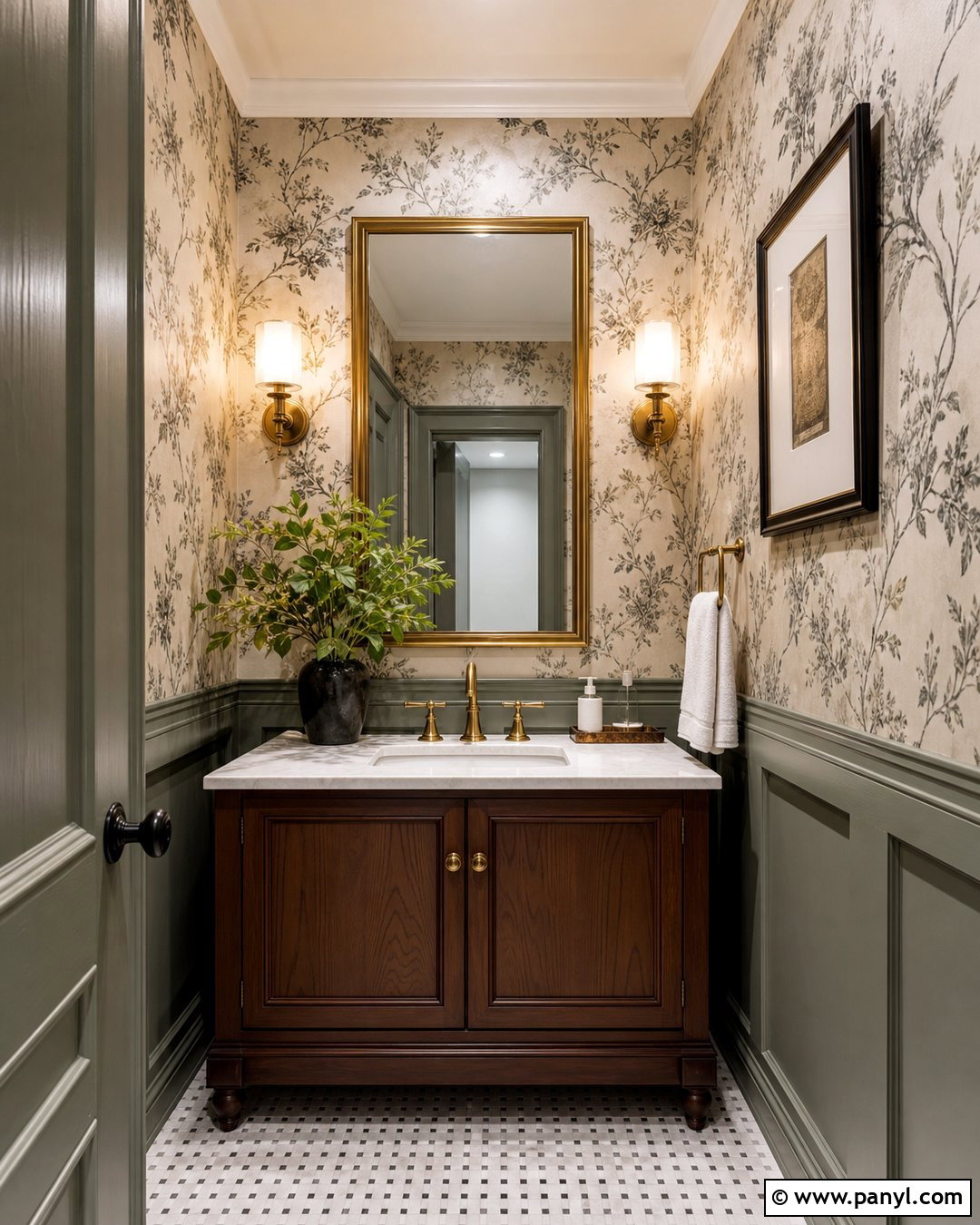
Imagine a bathroom that feels warm, polished, and easy to maintain. Balboa Mist walls provide the foundation for a walnut vanity, creamy stone counter, and brushed brass fixtures. Continue warm white tile across the shower walls, using a light taupe grout that relates to the paint. Select matte ivory floor tile for a quiet base, then add a frameless glass enclosure to preserve openness. A brass-framed mirror and matching sconces make the vanity a clear focal point. Keep towels white and accessories minimal, with one small olive branch or leafy plant for color. Balboa Mist supplies enough visual weight to balance reflective tile, glass, and metal without making the compact room feel enclosed.
12. Classic Gray Open-Concept Home
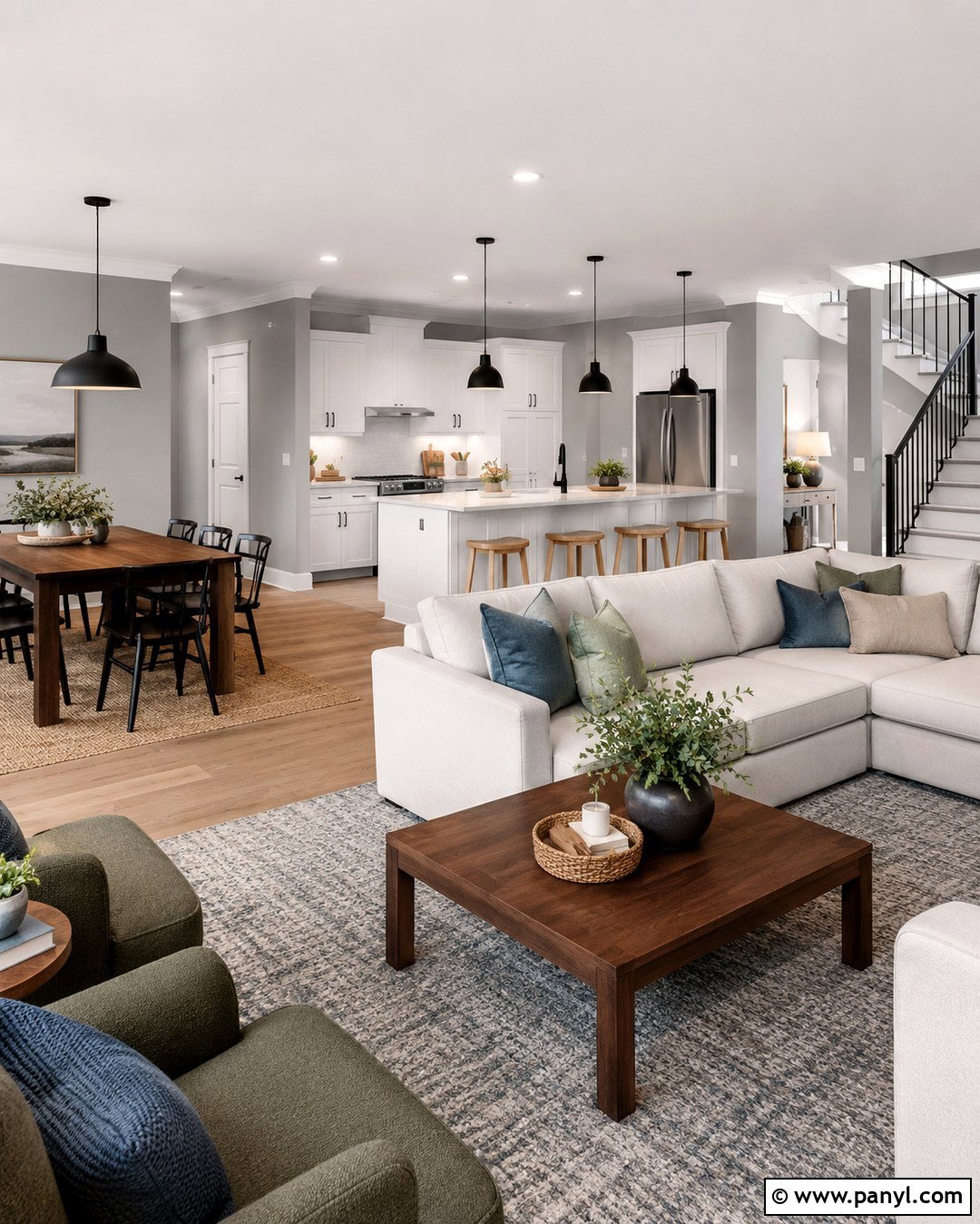
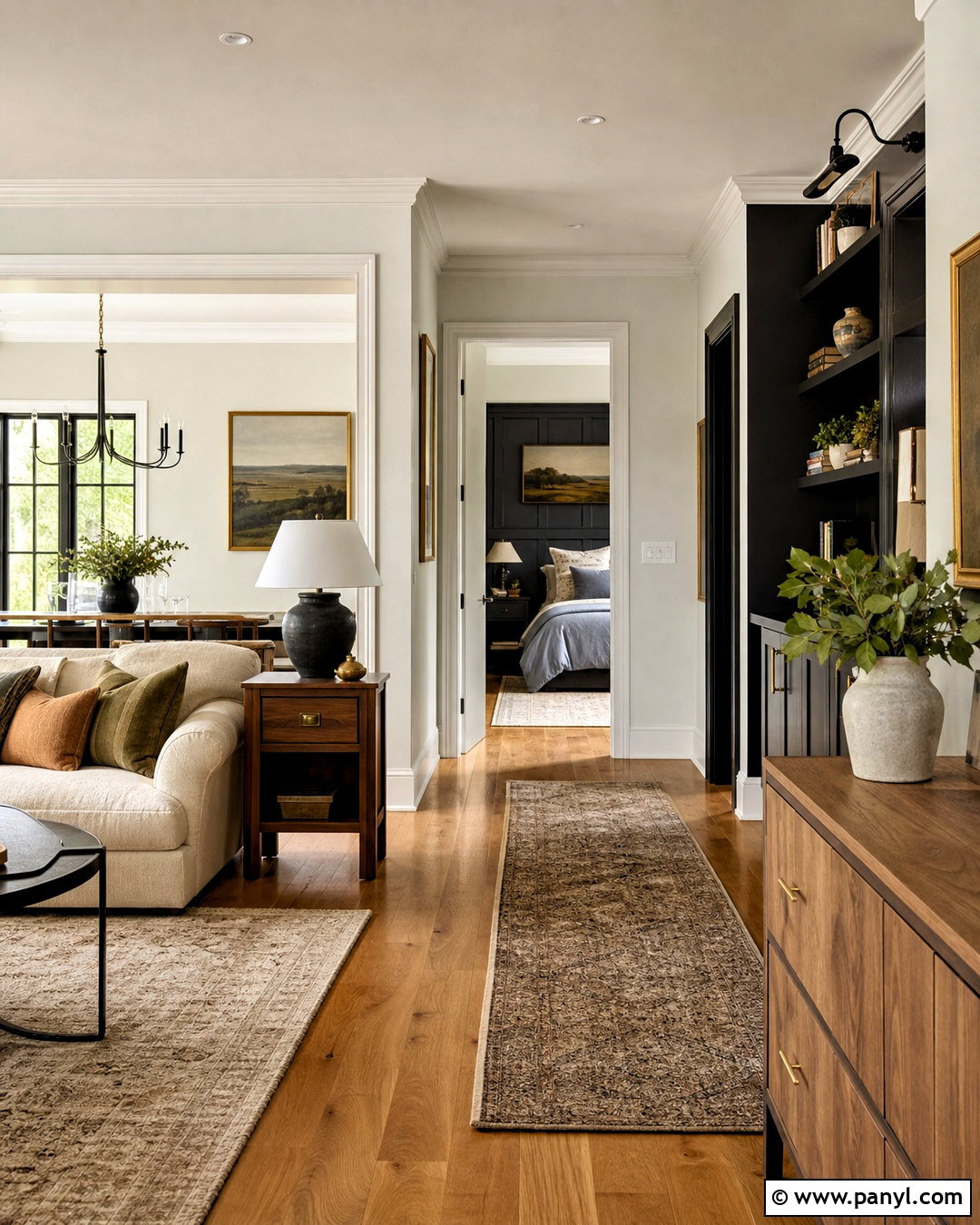
Open-concept rooms need a wall color that connects several functions without flattening the entire interior. Carry Classic Gray through the kitchen, living area, and nearby hallway, using one warm white on every ceiling, door, and baseboard. Define each zone through furniture and materials instead of extra paint colors. Combine a white kitchen with oak stools, an ivory living room sectional, and a walnut dining table. Repeat black metal details in pendants, cabinet hardware, and curtain rods. Soft blue and muted green textiles provide consistent accent colors. Classic Gray works as the light background, while the repeated woods and fabrics create continuity. The result feels spacious, coordinated, and more dimensional than a plain white interior.
13. Balboa Mist Dining Room
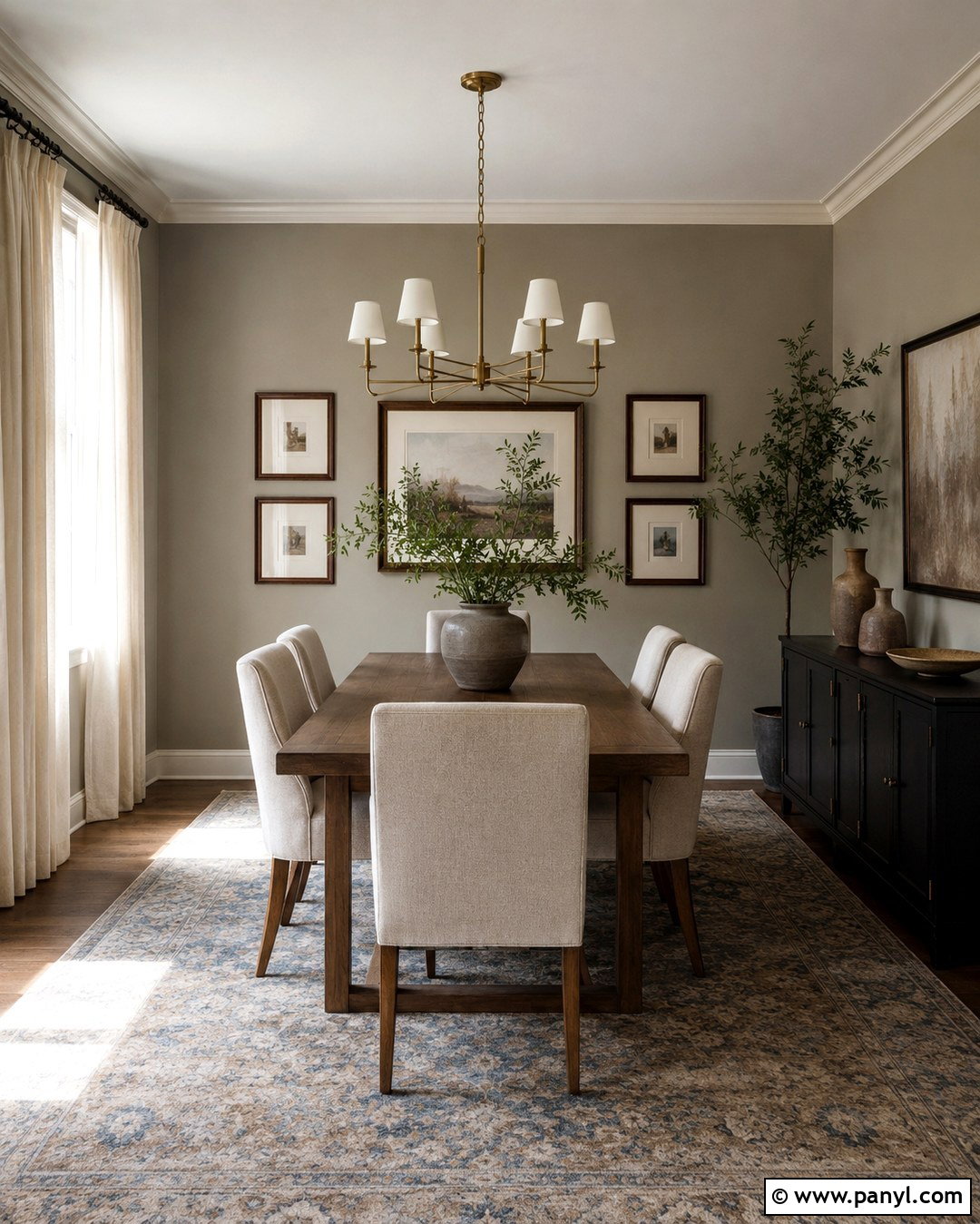
A formal dining room benefits from Balboa Mist’s ability to look neutral while still giving the walls presence. Paint the walls Balboa Mist and add creamy white crown molding, baseboards, and window trim. Center a round or rectangular walnut table beneath a sculptural aged brass chandelier. Surround it with upholstered oatmeal chairs, leaving enough open floor space for comfortable movement. Ground the arrangement with a faded taupe rug that includes small touches of slate blue. Linen curtains should match the trim closely so the room remains calm. Finish with dark wood frames, simple ceramics, and a narrow black sideboard. This layered scheme feels refined enough for entertaining but relaxed enough for everyday meals and homework.
14. Classic Gray Home Office
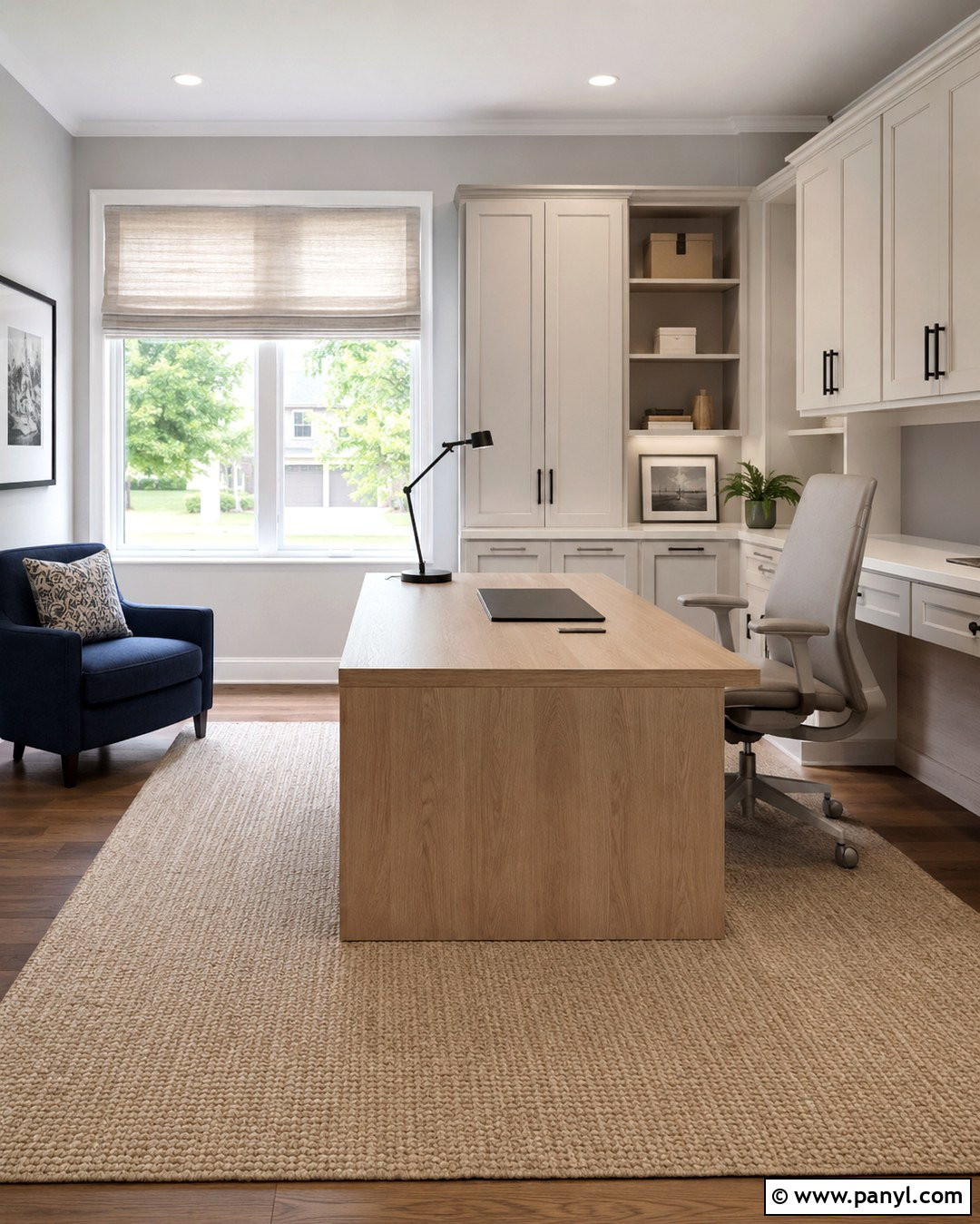
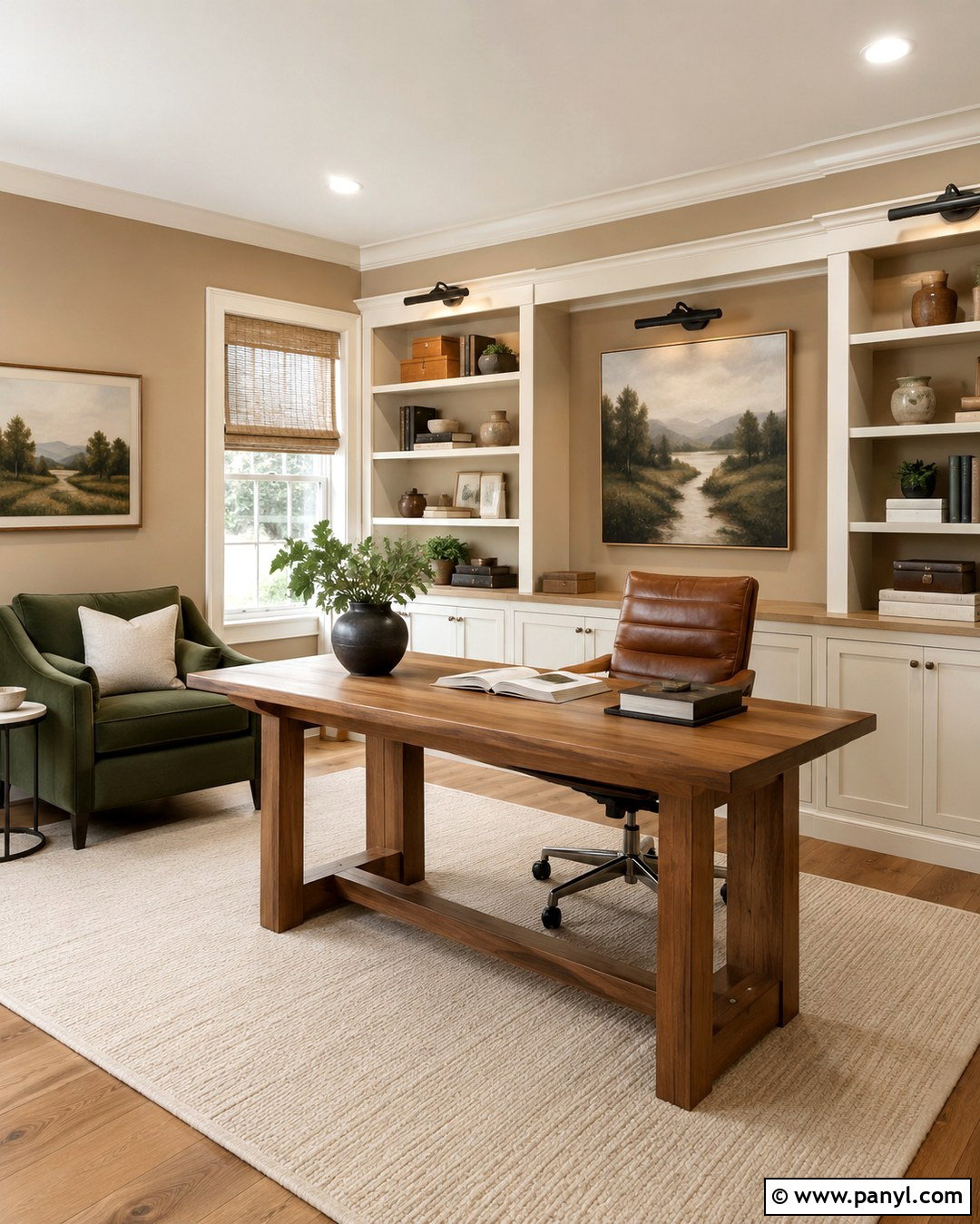
When focus matters, Classic Gray offers a clean background without the glare of bright white walls. Build the room around a white oak desk positioned near a window, with closed storage along the opposite wall. Paint the walls Classic Gray and use warm white on the trim, ceiling, and built-in cabinetry. Add a supportive taupe chair, a flat-woven beige rug, and linen Roman shades. Navy blue can appear through a desk lamp, file boxes, or one upholstered guest chair. Include black metal hardware for sharp definition. Keep decorative objects limited and organize supplies behind doors. The resulting office feels bright, orderly, and comfortable during long work sessions while remaining visually connected to other neutral rooms.
15. Balboa Mist Entryway
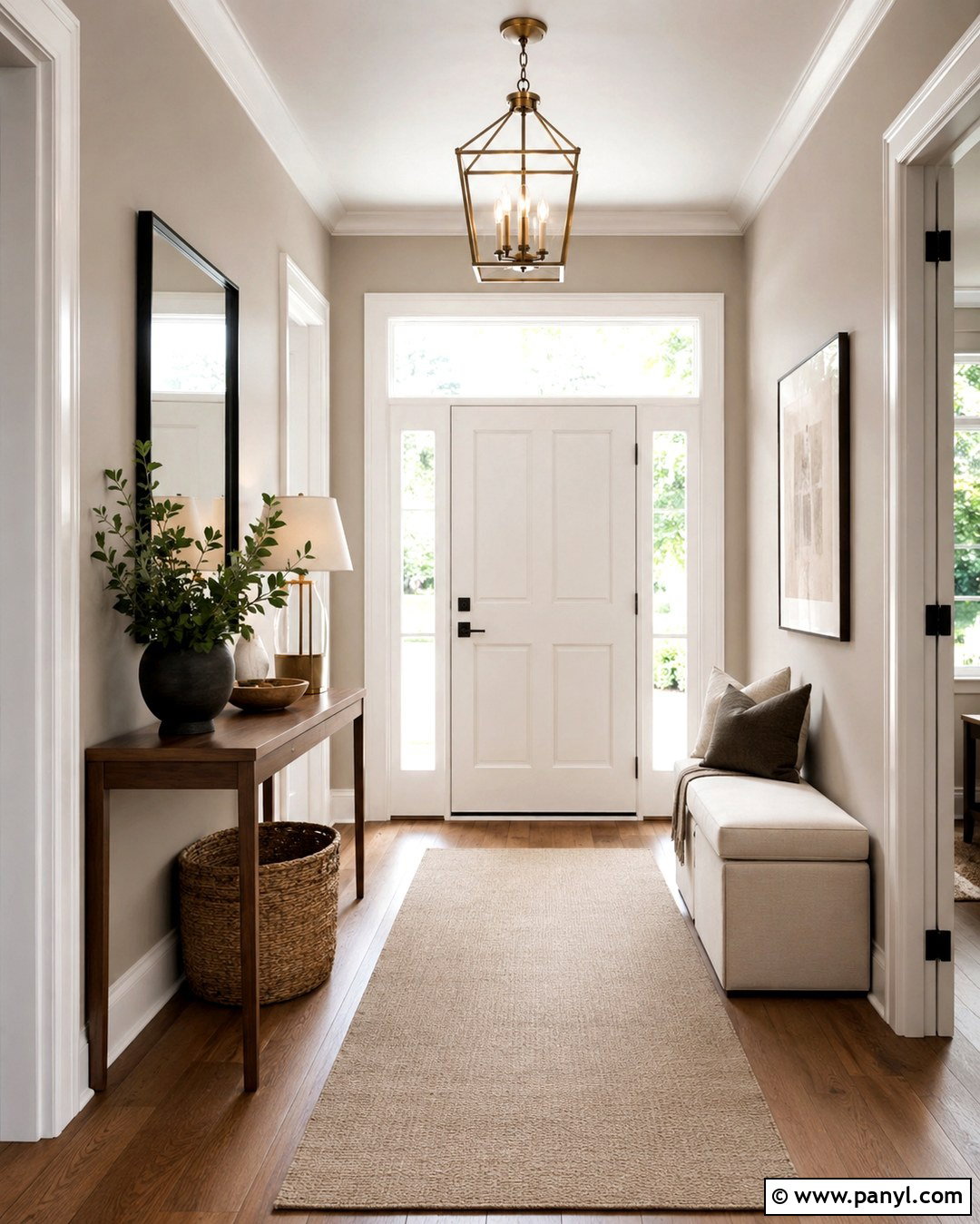
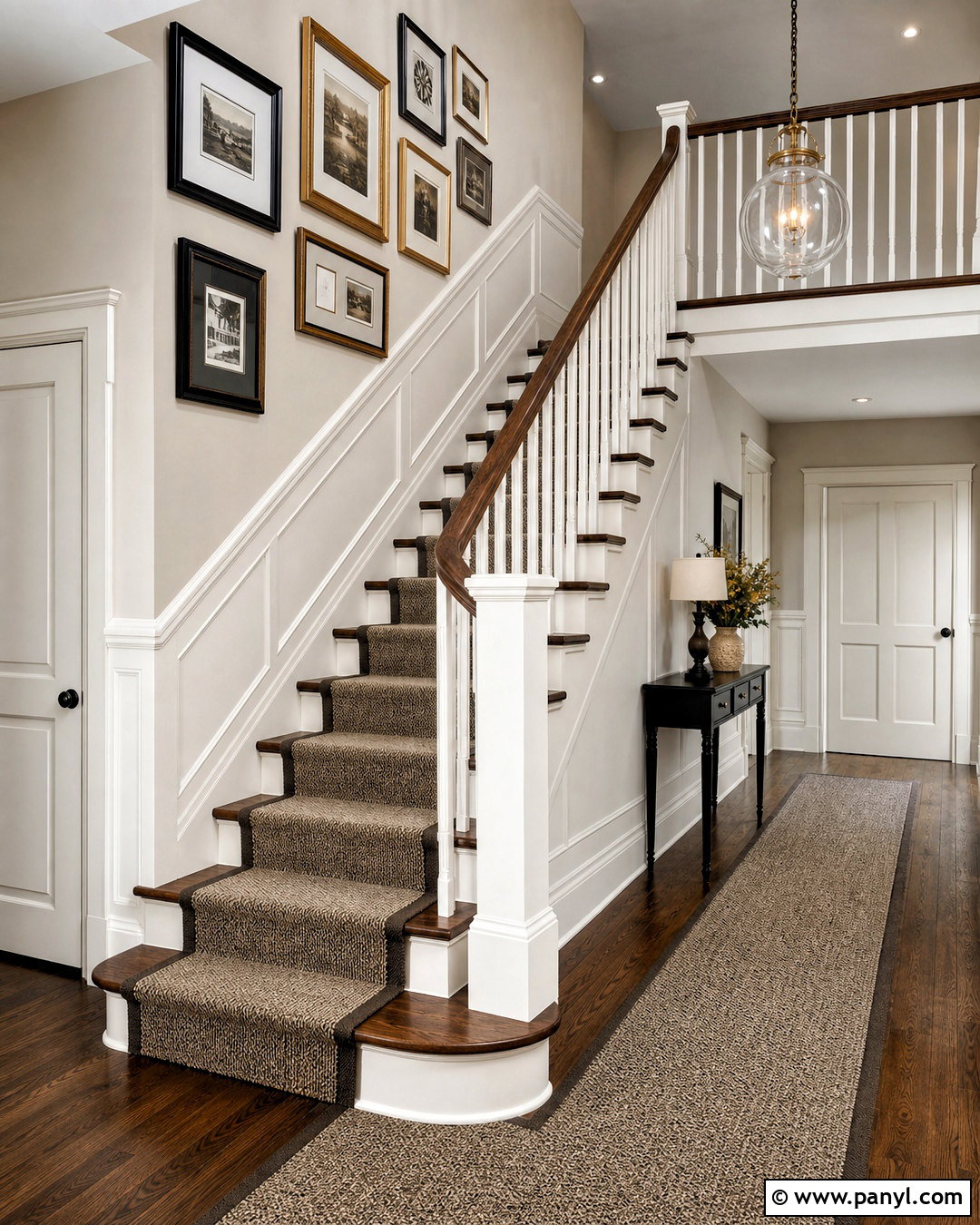
First impressions become warmer when Balboa Mist is combined with practical, durable finishes. Paint the entryway walls in Balboa Mist and frame them with creamy white trim and doors. Place a slim walnut console against one wall, leaving a clear route from the door to adjoining rooms. Add a large black-framed mirror, a washable beige runner, and a woven storage basket beneath the table. An aged brass ceiling lantern introduces warmth without looking ornate. If space allows, include a small upholstered bench with hidden shoe storage. Medium oak flooring or warm stone tile complements the greige walls. This complete setup makes the entry feel established and welcoming while disguising everyday marks better than a very pale off-white.
16. Classic Gray With Navy Accents
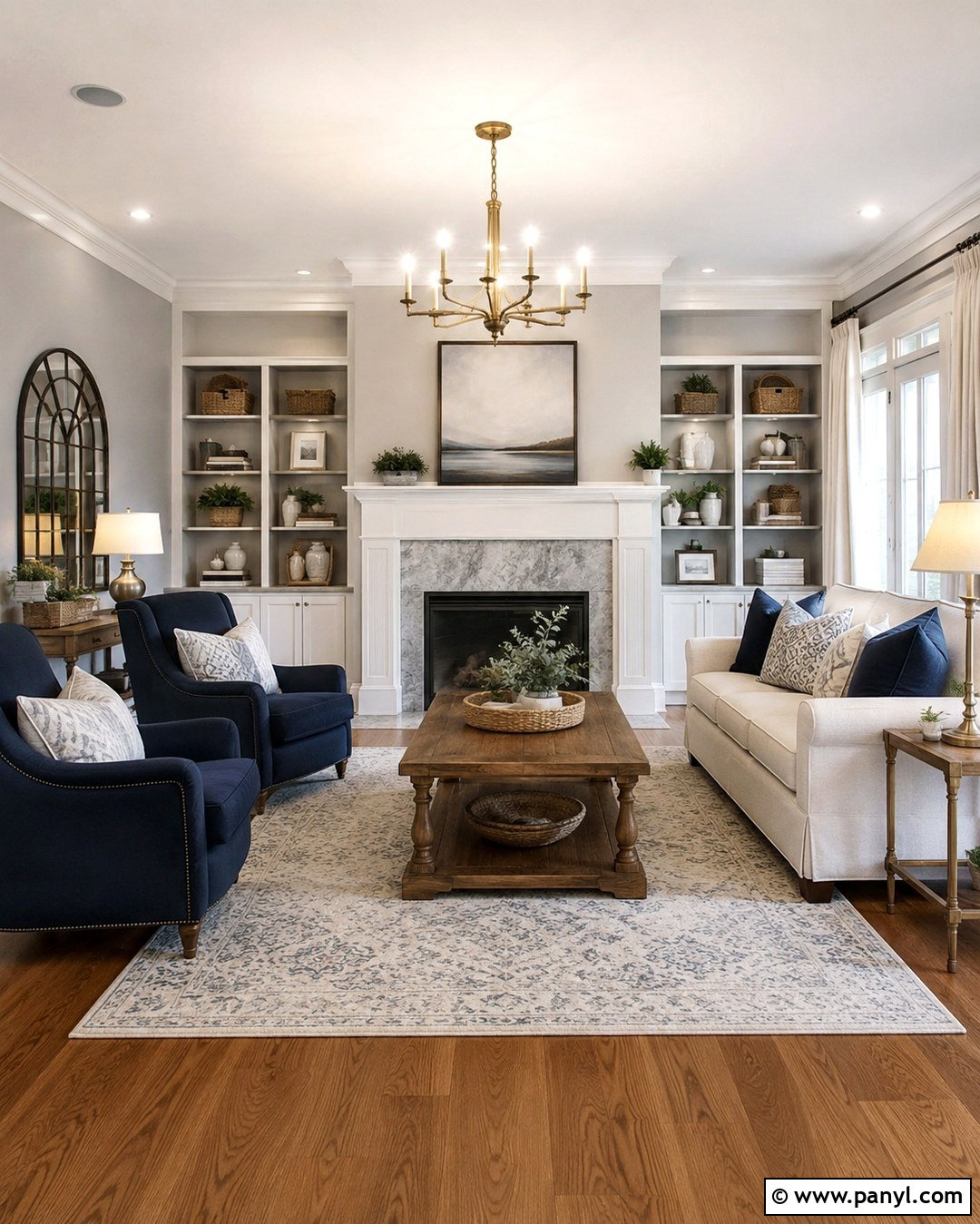
Crisp navy details give Classic Gray the contrast it needs in a light, traditional family room. Use Classic Gray on the walls, soft white on the trim, and medium oak across the floor. Arrange an ivory sofa and two navy armchairs around a warm wood coffee table. A patterned rug combining cream, faded blue, and touches of tan helps the furniture feel connected. Add navy through curtain borders, pillows, and built-in cabinet backs rather than covering a full accent wall. Brass lamps and woven baskets keep the palette warm. Classic Gray remains the quiet background, while the repeated dark blue elements create a strong visual rhythm. The finished space feels classic, bright, and intentionally layered.
17. Balboa Mist With Sage Green
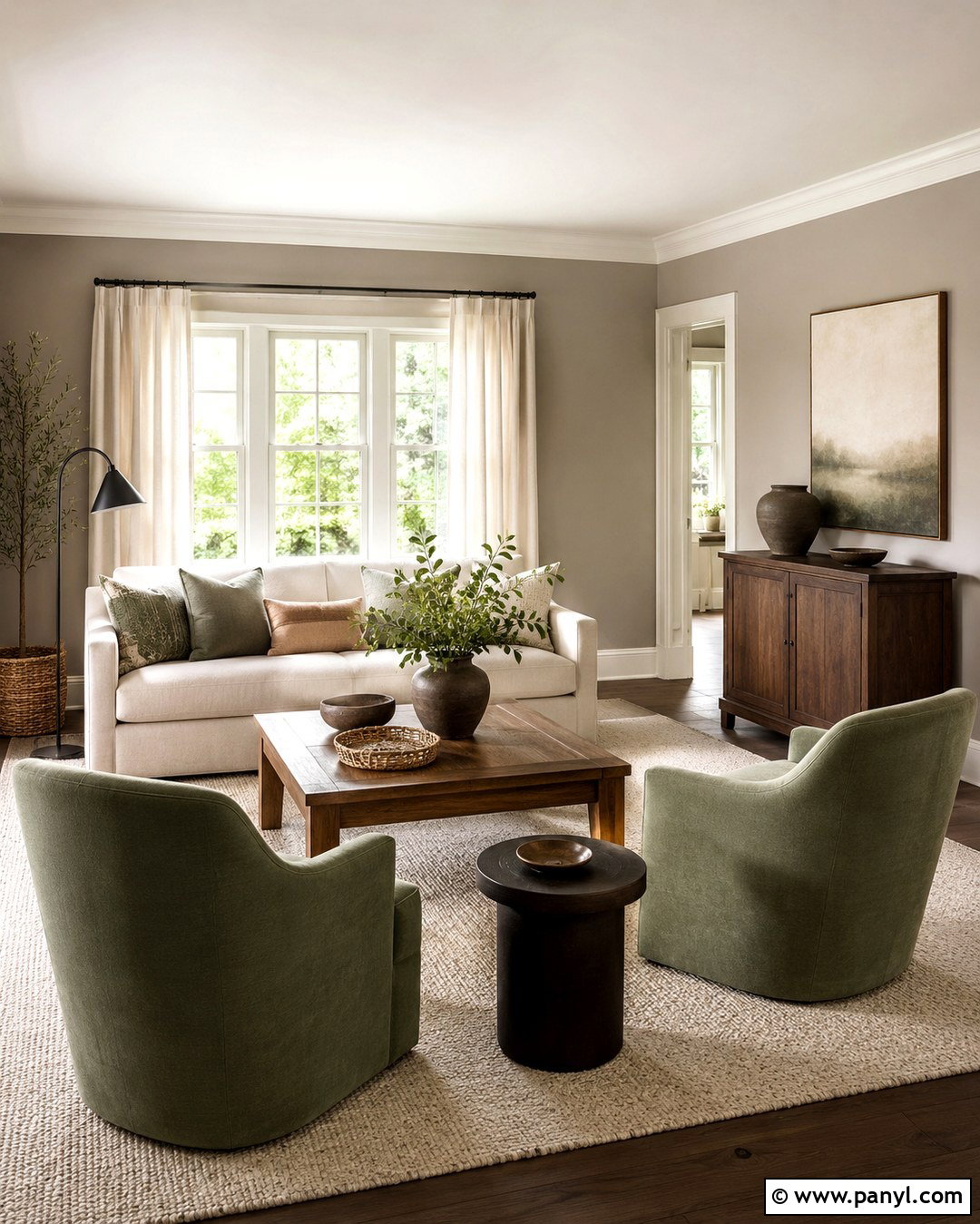
Sage green brings out the natural, earthy side of Balboa Mist. Begin with Balboa Mist walls and warm white trim, then furnish the living room with a cream sofa, two muted sage chairs, and a medium oak coffee table. Choose a textured ivory rug with a subtle taupe pattern. Linen curtains, handmade pottery, and woven baskets reinforce the organic direction. Introduce matte black through a floor lamp and a few frames so the scheme does not become overly soft. A single walnut cabinet can add deeper warmth and useful storage. This complete room works because the green, greige, wood, and cream tones share a muted quality, creating a calm interior that still has enough contrast to feel finished.
18. Classic Gray Monochrome Room
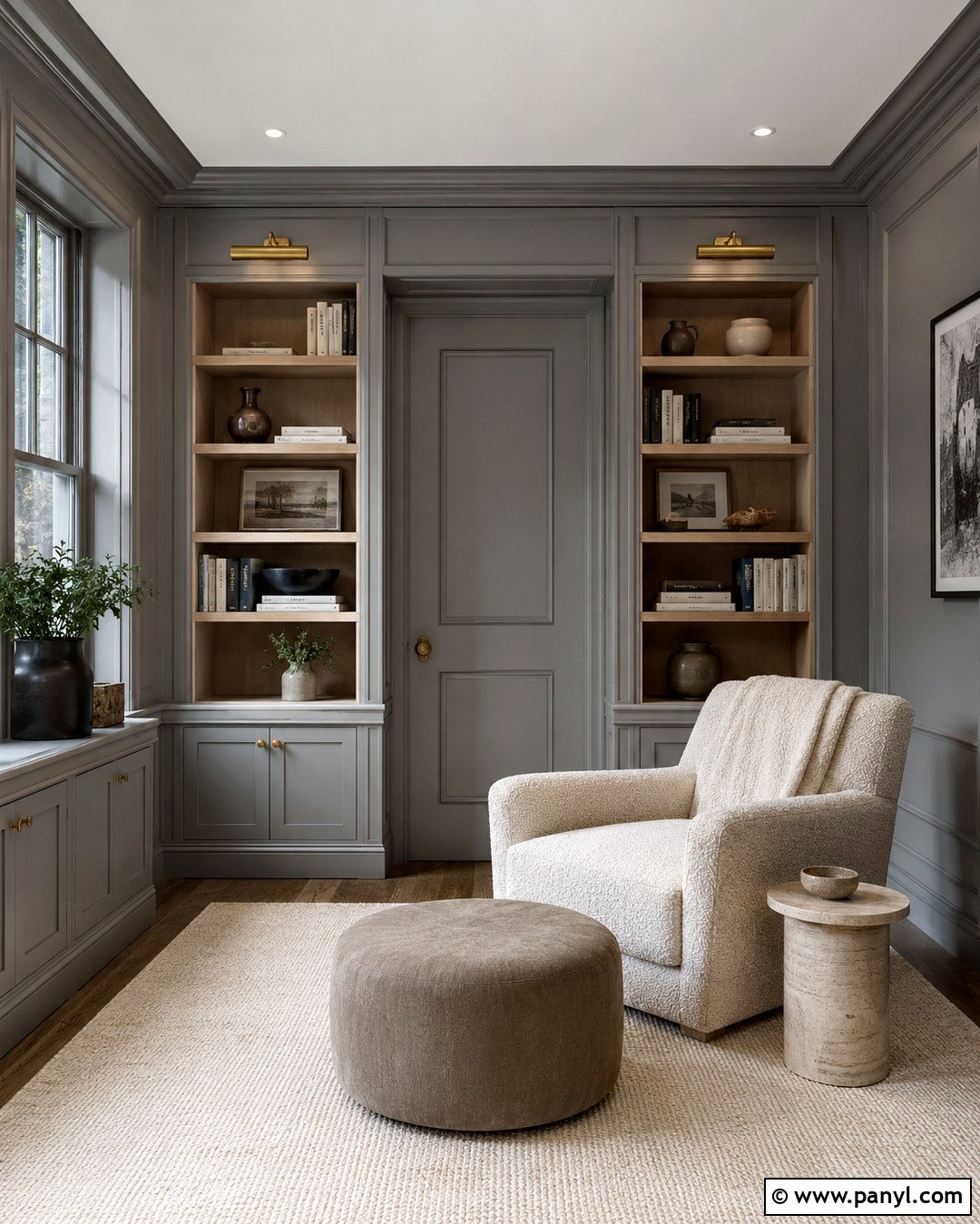
Color drenching does not have to produce a dark or dramatic result. In a small reading room, apply Classic Gray to the walls, trim, interior door, and built-in bookcases, changing only the sheen for subtle definition. Use matte paint on walls and satin on woodwork. Add an oatmeal lounge chair, a pale mushroom ottoman, and a soft ivory rug. White oak shelves, warm brass picture lights, and a compact travertine side table introduce varied materials. Select books and accessories in cream, tan, muted blue, and charcoal. The nearly monochromatic envelope reduces visual interruptions and can make awkward architecture appear more intentional. It also reveals Classic Gray’s gentle depth more clearly than bright contrasting trim would.
19. Classic Gray House Exterior
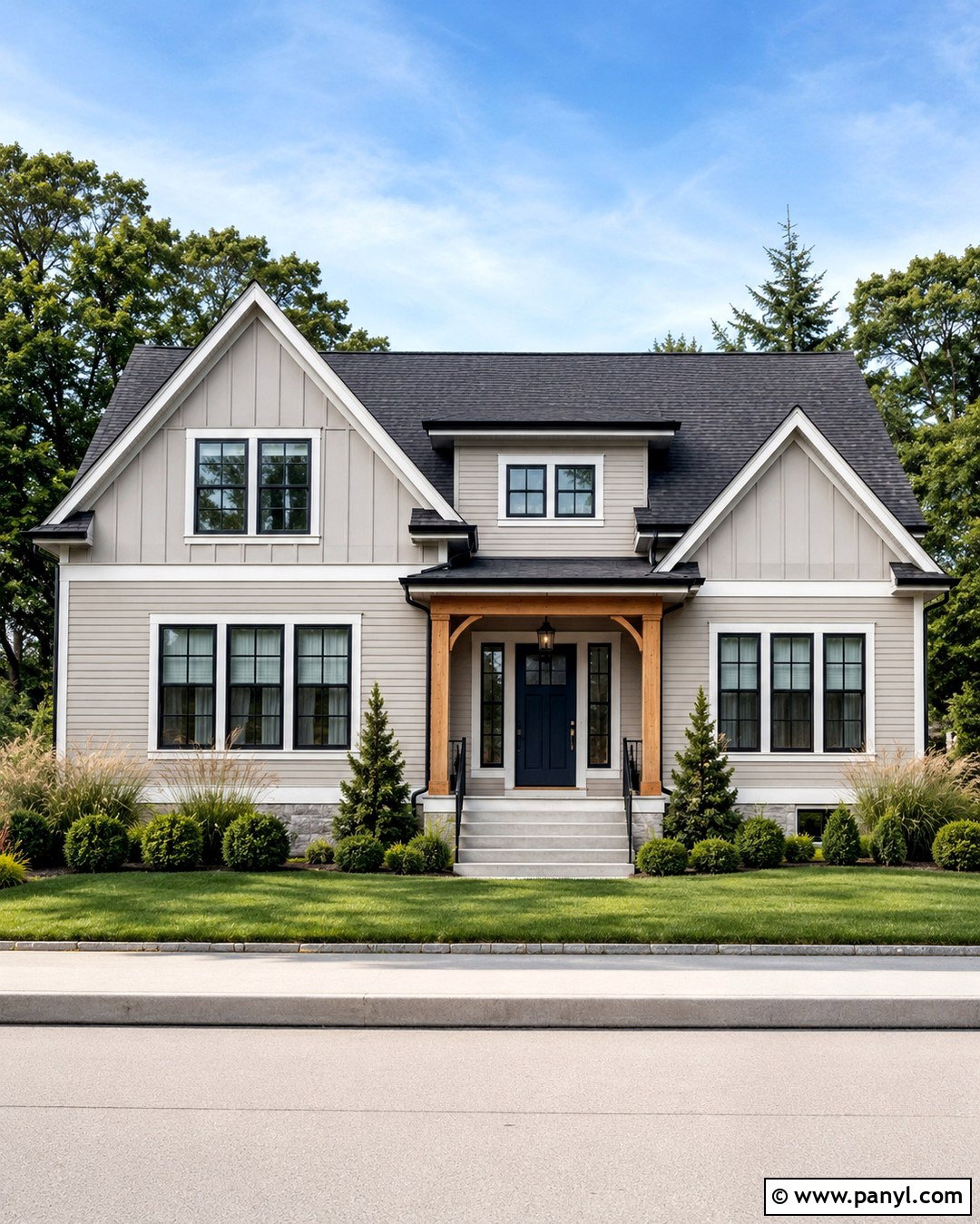
On an exterior, Classic Gray can read more like a warm off-white than an obvious gray. Use it across lap siding or smooth stucco, paired with brighter soft white trim around windows, fascia, and porch columns. Choose a charcoal architectural-shingle roof and a deep navy front door for clean contrast. Natural cedar porch details or a medium wood garage door keep the scheme from feeling too cool. Complete the curb view with black lanterns, simple concrete steps, clipped evergreen shrubs, and soft ornamental grasses. This palette suits a modest Colonial, cottage, or transitional home. Always sample a large area outdoors because direct sun can make light paint colors appear significantly brighter than they look inside.
20. Balboa Mist House Exterior
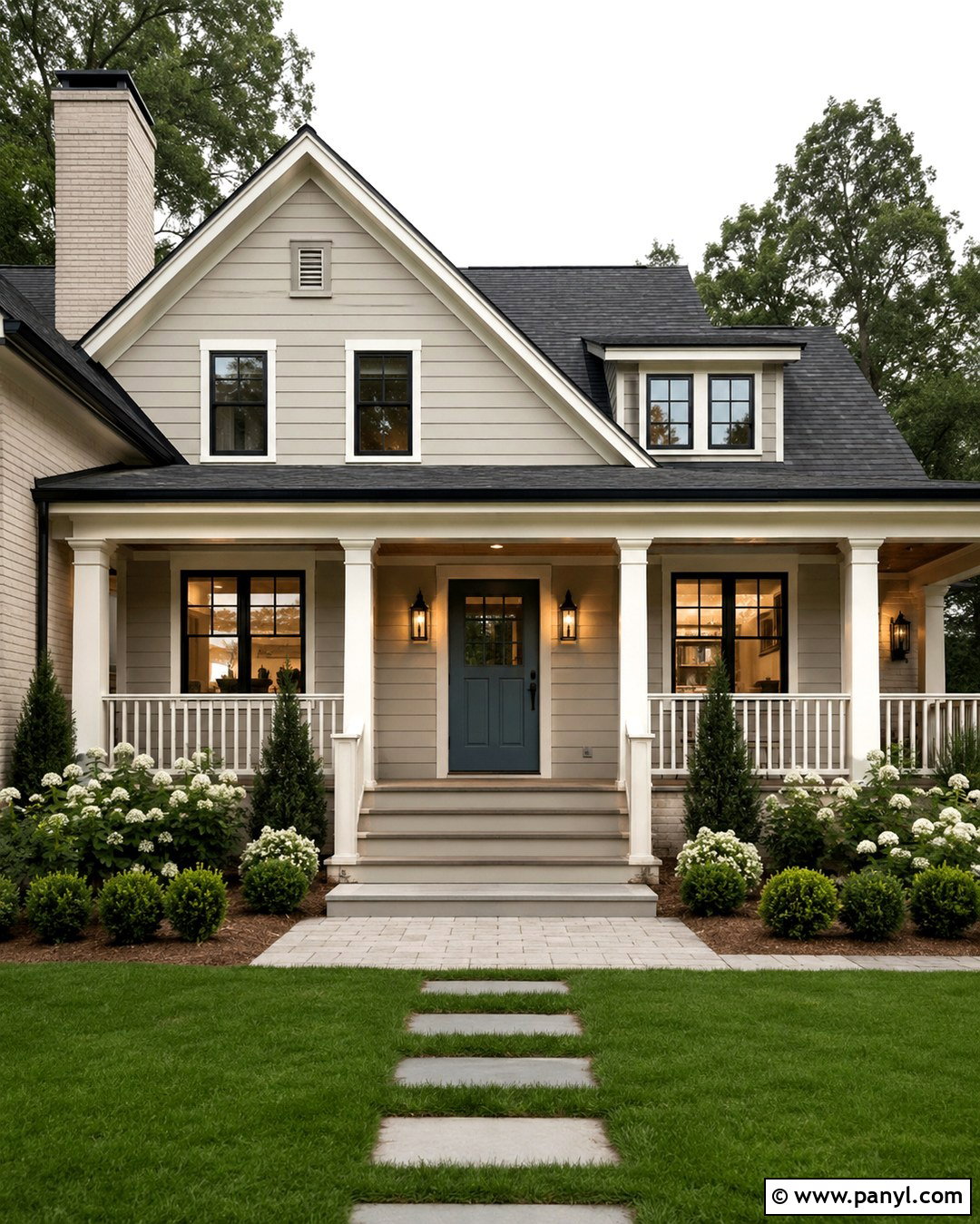
Balboa Mist gives an exterior more substance while maintaining a light, welcoming appearance. Apply it to siding or painted brick, then use creamy white for window trim, porch rails, and fascia. A dark brown or charcoal roof supports the warm greige body color. Select a muted blue-green front door, black lanterns, and medium-stained wood accents for a balanced facade. Warm gray pavers, layered evergreen shrubs, white flowering plants, and natural mulch complete the landscape. Because Balboa Mist is deeper than Classic Gray, it can remain visible in strong daylight and coordinate with stone or brick more easily. The finished scheme feels classic and grounded without becoming beige, stark white, or noticeably cool.
Conclusion:
Choosing between these classic grey vs balboa mist ideas comes down to the amount of contrast, warmth, and visual depth your space needs. Classic Gray is the better starting point for bright rooms, compact interiors, airy open plans, and exteriors that should read as warm off-white. Balboa Mist creates a stronger greige presence that complements walnut, oak, brass, stone, and substantial furnishings. Neither paint color should be selected from a screen alone. Place large samples beside the flooring, trim, cabinetry, and fixed finishes. Check them in morning, afternoon, and evening light. Once you understand how each neutral responds to your home, the final choice becomes much easier and more reliable.

Related Ideas and Inspiration:
Leave a Reply