
The best **20 garage door painting ideas** combine color, architecture, and surrounding materials into one coordinated exterior look. A garage door covers a large visual area, so its finish should work with the siding, brick, stone, roof, trim, front door, and landscaping. Paint manufacturers recommend considering permanent exterior features before choosing a color, while using an exterior coating suitable for the door material. () You can make the garage blend quietly into the facade or turn it into a controlled accent. Test samples directly on the door because sunlight can change how colors appear throughout the day. The complete schemes below offer practical inspiration across modern, traditional, farmhouse, coastal, cottage, and Mediterranean homes. Explore these **20 garage door painting ideas** to find a polished look for your property.

1. Black Garage Door With White Siding
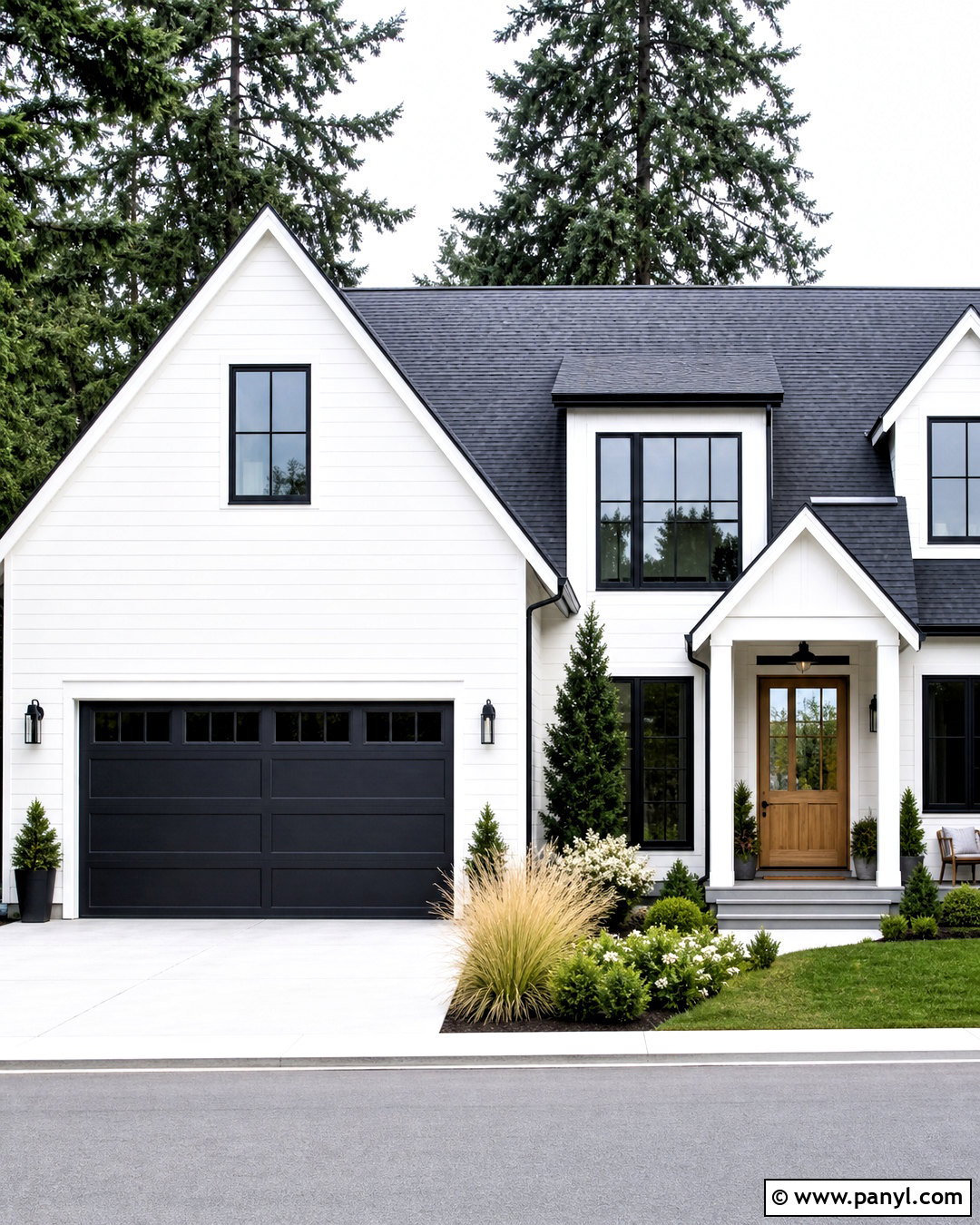
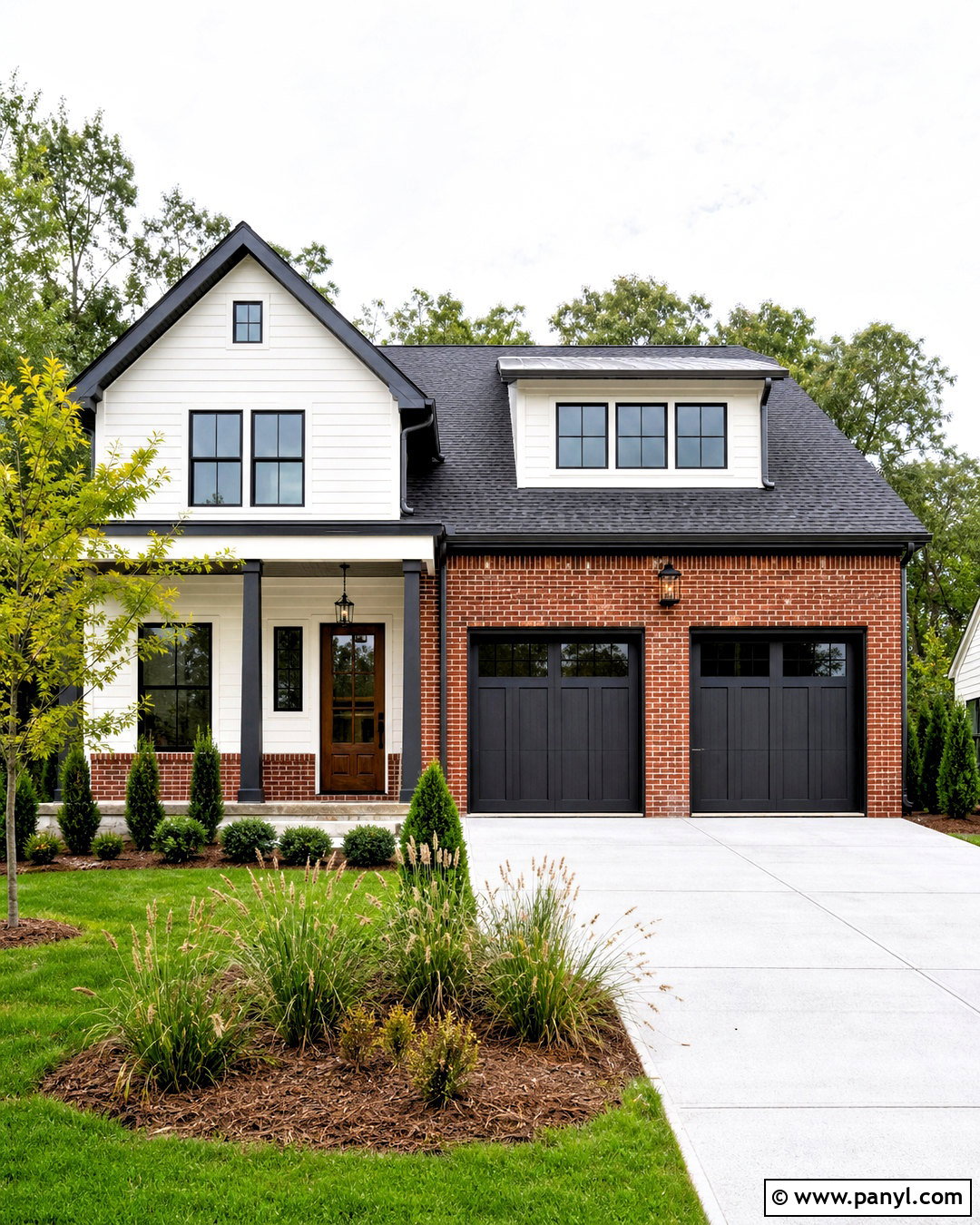
A black garage door creates clean contrast against bright white siding and gives a simple exterior stronger definition. Choose a soft black or charcoal-black rather than an extremely harsh shade. A satin finish keeps the color refined while making the surface easier to clean. Repeat black on the window frames, porch lights, and house numbers so the door feels connected to the facade. Warm wood on the front door can soften the high-contrast palette. Keep the roof medium gray or charcoal, and use pale concrete or gray pavers on the driveway. Low evergreen shrubs, ornamental grasses, and natural mulch complete this modern farmhouse look without adding unnecessary color. This scheme works especially well when the garage door has simple square panels or clean horizontal lines.
2. Warm White Garage Door With Red Brick
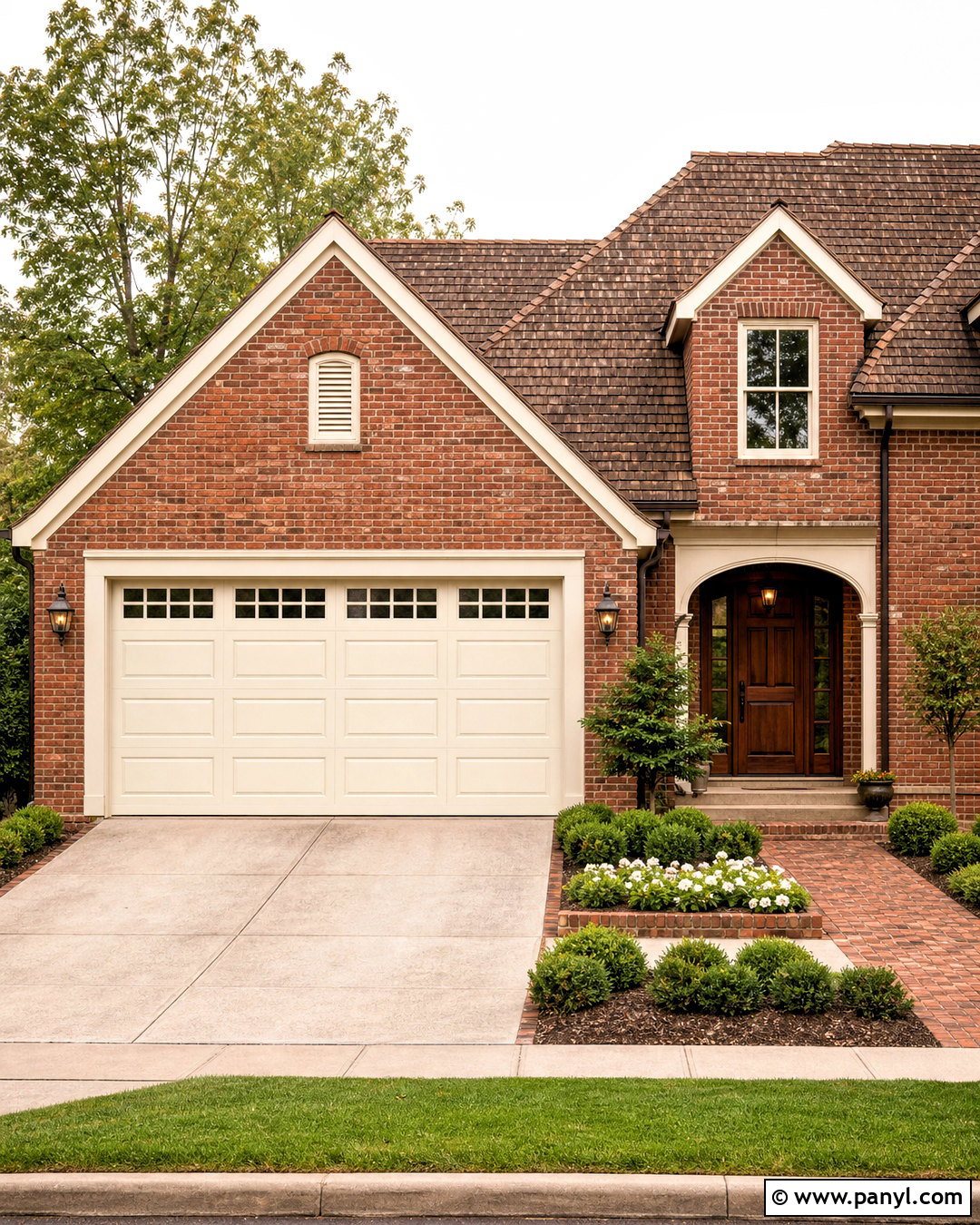
Warm white paint can freshen a red brick house without fighting the brick’s orange, brown, and rust undertones. Look for creamy white rather than cool, blue-based white. Paint the garage door and surrounding trim the same shade to create one calm architectural frame. A medium brown roof, aged bronze lighting, and a stained wood front door reinforce the warmth of the brick. If the garage has decorative handles, use dark bronze or matte black hardware for gentle contrast. Finish the curb appeal with boxwood shrubs, white flowering plants, and a traditional brick-edged walkway. This complete scheme feels brighter while preserving the home’s classic character. It is also a practical approach when the garage occupies a large portion of the front elevation and should not become the main focal point.
3. Charcoal Garage Door With Gray Siding
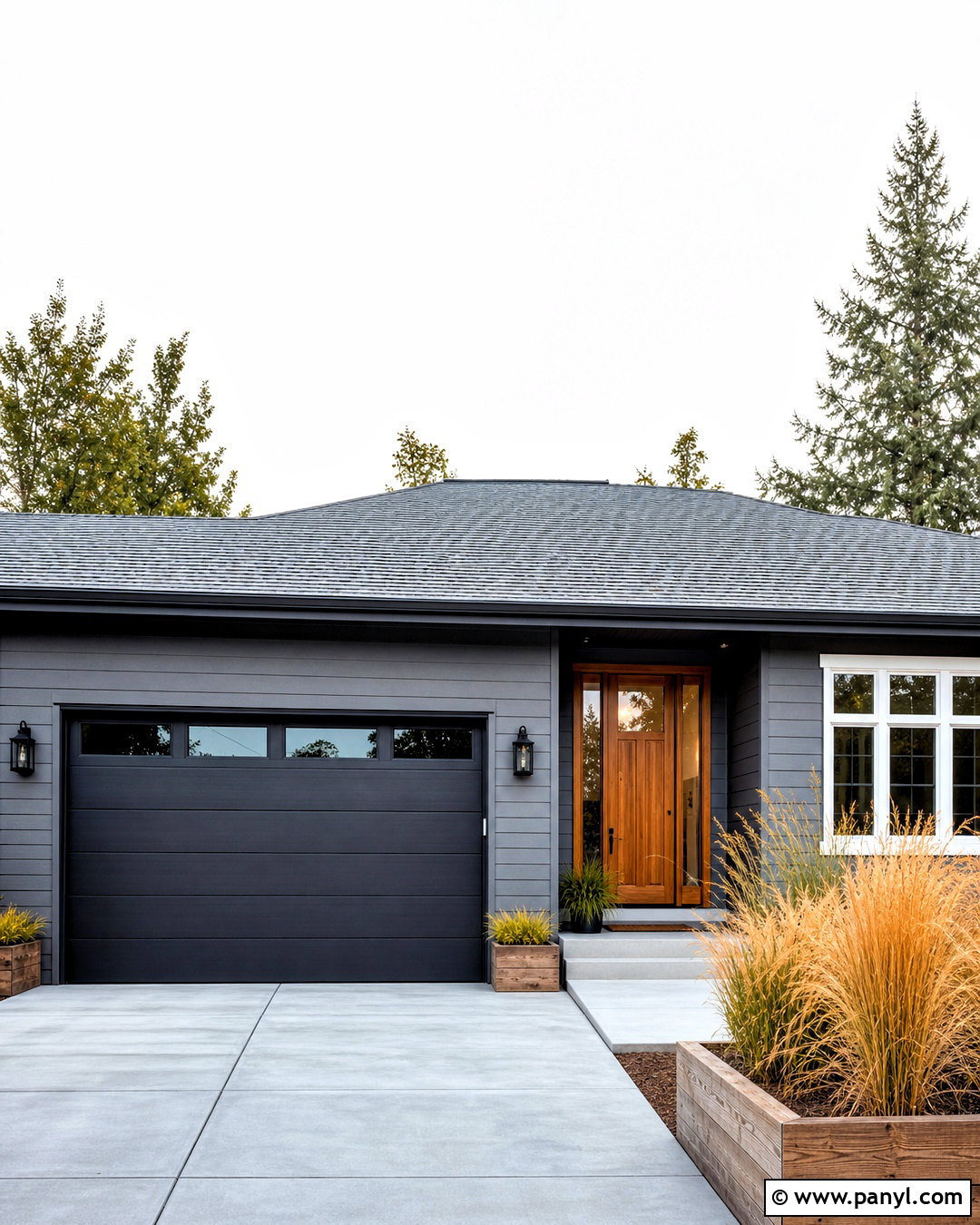
Picture a medium gray house with a charcoal garage door that adds depth without creating a sharp color break. Select a charcoal two or three shades darker than the siding, then repeat it on the shutters, gutters, or front door. Crisp white trim around windows keeps the overall exterior from looking too heavy. Brushed steel house numbers and simple black wall lights support a contemporary look. For the driveway, medium gray concrete or rectangular pavers will connect naturally with the cool palette. Add warmth through cedar planters, golden ornamental grasses, and a natural wood bench near the entrance. A satin finish is especially attractive on a paneled door because it provides subtle definition. The result is cohesive, modern, and easy to adapt to ranch, split-level, or suburban homes.
4. Sage Green Garage Door With Cream Siding
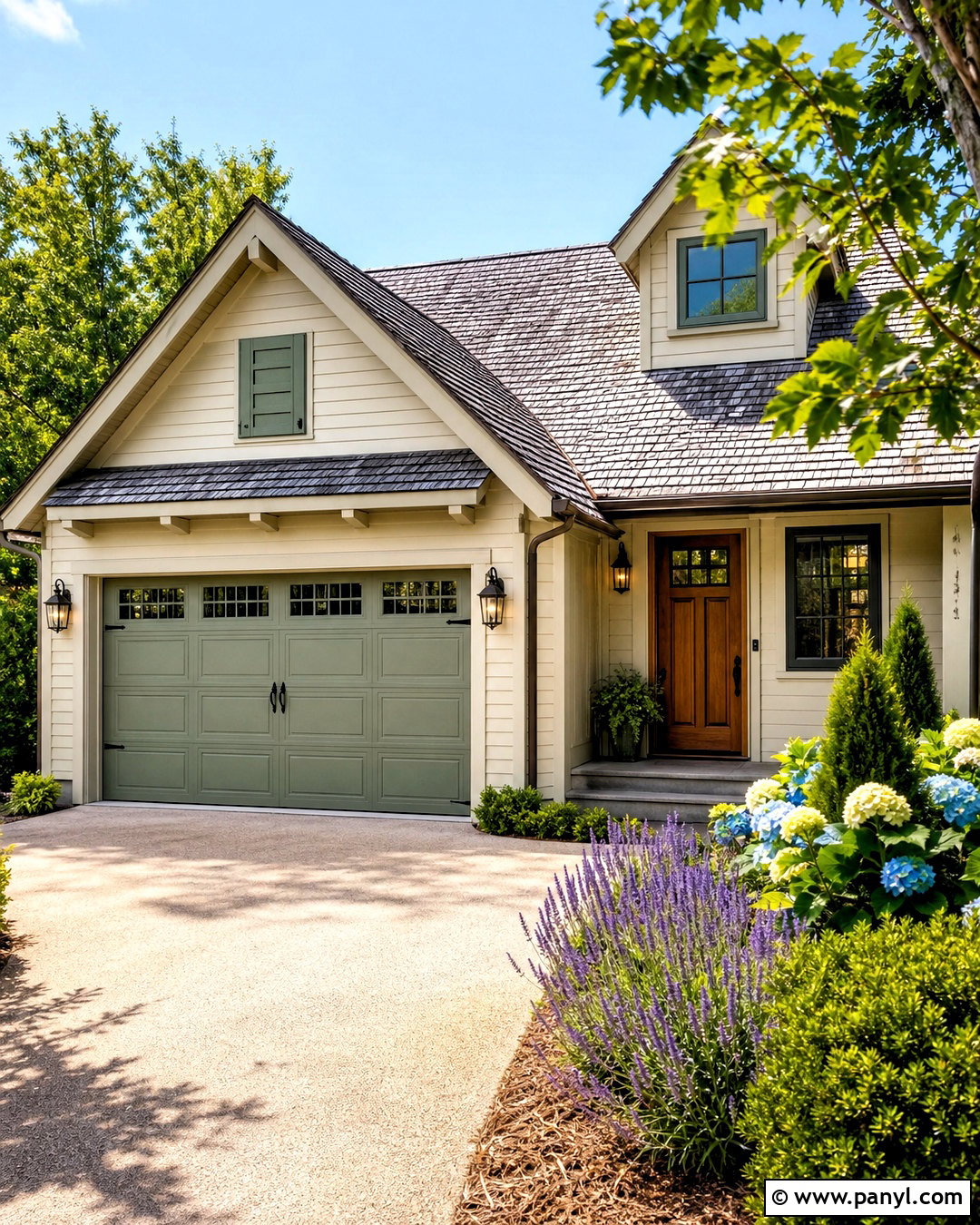
Soft sage green gives a garage door gentle color while remaining connected to the landscape. Pair it with creamy siding, warm white trim, and a medium brown or weathered gray roof. The green should be muted and slightly gray rather than bright or minty. Use the same sage on shutters or a small porch railing, but let a stained oak front door provide the main entrance accent. Antique brass or dark bronze lighting complements this natural palette. Surround the driveway with lavender, ornamental grasses, hydrangeas, and low evergreen shrubs for a layered garden effect. This complete exterior looks especially comfortable on cottages, Craftsman homes, and modest farmhouses. A satin exterior finish will keep the sage color soft while offering enough durability for a frequently used garage door.
5. Navy Garage Door With White Trim
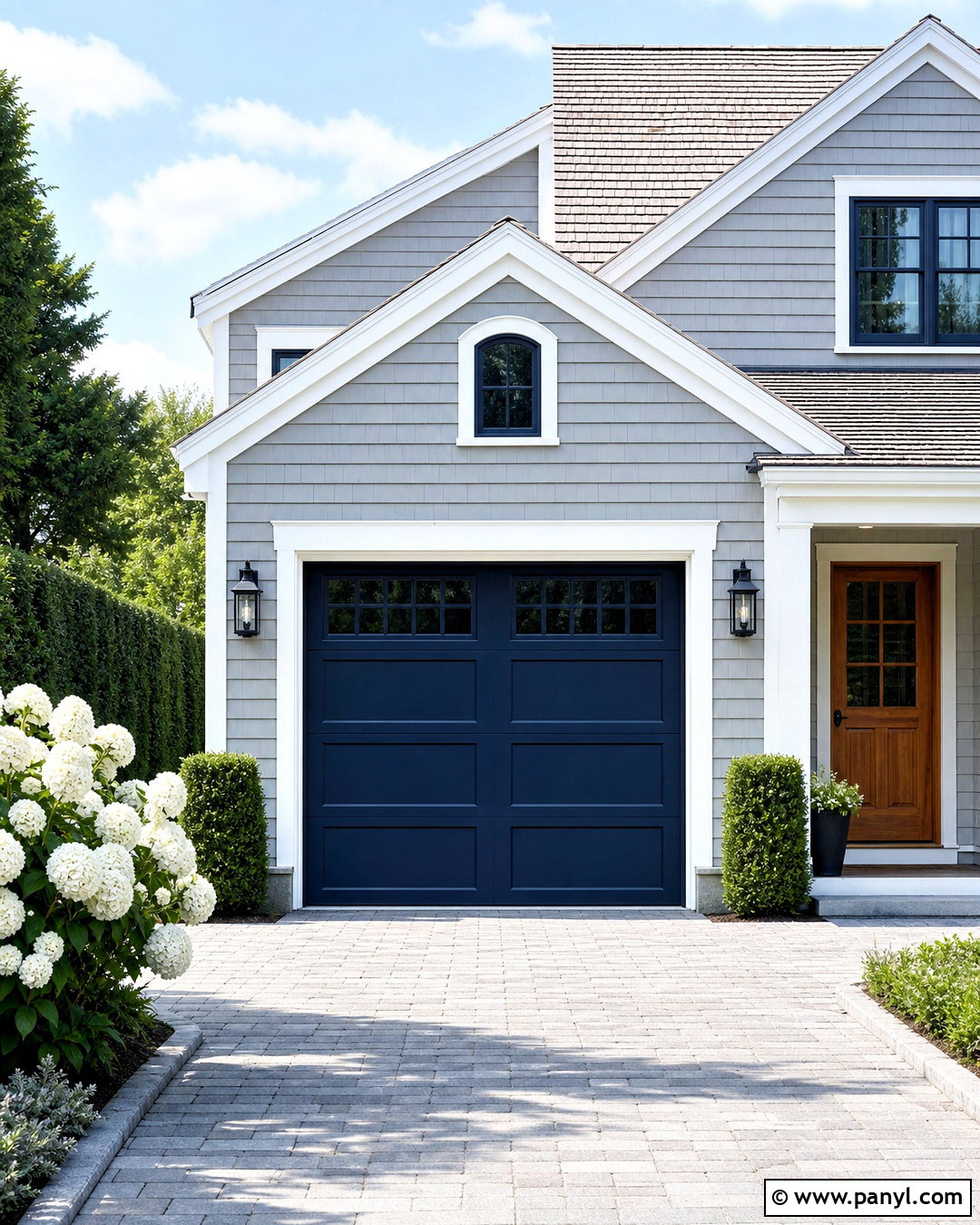
Deep navy blue makes a strong garage door color without the severity of black. It works beautifully with white, light gray, or pale blue siding. Frame the door with crisp white trim, and repeat navy on the front door or window shutters to balance the facade. Choose matte black lanterns and straightforward hardware for a modern finish, or aged brass fixtures for a more traditional home. A charcoal roof grounds the cool color scheme, while warm wood planters prevent it from feeling overly formal. White hydrangeas, clipped greenery, and a light gray paver driveway complete the setting. Use a satin or low-sheen finish to make the navy appear rich rather than glossy. This coordinated look suits coastal homes, Colonial exteriors, and updated suburban houses with prominent front-facing garages.
6. Greige Garage Door With Stone Siding
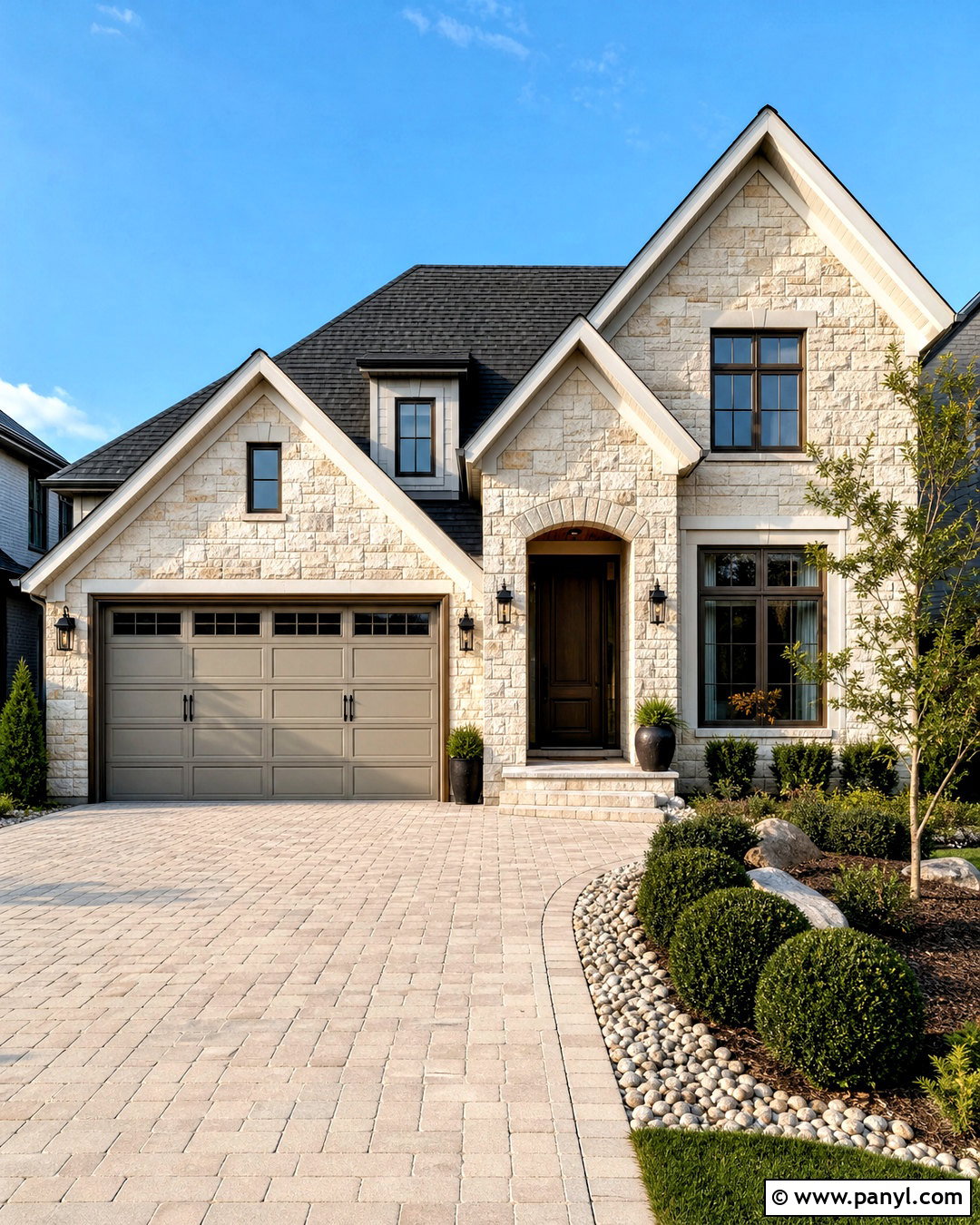
A greige garage door can bring several exterior materials together without demanding attention. Select a balanced gray-beige shade that matches one of the lighter tones in the home’s stone veneer. Use warm white on the trim and a deeper taupe on shutters, gutters, or porch columns. A walnut-colored front door adds richness and helps mark the entrance as the primary focal point. Dark bronze garage hardware, wall lanterns, and house numbers create consistent accents. Continue the natural palette with buff-colored pavers, river rock edging, and rounded evergreen shrubs. Because greige changes noticeably in different light, test several large samples beside the stone before deciding. The finished scheme feels calm and architectural, making it a useful choice for traditional, transitional, and contemporary homes with mixed stone and siding facades.
7. Faux Wood Garage Door With Beige Siding
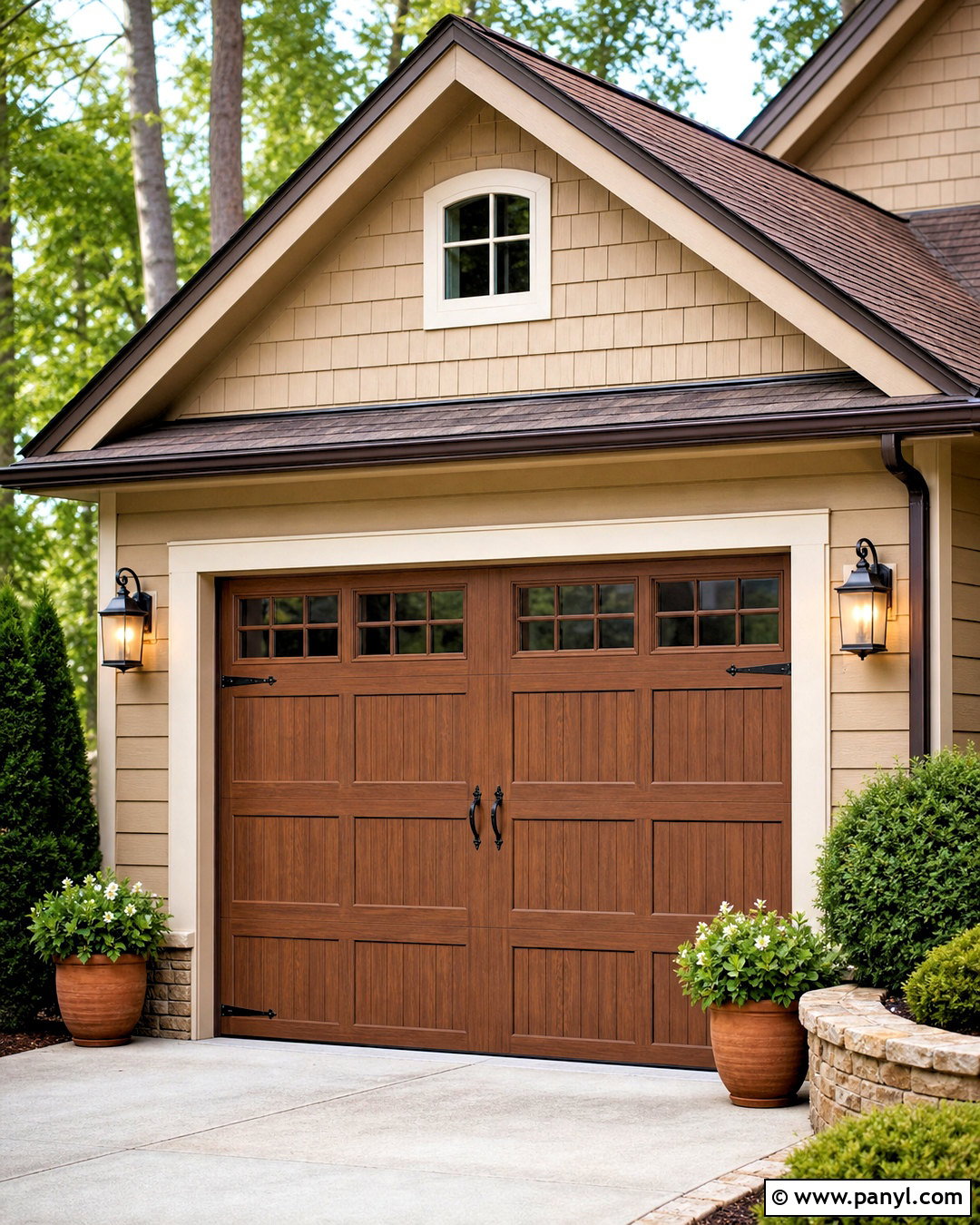
A painted faux wood finish brings warmth to a basic metal garage door without requiring a complete replacement. Begin with a medium caramel-brown base, then layer darker walnut glaze in long, controlled strokes that follow the door’s panels. The grain should remain subtle and consistent instead of highly streaked. Pair the door with warm beige siding, creamy trim, and dark brown roofing. Repeat the walnut tone on the front door or porch posts to make the finish feel intentional. Black decorative hinges and handles can create a carriage-inspired appearance. Complete the exterior with natural stone edging, terracotta planters, and deep green shrubs. This approach works best on embossed or paneled doors, where the existing texture helps the painted wood effect look more convincing from the street.
8. Dark Bronze Garage Door With Beige Stucco
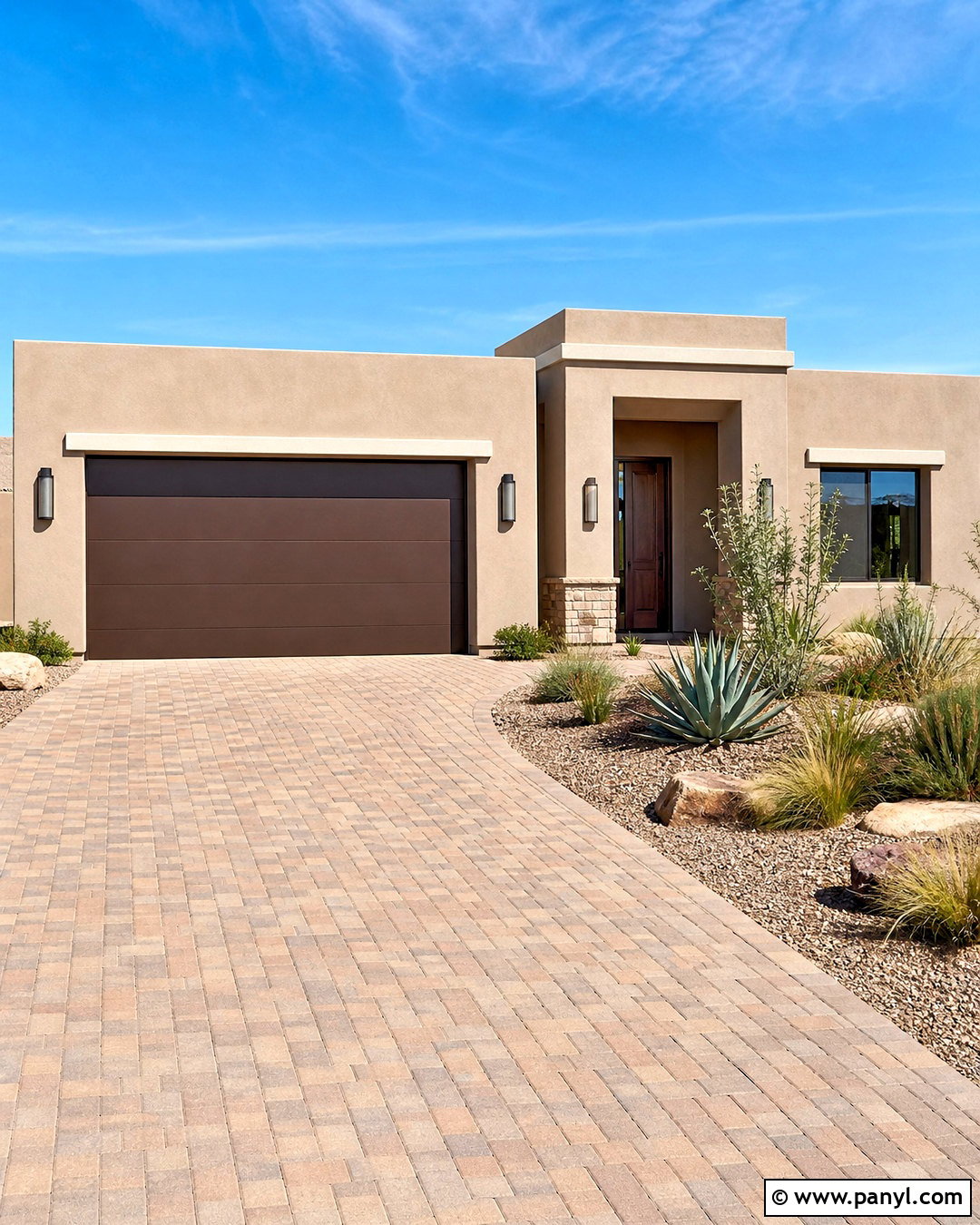
Dark bronze paint offers a warmer alternative to black and looks particularly polished beside beige or sand-colored stucco. Choose a brown-based bronze with limited red undertones, then apply it to a simple paneled or flush garage door. Repeat the color on window frames, gutters, and exterior lights to create visual rhythm. Cream trim will soften the transition between the dark door and warm walls. Add a medium-stained wood front door for a welcoming focal point, along with sandstone pavers and gravel beds. Sculptural agave, rosemary, olive trees, or ornamental grasses support the earthy palette. A satin finish allows the bronze to respond gently to sunlight without becoming overly reflective. This full exterior scheme works well for Southwestern, Mediterranean, transitional, and contemporary stucco homes.
9. Terracotta Garage Door With White Stucco
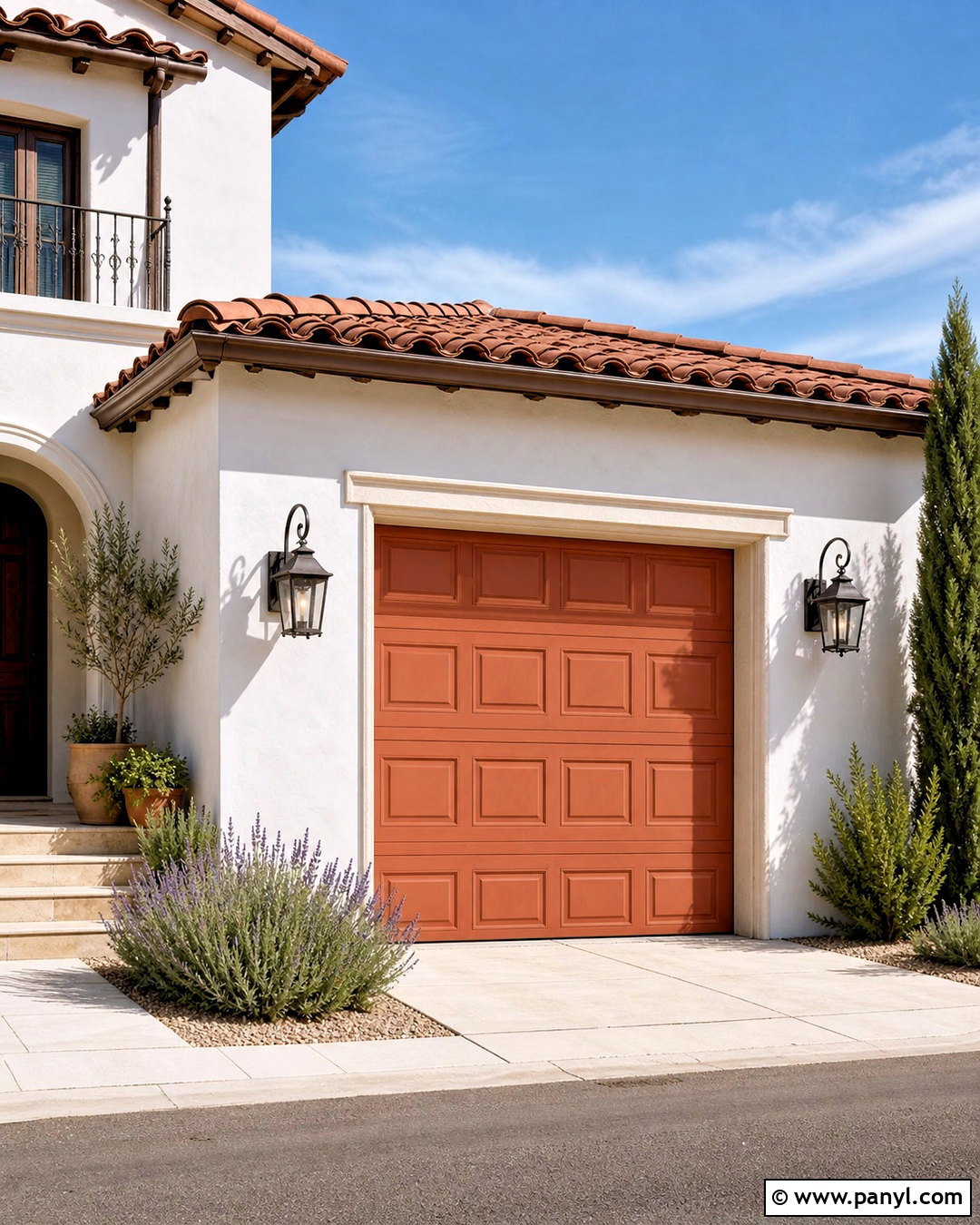
Terracotta paint can turn a plain garage door into a warm Mediterranean accent. Select a muted clay shade with earthy orange and brown undertones rather than a vivid pumpkin color. Pair it with soft white stucco, cream trim, and a weathered terracotta tile roof. Dark bronze lanterns and simple iron hardware add definition without competing with the door. Repeat the clay color in large planters near the entry, but keep the front door medium walnut to avoid making the exterior feel overly matched. Pale gravel, limestone stepping stones, lavender, rosemary, and olive-green foliage complete the landscape. Use a smooth satin finish to give the painted door a clean, maintained appearance. This design is especially effective on arched, paneled, or carriage-style doors with Mediterranean architectural details.
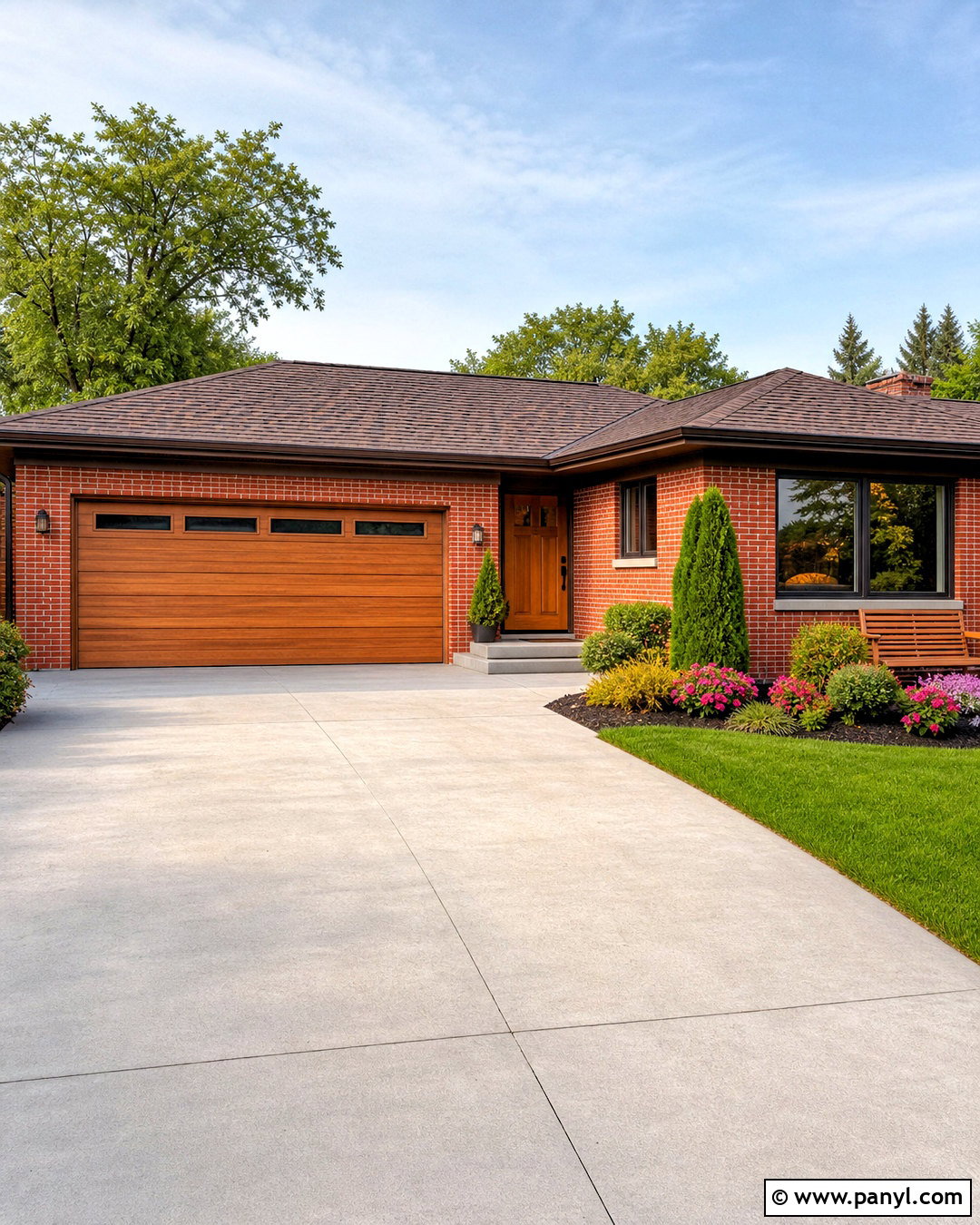
10. Dusty Blue Garage Door With Gray Shingles
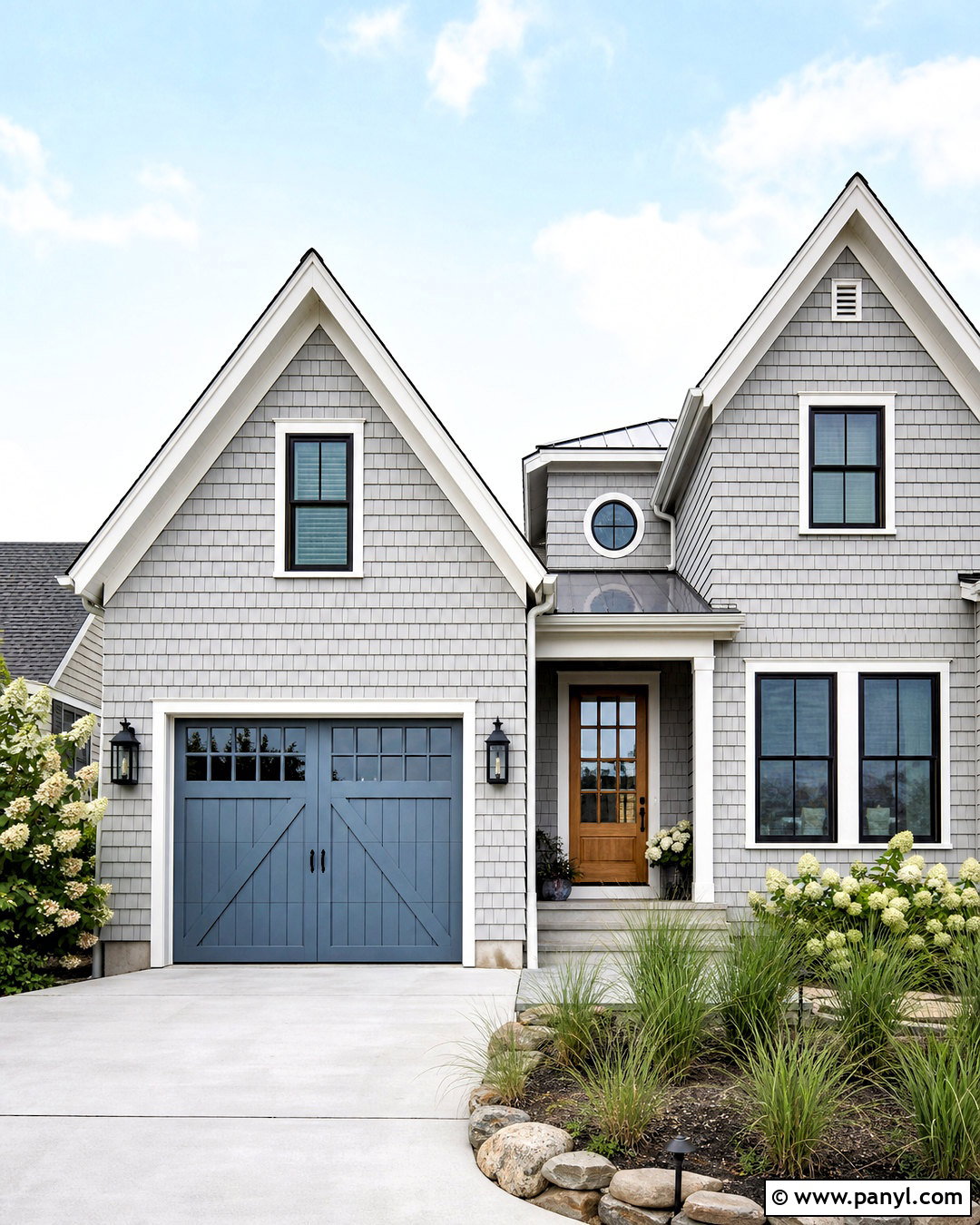
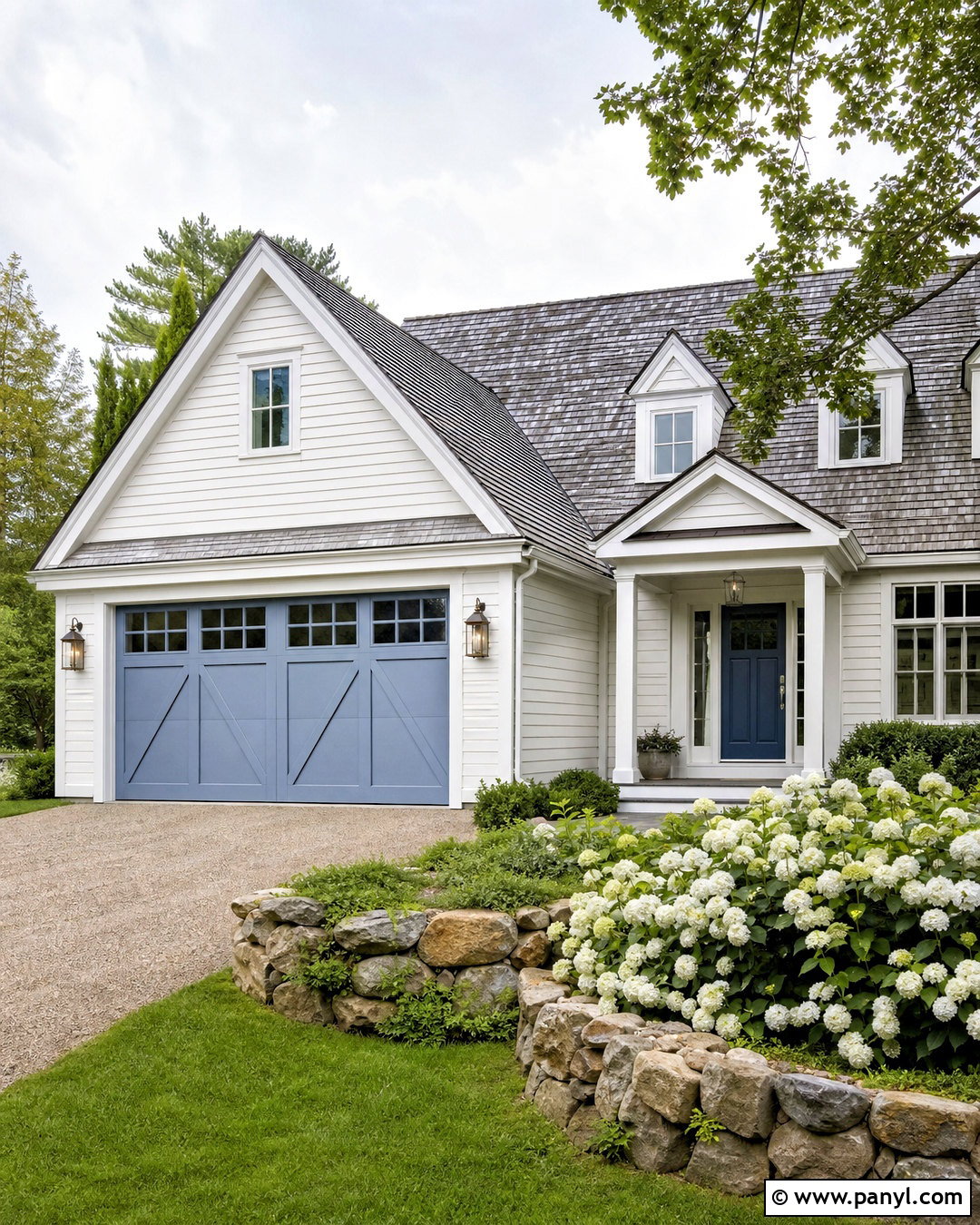
Dusty blue creates a relaxed garage door that fits naturally into a coastal exterior. Choose a softened blue with gray undertones and pair it with pale gray shingles or clapboard siding. Bright white trim around the door, windows, and roofline keeps the house fresh and clearly defined. Use brushed nickel or matte black lighting, depending on whether you prefer a classic or contemporary result. A natural cedar front door and matching planters add warmth to the cool palette. Finish the approach with light concrete, beach grasses, white hydrangeas, and small gray stones. Avoid overly nautical decorations so the design stays versatile and understated. A low-luster satin coating gives the blue enough presence without creating glare, resulting in a breezy but polished garage exterior.
11. Forest Green Garage Door With Natural Stone
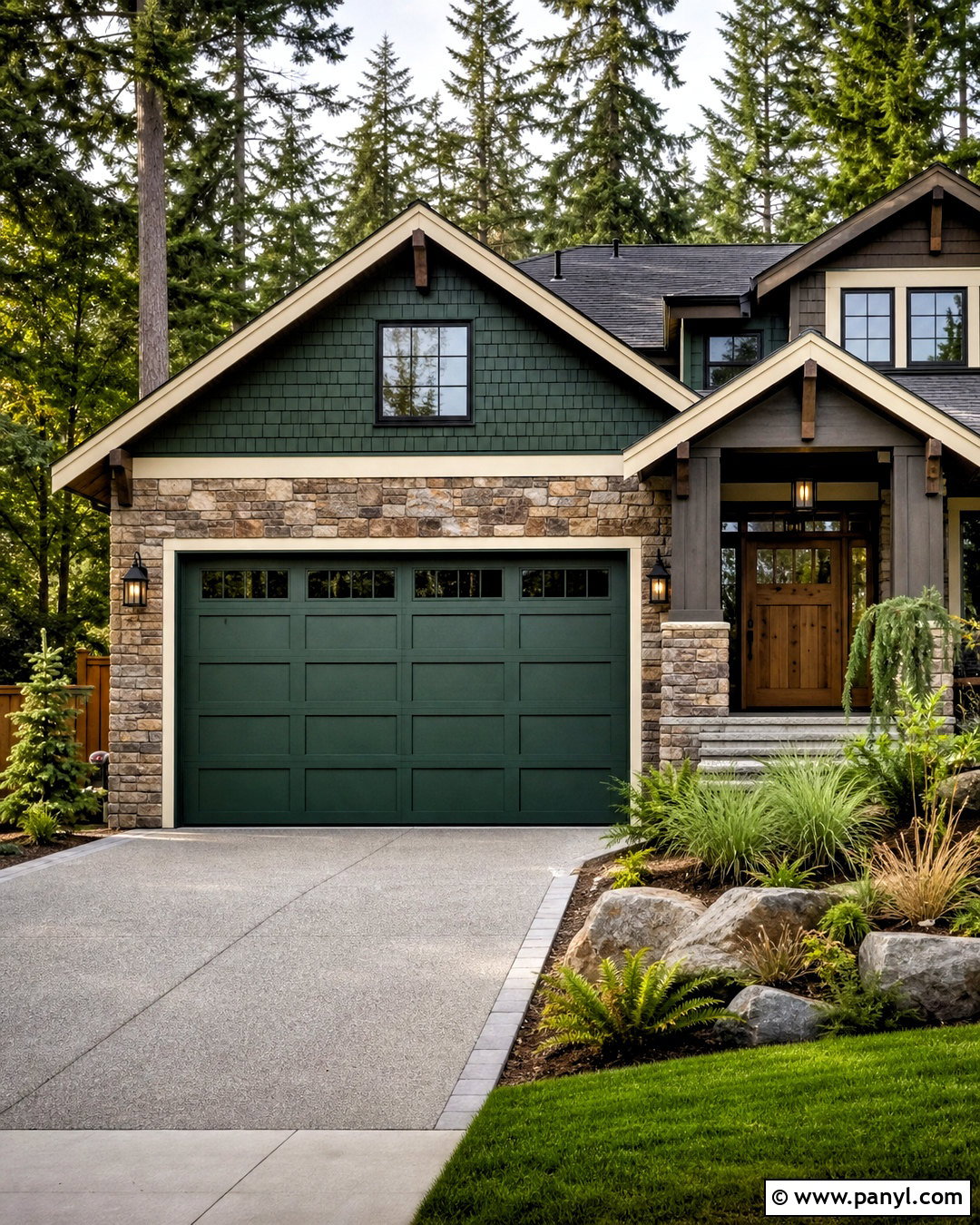
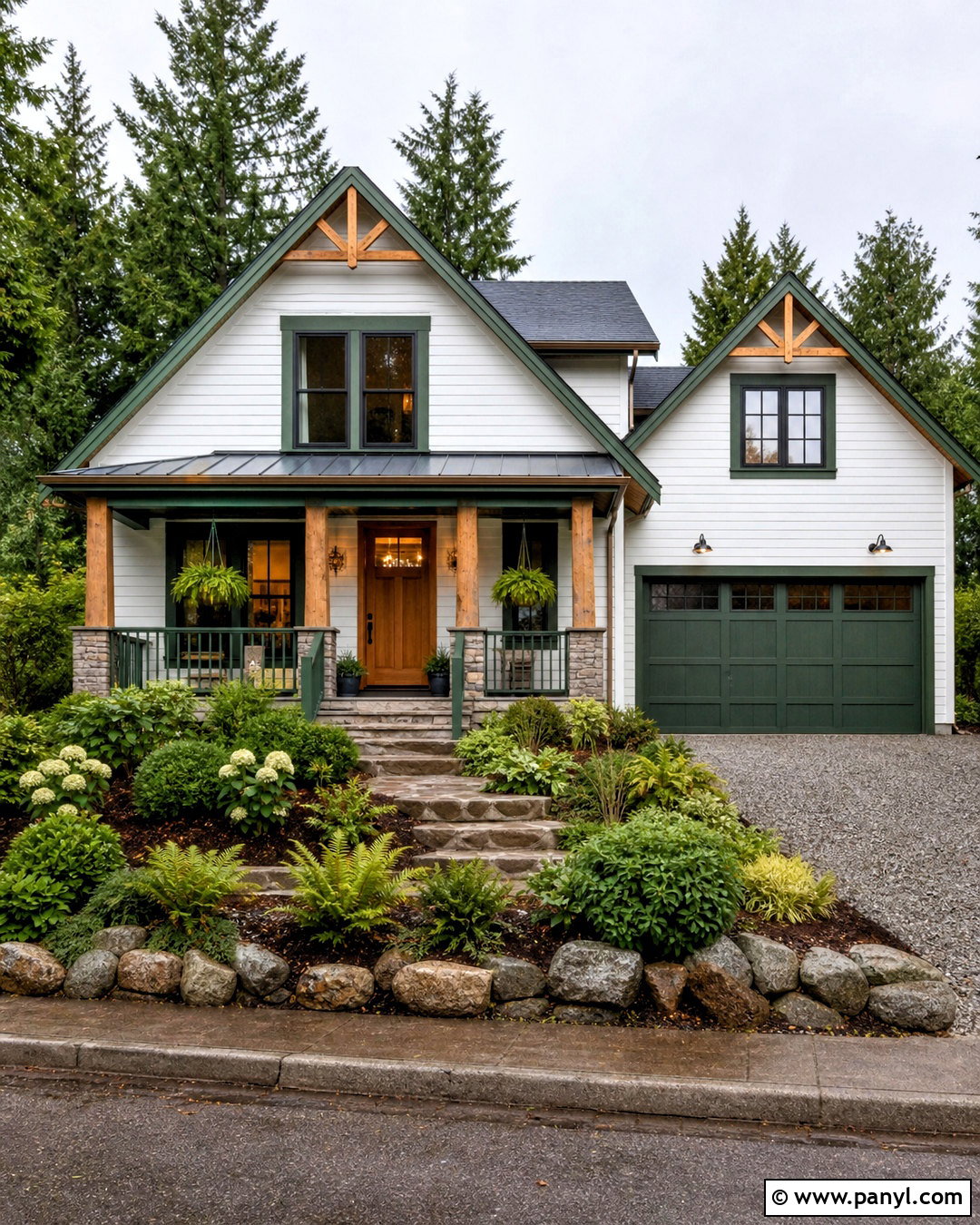
Deep forest green complements the varied brown, gray, and mossy tones found in natural stone. Choose a muted green that appears nearly neutral in shade, then frame the garage door with warm cream or mushroom-colored trim. Carry the green to the shutters or porch railing for balance, while using a dark walnut front door as a warmer focal point. A brown or charcoal roof can work, provided its undertone appears elsewhere in the stone. Add black iron lanterns and restrained carriage hardware to support the traditional character. Native grasses, ferns, evergreen shrubs, and stone-edged planting beds will connect the house to its surroundings. This complete design feels established and welcoming on Craftsman, lodge-inspired, Tudor, and traditional homes without making the garage door appear too bold.
12. Taupe Garage Door With Brown Brick
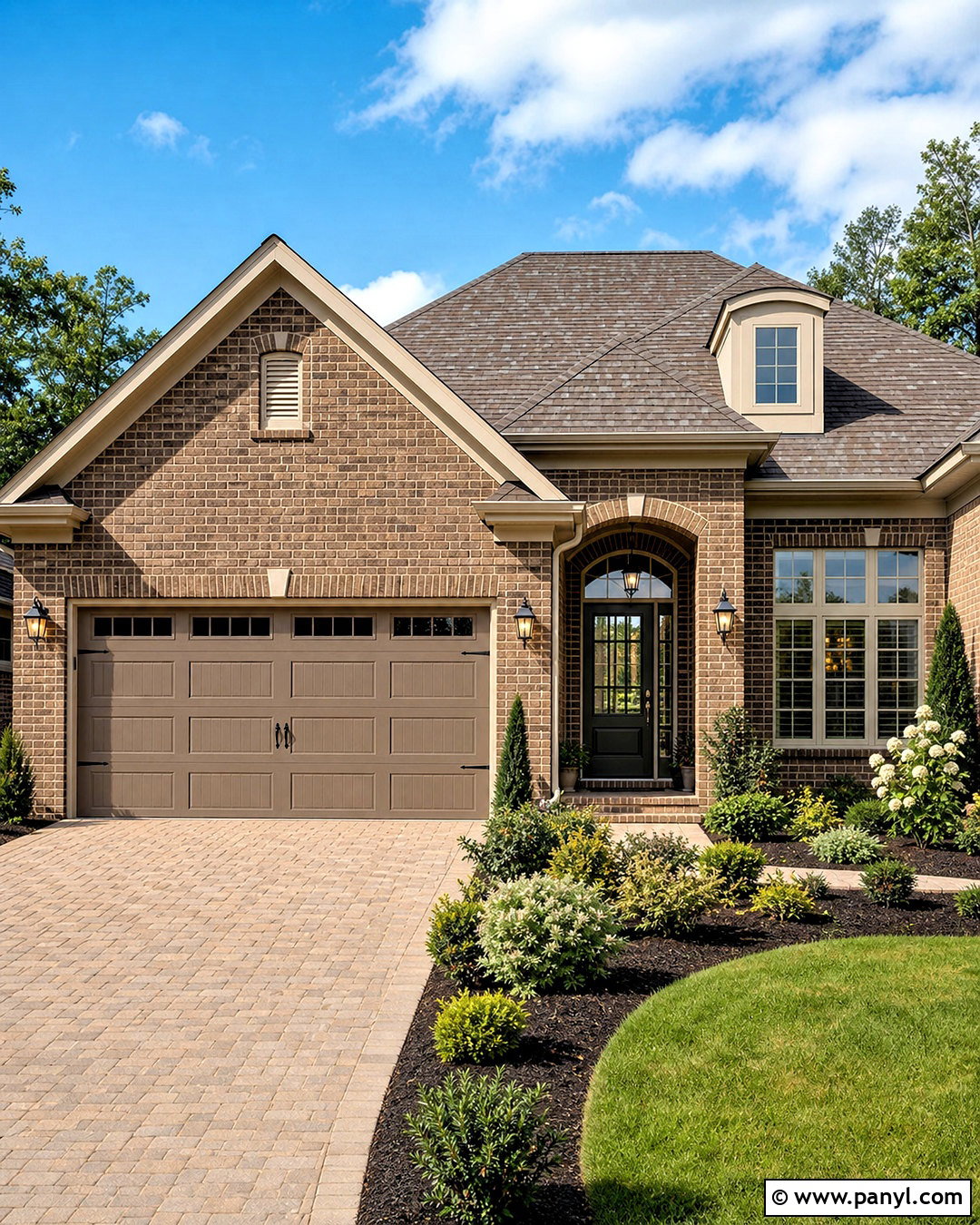
Taupe paint helps a large garage door settle comfortably into a brown brick facade. Pull the color from the brick’s mortar or one of its lighter neutral variations. A slightly deeper taupe around the windows can add dimension, while creamy eaves keep the exterior from becoming too dark. Choose aged bronze hardware and lighting rather than bright silver, which may appear disconnected from the warm masonry. A deep olive or stained wood front door makes a distinctive but compatible entrance accent. Use tan concrete pavers, dark mulch, and layered green foundation plants to complete the design. The finished appearance is quiet and balanced, making the brick—not the garage—the main architectural feature. This solution is especially helpful for wide double doors on traditional suburban homes.
13. Two-Tone Carriage Garage Door
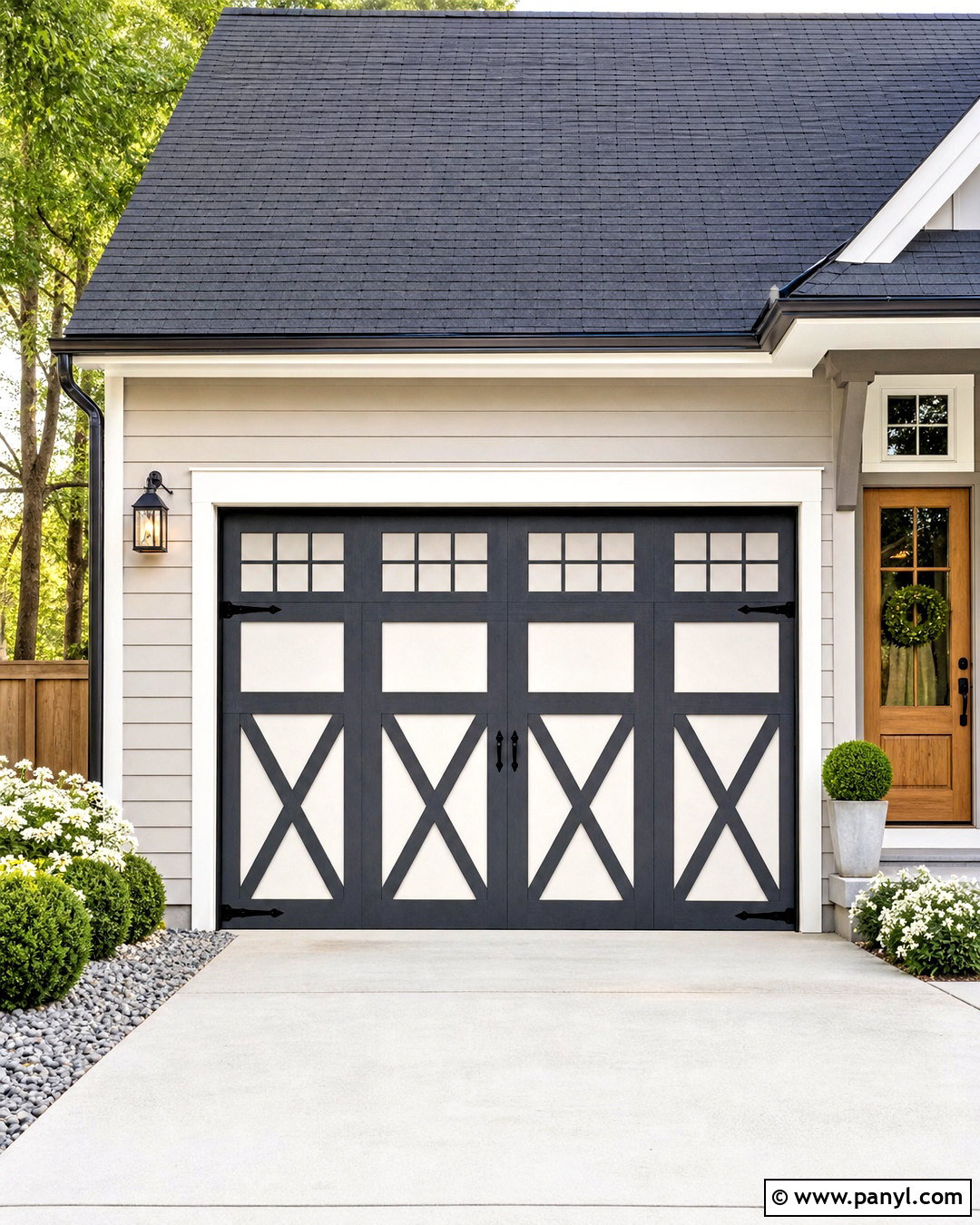
Two-tone paint can highlight the structure of a carriage-style garage door without making it look busy. Paint the main recessed panels warm white, then use charcoal, dark green, or deep brown on the overlay boards and perimeter trim. Keep the contrast controlled by repeating the darker shade on exterior lights, shutters, and decorative handles. Pair the door with light greige siding and a medium gray roof for a balanced farmhouse palette. A natural oak front door adds warmth and prevents the exterior from feeling strictly black and white. Simple boxwoods, white flowers, and gravel-edged planting beds support the crisp architecture. This technique works best when the door already has strong panel divisions. Careful masking and clean painted lines are essential for a convincing finished result.
14. Garage Door Painted To Match Siding
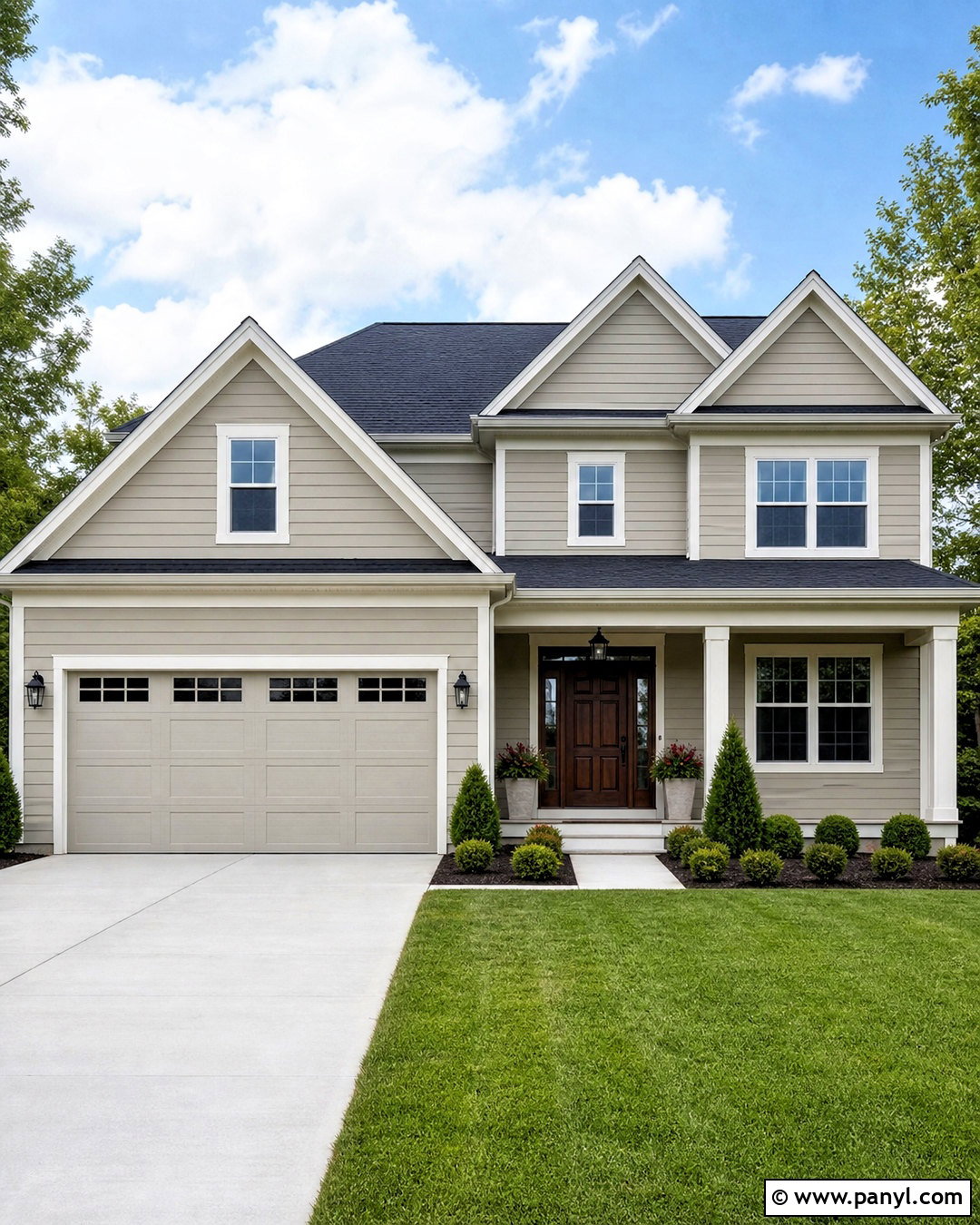
Painting the garage door the same color as the siding allows it to recede into the overall facade. This is particularly useful when a wide door dominates the front of the house. Choose an exact or very close match in soft greige, light taupe, warm gray, or another existing body color. Paint the surrounding door frame to match as well, creating a broad, uninterrupted surface. Use contrasting white trim around windows and a darker front door to redirect attention toward the entrance. Black lighting and house numbers can add small, consistent points of definition. Finish the look with symmetrical shrubs, a clear walkway, and planters beside the porch. The result feels larger, calmer, and more unified, especially on compact ranch homes, townhouses, and front-loaded suburban properties.
15. Light Gray Garage Door With Black Trim
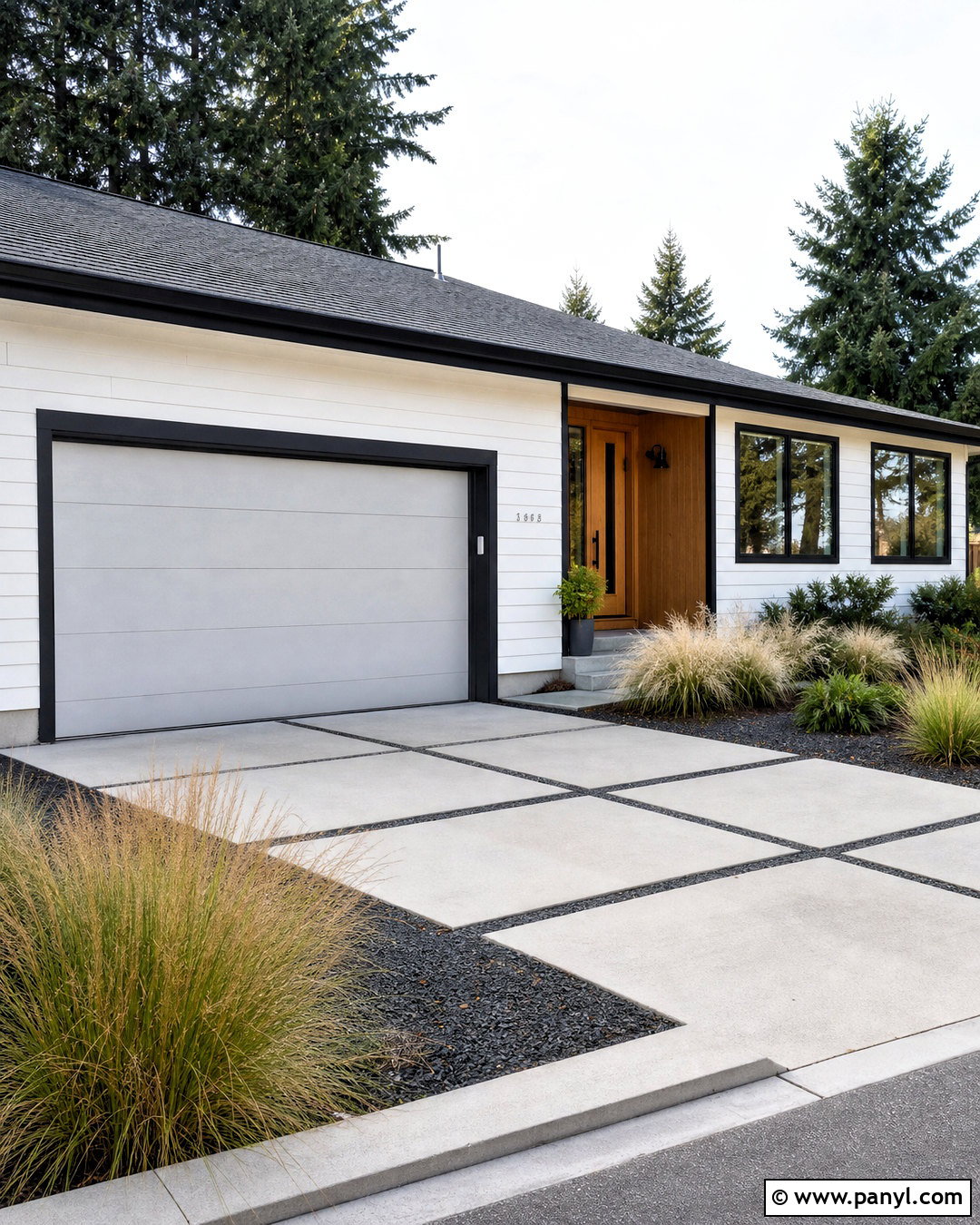
A light gray garage door offers more depth than white while keeping the exterior bright. Surround it with narrow black trim to define the opening and connect it to black windows, gutters, or roof details. Use white or very pale gray siding for a clean background. A warm cedar front door provides a natural contrast and stops the grayscale palette from feeling cold. Select simple black wall lights and minimal garage hardware for a modern appearance. Large concrete pavers, dark gravel joints, and neatly clipped grasses reinforce the clean lines. On a raised-panel door, choose a soft gray that does not create excessive shadow between sections. A satin finish keeps the color practical and understated. This complete look works well for modern ranch, transitional, and Scandinavian-inspired house exteriors.
16. Deep Red Garage Door With Farmhouse Siding
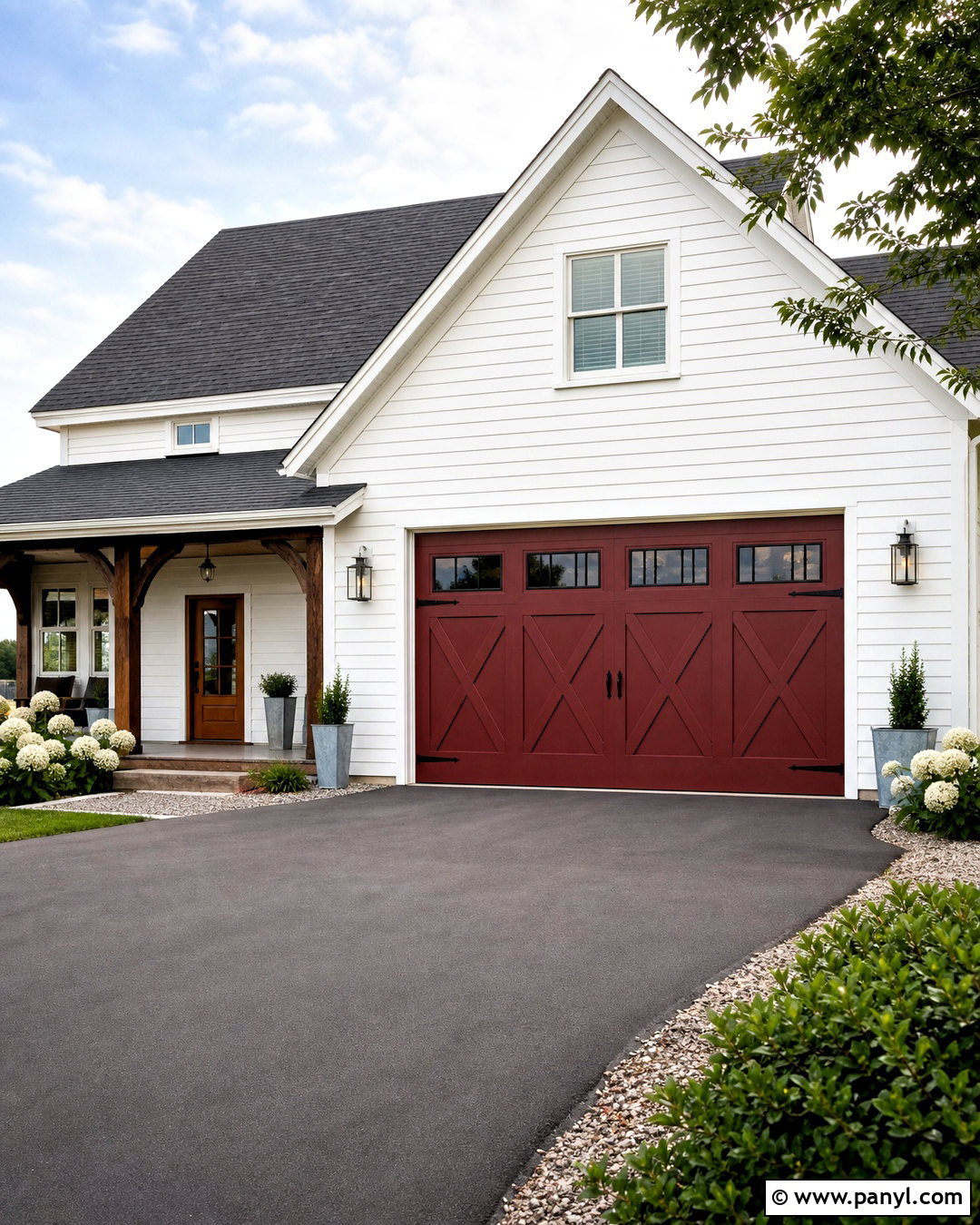
Deep barn red can give a garage door classic farmhouse character when the rest of the palette stays restrained. Choose a muted red with brown undertones rather than a bright primary shade. Pair it with warm white horizontal siding, creamy trim, and a dark charcoal roof. Black carriage handles, strap hinges, and gooseneck lights strengthen the rural influence. Repeat the red only once, perhaps on a small side door or planter, so the garage remains a controlled accent. A natural wood front door and timber porch posts add warmth without competing. Complete the setting with gravel edging, white flowering shrubs, ornamental grasses, and simple galvanized planters. This scheme feels most convincing on paneled or crossbuck doors where the architecture already supports a traditional farmhouse appearance.
17. Mushroom Garage Door With Limestone
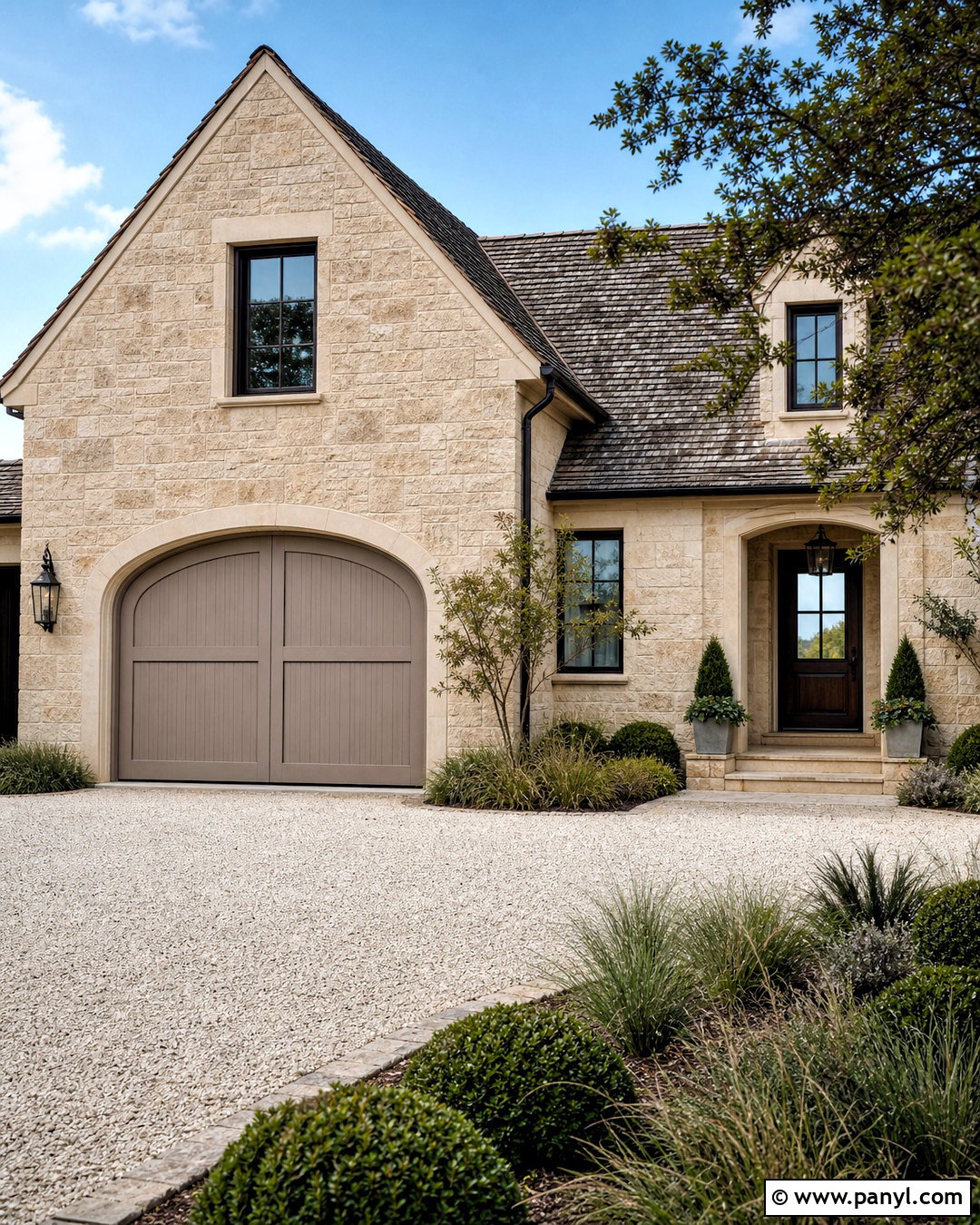
Mushroom paint blends gray, beige, and soft brown, making it an ideal partner for pale limestone. Match the garage door to one of the medium tones within the masonry rather than its lightest surface. Use creamy off-white on the trim and a rich espresso shade on the front door, window frames, and exterior lights. The roof can be weathered gray or brown, as long as its undertone connects with the stone. Keep garage hardware minimal so the natural materials remain the focus. Along the driveway, use limestone edging, pale gravel, clipped shrubs, and airy ornamental grasses. A satin coating gives the mushroom color gentle dimension across raised or recessed panels. The completed exterior looks refined and grounded, fitting French country, transitional, and upscale traditional homes particularly well.
18. Matte Black Modern Garage Door
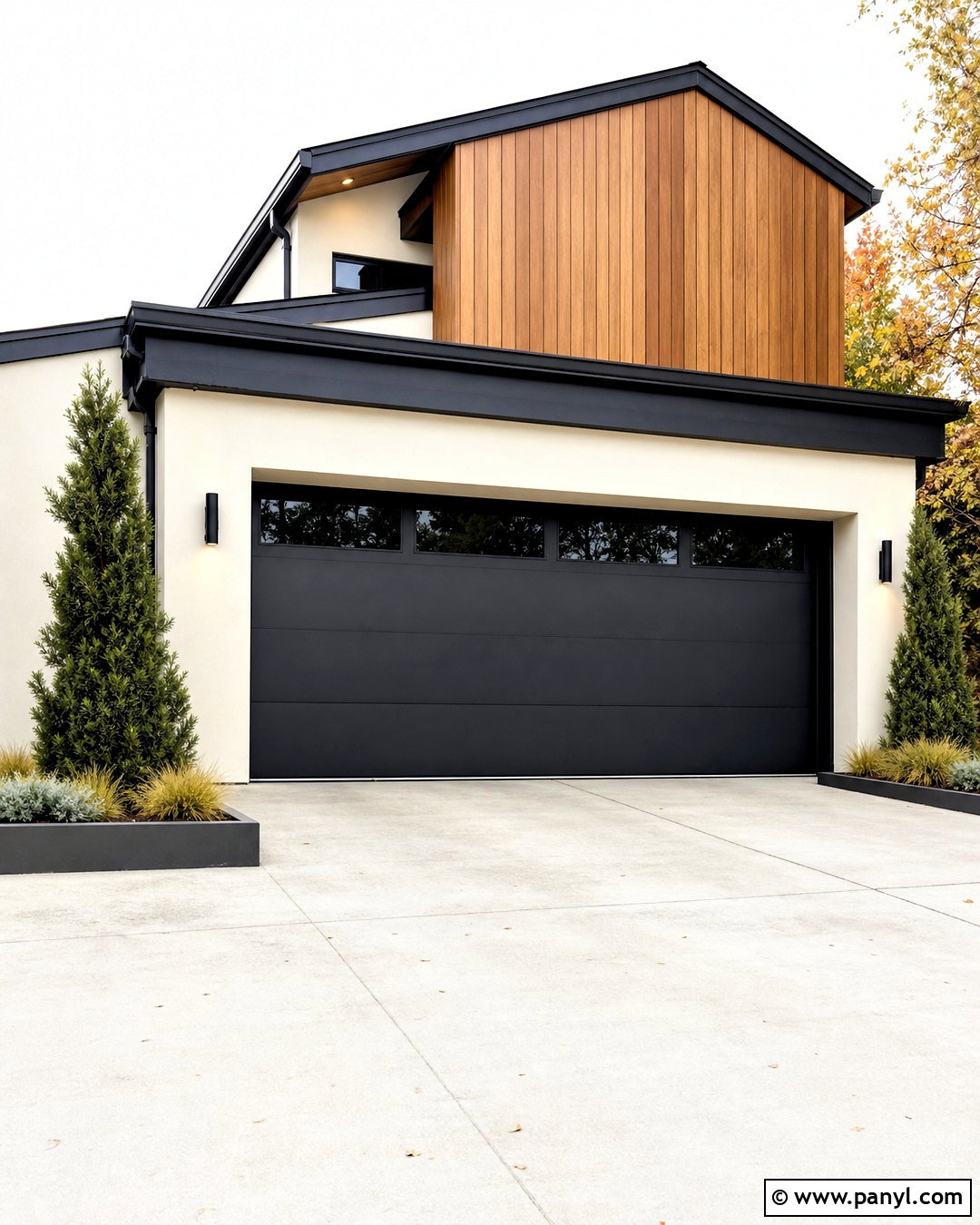
A flush garage door painted matte or low-sheen black can become a strong architectural feature on a modern home. Pair it with warm white stucco, pale concrete, and vertical cedar siding around the entrance. The wood breaks up the black-and-white contrast and creates a warmer transition to the front door. Use narrow black-framed windows across the top of the garage door if the existing design allows them. Minimal rectangular lights and simple metal house numbers reinforce the clean geometry. Keep the landscaping structured with linear planters, sculptural grasses, and compact evergreen shrubs. Because very flat finishes can show marks, consider a durable low-luster satin that produces a similar appearance. The full design feels bold and uncluttered while keeping materials and colors limited to a disciplined modern palette.
19. Pale Blue Garage Door With Cottage Siding
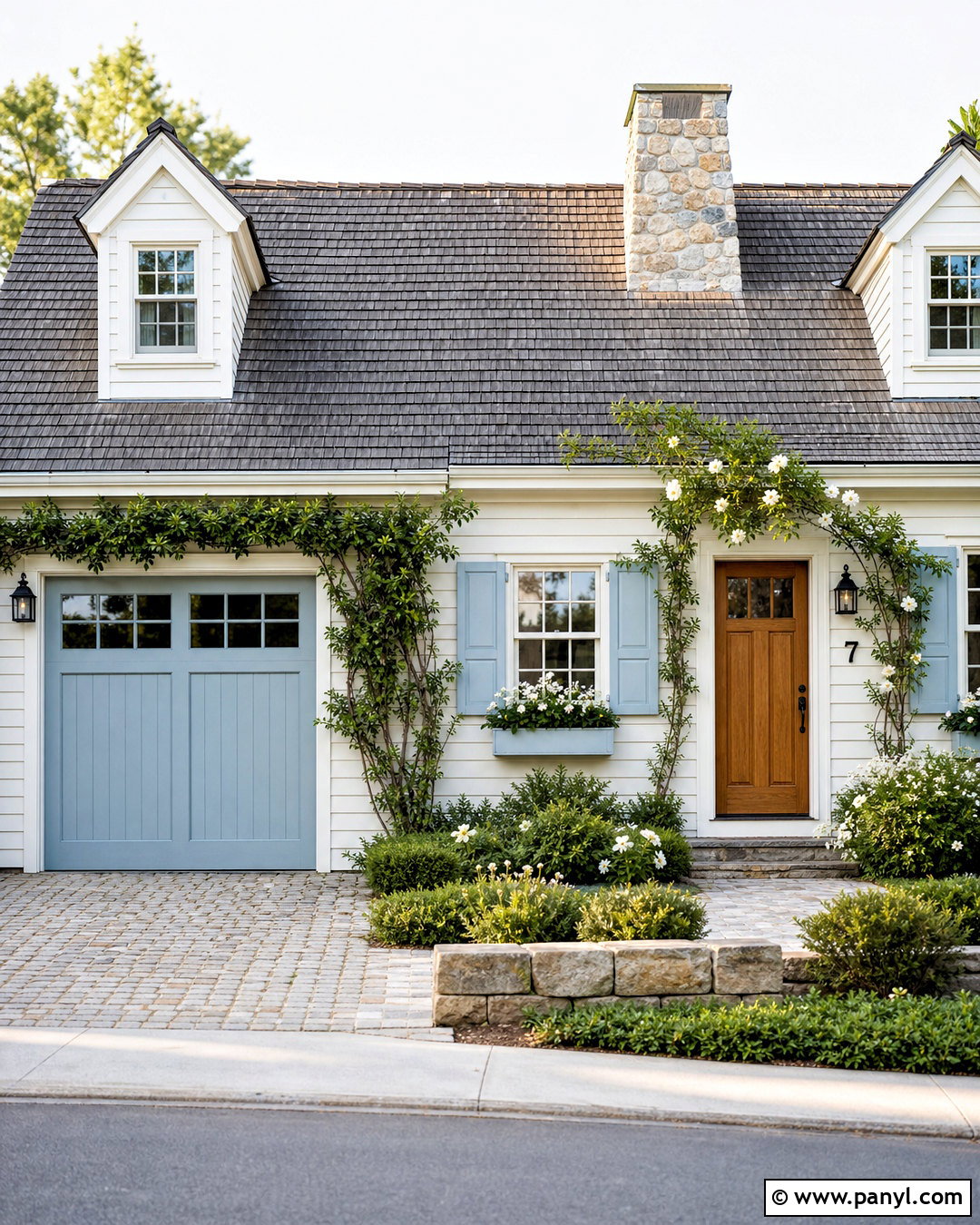
Pale blue paint gives a small garage door cheerful cottage character without overpowering the house. Choose a soft blue with a touch of gray, then pair it with warm white siding and slightly creamier trim. A medium gray shingle roof grounds the light colors, while polished nickel or black lanterns provide crisp detail. Paint the front door a deeper blue or natural wood tone to establish a clear entrance. Add window boxes, climbing greenery, white roses, and loose flowering borders along the driveway. Brick or irregular stone paving can introduce texture and age. Keep decorative garage hardware simple, especially if the door has multiple small panels. This complete palette feels inviting on Cape Cod, bungalow, cottage, and detached alley garage exteriors with traditional architectural features.
20. Deep Teal Garage Door With Tan Siding
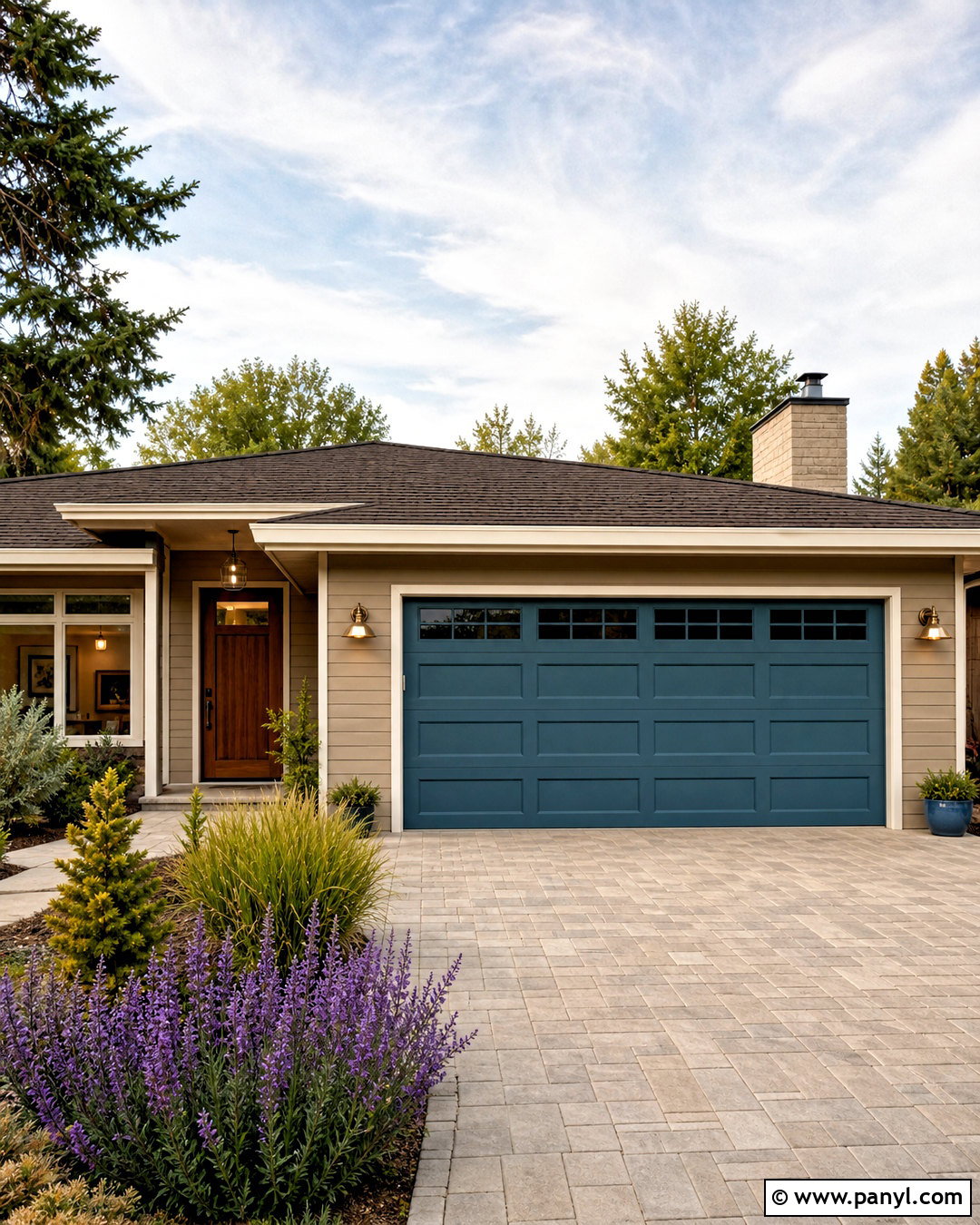
Deep teal offers expressive color while remaining sophisticated enough for a prominent garage door. Select a blue-green shade with muted gray undertones and combine it with warm tan siding, ivory trim, and a dark brown roof. Repeat the teal on a small porch bench, planter, or side gate instead of matching every accent. A walnut front door should remain the main entrance feature. Use aged brass or bronze lights to emphasize the warmth in the surrounding palette. Finish the curb view with buff pavers, ornamental grasses, flowering salvia, and evergreen shrubs. A smooth satin finish helps the teal retain clarity without appearing excessively shiny. This complete scheme works especially well on mid-century ranch homes, updated bungalows, and eclectic exteriors needing a controlled but memorable color change.
Conclusion:
These **20 garage door painting ideas** show how one well-planned color change can create a more coordinated home exterior. The most successful scheme will relate to the siding, masonry, roof, trim, front entrance, driveway, and landscaping rather than treating the garage as a separate feature. Decide whether you want the door to blend in or provide contrast, then test several colors on the actual surface. Observe them in morning light, afternoon sun, and shade before committing. Choose an exterior coating recommended for your door’s wood, metal, fiberglass, or composite material. With careful preparation, balanced accent colors, and a durable finish, a painted garage door can look polished, intentional, and naturally connected to the entire property.

Related Ideas and Inspiration:
Leave a Reply