
These 20 lilac bedroom walls show how versatile this soft purple shade can be when paired with the right furniture, finishes, and accent colors. Lilac can feel airy and understated, warm and romantic, or polished and dramatic. The result depends on the room’s natural light and the undertones in the paint. Warm lilacs work beautifully with cream, beige, and brass, while cooler versions complement gray, blue, and crisp white. Natural wood can make the color feel grounded, and dark accents provide modern contrast. Remember to test several large paint samples because flooring, window direction, and artificial lighting can change how purple appears. Use the following complete bedroom looks as practical inspiration for recreating these 20 lilac bedroom walls.

1. Lilac Bedroom Walls With White Trim
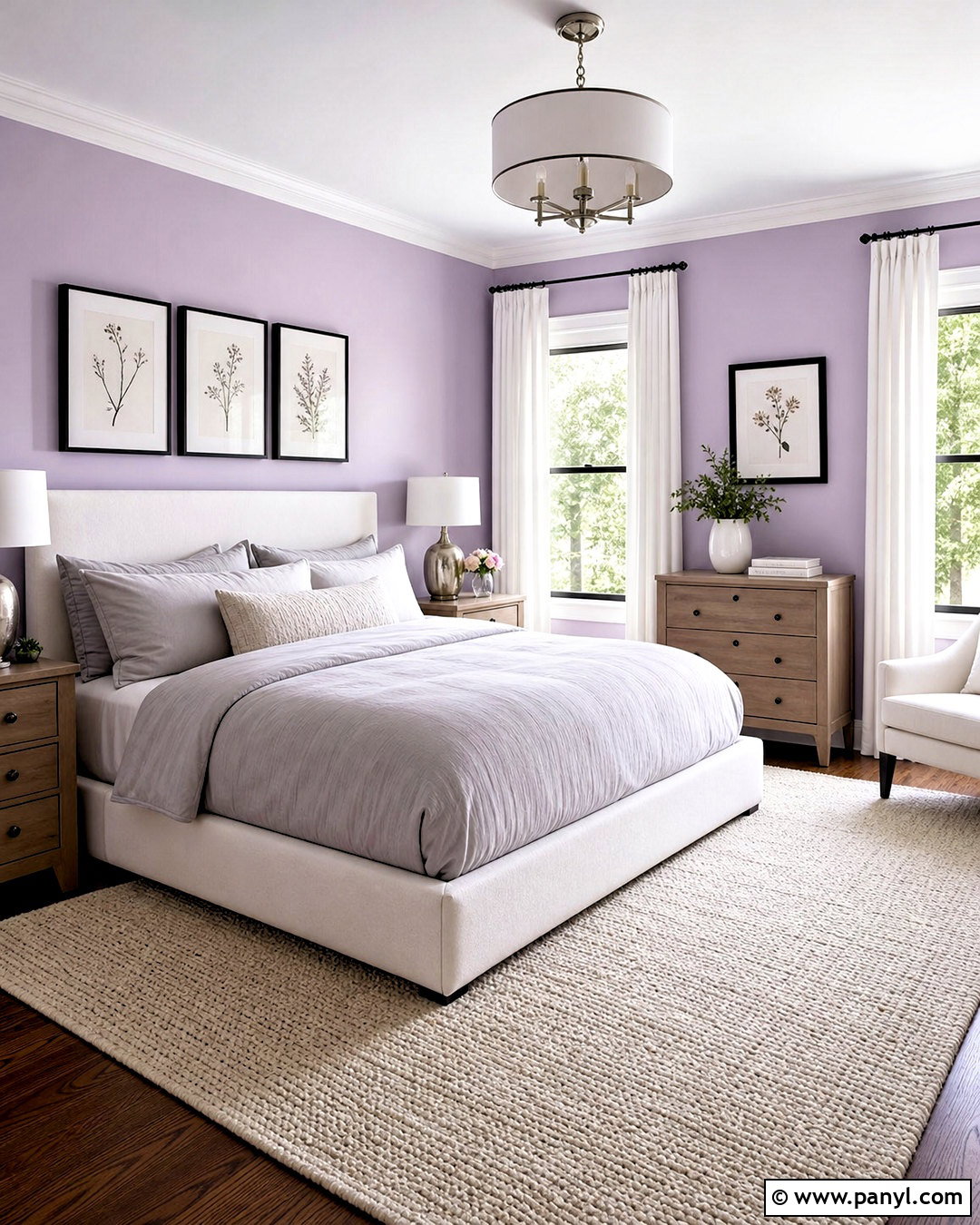
Crisp white trim gives lilac bedroom walls a clean, bright finish that works especially well in a compact or moderately sized room. Paint the walls a soft, balanced lilac and keep the ceiling, baseboards, window frames, and doors fresh white. Center a white upholstered bed against the longest wall, then add pale gray bedding and two muted purple pillows. Light oak nightstands prevent the palette from feeling overly sweet. A woven ivory rug brings softness underfoot, while simple white curtains help maximize daylight. Complete the room with brushed nickel lamps, black-framed botanical prints, and one leafy plant. The limited palette looks polished but still feels approachable, making it suitable for a primary bedroom, guest room, or teenager’s space.
2. Lilac Bedroom Walls With Sage Green
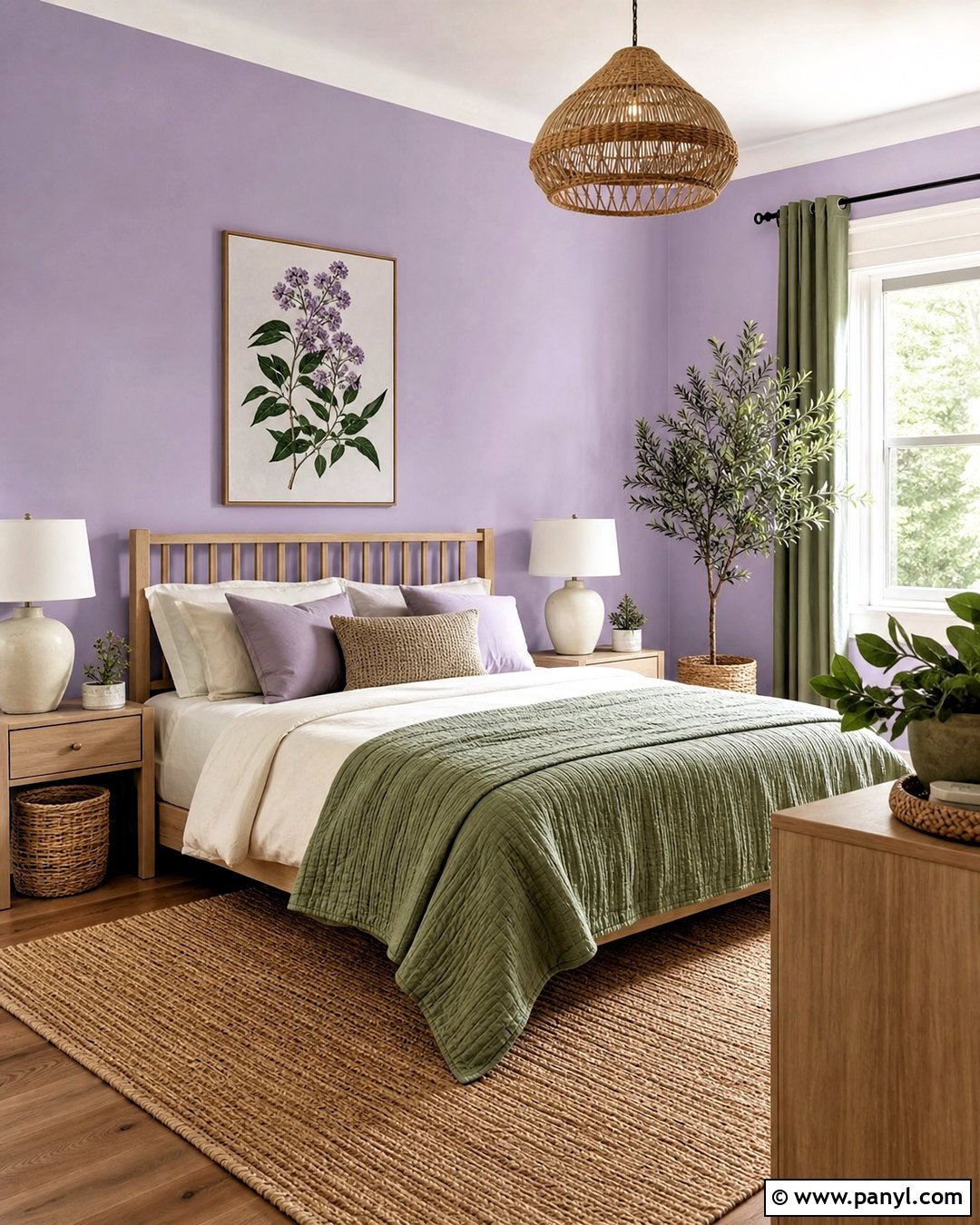
Imagine waking up to a bedroom that feels soft, natural, and quietly colorful. Pair muted lilac bedroom walls with warm sage green bedding, curtains, or a painted dresser. Choose a light oak bed with a simple slatted headboard to connect the pastel colors with an earthy material. Layer the bed with cream sheets, a sage quilt, and lilac accent pillows in slightly deeper tones than the walls. A natural jute rug and woven baskets add useful texture. Keep the ceiling and trim warm white rather than stark white. Finish the room with ceramic table lamps, botanical artwork, and a few dark green plants. Repeating sage in three areas creates balance, while cream and wood keep the two-color combination calm and easy to live with.
3. Lilac Bedroom Walls With Natural Wood

Warm wood tones can ground lilac bedroom walls and give the room a comfortable, grown-up character. Start with a dusty lilac paint that has subtle gray undertones. Add a walnut or medium-oak platform bed, matching nightstands, and a low dresser with visible wood grain. Use ivory bedding as the foundation, then layer camel, taupe, and muted plum pillows across the bed. A cream wool rug will soften the floor without competing with the furniture. Hang linen curtains in a natural oatmeal shade and choose matte black lamps for gentle contrast. One oversized landscape print above the headboard can tie the earthy palette together. This complete look works particularly well in bedrooms with hardwood floors, where the repeated wood tones create warmth and visual continuity.
4. Lilac Bedroom Walls With Light Gray
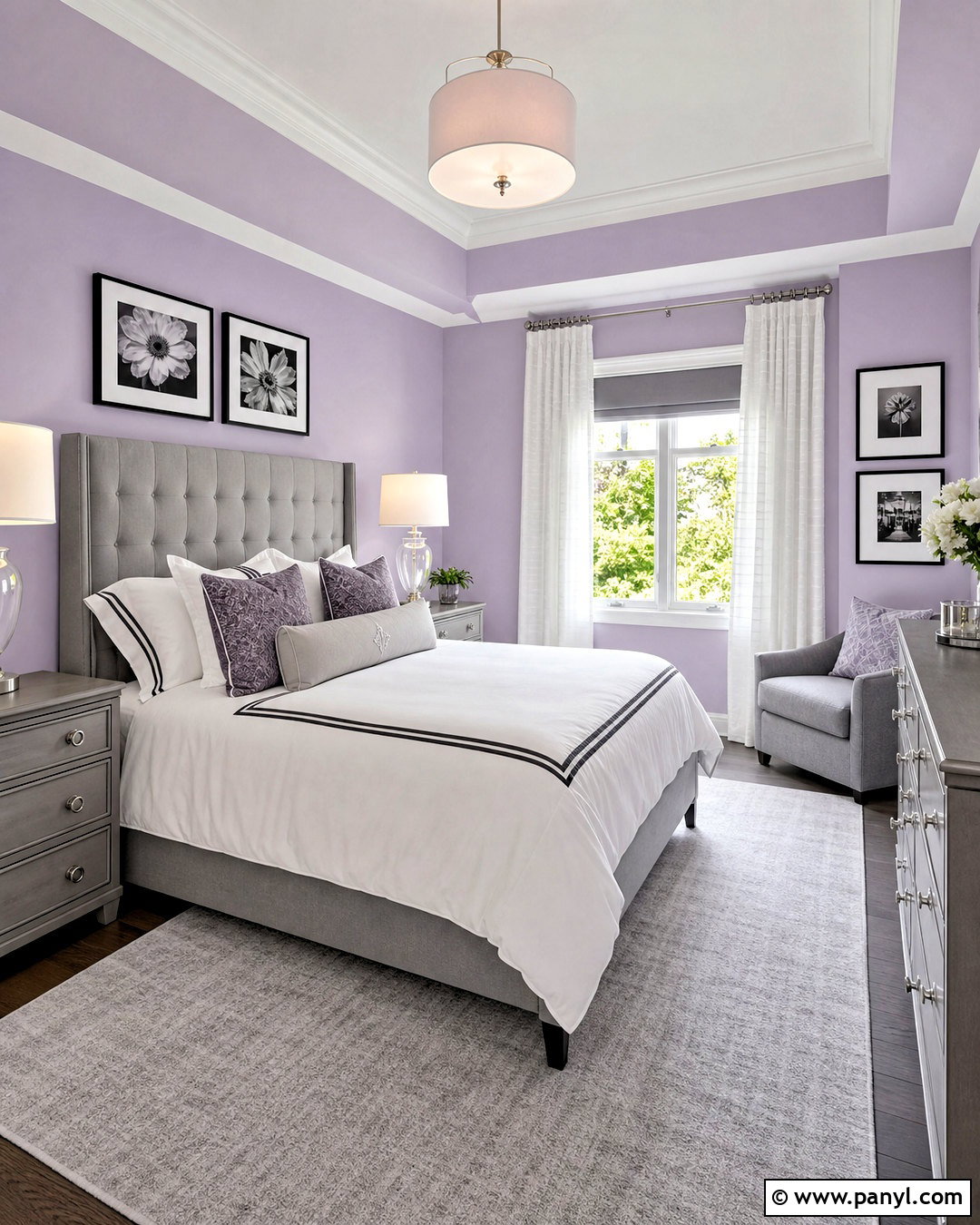
For an understated bedroom, combine pale lilac walls with light gray furniture and layered neutral textiles. The lilac should be soft enough to act almost like a tinted neutral, while gray provides a cooler, tailored base. Place a light gray upholstered bed against the main wall and dress it with white sheets, a charcoal-edged duvet, and muted lavender cushions. Choose streamlined white nightstands or gray floating shelves to keep the floor area open. A silver-gray rug can connect the furniture without making the room look flat. Add clear glass lamps, brushed nickel hardware, and white curtains with a subtle woven texture. A few charcoal accents, such as picture frames or a bench, give the delicate palette definition and prevent the finished bedroom from appearing washed out.
5. Lilac Bedroom Walls With Cream Furniture
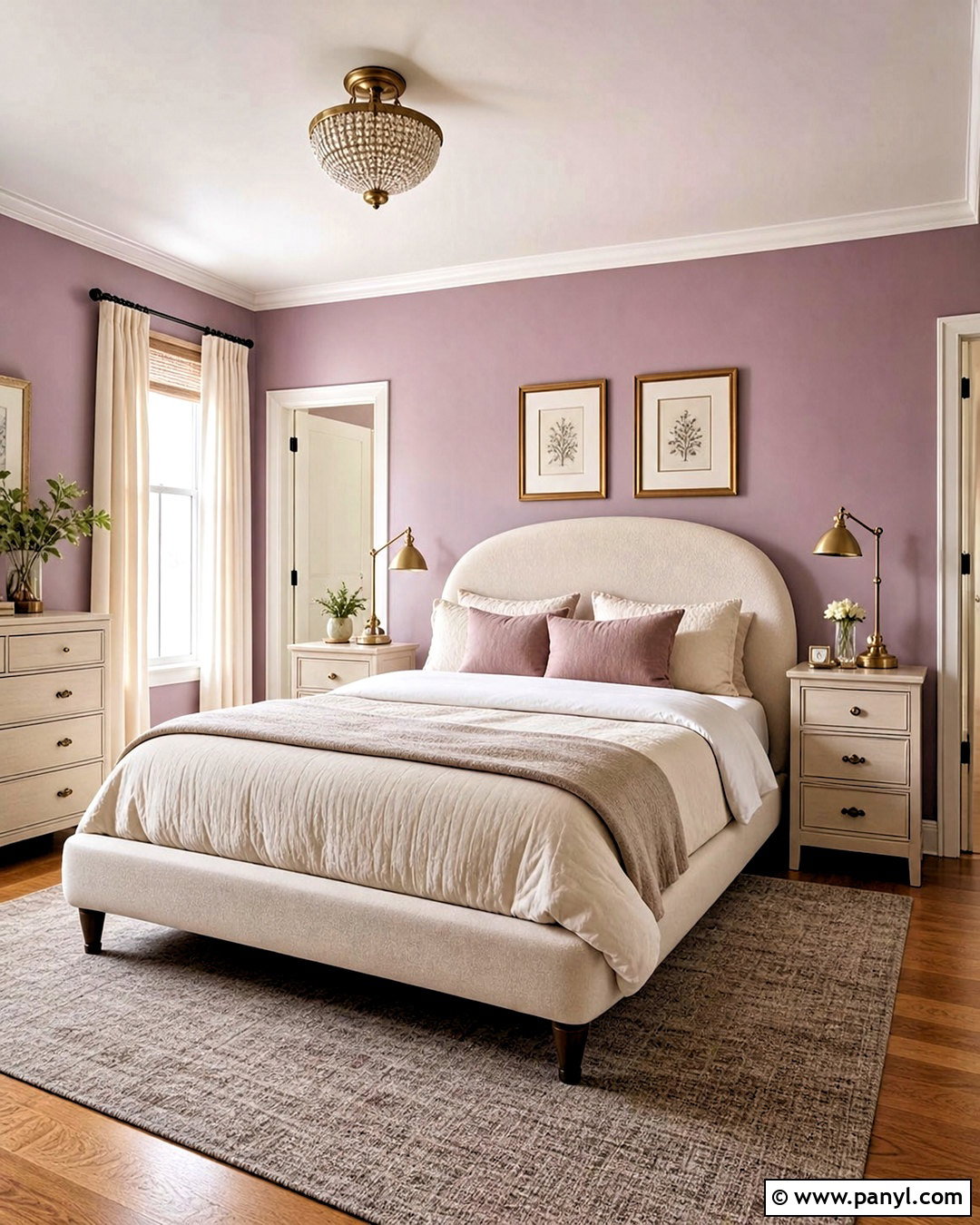
Soft cream furniture brings warmth to lilac bedroom walls and creates a gentle alternative to bright white. Choose a warm lilac paint with a faint pink undertone, then introduce an upholstered cream bed with a rounded headboard. Match it with ivory nightstands, a cream dresser, and off-white curtains. Bedding can include vanilla, pale mauve, and muted beige layers for a comfortable tonal effect. Place a plush taupe rug beneath the lower two-thirds of the bed to anchor the arrangement. Antique brass lamps and warm wood picture frames add depth without becoming heavy. This palette works best when different cream tones are deliberately layered rather than perfectly matched. The subtle variation gives the bedroom dimension while preserving its peaceful, cohesive appearance.
6. Lilac Bedroom Walls With Blush Pink
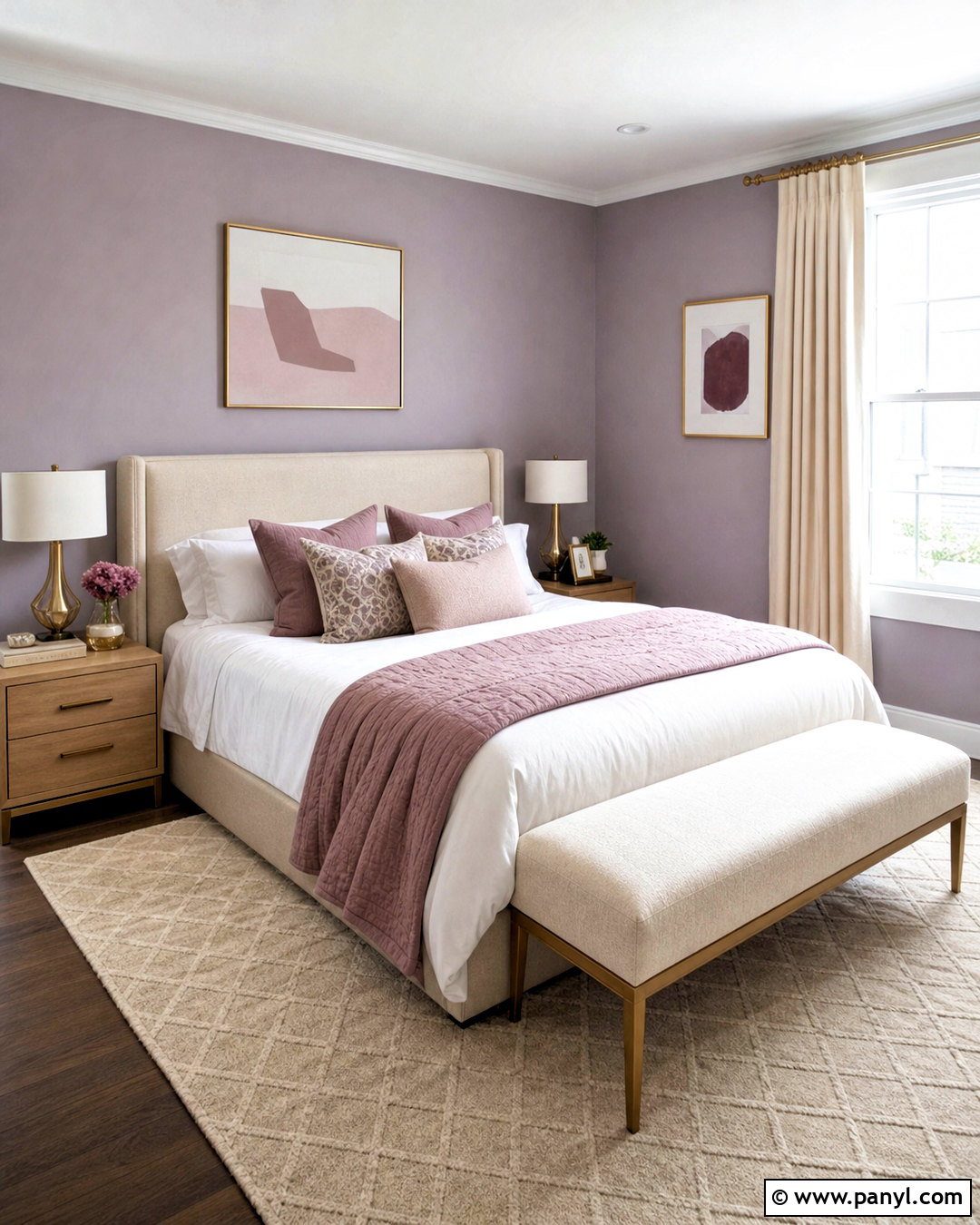
Could lilac and blush feel sophisticated rather than overly sugary? The key is choosing dusty, muted versions of both colors and balancing them with warm neutrals. Use gray-toned lilac bedroom walls behind a beige upholstered bed. Layer white bedding with a faded blush quilt, mauve pillows, and one textured burgundy lumbar cushion. Natural oak nightstands and a woven tan bench bring an earthy contrast to the pastels. Select simple linen curtains in warm ivory and place a cream rug with a subtle geometric pattern under the bed. Aged brass lamps and minimal abstract artwork make the space feel more mature. Avoid filling every surface with pink accessories. A few repeated blush details are enough to connect the bedding to the lilac walls.
7. Lilac Bedroom Walls With Navy Accents
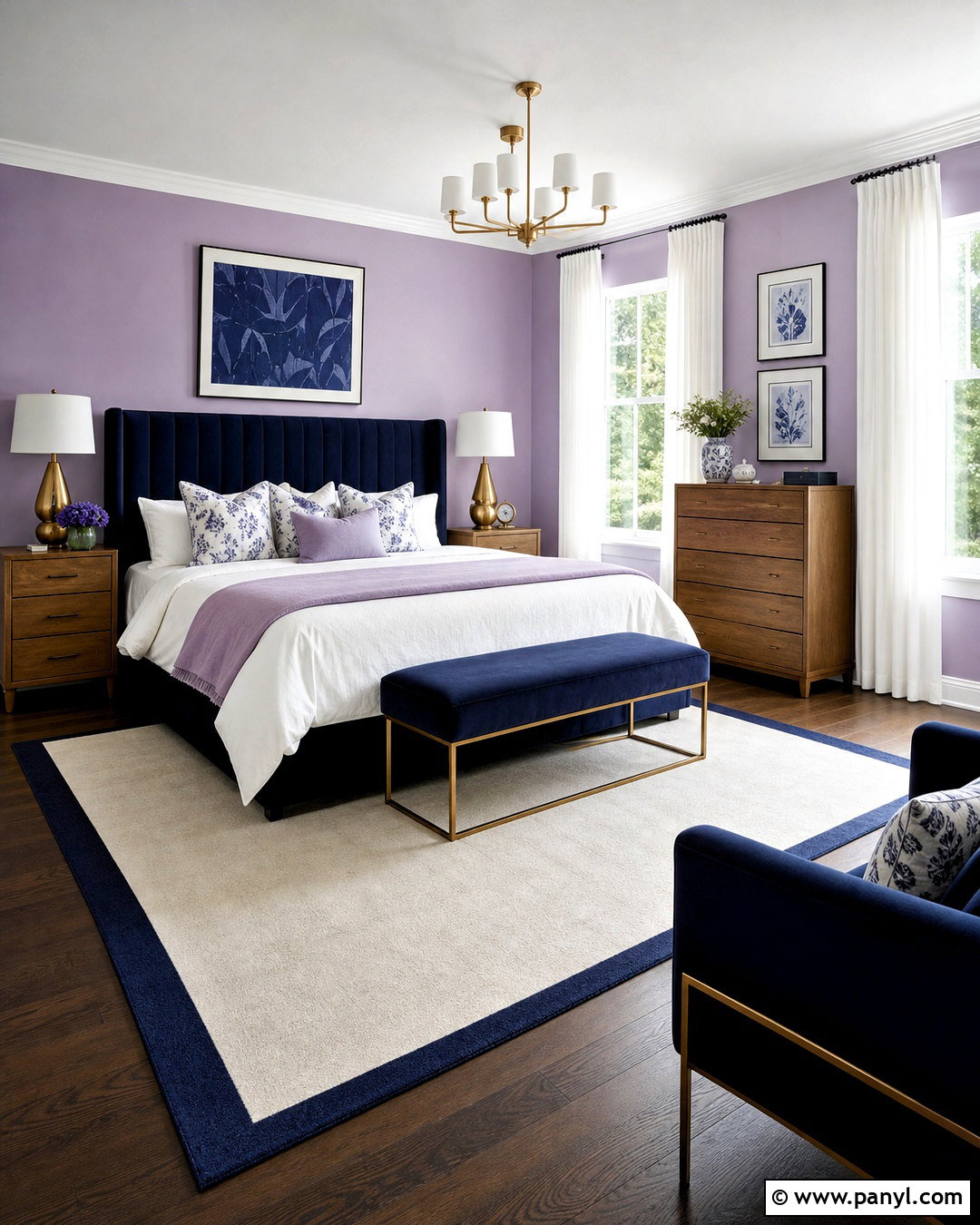
Deep navy accents can give delicate lilac bedroom walls a stronger, more structured presence. Paint all four walls a pale lilac, then position a navy upholstered bed or tall fabric headboard as the room’s main focal point. Keep the bedding mostly white, using navy piping, a lilac throw, and one patterned cushion to blend the colors. Add medium-oak nightstands so the contrast does not become too cold. A cream rug with a navy border will frame the bed and repeat the darker accent at floor level. Choose brass or antique gold lamps for warmth, along with white curtains that keep the room bright. Navy artwork frames and a small blue bench complete the palette without overpowering the soft purple walls.

8. Lilac Bedroom Walls With Black Furniture
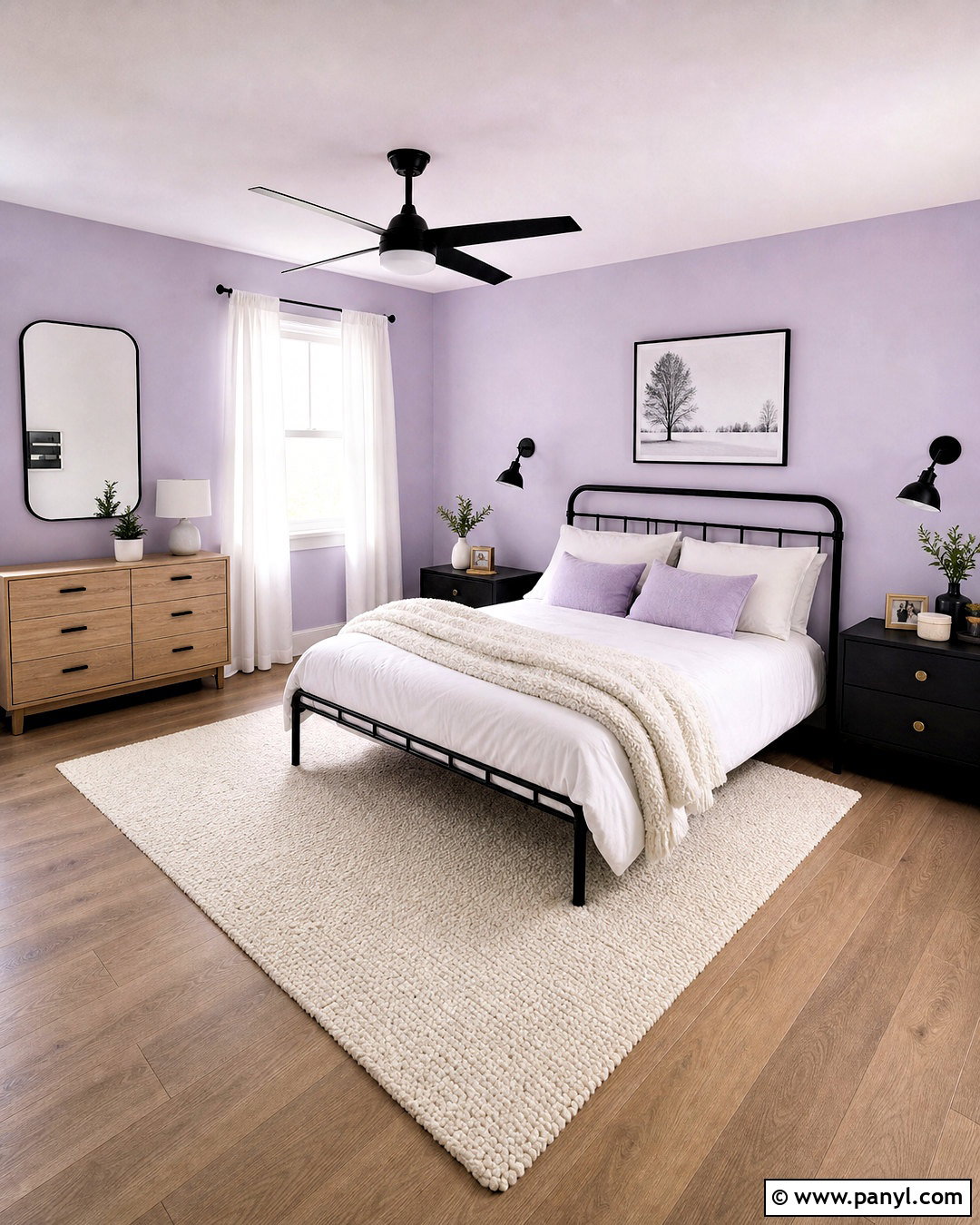
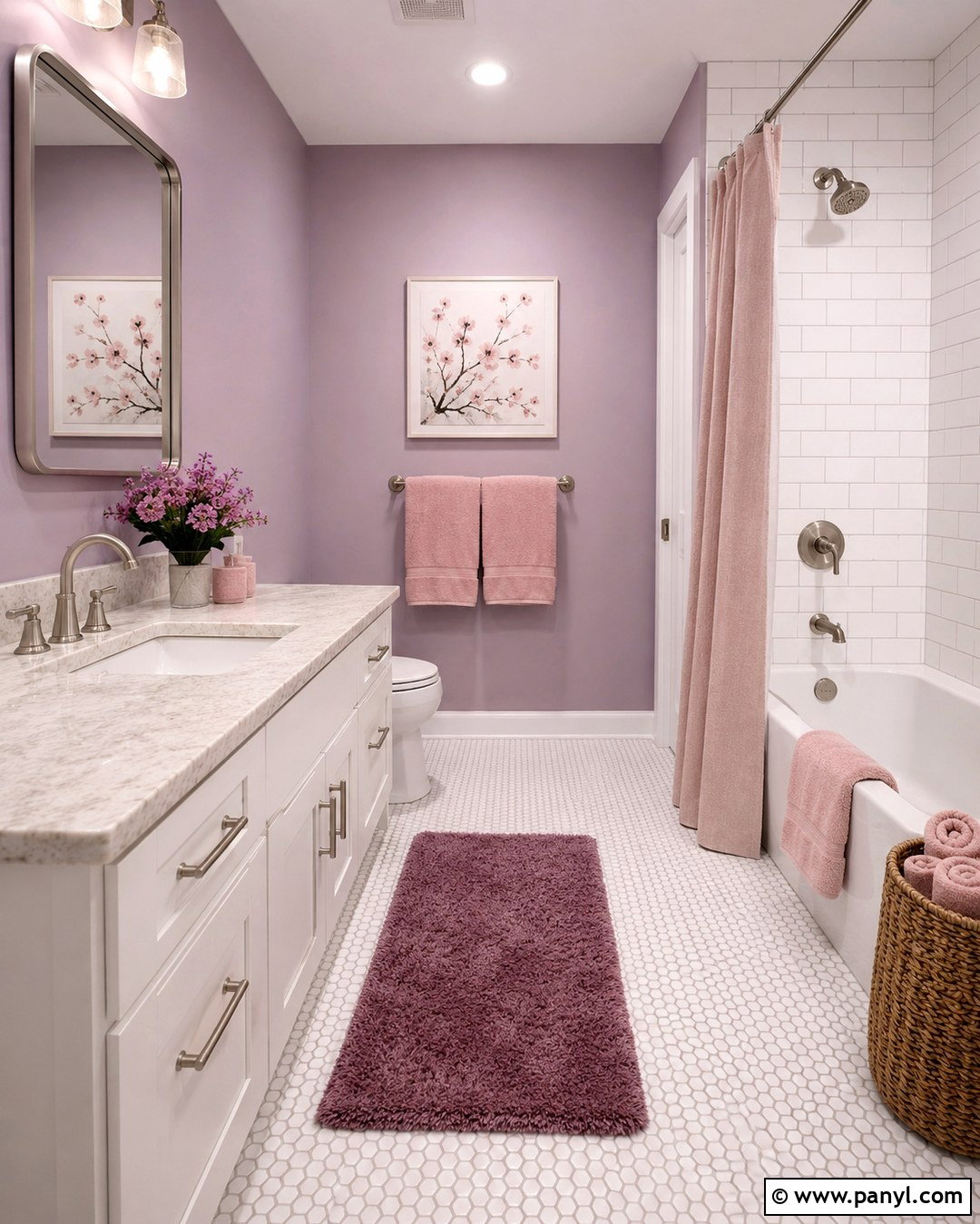
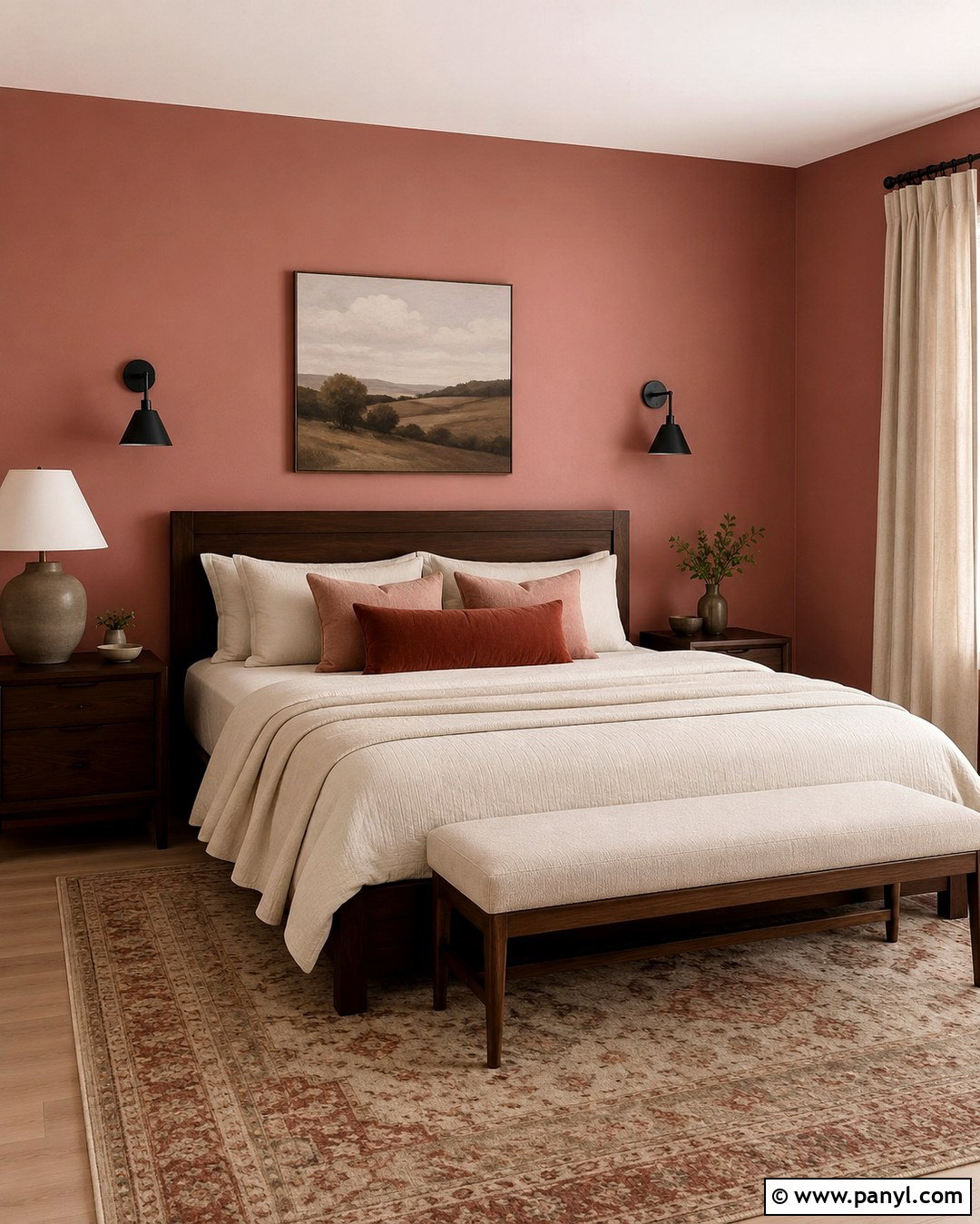
Black furniture creates a sharp contemporary contrast against lilac bedroom walls, especially when the room has plenty of natural light. Choose a pale, slightly cool lilac and pair it with a slim black metal bed, black nightstands, and a narrow black-framed mirror. Soften these strong outlines with layered white bedding, an ivory boucle throw, and muted lavender pillows. A light oak dresser can break up the black pieces and introduce natural warmth. Place a large cream rug beneath the bed and use sheer white curtains at the windows. Minimal black sconces help maintain the clean look without taking up nightstand space. Keep decorative objects limited to ceramics, books, and simple artwork so the contrast between the walls and furniture remains the central feature.
9. Lilac Bedroom Walls With Brass Accents
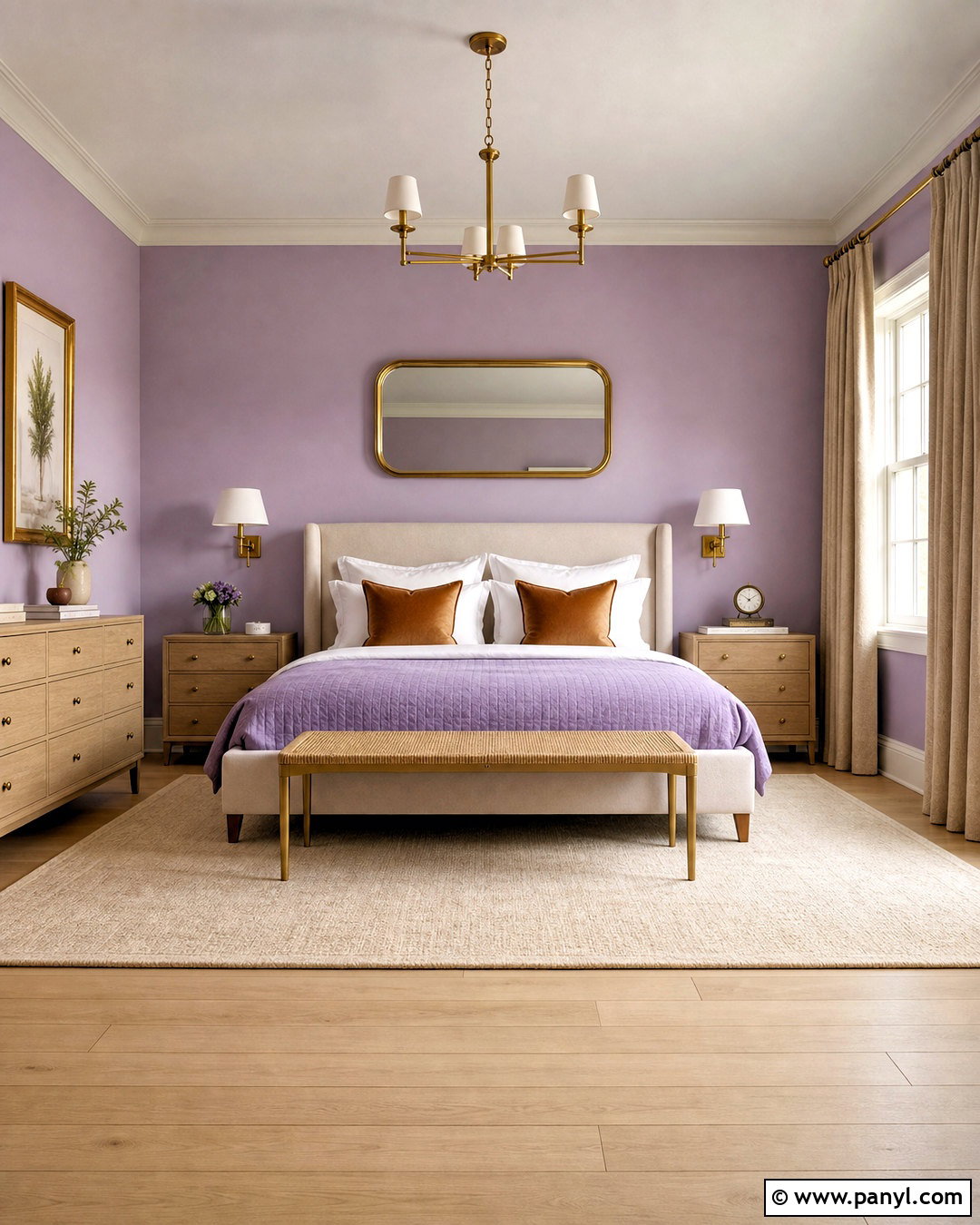
A warm metallic finish can make lilac bedroom walls feel polished without turning the bedroom into a formal space. Begin with a muted lilac paint and an ivory upholstered bed with clean, straight lines. Introduce brushed brass through wall-mounted reading lights, nightstand handles, curtain rods, and a thin-framed mirror. Keep the larger furniture pieces in cream or pale oak so the metal remains an accent rather than the dominant material. Layer the bed with white linen, a lavender quilt, and caramel velvet cushions. An oatmeal rug and warm beige curtains soften the overall scheme. Limit the brass to a few coordinated locations, since too many reflective pieces can distract from the walls. The finished room should feel warm, balanced, and quietly luxurious.

10. Lilac Bedroom Walls With Light Blue
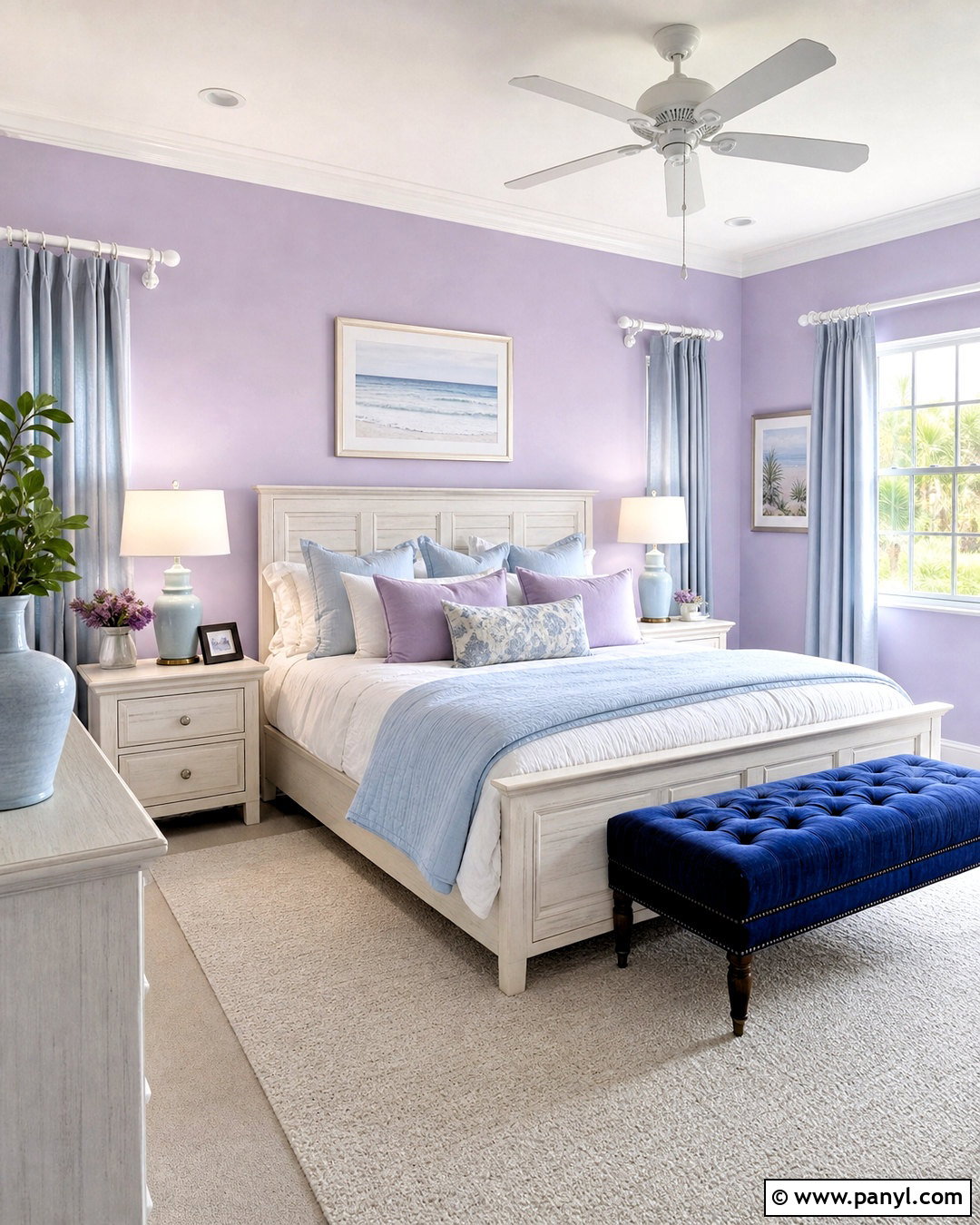
Lilac and light blue create a fresh pastel bedroom when both colors share similarly soft undertones. Cover the walls in a clear, pale lilac and use powder blue on the bedding, curtains, or a small upholstered chair. A white oak bed and matching nightstands provide a simple foundation for the two colors. Dress the bed with crisp white sheets, a light blue coverlet, lilac cushions, and a striped lumbar pillow containing both shades. Place an ivory rug over light wood flooring to brighten the lower half of the room. White ceramic lamps and understated coastal artwork keep the arrangement relaxed. Add one deeper blue element, such as a bench or throw, to provide enough contrast and prevent the pastels from blending together.
11. Lilac Bedroom Walls With White Paneling
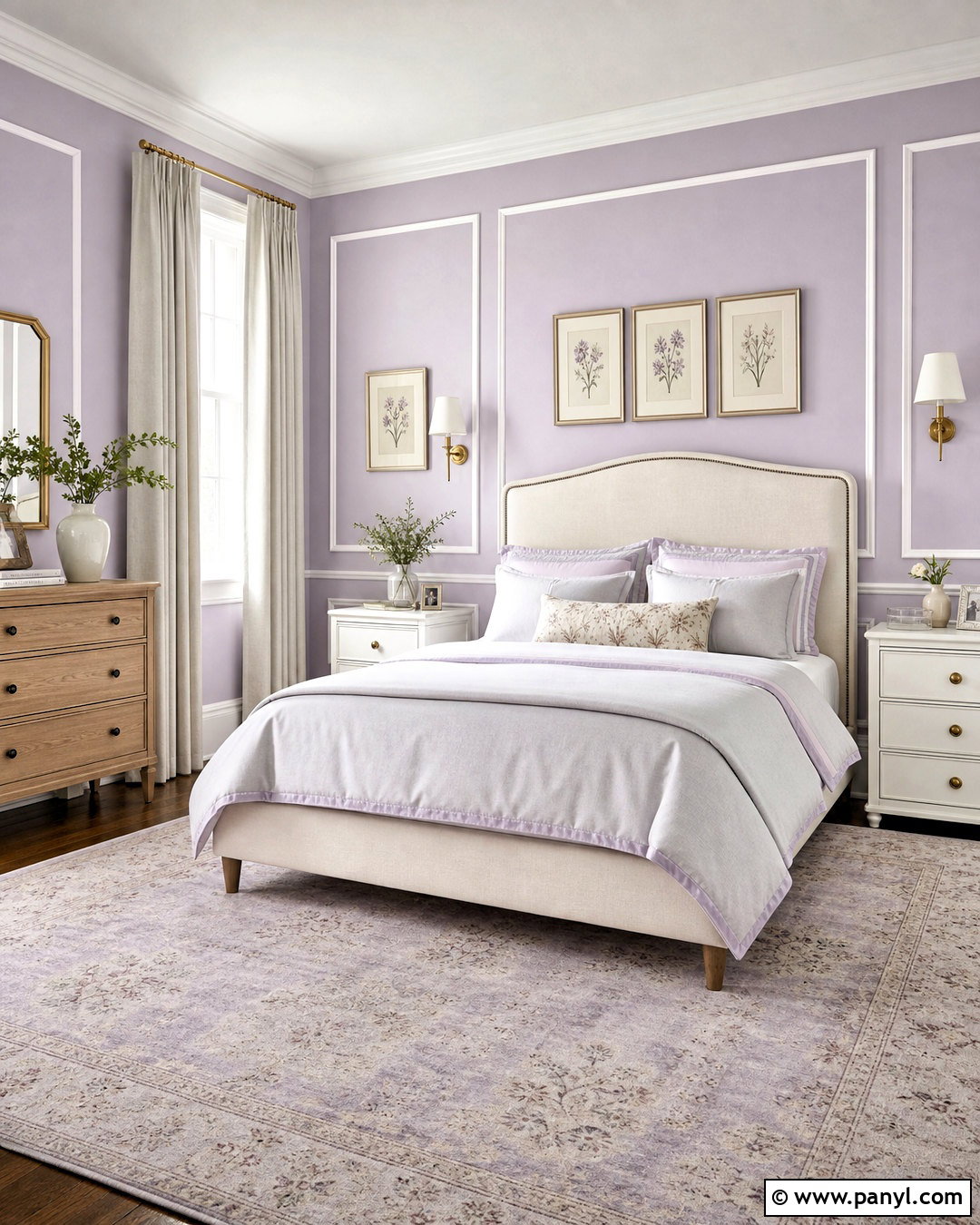
White wall paneling makes lilac bedroom walls look architectural and carefully finished. Install simple picture-frame molding or vertical paneling across the lower third of the room, then paint it the same white as the trim. Apply soft lilac above the paneling and continue it around all four walls. A cream upholstered bed, white nightstands, and an oak dresser support the classic treatment without making it feel traditional or heavy. Use pale gray bedding with lilac piping and a textured ivory throw. Hang floor-length neutral curtains and place a faded floral rug beneath the bed. Brass sconces and small framed prints add detail at eye level. Keeping the wall treatment consistent around the room creates a cohesive look rather than a disconnected feature wall.
12. Lilac Bedroom Walls With Floral Wallpaper
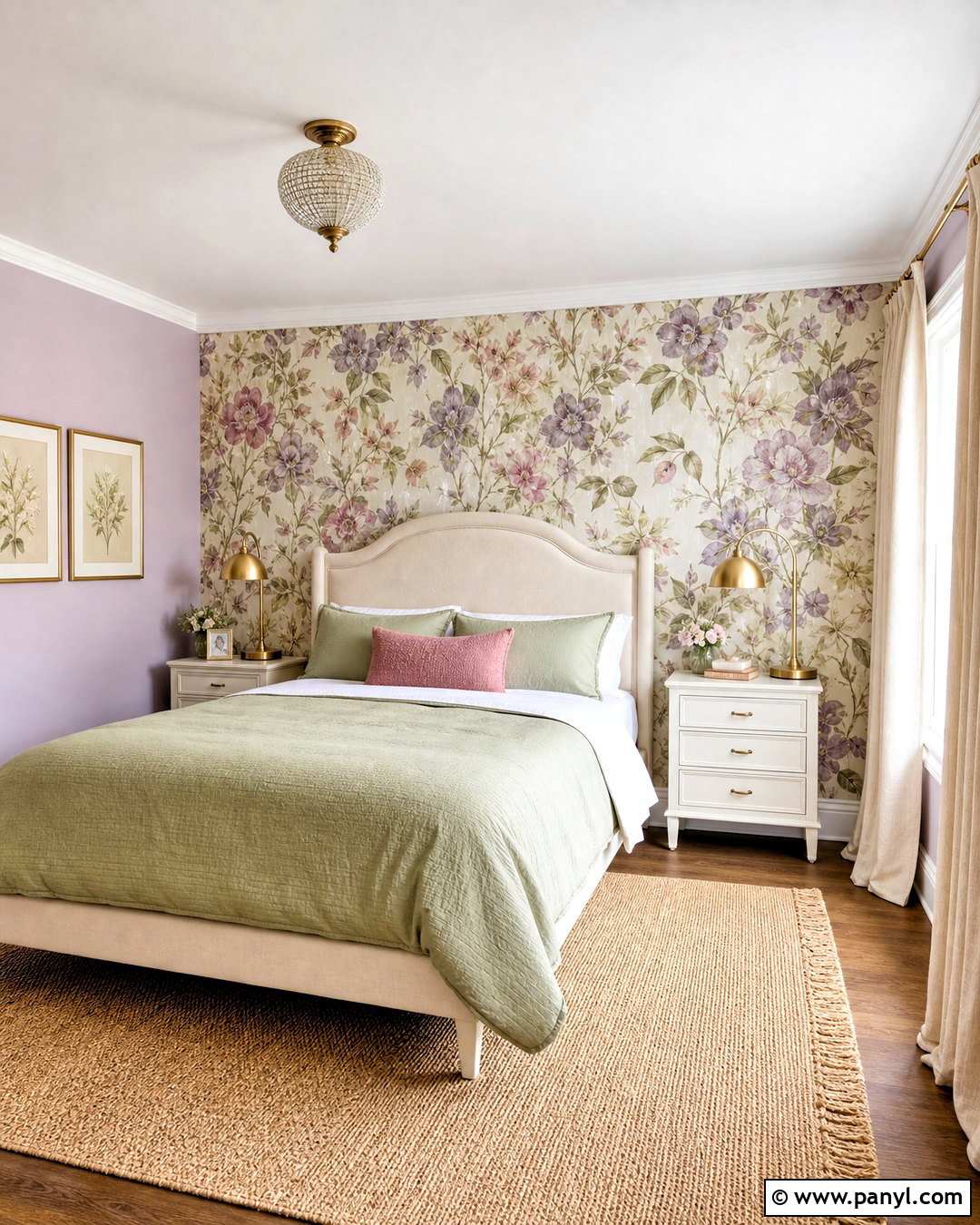
Floral wallpaper can work with lilac bedroom walls when its pattern uses the same purple tone alongside several supporting colors. Cover the wall behind the bed with wallpaper featuring lilac, sage, cream, and muted rose flowers. Paint the remaining walls a lilac pulled directly from the pattern. Choose a simple cream bed so it does not compete with the detailed backdrop. Layer sage bedding, white sheets, and a dusty pink lumbar cushion for a coordinated but relaxed result. Painted ivory nightstands, small brass lamps, and a natural woven rug keep the room bright. Use plain linen curtains rather than another pattern. The wallpaper should remain the main decorative feature, while the solid lilac walls create continuity and make the room feel intentionally designed.
13. Lilac Bedroom Walls With Boho Decor
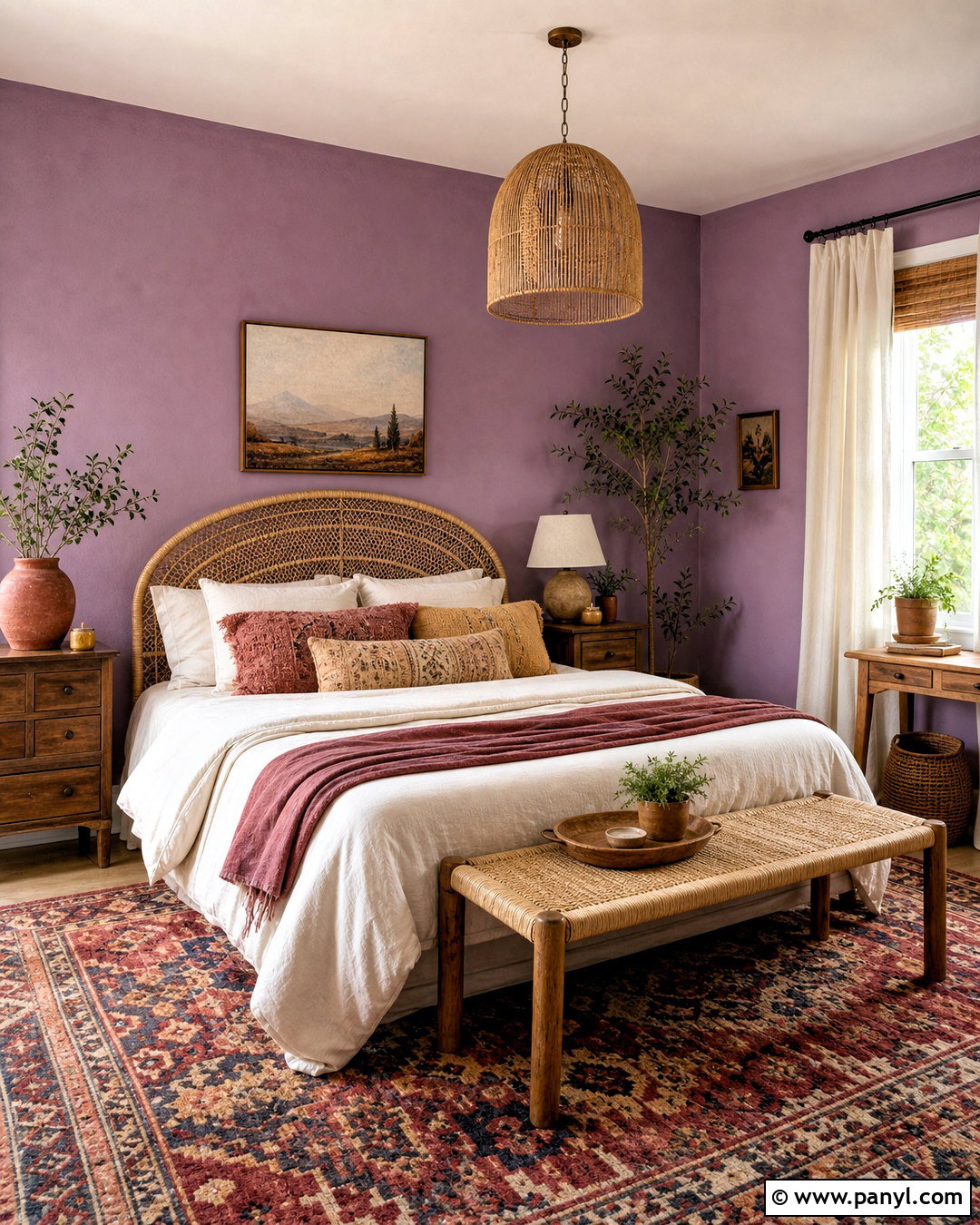
Sunlight, woven textures, and relaxed layers can turn lilac bedroom walls into the foundation of an inviting boho room. Select a warm, dusty lilac and pair it with a natural rattan headboard, mismatched wood nightstands, and a low woven bench. Use cream bedding with terracotta, ocher, and faded purple cushions. A patterned vintage-style rug should repeat small amounts of lilac while adding earthy red and brown tones. Hang off-white cotton curtains from a simple wood rod and add woven pendant lighting above one nightstand. Plants in clay pots introduce fresh green without changing the overall palette. Keep the arrangement collected but uncluttered. Leaving some open wall space allows the paint color to remain visible behind the layered furniture and textiles.
14. Lilac Bedroom Walls With Minimalist Decor
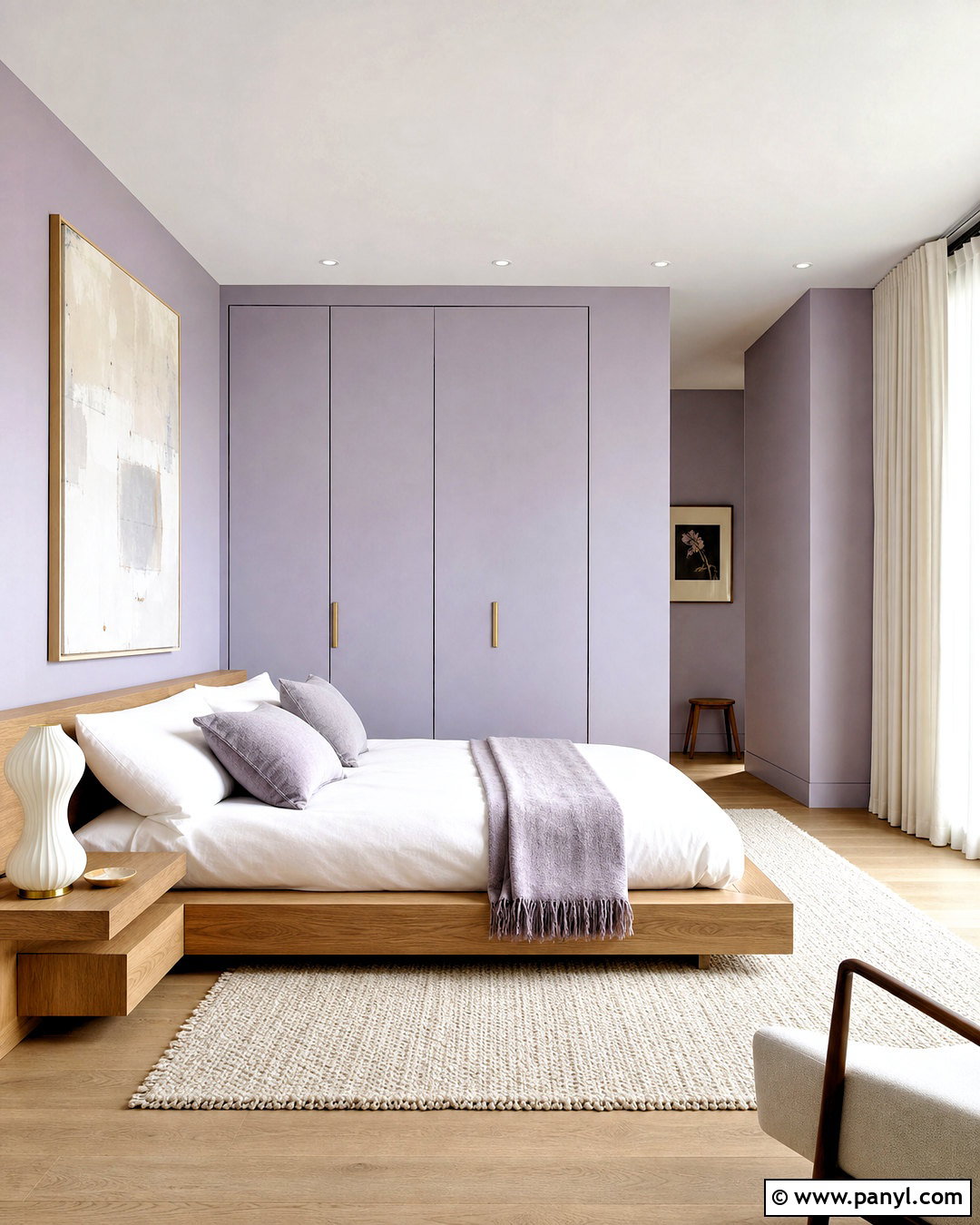
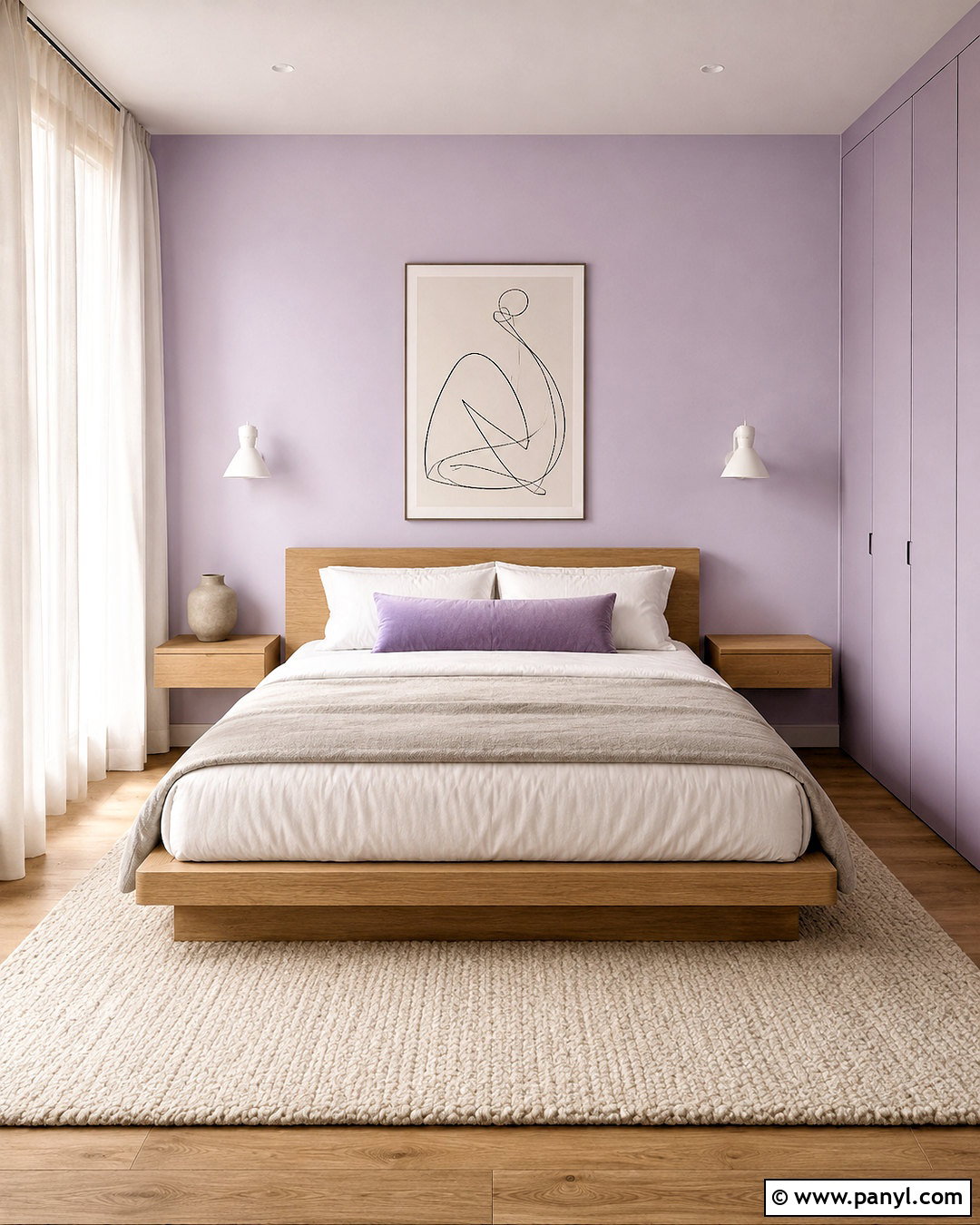
A minimalist lilac bedroom depends on thoughtful placement rather than an empty, unfinished appearance. Paint every wall a very pale lilac and select a low-profile oak platform bed with integrated nightstands. Use smooth white bedding, one gray-lilac throw, and two neatly arranged pillows. Avoid a large collection of accessories. Instead, hang one oversized abstract print above the bed and place a sculptural white lamp on one side. A flat-woven cream rug will define the sleeping area while maintaining clean lines. Install simple roller shades or full-length off-white curtains without decorative trim. Concealed storage keeps clothes and personal items out of sight. The lilac walls provide enough color to make the restrained room feel welcoming rather than stark or clinical.
15. Lilac Bedroom Walls With Vintage Furniture
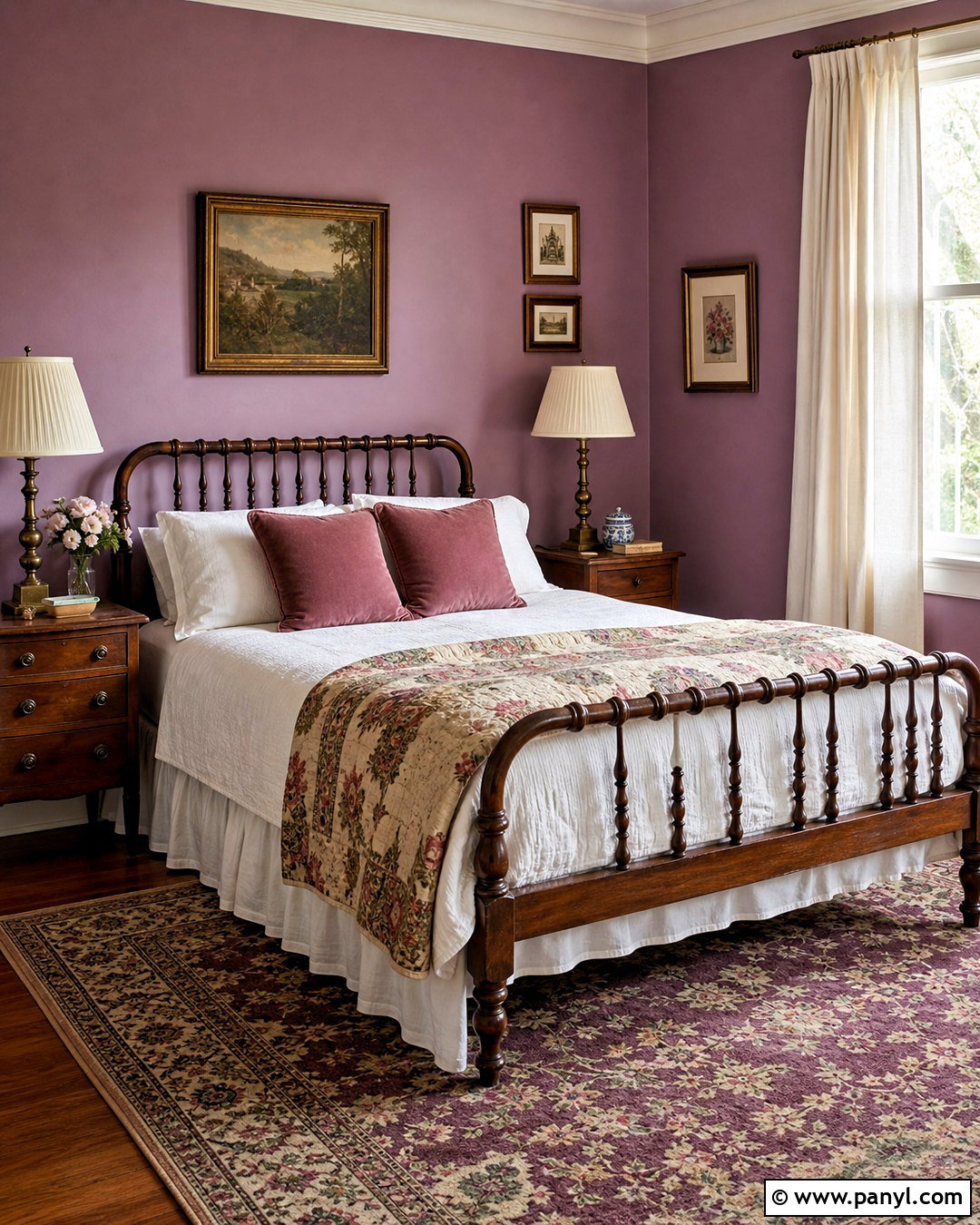
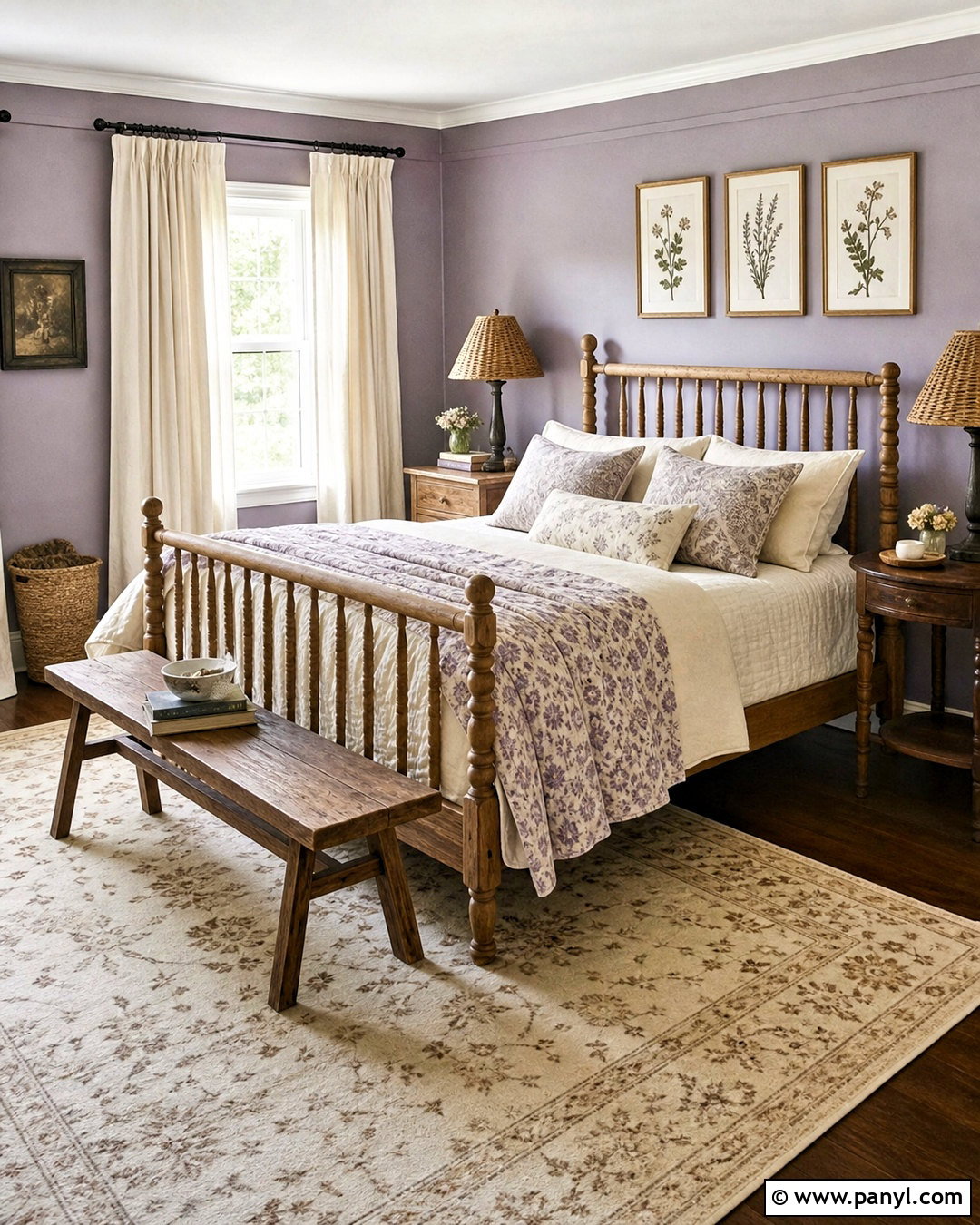
Vintage furniture brings depth and history to pale lilac bedroom walls. Begin with a warm lilac paint, then center an antique-style walnut bed or dark wood spindle bed against the main wall. Add a small wood dresser and mismatched nightstands with similar finishes. White cotton bedding, a faded floral quilt, and dusty rose cushions soften the darker furniture. Use a traditional rug containing muted plum, beige, and olive to connect the room’s colors. Pleated cream lampshades and aged brass picture frames reinforce the vintage character. Hang light linen curtains so the room still feels airy. Instead of filling every surface, choose a few useful pieces, such as a ceramic vase, an alarm clock, and stacked books, for a collected but organized result.
16. Lilac Bedroom Walls In A Small Room
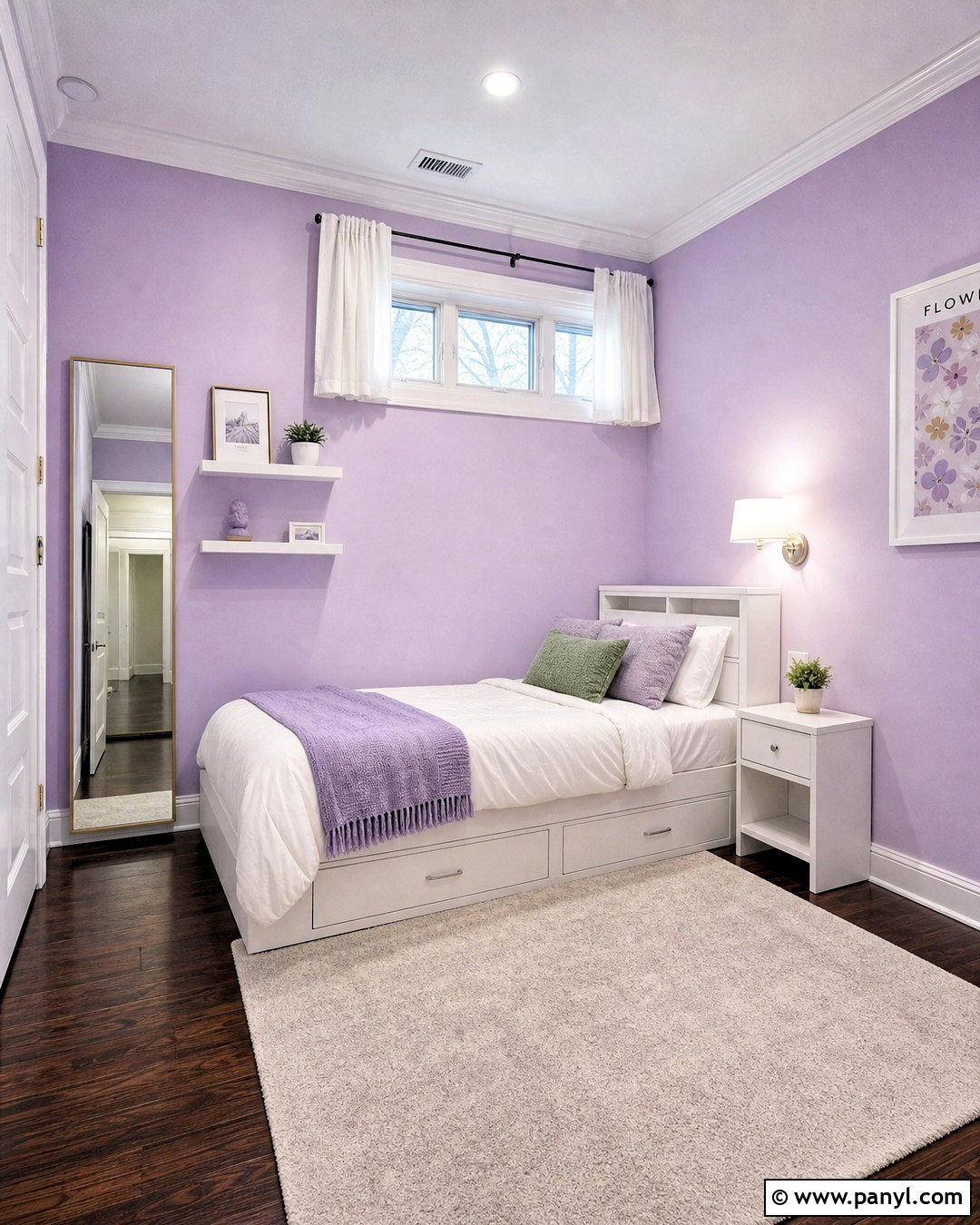
In a small bedroom, pale lilac walls can add personality without requiring valuable floor space. Use the same light lilac on every wall, then paint the trim and ceiling soft white to maintain a clear visual boundary. Position a simple white storage bed against the longest uninterrupted wall. Add one narrow nightstand and a wall-mounted sconce instead of two bulky tables. Choose white bedding with a folded lavender blanket and a small sage cushion for color variation. A light cream rug should sit mostly beneath the bed, leaving enough visible flooring around the edges. Hang curtains close to the ceiling and use a tall mirror to emphasize height. Floating shelves and under-bed drawers provide practical storage while keeping the finished layout open and orderly.
17. Lilac Bedroom Walls With Modern Farmhouse Decor

Lilac bedroom walls can soften modern farmhouse decor and offer a refreshing change from an entirely neutral palette. Choose a muted, gray-based lilac and combine it with a white oak bed featuring simple paneled details. Add black metal sconces, cream nightstands, and a natural wood bench at the foot of the bed. Dress the bed in white cotton, a light taupe quilt, and subtle lavender striped pillows. A woven wool rug and oatmeal curtains introduce texture without adding unnecessary pattern. Use one large countryside print in a black frame rather than multiple small signs or decorative wording. A ceramic lamp, woven basket, and leafy branch complete the room. Clean lines keep the farmhouse elements current, while lilac adds gentle color and softness.
18. Lilac Bedroom Walls With Art Deco Decor
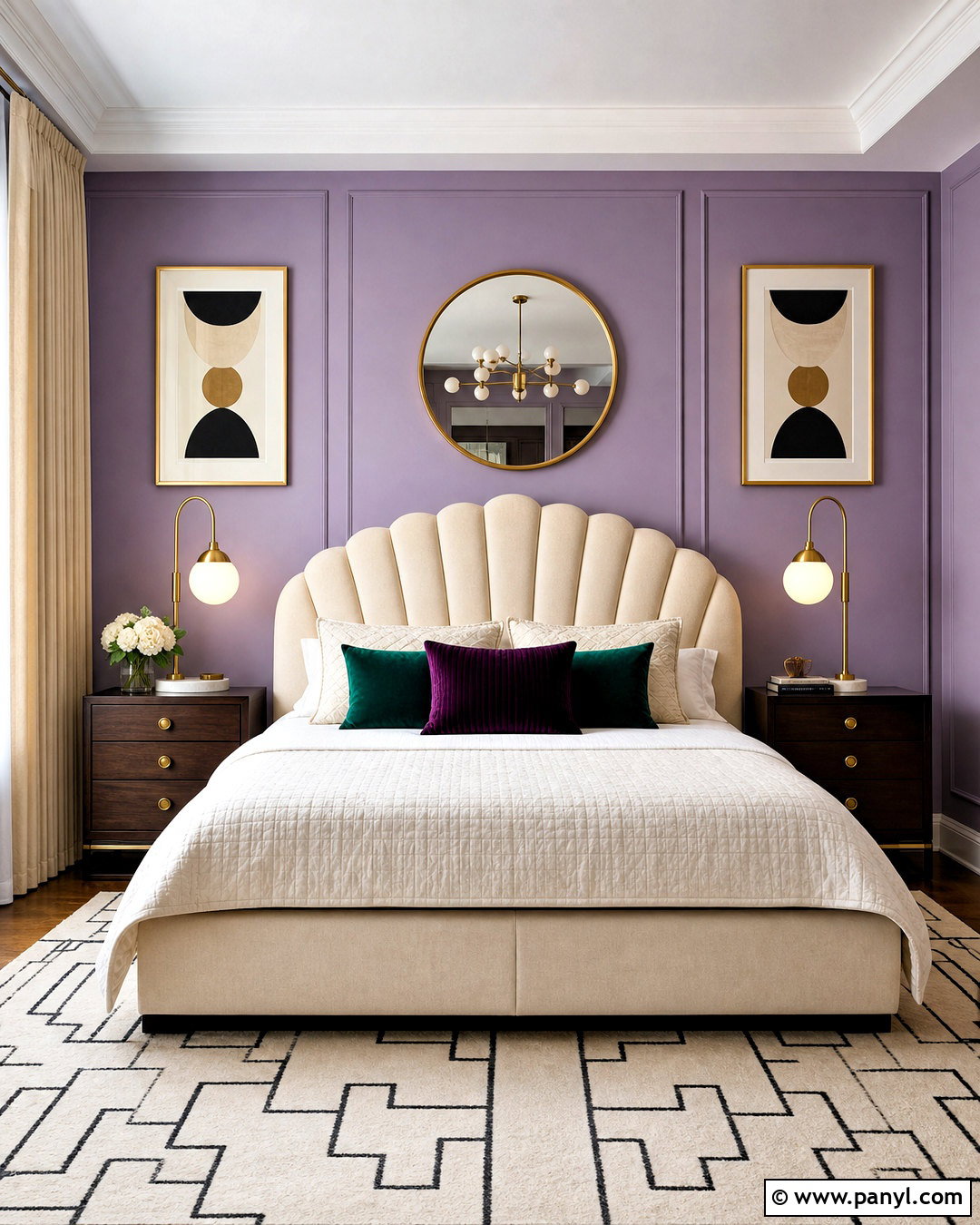
For a more glamorous interpretation, pair lilac bedroom walls with curved furniture and precise Art Deco accents. Use a slightly deeper lilac paint and place a scalloped cream velvet headboard against the main wall. Add dark walnut nightstands with brass hardware and matching globe lamps. Keep the bedding ivory, then introduce emerald green and deep plum cushions for richer contrast. A geometric cream-and-black rug will provide structure beneath the softer colors. Choose a round brass mirror or symmetrical framed artwork above the bed. Full-length beige curtains should hang neatly from a brass rod. Balance is essential, so repeat shapes and finishes on both sides of the bed. The completed bedroom feels decorative and distinctive while remaining comfortable enough for everyday use.
19. Lilac Bedroom Walls With A Painted Ceiling
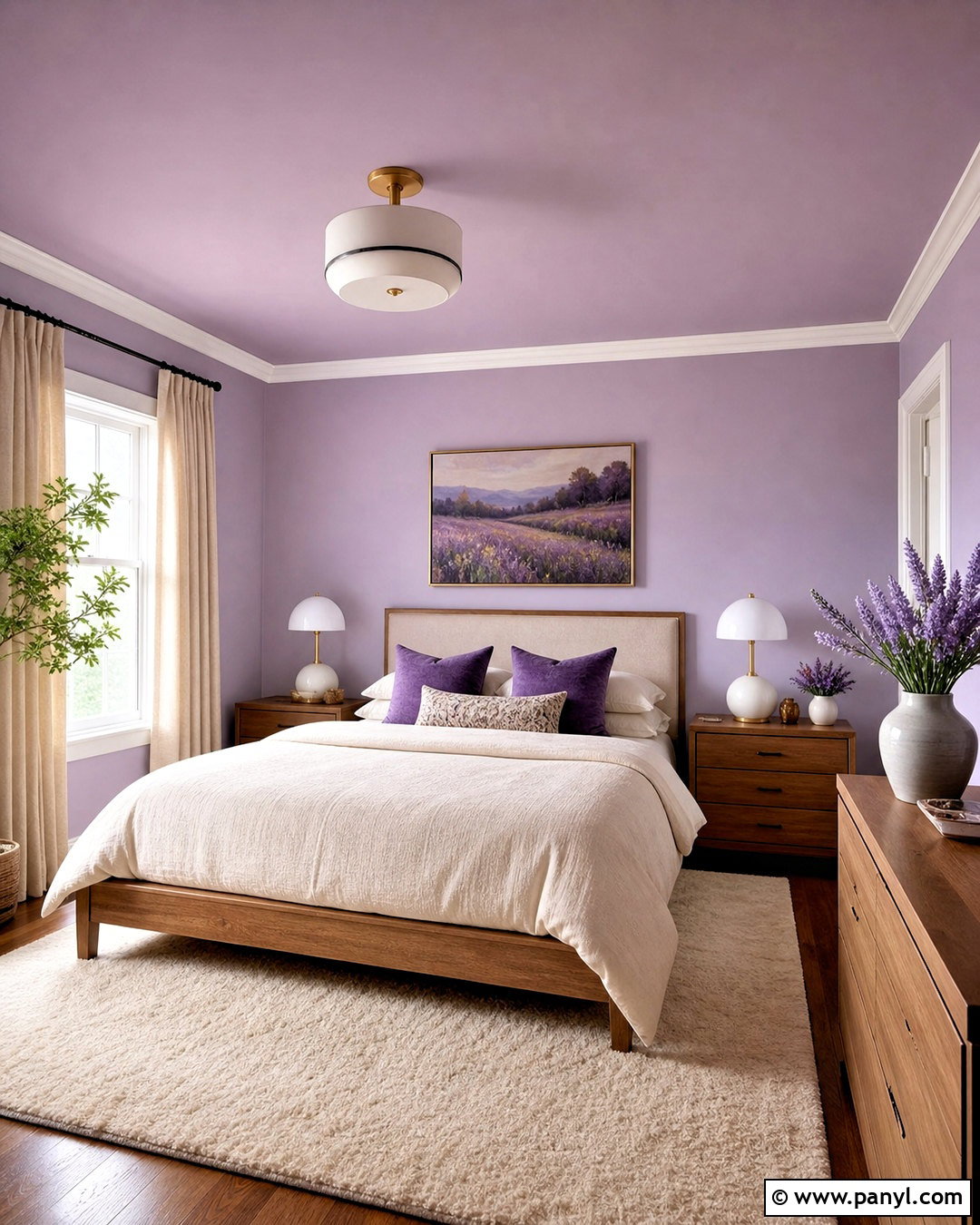
Extending lilac onto the ceiling can make a bedroom feel cohesive and gently enveloping. Select a very light, desaturated lilac and apply it to all four walls and the ceiling. Paint the crown molding, doors, and baseboards warm white to outline the room and prevent the color from feeling excessive. Use a medium-oak bed with a beige upholstered headboard, ivory bedding, and deeper purple pillows. Place matching wood nightstands on either side and install soft white globe lamps. A cream rug and natural linen curtains will keep the palette grounded. This treatment works best when the ceiling lilac is no darker than the walls. Maintaining one soft color overhead creates continuity, while warm neutrals and wood provide enough contrast below.
20. Lilac Bedroom Walls With A Plum Accent Wall
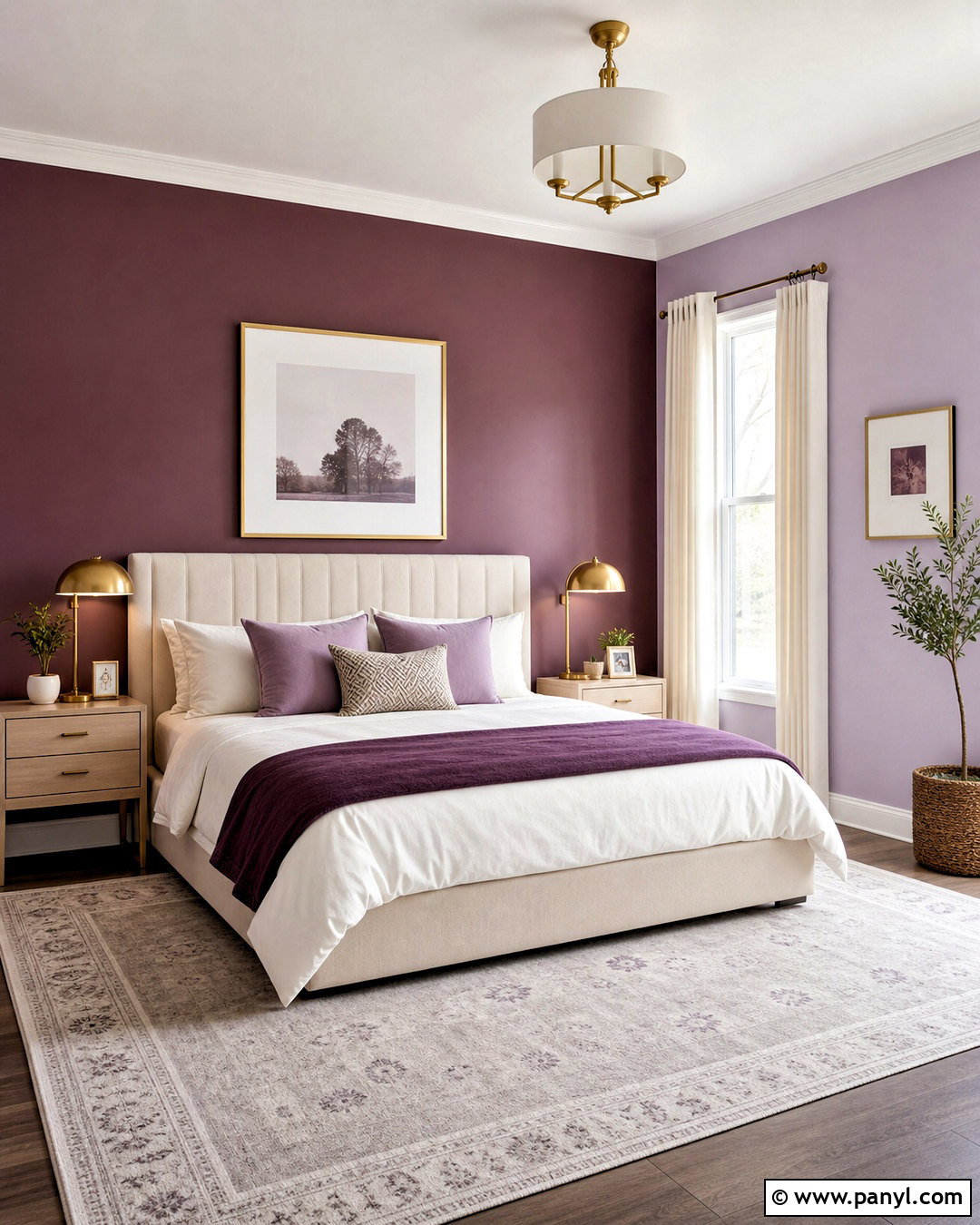
A plum accent wall gives lilac bedroom walls depth while keeping the overall room approachable. Paint the wall behind the bed a muted, medium-dark plum and cover the other three walls in pale lilac. Choose a light beige upholstered bed so its shape remains visible against the darker background. Dress it with ivory bedding, lilac pillows, and one plum throw that repeats the accent wall. Pale oak nightstands and a matching dresser will prevent the palette from becoming too heavy. Use warm brass lamps, cream curtains, and a large neutral rug to brighten the room. Keep artwork simple, or leave the plum wall mostly bare. The strong focal point should frame the bed, while the surrounding lilac walls soften the contrast and maintain visual flow.
Conclusion:
Lilac is flexible enough to support light minimalist rooms, cozy vintage spaces, dramatic color combinations, and relaxed natural interiors. The most successful bedrooms treat the walls as part of a complete palette rather than an isolated color choice. Repeat the lilac subtly through bedding, artwork, or patterned textiles, then introduce contrast with wood, cream, green, blue, black, or brass. Before committing, paint large sample areas on different walls and examine them throughout the day. This simple step can reveal hidden pink, blue, or gray undertones. Whether you prefer soft neutrals or richer accents, these 20 lilac bedroom walls offer complete, practical looks that can be adjusted for your room, furniture, and budget.

Related Ideas and Inspiration:

Leave a Reply