
Lavender bedroom walls can make a sleeping space feel calm, polished, and surprisingly versatile. Today’s most livable lavender shades have soft gray, blue, or muted pink undertones rather than a bright, sugary purple finish. This makes them easier to pair with warm neutrals, natural wood, crisp white, sage green, navy, and even black. Powdery lavender is also returning as a relaxing bedroom color, while layered, cocooning rooms remain a strong design direction in 2026. () The key is creating a complete palette where the furniture, flooring, lighting, bedding, and decorative accents support the wall color. From airy minimalist rooms to dramatic color-drenched retreats, the following looks offer practical ways to decorate with lavender bedroom walls.

1. Soft Lavender Walls With White
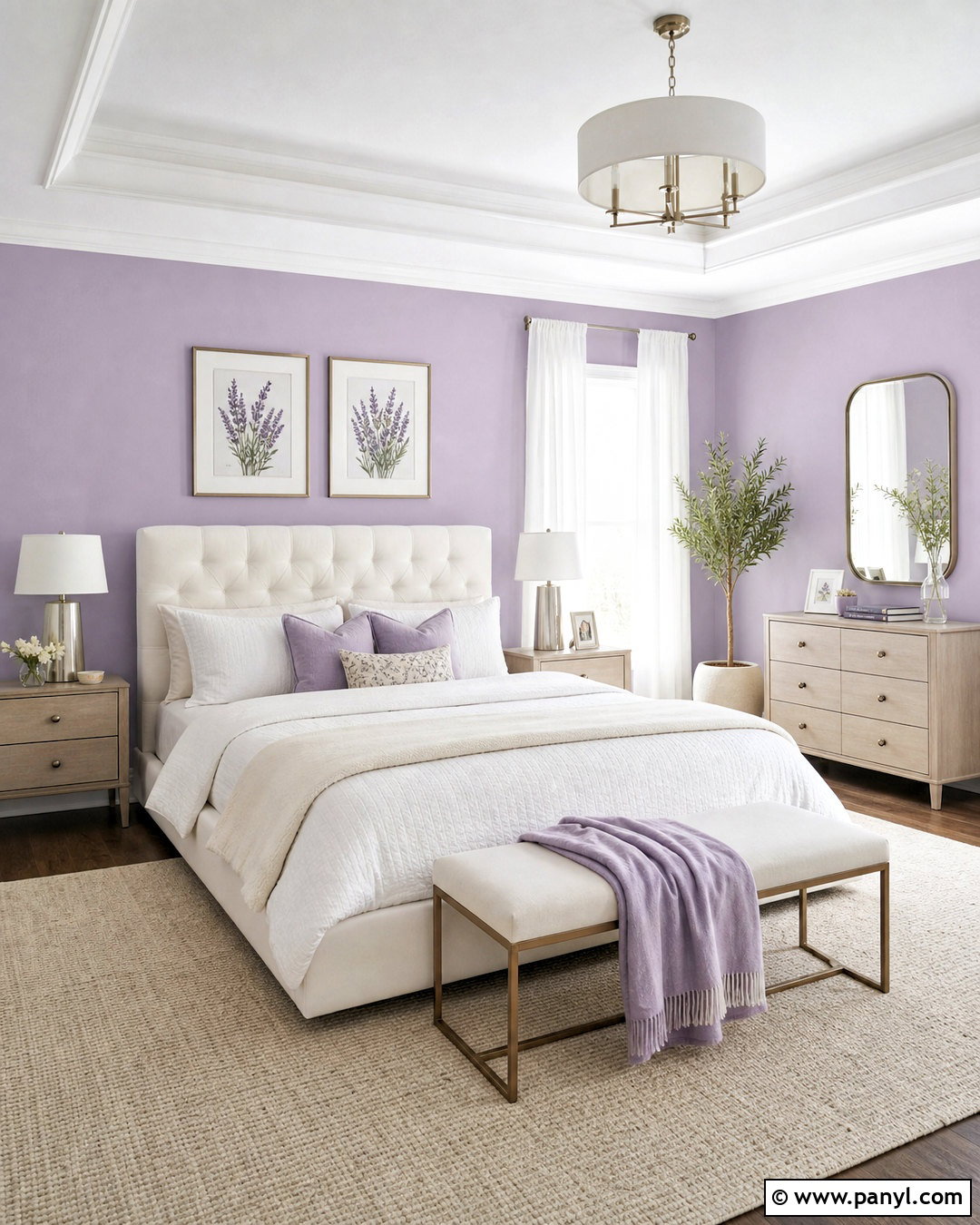
Soft lavender walls and clean white furnishings create an airy bedroom that feels peaceful without appearing overly feminine. Choose a pale lavender paint with subtle gray undertones, then use warm white on the ceiling, trim, doors, and window frames. A white upholstered bed provides a fresh focal point, while layered ivory bedding keeps the contrast gentle. Add pale oak nightstands, brushed nickel lamps, and a light beige rug for warmth. Simple white curtains should hang close to the ceiling so the room appears taller. Finish the space with lavender-edged pillows, understated botanical artwork, and one leafy plant. This complete palette works especially well in rooms with limited natural light because the generous white surfaces keep the lavender from becoming heavy.
2. Lavender Accent Wall With Cream
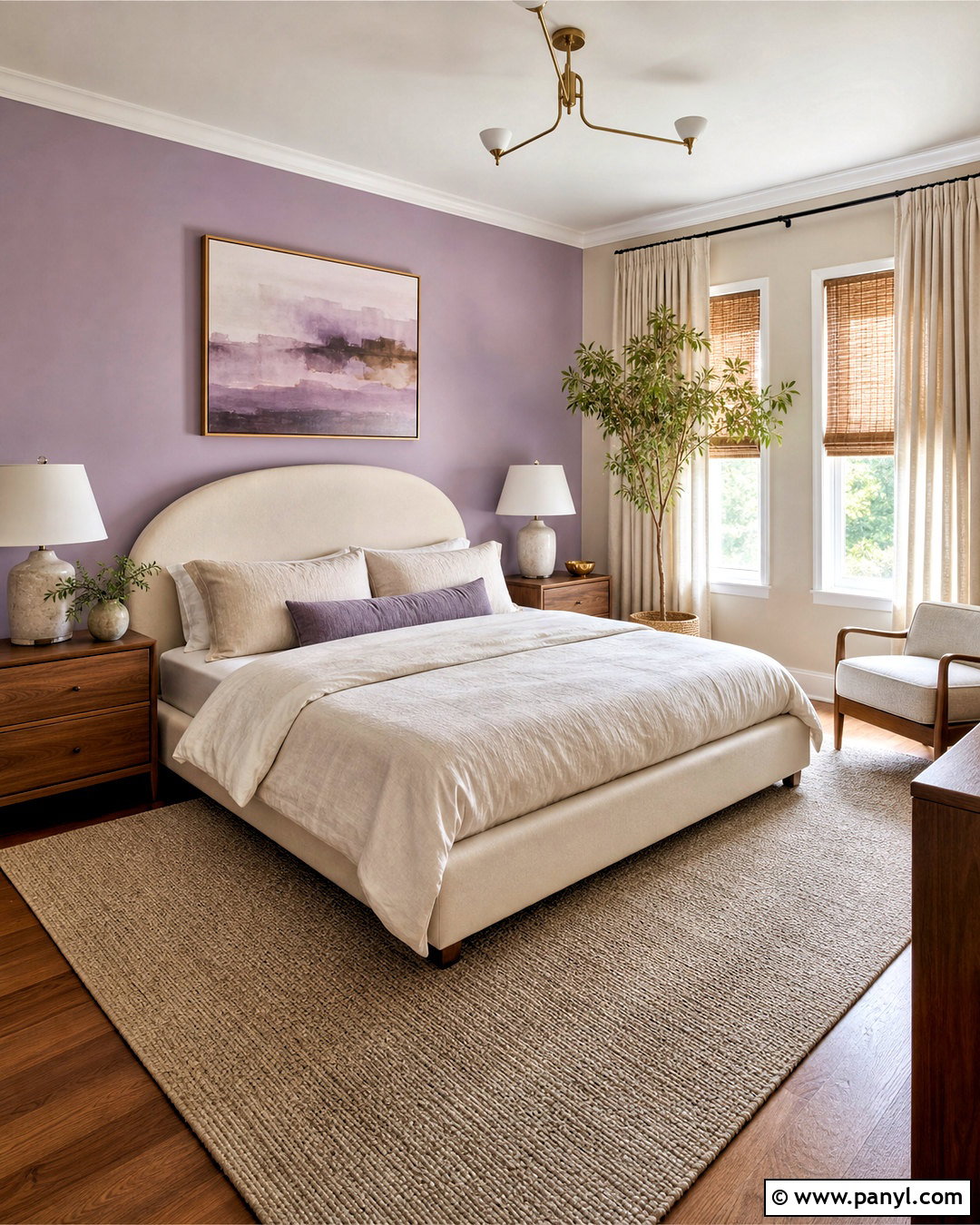
If four lavender walls feel like too much color, place a muted lavender accent wall behind the bed and paint the remaining walls creamy off-white. The warmer neutral keeps the purple from feeling cold while helping the feature wall stand out naturally. Select a gently curved cream upholstered headboard, off-white linen bedding, and a quilted lavender throw. Light walnut nightstands introduce depth without disrupting the relaxed palette. Ground the layout with a large oatmeal-colored rug that extends beyond both sides of the bed. Add ceramic table lamps, natural woven shades, and framed abstract artwork combining cream, lavender, and soft brown. Keeping larger furniture neutral makes this approach easy to update, while the focused wall color gives the entire bedroom a clear visual anchor.
3. Gray Lavender Walls With Oak
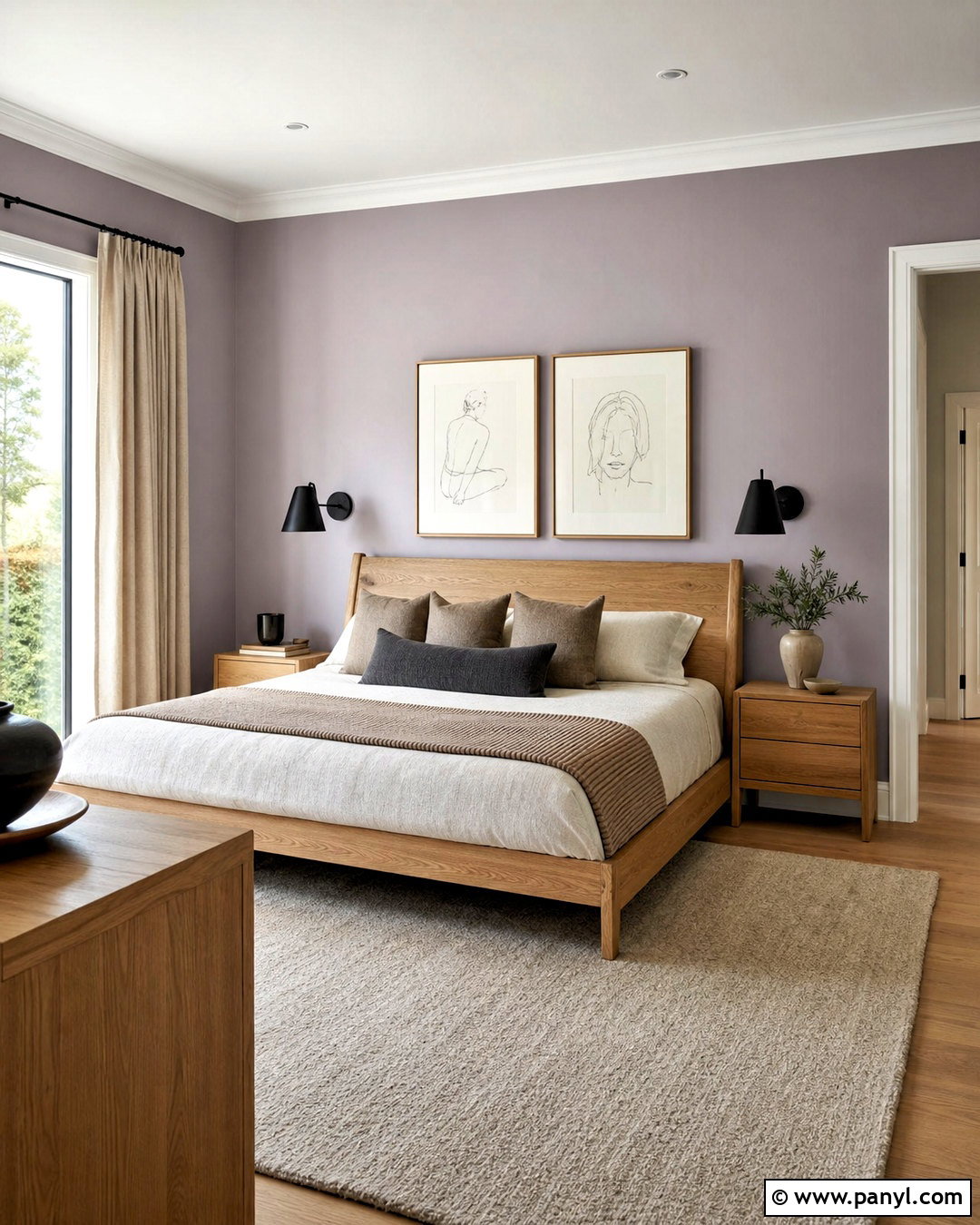
Gray lavender walls offer a sophisticated alternative to brighter purple paint. Their smoky undertones work beautifully with oak furniture and other warm, natural finishes. Cover all four walls in a dusty gray-lavender, then keep the ceiling and baseboards soft white. Center a low oak platform bed against the main wall and dress it with ivory linen, taupe pillows, and one charcoal lumbar cushion. Matching oak nightstands create balance, while matte black sconces add crisp definition. Choose a textured greige rug and simple flax curtains to soften the floor and windows. A narrow wood bench can complete the foot of the bed. Minimal ceramics, charcoal sketches, and a few dried branches provide decoration without making the calm, organic bedroom feel crowded.
4. Lavender Walls With Sage Green
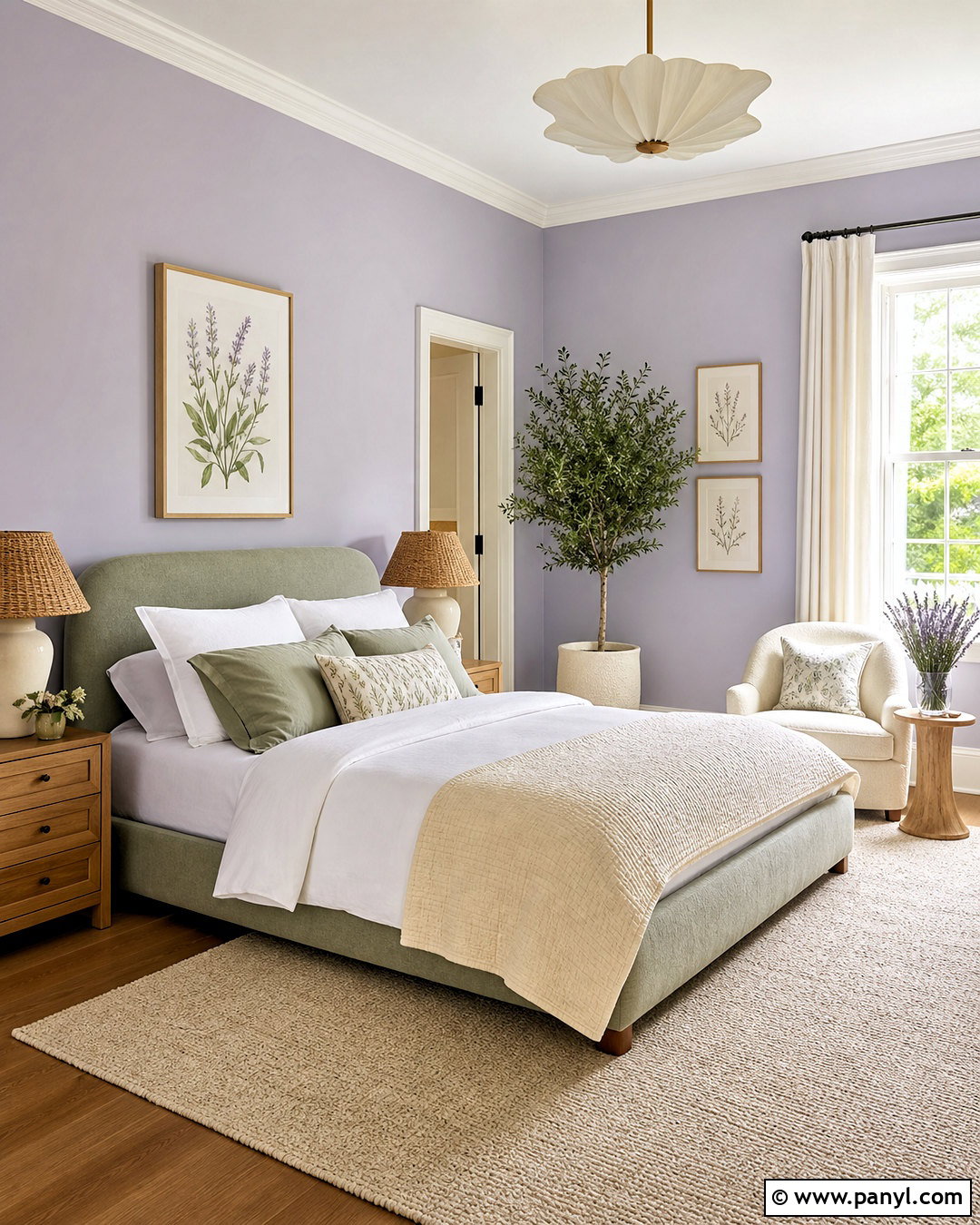
Lavender and sage green create a restful bedroom palette inspired by garden colors. Begin with pale lavender walls that lean slightly gray rather than pink. Place a sage green upholstered bed against the longest uninterrupted wall, then layer it with white sheets, a cream coverlet, and lavender accent pillows. Natural oak nightstands and woven lamps bring warmth to both cool colors. Use ivory curtains and a light jute-blend rug to keep the overall look open and balanced. Botanical prints can connect the wall and furniture colors without introducing an unrelated theme. Add one medium-size indoor plant in a textured cream planter, but avoid filling every corner with greenery. The finished bedroom feels fresh and natural while remaining refined enough for a primary suite or guest room.
5. Lavender Walls With Navy Blue
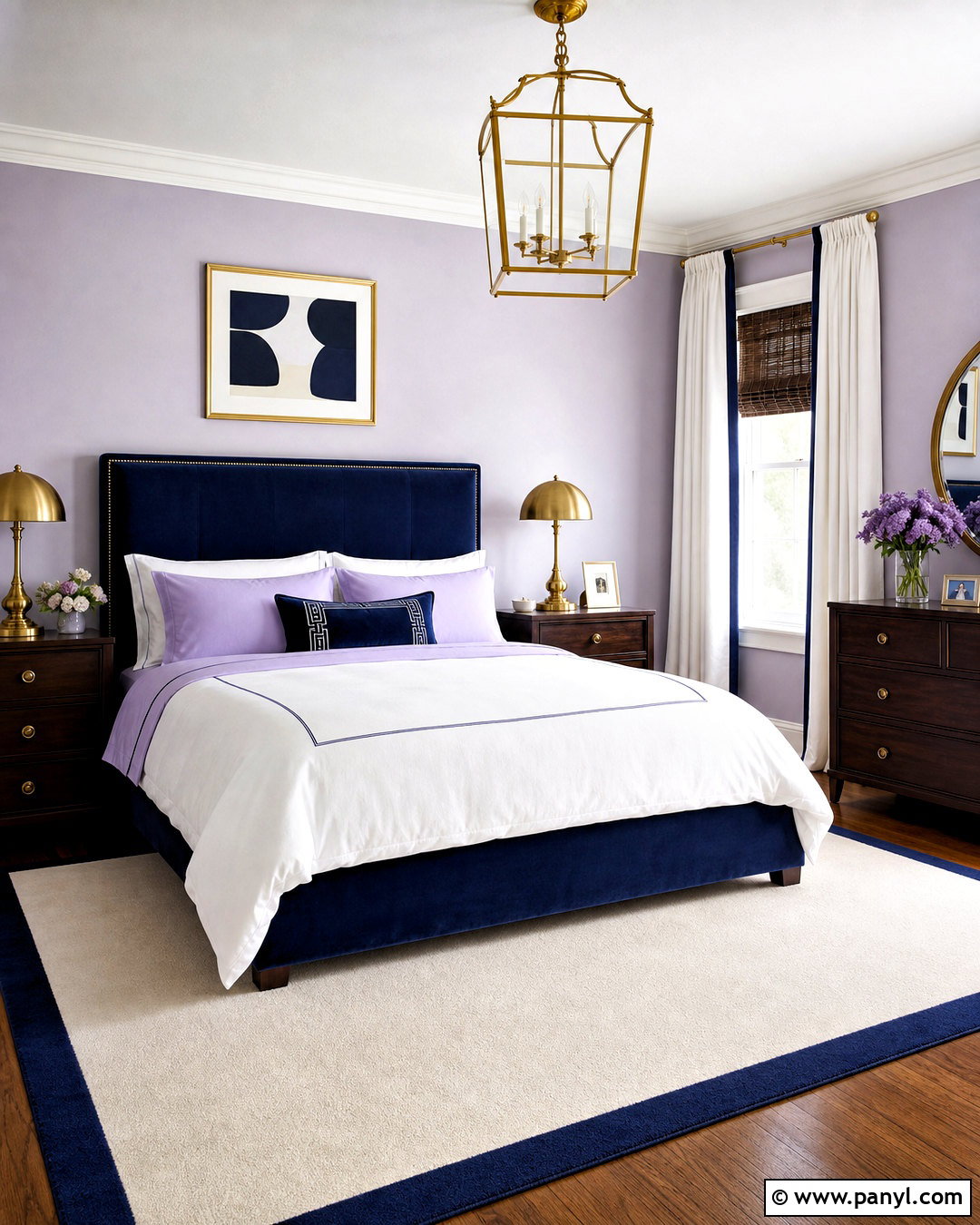
Deep navy accents give lavender bedroom walls a more tailored, grown-up character. Paint the room a clear yet muted lavender and place a navy velvet headboard against the wall opposite the main window. White bedding offers essential breathing room, while lavender sheets and a navy patterned throw repeat the central palette. Use dark walnut nightstands to bridge the cool colors and add antique brass lamps for a warm metallic highlight. A cream rug with a subtle navy border can define the bed area without overpowering it. Finish with white curtains, navy-framed artwork, and a small walnut bench. Keeping the navy concentrated in several substantial pieces creates balance. Scattered dark accessories alone can look disconnected, but a strong headboard makes the contrast feel purposeful.
6. Lavender Walls With Warm Beige
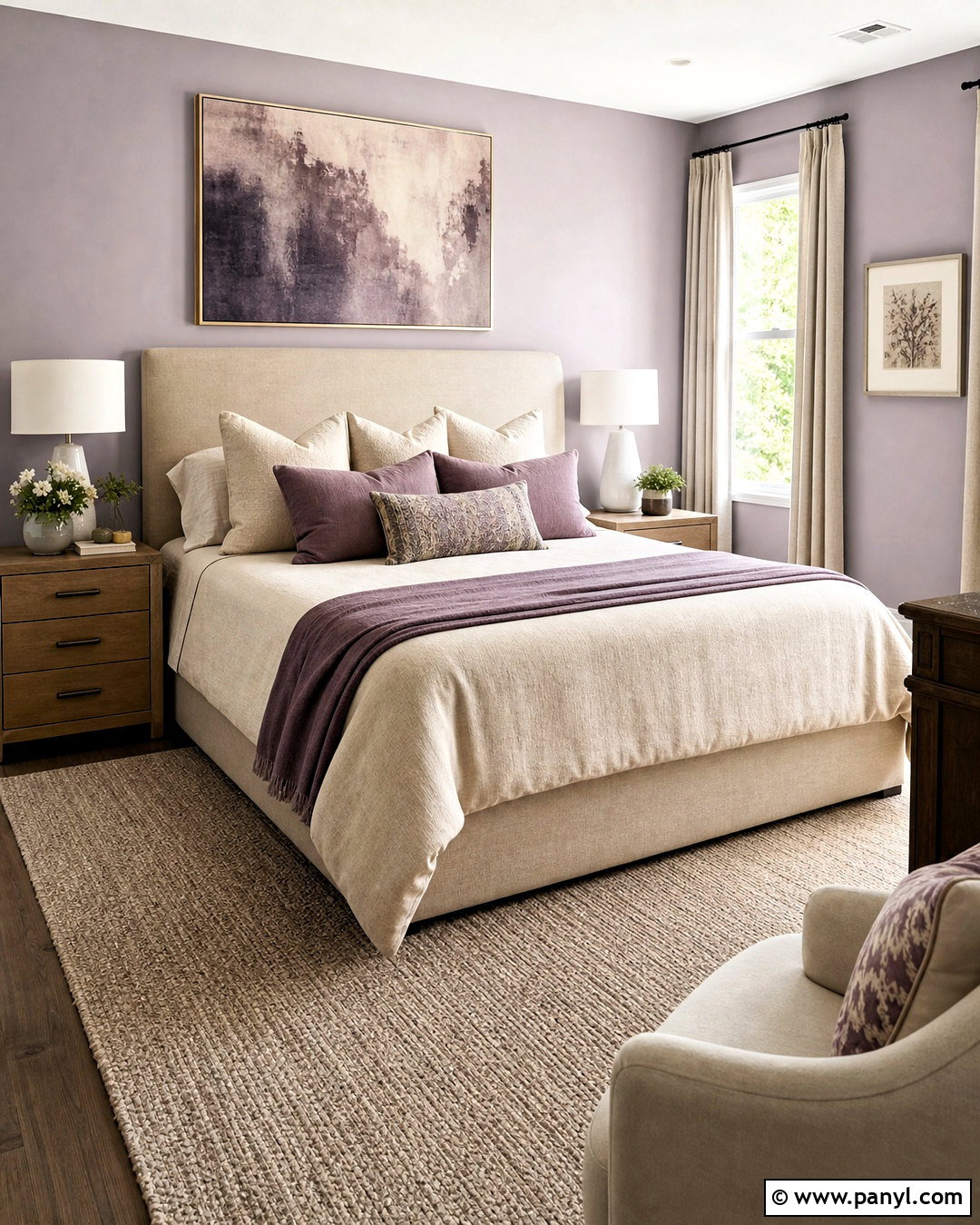
Warm beige helps lavender feel soft, grounded, and easy to live with. Choose a light lavender wall paint with balanced warm and cool undertones, then pair it with a wide beige linen headboard. Dress the bed in oatmeal, ivory, and muted plum textiles, using several fabric textures instead of busy patterns. Medium-tone wood nightstands, warm white lampshades, and a sand-colored wool rug strengthen the natural palette. Hang full-length beige curtains that are slightly darker than the bedding so the windows have gentle definition. Above the bed, display one oversized abstract piece featuring lavender, tan, and cream. This scheme is particularly effective when you want visible color without a pastel appearance. The layers of beige allow the walls to become a subtle backdrop rather than the room’s only feature.
7. Lavender Walls With Black Accents
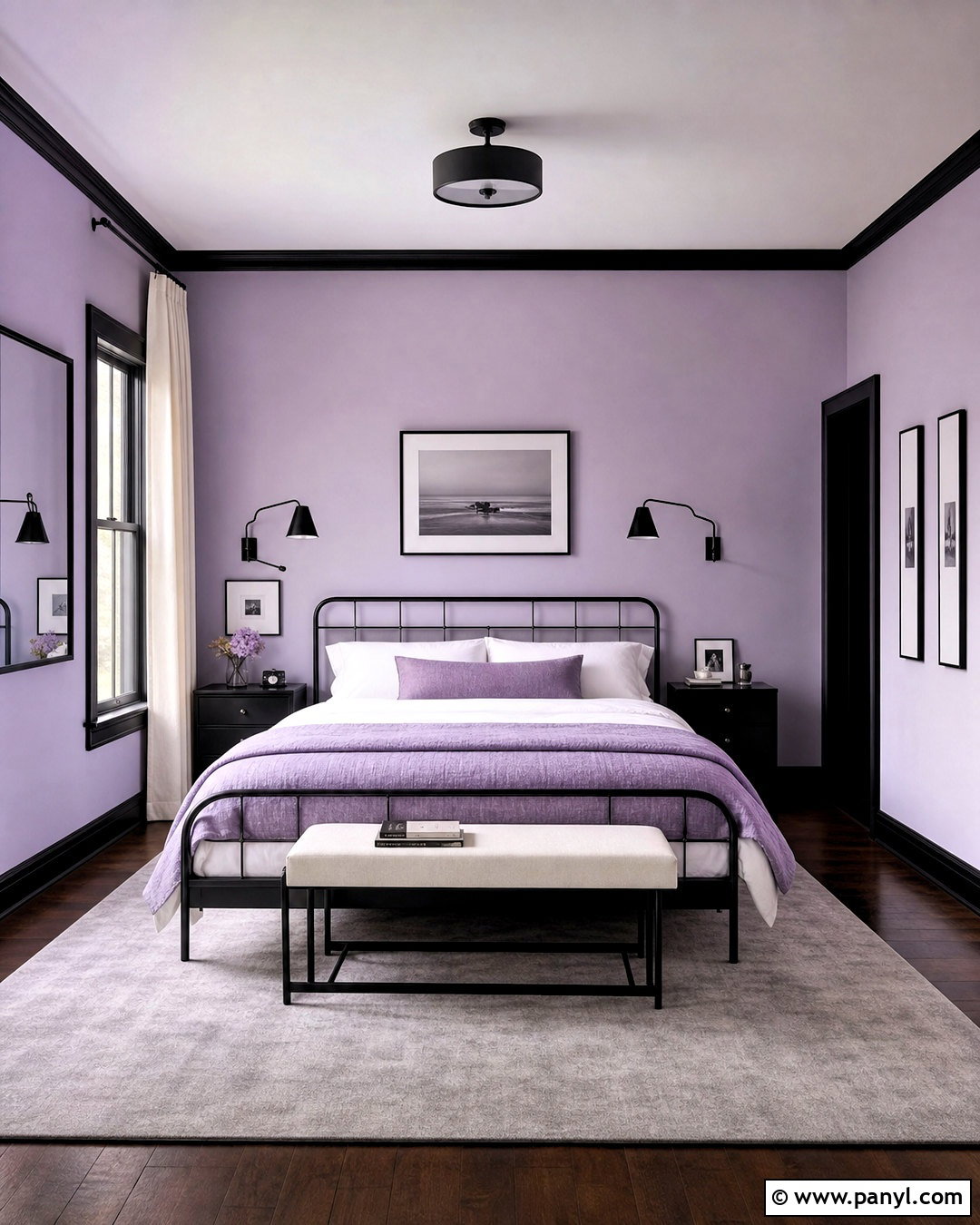
Black details can sharpen lavender walls and produce a clean contemporary bedroom. Use a pale, gray-based lavender across all four walls, supported by white ceilings and streamlined trim. A thin black metal bed provides structure without visually dominating the room. Add crisp white bedding, a lavender coverlet, and two black-and-cream patterned cushions. Choose simple black nightstands or pale wood tables with black hardware, then install matching swing-arm wall lights. A light gray rug prevents the darker details from making the room feel severe. Continue the black through narrow picture frames, a curtain rod, and one small bench. Limit the accents to repeated lines and practical pieces rather than numerous decorative objects. The result feels graphic, balanced, and distinctly adult while preserving lavender’s calming quality.
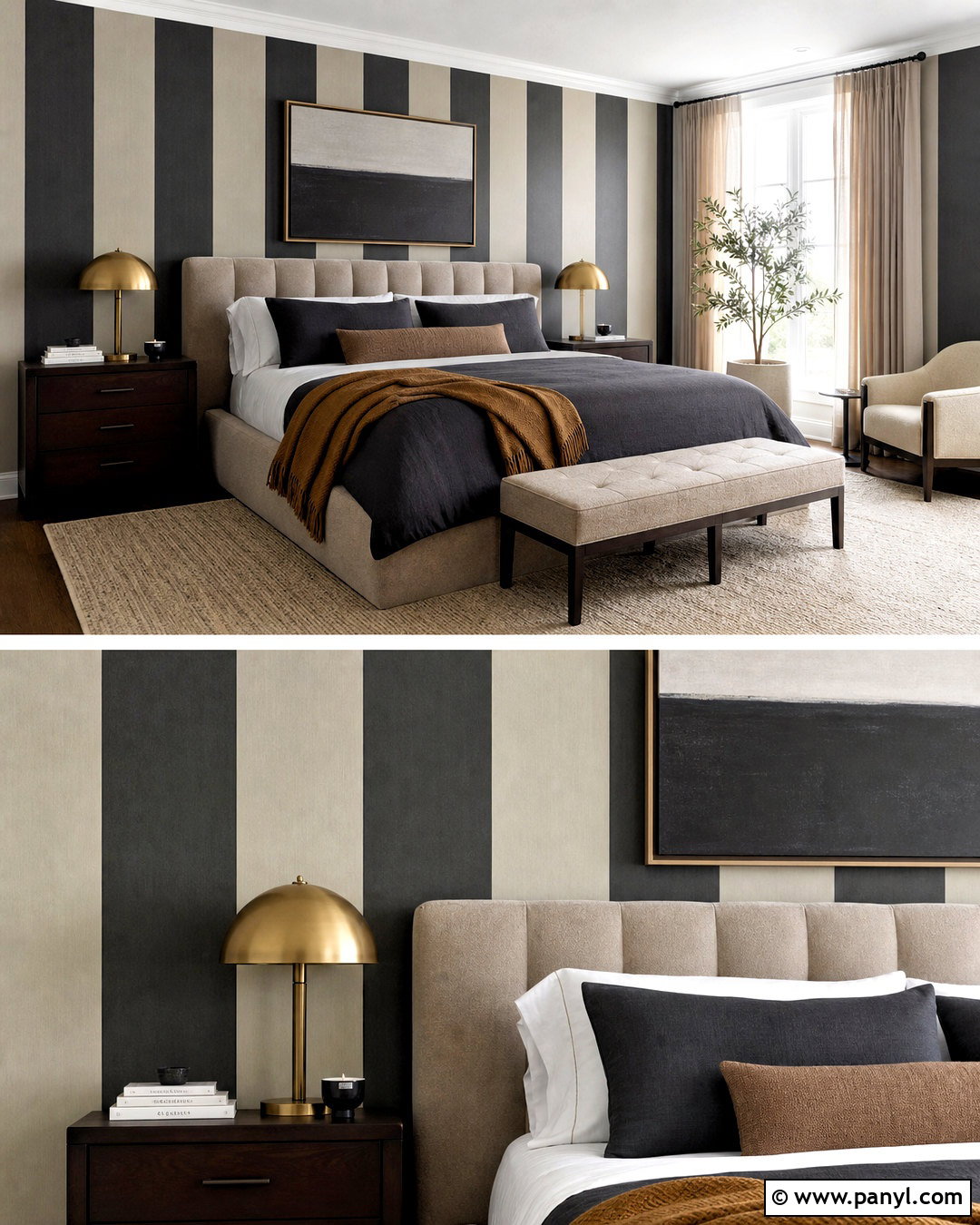
8. Lavender Walls With Blush Pink
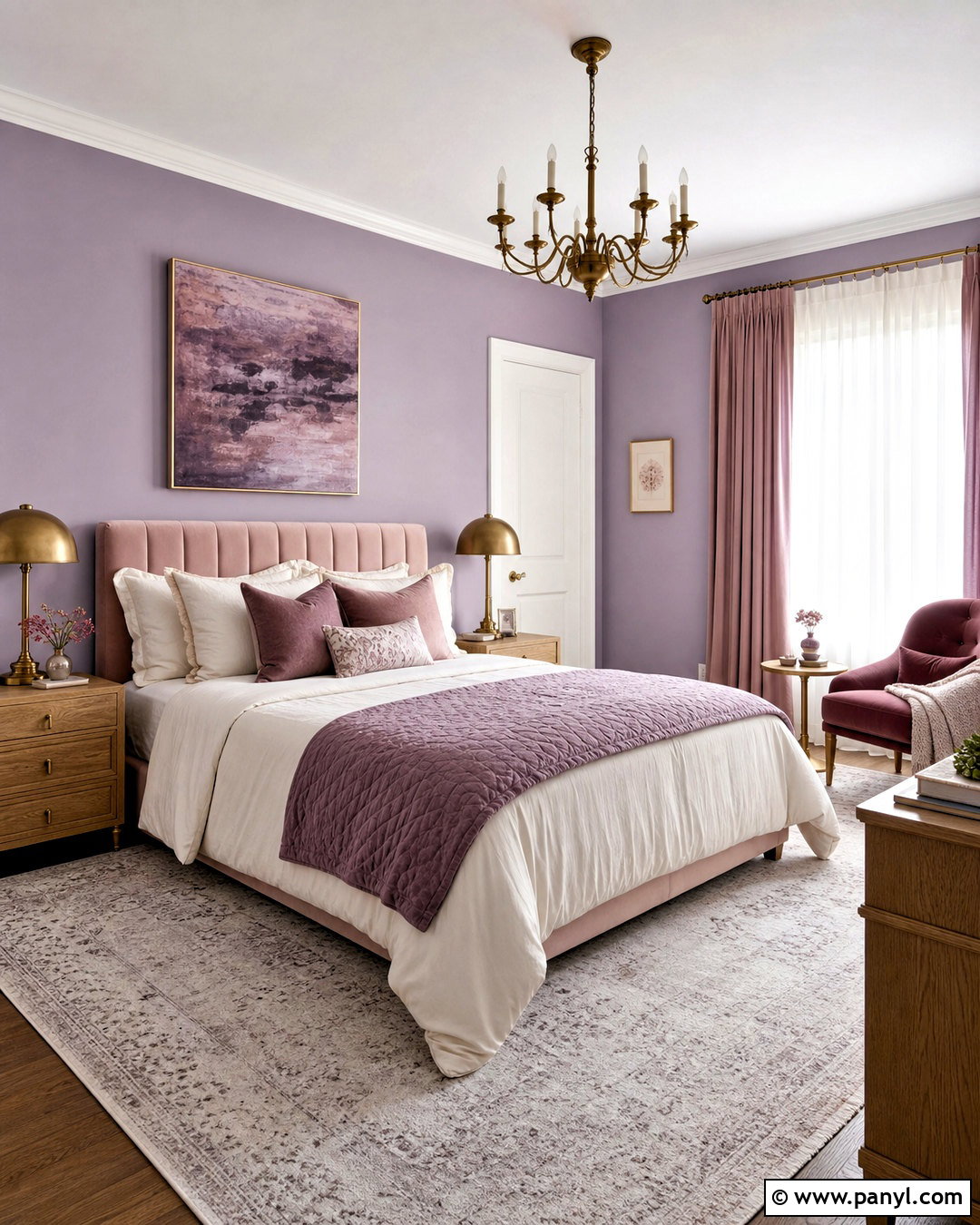
A lavender and blush bedroom can feel elegant when the colors are dusty, layered, and balanced with warm neutrals. Paint the walls a muted lavender with a slightly rosy undertone. Select a blush upholstered headboard in linen or velvet, then use ivory bedding to separate the two pastel colors. Add one lavender quilt, dusty rose pillows, and a warm taupe throw for depth. Light oak nightstands keep the palette casual, while aged brass lamps introduce a refined finish. Choose a cream rug with a faded pink pattern and hang sheer ivory curtains over simple woven shades. Abstract art should include small amounts of deeper plum or brown to ground the softer shades. Avoid excessive ruffles and floral accessories so the finished room remains polished rather than overly sweet.
9. Lavender Walls With Mustard Yellow
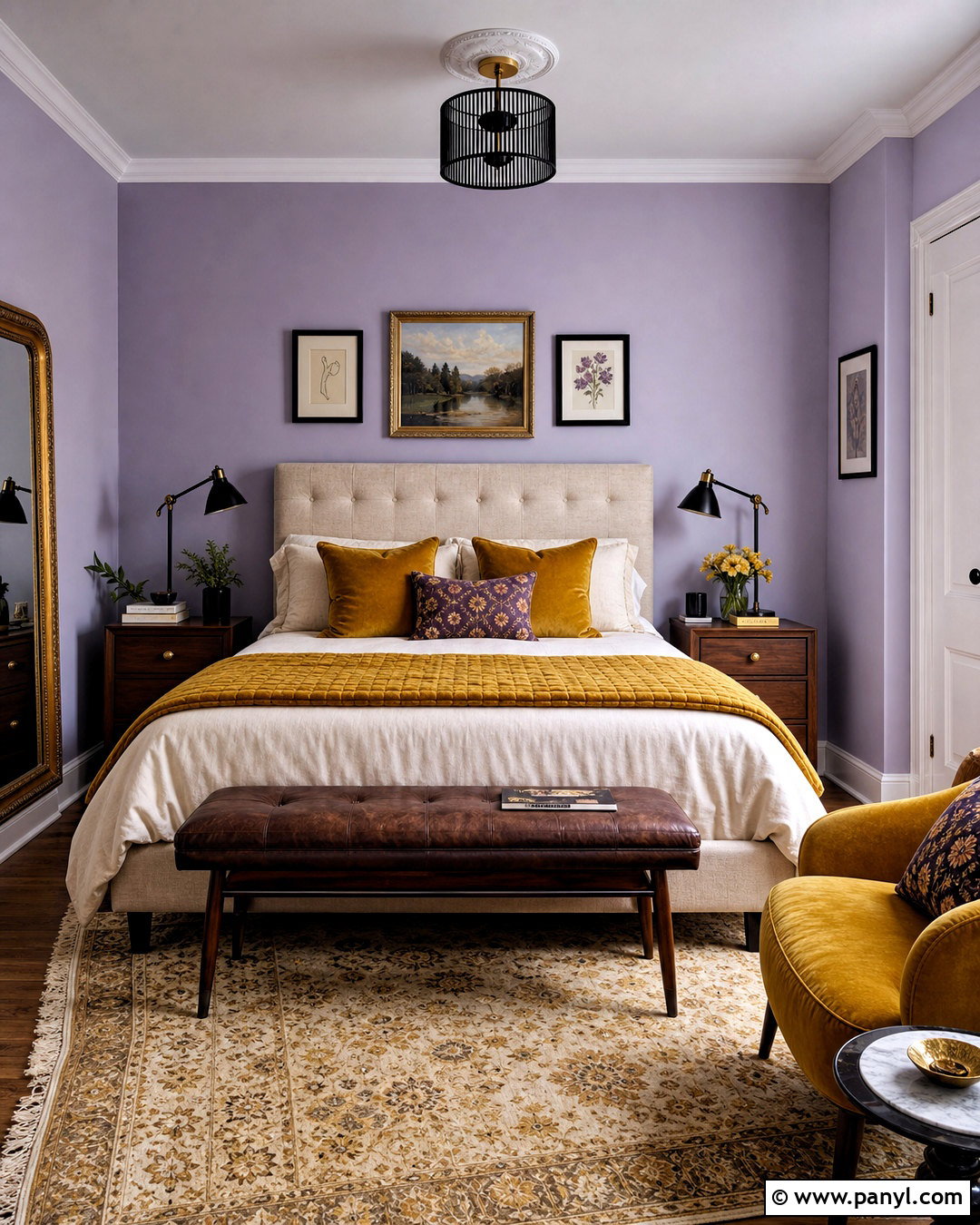
Mustard yellow brings warmth and energy to lavender bedroom walls while preserving a cozy atmosphere. Start with a muted, medium-light lavender instead of an icy pastel. Place an oatmeal upholstered bed against the primary wall and cover it with white or cream bedding. Introduce mustard through a substantial quilt, two velvet pillows, and a small reading chair rather than many tiny accessories. Walnut nightstands and a warm brown leather bench help connect the yellow to the rest of the room. Ground everything with a beige patterned rug containing touches of lavender and ocher. Use white curtains to prevent the combination from becoming visually heavy. Matte black lighting and simple modern artwork provide structure, creating a complete bedroom that feels lively, warm, and carefully coordinated.
10. Lavender Walls With Teal
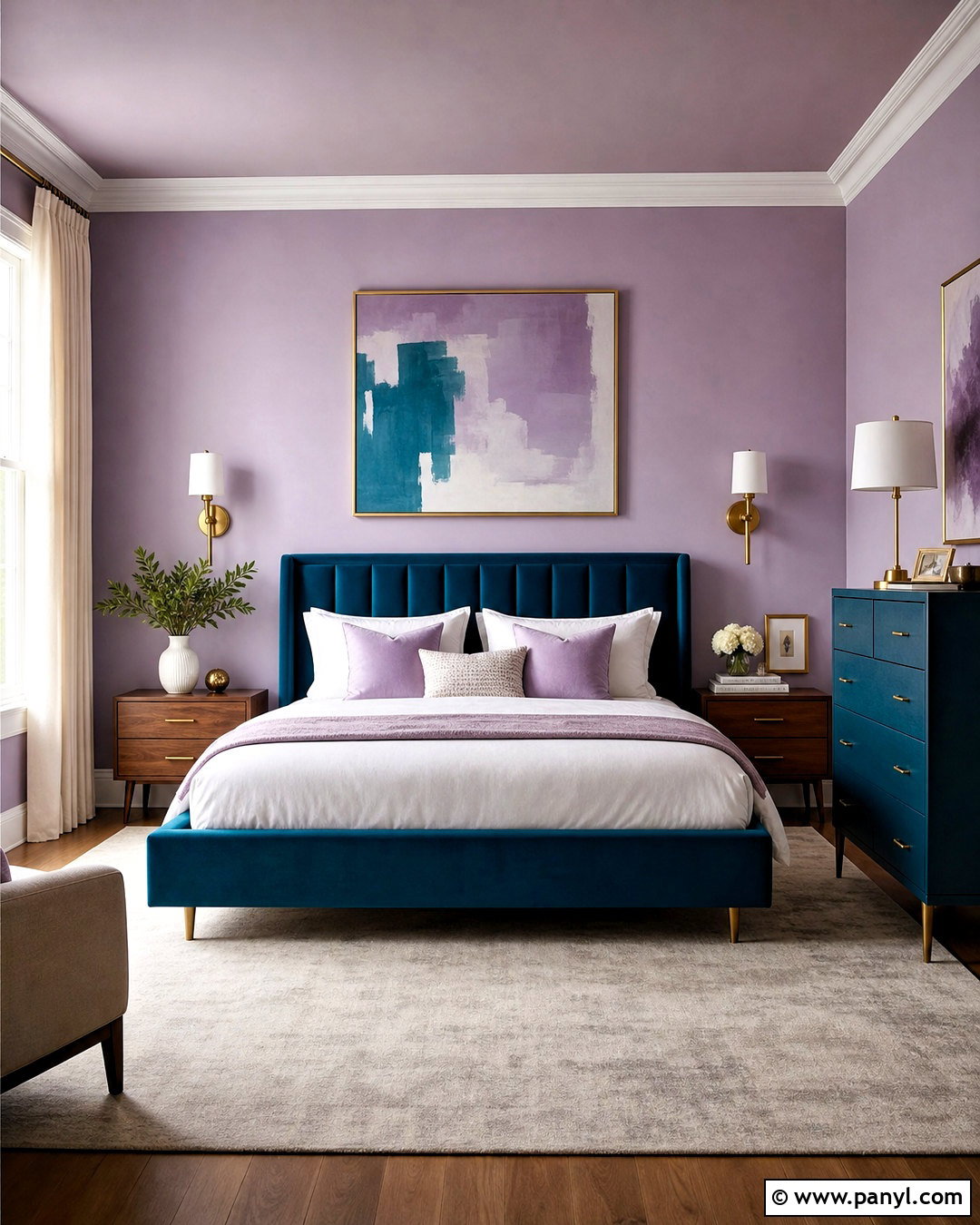
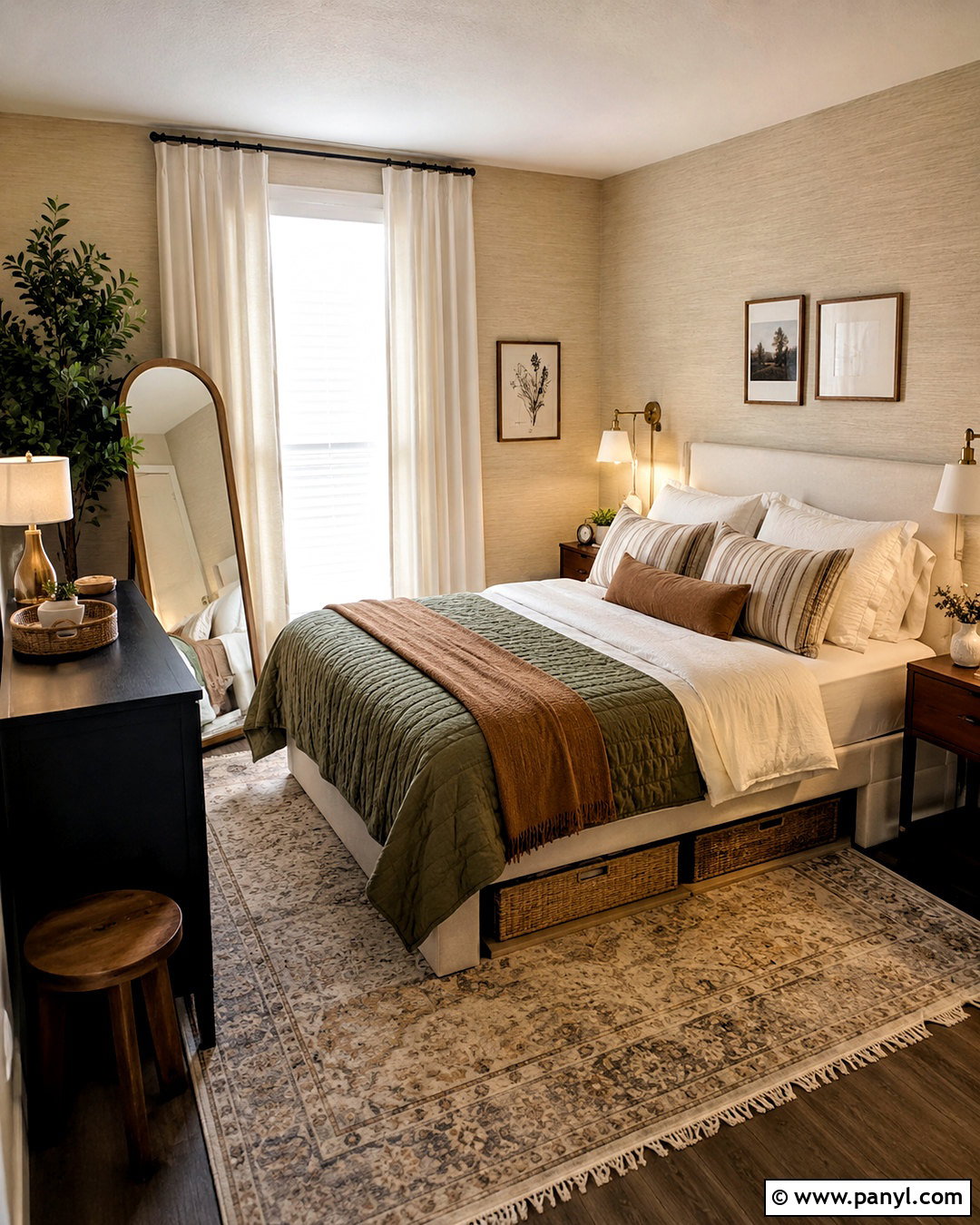
Lavender walls paired with rich teal can create a bold bedroom that still feels restful. Select a dusty lavender paint so the wall color does not compete with the stronger blue-green accents. Make a teal upholstered bed the main feature, then soften it with white bedding, pale lavender pillows, and a folded teal throw. Medium walnut nightstands add warmth between the cool colors, while brass sconces bring a subtle glow. A light greige rug keeps the floor quiet and helps the furniture stand out. Choose cream curtains and artwork that combines lavender, teal, and muted green in large, simple shapes. Repeat teal only a few times beyond the bed. This controlled approach creates visual rhythm without turning the space into an overly colorful or theme-driven bedroom.
11. Lavender Walls With Natural Wood
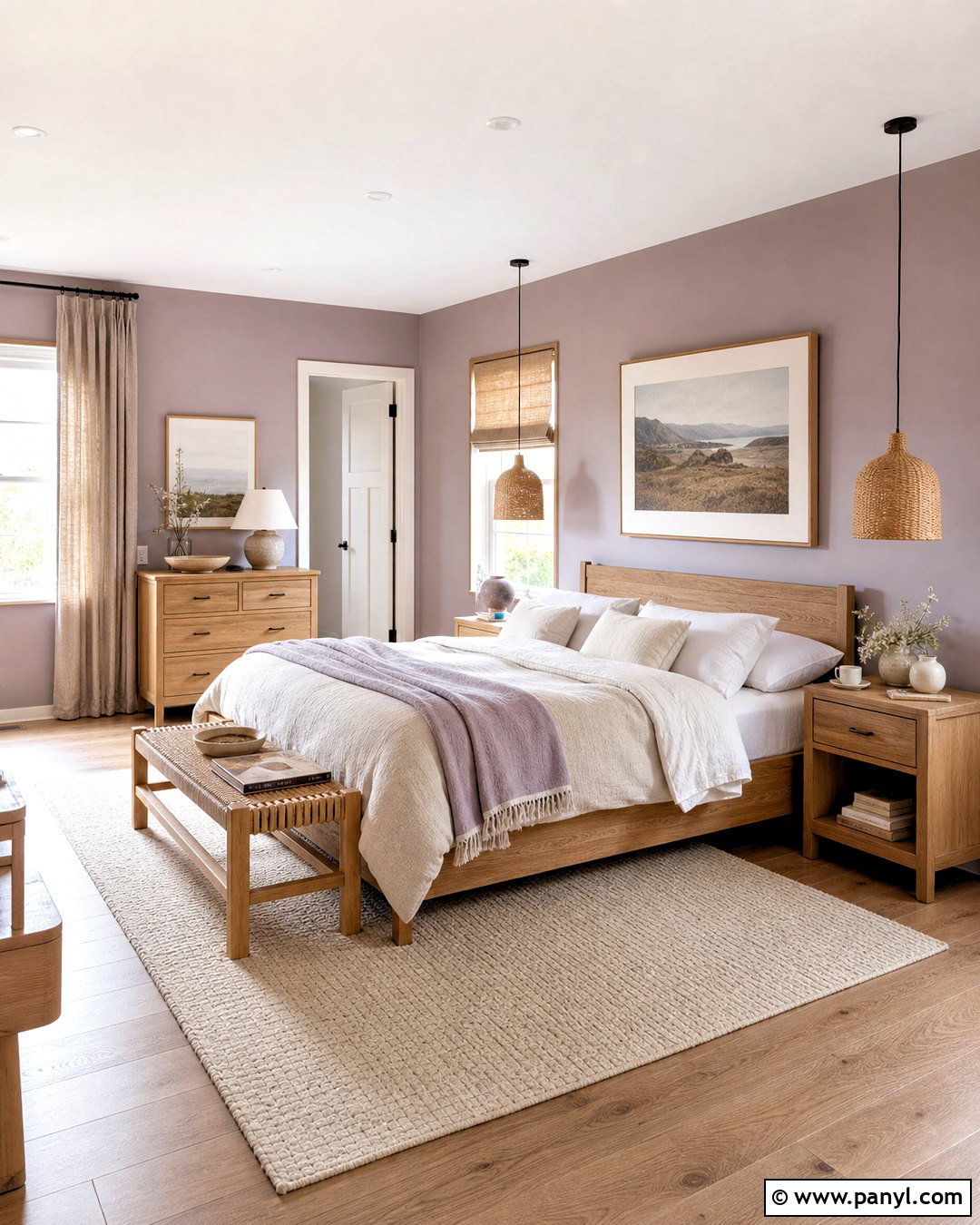
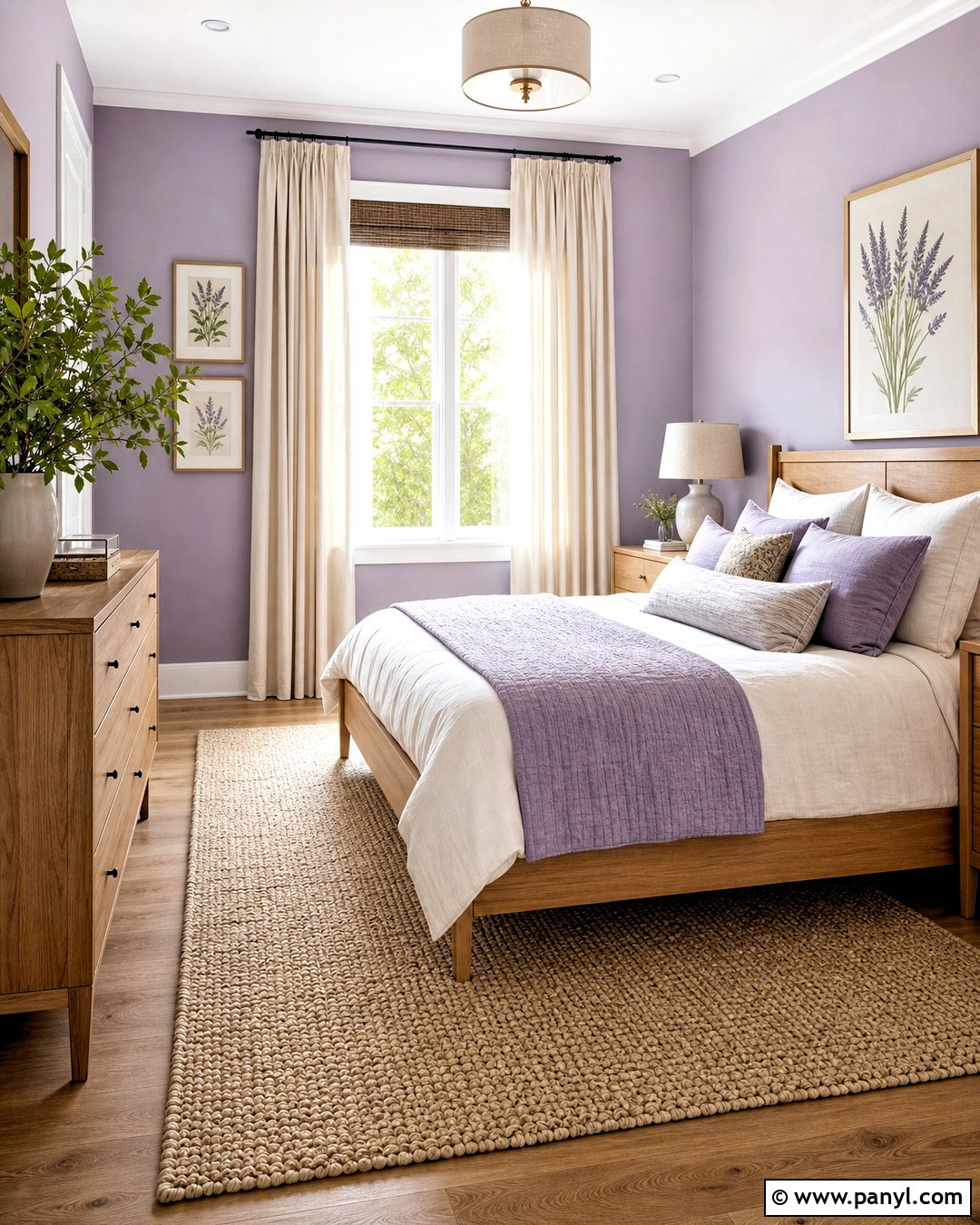
Natural wood furniture makes lavender walls feel warmer and more grounded. Paint the walls a pale lavender with a soft gray cast, then introduce a solid oak or maple bed with visible grain. Layer the bed with white linen sheets, an oatmeal duvet, and a faded lavender blanket. Coordinating wood nightstands and a simple slatted bench create continuity without requiring a matching furniture set. Add woven pendant lights or linen-shaded lamps for extra texture. A large cream wool rug can soften hardwood flooring, while flax curtains filter daylight without hiding it. Complete the bedroom with handmade ceramics, landscape prints, and one woven basket for spare bedding. The combination works especially well in relaxed Scandinavian, organic modern, and transitional interiors where natural materials are allowed to remain visually prominent.
12. Lavender Walls With Brass Accents
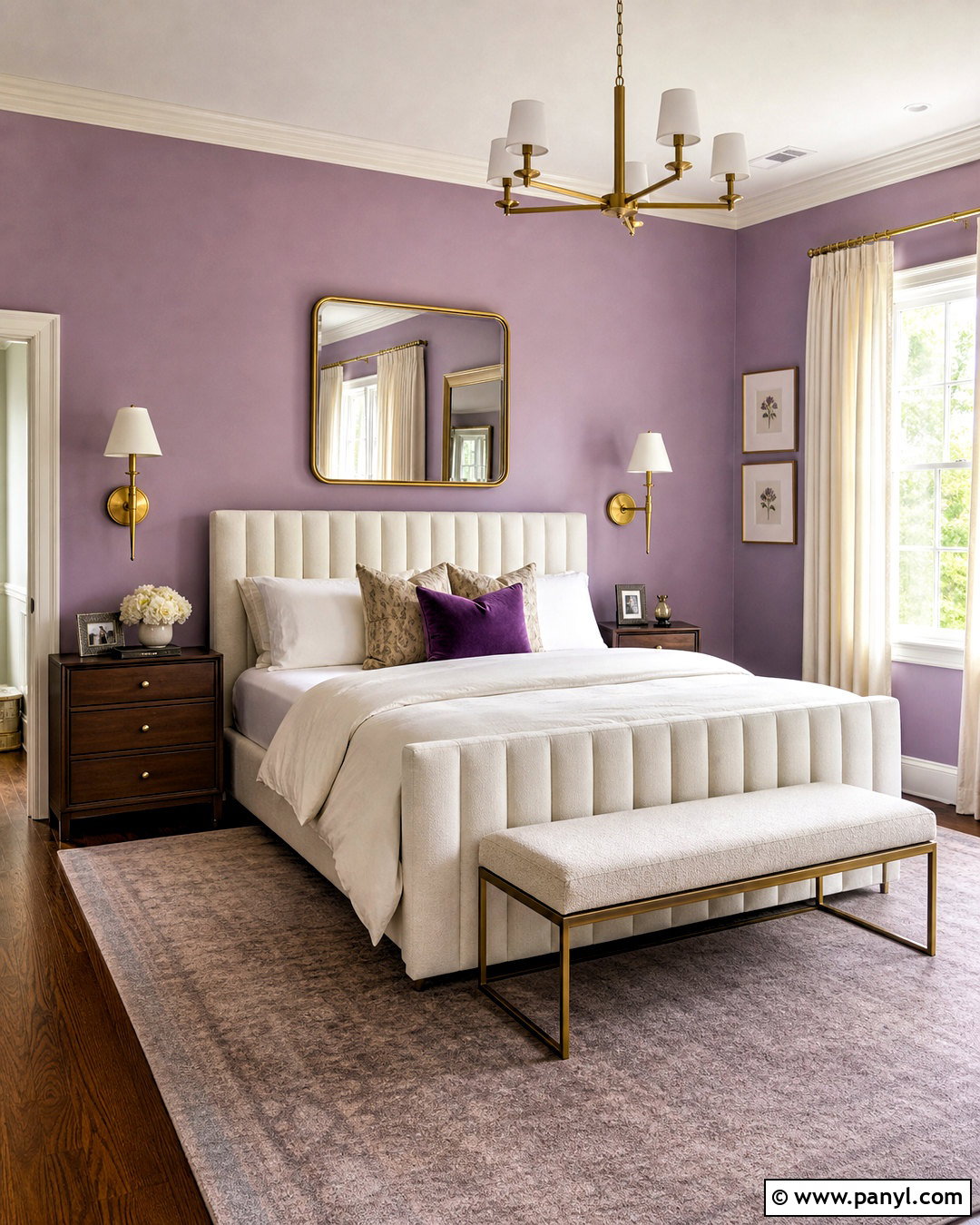
Brass accents lend warmth and understated luxury to lavender bedroom walls. Choose a muted lavender paint that looks soft in daylight and slightly deeper under evening lamps. Place a cream channel-tufted bed in the center of the main wall and flank it with walnut nightstands. Brushed brass sconces, slim drawer pulls, and a brass-framed mirror should provide coordinated highlights without covering every surface in metal. Dress the bed in ivory linen, a plum velvet lumbar pillow, and a pale lavender quilt. Add a taupe rug and full-length cream curtains to ground the richer finishes. One abstract painting with warm brown, lavender, and ivory can unify the palette. Using brass in three or four repeated locations creates a finished bedroom that feels elegant rather than flashy.
13. Lavender Walls With Floral Wallpaper
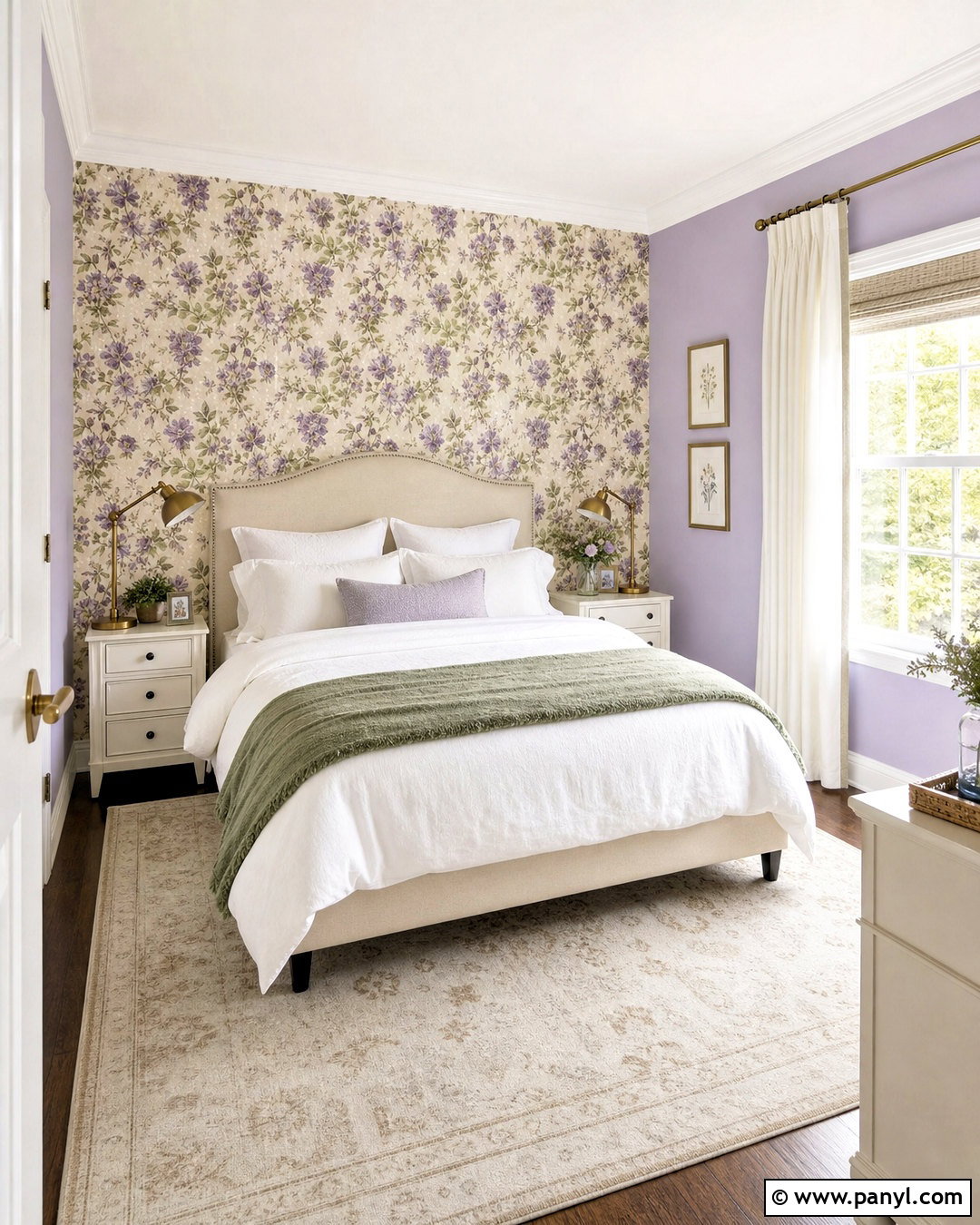
Combine painted lavender walls with one floral wallpaper panel for a bedroom that feels detailed but not overwhelming. Paint three walls a soft lavender, then install wallpaper behind the bed featuring lavender flowers, muted green leaves, cream space, and small touches of dusty blue. Choose a simple cream upholstered headboard so it does not compete with the pattern. White bedding, a sage throw, and pale purple pillows can repeat the wallpaper colors. Use painted white nightstands and brass or ceramic lamps for a light traditional finish. A faded cream rug adds softness underfoot, while solid ivory curtains keep the window treatment quiet. This complete look suits cottage and updated traditional bedrooms, especially when decorative accessories are limited and the wallpaper remains the clear focal point.
14. Two Tone Lavender Bedroom Walls
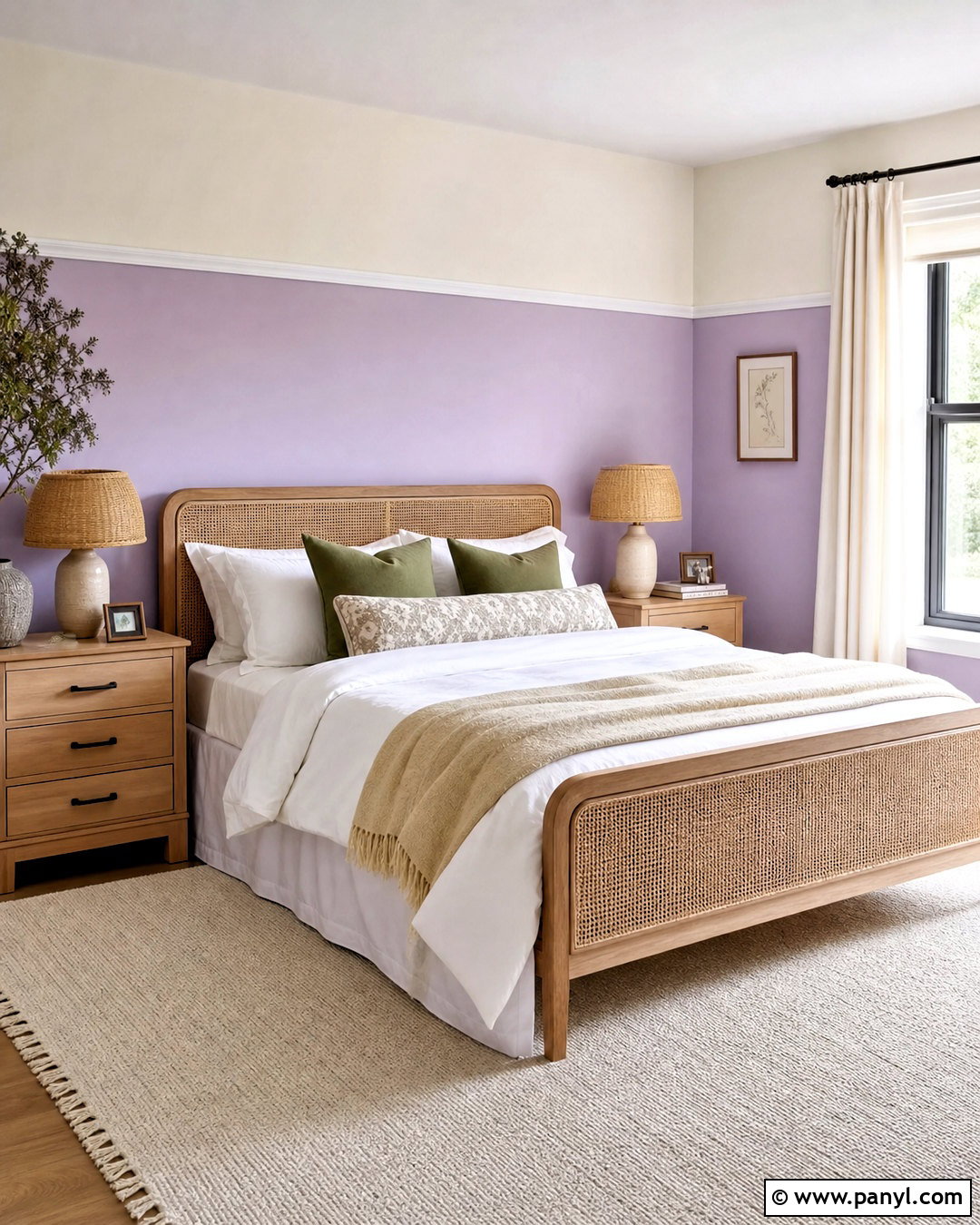
Two-tone walls give lavender extra architectural interest without requiring elaborate molding. Paint the lower third of each wall a medium dusty lavender and the upper section a warm off-white. Separate the colors with a slim white chair rail for a clean, finished transition. Position a natural cane or light oak bed against the main wall, allowing both colors to remain visible. Add white bedding, lavender piping, a sand-colored blanket, and muted green cushions. Pale wood nightstands and woven lamps continue the relaxed feeling. Use a cream rug and simple linen curtains to keep the room bright. This arrangement is useful in bedrooms with high ceilings because the lower lavender section visually grounds the furniture while the pale upper walls preserve openness and reflect more daylight.
15. Lavender Color Drenched Bedroom
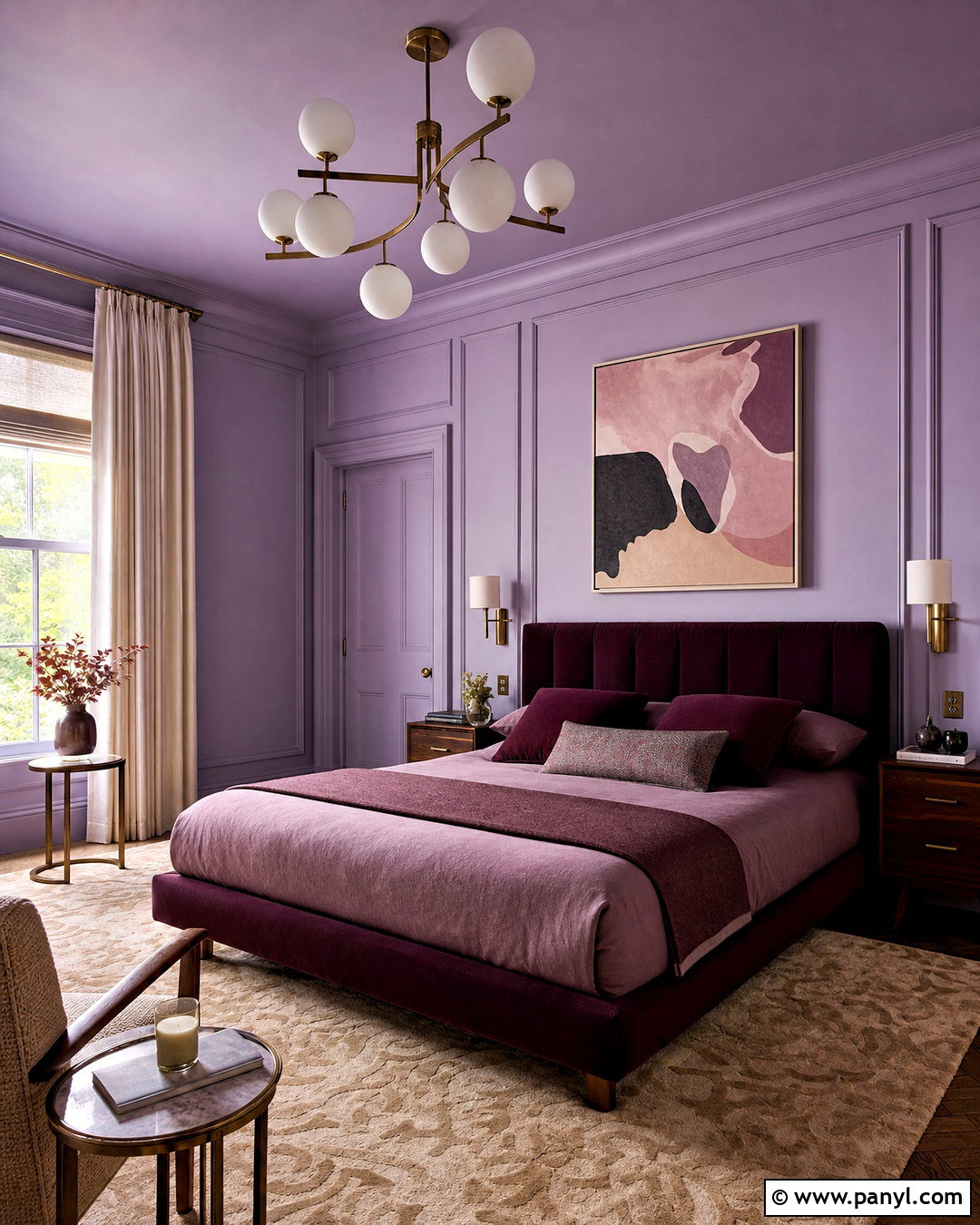
For an immersive retreat, carry a dusty lavender shade across the walls, trim, doors, and ceiling. Use a matte finish on broad surfaces and a subtle satin finish on woodwork so the architecture still has dimension. Choose a lavender that contains gray or brown undertones to prevent the room from feeling overly bright. Introduce a deep plum upholstered bed, layered mauve bedding, and warm walnut nightstands for a rich tonal effect. A large mushroom-beige rug and cream curtains offer visual relief without breaking the cocooning mood. Add aged brass sconces and abstract artwork in plum, taupe, and pale pink. Color drenching works best when textiles and wood finishes vary in texture, helping the monochromatic bedroom feel layered, comfortable, and intentionally designed.
16. Lavender Walls With White Paneling
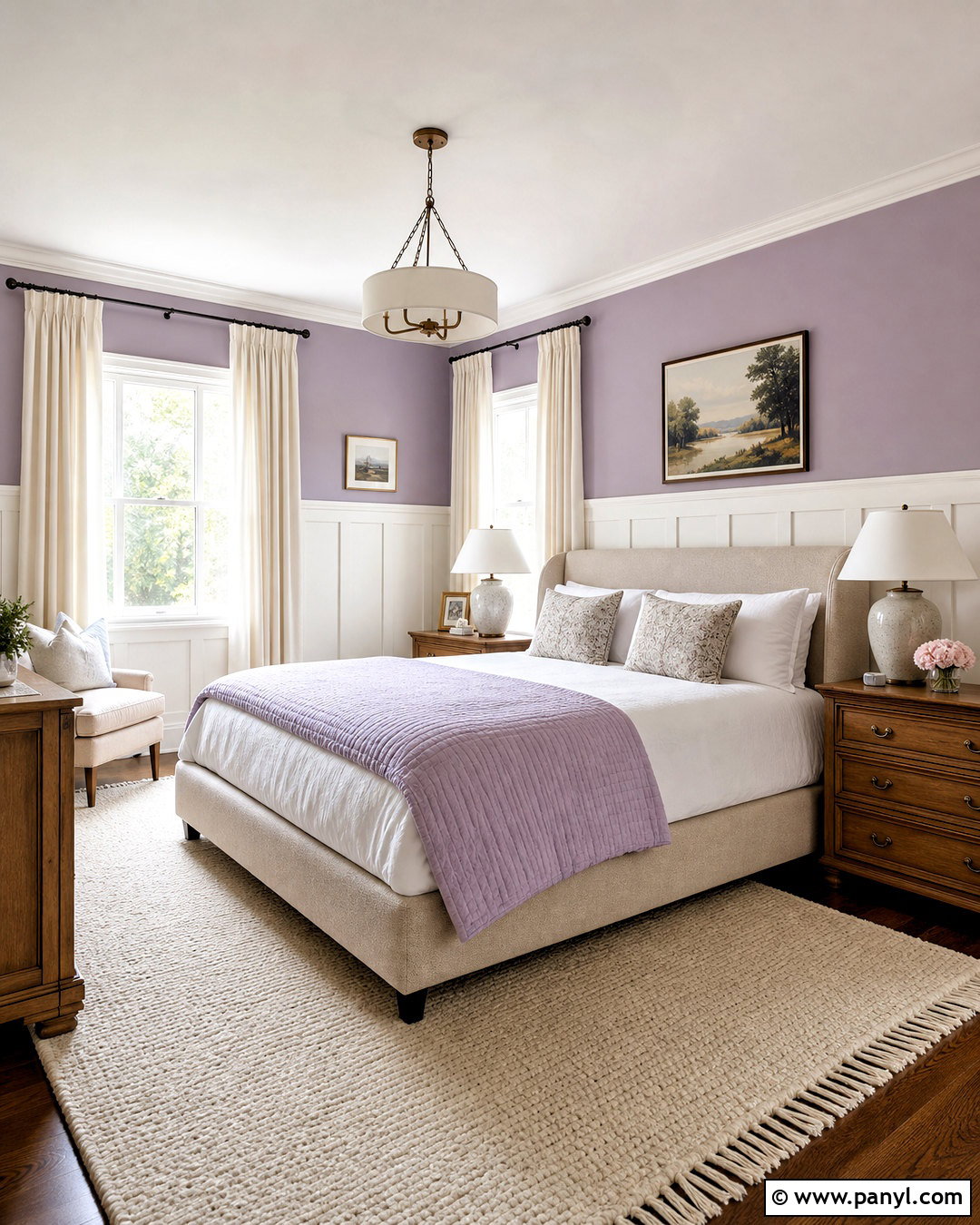
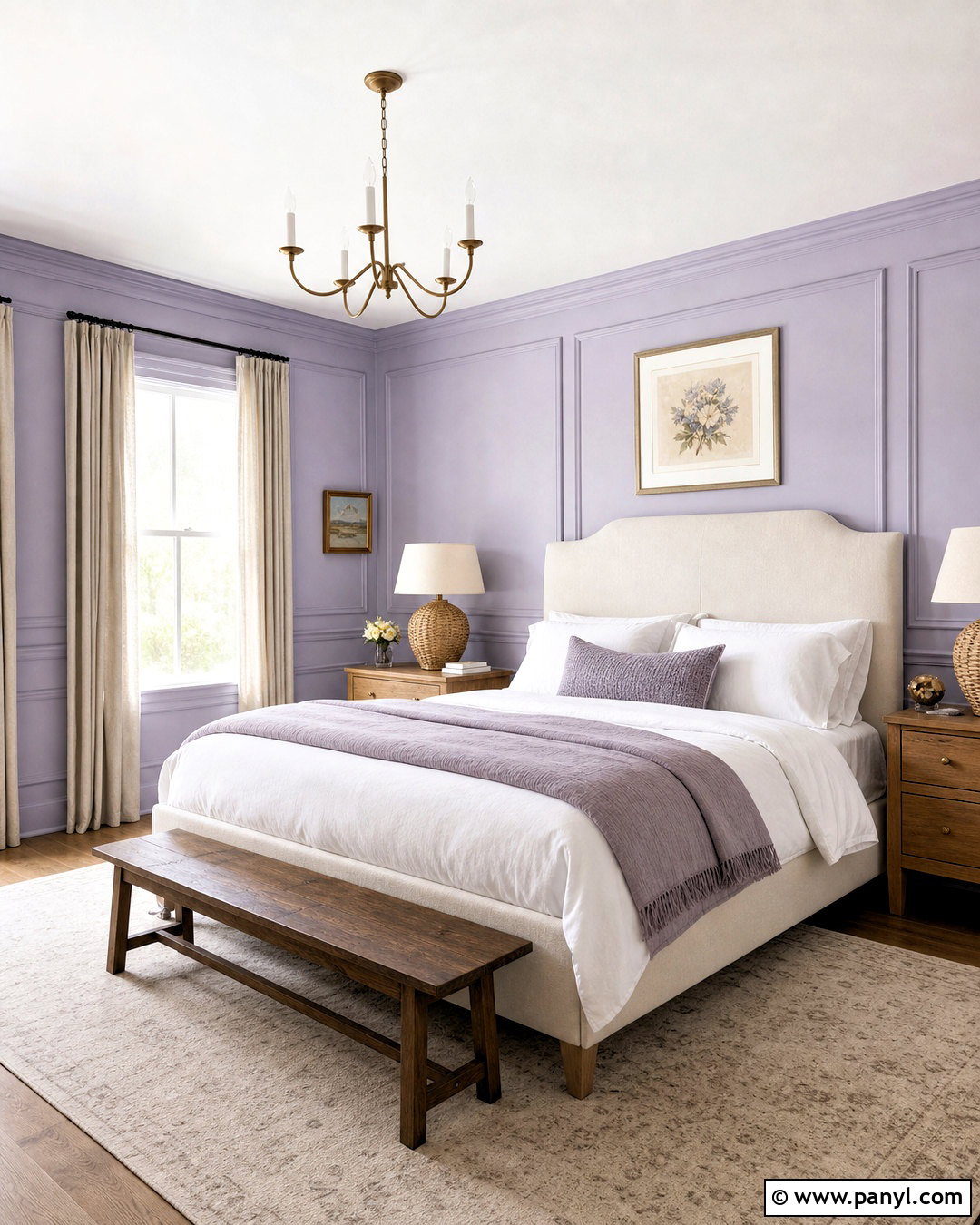
White wall paneling adds crisp structure to a lavender bedroom while creating a timeless architectural backdrop. Install simple board-and-batten or rectangular molding across the lower half of the walls and paint it warm white. Apply soft lavender above the paneling and continue the white onto the ceiling and trim. A beige upholstered bed keeps the central furniture neutral, while white bedding and a lavender coverlet reinforce the wall palette. Add traditional oak nightstands, ceramic lamps, and a cream wool rug. Full-length ivory curtains soften the clean lines, and small framed landscapes can fill the lavender area without looking crowded. This complete design works in both newer and older homes because the paneling supplies character, while the uncomplicated color combination keeps the bedroom light and approachable.
17. Dark Lavender Bedroom Walls
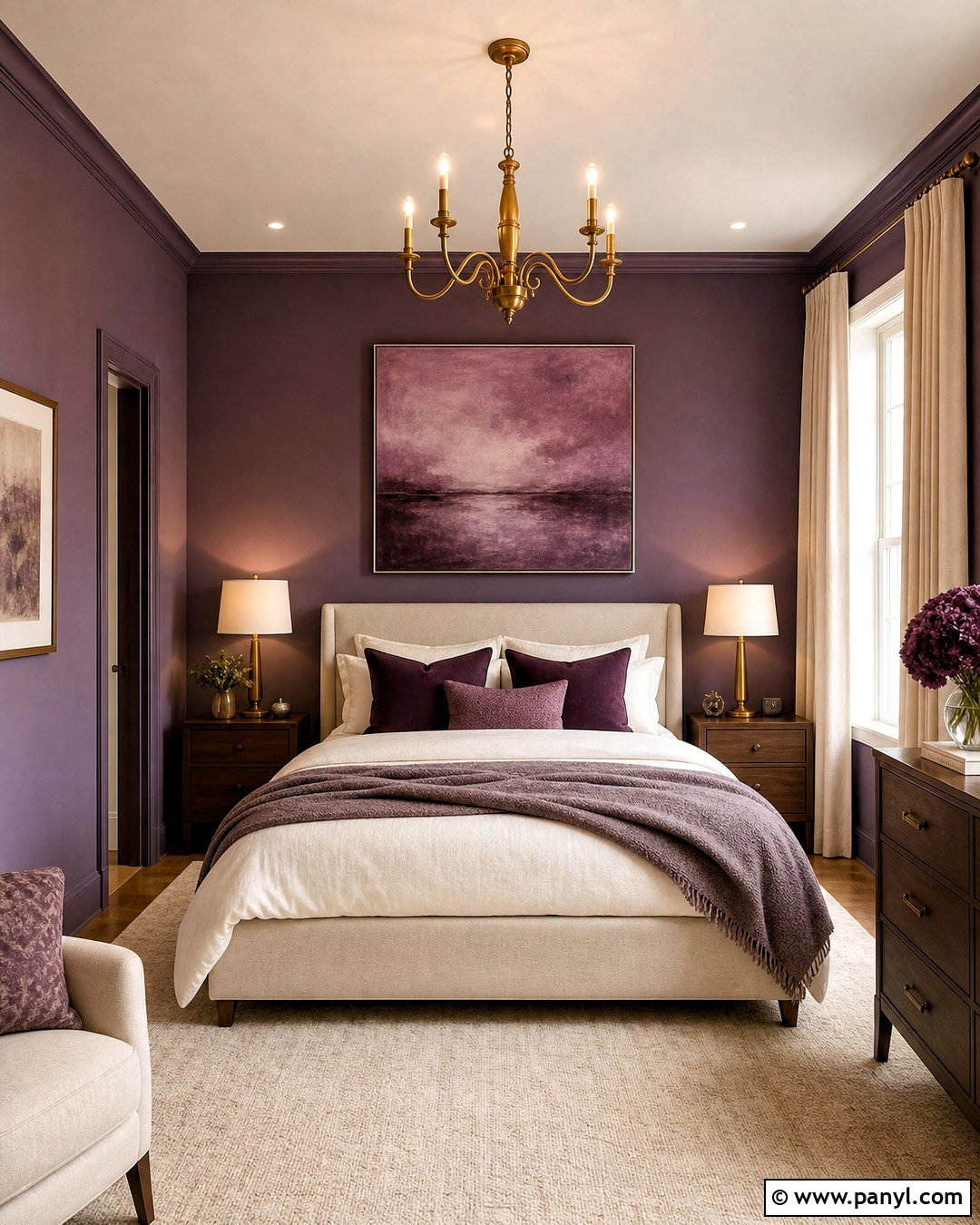
Dark lavender walls can create a dramatic, restful bedroom when balanced with pale fabrics and warm materials. Choose a smoky lavender-purple with muted plum undertones and paint all four walls for an enveloping effect. Keep the ceiling a soft cream to prevent the room from closing in visually. Place a light beige linen bed against the darkest wall and layer it with ivory bedding, plum pillows, and a gray-lavender throw. Walnut nightstands, an antique brass chandelier, and warm white bedside lamps offset the cool paint. Add a generous cream rug and neutral curtains to brighten the lower and outer edges of the room. Large-scale artwork with tan and pale mauve tones will connect the contrasting elements while maintaining the sophisticated, cocoon-like atmosphere.
18. Pale Lavender Walls For Small Bedroom
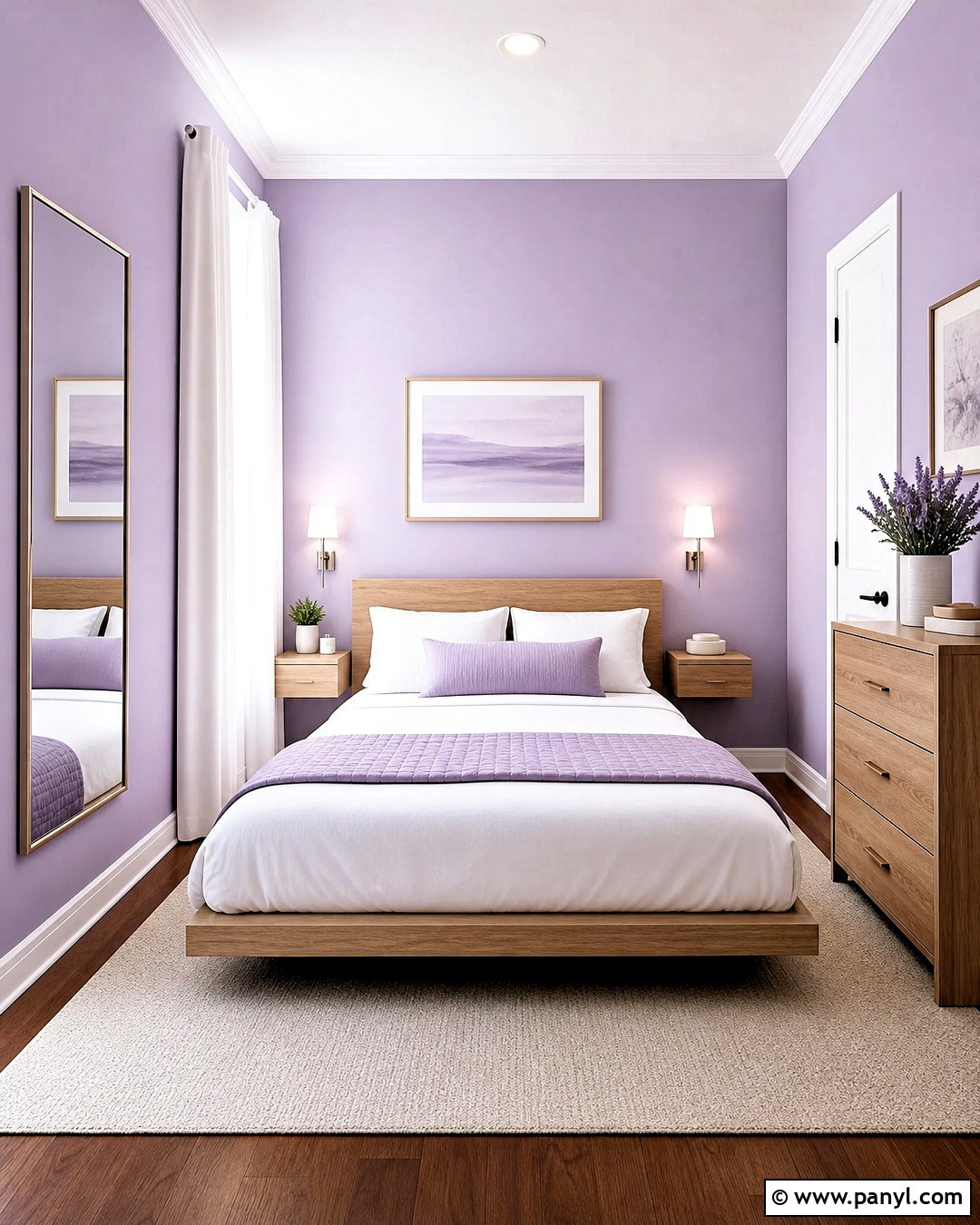
Pale lavender can give a small bedroom personality without making it feel cramped. Select a light gray-lavender that reflects daylight, then paint the ceiling, trim, and doors clean warm white. Use a low-profile white or pale oak bed to preserve open sightlines. Wall-mounted sconces and floating nightstands save floor space while keeping both sides of the bed functional. Dress the bed with white bedding, a slim lavender quilt, and one soft gray cushion. A light cream rug should extend beneath most of the furniture to create one continuous visual zone. Hang simple white curtains close to the ceiling and choose a narrow dresser with raised legs. A single mirror and two small artworks provide decoration while ensuring the complete room remains bright, uncluttered, and comfortable.
19. Lavender Walls For Farmhouse Bedroom
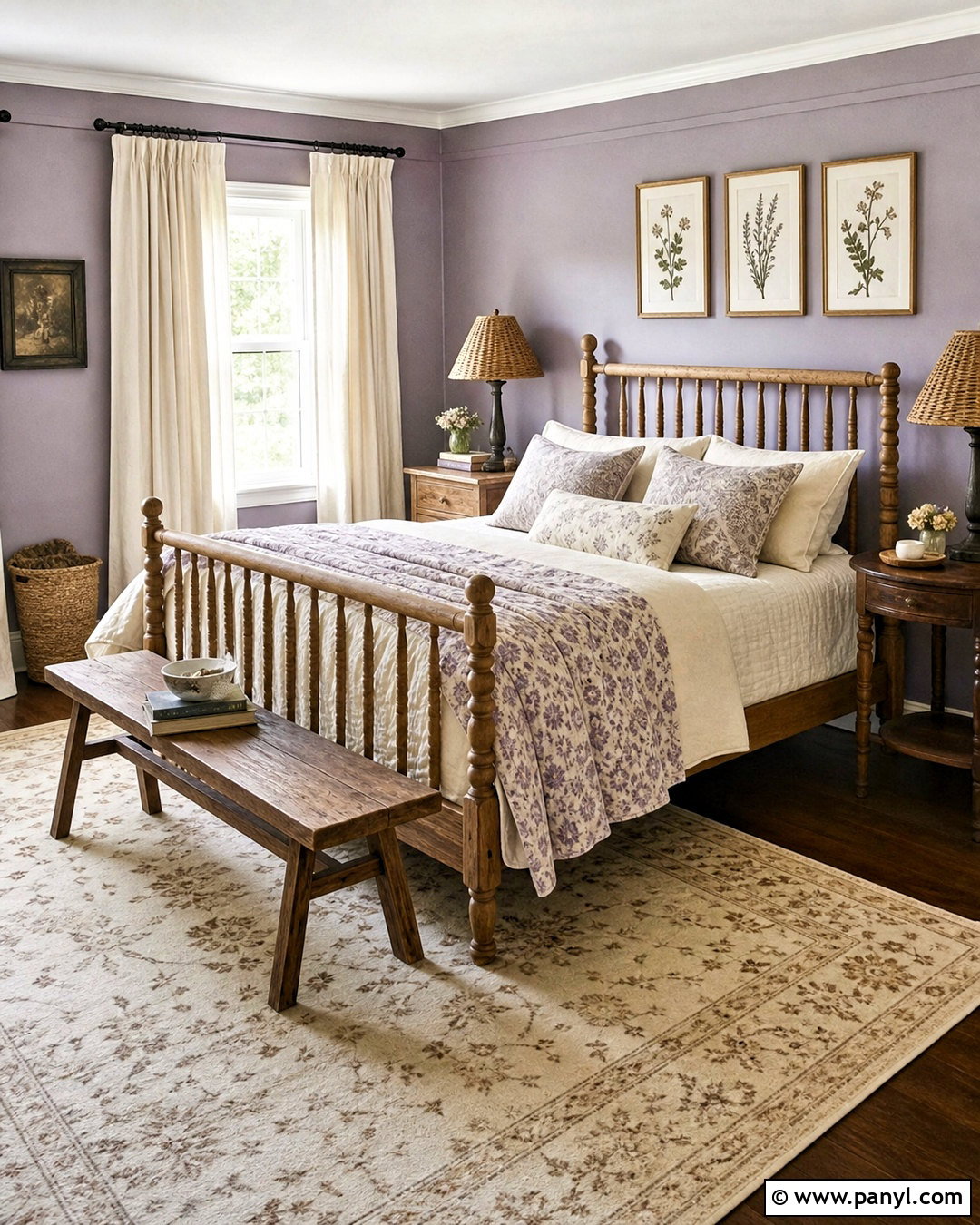
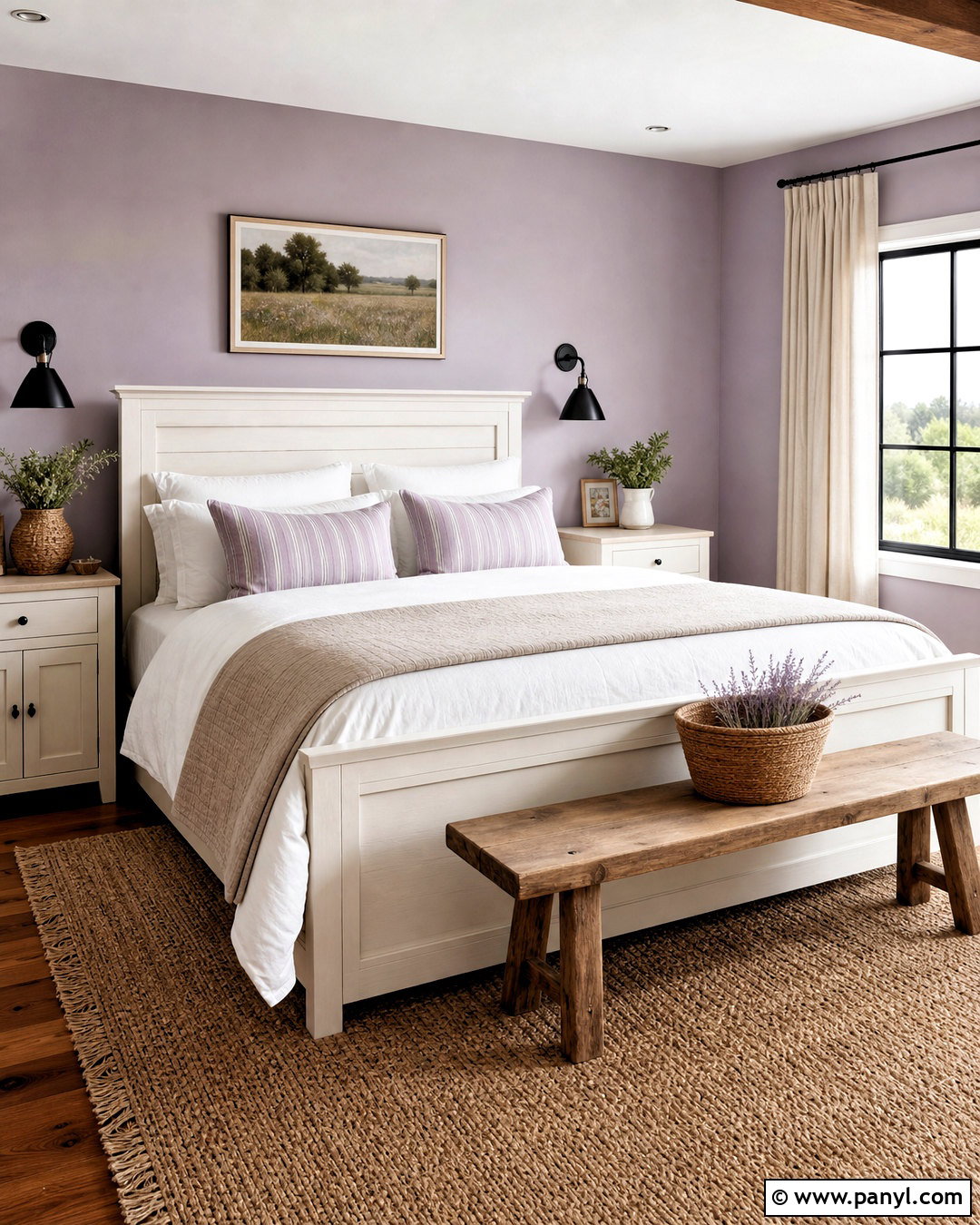
Lavender walls can soften a farmhouse bedroom without losing its casual, practical character. Choose a faded lavender paint with noticeable gray undertones, then pair it with white-painted trim and a warm white ceiling. Place a natural wood spindle bed against the main wall and layer it with cream cotton bedding, a lavender block-print quilt, and oatmeal pillows. Use mismatched wood nightstands with similar medium-brown finishes for a collected look. Woven lamps, a vintage-style cream rug, and simple linen curtains introduce texture without excessive ornament. Add a wood bench at the foot of the bed and hang understated botanical prints in aged brass frames. The resulting room feels relaxed and familiar, with lavender providing gentle color rather than turning the bedroom into a heavily themed rustic space.
20. Lavender Walls For Modern Bedroom
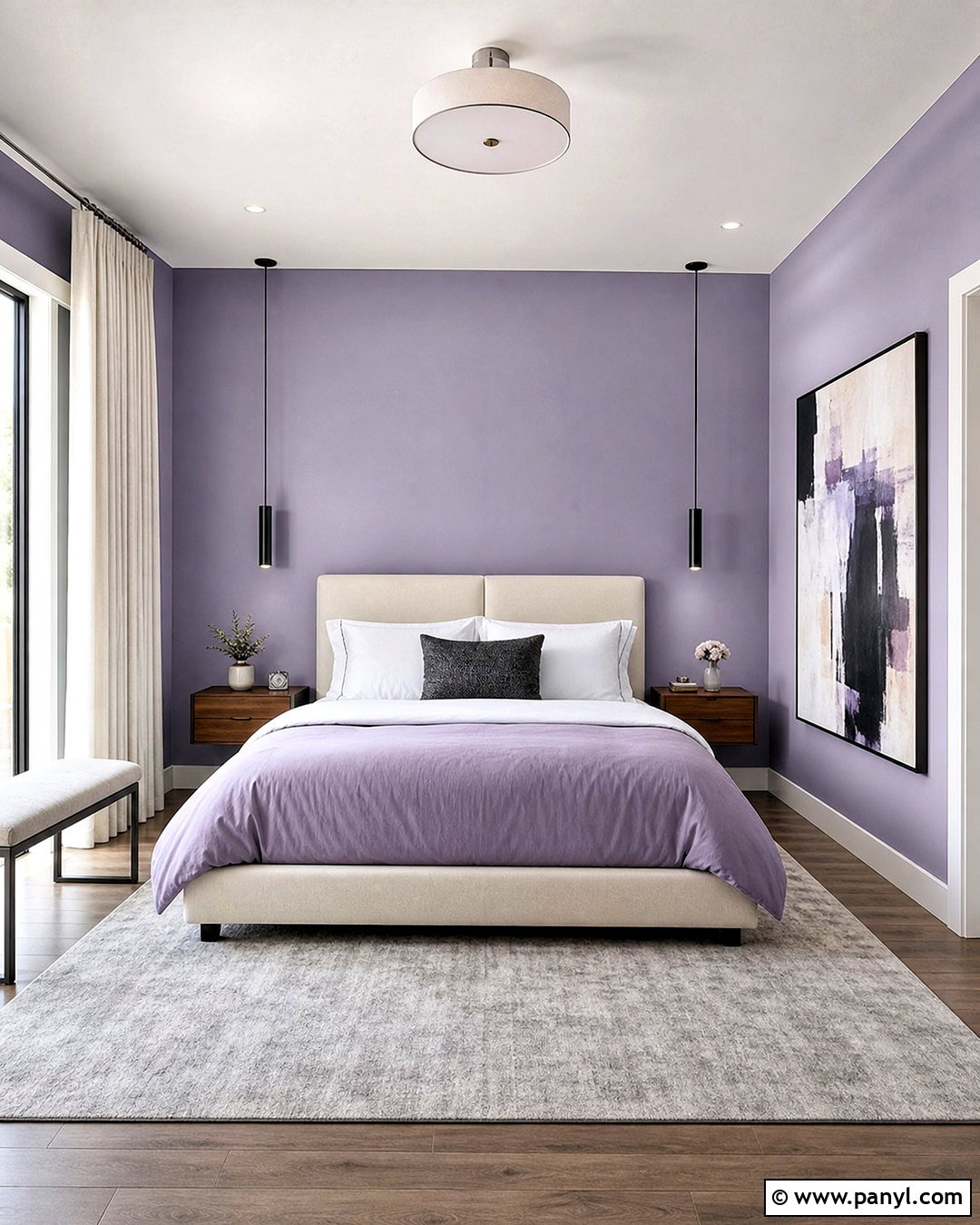
A modern lavender bedroom depends on simple shapes, controlled contrast, and a limited material palette. Paint all four walls a clean, gray-based lavender and leave the ceiling bright white. Center a low cream platform bed on the longest wall, then use white bedding, a lavender duvet, and one charcoal lumbar cushion. Floating walnut nightstands keep the floor visible, while slim black pendant lights emphasize the room’s vertical lines. Choose a large light gray rug, full-length off-white curtains, and a narrow upholstered bench. One oversized abstract artwork can introduce lavender, black, cream, and muted brown without adding clutter. Keep accessories sculptural and minimal, such as a ceramic vase and a small table object. The complete bedroom feels contemporary, comfortable, and visually calm rather than stark.
Conclusion:
Lavender bedroom walls offer far more flexibility than their soft appearance might suggest. Pale shades can brighten compact rooms, while smoky or dark lavender creates a comfortable cocoon. White, cream, and beige produce an airy foundation. Natural wood adds warmth, and sage, navy, teal, or mustard introduces stronger contrast. Architectural treatments such as paneling, two-tone paint, wallpaper, and color drenching can make the palette feel even more intentional. Before painting the full room, test several large samples during the day and under your regular bedroom lighting. Once the undertone feels right, coordinate the bed, textiles, flooring, curtains, lighting, and artwork to create polished, restful lavender bedroom walls.

Related Ideas and Inspiration:
Leave a Reply