
The best **20 unique wall painting ideas** do more than add color. They can shape a room, define a zone, highlight architecture, and create the feeling of custom artwork without a major remodel. Current approaches range from soft limewash and immersive color drenching to organic murals, oversized curves, and carefully planned geometric patterns. () The key is treating the painted wall as part of a complete room. Furniture placement, lighting, flooring, textiles, and decorative accents should all support the finish. Before starting, test your colors in morning and evening light, repair the surface, and use quality painter’s tape when crisp edges matter. Explore these practical **20 unique wall painting ideas** to find a complete look you can confidently recreate.

1. Neutral Limewash Wall Painting
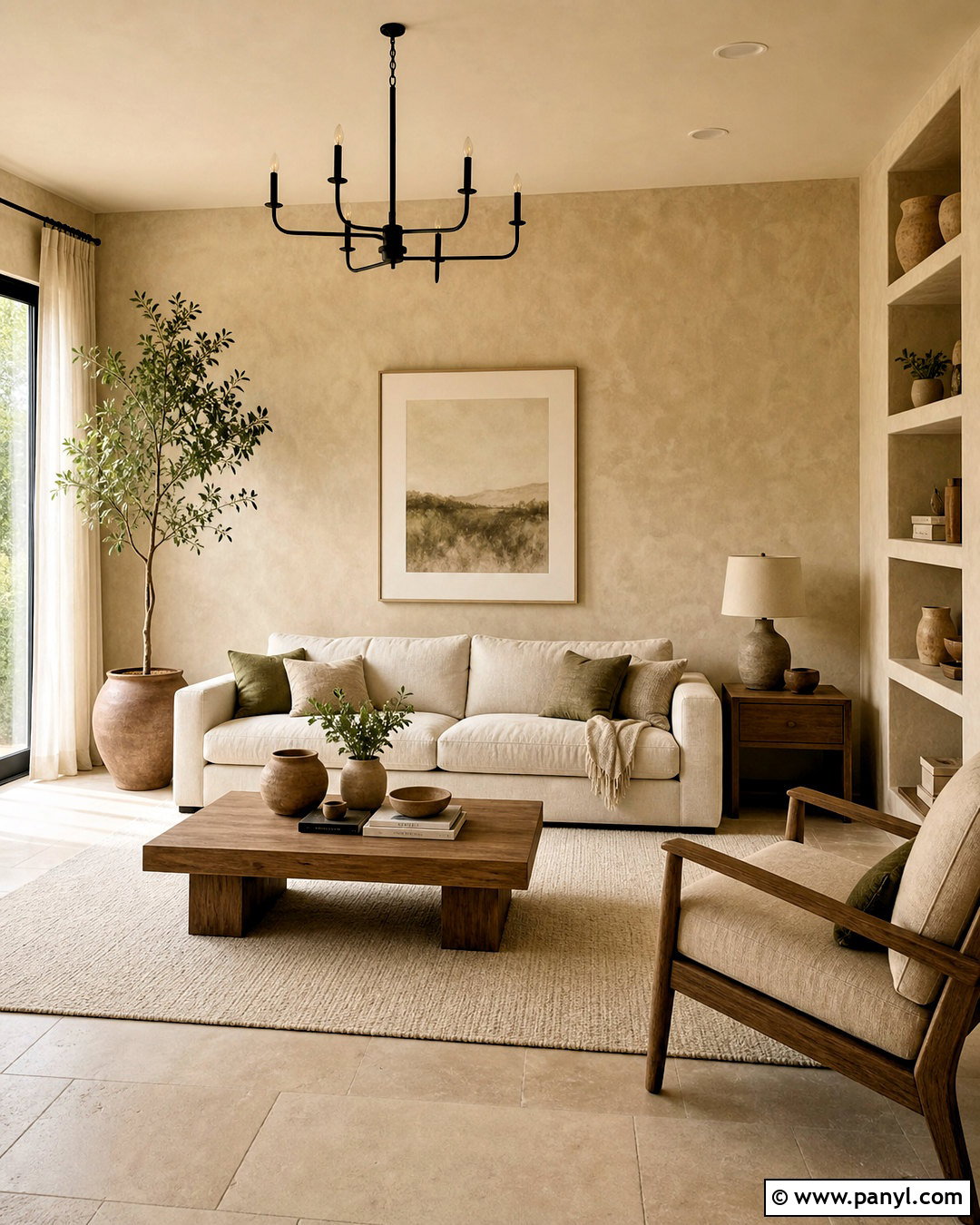
Soft limewash gives a living room depth without introducing a busy pattern. Cover every wall in warm beige, sandy taupe, or pale mushroom, using overlapping brushstrokes to create natural movement. Pair the finish with a cream linen sofa, an oak coffee table, and a textured ivory rug. Black metal lighting provides definition, while clay pottery and olive-toned pillows add earthy color. Keep window treatments light and relaxed so daylight reveals the wall’s subtle variations. For a cohesive result, paint the baseboards in a flat coordinating neutral rather than bright white. This complete wall painting look works especially well in rooms with simple furniture, natural materials, and limited artwork because the softly mottled surface becomes the main decorative feature.
2. Geometric Wall Painting
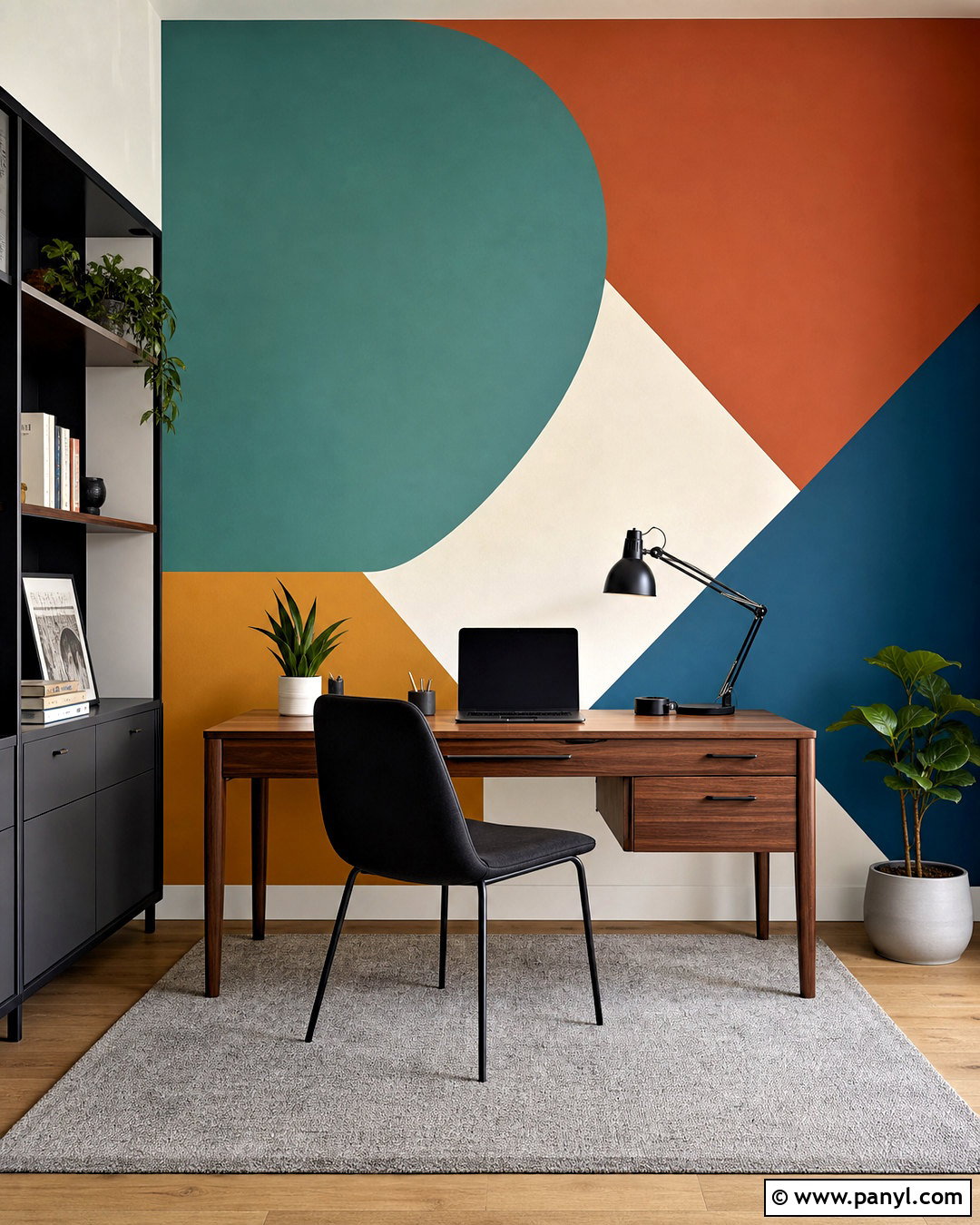
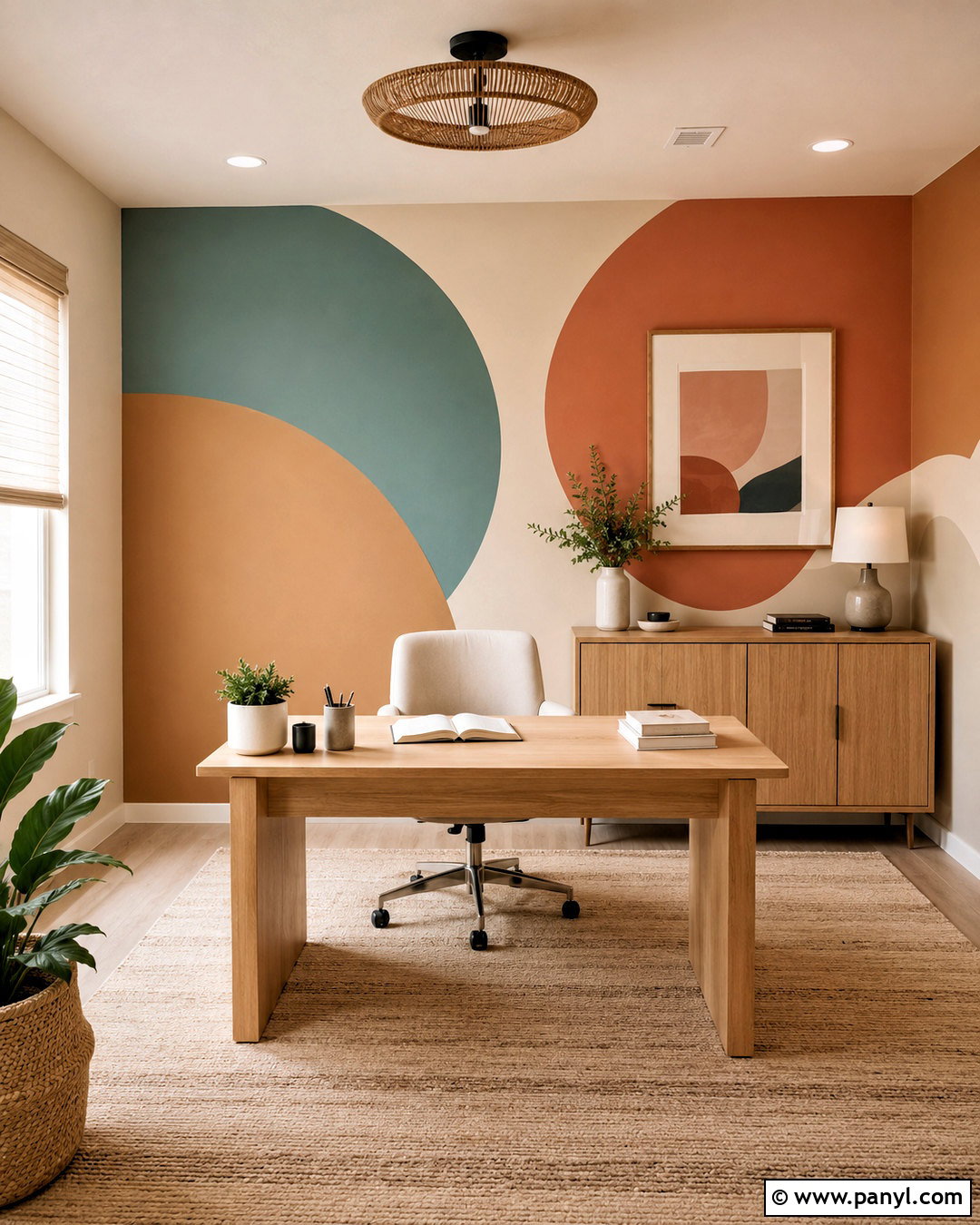
A geometric wall can define a home office while making basic furniture feel more intentional. Begin with a warm white background, then tape off overlapping arches, rectangles, and diagonal sections in muted teal, terracotta, mustard, and dusty blue. Keep the largest shape behind the desk so it creates a clear visual anchor. Complete the workspace with a walnut desk, a slim black chair, and closed storage in a color pulled from the mural. A neutral rug prevents the room from looking overly patterned. Add one adjustable task lamp and only a few simple accessories. Limit the painted design to one main wall and continue a quiet neutral around the remaining space. Careful color repetition gives this playful wall painting a polished, organized appearance.
3. Two-Tone Wall Painting
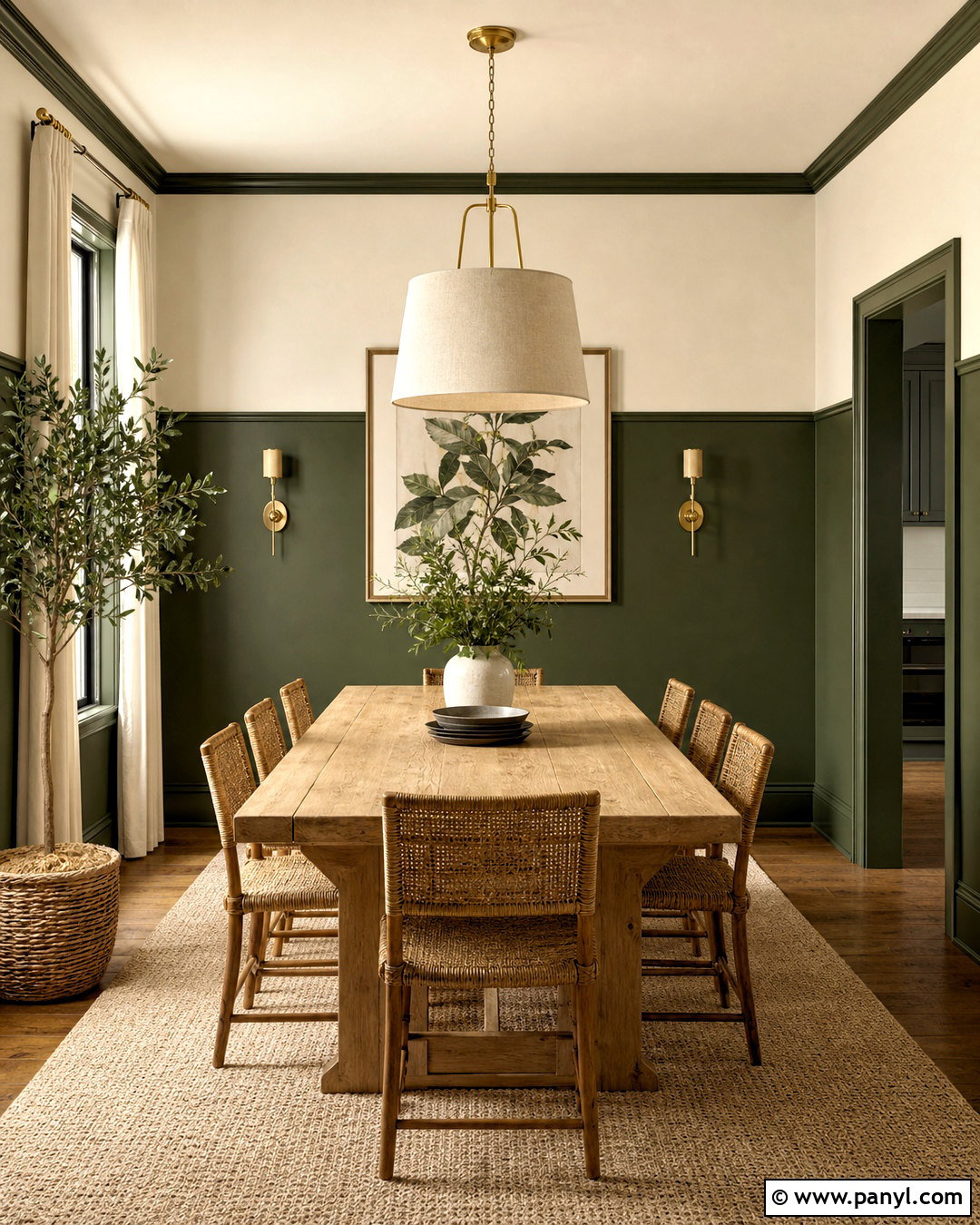
Two-tone wall painting is an approachable way to add structure to a dining room. Paint the lower third in deep olive green and the upper portion in a soft creamy white. A crisp horizontal line around the room can mimic the effect of architectural molding, even when none exists. Position a medium-tone wood dining table against the grounded green section, then add woven chairs and a simple linen pendant. Brass candleholders, botanical artwork, and an oatmeal rug bring warmth without competing with the paint. Match the baseboards to the lower color for a stronger, built-in appearance. Keeping the darker tone below eye level helps anchor the furniture, while the lighter upper walls maintain an open feeling and reflect daylight throughout the complete room.
4. Painted Wall Arch
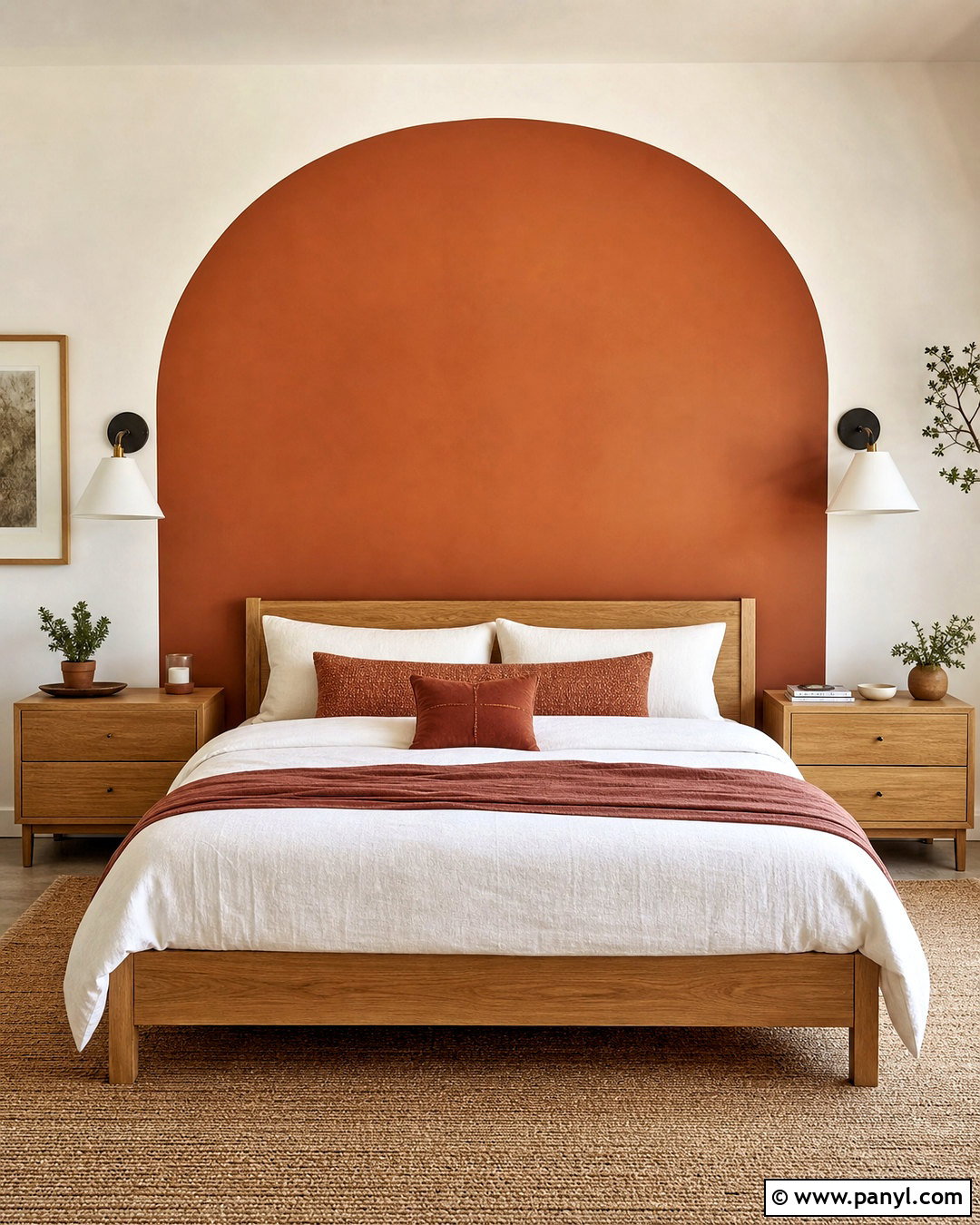
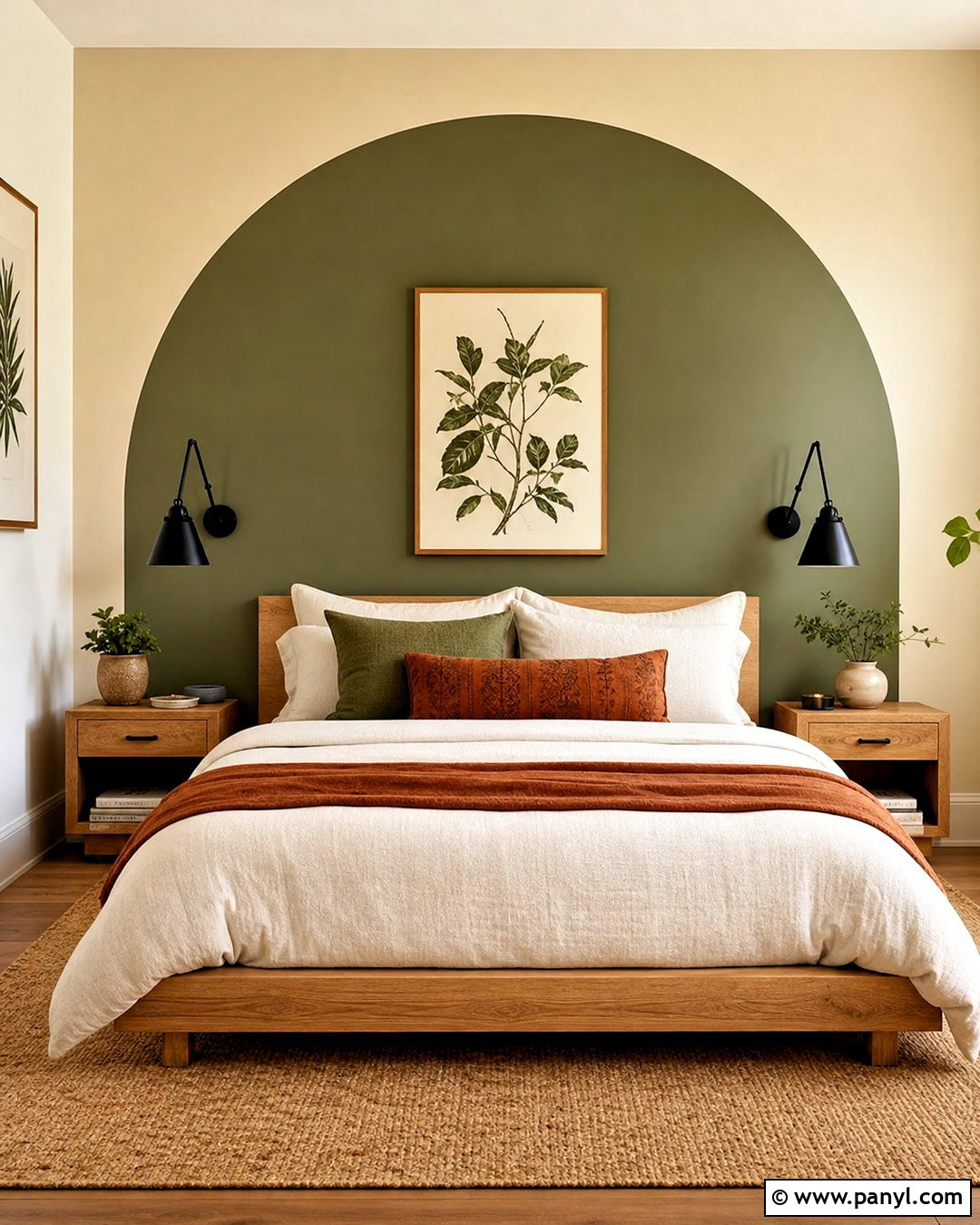
A large painted arch creates a focal point without requiring construction or expensive materials. In a bedroom, use warm rust, muted rose, or sage green to frame the bed and both nightstands. Make the arch slightly wider than the headboard, with its highest curve rising well above it. Surround the shape with pale warm white walls so the silhouette stays clear. Complete the design with an oak bed, white linen bedding, and pillows that repeat the arch color in softer tones. Matching sconces positioned within the painted area strengthen the sense of symmetry. Choose a simple flatweave rug and minimal artwork because the arch already acts as decoration. Carefully measured curves and balanced furniture placement make this wall painting look architectural rather than random.
5. Ombre Wall Painting
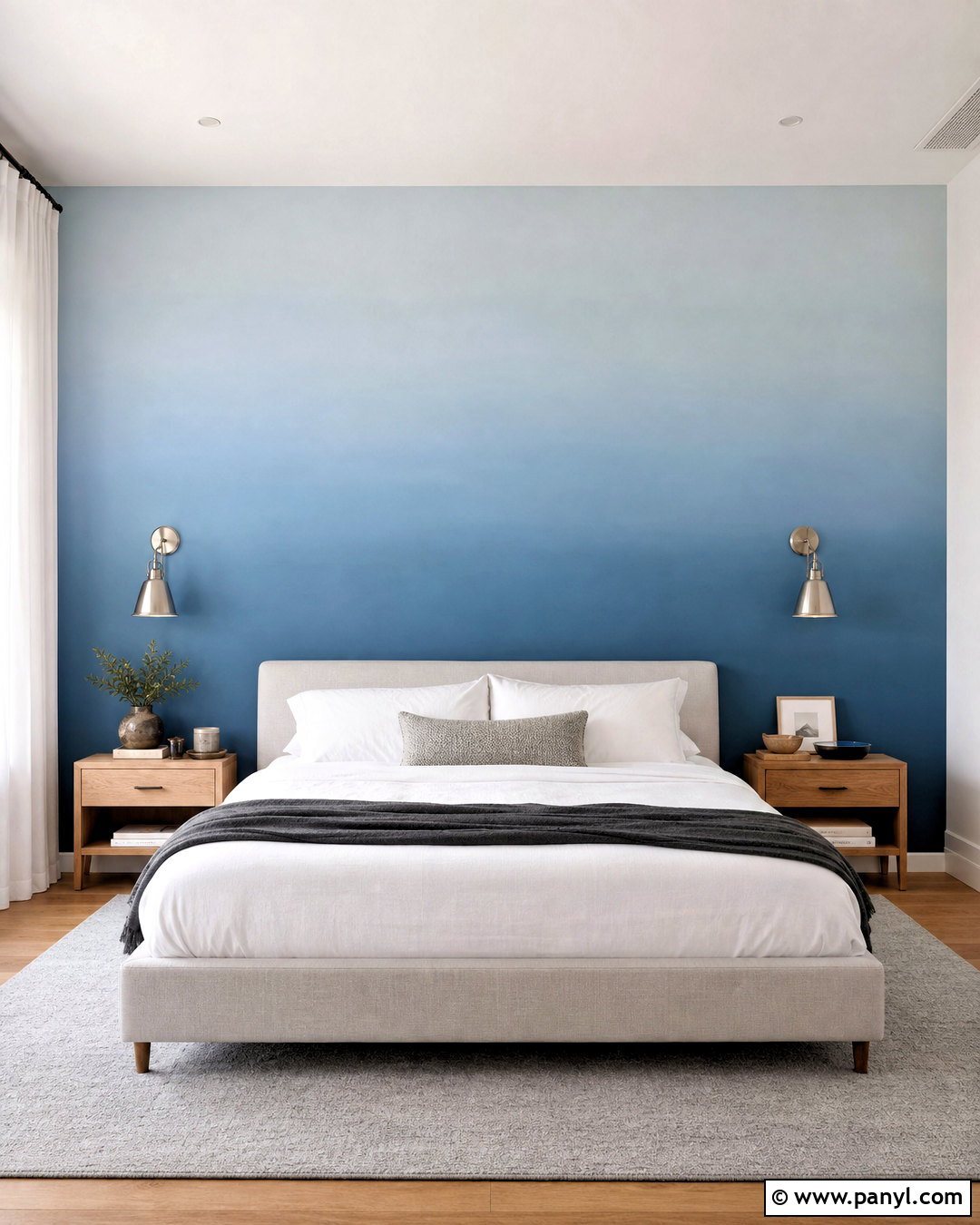
An ombre wall can make a bedroom feel calm, airy, and visually taller. Start with a deep blue-gray close to the floor, transition through medium dusty blue, and finish with pale sky blue near the ceiling. Blend the sections while the paint remains workable so there are no hard horizontal lines. Keep the other walls soft white and place a low upholstered bed against the gradient. White bedding, a charcoal throw, and light oak nightstands maintain the quiet palette. Add brushed nickel sconces and sheer curtains that allow plenty of daylight to enter. Avoid covering the painted wall with large art. One small sculptural object or minimal framed piece is enough. The gradual color shift should remain the clear centerpiece of the finished room.
6. Color Block Wall Painting
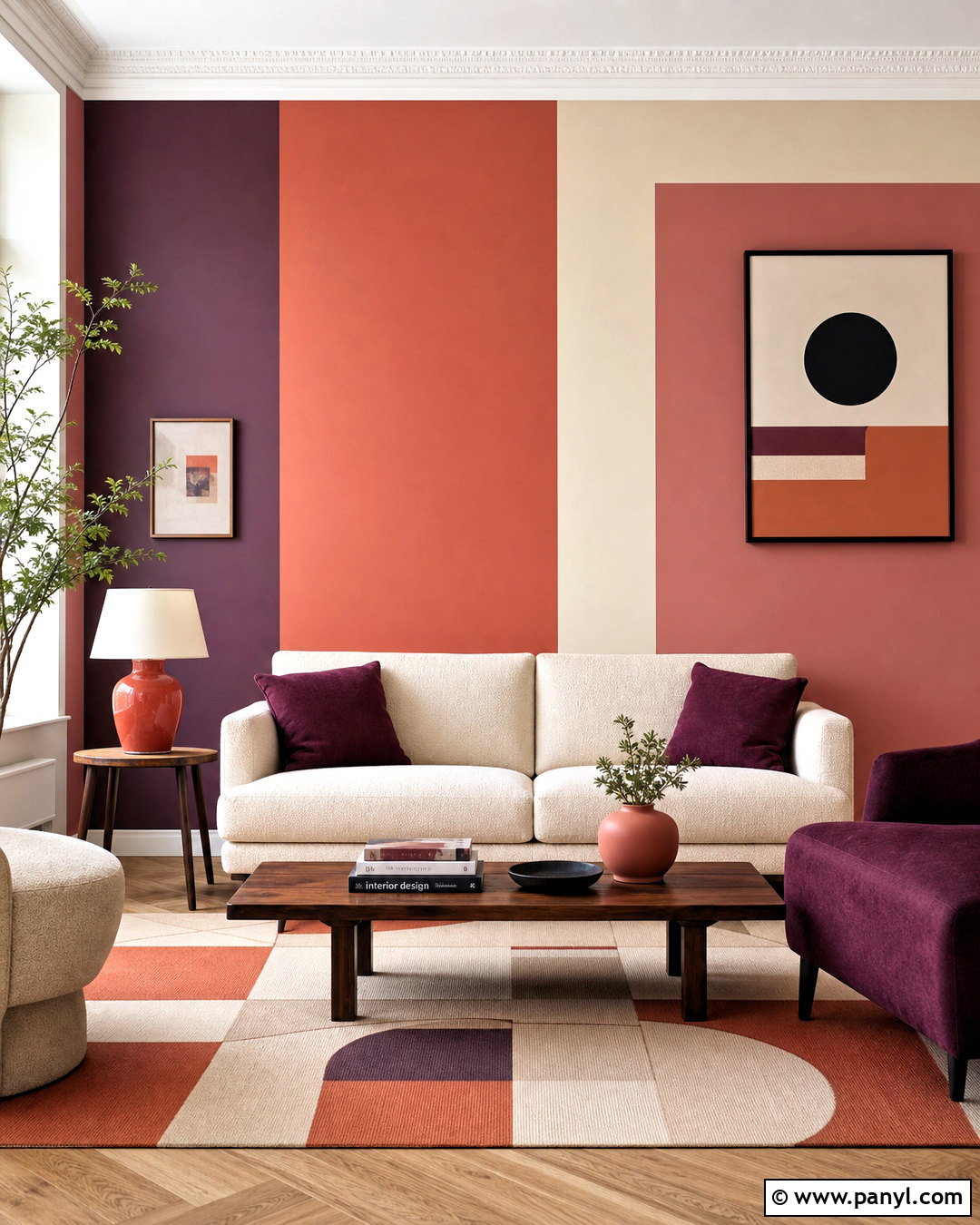
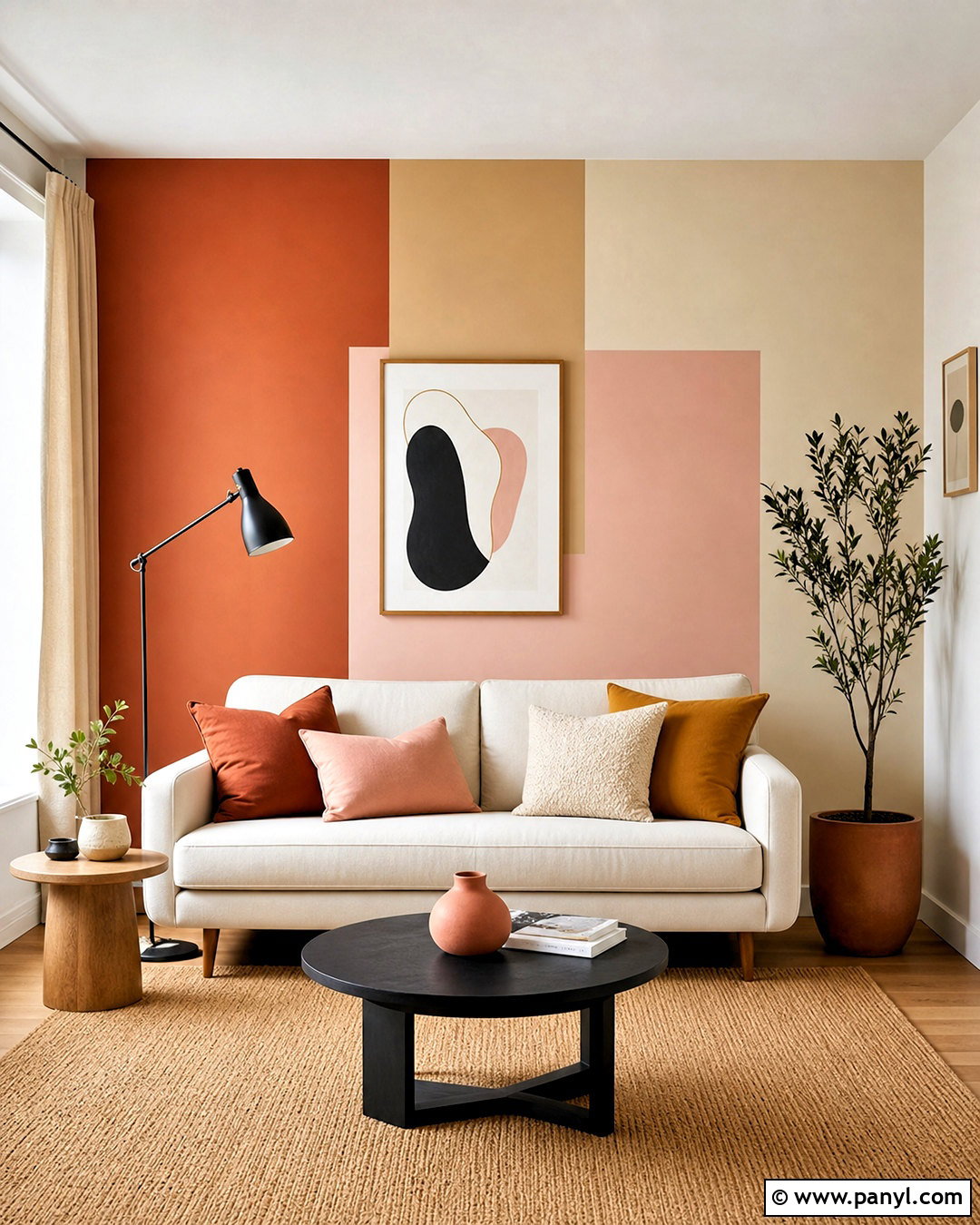
Bold color blocking can turn an ordinary living room into a balanced, modern space. Use large rectangles of warm coral, muted plum, and clay pink across one wall, leaving portions of the creamy base color visible. Align the blocks with nearby furniture lines, such as the top of the sofa or the edge of a console. A simple oatmeal sofa and walnut coffee table let the colors stand out without creating visual clutter. Bring in plum pillows, a coral ceramic lamp, and a rug with restrained geometric details. Paint adjoining walls in the original cream for continuity. Large-scale blocks usually look more sophisticated than many small shapes. The final arrangement should feel connected to the room’s proportions, furniture, and natural focal points rather than applied as unrelated decoration.
7. Vertical Stripe Wall Painting
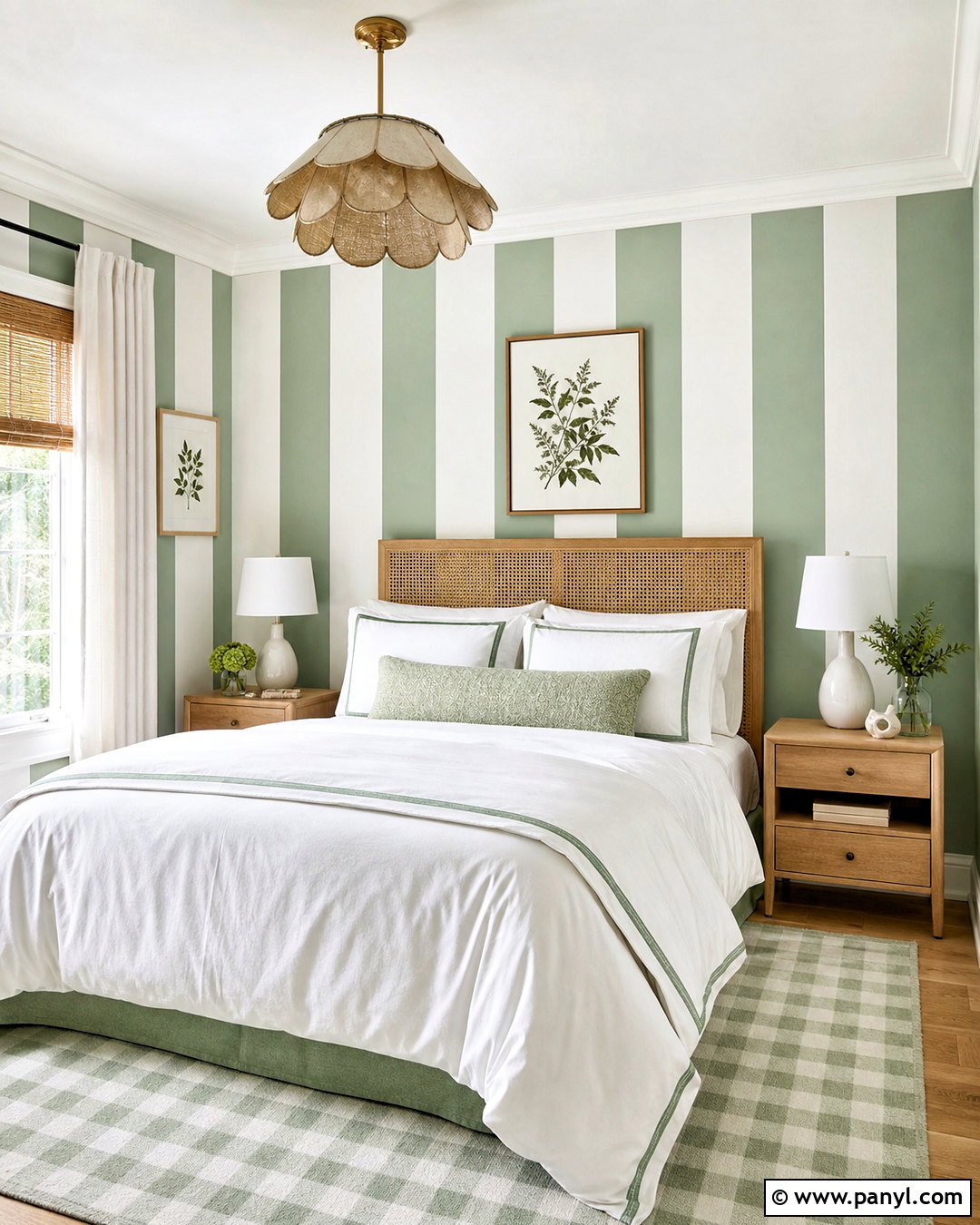
Vertical stripes provide a clean way to emphasize ceiling height in a compact bedroom or guest room. Alternate wide bands of soft white and muted sage green across the wall behind the bed. Keep every stripe the same width for a tailored effect, and use a laser level to prevent uneven edges. Paint the remaining walls in the lighter shade to keep the room bright. A simple white bed, natural cane headboard, and pale oak nightstands complement the fresh palette. Add green piping to the bedding and a small checked rug for subtle pattern repetition. Avoid overly narrow stripes, which can make the wall appear restless. Wider bands create a calmer rhythm while still delivering noticeable character. Minimal botanical artwork can complete this crisp, coordinated wall painting scheme.
8. Horizontal Stripe Wall Painting
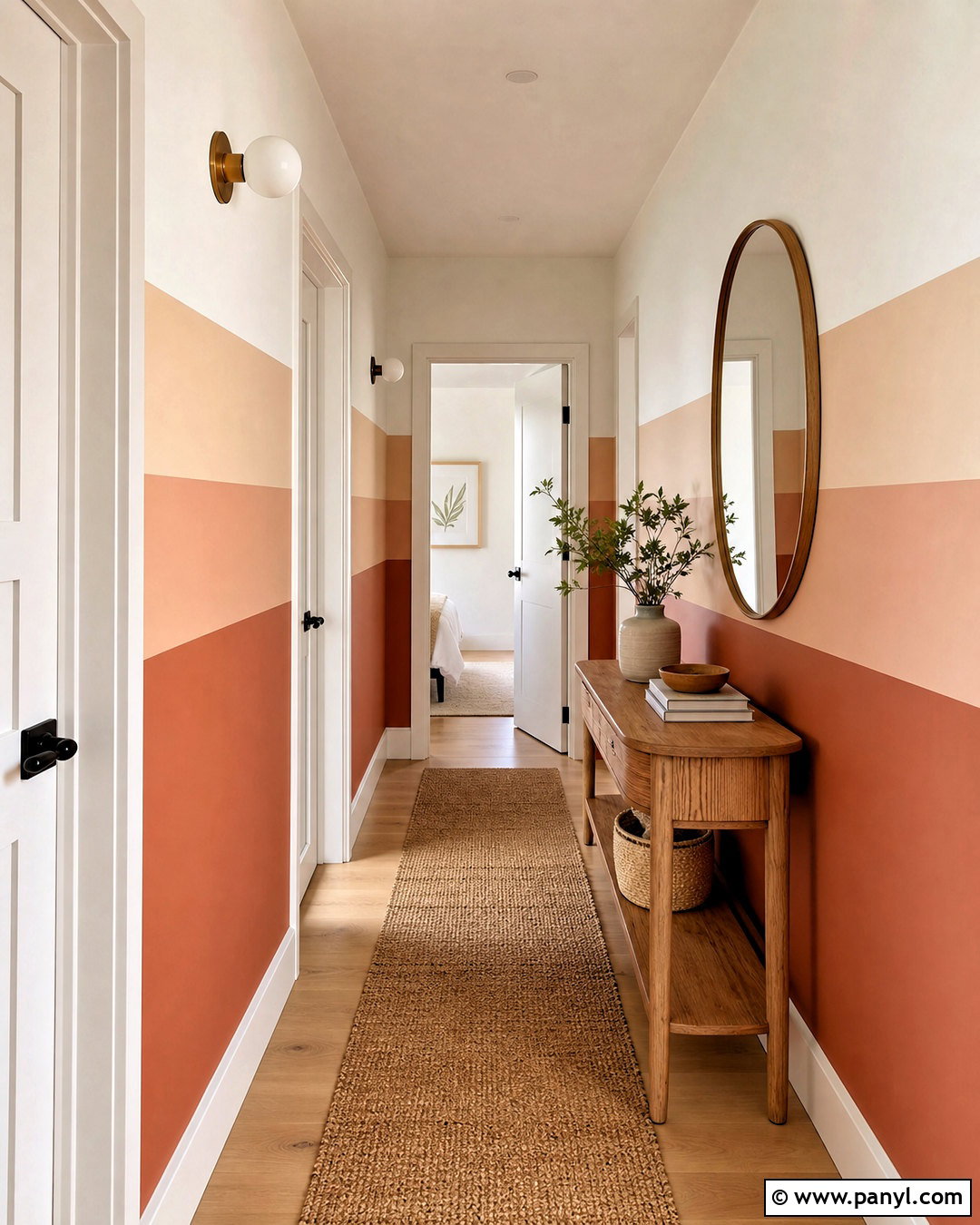
Wide horizontal stripes can visually expand a narrow hallway. Use three or four soft bands in cream, pale tan, muted peach, and dusty terracotta, carrying them continuously along both sides of the passage. Keep the lightest tone near the ceiling and the richest color around the lower third. Paint doors and trim in warm white so the architecture remains easy to read. A slim oak console, rounded mirror, and woven runner reinforce the hallway’s long horizontal direction. Add a pair of compact wall lights for an even glow. Careful taping is essential because every line will be visible from the hallway entrance. This complete design brings personality to a transitional space while making its shape feel wider, brighter, and more thoughtfully decorated.
9. Abstract Mural Wall Painting
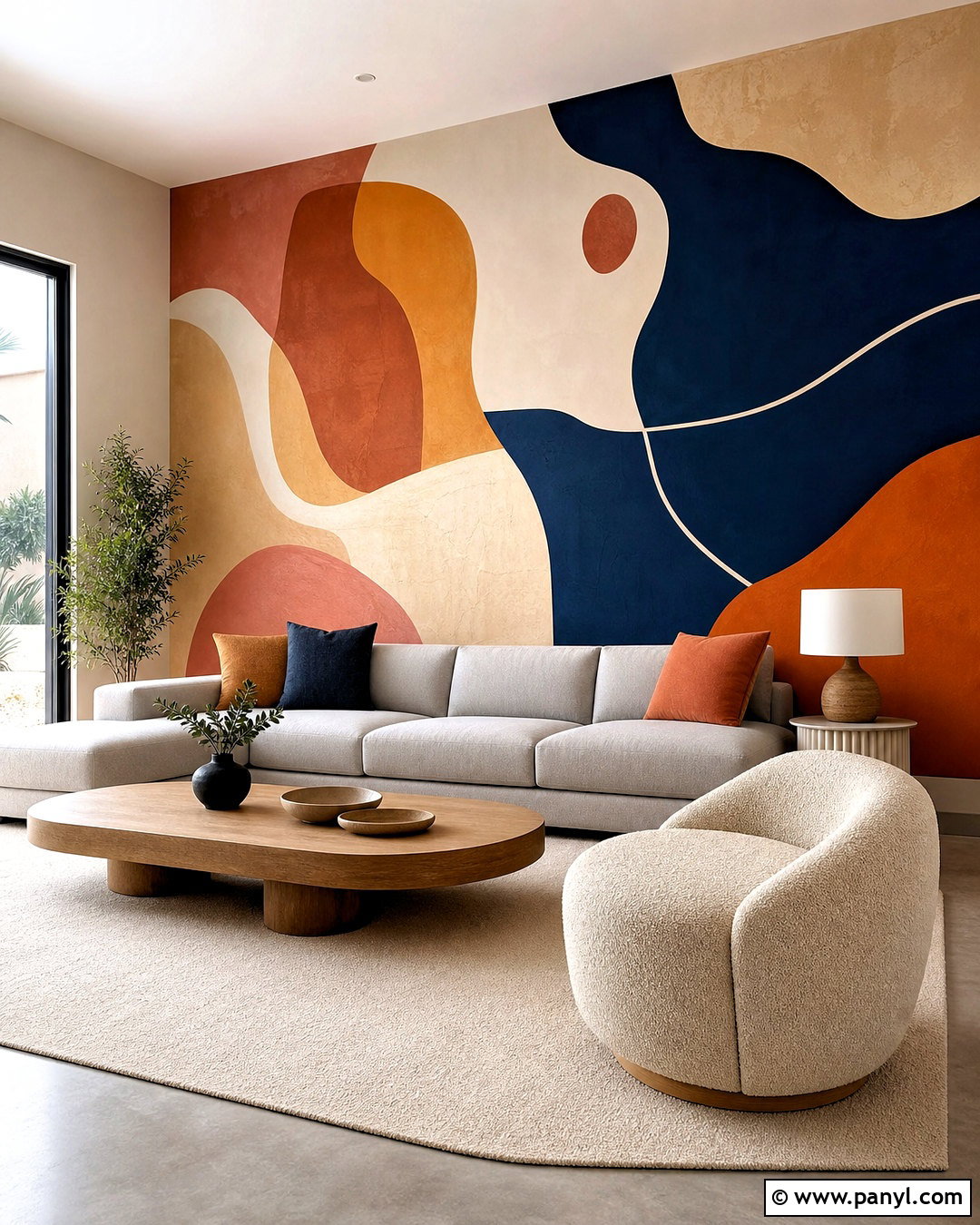
A hand-painted abstract mural can replace oversized artwork in a contemporary living room. Build the composition with broad organic shapes in deep navy, warm ocher, muted coral, and pale beige. Let some forms overlap while leaving enough background visible to give the mural breathing room. Position the largest dark shape behind one end of a light gray sofa to balance the room. Add a curved wood coffee table, cream boucle chair, and solid-colored pillows that repeat the mural palette. Keep decorative objects restrained and choose a plain neutral rug. Slightly imperfect brush edges can make the work feel personal, but the overall arrangement should still appear deliberate. Sketch the composition first and view it from across the room before committing to the final colors.
10. Botanical Wall Painting
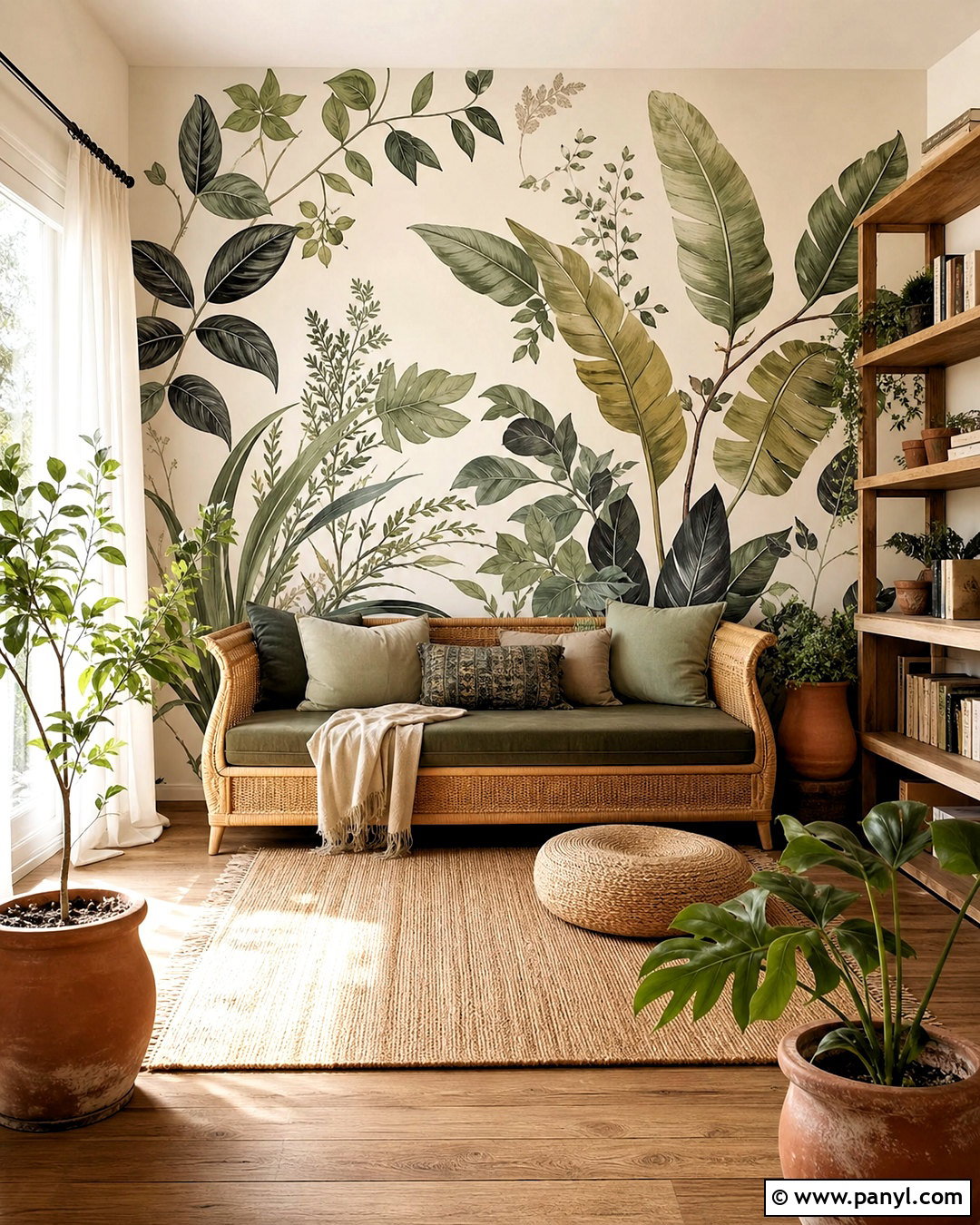
A botanical mural brings garden-inspired character to a bedroom, sunroom, or reading area. Paint oversized leaves and branching stems in layered shades of sage, olive, eucalyptus green, and soft charcoal over a warm ivory background. Use simplified silhouettes instead of tiny realistic details so the wall remains restful from a distance. Arrange a cane daybed or linen-covered bench in front of the design, then add moss green cushions and a natural jute rug. Terracotta planters and light oak shelving help connect the painted plants to real organic materials. Keep the remaining walls ivory and use simple white curtains. The combination of large foliage, grounded furnishings, and natural textures creates a complete retreat rather than a mural that feels disconnected from its surroundings.
11. Mountain Mural Wall Painting
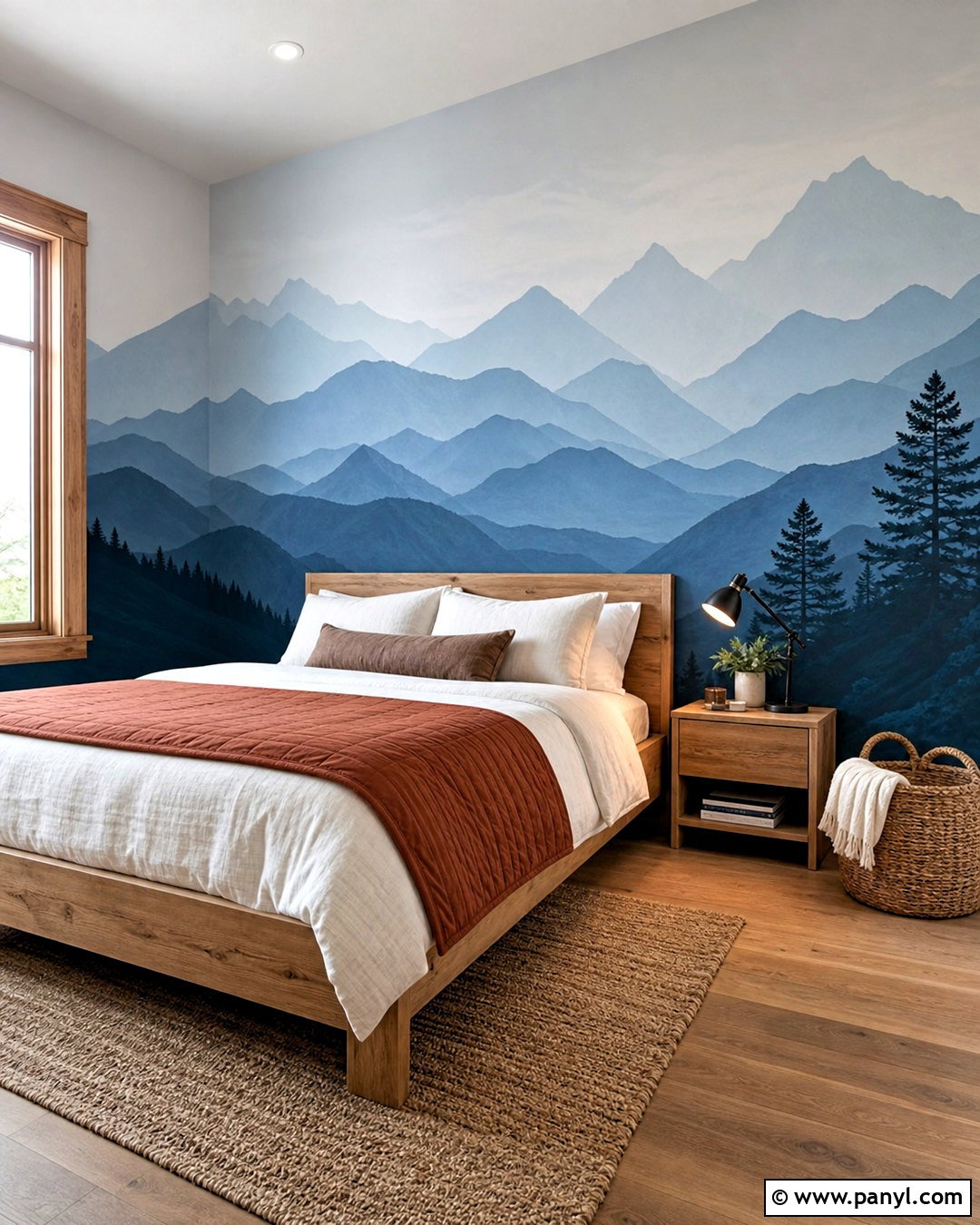
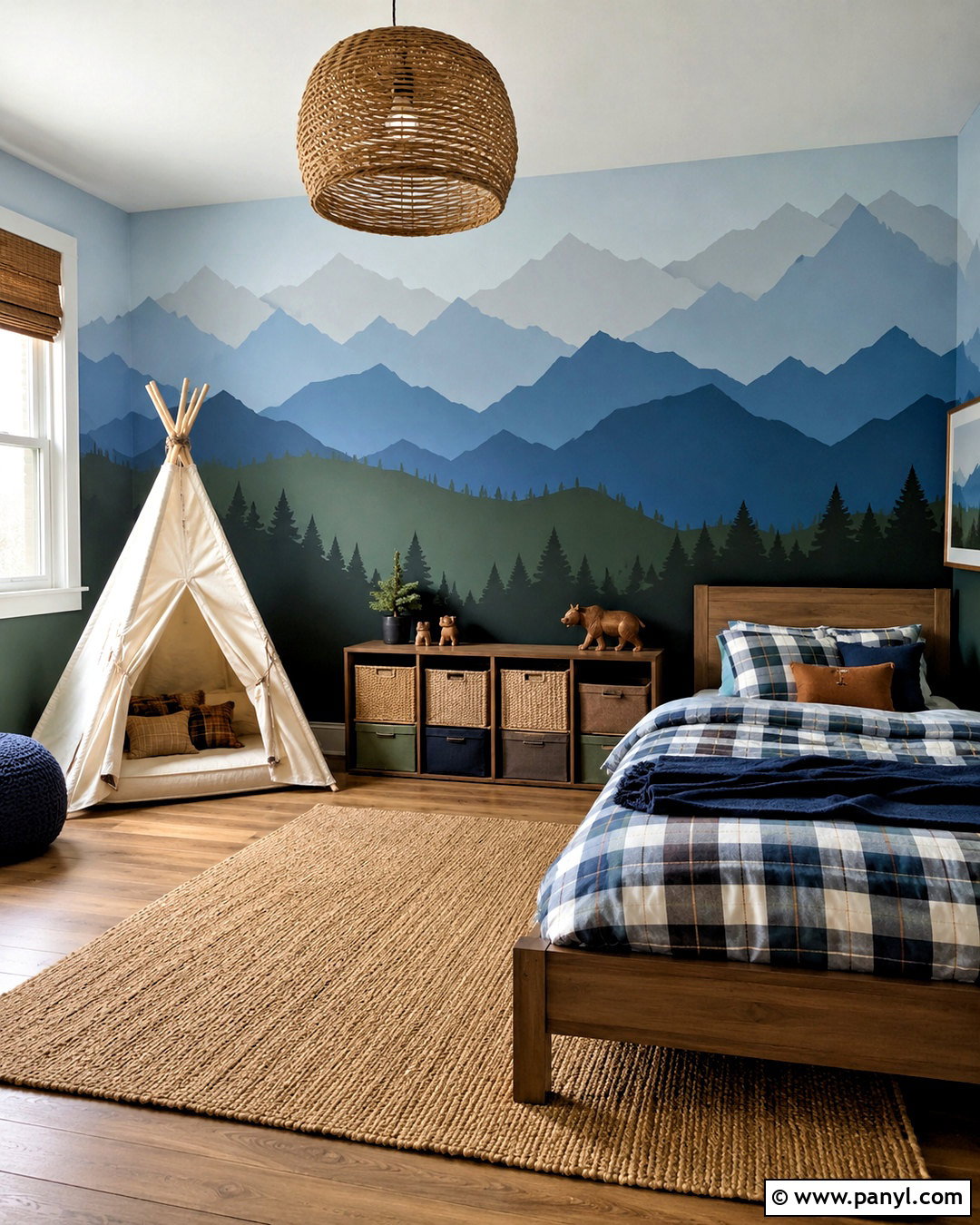
A layered mountain mural creates a peaceful focal point in a child’s bedroom, guest room, or casual family space. Paint the farthest peaks in pale blue-gray, the middle layer in muted slate, and the foreground in deeper denim blue. Keep the shapes soft and slightly irregular to suggest a distant landscape. A low natural wood bed, white bedding, and a rust-colored quilt add warmth against the cool wall. Include a woven storage basket, simple reading lamp, and small oak nightstand to complete the scene. Paint the side walls in the palest mural color for a smooth transition. Avoid cartoon-like outlines or excessive details. Broad, overlapping shapes produce a design that can remain appealing as the room changes, making this wall painting both imaginative and adaptable.
12. Scalloped Wall Painting
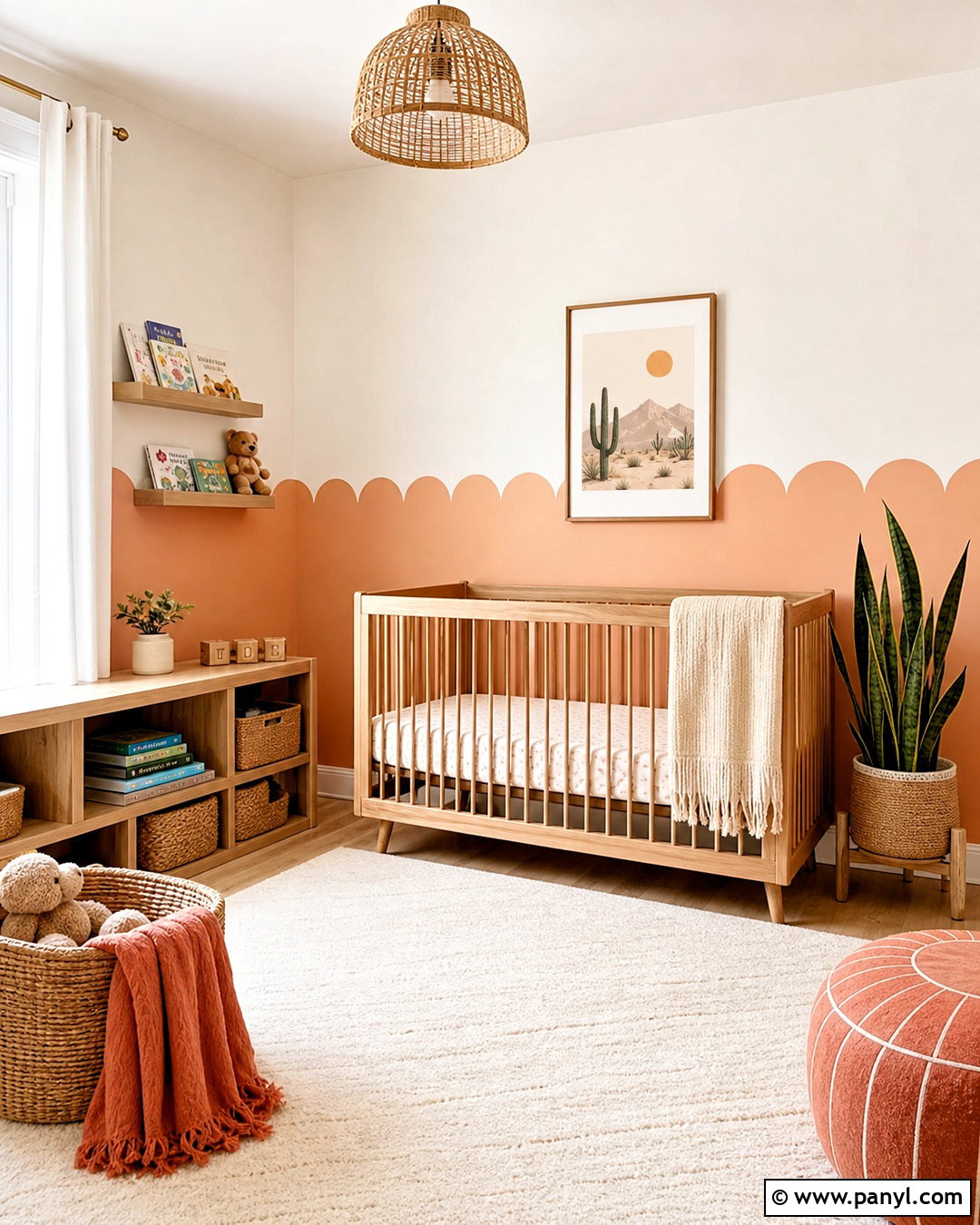
Scalloped paint adds cheerful detail to a nursery or playroom without covering every surface in strong color. Paint the lower half of the walls in muted apricot, dusty blue, or soft sage, then finish the upper edge with evenly sized scallops. Use warm white above the design to maintain brightness. Coordinate the room with a light wood crib, washable cream rug, and low storage in the same soft neutral. Repeat the scallop color through a lamp, small cushions, and practical storage baskets. Keep wall art simple so the curved painted border stays prominent. A cardboard template helps create consistent arcs, while a small angled brush improves the edges. The completed room feels playful and finished, yet calm enough for everyday use and future decorating updates.
13. Wavy Line Wall Painting
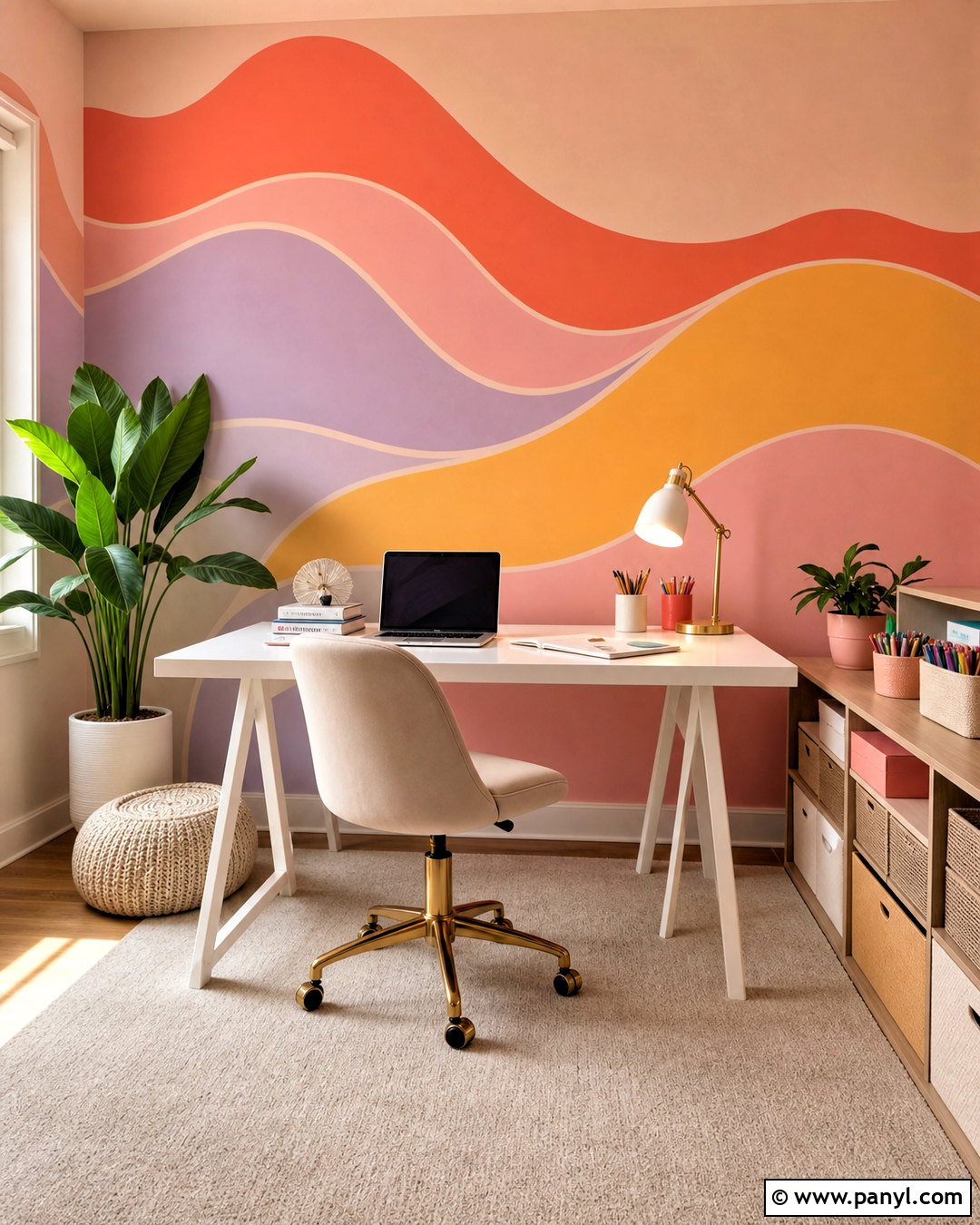
Flowing painted waves can bring movement to a creative studio, playroom, or upbeat home office. Begin with a pale peach background and add broad horizontal waves in coral, lilac, golden yellow, and warm pink. Vary their thickness and curves, but keep them moving in the same general direction. Place a white desk or low storage unit against the wall so the colorful forms remain visible. Use a simple chair, solid rug, and a few matching containers to organize supplies. Paint nearby walls in the base peach to prevent the room from becoming overwhelming. Hand-drawn curves are part of the charm, though stepping back frequently helps maintain balance. This wall painting works best when the surrounding furniture has clean lines and limited additional pattern.
14. Checkerboard Wall Painting
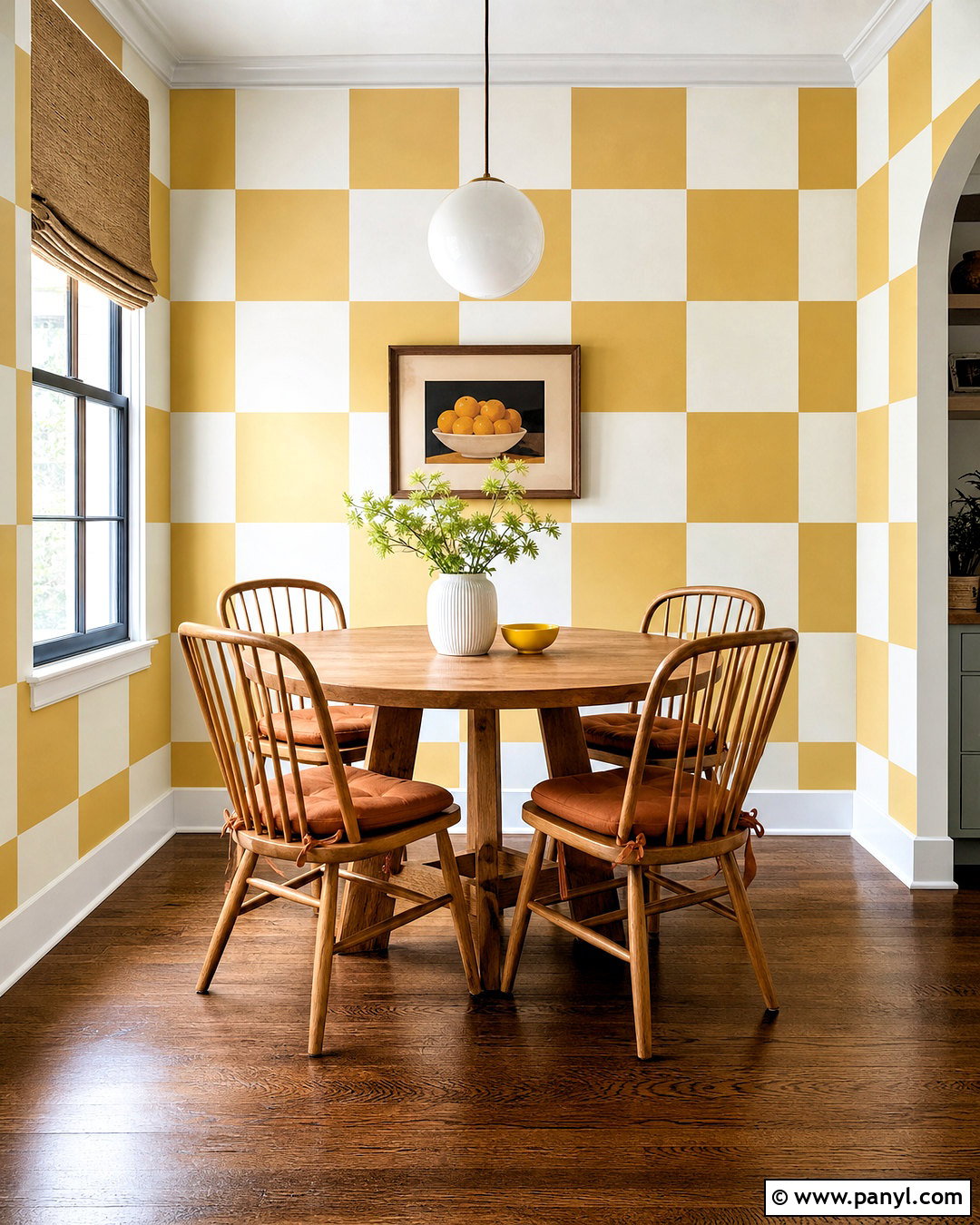
A painted checkerboard can give a breakfast nook or casual dining corner a lively retro influence. Create large squares in creamy white and muted butter yellow across one focal wall. Oversized checks are easier on the eye and feel more modern than a small, crowded grid. Pair the design with a round oak table, simple spindle-back chairs, and a white globe pendant. Add seat cushions in warm brown or soft blue to introduce contrast. Paint the other walls cream, and keep the floor and window treatments understated. Precise measurements are important, so map the entire grid before taping and painting. When furniture, lighting, and accessories remain simple, the checkerboard becomes a cheerful architectural backdrop rather than an overpowering pattern competing with the rest of the room.
15. Painted Wall Frame
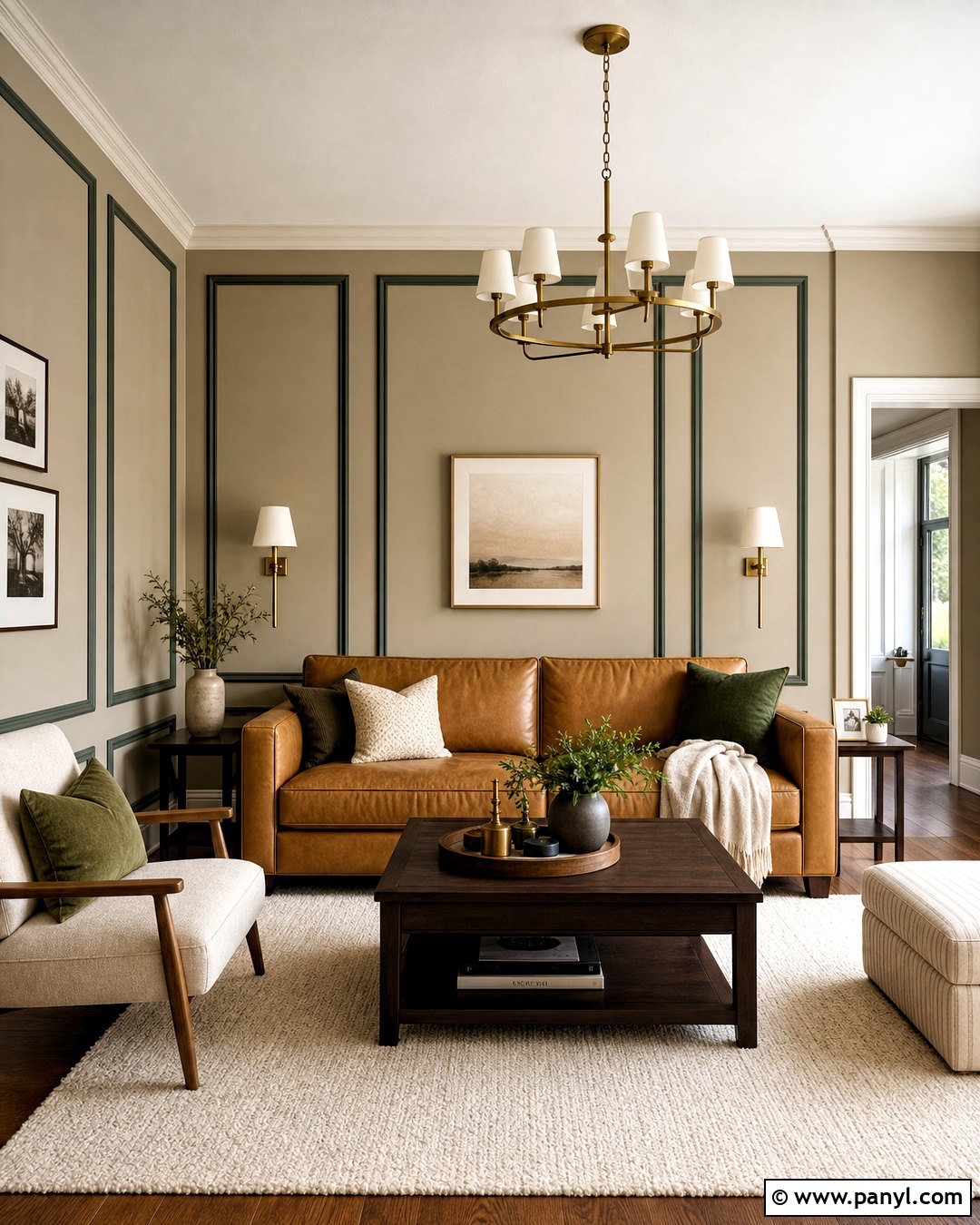
Painted wall frames offer an affordable alternative to applied molding in a living room or entryway. Start with a warm greige base, then add large rectangular outlines in deep forest green or charcoal using narrow painter’s tape. Size each frame around the furniture or artwork it will surround. In a living room, center one large painted rectangle behind the sofa and use smaller matching frames near a console. Complete the space with a camel leather sofa, cream rug, dark wood tables, and brass lighting. Hang minimal artwork inside only one or two frames to preserve visual balance. Continue the base color across the remaining walls and trim. The finished wall gains rhythm and architectural definition while staying flat, easy to clean, and relatively simple to repaint later.
16. Sunburst Wall Painting
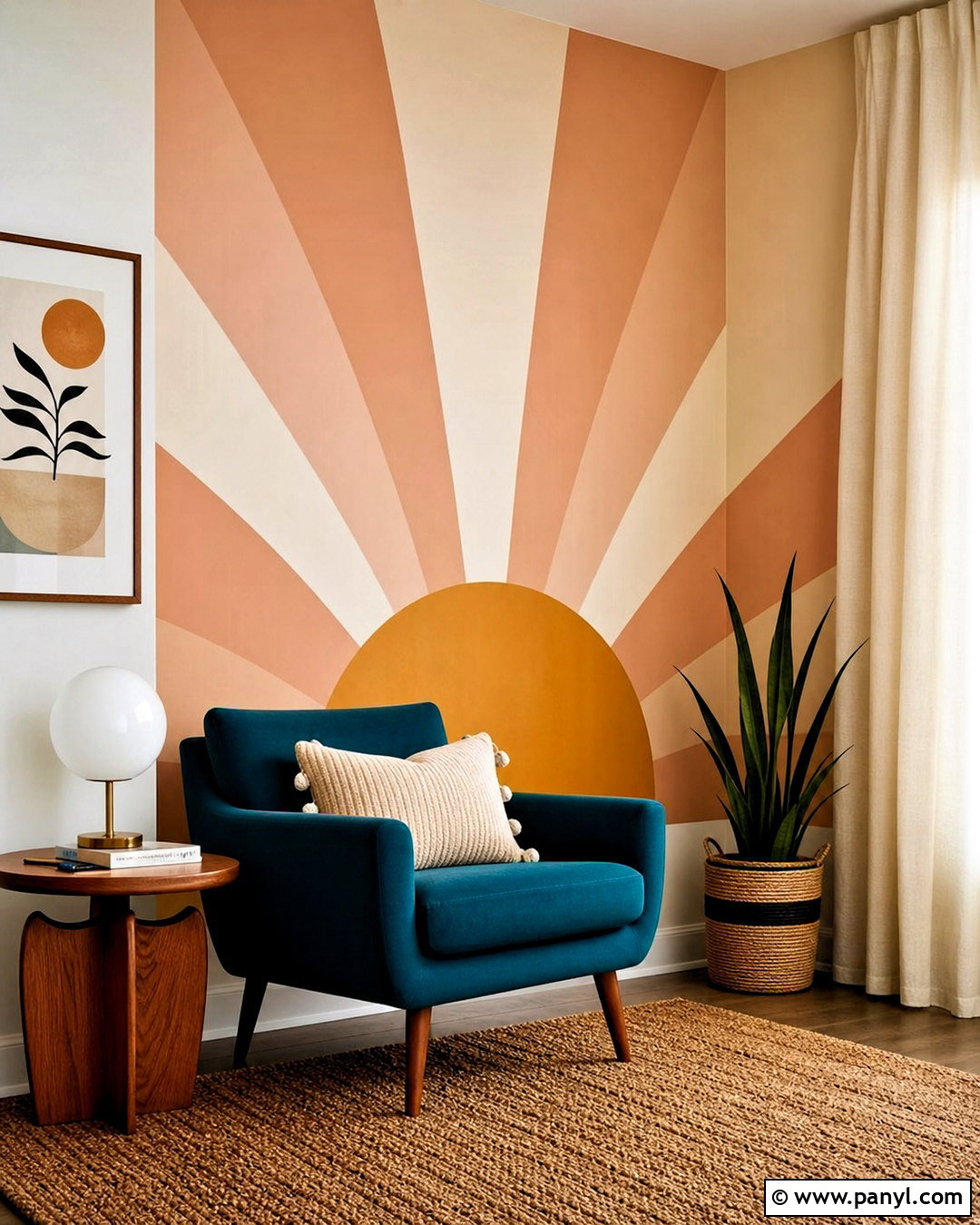
A sunburst design can brighten a reading corner while establishing a clear focal point. Paint a warm golden circle behind an accent chair, then extend alternating rays in pale peach and soft cream toward the wall edges. Keep the rays broad and evenly spaced so the pattern feels energetic but controlled. Choose a deep teal chair to create strong contrast, and add a small walnut side table with a white globe lamp. A neutral woven rug and simple floor-length curtains soften the composition. Paint adjacent walls in the lightest cream used in the burst. Positioning the circle slightly off-center can create a more natural arrangement around the furniture. With coordinated colors and a dedicated seating zone, the design becomes part of a useful, complete room.
17. Tonal Circle Wall Painting
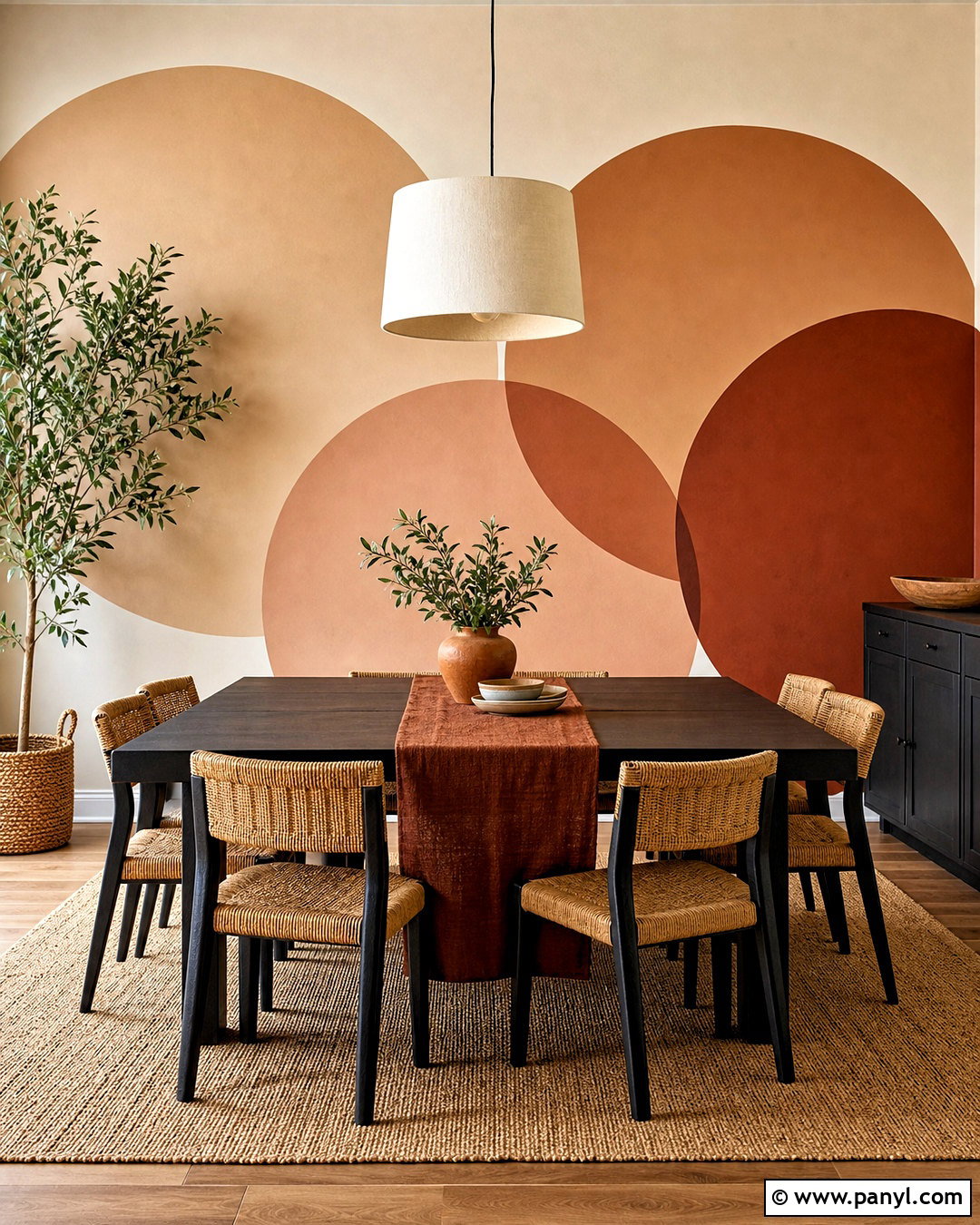
Overlapping tonal circles create a subtle mural that suits a modern dining room or quiet home office. Select three related colors, such as pale clay, muted terracotta, and deep cinnamon, and paint large intersecting circles over a warm cream wall. Keep the shapes concentrated behind the main furniture rather than scattering them across the entire surface. Pair the design with a black dining table, woven chairs, and a linen pendant to balance clean geometry with natural texture. Repeat one rust tone in a table runner or ceramic vase. A light neutral rug helps ground the arrangement. Use string, a pencil, and a central pin to draw accurate circles before painting. The limited palette gives this wall painting depth while preserving a calm, cohesive atmosphere.
18. Painted Headboard Wall
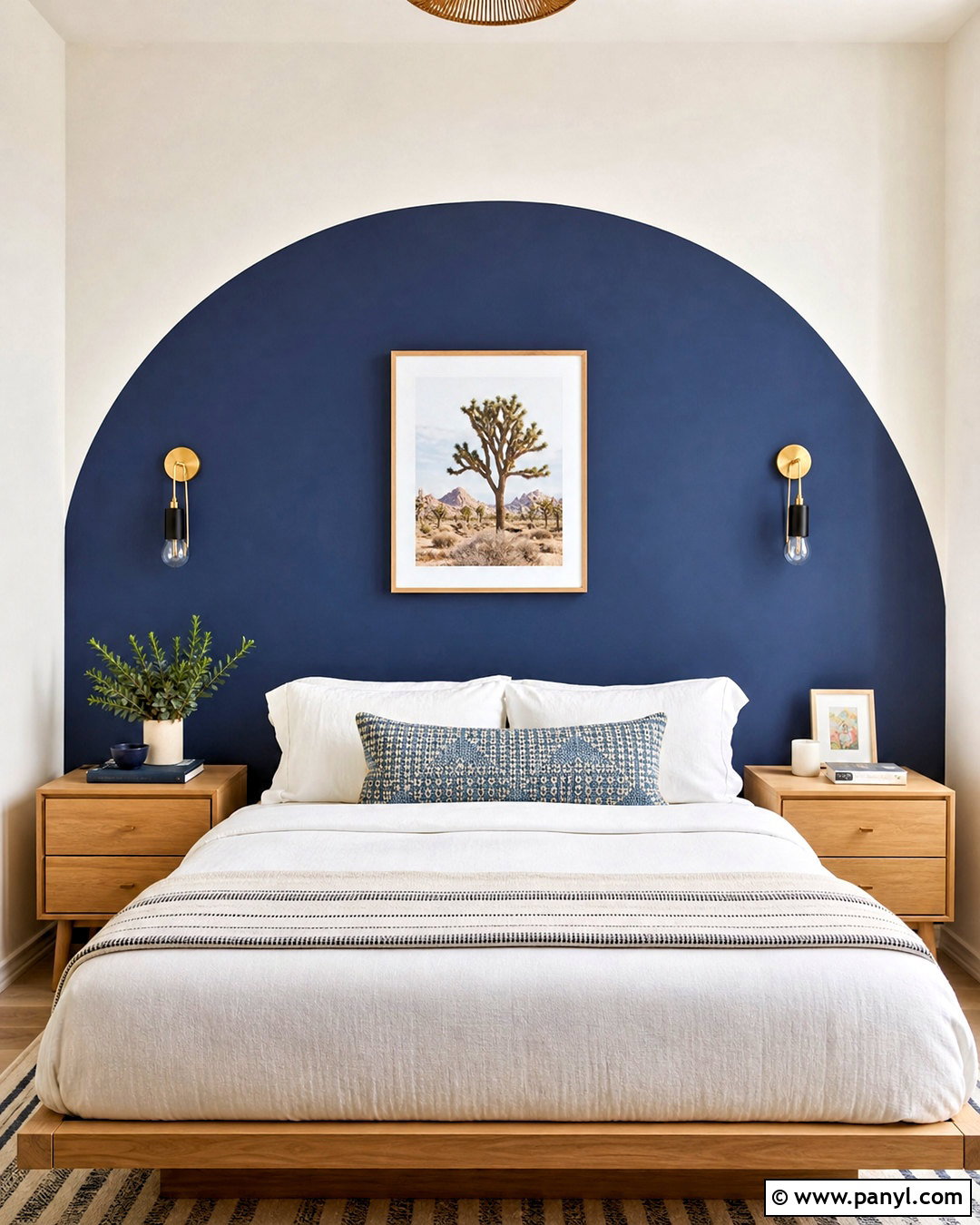
A painted headboard can give a small bedroom a finished focal point without taking up floor space. Create a wide rectangular or gently curved shape behind the bed in deep navy, forest green, or muted burgundy. Extend it from just above the baseboard to approximately halfway up the wall and make it wider than the mattress. Add slim wall-mounted sconces inside the painted area to reinforce its function. Complete the bed with crisp white linens, a patterned lumbar pillow, and light wood side tables. Keep the surrounding walls in warm white and select curtains that echo the painted color. This wall painting solution works especially well with simple platform beds. Clean edges, centered furniture, and symmetrical lighting make the painted shape feel like an intentional built-in feature.
19. Color Drenched Wall Painting
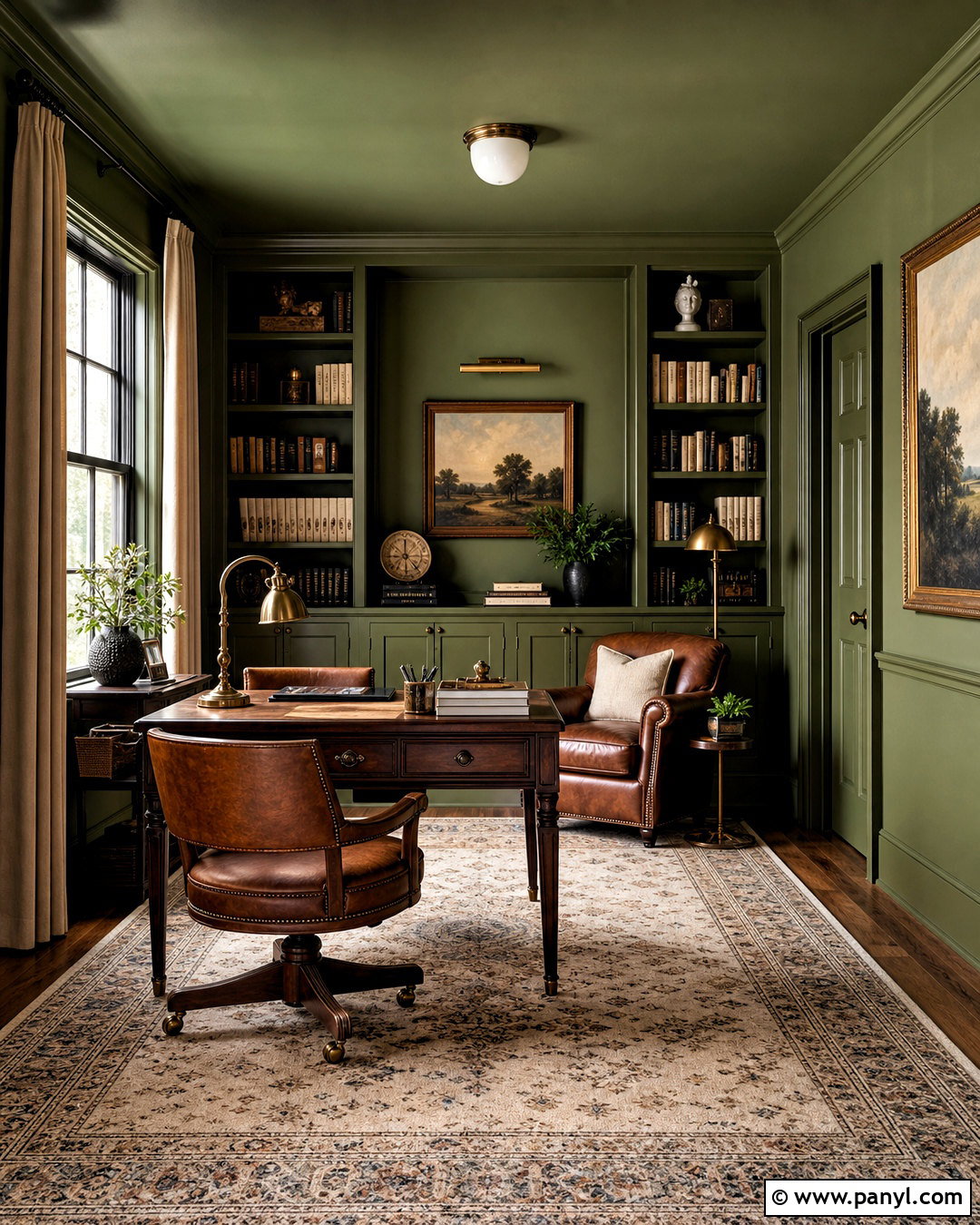
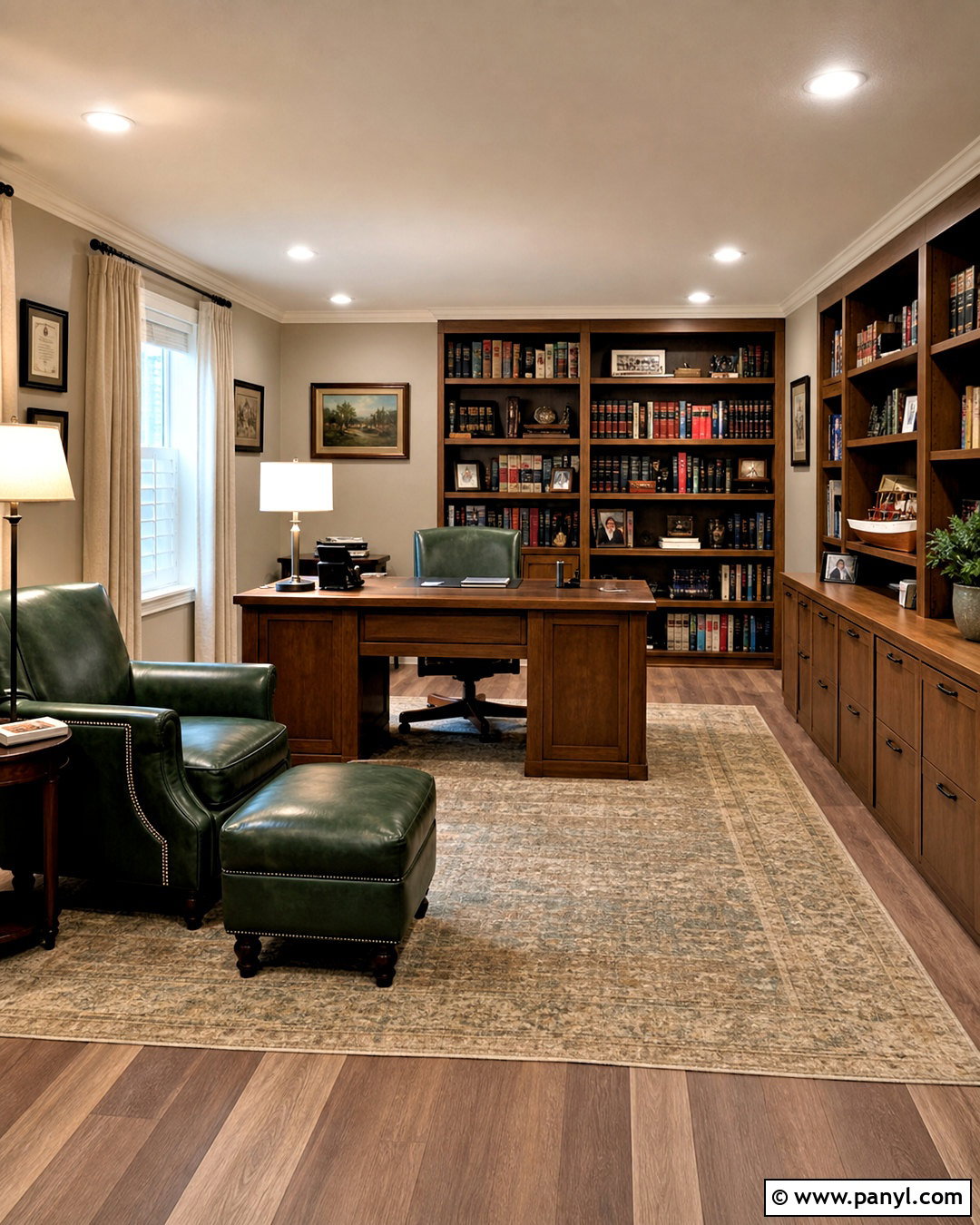
Color drenching creates an immersive room by carrying one shade across the walls, trim, doors, shelving, and ceiling. In a compact library or study, use rich olive green, smoky blue, or warm plum in a soft matte finish. Paint built-in storage the same color with a slightly more durable sheen to create subtle contrast. Add a brown leather chair, walnut desk, vintage-inspired brass lamp, and patterned rug containing lighter versions of the wall shade. Books and cream accessories provide relief without breaking the cocooning effect. Good natural and artificial lighting is important when using a saturated color on every surface. By coordinating the architecture, furniture, and textiles, this approach creates a complete environment that feels much more intentional than a single disconnected accent wall.
20. Ceiling Wrap Wall Painting
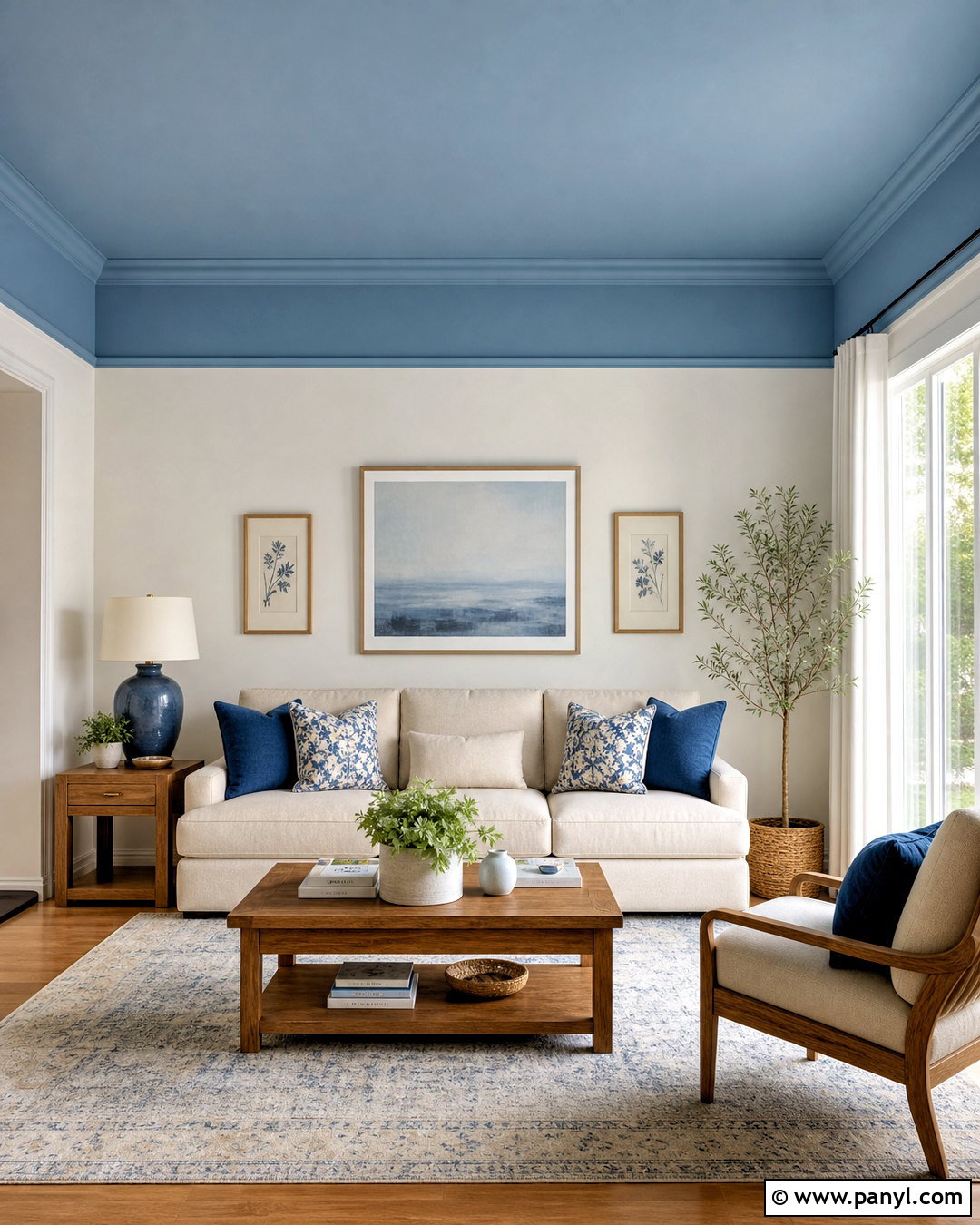
A ceiling wrap uses paint to connect the upper wall with the ceiling, creating an enveloping architectural effect. In a living room, paint the walls warm white, then apply dusty blue across the ceiling and continue it 12 to 18 inches down the walls. Keep the lower edge crisp and level throughout the room. Echo the blue with sofa pillows, a ceramic lamp, and a restrained pattern in the rug. Choose a cream sofa, medium oak tables, and white curtains to maintain an airy balance. Painting the crown molding blue allows the upper section to read as one continuous feature. This technique works particularly well when the ceiling has attractive proportions but needs stronger definition. The final room feels connected, carefully framed, and visually distinctive from every angle.
Conclusion:
These **20 unique wall painting ideas** show how paint can become much more than a simple background. It can frame furniture, improve visual proportions, introduce texture, or establish the personality of an entire room. Choose a treatment that suits the space rather than selecting a pattern in isolation. Soft limewash and tonal shapes support calm interiors, while murals, stripes, and checkerboards bring stronger energy. Always sample the full palette together and consider flooring, upholstery, trim, and daylight before painting. Measure carefully, prepare the surface, and use finishes appropriate for the room. Most importantly, repeat key colors through a few furnishings or accessories. That connection will make even an adventurous painted wall feel balanced, cohesive, and intentional.

Related Ideas and Inspiration:
Leave a Reply