
A white interior gains instant definition when dark molding outlines its best architectural features. These 20 white room black trim ideas explore complete spaces rather than isolated paint details, showing how furniture, flooring, lighting, texture, and accent colors can support the contrast. Current design galleries feature this combination across living rooms, kitchens, bedrooms, bathrooms, dining rooms, and entryways, proving its versatility across many home styles. () Choose crisp white for a graphic modern effect or creamy white for a softer, more welcoming mood. Then repeat black through lighting, hardware, or furniture to make the trim feel intentional. Whether you are updating one small space or planning a coordinated home, these complete 20 white room black trim ideas offer a practical place to begin.

1. Modern White Living Room With Black Trim
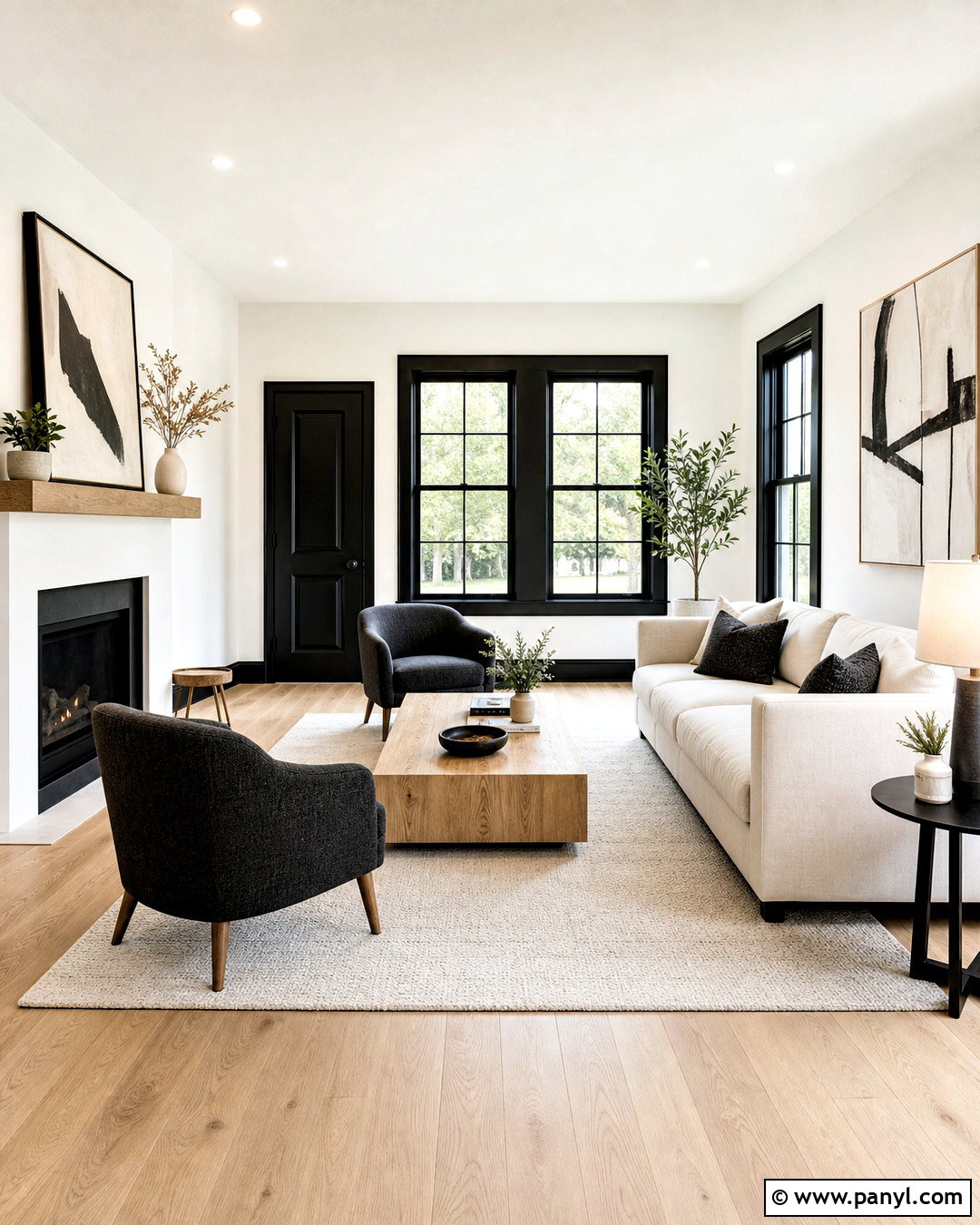
Clean lines make black trim feel especially sharp in a modern white living room. Paint the walls a soft neutral white, then use satin black on the baseboards, window casings, and interior door. A low ivory sofa keeps the center of the room bright, while two charcoal lounge chairs balance the darker edges. Add a pale oak coffee table and warm wood flooring so the palette does not feel cold. A large cream rug can soften the contrast underfoot. Choose a slim black floor lamp, simple framed artwork, and one sculptural ceramic vase for restrained decoration. If the windows are small, use white curtains mounted outside the black frames. They will preserve natural light while allowing the trim to remain clearly visible.
2. Farmhouse White Living Room With Black Trim
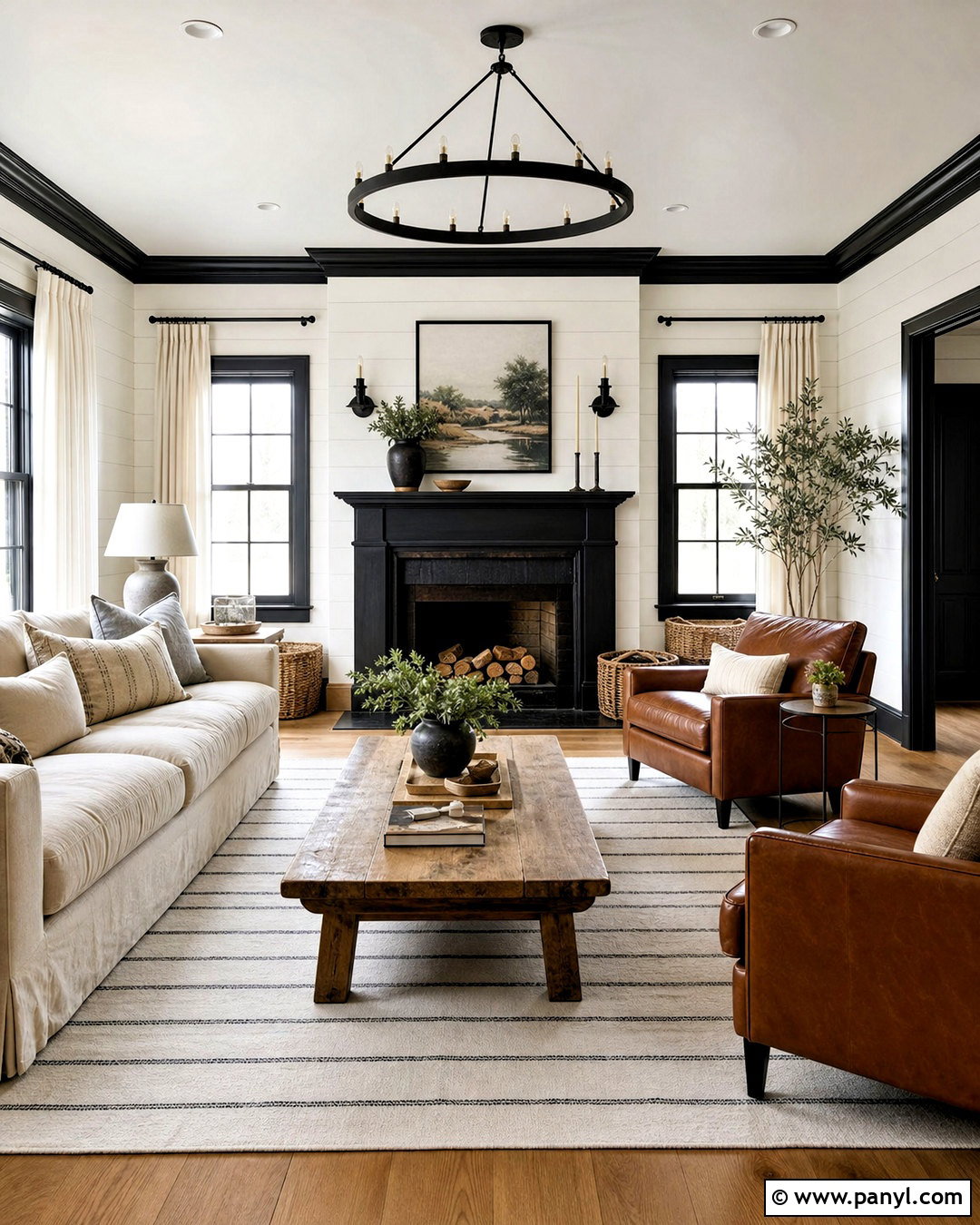
Picture a welcoming farmhouse living room where warm white shiplap meets substantial matte black trim. Carry black across the window casings, baseboards, and fireplace mantel to create a consistent architectural outline. A slipcovered oatmeal sofa, cognac leather armchairs, and a reclaimed wood coffee table soften the high-contrast palette. Natural oak or medium-brown flooring works better here than cool gray flooring because it adds age and warmth. Ground the seating area with a woven cream rug featuring a subtle black stripe. Black lantern-style lighting can repeat the trim without making the room overly themed. Finish the space with linen curtains, stoneware pottery, leafy branches, and a few muted green pillows. The result feels casual and collected rather than stark or overly polished.
3. White Dining Room With Black Crown Molding
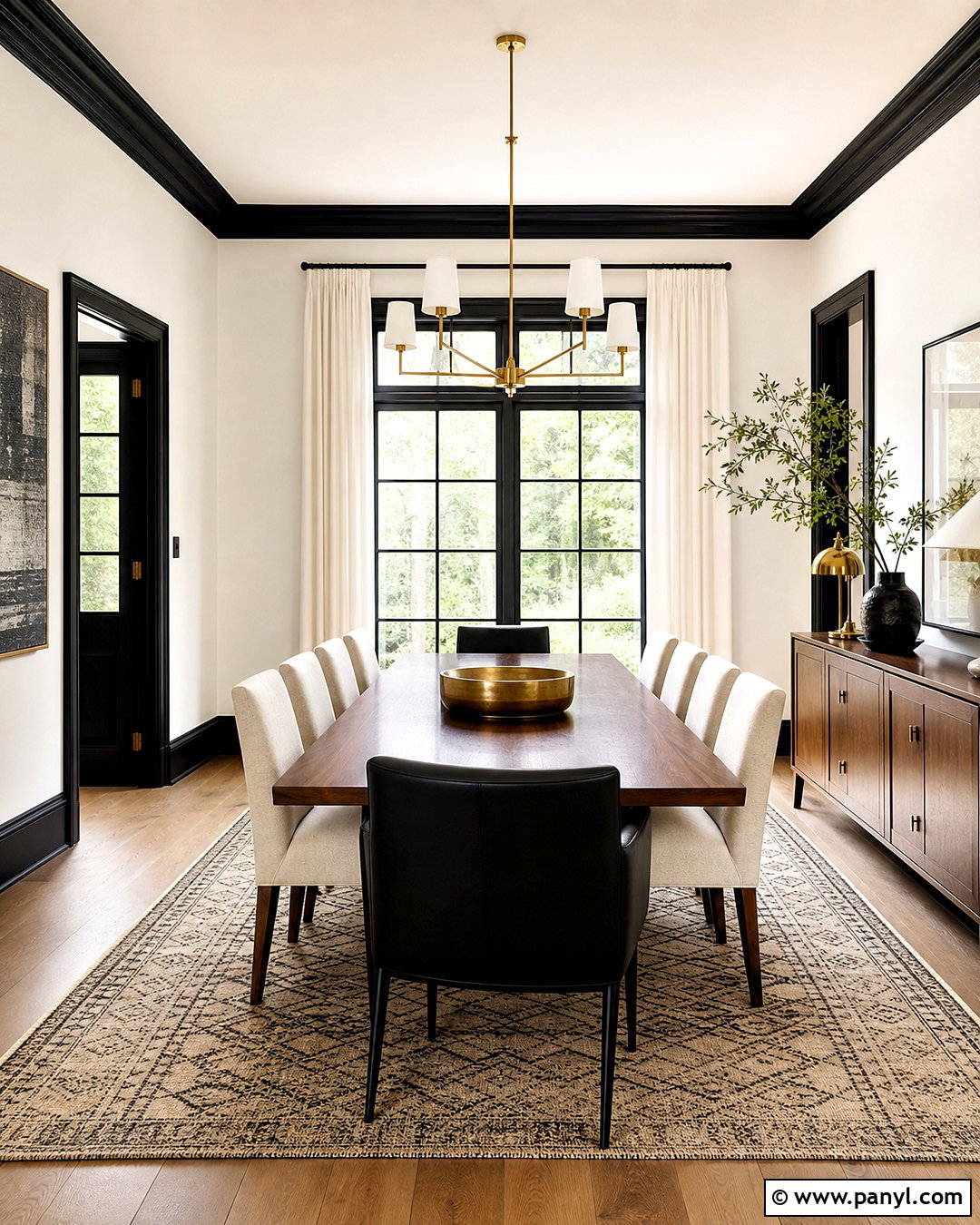
Black crown molding can transform a plain white dining room into a more formal, finished space. Keep the walls and ceiling warm white, allowing the dark molding to create a strong line around the room without lowering it visually. Paint the baseboards and door casings black as well, so the crown does not look disconnected. Center a medium-tone walnut dining table beneath a sculptural black chandelier. Upholstered cream chairs introduce softness, while black end chairs bring the color inward. Use a natural fiber rug with a thin geometric border to define the table area. A walnut buffet, large neutral artwork, and brushed brass candleholders add warmth. Simple white drapery should hang beside, rather than over, black-trimmed windows so the architectural contrast remains part of the design.
4. White Kitchen With Black Window Trim
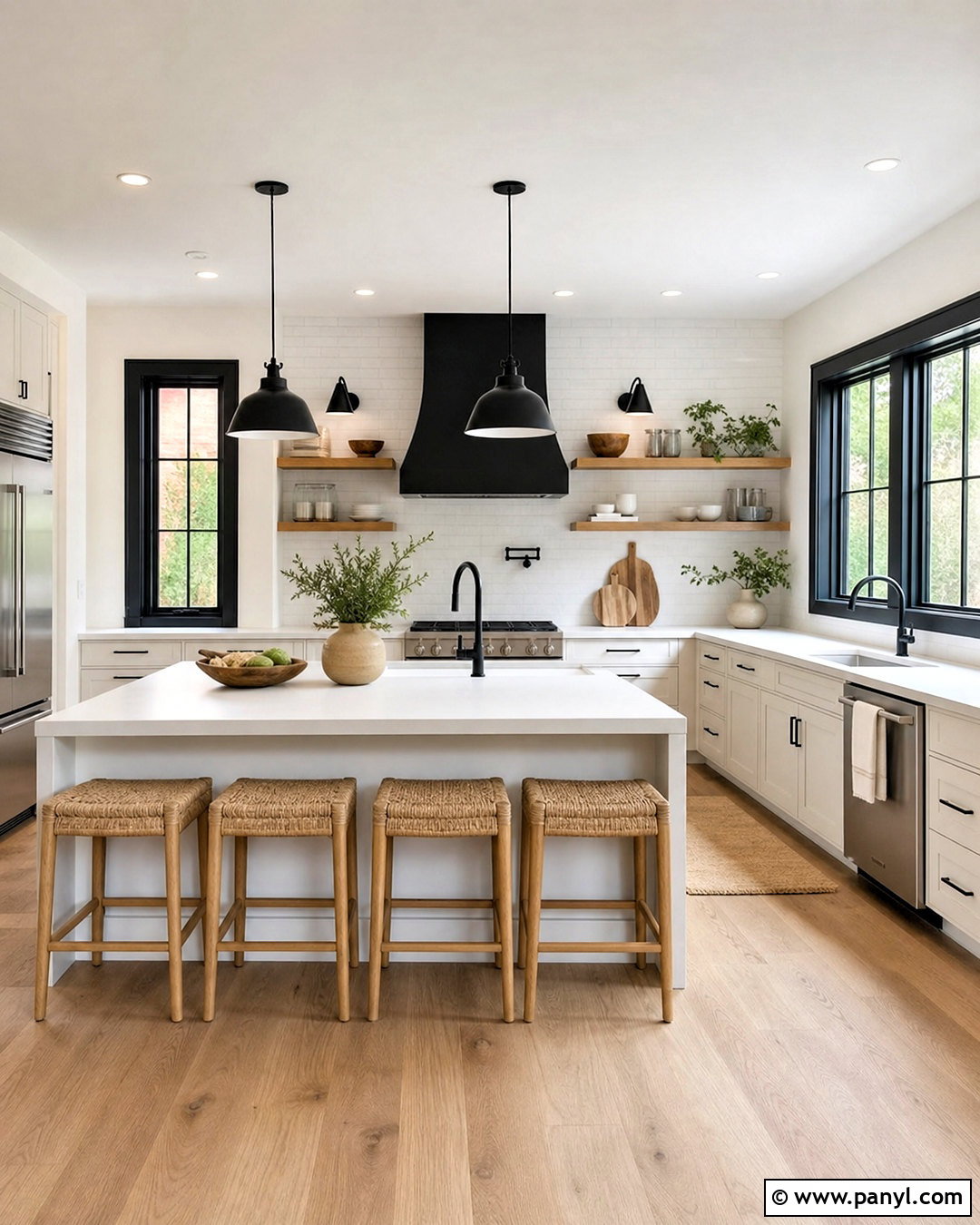
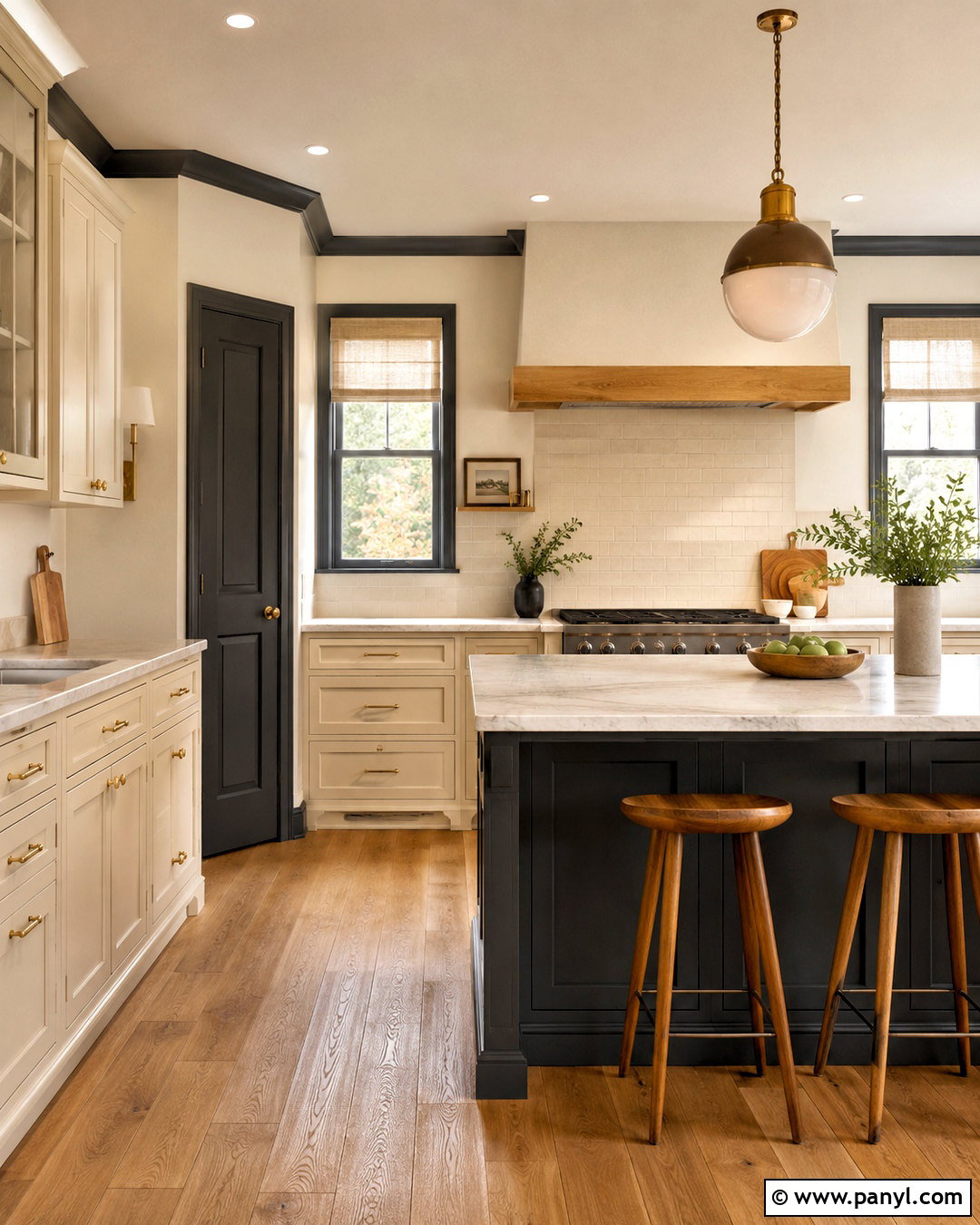
A white kitchen becomes more architectural when black trim frames the windows like artwork. Start with warm white shaker cabinets and lightly veined quartz countertops, then use matte black around the window casings and nearby doorway. Natural oak flooring and woven counter stools prevent the room from becoming too monochromatic. A black range hood, pendant lights, and cabinet pulls connect the window trim to the working areas of the kitchen. For the backsplash, choose simple white rectangular tile with pale grout rather than heavy black grout, which could compete with the trim. Open oak shelves can display cream dishes and wood serving pieces. Keep the window treatments minimal. A white linen Roman shade offers privacy while leaving enough of the crisp black casing exposed to anchor the entire kitchen.
5. White Bedroom With Black Door Trim
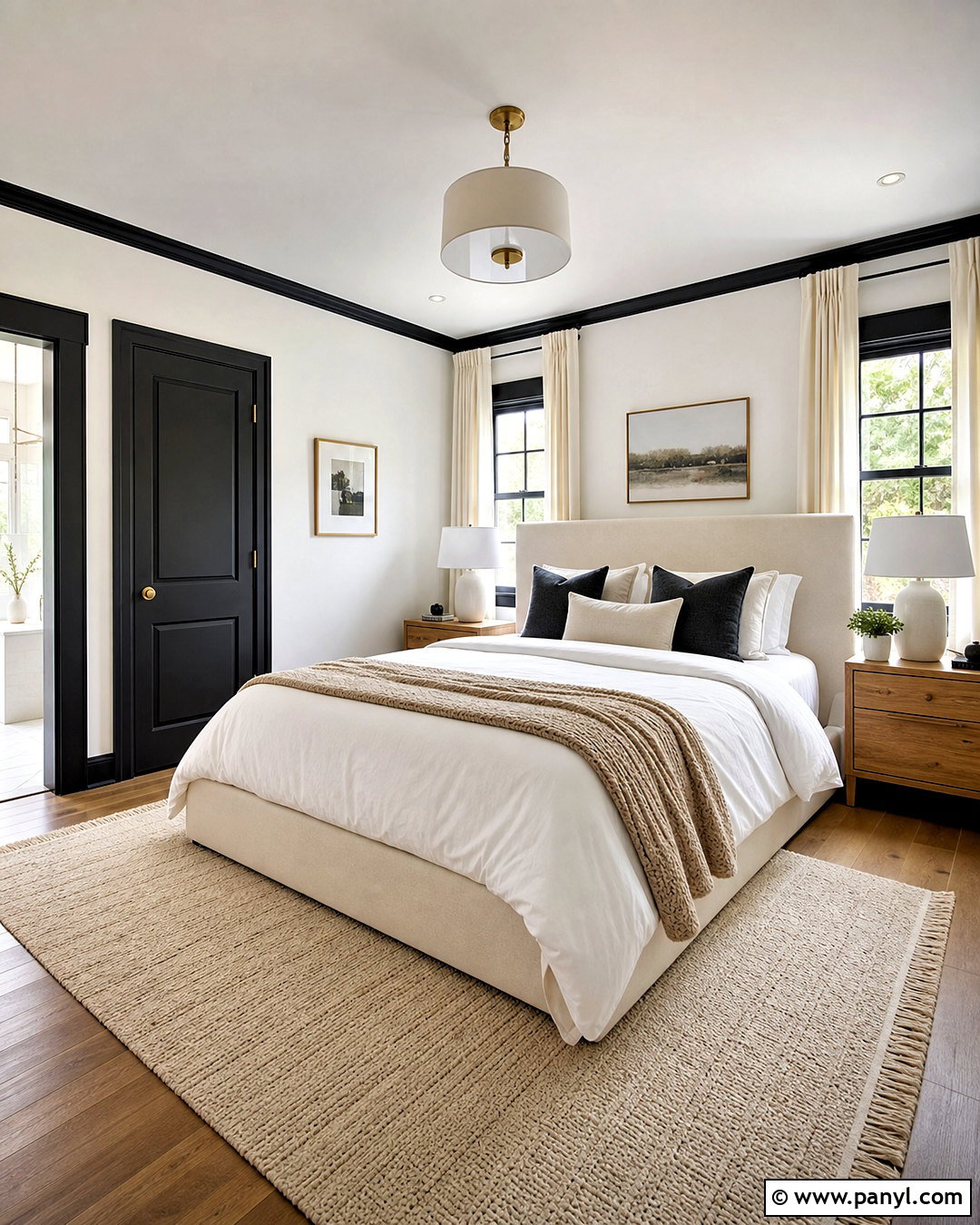
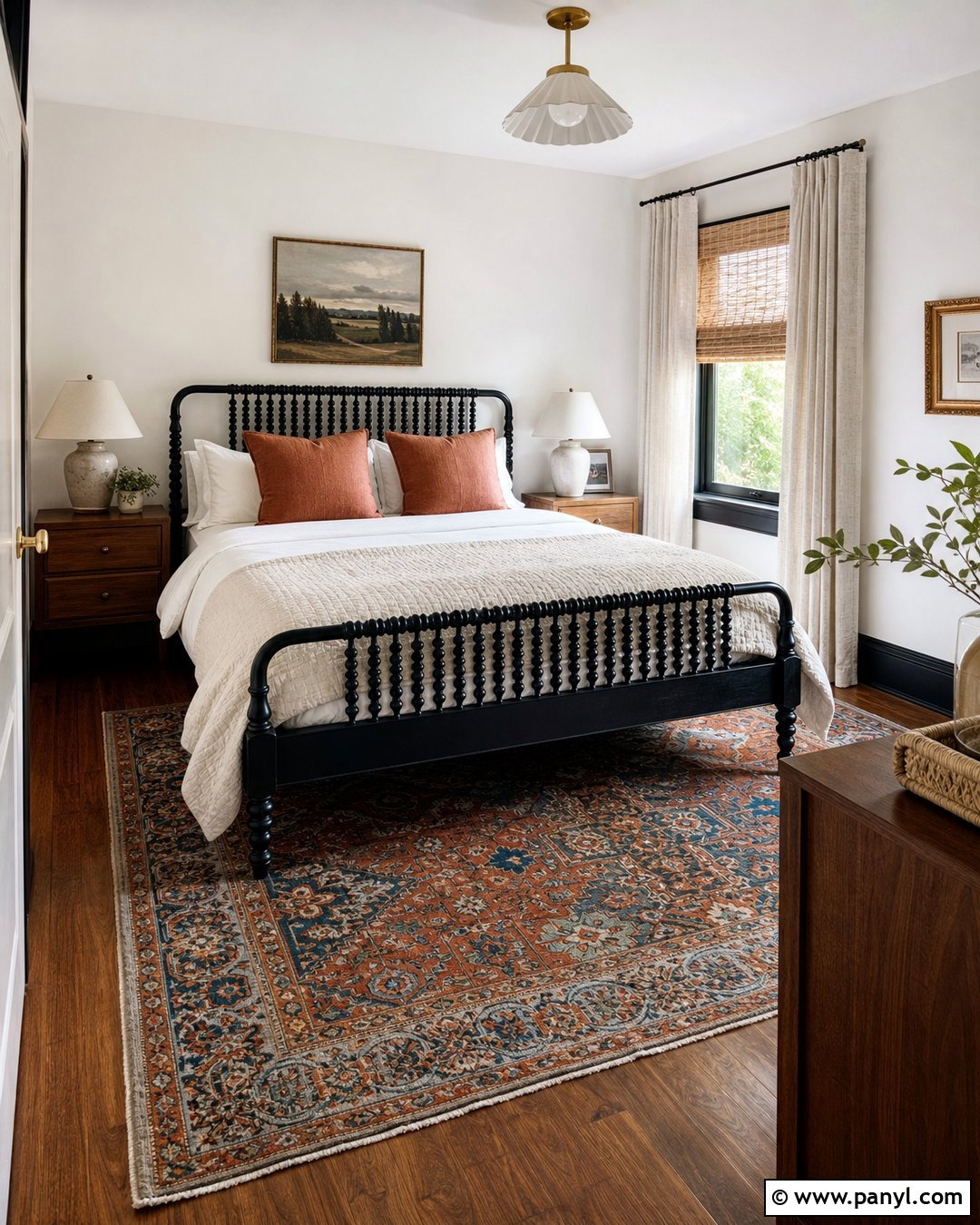
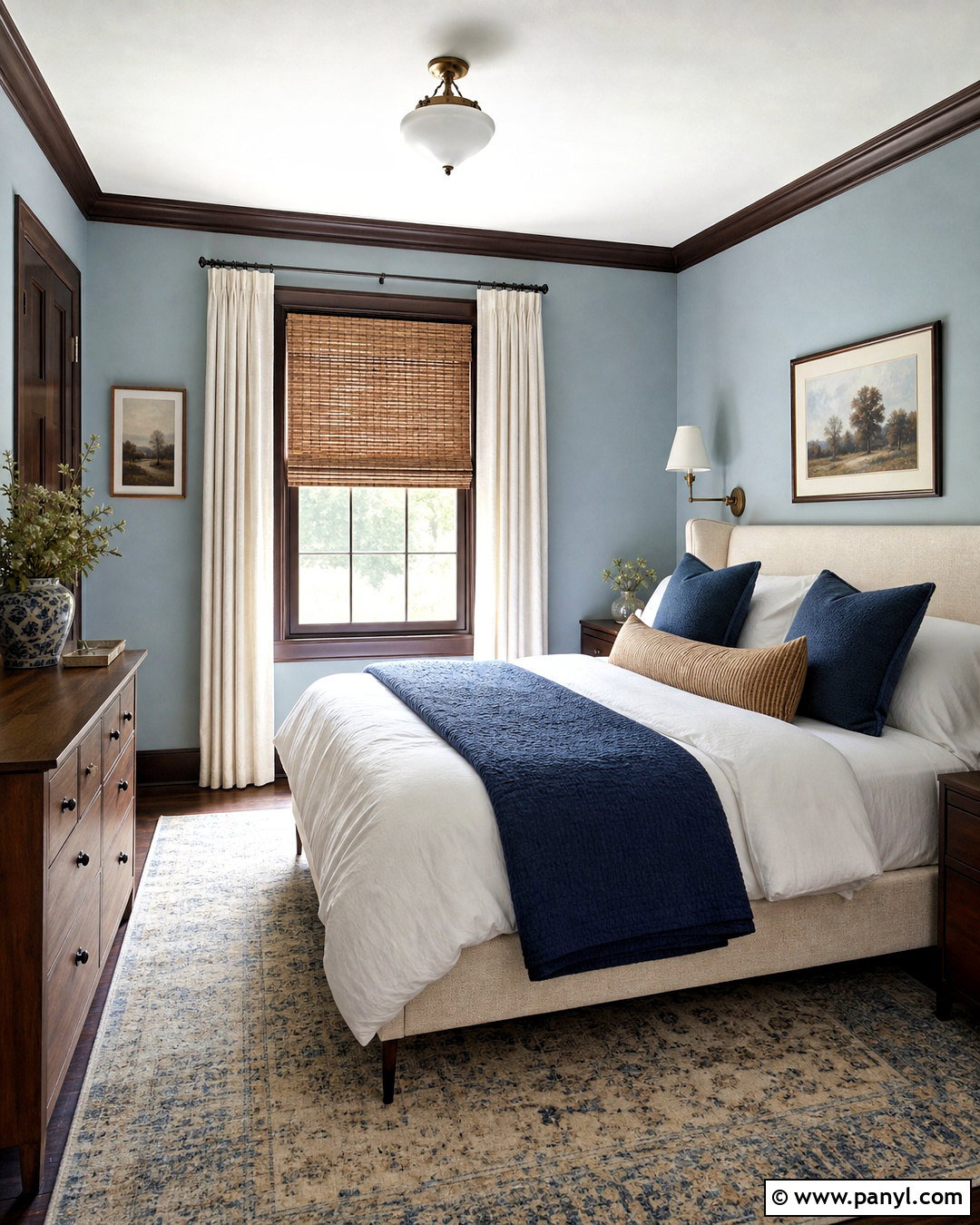
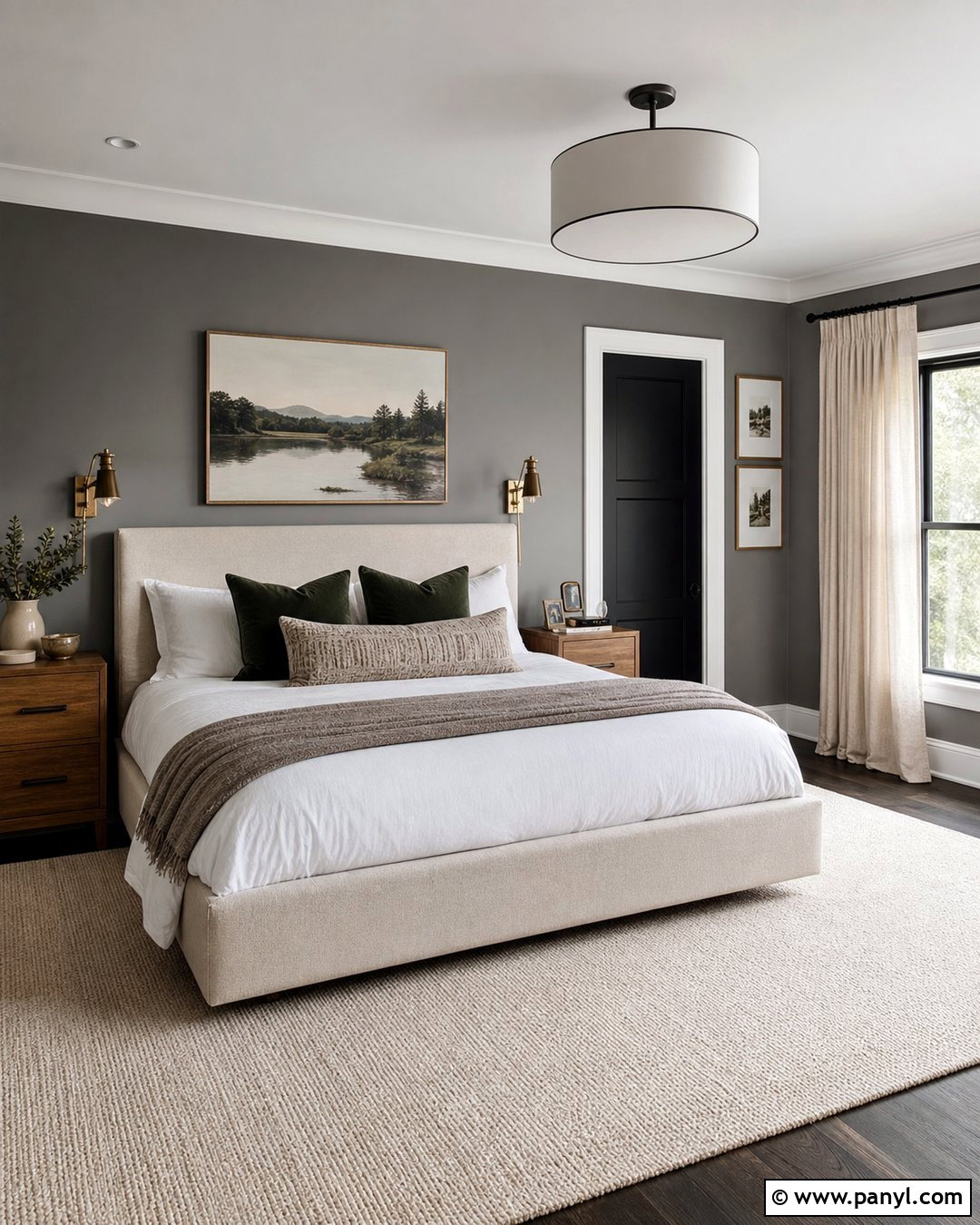
Would you like the drama of black without turning the bedroom into a dark retreat? Use creamy white walls with black trim around the door, windows, and baseboards, then keep the major furniture soft and restful. An upholstered oatmeal bed creates a gentle focal point against the white wall. Layer it with white bedding, a taupe quilt, and two charcoal accent pillows. Medium oak nightstands and woven lamps introduce warmth on both sides. A large wool rug in cream and beige helps separate the dark perimeter from the bed. Paint the interior door black if you want a stronger statement, but keep the ceiling white. Finish with linen curtains, botanical artwork, and a simple wood bench. The balanced materials make the trim feel elegant instead of severe.
6. White Bathroom With Black Shower Trim
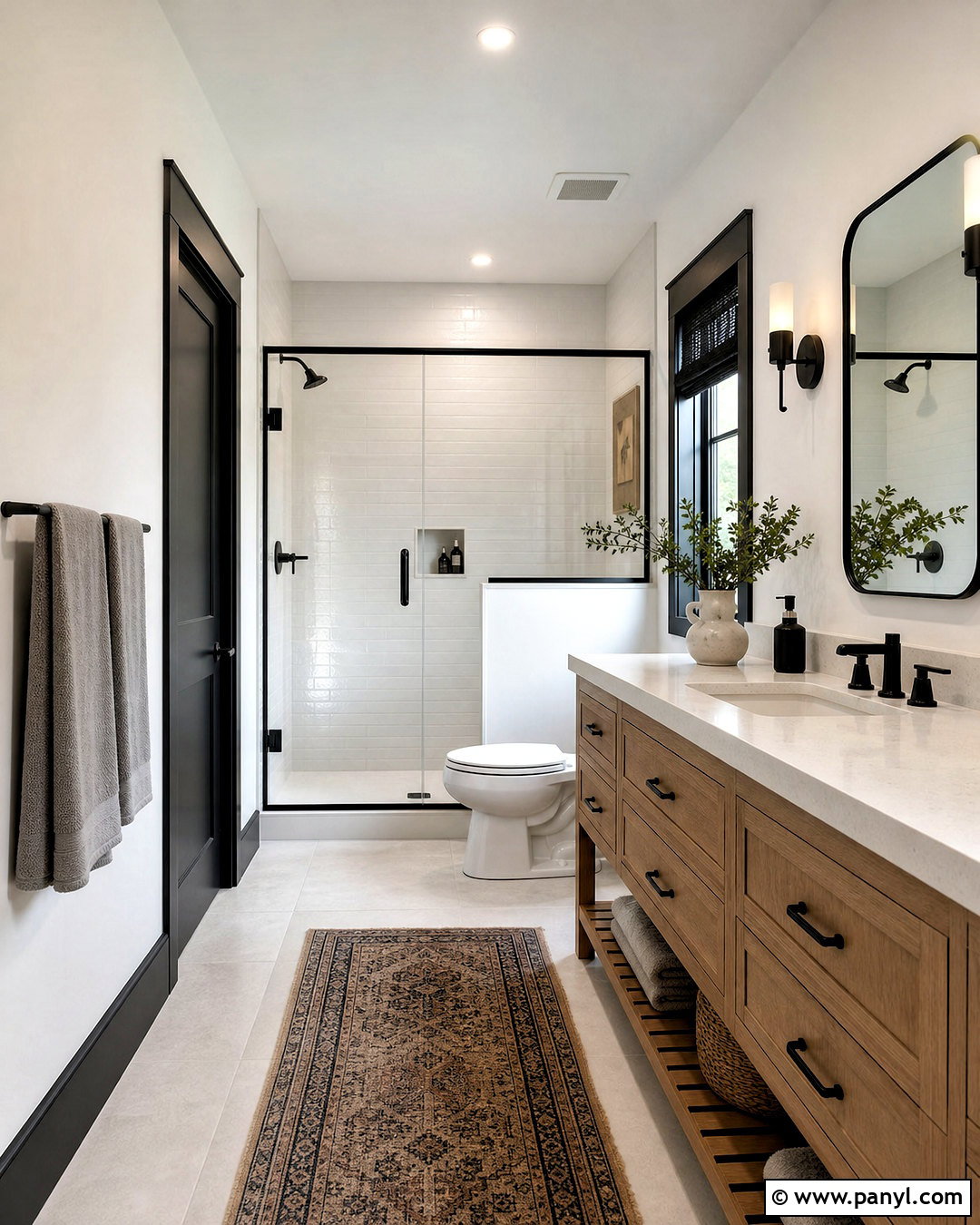
In a white bathroom, black trim can connect the room’s architectural details with its practical fixtures. Use white walls, a white oak vanity, and large off-white porcelain floor tiles as the light foundation. Frame the shower with slim black metal, then paint the window casing, baseboards, and door trim in a matching satin black. A white quartz vanity top and frameless mirror keep the compact room open. Repeat black through the faucet, wall sconces, towel hooks, and cabinet pulls, but avoid filling every surface with dark accents. Soft gray towels and a small vintage-style rug can break up the strict palette. If the shower includes white subway tile, choose light gray grout for gentle definition. The complete bathroom will feel crisp, coordinated, and easy to maintain.
7. White Entryway With Black Door Trim
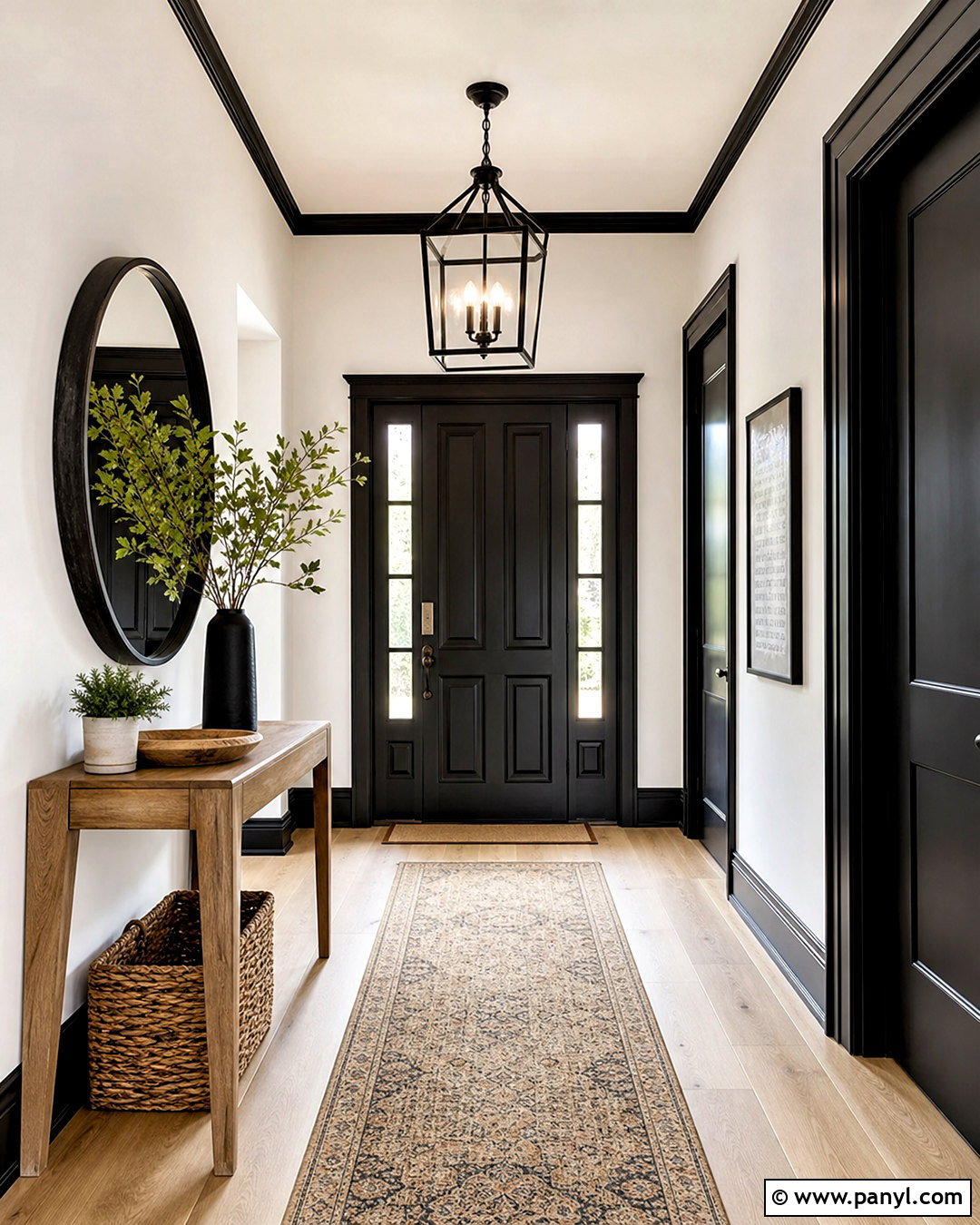
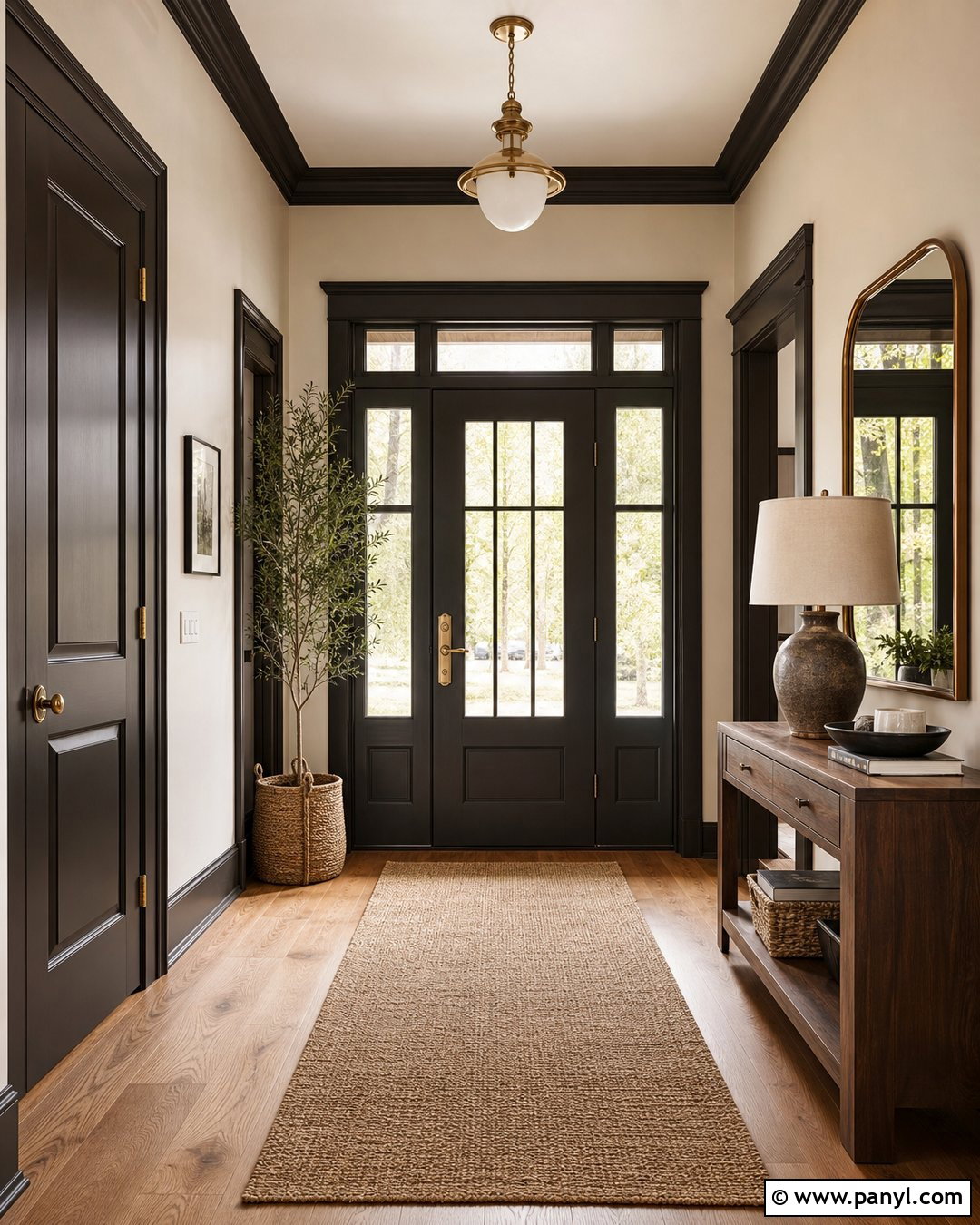
The entryway is an ideal place to introduce bold trim because it creates a clear first impression. Paint the walls a durable warm white and outline the front door, nearby closet, baseboards, and openings in semi-gloss black. A black interior door adds visual weight, while pale oak flooring prevents the entrance from feeling enclosed. Place a narrow wood console against one wall with a round black-framed mirror above it. A washable runner in beige, charcoal, and muted rust brings pattern and warmth into the passage. Add a woven basket beneath the console for shoes or seasonal accessories. A black lantern pendant can reinforce the trim overhead. Keep decorative objects simple, using a ceramic lamp, a small tray, and fresh greenery to create a polished yet practical welcome.
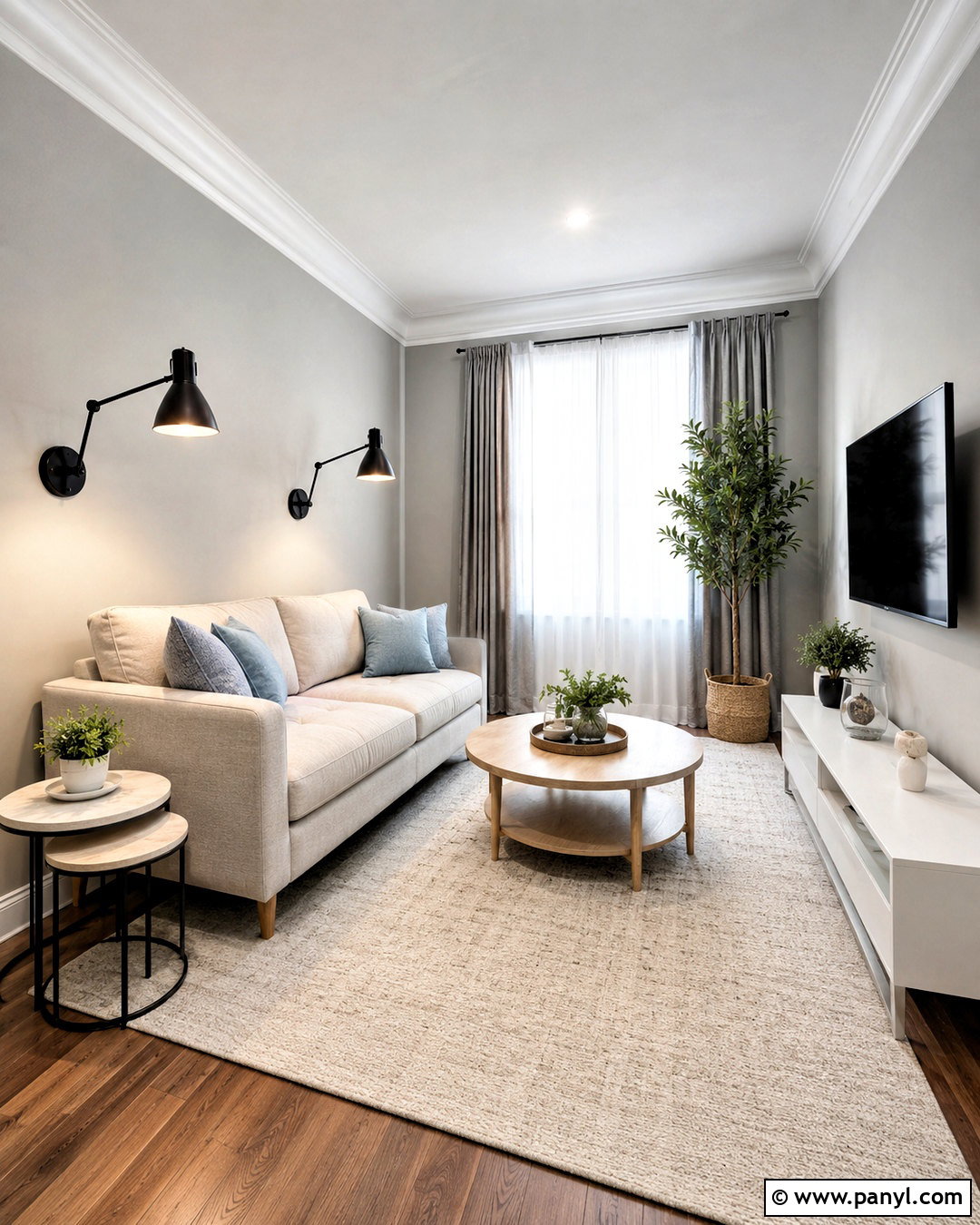
8. White Home Office With Black Built-In Trim
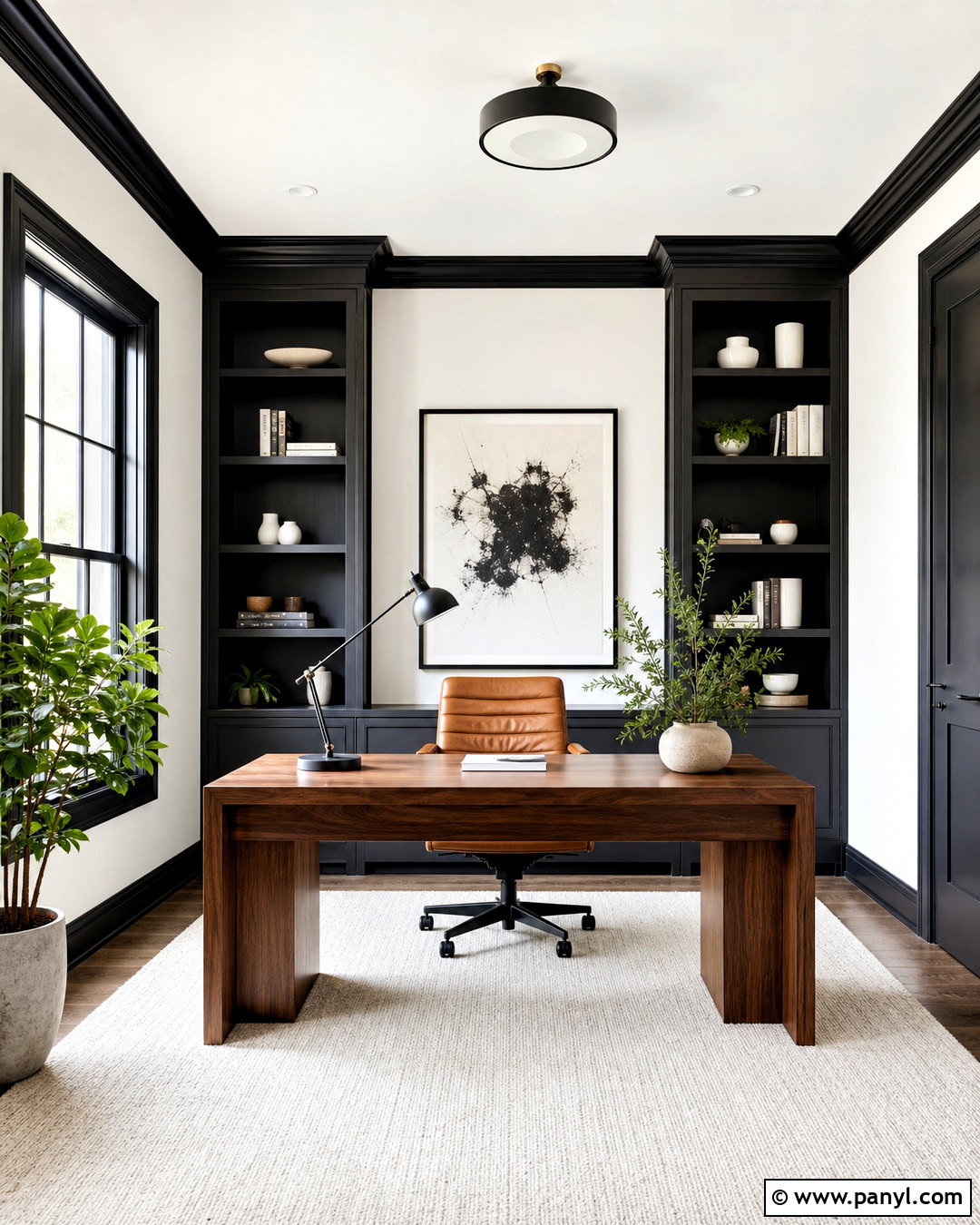
A home office needs focus, but it should still feel comfortable for long work sessions. Use soft white walls and paint the window trim, door casing, baseboards, and built-in shelving a deep matte black. Let the shelving act as the room’s visual anchor behind a warm walnut desk. A tan leather desk chair introduces a rich natural color that works beautifully with both black and white. Choose a cream wool rug to soften sound and brighten the floor. Inside the built-ins, combine books with white pottery, wood boxes, and a few green plants instead of filling every shelf. Add a black adjustable desk lamp and linen window shade for practical lighting control. This coordinated setup feels professional, organized, and visually interesting without becoming distracting or overly corporate.
9. White Nursery With Soft Black Trim
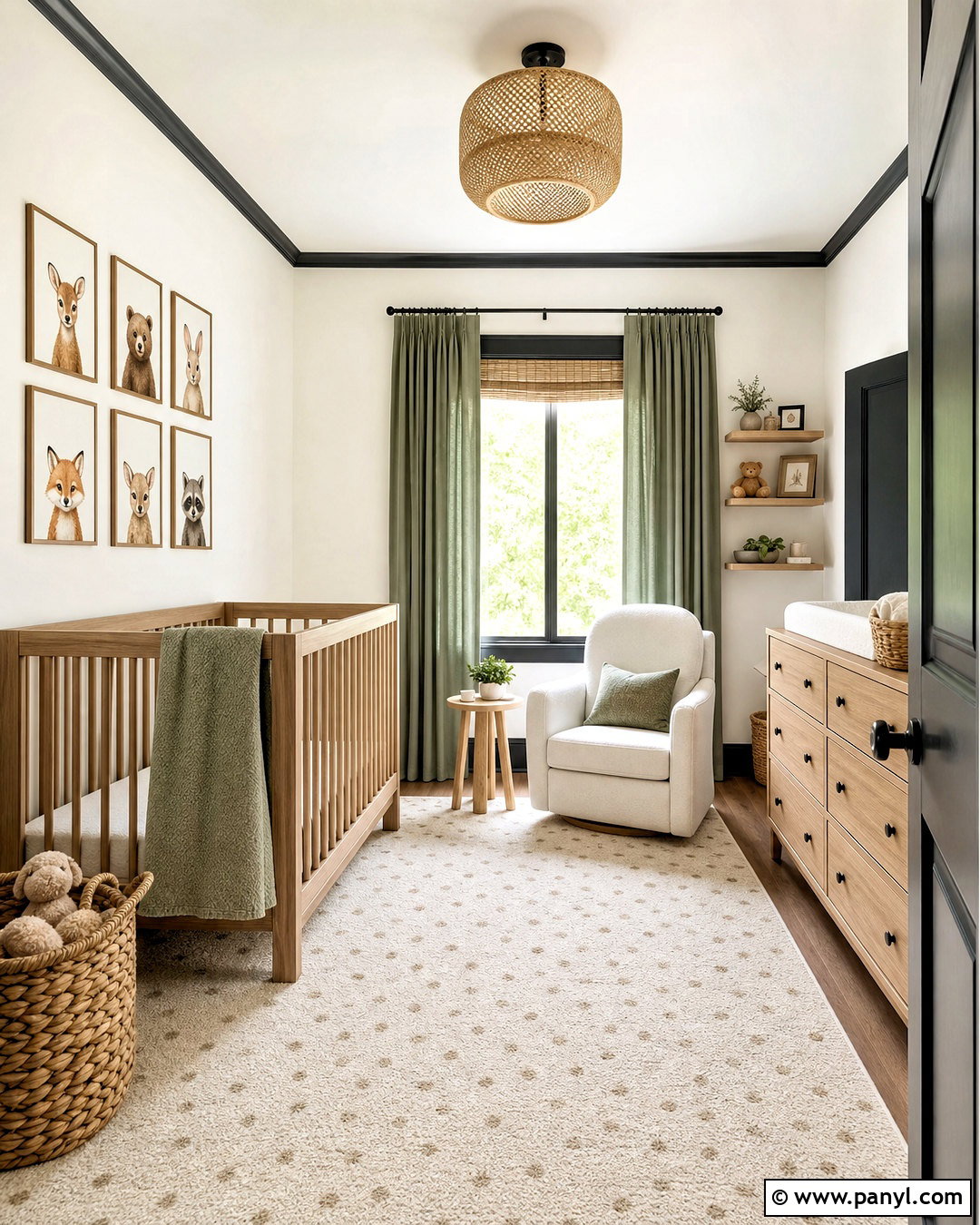
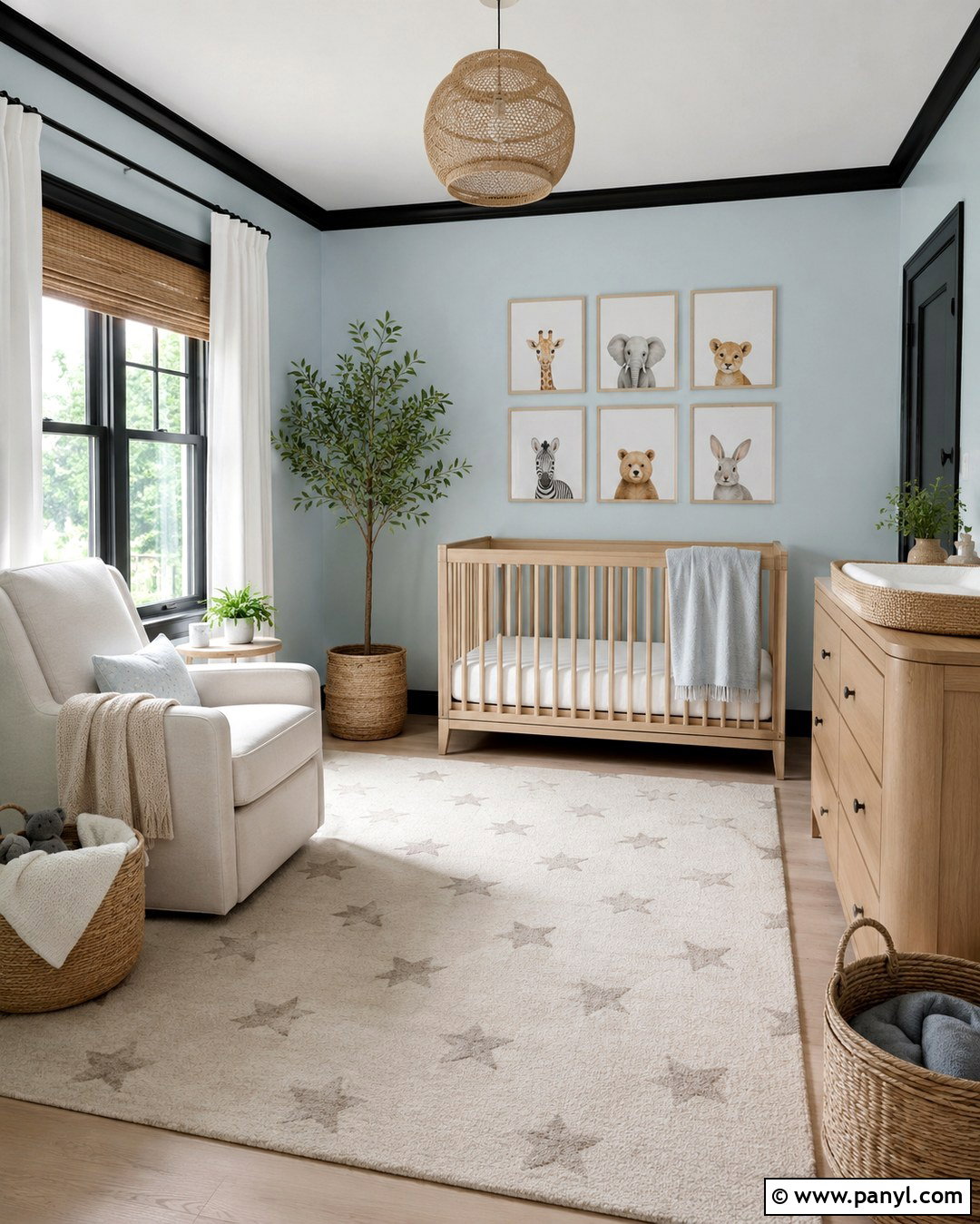
Black trim can work in a nursery when the contrast is softened with warm materials and gentle colors. Select creamy white walls and use a muted charcoal-black paint on the baseboards, window casing, and door frame. This slightly softer black is less severe than a pure jet tone. Place a natural oak crib against the white wall and add a comfortable ivory glider in the corner. A washable beige rug with small black dots connects the floor to the trim. Use sage green curtains, a light wood dresser, and woven baskets to give the space an earthy, calming character. Simple animal prints in black wood frames can decorate the walls without making them busy. Include warm white lamps and a flush ceiling fixture so the nursery remains bright, soothing, and functional.
10. White Laundry Room With Black Trim
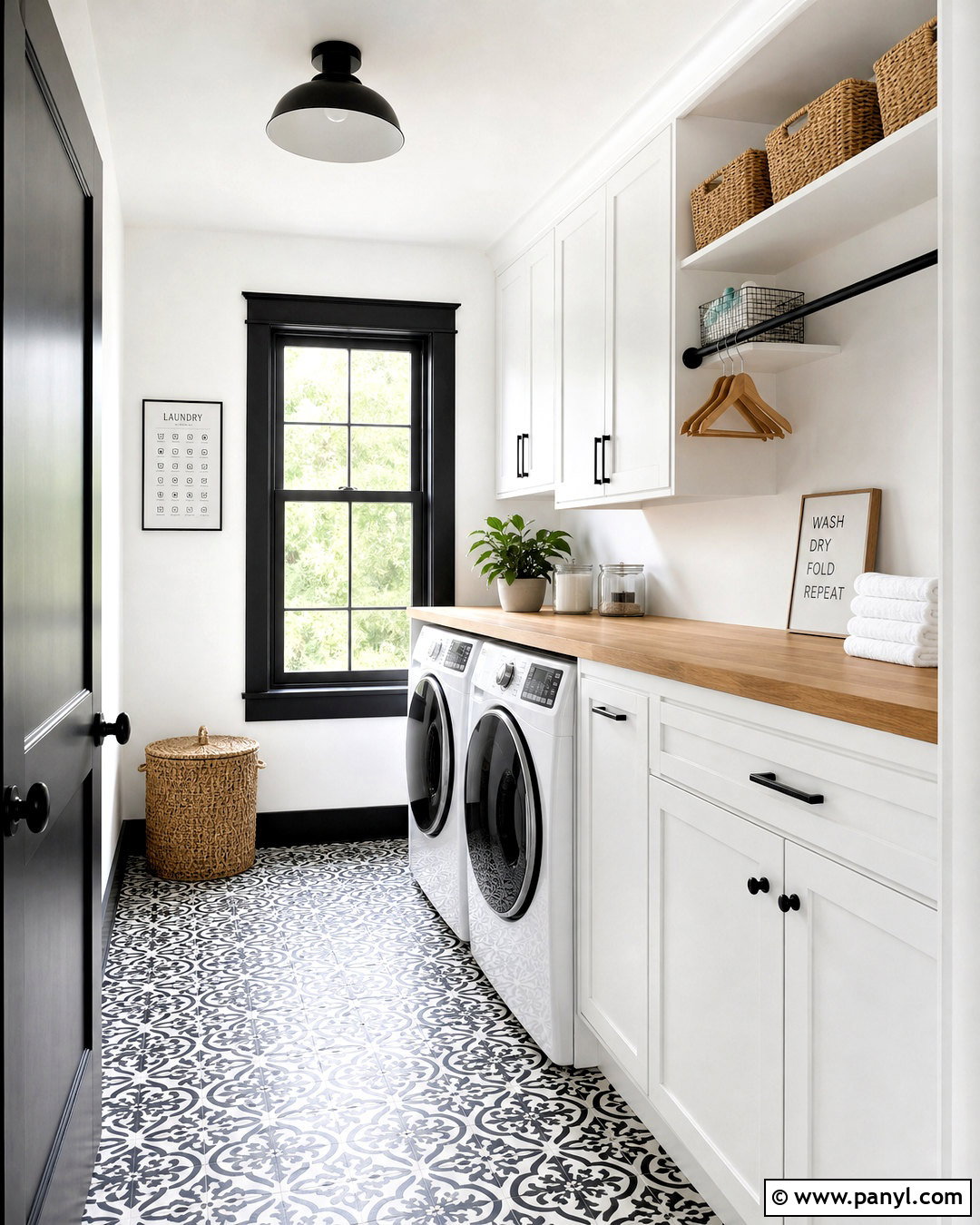
Even a hardworking laundry room can feel thoughtfully designed with a controlled black-and-white palette. Paint the walls bright white, then apply satin black to the door frame, window casing, baseboards, and open shelving brackets. Install white shaker cabinets above a butcher-block folding counter for useful storage and natural warmth. Black cabinet pulls and a matte black faucet tie the cabinetry to the surrounding trim. Underfoot, choose durable black-and-white patterned tile with a small-scale design that hides everyday marks. Woven baskets and clear storage containers keep supplies organized without creating visual clutter. A hanging rail beneath the upper cabinets provides space for air-drying clothes. Finish with a simple black ceiling light and a small washable runner, creating a complete room that feels practical, crisp, and inviting.
11. White Hallway With Black Baseboards
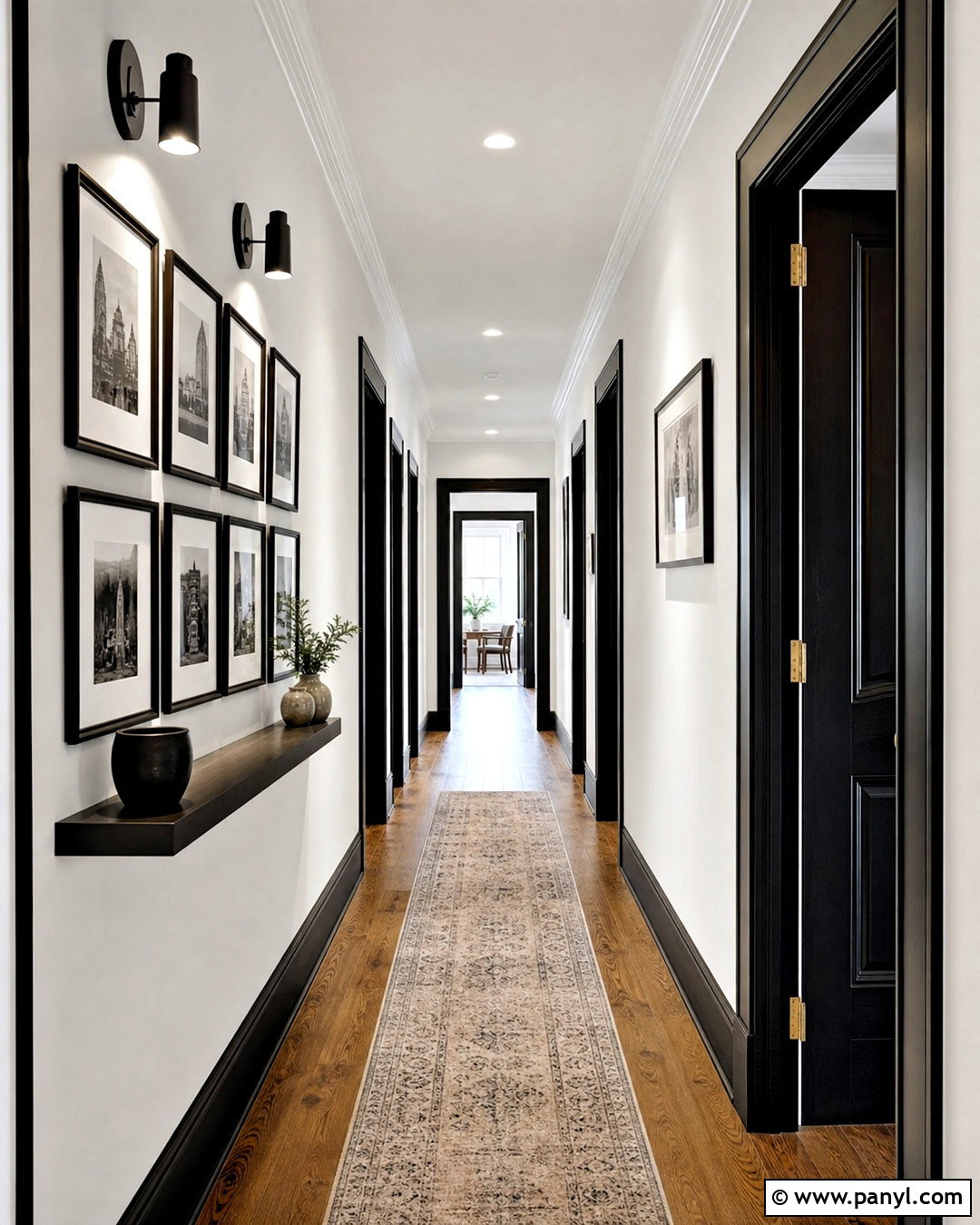
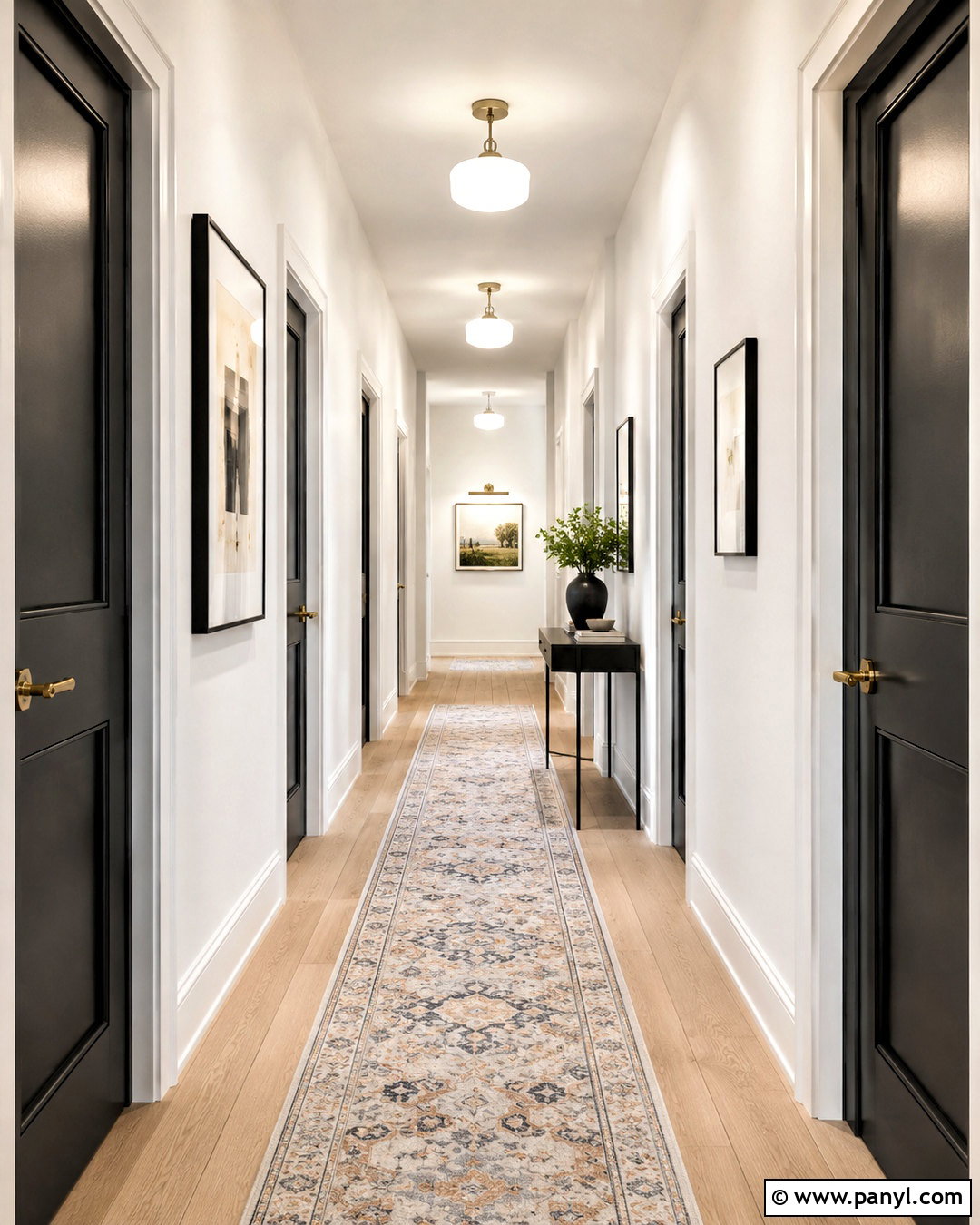
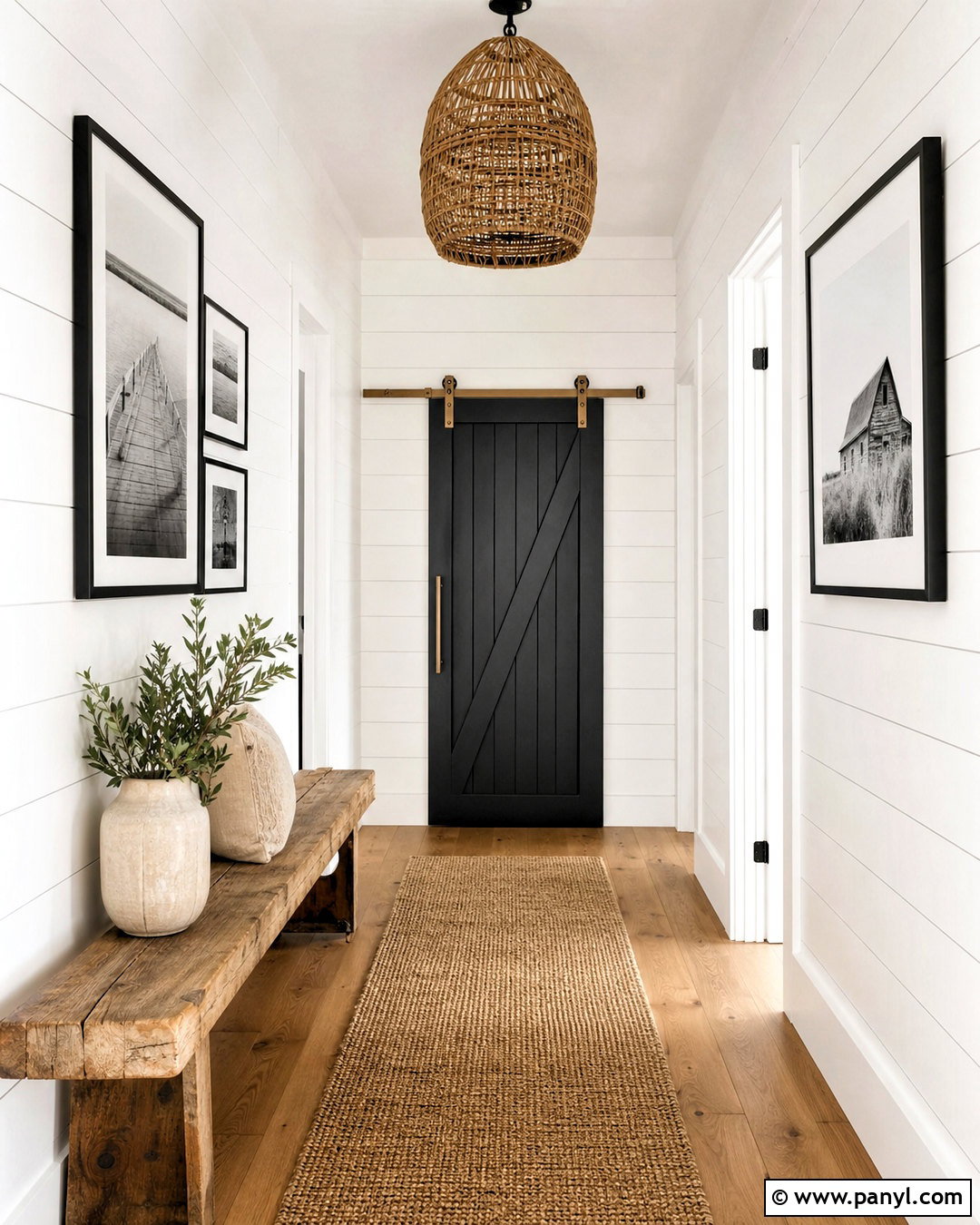
A long hallway can look more purposeful when black baseboards create a strong continuous line through the space. Keep the walls and ceiling soft white, then paint the baseboards, door casings, and doors a consistent satin black. This treatment works especially well with medium-tone wood floors because the natural grain warms the graphic contrast. Hang a series of black-framed photographs at matching heights, leaving enough white wall around them to avoid a crowded gallery effect. A narrow vintage-style runner in beige, faded blue, and charcoal adds softness without hiding the flooring. Use simple flush-mount lights or compact black sconces to brighten darker stretches. If the hallway is narrow, avoid bulky furniture. A slim wall-mounted shelf near the entrance provides a useful landing area while preserving easy movement.
12. White Sunroom With Black Window Trim
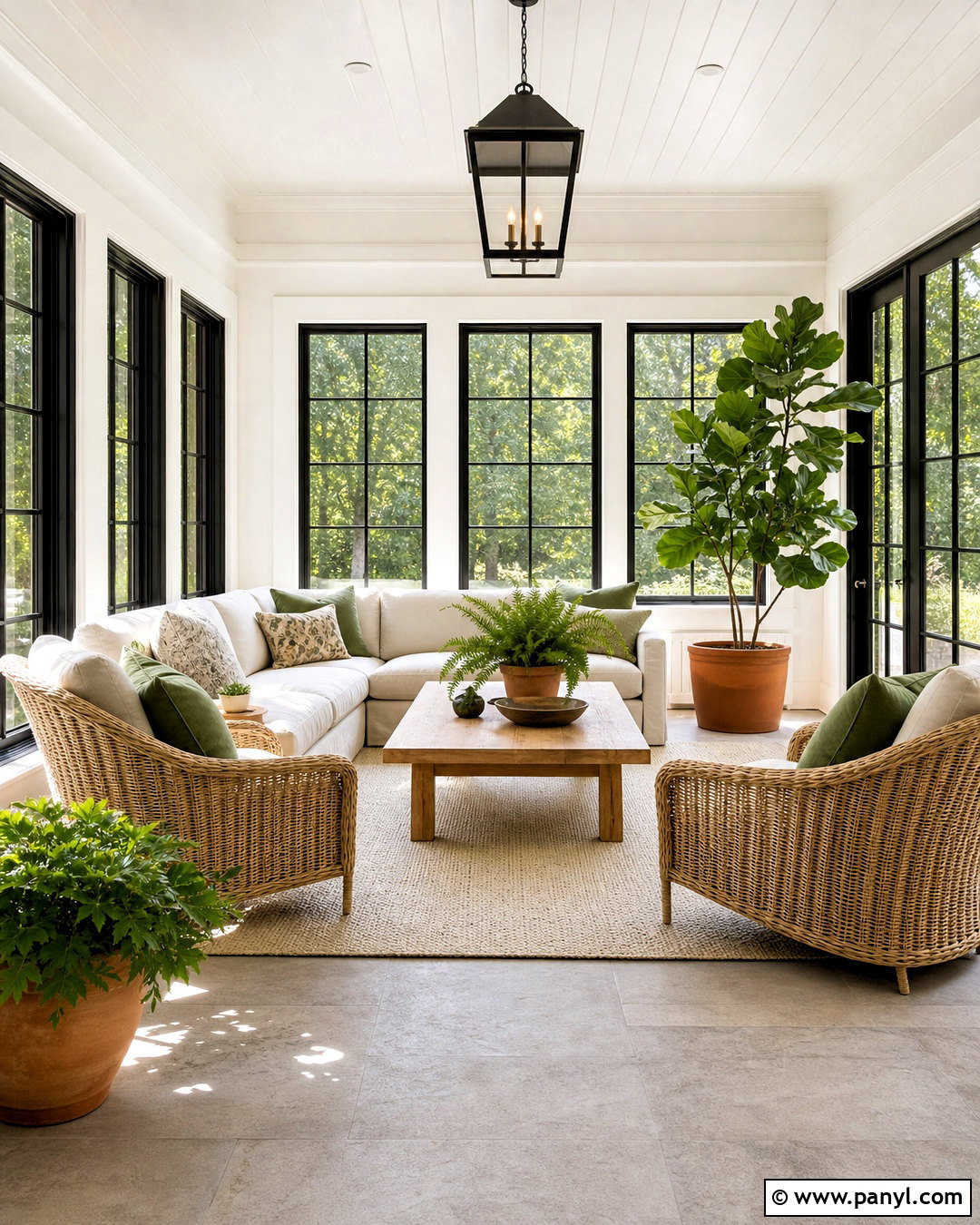
Sunlight makes black window trim appear crisp rather than heavy, which makes this combination perfect for a sunroom. Paint the walls and ceiling a clean warm white, then outline every window and exterior door in matte black. Arrange a light oatmeal sectional and two woven rattan chairs around a pale wood coffee table. The natural textures soften the grid created by the dark frames. Choose a large indoor-outdoor rug in cream with a subtle charcoal pattern for durability. Linen-look white shades can filter glare while maintaining the room’s airy quality. Add terracotta planters, leafy plants, and muted green cushions to connect the interior with the garden outside. A black ceiling fan and slender side tables repeat the trim, completing a relaxed room designed for reading, visiting, and enjoying the view.
13. White Mudroom With Black Trim
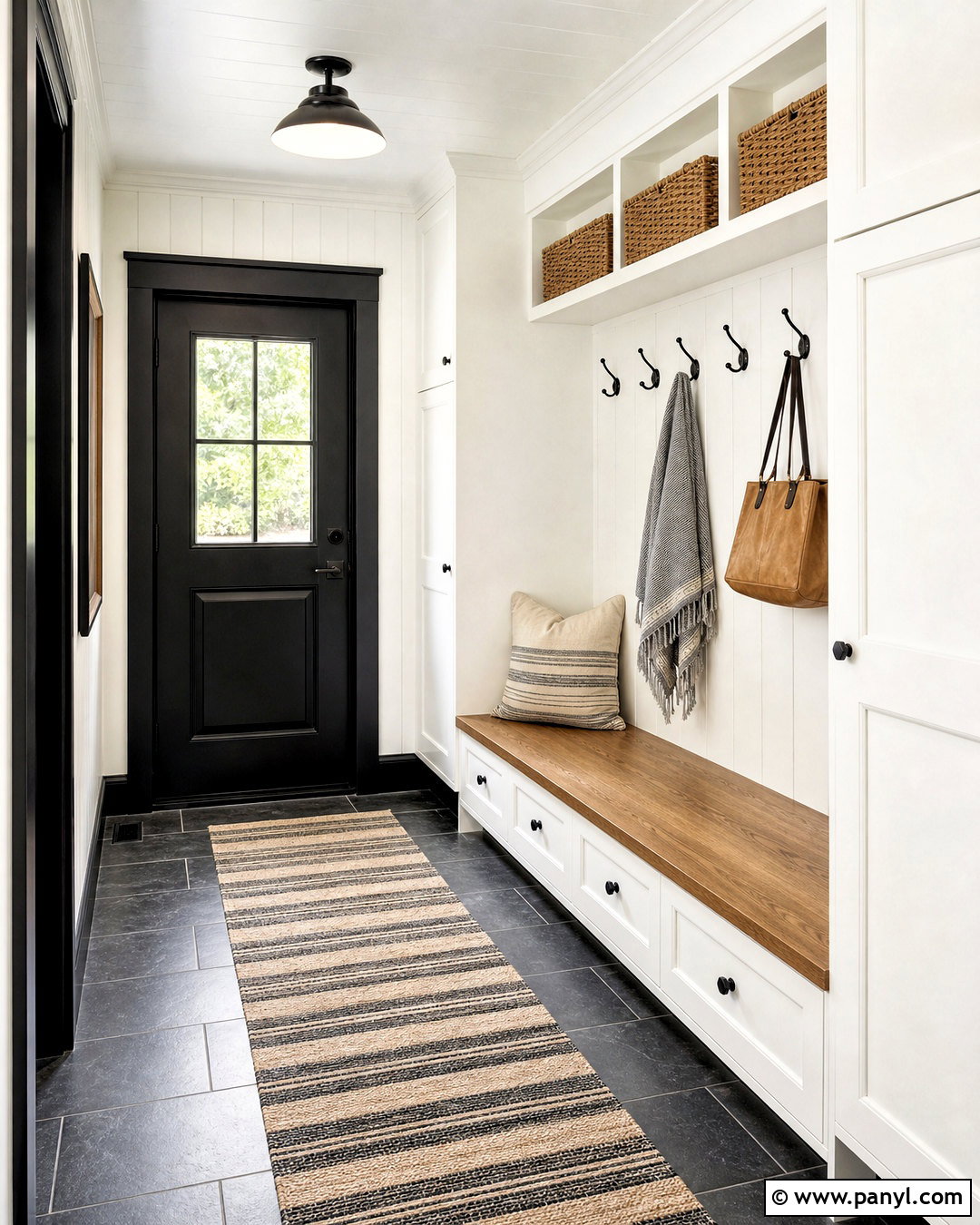
Mudrooms need durable finishes, so black trim is both stylish and forgiving around busy doorways. Use washable white paint on the upper walls and install warm white vertical paneling below. Paint the panel cap, baseboards, door casings, and exterior door black for a clearly defined structure. A built-in oak bench provides a comfortable place to remove shoes, while black hooks above it hold coats and bags. Add closed white cabinets on each side to control visual clutter. Slate-look porcelain tile offers a practical dark floor that relates naturally to the trim. Woven baskets beneath the bench can organize shoes, gloves, or outdoor supplies. Finish the space with a striped indoor-outdoor runner and a black cage ceiling light. The complete mudroom feels orderly, sturdy, and connected to the rest of the home.
14. White Basement Family Room With Black Trim
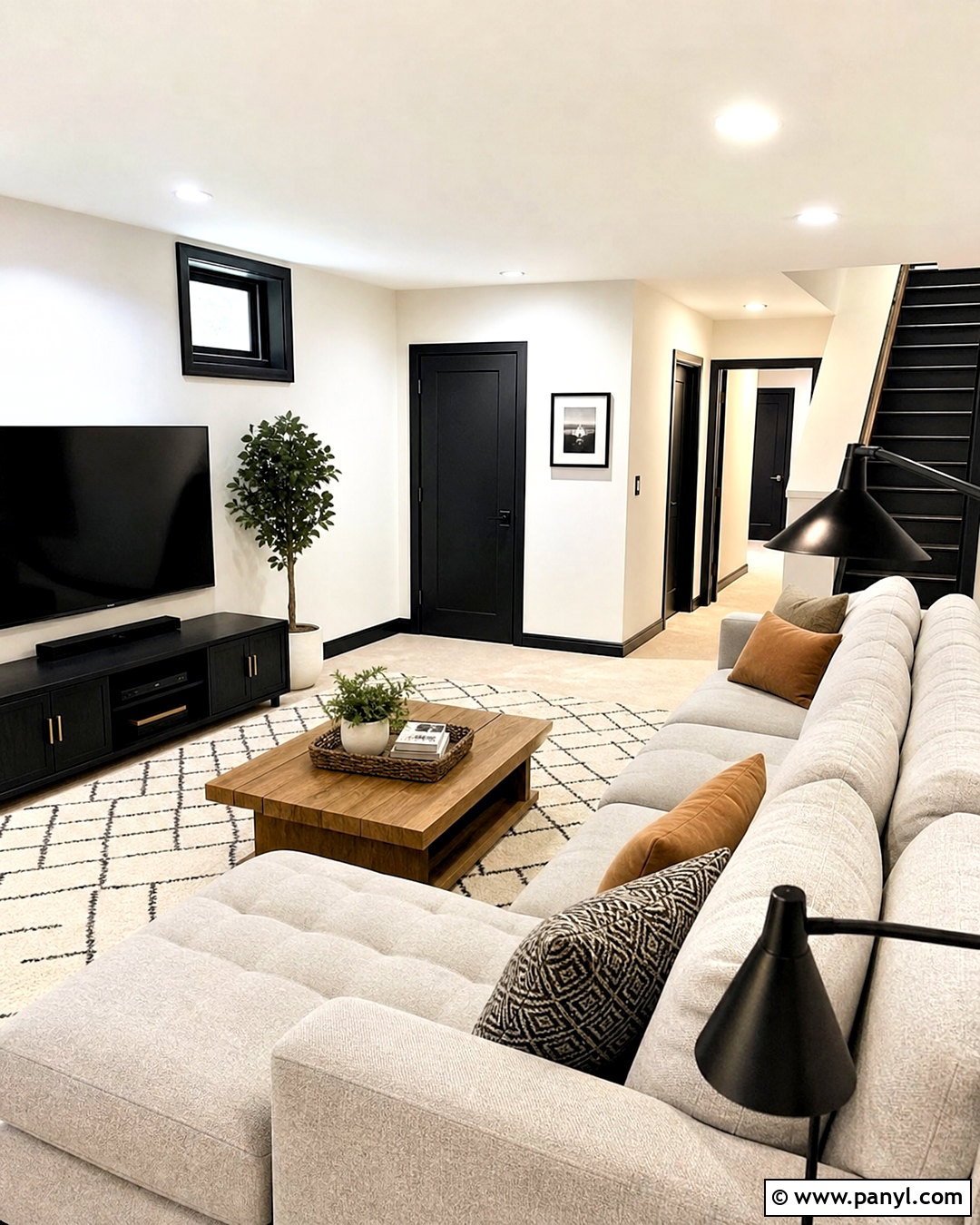
Basements often have limited daylight, so white walls can keep the room open while black trim provides necessary definition. Choose a warm white rather than a cool blue-white, then use charcoal-black on the baseboards, doors, and window casings. A light gray sectional creates ample family seating without disappearing into the walls. Position it around a substantial oak coffee table and a low black media cabinet. A cream rug with a subtle geometric pattern brightens the floor and reduces echo. Add camel-colored pillows, woven blankets, and wood-framed artwork for warmth. Recessed ceiling lights should provide even illumination, supported by black floor lamps near reading seats. Keep the ceiling white and avoid overly heavy window coverings. This balanced arrangement makes the basement feel intentional, comfortable, and connected to upstairs living areas.
15. White Reading Room With Black Bookshelf Trim
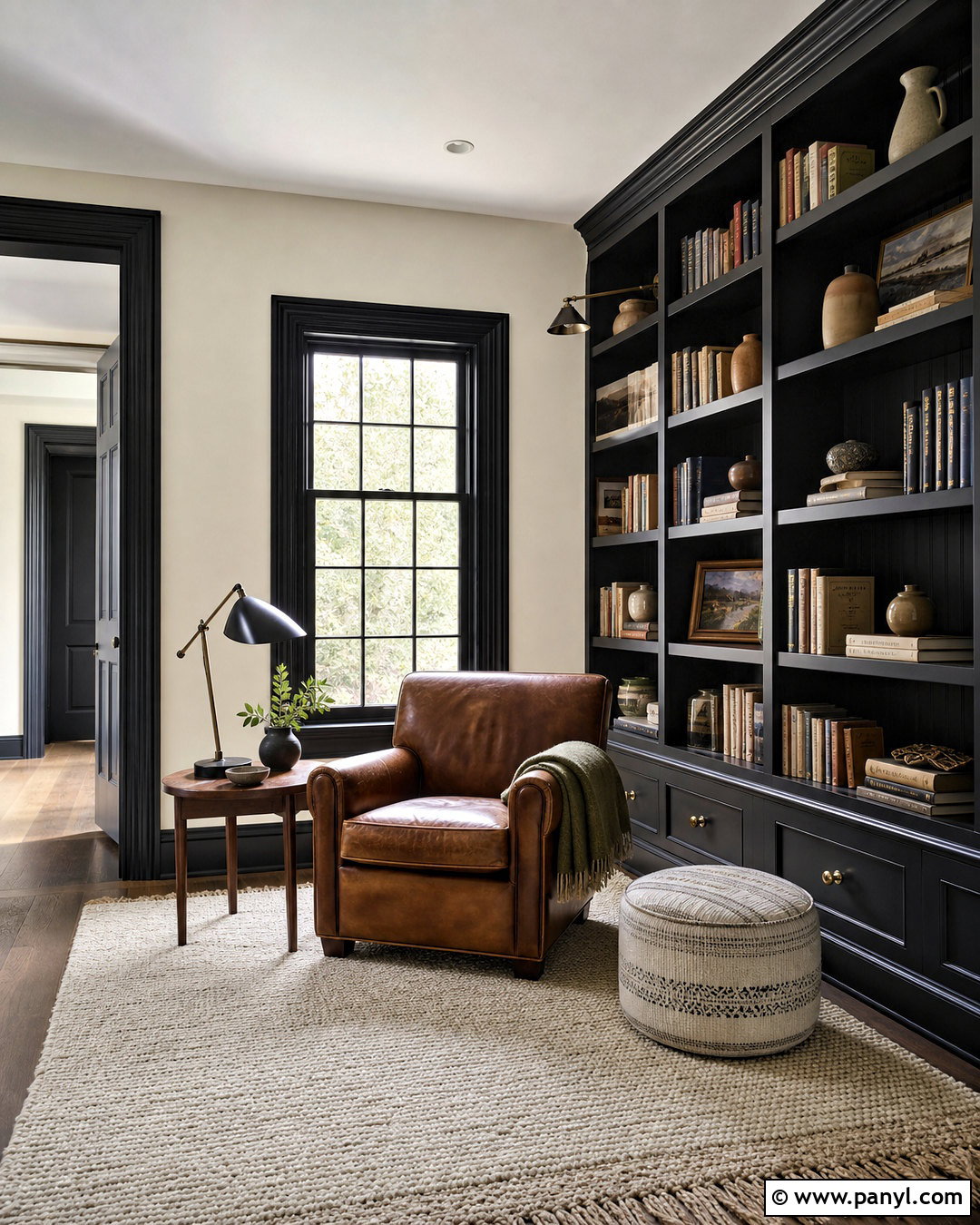
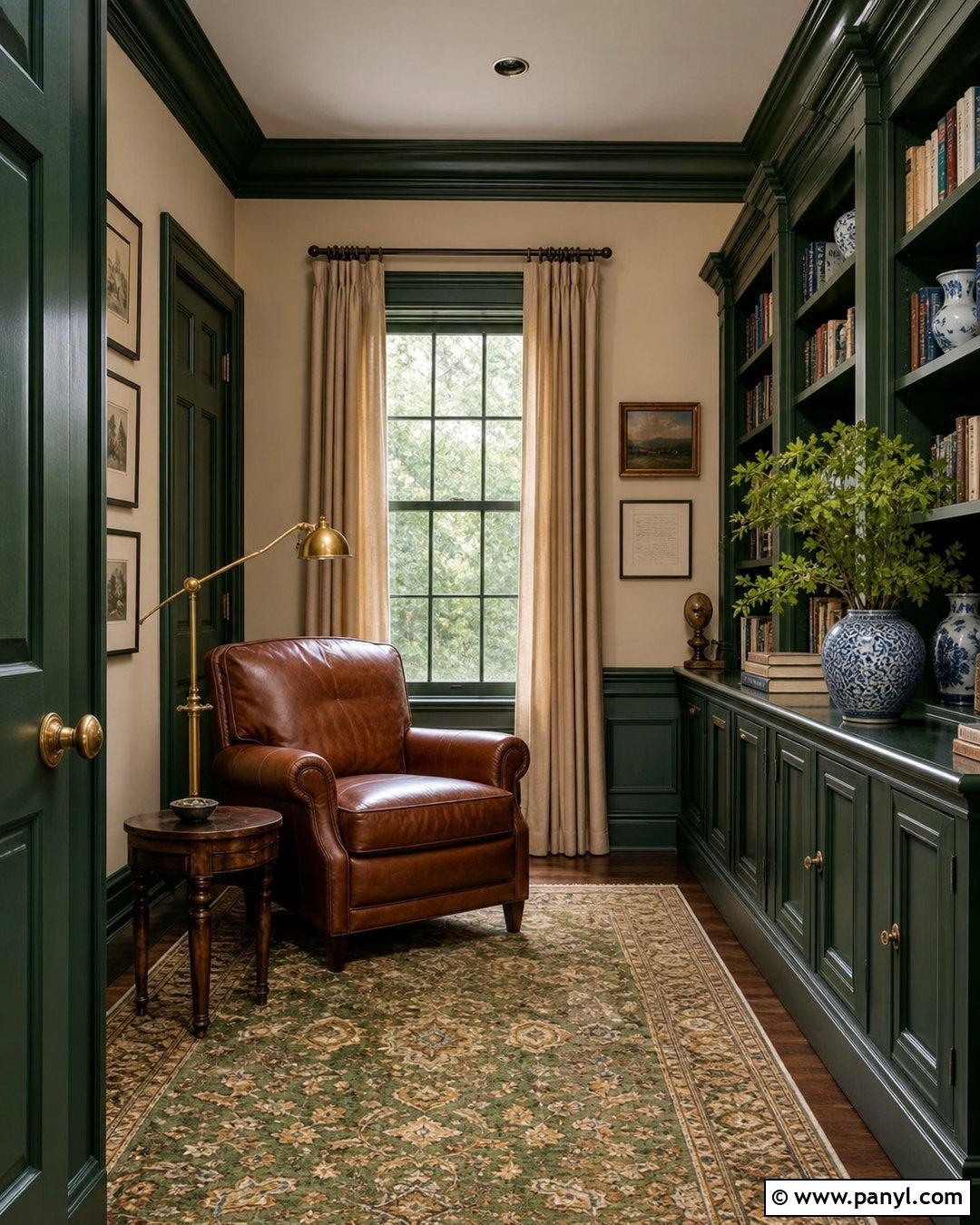
Few spaces feel more inviting than a quiet reading room with comfortable seating and books close at hand. Paint the walls creamy white and give the built-in bookcases, window casing, baseboards, and doorway a rich black finish. The dark shelving creates depth, while the white wall areas prevent the room from feeling enclosed. Place a cognac leather chair beside the window with a small walnut table and an adjustable black reading lamp. A cream-and-tan wool rug softens the floor and establishes a cozy seating zone. Fill the shelves thoughtfully with books, framed art, pottery, and small storage boxes, leaving some breathing room between objects. Linen curtains, a folded olive throw, and one leafy plant introduce softness and color. The finished room feels intimate, organized, and comfortably layered.
16. White Studio Apartment With Black Trim
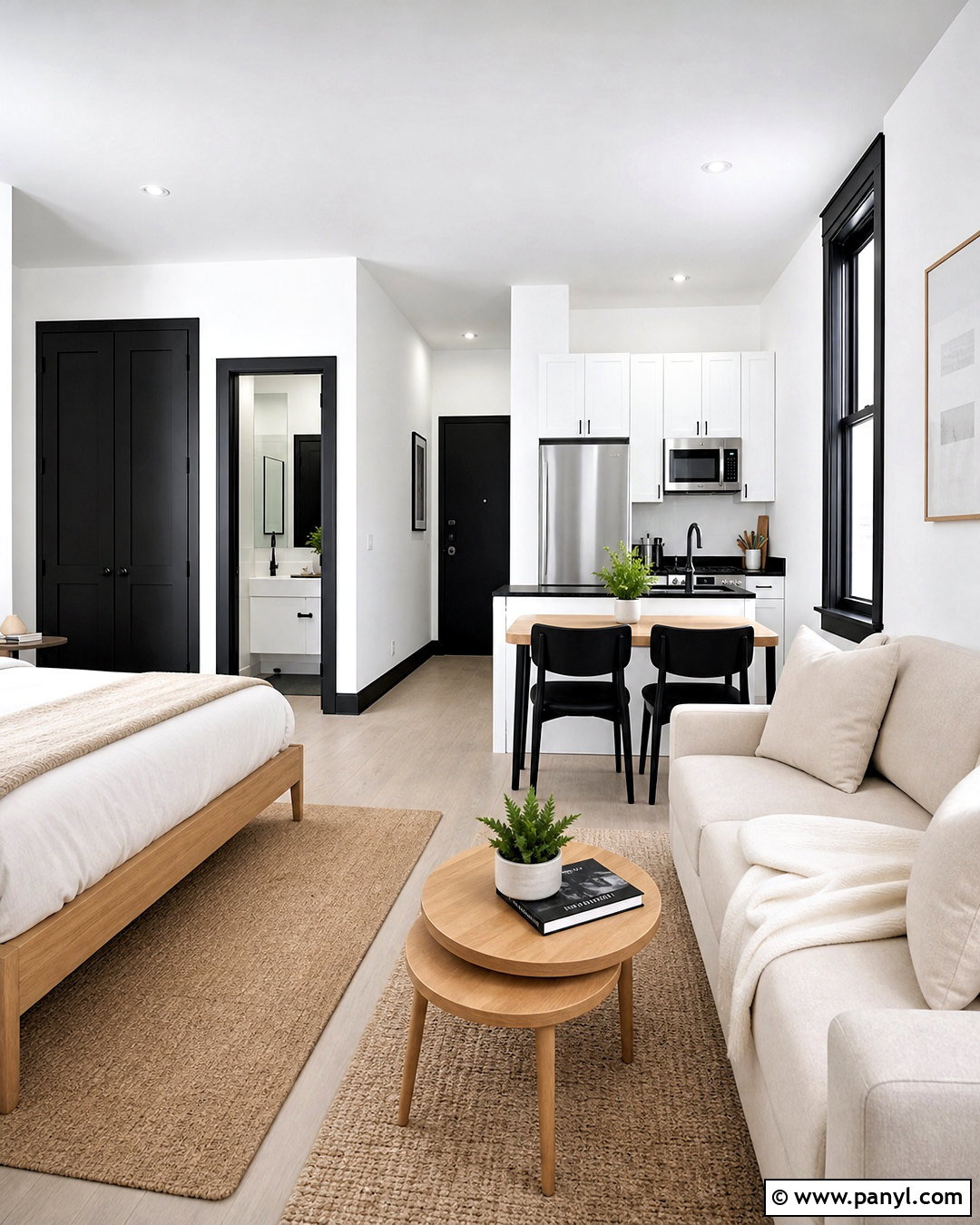
In a studio apartment, black trim can help organize one open room without adding physical partitions. Keep the walls, ceiling, and compact kitchen cabinetry white to maximize the sense of light. Paint the window casing, baseboards, bathroom doorway, and closet doors black, using these dark lines to define the perimeter. Position a small cream sofa on a textured beige rug, with its back marking the edge of the sleeping zone. Choose a pale oak bed, nesting tables, and a narrow dining table to conserve space. Black dining chairs, pendant lighting, and picture frames repeat the trim in controlled amounts. Use white curtains and light bedding so the apartment does not become visually fragmented. The finished layout feels cohesive, functional, and spacious despite serving several purposes in one room.
17. White Traditional Parlor With Black Trim
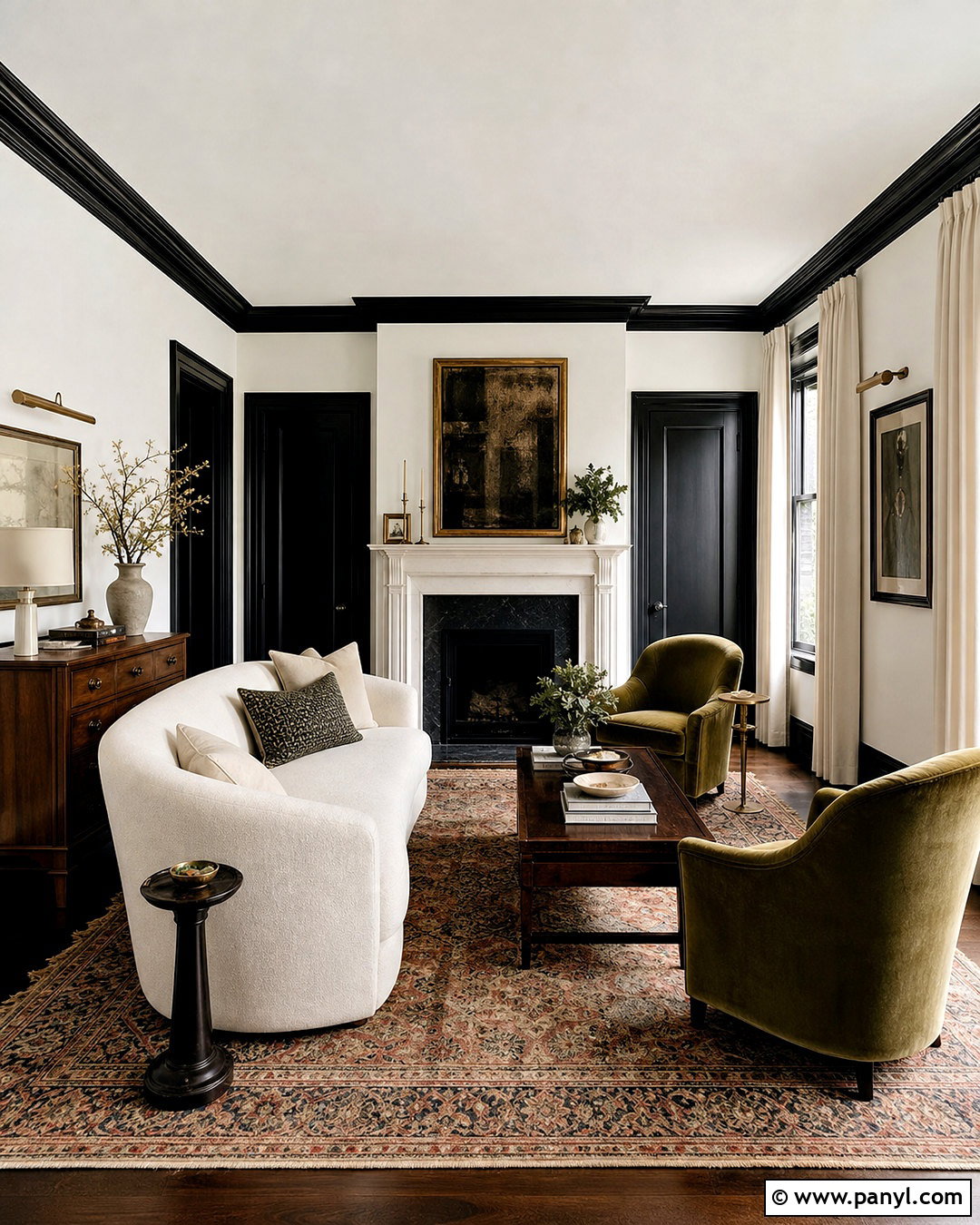
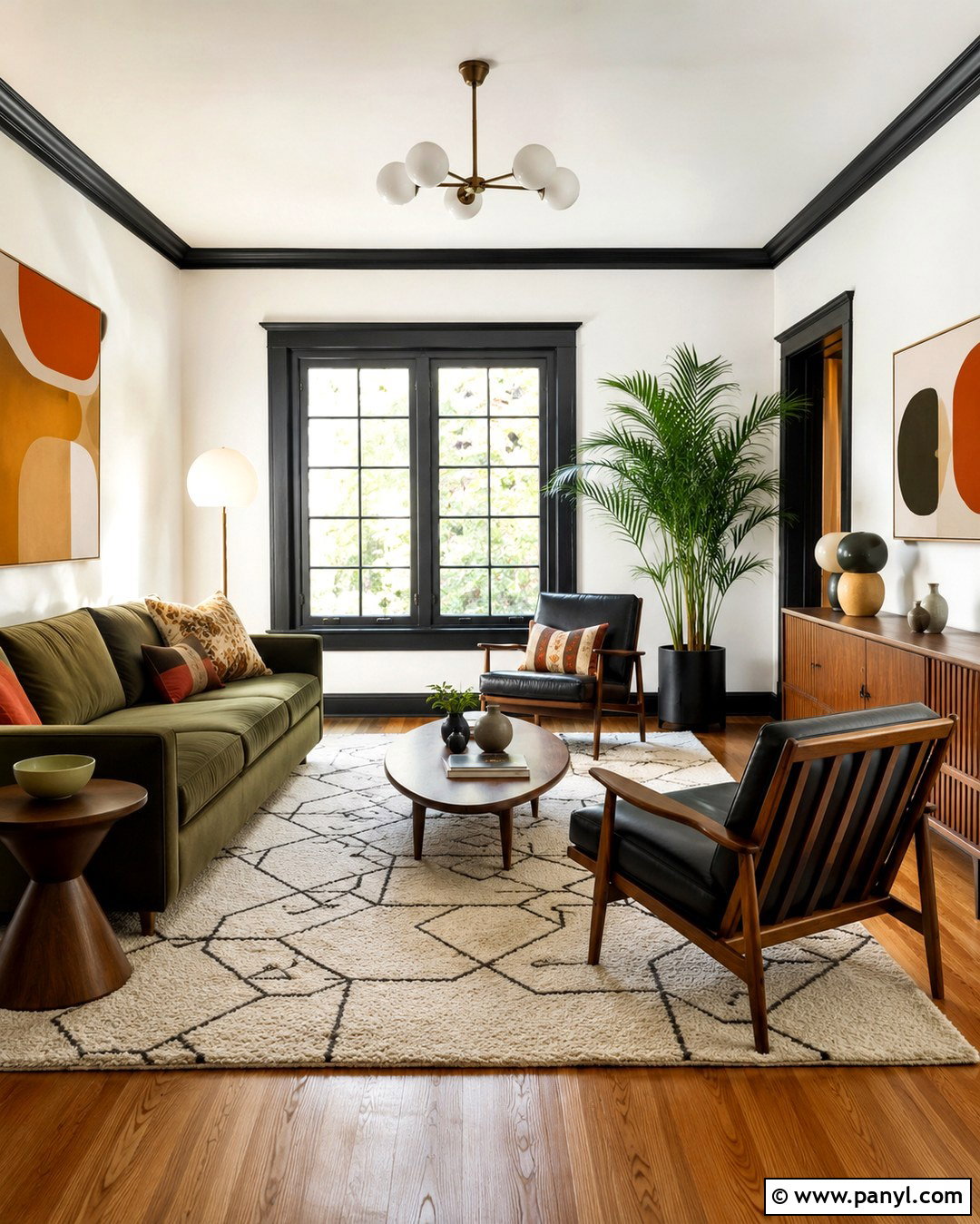
Original architectural details can take on a fresh character when traditional shapes are outlined in black. Use warm white on the plaster walls and ceiling, then paint the substantial crown molding, window casings, baseboards, and paneled doors satin black. Arrange a curved ivory sofa opposite two olive velvet chairs, creating a formal but comfortable conversation area. A dark wood coffee table and antique-style side tables respect the room’s history without making it feel dated. Ground the arrangement with a faded Persian-style rug containing cream, rust, olive, and black. Add brass picture lights above traditional artwork and hang full-length linen curtains beside the windows. A marble fireplace with a black mantel can become the focal point. The completed parlor balances historic detail, modern contrast, and warm layered color.
18. White Minimalist Room With Thin Black Trim
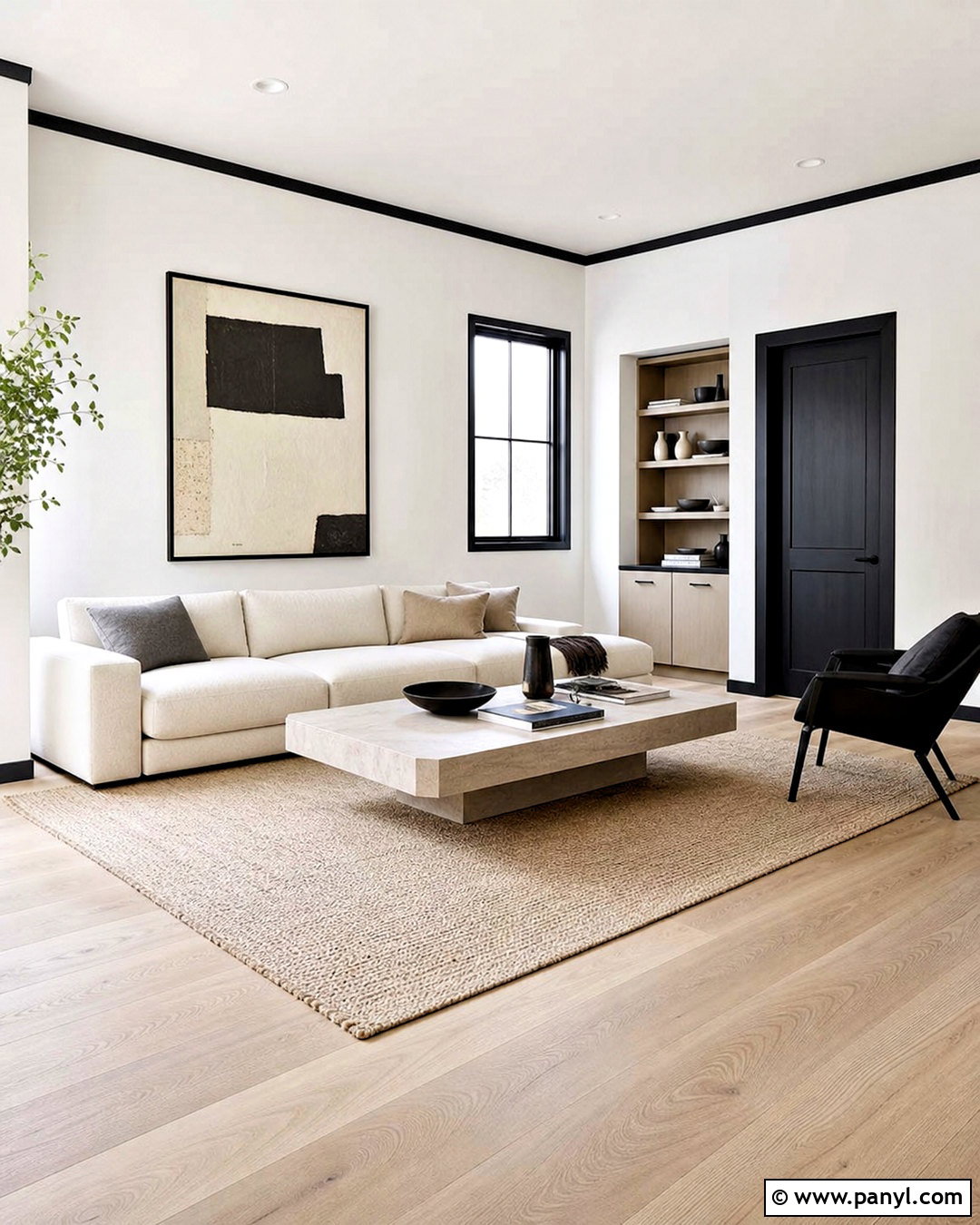
Minimalism does not require removing every decorative detail. Instead, make each line and material count. Paint the walls and ceiling a soft chalky white, then use narrow matte black baseboards, window trim, and a flush black door to create precise architectural boundaries. Select one low cream sofa, a pale ash coffee table, and a single black lounge chair with a simple silhouette. Large light-oak floorboards add natural variation without disrupting the calm palette. Skip small accessories in favor of one oversized abstract artwork and a sculptural white floor lamp. A flatwoven beige rug can define the seating area while preserving the clean look. Concealed storage keeps practical items out of sight. The result is an uncluttered white room where black trim provides structure, rhythm, and enough visual interest.
19. White Open-Concept Room With Black Trim
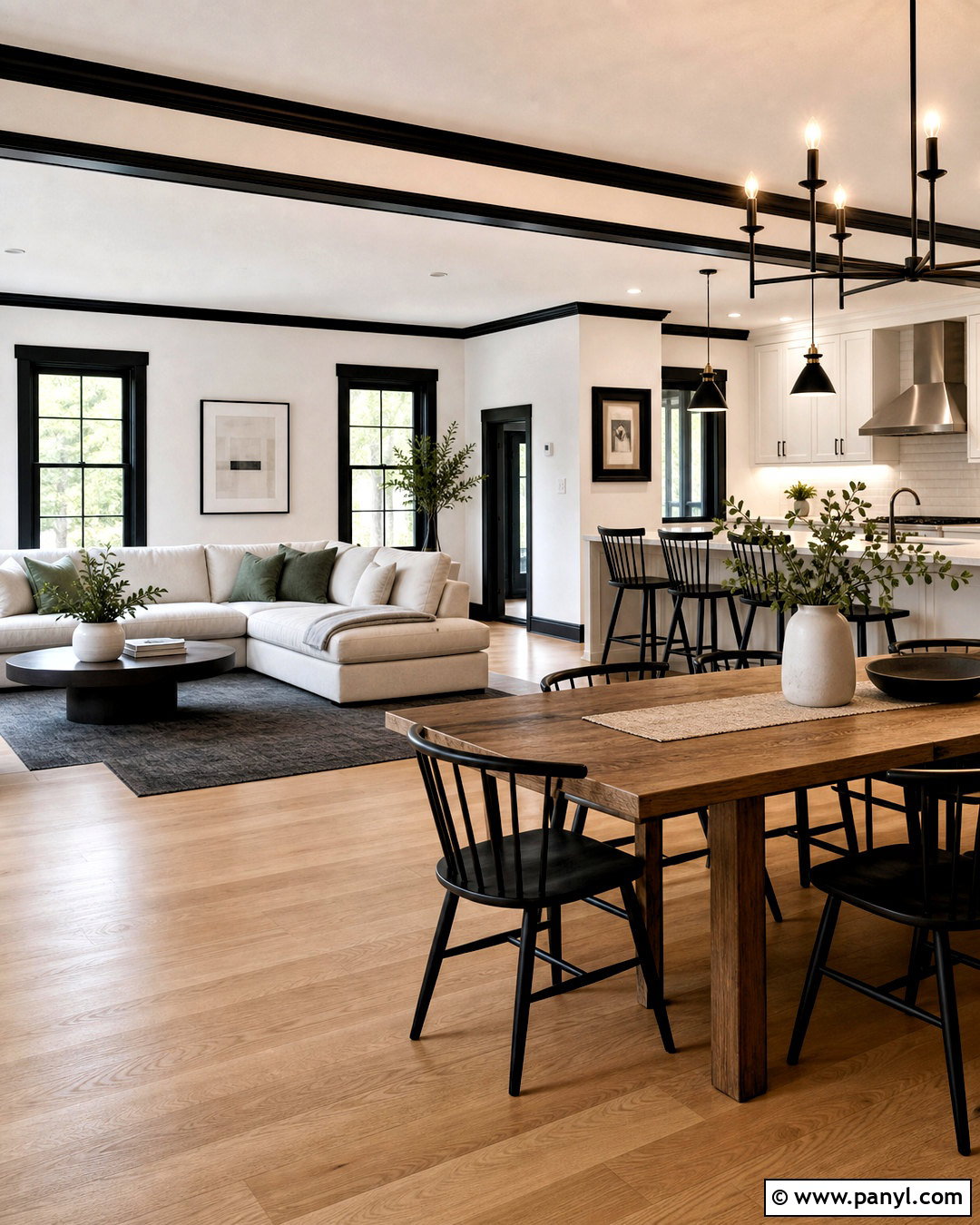
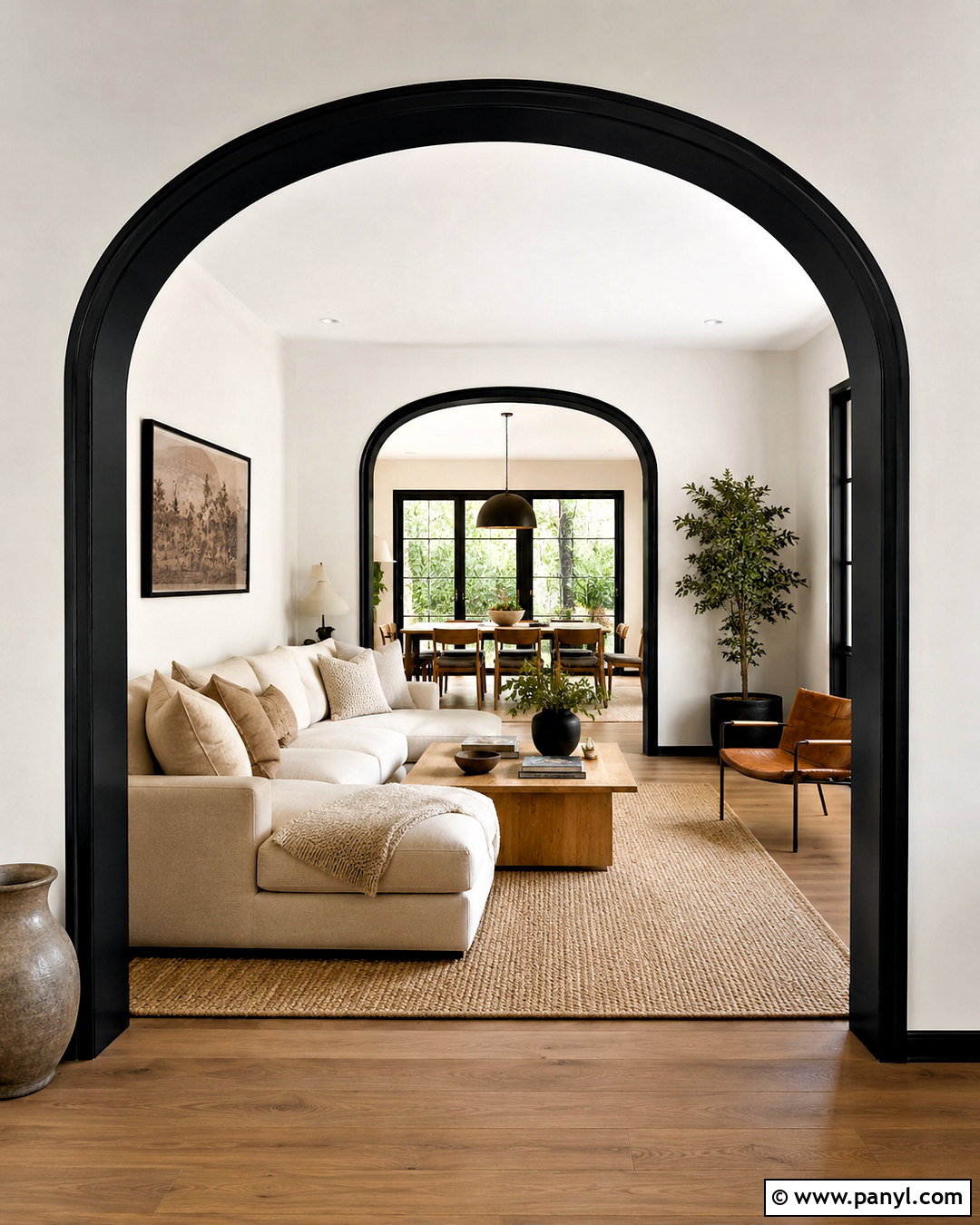
An open-concept interior benefits from repeated black trim because it visually connects the living, dining, and kitchen zones. Use the same warm white wall color throughout, then continue black window casings, baseboards, and door frames around the entire space. In the living area, choose a cream sectional, oak coffee table, and charcoal rug. Place a walnut dining table with black spindle chairs between the seating zone and white kitchen. Black pendant lights above the island can carry the dark outline upward. Keep flooring consistent, preferably medium oak, to prevent the large room from feeling divided into unrelated sections. Add muted green pillows, textured pottery, and woven shades for warmth. Repetition, rather than perfect matching, creates a complete interior that feels spacious, deliberate, and easy to navigate.
20. White Guest Room With Black Trim
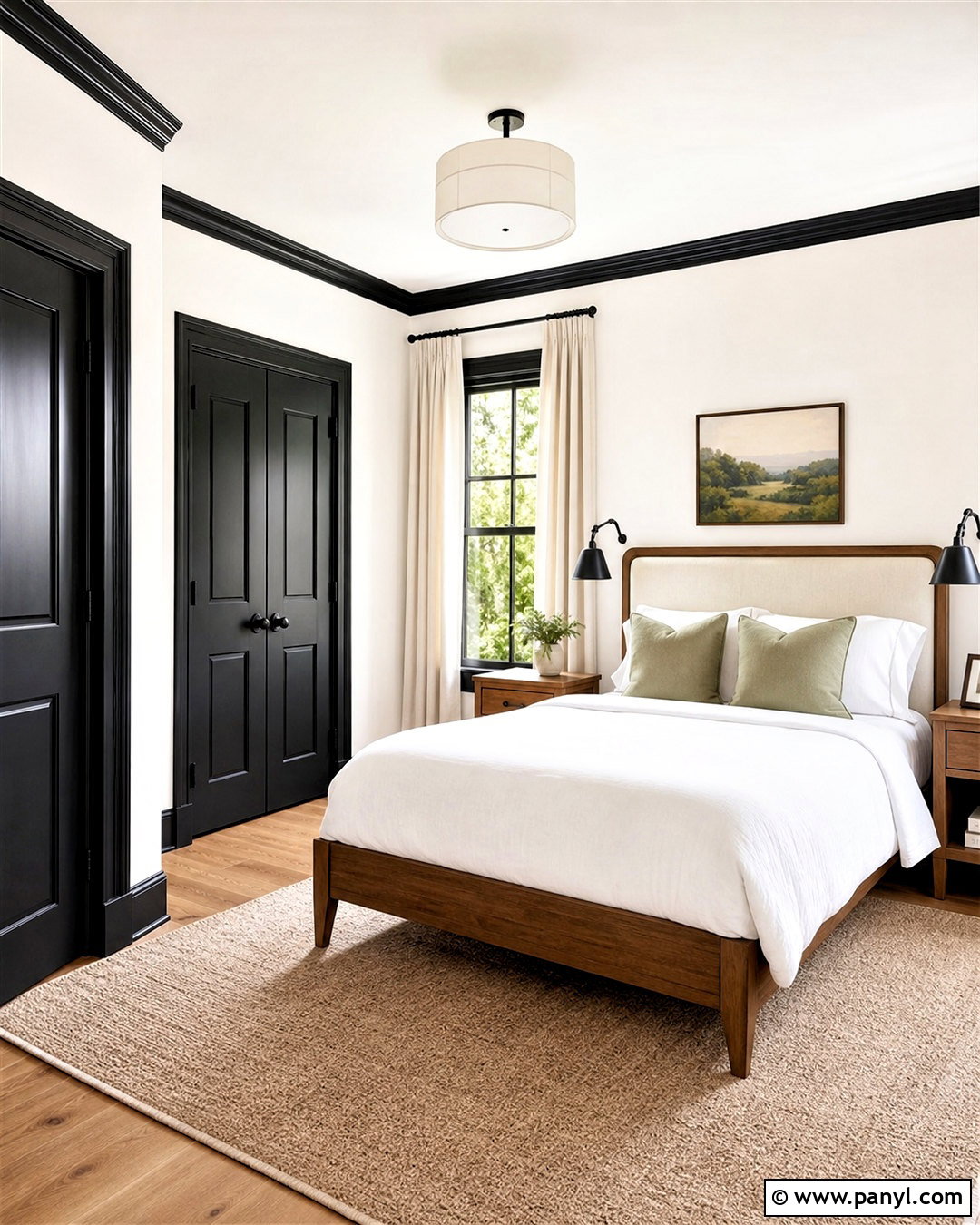
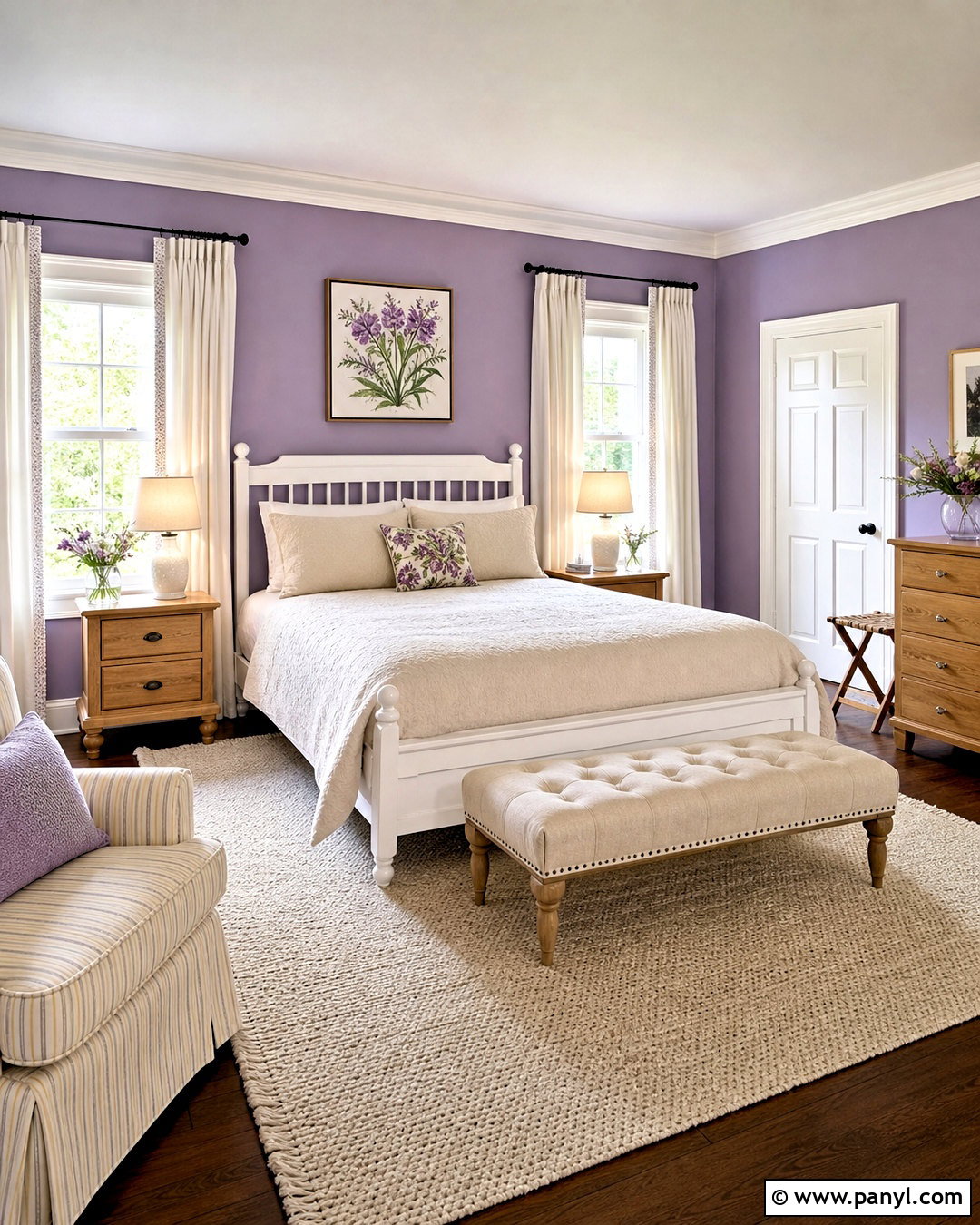
A guest room should feel memorable without becoming too personal or difficult to maintain. Start with warm white walls and satin black trim around the windows, baseboards, closet, and entry door. Choose a simple wood bed with an upholstered cream headboard, then layer crisp white bedding with a striped black-and-tan blanket. Matching oak nightstands and black wall-mounted reading lights provide convenience without taking up much space. Use a soft beige rug large enough to extend beyond both sides of the bed. White linen curtains keep the windows light while revealing their dark outlines. Add one landscape print, a small bench, and a luggage rack for practical comfort. A muted blue or sage pillow introduces welcoming color, completing a polished retreat that works for many different guests.
Conclusion:
These 20 white room black trim ideas show how one high-contrast paint choice can support many complete interiors, from modern living rooms to welcoming guest bedrooms. The strongest spaces repeat black in a controlled way through lighting, hardware, furniture, or framed artwork. They also use wood, woven fibers, soft textiles, and restrained color to warm the white foundation. Before painting, sample the chosen white and black together in several areas and observe them throughout the day. Consider the condition and scale of the molding, since dark paint draws attention to every line. Most importantly, design the entire room around the trim. This approach ensures the contrast feels intentional, balanced, and connected rather than added as an afterthought.

Related Ideas and Inspiration:
Leave a Reply