
Living room trim can turn plain walls into a finished, thoughtfully designed space. The right treatment adds depth, improves proportions, and connects walls, ceilings, doors, windows, and architectural features. Current approaches range from classic picture frame molding and substantial crown molding to streamlined baseboards, stained wood casing, and color-drenched paneling. Tone-on-tone paint is especially effective when you want molding to feel architectural without creating strong contrast. () Before choosing a look, consider the room’s ceiling height, furniture placement, natural light, and existing architecture. These details will help you select trim that feels intentional rather than added as an afterthought. Explore these 20 living room trim ideas for complete, practical looks that work across traditional, modern, farmhouse, transitional, and eclectic homes.

1. White Picture Frame Trim
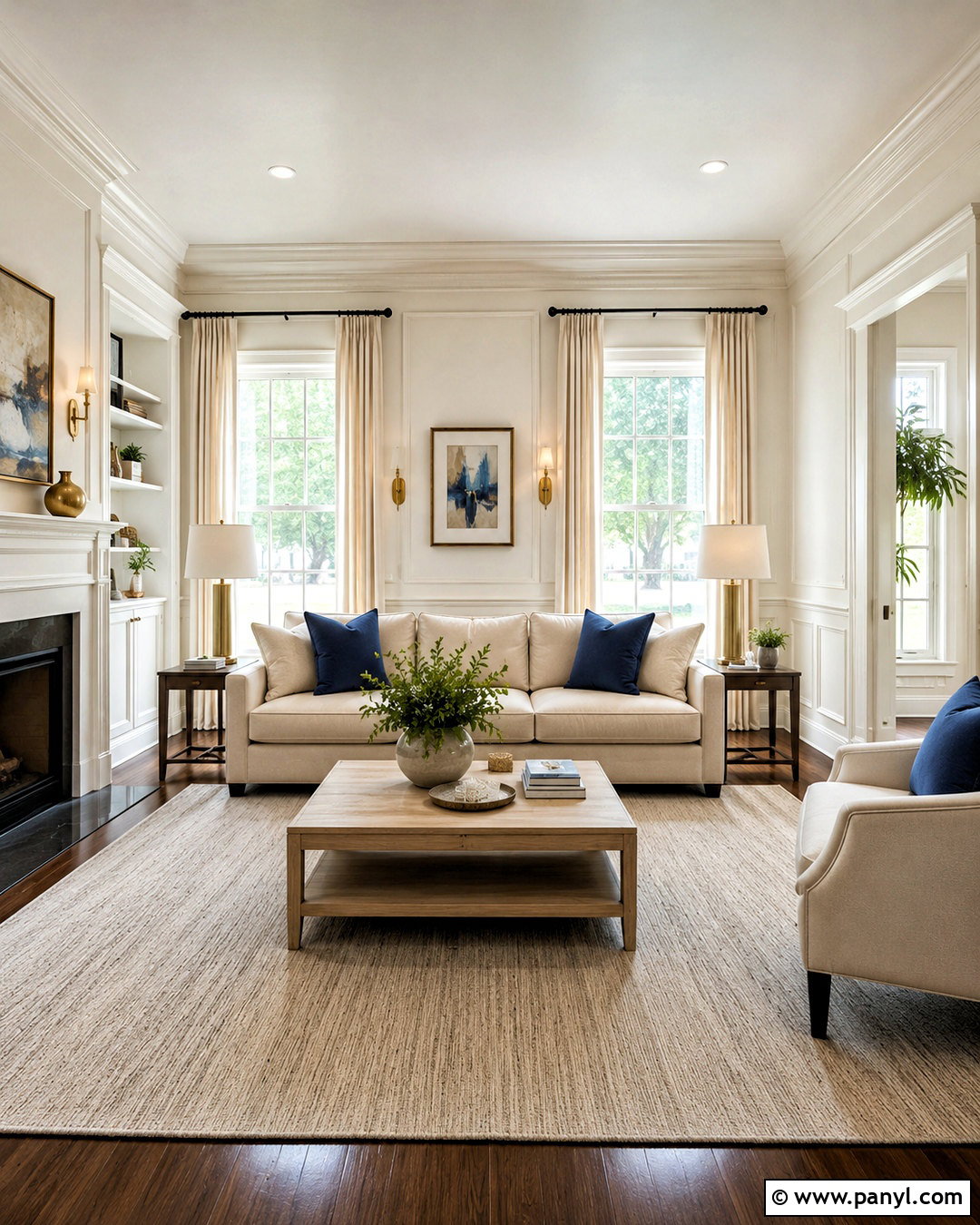
White picture frame trim creates a polished living room that still feels bright and approachable. Install evenly spaced rectangular molding across every main wall, adjusting the panel widths around windows, doors, and furniture. Paint the walls a soft warm white and use a slightly glossier white on the molding, crown, baseboards, and window casing. Anchor the room with a light beige sofa, oak coffee table, and pale oatmeal rug. Place a large landscape painting inside the widest panel above the sofa, then add slim brass sconces in neighboring panels. Soft blue pillows and linen curtains keep the palette relaxed. This complete arrangement works especially well in transitional living rooms because the traditional trim balances clean, unfussy furniture.
2. Color Drenched Picture Frame Trim
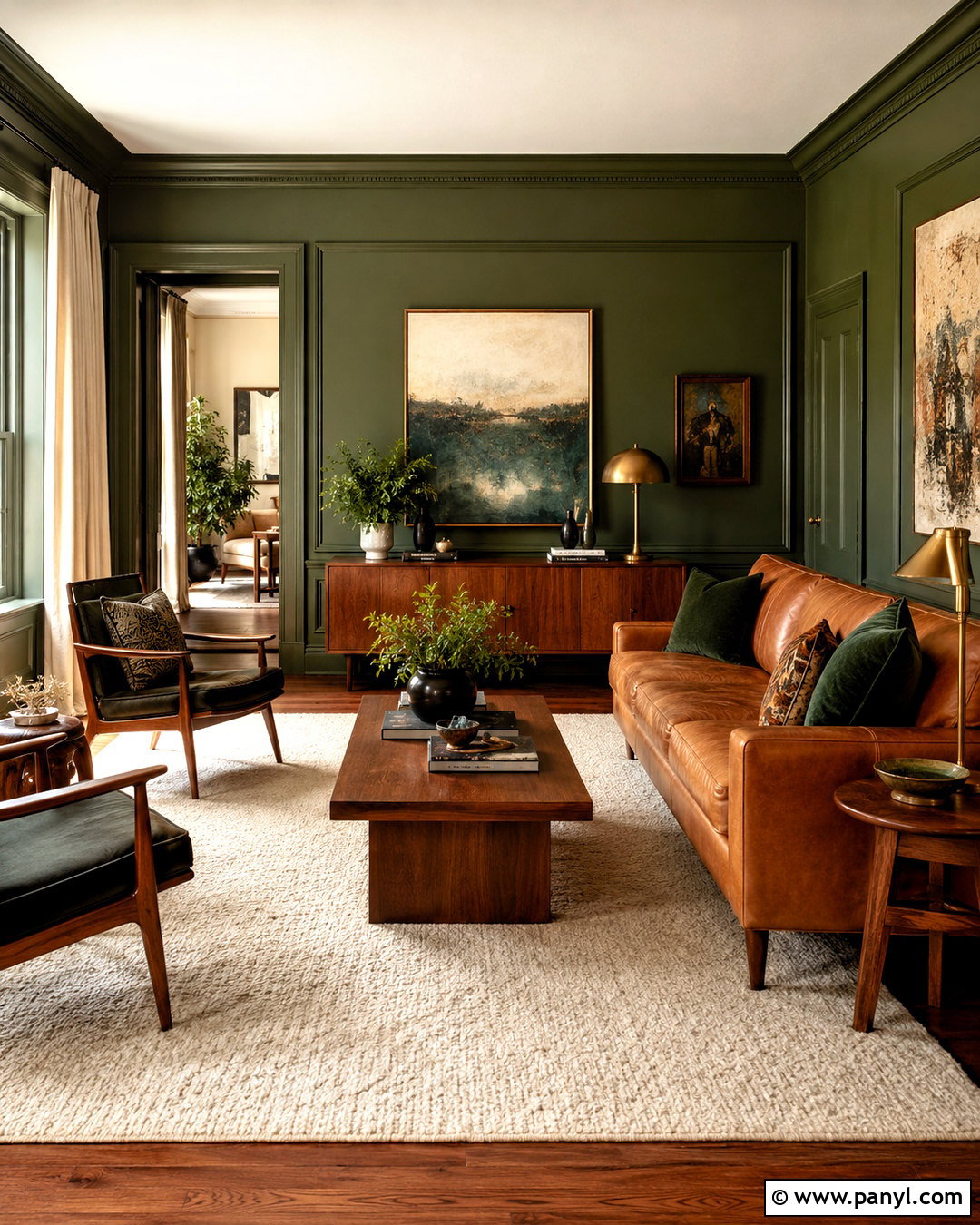
For a cozy room with strong visual impact, paint picture frame trim, walls, baseboards, doors, and crown molding in one rich color. Deep olive green gives the architecture depth while remaining easy to pair with natural materials. Use a camel leather sofa, walnut side tables, and a cream wool rug to lighten the composition. Inside the wall panels, display a few large pieces of art rather than many small frames. Antique brass lamps and warm ivory curtains add gentle contrast without breaking the immersive color effect. Choose eggshell paint for the walls and satin for the trim so the molding catches light subtly. This living room trim approach feels sophisticated, but its limited palette also makes decorating simpler and more cohesive.
3. Living Room Board And Batten Trim
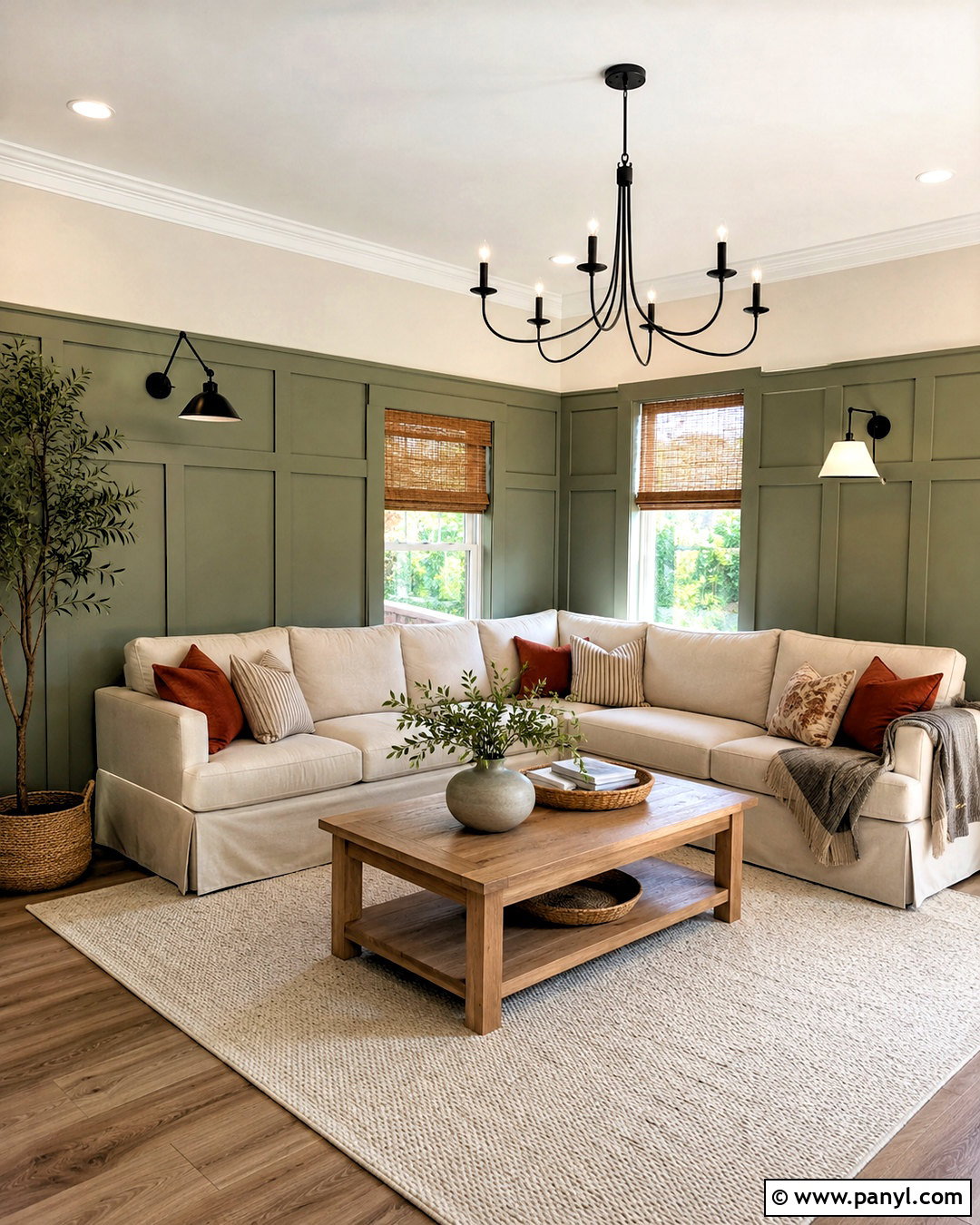
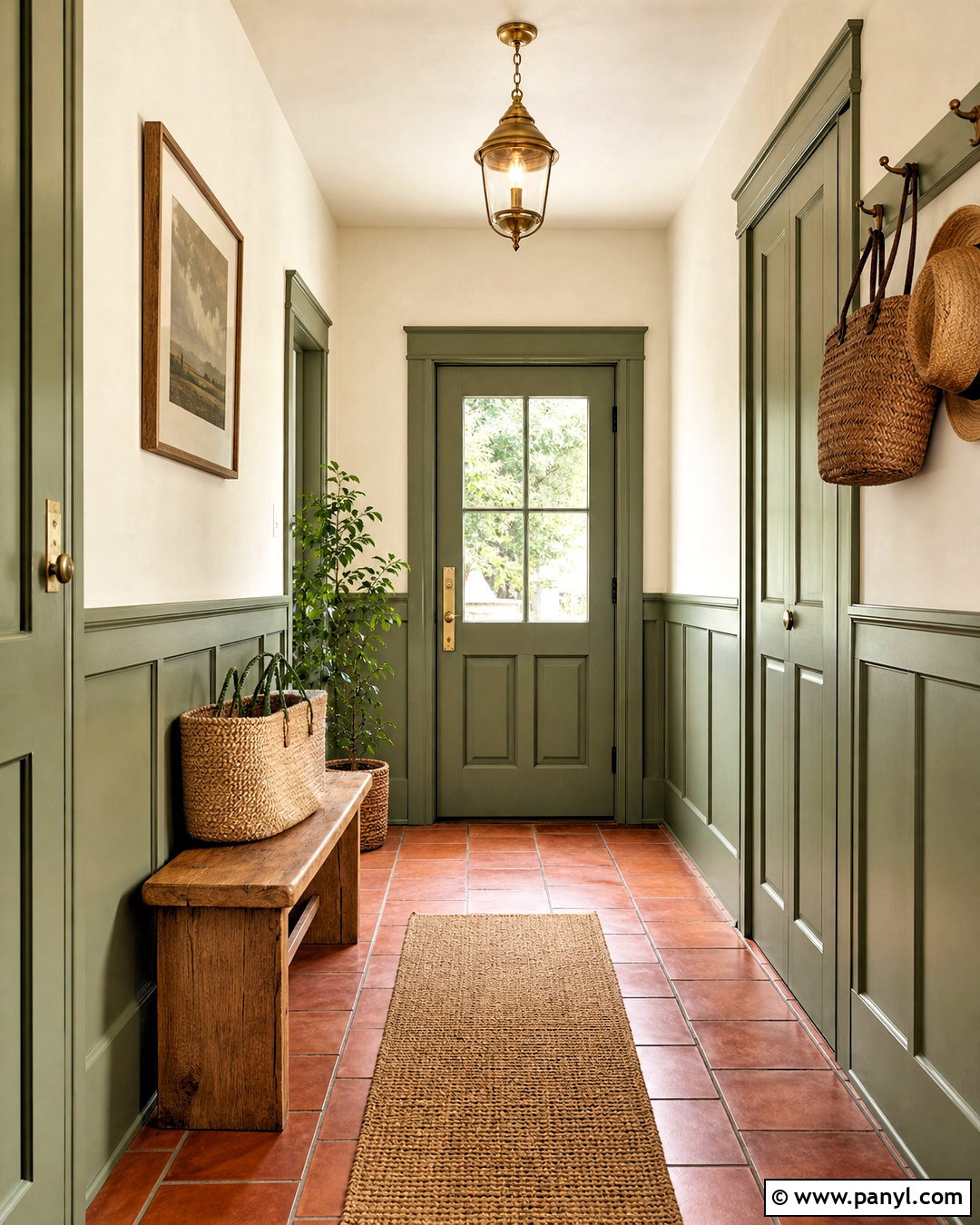
Board and batten trim gives a casual living room clean structure without making it feel overly formal. Run the treatment about two-thirds of the way up the walls, using wide vertical battens and a substantial top rail. Paint the trim a muted sage green and keep the upper walls soft cream. A relaxed linen sectional, medium-tone oak coffee table, and textured ivory rug create a comfortable foundation. Add woven shades, black metal lighting, and rust-colored pillows for warmth. Center the battens around major features, including the sofa and windows, so awkward slivers do not appear in prominent areas. This full-room treatment works beautifully in farmhouse, cottage, and transitional spaces, especially when simple baseboards and window casing repeat the trim’s straightforward lines.
4. Chair Rail Trim With Wallpaper
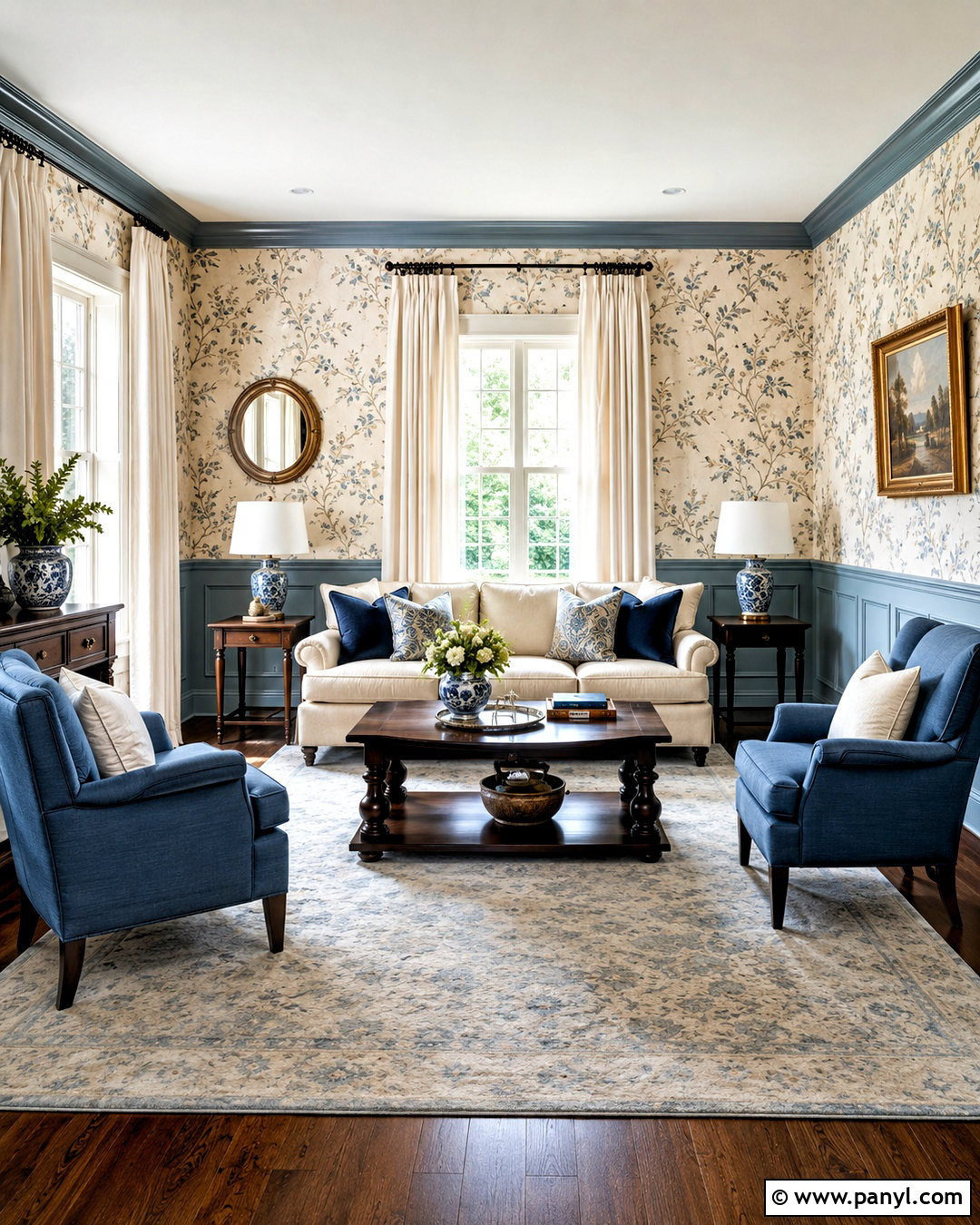
Chair rail trim can organize a living room while creating the perfect place for subtle wallpaper. Install the rail around the entire room at a height that relates naturally to the window sills and sofa back. Below it, use painted box molding in a dusty blue-gray. Above it, hang cream wallpaper with a delicate botanical pattern in muted green and blue. Complete the room with a tailored oatmeal sofa, two blue armchairs, and a dark wood coffee table. Off-white curtains and ceramic lamps soften the more traditional wall treatment. Keep the crown molding and ceiling warm white to prevent the pattern from becoming overwhelming. The result feels layered and collected, yet the coordinated palette gives every element a clear visual relationship.
5. Traditional Crown Molding Trim
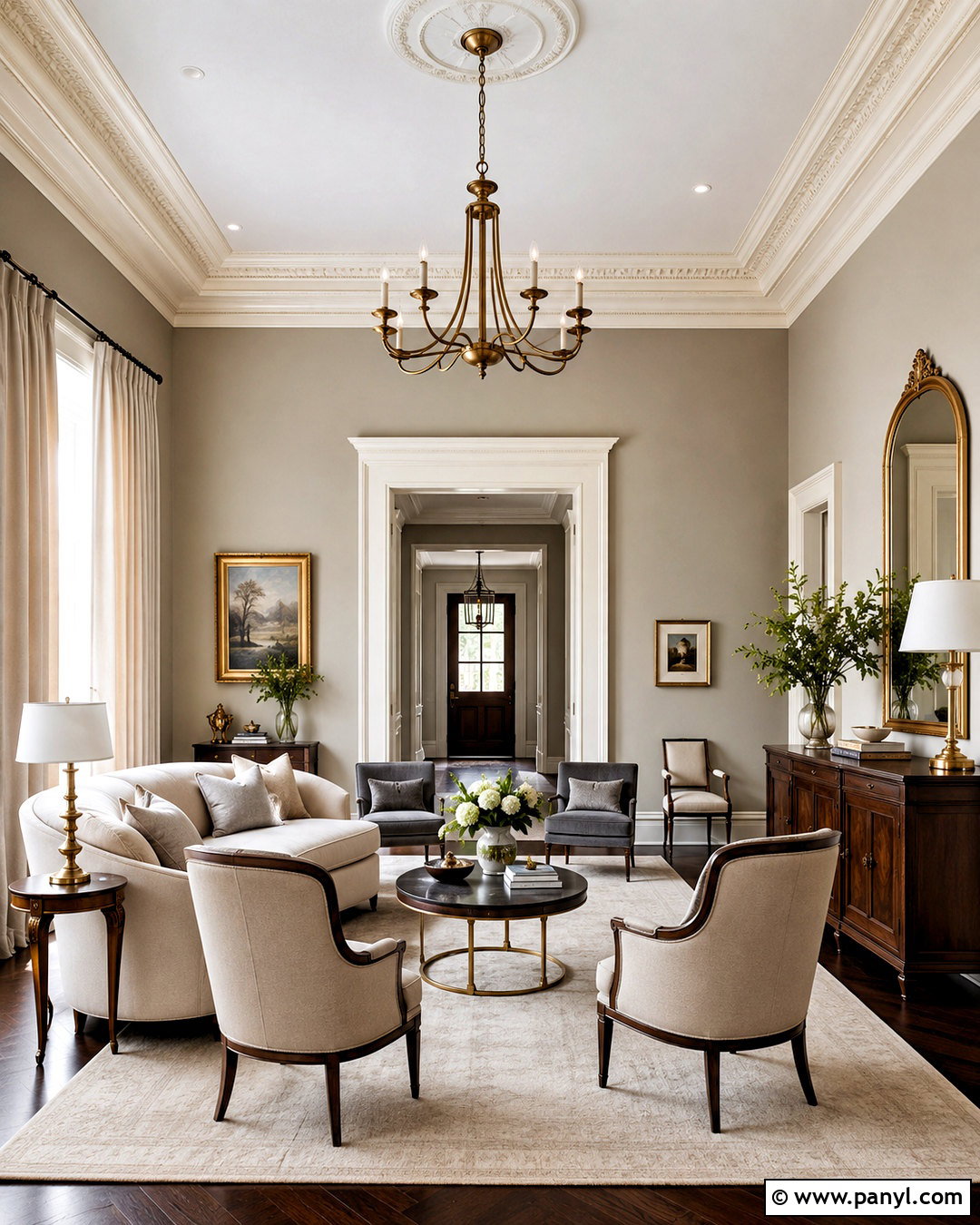
Substantial crown molding brings definition to a formal living room, particularly when the room has tall ceilings and generous windows. Select a layered profile that suits the scale of the space, then repeat its traditional character through wide baseboards and detailed door casing. Paint all trim crisp ivory against pale greige walls. Furnish the room with a curved cream sofa, walnut console, patterned neutral rug, and matching upholstered chairs. A brass chandelier and full-length linen drapes draw attention upward toward the crown. Keep wall decor restrained, using one large mirror and a few framed prints. This complete scheme allows the trim to provide much of the decorative detail while the furniture remains comfortable, balanced, and suitable for everyday use.
6. Modern Square Edge Trim
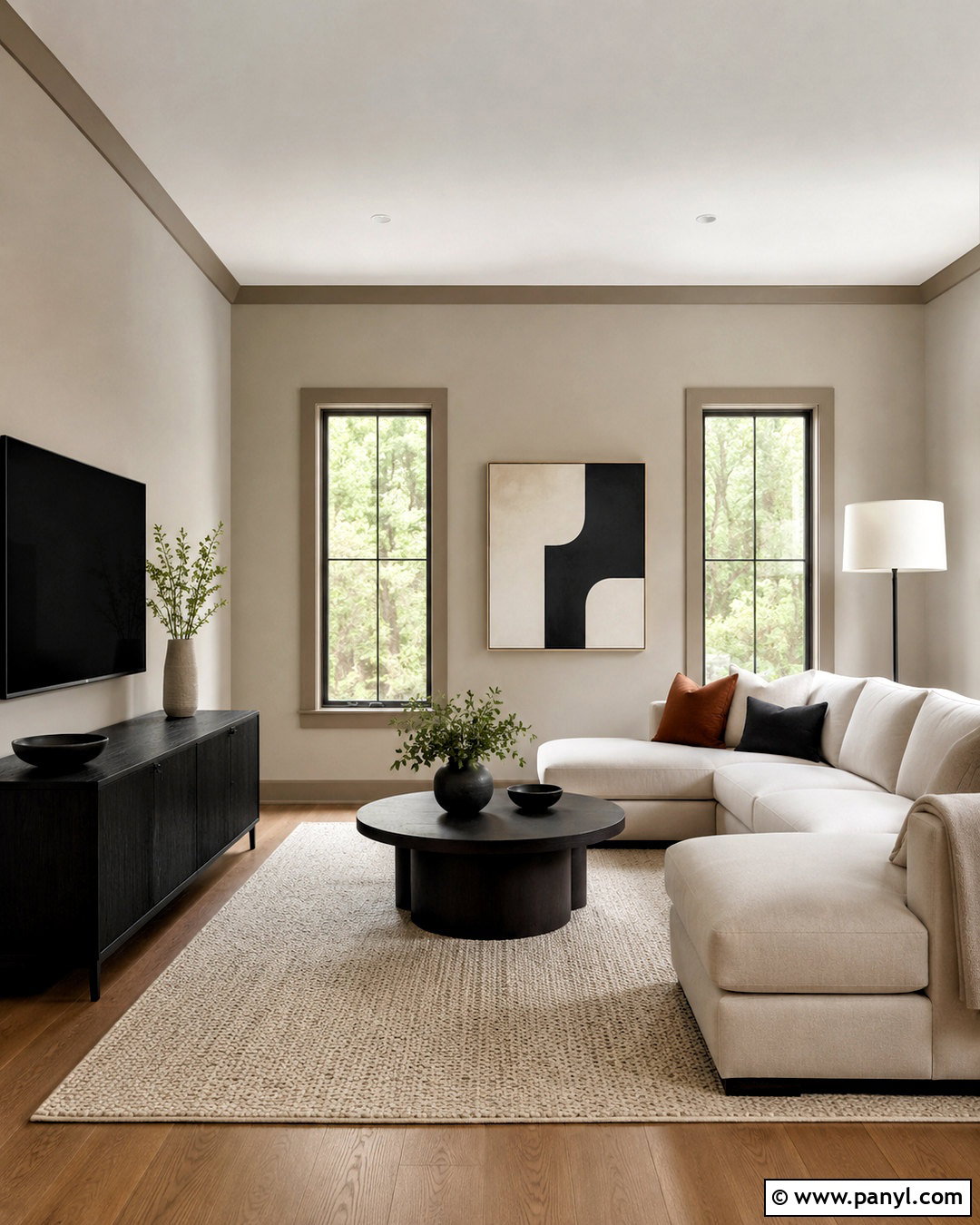
Square-edge trim gives a modern living room a crisp architectural finish without decorative curves or carved profiles. Use flat stock for the baseboards, window casing, door trim, and a narrow ceiling border. Paint everything the same soft greige as the walls for a quiet, seamless appearance. Bring in a low-profile cream sectional, black oak media cabinet, and large textured rug with a subtle linear pattern. A sculptural white floor lamp and rounded coffee table prevent the straight trim from making the room feel rigid. Hang simple abstract artwork with generous space around it. This living room design works best when joints, corners, and spacing look precise, because the clean construction becomes part of the room’s visual appeal.
7. Stained Wood Living Room Trim
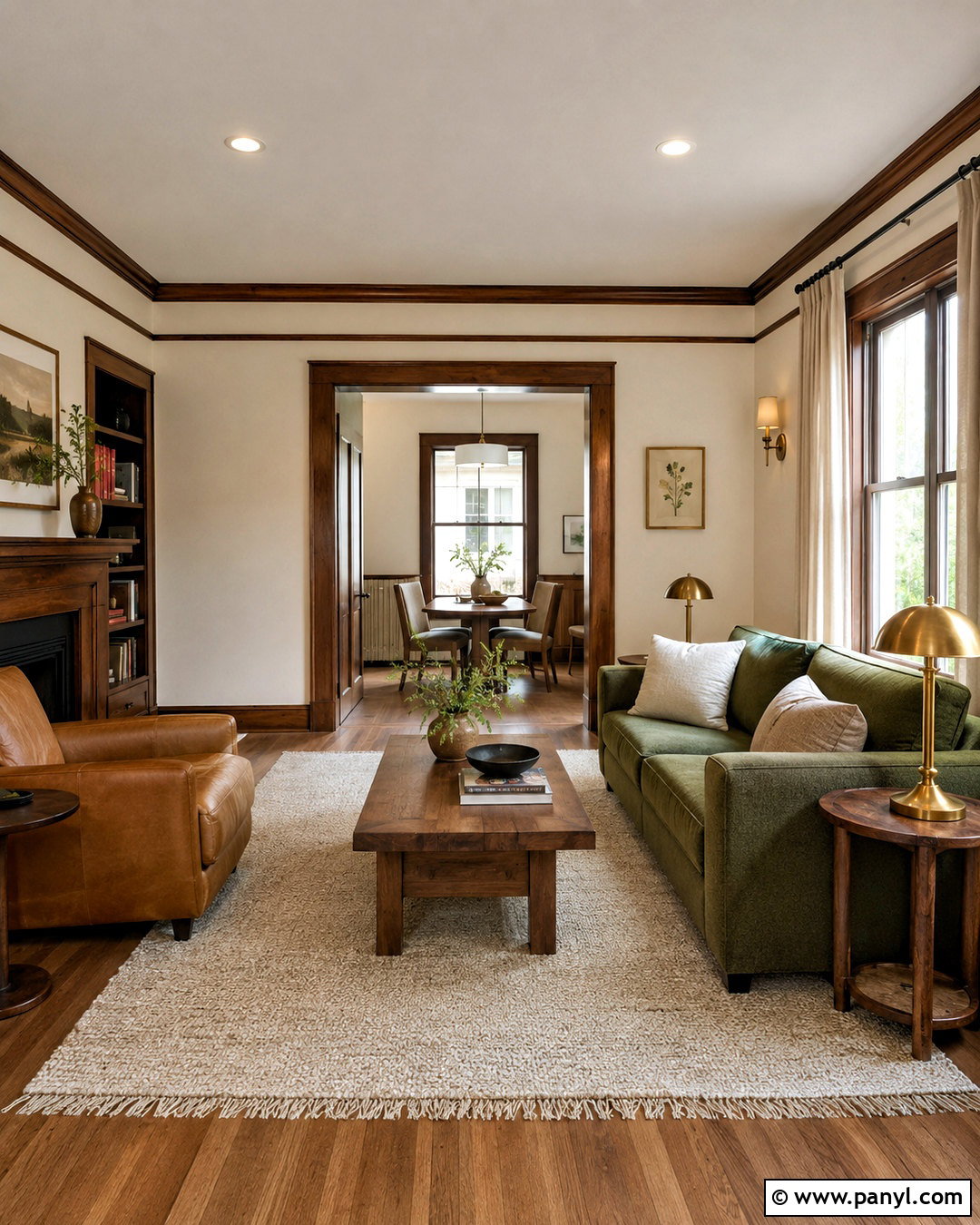
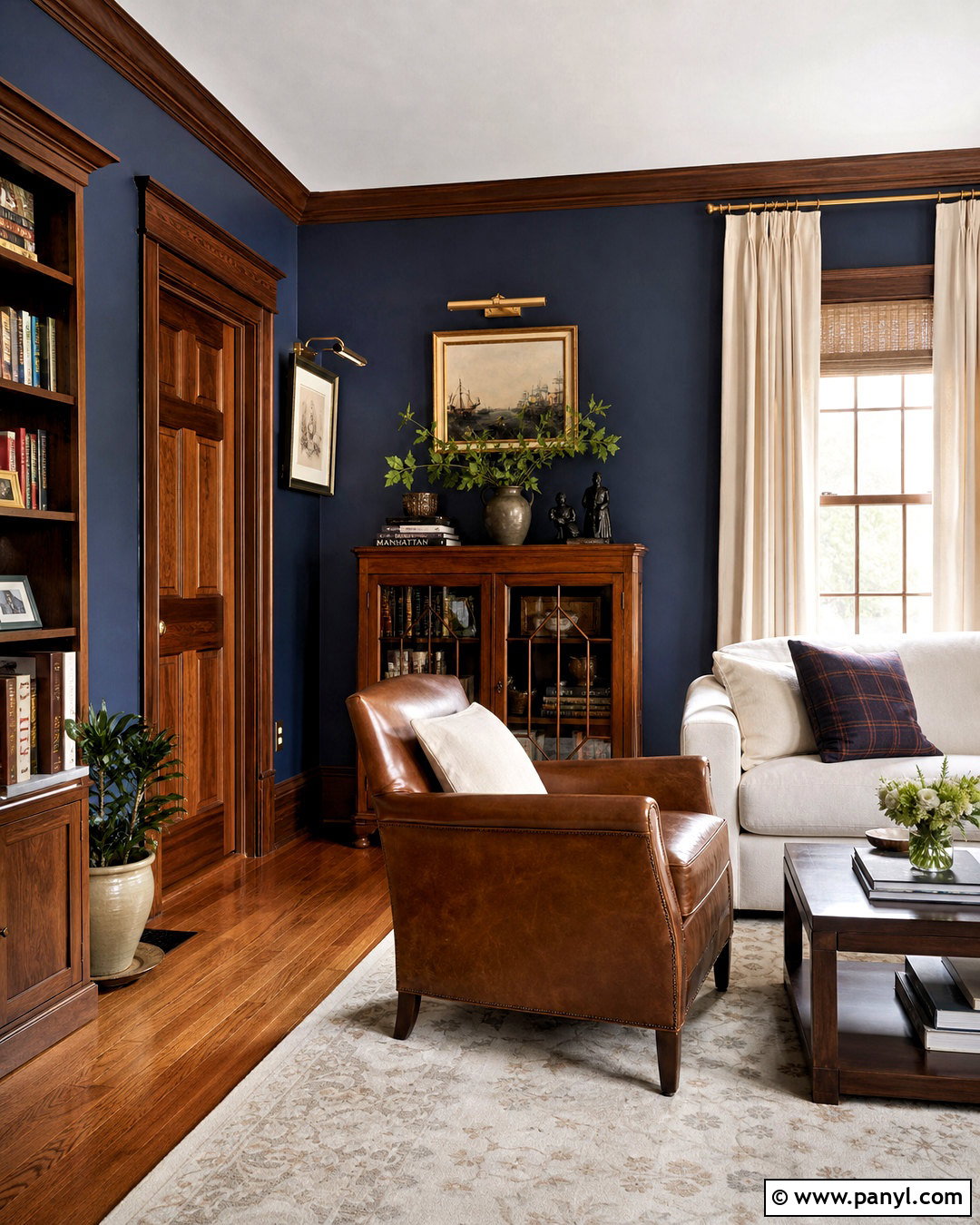
Stained wood trim brings natural warmth to a living room and can make newer architecture feel more established. Choose medium walnut or warm white oak for the baseboards, window casing, door frames, and a simple picture rail. Pair the wood with creamy plaster-look walls rather than bright white paint. A moss green sofa, cognac leather chair, and oatmeal rug support the earthy palette. Add a walnut coffee table, linen drapes, and aged brass lighting to reinforce the welcoming character. Keep the molding profiles relatively simple so the wood grain remains the main feature. Repeating the same finish in one or two furniture pieces creates continuity, while lighter upholstery and textiles prevent the room from looking heavy or overly rustic.
8. Black Window Trim Living Room
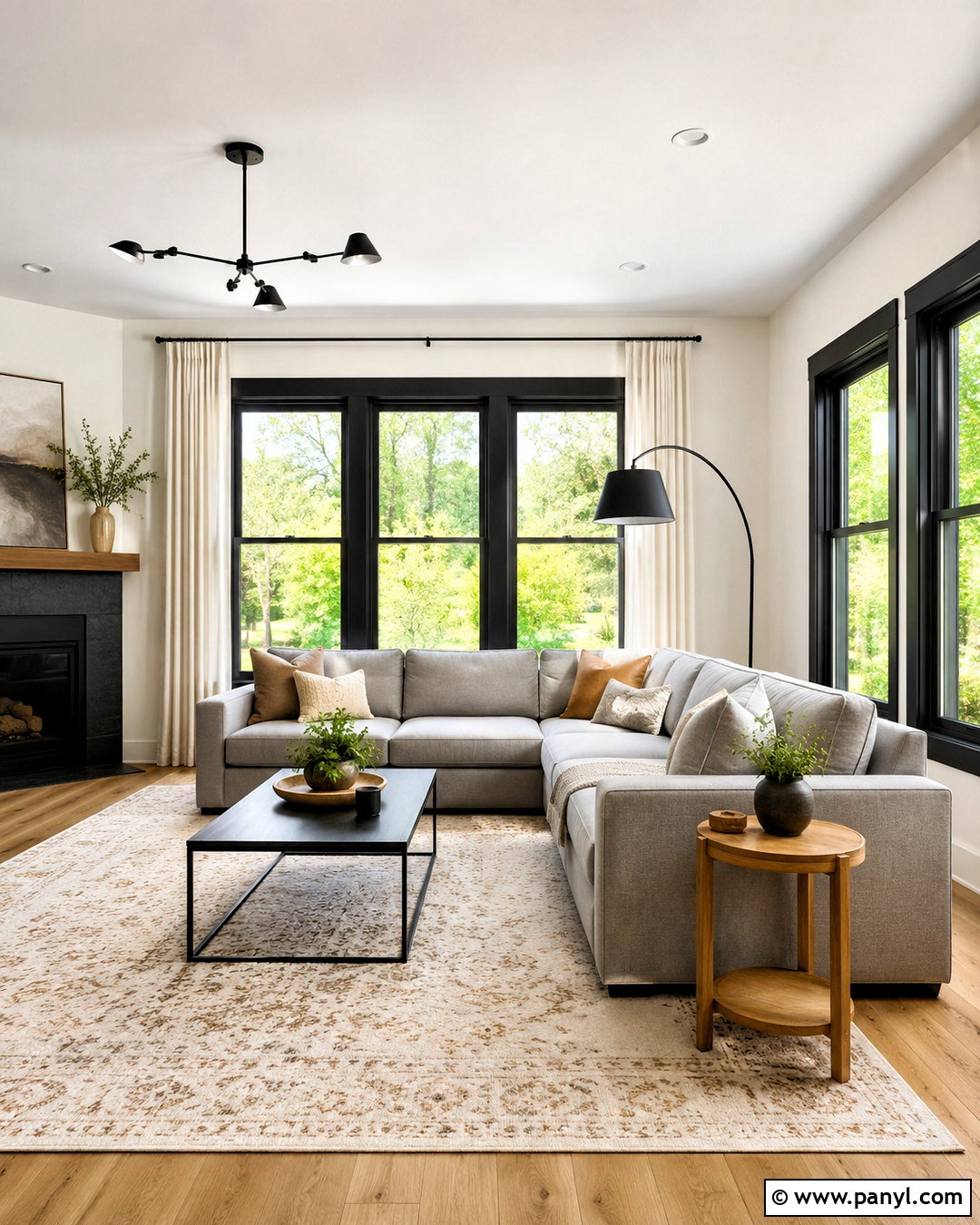
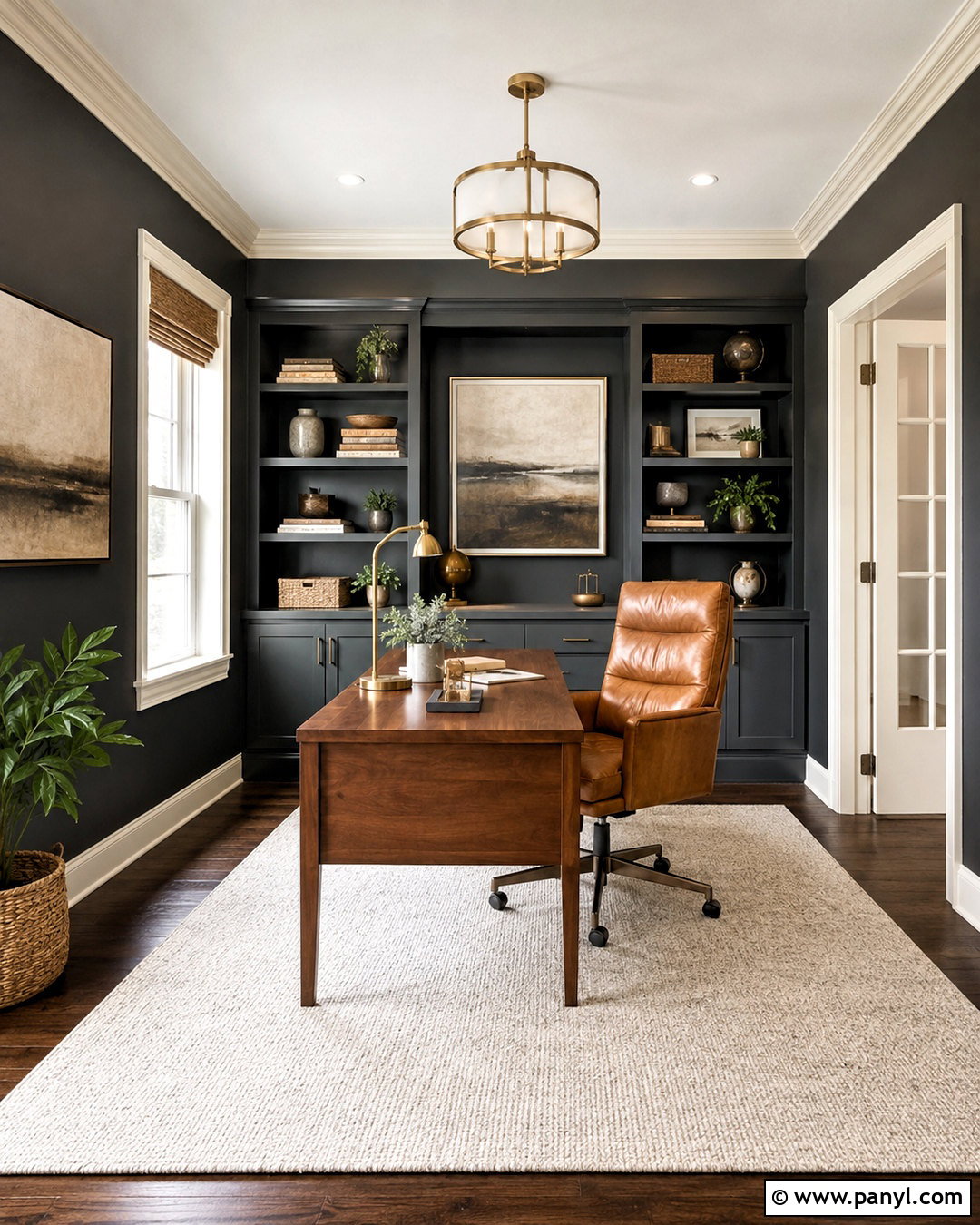
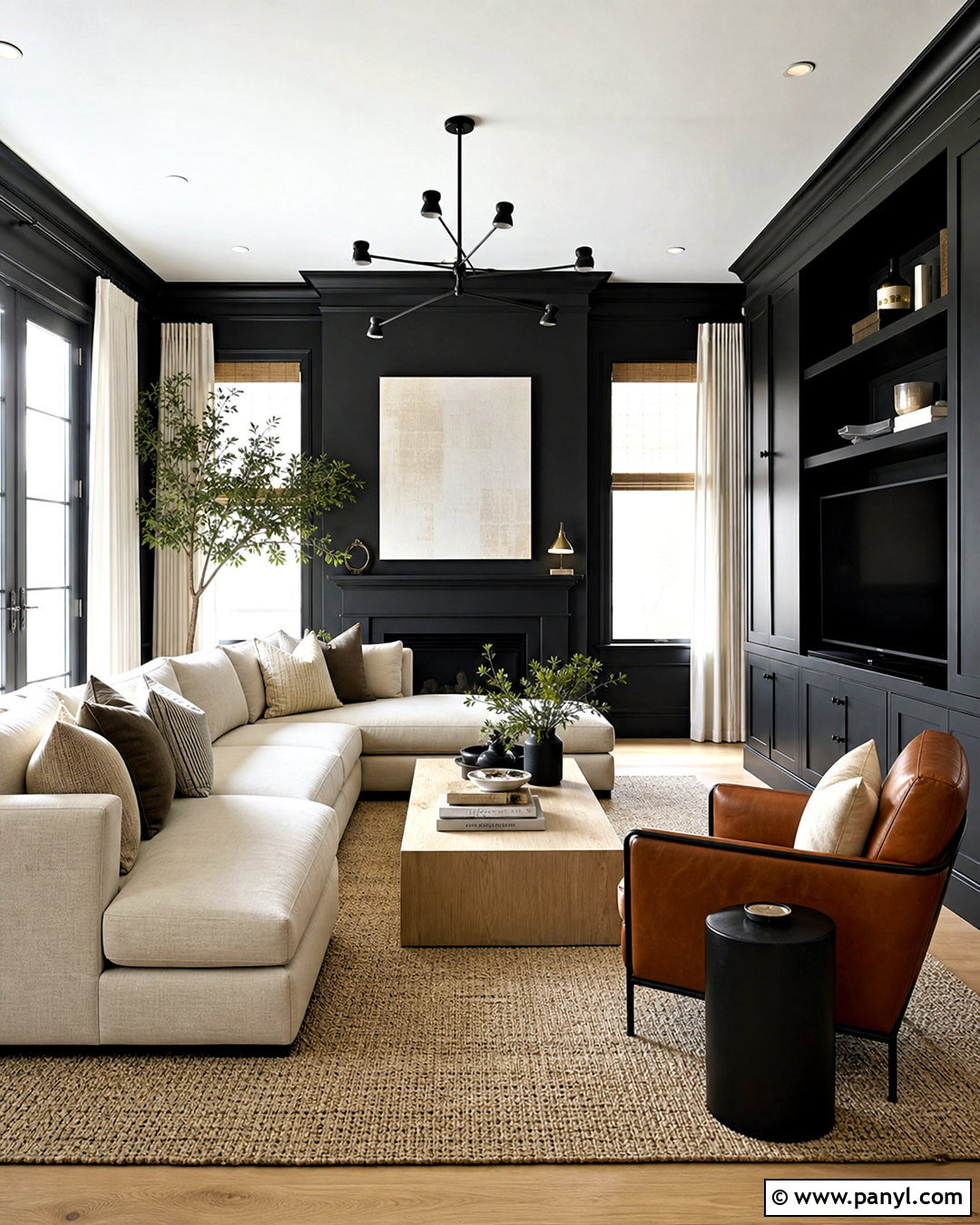
Black window trim creates a sharp focal point in a bright living room and frames outdoor views like artwork. Keep the surrounding walls warm white, then use matte black casing around the windows and any nearby glass doors. Repeat black sparingly through a slim curtain rod, floor lamp, and coffee table base. A light gray sectional, natural oak side tables, and a cream-and-tan rug balance the dark edges. Hang full-length off-white curtains outside the window frames so the black casing remains visible. Use simple white baseboards to keep the lower walls light rather than outlining every surface in black. This complete look feels contemporary and graphic, yet natural textures make it comfortable enough for a family living space.
9. Craftsman Living Room Trim
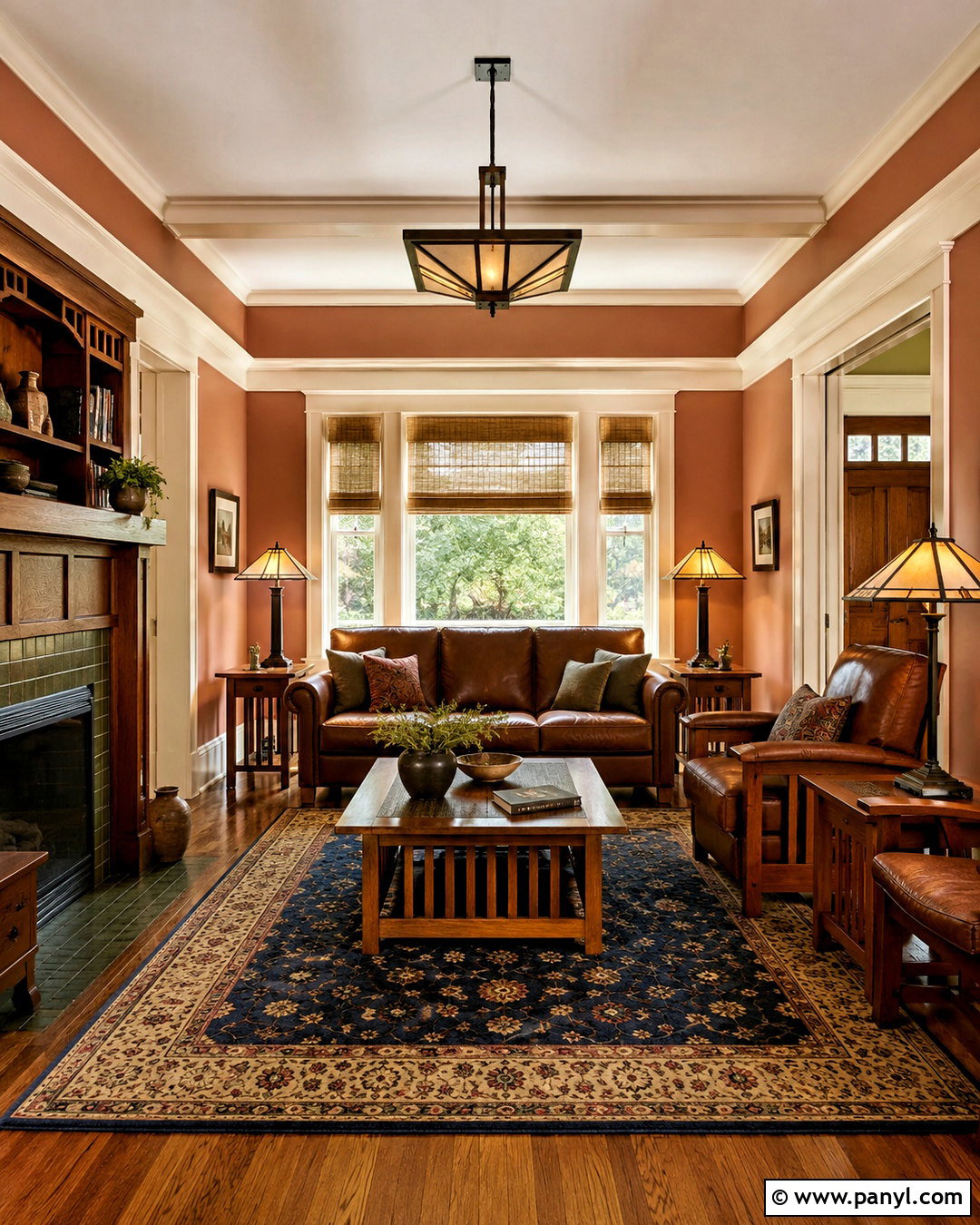
Craftsman trim gives the living room a sturdy, handcrafted appearance through flat boards, strong horizontal lines, and substantial headers. Frame windows and doors with wide painted casing, then add tall baseboards and a simple picture rail. A warm cream finish keeps the woodwork from feeling too dark or bulky. Pair it with muted clay walls, a brown leather sofa, oak built-in shelves, and a patterned wool rug. Mission-inspired lamps, woven curtains, and hammered metal accents complement the architecture without turning the room into a theme. Use symmetrical furniture placement around the fireplace or main window whenever possible. The resulting room feels grounded, practical, and inviting, with trim that clearly relates to the scale and construction of the home.
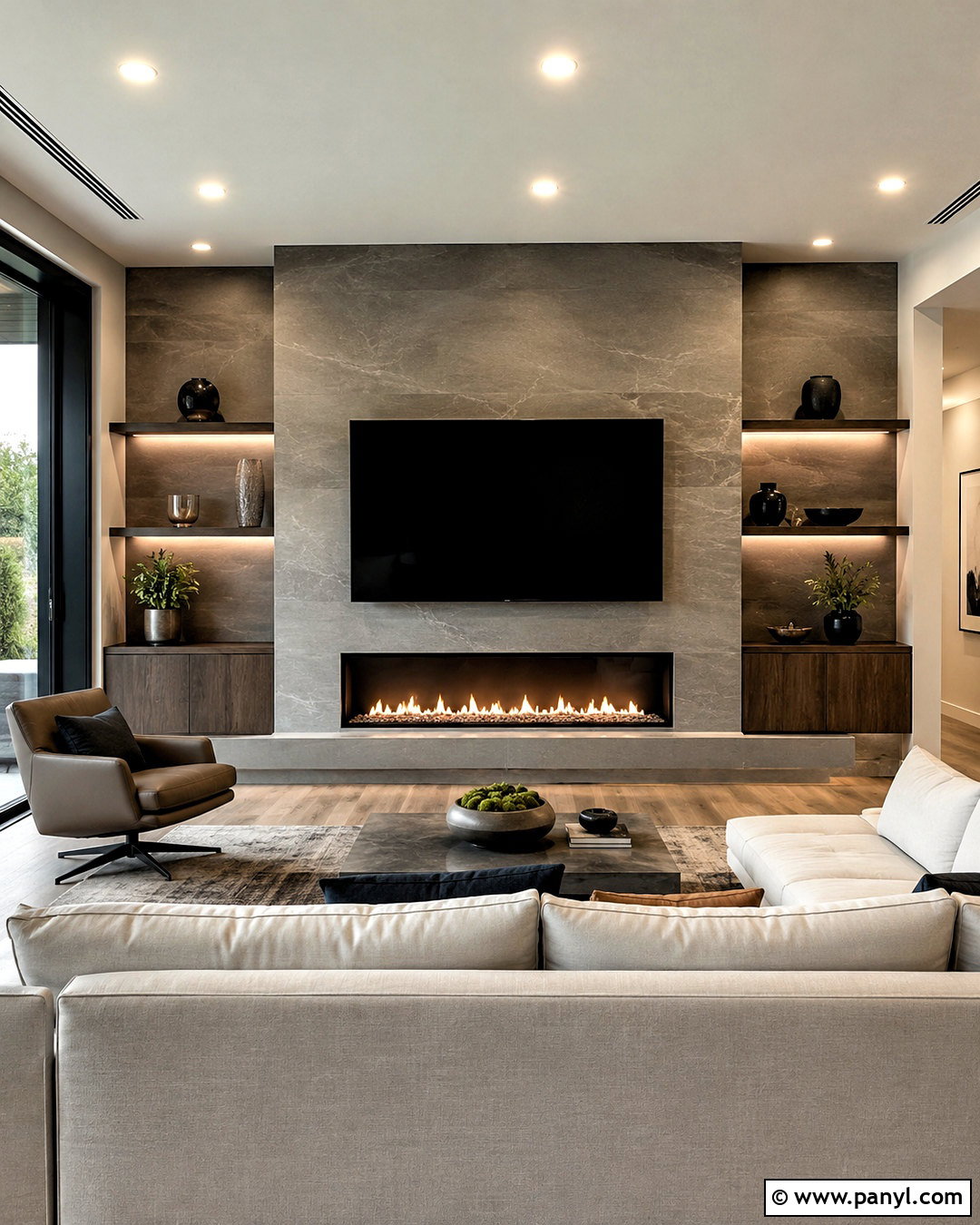
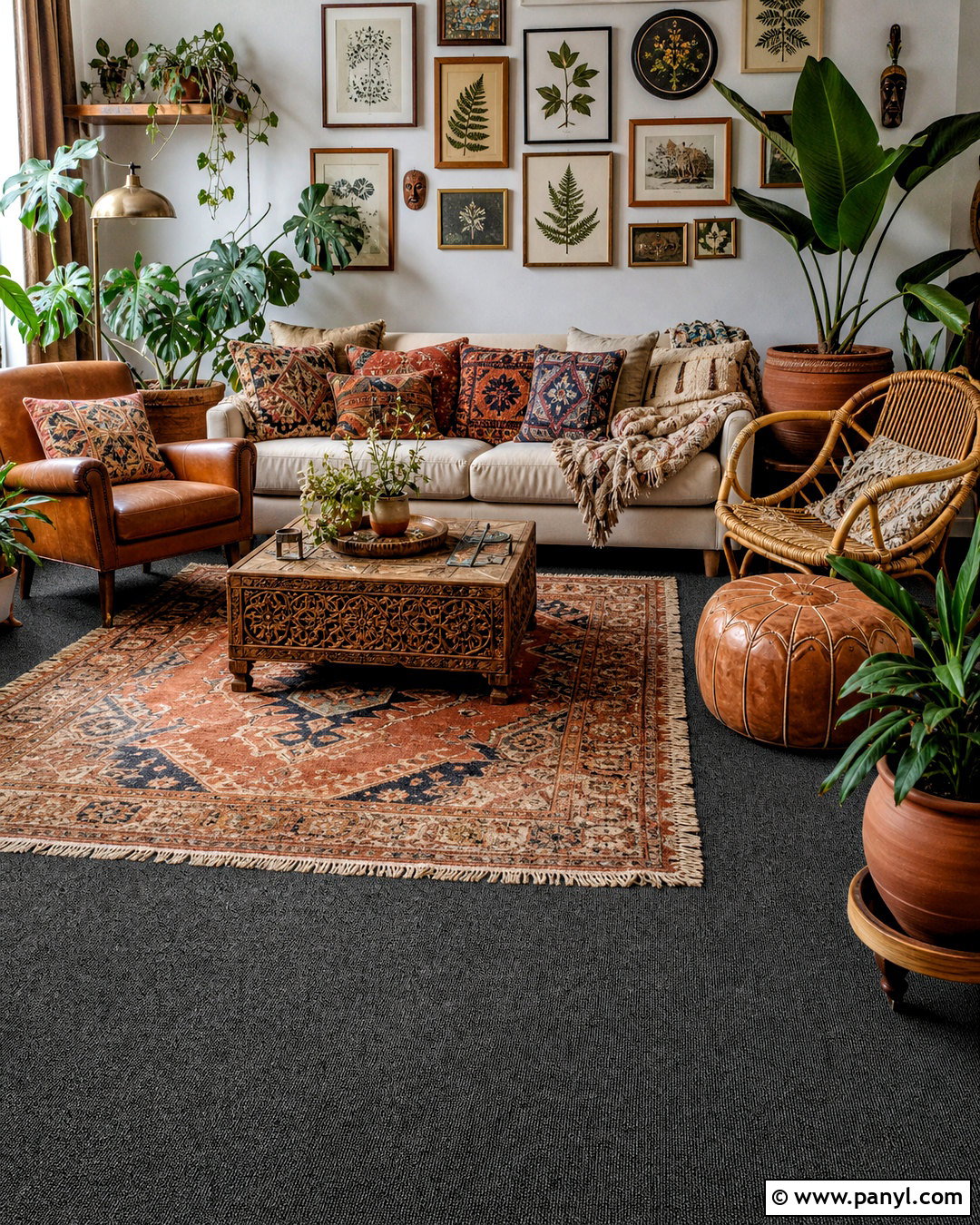
10. Fluted Living Room Trim
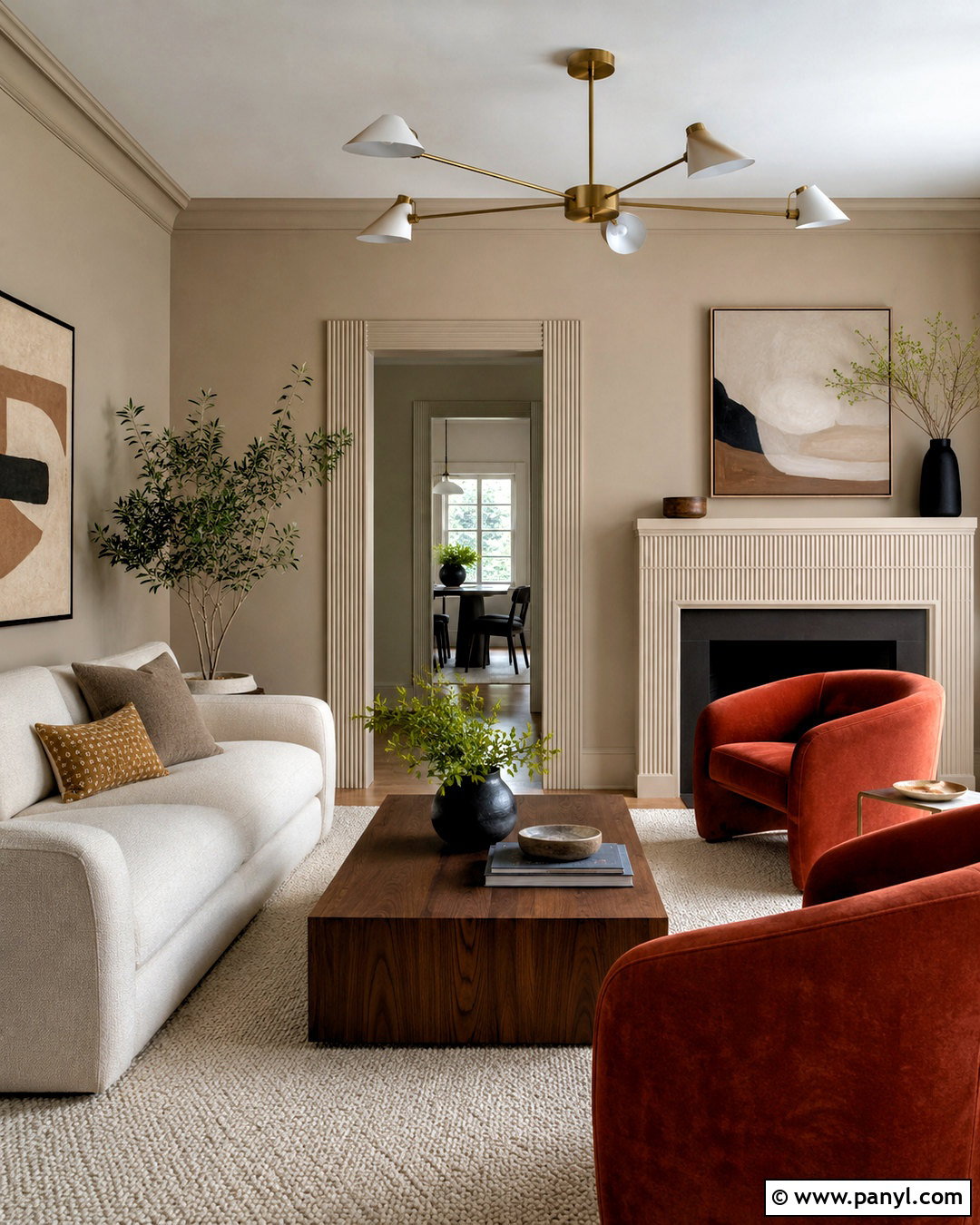
Fluted trim adds fine vertical texture to a contemporary living room while keeping the overall design controlled. Use narrow fluted casing around a wide doorway or large window, then repeat the detail on the fireplace surround or built-in media wall. Paint the trim and walls a soft mushroom beige for understated depth. Choose a streamlined ivory sofa, rounded walnut coffee table, and low rust-colored lounge chairs. A simple cream rug and brushed brass lighting keep the space warm. Avoid introducing fluting on every surface; two or three coordinated applications will look more intentional. Smooth baseboards and plain crown molding provide visual rest. The finished room feels detailed up close, but calm and cohesive when viewed as a whole.
11. Arched Doorway Trim
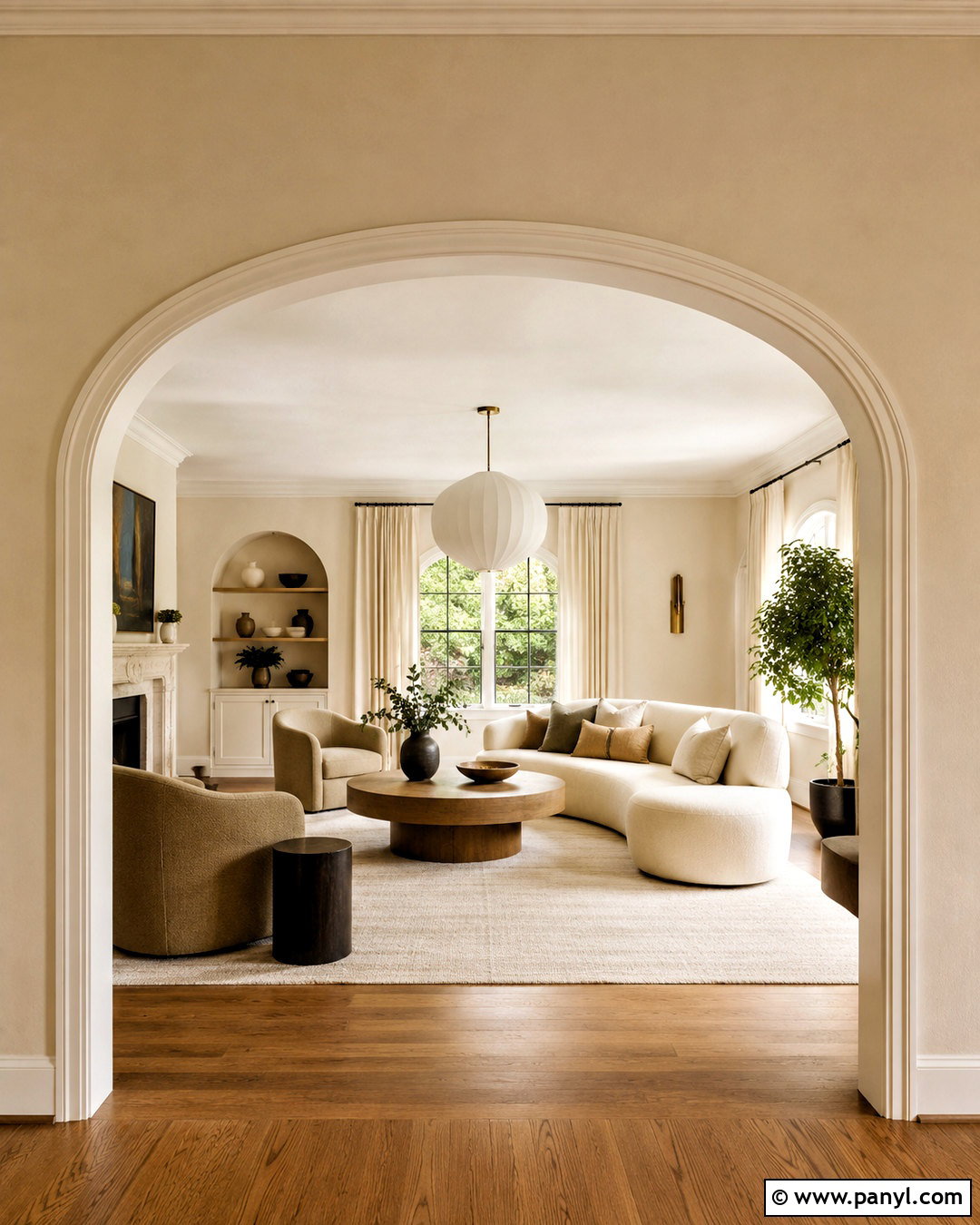
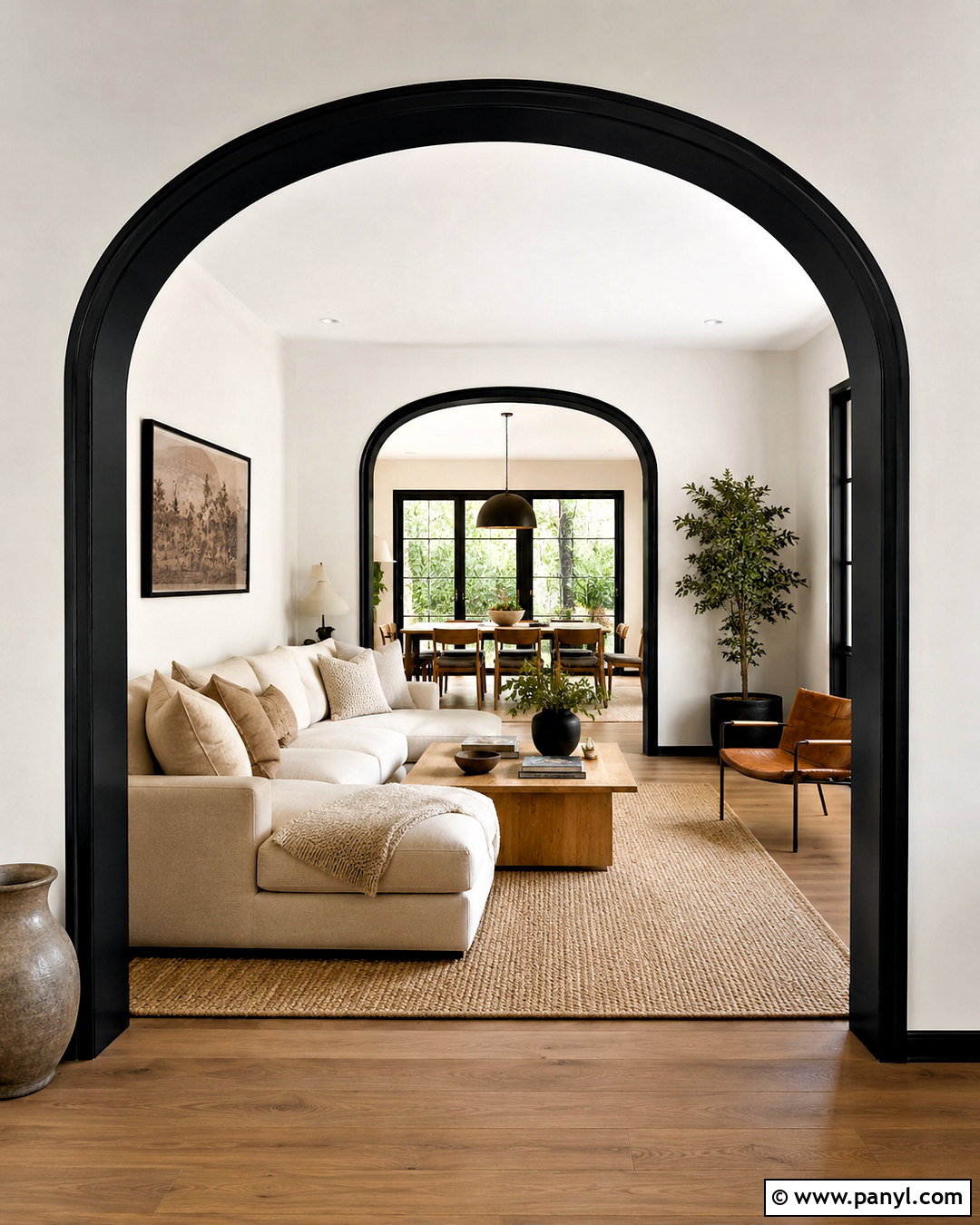
An arched doorway becomes a graceful architectural feature when its trim is integrated with the entire living room. Use flexible or custom curved casing around the opening, then continue the same profile on nearby doors, windows, and baseboards. Paint the trim a soft ivory and the walls a muted beige. Arrange a curved sofa, round coffee table, and barrel chairs to echo the doorway’s shape without making the theme too obvious. A large neutral rug defines the seating zone, while linen curtains and a plaster pendant maintain a light, organic mood. Position the furniture so the arch remains visible from the main entrance. This scheme creates smooth circulation and makes the transition into an adjoining dining room or hallway feel especially considered.
12. Fireplace Wall Trim
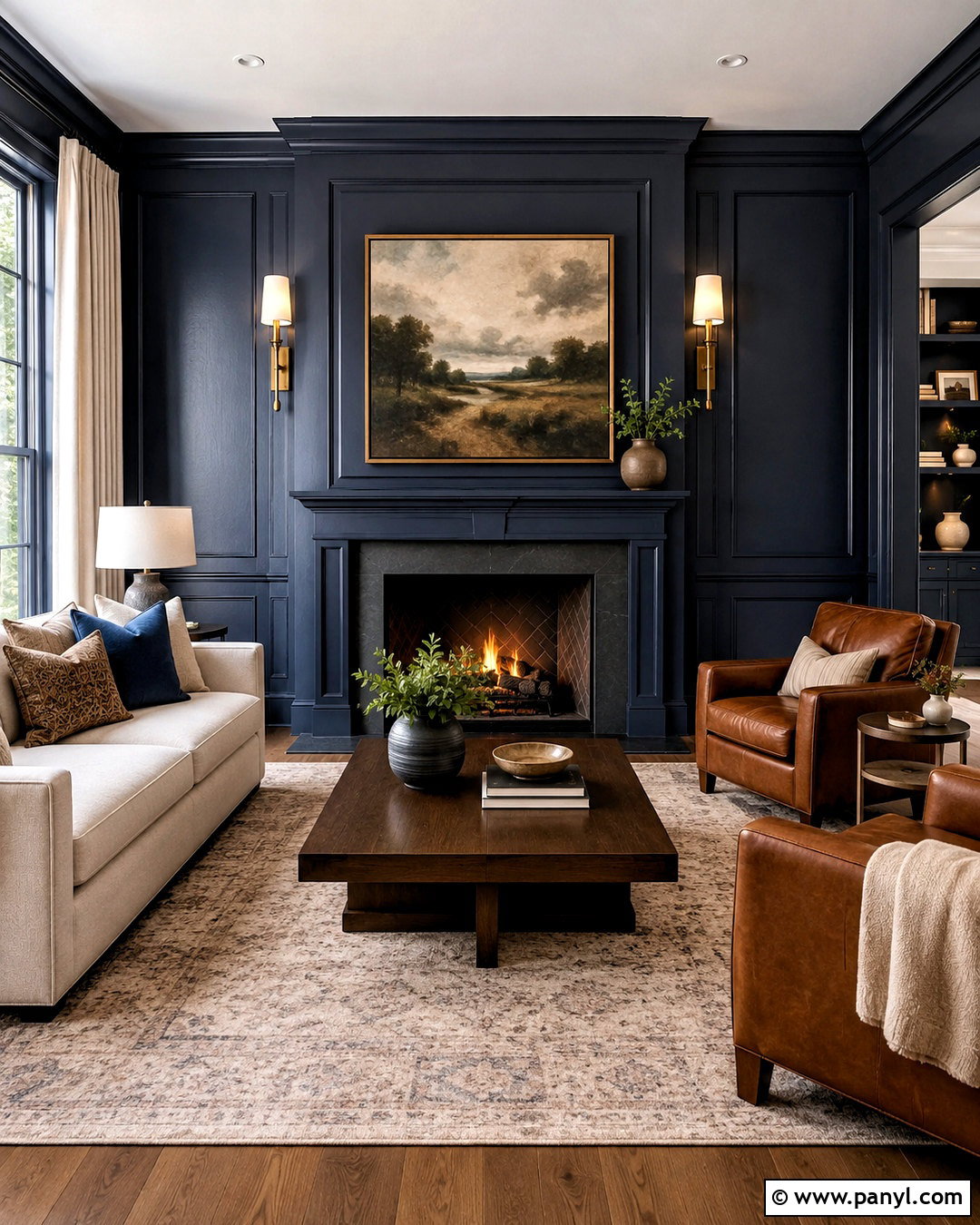
Trim can transform a basic fireplace wall into a balanced living room centerpiece. Frame the fireplace with simple panel molding, then extend matching rectangular panels across the wall on both sides. Paint the entire feature wall deep navy blue, including the mantel, trim, and baseboards. Place a cream sofa opposite the fireplace and add two cognac leather chairs angled toward the hearth. A pale vintage-style rug, walnut coffee table, and brass sconces soften the dark backdrop. Keep artwork minimal by hanging one large piece above the mantel. If a television is necessary, place it inside a dark panel beside the fireplace rather than disrupting the main focal point. The finished arrangement feels symmetrical, practical, and visually grounded.
13. Coffered Ceiling Living Room Trim
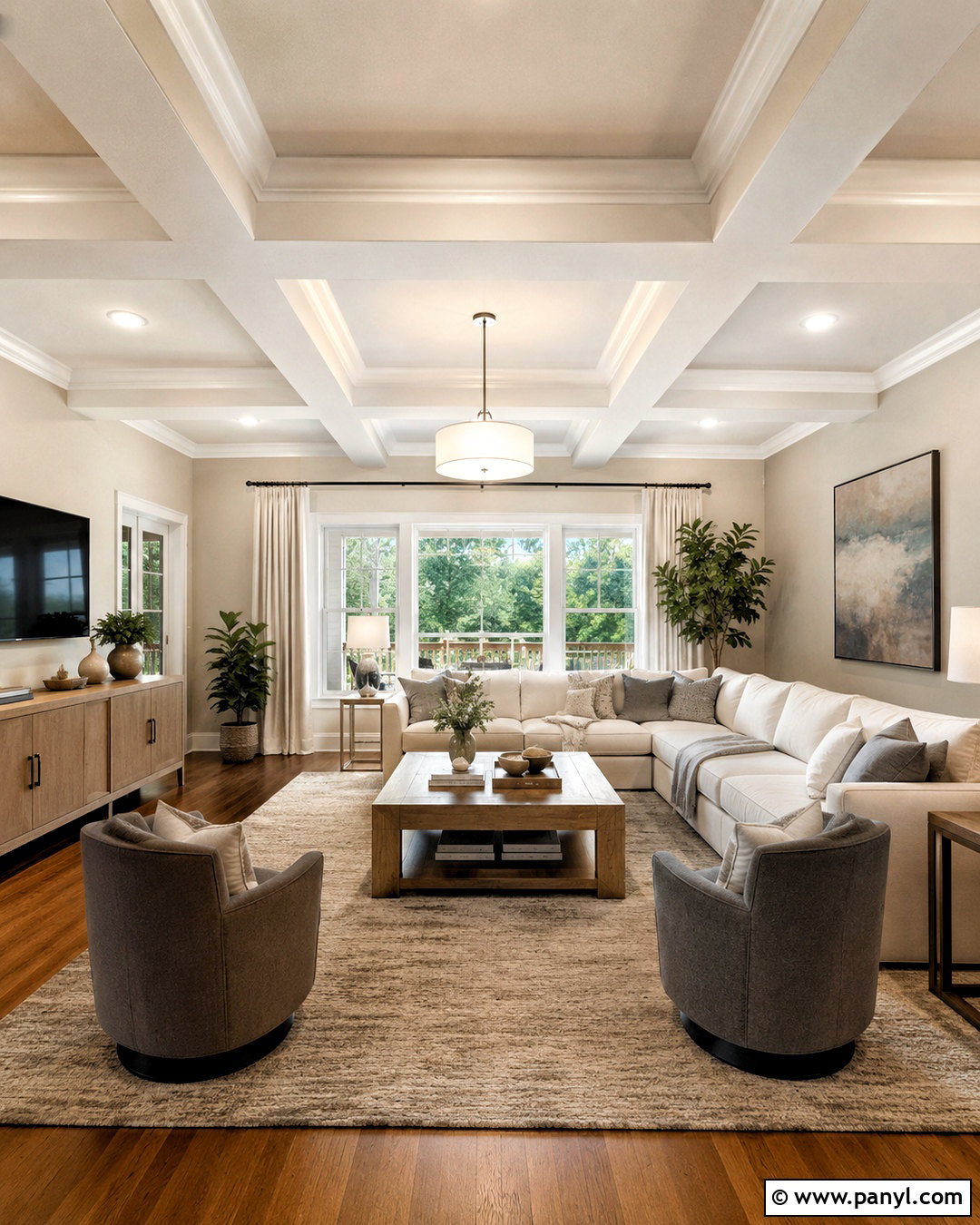
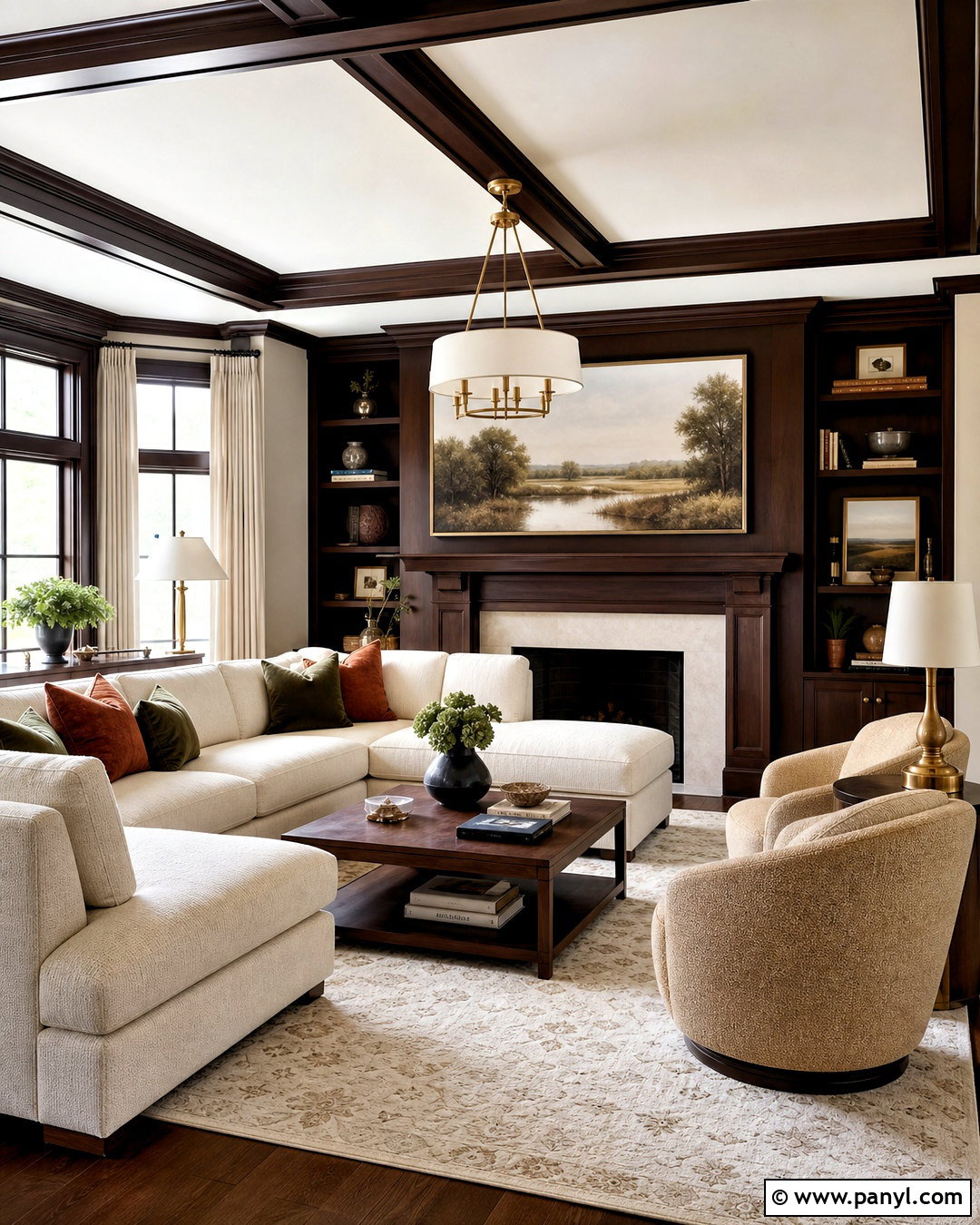
Coffered ceiling trim can give a large living room better scale while making the seating area feel more defined. Create a balanced grid using shallow beams, then paint the coffers, crown molding, and ceiling warm white. Use light taupe on the walls to create gentle separation. Below, arrange a large linen sectional and two swivel chairs around a square oak coffee table. A broad wool rug should align with the ceiling grid to reinforce the room’s structure. Add recessed lighting within selected coffers and use one simple central pendant rather than an oversized ornate fixture. Floor-to-ceiling curtains and tall plants help connect the ceiling treatment to the lower half of the room, producing an inviting design instead of an overly formal one.
14. Living Room Picture Rail Trim
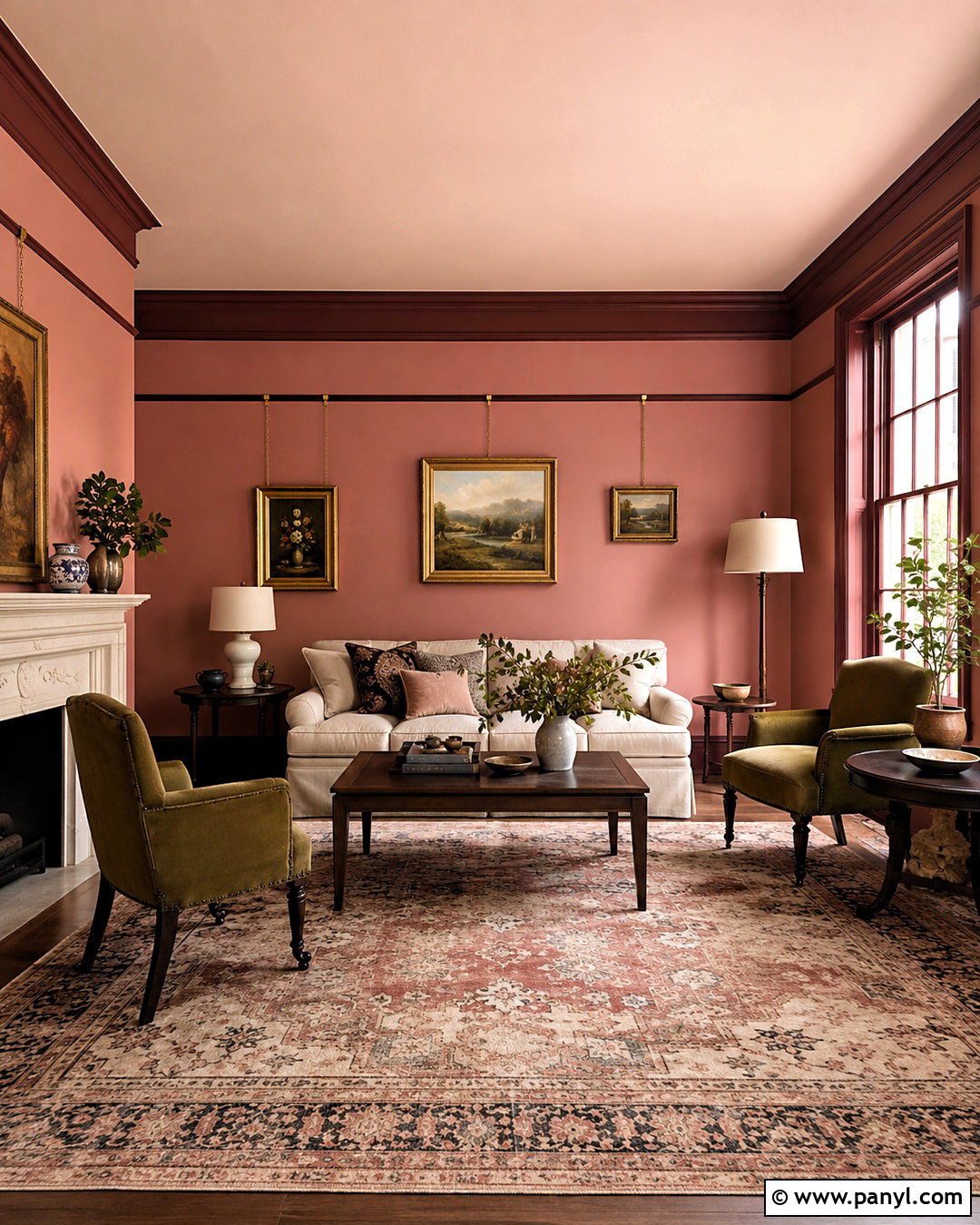
Picture rail trim provides a subtle horizontal detail while making art arrangements easier to change. Install the rail below the crown molding, leaving enough wall space above it to create a distinct upper band. Paint the walls dusty rose, the rail a deeper muted burgundy, and the ceiling a pale blush for a gentle tonal effect. Below, use a cream sofa, dark wood tables, and olive green accent chairs. Suspend framed artwork from simple brass hooks and cords, arranging pieces at varied but balanced heights. Keep the baseboards and window casing in the same burgundy as the rail. Soft ivory curtains and a faded patterned rug complete this artistic, traditional-meets-modern living room without competing with the collected gallery display.
15. Shiplap Living Room Trim
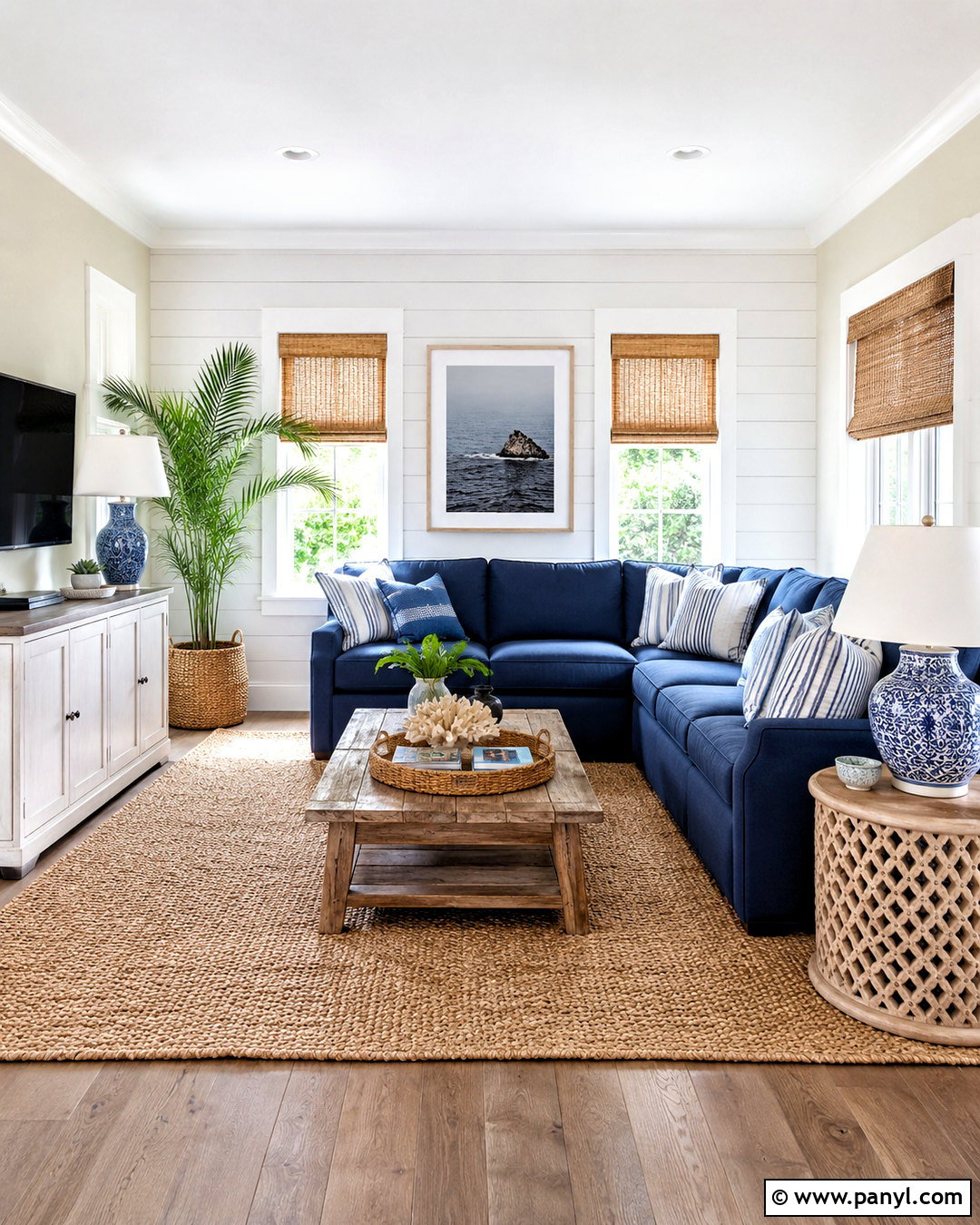
Shiplap looks more finished when it is framed with coordinated trim rather than ending abruptly at corners, ceilings, and baseboards. Cover the main sofa wall with wide horizontal boards painted warm white, then add clean side trim and a simple cap at the ceiling. Keep the remaining walls pale sand for slight contrast. A deep blue linen sofa, weathered oak coffee table, and woven jute-wool rug create a relaxed coastal foundation. Add striped pillows, ceramic table lamps, and natural woven shades without relying on themed accessories. Use medium-width white baseboards throughout the room so the accent wall connects with the surrounding architecture. The complete space feels casual and bright, while the structured trim prevents the shiplap from appearing unfinished.
16. Geometric Living Room Trim Wall
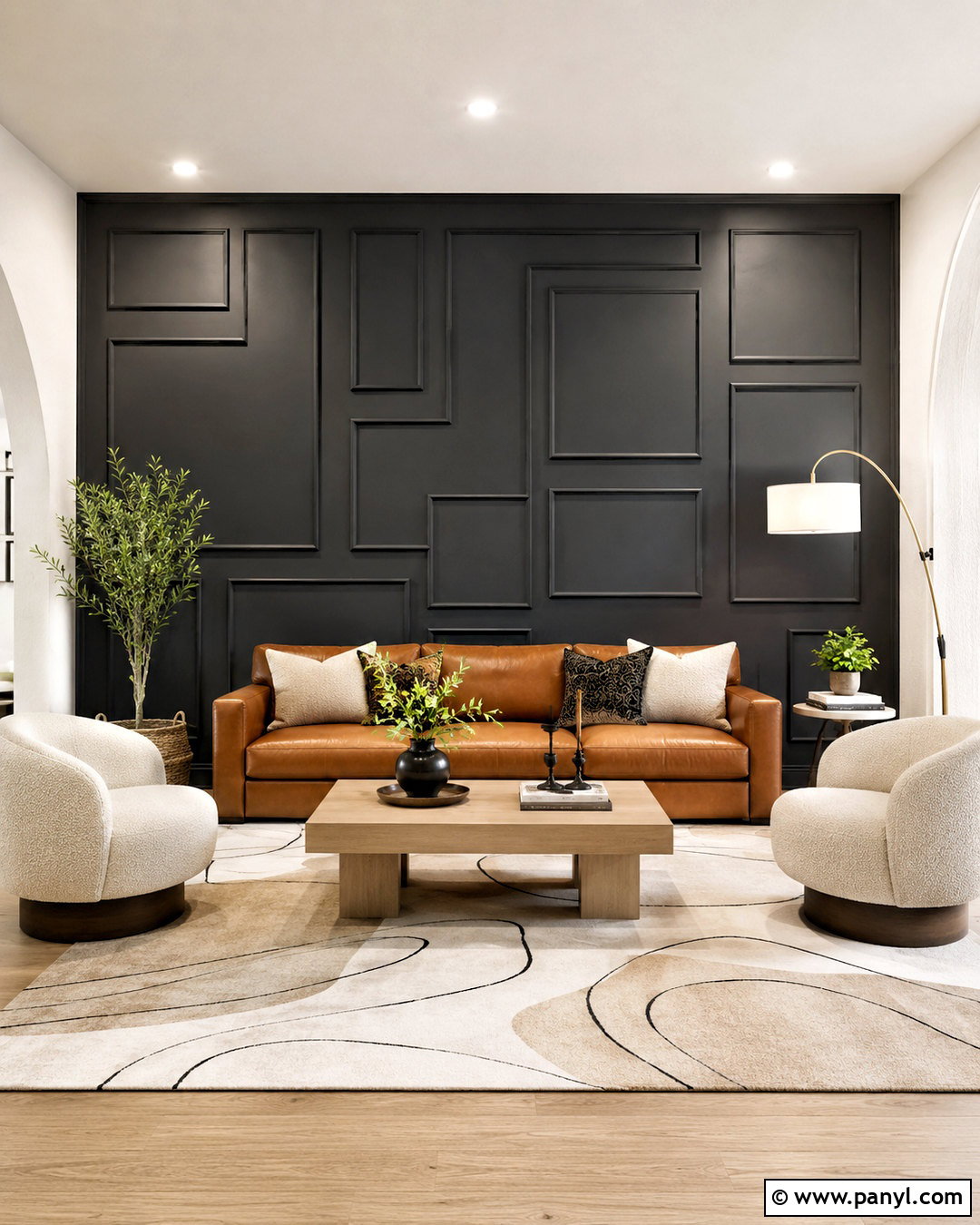
A geometric trim wall can energize a modern living room when the pattern is simple enough to support the furniture. Create large asymmetrical rectangles with narrow flat molding behind the sofa, keeping the spacing open and balanced. Paint the wall and trim a deep charcoal gray for a unified finish. Use a caramel leather sofa, cream boucle chairs, and a pale oak coffee table to introduce warmth and contrast. A large abstract rug can repeat the charcoal, tan, and ivory palette without copying the wall pattern. Keep neighboring walls warm white and use plain black baseboards only on the feature wall. Minimal artwork and streamlined lighting allow the dimensional molding to become the main decorative statement without making the space feel busy.
17. Two Tone Wainscoting Trim
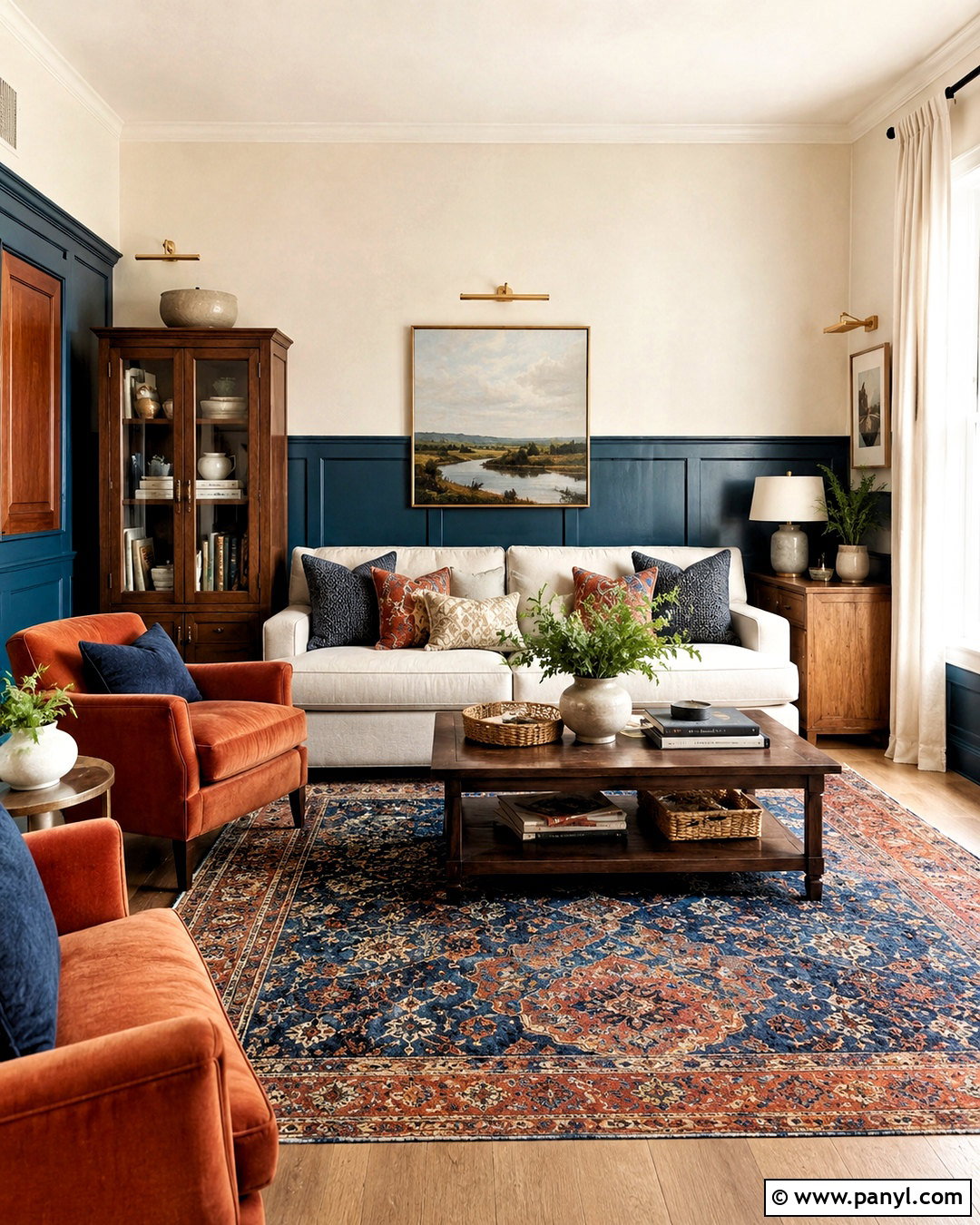
Two-tone wainscoting can make a living room feel colorful while preserving a light, open upper wall. Install recessed panels across the lower half of the room and paint the complete treatment a deep teal blue. Use a soft cream above the cap rail and continue that color onto the ceiling. Furnish the room with an oatmeal sofa, warm oak cabinets, and rust-colored accent chairs. A traditional patterned rug containing blue, cream, and terracotta connects the wall treatment with the seating. Add brass picture lights and linen curtains for a polished finish. Keep artwork centered above the panel divisions instead of placing frames randomly. This balanced room works particularly well in older homes or new spaces that need stronger architectural character.
18. Ceiling Border Trim
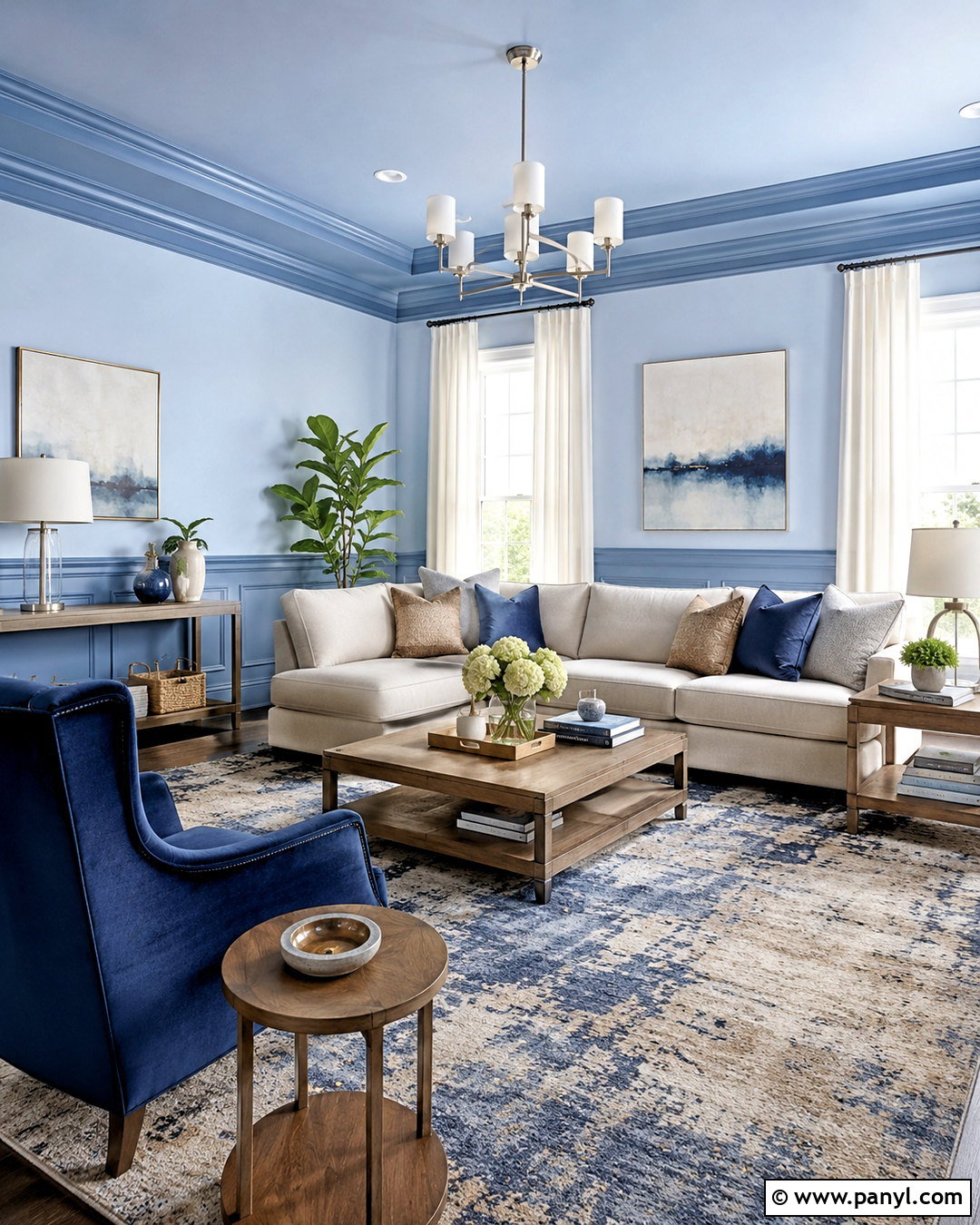
Ceiling border trim offers a fresh way to change the perceived proportions of a living room. Install a slim picture molding several inches below the ceiling, then paint the area above it, the molding, crown, and ceiling a medium blue. Use a much lighter powder blue on the main walls. The darker upper band creates a defined cap without requiring elaborate millwork. Continue the palette with a cream sectional, navy velvet chair, natural oak tables, and a blue-and-beige rug. White linen curtains keep the windows airy, while brushed nickel lighting adds a clean finish. Maintain simple white baseboards below so the upper trim remains the main architectural feature. The room will feel layered, distinctive, and thoughtfully proportioned.
19. Layered Window Casing Trim
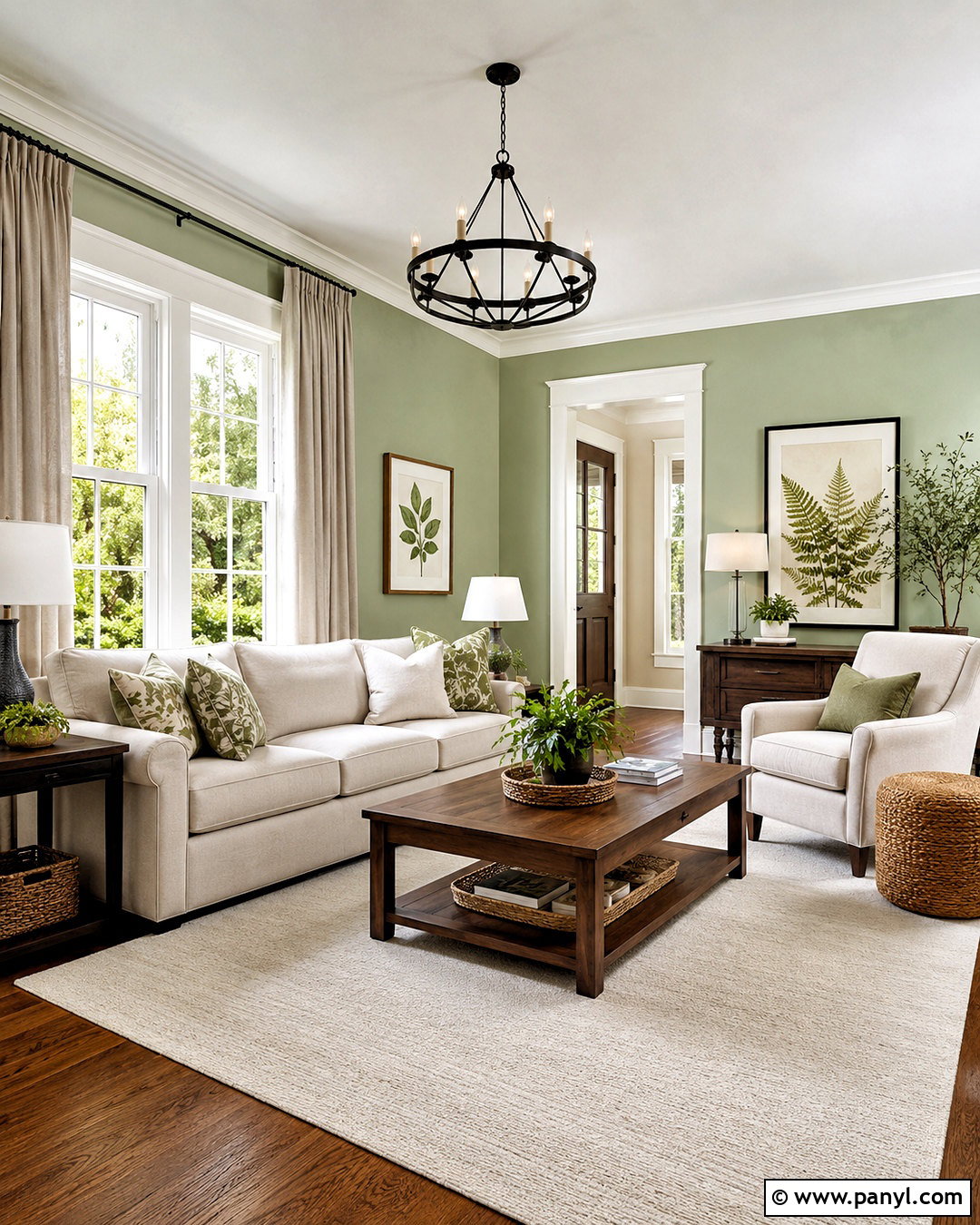
Layered window casing gives a large living room window the presence needed to balance substantial furniture. Build the casing from a wide flat board, narrow inner bead, and modest top header. Paint it soft white against pale green walls. Position a neutral sofa or pair of lounge chairs near the window without blocking the lower frame. Full-length oatmeal curtains mounted above and outside the casing allow the layered detail to stay visible. Complete the space with a walnut coffee table, cream rug, and botanical artwork that relates to the outdoor view. Repeat a simplified version of the casing around the room’s doors. Consistent baseboards and a restrained crown profile ensure the detailed window feels connected to the entire living room rather than decorative in isolation.
20. Minimalist Baseboard Trim
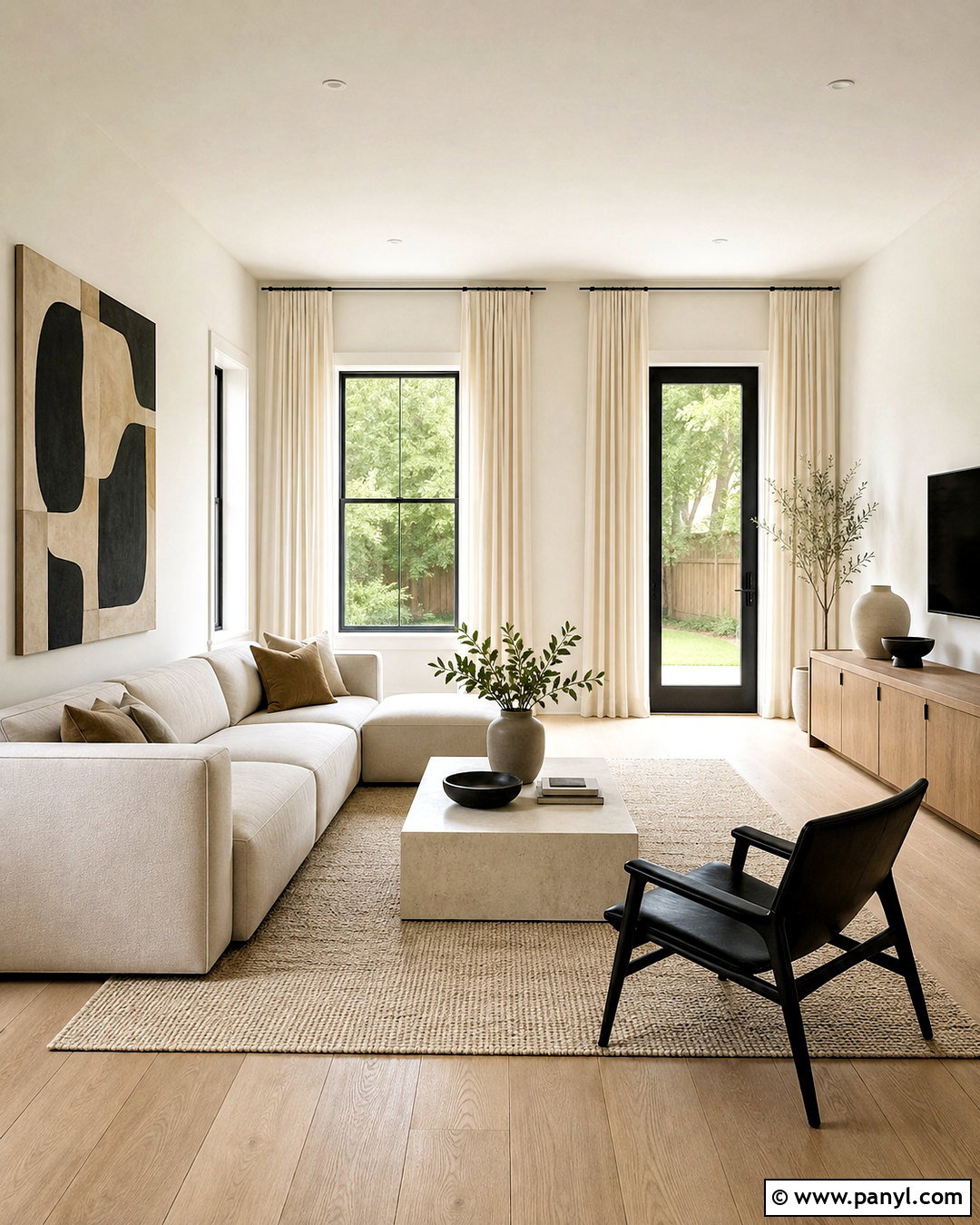
Minimalist baseboard trim creates a clean foundation for a living room where furniture, art, and natural materials deserve attention. Choose a tall, flat profile with a square top instead of a narrow builder-grade baseboard. Paint it the same warm white as the walls for a seamless transition, or use soft greige for very gentle contrast. Pair the simple trim with a modular cream sofa, pale oak media console, black lounge chair, and textured beige rug. Use floor-length curtains, one oversized artwork, and understated ceramic accessories to maintain the uncluttered look. Coordinate door and window casing with the baseboard’s flat profile. Precise corners and clean caulk lines are essential because there are no ornate details to disguise uneven installation or inconsistent spacing.
Conclusion:
The best living room trim ideas do more than decorate one wall. They connect the architecture, color palette, furniture, lighting, and layout into a complete design. Picture frame molding and wainscoting can introduce traditional character, while square-edge casing and flat baseboards support a cleaner modern look. Stained wood adds warmth, dark painted trim creates contrast, and tone-on-tone color gives detailed molding a calm finish. Before choosing a treatment, study the room’s ceiling height, windows, doorways, fireplace, and largest furniture pieces. Plan panel spacing around those fixed elements and select profiles that match the home’s overall character. With thoughtful proportions and a coordinated palette, trim can make even a simple living room feel polished and permanent.

Related Ideas and Inspiration:
Leave a Reply