
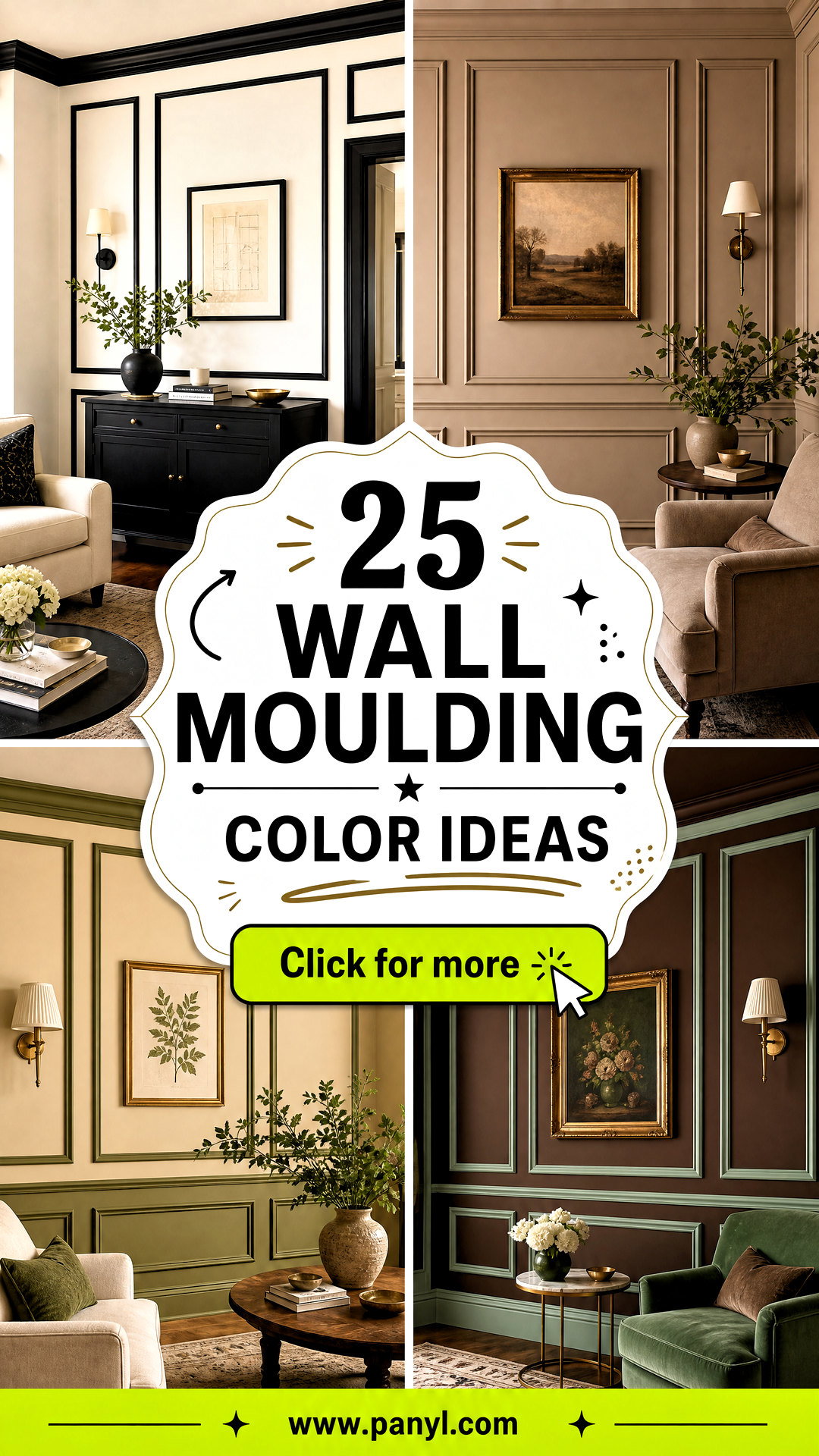
Wall moulding can make a plain room feel tailored, balanced, and full of architectural character. The right paint scheme determines whether those details blend quietly into the background or become a strong focal point. Current approaches range from classic white trim to monochromatic color drenching, tonal combinations, contrasting dark moulding, and subtle differences in paint sheen. Paint guidance also supports using one hue across walls and trim or creating contrast with lighter, darker, and more colorful finishes. () Before choosing, consider the room’s natural light, flooring, furniture, and existing wood finishes. Sampling colors beside the moulding is especially important because shadows can change their appearance. The complete room schemes below offer practical, coordinated inspiration through 25 Wall Moulding Color Ideas.
1. White Wall Moulding With Greige Walls
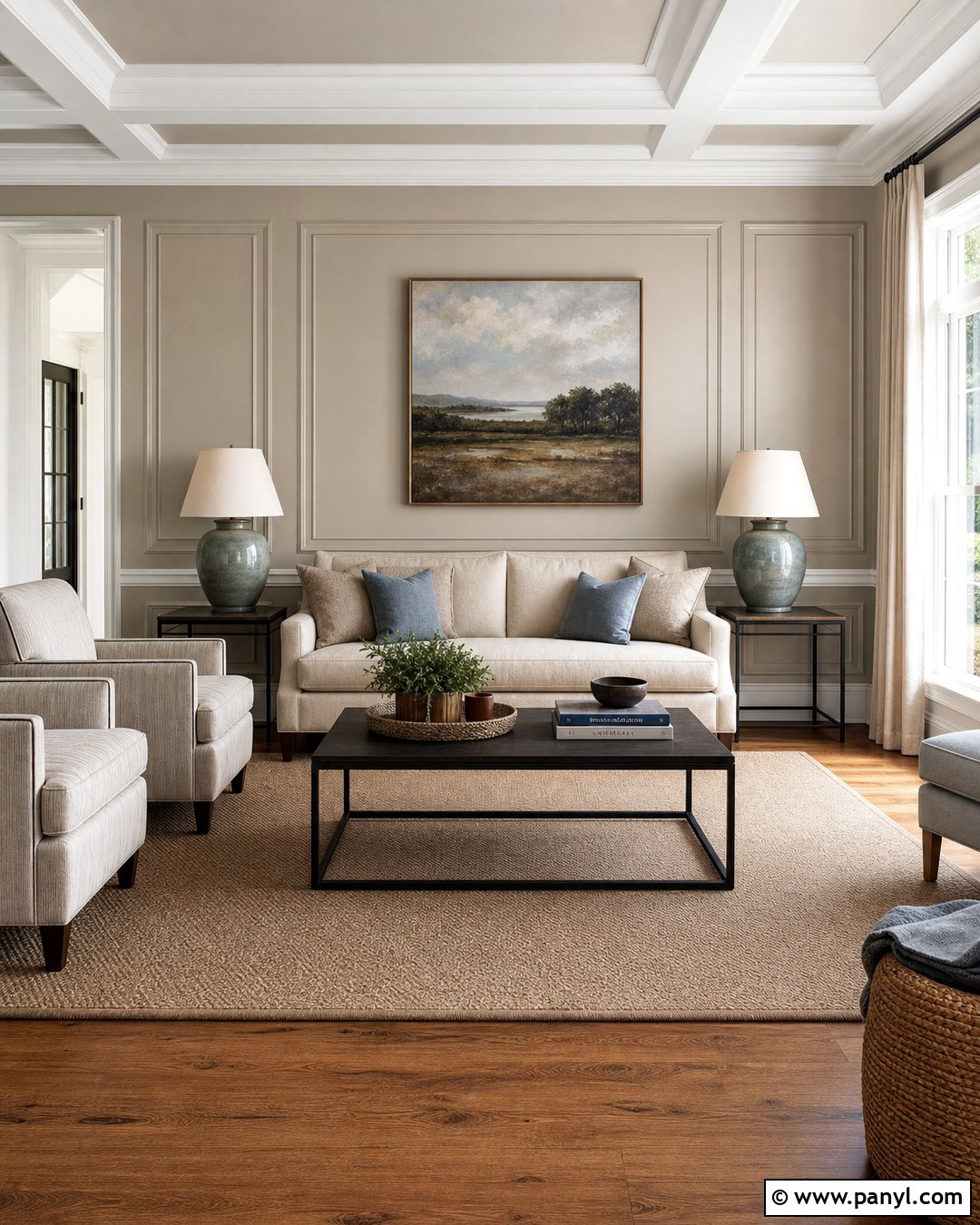
Crisp white wall moulding gives soft greige walls a clean, classic framework without making the room feel cold. Use this combination in a living room with medium-tone oak floors, an oatmeal sofa, and warm beige curtains. Choose a greige with balanced warm undertones, then repeat the white on baseboards, crown moulding, doors, and window trim for continuity. A satin finish helps the moulding stand apart from eggshell walls while remaining easy to clean. Add a black metal coffee table, muted landscape art, and ceramic lamps for controlled contrast. Natural linen, wool, and woven baskets prevent the neutral palette from looking flat. This complete scheme works particularly well in transitional homes where traditional architecture meets simple, modern furniture.
2. Warm White Wall Moulding With White Walls
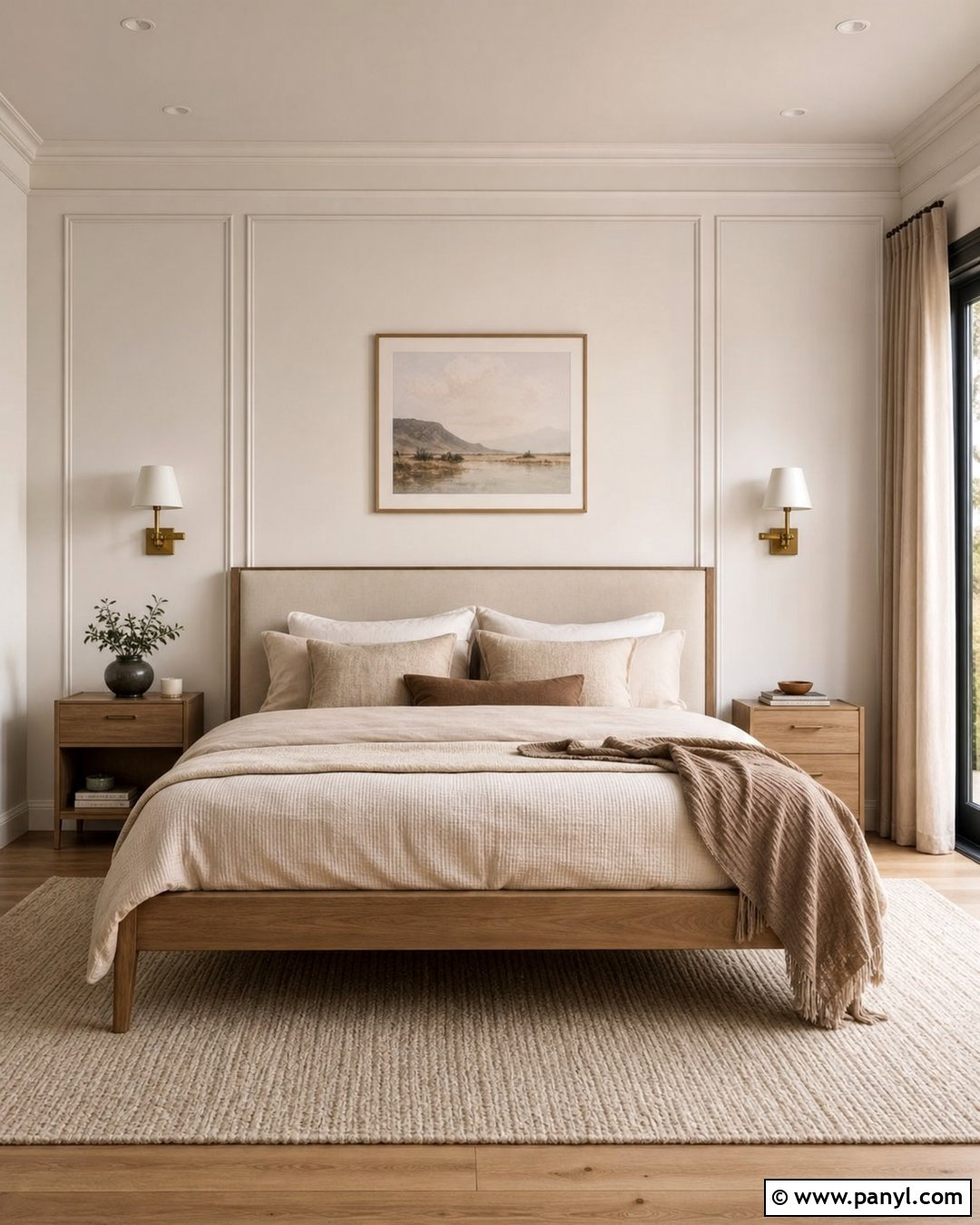
A layered white room feels peaceful when the undertones and finishes are carefully coordinated. Paint walls a soft warm white in an eggshell finish, then use the same color in satin on picture-frame moulding, baseboards, and door casings. The sheen difference defines the architecture without introducing another hue. Complete the bedroom with a light oak bed, ivory upholstered headboard, cream bedding, and a textured wool rug. Brushed brass sconces and warm beige curtains add gentle depth. Keep the ceiling a slightly brighter white so the room remains open and fresh. This approach is especially useful in smaller spaces because uninterrupted color creates a smooth visual flow. Avoid cool blue-white furnishings, which can make the warm paint appear unexpectedly yellow.
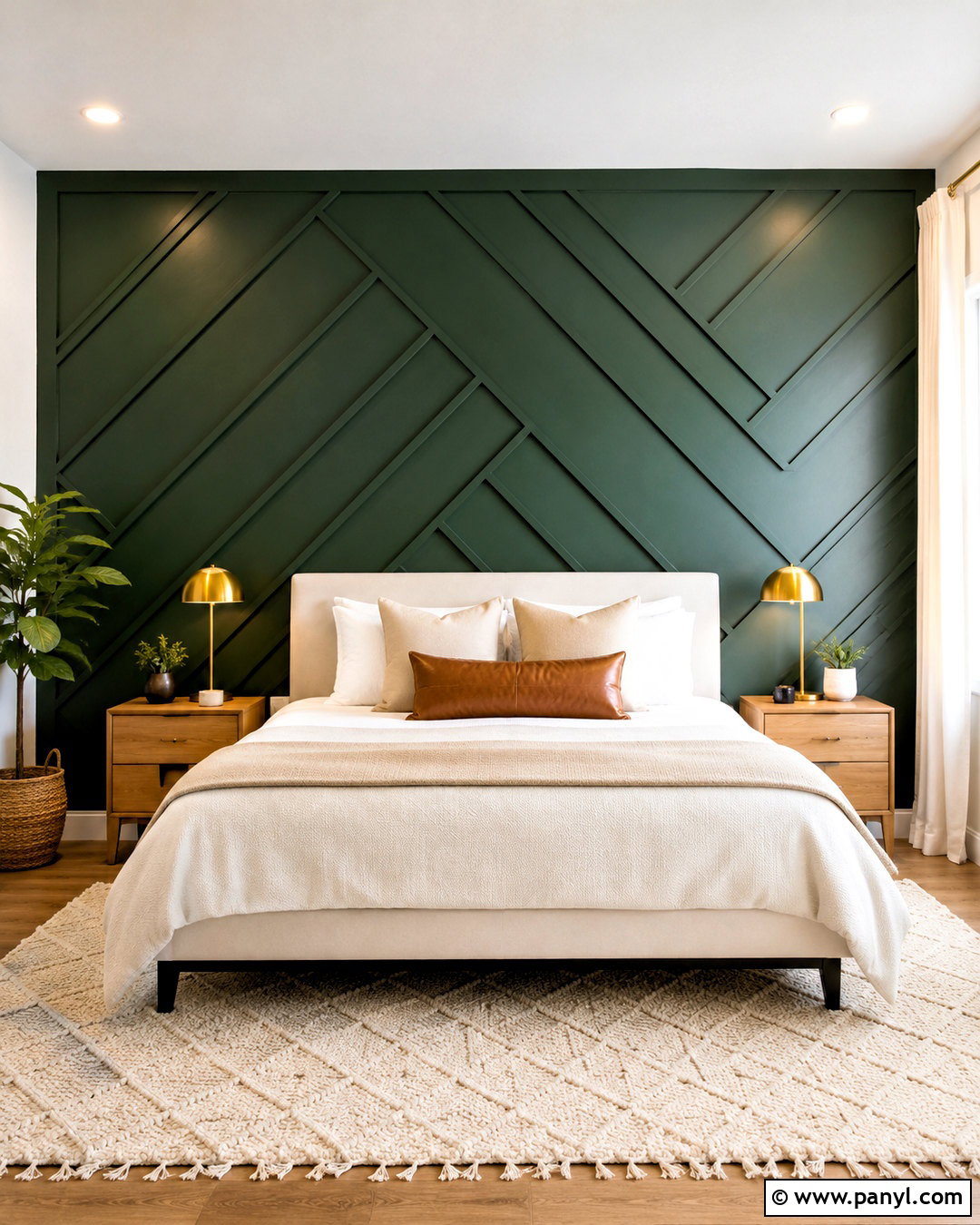
3. Sage Green Wall Moulding With Matching Walls
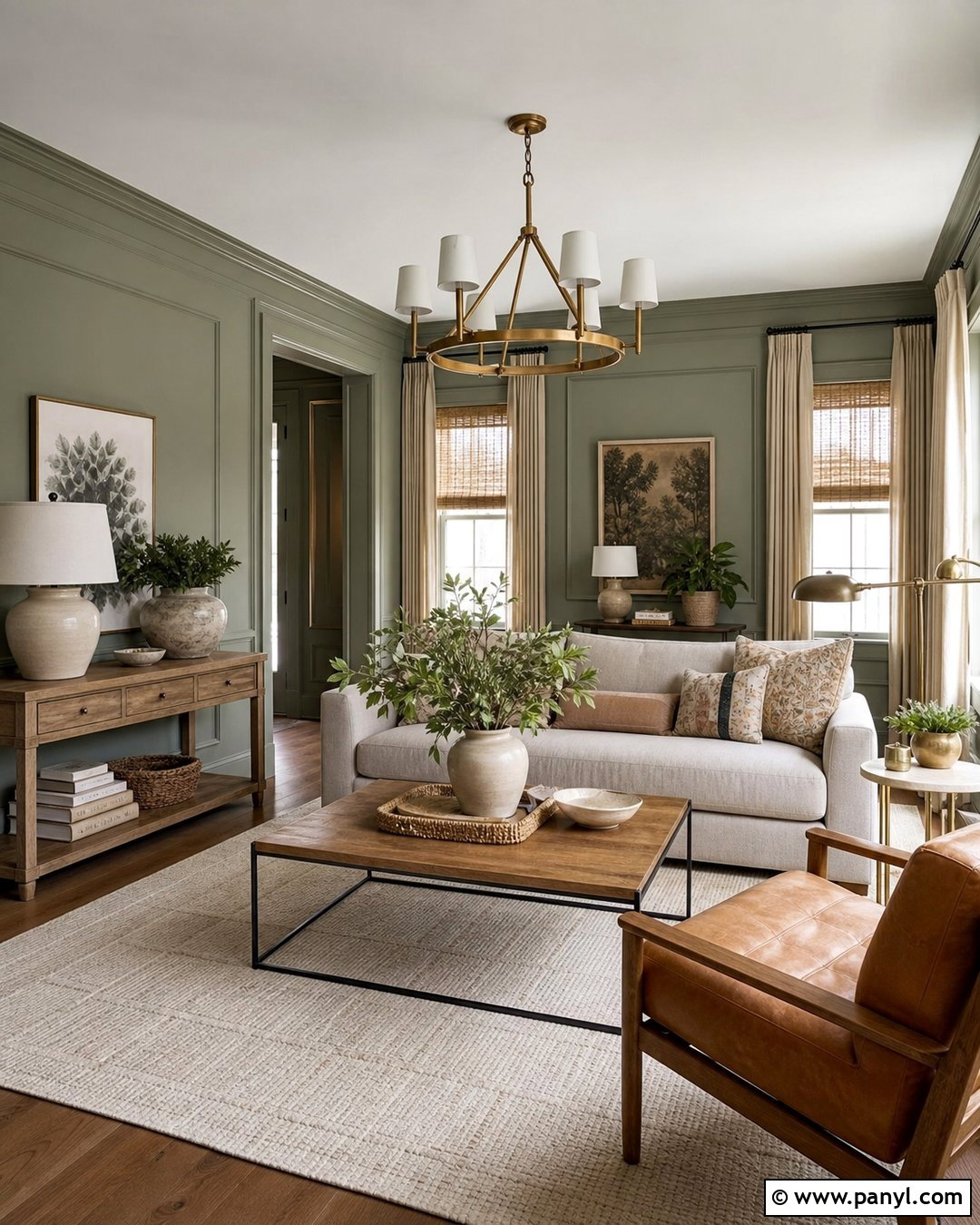
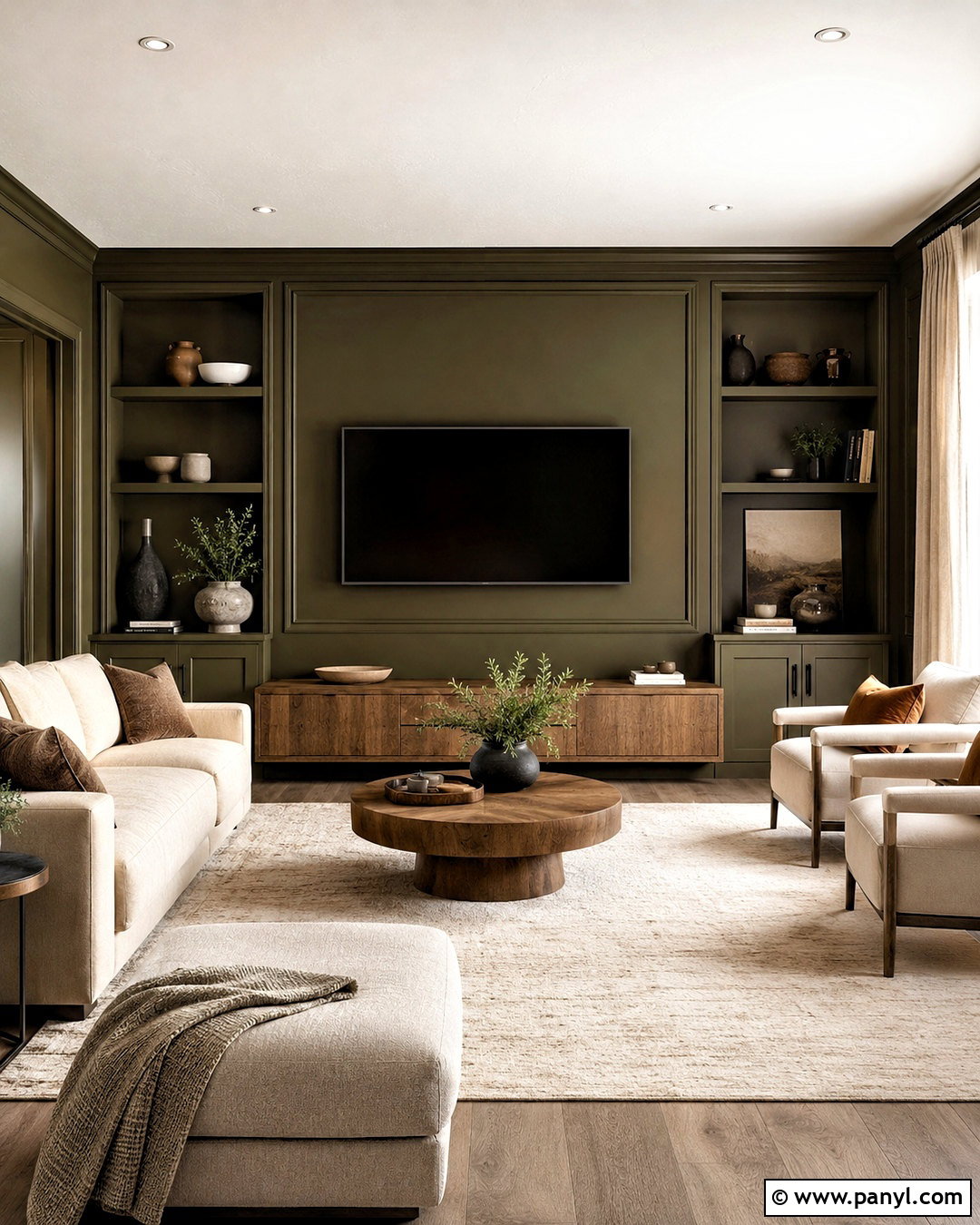
Soft sage green creates a restful backdrop when it covers both the walls and decorative moulding. Use a muted, gray-based sage rather than a highly saturated green, especially in a living room or bedroom. Paint the walls eggshell and the moulding satin so sunlight produces subtle highlights across each raised profile. Build the room around natural materials, including an oak console, linen upholstery, woven shades, and a warm ivory rug. A camel leather chair introduces contrast without disrupting the earthy palette. Add aged brass lighting, cream pottery, and a few dark green textiles for depth. Keep the ceiling warm white to brighten the upper half of the room. The result feels cohesive, comfortable, and architectural rather than overly themed or rustic.
4. Dark Green Wall Moulding With Cream Walls
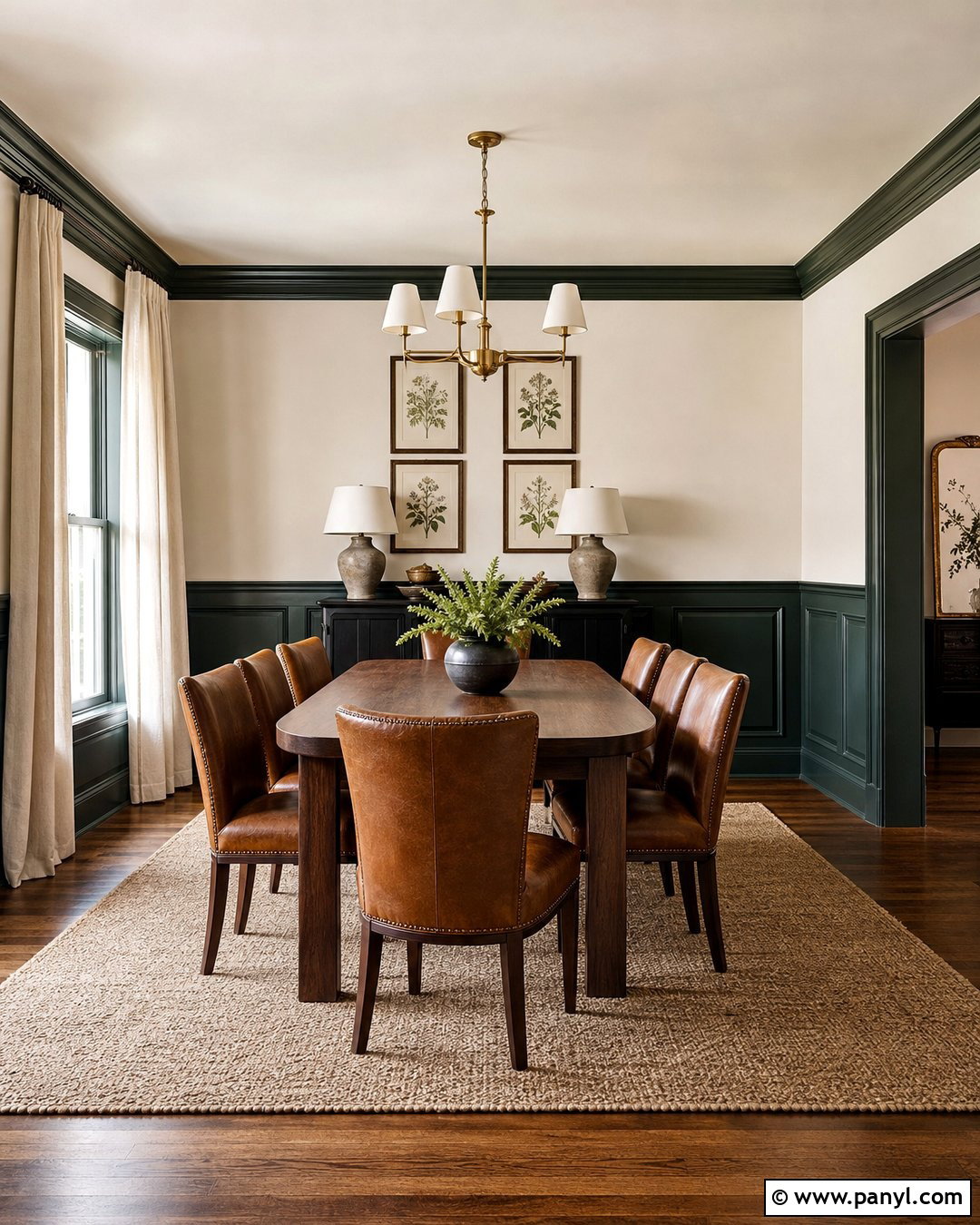
Deep green moulding can give a dining room an established, traditional appearance while cream upper walls keep the space bright. Apply forest green to full-height panel moulding, lower wainscoting, baseboards, and the door. Use a gentle cream above the chair rail and repeat it on the ceiling. A walnut dining table, cognac leather chairs, and an antique-inspired brass chandelier complement the saturated green. Hang simple botanical artwork inside the moulding panels so each frame has a clear purpose. Natural sisal underfoot adds texture and prevents the room from becoming too formal. For balance, use light linen curtains and minimal tabletop decor. This complete palette is dramatic enough for entertaining but still warm and practical for everyday family meals.
5. Navy Blue Wall Moulding With Soft White Walls
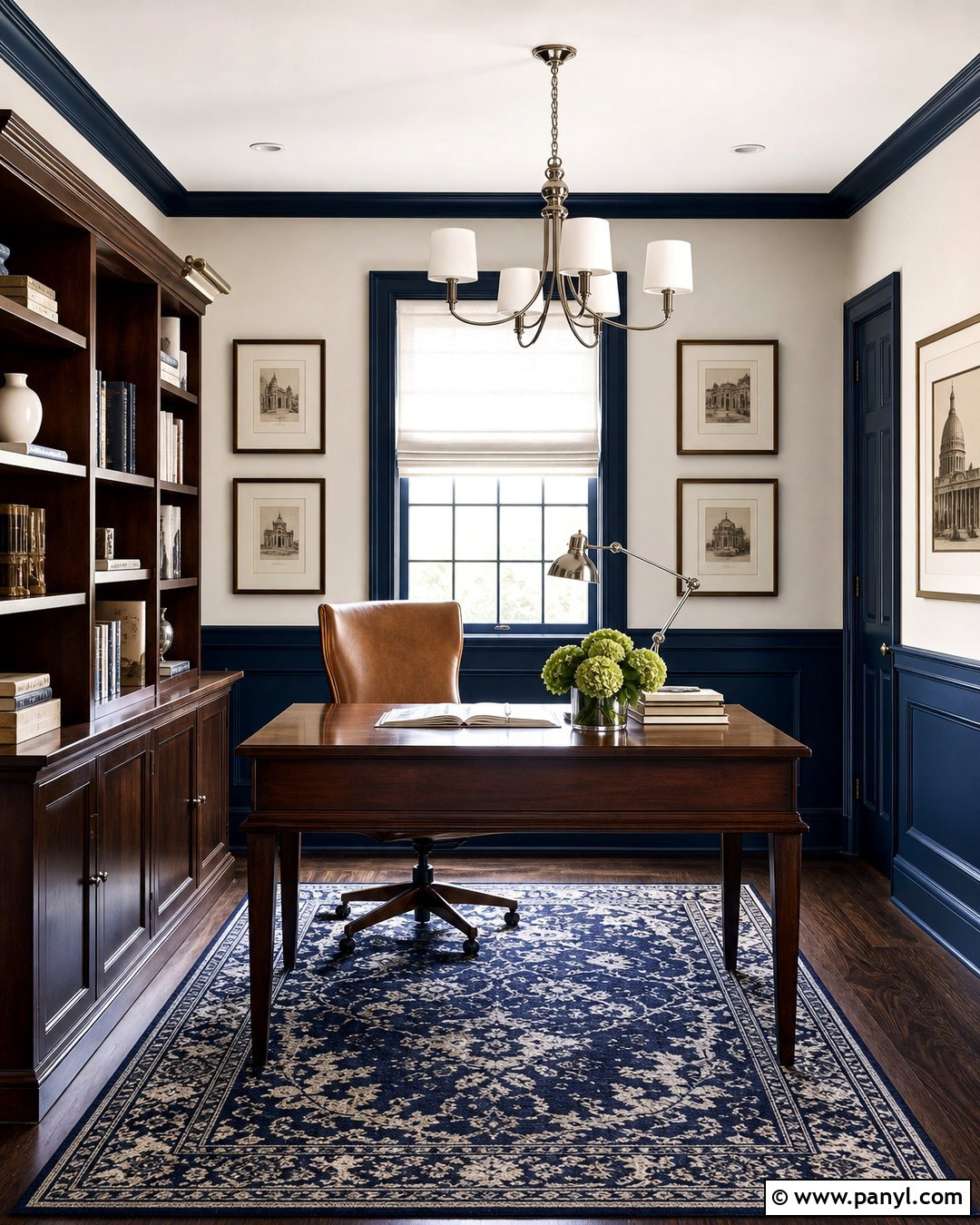
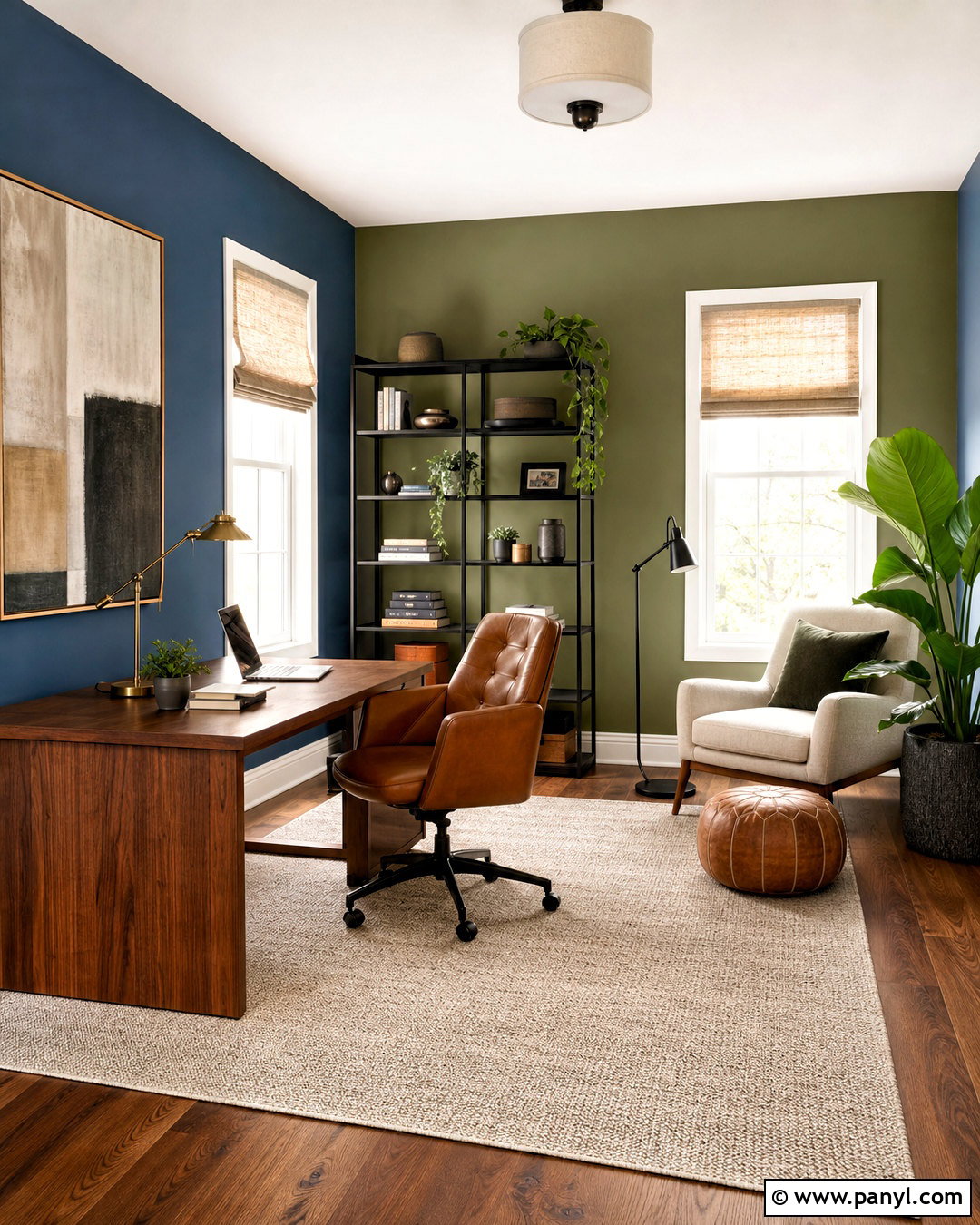
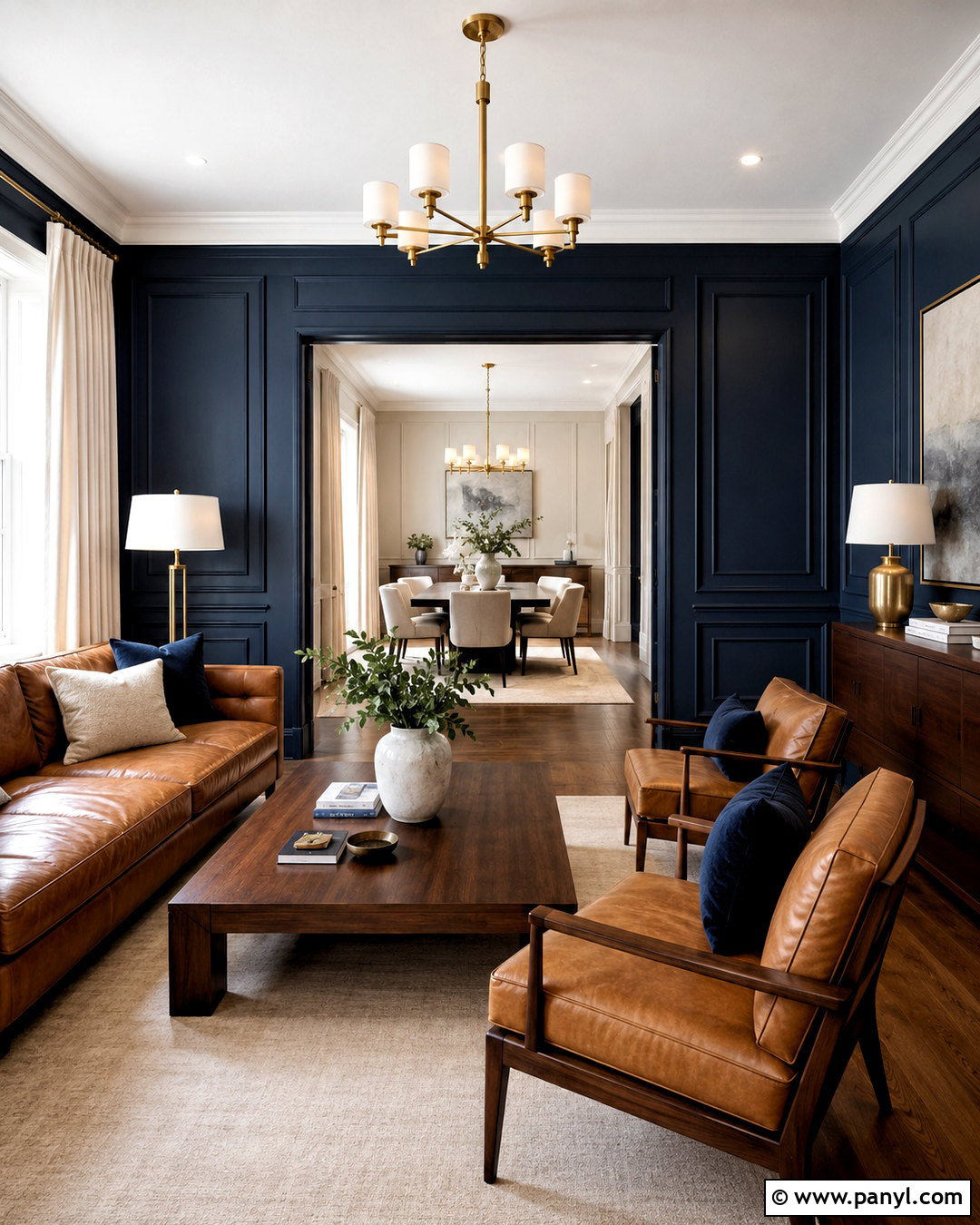
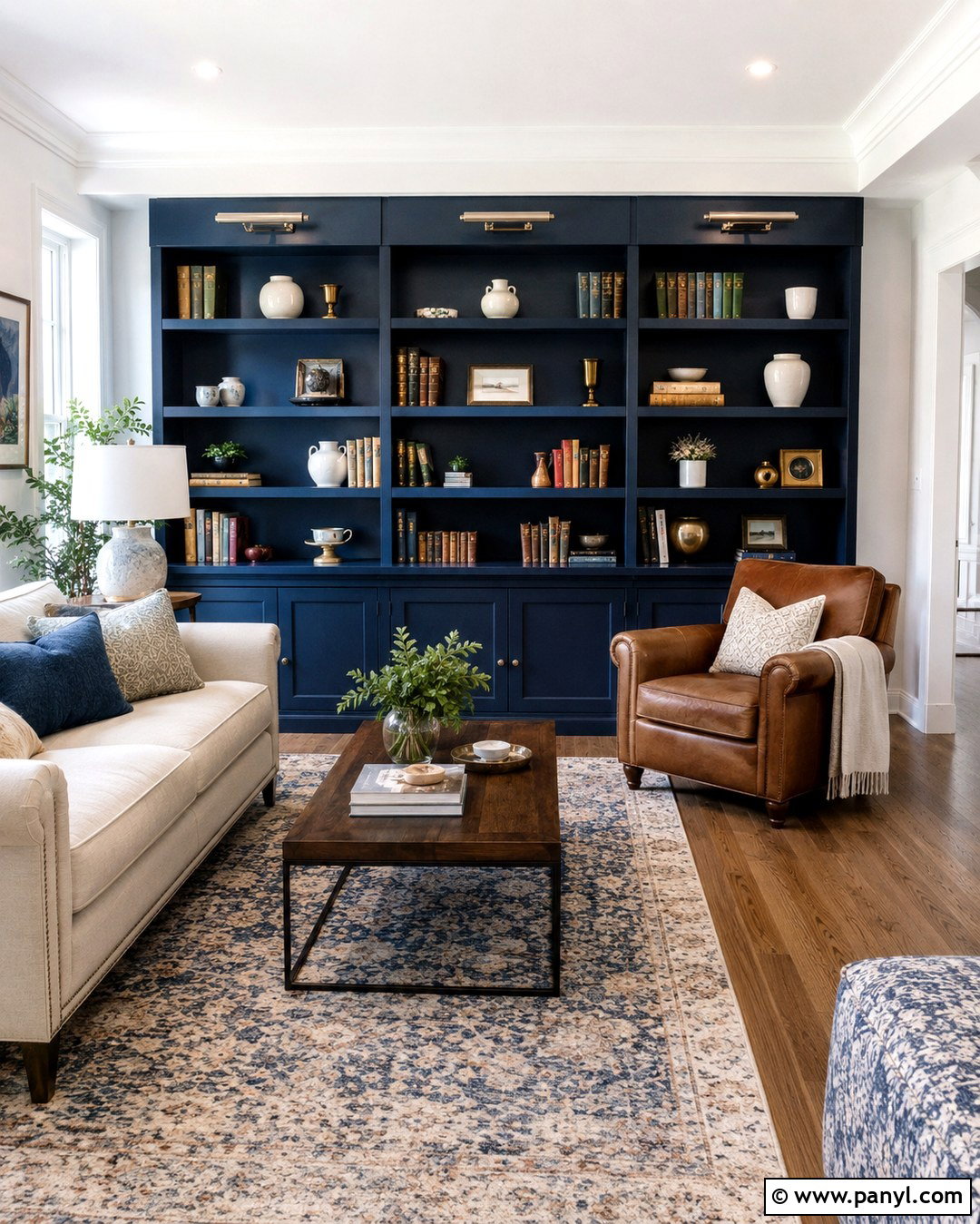
Navy wall moulding makes a confident statement against soft white walls, particularly in a home office or library. Paint picture-frame moulding, baseboards, doors, and window casings in a rich navy satin finish. Keep the wall surfaces warm white so the room retains plenty of reflected light. A dark walnut desk and matching bookcase reinforce the tailored look, while a camel leather chair brings welcome warmth. Include a navy patterned rug, white linen shades, and polished nickel lighting to connect the contrasting colors. Place artwork with cream mats inside several moulding frames, leaving other panels empty for breathing room. The combination feels structured and professional without becoming severe. Use the navy consistently rather than limiting it to random pieces of trim.
6. Dusty Blue Wall Moulding With Ivory Walls
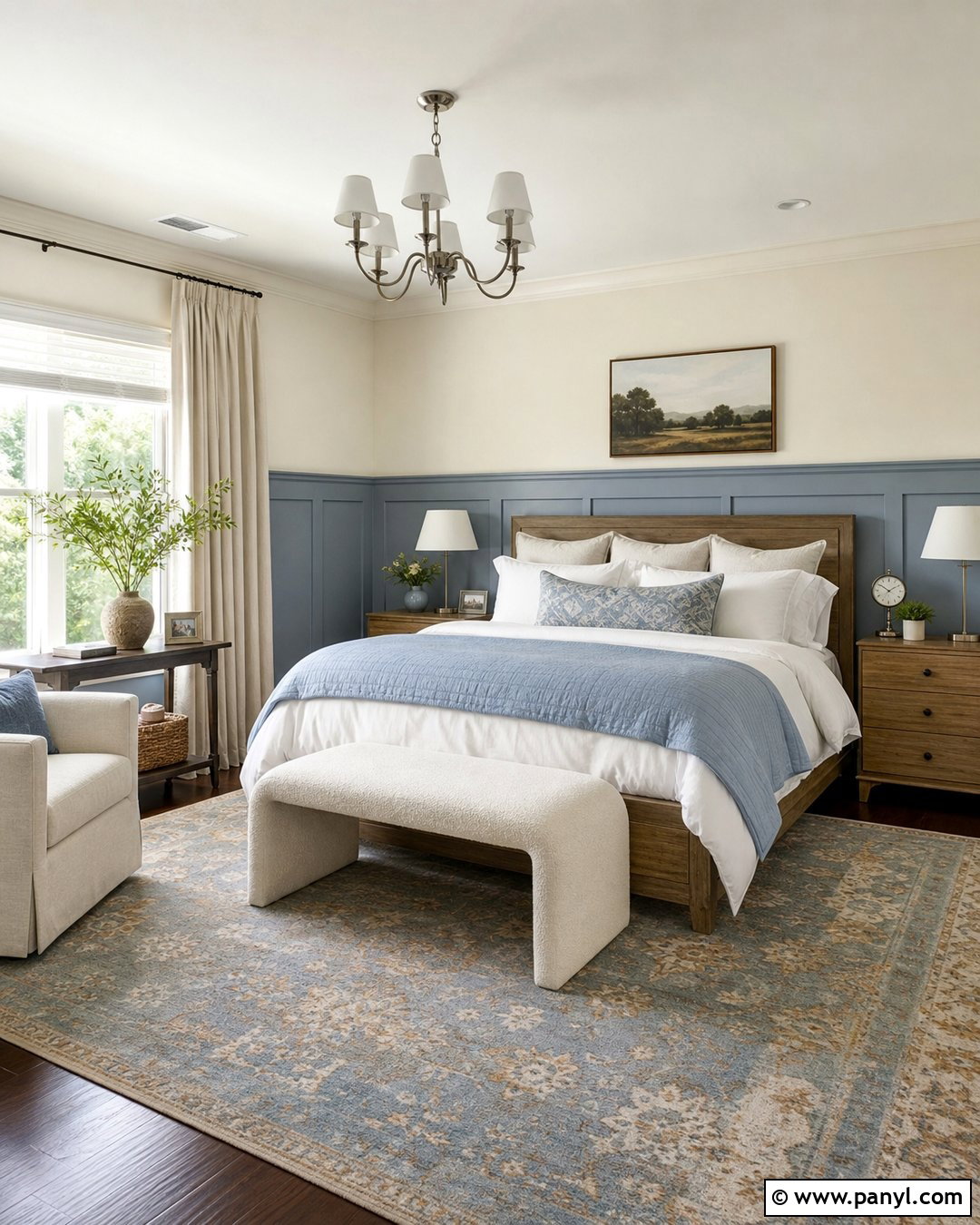
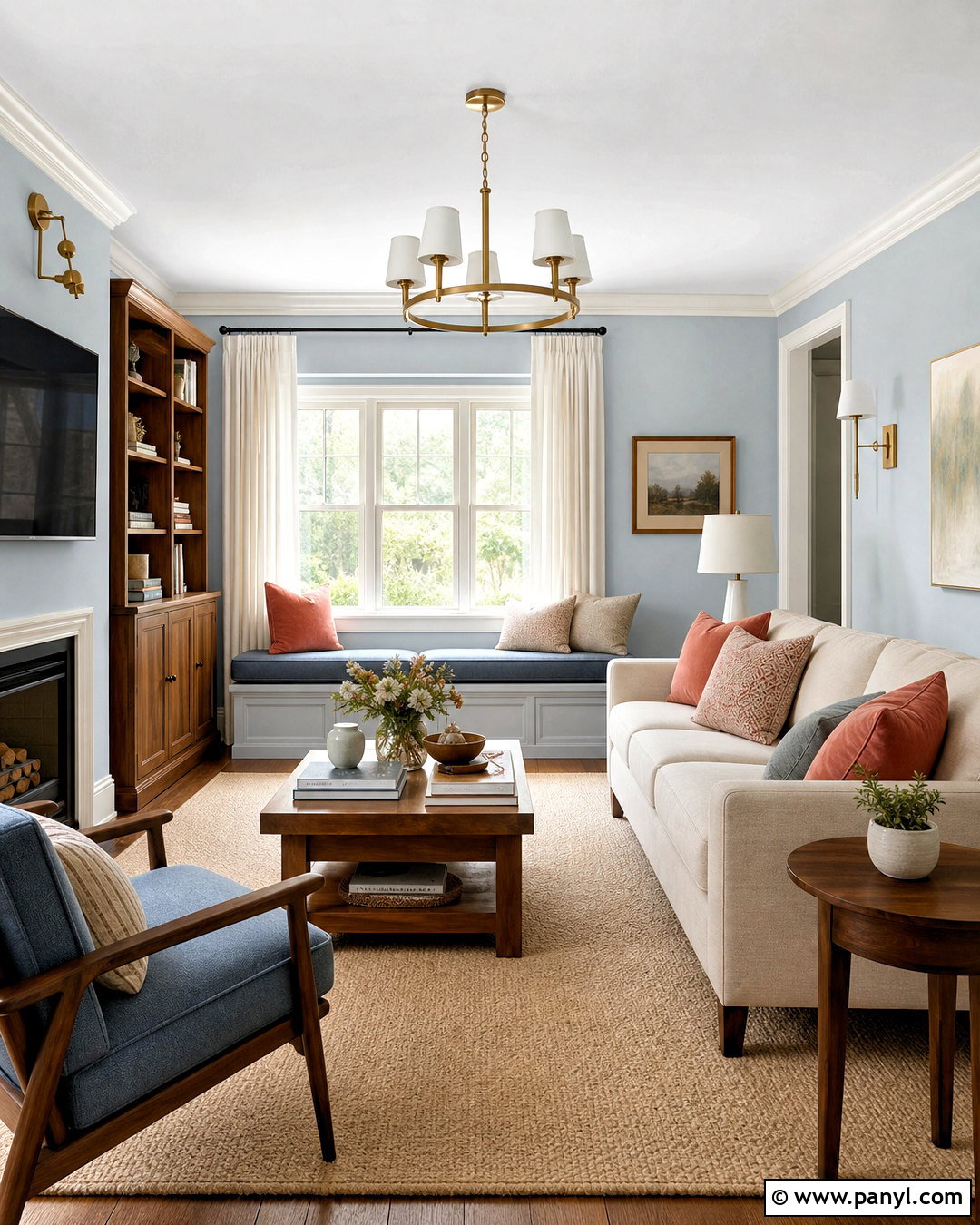
Dusty blue wall moulding brings gentle color to an airy bedroom without overwhelming the space. Choose a gray-blue with subdued saturation and apply it to lower wainscoting, baseboards, and the bedroom door. Paint the upper walls a creamy ivory that relates to the bedding and softens the cool blue. Complete the room with a natural oak bed, white linen sheets, a pale blue quilt, and warm beige curtains. An ivory boucle bench and woven pendant add comfortable texture. Use brushed nickel or antique pewter hardware rather than bold black accents, which may feel too sharp. A faded blue-and-tan rug connects both halves of the wall. This palette creates a calm, lived-in room with clear architectural definition and balanced temperature.
7. Charcoal Wall Moulding With Pale Gray Walls
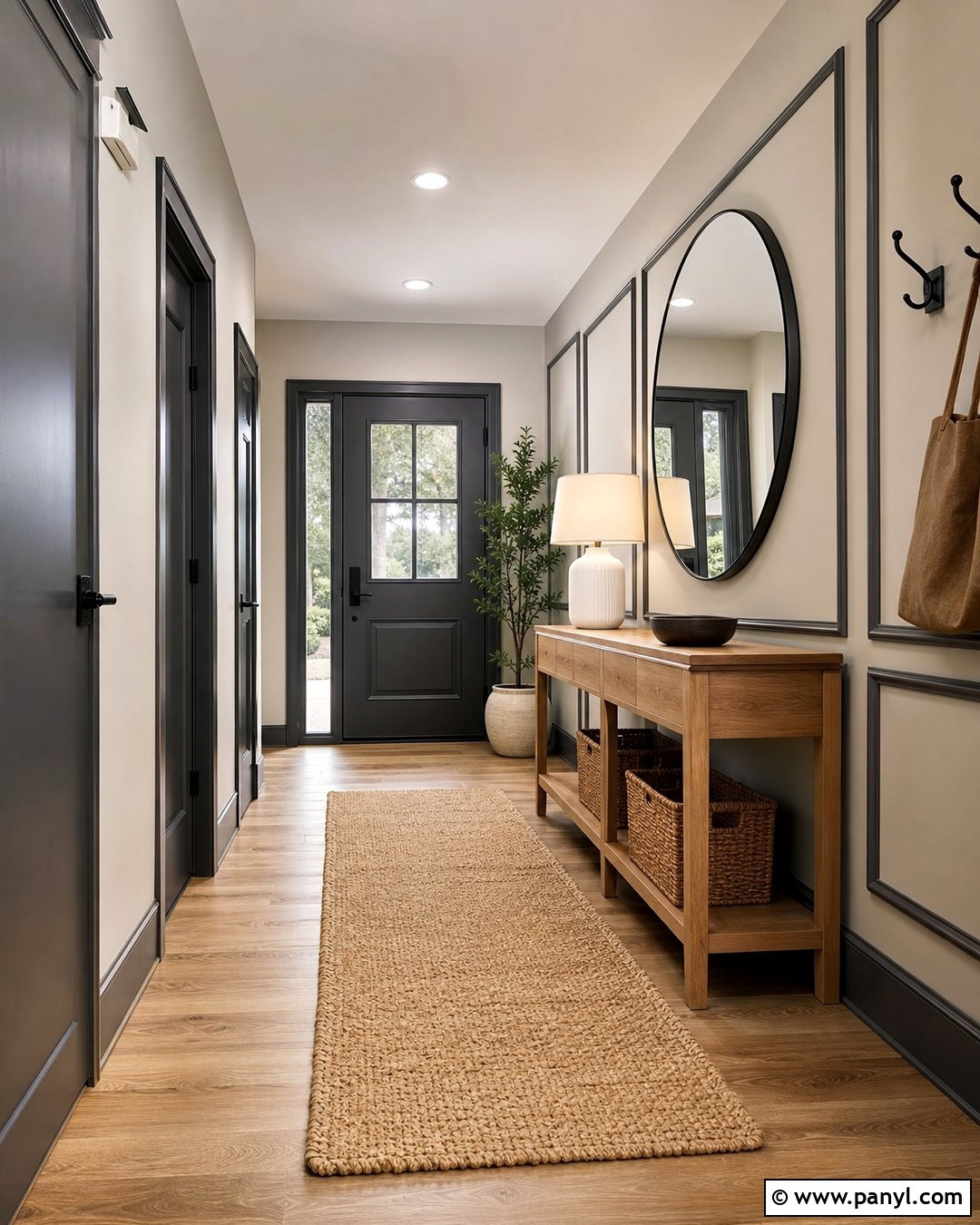
Charcoal moulding gives pale gray walls stronger definition and suits a modern entryway with simple architectural details. Run the charcoal color across picture-frame moulding, baseboards, door casings, and interior doors to create a deliberate outline around the space. Choose a pale warm gray for the walls so the contrast feels softer than pure black and white. Add a slim oak console, a large round mirror, and a textured beige runner. Matte black hooks can blend into the darker woodwork, while a white ceramic lamp keeps the console area bright. Use limited decor so the panel layout remains visible. This complete entry scheme feels polished but still practical, especially when the charcoal moulding is finished in durable satin paint that handles frequent cleaning.
8. Black Wall Moulding With Warm White Walls
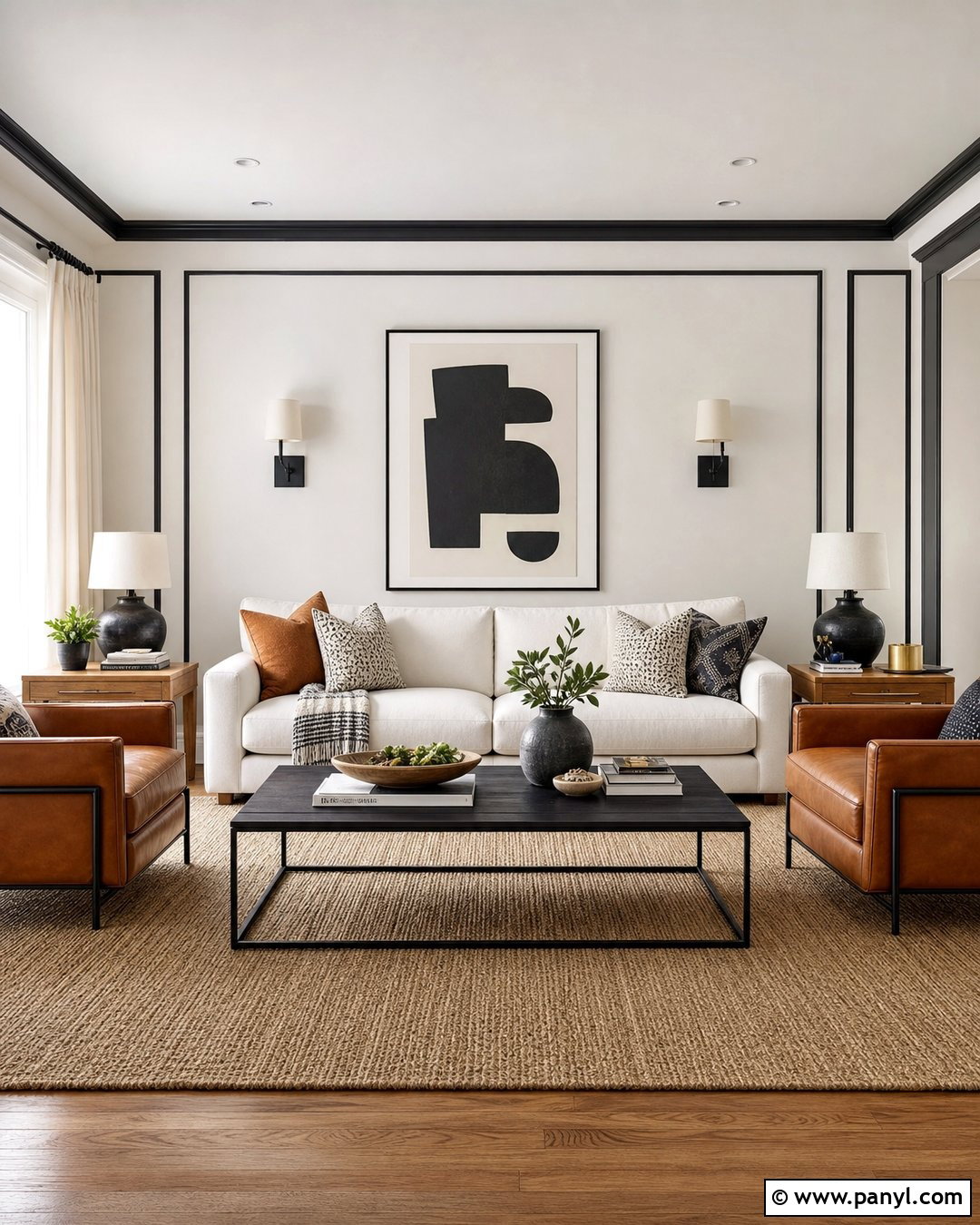
Black wall moulding can look remarkably balanced when paired with warm white walls and plenty of natural material. In a living room, use narrow black picture-frame moulding in evenly spaced rectangles rather than covering every surface with heavy trim. Repeat black on the window casings, curtain rod, and metal coffee table for visual consistency. An ivory sofa, caramel leather armchairs, and a natural jute rug keep the room approachable. Introduce medium oak through side tables and shelving to bridge the dark outlines and light walls. Linen curtains should closely match the wall color so they do not compete with the moulding. Finish with graphic artwork, but leave several panels unfilled. The room will feel contemporary, structured, and inviting rather than stark or overly dramatic.
9. Taupe Wall Moulding With Matching Taupe Walls
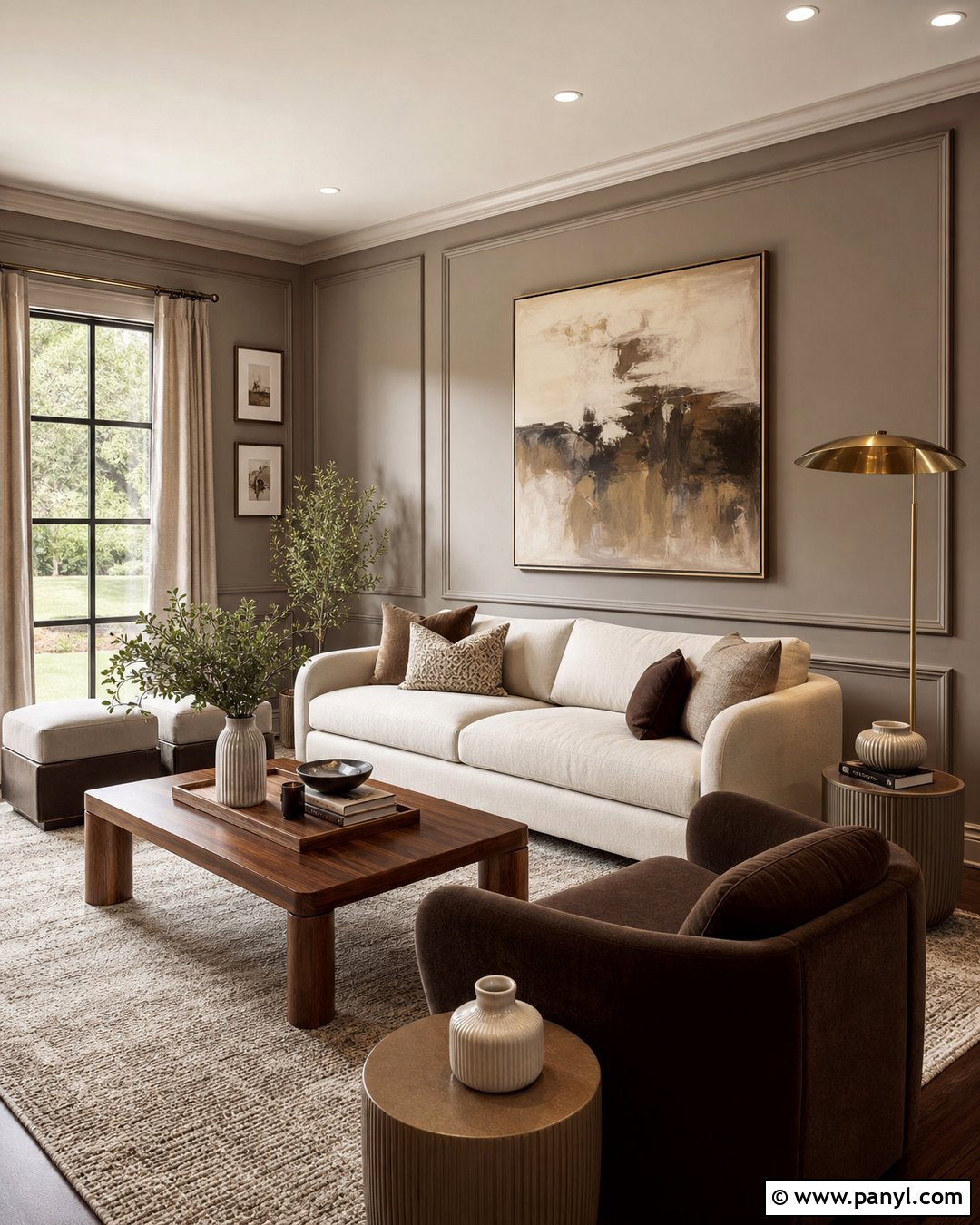
Would a strong contrast feel too busy in your space? Tonal taupe offers a quieter solution while still allowing wall moulding to create depth. Paint the walls a medium mushroom taupe in eggshell and use the same hue in satin on moulding, doors, and baseboards. Complete a cozy sitting room with a cream sofa, chocolate brown accent chair, and medium walnut tables. Boucle, linen, wool, and ribbed ceramic accessories add variety to the restrained palette. Hang one oversized abstract artwork instead of filling every panel. A bronze floor lamp and beige curtains reinforce the warm undertones. Keep the ceiling a soft cream to prevent the room from feeling enclosed. This scheme makes traditional moulding appear relaxed, modern, and easy to coordinate.
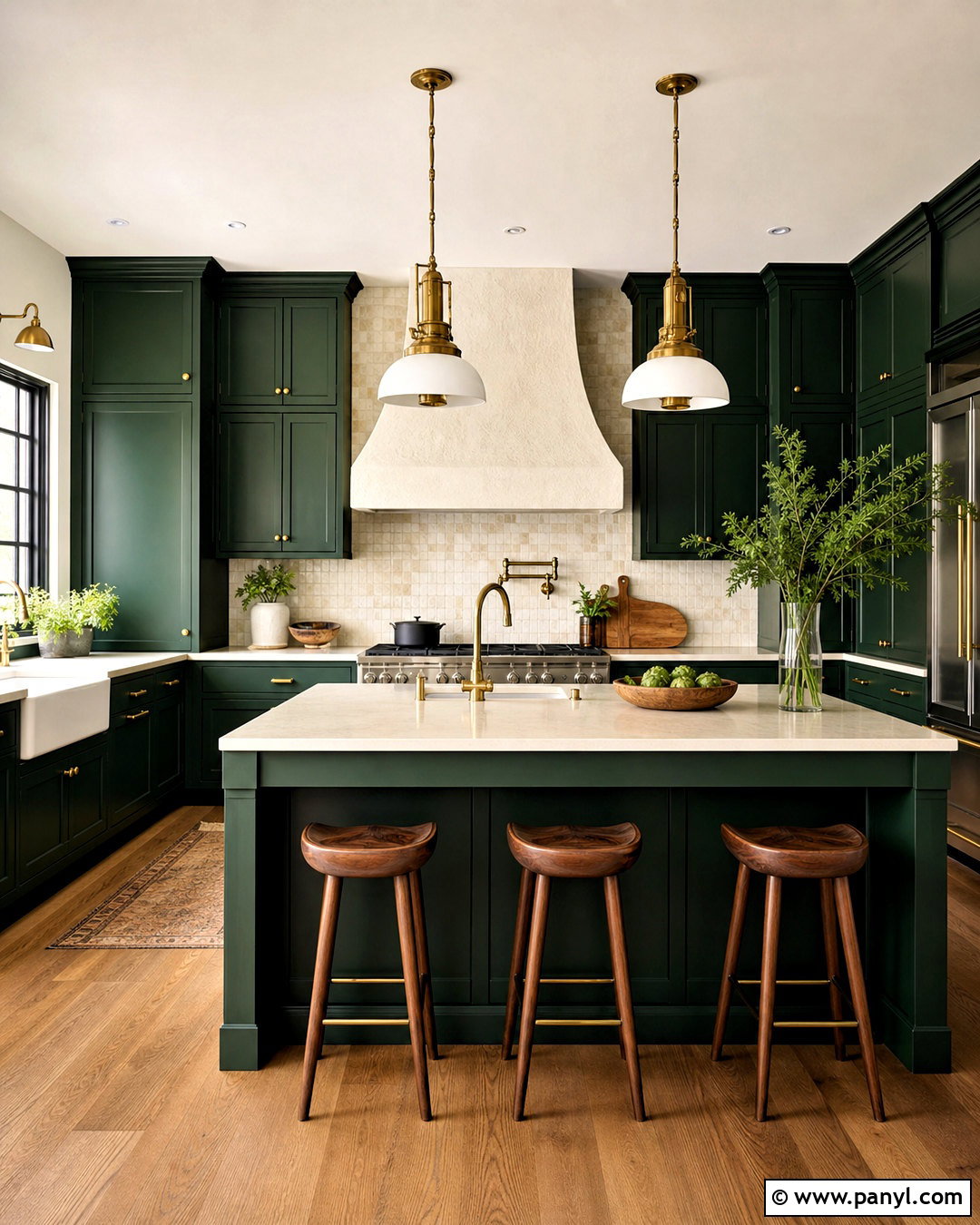
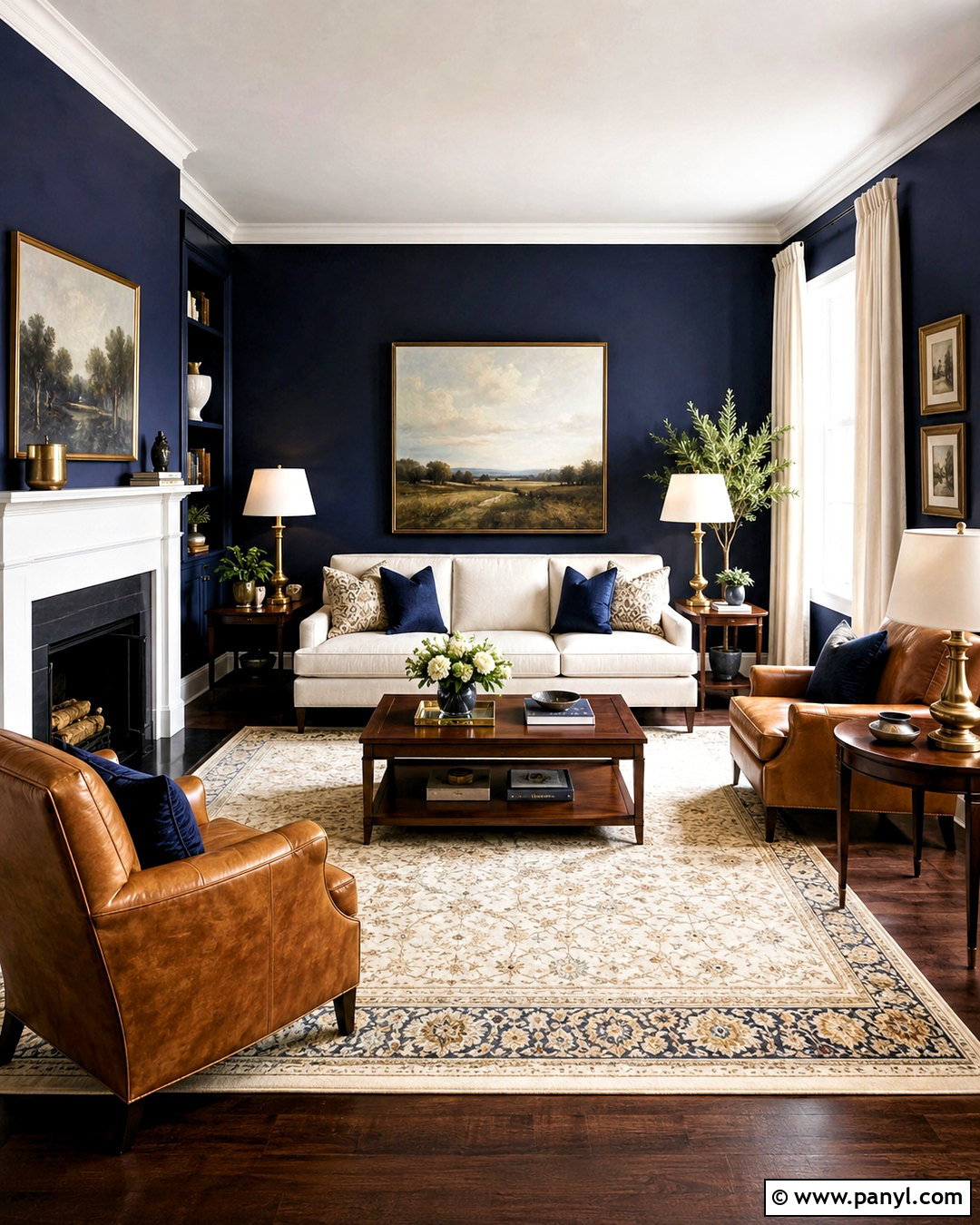
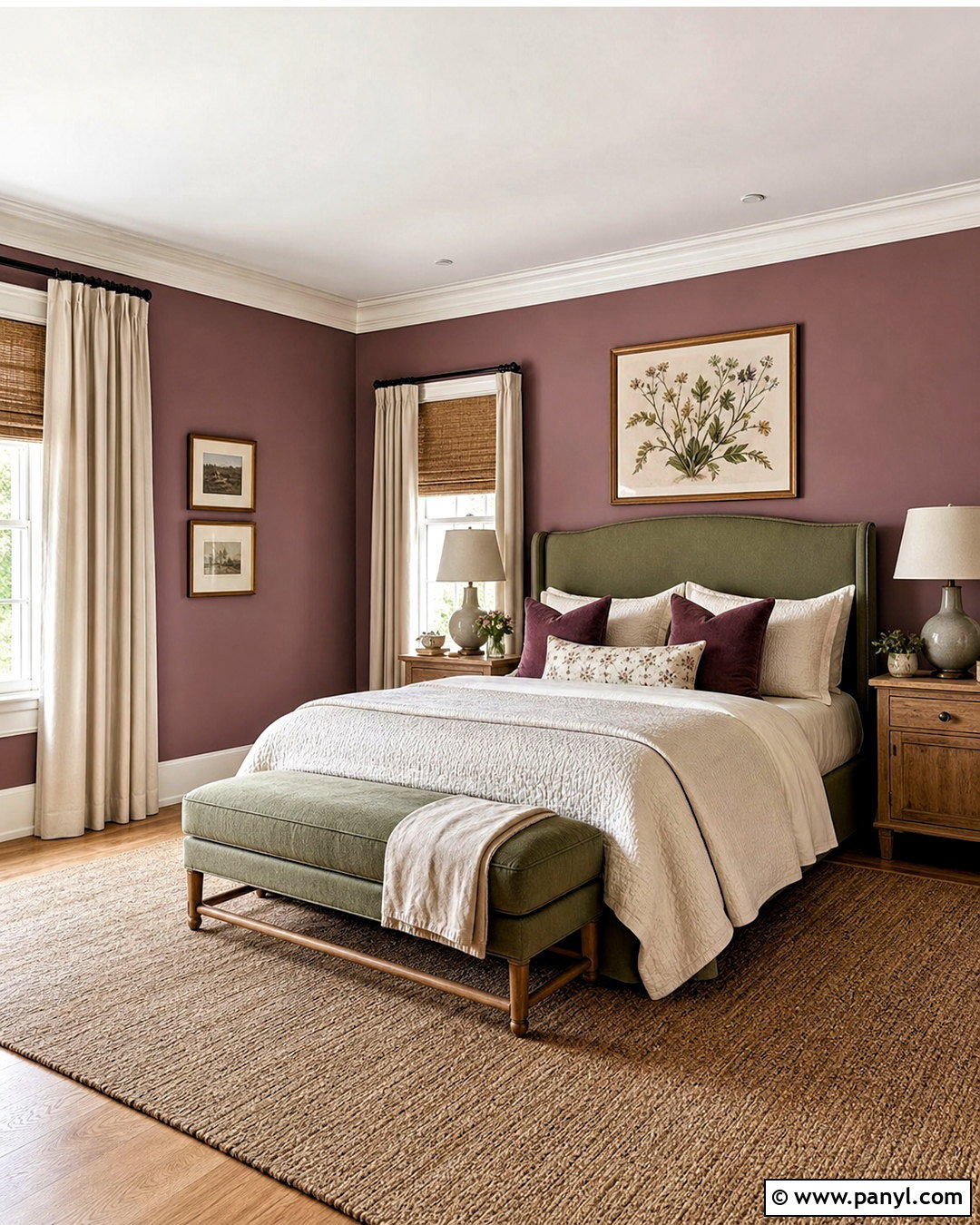
10. Chocolate Brown Wall Moulding With Blush Walls
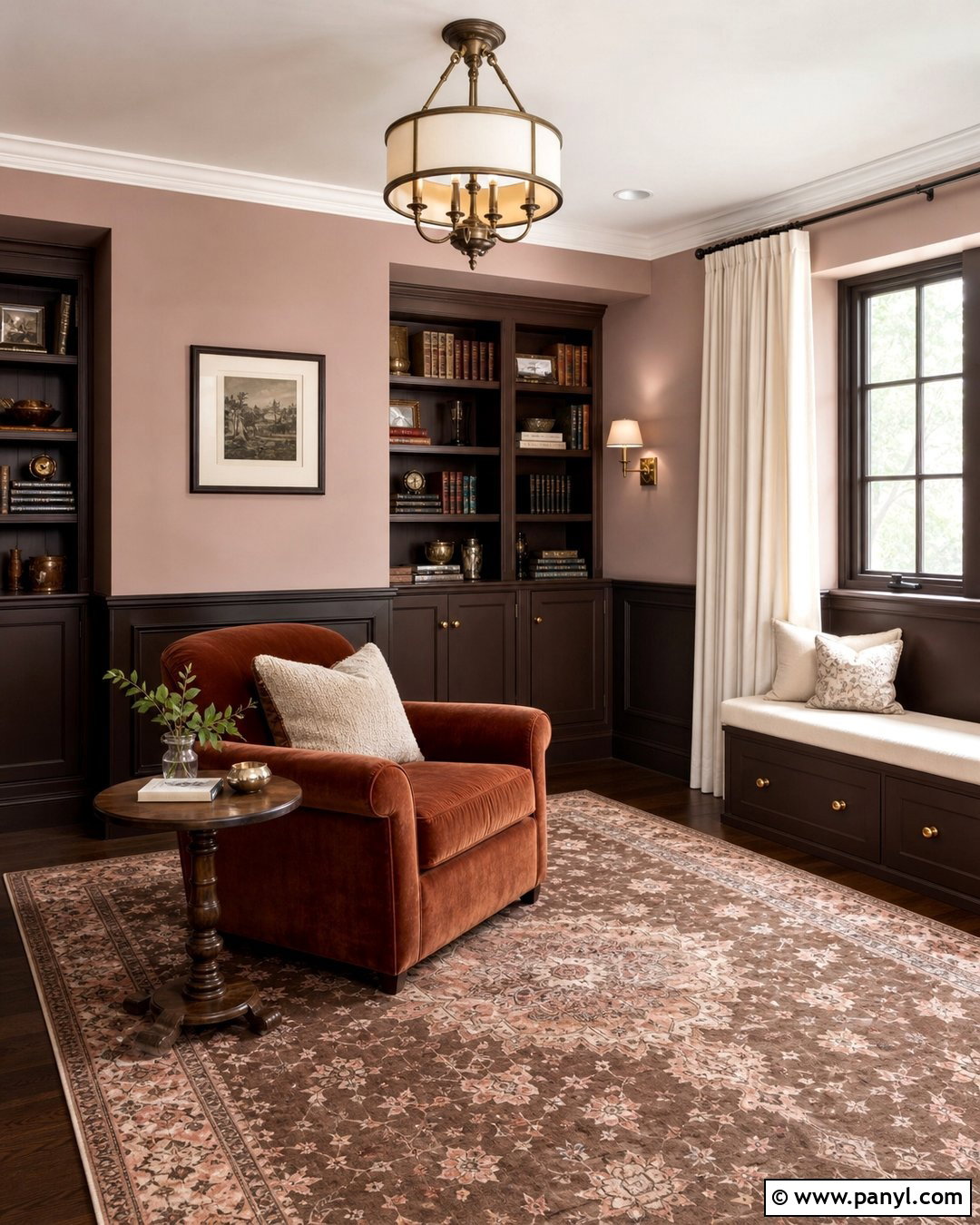
Chocolate brown moulding and muted blush walls create a warm, sophisticated room with more depth than a typical pastel palette. Use the brown on lower panel moulding, baseboards, the door, and a built-in window seat. Paint the upper walls a dusty blush with earthy undertones rather than a sugary pink. Complete the reading room with a rust velvet chair, cream cushions, a walnut side table, and a patterned rug containing brown, rose, and beige. Antique brass lighting adds a soft glow without introducing another strong finish. Choose natural linen curtains in warm ivory and keep accessories simple. The dark moulding grounds the lighter walls, while the blush keeps the brown from feeling heavy. Together, they produce an inviting and distinctly grown-up interior.
11. Terracotta Wall Moulding With Cream Walls
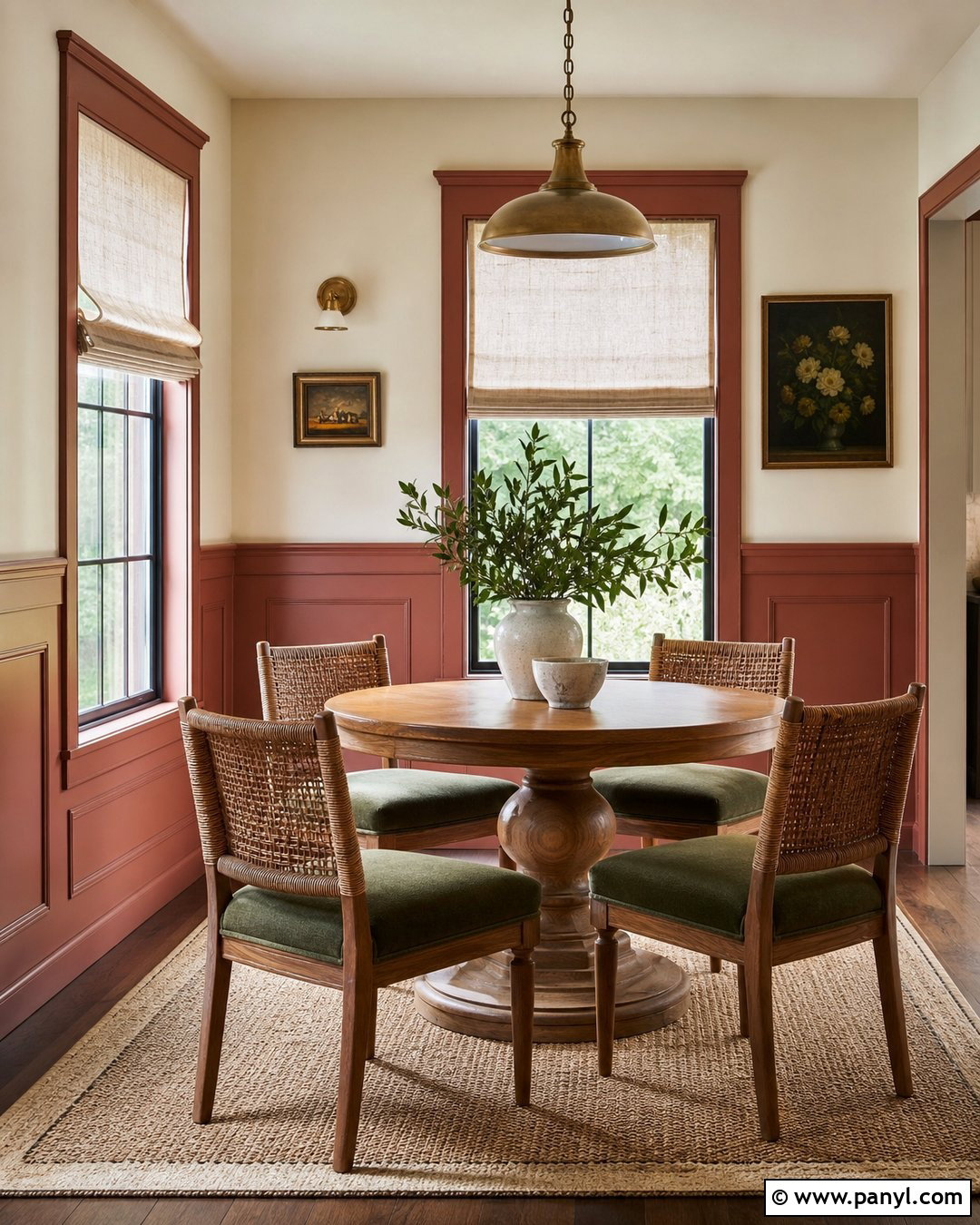
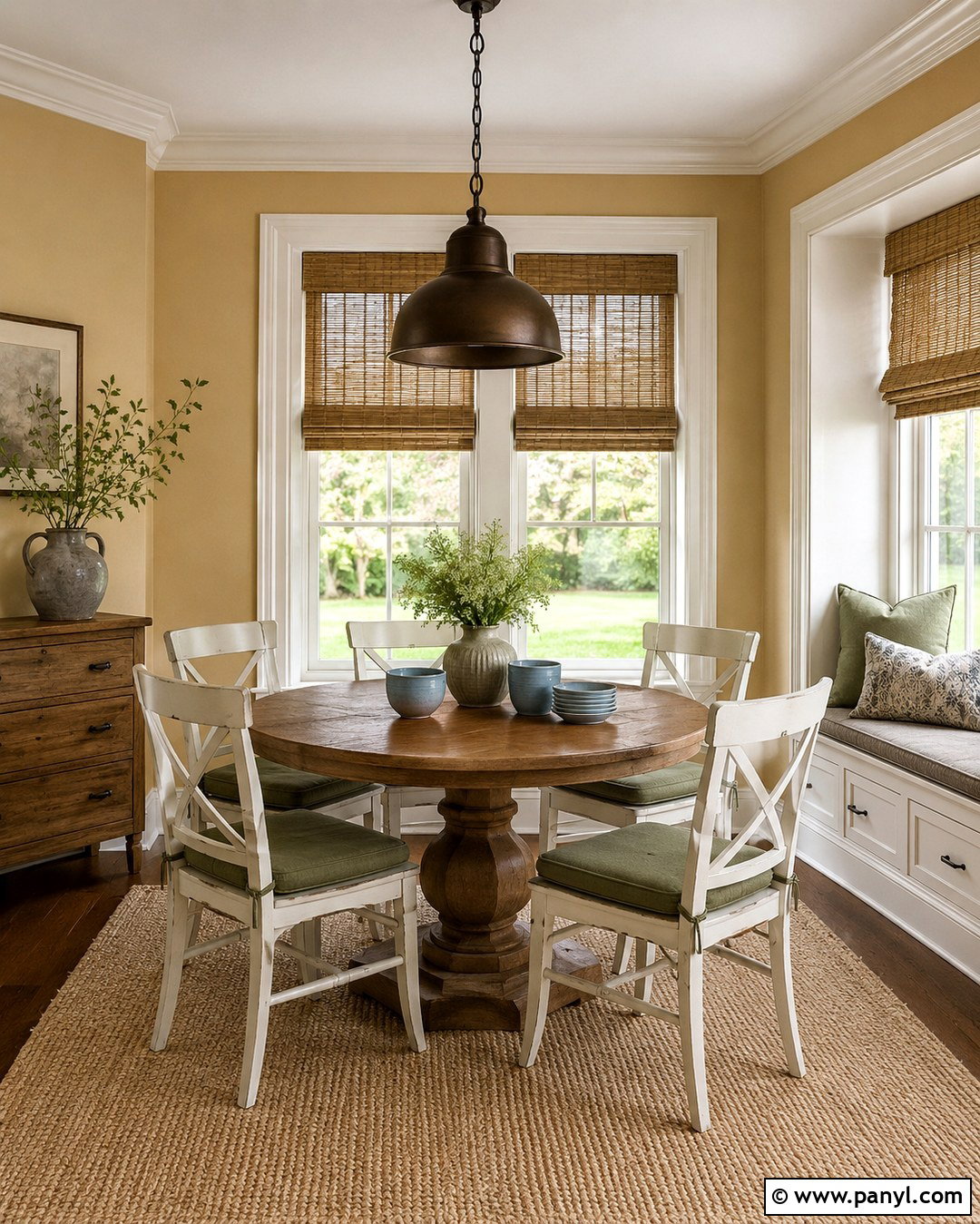
Sun-warmed terracotta moulding can transform a plain dining nook into an earthy, welcoming retreat. Apply muted clay-colored paint to half-wall panelling, the chair rail, baseboards, and window trim. Use warm cream on the walls above to balance the richness of the lower section. A round oak pedestal table, woven dining chairs, and a flat-weave rug support the natural palette. Add olive green seat cushions and handmade cream pottery for restrained color contrast. Linen Roman shades keep the window treatment simple, allowing the terracotta trim to remain visible. Select aged brass or dark bronze lighting instead of shiny chrome. This complete scheme feels especially comfortable in rooms with warm daylight, natural wood floors, and casual furniture, but it can also bring warmth to a cooler north-facing space.
12. Burgundy Wall Moulding With Dusty Pink Walls
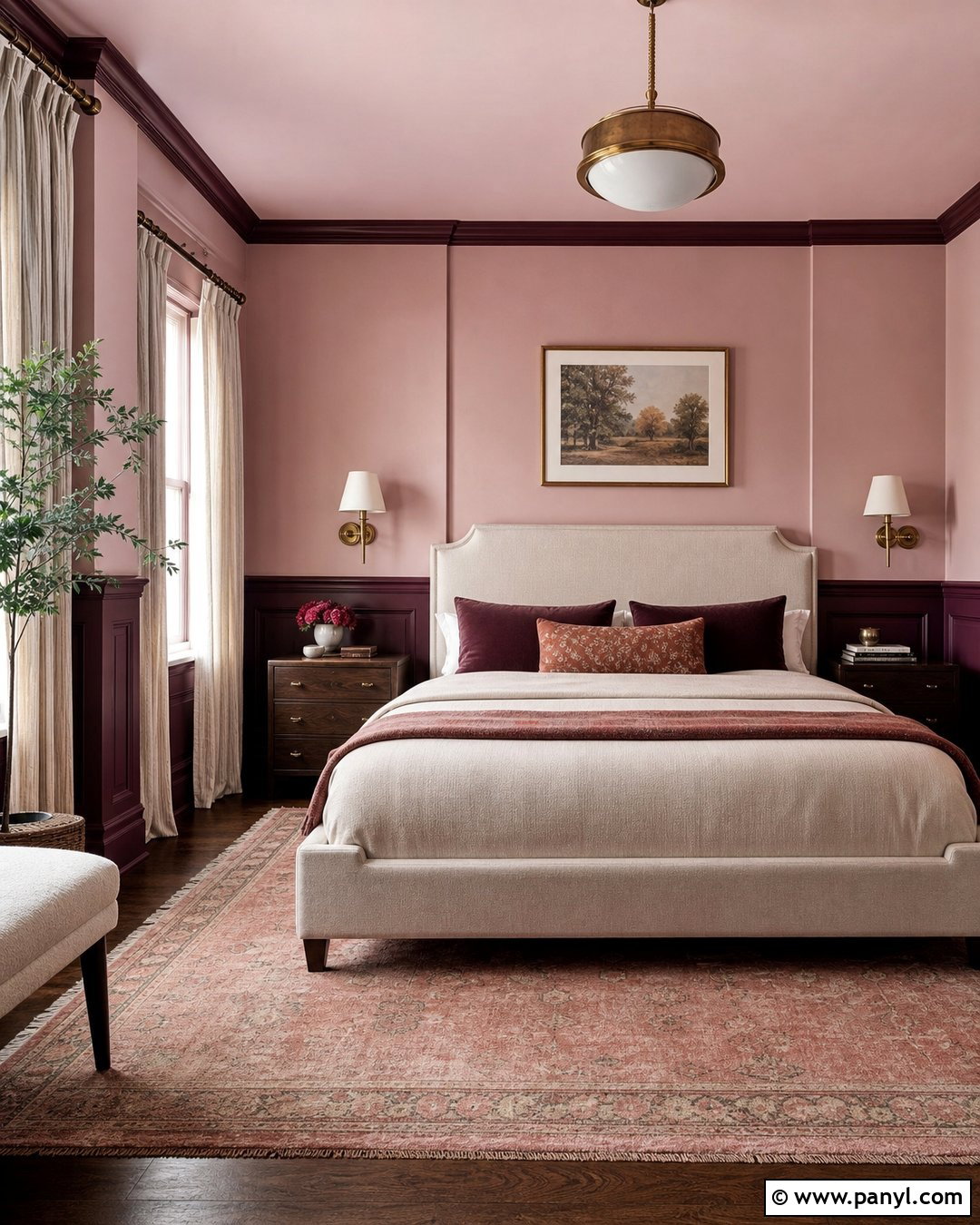
Rich burgundy moulding gives dusty pink walls an elegant, enveloping quality that works beautifully in a bedroom or intimate sitting room. Cover lower wall panels, doors, baseboards, and window trim in a deep wine-red satin finish. Use a soft mineral pink above the moulding and continue it across the ceiling for a connected effect. Furnish the room with a cream upholstered bed, dark wood nightstands, and plum or rust accent pillows. A vintage-style rug can combine burgundy, faded rose, and muted blue without making the space feel overly coordinated. Add antique brass sconces and light linen curtains to lift the darker colors. The completed room should include generous neutral textiles, which help the moulding appear refined rather than intense or theatrical.
13. Mustard Wall Moulding With Ivory Walls
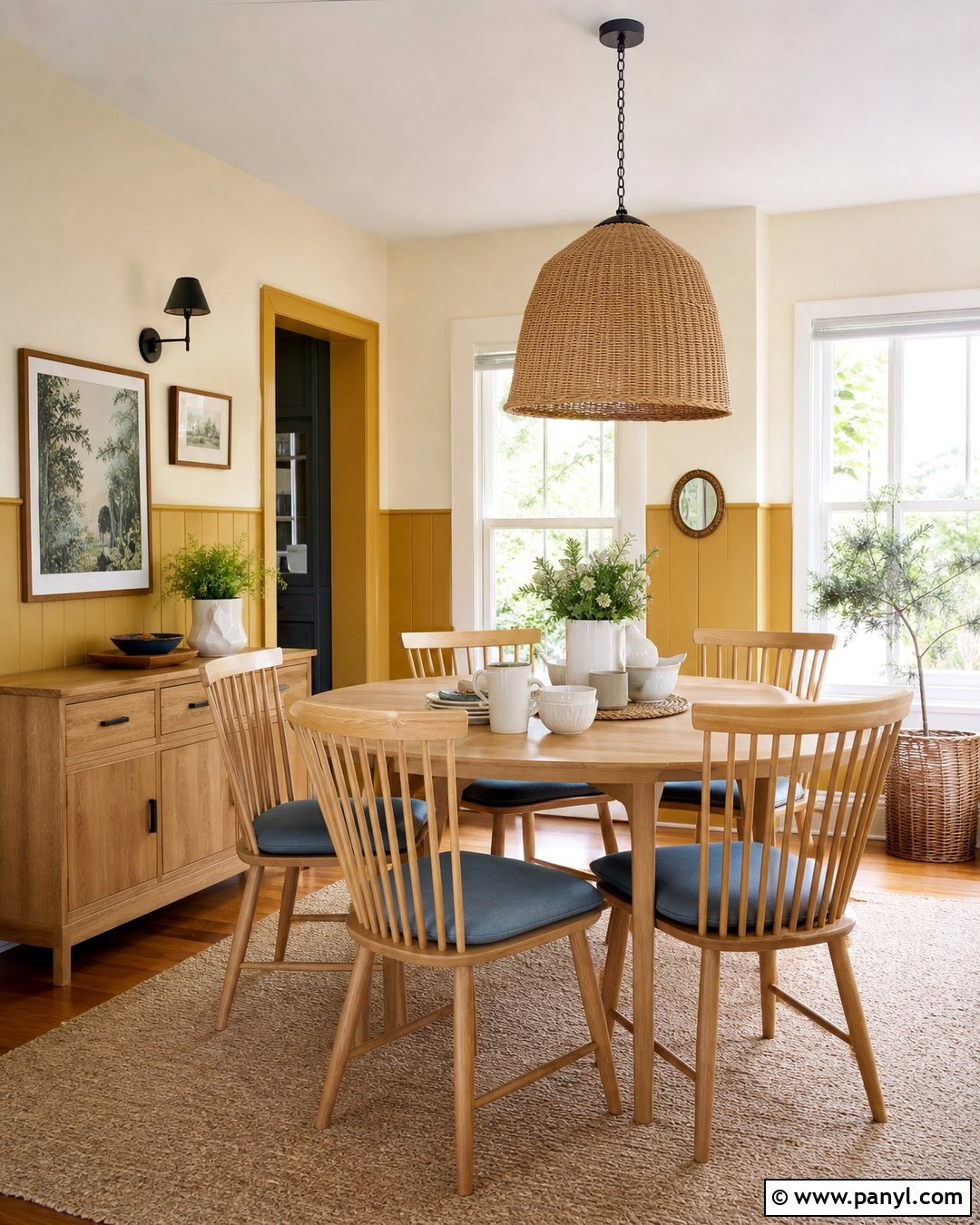
Mustard yellow moulding introduces cheerful character while ivory walls keep the overall room calm and livable. In a breakfast area, paint lower wainscoting and built-in bench fronts a muted ochre mustard. Carry the same color onto the baseboards and window casing for a complete architectural treatment. Choose warm ivory for the upper walls and ceiling, then furnish the space with a pale oak table and simple spindle-back chairs. Blue-gray seat cushions offer complementary contrast, while a woven pendant and natural fiber rug soften the brighter paint. Keep decorative objects limited to white ceramics and small green plants. This scheme works best when the yellow has brown or ochre undertones. Clear, highly saturated yellow may compete with the wall details and feel less restful.
14. Soft Pink Wall Moulding With Matching Walls
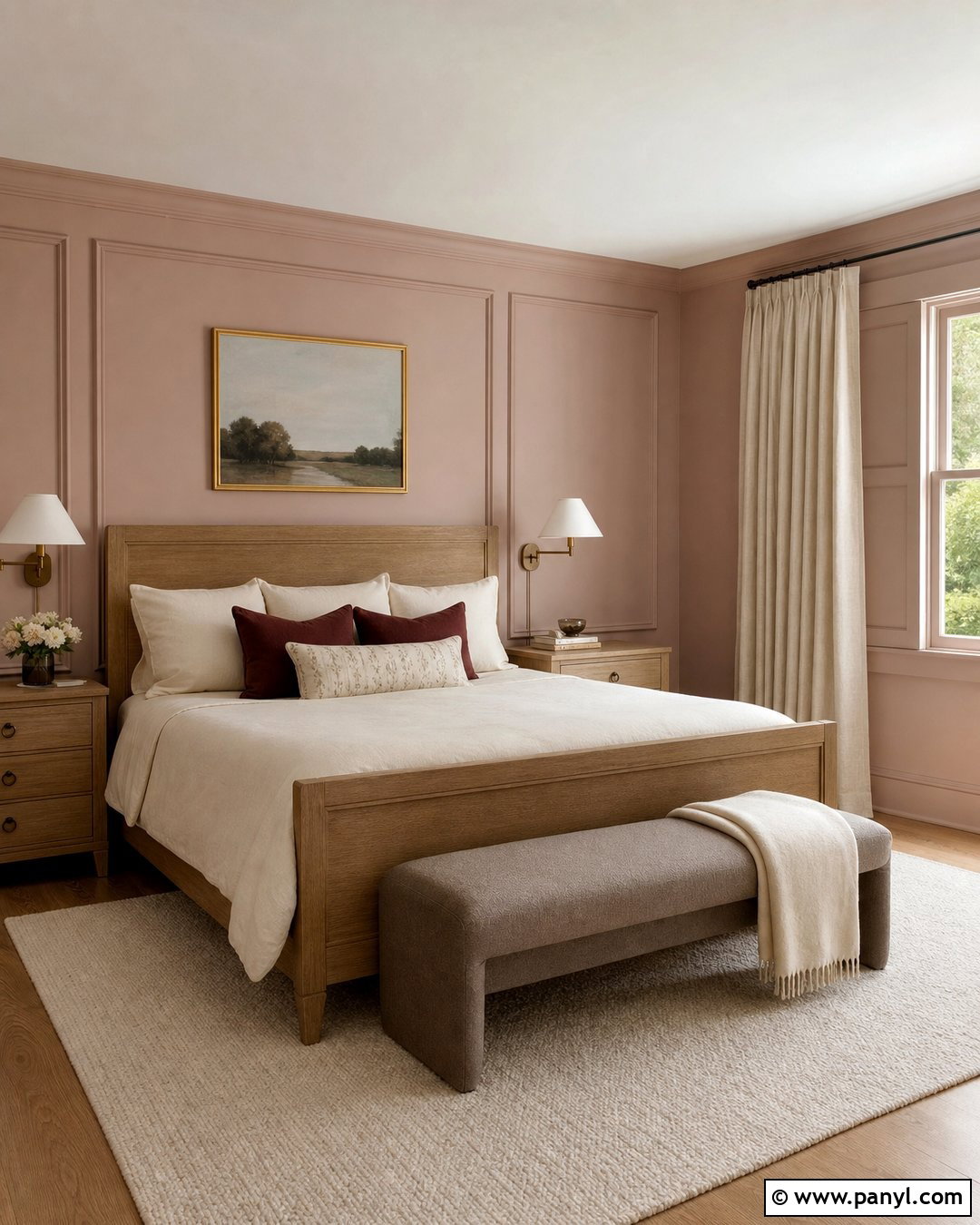
A monochromatic pink room can feel subtle and architectural rather than overly sweet. Choose a pale, dusty pink with beige or gray undertones, then apply it across walls, picture-frame moulding, baseboards, and doors. Use eggshell on broad surfaces and satin on the raised details to create gentle shadow and shine. Complete the bedroom with a light oak bed, ivory bedding, a mushroom-colored bench, and natural linen curtains. Burgundy piping on cushions or a small plum lamp adds depth without overpowering the soft background. A cream wool rug keeps the floor light, while aged brass hardware contributes warmth. Limit decorative patterns so the moulding remains readable. The finished room feels calm, flattering, and suitable for both traditional and modern furnishings.
15. Lavender Wall Moulding With Warm White Walls
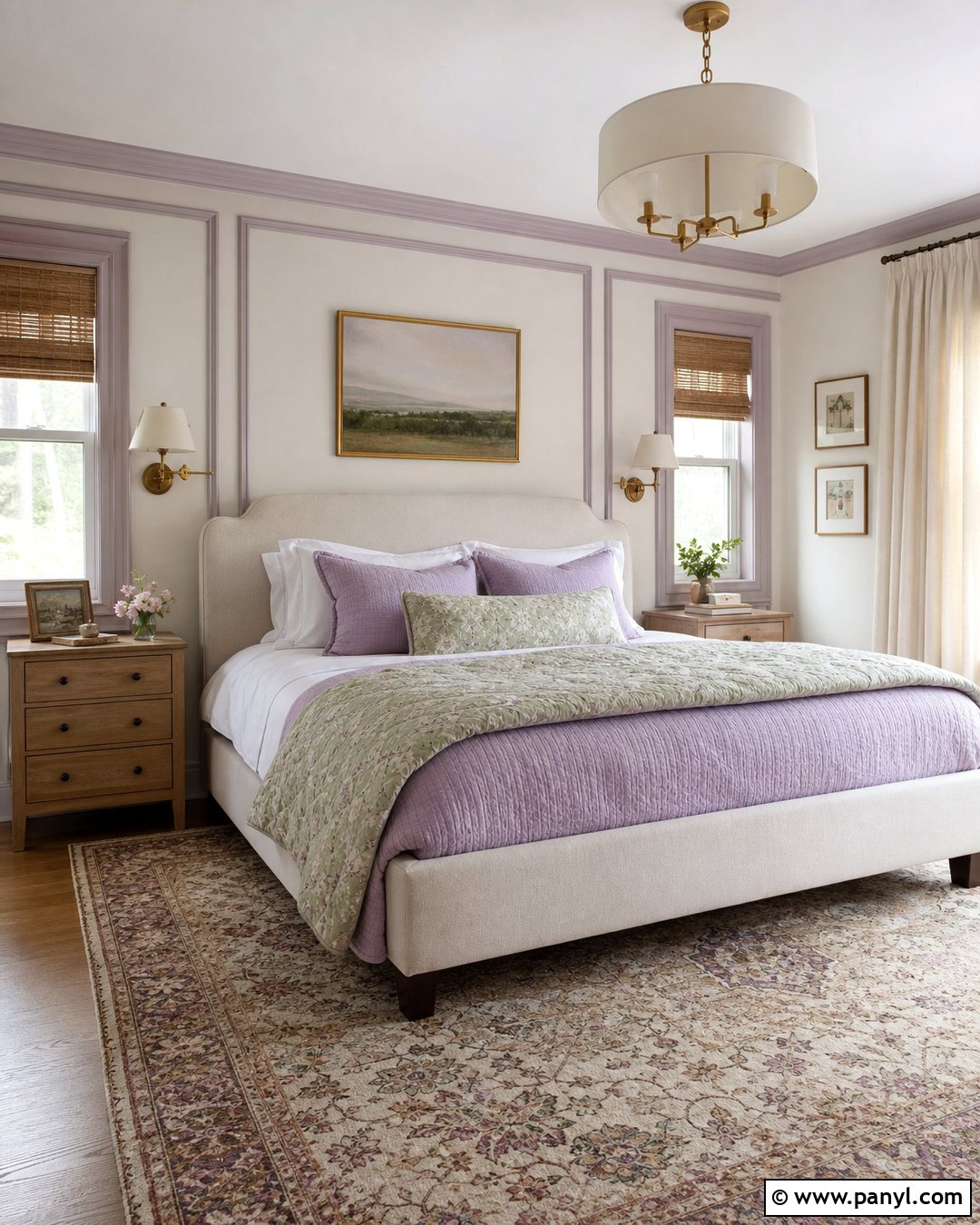
Pale lavender moulding brings an unexpected softness to a guest bedroom, especially when surrounded by warm white walls. Select a muted lavender with noticeable gray undertones and use it on full-height panel frames, baseboards, window trim, and the bedroom door. Warm white wall paint prevents the purple from feeling cold or overly youthful. Add an upholstered oatmeal bed, white bedding, and a quilt featuring lavender, sage, and cream. Light oak nightstands and woven shades introduce natural contrast. Brushed brass sconces warm the cool moulding, while a faded floral rug ties the palette together. Keep the ceiling and curtains close to the wall color. This coordinated room offers color and personality without sacrificing the restful, flexible atmosphere expected in a comfortable guest space.
16. Teal Wall Moulding With Matching Teal Walls
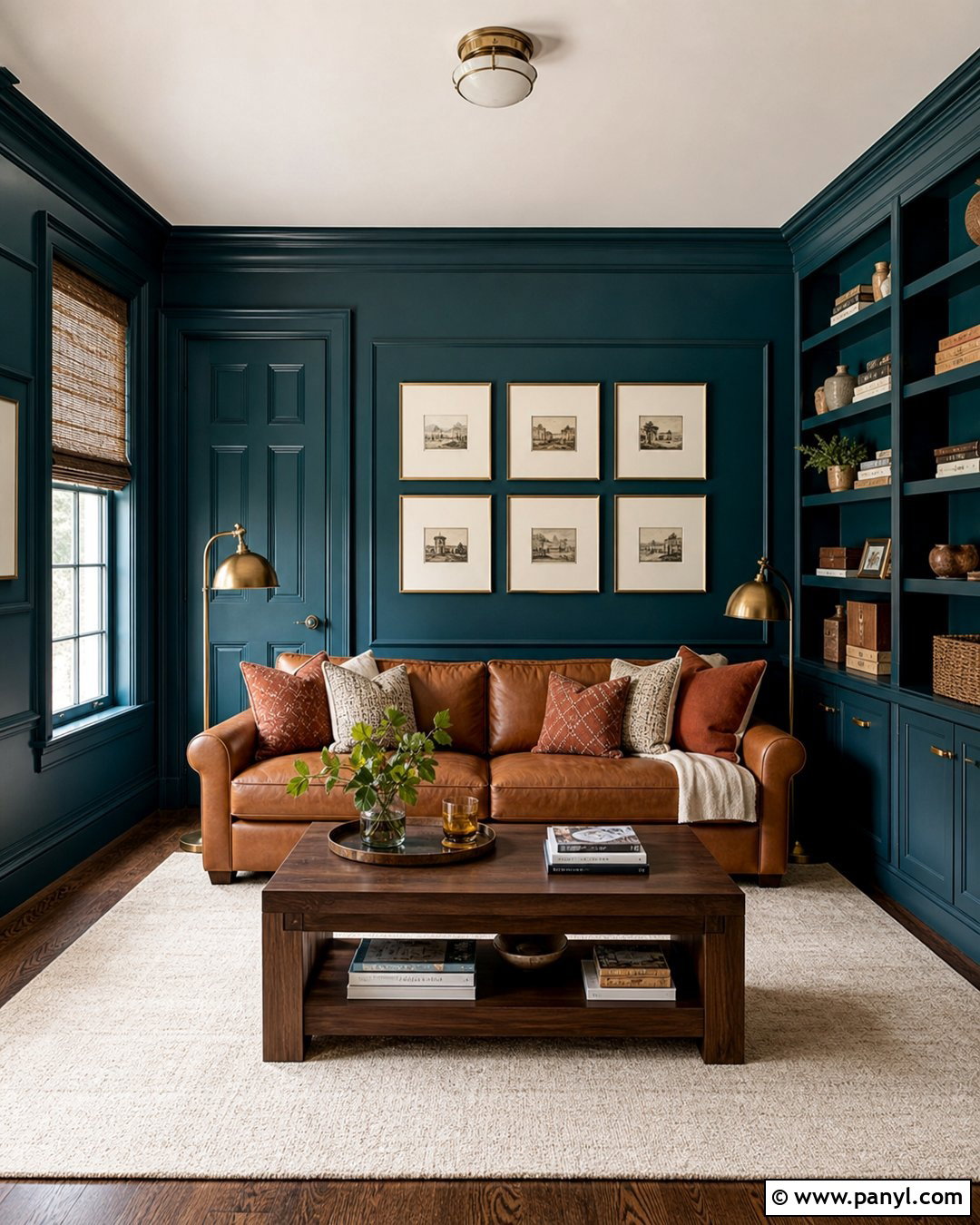
Deep teal color drenching can turn a small den into a cozy, immersive retreat. Paint the walls, picture-frame moulding, baseboards, doors, and built-in shelving in one saturated blue-green hue. Create dimension through finish changes, using eggshell on walls and satin on woodwork. A cognac leather sofa becomes the warm focal point, supported by a cream rug and walnut coffee table. Choose artwork with ivory mats so it stands out clearly against the teal panels. Aged brass lamps, rust-colored cushions, and natural woven blinds keep the palette from feeling cool. Leave the ceiling warm white if the room receives limited daylight, or carry teal overhead in a brighter space. The finished design feels intentional because every architectural surface belongs to one continuous color story.
17. Powder Blue Wall Moulding With Pale Gray Walls
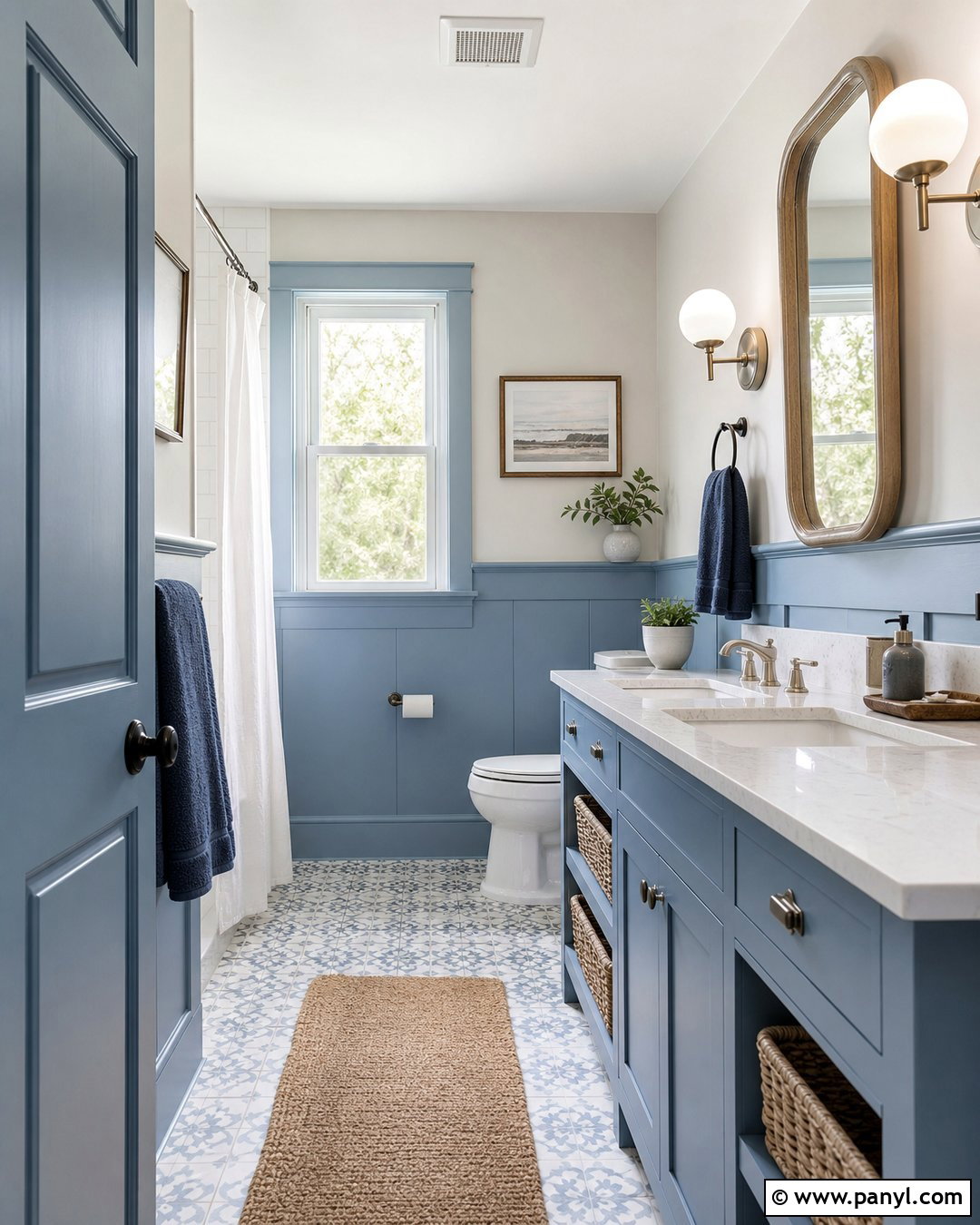
Powder blue moulding gives pale gray walls a light, crisp edge that suits a bathroom, nursery, or quiet bedroom. In a bathroom, use the blue on moisture-resistant wainscoting, baseboards, the vanity, and door trim. Select a very pale warm gray for the upper walls so the two colors feel connected rather than sharply divided. White quartz counters, brushed nickel fixtures, and a light oak mirror keep the room fresh. Add small amounts of navy through towels or patterned floor tile for depth. A white ceiling and globe sconces provide clean brightness. Avoid cool fluorescent-looking whites beside the powder blue. Warm white accessories and natural baskets make the completed room softer, more practical, and visually balanced while allowing the moulding details to remain clearly defined.
18. Olive Green Wall Moulding With Warm Beige Walls
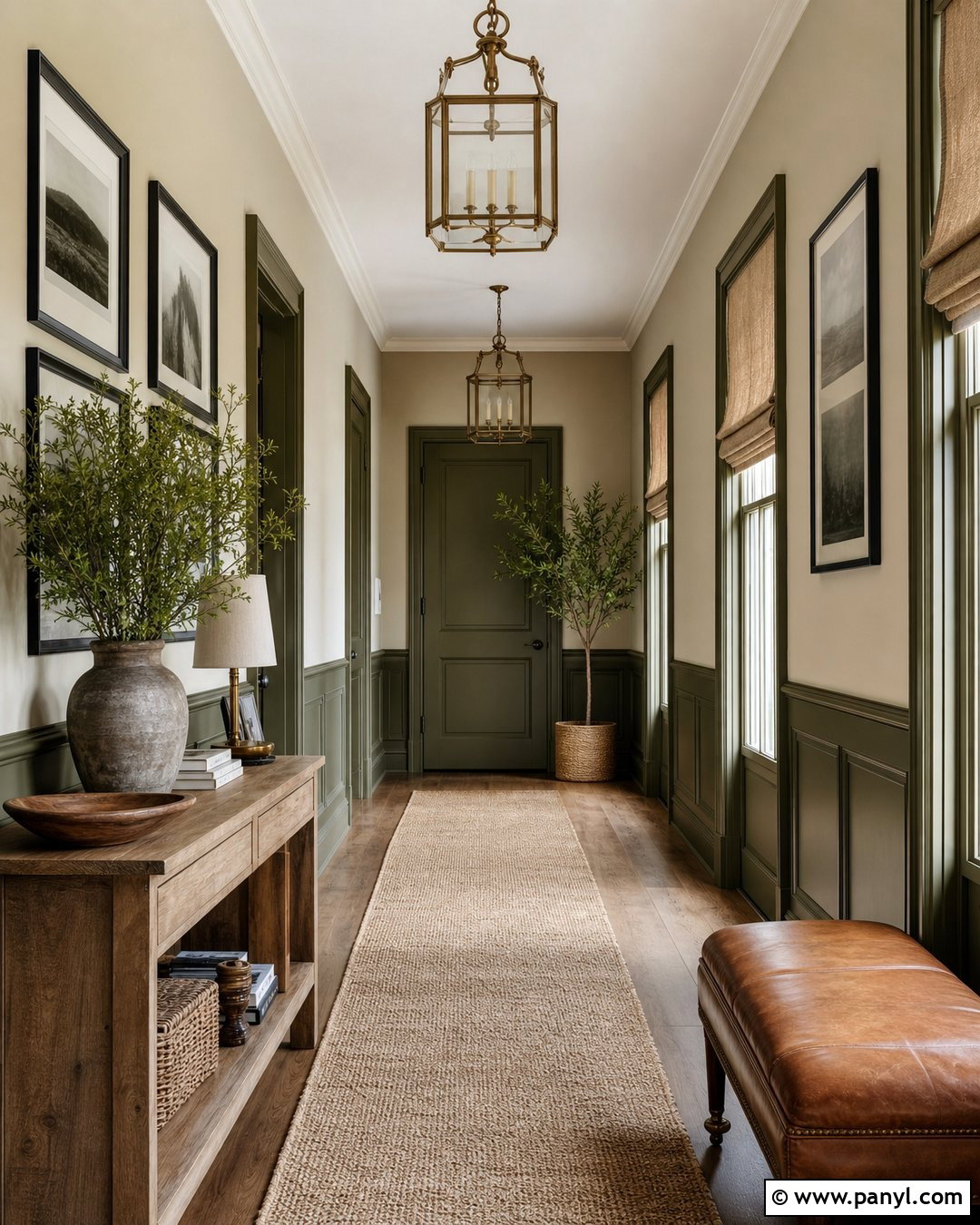
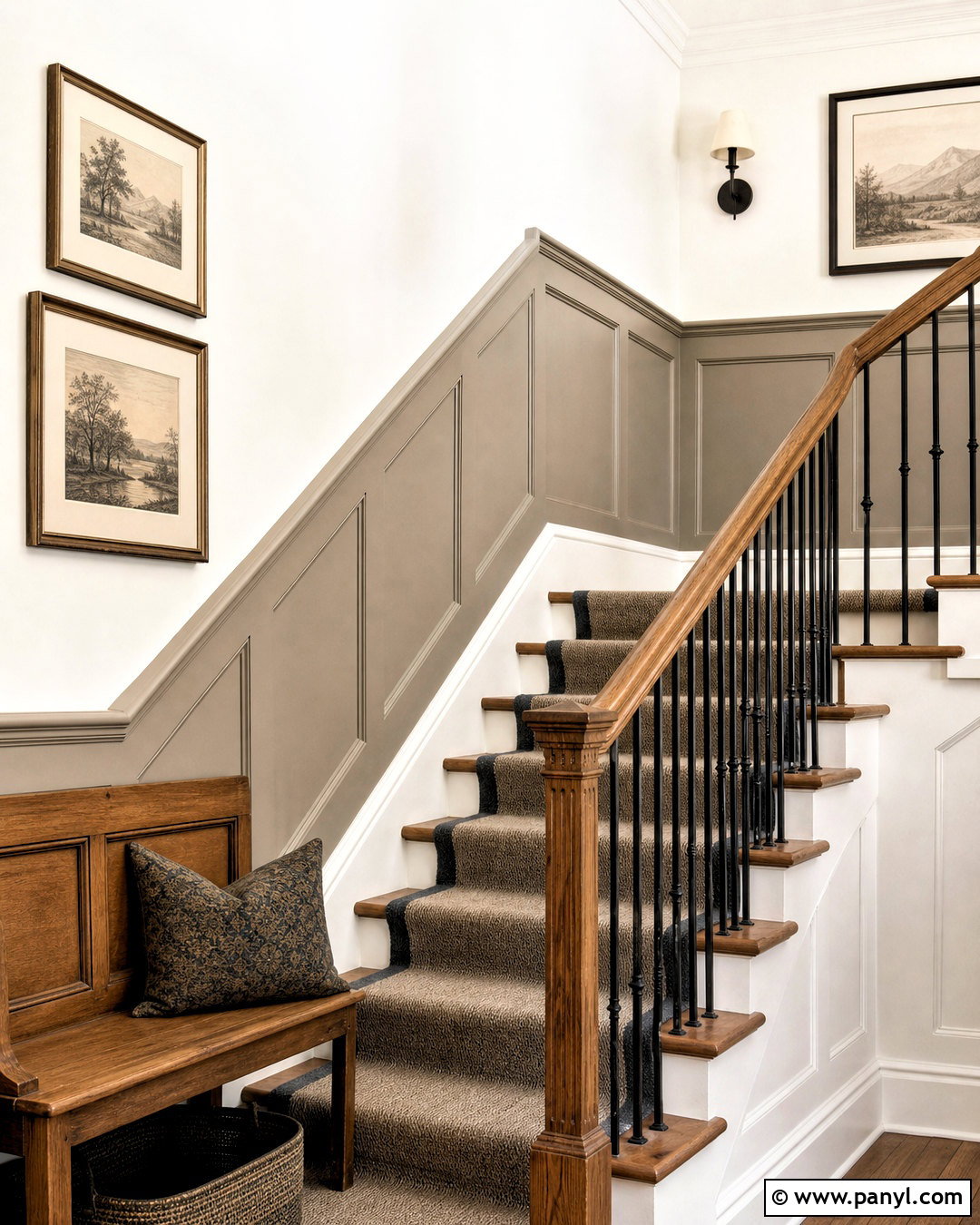
Olive green moulding and warm beige walls produce an earthy palette that works naturally in a hallway or living room. Paint lower panelling, baseboards, and doors in a deep olive with brown undertones. Use sandy beige above the chair rail and continue it onto the ceiling for a warm envelope. Add an oak console, a woven runner, and black-framed landscape prints arranged inside the wall panels. Cognac leather, aged brass, and dark bronze accessories reinforce the grounded color scheme. Keep curtains or shades in natural flax linen so the green remains the main accent. If the hallway connects several rooms, repeat the olive on visible door casings for continuity. This complete look feels rich and traditional but still relaxed enough for a casual, busy household.
19. Plum Wall Moulding With Mushroom Walls
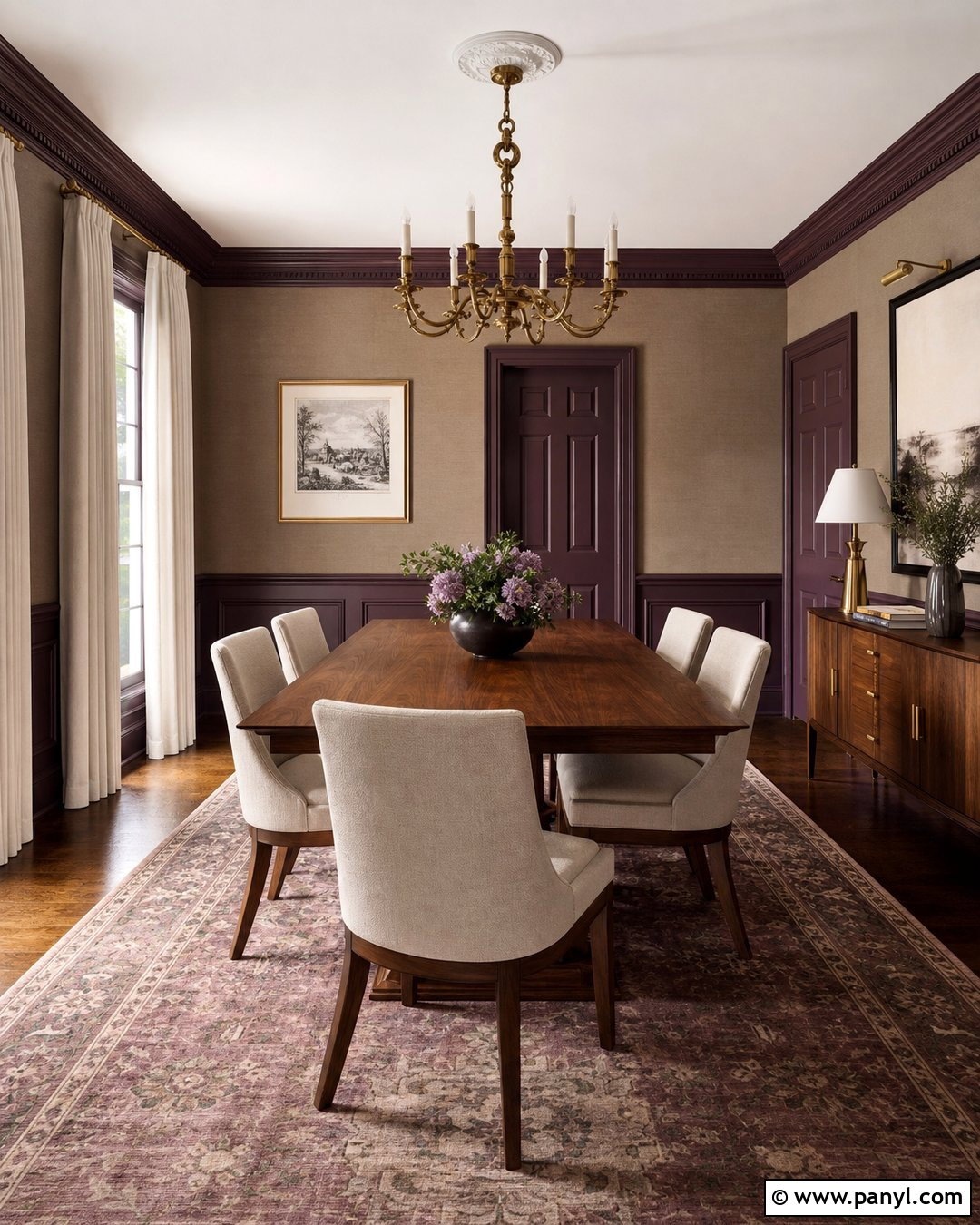
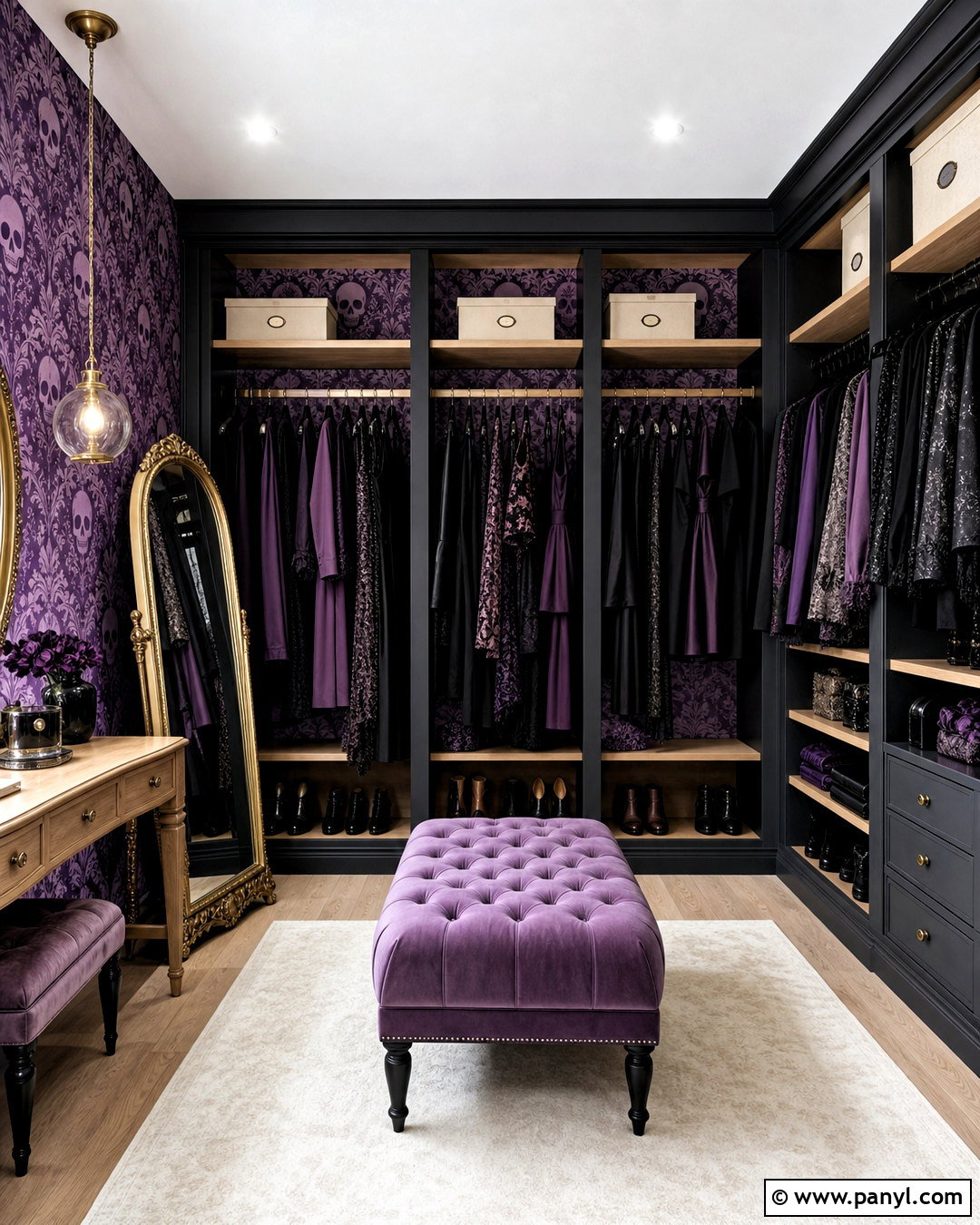
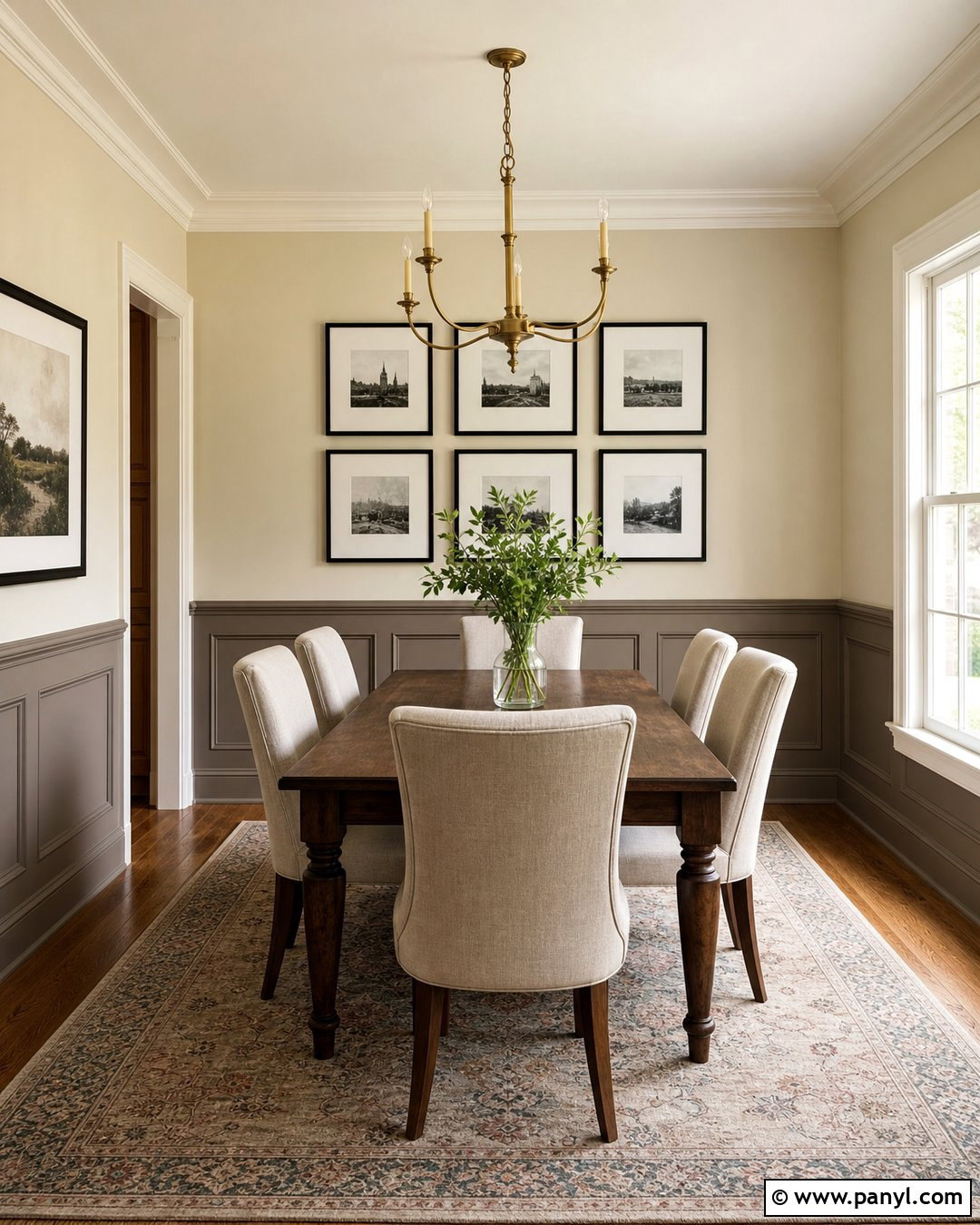
Deep plum moulding provides a softer alternative to black or charcoal while offering similar architectural impact. Pair it with mushroom-colored walls in a dining room, library, or formal living area. Apply plum to picture-frame moulding, crown moulding, baseboards, and doors. Use a balanced gray-brown mushroom shade on the wall surfaces and ceiling to soften the transitions. Furnish the room with a walnut table, cream upholstered chairs, and a rug containing muted plum, olive, and tan. Antique brass lighting brings out the warm side of both paint colors. Add off-white curtains and simple framed art rather than heavy patterned drapes. In bright daylight, the plum will read as colorful; under indoor lighting, it becomes deeper and more intimate, giving the room flexible character.
20. Rust Wall Moulding With Tan Walls
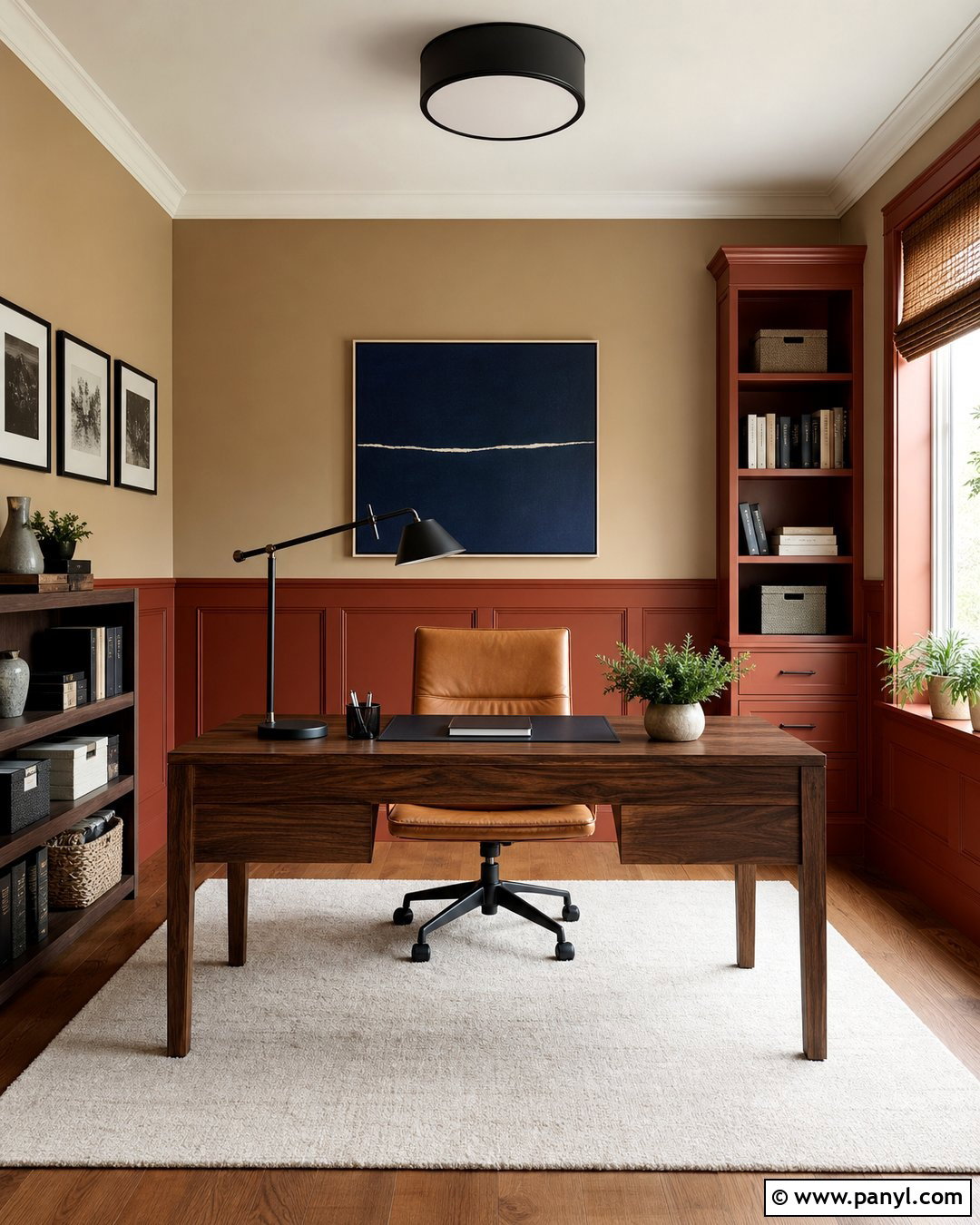
Rust-colored wall moulding brings warmth and energy to a home office without relying on bright primary colors. Use a muted burnt orange on lower panelling, baseboards, the office door, and built-in cabinets. Paint the upper walls a soft tan with subtle peach undertones. A walnut desk, camel leather chair, and cream wool rug support the warm scheme, while dark blue artwork provides a cooling counterpoint. Choose matte black task lighting and hardware for clear definition. Natural woven shades filter strong daylight and repeat the tan wall color. Keep shelves organized with neutral boxes and a small number of ceramic objects. The completed office feels focused and grounded because the rust moulding wraps the room consistently instead of appearing as a single disconnected accent.
21. Mint Green Wall Moulding With Chocolate Walls
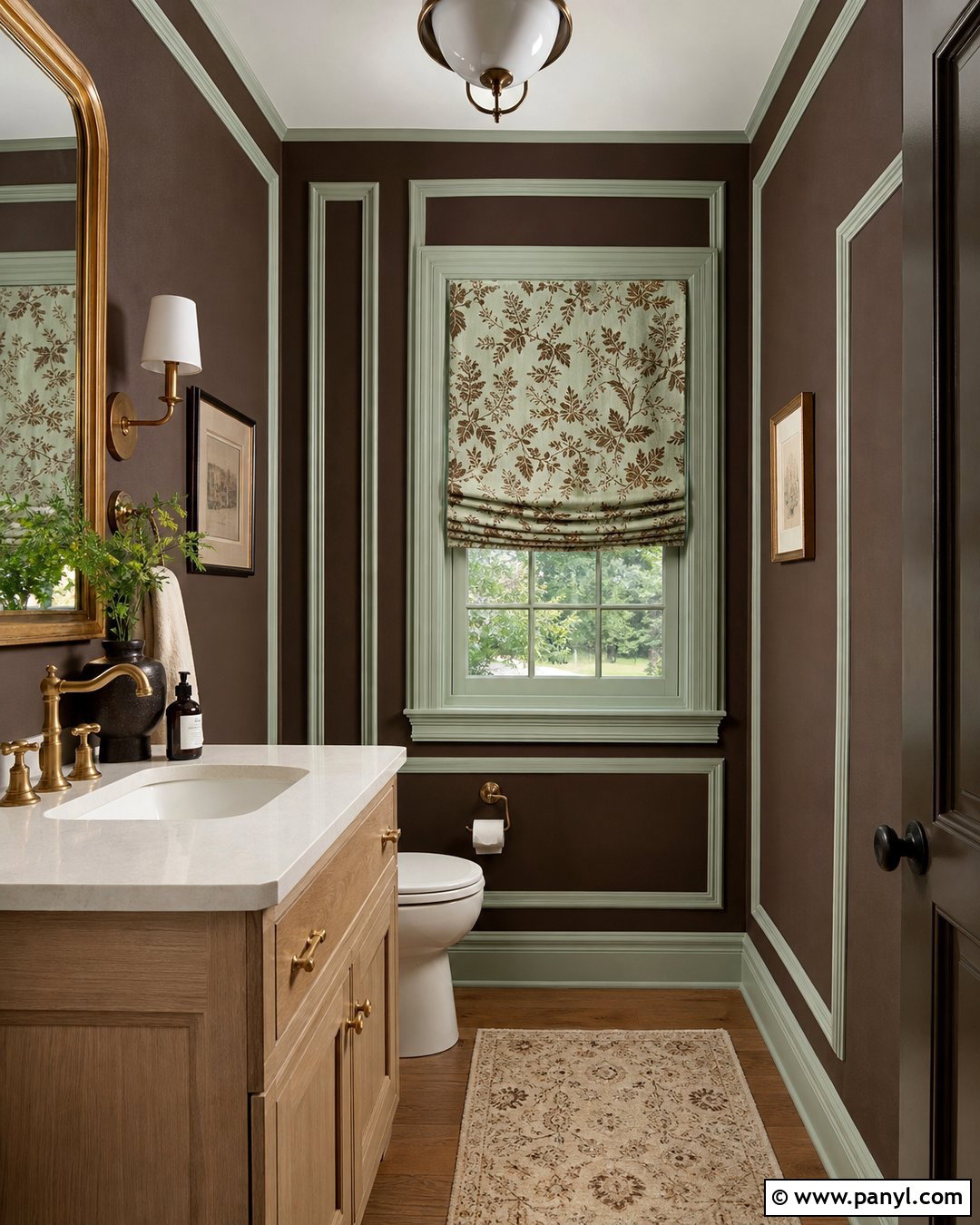
Mint green moulding can feel surprisingly polished when placed against deep chocolate brown walls. This high-contrast palette is well suited to a powder room, compact entry, or creative home office. Paint narrow picture-frame moulding, baseboards, and the door casing in a muted gray-mint satin. Use rich cocoa brown on the wall fields inside and around each panel. Complete the room with a light oak vanity or console, cream stone surfaces, and aged brass fixtures. A small patterned rug or Roman shade can combine mint, brown, and ivory to connect the scheme. Keep the ceiling warm white for brightness. The pale moulding brings forward the wall architecture, while the dark brown creates depth. Careful repetition makes the unusual pairing feel purposeful rather than experimental.
22. Pale Yellow Wall Moulding With White Walls
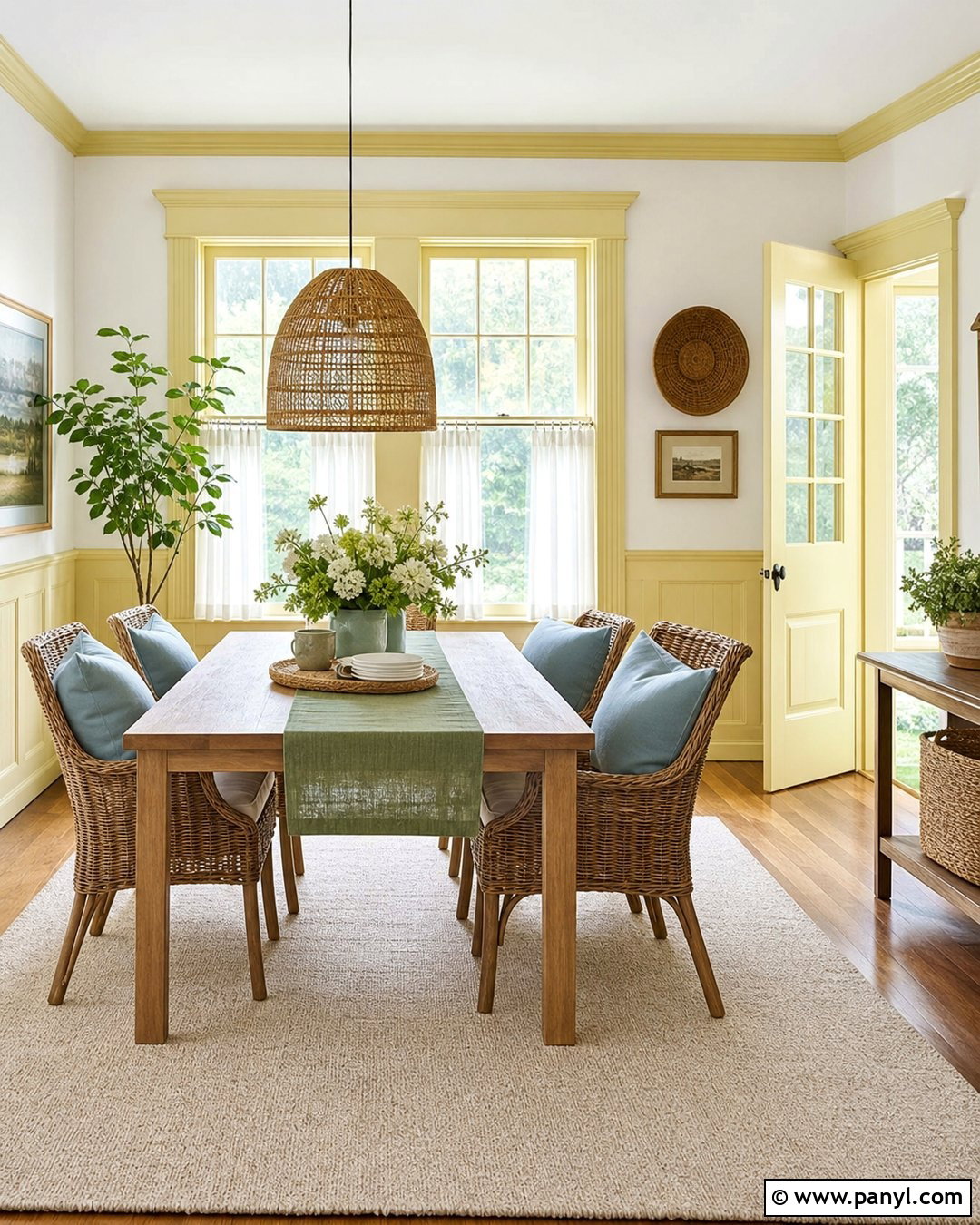
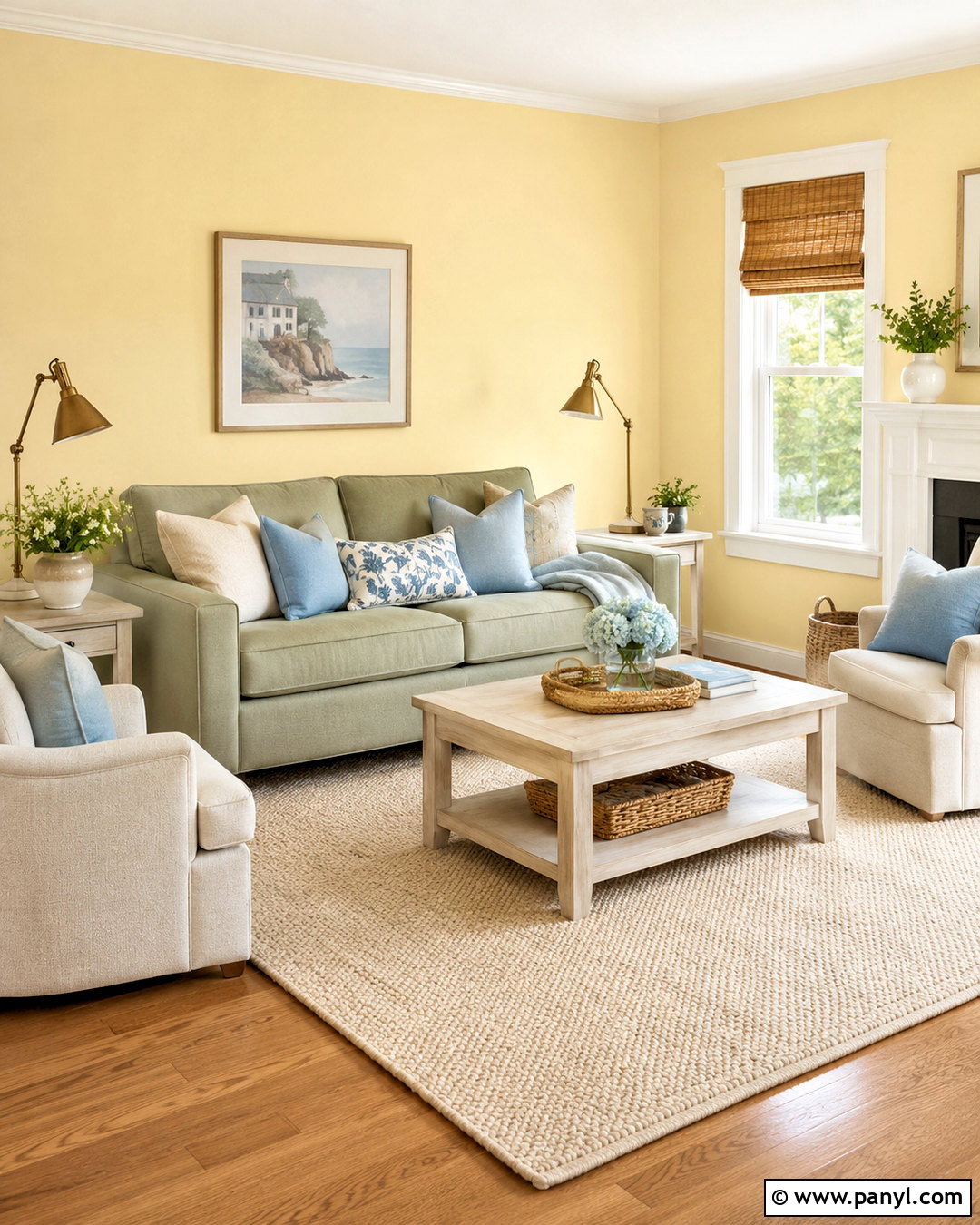
Pale yellow moulding gives white walls a sunny outline without making the entire room brightly colored. Choose a creamy butter yellow and apply it to wainscoting, window trim, baseboards, and interior doors in a breakfast room or child’s bedroom. Use a soft white with warm undertones on the upper walls and ceiling. Complete the space with light oak furniture, woven accents, and an ivory rug. Small touches of sky blue or sage green keep the palette lively but controlled. White curtains allow daylight to reinforce the gentle yellow. Avoid pairing this scheme with stark gray flooring, which can make the warm trim seem disconnected. Honey-toned wood, natural fiber, and cream textiles create a more harmonious foundation for the cheerful architectural color.
23. Cobalt Blue Wall Moulding With Cream Walls
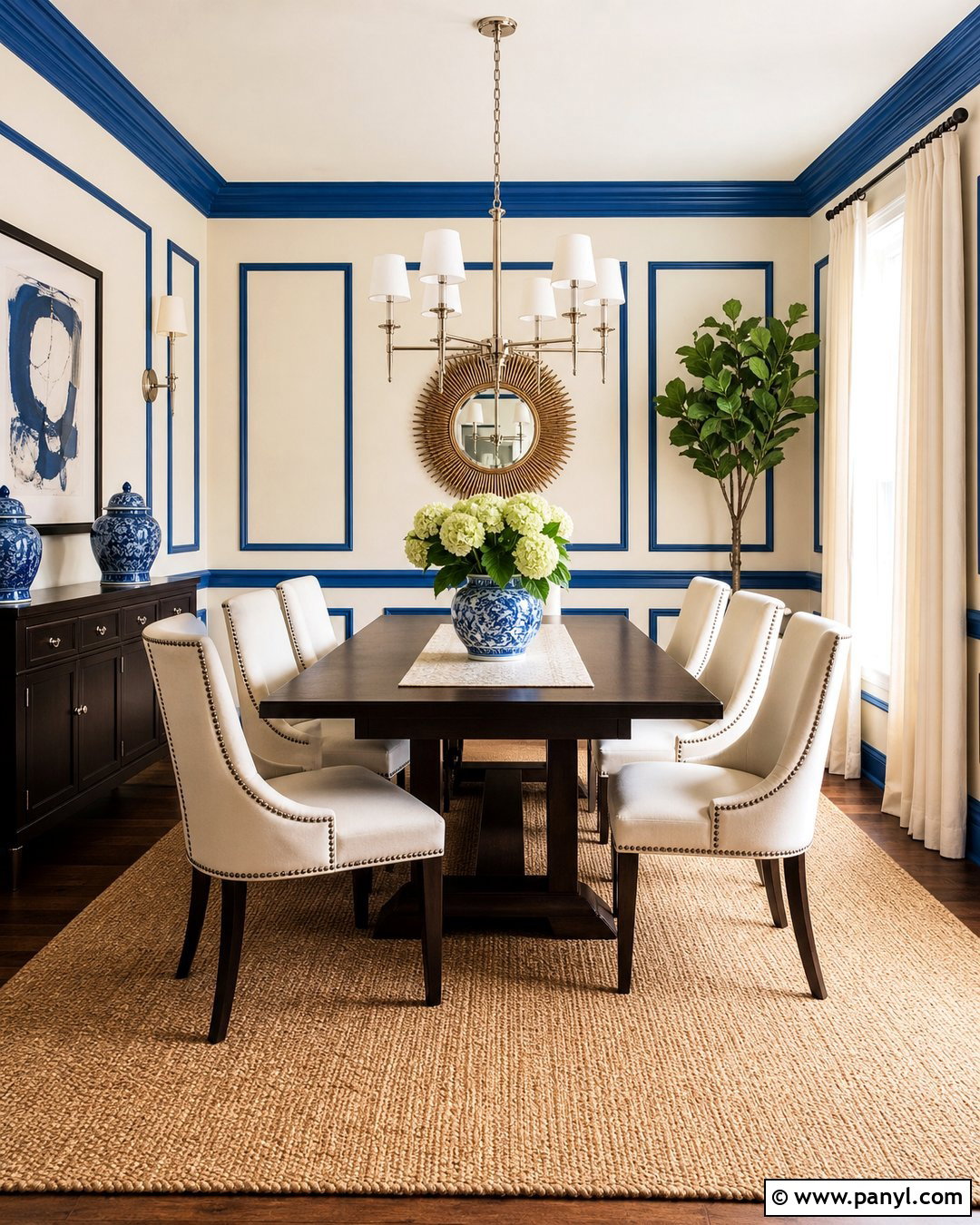
Cobalt blue moulding creates a bold, graphic framework around cream walls and works best when repeated with discipline. In a dining room, paint evenly spaced picture-frame moulding, baseboards, window casings, and doors in a clear medium cobalt. Use warm cream inside the panels and across the remaining wall surfaces. A dark wood table anchors the vivid trim, while cream upholstered chairs and a natural rug keep the room balanced. Introduce cobalt again through a ceramic lamp or small artwork details, but avoid matching every accessory. Polished nickel lighting gives the combination a clean finish, while linen curtains soften the stronger lines. This completed scheme feels energetic and memorable, yet the large amount of cream ensures that the moulding does not visually overpower the furniture.
24. Natural Wood Wall Moulding With Warm White Walls
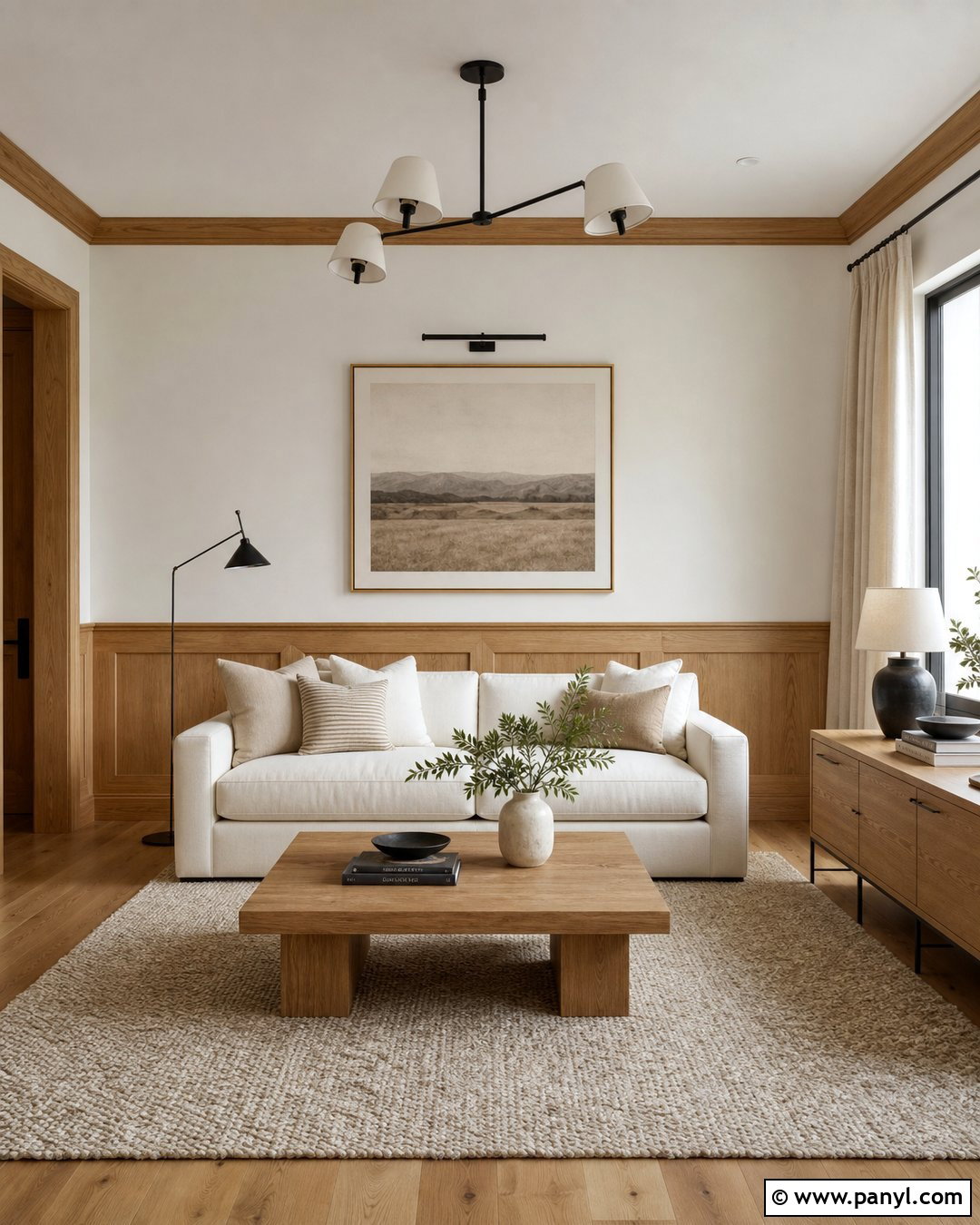
Paint is not the only way to introduce color through wall moulding. Stained oak moulding brings honey-brown warmth to soft white walls and highlights the material’s natural grain. Use slim oak picture frames, matching baseboards, and a coordinating door casing in a living room or entry. Keep the wall color a warm, uncomplicated white so the wood remains the focal feature. Repeat oak through a console, coffee table, or shelving, but vary the tones slightly to avoid a furniture-set appearance. Add an ivory sofa, flax curtains, a beige wool rug, and black metal lighting for contrast. A clear matte finish keeps the moulding contemporary rather than glossy. This room feels tactile and grounded, blending modern simplicity with lasting architectural character.
25. Coral Wall Moulding With Peach Walls
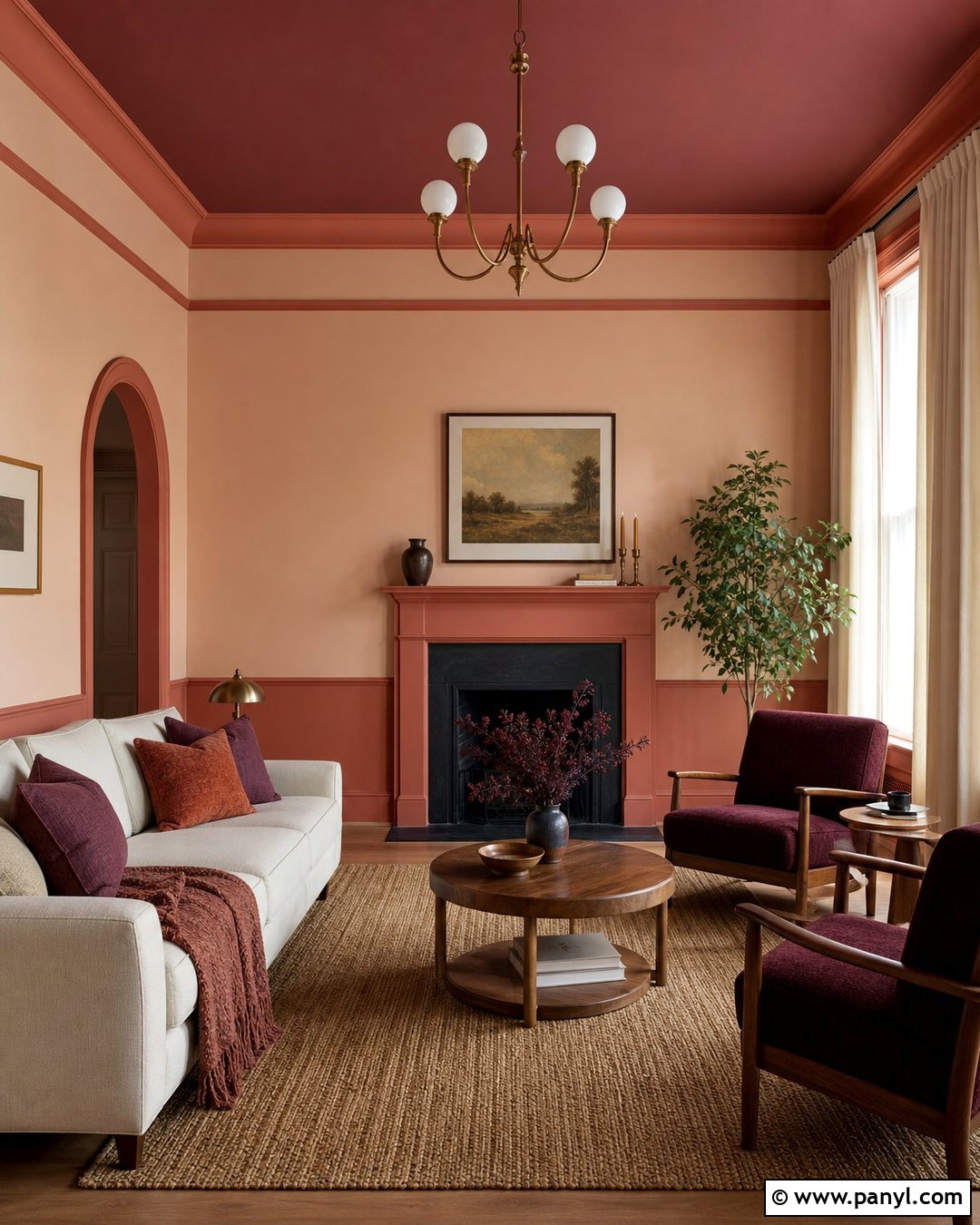
Tonal coral and peach can make wall moulding feel playful, warm, and sophisticated when the colors progress carefully. Paint the main walls a pale earthy peach, then use deeper coral on the picture rail, crown moulding, doors, and panel frames. For a color-capped effect, carry a muted burgundy or dark terracotta across the ceiling above the crown. Complete the sitting room with a cream sofa, walnut tables, and rust, pink, and plum textiles. A natural rug and ivory curtains provide visual rest between the stronger hues. Add aged brass lighting and simple modern artwork with generous cream space. The finished room has clear layers from light to dark, allowing every architectural feature to participate in the palette without creating random blocks of unrelated color.
Conclusion:
The best wall moulding color depends on how strongly you want the architecture to influence the room. White and warm neutral combinations create familiar definition, while matching walls and moulding offer a smooth, immersive look. Dark green, navy, plum, burgundy, and charcoal can ground larger spaces. Softer shades such as sage, dusty blue, lavender, and pale yellow bring character without heavy contrast. Always evaluate the complete room, including flooring, furniture, textiles, natural light, and connected doorways. Test colors directly on both flat walls and raised trim, then observe them throughout the day. With careful undertones, consistent repetition, and suitable paint finishes, these 25 Wall Moulding Color Ideas can help create a polished, cohesive home.

Related Ideas and Inspiration:
Leave a Reply