
A well-chosen TV wall color can make the screen feel integrated instead of awkwardly placed. Dark shades reduce the visual contrast around a black television, while lighter hues help compact rooms feel open and relaxed. Current TV wall treatments also combine paint with floating cabinets, wood accents, panel molding, and built-in storage for a more complete focal point. () Before choosing a shade, consider natural light, flooring, upholstery, and whether you want the television to blend in or stand out. Test large samples during the day and evening because undertones can shift dramatically. The complete room schemes below offer practical, attractive, and easy-to-recreate **35 TV wall color ideas**.

1. Charcoal Gray TV Wall
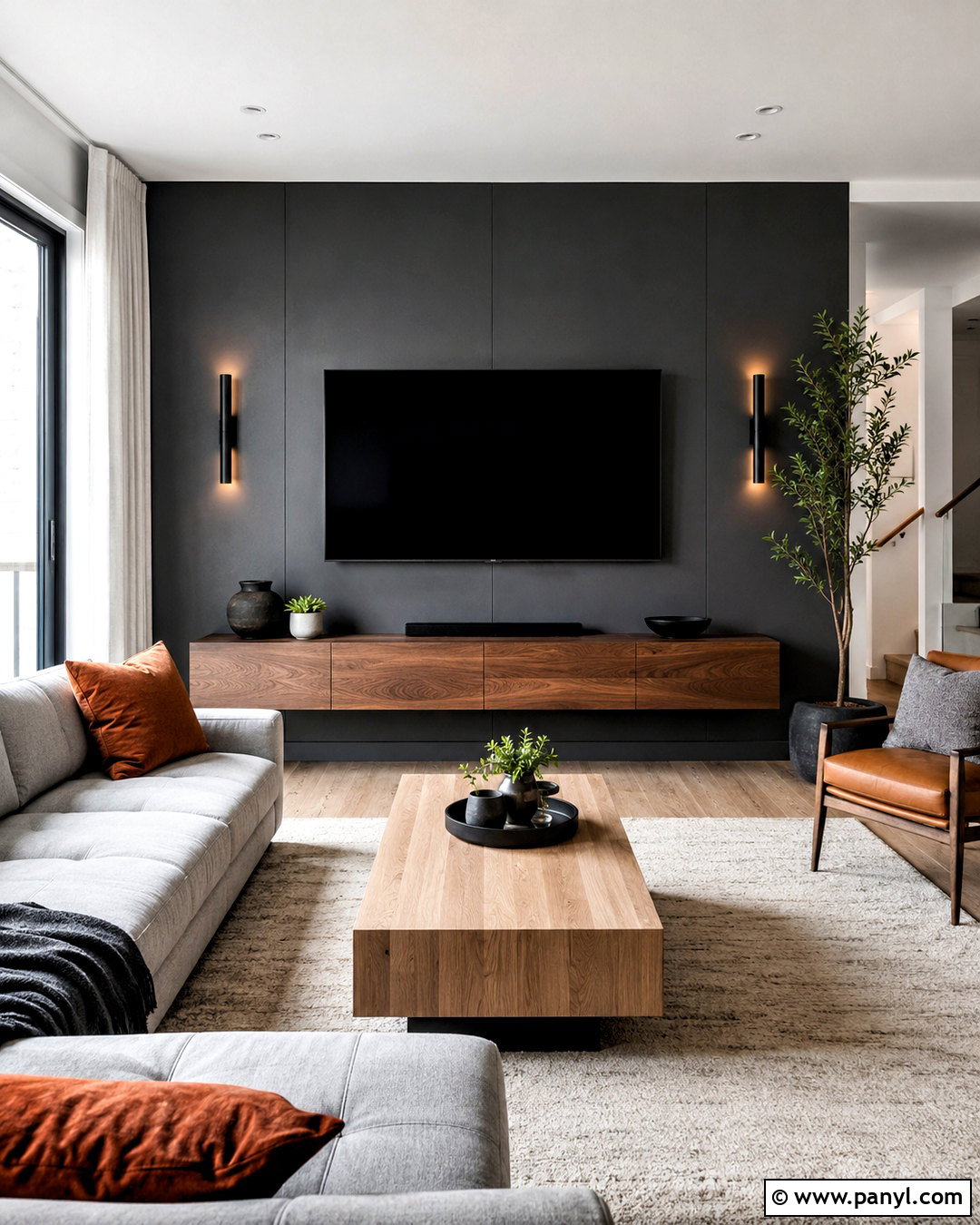
A charcoal gray TV wall creates a smooth background that helps a black screen feel less dominant. Choose a warm charcoal if the room has beige upholstery, oak flooring, or creamy walls. A cooler charcoal works better with crisp white trim and blue-gray furniture. Mount the television above a low walnut console to introduce natural warmth. Add closed storage so remotes and electronics remain hidden. A pale gray sofa, ivory area rug, and rust-colored pillows prevent the space from looking flat. Use simple black sconces or slim picture lights on both sides of the screen. Finish with one tall plant and a light wood coffee table. The balance of dark paint, warm wood, and soft textiles feels modern without becoming cold.
2. Matte Black TV Wall
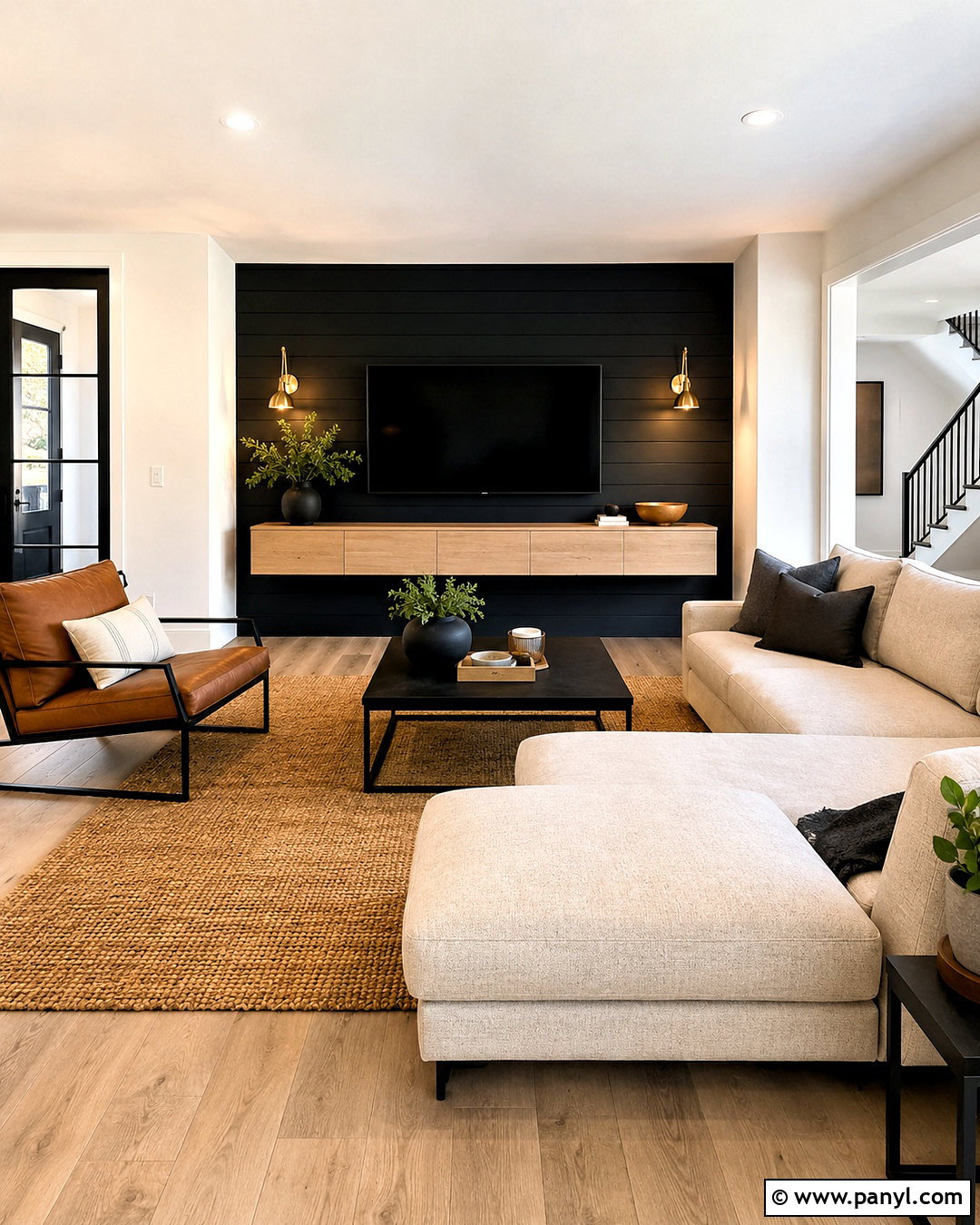
Would you like the television to nearly disappear when it is turned off? A matte black TV wall delivers the strongest blending effect and gives the room a clean, cinematic appearance. Keep the remaining walls warm white so the dark surface feels intentional rather than overwhelming. Install a floating white oak media cabinet beneath the screen, leaving open floor space for a lighter visual footprint. A cream sectional, woven tan rug, and cognac leather chair warm up the high-contrast palette. Brushed brass sconces can add gentle shine without creating distracting reflections. Repeat black through thin furniture frames and curtain rods. This complete scheme works especially well in a bright living room with large windows, pale flooring, and plenty of natural texture.
3. Navy Blue TV Wall
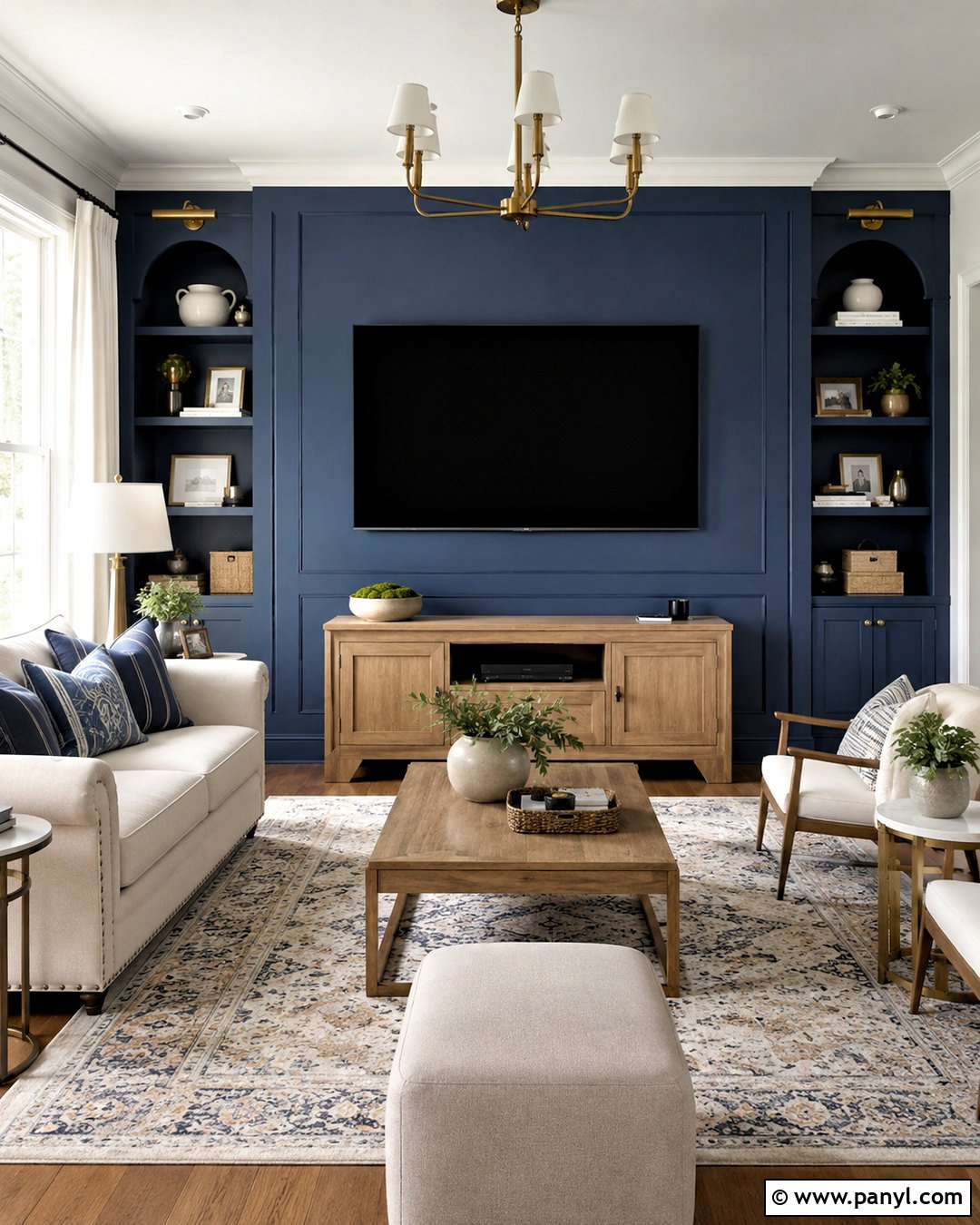
Deep navy brings rich color to a TV wall while remaining versatile enough for contemporary, coastal, and traditional living rooms. Select a slightly muted navy rather than a highly saturated royal blue. Pair it with warm white surrounding walls, medium oak flooring, and a natural wood media console. A light beige sofa keeps the darker backdrop from making the seating area feel heavy. Add striped blue-and-cream pillows, a faded patterned rug, and ceramic table lamps to repeat the wall color around the room. Brass cabinet pulls and warm metal lighting provide a refined contrast. If the wall is wide, place narrow bookcases on either side of the television. Paint their backs navy too, creating one continuous and well-balanced feature wall.
4. Warm White TV Wall
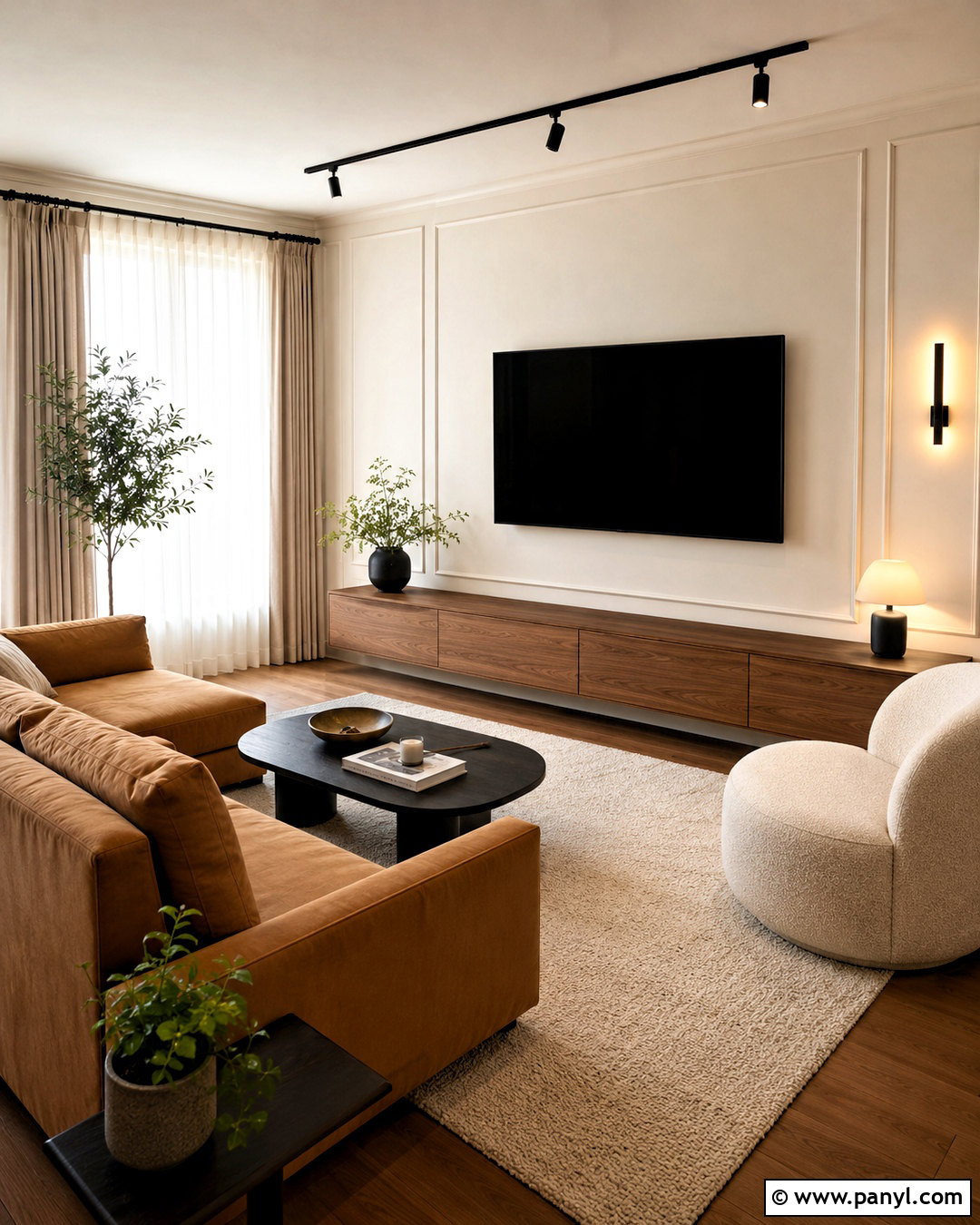
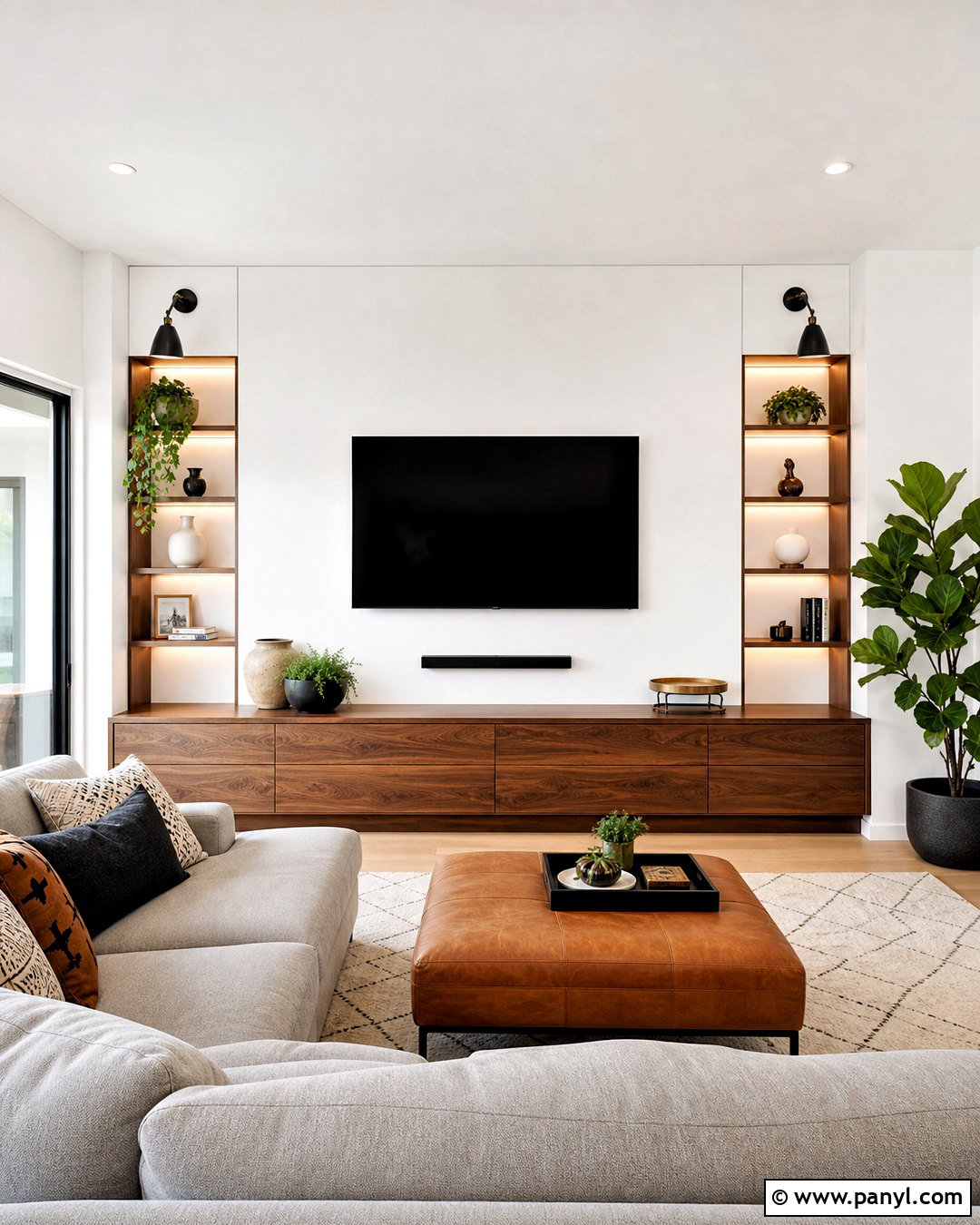
Warm white is a practical TV wall color for small rooms, open layouts, and homes where a bold accent would feel too strong. Look for a creamy white with subtle beige undertones instead of a cold, blue-based shade. Mount the television over a long walnut cabinet to give the screen a clear visual anchor. Introduce contrast with black hardware, dark ceramic vases, and a slim black floor lamp. A camel sofa, ivory boucle chair, and oatmeal rug create comfortable tonal layers. Add linen curtains and a few leafy plants for softness. To keep the wall from appearing unfinished, frame the television with simple vertical molding painted in the same warm white. The result feels bright and minimal while still looking thoughtfully designed.
5. Soft Greige TV Wall
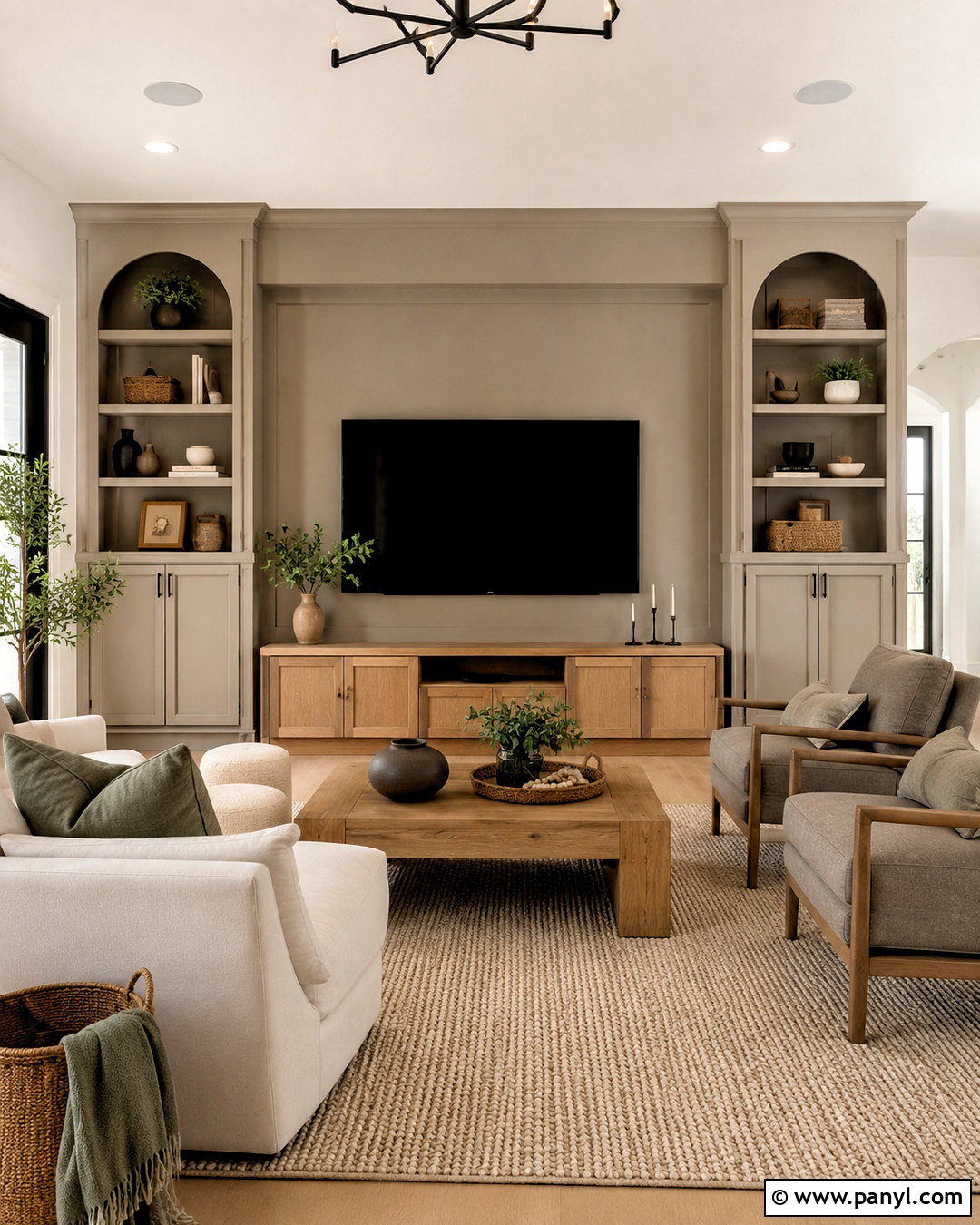
Soft greige offers the warmth of beige and the clean appearance of gray, making it one of the easiest colors to coordinate with existing furniture. Use it across the full TV wall and continue the shade onto built-in cabinets for a quiet, seamless finish. Choose a light oak media unit, off-white sofa, and taupe accent chairs to build a layered neutral room. Matte black lamps and hardware add definition, while muted green cushions bring in a subtle natural color. A textured cream rug and woven baskets keep the palette from feeling plain. Hang two understated prints beside the screen, leaving plenty of open wall around them. This look is particularly useful in open-concept homes because greige connects easily with white kitchens, wood dining furniture, and neutral hallways.
6. Sage Green TV Wall
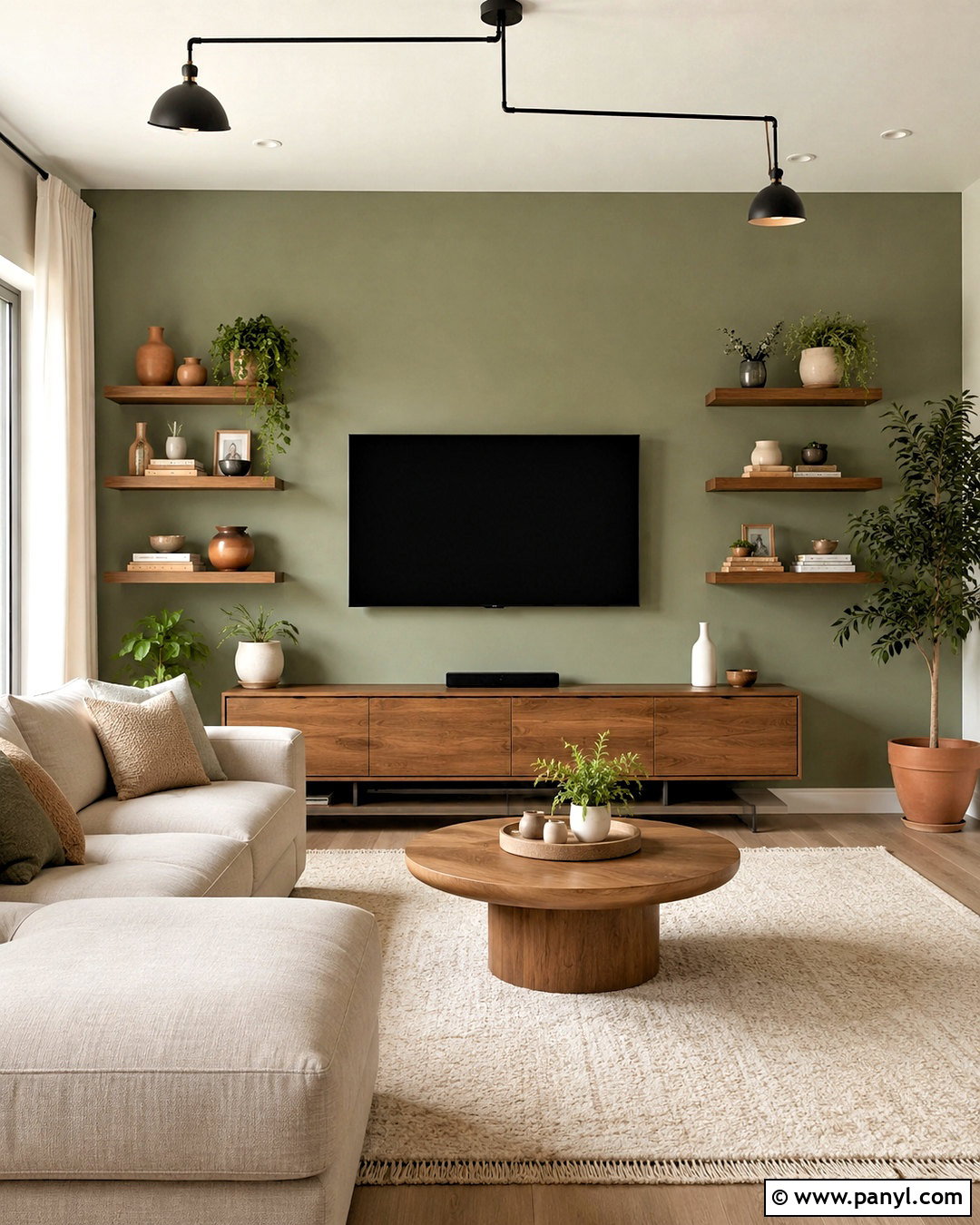
Sage green creates a calm TV wall that pairs naturally with wood, cream, tan, and black. Choose a mid-light sage with gray undertones so the color feels gentle rather than overly pastel. Place a low walnut console beneath the television, then add matching floating shelves on one side for books and pottery. An oatmeal sofa, ivory rug, and light linen curtains keep the overall room airy. Bring in darker accents through black picture frames, a metal floor lamp, and the legs of the coffee table. Terracotta planters add a warm counterpoint to the green. For a cohesive finish, repeat sage in one or two cushions without matching everything exactly. The completed space feels organic, comfortable, and polished enough for everyday family living.
7. Forest Green TV Wall
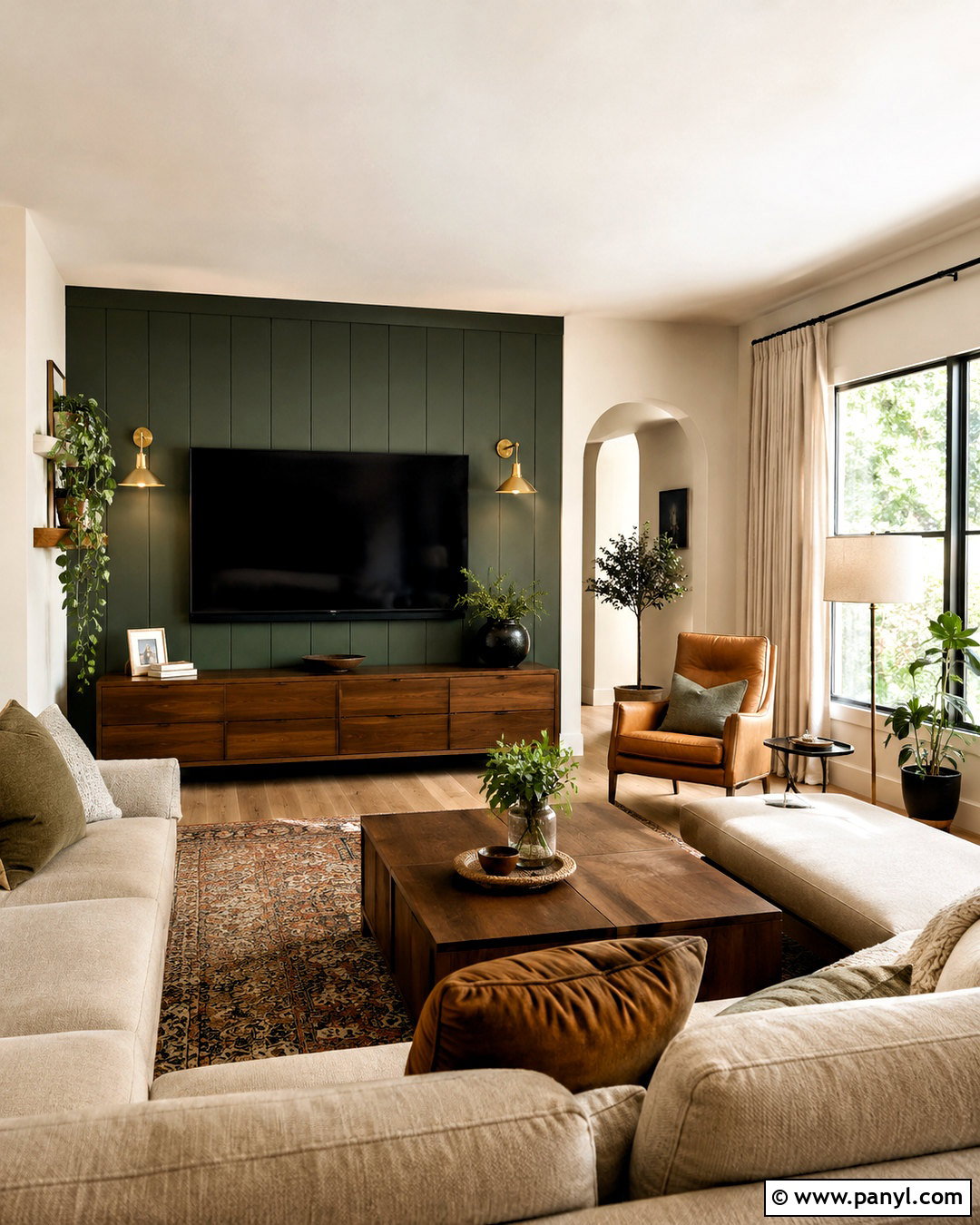
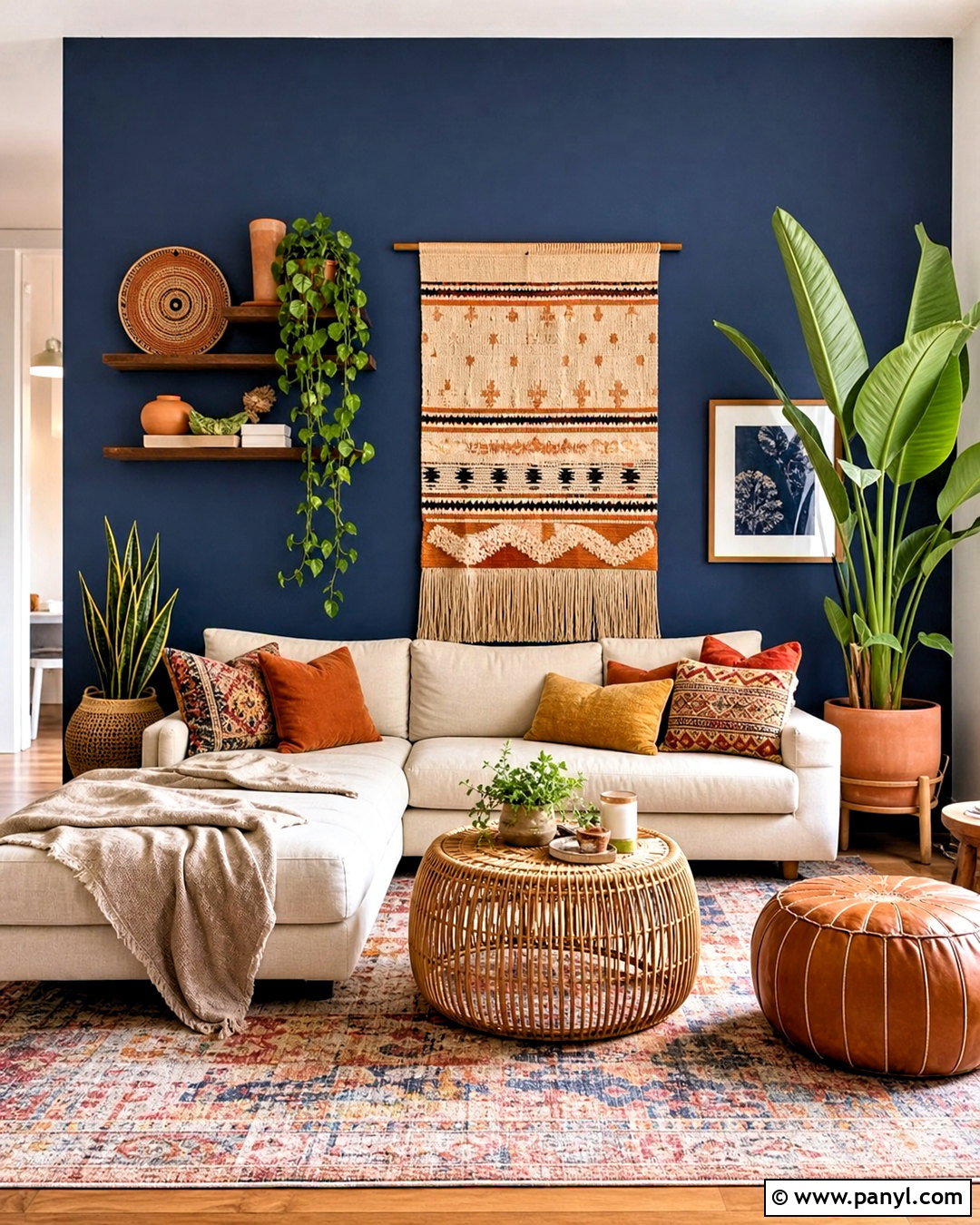
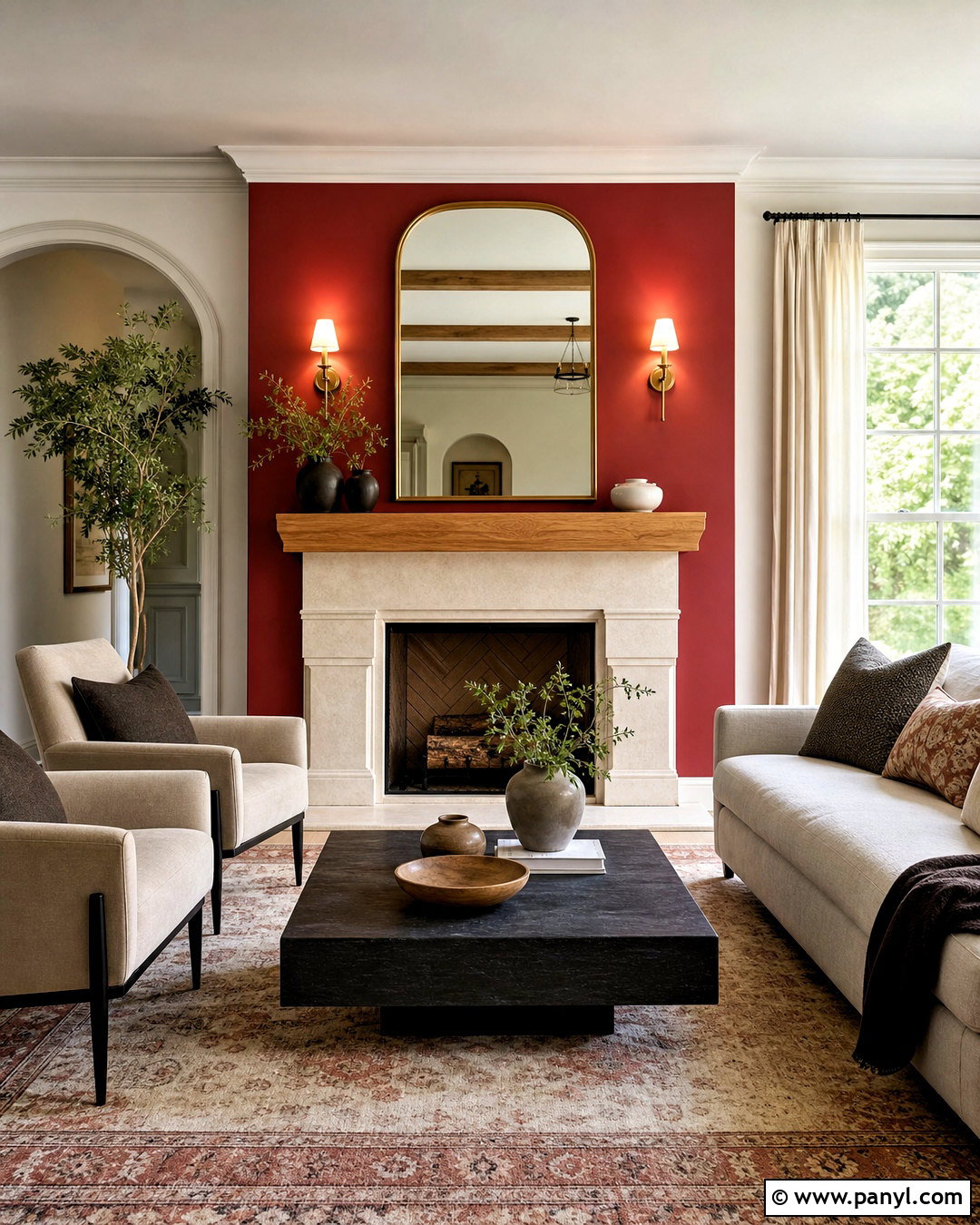
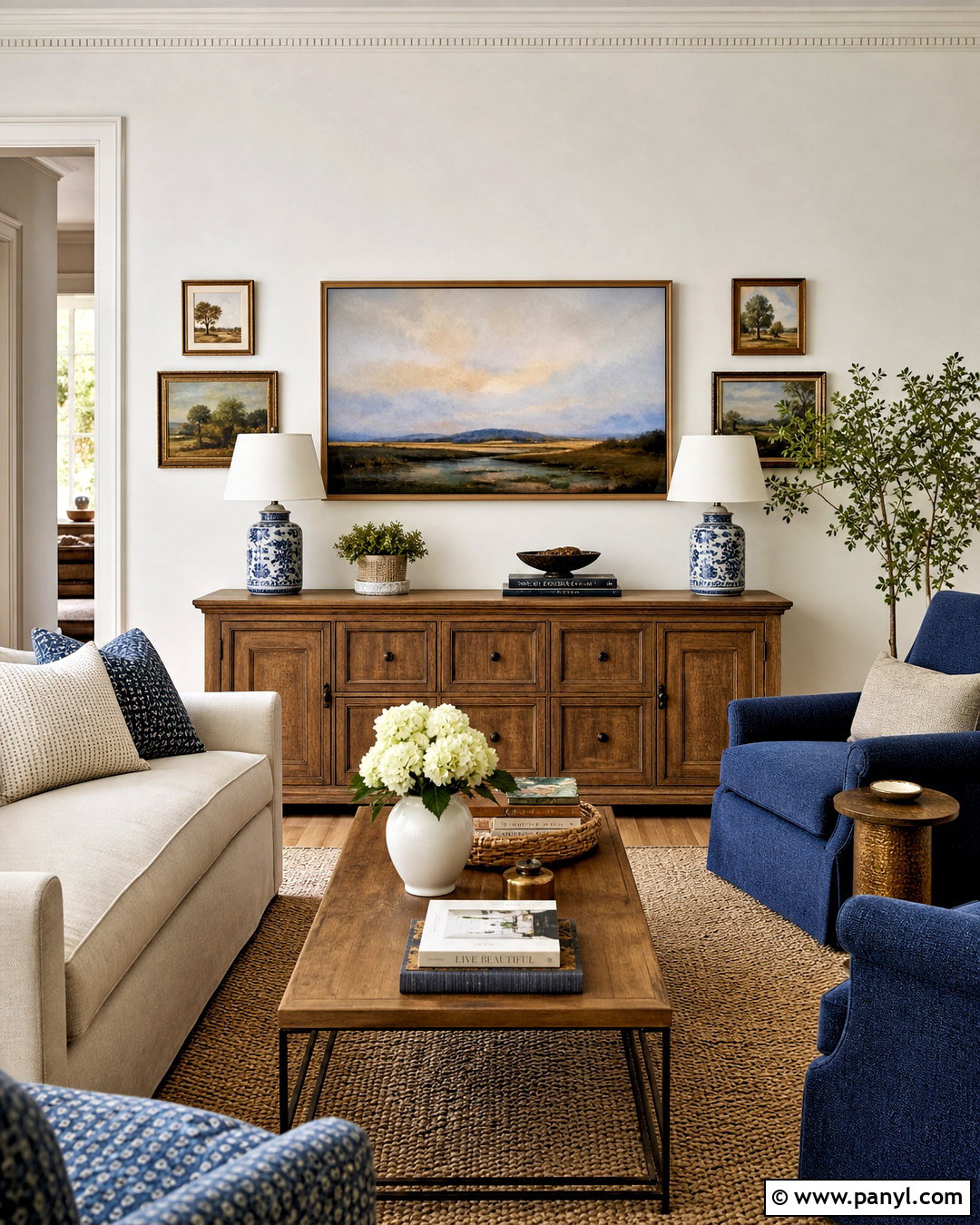
A forest green TV wall can make a spacious living room feel intimate, grounded, and more connected to the outdoors. Use a deep green with muted undertones, then balance it with cream walls and light upholstery. A long walnut media console looks especially rich against this shade and provides enough width to anchor a large television. Add a caramel leather chair, oatmeal sectional, and vintage-style rug containing green, rust, and beige. A pair of aged brass sconces gives the wall warm highlights. Keep shelves limited and display only a few ceramic pieces, books, and trailing plants. Natural linen curtains soften the room during the day. This complete palette suits traditional, midcentury, and modern organic homes without relying on an overly decorative feature wall.
8. Olive Green TV Wall
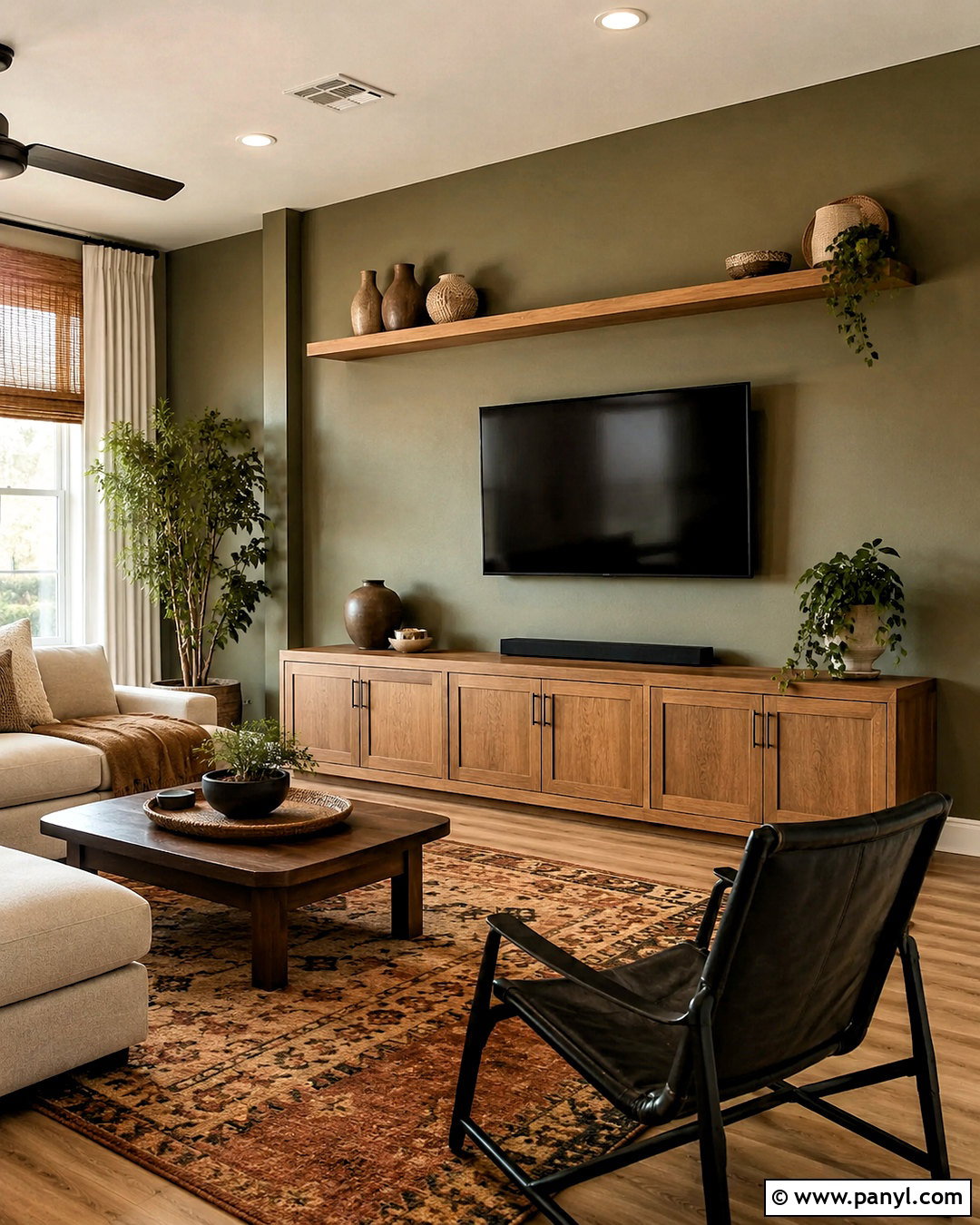
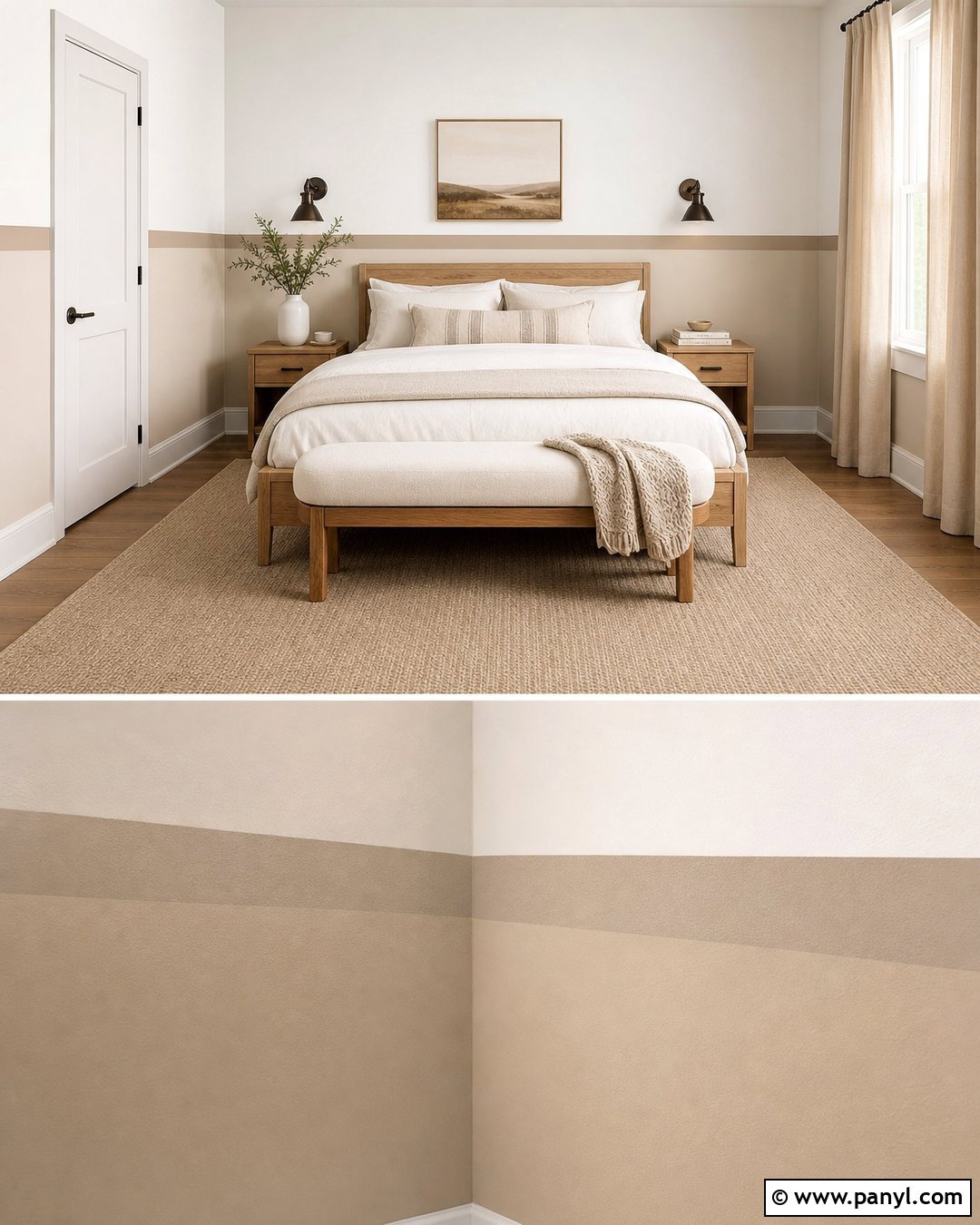
Sunlight brings out the earthy warmth in an olive green TV wall, making this color especially attractive in rooms with south- or west-facing windows. Combine the olive backdrop with a medium-tone oak media cabinet and creamy surrounding walls. Choose a sand-colored sofa, black-framed lounge chair, and patterned rug with muted ocher and brown details. Woven shades and linen drapes reinforce the relaxed natural character. Instead of filling the wall with small decorations, place one floating shelf above the media unit and style it with pottery, books, and a sculptural branch. Use aged bronze hardware for a softer effect than polished metal. This balanced design feels warm and collected, while the darker green background visually connects the television with the surrounding furniture.
9. Deep Teal TV Wall
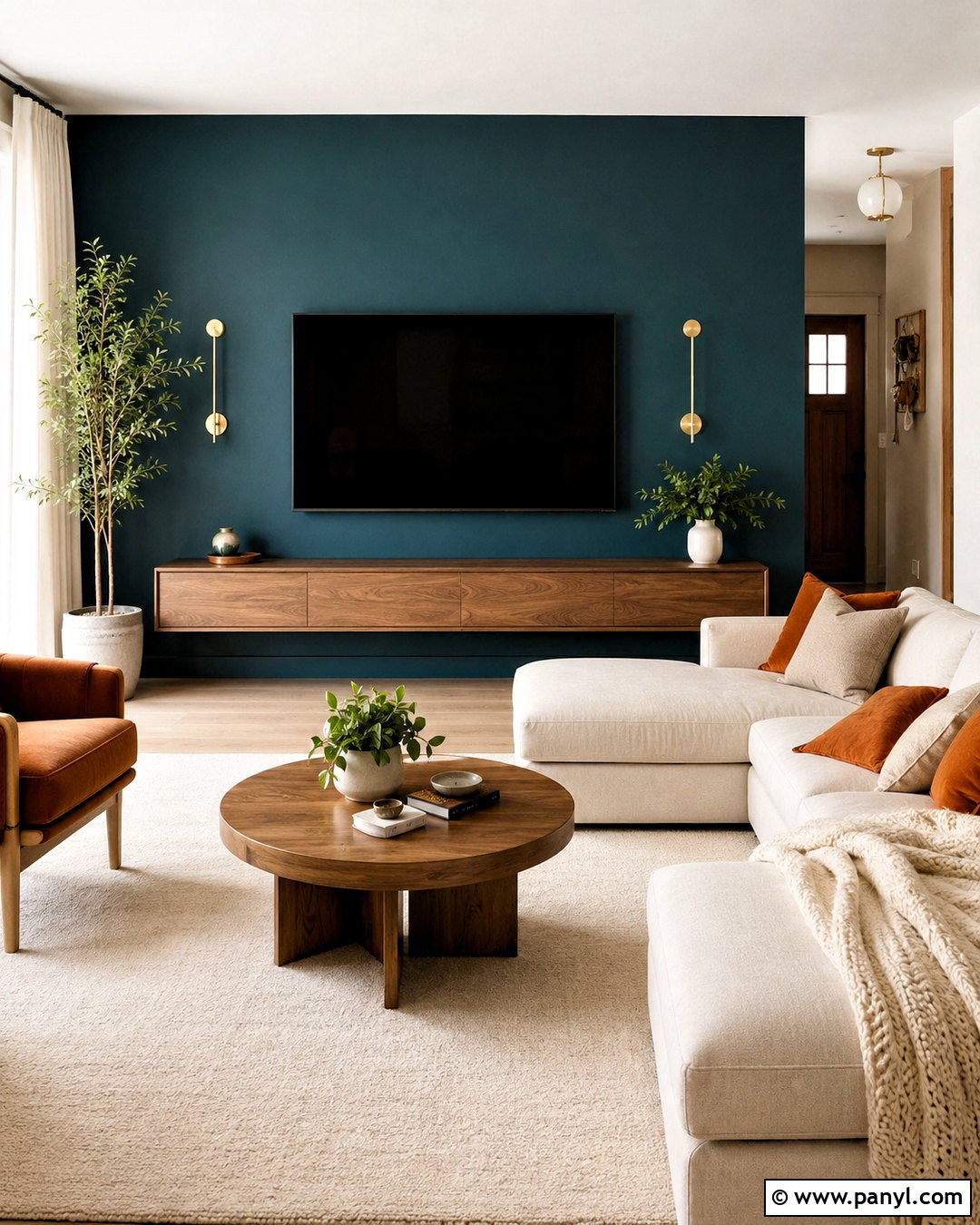
Deep teal combines the calming quality of blue with the richness of green, producing a confident TV wall without the severity of black. Cover the entire wall in a matte teal finish and keep adjacent walls pale cream. A floating walnut cabinet adds warmth, while a beige modular sofa makes the room feel comfortable and inviting. Repeat teal subtly through a patterned rug or one velvet cushion. Add burnt orange accents in a throw and ceramic vase for balanced contrast. Brass sconces work well against teal, but position them away from the screen to prevent glare. Use light linen curtains and natural oak side tables to brighten the deeper palette. The final room feels colorful and modern, yet practical enough for regular television viewing and casual entertaining.
10. Dusty Blue TV Wall
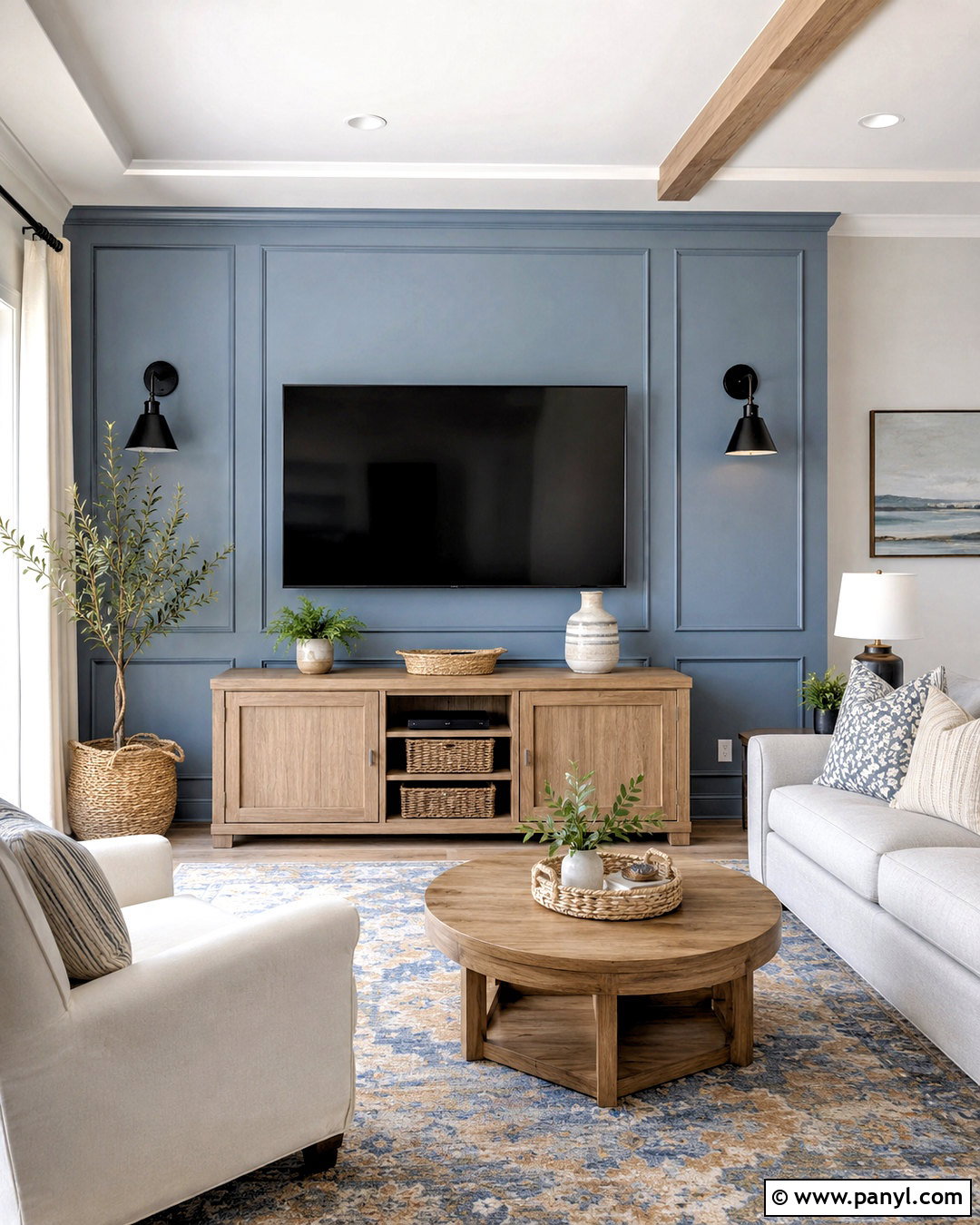
Dusty blue gives a TV wall noticeable color while keeping the room soft and easy to live with. Choose a medium blue containing gray undertones, particularly if your furniture includes cool gray, cream, or weathered wood. Pair the painted wall with a white oak media console and warm white surrounding walls. A light gray sofa, ivory armchair, and faded blue-and-tan rug create gentle layers without making the space appear overly coordinated. Black lamps and window frames add crisp definition. Include natural elements through woven baskets, a round wood coffee table, and a large indoor tree. Simple picture-frame molding painted dusty blue can add architectural interest behind the screen. The overall room feels relaxed, bright, and suitable for modern coastal or transitional interiors.
11. Slate Blue TV Wall
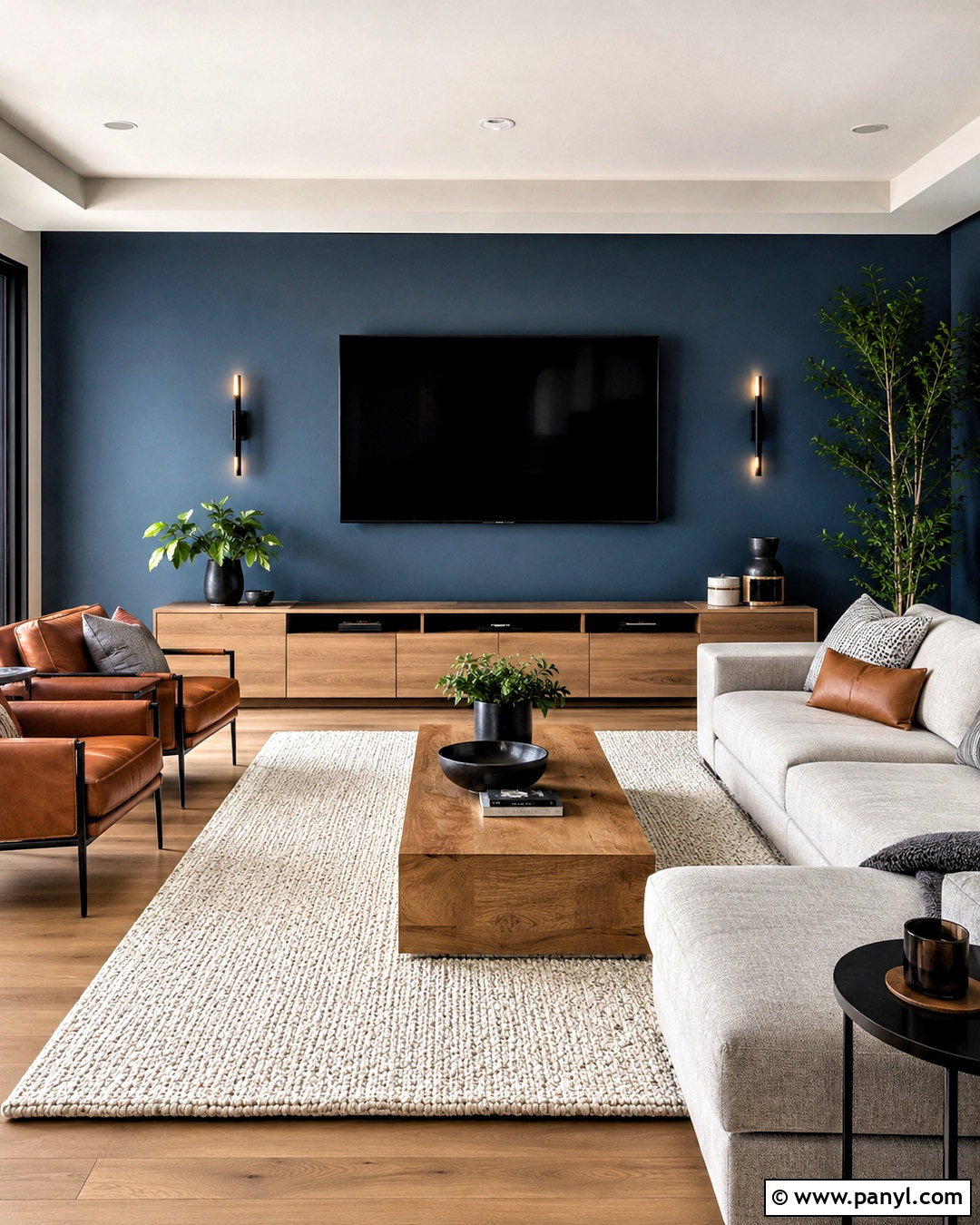
For a deeper alternative to pale blue, slate blue provides enough visual weight to anchor the television while remaining softer than navy. Use the color across a broad wall with a black screen centered above a long oak console. Paint the other walls a clean warm white and select a pale gray sectional to maintain an open atmosphere. Add camel leather, dark blue pillows, and an ivory wool rug for contrast and warmth. Slim black sconces can frame the television, while closed console doors keep the composition orderly. A pair of tall plants placed near the outer edges softens the strong horizontal arrangement. Slate blue works particularly well with brushed nickel, matte black, and medium wood finishes, resulting in a balanced room with quiet color and contemporary structure.
12. Powder Blue TV Wall
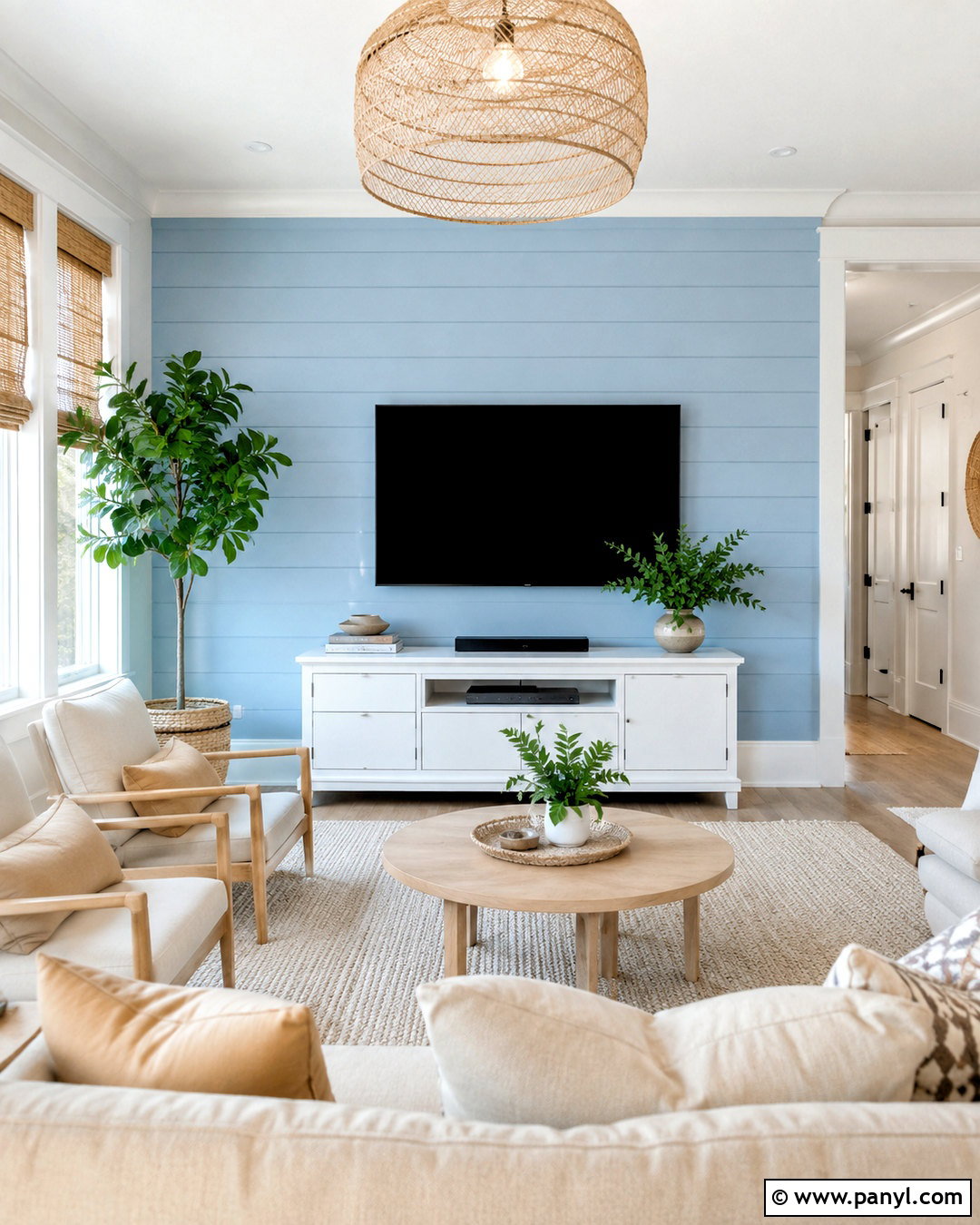
A powder blue TV wall can brighten a compact living room and introduce color without visually shrinking the space. Select a slightly grayed blue rather than a sugary pastel. Pair it with white trim, pale oak flooring, and a slim white media cabinet. A small oatmeal sofa and two light wood chairs provide flexible seating while preserving clear walkways. Add a flat-weave rug in cream and soft blue, then introduce warmth through tan cushions and woven window shades. Keep the wall arrangement simple, with the television centered and perhaps one narrow shelf below it. White ceramic accessories and a leafy plant complete the fresh palette. This look is especially effective in apartments, cottages, and family rooms where natural light is limited but a cheerful atmosphere is desired.
13. Terracotta TV Wall
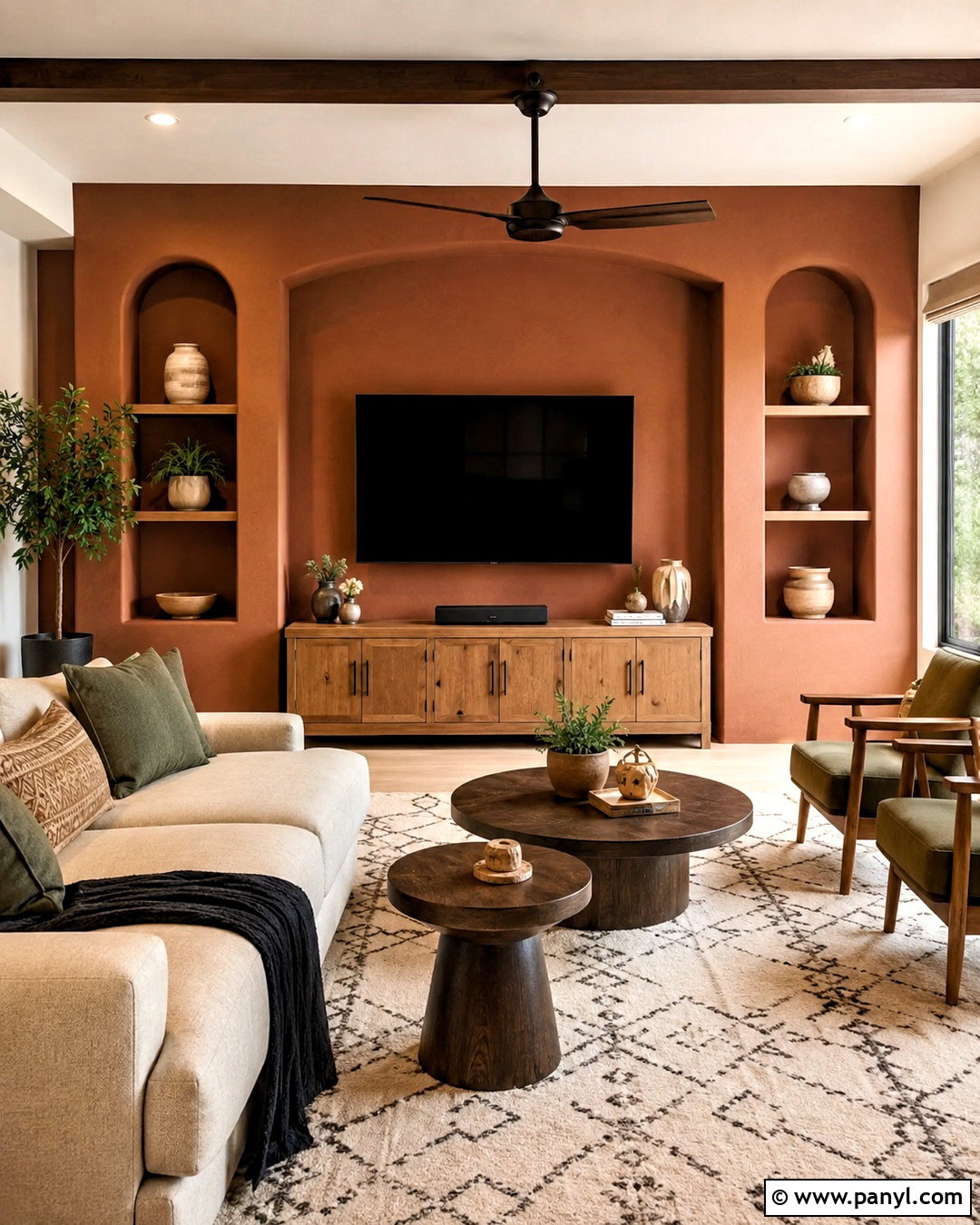
Terracotta transforms a plain TV wall into a warm focal point with an earthy, sunbaked character. Choose a muted clay shade rather than a vivid orange so the television and furniture remain visually balanced. Cream walls, a beige sofa, and a medium oak console soften the richness of the color. Add an ivory rug with subtle geometric details, dark wood side tables, and black metal lighting for structure. Olive green cushions and indoor plants complement the clay tones naturally. If the wall is tall, extend the terracotta paint from floor to ceiling and keep the ceiling white. Avoid covering the surface with too many accessories. A few handmade ceramic pieces and woven baskets are enough to create a relaxed, modern Southwestern or Mediterranean-inspired living room.
14. Burnt Orange TV Wall
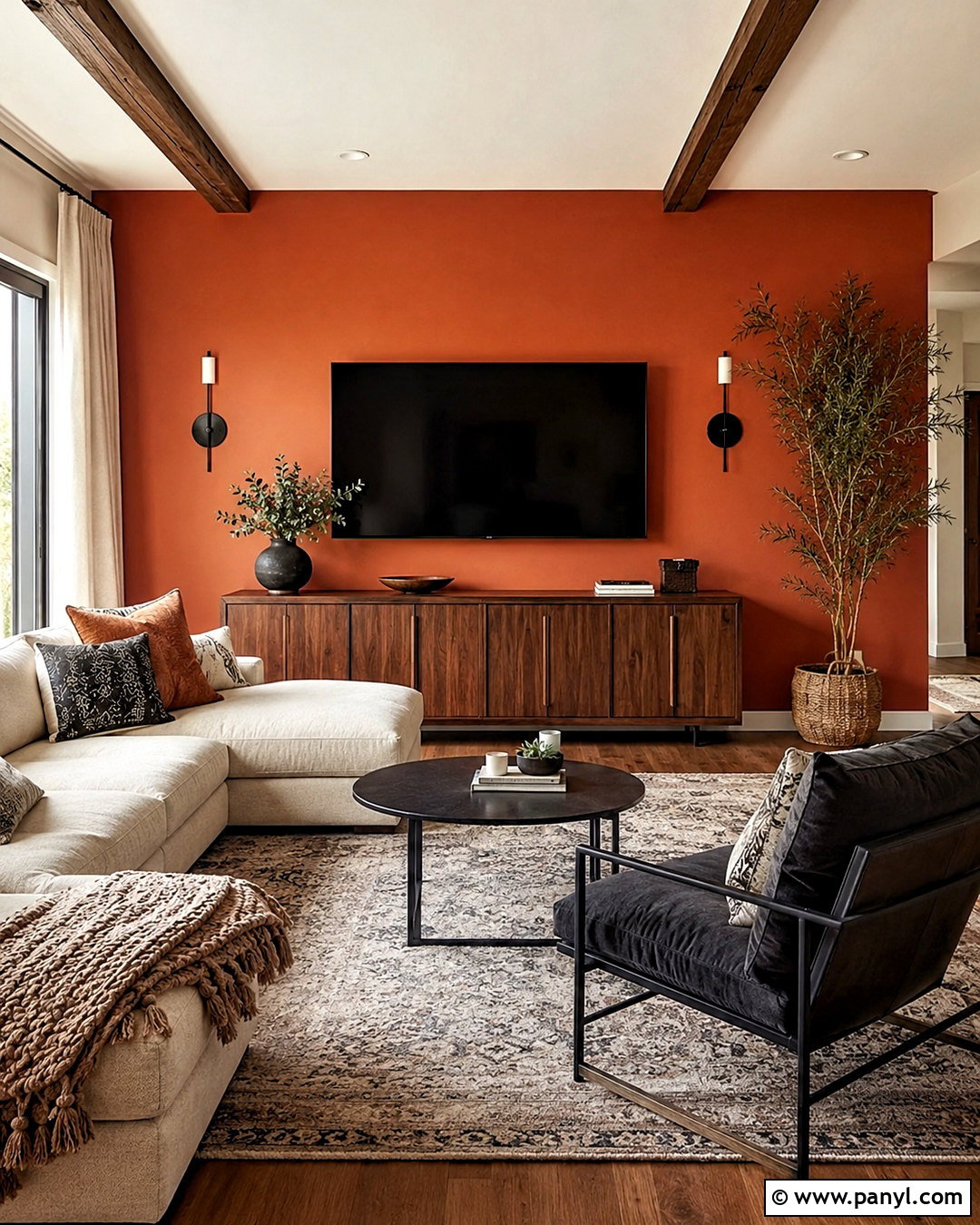
Burnt orange gives a TV wall lively warmth without the brightness of true orange. It works best as part of a balanced room containing neutral upholstery and dark grounding accents. Paint the main television wall burnt orange, then use creamy off-white on the surrounding surfaces. Install a dark walnut media cabinet and mount the screen at a comfortable viewing height. A light beige sectional, black-framed chair, and warm gray rug create a practical seating arrangement. Repeat the orange in small amounts through a patterned pillow or abstract artwork elsewhere in the room. Matte black sconces and curtain rods sharpen the palette. Add natural linen drapes and a tall green plant to soften the strong wall color. The finished look feels energetic, welcoming, and intentionally coordinated.
15. Muted Mustard TV Wall
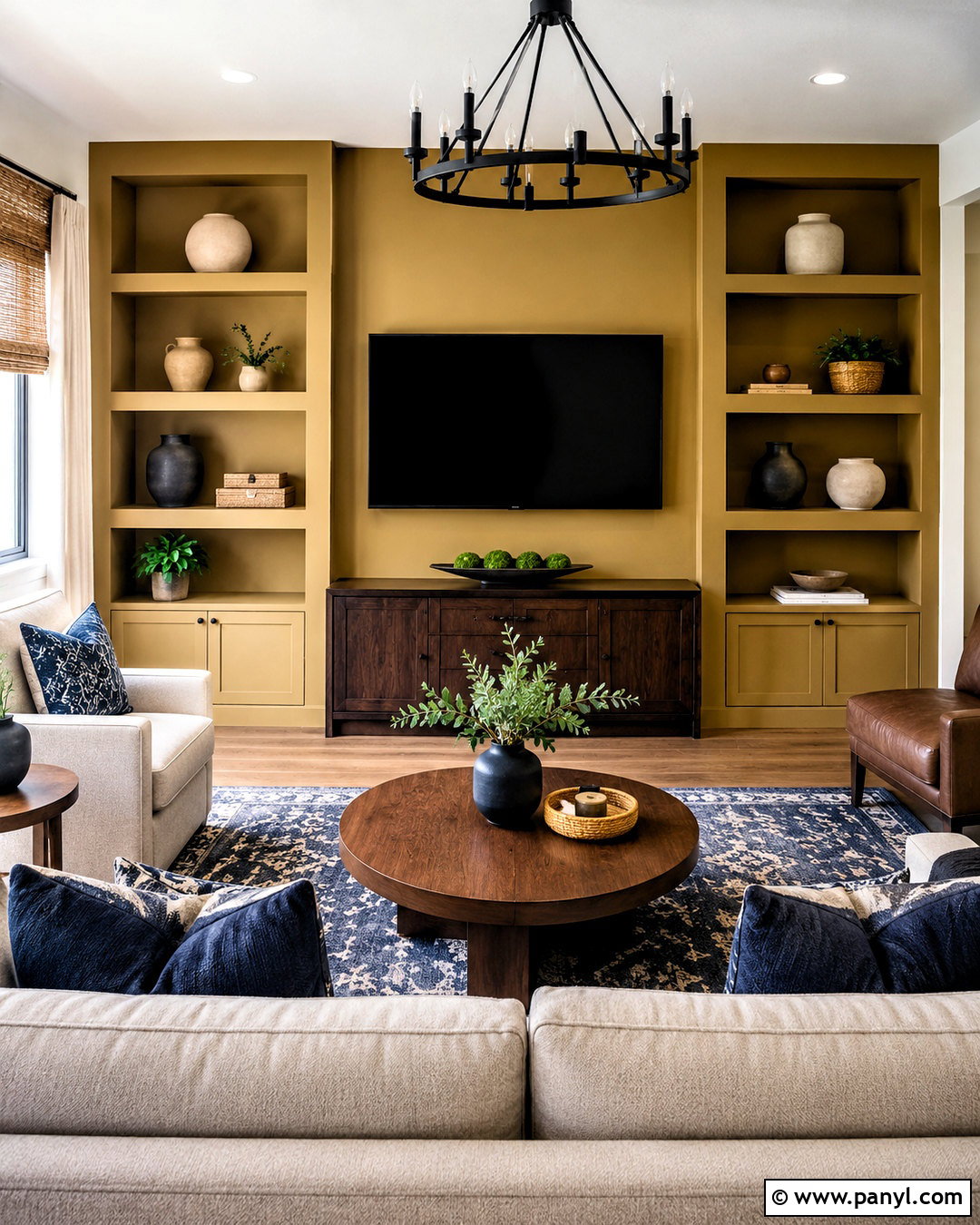
Muted mustard gives a TV wall personality while preserving the warm, grounded feeling needed in a relaxing living room. Choose an ocher-leaning shade with brown undertones instead of a bright lemon yellow. Pair it with warm white walls, a dark wood media console, and an oatmeal-colored sofa. Deep navy pillows and a blue patterned rug provide attractive contrast without competing with the television. Use black metal lighting and walnut side tables to distribute darker tones throughout the room. Woven shades and cream curtains soften the natural light. If the wall has built-in shelves, paint them mustard too so they feel integrated rather than added later. Style the shelves sparingly with cream pottery, books, and small plants for a complete room that feels warm, distinctive, and comfortable.
16. Blush Pink TV Wall
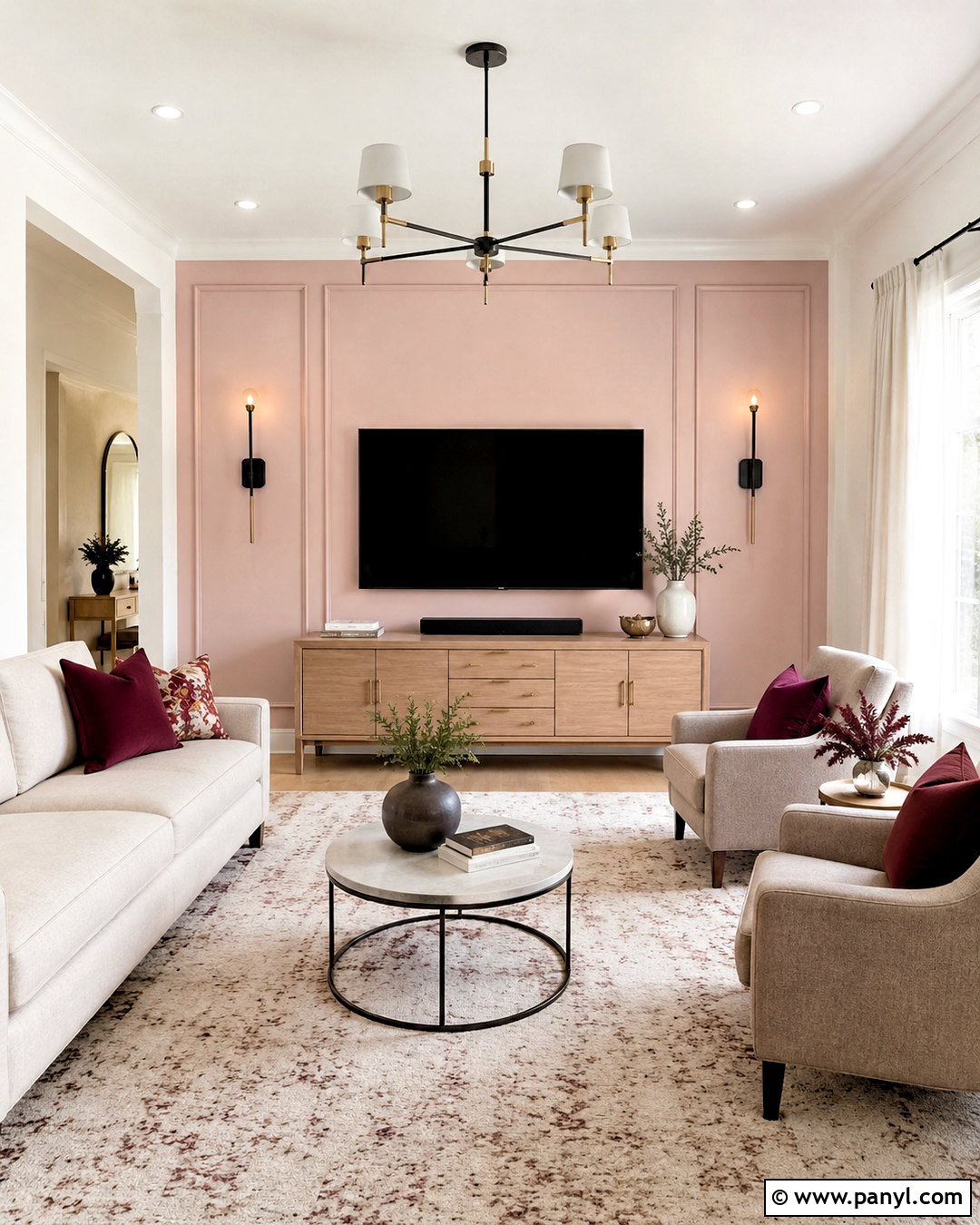
Blush pink can create a sophisticated TV wall when the shade has dusty beige or gray undertones. Avoid overly sweet pinks and pair the color with clean-lined furniture. A white oak media console, cream sofa, and taupe armchairs give the room a calm neutral base. Introduce depth through burgundy cushions, a charcoal floor lamp, and black-framed artwork on an adjacent wall. An ivory rug with muted rose details connects the palette without making pink the only feature. Brushed brass hardware adds gentle warmth, while linen curtains keep the space casual. Center the television carefully and use a concealed cable channel painted to match the wall. This finished scheme feels soft and modern, making it suitable for apartments, bedrooms, or elegant family living rooms.
17. Dusty Rose TV Wall
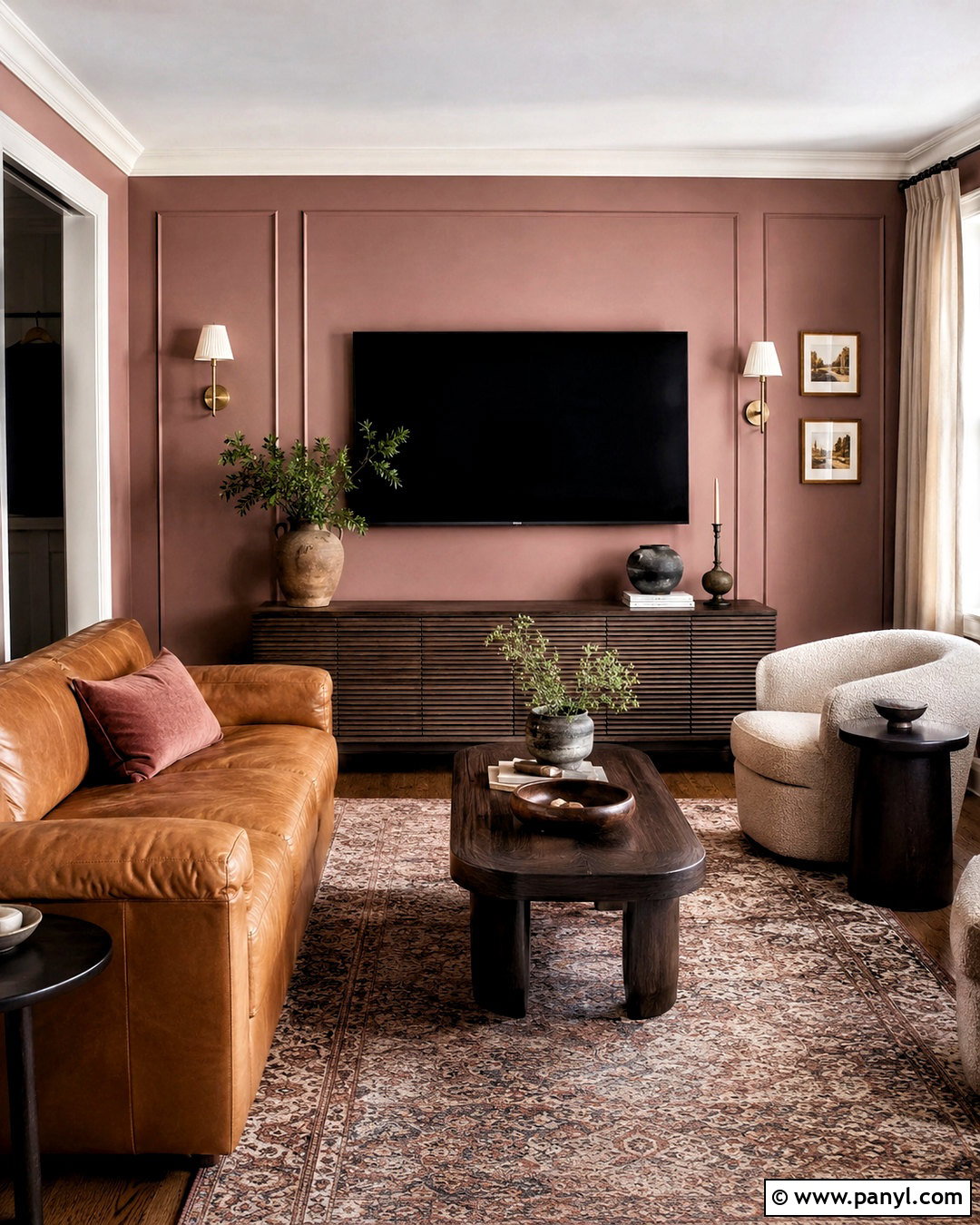
Dusty rose offers more depth than blush and can make a TV wall feel warm, mature, and gently dramatic. Select a muted rose with brown undertones, then surround it with creamy white walls and natural wood finishes. A low walnut media cabinet provides a strong base for the television. Add a camel leather sofa, ivory boucle chair, and faded Persian-style rug containing rose, navy, and tan. Bronze sconces and dark wood tables introduce traditional warmth without making the room formal. Use linen drapes in a soft oatmeal shade and keep decorative objects limited to a few ceramics and books. The dark screen becomes part of a layered color story rather than an isolated black rectangle. This design works beautifully in eclectic, vintage-inspired, and transitional living spaces.
18. Burgundy TV Wall
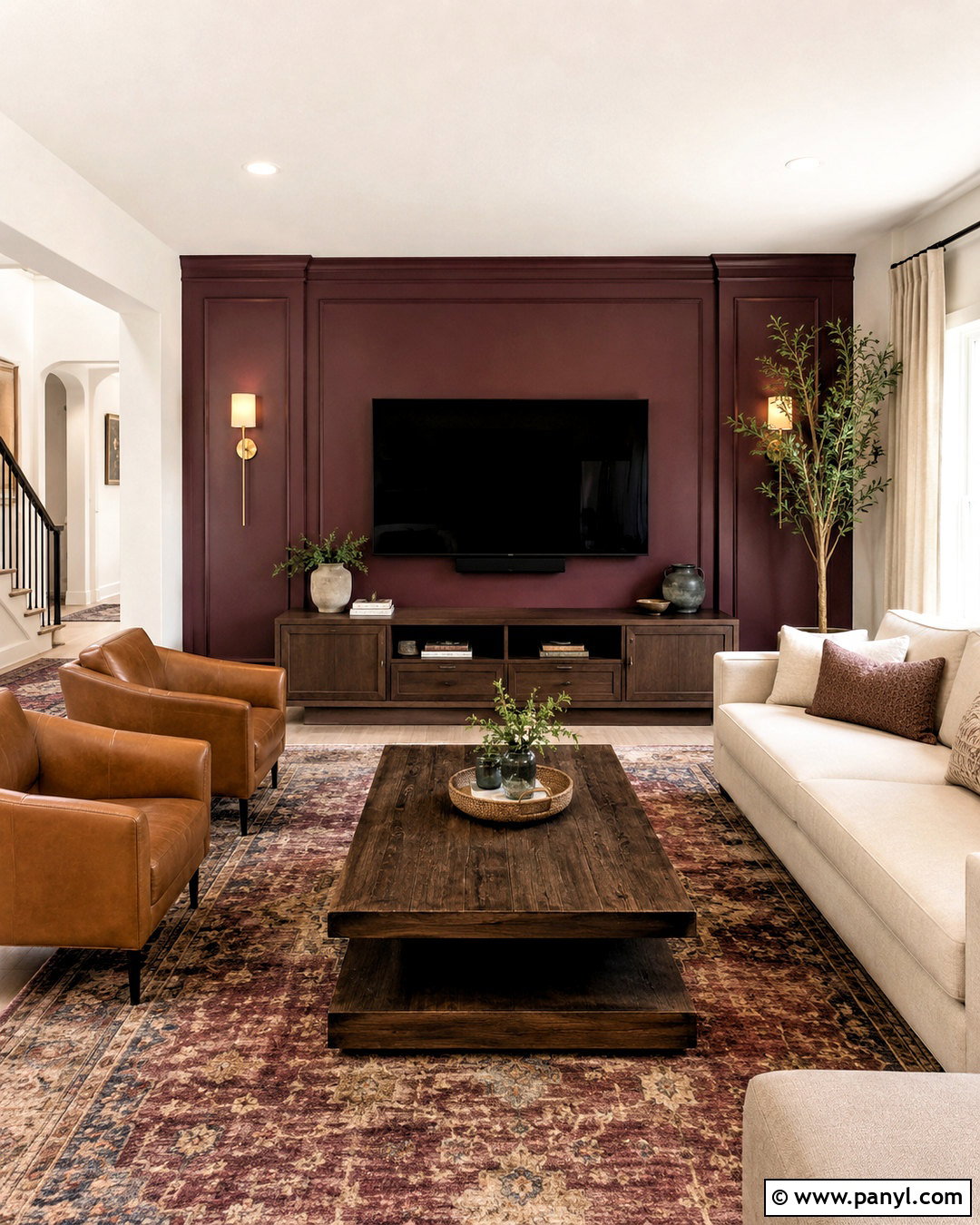
Rich burgundy creates an enveloping TV wall that feels elegant and comfortable, particularly in a larger room with good natural light. Choose a brown-based burgundy rather than a bright red. Paint the full wall and pair it with warm ivory on the remaining surfaces. A dark walnut media unit, cream sofa, and tan leather chairs balance the deeper color. Bring in muted gold through sconces and cabinet hardware, then ground the seating area with a vintage rug containing burgundy, beige, and navy. Simple linen curtains stop the room from looking overly formal. Place a tall plant near one corner and a floor lamp near the other to frame the media zone. The result is a complete, cohesive living room with strong color and an inviting atmosphere.
19. Chocolate Brown TV Wall
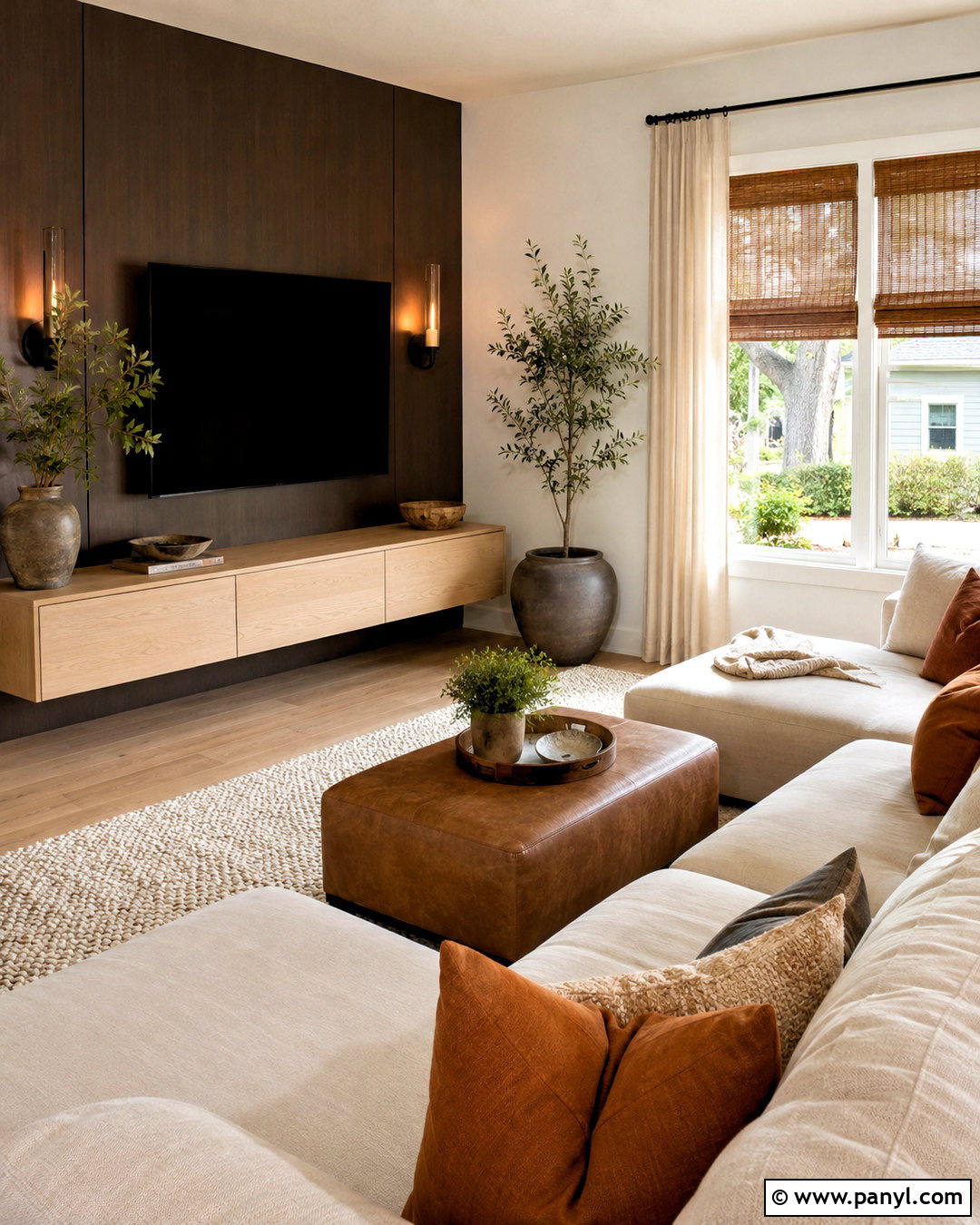
Chocolate brown is a cozy, grounded TV wall color that coordinates naturally with cream, caramel, rust, and warm wood. Use a deep matte brown to minimize reflections and visually soften the black screen. Pair it with light beige surrounding walls and a floating white oak console so the wall does not feel too heavy. Choose a cream sectional, cognac leather ottoman, and textured ivory rug for tonal contrast. Add rust-colored cushions, woven shades, and dark bronze lighting. A few green plants introduce freshness and keep the brown palette from appearing flat. If you have built-in storage, paint the cabinet frames chocolate brown but use oak doors for variation. This complete room feels warm and contemporary, with an appealing connection to natural materials and earthy colors.
20. Warm Taupe TV Wall
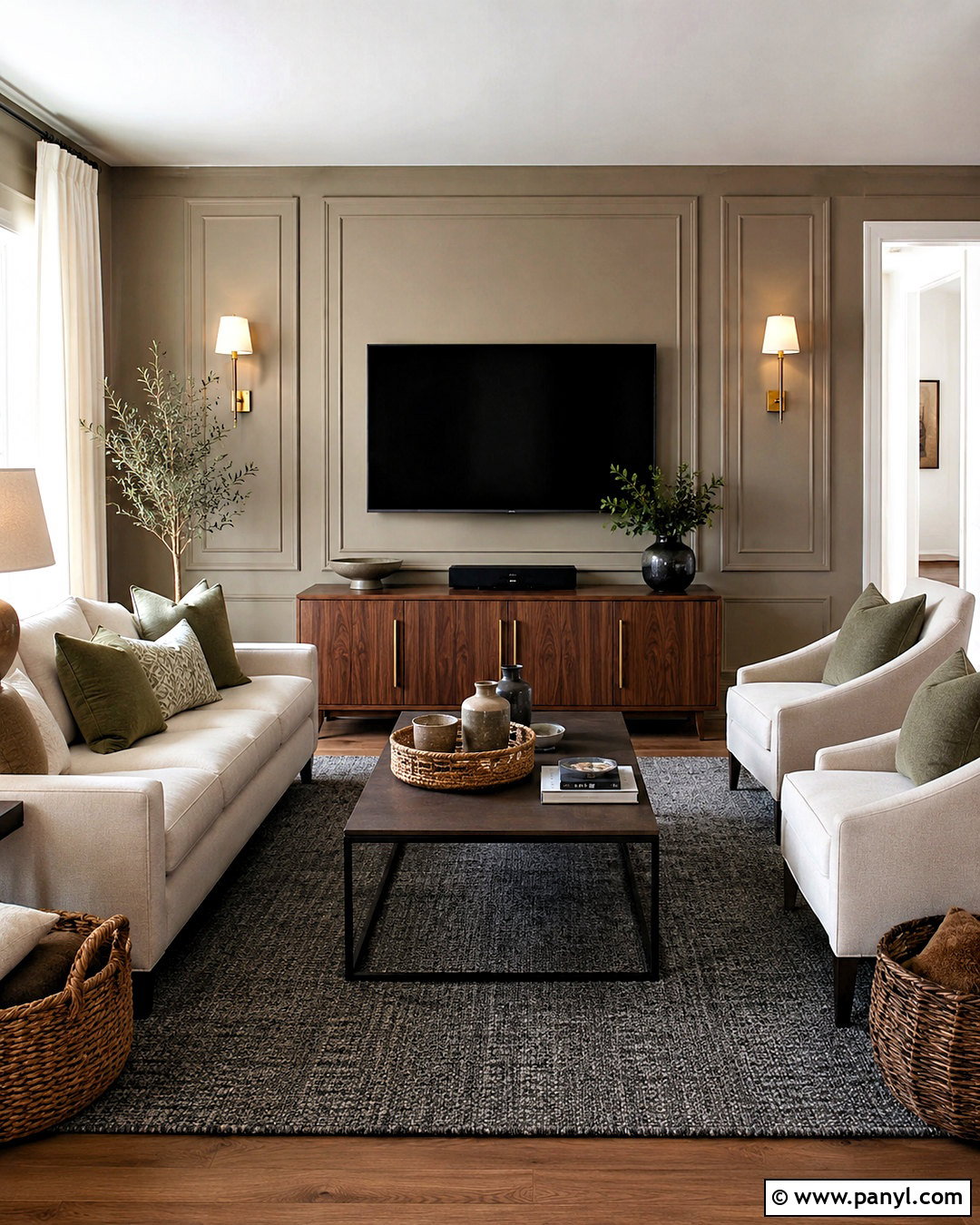
Warm taupe is ideal when you want the TV wall to look defined but not dramatically different from the rest of the room. Select a medium taupe with soft brown undertones and pair it with creamy off-white adjacent walls. A walnut console, beige sofa, and ivory chairs create a comfortable layered palette. Use a charcoal rug or black coffee table to connect the dark television with the lower half of the room. Brass lamps add warmth, while muted sage pillows provide a gentle hint of color. Install simple wall molding behind the television and paint it the same taupe for understated dimension. Finish with linen curtains, woven baskets, and one large plant. The resulting room feels polished, calming, and easy to update as furniture or decorative preferences change.
21. Mushroom Beige TV Wall
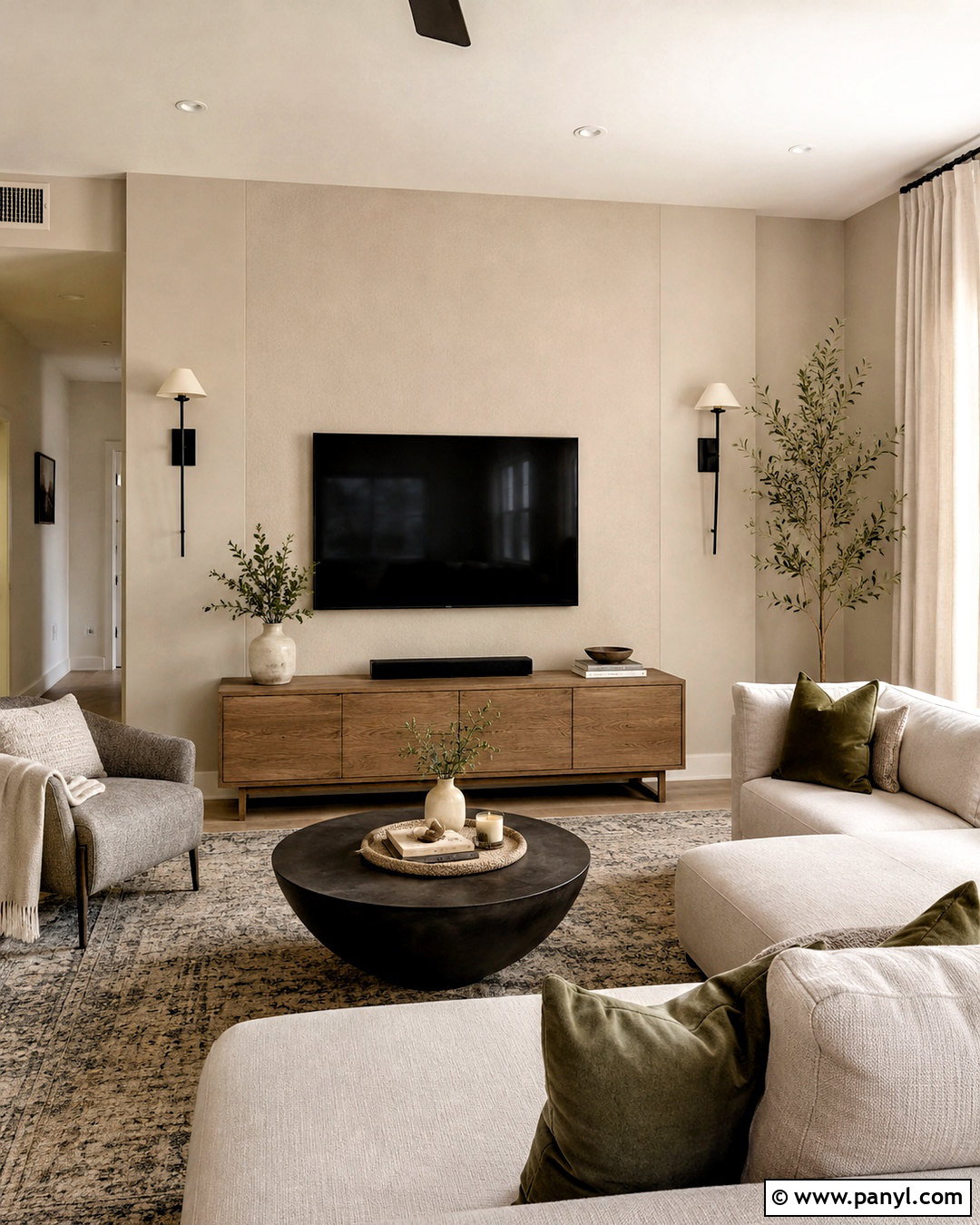
Mushroom beige brings subtle depth to a TV wall through its balanced blend of gray and brown. It is particularly useful in rooms with mixed wood tones because it can connect pale oak, walnut, and darker furniture. Paint the television wall mushroom beige and use a lighter cream across the rest of the space. Position the screen above a medium oak cabinet with simple black pulls. Add an off-white sectional, taupe lounge chair, and soft patterned rug in beige and charcoal. Black sconces provide definition, while olive pillows and ceramic accessories bring in quiet color. Keep curtains light and slightly textured to complement the wall. This complete neutral scheme feels warmer than gray and more contemporary than traditional tan, making it adaptable to many existing living room finishes.
22. Sand Beige TV Wall
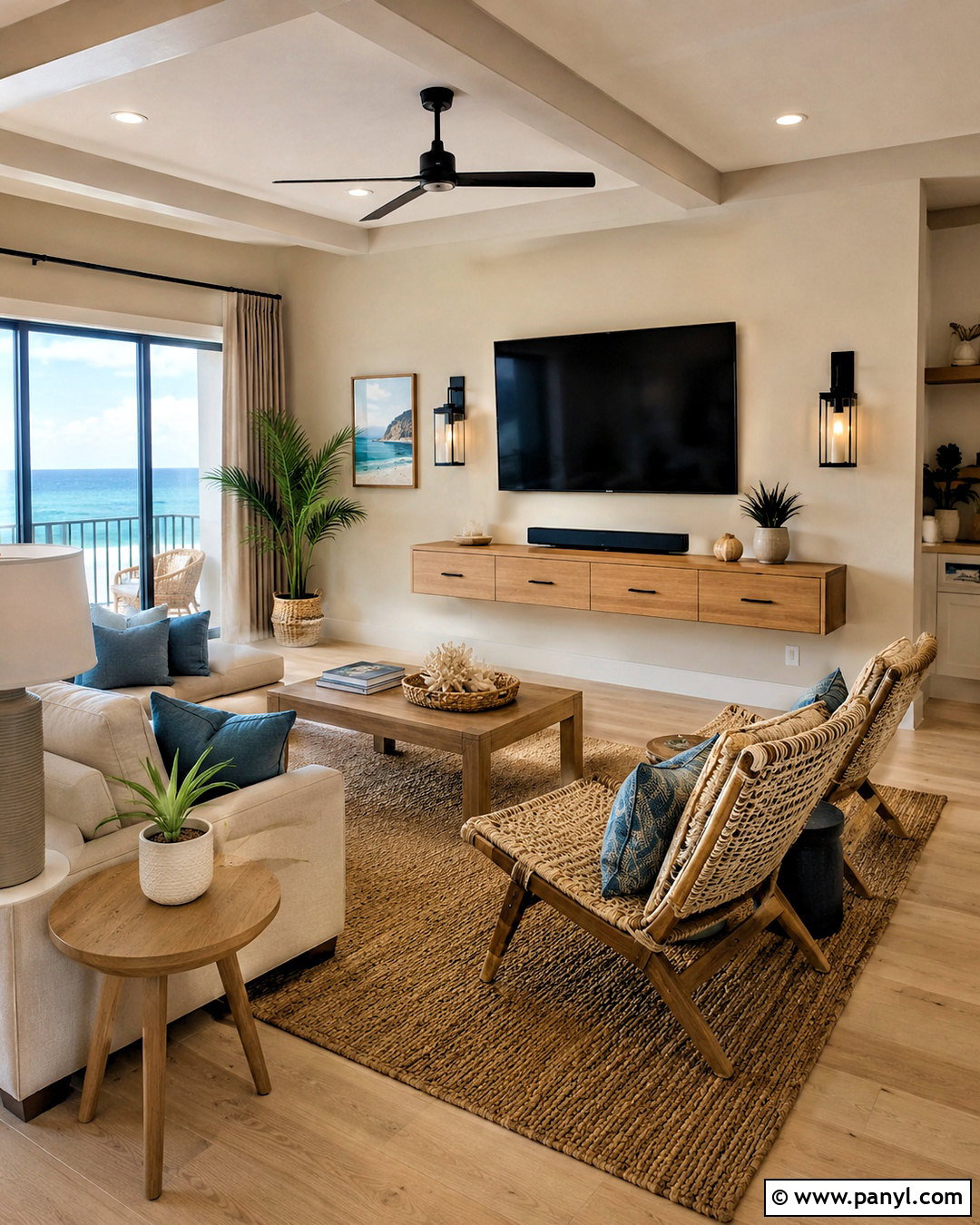
Imagine a light, sun-filled room where every surface feels soft and relaxed. A sand beige TV wall creates that effect while offering slightly more contrast than warm white. Combine it with ivory surrounding walls, pale oak flooring, and a floating oak media console. Select a cream sofa with clean lines, woven accent chairs, and a natural jute or wool rug. Black details around lighting, picture frames, and cabinet hardware give the neutral palette necessary structure. Use tan linen curtains and a few muted blue cushions for subtle coastal color. Add one large floor plant instead of several small accessories. The completed space feels bright, open, and cohesive, making sand beige a practical choice for compact rooms, casual family spaces, and modern coastal interiors.
23. Cream TV Wall
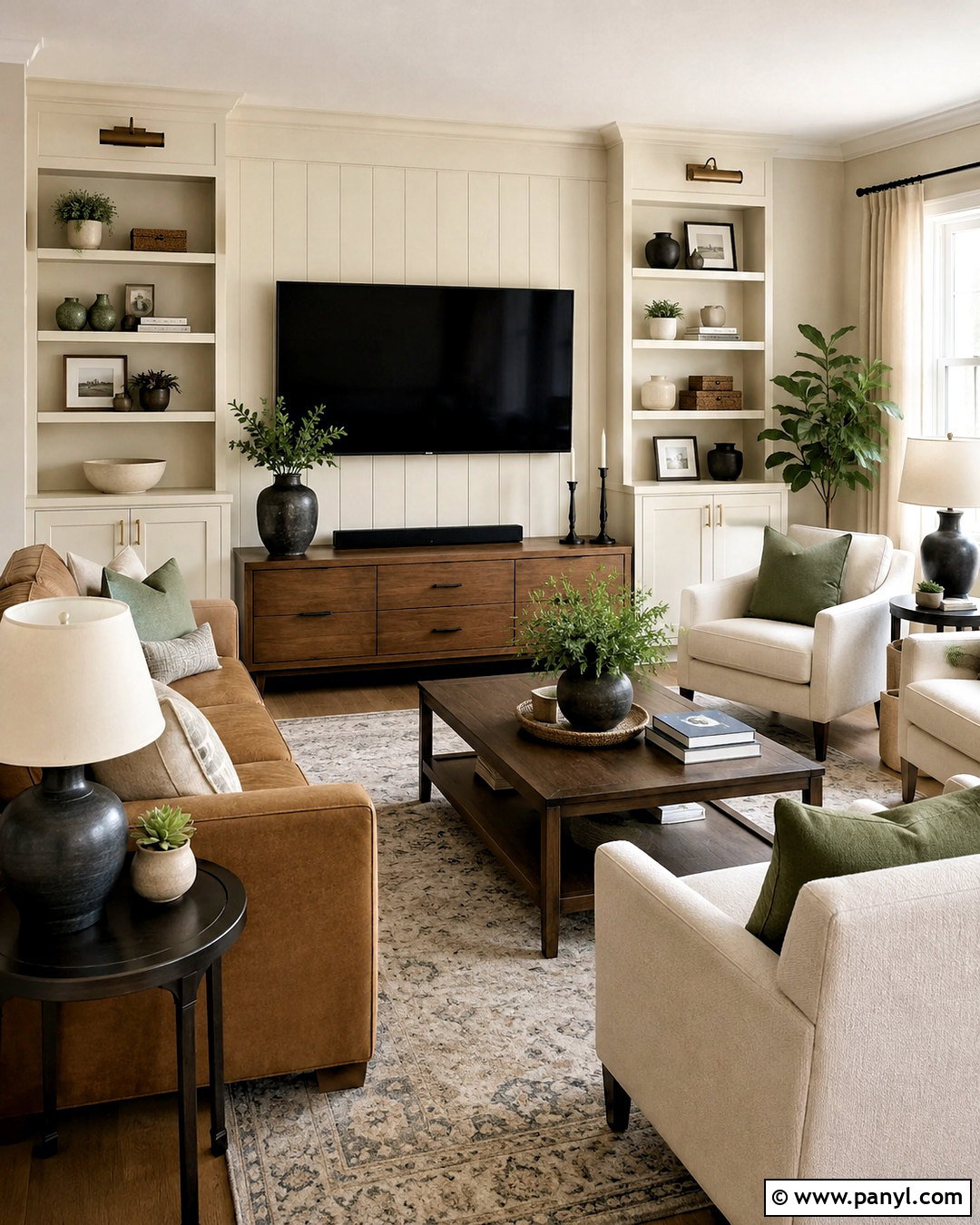
Cream makes a television area feel warmer and less stark than pure white, especially when the room contains brown floors or traditional wood furniture. Paint the TV wall in a rich but light cream and continue the same shade across simple built-in shelves. Use a medium walnut console below the screen, leaving enough space for closed storage and balanced decorative objects. A camel sofa, ivory armchairs, and faded neutral rug create a comfortable seating group. Add dark bronze lamps and picture frames to echo the black television. Soft green cushions and leafy plants prevent the room from becoming overly beige. Sheer curtains layered with textured drapes complete the design. This timeless scheme works across traditional, transitional, farmhouse, and relaxed contemporary homes without demanding frequent color updates.
24. Light Gray TV Wall
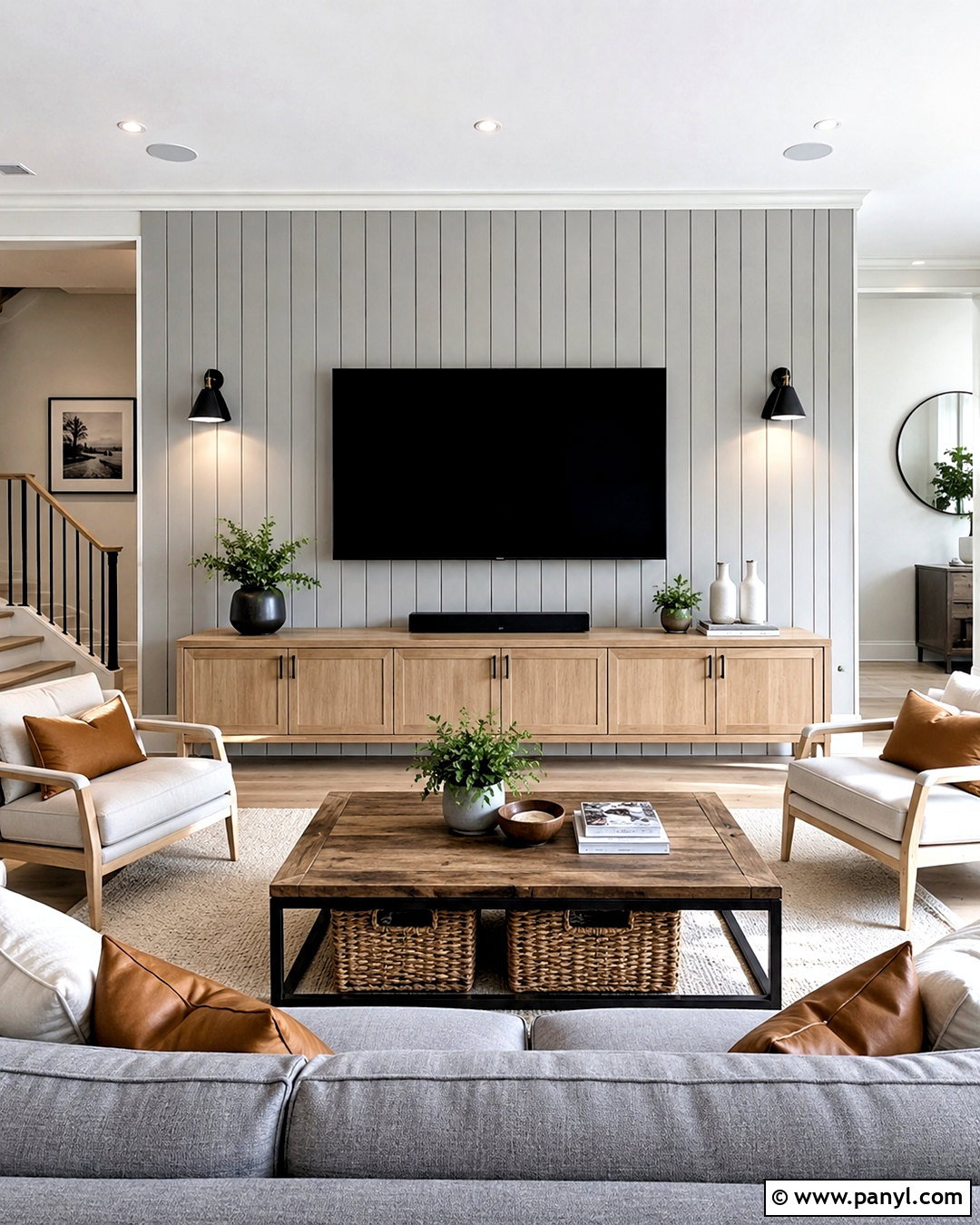
Light gray offers a crisp TV wall background that works well with black, white, pale wood, and cooler upholstery. Choose a gray with a slight warm undertone to avoid a sterile appearance. Mount the television above a white oak console and keep the surrounding walls soft white. A medium gray sofa provides tonal continuity, while cream chairs and an ivory rug lighten the seating area. Introduce warmth with cognac leather cushions, a wood coffee table, and woven baskets. Matte black lighting and hardware connect visually with the screen. If the room needs architectural interest, add narrow vertical panels painted in the same light gray. This coordinated design feels uncluttered and modern, making it particularly useful for small living rooms and open-plan spaces with contemporary finishes.
25. Medium Gray TV Wall
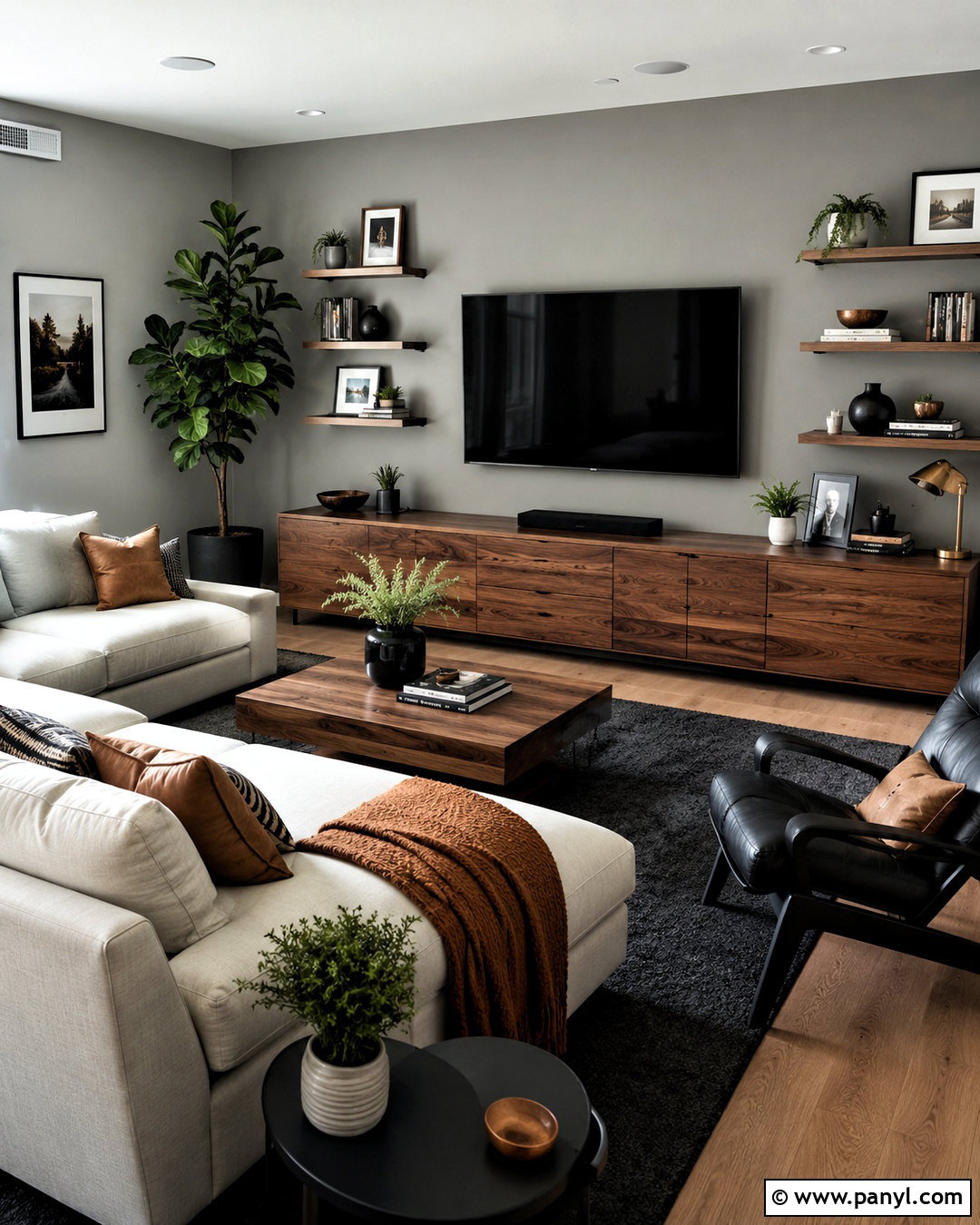
A medium gray TV wall provides stronger definition than pale gray but remains flexible enough for changing furniture and decor. Look for a balanced shade that does not appear noticeably blue or brown. Pair it with bright white trim, light oak flooring, and a long walnut media unit. An ivory sectional keeps the room open, while a black lounge chair and charcoal rug repeat the television’s dark tone. Add camel pillows and a rust-colored throw to warm the neutral palette. Simple floating shelves can frame one side of the screen, with a tall plant balancing the other. Use adjustable wall lights for evening viewing, but position them to avoid screen reflections. The completed room feels structured, comfortable, and suitable for both minimalist and transitional decorating preferences.
26. Blue Gray TV Wall
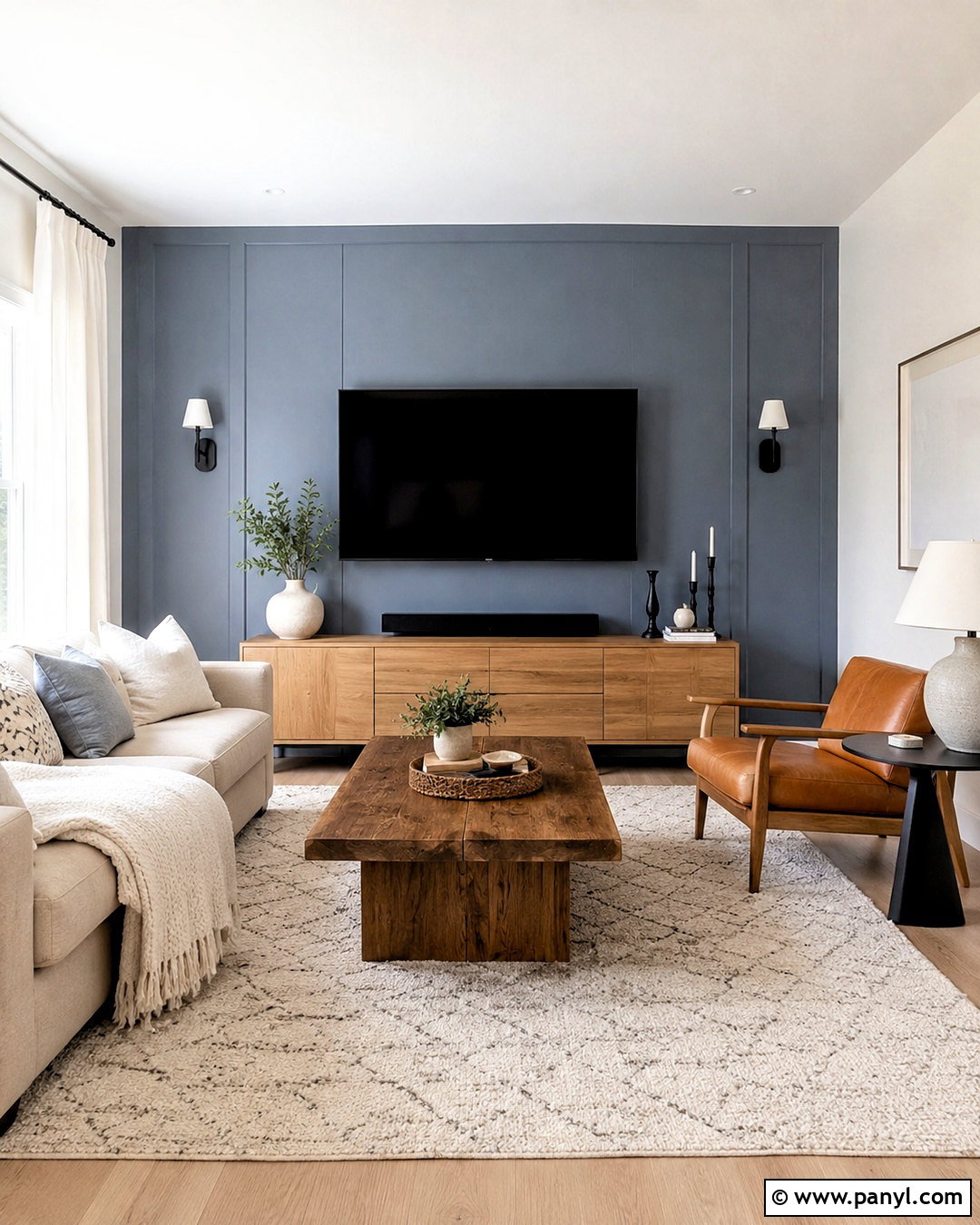
Blue gray gives a TV wall a calm, cool character without looking as colorful as true blue. Choose a medium shade with enough depth to separate the television area from pale surrounding walls. A natural oak console and warm beige sofa help balance the cooler paint. Add an ivory rug, cognac leather chair, and walnut coffee table for further warmth. Repeat blue gray through one patterned cushion or ceramic lamp rather than using it across every accessory. Black metal frames and sconces connect the television to the room’s smaller details. White linen curtains keep the windows bright and uncomplicated. This complete palette suits coastal, Scandinavian, and contemporary living rooms, especially those with cool daylight, pale flooring, and a preference for restful colors rather than dramatic contrast.
27. Soft Lavender TV Wall
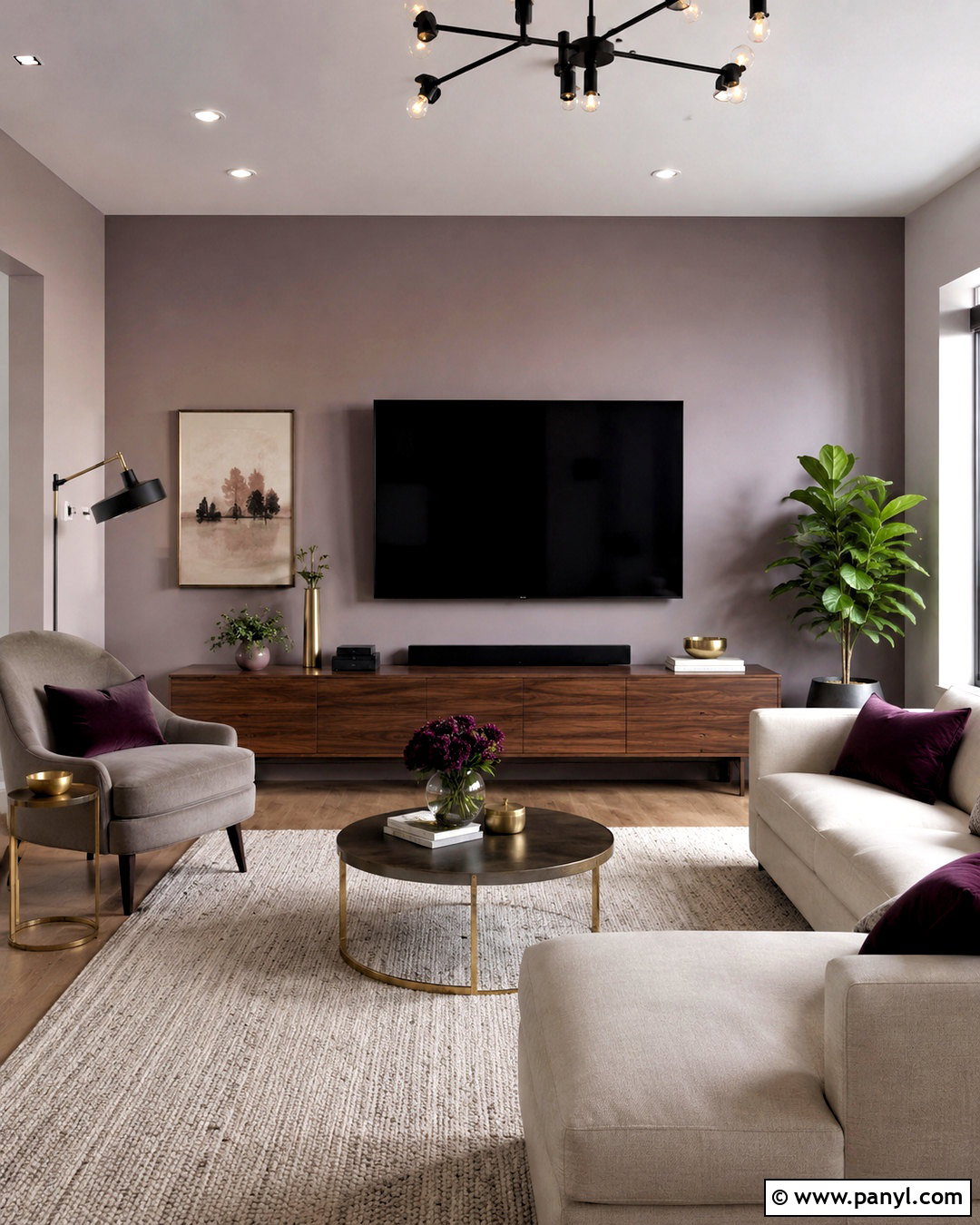
Soft lavender can make a TV wall feel distinctive and restful when the color contains plenty of gray. Select a muted lavender rather than a bright purple, and combine it with warm white walls and light oak flooring. A slim walnut media cabinet adds needed warmth below the black screen. Choose an ivory sofa, taupe armchair, and textured cream rug for a quiet foundation. Deep plum cushions and a small amount of brushed brass strengthen the palette without making the room overly feminine. Add linen curtains, black-framed lighting, and one large plant. Keep wall decor minimal so the unusual paint color remains the main feature. The completed living room feels soft, contemporary, and personal while still providing a comfortable setting for everyday television viewing.
28. Deep Plum TV Wall
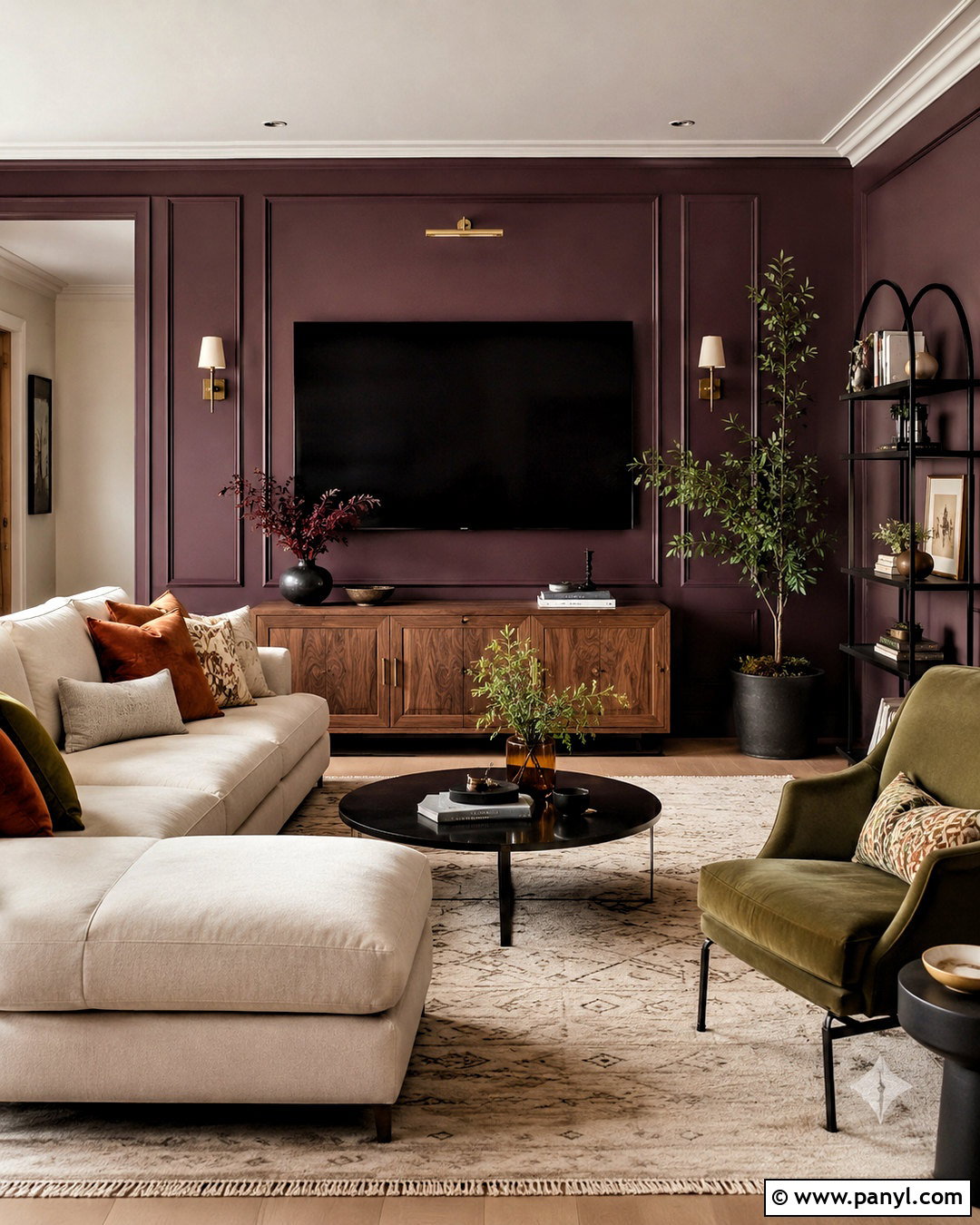
Deep plum brings dramatic color to a TV wall while creating a softer atmosphere than black or charcoal. Choose a dark, brown-based plum and reserve it for the full media wall. Paint the other walls creamy white and bring in a pale beige sectional to balance the depth. A walnut console, brass sconces, and warm wood coffee table complement the red undertones. Use an ivory rug with subtle plum and rust details to connect the seating area to the wall. Black curtain rods and table legs repeat the television’s dark outline. Add one muted olive chair or several green plants for a natural counterpoint. This coordinated design feels luxurious but still livable, working best in rooms with generous windows and warm artificial lighting for evening use.
29. Brick Red TV Wall
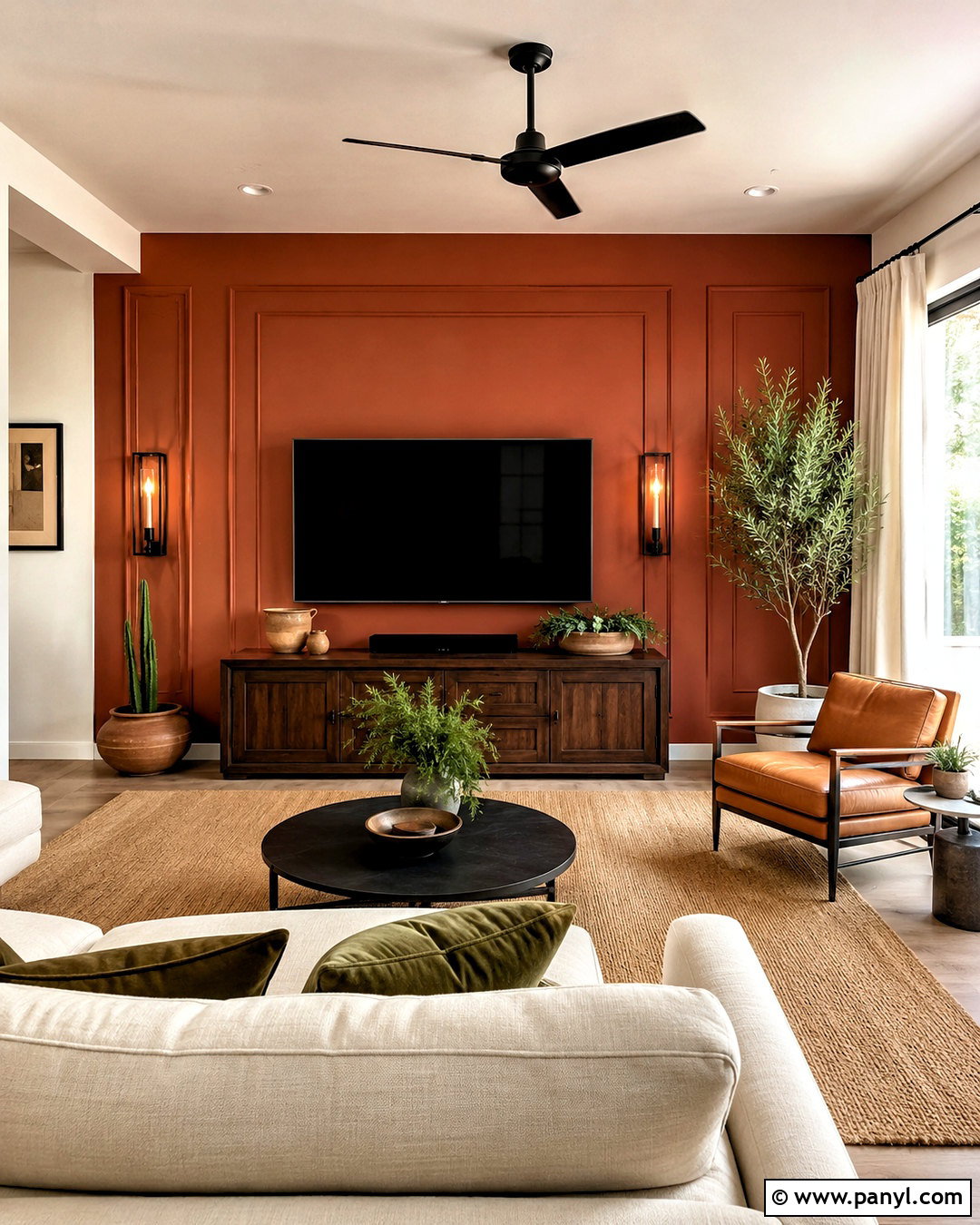
Brick red offers a warm, architectural quality that gives the television area a strong sense of place. Choose a muted red with brown and clay undertones rather than a vivid primary shade. Pair the wall with warm white paint elsewhere and install a dark wood console beneath the screen. A cream sofa, tan leather chair, and beige rug soften the bold backdrop. Use black metal lighting and curtain hardware for clean definition. Olive cushions and natural plants balance the red, while linen curtains keep the room relaxed. Add narrow picture-frame molding painted brick red if the wall needs texture without additional materials. The finished living room has an inviting, collected appearance that complements rustic, traditional, industrial, and modern Southwestern furnishings.
30. Cobalt Blue TV Wall
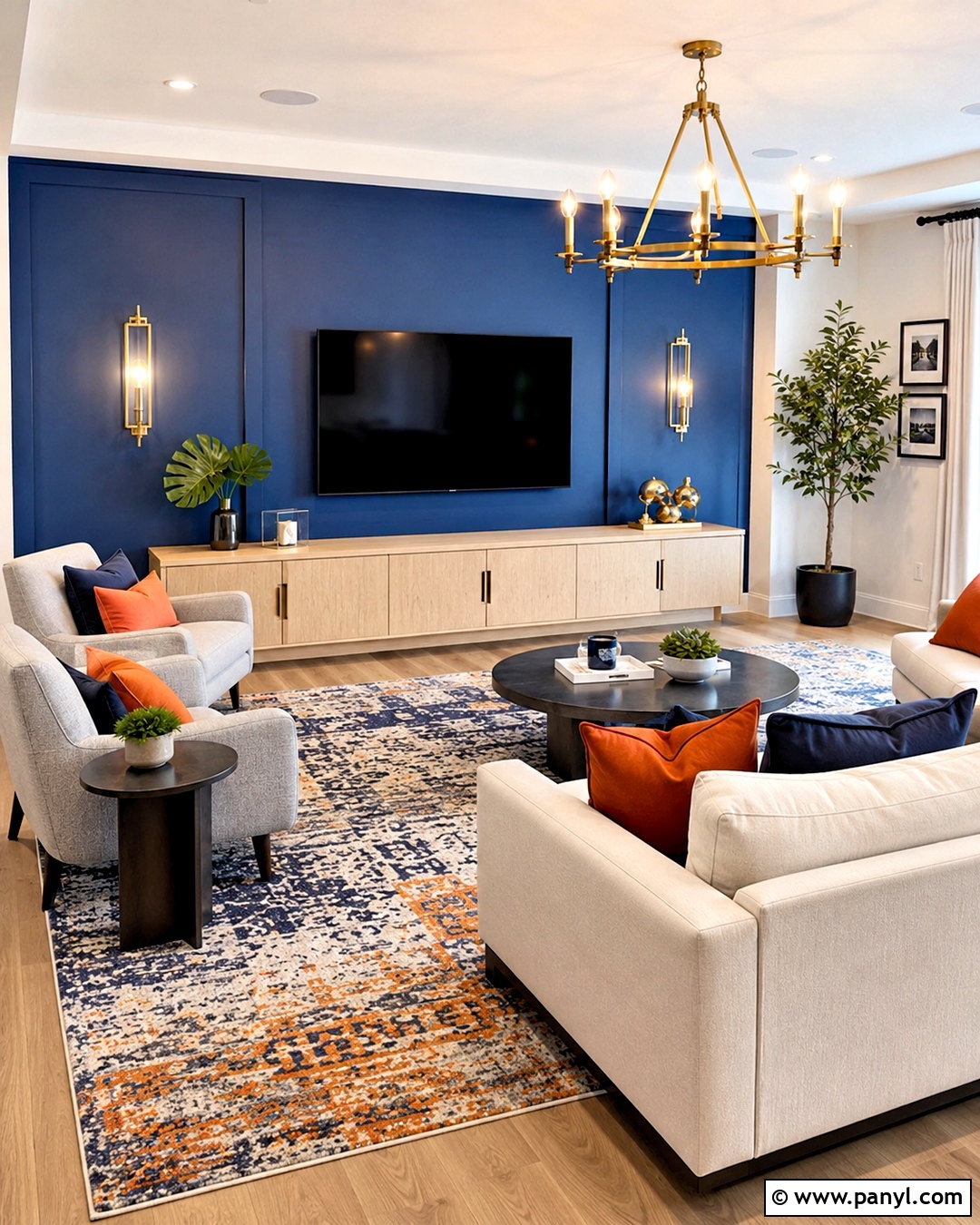
Cobalt blue can create a bold TV wall that feels energetic and polished when surrounded by enough neutral space. Choose a rich but slightly softened cobalt and apply it only to the media wall. Keep the remaining walls crisp warm white. Place a long white oak console beneath the television, then add an ivory sofa and pale gray chairs to maintain balance. A patterned rug featuring blue, cream, and muted orange connects the color to the floor. Use brushed brass lighting for warmth and black frames for definition. Limit additional bright colors to a few burnt orange cushions or ceramic pieces. With uncluttered shelves and light curtains, the complete room feels confident rather than busy, making this scheme suitable for colorful contemporary interiors.
31. Emerald Green TV Wall
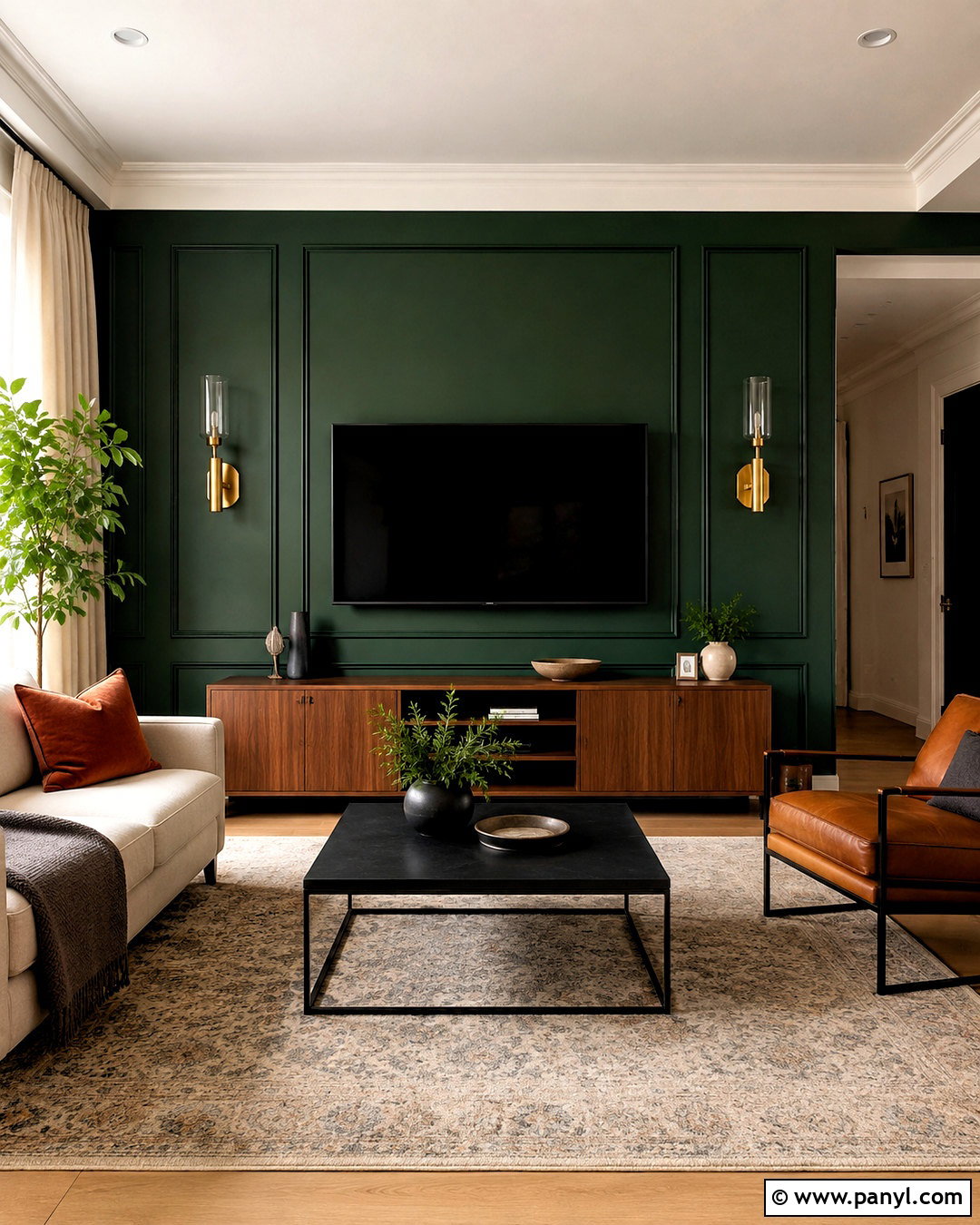
An emerald green TV wall provides a rich jewel-toned focal point that works beautifully with warm metals and light upholstery. Select a deep, slightly muted emerald so the black television blends naturally into the composition. Pair it with ivory surrounding walls and a walnut media cabinet. A cream sofa, caramel leather chair, and faded neutral rug create a welcoming seating area. Add brass sconces and cabinet pulls, but keep decorative shine controlled. Green velvet pillows can repeat the wall color, while rust or blush accents introduce contrast. Hang long linen curtains and place a tall plant near one edge of the media unit. The final design feels expressive and elegant without sacrificing comfort, especially in living rooms with high ceilings or abundant daylight.
32. Color Block TV Wall
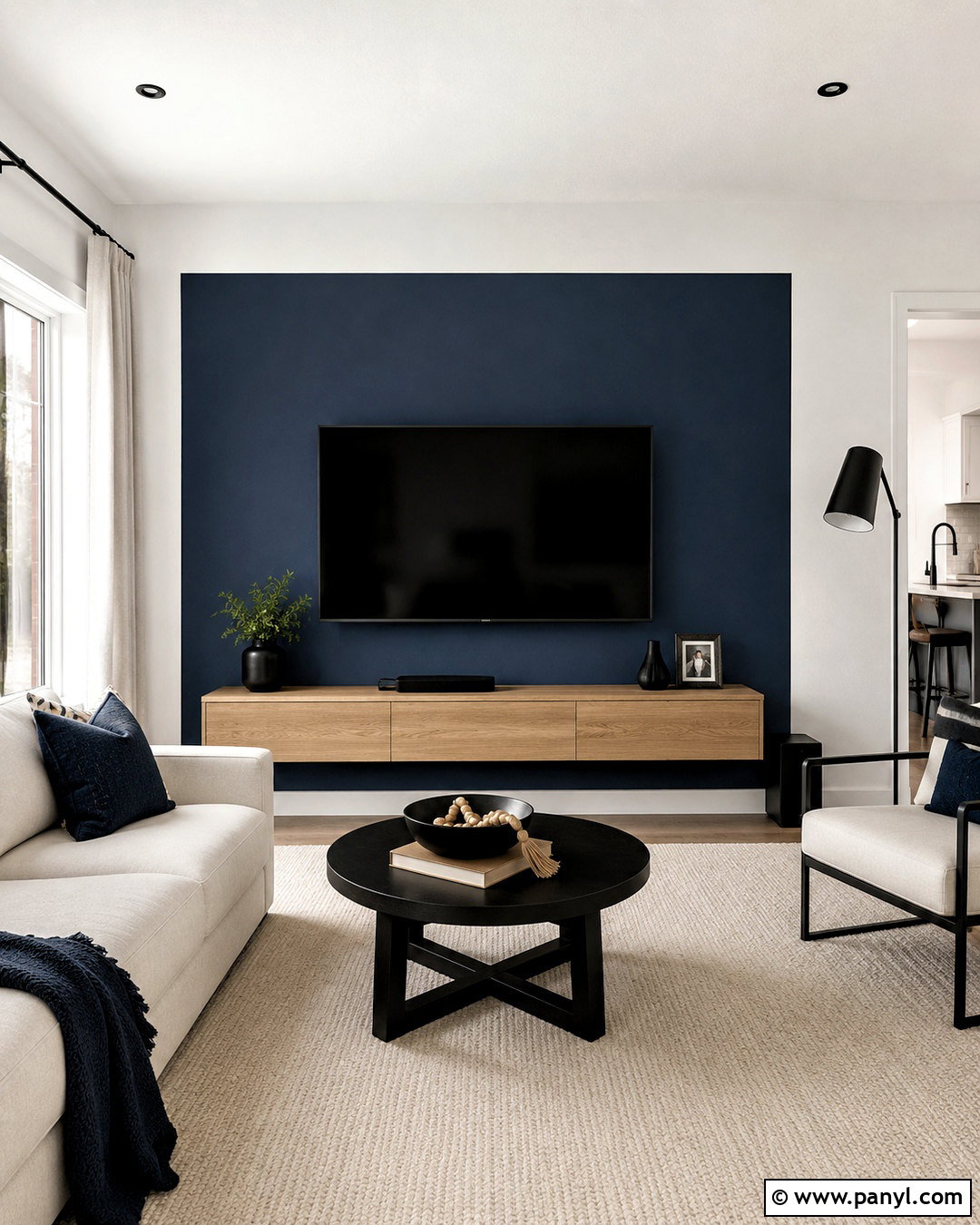
A painted color block can define the television zone without covering the entire wall. Create a large centered rectangle in deep navy, charcoal, olive, or terracotta, extending several inches beyond the screen and media cabinet. Keep the remaining wall warm white for clear contrast. Pair the feature with a floating oak console, cream sofa, and neutral textured rug. Repeat the block color through two cushions or one accent chair to connect it with the seating area. Black lighting and table frames add visual structure. Measure carefully so the painted shape aligns with the furniture rather than appearing random. This complete arrangement suits rentals, small rooms, and budget-friendly updates because it creates an architectural focal point using little more than paint and precise placement.
33. Two Tone TV Wall
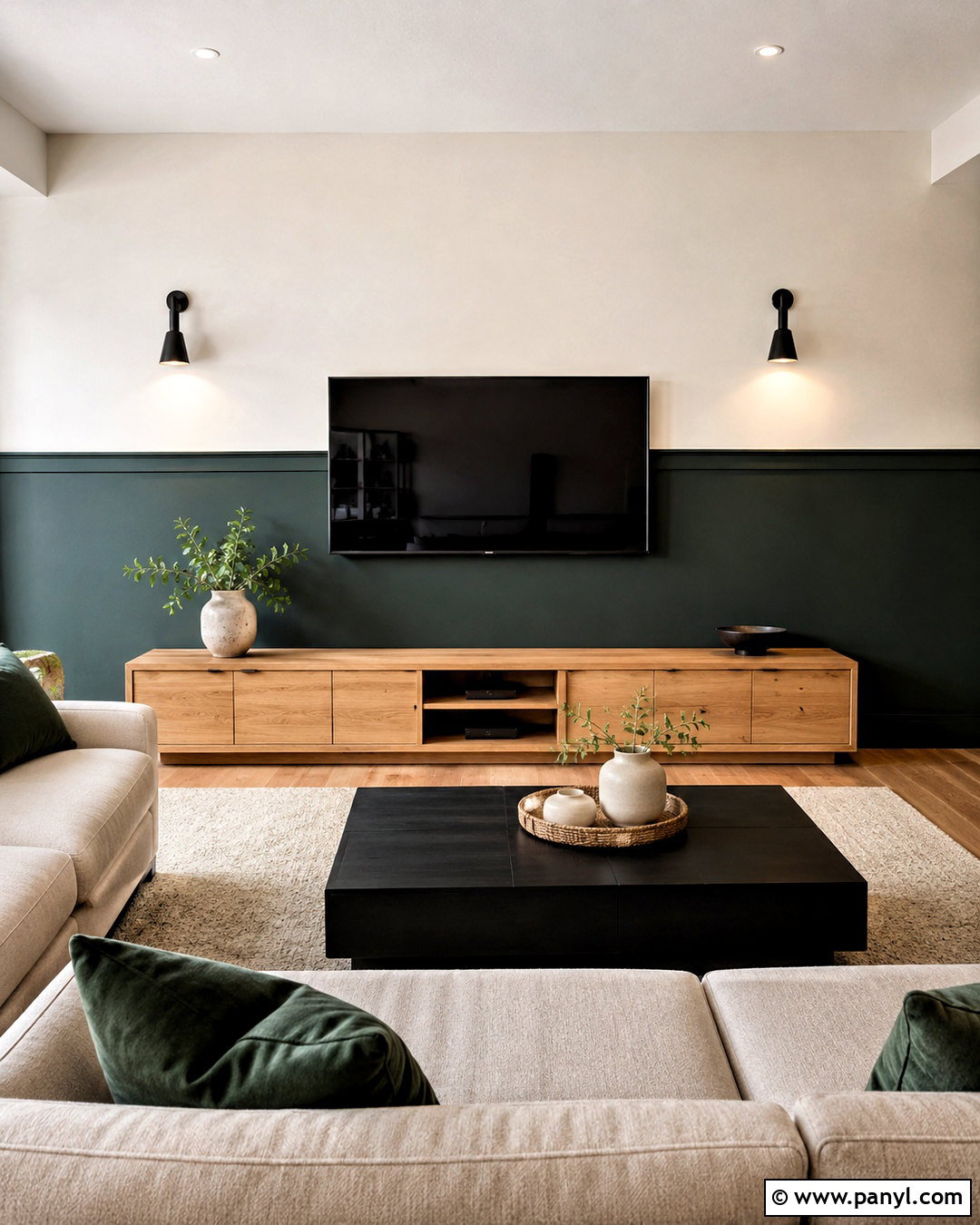
A two-tone TV wall brings extra dimension to the room without requiring paneling or expensive materials. Paint the lower two-thirds in charcoal, navy, forest green, or warm taupe, then use creamy white above. Align the color break with a shelf, cabinet top, or architectural molding so it looks purposeful. Mount the television mainly within the darker section and place a long oak media console underneath. Choose a beige sofa, ivory rug, and accent pillows that repeat both wall colors. Black sconces or slim floor lamps reinforce the screen’s outline. Keep artwork on adjacent walls rather than crowding the painted division. This finished room feels balanced and visually wider, making the approach useful for long walls, low ceilings, or open living areas that need better zoning.
34. TV Wall With Painted Molding
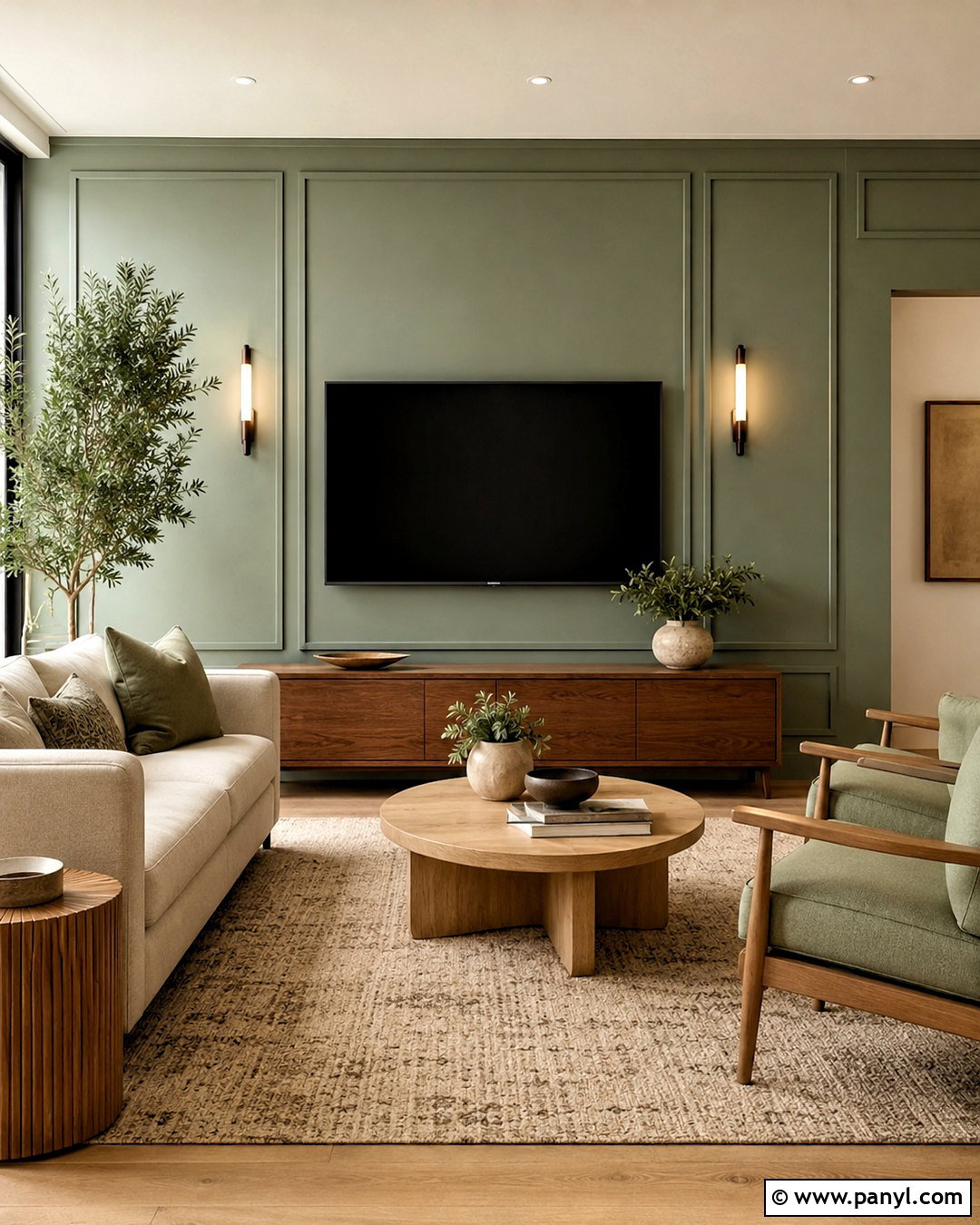
Painted molding gives a TV wall architectural depth while allowing a single color to unify every detail. Install simple rectangular trim around the screen and across the wider wall, keeping the layout symmetrical. Paint the wall and molding together in sage green, warm taupe, navy, or charcoal. Position the television above a low walnut console with closed doors. A cream sofa, textured neutral rug, and light oak tables prevent the formal wall treatment from making the room feel stiff. Use contemporary sconces and minimal accessories for a fresh balance. Repeat the wall shade in one throw or patterned pillow. This complete scheme works particularly well in transitional homes because it combines classic detailing with modern electronics, streamlined furniture, and an uncluttered everyday layout.
35. Color Drenched TV Wall
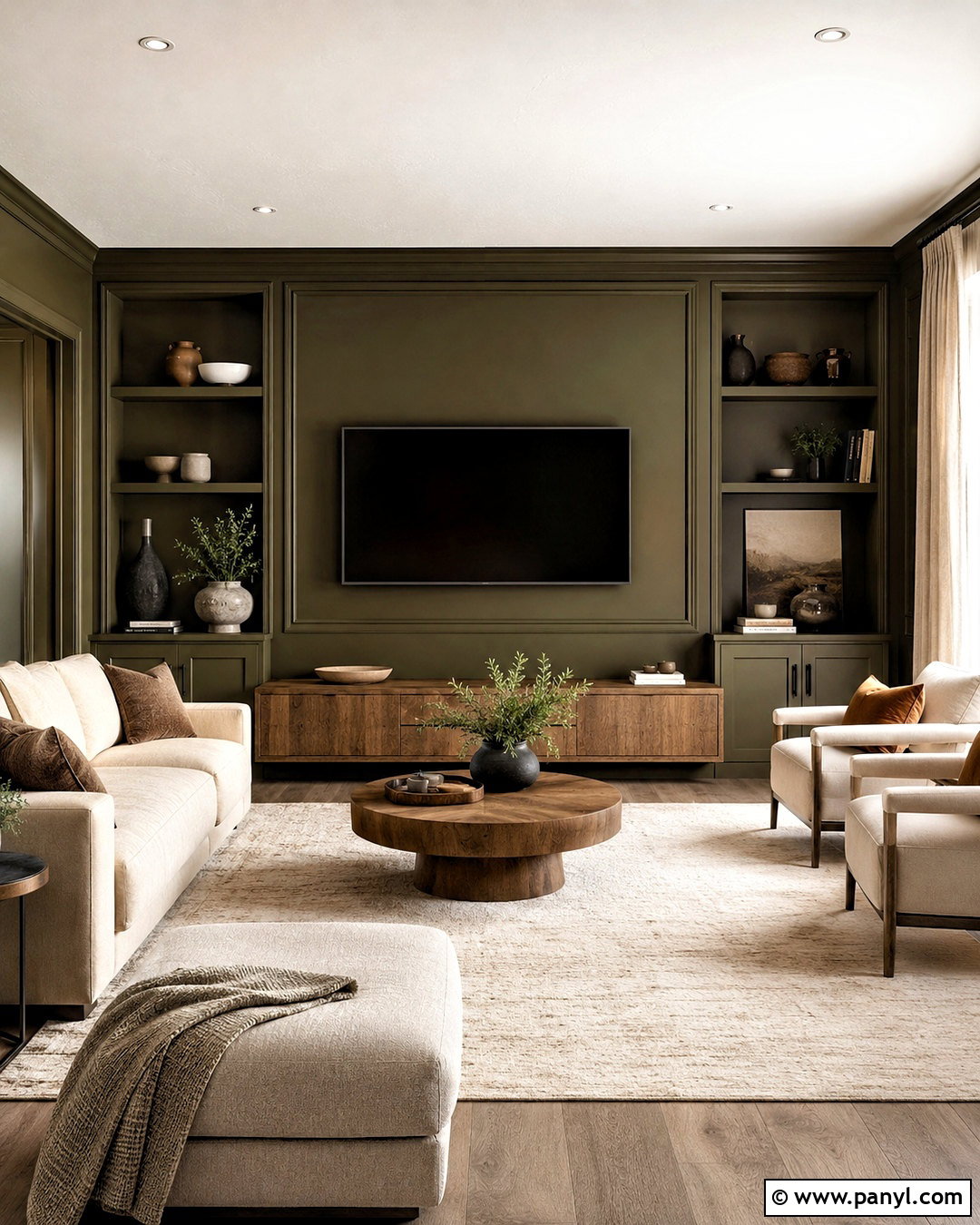
Color drenching creates an immersive television area by covering the wall, trim, shelves, and nearby built-ins in one continuous shade. Deep olive, slate blue, warm taupe, burgundy, and charcoal are especially effective. Keep the ceiling slightly lighter if the room is small, or carry the color overhead in a spacious room for greater impact. Choose a media console in matching paint or contrasting natural wood. Balance the strong backdrop with cream seating, a pale rug, and linen curtains. Add black lighting, warm metal hardware, and a few wood accessories to break up the color. Closed storage keeps the broad painted surface orderly. The completed space feels custom and cohesive, turning the television wall into an integrated part of the architecture rather than a separate accent.
Conclusion:
The best **35 TV wall color ideas** combine attractive paint with the furniture, lighting, materials, and proportions of the entire room. Dark charcoal, navy, forest green, and black can help the screen blend into its background. Greige, cream, sand, and light gray keep smaller spaces feeling open. Terracotta, burgundy, mustard, and teal provide stronger personality. Whichever direction you prefer, sample the color behind the actual television and view it throughout the day. Include a properly scaled media cabinet, concealed cables, comfortable seating, and repeated accent colors for balance. A thoughtfully coordinated TV wall will feel intentional, improve the room’s focal point, and create a more enjoyable space for everyday relaxing.

Related Ideas and Inspiration:
Leave a Reply