
Darker trim paired with lighter walls creates definition, depth, and architectural character without making a room feel heavy. The pale wall color reflects light, while deeper baseboards, door casings, windows, and molding form a polished frame around the space. This approach works especially well with substantial millwork, but it can also give simple builder-grade trim a more intentional presence. Satin or semigloss trim adds durability and subtle shine, while matte or eggshell walls keep the contrast balanced. For the most harmonious result, coordinate warm walls with warm dark colors and cool walls with cooler trim tones. Dark trim can emphasize architectural details and visually guide attention toward furnishings, artwork, and windows. () Explore these **45 darker trim lighter walls** combinations for complete, practical rooms you can recreate.

1. Black Trim With Warm White Walls
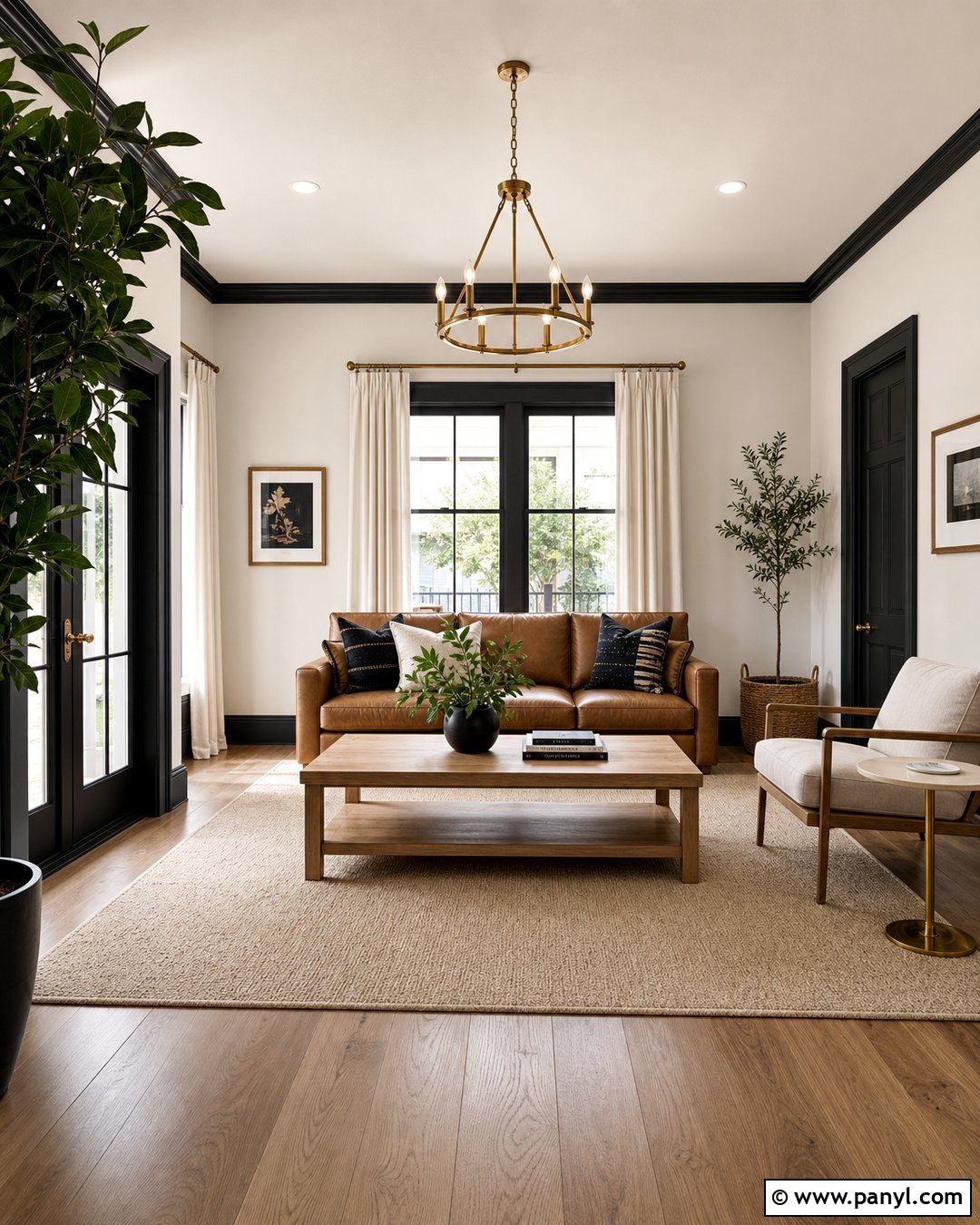
Warm white walls soften the boldness of black trim, creating a living room that feels crisp without looking cold. Paint the baseboards, window casings, interior doors, and simple crown molding a soft black with subtle brown undertones. Choose creamy white walls in an eggshell finish and keep the ceiling one step lighter. A camel leather sofa, natural oak coffee table, and oatmeal rug bridge the strong contrast. Add matte black lighting and a few brass accents for balance. Linen curtains should match the wall color so the windows remain visually open. Medium-tone wood flooring keeps the room grounded, while large neutral artwork prevents the black outlines from overpowering the space. The finished look is modern, comfortable, and easy to maintain.
2. Charcoal Trim With Soft Greige Walls
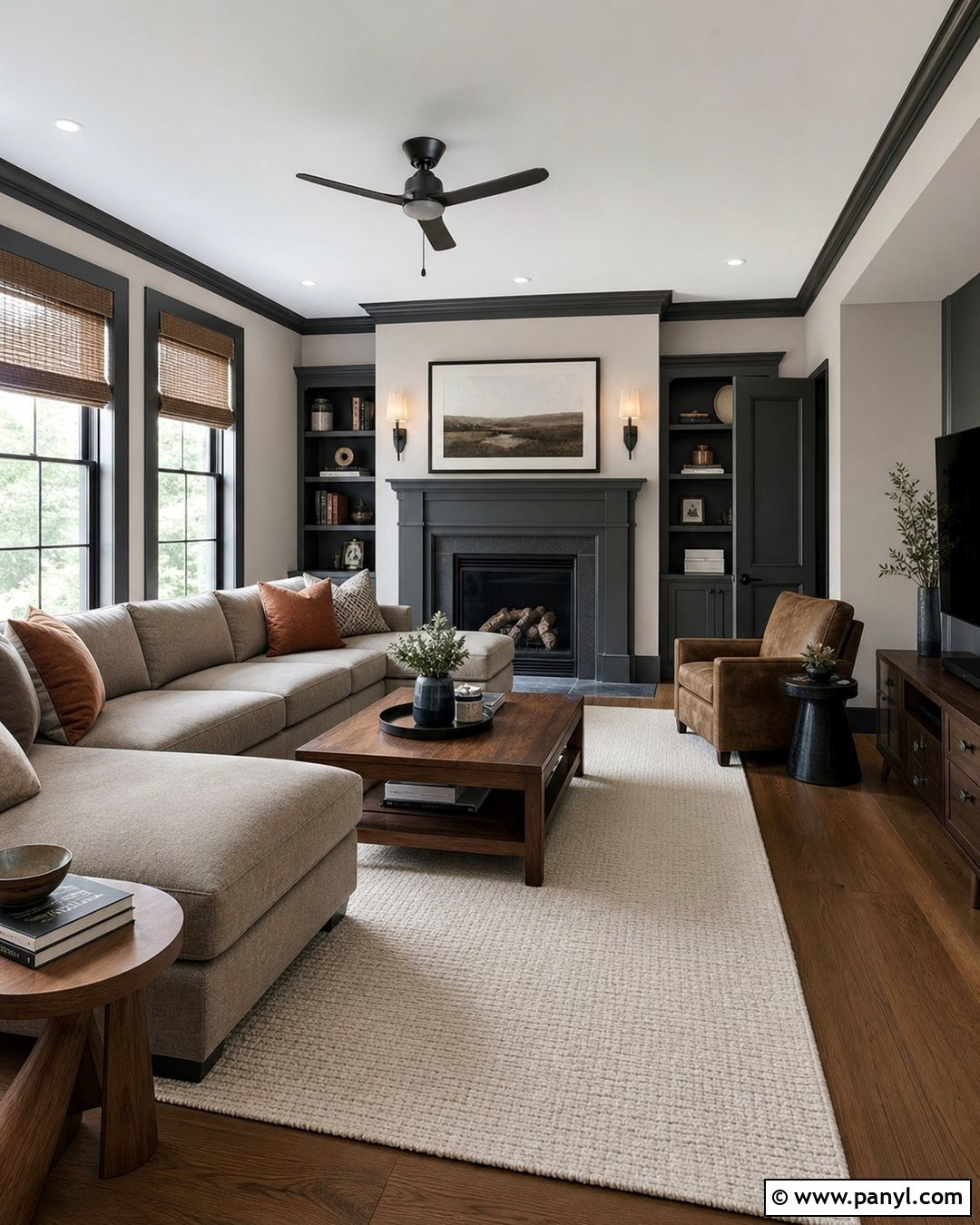
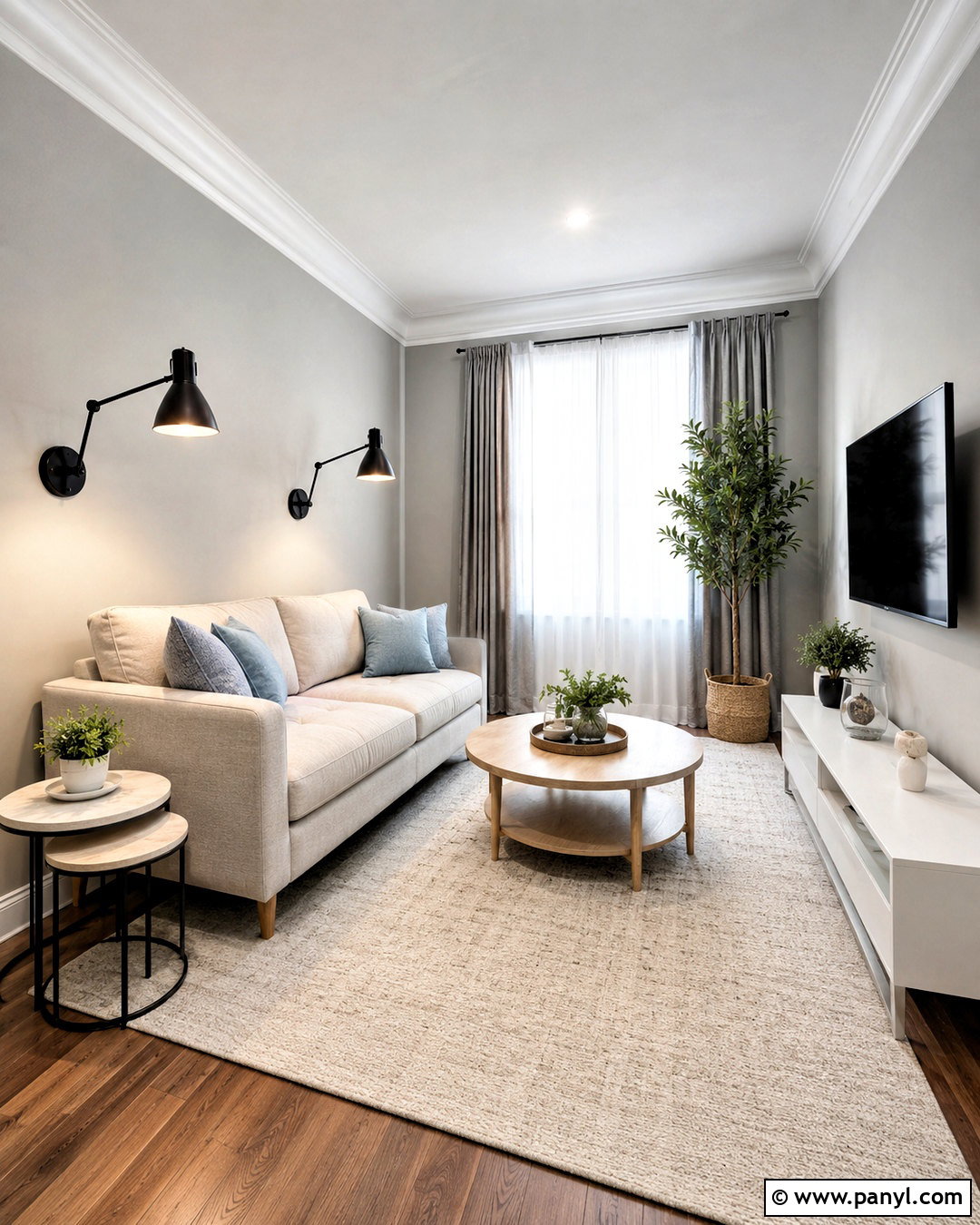
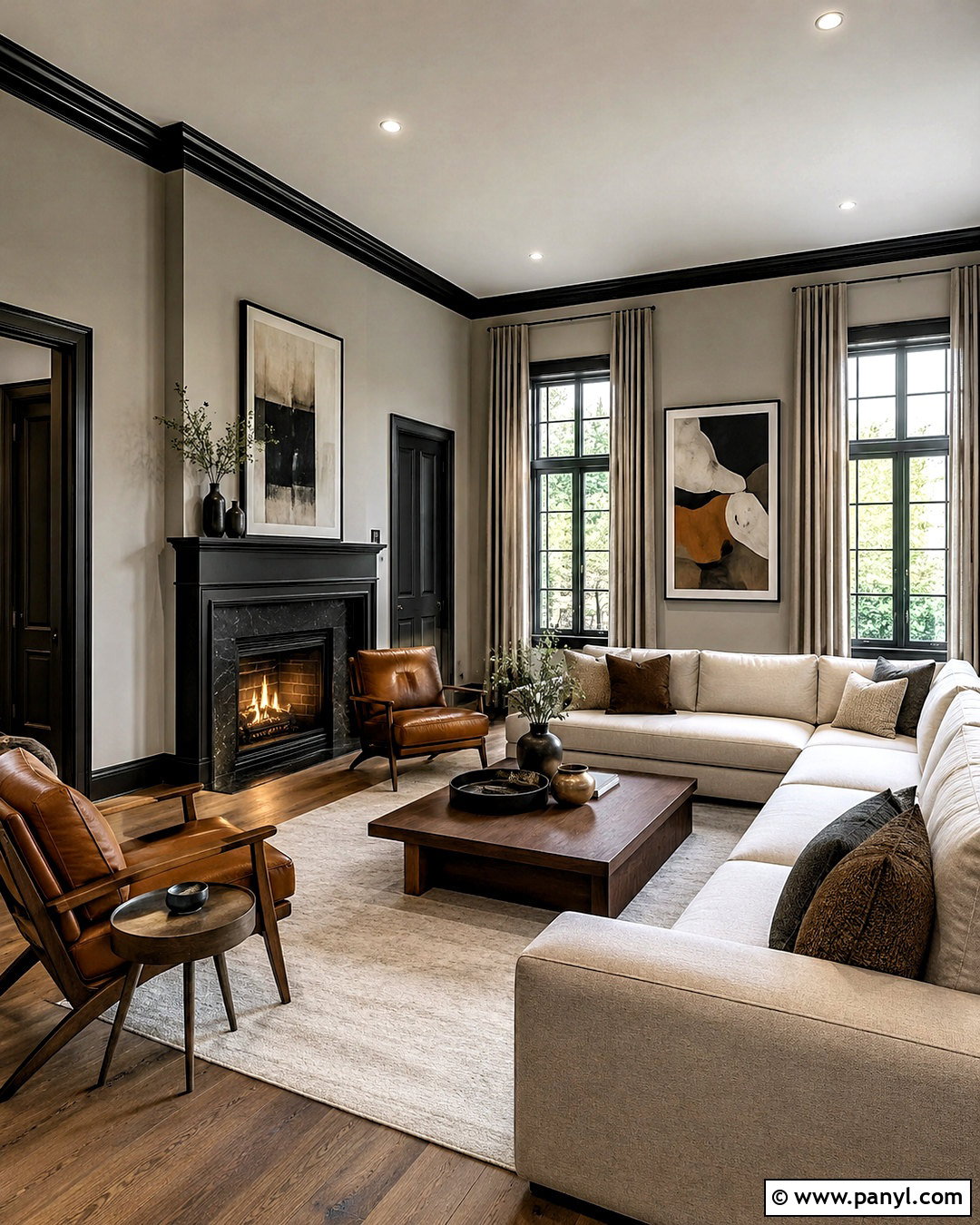
Do you want noticeable contrast without the sharpness of true black? Charcoal trim and soft greige walls offer a gentler solution for a relaxed family room. Use charcoal on the doors, baseboards, window frames, and fireplace surround, then select a pale greige wall color with matching warm-gray undertones. Furnish the room with a light taupe sectional, walnut side tables, and a textured ivory rug. Muted blue and rust pillows can introduce controlled color. Hang woven shades inside the dark window casings to showcase their shape. A white ceiling preserves brightness, while blackened bronze hardware ties into the trim. This layered neutral palette works particularly well in open rooms with wood floors and abundant natural light.
3. Espresso Trim With Cream Walls
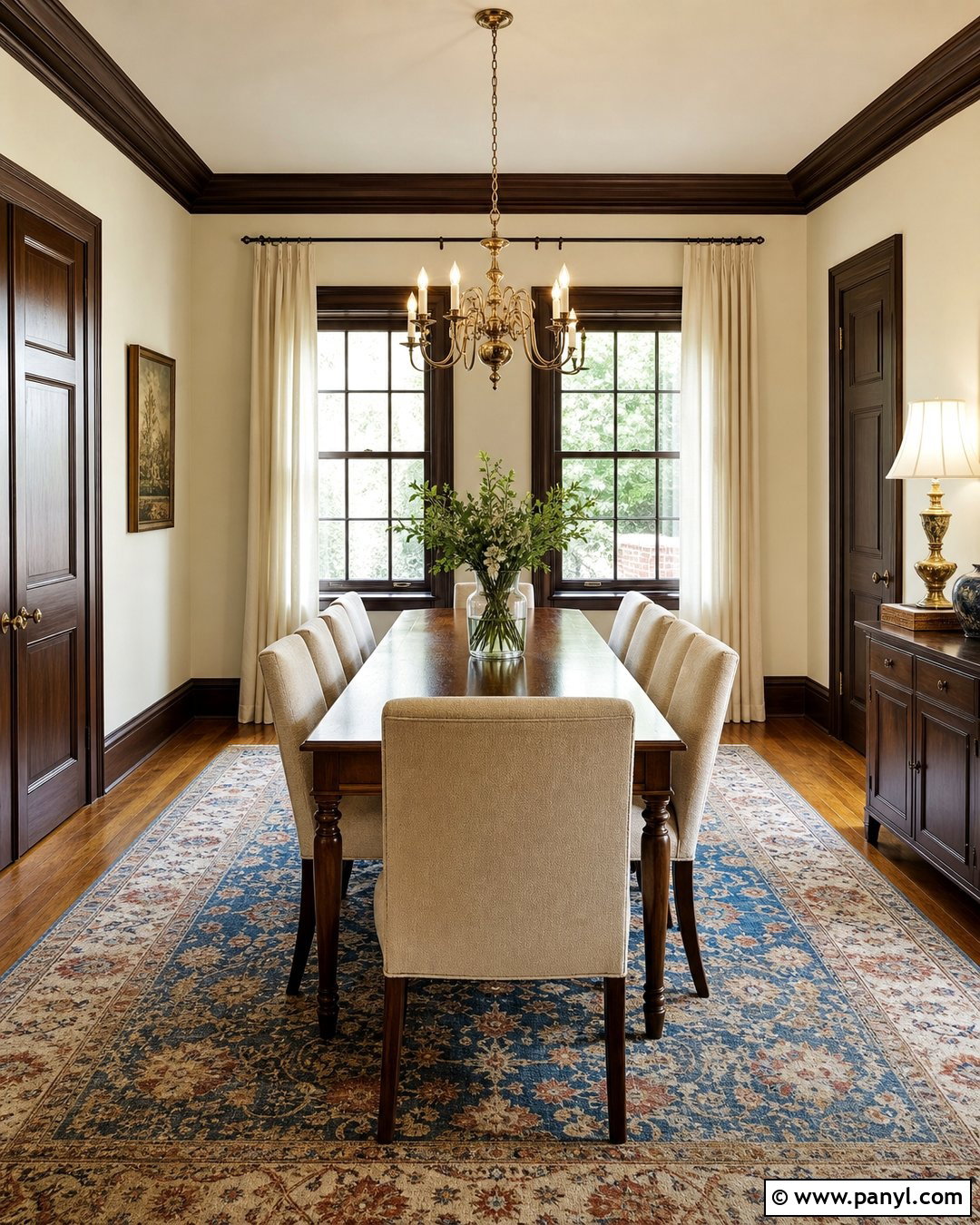
Rich espresso trim brings traditional warmth to cream walls, especially in dining rooms where deeper wood colors already appear. Cover the walls in a light buttery cream rather than a stark white. Paint the baseboards, door frames, crown molding, and paneled interior doors deep espresso brown with a satin finish. Center a dark walnut dining table beneath an aged brass chandelier, then surround it with oatmeal upholstered chairs. A vintage-patterned rug containing tan, rust, and faded blue connects the walls to the darker woodwork. Use cream linen drapery and warm white lamps to maintain an inviting atmosphere. Framed botanical prints and a low wooden sideboard complete the room without competing with the architectural trim.
4. Navy Trim With Pale Blue Walls
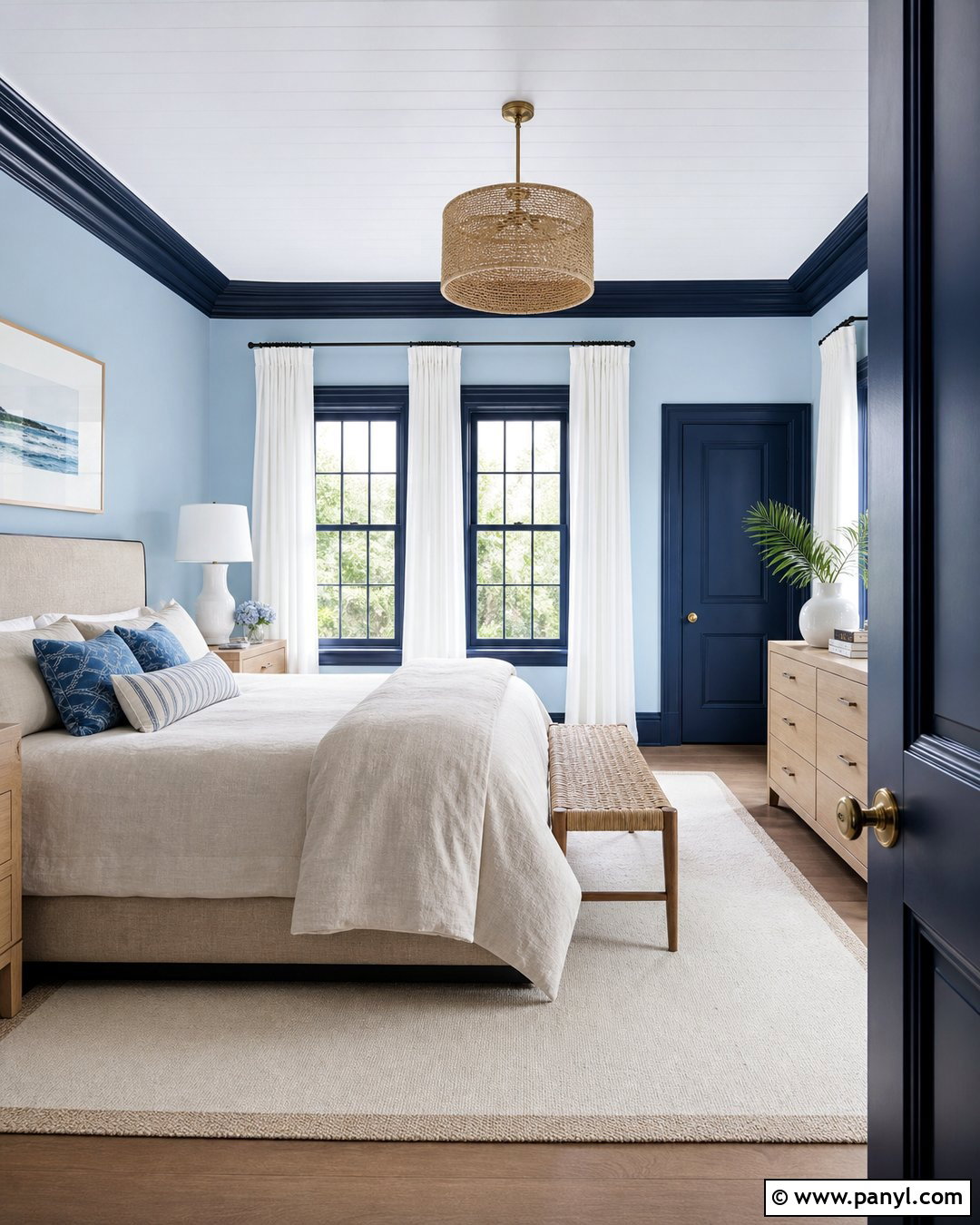
A quiet wash of pale blue becomes more structured when framed by deep navy trim. This combination suits a coastal bedroom without relying on obvious nautical decorations. Paint the walls a misty blue-gray and use a true navy on the baseboards, window casings, doors, and streamlined crown molding. Layer the bed with crisp white sheets, a sand-colored linen duvet, and blue patterned pillows. Light oak nightstands and a woven bench introduce natural warmth. Choose white curtains so the dark window trim remains visible, and add brushed nickel lamps for a clean finish. Pale flooring or a large ivory rug keeps the room airy. The coordinated blues feel calm and immersive while the lighter walls preserve spaciousness.
5. Forest Green Trim With Ivory Walls
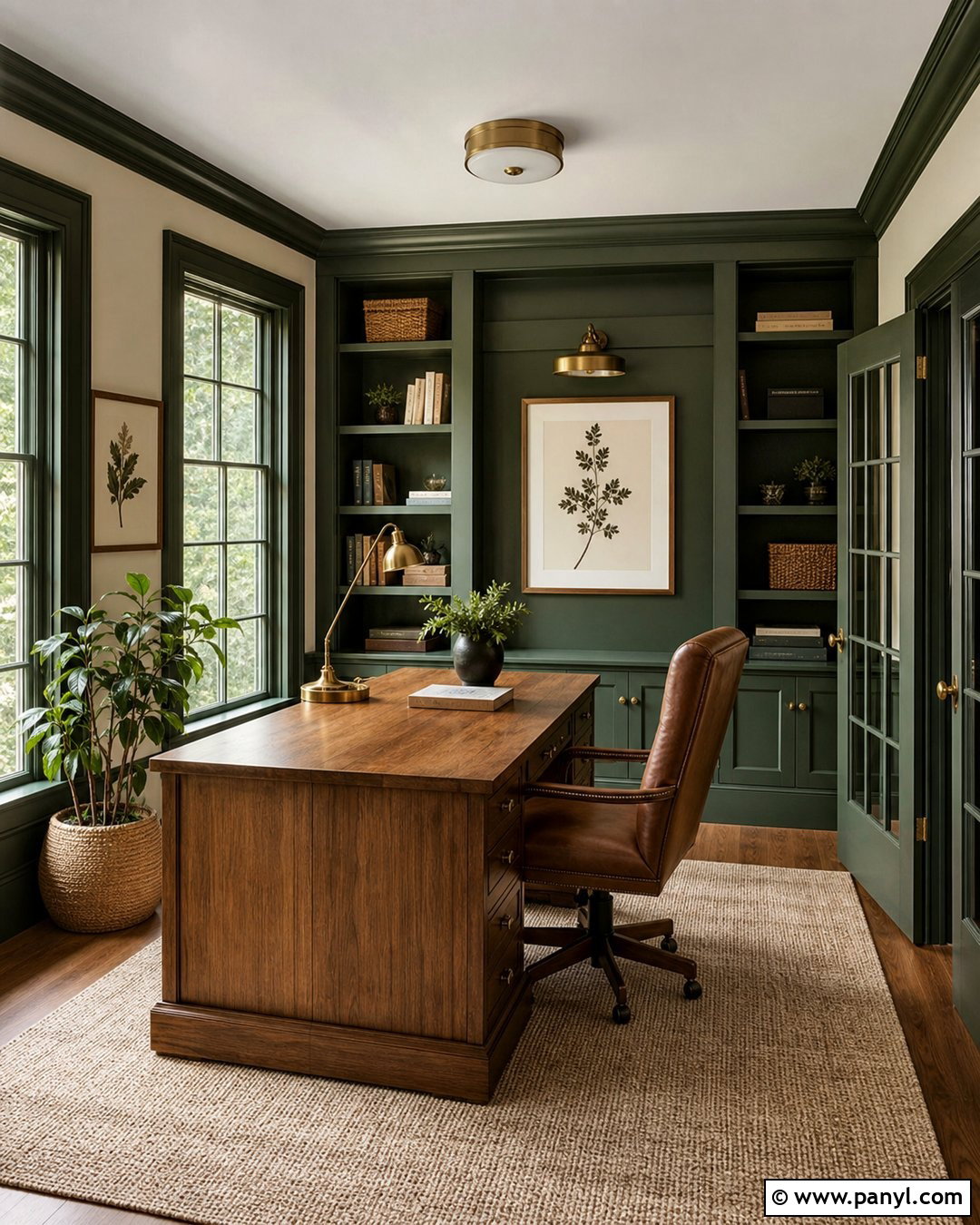
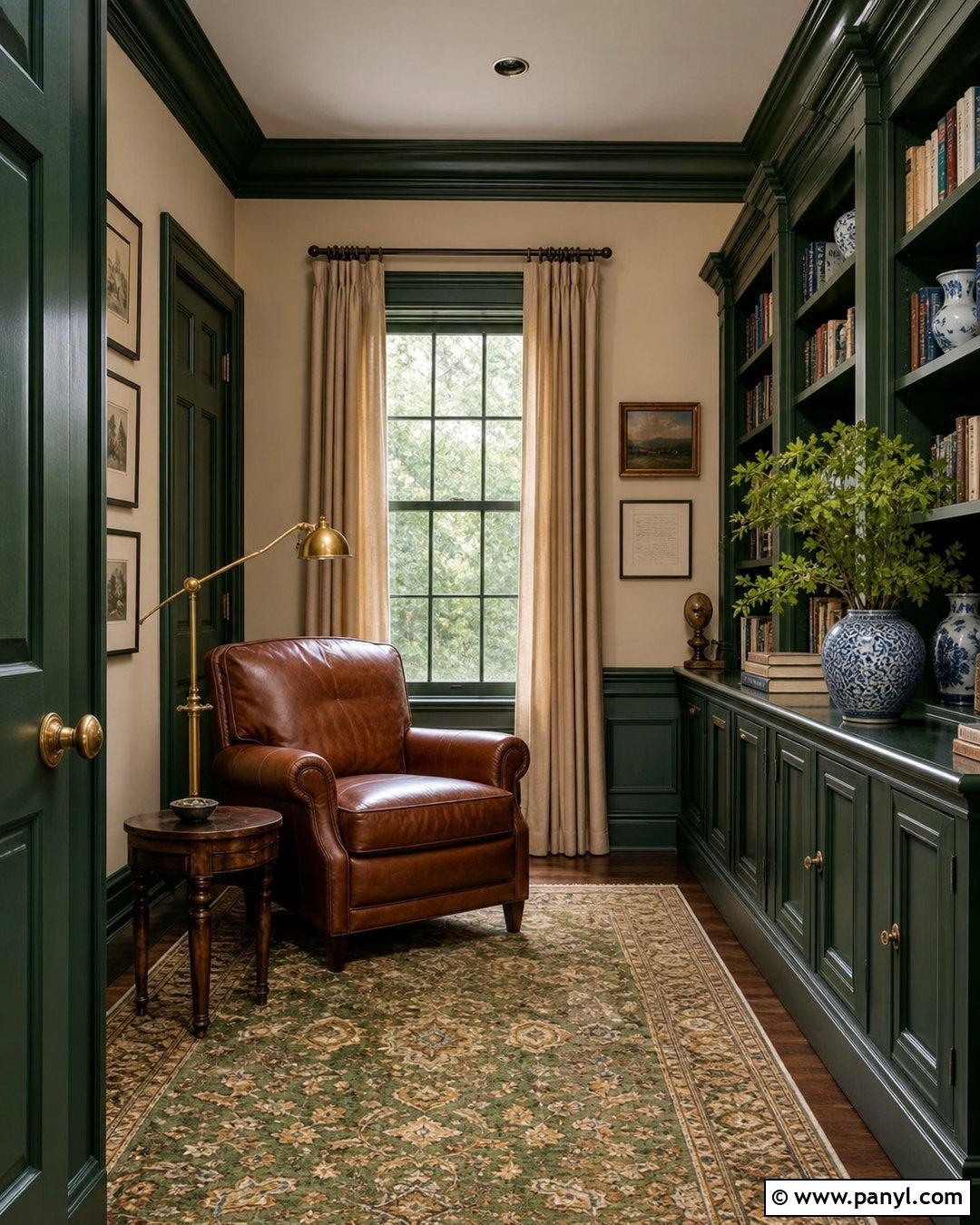
Forest green trim can turn an ordinary home office into a distinctive workspace grounded in nature. Start with soft ivory walls that carry a gentle yellow undertone. Apply deep forest green to the baseboards, door and window casings, crown molding, and built-in bookcases. A medium oak desk, cognac leather chair, and flat-weave cream rug make the room feel warm and established. Add botanical artwork, antique brass task lighting, and woven storage baskets. Simple ivory curtains allow the green window frames to stand out clearly. Keep the ceiling bright but not icy white. Because the built-ins match the trim, they become part of the architecture rather than separate furniture, creating a complete office with visual rhythm and practical storage.
6. Dark Sage Trim With White Walls
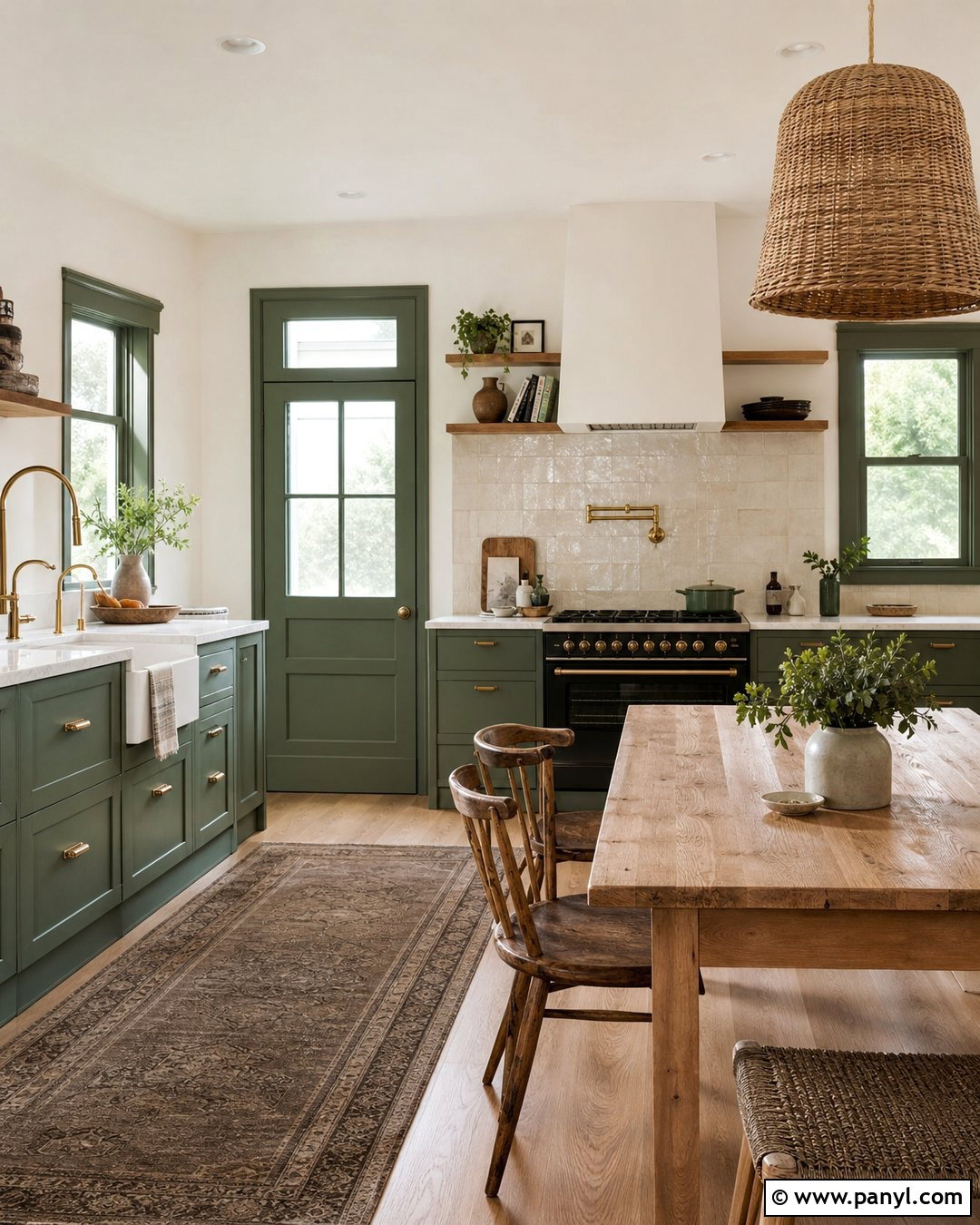
Fresh white walls and dark sage trim create a kitchen that feels clean, natural, and slightly unexpected. Use a soft warm white on the walls and ceiling, then carry the muted green across window casings, baseboards, doors, and lower cabinets. Keep upper cabinets warm white to preserve openness. Add honed white quartz counters, a handmade cream tile backsplash, and medium oak flooring. Brushed brass hardware supplies warmth without making the palette overly formal. A small wooden breakfast table and woven pendant light reinforce the organic character. Display only a few ceramics and potted herbs on open shelves. The dark sage details provide enough contrast to define the room while remaining softer and more versatile than black or charcoal.
7. Deep Teal Trim With Pale Peach Walls
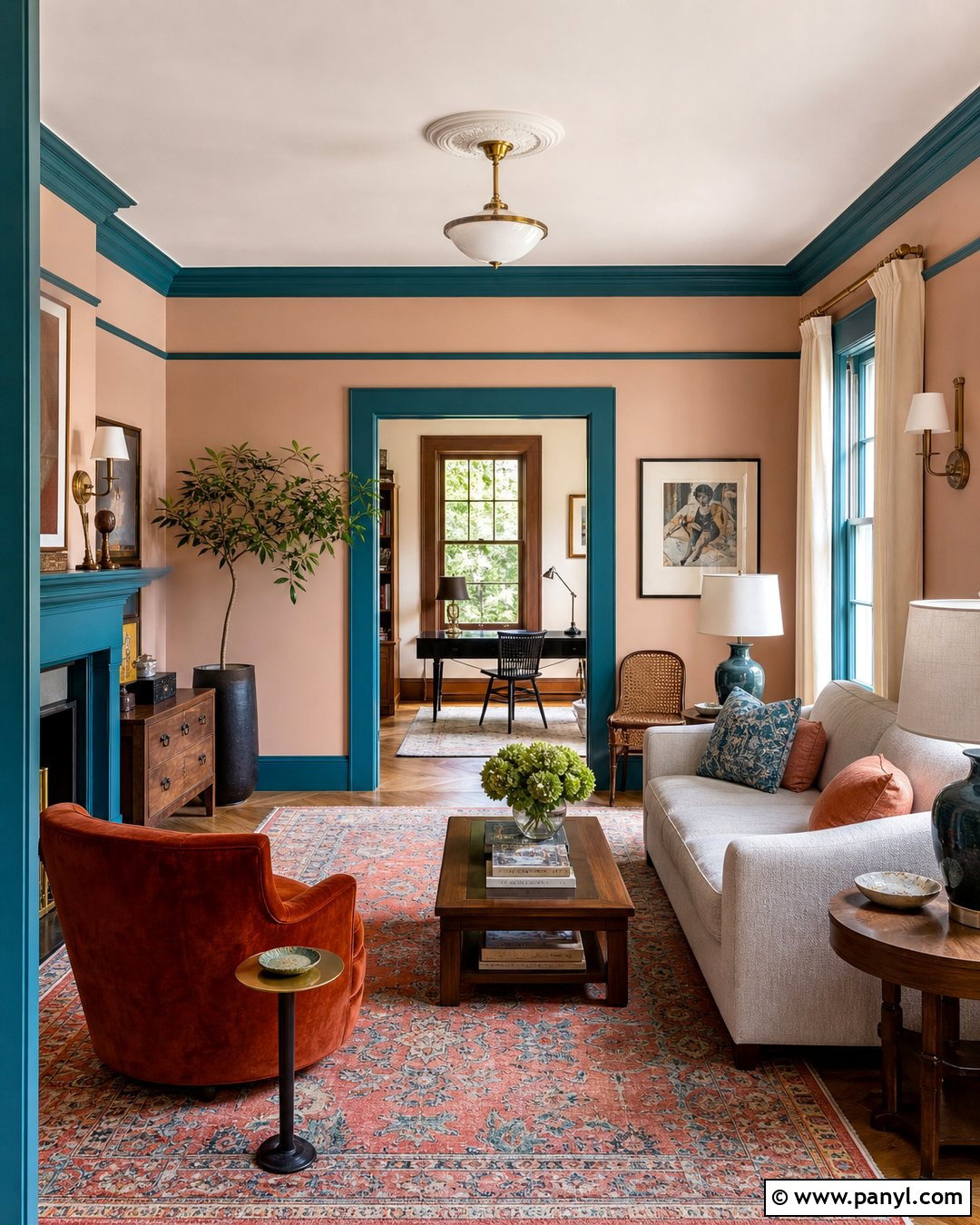
Pale peach walls come alive when surrounded by deep teal trim in an eclectic sitting room. Select a muted peach with beige undertones rather than a bright orange shade. Paint the baseboards, window frames, doorway, and picture rail a saturated blue-green. A cream sofa creates a quiet center, while a rust velvet chair and dark teal ottoman repeat the room’s key colors. Ground the arrangement with a patterned rug containing faded coral, turquoise, and tan. Warm walnut furniture and aged brass sconces complement the peach walls. Choose simple off-white drapery and avoid overly colorful accessories. The result feels artistic and welcoming because the contrasting colors are softened through natural materials, restrained patterns, and balanced placement.
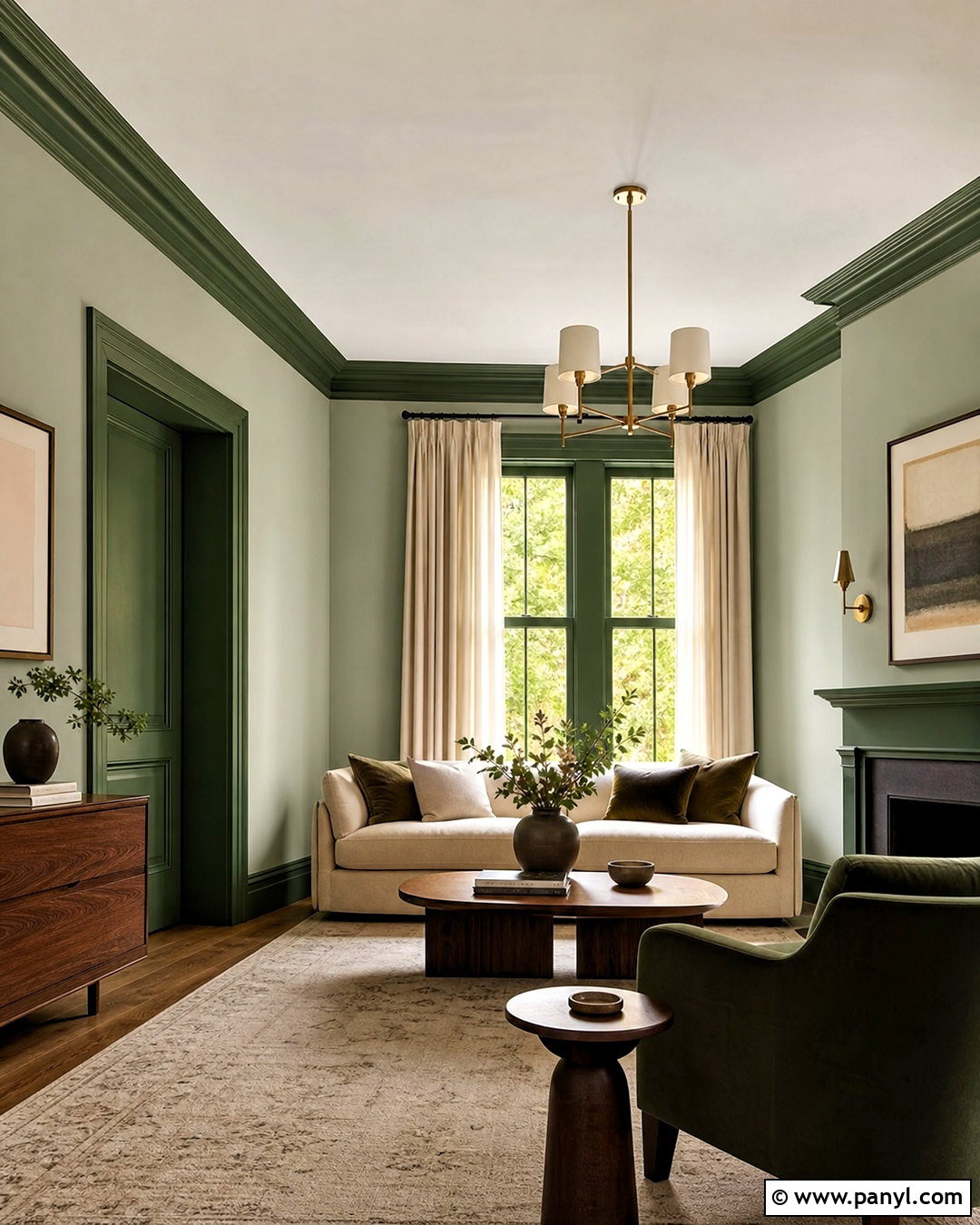
8. Dark Brown Trim With Beige Walls
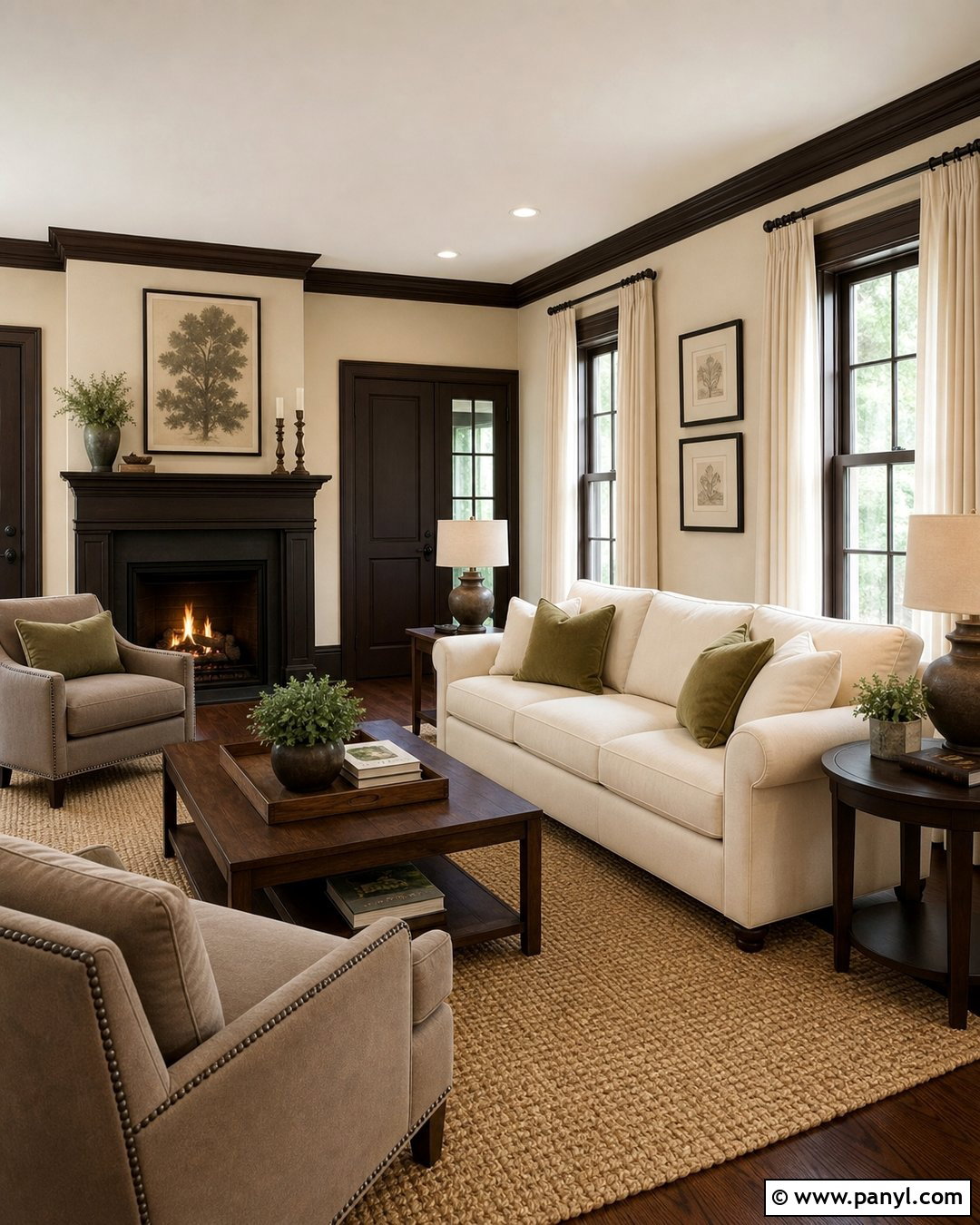
Sunlight brings out the richness of dark brown trim against soft beige walls. This pairing is ideal for a transitional living room with comfortable furniture and classic architecture. Choose a light beige that does not lean too yellow, then use chocolate brown on the baseboards, window trim, doors, and fireplace mantel. An ivory sofa, two taupe armchairs, and a walnut coffee table create a balanced seating area. Add a light sisal rug, cream curtains, and pillows in olive, tobacco, and muted black. Bronze curtain rods and table lamps reinforce the trim color. Keep the ceiling creamy white and the flooring medium toned. Every element contributes to a warm, grounded space that feels polished but still family friendly.
9. Iron Gray Trim With Off-White Walls
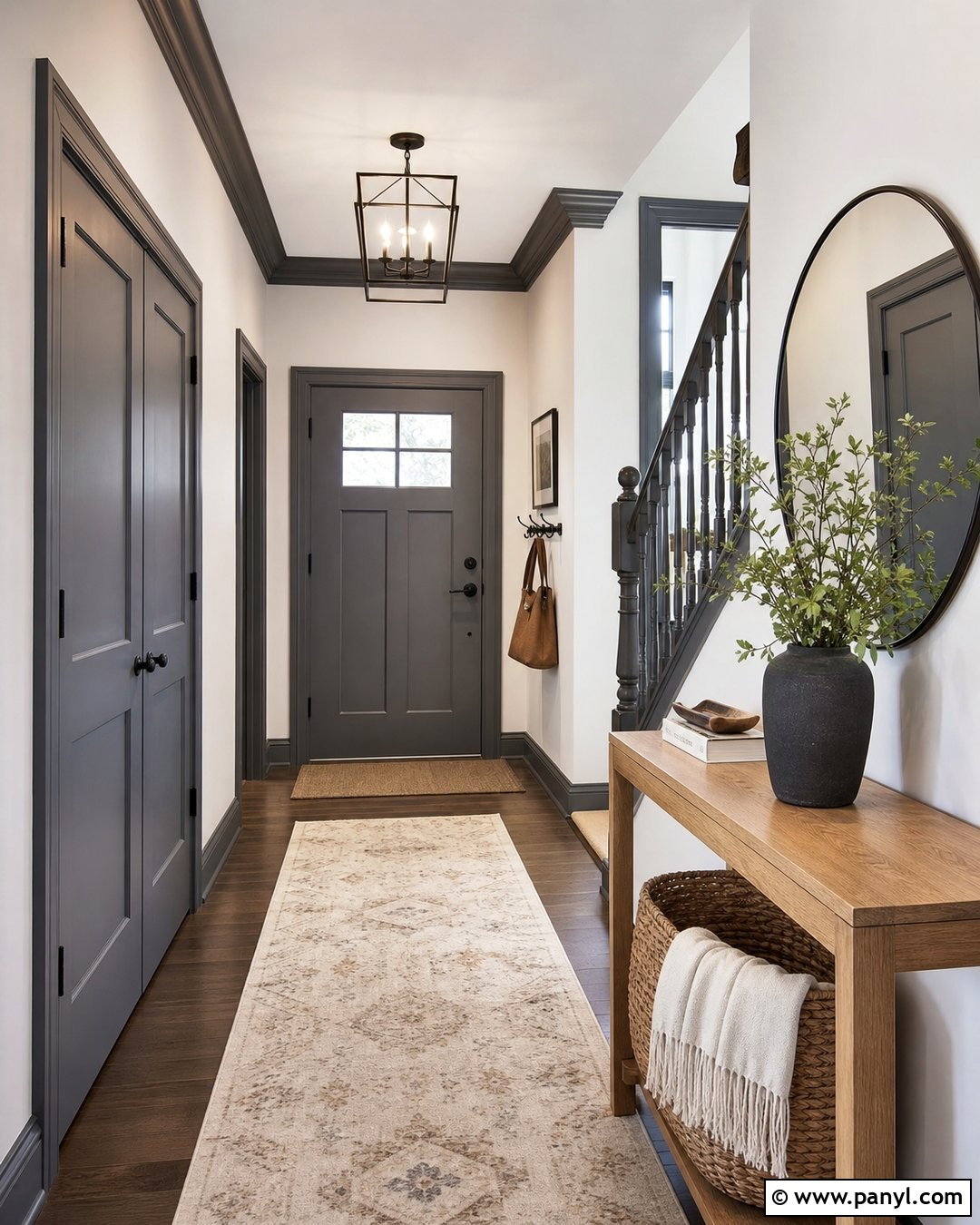
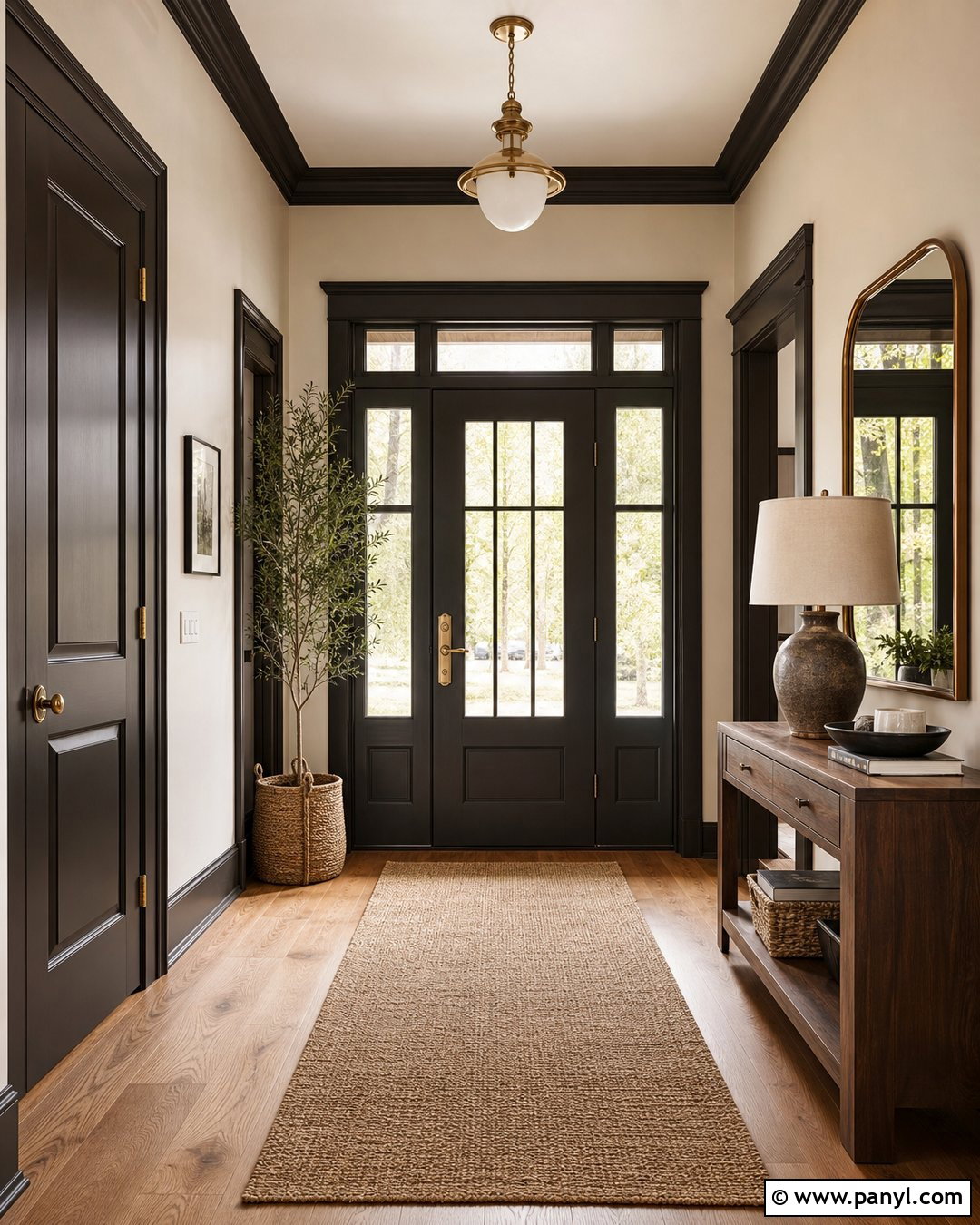
Iron gray trim gives an entryway immediate structure while remaining more forgiving than solid black. Paint the walls a clean off-white and use dark iron gray across the front door, casing, baseboards, stair railing, and nearby closet doors. A narrow light oak console prevents the small area from feeling heavy. Place a large round mirror above it to reflect daylight, and add a washable cream runner with a fine charcoal pattern. Black metal hooks, a woven basket, and a simple white ceramic lamp complete the functional arrangement. If the entry opens into other rooms, continue the iron gray baseboards through connected spaces for continuity. The strong lines create an organized first impression and make basic architectural details feel intentionally designed.
10. Burgundy Trim With Blush Walls
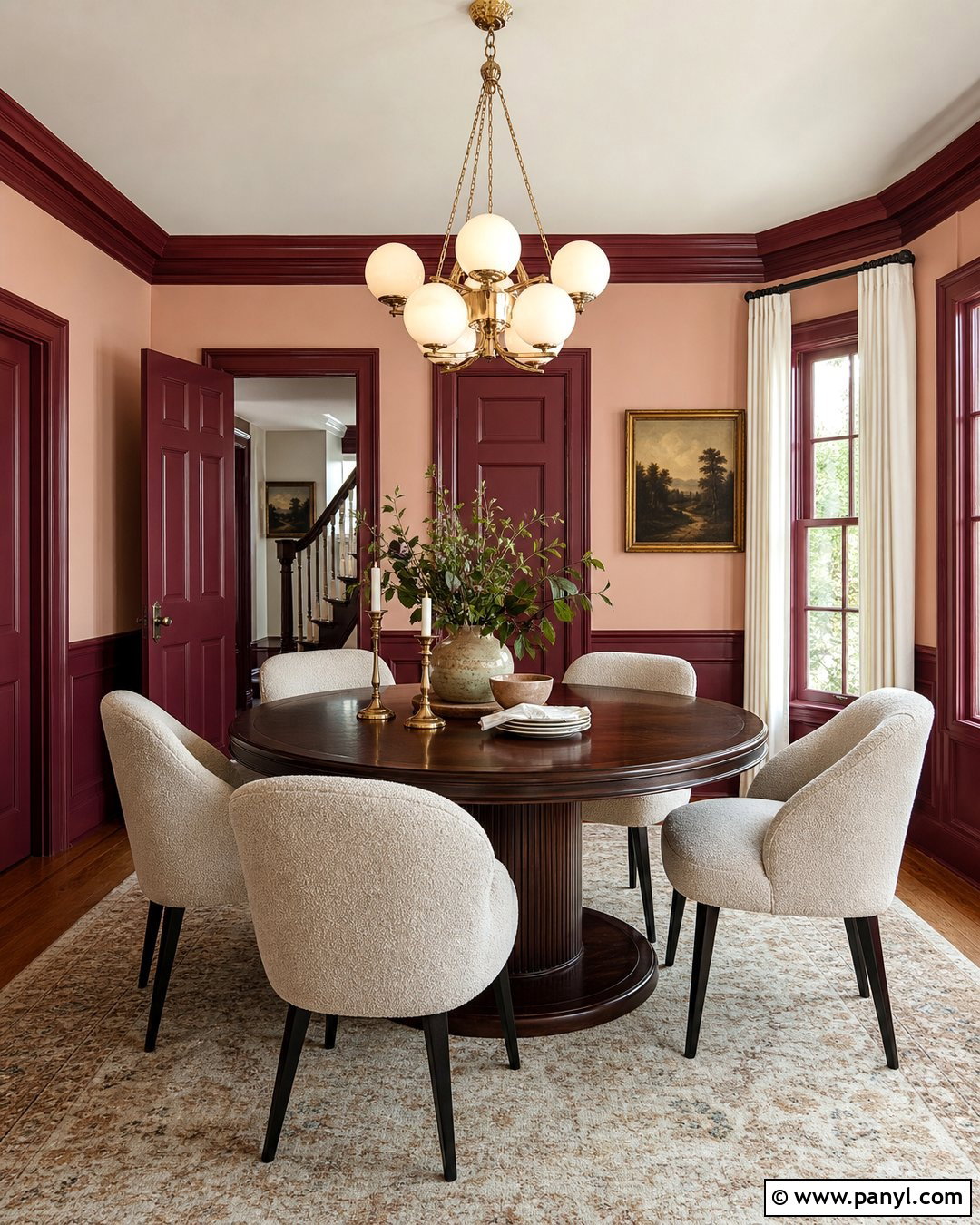
Burgundy trim and pale blush walls create a warm dining room that feels refined rather than overly sweet. Select a dusty blush with beige undertones, then paint the doors, windows, baseboards, and crown molding a deep wine-red burgundy. A round mahogany table supports the traditional mood, while cream bouclé dining chairs bring in a cleaner modern texture. Hang an opal glass chandelier with aged brass fittings above the table. A neutral rug with touches of faded red anchors the furniture. Use ivory curtains and understated landscape artwork to prevent color overload. Dark wood flooring works beautifully here, but a medium oak finish can make the room lighter. The rich trim acts as a tailored border around the softly colored walls.
11. Slate Blue Trim With Warm Gray Walls
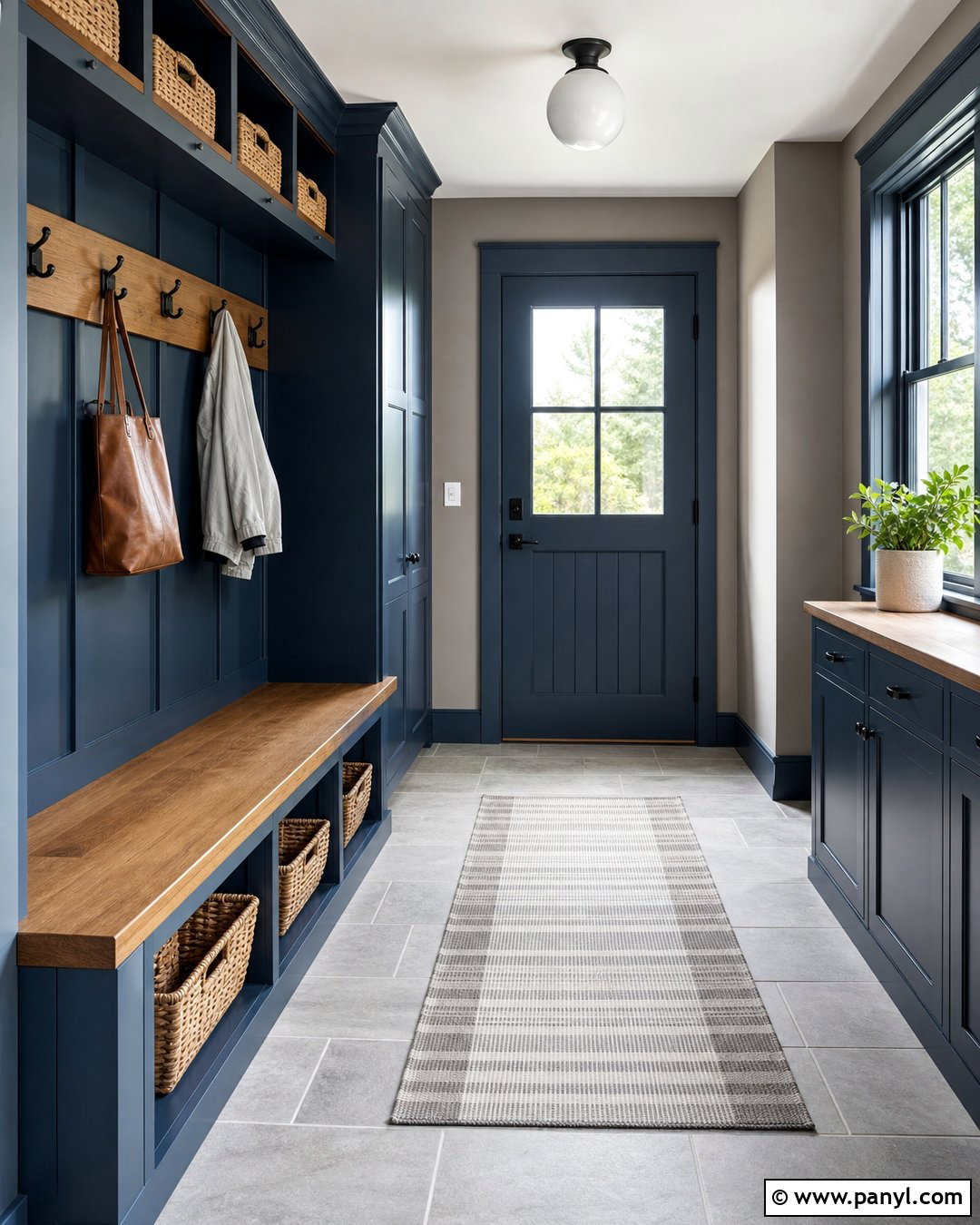
Cool slate blue trim can give a practical mudroom a polished, custom-built appearance. Cover the walls in a pale warm gray that remains light under artificial lighting. Use slate blue on the baseboards, window casings, interior door, storage lockers, and bench cabinetry. Add a natural oak bench seat, woven baskets, and black iron hooks for everyday organization. Large-format light gray floor tile handles dirt while supporting the restrained palette. A striped indoor-outdoor runner introduces pattern without becoming fussy. Keep the ceiling warm white and install a simple opal globe fixture for even illumination. The darker cabinetry and trim disguise everyday marks, while the lighter walls stop this compact, hardworking room from feeling narrow or closed in.
12. Olive Trim With Limestone Walls
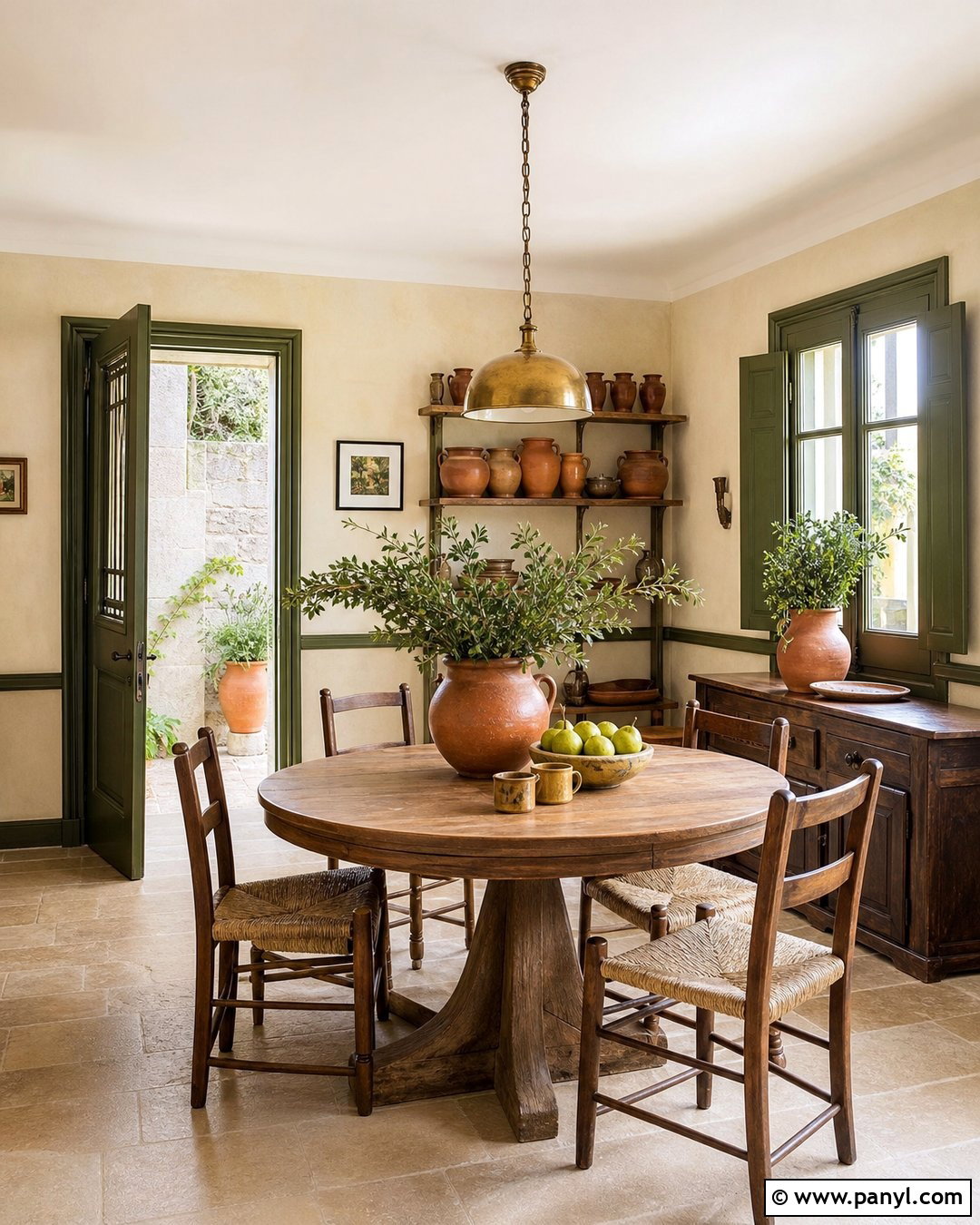
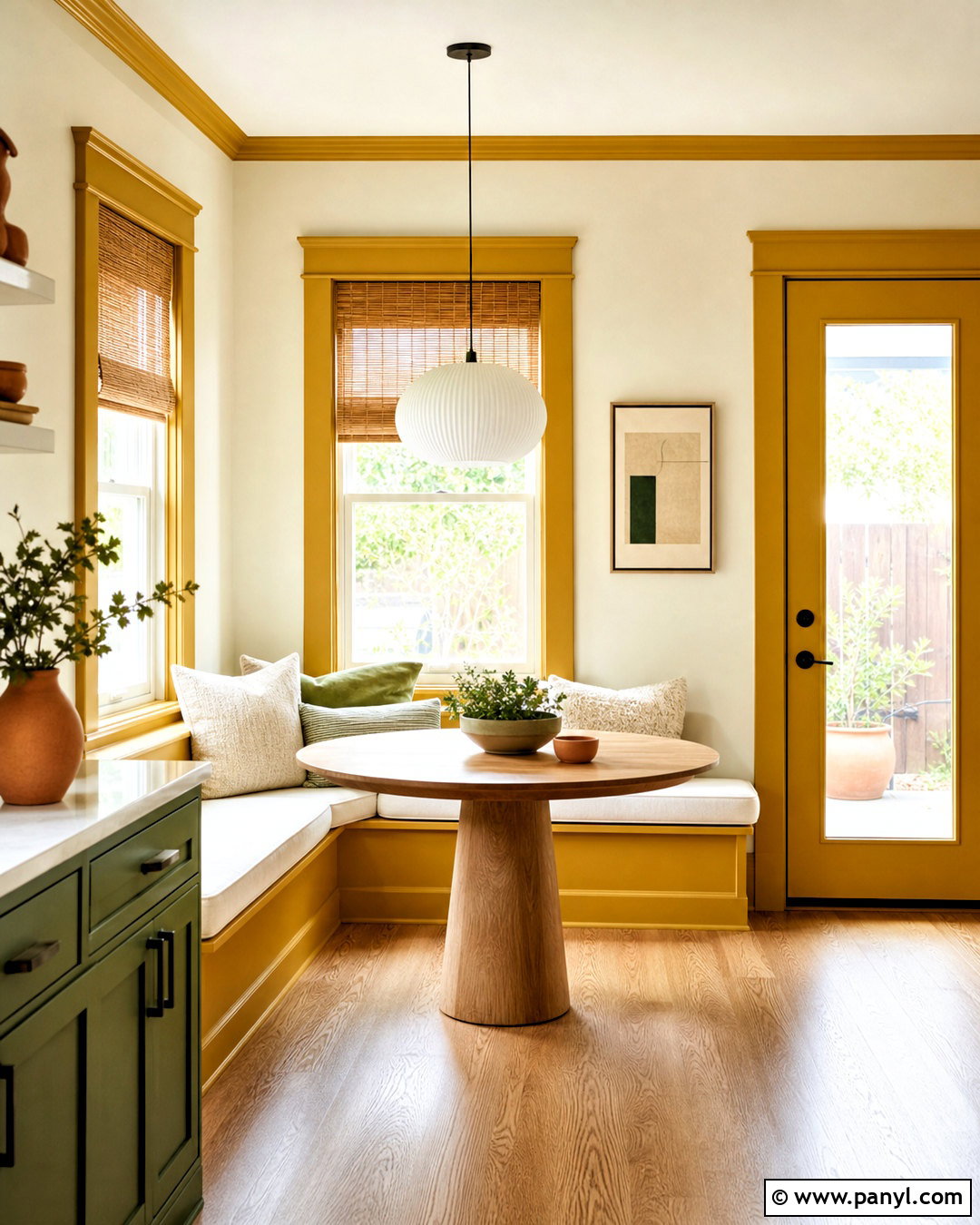
Imagine an intimate breakfast room inspired by muted garden colors and natural stone. Paint the walls a light limestone beige and outline the space with deep olive baseboards, windows, doors, and a modest chair rail. Position a round oak pedestal table near the window with four woven-seat chairs. Hang a simple antique brass pendant above the table and use an off-white Roman shade for filtered daylight. Terracotta pottery, framed herb prints, and a small indoor tree enhance the organic palette. Choose warm stone or aged oak flooring to support the earthy finishes. The olive trim should look deep and subdued rather than bright green. Together, the colors create a comfortable dining corner with understated European farmhouse character.
13. Black Trim With Pale Gray Walls
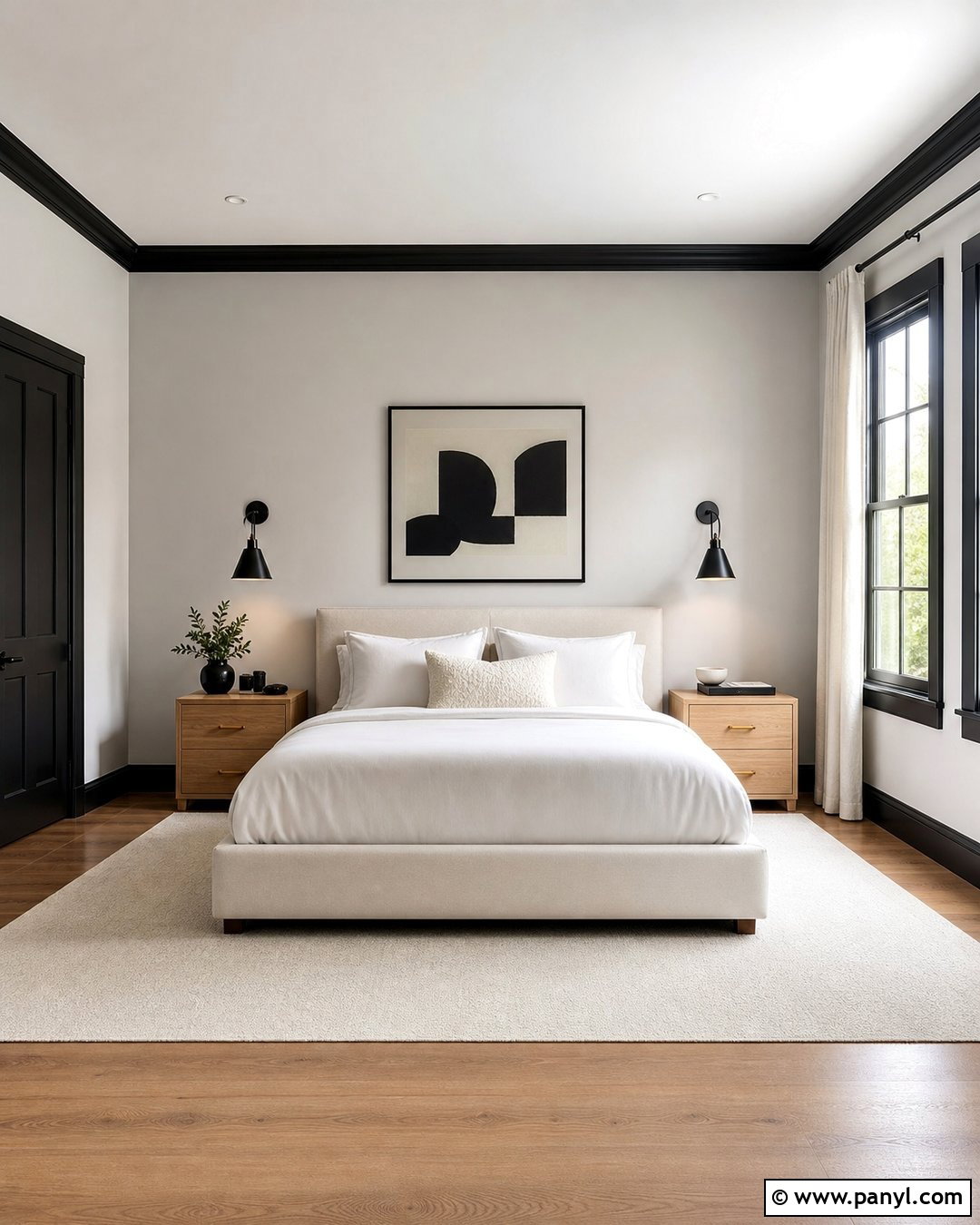
Pale gray walls and clean black trim bring graphic clarity to a minimalist bedroom. Use a light neutral gray without strong blue undertones, then paint the baseboards, windows, doors, and narrow crown molding soft black. Center a low upholstered bed against the main wall and dress it in white, gray, and oatmeal bedding. Light oak nightstands and a matching bench keep the contrast from becoming severe. Add black swing-arm sconces, one oversized abstract print, and a textured ivory rug. Simple white roller shades preserve the uncluttered lines around the windows. Leave the ceiling bright white and limit small accessories. The result is a calm, disciplined room where the trim supplies all the architectural definition needed.
14. Bronze Trim With Light Taupe Walls
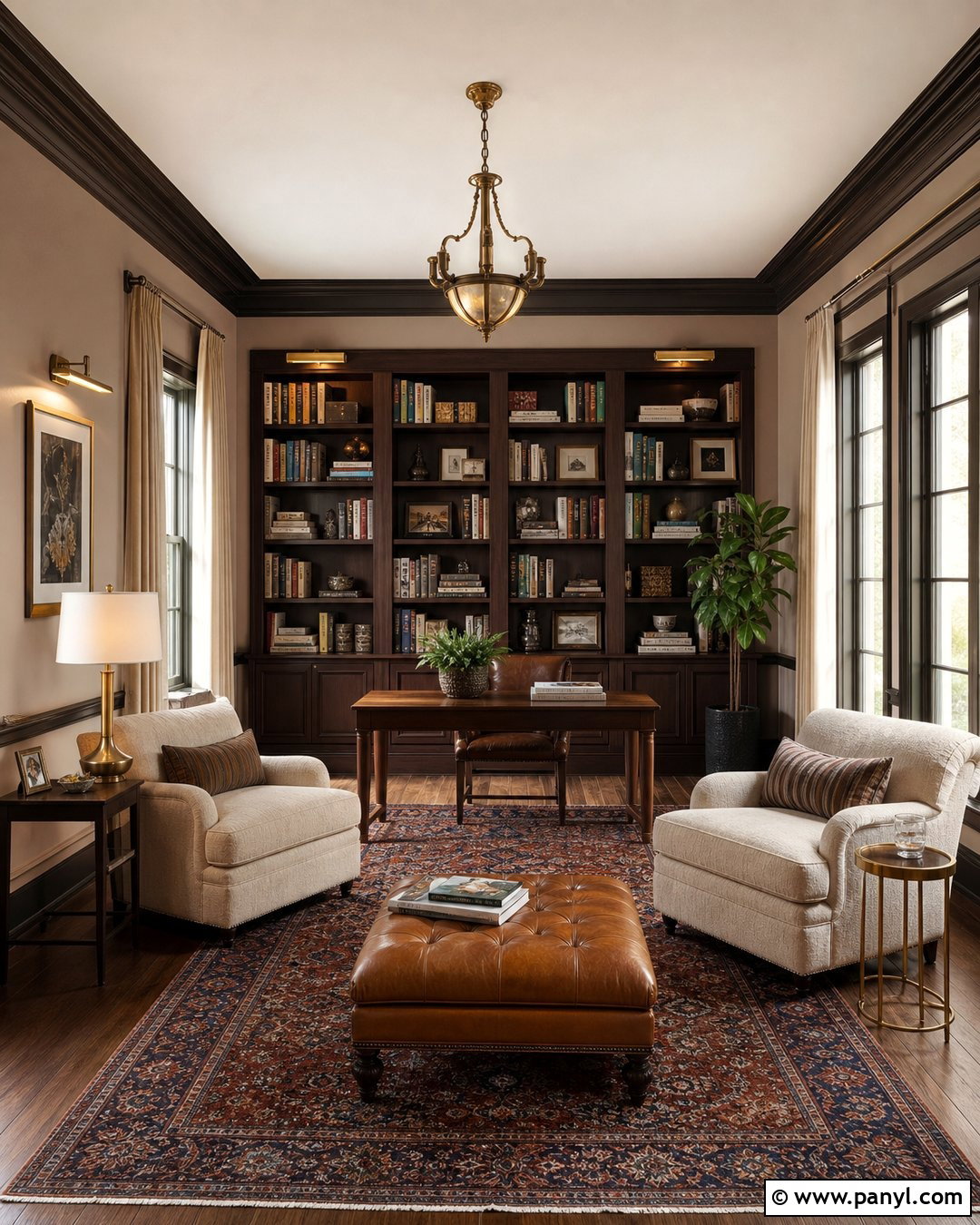
Dark bronze trim creates a softer, richer outline than black, making it ideal for a comfortable reading room. Choose pale taupe walls with a warm undertone and apply deep bronze-brown paint to the bookcase, baseboards, door casing, windows, and crown molding. Place two cream upholstered chairs beside a small walnut table and orient them toward the bookcase. A cognac leather ottoman and faded Persian-style rug add warmth. Include brass picture lights, linen curtains, and a floor lamp with a parchment shade. The bronze trim should coordinate with the furniture but remain visibly darker than the walls. This controlled combination gives the room depth and age, even when the architecture and furnishings are relatively new.
15. Dark Plum Trim With Lavender Walls
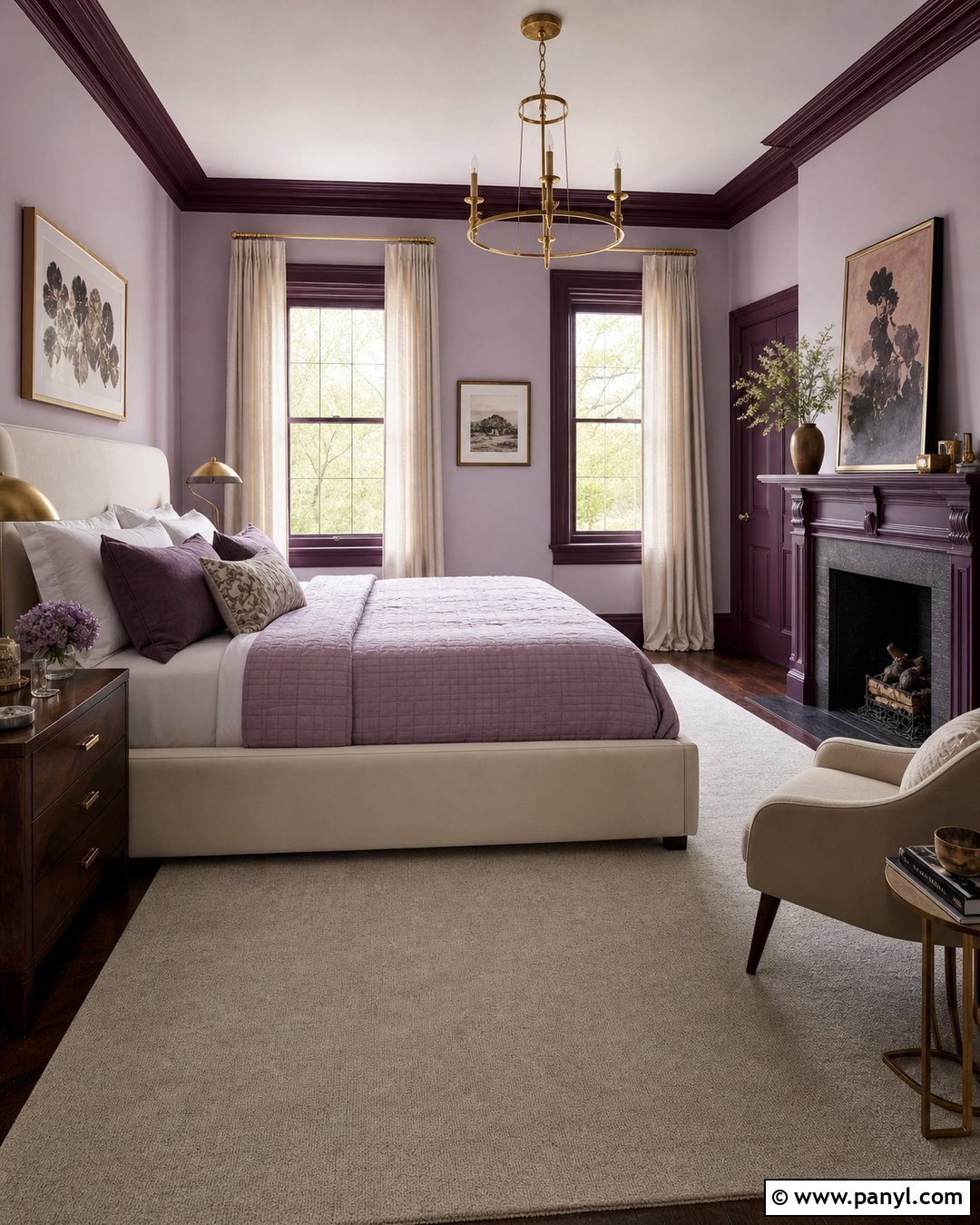
Soft lavender walls can feel sophisticated when paired with dark plum trim and restrained furnishings. Use a gray-based lavender in a guest bedroom, then apply deep aubergine-plum paint to the baseboards, doors, window frames, and a simple fireplace mantel. Choose a cream upholstered bed with white bedding and a quilt in muted lilac and mushroom tones. Walnut nightstands balance the purple palette, while antique brass lamps provide a warm metallic note. Add an ivory wool rug and natural linen curtains. A small floral print can introduce dusty green for contrast. Avoid glossy purple finishes or ornate accessories. The deeper trim should frame the pale room quietly, producing a restful guest space with color, character, and mature elegance.
16. Dark Greige Trim With White Walls
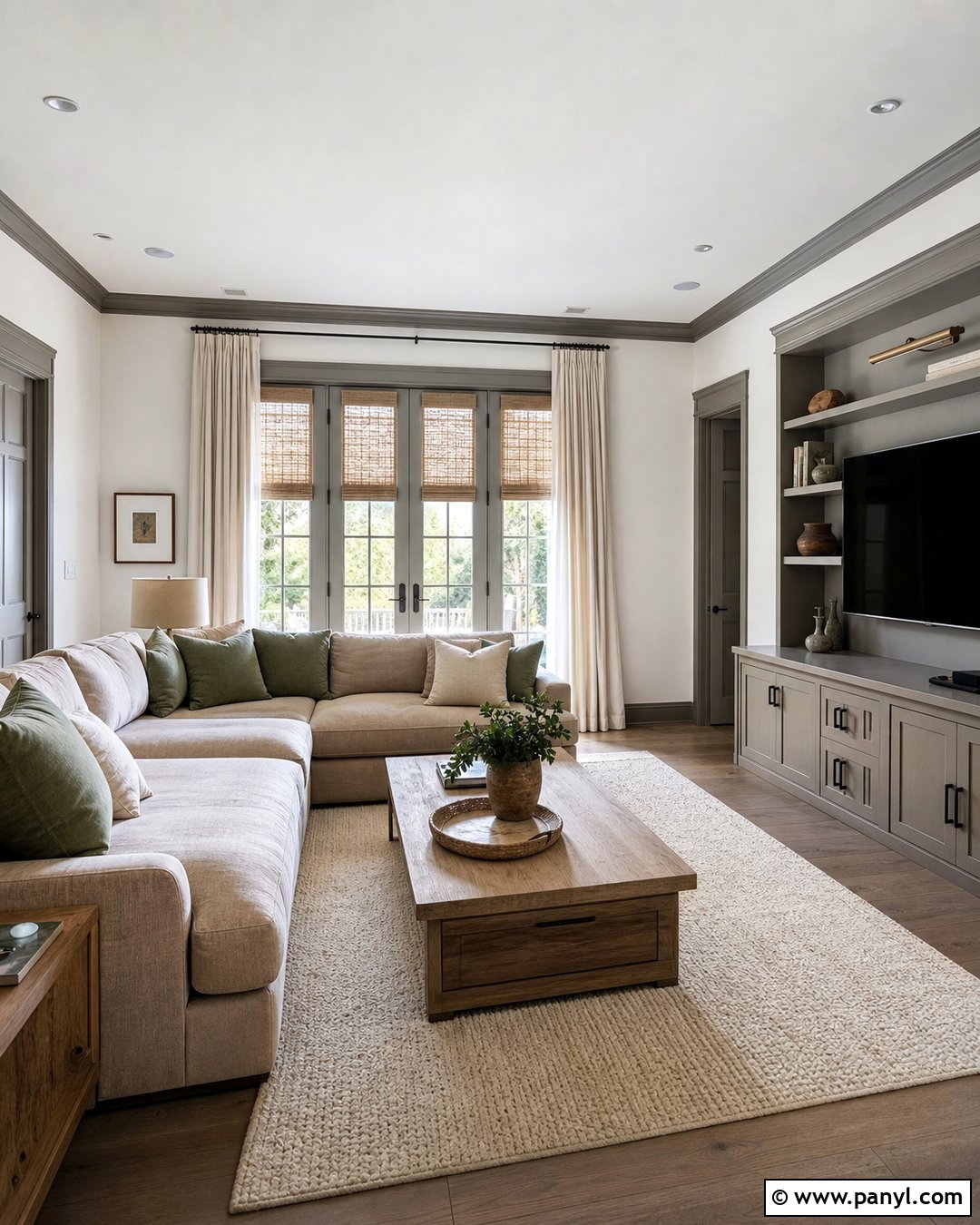
For homeowners hesitant about bold contrast, dark greige trim offers a practical starting point. Paint the living room walls warm white and choose a medium-dark greige for the baseboards, window casings, doors, and built-in media cabinet. Furnish the room with a beige sectional, oak coffee table, and cream wool rug. Black accents can appear sparingly through a floor lamp and framed artwork, while rust or olive pillows add controlled warmth. Install woven shades inside the windows and light curtains outside them for depth. The trim color should be distinct but not dramatically dark. This softer approach outlines the architecture, connects easily with neutral furnishings, and remains flexible if the room’s textiles or artwork change later.
17. Espresso Trim With Pale Green Walls
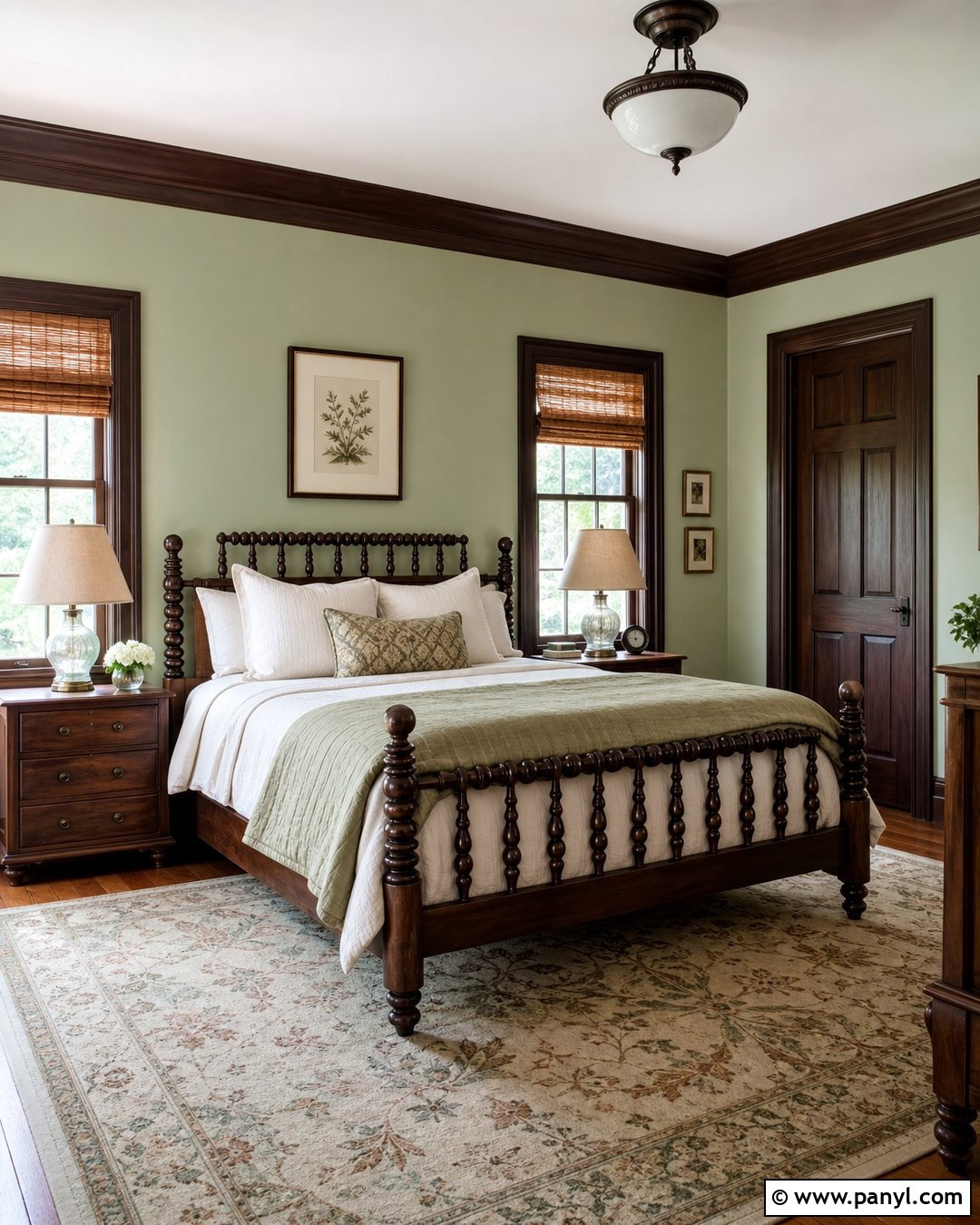
A pale green bedroom gains warmth and definition from espresso brown trim. Choose a subdued green with gray and yellow undertones, then paint all baseboards, windows, doors, and crown molding a rich coffee brown. A spindle bed in dark wood naturally connects to the trim. Layer it with cream linen bedding, a sage quilt, and a small amount of rust-colored pattern. Add woven bamboo shades, ivory curtains, and walnut nightstands with ceramic lamps. A faded botanical rug grounds the scheme without repeating the green too heavily. Keep the ceiling creamy white to preserve height. This combination works especially well in traditional homes where existing wood furniture needs to feel connected to freshly painted architectural details.
18. Navy Trim With Cream Walls
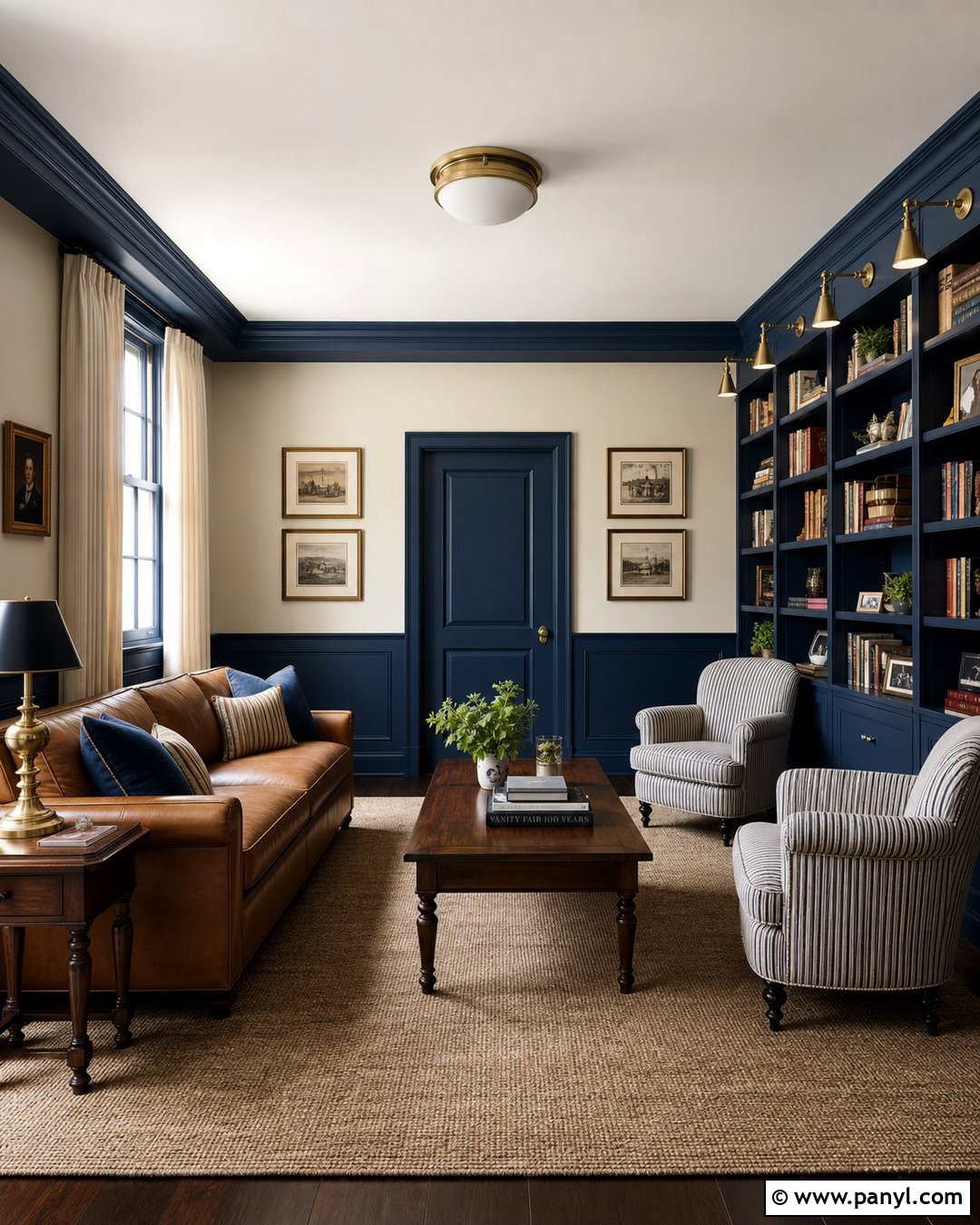
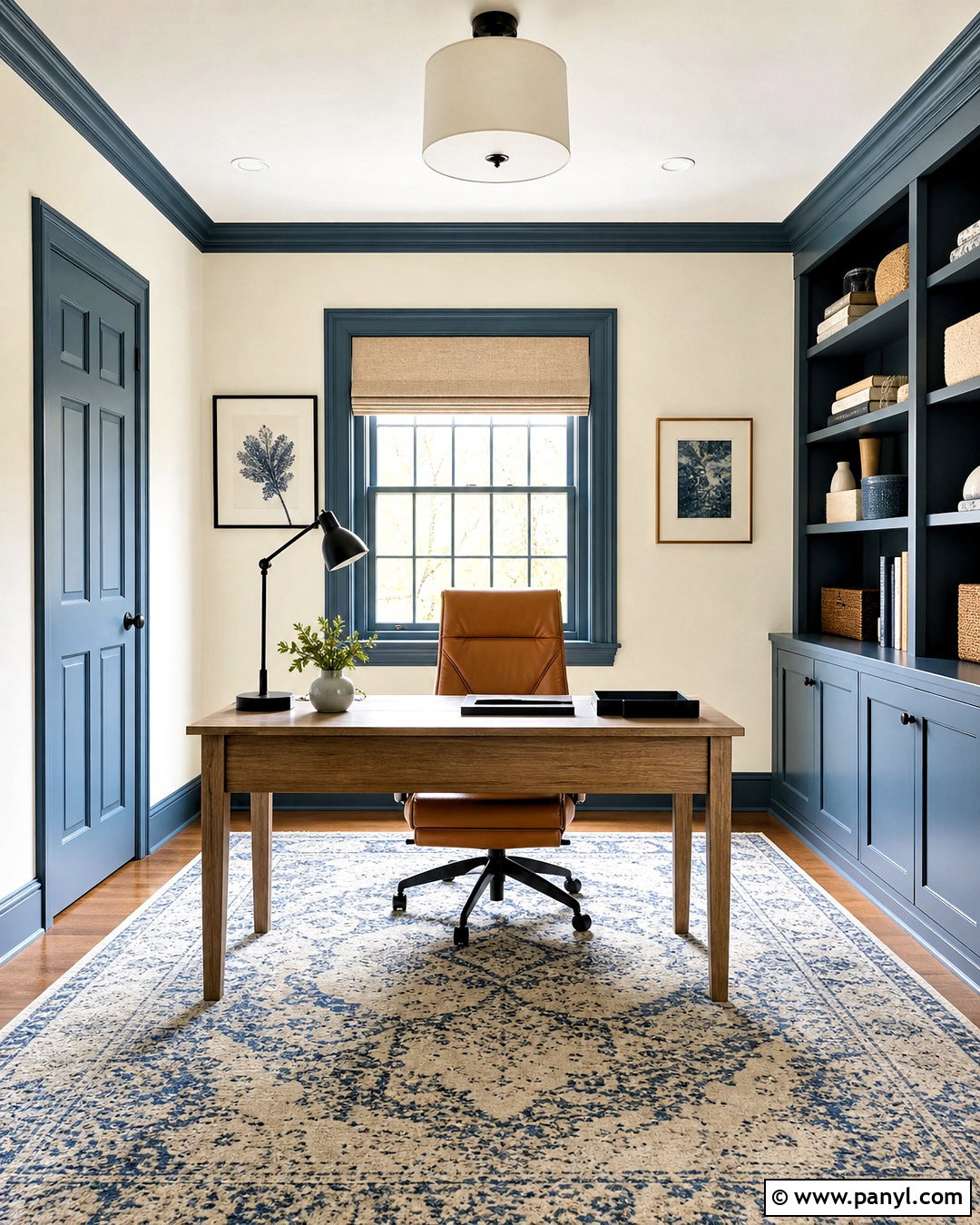
Cream walls framed by navy trim create a smart yet welcoming home library. Apply deep navy to built-in shelves, window casings, baseboards, doors, and crown molding so the storage appears integrated into the room. Keep the walls a warm cream that balances the blue. Place a camel leather sofa in front of the bookshelves and add a pair of striped armchairs, a walnut coffee table, and a large beige rug. Brass library lights and small picture frames provide warmth. Use cream curtains near the navy windows to maintain brightness. Organize books with decorative objects in measured groups rather than filling every shelf. The completed room feels traditional, functional, and comfortable enough for everyday reading or conversation.
19. Forest Green Trim With Pale Pink Walls
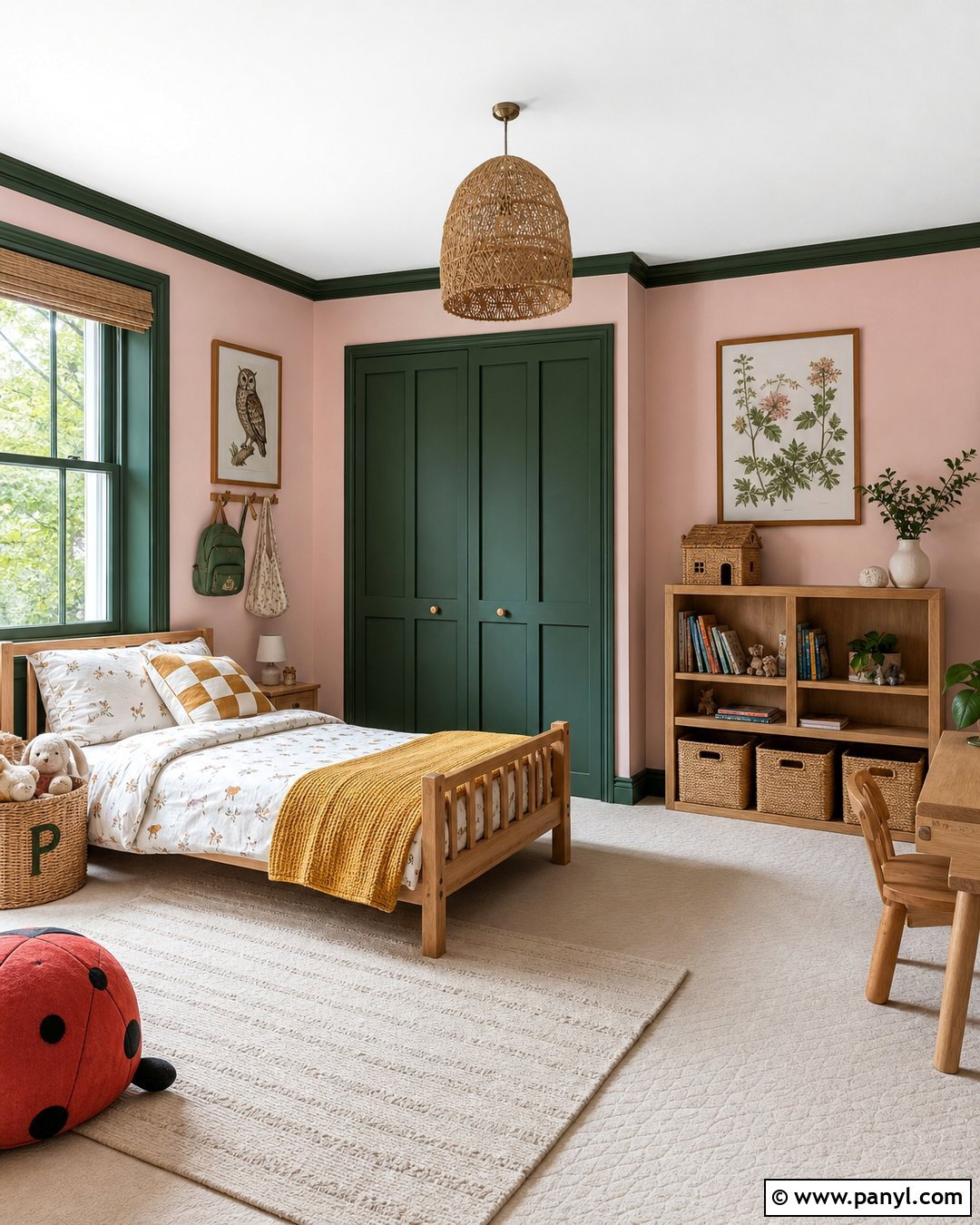
Pale pink walls and forest green trim form a playful but balanced child’s bedroom that can mature over time. Select a muted plaster pink rather than a sugary pastel. Paint the baseboards, door, window frame, and built-in wardrobe deep forest green. Choose a natural wood bed, a cream rug, and bedding in white, pink, green, and ochre. Woven baskets and oak shelving introduce useful storage without adding another painted color. Hang simple botanical or animal artwork in dark wood frames. A white ceiling and ivory curtains keep the compact room bright. Because both paint colors are earthy and softened, the combination looks cheerful without feeling themed. Replace youthful accessories later while keeping the core wall and trim palette intact.
20. Charcoal Trim With Pale Yellow Walls
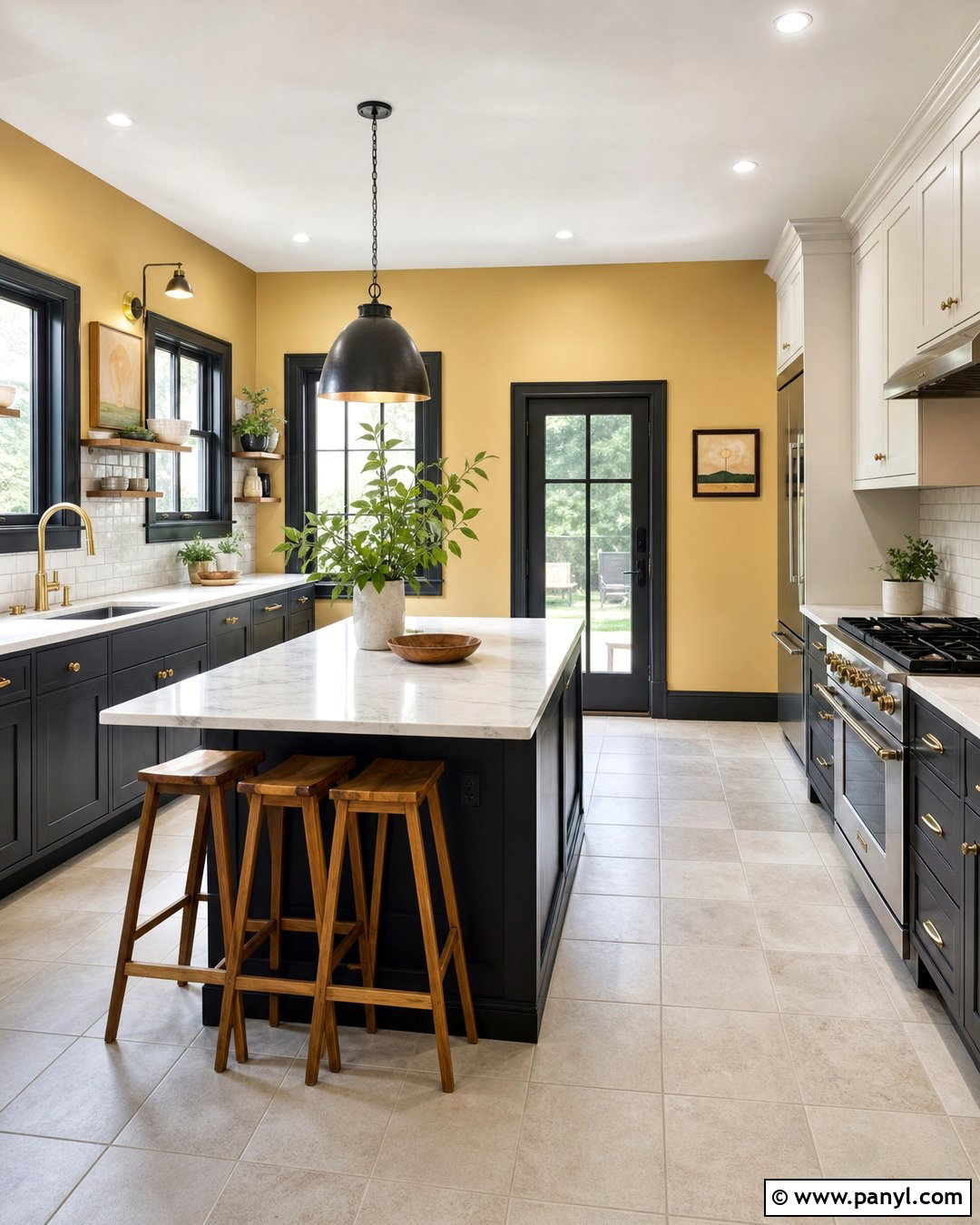
Morning light makes pale yellow walls glow, while charcoal trim keeps the color grounded and contemporary. This combination works beautifully in a cheerful breakfast kitchen. Choose a soft buttery yellow for the walls and deep charcoal for the windows, baseboards, back door, and lower cabinetry. Keep upper cabinets warm white and use white quartz counters to reflect light. Add oak bar stools, aged brass hardware, and a cream backsplash with subtle handmade texture. A small black pendant can echo the trim without dominating the ceiling. Display wooden boards, white dishes, and a few green plants. The charcoal outlines prevent the yellow from looking overly traditional, creating a fresh kitchen that feels sunny, organized, and visually balanced.
21. Black Trim With White Walls And Oak Floors
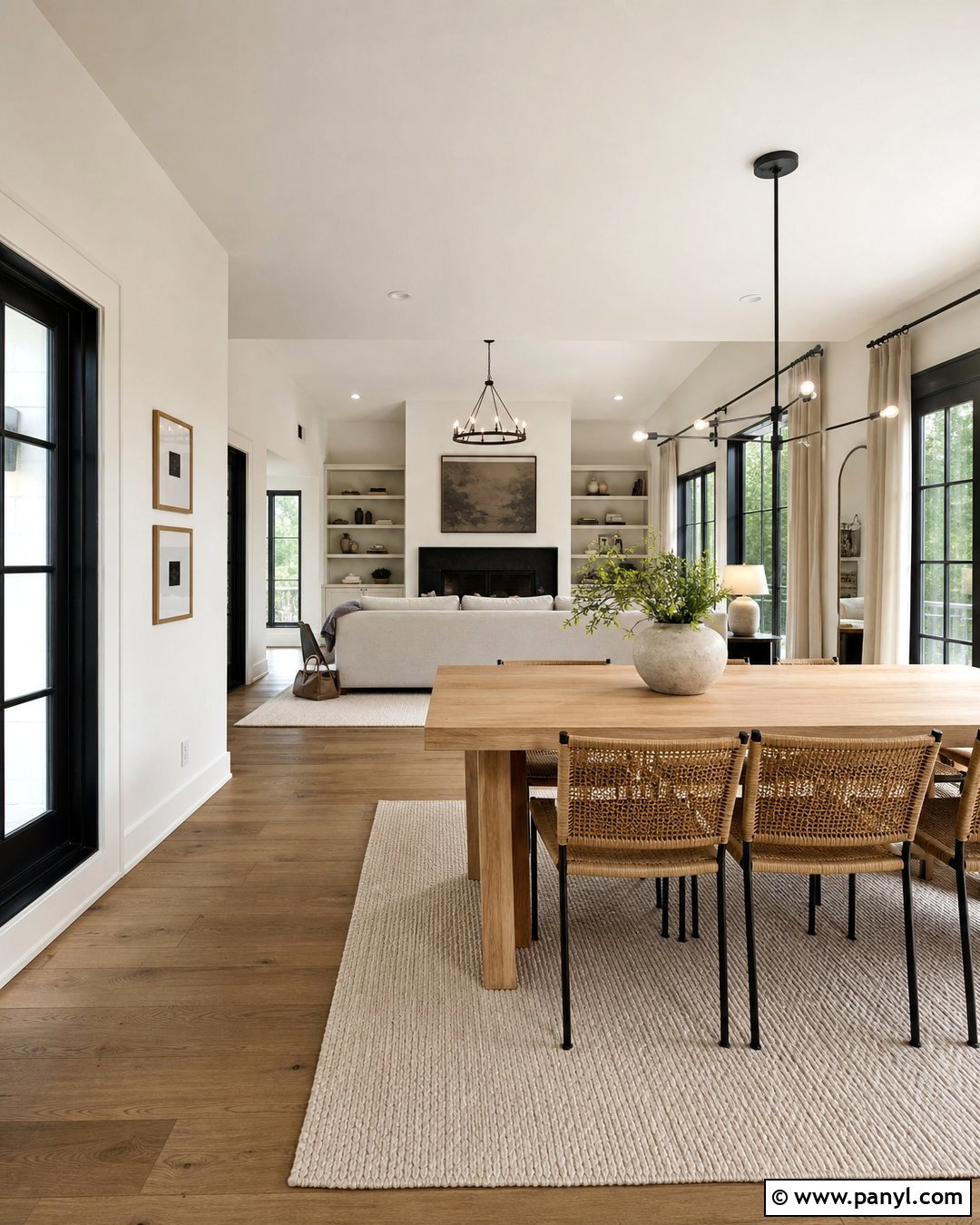
Few combinations feel as clear and architectural as black trim, white walls, and natural oak flooring. Use this palette in an open living and dining area where consistent trim can connect multiple zones. Paint the walls a warm, gallery-like white and cover the baseboards, door casings, windows, and interior doors in satin black. Choose an oatmeal sofa, light oak dining table, woven dining chairs, and a large cream rug. Repeat black through slim lighting fixtures and cabinet hardware, but avoid making every accessory dark. Linen curtains and soft neutral upholstery reduce the graphic effect. The golden oak floor adds essential warmth, allowing the monochrome architecture to feel comfortable, residential, and inviting rather than stark or commercial.
22. Dark Blue Trim With Light Greige Walls
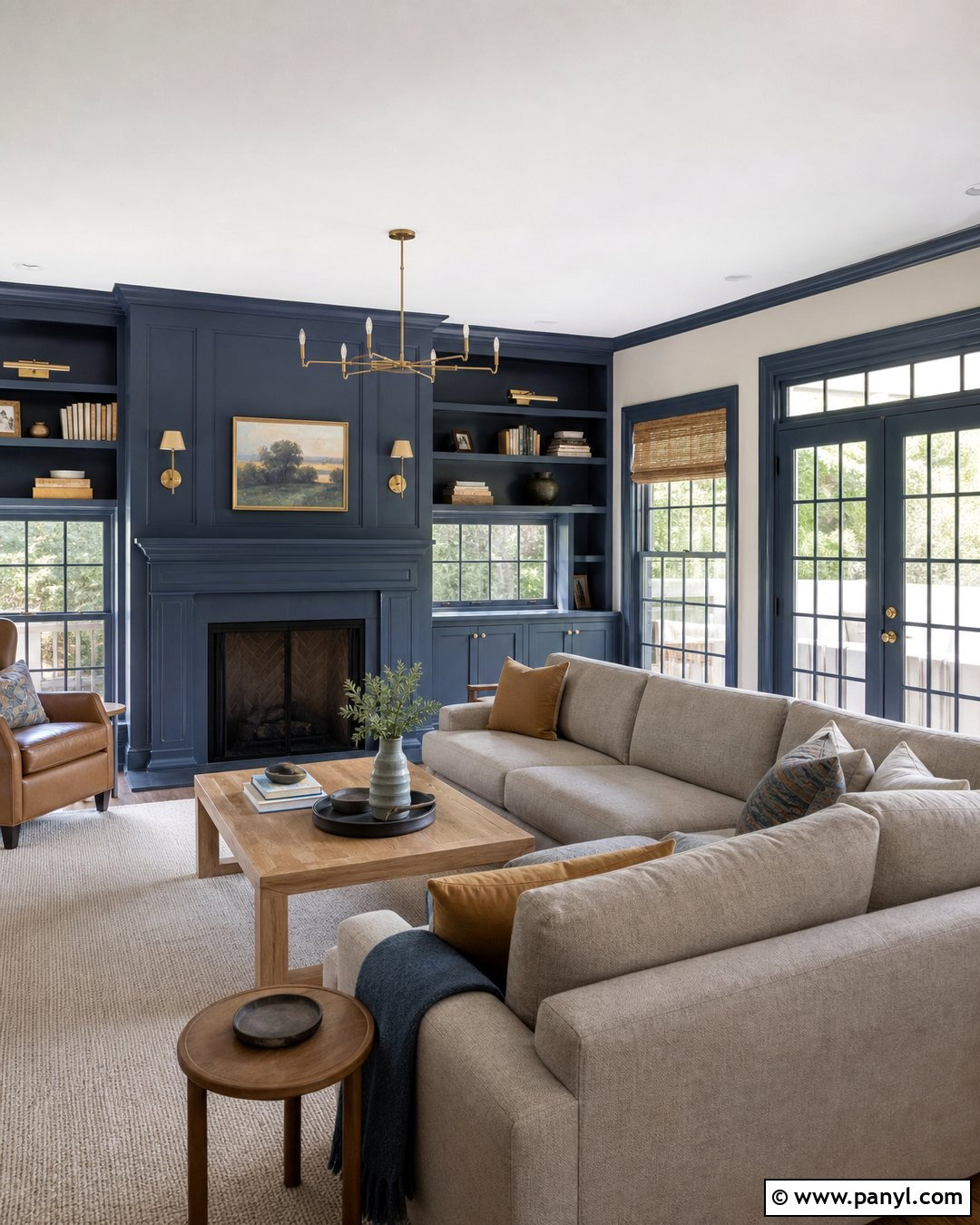
Light greige walls create a flexible backdrop for dark blue trim in a transitional family room. Select an inky blue that appears nearly navy but still shows color in daylight. Apply it to the fireplace mantel, doors, baseboards, windows, and built-in shelving. A soft gray-beige sectional, medium oak tables, and a cream textured rug establish a relaxed foundation. Add pillows in faded blue, camel, and subtle plaid. Brass sconces beside the fireplace warm the cooler trim, while woven shades soften the windows. Keep the ceiling warm white and use restrained artwork with light backgrounds. The blue framing adds personality and cohesion, yet the neutral walls and upholstery make the room easy to update throughout changing seasons.
23. Deep Red Trim With Warm White Walls
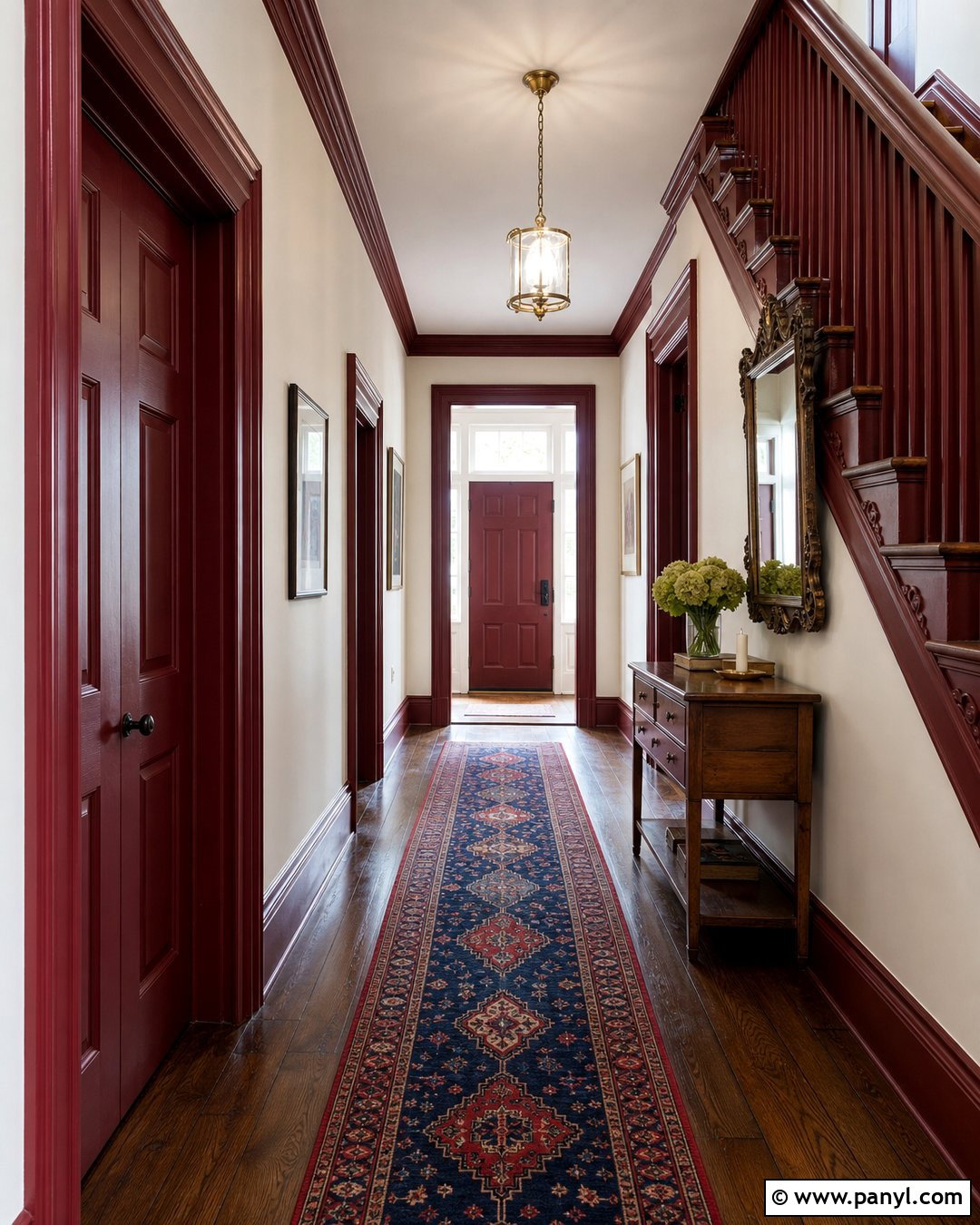
Deep red trim gives a traditional hallway personality without requiring colorful walls. Paint the walls a warm white and use a dark brick or oxblood red on the baseboards, door casings, paneled doors, and stair railing. Add an antique wood console, a large gilt mirror, and a narrow vintage runner containing navy, cream, and faded red. A simple brass ceiling fixture reinforces the classic character. Keep wall decor limited so the repeated red doorways remain the main feature. If the hallway connects several rooms, continue the trim color through visible openings for a deliberate flow. The pale walls reflect available light, while the deep red details create warmth, rhythm, and a memorable transition between spaces.
24. Dark Sage Trim With Pale Beige Walls
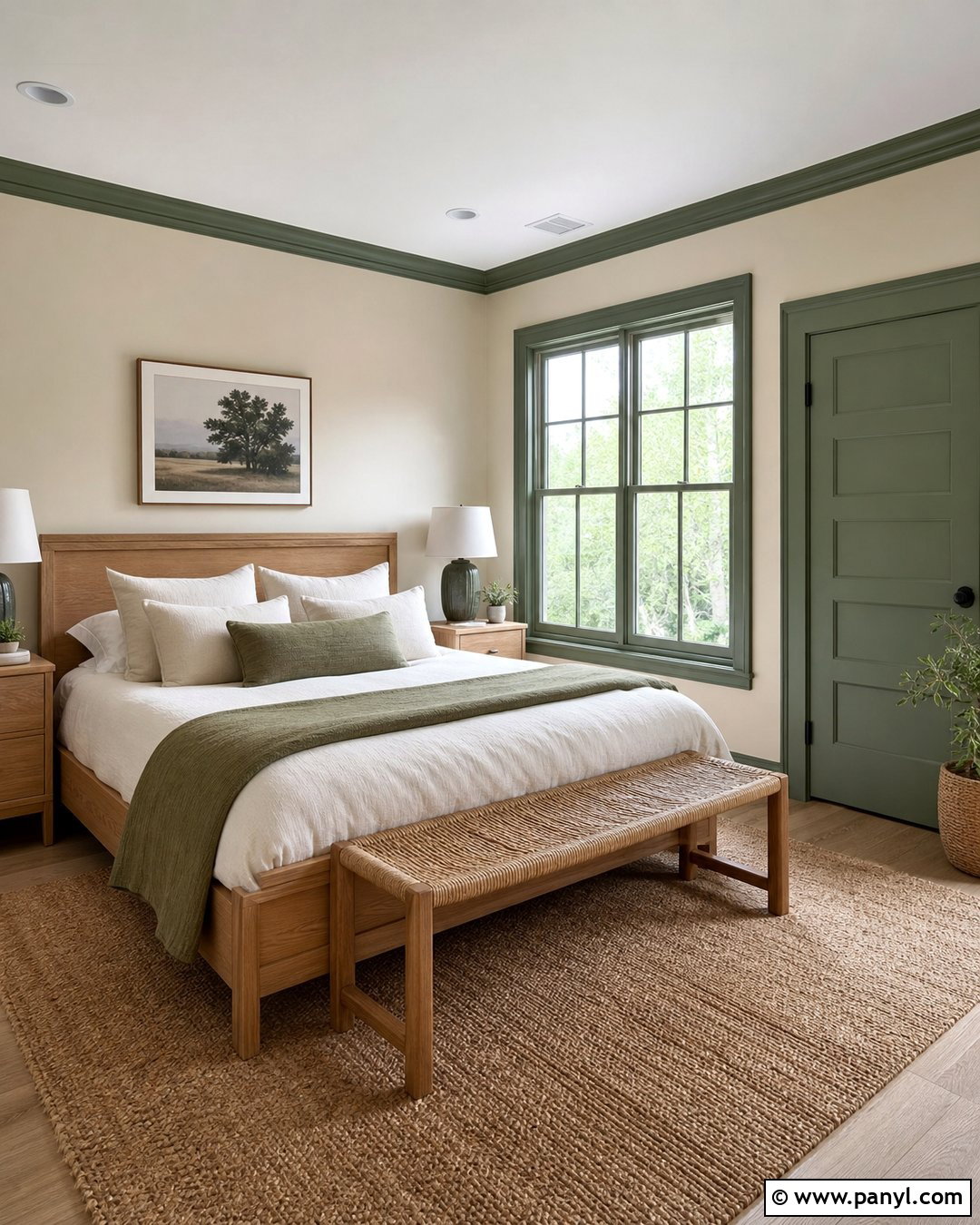
A serene primary bedroom can feel connected to the outdoors through dark sage trim and pale beige walls. Choose a sandy beige with a subtle green undertone, then paint the doors, baseboards, window frames, and crown molding muted dark sage. Place a light oak bed against the main wall and layer it with ivory linen, a moss throw, and striped neutral pillows. Use matching oak nightstands, ceramic lamps, and a woven bench. Cream curtains soften the darker window casings, while a large natural fiber rug adds quiet texture. Keep artwork minimal and botanical. The palette feels restful because the contrast is moderate, the materials are natural, and every color repeats in measured amounts throughout the complete room.
25. Chocolate Trim With Pale Blue Walls
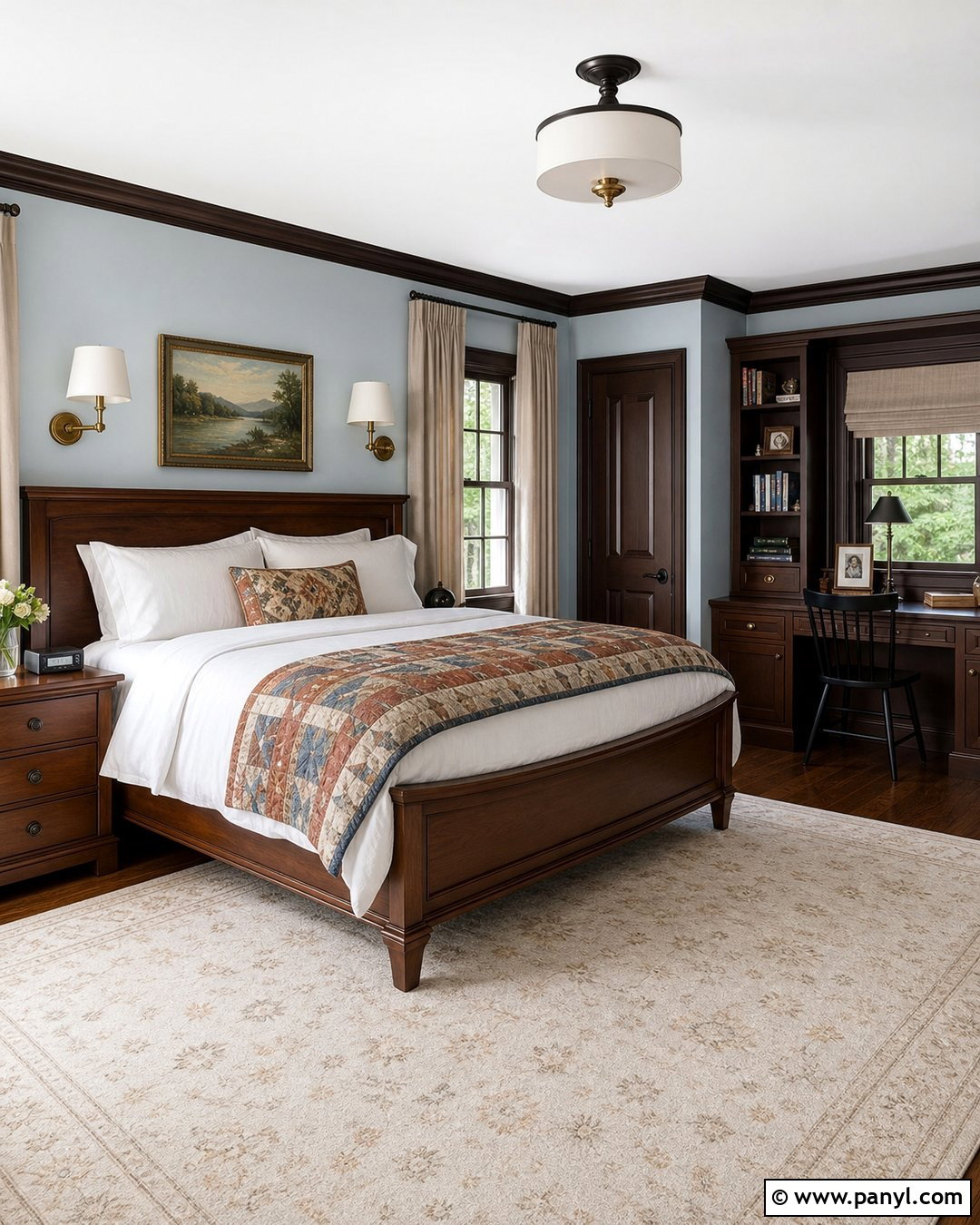
Chocolate brown trim warms pale blue walls in a bedroom, preventing the cool color from feeling chilly. Choose a light powder blue with gray undertones and use dark chocolate paint on the windows, doors, baseboards, crown molding, and a small built-in desk. Add a walnut bed, white bedding, and a quilt patterned in soft blue and cinnamon. Place an ivory rug beneath the bed and hang natural linen curtains at the windows. Aged brass sconces and ceramic accessories bring a subtle traditional note. Keep the ceiling creamy white rather than bright blue-white. The finished combination feels calm and established, blending cool and warm elements in a way that complements both antique wood pieces and contemporary upholstered furniture.
26. Dark Gray Trim With Ivory Walls
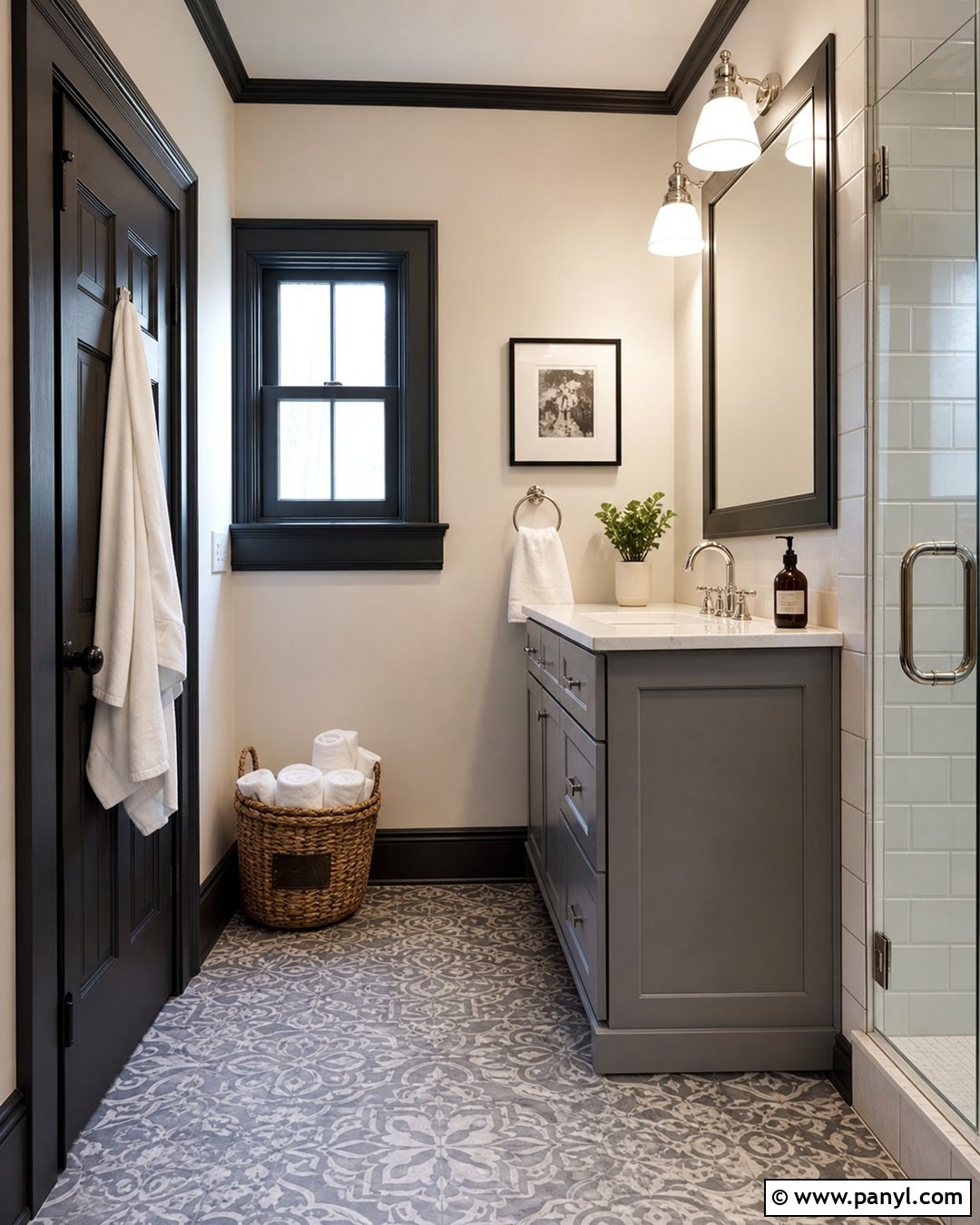
A compact bathroom benefits from ivory walls that reflect light and dark gray trim that defines its edges. Paint the door, baseboards, window casing, and vanity a deep neutral gray. Keep the walls soft ivory and use glossy white tile around the tub or shower. A white quartz vanity top, polished nickel faucet, and frameless mirror create a clean center. Add a small patterned floor tile combining gray, cream, and muted blue. White towels and a woven storage basket keep the accessories simple. Use dark gray only on solid architectural pieces rather than every small line. The result is a practical, bright bathroom with enough contrast to feel customized, even when the layout and fixtures are modest.
27. Deep Olive Trim With White Plaster Walls
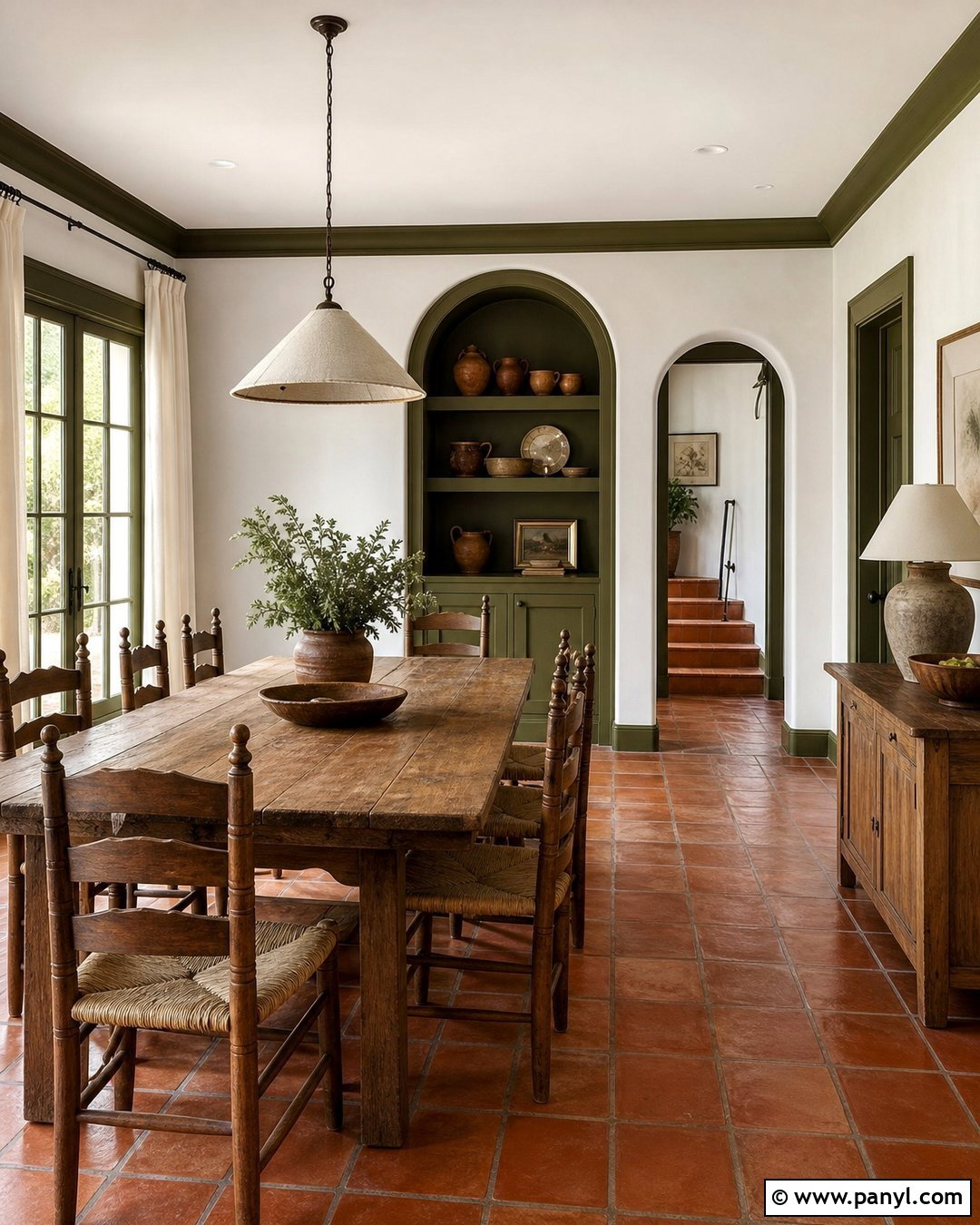
White plaster-look walls and deep olive trim establish an earthy Mediterranean dining room. Choose a warm chalky white with slight variation, then apply olive paint to the windows, baseboards, arched doorway, and simple built-in cabinet. A rustic oak table, rush-seat chairs, and a large linen pendant create a relaxed focal point. Use terracotta floor tile or a faded clay-colored rug for warmth. Add cream curtains, handmade ceramic dishes, and one large landscape painting. Black accents should be minimal because the olive already provides sufficient depth. The wall texture catches natural light, while the dark green architectural lines make the space feel settled. The complete room is casual, tactile, and intentionally understated.
28. Black Trim With Pale Taupe Walls
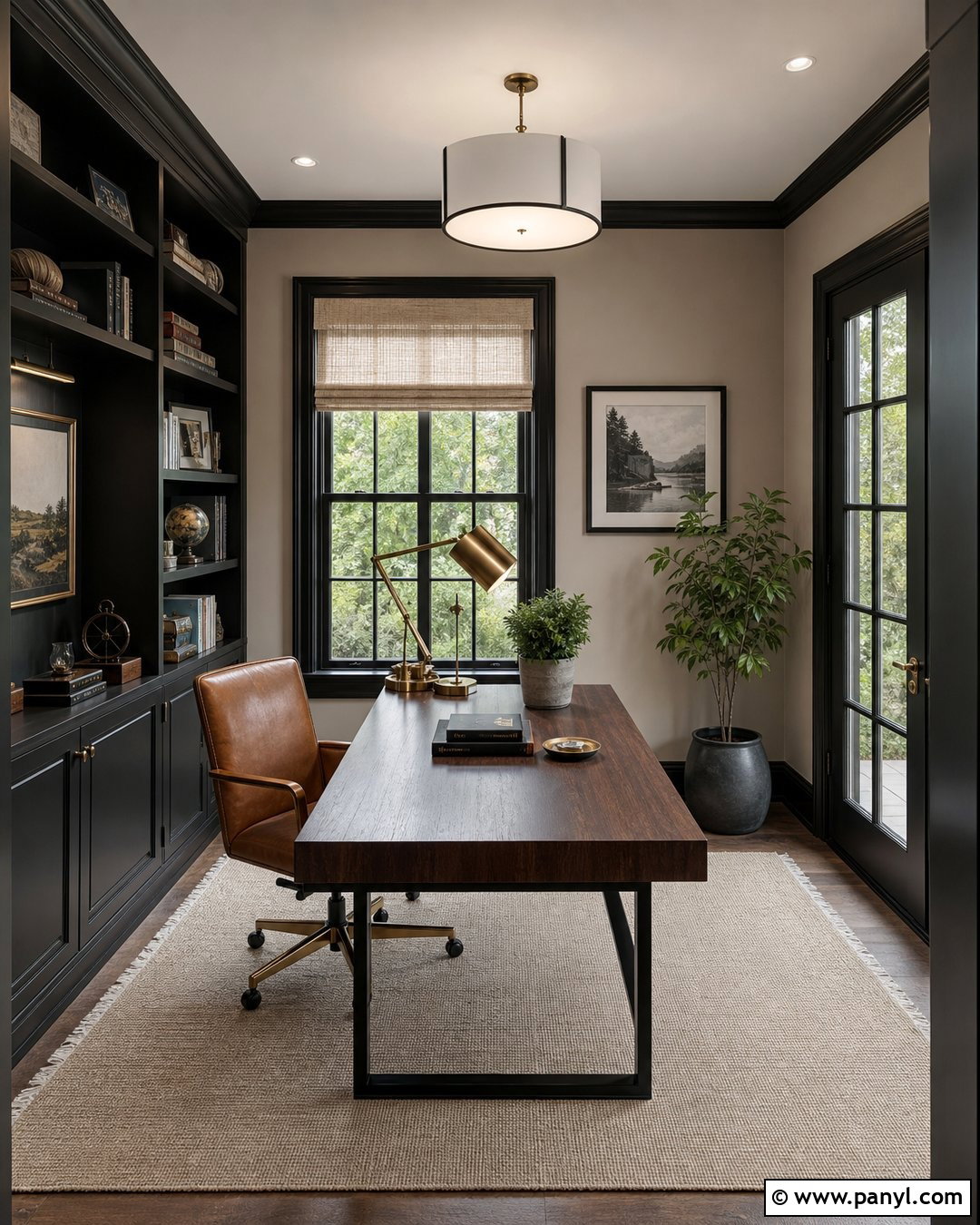
Black trim against pale taupe walls gives a home office a focused, professional character. Use the taupe across walls and ceiling if the room has good height, then paint the baseboards, windows, door, and built-in desk satin black. Add walnut desktop surfaces to soften the dark cabinetry. A camel leather desk chair, cream flat-weave rug, and linen Roman shade bring comfort without clutter. Install black picture lights above framed artwork and use warm brass desk accessories sparingly. Closed storage below the worktop keeps visual distractions under control. Because the wall color is warmer than white, the contrast feels tailored rather than severe. The finished office supports concentration while still fitting naturally within a comfortable home.
29. Eggplant Trim With Soft Gray Walls
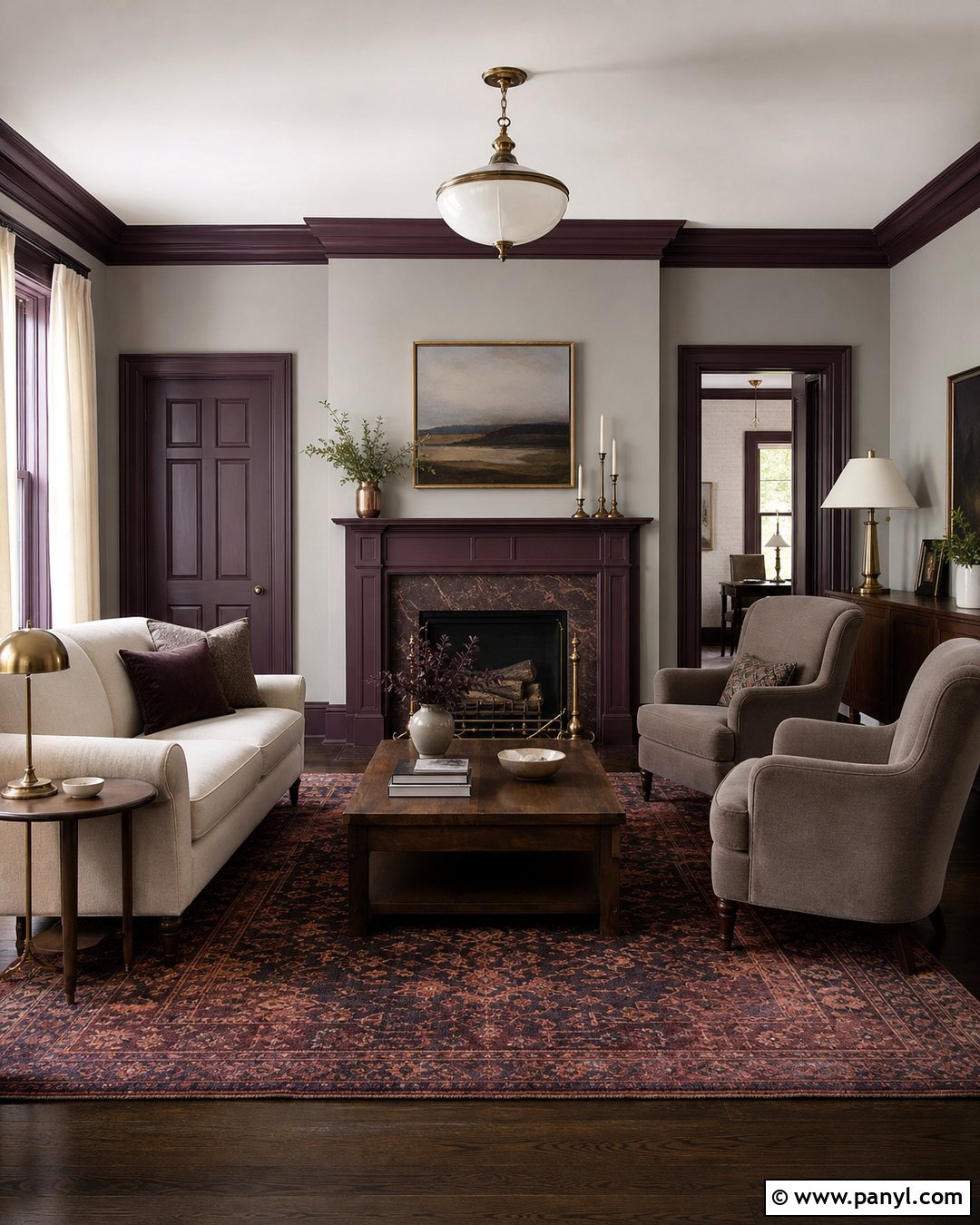
Eggplant trim can provide unexpected depth in a formal living room with soft gray walls. Select a pale warm gray that complements purple’s red undertone. Paint the baseboards, windows, doors, crown molding, and fireplace mantel a deep brown-purple that appears nearly neutral from a distance. Furnish the room with a cream sofa, mushroom-colored armchairs, and a dark walnut coffee table. Add a faded rug containing plum, rust, and beige, then repeat the trim tone through one or two pillows. Antique brass lighting and linen curtains soften the overall effect. Keep the ceiling off-white. The subtle color reveals itself gradually, giving the room more personality than charcoal while retaining an elegant, highly livable foundation.
30. Dark Teal Trim With Light Gray Walls
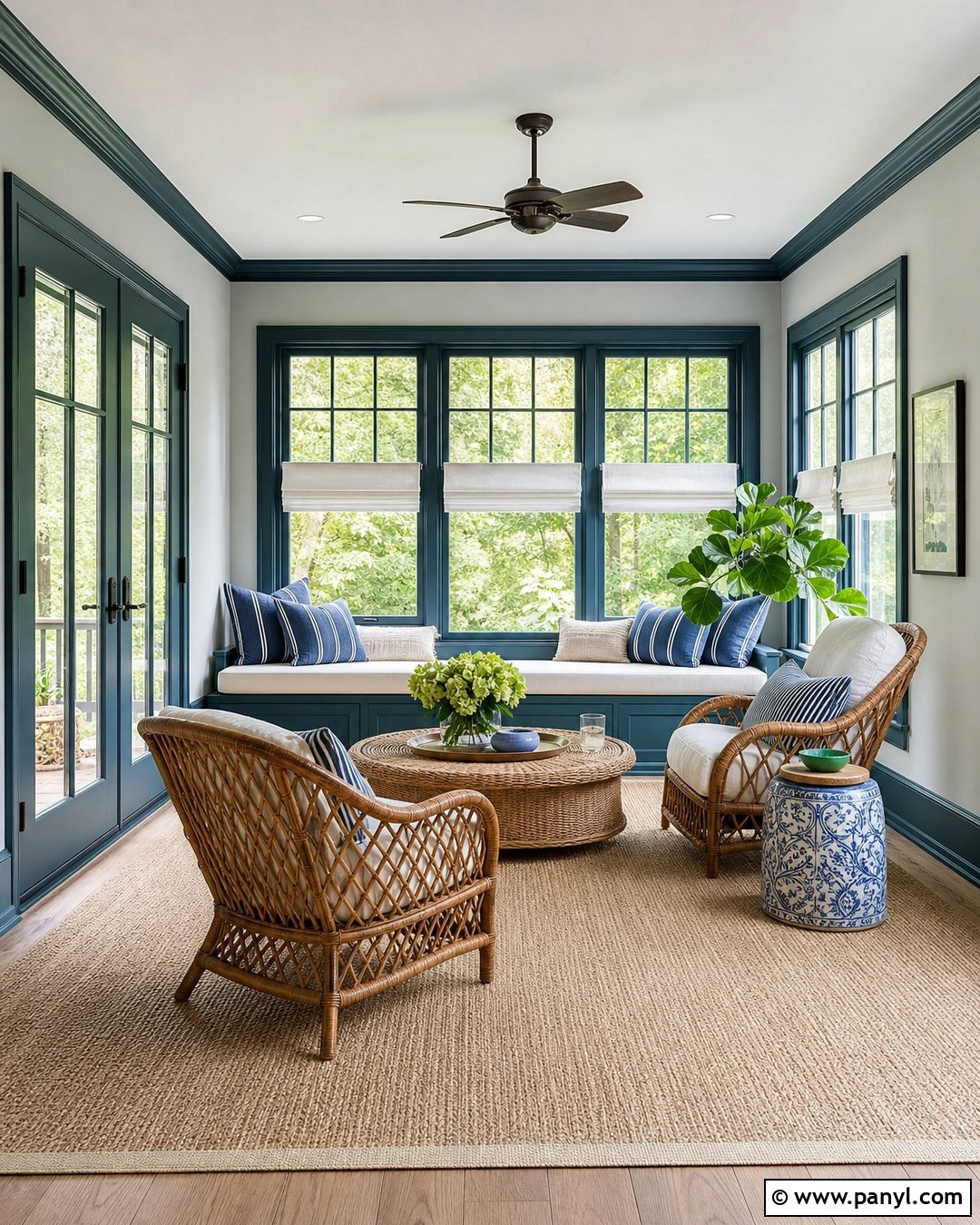
A light gray sunroom becomes crisp and colorful when framed with dark teal windows and trim. Use a pale neutral gray on the walls and paint every window casing, baseboard, door, and built-in bench a saturated blue-green. Add cream seat cushions, striped blue pillows, and a round rattan coffee table. Natural fiber flooring or a large sisal rug reinforces the indoor-outdoor connection. Hang simple white shades inside the window frames so the teal remains visible. Include potted trees and leafy plants, but keep decorative objects limited. The stronger trim color celebrates the many windows instead of trying to hide them. Bright daylight keeps the room fresh, while woven textures and soft upholstery prevent the contrast from feeling too hard.
31. Espresso Trim With White Walls
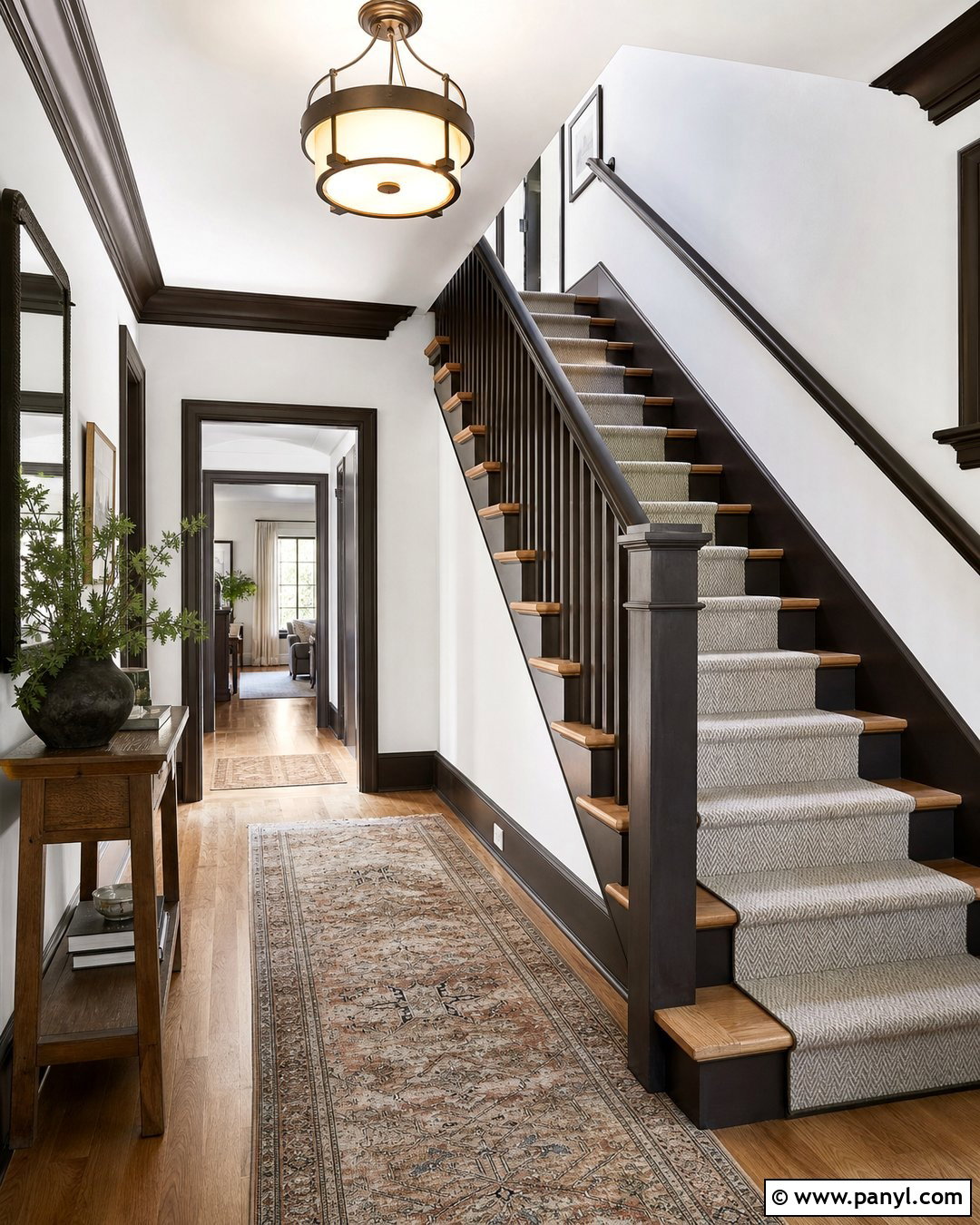
White walls and espresso trim make an open staircase feel like a central architectural feature. Paint the baseboards, door frames, stair stringer, handrail, and newel posts a deep espresso brown. Keep the walls warm white and use natural oak or medium walnut on the stair treads. A neutral runner with a narrow dark border provides safety and connects the two tones. Place a wood console and a large framed mirror near the stairs, then add a simple bronze light fixture overhead. Avoid filling the stair wall with many small pictures, since the dark railing already creates visual movement. This coordinated approach blends painted and stained surfaces, giving a basic staircase a stronger, more finished presence within the surrounding hallway.
32. Graphite Trim With Pale Green Walls
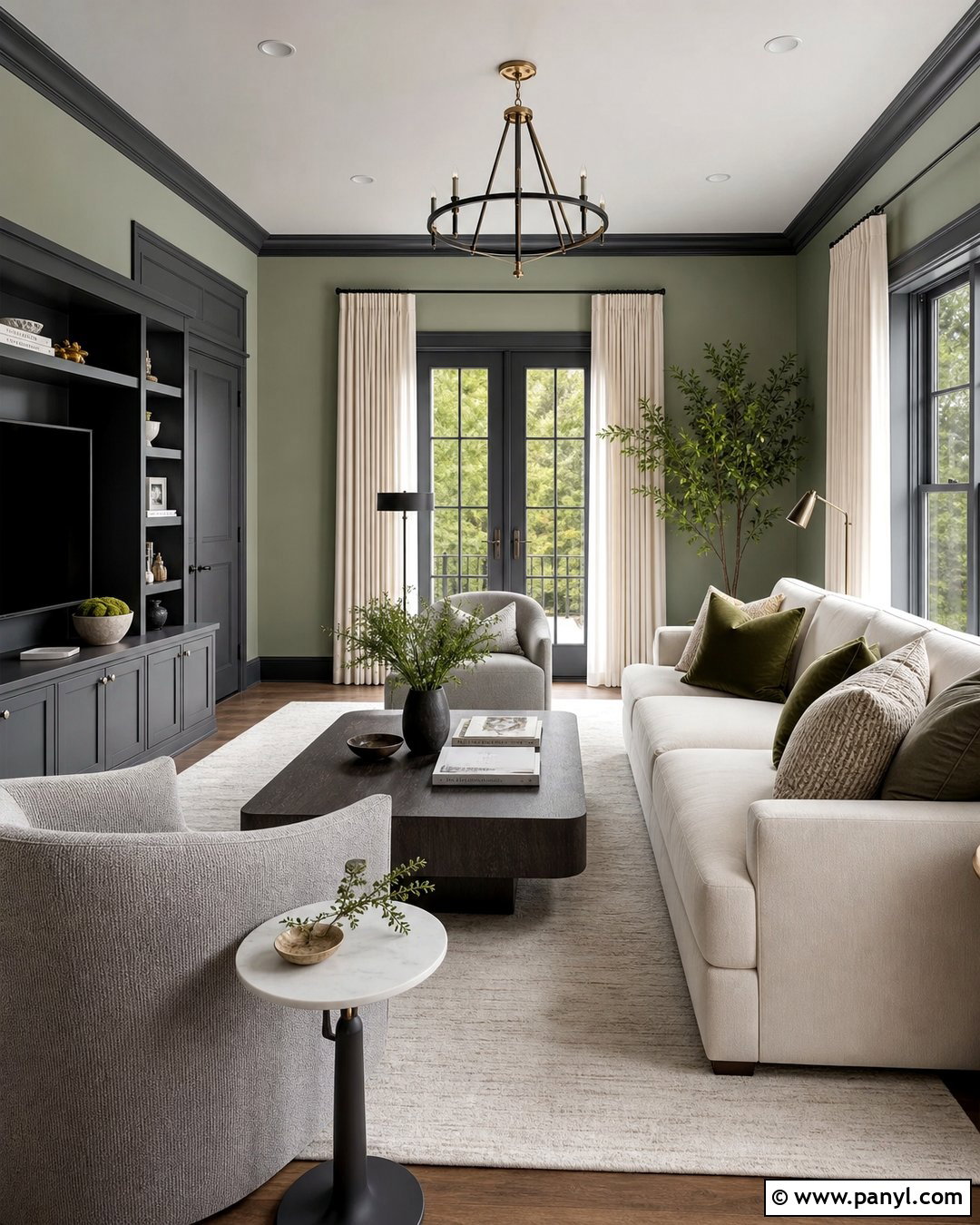
Graphite trim brings modern structure to pale green walls in a restful living room. Choose a desaturated eucalyptus green and apply graphite paint to the baseboards, windows, doors, crown molding, and low media cabinetry. Pair a cream sofa with two light gray chairs and a smoked-oak coffee table. A textured ivory rug keeps the central area bright, while pillows in olive and black repeat the architectural palette. Add off-white curtains, dark metal floor lamps, and a few large ceramic pieces. Keep electronics concealed inside the graphite cabinetry whenever possible. The wall color introduces softness and an outdoor reference, while the dark neutral trim prevents the room from appearing overly delicate or rustic.
33. Navy Trim With Pale Yellow Walls
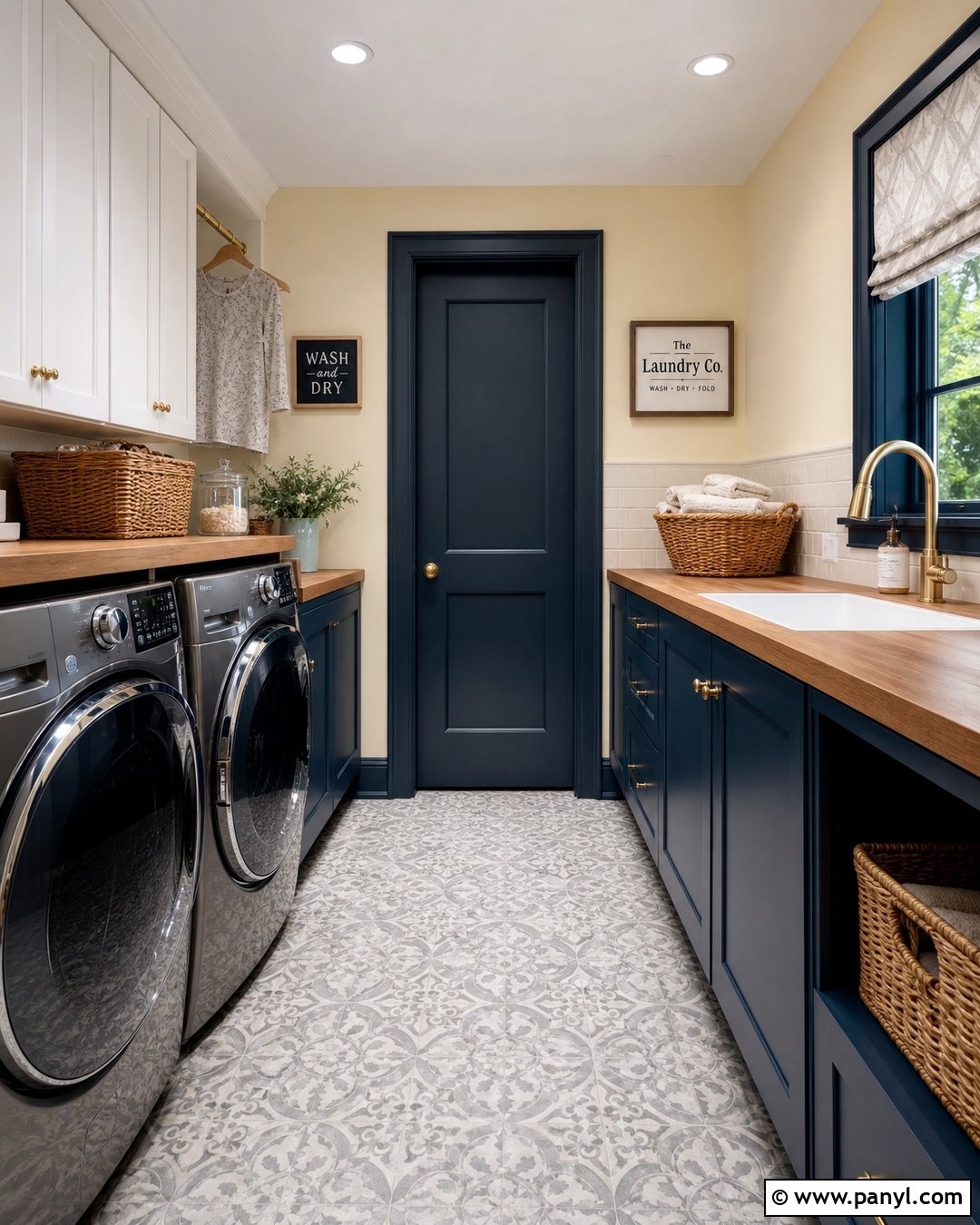
Pale yellow walls and navy trim create a welcoming laundry room with cheerful contrast. Use a restrained cream-yellow on the walls and deep navy on the baseboards, door, window casing, and lower storage cabinets. Keep upper cabinets warm white so the room remains visually open. Add butcher-block counters, a white utility sink, and a backsplash of simple cream tile. Brass cabinet pulls and a woven pendant complement the warm wall color. Cover the floor with durable gray-and-white patterned tile and include open baskets for sorting supplies. The navy elements hide scuffs in this hardworking area, while the light walls increase brightness. Every feature contributes to a practical room that feels carefully designed rather than purely utilitarian.
34. Dark Brown Trim With Pale Terracotta Walls
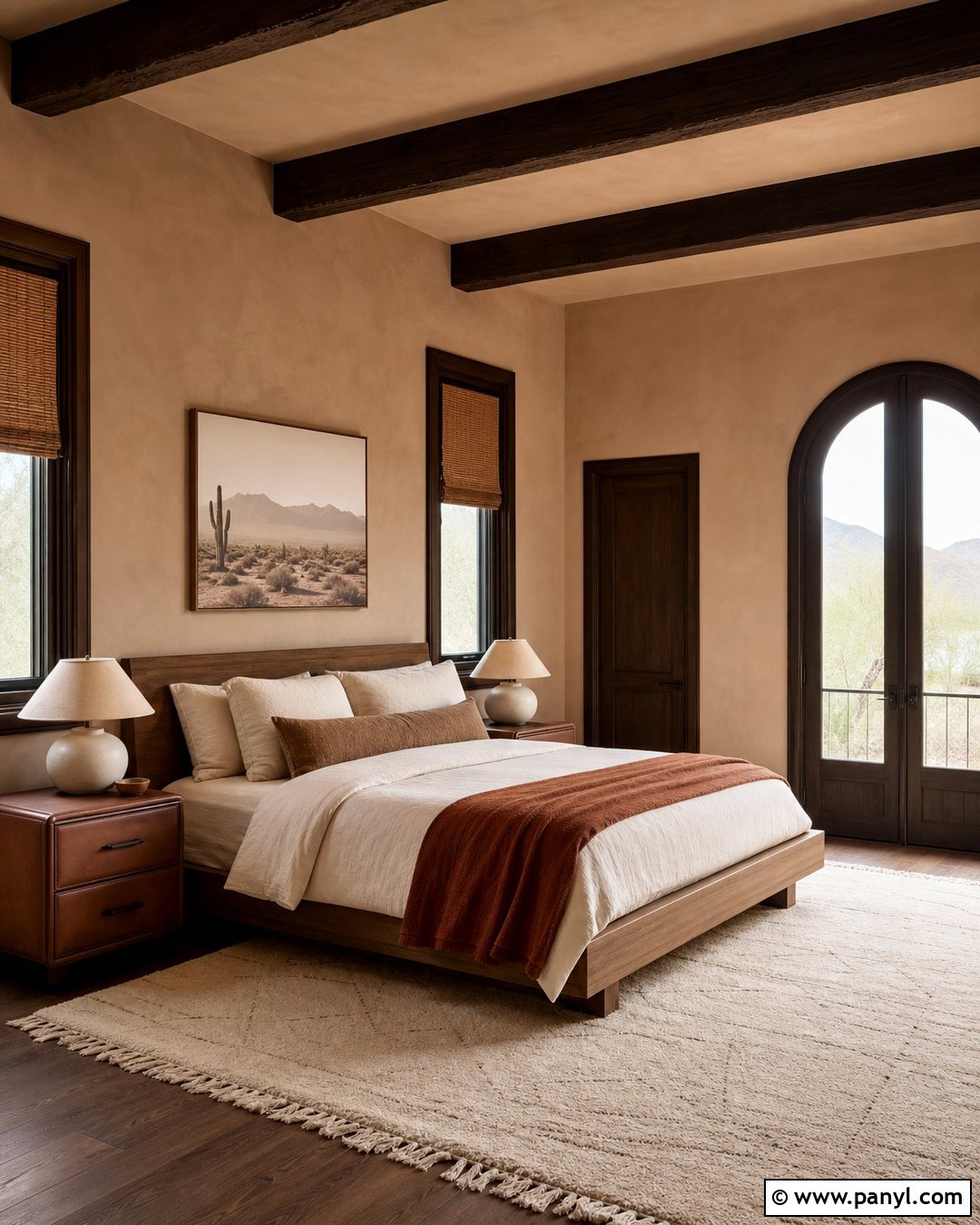
Pale terracotta walls gain definition from dark brown trim in a warm, desert-inspired bedroom. Select a washed clay color with pink and beige undertones. Apply deep brown paint to the doors, windows, baseboards, and ceiling beams if present. Choose a low oak bed, cream linen bedding, and a rust-colored woven blanket. Leather or walnut nightstands reinforce the trim, while a large ivory rug prevents the room from becoming too earthy. Add woven shades, simple plaster lamps, and abstract artwork in sand, charcoal, and clay. Keep the ceiling warm white unless exposed beams are a major feature. The combination feels sun-washed and grounded, with natural textures creating depth beyond the two main paint colors.
35. Charcoal Trim With Warm White Kitchen Walls
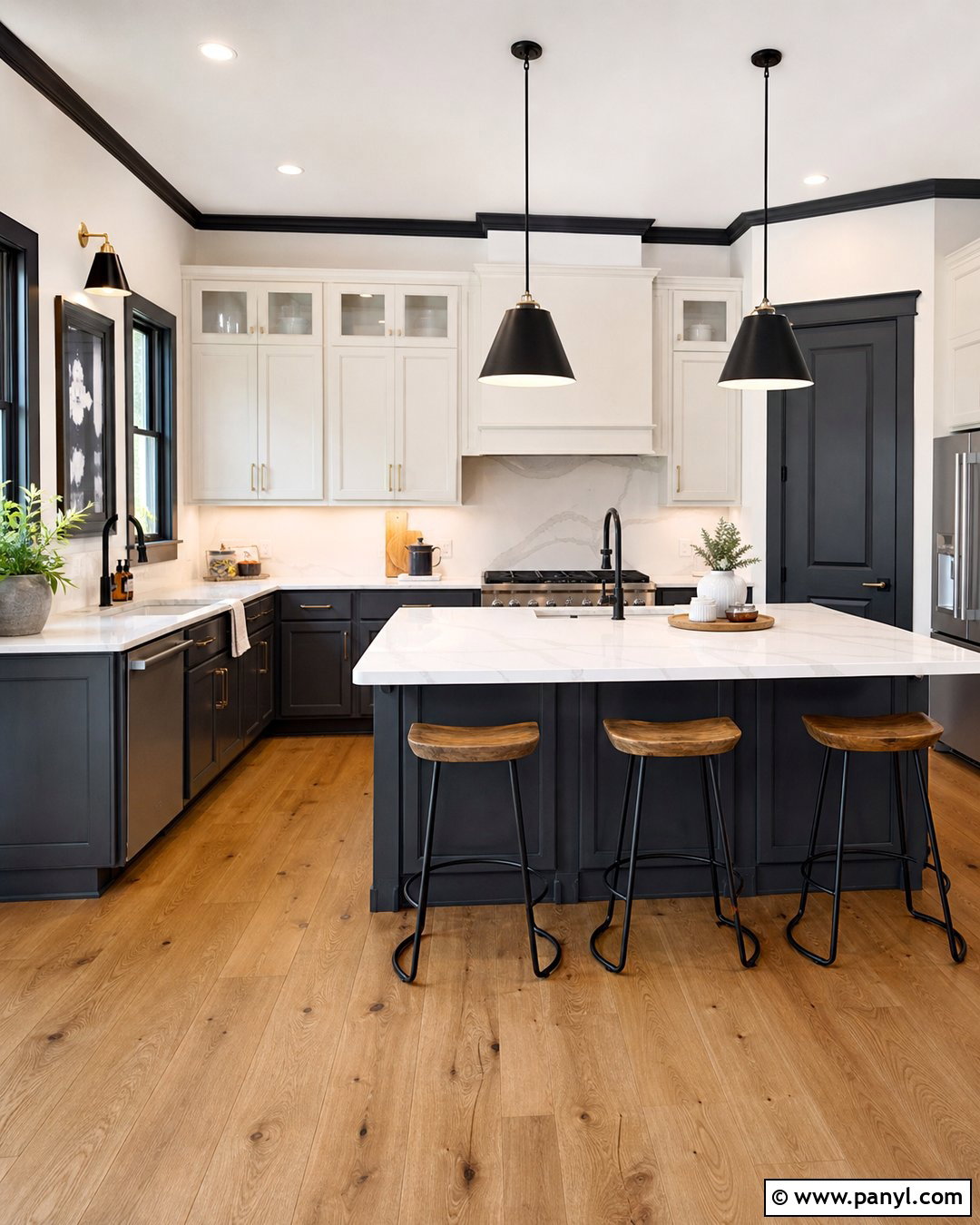
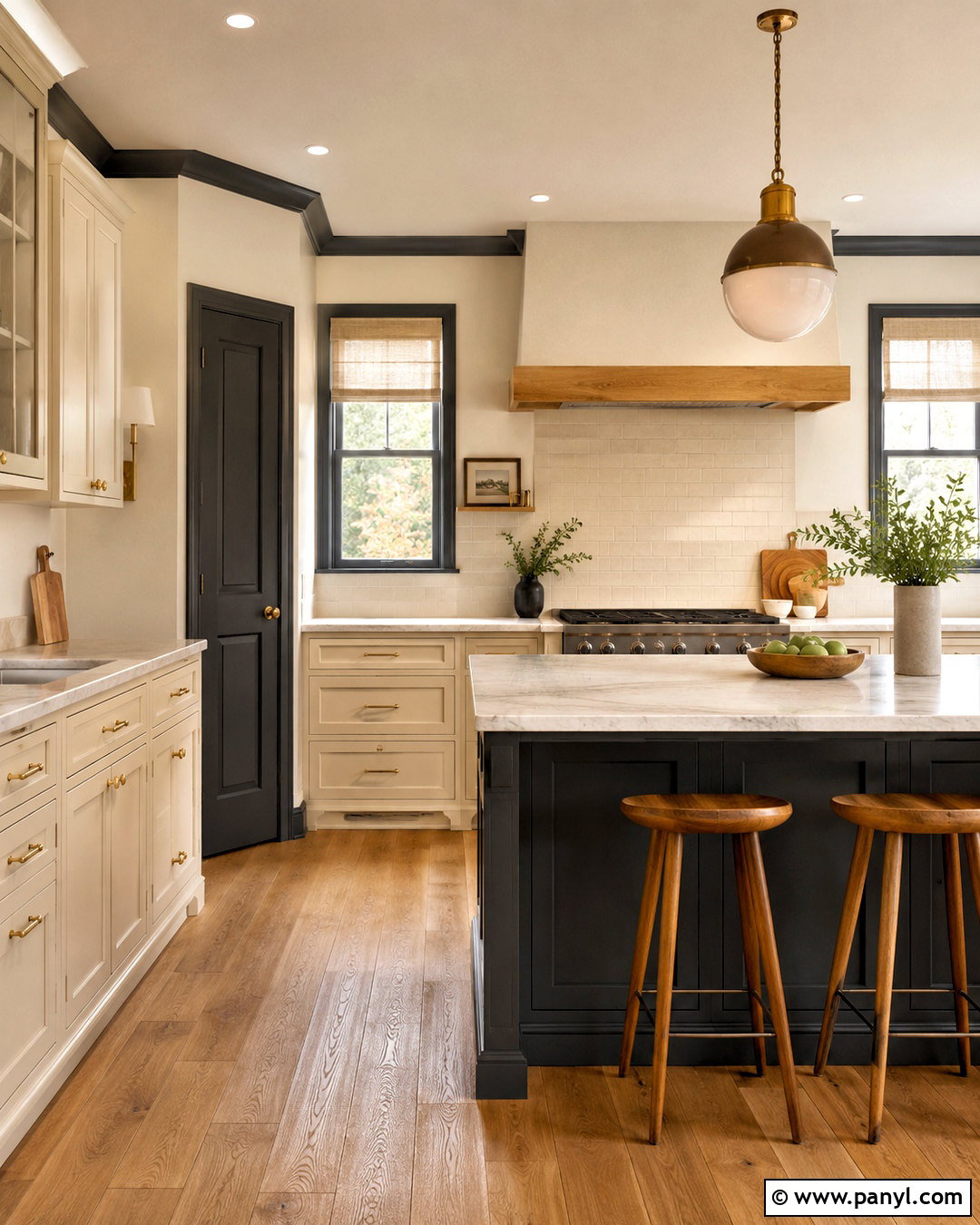
Charcoal trim provides continuity in a warm white kitchen without requiring every cabinet to be dark. Paint the window casings, baseboards, pantry door, island, and lower cabinets charcoal. Keep the main walls and upper cabinets a creamy white. Add marble-look quartz counters, white backsplash tile, and medium oak flooring. Brushed brass hardware warms the charcoal, while black pendant lights provide a sharper supporting accent. Position wood stools at the island and use simple linen shades at the windows. Avoid mixing several competing gray shades; repeat the same charcoal wherever a dark painted finish appears. This deliberate distribution anchors the lower half of the kitchen and leaves the upper surfaces bright, clean, and visually spacious.
36. Dark Blue Trim With White Bathroom Walls
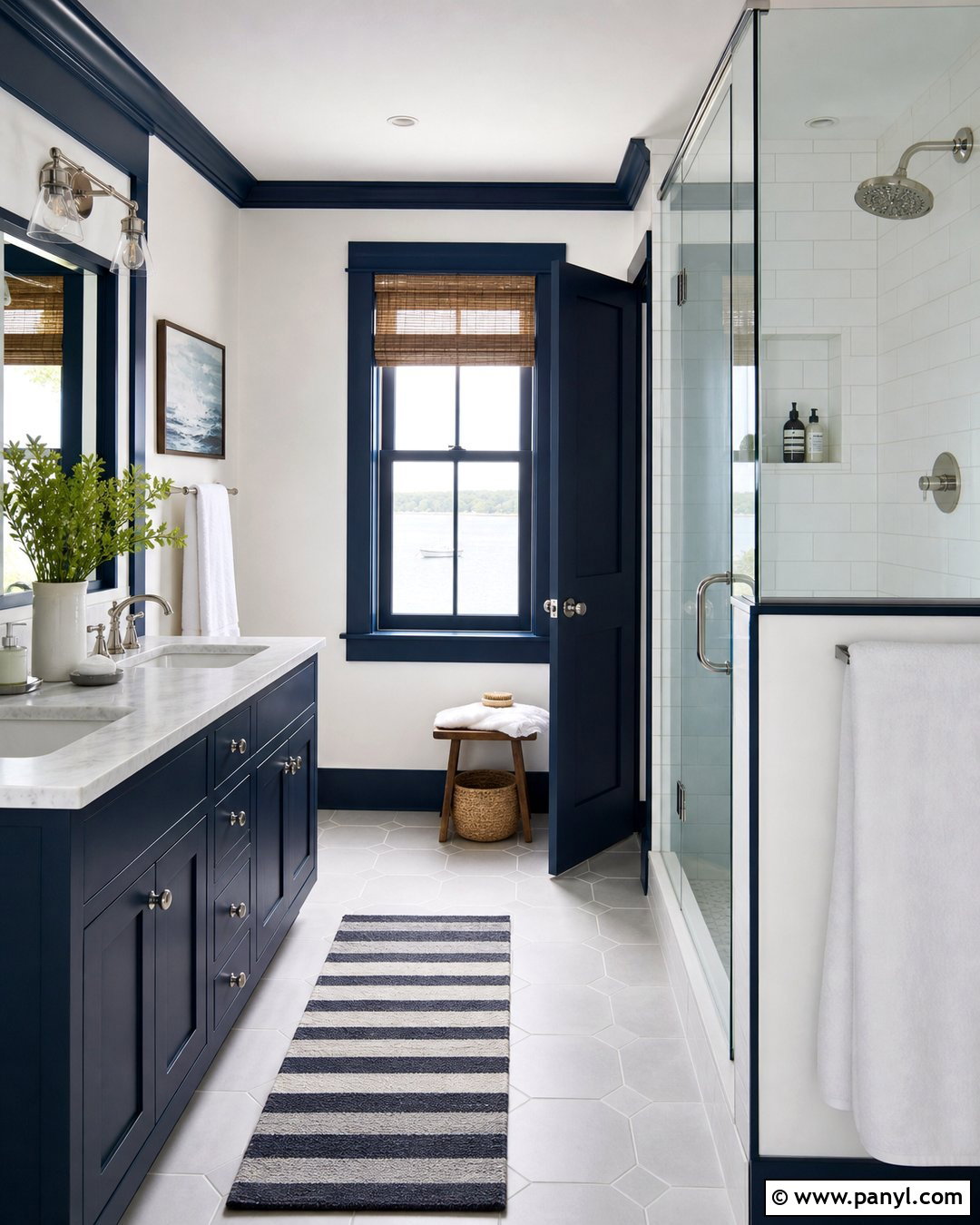
White bathroom walls look more architectural when deep blue trim frames the doors, windows, mirror, and vanity. Select a navy with a slight gray undertone and use it consistently on painted woodwork. Add white subway tile in the shower, pale gray floor tile, and a white quartz vanity top. Polished nickel fixtures maintain a fresh appearance, while a natural wood stool prevents the cool colors from feeling sterile. Hang a simple white shower curtain and use bright white towels with one striped blue bath mat. If the room is small, keep the ceiling white and avoid extending the navy onto broad wall surfaces. The completed bathroom feels crisp, practical, and more distinctive than an all-white scheme.
37. Black Trim With Cream Bedroom Walls
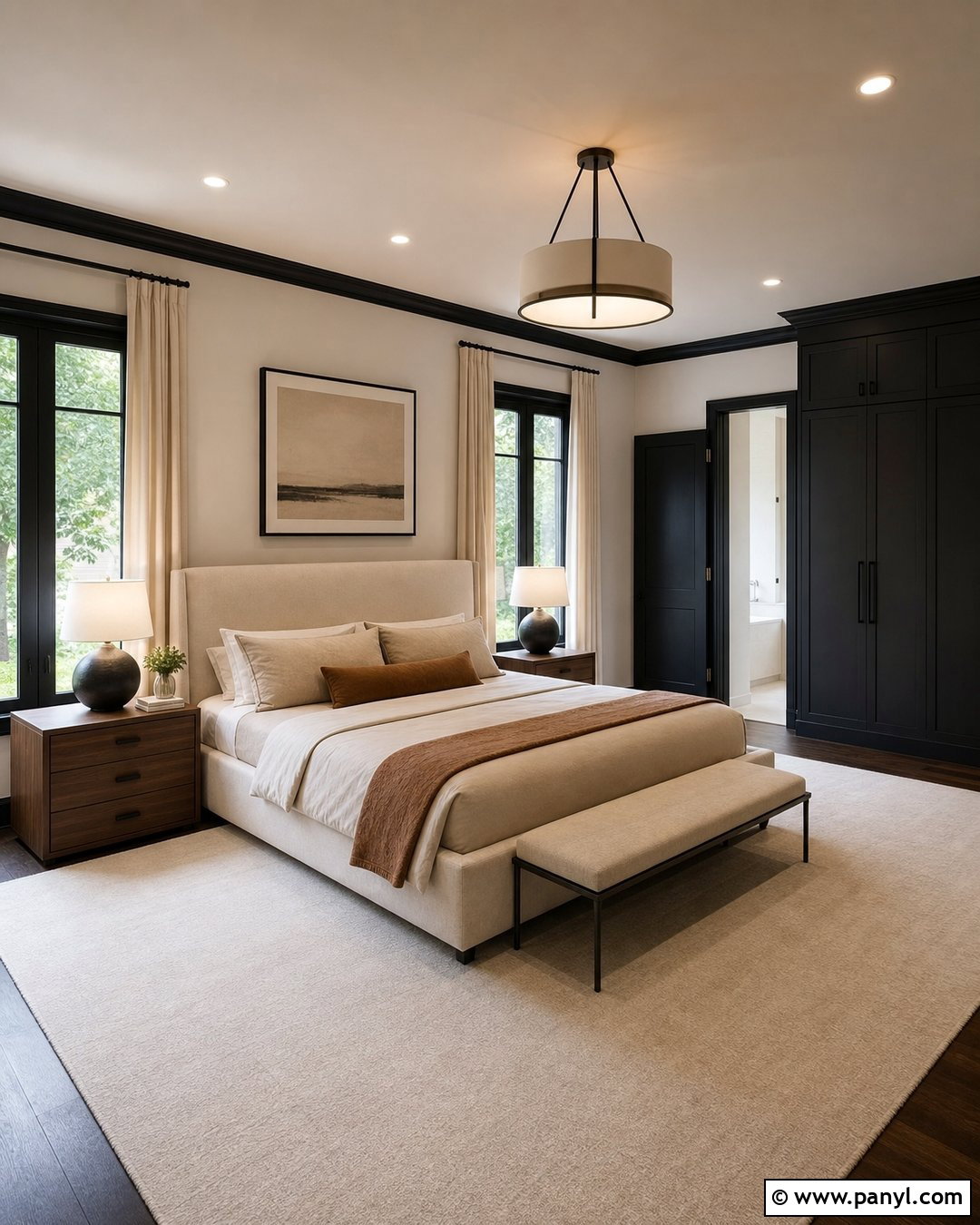
Cream bedroom walls and soft black trim create a cocooning effect without sacrificing brightness. Use a warm cream on the walls and ceiling, then paint the baseboards, window frames, doors, and wardrobe cabinetry black with a muted finish. Center a tall oatmeal upholstered bed between black wall sconces. Layer white sheets, a beige duvet, and pillows in camel and subtle black patterns. Walnut nightstands and a woven bench add natural warmth. Hang full cream curtains beyond the black window casing to make the opening appear generous. A large ivory rug softens dark flooring and keeps the room quiet. The balanced combination feels intimate at night but remains light and comfortable during the day.
38. Deep Green Trim With Light Gray Walls
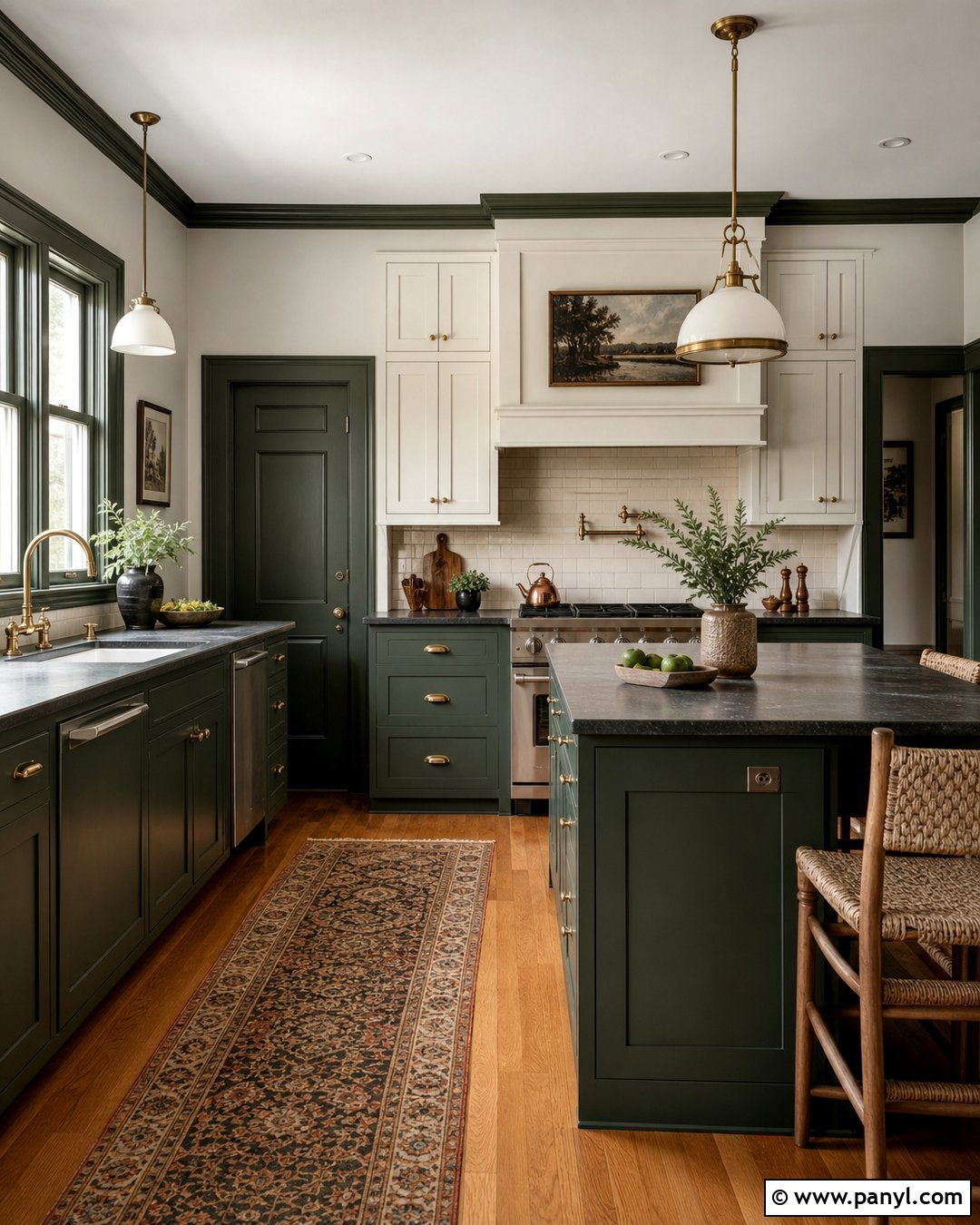
A traditional kitchen can feel fresh with light gray walls and deep green architectural trim. Use a warm pale gray on open wall areas and paint the window casings, baseboards, doors, island, and lower cabinets dark green. Keep perimeter upper cabinets off-white for contrast. Add soapstone-look counters, a cream tile backsplash, and aged brass hardware. Medium oak flooring and wood counter stools introduce warmth. Place one patterned vintage runner along the sink wall and keep countertop accessories simple. The green trim should connect visually to the cabinetry, making the room appear carefully built rather than decorated in separate stages. Light walls preserve openness, while the deep green lower elements give the kitchen weight and character.
39. Dark Greige Trim With Pale Pink Walls
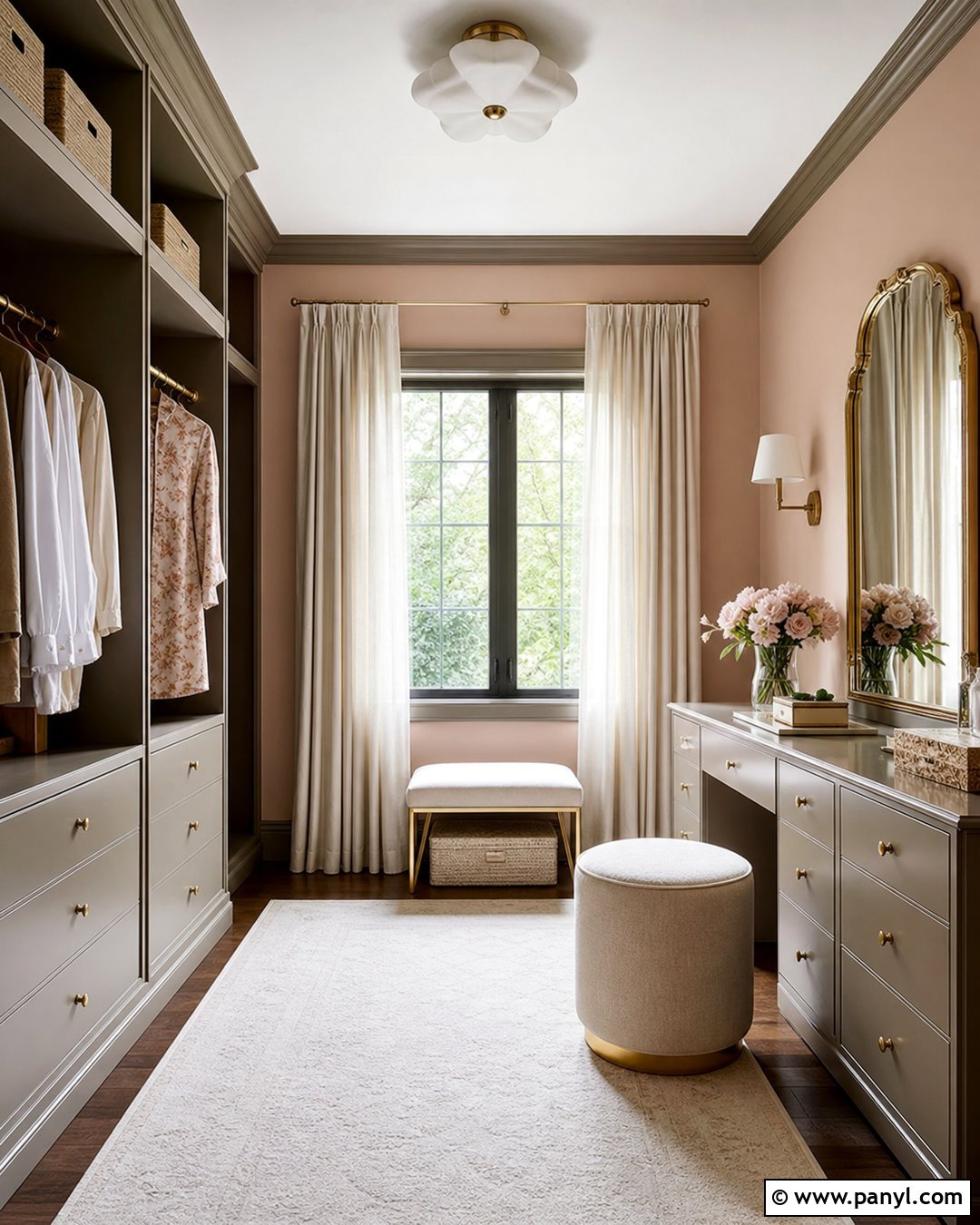
Pale pink walls paired with dark greige trim create a dressing room that feels soft, organized, and grown-up. Choose a dusty pink with beige undertones. Paint the baseboards, door, window casing, wardrobe fronts, and built-in vanity a deep mushroom greige. Add a round upholstered stool, a large brass-framed mirror, and cream carpet or a plush ivory rug. Use warm white lighting around the vanity so both paint colors remain accurate. Linen curtains and woven storage boxes introduce natural texture. Keep hardware in aged brass or bronze rather than chrome. Because the trim is a softened neutral instead of black, it defines every storage element without overpowering the room’s delicate wall color or compact proportions.
40. Black Trim With Pale Beige Entry Walls
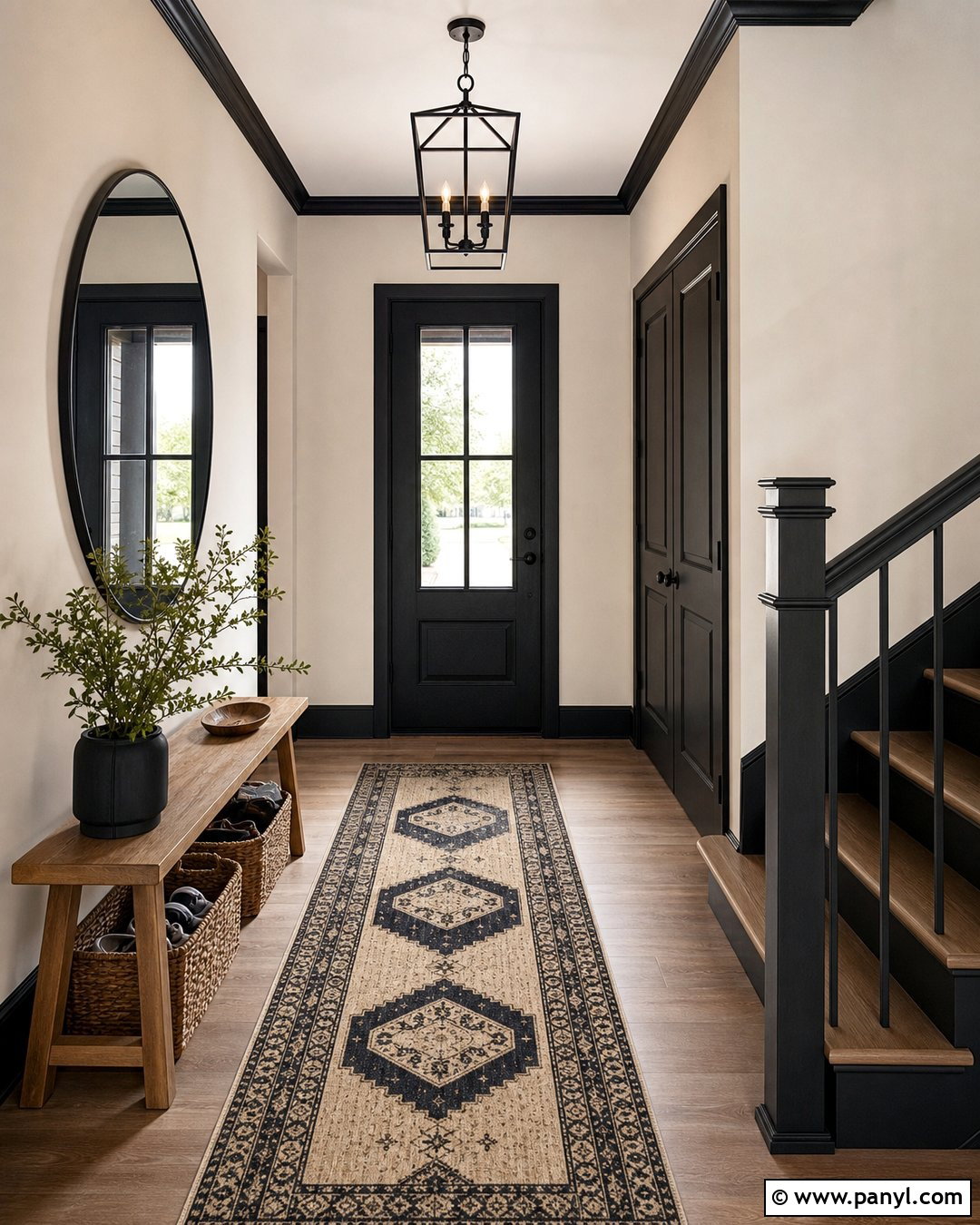
A pale beige entryway feels stronger and more intentional when outlined with black trim. Paint the front door, surrounding casing, baseboards, closet doors, and stair railing soft black. Use a light sand-beige on the walls to warm the contrast and disguise minor everyday marks. Place a narrow oak bench along one wall with woven baskets underneath for shoes. Add a durable cream-and-black runner, a large round mirror, and a simple black ceiling lantern. Brass door hardware can supply a subtle warm highlight. Keep artwork minimal and maintain clear walking space. The light walls prevent the entrance from becoming dark, while the repeated black elements establish order and connect practical storage with the home’s architecture.
41. Dark Olive Trim With Light Greige Walls
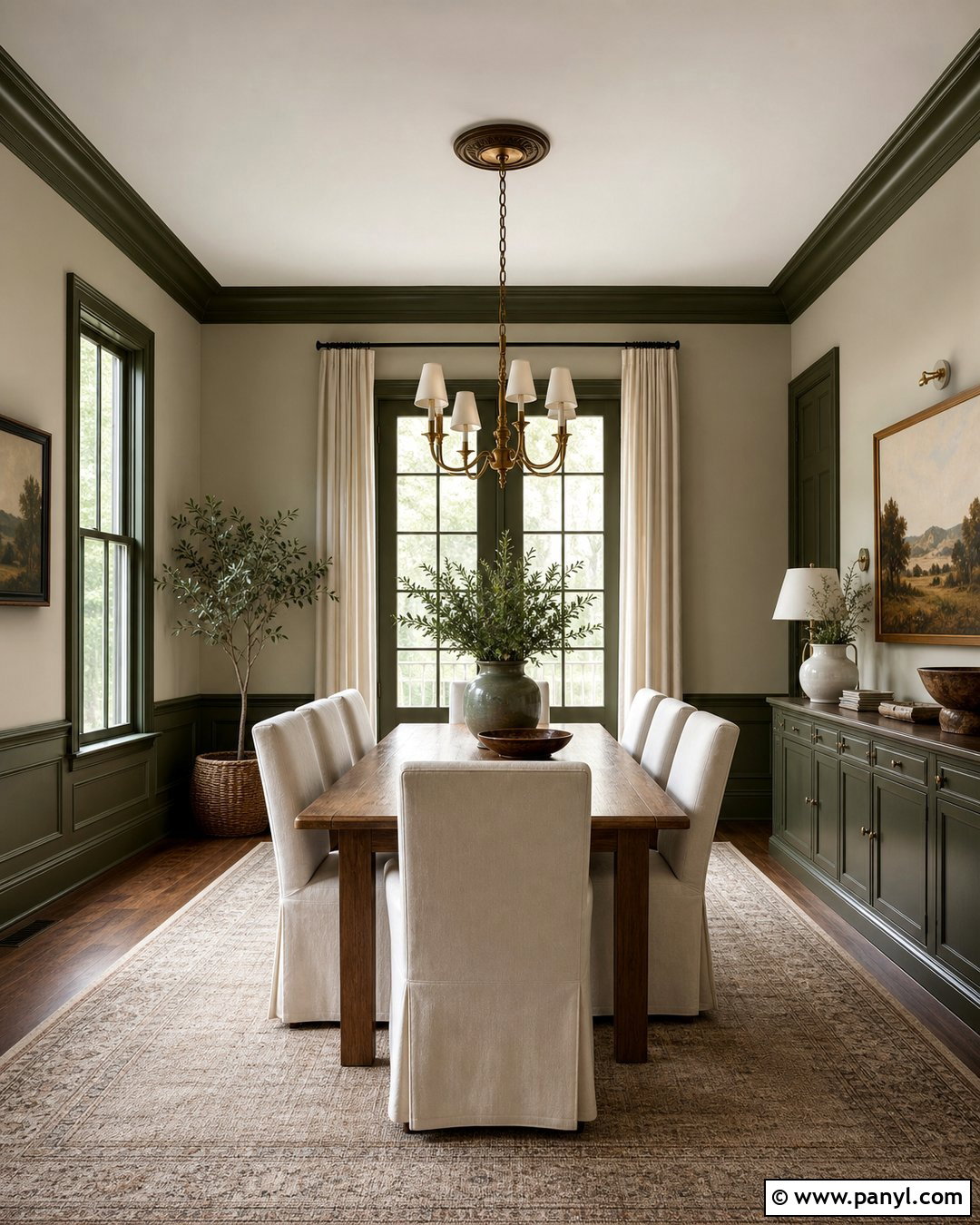
Dark olive trim and light greige walls give an open dining room a quiet, earthy sophistication. Paint the baseboards, doors, windows, crown molding, and built-in sideboard olive green. Keep the walls pale greige with a warm undertone that coordinates with both green and wood. Choose a substantial oak dining table, cream upholstered chairs, and a large neutral rug. An aged brass chandelier introduces a refined focal point, while linen curtains soften the windows. Display ceramic serving pieces and one oversized landscape artwork rather than many small objects. The olive reads almost like a neutral, allowing the room to remain flexible. Warm woods and creamy textiles complete the palette and keep the darker trim from feeling severe.
42. Charcoal Trim With Pale Lavender Walls
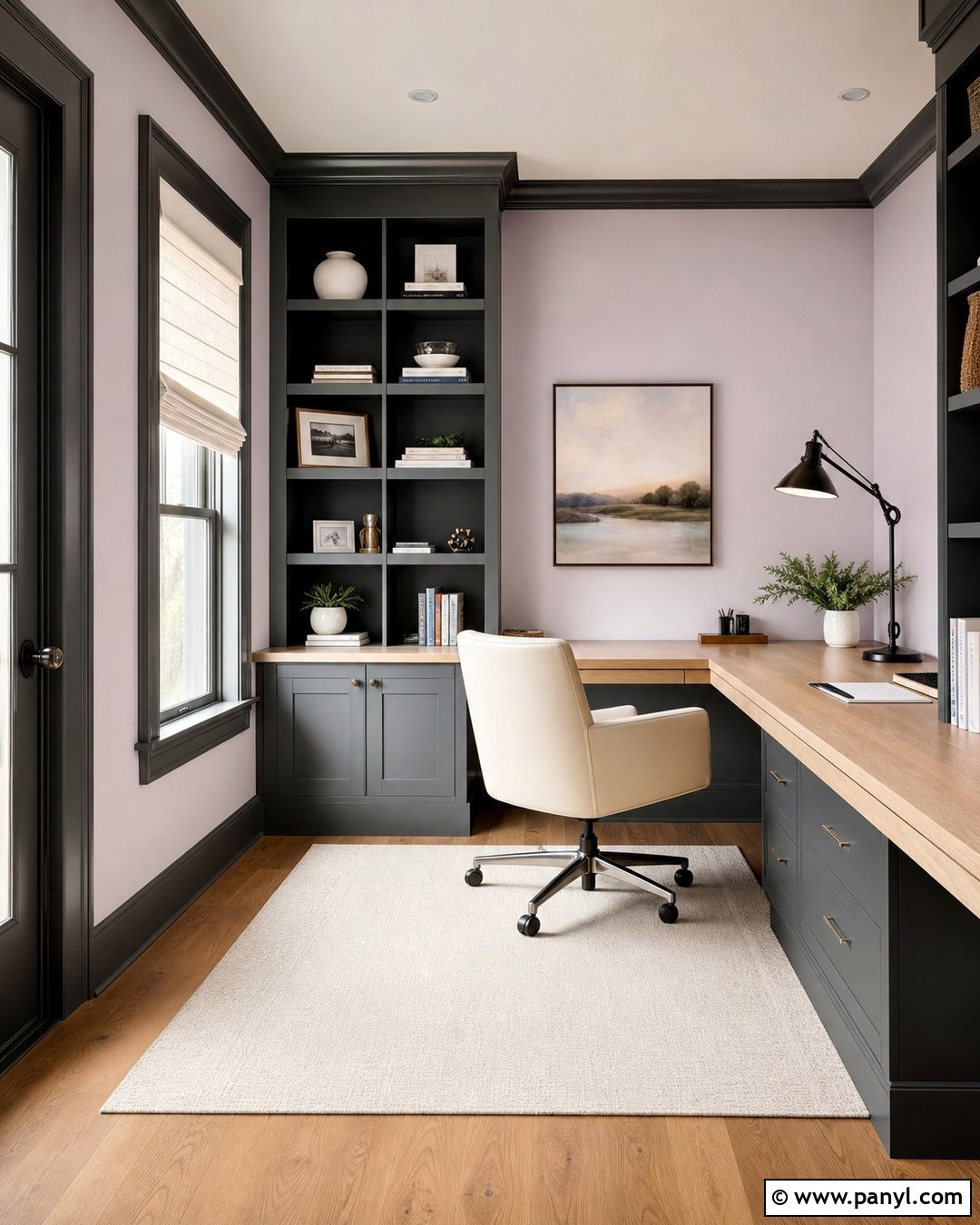
A pale lavender home office becomes more grounded and focused with charcoal trim. Choose a gray-lavender that changes subtly with daylight, then apply charcoal to the baseboards, window frames, door, shelving, and desk cabinetry. Use a light oak desktop and a cream upholstered chair to break up the darker storage. Add an ivory rug, white linen shade, and black task lamp. Artwork can include muted plum, beige, and graphite without repeating lavender too literally. Keep files and office supplies inside closed cabinets so the color contrast remains the main feature. The pale walls provide a calm, creative backdrop, while the charcoal architecture gives the room enough structure to feel professional and organized.
43. Espresso Trim With Light Taupe Walls
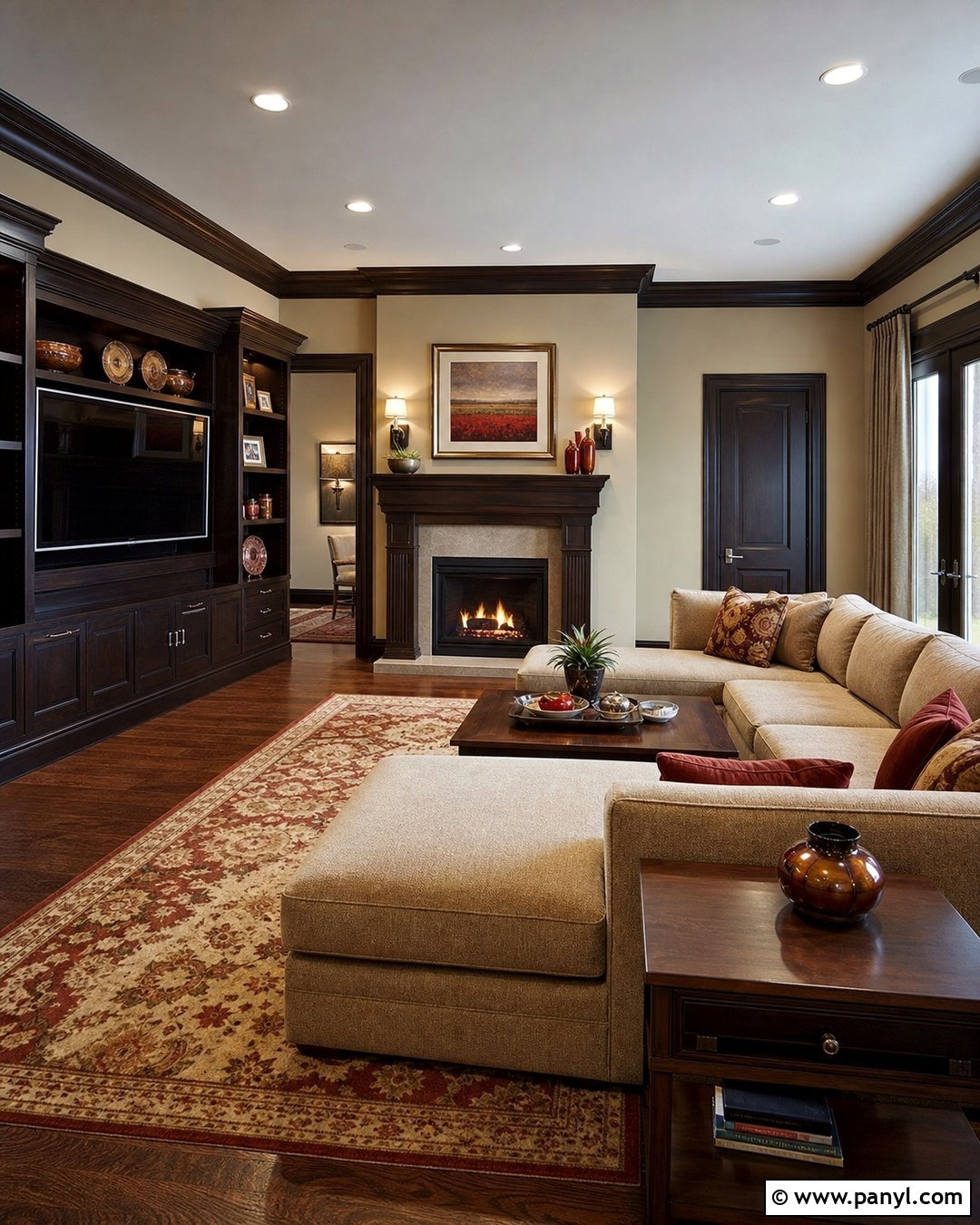
Light taupe walls and espresso trim can make a media room feel comfortable without turning it into a dark cave. Use espresso paint on the baseboards, doors, window casings, media cabinet, and fireplace surround. Keep the walls a pale warm taupe that reduces screen glare more gently than bright white. Add a deep beige sectional, walnut side tables, and a large patterned rug with cream, brown, and muted rust. Install lined taupe curtains for light control and use warm, dimmable wall sconces. Hide cables and equipment inside the dark cabinetry. The espresso elements support the television visually, while the lighter walls and generous neutral upholstery keep the complete room relaxed, approachable, and suitable for daytime use.
44. Deep Teal Trim With Ivory Kitchen Walls
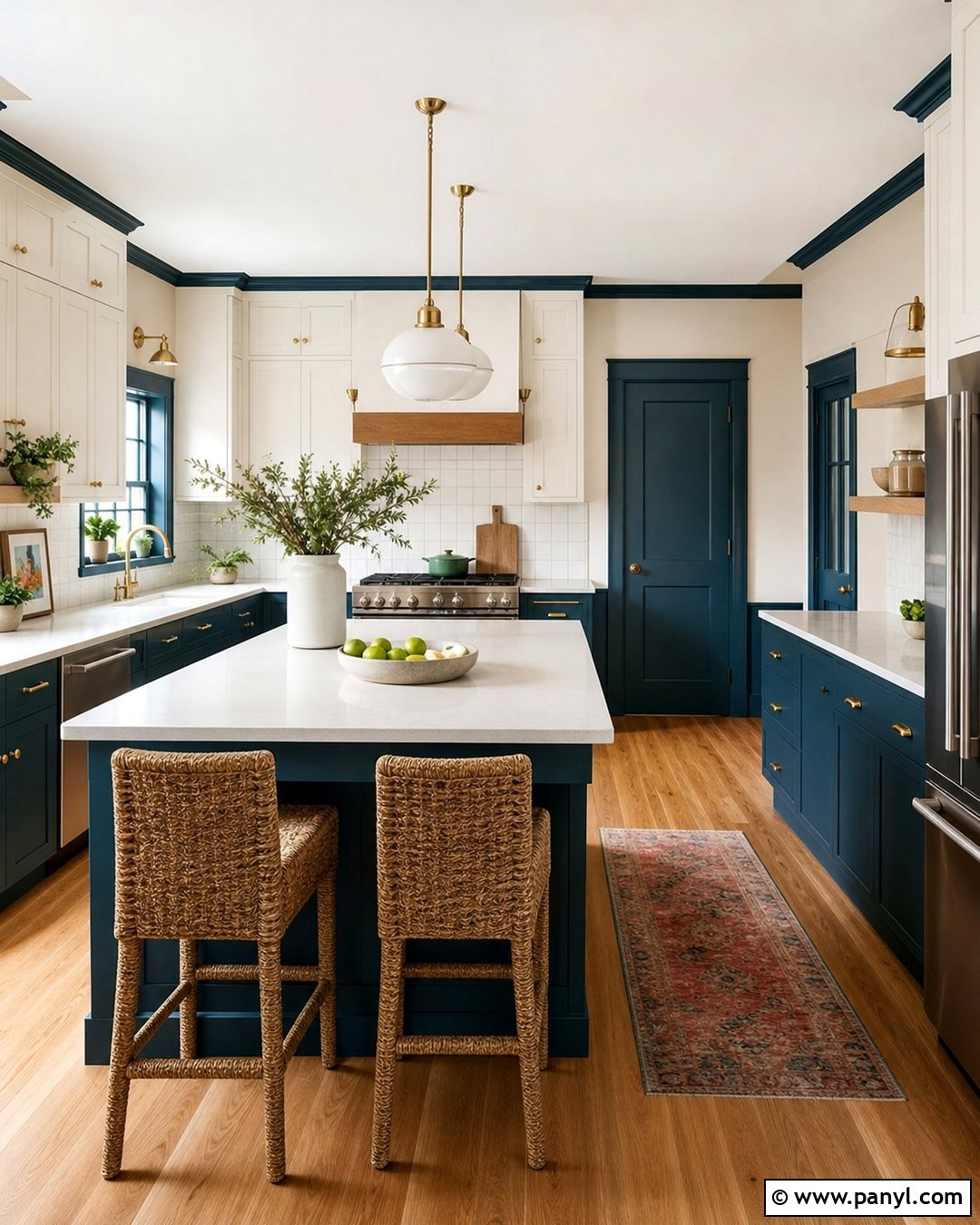
Deep teal trim brings confident color to an ivory kitchen while preserving a bright overall appearance. Paint the windows, baseboards, pantry door, island, and lower cabinets teal with a subtle green undertone. Keep the walls, ceiling, and upper cabinets creamy ivory. Add pale quartz counters, handmade white tile, and warm oak flooring. Brass hardware enhances the green undertone, while woven counter stools and linen shades introduce softer textures. A small vintage runner containing faded blue and rust can connect the island to the surrounding room. Keep appliances and decorative pieces visually quiet. The teal details should appear repeatedly but strategically, forming a strong lower framework beneath the light walls and cabinetry.
45. Dark Walnut Trim With Warm White Walls
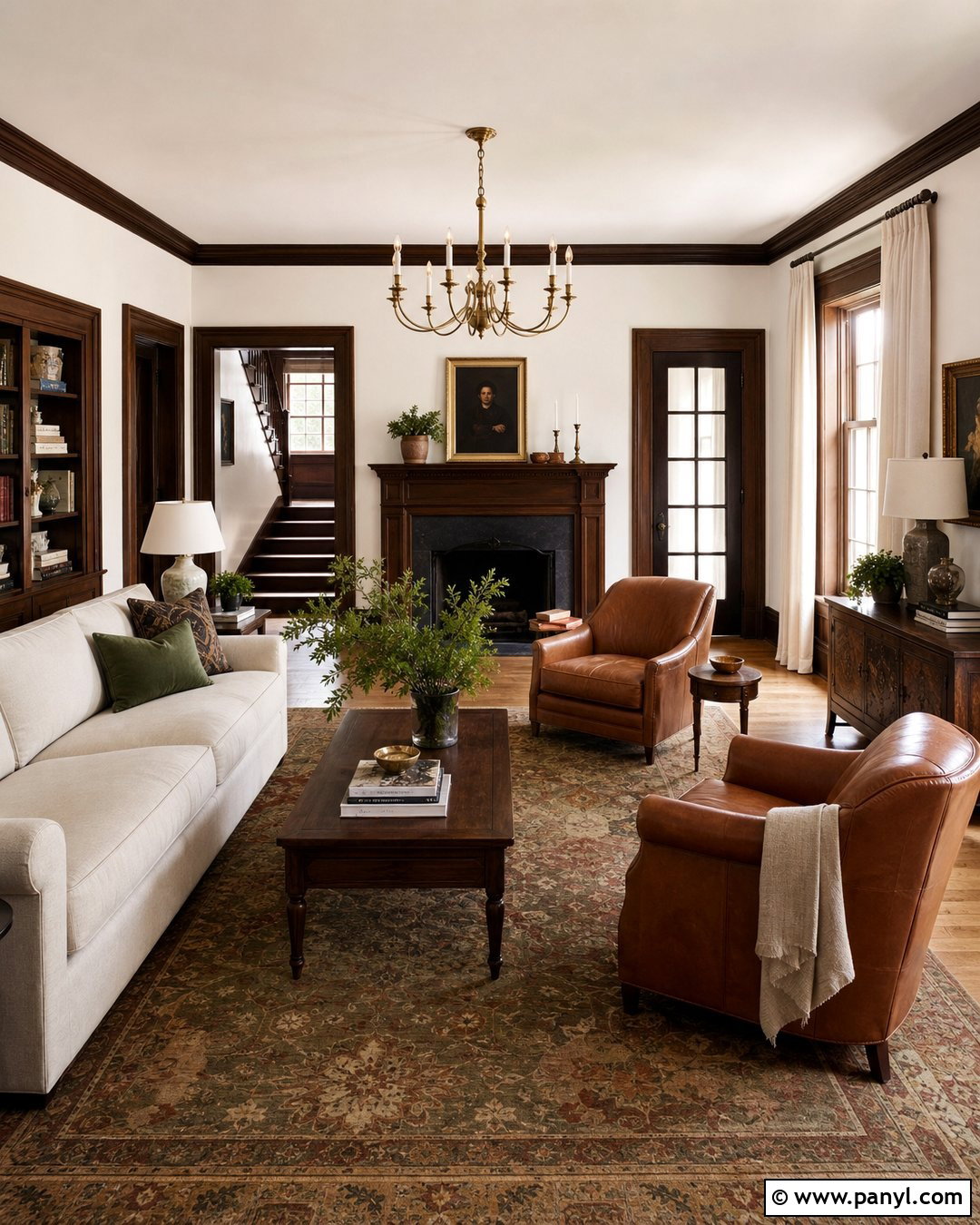
Original dark walnut trim deserves a complete room designed around its natural warmth. Preserve the wood baseboards, doors, window casings, crown molding, and fireplace mantel, then paint the walls a warm white with creamy undertones. Choose an ivory sofa, tan leather chairs, and a walnut coffee table that relates to the millwork without matching it perfectly. A light patterned rug containing olive, rust, and beige bridges the furniture and walls. Hang linen curtains inside or beside the wood casings so the trim remains visible. Add antique brass lighting and large-scale landscape art. Rather than fighting historic woodwork, this approach makes it the room’s defining feature while maintaining a fresh, light, and comfortable atmosphere.
Conclusion:
The best darker trim and lighter wall combinations balance contrast, undertones, room size, and available light. Black and charcoal create clear modern lines, while espresso, olive, navy, burgundy, and teal offer warmer or more colorful alternatives. Keep walls bright enough to reflect light, repeat the trim color across related architectural elements, and connect both shades through flooring, furniture, textiles, and hardware. Sampling remains essential because natural and artificial light can shift each color throughout the day. Use eggshell on walls and a durable satin or semigloss finish on woodwork for practical contrast. With thoughtful coordination, these **45 darker trim lighter walls** combinations can transform ordinary rooms into polished, cohesive spaces.

Related Ideas and Inspiration:
Leave a Reply