
Choosing the right wall color can make natural wood feel warmer, lighter, richer, or more modern. The best 25 Wall Colour With Wooden Furniture Ideas balance the furniture’s undertone with the room’s lighting, flooring, textiles, and overall mood. Creamy whites and earthy neutrals remain reliable backdrops, while muted greens, blues, clay tones, and deeper shades bring more personality to wood-filled spaces. Current paint guidance also favors testing colors beside existing furniture because daylight, lamps, and surrounding finishes can noticeably change how a shade appears. () Whether you have pale oak, golden pine, reddish cherry, or dark walnut, the following complete room schemes will help you build a coordinated look. Explore these practical 25 Wall Colour With Wooden Furniture Ideas.

1. Creamy White Walls With Oak Furniture
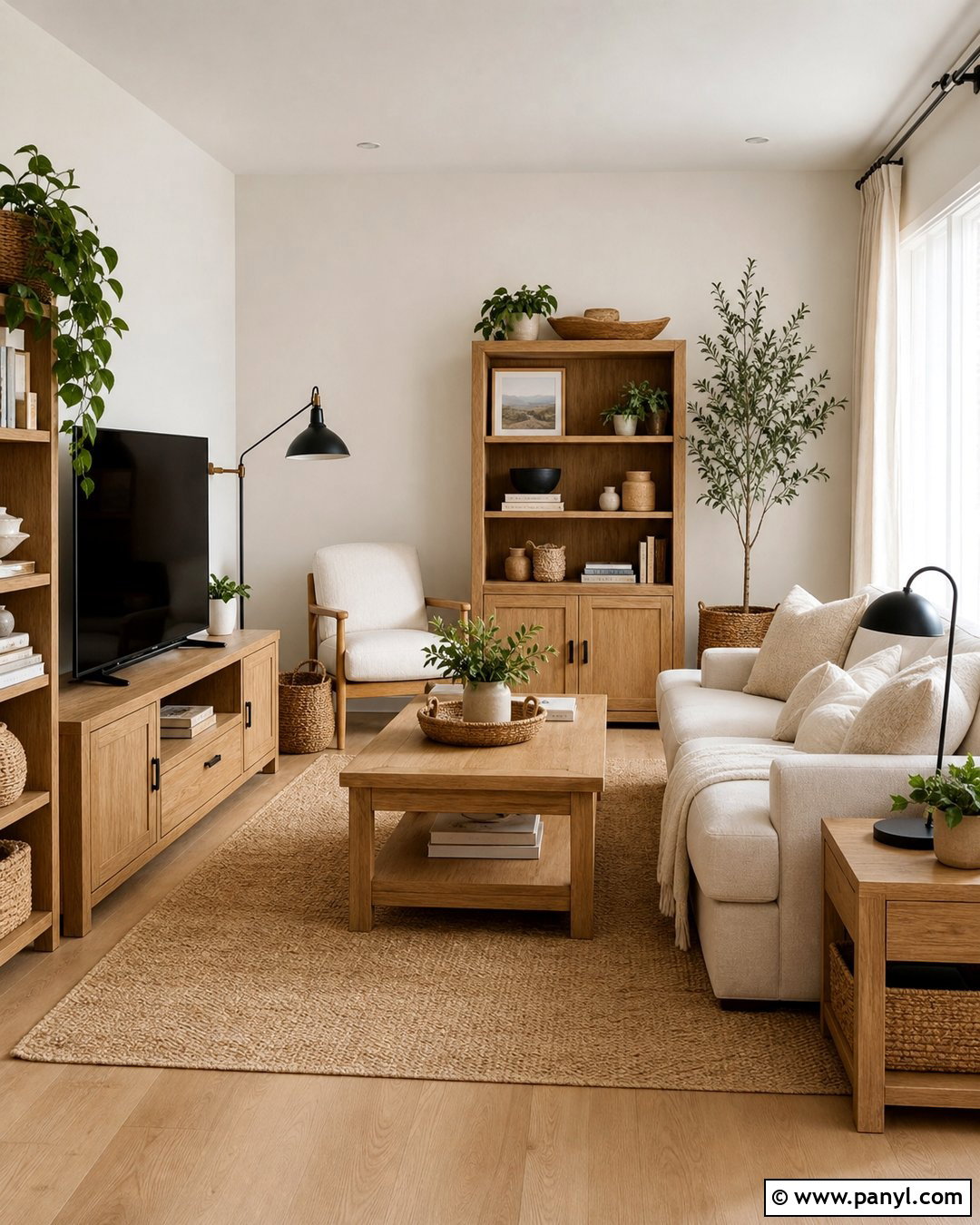
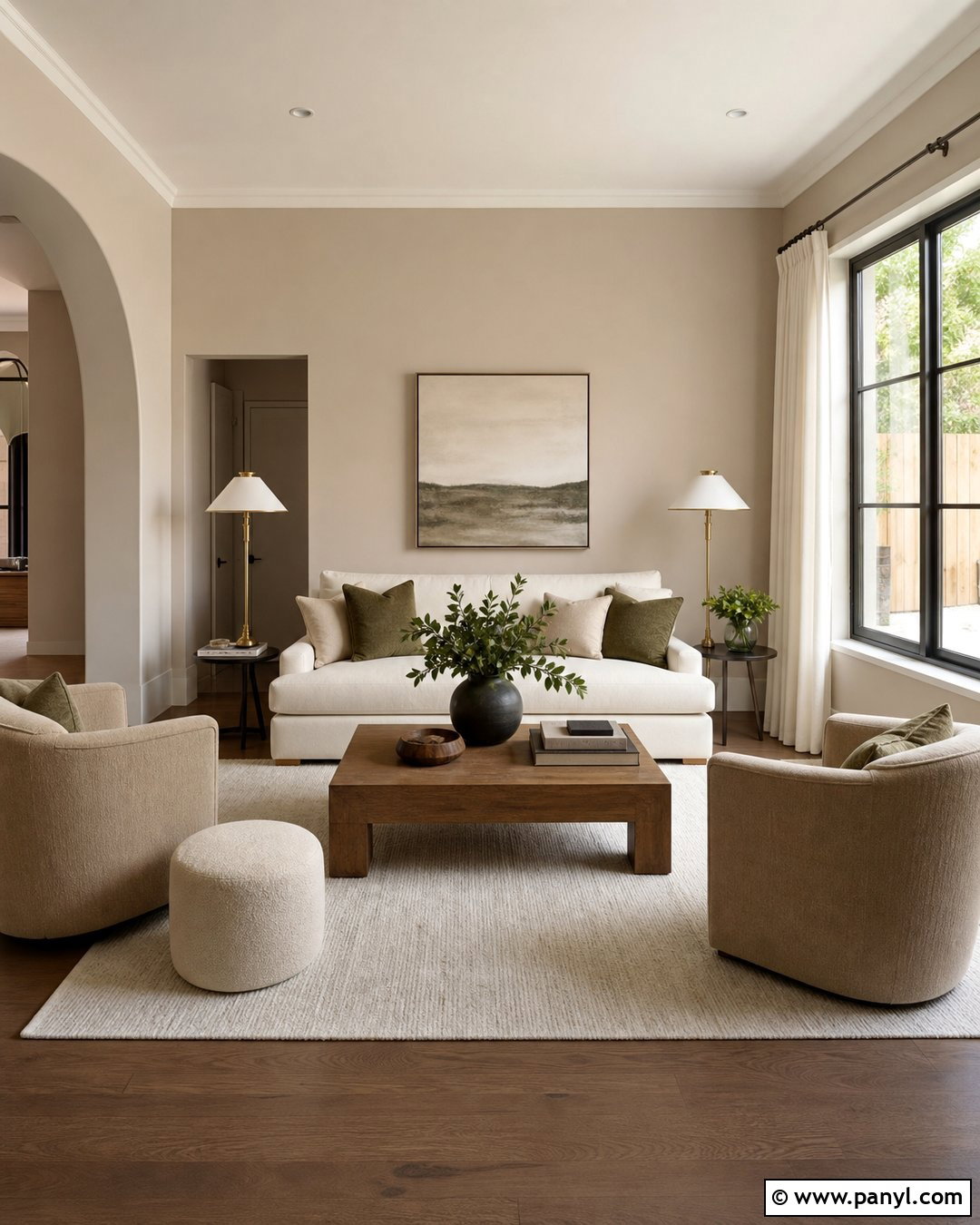
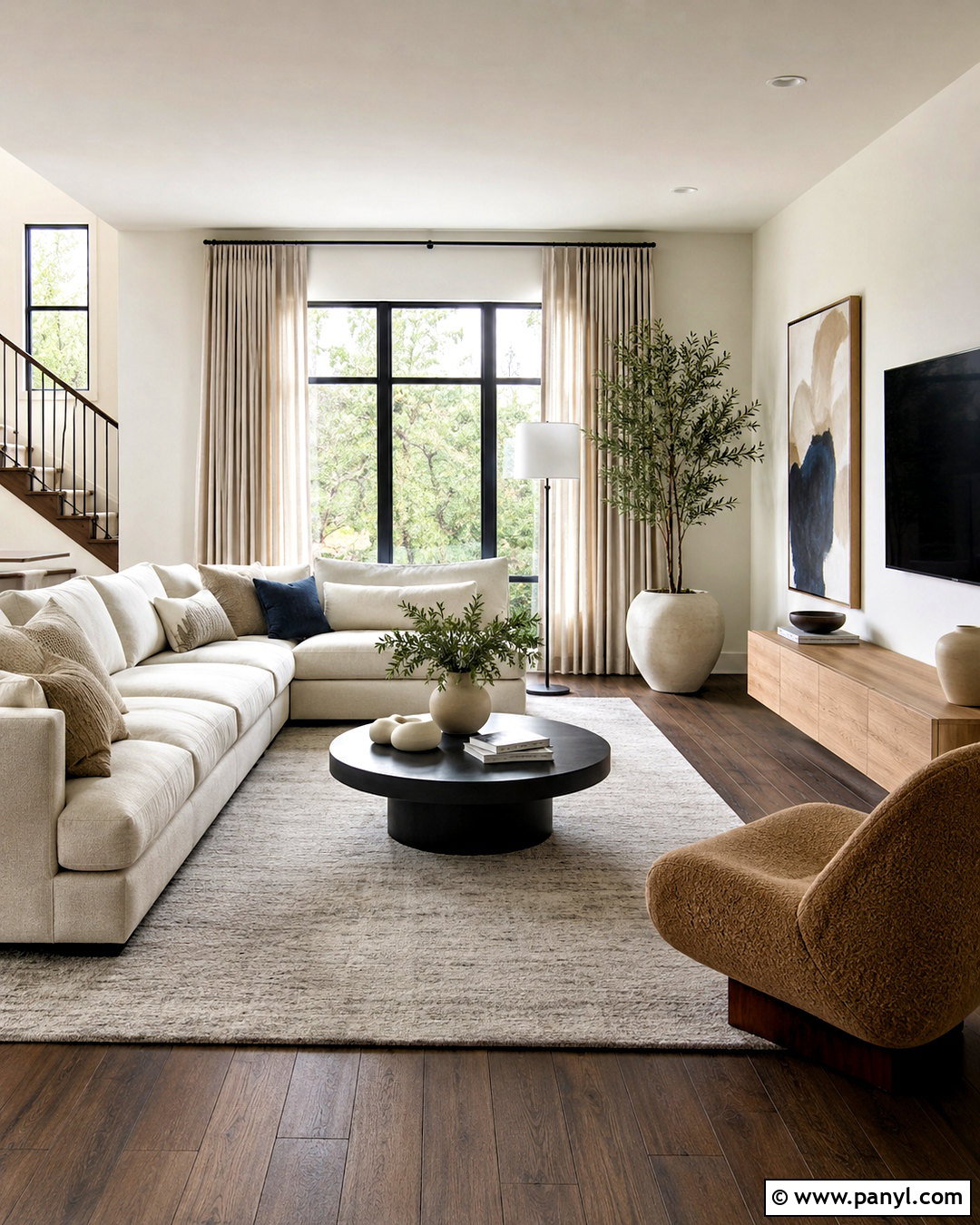
Creamy white walls give pale oak furniture a soft, welcoming background without making the room look cold. Build this living room around an oak coffee table, low media console, and open shelving with clean, simple lines. Add an oatmeal sofa, ivory curtains, and a textured beige rug to continue the gentle palette. Small black accents, such as lamp bases and picture frames, provide definition. Choose warm white trim rather than a sharp blue-white, which may clash with the oak’s golden undertone. Woven baskets, stoneware, and leafy plants introduce natural texture. This combination works especially well in compact rooms because the light walls keep the space open while allowing the wood grain to remain the most noticeable decorative feature.
2. Warm Beige Walls With Walnut Furniture
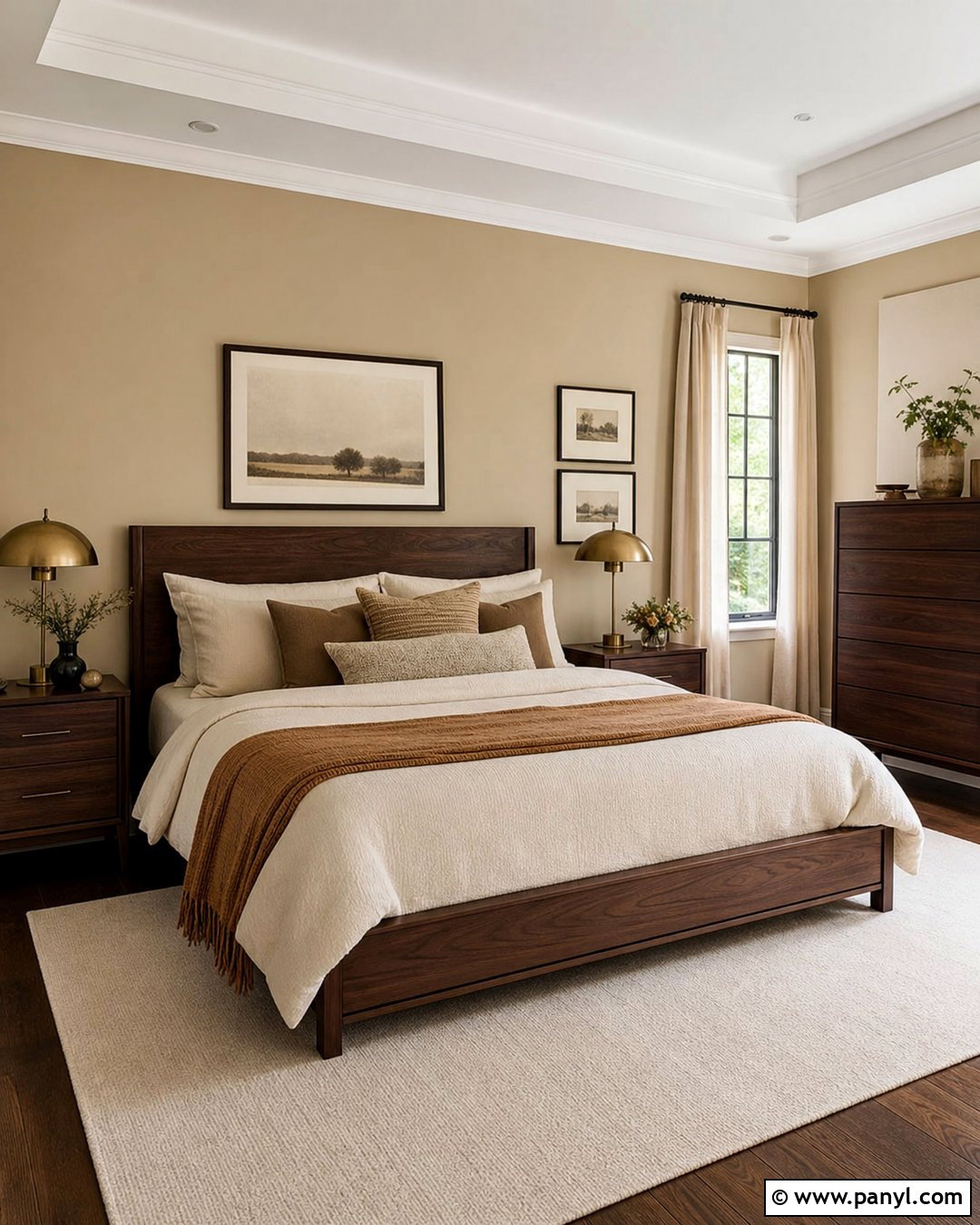
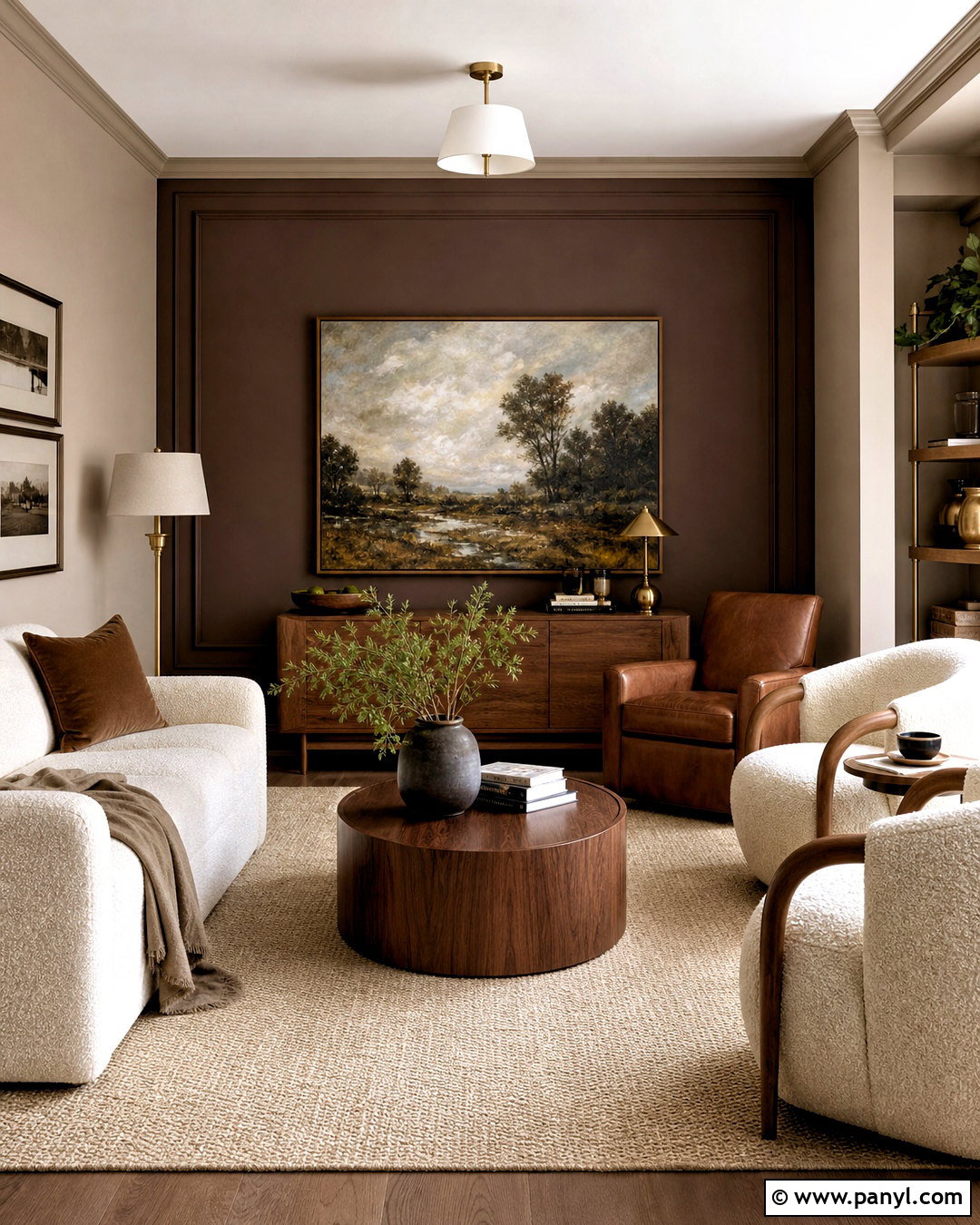
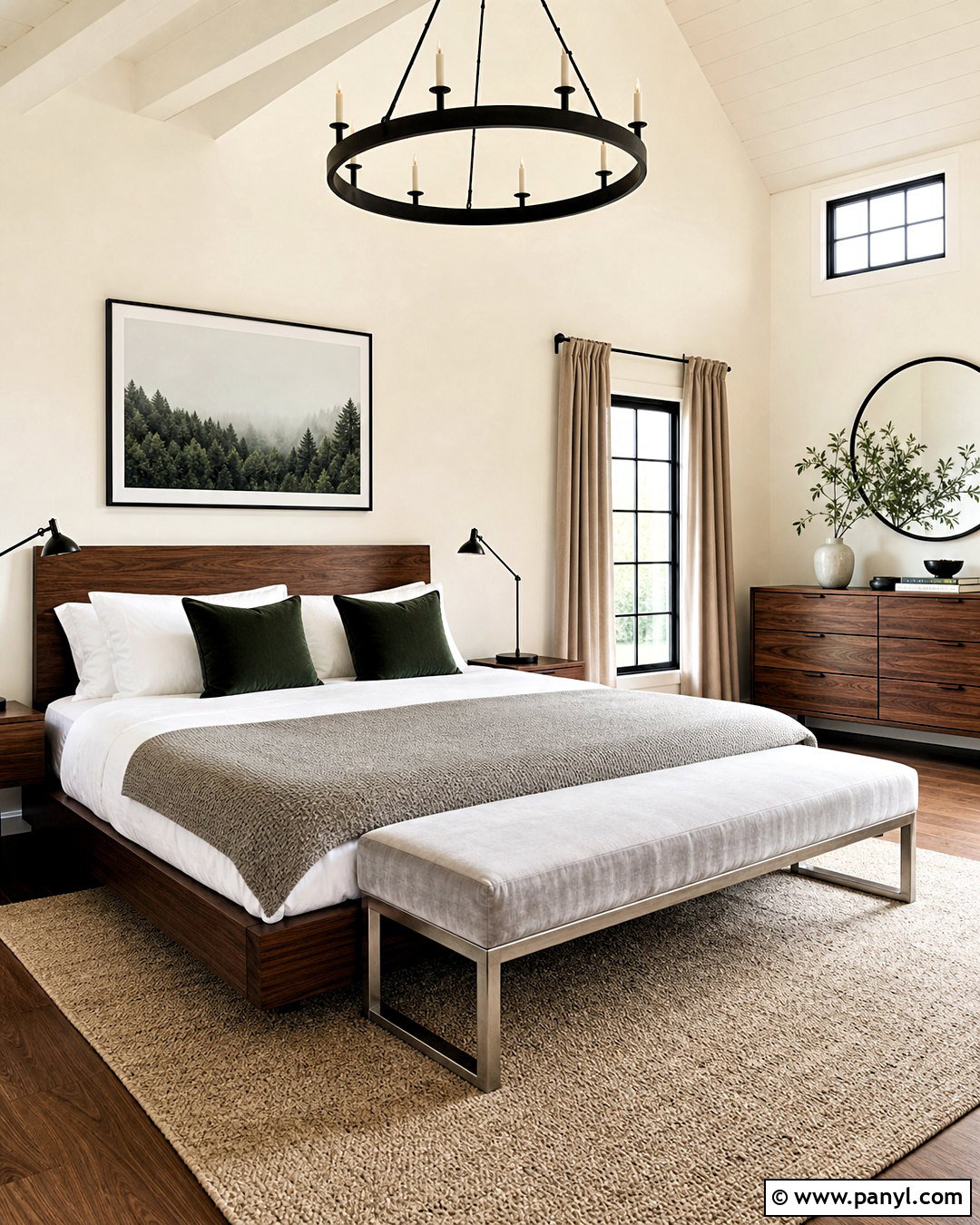
Warm beige walls create a comfortable setting for dark walnut furniture while softening its strong visual weight. Try this pairing in a bedroom with a walnut platform bed, matching nightstands, and a streamlined dresser. Use cream bedding, taupe pillows, and a caramel throw to connect the wall color with the wood. An ivory rug will brighten the floor and prevent the room from feeling too brown. Add aged brass lamps and simple linen curtains for understated warmth. The beige should have a subtle tan or yellow undertone rather than a pink cast. Finish the room with black-framed artwork and one large plant. The resulting scheme feels polished and restful, with enough contrast to show off the walnut’s deep color and distinctive grain.
3. Greige Walls With Medium Wood Furniture
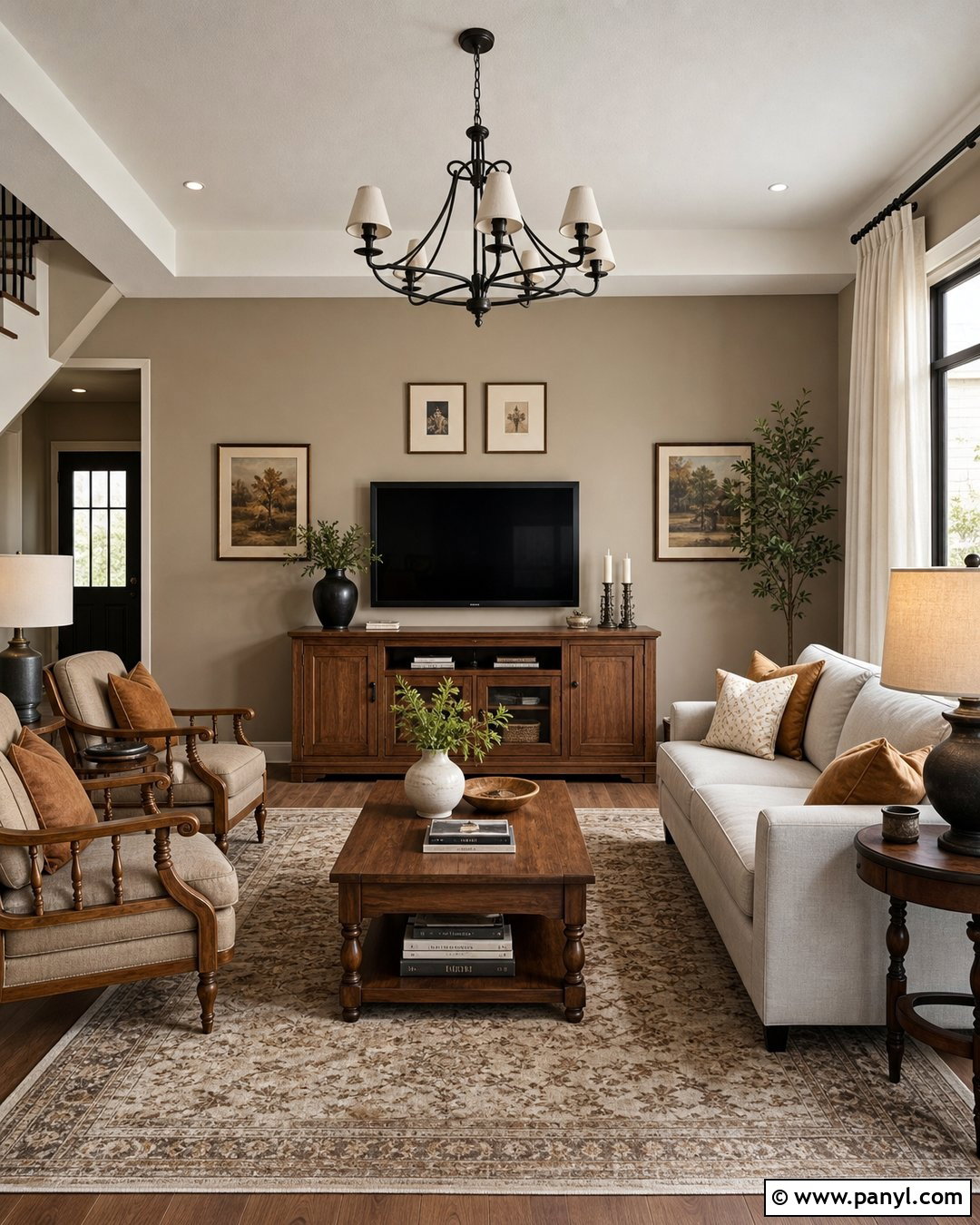
Can’t decide between gray and beige? Warm greige walls provide a flexible middle ground for medium-toned wooden furniture. Create a balanced family room with a chestnut media unit, rectangular coffee table, and wood-framed accent chairs. A light gray sofa keeps the look current, while camel cushions and a cream-and-brown rug repeat the furniture’s warmth. Choose greige with a noticeable beige undertone so the walls do not appear icy beside the wood. Matte black lighting and hardware can sharpen the softer colors. Add off-white curtains, neutral ceramics, and restrained greenery to complete the room. This versatile palette suits transitional interiors because it combines traditional wood finishes with clean upholstery, uncluttered surfaces, and a calm neutral background that is easy to update.
4. Taupe Walls With Dark Wood Furniture
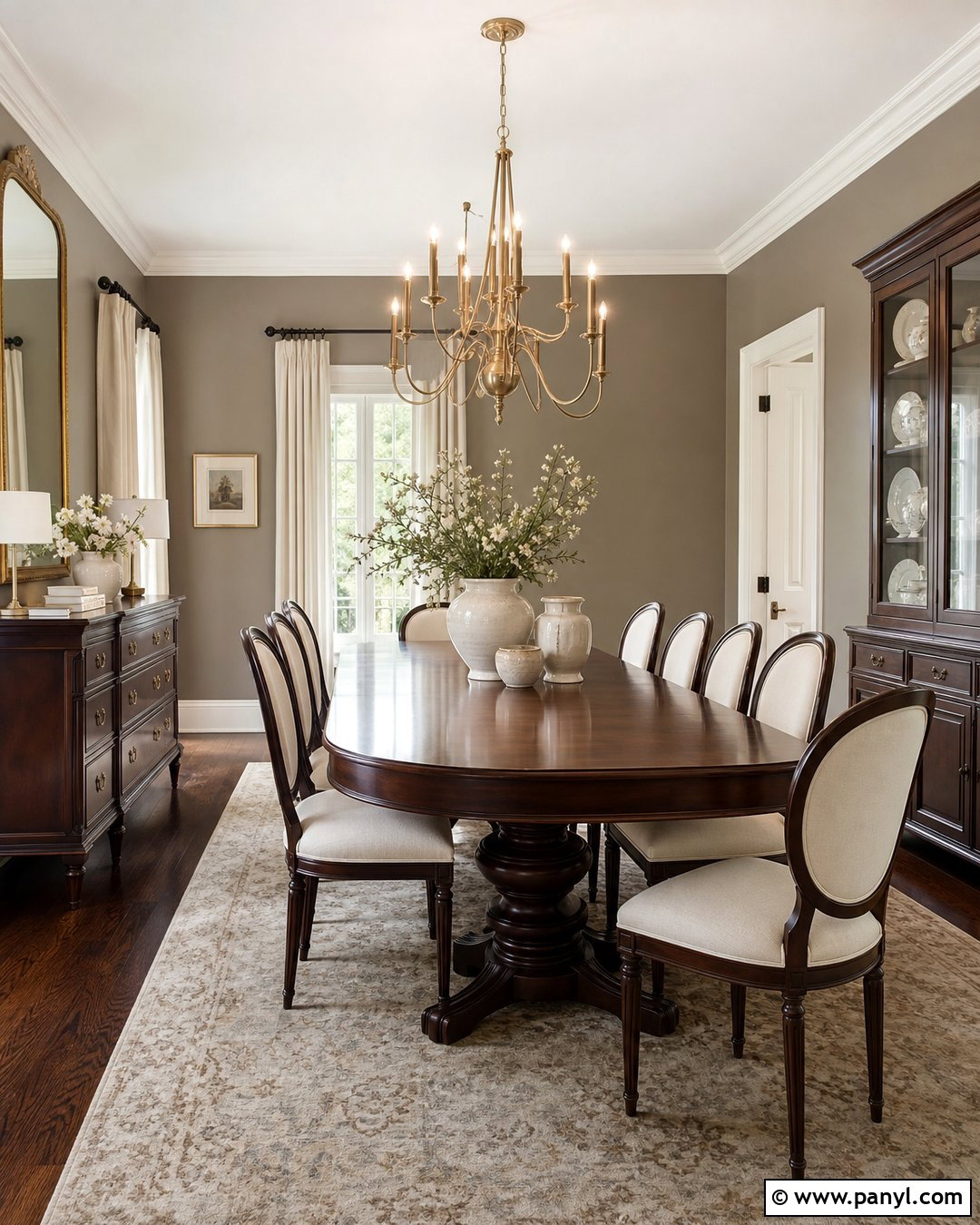
Taupe walls can make dark wooden furniture feel elegant rather than heavy. Use this sophisticated combination in a dining room with a dark mahogany table, curved dining chairs, and a matching sideboard. Upholster the chairs in warm ivory or oatmeal fabric to break up the wood. Hang a brushed brass chandelier above the table and use full-length cream curtains to brighten the edges of the room. A muted patterned rug containing taupe, tan, and charcoal will visually connect the walls and furniture. Keep the ceiling and trim soft white for contrast. Decorate the sideboard with pale ceramics, a large mirror, and minimal greenery. This complete look is formal enough for entertaining but still comfortable for everyday meals and casual family gatherings.
5. Sage Green Walls With Pine Furniture
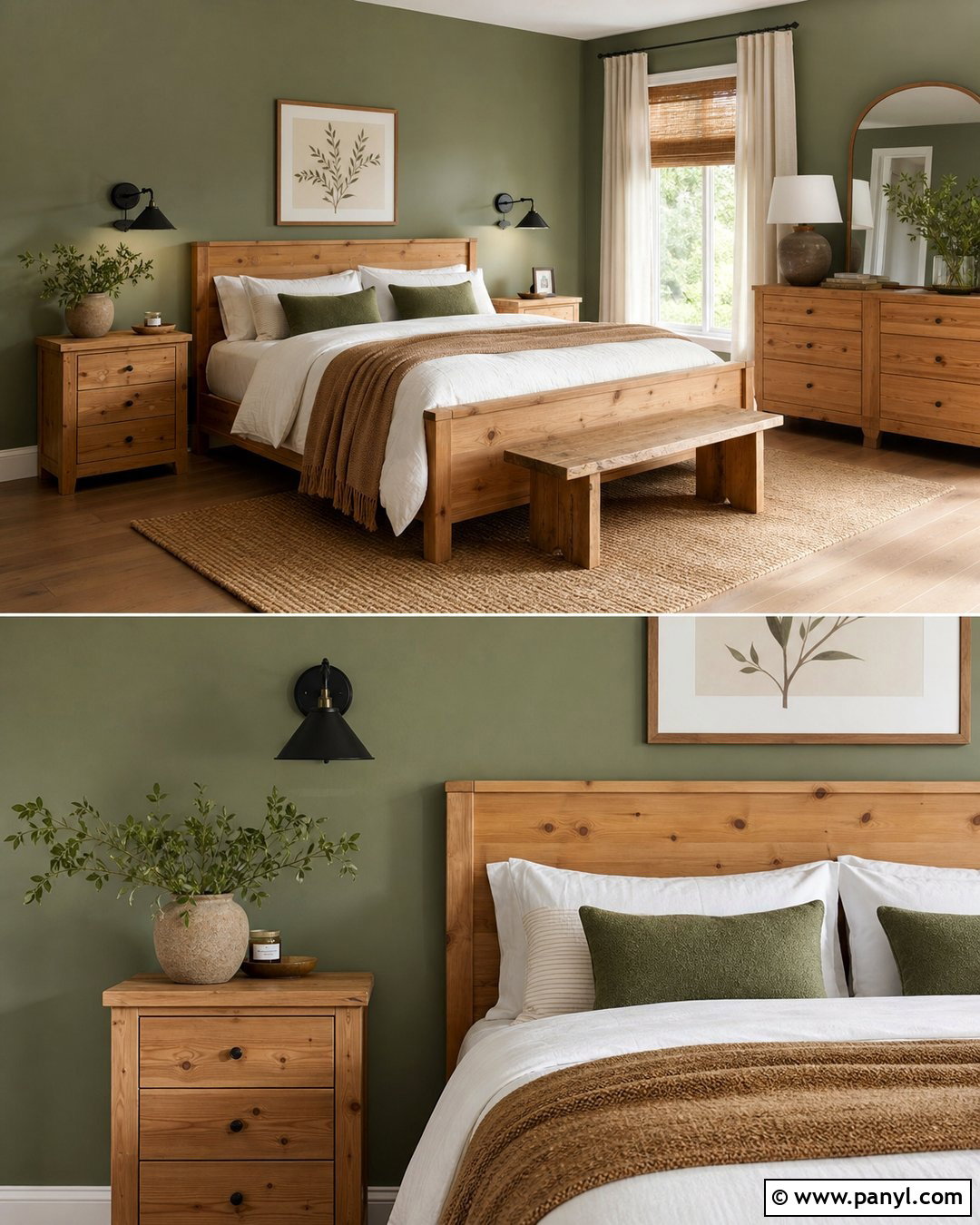
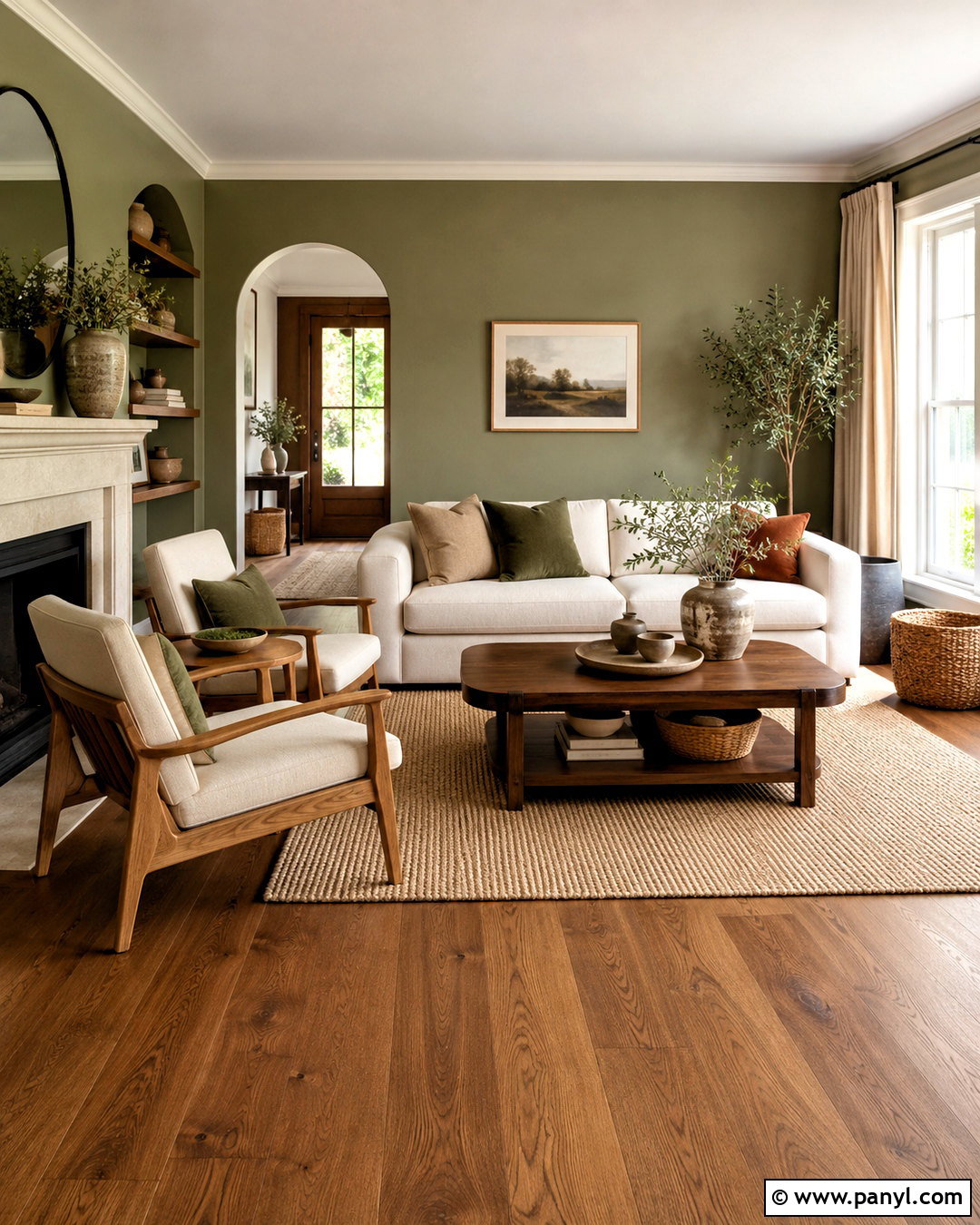
Sage green walls calm the yellow and orange notes often found in pine furniture. For a relaxed bedroom, combine a simple pine bed with matching bedside tables and a narrow wooden bench. Dress the bed in white linen, moss green cushions, and a light tan blanket. Natural woven shades and cream curtains will filter daylight without hiding the green walls. Use black reading sconces to add a modern edge and prevent the room from looking overly rustic. A jute or wool rug provides warmth underfoot, while botanical artwork reinforces the nature-inspired palette. Select a muted sage with gray undertones instead of a bright green. The finished room feels fresh, grounded, and comfortable, with each natural material contributing to one coherent design.
6. Olive Green Walls With Walnut Furniture
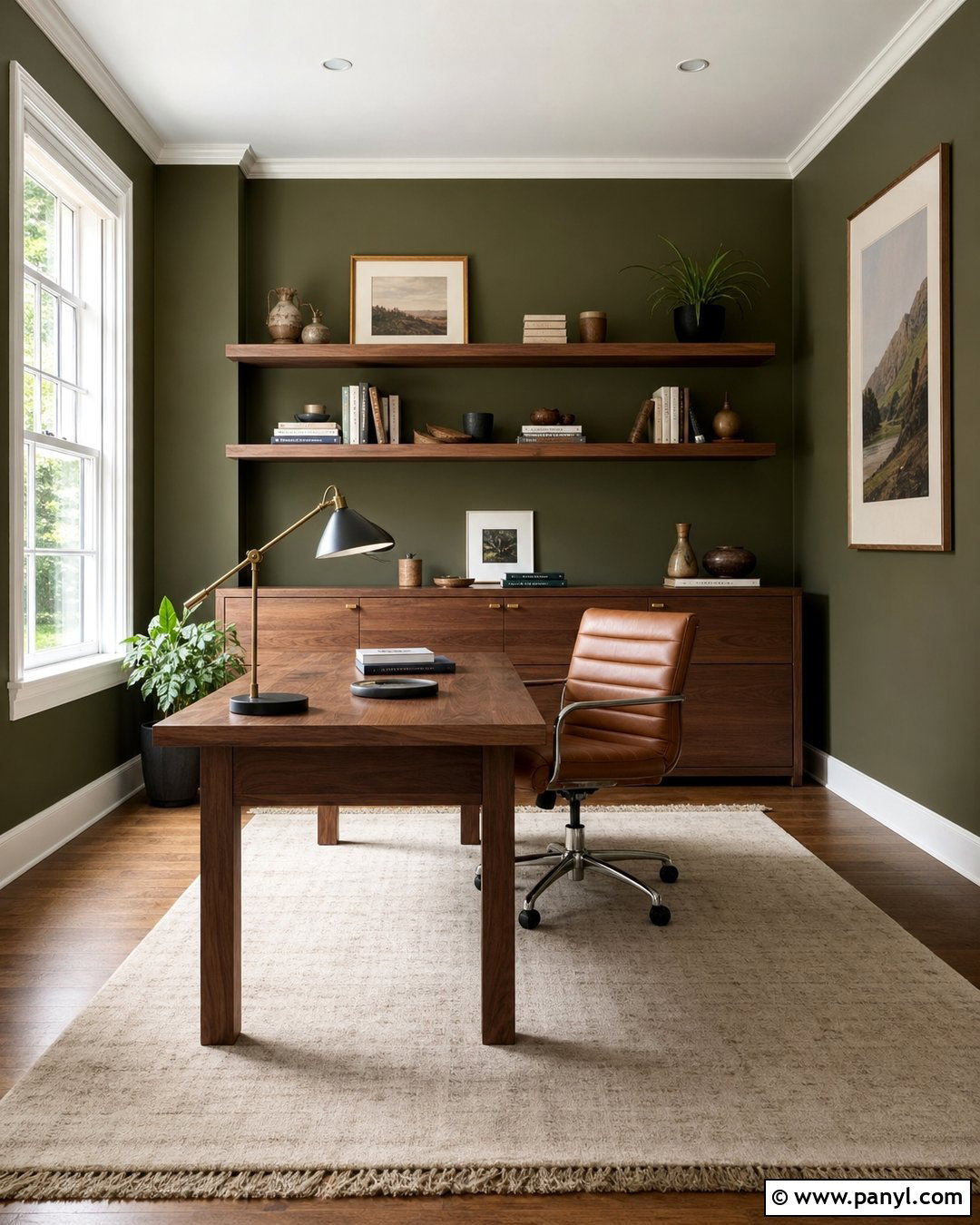
Deep olive walls provide a rich, earthy backdrop for walnut furniture and work beautifully in a cozy home office. Place a substantial walnut desk against the green wall, then add matching floating shelves and a low storage cabinet. A tan leather desk chair introduces another warm material without competing with the wood grain. Use a cream rug and off-white ceiling to keep the space from becoming too dark. Brushed brass hardware and a focused desk lamp add subtle brightness. Display books, pottery, and framed art in restrained colors rather than filling every shelf. Olive and walnut both have natural depth, so the room feels collected and purposeful. Good task lighting and uncluttered surfaces ensure this dramatic palette remains practical for daily work.
7. Forest Green Walls With Light Oak Furniture
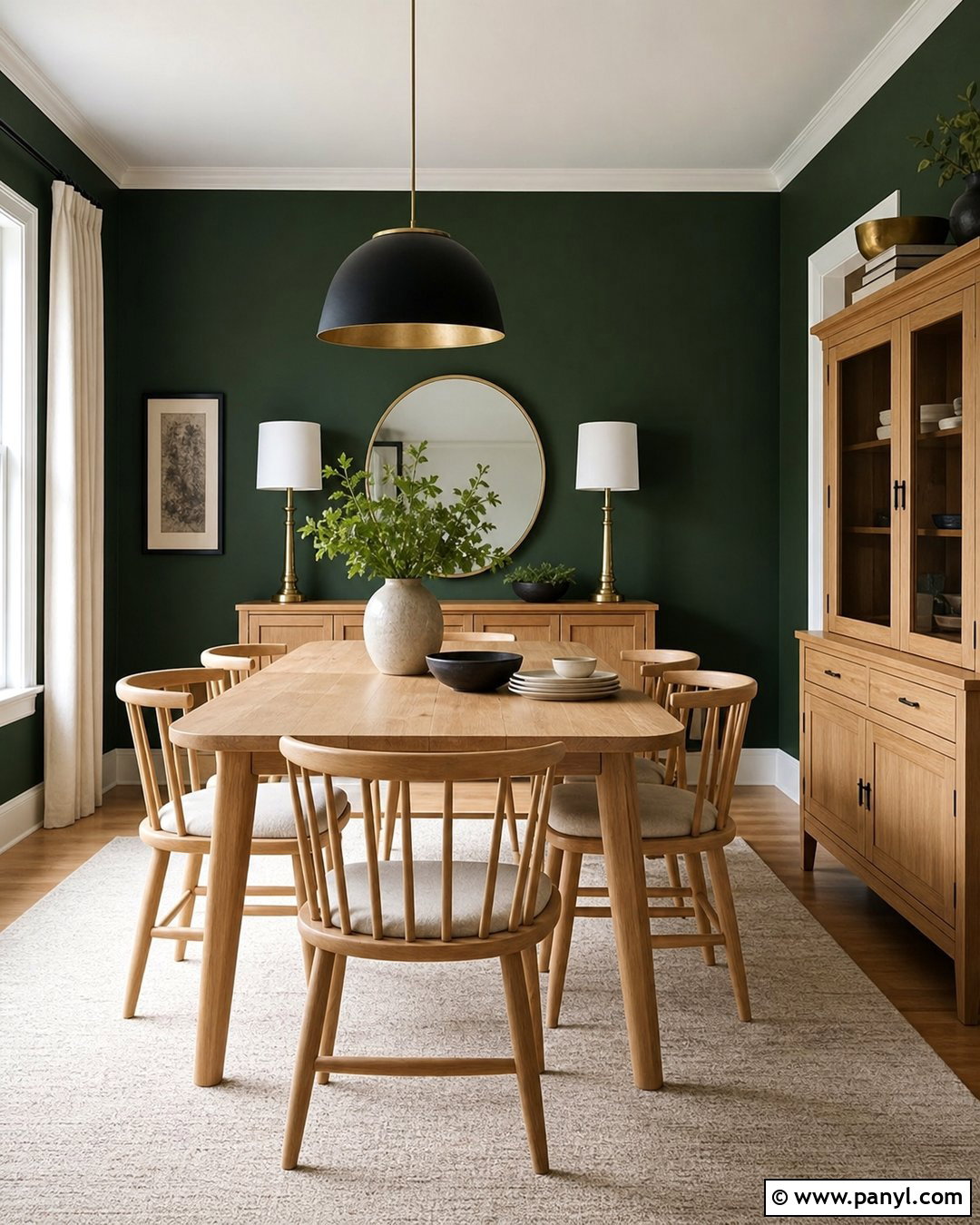
Forest green walls and light oak furniture create a bold contrast that still feels connected to nature. Use this pairing in a dining space with a pale oak table, spindle-back chairs, and a simple oak cabinet. Keep the ceiling, trim, and curtains warm white to frame the saturated walls. A light wool rug will define the dining area and prevent the darker color from overwhelming the room. Add a contemporary black pendant, neutral tableware, and a few brass accessories for controlled contrast. Cream chair cushions can make the setting more comfortable and visually lighter. This scheme works best in a room with generous daylight. The pale wood stands out clearly against the green, giving traditional furniture a fresher and more contemporary appearance.
8. Dusty Blue Walls With Cherry Wood Furniture
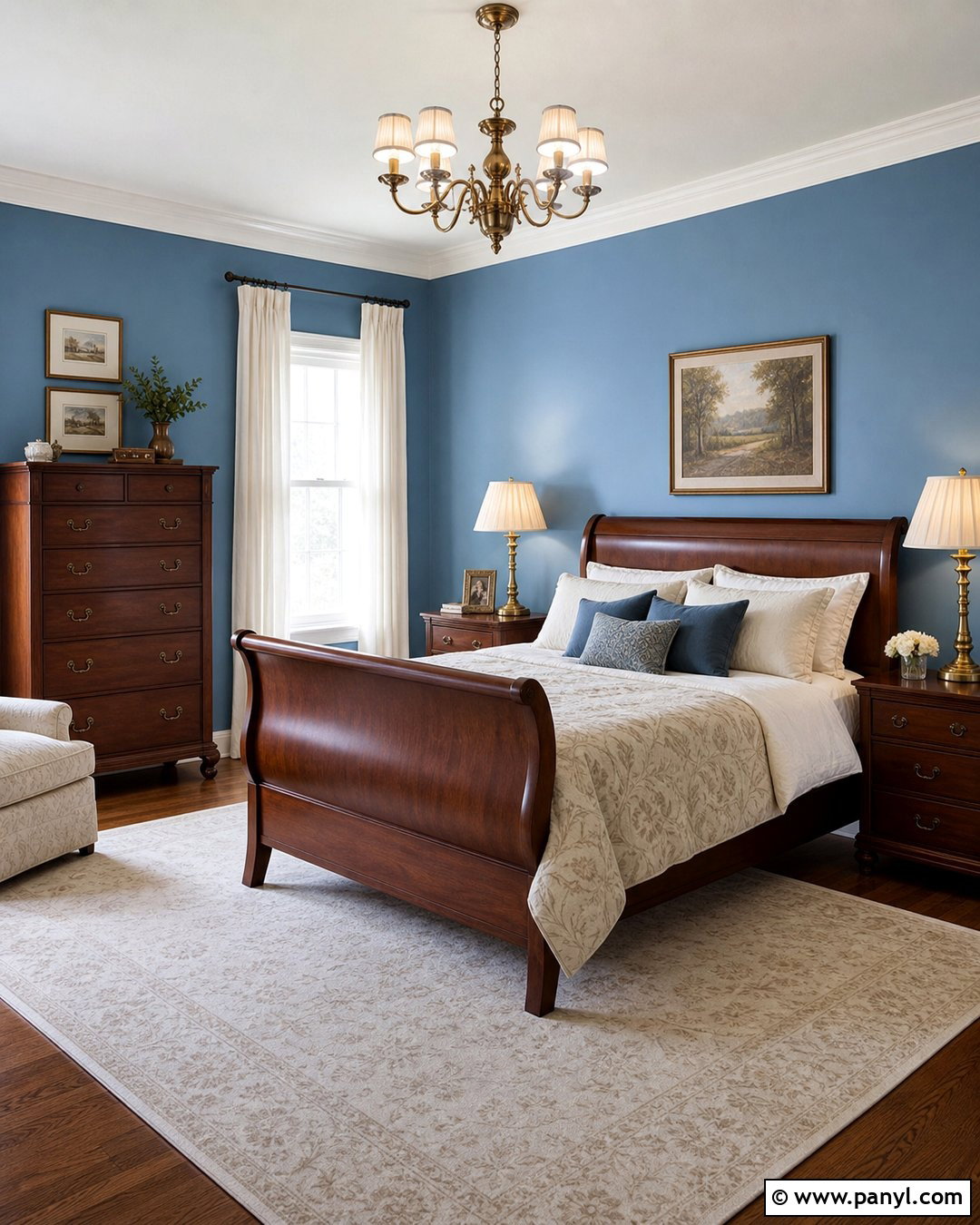
Dusty blue walls balance the reddish undertones of cherry wood and give the room a calm, refined character. Design a traditional bedroom with a cherry wood bed, tall dresser, and matching nightstands. Add ivory bedding, muted blue pillows, and a subtle patterned coverlet that includes small touches of rust or burgundy. Warm brass lamps complement the wood, while white curtains and a pale rug keep the overall design from becoming too formal. Choose a softened blue with gray undertones instead of a bright coastal shade. Hang simple landscape artwork above the bed and limit accessories to a few meaningful pieces. The cool wall color creates clear contrast, allowing the cherry furniture to look rich and intentional without dominating the complete bedroom scheme.
9. Navy Blue Walls With Honey Oak Furniture
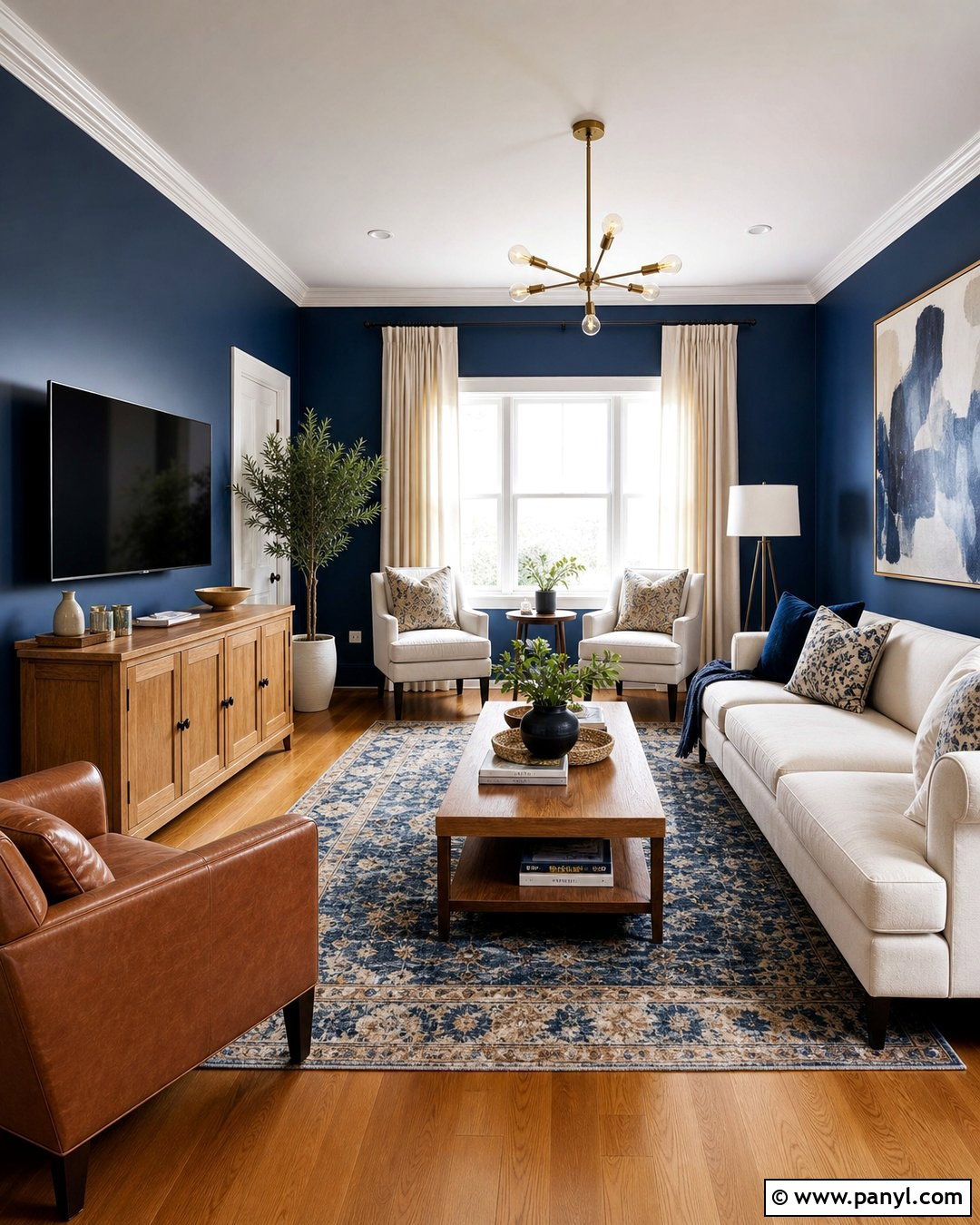
Navy blue walls can transform honey oak furniture into a strong modern feature. Build a dramatic living room around an oak media cabinet, matching side tables, and a warm wood coffee table. Use a cream sofa and pale curtains to offset the dark walls, then introduce cognac leather through one accent chair. A large rug with navy, ivory, and tan details will unify the palette. Choose warm white for the ceiling and trim so the architecture remains crisp. Brass lighting adds a polished glow, while simple blue-and-white artwork prevents the walls from appearing empty. The honey-colored wood brings essential warmth to navy, and the lighter upholstery keeps the entire room balanced. This is a confident scheme that remains comfortable and highly livable.
10. Teal Walls With Mid-Century Wood Furniture
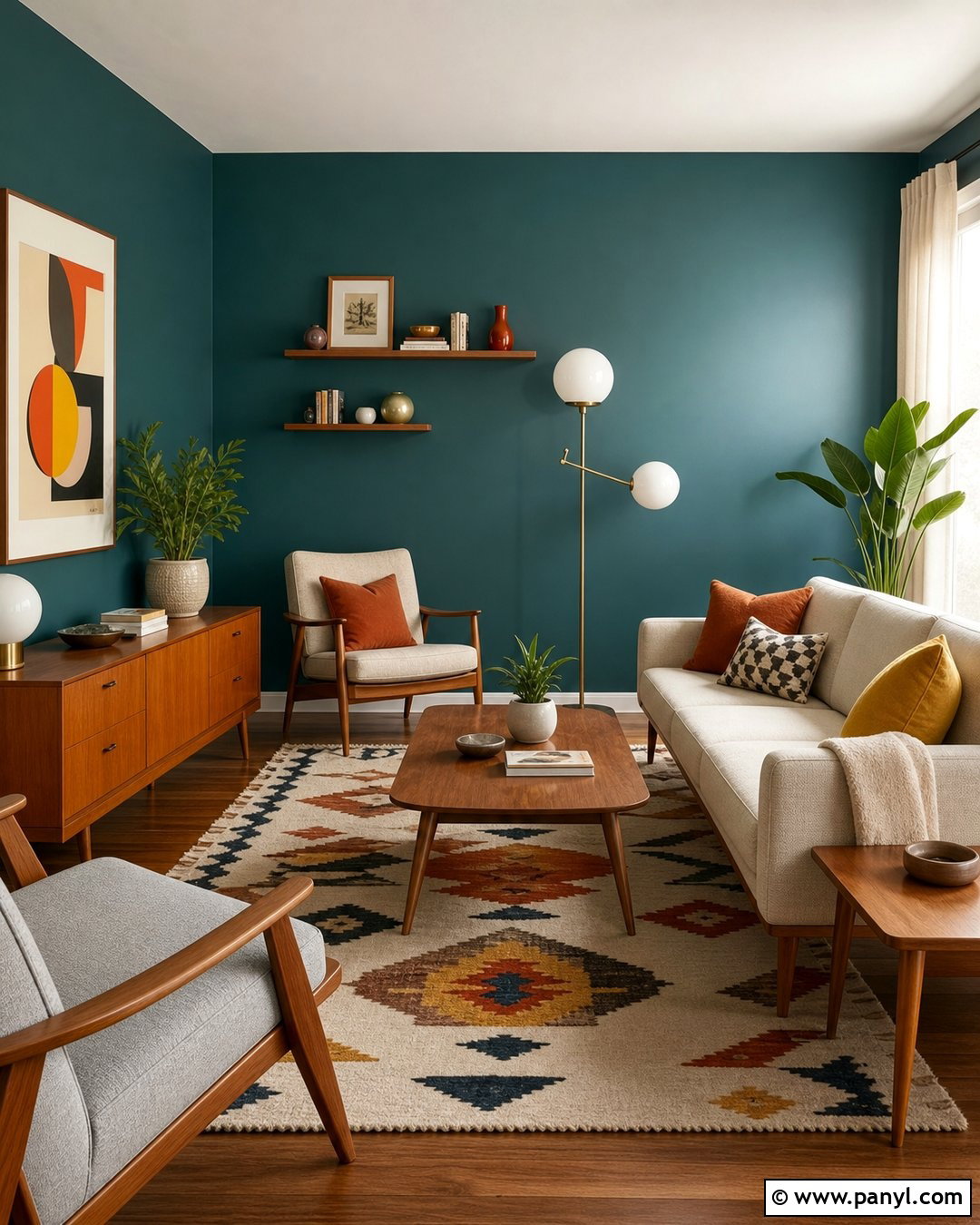
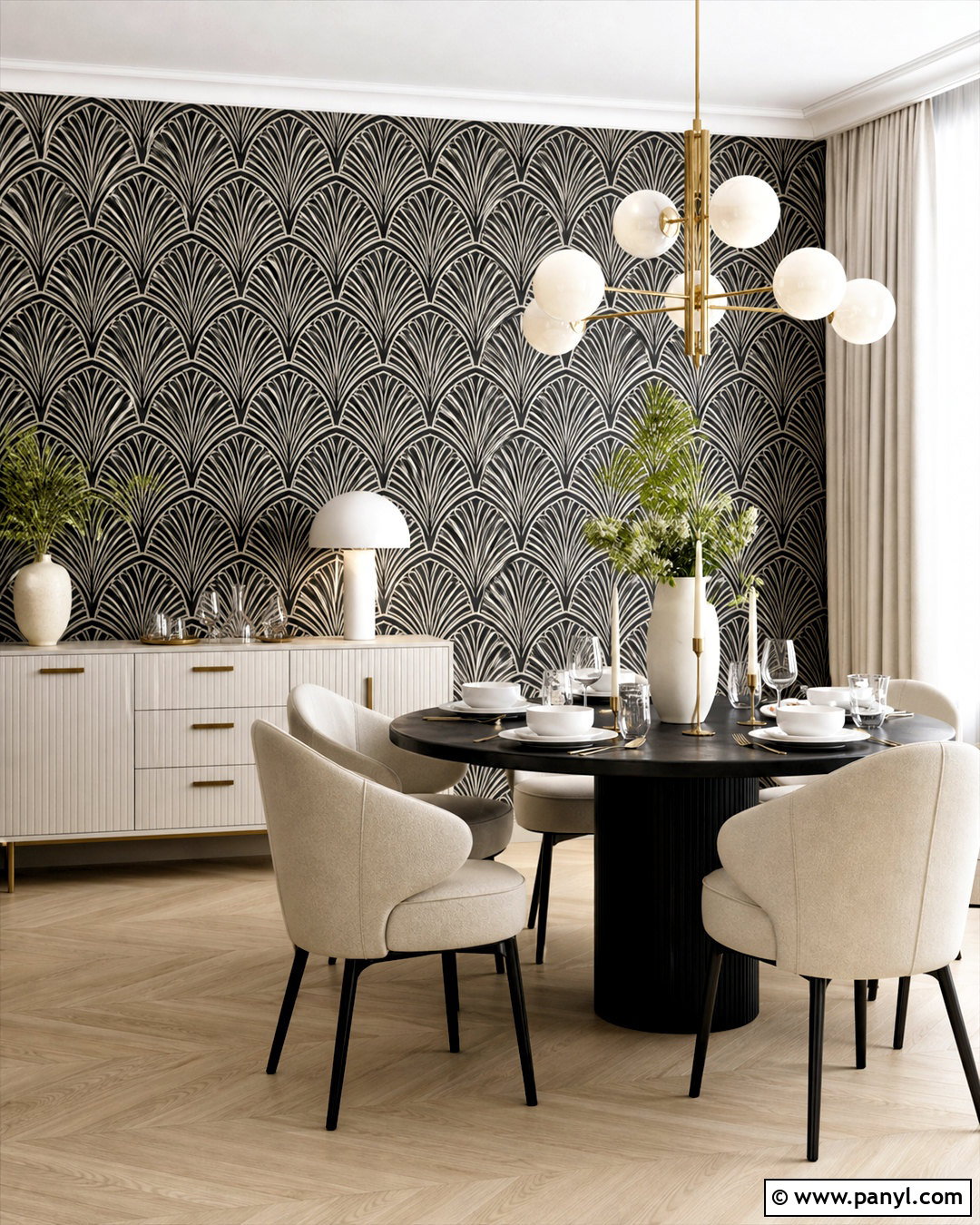
Rich teal walls provide an energetic background for mid-century furniture in warm teak or walnut. Arrange a living room with a low wooden credenza, tapered-leg coffee table, and slim wood-framed lounge chairs. Choose a light beige sofa to anchor the space without hiding the furniture’s distinctive shapes. Add rust, mustard, and cream cushions in small amounts, plus a geometric rug that repeats teal and tan. Globe lighting in opal glass supports the retro influence while keeping the room bright. Use simple off-white curtains and uncluttered artwork to prevent visual overload. Teal has enough depth to stand beside richly colored wood, yet it also brings a fresh contrast. The finished room feels expressive, organized, and comfortably modern rather than themed or dated.
11. Charcoal Walls With Pale Wood Furniture
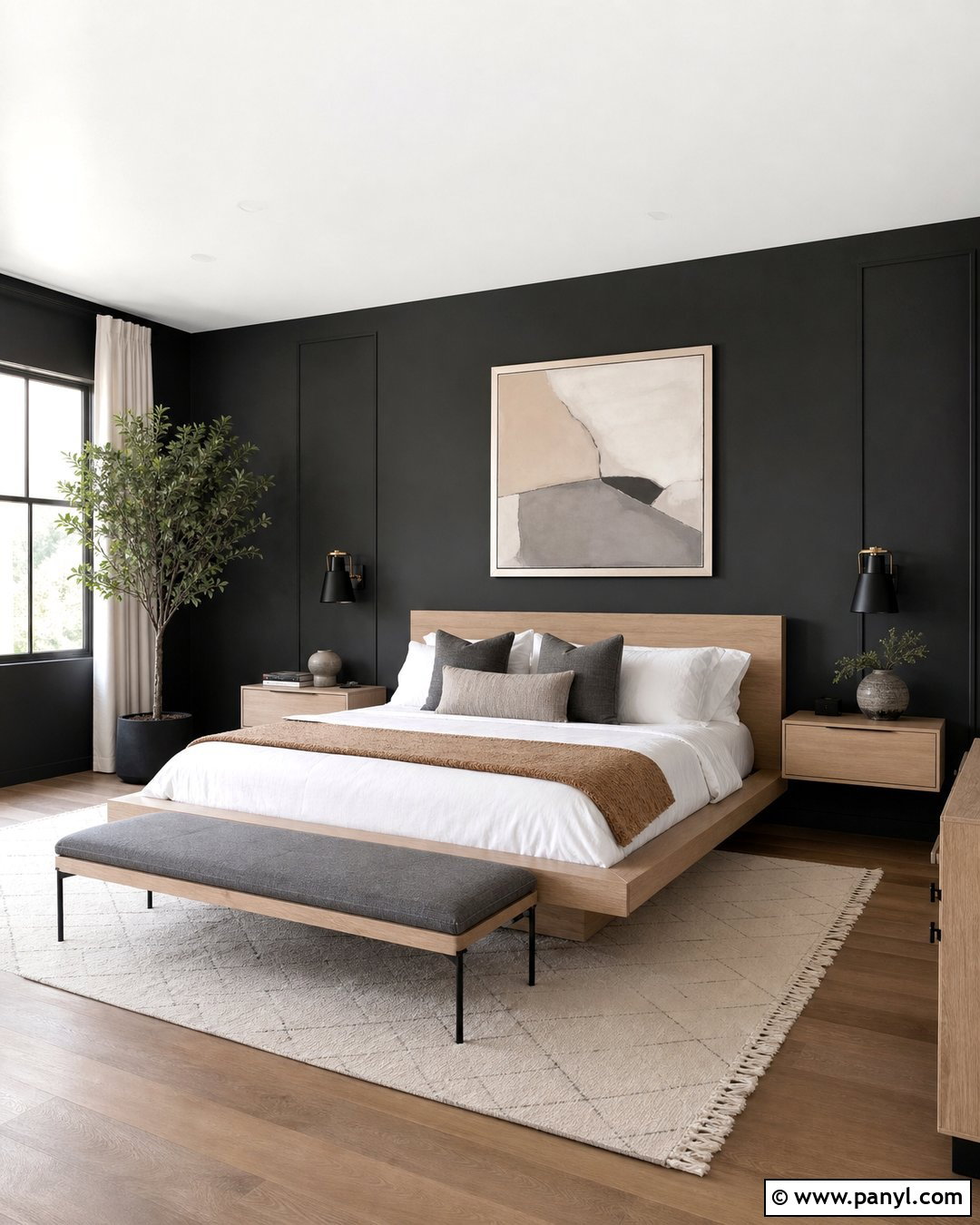
Charcoal walls make pale ash or oak furniture look crisp and sculptural. This contrast works well in a modern bedroom with a light wood platform bed, floating nightstands, and a slim bench. Use white bedding as the brightest element, then layer soft gray pillows and a camel throw for warmth. Keep the ceiling, baseboards, and window treatments white to prevent the walls from closing in. A large ivory rug will soften the dark backdrop and brighten the floor. Add matte black sconces, minimal abstract art, and one leafy plant. The furniture should have uncomplicated lines so its pale finish remains clearly visible. With balanced lighting and restrained accessories, charcoal creates a restful, contemporary room instead of a dark or severe environment.
12. Soft Gray Walls With Reddish Wood Furniture
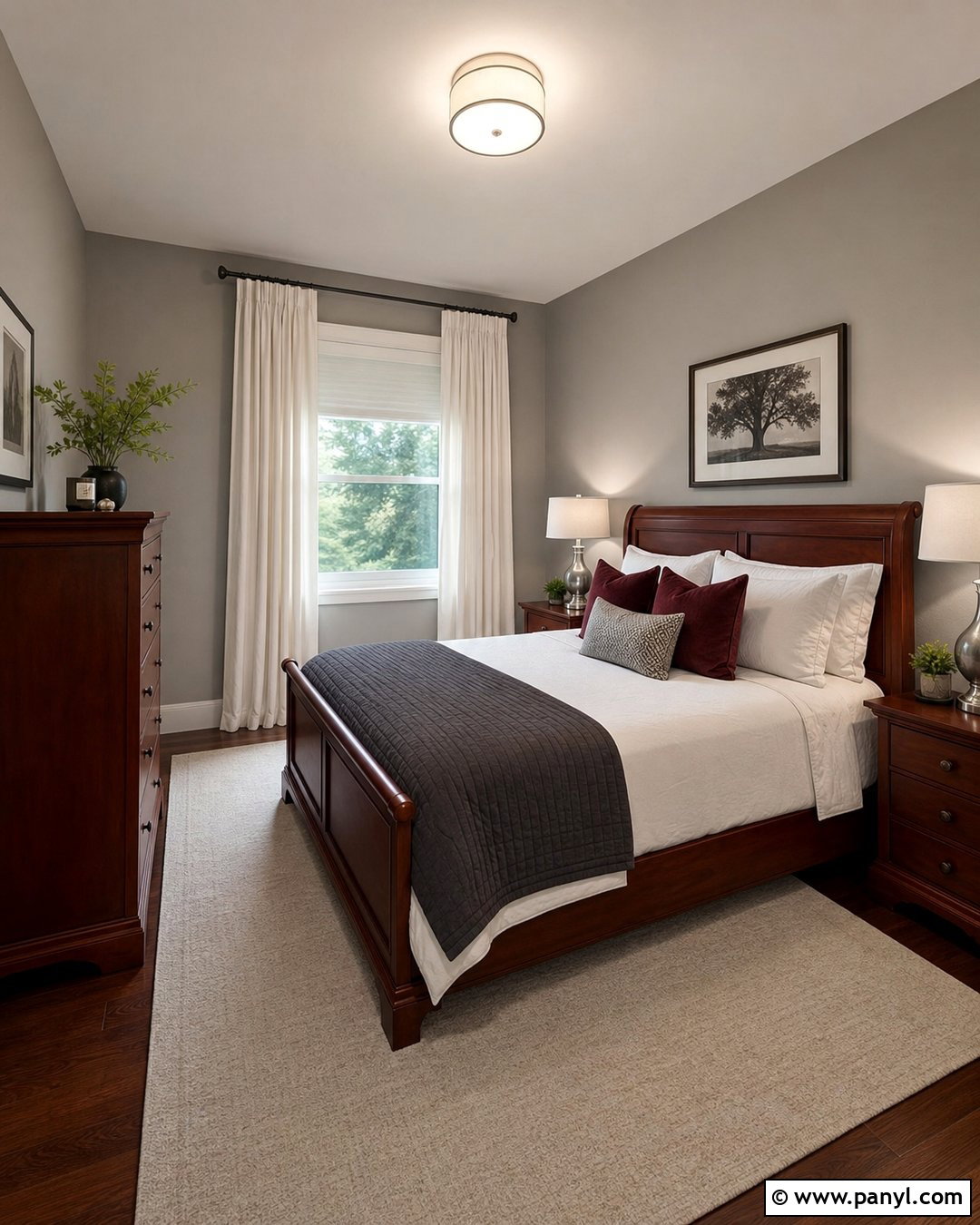
Soft warm gray can quiet the strong red tones in mahogany or cherry furniture. Create a polished guest room with a wooden bed, compact dresser, and two traditional nightstands. Select gray paint with a slight beige undertone, since a blue-gray may make red wood appear more orange. Layer the bed with crisp white linens, a charcoal coverlet, and muted burgundy accent pillows. Nickel or pewter lamps provide a cooler contrast, while an ivory rug keeps the floor light. Choose simple curtains in warm white and artwork that combines gray, cream, and faded red. This controlled palette allows ornate or traditional furniture to fit comfortably into a cleaner interior. The result feels updated, calm, and coordinated without concealing the wood’s character.
13. Blush Pink Walls With Light Wood Furniture
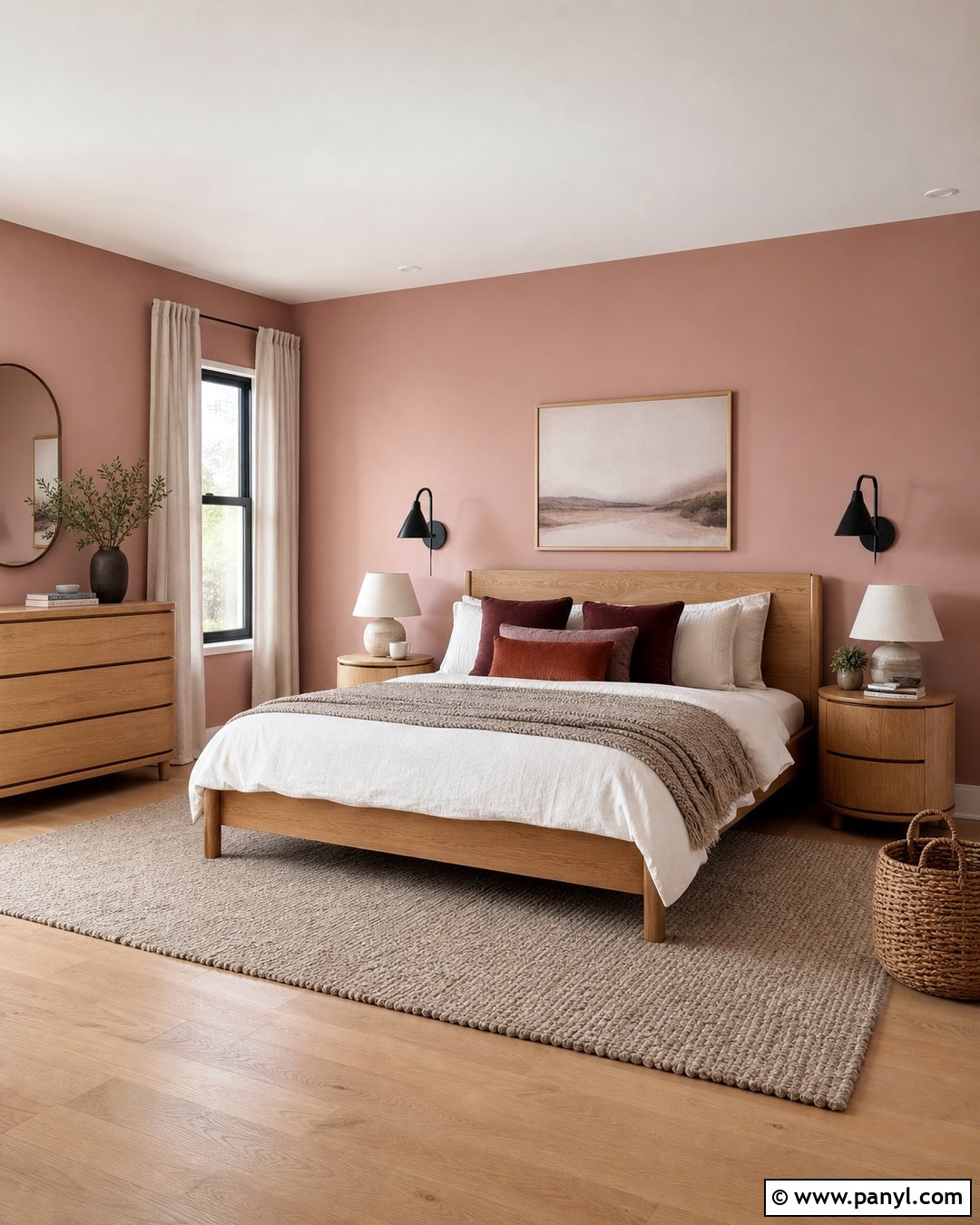
Soft blush walls bring warmth and personality to pale wooden furniture without making the room feel overly sweet. Use this combination in a bedroom with a light oak bed, rounded nightstands, and a simple wood dresser. Balance the pink with white bedding, oatmeal curtains, and a beige wool rug. Add rust, plum, or terracotta cushions for depth rather than relying on more pastel shades. Black sconces and dark picture frames introduce clean definition. Choose a dusty blush with beige undertones instead of a bright bubblegum pink. Natural linen, woven baskets, and ceramic lamps will keep the design relaxed. The finished bedroom feels warm and contemporary, with the light wood supporting the wall color while neutral textiles create a calm, grown-up foundation.
14. Terracotta Walls With Dark Walnut Furniture
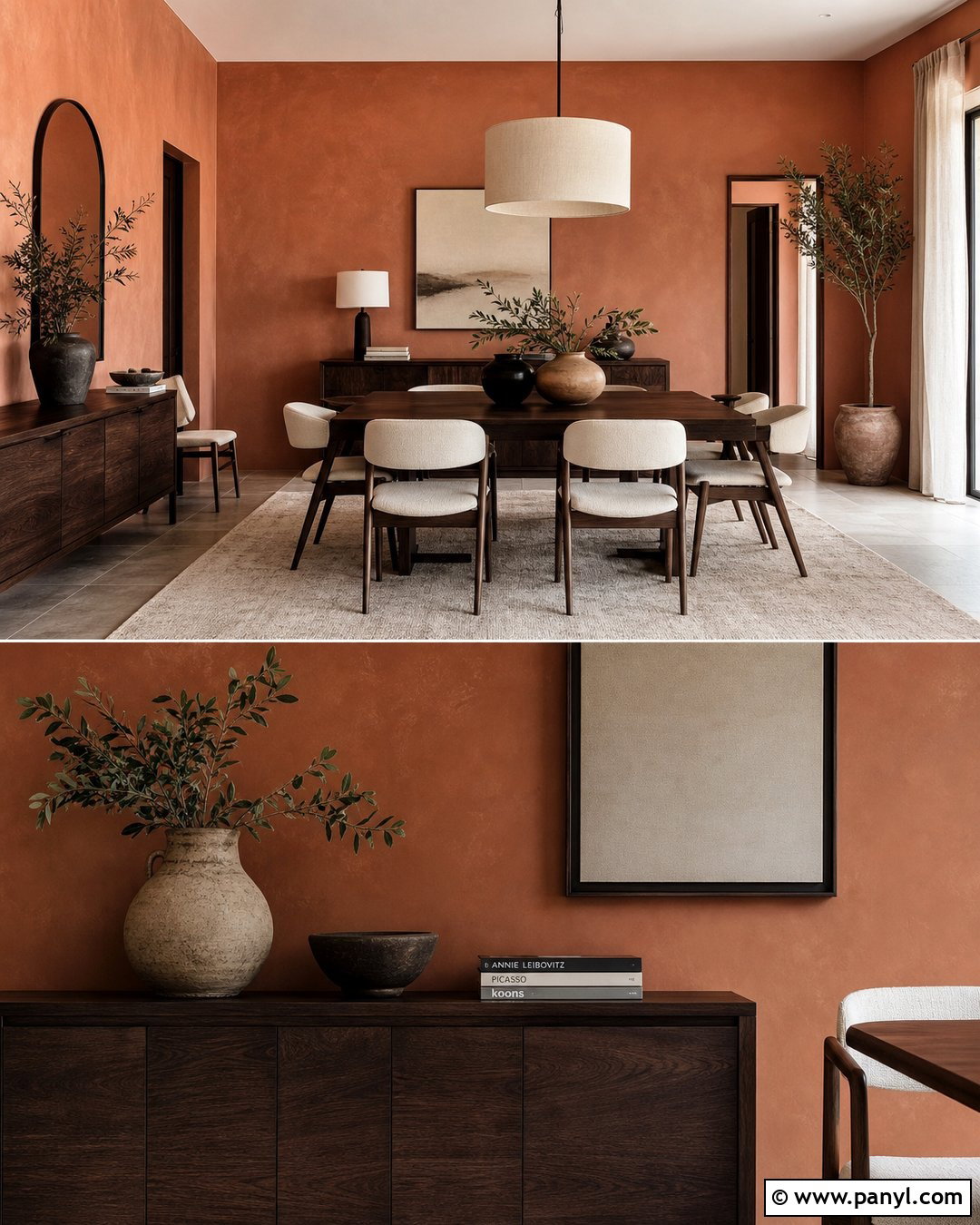
Terracotta walls wrap dark walnut furniture in warmth and create an inviting, earthy dining room. Pair a rectangular walnut table with upholstered cream chairs and a matching wooden sideboard. Use the terracotta on every wall for an immersive look, but keep the ceiling and trim a warm white. A faded beige rug will separate the dark table from the floor. Add a linen pendant, handmade ceramics, and muted green foliage to soften the red-orange palette. Black metal accents can provide structure without disrupting the natural atmosphere. Choose a clay-based terracotta rather than a highly saturated orange. This combination feels especially cohesive when the room includes tactile materials such as linen, wool, stone, and wood, creating a complete scheme with warmth and understated character.
15. Clay Walls With Rustic Wood Furniture
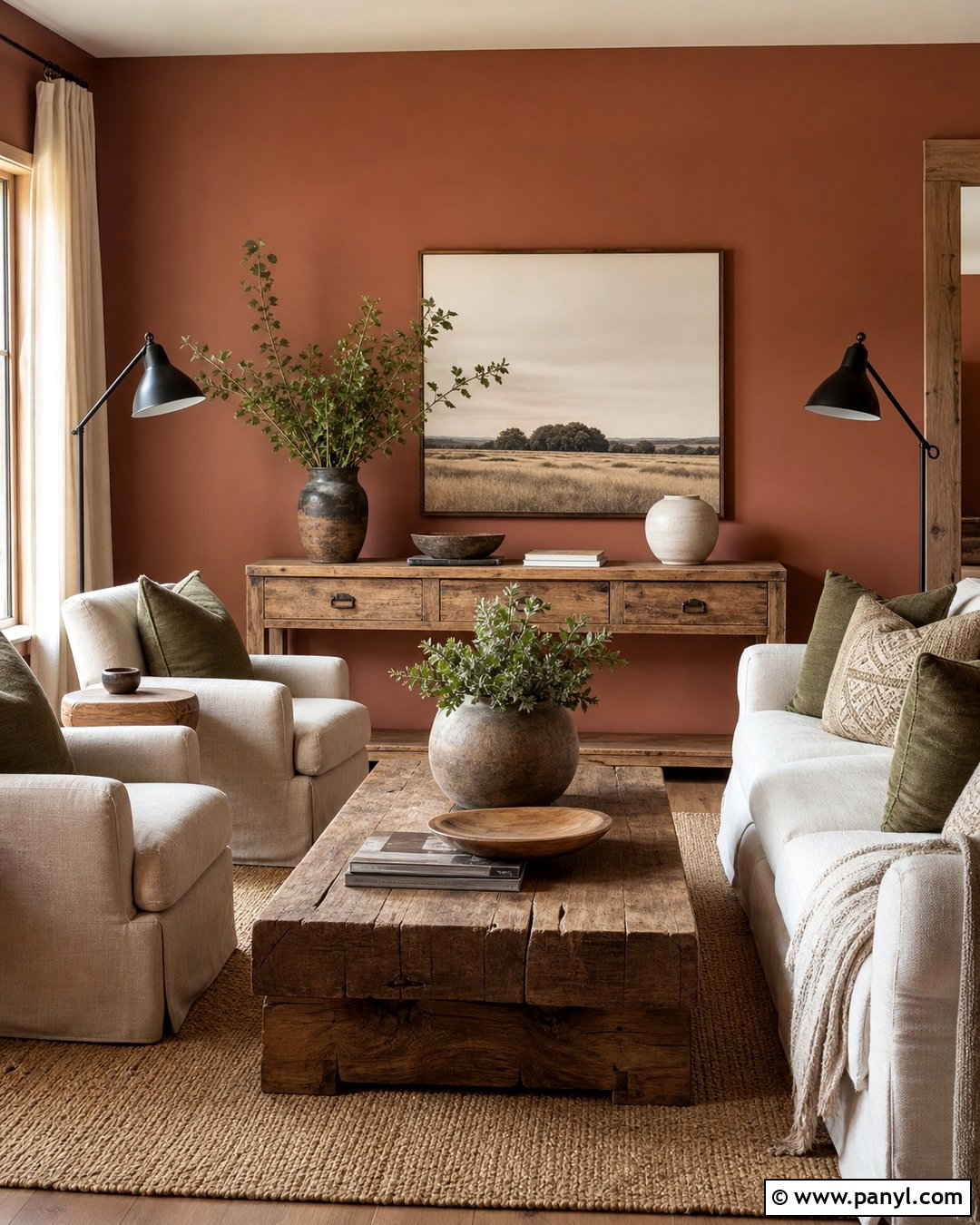
Muted clay walls suit rustic wood furniture because both finishes share natural, weathered warmth. Build a comfortable living room around a reclaimed wood coffee table, chunky console, and exposed-grain side tables. Choose a cream slipcovered sofa and oatmeal armchairs to lighten the heavier furniture. A woven rug in beige and faded brown will connect the seating area, while linen curtains maintain a relaxed look. Add matte black floor lamps, stoneware, and a few olive green cushions for contrast. The clay paint should lean toward soft brown or dusty rose rather than bright orange. Avoid filling the room with too many rustic objects. Clean upholstery and simple artwork will balance the rough wood, resulting in a casual interior that feels intentional instead of overly themed.
16. Mustard Yellow Walls With Dark Wood Furniture
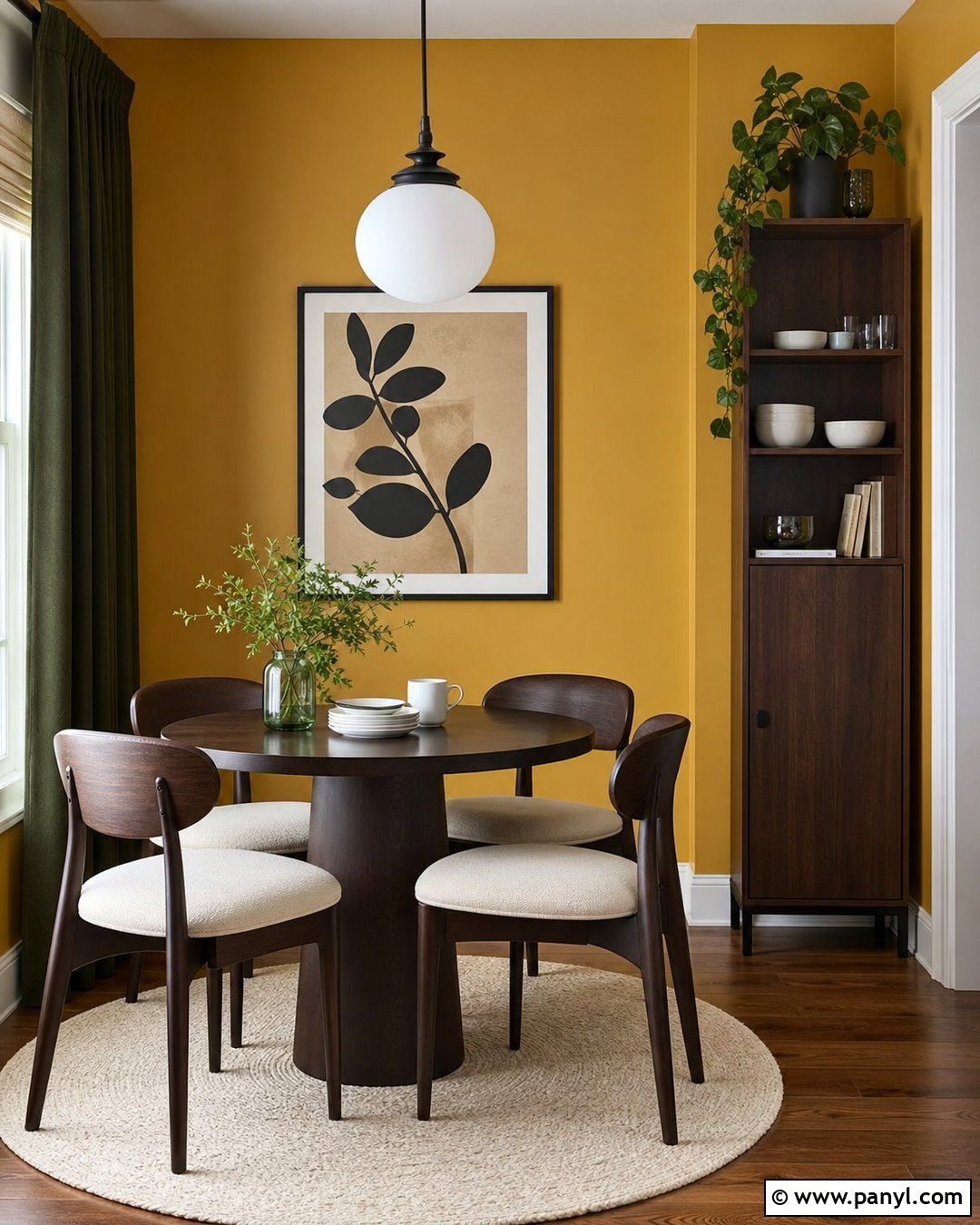
Mustard yellow walls can bring energy to dark wooden furniture while maintaining a warm, grounded atmosphere. Try this confident scheme in a compact dining nook with an espresso-stained round table, curved chairs, and a narrow wood cabinet. Use cream seat cushions and a light neutral rug to interrupt the darker surfaces. Add black-framed artwork, an opal glass pendant, and simple white tableware for a clean finish. Deep green curtains or a few green accessories can balance the yellow without introducing too many competing colors. Choose an earthy mustard with brown undertones, not a sharp lemon shade. The dark furniture gives the bright walls necessary weight, while the pale textiles and lighting create a cheerful room that remains practical and visually balanced.
17. Butter Yellow Walls With Oak Furniture
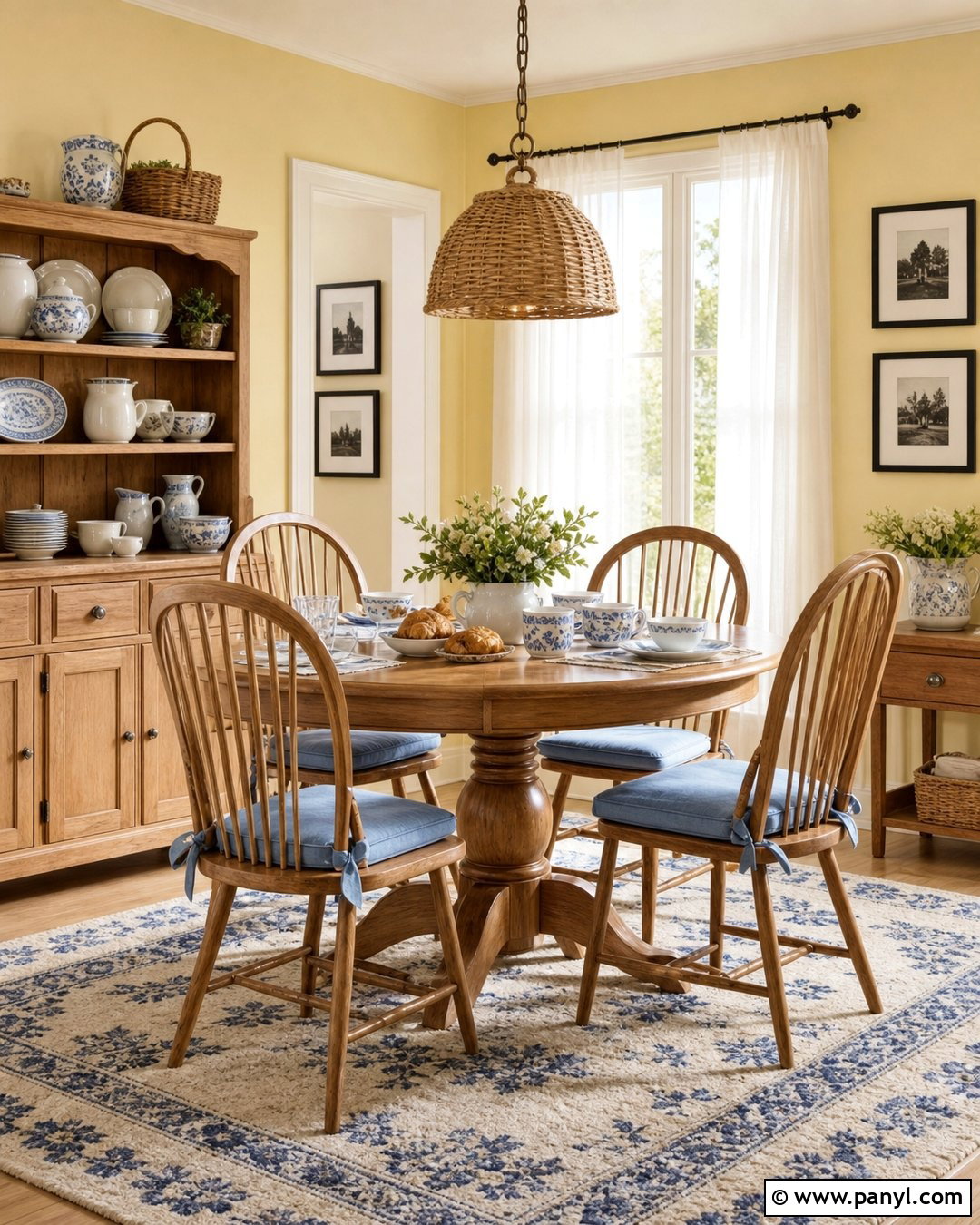
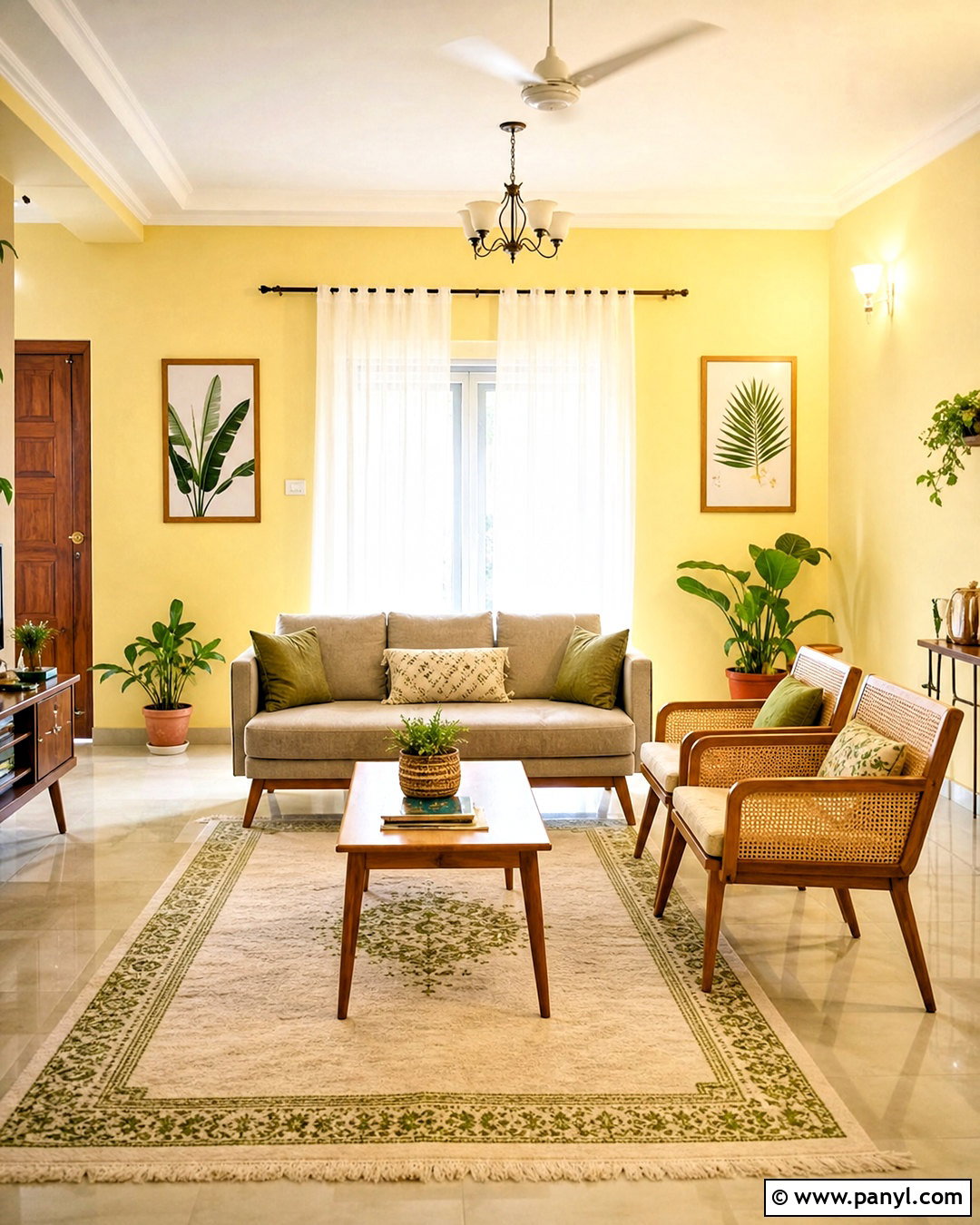
Butter yellow walls create a sunny, easygoing setting for golden oak furniture. Use this gentle palette in a breakfast room with an oak pedestal table, matching chairs, and a small wooden hutch. White trim and sheer curtains will keep the yellow fresh, while a cream-and-blue rug introduces quiet contrast. Add pale blue seat cushions, ceramic tableware, and a simple woven pendant to complete the relaxed design. Select a soft yellow with creamy undertones so it enhances the oak without making the entire room appear orange. Small black details, such as cabinet knobs or picture frames, can sharpen the lighter colors. The complete space feels cheerful even on cloudy days, yet the restrained palette keeps it comfortable enough for everyday breakfasts and informal meals.
18. Lavender Walls With Natural Wood Furniture
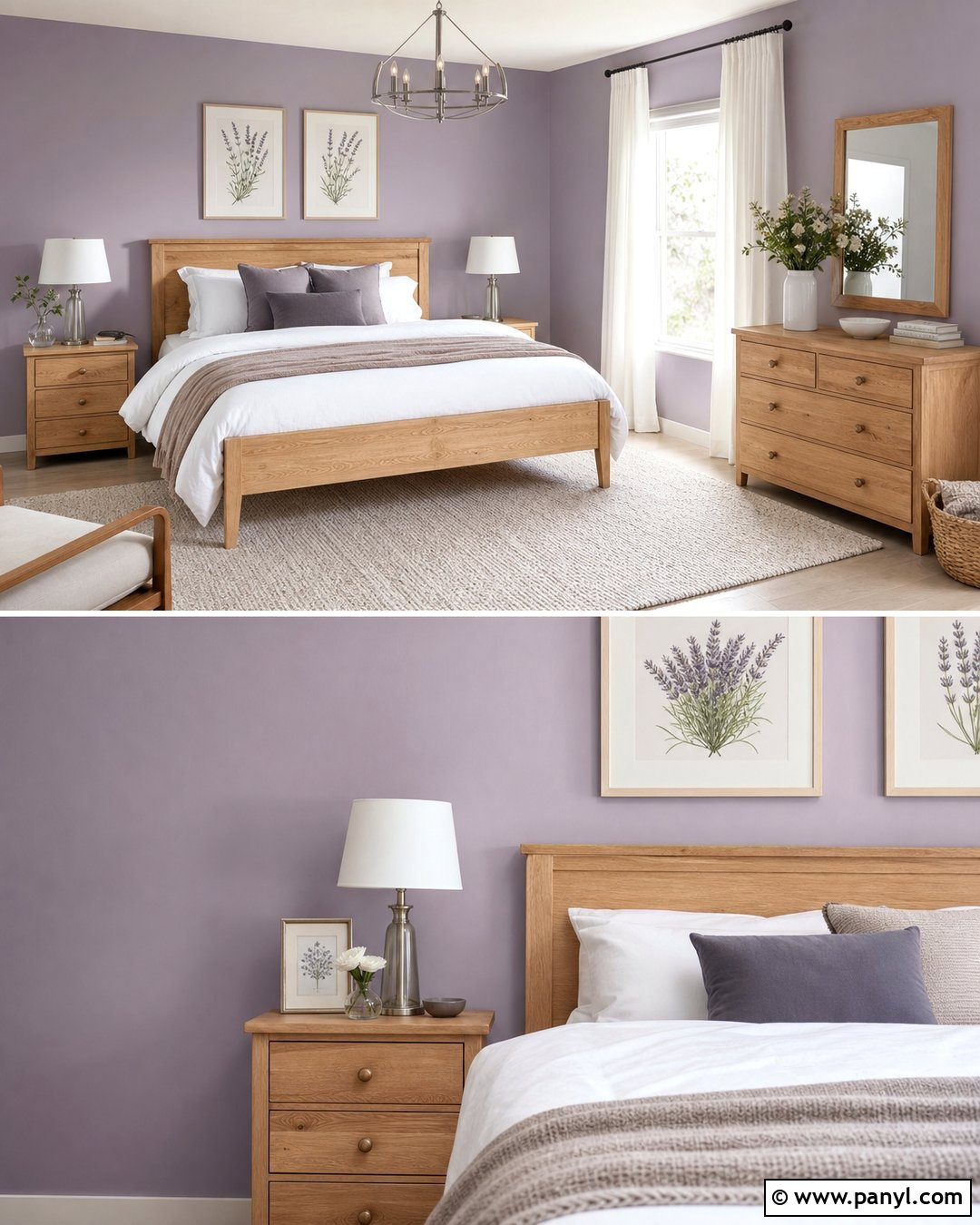
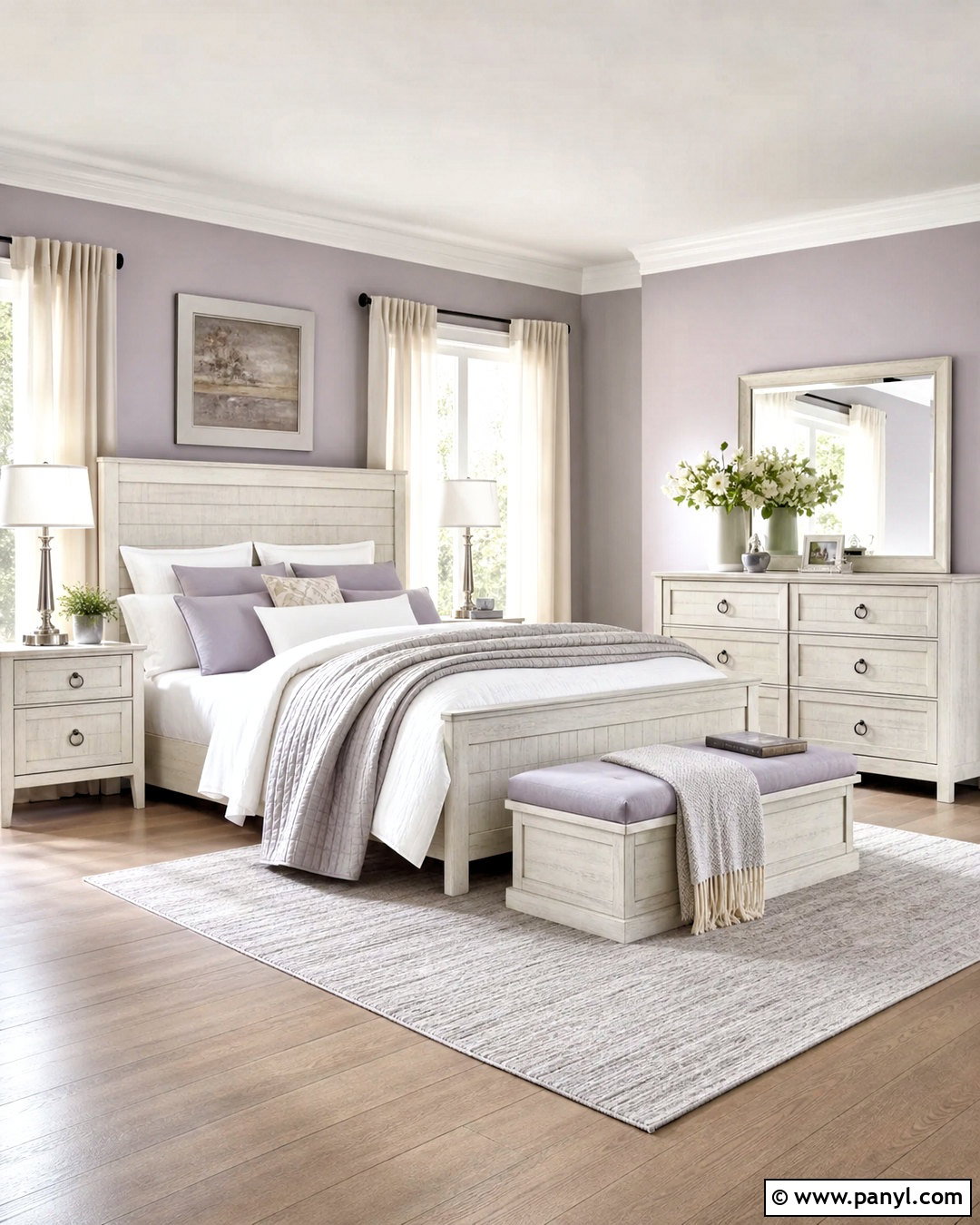
Muted lavender walls give natural wood furniture an unexpected but peaceful background. Design a bedroom with an unstained oak bed, matching nightstands, and a compact wooden dresser. Layer white bedding with gray-lilac cushions and a warm taupe blanket, ensuring the room does not become overly purple. Choose cream curtains, a pale wool rug, and brushed nickel lighting for a soft finish. The lavender should contain gray undertones and look subdued in both daylight and artificial light. Add simple botanical prints and one dark plum accent for depth. Natural wood prevents lavender from feeling too cool, while the wall color gives the furniture a lighter, more distinctive presence. This complete look works particularly well for a calm primary bedroom or welcoming guest space.
19. Plum Walls With Honey Wood Furniture
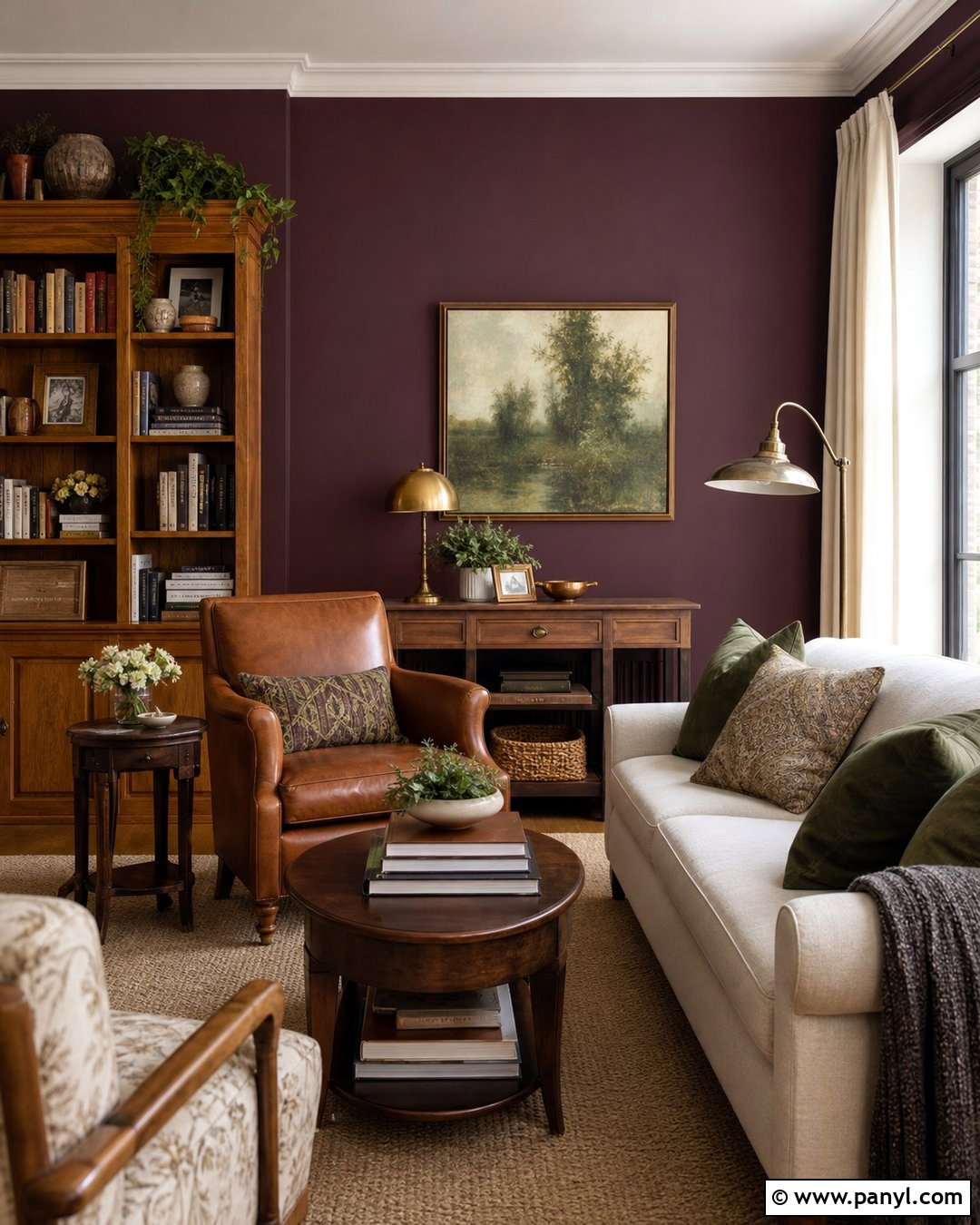
Plum walls create a luxurious contrast with honey-toned wooden furniture. Use this pairing in a reading room or small living room with a warm oak bookcase, wooden side tables, and a structured cream sofa. Include one caramel leather chair to connect the walls with the golden wood. A beige rug, ivory curtains, and a white ceiling will keep the deep color under control. Add aged brass lamps and artwork containing plum, cream, and muted green. Avoid overly glossy furniture, since matte or satin wood finishes look softer against this saturated shade. Plum gives the room depth, while honey wood prevents it from feeling cold. The finished space feels intimate and layered, with enough light-colored fabric to remain welcoming during the daytime.
20. Burgundy Walls With Medium Oak Furniture
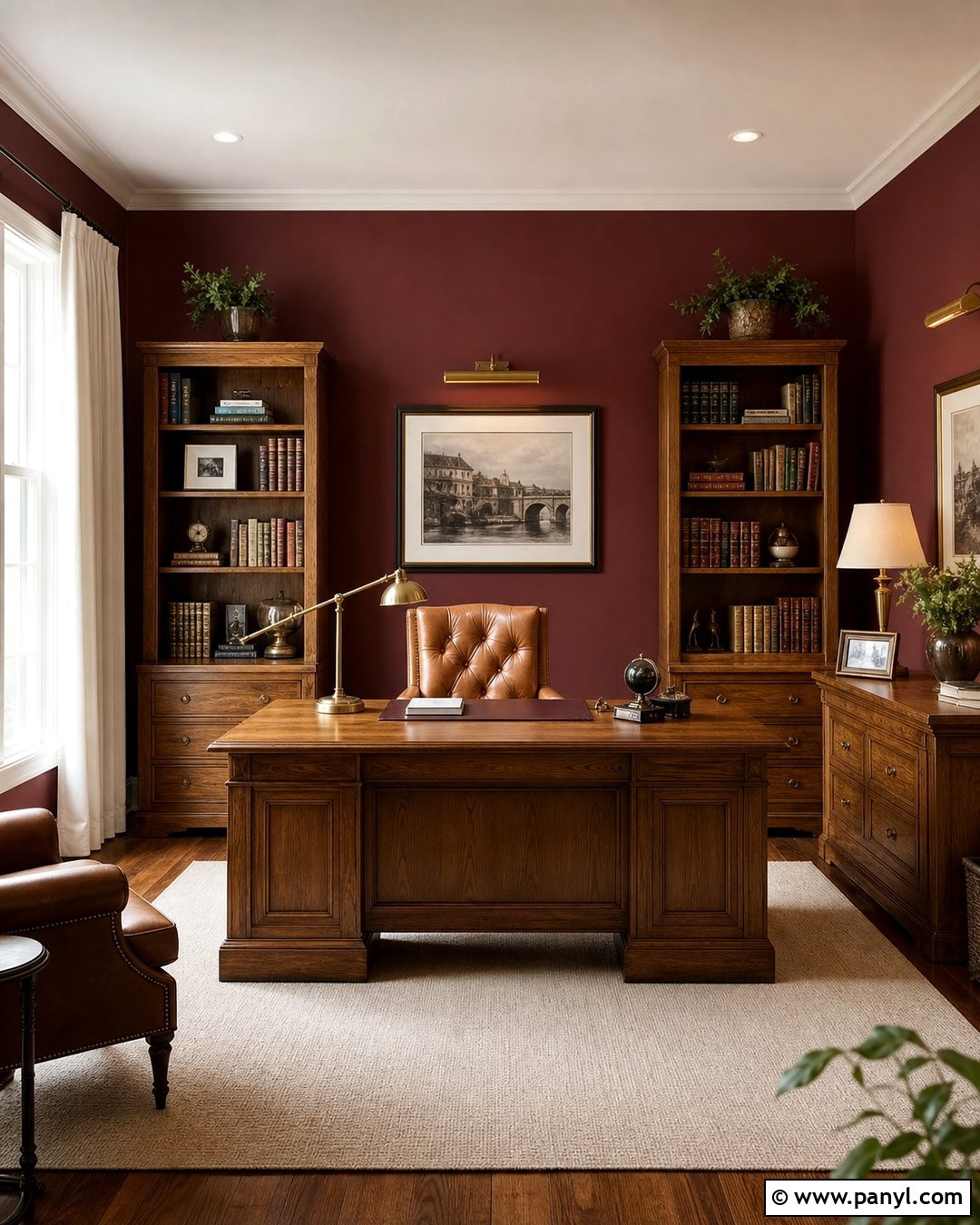
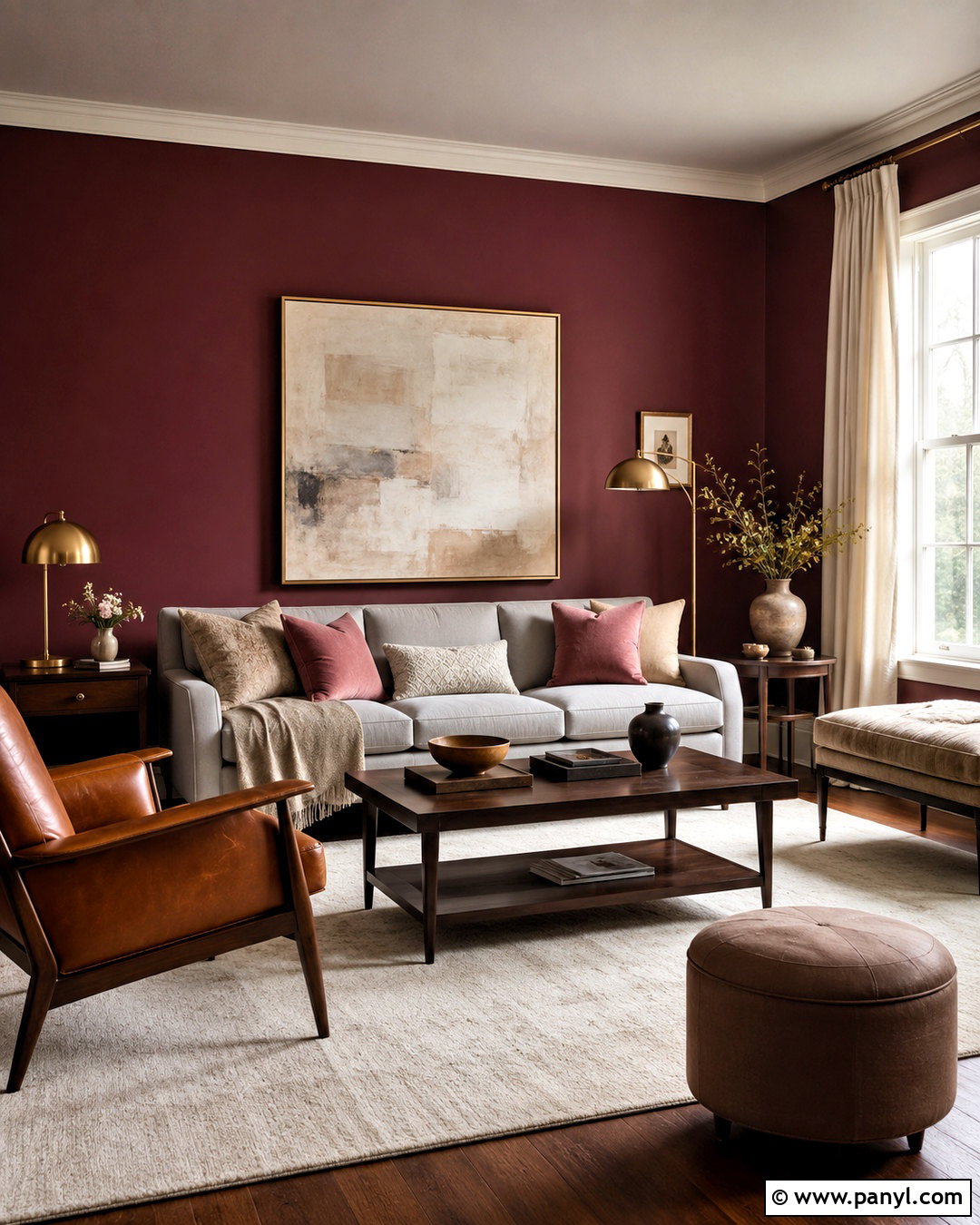
Burgundy walls provide a stately setting for medium oak furniture, especially in a traditional home office or library. Place an oak desk in the center of the room and use matching bookcases along one wall. Add a tan leather chair, cream area rug, and warm white curtains to balance the dark red background. Aged brass picture lights and cabinet hardware will complement both the paint and the wood. Keep books and decorative pieces organized so the room feels rich rather than crowded. Burgundy with a brown undertone is easier to coordinate than a bright, blue-based red. The oak’s golden color offers clear contrast, while neutral textiles soften the overall composition. This complete workspace feels established, focused, and suitable for long-term use.
21. Chocolate Brown Walls With Light Oak Furniture
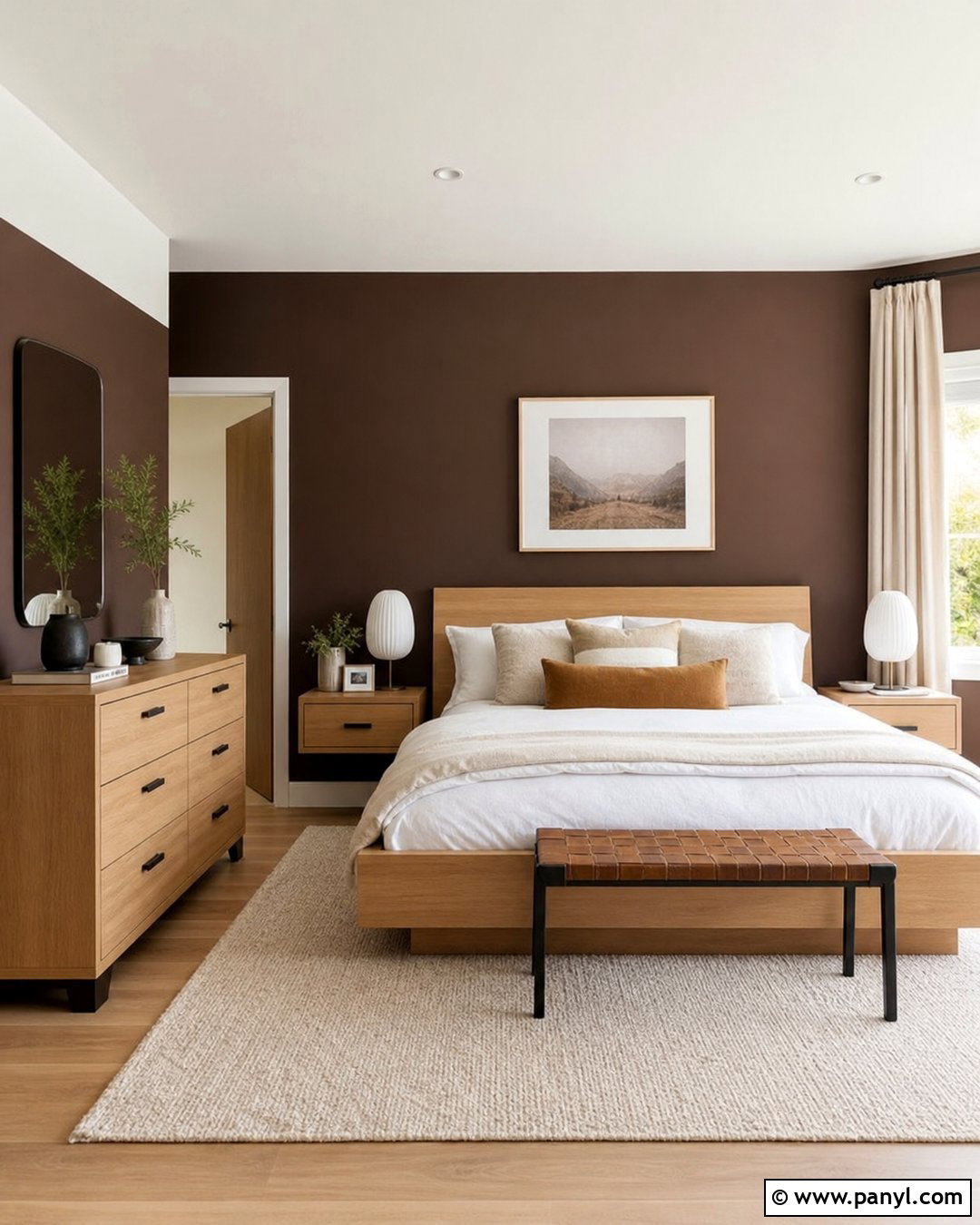
Chocolate brown walls can feel surprisingly modern when paired with pale oak furniture and abundant light textiles. Create a cozy bedroom with a light oak platform bed, floating nightstands, and a narrow wood bench. Use white bedding, an ivory headboard cushion, and oatmeal curtains to form bright blocks against the deep walls. A large cream rug is essential for maintaining balance. Add sculptural white lamps, black hardware, and limited caramel accents for a layered neutral palette. Choose a chocolate shade with warm, earthy undertones rather than one that appears nearly black. The pale furniture provides strong contrast and keeps the room visually clear. With a white ceiling and thoughtful lighting, the finished bedroom feels enveloping and restful instead of small or gloomy.
22. Black Walls With Raw Wood Furniture
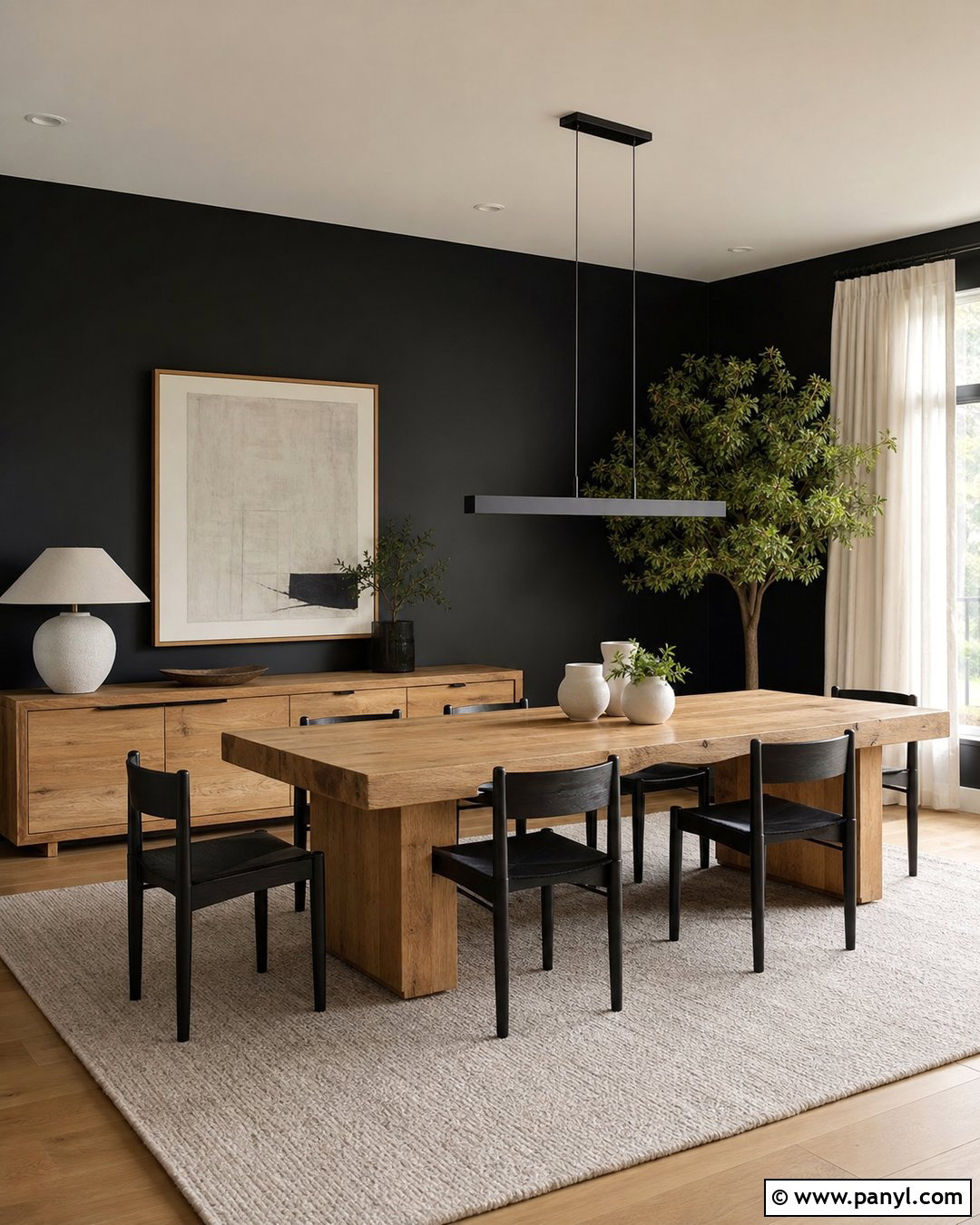
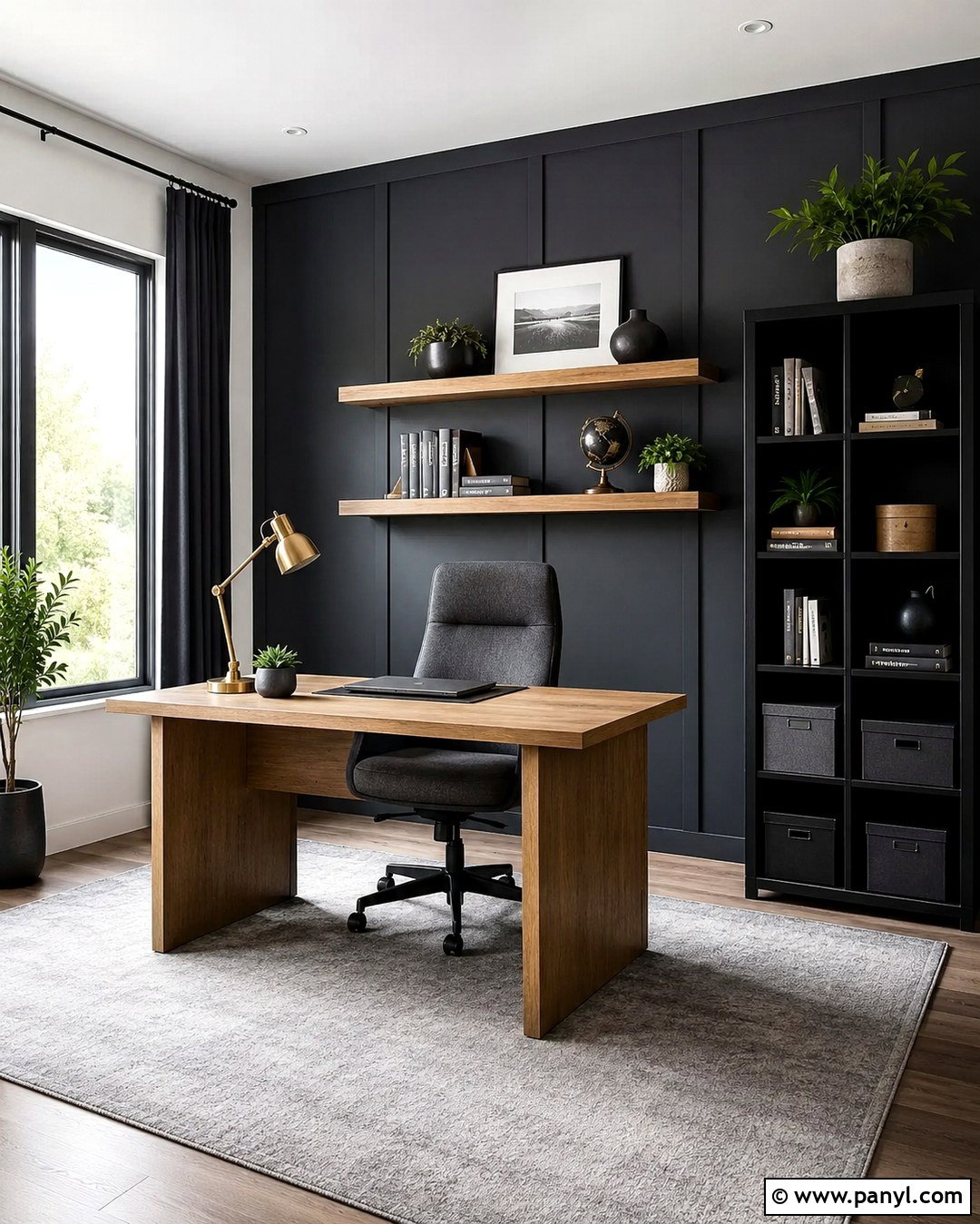
Black walls make raw, unfinished wood furniture stand out with strong architectural clarity. Use the combination in a modern dining room featuring a substantial natural oak table, simple wooden chairs, and a low raw-wood cabinet. Keep the ceiling bright white and choose full-length ivory curtains to reflect light around the room. A large cream rug will soften the contrast and improve comfort. Add a linear black pendant, white ceramics, and one oversized green plant. Avoid introducing several additional dark colors, since the walls already provide plenty of drama. Wood with visible knots and grain prevents the black background from feeling flat or impersonal. The finished design is bold but approachable, combining modern structure with the warmth and imperfection of natural materials.
23. Peach Walls With Rattan And Wood Furniture
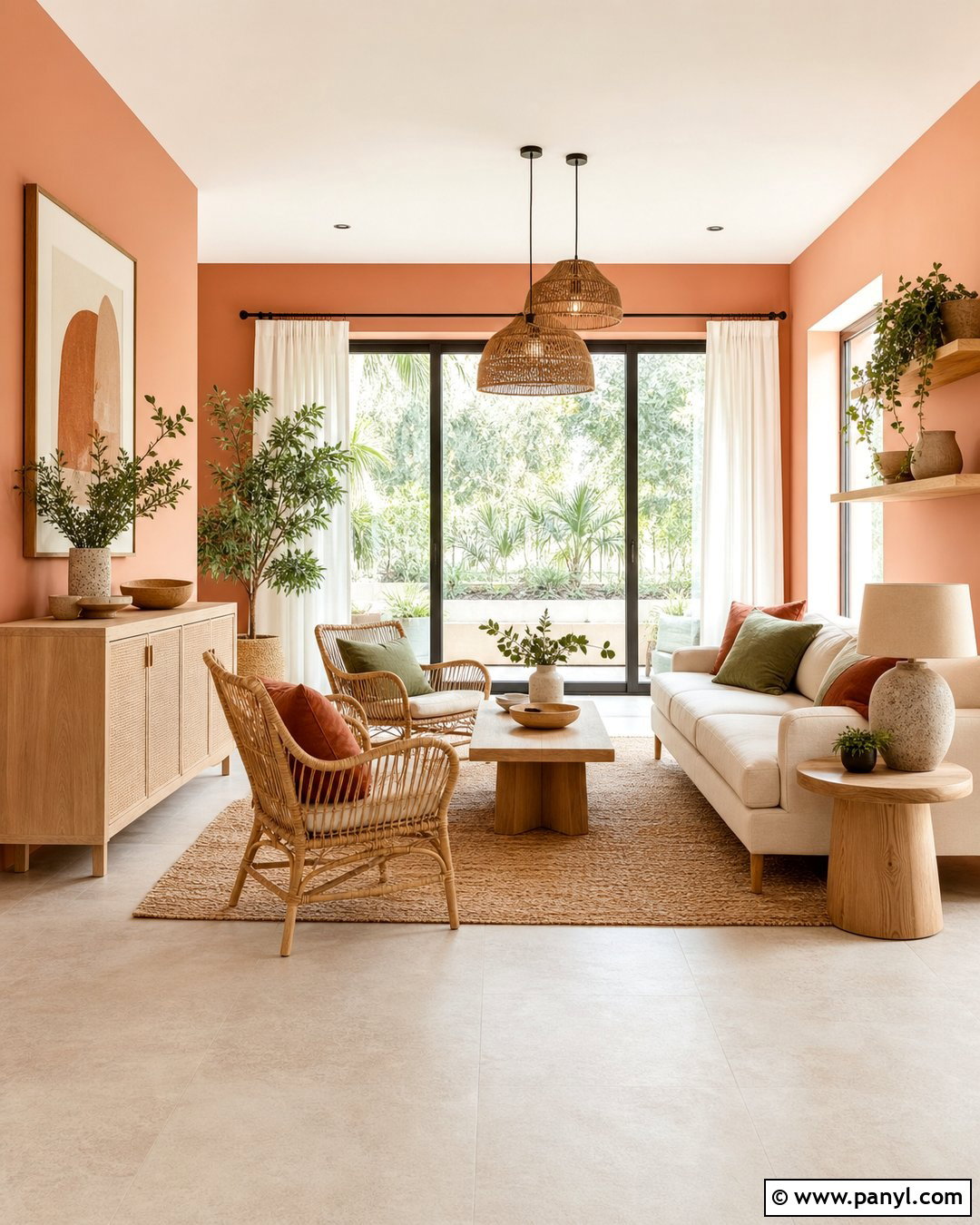
Soft peach walls complement rattan and light wooden furniture, creating an airy room with gentle warmth. Arrange a casual sunroom or living space with a pale wood console, rattan lounge chairs, and a slim oak coffee table. Choose a cream sofa, white curtains, and a natural fiber rug to keep the peach from becoming too dominant. Add cushions in olive green, rust, and beige for an earthy contrast. Woven lampshades and simple pottery reinforce the tactile, relaxed look. Select a muted peach with tan undertones rather than a bright coral shade. The blend of painted color, cane details, and natural grain gives the room personality without clutter. This complete scheme feels sunny, informal, and suitable for a smaller everyday gathering space.
24. Pale Mint Walls With Dark Wood Furniture
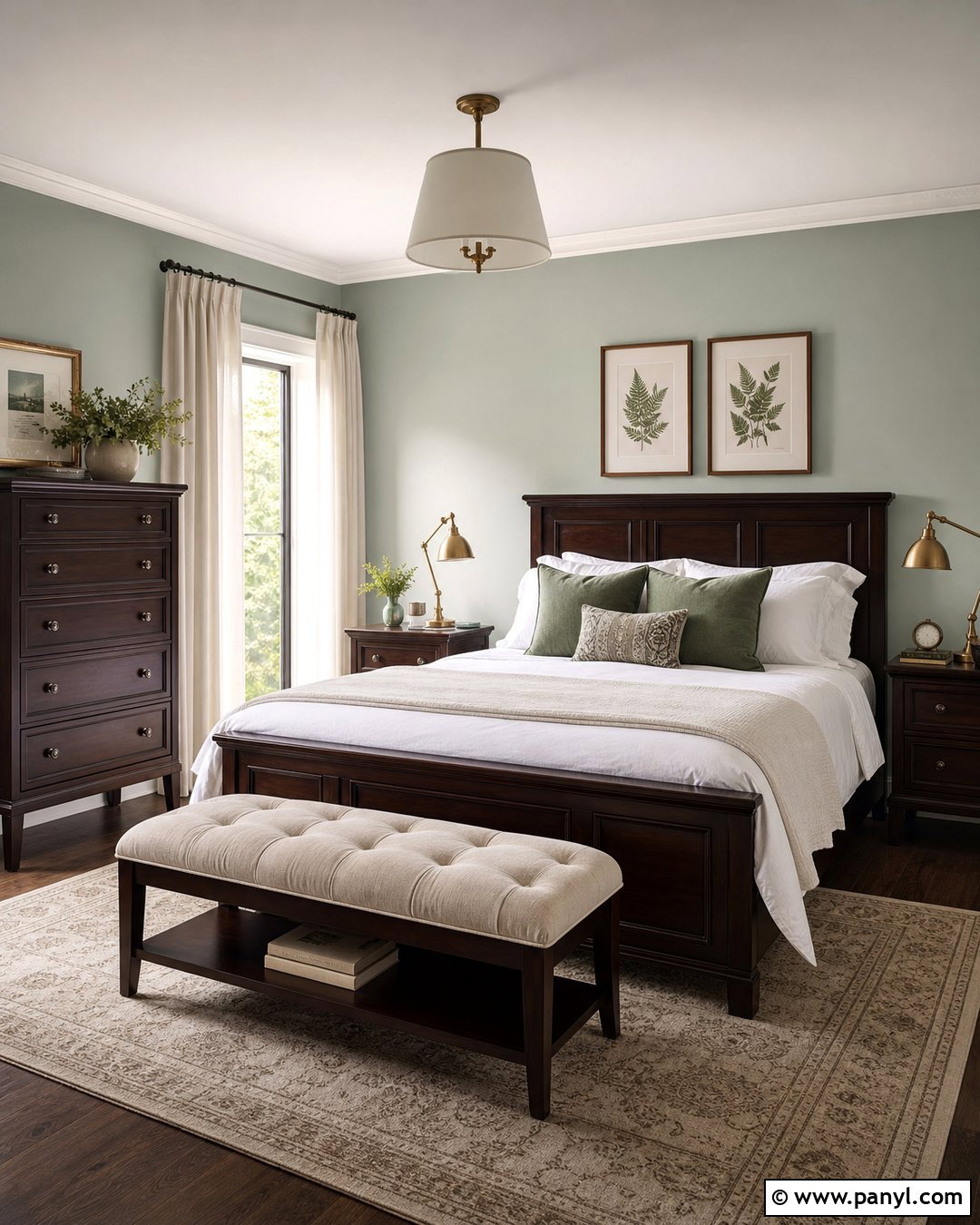
Pale mint walls refresh dark wood furniture and create a clean contrast without feeling sharp. Try this combination in a bedroom with an espresso-stained bed, matching nightstands, and a dark wooden dresser. Use crisp white bedding, a beige upholstered bench, and cream curtains to bridge the light walls and heavy furniture. Add muted green pillows, brushed brass lamps, and a neutral patterned rug for a complete layered look. The mint should be soft and slightly gray rather than bright or sugary. Keep artwork simple, using botanical subjects or abstract shapes in green, tan, and black. The dark furniture anchors the delicate color, while the mint makes the entire room appear lighter. Together, the elements create a balanced and quietly refreshing bedroom.
25. Sky Blue Walls With Warm Wood Furniture
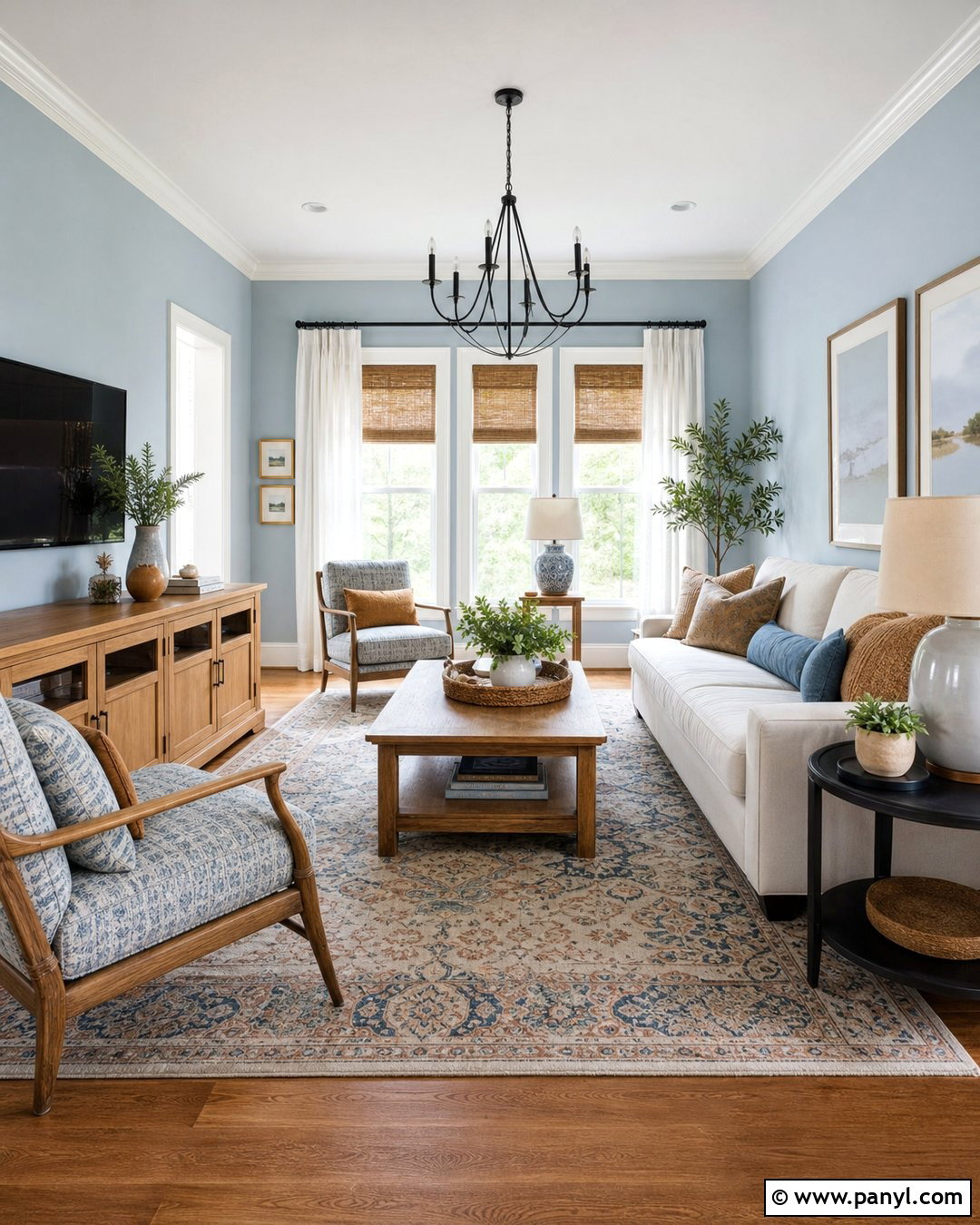
Sky blue walls provide a fresh, open background for warm wooden furniture. Build a bright living room with a golden oak coffee table, wood-framed armchairs, and a low honey-toned media console. Pair these pieces with a cream sofa, white curtains, and a beige rug containing subtle blue details. Add cognac leather cushions and small black accents to give the light palette more definition. Choose a softened sky blue with a touch of gray so it remains comfortable across all four walls. Natural woven shades can introduce texture without blocking daylight. Complete the room with simple coastal artwork, ceramic lamps, and restrained greenery. The finished design feels breezy and relaxed without relying on obvious themed decorations or an excessive amount of blue.
Conclusion:
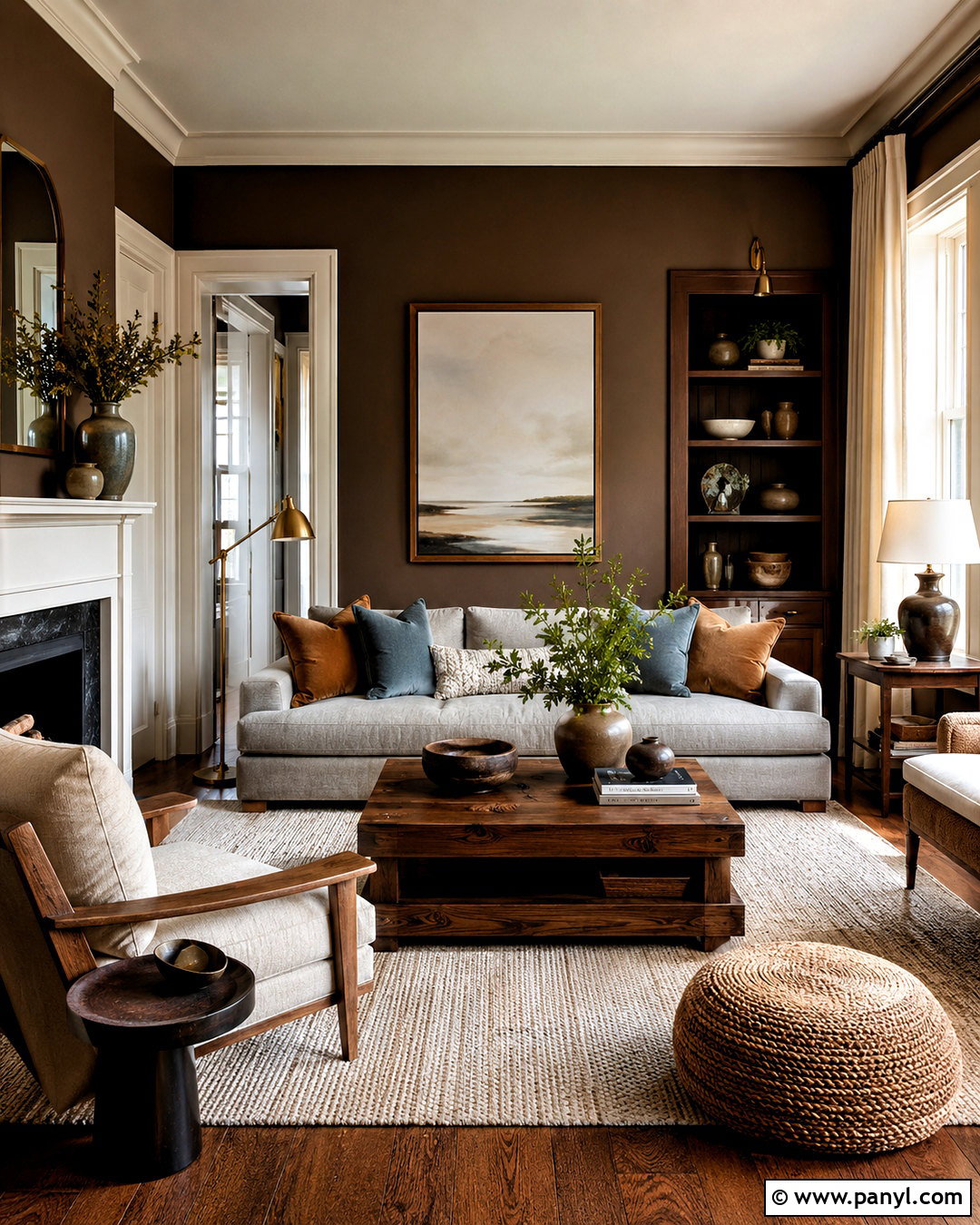
Successful 25 Wall Colour With Wooden Furniture Ideas begin with understanding whether the wood looks pale, golden, reddish, neutral, or very dark. Warm whites, beige, greige, and taupe offer flexibility, while sage, blue, terracotta, plum, and charcoal create stronger character. The wall shade should work with the flooring, upholstery, curtains, trim, and lighting rather than matching the furniture alone. Before painting the entire room, place large samples beside the wood and check them throughout the day. Then balance deep walls with lighter textiles or give pale walls definition through darker accents. With thoughtful contrast and repeated undertones, wooden furniture can look coordinated, distinctive, and completely at home in almost any color scheme.

Related Ideas and Inspiration:
Leave a Reply