
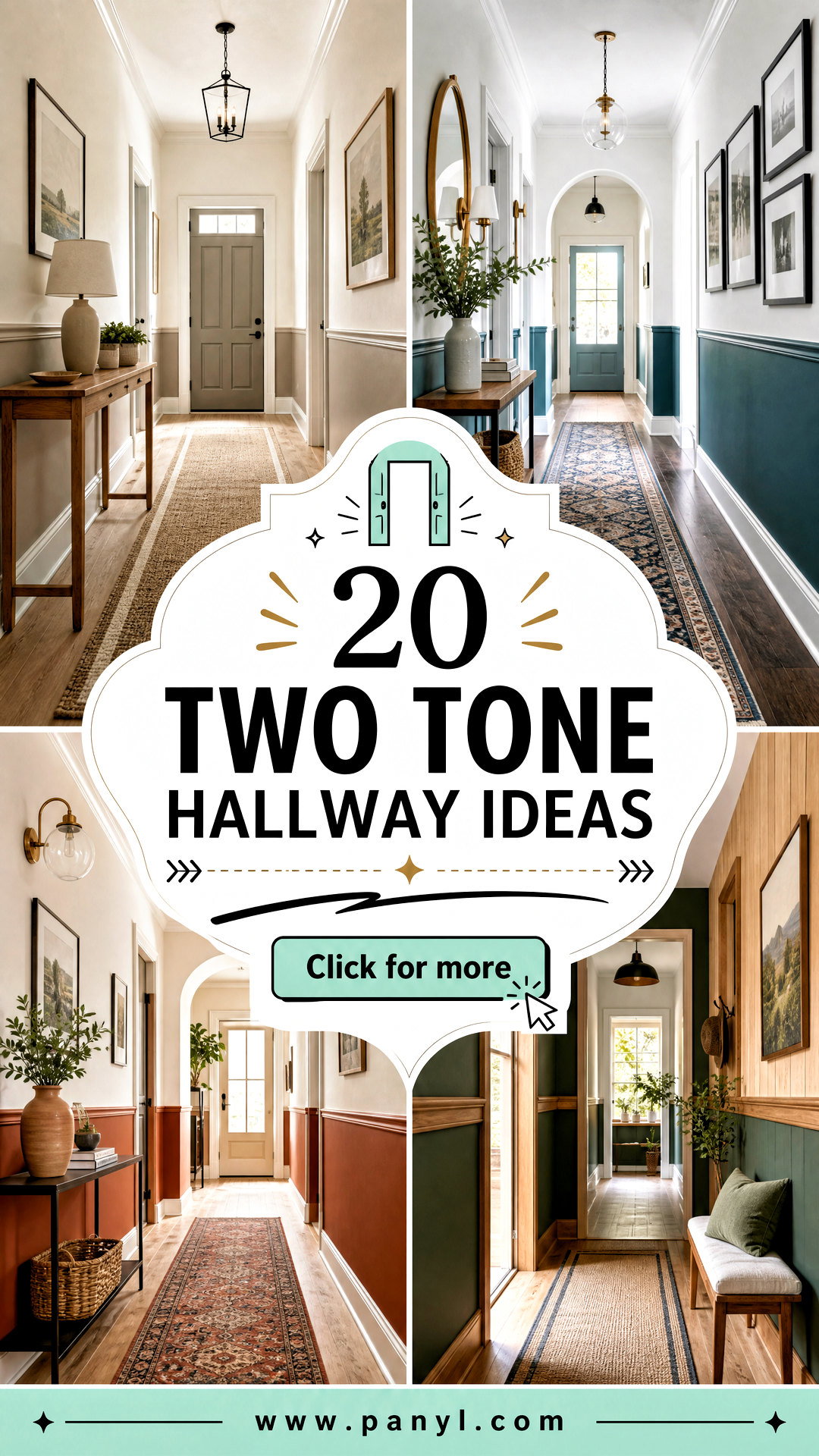
Two-tone walls can turn a plain passage into one of the most memorable spaces in your home. The right pairing adds structure, highlights architectural details, and helps a narrow corridor feel thoughtfully decorated without taking up valuable floor space. These complete looks combine practical paint placement with flooring, lighting, storage, artwork, and trim choices. You will find calming neutrals, classic contrasts, earthy colors, and bolder combinations suited to modern, traditional, farmhouse, and eclectic homes. Each scheme can also be adjusted around your hallway’s natural light, ceiling height, and existing finishes. Whether you prefer painted paneling, a simple horizontal divide, or a tonal treatment, these 20 two tone hallway ideas offer plenty of inspiration.
1. Sage Green And Warm White Hallway
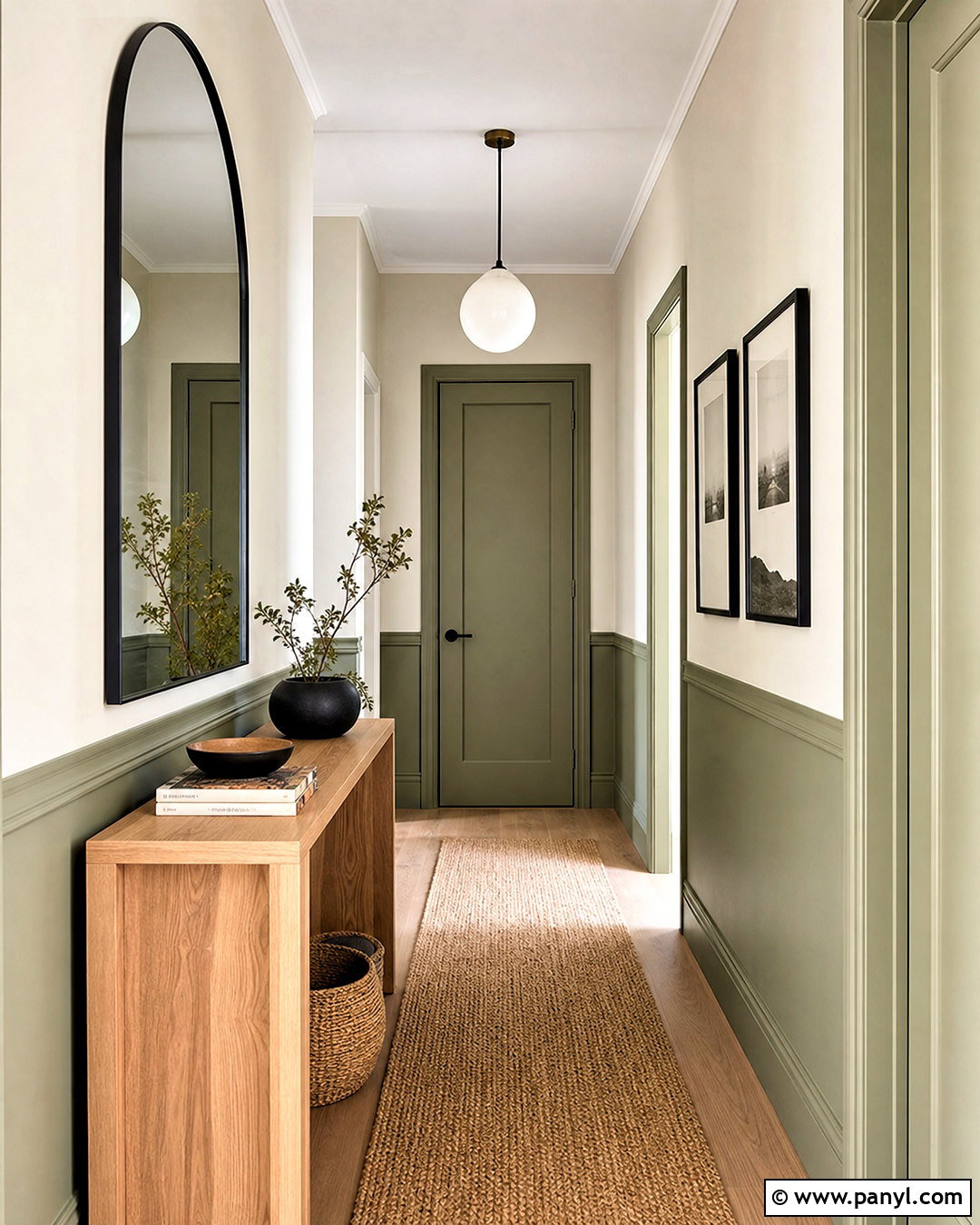
Create a calm, welcoming hallway by painting the lower third warm sage green and keeping the upper walls a soft, creamy white. Add a slim chair rail at the color divide for a clean finish, then carry the sage across the baseboards and door frames. Light oak flooring and a natural jute runner bring warmth without competing with the walls. Choose a narrow oak console with rounded corners, a simple ceramic lamp, and a large arched mirror to reflect daylight. Black picture frames provide small, crisp accents along one wall. Finish the space with a woven basket for shoes and a white globe pendant overhead. This complete scheme works especially well in relaxed farmhouse and modern organic homes.
2. Navy Blue And Crisp White Hallway
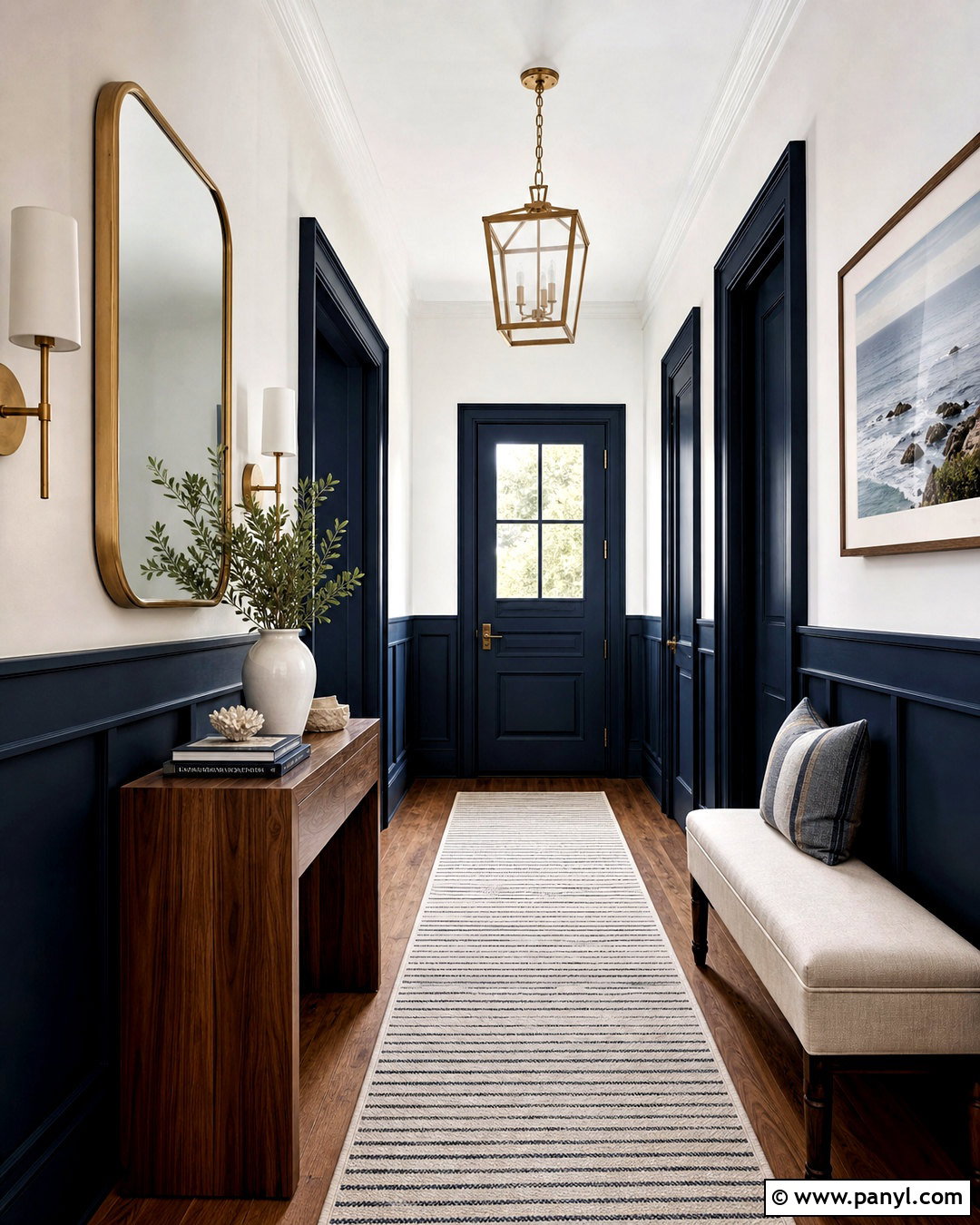
For a smart, classic entrance, pair deep navy blue board-and-batten paneling with crisp white walls above. Paint the paneling, baseboards, interior doors, and door casings in the same satin navy finish so the lower half looks continuous. Medium-toned hardwood floors and a striped cream runner keep the hallway warm and balanced. Place a narrow walnut console beneath a brass-framed mirror, leaving enough clearance for comfortable movement. A traditional brass lantern pendant reinforces the polished look, while two large coastal prints add quiet pattern without making the walls busy. Include a navy upholstered bench near the entrance and a small umbrella stand. The finished hallway feels tailored, durable, and appropriate for traditional or transitional interiors.
3. Charcoal Gray And Soft White Hallway
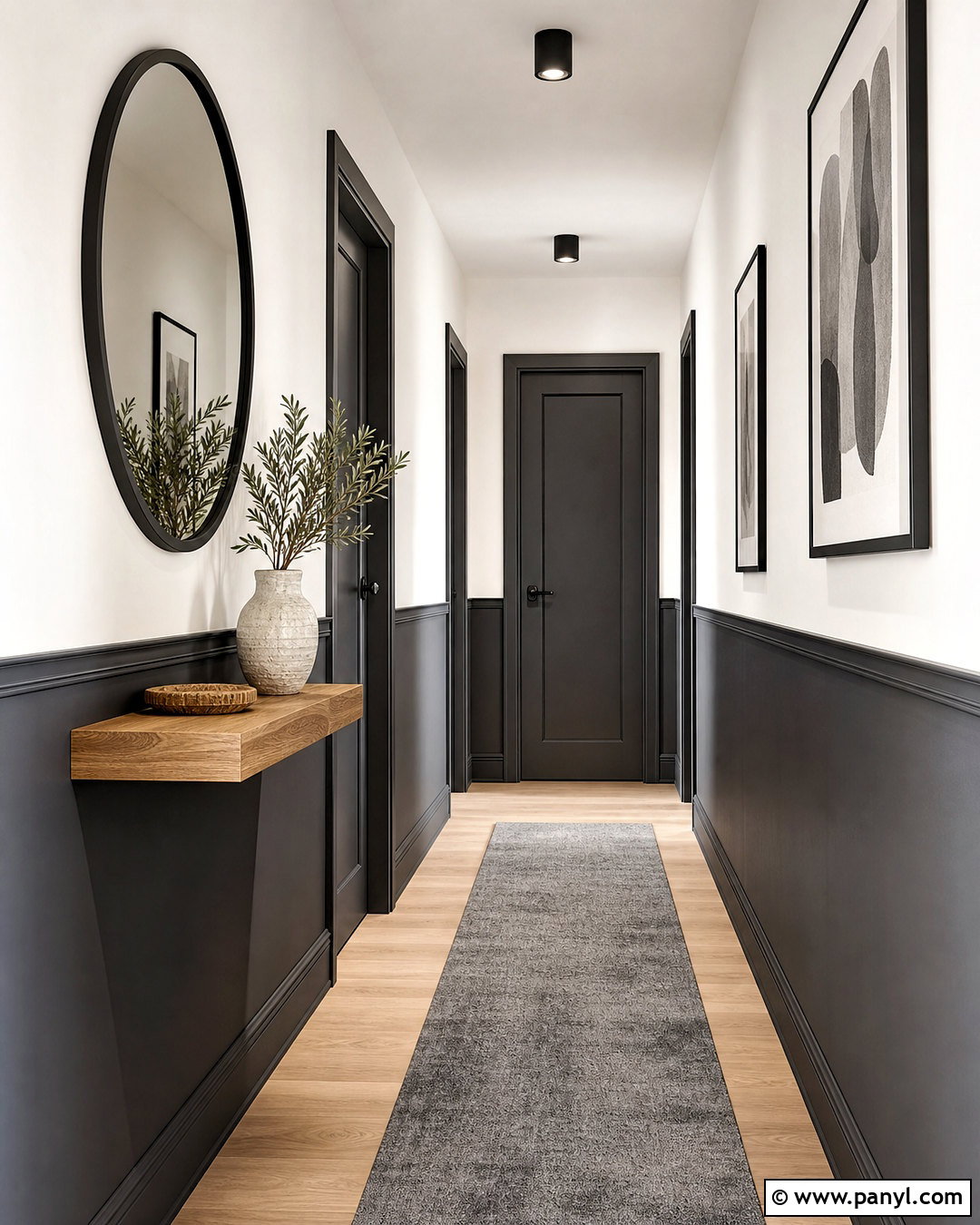
A charcoal and soft white palette gives a busy hallway strong definition while remaining easy to coordinate with nearby rooms. Use charcoal gray on the lower half of the walls, baseboards, doors, and trim. Apply soft white above the dividing line and across the ceiling to maintain an open appearance. Pale wood flooring prevents the darker paint from feeling heavy, while a washable gray runner supports the practical color scheme. Add a floating light-oak shelf instead of a deep console, then hang a round black mirror and two minimalist prints. Matte black ceiling lights and door hardware complete the modern details. A tall textured vase at the far end creates a focal point without reducing the width of the walkway.
4. Dusty Blue And Cream Hallway
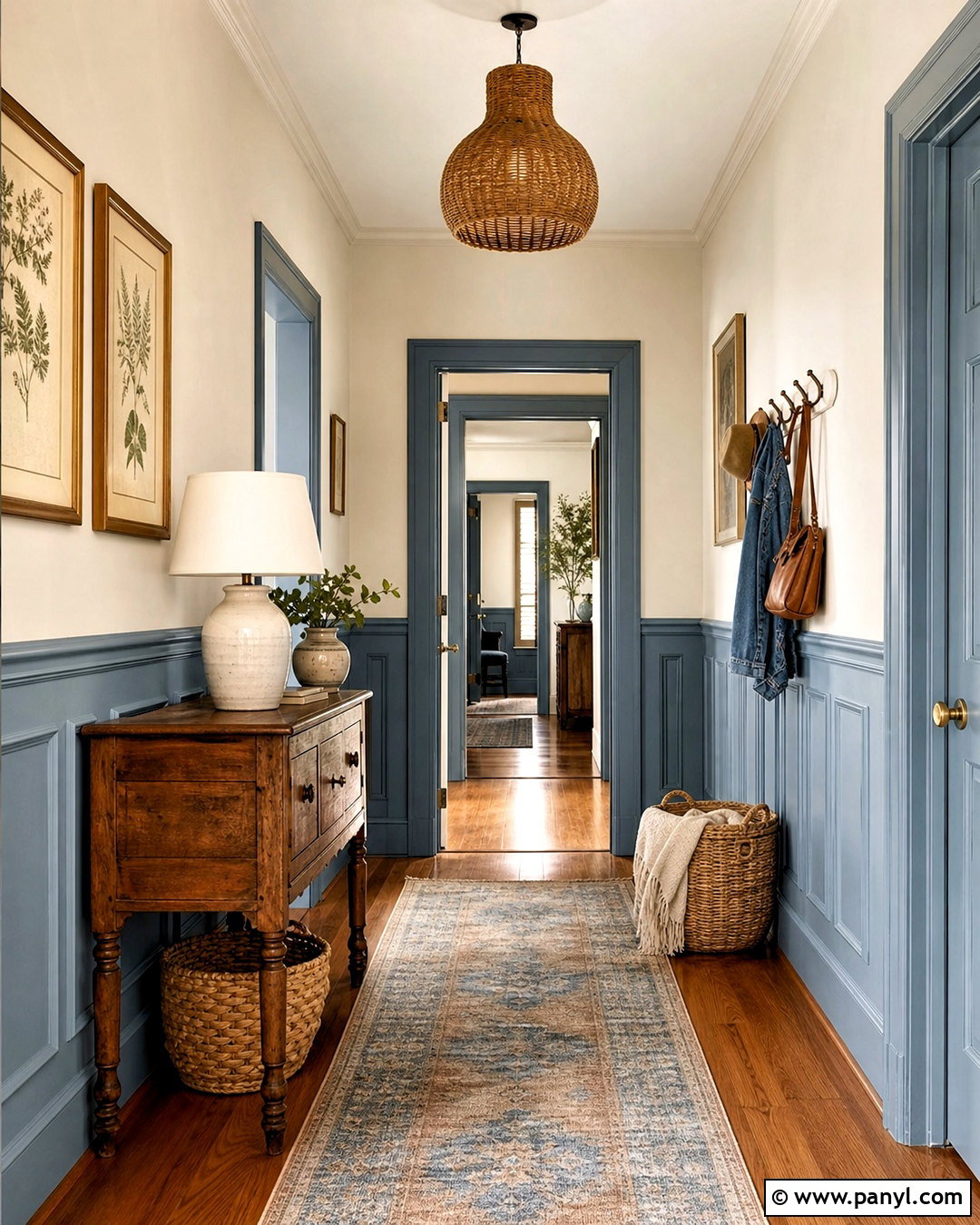
Imagine stepping into a hallway softened by dusty blue lower walls and warm cream paint above. This gentle pairing works beautifully with traditional raised paneling, especially when the panel molding and baseboards share the muted blue finish. Choose honey-colored oak flooring and a faded patterned runner containing blue, tan, and ivory. A slim antique-style wood table introduces character, while a cream ceramic lamp adds useful evening light. Hang a collection of small botanical prints in aged brass frames, keeping the arrangement centered above the color division. A woven pendant and natural storage baskets prevent the design from appearing overly formal. The result is a comfortable, collected hallway that suits cottage, coastal, and updated traditional homes.
5. Terracotta And Pale Blush Hallway
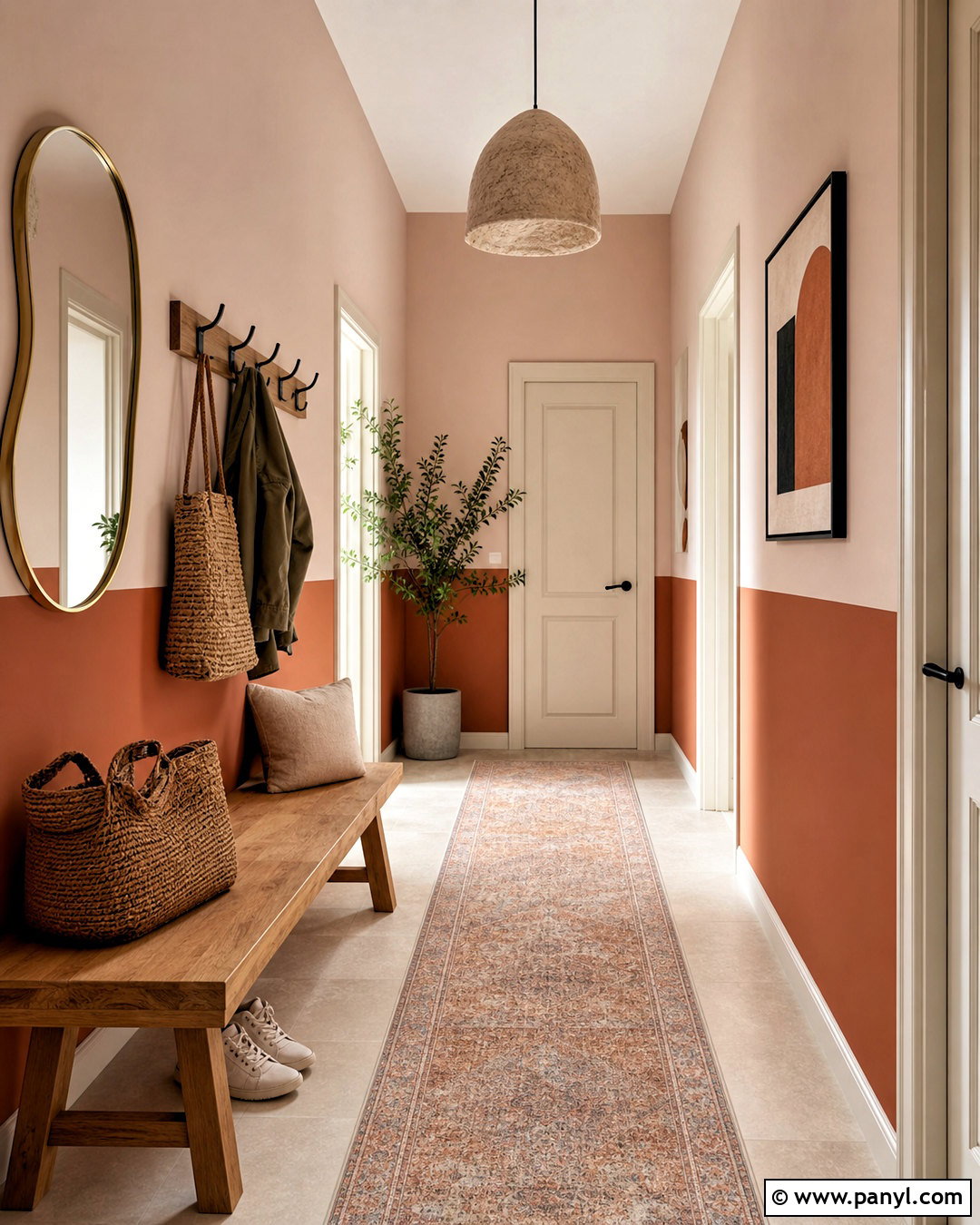
Warm a windowless hallway with earthy terracotta on the lower walls and pale blush above. Keep the terracotta slightly muted rather than bright orange so it coordinates naturally with wood and woven materials. A narrow painted divide creates a relaxed, contemporary look without requiring decorative molding. Use light limestone-look tile underfoot and layer in a flatwoven runner with cream and rust details. A compact oak bench provides a practical place for bags, while wall-mounted hooks save floor space. Add an irregular brass mirror, a white plaster pendant, and simple abstract artwork featuring rust and sand. Cream doors and ceilings soften the overall palette. This complete look feels sunny, modern, and inviting even when natural light is limited.
6. Olive Green And Warm Beige Hallway
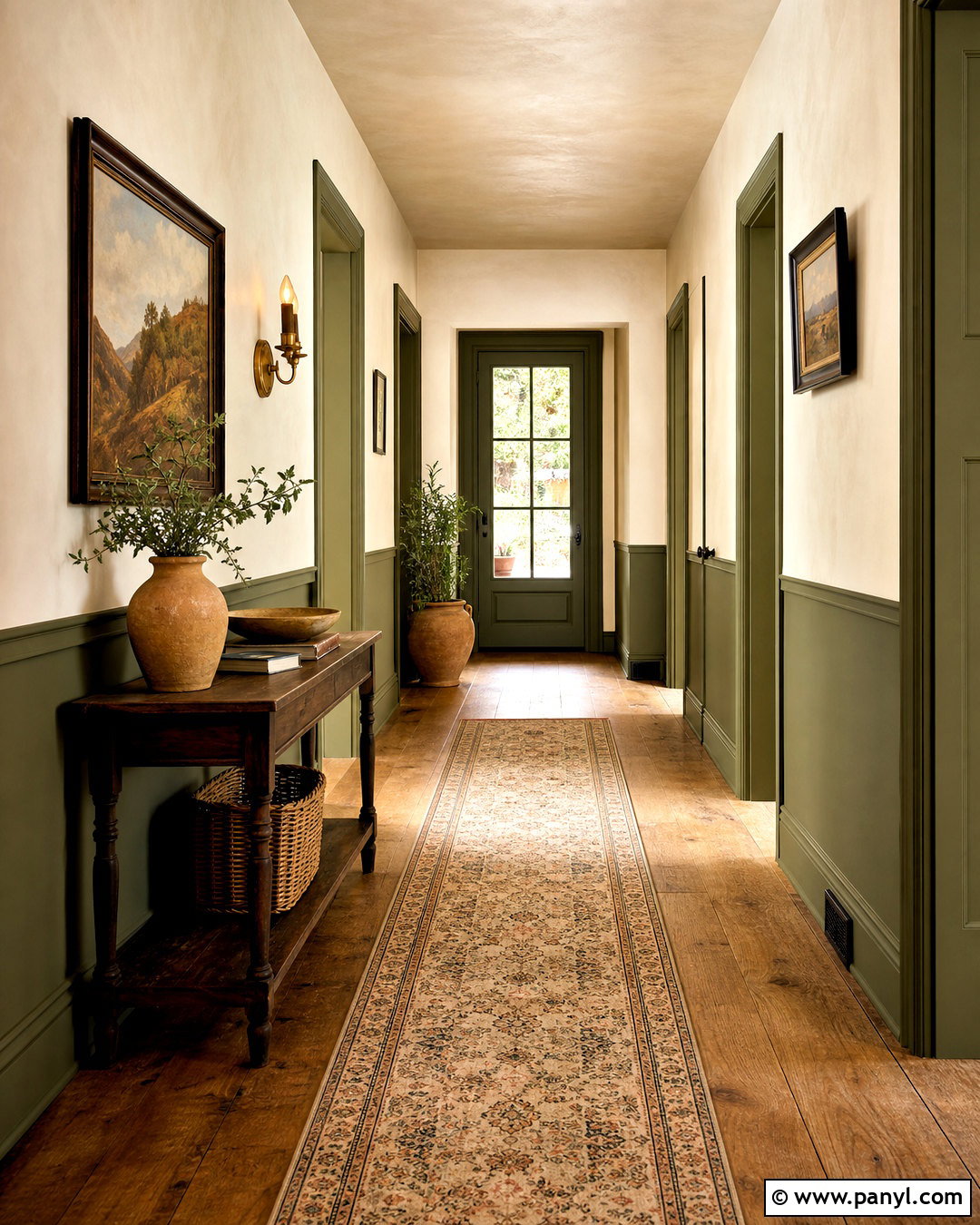
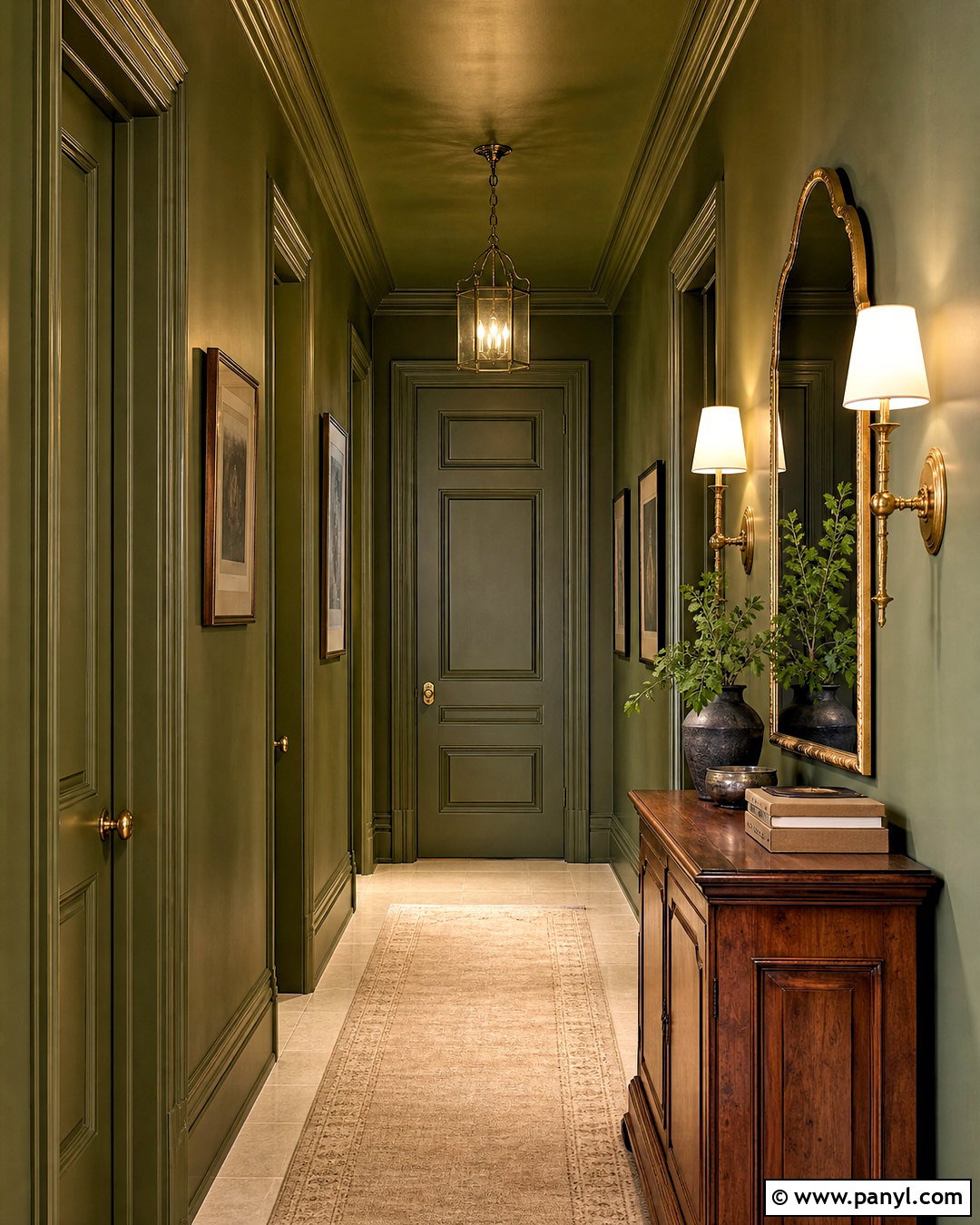
Olive green and warm beige create an earthy hallway that feels grounded rather than dark. Cover the lower two-thirds of the walls in muted olive, including the baseboards and door frames, then use a sandy beige across the upper portion and ceiling. The higher color split makes the green more noticeable while allowing beige to brighten the top of the space. Choose aged oak flooring, a vintage-style runner, and a narrow dark wood console with simple legs. An antique brass wall light adds warmth without projecting too far into the walkway. Complete the hallway with landscape artwork, handmade pottery, and a lidded woven basket. The coordinated materials create a comfortable Mediterranean-inspired look with practical everyday storage.
7. Black And White Hallway
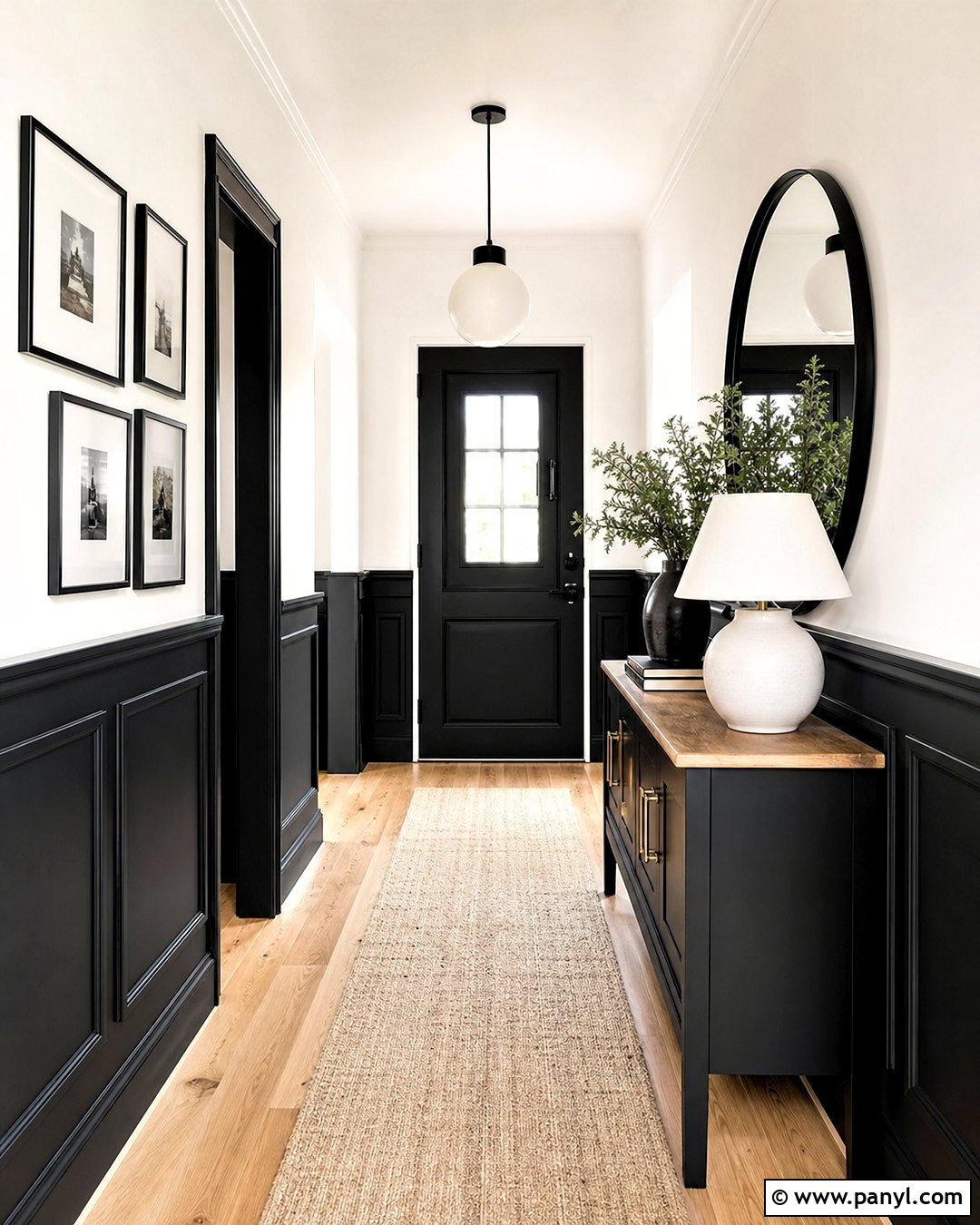
A black and white hallway can feel striking without becoming cold when texture and warm finishes are included. Paint simple square paneling matte black across the lower third, then use a gentle off-white above instead of a stark blue-white. Continue black onto the baseboards and one interior door to make the contrast intentional. Natural oak floors and a beige wool runner soften the graphic palette. Select a slim black console with a wood top, an oversized round mirror, and a sculptural white table lamp. Black-framed photography creates rhythm along the corridor, while a woven basket brings in another natural layer. A large opal-glass pendant provides bright, even illumination and keeps the finished space clean, modern, and welcoming.
8. Greige And Ivory Hallway
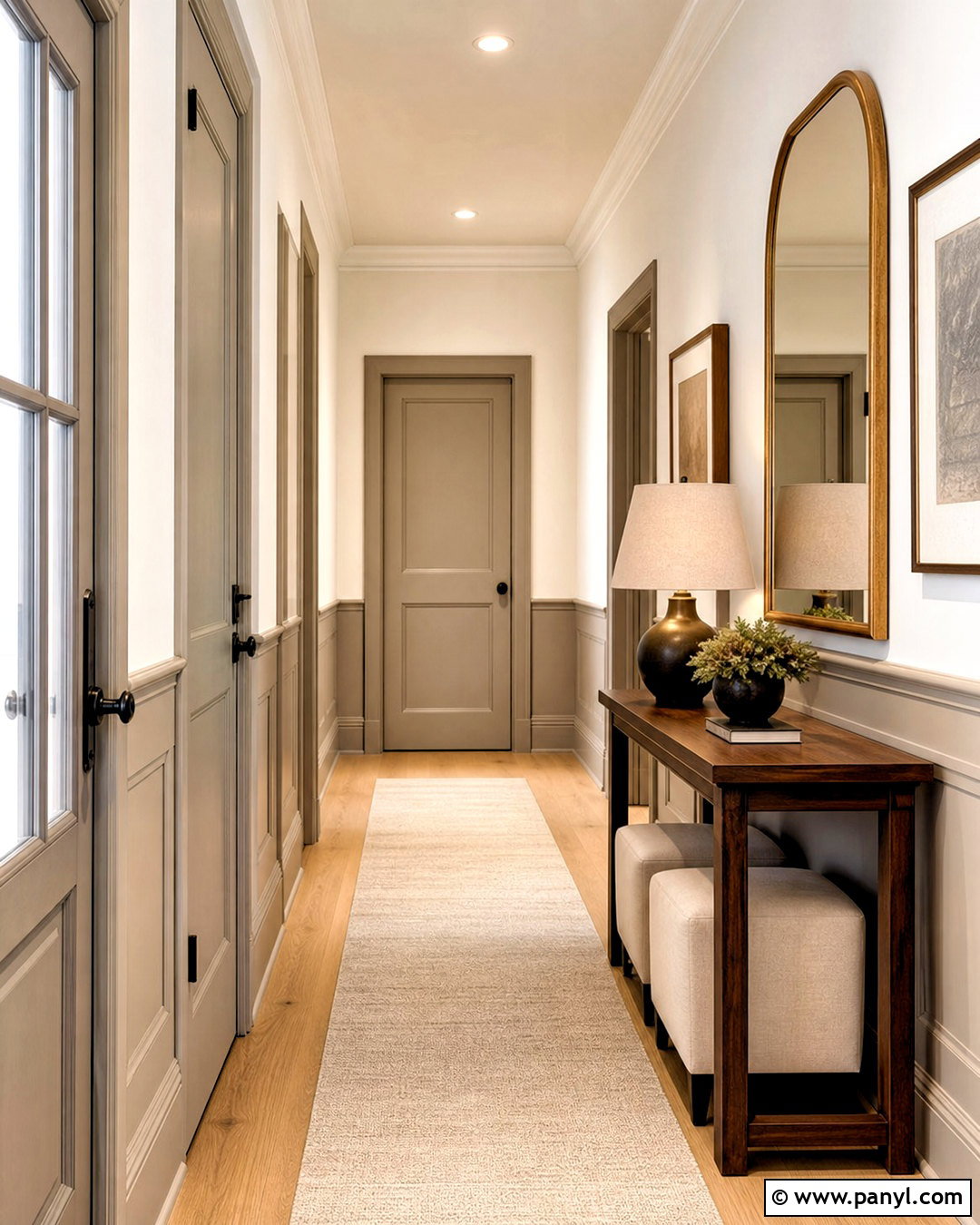
If you prefer a low-contrast space, combine mid-tone greige paneling with light ivory walls. The subtle difference defines the architecture without visually cutting the hallway in half. Paint the lower paneling, trim, and doors in satin greige, then select a washable matte ivory for the upper walls. Wide-plank white oak floors and a soft oatmeal runner reinforce the understated palette. Add a narrow console in medium walnut for depth, paired with a bronze-framed mirror and a linen-shaded lamp. Large neutral artwork prevents the long wall from feeling empty, while matching bronze door hardware provides consistency. This restrained two-tone scheme creates a complete transitional hallway that connects easily with both warm and cool rooms elsewhere in the home.
9. Teal And White Hallway
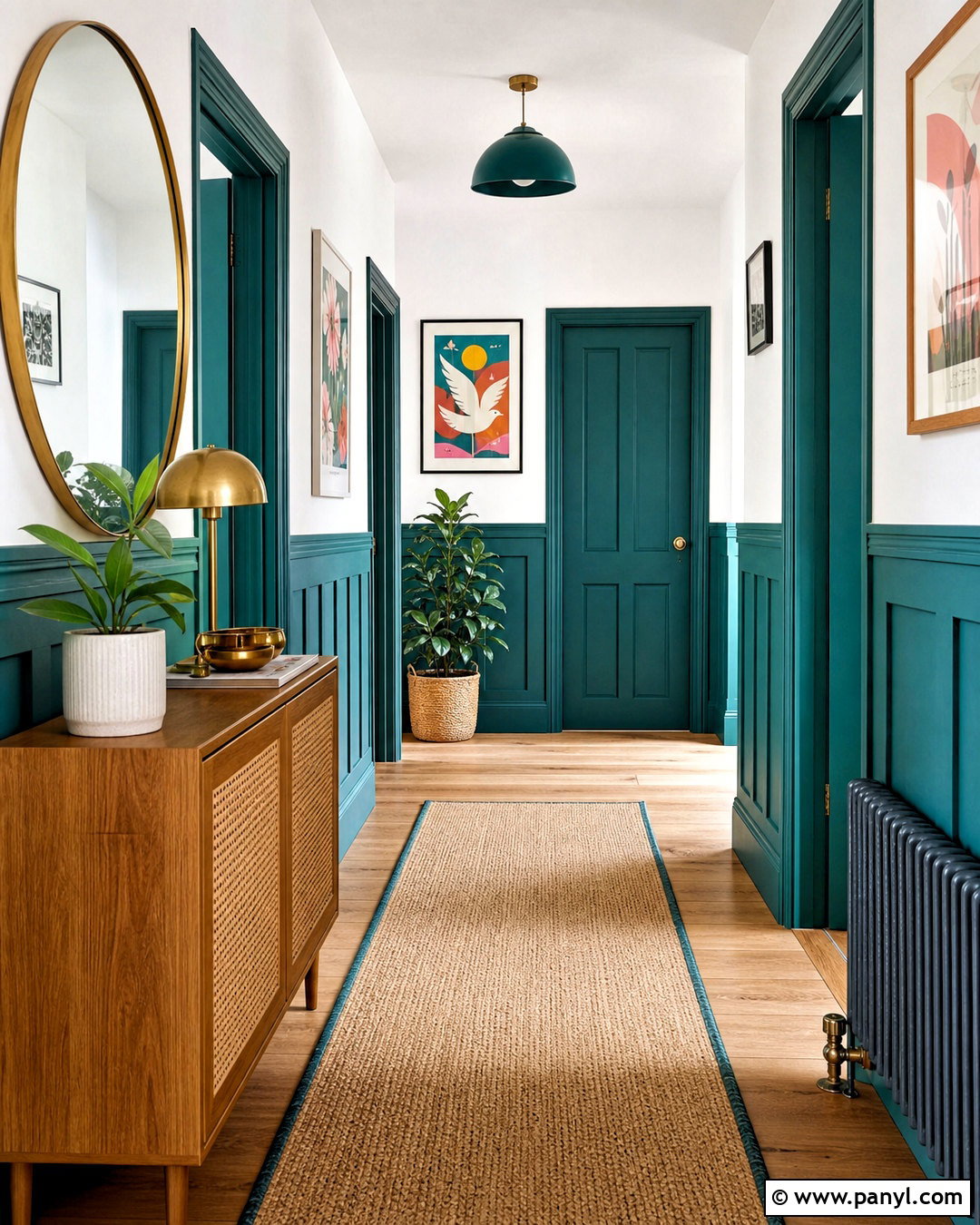
Bring confident color into an entrance with rich teal board-and-batten paneling and clean white walls above. Extend the teal paint onto the entrance door, nearby closet doors, and lower trim to create a strong, unified base. Light oak flooring and a natural runner keep the saturated color from dominating the space. Include a rattan-front console or shoe cabinet to add hidden storage and tactile warmth. An oval brass mirror, a teal dome pendant, and a pair of colorful framed prints make the hallway feel fully decorated. Keep the ceiling bright white and use simple globe bulbs for clear illumination. This scheme works well in compact hallways because the furniture remains visually light while the painted architectural details supply most of the personality.
10. Mustard Yellow And Warm White Hallway
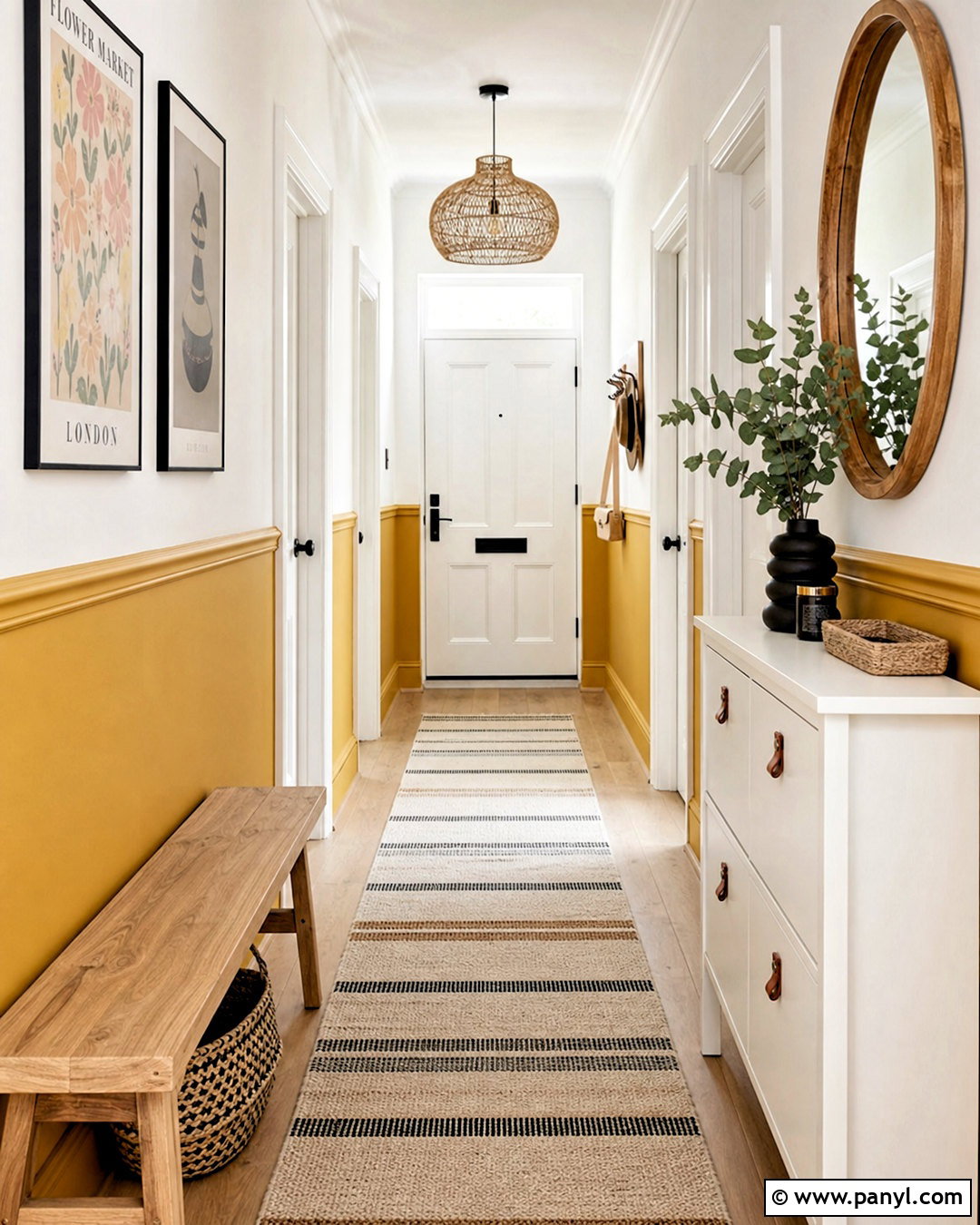
Mustard yellow gives a hallway a cheerful identity when balanced with warm white and natural materials. Use the yellow across the lower half of plain walls, then install a slim wood chair rail painted to match. Warm white on the upper walls, ceiling, and doors keeps the corridor looking fresh. Choose pale oak or beige tile flooring, followed by a washable runner with cream, gray, and mustard stripes. A compact white shoe cabinet prevents visual clutter, while leather pulls and a small oak bench add warmth. Decorate with simple black-framed prints and a round wood mirror. A woven ceiling light spreads attractive pattern overhead. The complete look feels sunny and casual without relying on numerous accessories or oversized furnishings.
11. Burgundy And Mushroom Hallway
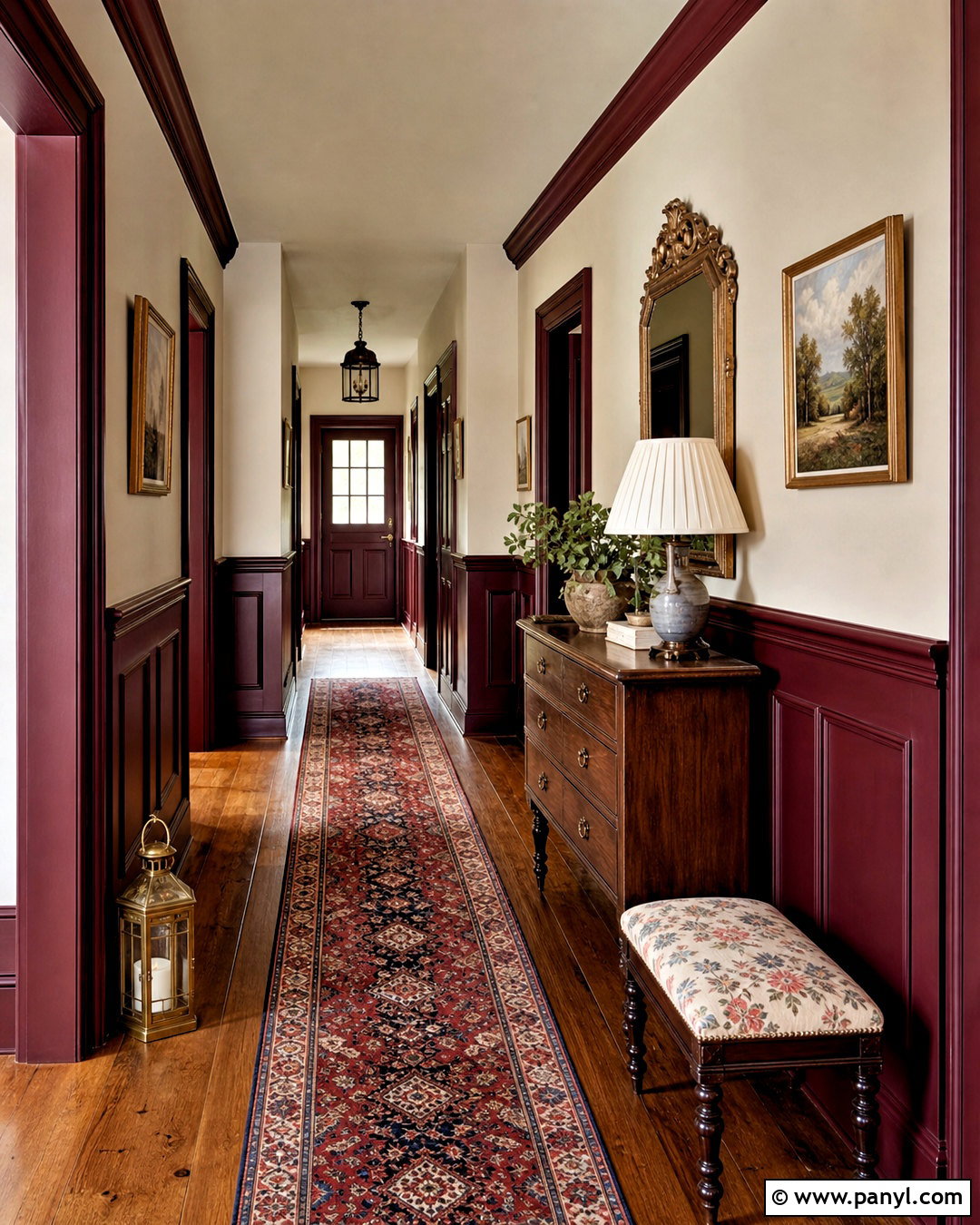
Deep burgundy below mushroom beige creates a rich hallway that feels sophisticated and comfortable. Paint the lower wall, paneled sections, baseboards, and door casings in a subdued red-burgundy satin. Use mushroom beige above to soften the contrast and complement warm wood flooring. A Persian-inspired runner containing muted red, tan, and blue connects both wall colors naturally. Choose a dark walnut console with shallow drawers, then add an antique brass mirror and a pleated cream lamp. Traditional framed landscapes can run along the upper wall without overcrowding the passage. Finish with a small upholstered stool and warm brass ceiling lantern. This layered design is particularly effective in historic, traditional, or bookish homes where deeper colors and collected furnishings feel appropriate.
12. Pale Pink And Deep Green Hallway
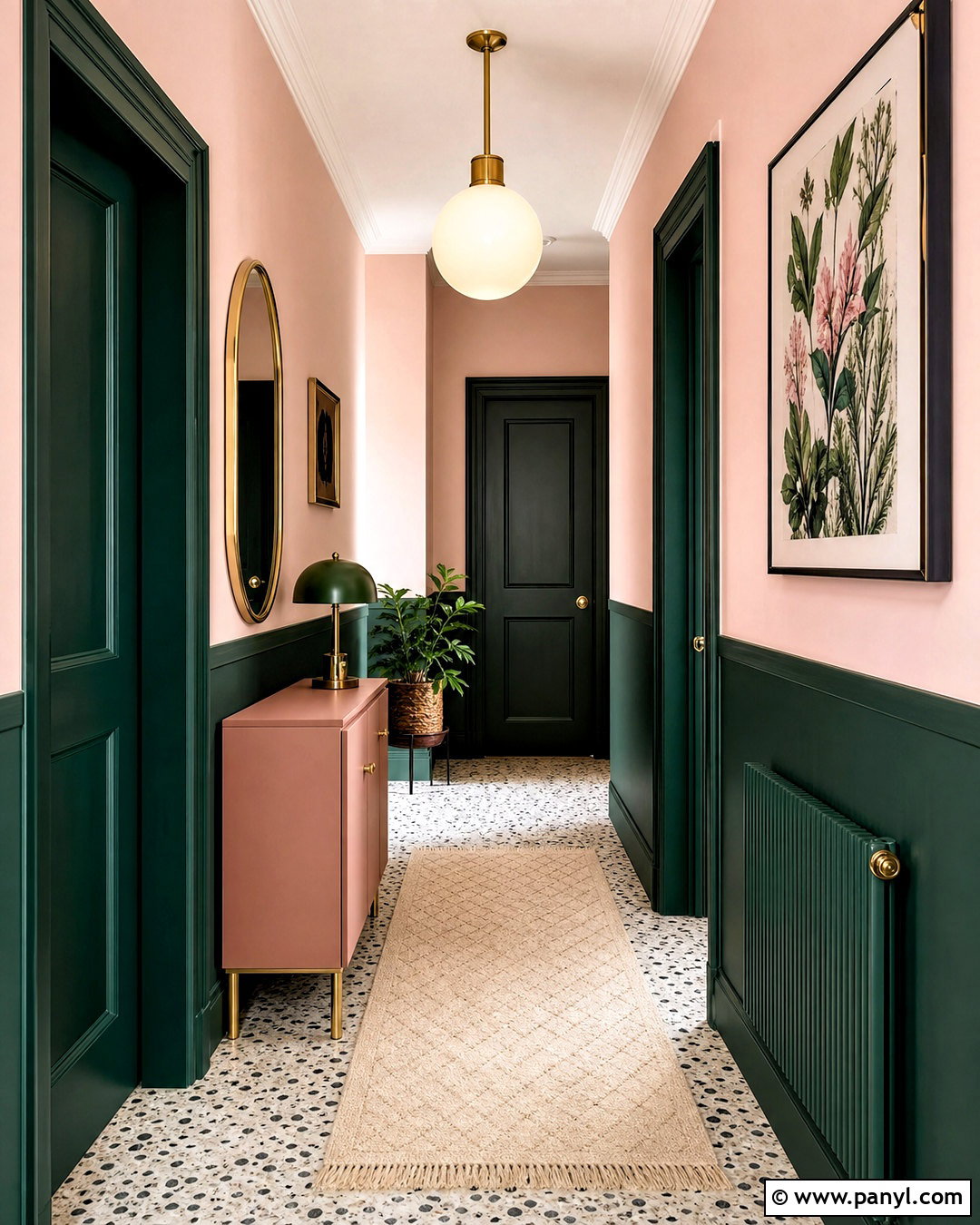
For an expressive yet balanced hallway, place deep forest green on the lower half and pale powder pink above. The muted pink should have a warm, chalky character rather than a sugary finish. Paint the baseboards and doors green to anchor the combination, but keep the ceiling soft white. Terrazzo-look flooring or pale oak boards introduce a lighter foundation. Add a slim blush-painted console, a brass-framed mirror, and a small green ceramic lamp for subtle repetition. Botanical artwork connects the two colors, while a cream runner gives the eye a restful element. Use a simple opal globe pendant instead of an elaborate fixture. Together, these details create a colorful hallway that feels intentional, modern, and suitable for an eclectic home.
13. Blue Gray And Bright White Hallway
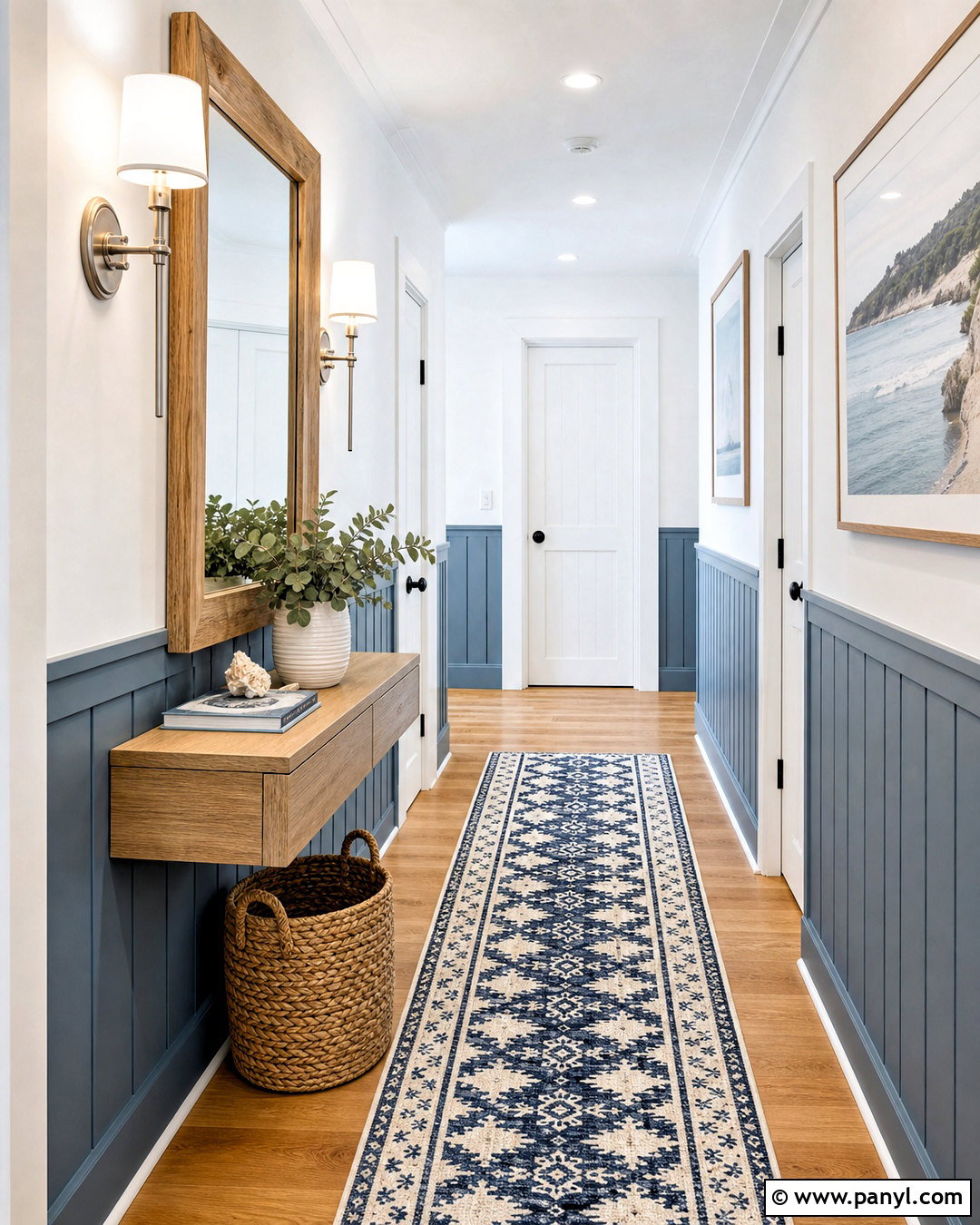
A blue-gray and bright white combination offers a fresh solution for a narrow hallway with limited decorative space. Paint vertical tongue-and-groove paneling blue-gray up to chair-rail height, including the trim and baseboards. Keep the upper walls, doors, and ceiling bright white to establish a light background. Medium oak flooring adds natural warmth, while a long navy-and-cream runner leads the eye toward the room at the end. Install a shallow floating console with a small drawer, topped by a rectangular wood-framed mirror. Brushed nickel wall lights provide practical illumination without narrowing the walkway. Complete the look with coastal landscape prints and a woven storage basket. The finished hallway feels relaxed, organized, and brighter without appearing plain.
14. Chocolate Brown And Cream Hallway
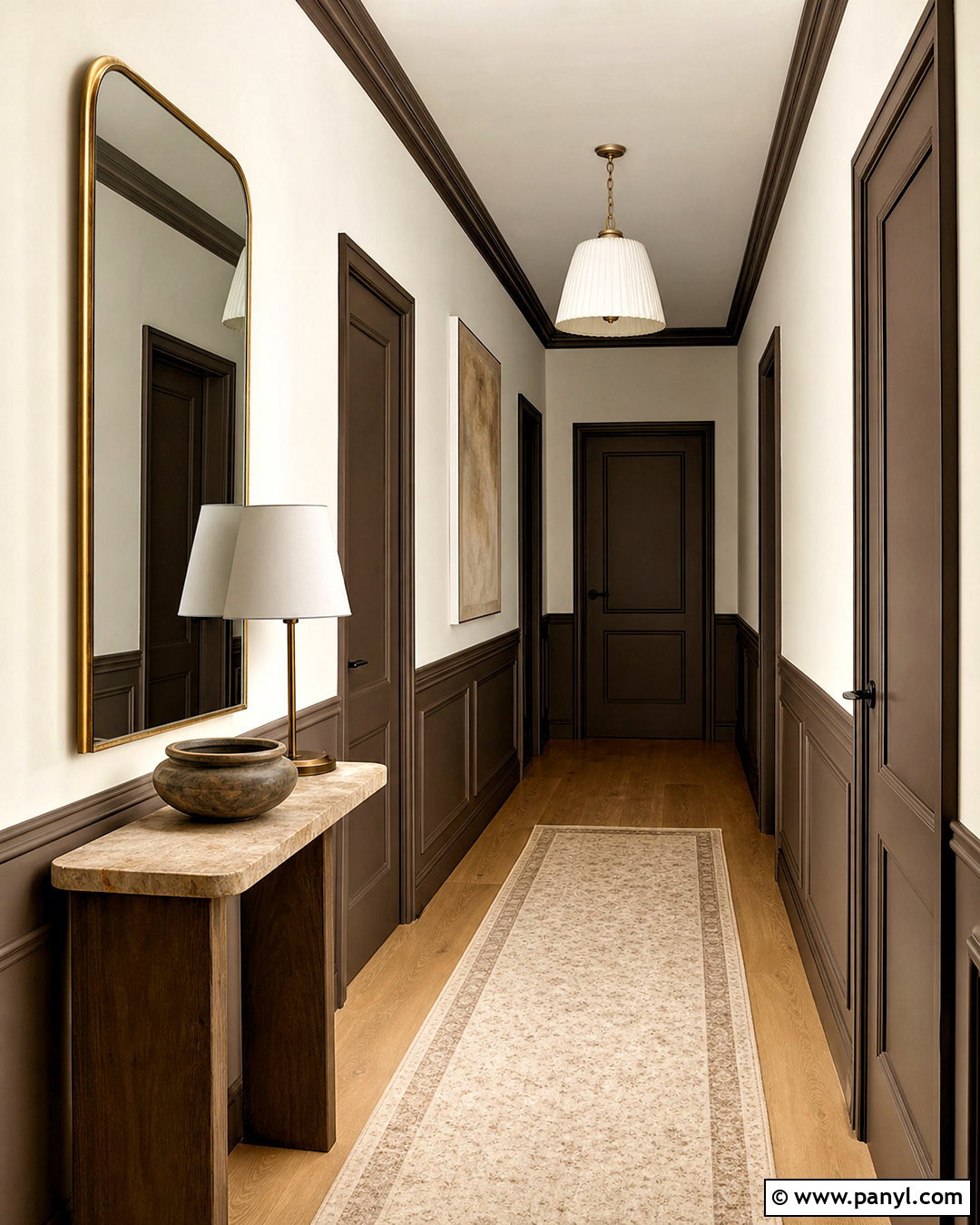
Chocolate brown can make a hallway feel warm and architectural when it is limited to the lower portion of the walls. Apply the brown to simple shaker-style paneling, baseboards, doors, and casings, then use creamy off-white above. Balance the dark paint with light oak flooring and an ivory runner featuring a subtle brown border. A narrow travertine-topped console introduces a lighter stone surface, while a large brass mirror reflects light around the corridor. Add a linen lamp, sculptural ceramic bowl, and one oversized neutral artwork rather than many small pieces. A cream drum pendant keeps the ceiling visually quiet. This complete tonal scheme brings depth to contemporary, midcentury, or transitional homes without depending on black accents.
15. Lavender And Soft Gray Hallway
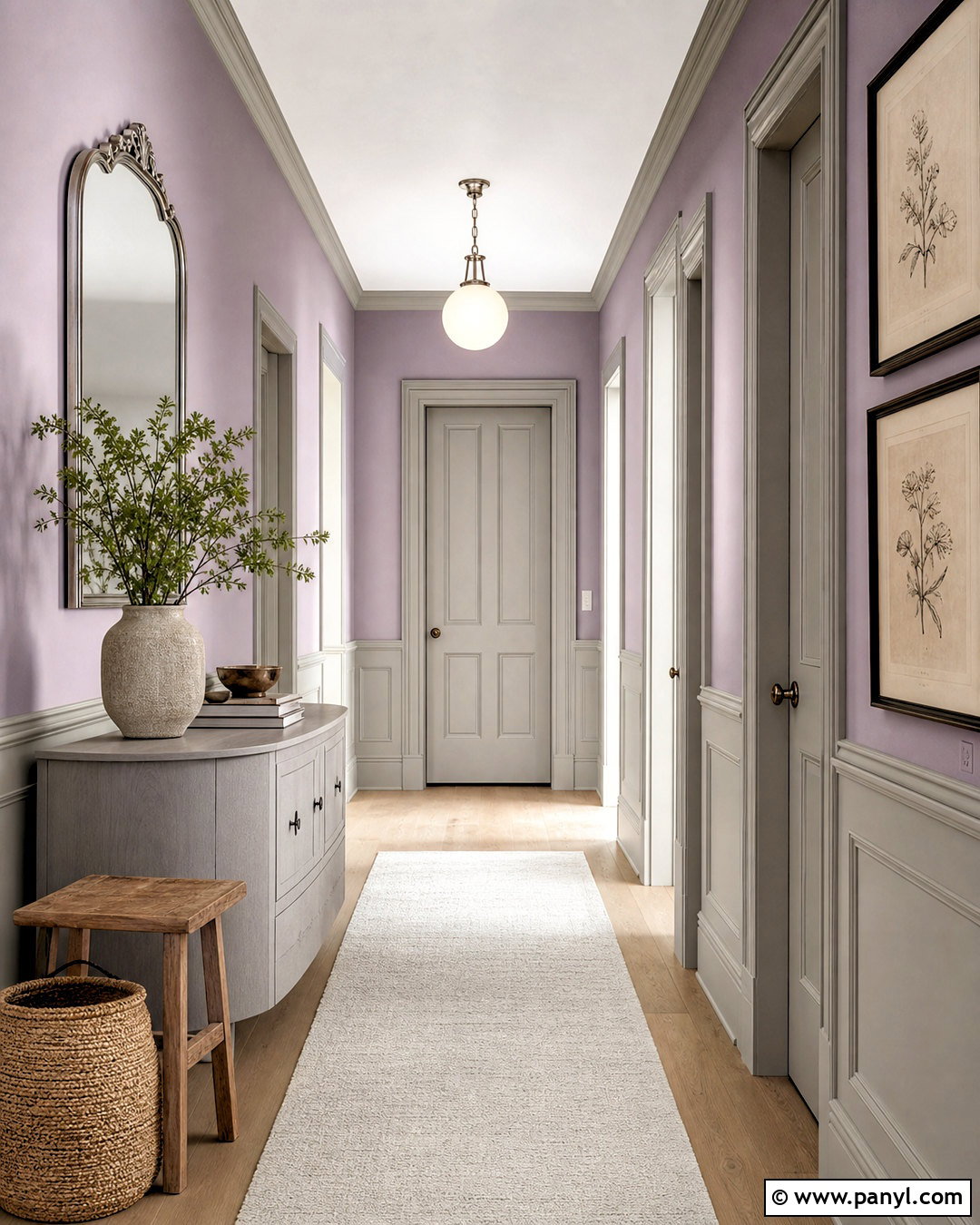
Soft lavender above light gray paneling creates a gentle hallway that still looks grown-up and polished. Select a dusty lavender with gray undertones, then pair it with pale warm gray on the lower third, doors, and trim. White oak floors and an ivory runner help both colors remain airy. Use a slim gray console with curved edges and a large silver-framed mirror to reinforce the cool palette. Add warmth through a small oak stool, natural basket, and linen lampshade. Framed floral sketches can introduce muted plum and green without overpowering the walls. Finish the space with a simple white globe pendant and brushed nickel hardware. This serene hallway works especially well beside bedrooms, bathrooms, or other quiet private spaces.
16. Rust And Warm White Hallway
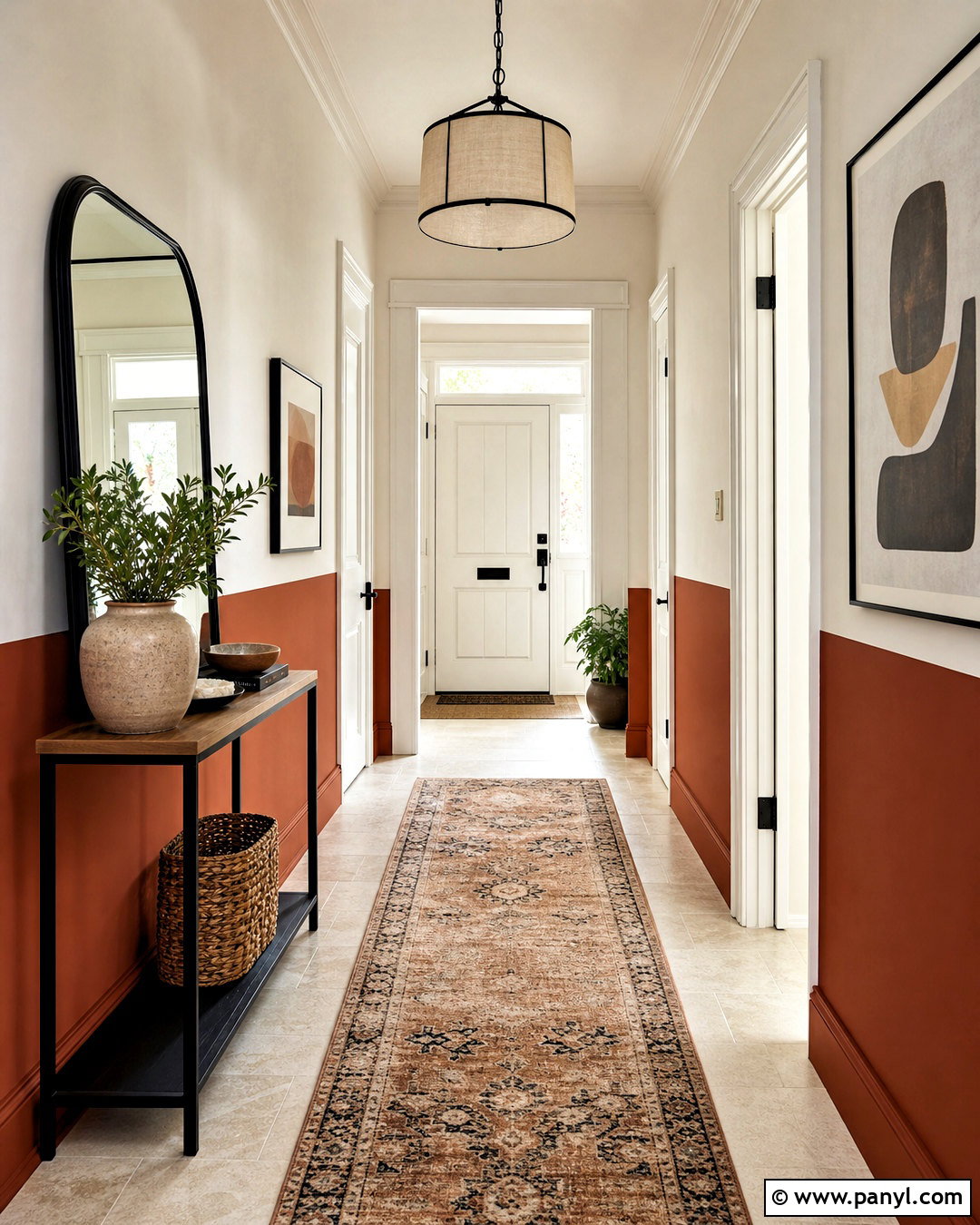
A muted rust lower wall brings warmth and depth to a simple hallway while warm white above keeps the space breathable. Position the divide slightly below standard chair-rail height for a contemporary color-blocked appearance. Paint the baseboards rust, but leave doors and casings warm white for a cleaner contrast. Pale stone tile or natural oak flooring complements the earthy palette. Add a narrow black metal console with a light wood top, followed by a rounded black mirror and handmade ceramic accessories. A flatwoven runner in tan, cream, and charcoal introduces soft pattern. Finish with abstract prints, a linen pendant, and one tall indoor plant near the brightest doorway. The completed scheme feels relaxed, artistic, and distinctly modern.
17. Forest Green And Natural Wood Hallway
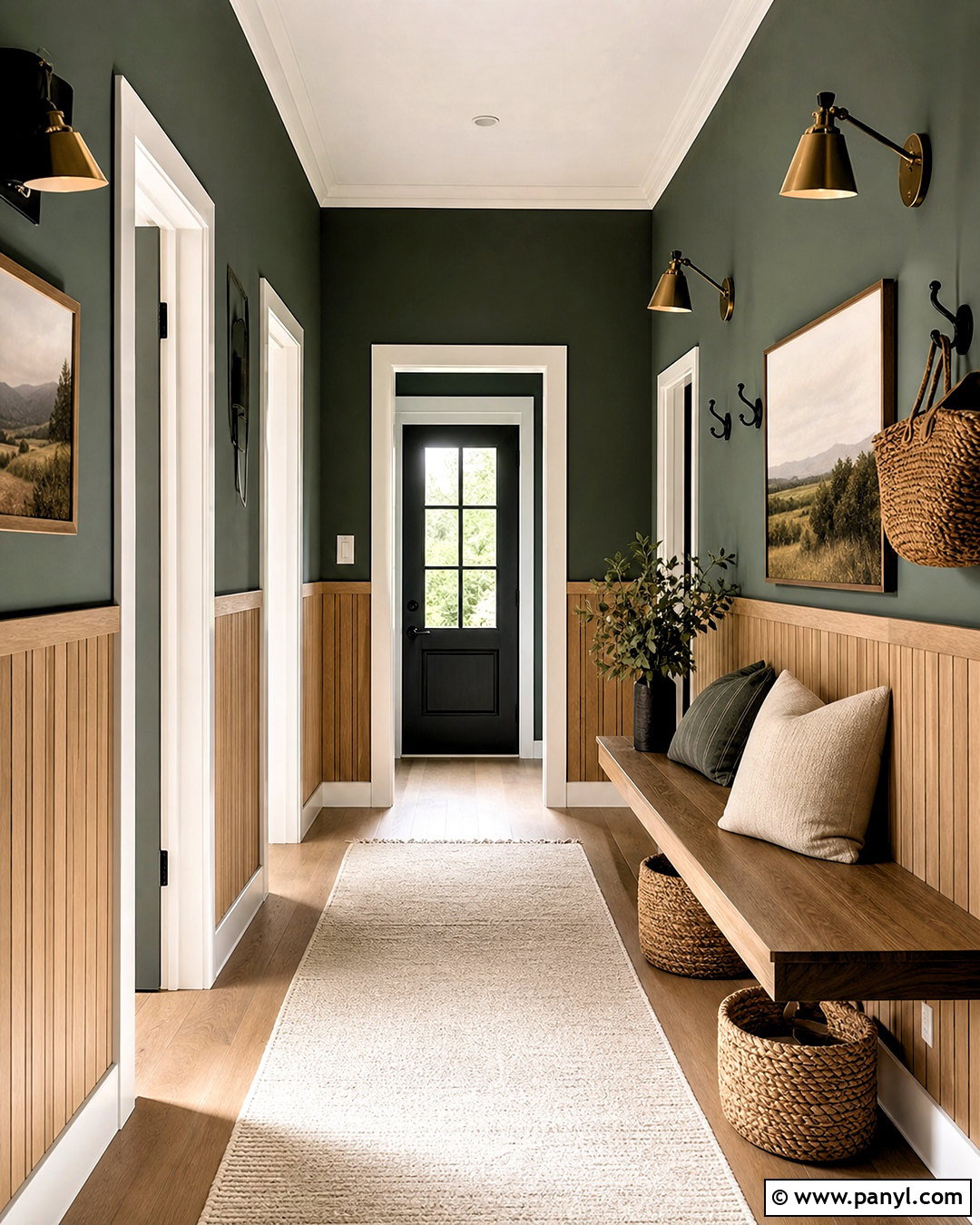
Pair forest green upper walls with natural wood paneling below for a two-tone hallway that highlights real material rather than relying entirely on paint. Use vertical oak slats or simple flat oak panels across the lower third, finished with a clear matte sealant. Keep the green rich but slightly muted, then paint the ceiling and remaining trim warm white. Continue the wood tone through pale oak flooring and a compact floating bench. A cream runner, brass wall lights, and simple landscape artwork prevent the deeper green from feeling too serious. Add black hooks above the bench and woven baskets beneath it for functional storage. This finished hallway blends modern organic design with useful entryway features and a strong connection to natural textures.
18. Mint Green And Soft Peach Hallway
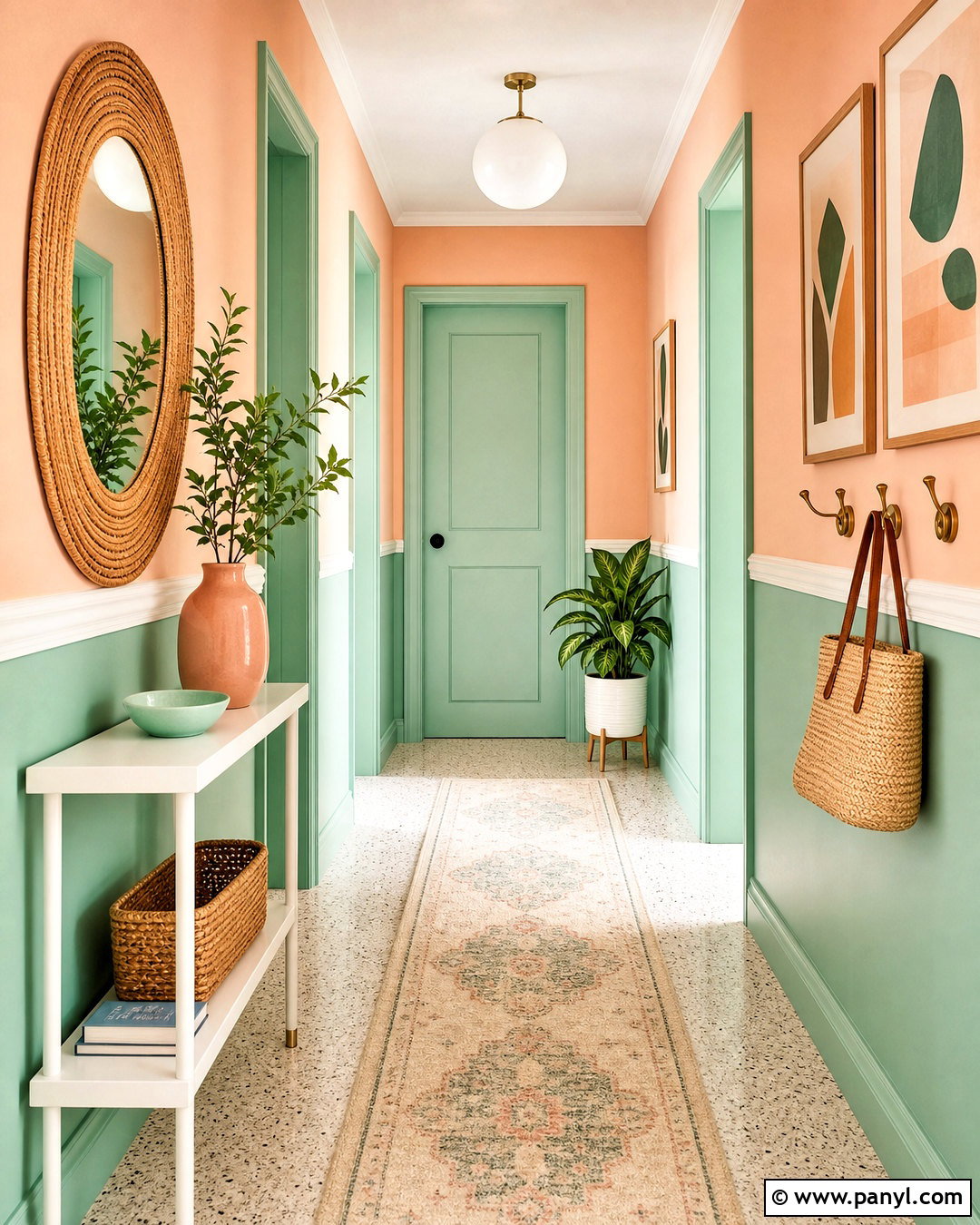
Mint green and soft peach create a lighthearted hallway when both colors have muted, dusty undertones. Apply mint to the lower half of the walls and door frames, then use pale peach above. A narrow white chair rail creates a crisp border and connects with the white ceiling. Choose light terrazzo flooring or pale wood, followed by a cream runner containing tiny green and peach details. A small white console keeps the space fresh, while a natural rattan mirror adds warmth. Decorate with playful geometric prints, pastel ceramic pieces, and a compact globe lamp. Brushed brass hooks provide practical storage near the door. The complete result is colorful but controlled, making it suitable for cheerful contemporary homes or family-friendly entryways.
19. Dark Blue And Pale Blue Hallway
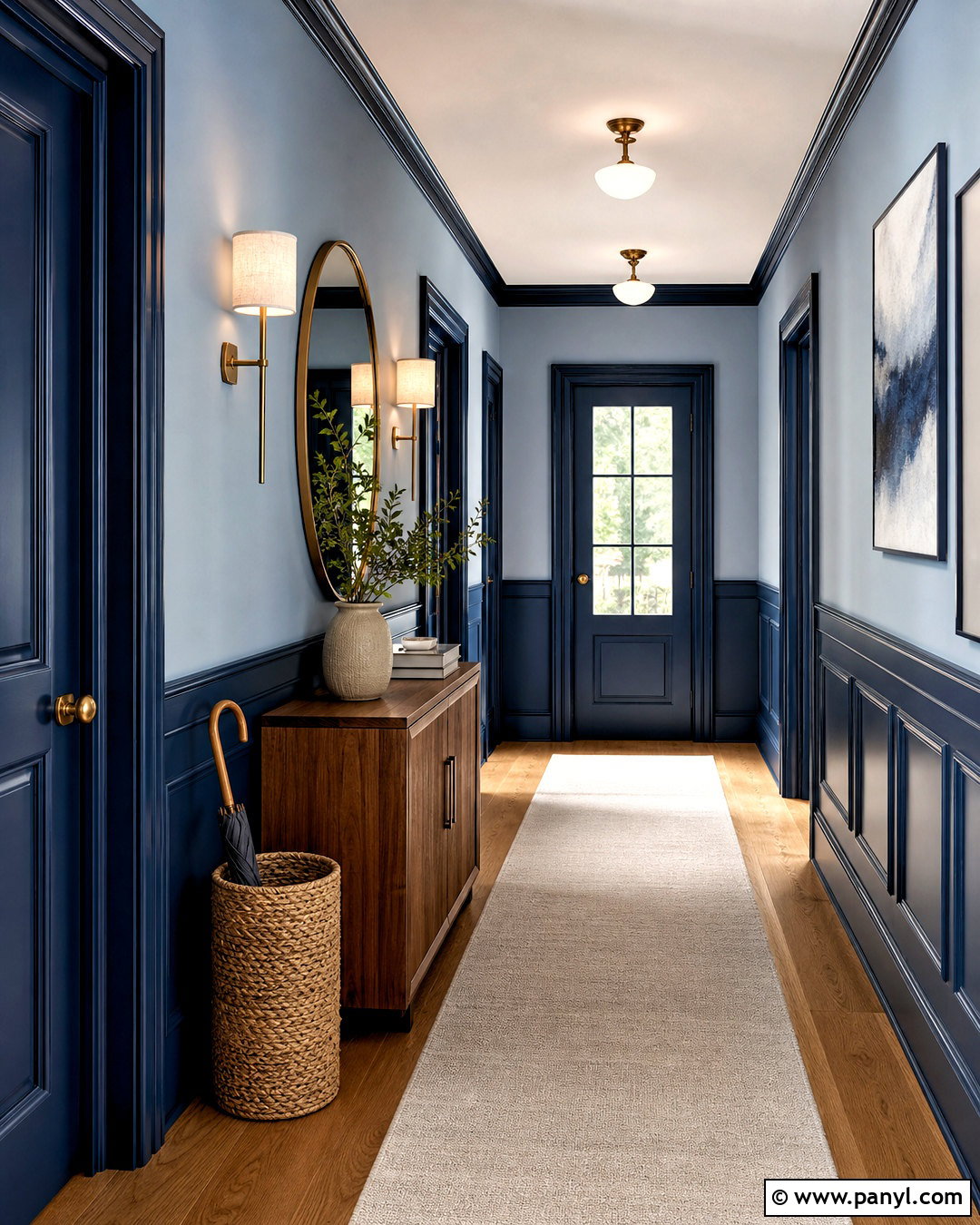
Using two shades from the same color family produces a cohesive hallway with more depth than a single paint color. Cover the lower paneled section, baseboards, doors, and casings in dark inky blue. Paint the upper walls a pale misty blue, then keep the ceiling soft white for separation. Medium oak floors and a cream runner add warmth to the cool palette. Position a slim walnut console against the longest wall and hang a large brass mirror above it. A pair of linen-shaded sconces creates even illumination, while abstract blue artwork links both painted sections. Finish with a woven umbrella basket and brass door hardware. This tonal approach feels polished, calm, and easier to coordinate than strongly contrasting colors.
20. Taupe And White Arched Hallway
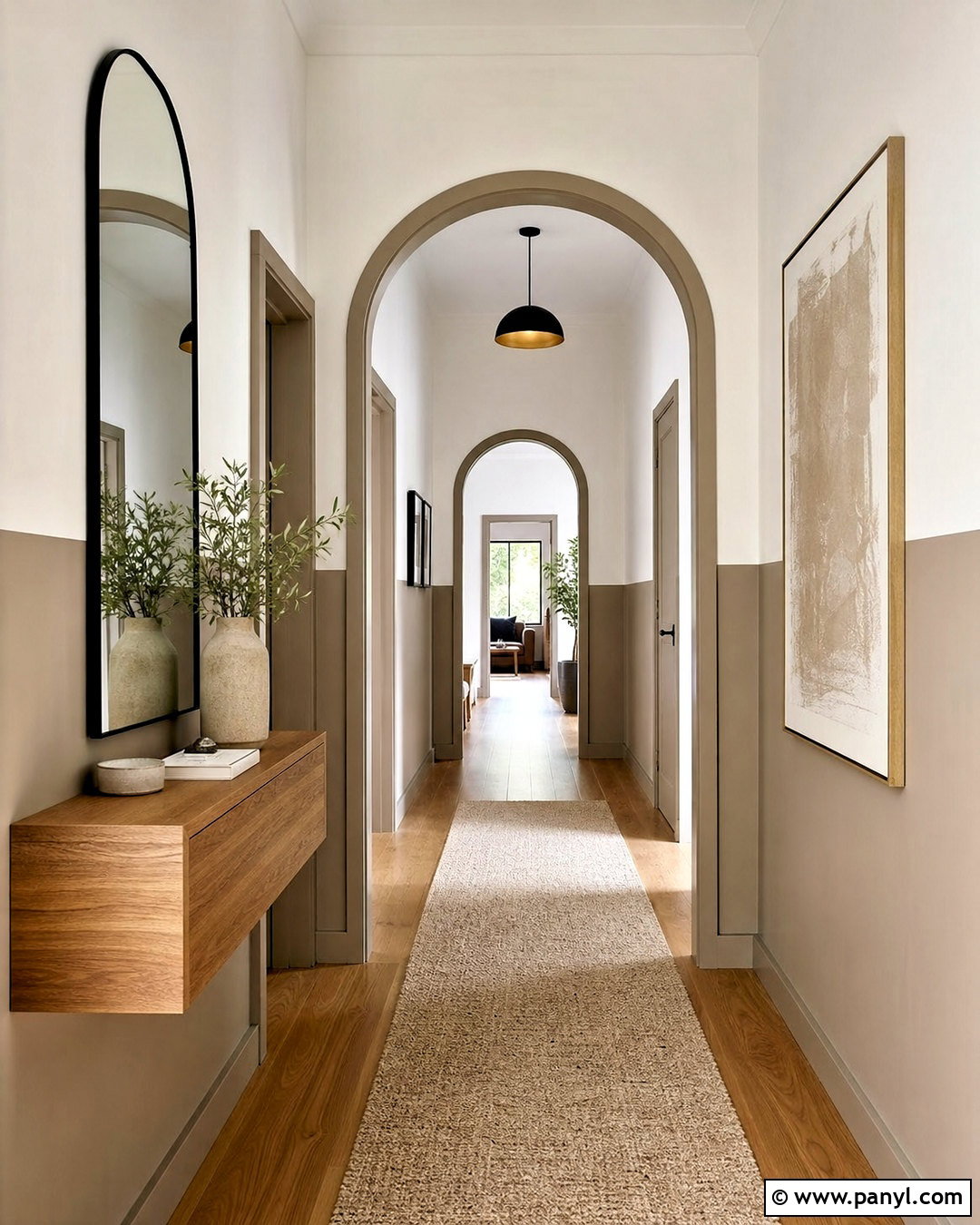
Give a long corridor stronger rhythm by combining warm taupe lower walls with white upper walls and painted arch details. Run the taupe color along the lower third, baseboards, and door frames, then curve it upward around selected doorways to create simple arch shapes. Keep the remaining walls and ceiling soft white so the graphic treatment stays balanced. Light oak flooring, an understated beige runner, and a floating wood console create a warm foundation. Add black dome wall lights, a tall rounded mirror, and large neutral prints spaced evenly down the hall. Avoid extra furniture that could compete with the painted architecture. The finished design gives an ordinary passage a distinctive contemporary identity while preserving a practical, uncluttered walkway.
Conclusion:
The best two tone hallway ideas combine color with the features already present in the space. Paneling, chair rails, doors, flooring, and lighting should feel like parts of one complete plan rather than separate decorating decisions. Darker lower walls can provide a grounded base, while lighter upper colors often keep the corridor visually open. Tonal pairings feel calm, and contrasting shades create a stronger focal point. Before painting, sample both colors beside the floor, trim, and connecting rooms at different times of day. Then choose durable, washable finishes for frequently touched areas. With thoughtful placement and coordinated furnishings, even a narrow hallway can become a practical and memorable part of your home.

Related Ideas and Inspiration:
Leave a Reply