
Painted trim can completely change how a room feels without requiring new flooring, furniture, or major construction. The best **painted baseboards and trim ideas** treat woodwork as part of the entire color scheme, coordinating it with walls, doors, flooring, textiles, and architectural details. Crisp white remains useful, but warm neutrals, earthy greens, rich blues, and deep contrast colors can give ordinary molding a more intentional look. Matching walls and woodwork creates a seamless effect, while contrasting colors highlight the room’s shape and craftsmanship. A durable satin or semigloss finish also makes frequently touched and scuffed surfaces easier to maintain. () Whether your home is traditional, modern, colorful, or quietly neutral, the following complete rooms offer practical inspiration through 20 painted baseboards and trim ideas.

1. White Baseboards With Greige Walls
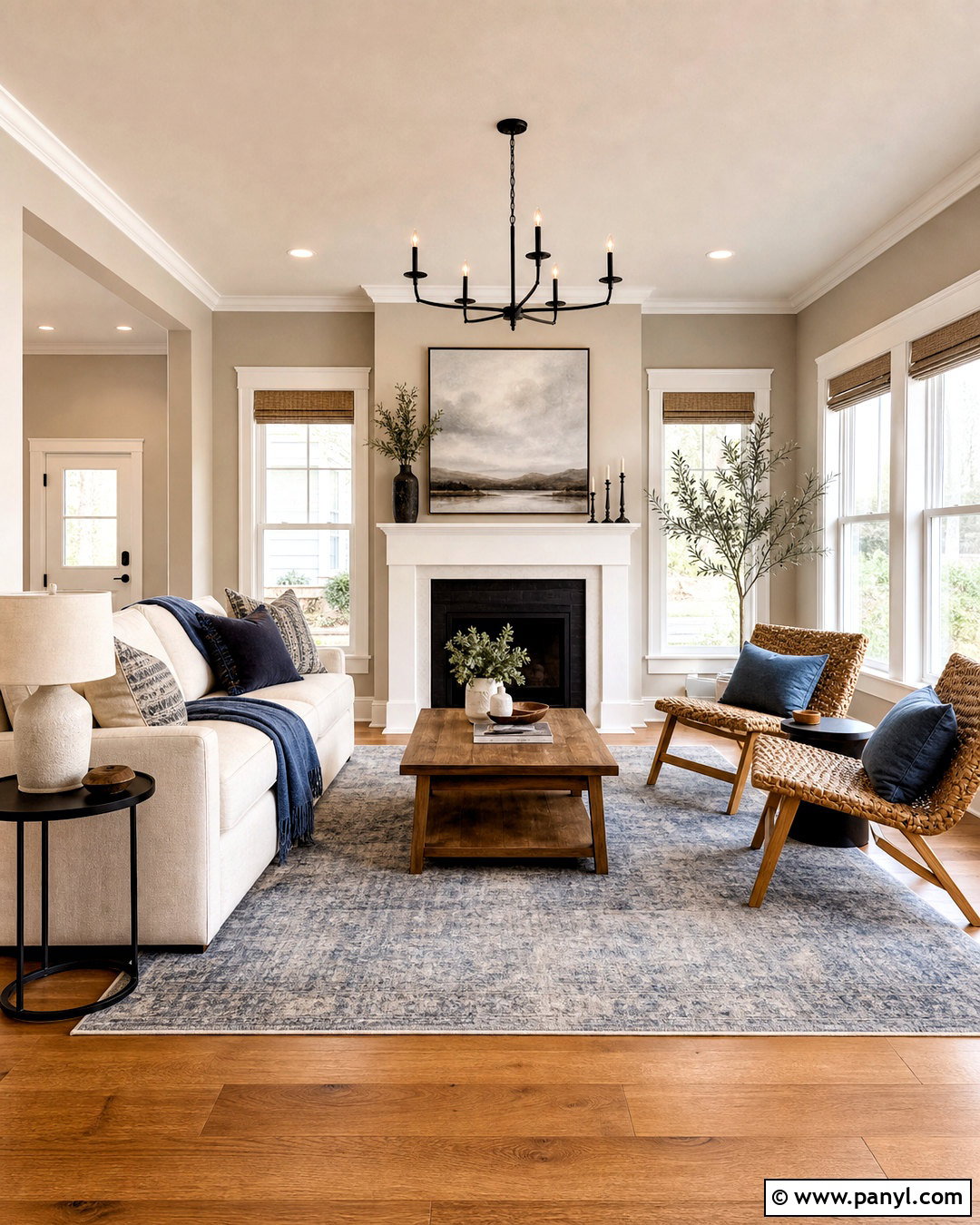
Crisp white baseboards give warm greige walls a clean, finished edge without making the room feel cold. Use this combination in a relaxed living room with medium oak flooring, a cream sofa, woven accent chairs, and muted blue textiles. Carry the white onto window casings, doorframes, and crown molding so every architectural line feels connected. A soft white with warm undertones works better than a stark blue-white beside beige-influenced walls. Choose simple flat baseboards for a modern home or a gently stepped profile for a transitional interior. Matte or eggshell walls will contrast subtly with satin or semigloss woodwork. Finish the room with black lighting and natural wood tables for definition.
2. Black Baseboards With White Walls
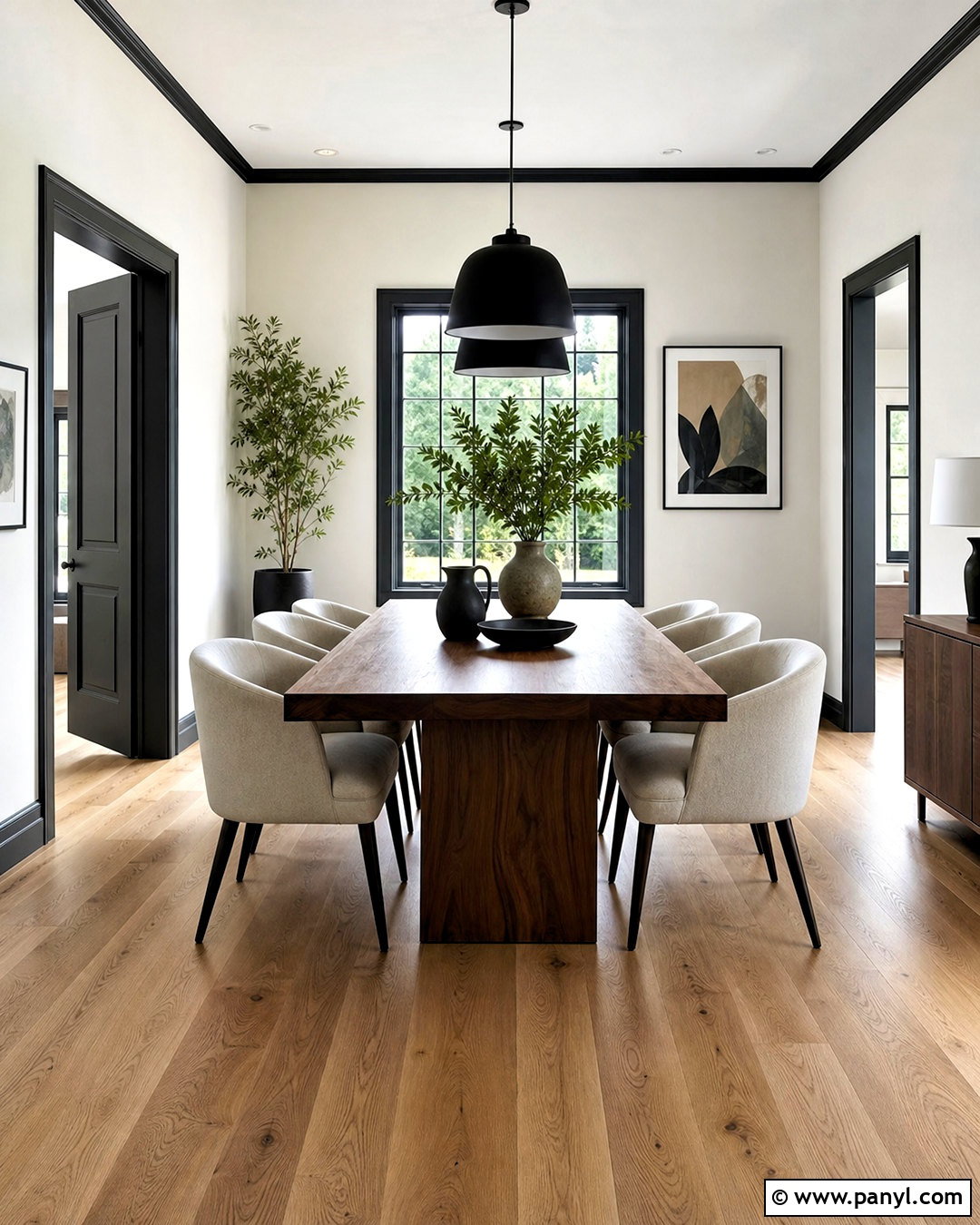
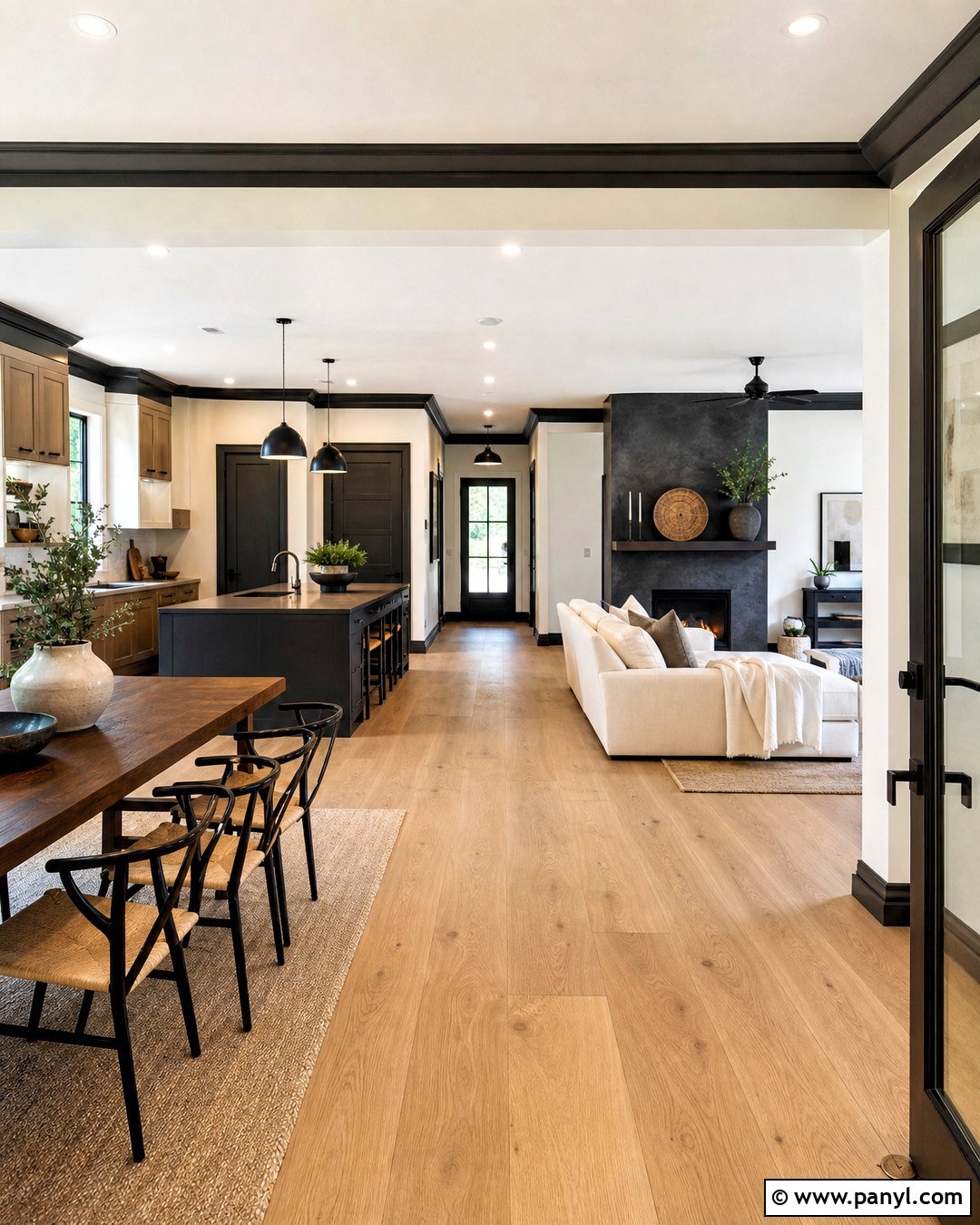
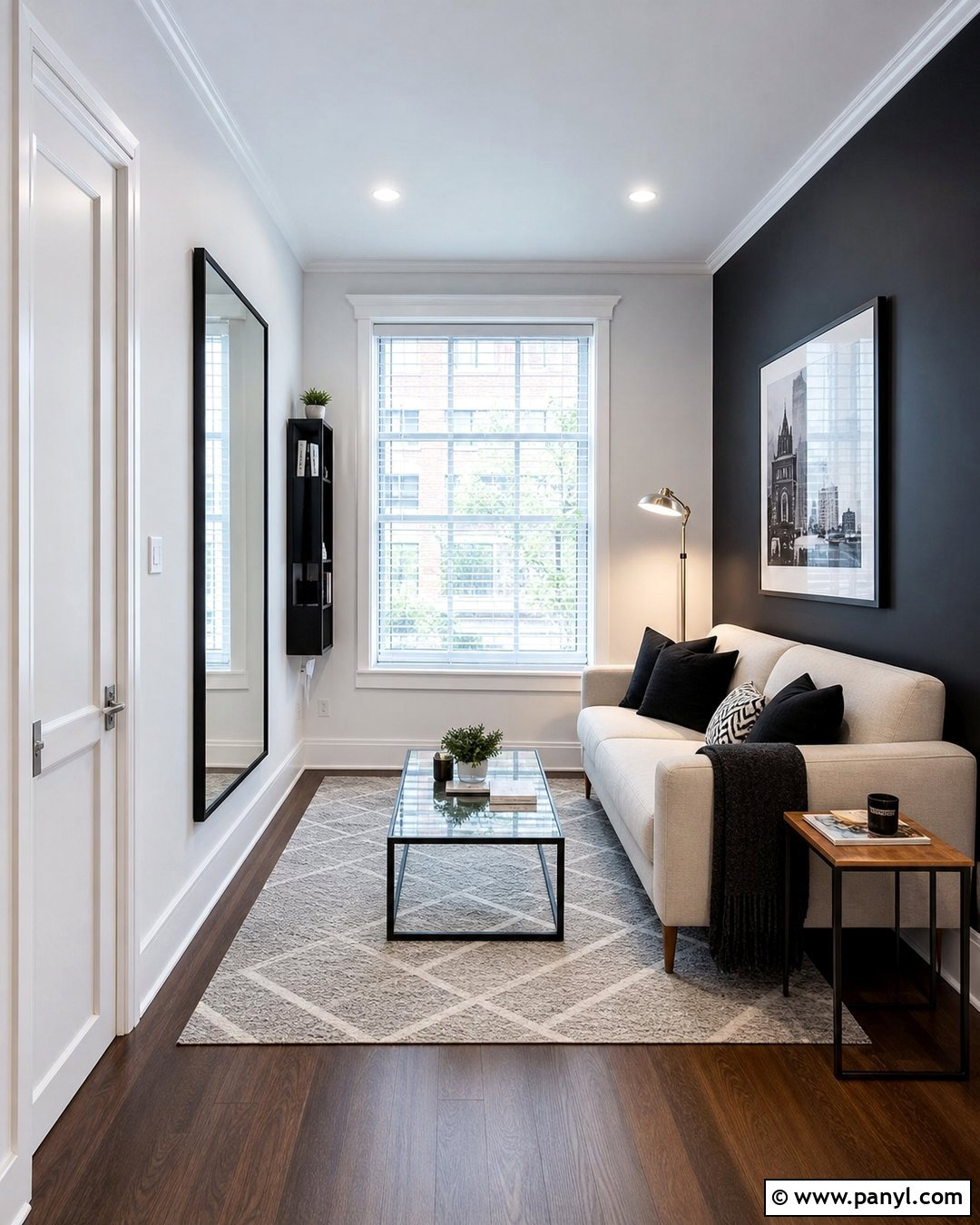
Black baseboards bring strong definition to a white room, especially when the floor has visible warmth or texture. Picture a modern dining room with creamy white walls, wide-plank oak flooring, a rectangular walnut table, and curved beige chairs. Paint the baseboards, window frames, and door casings in soft black rather than a harsh jet black. Repeating the color on a pendant light, curtain rod, and framed artwork makes the dark trim feel deliberate. Keep the ceiling and crown molding white to preserve an open atmosphere. A satin finish gives the black woodwork enough durability without creating excessive shine. This scheme is particularly effective with straightforward trim profiles that emphasize long, clean architectural lines.
3. Same Color Walls And Trim
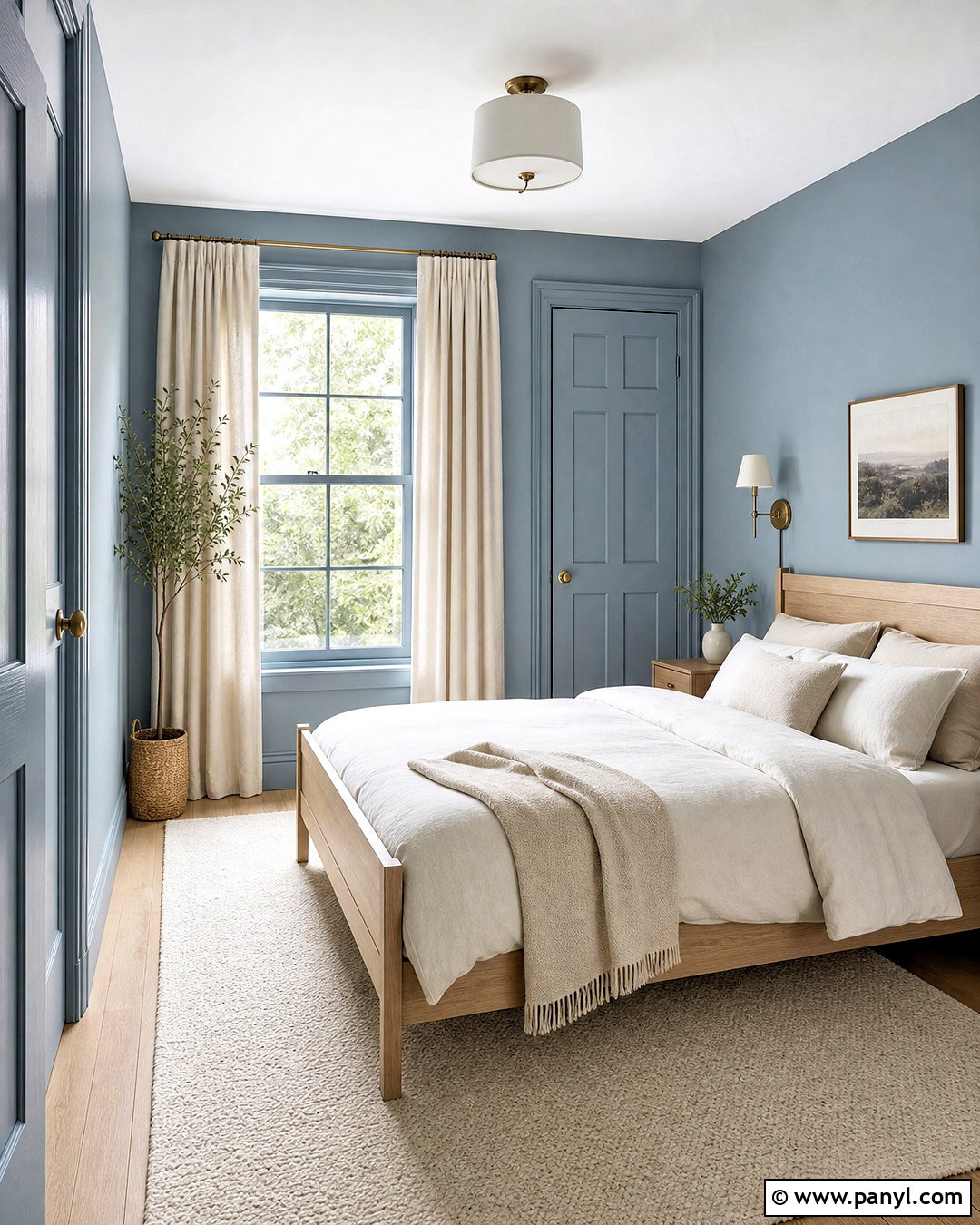
Painting the walls, baseboards, doors, and casings in one color creates a seamless room with fewer visual interruptions. Try this approach in a compact bedroom using a muted dusty blue across every painted surface. Add a light oak bed, natural linen bedding, a cream rug, and simple brass sconces to soften the enveloping color. Use flat or eggshell paint on the walls and satin paint in the identical color on the woodwork. The slight sheen change keeps the baseboards practical while preserving the continuous appearance. Curtains close to the wall color will strengthen the effect. Rather than disappearing completely, the trim reveals itself through gentle shadows, giving the room depth without introducing another competing color.
4. Darker Trim With Lighter Walls
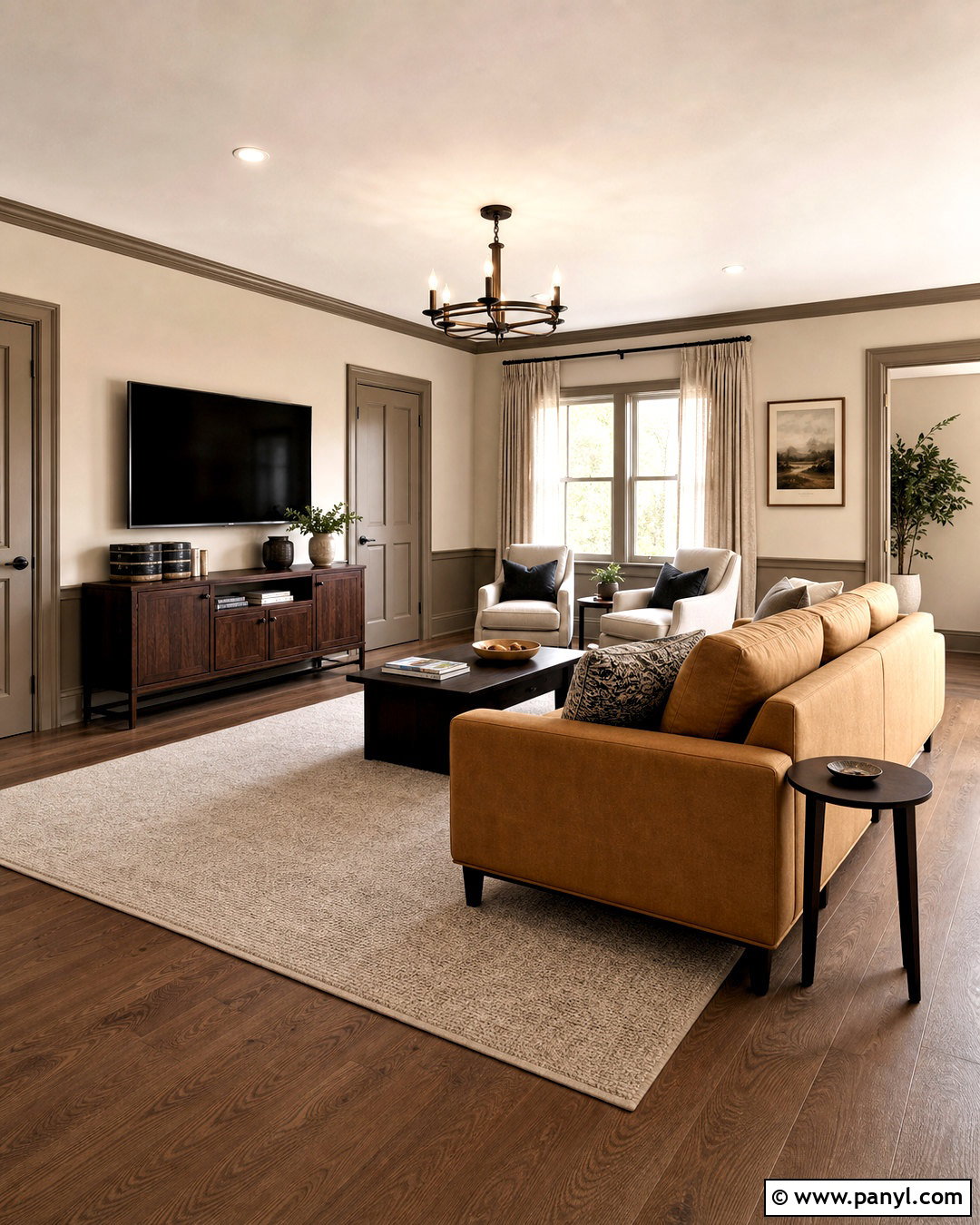
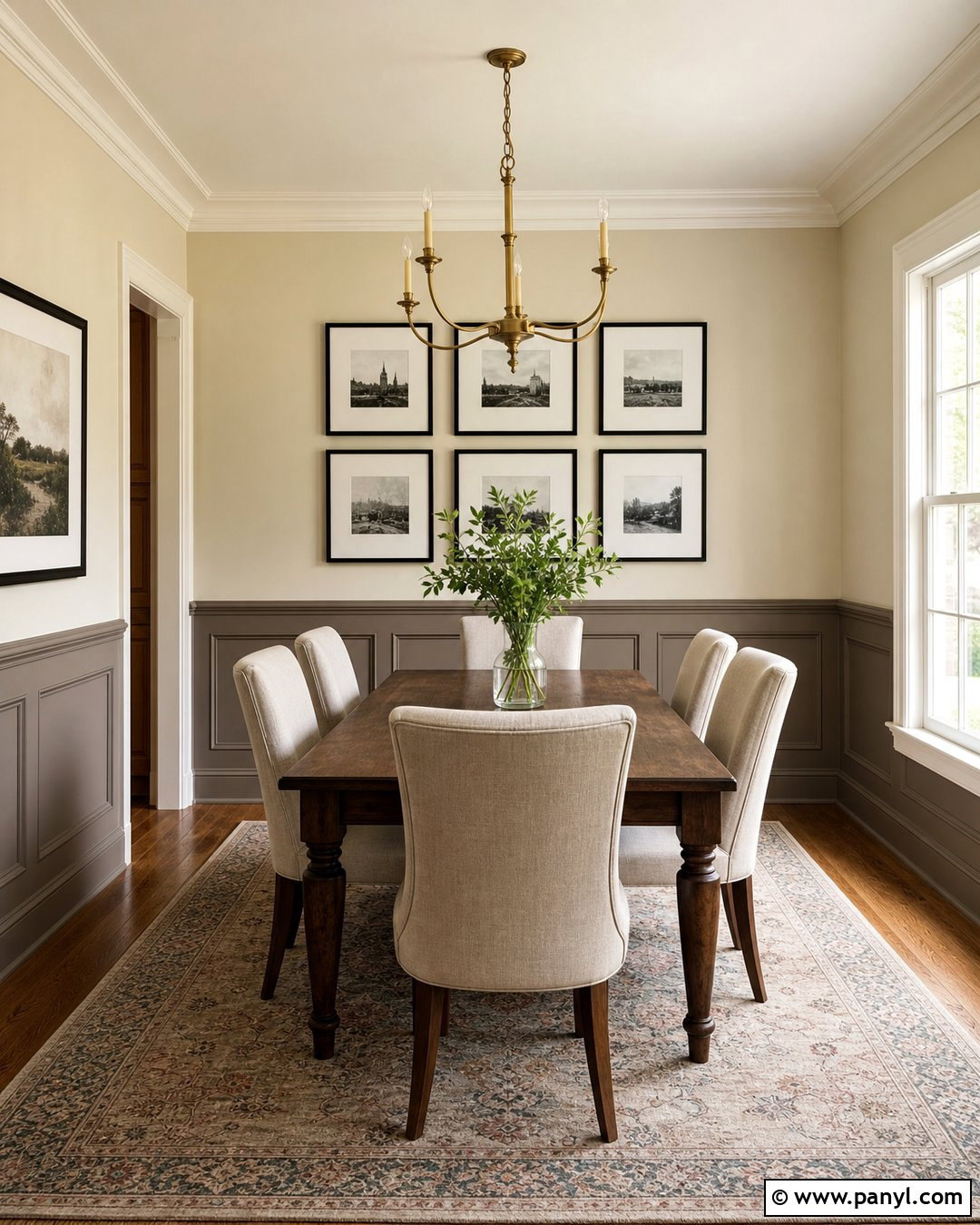
A tonal palette feels calm but still allows the molding to stand out. Begin with pale mushroom walls, then paint the baseboards, doorframes, and interior doors two or three shades darker in a rich taupe. Complete the family room with a camel sofa, walnut media cabinet, oatmeal rug, and dark bronze lighting. The deeper trim visually anchors the walls and connects naturally with medium or dark wood flooring. Keep the ceiling a warm off-white so the room remains bright. This treatment works especially well on wide baseboards and substantial door casings because the deeper paint highlights their proportions. Test both colors together under daylight and evening lighting to make sure their undertones remain comfortably related.
5. Sage Green Baseboards With Cream Walls
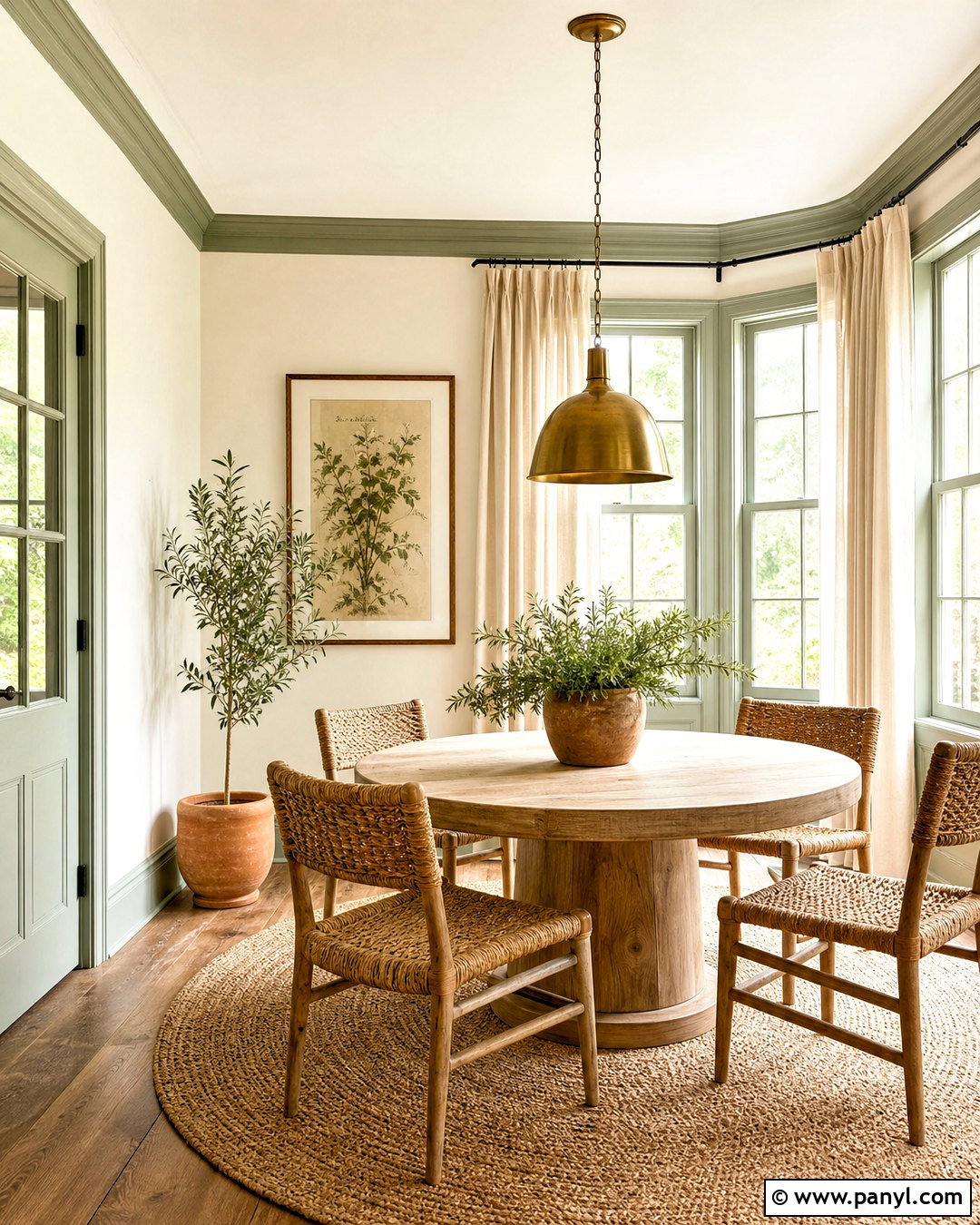
Soft sage green baseboards add nature-inspired color to a room while remaining easy to decorate around. Pair them with creamy walls in an inviting breakfast room featuring a round oak table, woven chairs, botanical artwork, and off-white linen curtains. Continue the sage onto door and window trim for a unified outline around the space. A warm green with gray undertones will feel more adaptable than a bright yellow-green. Terracotta planters, aged brass lighting, and a jute rug can reinforce the earthy palette without overwhelming it. Use a satin finish on the green woodwork and a washable matte finish on the walls. The completed room feels colorful, relaxed, and grounded rather than heavily themed.
6. Navy Blue Trim With Pale Blue Walls
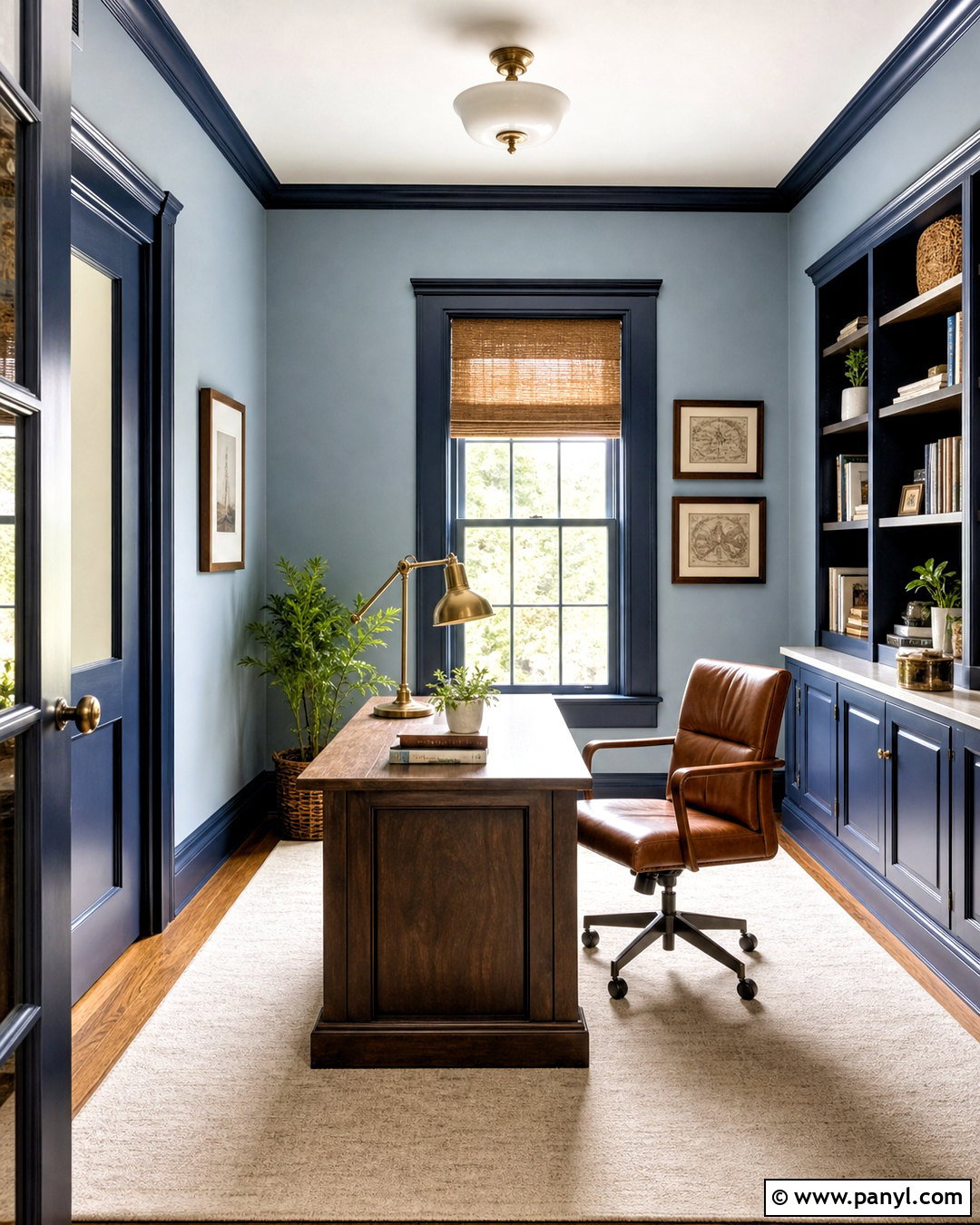
Navy trim can give a pale blue room a polished, tailored character. Use the pairing in a home office with powder blue walls, navy baseboards, matching window casings, and a navy-painted interior door. Add a medium walnut desk, cognac leather chair, cream wool rug, and antique brass task lamp. The brown wood and leather prevent the blue palette from becoming too cool. Keep the ceiling warm white, and choose natural woven shades instead of heavy navy curtains. A deep, slightly muted navy usually looks softer across large areas than an intensely saturated blue. Satin paint will emphasize the trim profile gently while providing a practical surface around the floor, doorway, and frequently used windows.
7. Charcoal Trim With Warm White Walls
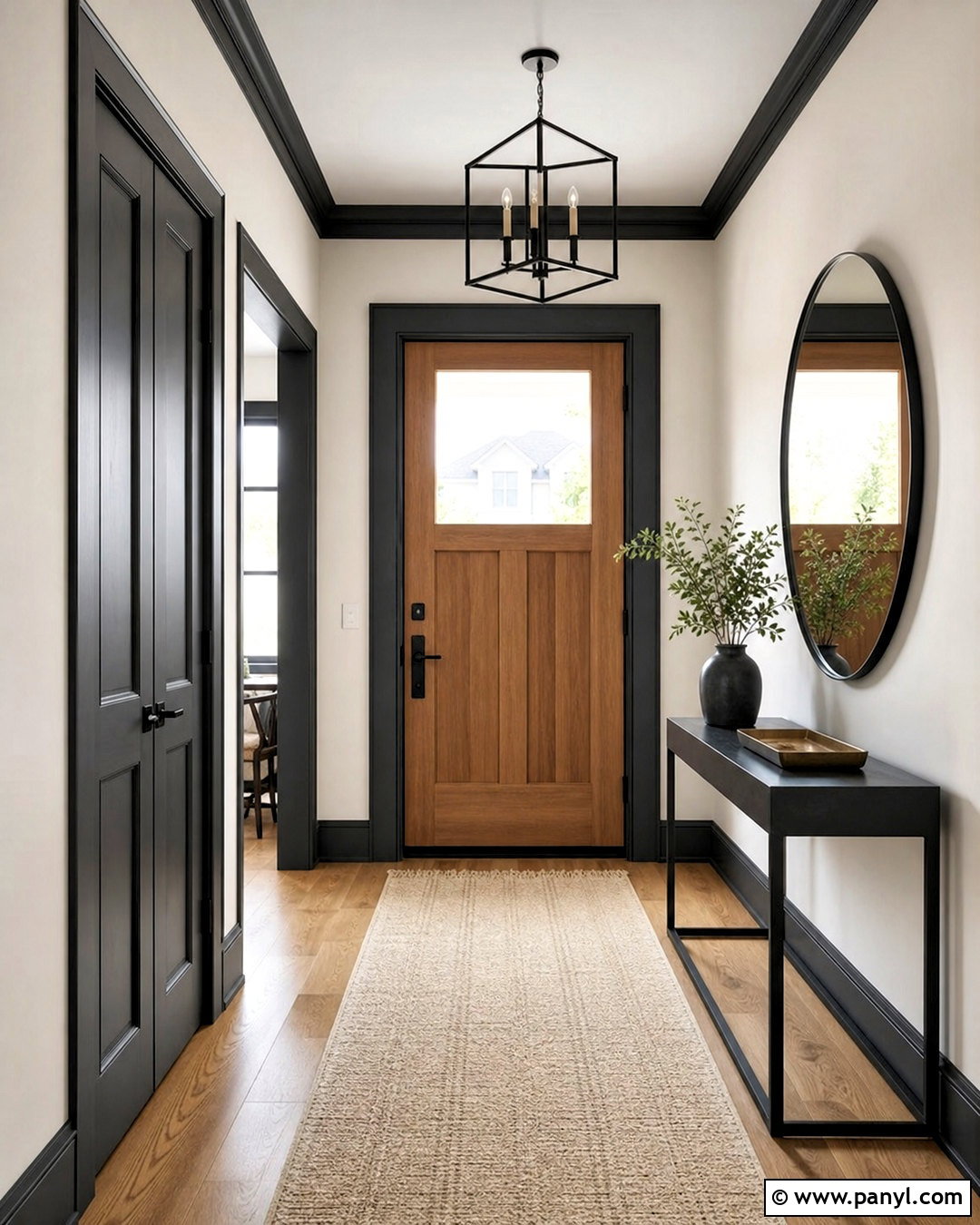
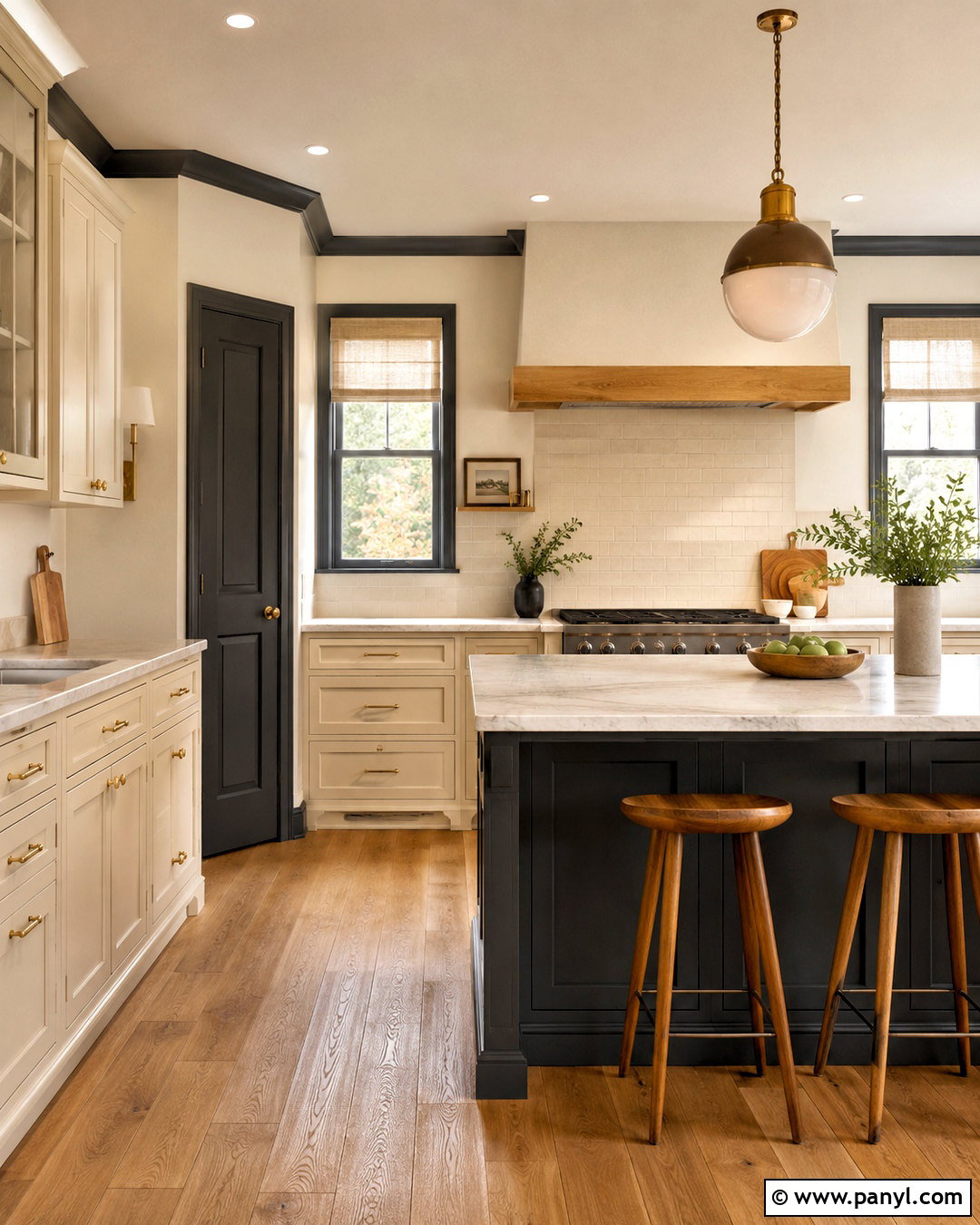
Charcoal trim offers definition similar to black but produces a softer transition beside warm white walls. Build this scheme in a modern entryway with light oak floors, a streamlined wood console, an ivory runner, and a large round mirror. Paint the baseboards, front-door casing, and nearby closet doors charcoal gray. A natural wood front door can remain unpainted, becoming the warm centerpiece of the space. Repeat charcoal through a metal ceiling fixture, narrow bench legs, and framed artwork. Avoid adding too many other dark colors, since the trim should provide the primary structure. The finished entry feels crisp and contemporary, yet the warm walls and organic materials keep it welcoming and appropriate for an average home.
8. Taupe Trim With Beige Walls
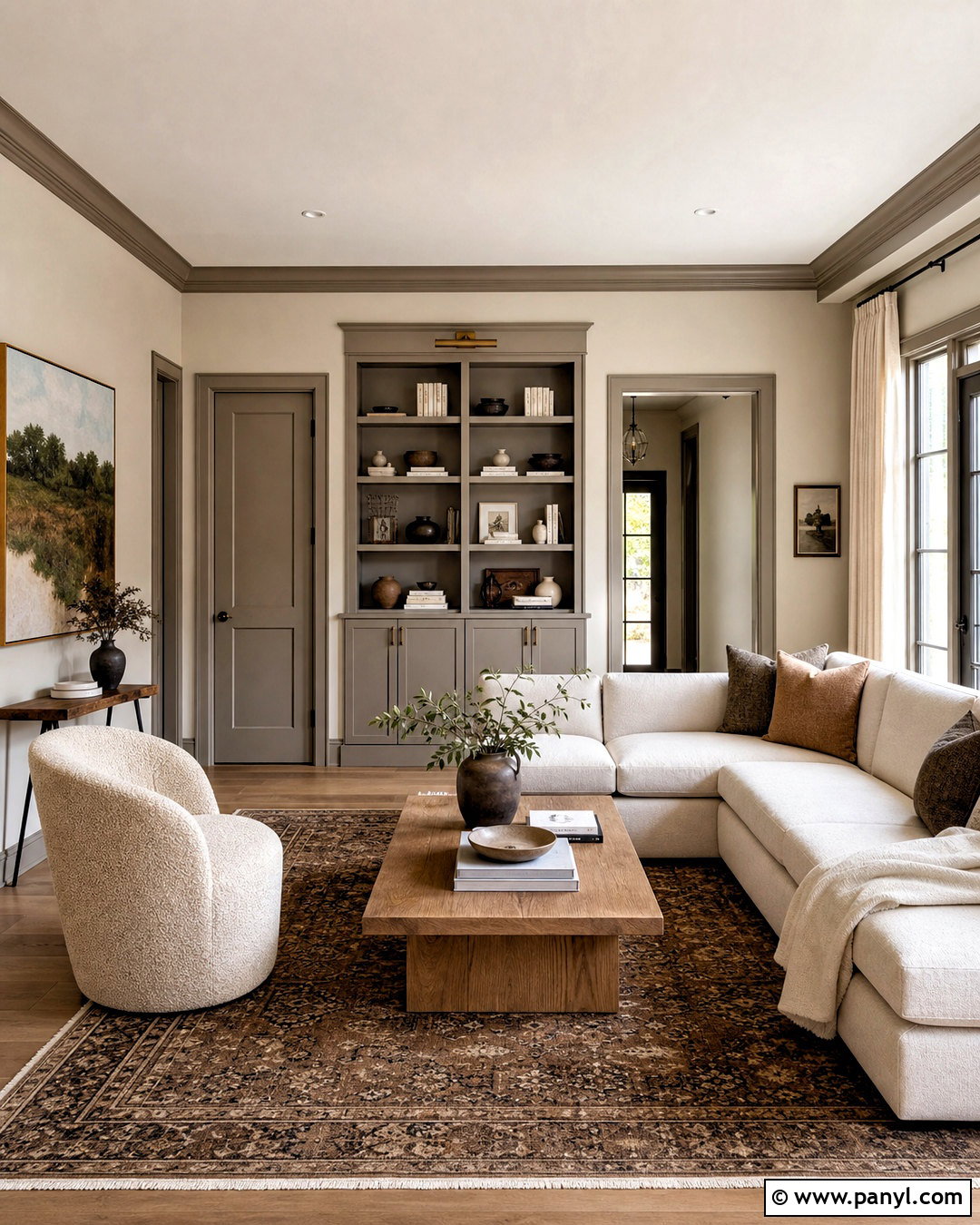
Layered beige and taupe create a warm neutral room that has more dimension than an all-white interior. Choose light sandy beige for the walls and a medium earthy taupe for the baseboards, window trim, doors, and built-in cabinetry. In a comfortable living room, combine this woodwork with an ivory sectional, boucle chair, oak coffee table, and brown patterned rug. Add bronze hardware and linen curtains for subtle contrast. Because beige colors can shift considerably in different light, compare large painted samples beside the flooring before committing. The trim should be clearly deeper than the walls but share the same warm undertone. This coordinated palette feels understated, cohesive, and forgiving in busy everyday spaces.
9. Terracotta Trim With Blush Walls
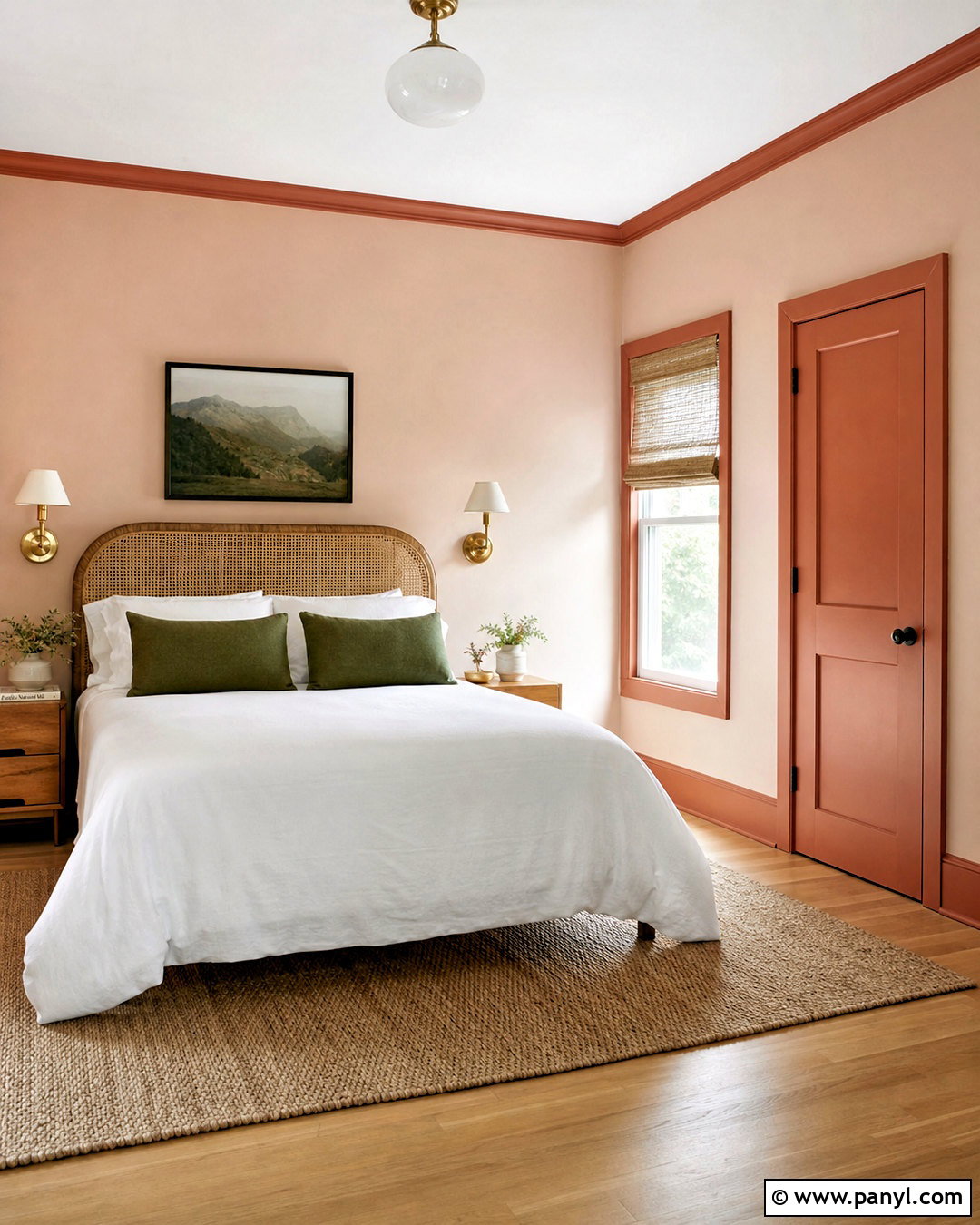
Terracotta-painted trim gives a blush room warmth, personality, and a grounded architectural outline. This palette suits a cheerful guest bedroom with pale dusty pink walls, clay-colored baseboards, matching doorframes, and a terracotta-painted door. Balance the warm colors with a natural cane headboard, white bedding, an oatmeal rug, and olive green accent pillows. Small brass lights and simple landscape prints complete the room without making it overly decorative. Select a muted, brown-based terracotta rather than vivid orange for a more livable result. Continuing the color around windows creates consistency, while leaving the ceiling creamy white maintains brightness. The final design feels welcoming and collected, with enough neutral texture to calm the stronger painted details.
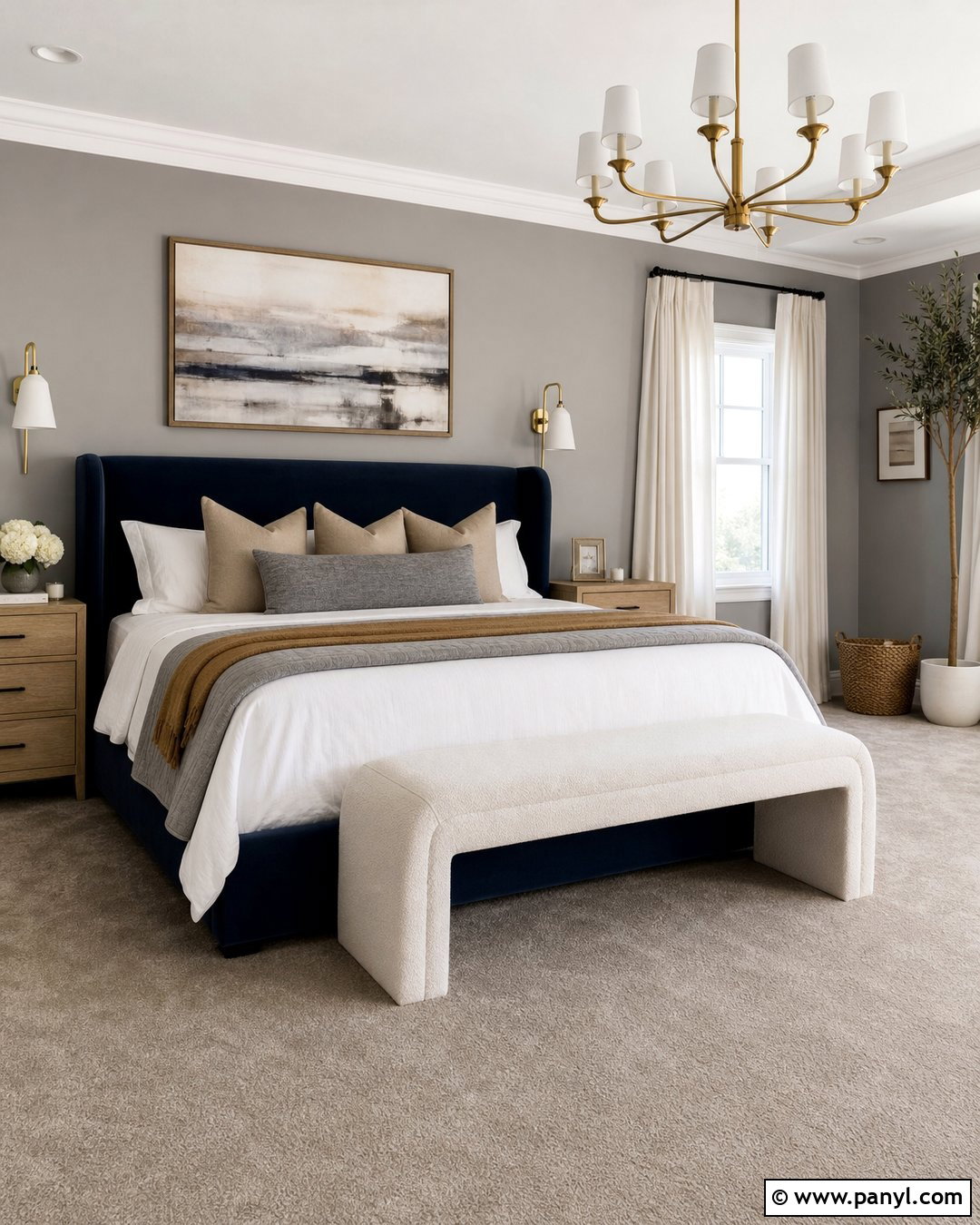
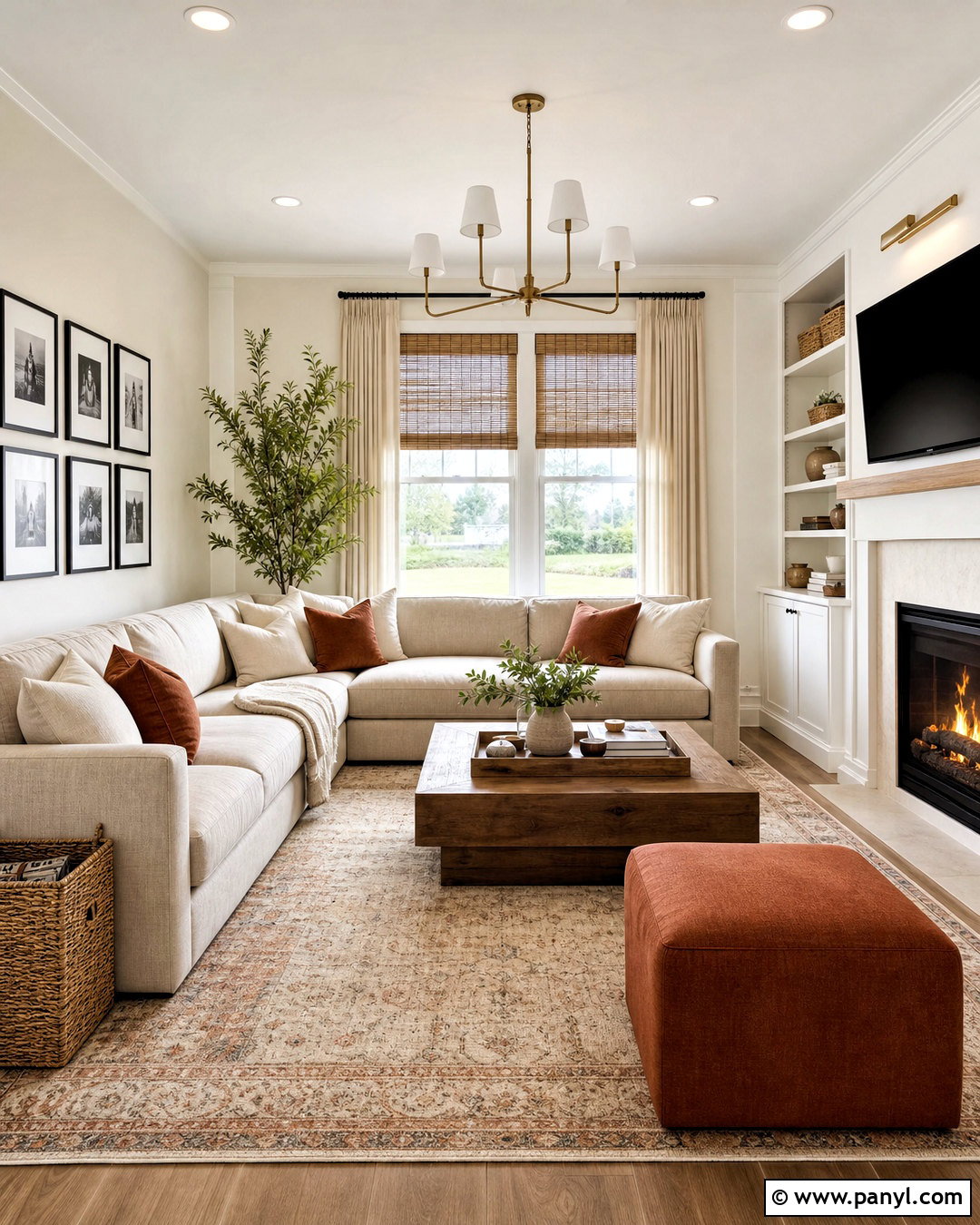
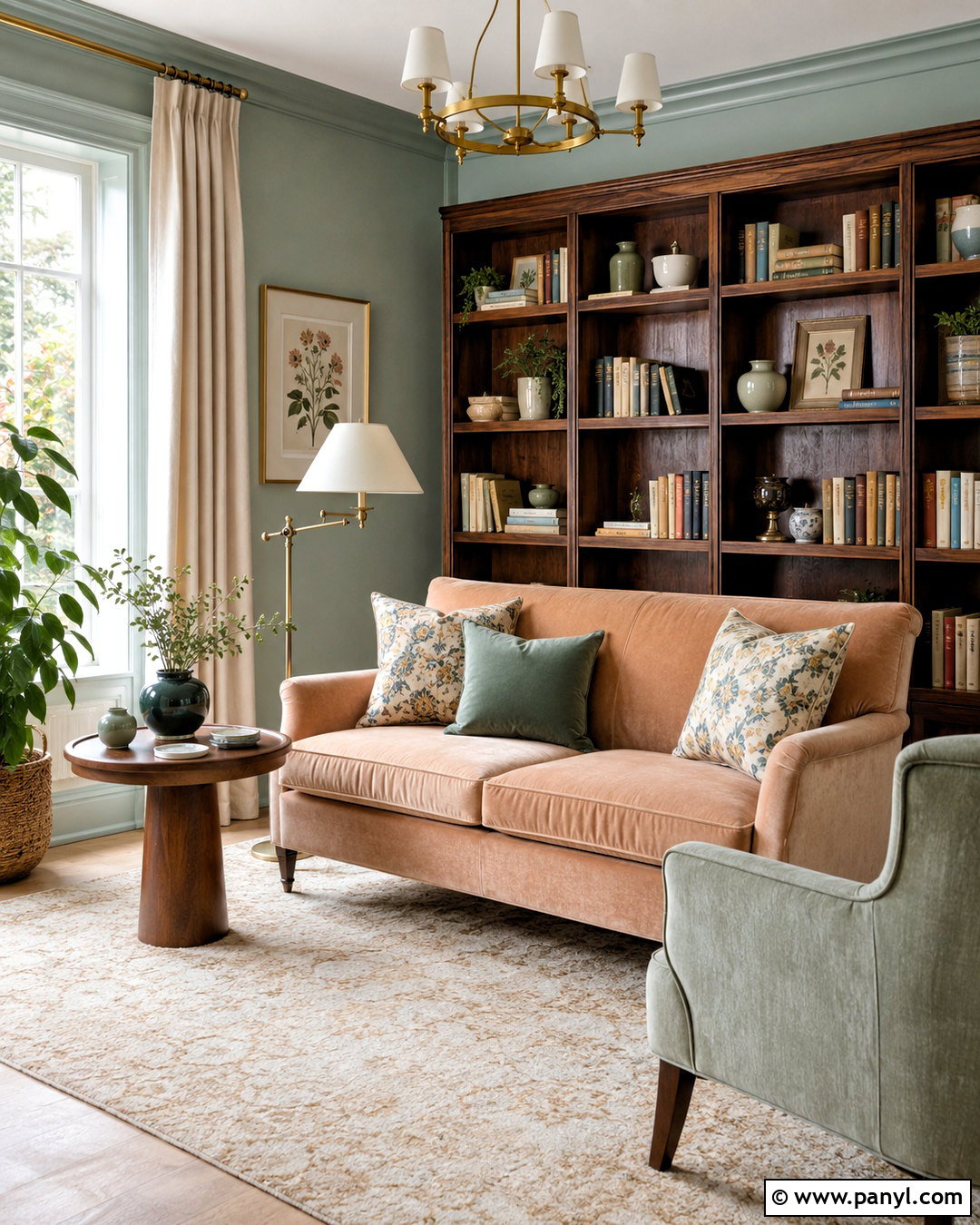
10. Dusty Blue Trim With Floral Wallpaper
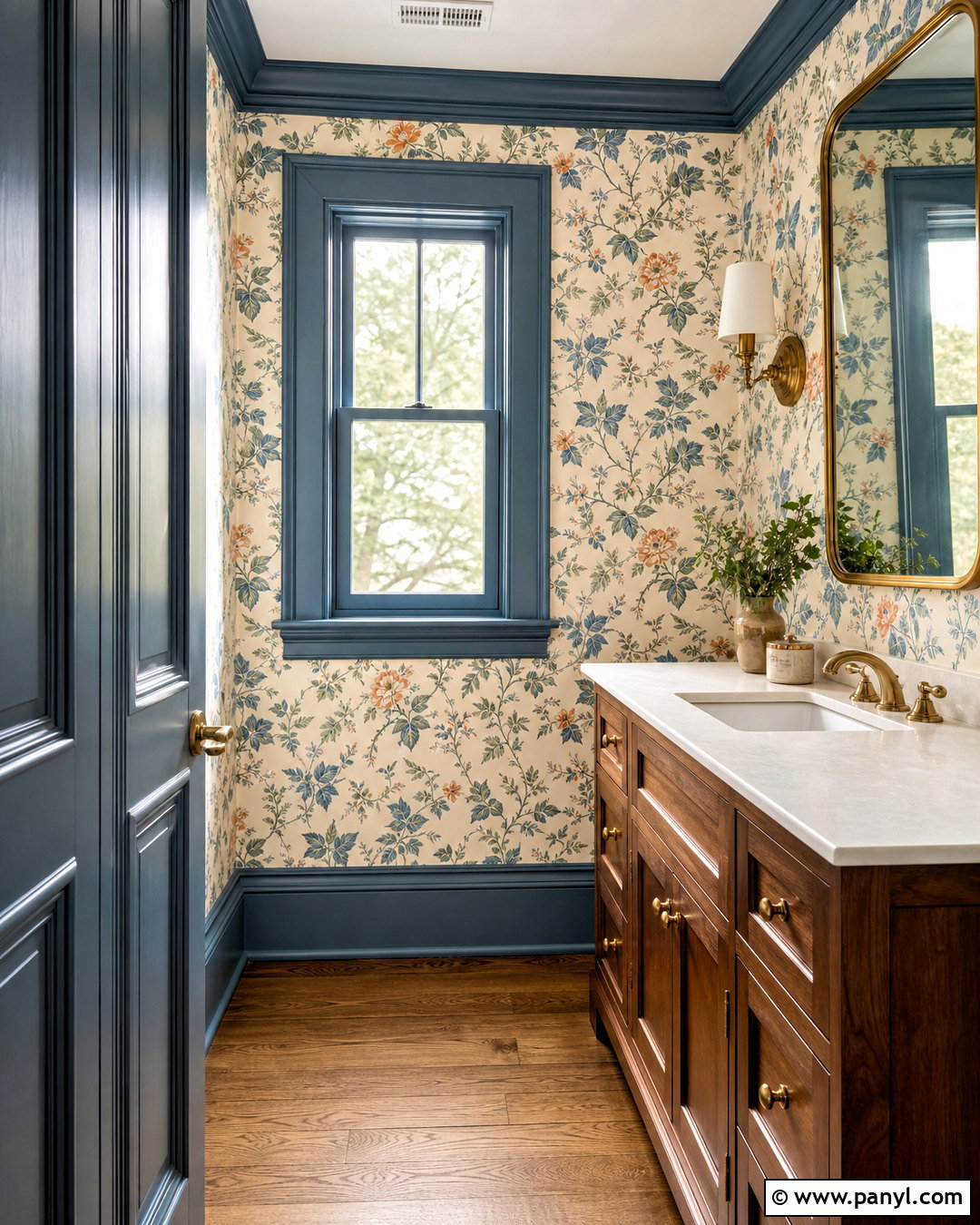
Wallpaper becomes more integrated when the trim color is pulled directly from its pattern. Cover a powder room or small guest room in cream floral wallpaper containing dusty blue leaves, soft green stems, and muted coral flowers. Paint the baseboards, door casing, window frame, and interior door dusty blue. Add a walnut vanity or dresser, unlacquered brass hardware, and a warm white ceiling. Using one repeated blue prevents the patterned walls from feeling disconnected from the architecture. Keep towels, curtains, and larger accessories simple so they do not compete with the print. A satin trim finish will create a restrained contrast against the paper. This complete scheme turns basic molding into a purposeful bridge between pattern, furniture, and fixtures.
11. Burgundy Trim With Neutral Walls
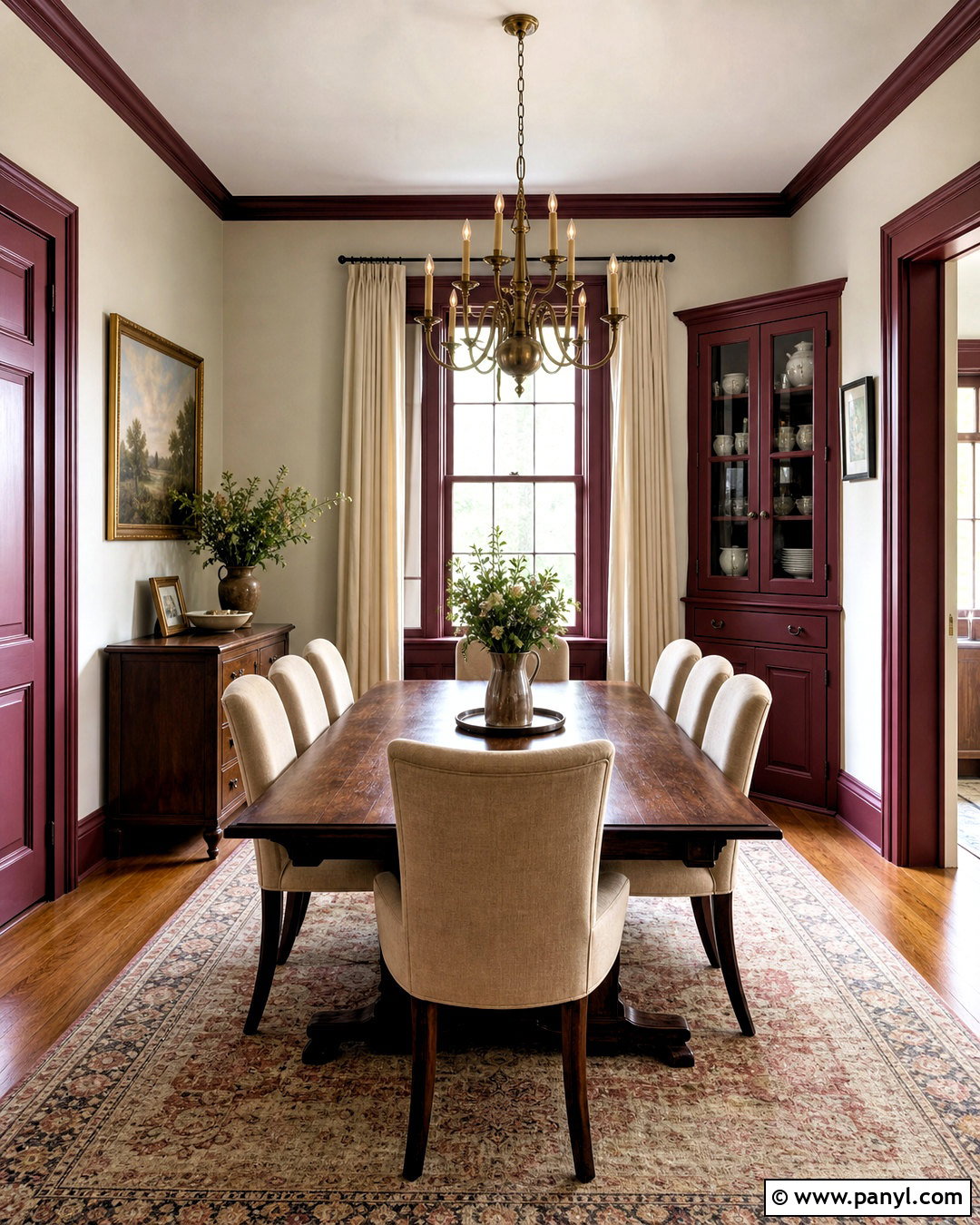
Deep burgundy woodwork creates a sophisticated dining room when balanced by quiet neutral surfaces. Start with light putty walls, then use muted wine-red paint on the baseboards, window frames, door casings, and built-in cabinet. Introduce a dark oak dining table, oatmeal upholstered chairs, a faded traditional rug, and aged brass lighting. Cream curtains will soften the windows while allowing the colored frames to remain visible. Burgundy works best here as a repeated architectural color rather than a scattered accent. Keep tableware and artwork restrained, using touches of brown, ivory, and dusky rose. The completed palette feels rich without becoming dark because the larger walls, ceiling, and textiles continue to reflect plenty of light.
12. Mustard Yellow Trim In A Playroom
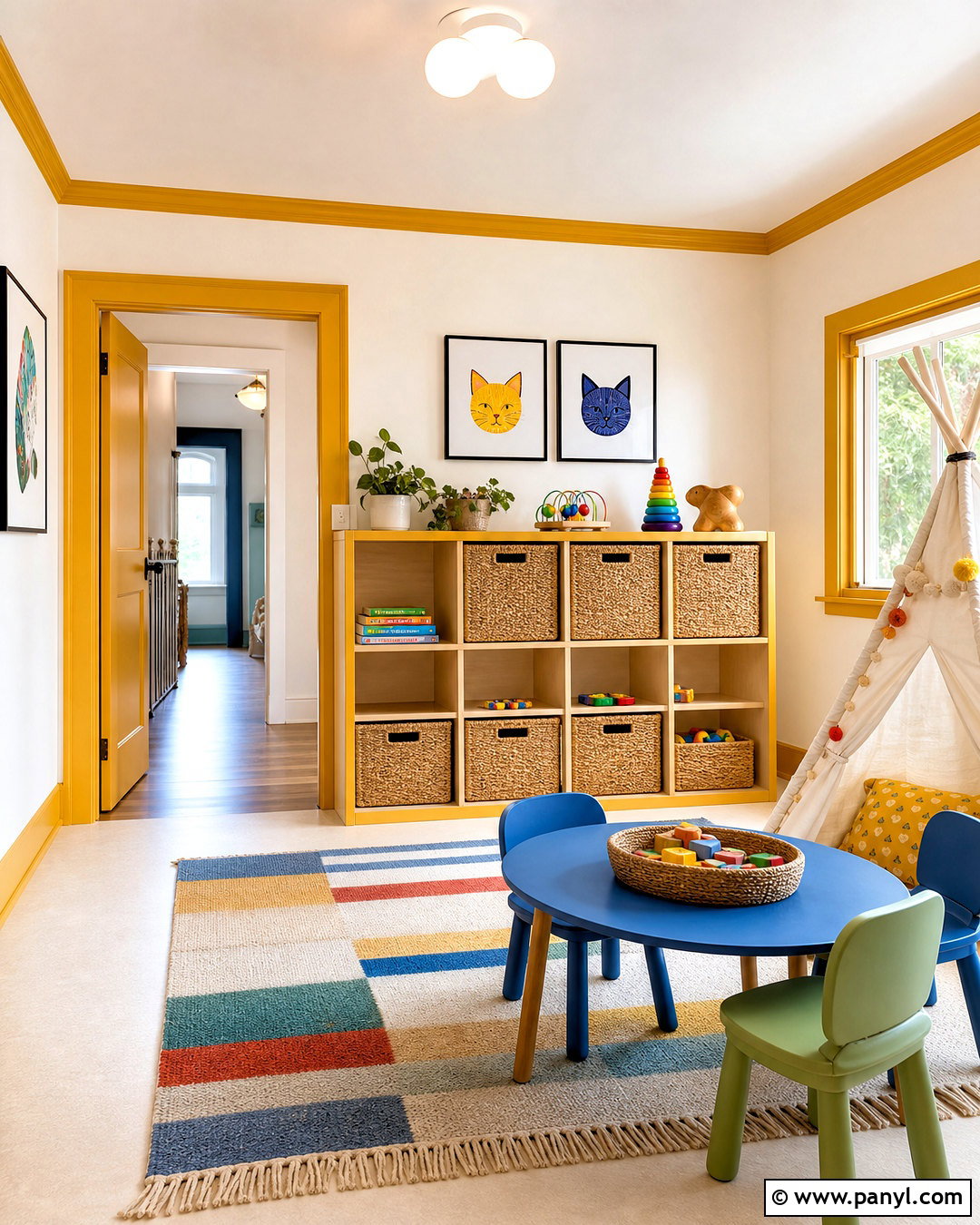
A sunny mustard trim color can make a playroom energetic without covering every wall in bright paint. Use warm white on the walls, then paint the baseboards, doorframes, window casings, and storage-unit edges in muted golden yellow. Add pale birch cubbies, washable cream flooring, a colorful flat-weave rug, and low furniture in blue and green. Keep toy storage in coordinated baskets and solid bins so the room still looks organized. A mustard shade with ochre or brown undertones will age better visually than neon yellow. Satin or semigloss paint is practical for woodwork in an active space. The complete room feels playful and lively, while the simple wall color gives artwork and toys enough breathing room.
13. Olive Green Trim With Wood Furniture
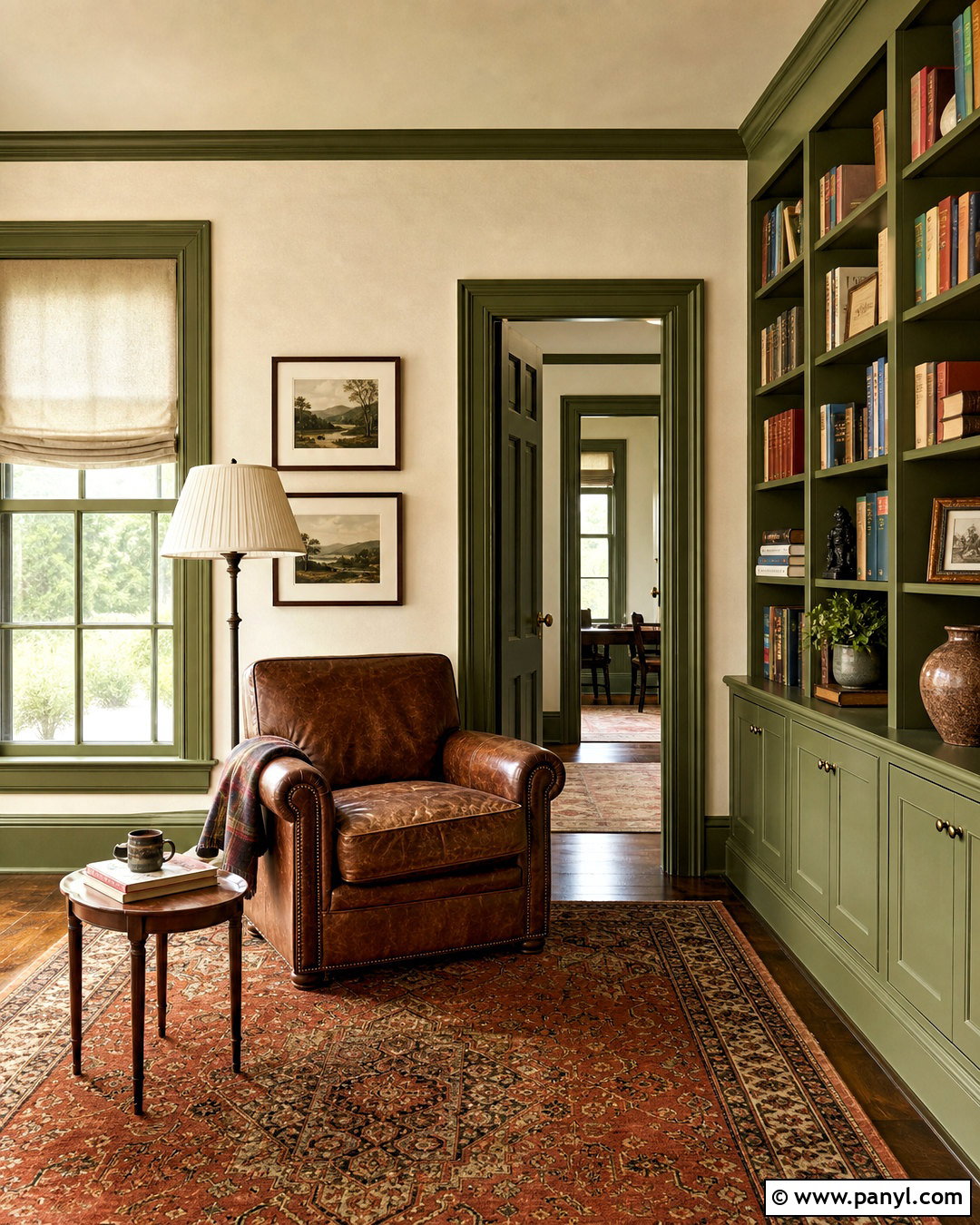
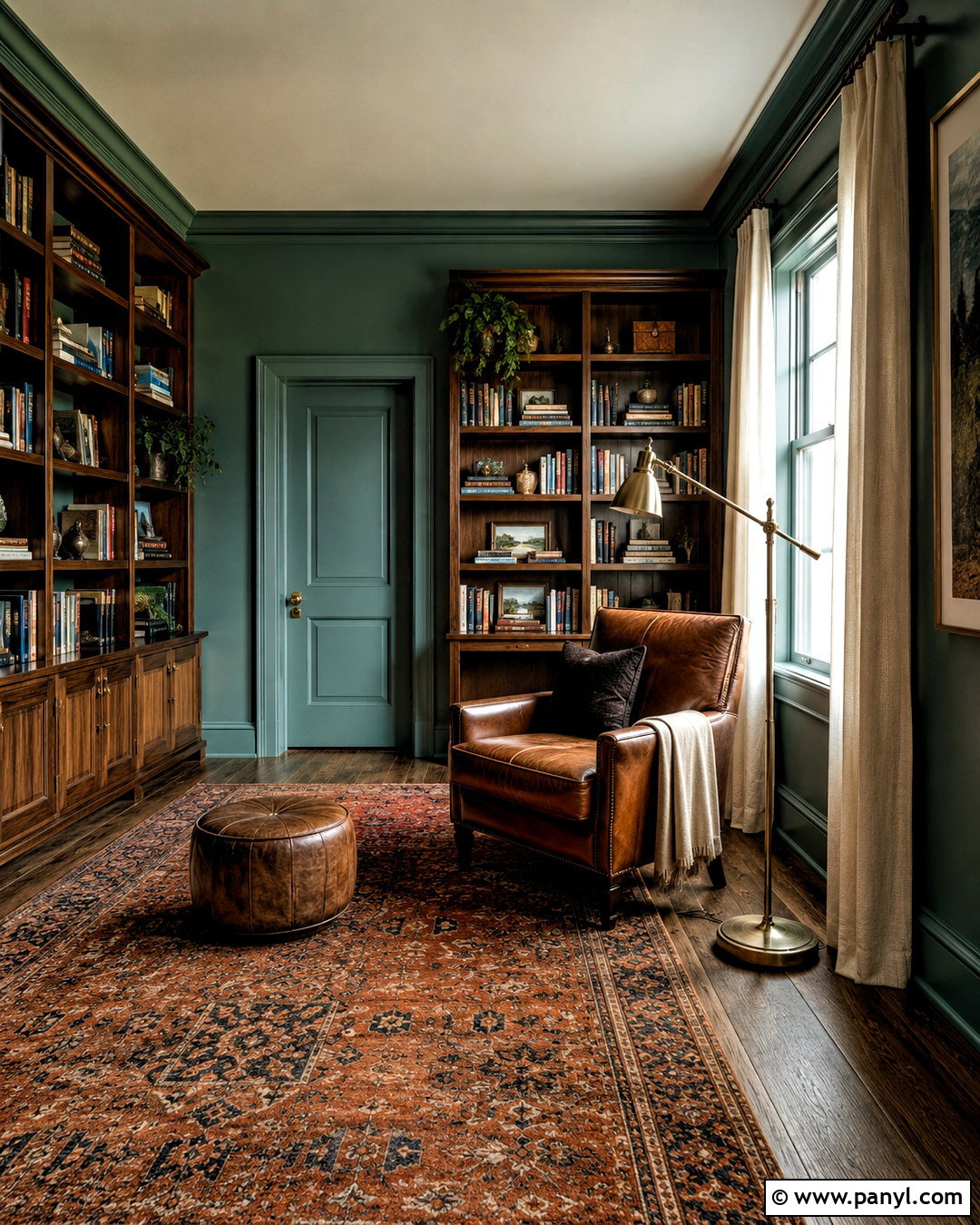
Olive green trim pairs naturally with antique and contemporary wood furniture, making it an excellent choice for a cozy reading room. Paint the baseboards, door casing, window frames, and bookshelves in deep olive, then use soft parchment paint on the remaining walls. Furnish the room with a worn brown leather chair, walnut side table, cream floor lamp, and rust-colored rug. Linen Roman shades and a few landscape prints complete the collected appearance. Keep the ceiling light to prevent the deeper woodwork from enclosing the room. An olive with gray or brown undertones will coordinate more easily with wood than a bright grassy green. This scheme makes ordinary trim feel established, substantial, and connected to the furnishings.
14. Soft Pink Trim With White Walls
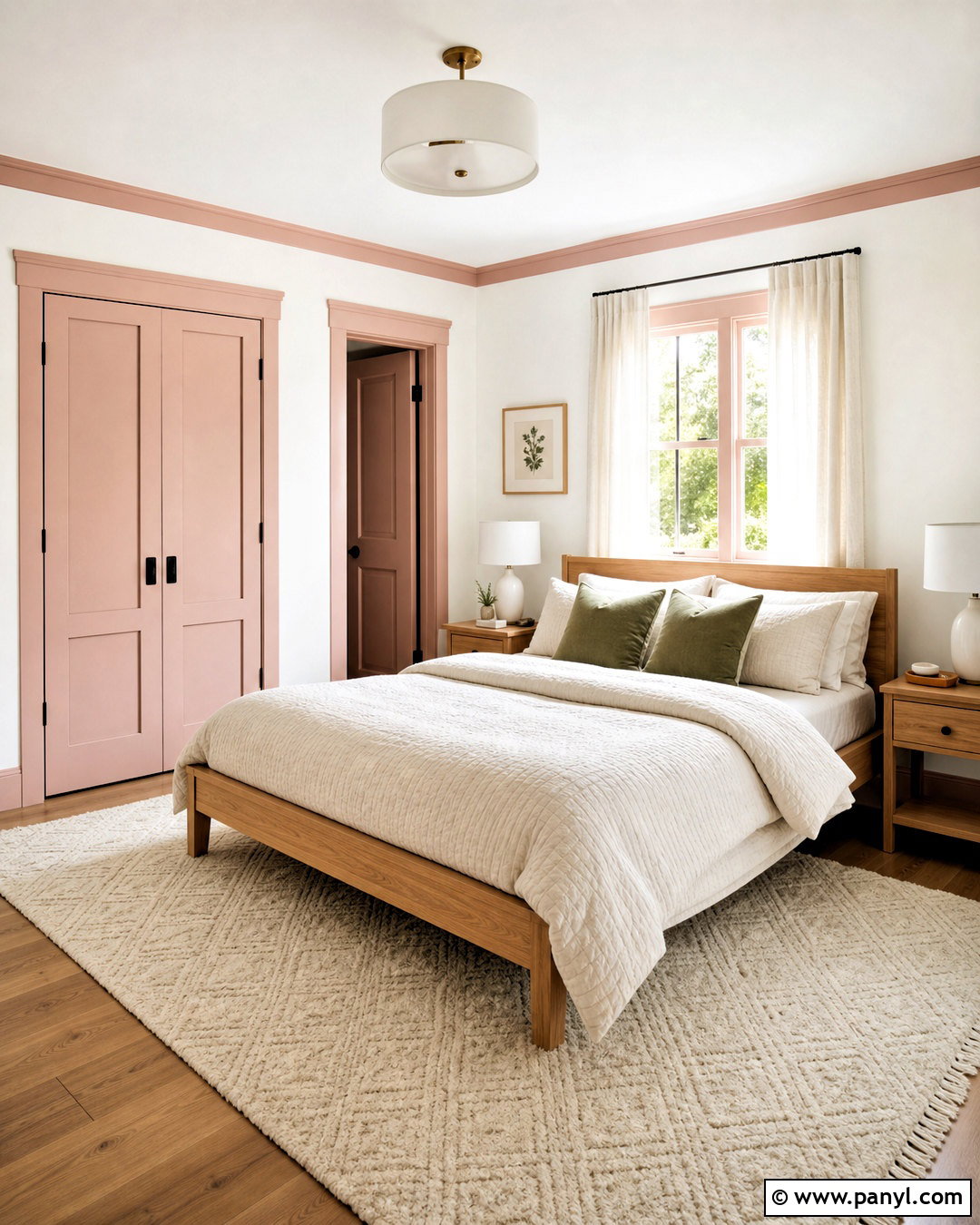
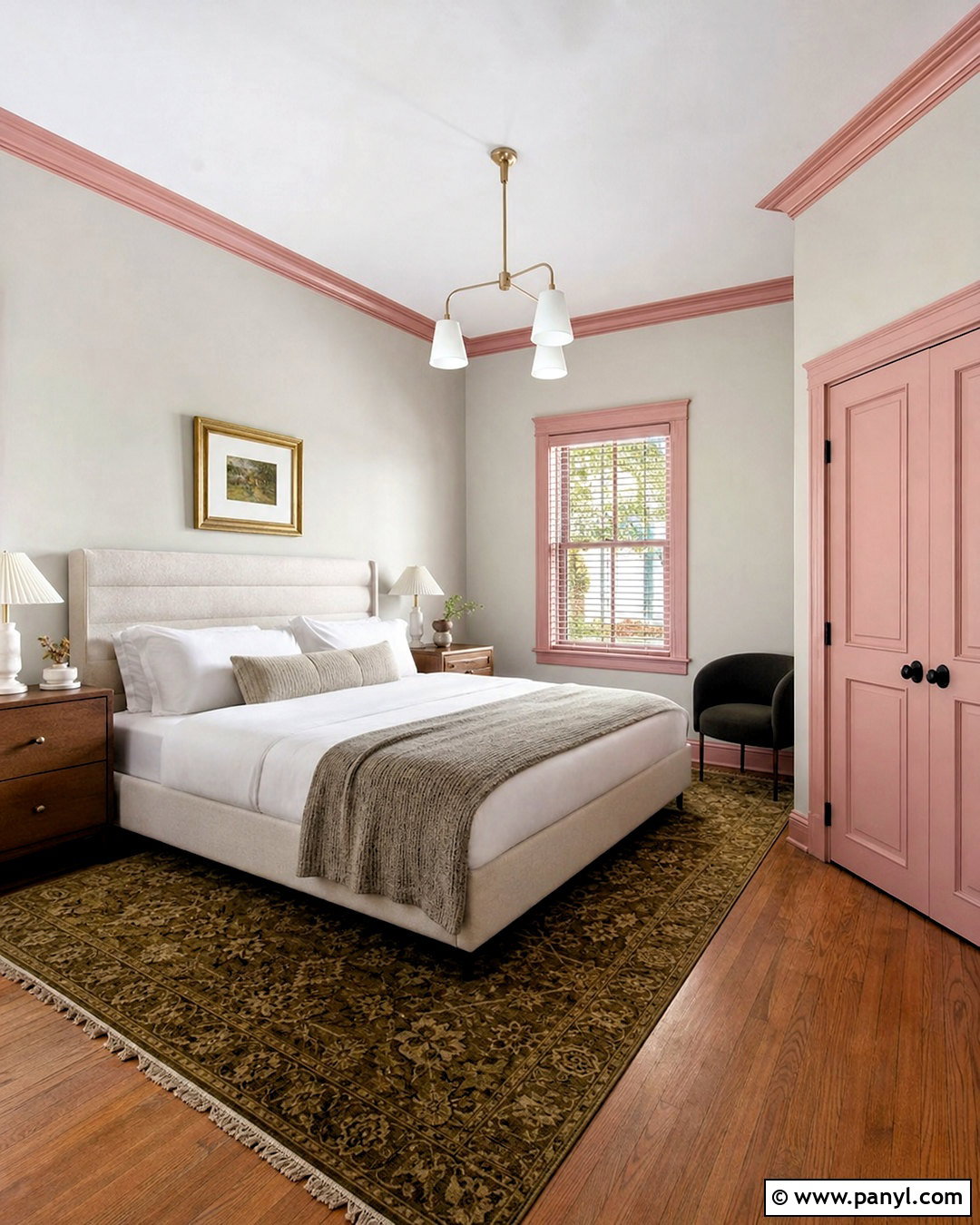
Pale pink trim offers gentle color while preserving the lightness of a white bedroom. Choose a dusty shell pink for baseboards, window casings, doorframes, and closet doors. Pair it with warm white walls, a light oak bed, oatmeal bedding, and a textured cream rug. Sage green pillows or a muted green bedside table will provide balance without making the palette overly sweet. Use simple roller shades and natural linen curtain panels so the painted window trim remains visible. A satin finish will deepen the pink slightly compared with a wall sample, so test the chosen color in the intended sheen. The resulting space feels fresh, relaxed, and versatile enough for a child’s room, guest bedroom, or creative studio.
15. Teal Trim In A Laundry Room
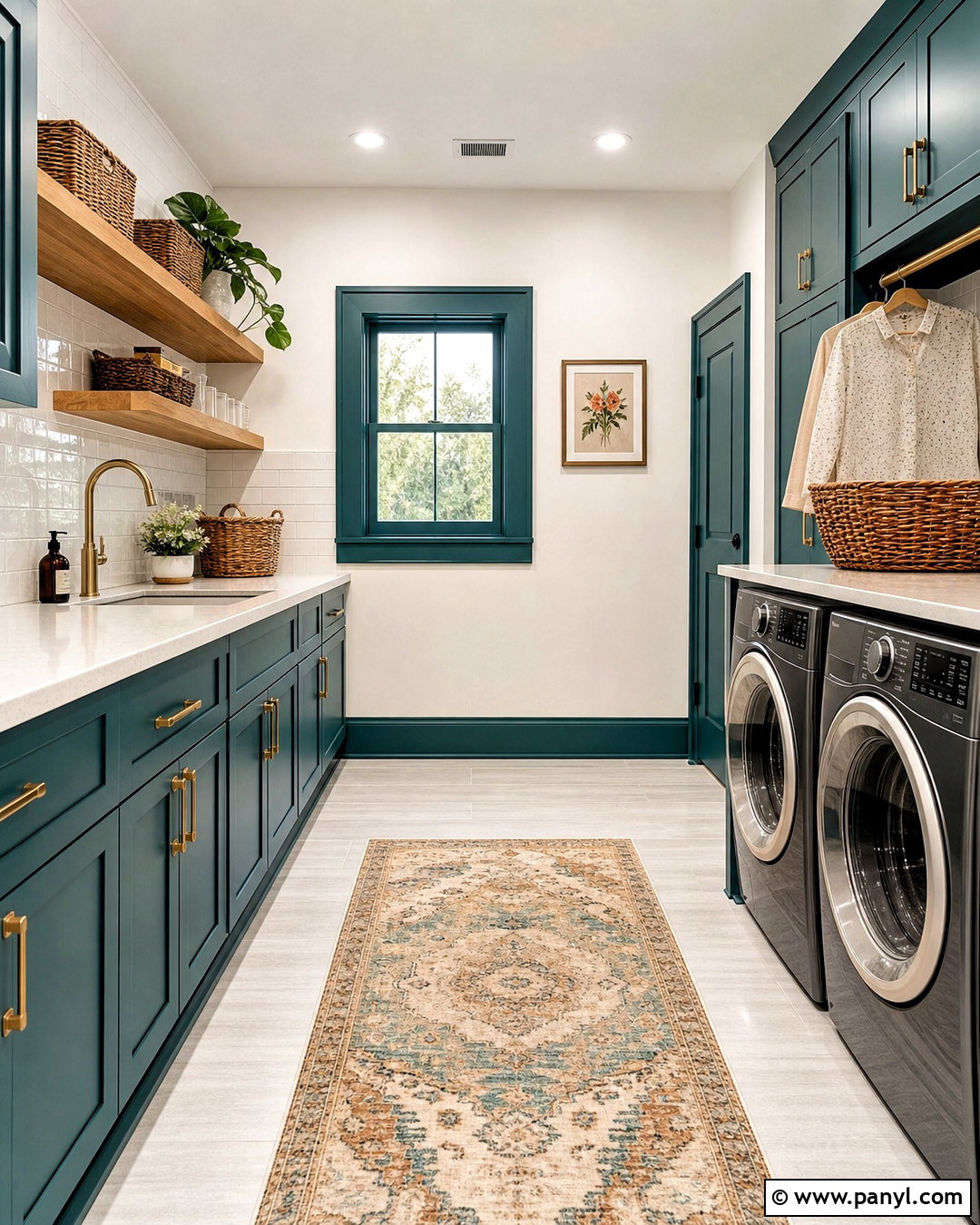
A laundry room is an ideal place to use saturated trim because the smaller footprint keeps the project manageable. Paint the baseboards, door casing, window frame, and lower cabinets in a deep blue-green teal. Use clean white walls and a white quartz counter to maintain brightness around the appliances. Add pale gray floor tile, brushed brass cabinet pulls, open oak shelves, and matching woven storage baskets. Repeating teal on both the trim and cabinetry makes the room feel planned rather than randomly colorful. Keep the backsplash simple with glossy white rectangular tile. Choose a durable, washable finish for areas near the floor and work surfaces. This complete look transforms a practical utility room into a crisp, coordinated space.
16. Chocolate Brown Trim With Cream Walls
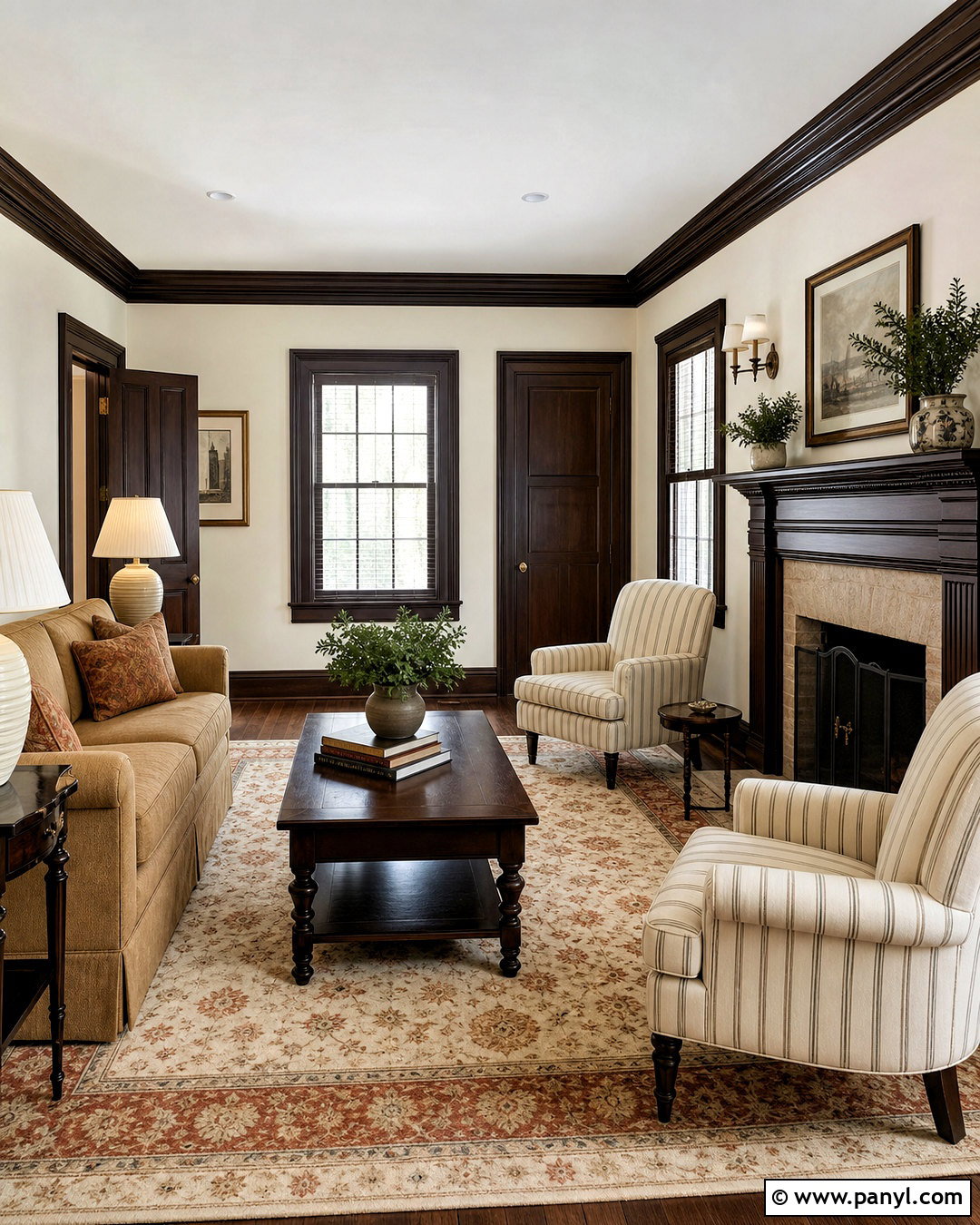
Chocolate brown trim can bring traditional warmth to a cream-colored living room without relying on stained wood. Select a deep brown with subtle red or gray undertones for the baseboards, window frames, doors, and fireplace molding. Pair it with creamy walls, a tan sofa, striped linen chairs, and a dark wood coffee table. An ivory and rust rug will connect the light upholstery to the darker architectural paint. Use aged bronze hardware rather than bright silver, and include ceramic lamps with off-white shades. The brown trim should be repeated consistently around the room to create a strong framework. This palette feels especially convincing in homes with classic molding, divided-light windows, or other traditional architectural features.
17. Painted Trim With Two-Tone Walls
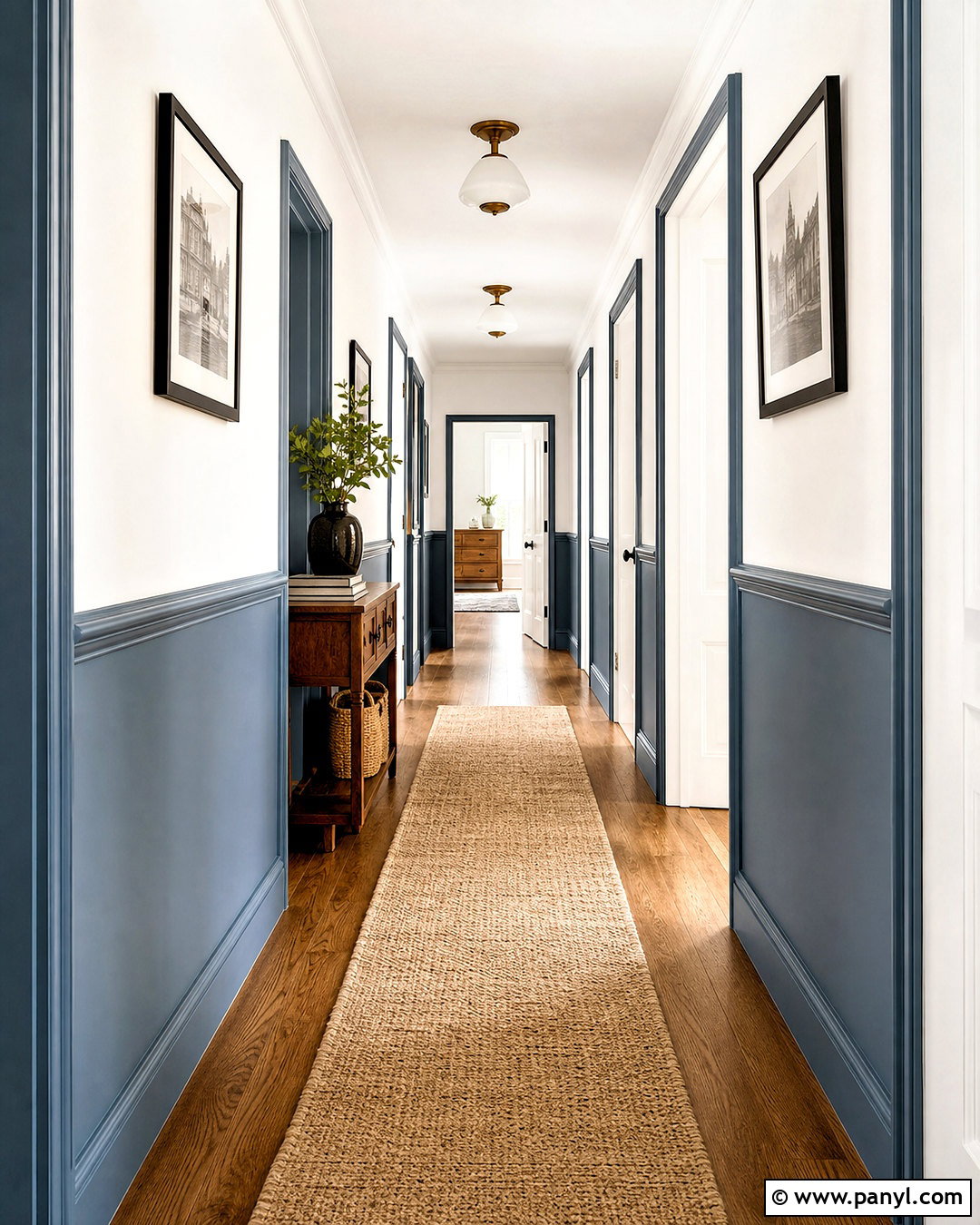
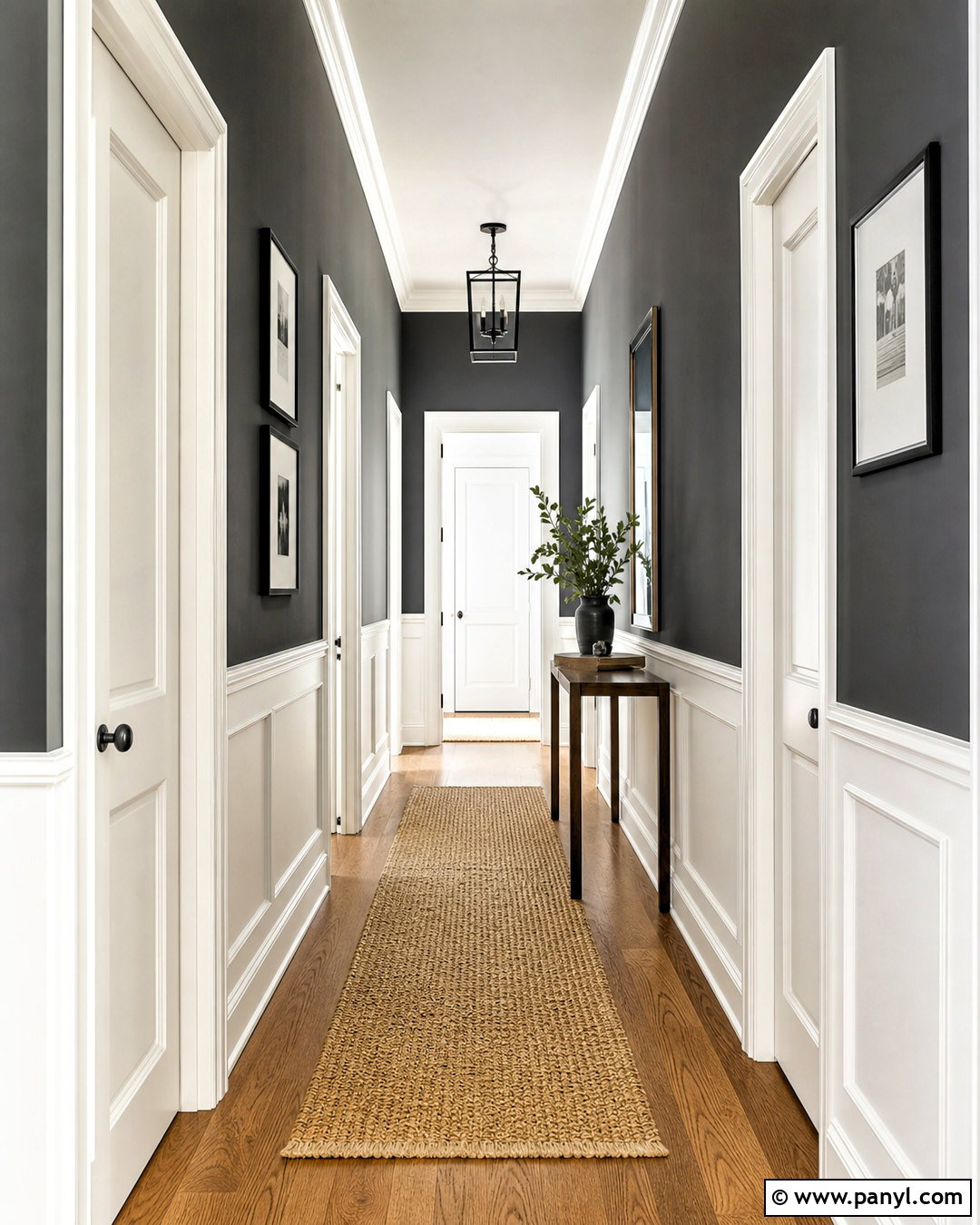
Two-tone walls can make baseboards and trim part of a layered architectural treatment. Paint the lower portion of a hallway in muted slate blue, including the baseboards and simple wall molding. Use warm white above the chair rail and carry that white onto the ceiling. Paint door casings slate blue for continuity, but keep the doors warm white to introduce a clean break. Complete the hallway with medium oak flooring, a natural runner, black-framed artwork, and a small wood console. Keep the dividing line consistent around corners and doorways for a professional appearance. This design adds visual interest to a long passage while the darker lower area creates a practical, grounded foundation near the most frequently touched surfaces.
18. Painted Baseboards With Natural Wood Doors
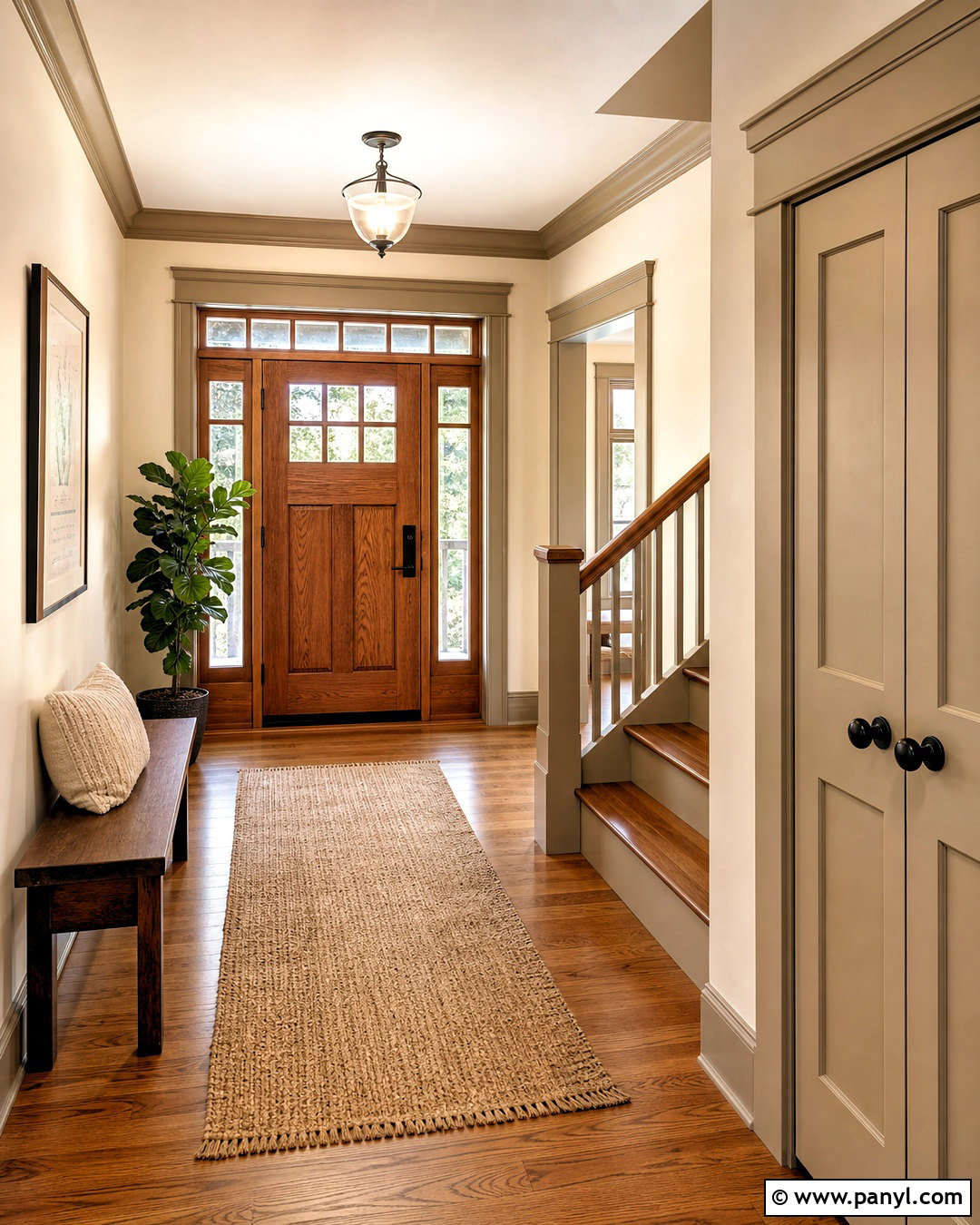
Painted baseboards do not require every piece of woodwork to receive the same finish. In a Craftsman-inspired entry, keep the solid oak doors and window sashes natural while painting the baseboards and wider casings a warm putty color. Use soft cream walls, medium oak flooring, a woven runner, and a simple wood bench to connect the stained elements. The putty paint should sit between the wall and wood colors, creating a gentle transition rather than sharp contrast. Repeat it on a nearby coat closet and stair risers for balance. This combination preserves the grain and character of feature woodwork while refreshing less distinctive trim. The whole entry feels cohesive because every finish shares a warm, earthy undertone.
19. Color-Blocked Baseboards And Door Trim
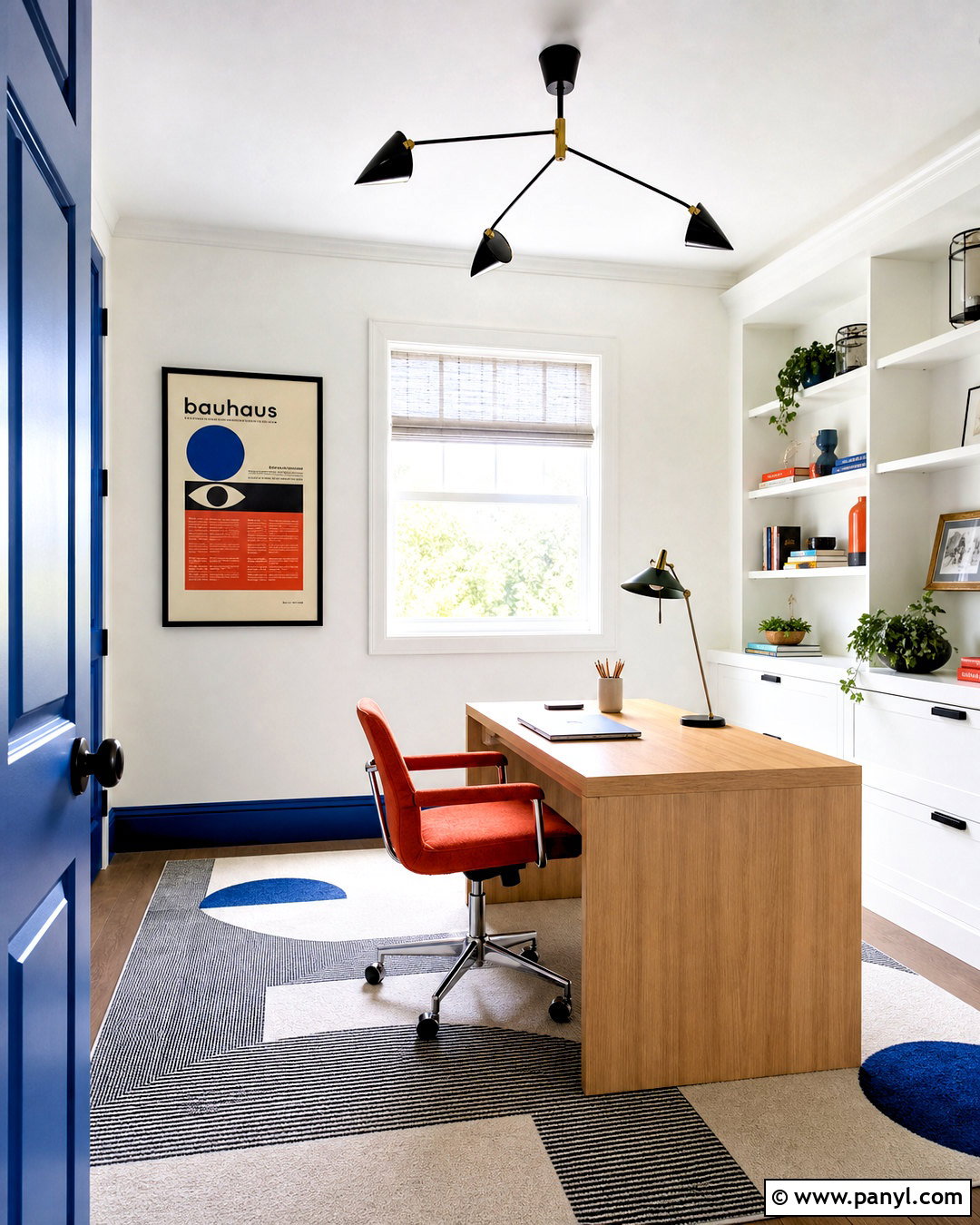
Color blocking can turn ordinary baseboards and one doorway into a focused architectural feature. In a white home office, paint all baseboards medium cobalt blue, then continue the blue up the casing of the main door and across the door itself. Leave the window trim and ceiling white so the saturated color remains controlled. Add a pale wood desk, white storage, a red-orange task chair, and a graphic rug containing small blue accents. The blue line around the floor visually connects the room, while the painted door creates a strong focal point. Choose a clean, flat trim profile to complement the contemporary treatment. Careful repetition makes the bold color look structured instead of accidental or unfinished.
20. Dark Green Baseboards With Matching Doors
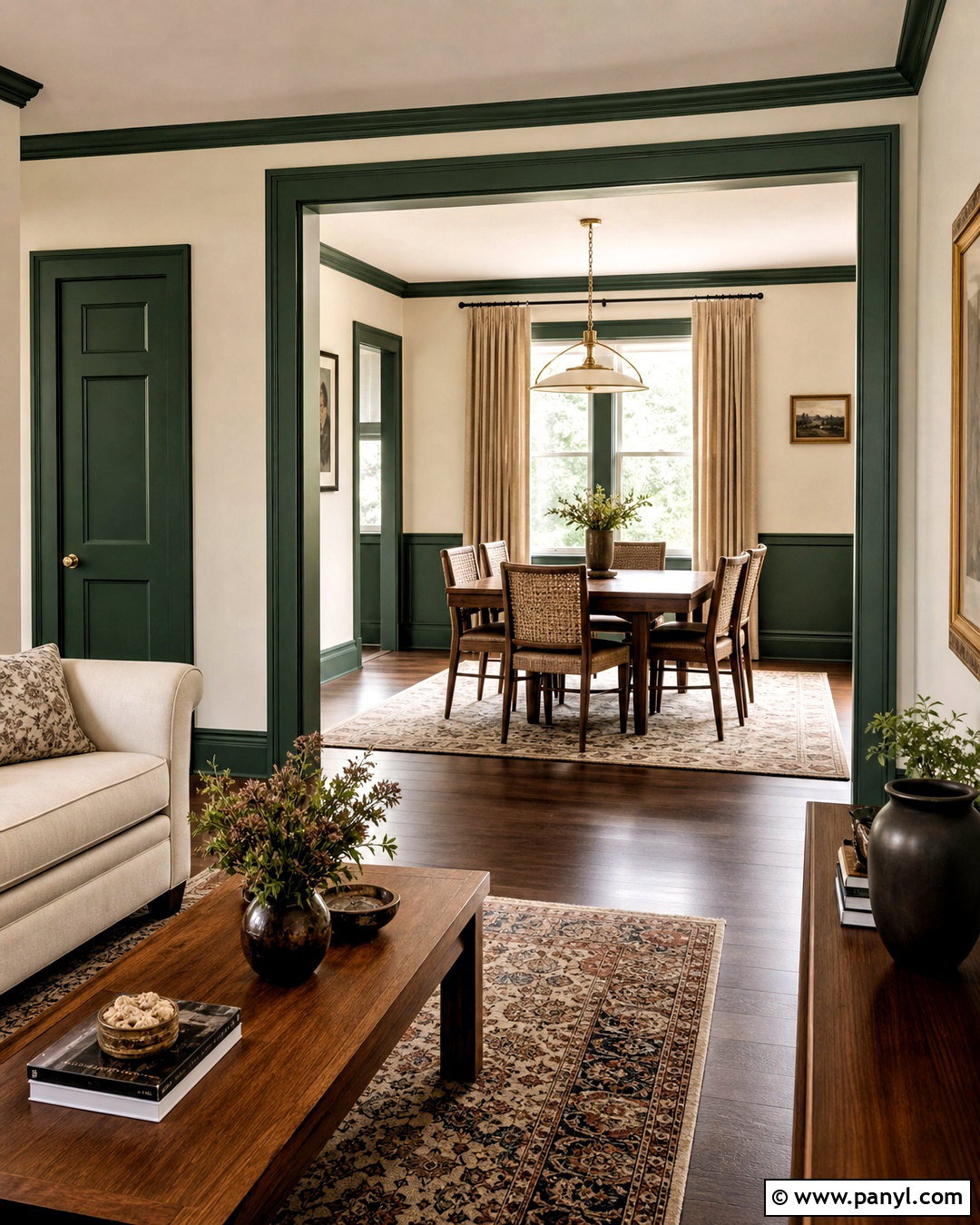
Deep green baseboards and matching doors can ground an open living and dining space while creating continuity between connected areas. Use warm ivory walls throughout, then paint the baseboards, door casings, interior doors, and selected window trim a dark forest green. Furnish the living area with a cream sofa and oak tables, and place a walnut table with woven chairs in the dining zone. Add tan curtains, antique brass lights, and a patterned rug containing small touches of green. Keep crown molding and ceilings ivory to balance the dark lower framework. Repeating the same trim treatment across both rooms creates a purposeful visual path, helping separate furniture zones while maintaining one coordinated whole-house palette.
Conclusion:
The most successful **painted baseboards and trim ideas** connect architectural details to the complete room rather than treating molding as an afterthought. White offers crisp contrast, tonal colors produce a seamless appearance, and deeper shades can frame a room with confidence. Before choosing, compare your trim color with the walls, flooring, doors, furniture, and natural light. Large samples are more useful than tiny color chips, especially when undertones are subtle. Use a durable satin or semigloss product, prepare the surface carefully, and repeat the chosen color in several meaningful places. Whether you prefer soft neutrals or bold color, coordinated painted trim can make familiar rooms feel noticeably more polished and personal.

Related Ideas and Inspiration:
Leave a Reply