
“30 painted trim white walls” combinations offer a fresh way to add character without covering an entire room in color. White walls keep interiors bright and flexible, while painted baseboards, window casings, doors, and crown molding create definition. The right trim shade can highlight architecture, improve visual flow, and connect furnishings across a space. Current color trends are moving beyond standard white millwork toward warmer neutrals, earthy greens, deep blues, and other expressive finishes. () Before choosing, compare undertones with your flooring, fabrics, and natural light. Also test samples on several trim sections throughout the day. The complete room looks below make it easier to explore and recreate 30 painted trim white walls combinations.

1. Black Painted Trim With White Walls
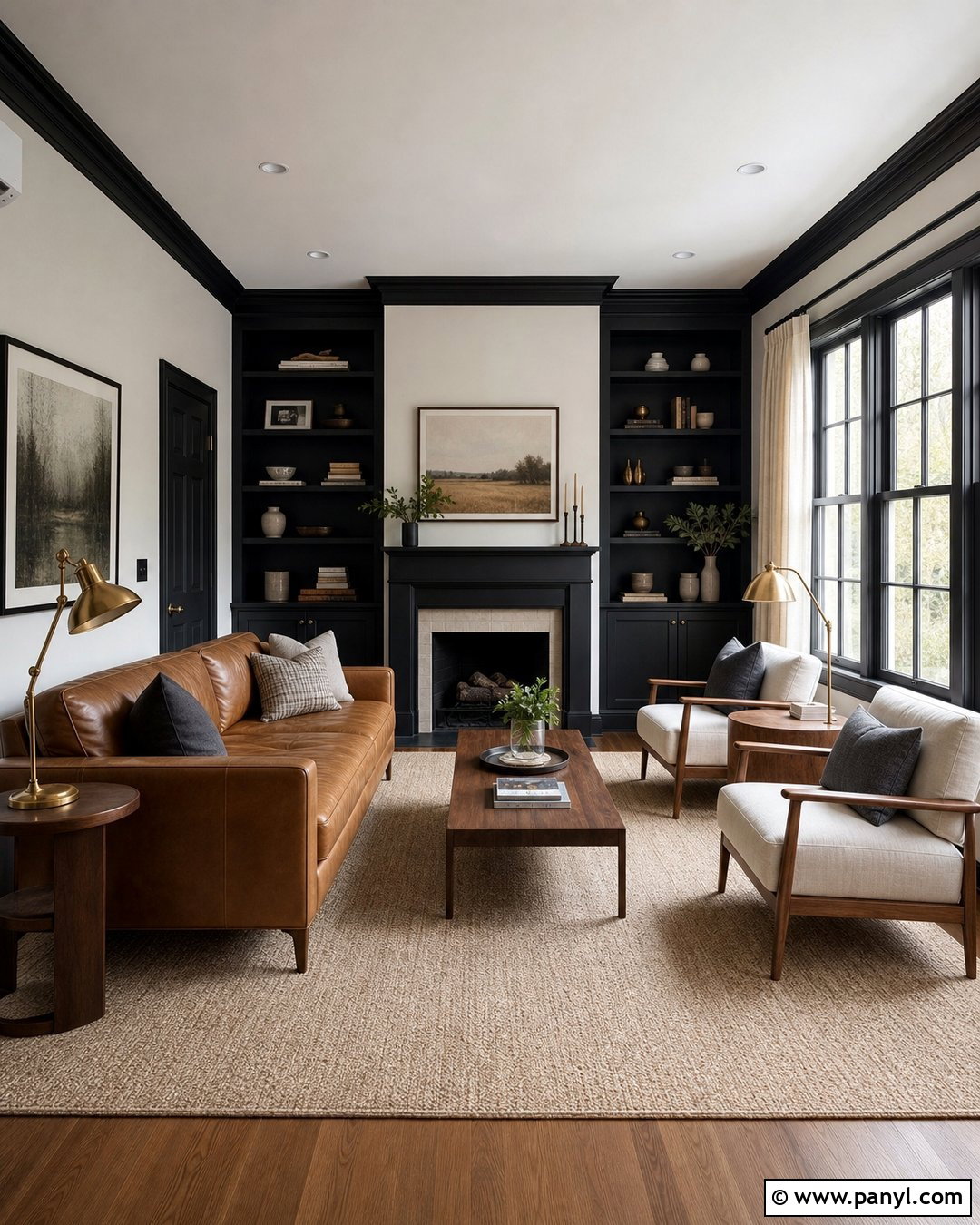
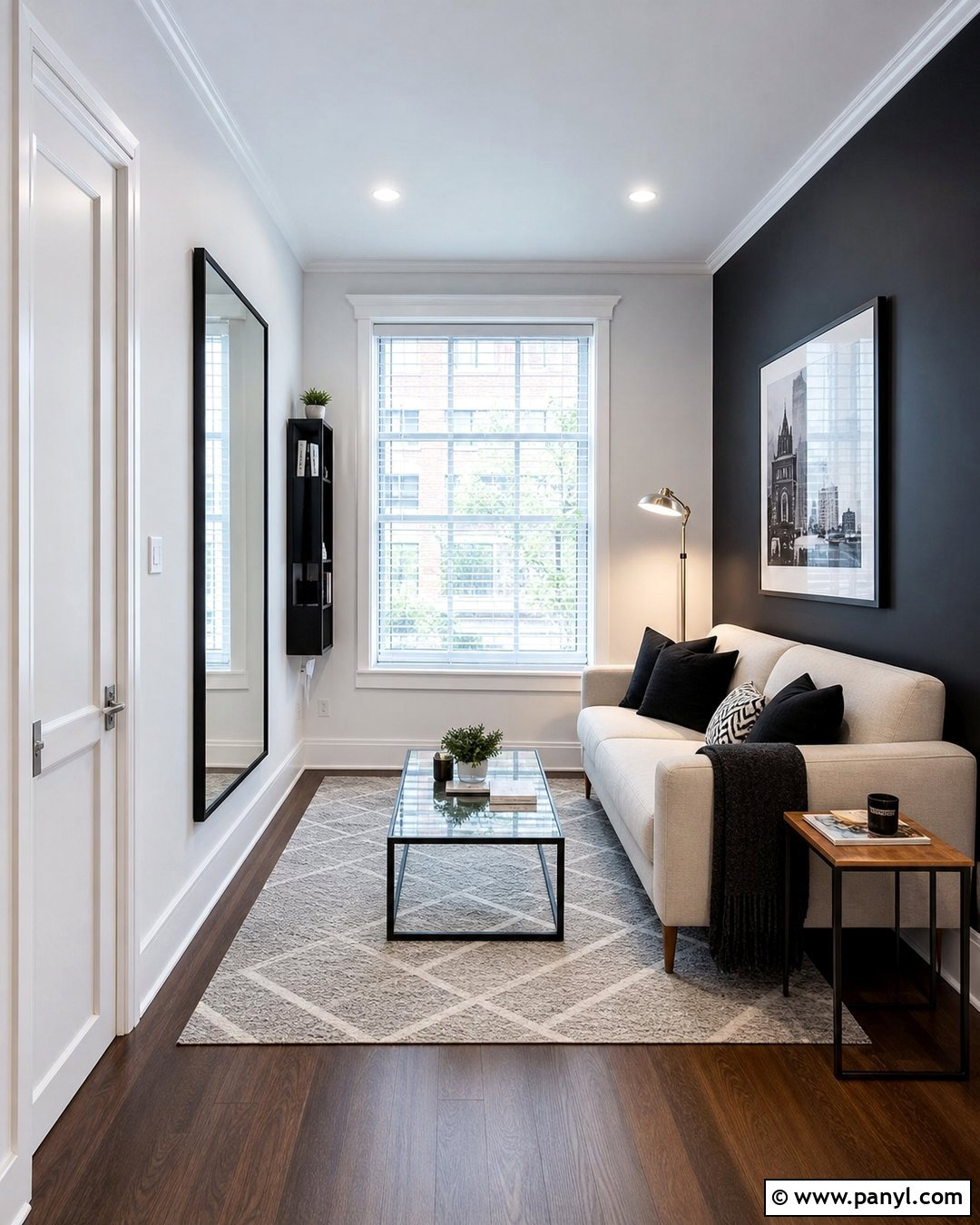
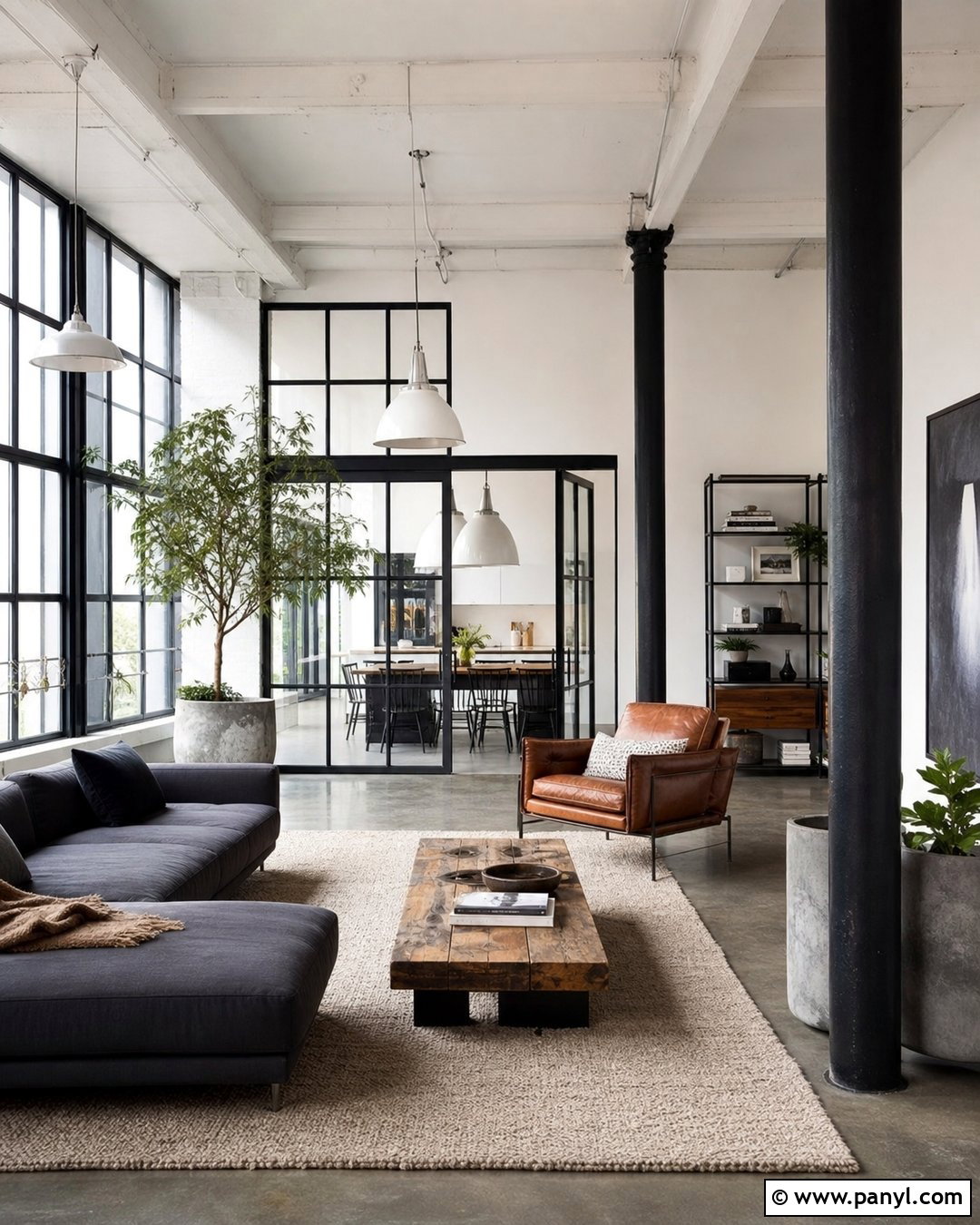
Black painted trim gives white walls a sharp architectural outline that feels clean rather than cold when balanced with natural materials. Use soft warm white on the walls and satin black on the window frames, baseboards, door casing, and interior doors. Continue the dark finish across built-in shelving so the color looks intentional. In a living room, add a caramel leather sofa, an oatmeal rug, walnut tables, and linen curtains hung inside the black window frame. Aged brass lamps soften the contrast and add warmth. Keep the ceiling white to maintain brightness. This complete scheme works especially well in rooms with large windows, simple molding, and medium-toned wood flooring. Limit small black accessories so the trim remains the strongest graphic element.
2. Charcoal Painted Trim With White Walls
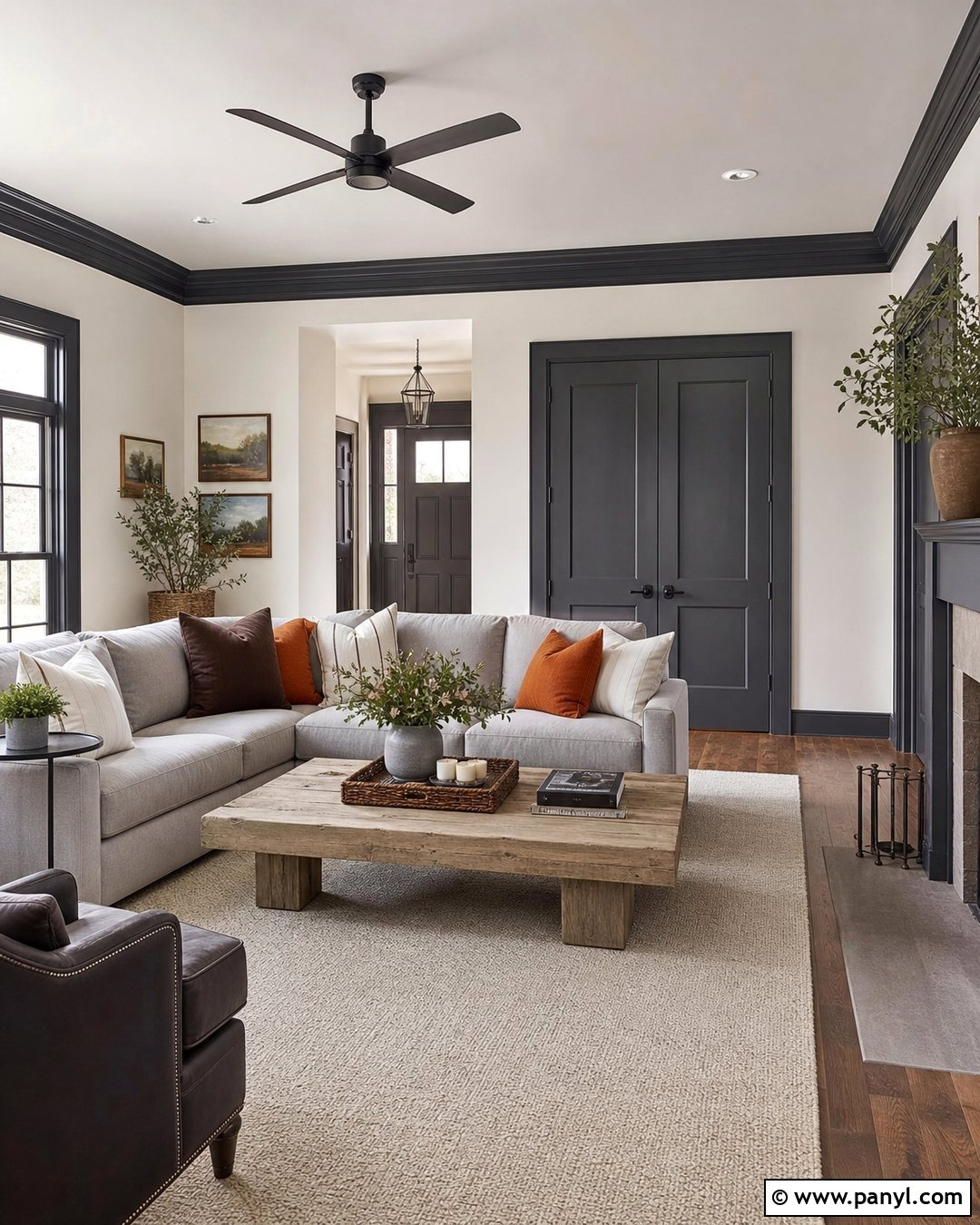
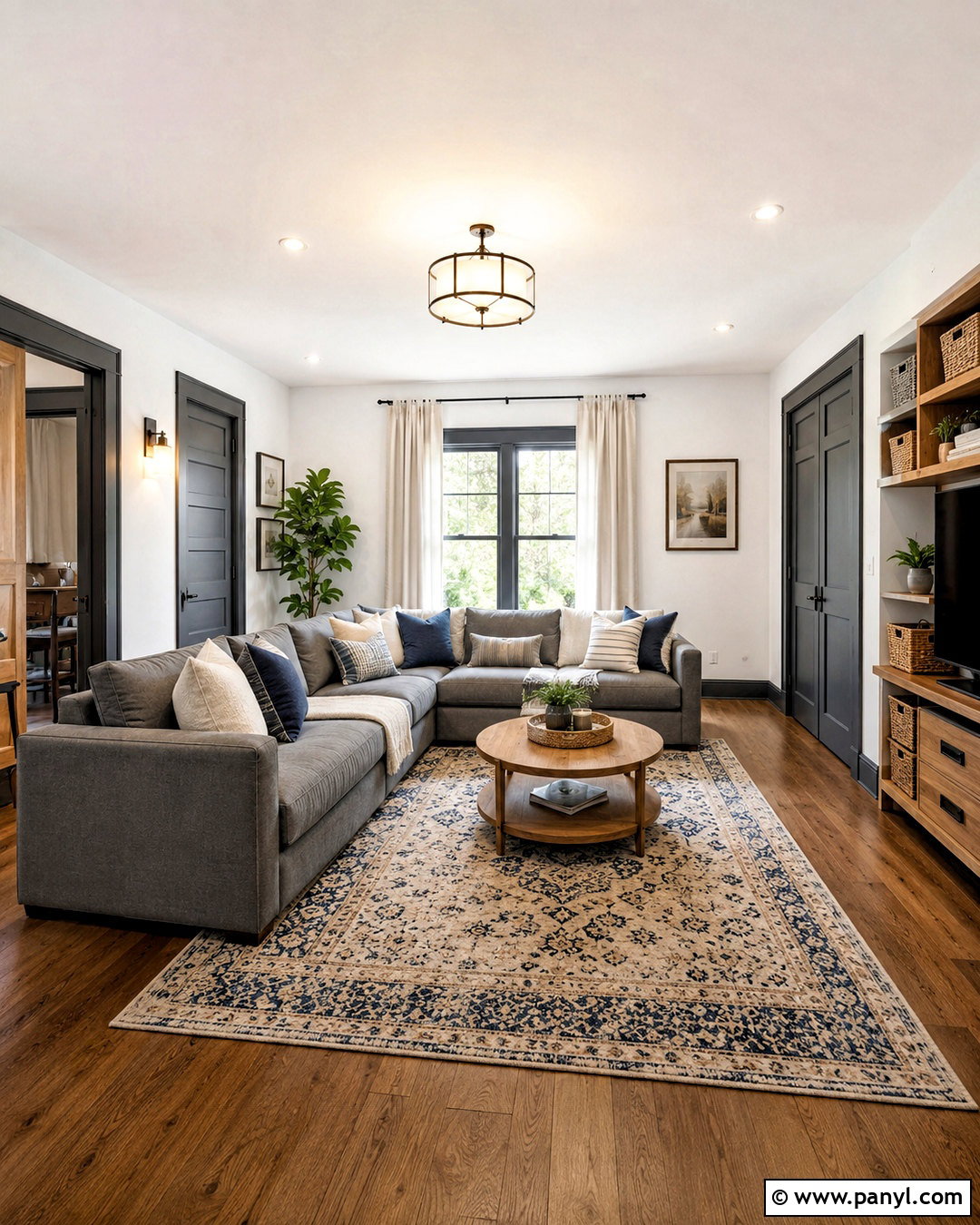
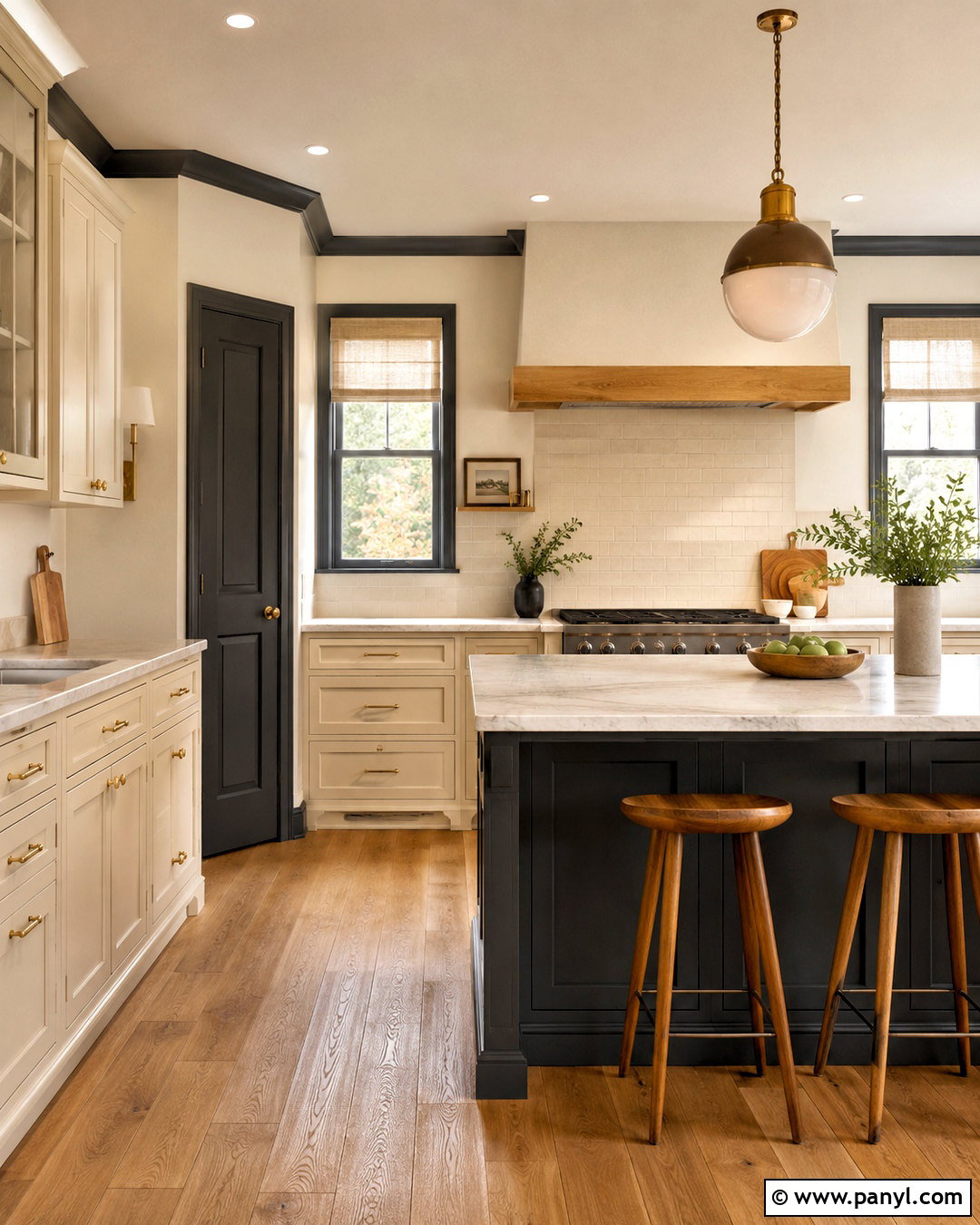
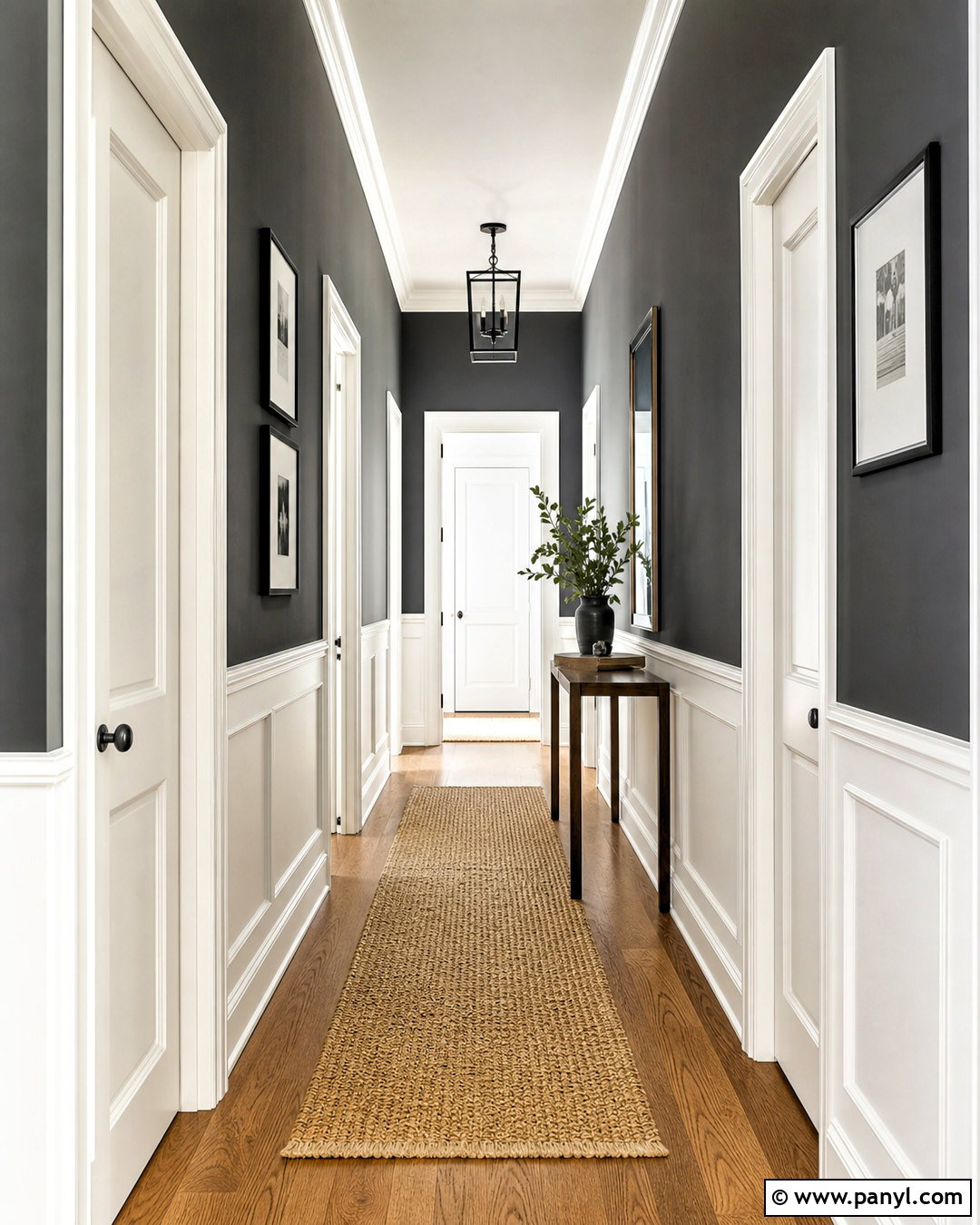
Charcoal trim offers much of the definition of black with a softer, more relaxed finish. Pair creamy white walls with deep charcoal baseboards, crown molding, window casings, and paneled doors in satin paint. Build a comfortable family room around that contrast using a light gray sectional, a weathered oak coffee table, and a textured ivory rug. Bring in rust-colored pillows and muted landscape artwork to keep the palette from feeling overly monochromatic. Brushed nickel or pewter lighting fits the cool depth of the trim without adding another dominant color. Choose charcoal with a slightly warm undertone if the flooring is honey oak. The resulting room feels grounded, practical, and polished while remaining easy to update with seasonal textiles and artwork.
3. Greige Painted Trim With White Walls
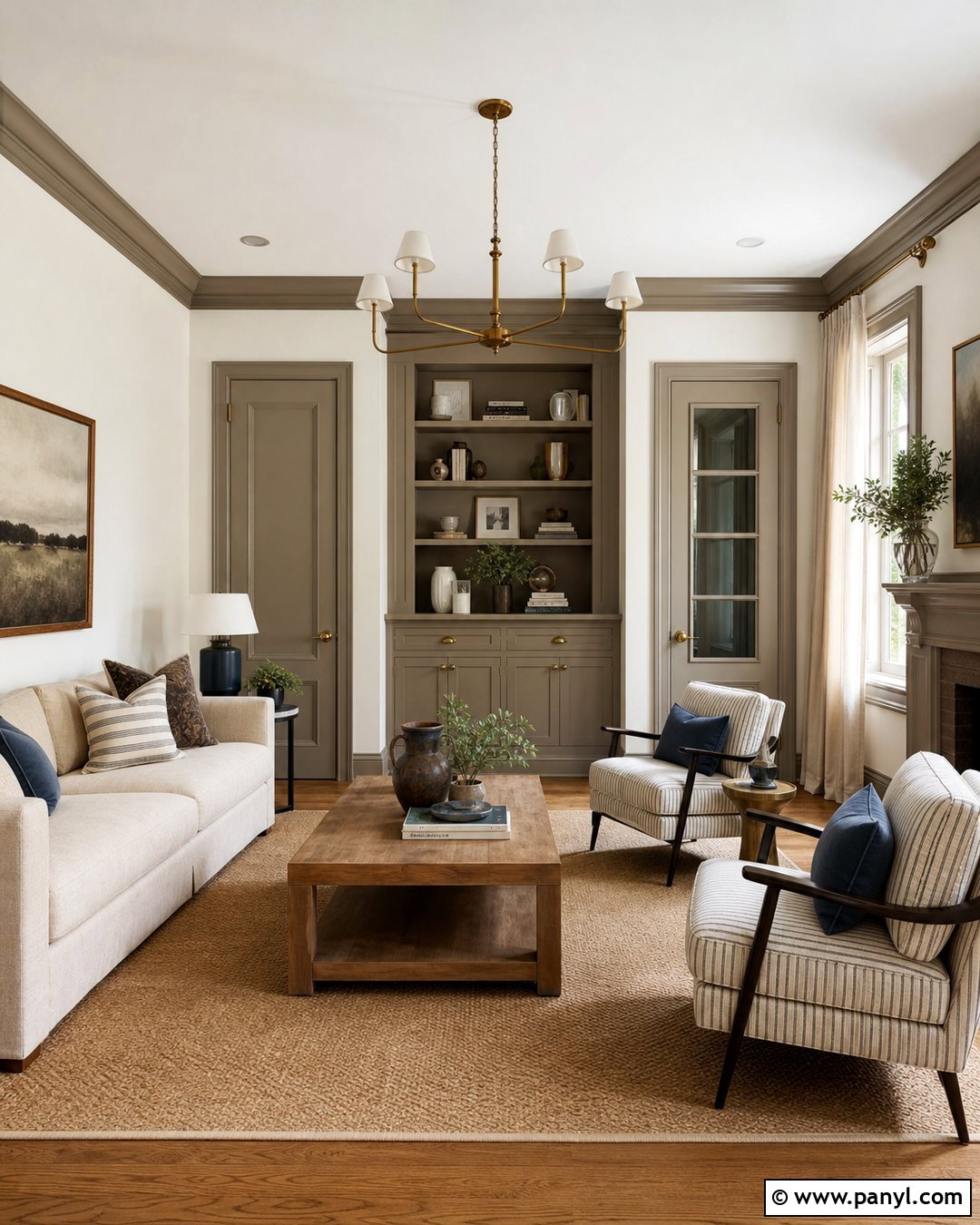
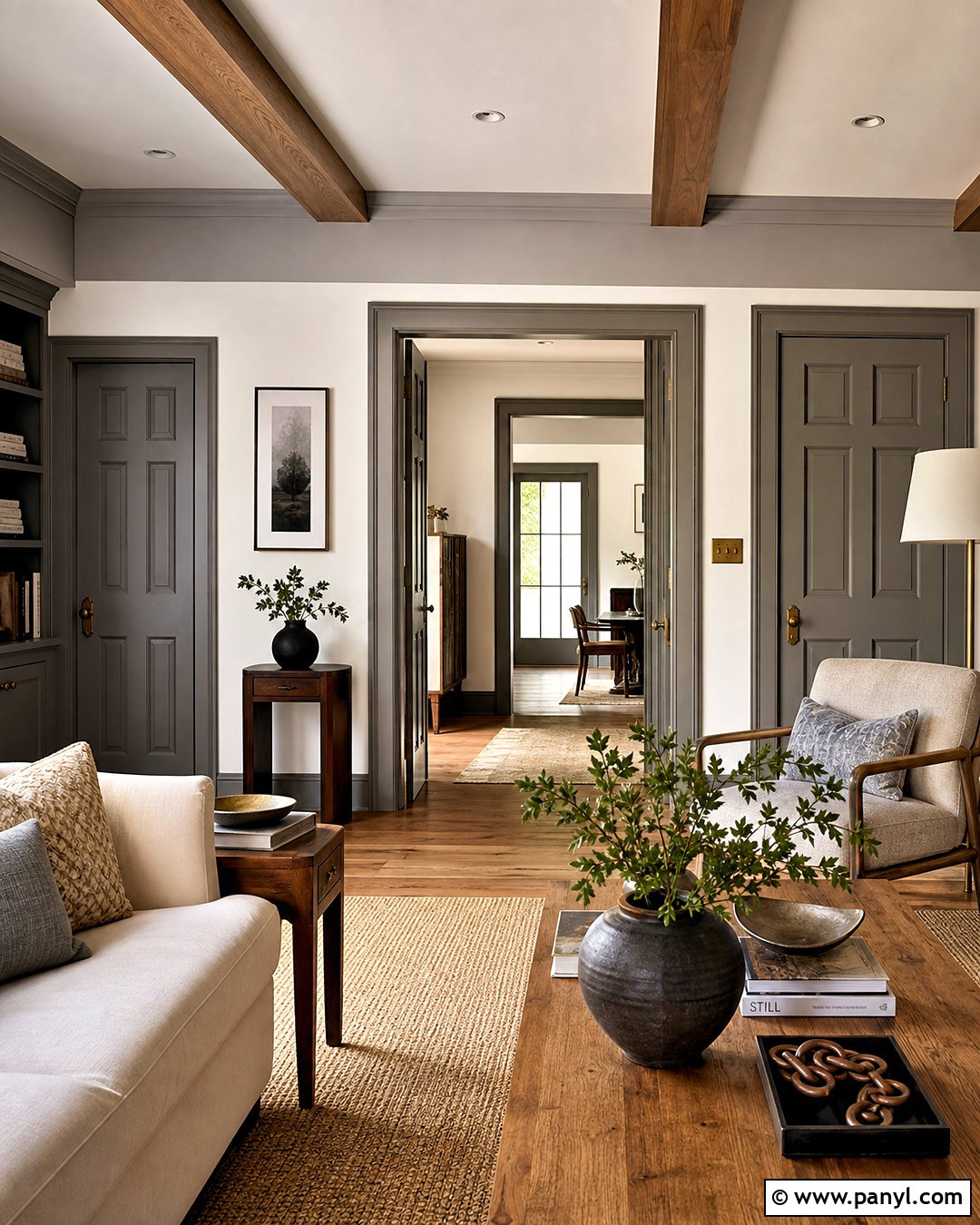
Greige painted trim creates gentle separation around white walls and works beautifully in a calm transitional living room. Choose a medium warm greige for the baseboards, crown molding, door frames, and built-in cabinetry. A slightly creamy white wall color will prevent the trim from reading purple or overly gray. Complete the room with a soft beige sofa, two striped armchairs, an oak coffee table, and a natural fiber rug. Add dark bronze hardware for a small amount of contrast. Simple linen drapes can match the walls, allowing the window casing to remain visible. This scheme is especially useful in open-plan homes because the neutral trim can continue through adjoining rooms without becoming distracting. It also connects warm wood floors with cooler stone or metal accents.
4. Mushroom Painted Trim With White Walls
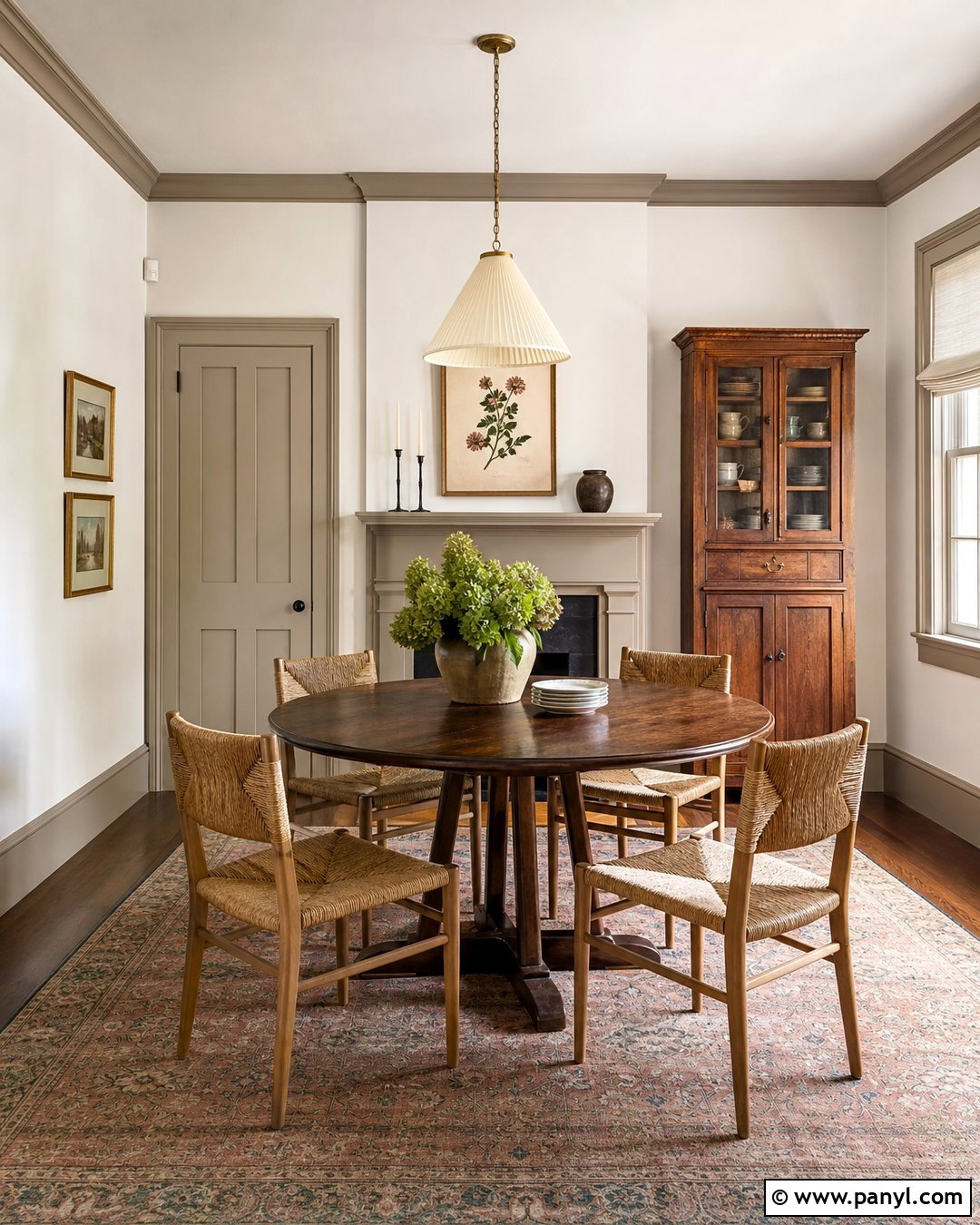
Mushroom trim brings earthy warmth to white walls while maintaining a quiet, neutral palette. Use a brown-leaning mushroom shade on wide baseboards, window trim, door casings, and a traditional fireplace mantel. Keep the walls soft white rather than bright blue-white. In the dining room, introduce a round dark oak table, woven dining chairs, an antique-style cabinet, and a large cream pendant. A faded rug containing beige, clay, and muted green will connect the trim to the furnishings. Add handmade pottery and simple botanical artwork for a collected appearance. Because mushroom paint changes noticeably under different light, sample it beside the flooring and white wall color first. The finished design should feel warm and substantial, with enough tonal contrast to reveal the room’s architectural details.
5. Sage Green Painted Trim With White Walls
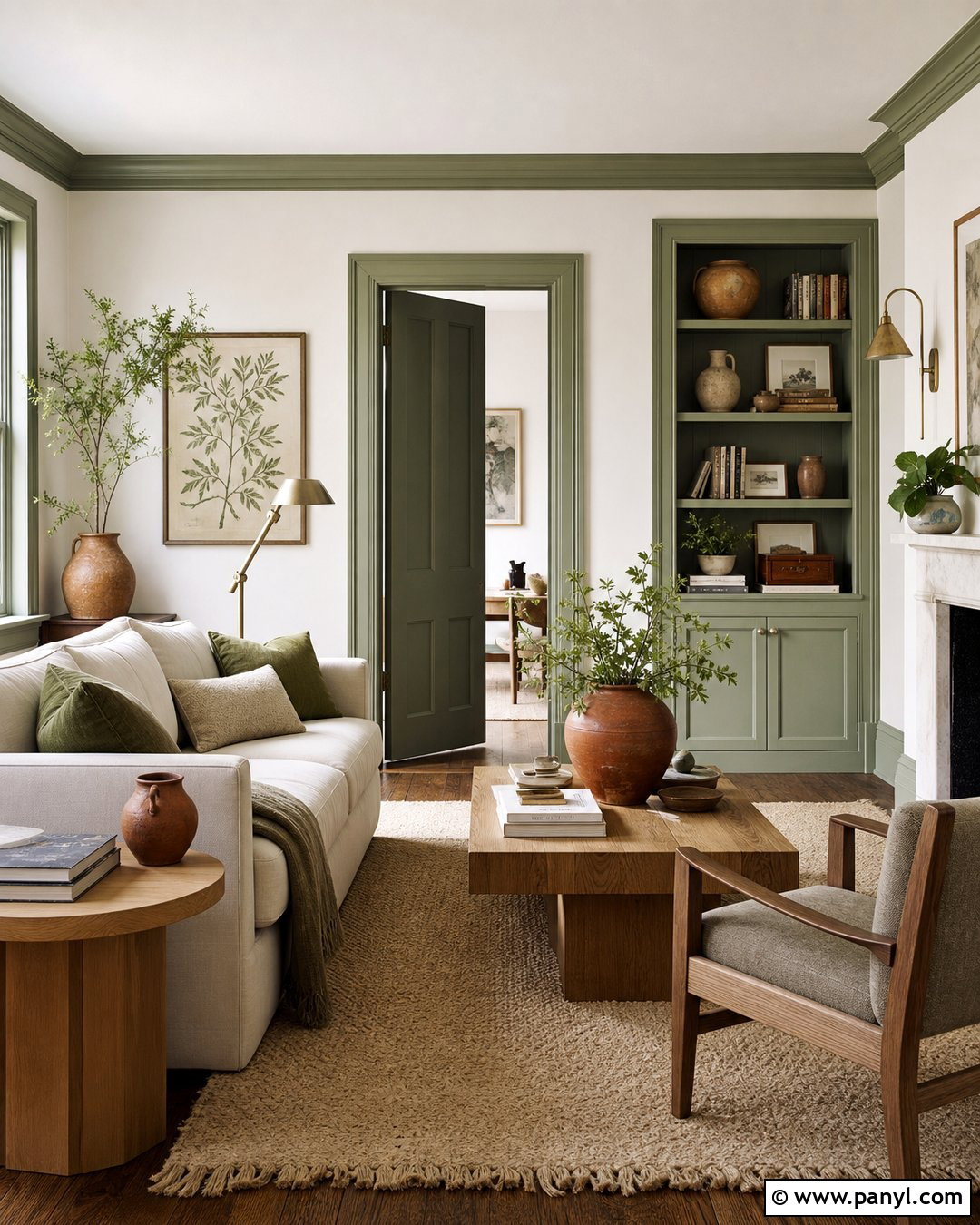
Sage green trim can turn an ordinary white room into a soft, nature-inspired retreat. Paint the window casings, baseboards, crown molding, doors, and built-in bookcases in a muted warm sage. Choose gentle ivory-white walls to complement the green rather than creating stark contrast. Furnish the living room with a cream sofa, light oak tables, and a woven wool rug. Terracotta pottery, botanical prints, and olive-toned pillows deepen the natural palette. Use antique brass hardware and a linen drum pendant for warmth. If the room overlooks a yard, the painted window trim will also connect the indoor color scheme with outdoor greenery. This complete look feels peaceful and welcoming, making it especially suitable for reading rooms, sitting rooms, and relaxed family spaces.
6. Olive Green Painted Trim With White Walls
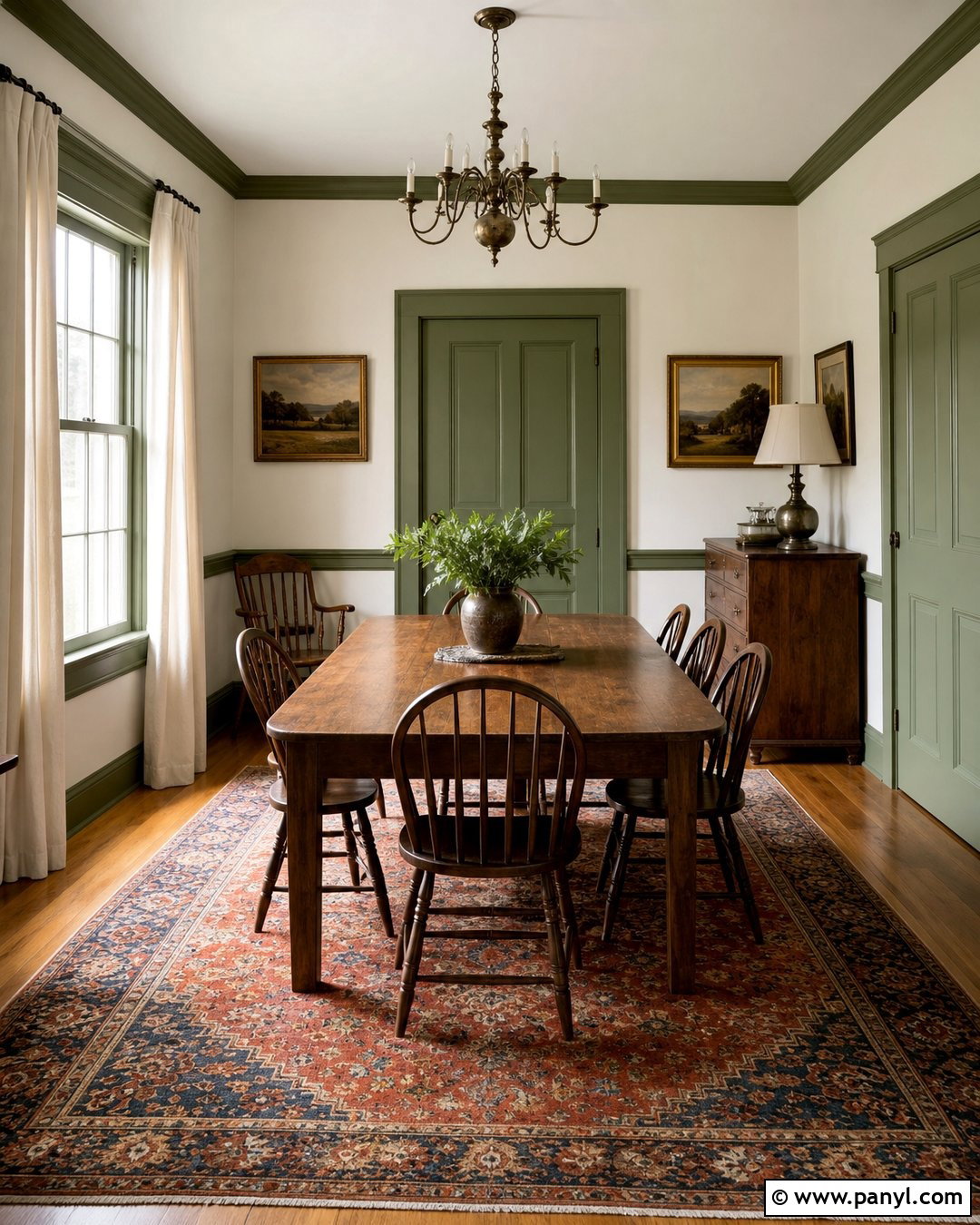
Olive green painted trim gives white walls a richer, more traditional character. Apply the color to substantial baseboards, paneled doors, window casings, and picture-frame molding for a connected finish. Warm white walls provide brightness while allowing the earthy green to stand out. In a dining room, pair the trim with a walnut table, spindle-back chairs, and a vintage-inspired rug containing rust, cream, and faded blue. A dark bronze chandelier supports the depth of the olive without competing with it. Add off-white curtains and framed landscapes in wood frames. This scheme works particularly well with original hardwood floors and older architectural details. Keep the ceiling white and avoid filling the room with additional green furniture. A few repeated olive accents are enough to create visual continuity.
7. Forest Green Painted Trim With White Walls
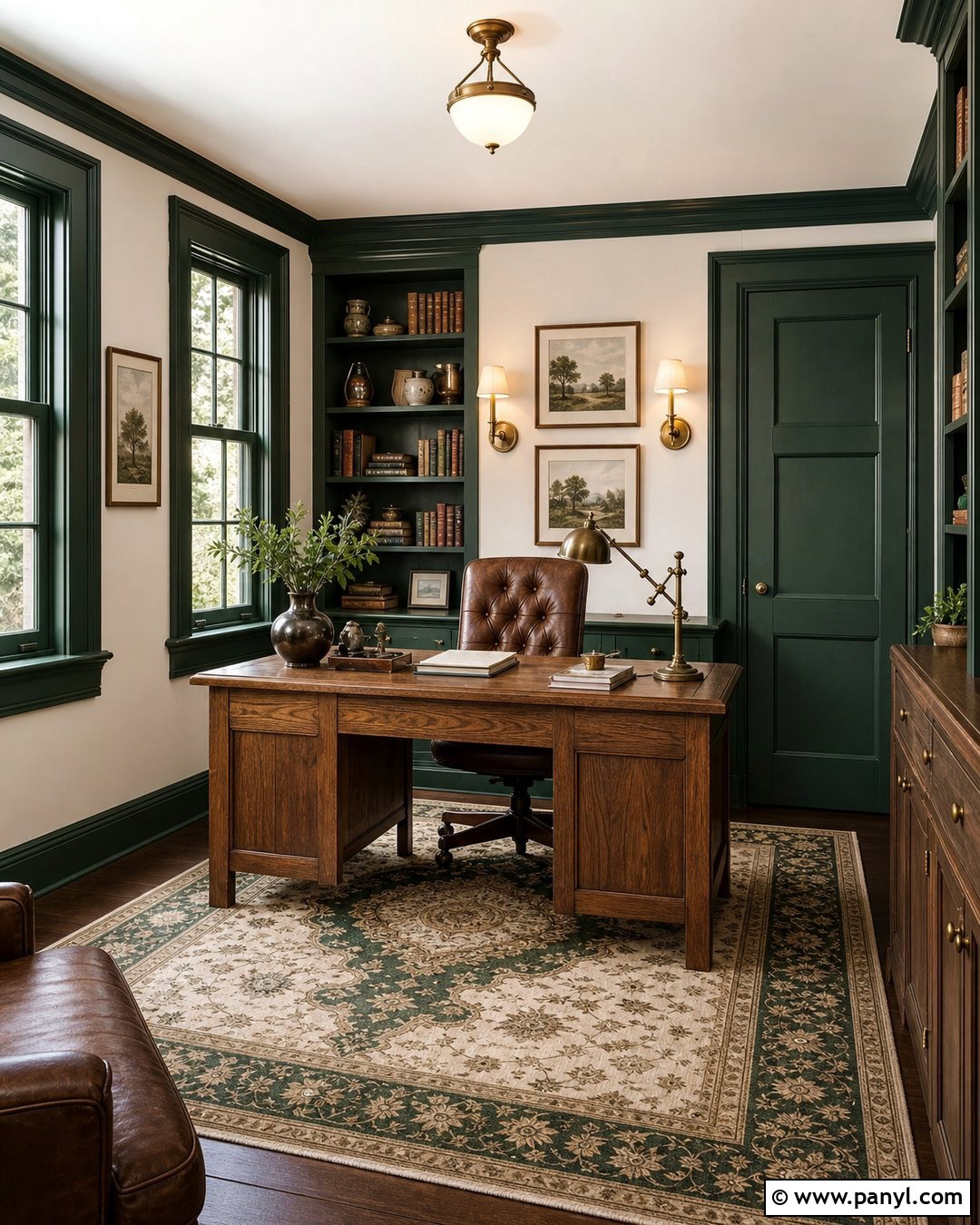
Deep forest green trim creates dramatic definition while white walls preserve a sense of openness. This combination suits a home office with substantial window casings, built-in shelves, and a paneled door. Paint all those features in satin forest green, then use a warm clean white across the walls and ceiling. Place a medium oak desk in the center, add a brown leather chair, and ground the space with a patterned cream-and-green rug. Brass sconces and cabinet pulls add a warm reflective finish. Keep decorative objects limited to books, pottery, and framed nature studies. The dark trim should form a continuous outline instead of appearing in disconnected patches. With plenty of daylight and restrained furnishings, this complete room feels focused, established, and sophisticated without becoming heavy.
8. Navy Blue Painted Trim With White Walls
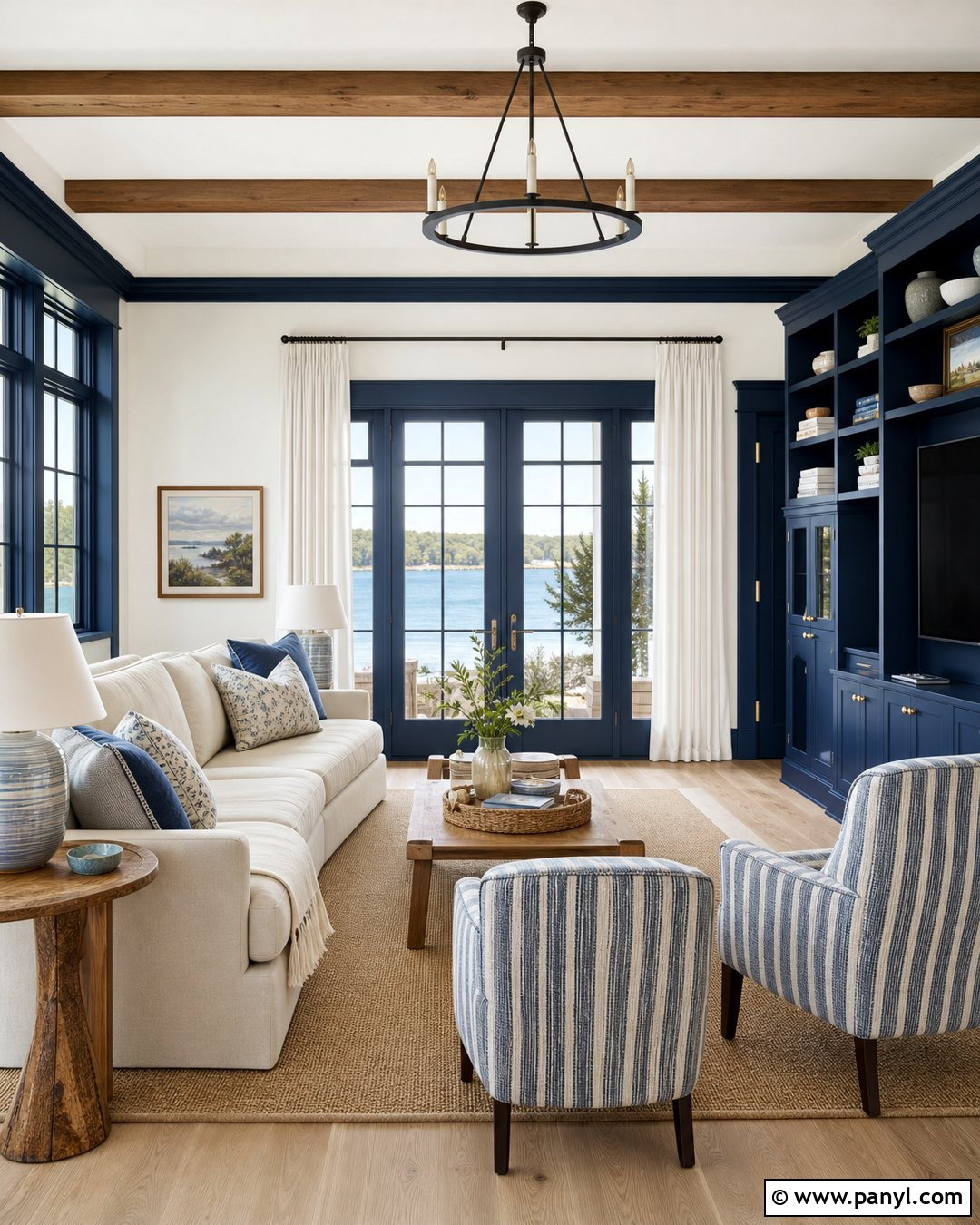
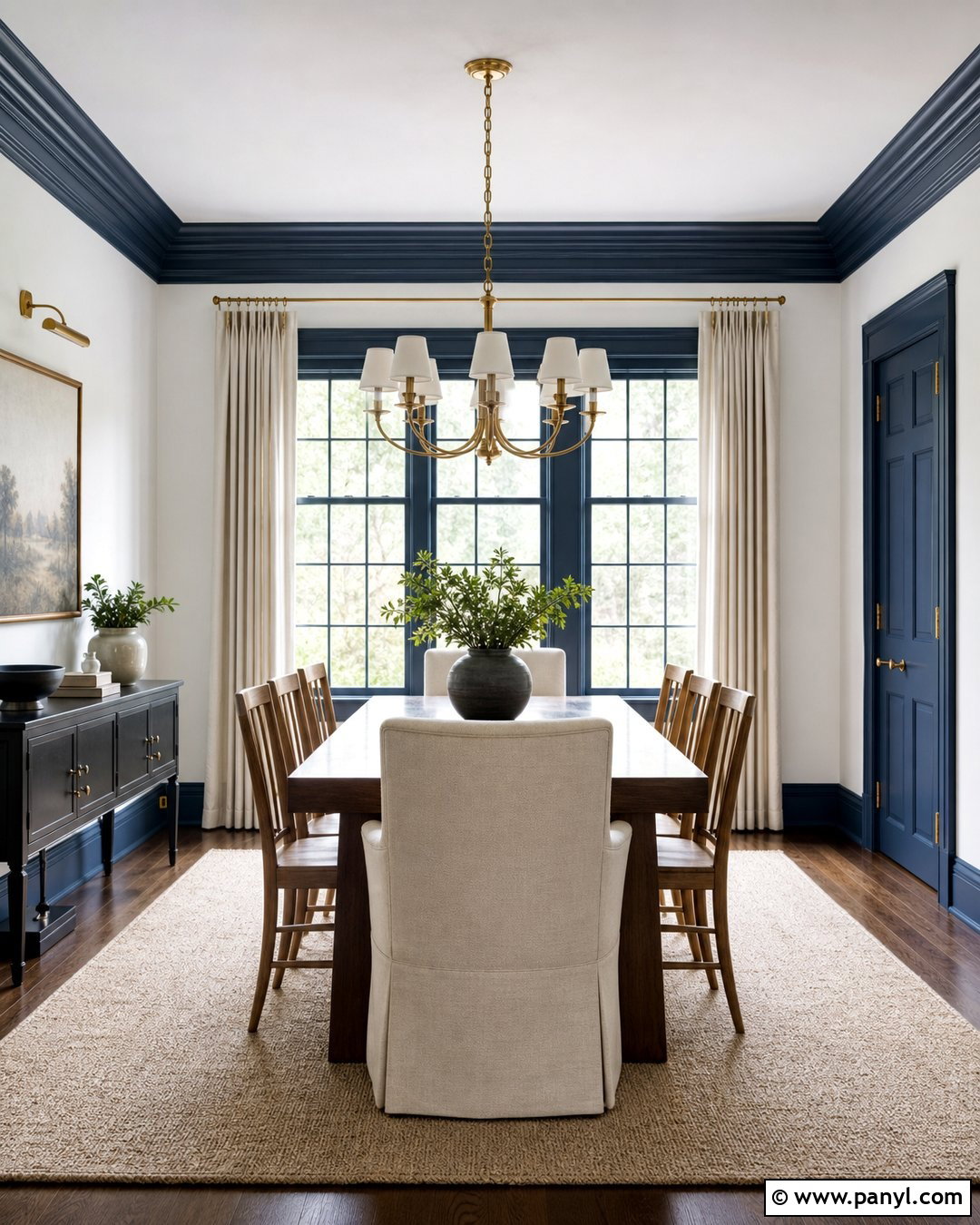
Navy painted trim creates a classic coastal look without relying on obvious nautical decorations. Use a clear, deep navy on baseboards, window casings, interior doors, and a built-in media cabinet. Pair it with warm white walls and pale oak flooring to keep the room light. A relaxed oatmeal sofa, blue-striped chairs, and a large woven rug provide comfort while repeating the palette in softer forms. Add a natural wood coffee table, ceramic table lamps, and brushed brass hardware. White linen curtains should sit just inside the navy window casing so the architectural contrast remains visible. Introduce only a few navy accessories because the trim already carries significant visual weight. The finished living room feels crisp, balanced, and timeless, with enough warmth for everyday family use.
9. Dusty Blue Painted Trim With White Walls
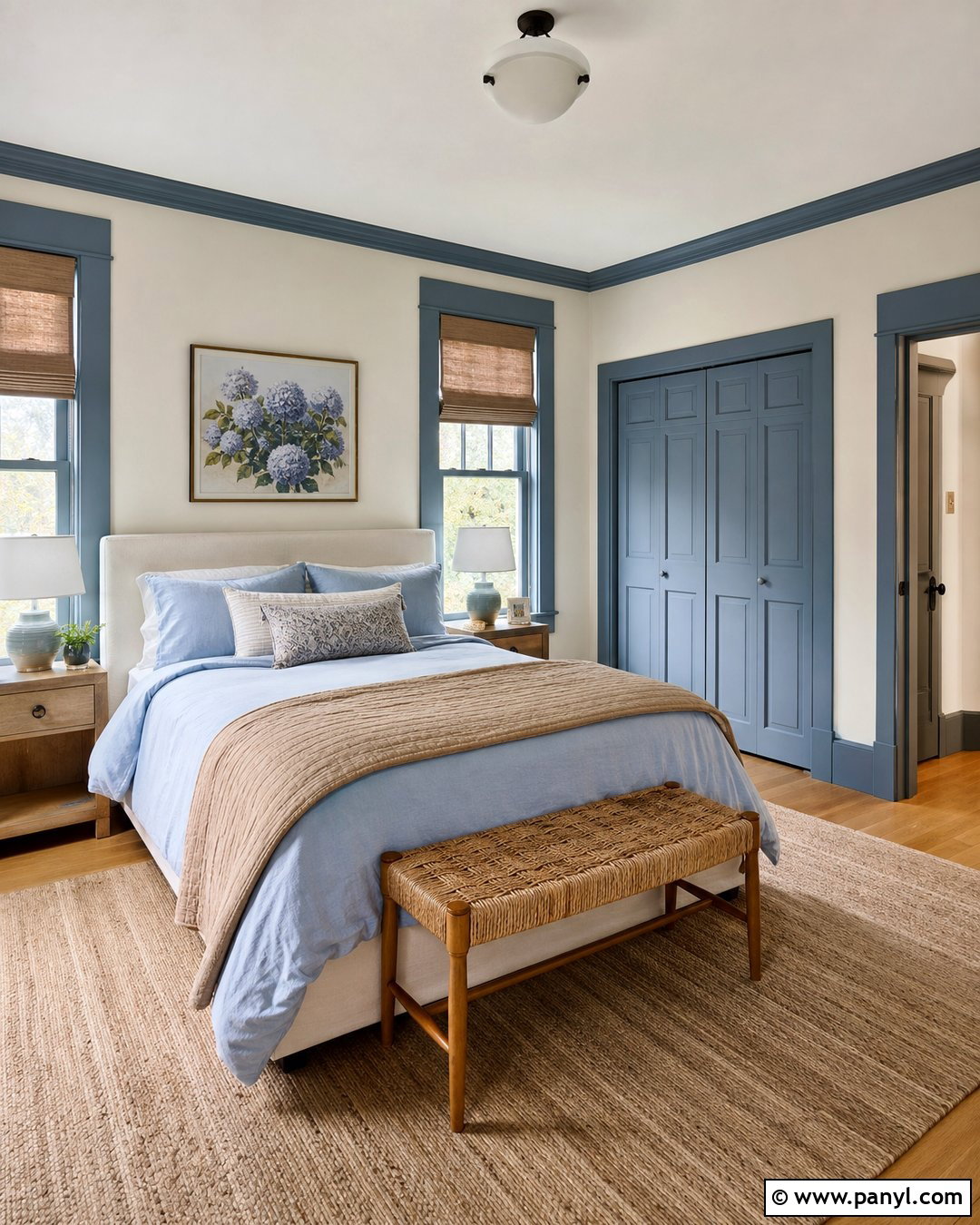
Dusty blue trim gives white walls a gentle layer of color that works well in restful bedrooms. Choose a muted blue with gray undertones for the baseboards, window frames, door casing, and paneled closet doors. Use a soft off-white on the walls and ceiling to maintain a calm atmosphere. Center the room around an upholstered cream bed with pale blue bedding, natural linen sheets, and a quilt containing subtle tan accents. Light oak nightstands, ceramic lamps, and a woven bench introduce warmth. Hang simple floral artwork in slim wood frames rather than matching blue frames. The trim should be noticeable but not sharply contrasting. This complete bedroom palette feels airy and comfortable, making it a practical choice for rooms with moderate daylight or traditional architectural details.
10. Pale Blue Painted Trim With White Walls
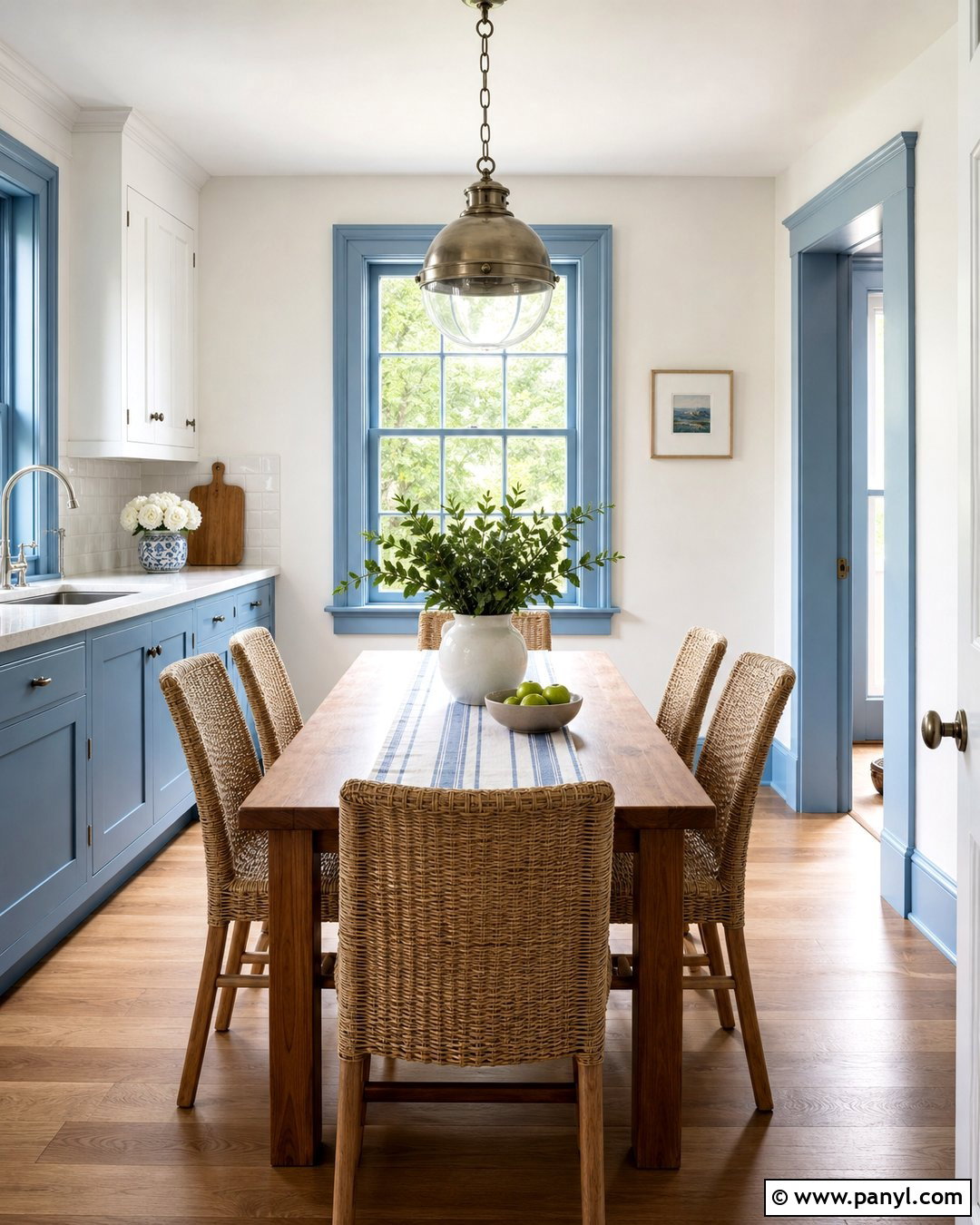
Pale blue painted trim creates a cheerful, open appearance in a white kitchen or breakfast room. Apply the color to window casings, baseboards, door frames, and lower built-in cabinets. Keep the walls a fresh neutral white, then repeat that white on upper cabinets to prevent the room from becoming overly colorful. Include a light oak dining table, woven chairs, a white tile backsplash, and pale stone counters. Polished nickel hardware adds a crisp finish, while a striped blue-and-cream runner creates subtle movement. A few clear glass accessories and small potted herbs complete the design. Select a pale blue that remains visibly blue beside the walls rather than fading into gray. The result is a bright, practical space with just enough color to feel distinctive.
11. Deep Teal Painted Trim With White Walls
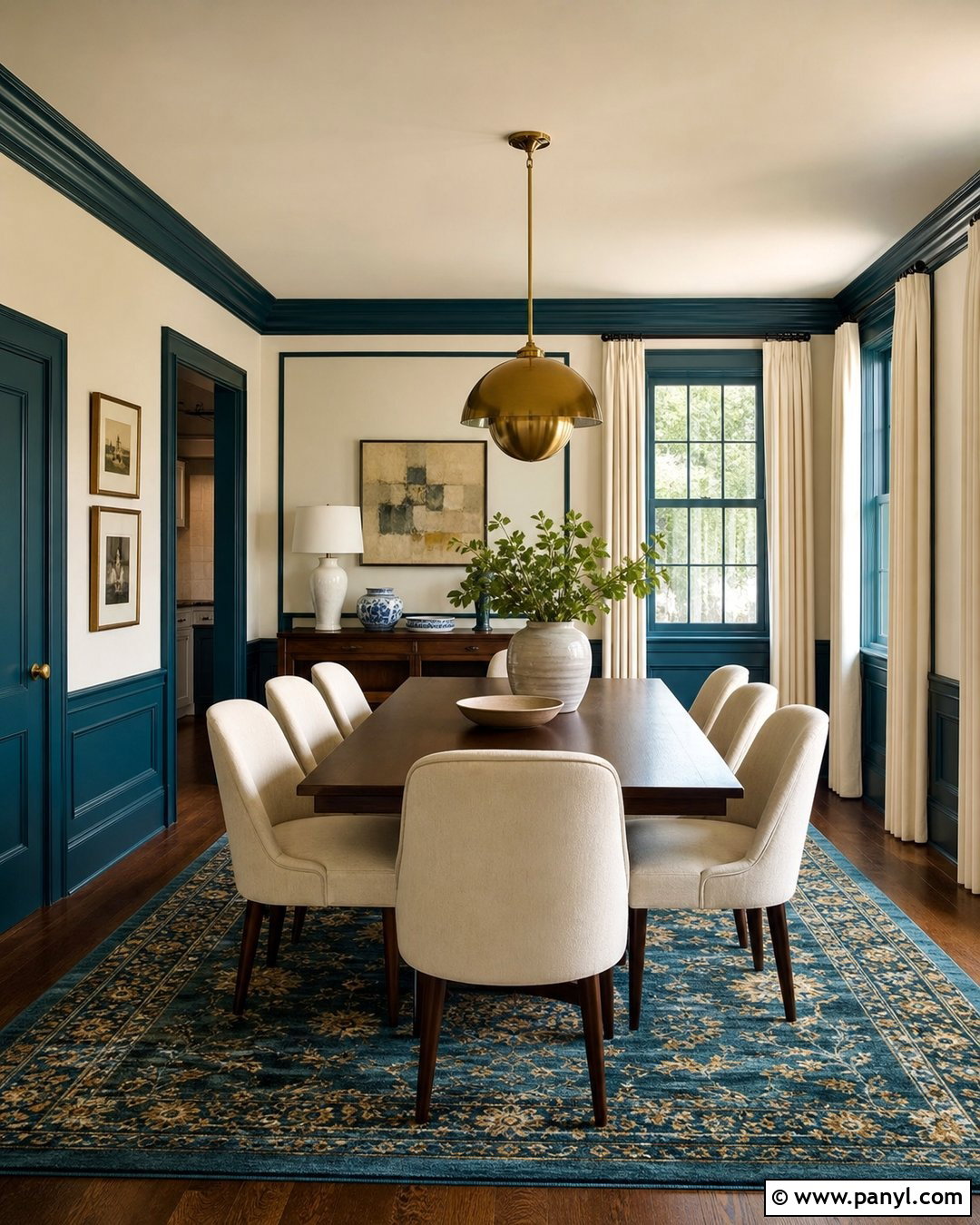
Deep teal trim makes white walls feel more layered and expressive, especially in a dining room with prominent millwork. Paint the window casing, crown molding, baseboards, door, and wall panel frames in a saturated blue-green. Use a warm white wall color to soften the contrast. Build the dining area with a dark wood table, curved cream chairs, and a patterned rug containing teal, tan, and muted gold. A large brass pendant adds warmth above the table, while full-length ivory curtains keep the windows light. Repeat teal only through a few ceramics or small artwork details. The dark painted trim should remain the room’s defining feature. This complete scheme feels bold but livable, combining traditional architectural structure with a color that looks fresh and modern.
12. Light Gray Painted Trim With White Walls
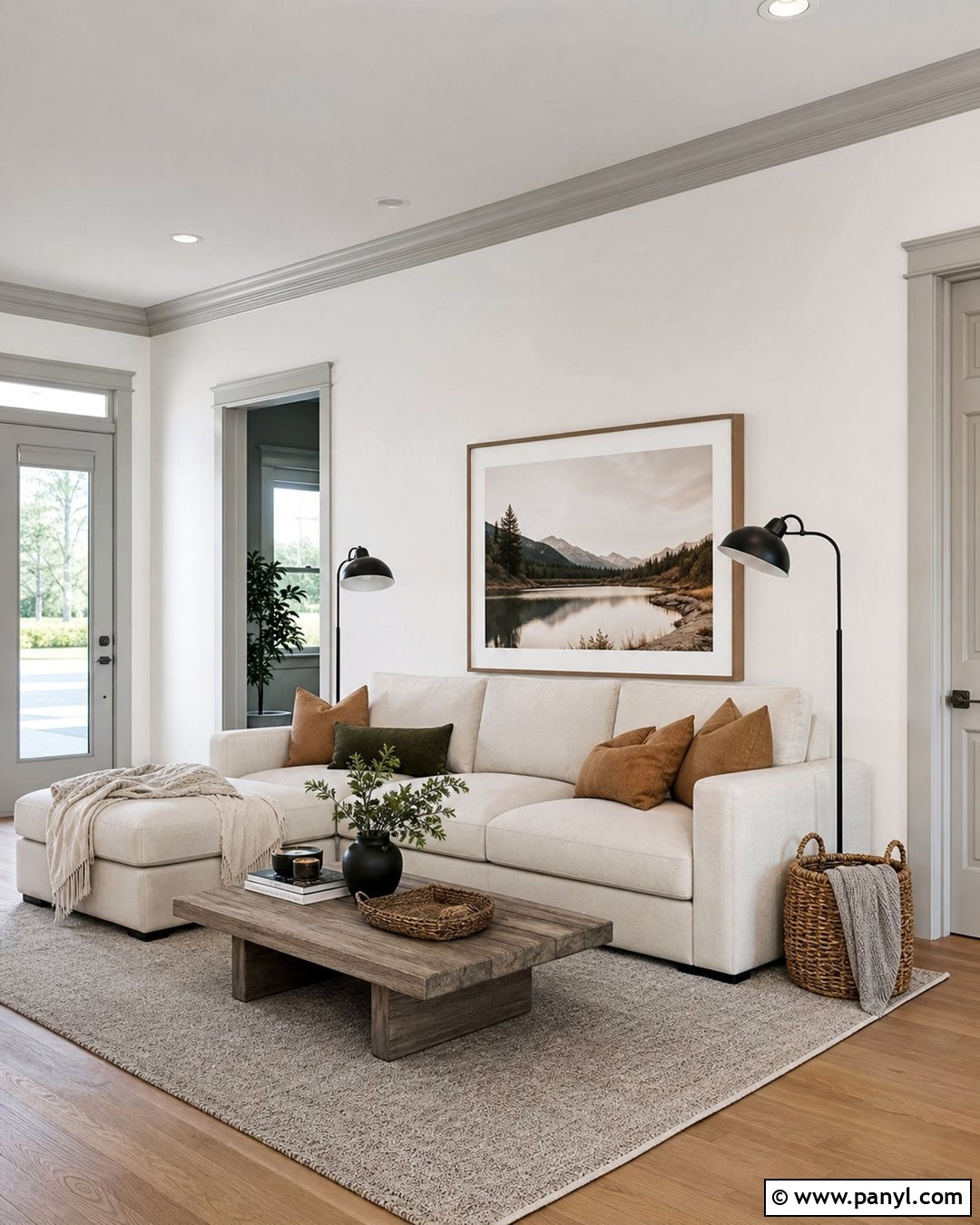
Light gray trim offers subtle definition for homeowners who want more depth than an all-white room without strong color. Choose a pale warm gray for baseboards, door frames, window casings, and simple crown molding. Pair it with a clean white that shares a similar undertone. In a modern living room, use a cream modular sofa, a pale ash coffee table, and a textured gray-beige rug. Add black floor lamps sparingly for structure, then warm the design with camel pillows and natural woven baskets. White curtains can blend with the walls while allowing the gray window frame to create a neat border. This scheme is particularly effective in smaller rooms because the contrast remains gentle. The finished interior feels organized, bright, and quietly architectural rather than plain.
13. Slate Blue Painted Trim With White Walls
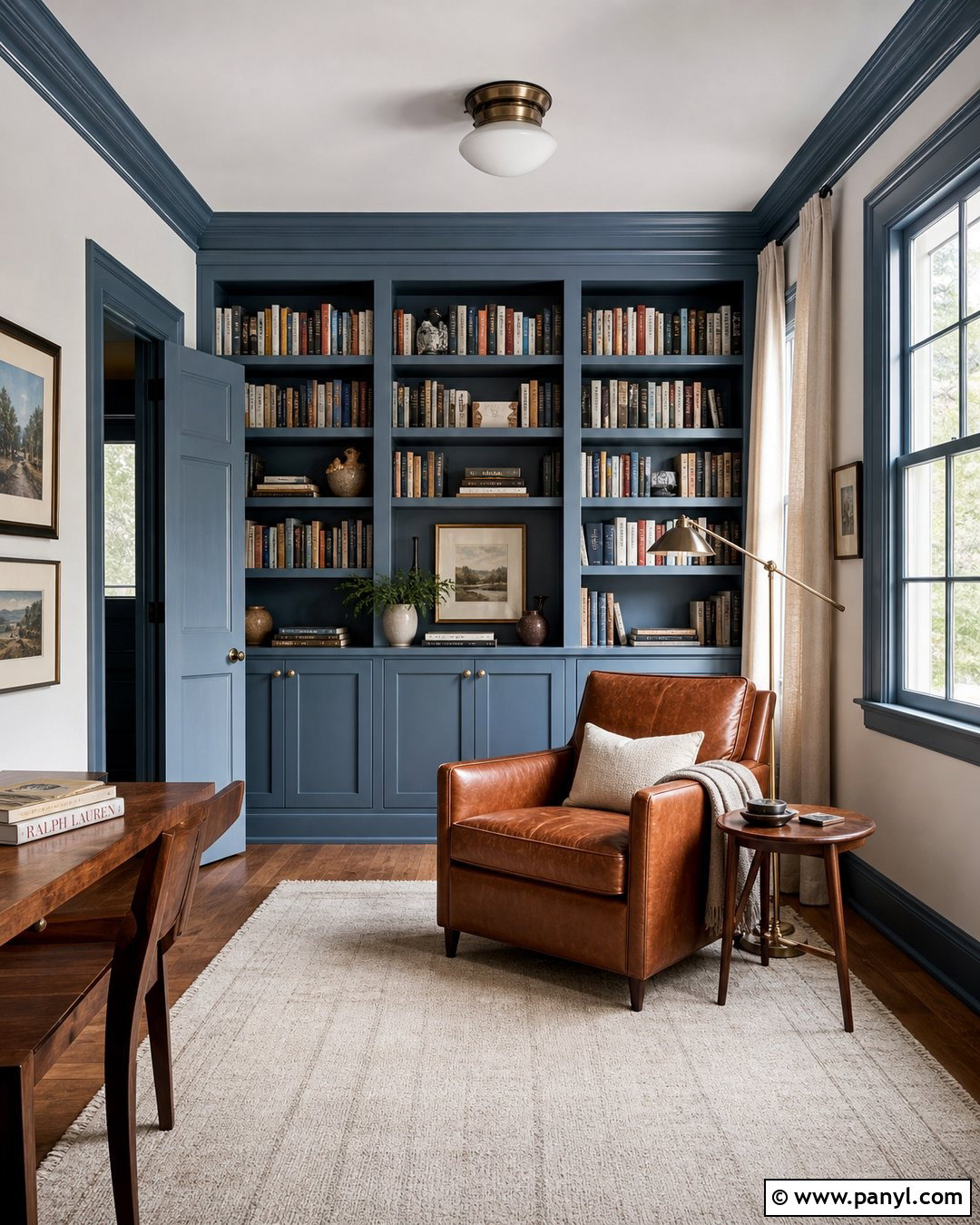
Slate blue painted trim brings a tailored quality to white walls while remaining softer than navy. Use it across baseboards, crown molding, door casings, interior doors, and built-in storage in a home library. Warm white walls provide a clean background for bookcases and artwork. Add a cognac leather reading chair, a round walnut table, and a cream wool rug. A brass floor lamp supplies focused light and complements the blue-gray finish. Linen curtains in natural beige prevent the palette from feeling too cool. Arrange books with a mix of warm and neutral covers rather than matching everything to the trim. The resulting room feels thoughtful and established. Slate blue is particularly attractive beside medium and dark wood tones, which help reveal its subdued blue undertone.
14. Terracotta Painted Trim With White Walls
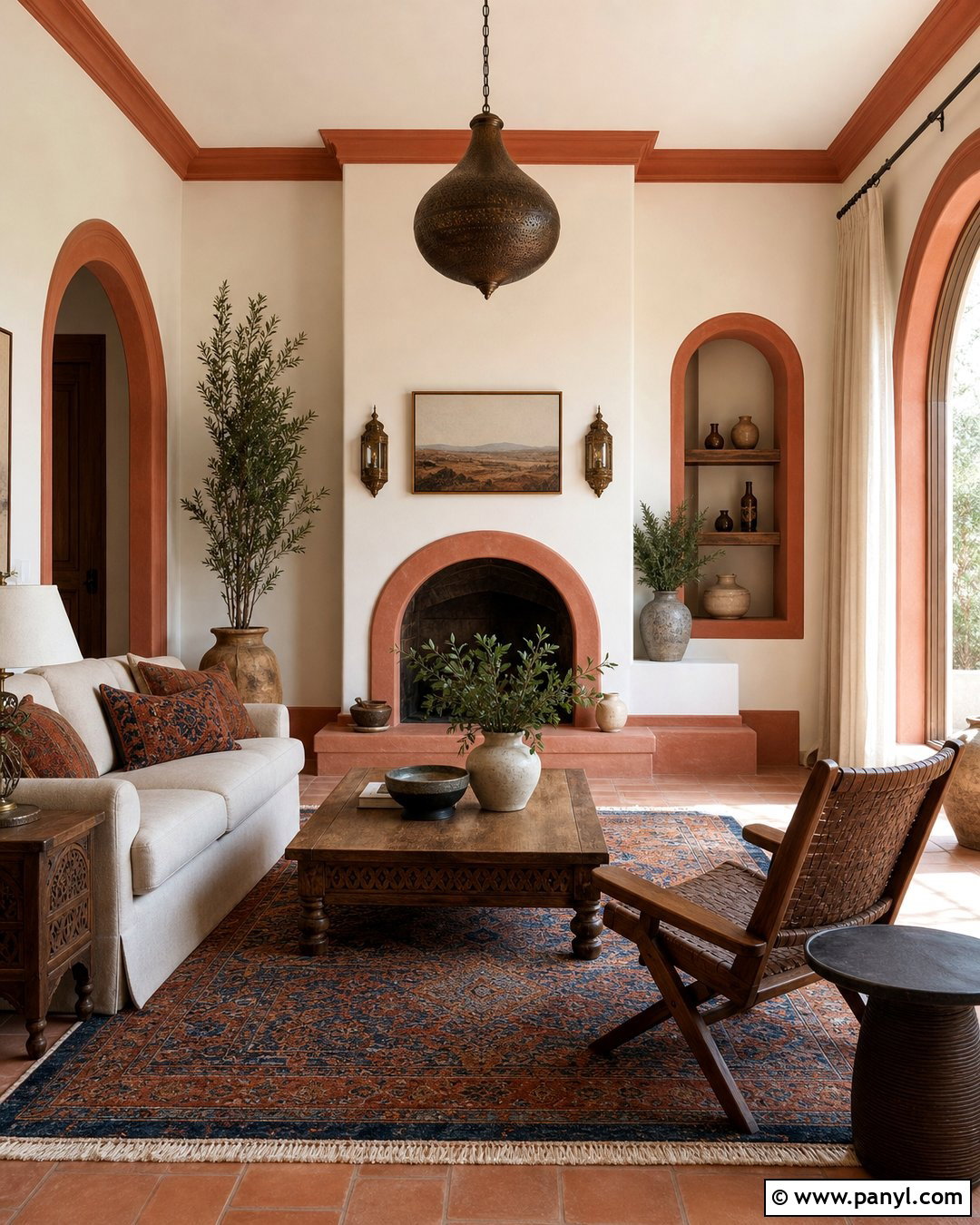
Terracotta trim introduces sunbaked warmth and makes white walls feel softer and more inviting. Apply a muted clay tone to baseboards, arched doorways, window casings, and a simple fireplace surround. Choose creamy white walls with warm undertones to support the earthy palette. Furnish the living room with a flax-colored sofa, carved wood tables, and a low woven lounge chair. A patterned rug with rust, tan, and faded blue will connect the trim to the seating area. Add ceramic vessels, linen curtains, and dark bronze lighting for texture. Avoid filling the space with bright orange accessories, which can make the design feel overly themed. When used as a consistent architectural outline, terracotta trim creates a relaxed Mediterranean-inspired room that remains practical for an average home.
15. Rust Painted Trim With White Walls
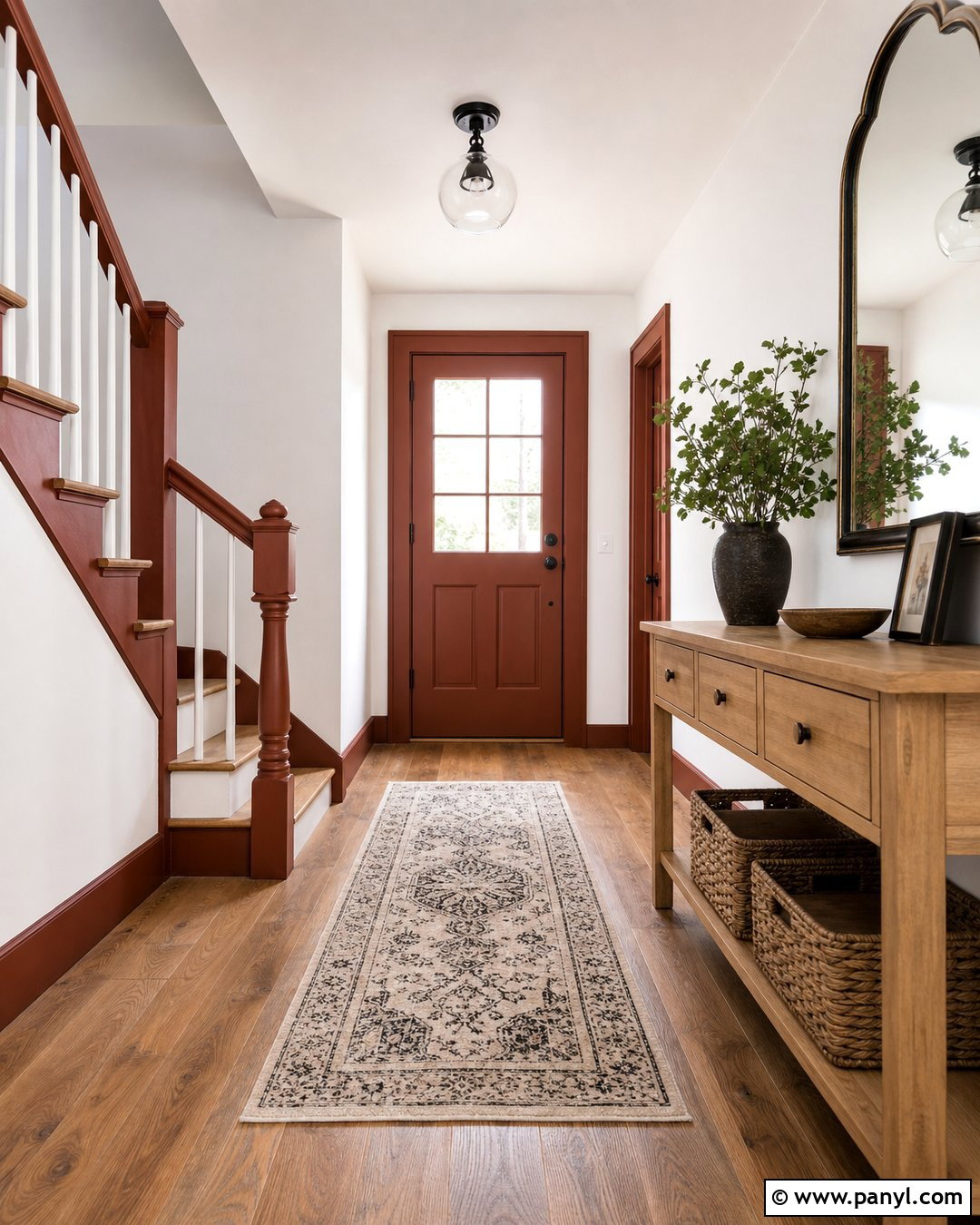
Rust painted trim provides deeper contrast than terracotta and looks especially striking in an entryway. Cover the baseboards, front door, door casing, stair stringer, and newel post in a warm rust-brown satin finish. Keep the walls and stair risers soft white for clarity. Add an oak console, a rounded mirror with a dark bronze frame, and a durable runner containing cream, charcoal, and muted red. Woven baskets beneath the console offer useful storage and reinforce the earthy texture. Use a simple black or bronze ceiling fixture rather than an ornate statement piece. Repeating the rust color across connected architectural surfaces makes the entry feel considered. The completed look is welcoming, grounded, and durable enough for a busy transitional area while still providing memorable color.
16. Burgundy Painted Trim With White Walls
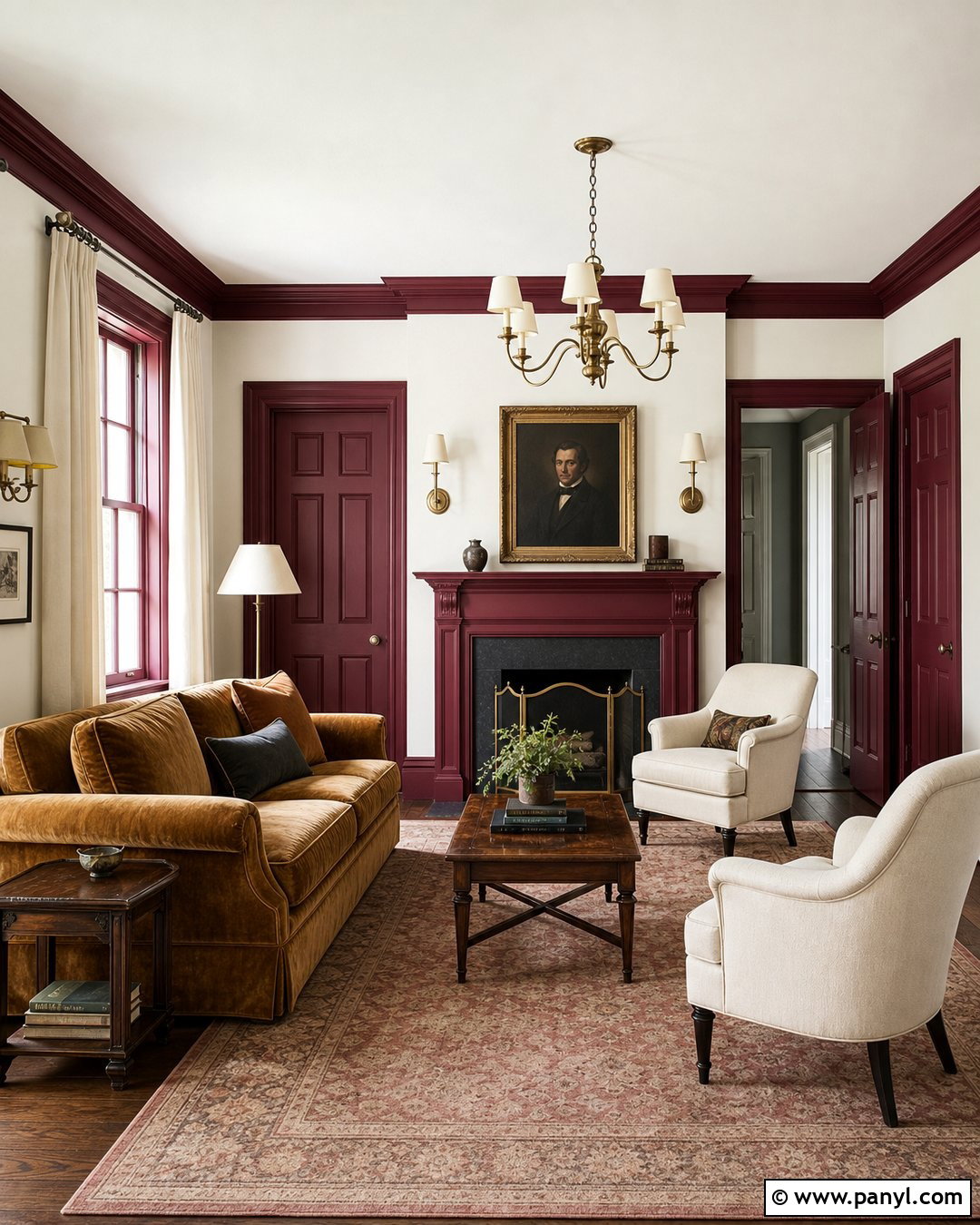
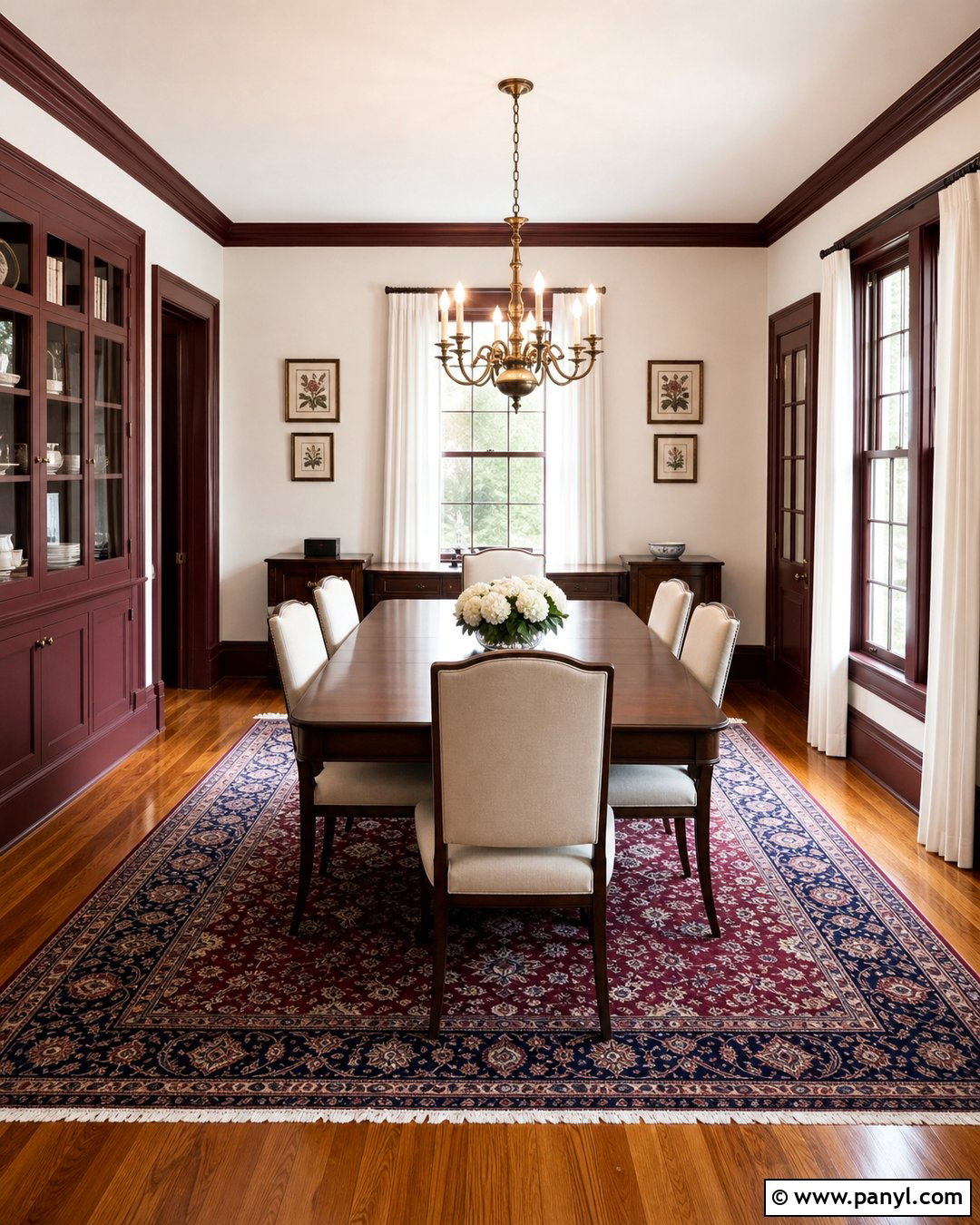
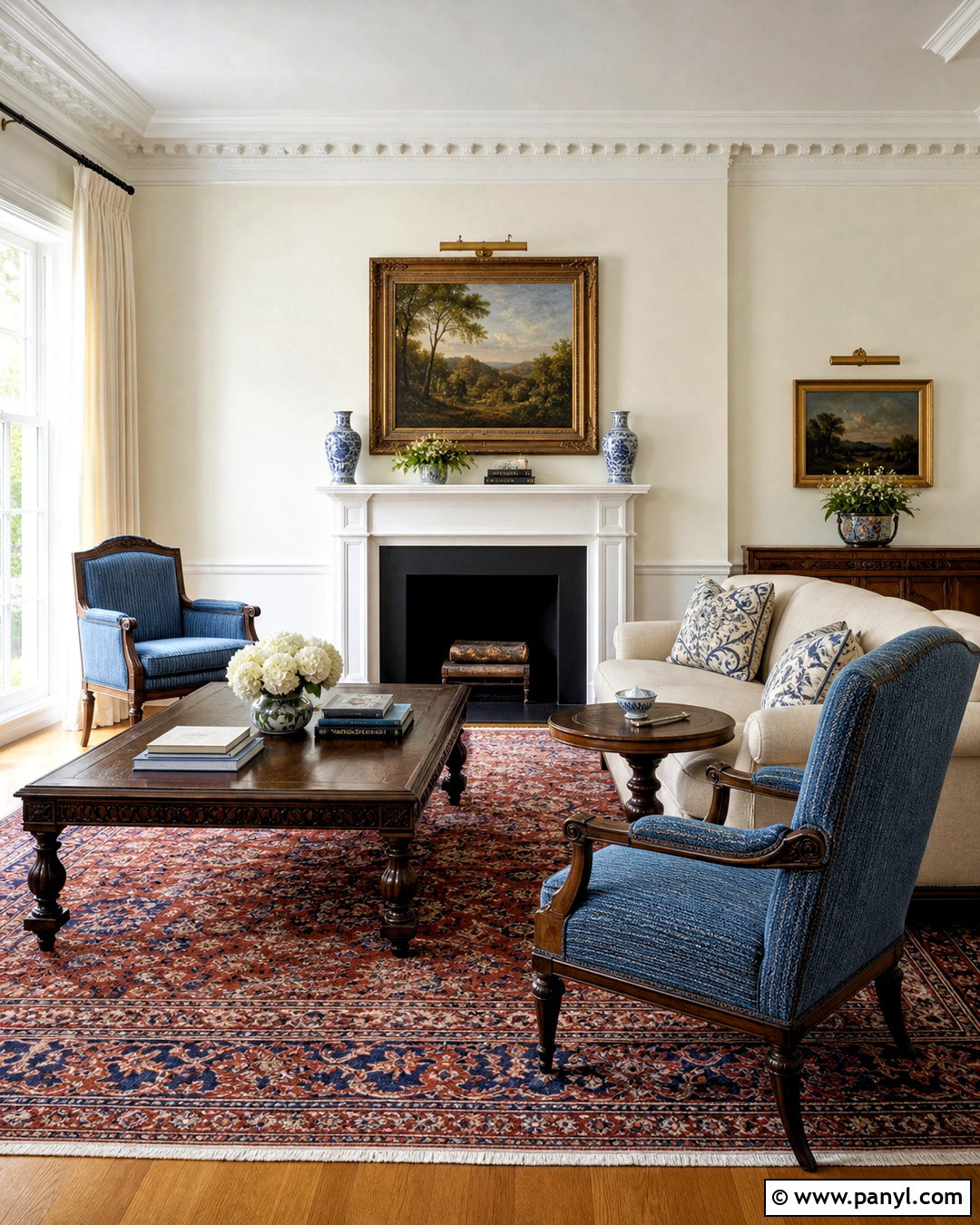
Burgundy trim gives white walls a refined, historic feeling that suits formal rooms and period-inspired interiors. Select a deep red with brown or plum undertones, then apply it to crown molding, baseboards, window casings, paneled doors, and the fireplace mantel. Warm white walls keep the space from appearing dark. In a sitting room, combine the trim with a camel velvet sofa, two cream armchairs, and an antique wood coffee table. A faded Persian-style rug can repeat burgundy in small amounts while adding navy and tan. Use aged brass lighting and full ivory curtains to soften the strong architectural color. Keep modern plastic finishes to a minimum. This complete palette feels collected and elegant, yet the white walls give it enough visual breathing room for everyday living.
17. Chocolate Brown Painted Trim With White Walls
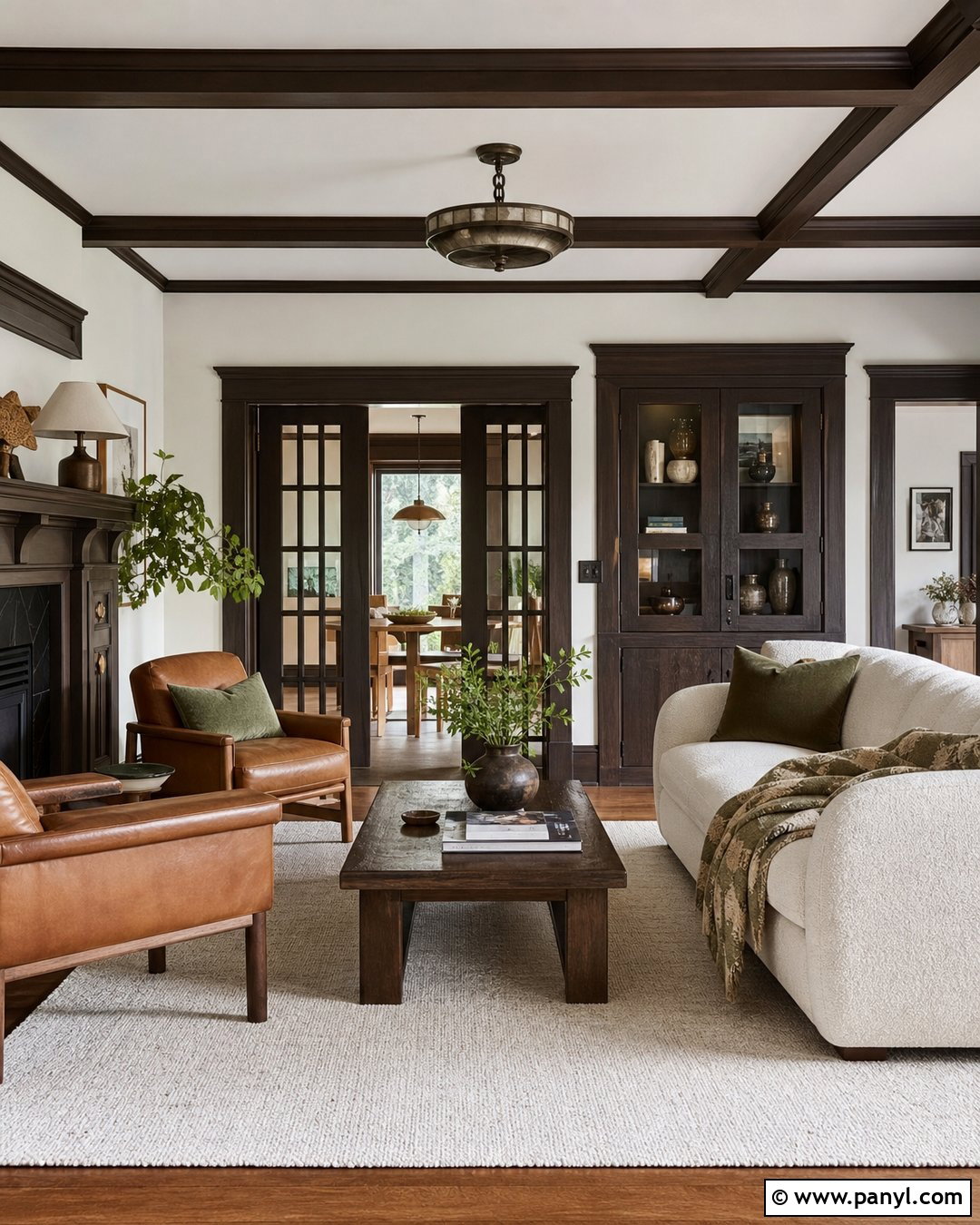
Chocolate brown painted trim creates the appearance of dark stained wood while offering the uniform finish and easier color control of paint. Use a rich brown on wide baseboards, door frames, window casings, ceiling beams, and built-in cabinetry. Pair it with warm white walls and medium oak flooring so the brown does not feel isolated. A cream boucle sofa, tan leather chairs, and a substantial wood coffee table create a comfortable living room foundation. Add an ivory rug, bronze lighting, and muted green textiles for balance. Avoid using too many other dark brown furnishings, since the millwork already frames the space. This complete design works well in Craftsman, Tudor, and traditional homes where strong architectural lines benefit from a deep, warm outline.
18. Espresso Painted Trim With White Walls
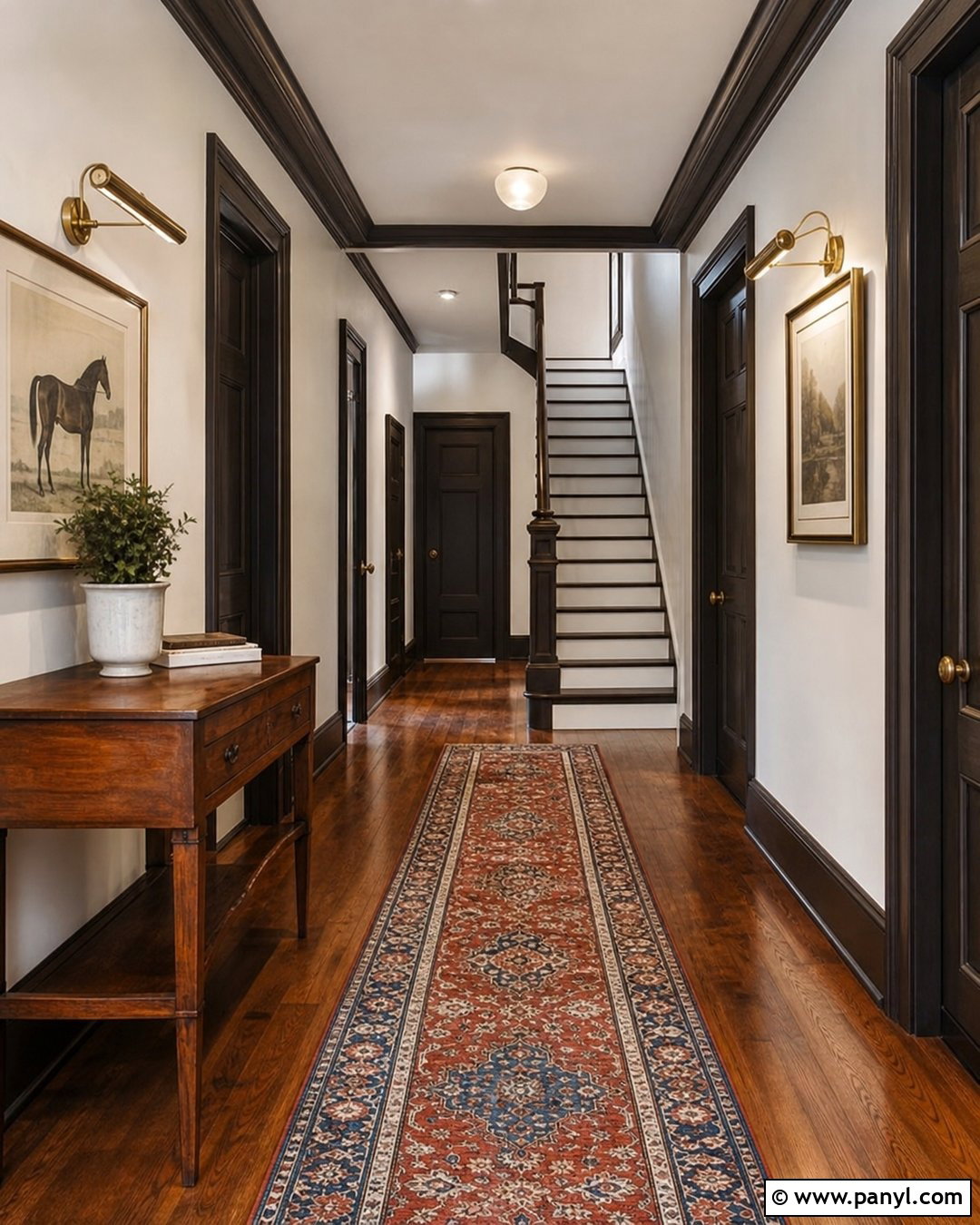
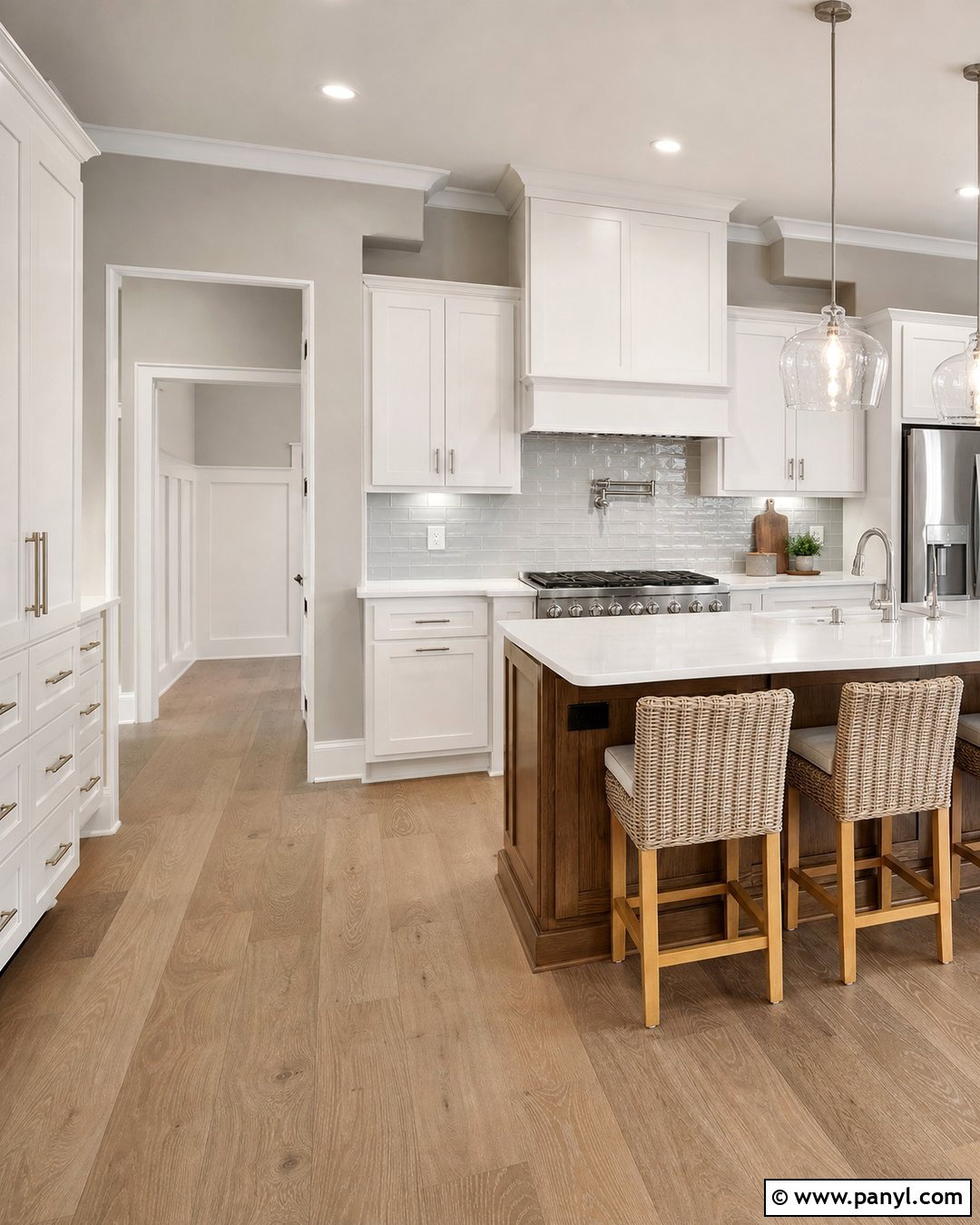
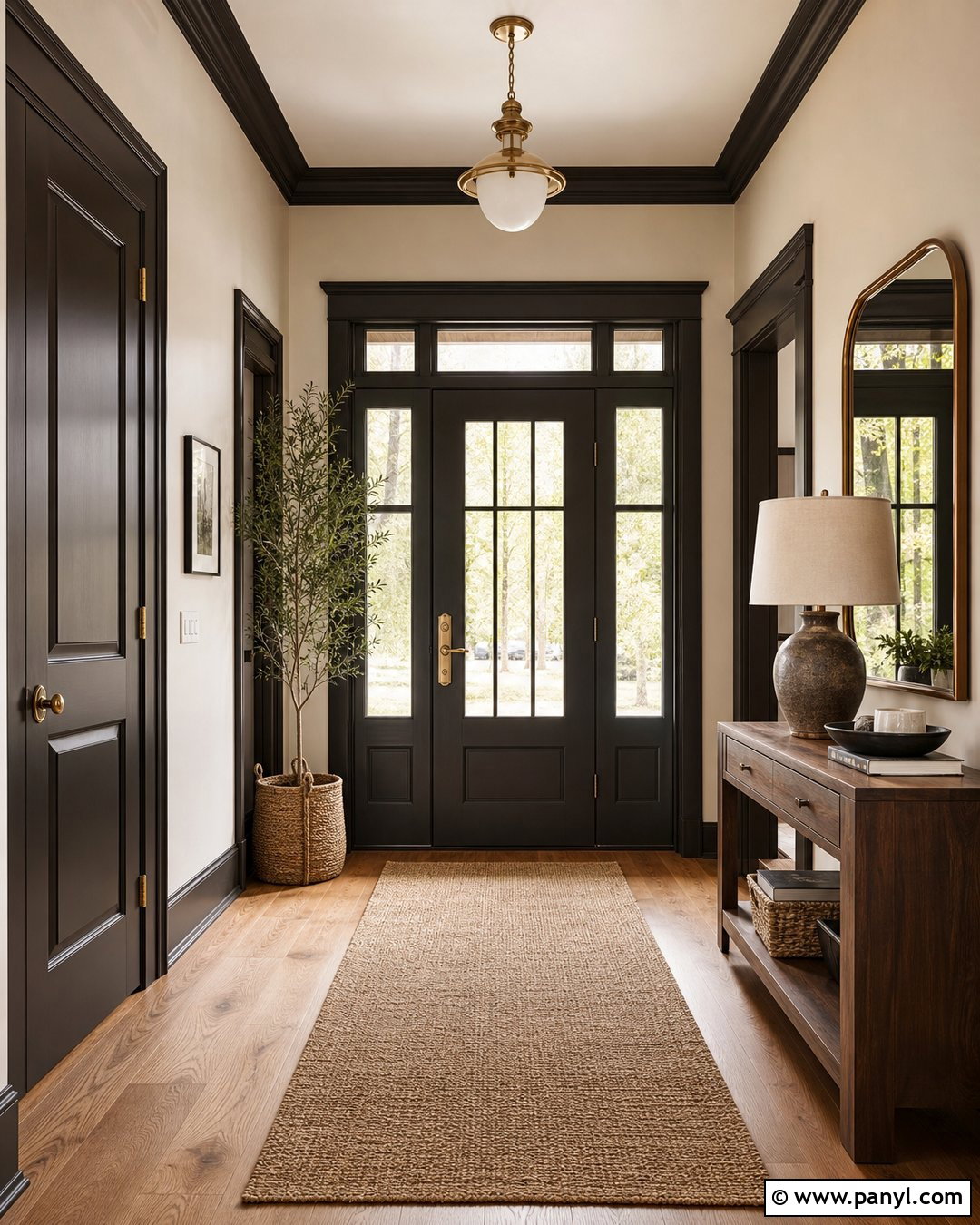
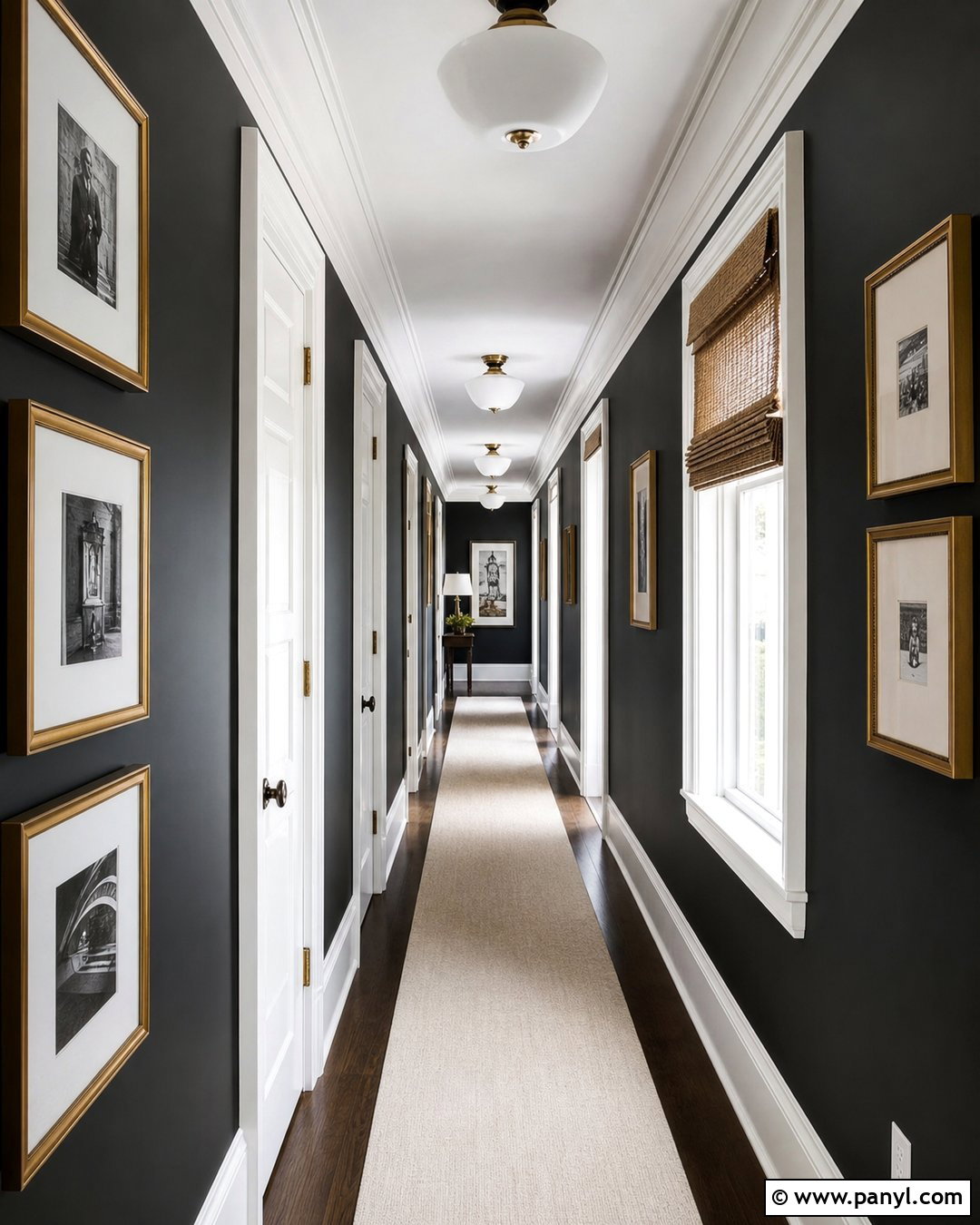
Espresso painted trim offers nearly black contrast with a noticeably warmer undertone. It works beautifully in a hallway where doors, casing, baseboards, and stair railings can form a consistent dark framework against white walls. Choose a soft warm white and continue it onto the ceiling and stair risers. Ground the hallway with a narrow vintage-style runner containing beige, brick red, and faded blue. Add simple brass picture lights above a row of framed artwork. A slim walnut console can provide storage without narrowing the walkway. Use the espresso finish on every visible door rather than alternating colors. The coordinated surfaces make a basic passage feel intentionally designed. Good natural or overhead lighting will preserve the warmth of the brown and prevent it from reading as flat black.
19. Beige Painted Trim With White Walls
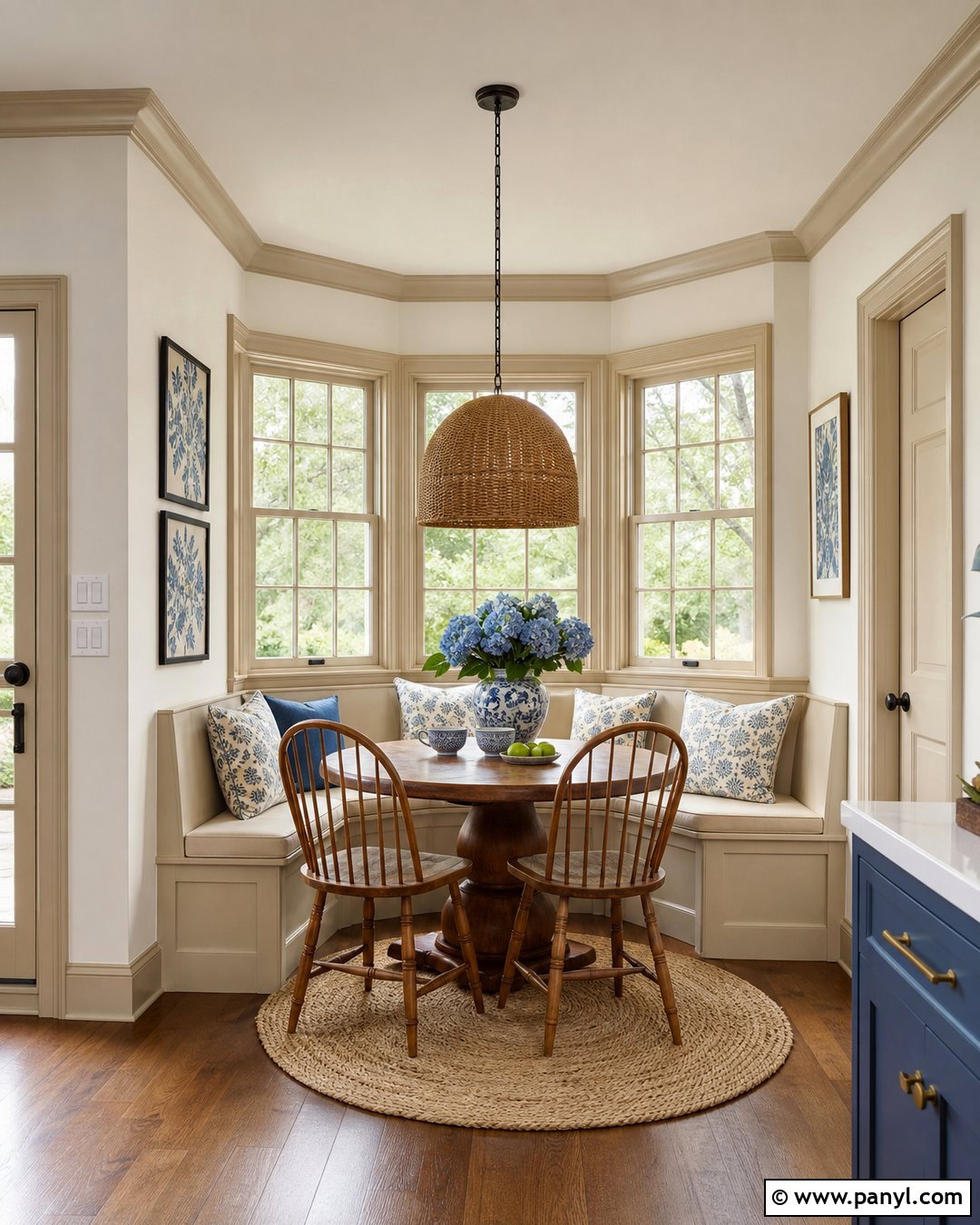
Beige painted trim creates an understated, welcoming border around white walls and is easy to coordinate with existing neutral furnishings. Select a warm sand beige for the baseboards, window casings, crown molding, doors, and built-in bench in a breakfast nook. Use creamy white on the walls to maintain gentle contrast. Add a round oak table, spindle chairs, and a cushioned banquette covered in a small beige-and-blue pattern. A woven pendant and natural fiber rug provide texture, while pale blue ceramics keep the palette from becoming too brown. This complete room feels bright but not stark. Beige trim is particularly useful when the flooring contains golden or honey tones because it bridges those warmer surfaces with white walls and creates a smoother transition throughout the space.
20. Cream Painted Trim With White Walls
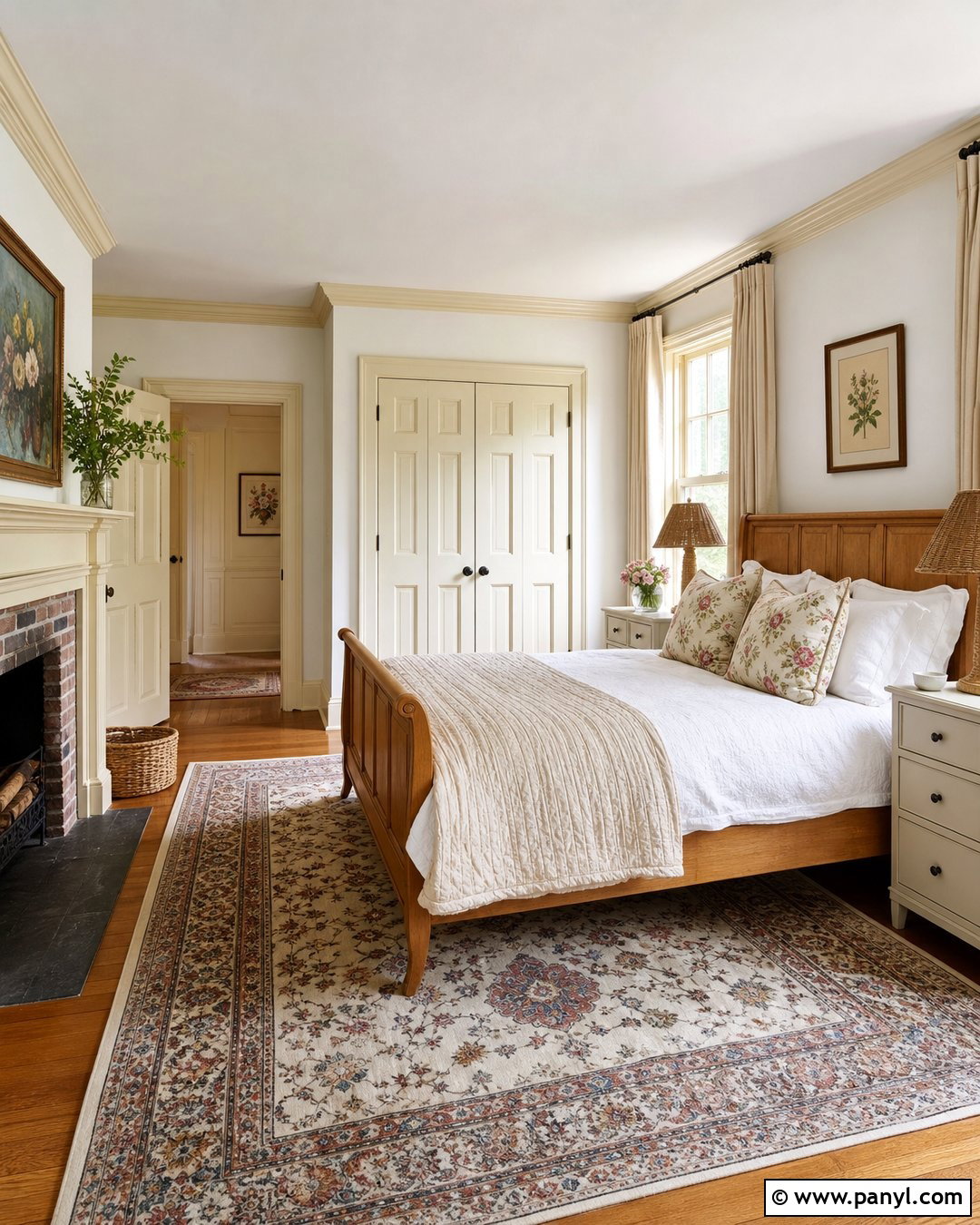
Cream trim layered against cleaner white walls produces a soft tonal contrast that suits traditional bedrooms and cottages. Paint the baseboards, window frames, paneled closet doors, crown molding, and fireplace surround in a warm buttery cream. Use a neutral white on the walls so the difference looks intentional rather than aged. Furnish the bedroom with a natural oak bed, white linen bedding, a beige quilt, and floral accent pillows containing soft green and blue. Add painted cream nightstands and woven lamps for continuity. Full linen curtains can match the wall color, allowing the warmer window casing to stand out. Avoid cool gray furniture, which may emphasize yellow undertones. This complete palette feels comfortable and familiar while retaining the clean brightness associated with white walls.
21. Bright White Painted Trim With White Walls
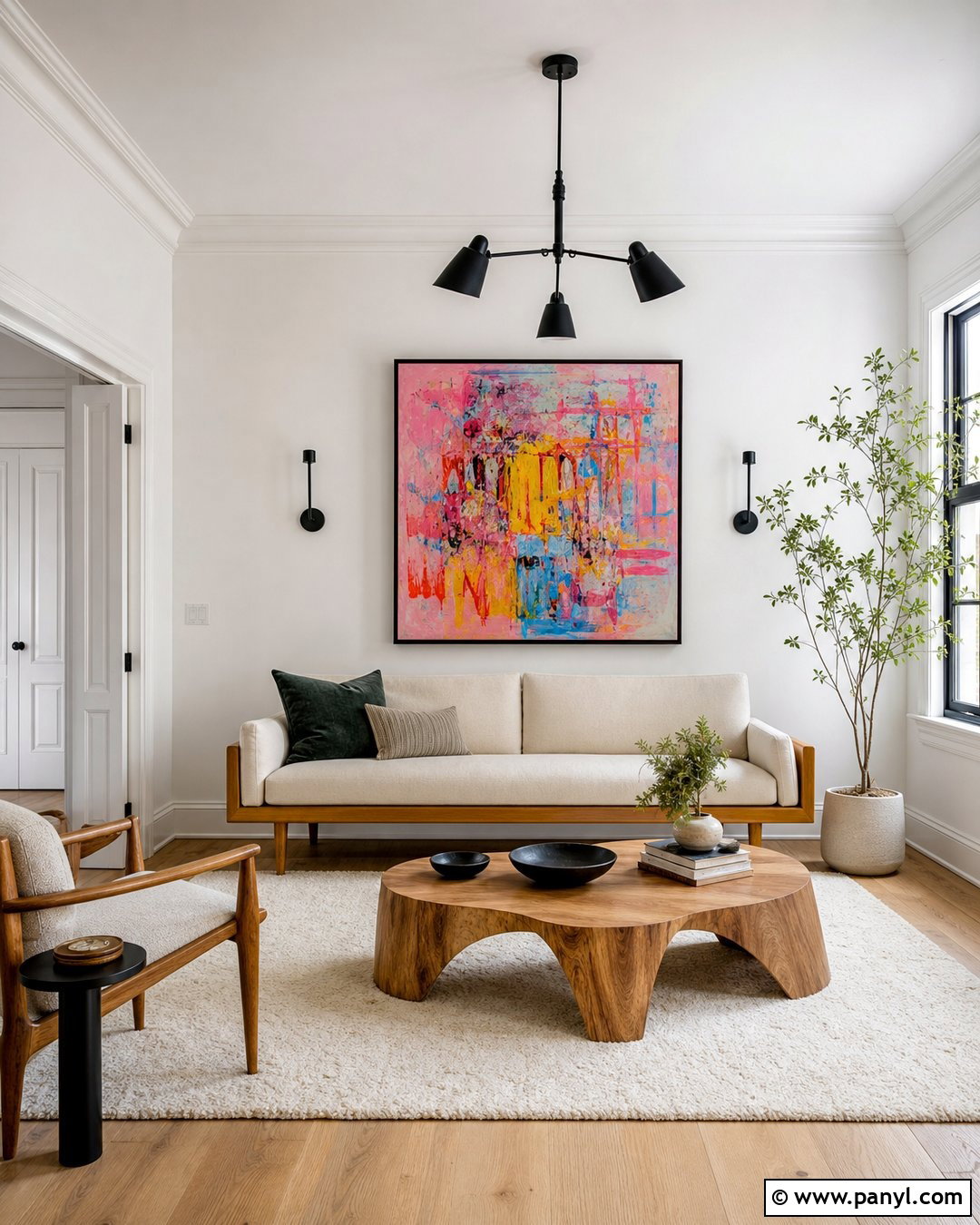
Bright white trim can still create depth against white walls when the finish and undertones are carefully controlled. Use the same neutral white color throughout, but choose eggshell for walls and satin or semi-gloss for baseboards, doors, window casings, and crown molding. The sheen change will catch light and reveal the architecture without introducing another hue. Complete a minimalist living room with a pale oak sofa frame, cream upholstery, a textured wool rug, and a sculptural wood coffee table. Add black lighting and one large piece of colorful artwork for definition. Keep window treatments simple and close to the wall color. This all-white approach feels cohesive rather than unfinished when texture, shape, and natural materials provide enough contrast across the entire room.
22. Blush Pink Painted Trim With White Walls
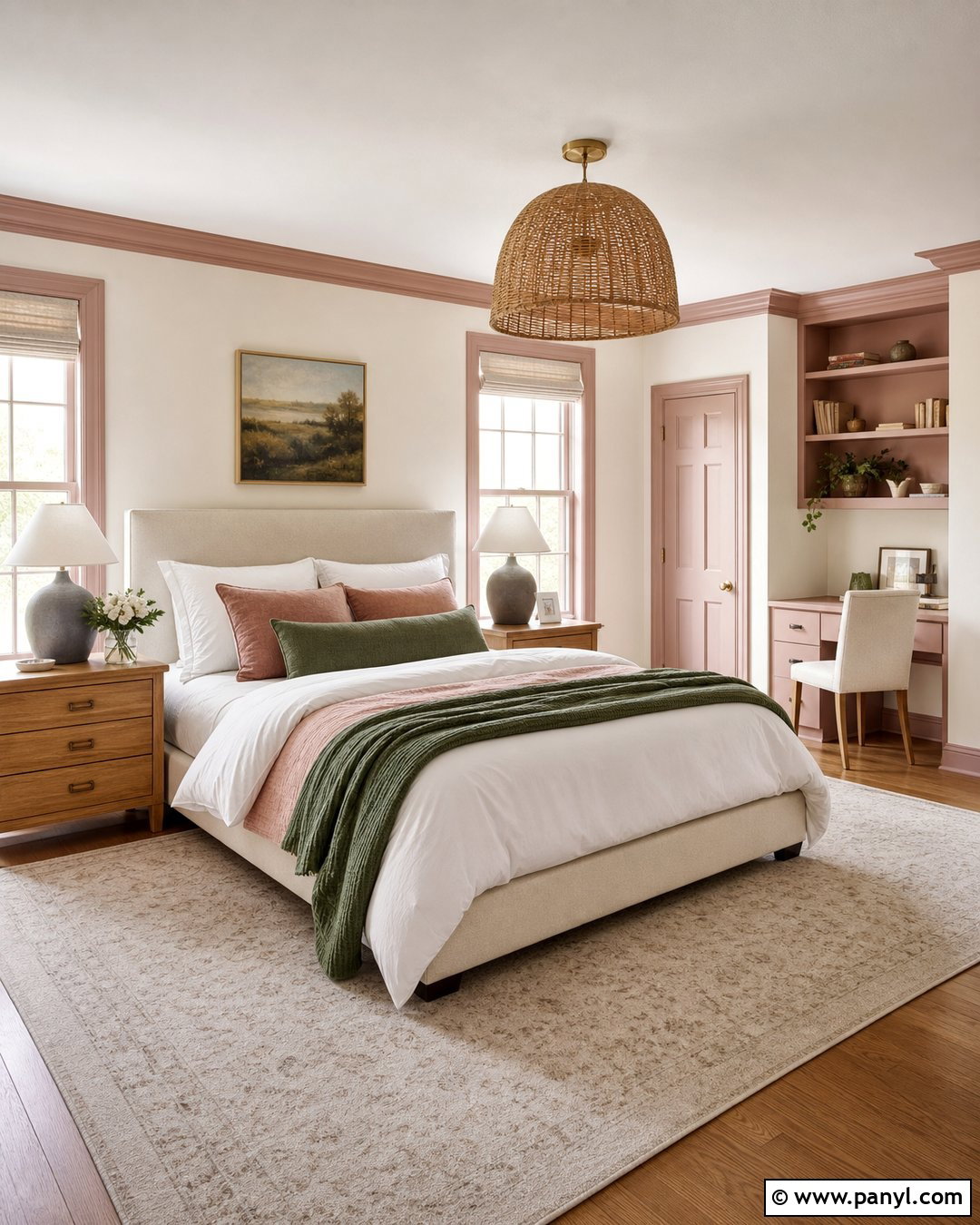
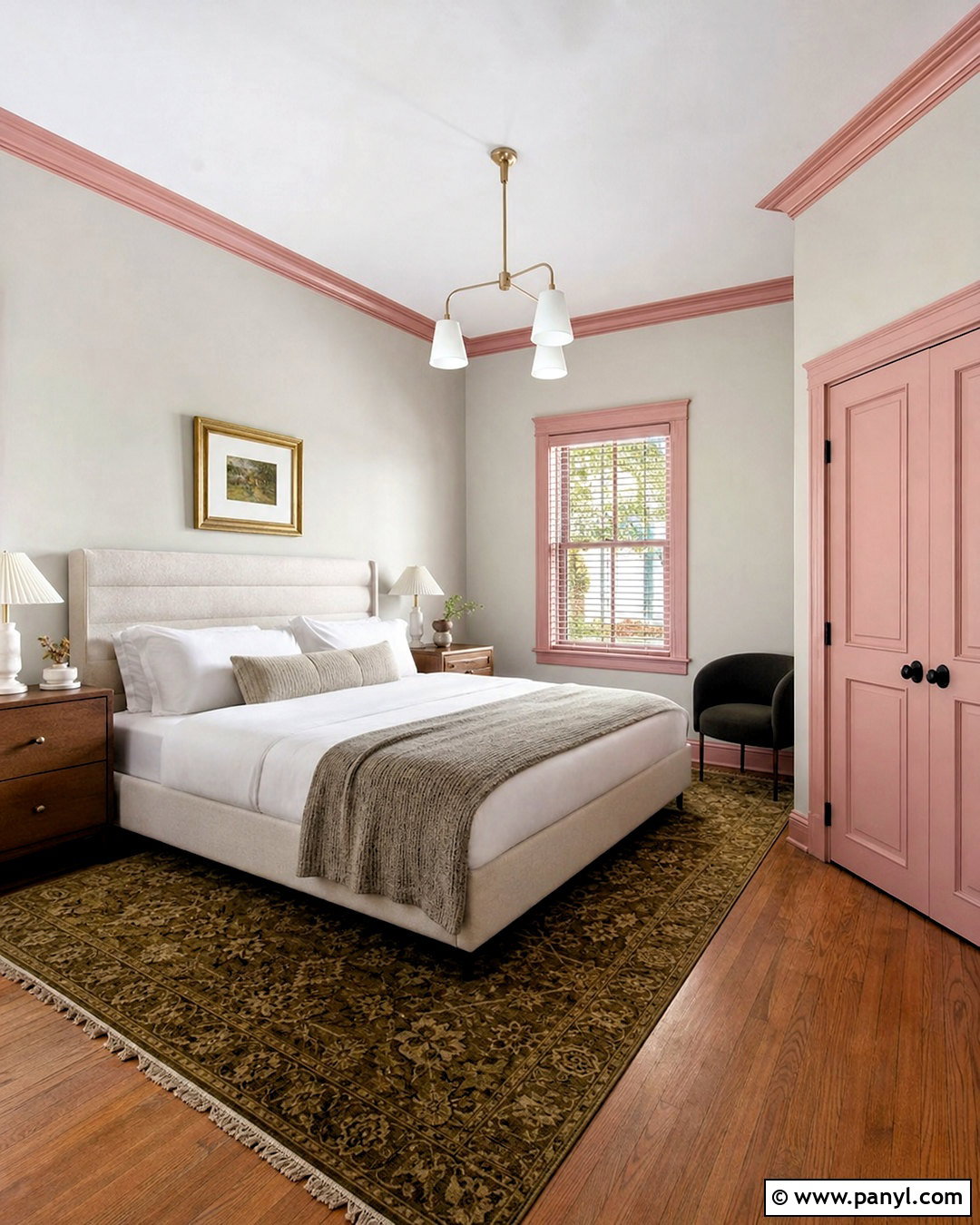
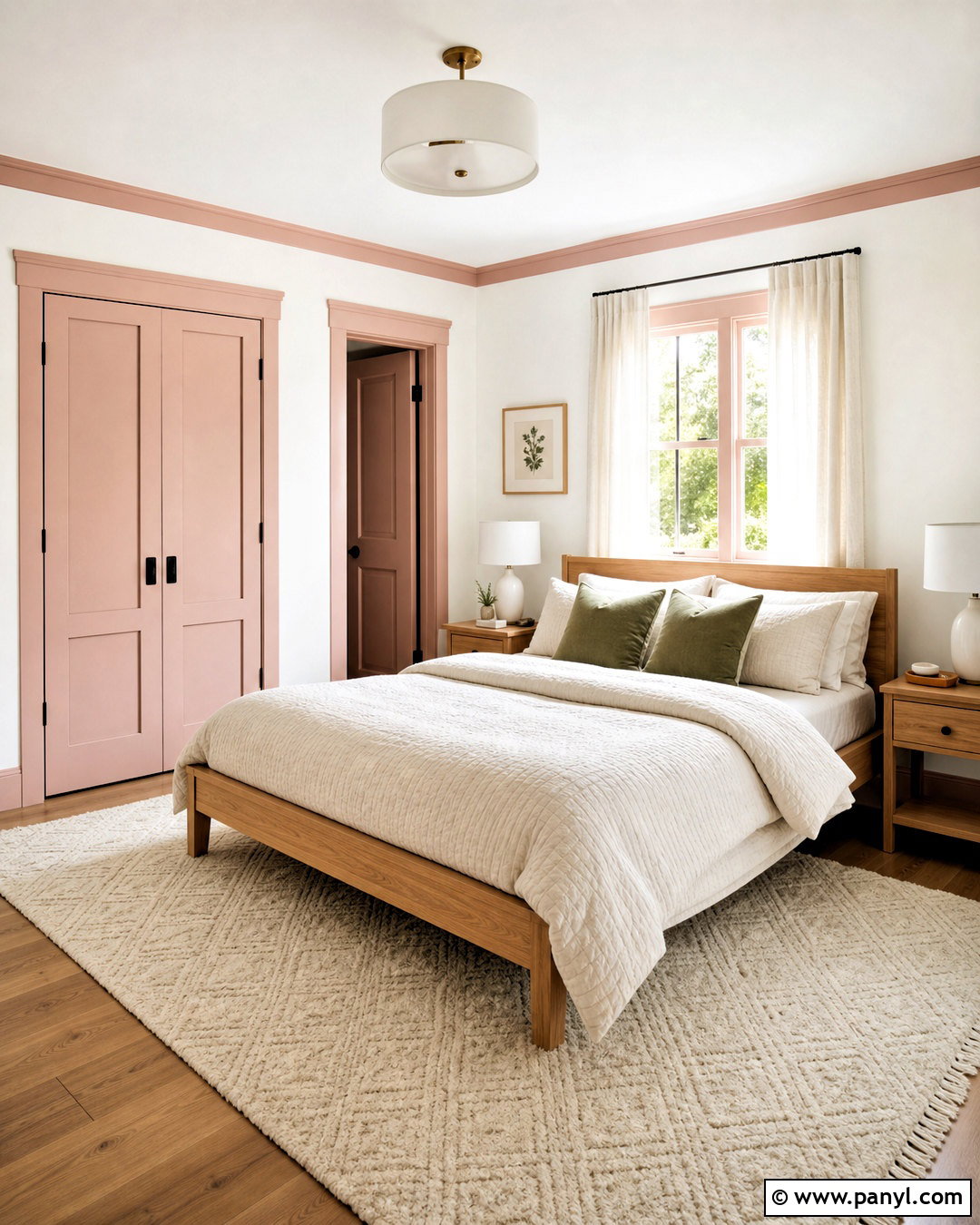
Blush pink trim gives white walls a gentle, playful edge without making the whole room feel overly sweet. Choose a dusty blush with beige undertones for baseboards, window casings, crown molding, the door, and a built-in desk. Soft warm white walls will keep the contrast subtle. In a bedroom, add an ivory upholstered bed, natural oak nightstands, and white bedding layered with clay and muted green accents. A cream rug and woven pendant help ground the lighter colors. Use antique brass hardware for warmth and simple botanical prints for decoration. Avoid adding several unrelated pastel shades. Let the trim serve as the main color statement. This balanced room works for children, teenagers, or adults because the materials and furnishings remain understated and adaptable.
23. Dusty Rose Painted Trim With White Walls
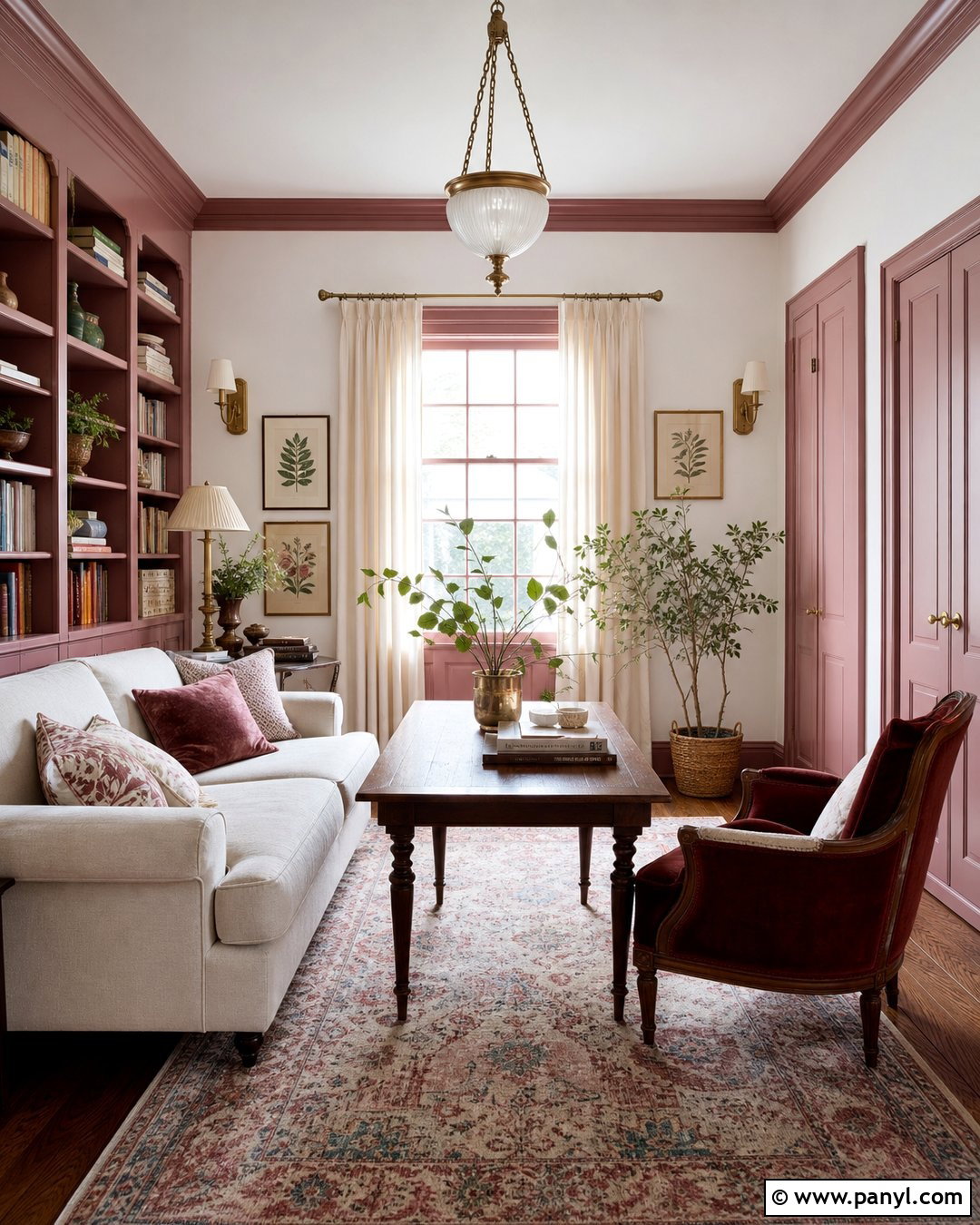
Dusty rose trim provides more depth than pale blush while still creating a relaxed, flattering room. Apply it to wide baseboards, window casings, crown molding, doors, and built-in wardrobes. Pair the trim with creamy white walls and light wood flooring. A comfortable reading room can include a linen sofa, a burgundy accent chair, a small walnut table, and a faded floral rug. Add warm brass sconces and full ivory curtains to frame the windows without hiding the colored casing. Repeat dusty rose through only one or two small textile details. Green plants or botanical artwork will offer a natural complementary note. The finished space should feel collected rather than delicate, with enough dark wood and earthy texture to balance the pink architectural elements.
24. Lavender Painted Trim With White Walls
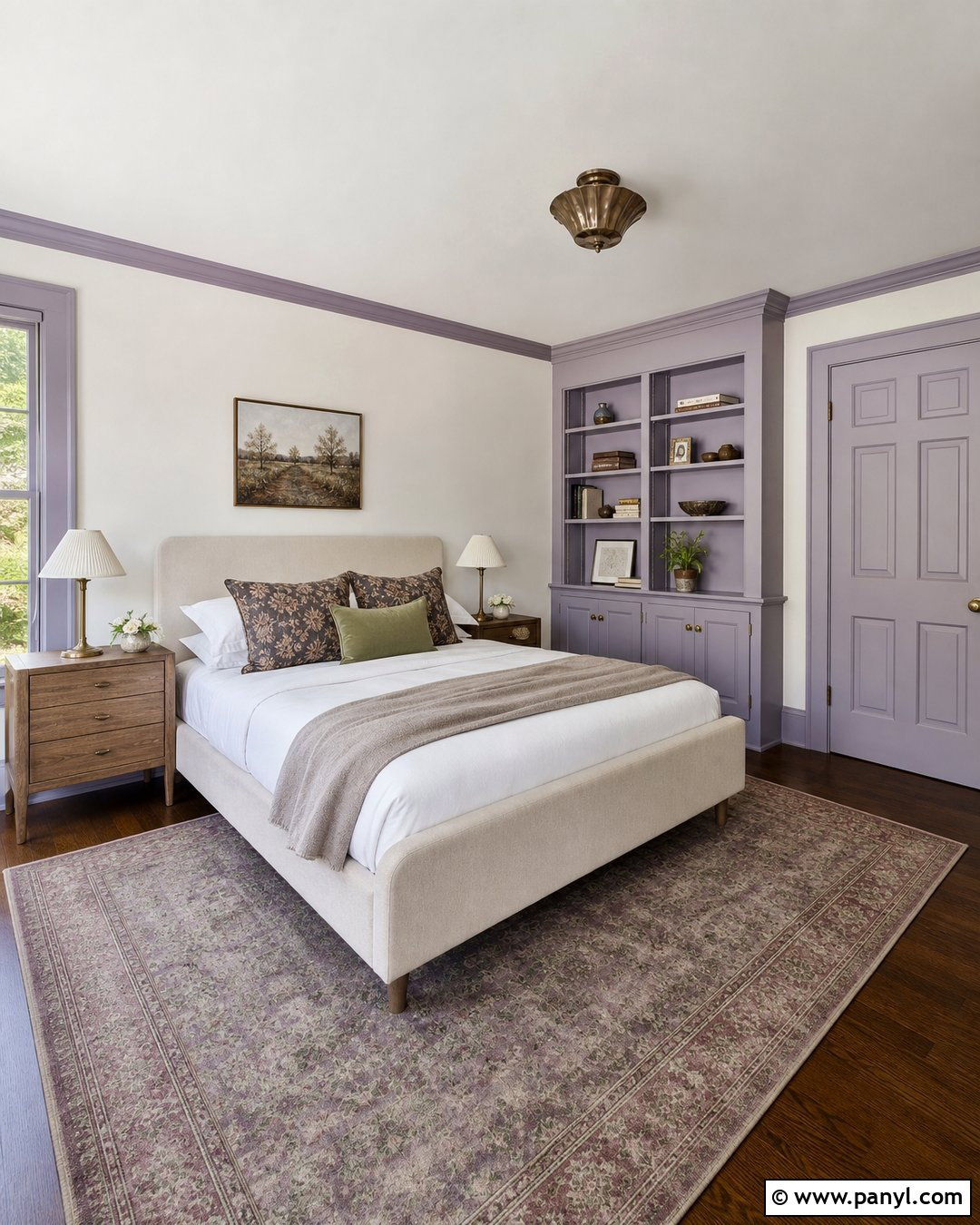
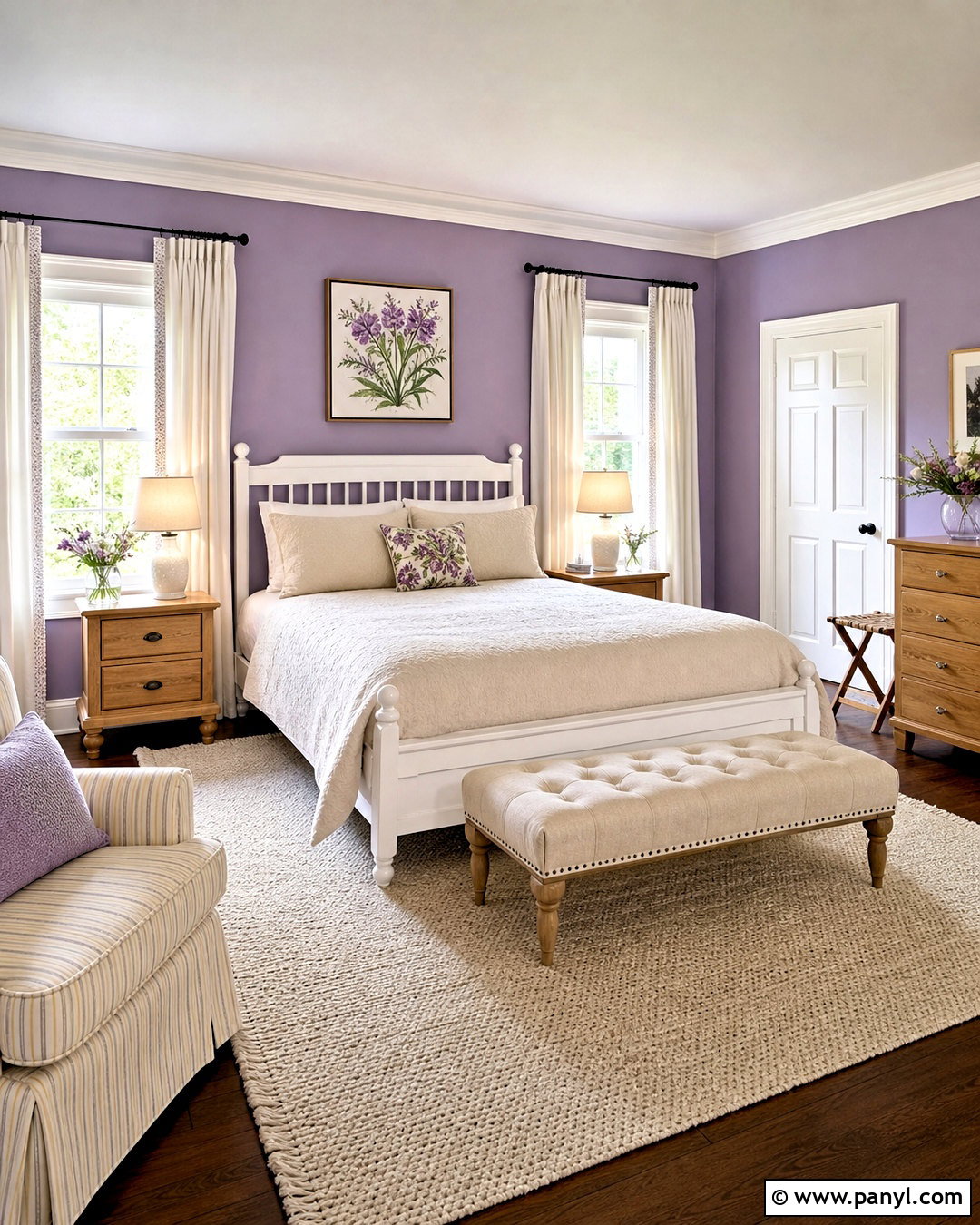
Lavender painted trim can feel sophisticated when the shade is muted and supported by warm neutral furnishings. Use a gray-leaning lavender on baseboards, window casings, door frames, a paneled door, and compact built-in shelves. Pair it with a soft white wall color that does not contain strong yellow undertones. Create a peaceful guest room with an oatmeal upholstered bed, white bedding, a taupe throw, and light oak nightstands. A patterned rug containing lavender, olive, and cream connects the architecture with the furniture. Choose brushed brass or aged bronze lighting rather than silver to add warmth. Keep accessories simple and avoid covering the room in purple. This complete scheme makes the unusual trim color appear considered, calm, and easy to live with.
25. Plum Painted Trim With White Walls
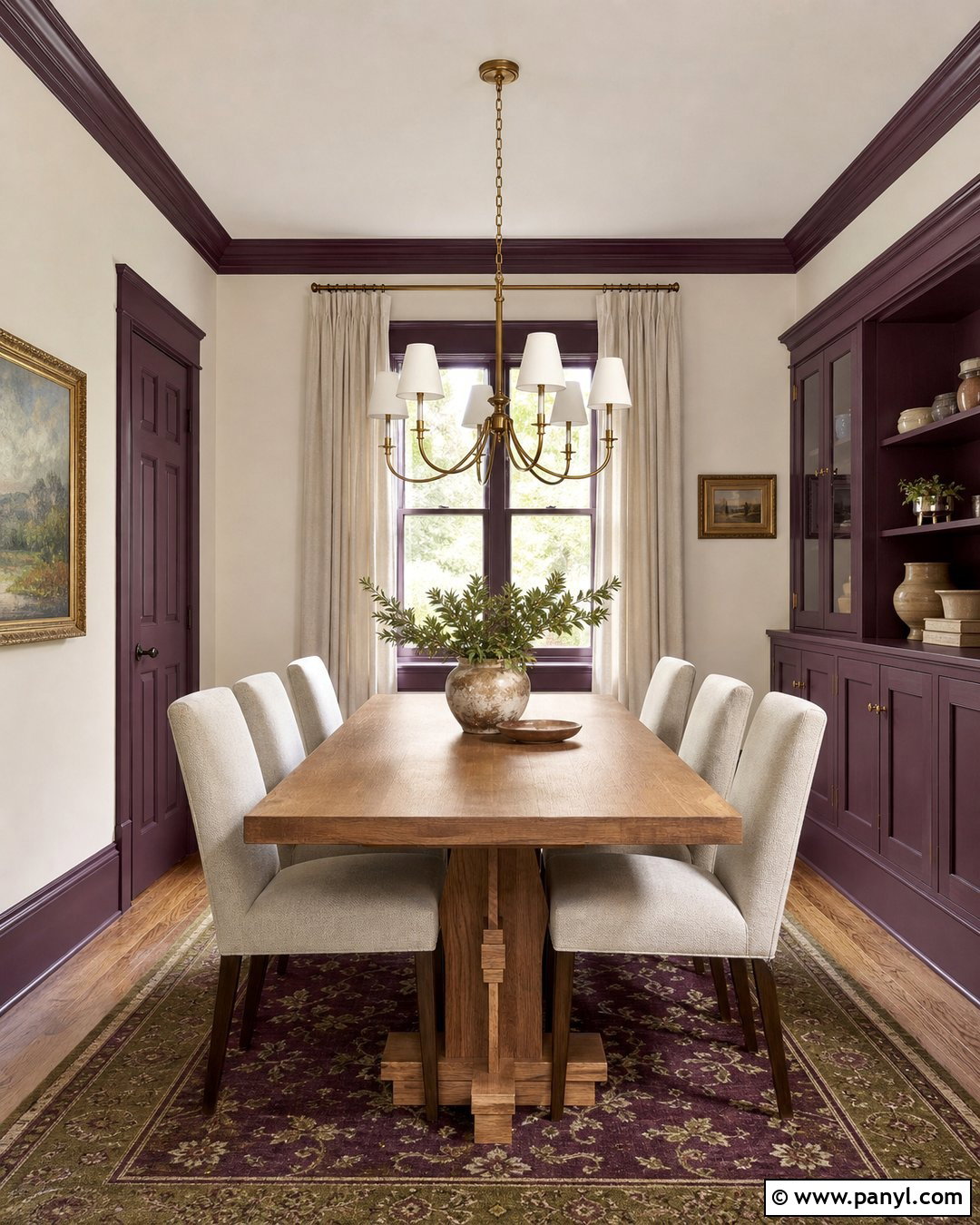
Plum painted trim adds dramatic color to white walls without requiring a dark room. Choose a deep brown-based plum for crown molding, baseboards, windows, doors, and a built-in cabinet. Warm white walls and a white ceiling will preserve brightness. In a dining room, pair the trim with a medium oak table, cream upholstered chairs, and a patterned rug containing plum, olive, and faded gold. Install an aged brass chandelier and use natural linen curtains. Place handmade pottery and simple framed artwork on the built-in shelves. The rich trim should wrap consistently around the room, creating a deliberate architectural frame. Avoid cool purple accessories, which may make the color appear harsh. Earthy fabrics and wood tones will instead reveal plum’s warm, elegant character.
26. Mustard Painted Trim With White Walls
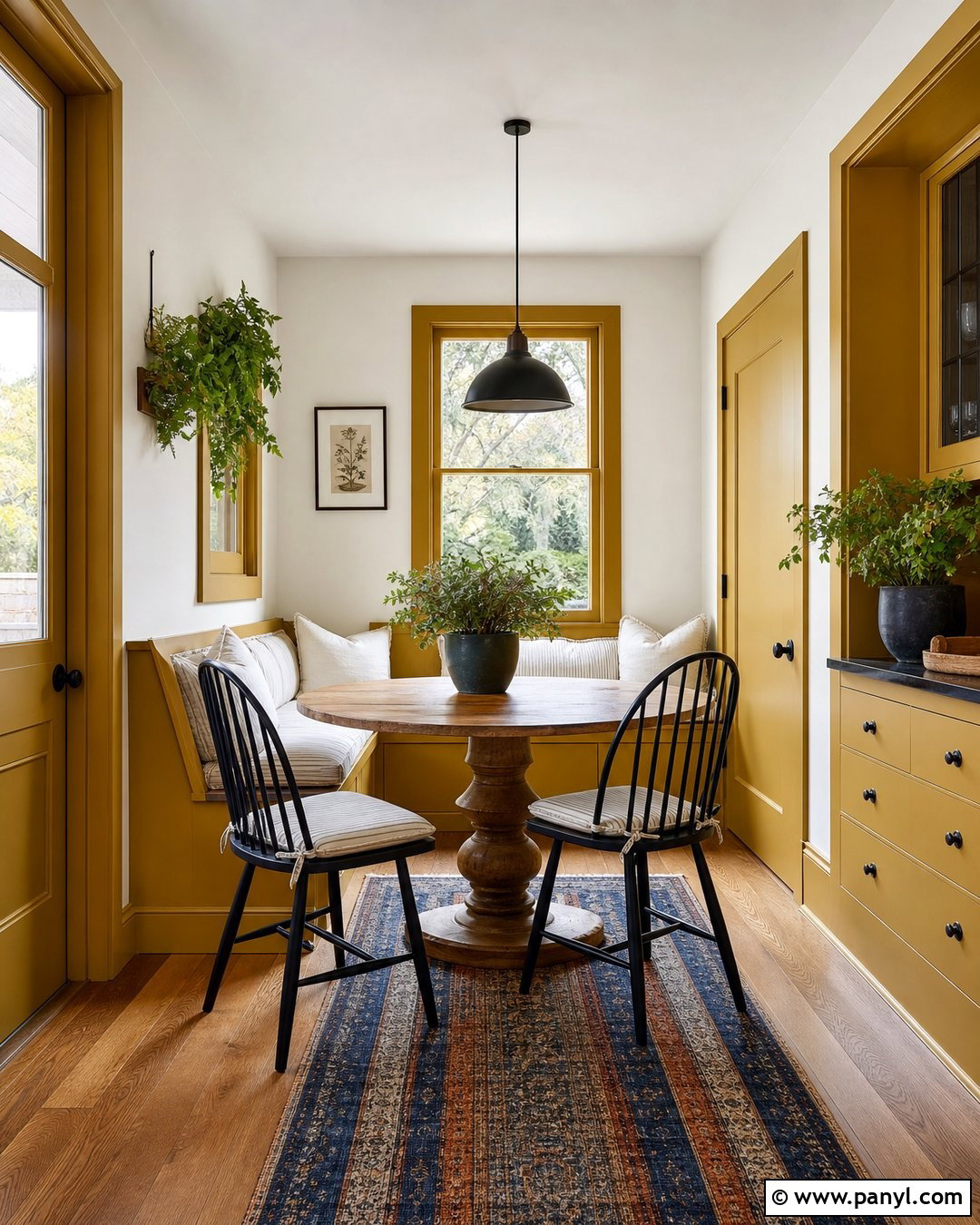
Mustard painted trim brings warm energy to white walls and can make a small breakfast area feel distinctive. Select a muted ochre mustard rather than a bright primary yellow. Apply it to baseboards, window casings, doors, and a built-in banquette. Keep the walls clean warm white, then add an oak pedestal table, black spindle chairs, and striped cream cushions. A patterned floor runner with blue, rust, and mustard creates balance beneath the seating area. Matte black lighting provides contrast, while simple white dishes keep the room practical. Use the trim color consistently around every opening so it looks architectural rather than decorative. This cheerful complete design feels modern and lived-in, especially when supported by natural wood, woven materials, and a few leafy plants.
27. Pale Yellow Painted Trim With White Walls
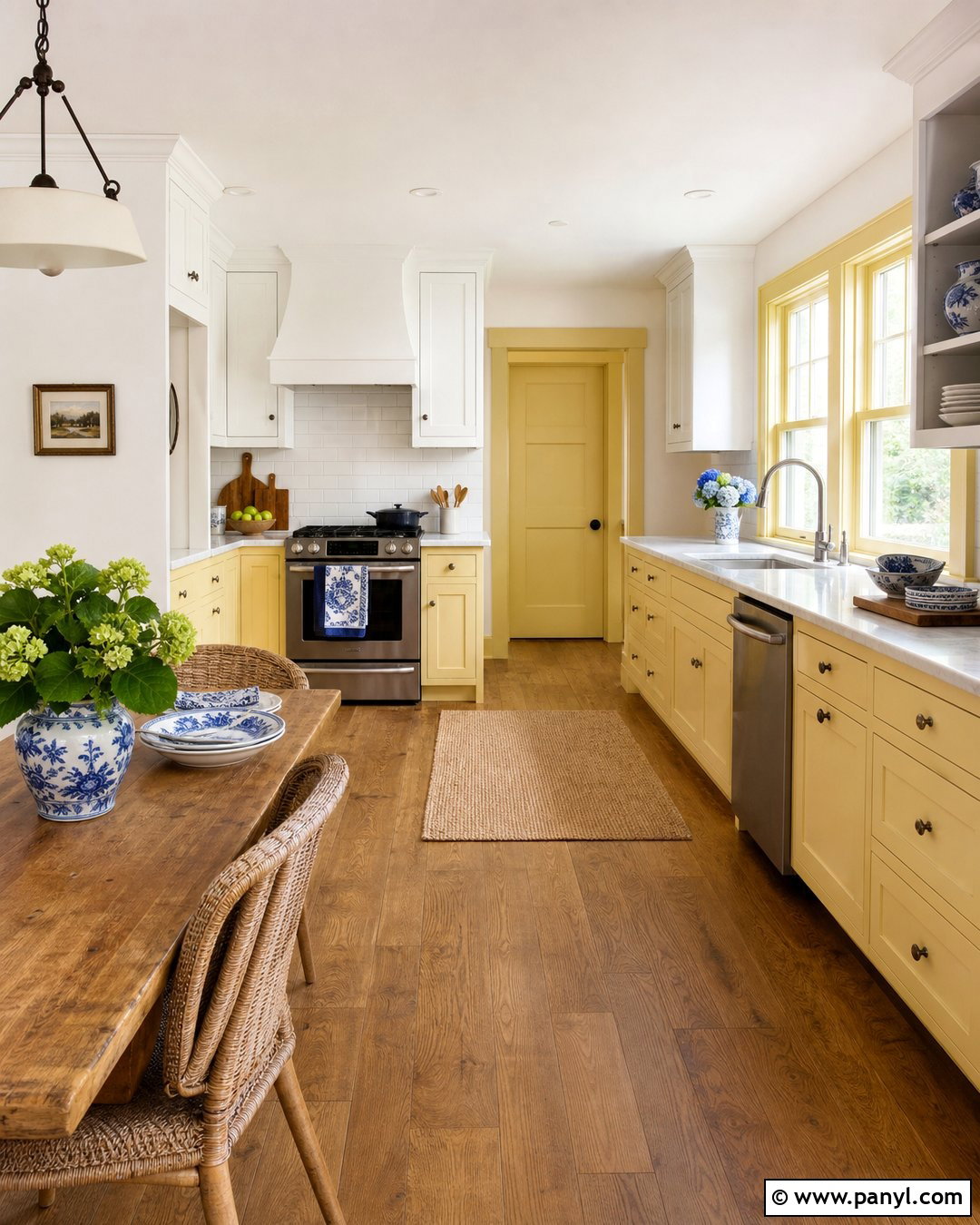
Pale yellow trim gives white walls a sunny quality that works well in kitchens with limited direct light. Choose a soft butter yellow for window casings, baseboards, the pantry door, and lower cabinetry. Use neutral white walls, white upper cabinets, and a simple white tile backsplash to keep the room feeling open. Include light oak floors, pale quartz counters, and polished nickel hardware for a clean foundation. A small wood table with woven chairs can create an informal dining corner. Add blue-and-white dishware and a striped cotton runner for gentle contrast. The yellow should remain soft enough to function like a warm neutral. When repeated across trim and selected cabinetry, it creates a complete kitchen palette that feels cheerful, practical, and cohesive rather than overly colorful.
28. Cobalt Blue Painted Trim With White Walls
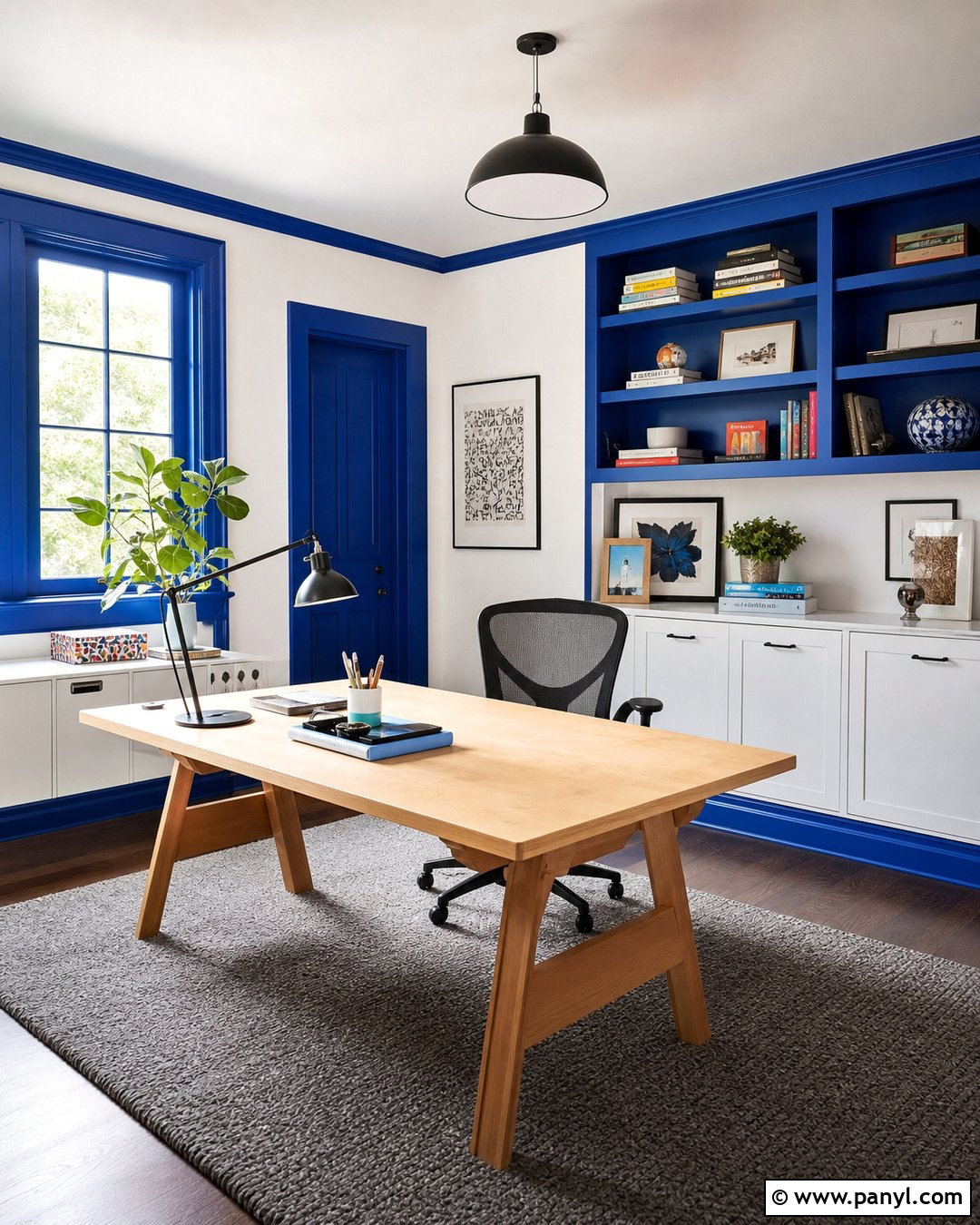
Cobalt blue trim gives crisp white walls a lively, contemporary outline. This high-contrast pairing works best in a creative home office or playroom with simple architecture. Paint the baseboards, window casings, door, and open shelving in clear cobalt blue, then use neutral white on the walls and ceiling. Add a pale wood worktable, white storage cabinets, and a durable gray woven rug. Introduce red, yellow, or green only through a few organized accessories and framed prints. Black task lighting will add structure without fighting the trim color. Keep shelves edited and storage containers consistent so the strong blue remains visually manageable. The completed room feels energetic and organized, with a flexible white background that prevents the saturated millwork from overwhelming the space.
29. Red Painted Trim With White Walls
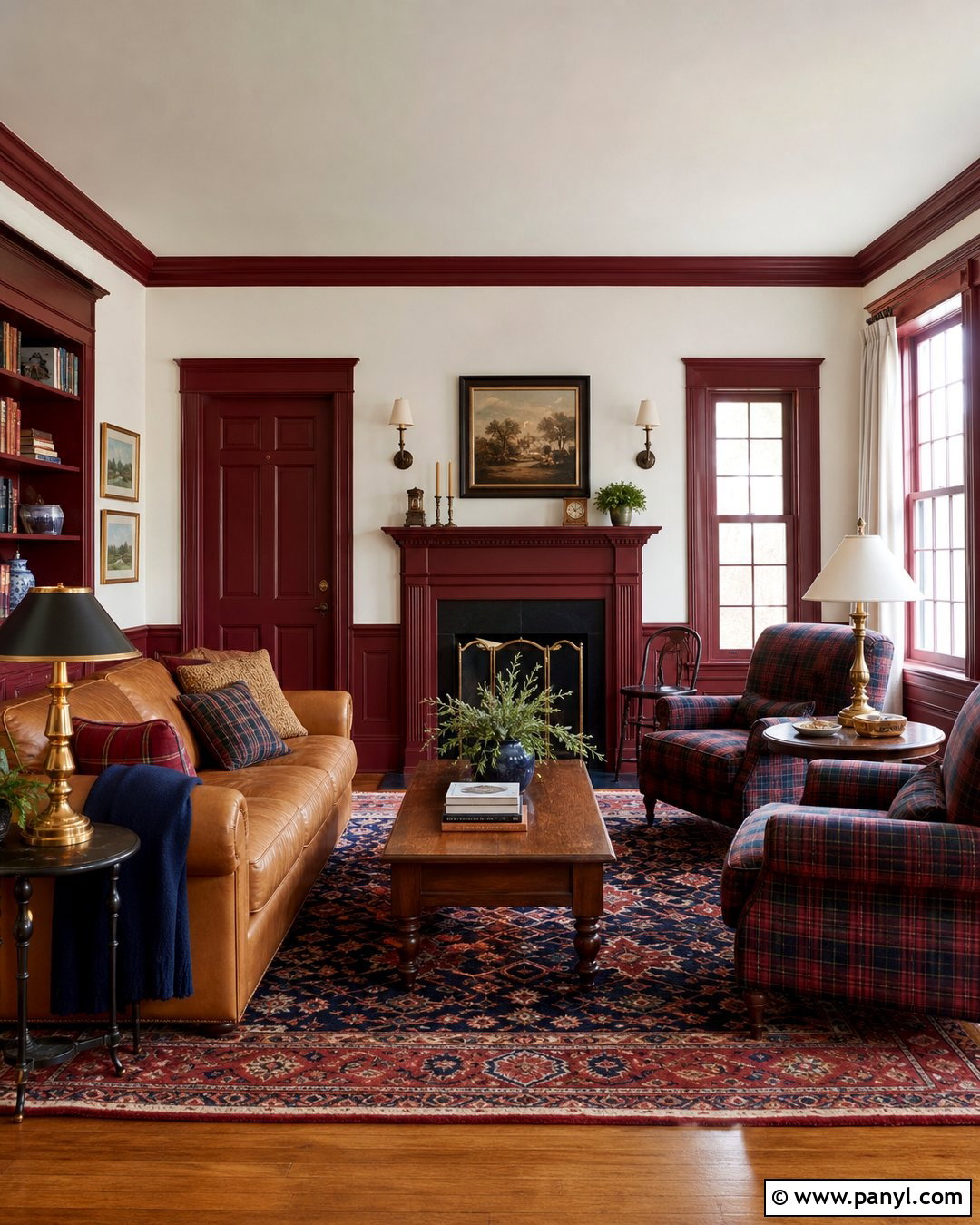
Red painted trim creates a confident traditional look when the shade is deep, warm, and slightly muted. Use an oxblood or brick red on baseboards, window casings, paneled doors, crown molding, and a fireplace mantel. Pair it with creamy white walls and dark wood flooring. Build a welcoming den around a camel leather sofa, plaid armchairs, and a large patterned rug containing red, navy, and beige. Add walnut tables, aged brass lamps, and linen curtains to balance the bold architectural color. Avoid bright red accessories or glossy modern furniture. The trim should resemble a rich heritage finish rather than a primary color accent. This complete scheme feels warm and established, making it well suited to older homes, libraries, dens, and traditional family rooms.
30. Two Tone Painted Trim With White Walls
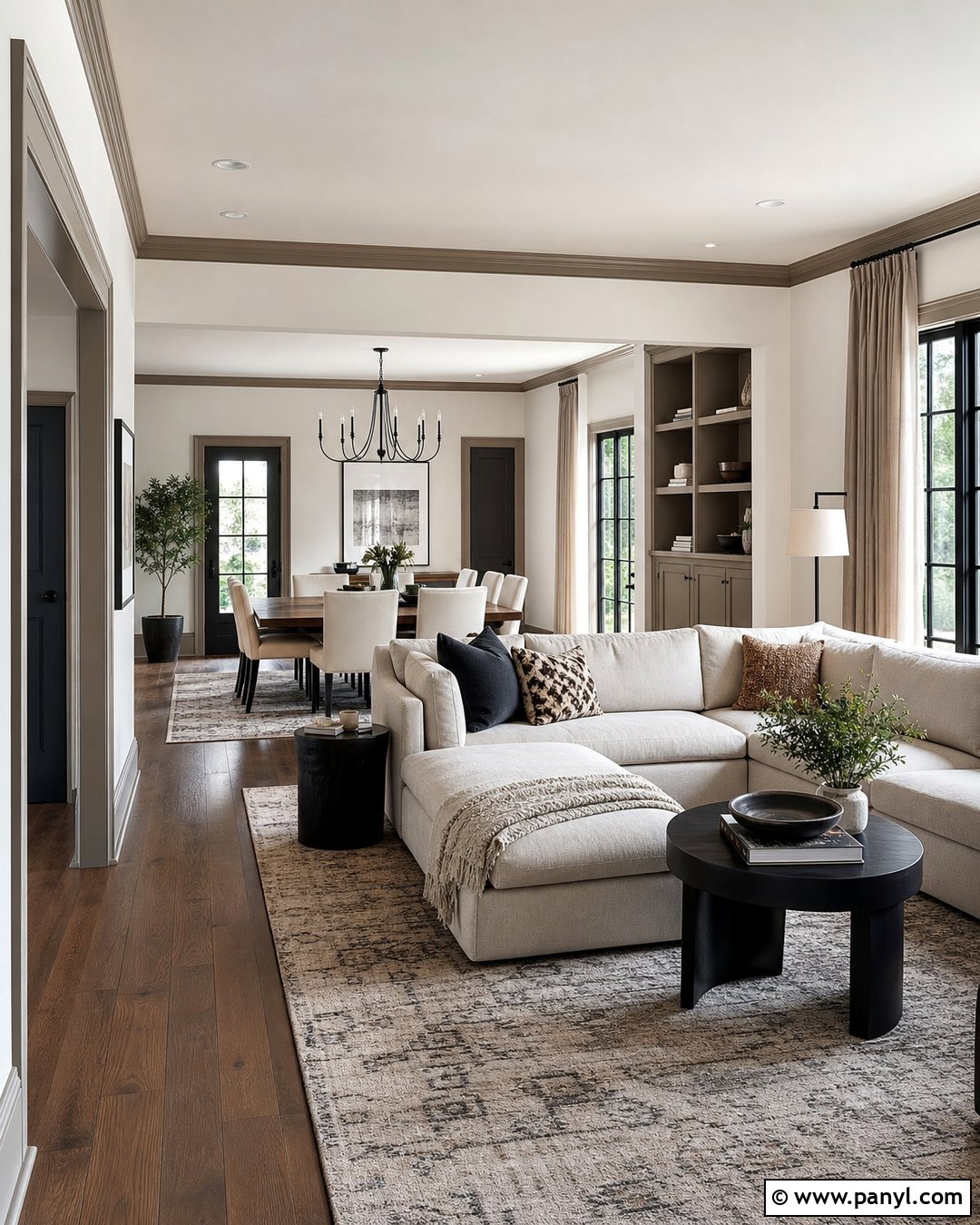
Two-tone trim can define different architectural features while keeping white walls as the unifying background. Use warm greige on the baseboards, crown molding, window casing, and built-in storage. Paint the interior doors and their immediate frames deep charcoal for stronger emphasis. Choose soft white walls and a white ceiling to connect both trim colors. In an open living and dining room, add a beige sectional, a dark oak dining table, cream chairs, and a large patterned rug containing gray, brown, and black. Repeat charcoal through lighting and greige through curtains or upholstery. Keep the transition rules consistent in adjoining areas. This layered treatment creates more interest than one trim color while still producing a planned, cohesive whole-home appearance.
Conclusion:
Painted trim can transform plain white walls by outlining architecture, adding warmth, and creating a stronger connection between furnishings and permanent finishes. Dark shades offer bold structure, while beige, cream, and greige produce quieter definition. Greens, blues, reds, and softened pastels bring more personality without sacrificing the brightness of white walls. Before committing, test each combination beside the flooring and observe it in changing daylight. Use a more durable sheen on baseboards, doors, and casings, and repeat the selected color consistently across related features. Most importantly, design the whole room around the trim instead of treating it as an isolated accent. These 30 painted trim white walls combinations provide practical starting points for creating a cohesive interior.

Related Ideas and Inspiration:
Leave a Reply