
White walls paired with gray trim create a fresh, structured interior without making a room feel dark or overly decorated. This reversed neutral palette highlights doors, windows, baseboards, and molding while keeping the larger wall surfaces bright. The key is choosing shades with compatible undertones. Warm gray works beautifully with creamy white, while blue-gray looks cleaner beside a cooler white. Paint sheen also matters. Eggshell walls provide a soft background, and satin or semi-gloss trim adds subtle definition and durability. Natural wood, woven textures, colorful textiles, and warm metals prevent the combination from feeling flat. If you are searching for **grey trimming white walls**, the complete room schemes below offer practical inspiration for using **grey trimming white walls** throughout the home.

1. Light Grey Trim Living Room
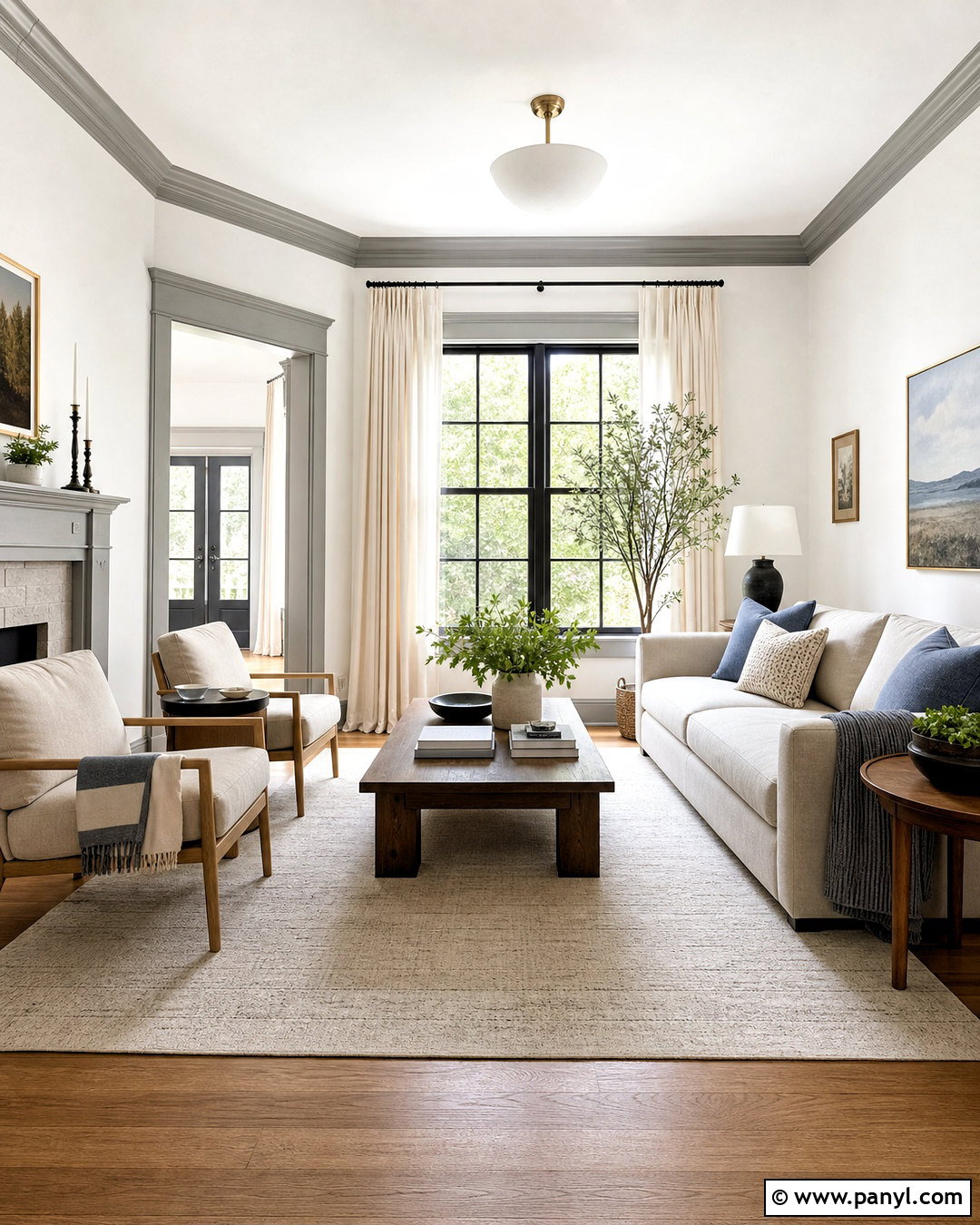
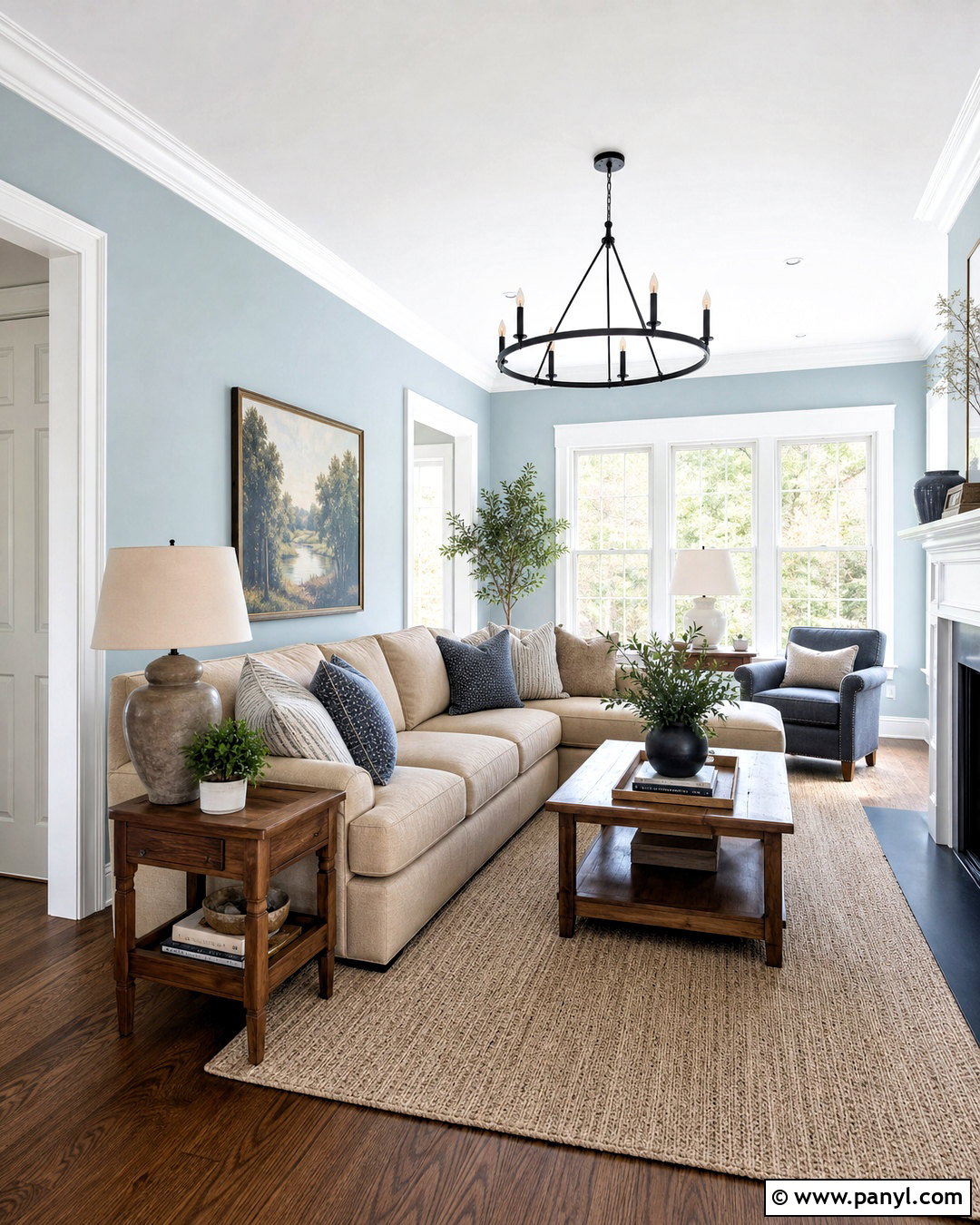
A light gray trim treatment gives a white living room gentle definition without creating a sharp outline. Choose warm white walls and soft dove-gray baseboards, window casings, crown molding, and interior doors. Build the seating area around an oatmeal sofa, two light oak chairs, and a textured cream rug. A walnut coffee table introduces enough contrast to ground the pale palette. Add muted blue pillows, linen curtains, and ceramic table lamps for relaxed color. Keep the ceiling white so the room remains open and airy. Satin paint is ideal for the gray woodwork because it reflects a small amount of light while remaining understated. This balanced scheme suits transitional, Scandinavian, and casual contemporary homes.
2. Charcoal Grey Trim Living Room
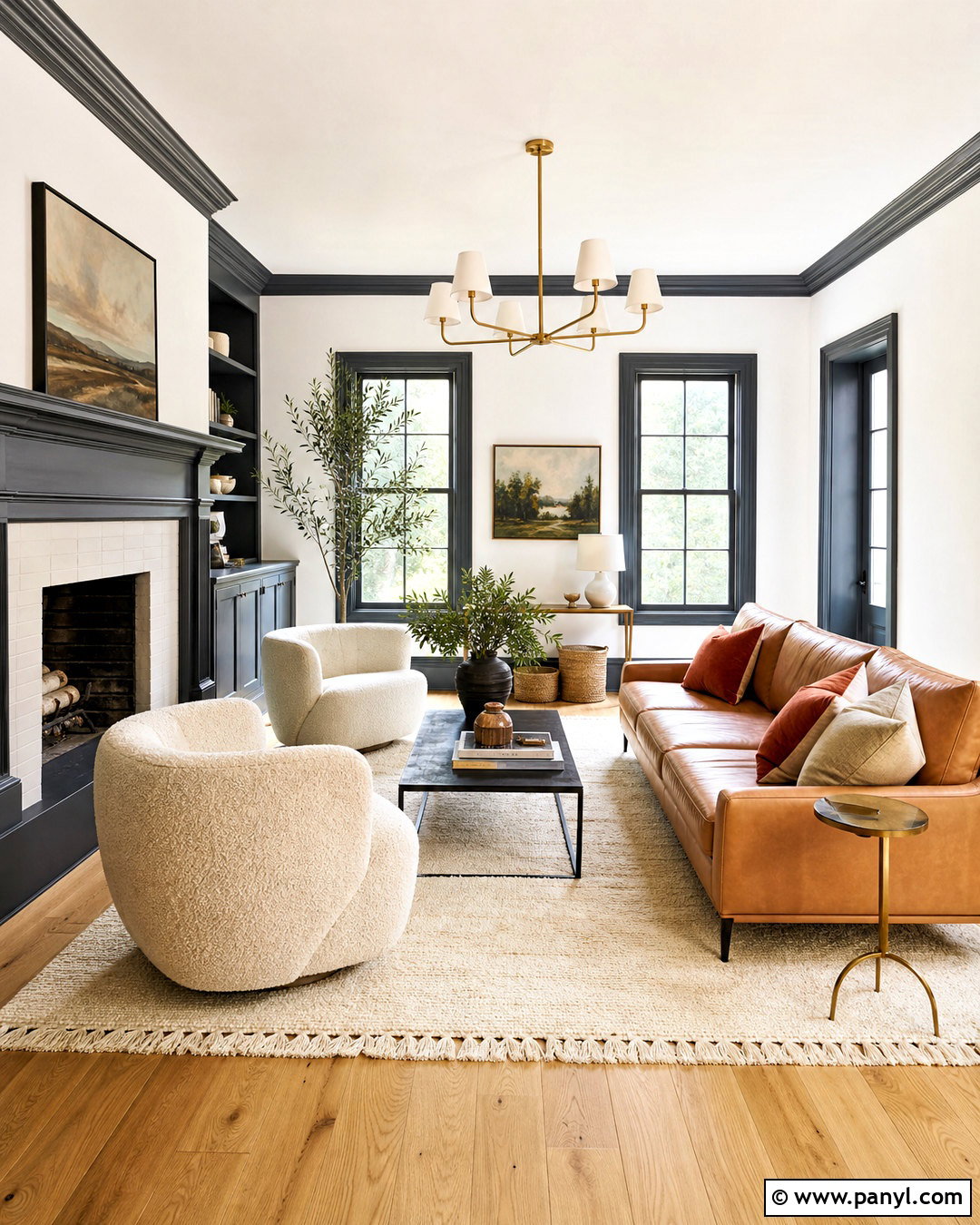
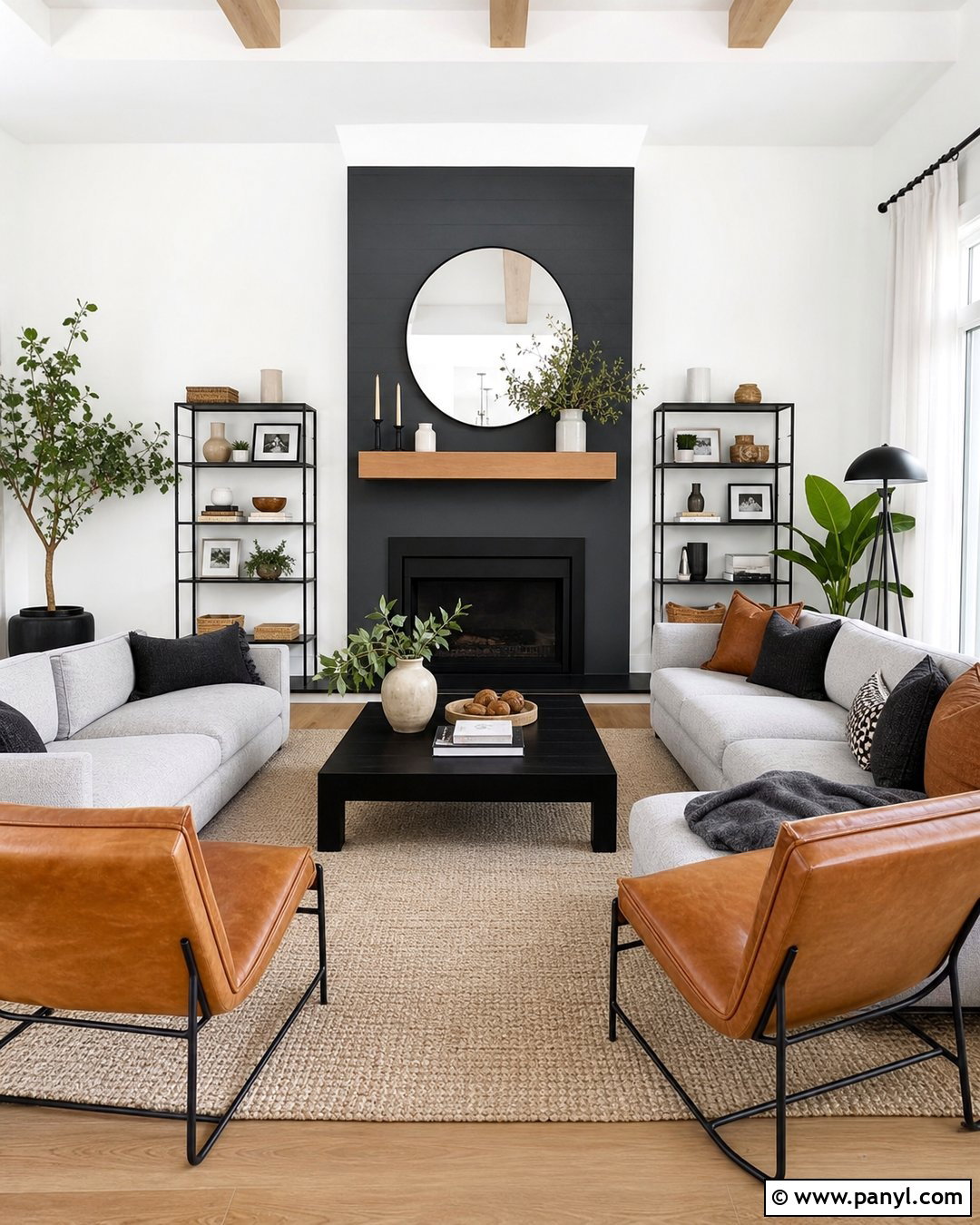
Deep charcoal trim can turn an ordinary white living room into a bold but livable space. Apply the charcoal shade to baseboards, window frames, door casings, and the fireplace surround, leaving the walls and ceiling a clean warm white. A camel leather sofa, cream boucle chairs, and a large ivory rug soften the dark architectural lines. Use medium-tone oak flooring to bring natural warmth into the room. Matte black lighting can work, but aged brass fixtures create a richer contrast. Finish the layout with rust-colored pillows, green plants, and simple landscape artwork. Limit charcoal to the permanent woodwork rather than adding several dark furniture pieces. This keeps the design dramatic, bright, and visually balanced instead of heavy.
3. Warm Grey Trim Dining Room
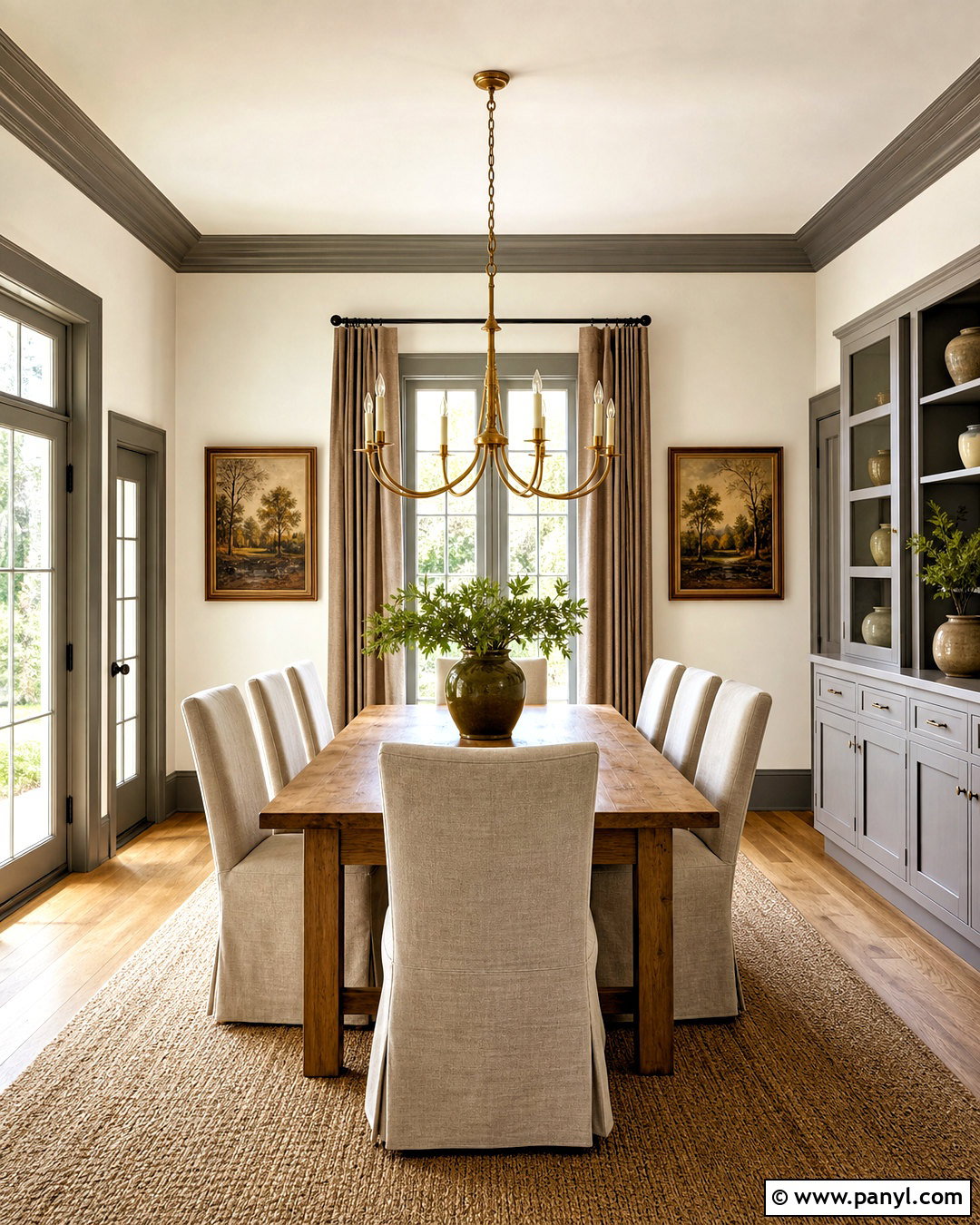
Imagine a welcoming dining room where warm gray trim quietly frames every architectural detail. Pair creamy white walls with mushroom-gray baseboards, window casings, crown molding, and paneled doors. Center the room with a rectangular oak table and comfortable linen dining chairs. A natural fiber rug should be large enough to remain beneath the chairs when they are pulled out. Install an aged brass chandelier above the table for warmth and gentle shine. Olive green pottery, soft brown curtains, and a simple landscape print add earthy color without overwhelming the neutral foundation. Continue the gray across a built-in cabinet or buffet for cohesion. The completed look feels polished yet comfortable, making it appropriate for everyday meals and special gatherings.
4. Blue Grey Trim Bedroom
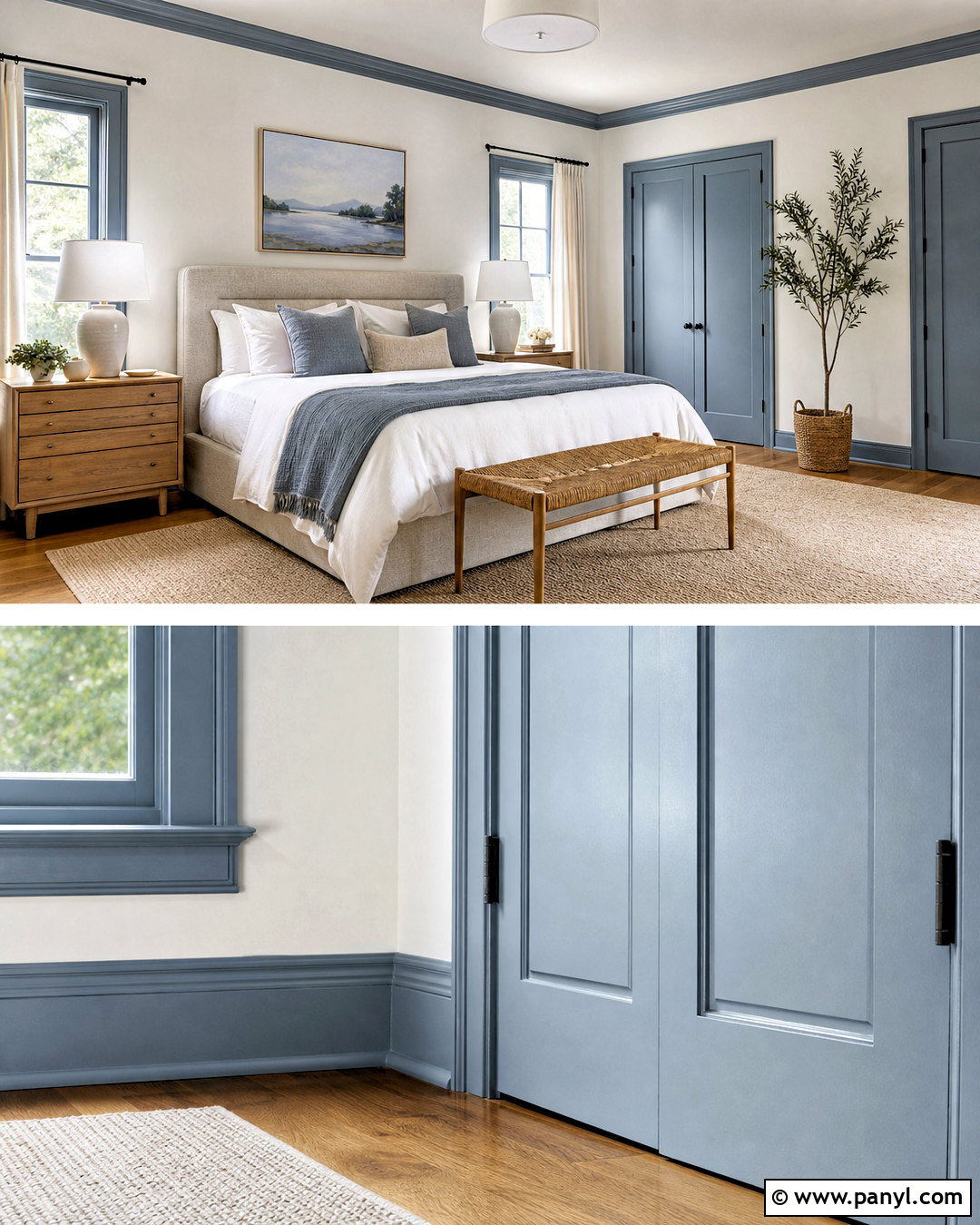
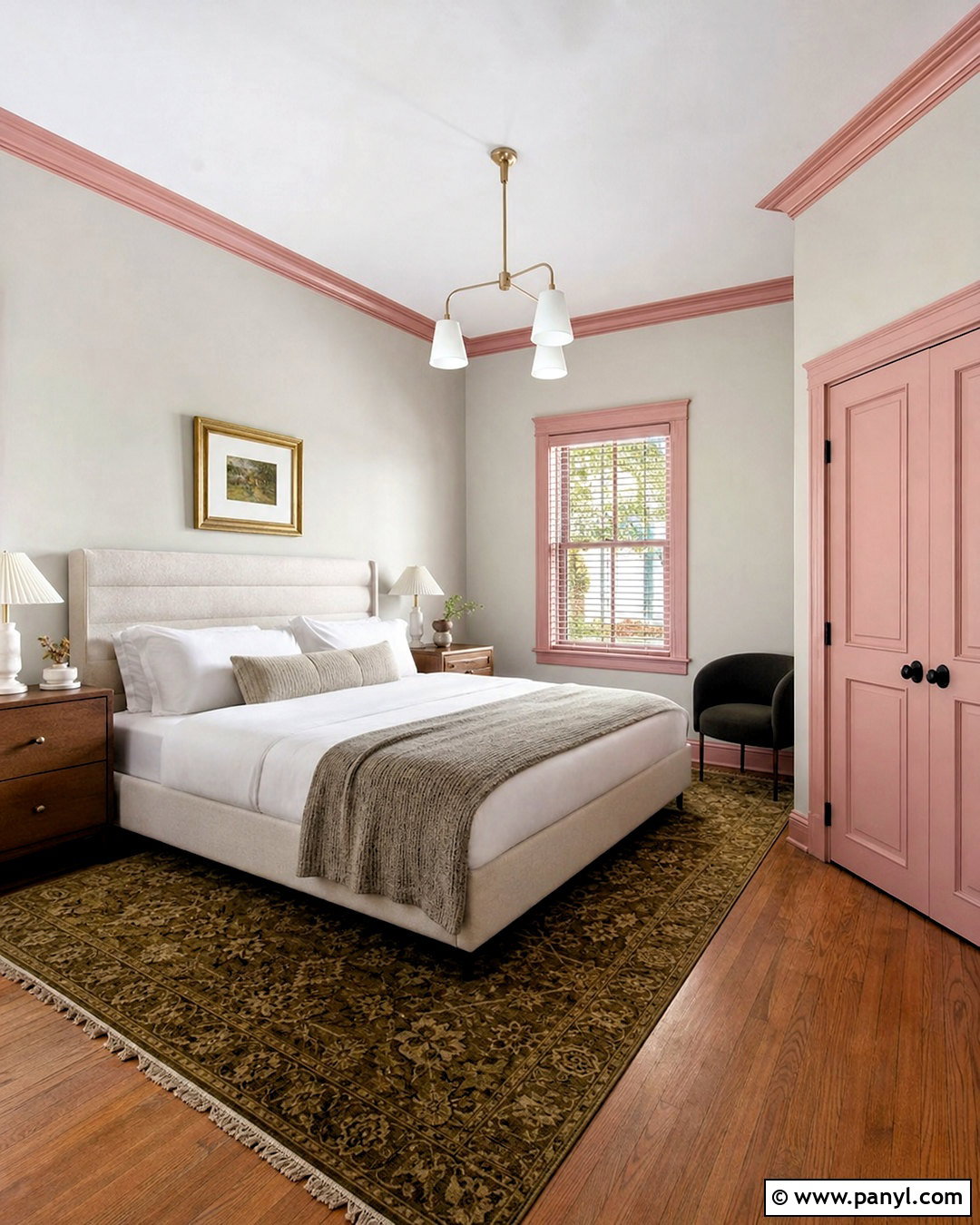
Cool blue-gray trim creates a calm outline around white bedroom walls. Use a soft white with a slight gray undertone so the two paint colors connect naturally. Carry blue-gray across the baseboards, window frames, closet doors, and bedroom door for a consistent finish. An upholstered bed in pale oatmeal fabric keeps the center of the room soft, while medium oak nightstands bring warmth. Layer white bedding with dusty blue pillows and a slate-colored throw. Hang full-length natural linen curtains just outside the painted window casing. A woven rug and ceramic lamps complete the peaceful scheme. Avoid overly bright white furnishings, which can make the room feel cold. Warm wood, tactile fabrics, and softly colored accessories provide the necessary balance.
5. Pale Grey Trim Kitchen
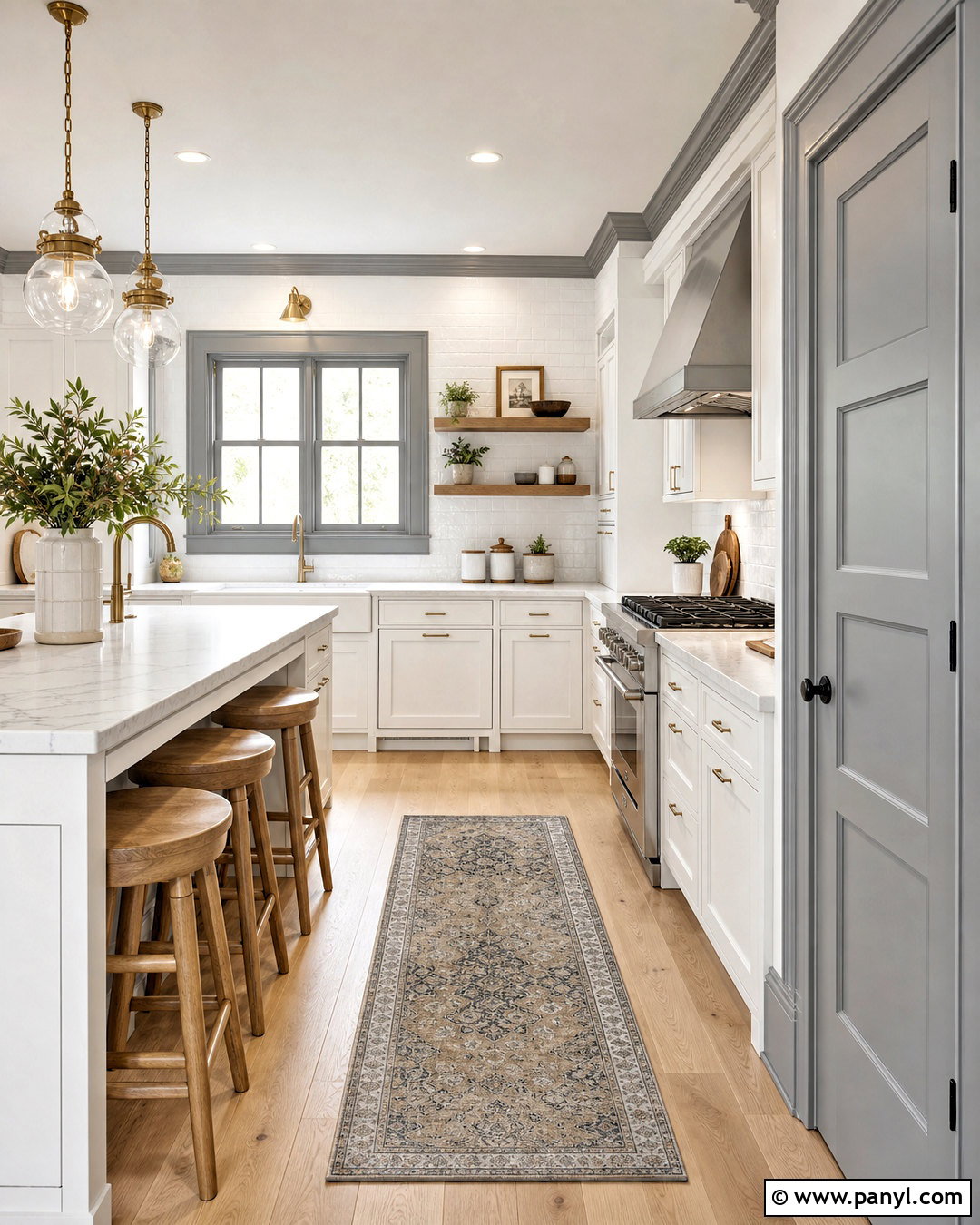
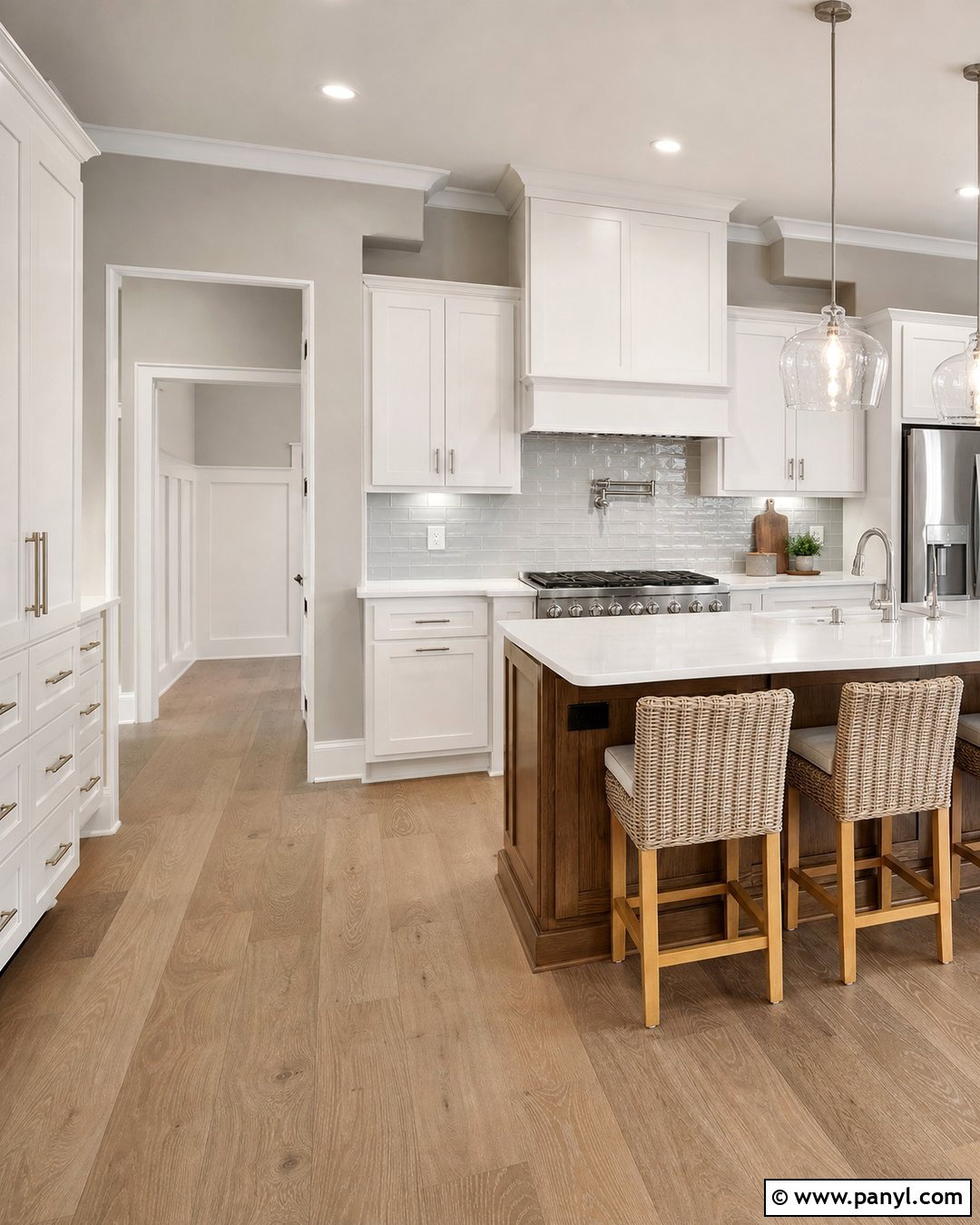
Pale gray trim offers just enough contrast to give a white kitchen more architectural character. Paint the walls a washable warm white and repeat the gray on the window casing, baseboards, door frames, and pantry door. White shaker cabinets can remain visually separate when they have simple brushed nickel hardware. Ground the room with light oak flooring and a gray-veined quartz countertop. Over the island, choose clear glass pendants with aged brass details to add warmth without blocking sightlines. Natural wood stools and a small washable runner introduce comfortable texture. Keep the backsplash white, but select handmade tile with slight surface variation. This creates a bright, layered kitchen where the gray trim looks deliberate rather than like an unfinished color transition.
6. Medium Grey Trim Bathroom
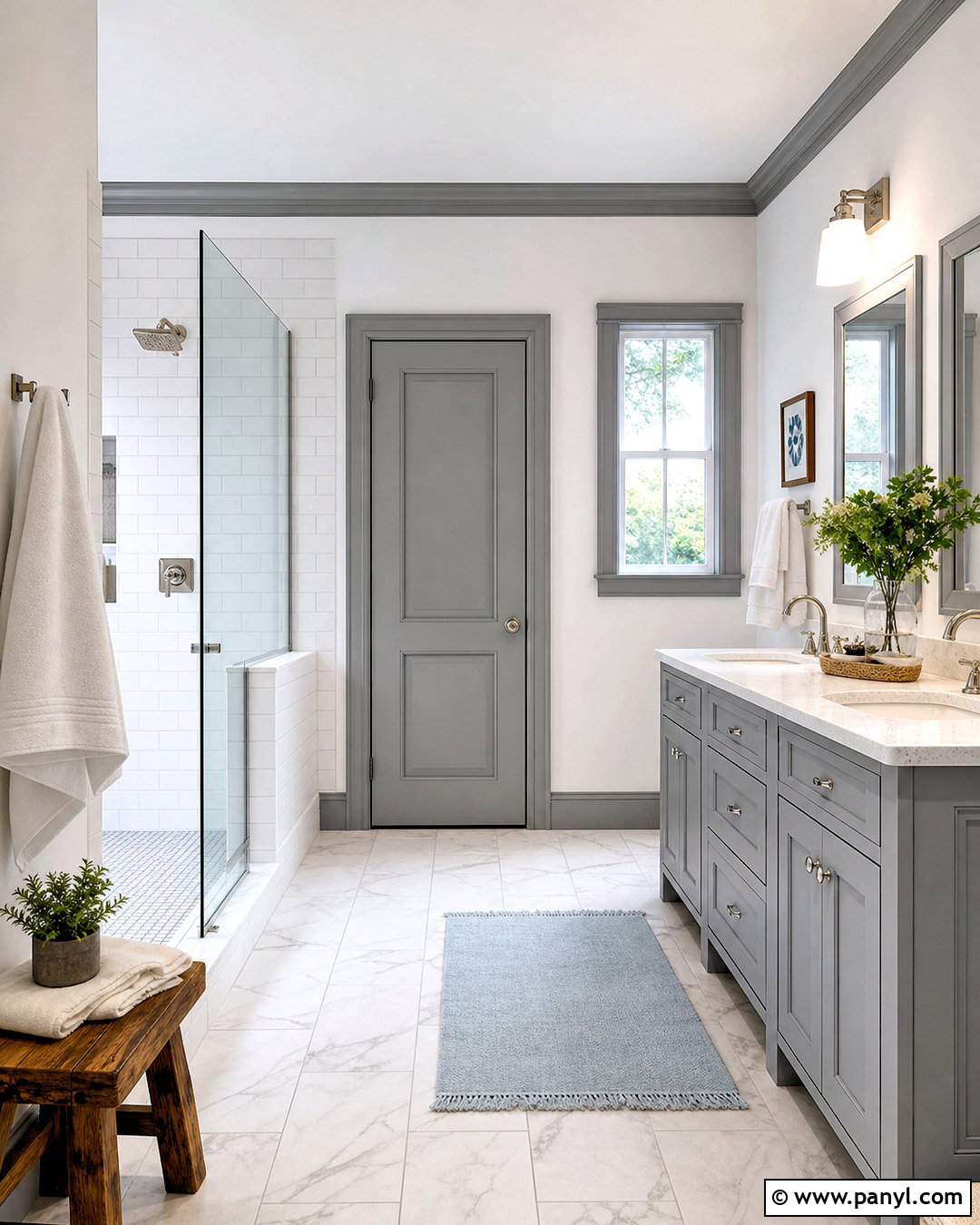
A bathroom can handle medium gray trim because white walls and reflective surfaces keep the smaller space bright. Cover the lower shower area with white subway tile, then use clean white paint on the remaining walls. Apply medium neutral gray to the baseboards, window casing, door, and vanity for a coordinated finish. A white quartz vanity top and polished nickel fixtures prevent the palette from becoming too dark. Add a frameless glass shower enclosure to preserve an open view. Light porcelain floor tile with subtle gray veining connects the painted elements without looking overly matched. Finish the room with white towels, a pale blue bath mat, and one warm wood stool. Select moisture-resistant satin paint for lasting, easy-to-clean woodwork.
7. Grey Trim Hallway
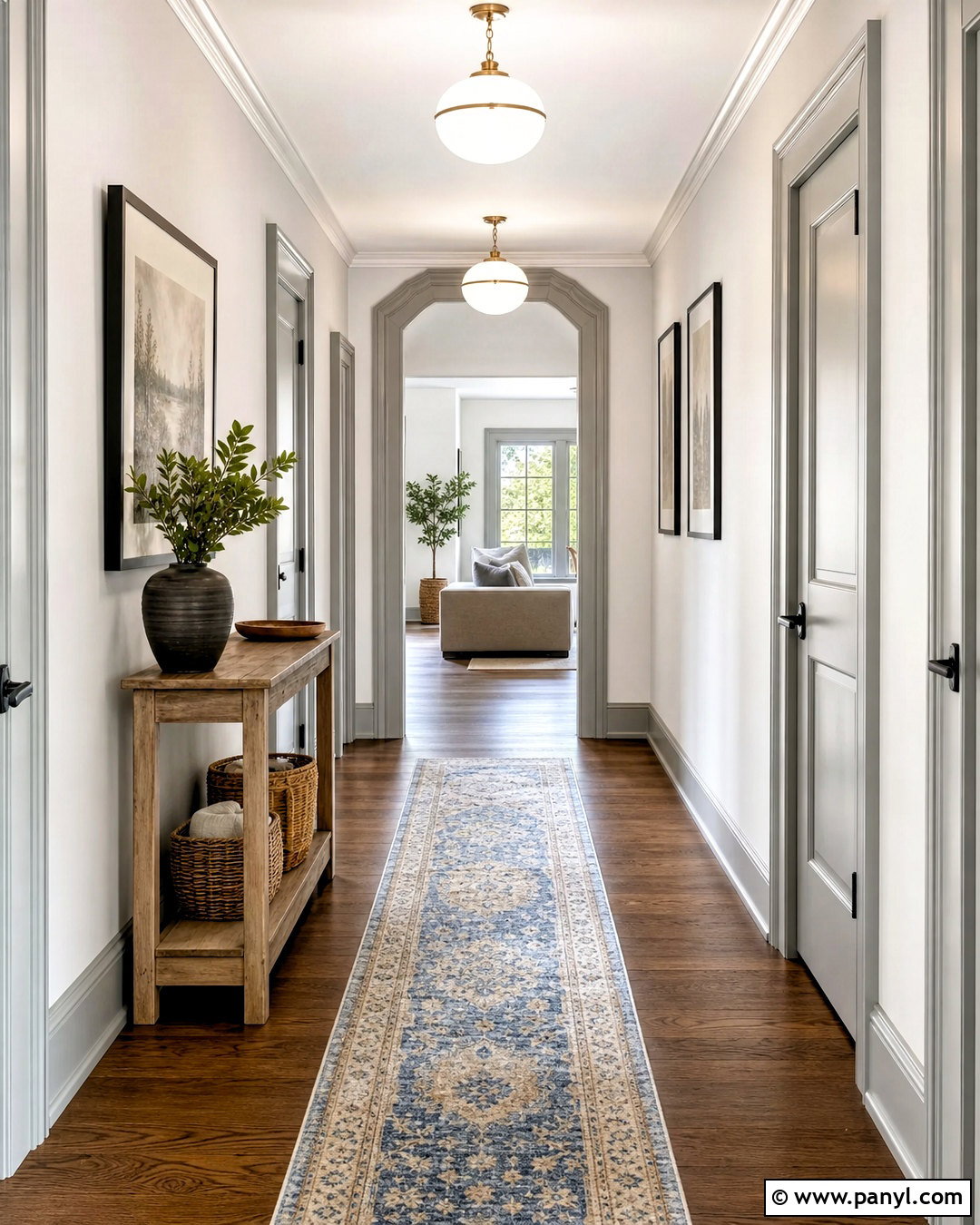
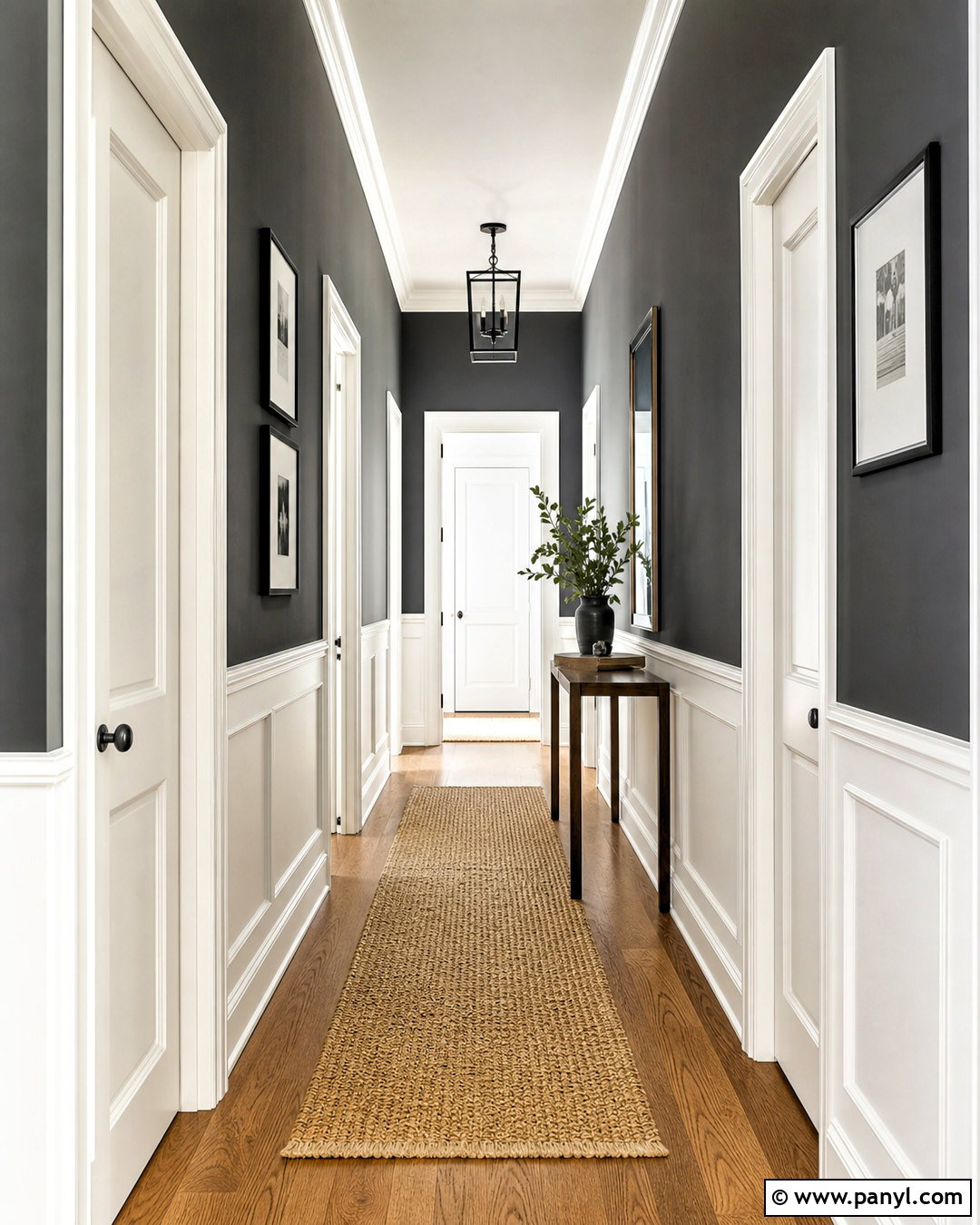
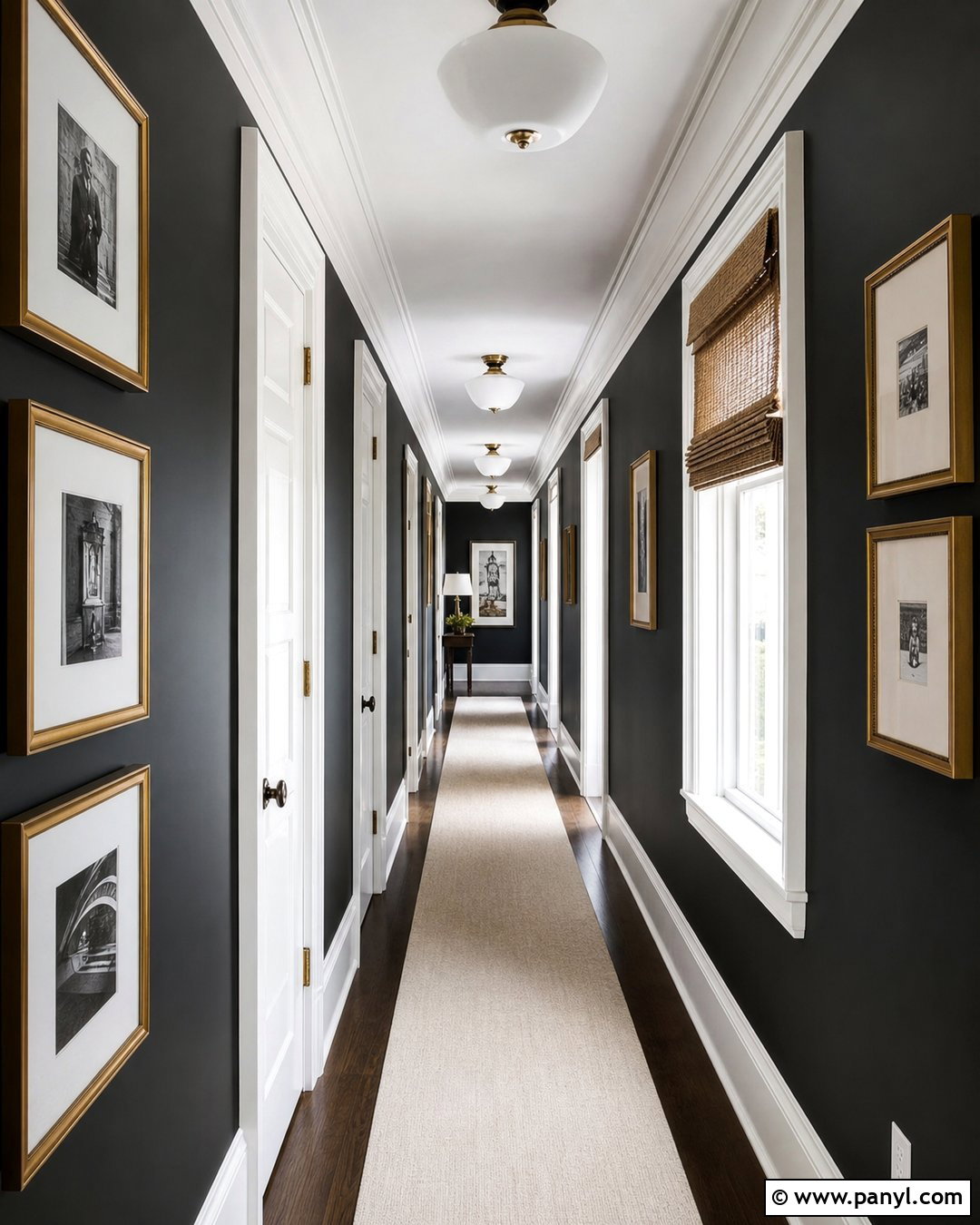
Long hallways often lack character, but gray trim can create rhythm and make the architecture more noticeable. Use bright white walls with a soft mid-gray on the baseboards, door casings, and every interior door. Matching the doors to the trim produces a calm, continuous path instead of a series of disconnected outlines. Lay a patterned runner featuring gray, faded blue, and warm beige to soften the floor and reduce echo. Simple black-framed artwork can form an orderly gallery along one wall. Add flush-mount ceiling lights with opal glass shades for even illumination. If space permits, place a narrow oak console near the hallway entrance. The wood and woven storage baskets will warm the neutral colors while keeping everyday items organized.
8. Grey Trim Entryway
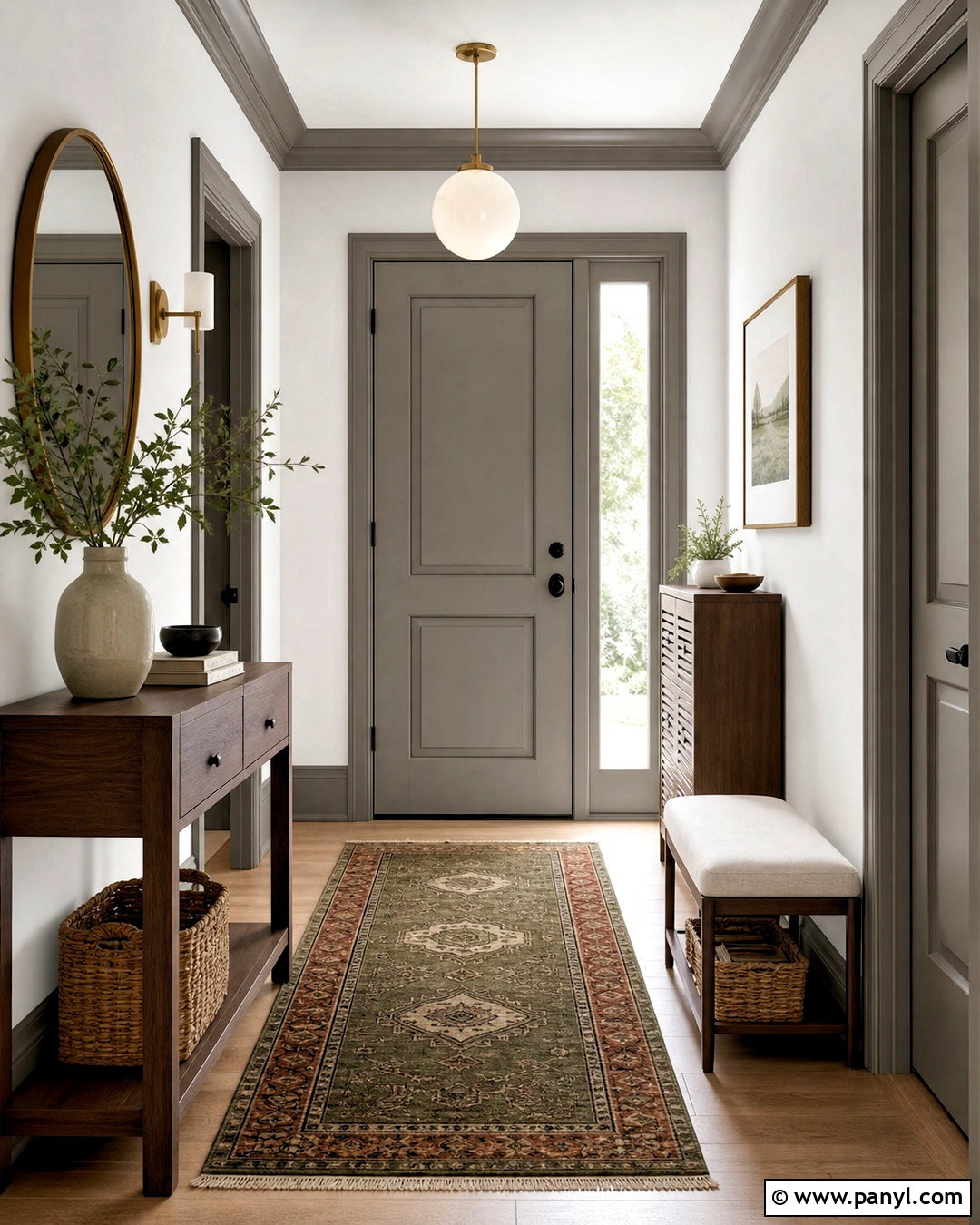
The entryway sets expectations for the rest of the home, so use gray trim to make it feel intentional and welcoming. Pair soft white walls with medium greige baseboards, door frames, window casings, and a matching interior face on the front door. Position a slim walnut console against the longest wall and hang a rounded brass mirror above it. A washable patterned rug can combine cream, gray, olive, and muted rust for practical color. Add a closed shoe cabinet or woven baskets to prevent visible clutter. A simple bench with a linen cushion provides a convenient place to sit. Complete the space with an opal glass pendant and one leafy plant. The resulting entry feels bright, durable, and coordinated without appearing formal or overly decorated.
9. Grey Trim Home Office
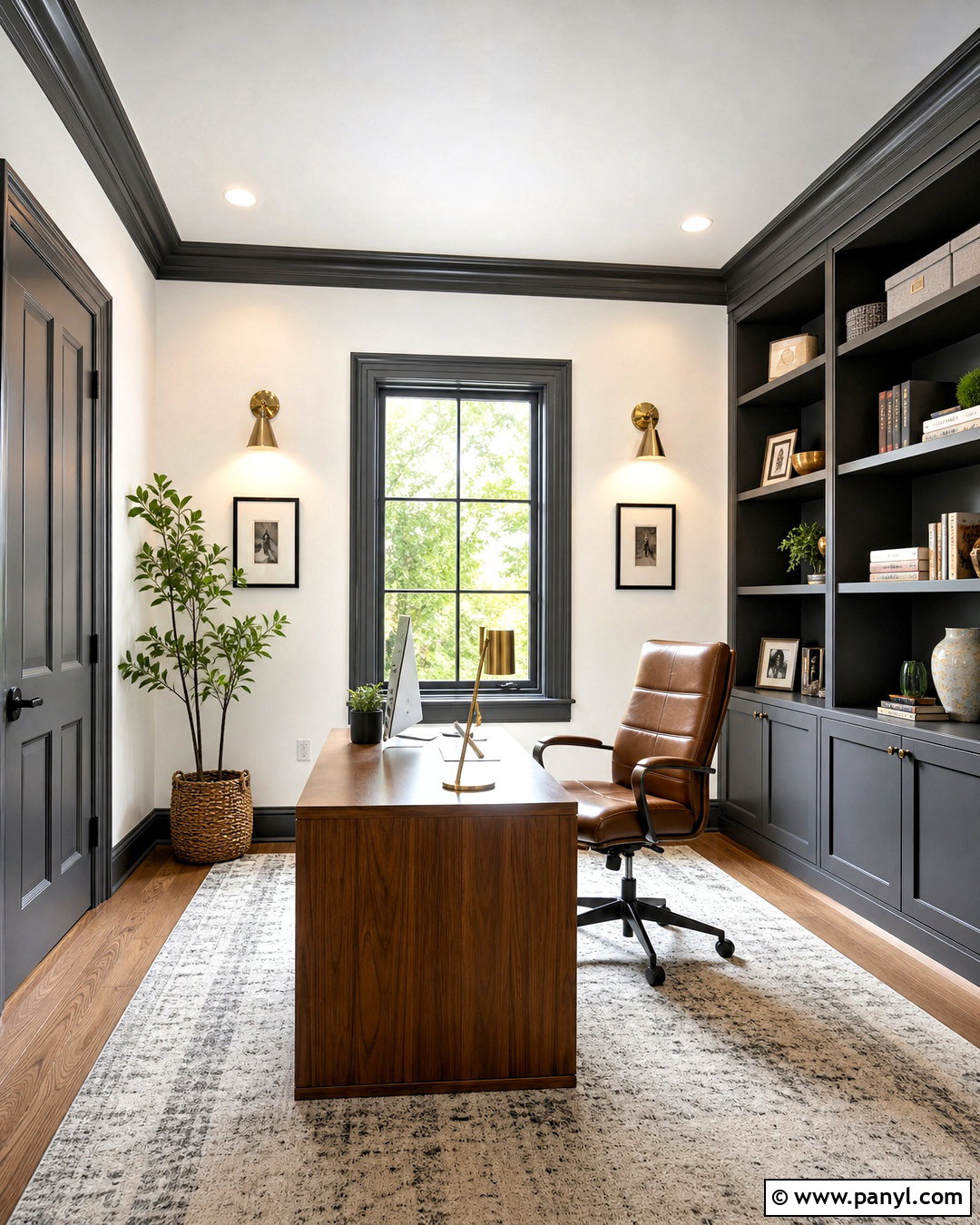
Would a stronger architectural outline help your home office feel more focused? Start with crisp white walls and use deep slate-gray paint on the baseboards, window trim, doors, and built-in shelving. Place a warm walnut desk near the window so natural light reaches the work surface from the side. An ergonomic chair in tan leather or textured beige fabric softens the darker woodwork. Use a low-pile gray-and-cream rug to define the desk area while allowing the chair to move easily. Brass sconces, closed storage boxes, and a few green plants complete the room. Keep decorative objects limited and leave open space on the shelves. This practical scheme combines a professional atmosphere with enough natural warmth to remain comfortable during long work sessions.
10. Grey Trim Nursery
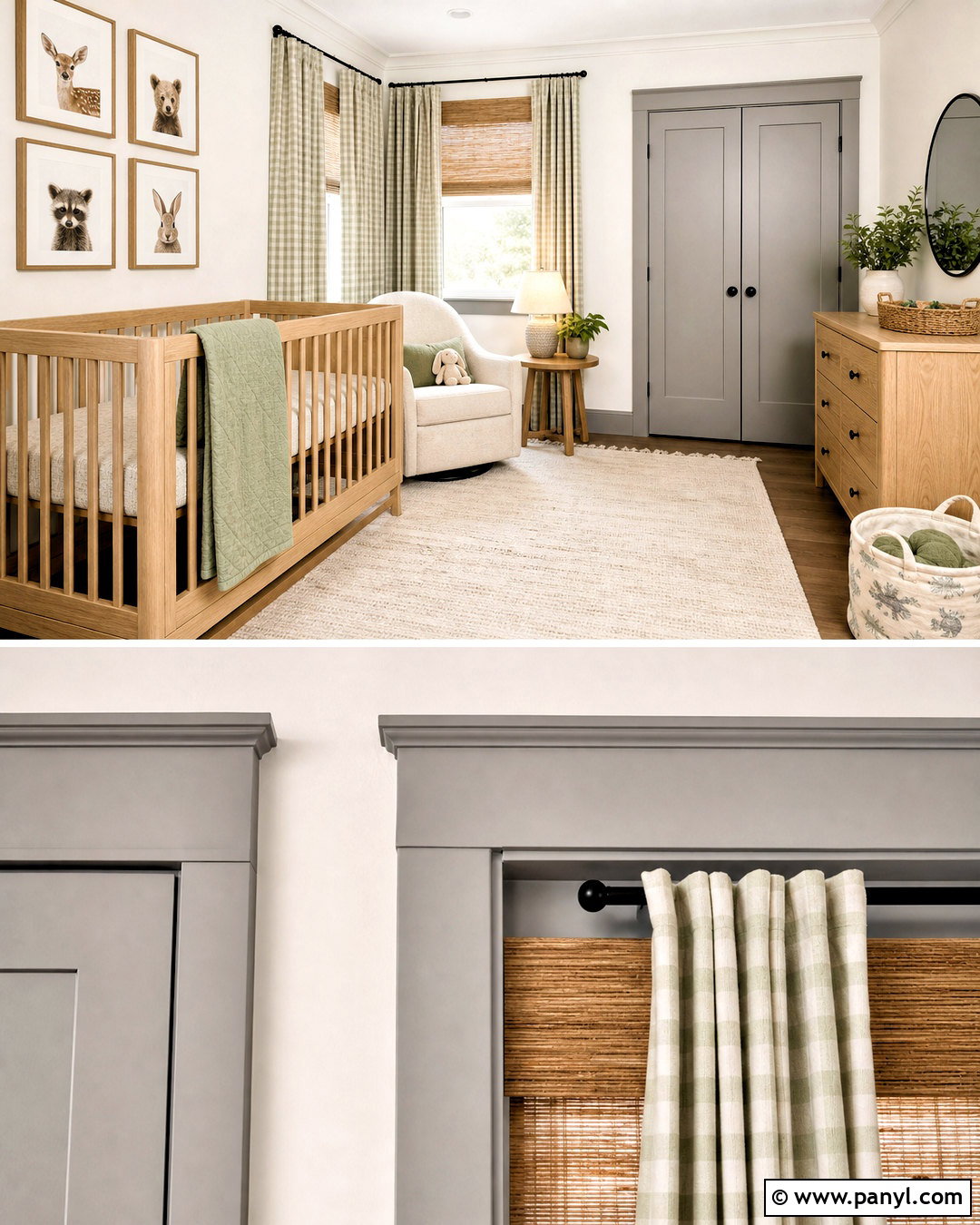
Soft gray trim offers a flexible nursery foundation that can grow with the child. Choose warm white walls and pale greige paint for the baseboards, window casing, closet doors, and room door. Arrange a natural oak crib along a solid wall away from windows and cords. Add a comfortable cream glider, a washable wool-blend rug, and a low oak dresser that can also serve as a changing station. Muted sage green, dusty blue, or soft peach textiles bring gentle color into the room. Use cordless woven shades with simple cotton curtain panels for safe, layered window coverage. A flush ceiling light and shaded reading lamp provide practical illumination. The finished nursery feels peaceful and organized without relying on a short-lived decorative theme.
11. Grey Trim Laundry Room
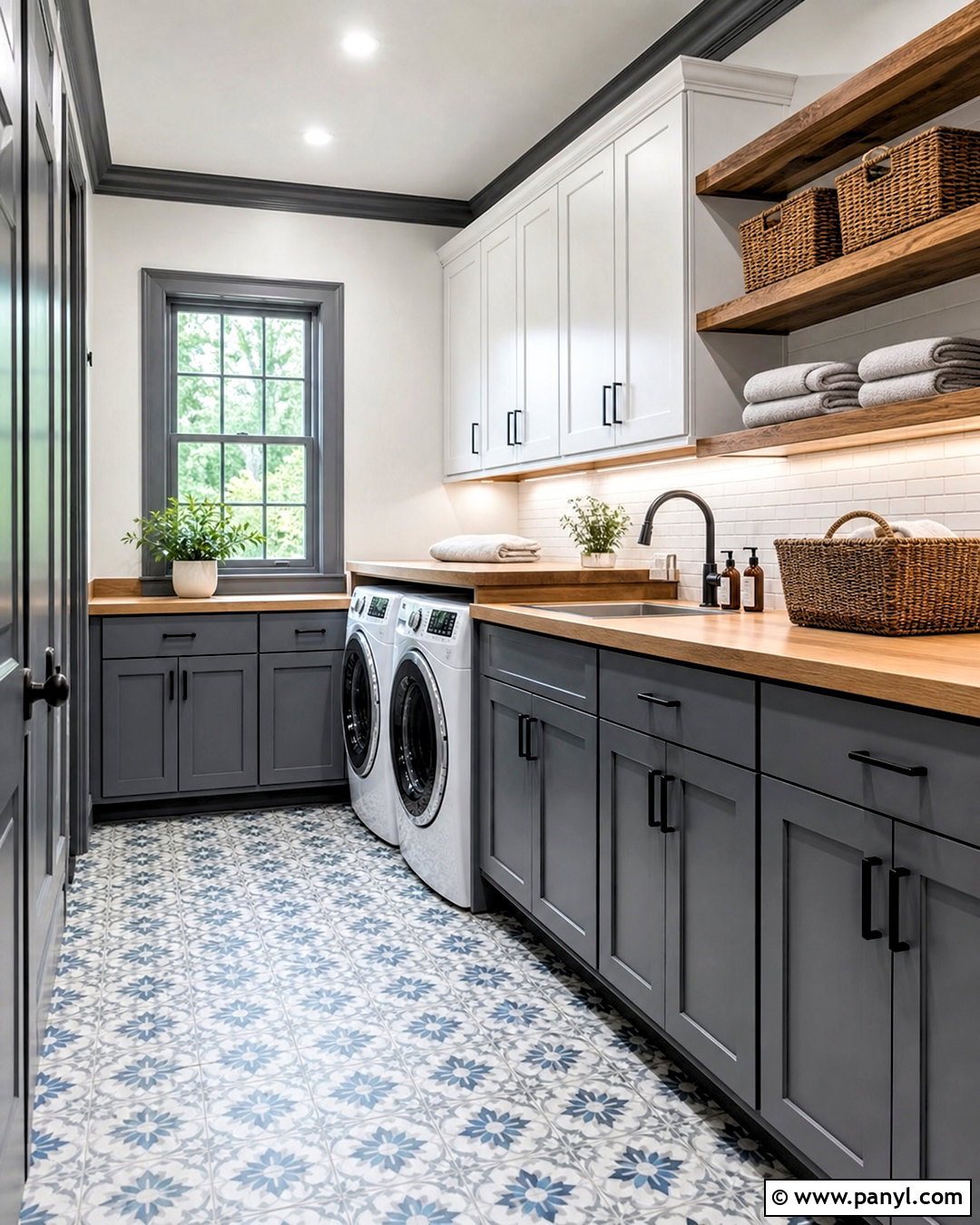
Even a hardworking laundry room can benefit from a thoughtful gray-and-white palette. Paint the walls a clean washable white, then use medium gray on the baseboards, door, window frame, and lower cabinets. White upper cabinets keep the room visually open, while a butcher-block counter over front-loading machines introduces useful folding space and natural warmth. Install a white rectangular tile backsplash with light gray grout for easy maintenance. A patterned vinyl or porcelain floor can combine gray, cream, and muted blue without showing every mark. Include open oak shelves for labeled baskets, detergent containers, and folded towels. Bright ceiling lighting and under-cabinet task lights make chores easier. This complete design is durable, organized, and attractive enough for a highly visible utility space.
12. Grey Trim Mudroom
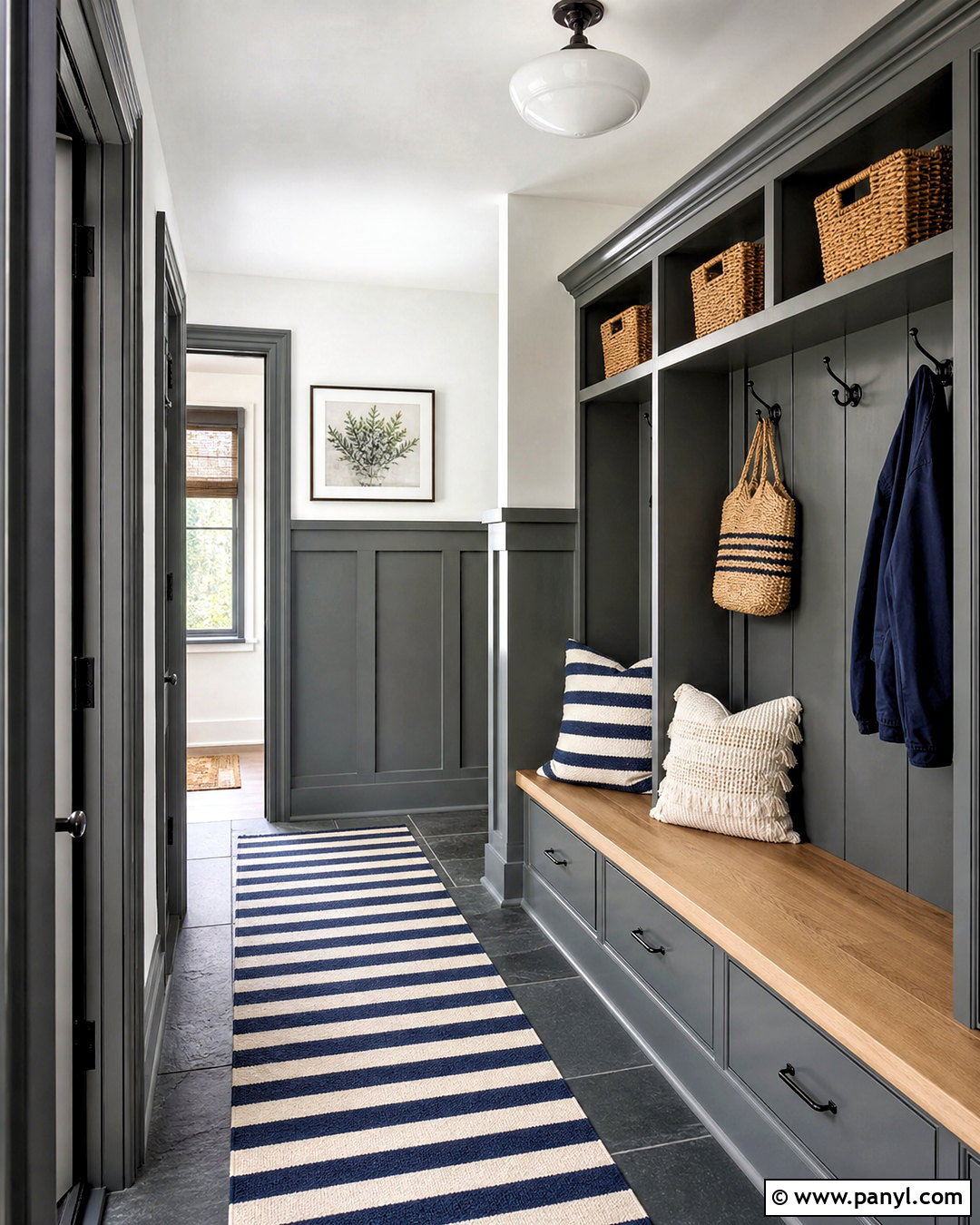
A mudroom needs finishes that hide scuffs while still connecting with the brighter rooms nearby. Use white walls above medium gray board-and-batten paneling, then carry the same gray across the baseboards, door trim, storage bench, and locker-style cabinetry. Add a thick natural oak bench seat to break up the painted surfaces. Durable slate-look porcelain flooring provides contrast and stands up to wet shoes. Assign each household member a hook, closed drawer, and upper basket to keep the layout functional. A washable striped runner can introduce navy, cream, and soft brown. Install a simple semi-flush light with a white glass shade for clear visibility. The combination creates an orderly transition zone that feels like part of the home rather than a purely utilitarian passage.
13. Grey Trim Sunroom
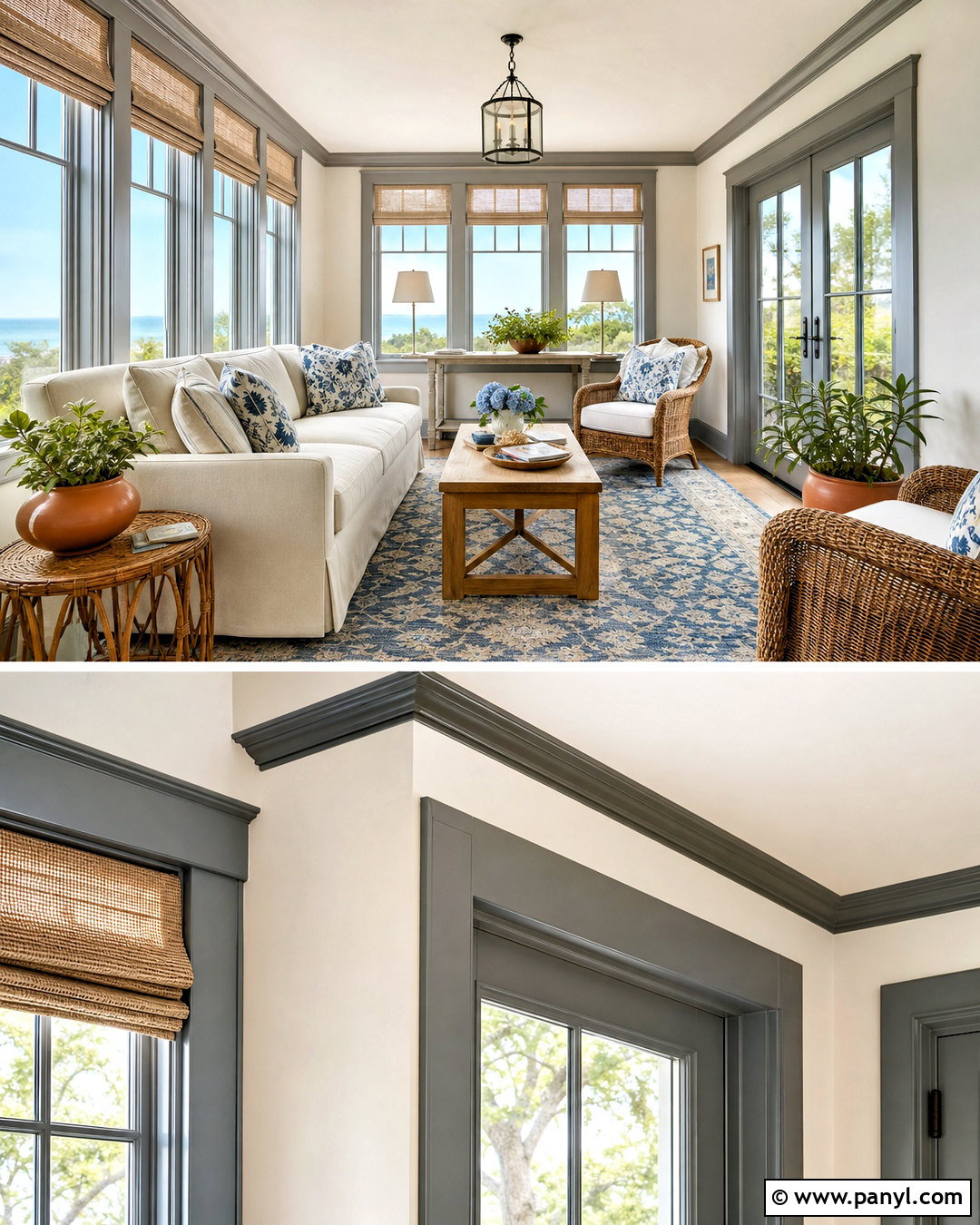
Sunlight makes a pale gray trim color shift beautifully throughout the day. Keep the sunroom walls and ceiling warm white, then frame the windows, doors, and baseboards in a quiet stone gray. Arrange a slipcovered cream sofa with two woven rattan chairs around a light oak coffee table. A large indoor-outdoor rug in soft blue and beige helps define the conversation area while handling dirt and moisture. Use relaxed linen Roman shades to control glare without hiding the painted frames. Add terracotta planters, leafy plants, and blue patterned cushions for natural color. Avoid filling every corner with furniture because open floor space supports the bright, breezy atmosphere. This finished sunroom feels connected to the outdoors while remaining comfortable and cohesive with the home.
14. Grey Trim Farmhouse Interior
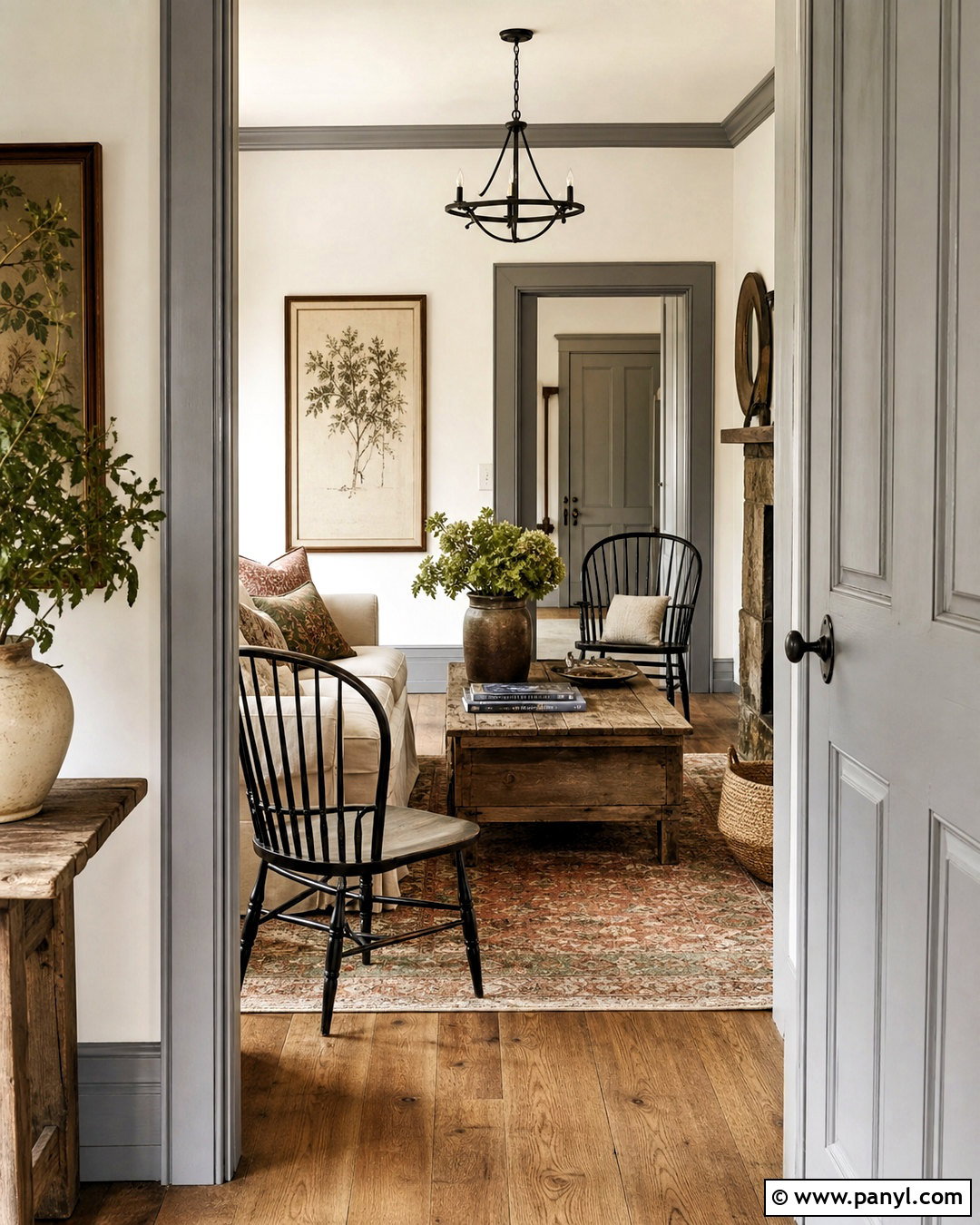
For a modern farmhouse look, choose creamy white walls and warm putty-gray trim rather than a cold blue-based gray. Apply the trim color to substantial baseboards, simple window casings, paneled doors, and a practical built-in cabinet. Wide-plank oak flooring gives the room an authentic, grounded foundation. Furnish the space with a comfortable linen sofa, spindle-back chairs, and a sturdy reclaimed wood coffee table. Use black iron lighting sparingly so it adds definition without turning the palette harsh. A vintage-inspired rug featuring faded brick, beige, and muted green provides subdued color. Finish with stoneware, woven baskets, and simple botanical artwork. The complete room feels relaxed and collected, while the gray woodwork gives familiar farmhouse materials a cleaner, more updated appearance.
15. Grey Trim Coastal Interior
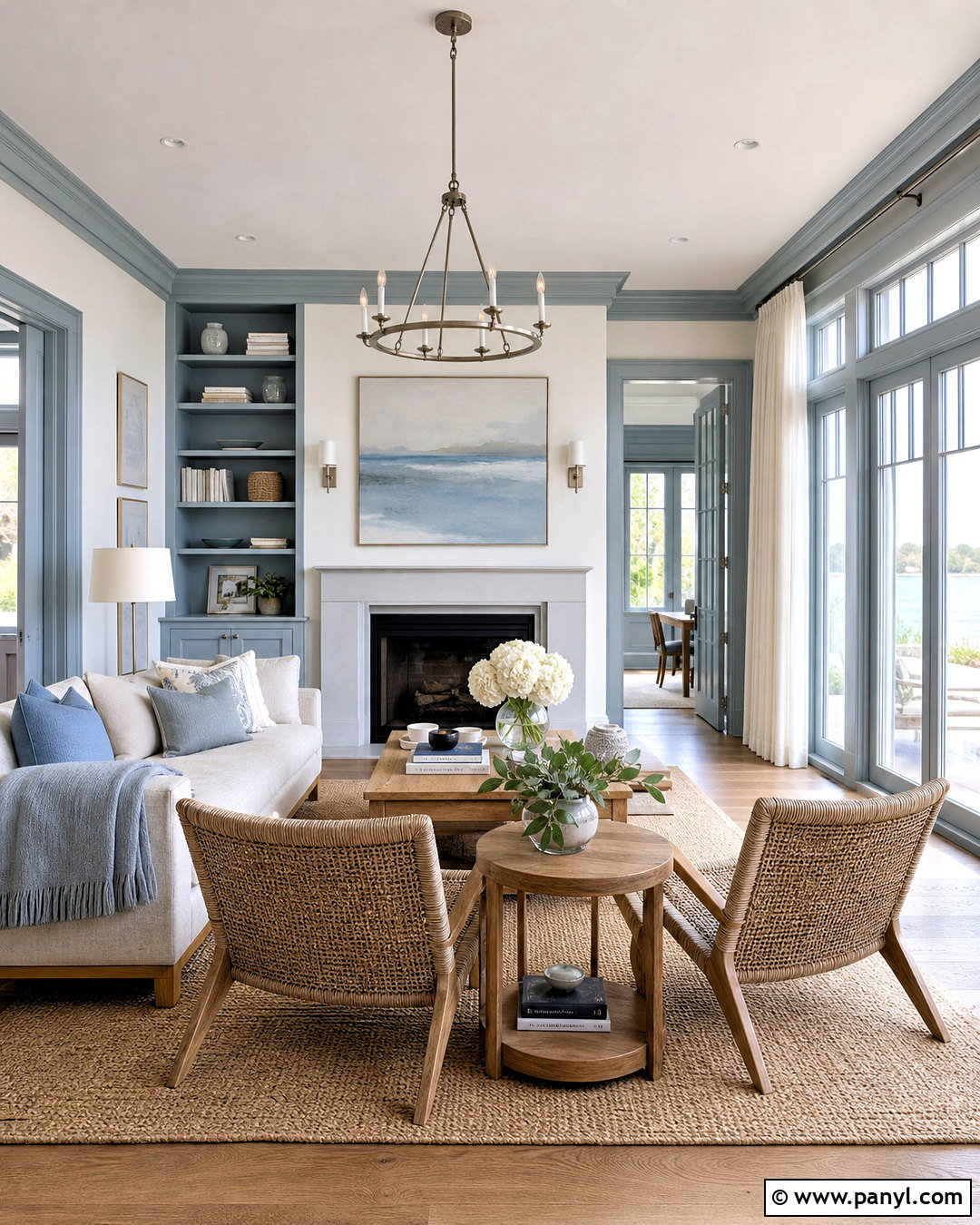
Coastal rooms do not need obvious nautical decorations to feel light and relaxed. Begin with soft white walls and misty blue-gray trim on the baseboards, doors, windows, and built-in storage. Choose a pale linen sofa, white oak side tables, and woven lounge chairs with comfortable cream cushions. A large wool or jute-blend rug can introduce sandy beige beneath the seating arrangement. Layer faded blue pillows and lightweight white curtains without covering too much of the painted window trim. Brushed nickel lighting and clear glass accessories reinforce the airy palette. Add one large seascape or abstract artwork rather than multiple themed objects. This restrained approach allows the white walls, gray trim, natural fibers, and watery blue details to create a sophisticated coastal atmosphere.
16. Grey Trim Modern Interior
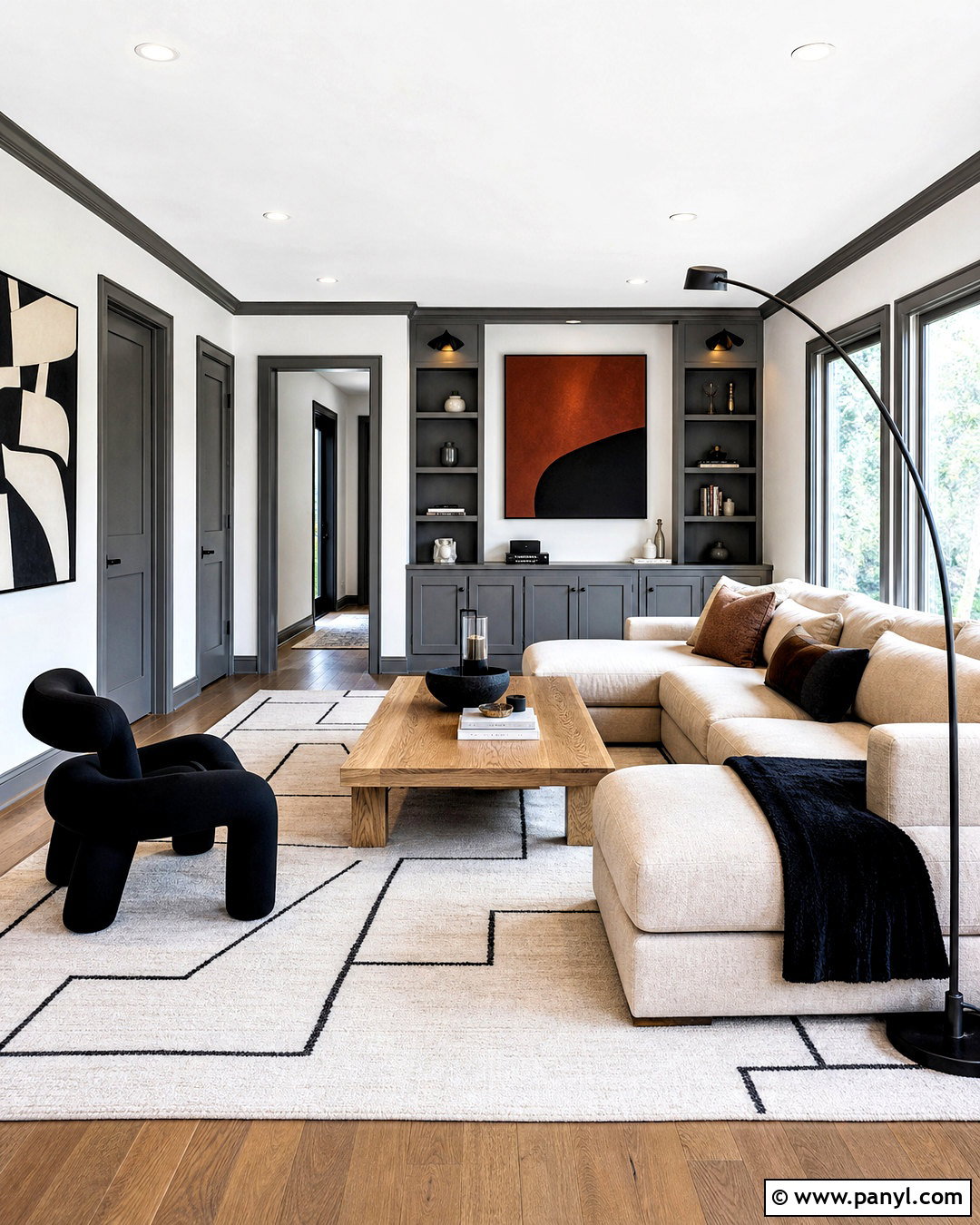
Clean lines make gray trim especially effective in a modern interior. Select a neutral medium gray and apply it consistently to slim baseboards, flush doors, window frames, and built-in cabinetry. Keep the walls and ceiling a clear but slightly softened white. A low-profile beige sectional, sculptural black chair, and rectangular oak coffee table create a simple seating arrangement. Anchor everything with a large ivory rug featuring a subtle geometric texture. Add one oversized abstract artwork with rust, black, and cream tones for controlled color. Recessed lighting can provide general illumination, while a streamlined floor lamp improves evening comfort. Avoid tiny accessories and crowded surfaces. The room will feel more finished when every object has visual weight and the architectural gray lines remain easy to see.
17. Grey Trim Traditional Molding
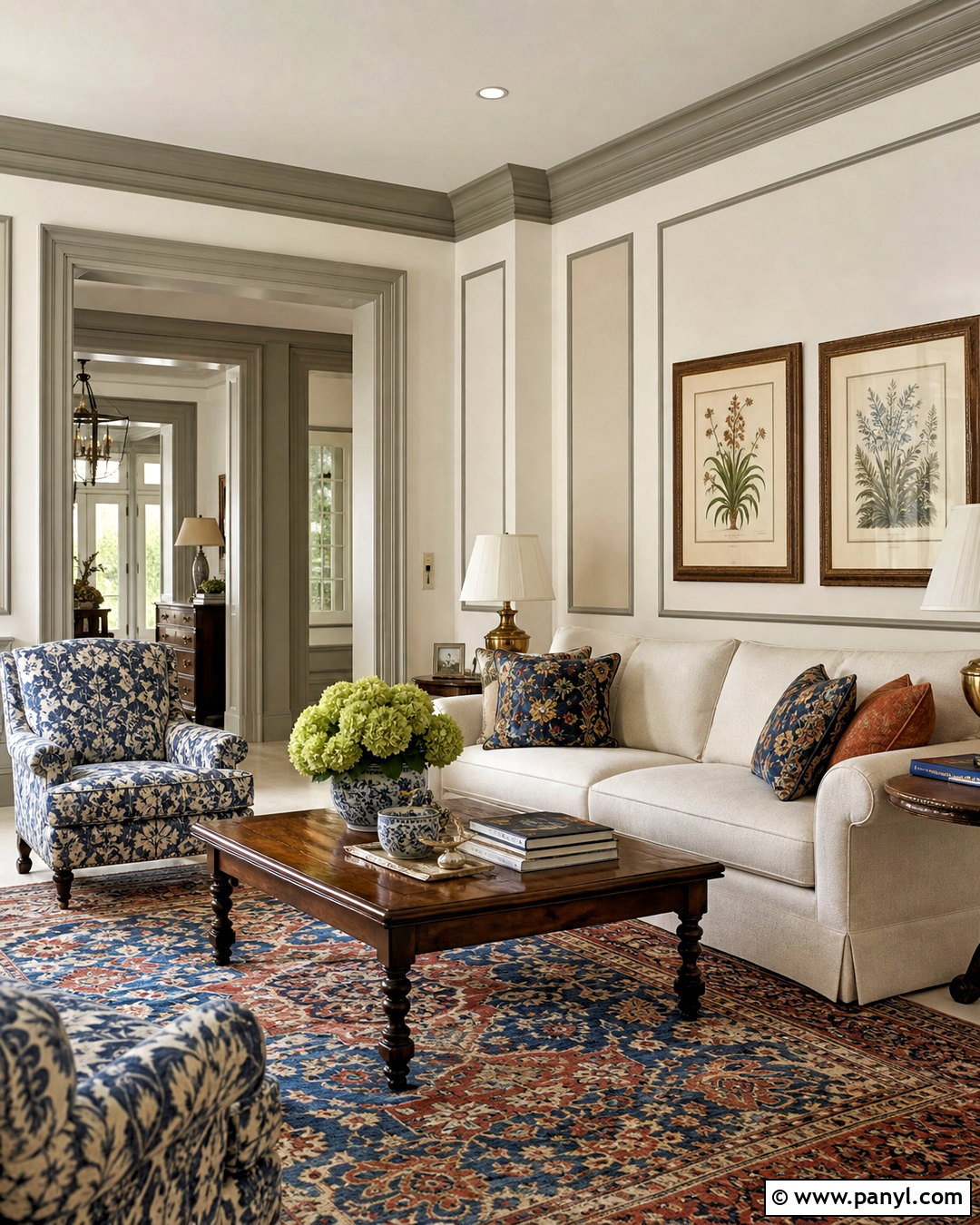
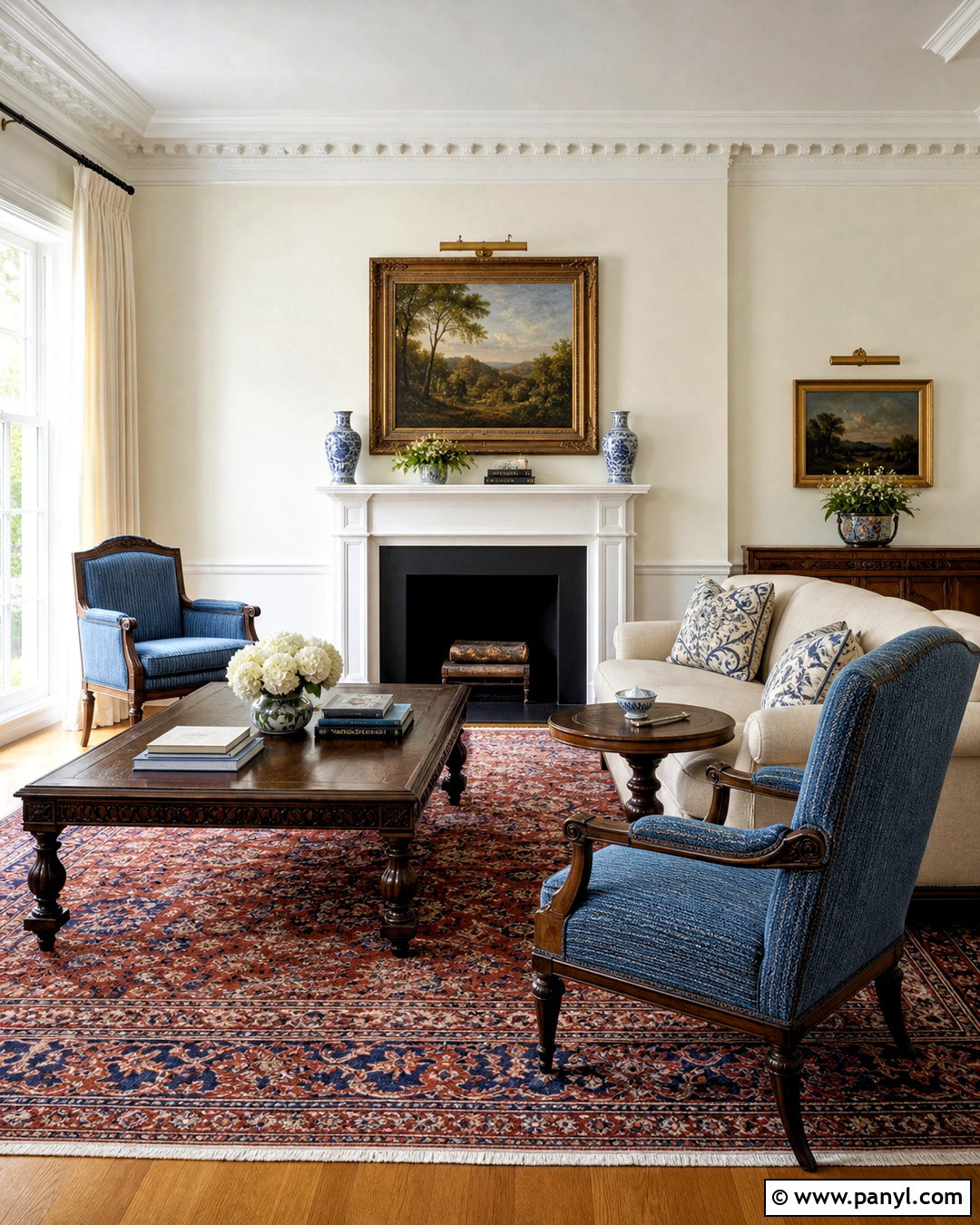
Detailed molding becomes a major feature when it is painted a contrasting gray. Use warm white on the flat wall surfaces and a refined medium greige on crown molding, baseboards, door casings, window trim, and picture-frame molding. Furnish the room with a tailored cream sofa, two patterned armchairs, and a dark wood coffee table. A classic wool rug in muted blue, rust, and beige adds history and warmth. Choose antique brass lamps and pleated shades instead of sleek contemporary fixtures. Full-length linen curtains should coordinate with the walls while leaving the gray window casing partly visible. Symmetrical artwork and balanced furniture placement support the room’s formal architecture. The finished design feels traditional and graceful, but the reversed trim palette keeps it fresh.
18. Grey Trim And Matching Doors
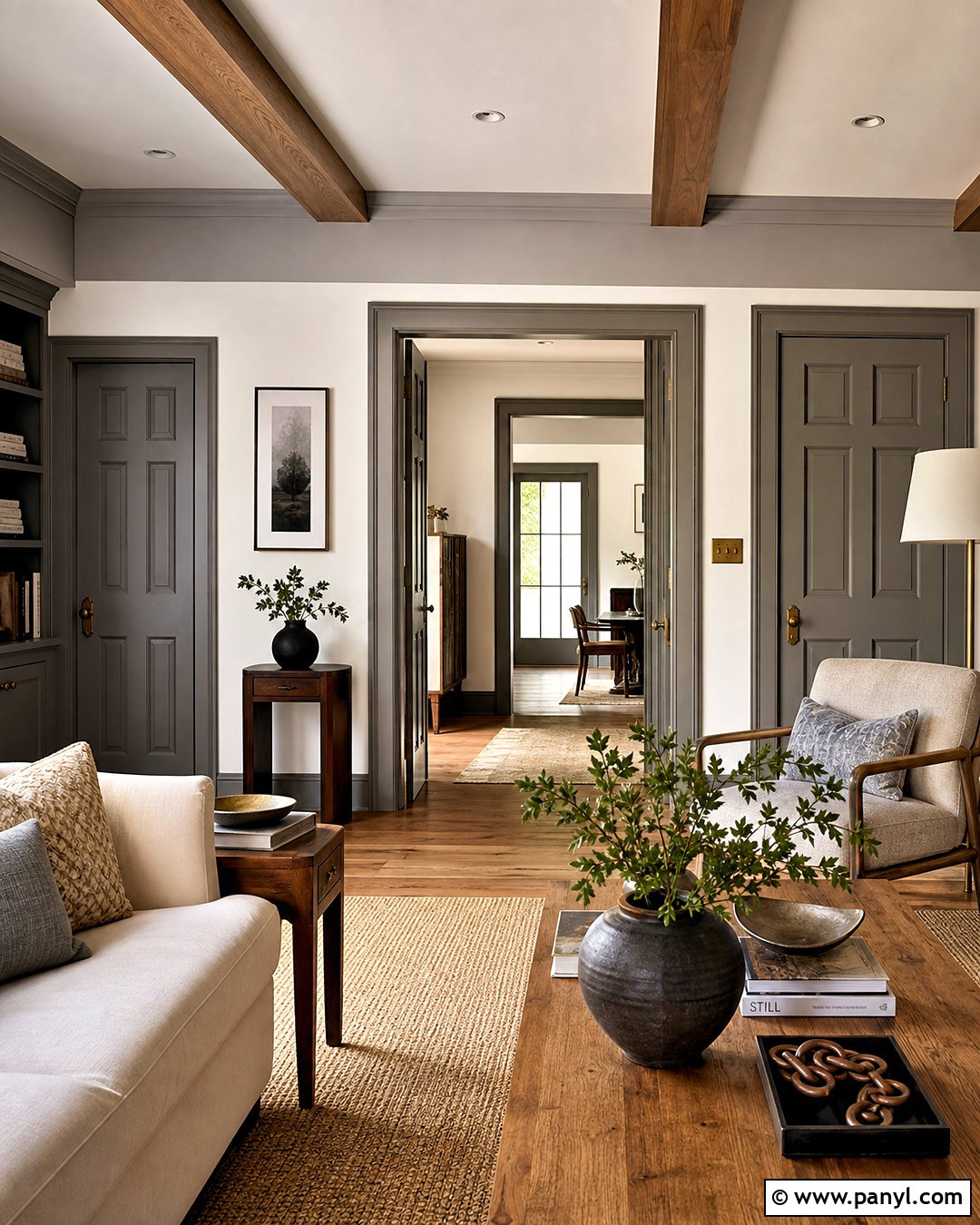
Painting doors and trim the same gray creates a stronger, more cohesive statement than outlining white doors with gray casings. Keep the walls soft white, then use a warm mid-gray on paneled doors, door frames, baseboards, and nearby built-ins. Choose satin paint so the surfaces are durable and easy to wipe clean. In the surrounding living area, use a cream sofa, oak furniture, and a textured beige rug to balance the solid gray planes. Aged brass door hardware adds warmth and makes each doorway feel considered. Repeat the gray in only a few small textile details rather than matching every accessory. With consistent paint placement and natural materials, the completed room looks tailored and connected instead of busy or dominated by contrasting doorways.
19. Grey Window Trim With White Walls
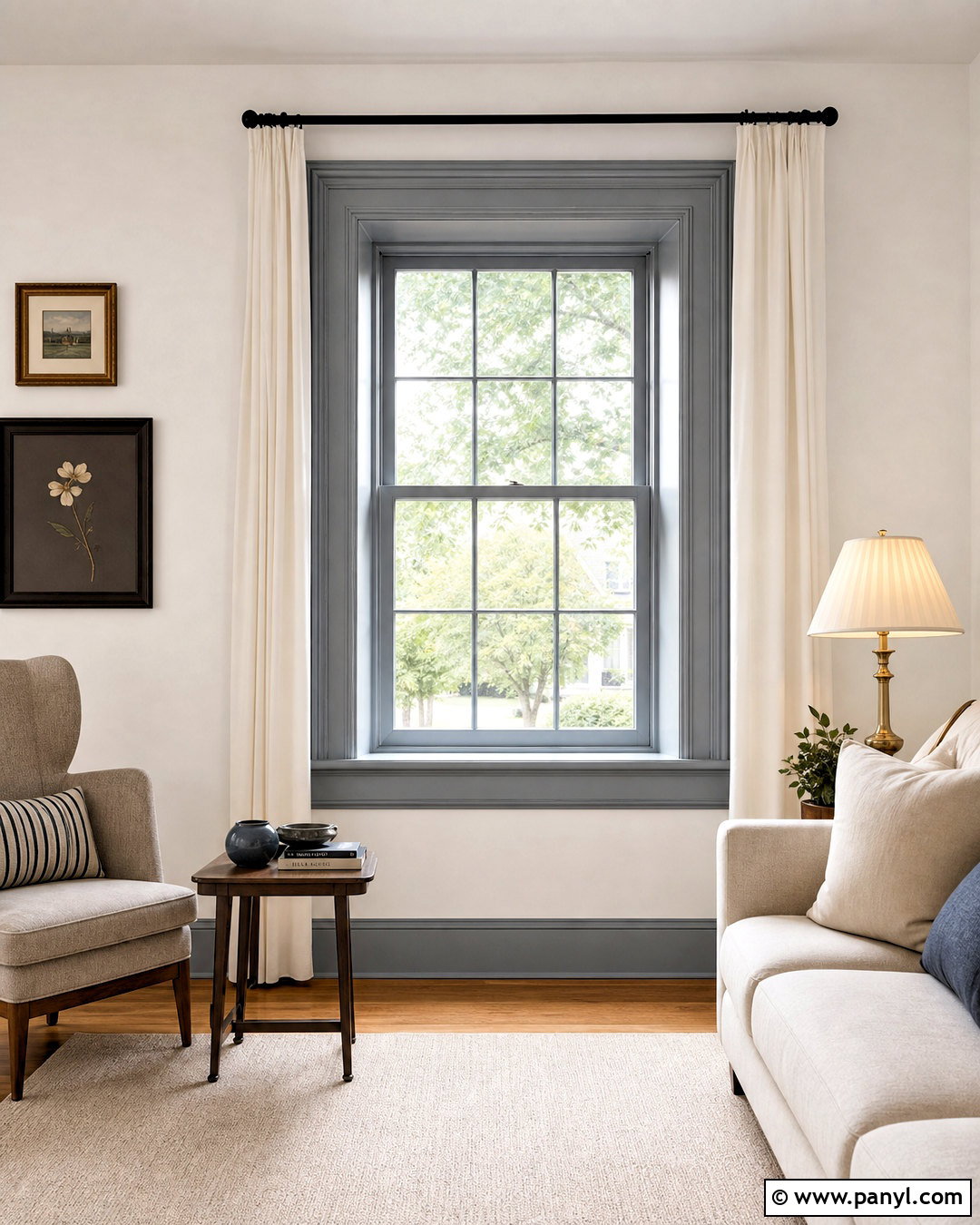
Gray window trim can turn an ordinary view into a framed focal point. Paint the walls warm white and carry a medium blue-gray across the full window casing, sill, and nearby baseboards. Keep curtain panels light and mount the rod beyond the casing so the gray frame remains visible when the curtains are open. Arrange a neutral sofa or reading chair close enough to enjoy the natural light without blocking the window. Pale oak flooring, a cream rug, and linen upholstery prevent the cool gray from feeling severe. Add a walnut side table and a shaded brass lamp for warmth. This scheme works especially well around large windows, where the gray boundary provides architectural depth and visually connects the interior with shaded outdoor colors.
20. Grey Crown Molding And Trim
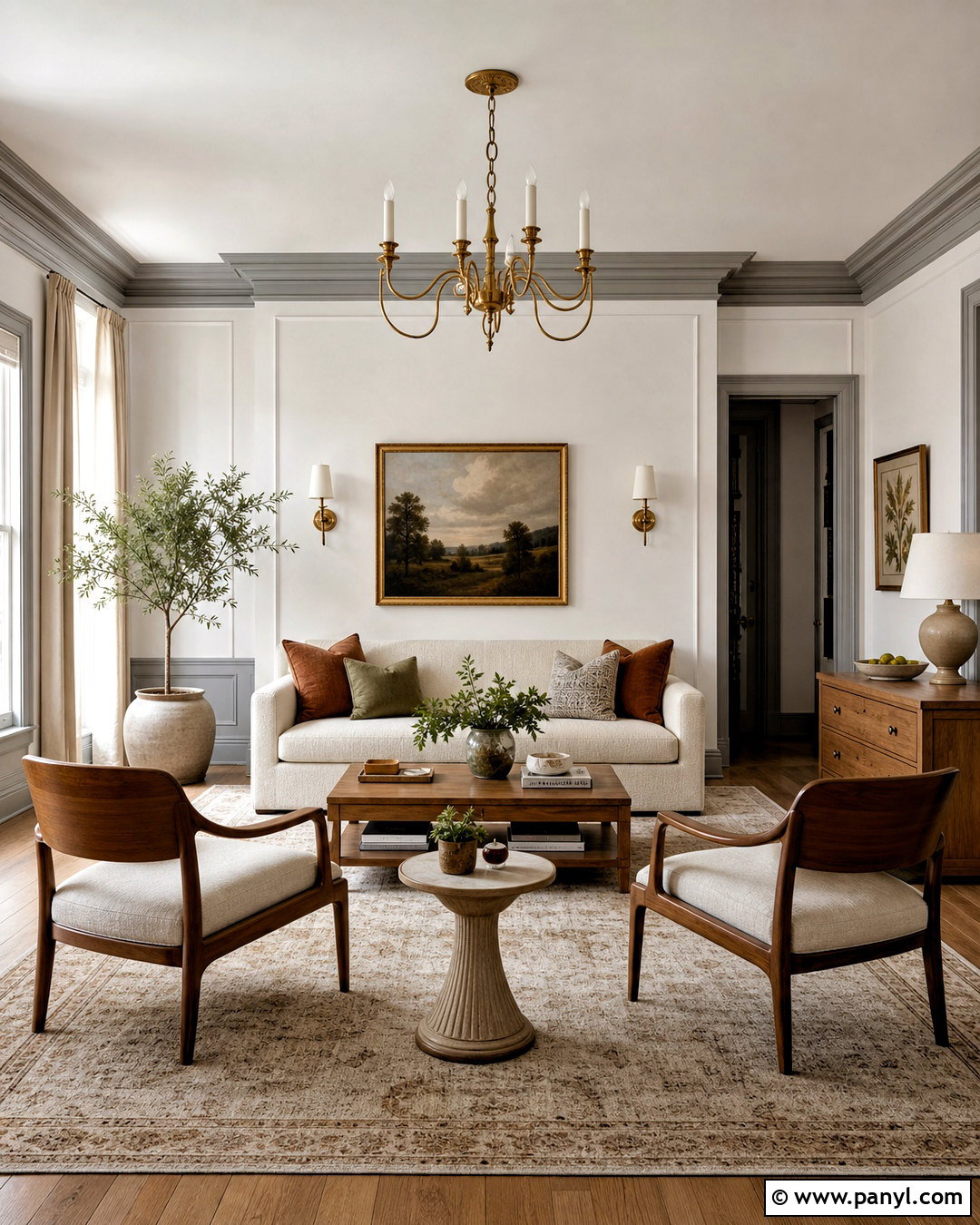
Carrying gray onto crown molding creates a finished transition between white walls and a white ceiling. Select a soft neutral gray for the crown, baseboards, window casings, doors, and any picture molding. The repeated color should form one connected architectural framework around the room. Use warm white walls and a slightly brighter white ceiling to preserve height and light. Furnish the space with an oatmeal sofa, curved wood chairs, and a large taupe rug. A simple brass chandelier draws the eye upward without competing with the crown molding. Add clay-colored pillows, olive accents, and medium oak furniture to warm the neutral background. This complete approach works best when all trim has consistent sheen, crisp edges, and carefully repaired joints.
Conclusion:
Using gray trim with white walls is an easy way to add depth while preserving a bright, flexible interior. Light gray produces gentle definition, charcoal creates drama, and warm greige supports a softer traditional look. Whichever direction you choose, compare paint samples under both daylight and artificial lighting. Make sure the undertones coordinate, and use a more durable sheen on doors, baseboards, and window casings. Complete the palette with natural wood, layered textiles, practical lighting, and a few purposeful colors. Most importantly, repeat the gray consistently so it feels like an architectural decision. These **grey trimming white walls** schemes can transform ordinary rooms into polished spaces without requiring a complicated color palette.

Related Ideas and Inspiration:
Leave a Reply