
Stained wood trim brings natural warmth, visible grain, and architectural definition to interiors without relying on decorative clutter. Because stain remains translucent rather than hiding the wood beneath an opaque coating, original casings, baseboards, doors, and moldings can become meaningful parts of a room’s character. () The key is building a complete palette around the trim’s undertone. Honey oak works beautifully with warm whites and soft greens, while walnut and mahogany can support deeper, more dramatic colors. Flooring, furniture, textiles, lighting, and metal finishes should also feel intentional beside the wood. Whether you are updating a historic home or adding character to a newer space, these complete room looks offer practical and stylish **stained trim interior ideas**.

1. Stained Trim With Warm White Walls
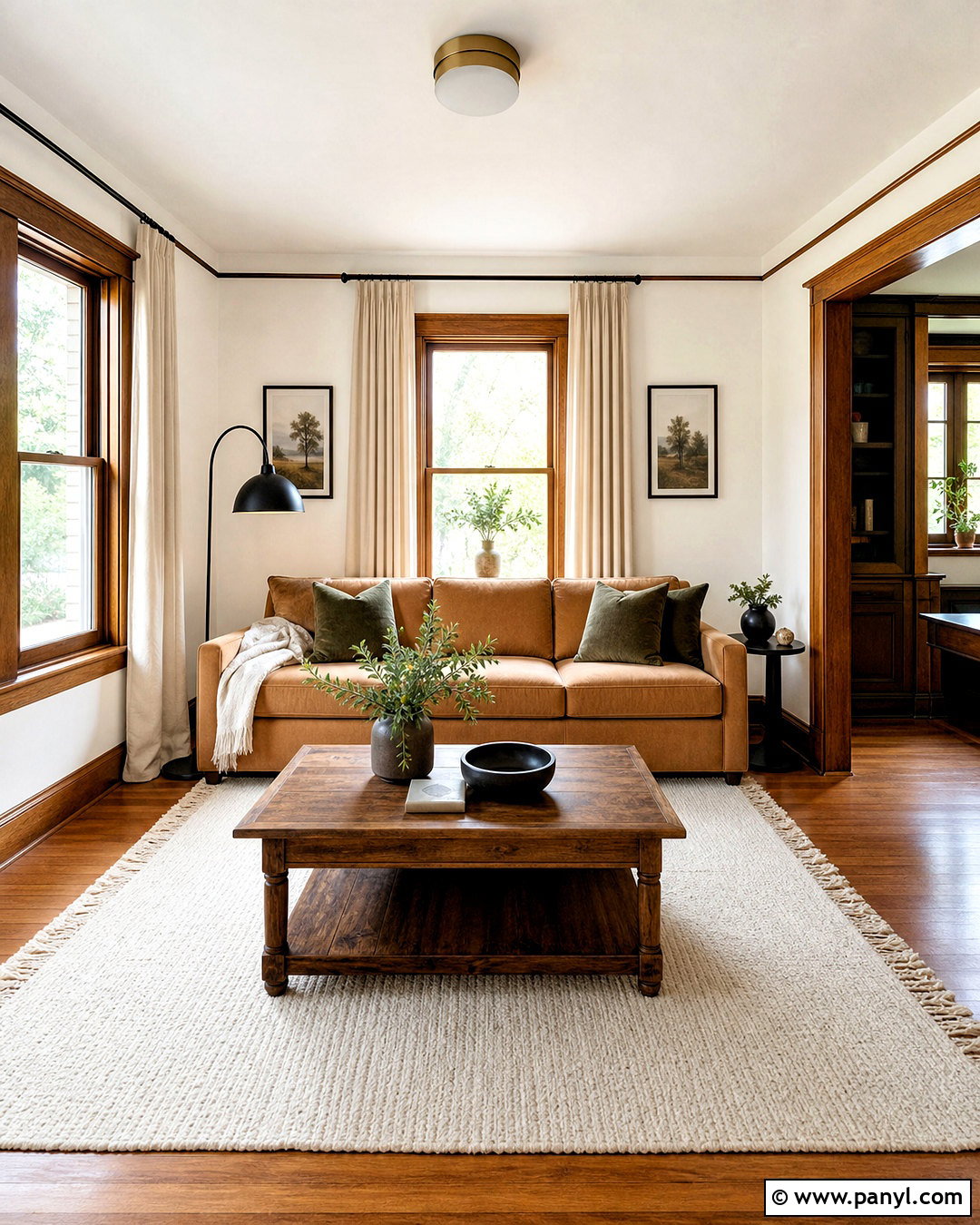
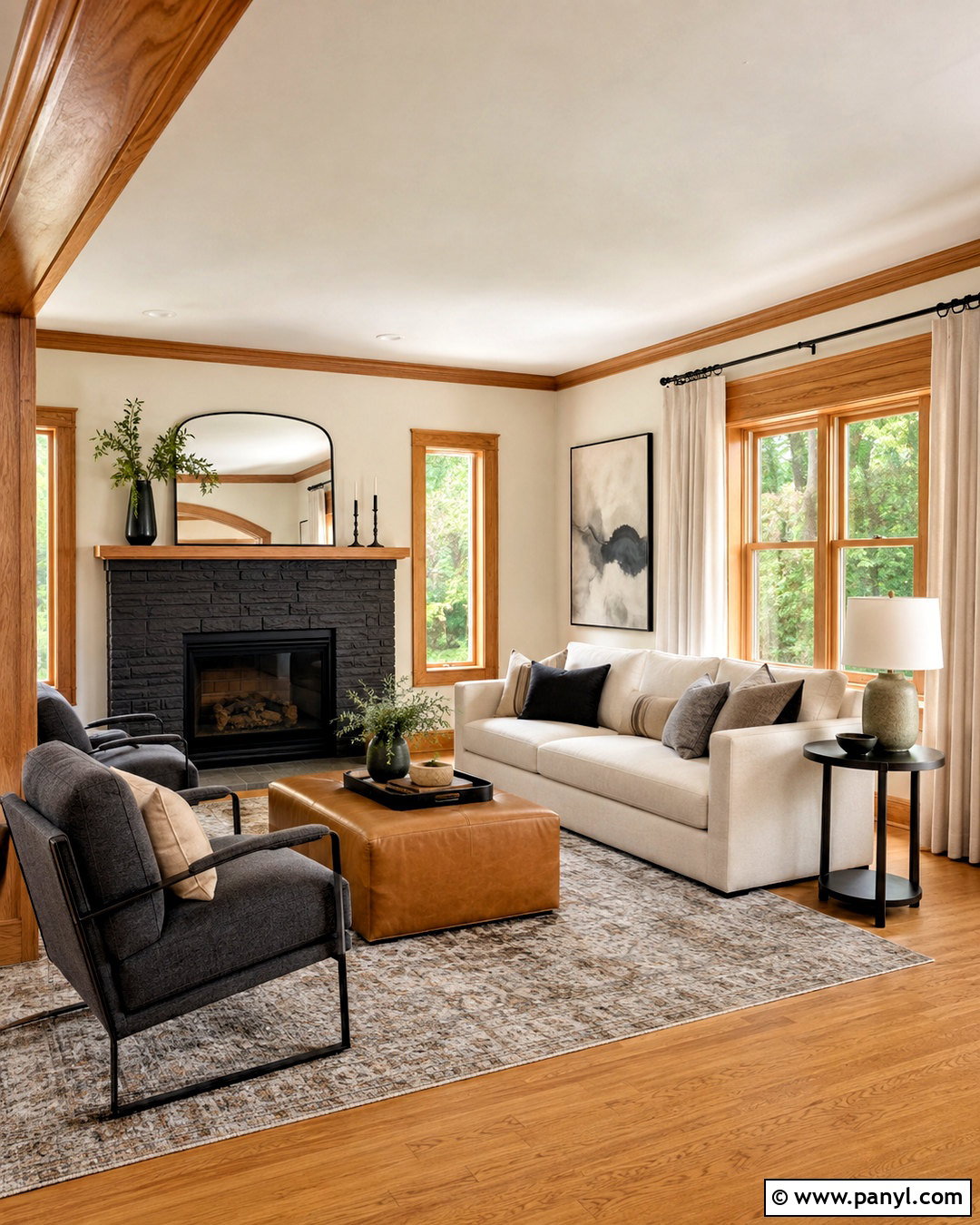
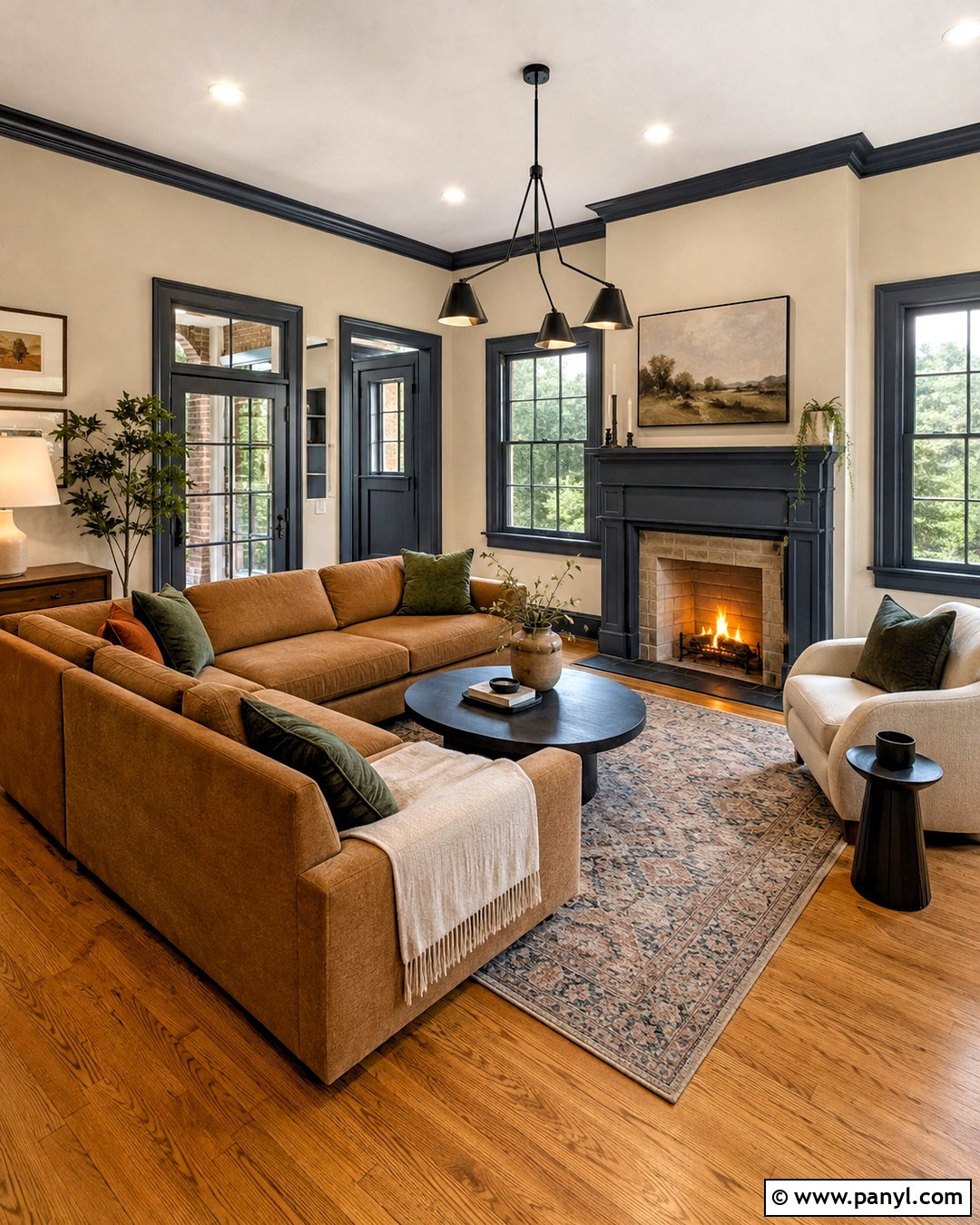
Warm white walls give stained trim a clean background without creating a harsh contrast. Choose a creamy white with beige or soft yellow undertones, especially when the wood has a golden oak, pine, or cherry finish. Continue the stain across window casings, door frames, and baseboards so the architecture feels connected. In a living room, add a camel sofa, oatmeal linen curtains, and a textured ivory rug. A medium-tone wood coffee table can echo the trim without matching it perfectly. Black metal lighting adds definition, while muted green pillows bring in a natural accent. Keep the ceiling a lighter white to make the room feel open. This balanced scheme works especially well in Craftsman, traditional, and transitional homes.
2. Oak Stained Trim With Sage Green Walls
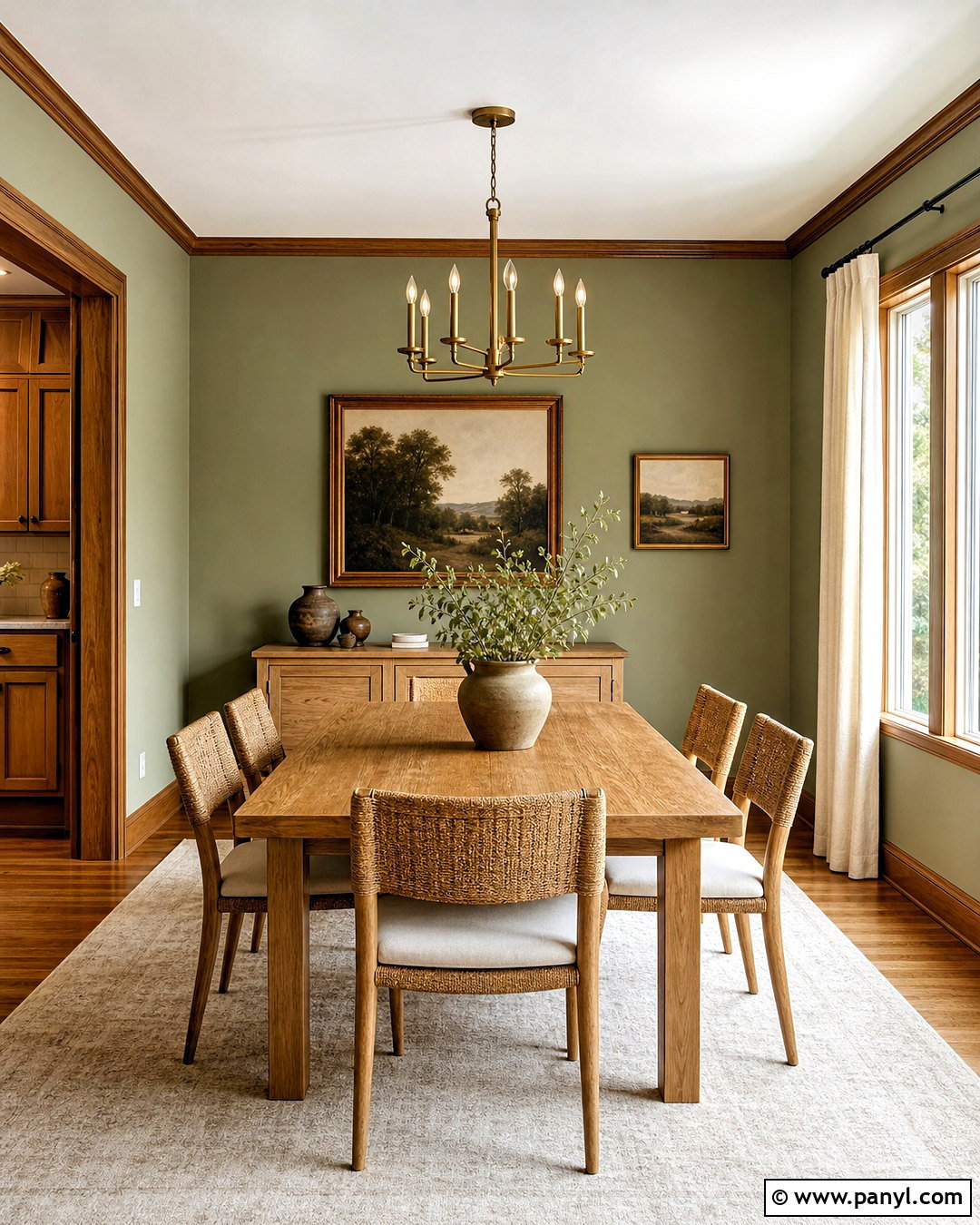
Soft sage green creates a relaxed, earthy setting for golden or medium oak stained trim. Select a muted green with warm gray undertones instead of a bright botanical shade. This prevents the room from feeling overly rustic. In a dining room, pair the walls with a simple oak table, woven side chairs, and a large cream rug. Use aged brass lighting to complement the warmth of the trim and add off-white curtains that hang beyond the window frames. A ceramic vase, framed landscape prints, and a few dark accents will give the room depth. Keep the furniture lines clean so the natural woodwork remains the architectural feature. The finished look feels fresh and inviting while still respecting traditional oak casings, baseboards, and doors.
3. Dark Stained Trim With Navy Walls
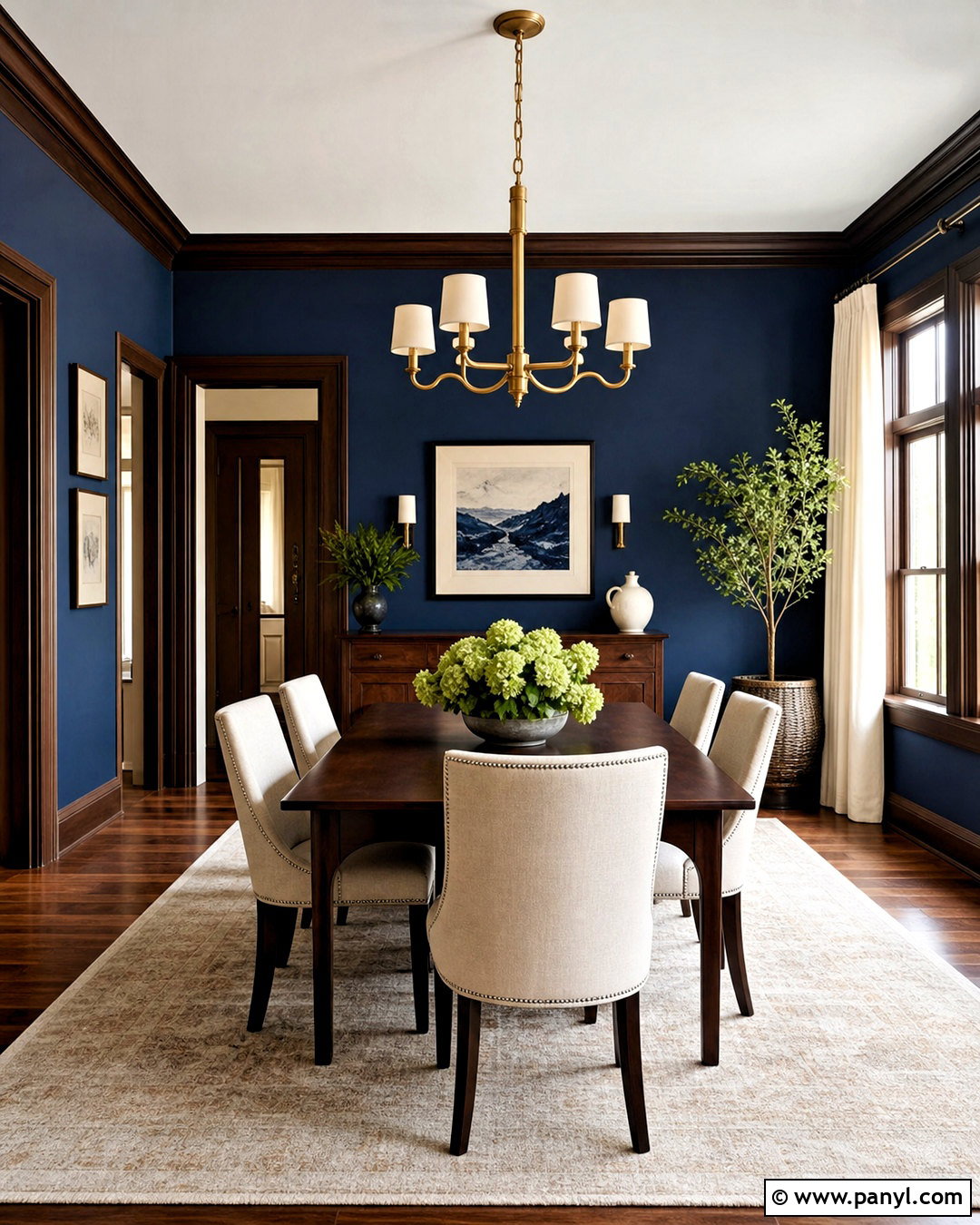
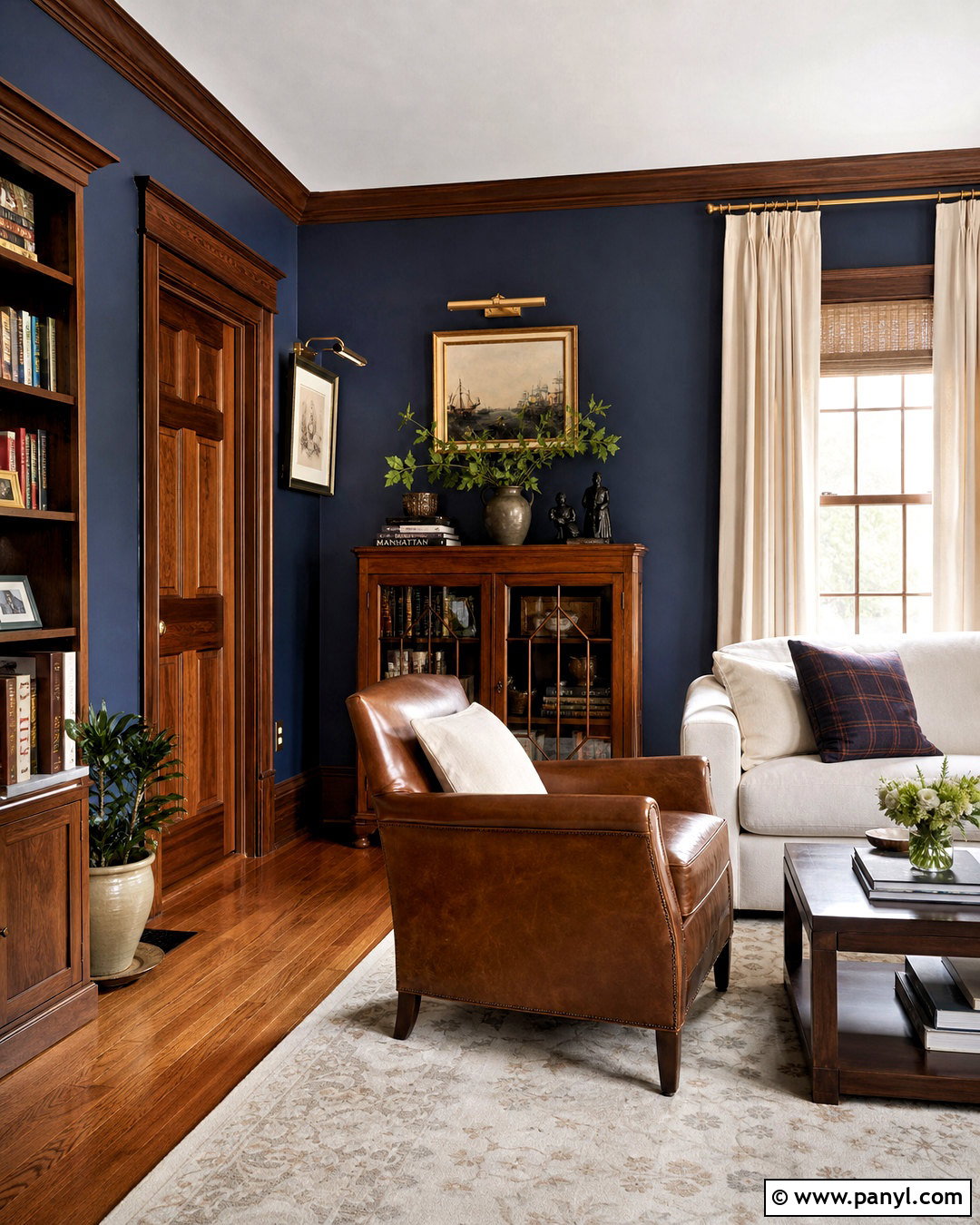
Deep navy walls can turn dark stained trim into a rich and intentional design feature. This combination works best in dining rooms, libraries, and offices with enough natural or layered artificial light. Choose a navy that has slightly warm undertones, then repeat the trim color through a walnut table, leather seating, or framed artwork. A light neutral rug will keep the floor area from becoming too heavy. Add polished nickel or aged brass fixtures for controlled contrast. Cream drapery panels soften the window wall while allowing the stained casing to remain visible. Paint the ceiling warm white to balance the saturated walls. The complete room should feel tailored rather than dark, with lighter upholstery and reflective surfaces preventing the wood and navy from overwhelming the space.
4. Craftsman Living Room With Stained Trim
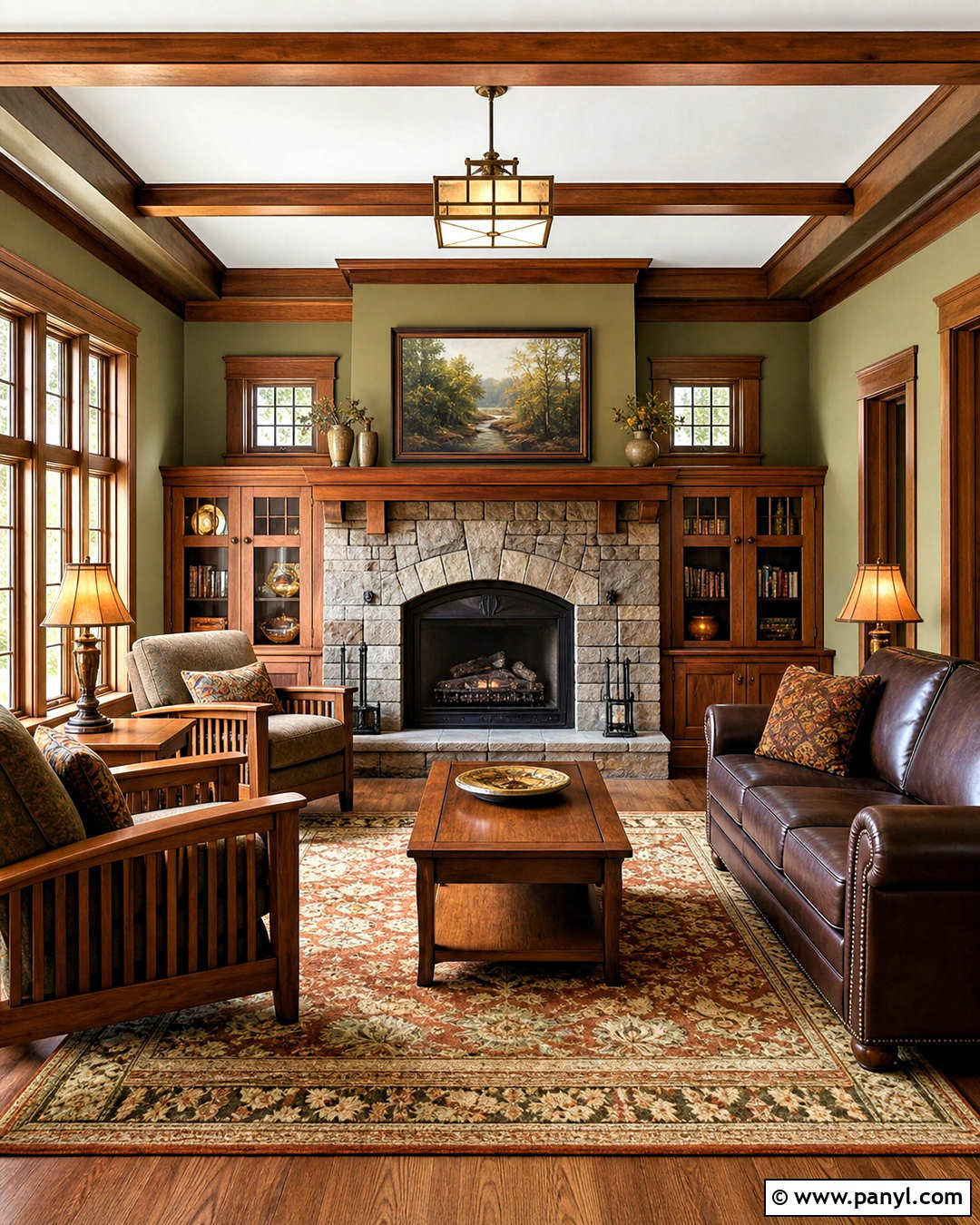
A Craftsman living room feels most authentic when the stained trim works with substantial furniture and nature-inspired colors. Preserve wide window casings, baseboards, built-in shelving, and ceiling beams in a consistent medium brown stain. Use warm beige or muted olive walls to support the wood without competing with its grain. Arrange a comfortable leather sofa and two fabric armchairs around a simple oak coffee table. A flat-weave rug with rust, green, and cream details can connect the palette. Finish the room with pottery, landscape art, and bronze lighting rather than shiny contemporary accessories. If the fireplace is prominent, natural stone or matte tile will suit the woodwork. The result celebrates traditional craftsmanship while remaining comfortable enough for an everyday family space.
5. Walnut Stained Trim With Modern Furniture
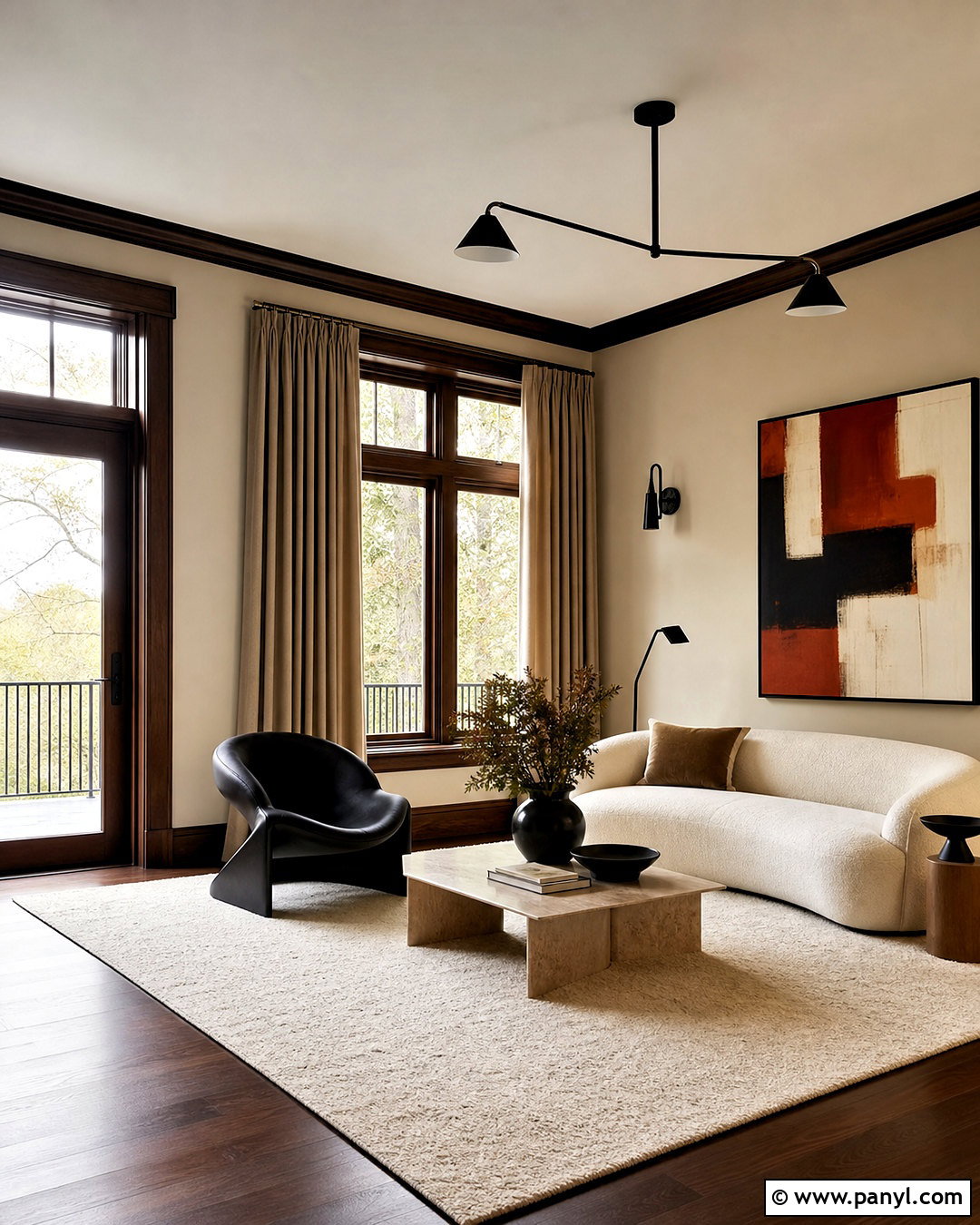
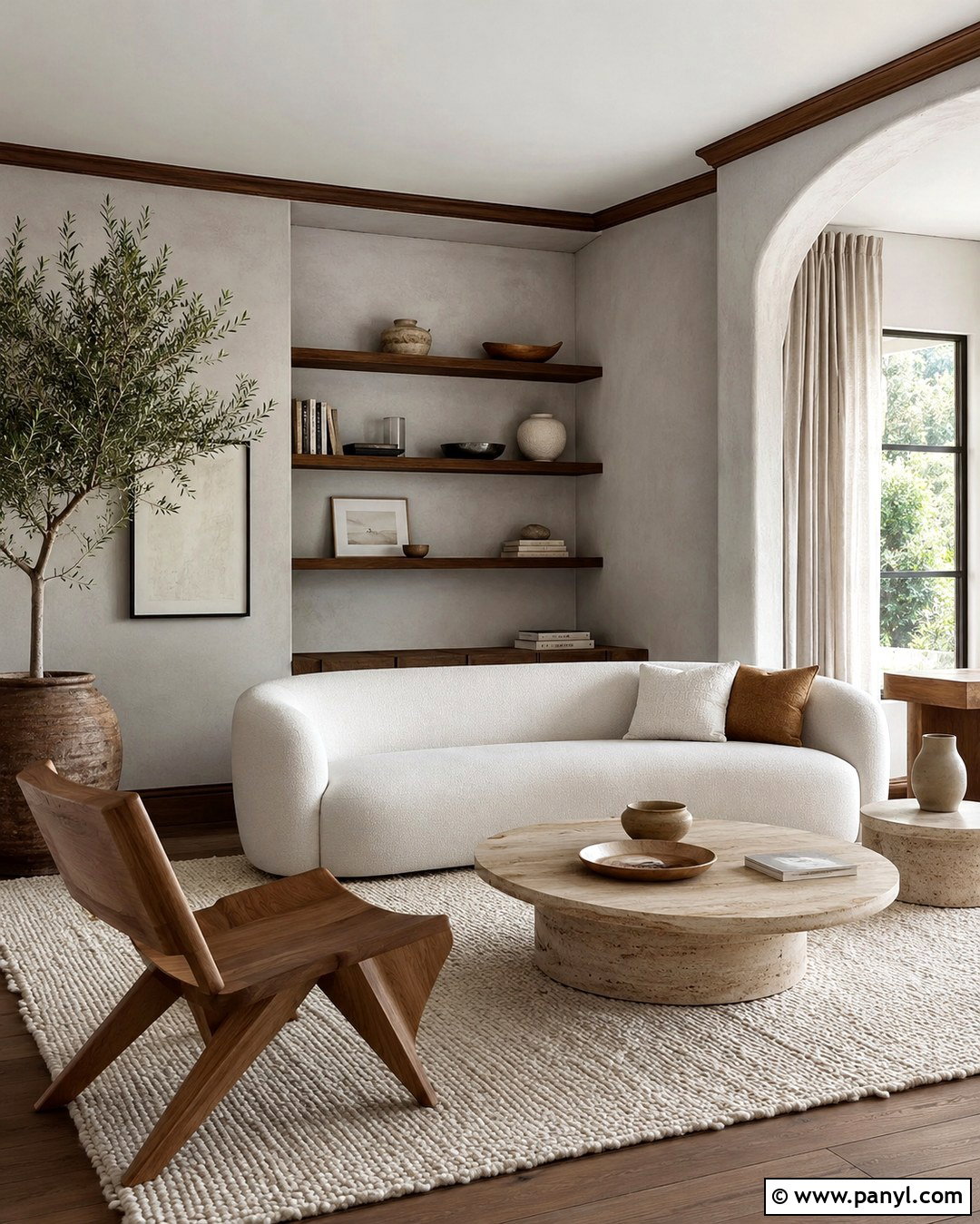
Walnut stained trim can look distinctly modern when paired with streamlined furniture and a restrained color palette. Start with soft greige walls, warm white ceilings, and uncluttered walnut casings around windows and doors. Choose a low-profile cream sofa, a sculptural black chair, and a simple glass or stone coffee table. This mix keeps the room from becoming overloaded with brown wood. Use a pale wool rug to brighten the floor and hang full-length taupe curtains beside the window trim instead of covering it. Matte black lighting creates a crisp connection to the walnut’s darker grain. Limit accessories to a few ceramic pieces and large-scale abstract artwork. Clean shapes and generous open space help the stained architectural details feel current, polished, and purposeful.
6. Light Stained Trim Scandinavian Interior
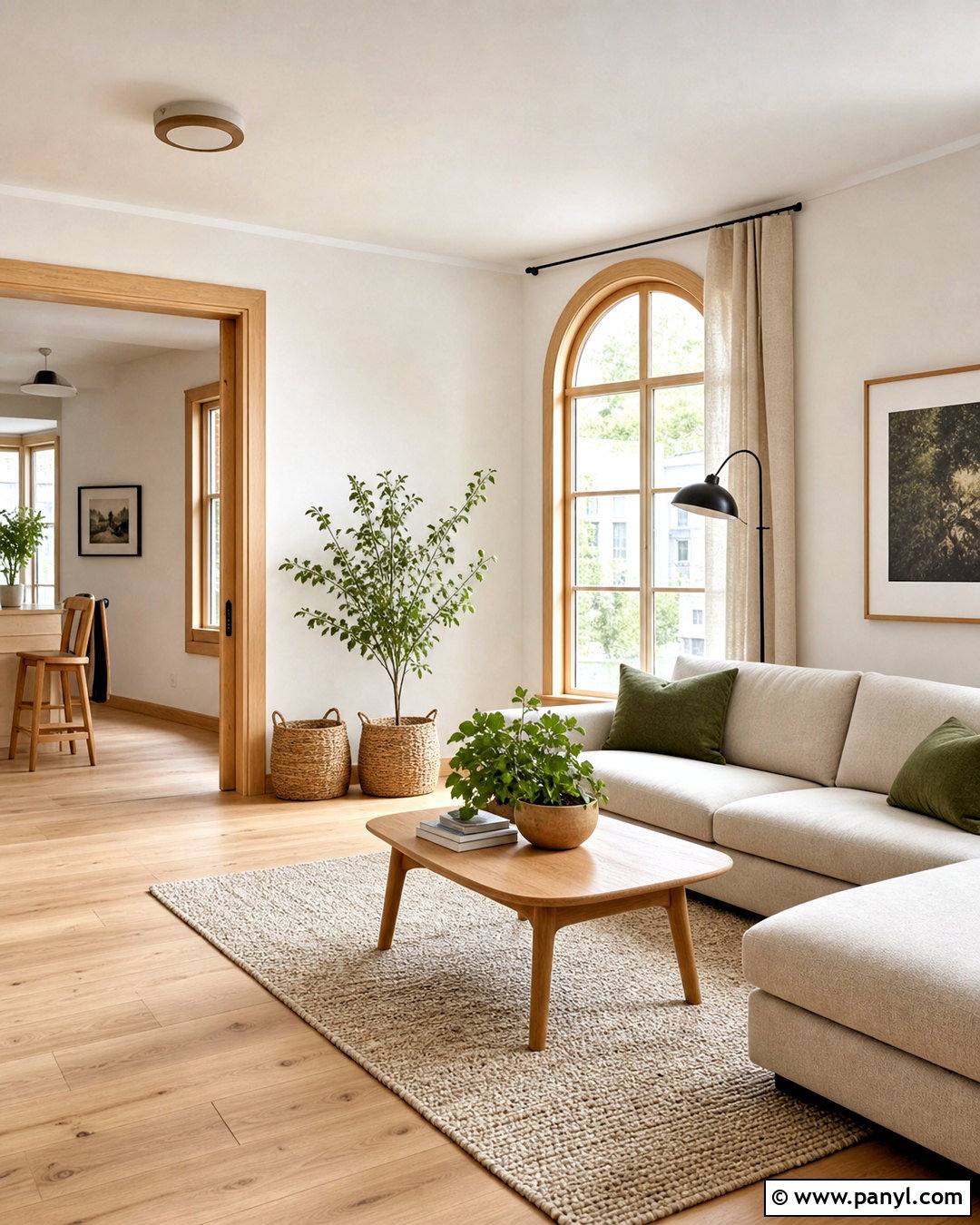
Pale oak or natural maple trim fits beautifully into a Scandinavian-inspired interior filled with soft colors and practical furnishings. Keep the stain close to the wood’s natural tone, using a matte or satin finish instead of a glossy coating. Pair the trim with warm white walls, light wood flooring, and a comfortable oatmeal sofa. Add a small oak coffee table, woven storage baskets, and a cream rug with subtle texture. Black accents can appear through a floor lamp, picture frames, and simple cabinet hardware. Use linen curtains that filter daylight while leaving the light stained window frames visible. A few muted blue or moss green textiles provide gentle color. The finished room feels bright and calm, yet the visible wood grain prevents it from looking cold or unfinished.
7. Dark Stained Window Trim With Neutral Walls
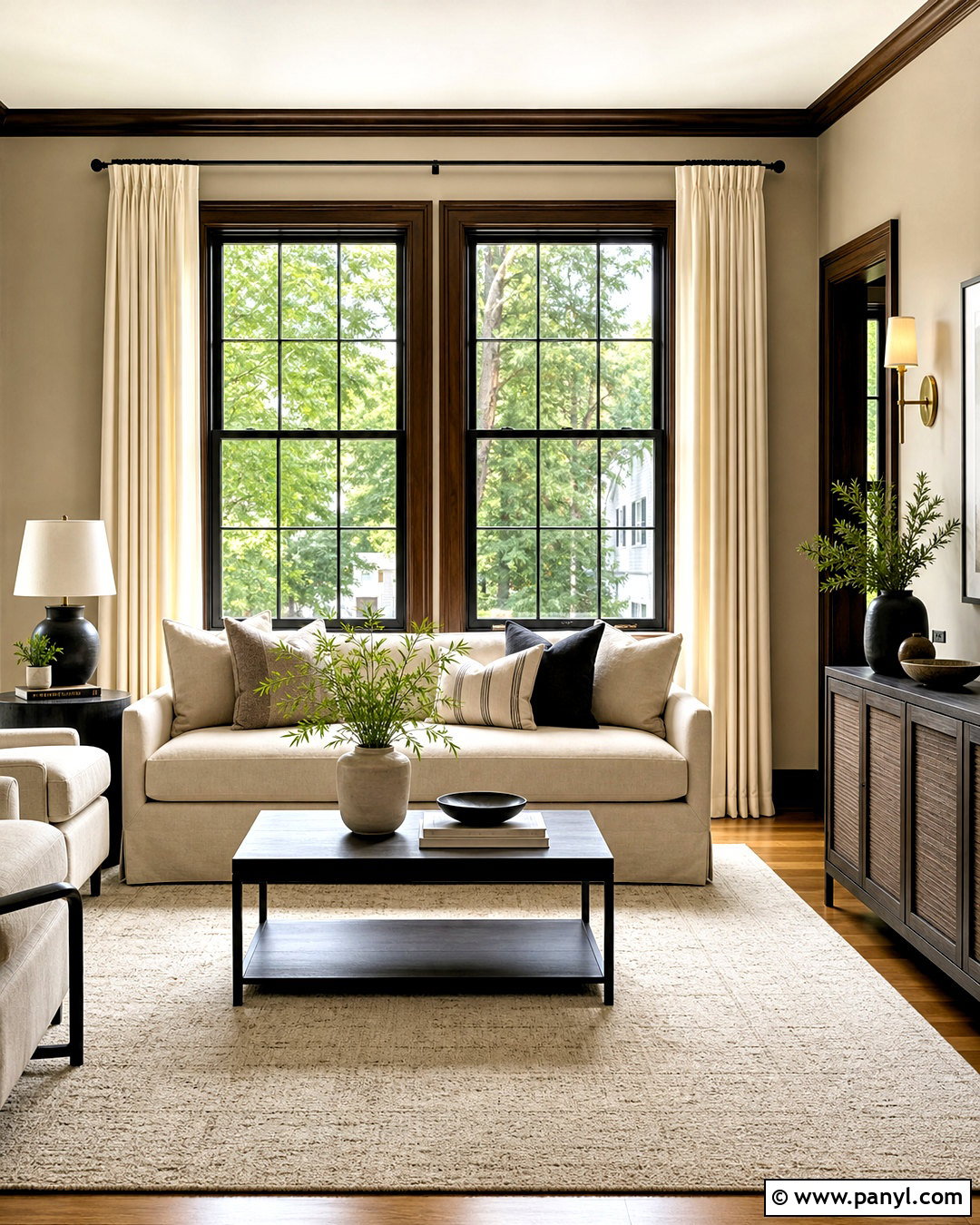
Dark stained window trim creates a strong frame around outdoor views, especially against quiet neutral walls. Use soft taupe, mushroom, or warm gray paint so the contrast feels sophisticated rather than severe. Keep surrounding furnishings light, including a beige sofa, ivory curtains, and a pale textured rug. Position the curtains outside the casing to reveal the full wood frame when they are open. Repeat the dark stain through one or two grounded pieces, such as a console table or slim side chair. Brushed brass sconces can warm the composition, while black details provide a subtle modern edge. Avoid filling the window wall with small decorations. A clean arrangement allows the stained casing, natural light, and view to function as the room’s main architectural focal point.
8. Stained Trim Kitchen With Cream Cabinets
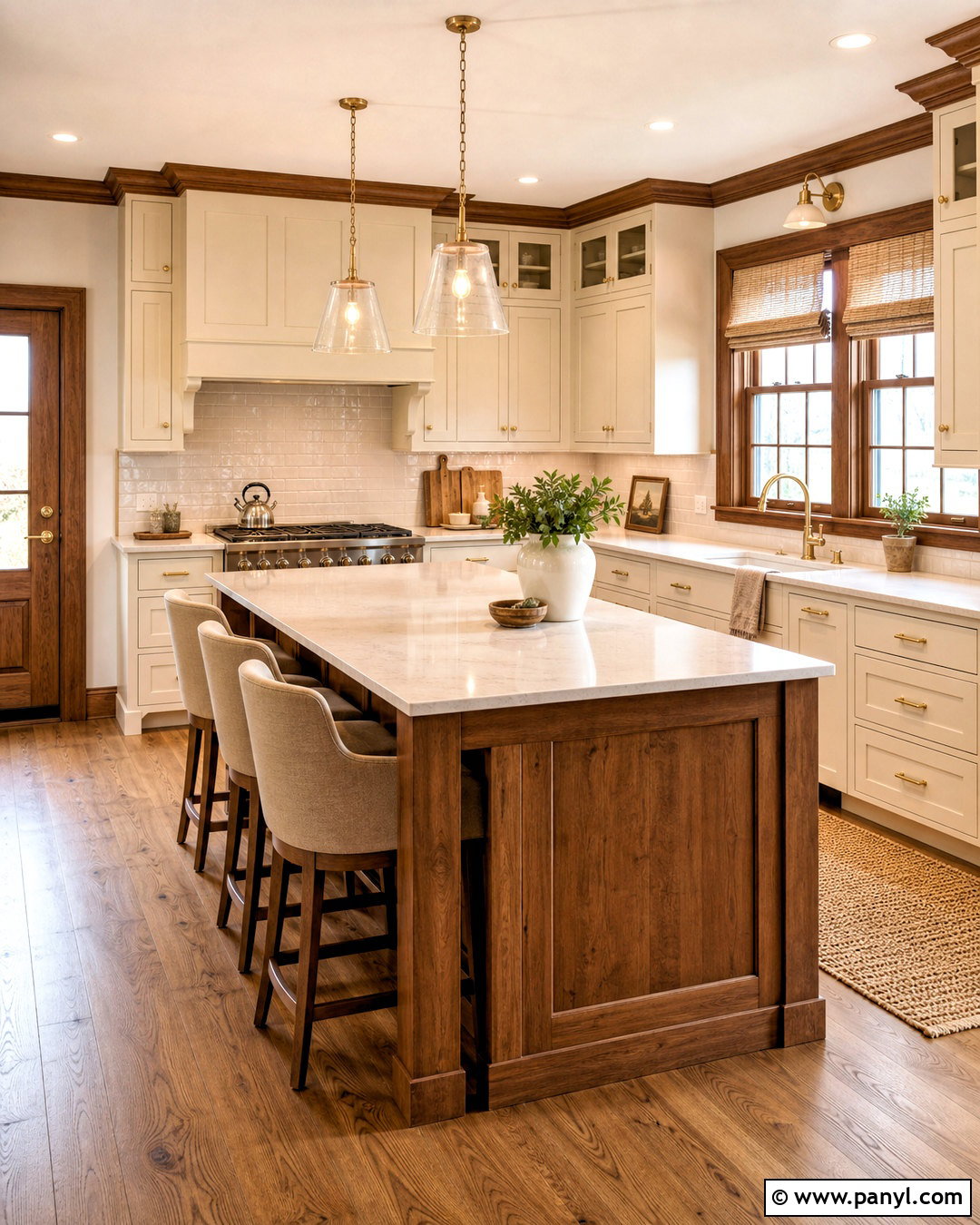
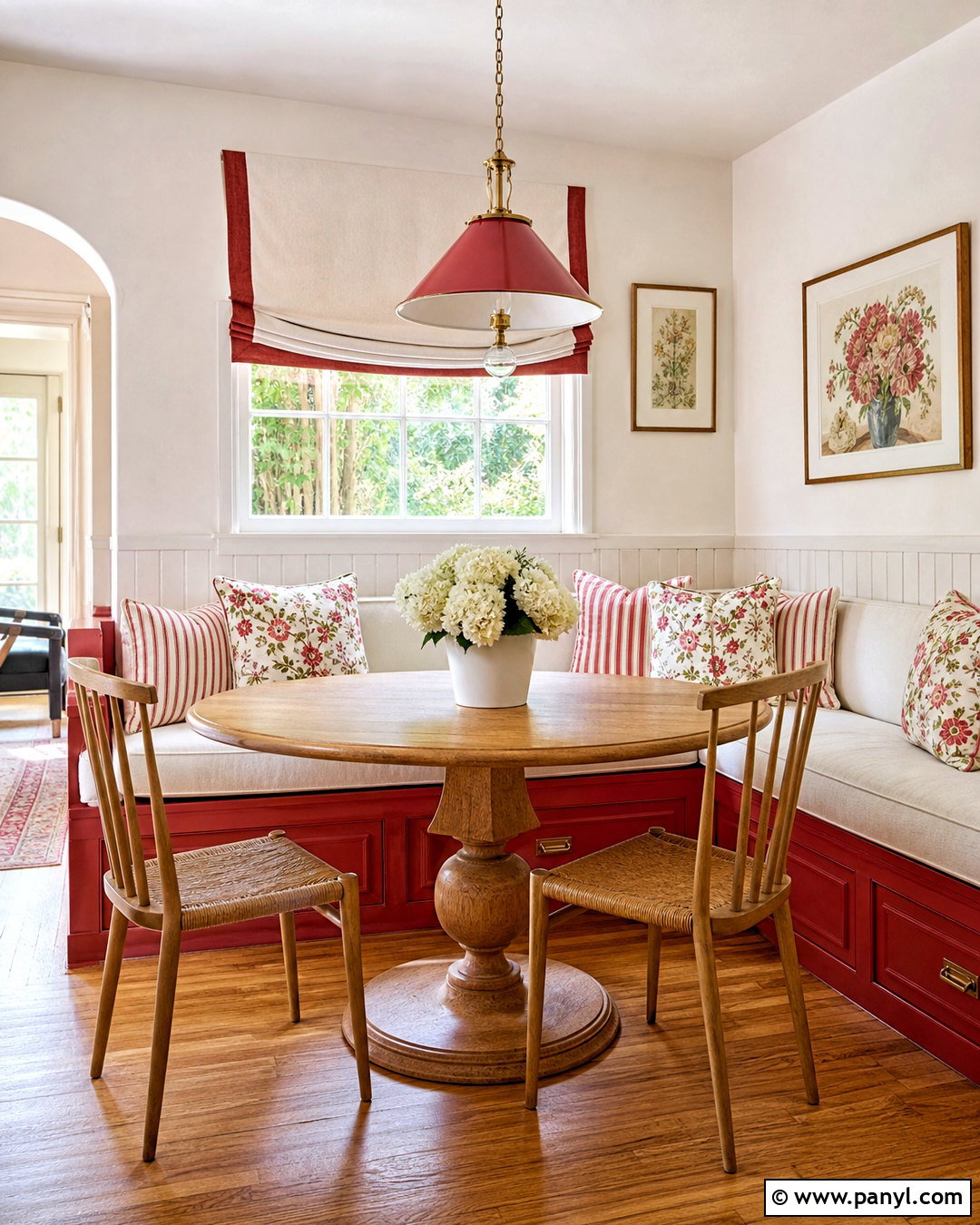
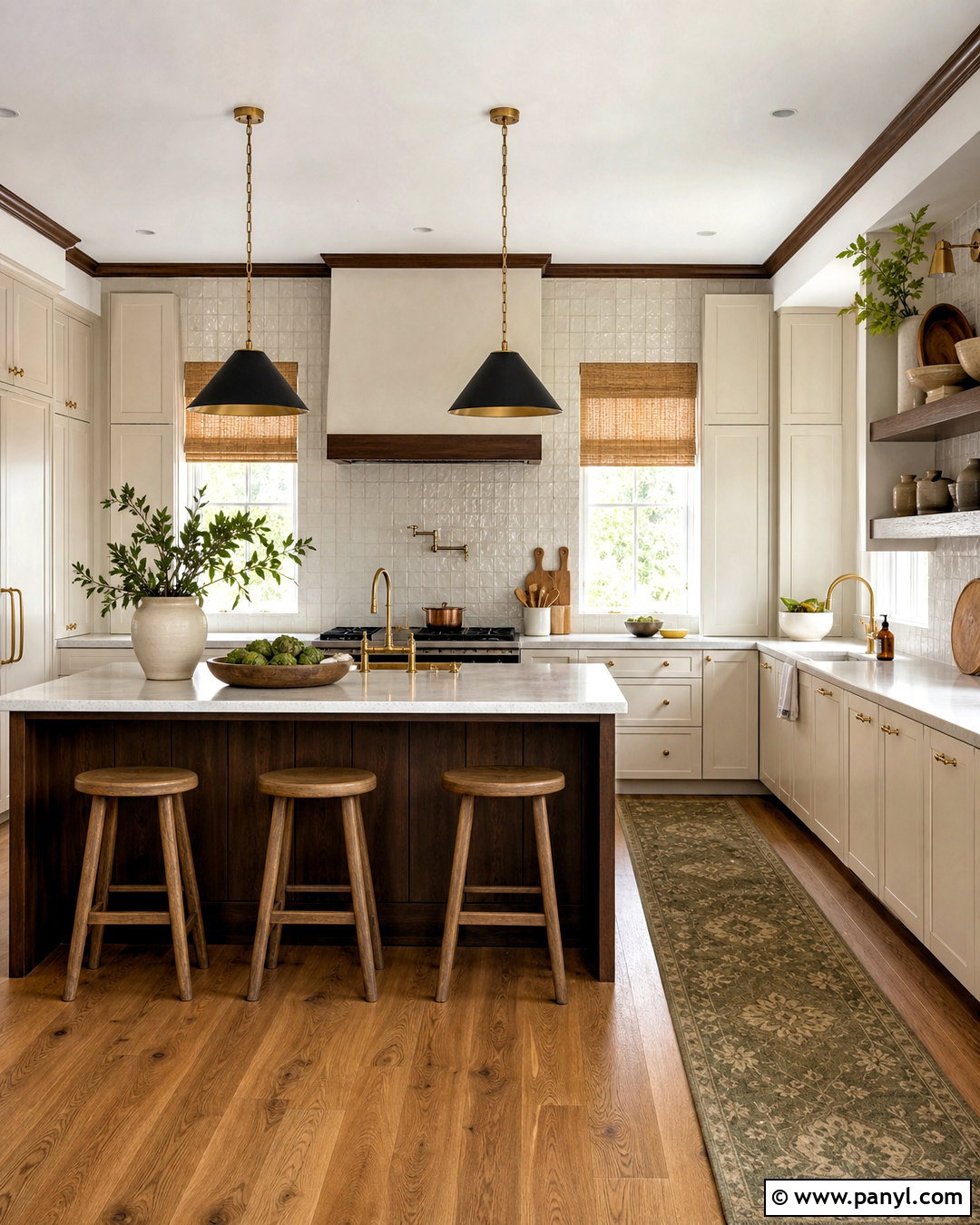
Cream cabinets and stained trim create a welcoming kitchen that feels brighter than an all-wood room but warmer than a completely white one. Choose cabinet paint with soft beige undertones, then preserve medium oak or walnut around windows, doors, and openings. A stained island can connect the trim to the center of the kitchen, while light quartz countertops keep the work surfaces fresh. Add a handmade-look off-white backsplash and warm brass or bronze hardware. Medium wood flooring should coordinate with the trim without being an exact match. Upholstered counter stools, woven shades, and simple pendant lights complete the design. Repeating the stain in controlled areas makes the kitchen cohesive. The contrast also gives every wood feature enough visual space to show its grain and craftsmanship.
9. Stained Trim Bedroom With Cream Walls
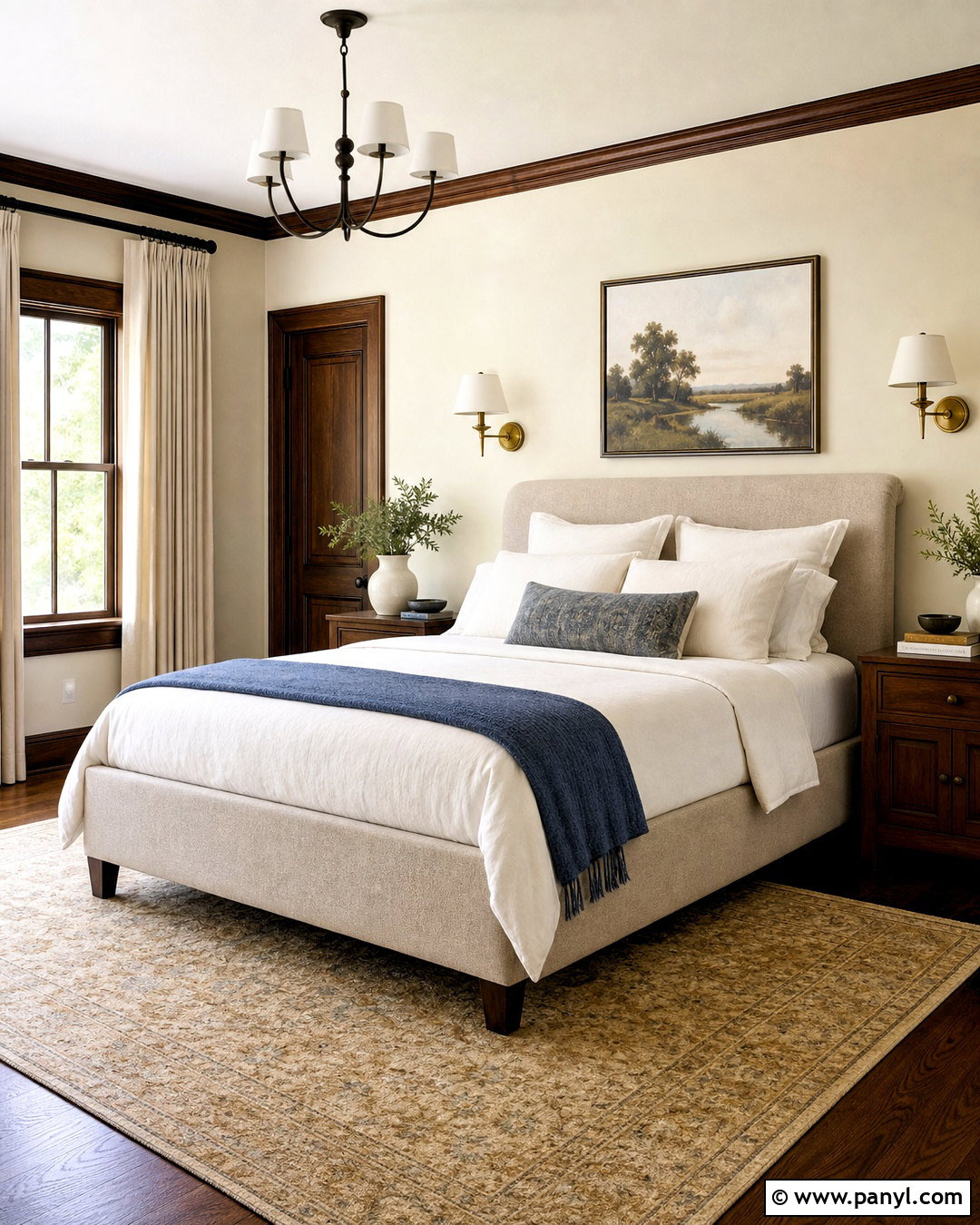
Cream walls and medium stained trim can make a bedroom feel restful, warm, and gently traditional. Place an upholstered bed in oatmeal or light beige against the simplest wall, then use walnut nightstands to relate to the window and door casings. Soft white bedding keeps the room bright, while a rust, dusty blue, or muted green throw adds restrained color. Choose full-length linen curtains that coordinate with the walls but do not hide the trim. A wool rug in cream and tan will soften wood flooring and reduce the amount of visible brown. Use aged brass sconces or ceramic bedside lamps for comfortable lighting. Keep artwork calm and generously scaled. This complete palette allows original stained woodwork to feel cozy without making the bedroom look dated or overly formal.
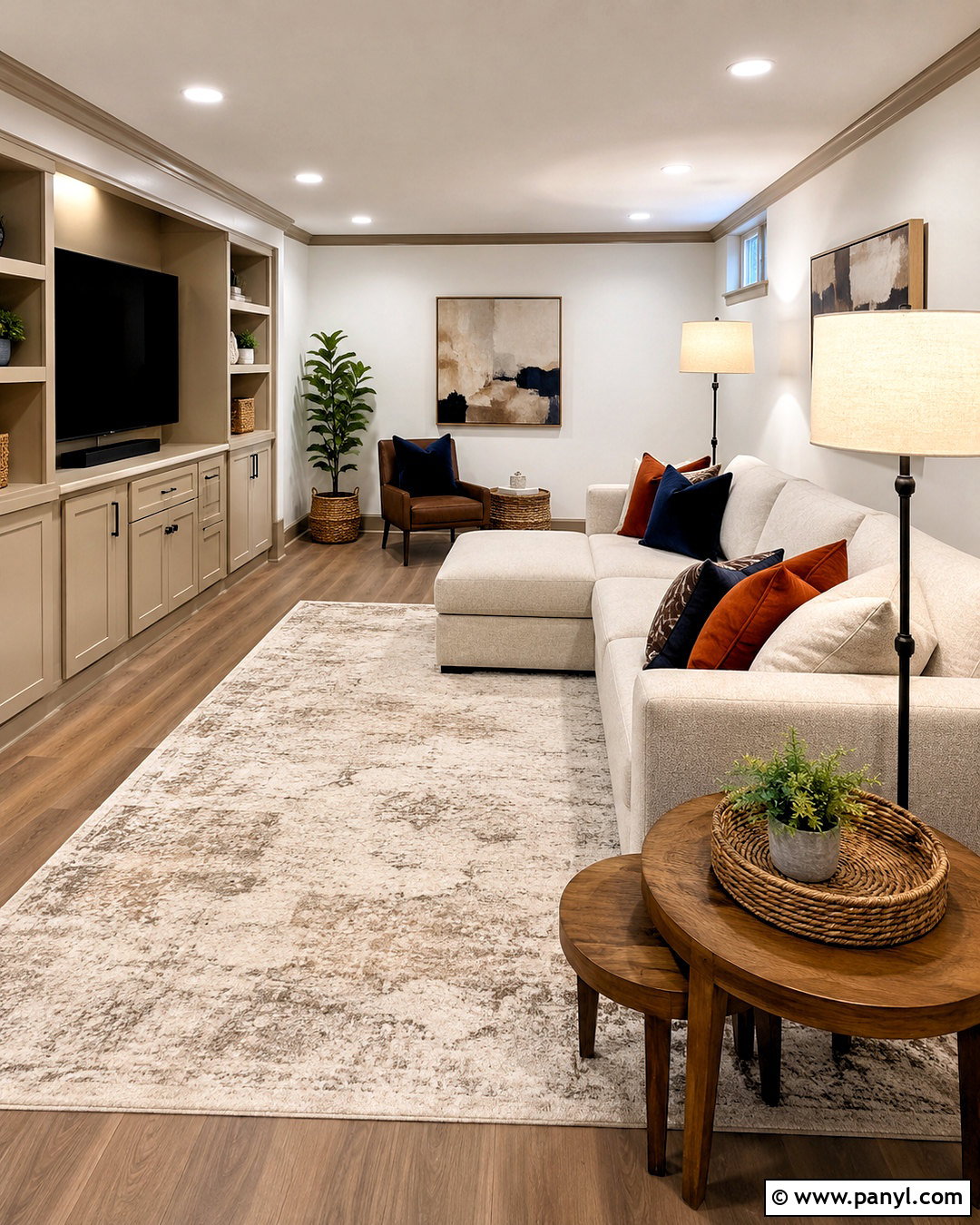
10. Black Walnut Trim Home Office
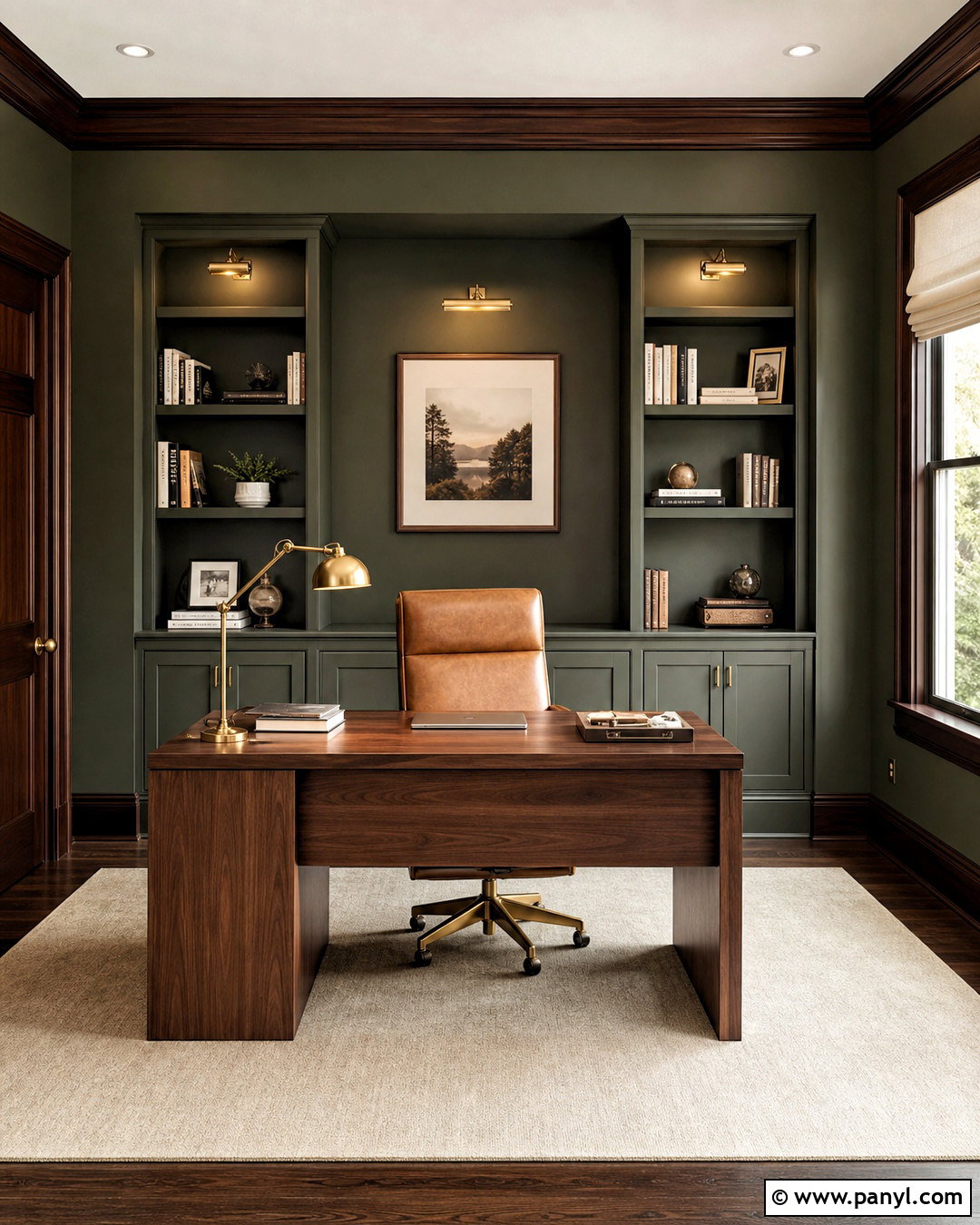
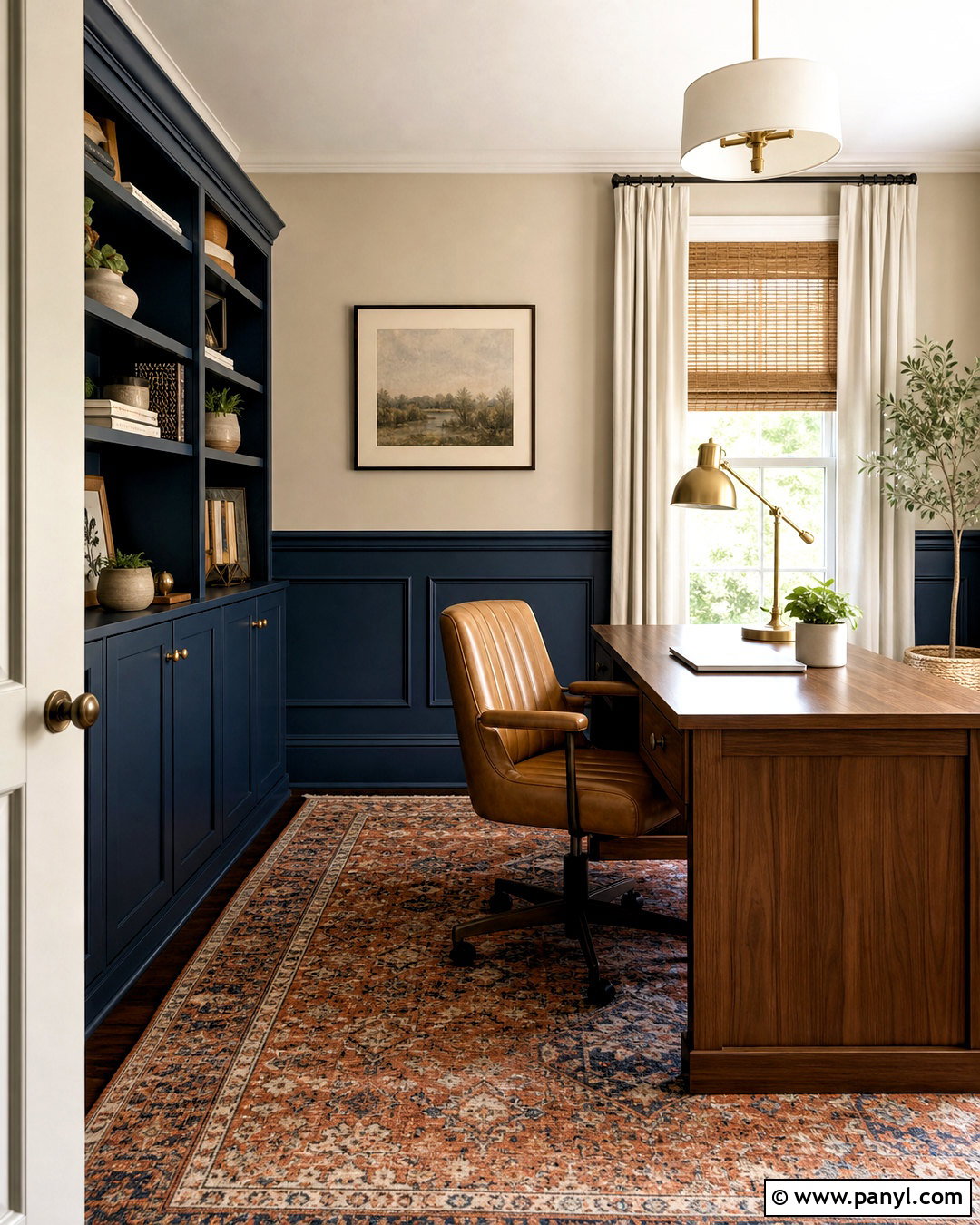
Black walnut trim creates an impressive foundation for a focused home office. Pair it with deep olive, charcoal blue, or warm gray walls for a quiet and professional atmosphere. A substantial walnut desk can repeat the trim, but choose an upholstered desk chair in camel leather or textured taupe fabric to vary the materials. Add a low-pile neutral rug and closed storage cabinets that match the wall color. This prevents the room from becoming crowded with dark wood. Brass picture lights, a modern desk lamp, and cream window shades provide brightness. Display books and decorative objects in a controlled arrangement rather than filling every shelf. The combination of dark architectural wood, saturated walls, practical storage, and warm lighting produces a home office that feels established, organized, and comfortable.
11. Stained Trim Entryway With Painted Walls
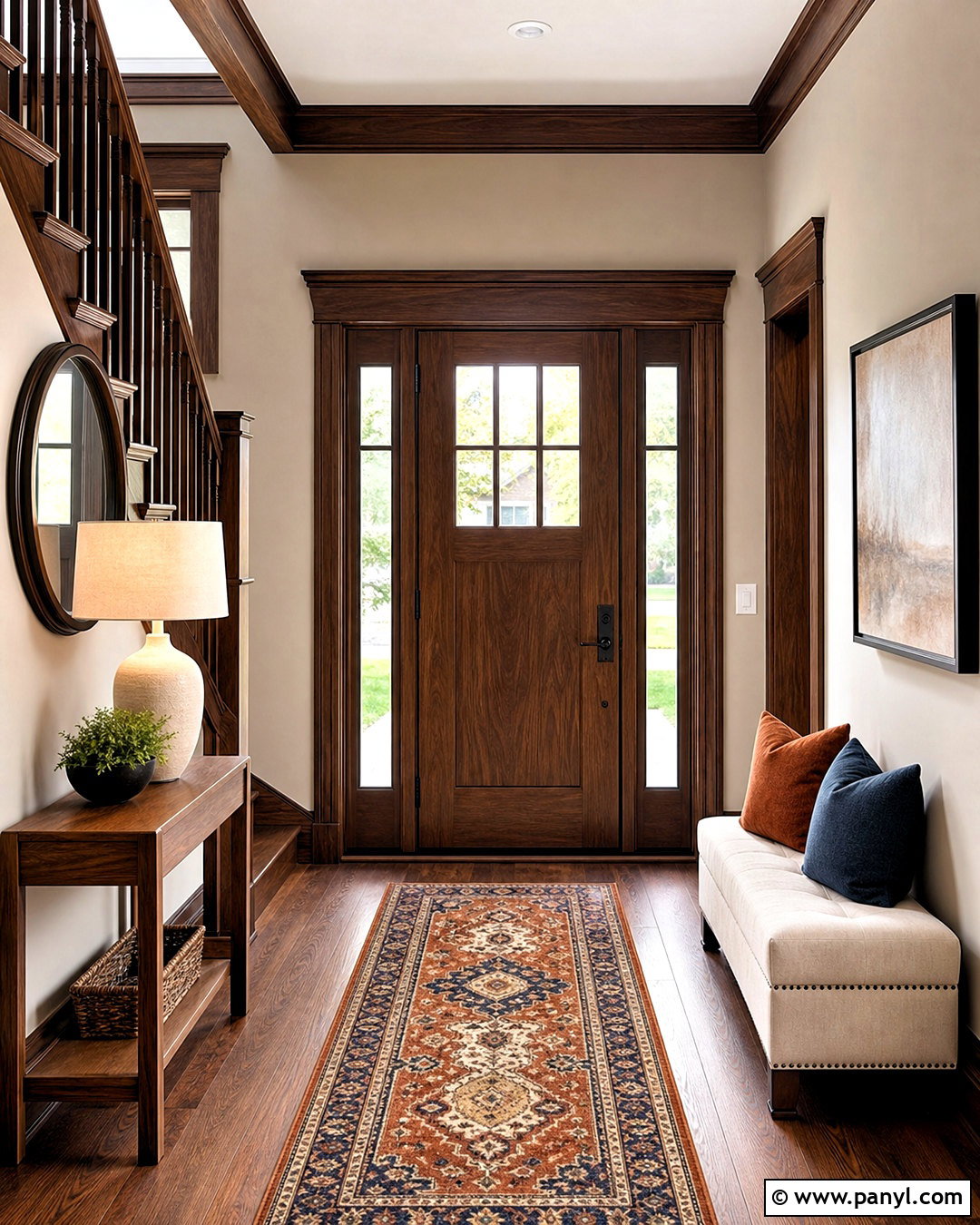
An entryway offers the perfect place to make stained trim feel deliberate from the moment someone enters the home. Use a warm off-white or muted greige on the walls, then maintain the same stain across the front door, door casing, baseboards, and nearby stair rail. Place a narrow wood console against one wall, but select a slightly lighter or darker finish to avoid a forced match. A washable patterned runner can introduce blue, rust, and cream tones. Add a round mirror, a shaded table lamp, and one ceramic bowl for keys. If space allows, include an upholstered bench with storage below. The restrained layout keeps traffic paths clear while connecting the home’s wood features. It also establishes a practical color palette that can continue into adjoining rooms.
12. Stained Trim Bathroom With White Tile
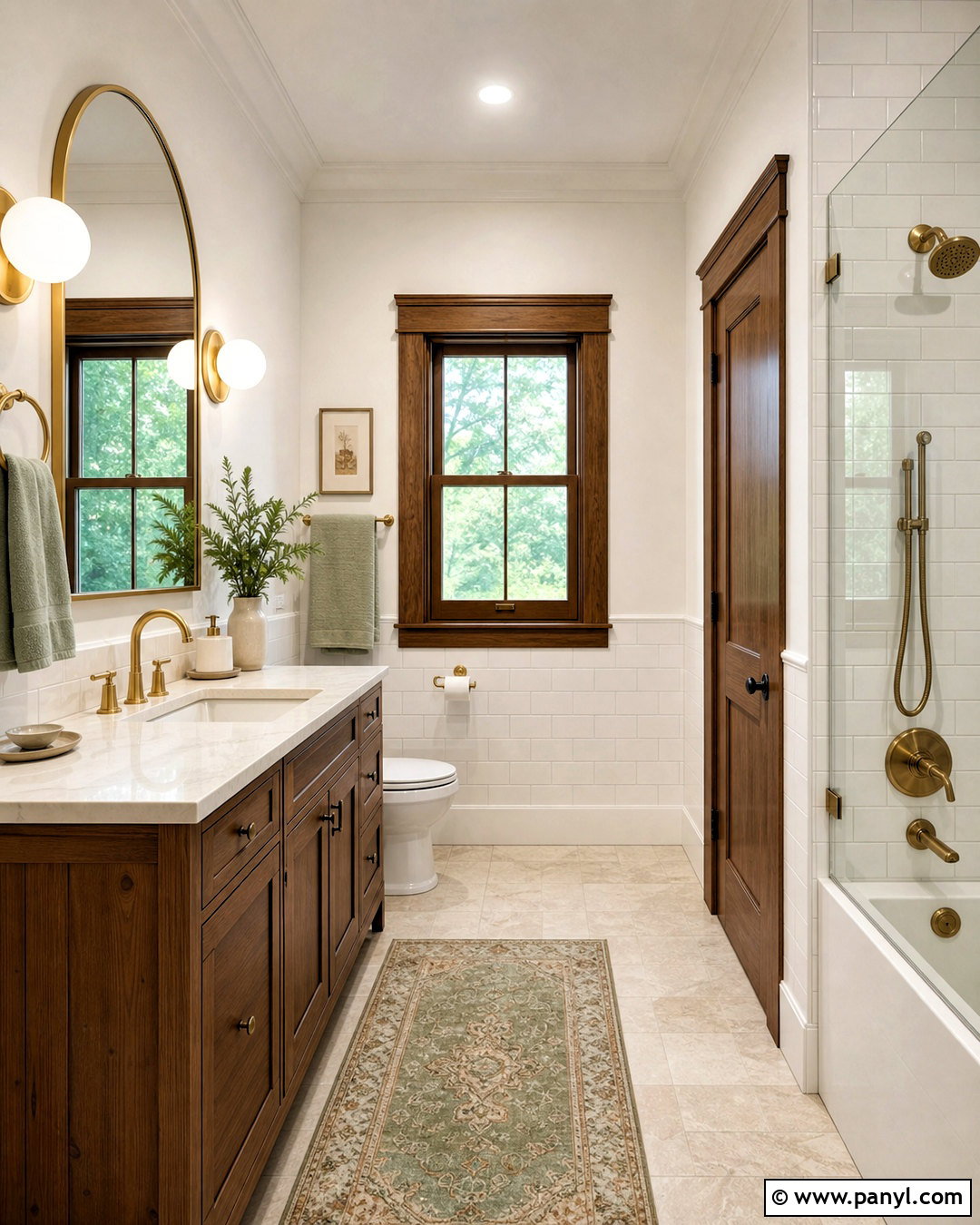
Stained wood trim can add needed warmth to a bathroom dominated by white tile and hard surfaces. Use moisture-appropriate finishing products and keep the woodwork properly sealed, particularly near sinks or showers. Frame the window and door in a medium walnut or oak stain, then choose a vanity in the same general wood family. White subway tile, pale stone flooring, and warm white walls create a bright background. Add brushed brass fixtures, an arched mirror, and simple globe sconces for a polished transitional look. Soft green or clay-colored towels can provide natural color without overwhelming the compact room. Avoid adding multiple competing wood finishes. A controlled combination of stained trim, one wood vanity, clean tile, and warm metal details will make the bathroom feel balanced and thoughtfully designed.
13. Stained Trim Dining Room Wainscoting
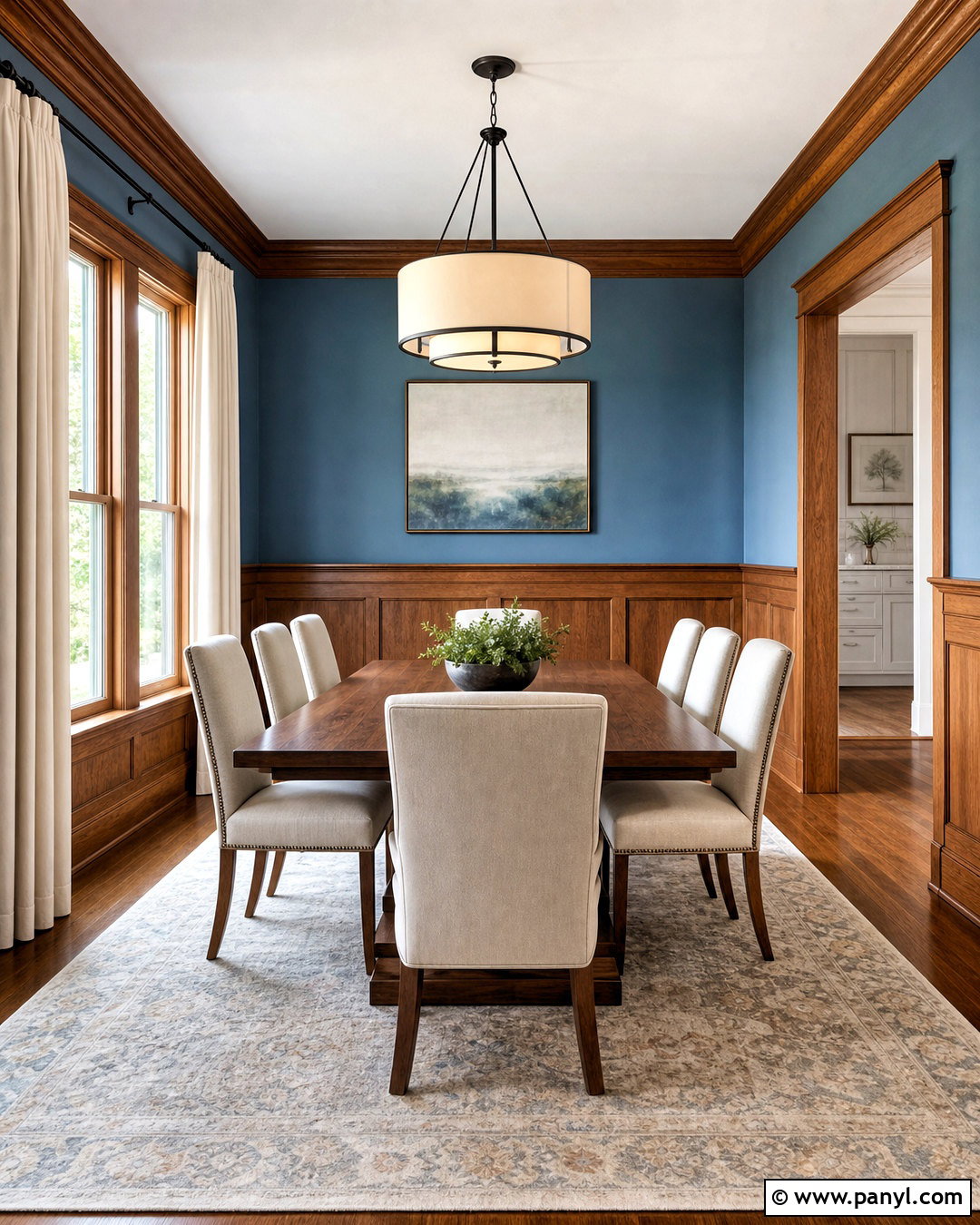
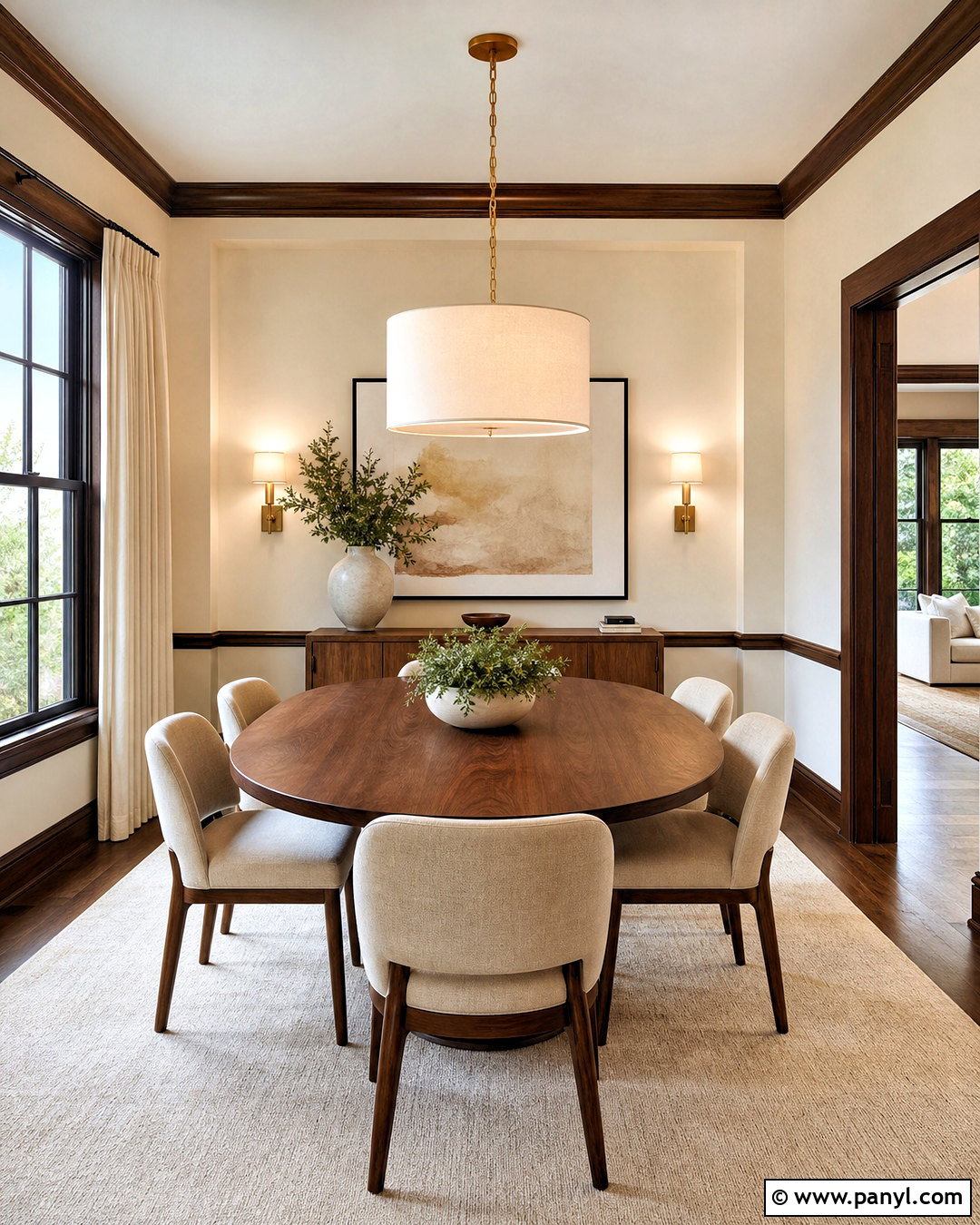
Stained wainscoting can give a dining room architectural depth while protecting the lower walls from everyday wear. Continue the same stain across the chair rail, window casings, baseboards, and paneled lower walls. Paint the upper section a muted blue, warm cream, or soft olive to create clear contrast. A simple dining table in a related wood tone will unify the room, while upholstered chairs keep the scheme from feeling too hard or formal. Use a light rug to brighten the center and hang a large pendant above the table. Linen draperies and understated artwork soften the strong wood lines. Keep the tabletop decor low and minimal. When the wainscoting, furniture, lighting, and wall color are balanced, stained trim becomes part of a complete, comfortable dining environment.
14. Stained Trim With Botanical Wallpaper
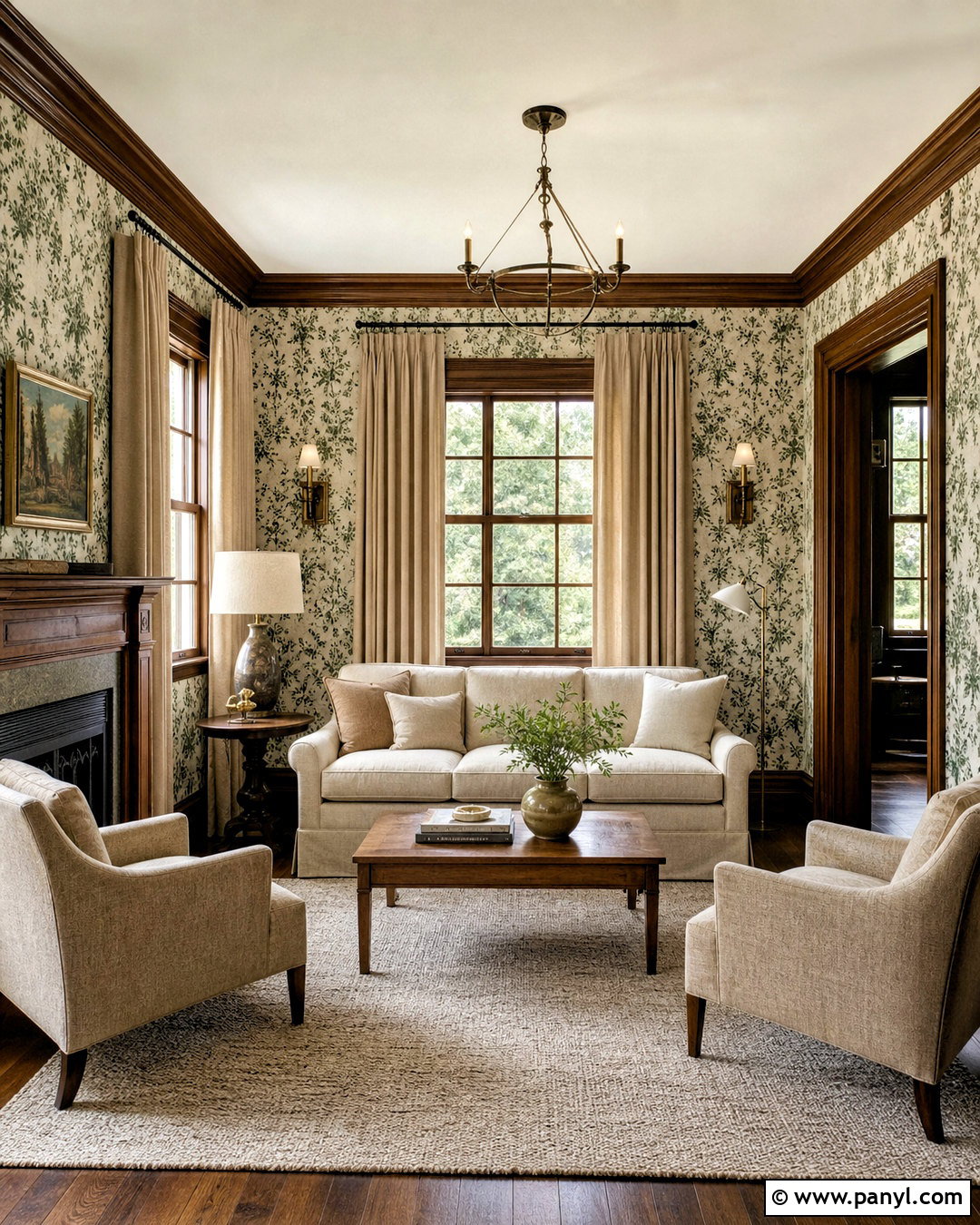
Botanical wallpaper can make stained trim feel lively and layered rather than heavy. Choose a pattern containing muted green, cream, tan, or dusty blue so it relates naturally to oak, mahogany, or walnut woodwork. Use the wallpaper on every wall in a powder room, dining room, or reading nook for a cohesive result. Repeat one background color through curtains or upholstered seating, and include a small amount of dark metal for definition. A brass pendant or wall sconce will complement the warm stain without disappearing against it. Keep furniture simple because the wallpaper and wood casing already provide strong visual detail. Solid textiles, uncluttered surfaces, and a quiet rug balance the pattern. The completed space should feel collected and inviting, with the trim acting as a frame around the decorative walls.
15. Midcentury Interior With Stained Trim
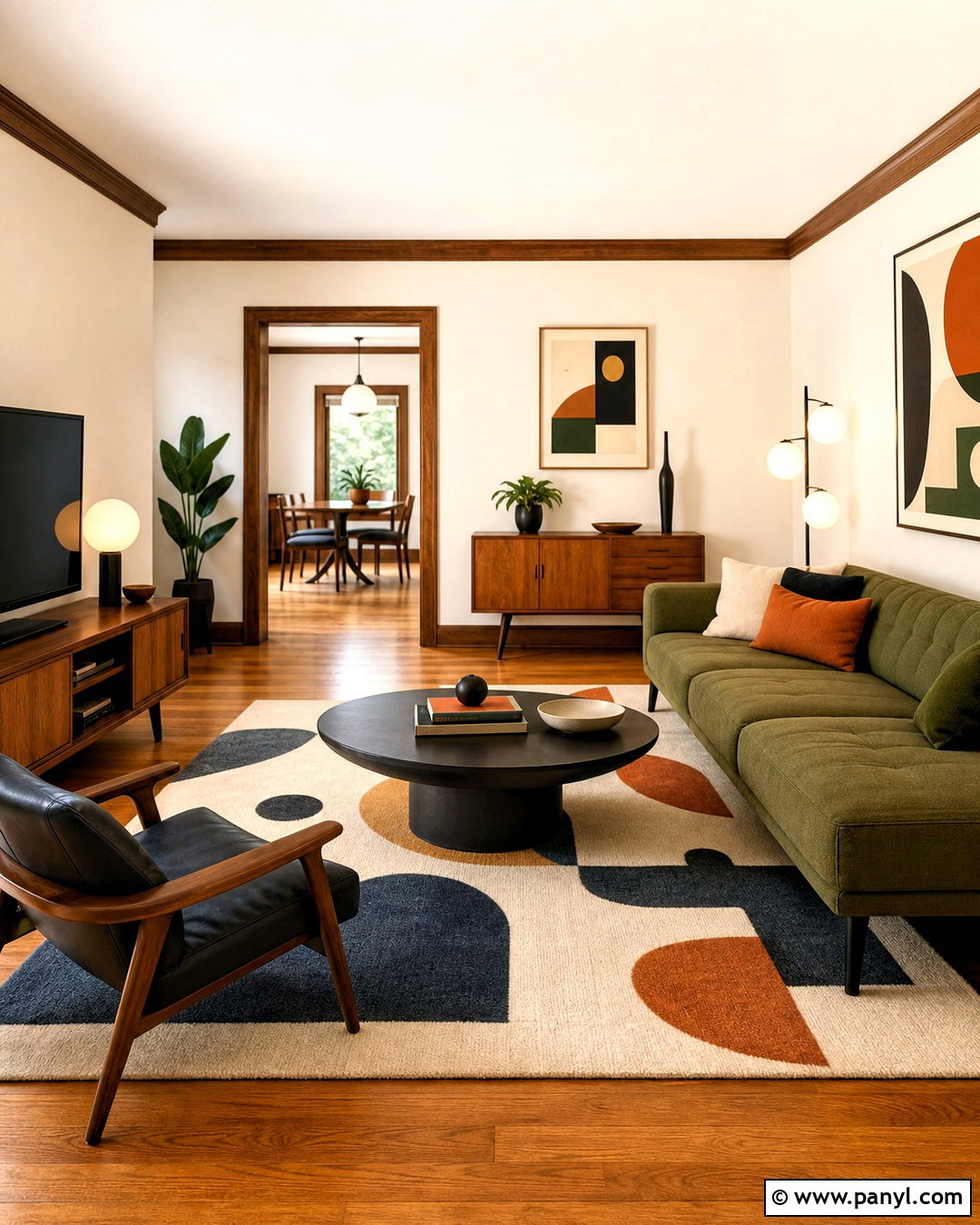
Midcentury furniture is a natural partner for streamlined stained trim. Use medium walnut casings and baseboards with warm white walls and honey-toned wood flooring. Choose a low sofa in olive, rust, or textured beige, then add a walnut media console and one sculptural lounge chair. A geometric rug can introduce color, but keep the pattern moderately scaled so it does not compete with the wood grain. Globe lighting, tapered furniture legs, and simple abstract art reinforce the period influence. Avoid using too many matching walnut pieces. Instead, balance the wood with glass, woven fabric, ceramic, and black metal. The overall room should feel open and functional. Stained trim quietly connects the architecture to the furniture while maintaining the clean horizontal lines associated with midcentury interiors.
16. Rustic Interior With Stained Pine Trim
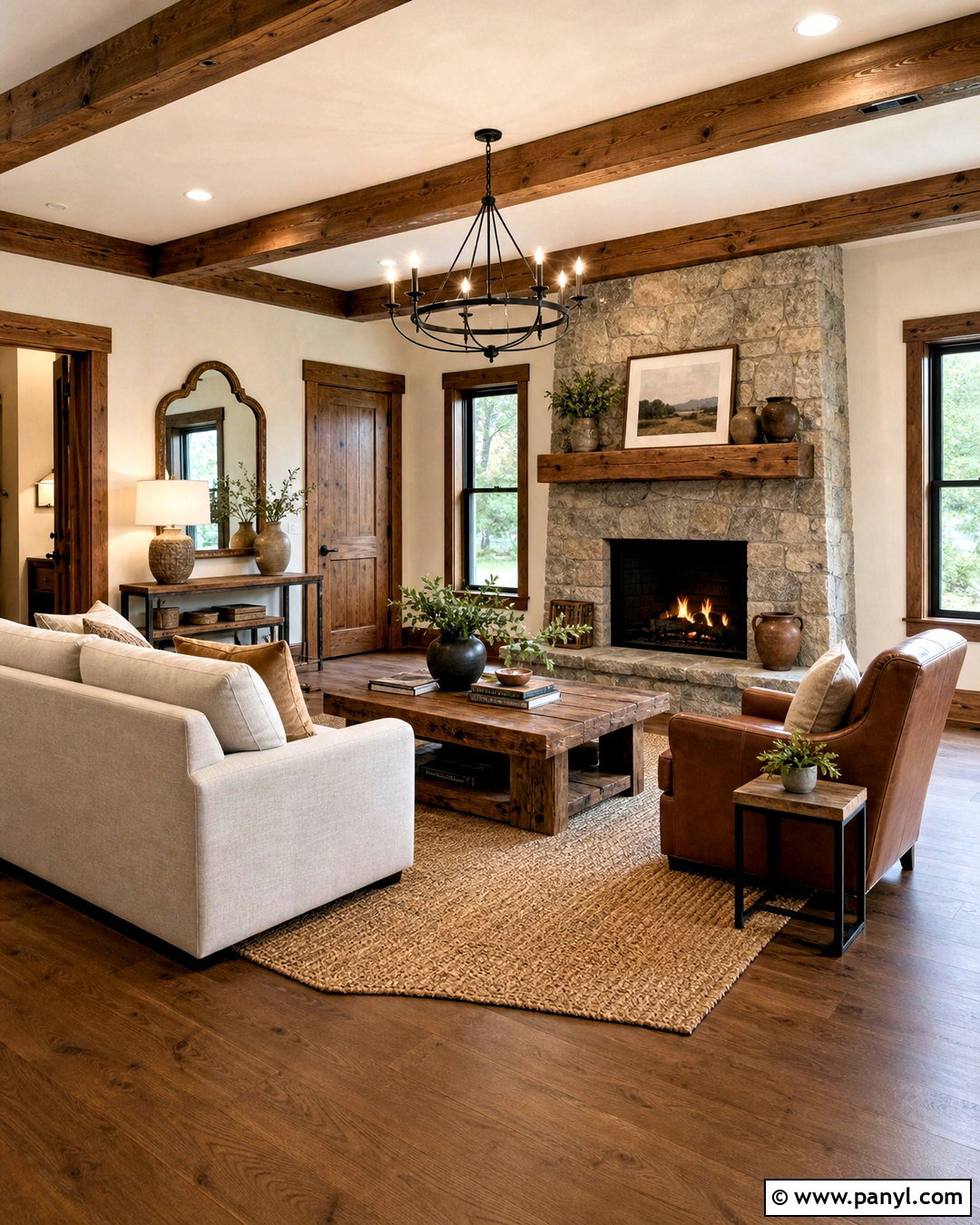
Stained pine trim can anchor a rustic interior without turning the room into a themed cabin. Select a medium brown stain that tones down strong yellow or orange undertones while keeping the grain visible. Pair it with warm plaster-colored walls, natural stone, and durable oak flooring. A relaxed linen sofa, leather armchair, and reclaimed wood coffee table create a comfortable seating group. Bring in black iron lighting and a woven wool rug for contrast. Use simple cotton curtains rather than heavy patterned drapes, especially if the room contains wood ceiling beams. Decorative accents might include pottery, baskets, and understated landscape art. By balancing pine casings and baseboards with lighter fabrics and clean-lined furniture, the complete space feels rustic, current, and suitable for everyday living.
17. Stained Trim With Painted Interior Doors
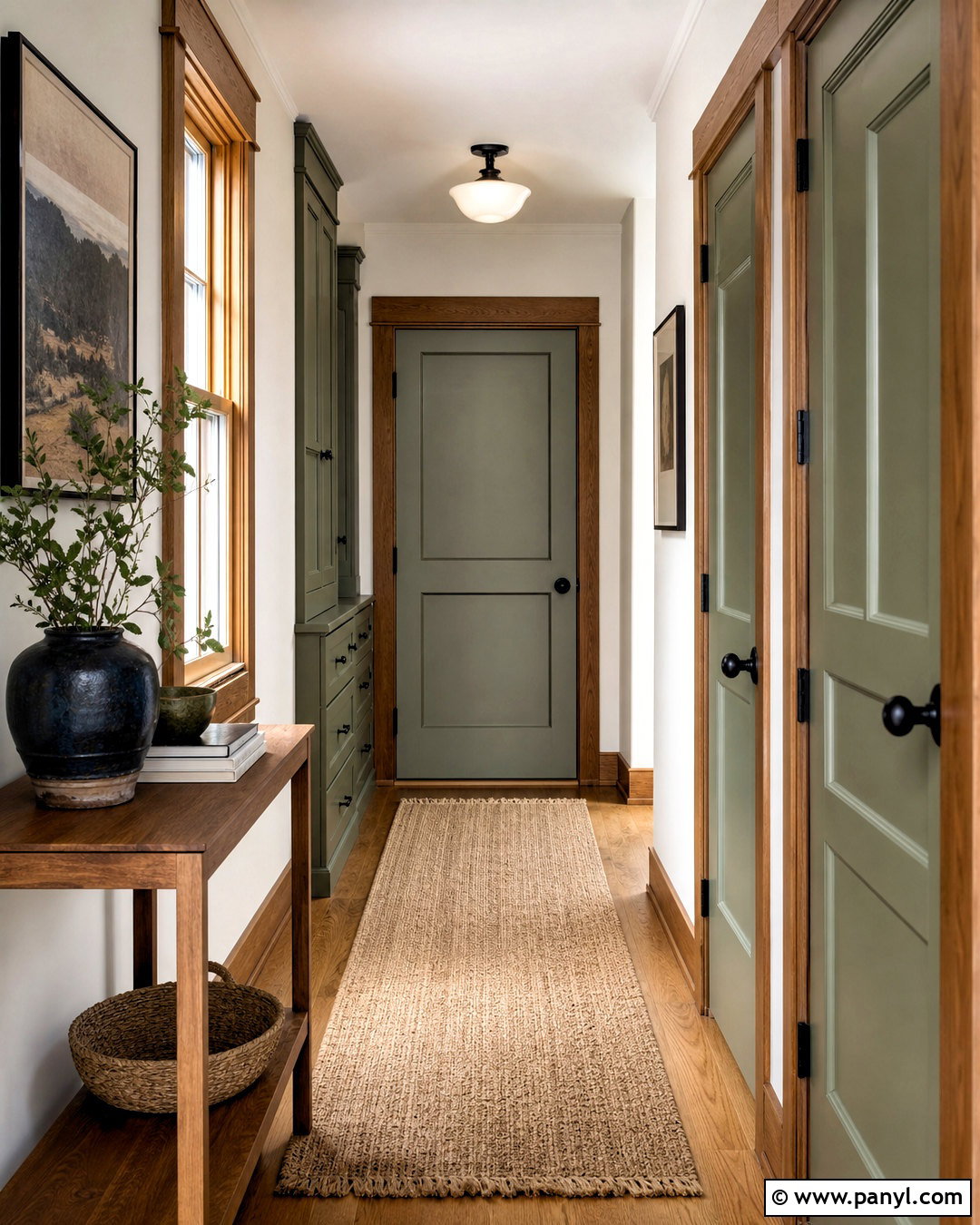
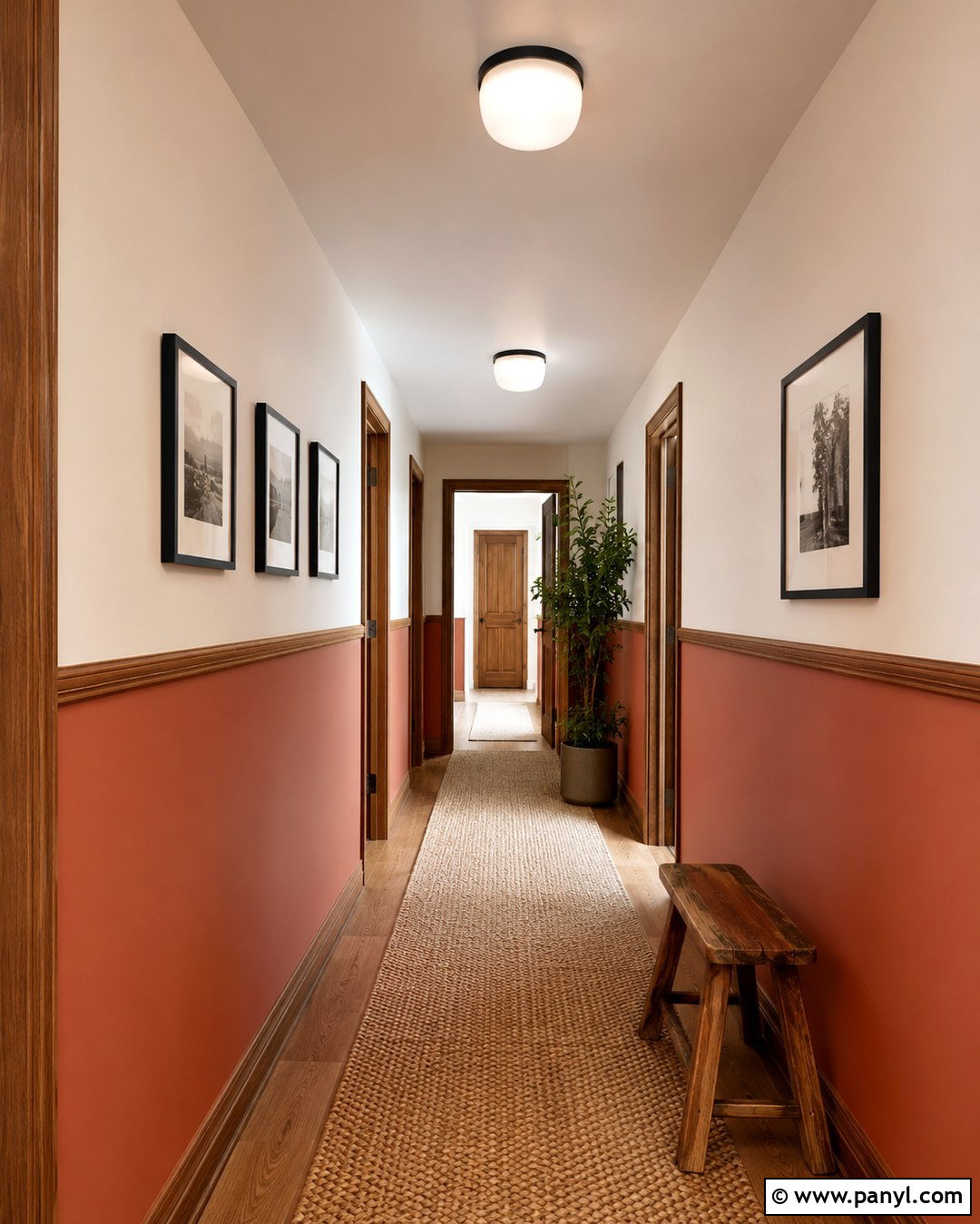
Mixing stained trim with painted interior doors can create a lighter transitional look when the combination is applied consistently. Keep window casings, door casings, and baseboards in a unified medium wood stain. Paint every interior door a soft warm white, muted green, or deep charcoal, depending on the room’s palette. Repeating the same door color throughout connected areas makes the contrast look planned. In a hallway or living area, use neutral walls, natural fiber rugs, and furniture that includes both wood and painted finishes. Choose hardware in matte black or aged brass to bridge the two treatments. Avoid switching randomly between stained and painted casings. A clear whole-house rule allows both finishes to coexist while preserving quality woodwork and reducing the visual weight of solid stained doors.
18. Stained Trim Stairway With White Risers
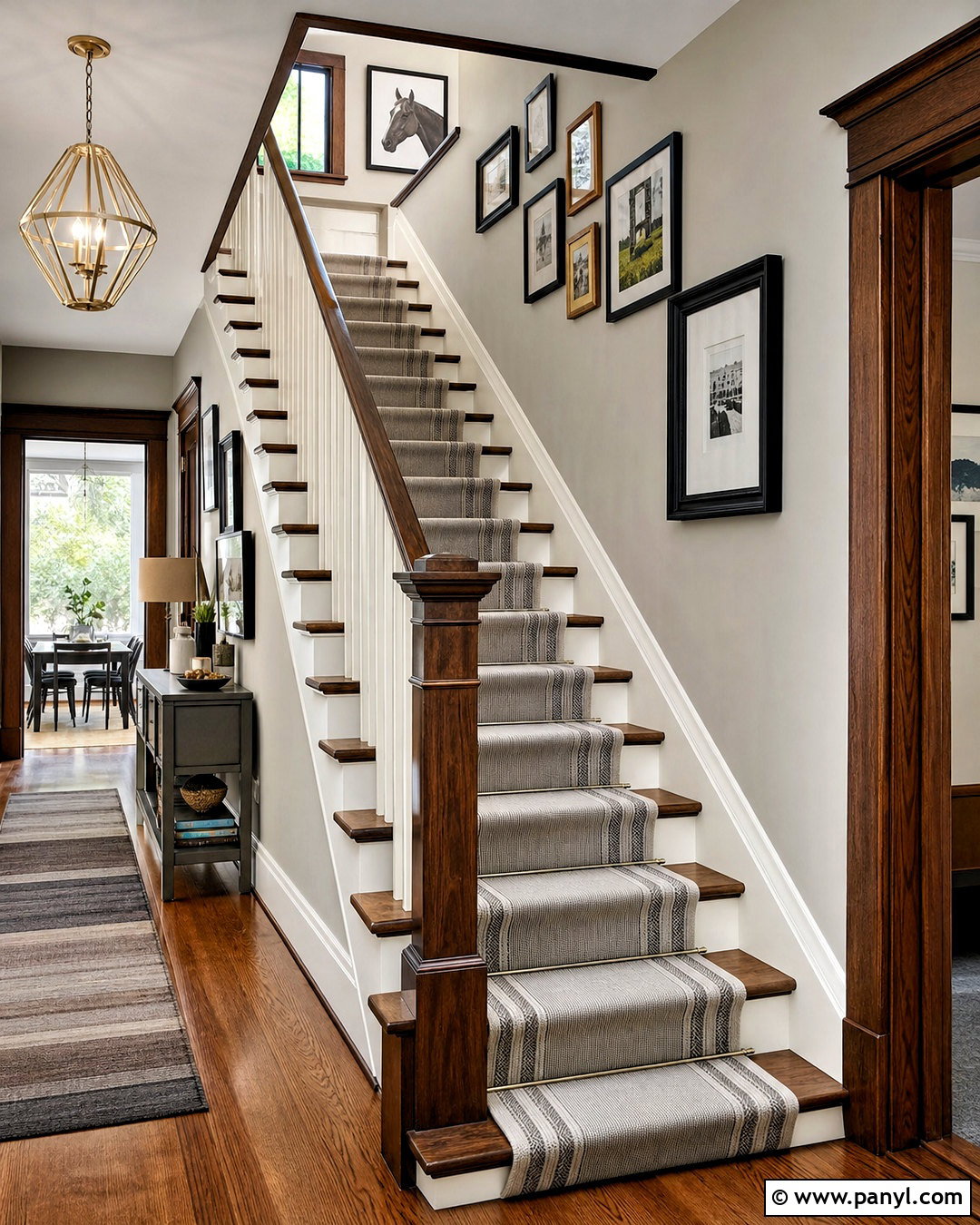
A stairway can showcase stained trim through a balanced mix of natural wood and painted surfaces. Stain the handrail, newel posts, treads, and surrounding doorway casings in a consistent walnut or medium oak tone. Paint the risers, balusters, and stair stringers warm white to create contrast and reflect light. Continue a soft greige or pale beige on the walls, then add a simple gallery of black or wood frames. A neutral stair runner with a subtle stripe improves comfort and introduces pattern without distracting from the craftsmanship. Use a sculptural pendant above the landing and a small console at the base if space allows. Repeating the stained wood on nearby baseboards or doors helps the staircase connect naturally with the rest of the home.
19. Stained Trim Sunroom With Green Accents
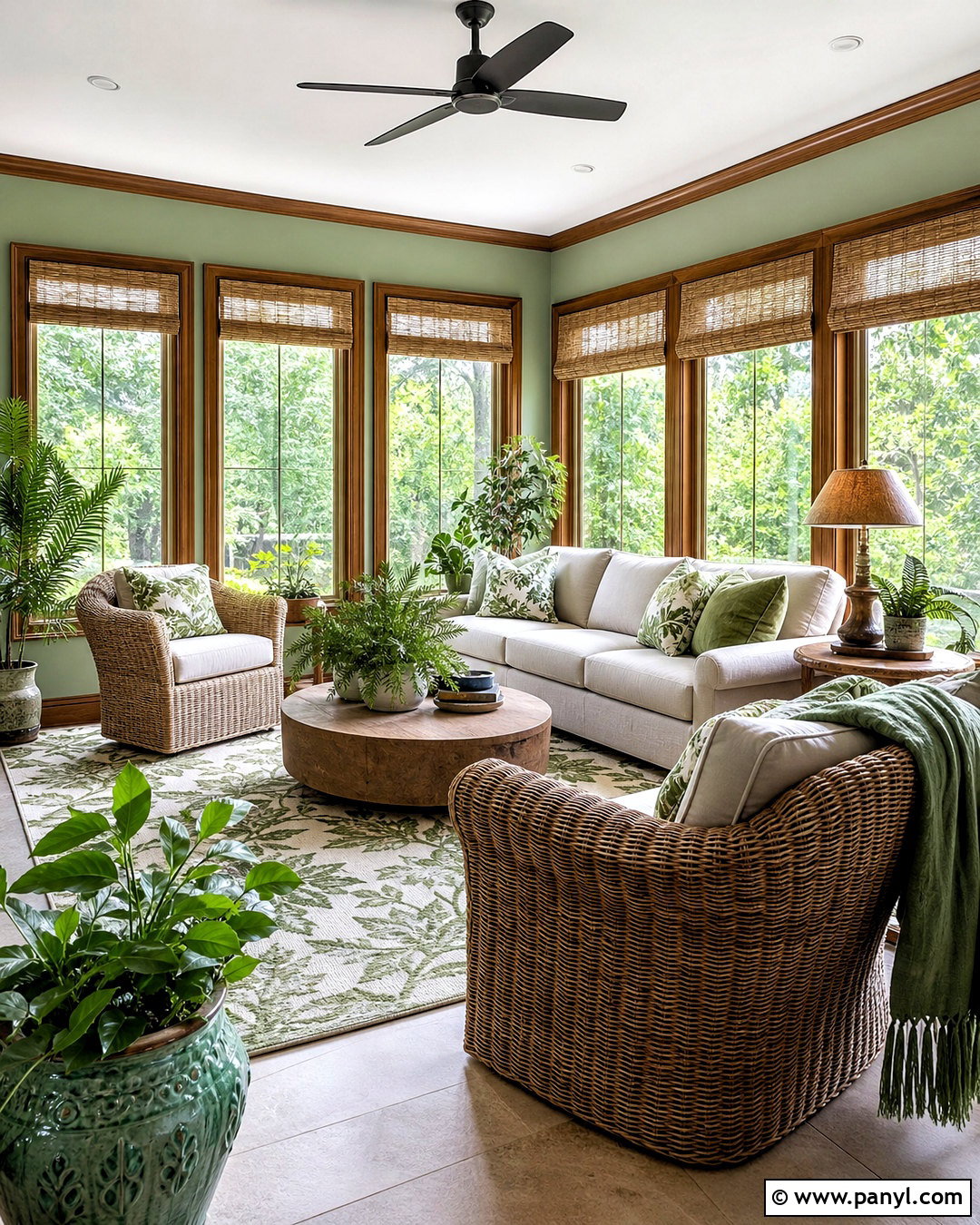
Sunlight brings out the natural variation in stained window trim, making a sunroom an ideal place to feature it. Use medium oak casings around every window and pair them with warm white or pale green walls. Arrange woven lounge chairs, a light neutral sofa, and a round wood coffee table to preserve open views. Add washable botanical cushions and a flat-weave indoor-outdoor rug in cream and olive. Linen or woven shades can control glare while keeping the wood frames visible. Incorporate real or realistic greenery in simple ceramic planters, but leave enough open space around the windows. A black ceiling fan and bronze floor lamp give the airy palette definition. The complete room feels connected to the outdoors while remaining comfortable, practical, and visually cohesive.
20. Whole House Stained Trim Color Scheme
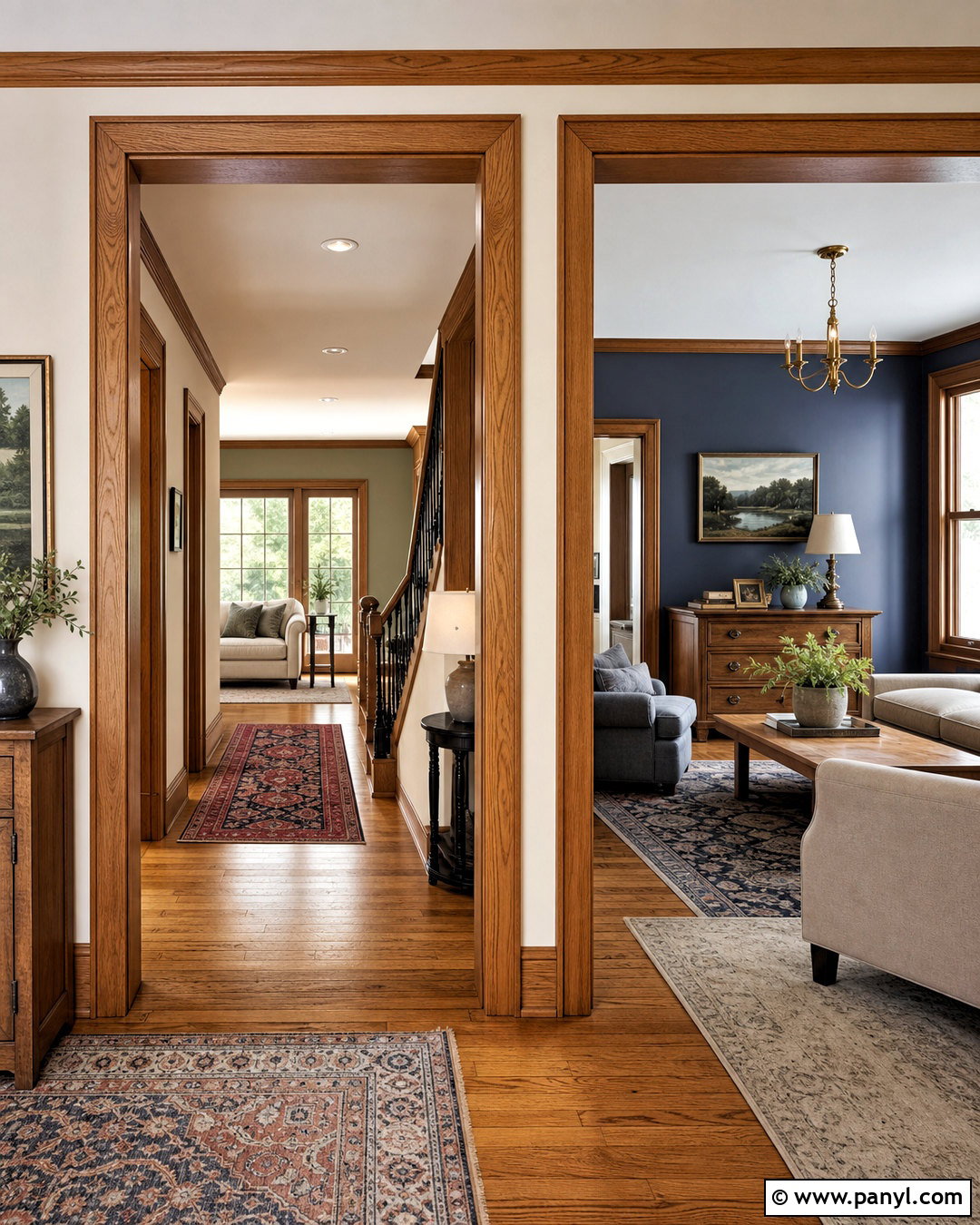
A whole-house stained trim scheme feels cohesive when one primary wood tone and a limited wall palette repeat from room to room. Select the trim stain first, considering its red, yellow, neutral, or gray undertones. Then choose a warm off-white for halls and connecting spaces, plus two or three compatible colors such as sage, muted navy, and soft taupe. Repeat flooring, metal finishes, and key textile colors throughout the home. Furniture does not need to match the trim, but its wood tones should share similar warmth. Keep stained casings and baseboards consistent in open areas, reserving painted trim for clearly separated rooms if needed. This planned approach allows each space to have its own personality while the architectural woodwork creates a recognizable visual thread across the entire interior.
Conclusion:
The most successful **stained trim interior ideas** treat natural woodwork as part of the entire room rather than an obstacle to decorate around. Begin by identifying whether the stain reads golden, reddish, neutral, or dark brown. Build the walls, flooring, furniture, fabrics, and lighting around that undertone. Warm whites create an easy foundation, while sage, navy, olive, and botanical patterns offer stronger contrast. Light upholstery and rugs can prevent dark wood from feeling heavy. Repeating the trim tone through a few carefully chosen furnishings also creates balance without making everything match. With a consistent palette and thoughtful material mix, stained casings, baseboards, doors, and moldings can look warm, current, and intentionally preserved.

Related Ideas and Inspiration:
Leave a Reply