
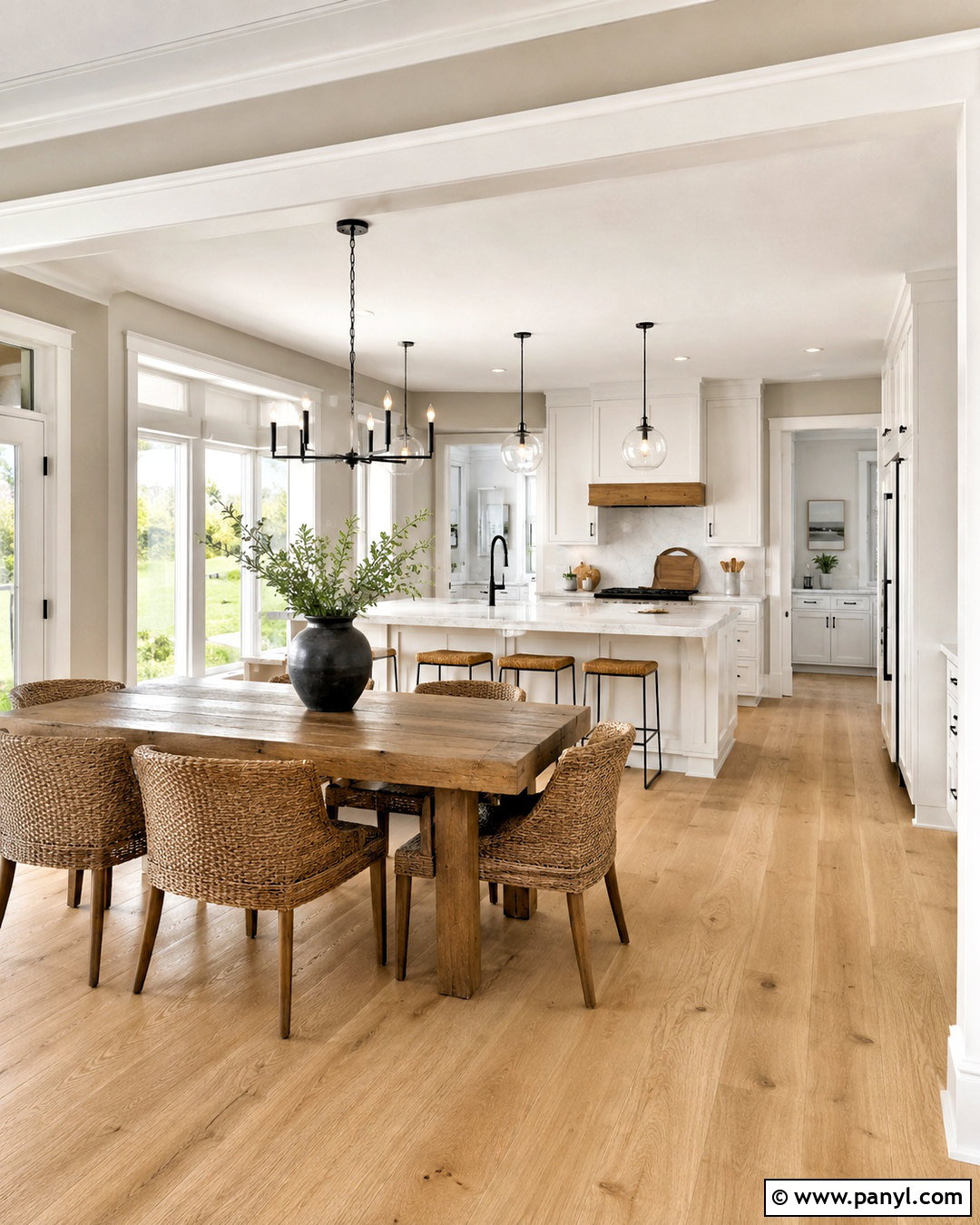
Painted trim can quietly frame a room, create bold contrast, or disappear into the walls for a seamless finish. This collection of 20 painted baseboards explores complete color schemes that work with flooring, furniture, doors, and architectural details. You will find classic whites, earthy neutrals, rich dark shades, and playful colors suited to living rooms, bedrooms, kitchens, hallways, and family spaces. Satin or semi-gloss enamel is often a practical choice because baseboards need a smooth, washable surface that handles everyday scuffs. () Whether you want subtle definition or noticeable color, the best result comes from considering the entire room. Use these 20 painted baseboards as inspiration for building a polished, coordinated look.

1. White Painted Baseboards With Greige Walls
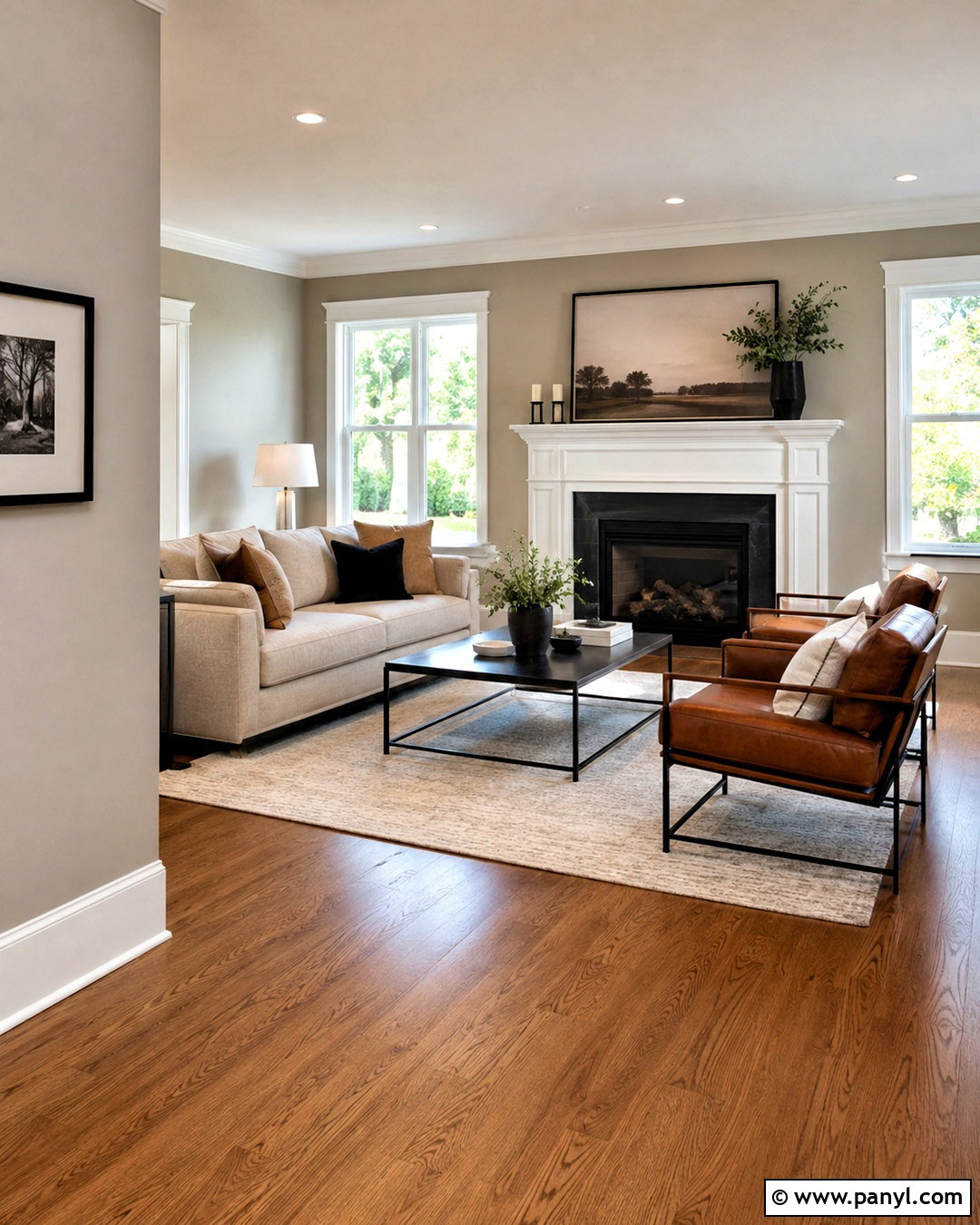
Crisp white baseboards bring clean structure to a living room with soft greige walls and medium oak flooring. Carry the same white onto door casings, window trim, and the fireplace surround so every architectural line feels connected. Choose a warm white rather than a blue-toned shade to complement the greige. A oatmeal-colored sofa, black metal coffee table, and textured ivory rug create a comfortable foundation. Add camel leather chairs and muted green pillows for warmth without making the palette busy. Satin or semi-gloss paint gives the baseboards a durable surface while creating gentle contrast against eggshell walls. This complete arrangement feels timeless, bright, and flexible enough to support changing artwork or seasonal accessories.
2. Cream Painted Baseboards With Warm Beige Walls
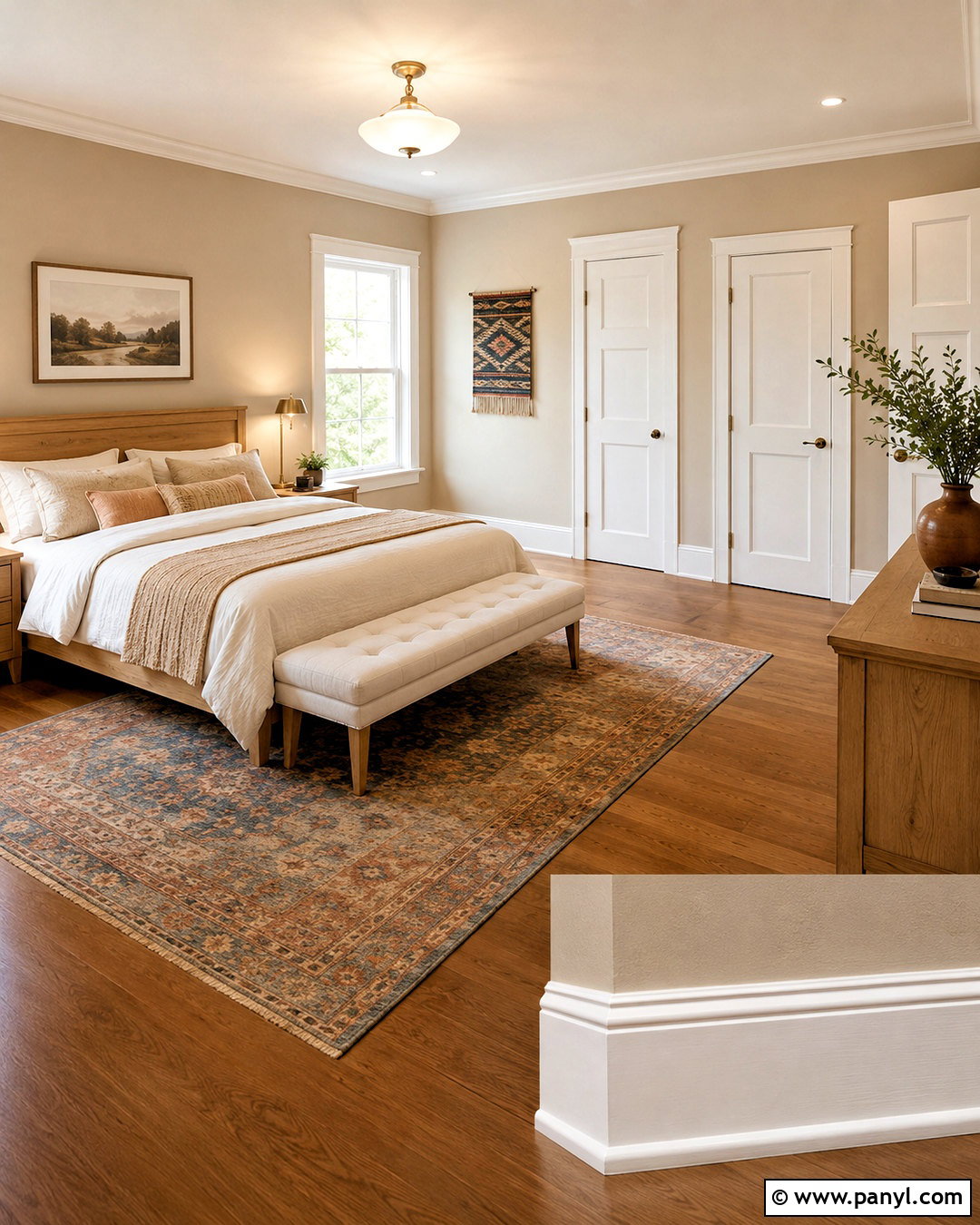
Imagine a relaxed bedroom where creamy baseboards soften the transition between warm beige walls and honey-toned wood floors. Repeat the cream on the window trim, closet doors, and simple crown molding for a unified finish. A light oak bed, woven bench, and natural linen bedding reinforce the room’s quiet warmth. Use ivory curtains instead of bright white fabric, which could look too sharp beside the mellow trim. A vintage-style rug with faded rust, tan, and blue details adds gentle color. Finish the space with aged brass lamps and a plaster ceiling fixture. The cream-painted baseboards should have a subtle satin sheen, allowing them to remain practical while blending naturally into this comfortable, layered neutral bedroom.
3. Black Painted Baseboards With White Walls
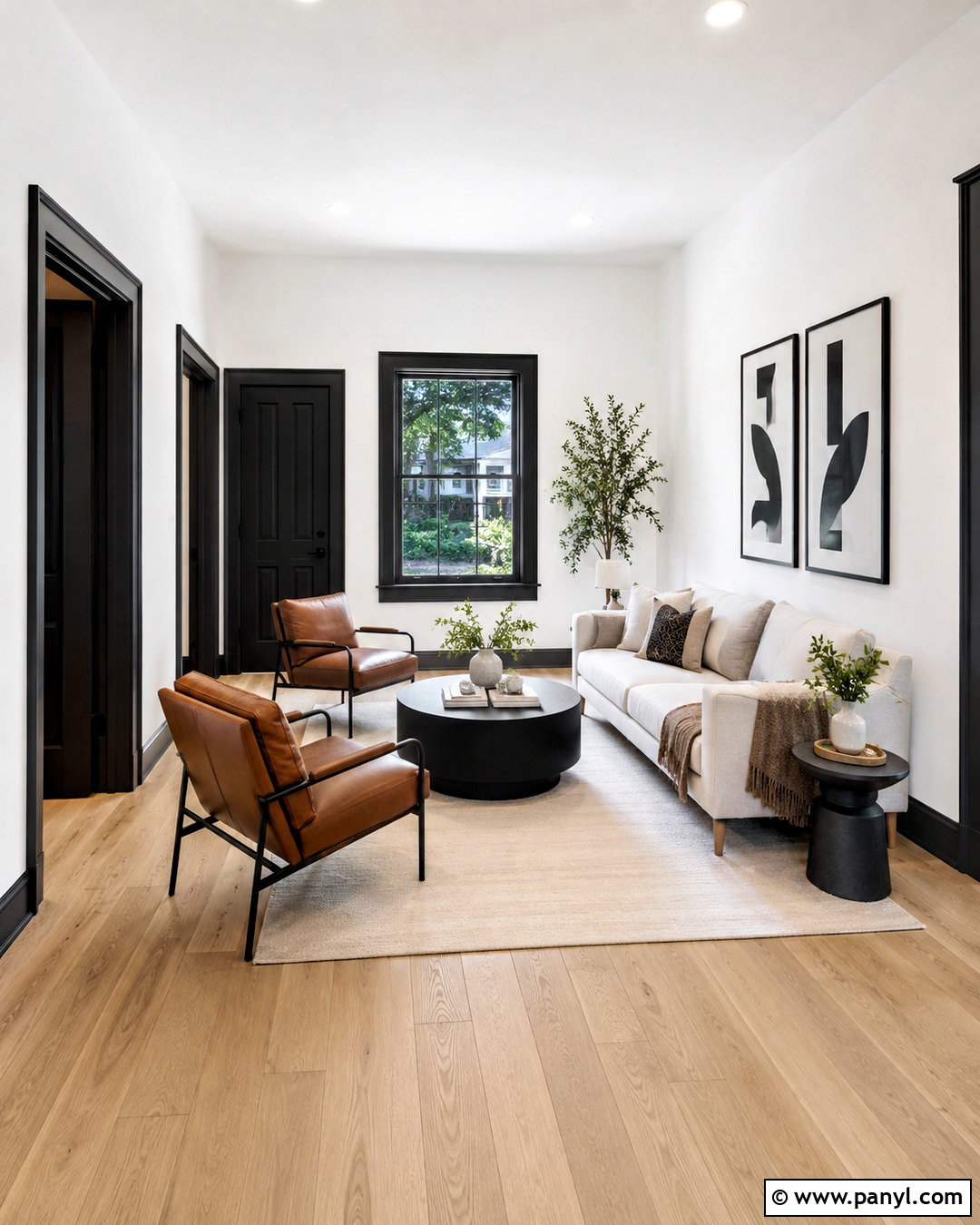
Black painted baseboards give a white living room a sharp, architectural outline. This look works especially well when the black continues onto door frames, window casings, and slim interior doors. Balance the strong trim with pale oak flooring and a large cream rug, which prevent the room from feeling visually heavy. Choose a streamlined beige sofa, two cognac leather chairs, and a round black coffee table to repeat the contrasting palette. Graphic artwork in simple black frames connects the walls to the trim below. Keep curtains off-white and full length for softness. A satin black finish is easier to maintain than flat paint and reflects just enough light to reveal the baseboard profile without creating an overly glossy border.
4. Navy Painted Baseboards With Pale Blue Walls
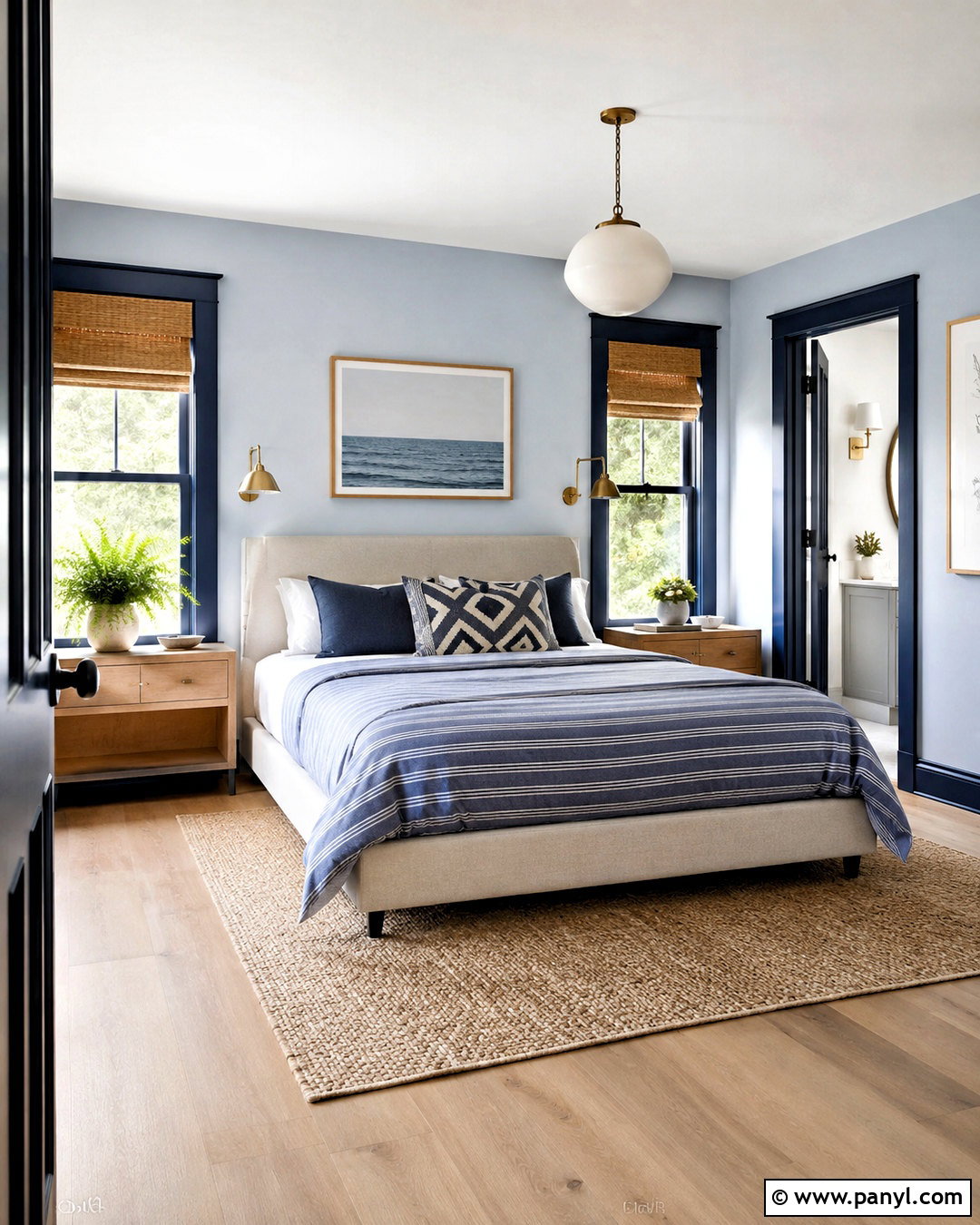
Deep navy baseboards can ground a coastal bedroom without relying on obvious nautical decorations. Pair them with pale blue-gray walls, light maple flooring, and a warm white ceiling. Continue the navy onto the door and window casings to make the trim choice look deliberate. An upholstered oatmeal bed, striped blue-and-cream bedding, and a natural jute rug keep the room casual. Add light wood nightstands, ceramic lamps, and woven shades for organic texture. A small amount of brushed brass introduces warmth against the cool blues. Use durable satin enamel on the baseboards so the dark color stays easy to wipe clean. The finished room feels fresh and peaceful, with enough contrast to highlight its straightforward architecture.
5. Sage Green Painted Baseboards With Cream Walls
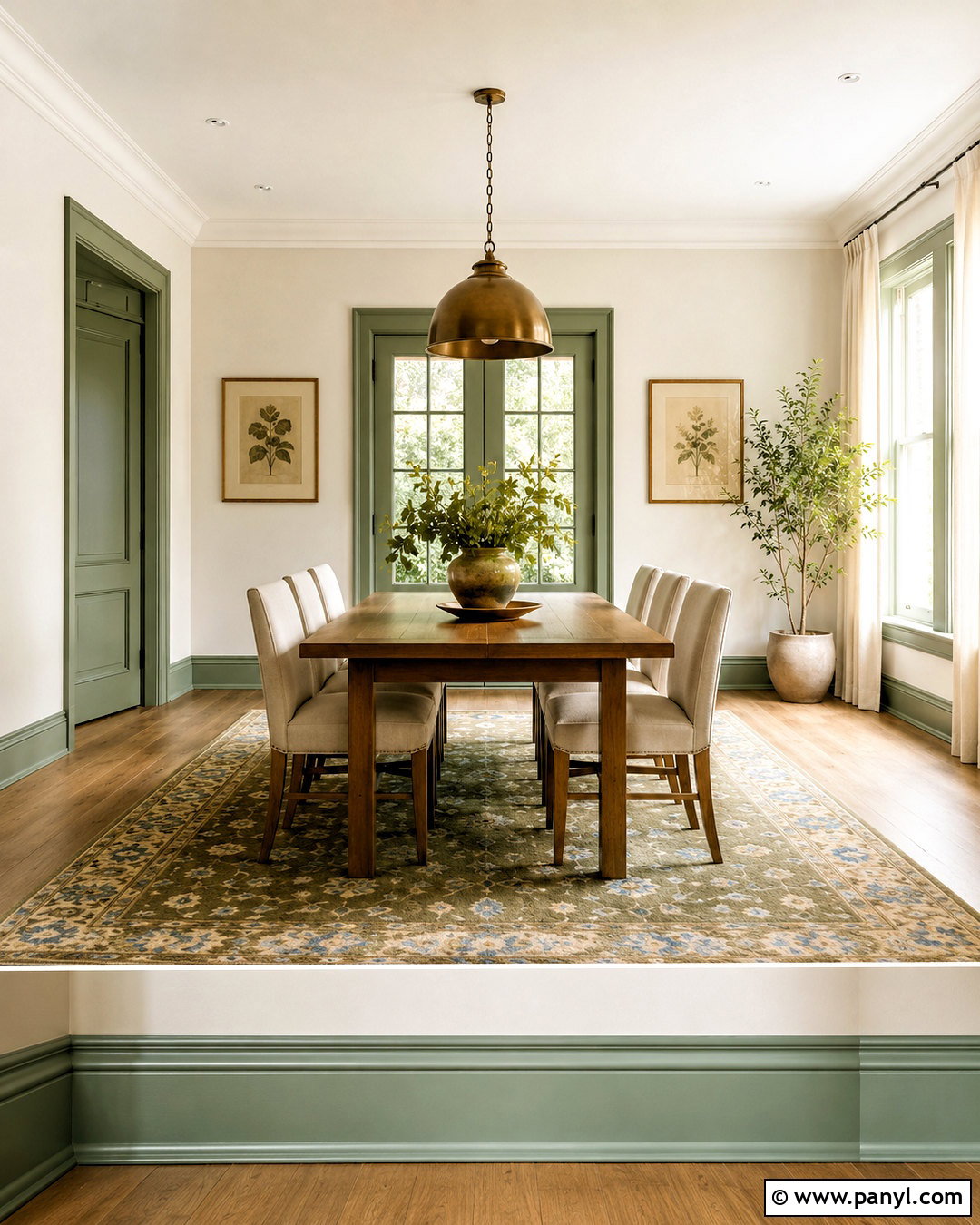
Soft sage green baseboards create a gentle garden-inspired frame around a cream dining room. Paint the window casings and interior door in the same green so the baseboards do not appear disconnected. Warm oak flooring and a rectangular wood dining table bring natural richness into the scheme. Surround the table with cream upholstered chairs and hang a simple aged brass pendant overhead. Botanical prints, linen curtains, and handmade ceramic pieces support the organic palette without turning the room into a theme. A faded rug containing olive, tan, and muted blue can tie every color together. Choose satin paint for the green woodwork, while keeping the cream walls matte or eggshell. This subtle sheen difference helps the trim look finished and intentional.
6. Olive Green Painted Baseboards With Floral Wallpaper
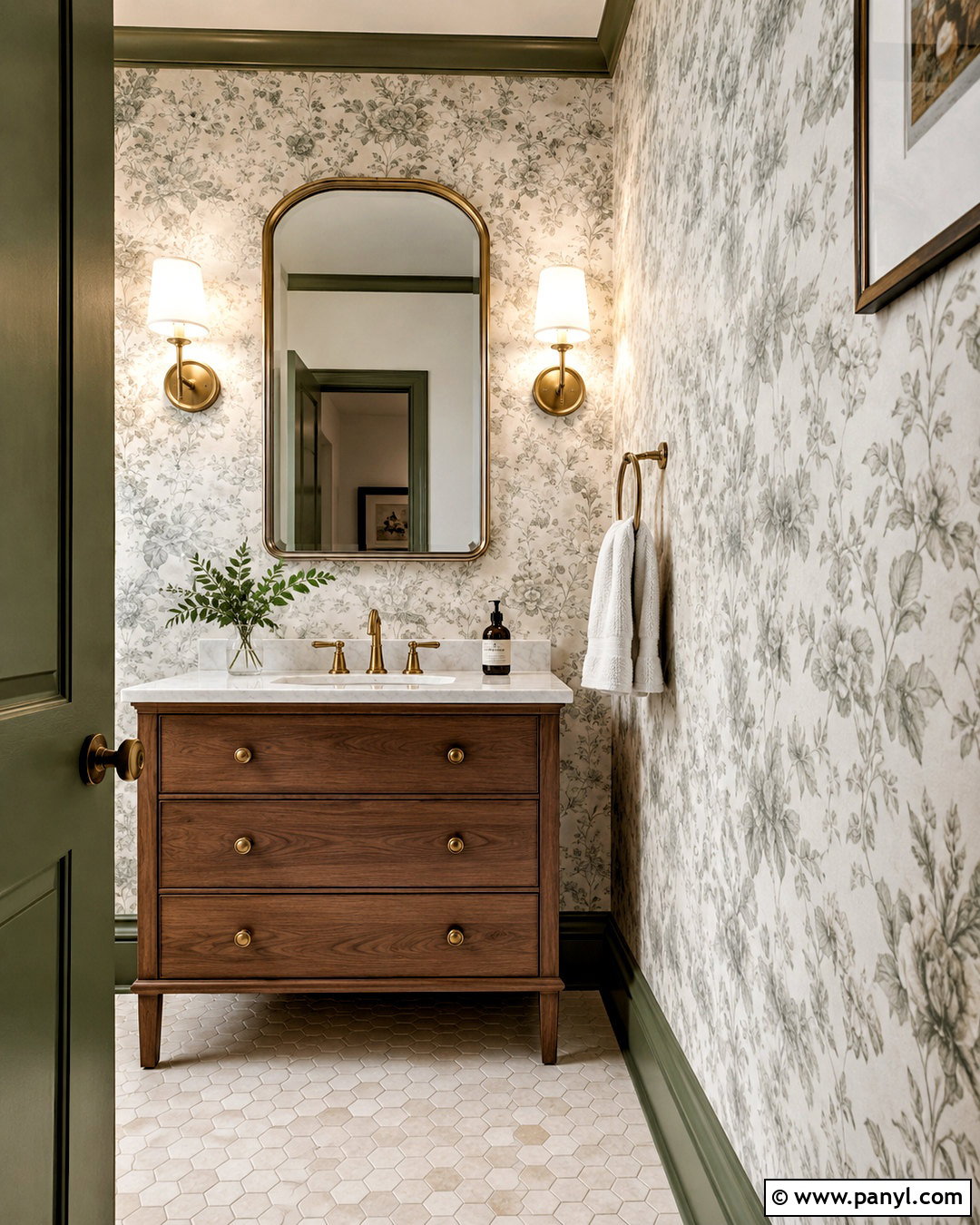
Olive green baseboards provide a sophisticated anchor for a powder room covered in small-scale floral wallpaper. Select wallpaper with cream, faded pink, olive, and muted blue details, then match the baseboards and door trim to the darkest green in the pattern. A walnut vanity with a white stone top adds depth and keeps the room from feeling overly delicate. Use unlacquered brass for the faucet, mirror, and wall sconces to introduce a warm, aged finish. Small hexagonal cream floor tiles maintain brightness at ground level. Because powder rooms experience frequent cleaning, coat the baseboards with washable semi-gloss enamel. The finished space feels traditional yet fresh, with every material and color drawn from one coordinated decorative plan.
7. Charcoal Painted Baseboards With Light Gray Walls
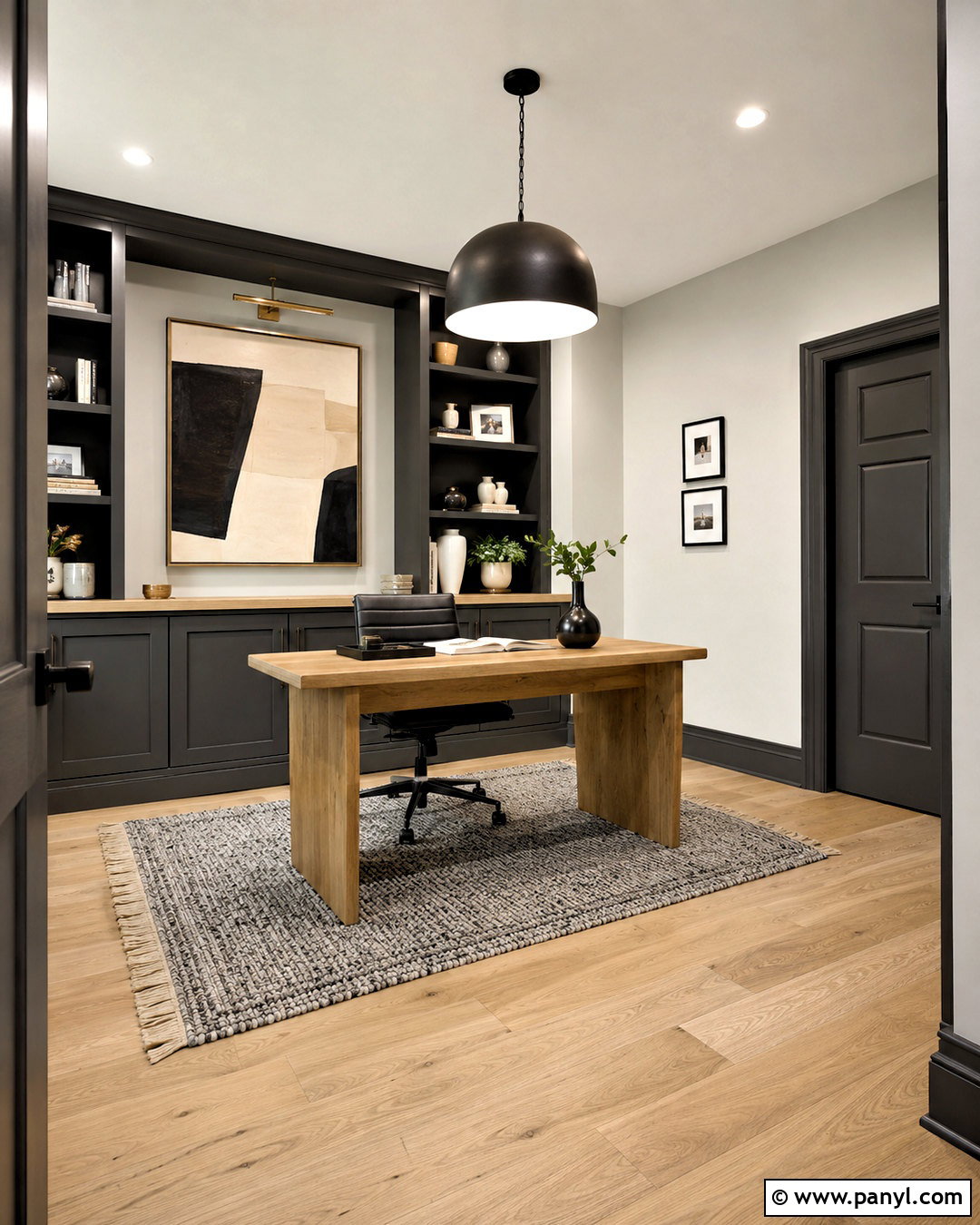
A home office gains crisp definition when charcoal baseboards frame light gray walls and pale wood flooring. Continue the charcoal around the doorway and built-in bookcases, creating a balanced connection between the room’s lower edge and its storage. Place a substantial oak desk at the center, paired with a black task chair and a textured gray rug. White linen shades soften daylight, while a matte black pendant adds focused contrast overhead. Keep accessories restrained with ceramic vessels, stacked books, and one large abstract print. The charcoal should have neutral undertones rather than strong blue notes. A satin finish provides a refined surface that stands up to chair bumps, vacuuming, and regular cleaning while preserving the room’s calm, professional character.
8. Taupe Painted Baseboards With Ivory Walls
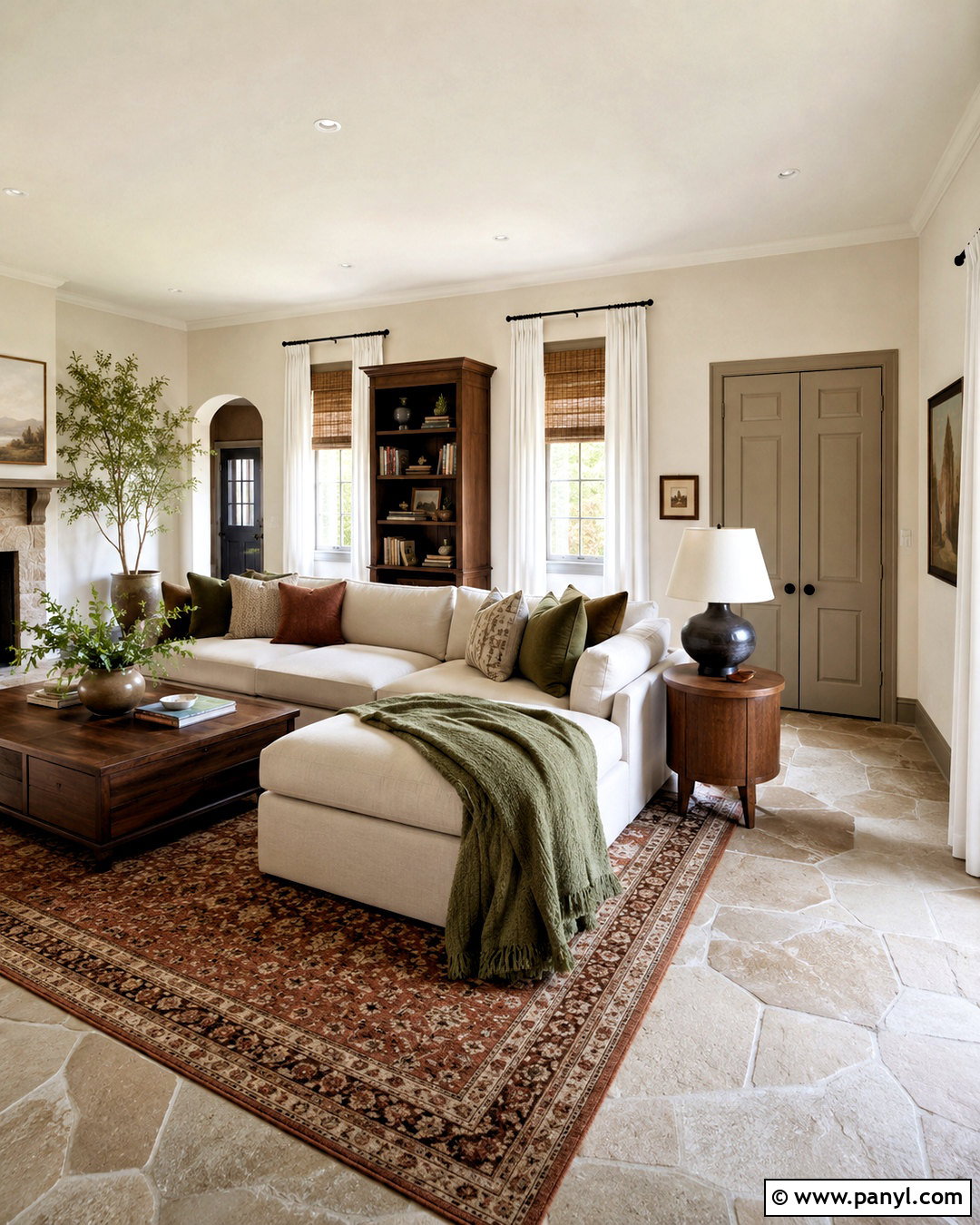
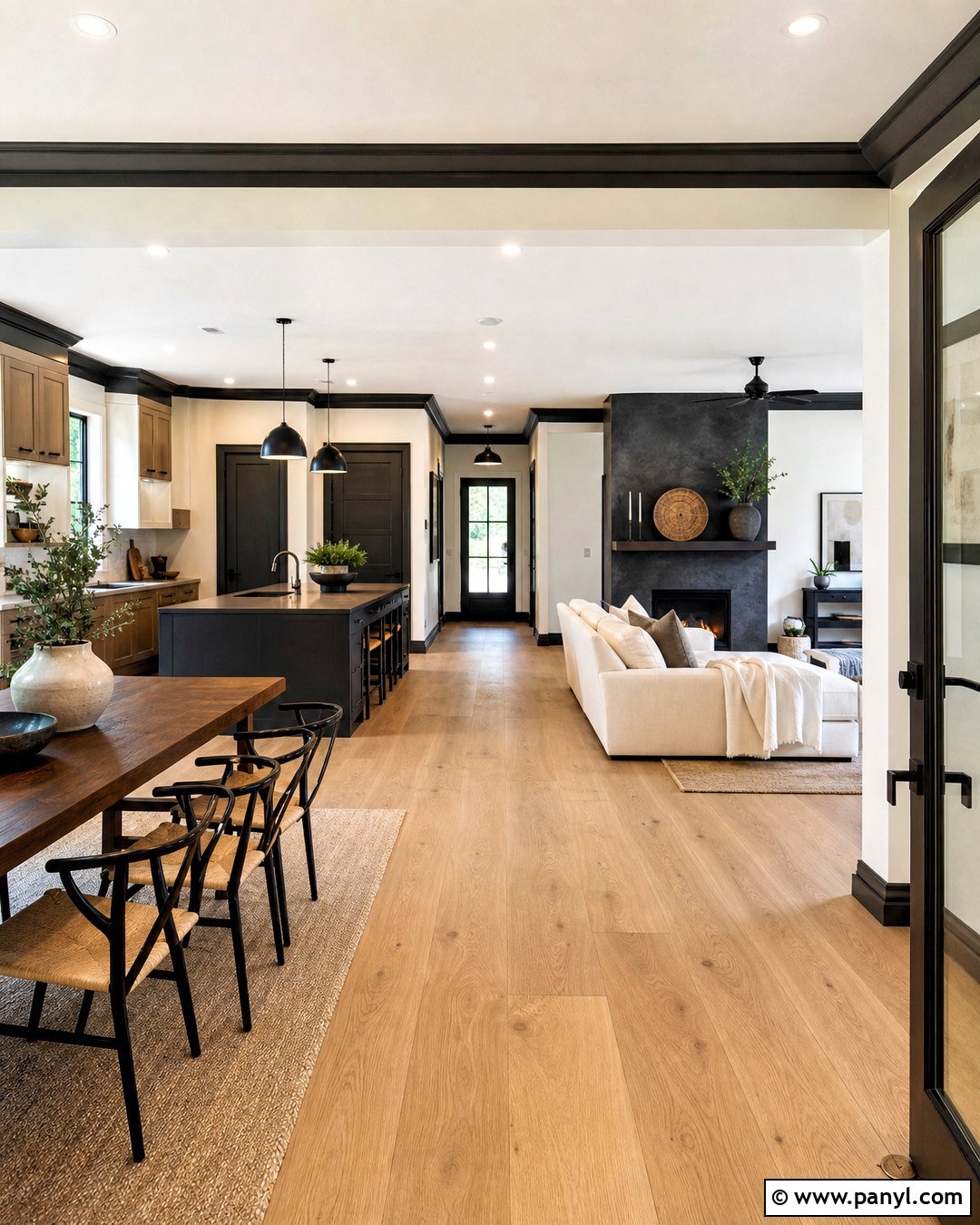
Taupe baseboards offer quieter contrast than white or black, making them ideal for an ivory family room with warm stone flooring. Use the same taupe on window trim, doors, and a low media cabinet to create a connected visual line. Choose a deep cream sectional with washable upholstery, then layer in rust-colored pillows, walnut side tables, and an olive throw. A patterned rug combining taupe, brown, and faded red helps bridge the furniture and painted woodwork. Add woven shades and soft white curtains for layered window coverage. The baseboard color should be a few shades deeper than the walls, with similar warm undertones. This approach adds definition while keeping the room relaxed, practical, and visually spacious.
9. Brown Painted Baseboards With Plaster Walls
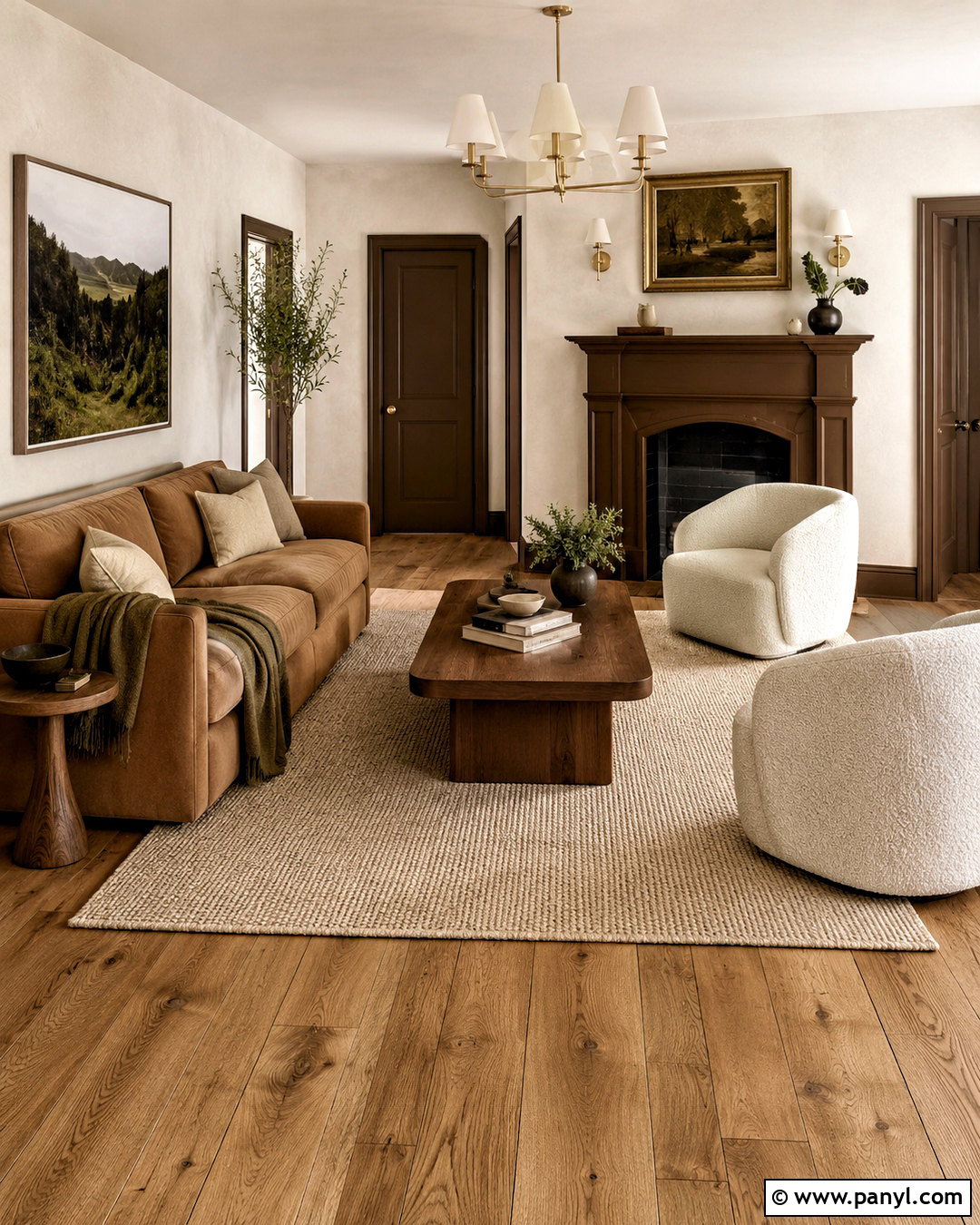
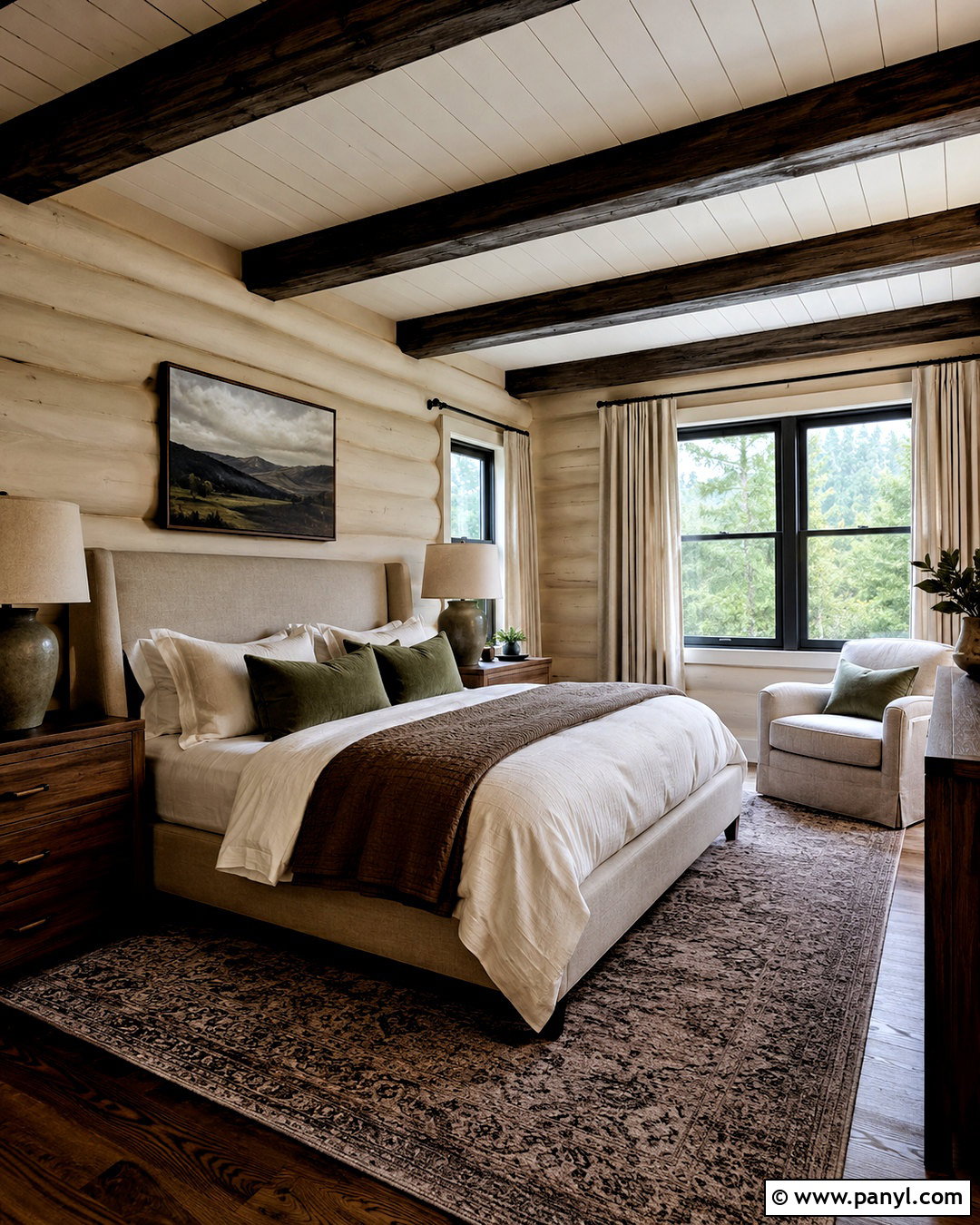
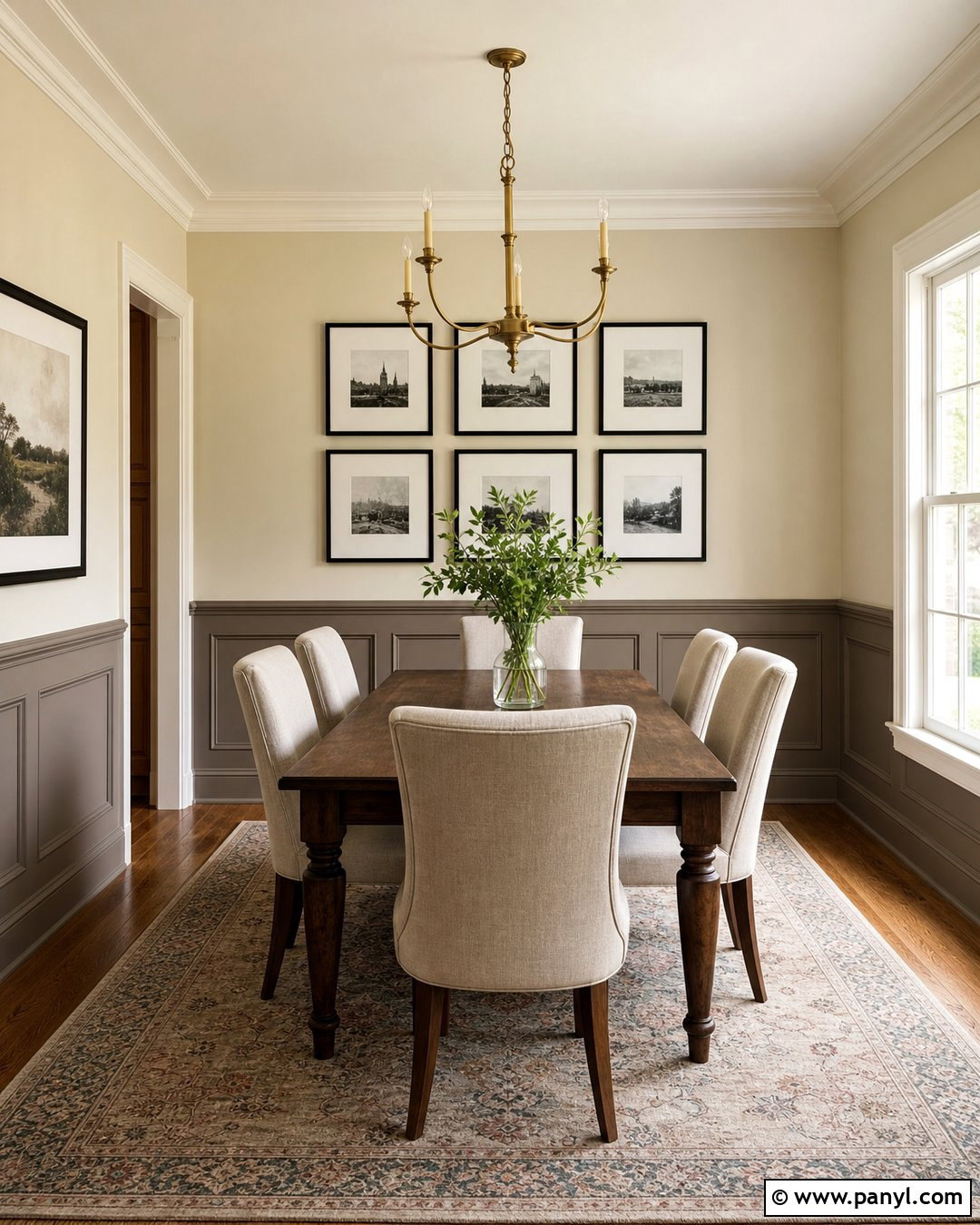
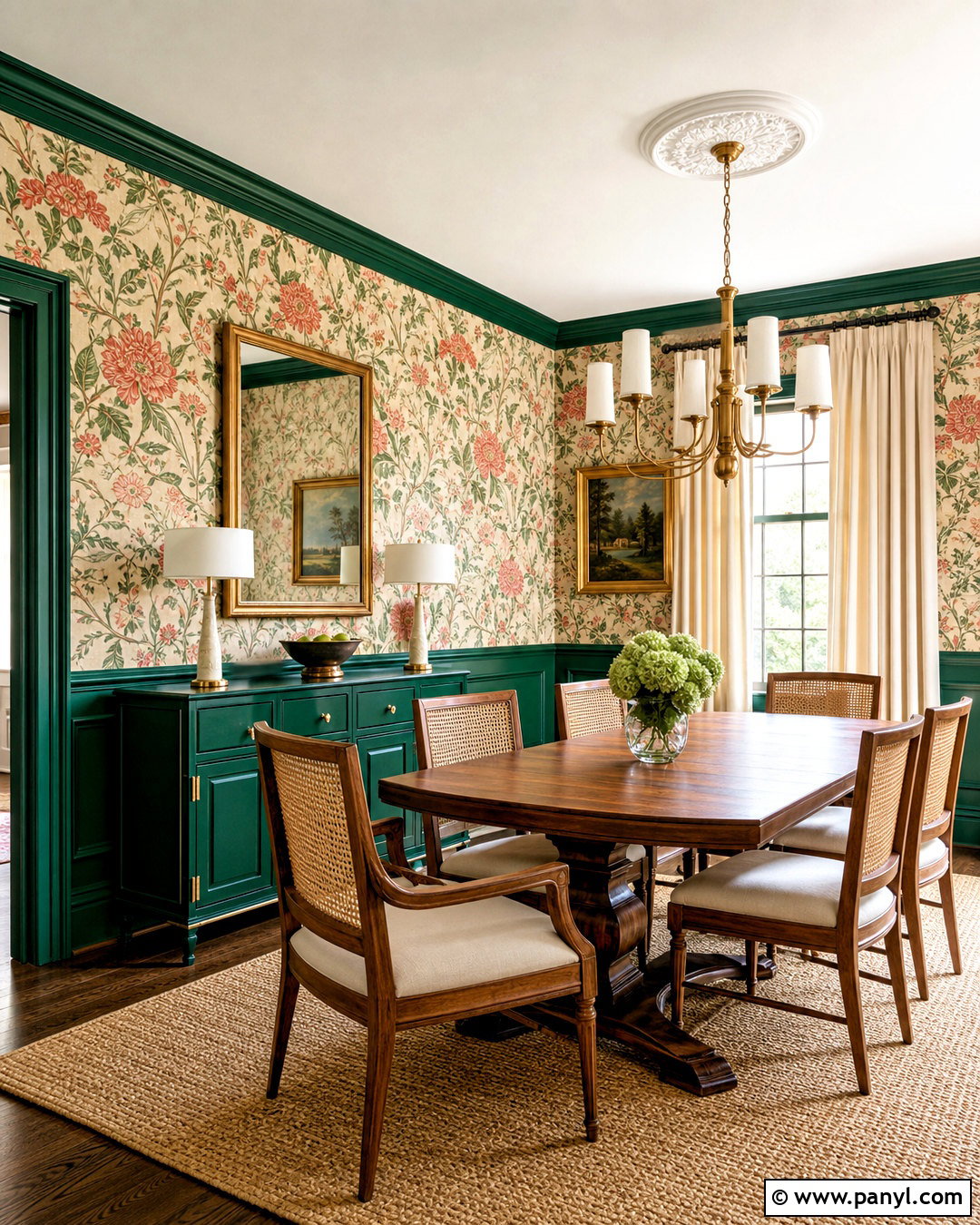
Chocolate brown baseboards bring richness to a living room with warm plaster-colored walls and wide-plank oak flooring. Repeat the dark brown on the door, window trim, and fireplace mantel to establish a strong architectural framework. Choose a camel sofa, cream boucle chairs, and a substantial walnut coffee table for a layered, earthy arrangement. A large wool rug in sand and tobacco tones softens the dark outline around the room. Decorate with antique brass lighting, landscape artwork, and simple pottery instead of high-contrast accessories. The brown trim should have a satin finish that emphasizes its depth without looking slick. This complete palette feels grounded and welcoming, especially in rooms that receive generous natural light and contain warm wood furnishings.
10. Terracotta Painted Baseboards With Peach Walls
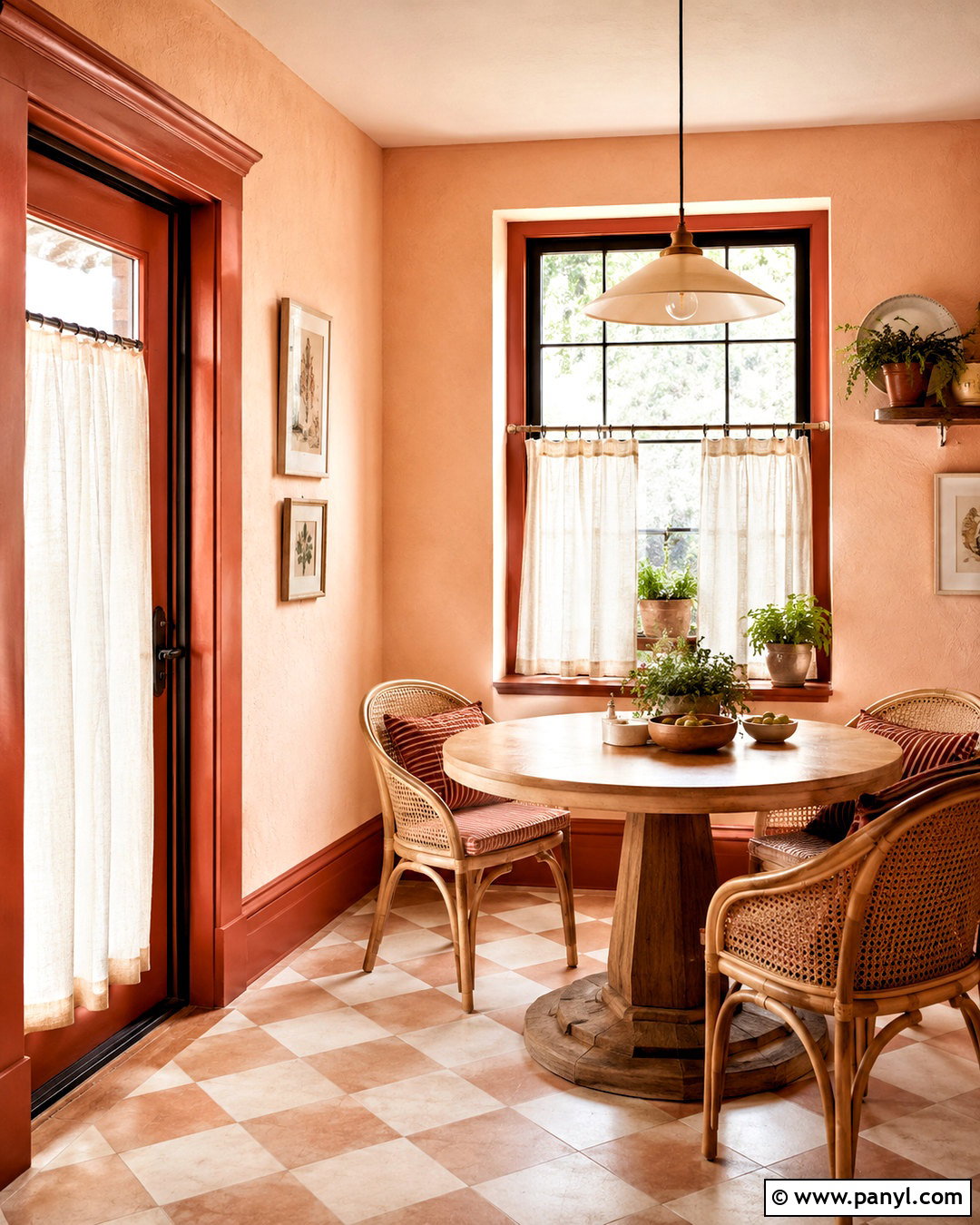
Warm terracotta baseboards turn a cheerful breakfast nook into a fully coordinated color story. Pair them with soft peach walls, a cream ceiling, and pale checkerboard flooring. Carry the terracotta onto the door casing and lower window trim, allowing the color to wrap naturally around the compact space. A round oak pedestal table and curved cane chairs introduce light, casual materials. Use a small cream pendant, linen café curtains, and rust-striped seat cushions to reinforce the palette. Potted herbs and handmade ceramic dishes provide fresh green accents. Keep the wall color noticeably lighter than the baseboards so the room retains definition. Satin enamel gives the terracotta trim a cleanable finish suited to an active dining area.
11. Burgundy Painted Baseboards With Blush Walls
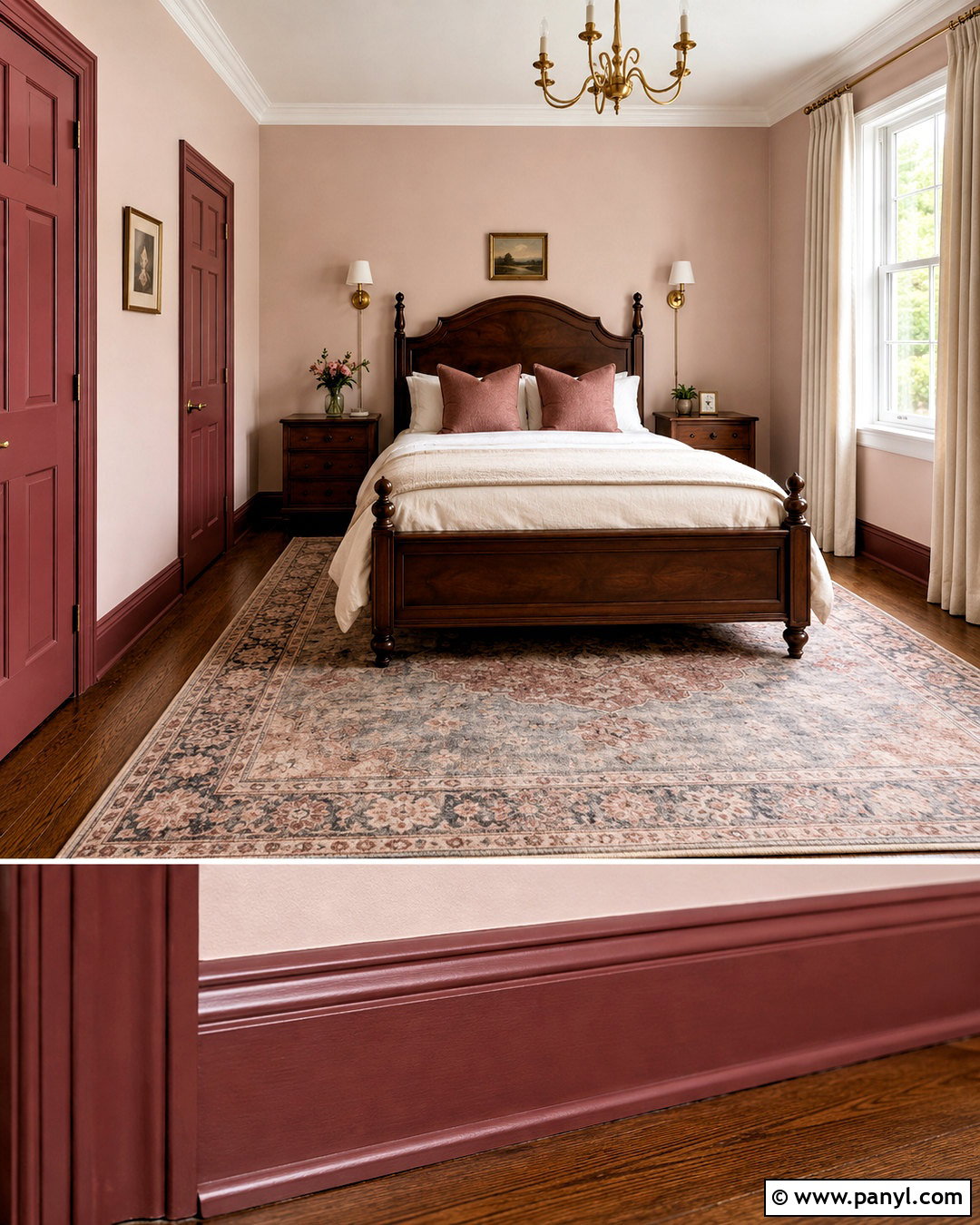
Burgundy baseboards create an elegant foundation for a blush-toned bedroom. Repeat the burgundy on the interior door and window casing, but leave the ceiling warm white to maintain an open feeling. A dark wood bed with cream bedding introduces traditional structure, while dusty rose pillows and a burgundy throw connect the furniture to the trim. Ground the room with a faded Persian-style rug containing red, beige, and muted blue. Brass bedside sconces and linen curtains add softness and warmth. Choose a brown-based burgundy instead of a bright red shade for a more livable result. The trim’s satin sheen will catch light along its profile, creating depth while maintaining the bedroom’s quiet, enveloping atmosphere.
12. Dusty Blue Painted Baseboards With White Walls
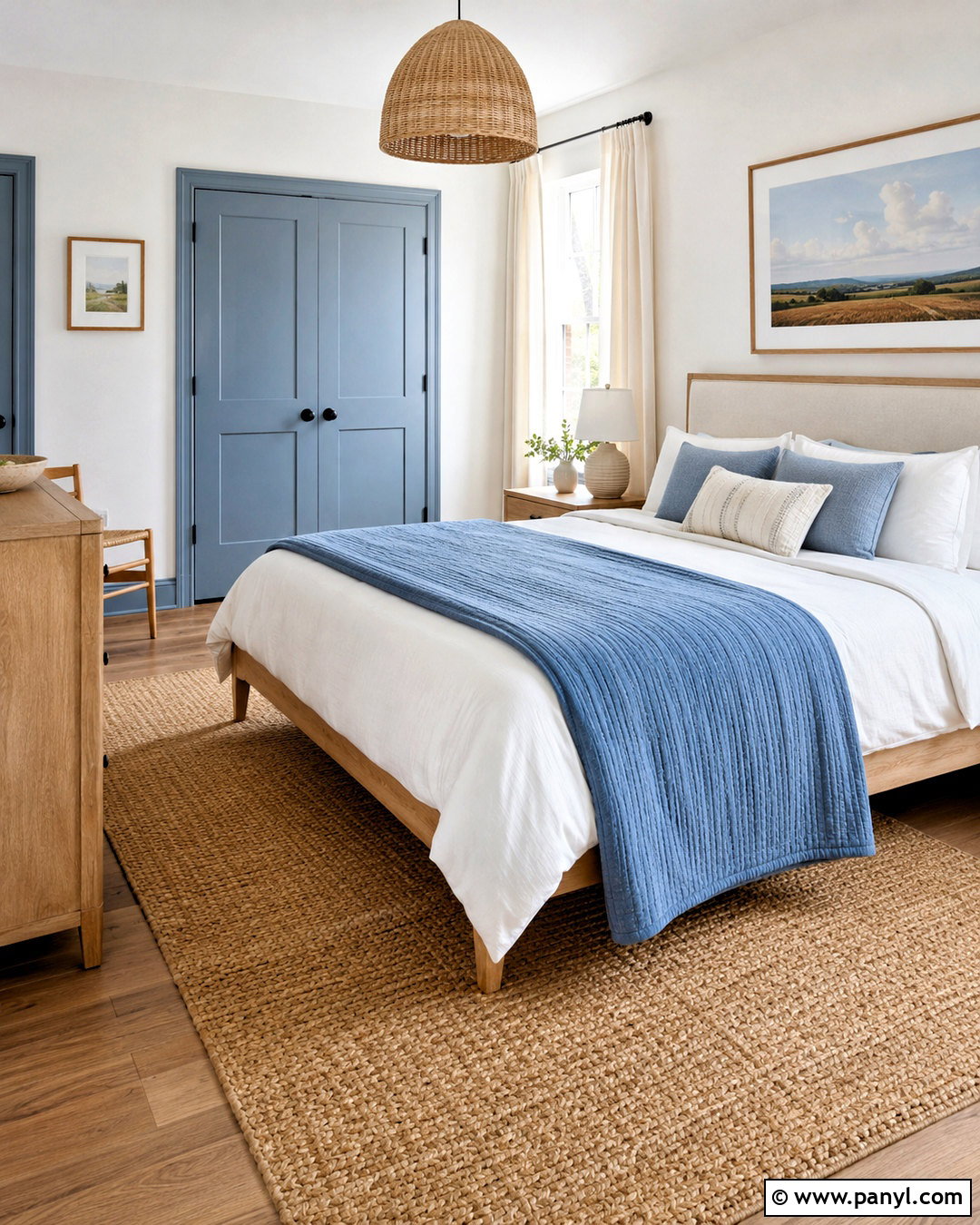
Dusty blue baseboards add measured color to an airy guest room with warm white walls. Continue the blue across the closet doors and window trim to make it an integrated part of the room rather than a narrow accent at floor level. Use light oak furniture, an ivory upholstered headboard, and crisp white bedding with a quilted blue coverlet. A natural fiber rug and woven pendant prevent the cool trim from feeling too formal. Hang simple landscape prints containing soft blue, green, and tan shades. The baseboard color should appear muted and slightly gray in bright daylight. Finished in satin enamel, the painted woodwork feels smooth and practical while giving the uncomplicated room a distinct, welcoming identity.
13. Yellow Painted Baseboards With Neutral Walls
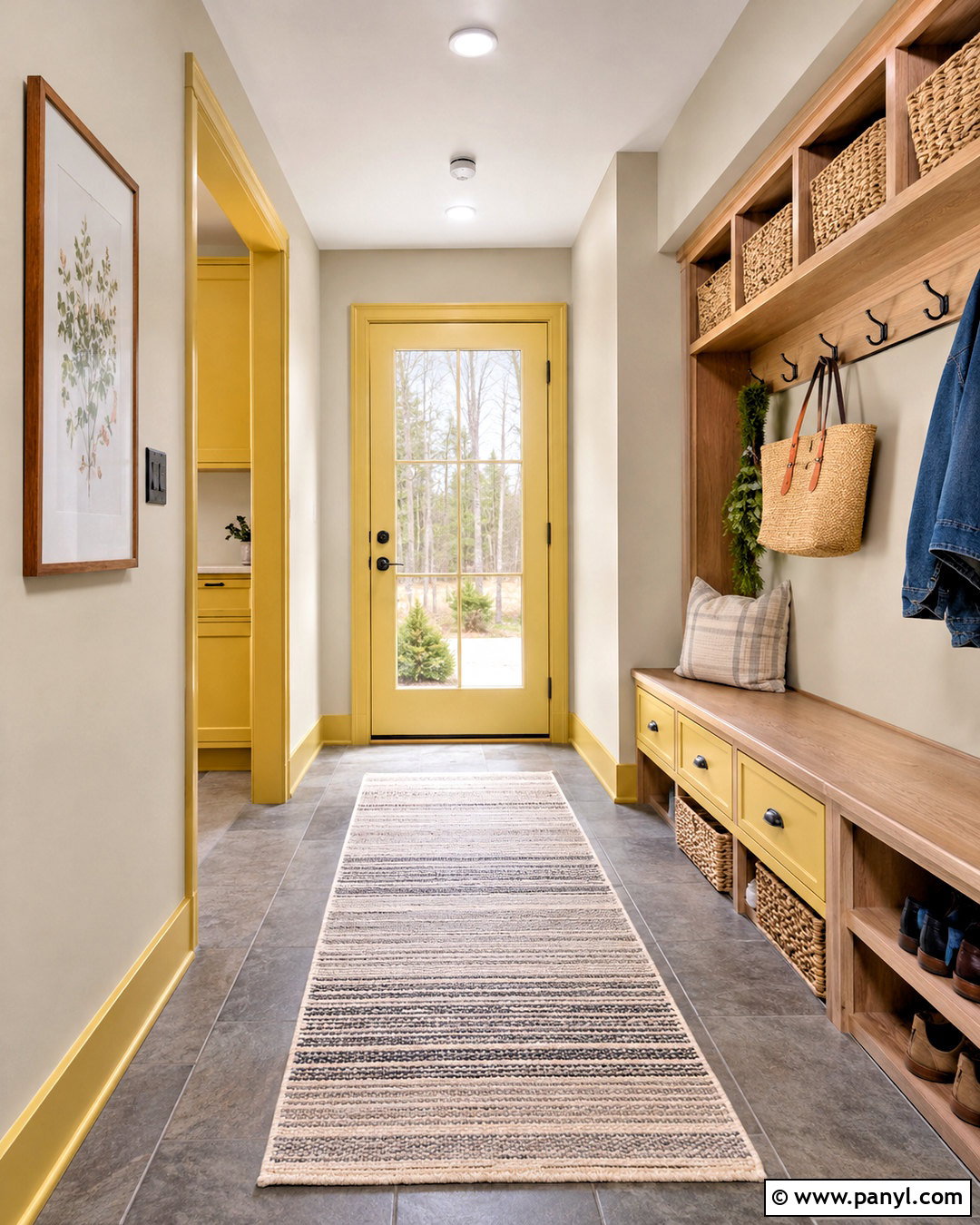
Buttery yellow baseboards can brighten a mudroom without overwhelming the hardworking space. Pair them with light greige walls, warm gray floor tile, and white oak storage benches. Extend the yellow across door casings and the fronts of lower storage drawers for a cheerful, connected design. Above the bench, install simple oak pegs and woven baskets for coats and everyday supplies. Black metal hooks, a black-framed window, and a striped washable runner provide grounding contrast. Choose a muted yellow with warm brown undertones rather than a sharp lemon shade. Semi-gloss enamel is well suited to this busy area because it creates a wipeable surface. The completed mudroom feels organized, sunny, and intentionally designed for daily family routines.
14. Color Drenched Baseboards And Walls
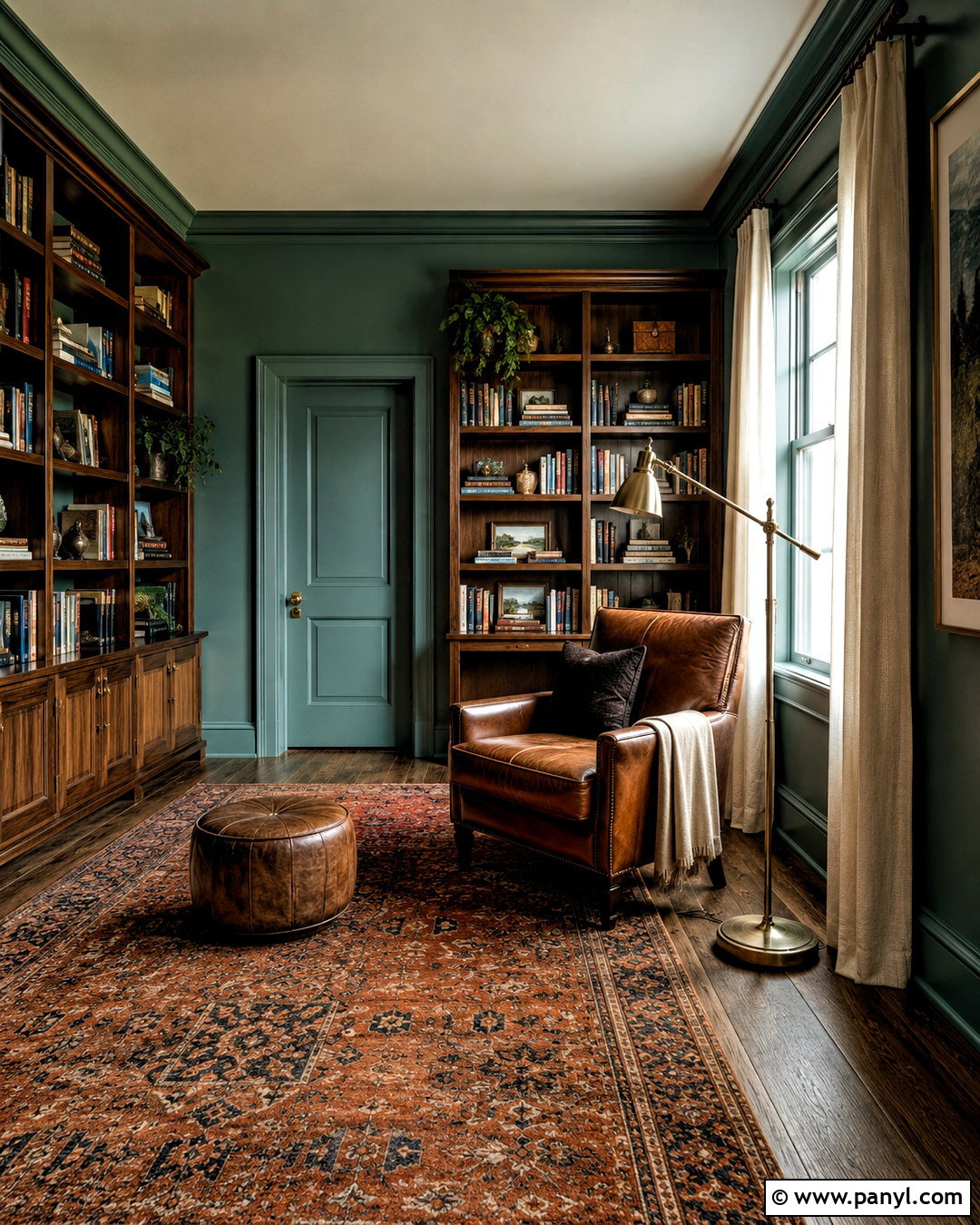
Painting the baseboards, walls, doors, and window trim one muted teal color creates an immersive reading room with few visual interruptions. Use matte or eggshell paint on the walls and satin enamel on the woodwork, allowing the shared color to reveal subtle changes in texture. A cognac leather chair, walnut bookcases, and a faded rust rug bring warmth to the cool backdrop. Add a brass floor lamp and cream linen curtains for lighter contrast. Keep the ceiling a soft off-white if the room is small or receives limited daylight. Because every architectural surface shares one color, furniture placement and texture become especially important. The finished room feels cohesive and intimate rather than busy, with the painted baseboards merging smoothly into the overall envelope.
15. Two Tone Painted Baseboards And Walls
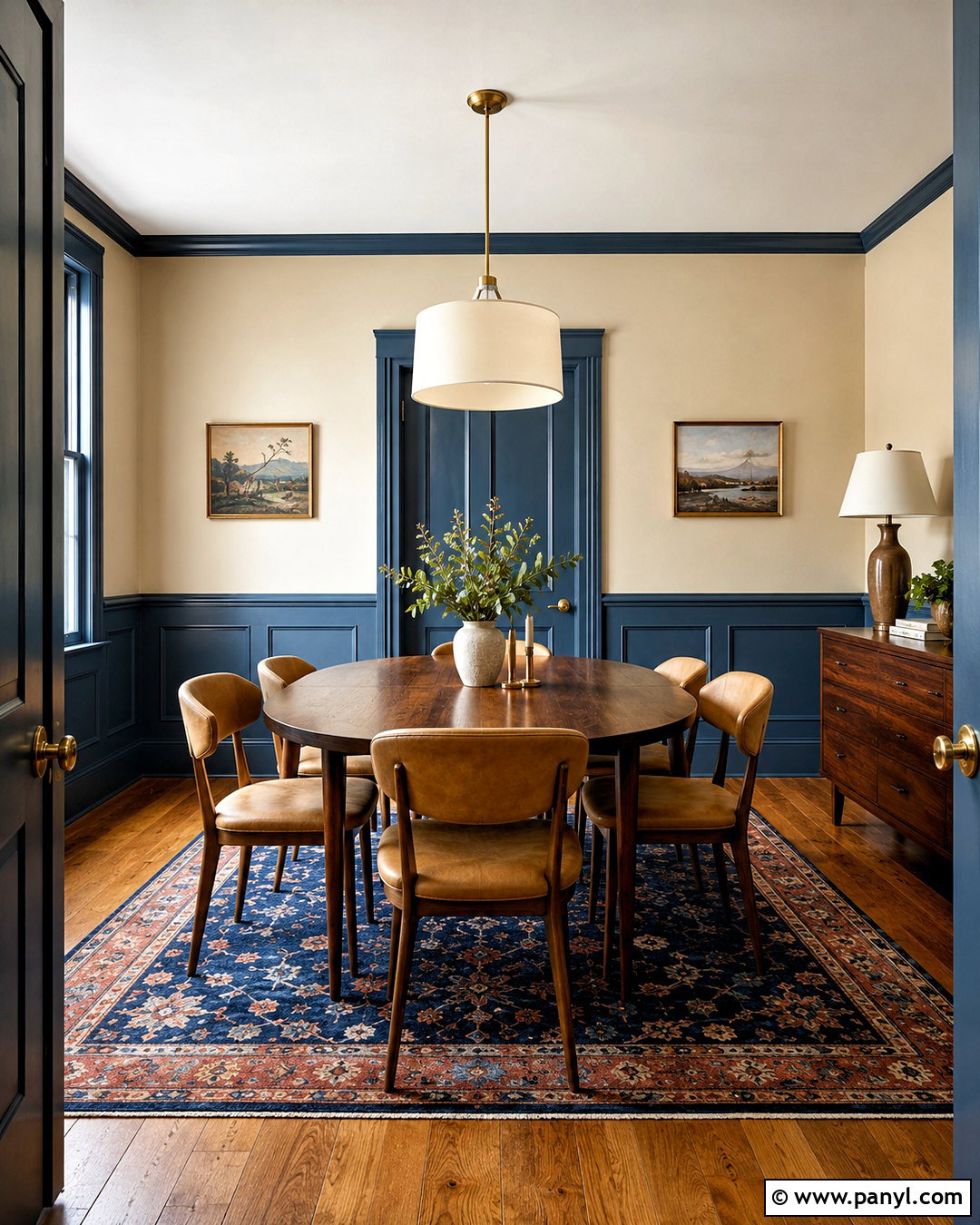
A two-tone wall treatment can make painted baseboards feel like part of a larger architectural feature. In a dining room, use deep blue on the baseboards and lower third of the walls, then apply soft cream above. Separate the colors with a slim blue chair rail for a crisp transition. Pair this background with an oval walnut table, upholstered tan chairs, and a large cream pendant. Medium oak flooring and a vintage rug containing navy, rust, and beige balance the strong lower color. Paint the doors and casings blue to continue the visual structure around the room. The darker section grounds the furniture, while the cream upper walls reflect light. This complete treatment brings dimension without requiring elaborate paneling or molding.
16. Painted Baseboards Matching Kitchen Cabinets
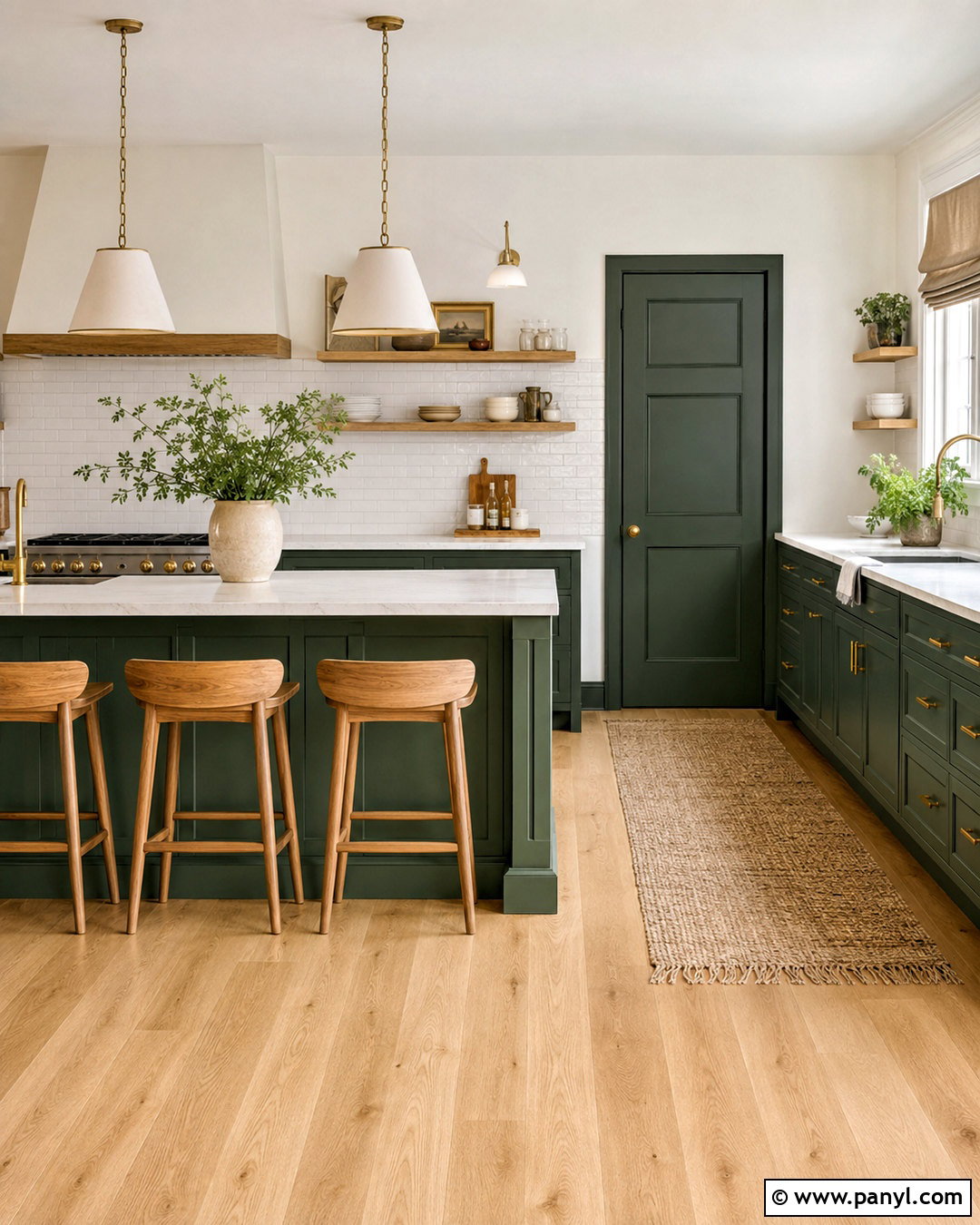
Matching baseboards to lower kitchen cabinets creates a clean, built-in appearance. Try muted forest green cabinets and baseboards with warm white walls, white oak flooring, and lightly veined quartz countertops. Continue the green onto the pantry door and cabinet toe kicks so the lower half of the kitchen reads as one coordinated composition. A white tile backsplash keeps the workspace bright, while brushed brass pulls and pendants add warmth. Choose oak counter stools and a small natural runner to connect the cabinets with the floor. The green baseboards should be finished in durable semi-gloss enamel that tolerates splashes and frequent wiping. This arrangement works particularly well in open kitchens because the matching trim carries the cabinetry color into nearby walls.
17. Painted Baseboards Matching Interior Doors
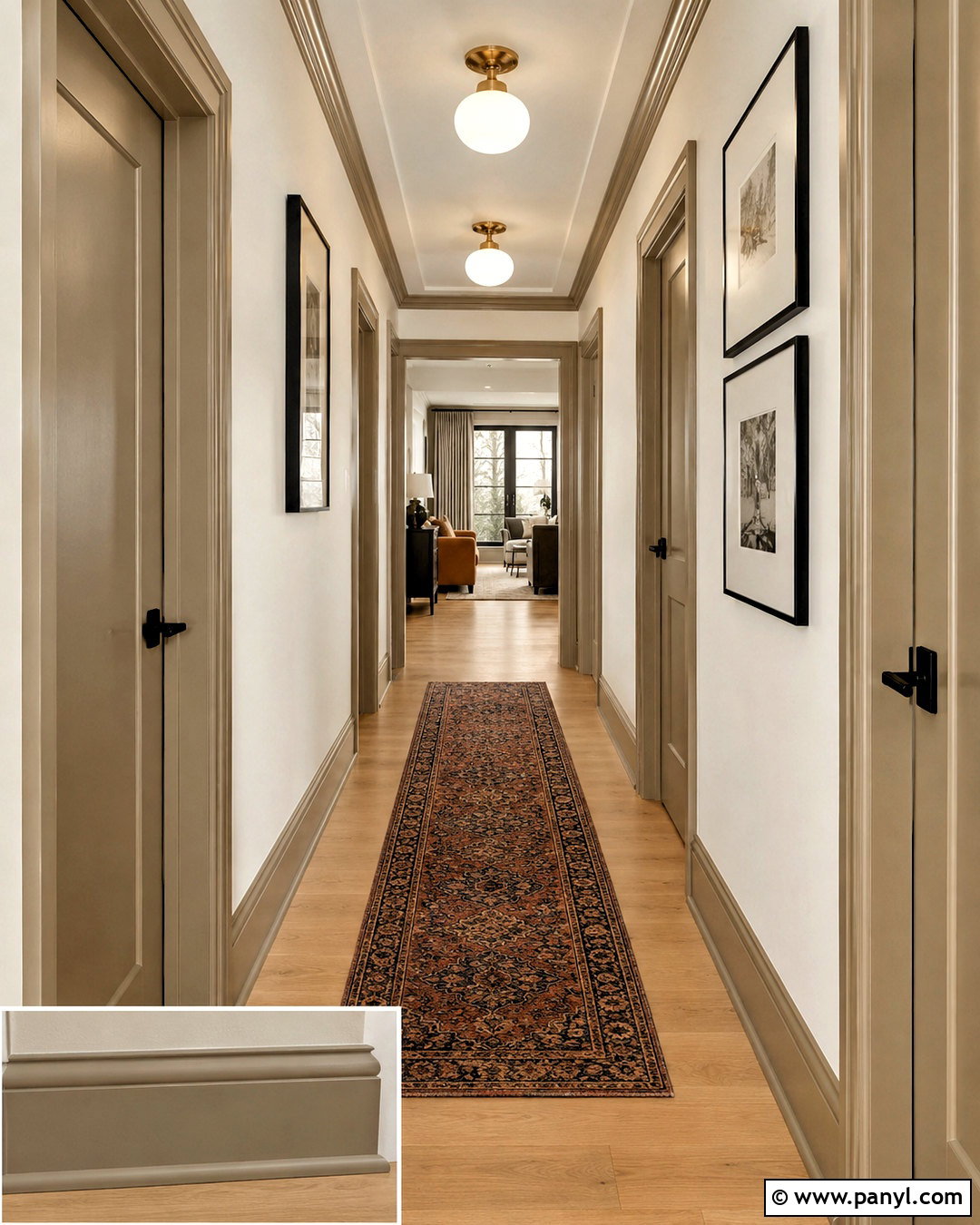
When baseboards match interior doors, a hallway can look carefully planned rather than purely functional. Paint the doors, casings, and baseboards a medium mushroom taupe, then keep the walls a lighter warm ivory. Use pale oak flooring and a narrow patterned runner with rust, charcoal, and cream details. Black lever handles add definition against the taupe doors, while simple brass ceiling lights introduce gentle warmth. Hang a small collection of black-framed artwork at consistent heights to create rhythm along the corridor. The coordinated painted elements visually link each doorway and help conceal everyday marks better than brilliant white. Select satin enamel for a washable, understated finish. The completed hallway feels polished, welcoming, and connected to the rooms beyond it.
18. Painted Baseboards In Small Hallway
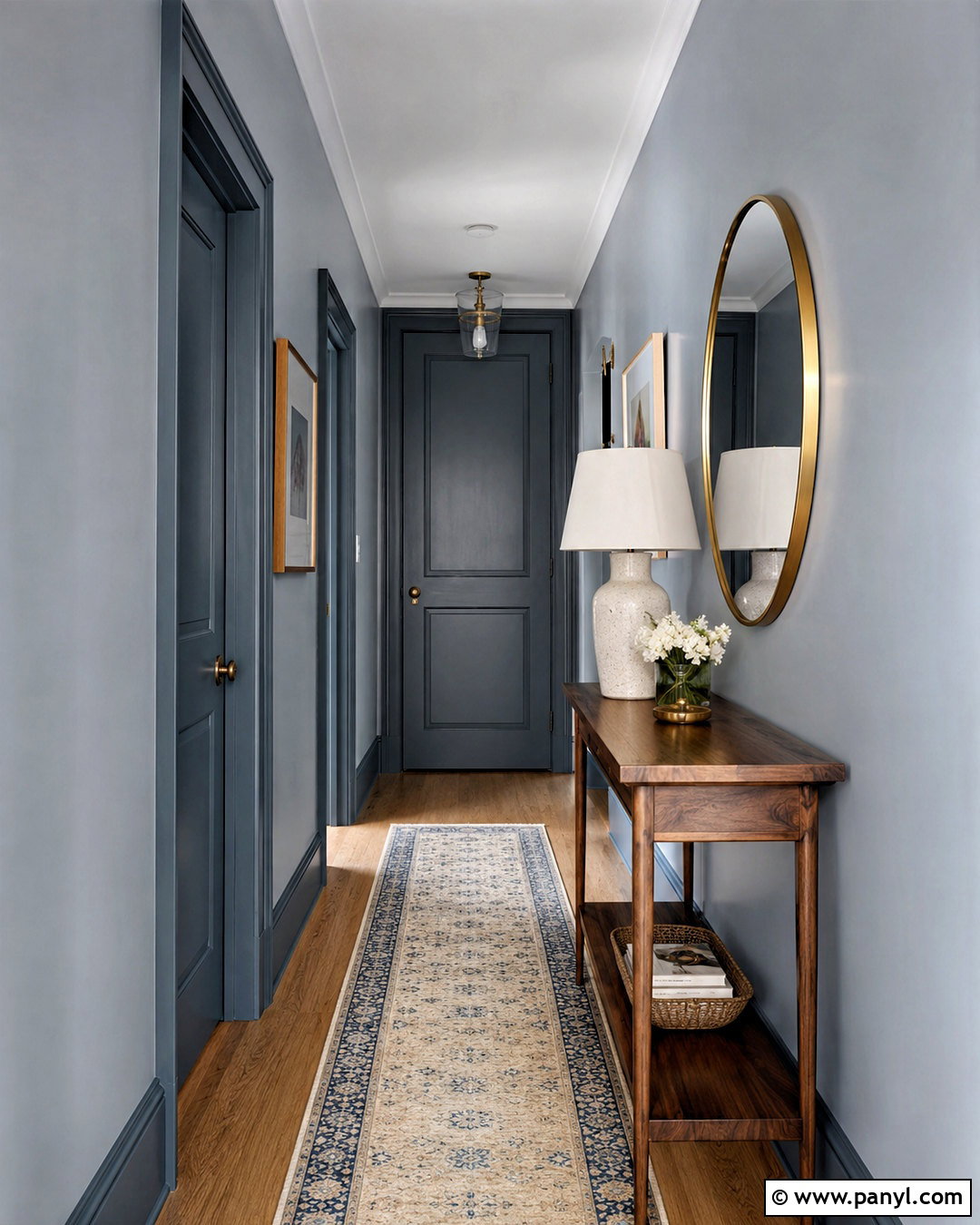
A narrow hallway can feel taller when its baseboards match soft blue-gray walls. Carry the same shade onto the doors and casings, using satin paint on the woodwork and eggshell on the walls for subtle separation. Keep the ceiling bright white to lift the space, and choose light oak flooring that reflects natural light. A slim console in warm wood provides storage without crowding the walkway. Add a round brass mirror, a simple ceramic lamp, and a narrow cream runner with blue detailing. Avoid strong horizontal color contrast, which can emphasize the corridor’s limited width. The seamless painted baseboards allow the eye to move continuously upward, while carefully scaled furnishings give the small hallway a practical and finished appearance.
19. Painted Baseboards In Kids Room
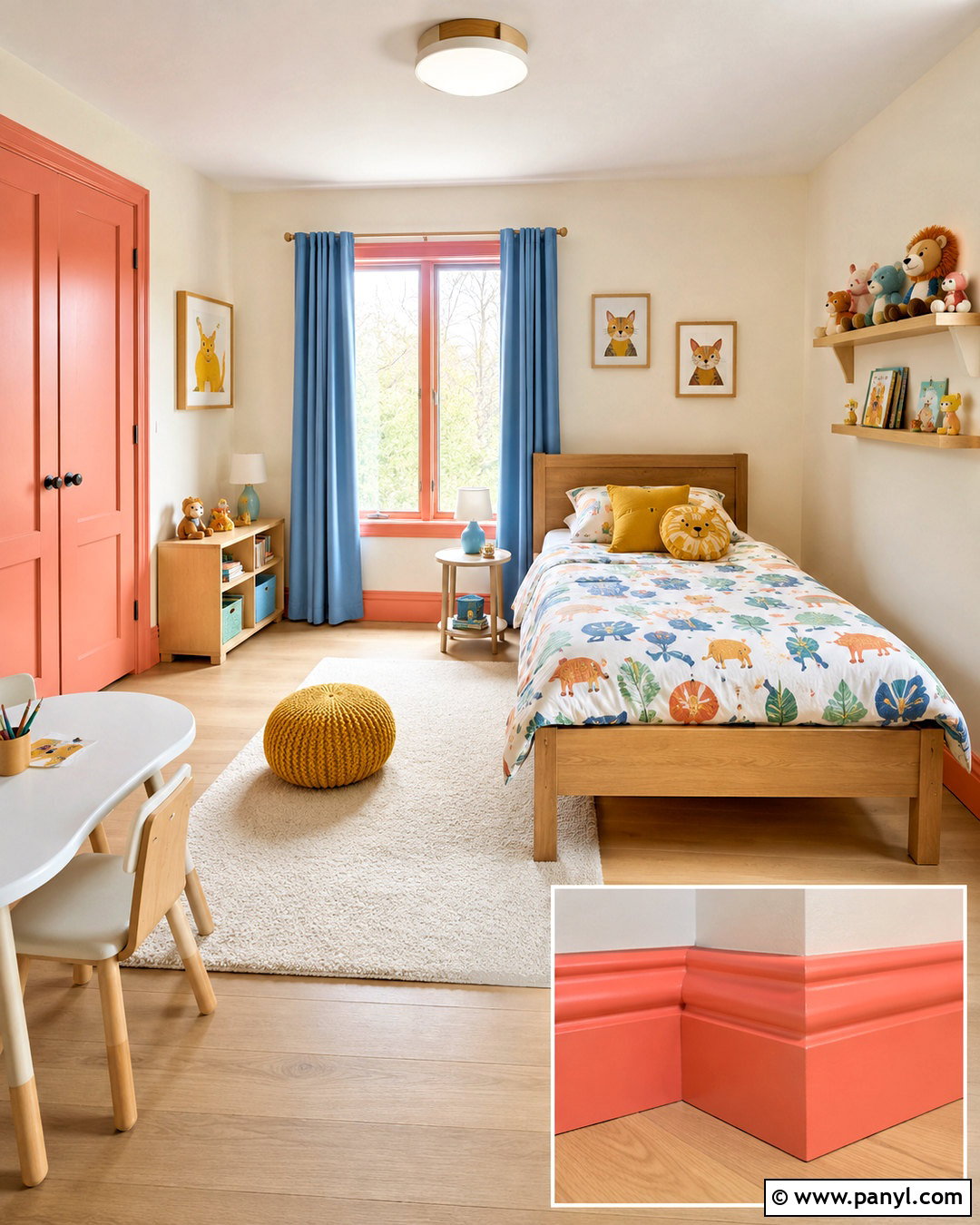
Playful coral baseboards give a child’s room energy while keeping the main walls calm. Pair the trim with pale cream walls, light maple flooring, and a washable ivory rug. Repeat coral on the closet door and window casing, then introduce smaller touches through patterned bedding and storage bins. A natural wood bed, low bookcase, and rounded white desk provide flexible furniture that can adapt as the child grows. Balance the coral with sky blue curtains, mustard pillows, and simple animal artwork. Use durable semi-gloss enamel on the baseboards to simplify cleaning around play and storage areas. The completed room feels colorful without becoming chaotic, and the neutral furniture ensures the trim can be repainted easily when tastes change.
20. Painted Baseboards With Dark Wood Floors
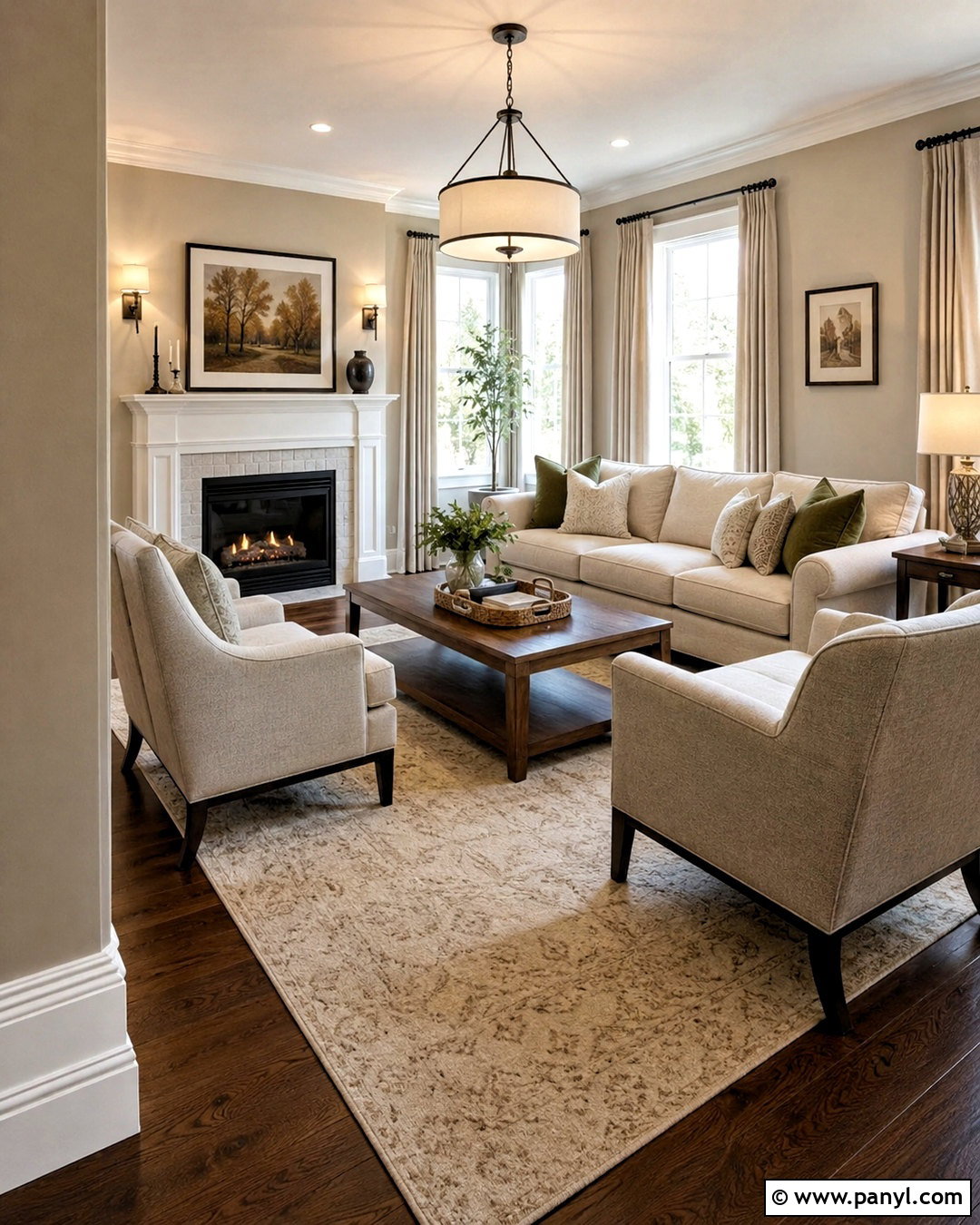
Warm white baseboards create a clean boundary between dark walnut floors and pale mushroom walls. This classic combination suits a comfortable living room where the flooring provides most of the visual weight. Repeat the trim color on doors, windows, and the fireplace mantel for consistency. Choose a light beige sofa, oatmeal armchairs, and a medium wood coffee table that bridges the pale upholstery and dark floor. A large cream rug softens the contrast while leaving a border of walnut visible around the room. Add bronze lighting, olive pillows, and textured linen curtains for warmth. Use a creamy white rather than a stark shade, then finish the baseboards in satin enamel for a polished surface that remains easy to maintain.
Conclusion:
The right baseboard color can change how an entire room feels, even when the trim itself is simple. White creates definition, deep shades add architectural weight, and matching wall colors produce a calm, continuous backdrop. Before painting, compare samples against the walls, flooring, cabinets, doors, and major furniture in both daylight and artificial light. Choose a washable satin or semi-gloss trim paint, and prepare the surface carefully for a smooth result. Most importantly, treat baseboards as part of a complete room palette rather than an afterthought. These 20 painted baseboards demonstrate how thoughtful color, finish, furnishings, and materials can work together to create rooms that feel polished, practical, and personal.

Related Ideas and Inspiration:

Leave a Reply