
Choosing the best garage paint colors can turn a cold, unfinished area into a clean, organized extension of your home. The right palette should brighten work zones, complement flooring, and make storage systems feel intentional. It also needs to suit how you use the space, whether you park vehicles, complete DIY projects, exercise, or handle household storage. Light neutrals improve visual clarity, while deeper shades create a polished workshop or showroom effect. Warm earth tones feel welcoming, and muted colors add personality without becoming distracting. Before committing, test large samples under your existing overhead lights and beside the garage floor. The complete looks below combine wall color, ceiling paint, cabinetry, flooring, and practical accents to help you confidently compare the 20 best garage paint colors.

1. Crisp White Garage
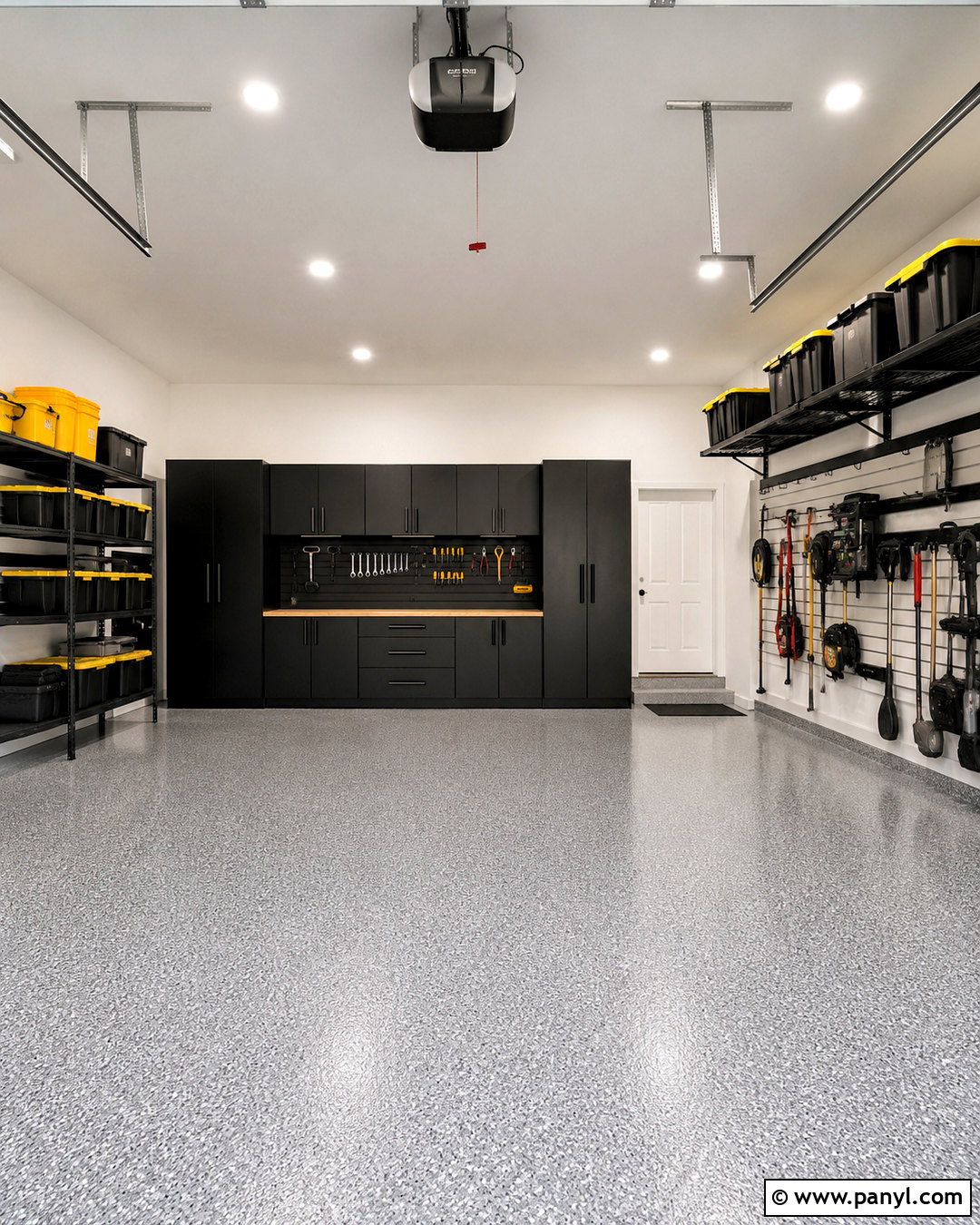
Crisp white creates a bright, straightforward garage that feels larger and easier to navigate. Paint the walls a clean white in a washable satin finish, then use flat white on the ceiling to visually raise it. Balance the brightness with medium-gray epoxy flooring, matte black storage cabinets, and natural plywood work surfaces. Black metal shelving and matching door hardware provide definition without making the room feel heavy. Install bright neutral-white ceiling fixtures so the walls do not appear yellow or blue. This palette works especially well in small garages, windowless spaces, and detailed work areas. Because pure white reveals marks quickly, add a durable gray wall panel or painted lower section behind workbenches, bicycles, and frequently handled equipment.
2. Warm White Garage
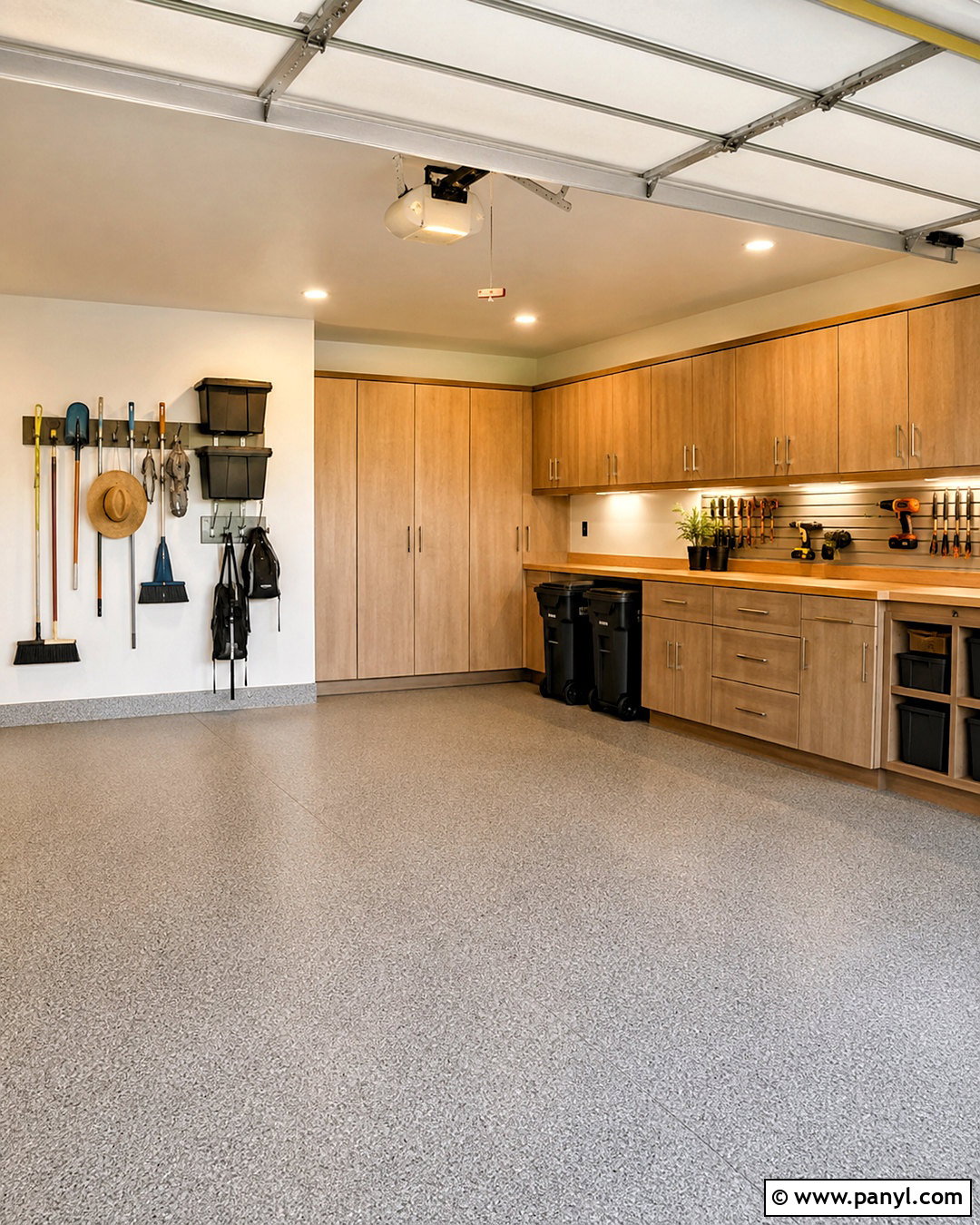
Warm white gives a garage a softer, more welcoming appearance than stark builder white. Choose a creamy white with subtle beige undertones for the walls and repeat it on the ceiling in a flatter finish. Pair the color with warm-gray flooring, light oak cabinets, and brushed steel hooks for a balanced modern look. A butcher-block workbench reinforces the warmth, while charcoal storage bins prevent the palette from looking too delicate. This complete garage scheme suits homes with traditional, farmhouse, or transitional interiors because it creates a natural connection between the garage and adjoining rooms. Use bright white overhead lighting to keep the undertones fresh. Avoid heavily yellow bulbs, which can make warm white walls appear dingy rather than comfortably creamy.
3. Light Gray Garage
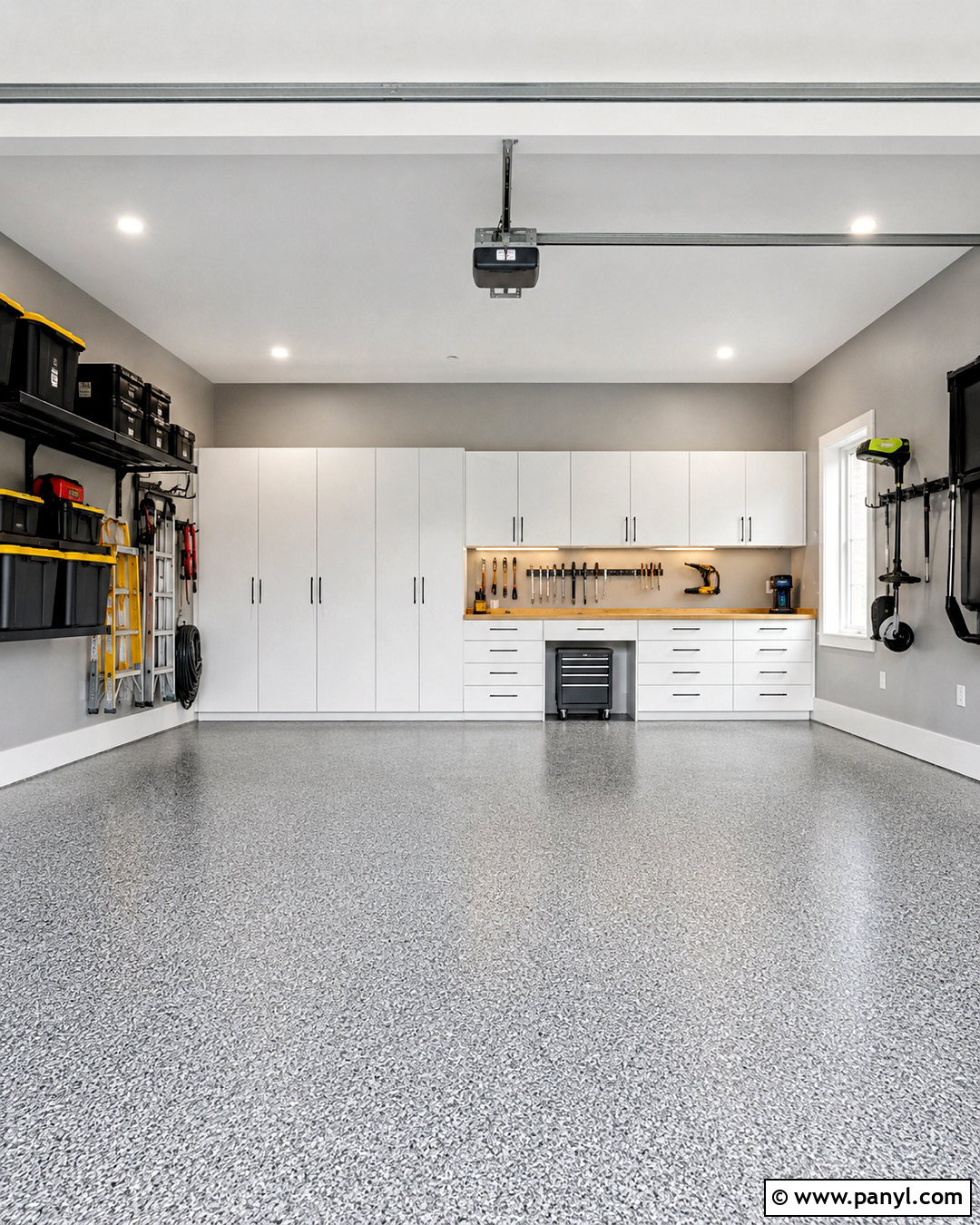
Light gray is one of the most flexible garage paint colors because it looks clean without emphasizing every small mark. Cover the main walls in a pale neutral gray, keep the ceiling bright white, and select a slightly darker gray epoxy floor with subtle flakes. White cabinets create contrast, while black drawer pulls, shelving brackets, and tool rails sharpen the finished look. For warmth, introduce a maple or oak workbench and a few matching wood storage crates. This combination fits parking, storage, and workshop functions equally well. Check the paint beside the floor before making a final choice, since some grays can look unexpectedly blue. A balanced gray with minimal undertones will coordinate more easily with concrete, metal, vehicles, and colorful equipment.
4. Warm Greige Garage
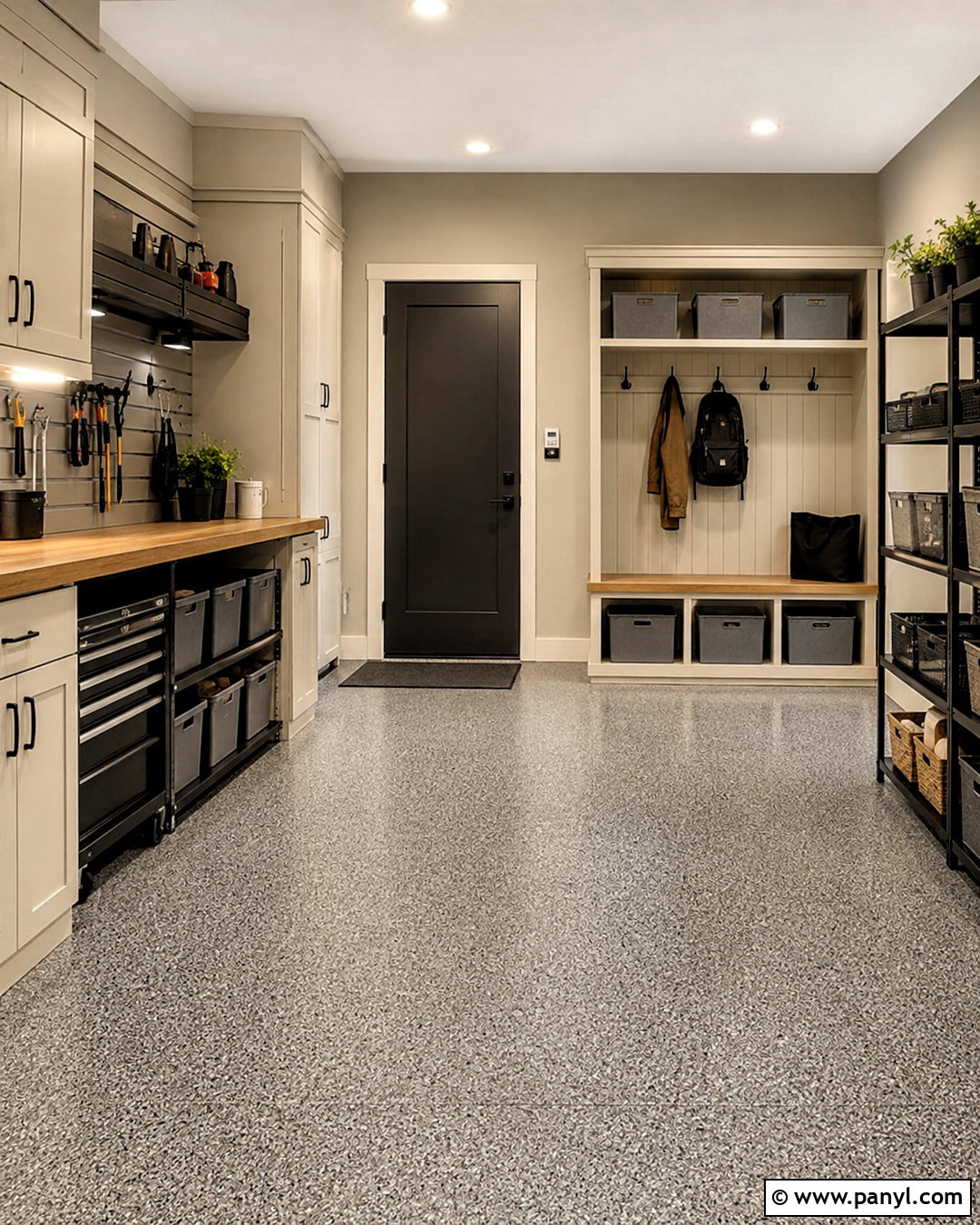
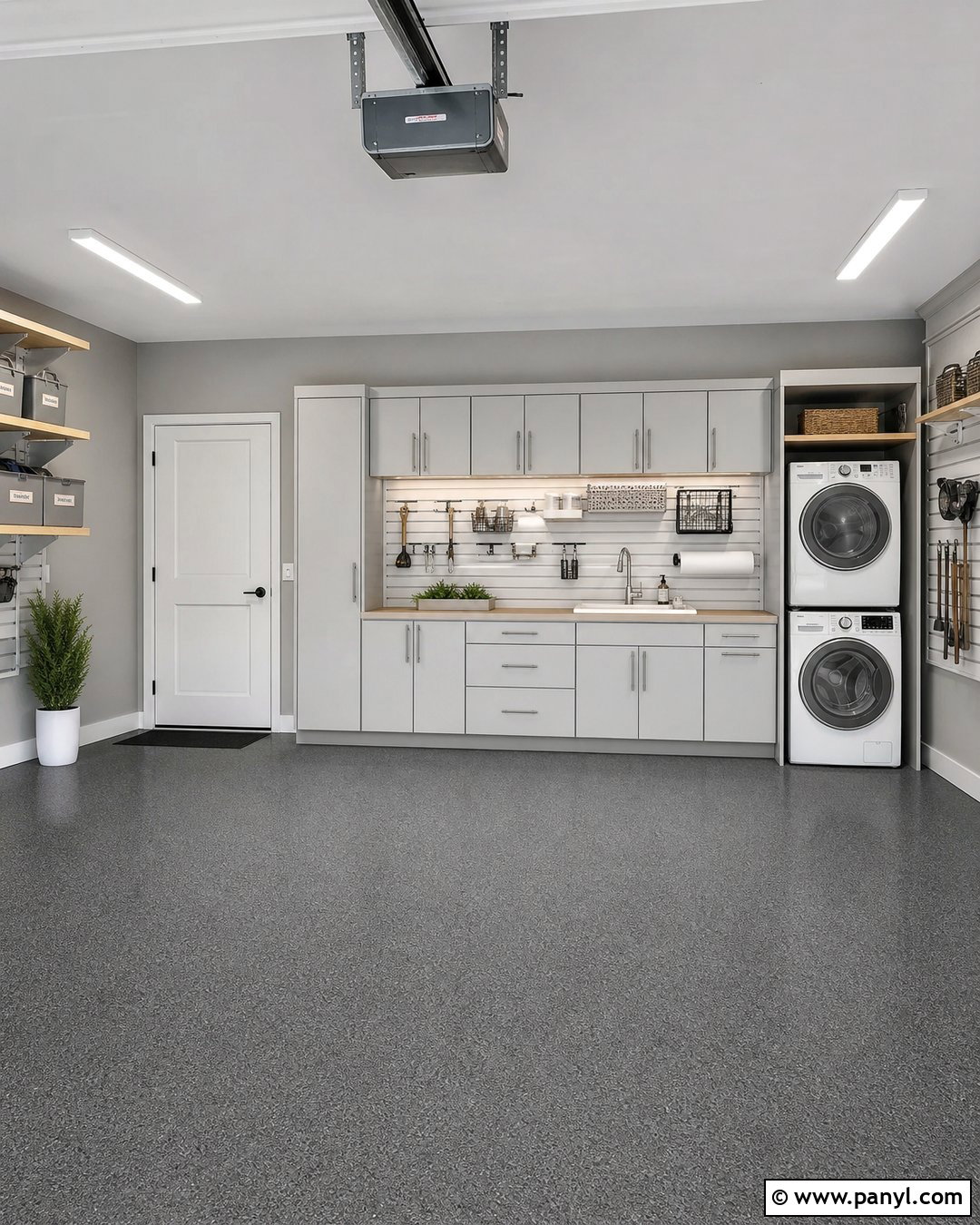
Warm greige blends gray practicality with beige comfort, making it ideal for a garage connected directly to the home. Apply a light greige to all walls, use soft white overhead, and ground the room with charcoal-speckled flooring. Cream cabinets, black metal shelving, and a medium oak workbench create a layered palette that feels designed but still hardworking. Add woven storage baskets only in enclosed or dry areas, then use labeled gray bins for everyday supplies. Greige is particularly useful when the garage contains laundry machines, a mudroom entry, or household overflow storage. Choose a washable satin wall finish for easier maintenance. Bright ceiling fixtures and under-cabinet task lights will prevent this warm neutral from becoming muddy in corners without natural daylight.
5. Soft Beige Garage
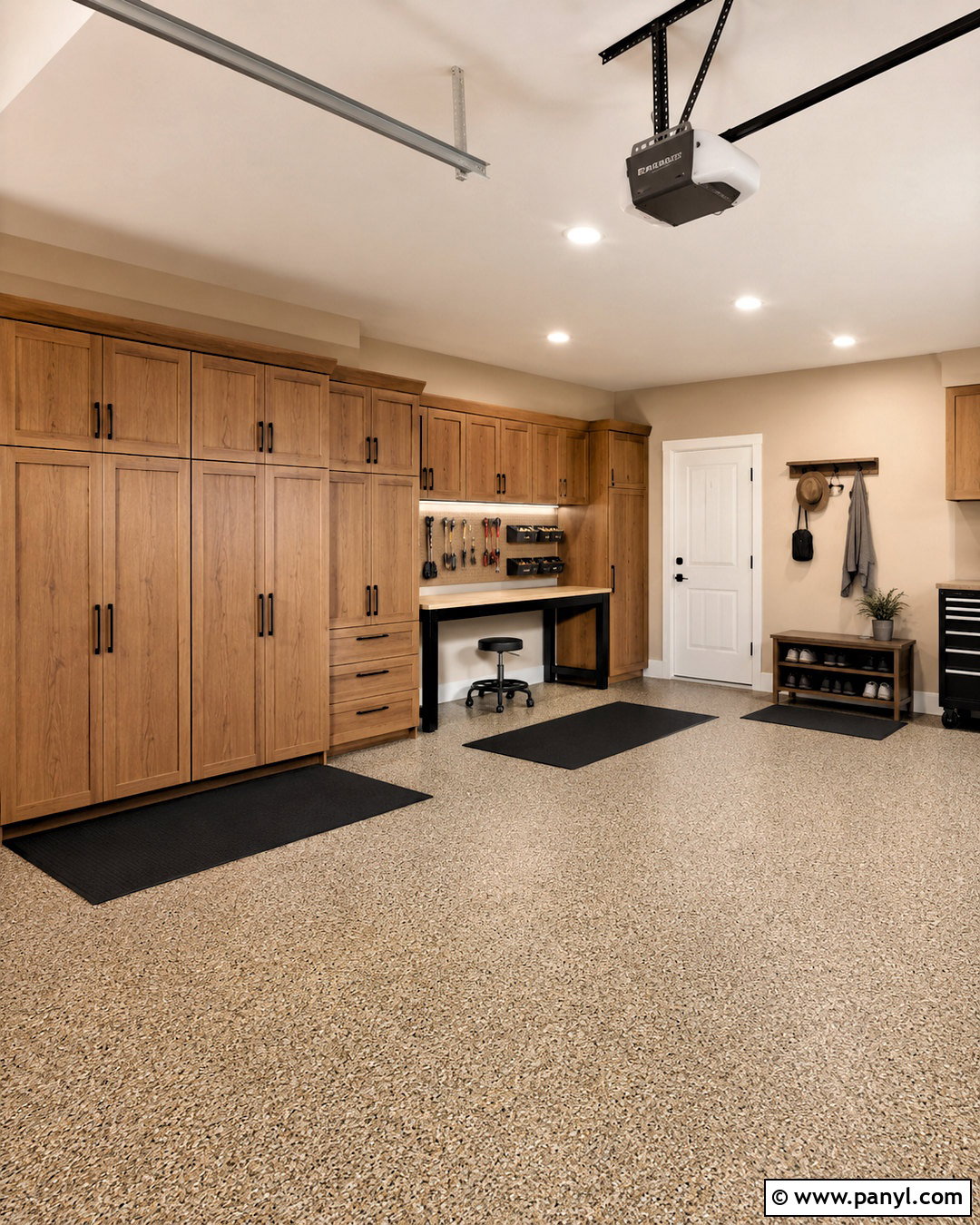
Soft beige can make a utilitarian garage feel comfortable without sacrificing a tidy, practical appearance. Select a light sandy beige for the walls and a clean warm white for the ceiling, interior doors, and trim. Pair these colors with tan-and-gray flake flooring, dark bronze hardware, and natural wood storage cabinetry. A black workbench frame adds enough contrast to keep the space from looking overly neutral. This full palette works beautifully in garages attached to brick, stucco, Craftsman, or Mediterranean-style homes. It also disguises ordinary dust more gracefully than brilliant white. Keep the shade light and muted rather than golden. Cool white overhead lighting, streamlined shelving, and matching closed bins will make the finished garage feel fresh, organized, and intentionally connected to the home.
6. Sandstone Garage
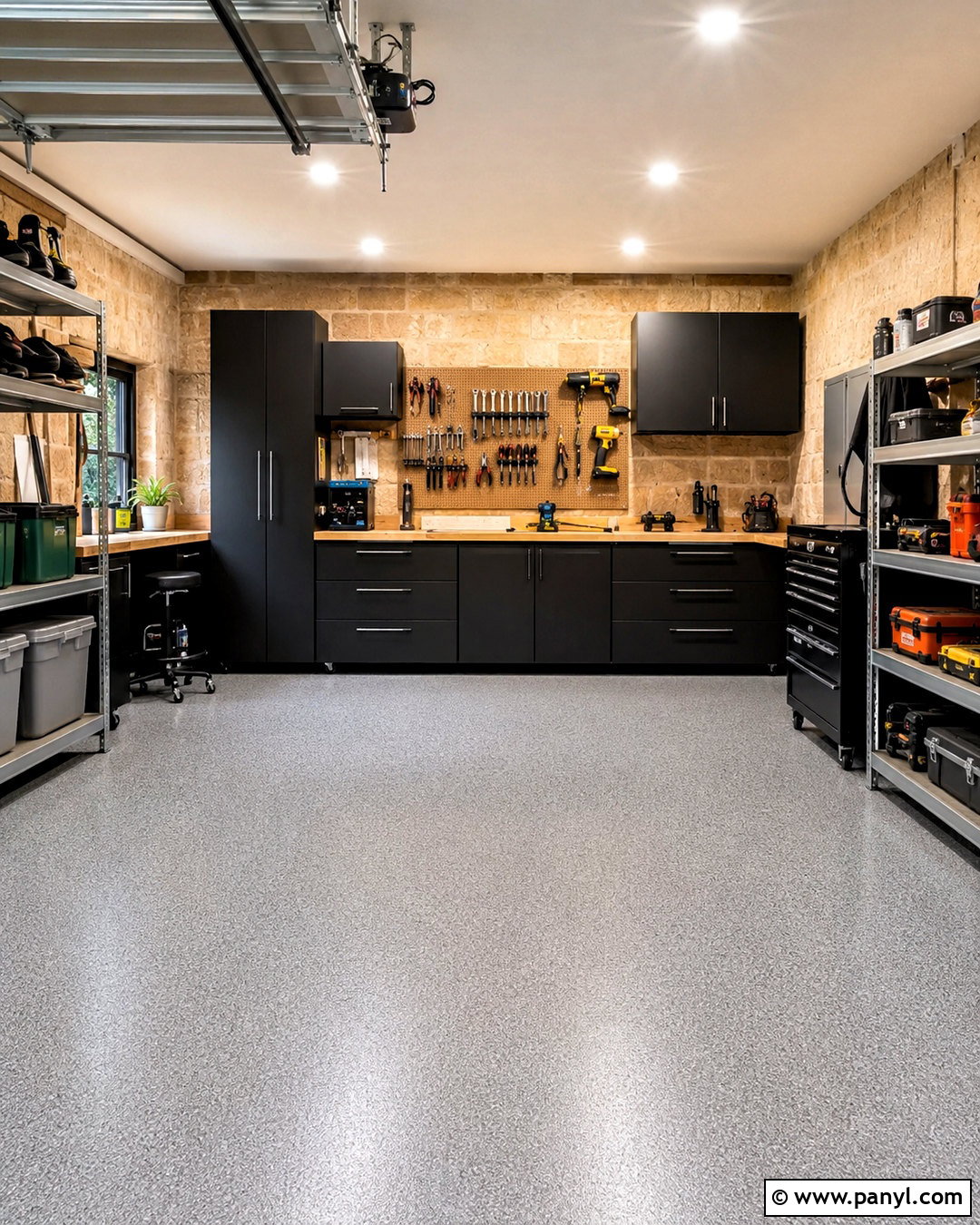
Sandstone paint brings subtle warmth to a garage while coordinating naturally with concrete, wood, and metal. Use a pale tan sandstone shade across the walls, balanced by an off-white ceiling and trim. Choose warm-gray epoxy flooring, matte black cabinets, and a solid wood workbench to create an approachable workshop atmosphere. Pegboard in a deeper taupe can define the main tool zone without overwhelming the room. This scheme is practical for busy family garages because the walls do not immediately display every speck of dust or soil. Add galvanized shelving and charcoal utility mats near doors for durable contrast. Plenty of bright overhead lighting is important because sandstone can deepen in shadow. The final space should feel warm, clean, and functional rather than brown or dim.
7. Mushroom Taupe Garage
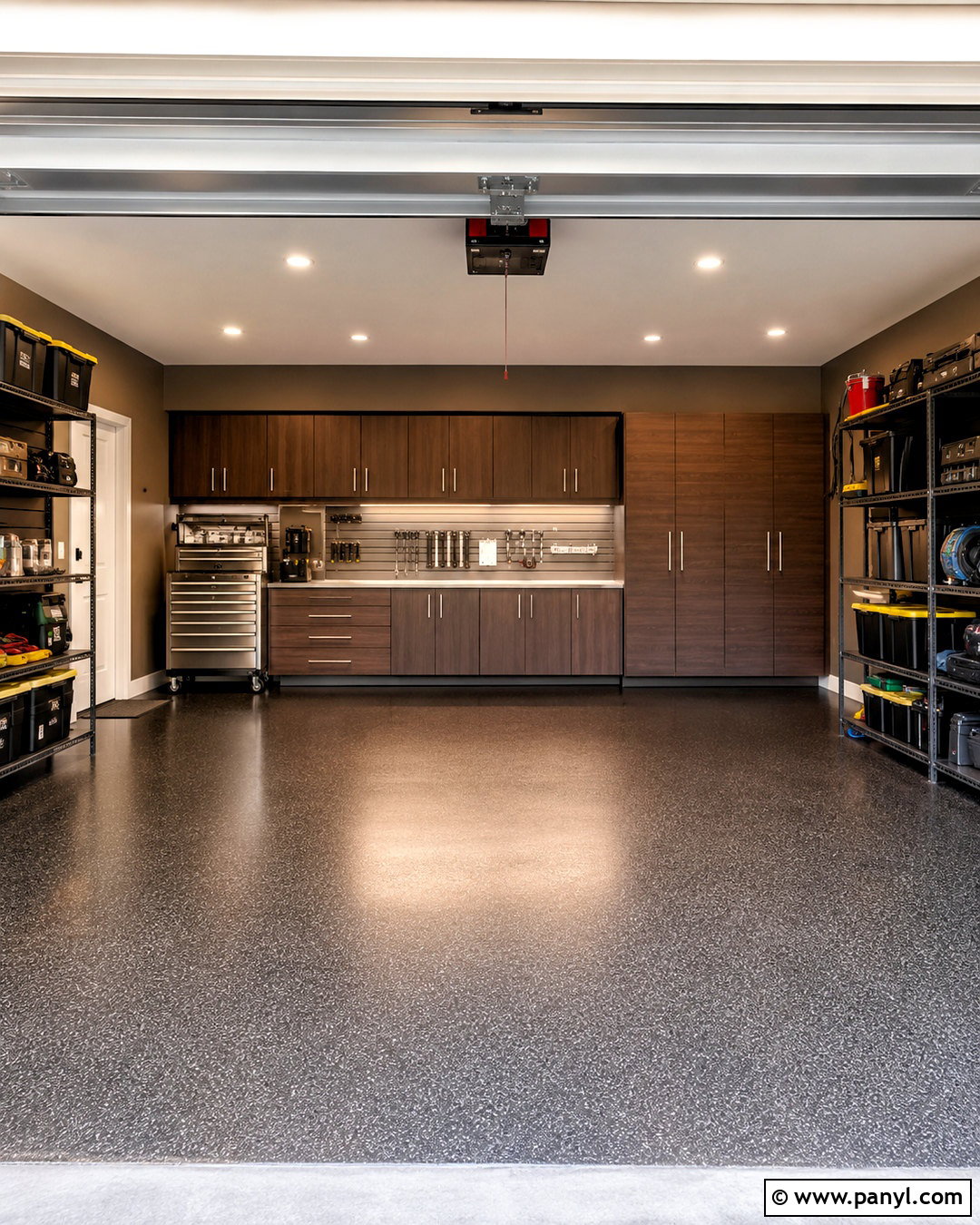
Mushroom taupe delivers a richer neutral look for homeowners who find gray too cool and beige too traditional. Paint the walls a light mushroom tone with balanced gray-brown undertones, then keep the ceiling and trim creamy white. Combine the walls with graphite flooring, walnut-toned cabinets, and black steel shelving for a refined garage workshop. Brushed nickel handles and silver tool storage add a lighter metallic layer. This palette works best in a medium or large garage with strong overhead lighting. Use the taupe on every wall for an enveloping look, or reserve it for the lower two-thirds if the room is compact. Organized closed cabinetry, simple linear lights, and uncluttered work surfaces help the nuanced wall color remain polished instead of feeling dark or dated.
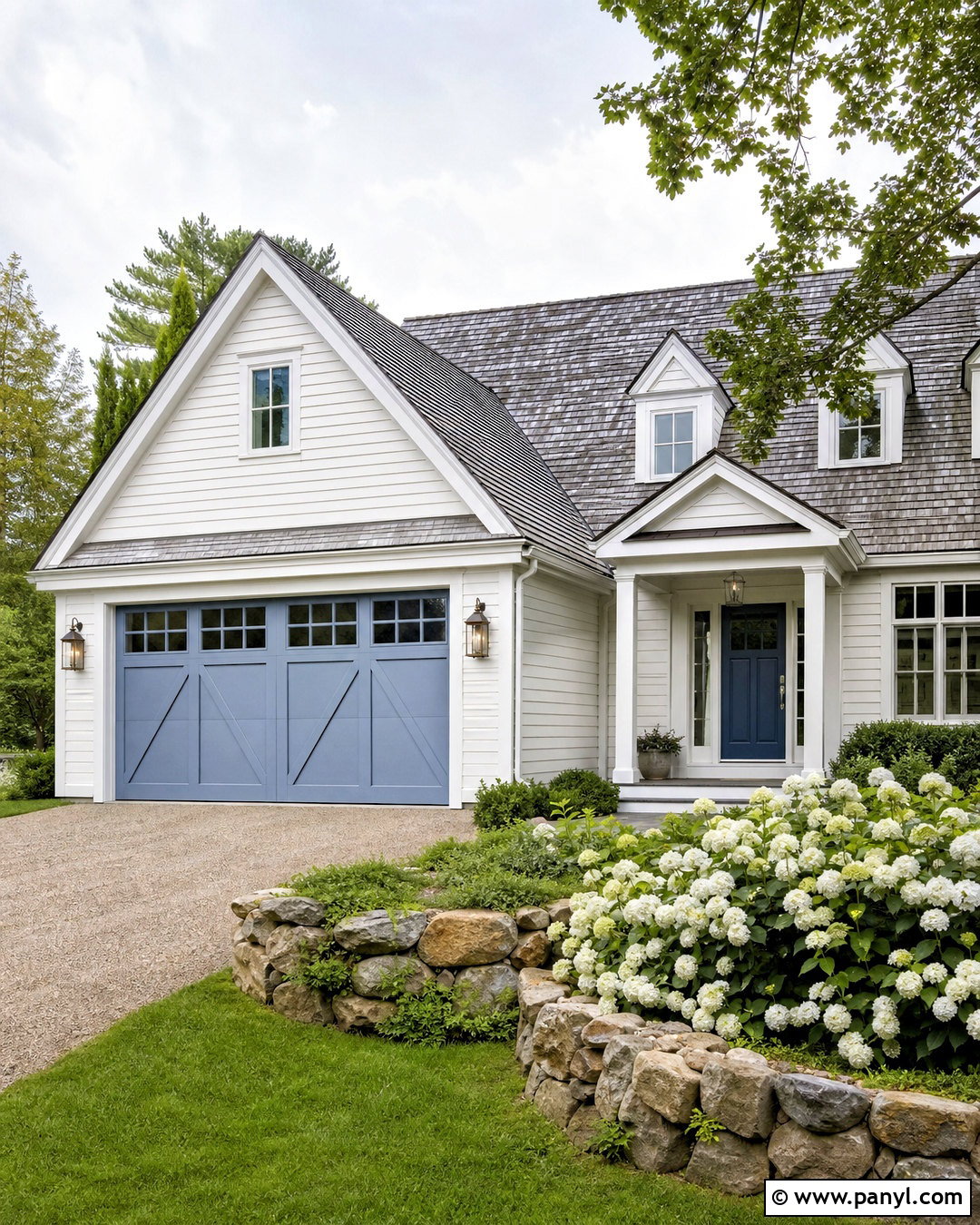
8. Pale Sage Green Garage
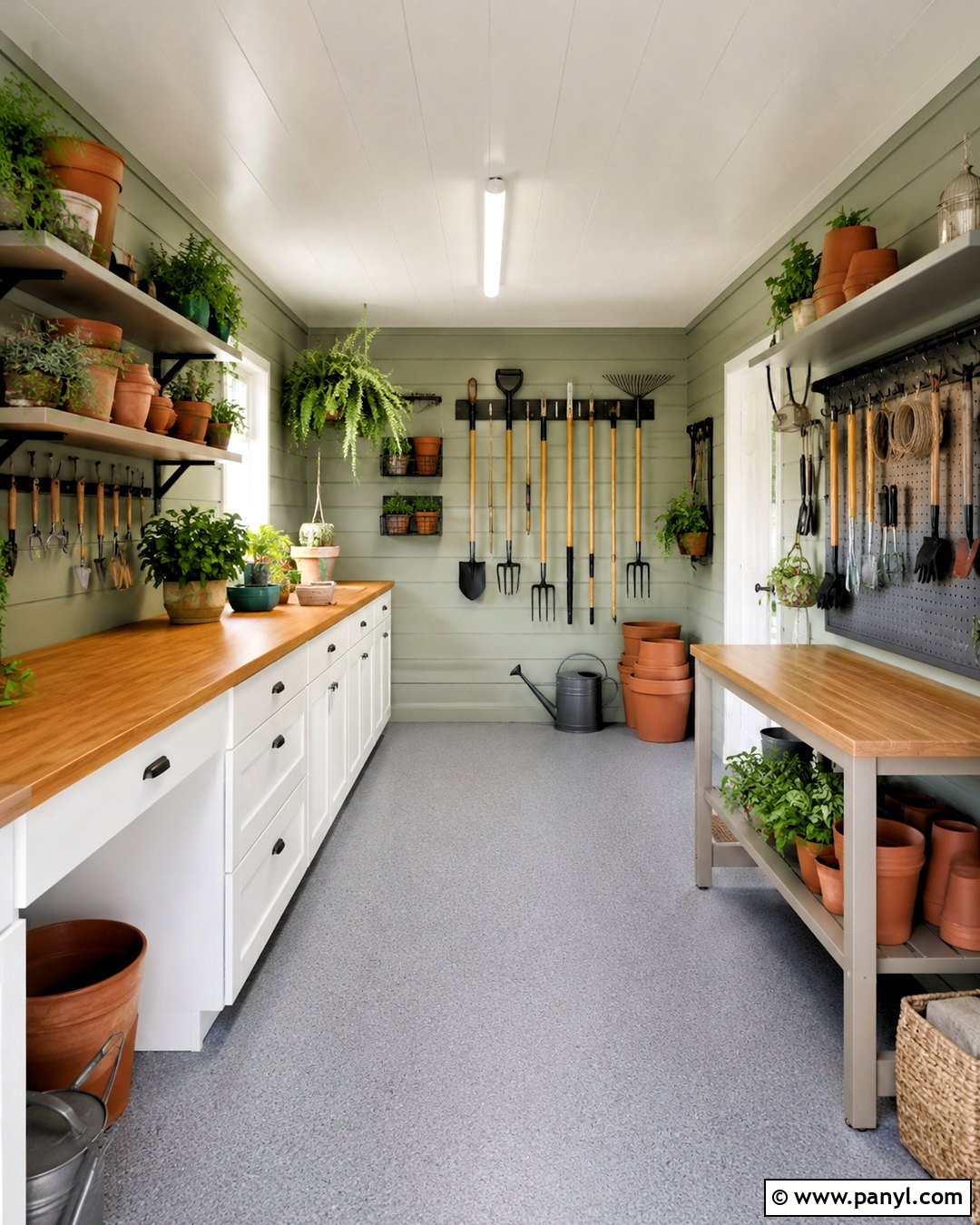
Pale sage green introduces gentle color while maintaining the calm, practical character a garage needs. Cover the walls in a muted gray-green and pair them with a bright white ceiling, soft gray trim, and medium-gray epoxy flooring. White storage cabinets keep the space airy, while natural oak countertops and black utility hooks create warmth and structure. This full look is especially suitable for gardening garages, potting areas, bicycle storage, and homes surrounded by leafy landscaping. Display terracotta pots and neatly stored garden tools as controlled accents rather than scattered decoration. Select a sage with noticeable gray undertones so it stays subtle under artificial light. Bright ceiling fixtures will reveal the green clearly, creating a fresh garage that feels organized, relaxed, and connected to the outdoors.
9. Olive Green Garage
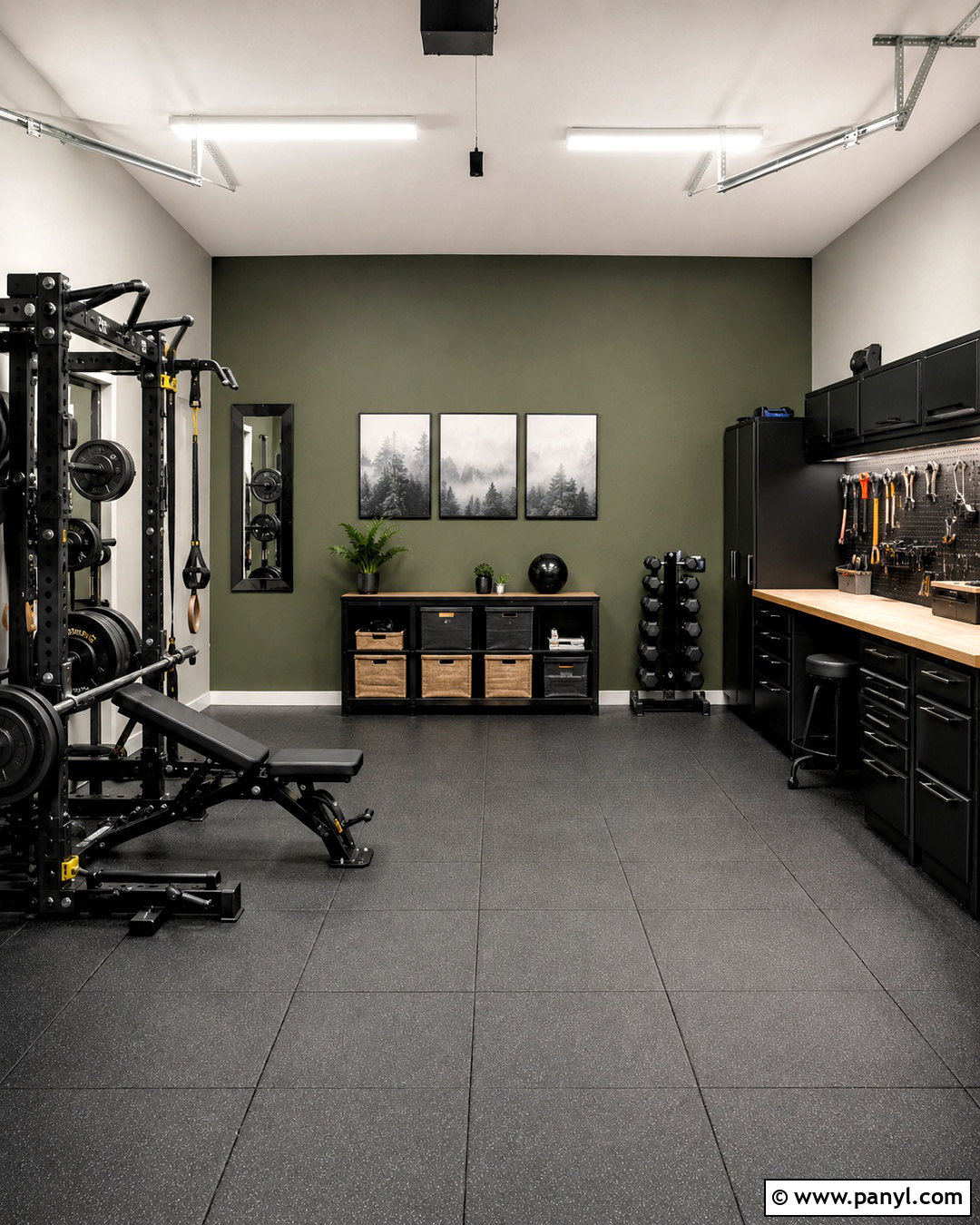
Olive green creates a grounded workshop or garage gym when it is balanced with lighter surfaces. Use muted olive on one main wall and a pale warm gray on the remaining walls. Keep the ceiling white, then add black storage cabinets, oak worktops, and medium-gray rubber or epoxy flooring. The olive feature wall can anchor a tool station, fitness rack, or streamlined display of outdoor equipment. Tan canvas bins and brushed steel hardware complement the color without turning the room into a themed space. This darker palette performs best with multiple bright ceiling fixtures and focused task lighting. Leave large equipment zones visually simple. The completed garage will feel sturdy, modern, and distinctive while the light surrounding walls preserve openness and make everyday tasks easier to complete.
10. Dusty Blue Garage
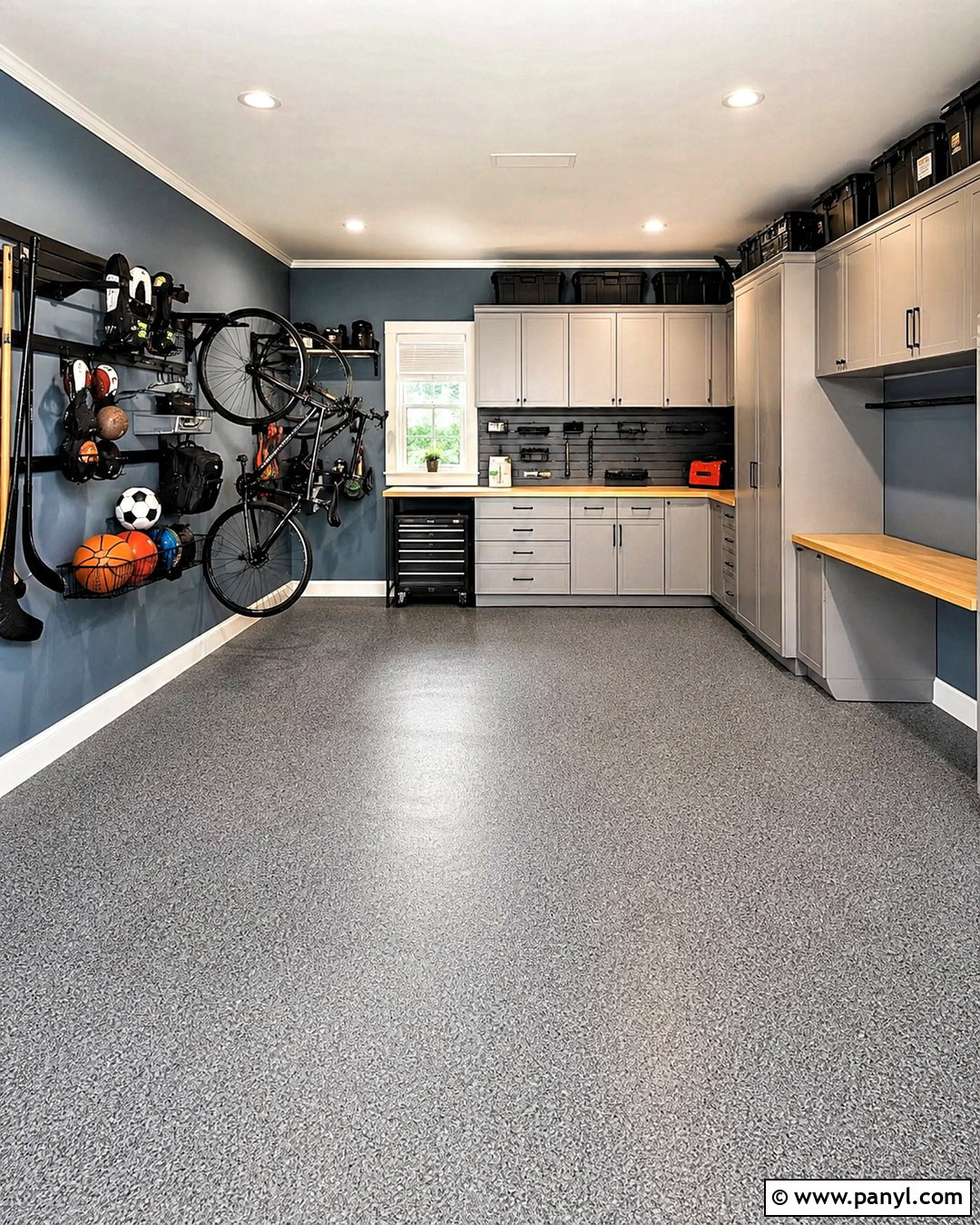
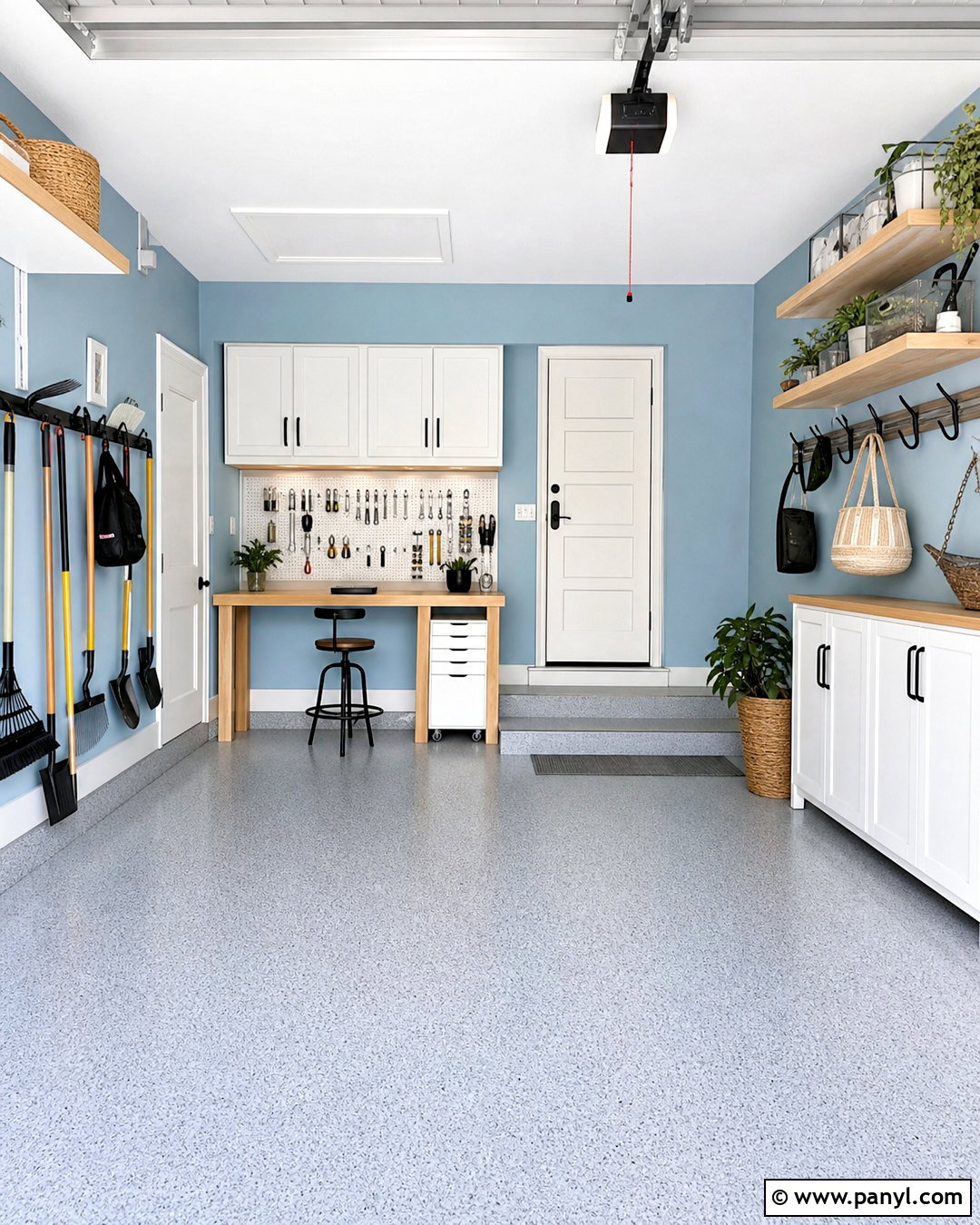
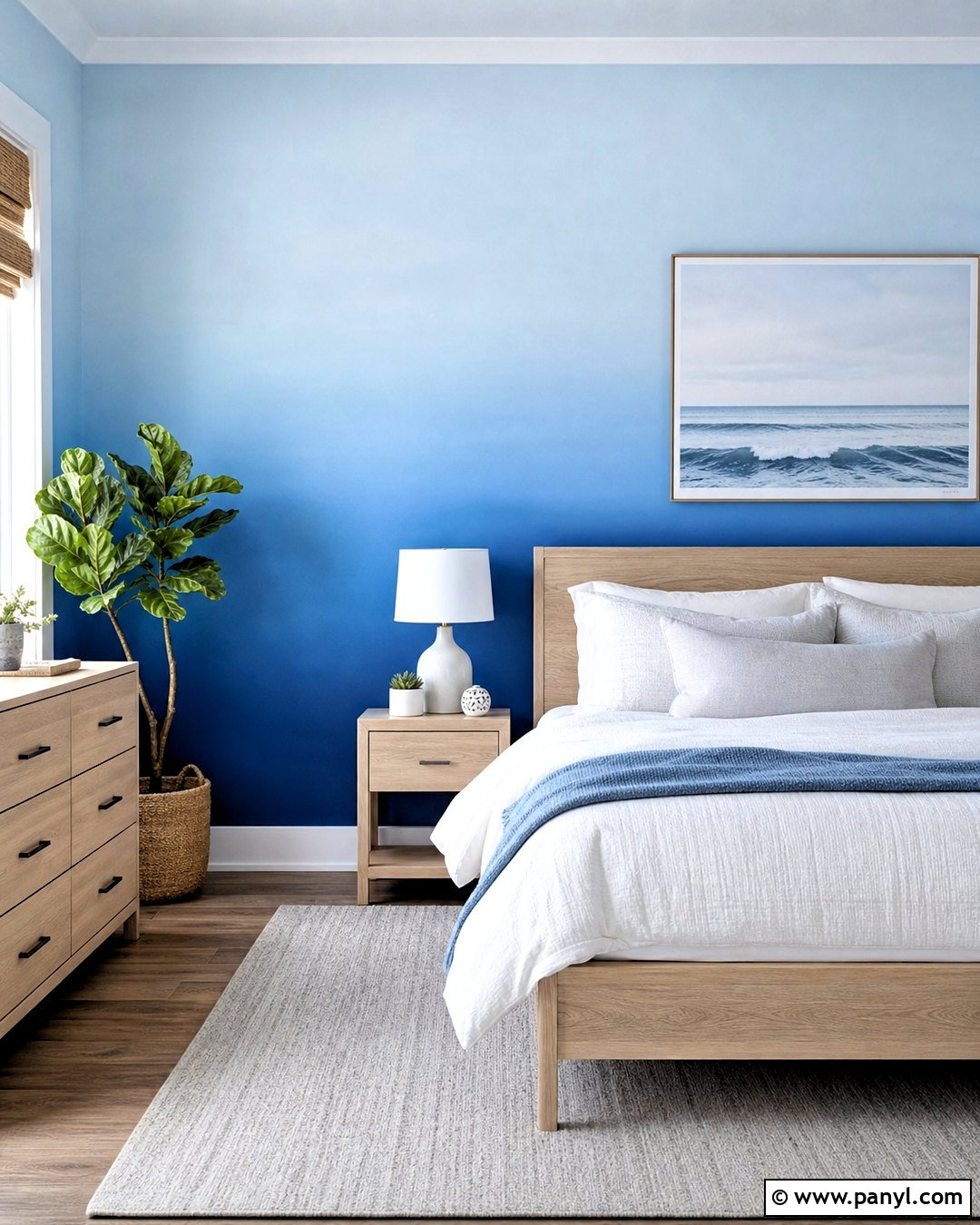
Dusty blue gives a garage personality while remaining quiet enough for an organized, multipurpose layout. Paint the walls a softened blue with gray undertones, use crisp white on the ceiling and trim, and choose a charcoal-speckled floor. Light gray cabinets and maple work surfaces keep the room balanced and prevent the blue from becoming overly cool. Matte black rails can organize tools, helmets, and sports equipment along one wall. This palette suits coastal homes, modern family garages, and hobby areas where a calmer atmosphere is welcome. Select bright neutral overhead lighting to maintain the paint’s true color. Limit additional accent colors to black, white, and natural wood. The result is a cohesive garage that feels cleaner and more finished without resembling a conventional interior room.
11. Blue Gray Garage
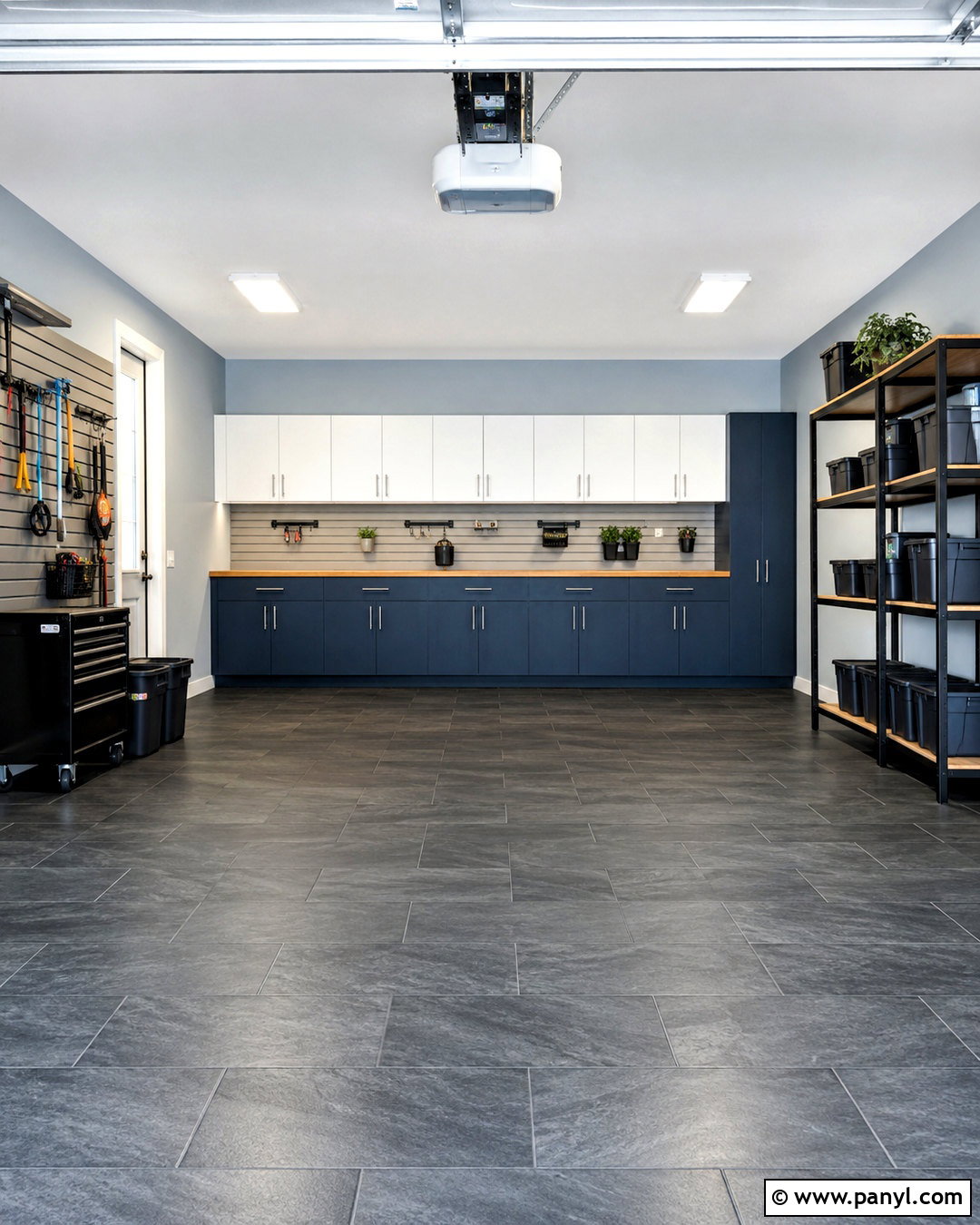
Blue gray offers the neat appearance of gray with enough color to make a garage feel more considered. Choose a light-to-medium blue gray for the walls, a pure white ceiling, and dark slate flooring. White upper cabinets brighten the perimeter, while navy lower cabinets provide depth around the workbench. Add stainless steel hardware, black-framed shelving, and a pale wood countertop for a balanced combination of cool and warm materials. This complete look works well in garages with windows because daylight reveals the blue undertone beautifully. In windowless spaces, test the paint under installed lighting before covering every wall. Use matching bins and keep open storage limited. A controlled palette allows the blue-gray walls to create character while preserving the crisp, efficient feeling needed in a working garage.
12. Slate Blue Garage
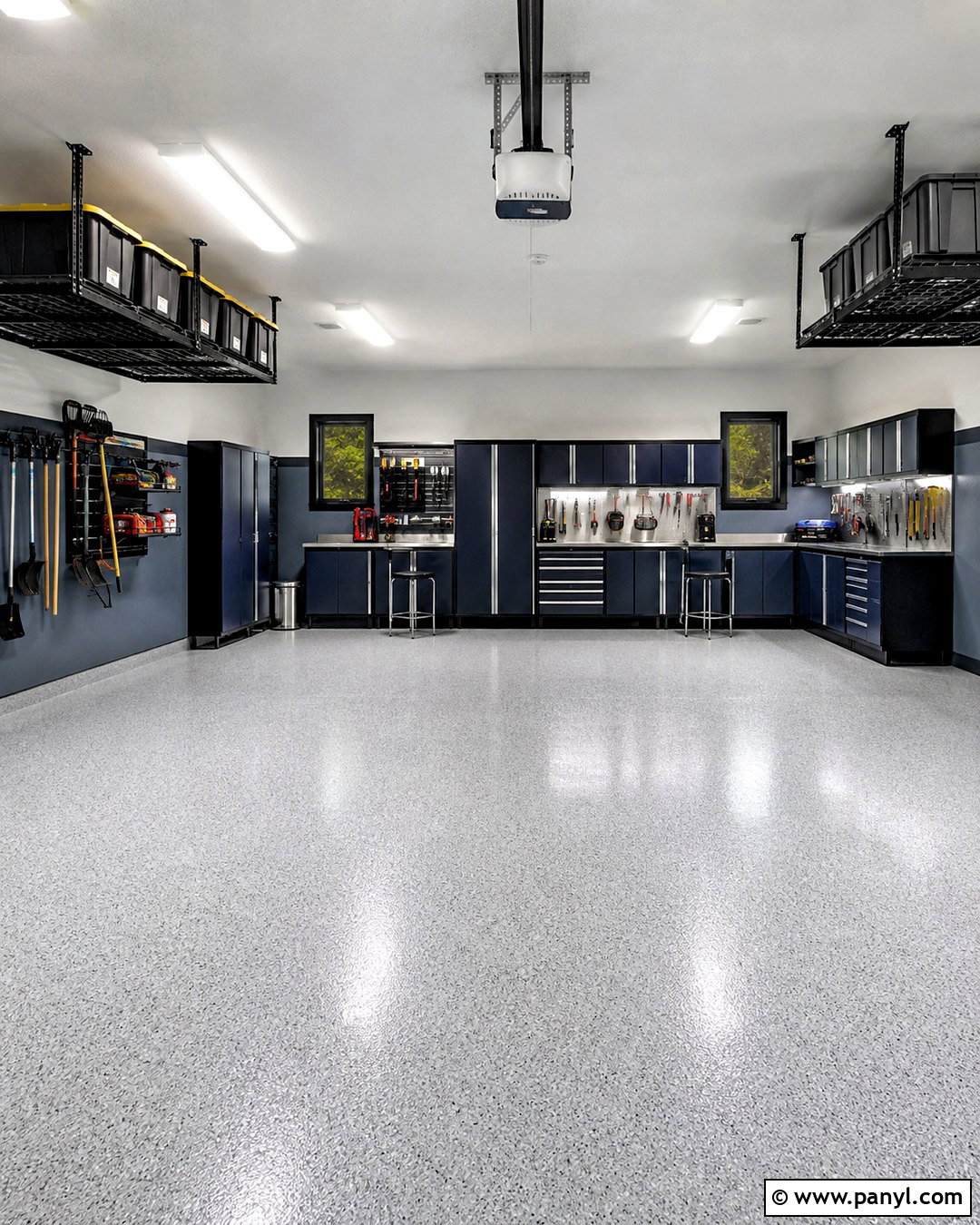
Slate blue creates a sophisticated garage with enough depth to hide minor scuffs around active zones. Apply it to the lower half of the walls, then use soft white above to preserve brightness. Separate the colors with a narrow charcoal rail that can also support hooks or storage accessories. Continue the scheme with pale gray epoxy flooring, dark blue cabinets, stainless steel work surfaces, and black overhead racks. This two-tone layout visually grounds the room while keeping the ceiling area open. It works especially well for workshops and garages with tall walls. Bright linear ceiling lights are essential for maintaining accurate color and clear visibility. Repeat slate blue in small cabinet panels or storage bins so the room looks cohesive, planned, and professionally finished.
13. Navy Blue Garage
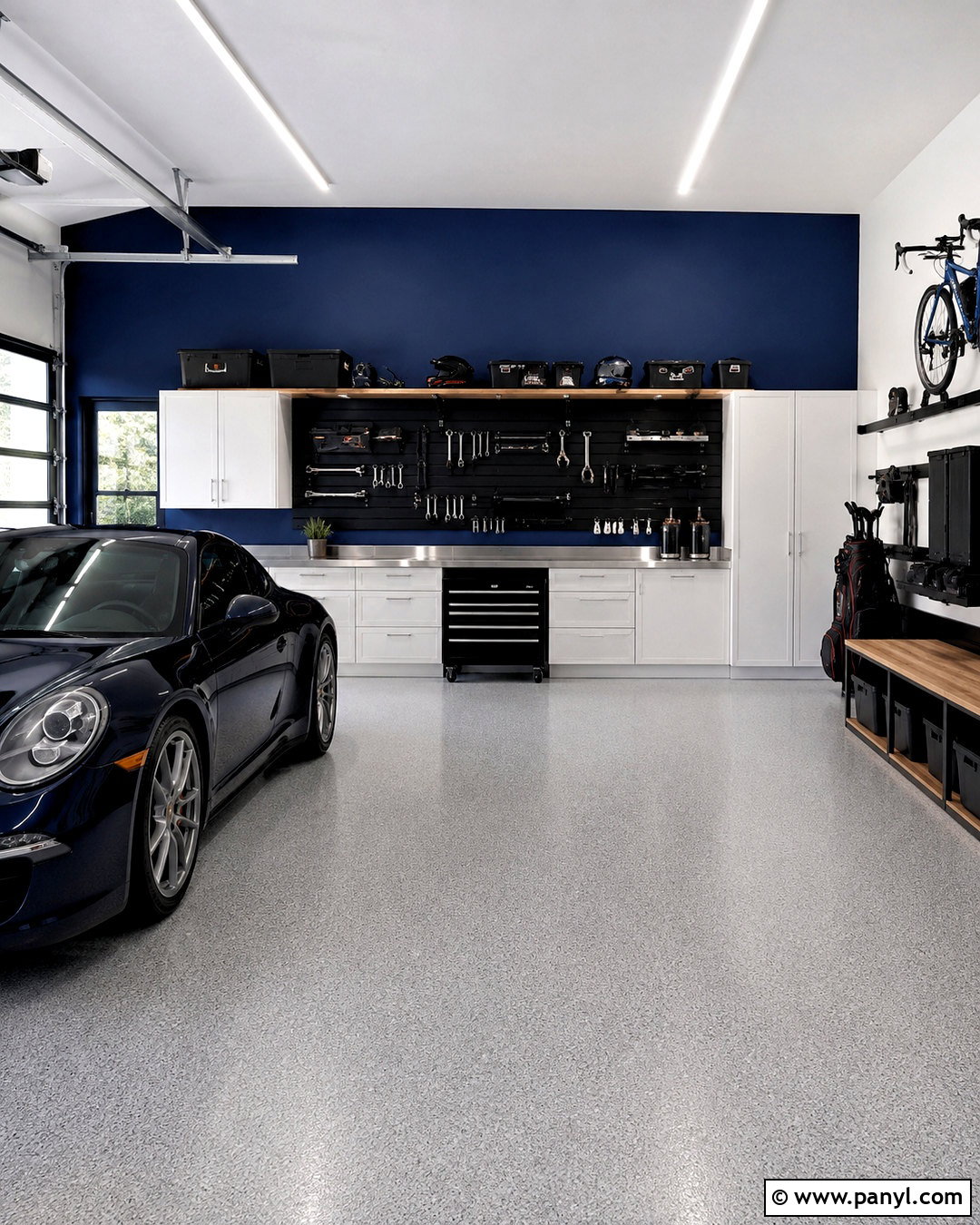
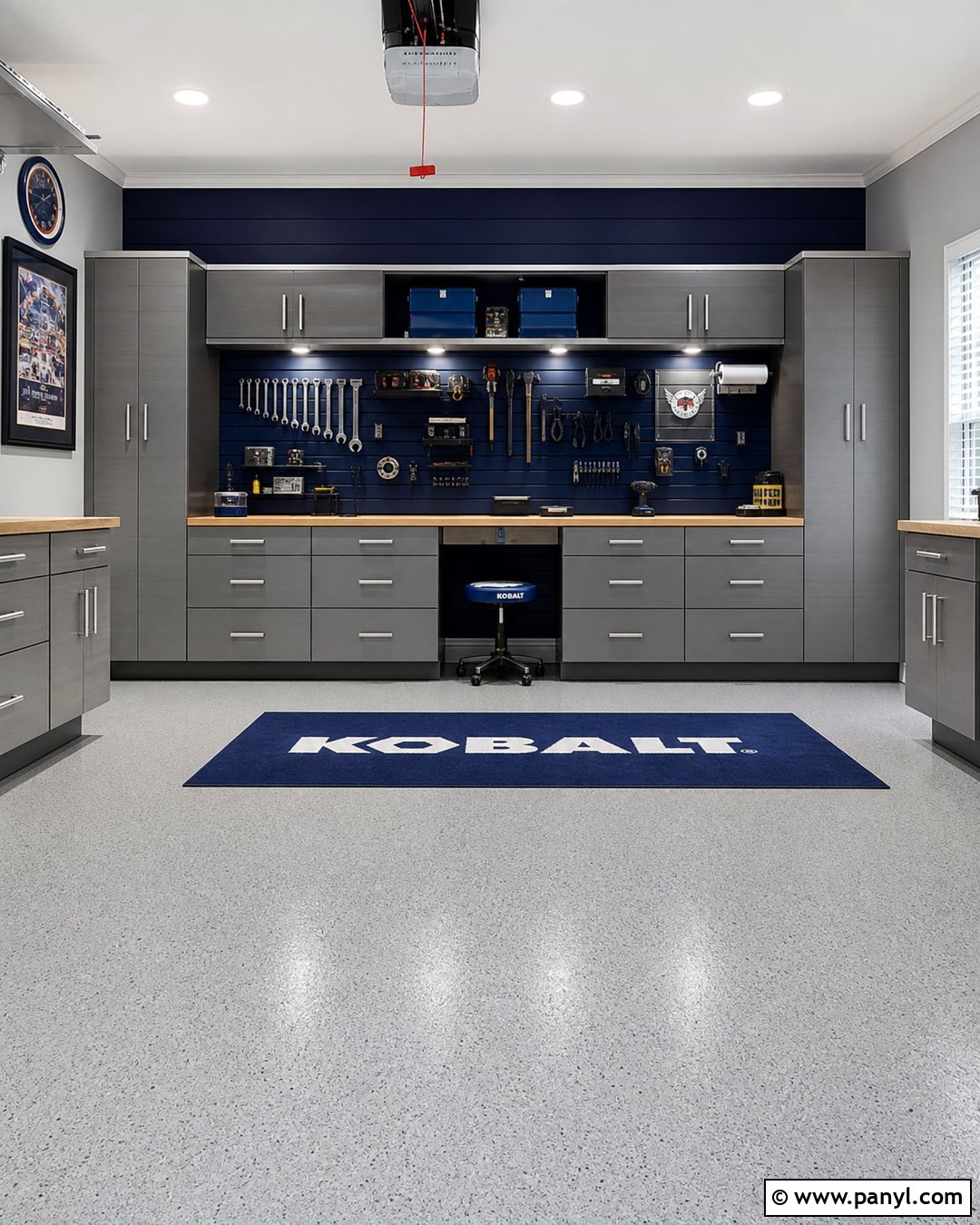
Deep navy can transform a basic garage into a tailored automotive or hobby space when used strategically. Paint one long wall navy and keep the remaining walls, ceiling, and trim bright white. Pair the feature wall with light-gray flooring, white cabinets, brushed metal countertops, and black wall-mounted storage. A warm wood bench or cabinet section prevents the blue-and-white palette from feeling overly cold. Position the darkest wall behind a vehicle display, organized tool system, or garage gym equipment to create a strong focal area. Navy needs generous overhead and task lighting, particularly in a garage with few windows. Avoid covering every surface in the color unless the room is exceptionally large. The balanced finished look feels bold and polished while remaining practical for everyday use.
14. Charcoal Gray Garage
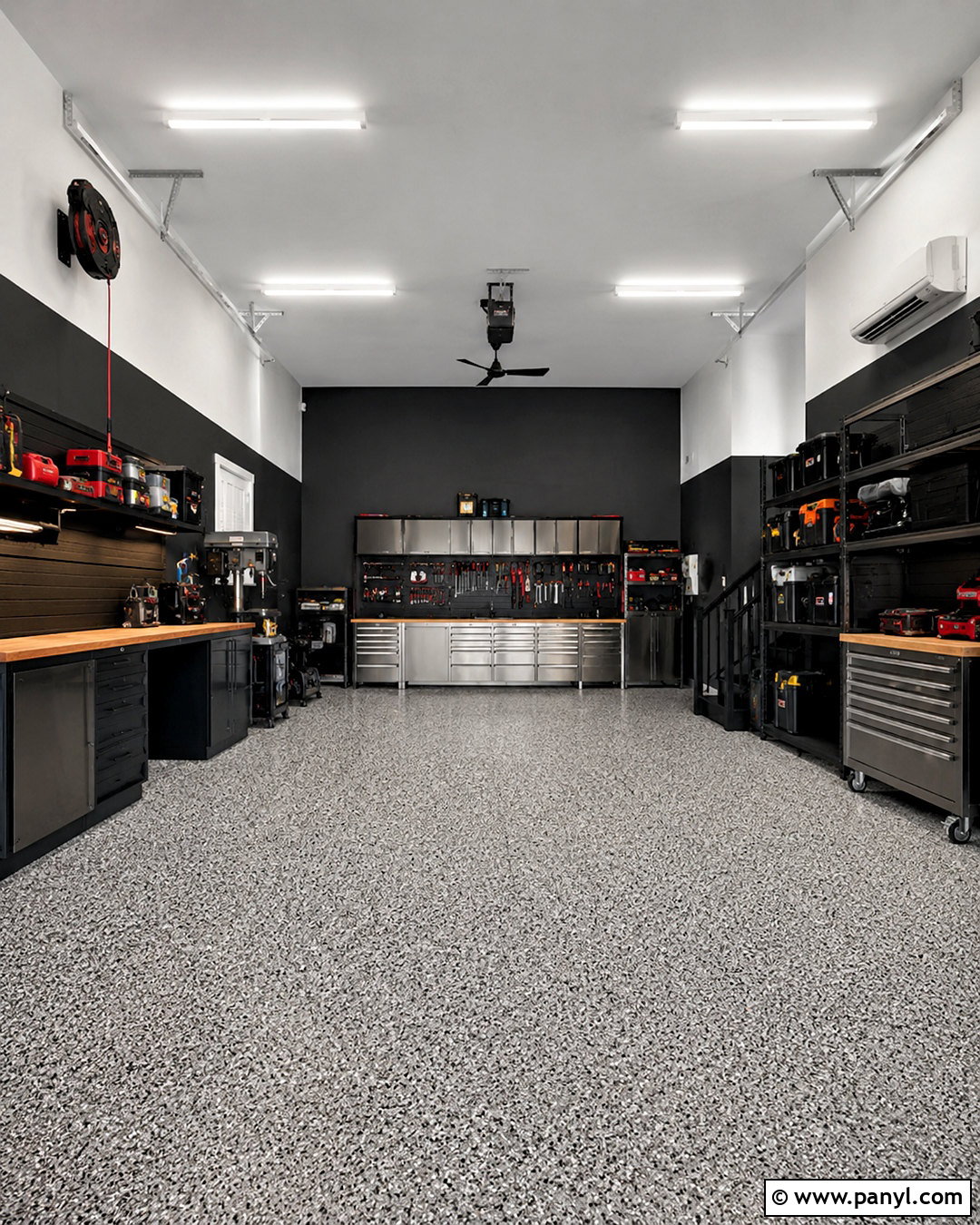
Charcoal gray delivers a sleek workshop appearance and provides a forgiving background for tools and storage systems. Use charcoal on the lower walls or one main feature wall rather than throughout a small garage. Paint the upper walls and ceiling clean white to reflect light, then install medium-gray epoxy flooring with white and black flakes. Red, blue, or stainless steel tool cabinets can serve as a controlled accent, while natural wood worktops soften the industrial palette. Include several bright linear ceiling lights and focused illumination above work areas. Black shelving looks seamless against charcoal, helping visual clutter recede. This complete scheme is ideal for automotive work, woodworking, or a modern garage gym, where durability and an energetic, structured atmosphere are equally important.
15. Soft Black Garage
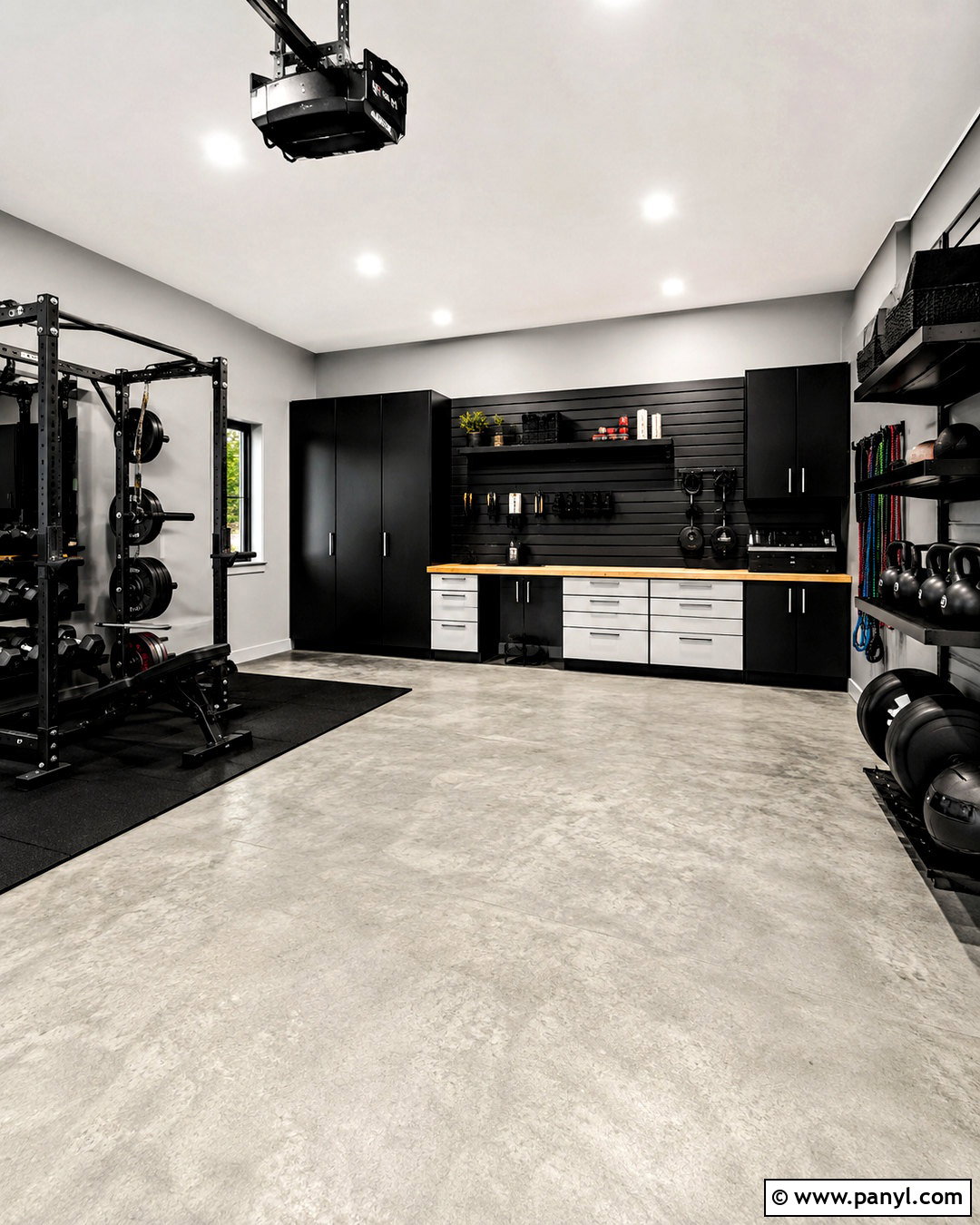
Soft black creates a dramatic garage, but the strongest design uses it as part of a balanced palette. Cover the main storage wall in a charcoal-black shade with slightly softened undertones. Paint the other walls light gray and keep the ceiling bright white. Add pale concrete-look flooring, black cabinets, white drawer fronts, and a warm butcher-block workbench. Open metal shelving can blend into the dark wall, making neatly arranged equipment stand out. Install abundant overhead lighting so corners remain visible and the black surface shows its subtle depth. This finished garage works best as a vehicle display area, home gym, or contemporary workshop. Clean lines and closed storage are essential because a bold dark wall attracts attention to whatever is placed against it.
16. Terracotta Clay Garage
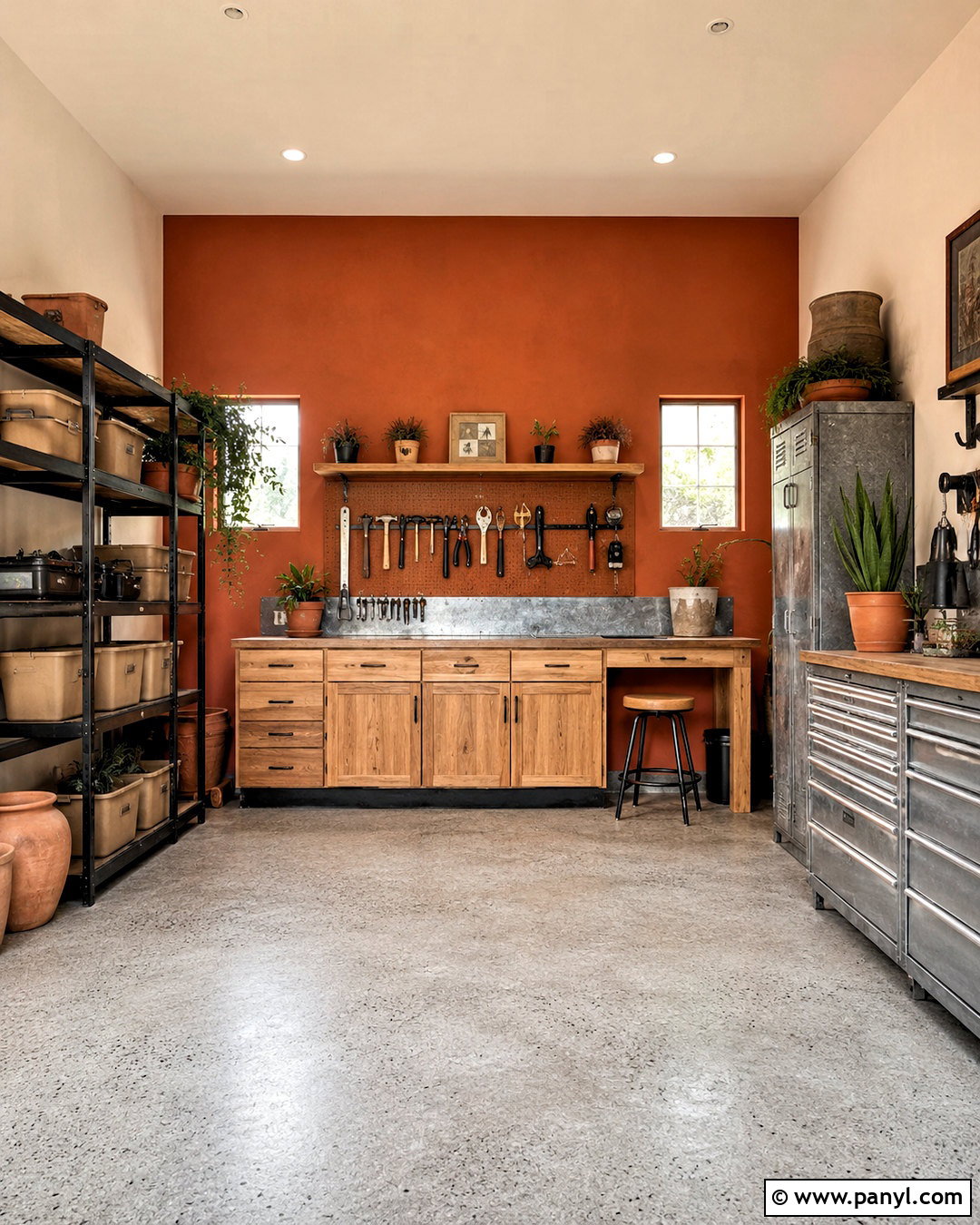
Muted terracotta clay brings warmth and character to a garage without relying on standard gray. Use the earthy reddish-brown shade on one wall around a workbench or potting station, then paint the remaining walls creamy white. Pair the palette with warm-gray flooring, natural oak cabinets, black metal shelving, and galvanized tool storage. Soft tan bins and simple ceramic planters can reinforce the earthy colors in a controlled way. This garage look complements Southwestern, Spanish, rustic, and contemporary homes. Choose a dusty clay tone rather than a bright orange shade, which may become intense under overhead fixtures. Bright white lighting and generous pale surfaces keep the garage open. The completed design feels welcoming, practical, and noticeably different from a typical utility space.
17. Muted Teal Garage
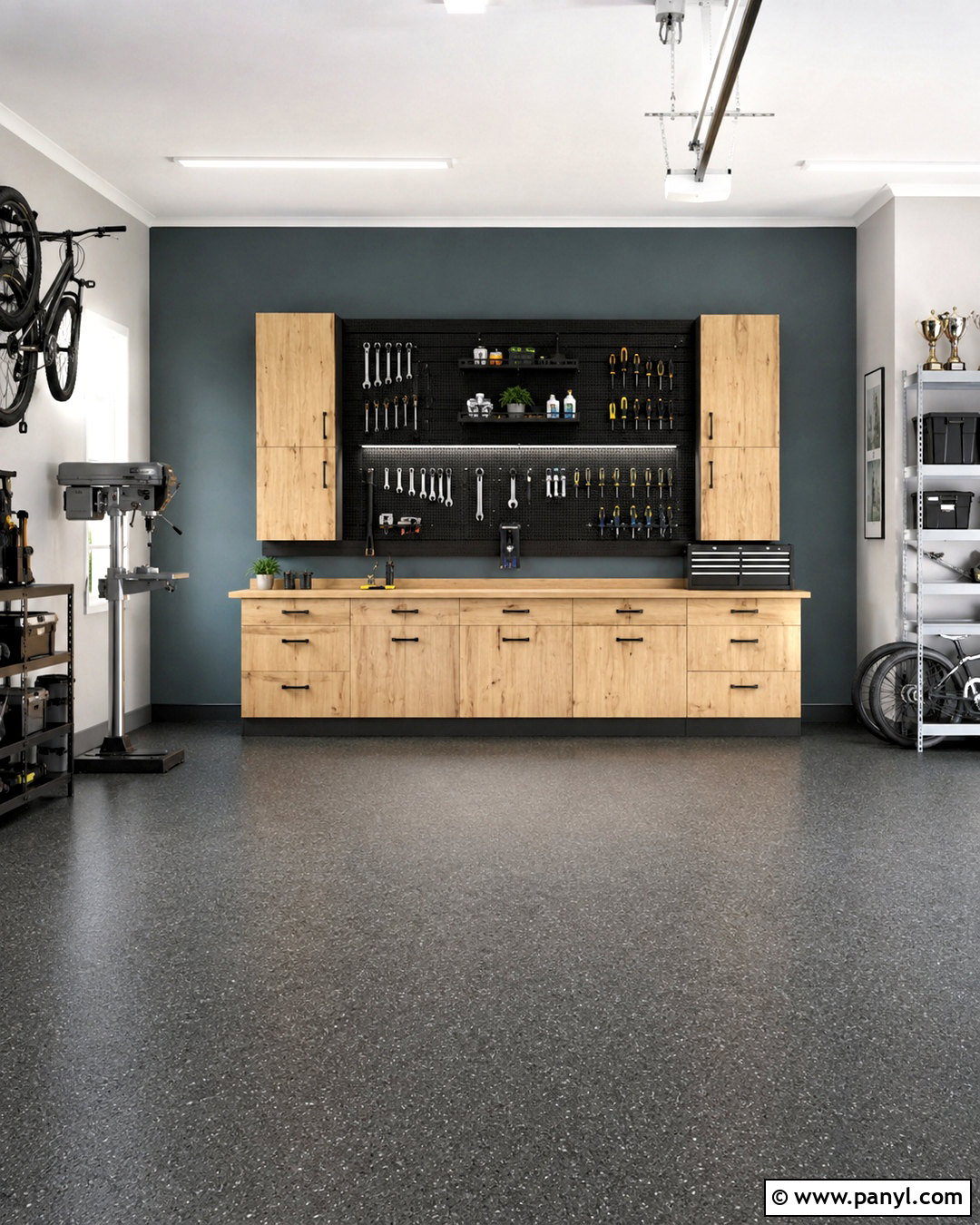
Muted teal produces a fresh, modern garage when paired with restrained neutrals and organized storage. Apply a deep gray-teal to the primary work wall and use pale gray on the surrounding walls. Keep the ceiling white, choose charcoal flooring, and install light wood cabinets with matte black handles. A black pegboard creates a useful tool display while allowing the teal border to remain visible. White utility shelves and silver metal equipment add brightness throughout the room. This complete color scheme works well for creative workshops, bicycle garages, and hobby spaces where more personality is desired. Test the teal under both daylight and overhead lighting because blue-green undertones can shift noticeably. Simple furnishings and repeated black accents will keep the final appearance mature, cohesive, and uncluttered.
18. Deep Brown Garage
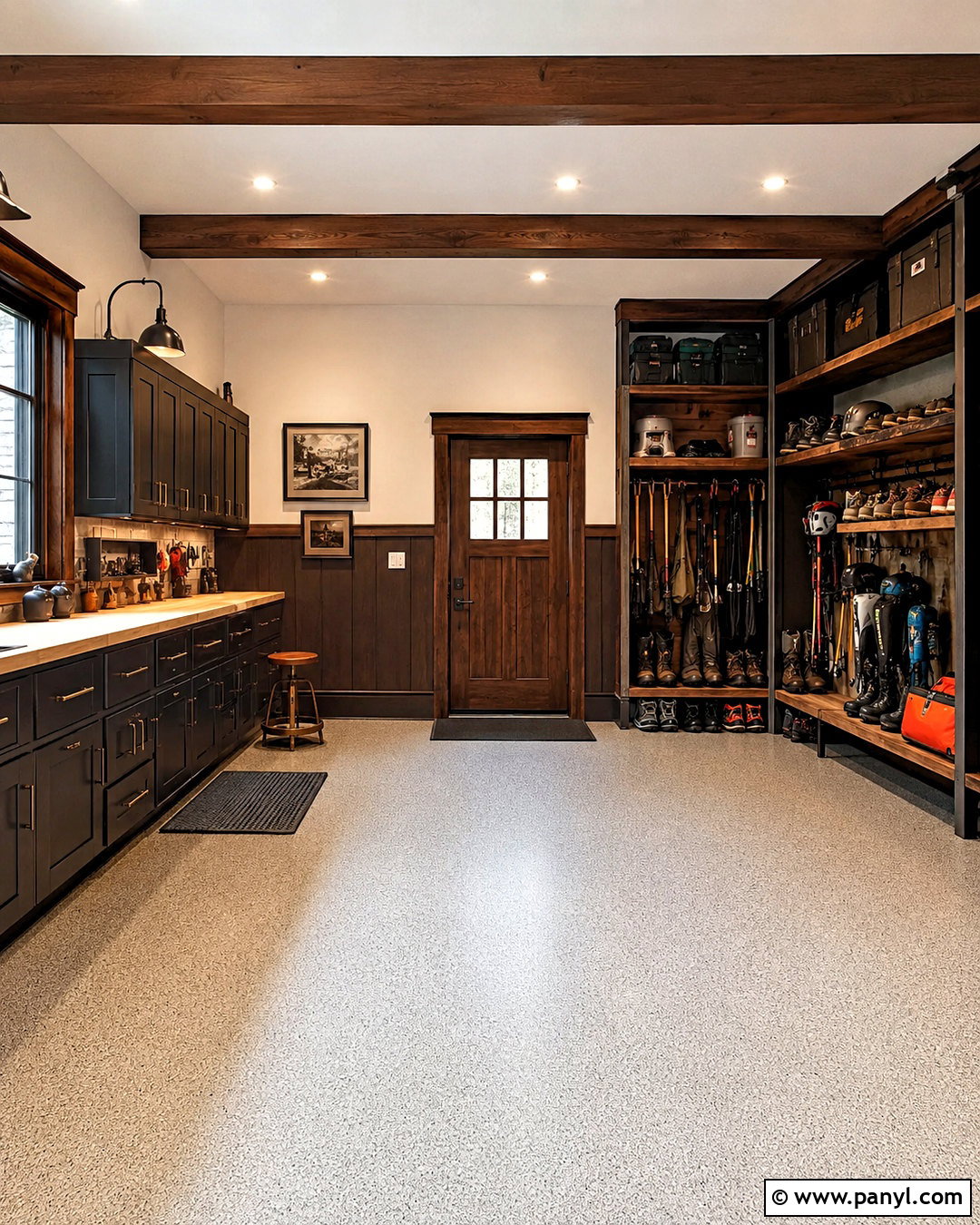
Deep brown gives a garage a warm, substantial character that pairs naturally with wood and black metal. Use a rich espresso-brown shade on the lower walls and warm white above, creating a practical two-tone treatment. Continue the palette with beige-gray epoxy flooring, black cabinets, oak countertops, and bronze hardware. Install a narrow wood rail where the wall colors meet to add detail and protect the surface from everyday bumps. This full look suits rustic workshops, Craftsman homes, and garages used for woodworking or outdoor equipment storage. Strong white overhead fixtures keep the brown from absorbing too much light. Avoid filling the room with several different wood tones. One consistent oak finish, repeated across shelves and work surfaces, creates a garage that feels coordinated rather than heavy.
19. White And Gray Garage
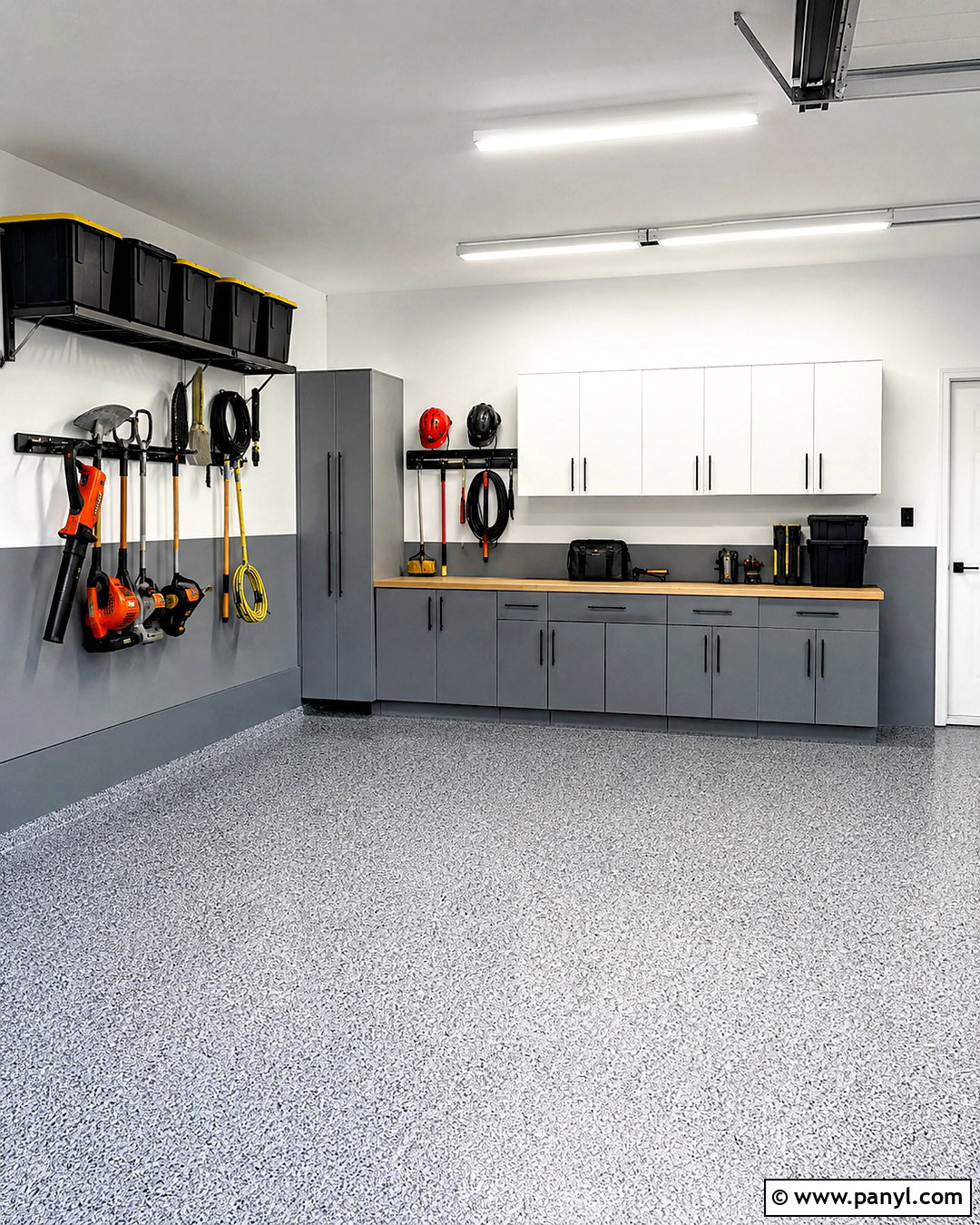
A white-and-gray palette is an adaptable choice for a busy garage that needs brightness and easier maintenance. Paint the upper two-thirds of the walls crisp white and the lower section medium gray. Use a straight horizontal transition aligned with workbench height for a clean, architectural effect. Continue the medium gray onto cabinet bases, while keeping upper cabinets white. Black hardware, a maple worktop, and light-gray flake flooring complete the design. The darker lower portion disguises common scuffs around vehicles, storage bins, and yard equipment, while the white upper area supports good visibility. Add bright ceiling lights and focused workbench lighting. This full scheme suits nearly any garage size or home style and can accommodate colorful tools without making the room look visually chaotic.
20. Gray And Red Garage
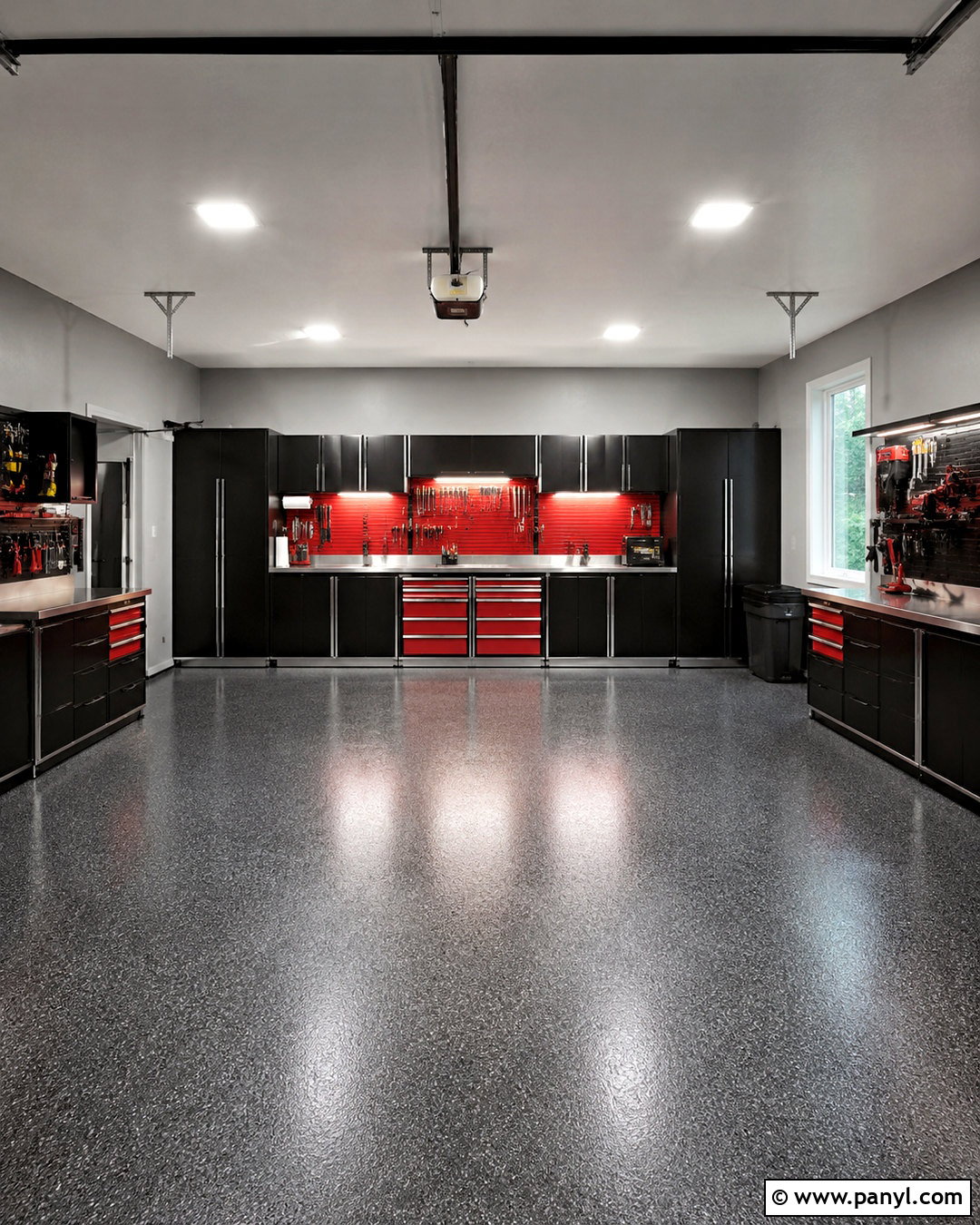
Gray and red create an energetic garage workshop when the brighter color is used with restraint. Paint most walls a balanced light gray, keep the ceiling white, and add one controlled deep-red section behind the main tool bench. Choose charcoal epoxy flooring, black cabinets, and stainless steel work surfaces for a durable industrial foundation. Repeat the red only on small drawer fronts, storage bins, or a narrow stripe so it remains intentional. Bright overhead fixtures and under-cabinet task lights will keep the darker accents clear and functional. This complete palette is well suited to automotive garages and active DIY spaces. Avoid spreading red across every wall, which can overwhelm the room. A measured application delivers personality while preserving the clean, organized quality of the gray background.
Conclusion:
The best garage paint colors balance appearance, lighting, maintenance, and the way the space is used each day. Crisp whites and light grays can open a compact garage, while greige, beige, and sage create a warmer connection to the home. Navy, charcoal, teal, and soft black work best as focused accents supported by bright ceilings and generous lighting. Whichever palette you prefer, coordinate the walls with the floor, cabinets, work surfaces, and storage accessories before painting. Test samples in several locations because natural and artificial light can change undertones. With thoughtful color placement and organized furnishings, any of these 20 best garage paint colors can create a cleaner, more useful, and more polished space.

Related Ideas and Inspiration:
Leave a Reply