
Dark upper walls can make a room feel grounded, intimate, and surprisingly polished when the lighter lower half balances the visual weight. These 20 Two Tone Walls Dark On Top Ideas explore complete room schemes rather than simple color pairings. Each look combines wall placement, furniture, flooring, lighting, and decor so the finished space feels intentional. A high dividing line can create a cocooning effect, while a centered split delivers stronger contrast. Chair rails, picture ledges, or crisp painted edges can make the transition look architectural. You can also repeat the darker shade through textiles or furniture to connect the entire room. From navy living rooms to plum bedrooms and dramatic hallways, these 20 Two Tone Walls Dark On Top Ideas offer practical inspiration for spaces of every size.

1. Navy And Cream Living Room Walls
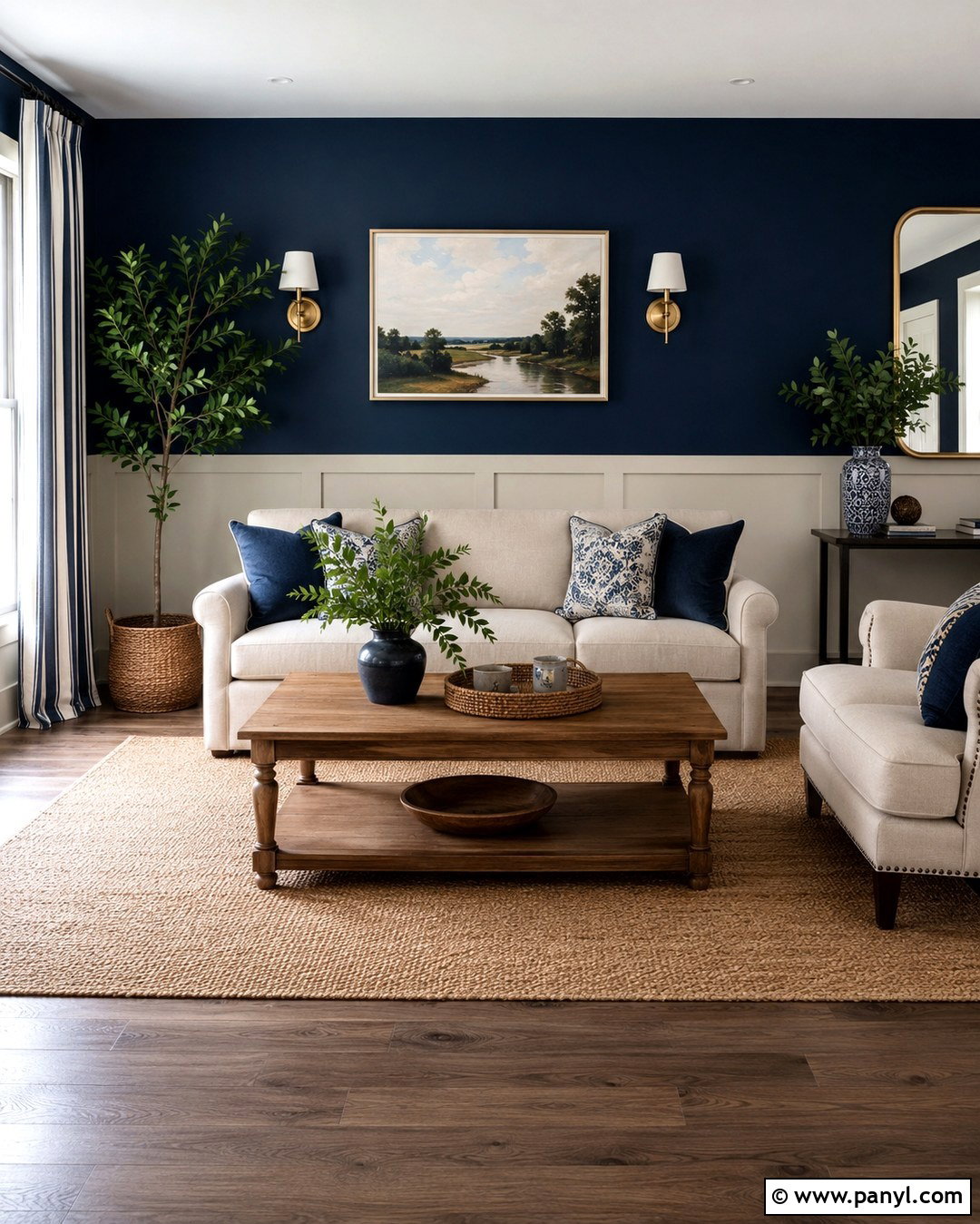
Deep navy across the upper portion of a living room creates a cozy canopy without making the whole space feel enclosed. Place the dividing line slightly above the sofa so the cream lower wall forms a clean, bright backdrop for the furniture. A warm oatmeal sofa, medium oak coffee table, and natural jute rug soften the strong blue. Add navy pillows, striped cream curtains, and a pair of brass wall lights to repeat the upper color around the room. The ceiling should remain warm white to frame the navy rather than extending the darkness overhead. Finish the scheme with simple landscape artwork, ceramic table lamps, and one tall leafy plant. This balanced layout works especially well in traditional, coastal, and transitional living rooms.
2. Charcoal And White Bedroom Walls
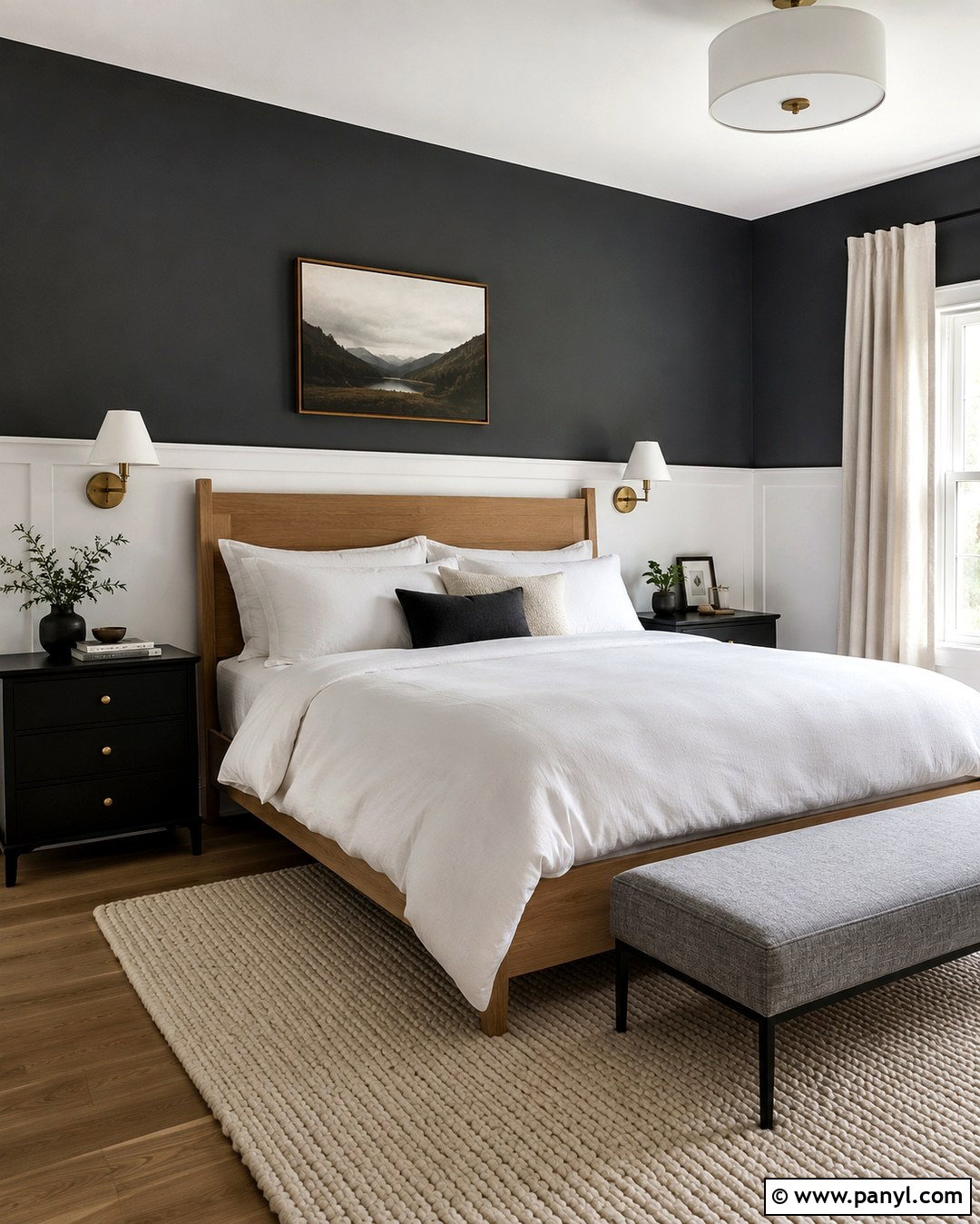
Imagine waking beneath a charcoal upper wall that feels calm and enveloping rather than heavy. Keep the bottom half crisp white and align the split with the top of a paneled headboard. A light oak bed, white linen bedding, and soft gray quilt prevent the room from becoming too stark. Black nightstands connect with the charcoal paint, while pale curtains keep the windows bright. Use warm bedside sconces in brushed brass to bring gentle contrast to the cool wall colors. A cream wool rug and a simple upholstered bench add softness near the floor. For a finished appearance, carry the white from the lower wall onto the baseboards and doors. The resulting bedroom feels modern, restful, and comfortably layered.
3. Forest Green And Beige Dining Room Walls
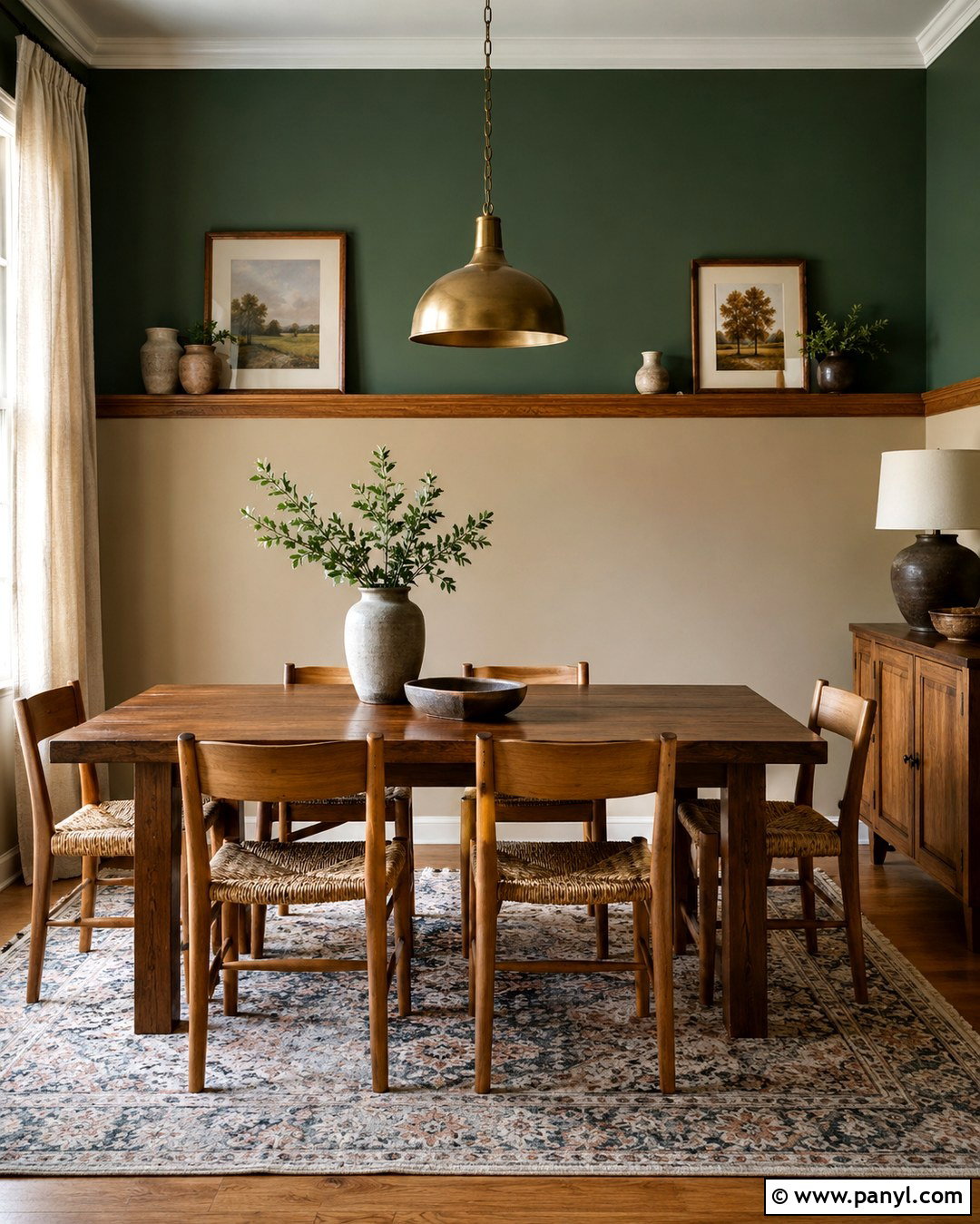
Forest green upper walls can give an ordinary dining area the character of a classic gathering room. Use warm beige below, separated by a narrow stained-oak picture ledge. The ledge adds definition while providing a place for small framed artwork and handmade ceramics. Center a solid oak dining table beneath a simple aged-brass pendant, then surround it with woven-seat chairs. Linen curtains, a muted patterned rug, and cream dinnerware keep the darker green from dominating. Repeat the forest shade through seat cushions or a painted sideboard, but leave plenty of natural wood visible. Soft white on the ceiling helps reflect daylight downward. This complete arrangement blends traditional warmth with clean lines, making it suitable for casual meals and more formal entertaining.
4. Black And Greige Hallway Walls
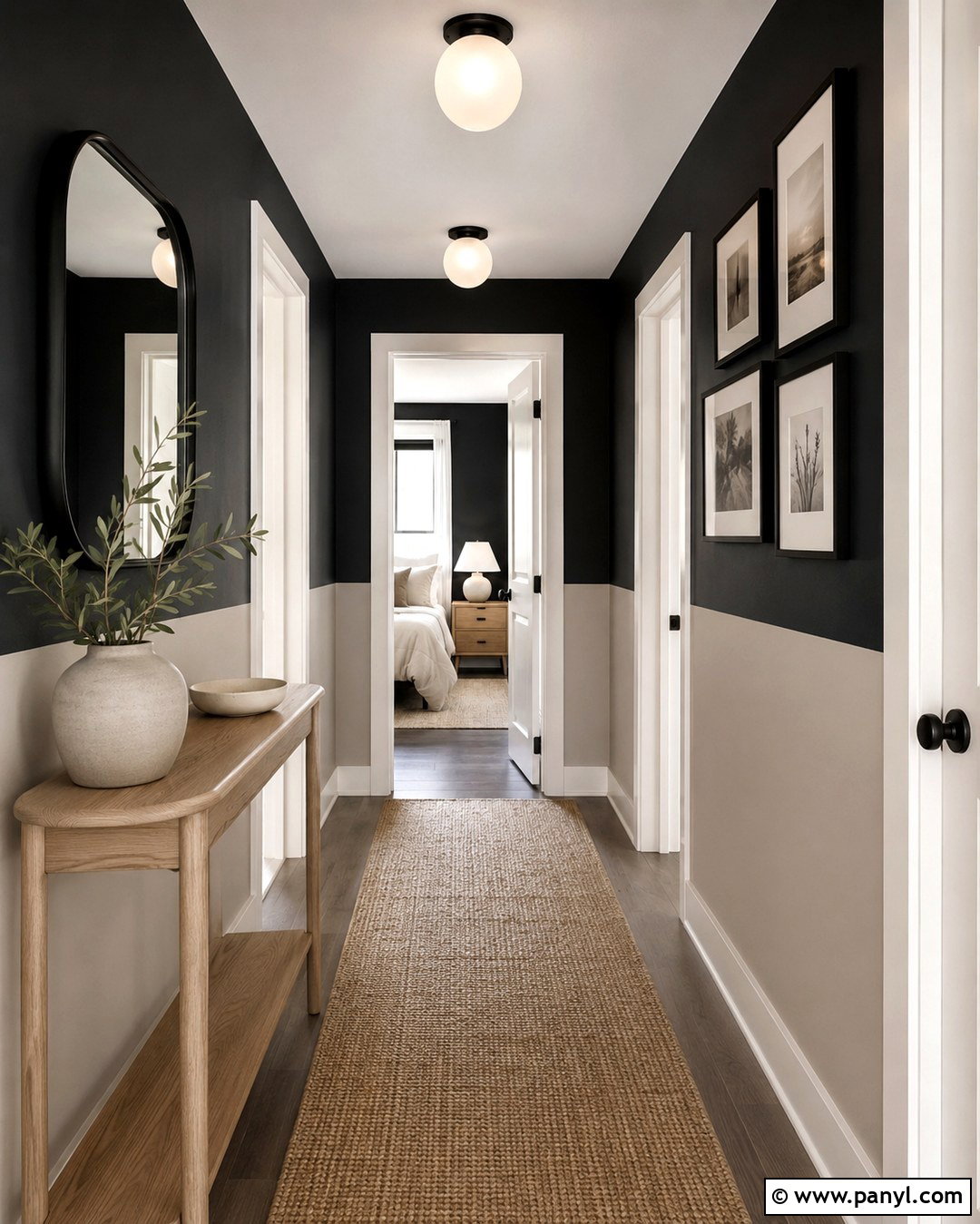
A narrow hallway becomes more memorable when matte black covers the upper walls and soft greige brightens the lower section. Set the split around two-thirds of the way up to create a tall lower band that protects the passage from feeling overly dark. White doors and trim provide crisp breaks between the colors. Choose a pale oak console with a rounded mirror, one sculptural lamp, and a shallow ceramic bowl to keep the walkway open. A long natural runner introduces texture without adding visual clutter. Gallery frames in black can disappear into the upper wall, allowing the artwork itself to stand out. Add flush-mount ceiling lights with frosted glass for even illumination. The final hallway feels dramatic, practical, and carefully connected from one room to another.
5. Burgundy And Blush Powder Room Walls
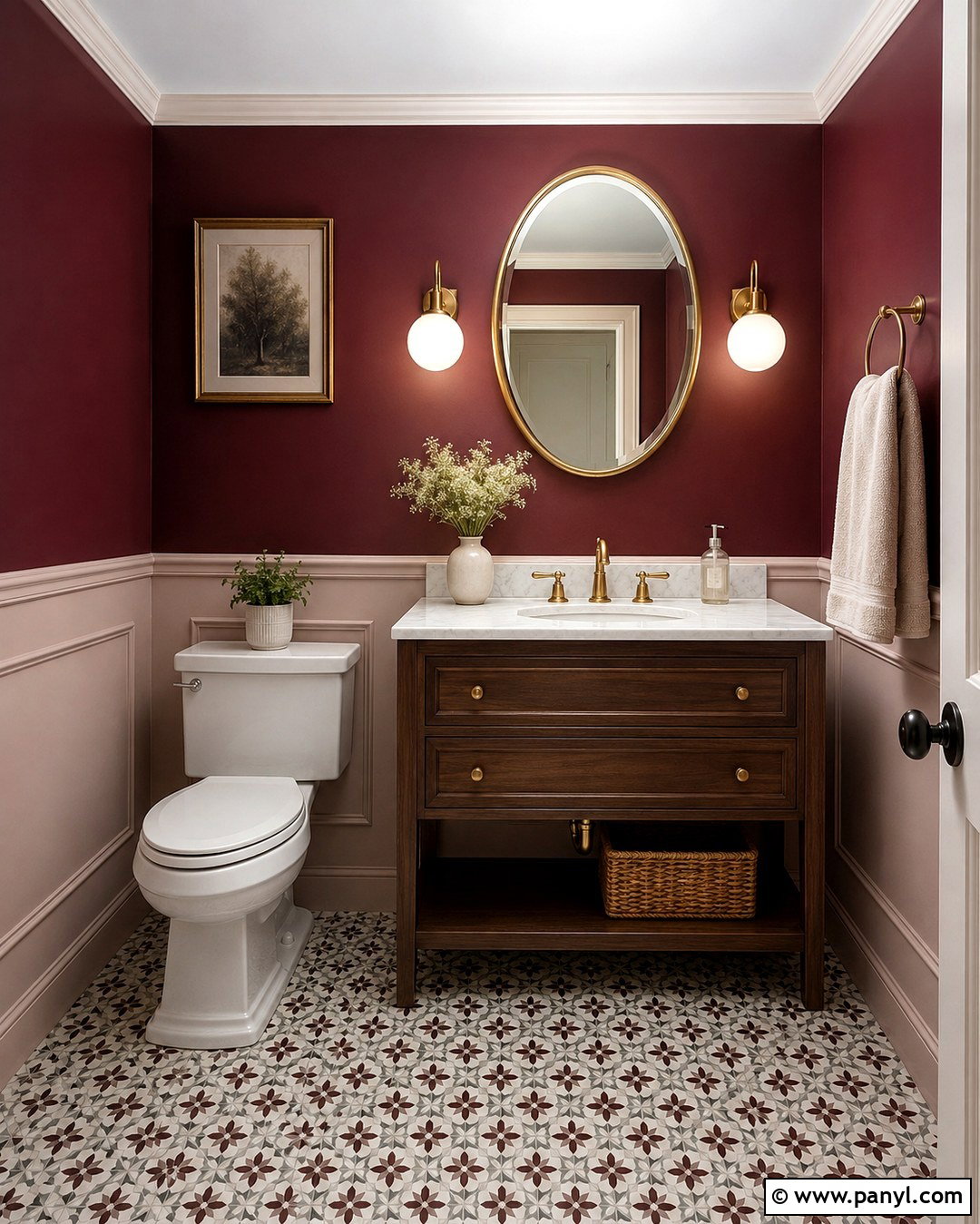
Rich burgundy above muted blush creates a powder room that feels bold yet inviting. Position the dividing line just above the sink backsplash and use a slim burgundy-painted molding to sharpen the transition. A compact walnut vanity introduces warmth, while a white marble countertop keeps the room fresh. Choose a rounded brass mirror, matching faucet, and two opal-glass sconces for a subtle vintage touch. Small patterned floor tiles in cream and burgundy tie both wall colors together. White towels and minimal countertop accessories prevent the limited space from looking crowded. Continue the blush shade across the door for a softer lower zone, but keep the ceiling clean white. This layered scheme gives a small powder room personality without relying on oversized fixtures or complicated decoration.
6. Deep Teal And White Breakfast Nook Walls
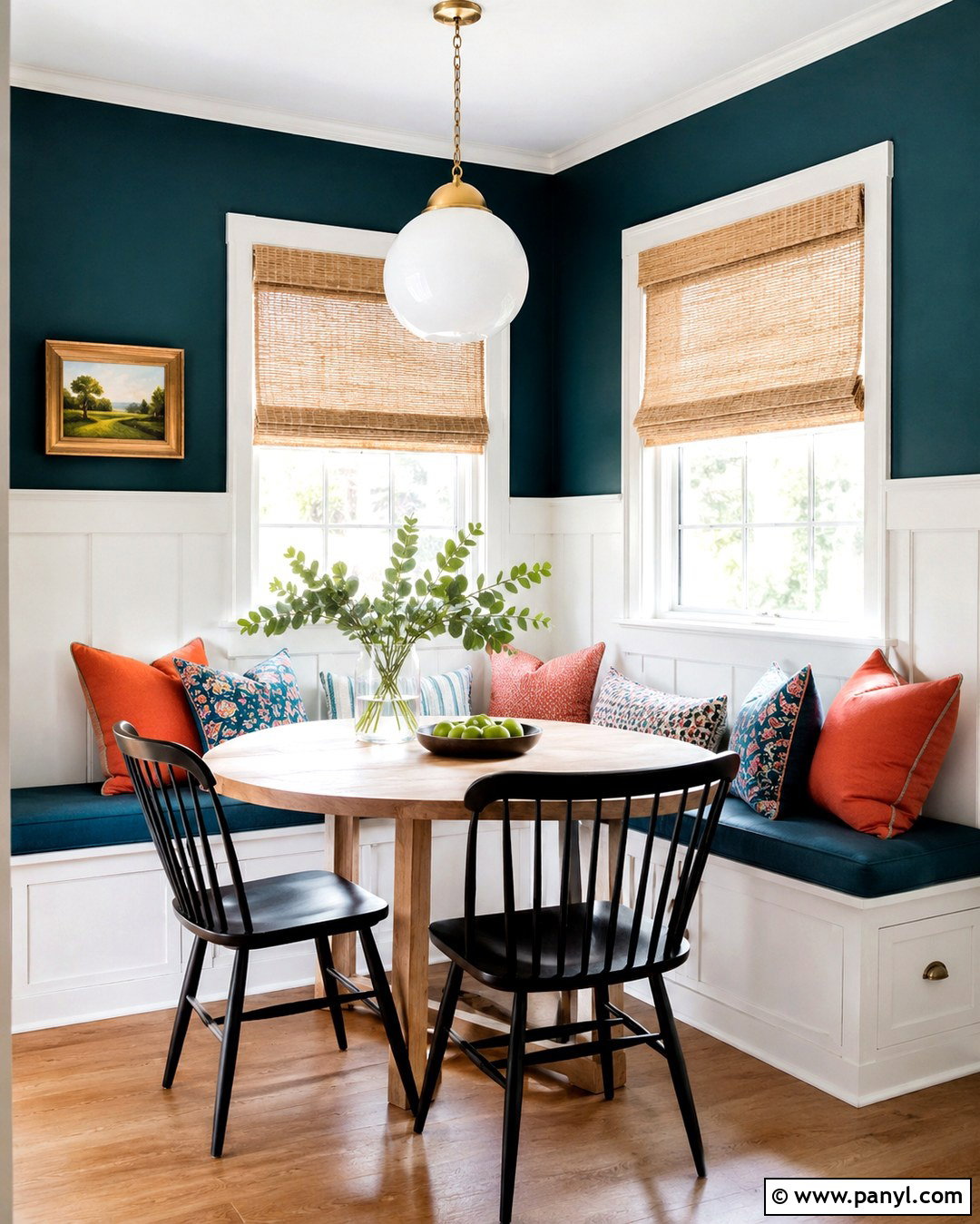
Deep teal on the upper walls can turn a sunny breakfast nook into a colorful focal point. Keep the lower walls bright white, preferably with simple vertical paneling that adds texture and stands up to daily use. A built-in white bench fits naturally into the lighter section, while teal cushions visually connect it to the upper paint. Add a round pedestal table in light oak and compact spindle-back chairs for an open, approachable layout. Woven shades filter harsh sunlight, and a white globe pendant keeps the color scheme modern. Bring in rust, mustard, or coral through a few washable pillows for controlled contrast. The combination feels cheerful but grounded, giving the nook enough visual identity to stand apart from an adjoining neutral kitchen.
7. Chocolate Brown And Tan Home Office Walls
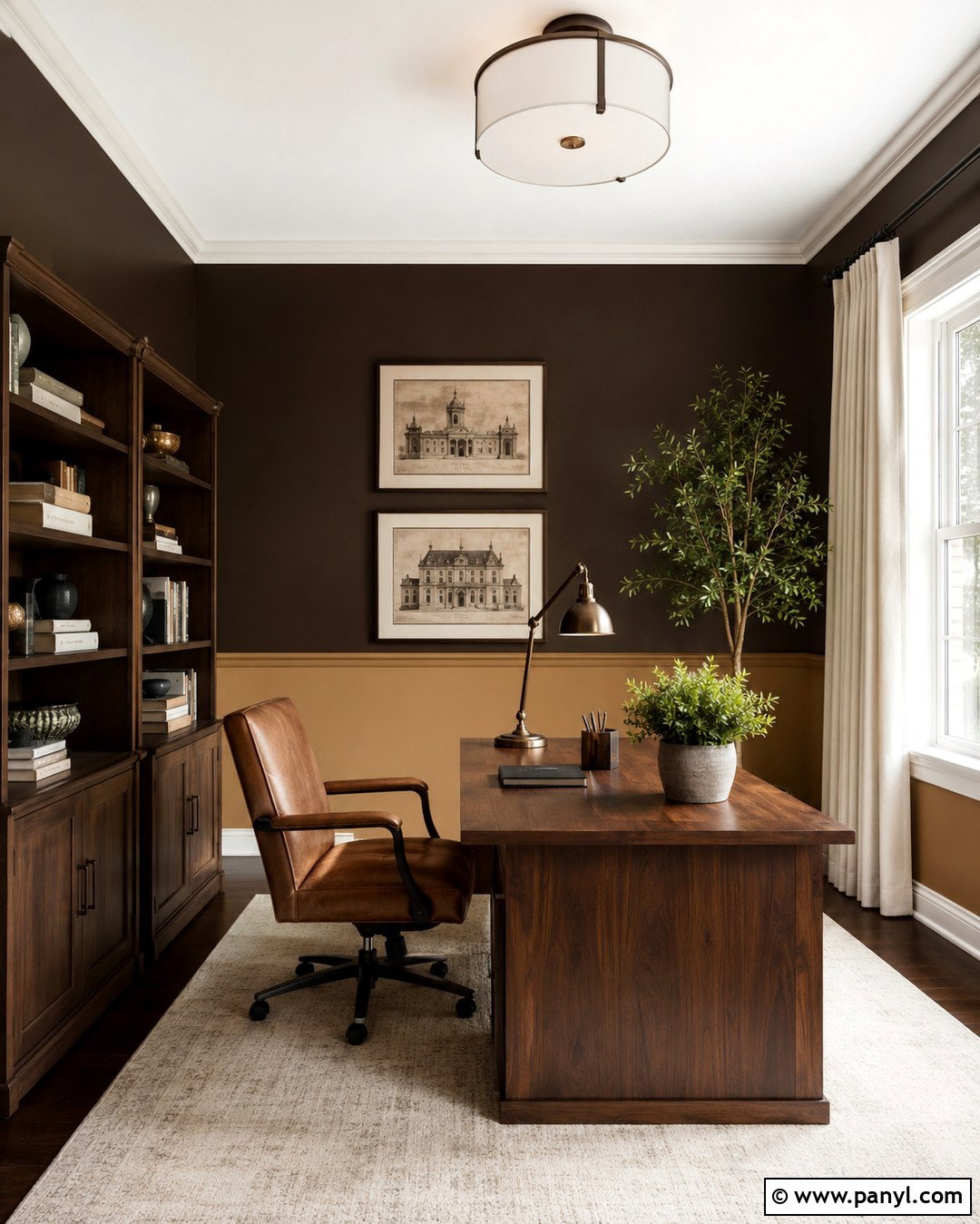
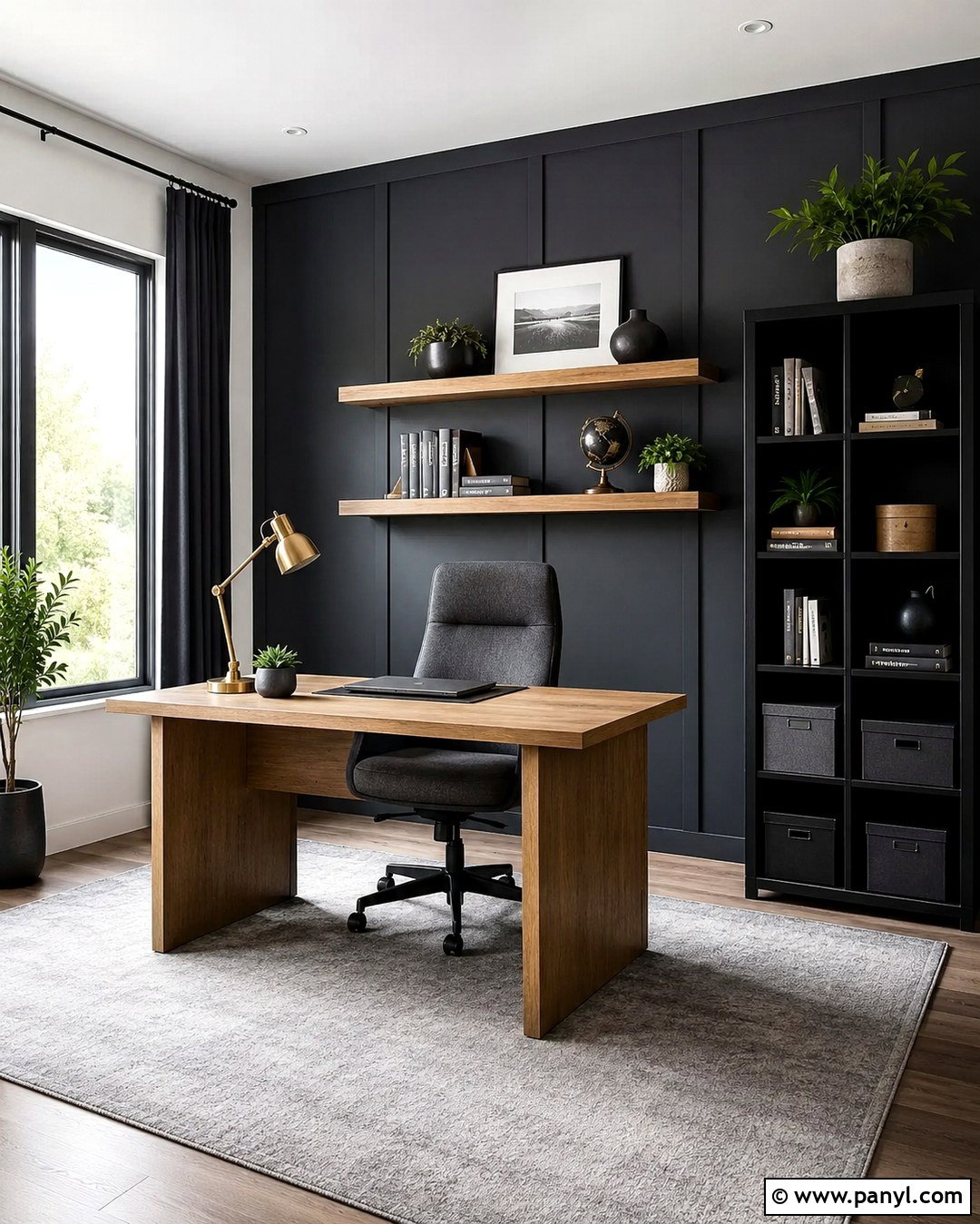
Chocolate brown above warm tan produces a focused home office that feels sophisticated without becoming severe. Place the paint division at desk height so the lighter lower wall visually supports the workspace. A walnut desk, cognac leather chair, and flat-woven cream rug create a rich tonal foundation. Install two narrow bookshelves against the brown upper section and paint them the same dark color for a built-in effect. Off-white curtains and a white ceiling maintain brightness during working hours. A bronze desk lamp, framed architectural prints, and one olive-green plant add interest without distracting from the room’s purpose. Choose warm bulbs and adjustable task lighting because dark upper walls absorb more light. The completed office feels organized, comfortable, and suited to both concentrated work and video calls.
8. Plum And Lavender Bedroom Walls
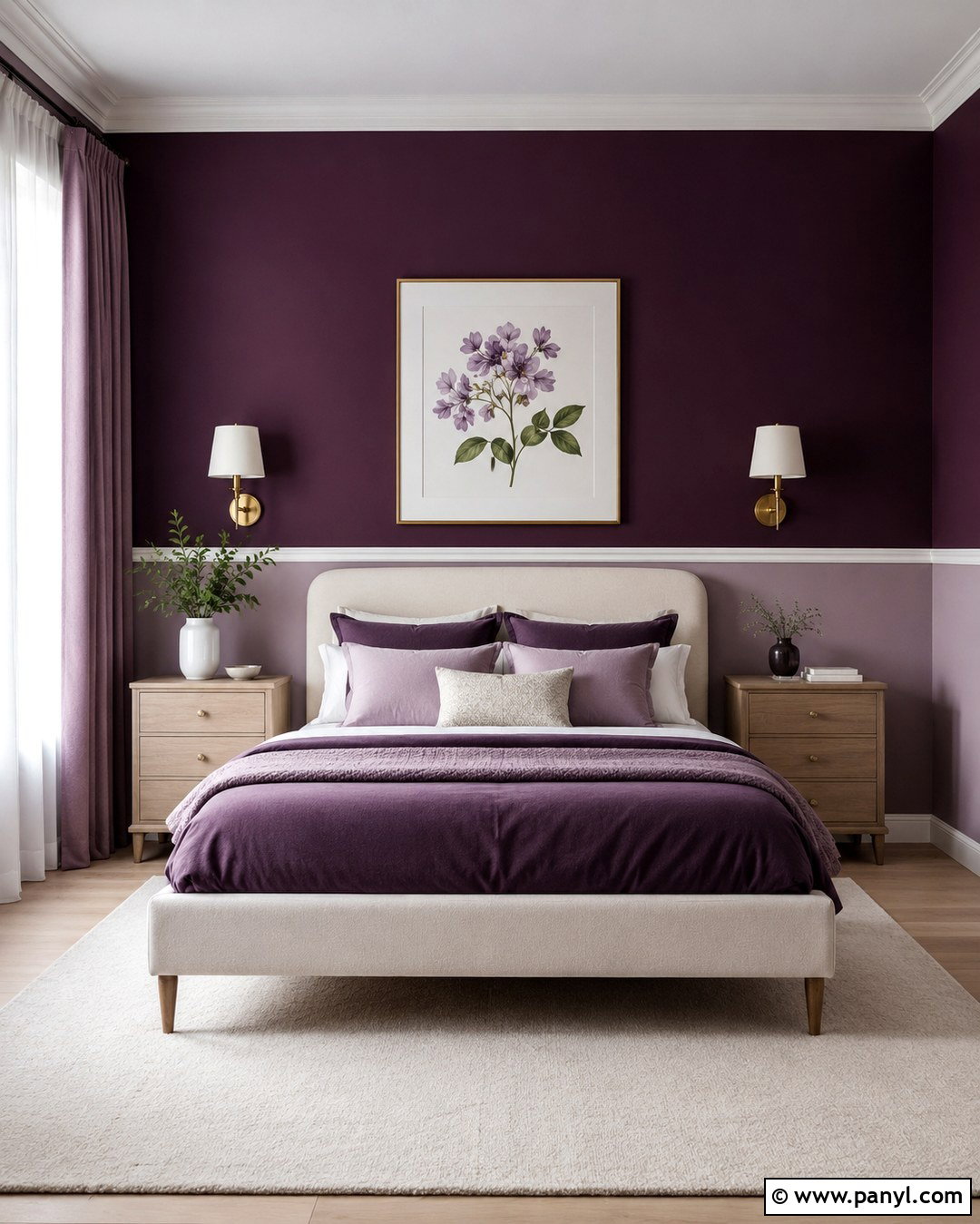
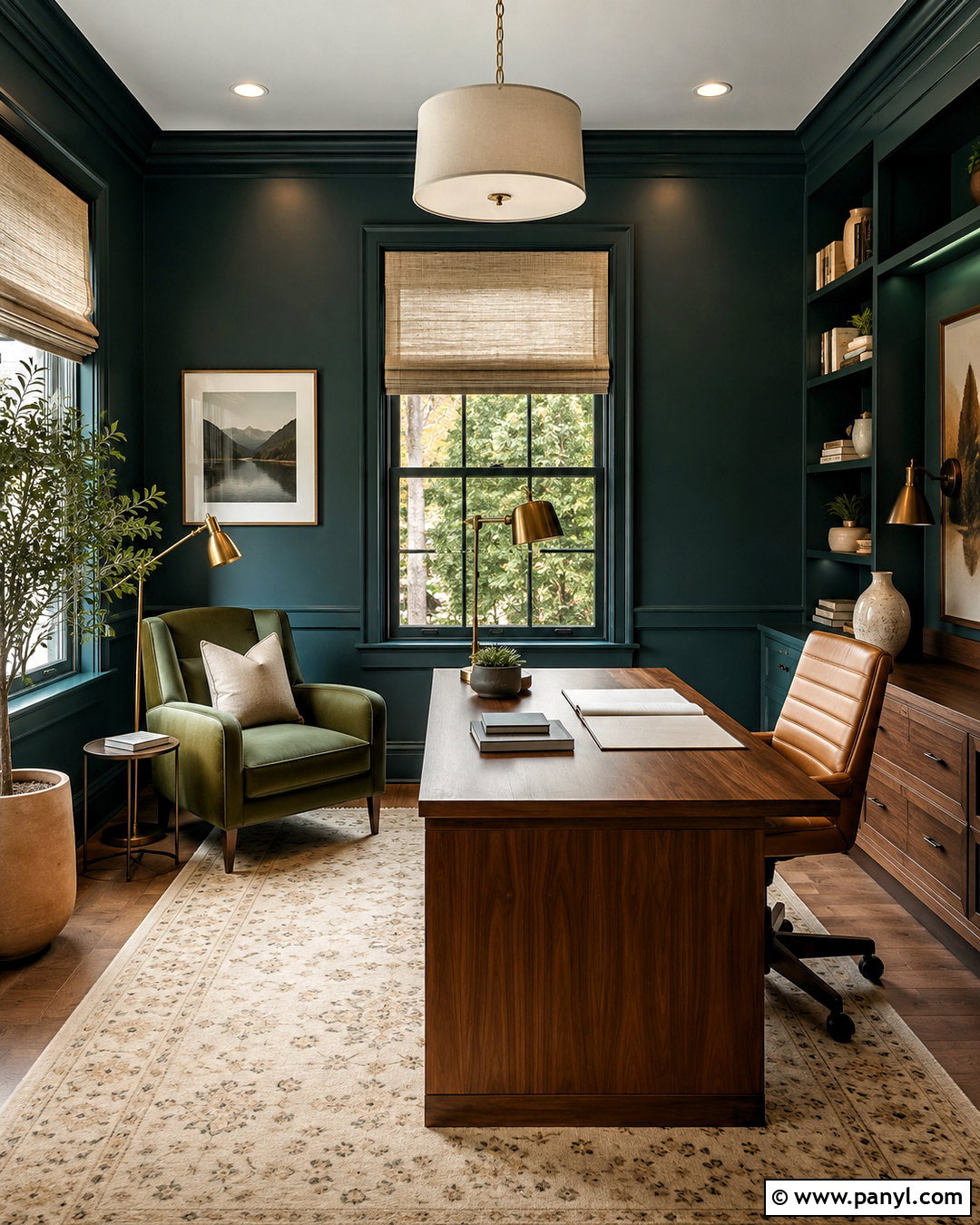
Plum upper walls and dusty lavender below create a bedroom with depth, softness, and a subtle romantic quality. Keep the split behind the headboard at approximately shoulder height, allowing both colors to remain clearly visible. An ivory upholstered bed offers a light focal point, while plum pillows and a lavender coverlet repeat the wall palette. Pale oak nightstands and a cream rug introduce natural warmth. Use aged-brass sconces instead of bulky table lamps to keep the bedside areas uncluttered. Sheer white curtains can be layered with heavier lavender drapes for privacy and color continuity. Choose restrained botanical artwork with cream backgrounds so it remains readable against the dark paint. The finished room feels expressive and restful without becoming overly sweet or formal.
9. Dark Olive And Clay Entryway Walls
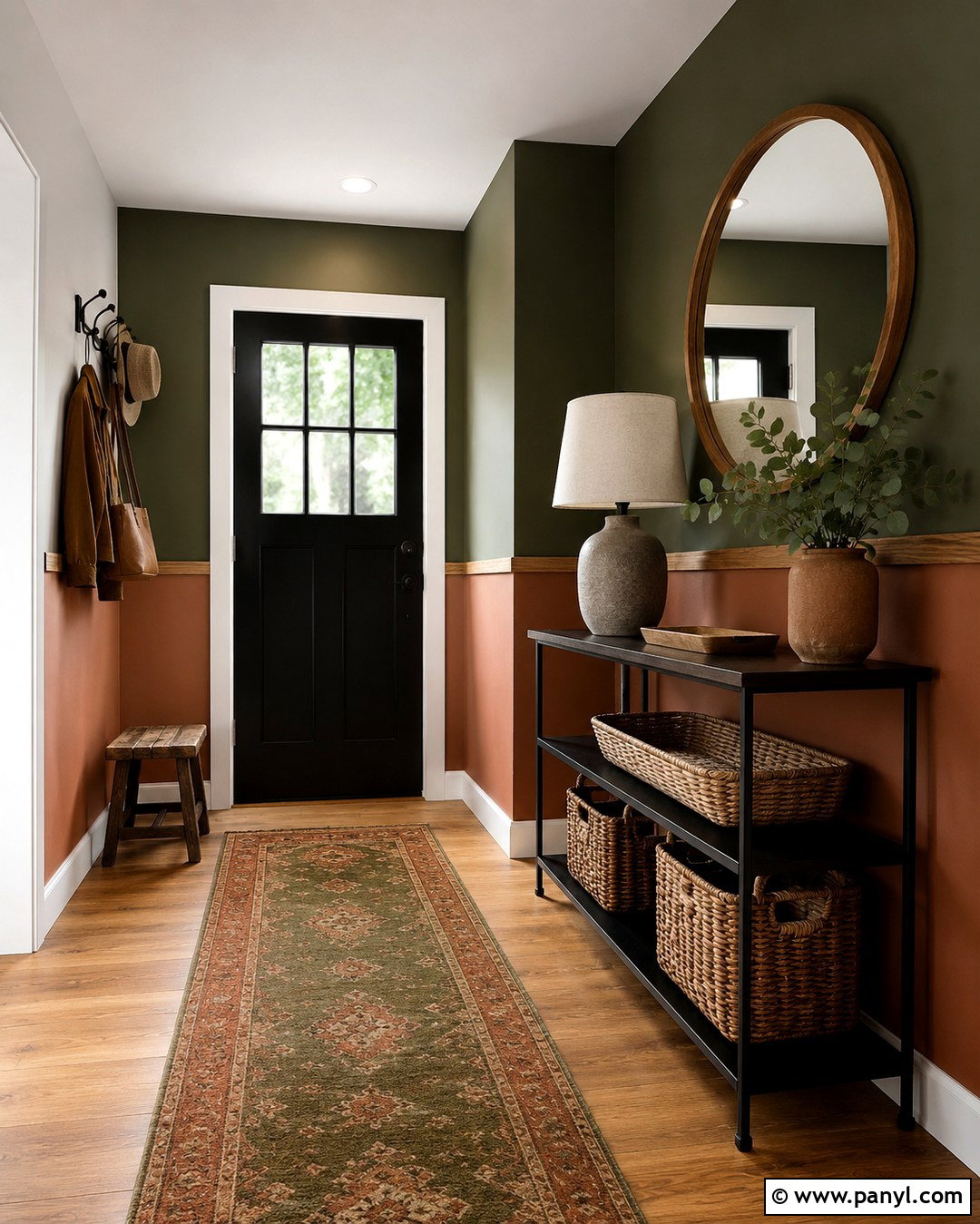
An earthy entryway feels immediately welcoming when dark olive covers the upper walls and soft clay warms the lower section. Add a narrow oak chair rail between the colors to create a tailored transition. A black metal console, woven baskets, and a round wood-framed mirror provide practical storage without crowding the entrance. Use an olive runner with muted clay details to carry the palette across the floor. A ceramic lamp, simple hooks, and a small upholstered stool make the space useful for everyday arrivals. Paint interior doors in the lower clay shade so they blend into the lighter zone. The ceiling and door trim can remain creamy white for contrast. Together, these colors create a natural, collected entry that works with rustic, modern, or Mediterranean-inspired decor.
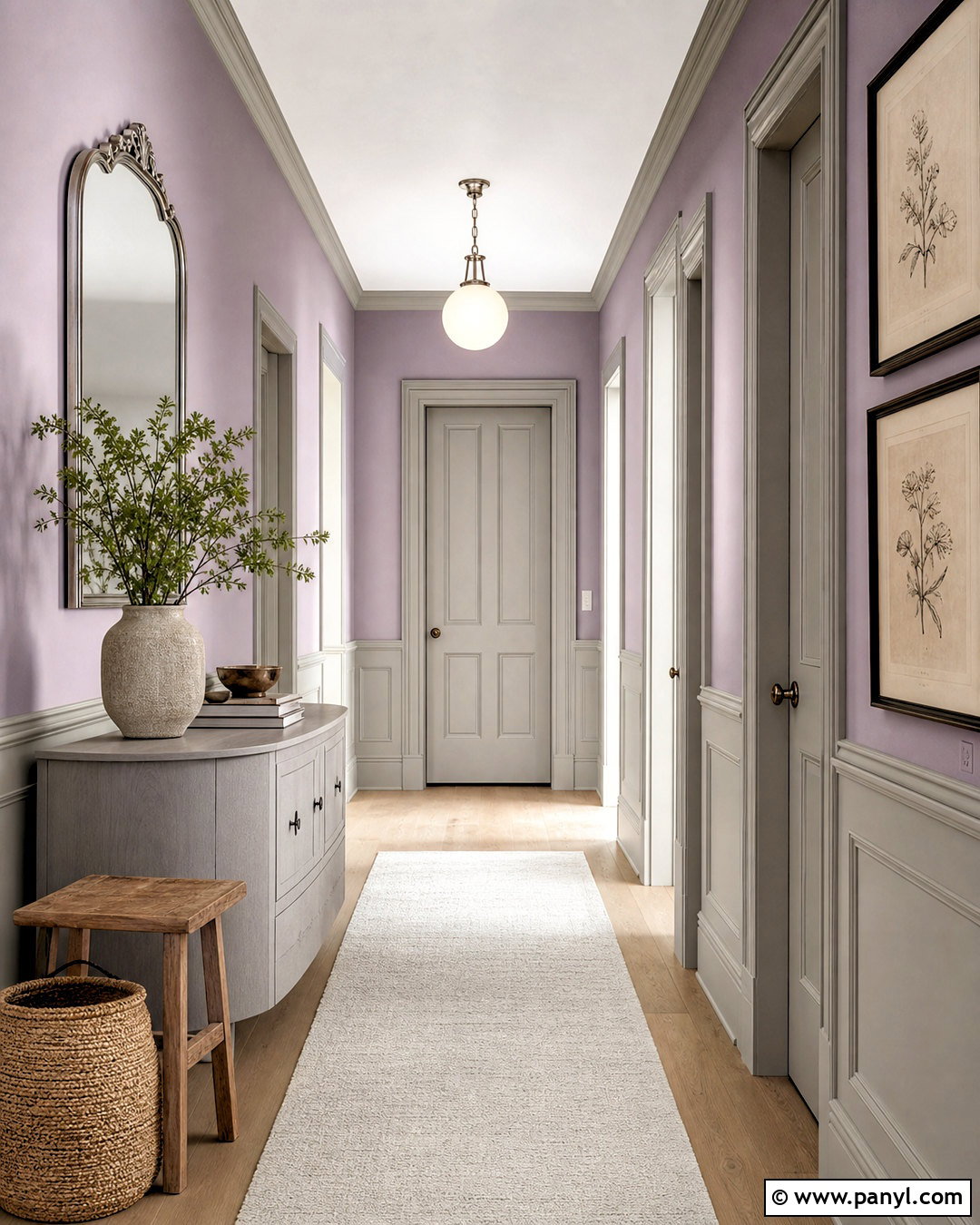
10. Midnight Blue And Pale Blue Nursery Walls
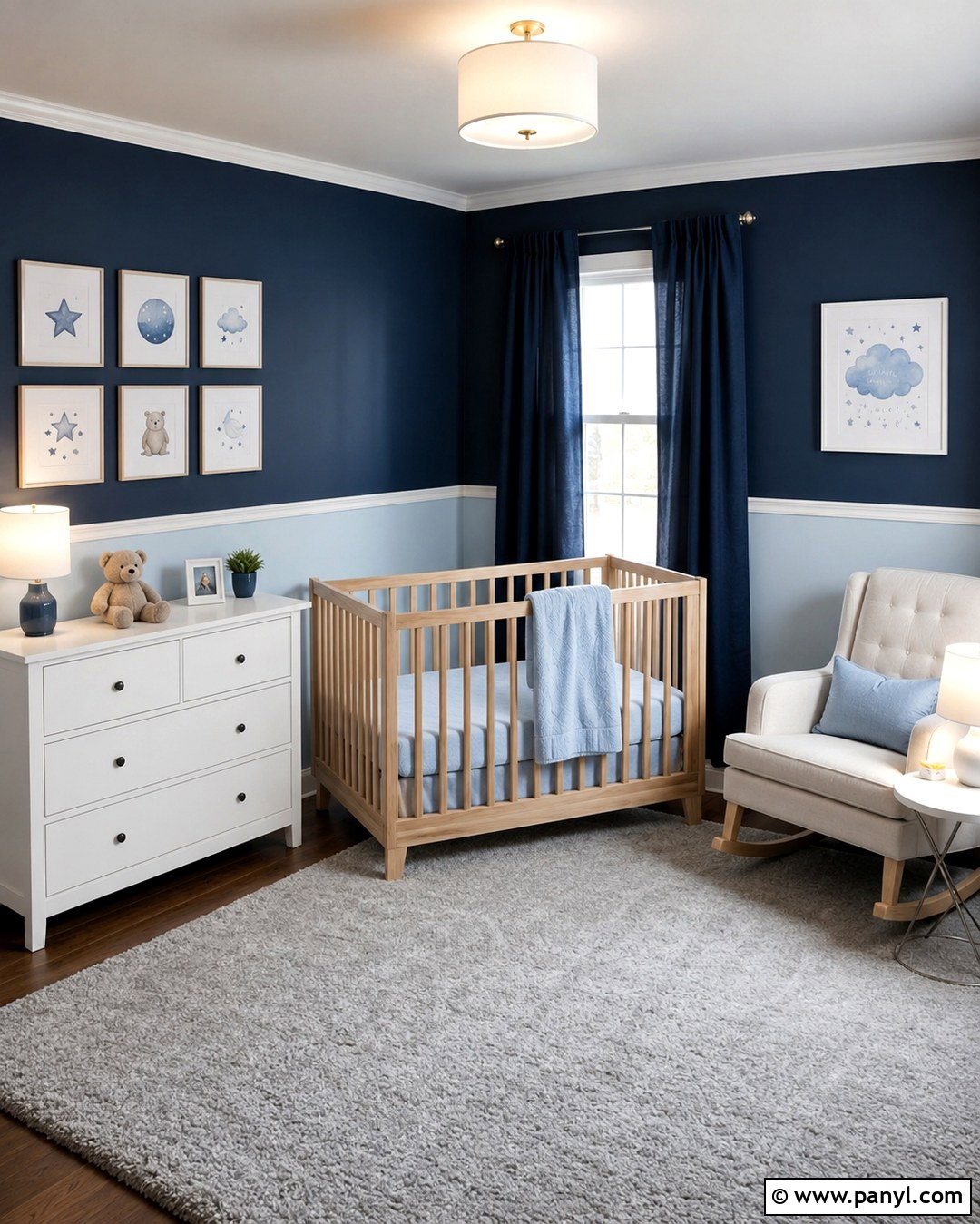
Midnight blue above pale powder blue gives a nursery gentle contrast while supporting a calm atmosphere. Place the divide higher than the crib so the lighter shade surrounds the main furniture and keeps the sleeping area visually open. A natural maple crib, white dresser, and cream rocking chair add warmth and practicality. Use washable pale blue paint below, where fingerprints and marks are more likely to occur. Small framed prints with white mats stand out clearly against the midnight upper wall. A soft cloud-gray rug, navy blackout curtains, and light blue bedding connect the two zones without overloading the room with color. Add a dimmable white ceiling fixture and shaded reading lamp. The complete nursery feels soothing, organized, and adaptable enough to grow with the child.
11. Deep Terracotta And Ivory Dining Room Walls
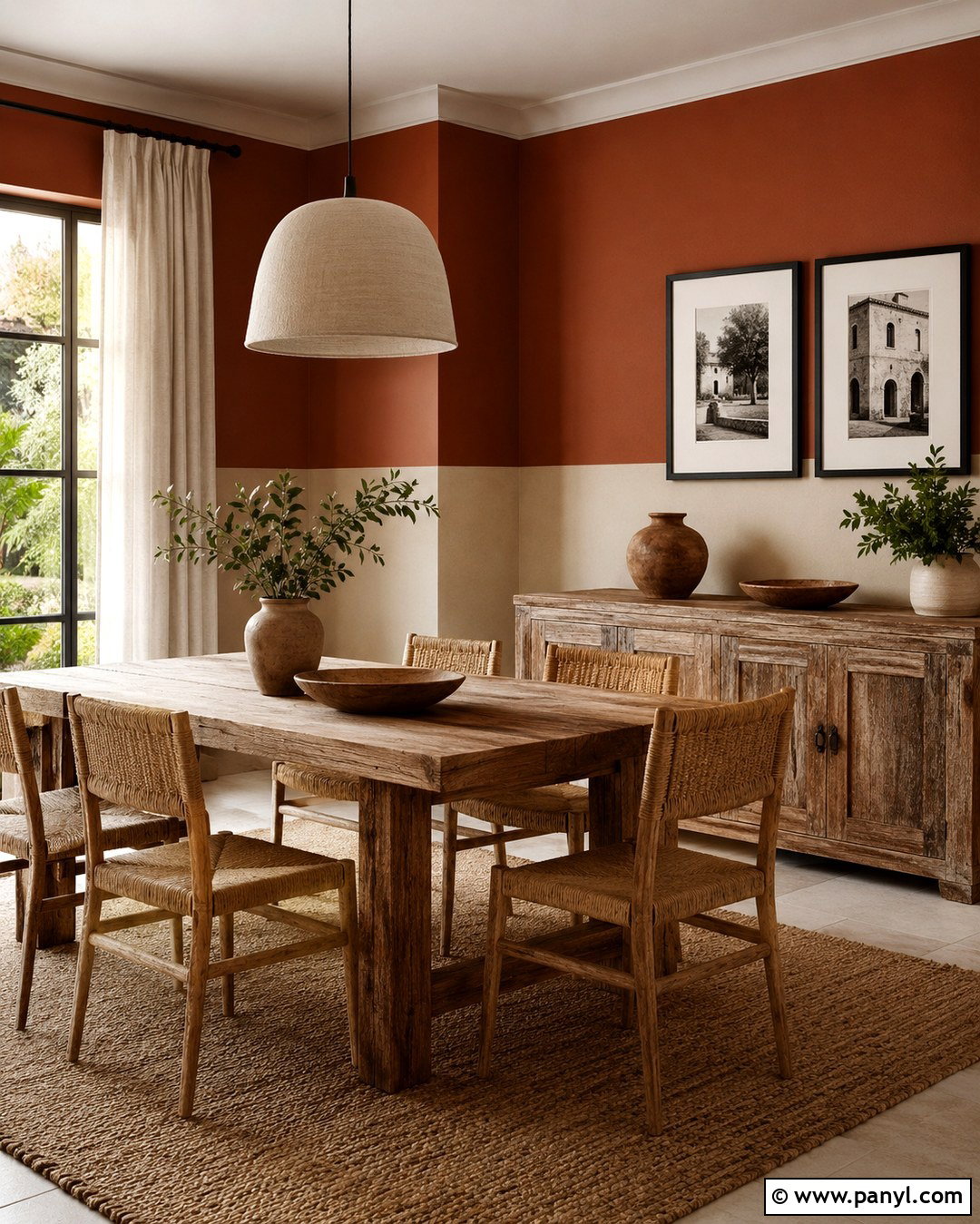
Deep terracotta on top and creamy ivory below can make a dining room feel sun-warmed throughout the year. Use the darker shade across the upper third, leaving a larger ivory section to surround the table and chairs. A chunky oak table, woven dining chairs, and a textured neutral rug support the earthy palette. Hang a linen drum pendant over the center of the table for soft, even lighting. Black-framed art provides definition against terracotta, while ivory curtains blend into the lower walls. Add a low sideboard in weathered wood and decorate it with ceramic vessels in rust, cream, and muted green. Keep the ceiling white and the trim ivory. This balanced scheme delivers Mediterranean character in a relaxed format that still feels appropriate for an everyday American home.
12. Espresso And Mushroom Reading Room Walls
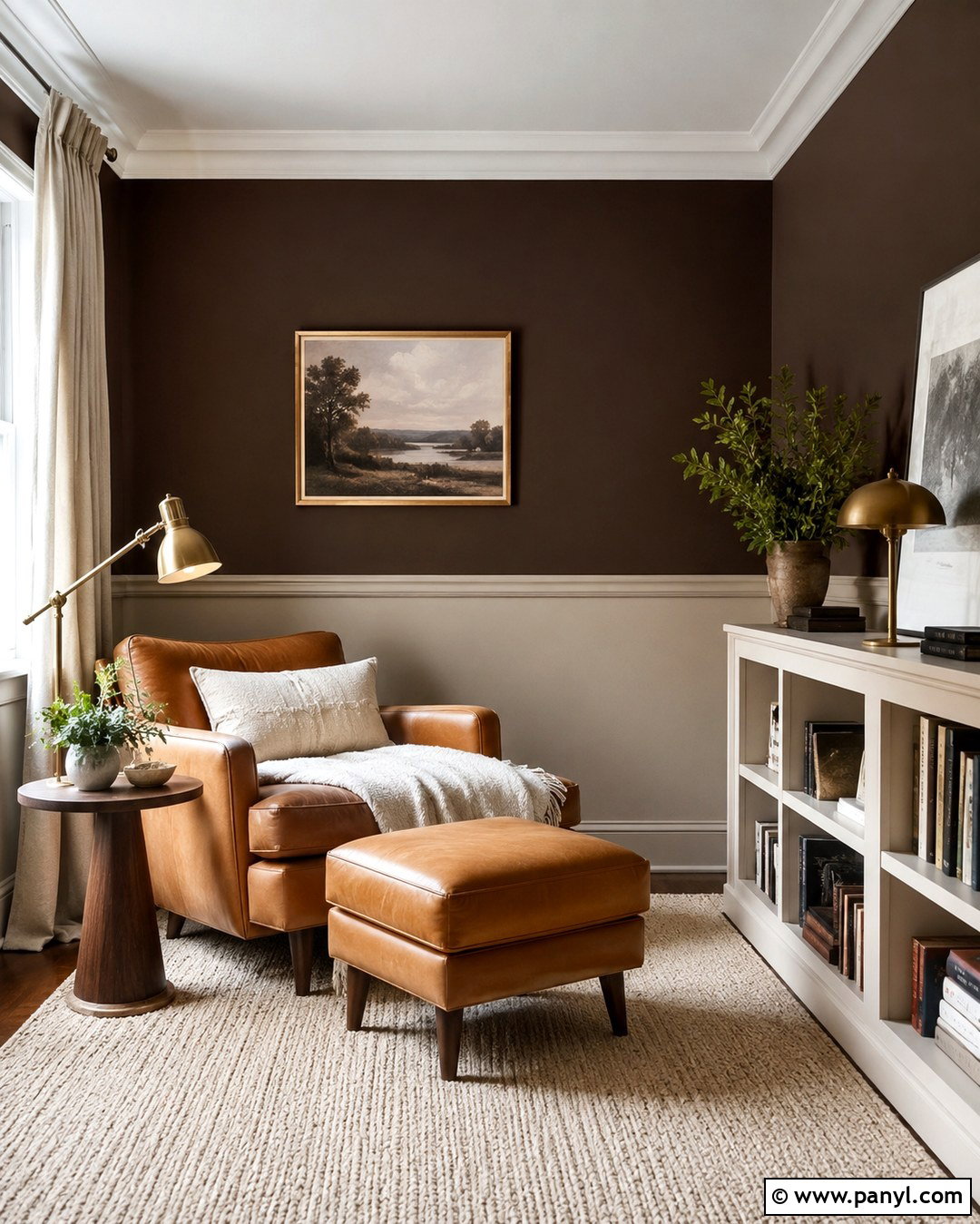
Espresso-colored upper walls create a snug reading room, while mushroom beige below keeps the seating area light and approachable. A narrow painted picture rail can mark the division and hold rotating artwork without creating additional nail holes. Place a camel-colored lounge chair near the window with a small walnut table and adjustable brass reading lamp. A low cream bookcase blends into the lighter wall section, preventing storage from feeling bulky. Use a warm ivory rug, textured brown throw, and patterned pillow to build comfort through layers. Sheer linen curtains allow daylight to soften the deep upper color. One tall floor lamp adds evening illumination in the opposite corner. This complete look turns an unused den or spare-room corner into a quiet, polished retreat for reading and relaxing.
13. Slate Blue And Soft Gray Bathroom Walls
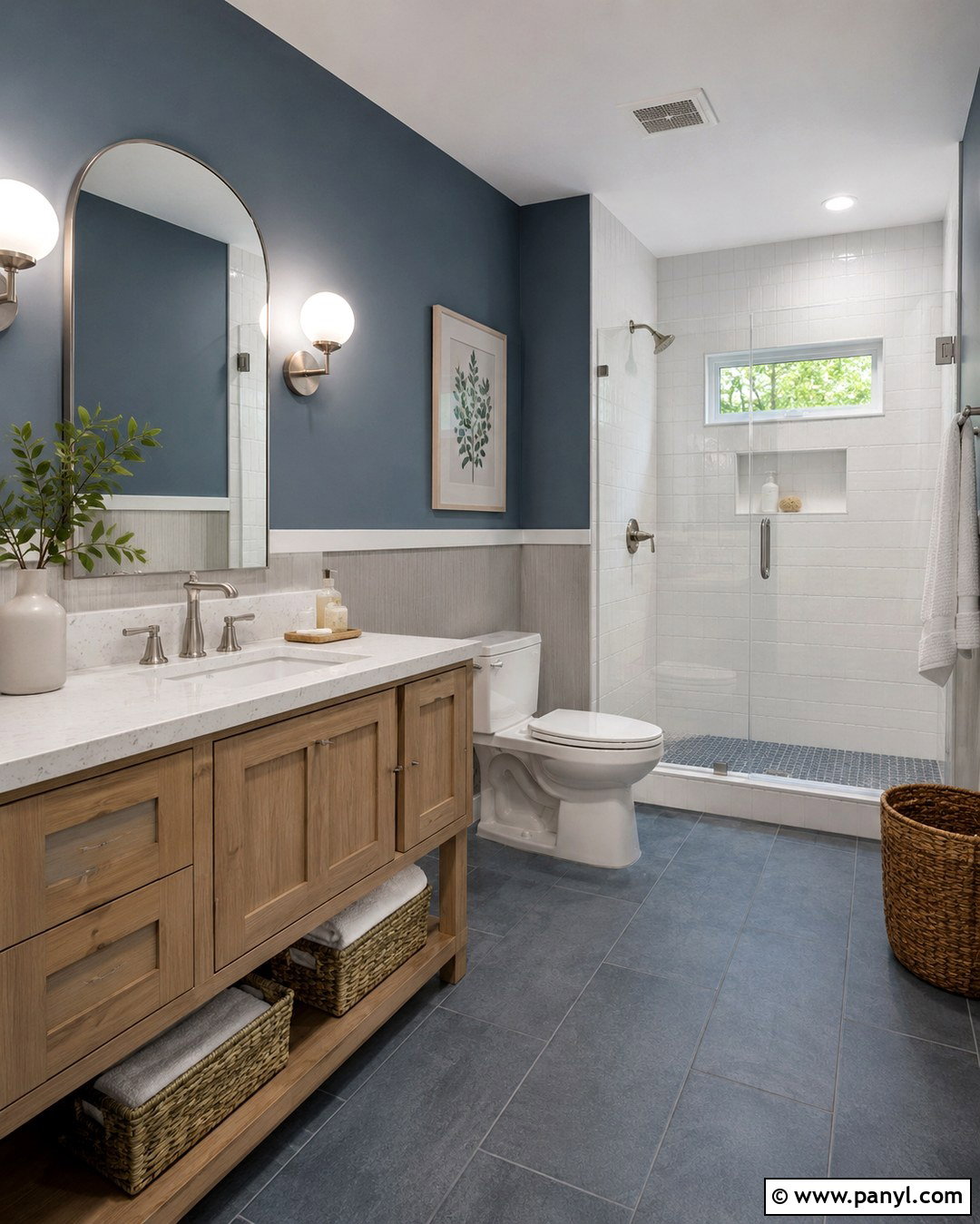
Slate blue above soft gray gives a bathroom crisp color without sacrificing a clean, spacious appearance. Use the gray below around the vanity, toilet, and tub, then separate it from the blue with a slim white molding. A white oak vanity, pale quartz countertop, and brushed-nickel fixtures keep the palette fresh. Choose simple white shower tile so the painted walls remain the room’s defining feature. Blue-gray floor tile connects both shades and provides a practical foundation. A rounded mirror and bright globe sconces reflect light across the upper walls. Add white towels, one small plant, and a woven hamper for texture. With the ceiling, door, and trim painted white, the final bathroom feels serene and structured rather than cold or overly decorative.
14. Aubergine And Peach Guest Room Walls
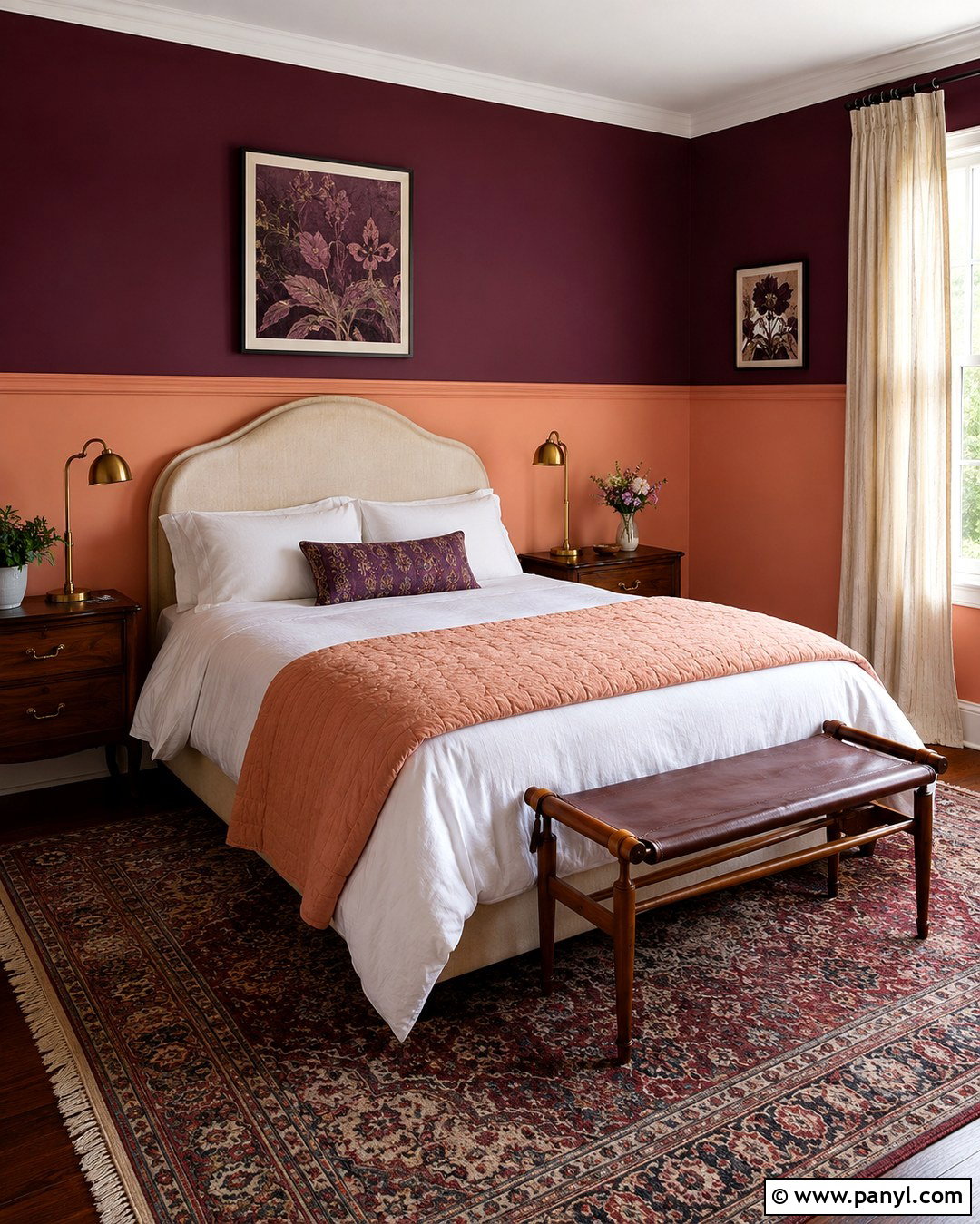
Dark aubergine above soft peach creates a guest room that feels distinctive, warm, and thoughtfully prepared. Set the paint split slightly above the headboard so the peach shade forms a flattering backdrop around the bed. Choose a curved cream headboard, white bedding, and a peach quilt with aubergine piping. Walnut nightstands and brass lamps add depth, while pale curtains keep daylight moving through the space. A vintage-style rug containing plum, tan, and faded pink helps unite the colors. Keep wall decor simple, using two matching prints with wide cream mats. A small wooden luggage bench at the foot of the bed improves function without filling the room. This balanced combination gives visitors a cozy retreat while remaining sophisticated enough for long-term use.
15. Emerald Green And Mint Sunroom Walls
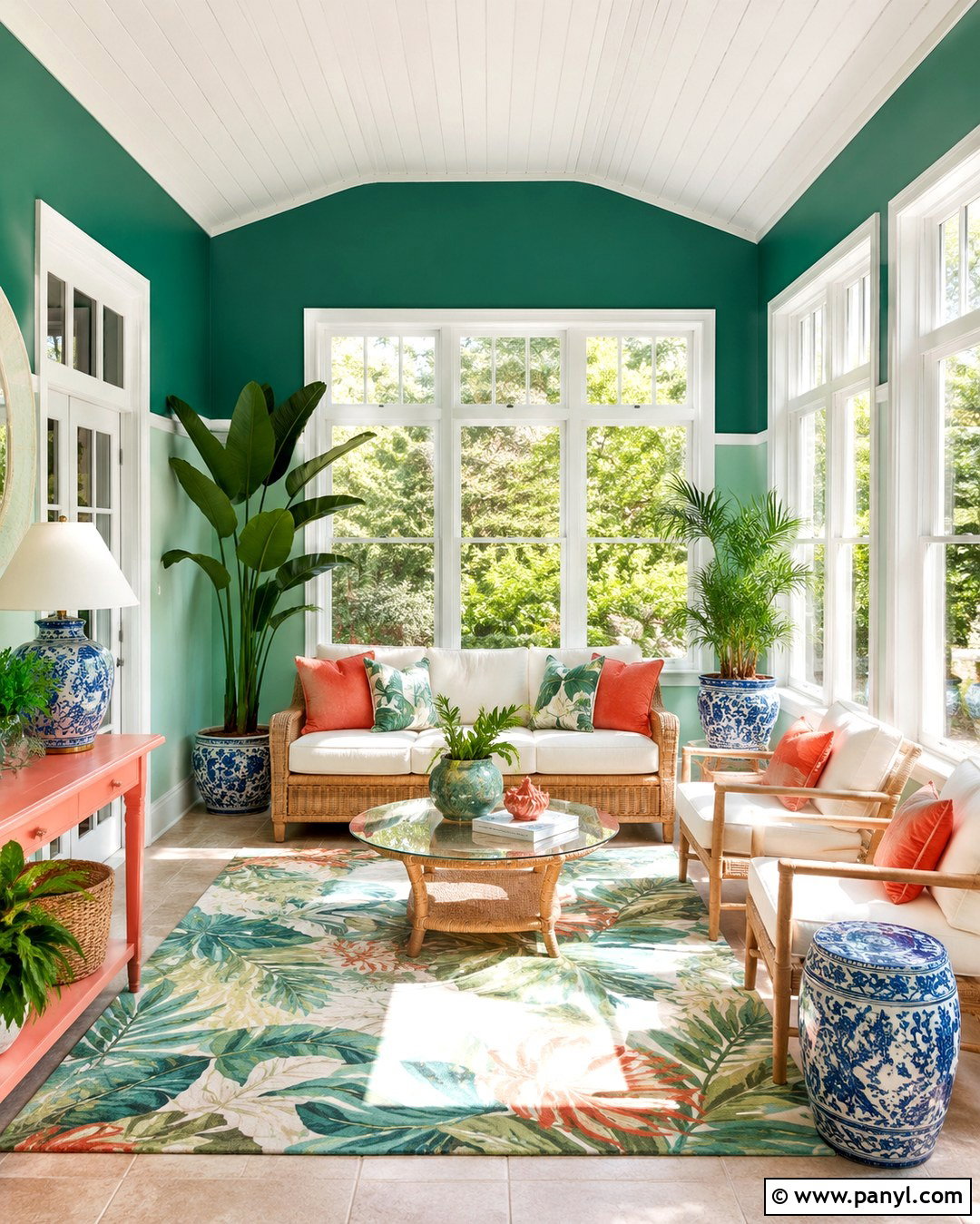
A sunroom can handle stronger color, making emerald upper walls and pale mint below an energetic yet balanced pairing. Position the split at window-sill height to create a continuous line around the room. Paint window trim bright white so the outdoor view remains clearly framed. Furnish the space with a natural rattan sofa, cream cushions, and two light wood side chairs. A botanical rug containing emerald, mint, and warm coral brings the palette onto the floor. Add linen shades, ceramic planters, and several leafy plants in different heights, but leave open space between them. A white ceiling fan and glass table maintain visual lightness. The completed sunroom feels garden-inspired and lively while still offering a comfortable place for conversation, reading, or morning coffee.
16. Ink Blue And Linen Family Room Walls
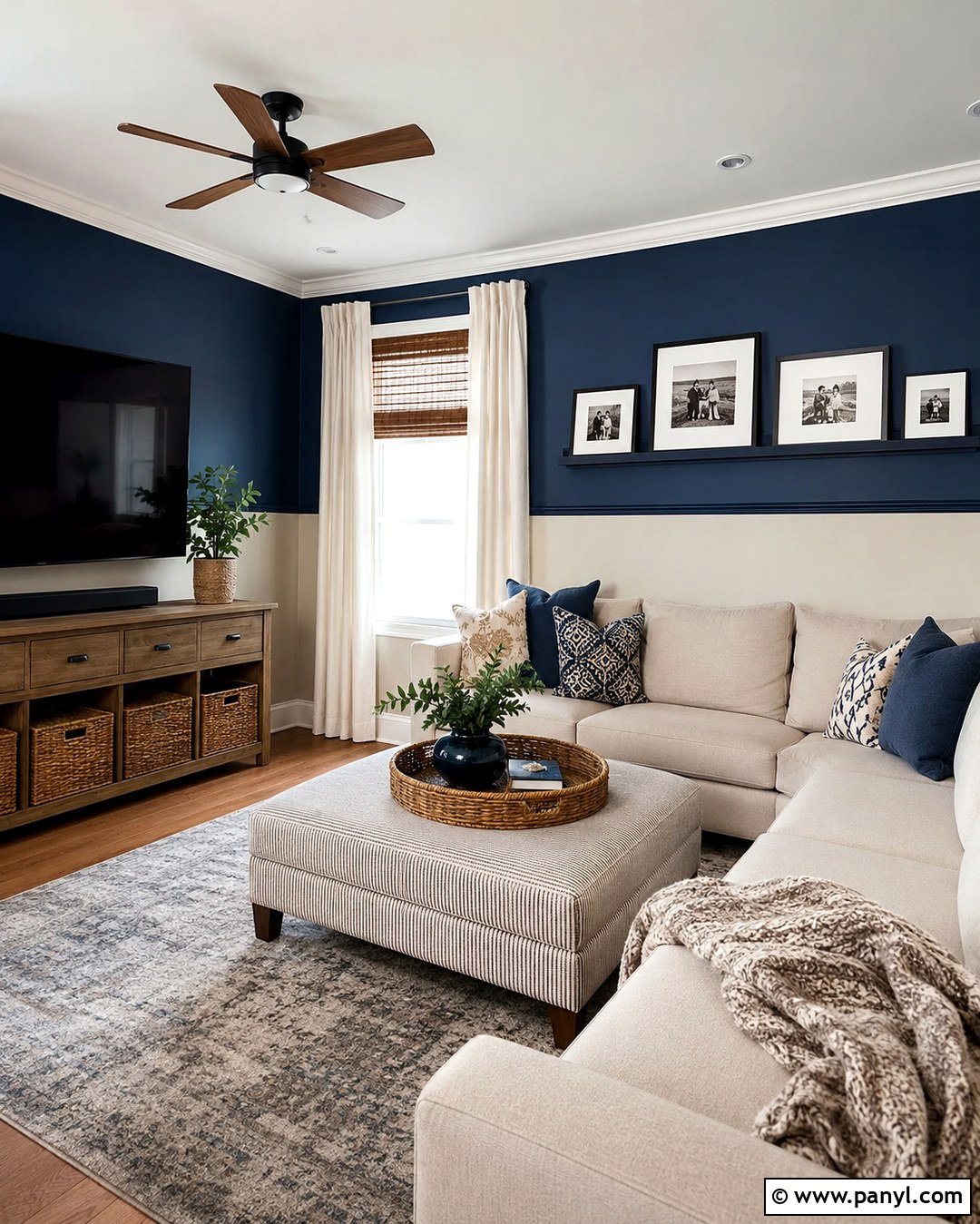
Ink blue across the upper walls gives a family room definition, while warm linen paint below provides a forgiving neutral around frequently used furniture. Create the split just above the sofa and add a shallow picture ledge painted ink blue. A roomy oatmeal sectional, medium-tone oak media console, and patterned wool rug establish a comfortable layout. Repeat blue through pillows, storage baskets, and one upholstered ottoman rather than matching every accessory. Warm wood blinds and cream curtains soften the windows. Use closed storage near the floor to control clutter, then keep the ledge lightly decorated with family photos and small art prints. White trim and a pale ceiling balance the deep color. This scheme feels relaxed enough for daily life but polished enough for entertaining guests.
17. Dark Taupe And Cream Staircase Walls
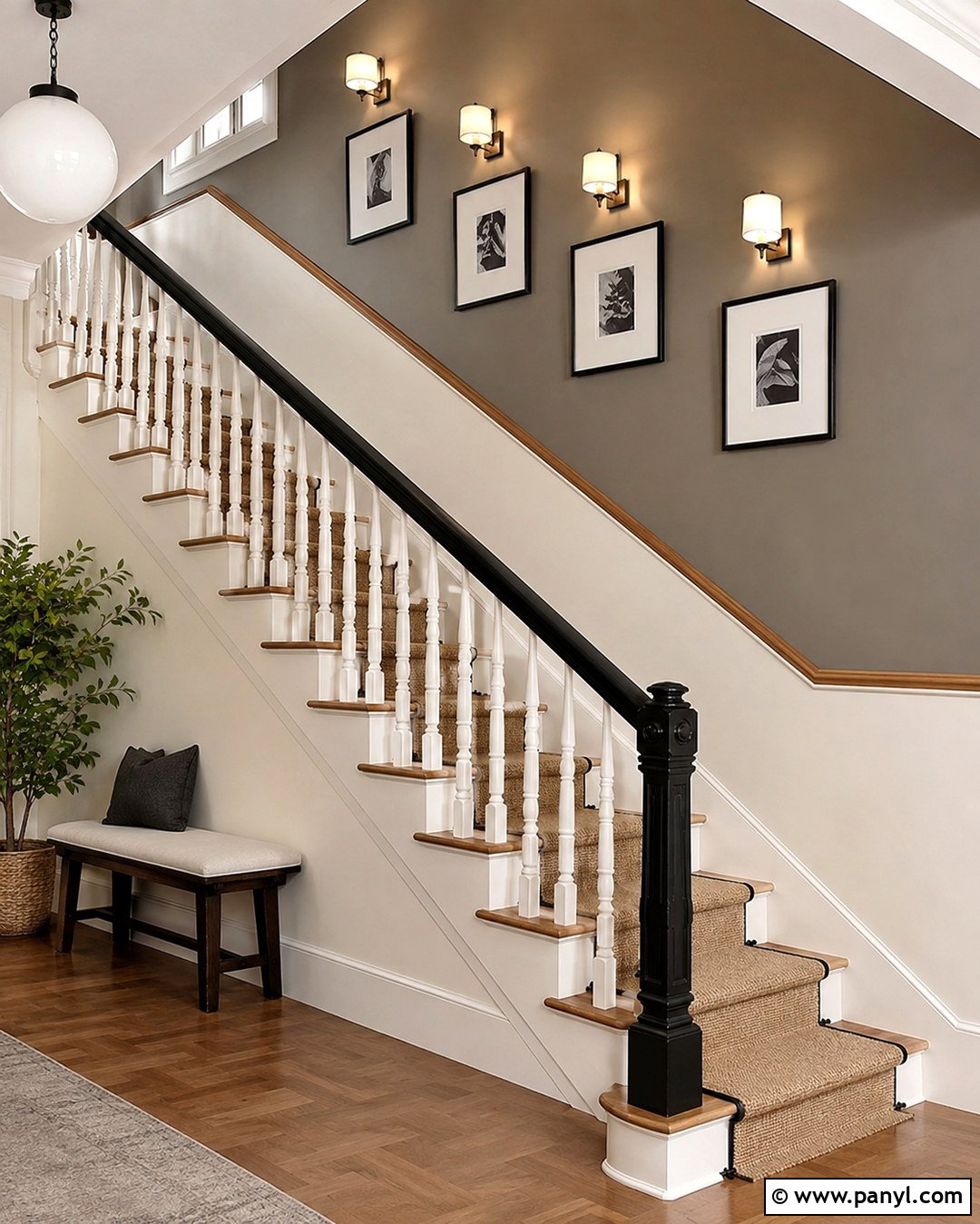
Dark taupe upper walls can make a staircase feel connected and architectural, especially when paired with creamy lower walls. Follow the angle of the stairs with the dividing line instead of forcing a horizontal split across the entire space. A narrow wood molding can conceal the transition and create a professionally finished edge. Paint the banister matte black, keep the spindles cream, and use a natural runner on the steps. Arrange black-framed artwork along the dark upper zone, spacing each piece evenly with the staircase rise. A simple globe pendant and wall sconces provide strong illumination across both levels. Repeat dark taupe in the nearby landing rug or bench cushion. The completed staircase feels intentional, cohesive, and more interesting than an ordinary neutral passage.
18. Rust Brown And Sand Laundry Room Walls
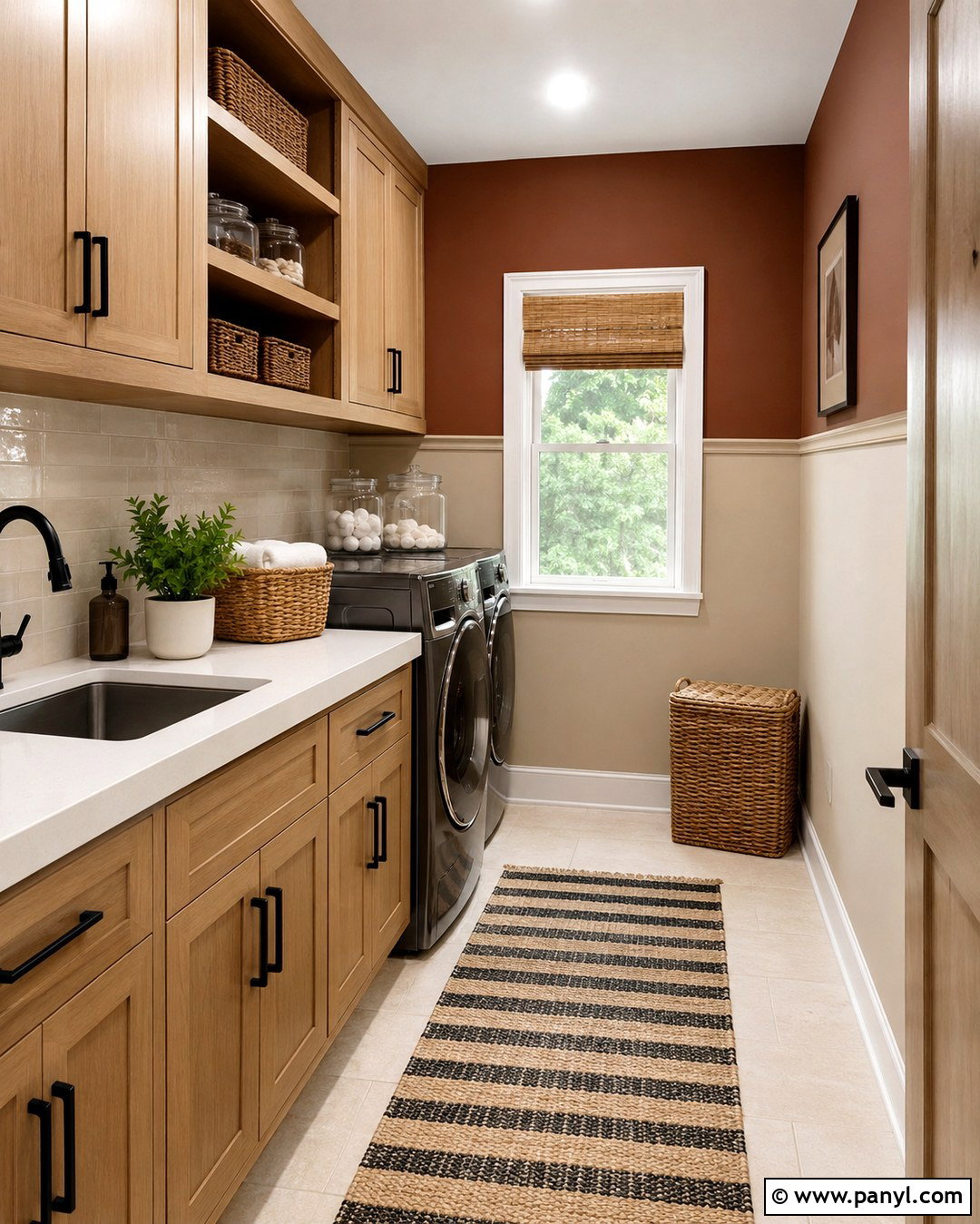
Rust brown above sandy beige brings warmth to a practical laundry room without making it feel overly decorated. Keep the dividing line slightly higher than the washer and dryer so the lighter paint surrounds the appliances and work surfaces. Install natural oak cabinets against the rust section, then use a white quartz counter and simple cream backsplash below. Woven baskets, glass storage containers, and black cabinet pulls create tidy contrast. A striped washable runner in rust, tan, and charcoal adds comfort underfoot. Include bright under-cabinet lighting along with a white ceiling fixture to ensure the workspace remains functional. One framed print and a small potted plant are enough for decoration. This complete scheme makes routine chores feel more pleasant while maintaining durable, organized storage.
19. Charcoal Green And Putty Mudroom Walls
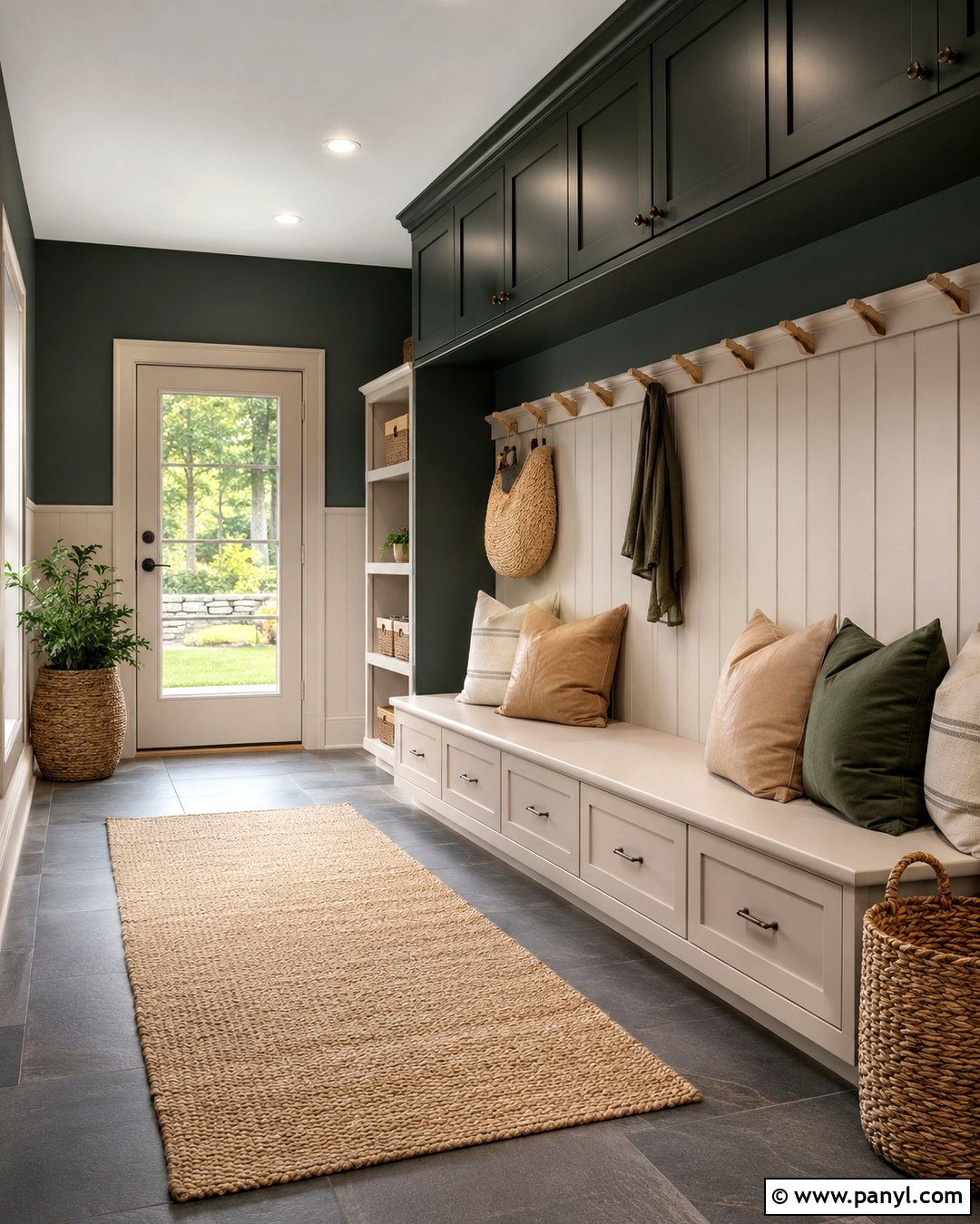
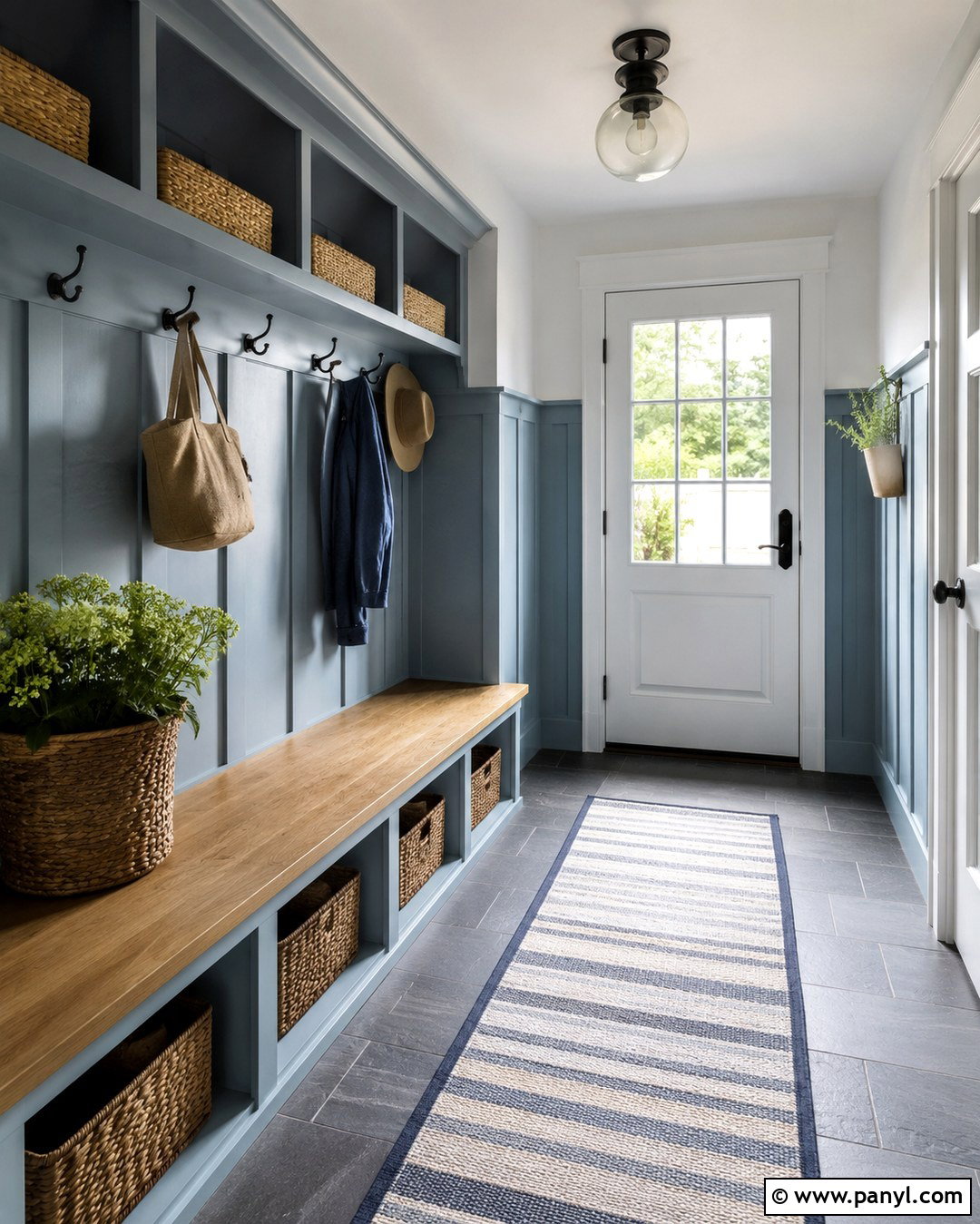
Charcoal green upper walls and warm putty below give a hardworking mudroom a clean, grounded appearance. Use putty-colored vertical paneling across the lower section to protect busy walls while adding useful architectural texture. Install a matching storage bench with drawers, then place charcoal green cabinets above it so they blend into the dark paint. Oak hooks, woven baskets, and tan seat cushions bring natural warmth to the arrangement. Choose slate-look floor tile that hides outdoor marks and supports the deep upper color. A cream runner and white ceiling keep the compact area from feeling closed in. Add one bright flush-mount fixture and leave the main walkway open. The finished mudroom combines seating, concealed storage, and durable materials in a cohesive family-friendly design.
20. Deep Red And Dusty Pink Library Walls
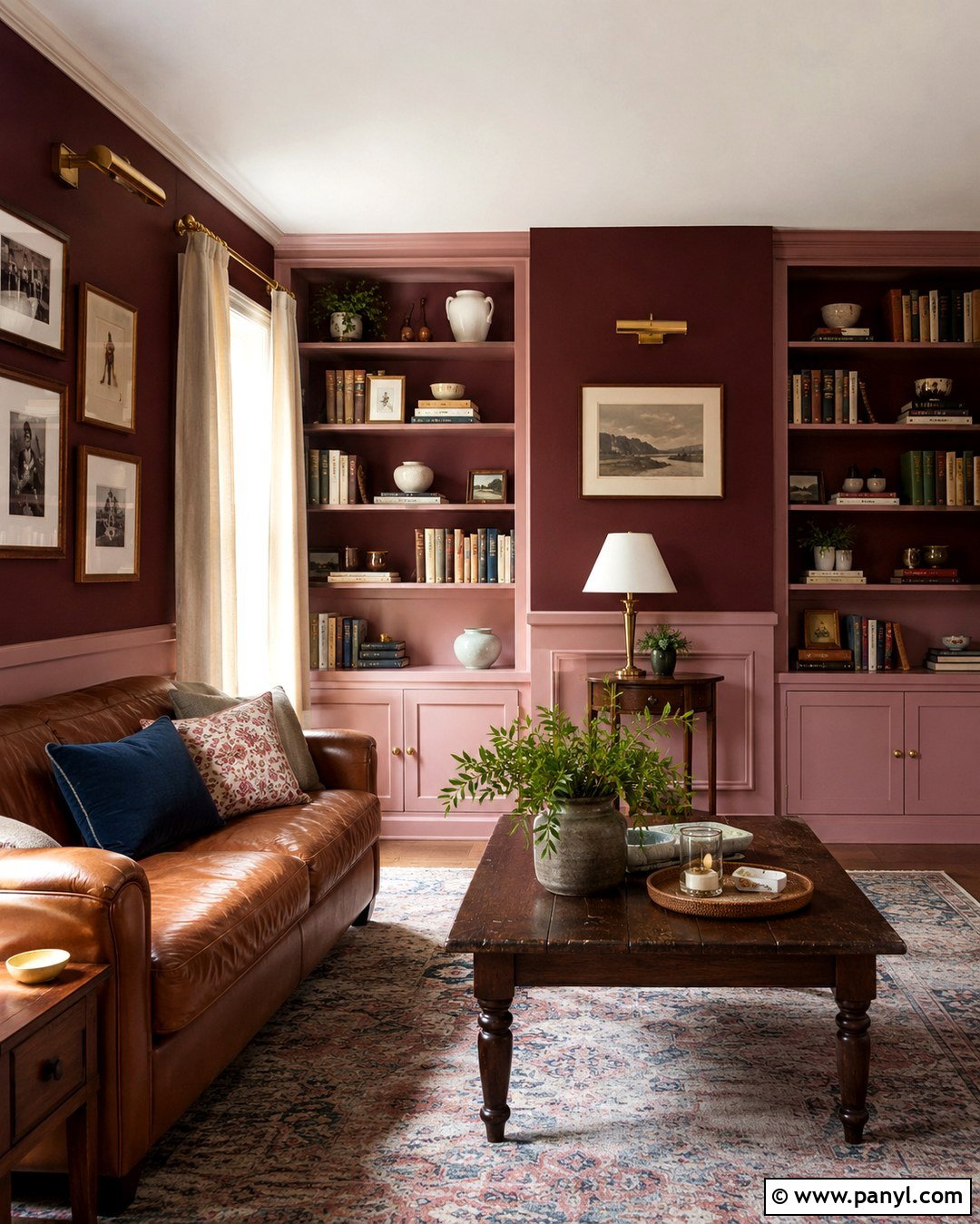
Deep red upper walls create a rich backdrop for a home library, while dusty pink below adds unexpected softness. Run the dividing line through the center of low built-in bookcases, painting their lower cabinets pink and their open upper shelves red. A caramel leather sofa, dark wood coffee table, and faded Persian-style rug complete the intimate seating area. Add cream curtains to balance the saturated walls and improve daytime brightness. Brass picture lights mounted above the shelves provide focused illumination without taking up floor space. Arrange books in relaxed groups with a few cream ceramics and framed photos between them. Keep the ceiling warm white and repeat deep red in two sofa pillows. The resulting library feels dramatic, comfortable, and carefully layered rather than overly formal.
Conclusion:
These 20 Two Tone Walls Dark On Top Ideas show that darker upper walls can work in bright, relaxed, and highly functional interiors. The key is treating each color combination as part of a complete room rather than an isolated paint effect. Consider the dividing-line height, ceiling color, natural light, furniture finishes, and repeated accents before choosing your final palette. A crisp taped edge offers modern simplicity, while molding or a picture ledge adds architectural character. Test both colors together on every wall because changing light can alter their undertones. Whether you prefer navy and cream or aubergine and peach, 20 Two Tone Walls Dark On Top Ideas provide a bold way to personalize familiar rooms.

Related Ideas and Inspiration:
Leave a Reply