
Gray can feel calm, polished, cozy, or dramatic depending on its undertone and the materials around it. The most inviting gray interior design ideas avoid flat, all-gray rooms. Instead, they combine warm woods, natural stone, soft textiles, layered lighting, and carefully chosen accent colors. Pale dove gray can brighten a compact room, while charcoal creates depth in larger spaces. Warm greige works especially well when you want the flexibility of gray without a cold finish. Before committing, test paint samples beside the flooring and observe them throughout the day. The following complete room schemes cover living rooms, bedrooms, kitchens, bathrooms, and more, giving you practical inspiration for recreating these 20 gray interior design ideas.

1. Warm Gray Living Room
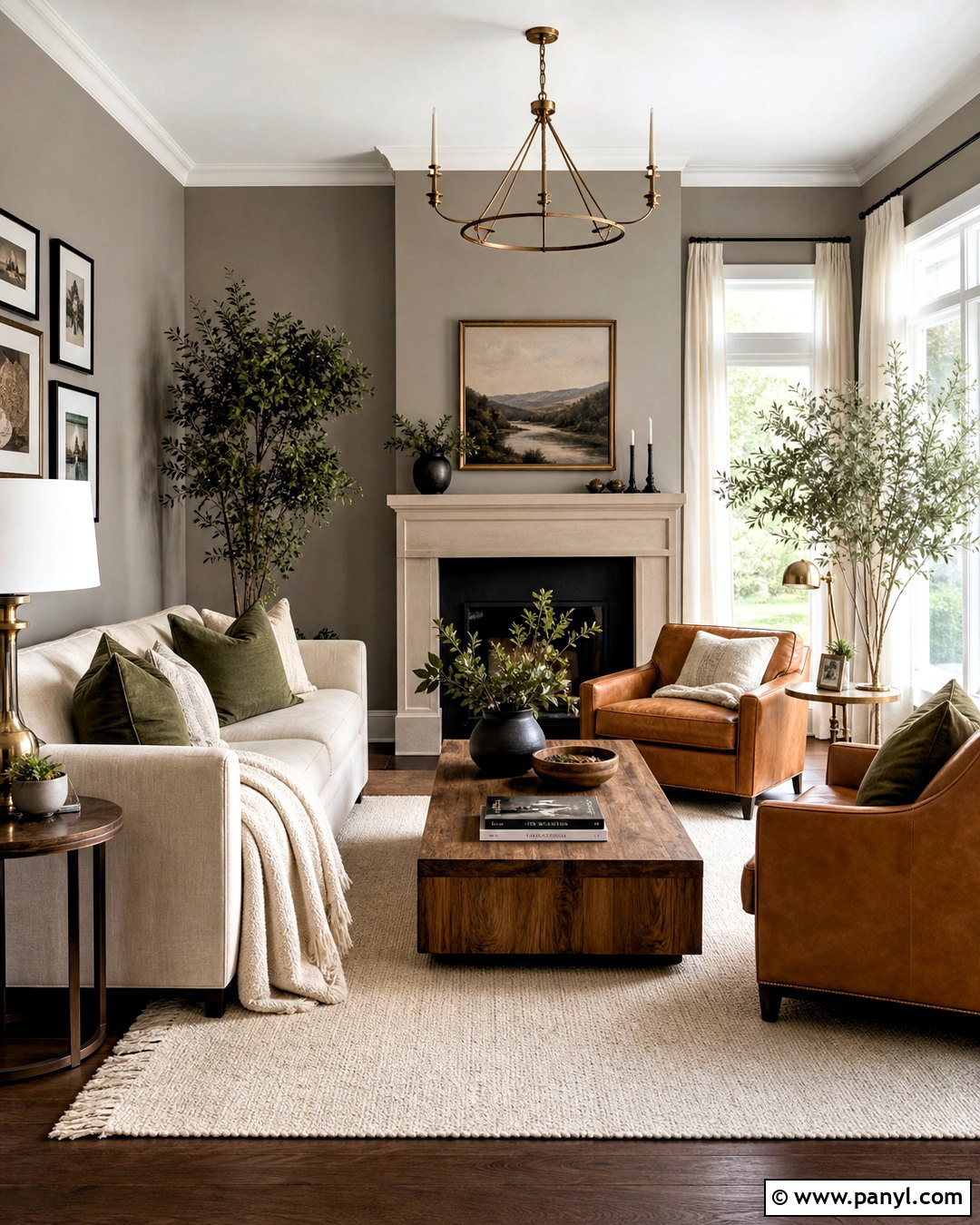
Choose a warm gray with beige or taupe undertones for a living room that feels relaxed rather than chilly. Cover the walls in this soft shade, then ground the seating area with a cream sofa and two caramel leather chairs. A medium-toned oak coffee table introduces natural warmth, while a large ivory-and-gray wool rug connects the furniture. Add olive green pillows, textured oatmeal throws, and simple landscape artwork for gentle color. Linen curtains should closely match the wall color to create a smooth, spacious effect. Finish the room with aged brass floor lamps, ceramic table lamps, and a few leafy plants. This layered scheme keeps gray prominent while providing enough warmth, contrast, and texture for everyday comfort.
2. Light Gray Small Living Room
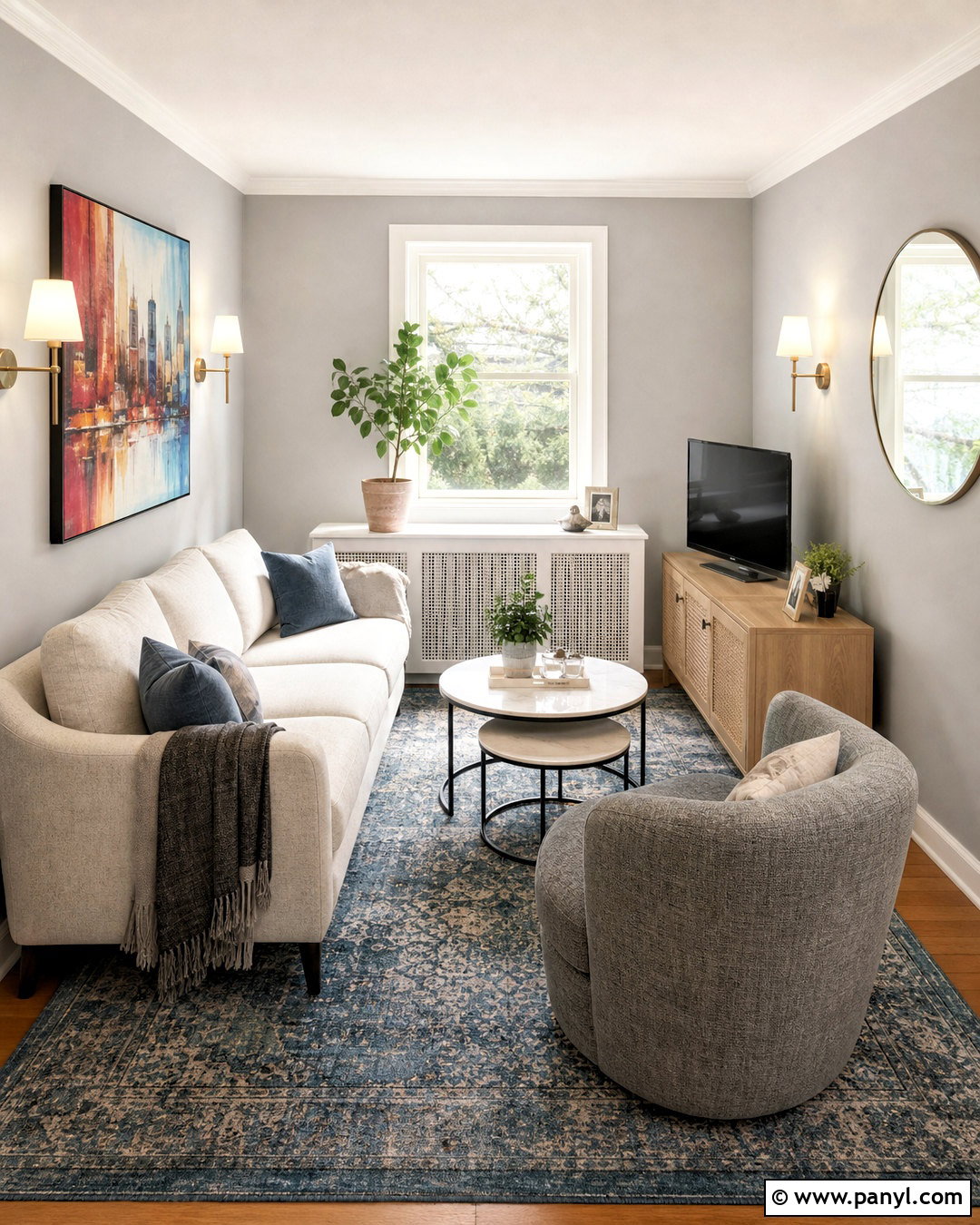
A pale gray palette can help a compact living room feel open without leaving it plain or unfinished. Paint the walls a soft dove gray and use crisp white on the ceiling, baseboards, and window trim. Select a slim cream loveseat with raised legs, one rounded gray armchair, and a nesting coffee table instead of bulky furniture. A light oak media console provides storage while keeping the visual weight low. Bring in dusty blue pillows, a subtly patterned rug, and one large piece of colorful artwork to prevent the room from becoming washed out. Wall-mounted sconces preserve floor space, while a tall mirror reflects natural light. Keep decorative objects limited and leave clear pathways around the seating arrangement.
3. Charcoal Gray Living Room
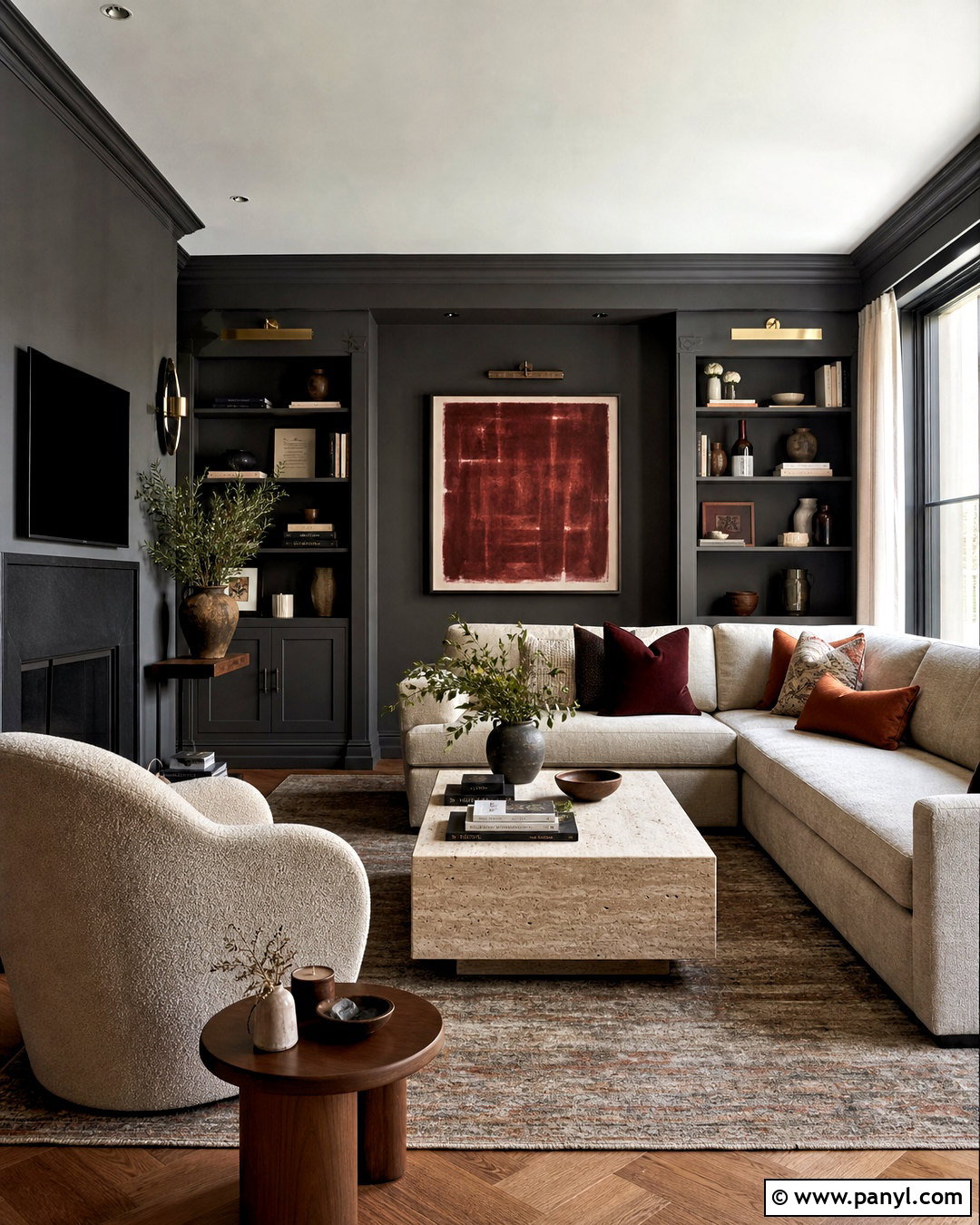
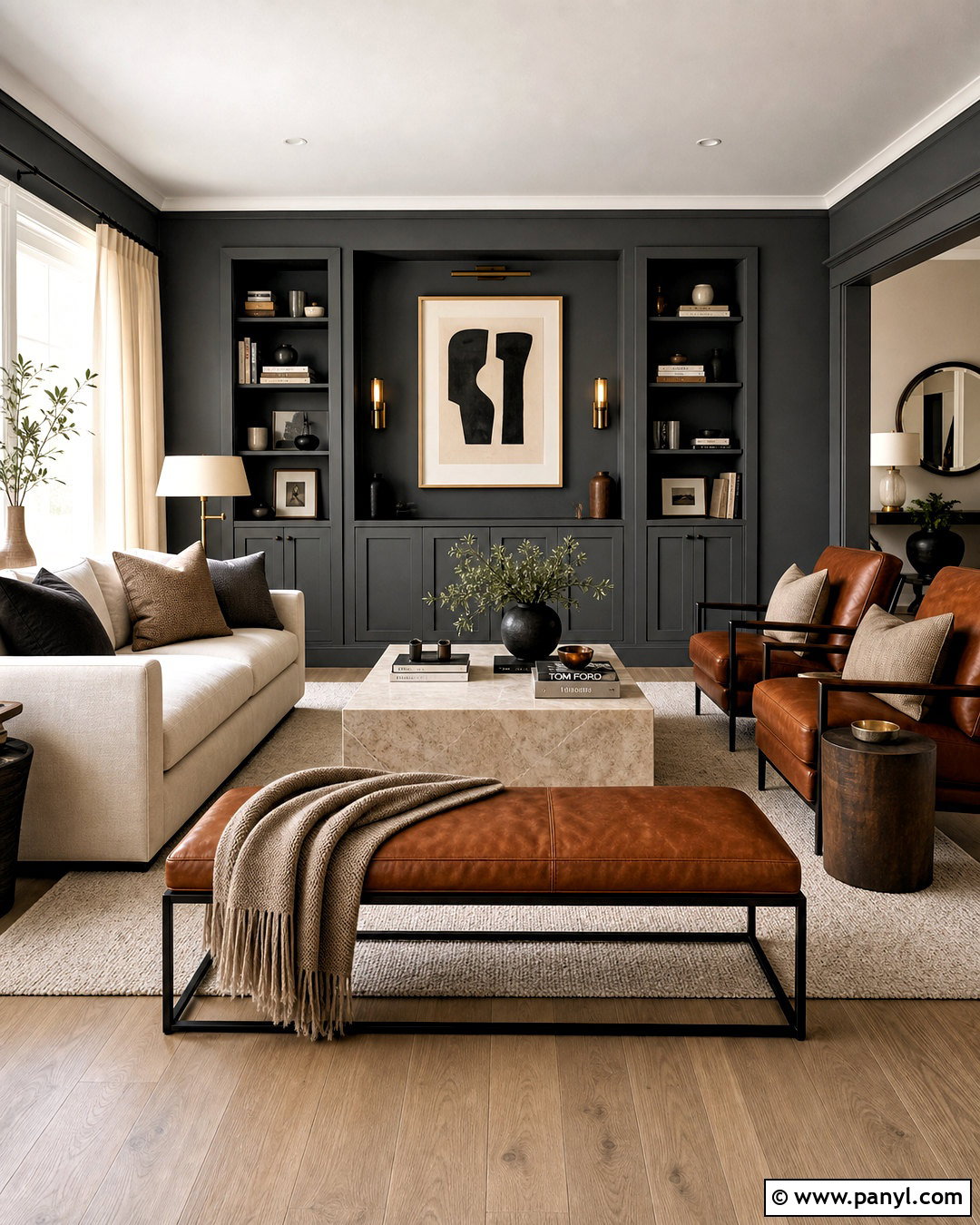
Deep charcoal walls can turn a generously sized living room into a comfortable, cocooning retreat. Apply the color across the walls, trim, and built-in shelving for a unified background. Balance the darker envelope with a large oatmeal sectional, pale wool rug, and sculptural cream accent chair. Walnut side tables and a low travertine coffee table add warm brown and natural stone tones. Use rust, burgundy, and muted gold in pillows and artwork to enrich the palette without making it overly colorful. Sheer ivory curtains soften the windows during the day, while brass sconces and shaded table lamps provide layered illumination. Display books, pottery, and framed art sparingly so the dark shelving looks collected but never crowded.
4. Gray And Beige Living Room
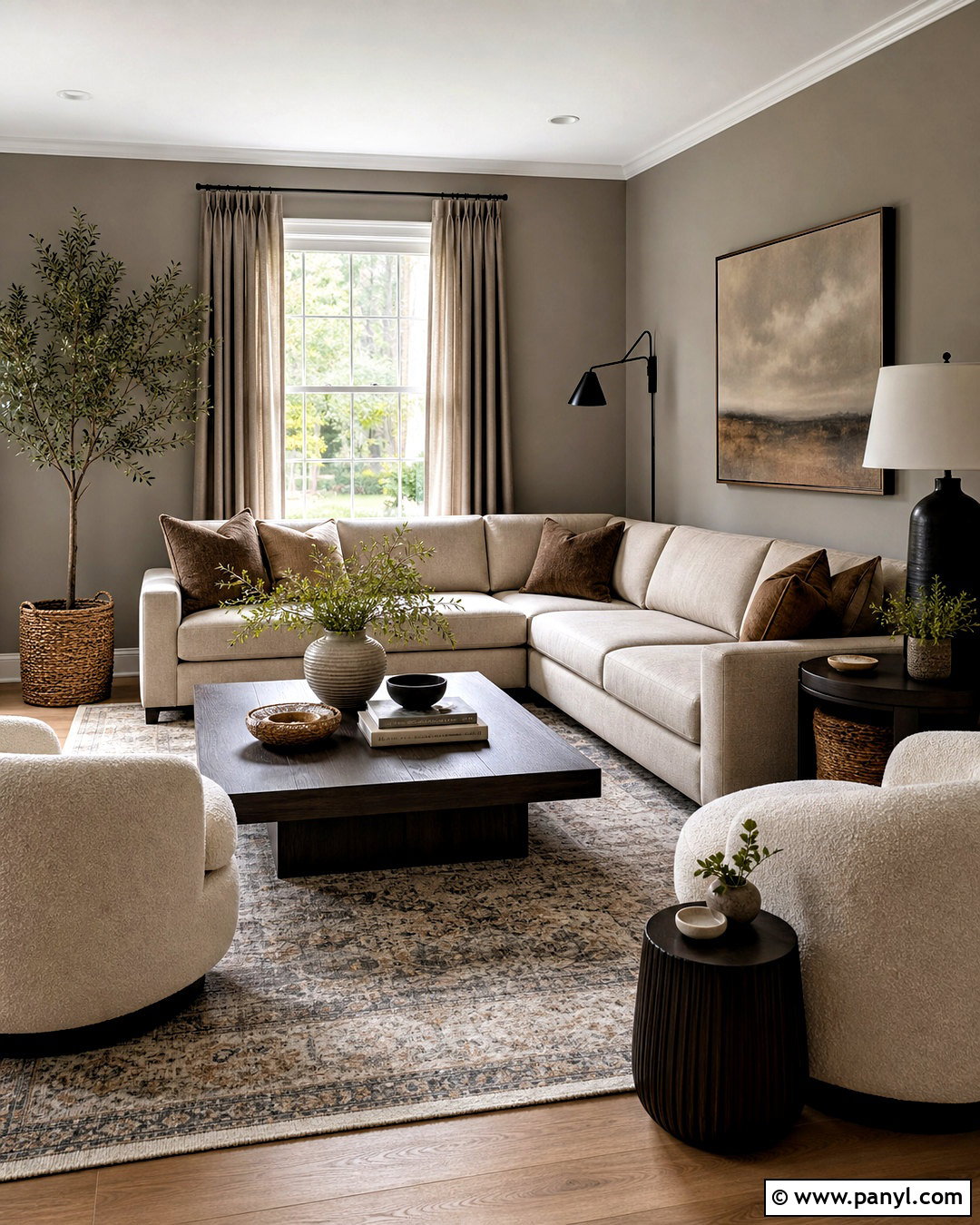
Gray and beige work beautifully together when their undertones are carefully coordinated. Start with light mushroom-gray walls, then place a warm beige sectional at the center of the room. Layer a gray-and-tan patterned rug beneath a round dark oak coffee table to define the seating area. Choose taupe linen curtains, ivory boucle chairs, and soft brown pillows for a gradual transition between cool and warm neutrals. Black metal lighting and narrow black picture frames provide small amounts of sharp contrast. Add visual interest through woven baskets, ribbed ceramics, slubby linen, wool, and natural wood rather than introducing many extra colors. The final room should feel balanced and dimensional, with neither gray nor beige overwhelming the complete design.
5. Gray And Blue Living Room
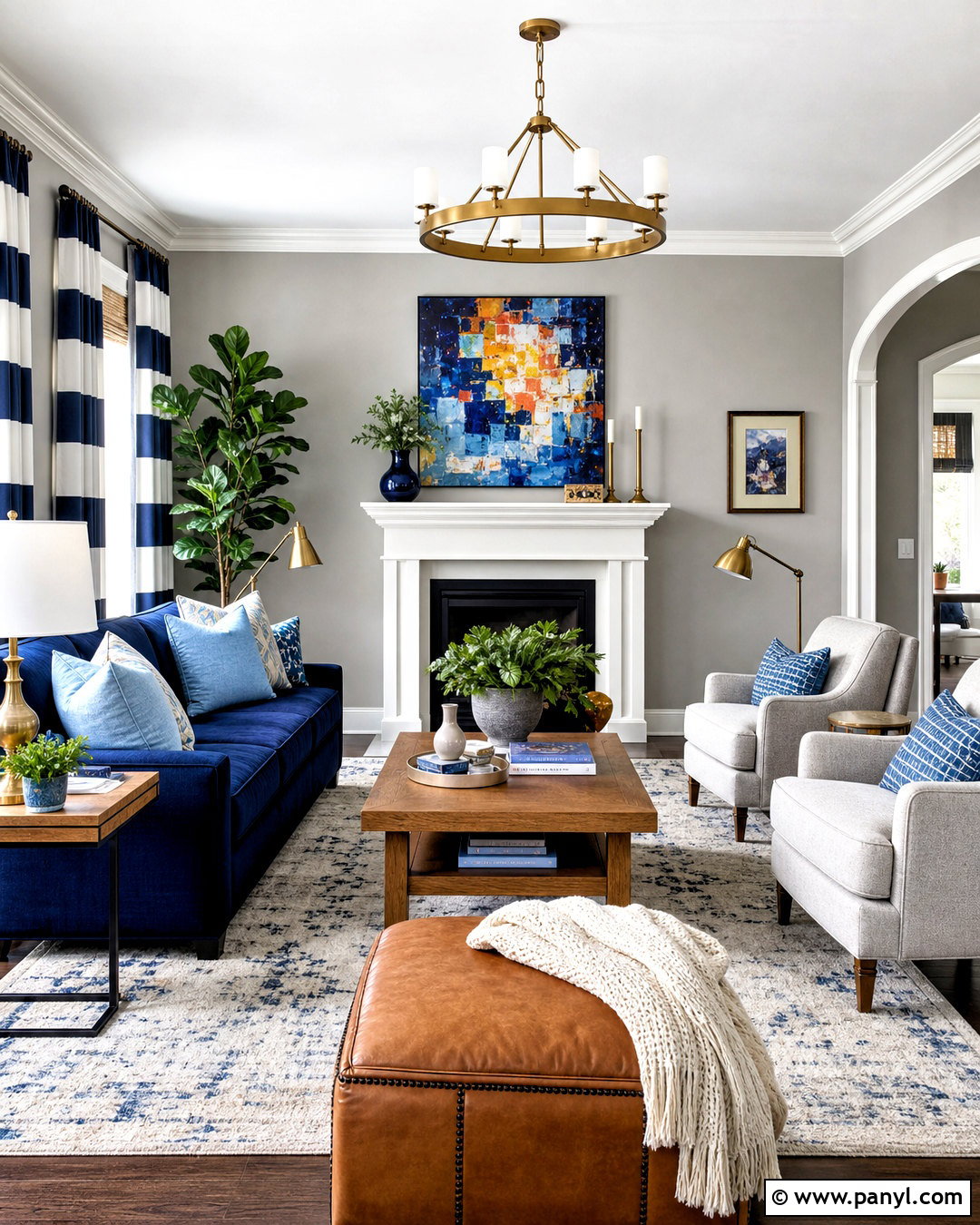
Pairing gray with blue creates a peaceful living room that still has clear personality. Use a medium warm gray on the walls and make a deep navy sofa the main anchor. Add two light gray armchairs, a natural oak coffee table, and a cream rug with a faded blue pattern. Powder-blue pillows and navy-striped curtains repeat the accent color at different intensities. A cognac leather ottoman introduces an important note of warmth, while brushed brass lamps keep the palette from feeling too cool. Choose artwork that combines blue, cream, gray, and muted brown. Complete the room with white ceramic accessories and a few green plants. The varied blue tones make the neutral gray background feel fresher and more intentional.
6. Gray And Green Living Room
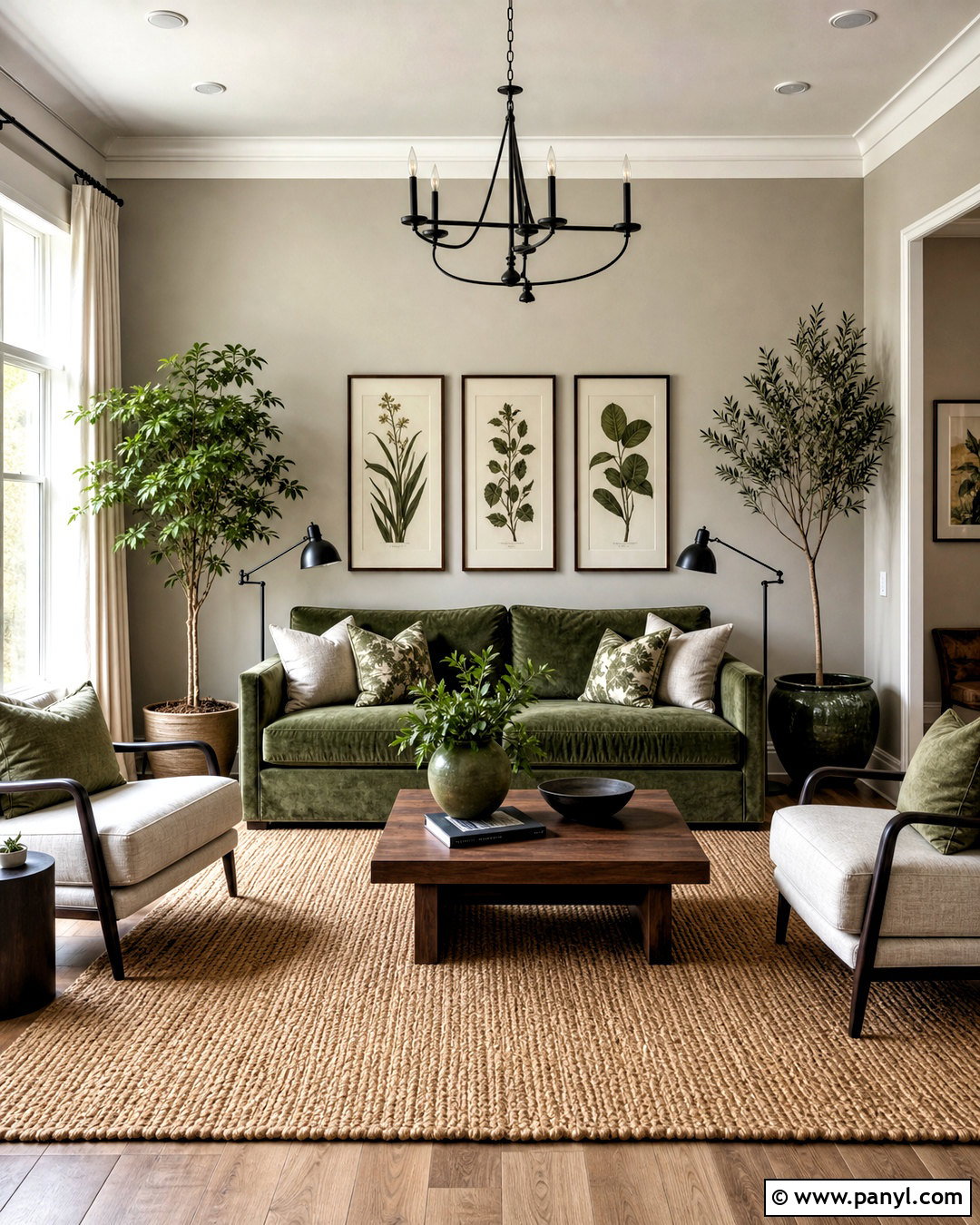
Imagine soft gray walls surrounded by warm wood, leafy plants, and restful green upholstery. Begin with a pale gray paint that has a slightly warm undertone, then introduce a moss green velvet sofa as the room’s focal point. Place two cream chairs opposite it to create a balanced conversation area. A walnut coffee table, woven jute rug, and linen curtains bring organic texture into the design. Use forest green, sage, and muted olive in small amounts across pillows, pottery, and artwork. Black window frames or slim metal lamps can add definition without dominating the palette. Finish with several real or realistic plants at different heights. This complete scheme feels grounded, natural, and colorful while allowing gray to remain the flexible backdrop.
7. Gray Modern Kitchen
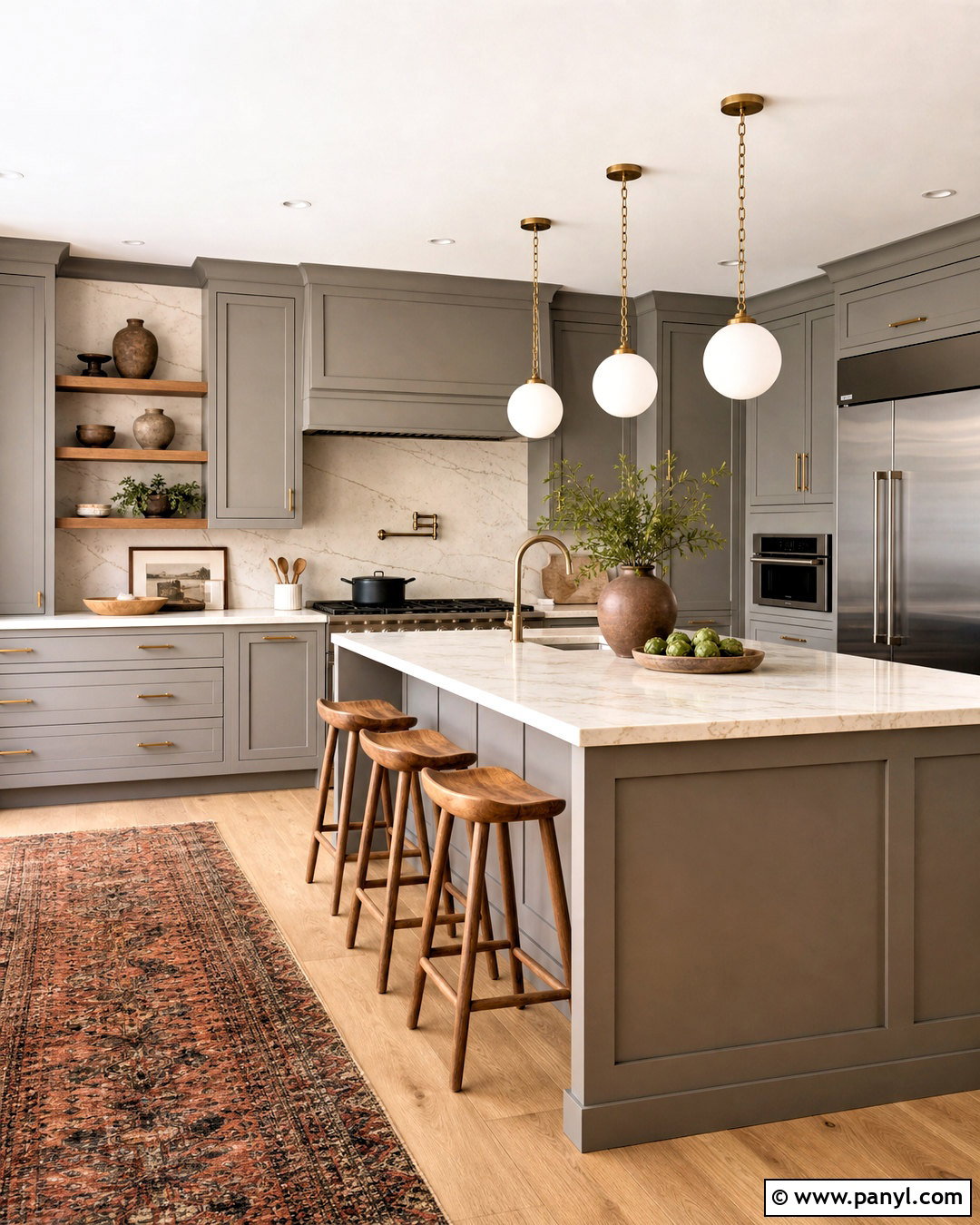
For a modern kitchen, combine streamlined gray cabinetry with warm materials that soften its clean lines. Choose flat-panel cabinets in a medium putty gray and pair them with creamy quartz countertops featuring subtle veining. Use a matching quartz backsplash for an uninterrupted finish behind the cooking area. Light oak flooring and three wood counter stools prevent the cabinetry from feeling industrial. Install brushed brass pulls, a simple brass faucet, and large white globe pendants over the island. Keep upper cabinetry limited where possible, replacing one section with oak shelves for everyday dishes and pottery. A runner in rust, cream, and muted blue introduces pattern. The result is contemporary and practical, but still welcoming enough for a busy family kitchen.
8. Gray Farmhouse Kitchen
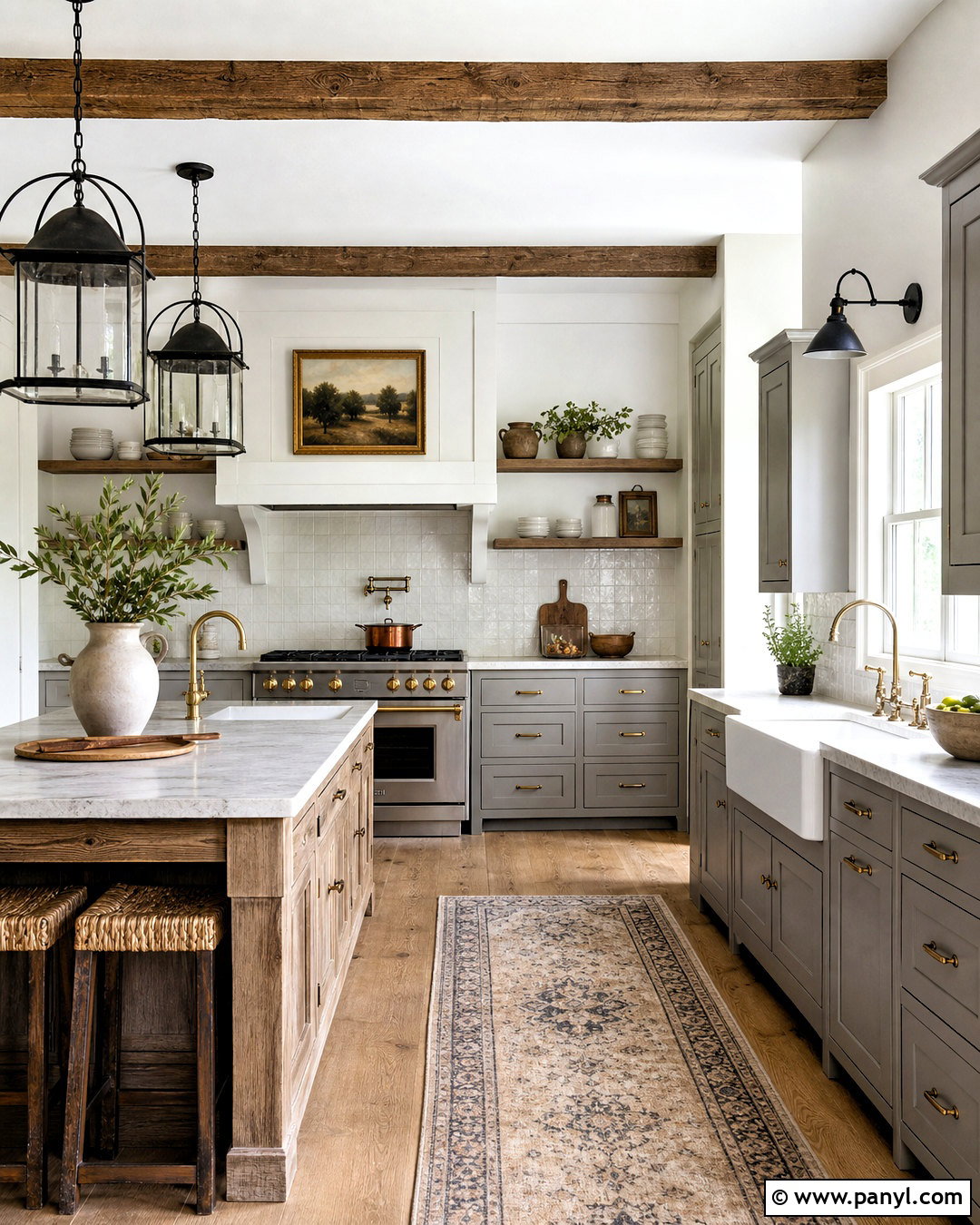
A gray farmhouse kitchen feels most authentic when painted cabinetry is balanced with aged, natural-looking finishes. Select shaker cabinets in warm medium gray and top them with creamy white quartz or lightly veined marble. A white apron-front sink creates a classic focal point beneath the window. Use handmade off-white subway tile for the backsplash, keeping its surface slightly irregular for added character. Wide-plank oak flooring, woven counter stools, and a reclaimed wood island bring warmth to the gray foundation. Choose aged brass cabinet hardware and black iron pendants for a collected appearance. Open shelving can display neutral dishes, cutting boards, and stoneware. Finish with a muted vintage-style runner so the complete kitchen looks comfortable, functional, and gently timeworn.
9. Gray Dining Room
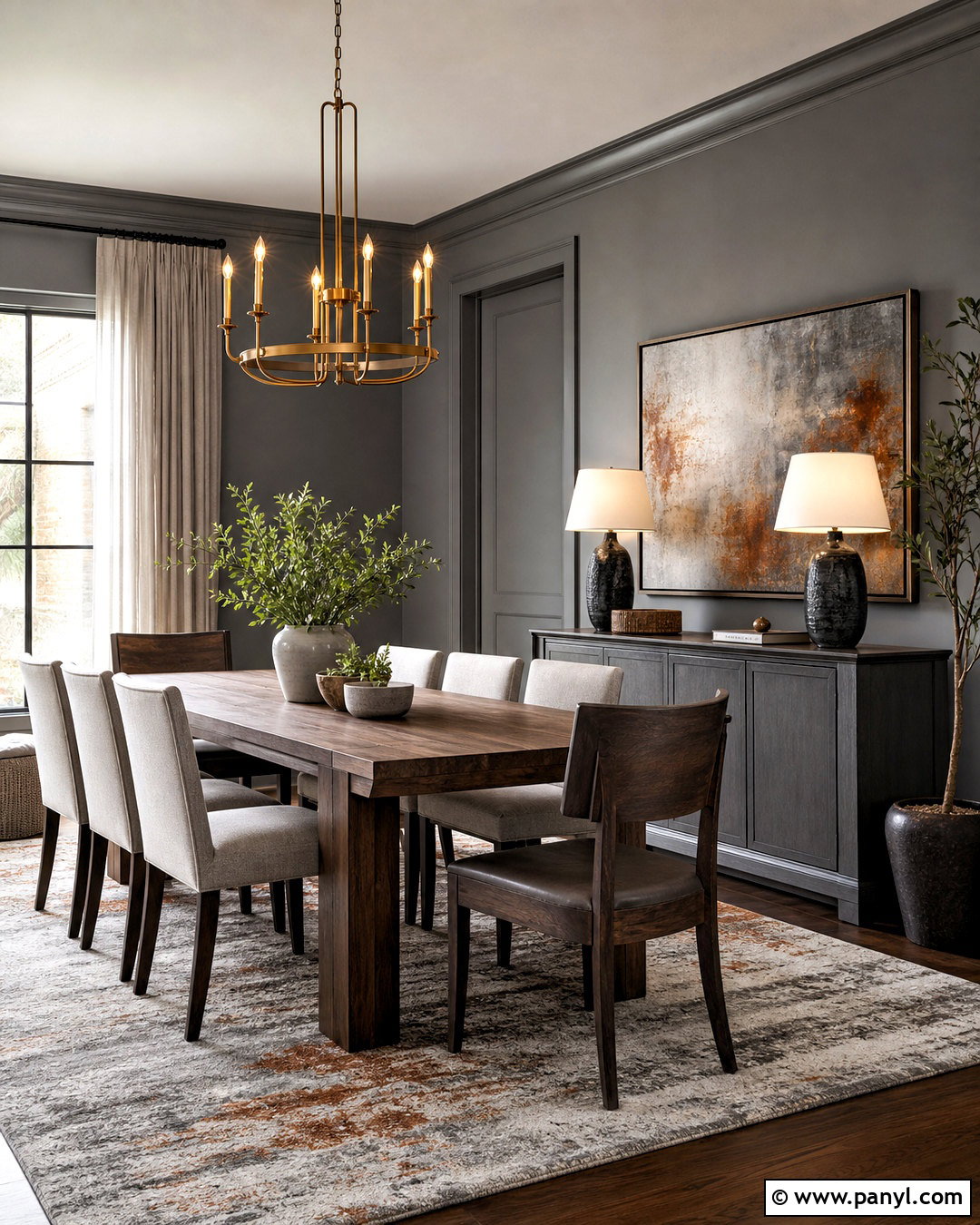
Would you like a dining room that feels formal enough for gatherings but comfortable during ordinary meals? Paint the walls a rich medium gray with warm undertones, then center a rectangular walnut table beneath a modern brass chandelier. Surround it with upholstered oatmeal chairs, adding dark wood chairs at each end for contrast. A large rug in gray, cream, and faded rust should extend beyond every chair when pulled out. Hang full-length flax-colored curtains and one oversized abstract artwork containing muted terracotta and black. A dark gray sideboard can blend into the wall while providing useful storage. Complete the room with simple ceramic lamps, greenery, and a shallow centerpiece, leaving the dining surface mostly open and easy to use.
10. Gray Bedroom
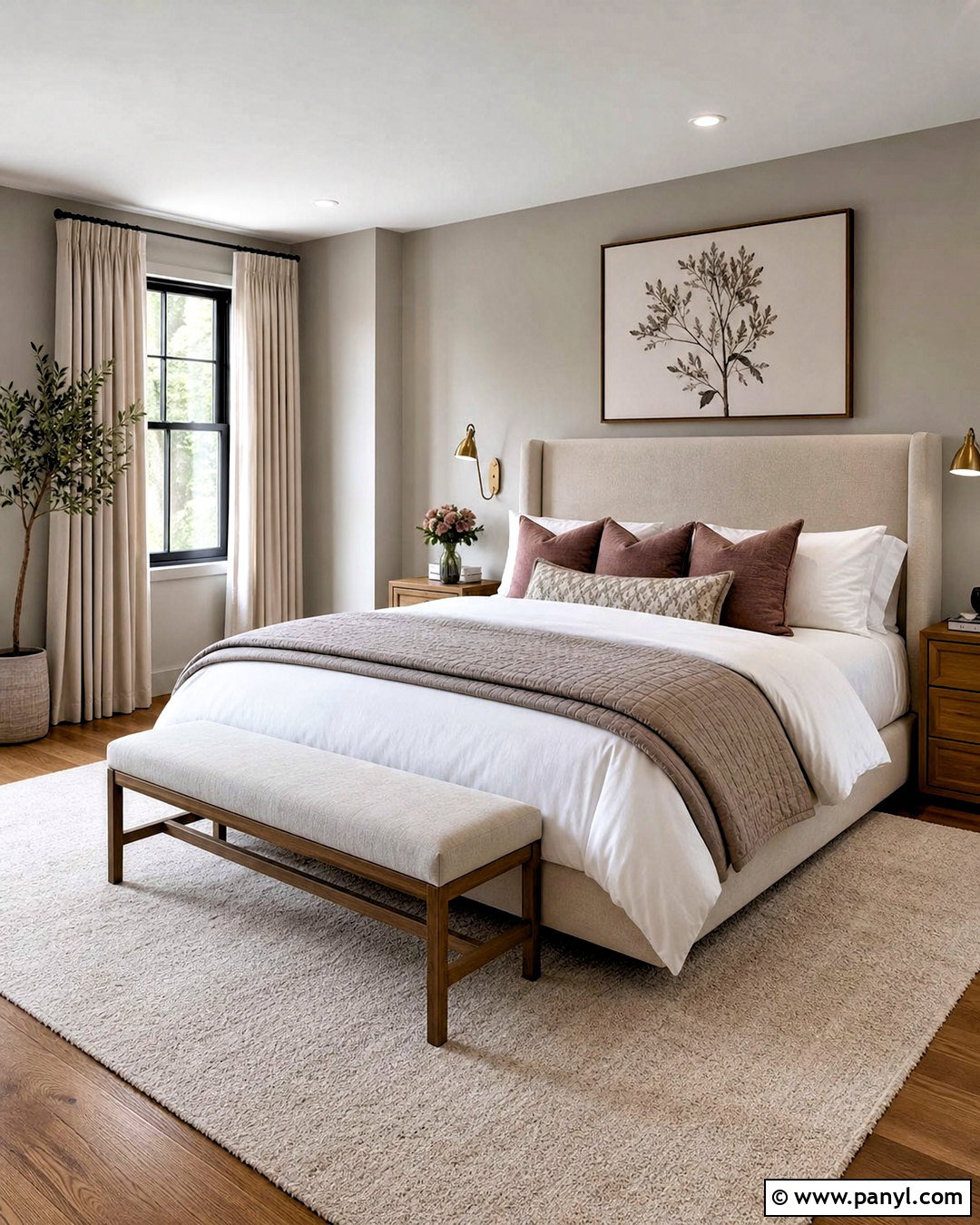
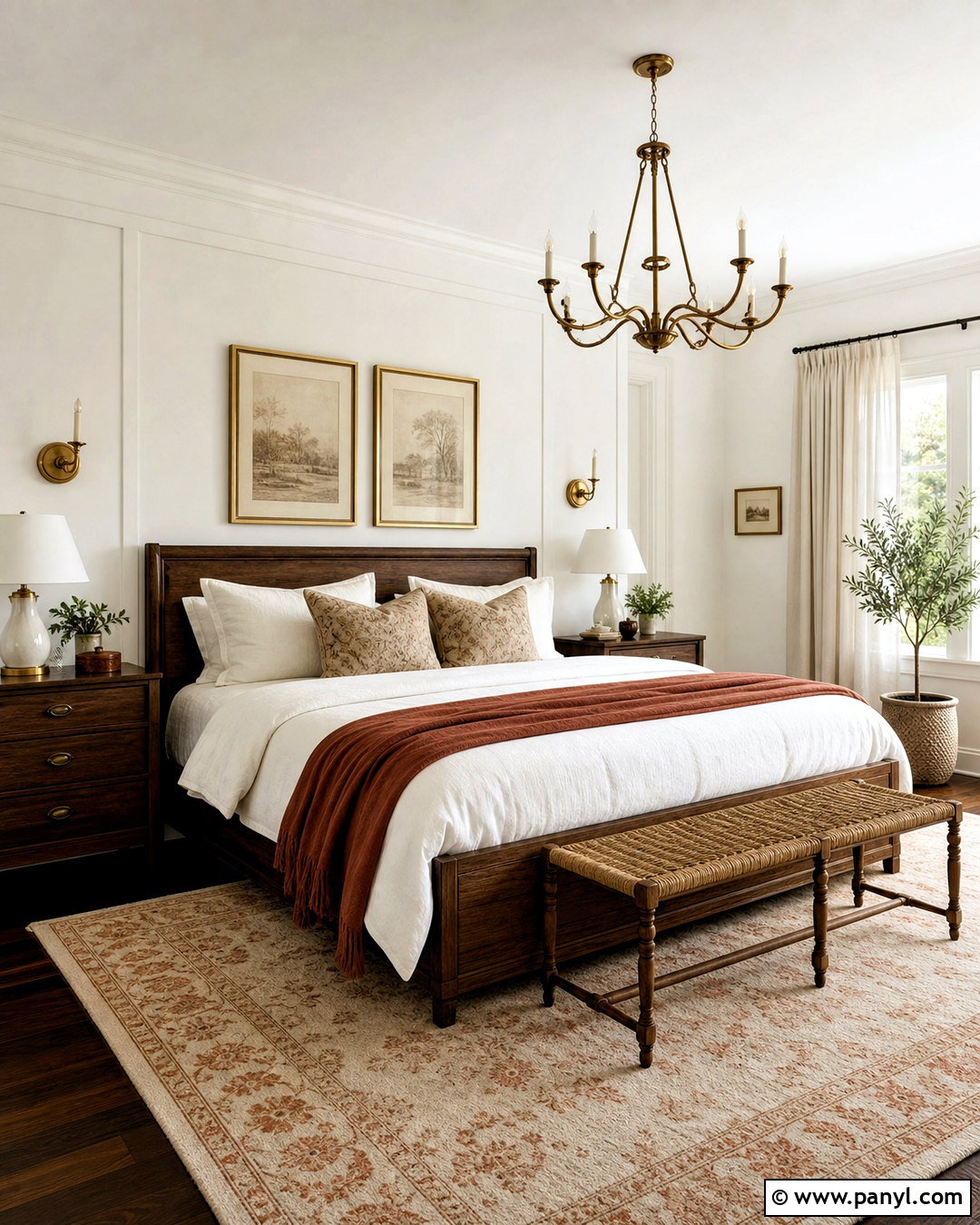
Soft gray can create a quiet bedroom when it is surrounded by warm, touchable fabrics. Paint the walls a light stone gray and place a tall oatmeal upholstered bed against the main wall. Dress the bed in white cotton sheets, a warm gray quilt, and layered pillows in taupe, muted rose, and cream. Matching oak nightstands add symmetry, while shaded brass sconces keep the bedside surfaces clear. Choose an ivory wool rug large enough to extend around both sides of the bed. Flax linen curtains should hang close to the ceiling to make the room feel taller. Finish with simple botanical artwork, one upholstered bench, and minimal accessories. The restrained palette promotes calm without turning the bedroom into a flat gray box.
11. Dark Gray Bedroom
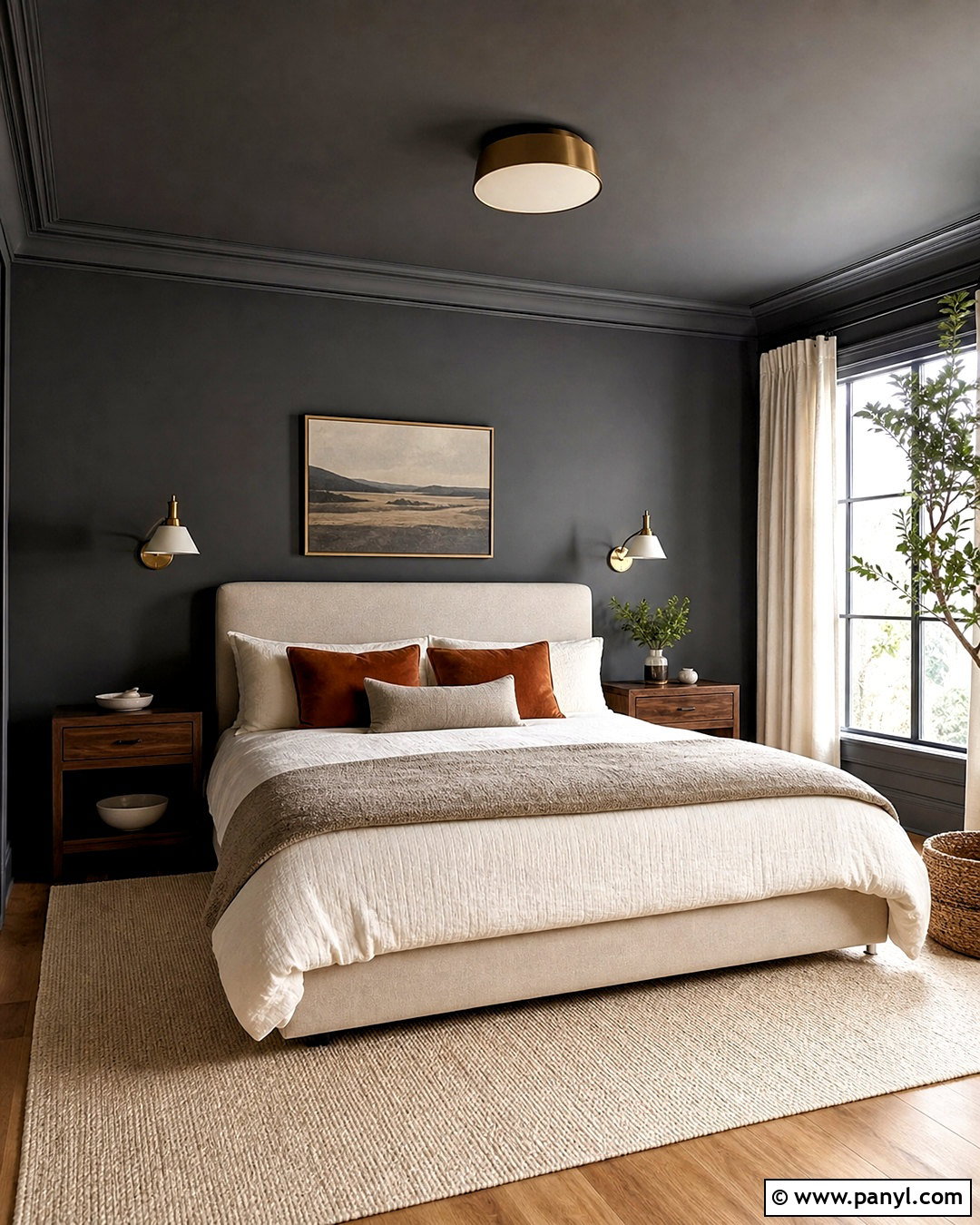
A dark gray bedroom can feel exceptionally restful when lighter materials are used to create contrast. Color-drench the walls, trim, and ceiling in a deep charcoal gray for a seamless, enveloping effect. Place a cream linen bed against the darkest wall and layer it with ivory bedding, a taupe coverlet, and rust-colored accent pillows. Warm walnut nightstands and a matching dresser break up the gray with rich wood grain. Use an oversized natural wool rug to soften the floor and brighten the lower half of the room. Brass wall lights cast a warmer glow than cool silver fixtures. Complete the design with light curtains, muted landscape art, and one leafy plant, keeping the arrangement uncluttered so the dramatic paint remains relaxing.
12. Gray And Blush Bedroom
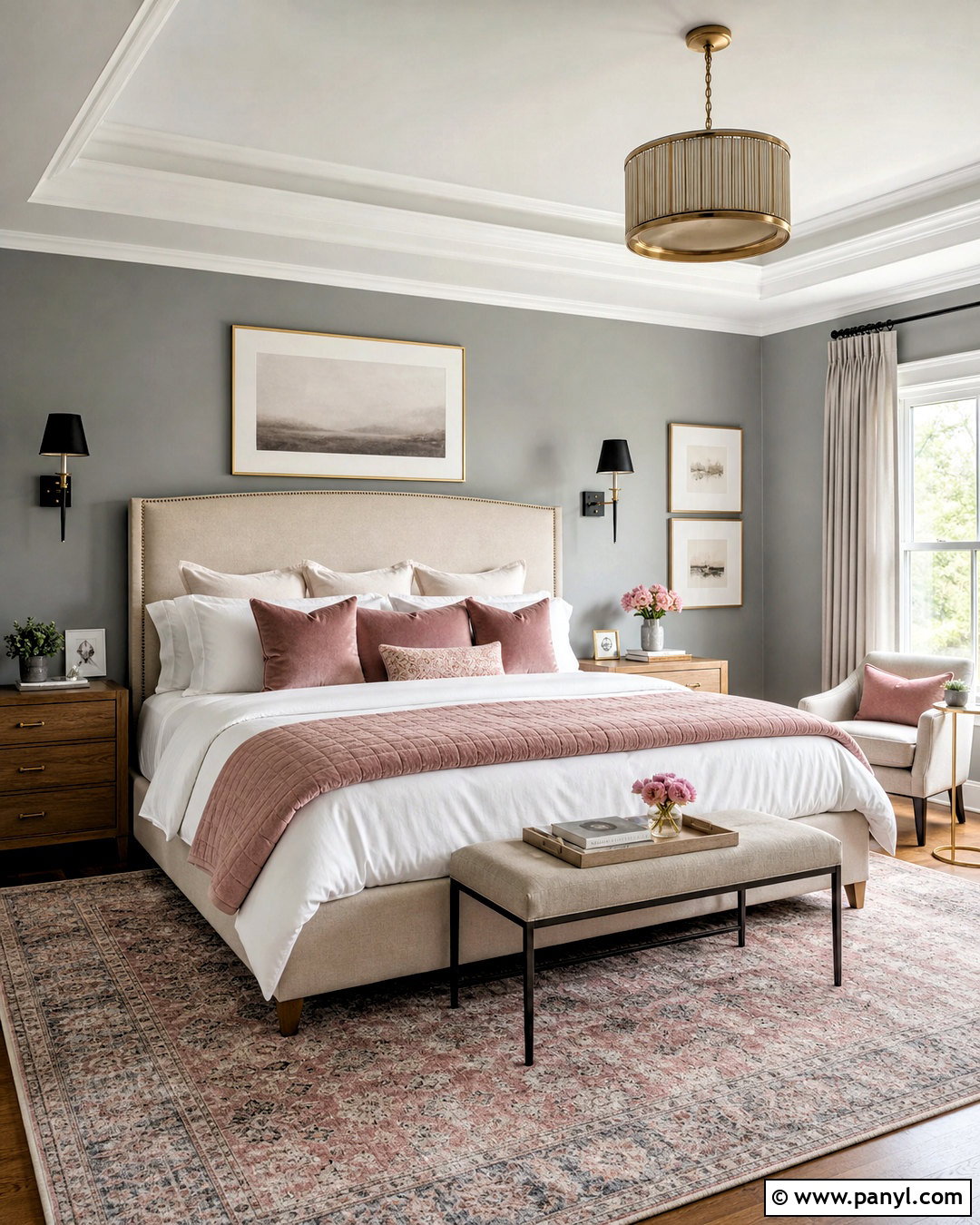
Gray and blush can look sophisticated when pink is used as a muted accent instead of a sugary theme. Begin with warm dove-gray walls and an upholstered bed in soft beige. Choose crisp white bedding, then layer on a dusty blush quilt, gray wool throw, and pillows in rose, taupe, and cream. Medium oak nightstands and a light wood dresser keep the room grounded. Hang long gray-beige curtains and place a faded blush-and-charcoal rug beneath the bed. Matte black sconces and slim black frames provide enough contrast to sharpen the pale palette. Limit metallic accents to a small amount of brushed brass. The completed bedroom feels gentle and welcoming, yet its clean furniture lines and balanced colors keep it suitable for an adult space.
13. Gray Bathroom
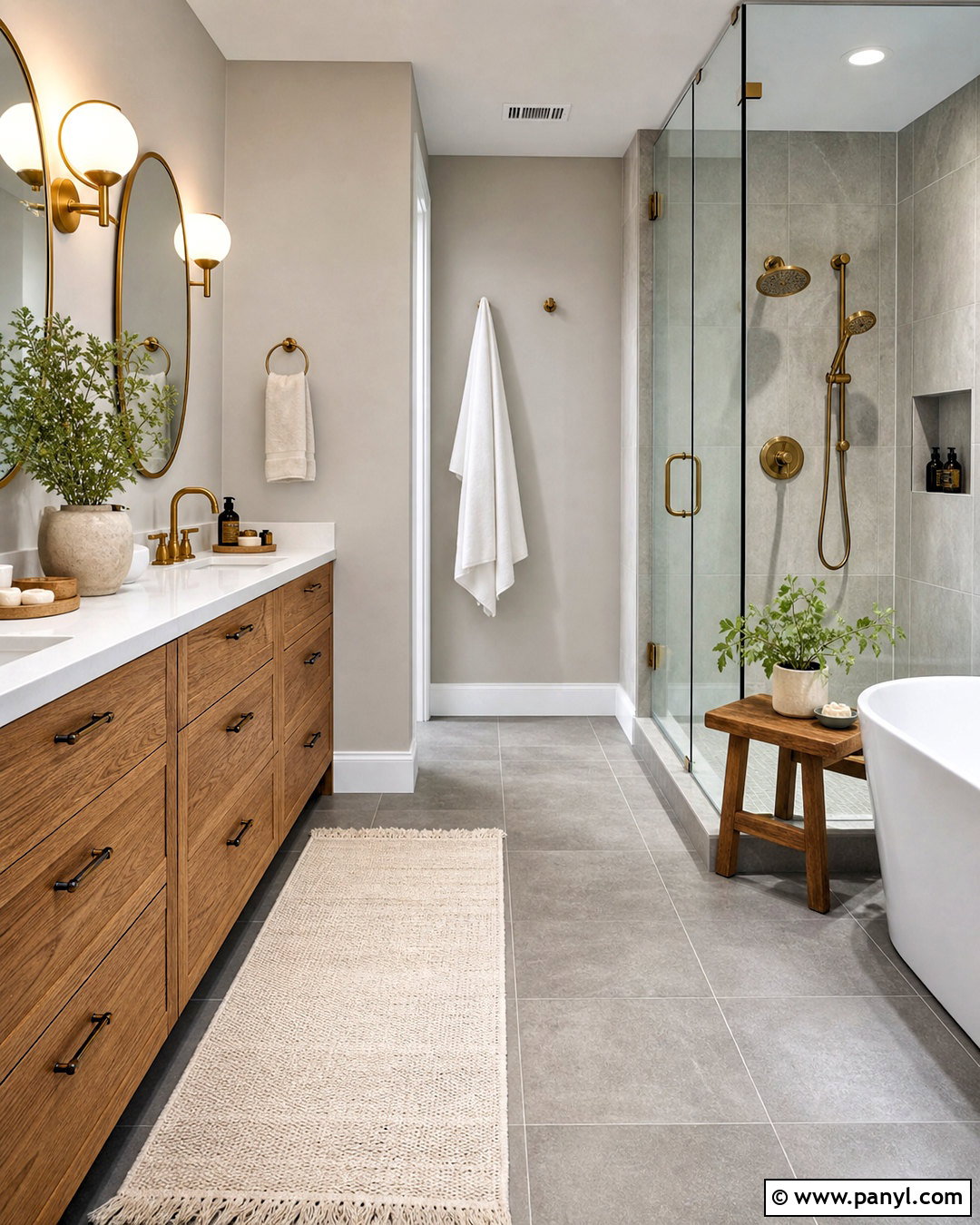
Create a serene gray bathroom by varying the materials rather than covering every surface in the same tile. Use large warm-gray porcelain tiles on the floor and inside the shower, then paint the remaining walls a paler coordinating gray. Install a medium oak vanity with a white quartz countertop to introduce warmth and practical storage. Brushed brass faucets, shower fittings, and mirror frames add a soft metallic finish. Choose a frameless glass shower enclosure so the room remains visually open. White towels and a textured ivory bath mat brighten the design, while a small wood stool adds function beside the shower. Complete the space with globe sconces, simple greenery, and neatly contained toiletries for a calm, polished, and realistic bathroom.
14. Gray Marble Bathroom
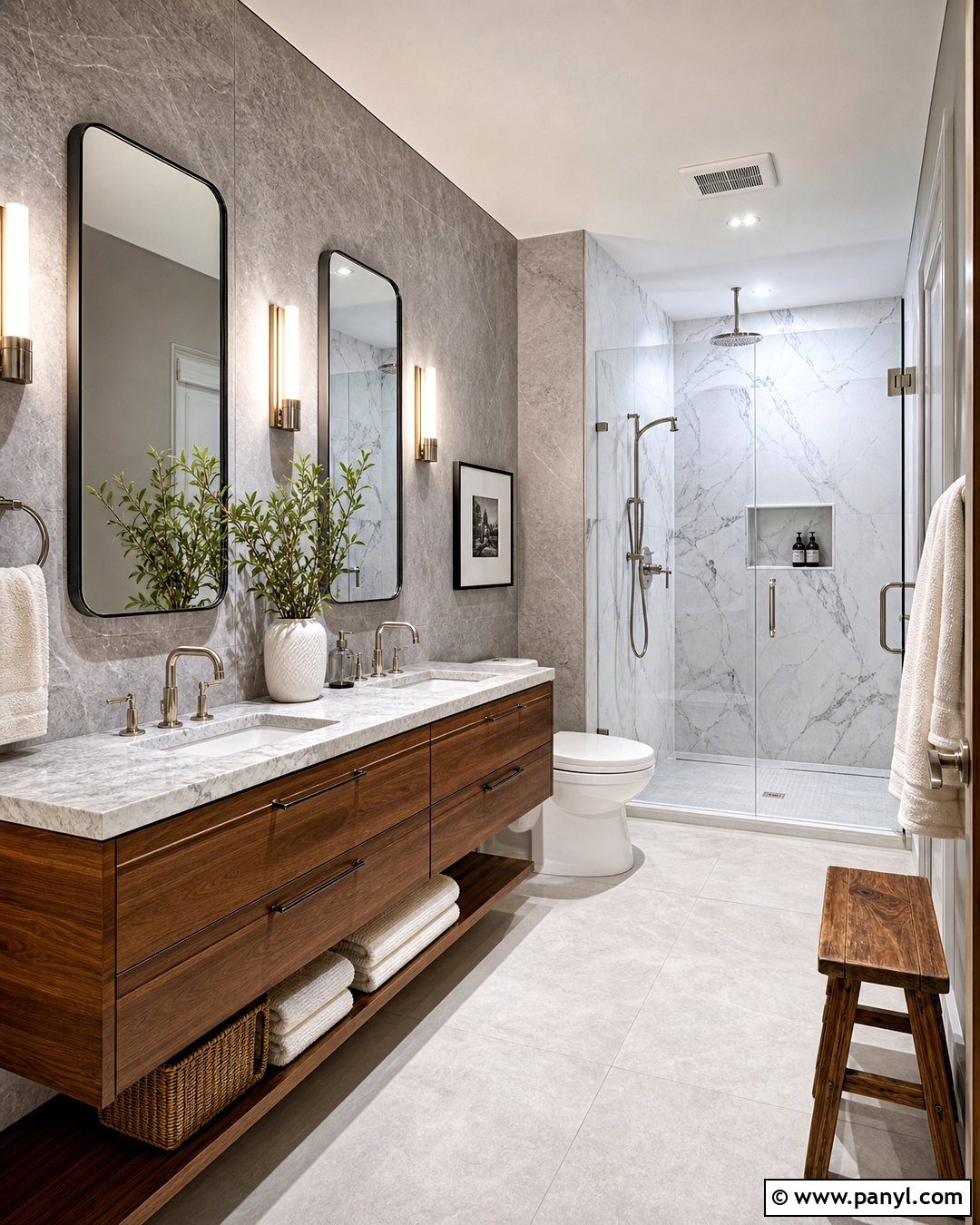
Gray marble can become the foundation of an elegant bathroom without making the space look overly formal. Use white marble with soft gray veining across the vanity countertop and shower walls, then choose matte light-gray floor tile for safer visual contrast. A floating walnut vanity adds warmth and makes the floor easier to see, helping the room feel spacious. Install polished nickel fixtures for a clean finish that complements the stone. Two rounded mirrors and vertical sconces create a balanced vanity wall. Keep towels, window treatments, and the shower curtain in warm white rather than bright blue-white. A woven basket and narrow wood stool introduce casual texture. This combination allows the marble to stand out while preserving a comfortable residential scale.
15. Gray Home Office
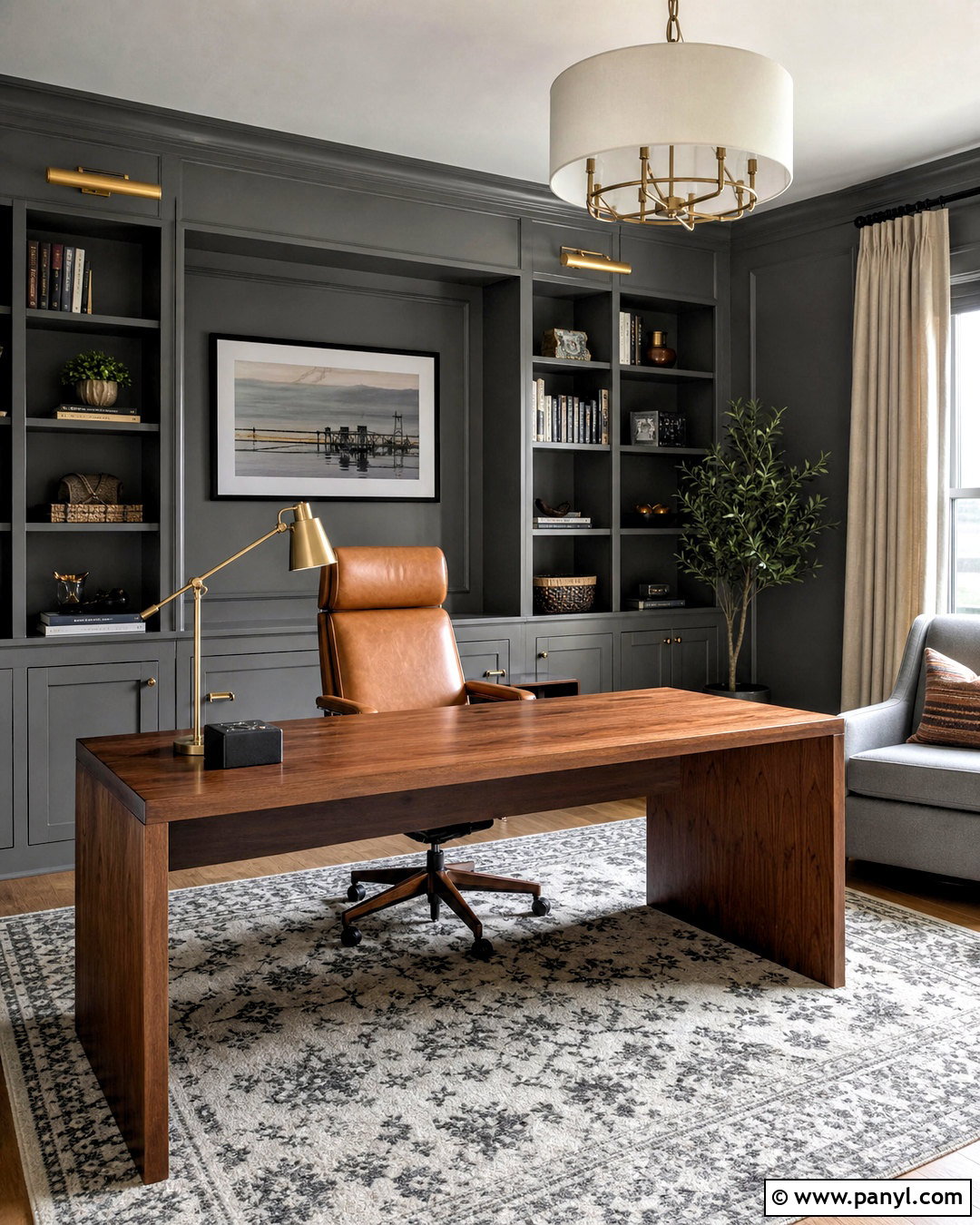
Gray provides a focused background for a home office, especially when the workspace includes warm wood and effective lighting. Paint the walls a medium smoky gray and position a substantial walnut desk near the window. Add an ergonomic chair upholstered in caramel leather or durable tan fabric. Built-in gray shelves can blend with the walls, making books, storage boxes, and artwork more noticeable. Use a cream-and-charcoal rug to define the work area and soften sound. A brass desk lamp, shaded floor lamp, and simple ceiling fixture should provide multiple lighting options. Hang oatmeal curtains to filter glare without darkening the room. Finish with a compact reading chair, closed file storage, and a plant, keeping the desktop clear enough for comfortable daily work.
16. Gray Entryway
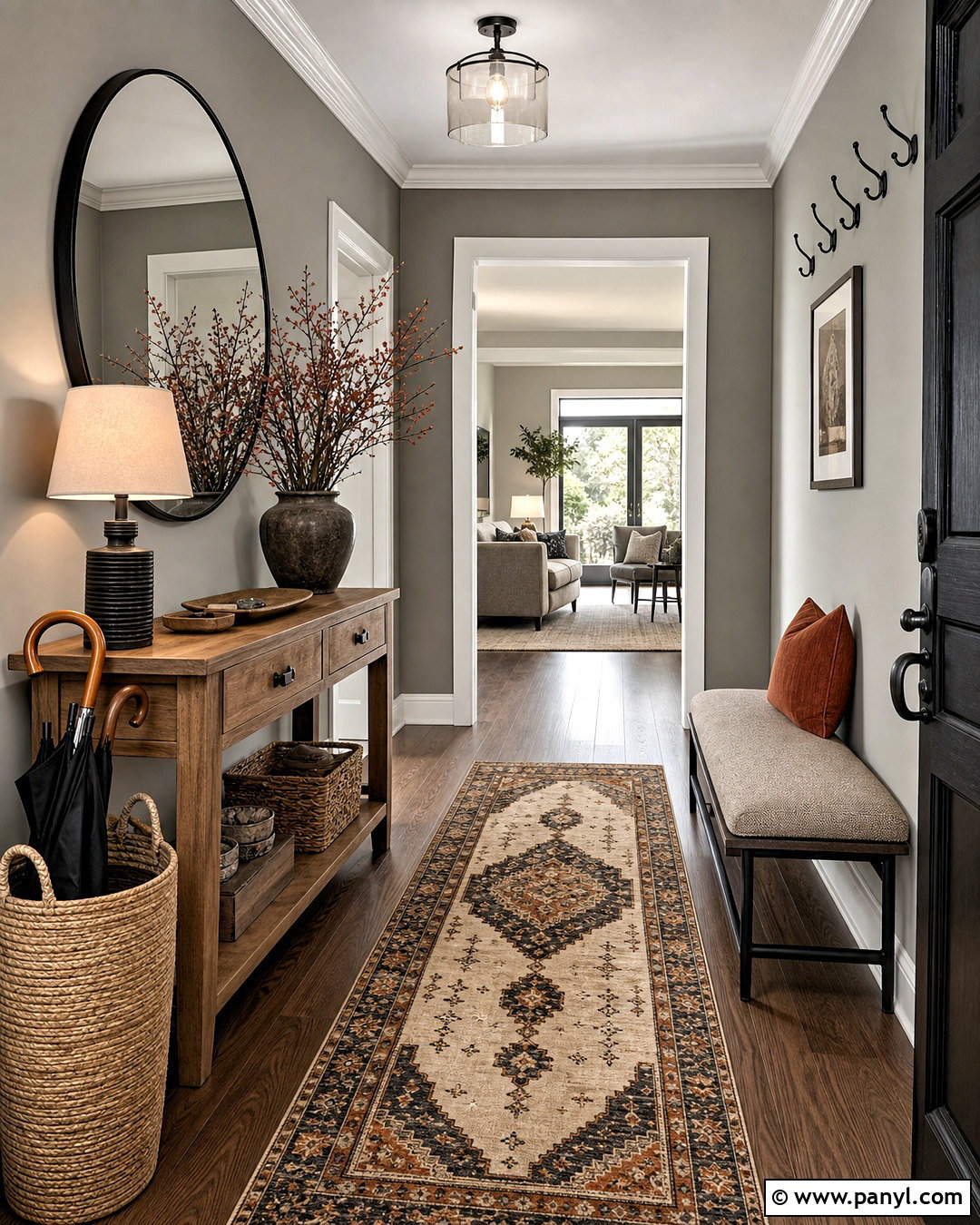
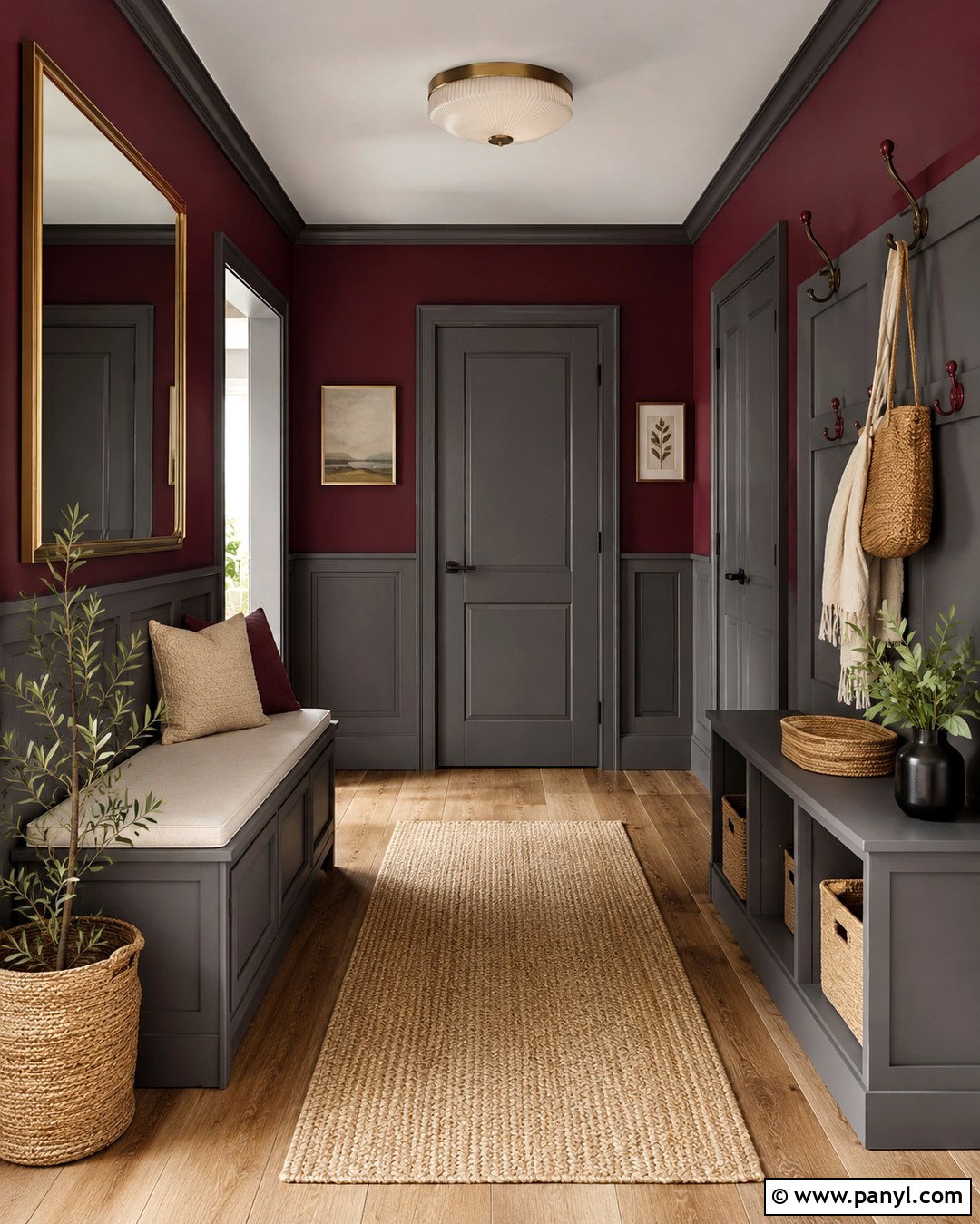
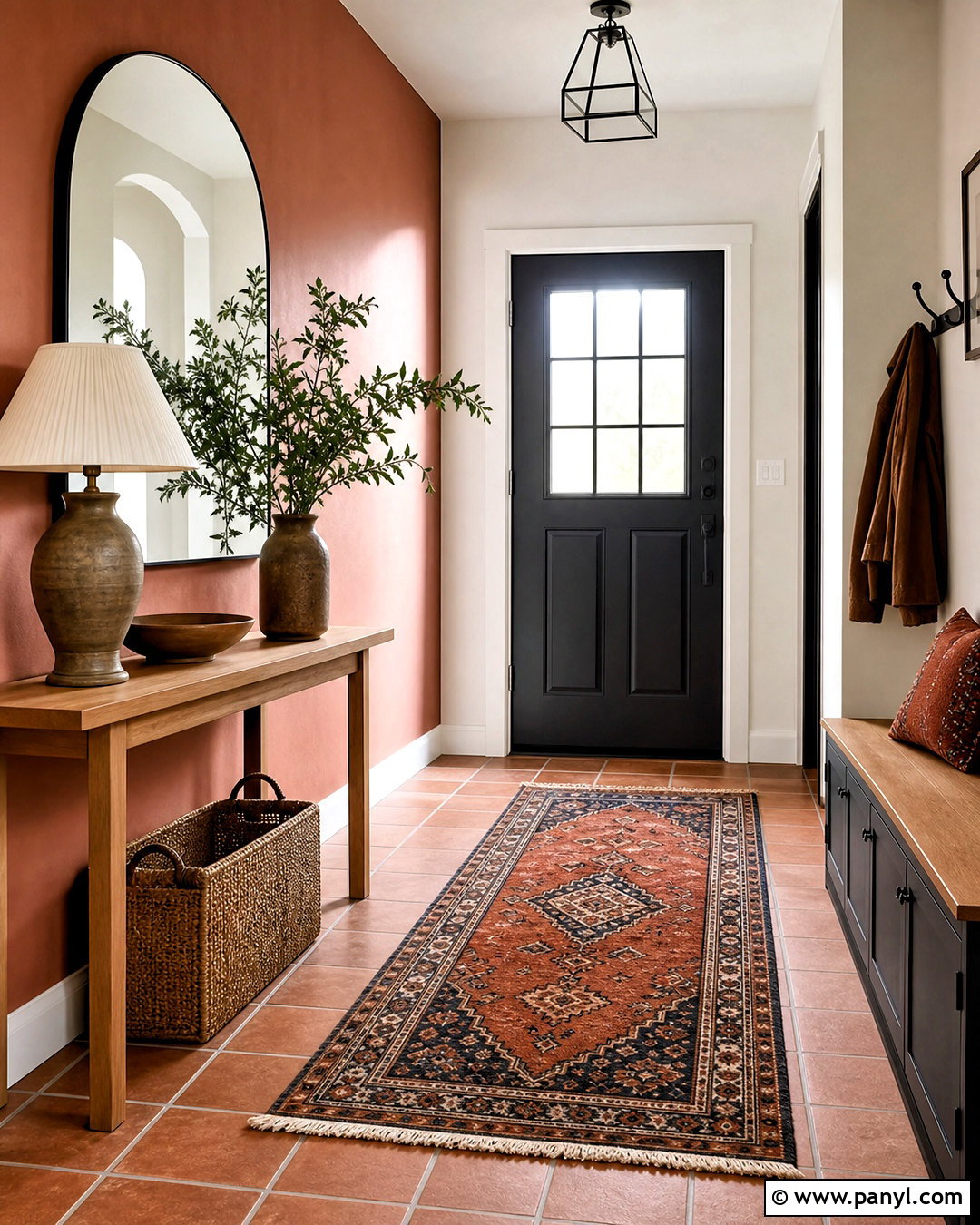
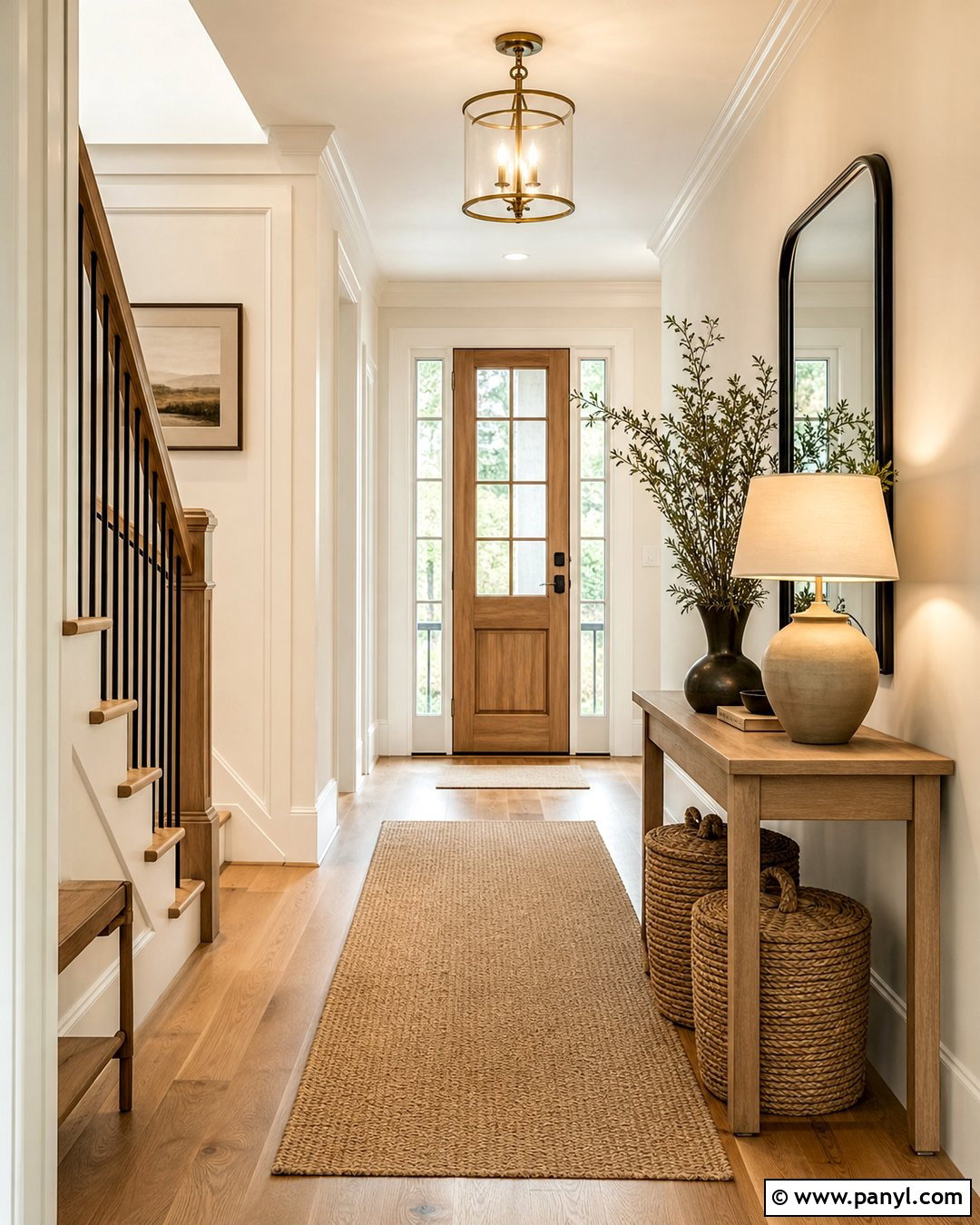
The entryway sets expectations for the rest of the home, and gray offers a polished background that handles changing decor easily. Paint the walls warm medium gray, then install a narrow oak console with drawers for keys and small essentials. Place a large round black-framed mirror above it to reflect light and provide strong contrast. A washable runner in cream, charcoal, and rust adds warmth while disguising everyday wear. Include a simple upholstered bench or wooden chair if the layout allows. Black hooks, a woven umbrella basket, and a shallow ceramic tray make the space practical. Finish with a shaded lamp and one large vase of branches. The complete arrangement should leave the main walking path open, organized, and visually calm.
17. Gray Laundry Room
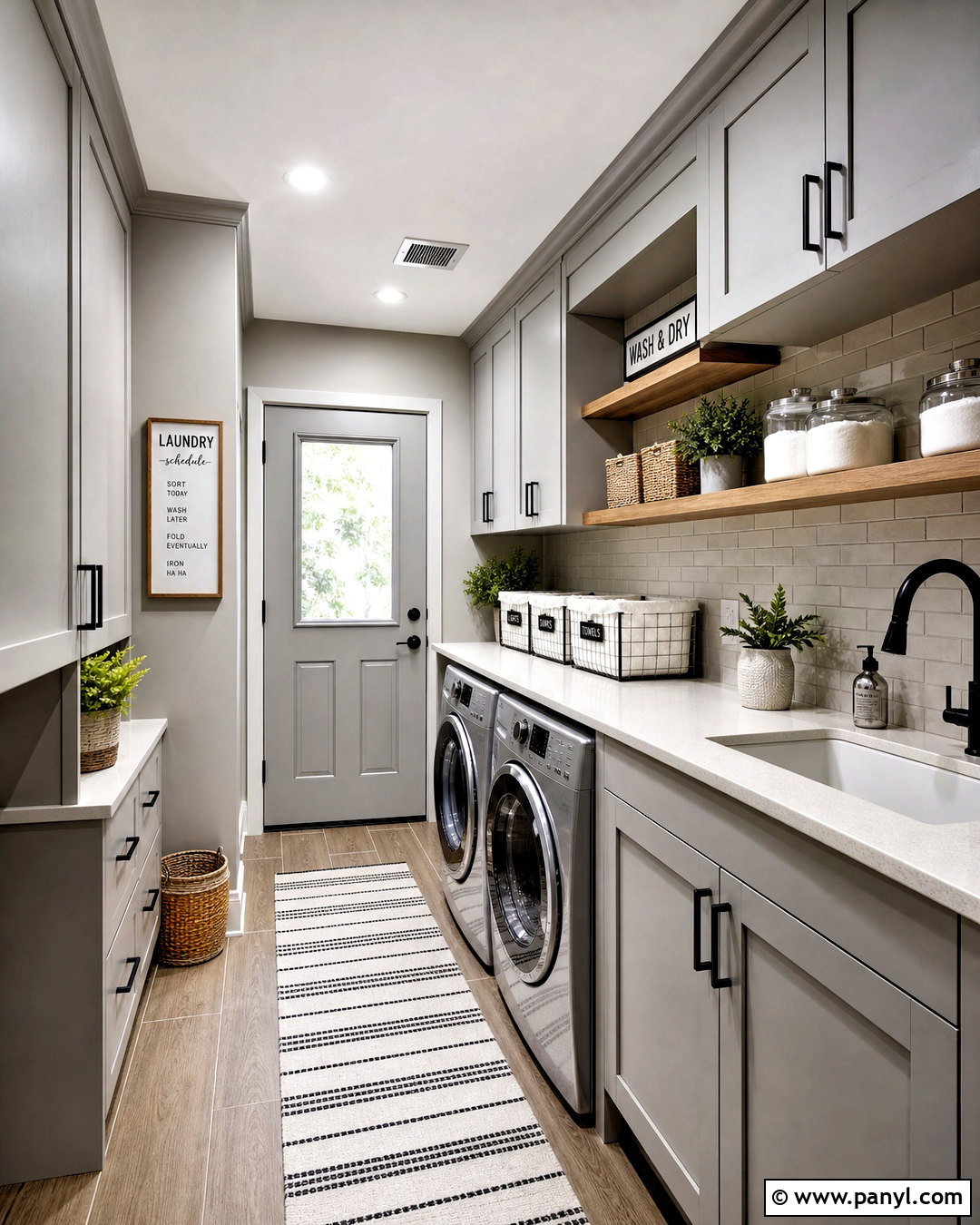
Even a hardworking laundry room can feel finished with coordinated gray storage and durable materials. Choose warm gray shaker cabinets that extend to the ceiling, using upper cupboards for supplies and lower drawers for sorting. Install a light quartz counter over front-loading machines to create a folding surface. A white utility sink with a matte black faucet adds function without competing with the cabinetry. Use off-white rectangular backsplash tile and warm oak-look porcelain flooring for easy maintenance. Open wood shelves can hold labeled baskets, jars, and folded towels. Add a washable striped runner in beige and gray, plus bright ceiling lighting for spotting stains. The final layout should prioritize clear counters, concealed clutter, and easy movement between washing, drying, and folding areas.
18. Gray Nursery
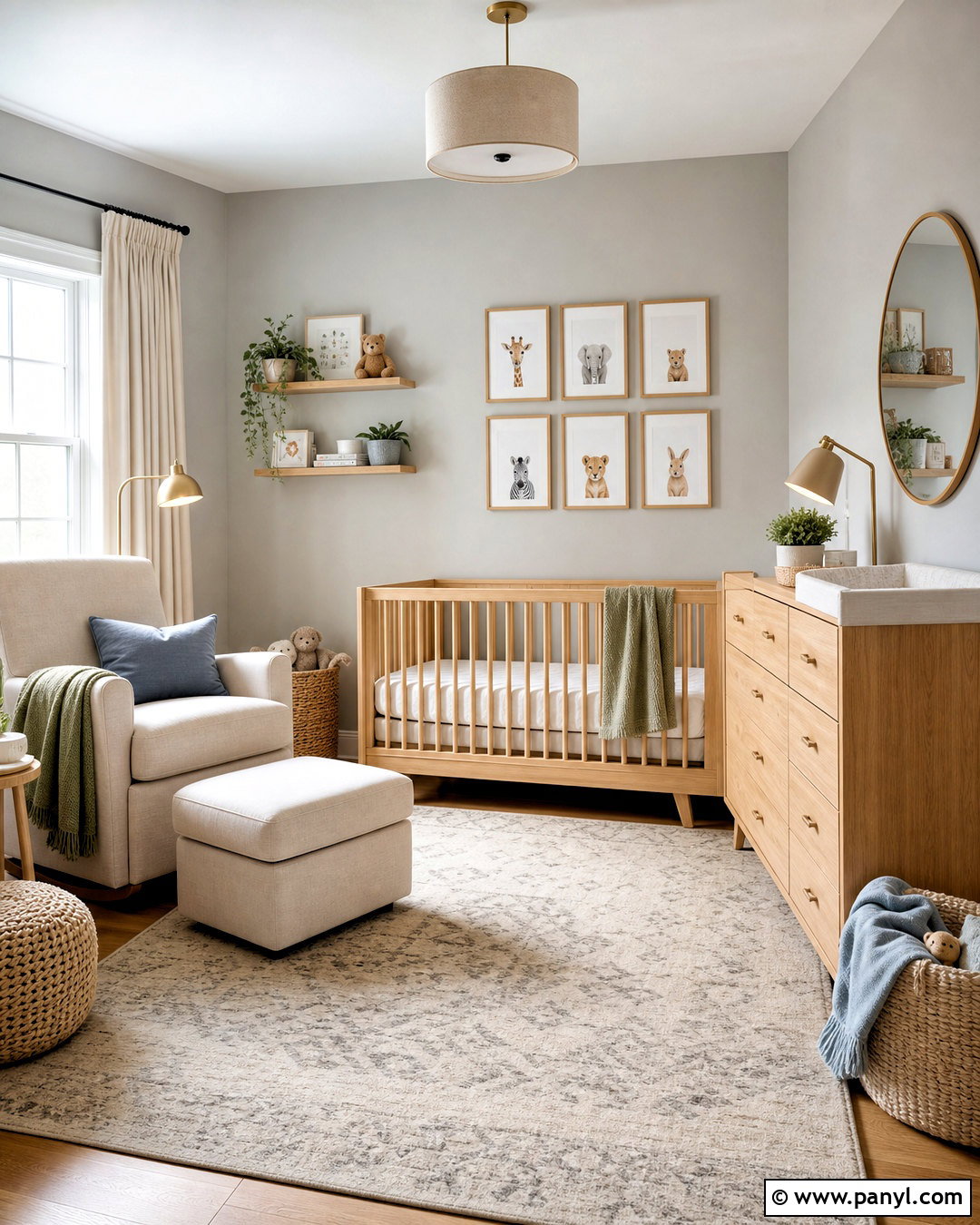
A gray nursery can feel warm and playful when natural wood and gentle colors soften the neutral foundation. Paint the walls pale warm gray and place a light oak crib against a clear wall, away from window coverings and cords. Add a comfortable cream glider, matching ottoman, and compact oak dresser with a changing surface. Choose a washable ivory rug with a simple gray pattern to define the center of the room. Muted sage, dusty blue, and soft ochre can appear in bedding, storage baskets, and framed animal artwork. Use blackout curtains in oatmeal linen and include adjustable lighting for different times of day. Keep decorations securely installed and surfaces uncluttered, creating a complete nursery that looks soothing, practical, and adaptable.
19. Gray Reading Nook
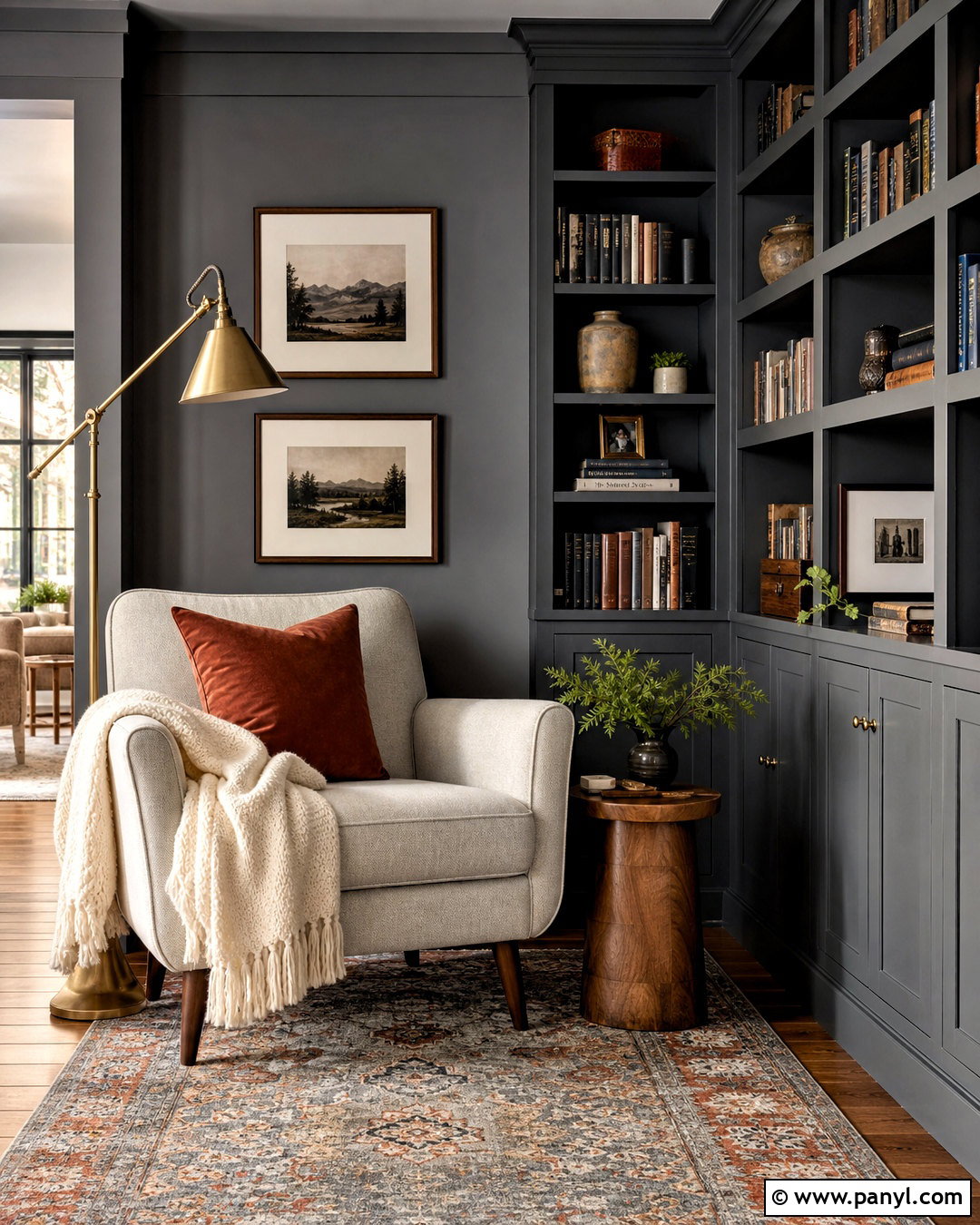
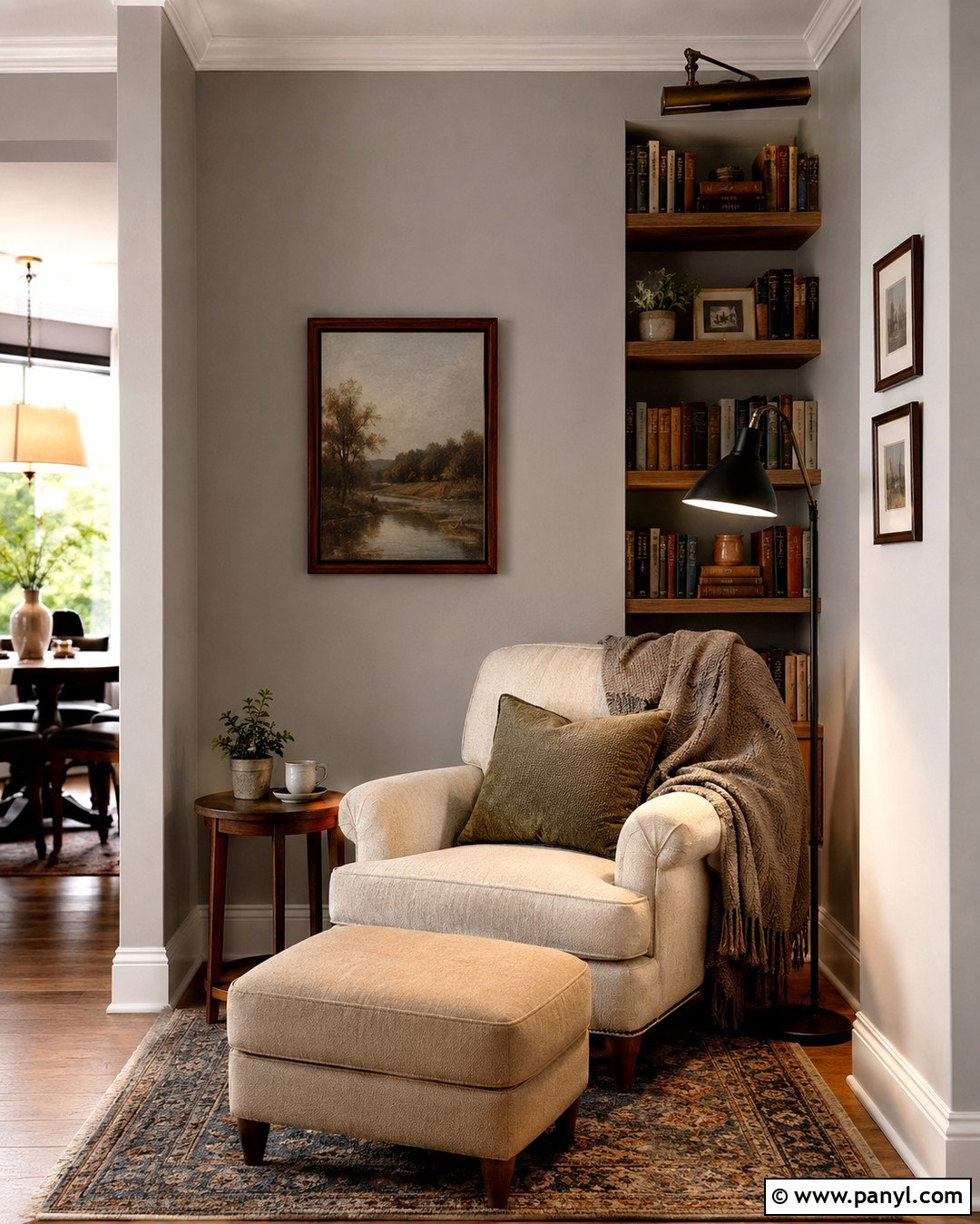
A neglected corner can become a complete reading nook by combining deep gray paint with comfortable, well-scaled furnishings. Define the area with charcoal walls or gray built-in shelving, then position a wide oatmeal armchair beside the bookcase. Add a small walnut side table large enough for a lamp and everyday items. A brass floor lamp with an adjustable shade provides focused light without occupying table space. Place a soft rust-colored pillow and textured cream throw on the chair to warm the darker background. A small vintage-style rug in gray, tan, and faded red visually separates the nook from the adjoining room. Keep books within reach and display only a few objects, allowing the corner to feel cozy rather than cramped.
20. Gray Open Concept Interior
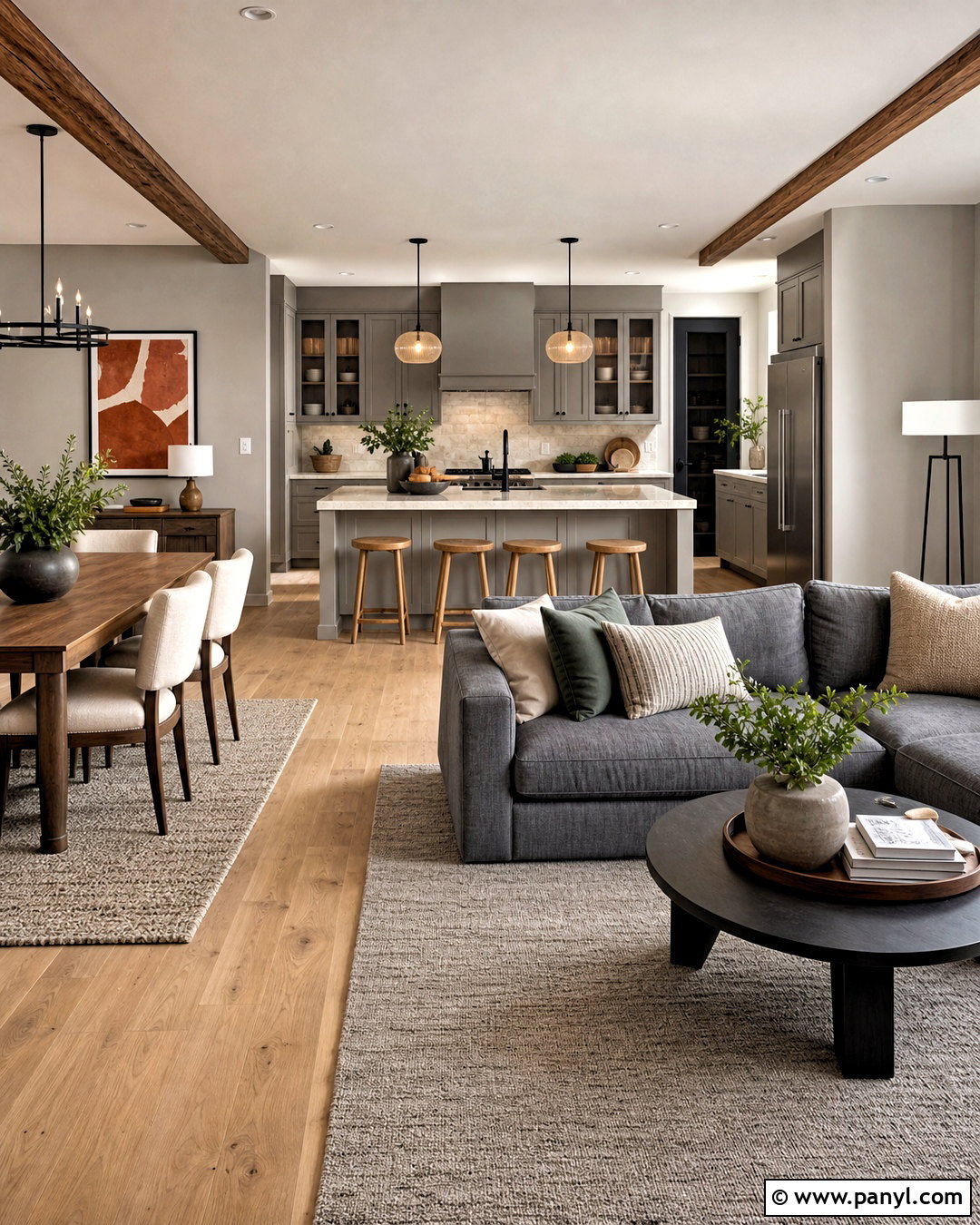
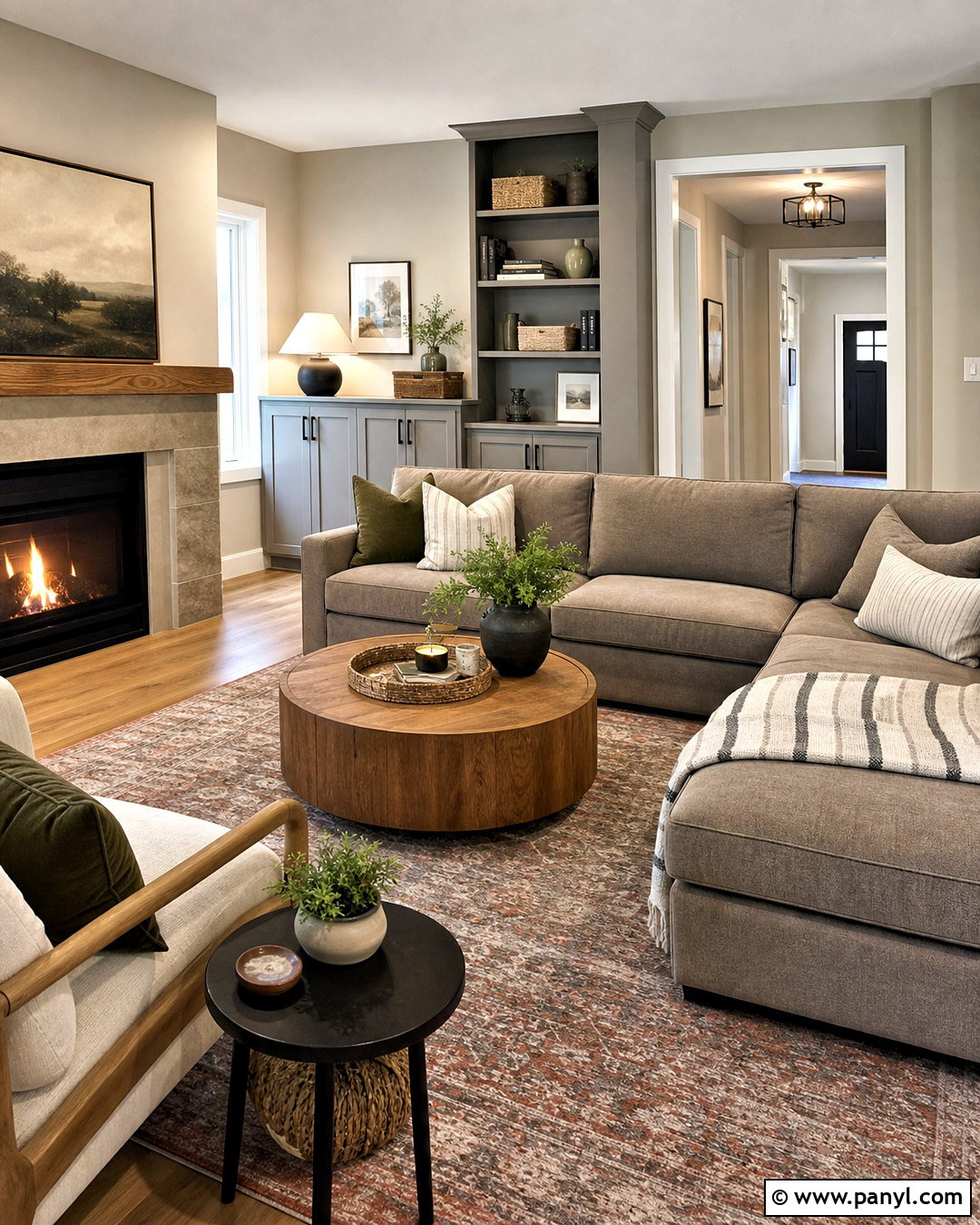
An open-concept interior needs a consistent gray palette, but each functional area should still feel distinct. Use a pale warm gray across the connected walls, then repeat medium oak, cream upholstery, and matte black details throughout the space. Anchor the living zone with a gray sectional and large textured rug. In the dining area, place a walnut table beneath a black linear pendant. Choose warm gray kitchen cabinets with creamy countertops and oak stools to continue the palette. Muted green and terracotta accents can move through pillows, artwork, runners, and ceramics. Keep flooring consistent across all three zones for visual flow. The coordinated materials create connection, while rugs, lighting, and furniture placement give every area its own clear purpose.
Conclusion:
The best gray rooms feel layered, balanced, and personal rather than cold or overly coordinated. Start by choosing a gray undertone that works with your flooring, natural light, and existing furniture. Then add warmth through oak, walnut, leather, brass, woven fibers, and creamy textiles. Color can enter through muted green, navy, blush, rust, or terracotta accents without overpowering the neutral foundation. Varying texture is equally important, especially in rooms that use several shades of gray. Whether you prefer a bright kitchen, restful bedroom, dramatic living room, or organized utility space, these 20 gray interior design ideas offer complete looks that can be adjusted for your home, lifestyle, and budget.

Related Ideas and Inspiration:
Leave a Reply