
Warm, layered, and easy to personalize, **cream and brown kitchen ideas** offer a welcoming alternative to cool white or gray spaces. Cream reflects light and keeps the room feeling open, while brown adds grounding color through wood, stone, tile, and painted cabinetry. This combination also suits many aesthetics, from modern minimalism and Scandinavian simplicity to farmhouse, Mediterranean, and traditional interiors. Rich chocolate finishes, walnut cabinetry, earthy mushroom paint, aged metals, and softly veined stone are especially relevant in today’s return to warmer, more natural kitchens. () The key is balancing light and dark surfaces while coordinating their undertones. Whether you are planning a full renovation or a practical refresh, these complete cream and brown kitchen ideas provide plenty of inspiration.

1. Cream Upper Cabinets and Brown Lower Cabinets
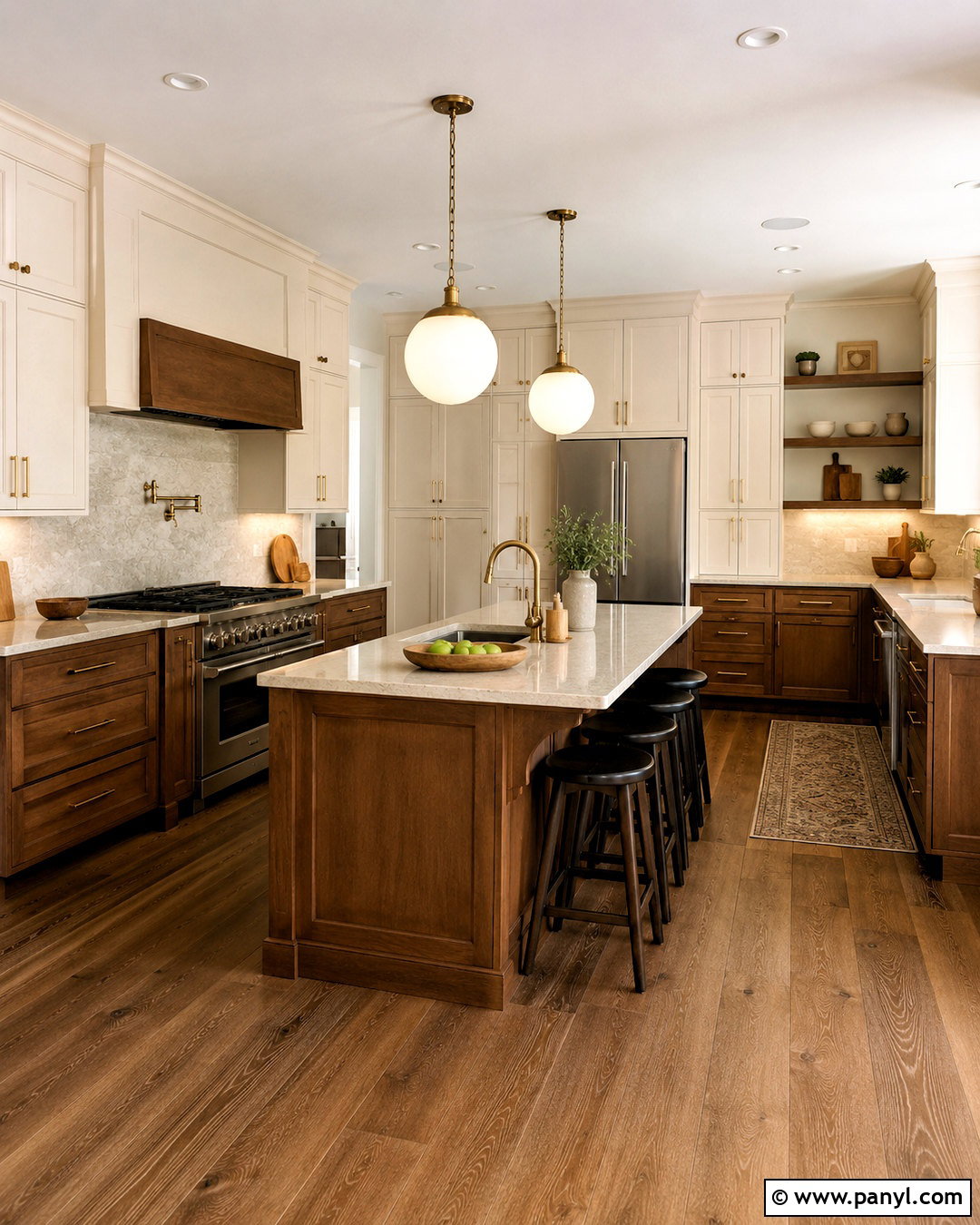
Two-tone cabinetry creates a balanced kitchen that feels bright without looking flat. Install warm cream cabinets above the counter to visually lift the ceiling, then ground the layout with walnut, chestnut, or coffee-brown lower cabinets. A creamy quartz countertop can connect both colors while keeping the workspace easy to maintain. Choose a backsplash with subtle beige or caramel veining rather than stark white tile. Medium oak flooring, brushed brass handles, and simple globe pendants add warmth without introducing competing colors. For a more seamless result, match the cabinet undertones carefully. Yellow-based cream works naturally with honey woods, while soft neutral cream looks better with walnut or deep espresso finishes. This arrangement is especially effective in small and medium kitchens. ()
2. Cream Shaker Kitchen With a Dark Brown Island
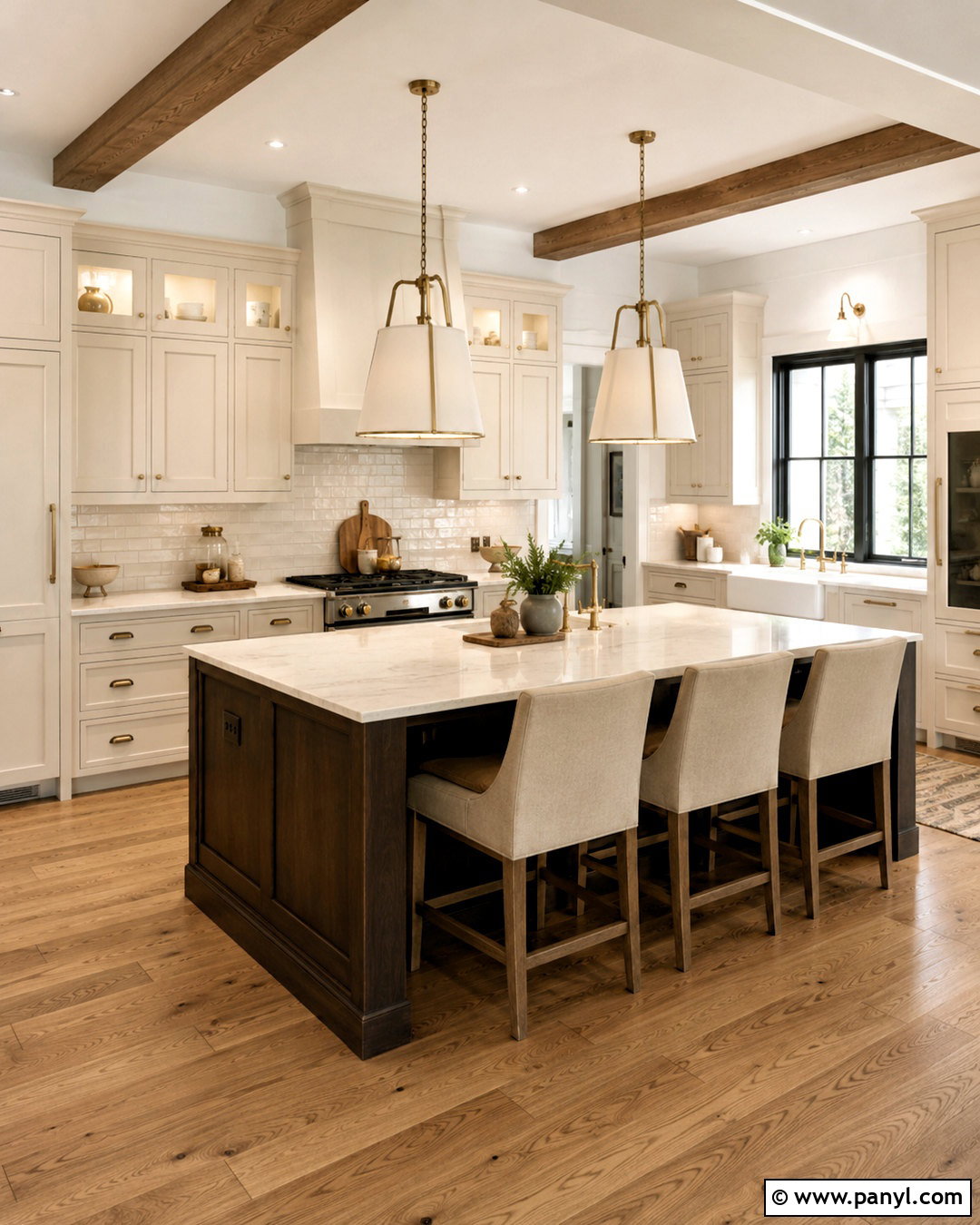
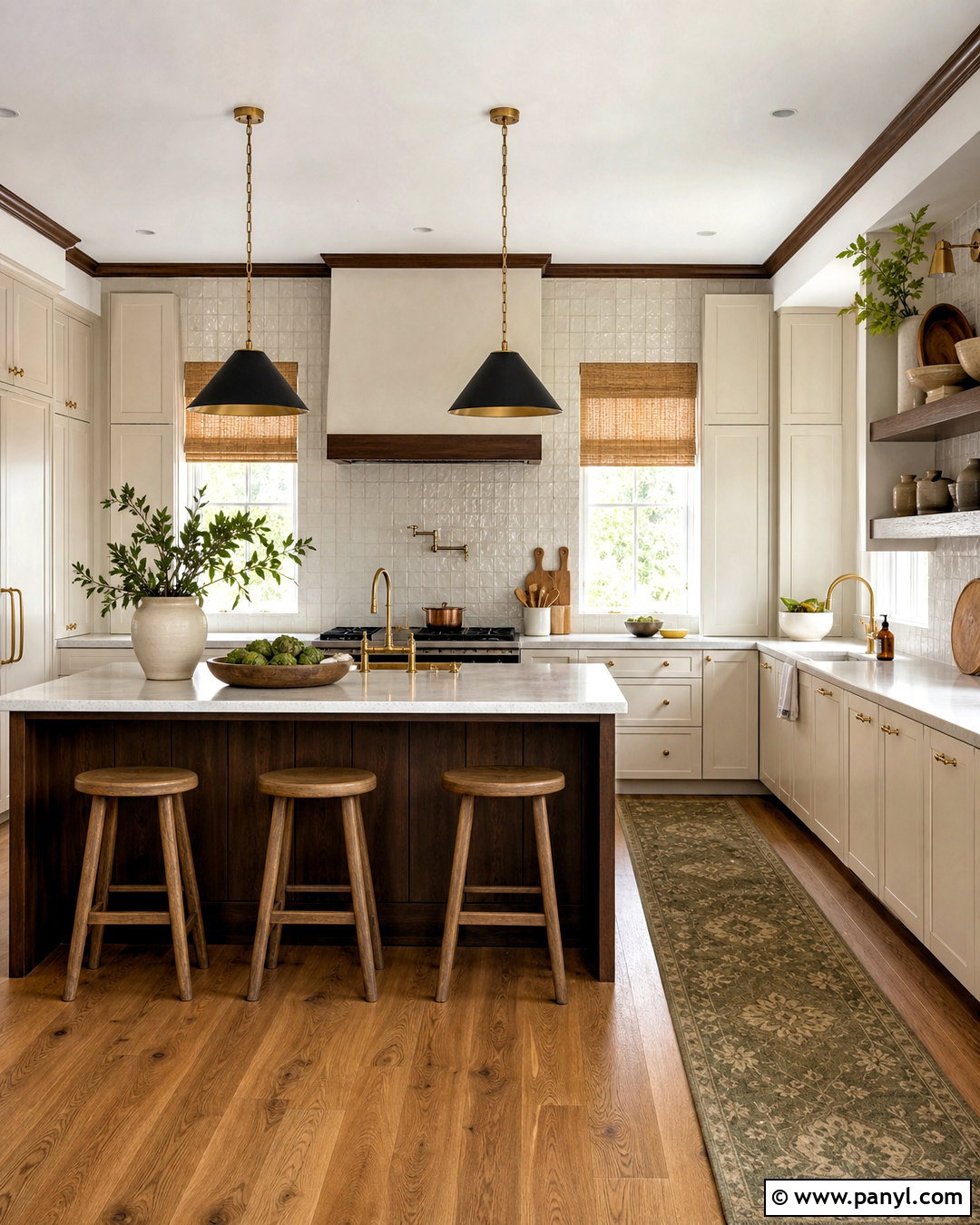
A dark brown island gives a cream Shaker kitchen a strong, practical centerpiece. Paint the perimeter cabinetry a soft ivory or buttery cream, then use stained oak, walnut, or espresso brown on the island. Add a pale quartz countertop around the room and a thicker cream marble-look surface on the island for subtle distinction. Upholstered counter stools in oatmeal fabric will soften the dark wood and make the seating area comfortable. Finish the room with warm oak flooring, aged brass hardware, and two generously sized pendant lights. Keep the backsplash quiet with handmade cream subway tile or honed limestone. This complete scheme feels traditional yet current because the darker finish is concentrated in one architectural feature instead of covering every cabinet.
3. Modern Walnut and Cream Kitchen
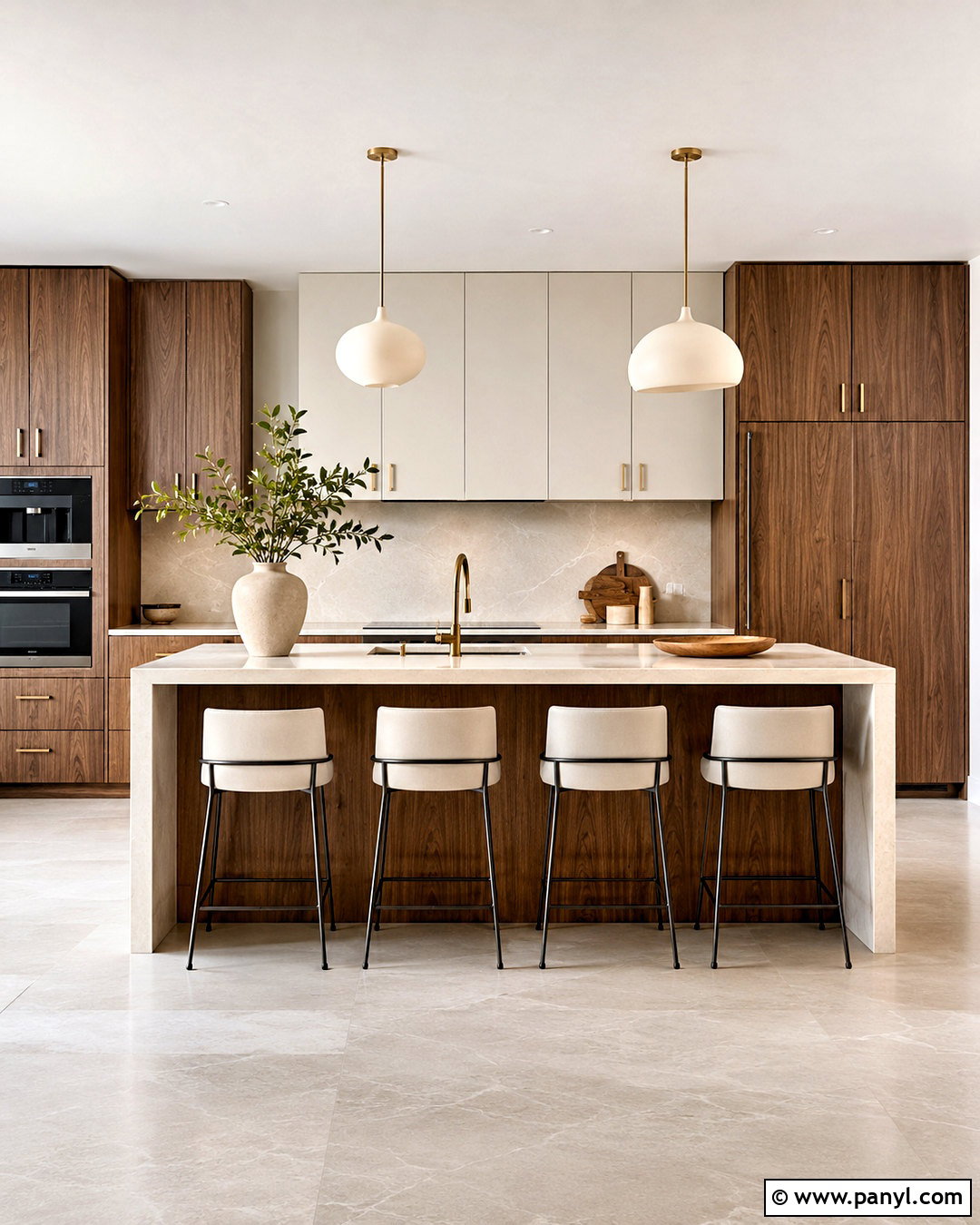
Smooth walnut cabinets can make a modern kitchen feel rich, streamlined, and inviting. Use flat-panel walnut doors for the tall pantry wall and lower cabinets, then introduce matte cream cabinetry above the main preparation area. A waterfall island in warm white quartz provides a clean focal point without creating harsh contrast. Continue the countertop material onto the backsplash for an uncluttered appearance. Choose integrated appliances, minimal bronze pulls, and a simple plaster range hood in matching cream. Light beige porcelain flooring will brighten the space and allow the walnut grain to stand out. Add three sculptural cream pendants and a few wooden accessories for cohesion. The finished kitchen should feel sleek but not sterile, with natural wood providing texture and the cream surfaces reflecting daylight.
4. Small Cream and Light Brown Kitchen
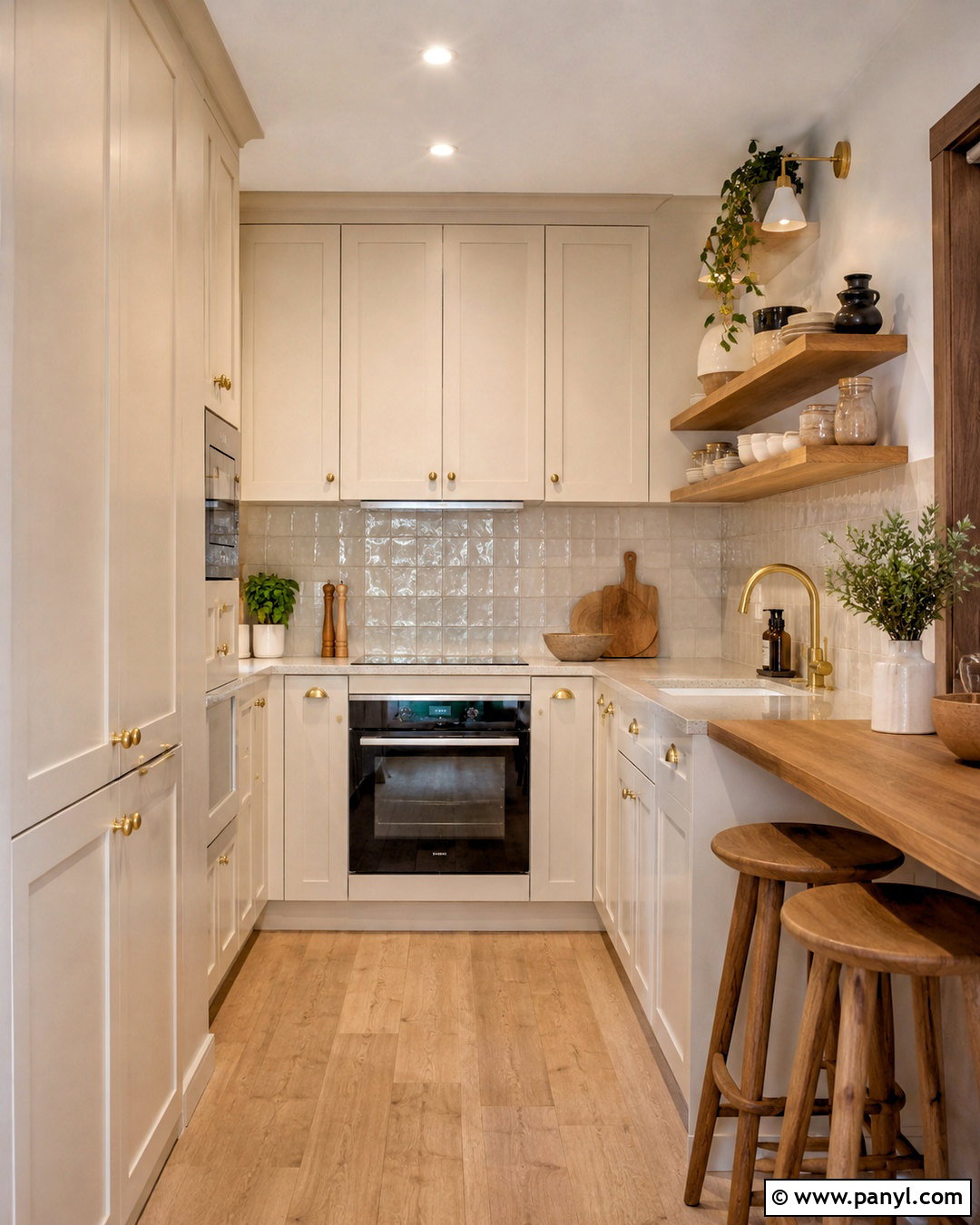
Limited square footage benefits from a lighter version of this warm palette. Use creamy off-white cabinets from floor to ceiling, including storage above the refrigerator, to create a continuous and spacious appearance. Bring in light brown through white oak flooring, narrow open shelves, and a compact butcher block breakfast ledge. Pale beige quartz counters and glossy cream backsplash tiles will bounce light around the room. Select small brass knobs instead of oversized pulls to keep the cabinet fronts visually quiet. An undermount sink, integrated dishwasher, and slim pendant light will further reduce clutter. If the kitchen lacks natural light, install warm-neutral under-cabinet lighting without choosing bulbs that appear overly yellow. This complete arrangement gives a small kitchen depth while preserving an open, practical feeling. ()
5. Chocolate Brown Cabinets With Cream Countertops
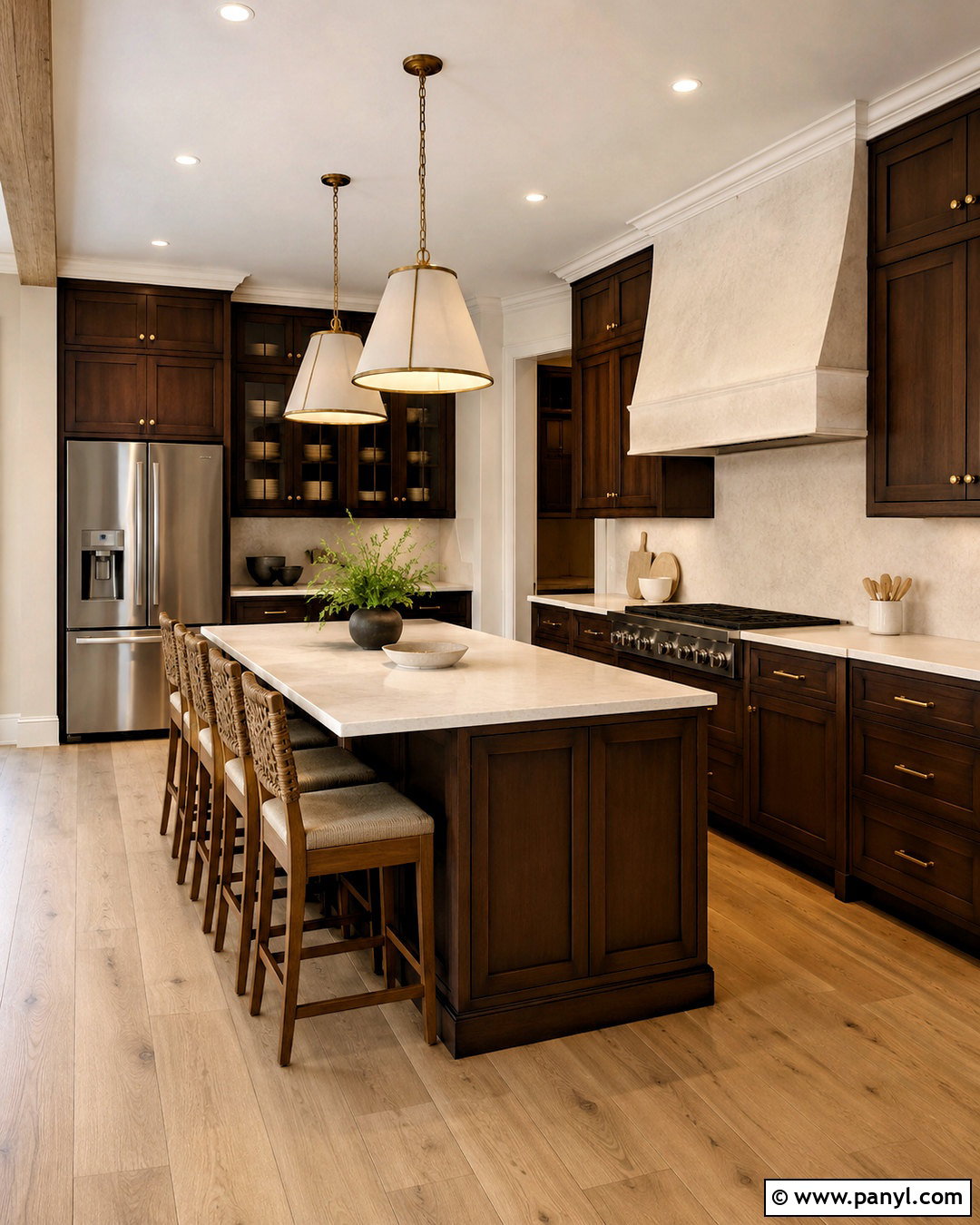
Deep chocolate cabinetry creates a dramatic kitchen when it is balanced with generous cream surfaces. Choose simple recessed-panel or slab doors in a low-sheen finish, which looks softer and more refined than high gloss. Install thick cream quartz countertops and continue the material up the wall behind the range. A large island in the same brown finish can work if the room receives abundant daylight. Otherwise, make the island cream to break up the darker cabinetry. Add wide-plank natural oak flooring, antique brass hardware, and light woven stools. Cream walls and a matching ceiling will prevent the space from feeling enclosed. Use glass-front cabinets sparingly to provide visual breathing room. This palette works particularly well in open kitchens where surrounding rooms have warm neutral furnishings.
6. Cream Cabinets With Brown Granite Countertops
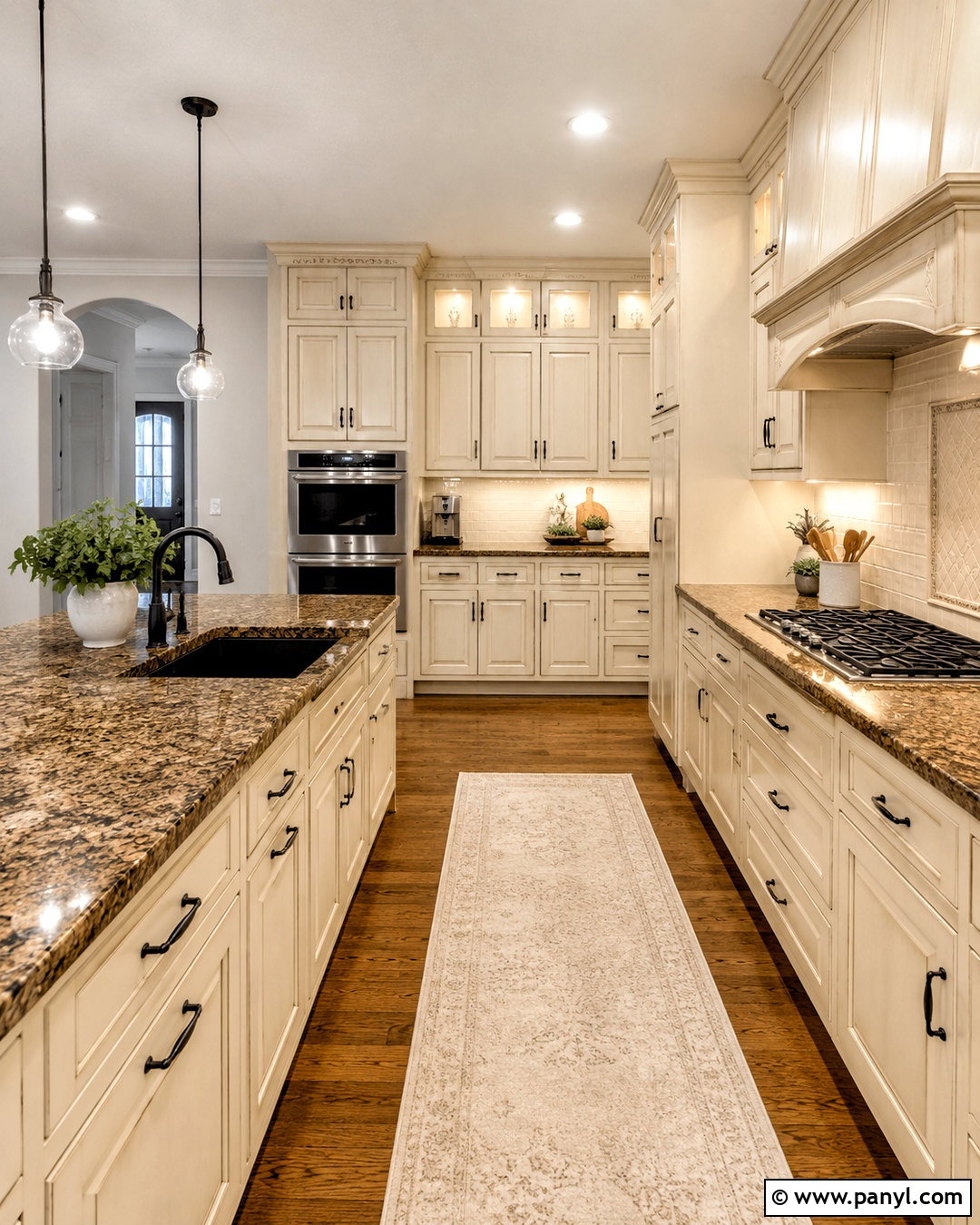
Brown granite can look polished and intentional when the surrounding finishes are simple. Pair a patterned brown countertop with cream cabinetry that matches one of the stone’s lightest tones. This creates a clear connection rather than making the counter appear leftover or overly busy. Replace a matching granite backsplash with plain cream subway tile, warm white plaster, or a short countertop upstand. Choose dark bronze or aged brass hardware depending on the granite’s undertones. Medium brown wood flooring can remain, but use a washable cream runner to introduce softness and separation. Keep decorative objects minimal and repeat only two or three colors from the stone. This approach is useful for updating an existing kitchen because it works with the granite rather than requiring an expensive replacement.
7. Brown and Cream Checkerboard Kitchen Floor
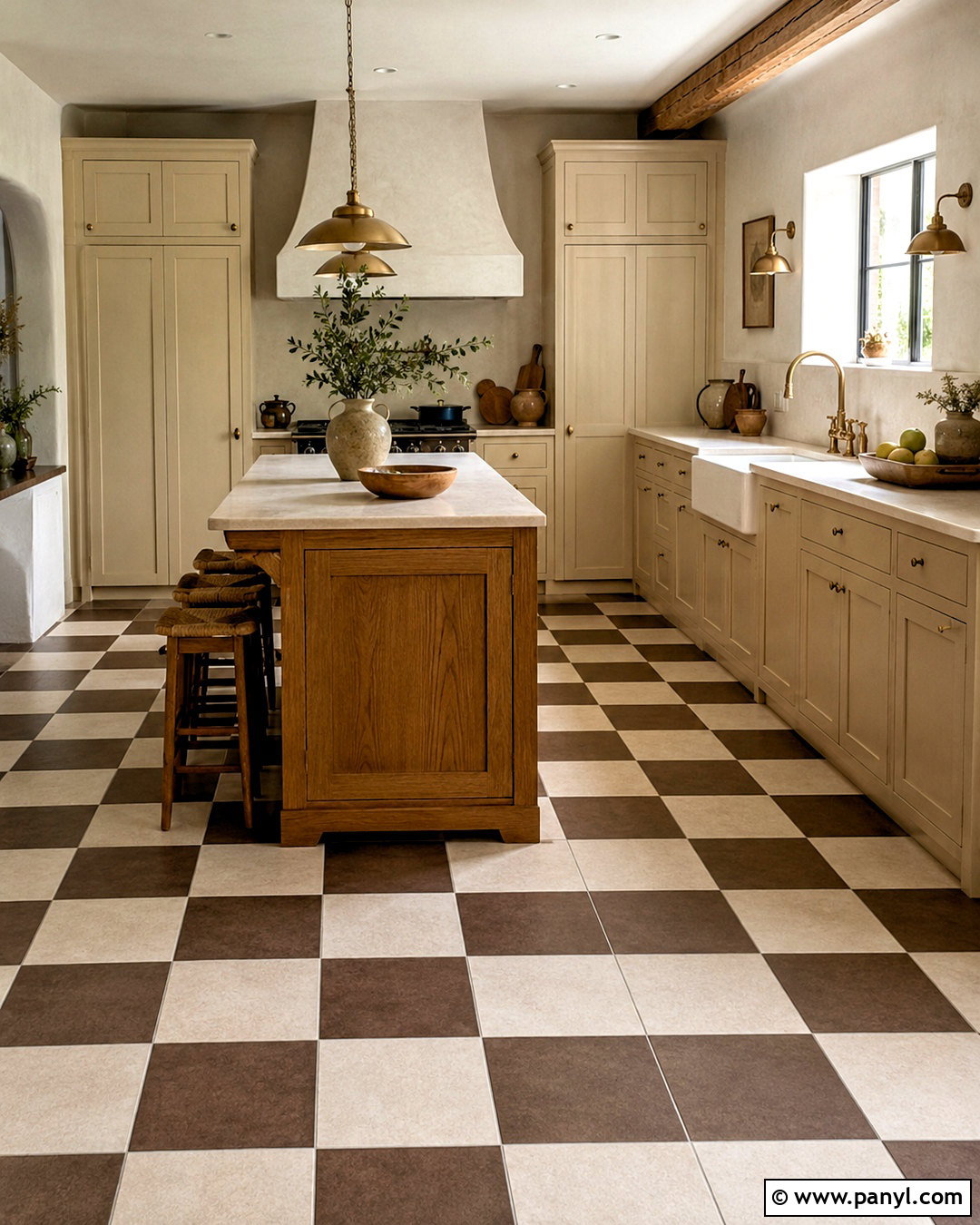
A checkerboard floor gives a neutral kitchen movement, personality, and a subtle vintage character. Select cream and cocoa-brown tiles with a matte or lightly aged finish instead of severe black-and-white squares. Keep the cabinetry simple with warm cream Shaker doors and a medium brown oak island. Cream quartz counters, unlacquered brass hardware, and an ivory apron-front sink support the traditional mood. Use a plain plaster backsplash or small cream tiles so the floor remains the main pattern. In a compact kitchen, choose smaller squares laid straight for a tidy effect. Larger rooms can handle broad tiles installed diagonally. Repeat the floor’s brown shade through stools, cutting boards, and one wooden display cabinet. Checkerboard tile remains a recognizable way to introduce pattern while preserving a practical neutral palette. ()
8. Mediterranean Cream and Terracotta Brown Kitchen
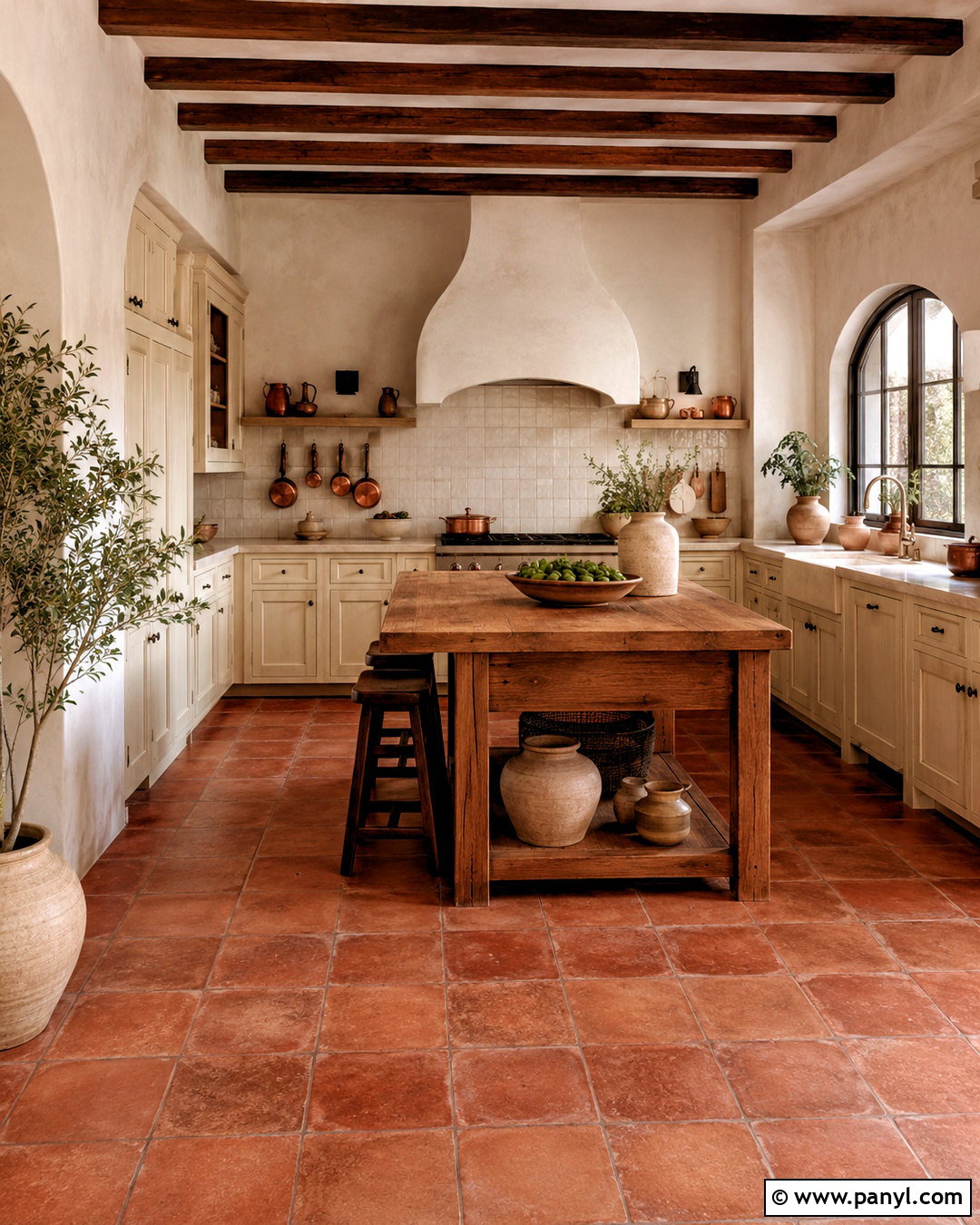
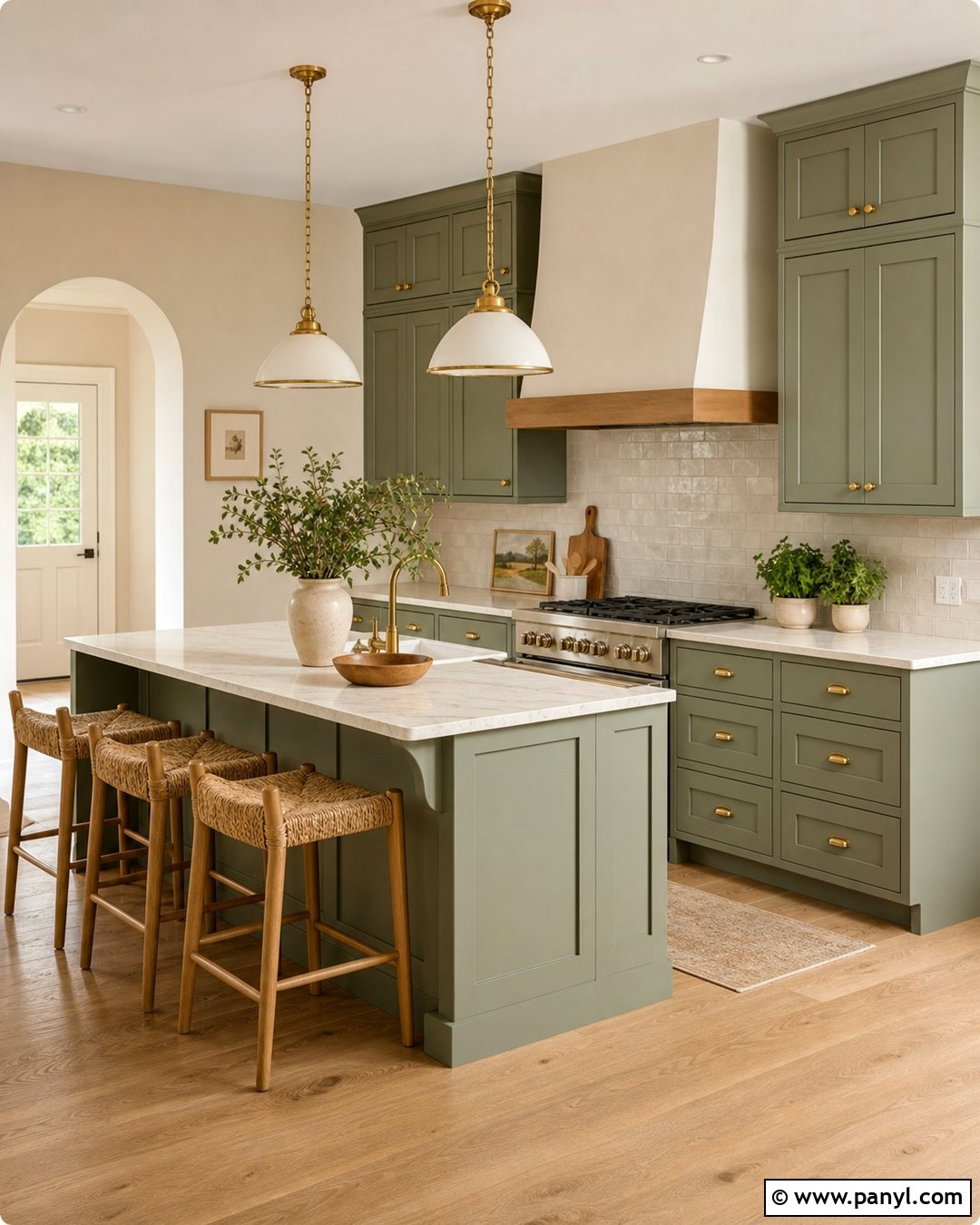
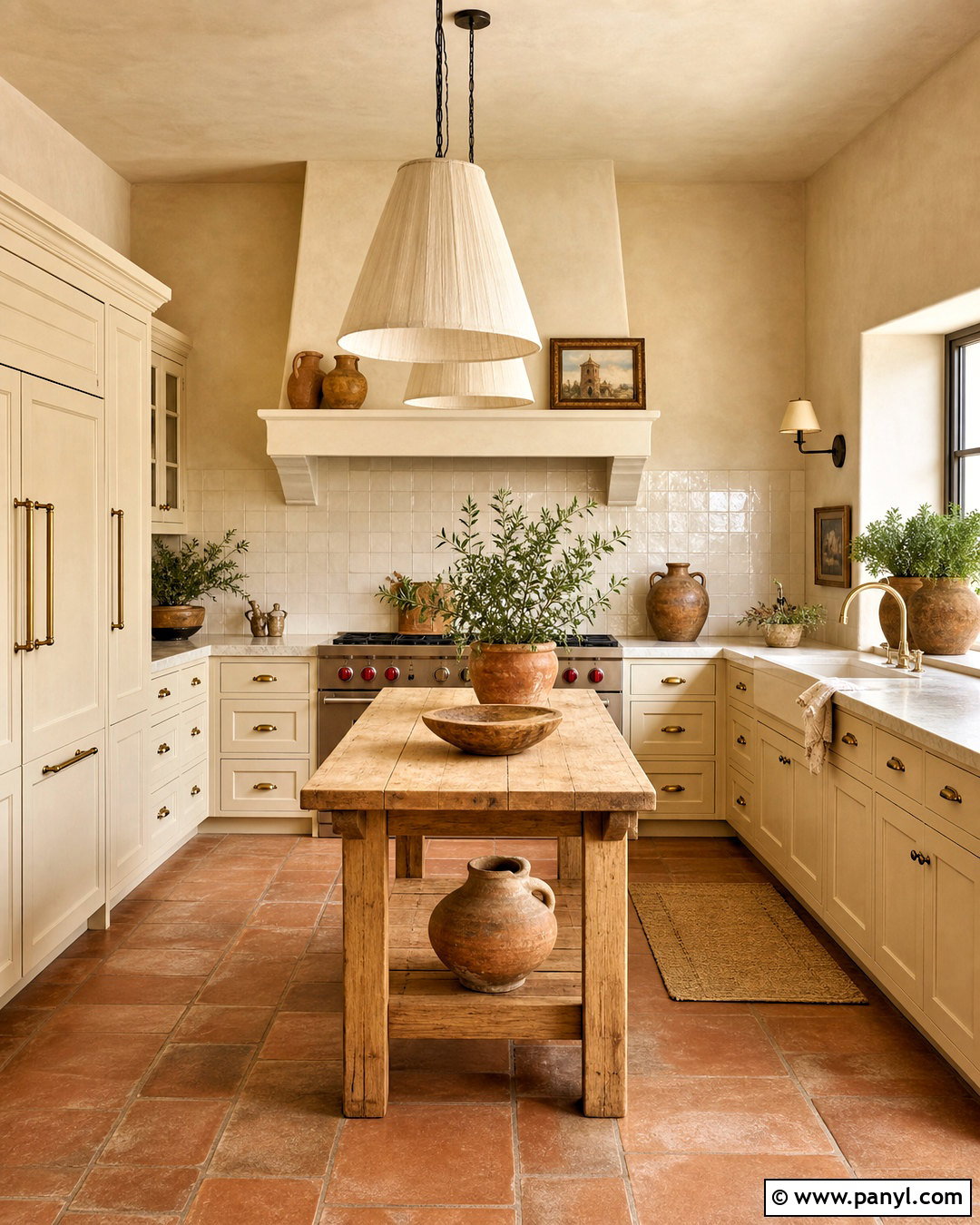
Sun-washed cream walls and terracotta-brown surfaces create a relaxed Mediterranean kitchen. Start with hand-painted cream cabinets featuring simple framed doors, then add reddish-brown terracotta flooring with natural tonal variation. A substantial wood worktable or island can provide preparation space and informal seating. Use warm limestone counters, a cream farmhouse sink, and an arched plaster range hood to establish the room’s character. Copper cookware, antique bronze hardware, and dark wood stools add contrast without overwhelming the palette. For the backsplash, choose handmade cream zellige-style tiles that reflect light and introduce gentle texture. Open shelves can display neutral pottery and everyday serving pieces. The result should feel collected and functional rather than themed, with natural materials creating most of the color and visual interest. ()
9. English Country Cream and Brown Kitchen
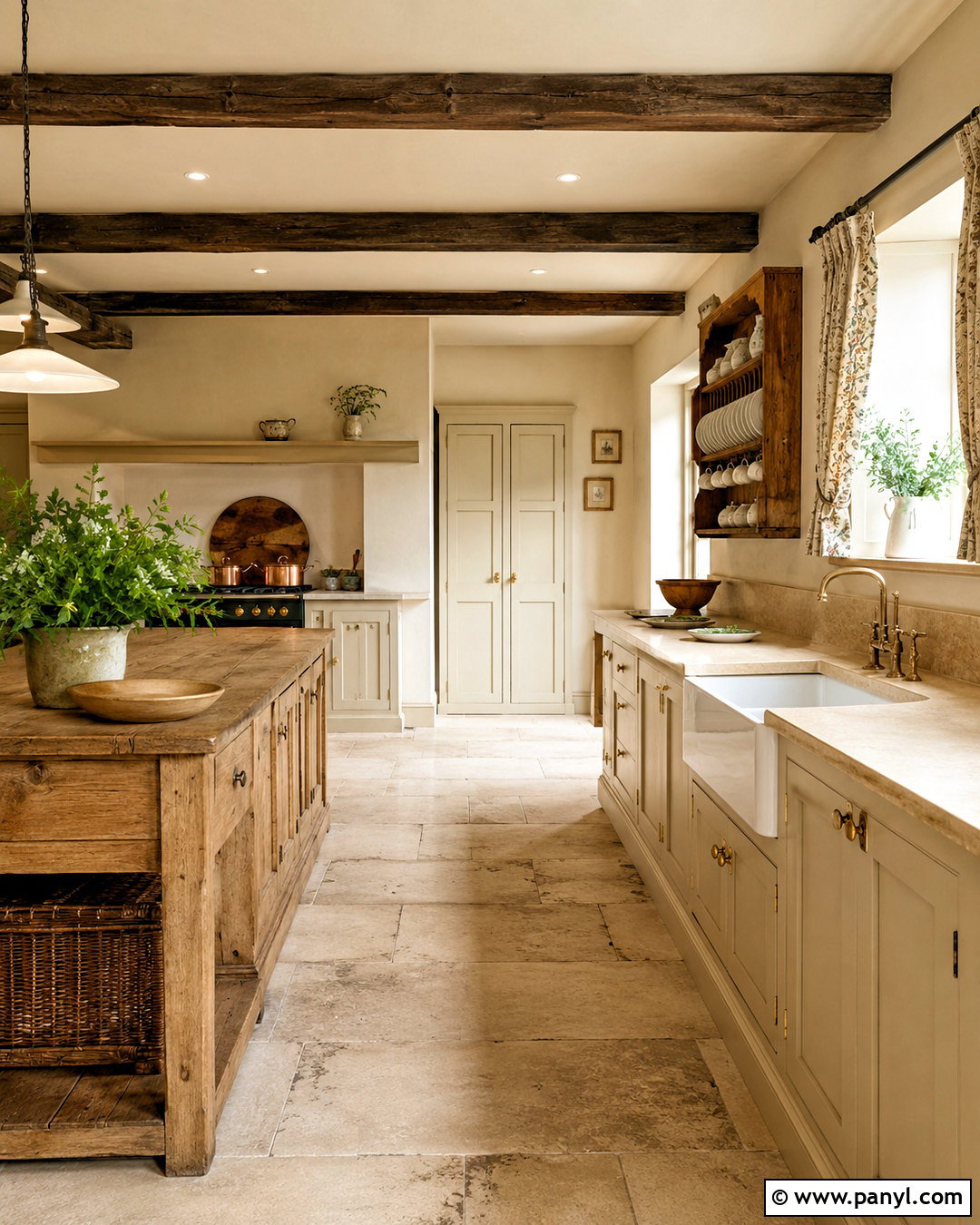
Softly painted cabinets, freestanding furniture, and warm wood details define an inviting English country kitchen. Choose muted cream cabinetry with inset doors and traditional brass latches. Introduce brown through an antique-style oak island, exposed ceiling beams, and a dark wooden plate rack. Honed cream limestone or lightly veined marble works well for the countertops because it develops character gracefully. Install a deep ceramic sink beneath a window and frame it with simple café curtains in a brown-and-cream pattern. A substantial range, painted plaster hood, and aged stone floor complete the architectural foundation. Display pottery, cutting boards, and woven baskets in small, controlled groupings. This kitchen should feel comfortable and established, but adequate closed storage will stop its collected details from becoming visually cluttered.
10. Scandinavian Cream and Oak Kitchen
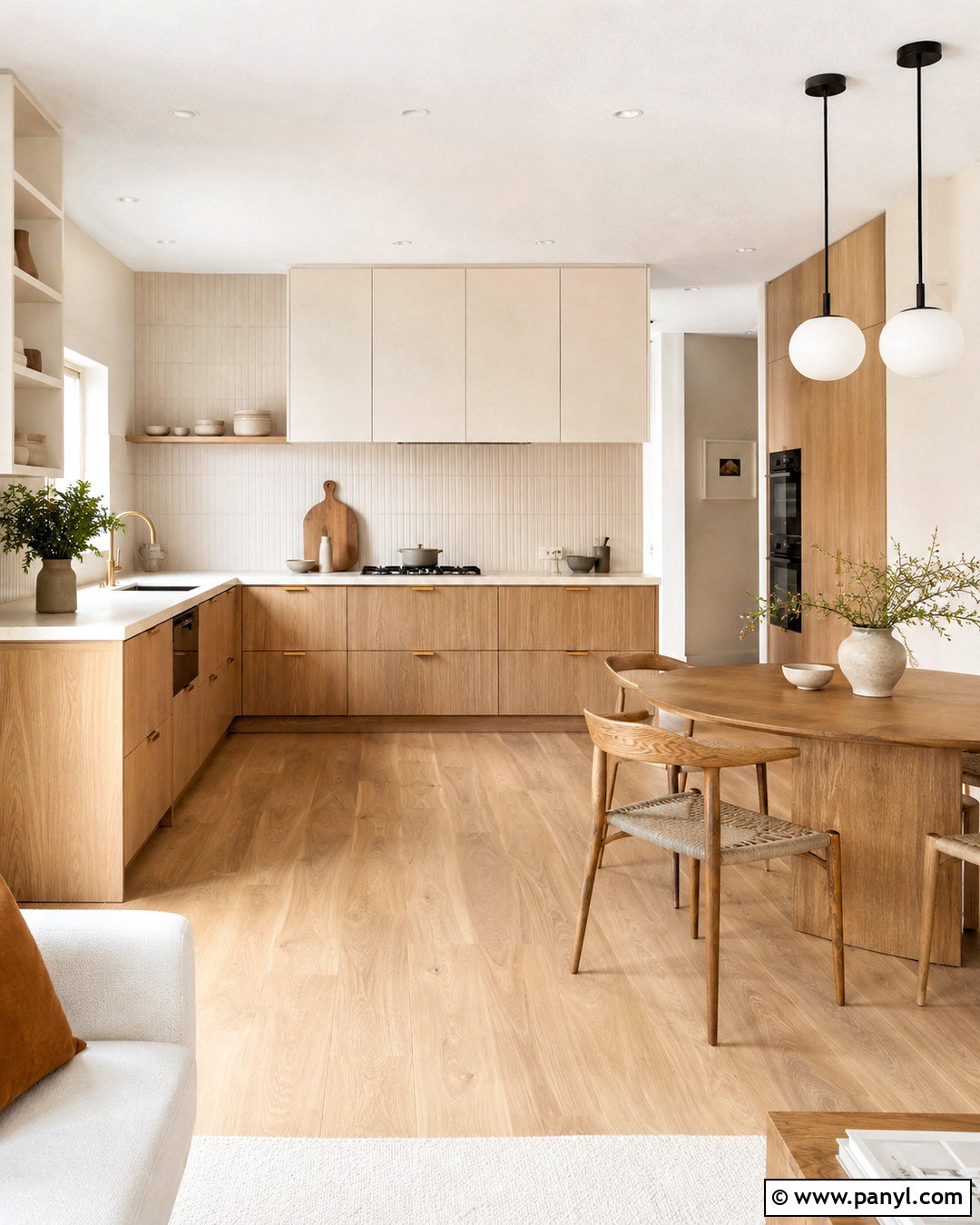
Could a neutral kitchen feel both cozy and refreshingly simple? Combine pale oak cabinetry with creamy white walls and matching upper cabinets for a clean Scandinavian layout. Use flat or lightly framed doors with discreet wooden pulls to preserve the quiet appearance. Select a thin cream quartz countertop and a vertical stacked-tile backsplash in a slightly deeper ivory tone. Pale oak flooring can continue throughout an open-plan home, helping the kitchen blend with nearby living areas. Add a compact wood dining table, woven-seat chairs, and simple opal glass pendants. Black accents should be limited to one faucet or a few small fixtures. Open shelving can hold everyday ceramics, but leave generous empty space. Natural materials, practical storage, and soft contrast make this kitchen calm without making it feel unfinished.
11. Japandi Cream and Walnut Kitchen
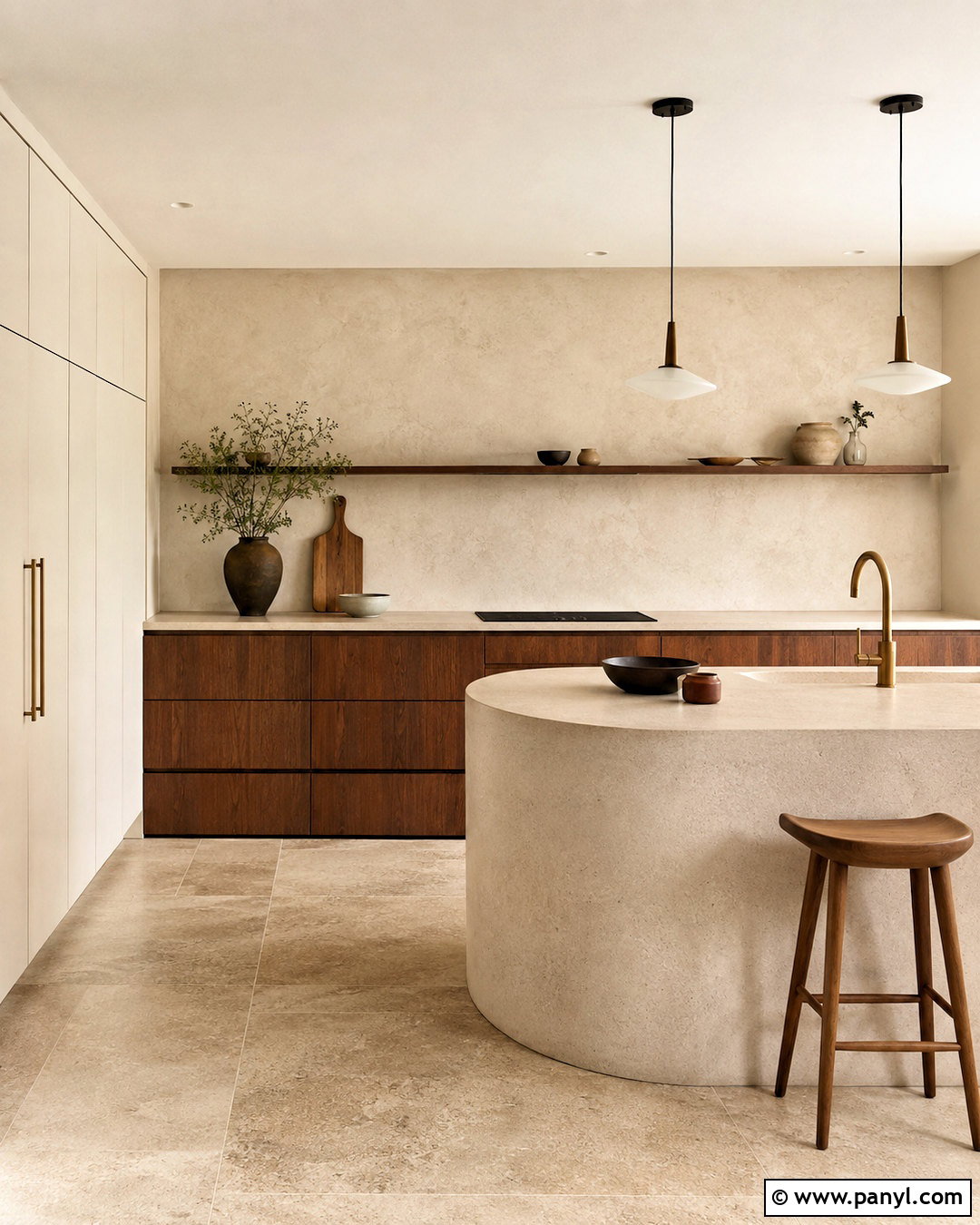
Japandi design brings structure and warmth to a cream and brown palette. Use walnut flat-panel cabinets on the lower half of the room, balanced by tall cream storage units with minimal hardware. Instead of standard upper cabinets, install one long walnut shelf against a textured cream plaster wall. A pale beige stone island with rounded corners will soften the clean lines and improve movement through the space. Choose light oak or warm limestone flooring, a brushed bronze faucet, and understated paper-inspired pendant lights. Hide small appliances behind pocket doors to maintain a calm workspace. Accessories should be useful and sculptural, such as a ceramic fruit bowl, wooden tray, and neutral stoneware. Every surface should have room to breathe, allowing the grain and subtle color changes to become the main decoration.
12. Industrial Cream and Brown Brick Kitchen
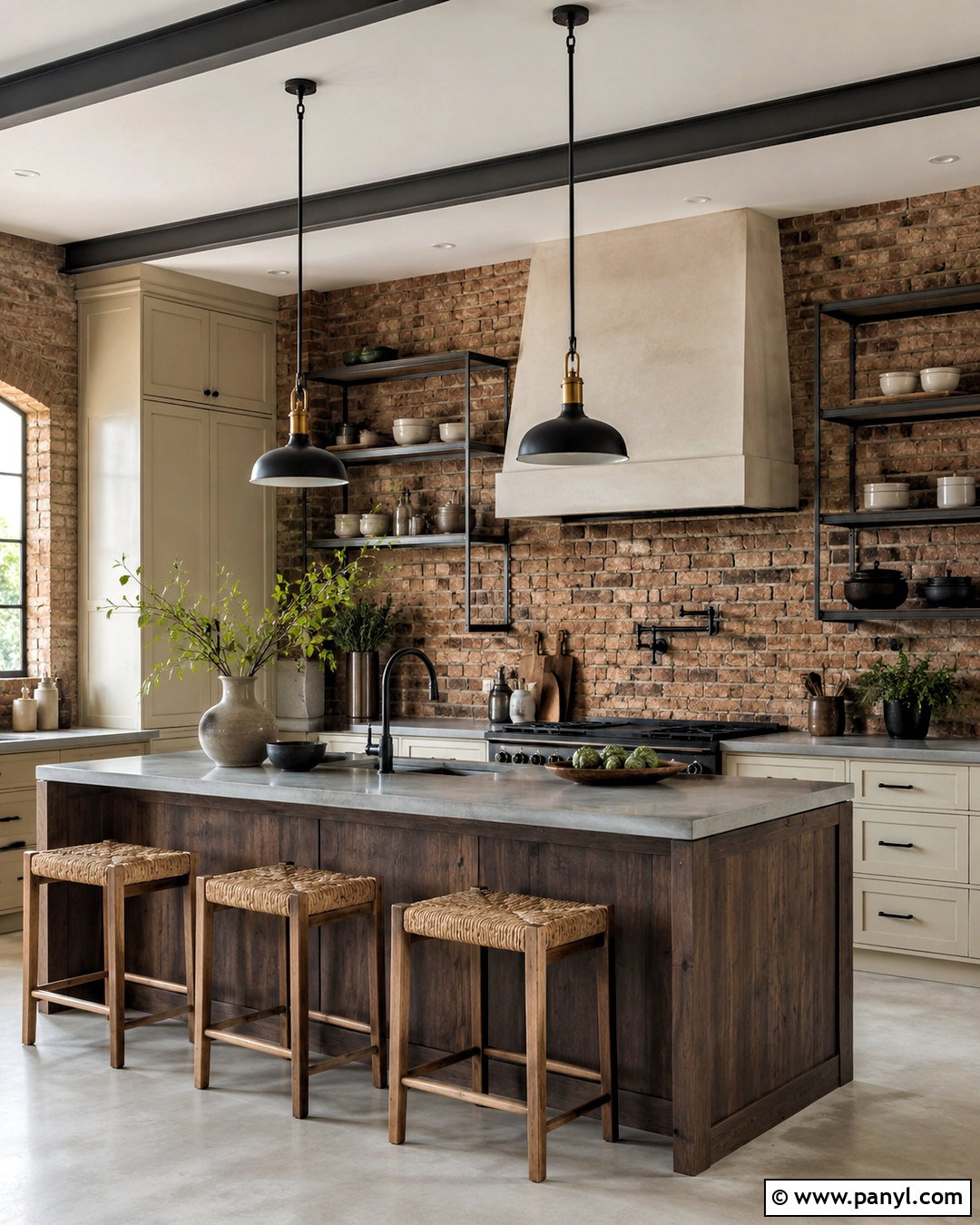
Exposed brown brick can feel warmer and more livable when paired with cream cabinetry. Make one original or brick-veneer wall the focal point, then install simple matte cream cabinets along the remaining walls. A dark brown stained wood island, concrete-look countertop, and open metal shelving will reinforce the industrial character. Prevent the room from becoming too heavy by choosing pale flooring and a large cream plaster range hood. Matte black lighting and hardware can sharpen the design, but natural wood stools and woven shades should soften the harder materials. Use warm white grout around the brick if possible, creating a visual connection with the cabinets. This complete look works particularly well in lofts and renovated older homes, yet it can also add architectural interest to a standard builder kitchen.
13. Coastal Cream and Weathered Brown Kitchen
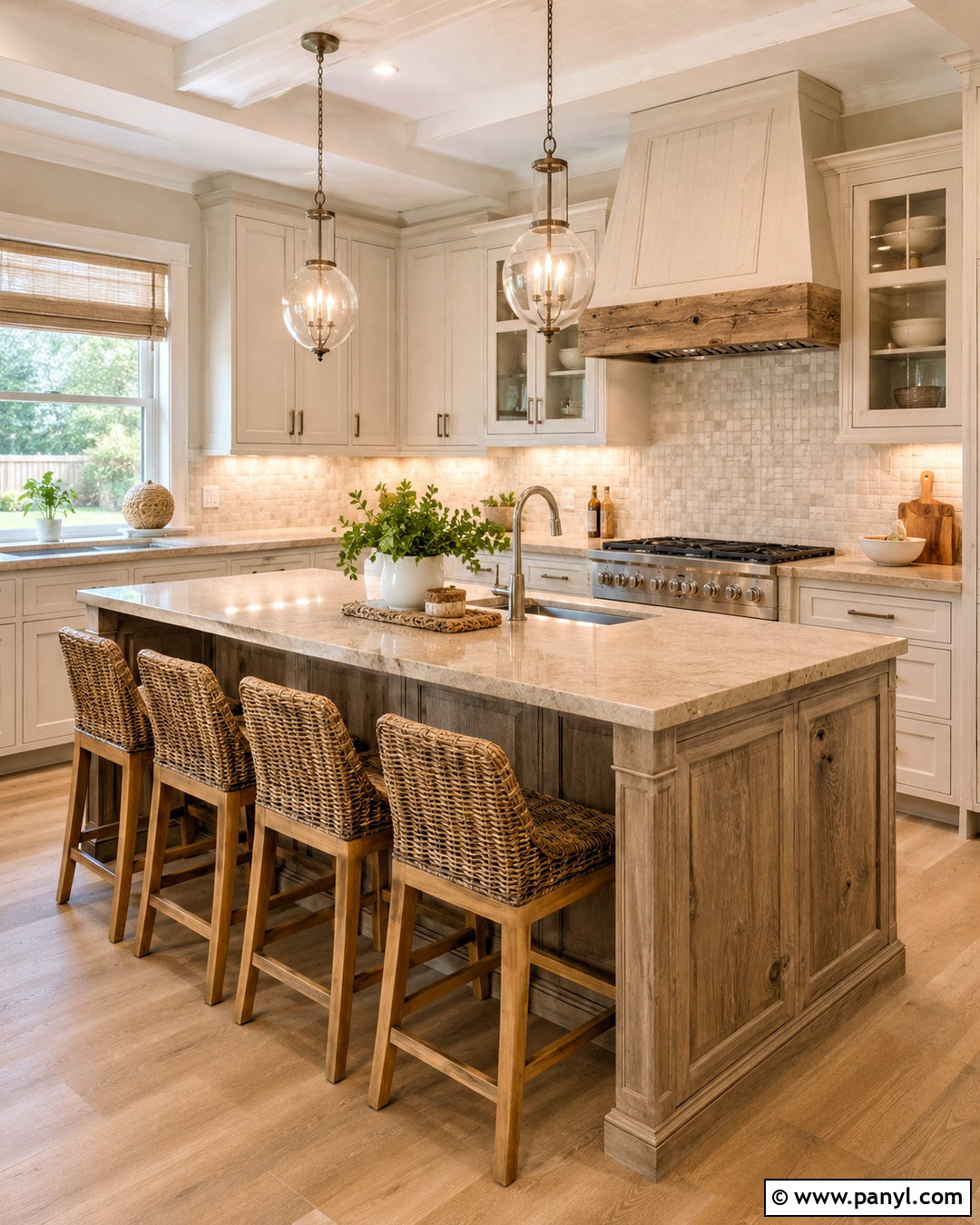
A coastal kitchen does not need obvious nautical decorations. Begin with creamy white cabinetry and combine it with weathered light brown oak on the island, open shelving, and flooring. Choose sandy beige quartz countertops and handmade backsplash tile in soft ivory. Pale woven counter stools, linen window shades, and clear glass pendants create an airy atmosphere. A few muted blue-gray accessories can provide freshness, but cream and brown should remain dominant. Use brushed nickel or aged brass hardware depending on whether the room leans cooler or warmer. Keep the layout open and allow plenty of natural light to reach the wood surfaces. The completed kitchen should suggest relaxed coastal living through faded finishes, breathable fabrics, and practical natural textures instead of seashells or themed signs. ()
14. Midcentury Cream and Walnut Kitchen
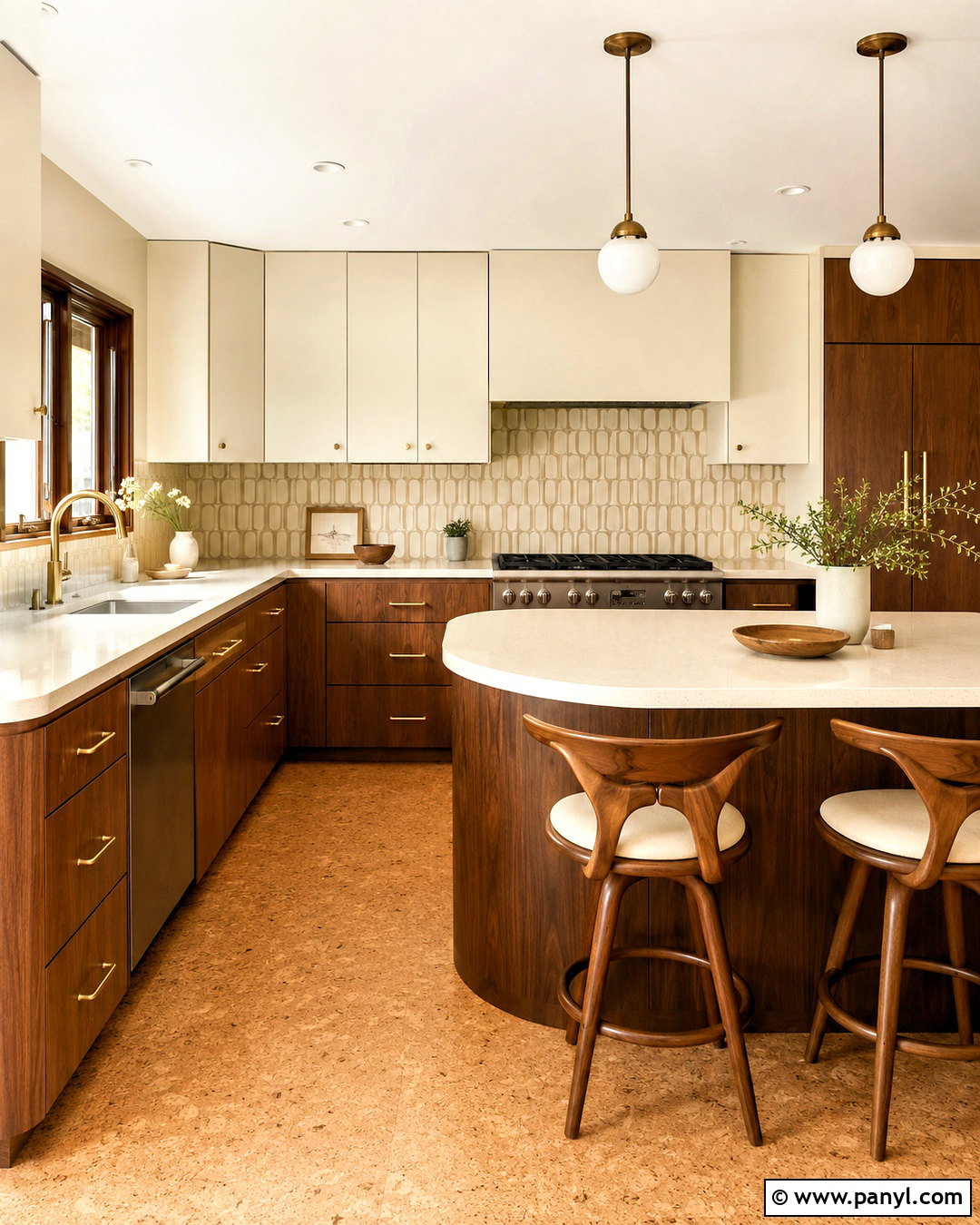
Warm walnut is a natural foundation for a midcentury kitchen. Use slab-front walnut lower cabinets and tall pantry units, then balance them with cream upper cabinets or open shelves. A cream quartz countertop with softly rounded edges will complement the streamlined shapes. Add a geometric backsplash in small cream and tan tiles, keeping the pattern subtle enough for everyday living. Terrazzo or warm cork flooring can introduce authentic texture while remaining practical. Choose globe pendants, brushed brass pulls, and counter stools with curved wooden frames. Avoid filling every wall with cabinets; one open section can display pottery or artwork. This arrangement captures recognizable midcentury features without turning the kitchen into a period set. Clean lines, warm wood, and functional storage keep the overall look comfortable and current.
15. Rustic Cream and Reclaimed Wood Kitchen
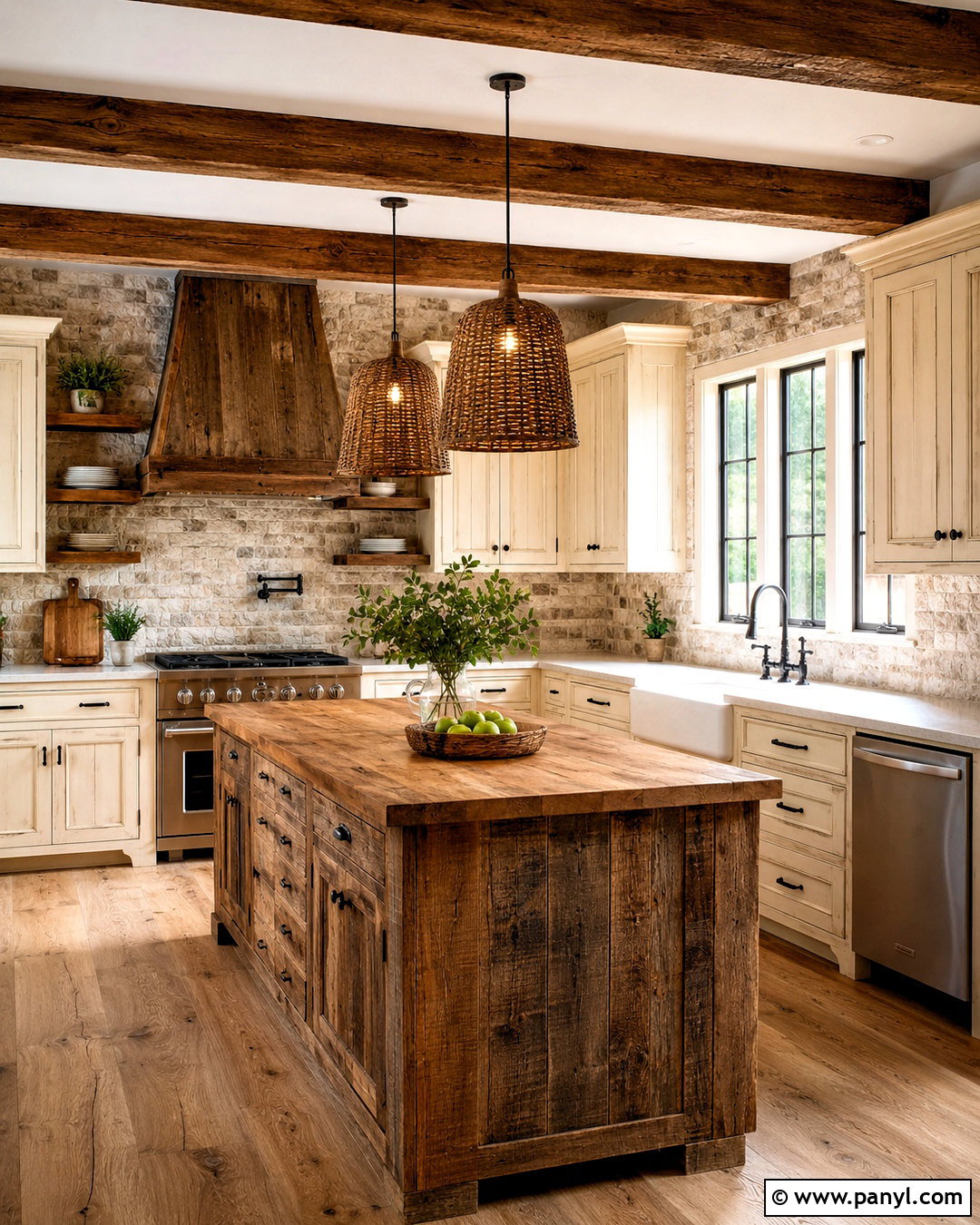
Texture takes the lead in a rustic cream and brown kitchen. Paint the main cabinets a distressed or hand-brushed cream, then use reclaimed brown wood for the island, ceiling beams, and open shelving. A butcher block island top can contrast with durable cream quartz around the sink and range. Choose wide-plank oak flooring with visible knots and a simple tumbled-stone backsplash. Black iron hardware provides definition, while woven pendant lights keep the room from feeling too rugged. An apron-front sink and freestanding wooden hutch will add useful farmhouse character. Keep accessories practical by displaying ceramic crocks, baskets, and cutting boards that are regularly used. The finished room should feel warm and imperfect, but modern appliances and organized storage will ensure it functions efficiently for daily cooking.
16. Transitional Cream Kitchen With an Espresso Island
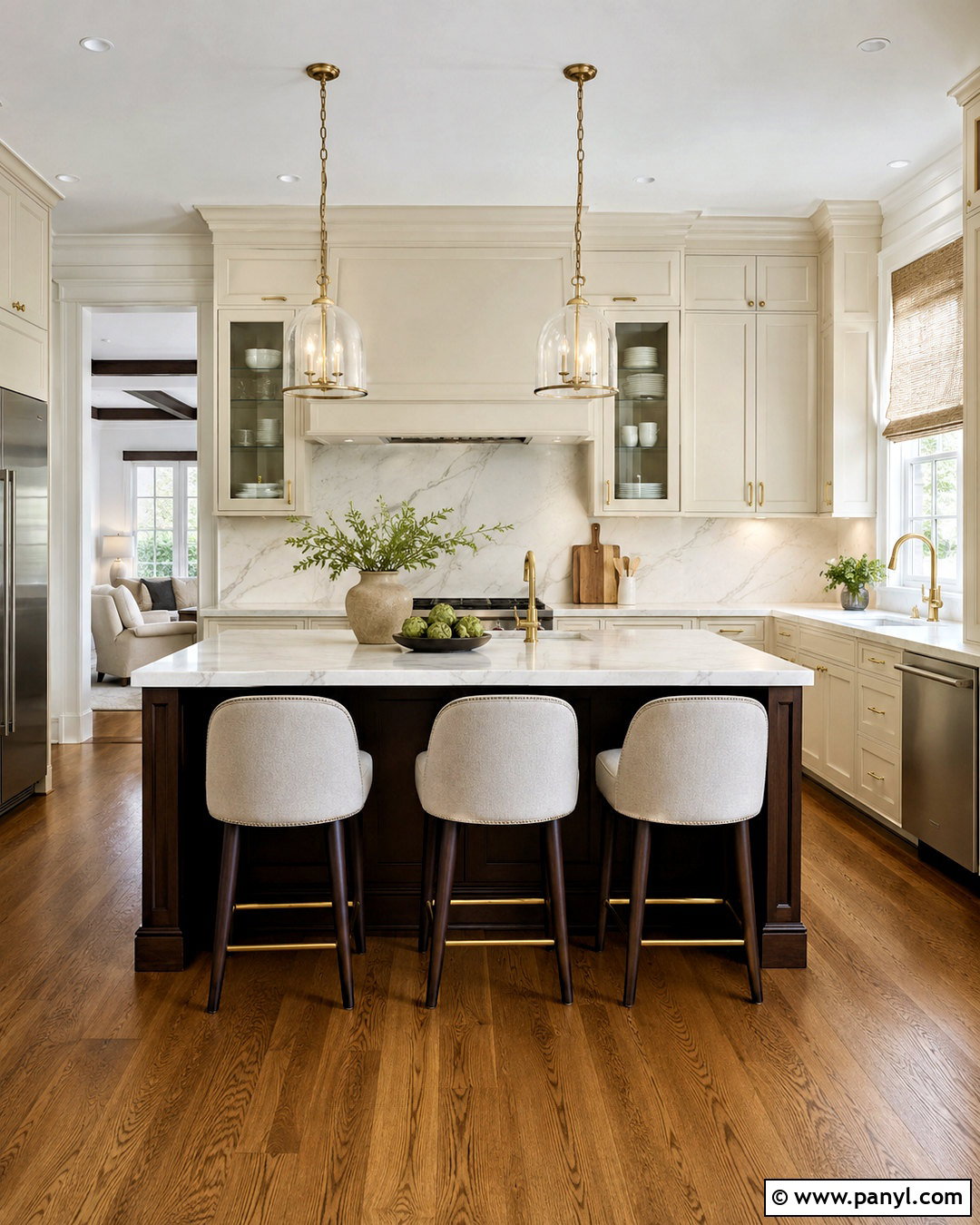
Transitional design is ideal for homeowners who want traditional warmth with cleaner details. Choose cream perimeter cabinets with simple recessed panels, crown molding, and streamlined brass pulls. Anchor the center with an espresso-brown island featuring generous drawers and comfortable seating. Use warm white quartz countertops throughout, then add a softly veined cream slab backsplash behind the range. Medium-tone oak flooring bridges the contrast between the light cabinetry and dark island. Glass pendants, upholstered stools, and a tailored Roman shade provide softness without looking overly decorative. Keep the walls a light neutral cream rather than bright white. The result feels polished and familiar, making it suitable for open-plan homes where the kitchen needs to coordinate with both classic furniture and contemporary lighting.
17. Cream Kitchen With Brown Marble Backsplash
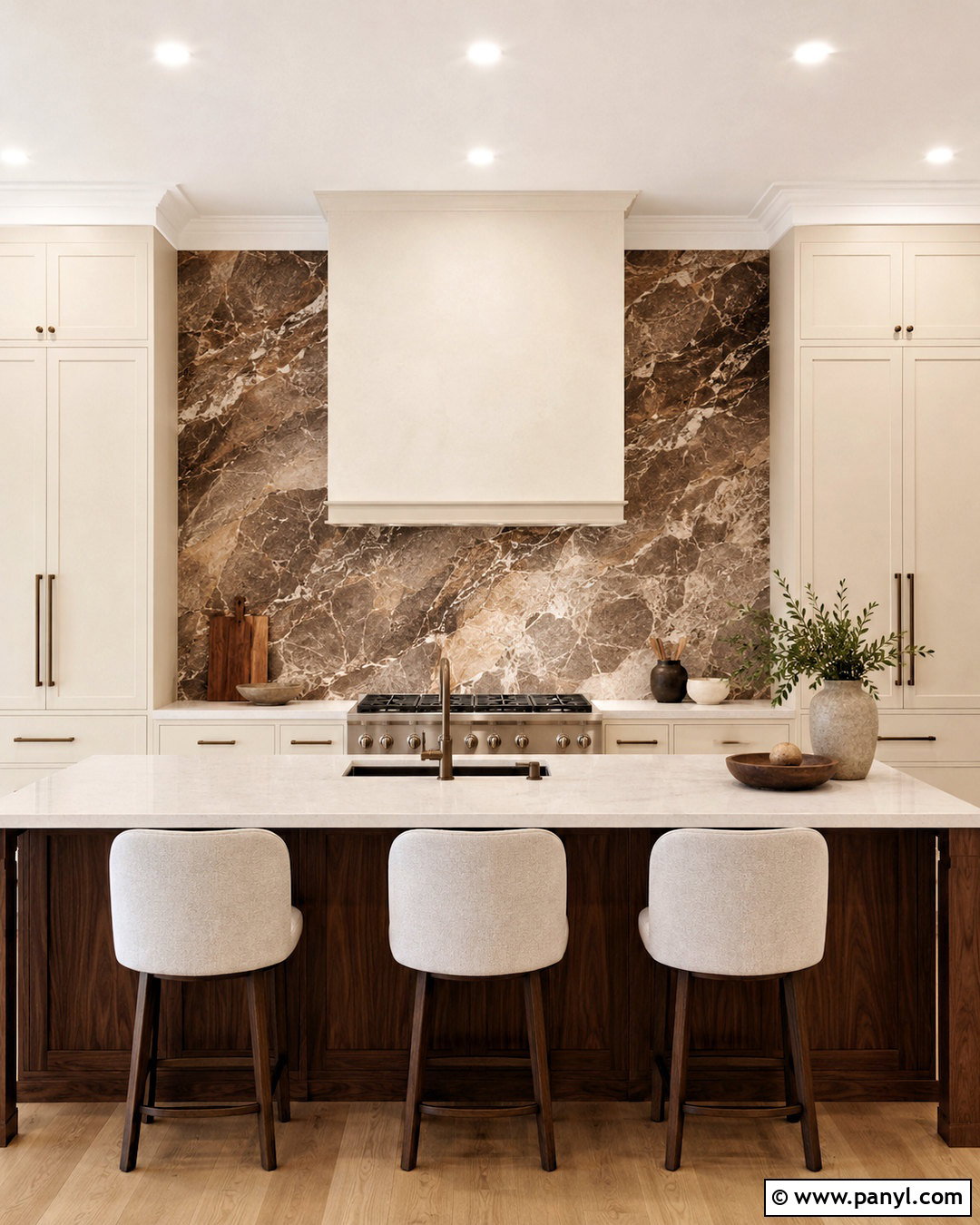
A brown marble backsplash can become the centerpiece of an otherwise restrained cream kitchen. Select stone with flowing chocolate, caramel, and ivory veining, then use it behind the range or across the full counter wall. Surround it with flat-front cream cabinets and a quiet cream quartz countertop so the natural pattern stays prominent. A walnut island will repeat the darkest tones in the marble and make the combination feel deliberate. Choose warm bronze hardware, a simple cream hood, and light oak flooring. Avoid additional patterned tile, dramatic flooring, or heavily veined counters. Instead, add plain upholstered stools and minimal ceramic accessories. Good under-cabinet lighting is important because it reveals the stone’s depth and prevents the brown sections from appearing dull or shadowy.
18. Cream Kitchen With Brown Open Shelving
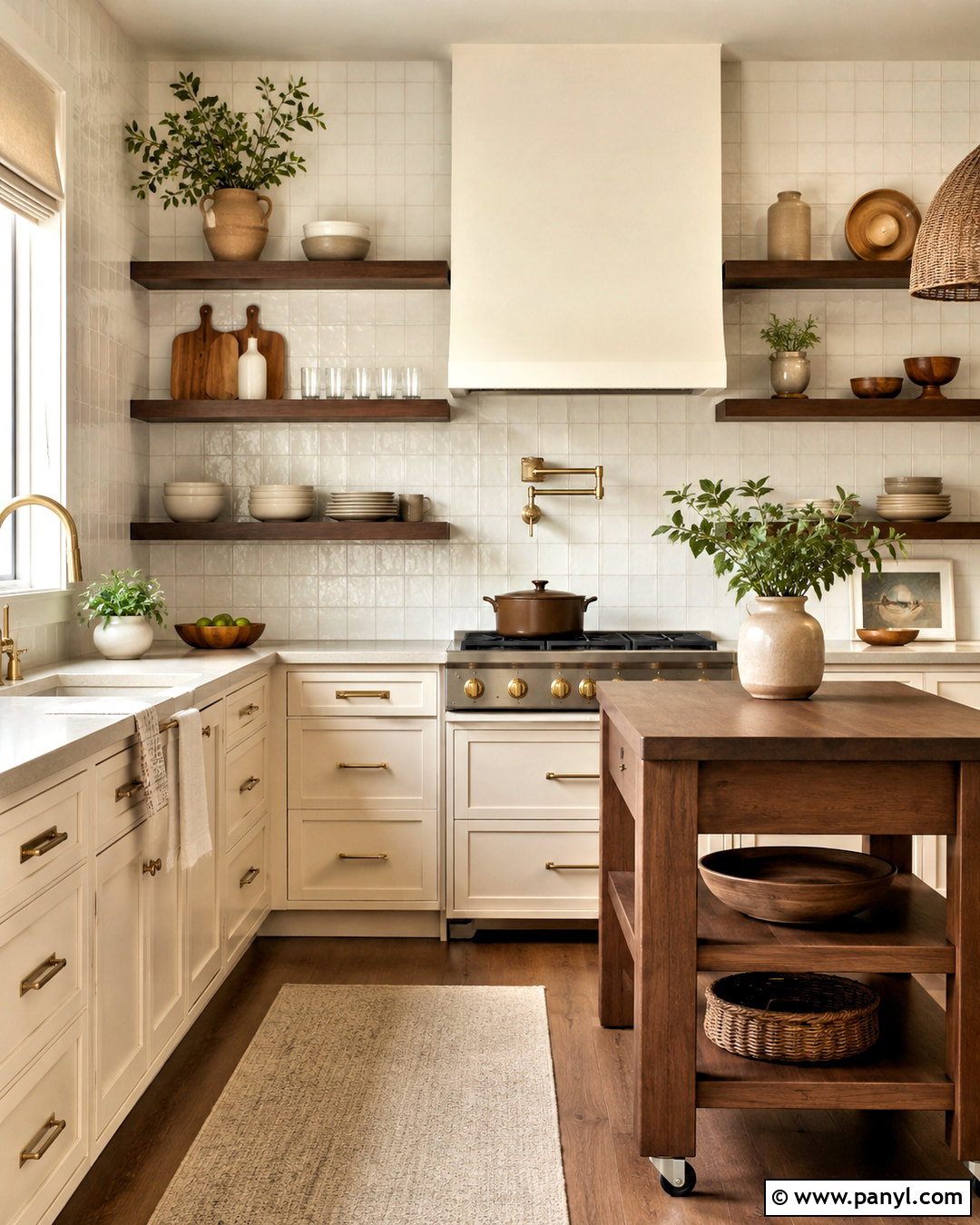
Open shelving can make a cream kitchen feel casual while providing useful access to everyday dishes. Install warm cream lower and tall cabinets, then replace a limited section of uppers with thick walnut or oak shelves. A simple cream tile backsplash will create a calm background for neutral stoneware, glasses, and wooden serving pieces. Use beige quartz counters, medium brown flooring, and understated brass hardware to complete the palette. Shelves should be deep enough for dinner plates but positioned away from heavy cooking grease whenever possible. Mix closed storage with the open display so less attractive supplies remain hidden. A small wood table or movable island can add preparation space. This design works best when displayed objects are coordinated, frequently used, and arranged with comfortable gaps between groups.
19. Luxury Cream and Espresso Kitchen
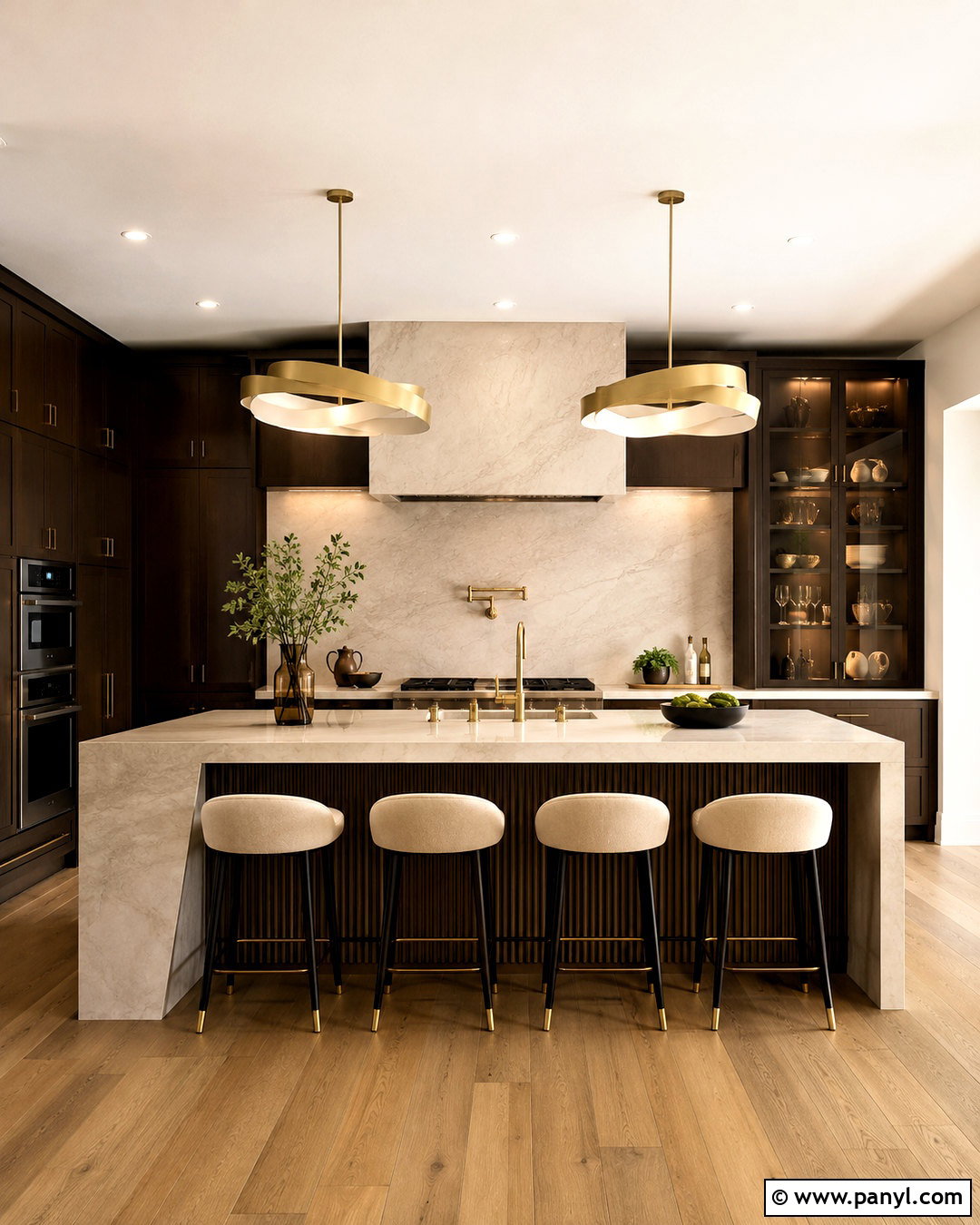
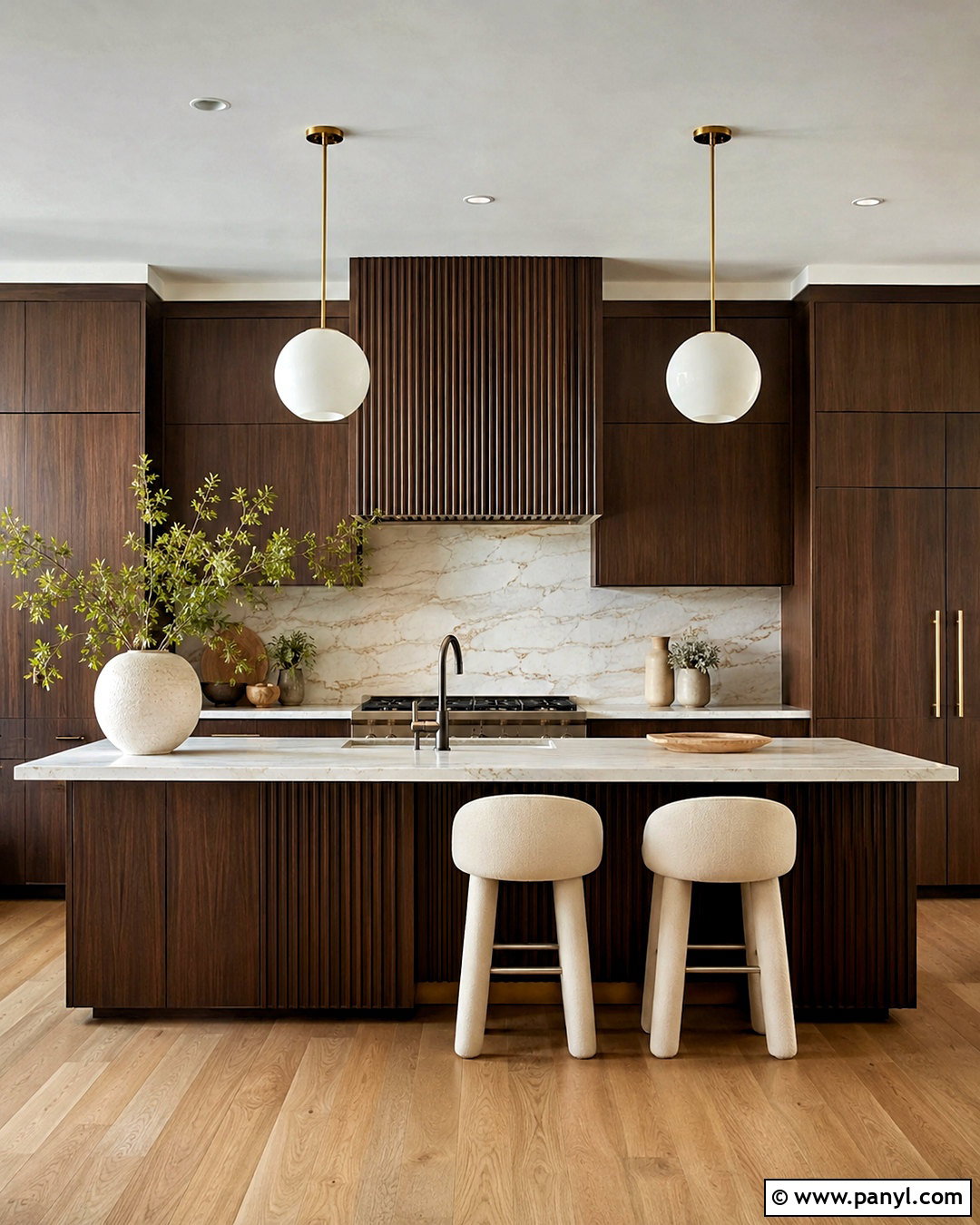
For a refined kitchen with strong contrast, combine creamy stone surfaces with deep espresso cabinetry. Use tall espresso cabinets along one wall, including integrated appliances and concealed pantry storage. Place a large cream island in the center with a thick waterfall edge and fluted brown wood panels facing the seating area. Continue the cream stone onto the backsplash and frame the range with symmetrical cabinets. Brushed brass fixtures, upholstered stools, and sculptural pendants add a polished finish. Wide oak flooring will keep the dark cabinets from feeling severe. Consider illuminated glass cabinets for displaying simple glassware, but avoid excessive decorative lighting. The finished room should feel luxurious through proportion, craftsmanship, and material quality rather than ornate details or an oversized residential scale.
20. Budget Cream and Brown Kitchen Makeover
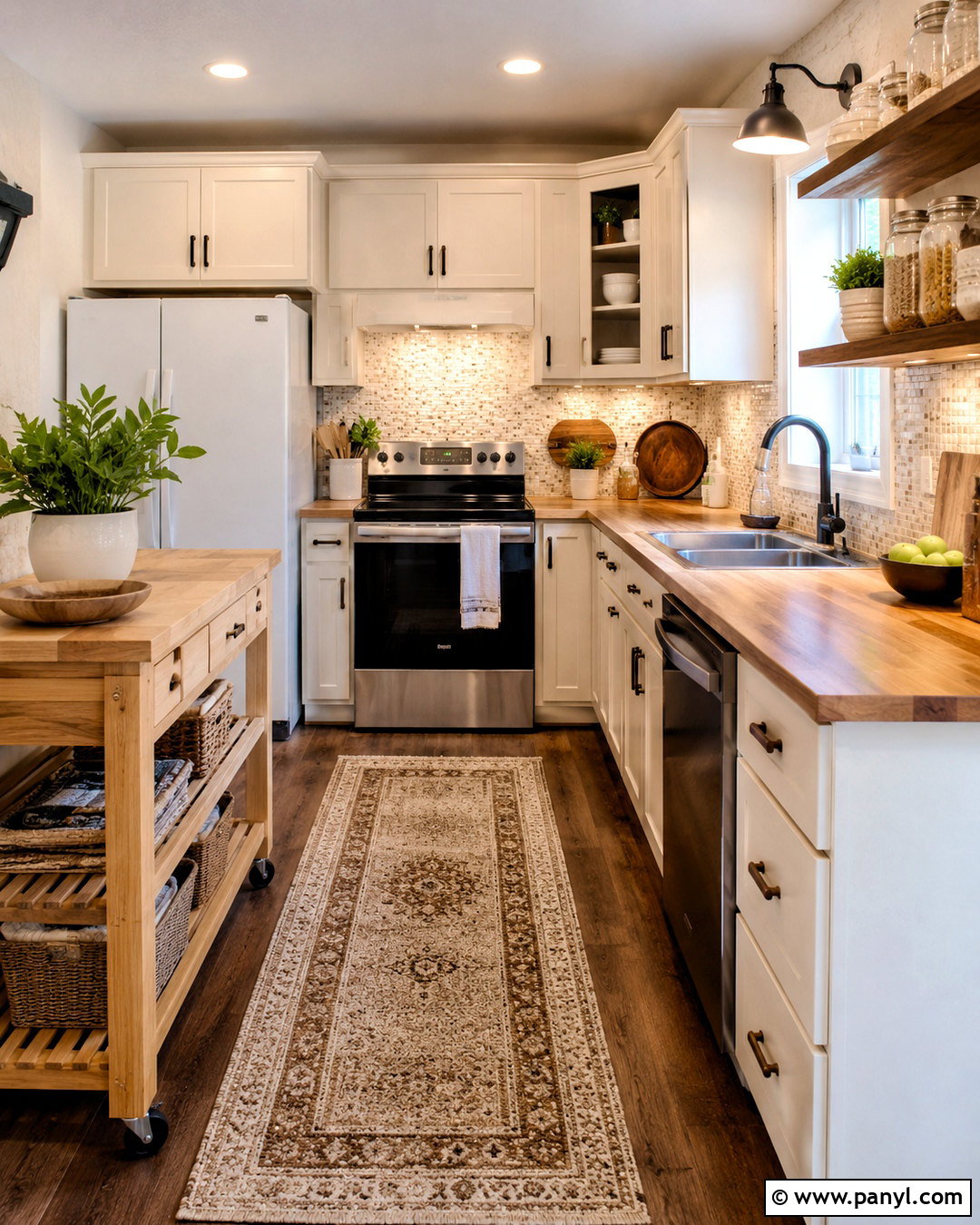
A complete cream and brown kitchen refresh does not always require replacing the cabinets. Paint structurally sound doors a warm cream and update them with affordable bronze or brass hardware. Preserve brown through an existing wood floor, butcher block counter section, freestanding cart, or stained open shelves. Cover a dated backsplash with suitable cream peel-and-stick tile, or repaint the wall with a washable kitchen finish. A durable cream-and-brown runner can disguise unattractive flooring while adding pattern. Replace one prominent light fixture and install under-cabinet lighting for a brighter workspace. Keep small appliances grouped together and use matching storage containers to reduce visual clutter. By repeating the same cream, medium brown, and metal finish throughout the room, inexpensive changes can create a surprisingly coherent and finished design.
Conclusion:
The best **cream and brown kitchen ideas** combine brightness, warmth, and practical materials in a balanced way. Cream can dominate the walls, cabinets, and counters, while brown adds depth through wood cabinetry, flooring, stone, brick, or a central island. Before selecting finishes, compare samples in the kitchen during morning, afternoon, and evening light. This helps reveal yellow, gray, red, or orange undertones that may not coordinate. Limit the palette to a few repeated shades and choose one consistent metal finish for a more polished result. Whether your preferred look is modern, farmhouse, rustic, coastal, or traditional, this adaptable color combination can create a comfortable kitchen that remains welcoming and visually grounded.

Related Ideas and Inspiration:
Leave a Reply