
Light burgundy brings warmth, personality, and surprising versatility to the heart of the home. Softer than deep red yet richer than dusty pink, it can make a kitchen feel welcoming without becoming dark or overwhelming. The key is building a balanced palette around the walls. Cream cabinets, natural wood, pale stone, reflective tile, and layered lighting all help the color look fresh. Burgundy is especially effective when balanced with light cabinetry, marble surfaces, warm neutrals, or carefully chosen green and blue accents. () Whether your taste leans farmhouse, modern, traditional, or eclectic, these complete room schemes offer practical ways to coordinate every finish. Explore these 20 light burgundy kitchen walls for a look that feels colorful, polished, and livable.

1. Light Burgundy Kitchen Walls With Cream Cabinets
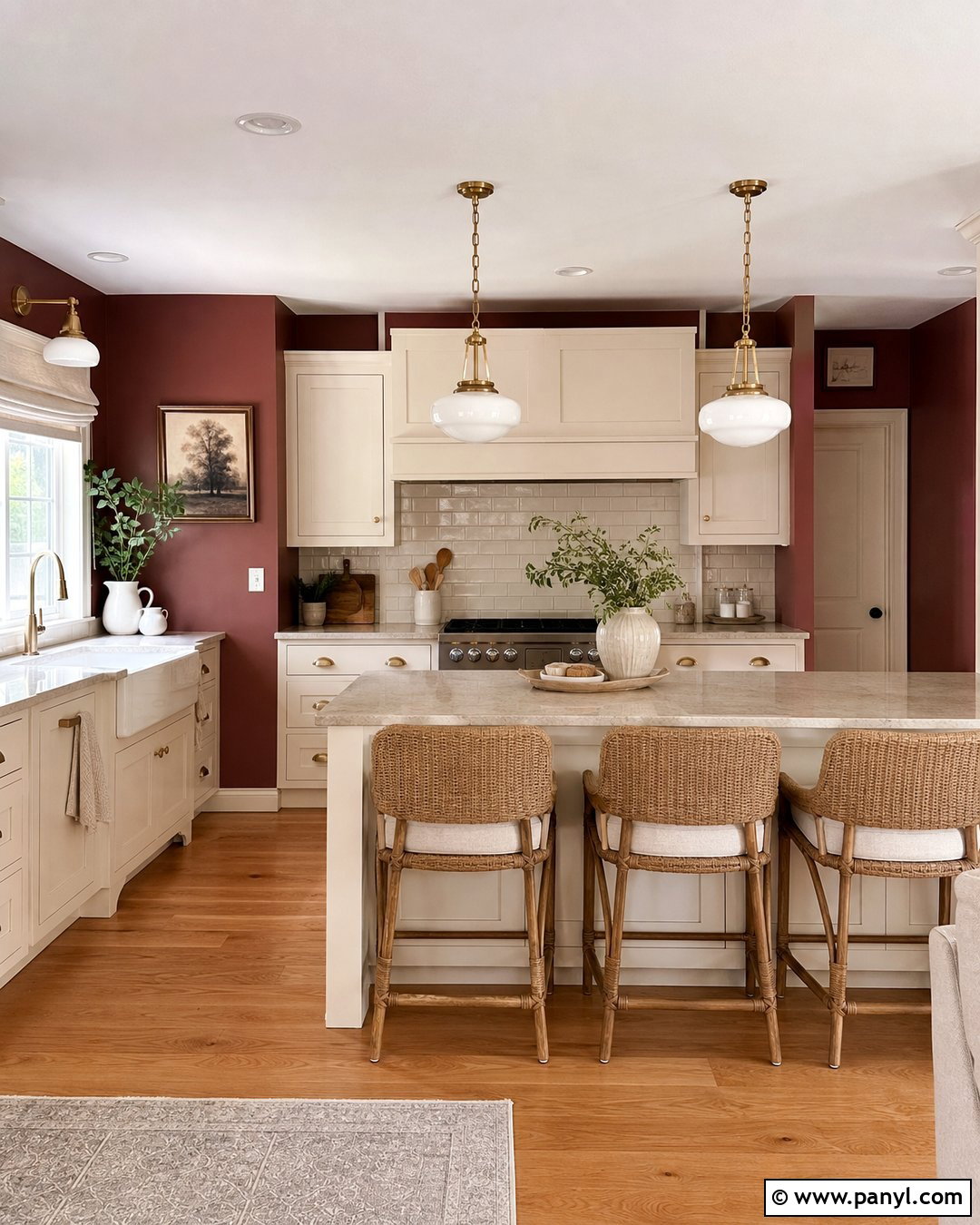
Cream cabinets soften light burgundy kitchen walls while preserving their cozy warmth. Choose simple Shaker doors in a buttery off-white rather than a sharp, cool white. Pale quartz counters with subtle beige veining will connect the two colors naturally. Add an ivory subway tile backsplash and use warm white grout for a seamless effect. Brushed brass handles, a matching faucet, and milk-glass pendants provide gentle shine without making the room overly formal. Medium oak flooring grounds the light palette and prevents it from appearing washed out. Complete the kitchen with woven counter stools, cream linen shades, and a few white ceramic pieces. This balanced combination works especially well in kitchens that receive moderate natural light throughout the day.
2. Light Burgundy Kitchen Walls With White Cabinets
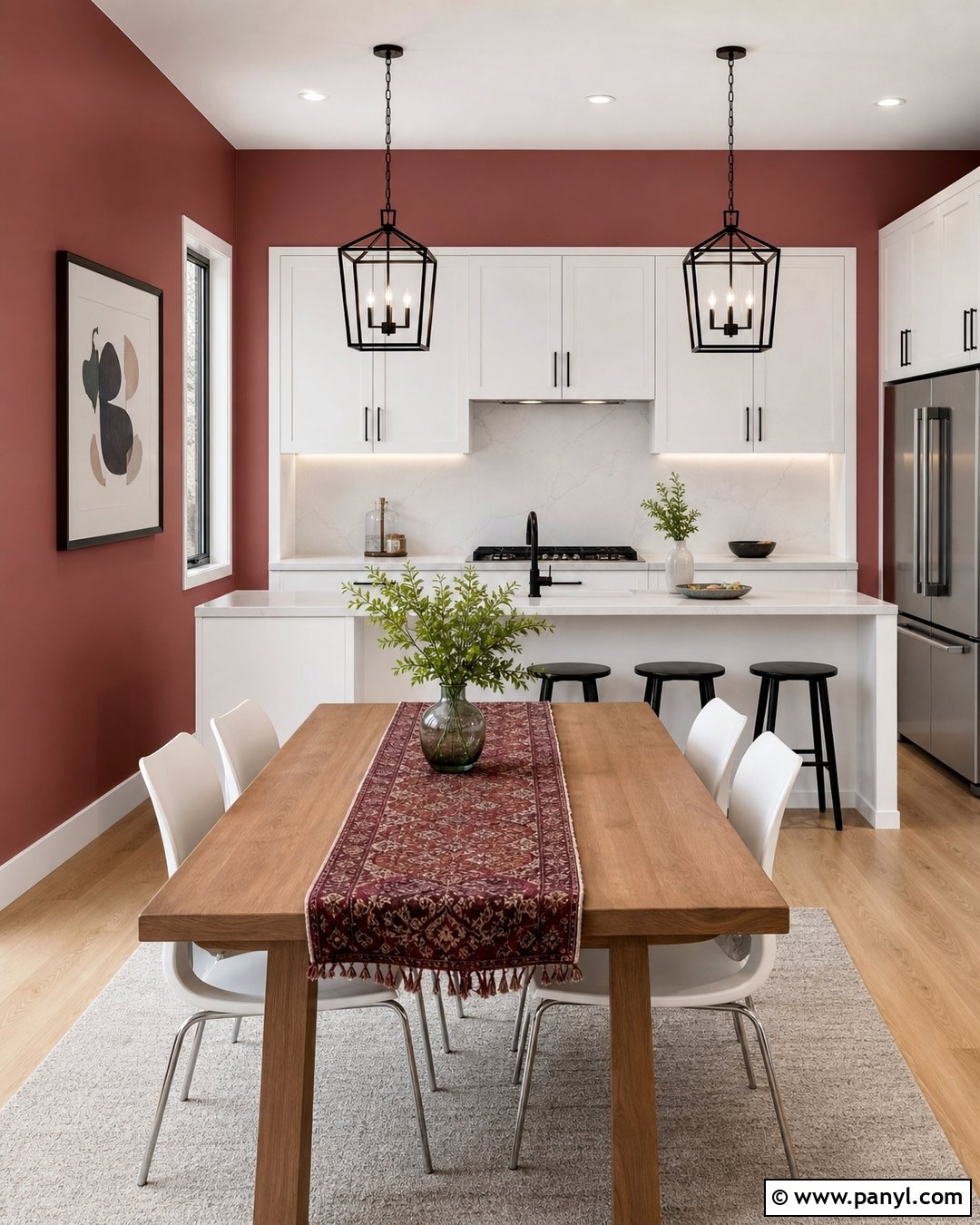
Crisp white cabinetry creates a clean contrast against light burgundy walls, making both colors appear clearer and more intentional. Use flat-panel or narrow Shaker cabinet doors for a streamlined look. White quartz countertops and a matching slab backsplash will reflect light around the room, which is helpful in a compact kitchen. Matte black hardware adds structure, while two black-framed pendant lights repeat the contrast above an island or peninsula. Keep the flooring warm with pale oak planks instead of cool gray tile. A small wood dining table, white chairs, and a washable burgundy-patterned runner can tie the adjoining eating area to the walls. Limit countertop decorations so the strong wall color remains the main feature without making the space feel busy.
3. Light Burgundy Kitchen Walls With Natural Oak Cabinets
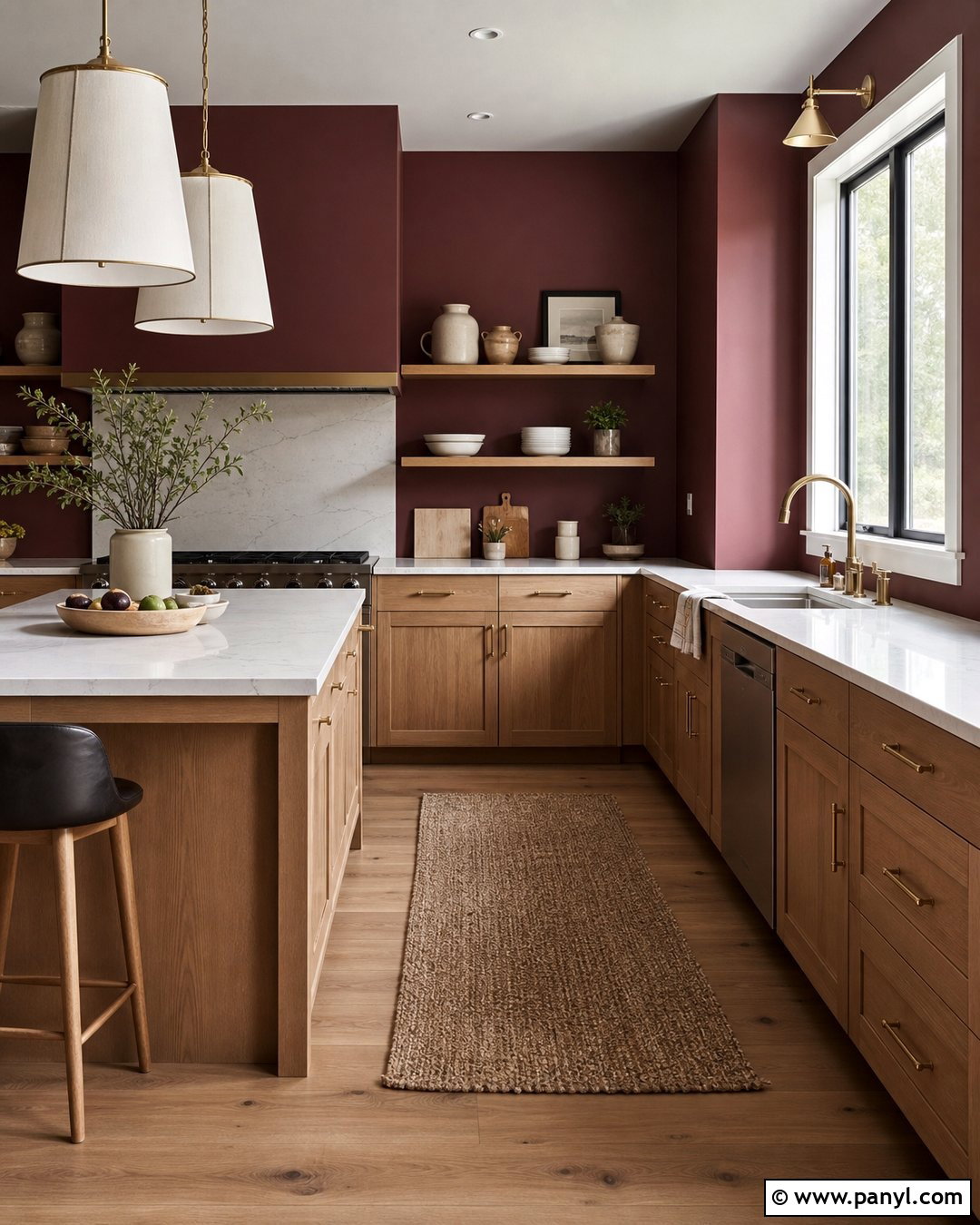
Natural oak and light burgundy create a warm, grounded kitchen with an inviting organic character. Select cabinets with a clear matte finish so the grain remains visible without turning orange. A creamy limestone-look backsplash and warm white quartz counters will separate the wood from the colored walls. Choose aged brass knobs, an unlacquered brass faucet, and simple linen pendant shades to reinforce the relaxed palette. Wide-plank light oak flooring can continue the cabinetry tone, but include a neutral woven runner to break up the wood. Open shelving beside a window offers space for cream dishes and handmade pottery. Keep the ceiling, window trim, and interior doors soft white. This prevents the combination of wood and burgundy from becoming visually heavy.
4. Light Burgundy Kitchen Walls With Sage Green Cabinets
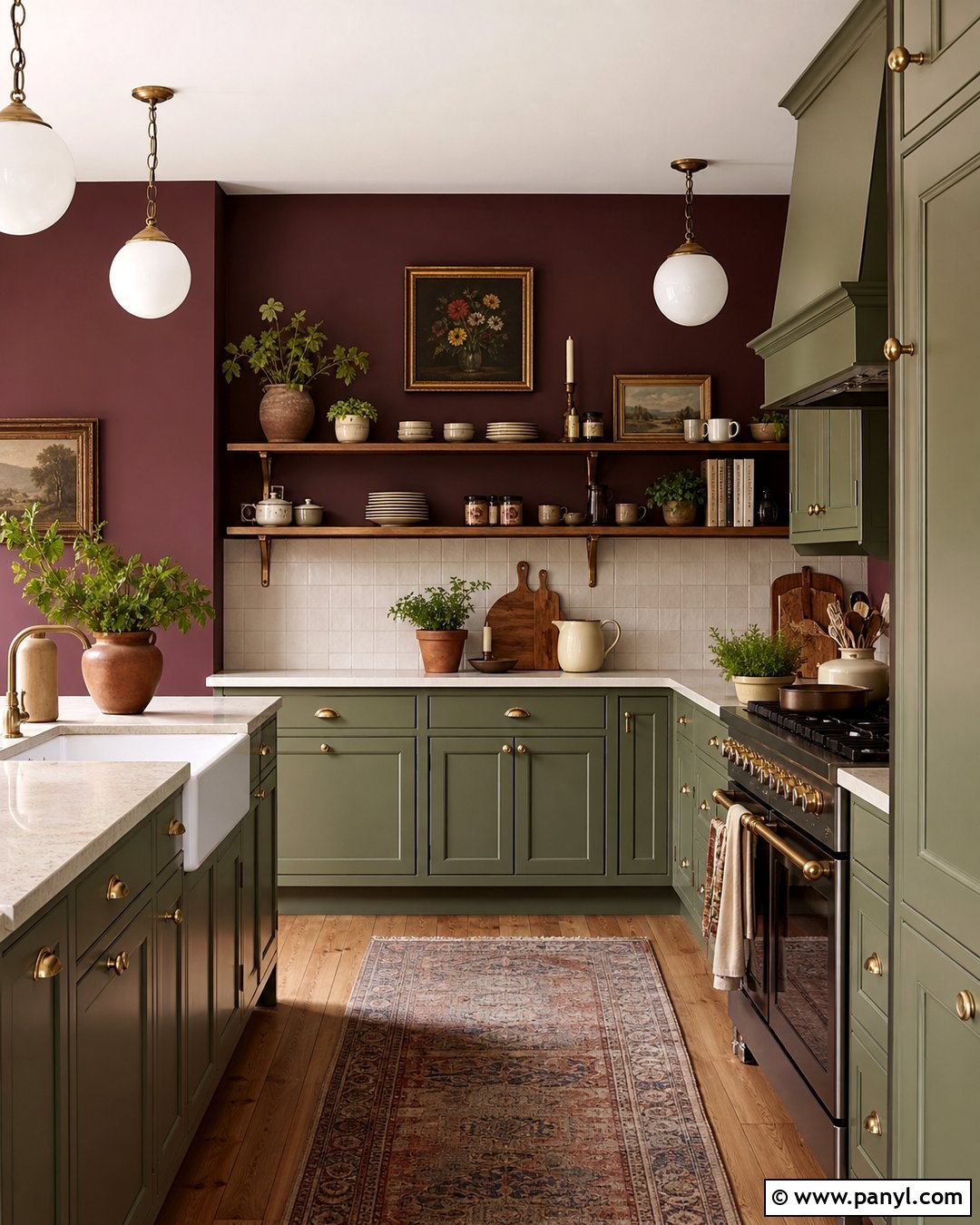
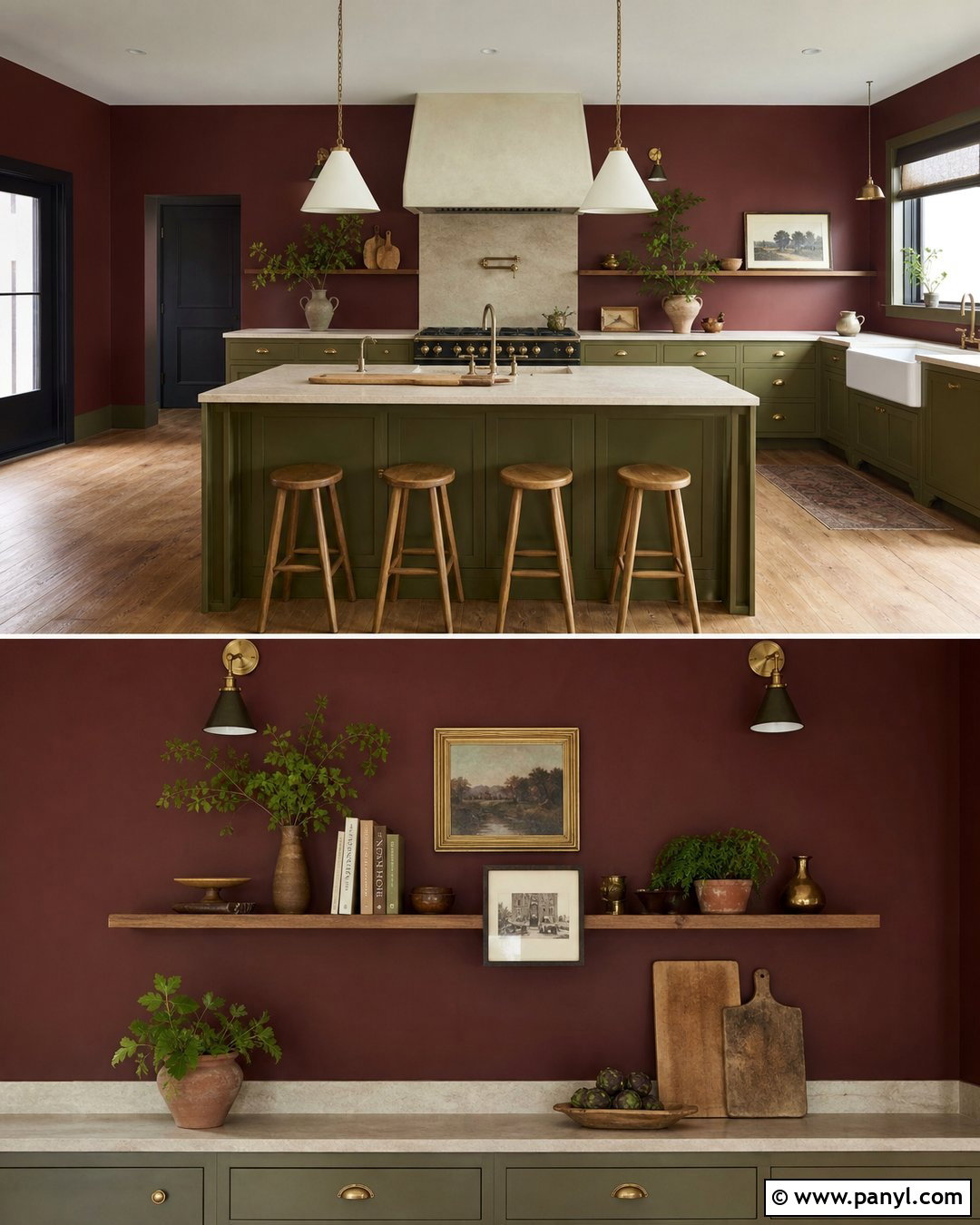
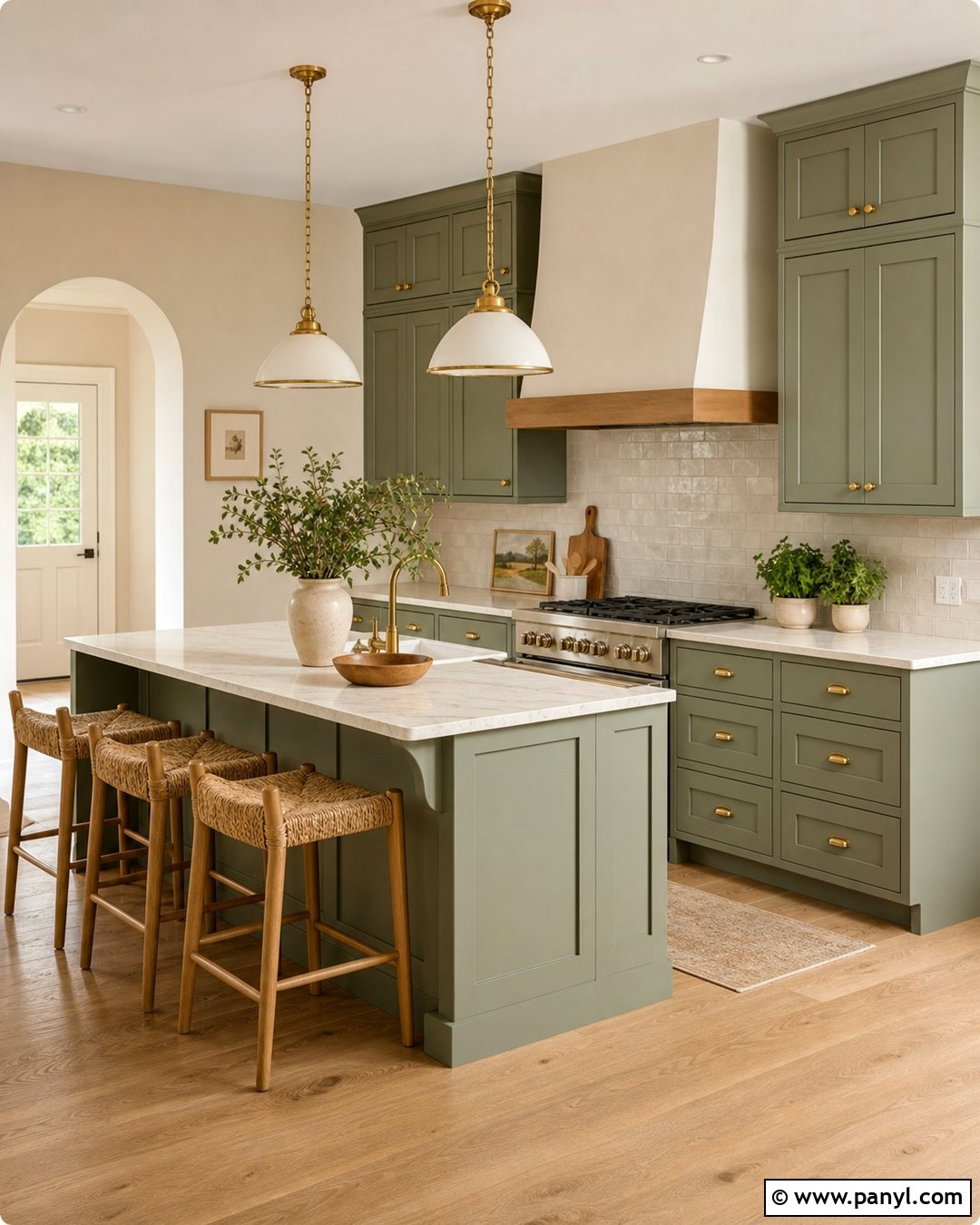
Could a colorful kitchen still feel calm? Muted sage green cabinets provide an earthy counterpoint to light burgundy walls without creating a loud red-and-green contrast. Choose a gray-based sage with low saturation and repeat it on the island for consistency. Cream quartz counters, an off-white square tile backsplash, and pale grout keep the center of the room bright. Antique brass hardware adds warmth, while natural oak shelves connect both colors. Use medium-tone wood flooring and a small vintage-inspired runner containing faded green, beige, and burgundy. Simple white globe pendants provide clean overhead lighting. Finish the room with terracotta planters, leafy herbs, and cream stoneware. The result feels layered, relaxed, and particularly suited to cottage or English-inspired interiors.
5. Light Burgundy Kitchen Walls With Greige Cabinets
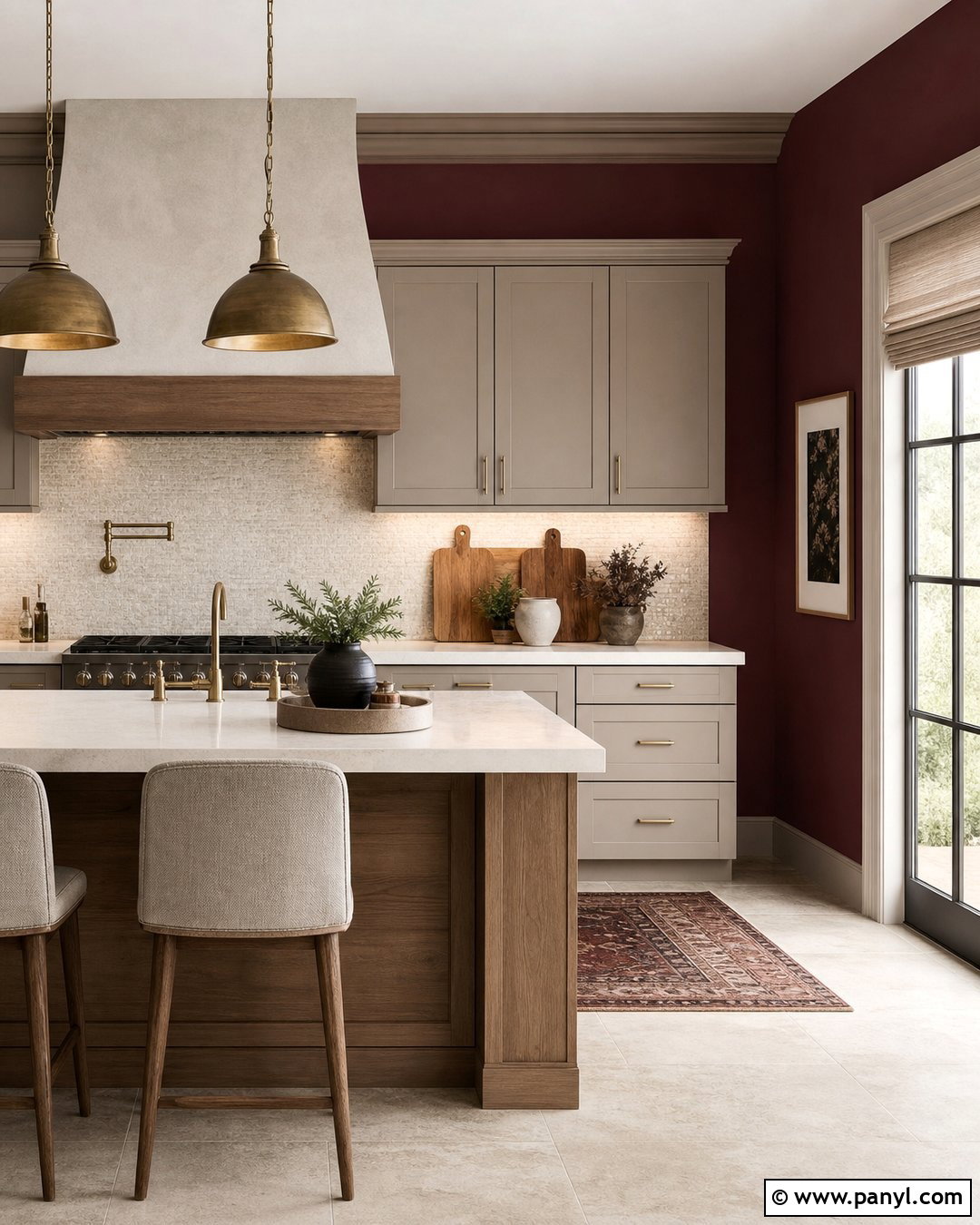
For a quiet and sophisticated palette, pair light burgundy kitchen walls with warm greige cabinetry. The cabinets should have beige or taupe undertones rather than a noticeably cool gray finish. Select creamy white quartz counters and a lightly textured zellige-style backsplash to reflect natural and artificial light. Champagne bronze hardware adds subtle warmth without competing with the wall color. A medium brown island with a natural wood finish can become the room’s grounding feature, especially in an open layout. Install simple dome pendants in an aged metal finish above it. Pale stone-look porcelain flooring keeps maintenance practical while supporting the neutral scheme. Add taupe linen shades, off-white ceramics, and one or two wood cutting boards for a finished kitchen that feels balanced rather than overly decorated.
6. Light Burgundy Kitchen Walls With Black Cabinets
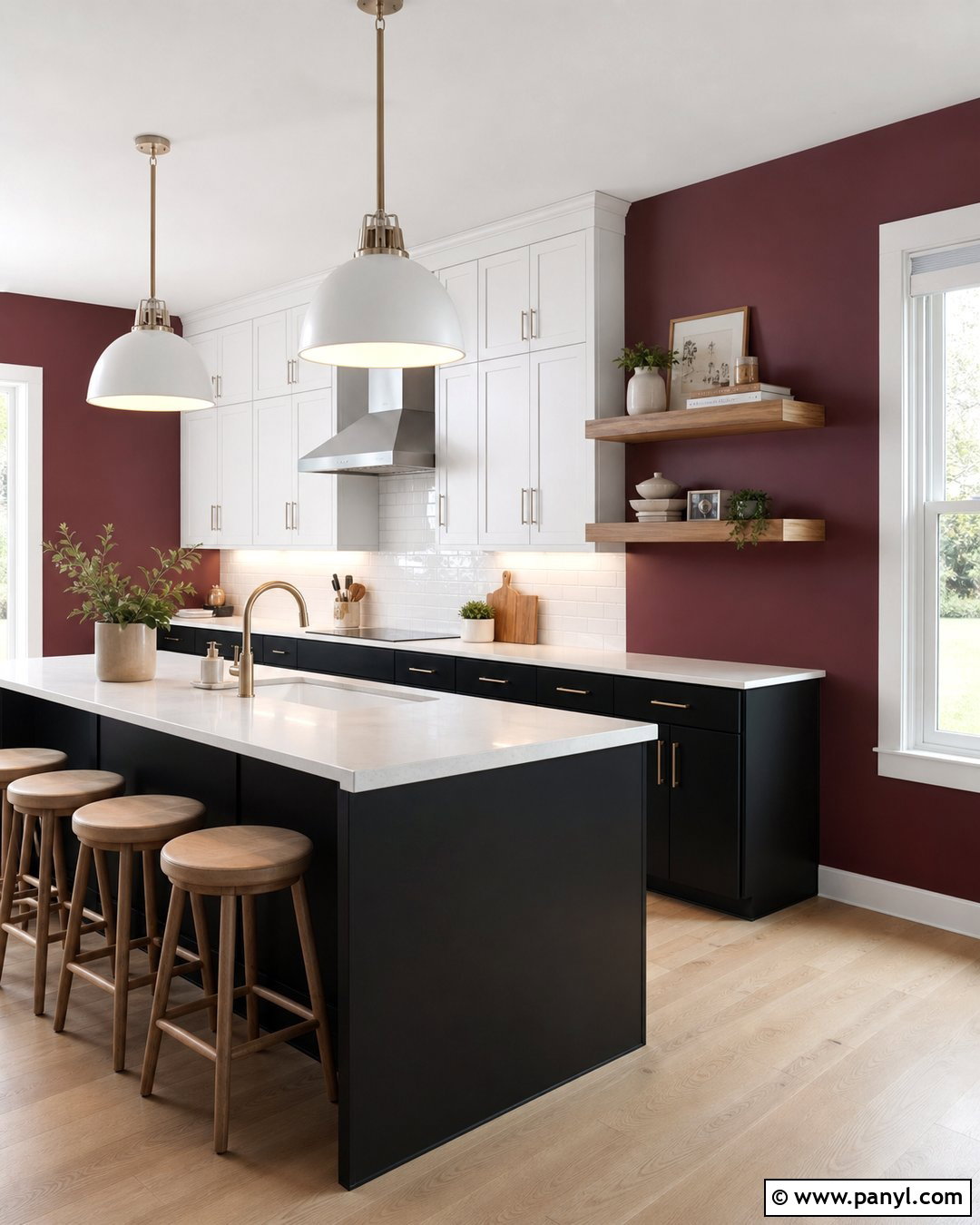
Light burgundy walls can support black cabinetry when the rest of the kitchen is deliberately bright. Use matte black lower cabinets and white upper cabinets or open shelving to avoid concentrating too much darkness at eye level. A thick white quartz countertop and glossy white backsplash will create essential contrast. Choose pale oak flooring and repeat the wood on floating shelves, counter stools, and small accessories. Brushed nickel or polished chrome hardware gives the design a cleaner, lighter quality than dark hardware. Large white pendants can brighten an island while adding visual scale. Keep window treatments minimal so daylight reaches the darkest surfaces. This complete palette works best in a medium or large kitchen with generous windows and several sources of layered task lighting.
7. Light Burgundy Kitchen Walls With Navy Cabinets
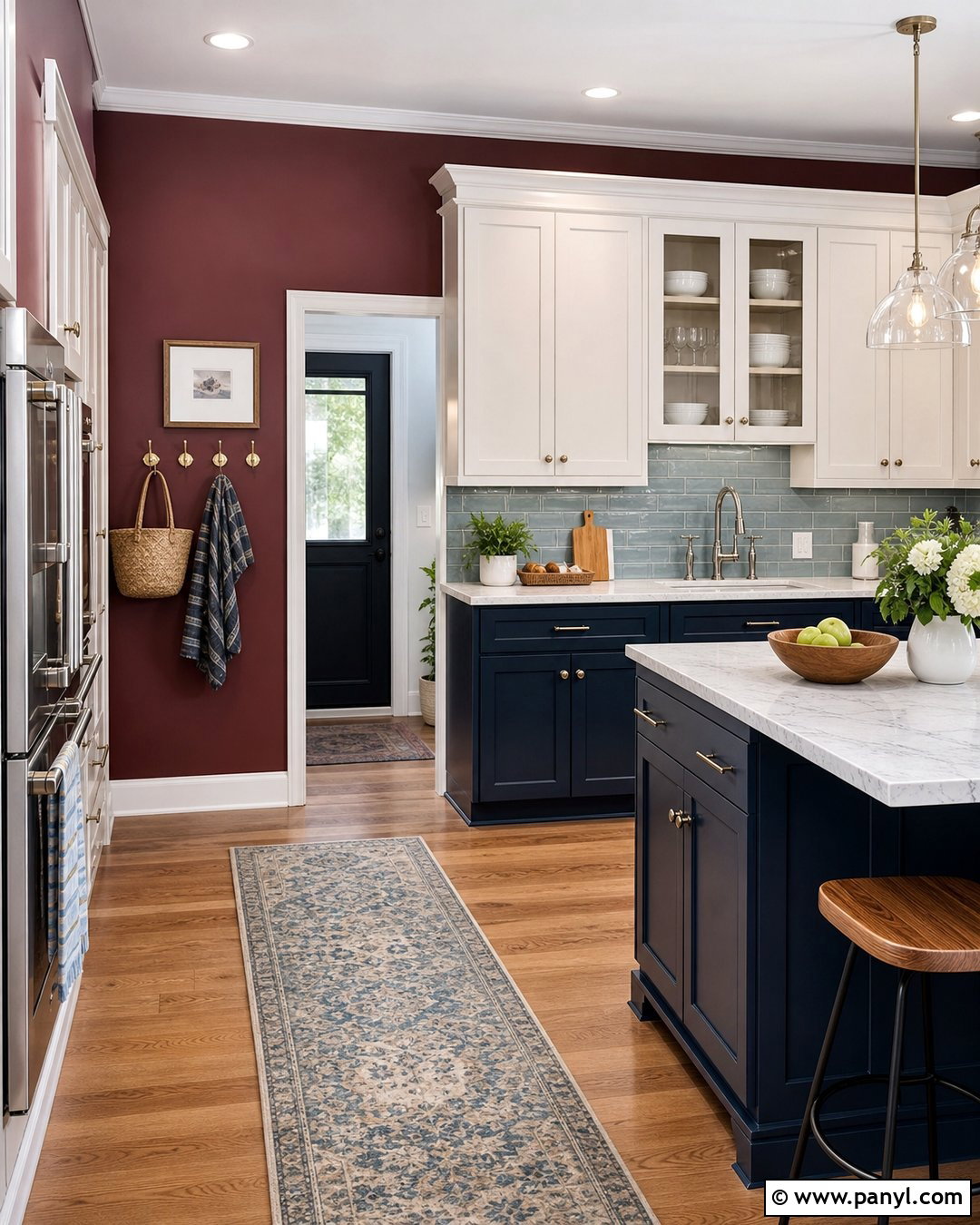
Navy cabinets bring depth to light burgundy walls and produce a colorful kitchen that still feels classic. Select a softened navy rather than an almost-black shade, then use it on lower cabinets and the island. Keep upper cabinetry warm white to create breathing room around the walls. White marble-look quartz, a pale blue-gray backsplash, and polished nickel fixtures introduce reflective surfaces. Natural oak floors keep the red and blue palette from feeling too formal. Over the island, hang clear glass pendants with nickel fittings so sightlines remain open. A striped runner in cream, dusty blue, and muted burgundy can connect the room’s main colors. Finish with white dishes and restrained wood accessories, avoiding additional strong accent colors that could make the overall scheme feel crowded.
8. Light Burgundy Kitchen Walls With Marble Backsplash
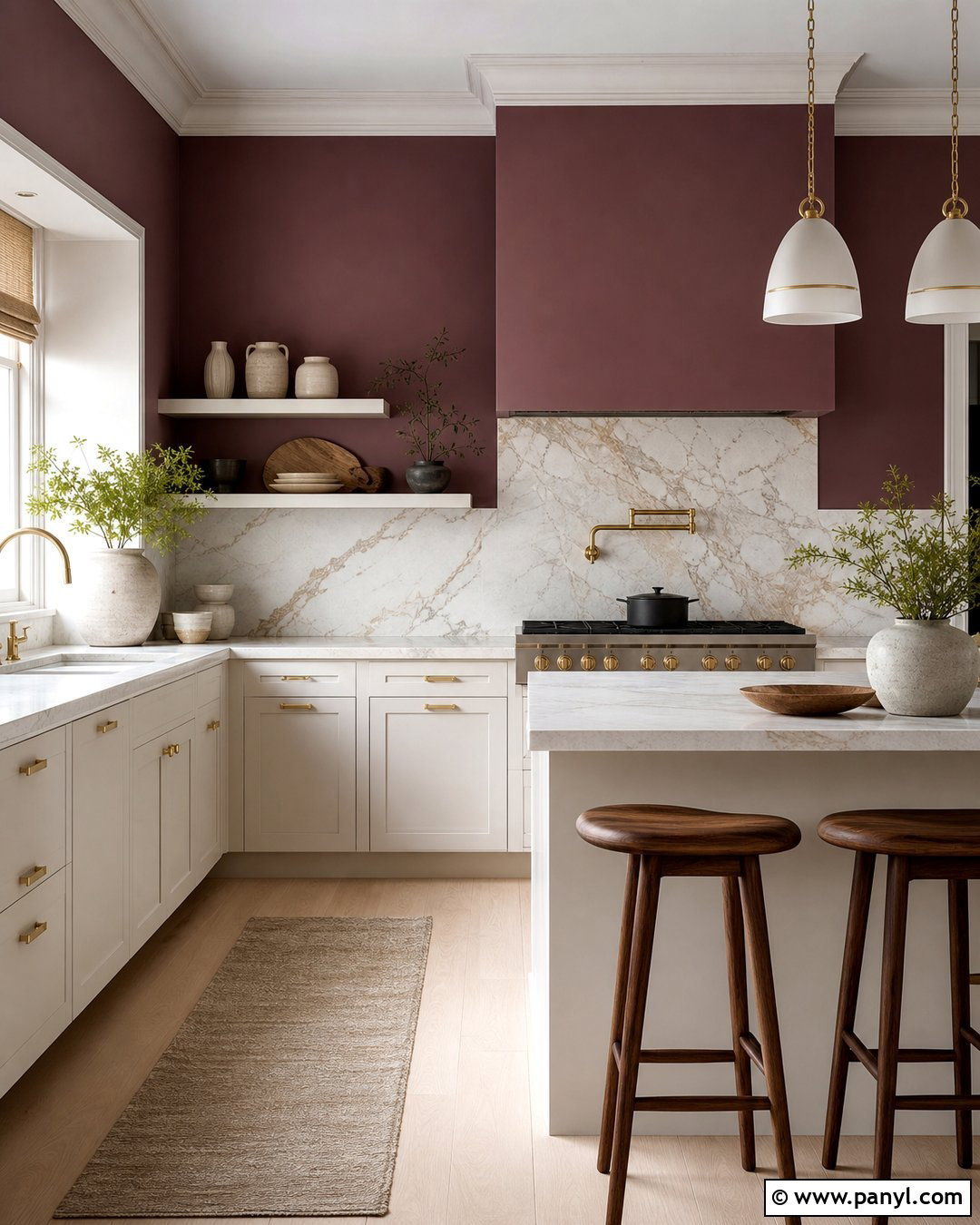
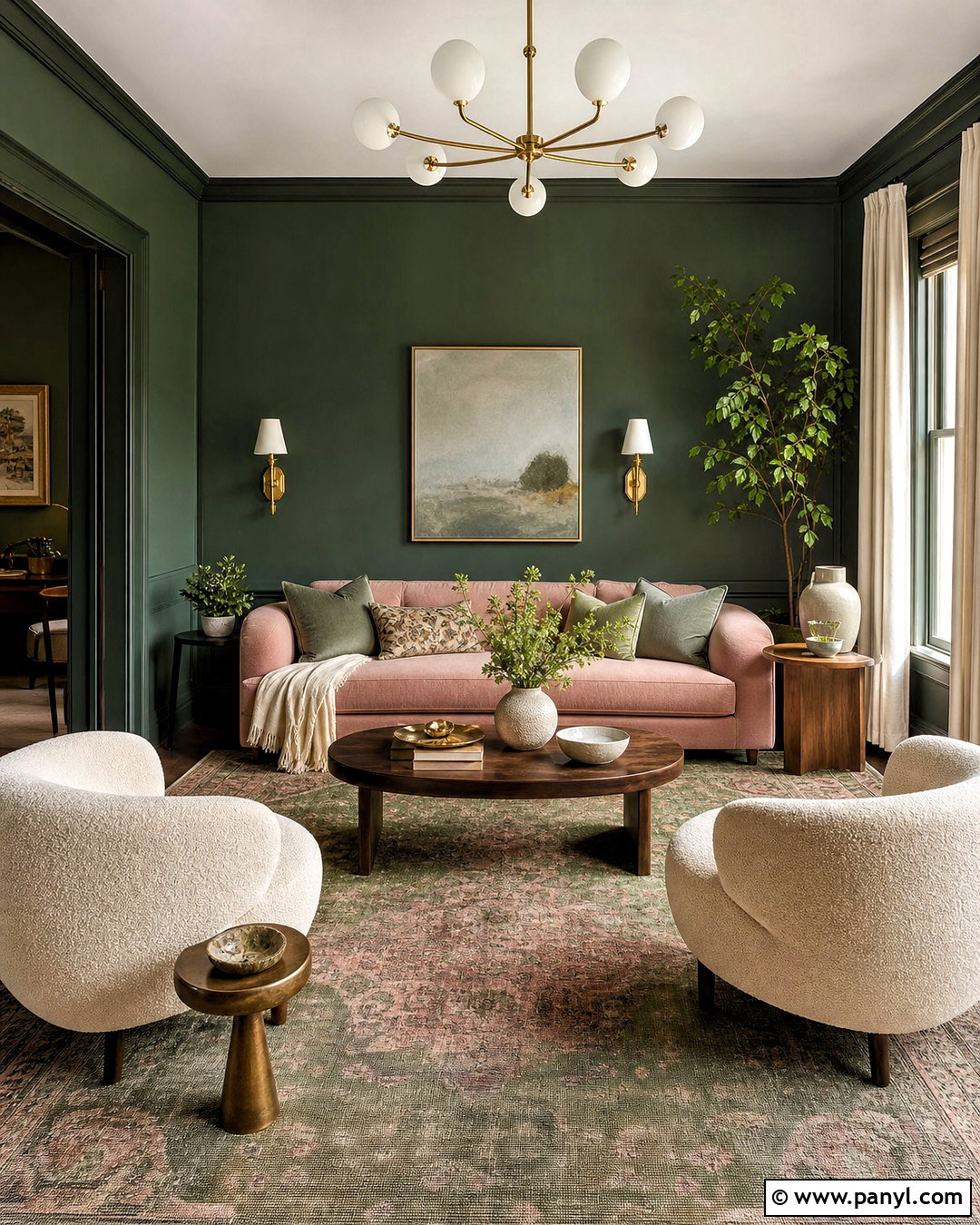
Imagine sunlight moving across a softly veined marble backsplash beside warm burgundy walls. Choose a white or creamy marble with gentle gray, beige, or muted red veining rather than a highly dramatic pattern. Carry the material from the counters to the underside of the upper cabinets for a continuous, luxurious surface. Warm white cabinetry keeps the kitchen bright, while medium walnut accents add needed depth. Use brass hardware sparingly on cabinet doors, the faucet, and two simple pendant lights. Pale oak flooring and an oatmeal-colored runner soften the hard surfaces. Keep decorative objects minimal, perhaps using a stone bowl and a few neutral ceramics. The complete room will feel refined and colorful without relying on ornate details or an impractical all-marble finish.
9. Light Burgundy Kitchen Walls With White Subway Tile
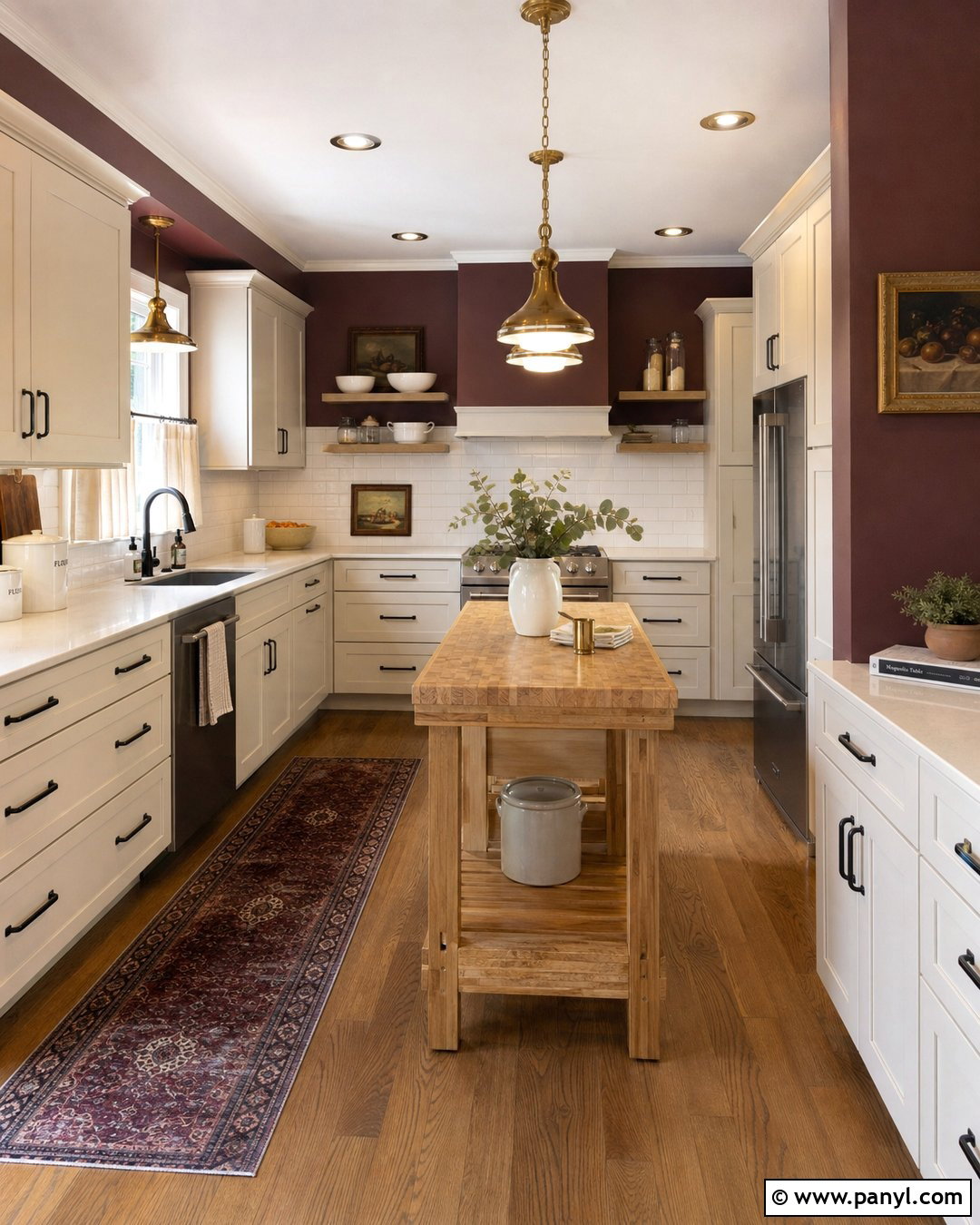
White subway tile gives light burgundy kitchen walls a familiar, budget-friendly partner. Install the tile behind the sink and range, using a stacked pattern for a modern look or a running bond for traditional character. Warm white grout will reduce harsh grid lines and make the backsplash feel calmer. Pair it with cream Shaker cabinets, light quartz counters, and medium oak flooring. Black cabinet handles and a black bridge faucet offer crisp definition, while brass pendants add a second warm finish in a controlled way. A narrow wood island or butcher-block worktable can make the kitchen more functional without adding bulky cabinetry. Complete the scheme with simple linen café curtains, white canisters, and a washable runner that quietly repeats the wall’s dusty burgundy tone.
10. Light Burgundy Kitchen Walls With Wood Open Shelves
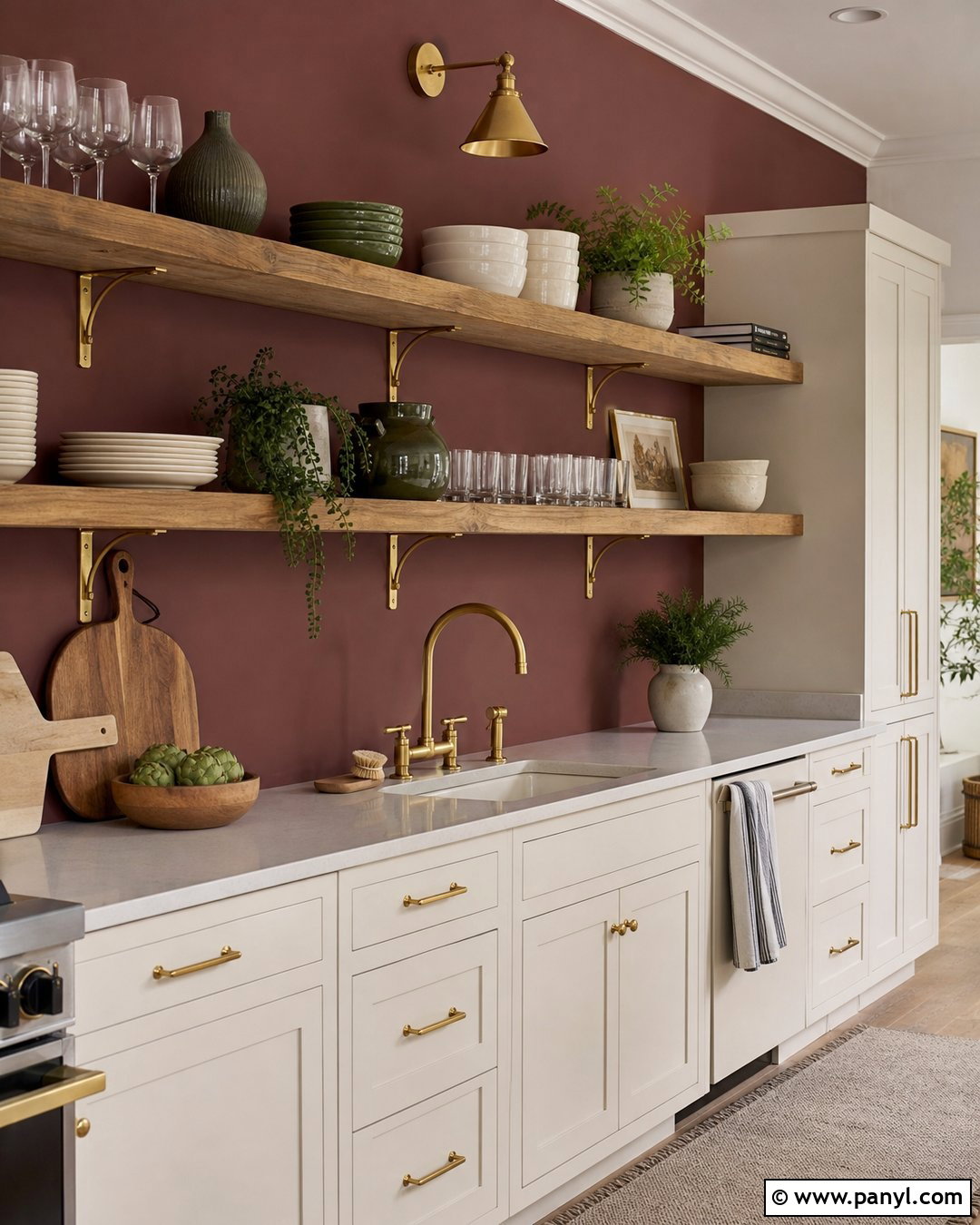
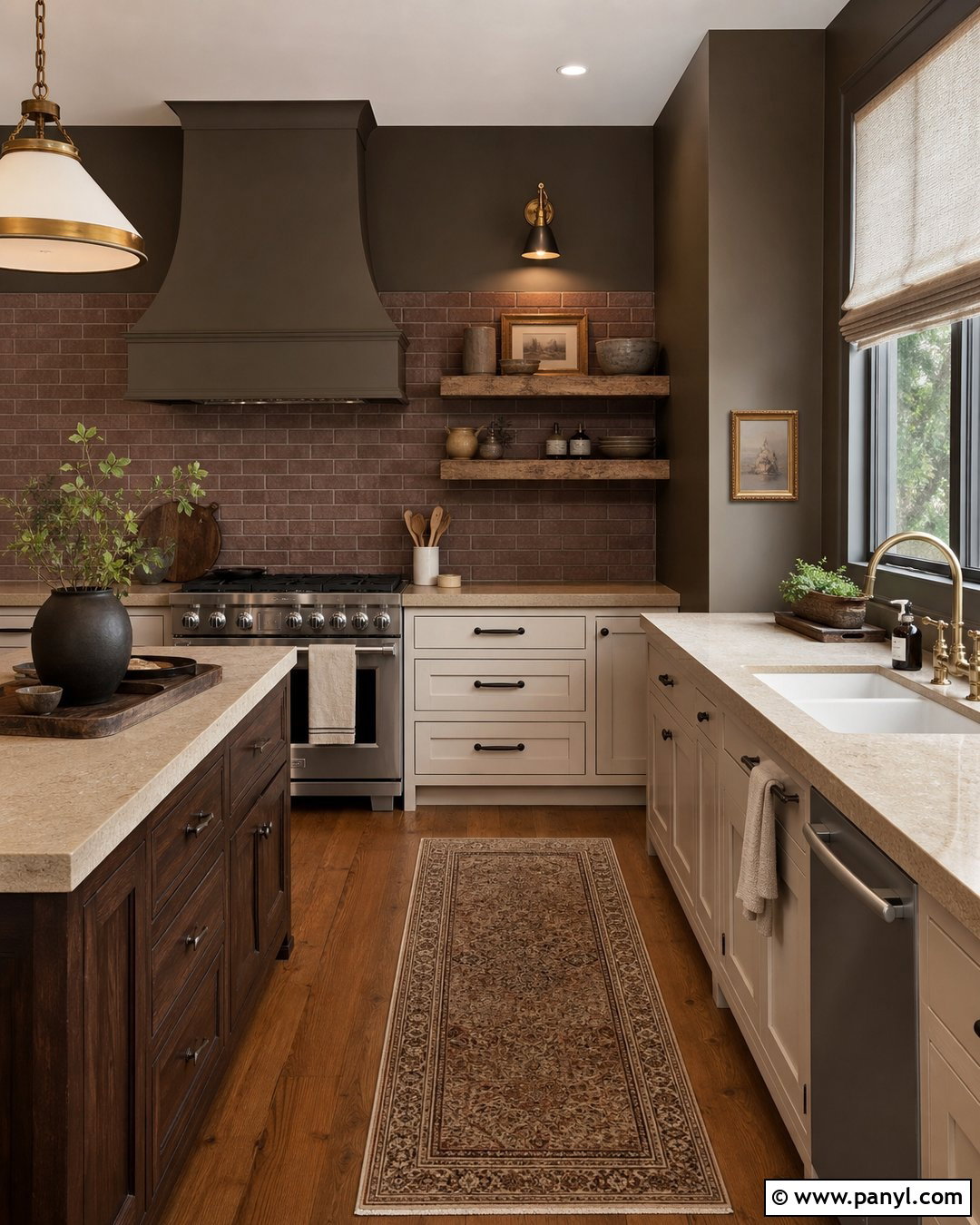
Open shelving allows light burgundy walls to remain visible, turning the color into a backdrop for useful kitchen pieces. Install two or three thick oak shelves above a base cabinet or coffee preparation area. Keep the nearby cabinets warm white and use pale quartz counters so the wall and wood become the focal point. Style the shelves with cream dishes, clear glasses, small wood boards, and a few muted green ceramics. Avoid filling every inch; visible wall space will make the arrangement feel lighter. A white tile backsplash can cover only the wet preparation zone, leaving burgundy paint above it. Add brass shelf brackets, a matching wall light, natural oak flooring, and a neutral runner. This approach suits small kitchens where solid upper cabinets could feel crowded.
11. Light Burgundy Kitchen Walls With Brass Accents
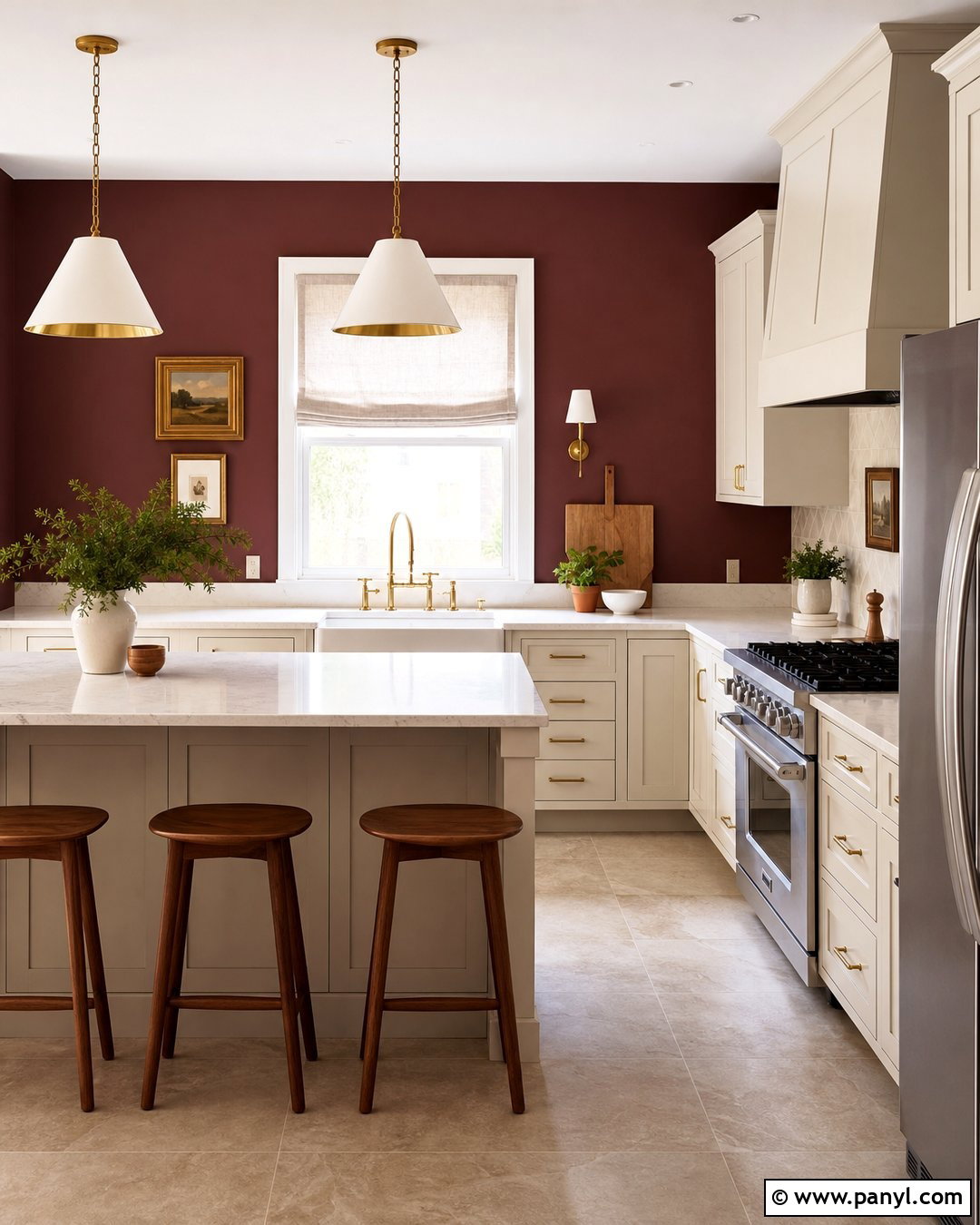
A warm metallic finish can make light burgundy walls feel polished without overwhelming their softer character. Use brushed or aged brass consistently on cabinet pulls, the faucet, pendant lights, and perhaps a slim pot rail. Pair these details with creamy white cabinets and lightly veined quartz countertops. A handmade off-white tile backsplash will catch the light and balance the matte painted walls. Dark walnut counter stools or a wood dining table can add contrast at floor level. Choose pale stone flooring or light oak planks, depending on whether you prefer a refined or casual finish. Keep appliances integrated or select stainless steel models so they blend quietly into the layout. Limit decorative metallic pieces because repeated functional accents already provide enough shine and visual continuity.
12. Light Burgundy Kitchen Walls With Matte Black Accents
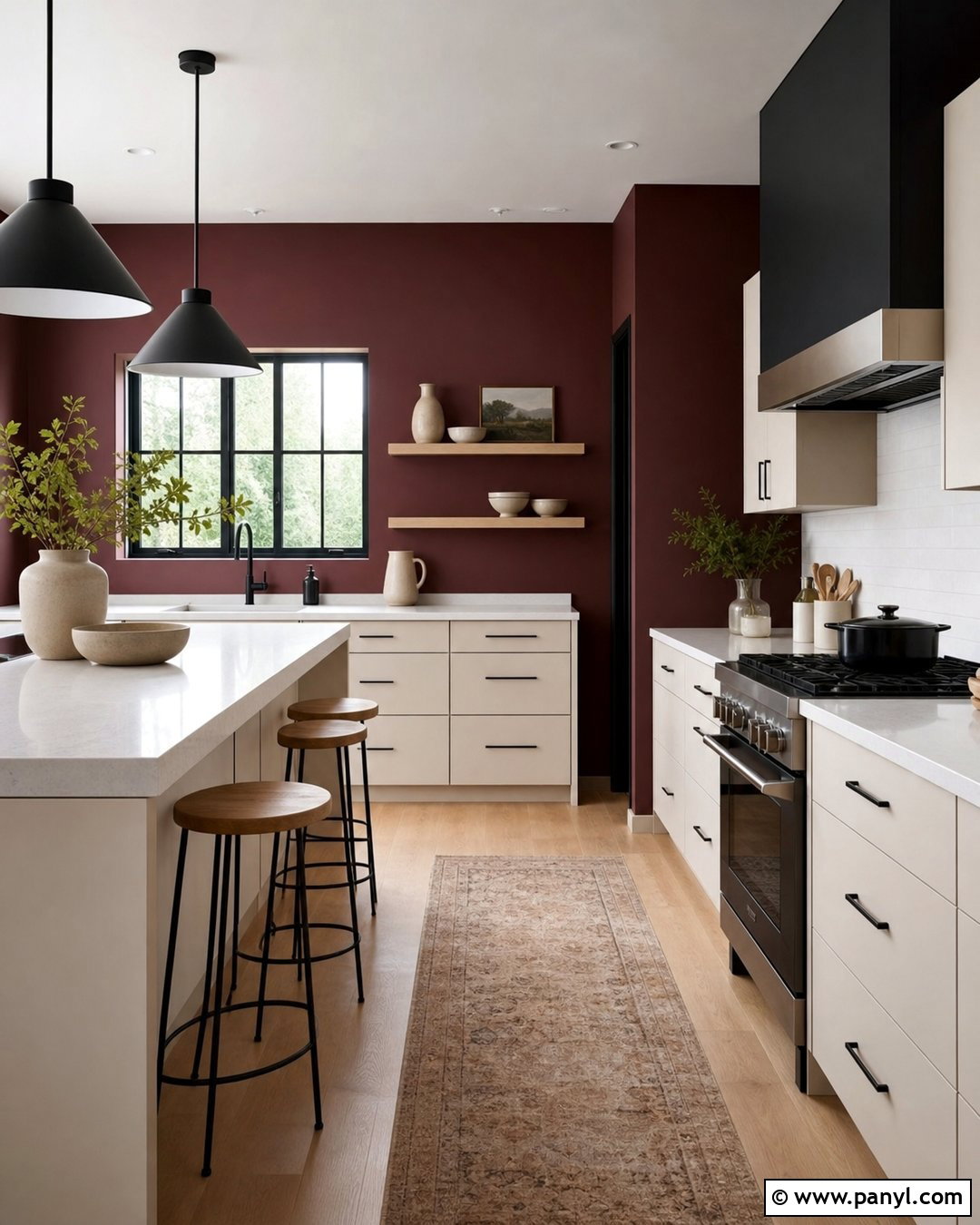
Matte black details sharpen light burgundy kitchen walls and create a contemporary, graphic finish. Start with flat-panel cabinets in warm white or pale greige, then add slim black pulls and a black pull-down faucet. Use a white quartz worktop and a simple white backsplash to keep the central work zone bright. Black-framed windows, if available, can make the accent color feel architectural rather than decorative. Continue the theme with two black metal pendant lights and counter stools featuring black frames with natural wood seats. Pale oak flooring prevents the palette from becoming severe. Add one cream runner and a few light ceramic containers for softness. Because black creates strong outlines, keep the layout orderly and avoid mixing several unrelated metal finishes throughout the room.
13. Light Burgundy Kitchen Walls With Butcher Block Counters
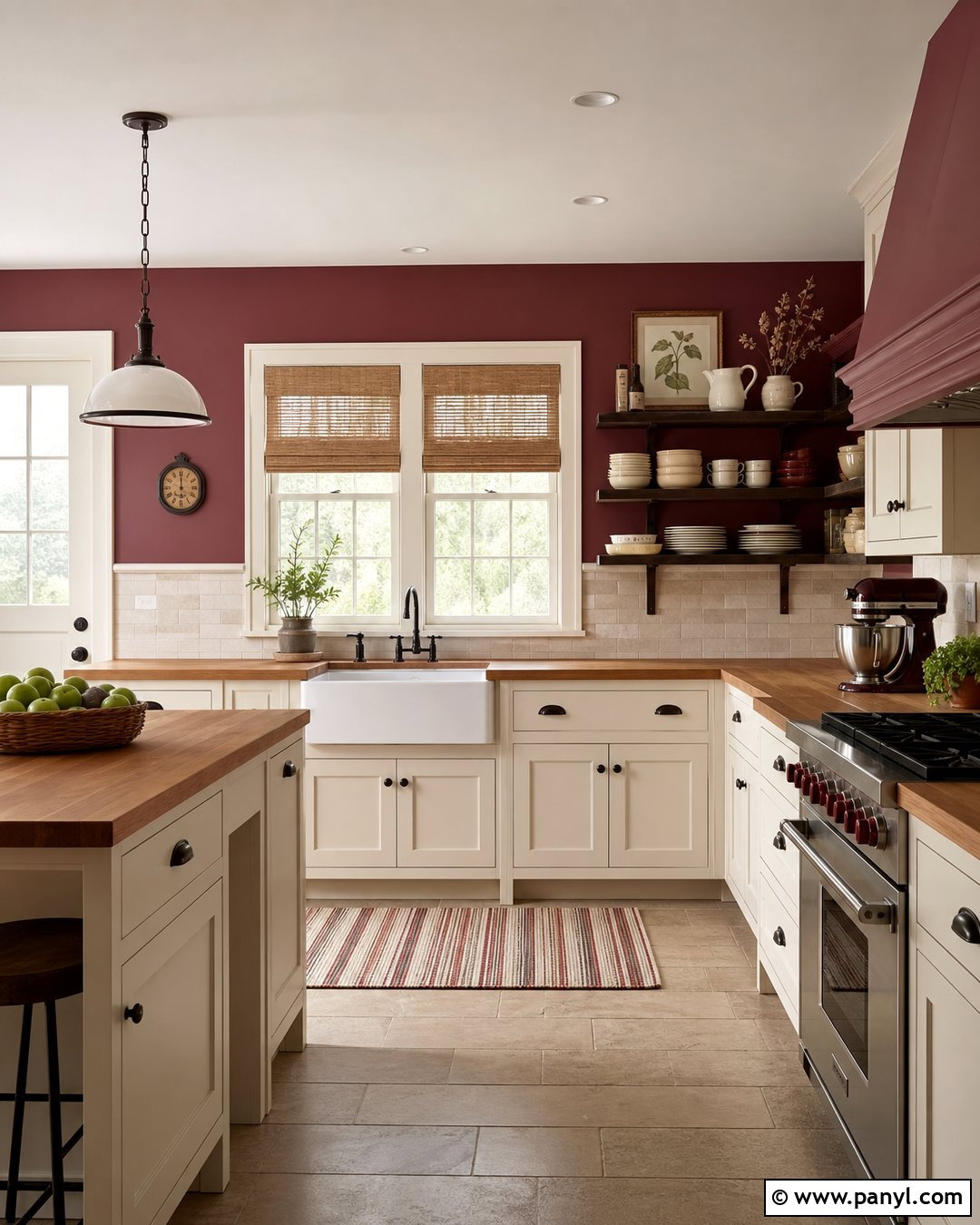
Butcher block countertops enhance the natural warmth of light burgundy walls and suit a comfortable, hardworking kitchen. Choose maple or white oak counters with a food-safe matte finish instead of reddish wood that could blend too closely with the paint. Cream cabinets and an ivory tile backsplash will separate the two warm elements. Use dark bronze hardware for subtle definition and hang simple enamel pendants above the peninsula. Medium oak flooring can work if its tone differs slightly from the counters, while neutral stone tile offers greater contrast. Include open shelving for everyday dishes and closed storage for visual clutter. A farmhouse sink, woven shades, and a small striped rug complete the relaxed design. Regular counter maintenance will keep the natural wood practical and attractive.
14. Light Burgundy Kitchen Walls With Terracotta Floors
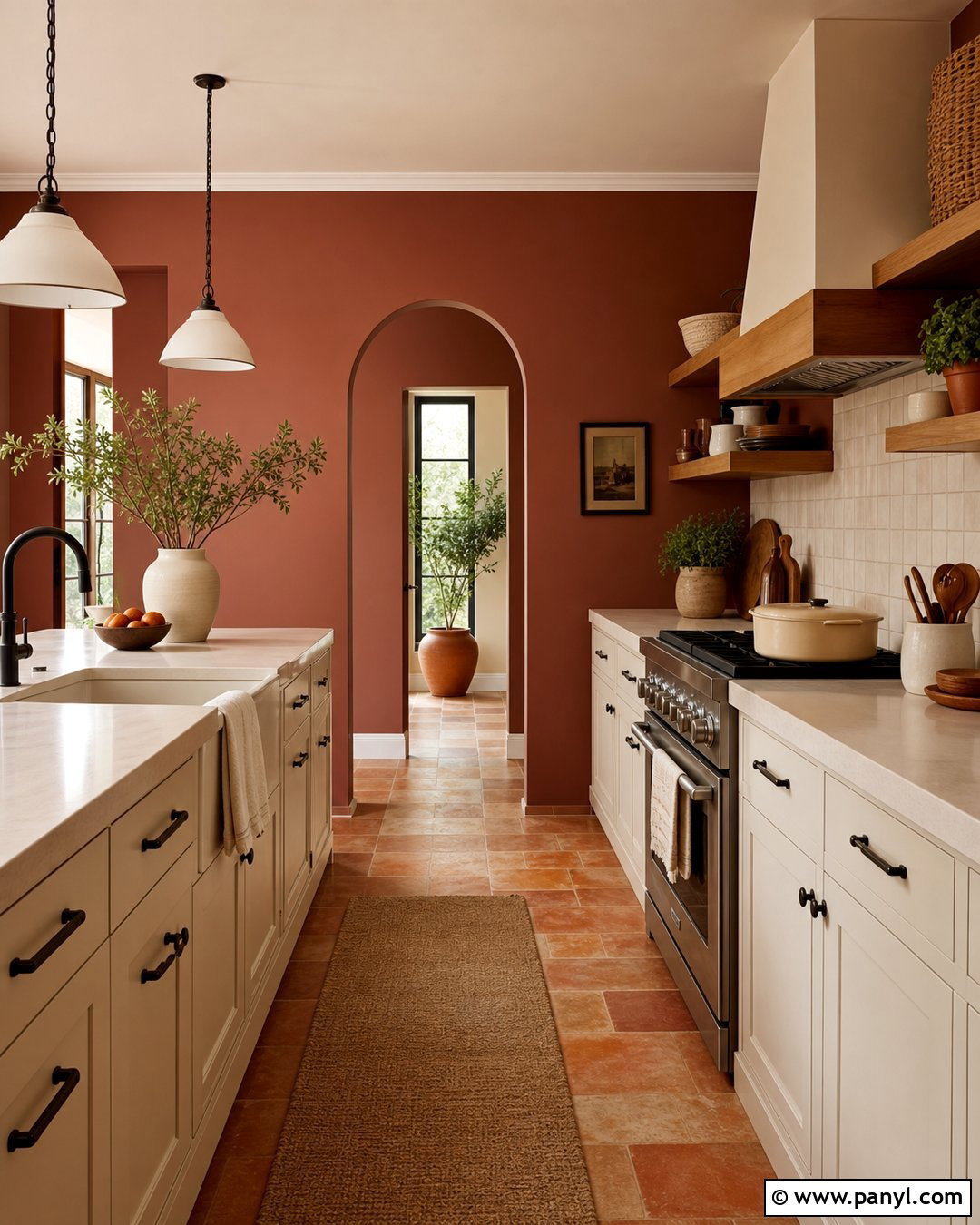
Warm terracotta flooring creates a layered, sunbaked palette with light burgundy kitchen walls. To prevent the room from becoming too red, choose pale cream cabinets and substantial off-white countertops. Use a simple ivory backsplash with minimal pattern so the handmade floor remains noticeable. The terracotta tiles should have softly varied clay tones, including dusty orange, muted brown, and faded rose. Dark bronze hardware and natural oak shelving reinforce the earthy character. Add white plaster-look pendants or pale ceramic lights to brighten the upper half of the room. A neutral runner can soften the main walkway without hiding the floor completely. Finish with woven baskets, cream cookware, and a few green herbs. This full scheme works especially well in Spanish, Mediterranean, and rustic kitchens.
15. Light Burgundy Kitchen Walls With Checkerboard Floors
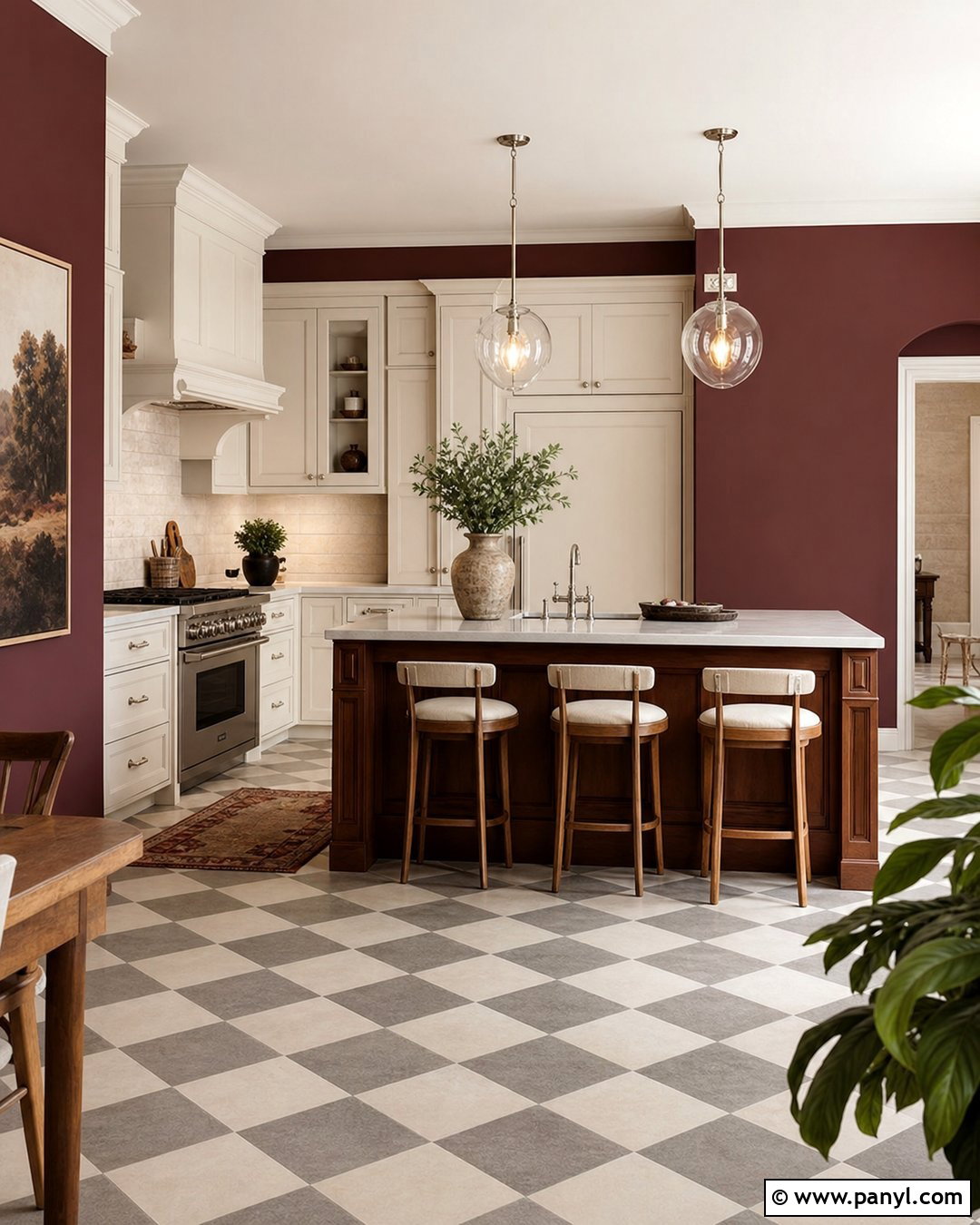
Checkerboard flooring gives light burgundy walls a playful traditional foundation without requiring elaborate decoration. Choose large cream and warm gray tiles instead of severe black and white squares. Their softer contrast will complement the muted wall color and make the kitchen easier to live with. Install cream Shaker cabinets, pale quartz counters, and an off-white backsplash. A medium wood island adds warmth between the walls and patterned floor. Use polished nickel hardware for a fresh finish, then hang clear glass pendants to avoid blocking the view across the room. Keep textiles simple with plain linen shades and solid neutral seat cushions. The floor should be the secondary feature after the burgundy walls, so avoid patterned wallpaper, multicolored tile, or heavily veined countertops elsewhere in the kitchen.
16. Light Burgundy Kitchen Walls In A Small Kitchen
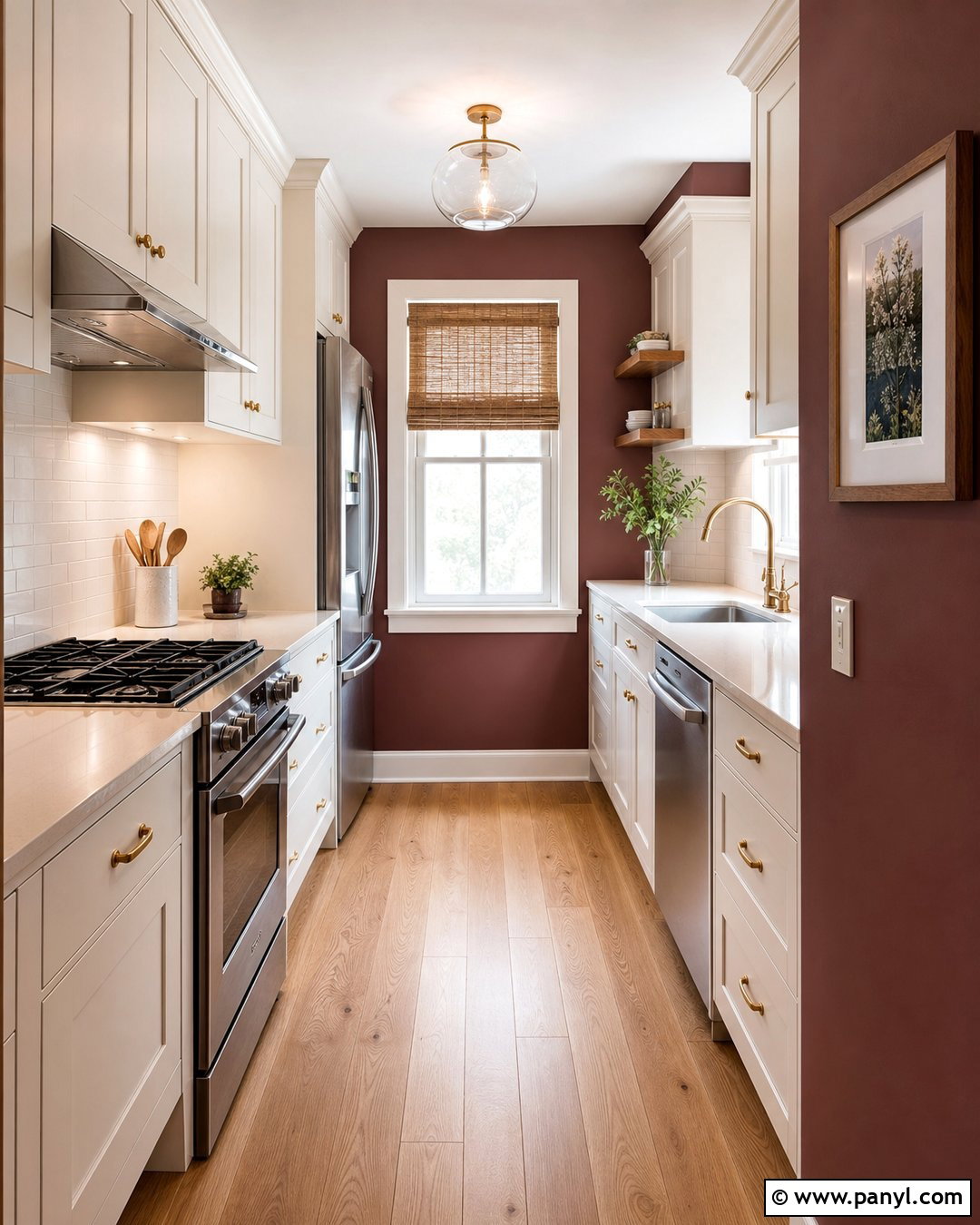
A small kitchen can handle light burgundy walls when reflective finishes and efficient storage are part of the complete plan. Paint one uninterrupted wall or the upper wall area above the backsplash, then keep cabinets warm white. Extend cabinetry to the ceiling so clutter does not collect above it. Glossy white tile, pale quartz counters, and under-cabinet lighting will bounce brightness across narrow work areas. Use compact brass knobs instead of large handles and choose one clear glass ceiling fixture. A light oak floor laid lengthwise can visually extend a galley layout. Keep window treatments sheer or use a woven shade that raises fully. Limit open shelving to one short section displaying coordinated dishes, ensuring the bold wall color feels intentional rather than cramped.
17. Light Burgundy Kitchen Walls In A Farmhouse Kitchen
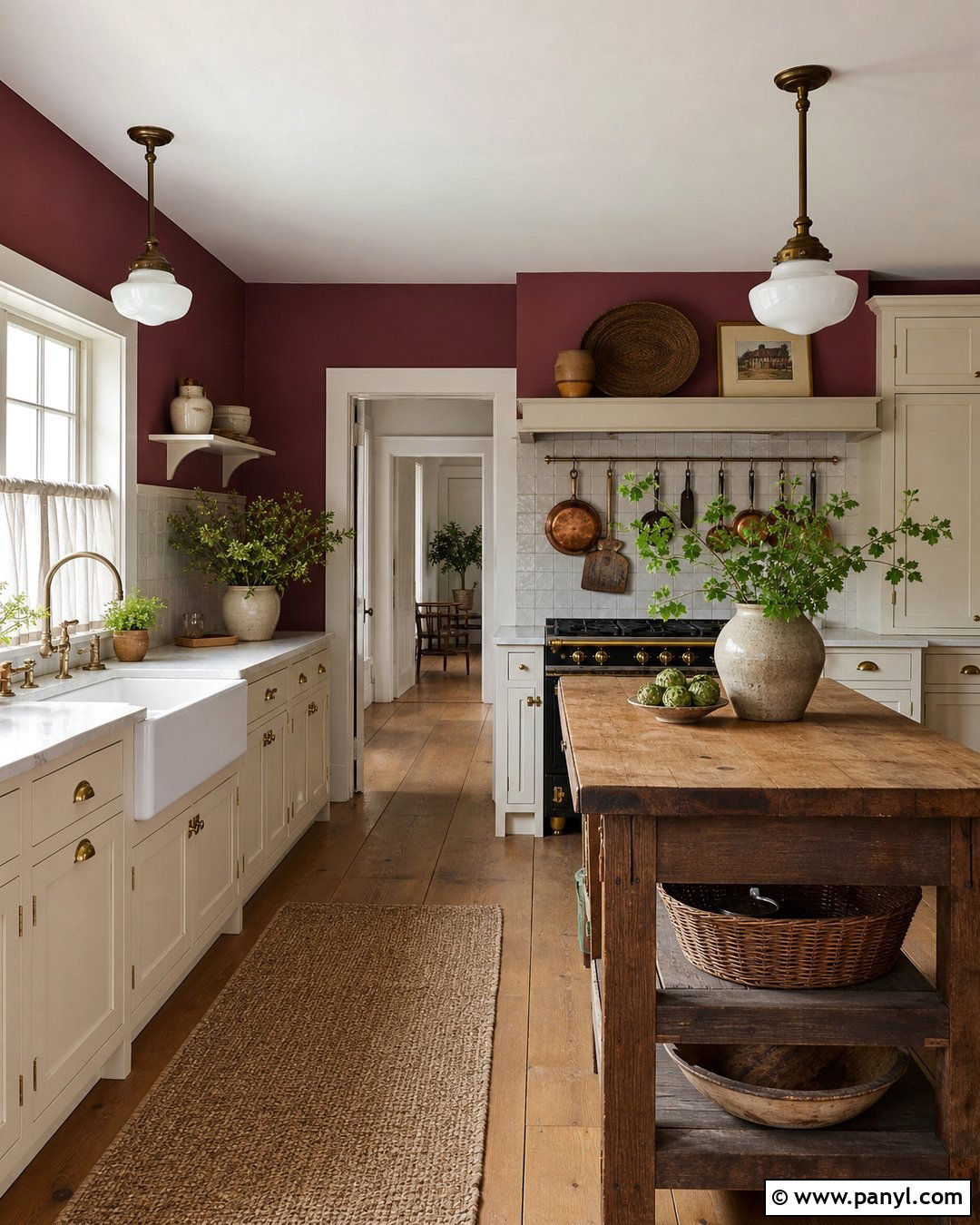
Light burgundy walls give a farmhouse kitchen warmth while offering a fresher alternative to an entirely neutral palette. Combine them with cream inset cabinets, a white apron-front sink, and durable marble-look quartz counters. Add a handmade ivory tile backsplash with slightly uneven edges for character. A freestanding oak worktable can replace a formal built-in island, making the room feel collected and flexible. Choose aged brass latches, bridge faucets, and simple schoolhouse pendant lights. Wide-plank medium oak floors ground the pale cabinetry and painted walls. Linen café curtains, cream stoneware, and woven baskets provide texture without creating clutter. Keep rustic details controlled; one peg rail or plate rack is enough. The finished kitchen should feel practical, welcoming, and gently traditional rather than heavily themed.
18. Light Burgundy Kitchen Walls In A Modern Kitchen
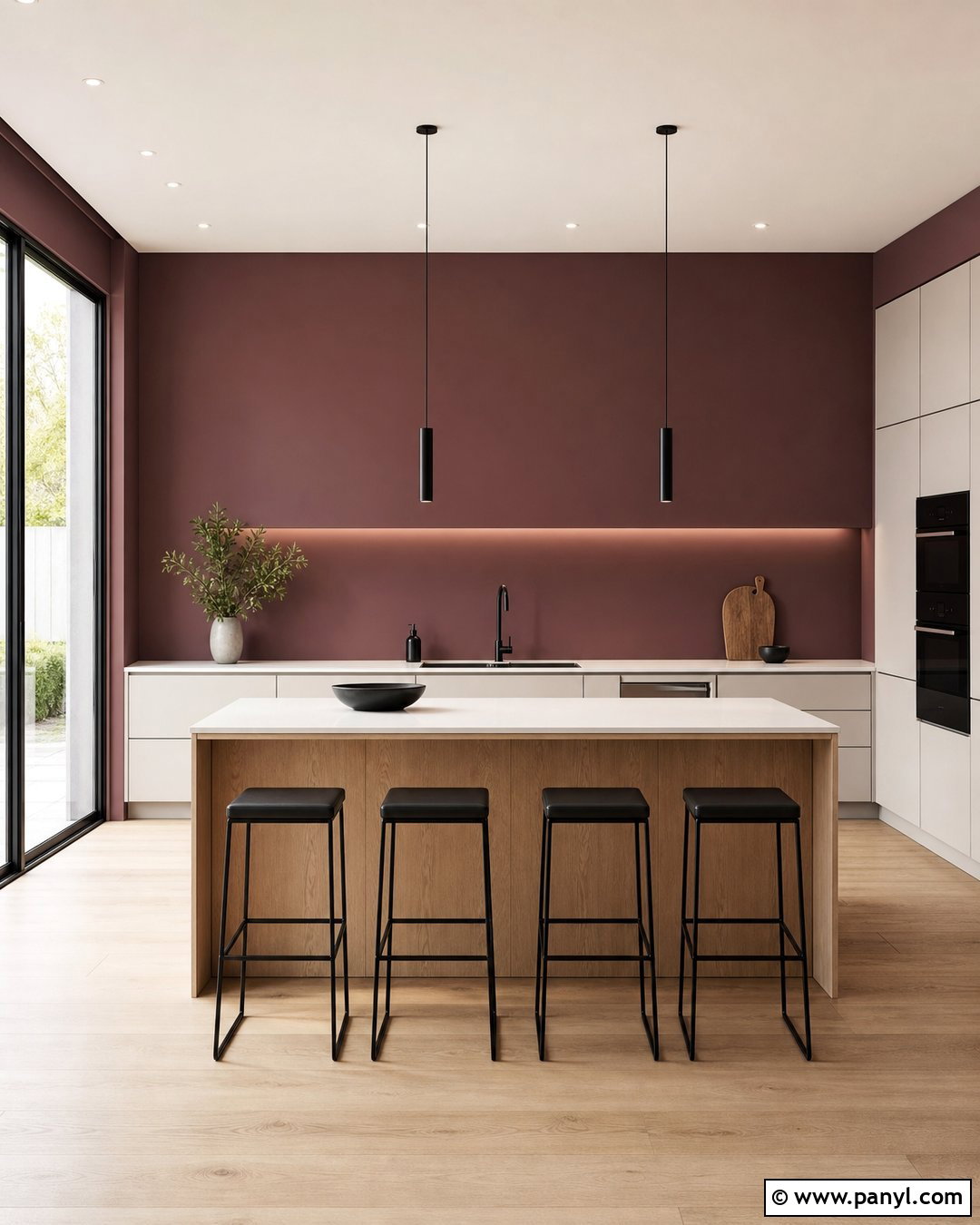
Clean lines let light burgundy walls become the main decorative statement in a modern kitchen. Choose handle-free slab cabinets in a warm matte white and a slim white quartz countertop with a matching short backsplash. A large section of burgundy wall above the counter will provide uninterrupted color. Use pale oak on the island base to introduce warmth and keep the room from feeling clinical. Minimal black pendants, a linear faucet, and black-framed counter stools add controlled contrast. Select wide oak flooring or large-format warm gray porcelain tile with very little visible pattern. Hide small appliances behind cabinet doors and limit open display to one sculptural bowl or planter. The resulting space feels colorful and contemporary while remaining practical, uncluttered, and easy to maintain.
19. Light Burgundy Kitchen Walls In A Vintage Kitchen
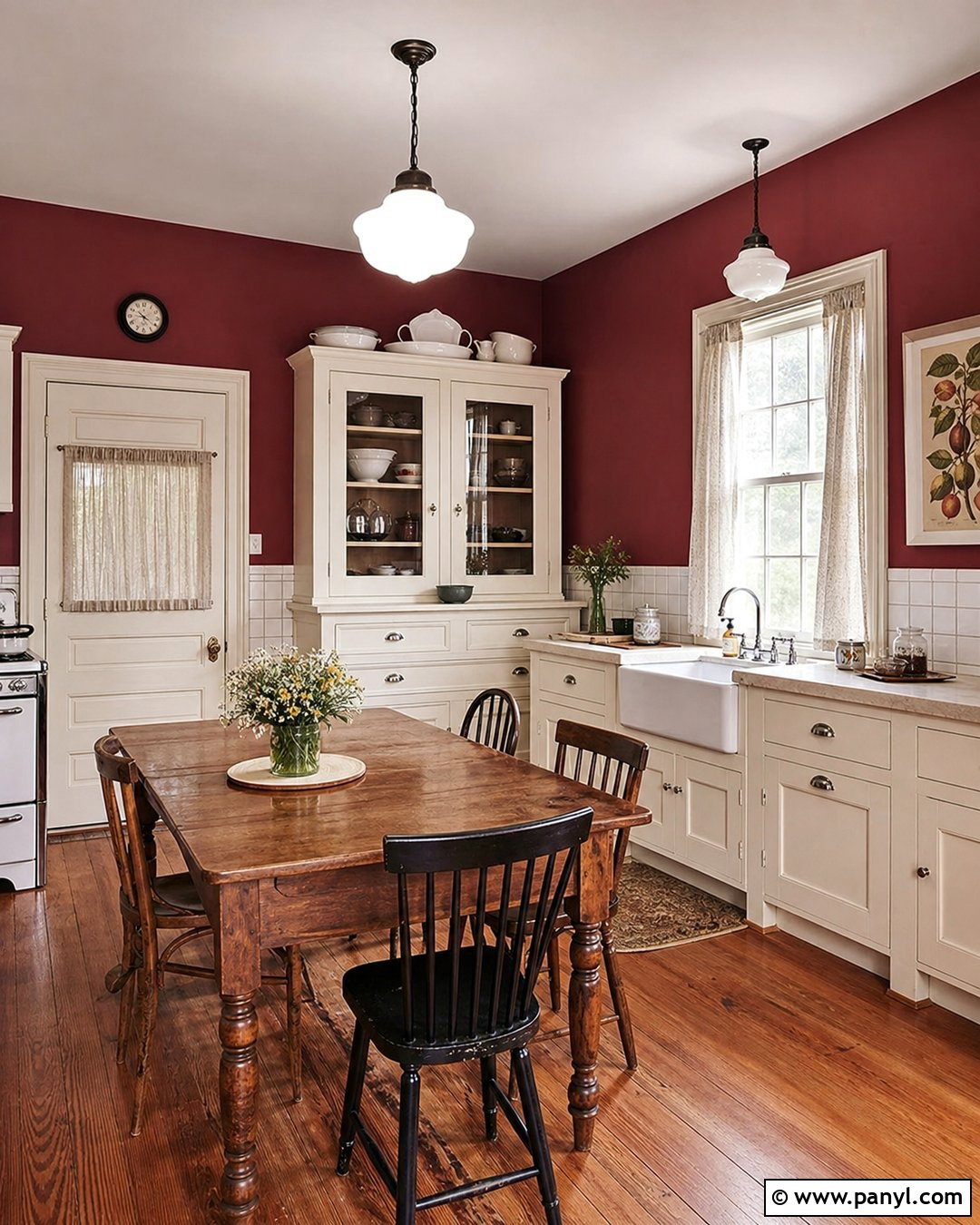
Vintage details feel especially natural beside light burgundy walls because the color has warmth and depth. Start with soft cream cabinets featuring simple framed doors and polished nickel cup pulls. Use a white porcelain sink, a traditional bridge faucet, and a freestanding range in cream or stainless steel. Small square backsplash tiles in warm white add subtle period character without competing with the walls. Introduce a wood table, mismatched but coordinated chairs, and a glass-front cabinet for everyday dishes. Warm checkerboard flooring or medium oak planks will support the nostalgic atmosphere. Finish with a schoolhouse ceiling light, linen curtains, and a small framed botanical print. Avoid filling every surface with collectibles; a carefully edited room will feel charming, functional, and authentically lived in.
20. Light Burgundy Kitchen Walls In An Open Kitchen
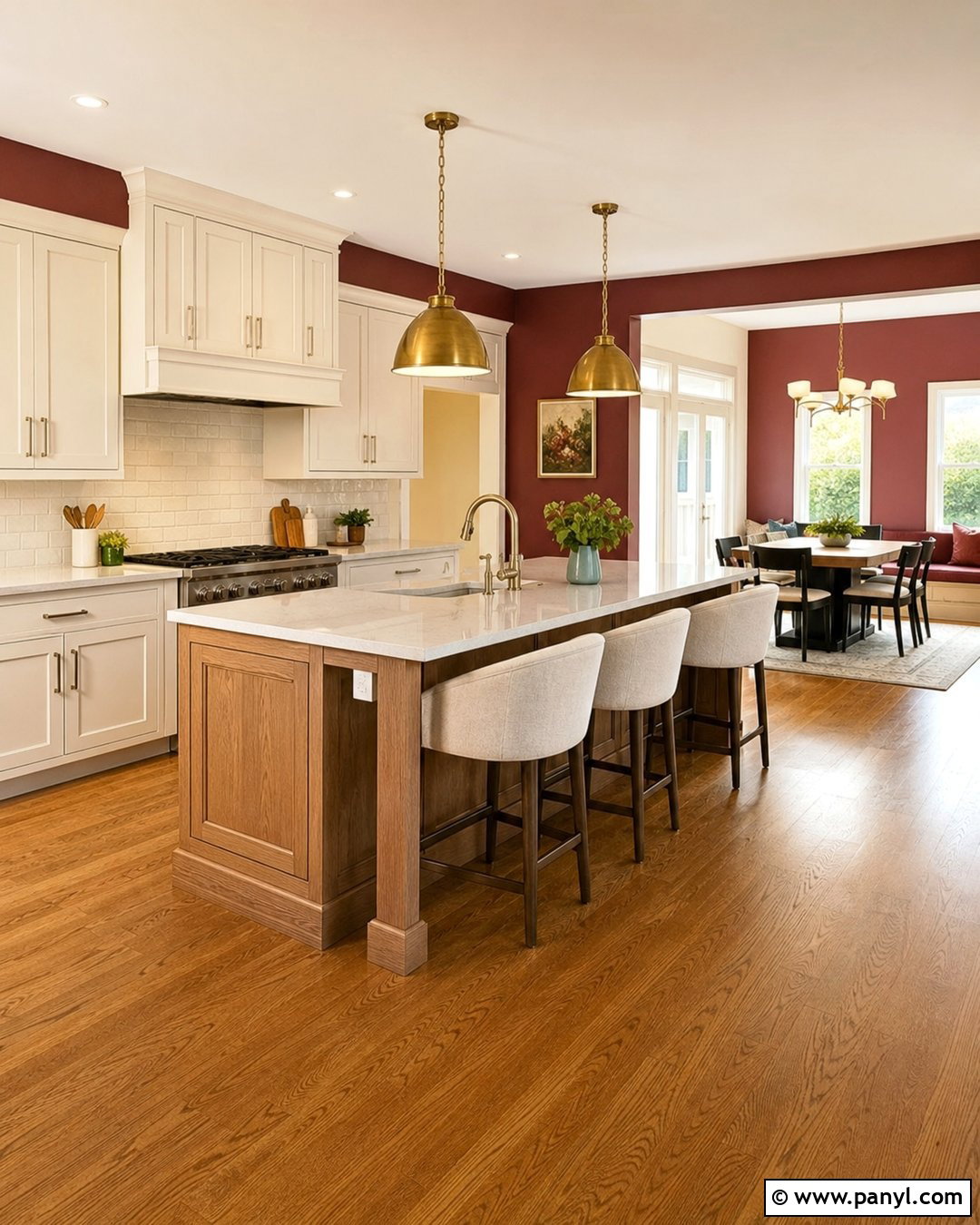
In an open kitchen, light burgundy walls should connect naturally with the nearby dining or living space. Use the color on the kitchen walls, then repeat it sparingly through a dining bench cushion, patterned rug, or small decorative object. Warm white cabinetry and pale quartz counters keep the cooking area visually light. A natural oak island can create a transition between the kitchen and adjoining room, especially when paired with cream upholstered stools. Choose consistent oak flooring throughout the entire open plan for continuity. Brass pendants above the island and a coordinated dining light will link the two zones. Paint surrounding walls a warm off-white rather than bright white. This approach gives the kitchen a distinct identity without making it look disconnected from the larger shared space.
Conclusion:
The most successful light burgundy kitchen is not created with wall paint alone. Cabinets, countertops, flooring, lighting, hardware, and textiles must work together to balance the color. Cream and white provide brightness, while oak, walnut, brass, and terracotta enhance its warmth. Sage, navy, greige, and black can add controlled contrast when they are supported by pale surfaces and good lighting. Always test the paint in several areas because burgundy undertones may shift as daylight changes. Start with a sample board before committing to the entire room. Whether you prefer modern simplicity or farmhouse character, these 20 light burgundy kitchen walls demonstrate how this distinctive color can feel inviting, functional, and beautifully coordinated.

Related Ideas and Inspiration:
Leave a Reply