
The right paint color can turn a pass-through foyer into a warm, polished introduction to your home. These entryway wall color ideas cover light neutrals, earthy greens, soothing blues, and dramatic shades, with complete decorating plans for each palette. Current paint guidance emphasizes choosing welcoming colors, considering changing natural light, and using durable, washable finishes in busy entrances. () Before painting, sample your chosen shade on several walls and view it during the morning, afternoon, and evening. Also consider nearby rooms, flooring, doors, and trim so the transition feels intentional. Whether your foyer is compact, open, traditional, or modern, the following complete looks make it easier to confidently explore 20 entryway wall color ideas.

1. Warm White Entryway Walls
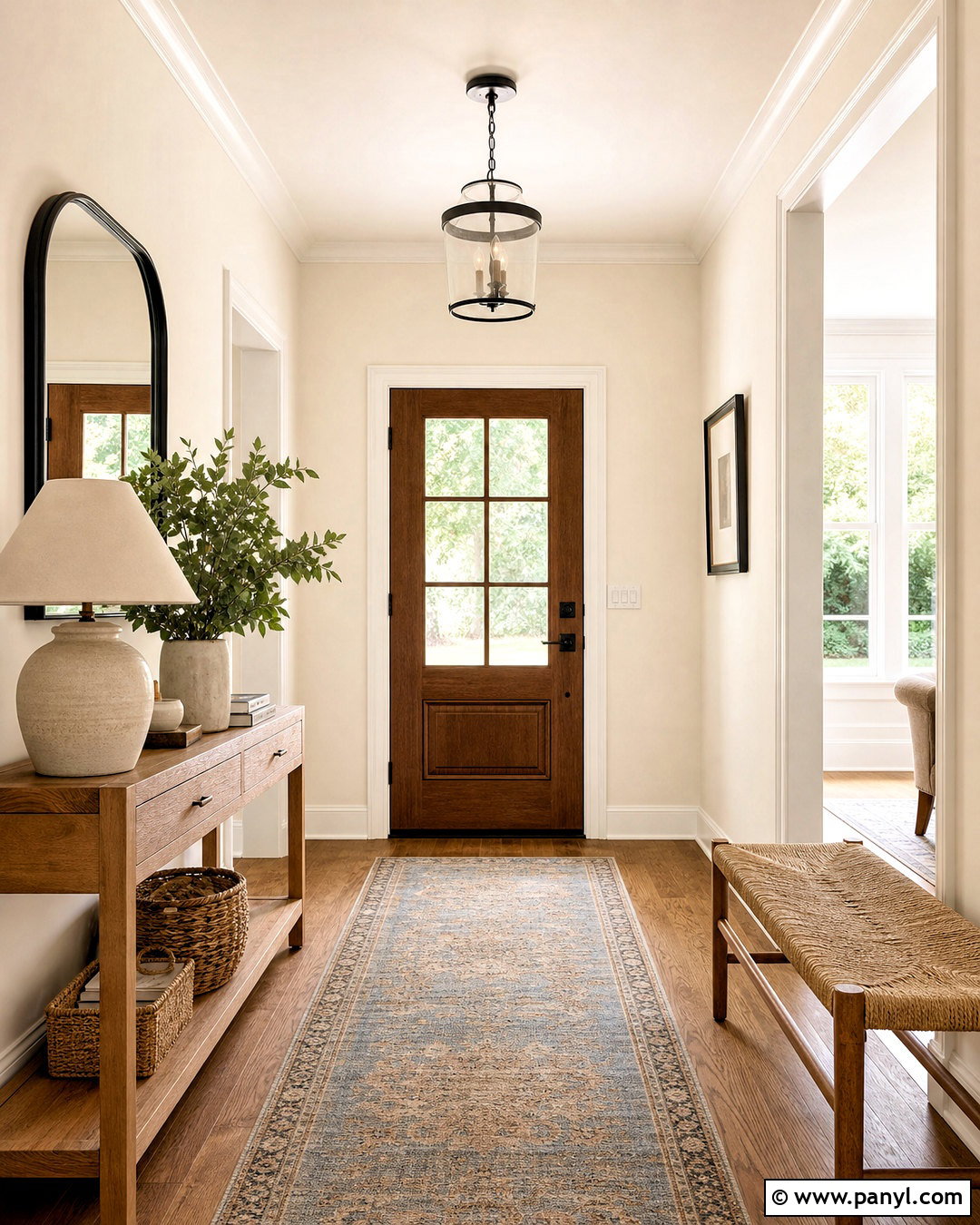
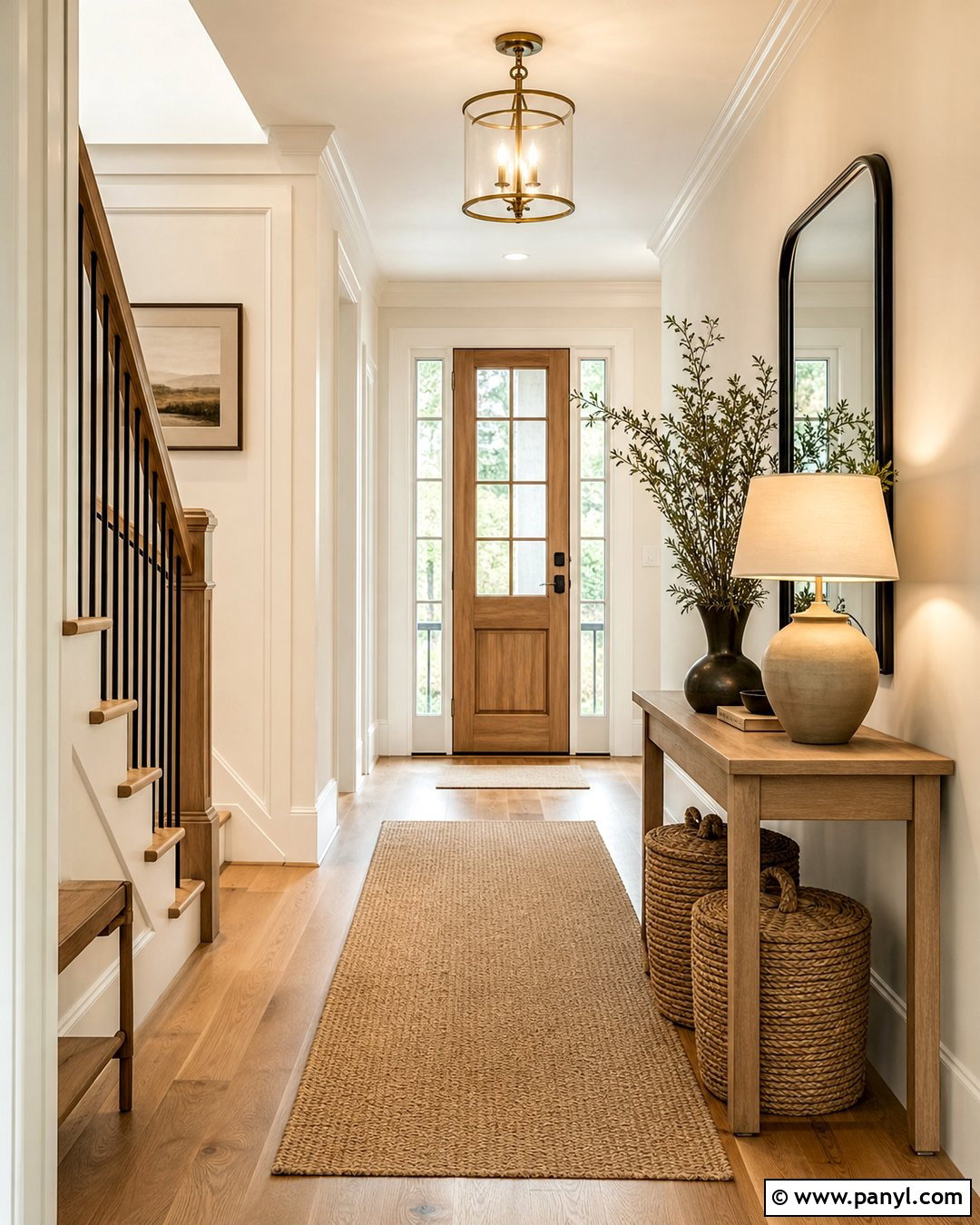
Warm white walls create a clean entrance without making the room feel cold or unfinished. Choose an off-white with gentle cream or beige undertones, then repeat it on the ceiling for a seamless background. Crisp white trim can add subtle definition, while a medium oak console and woven bench introduce natural warmth. Ground the arrangement with a washable runner in tan, faded blue, and rust. A black-framed mirror provides contrast and reflects light toward darker corners. Complete the space with a ceramic lamp, a lidded basket for everyday items, and one leafy plant. This combination works especially well in a small entryway because every element feels light, practical, and connected.
2. Creamy Beige Entryway Walls
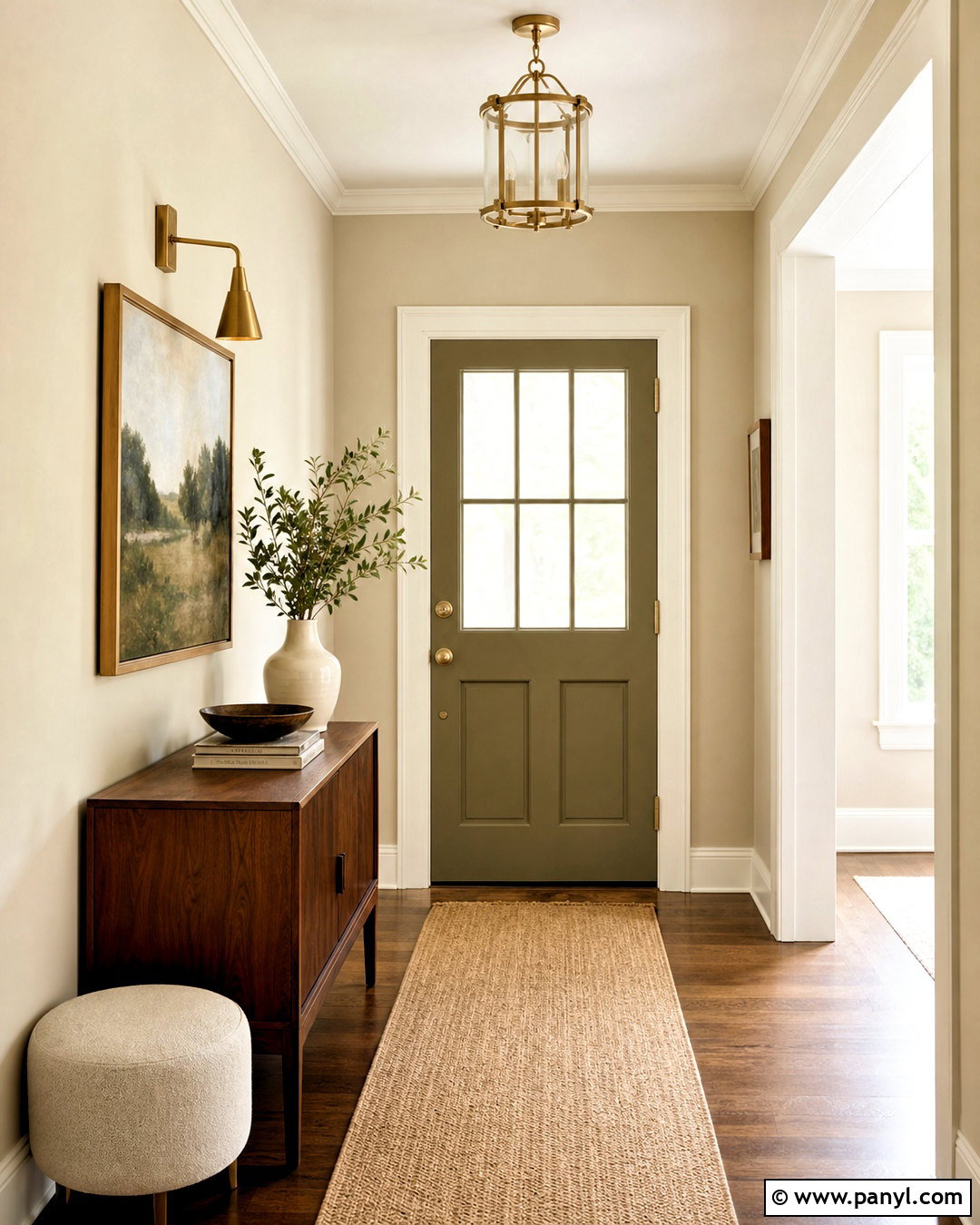
Imagine opening the door to a soft, sun-warmed space that immediately feels comfortable. Creamy beige delivers that effect while providing more depth than plain white. Pair the walls with ivory trim, a walnut console, and a natural jute runner for a layered neutral foundation. Brushed brass lighting and hardware add a warm glow without appearing overly decorative. Above the console, hang one large landscape print with muted green and brown tones. A round upholstered stool can slide underneath and provide a convenient place to remove shoes. For contrast, use a deep brown or muted olive interior door. Keep accessories simple so the subtle variations in wood, fabric, and woven materials remain visible.
3. Soft Greige Entryway Walls
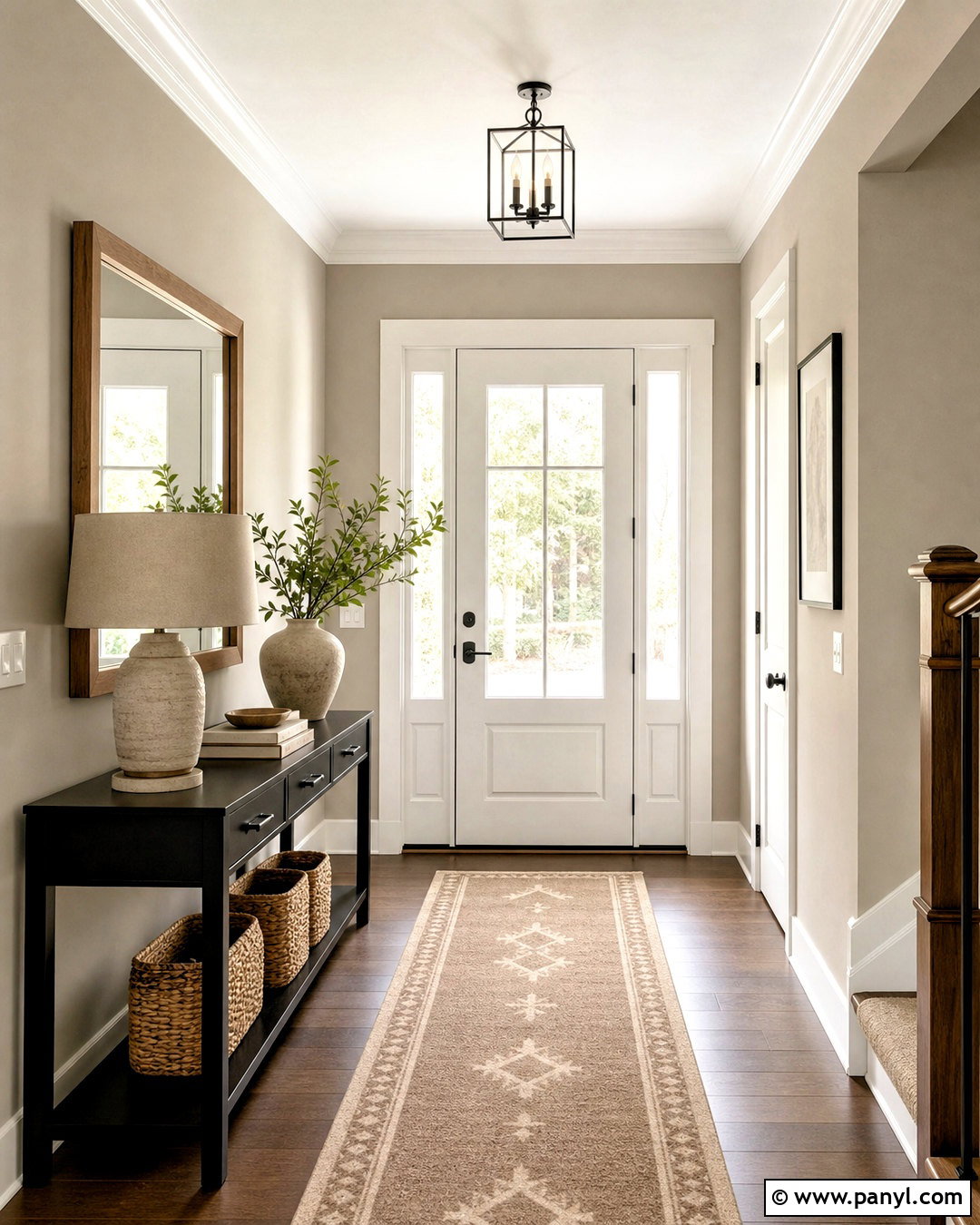
Soft greige combines the versatility of gray with the warmth of beige, making it useful when an entryway connects several differently colored rooms. Select a balanced shade that does not look noticeably purple or yellow in your lighting. Use warm white on the trim, ceiling, and staircase spindles to keep the entrance crisp. A slim black console brings structure, while an oak-framed mirror prevents the scheme from feeling too cool. Add a taupe runner with a small geometric pattern, a linen lampshade, and two matching storage baskets. Black hooks or cabinet pulls can repeat the console finish. The completed look feels calm and modern, yet neutral enough to support changing seasonal decor and artwork.
4. Light Taupe Entryway Walls
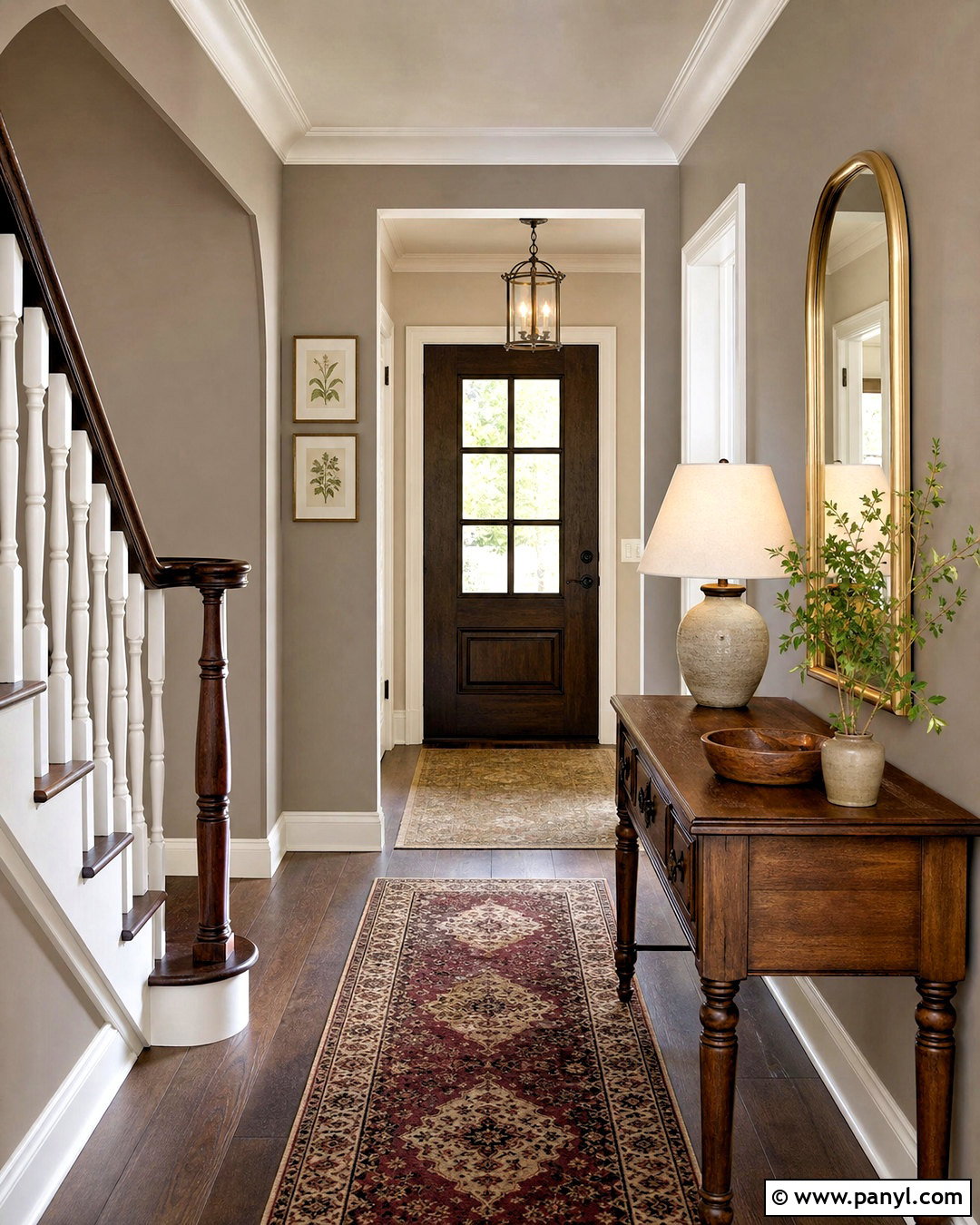
Light taupe walls are an inviting choice for an entryway with stone floors, darker wood, or traditional architectural details. The brown-gray undertone gives the walls definition while staying quiet enough for an everyday backdrop. Paint the trim a soft ivory and choose an antique oak or medium walnut console. An arched brass mirror adds shape above the straight furniture lines. Introduce muted burgundy, cream, and olive through a vintage-style runner that can disguise dirt from a busy doorway. A ceramic table lamp, shallow wooden bowl, and framed botanical prints complete the arrangement. If the foyer includes stairs, carry the taupe up the stairwell so the entrance and upper landing read as one connected space.
5. Sage Green Entryway Walls
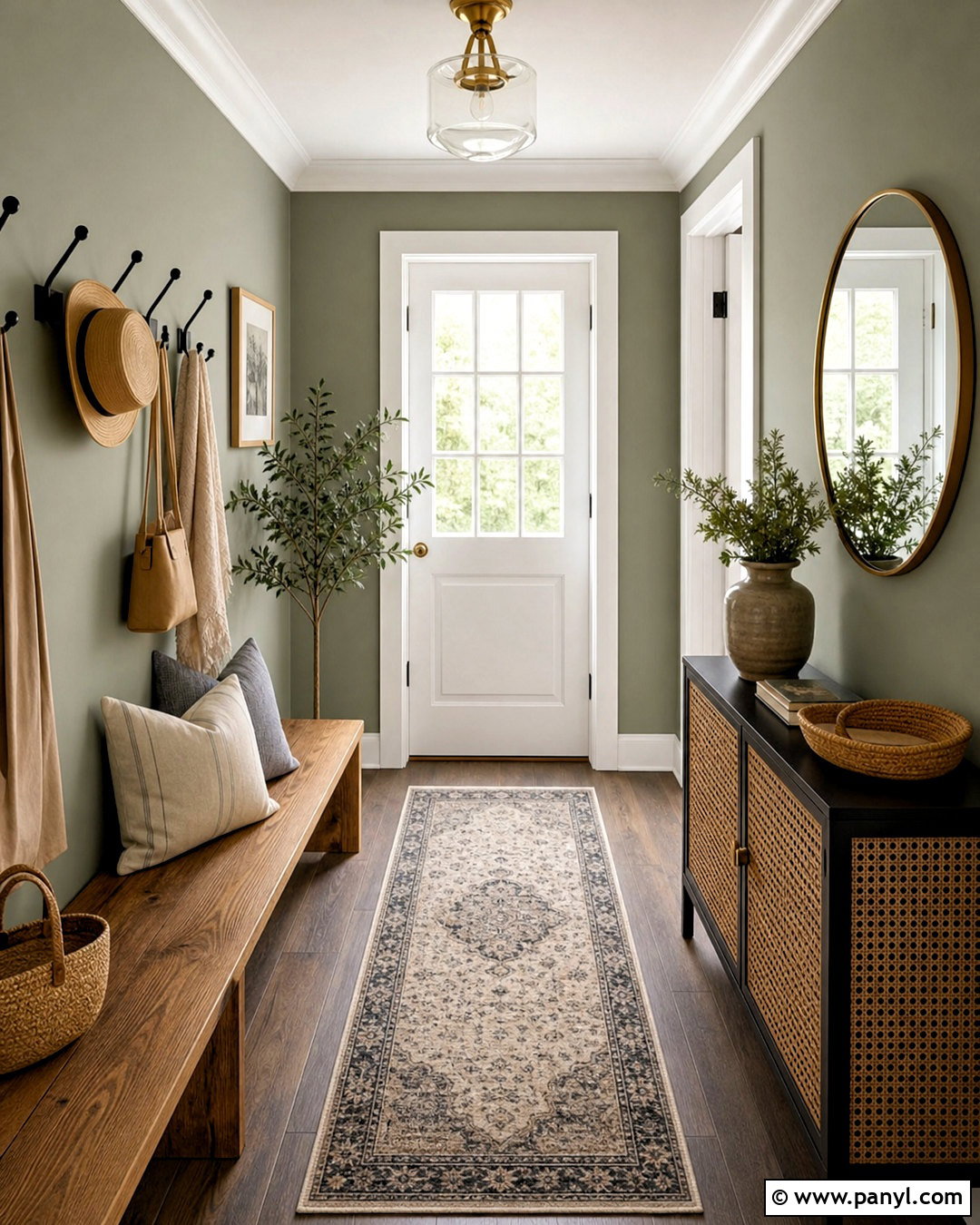
Sage green brings a relaxed, nature-inspired character to the first room of the home. Choose a muted green with gray undertones so it remains easy to coordinate with adjoining spaces. Warm white trim, an oak bench, and a woven cane cabinet create a light organic palette. Add a durable runner in cream and charcoal, then use matte black hooks for coats and bags. A linen cushion and two textured pillows make the bench feel finished without taking away its practical purpose. Decorate the wall with a simple landscape painting or an aged brass mirror. Potted greenery can reinforce the color scheme, but use a different shade of green so the room does not appear overly matched.
6. Olive Green Entryway Walls
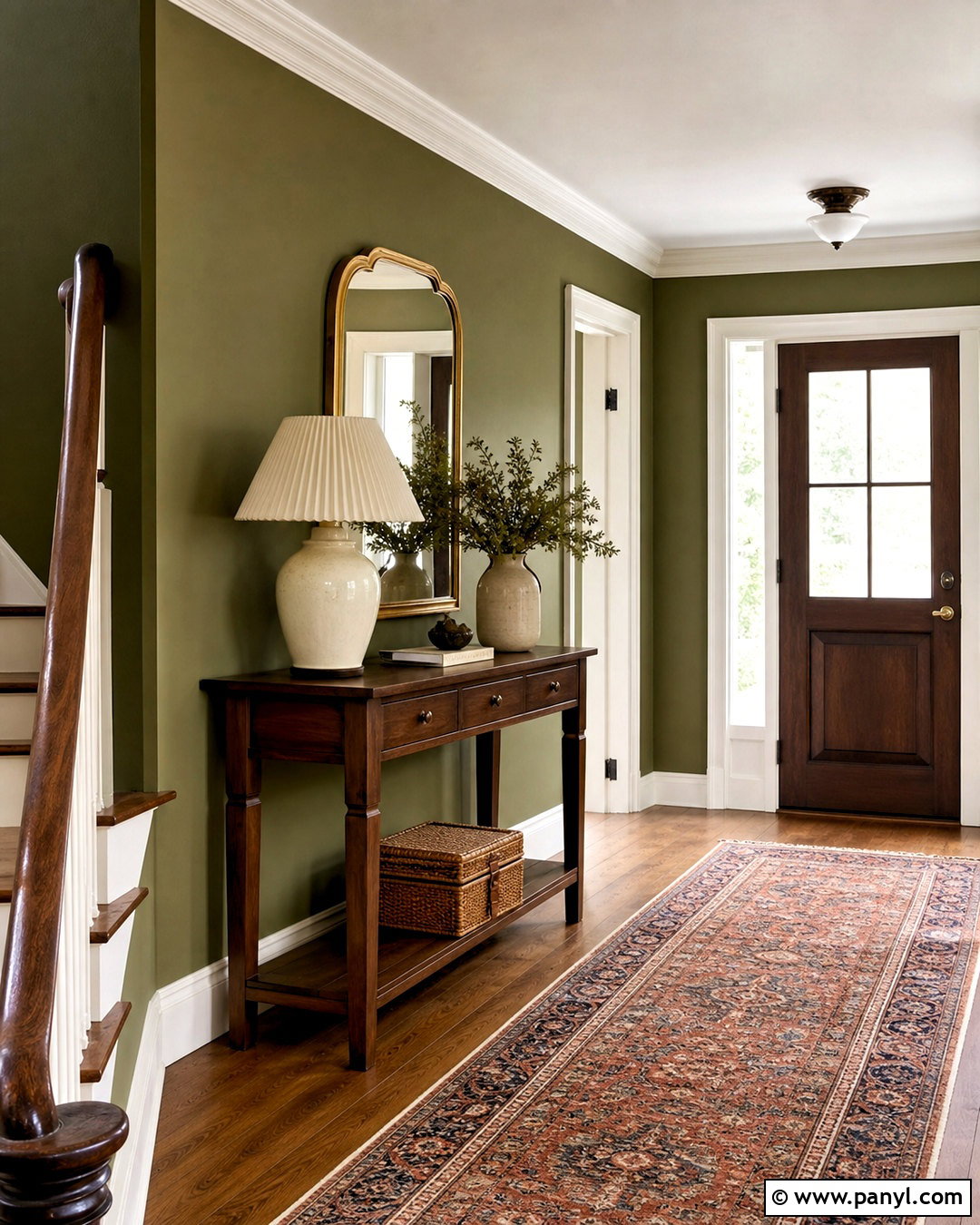
For a richer entrance, wrap the walls in muted olive green and balance the depth with cream-painted trim. This earthy color looks especially attractive beside medium and dark wood tones. Place a narrow walnut console against the longest wall and hang a substantial brass-framed mirror above it. A patterned runner containing rust, beige, and faded blue prevents the palette from becoming too heavy. Add a ceramic lamp with an ivory shade, a small wooden tray, and one sculptural vase. If the entryway has a staircase, use natural wood on the handrail and creamy white on the spindles. The finished room feels grounded and collected, with enough contrast to remain welcoming throughout the day.
7. Dusty Blue Entryway Walls
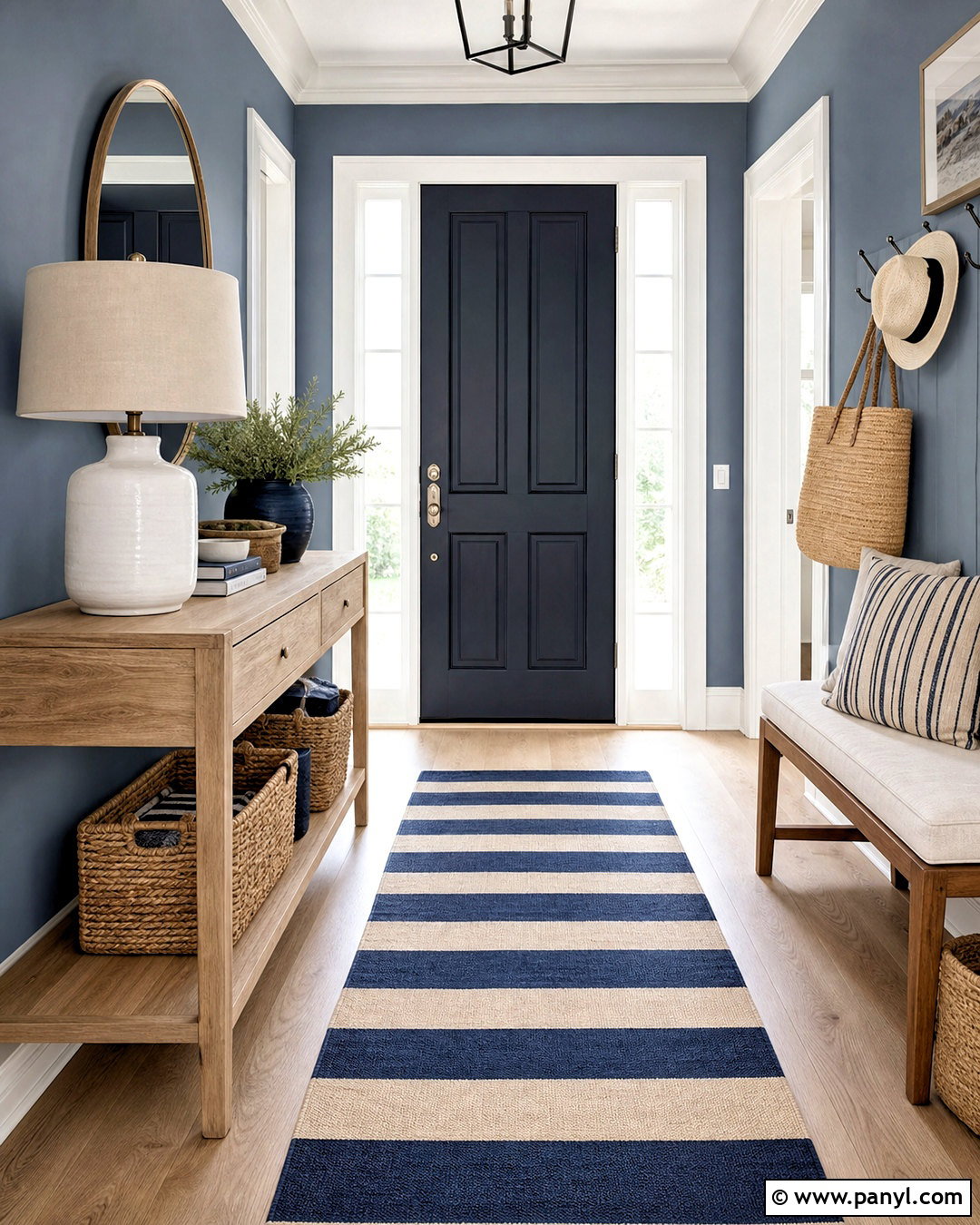
Dusty blue walls make an entryway feel fresh while remaining softer than a strong primary blue. Look for a slightly muted shade that includes a touch of gray. Pair it with bright white trim and a light oak console for an airy coastal influence that does not rely on themed decorations. A striped runner in navy, cream, and sandy beige gives the narrow floor visual length. Add a large round mirror, a white ceramic lamp, and woven baskets underneath the console. A natural linen bench cushion can soften the hard surfaces. Keep metal finishes consistent with brushed nickel or aged brass. The resulting entrance feels breezy, orderly, and easy to coordinate with nearby neutral living areas.
8. Blue Gray Entryway Walls
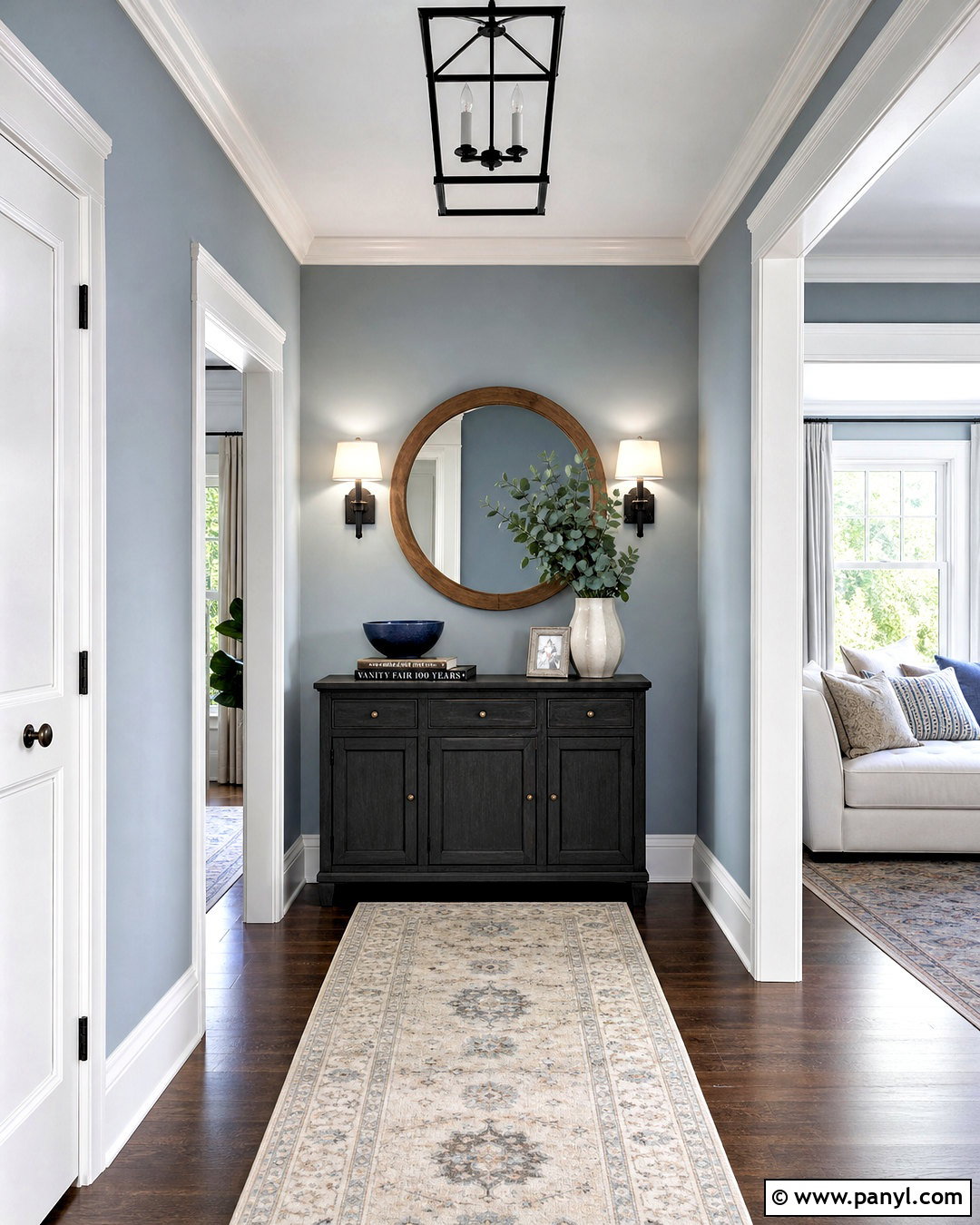
What if you want color that still behaves like a neutral? Blue-gray walls provide a subtle change from standard gray while coordinating easily with white, wood, black, and navy. Choose a mid-light shade for the walls, then use clean white on the ceiling, doors, and moldings. Anchor the space with a charcoal console and a large natural wood mirror. A cream runner with blue-gray patterning connects the vertical and horizontal surfaces. Add a pair of shaded wall sconces if the foyer lacks room for a table lamp. A dark blue bowl, stacked books, and eucalyptus branches finish the console. This balanced palette suits transitional homes and entryways visible from several surrounding rooms.
9. Navy Blue Entryway Walls
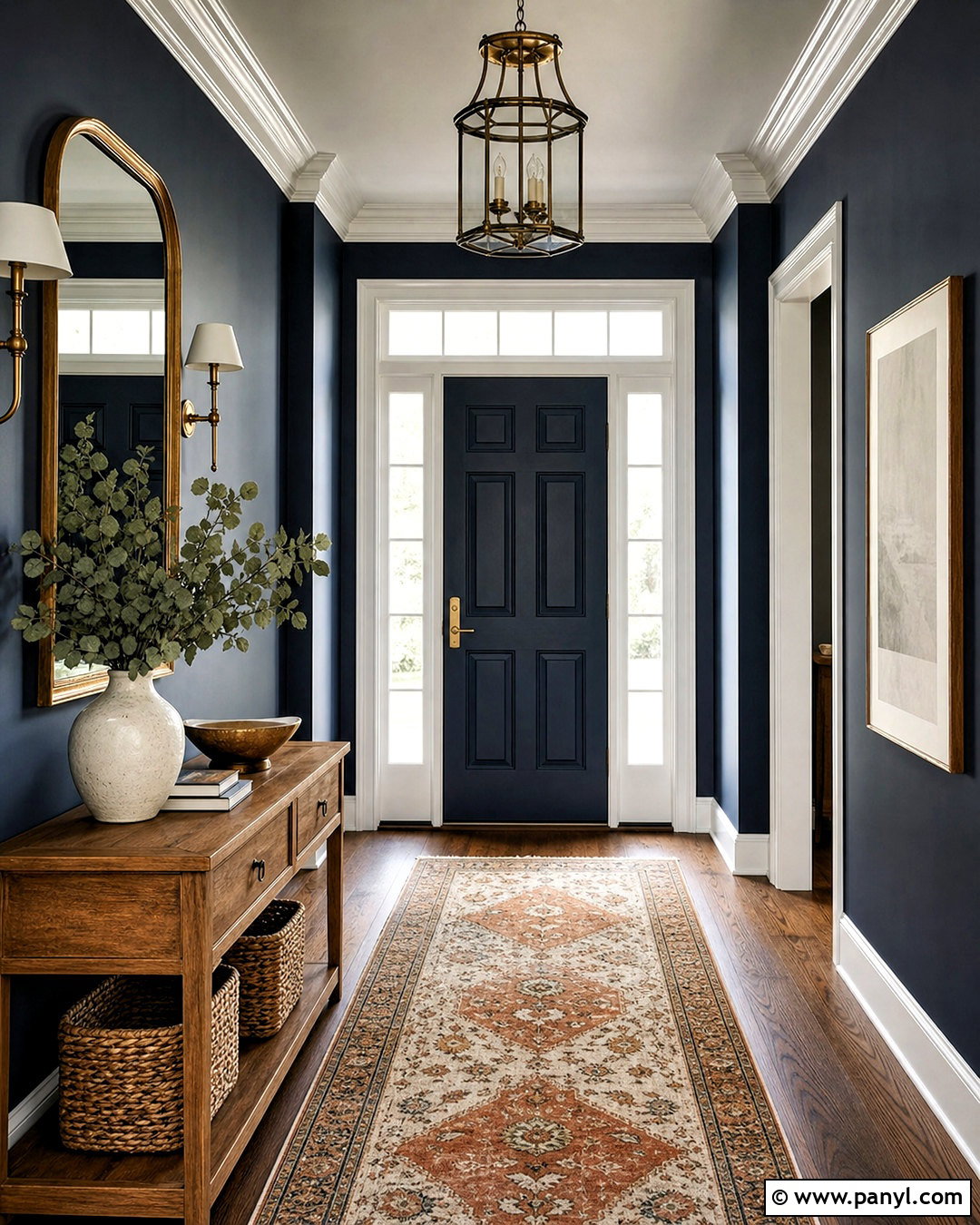
Deep navy can make a small foyer feel intentional rather than forgotten. Cover the walls in a velvety navy blue, but keep the ceiling and substantial trim warm white for clear contrast. A medium oak console lightens the composition, while an aged brass mirror and matching wall sconces reflect warm highlights around the room. Choose a runner with cream, rust, and faded blue details to connect the dark walls to the floor. A white ceramic vase and pale artwork keep the console from disappearing against the background. For a polished finishing touch, paint the interior front door the same navy. The cohesive result feels dramatic, tailored, and suitable for both modern and traditional homes.
10. Charcoal Gray Entryway Walls
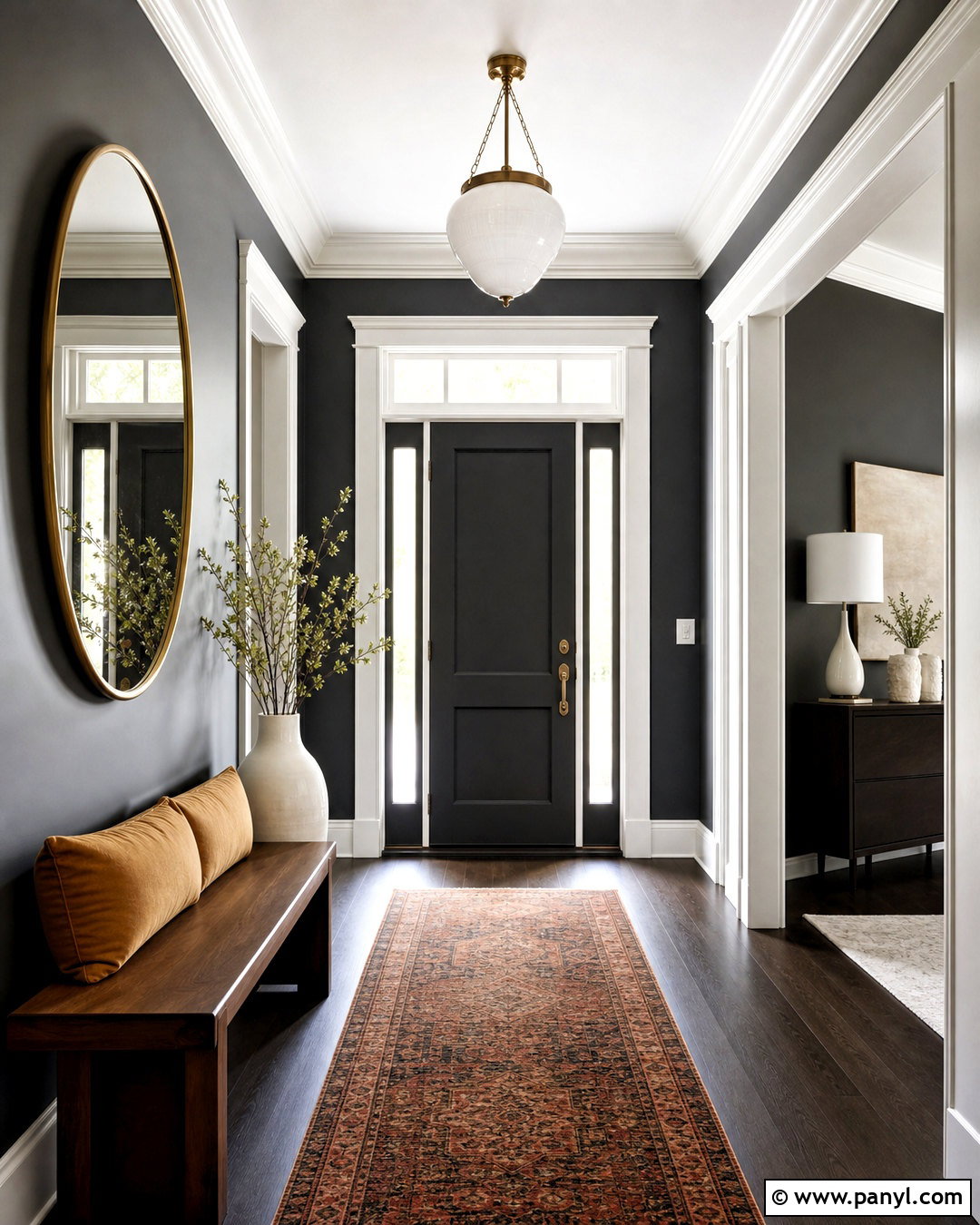
Charcoal gray gives an entryway architectural presence, especially when the room has tall ceilings, decorative molding, or abundant natural light. Use the dark color on the walls and repeat it on the interior door for a unified backdrop. Bright white trim creates a graphic outline around doorways and baseboards. Bring warmth back through a walnut bench, camel-colored cushion, and vintage runner with rust and tan details. A large brass mirror helps bounce available light, while an opal glass pendant provides even illumination overhead. Keep small accessories pale and sculptural rather than numerous. The complete design feels strong and contemporary, yet the warm wood and textiles stop the dark walls from looking severe or unwelcoming.
11. Terracotta Entryway Walls
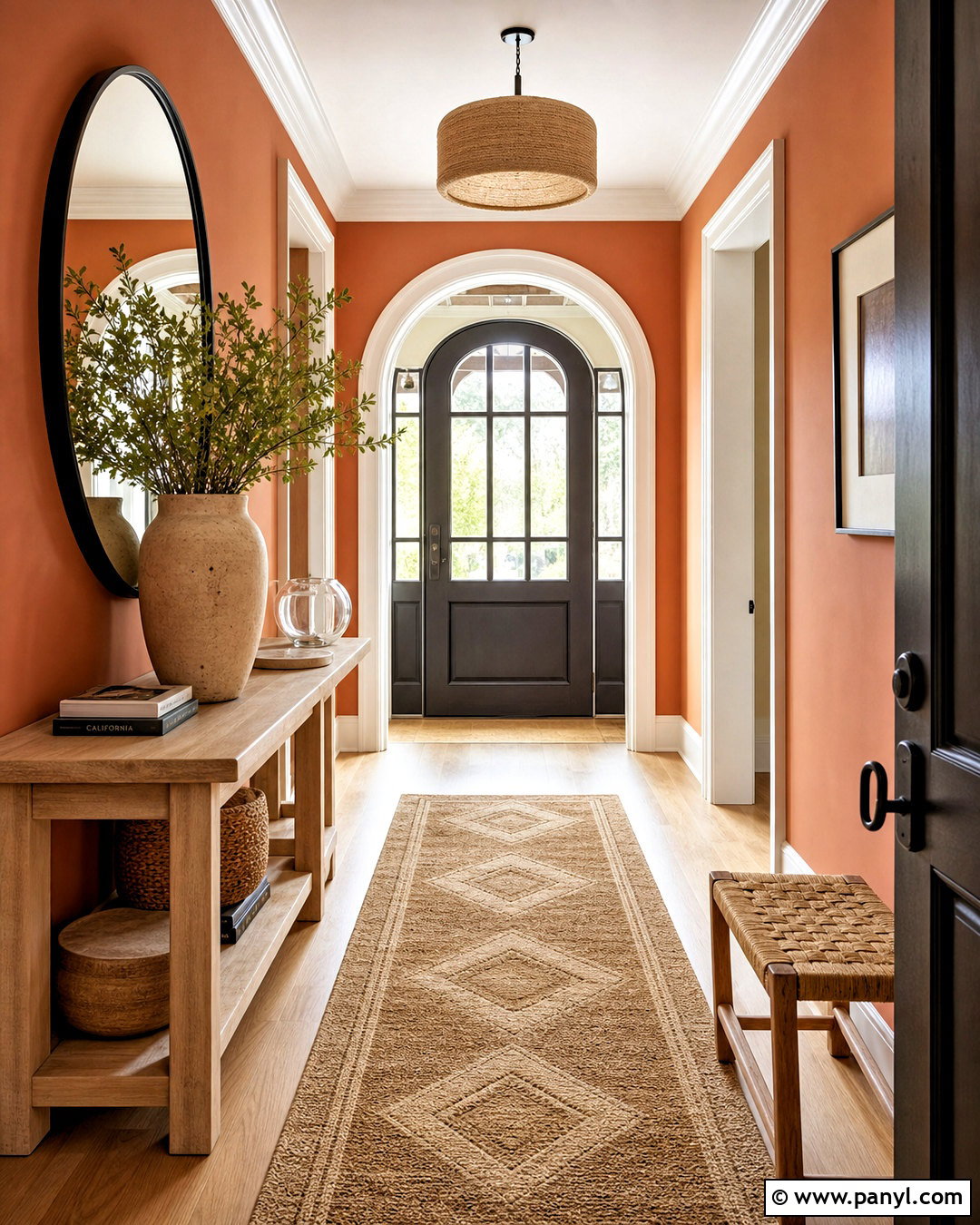
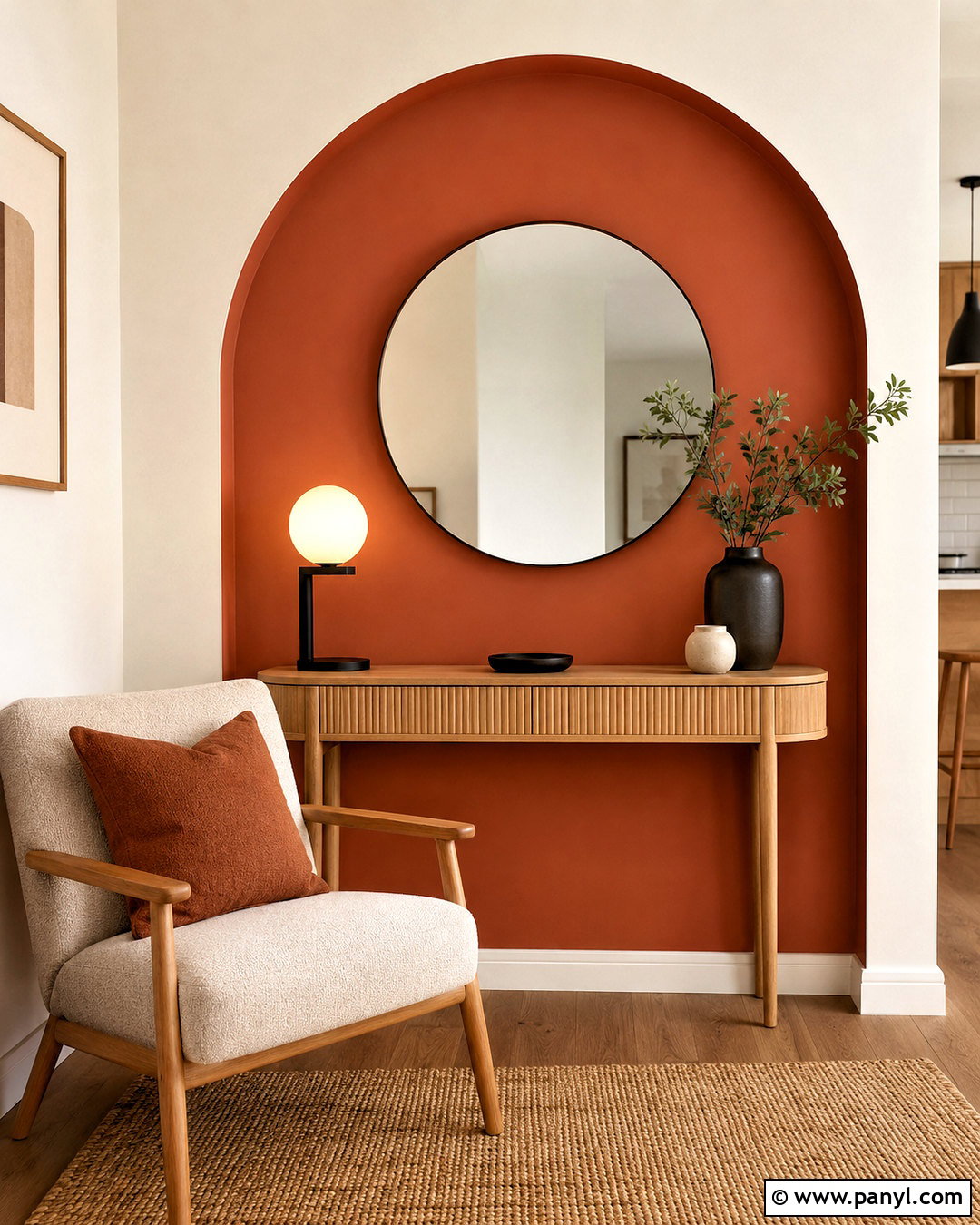
Terracotta walls bring sunbaked warmth to an entrance and work beautifully with wood, stone, and woven materials. Select a softened clay orange rather than a highly saturated shade. Pair it with creamy white trim, a pale oak console, and a natural fiber runner with black geometric details. An oversized black-framed mirror introduces a clean modern edge. Decorate the console with sand-colored pottery, a small lamp, and branches in a simple glass vase. A woven stool can provide seating without overcrowding the room. If the floor is already warm-toned wood, include cream and charcoal accents to add separation. The finished entryway feels lively and welcoming while remaining practical enough for daily family use.
12. Plaster Pink Entryway Walls
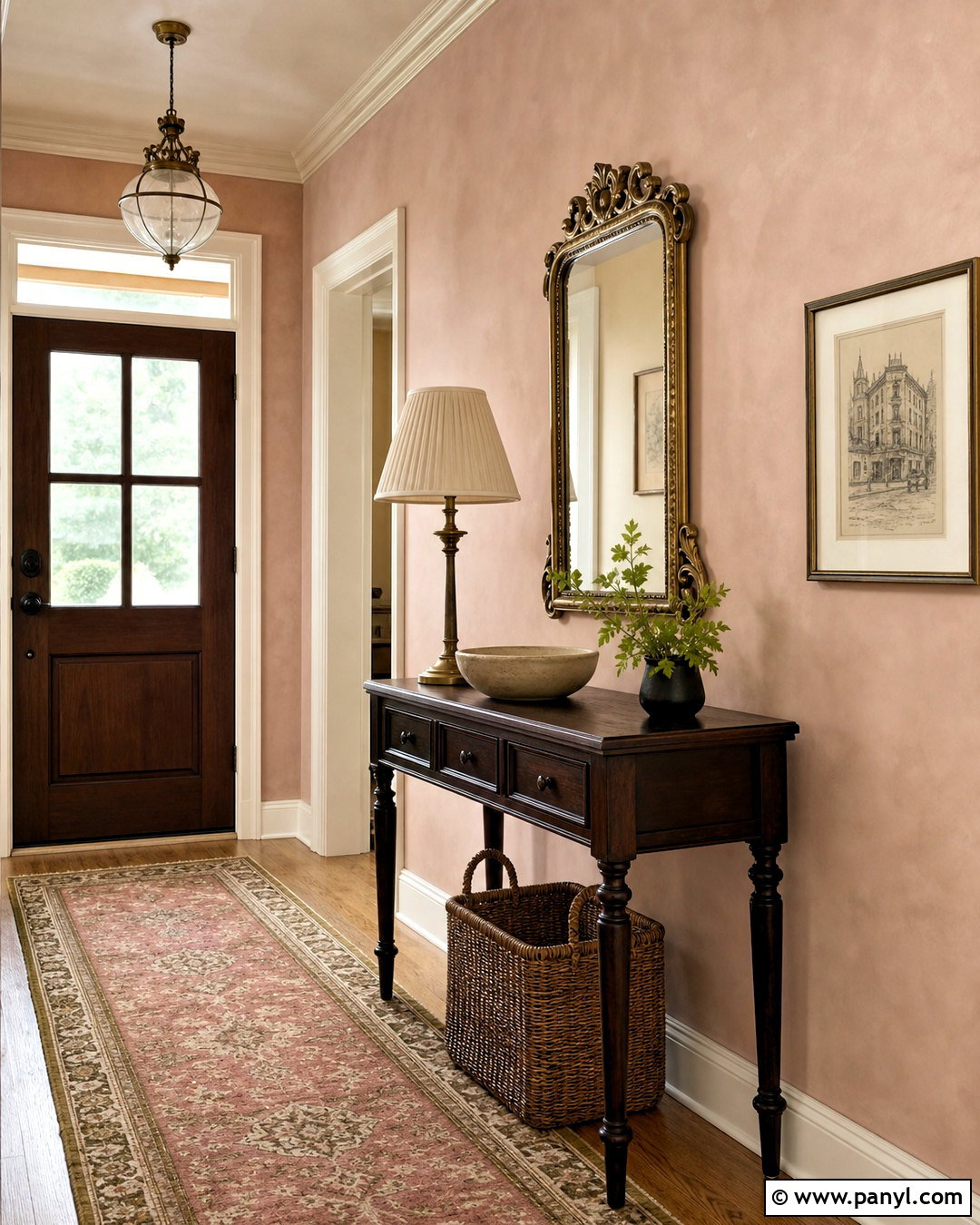
Soft plaster pink can function much like a warm neutral when it has chalky beige or clay undertones. Cover the walls in this subtle shade and use warm white on the ceiling and trim. A dark walnut console creates elegant contrast, while an antique brass mirror strengthens the room’s warm palette. Choose a faded runner that blends cream, dusty rose, olive, and brown instead of relying on solid pink accessories. Add a pleated linen lamp, a stoneware bowl, and a small framed sketch. Black door hardware can provide one crisp modern detail. This complete look feels gentle and sophisticated rather than overly sweet, making it suitable for traditional foyers, apartments, and homes with vintage-inspired furnishings.
13. Muted Mustard Entryway Walls
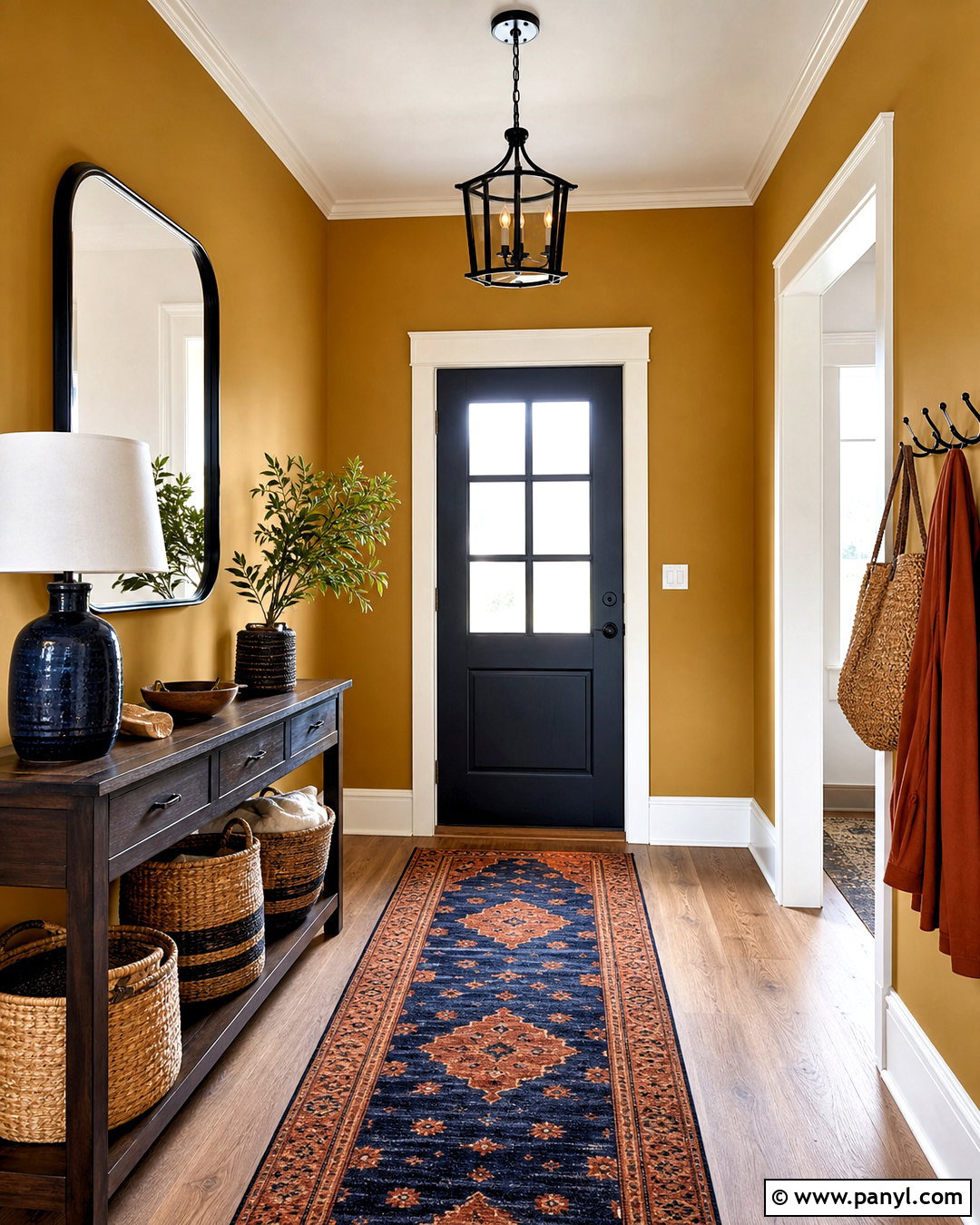
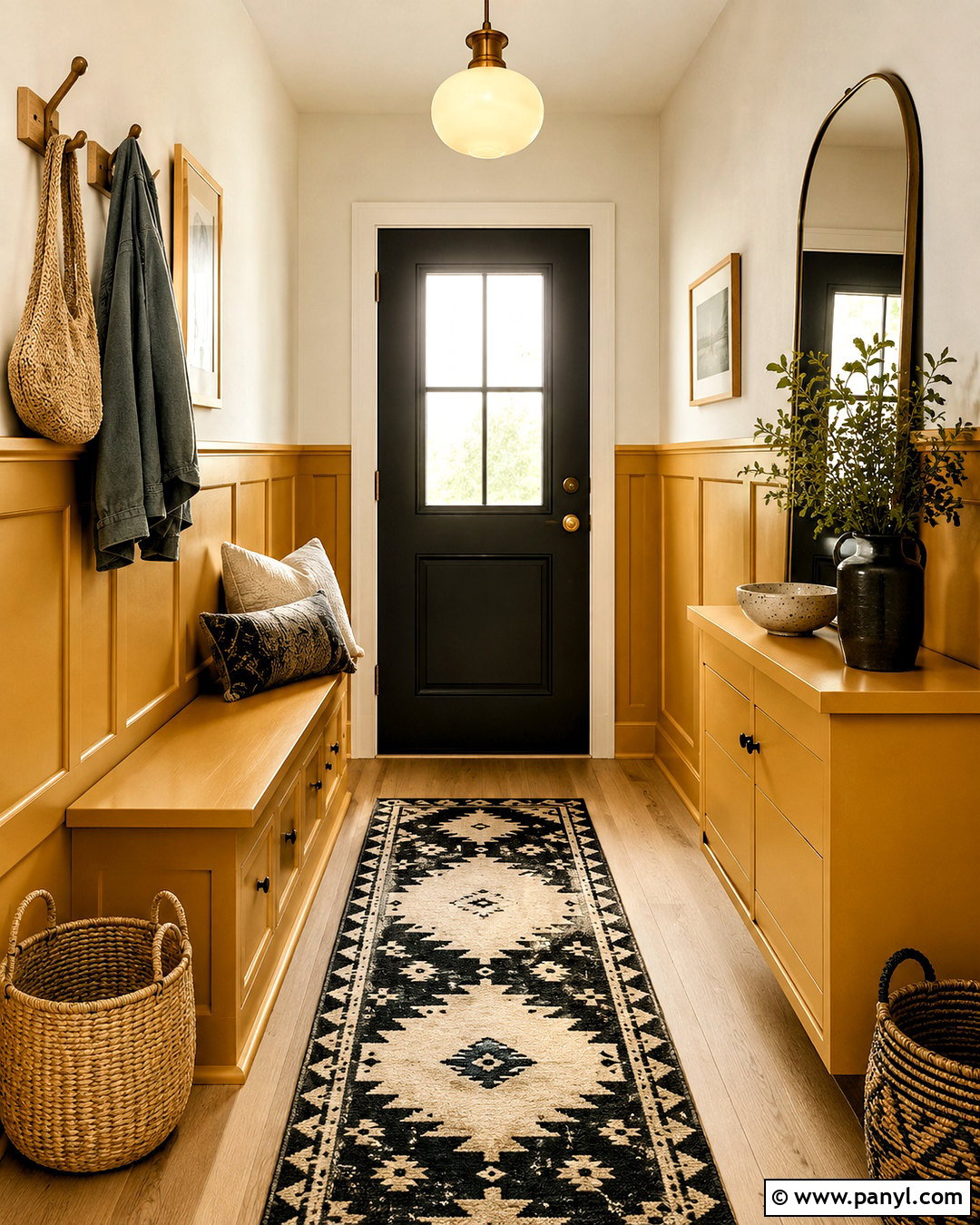
Muted mustard gives a dim or windowless entryway a cheerful identity without the sharpness of bright yellow. Look for an ochre-based shade with brown or earthy undertones. Use soft white trim and a dark stained wood console to create a balanced frame around the color. A narrow runner featuring navy, rust, and cream adds pattern while grounding the warm walls. Above the console, hang a black-framed mirror or simple abstract artwork. Include a navy ceramic lamp, woven baskets, and one leafy plant to introduce cool contrast. Carry black accents through the hooks, door lever, and picture frames. The coordinated result feels sunny, practical, and full of personality even when natural light is limited.
14. Burgundy Entryway Walls
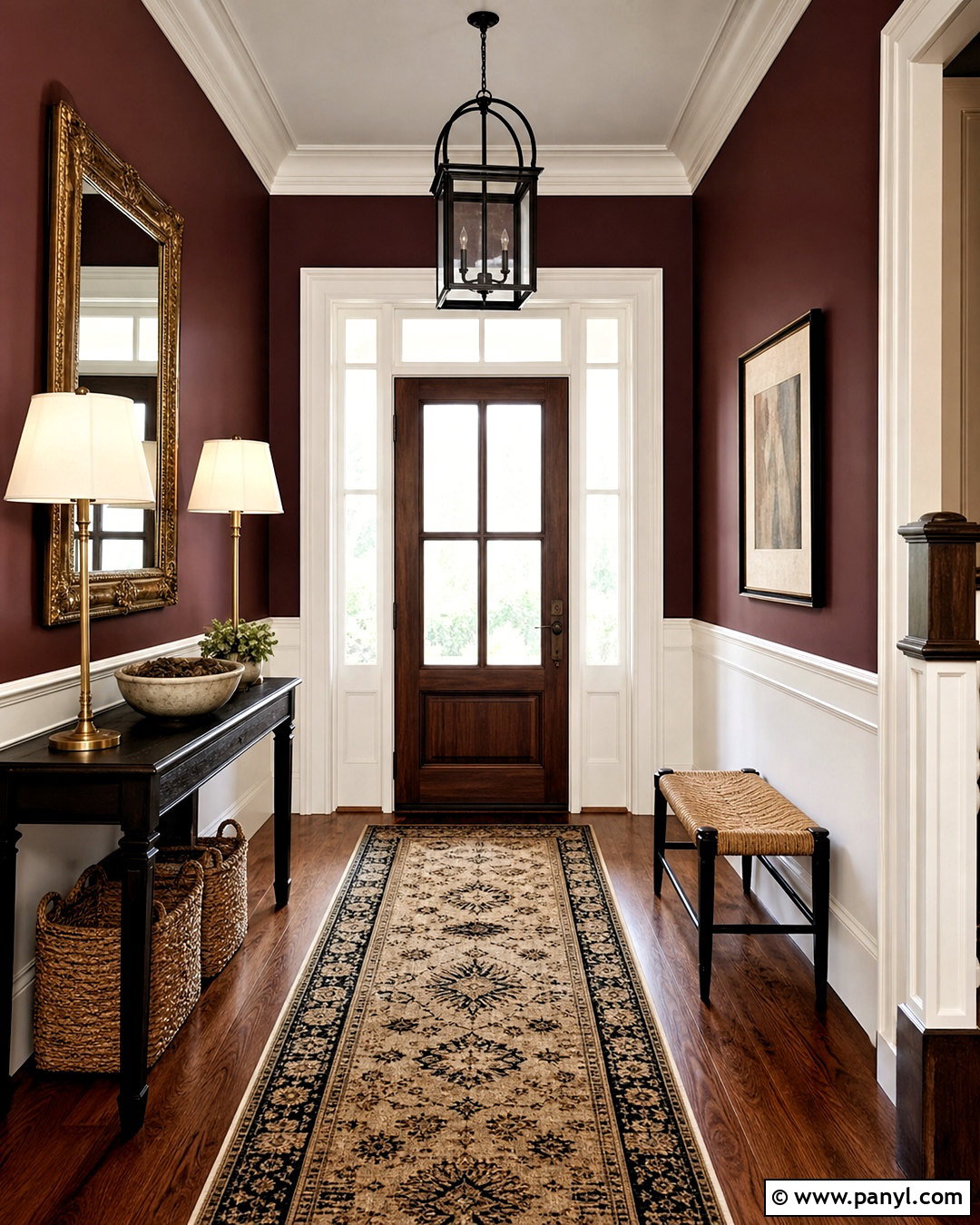
A burgundy entryway can feel warm, enveloping, and surprisingly refined when the supporting colors stay restrained. Choose a deep red with brown undertones and apply it to the walls, leaving the ceiling and detailed trim a creamy white. A slim black console creates definition, while an antique gold mirror brings light to the dark backdrop. Add a neutral runner in beige and faded charcoal, avoiding too many competing red accents. A pair of small ivory lamps, a stone bowl, and understated artwork will brighten the furniture surface. Medium oak flooring or a woven bench adds needed natural texture. This complete palette creates a memorable entrance without requiring elaborate furniture or an oversized foyer.
15. Chocolate Brown Entryway Walls
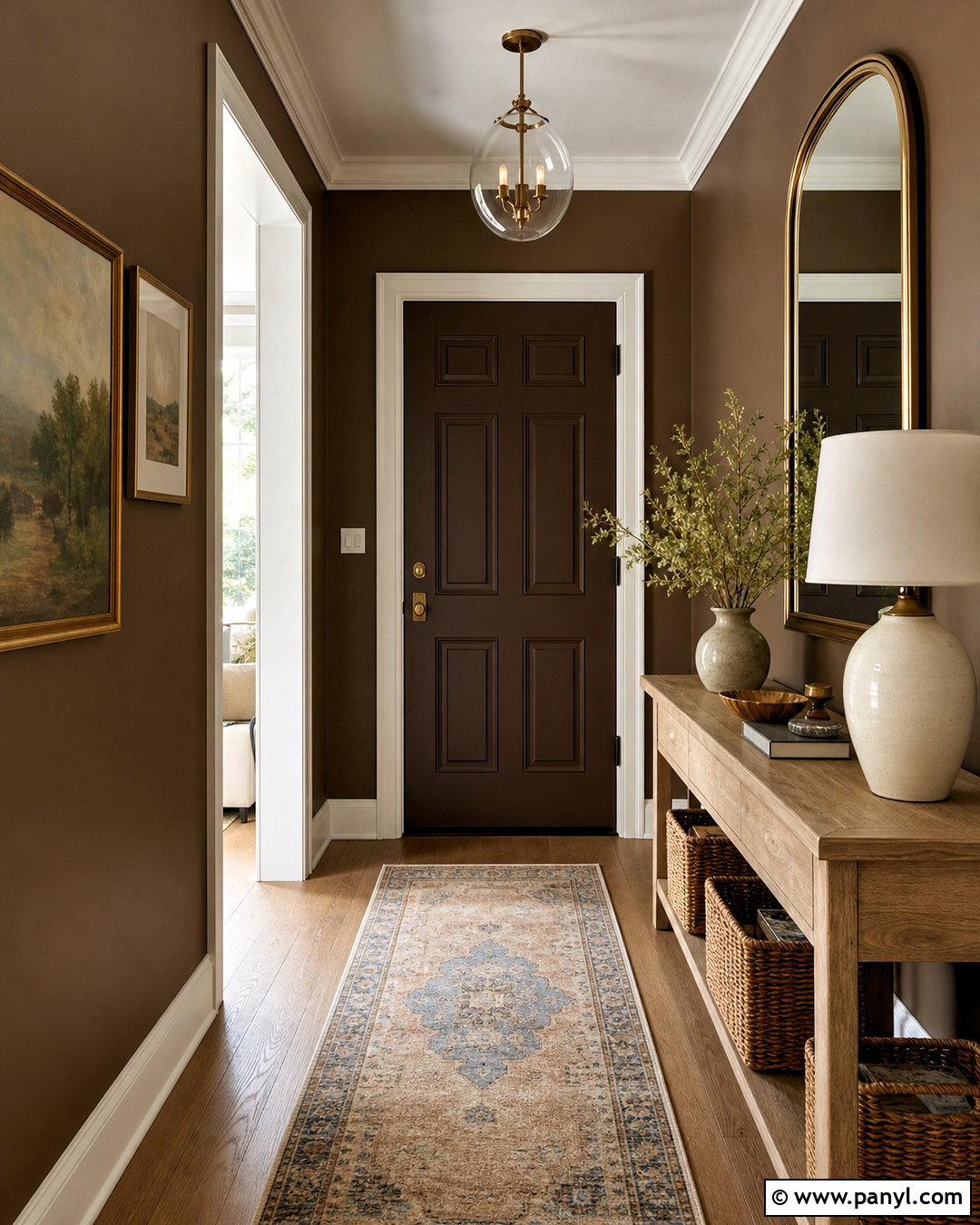
Chocolate brown surrounds an entryway with warmth and works particularly well in homes containing cream upholstery, natural stone, or traditional woodwork. Select a rich brown that looks earthy rather than nearly black. Paint the walls and interior door together, then use creamy white on the ceiling and trim. A light oak console will remain clearly visible against the darker background. Add an aged brass mirror, ivory ceramic lamp, and runner with beige, muted blue, and rust patterning. Woven baskets below the console offer useful storage and introduce lighter texture. Limit additional dark pieces so the room maintains balance. The final look feels comfortable, polished, and grounded, especially when illuminated by a clear glass pendant.
16. Lavender Gray Entryway Walls
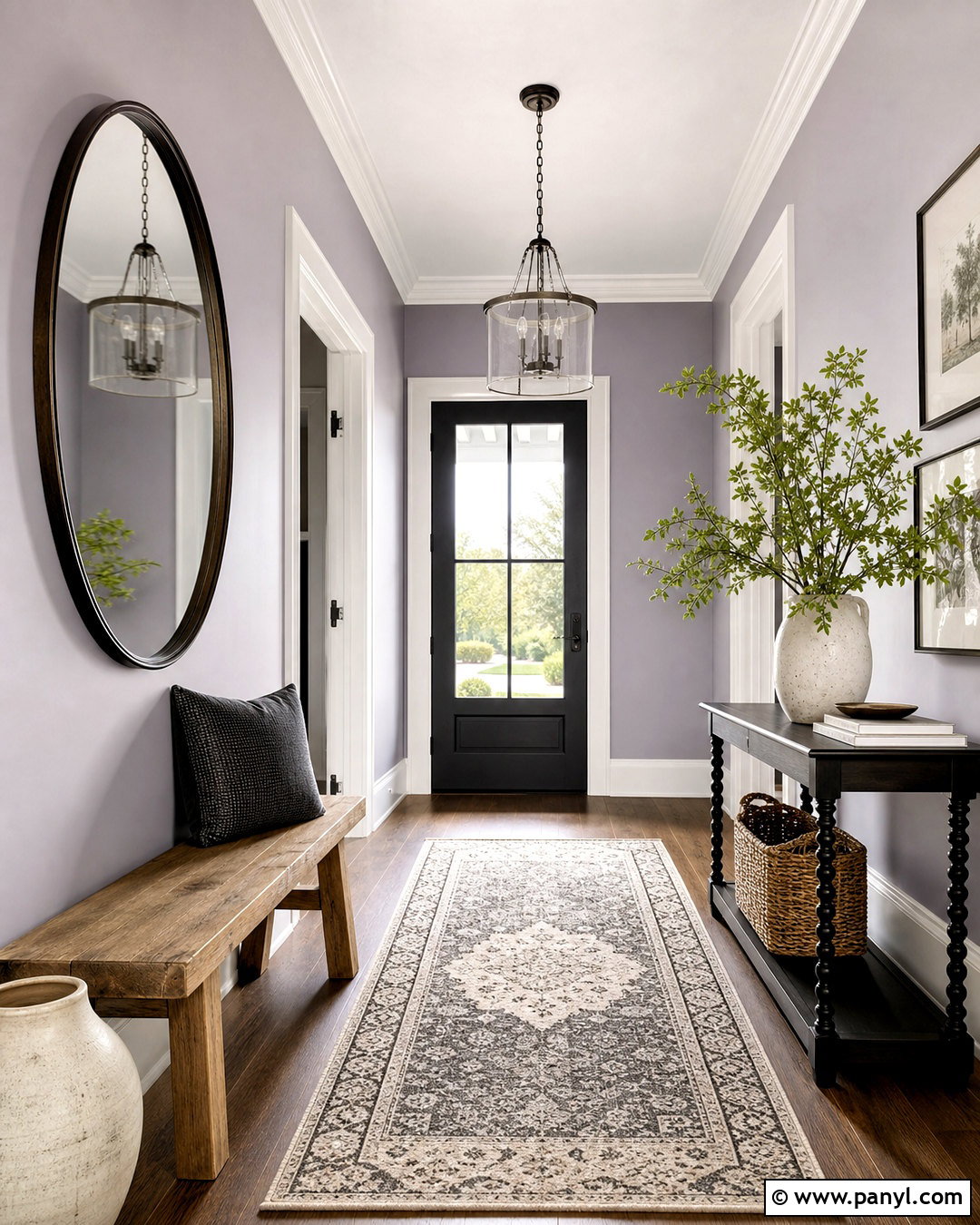
Lavender gray offers a quiet hint of color that changes gently with the light. Choose a gray-based violet rather than a bright pastel purple, and pair it with soft white trim. A light oak bench or console keeps the entrance casual and approachable. Add a cream runner with subtle charcoal lines, then introduce brushed nickel or pewter through the lighting and hardware. An oval mirror softens the corners of a narrow foyer, while a charcoal cushion adds definition to the bench. Decorate with white pottery, pale green branches, and one understated print. The completed room feels calm, airy, and distinctive, yet the restrained palette allows it to transition smoothly into gray, blue, or neutral adjoining rooms.
17. Pale Peach Entryway Walls
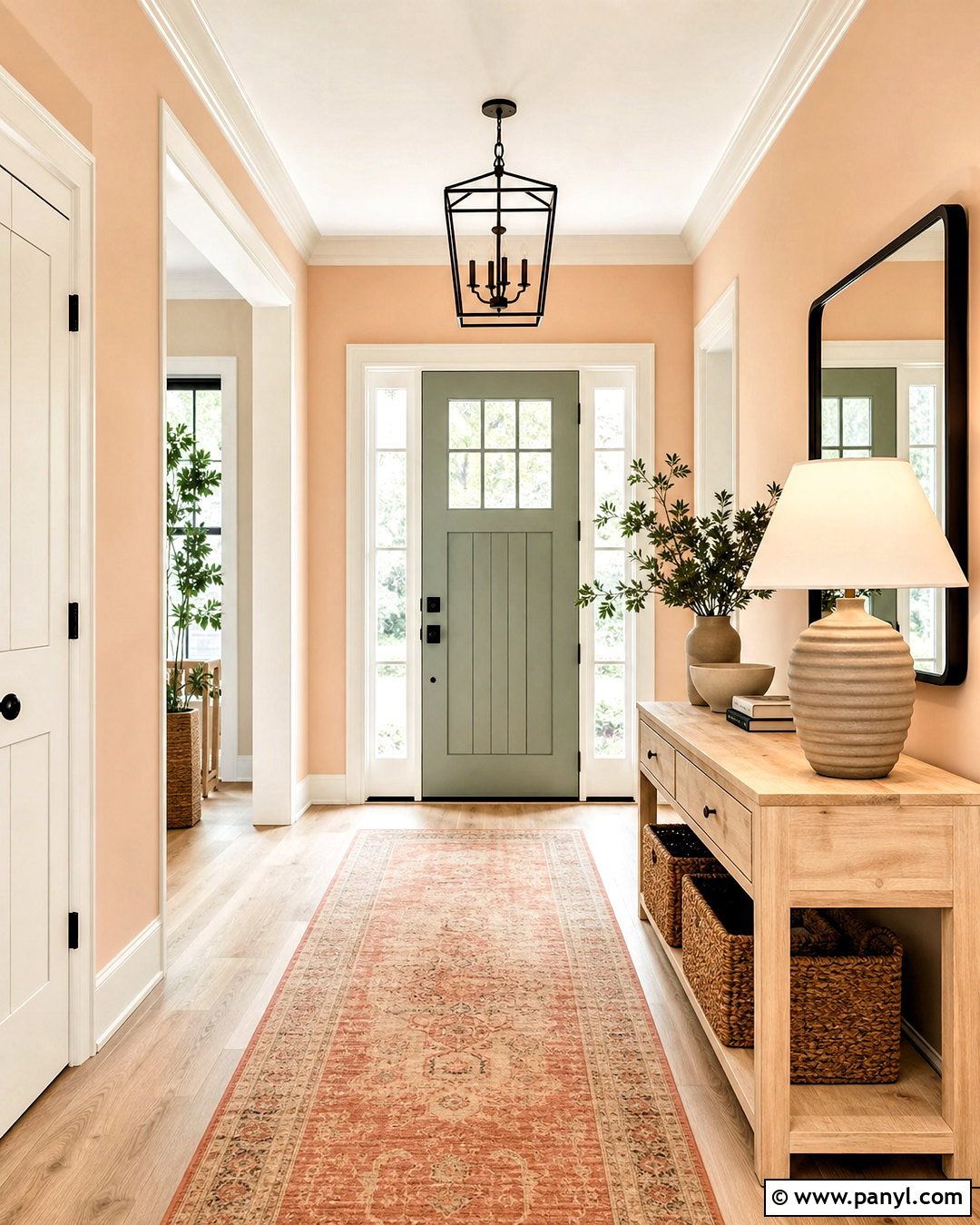
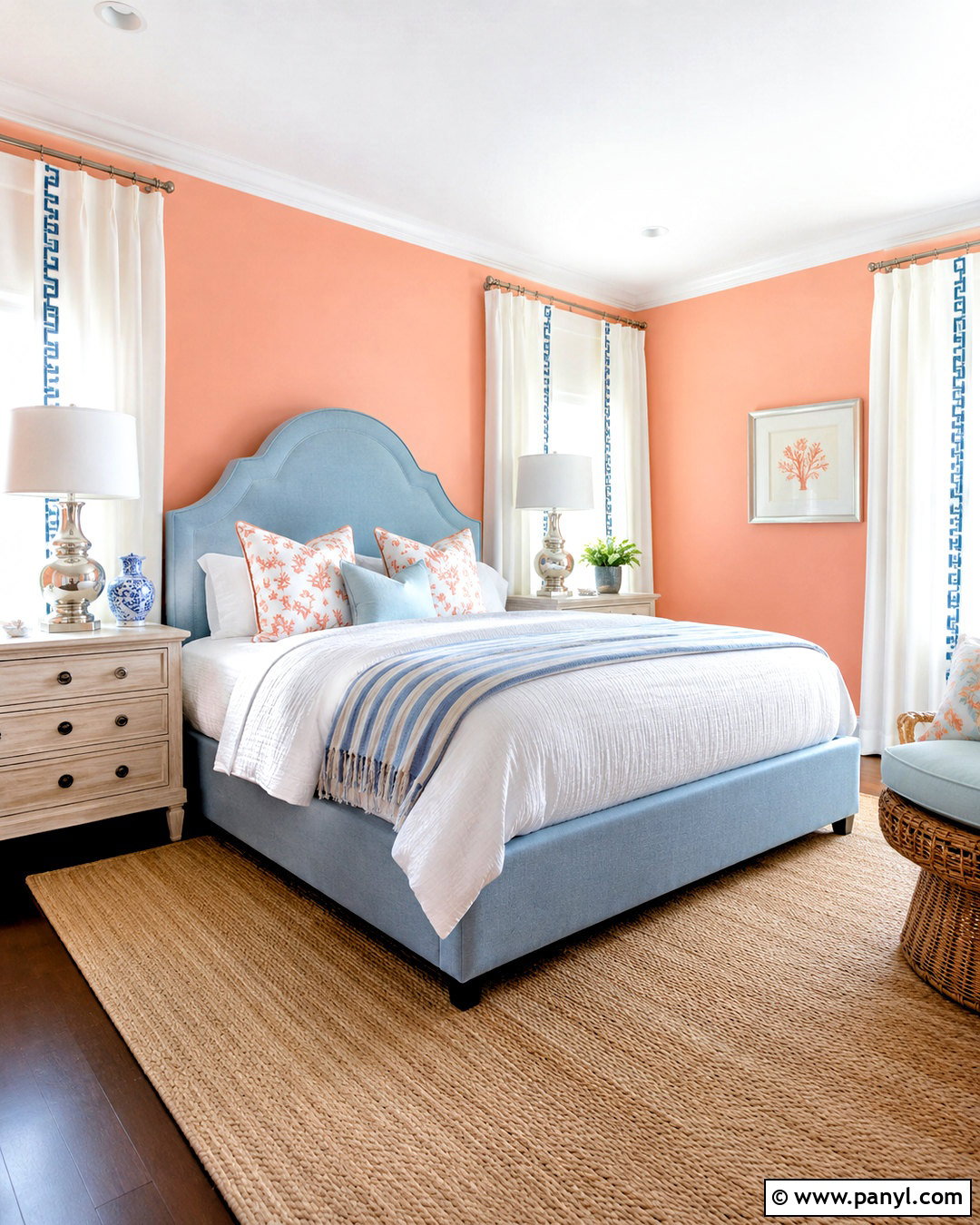
Pale peach walls can bring warmth to an entryway that receives cool northern light. Choose a softened peach with beige undertones so the color reads as refined rather than bright. Cream trim and a pale wood console support the gentle palette, while matte black hardware adds needed structure. Use a flat-weave runner with tan, faded coral, and muted green details to create an easy connection between the walls and floor. A black-framed mirror, ribbed ceramic lamp, and woven storage baskets complete the furniture arrangement. Keep the front door a warm white or subdued green for a subtle complementary accent. The finished space feels fresh, sunny, and welcoming without becoming overly colorful or visually busy.
18. Two Tone Green Entryway Walls
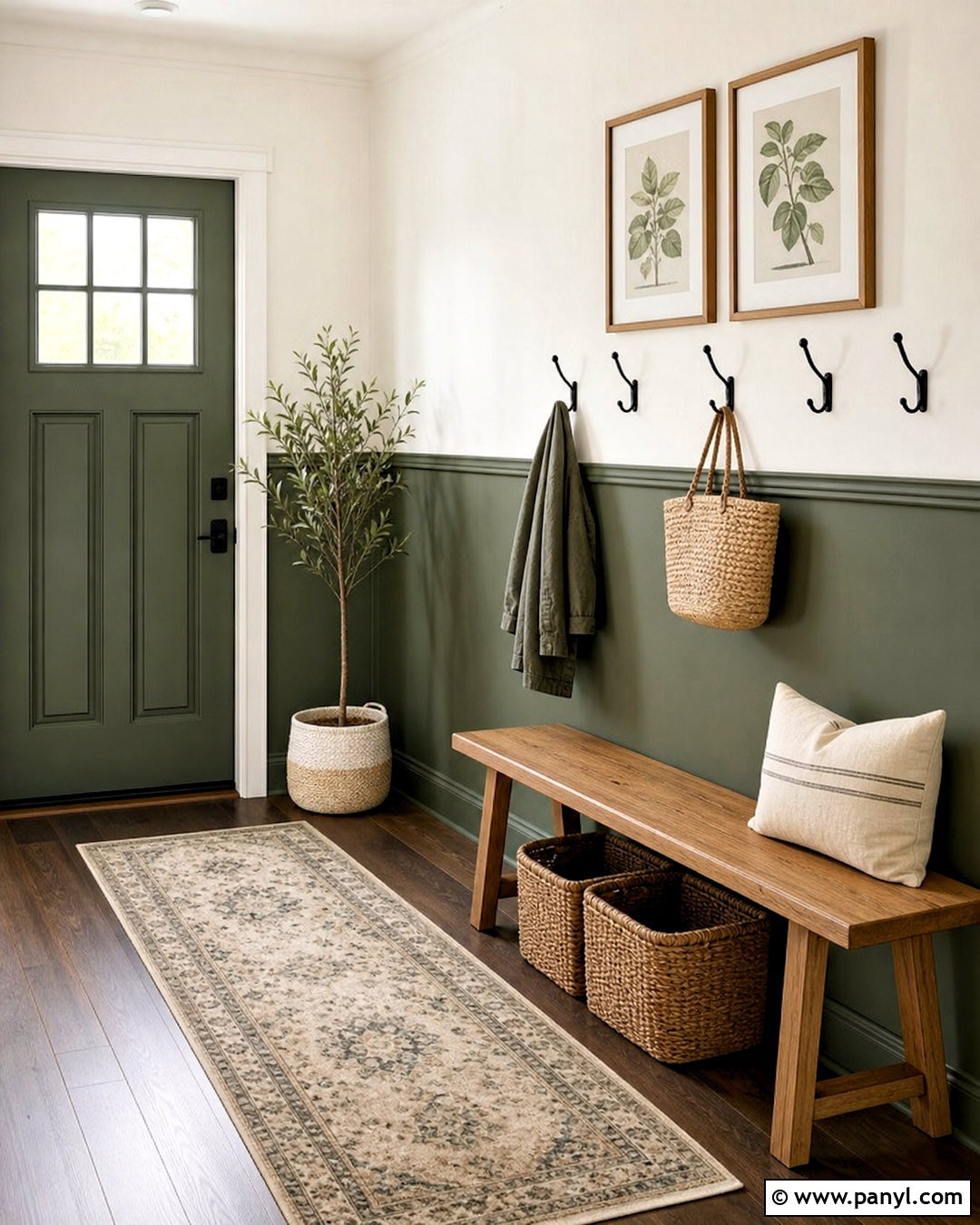
Two-tone walls give a practical entrance more character while protecting the lower portion from visible wear. Paint the bottom half muted forest green and the upper half warm white, separating them with a narrow painted chair rail. Repeat the green on the interior door to make the layout feel planned. A simple oak bench, cream cushion, and black wall hooks create a useful drop zone. Add a runner with beige, charcoal, and green patterning, plus woven baskets for shoes. Above the bench, display a balanced row of botanical prints in black frames. This complete treatment visually grounds tall walls and adds architectural interest to a plain entryway without requiring complicated paneling or expensive built-ins.
19. Color Drenched Soft Blue Entryway
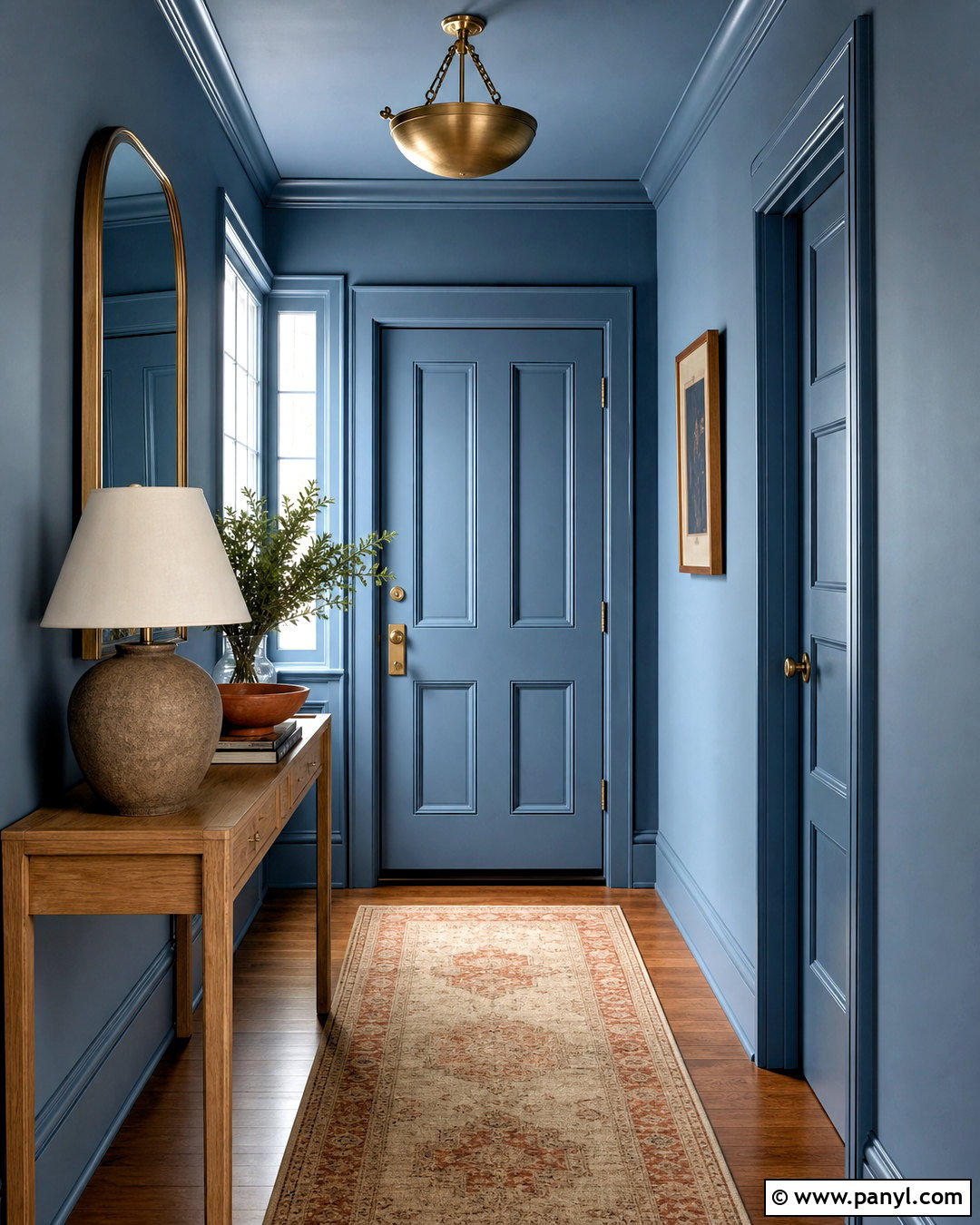
Color drenching can transform a small entryway into a cohesive, immersive room. Paint the walls, trim, doors, and ceiling in the same soft blue, using a slightly glossier finish on the woodwork for subtle contrast. Keep the furniture visually light with a narrow oak console and an open lower shelf. A warm brass mirror and matching ceiling fixture prevent the cool color from feeling flat. Add a cream runner with rust details, a linen-shaded lamp, and a small terracotta bowl. Because the envelope is monochromatic, limit the accessories to a few larger items. The result feels intentional and expansive, with fewer visual breaks making a compact foyer appear smoother and more connected.
20. Deep Teal Entryway Walls
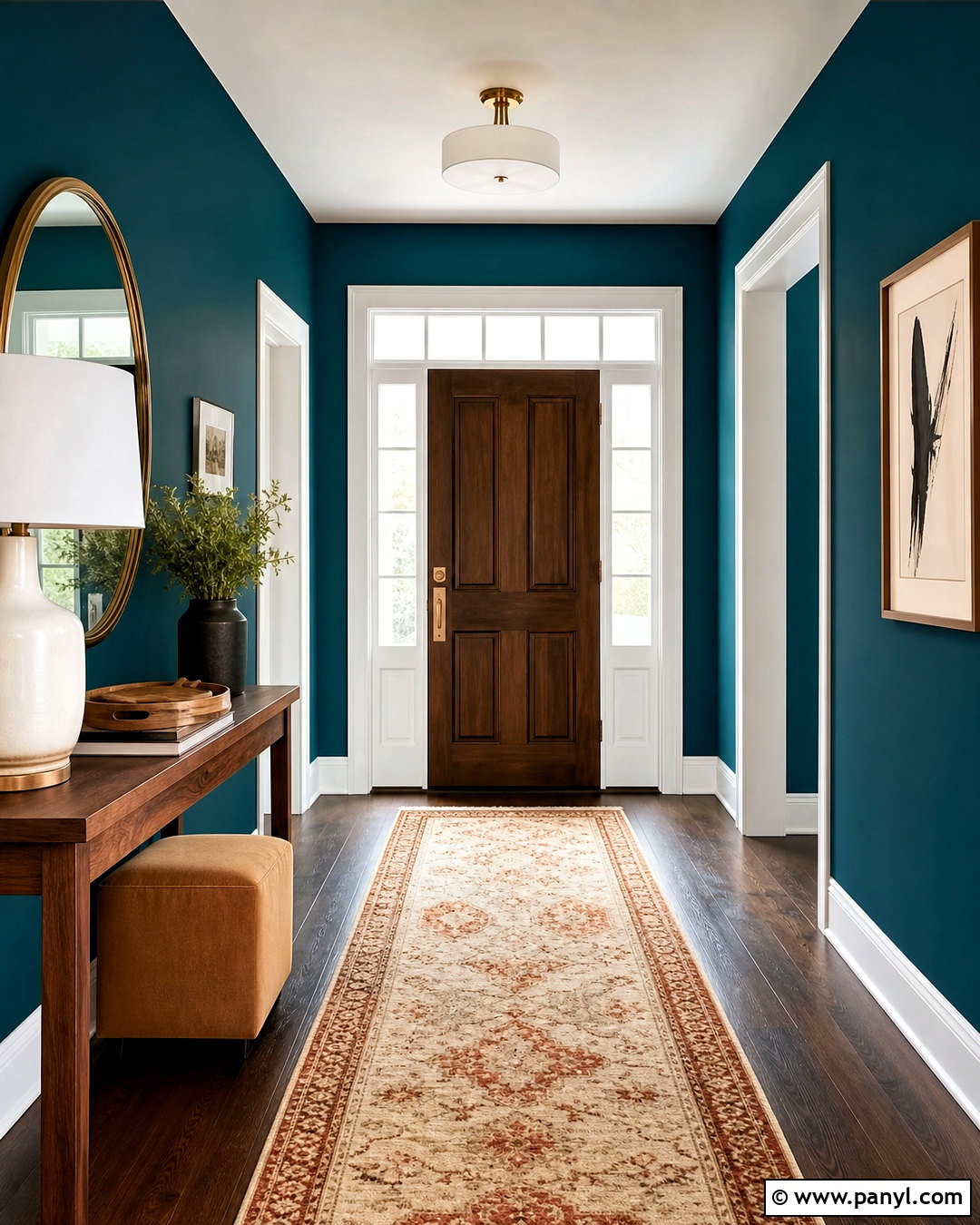
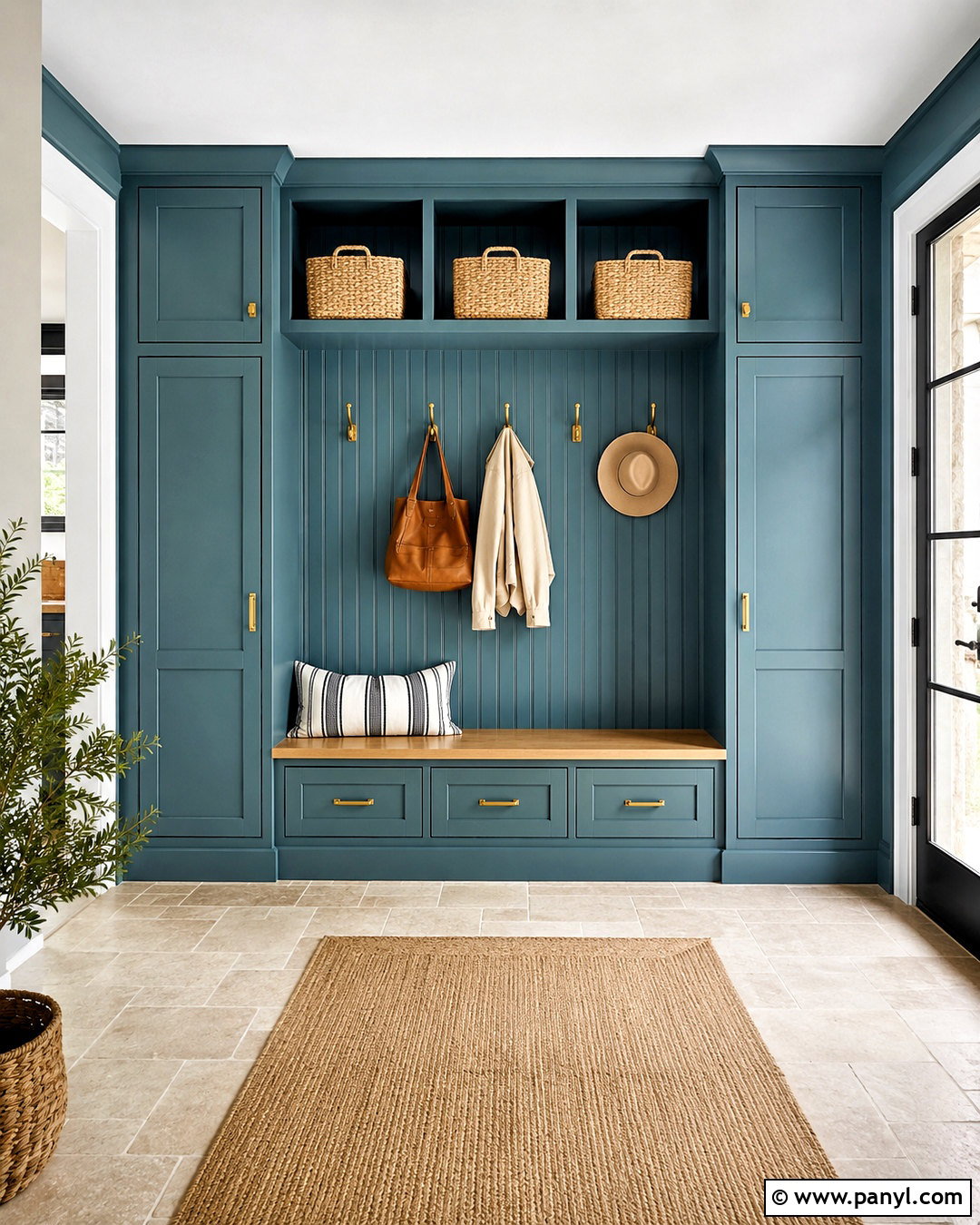
Deep teal creates a bold entrance by combining the calming quality of blue with the natural richness of green. Use it on all four walls and balance it with bright white trim and a pale ceiling. A warm walnut console provides a strong but harmonious contrast. Above it, choose a wide brass mirror that reflects light across the saturated color. A patterned runner containing cream, burnt orange, and faded teal pulls the room together. Add a white ceramic lamp, a wooden tray, and one large piece of simple artwork. If space permits, include a small upholstered stool in camel or ivory. The complete entryway feels confident, layered, and colorful without sacrificing everyday function.
Conclusion:
Choosing among these entryway wall color ideas becomes easier when you consider the entire space instead of selecting paint in isolation. Look at your flooring, front door, trim, visible rooms, lighting, and existing furniture before committing to a shade. Light neutrals can open a compact foyer, earthy colors can create natural warmth, and darker hues can give an overlooked entrance a stronger identity. Sample several options directly on the walls and check them at different times of day. Once the wall color is settled, repeat its undertones through the runner, furniture, lighting, and artwork. A coordinated palette will make even a small entryway feel purposeful, comfortable, and complete.

Related Ideas and Inspiration:
Leave a Reply