
If your search began with **“20 teracotta ideas interior ideas,”** this guide turns that inspiration into complete, practical rooms you can recreate. Terracotta brings earthy orange, rust, clay, and muted red tones into a home without making it feel overly bright. The key is balancing those warm shades with calmer surfaces, natural textures, and purposeful contrast. Cream upholstery can soften terracotta walls, while walnut, oak, linen, stone, and woven fibers strengthen its organic character. Terracotta also works beyond Mediterranean spaces. It can complement modern, farmhouse, bohemian, traditional, minimalist, and midcentury interiors. The following rooms cover paint, tile, furniture, textiles, lighting, and decor as connected design schemes rather than isolated accents. Explore these complete looks inspired by **20 teracotta ideas interior ideas**.

1. Terracotta Living Room With Cream Sofa
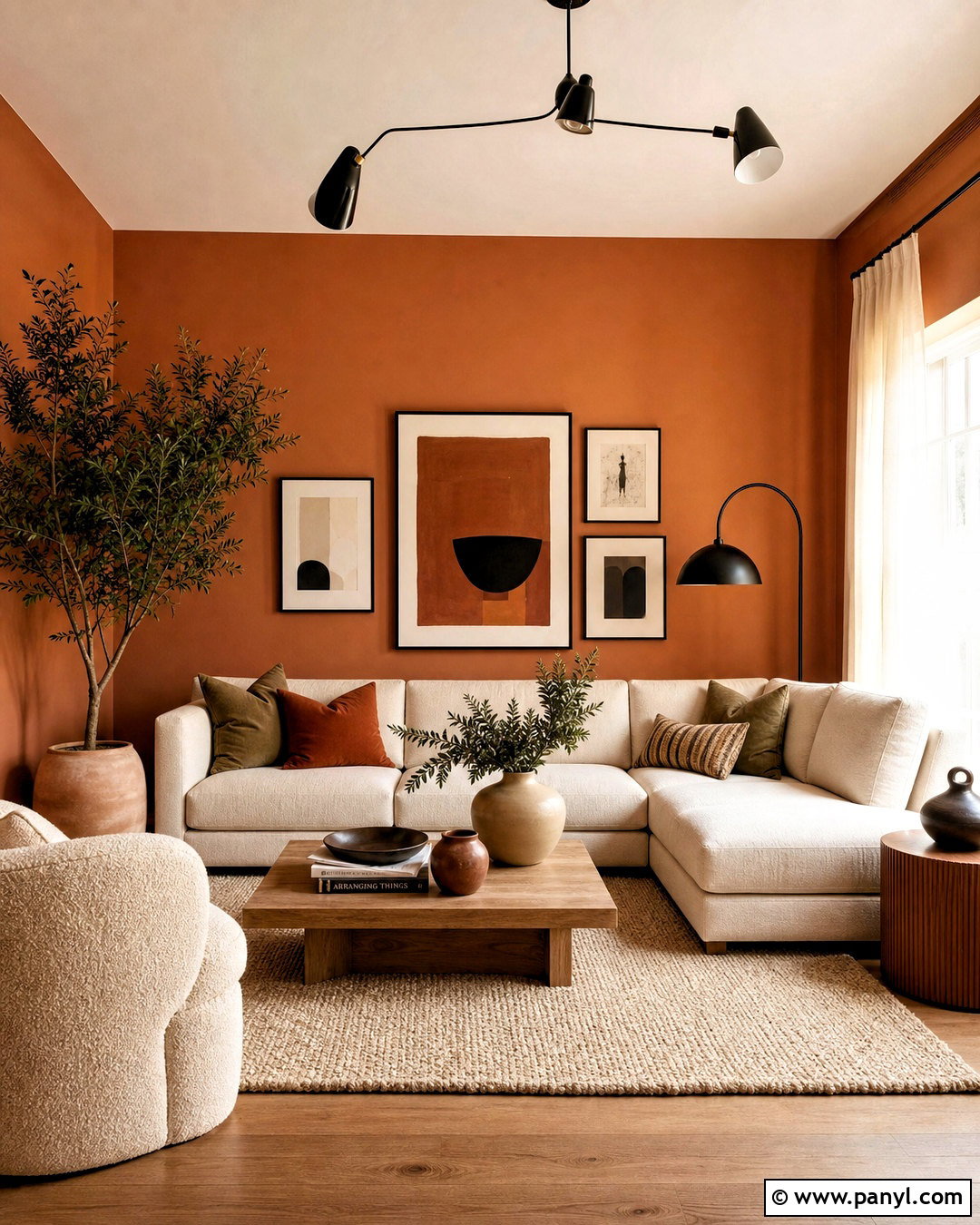
Create a warm living room by pairing muted terracotta walls with a generously sized cream sofa. Choose upholstery with a slightly textured weave so the neutral furniture does not feel flat against the earthy color. Place a medium-toned oak coffee table in the center and anchor the seating with a beige wool rug featuring a subtle geometric pattern. Olive green pillows introduce gentle contrast, while rust and oatmeal cushions connect the palette. Add linen curtains in warm white to keep the windows bright. A black floor lamp and slim black picture frames provide definition. Finish the room with handmade pottery, a tall indoor tree, and one large abstract artwork containing cream, brown, and clay tones.
2. Terracotta Bedroom With Linen Bedding
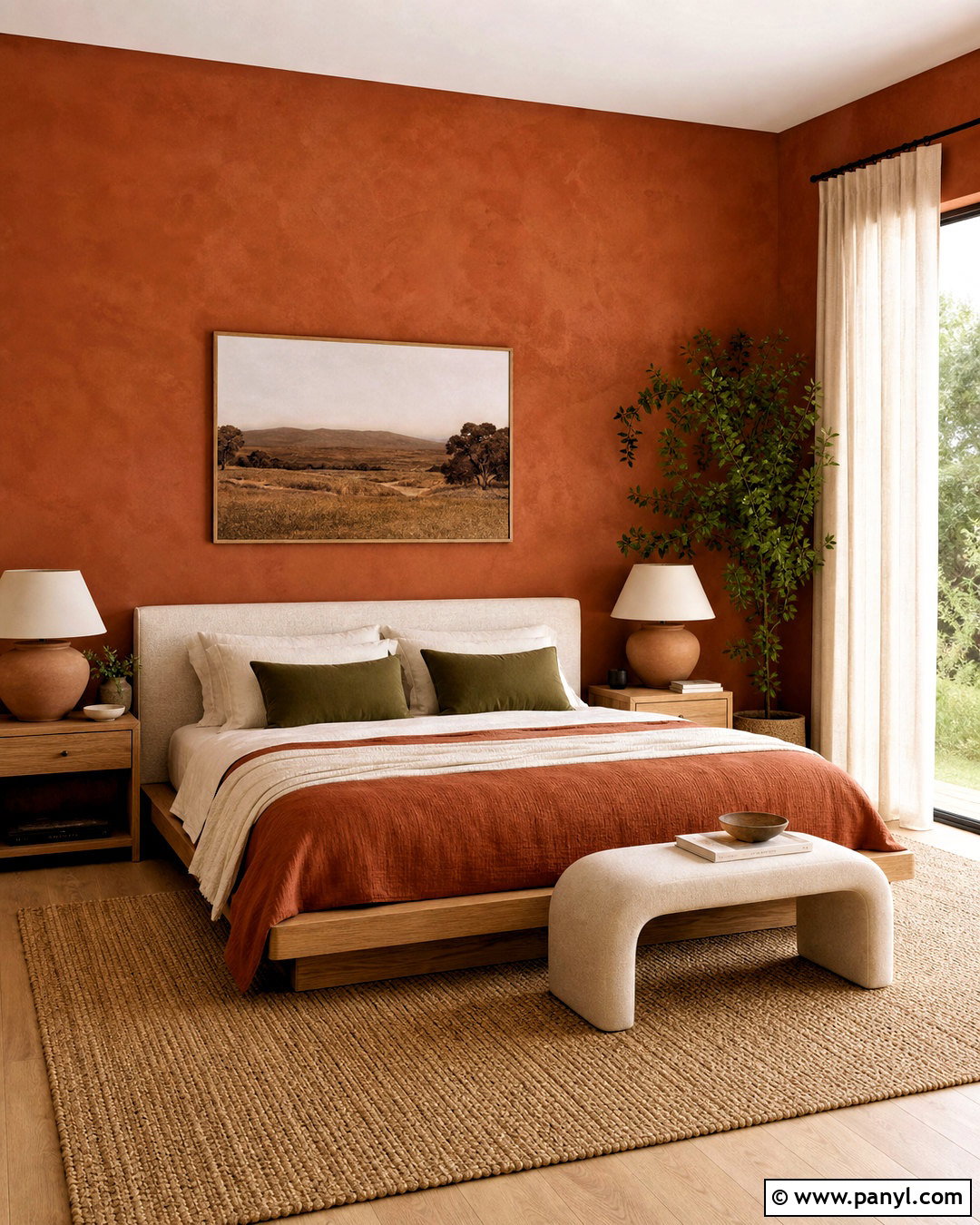
Imagine waking up in a bedroom surrounded by soft clay color and relaxed natural materials. Paint the wall behind the bed a dusty terracotta, leaving the remaining walls warm white to maintain an open feeling. Choose a low oak bed with an upholstered oatmeal headboard, then layer it with ivory linen sheets, a cinnamon-colored coverlet, and olive accent pillows. A woven jute rug adds texture beneath the bed without introducing another strong pattern. Use matching wood nightstands with simple ceramic lamps and off-white shades. Full-length flax linen curtains filter daylight beautifully. Complete the bedroom with a curved bench, one framed landscape print, and a leafy plant in an aged terracotta pot for an inviting, uncluttered finish.
3. Terracotta Kitchen With Wood Cabinets
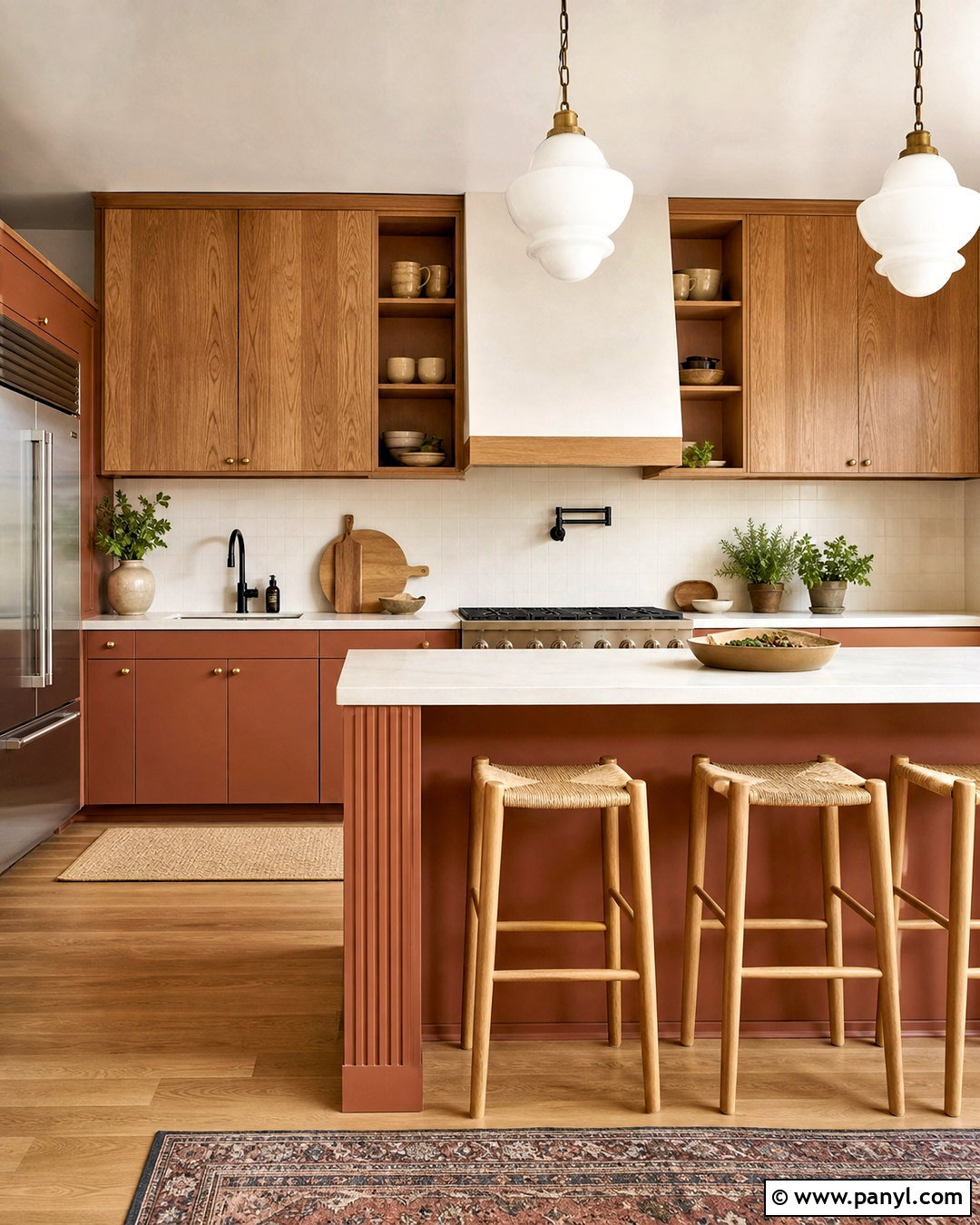
For a welcoming kitchen, combine matte terracotta cabinets with visible wood grain and pale stone surfaces. Use the clay color on the lower cabinets and island, then install warm oak cabinets or open shelving above. A creamy quartz countertop and backsplash keep the workspace clean and visually light. Select aged brass hardware rather than shiny gold, since its softer finish suits the earthy palette. Medium oak flooring connects the cabinets and shelves while adding natural warmth. Three simple milk-glass pendants can brighten the island without competing with the color. Add woven counter stools, cream ceramic dishes, wood cutting boards, and a few potted herbs. Small black details on the faucet and window frames give the complete kitchen a modern edge.
4. Terracotta Dining Room With Dark Wood
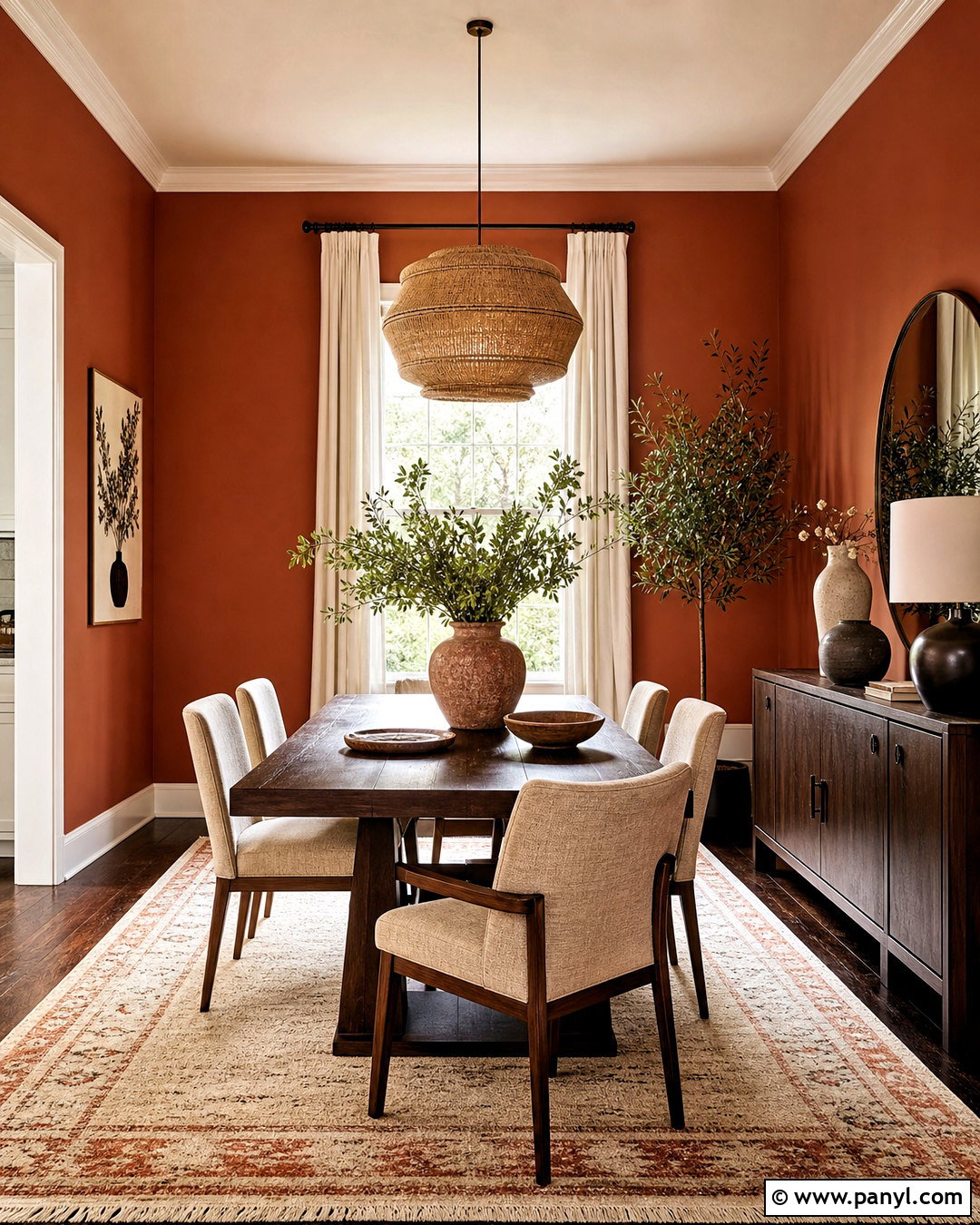
A terracotta dining room feels especially grounded when paired with deep brown furniture. Cover the walls in a muted red-clay paint and soften the intensity with a warm white ceiling and matching trim. Center a substantial walnut dining table in the room, surrounded by chairs upholstered in oatmeal linen. Above the table, hang a wide sculptural pendant made from natural fibers or softly finished plaster. A faded cream and rust rug can define the dining area while allowing chairs to move comfortably. Style a dark wood sideboard with ceramic vessels, stacked books, and a large round mirror. Add floor-length ivory curtains and one tall plant near the window. The result feels polished, intimate, and suitable for everyday meals or gatherings.
5. Terracotta Bathroom With Cream Tile
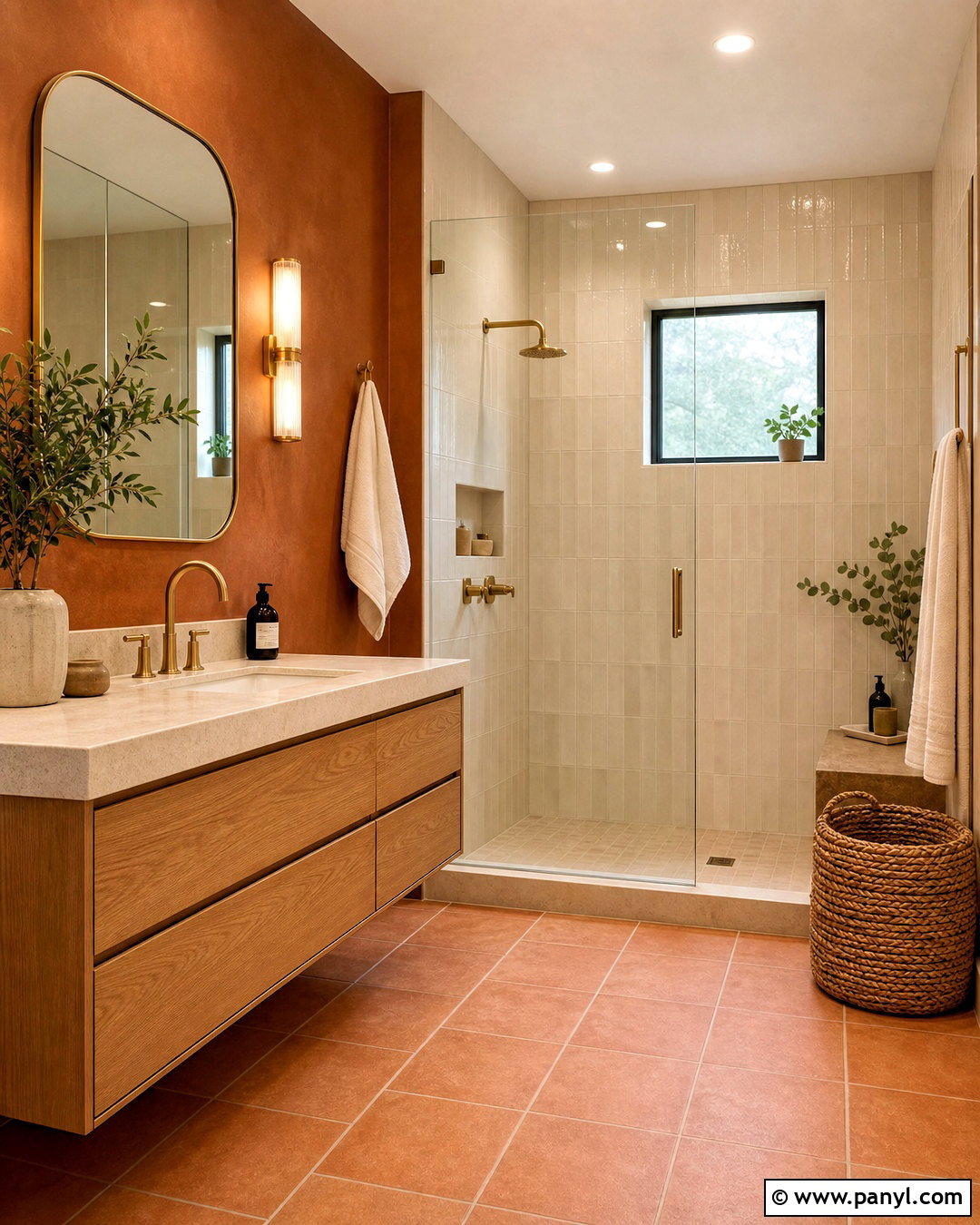
Can a small bathroom handle a strong earthy color? Yes, when it is balanced with pale tile and clean fixtures. Use glazed terracotta-colored tile across the vanity wall, selecting handmade-looking pieces with gentle shade variation. Cover the remaining walls with large cream tiles and use warm beige grout for a seamless appearance. A floating oak vanity keeps the floor visible and adds storage without heaviness. Pair it with an off-white stone countertop, brushed brass faucet, and rounded brass mirror. Terracotta floor tile can continue the palette, but choose a slightly lighter tone than the wall. Add ivory towels, a woven basket, and a moisture-friendly plant. Clear glass around the shower preserves openness and allows every material to remain visible.
6. Terracotta Entryway With Black Accents
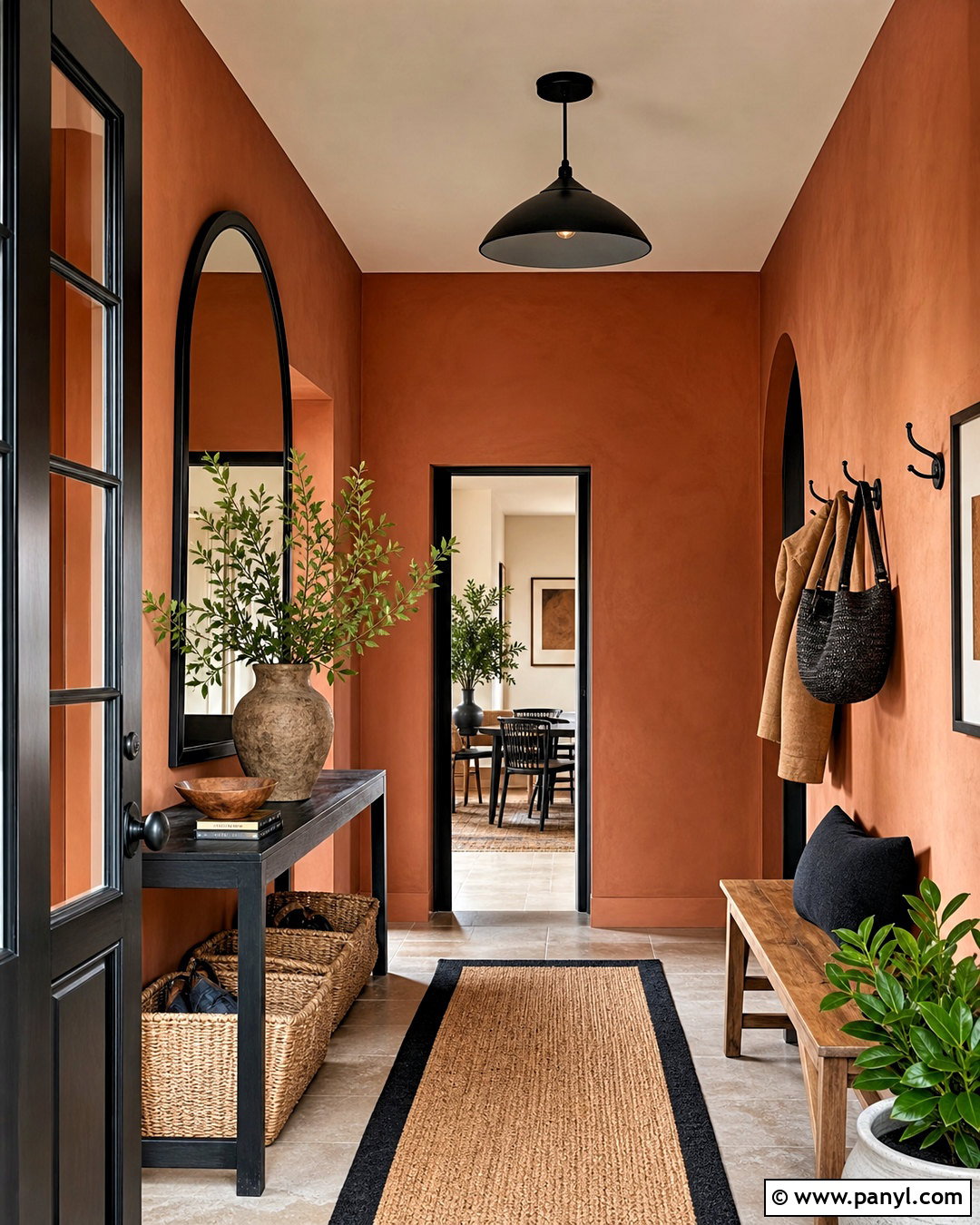
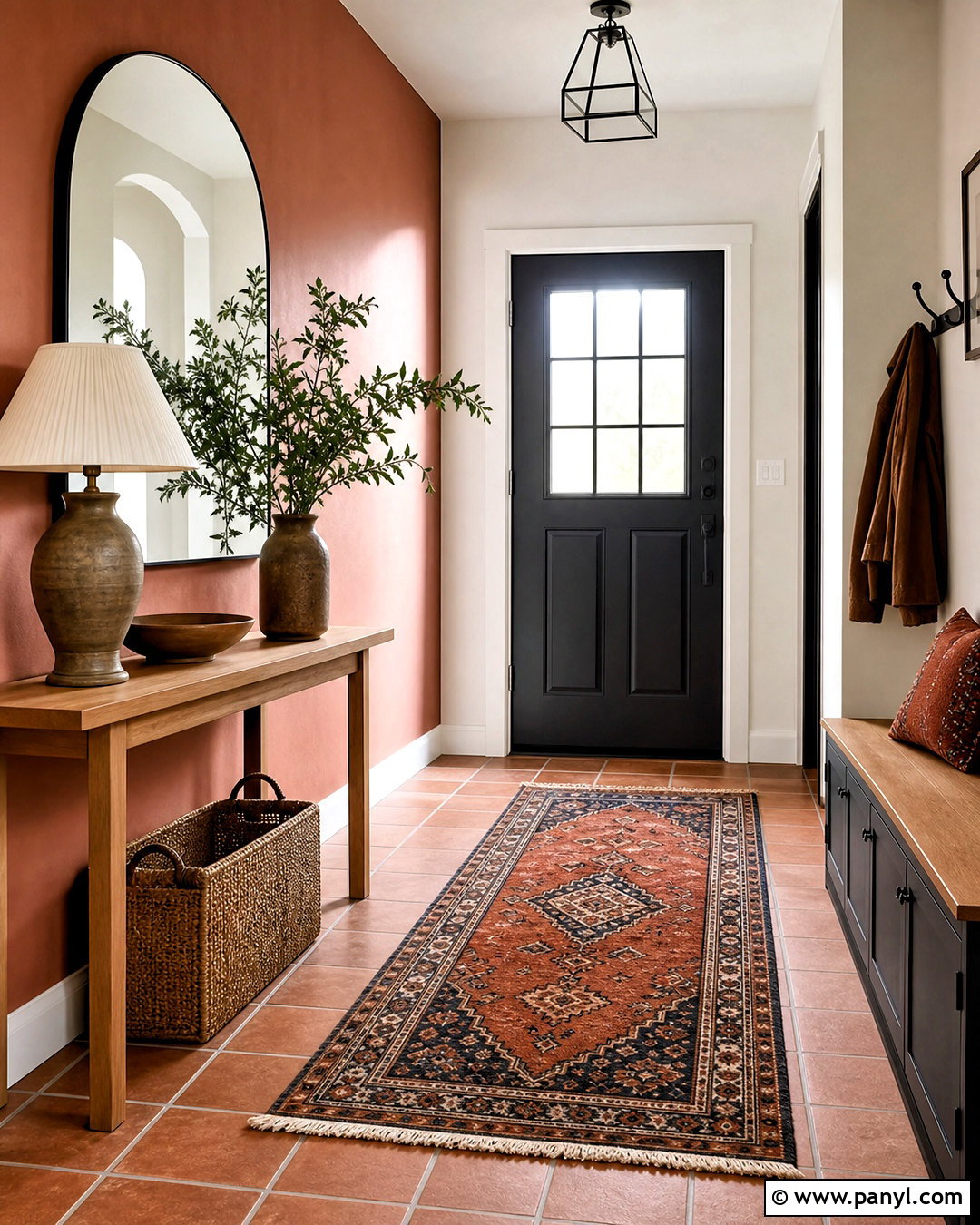
Set an inviting tone from the moment someone enters by using terracotta with crisp black details. Paint the entry walls a medium clay shade and keep the ceiling bright warm white. Against one wall, place a slim black console with drawers for keys and small essentials. A large arched mirror above it will reflect light and make a narrow hallway appear wider. Ground the area with a natural jute runner bordered in black. An oak bench provides convenient seating, while woven baskets underneath organize shoes and bags. Add a matte black pendant, simple wall hooks, and one oversized ceramic vase filled with leafy branches. The contrast keeps the earthy walls from looking overly rustic and gives the entire entrance a practical contemporary finish.
7. Terracotta Home Office With Built-In Shelves
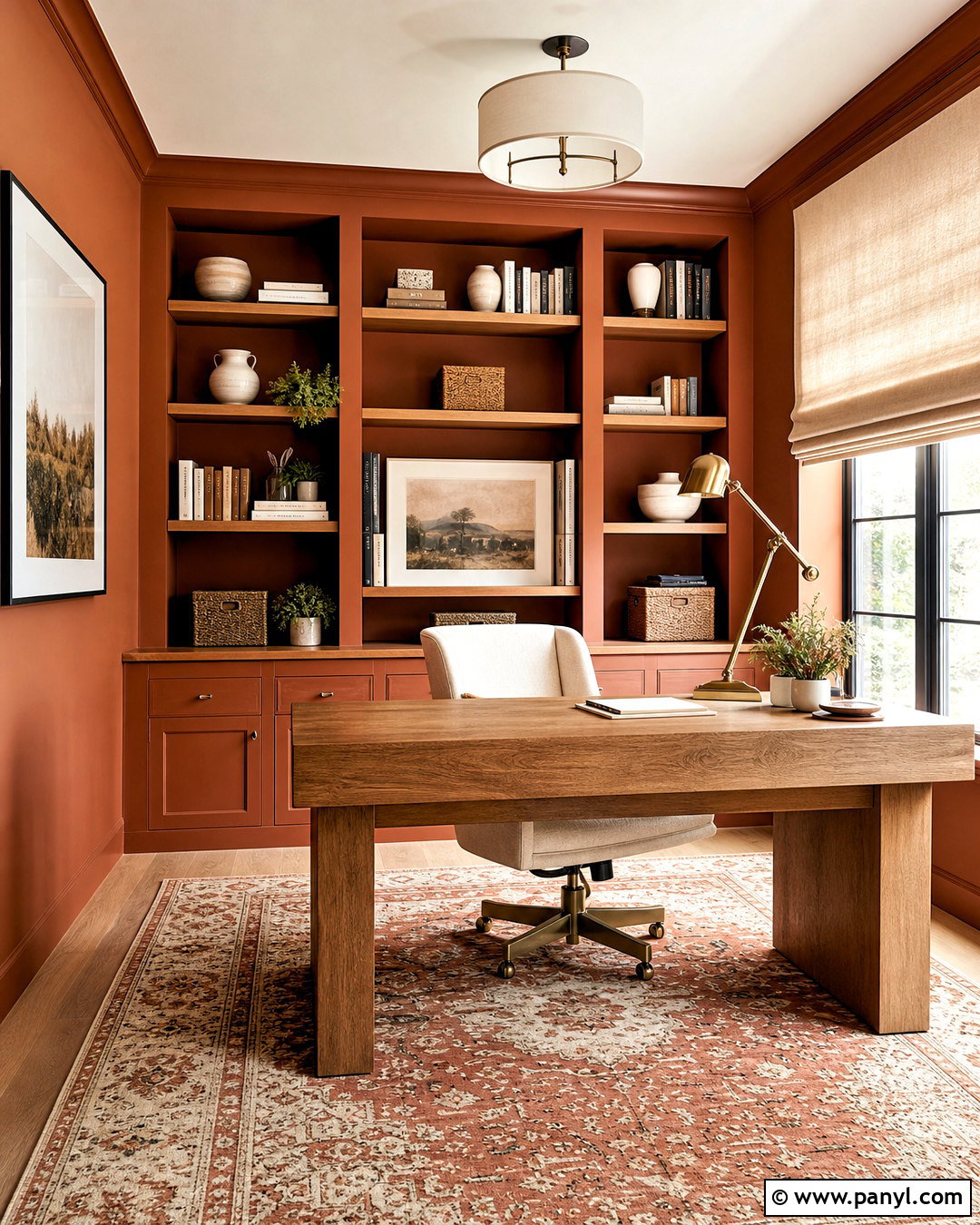
Turn a home office into a focused but comfortable workspace using terracotta walls and painted storage. Color the walls and built-in bookcases in the same muted clay shade for a cohesive, enveloping effect. Break up the color with a substantial oak desk positioned near the window. Choose a supportive chair upholstered in cream fabric rather than stark black office seating. Inside the shelves, mix books with white ceramics, small plants, and woven boxes that conceal supplies. A patterned rug containing sand, rust, and dark brown grounds the furniture. Add a bronze desk lamp and linen roman shade for soft texture. Keep cords and equipment hidden wherever possible so the color-drenched design feels intentional, organized, and calm enough for daily work.
8. Terracotta Reading Nook With Olive Green
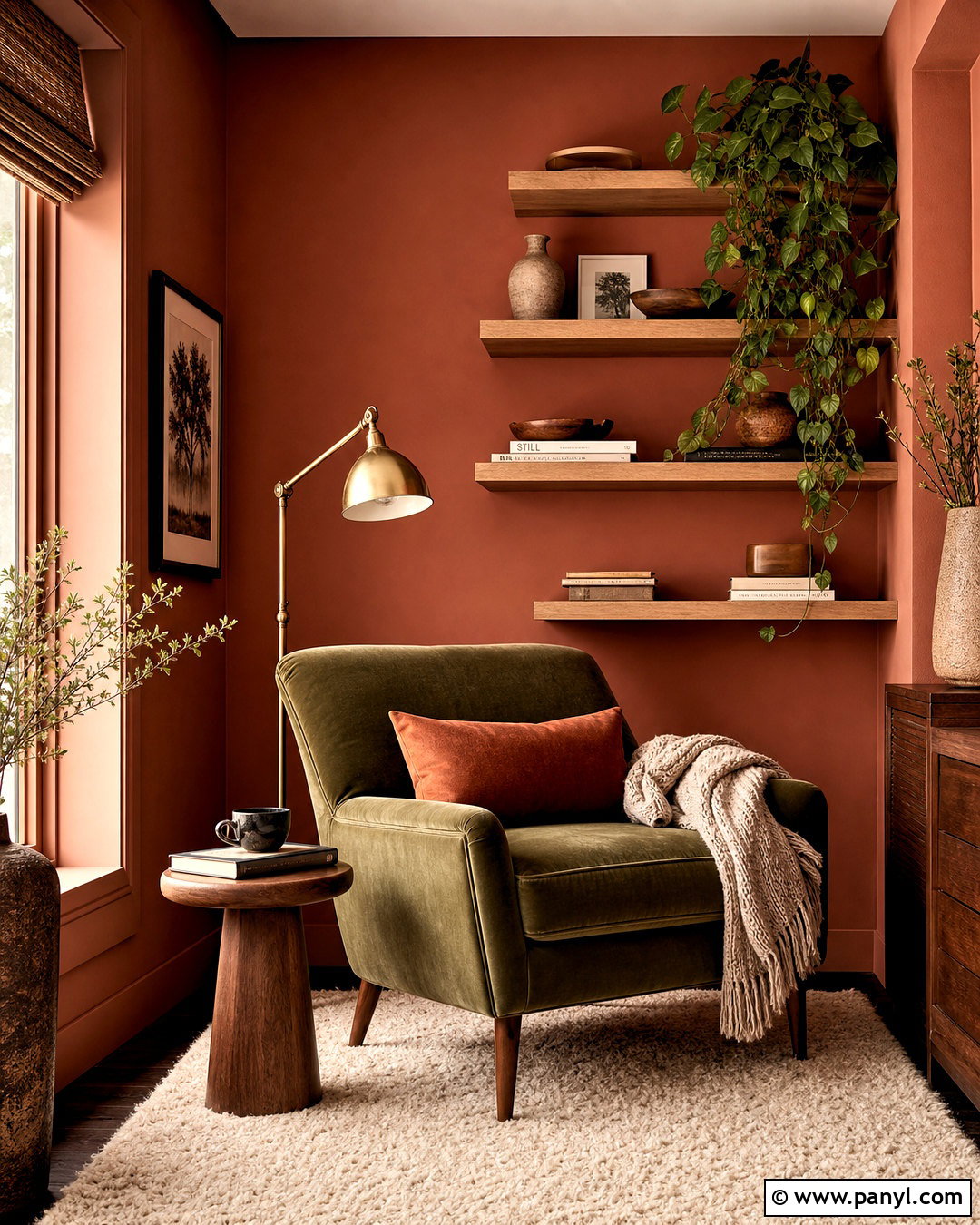
A quiet corner becomes much more inviting when terracotta and olive green are used together. Paint the nook or surrounding wall a gentle burnt-clay tone, then place a comfortable olive velvet armchair at a slight angle rather than pushing it flat against the wall. Add a small round walnut table for books and a cup, along with a slender antique-brass reading lamp. A cream wool rug visually separates the nook from the rest of the room. Use a rust-colored lumbar pillow and a lightweight oatmeal throw to connect the chair with the walls. Floating oak shelves can hold a carefully edited collection of books and pottery. Finish with one trailing plant, keeping the floor and nearby surfaces clear enough for the corner to feel peaceful.
9. Terracotta Fireplace With Built-In Storage
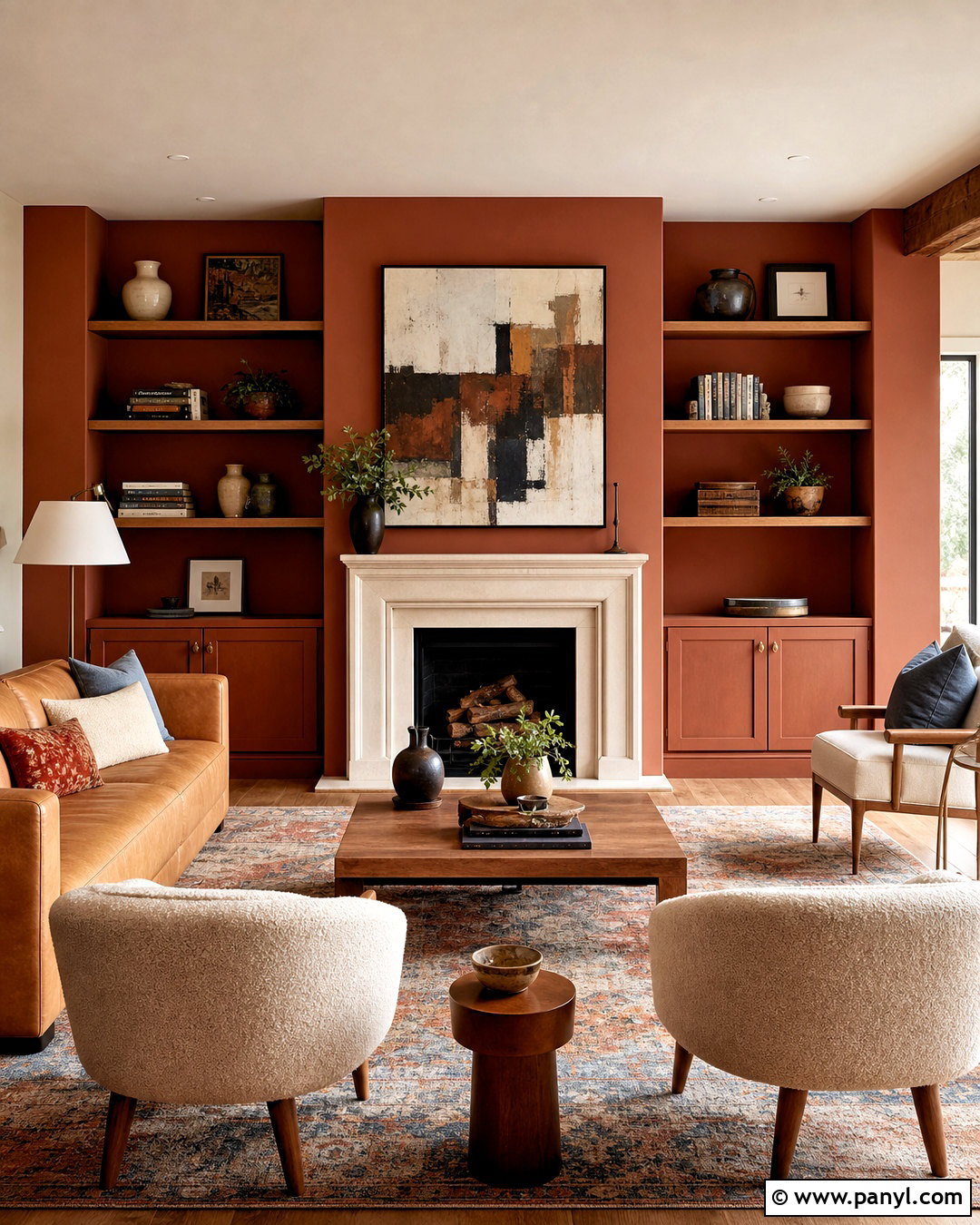
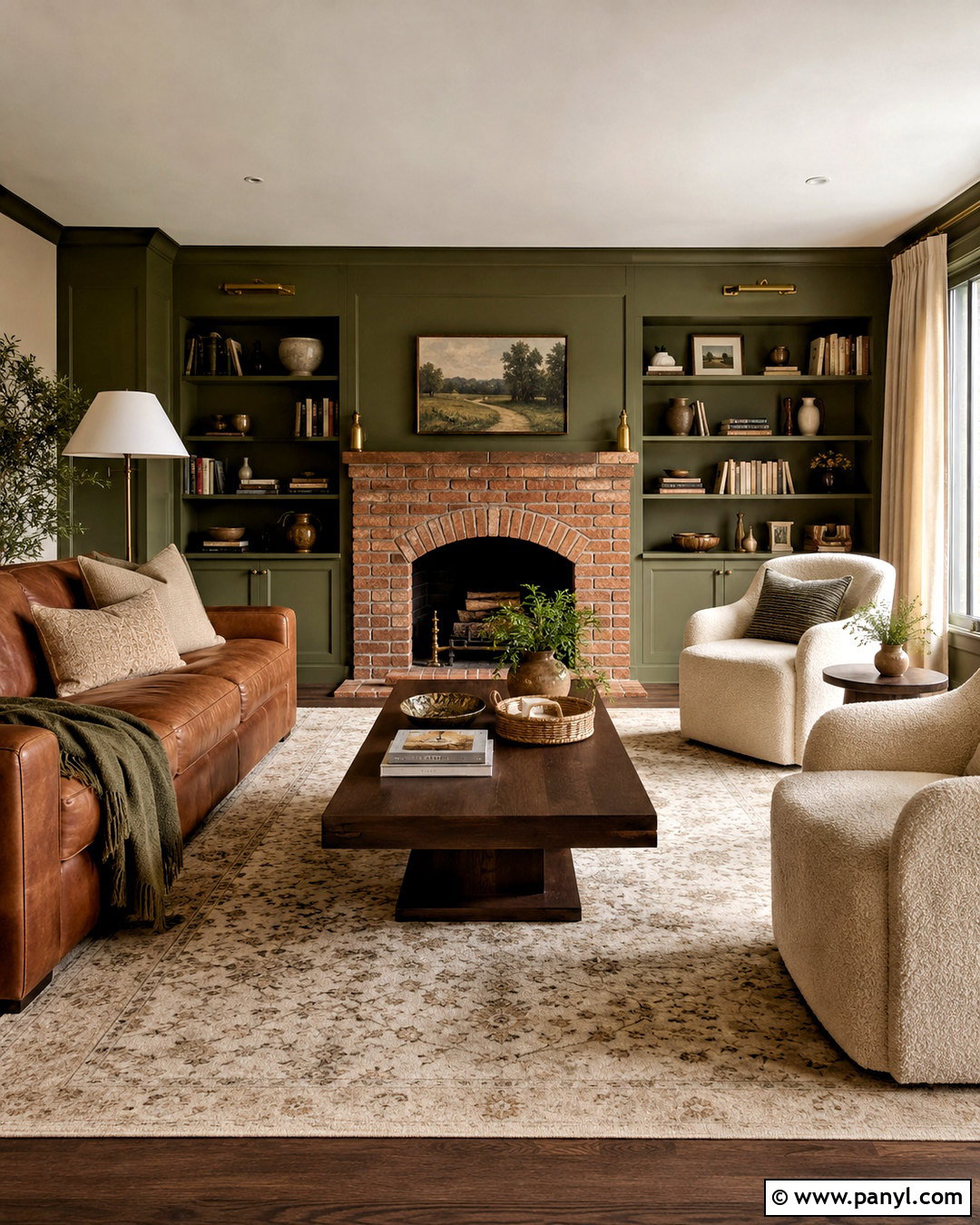
Make the fireplace the natural focus of a living room by surrounding it with rich terracotta color. Paint the chimney breast, mantel, and adjacent built-ins in one deep clay shade for a custom architectural appearance. Choose a simple cream stone or plaster fireplace surround to create contrast around the firebox. Install warm oak shelves inside the built-ins, using the lower cabinets to hide electronics and everyday clutter. A camel leather sofa and two cream boucle chairs can form a balanced conversation area facing the fireplace. Add a faded Persian-style rug with rust, tan, and muted blue details. Keep mantel decor restrained with one large artwork, two uneven ceramic vessels, and a small branch arrangement so the feature remains strong rather than crowded.
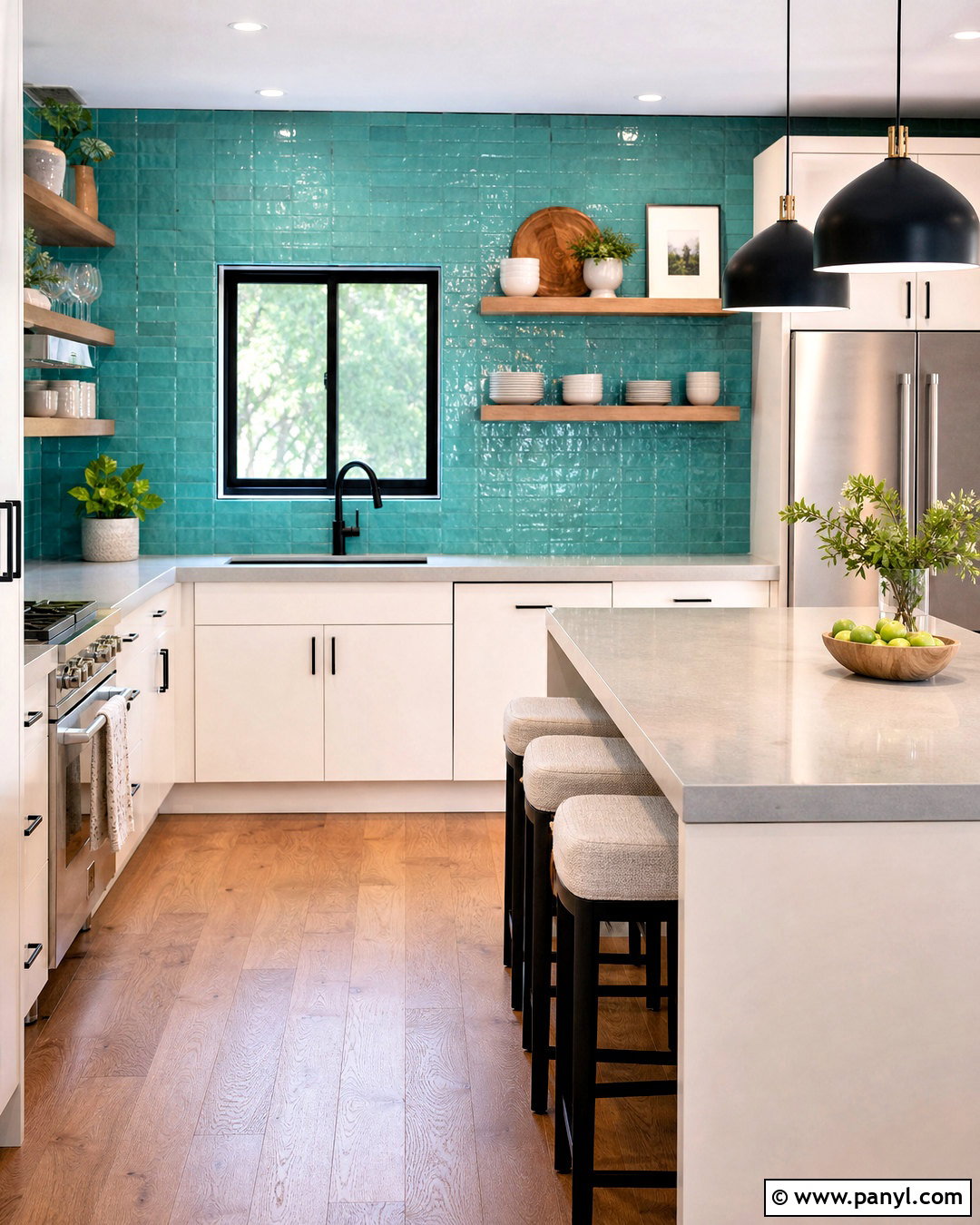
10. Terracotta Kitchen Floor With Green Cabinets
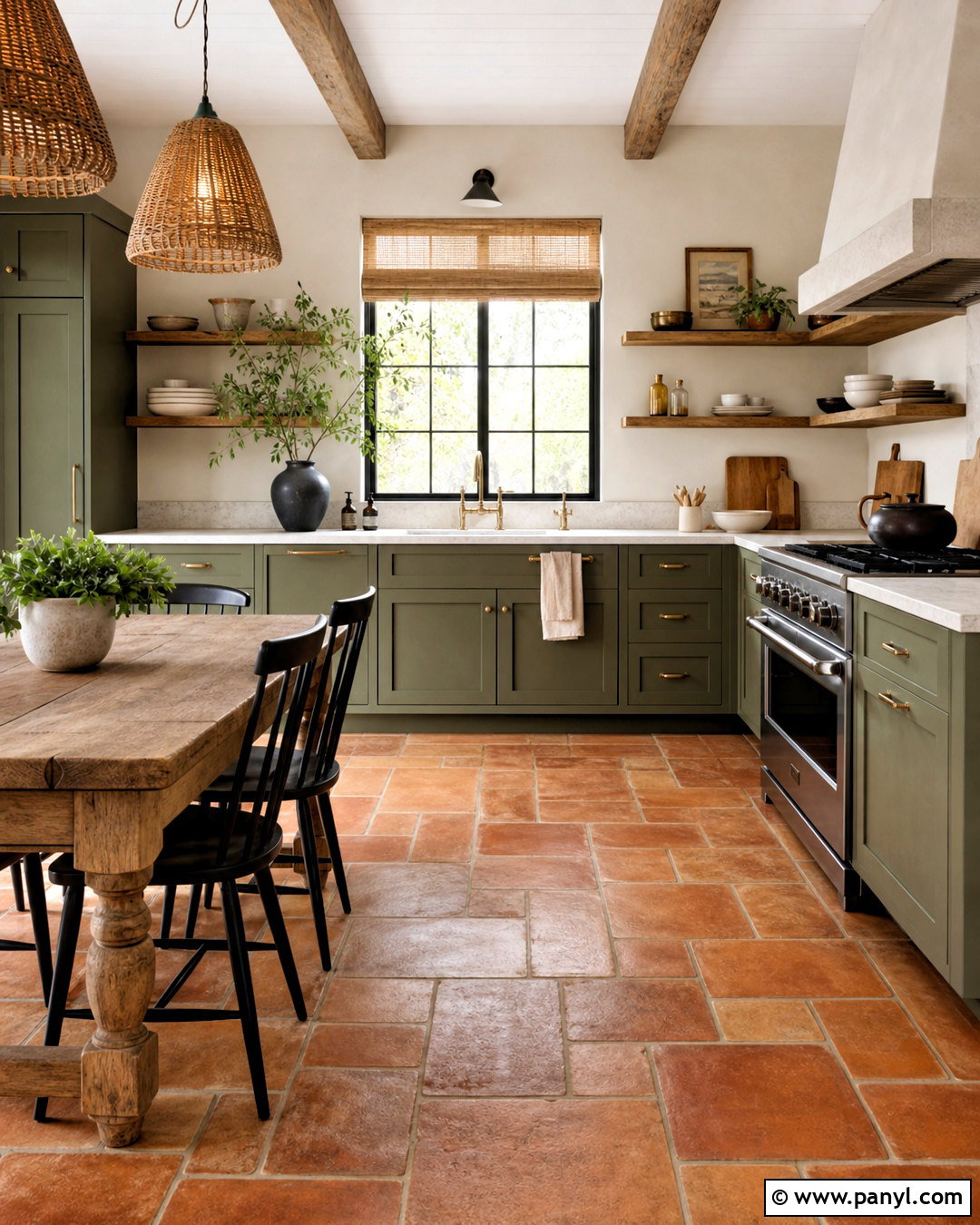
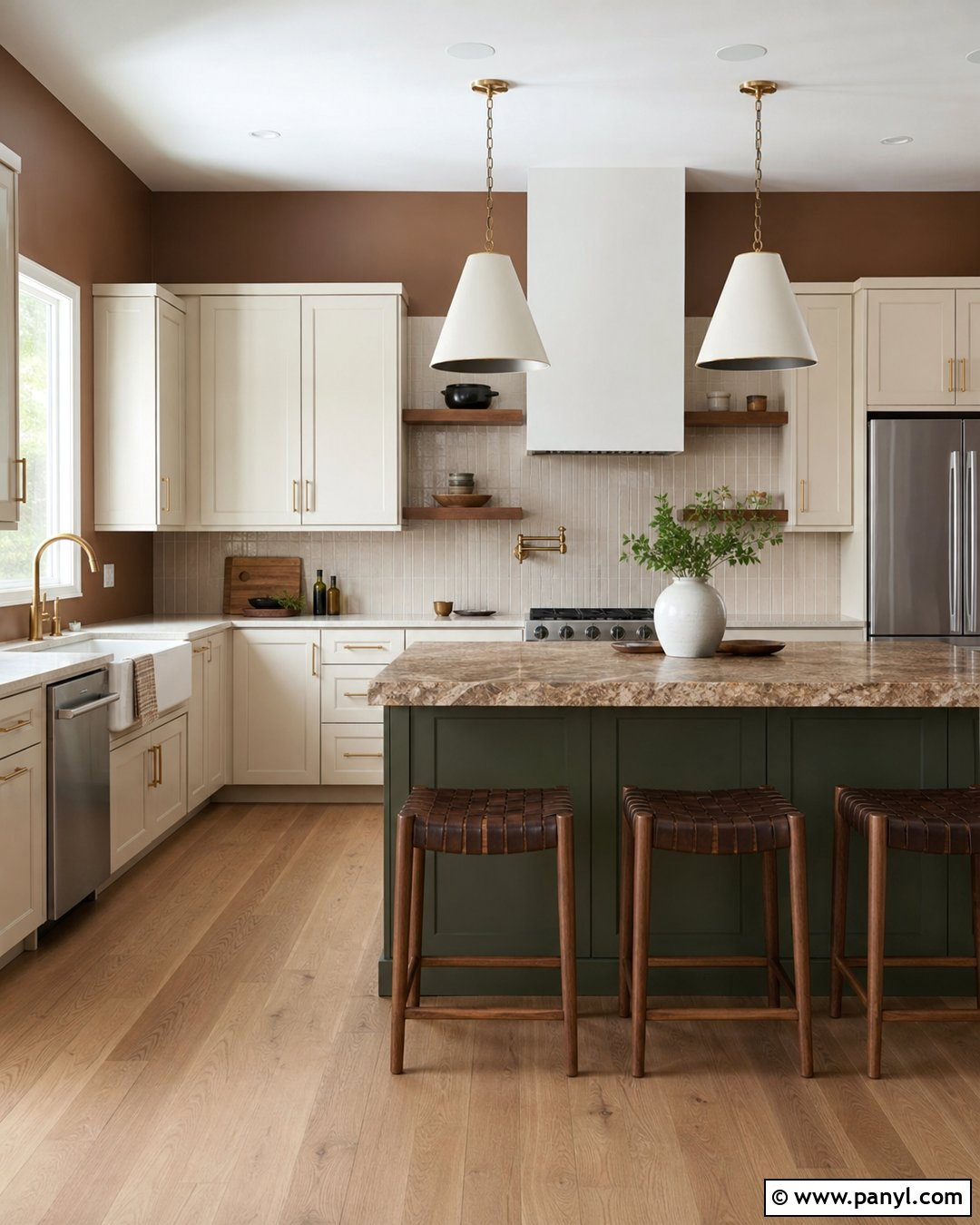
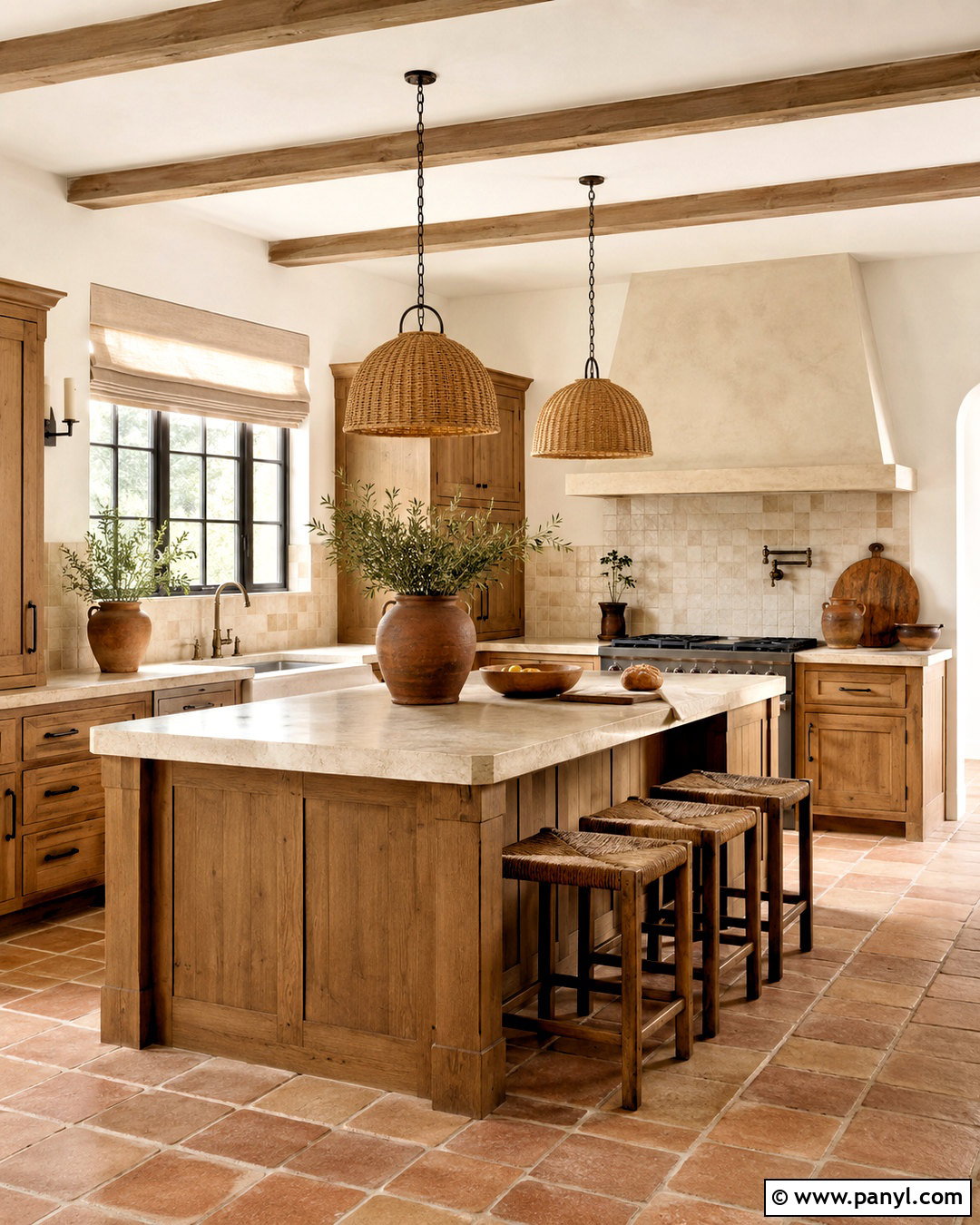
Terracotta floor tile and muted green cabinets create a kitchen that feels warm, useful, and connected to nature. Choose square or rectangular floor tiles with soft color variation, then lay them in a simple straight or offset pattern. Paint the cabinets a dusty olive or warm sage green so the contrast remains gentle. Cream walls and lightly veined stone countertops prevent the two earthy colors from making the room feel dark. Use oak shelving for daily dishes and aged brass pulls on the cabinetry. A farmhouse-style table or compact wood island can add valuable preparation space. Complete the room with woven pendant lights, natural linen window coverings, and a few black metal details. Keep decorative objects minimal so the textured floor stays clearly visible.
11. Terracotta Accent Wall With Blue Sofa
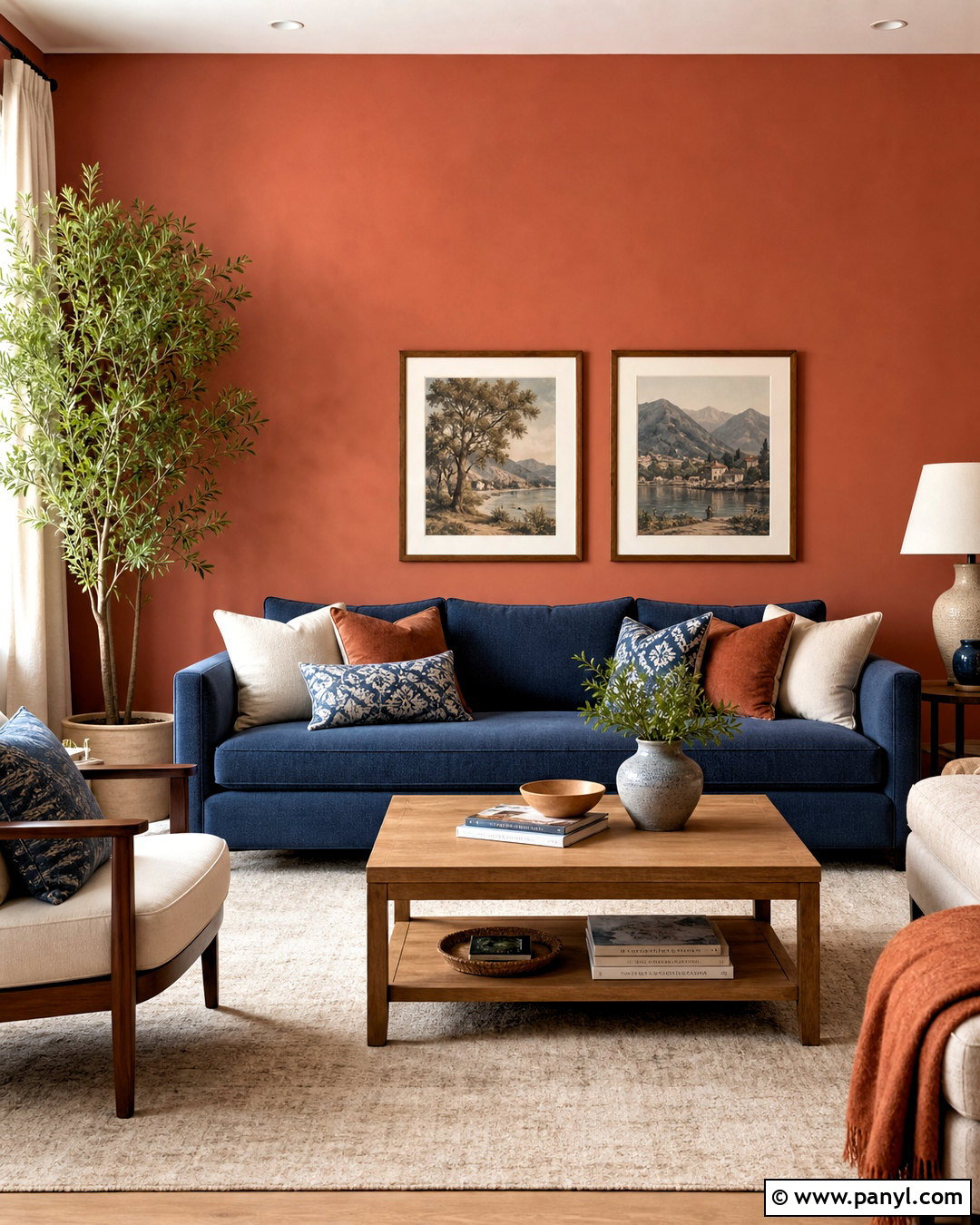
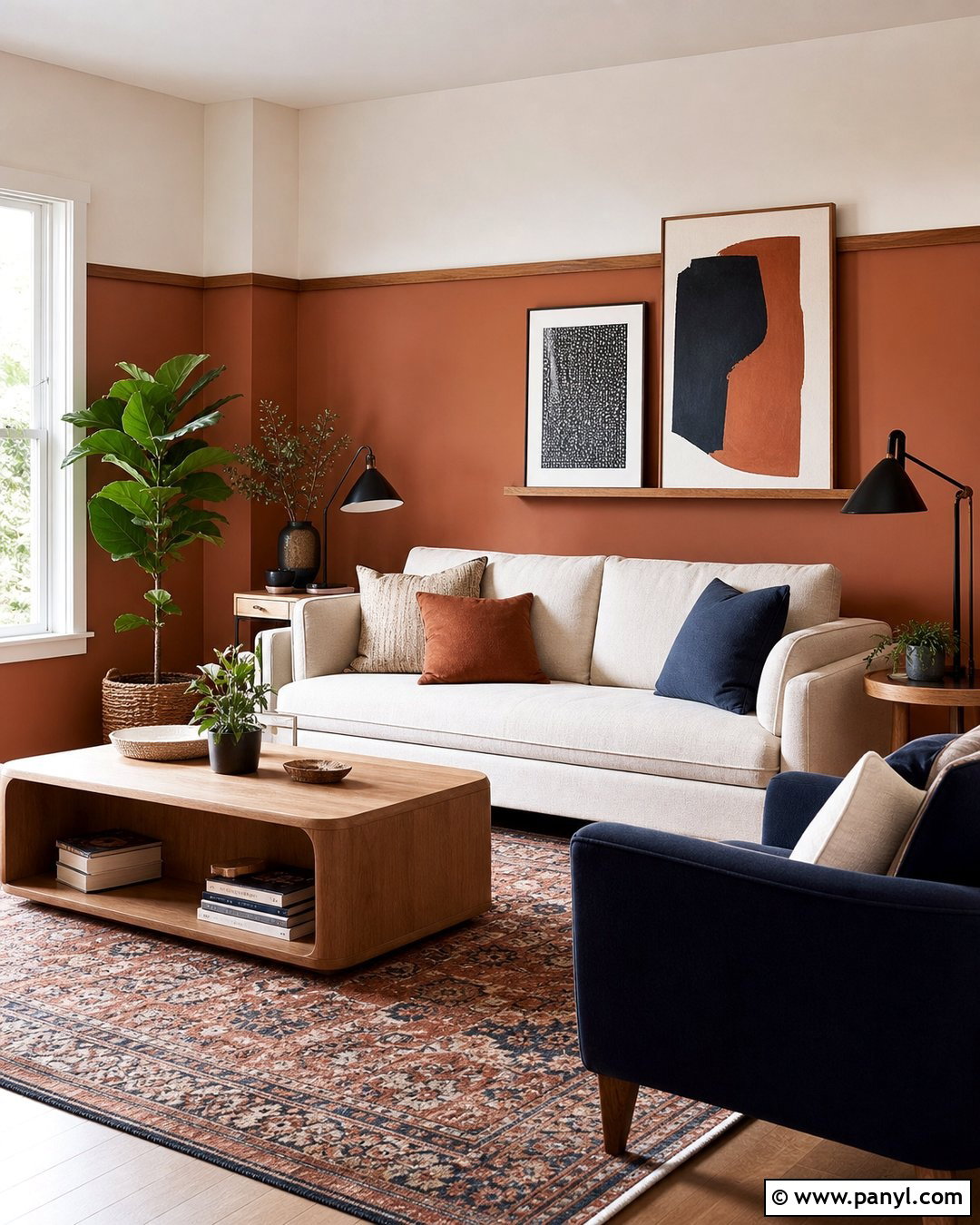
If you already own a blue sofa, a terracotta accent wall can make it feel more intentional. Choose a muted clay paint with a reddish undertone, which pairs more smoothly with dusty navy, denim, or slate blue than a bright orange shade. Position the sofa against the colored wall and add cream, rust, and patterned blue pillows. Place a light oak coffee table nearby to keep the combination from becoming too heavy. A large ivory rug will provide breathing room beneath the contrasting colors. Hang simple artwork containing warm beige and soft blue, using thin walnut or black frames. Linen curtains, ceramic table lamps, and one tall plant complete the room. Repeat terracotta only once or twice elsewhere to preserve a balanced appearance.
12. Terracotta Bedroom With Blush Pink
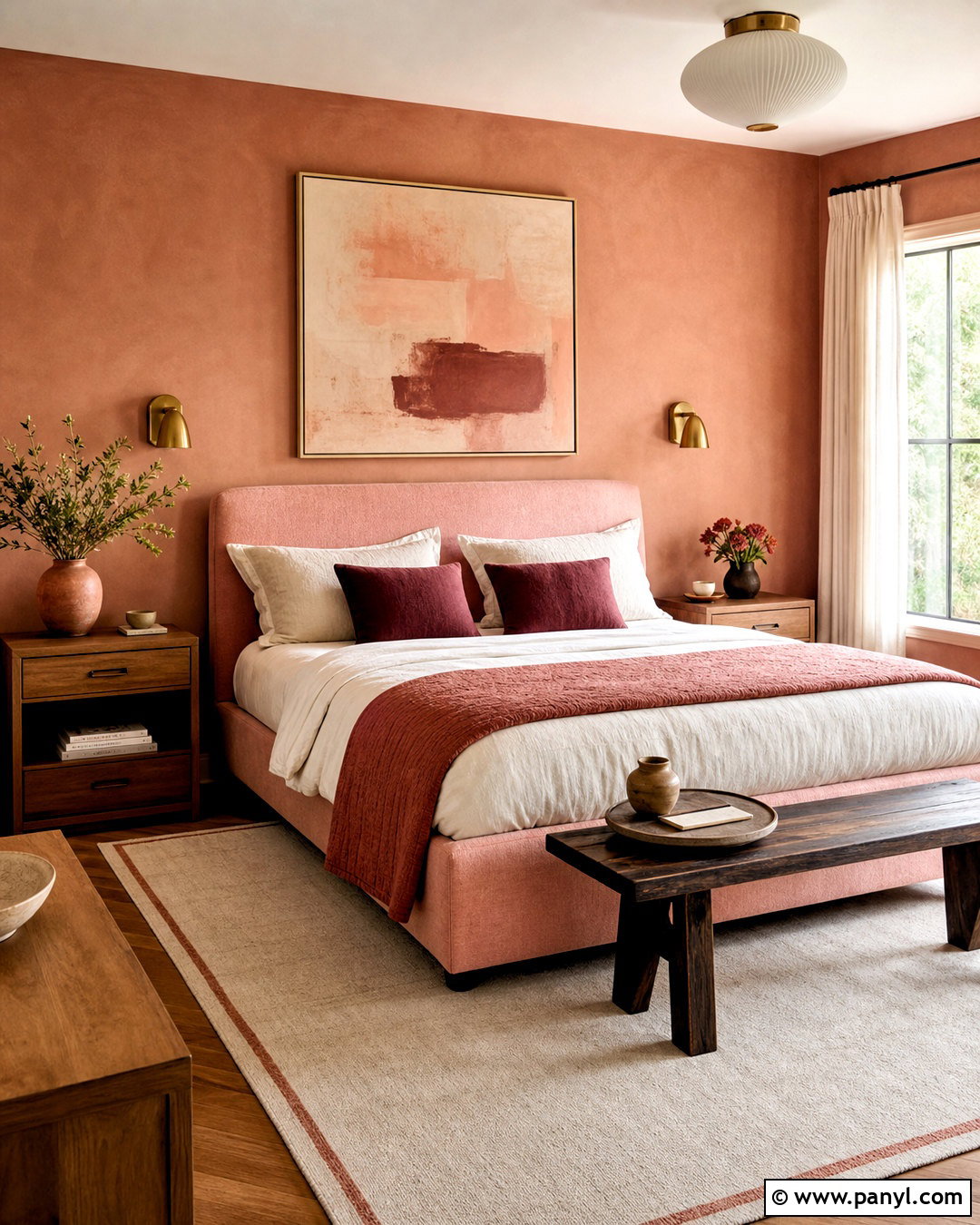
Terracotta and blush pink can create a grown-up bedroom when both colors have dusty, softened undertones. Use pale terracotta across the walls and place a blush upholstered bed at the center of the scheme. Layer the bedding with warm white sheets, a clay-colored quilt, and a few plum or burgundy accent pillows for depth. Medium oak nightstands prevent the pink tones from becoming overly sweet. Choose aged brass sconces and a cream rug with a subtle border. Full linen curtains in oatmeal will gently filter the light and balance the stronger bed color. Above the headboard, hang one wide abstract piece instead of several small frames. A dark wood bench and simple pottery introduce enough visual weight to make the whole bedroom feel sophisticated.
13. Terracotta Laundry Room With Cream Cabinets
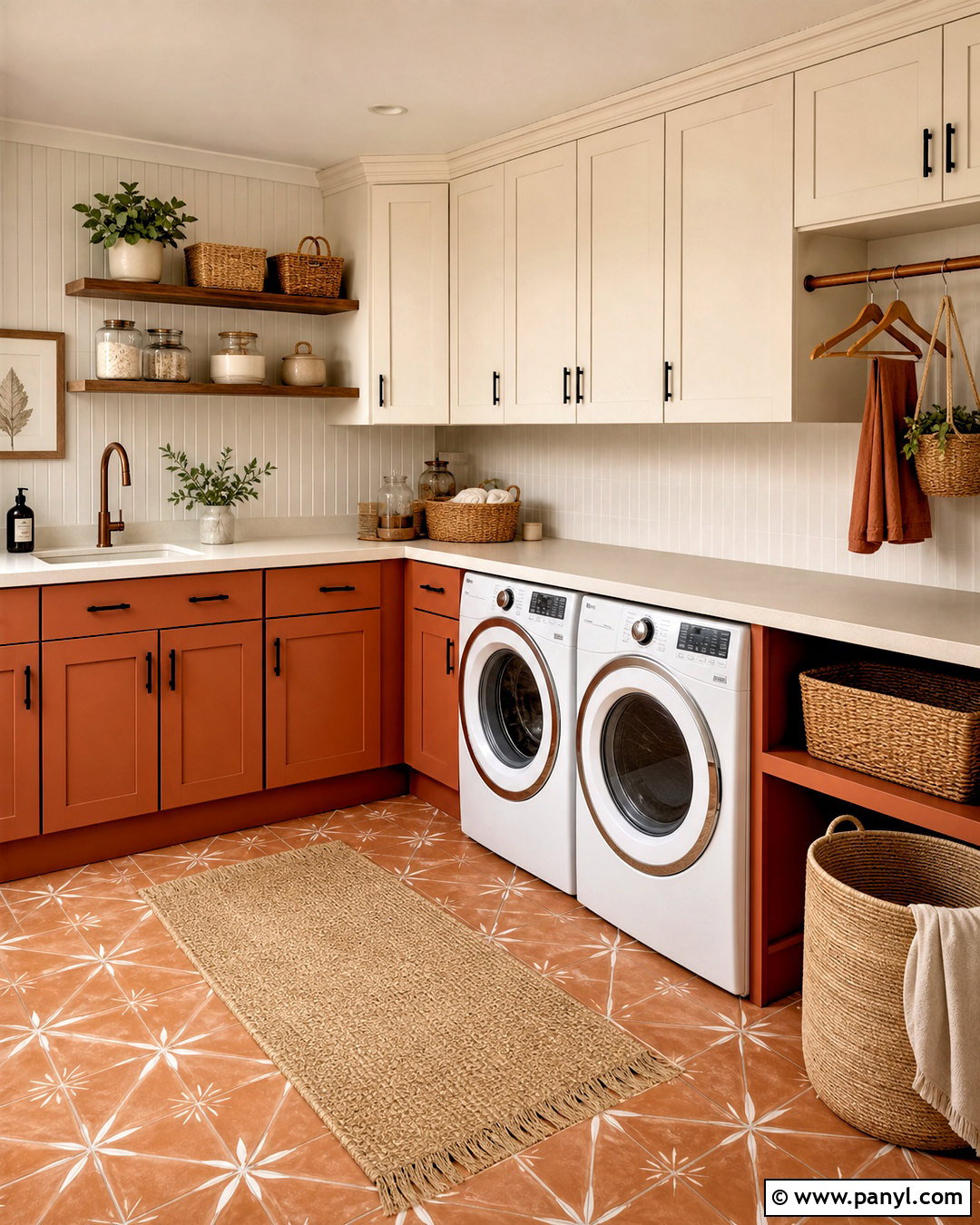
Even a practical laundry room can benefit from a complete color scheme. Paint the lower cabinets terracotta and keep the upper cabinets creamy white, creating warmth without surrounding the small space in a dark color. Add a durable pale quartz countertop over front-loading appliances to provide a folding station. A warm white vertical tile backsplash keeps the walls easy to maintain while adding subtle texture. Install a wood hanging rail beneath the upper cabinets and include open oak shelves for baskets, jars, and folded towels. Terracotta-patterned floor tile can disguise everyday marks, especially when mixed with beige and charcoal. Use matte black cabinet pulls and a matching faucet for contrast. Finish with labeled woven baskets and closed storage so supplies remain attractive and organized.
14. Terracotta Powder Room With Patterned Tile
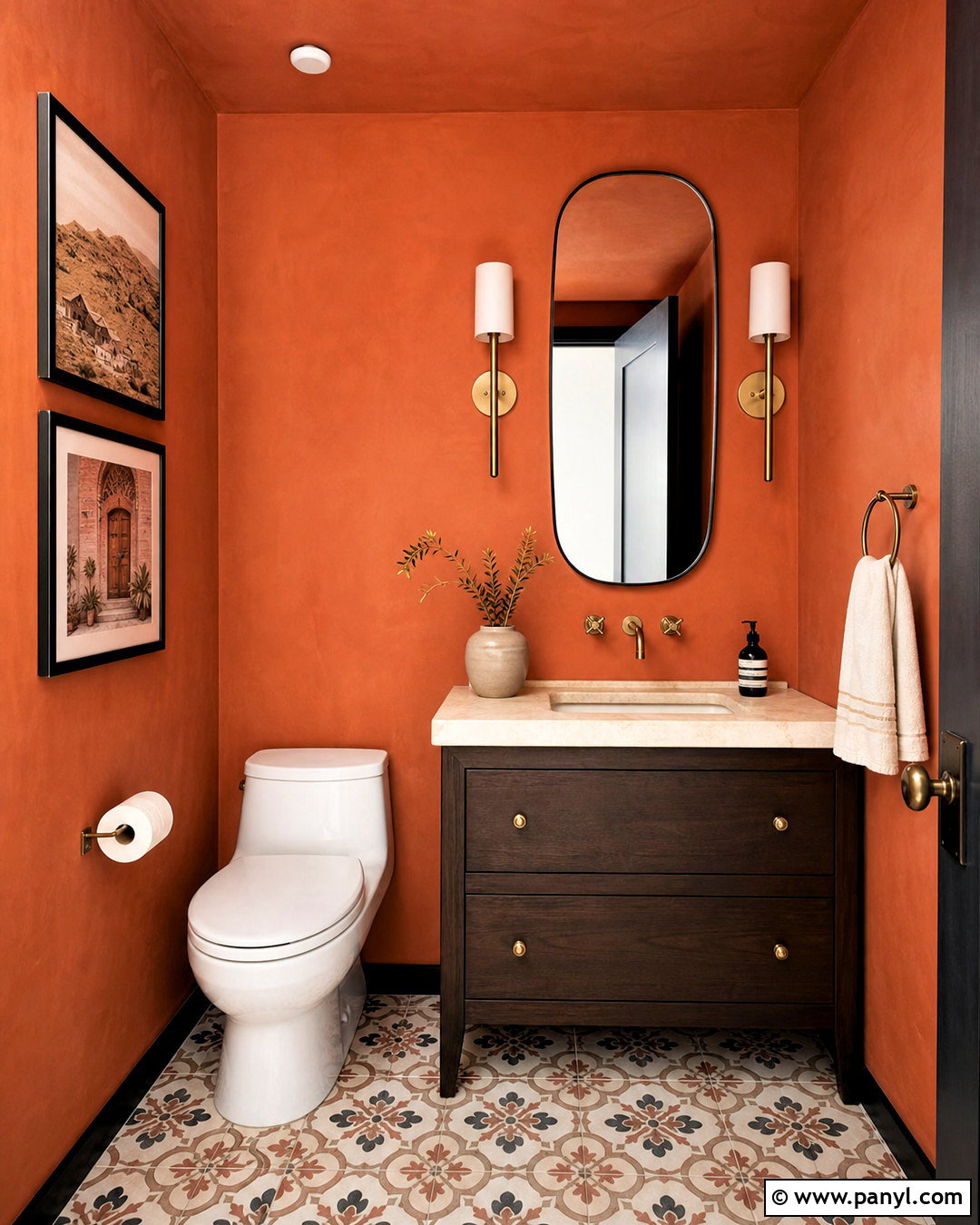
A powder room is an ideal place to use terracotta more boldly because the space is compact and separate. Paint the walls and ceiling in a saturated burnt-clay tone to create a unified backdrop. Install patterned cement floor tile containing cream, black, and faded terracotta, keeping the design small enough for the room’s scale. A compact dark walnut vanity adds richness, while a cream stone top brightens the sink area. Choose a rounded mirror and wall-mounted sconces in aged brass for soft reflection. One framed print and a small ceramic vase are enough decoration. Keep towels ivory and plumbing fixtures simple. The mix of deep color, pattern, and polished details gives guests a memorable room without reducing its everyday function or making it feel unnecessarily busy.
15. Terracotta Sunroom With Wicker Furniture
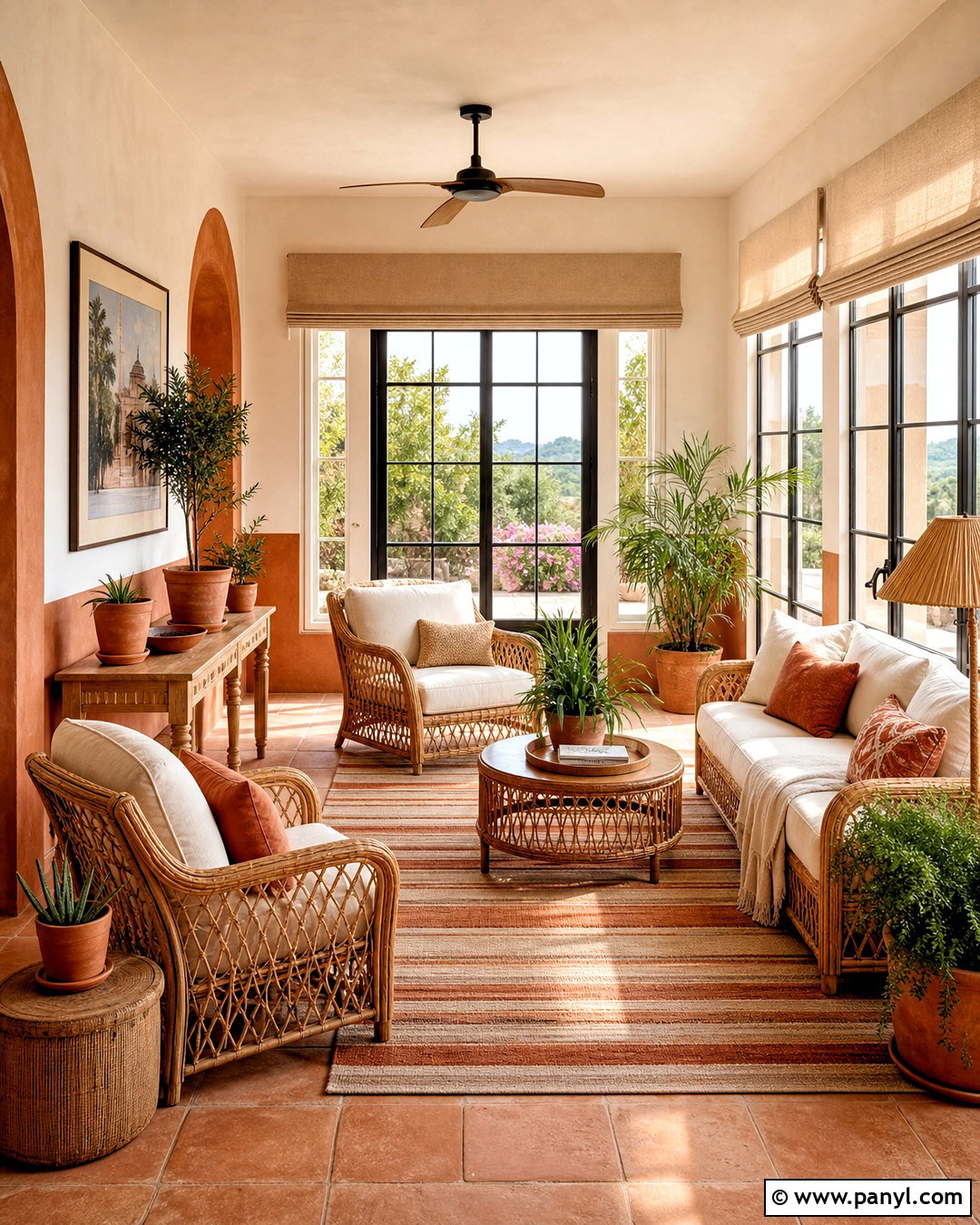
Sunlight brings out the softer orange and rose undertones in terracotta, making it an excellent color for a sunroom. Paint the lower half of the walls clay red and leave the upper walls warm white, or use terracotta on a single solid wall. Furnish the room with light wicker chairs, cream seat cushions, and a round oak or rattan coffee table. A striped flat-weave rug in beige and rust adds pattern while remaining casual. Surround the seating with plants in different sizes, using simple terracotta pots to repeat the wall color. Add linen roman shades to control glare without blocking natural light. A narrow console can hold gardening books and watering supplies. Keep pathways open so the completed room feels airy and genuinely usable.
16. Terracotta Studio Apartment With Beige Decor
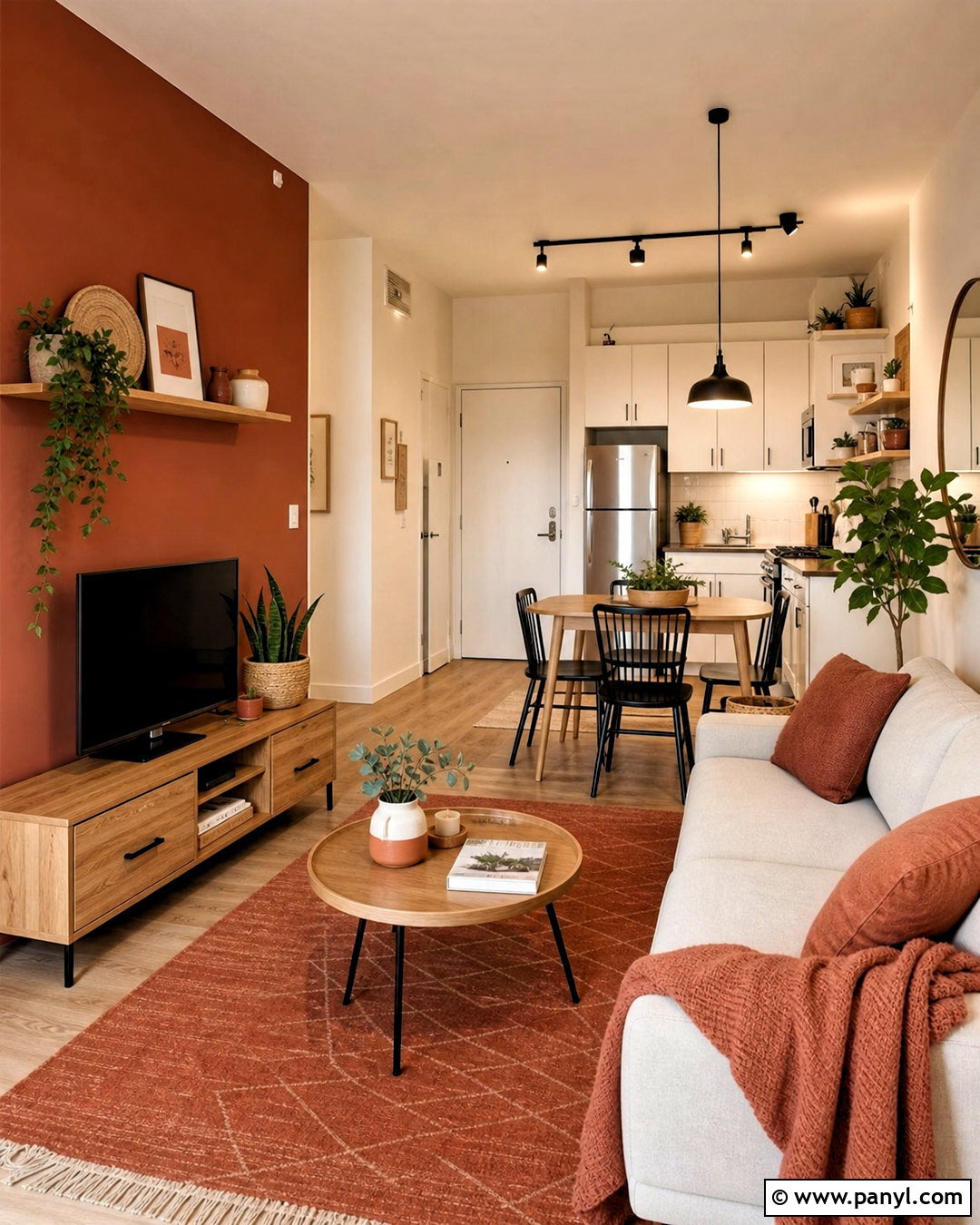
In a studio apartment, terracotta can help define zones without adding walls. Use the color behind the living area, while keeping the sleeping and kitchen sections warm white or pale beige. A compact cream sofa facing a low oak media cabinet creates a clear lounge zone. Position a natural wood dining table between the kitchen and living space to act as a transition. Repeat terracotta through one rug, two pillows, and ceramic decor rather than placing it everywhere. Choose furniture with visible legs so more flooring remains exposed. Linen curtains, woven baskets, and a large mirror will support a light, organized atmosphere. Maintaining one consistent palette of terracotta, cream, oak, and black makes the small home feel connected rather than visually divided.
17. Terracotta Boho Living Room With Natural Textures
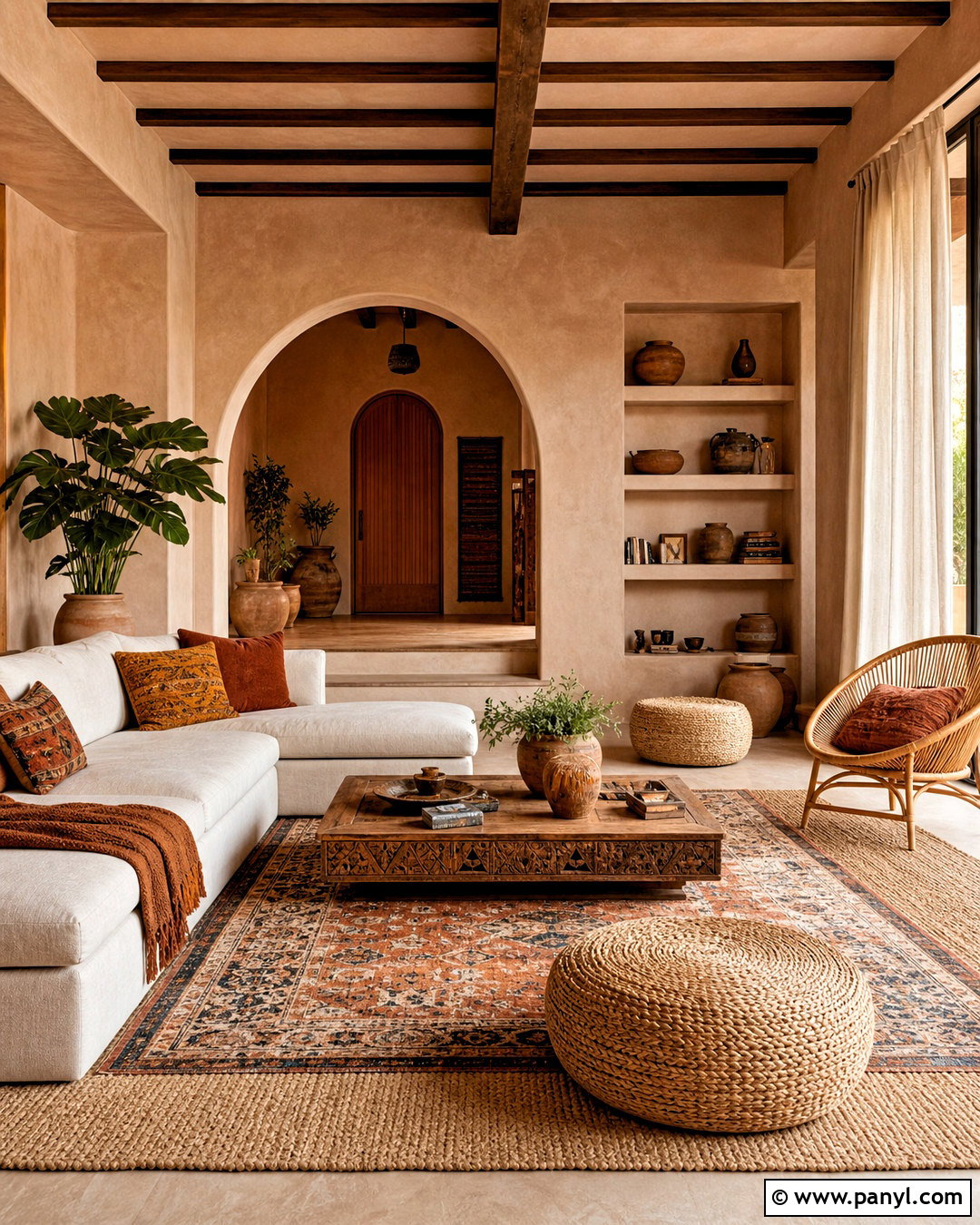
For a relaxed boho living room, layer terracotta with handmade-looking materials and collected decor. Paint the walls a pale sunbaked clay, then choose a low cream sectional with rust, mustard, and brown patterned pillows. Place a large jute rug underneath and layer a smaller vintage-style rug over it for softness and color. A carved wood coffee table can become the central feature, surrounded by woven poufs and a rattan side chair. Add linen curtains, macramé sparingly, and several plants in clay pots. Use open shelving to display pottery, books, and baskets, but leave empty space between groups. The finished room should feel personal and relaxed without becoming cluttered. Repeating a controlled palette keeps the many textures visually connected.
18. Terracotta Minimalist Living Room
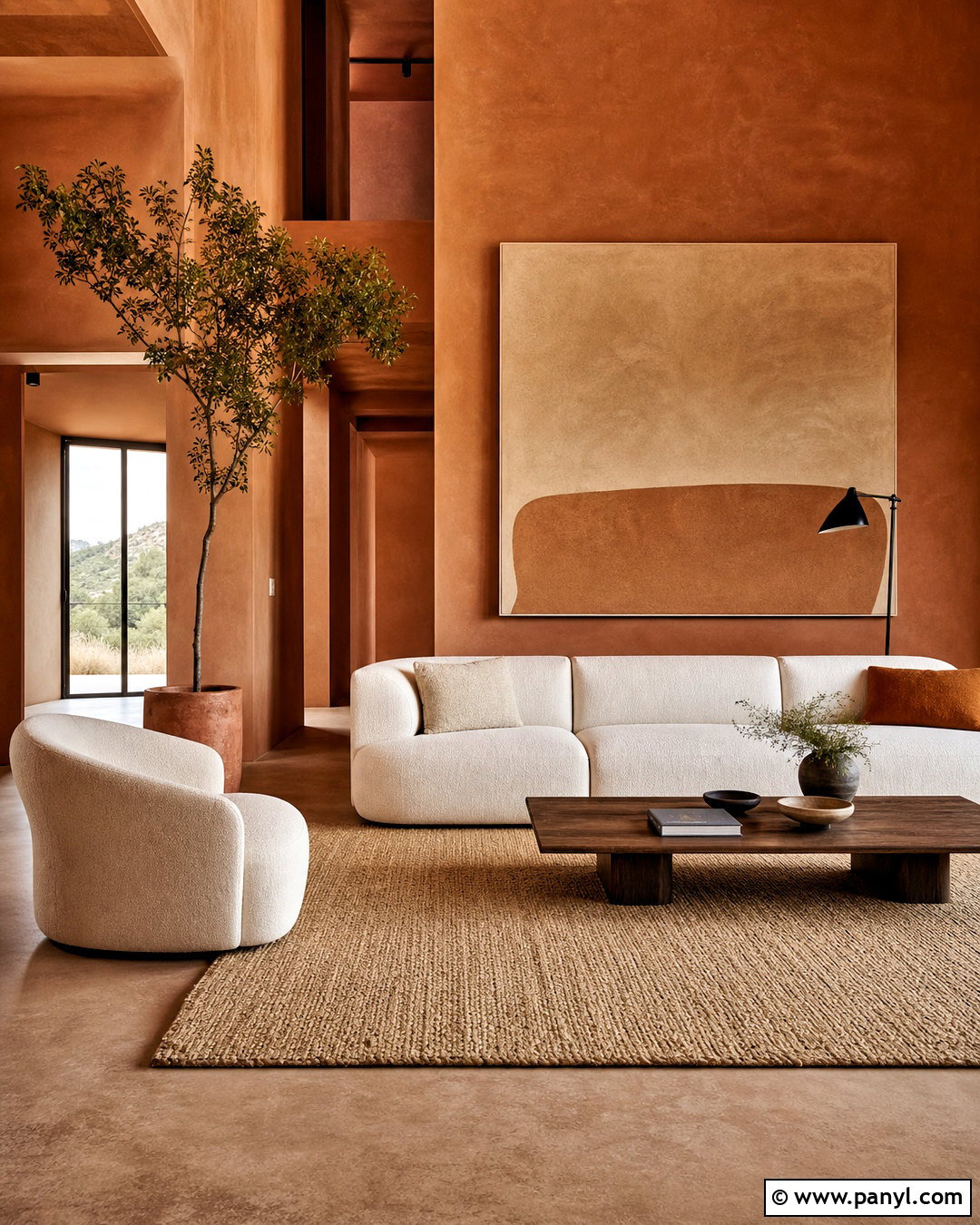
Terracotta can work in a minimalist room when the color is allowed to carry the design. Cover the walls in a soft, earthy clay tone and select only a few substantial furnishings. A clean-lined oatmeal sofa, one sculptural cream chair, and a low walnut coffee table provide everything needed for comfortable seating. Choose a large wool rug in warm beige without a noticeable pattern. Instead of filling the walls, display one oversized abstract artwork with black, ivory, and rust details. A simple black floor lamp offers practical contrast. Add a single leafy tree in a large ceramic planter and keep smaller accessories grouped on one tray. The result remains visually warm, but clear surfaces and generous open space preserve the calm minimalist character.
19. Terracotta Midcentury Modern Living Room
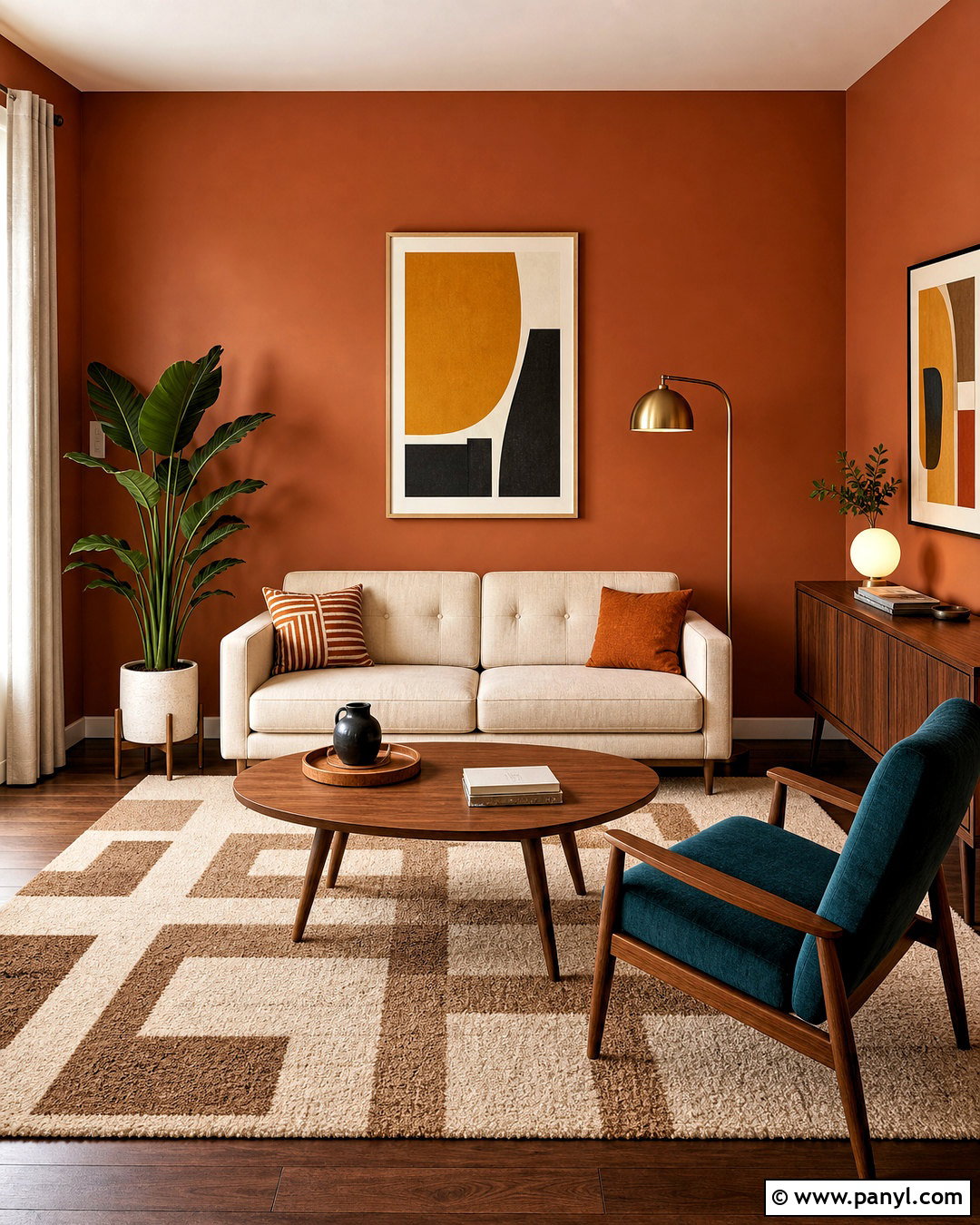
Bring terracotta into a midcentury modern room through color, tapered furniture, and graphic shapes. Paint one broad wall a warm burnt-orange clay and pair it with a walnut credenza featuring simple sliding doors. Choose a structured beige sofa with exposed wood legs, then add a deep teal lounge chair for strong but controlled contrast. A low oval coffee table and geometric cream-and-brown rug reinforce the period influence. Hang an adjustable brass floor lamp beside the chair and use globe-shaped table lighting near the sofa. Abstract artwork in mustard, black, and terracotta can connect the room’s colors. Finish with textured curtains and one large plant. Avoid excessive retro accessories so the space feels updated rather than designed like a themed set.
20. Terracotta Open Plan Interior
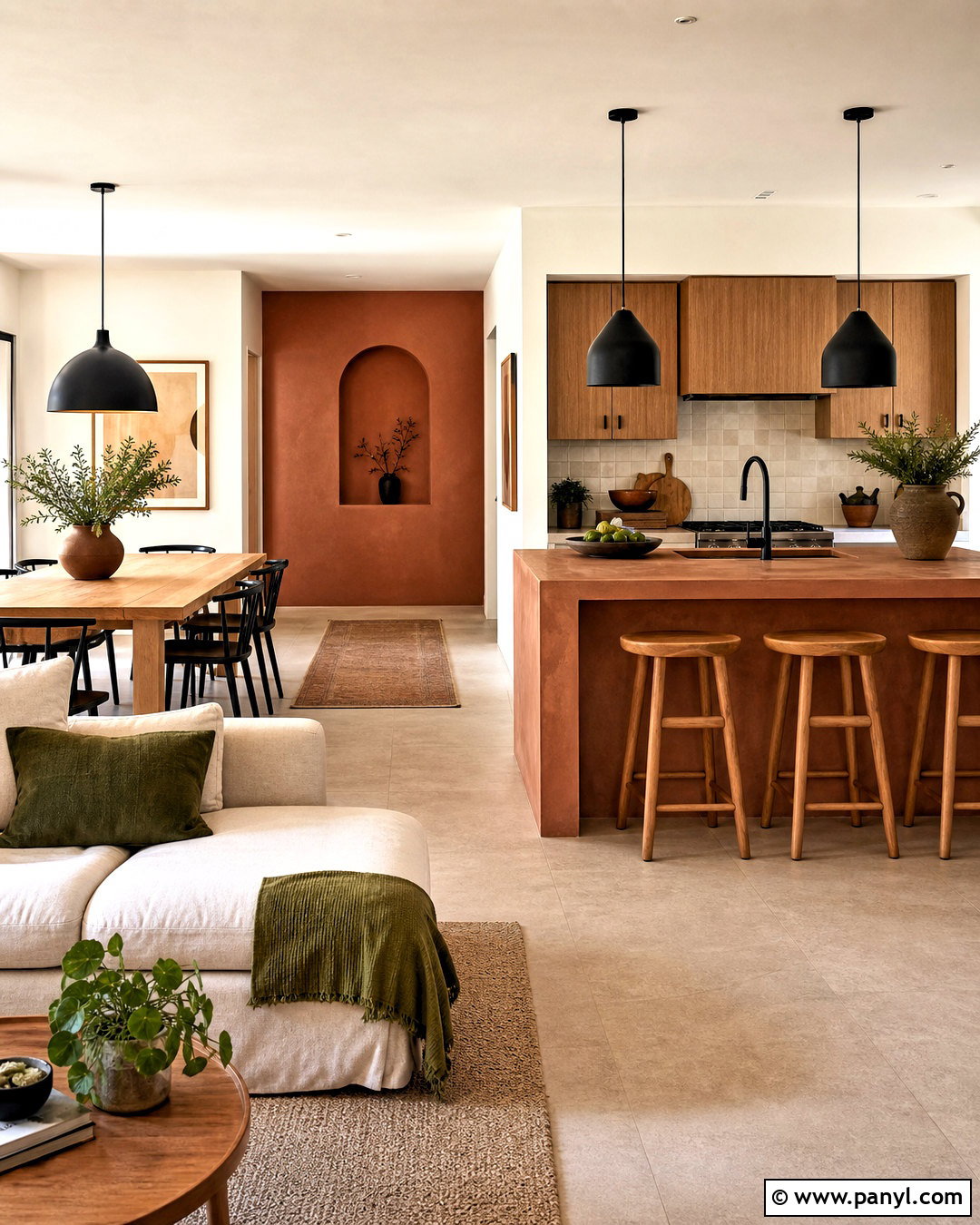
An open-plan home needs a coordinated palette that creates flow while giving each area a purpose. Use muted terracotta on the main living room wall and repeat the shade on the kitchen island or dining chairs. Keep surrounding walls warm white to distribute light throughout the larger space. A cream sectional can define the lounge, while an oak dining table separates it from the kitchen. Choose one large neutral rug for the living zone and a durable runner near the island. Black lighting, window frames, and cabinet hardware provide a consistent visual outline. Add olive green through plants and a few textiles rather than introducing another dominant color. Repeated wood finishes and simple ceramics help the connected kitchen, dining, and living spaces feel like one complete interior.
Conclusion:
Terracotta can make an interior feel warm, grounded, and welcoming, whether it appears through painted walls, flooring, cabinetry, furniture, or smaller decorative layers. The most successful rooms balance its earthy character with cream, beige, warm white, natural wood, or contrasting shades such as olive, navy, and teal. Consider your room’s available light before selecting a pale clay, classic orange-brown, or deeper rust tone. Then repeat that color thoughtfully across the space instead of using unrelated accents. These complete designs also show that terracotta can suit compact apartments, practical rooms, and multiple decorating directions. Use this guide to **20 teracotta ideas interior ideas** as a starting point, then adjust each palette to fit your home.

Related Ideas and Inspiration:
Leave a Reply