
Sage green brings a calm, grounded feeling to a home while offering more warmth and personality than standard gray or white. Its soft blend of green and muted gray works beautifully with natural wood, creamy neutrals, stone, brass, black, and earthy accent colors. It can make a bright room feel gentler, give a dark space more depth, or help an exterior settle naturally into its surroundings. The key is designing a complete palette rather than adding one disconnected green feature. Consider the flooring, finishes, lighting, furniture, and supporting colors together. From relaxing bedrooms and practical kitchens to welcoming porches and landscaped patios, these 20 sage green home ideas provide cohesive looks you can realistically adapt.

1. Sage Green Living Room
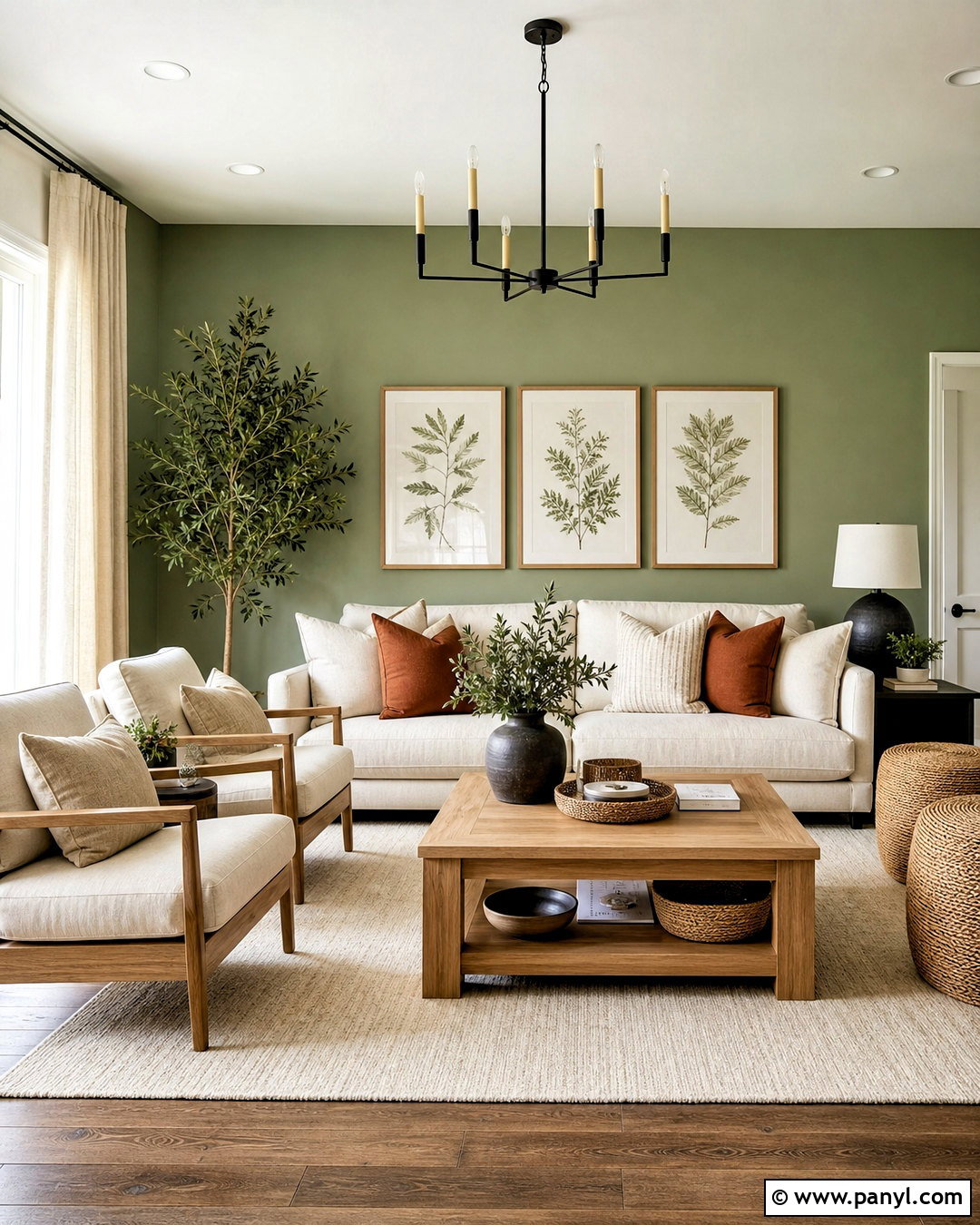
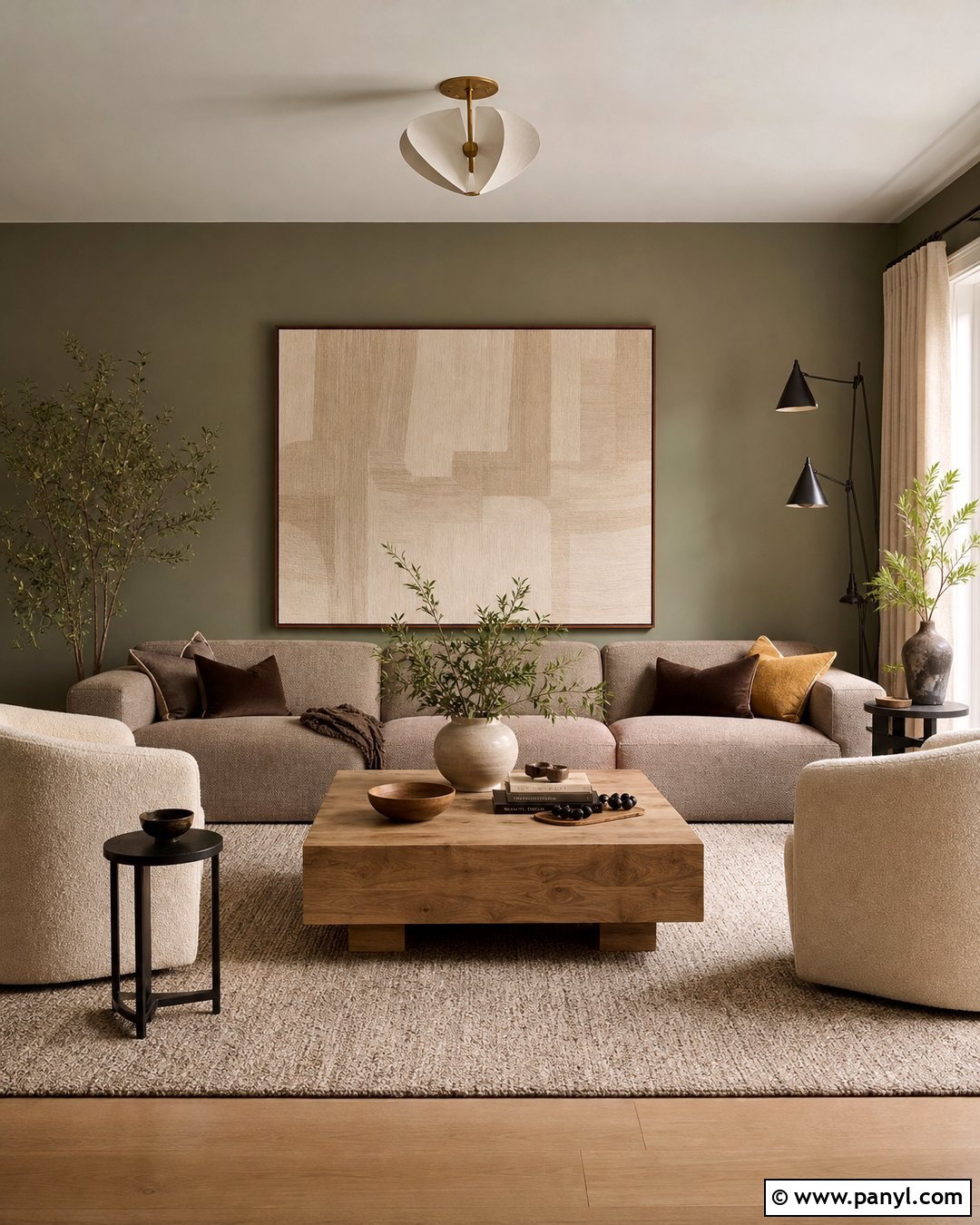
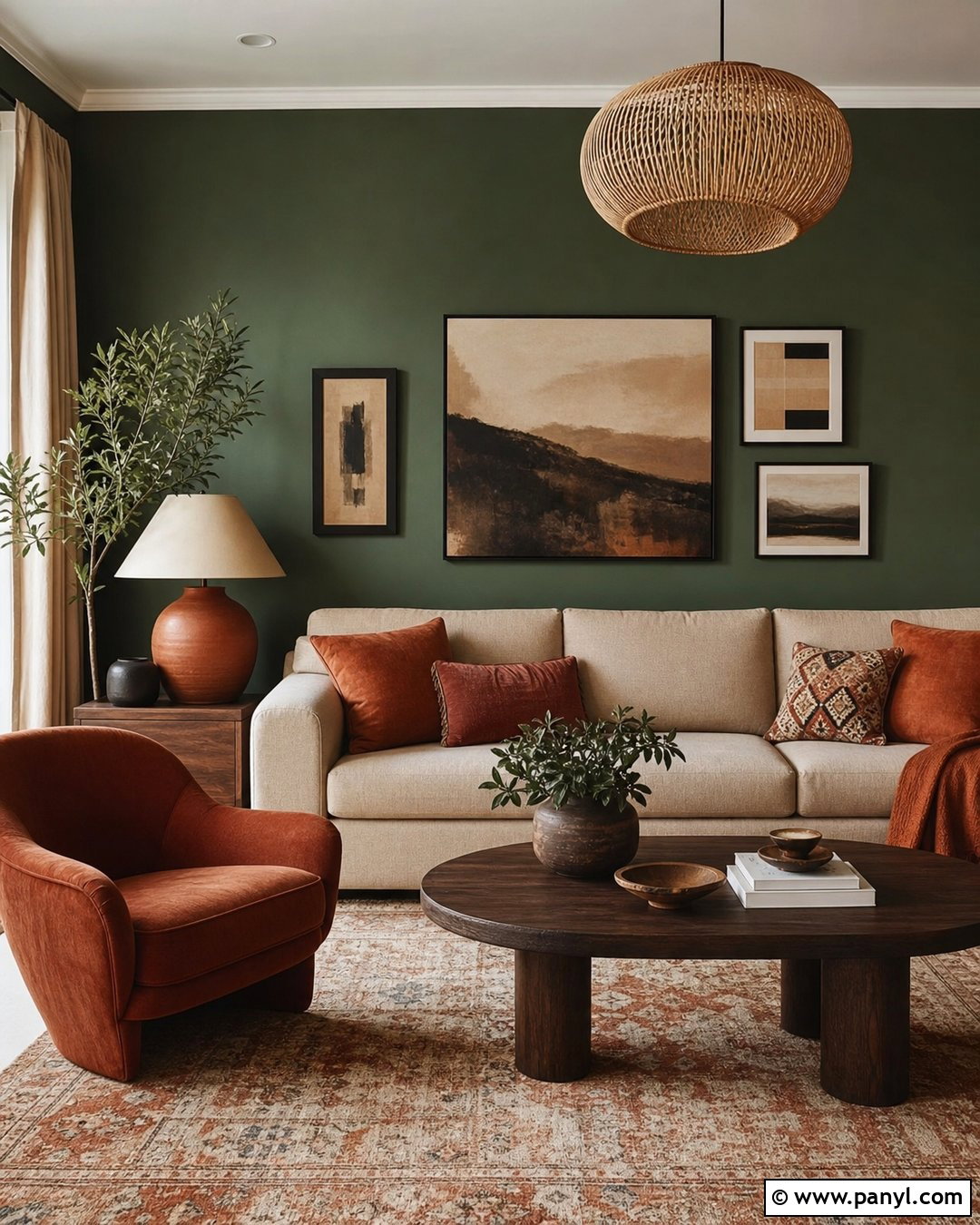
Create an inviting living room by pairing warm sage green walls with an ivory sofa, oatmeal linen chairs, and a medium-tone oak coffee table. A large cream rug keeps the floor light while defining a comfortable conversation area. Use rust, muted gold, and deeper olive through pillows, artwork, and a folded throw for gentle contrast. Black curtain rods and a slim floor lamp add definition without making the space feel harsh. Hang full-length natural linen curtains to soften the windows and filter bright sunlight. Finish the room with a few ceramic vessels, leafy plants, and woven baskets. This balanced sage green living room feels relaxed and layered without becoming overly rustic or visually busy.
2. Sage Green Kitchen Cabinets
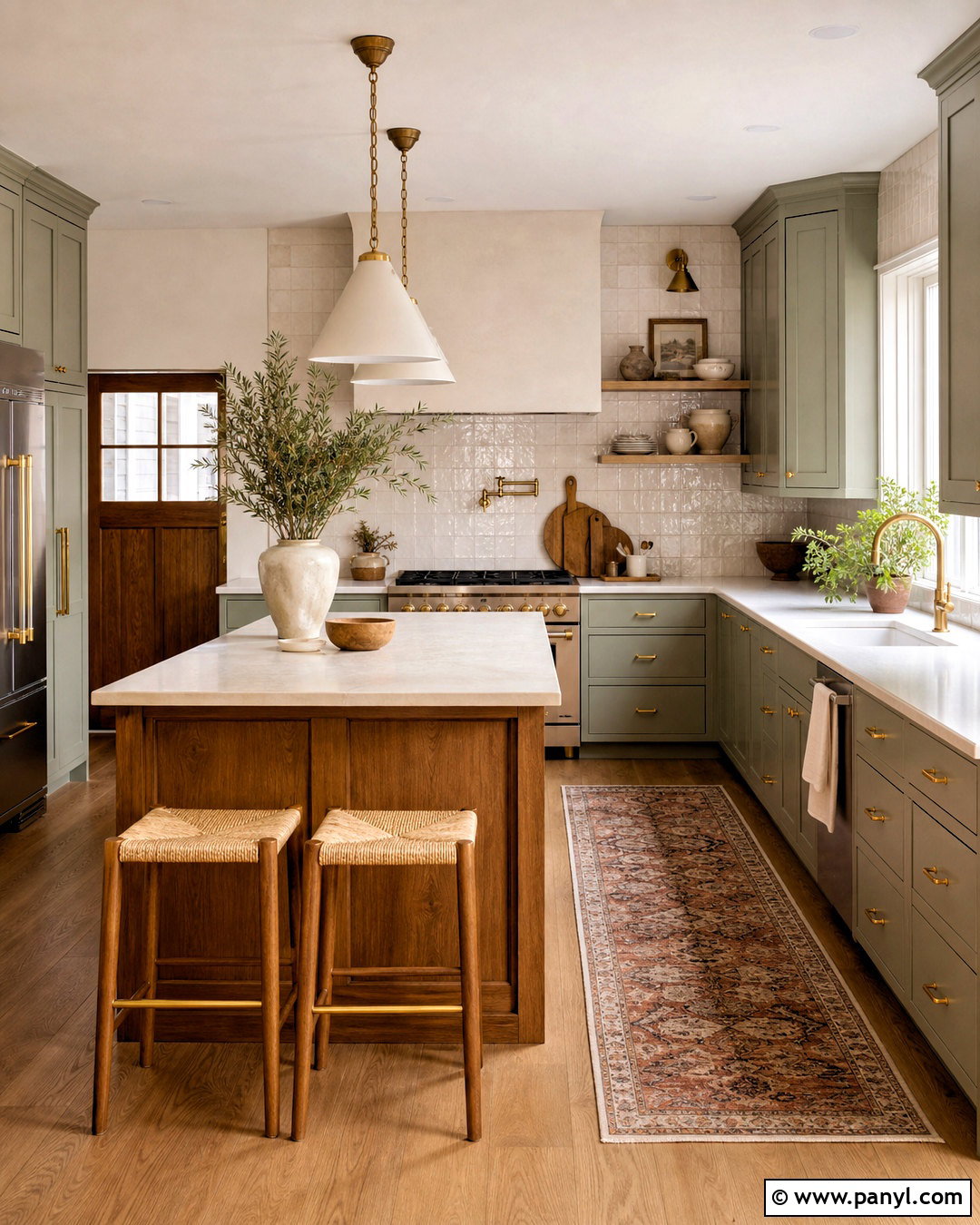
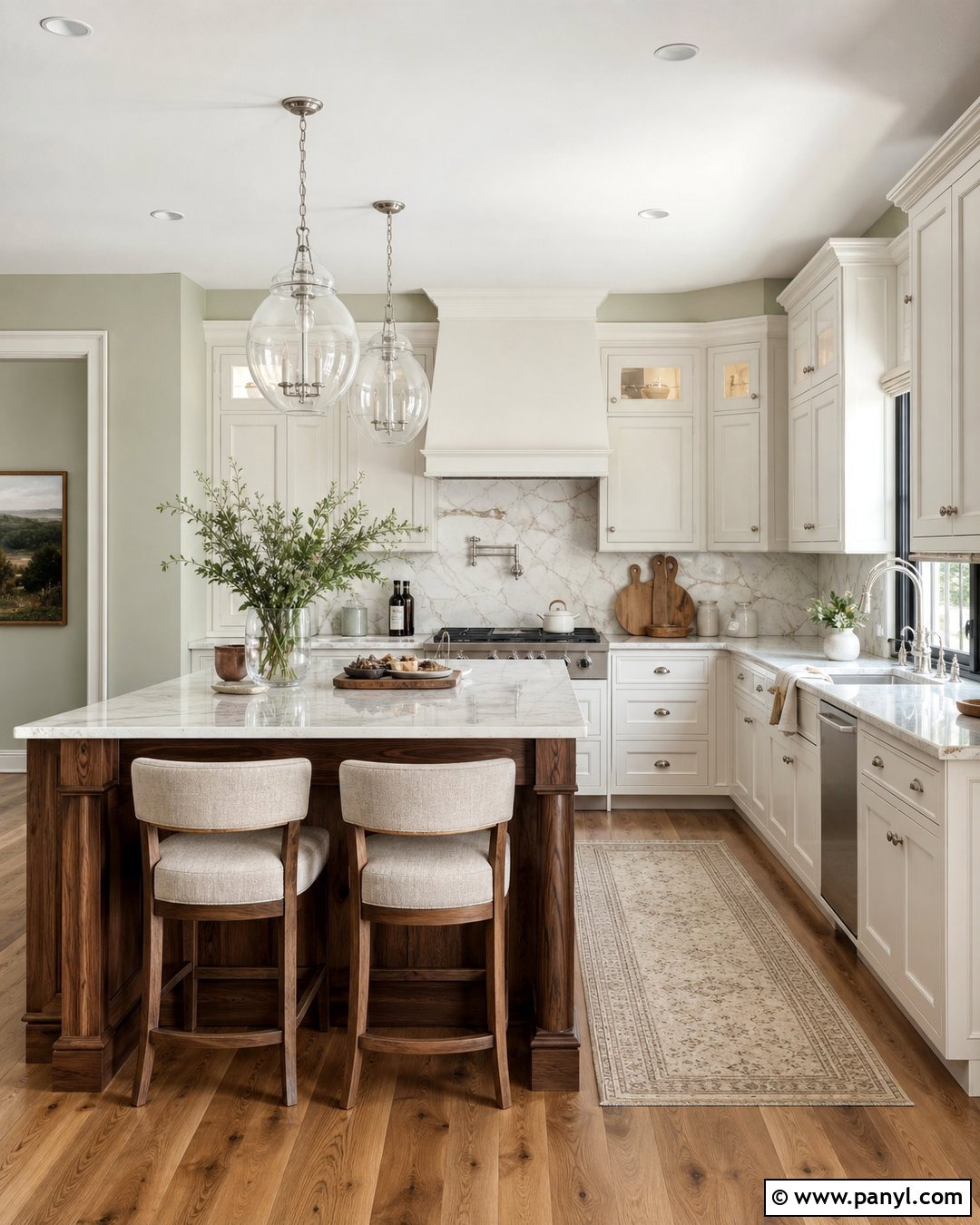
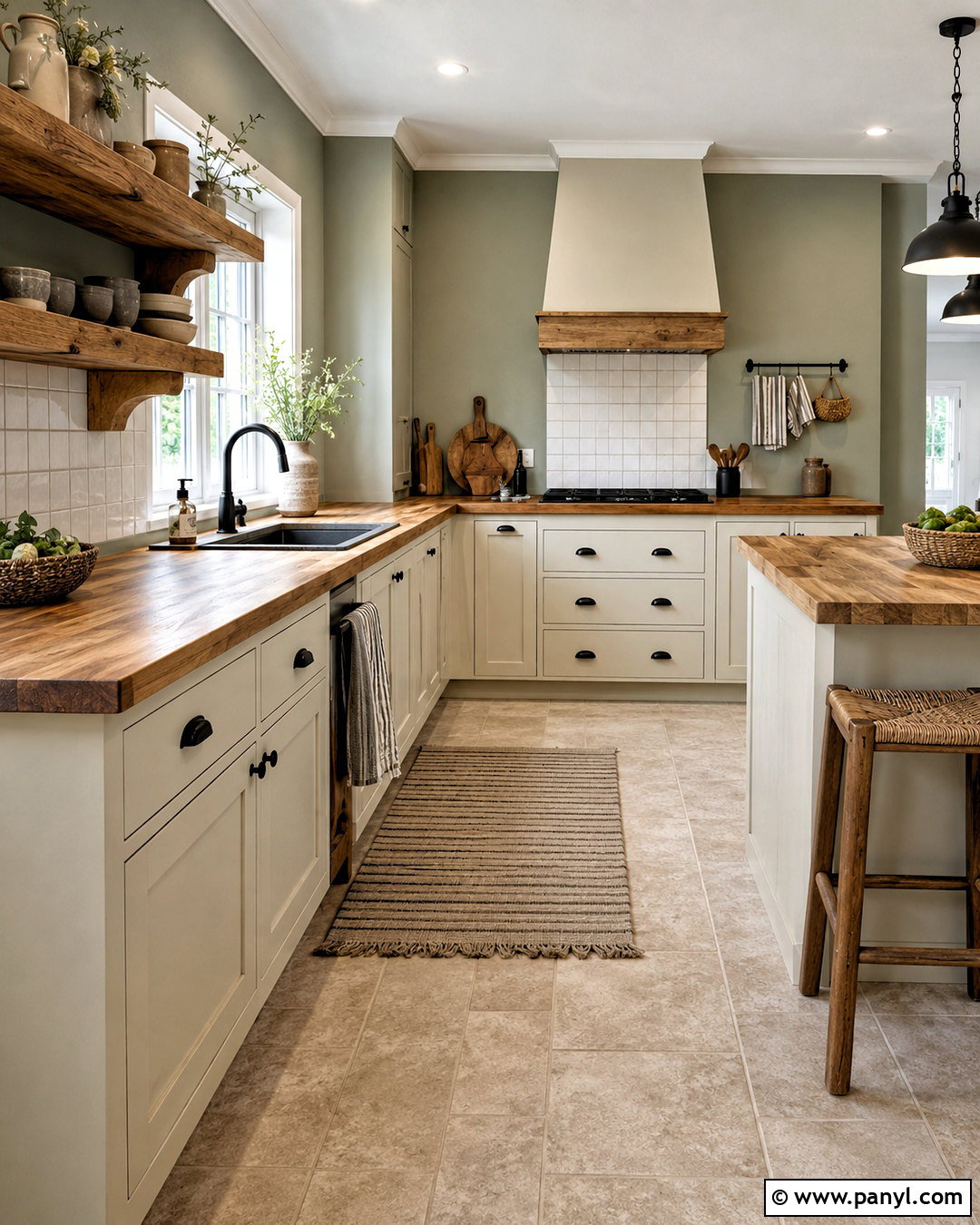
Sage green kitchen cabinets can become the foundation of a warm, timeless cooking space. Choose simple Shaker doors in a muted gray-green finish and pair them with creamy white quartz countertops. A backsplash of slightly irregular ivory tiles adds texture while keeping the room bright. Use brushed brass knobs, a matching faucet, and aged brass pendant lights for understated warmth. Natural oak flooring prevents the green and white palette from feeling cold. If the kitchen includes an island, consider stained oak cabinetry to break up the painted surfaces. Complete the design with woven counter stools, white ceramics, and a small vintage-style runner. The finished kitchen feels fresh, practical, and comfortable rather than overly trendy.
3. Sage Green Bedroom
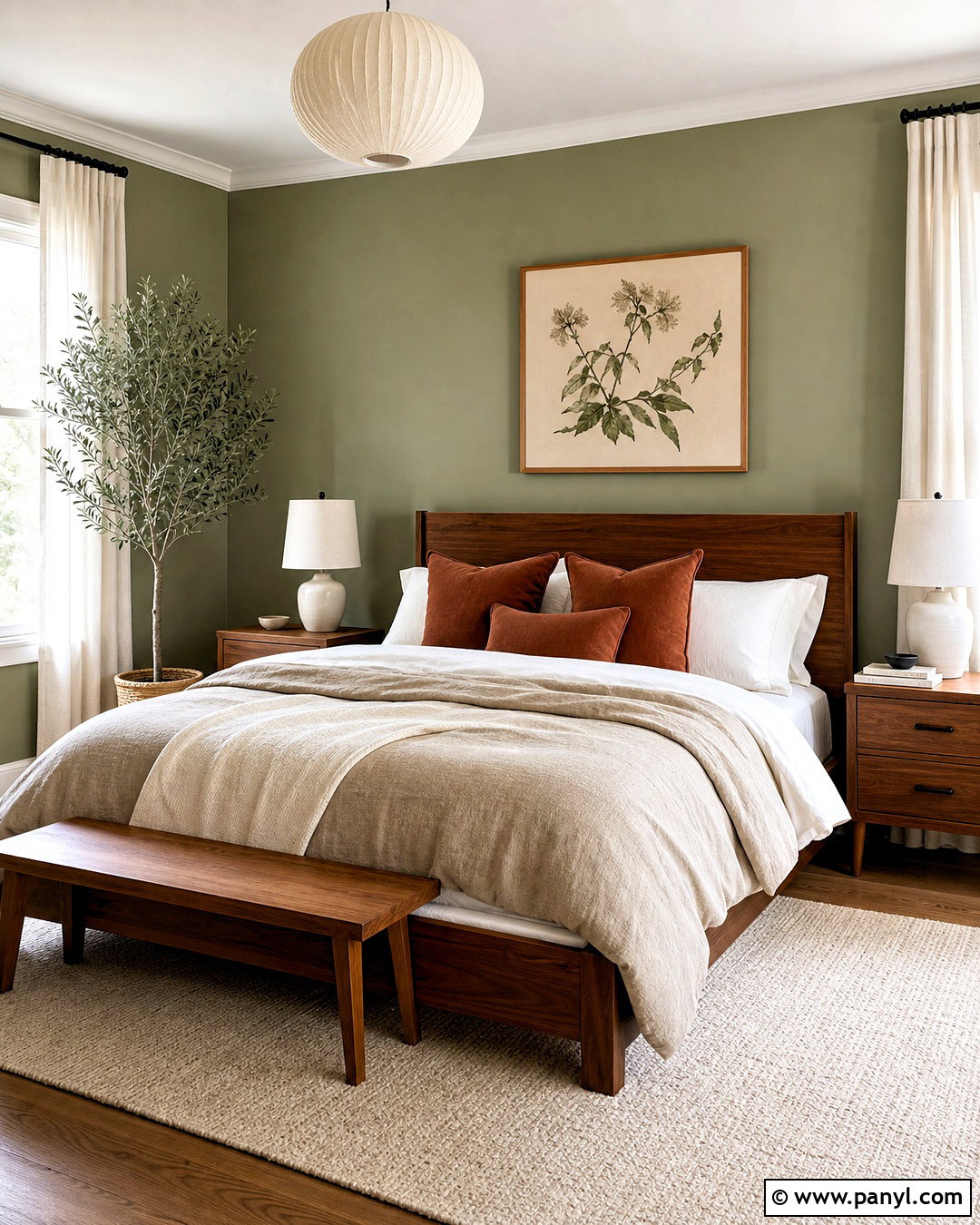
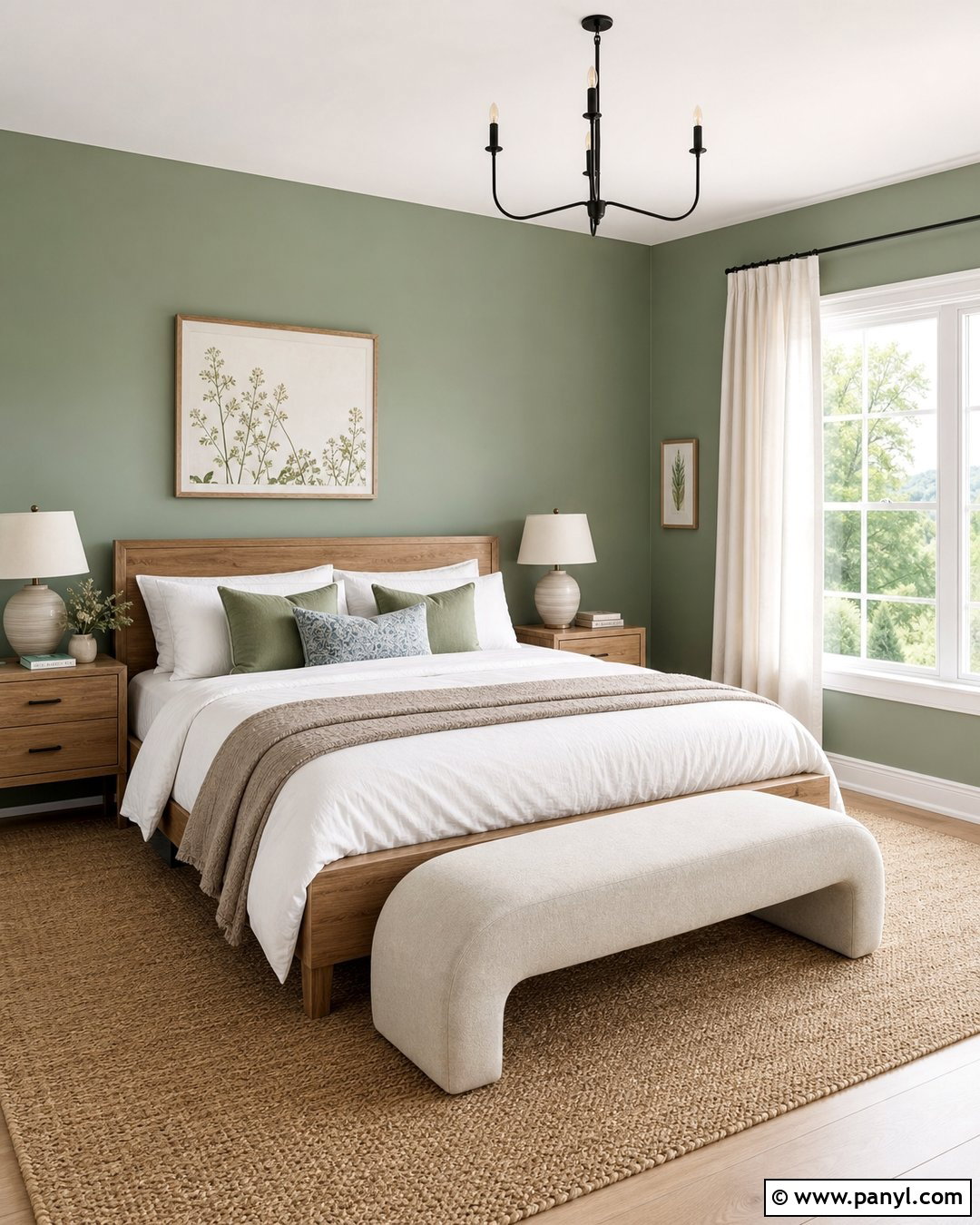
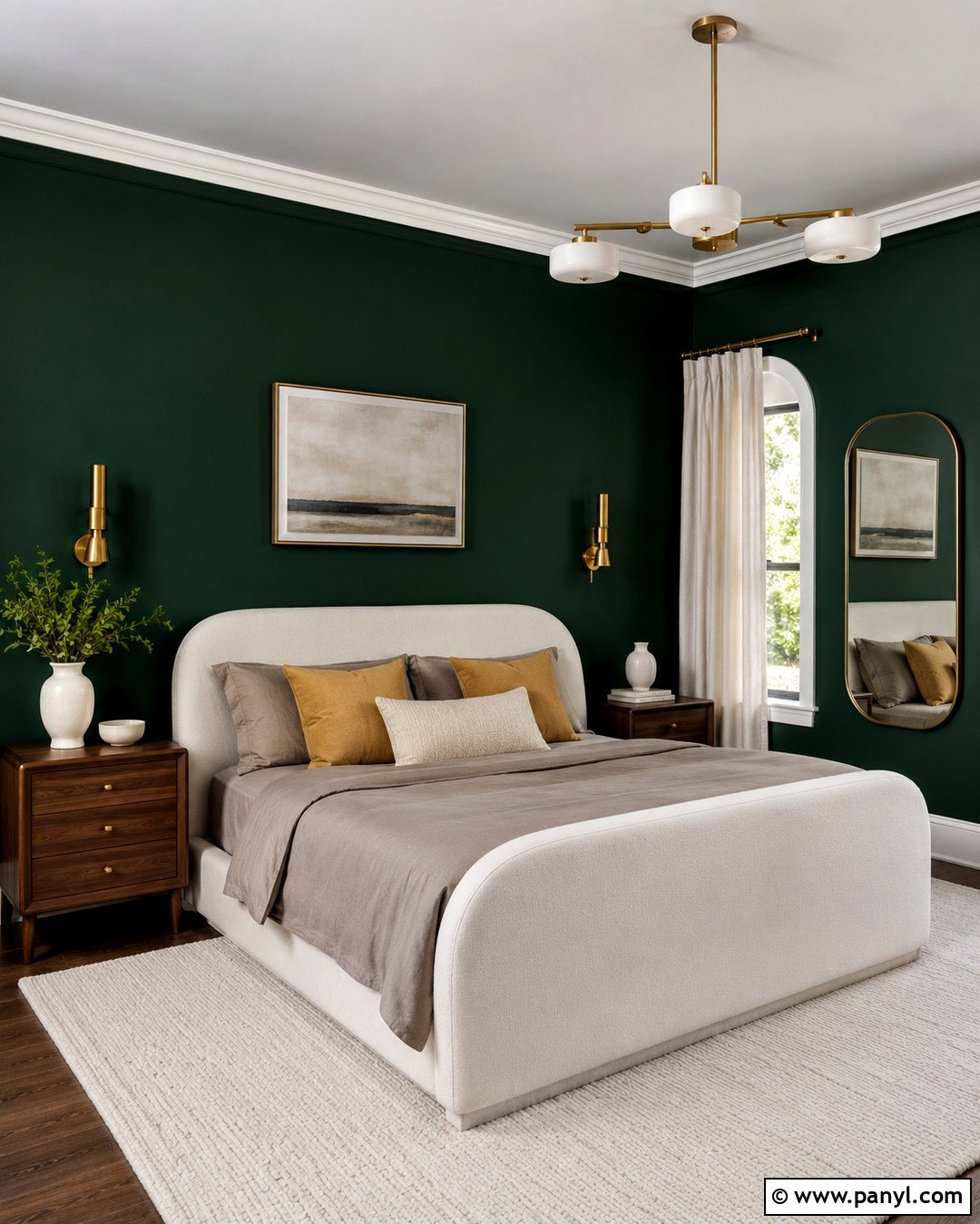
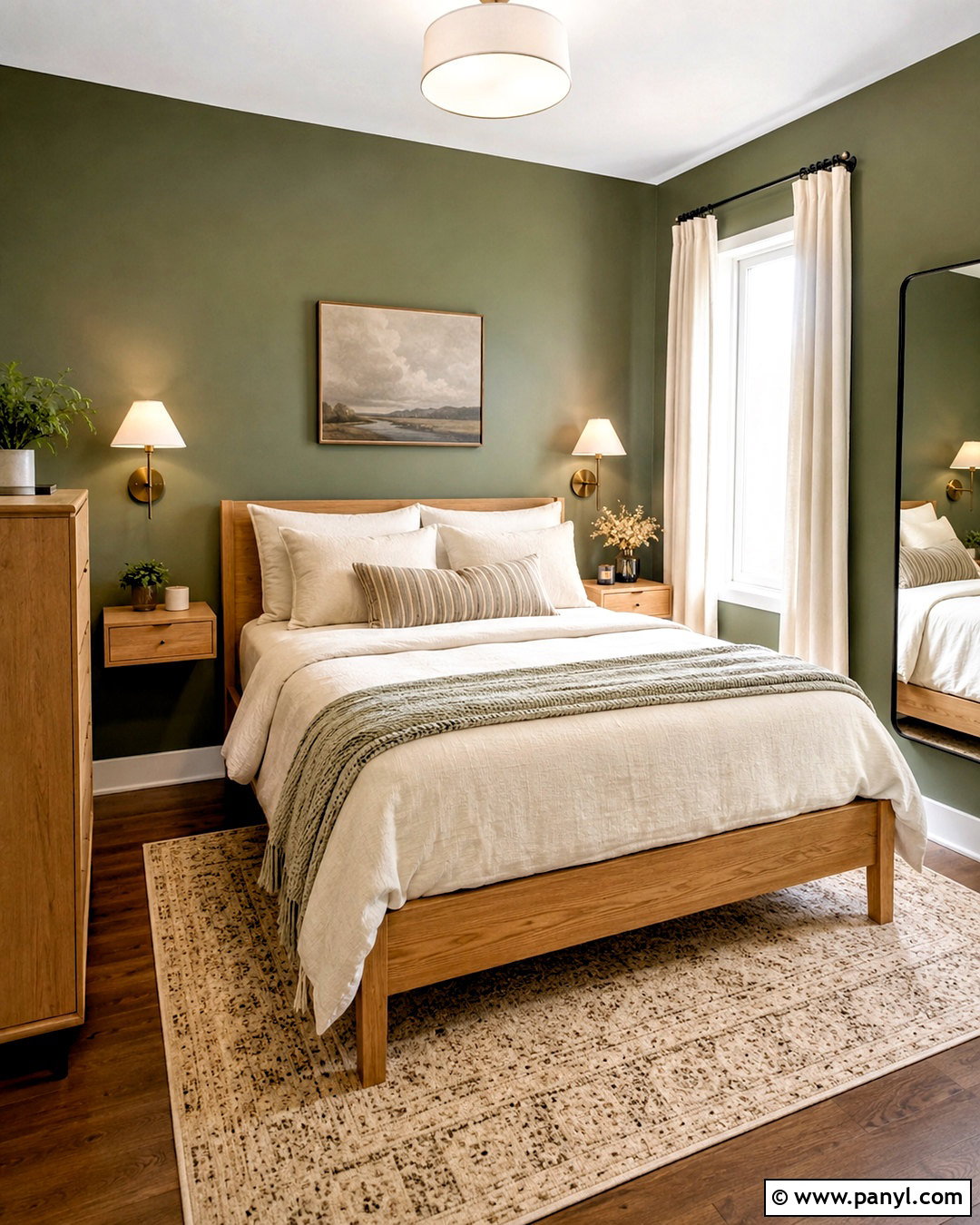
Imagine waking up in a bedroom surrounded by soft, nature-inspired color. Paint the walls a dusty sage green and choose a simple walnut bed to introduce rich warmth. Layer the bed with ivory sheets, a flax-colored duvet, and muted terracotta accent pillows. Matching wood nightstands create symmetry, while ceramic lamps with linen shades provide gentle bedside lighting. A large wool rug in cream and taupe softens the floor and anchors the furniture. Keep window treatments light with off-white curtains that reach from ceiling to floor. Minimal botanical artwork and one substantial plant complete the room. This sage green bedroom feels restful and polished because every color and material supports the peaceful overall palette.
4. Sage Green Bathroom
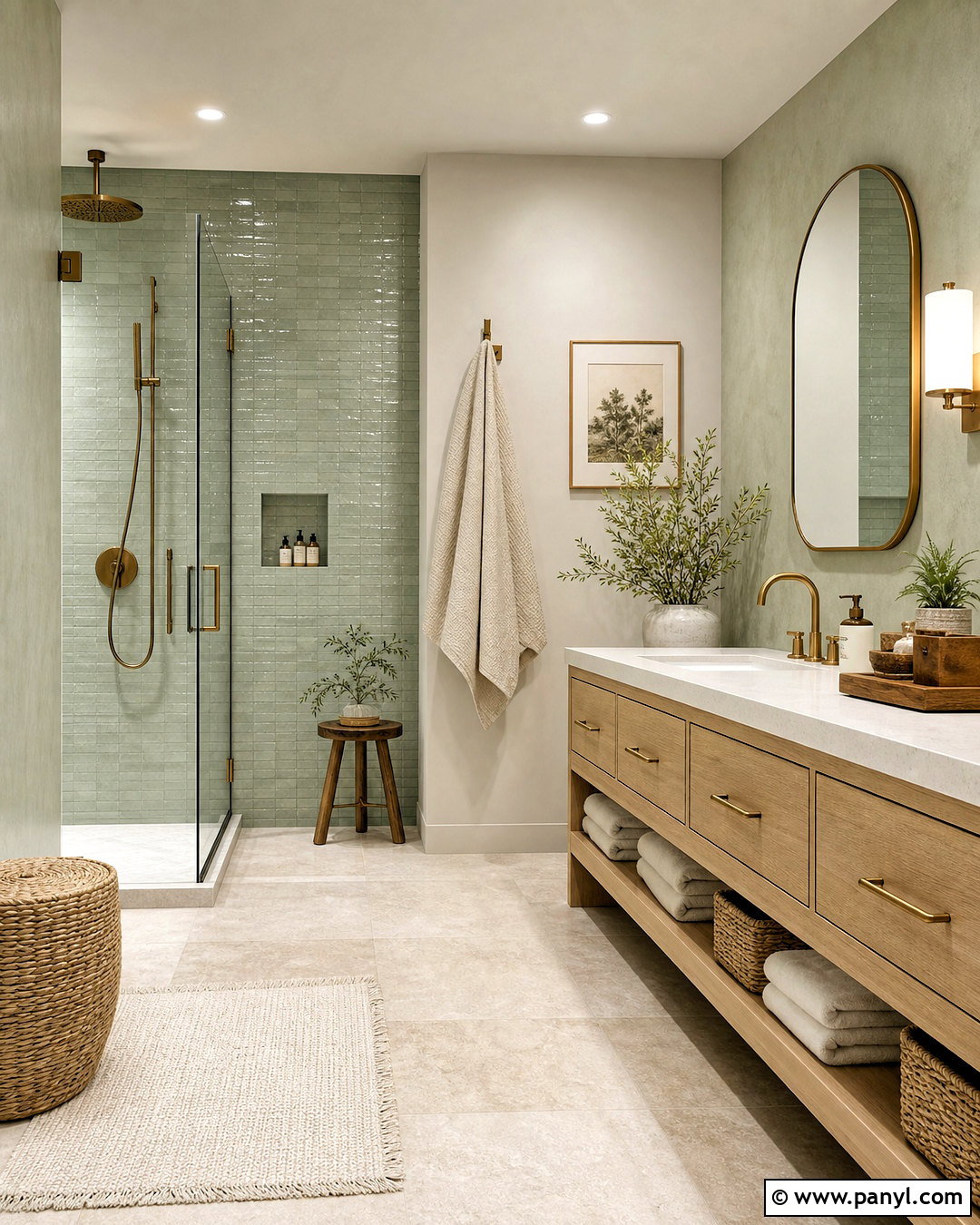
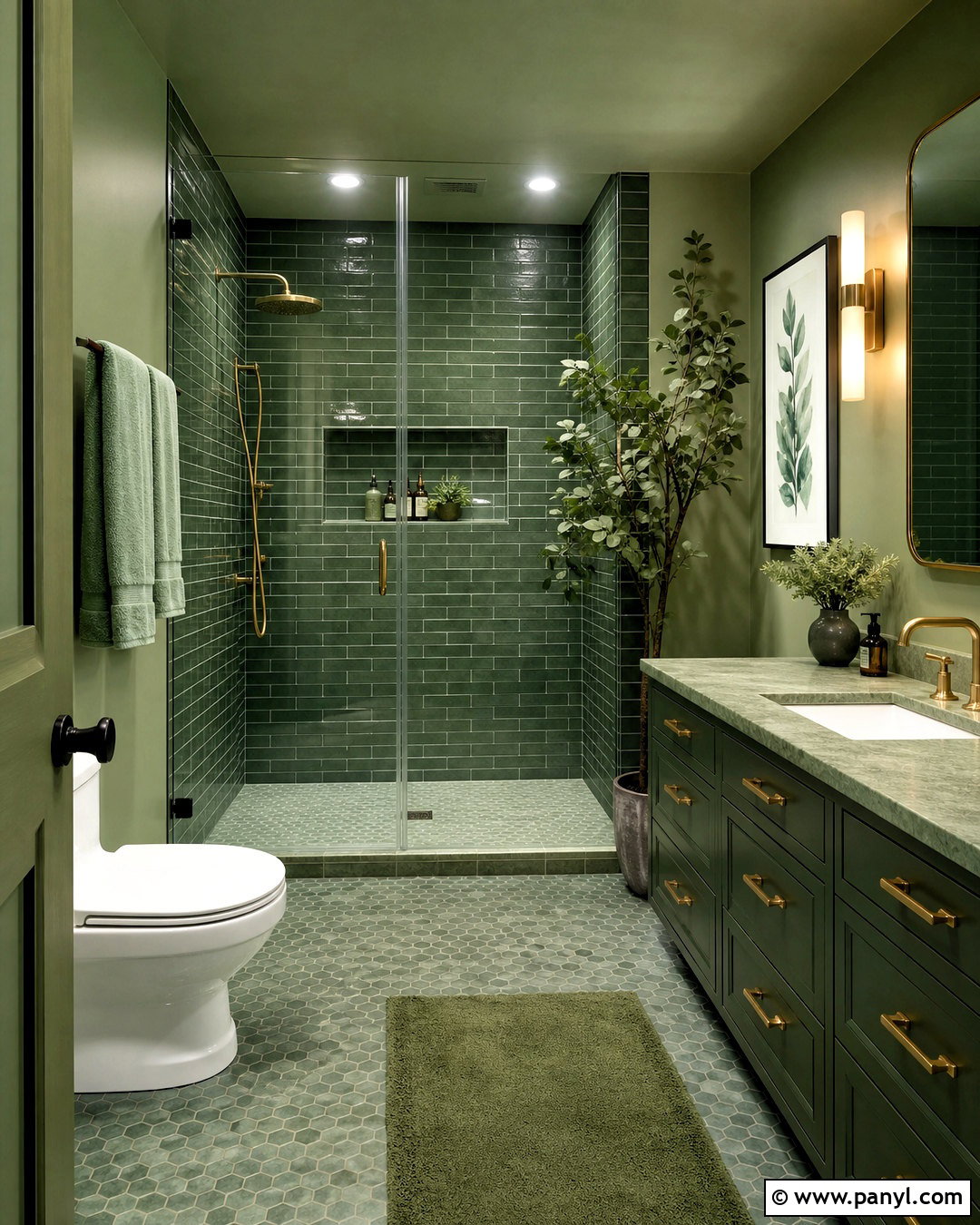
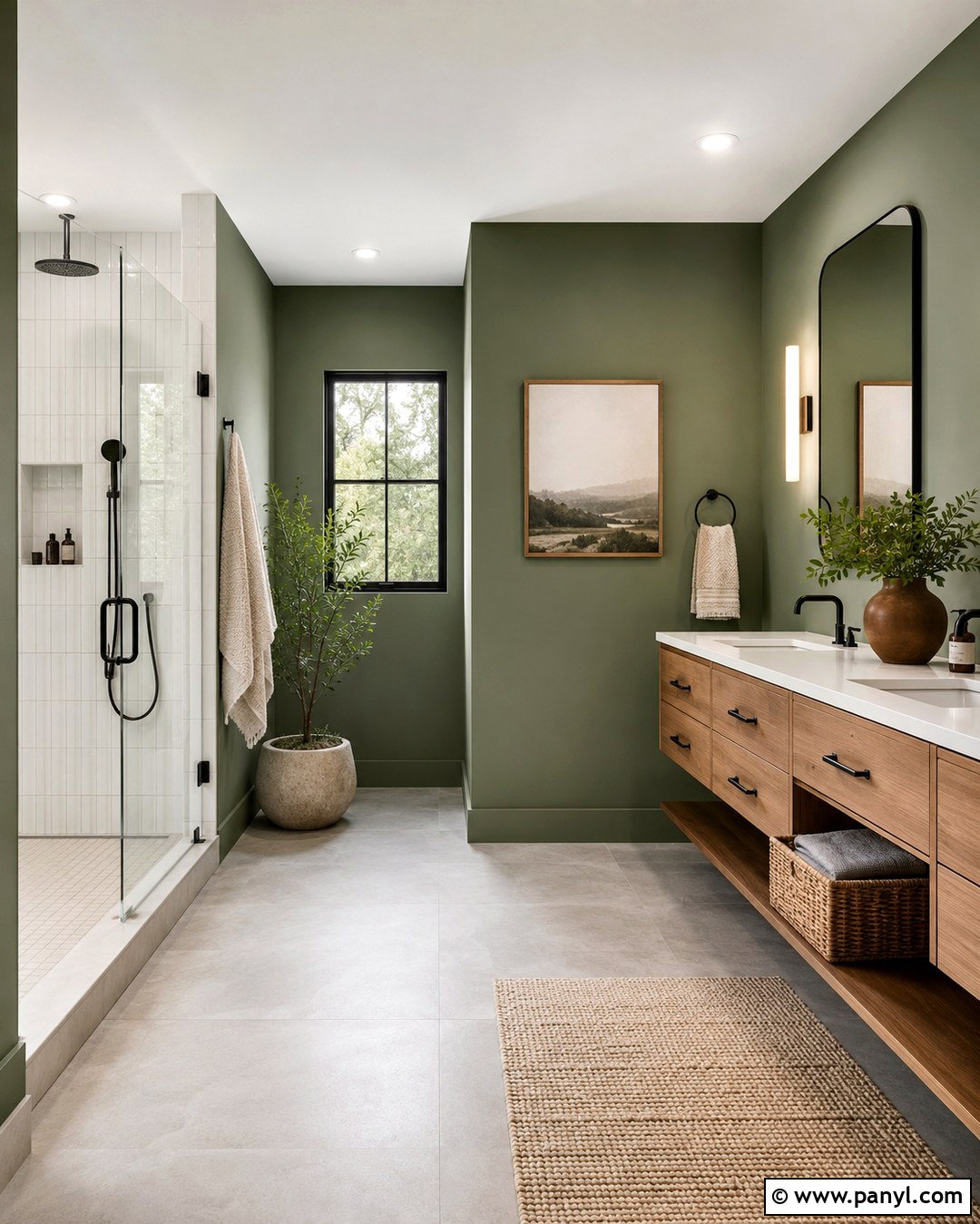
For a bathroom that feels fresh but not clinical, use glossy sage green zellige tiles around the shower and vanity wall. Balance their handmade texture with warm white plaster walls and a pale oak vanity. A white quartz countertop keeps the functional surfaces simple, while brushed brass faucets, shower fittings, and mirror frames introduce a refined glow. Choose light stone-look floor tiles in a larger format so the room does not appear visually crowded. Add fluffy ivory towels, a woven laundry basket, and small wooden accessories to reinforce the natural palette. Clear shower glass helps every finish remain visible. This complete sage green bathroom combines practical materials with the soothing character of a comfortable home spa.
5. Sage Green Dining Room
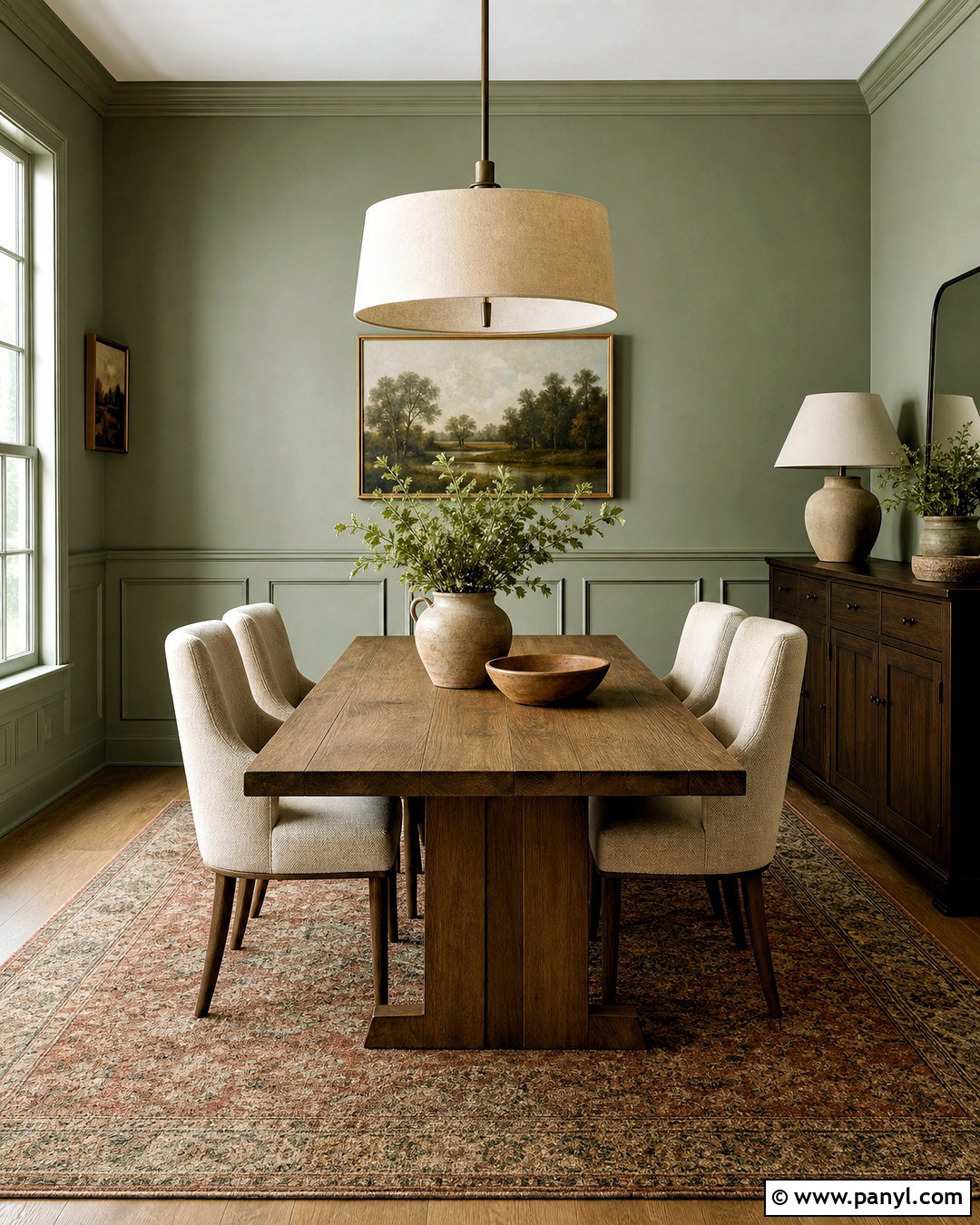
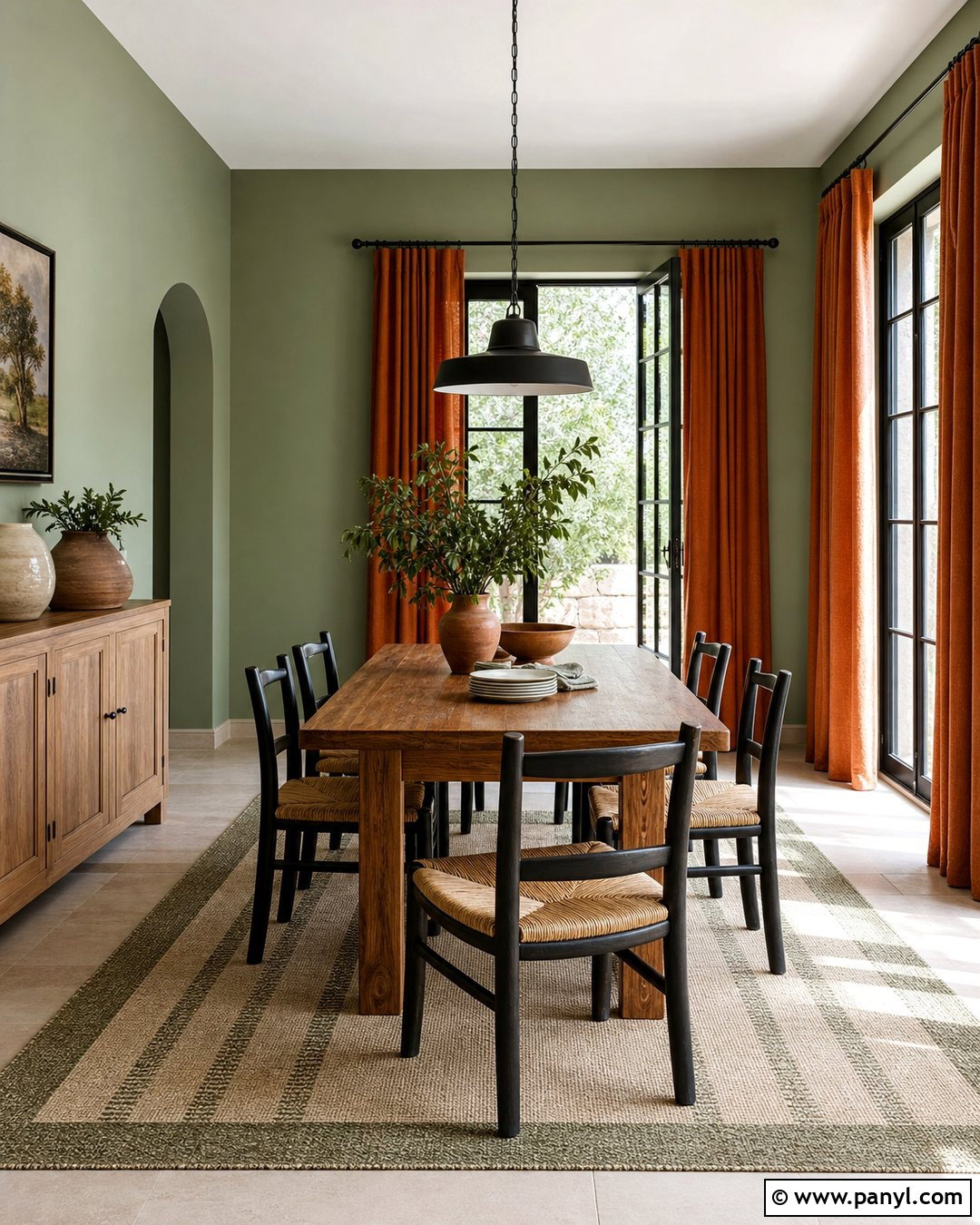
A sage green dining room can feel traditional, modern, or somewhere comfortably between the two. Install simple wall molding and paint the walls, trim, and molding in the same muted sage shade. Center a rectangular oak table beneath a large linen drum pendant or softly shaped plaster fixture. Upholstered dining chairs in warm cream create contrast and make long meals more comfortable. Ground the arrangement with a faded vintage-style rug featuring muted rust, beige, and olive tones. A dark wood sideboard provides storage and adds depth against the green walls. Finish with neutral pottery, framed landscape artwork, and simple greenery. The resulting room feels cohesive, welcoming, and special enough for gatherings without appearing too formal.
6. Sage Green Entryway
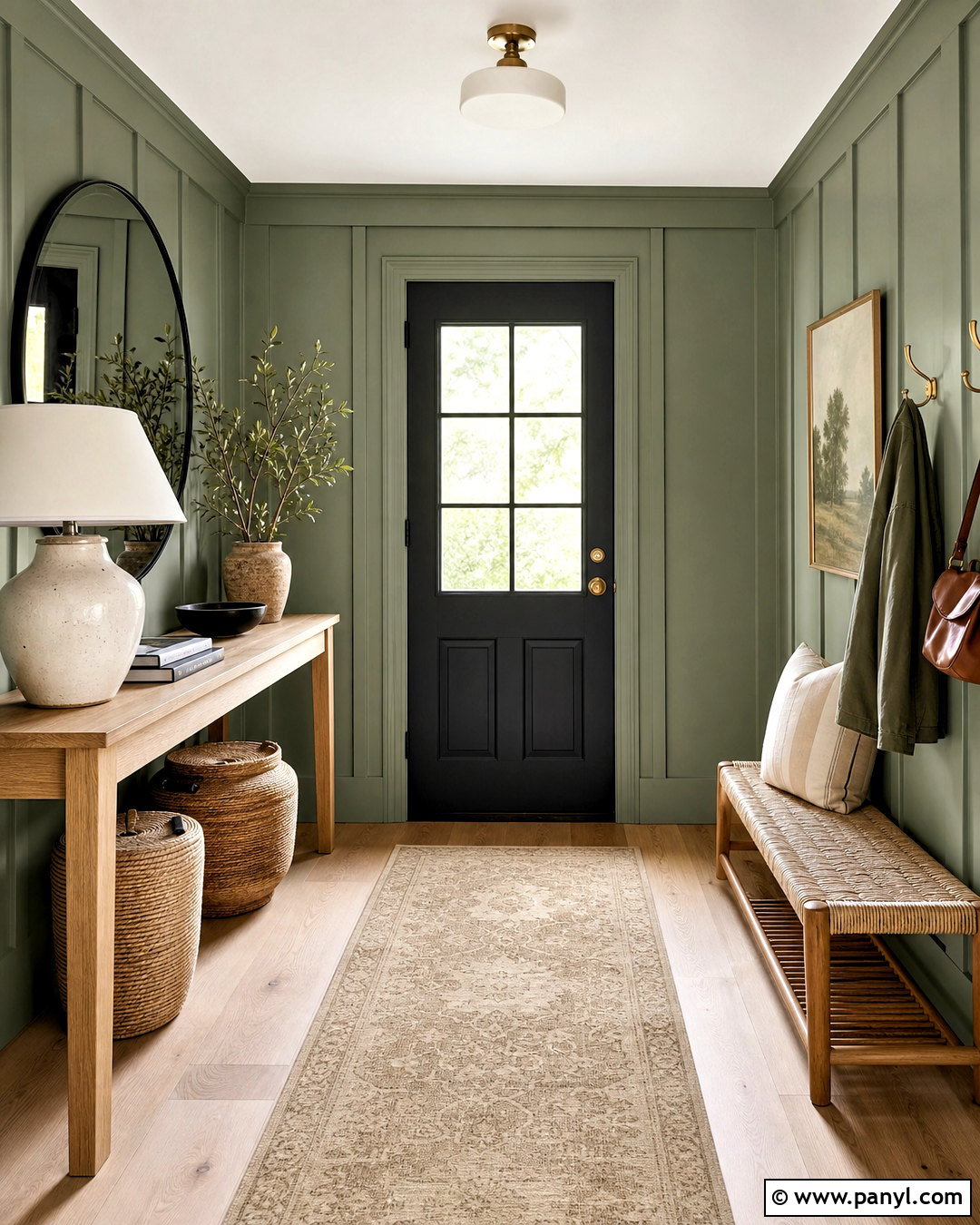
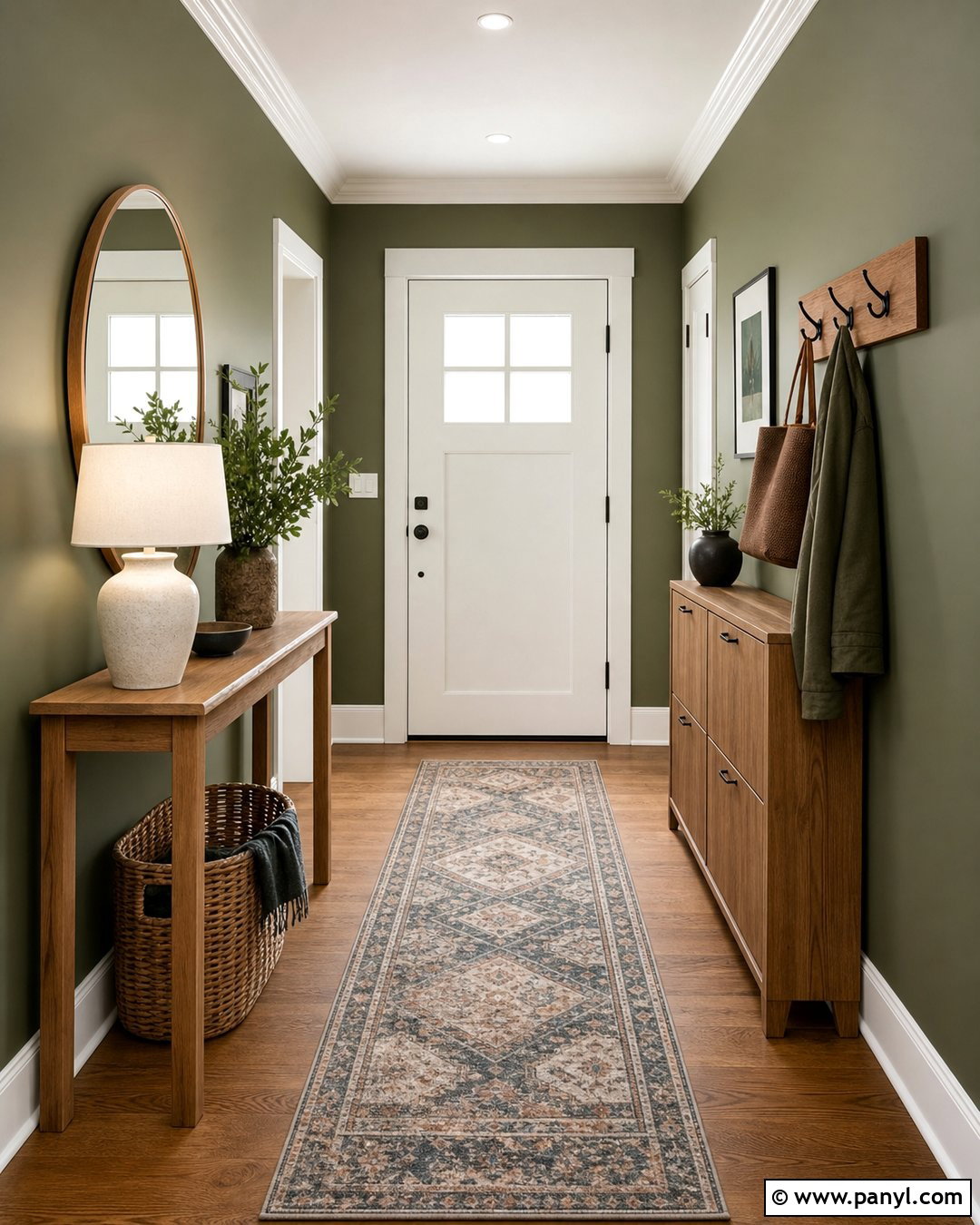
Set a welcoming tone with a sage green entryway built around practical storage and natural materials. Paint the walls and simple board-and-batten paneling in one soft sage shade to make the narrow area feel unified. Place a slim oak console along one wall and add a round black-framed mirror above it. A woven bench or small upholstered stool provides a convenient place for removing shoes. Use a washable vintage-inspired runner with beige, charcoal, and faded green details to disguise everyday dirt. Brass hooks can hold lightweight bags while lidded baskets organize smaller items. A ceramic lamp and leafy branch arrangement finish the scene. This entryway feels calm and collected while still supporting busy daily routines.
7. Sage Green Home Office
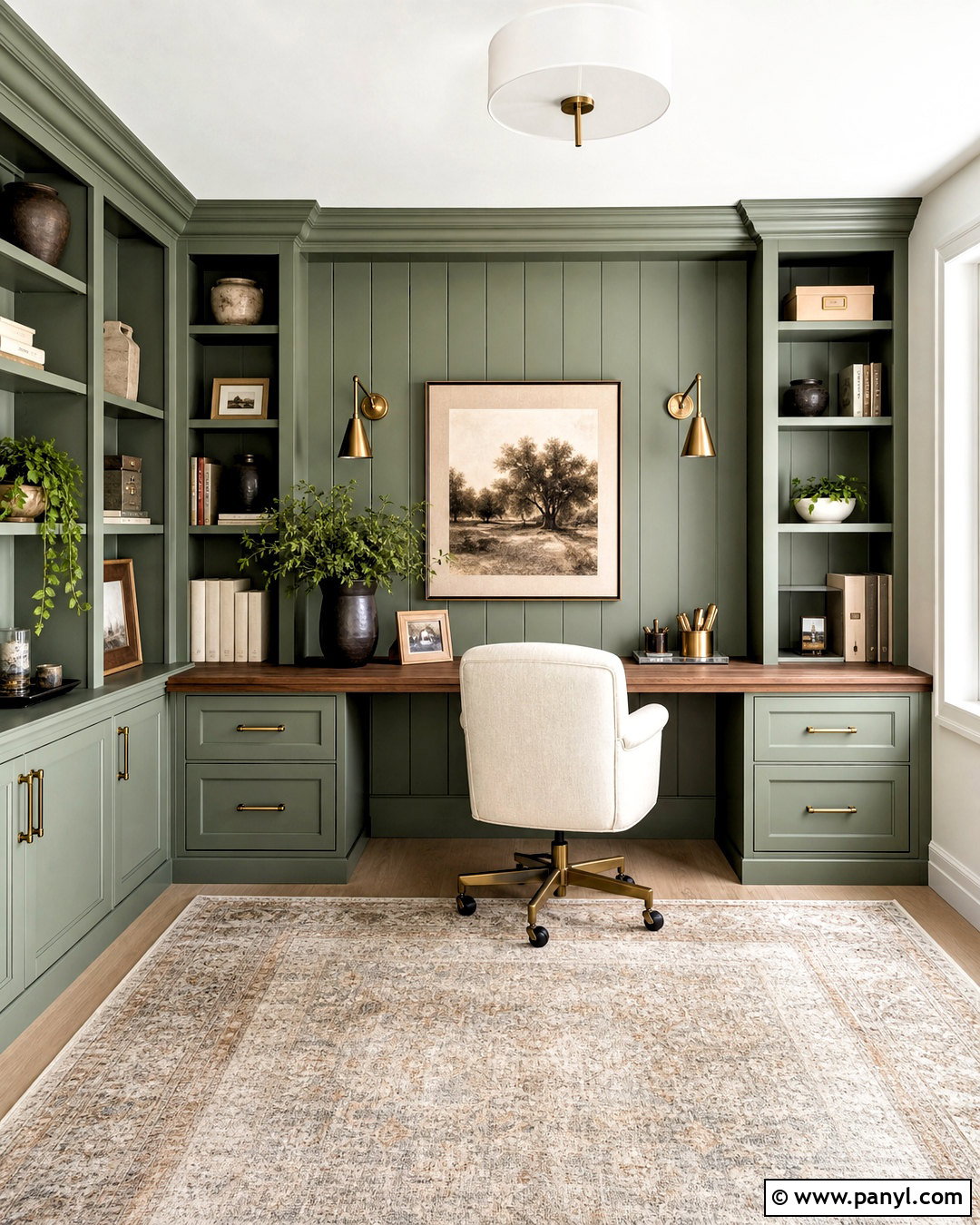
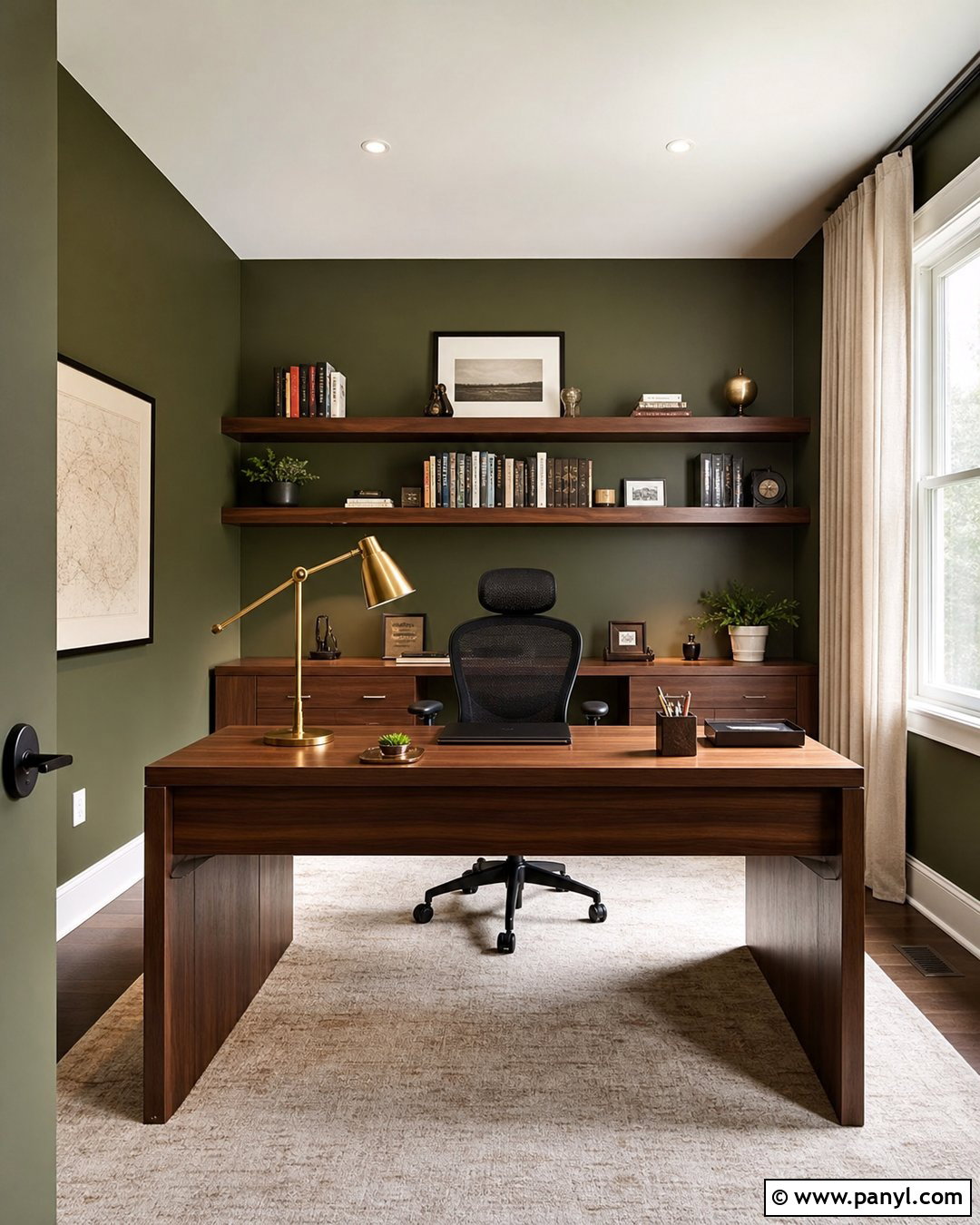
Could your workspace feel productive without looking cold or corporate? Paint built-in cabinets, open shelves, and the wall behind the desk in a deep sage green. Pair the cabinetry with a long walnut desktop that provides enough room for a computer, lamp, and writing area. Add a supportive cream upholstered chair with a clean silhouette and place a textured neutral rug beneath it. Warm brass sconces mounted above the shelves free up desk space and highlight books and decor. Use matching storage boxes to control visual clutter, then introduce character through framed art and dark pottery. With its organized layout and grounded palette, this sage green home office feels focused, comfortable, and fully integrated into the home.
8. Sage Green Laundry Room
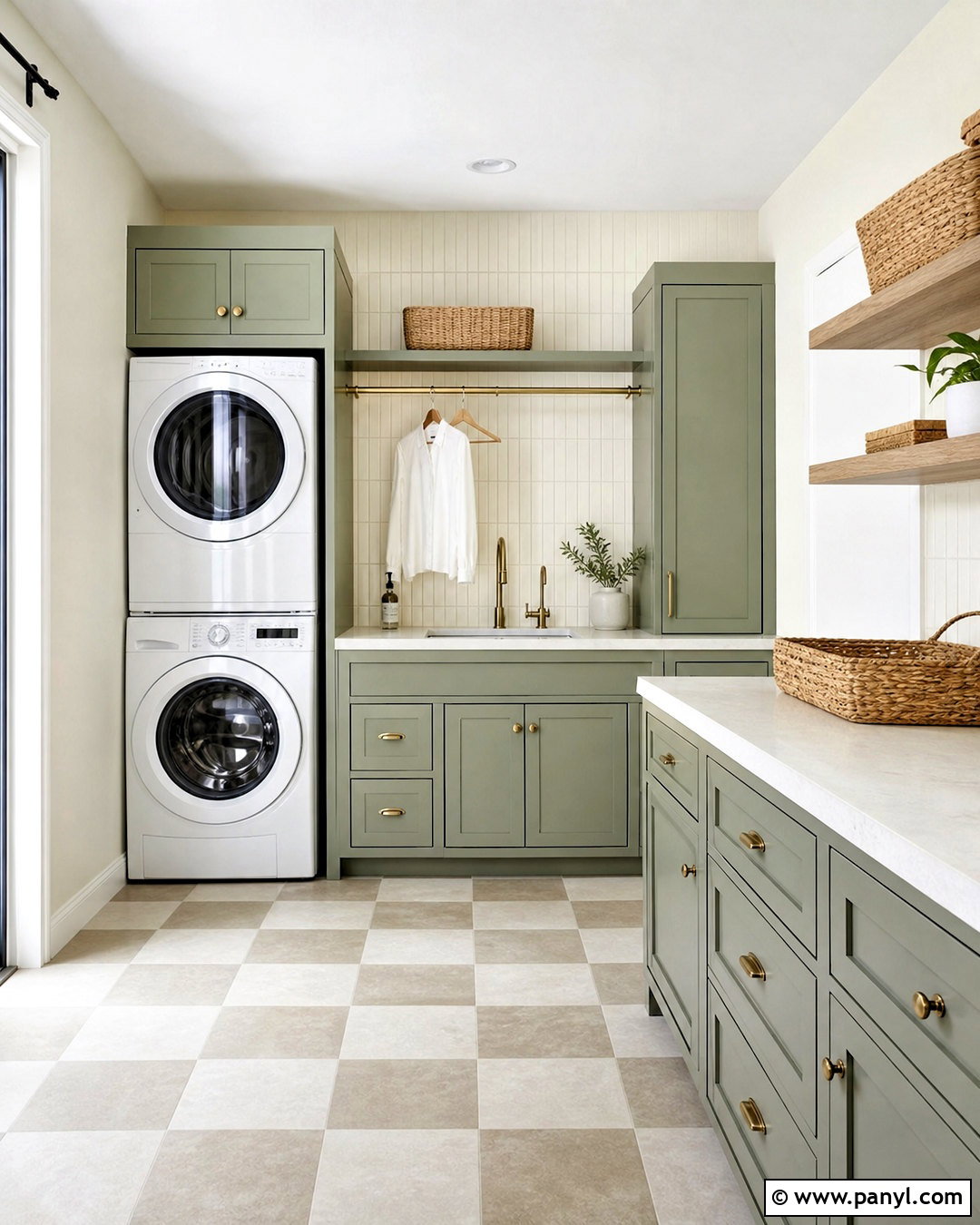
Turn a hardworking laundry room into an orderly, attractive space with sage green lower cabinets and full-height storage. Pair the cabinetry with warm white walls, light quartz counters, and an ivory vertical tile backsplash. A stacked washer and dryer can save floor space, while a hanging rail beneath an upper cabinet creates a convenient spot for air-drying clothes. Use brushed nickel or aged brass hardware, depending on the surrounding home finishes. Add a deep utility sink, labeled woven baskets, and open shelves for frequently used supplies. Durable checkerboard flooring in cream and soft taupe brings subtle pattern underfoot. This coordinated sage green laundry room makes routine chores easier while keeping cleaning products, linens, and clothing neatly contained.
9. Sage Green Mudroom
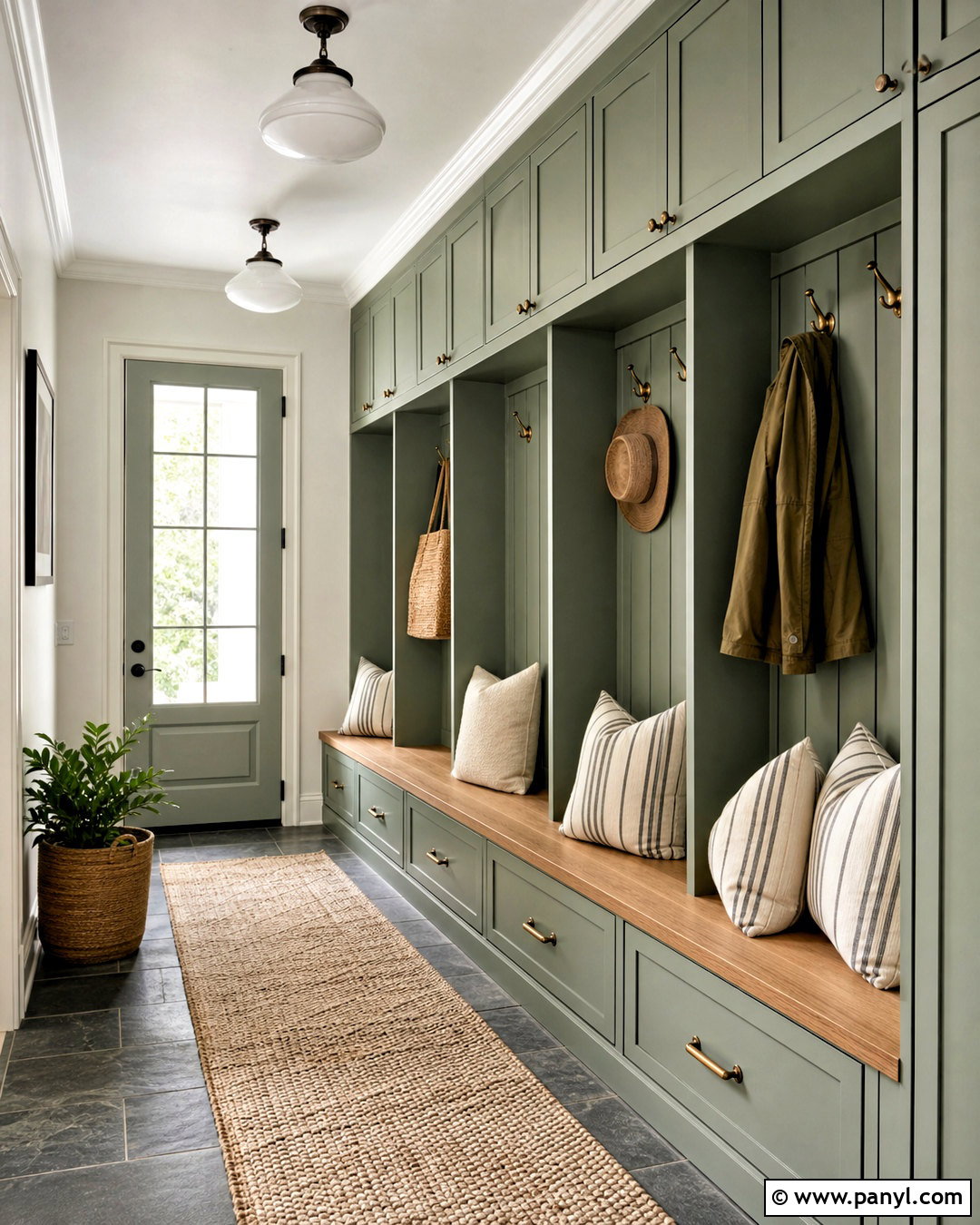
A well-designed sage green mudroom should handle muddy shoes, school bags, coats, and seasonal gear without feeling chaotic. Install floor-to-ceiling sage cabinetry with individual locker-style sections, closed upper cupboards, and deep drawers below a built-in bench. Use oak for the bench seat to introduce warmth and withstand daily wear. Durable slate-look porcelain flooring grounds the room and hides dirt between cleanings. Add antique brass hooks, cream seat cushions, and striped pillows for comfort. Woven baskets on upper shelves can organize gloves and accessories. Finish the space with warm white walls and a patterned washable runner. The complete setup offers every item a clear home while giving the mudroom a polished, furniture-like appearance.
10. Sage Green Nursery
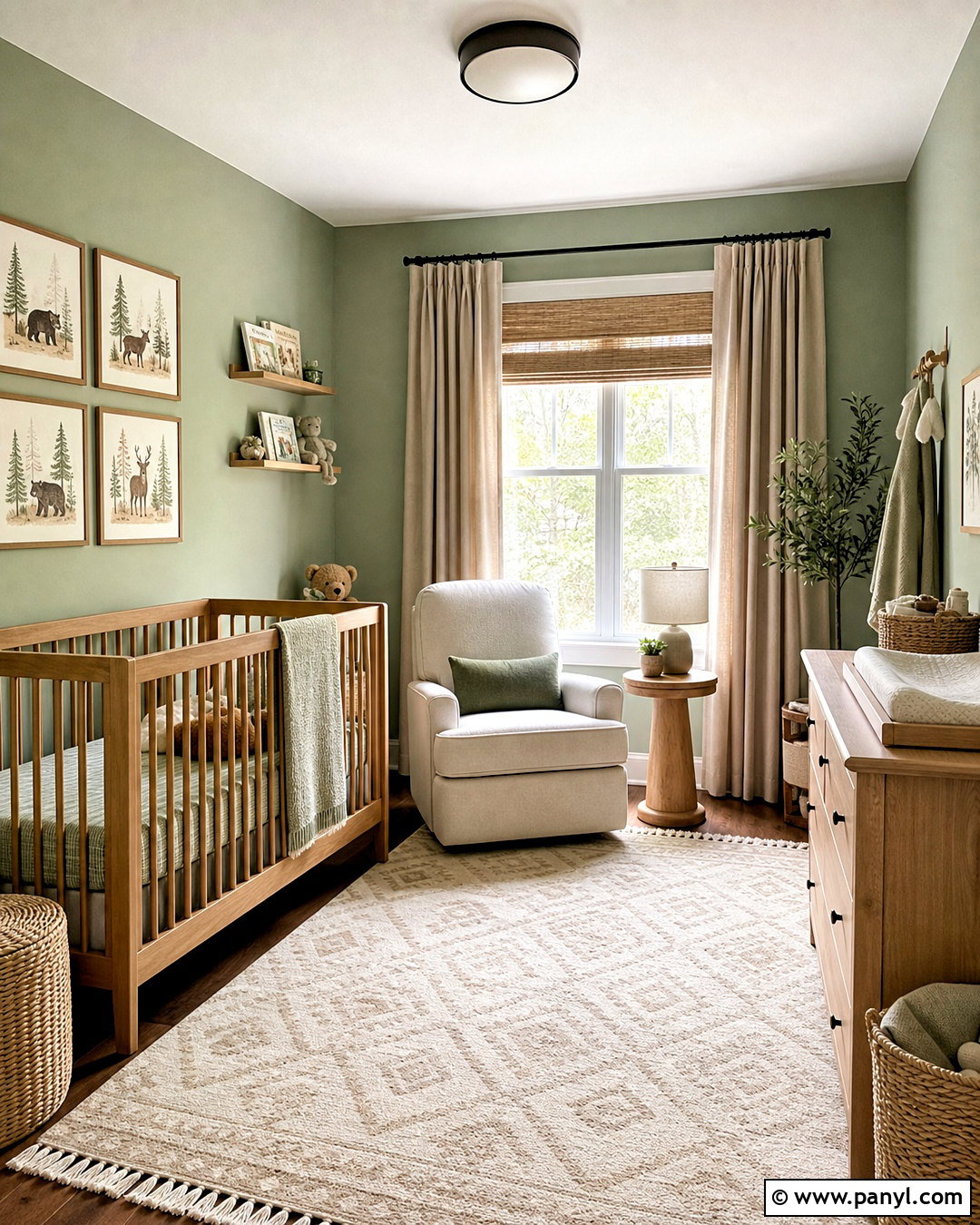
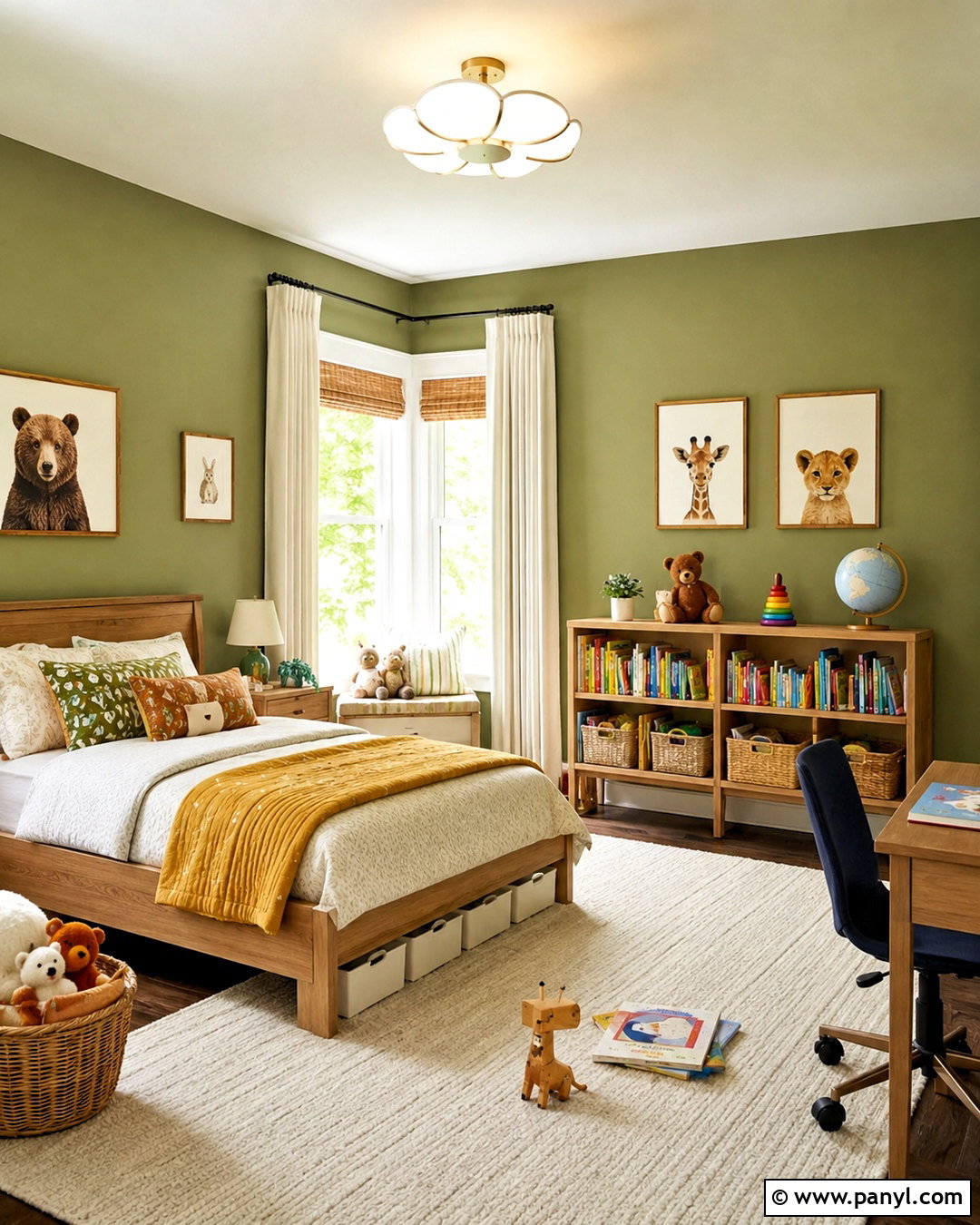
Design a soothing sage green nursery that can easily transition as the child grows. Use a pale sage on the walls and position a natural oak crib away from direct window light. Add an ivory glider with a small wood side table to create a comfortable feeding and reading corner. A low oak dresser can double as a changing station, reducing the need for extra furniture. Choose a soft cream rug with a subtle geometric pattern and install blackout curtains in warm beige linen. Simple woodland prints, woven baskets, and a few muted clay-colored accents add personality without overstimulating the room. This nursery feels gentle and organized, with practical storage and adaptable furniture supporting the calm sage green palette.
11. Sage Green House Exterior
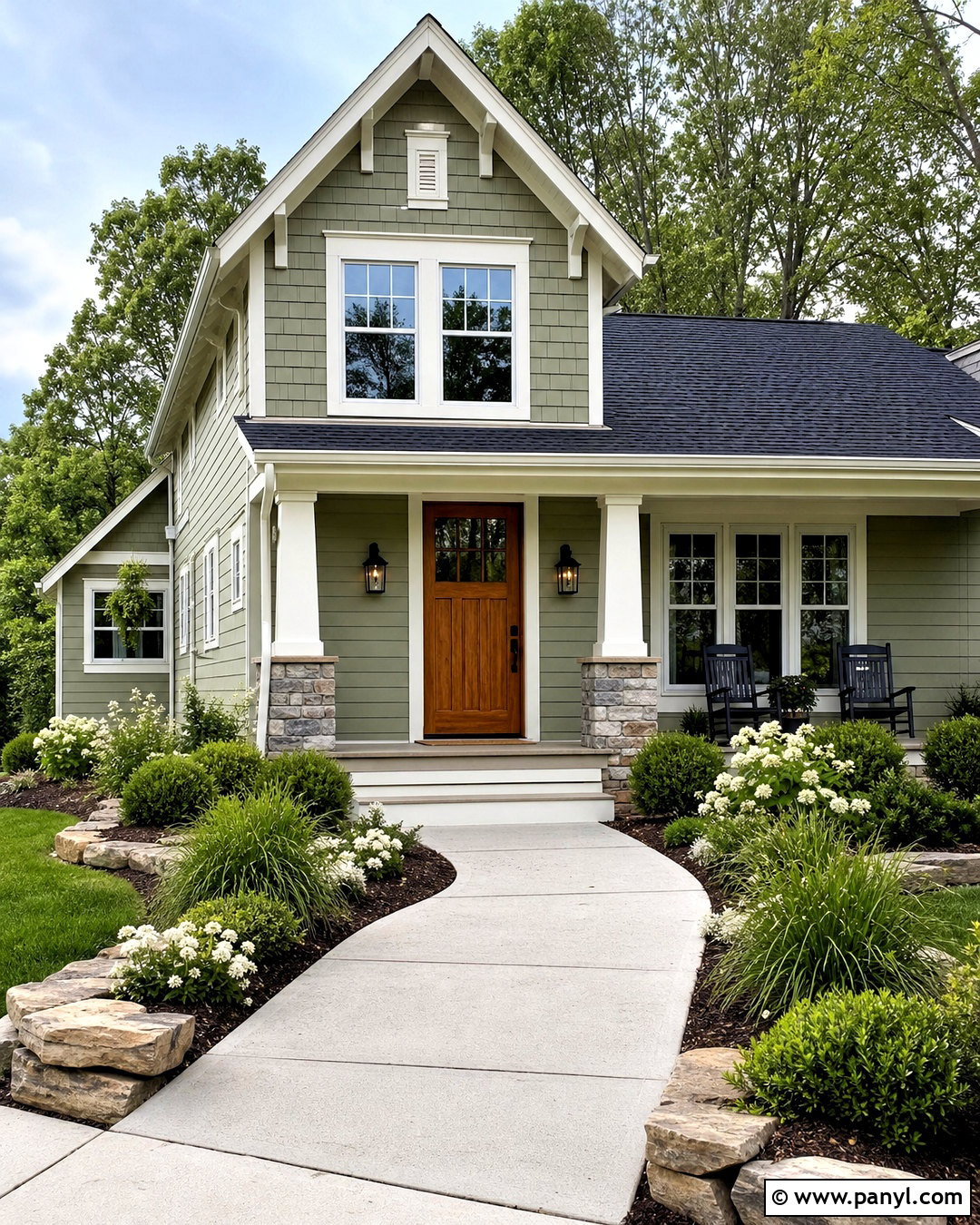
Give an average home timeless curb appeal with sage green siding, creamy white trim, and warm cedar accents. Use the green across the main body, then define windows, rooflines, porch columns, and fascia with soft white rather than a stark shade. A medium-stained cedar front door introduces natural warmth, while matte black lanterns and house numbers add crisp contrast. Choose a charcoal architectural shingle roof to ground the palette. Along the foundation, combine evergreen shrubs, white flowering plants, ornamental grasses, and natural stone edging. A clean concrete or gravel walkway completes the approach. This sage green house exterior feels connected to the landscape while retaining enough contrast to showcase the home’s architectural features.
12. Sage Green Front Door
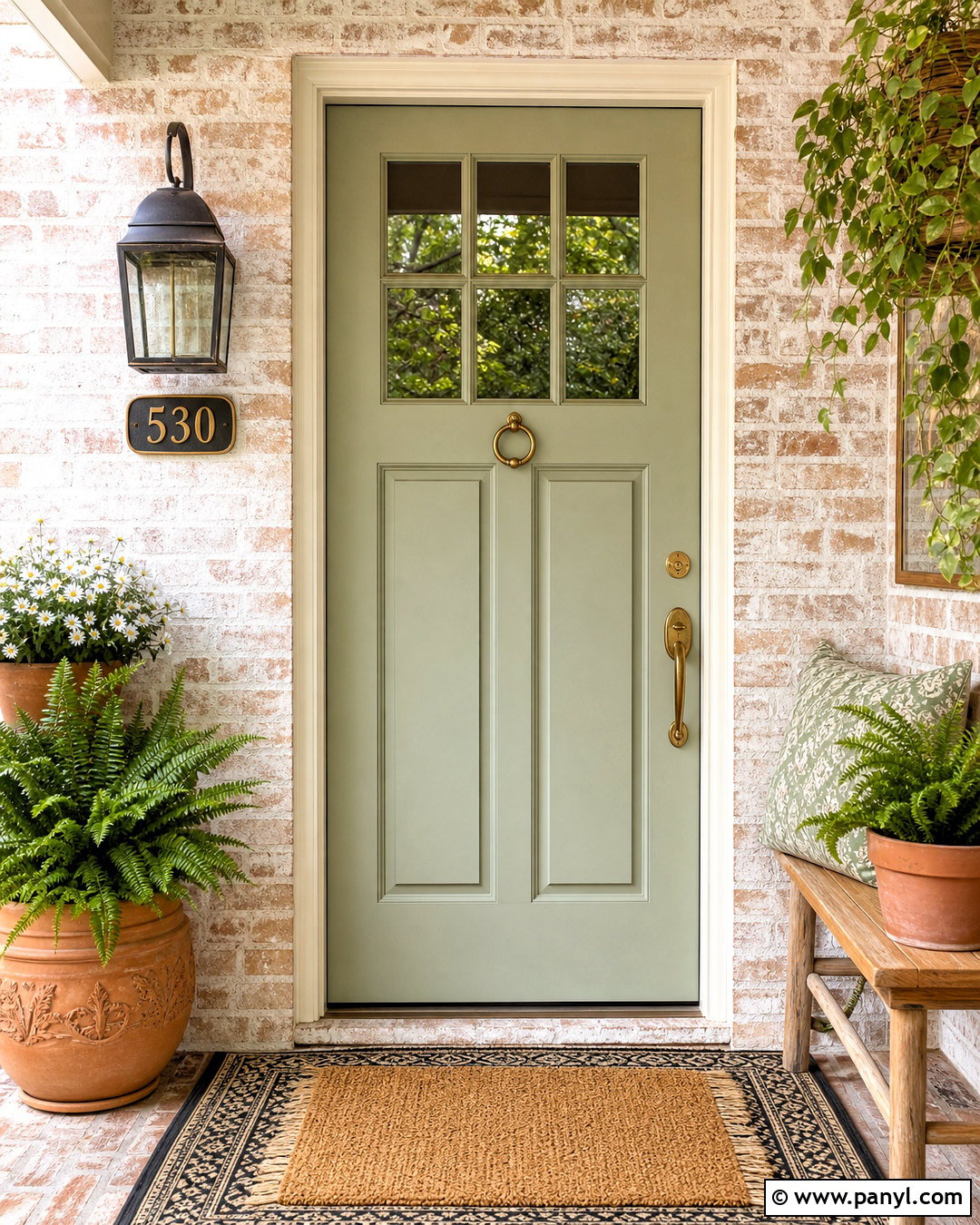
A sage green front door works best when the entire entrance supports its quiet color. Set the painted door within a warm white or light red brick facade, then add aged brass hardware for a soft, classic finish. Use a natural coir mat over a larger black-and-cream outdoor rug to create a layered landing. Symmetrical terracotta planters filled with ferns, small evergreens, or white flowers frame the doorway without blocking it. A matte black lantern above or beside the door provides definition and practical lighting. If space permits, include a slim wood bench and neutral cushion. Together, these features create a complete sage green entrance that feels welcoming, thoughtfully styled, and appropriate throughout the year.
13. Sage Green Front Porch
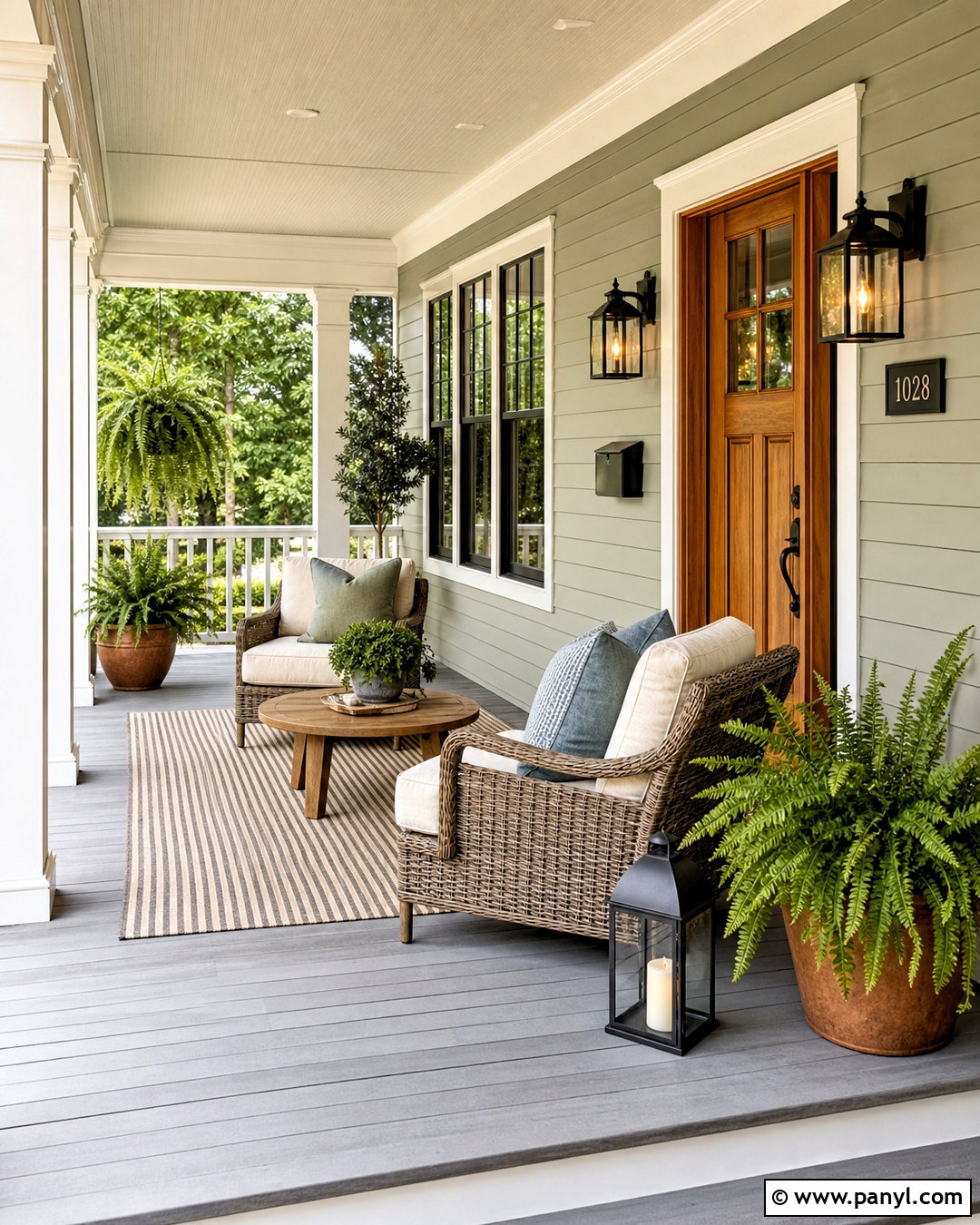
Make a front porch feel like an outdoor room by using sage green on the siding or ceiling and repeating the color through selected furnishings. Pair the green backdrop with creamy white columns, a natural wood front door, and warm gray porch flooring. Arrange two woven lounge chairs around a small teak table to create a clear conversation area. Add ivory seat cushions and patterned pillows in olive, blue-gray, and beige. Black metal lanterns provide structure, while large clay pots filled with ferns and trailing plants soften the edges. A striped outdoor rug defines the seating zone. This complete sage green front porch looks comfortable from the street and offers a practical place to relax close to home.
14. Sage Green Color-Drenched Library
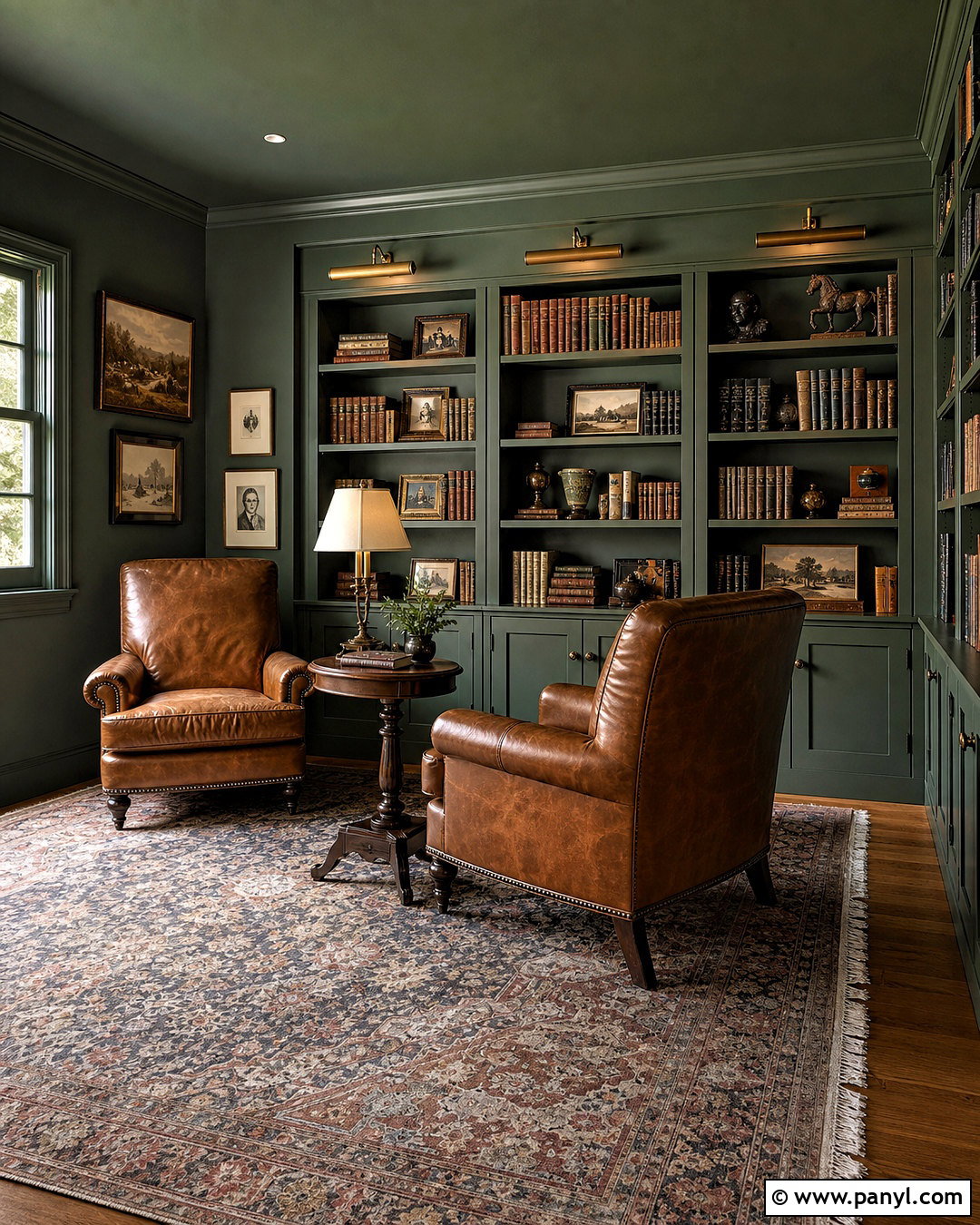
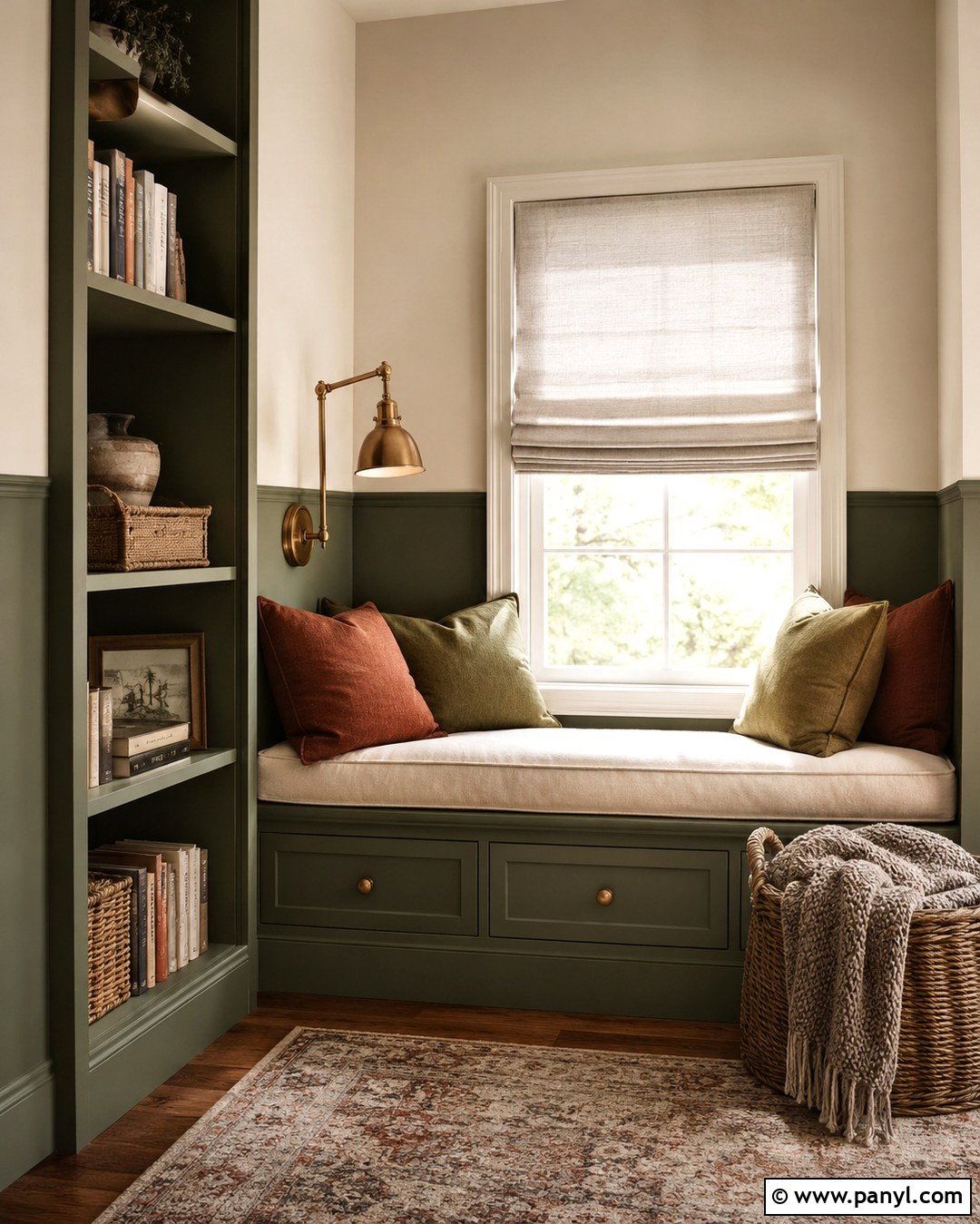
For a cozy reading room, carry one rich sage green across the walls, trim, ceiling, and built-in bookcases. This color-drenched treatment makes the architecture feel seamless and gives a small room a deliberate sense of depth. Add a caramel leather sofa or pair of cognac club chairs to warm the green backdrop. A faded Persian-style rug introduces rust, navy, and cream without overwhelming the palette. Use antique brass picture lights above the shelves and a shaded floor lamp beside the seating area. Arrange books with framed artwork, pottery, and a few natural objects rather than filling every inch. The finished sage green library feels intimate and collected, yet bright enough for comfortable daytime reading.
15. Sage Green Fireplace Living Room
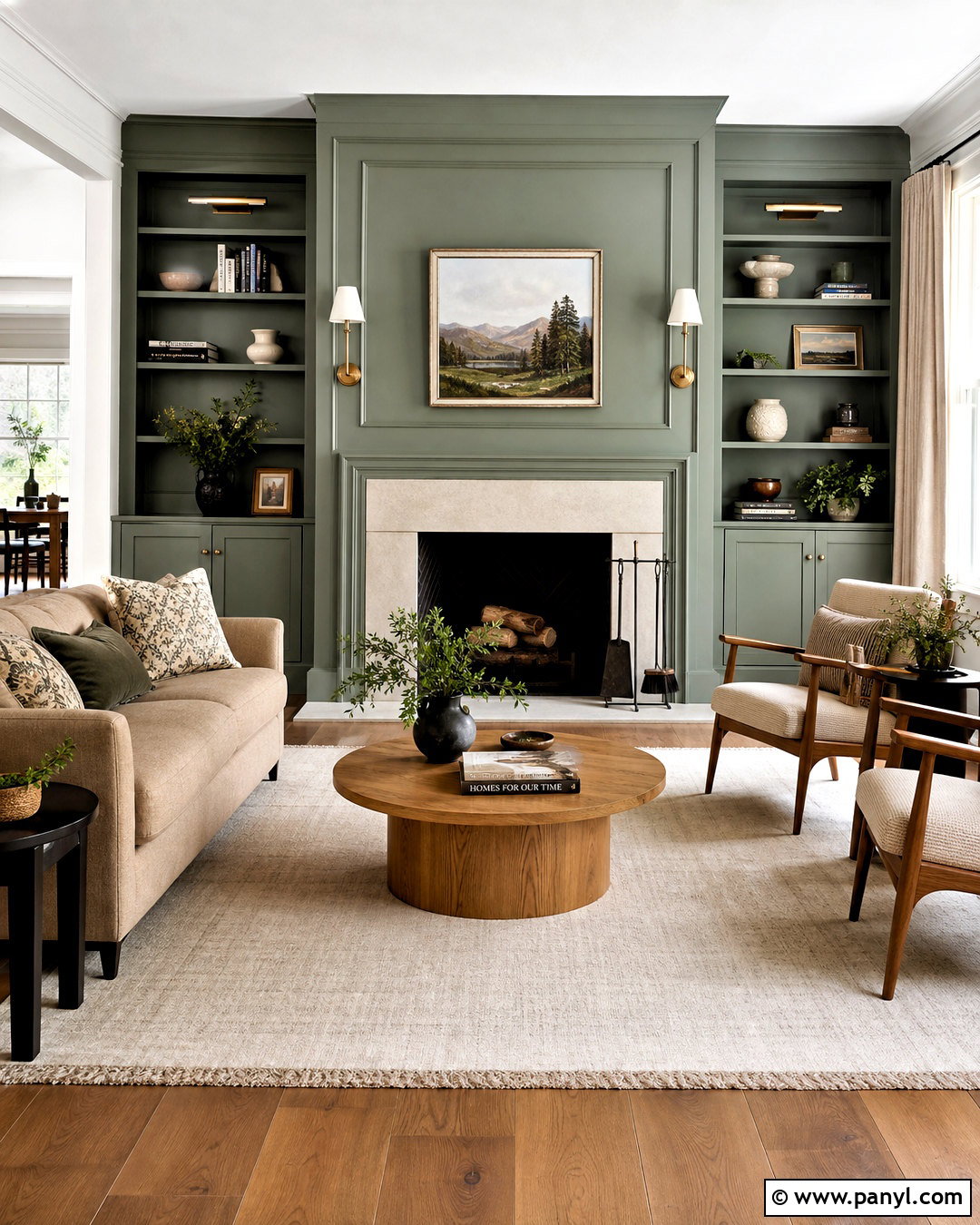
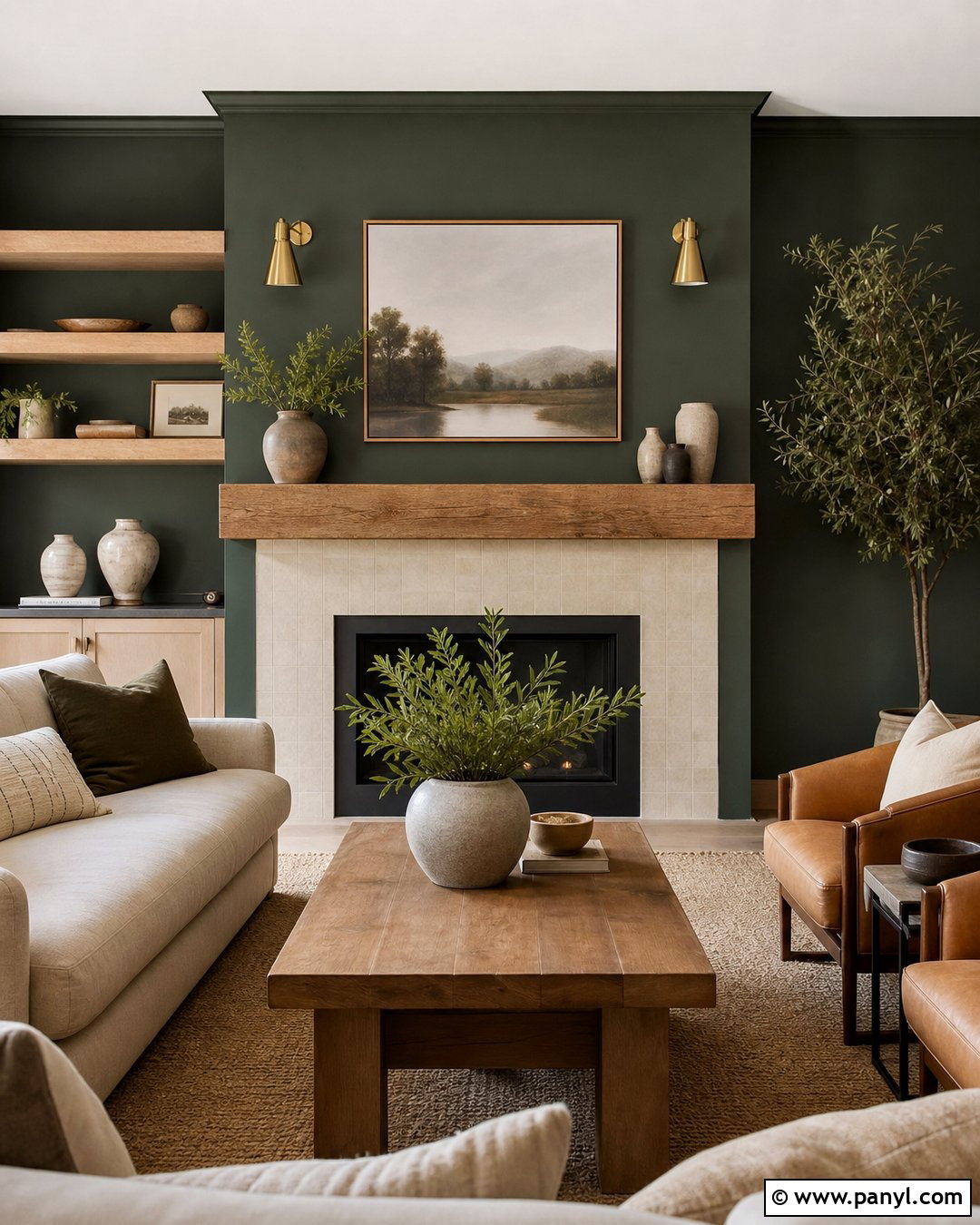
Build a complete living room around a sage green fireplace wall rather than treating the fireplace as a disconnected accent. Paint the mantel, surrounding paneling, and adjoining built-ins in a medium sage shade. Use a pale limestone or cream tile around the firebox to create subtle contrast. Position a warm beige sofa facing the fireplace, then add two wood-framed chairs to form a balanced conversation area. A textured ivory rug and round oak coffee table soften the arrangement. Style the shelves with books, ceramics, and framed art in restrained colors. Black fireplace tools and bronze sconces add definition. This design makes the sage fireplace feel like a natural architectural centerpiece within a comfortable, coordinated room.
16. Sage Green Small Apartment
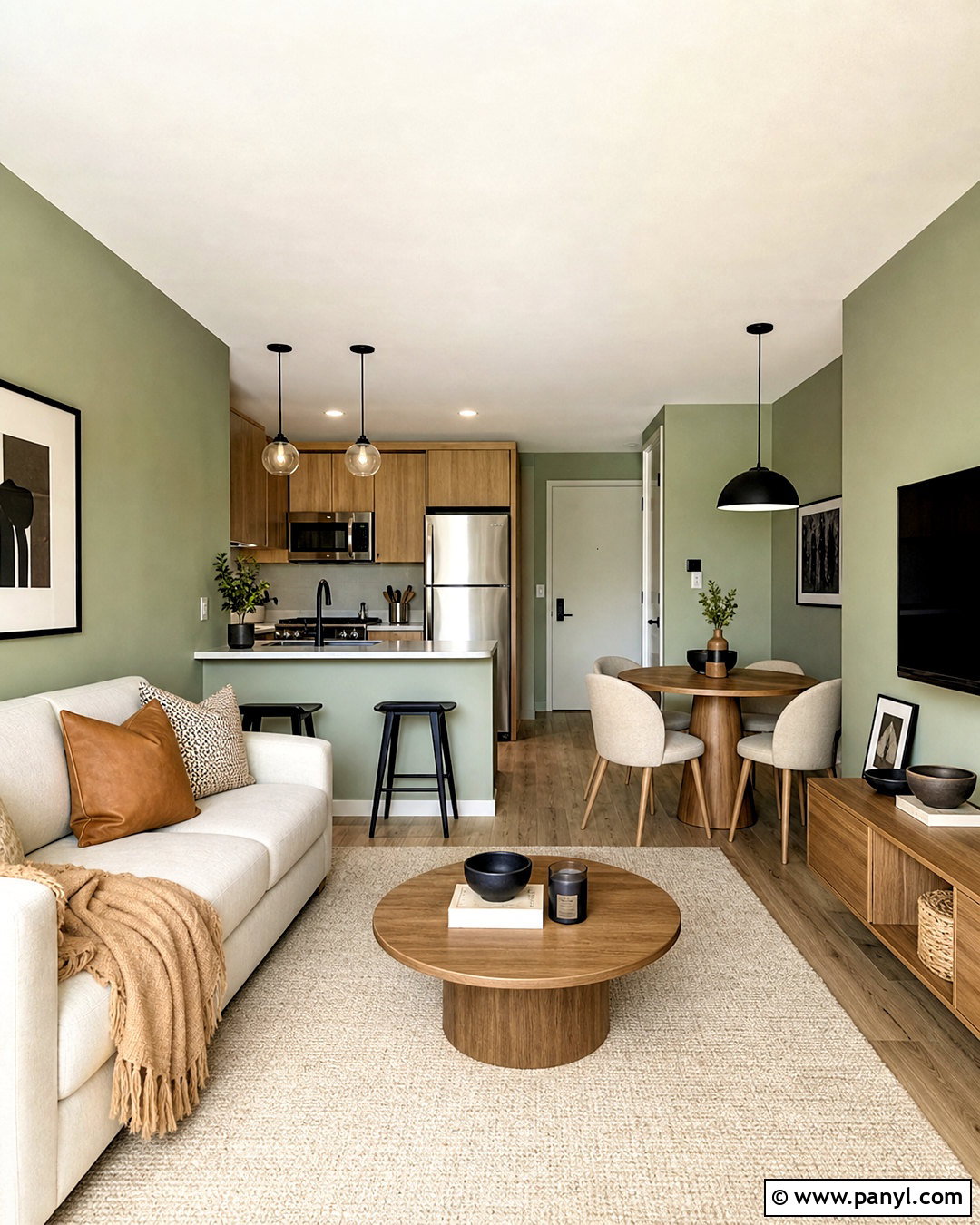
Sage green can give a small apartment character without reducing its sense of openness. Paint one continuous wall through the living and dining zones in a light, gray-based sage. Choose a compact cream sofa, a round pedestal dining table, and slim oak furniture to preserve clear pathways. A large neutral rug visually expands the seating area, while a wall-mounted television and floating console save valuable floor space. Repeat sage through one or two textiles, but keep most accessories ivory, tan, and warm brown. Black metal lighting adds clean contrast without requiring bulky furniture. By limiting the palette and selecting appropriately scaled pieces, this sage green apartment feels cohesive, comfortable, and far more spacious than a heavily decorated layout.
17. Sage Green Sunroom
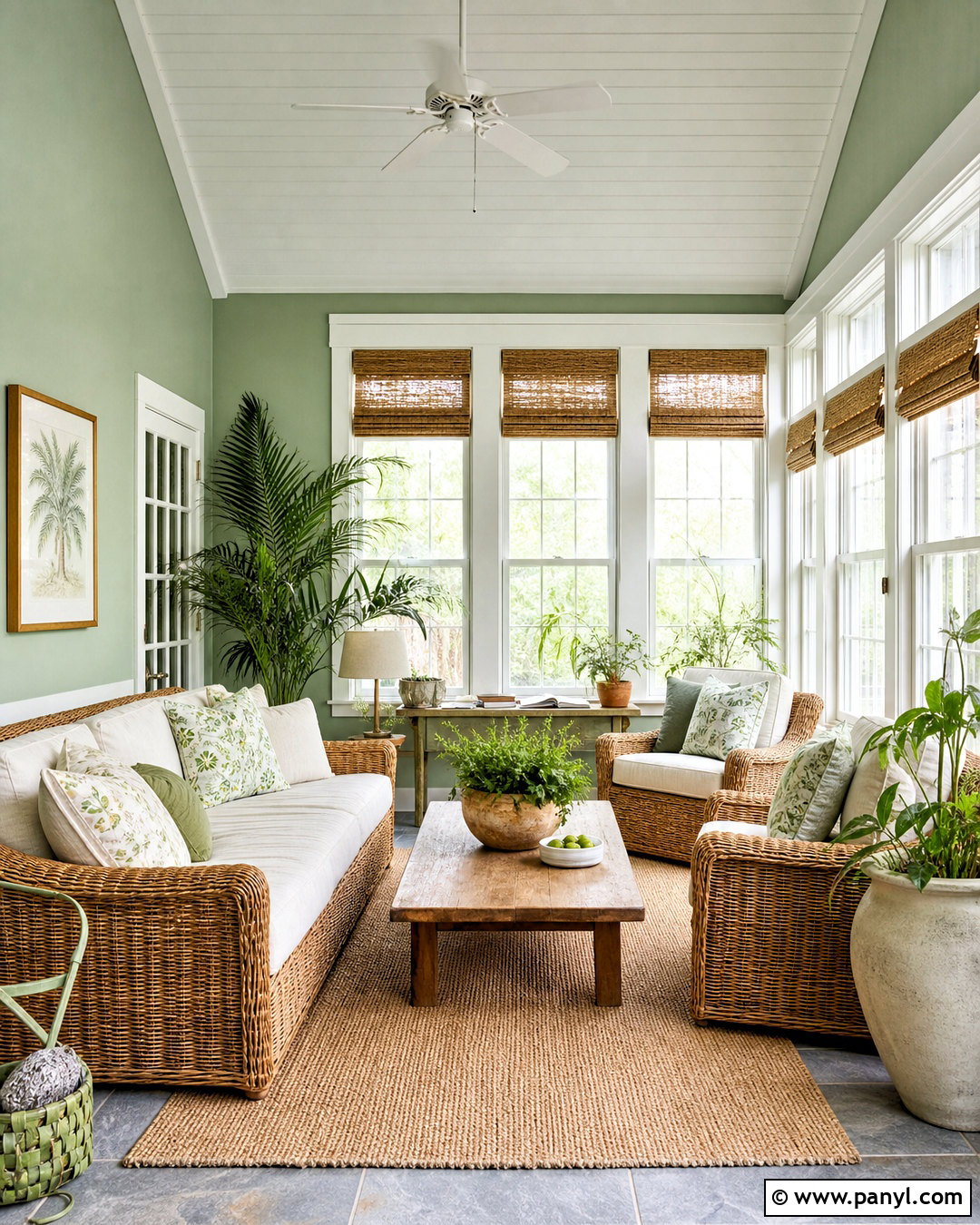
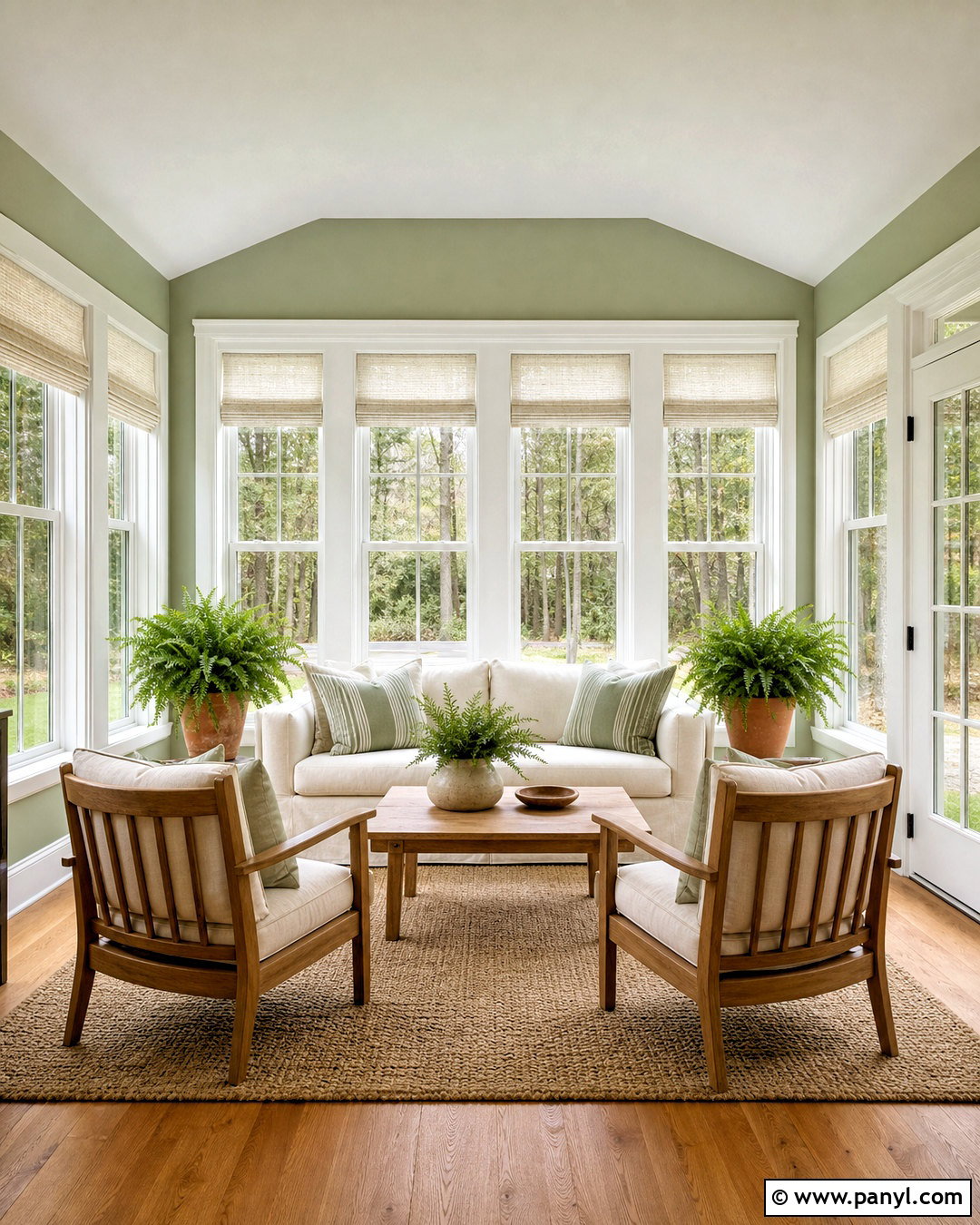
Let a light-filled sunroom connect naturally with the garden by combining pale sage walls with woven furniture and airy fabrics. Arrange a rattan sofa and two matching chairs around a low wood coffee table, creating a comfortable central seating group. Use thick ivory cushions that can handle regular use and add patterned pillows in botanical green, dusty blue, and soft tan. Natural woven shades control glare without covering the windows completely. A washable indoor-outdoor rug protects the floor and defines the arrangement. Include several plants in terracotta and stone pots to strengthen the indoor-outdoor connection. This sage green sunroom remains bright and relaxed while offering enough texture and comfortable seating for daily use.
18. Sage Green Breakfast Nook
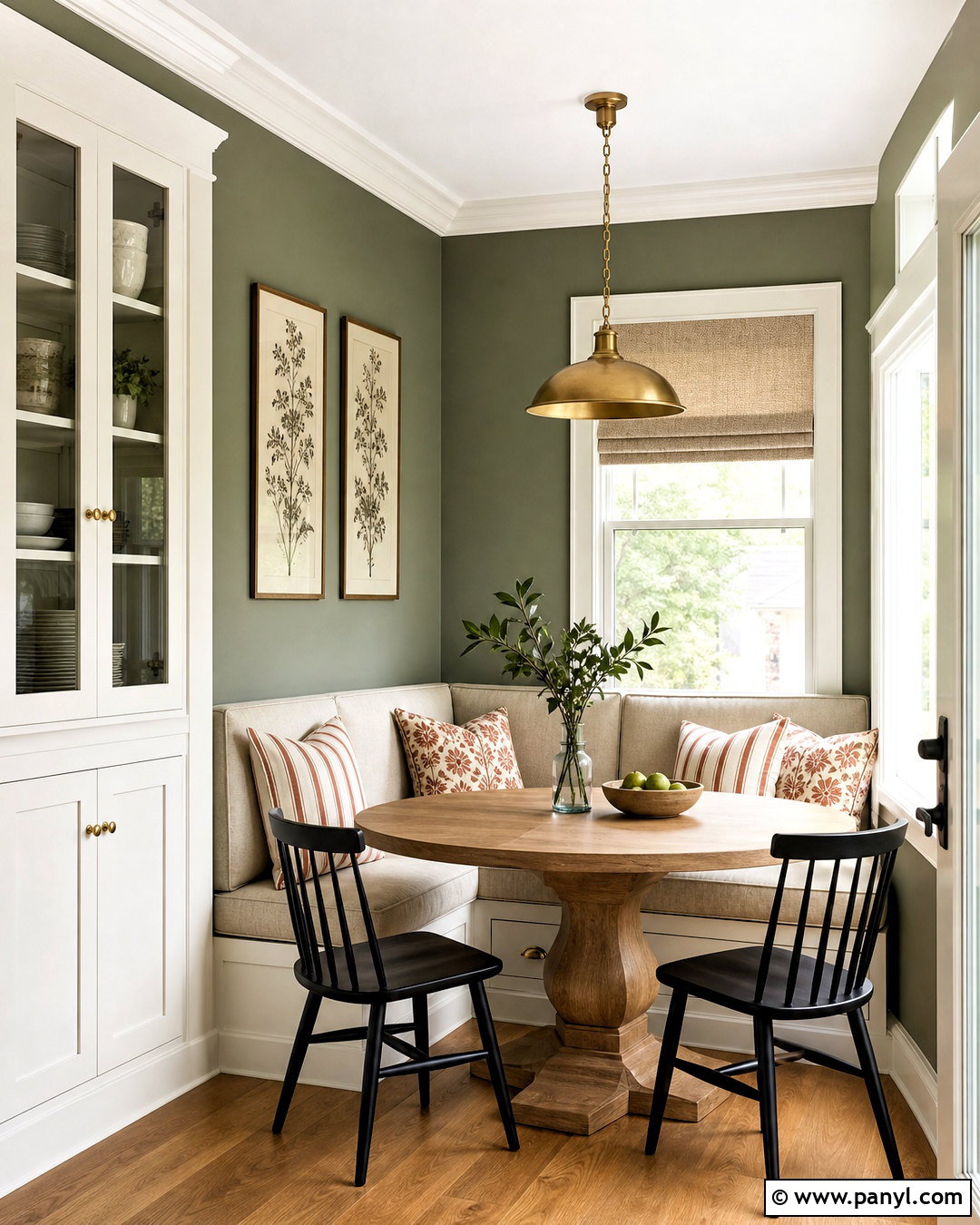
A cheerful breakfast nook becomes more grounded when sage green is paired with warm wood and creamy textiles. Build an L-shaped banquette against sage-painted walls and upholster the seat in durable oatmeal fabric. Place a round oak pedestal table in front of it, then add two lightweight spindle-back chairs for flexible seating. A simple brass pendant provides focused light without overwhelming the compact area. Use striped cushions in ivory, sage, and muted rust to introduce gentle pattern. Framed botanical prints can fill the wall above the banquette, while a Roman shade keeps the window treatment neat. The finished sage green breakfast nook feels cozy and efficient, making it suitable for meals, homework, and casual conversation.
19. Sage Green Guest Bedroom
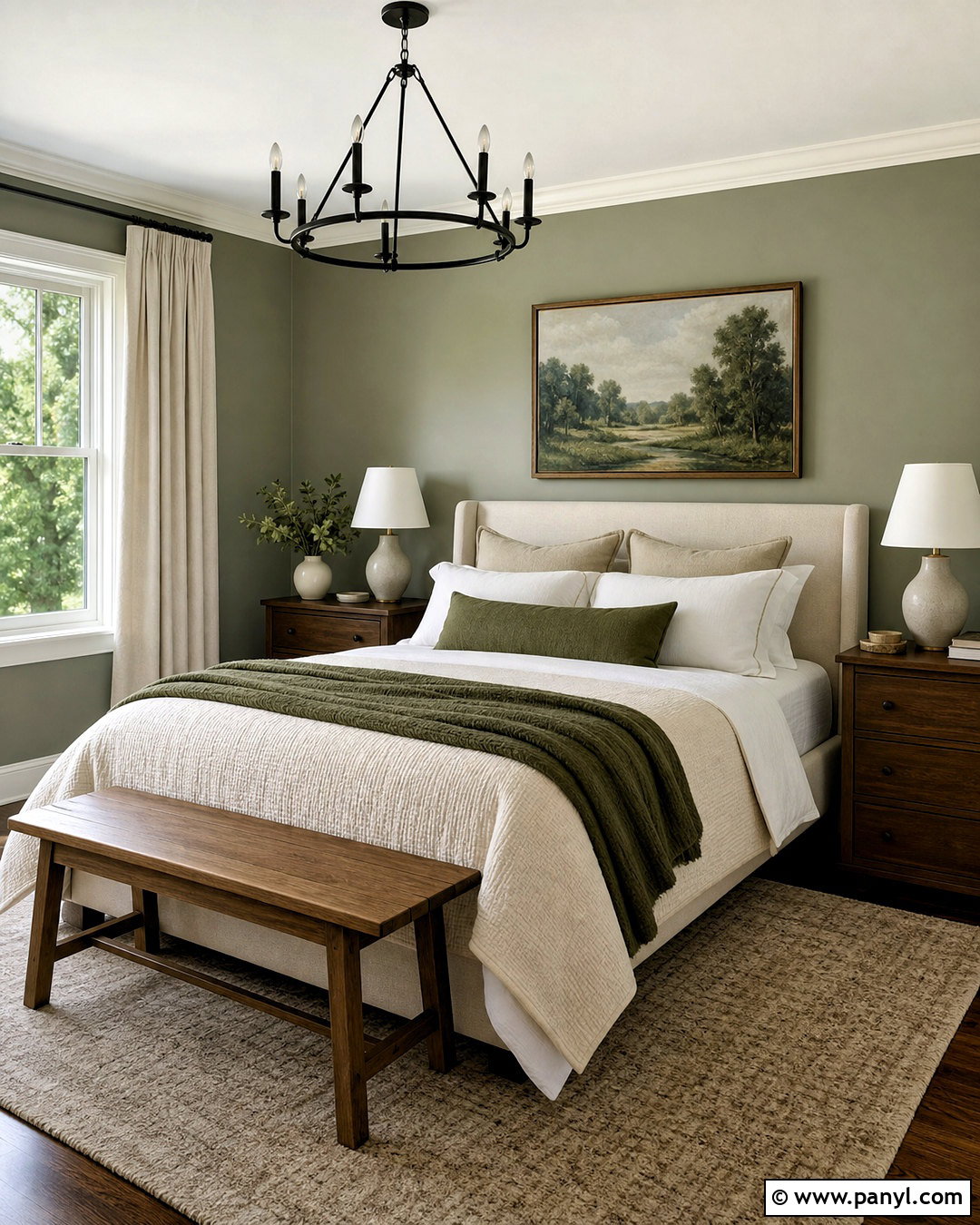
Welcome visitors with a sage green guest bedroom that feels comfortable, uncluttered, and easy to maintain. Paint the walls a medium gray-green and center an upholstered oatmeal bed between two narrow walnut nightstands. Dress the bed in crisp white sheets, a textured cream coverlet, and a folded olive or clay-colored blanket. Matching ceramic lamps provide practical reading light, while blackout curtains in natural linen improve privacy and sleep. Place a small bench at the foot of the bed and leave part of a simple wood dresser empty for guests. A neutral rug and understated landscape artwork complete the room. This balanced sage palette creates a restful retreat without relying on overly personal or seasonal decorations.
20. Sage Green Backyard Patio
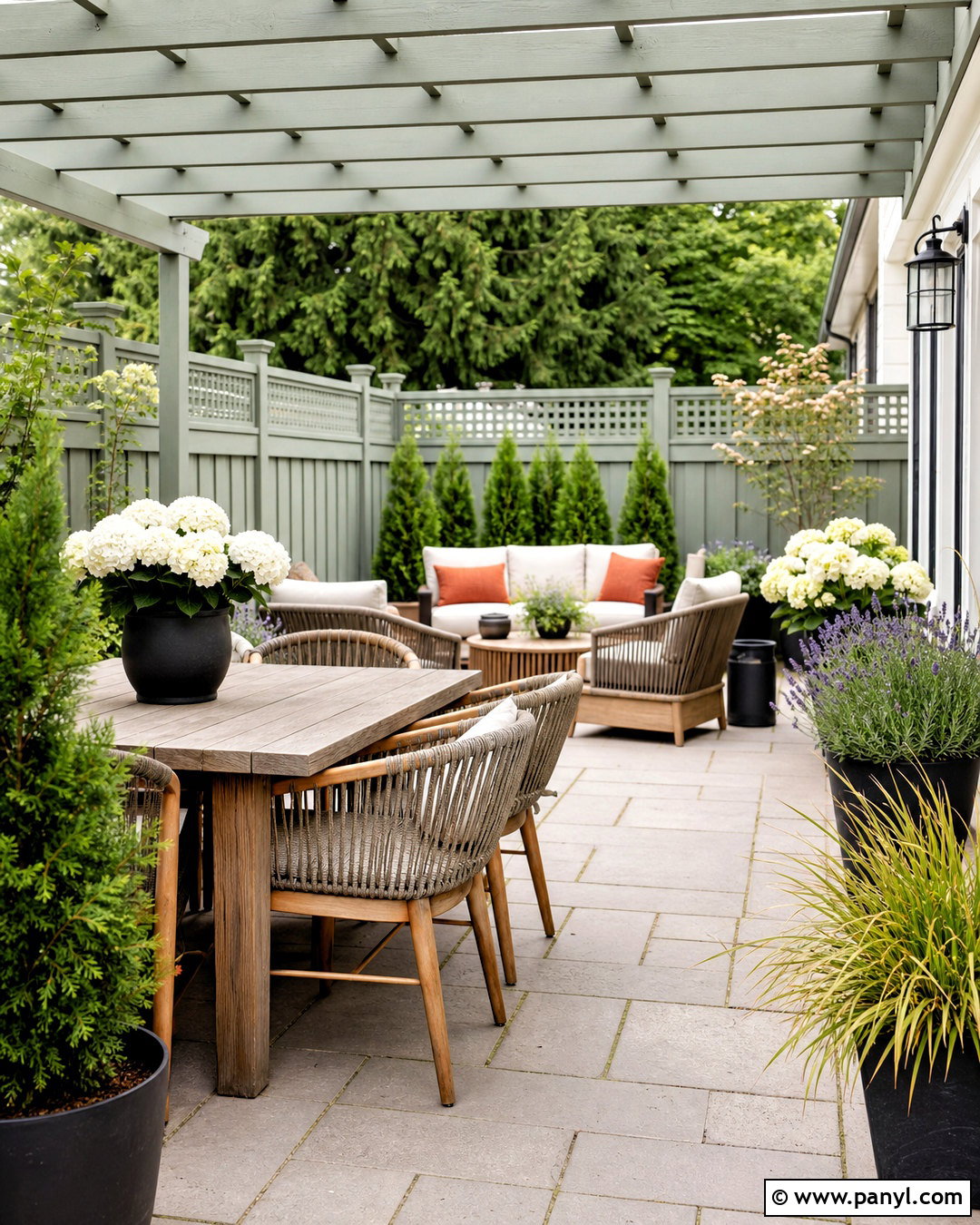
Bring sage green outdoors with a coordinated patio that blends comfortably into surrounding planting. Paint a wood privacy fence or pergola in weather-resistant sage green, then use pale stone pavers to brighten the ground plane. Arrange a teak dining table and comfortable woven lounge chairs in separate but connected zones. Ivory outdoor cushions keep the furniture light, while striped sage and terracotta pillows repeat the garden palette. Plant lavender, ornamental grasses, white hydrangeas, and evergreen shrubs around the edges for softness and year-round structure. Black metal planters and subtle string-free wall lighting add definition. This complete sage green backyard patio supports dining, relaxing, and entertaining while maintaining a calm relationship with the landscape.
Conclusion:
The best sage green home ideas treat the color as part of a complete design rather than a temporary decorative accent. Sage can cover walls, cabinetry, built-ins, siding, or outdoor structures, but it looks most convincing when paired with thoughtful materials and supporting colors. Warm wood, cream, stone, brass, black, terracotta, and natural textiles all help this muted green feel balanced. Before committing, test samples in the actual space and view them throughout the day, since natural and artificial light can change the undertones. Whether you update one room or create a coordinated home palette, sage green offers a calm, versatile foundation that can remain welcoming for years.

Related Ideas and Inspiration:
Leave a Reply