
Rust brings the warmth of burnt orange, the depth of brown, and the earthy character of natural clay into one versatile shade. The best 20 rust color combinations balance that richness with light neutrals, cool blues, muted greens, or deeper accent colors. Rust can feel relaxed in a cream living room, dramatic beside navy, organic with sage, or modern against matte black. Texture also matters. Linen, velvet, warm wood, stone, woven fibers, and aged metal help this color look layered rather than flat. Whether you are decorating one room or creating a connected whole-home palette, these pairings offer practical ways to control rust’s intensity. Explore the complete rooms and coordinated palettes below to find your favorite 20 rust color combinations.
1. Rust And Cream Living Room
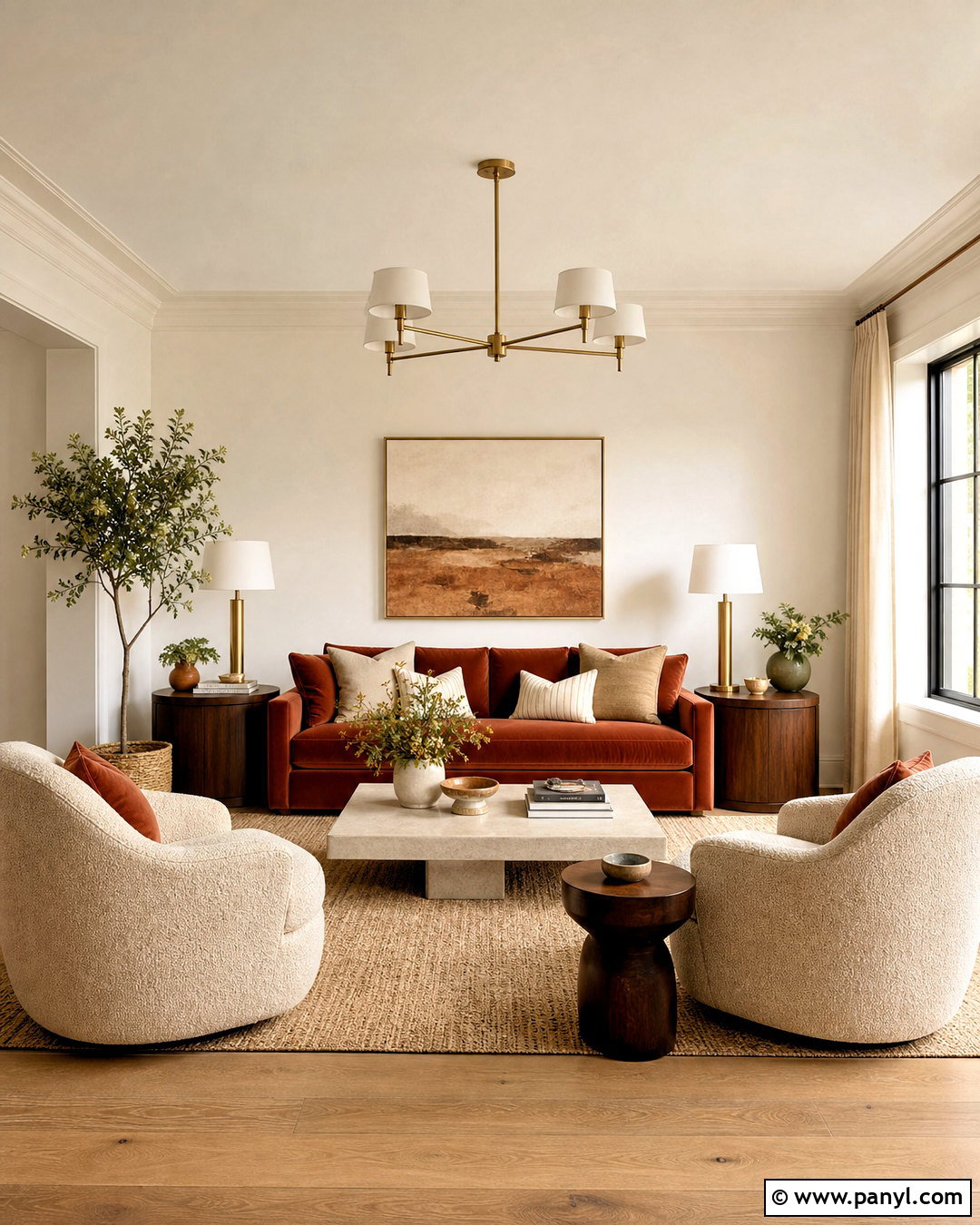
Soft cream gives rust enough breathing room to become a warm focal point without making the living room feel heavy. Start with creamy off-white walls, natural oak flooring, and a rust velvet sofa centered on a light woven rug. Add two oatmeal armchairs so the seating arrangement remains bright and balanced. A pale stone coffee table introduces a cooler surface, while walnut side tables repeat the earthy undertones of rust. Use rust again in patterned curtains or one ceramic vase, but avoid covering every surface with it. Brushed brass lighting adds gentle shine. Finish the room with ivory pillows, a camel throw, simple landscape artwork, and leafy plants. This complete combination feels welcoming, polished, and easy to adapt to both modern and traditional homes.
2. Rust And Sage Green Bedroom
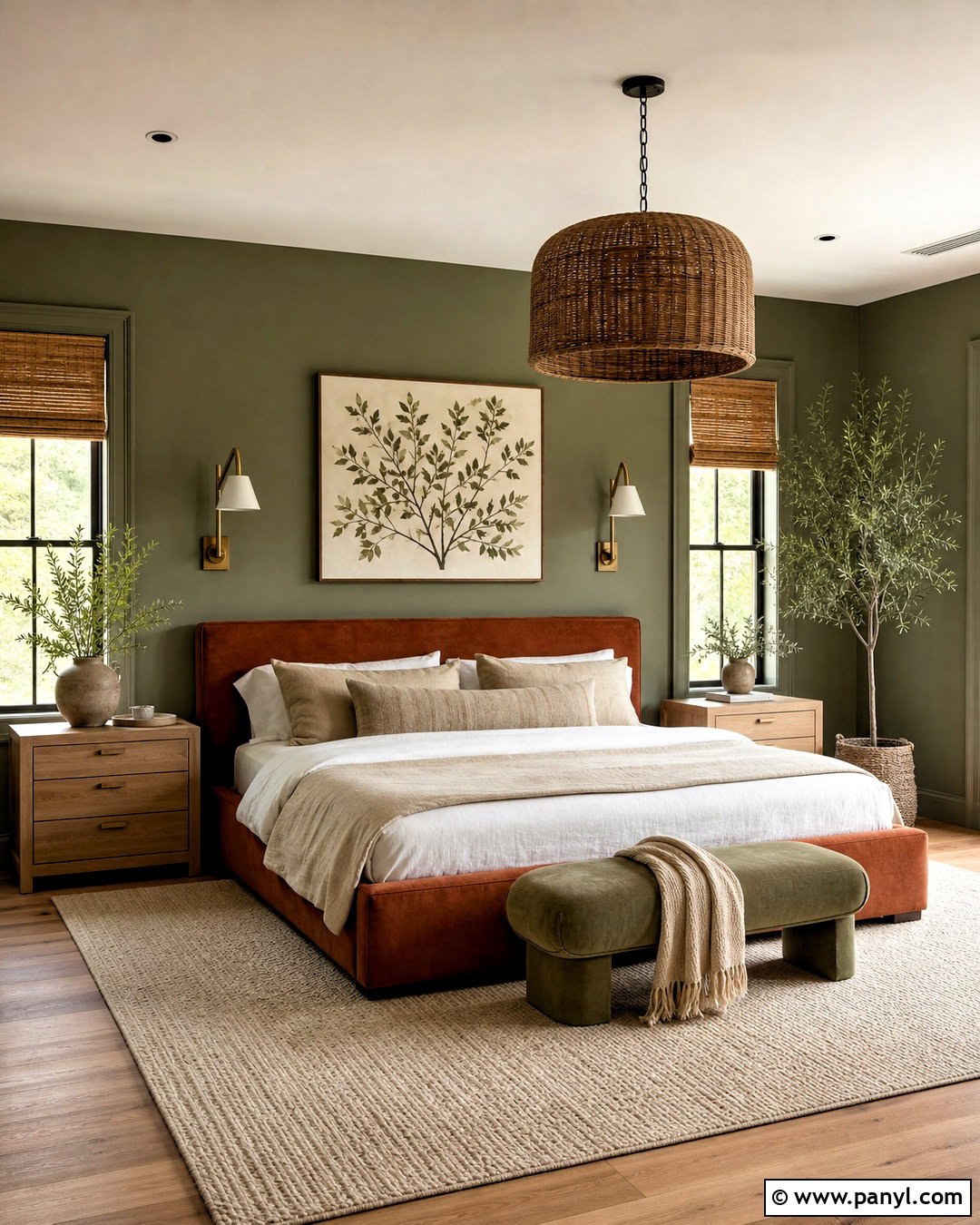
Rust and sage green create a calm bedroom palette inspired by clay, leaves, and sun-warmed soil. Paint the walls a soft, muted sage, then make a rust-colored upholstered bed the visual anchor. Layer it with ivory sheets, a natural linen duvet, and pillows combining rust, sage, and warm beige. Light oak nightstands keep the room relaxed, while aged brass sconces add a subtle traditional note. Choose an oatmeal wool rug large enough to extend beyond the bed and soften the entire layout. Natural woven shades provide privacy without introducing another strong color. A sage bench, handmade pottery, and botanical artwork complete the room. Keep the ceiling and trim warm white so the two earthy shades feel fresh instead of dark or overly rustic.
3. Rust And Navy Blue Dining Room
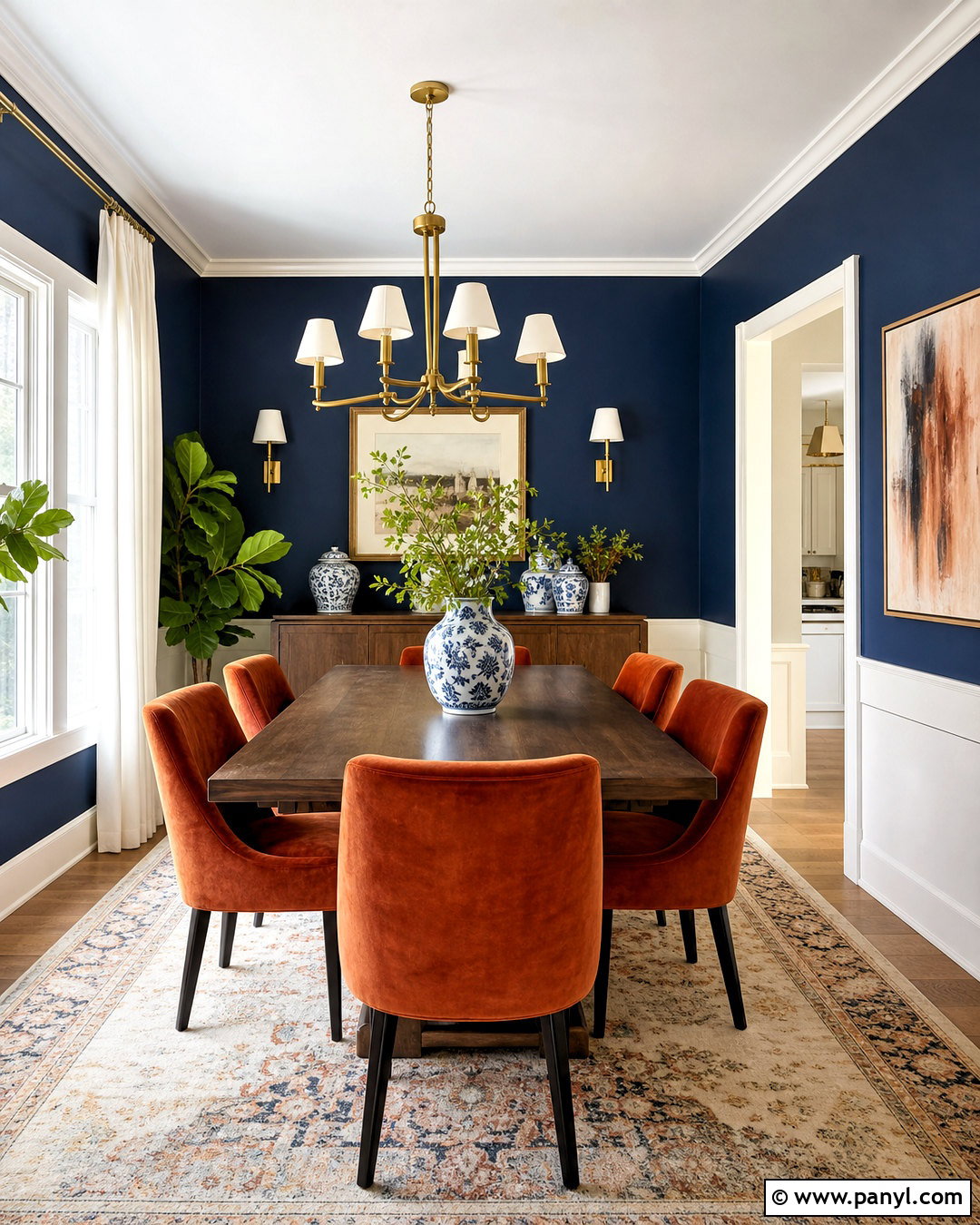
A rich navy dining room becomes more inviting when rust is introduced through upholstery and textiles. Cover the walls in deep navy blue, but keep the ceiling, trim, and window frames crisp warm white. Place a medium-tone walnut dining table at the center with rust velvet chairs that provide strong contrast against the walls. A large cream rug with subtle navy and rust details grounds the arrangement and prevents the room from looking too formal. Add a linear brushed brass chandelier above the table for warmth and reflection. White linen curtains soften the dark backdrop, while blue-and-white ceramics connect the room’s cooler elements. Complete the setting with simple greenery and rust-toned artwork. The result feels dramatic and refined without sacrificing comfort or everyday practicality.
4. Rust And Charcoal Home Office
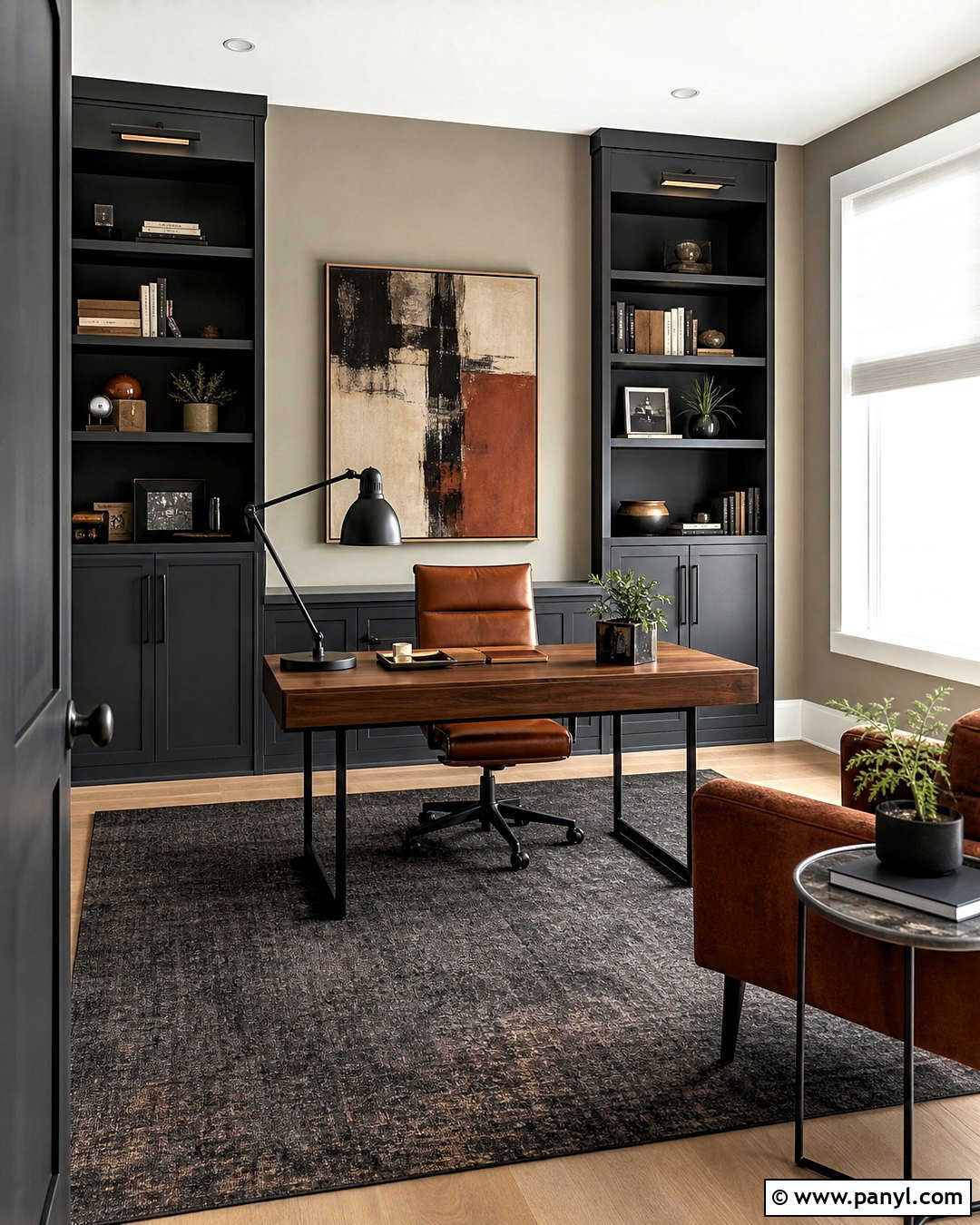
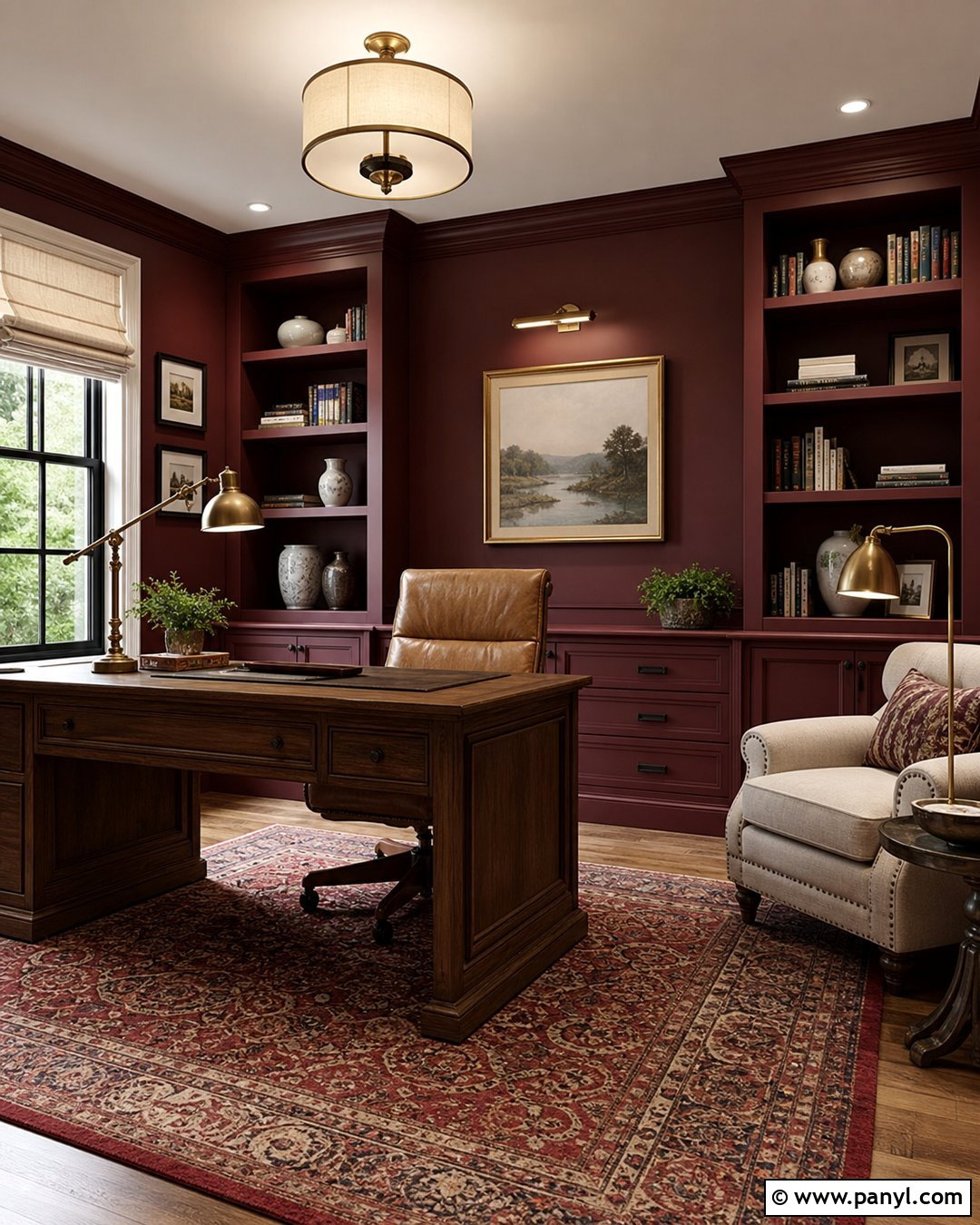
For a focused home office, combine rust with charcoal gray and clean-lined furniture. Use charcoal on built-in shelving or the wall behind the desk, then keep the remaining walls soft greige to maintain brightness. A rust leather desk chair creates a warm focal point and develops more character as it ages. Pair it with a streamlined walnut desk, matte black hardware, and a charcoal flat-weave rug. Closed lower cabinets control clutter, while open shelves display neutral books, pottery, and a few rust accents. Hang a large abstract print using charcoal, cream, and burnt orange above a low storage cabinet. A black task lamp and warm metal ceiling fixture sharpen the design. Light oak flooring and white window coverings prevent the darker colors from overwhelming the workspace.
5. Rust And Beige Family Room
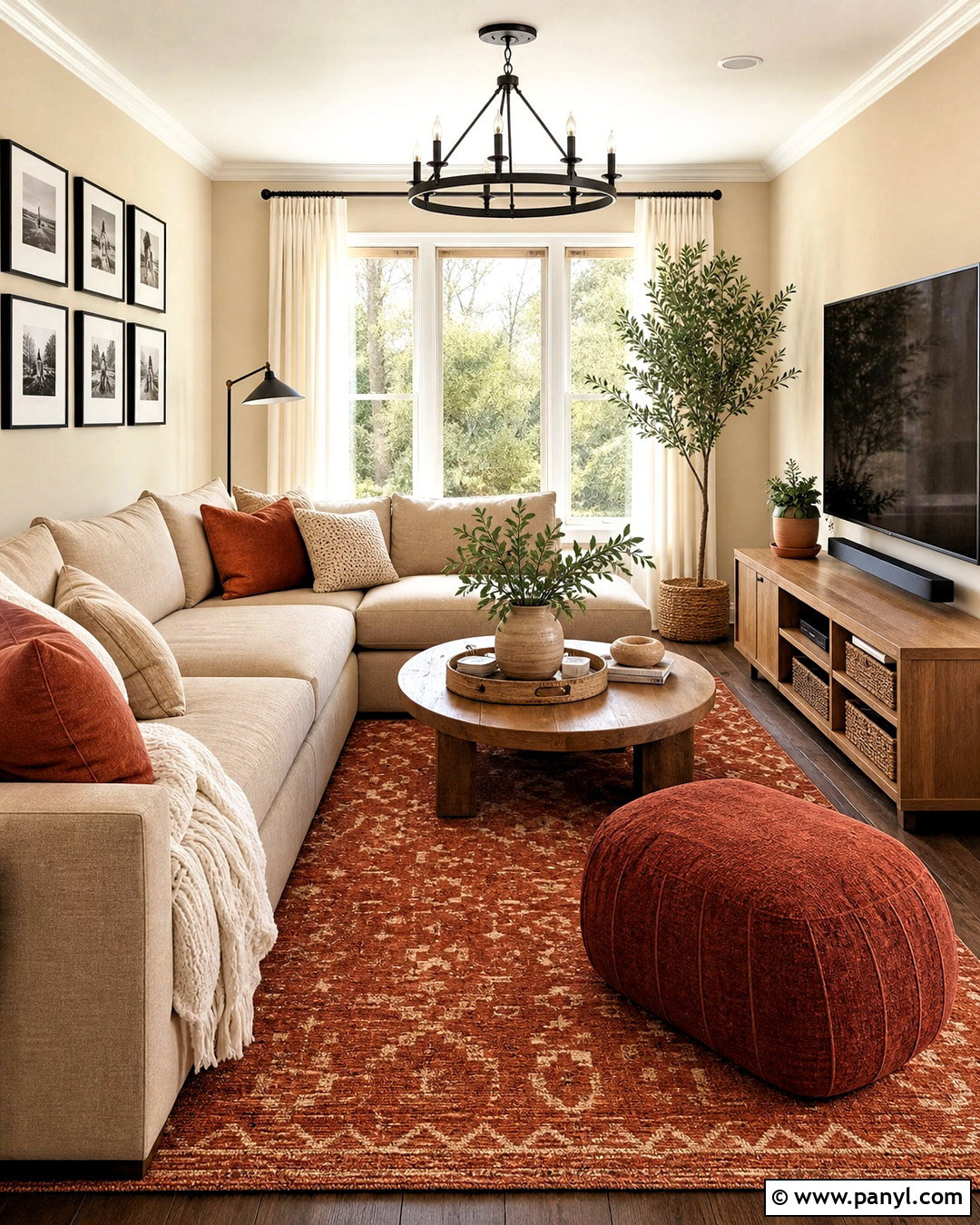
Beige makes rust feel soft, familiar, and especially comfortable in a busy family room. Begin with warm beige walls and a large sand-colored sectional that offers generous seating. Introduce rust through a substantial area rug, an upholstered ottoman, and a pair of patterned pillows rather than relying on many small accessories. A medium oak media console and rounded wood coffee table add durability and warmth. Use washable ivory curtains to brighten the windows and improve the room’s relaxed appearance. Black picture frames and a dark bronze floor lamp provide enough contrast to define the pale surfaces. Add woven baskets for blankets, concealed toy storage, and one easy-care indoor tree. This practical palette feels coordinated but forgiving, making it suitable for everyday lounging, games, and casual entertaining.
6. Rust And Olive Green Kitchen
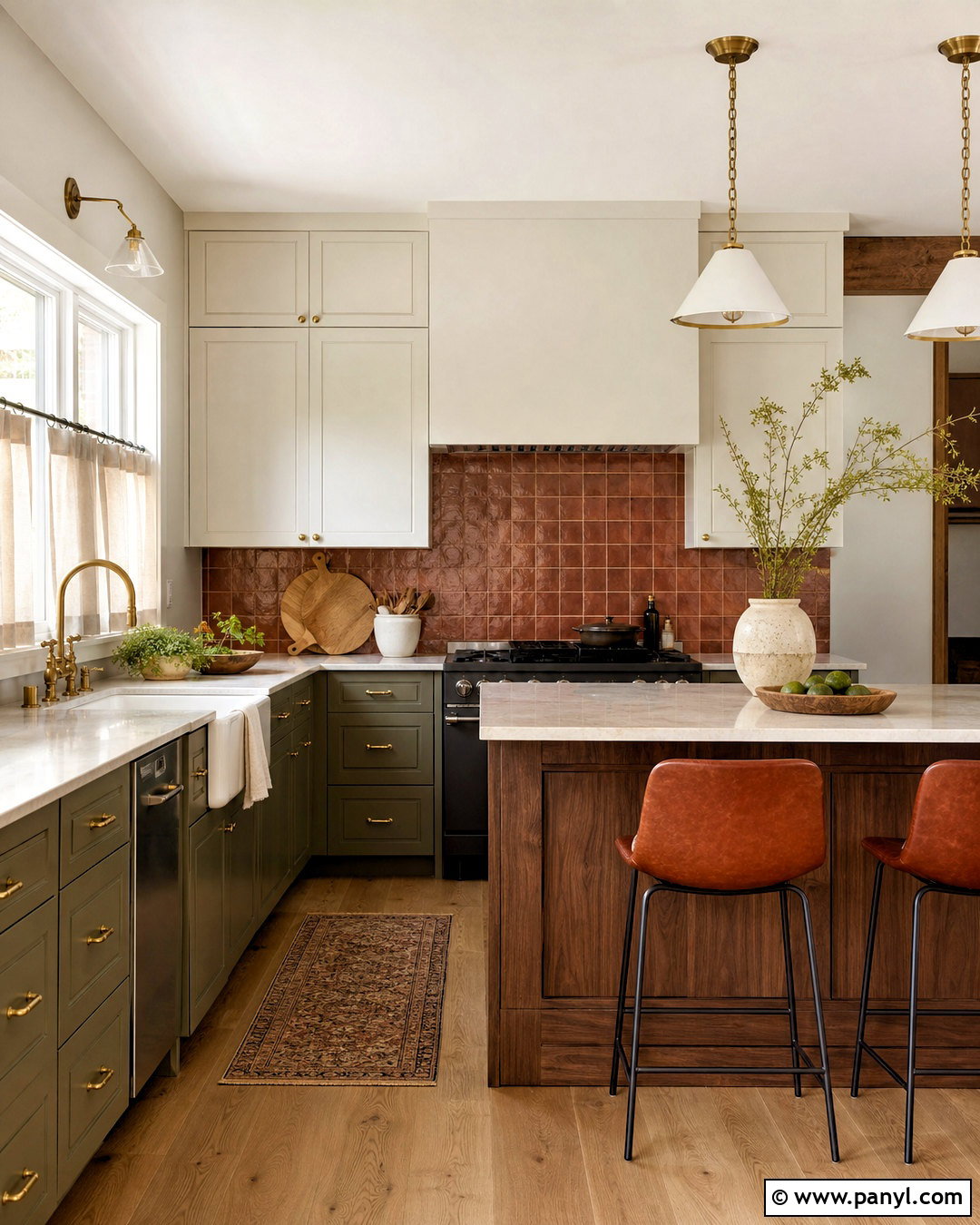
Rust and olive green can turn a kitchen into a warm, grounded space with plenty of natural character. Use muted olive green on the lower cabinets and warm white on the upper cabinets to keep the room open. A rust-colored handmade tile backsplash adds variation and becomes the palette’s strongest feature. Choose creamy quartz counters, unlacquered brass hardware, and medium oak flooring to connect the colors. A walnut island with two rust leather stools introduces comfortable seating without repeating the backsplash too literally. Keep appliances in stainless steel or panel them to match the cabinetry. Linen café curtains, wooden cutting boards, and off-white pottery provide softer layers. The finished kitchen feels collected and organic, while the controlled color placement keeps it functional, clean, and visually balanced.
7. Rust And Dusty Blue Bedroom
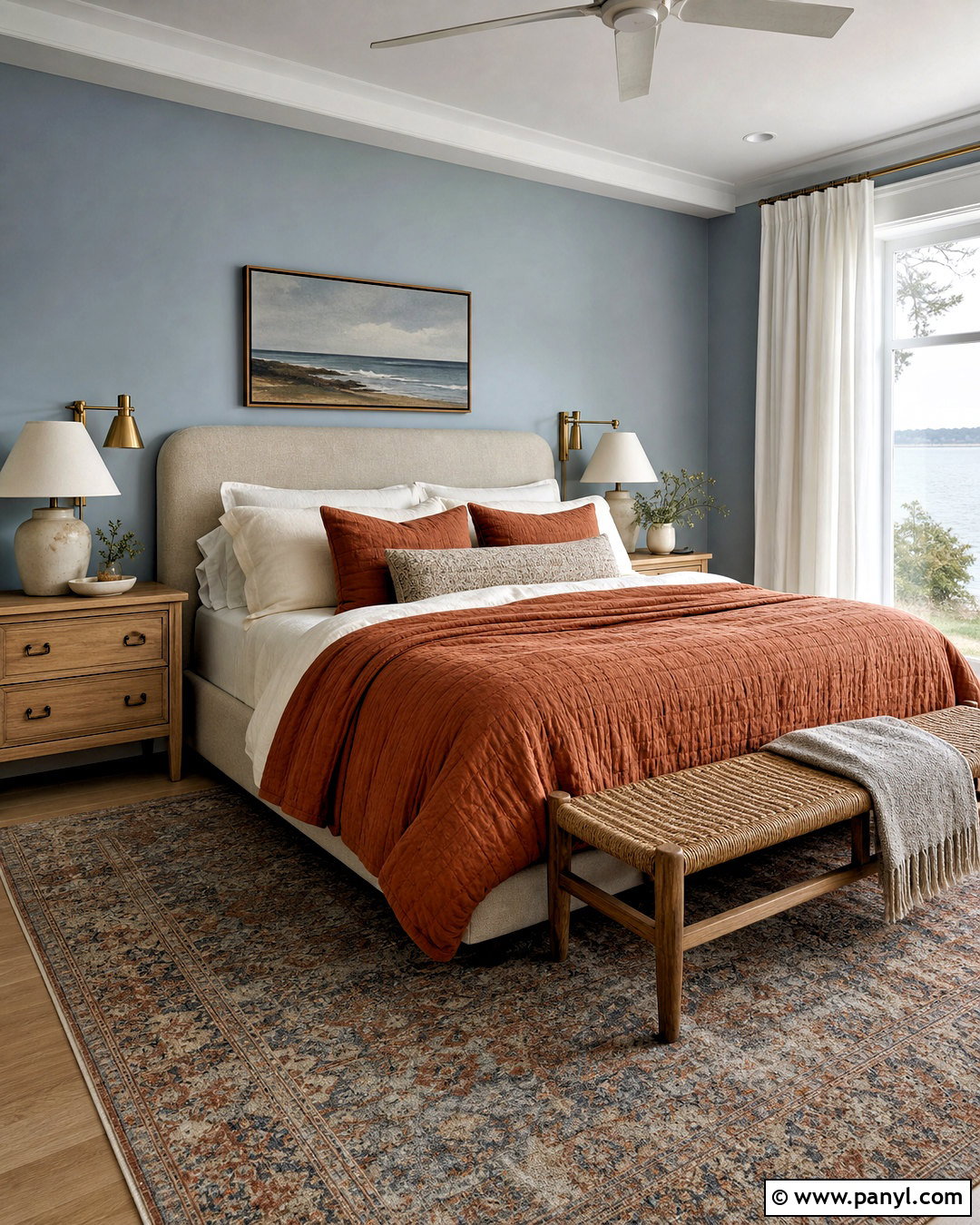
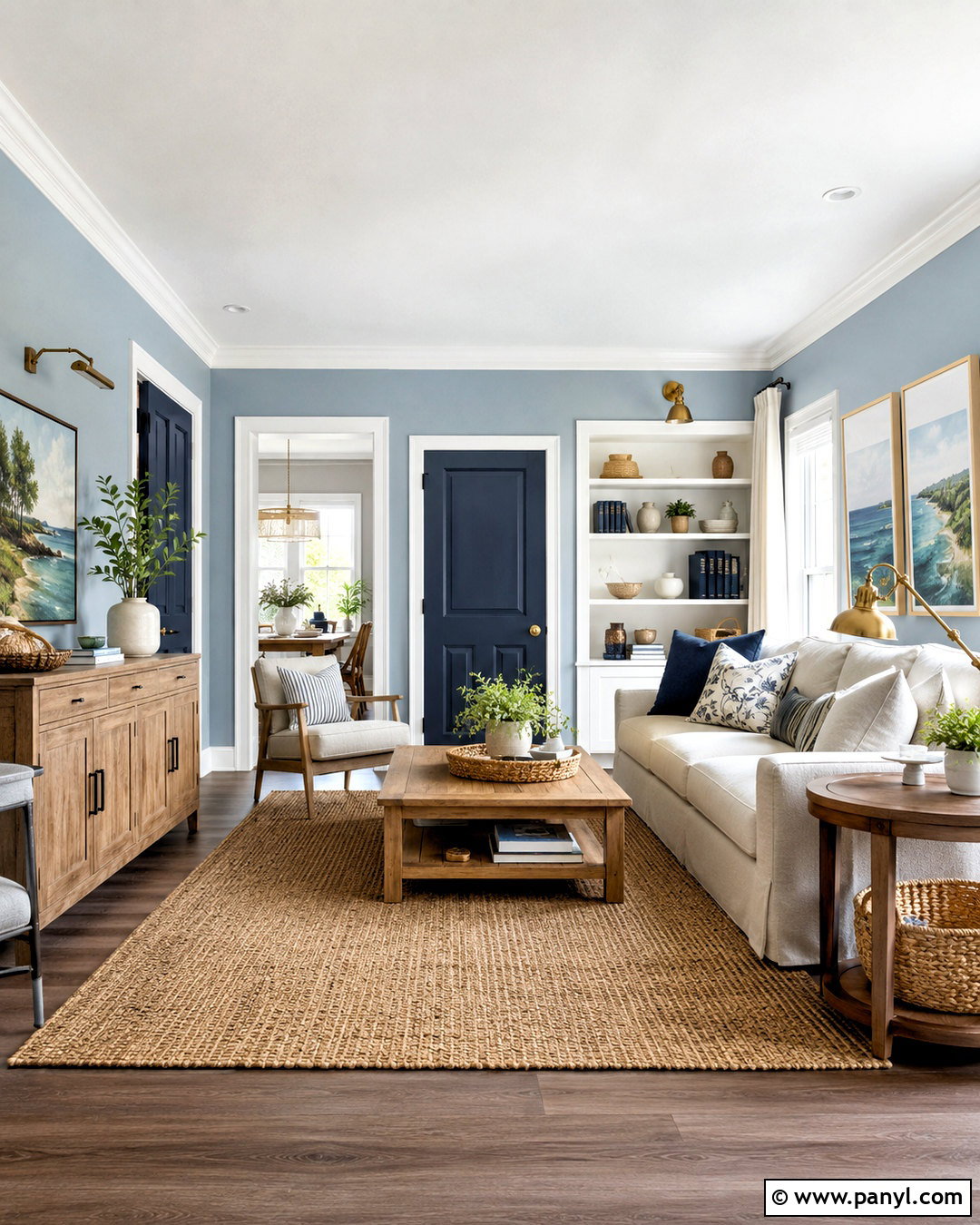
Dusty blue cools the fiery undertones of rust, creating a bedroom that feels peaceful but never bland. Paint the walls a muted blue with soft gray undertones, then use a rust linen quilt as the main source of warmth. An oatmeal upholstered headboard provides a neutral transition between the colors. Add dusty blue pillows, ivory sheets, and a patterned lumbar pillow that includes both shades. White oak nightstands and a light dresser help the room feel airy, while antique brass lamps contribute a gentle golden finish. Ground the bed with a faded blue, rust, and cream rug. Simple white curtains should reach the floor to emphasize height. Complete the look with coastal landscape art, a woven bench, and minimal ceramics for an understated, comfortable retreat.
8. Rust And Mustard Yellow Living Room
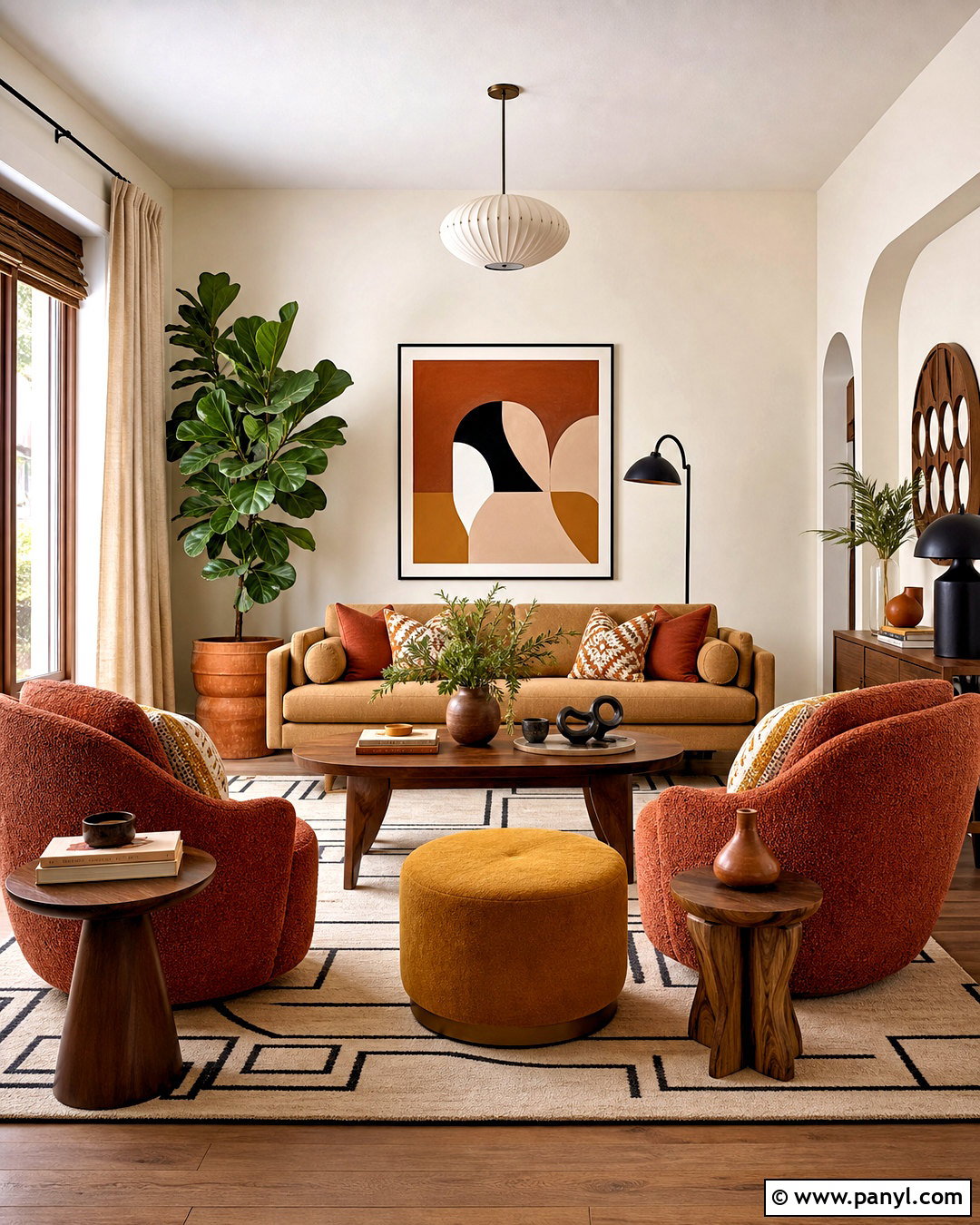
Rust and mustard yellow produce an energetic living room when calmer neutrals are used as the foundation. Keep the walls warm white and choose a light camel sofa with a simple silhouette. Place two rust boucle chairs opposite the sofa, then bring in mustard through a large ottoman, patterned pillows, and one piece of graphic artwork. A cream rug with subtle geometric details unifies the conversation area without competing with the bold upholstery. Use dark walnut for the coffee table and media cabinet to anchor the warm colors. Matte black lamps and curtain rods add definition. Avoid adding more orange or bright red, which can make the palette feel overly busy. Natural linen curtains, terracotta pottery, and a tall green plant finish this cheerful, retro-influenced room.
9. Rust And Blush Pink Bedroom
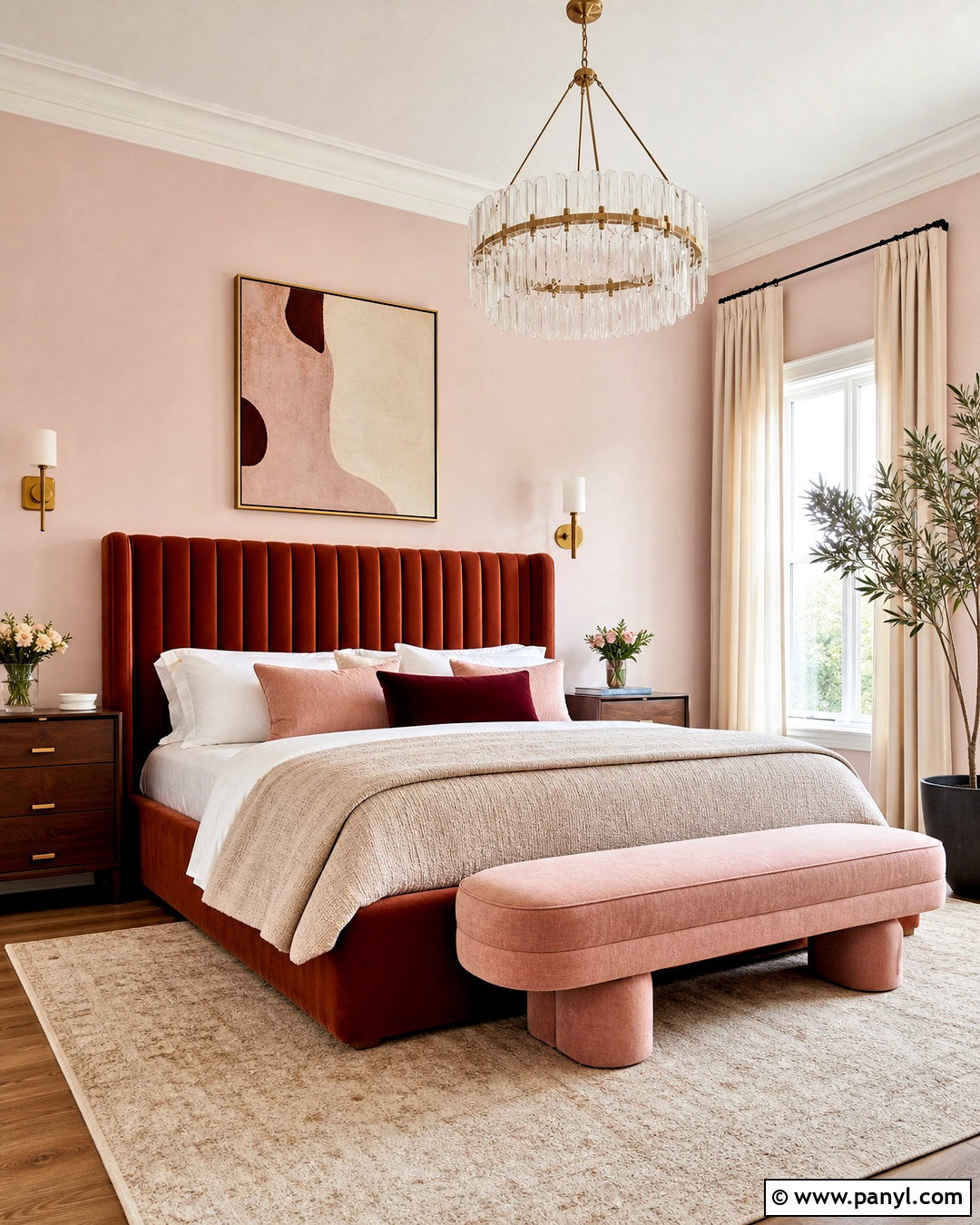
Blush pink brings a gentle, modern softness to rust’s deep reddish-brown character. Use pale blush on the walls and select a rust velvet bed with a tall, clean-lined headboard. Dress it with white cotton sheets, a warm beige coverlet, and pillows in blush, rust, and muted burgundy. Light walnut nightstands add richness without making the space feel formal. A cream wool rug and full-length ivory curtains keep the foundation bright. Choose brushed brass sconces and a small glass chandelier for reflective contrast. Above the bed, hang one oversized abstract piece that repeats the two main colors with plenty of white space. A blush bench and rust ceramic lamp complete the palette. The finished room feels romantic and polished without becoming overly sweet or delicate.
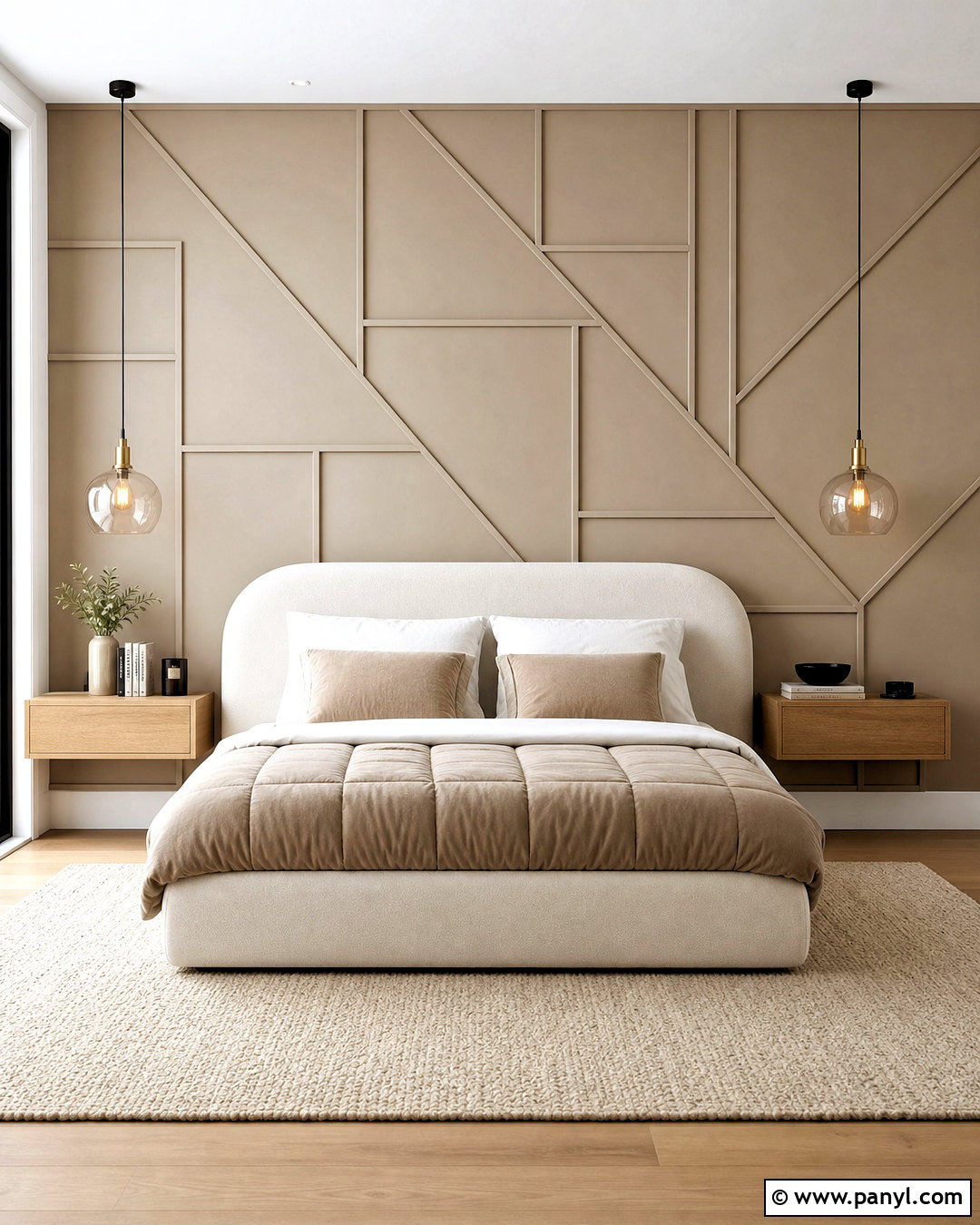
10. Rust And Teal Dining Room
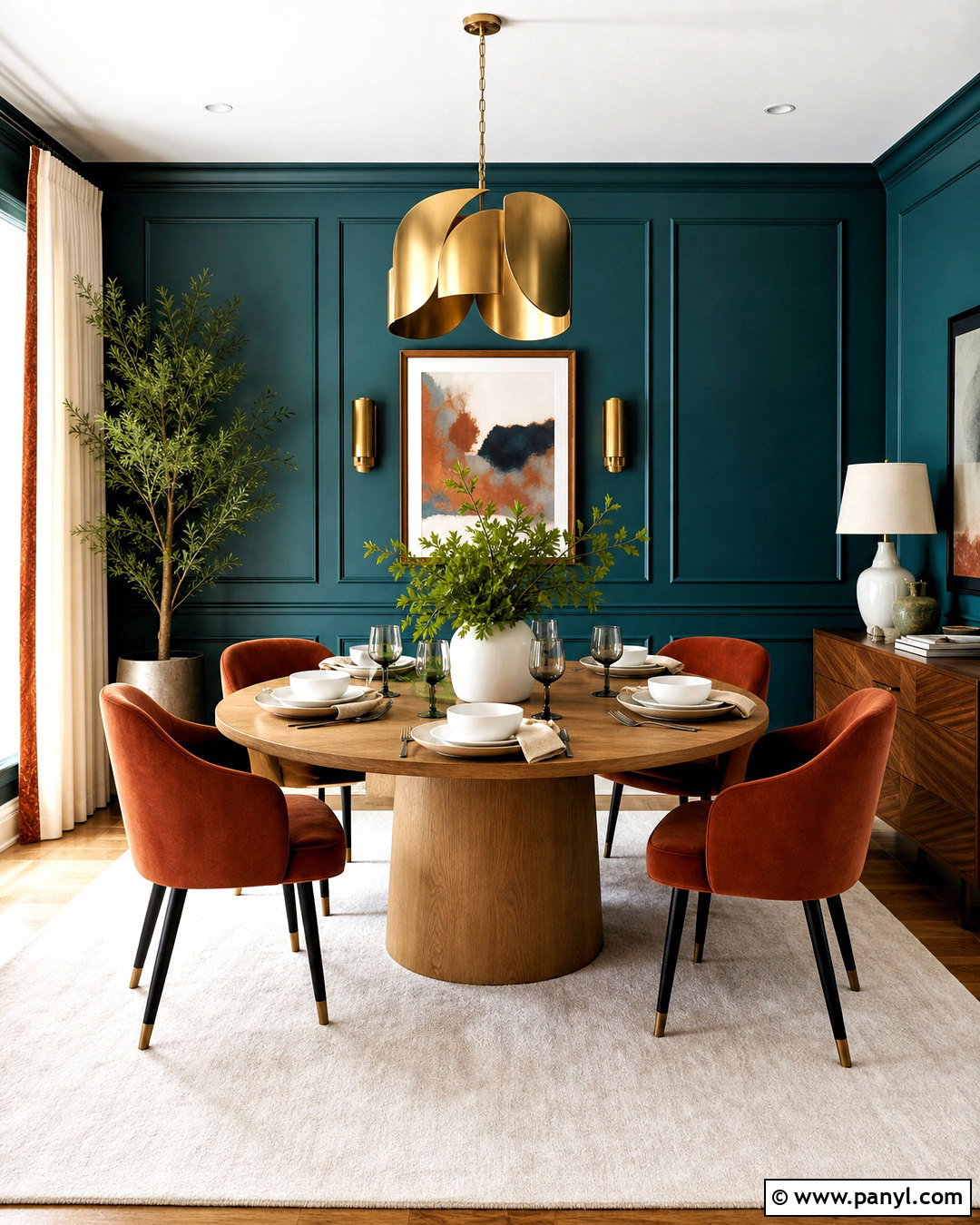
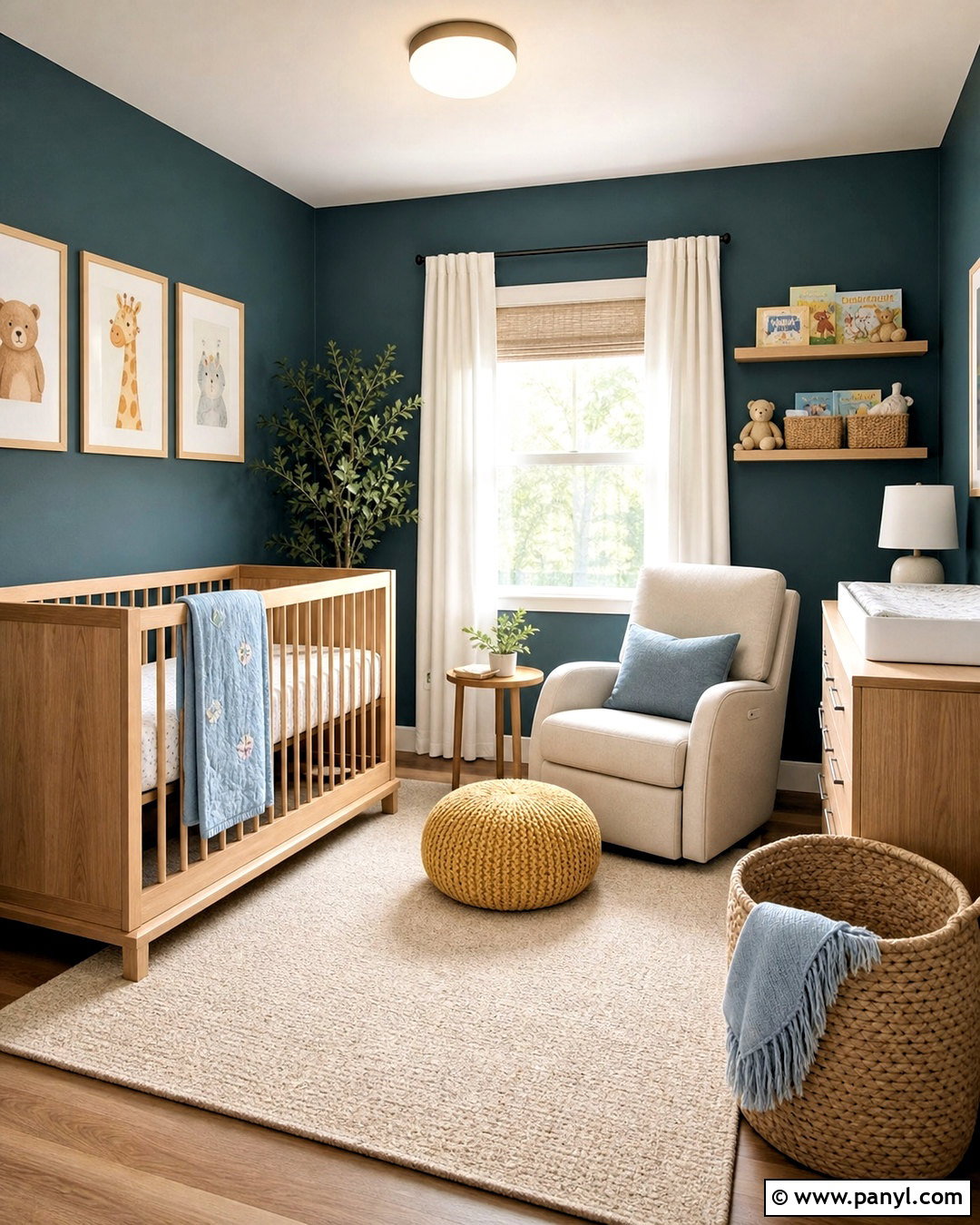
Deep teal and rust create a bold dining room with balanced warm and cool color. Paint the walls a saturated blue-green, then introduce rust through upholstered dining chairs arranged around a round oak table. The table’s natural finish keeps the scheme grounded and prevents the jewel tones from feeling too formal. Use a large ivory rug beneath the full dining set to brighten the lower half of the room. A sculptural brass pendant adds warmth and helps rust stand out against teal. Hang cream curtains with a narrow rust border for a tailored connection between the colors. Keep the table setting simple with white dishes, smoky glassware, and natural linen napkins. Framed artwork containing teal, rust, and pale tan brings the entire room together in a clear, intentional way.
11. Rust And Black Kitchen
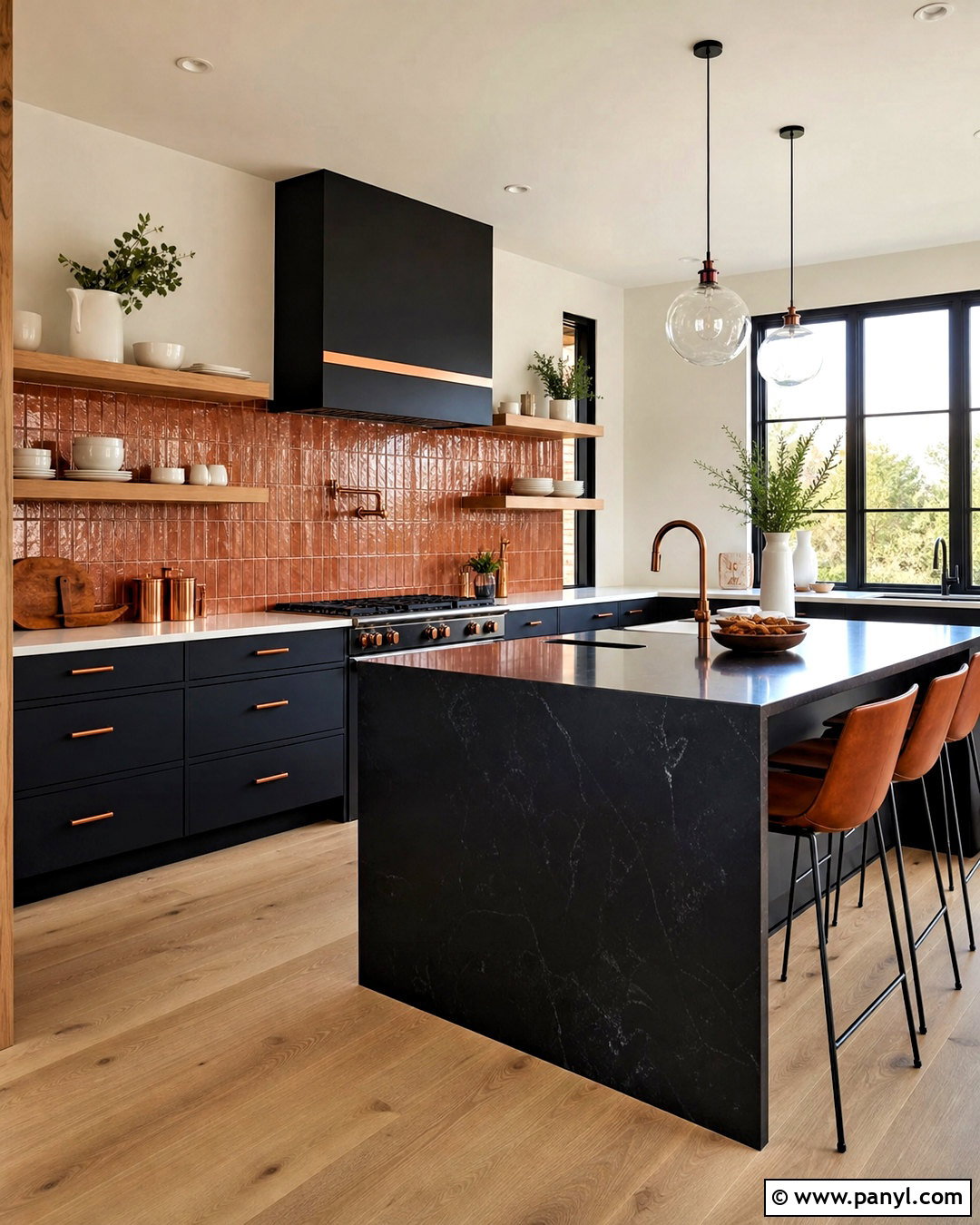
Rust becomes distinctly modern when paired with black in a bright, streamlined kitchen. Use matte black lower cabinets and warm white upper walls to create contrast without closing in the room. Install a rust-colored zellige tile backsplash, allowing the handmade surface to add depth and movement. Pale quartz countertops and light oak flooring balance the two strong colors. Choose a black island with waterfall stone sides and rust leather counter stools for a clean, coordinated centerpiece. Black-framed windows, minimal pendant lights, and dark hardware reinforce the contemporary direction. Add oak open shelves displaying white ceramics and a few copper pieces. Keep decorative items limited so the backsplash remains visible. This full palette delivers warmth and drama while still feeling practical, uncluttered, and suitable for daily cooking.
12. Rust And White Bathroom
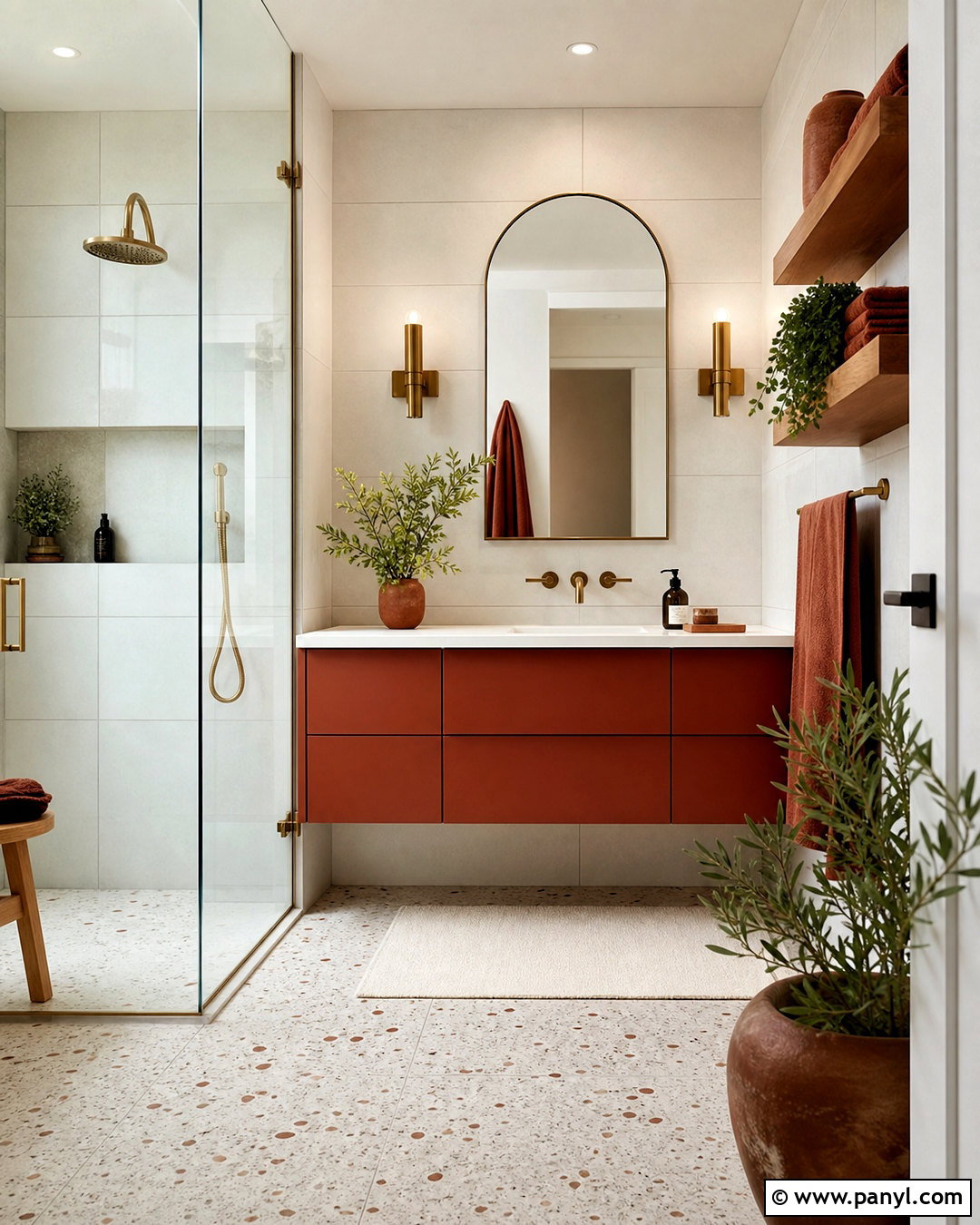
White allows rust to look crisp and intentional in a bathroom rather than dark or overly earthy. Cover the walls with warm white tile and use pale terrazzo flooring that contains small tan and rust-colored chips. Choose a floating rust-red vanity with a white quartz top and simple brushed brass pulls. An arched mirror and matching brass sconces soften the straight lines of the cabinetry. Install a frameless glass shower so the compact layout remains visually open. Rust towels, an ivory bath mat, and one clay planter repeat the vanity color in small amounts. Natural oak shelving adds practical storage and another warm material. Keep fixtures white or brass instead of black for a lighter finish. The completed bathroom feels clean, bright, and colorful without depending on temporary decorative accessories.
13. Rust And Walnut Brown Living Room
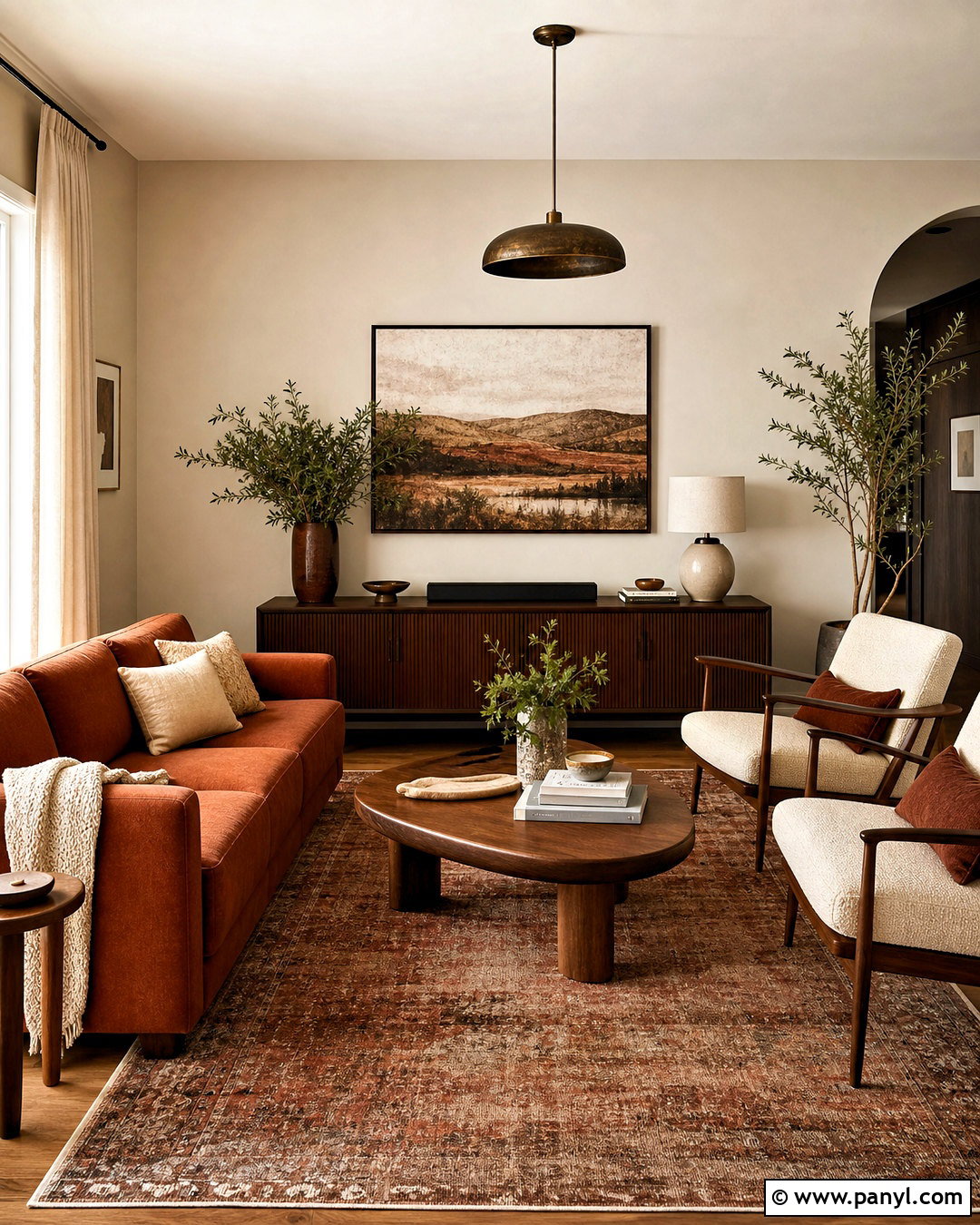
Rust and walnut brown form a layered, tonal living room that feels warm without relying on pale furniture. Start with light mushroom walls to provide a quiet neutral backdrop. Place a low rust sofa in the main seating area and pair it with two walnut-framed chairs upholstered in cream fabric. A substantial walnut media cabinet, narrow side tables, and a sculptural wood coffee table create continuity. Use a faded rug containing rust, brown, tan, and a small amount of charcoal to define the layout. Linen curtains should remain ivory so natural light can soften the darker furniture. Add aged bronze lighting, textured beige pillows, and simple cream pottery. Green branches or one tall plant offer necessary contrast. The final room feels intimate, grounded, and carefully coordinated rather than monochromatic.
14. Rust And Forest Green Library
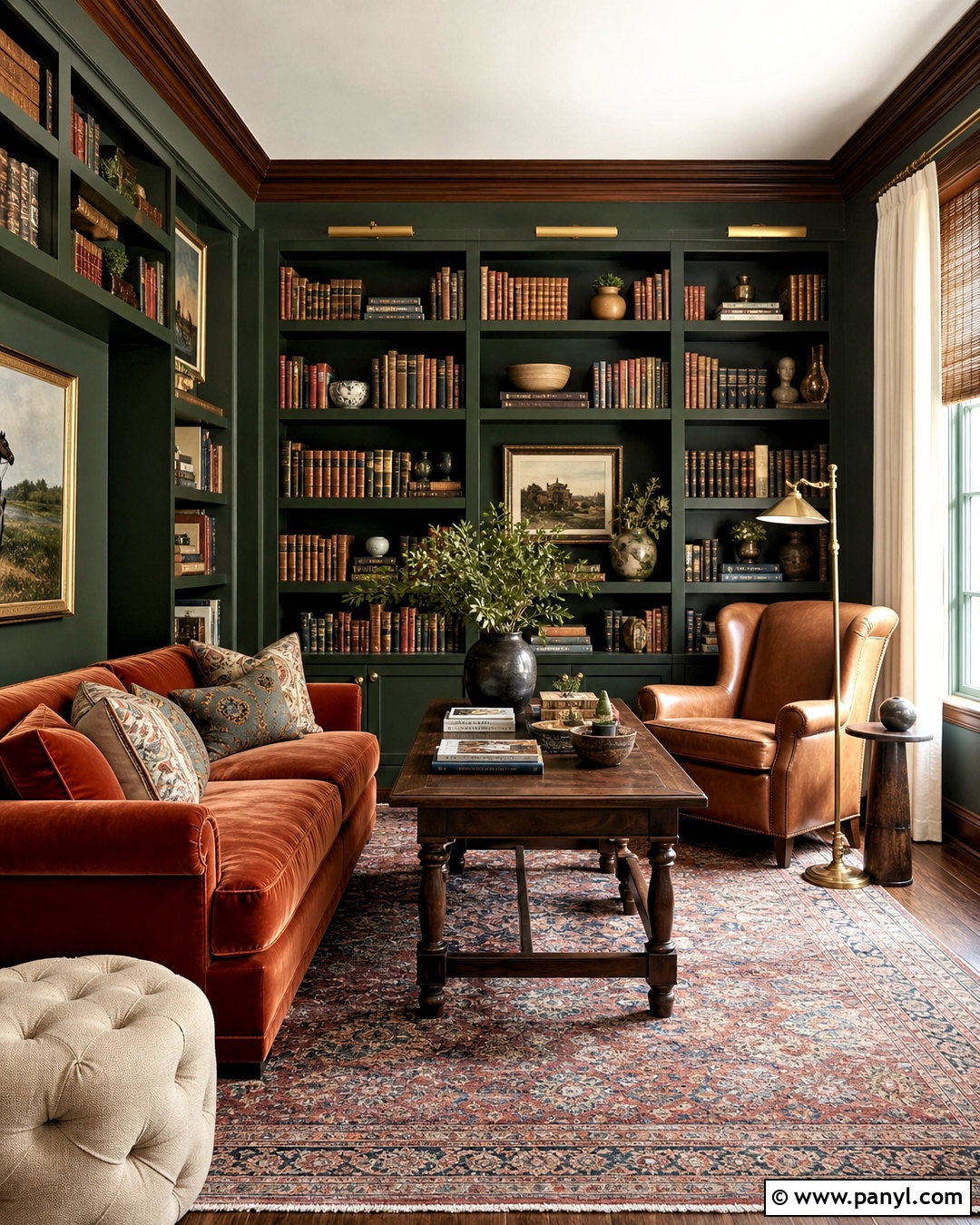
Forest green gives rust a stately, enveloping quality that works beautifully in a home library or reading room. Paint built-in bookcases deep green and carry the color onto the walls for a seamless backdrop. Position a rust velvet sofa or daybed beneath the main window, then add a camel leather reading chair beside a brass floor lamp. A dark wood library table can serve as a desk, game surface, or display area. Choose a traditional rug combining rust, forest green, cream, and muted gold. Warm white curtains and a pale ceiling keep the saturated palette from becoming too dark. Fill shelves thoughtfully, leaving room for framed art and pottery. Antique brass hardware, walnut trim, and a small cream ottoman complete this comfortable room for reading and quiet conversation.
15. Rust And Greige Entryway
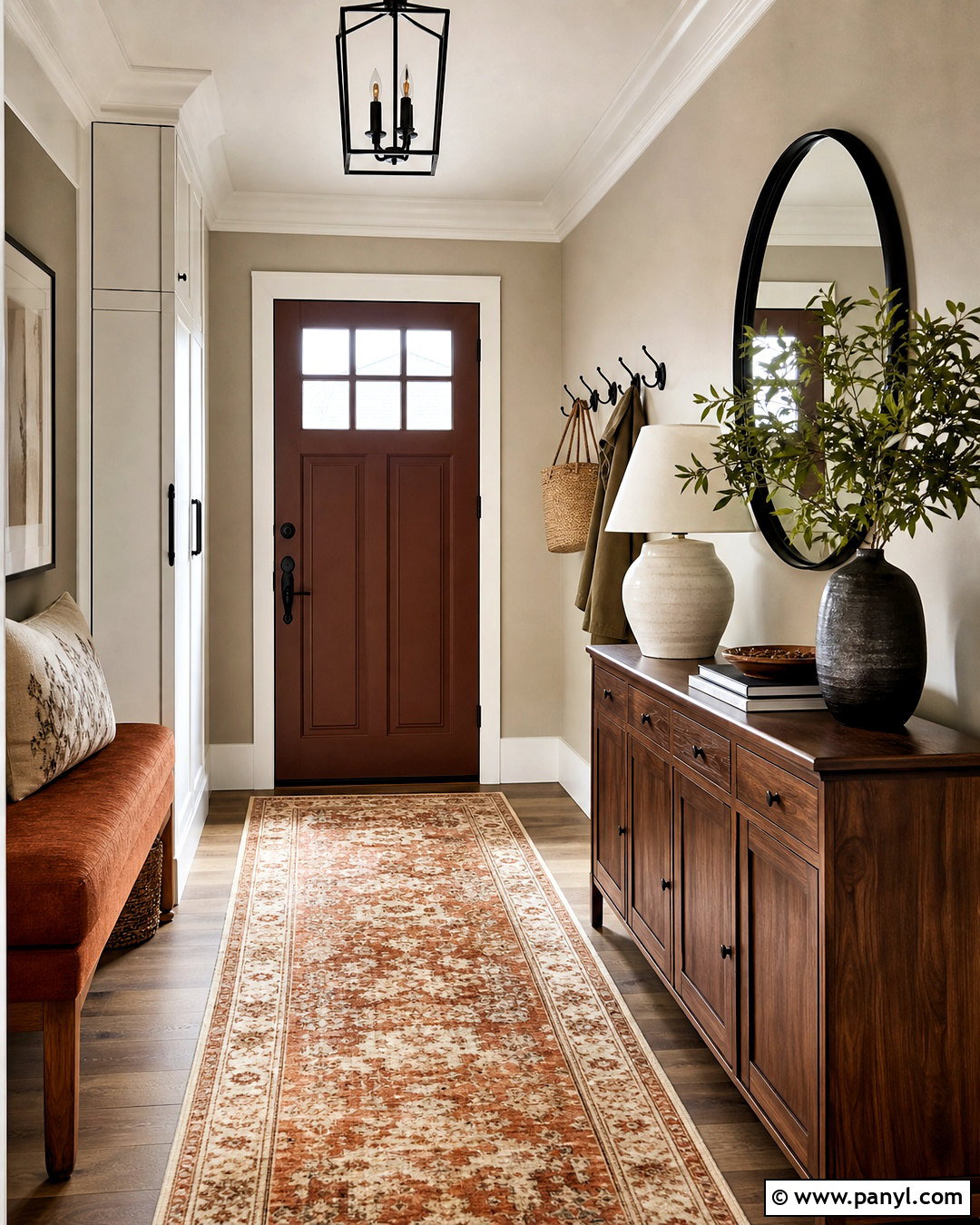
A greige entryway provides an adaptable background for a strong rust accent without making a small space feel crowded. Paint the walls a warm gray-beige and use bright white on the trim, ceiling, and interior doors. Anchor the entry with a rust upholstered bench featuring a practical wood or black metal base. Place a slim walnut console opposite it, topped with a large round black-framed mirror. A washable runner combining rust, cream, greige, and charcoal should guide the eye toward the adjoining rooms. Add closed shoe storage, sturdy wall hooks, and woven baskets to keep daily items organized. A simple black lantern fixture supplies definition overhead. Finish with one ceramic lamp, a small bowl for keys, and leafy branches. The complete entrance feels warm, orderly, and connected to the rest of the home.
16. Rust And Lavender Bedroom
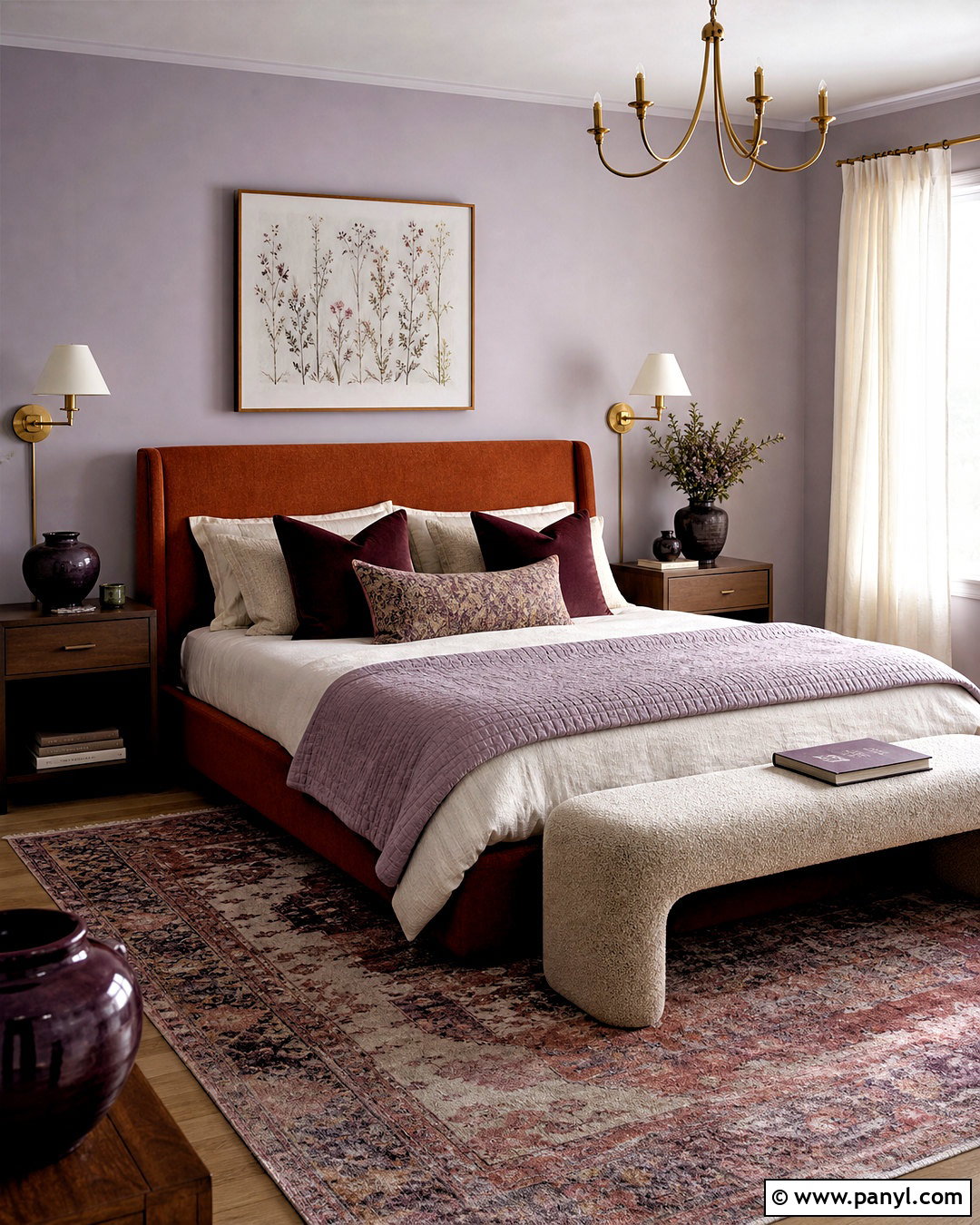
Muted lavender creates an unexpected but sophisticated partner for rust when both colors have dusty undertones. Paint the walls a pale gray-lavender rather than a bright purple. Choose a rust upholstered bed and layer it with ivory bedding, a lavender coverlet, and pillows featuring rust, plum, and beige. Medium walnut nightstands help bridge the warm and cool colors. Use an antique-inspired rug that contains faded lavender, rust, cream, and soft blue for a unified base. Brass sconces and warm white curtains prevent the palette from feeling cold. Keep the artwork understated, using botanical or abstract prints with muted coloration. A plum ceramic vase and oatmeal bench add final depth. This bedroom feels creative and restful because the stronger colors are surrounded by plenty of warm, quiet neutrals.
17. Rust And Cobalt Blue Patio
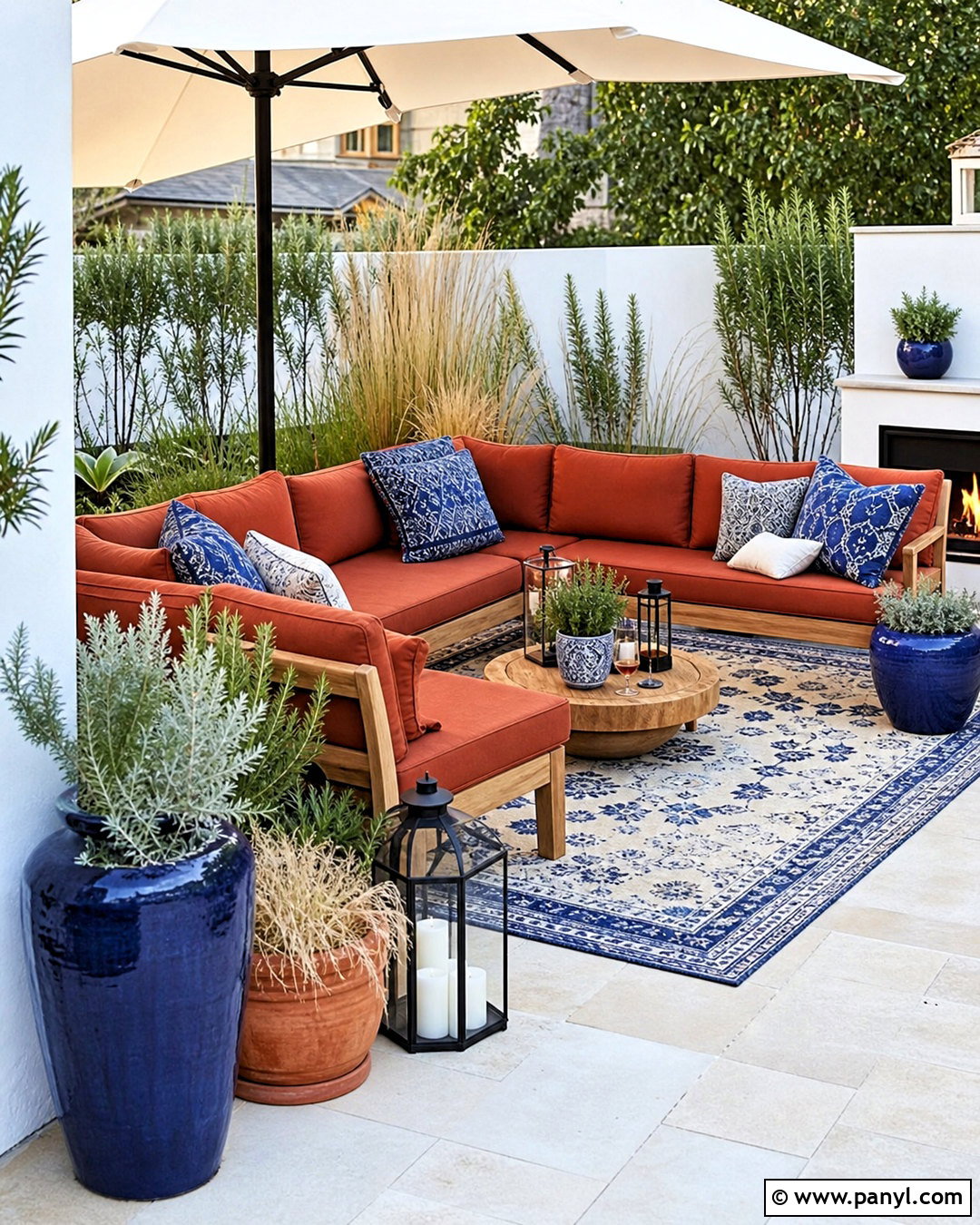
Cobalt blue gives rust a vibrant outdoor personality that suits a sunny patio. Start with rust-colored outdoor cushions on a natural teak sectional or dining set. Introduce cobalt through patterned pillows, glazed planters, and a durable blue-and-cream outdoor rug. Pale limestone or concrete pavers create a neutral floor that stops the saturated colors from competing. Add a white canvas umbrella to provide shade and brighten the seating area. Black metal lanterns and planters offer a crisp structural accent. Surround the patio with ornamental grasses, rosemary, and silvery green plants that tolerate the local climate. Repeat rust in terracotta containers of different sizes, but keep their arrangement tidy. The completed patio feels colorful and energetic while maintaining a practical layout for dining, lounging, and casual outdoor gatherings.
18. Rust And Soft Gray Bathroom
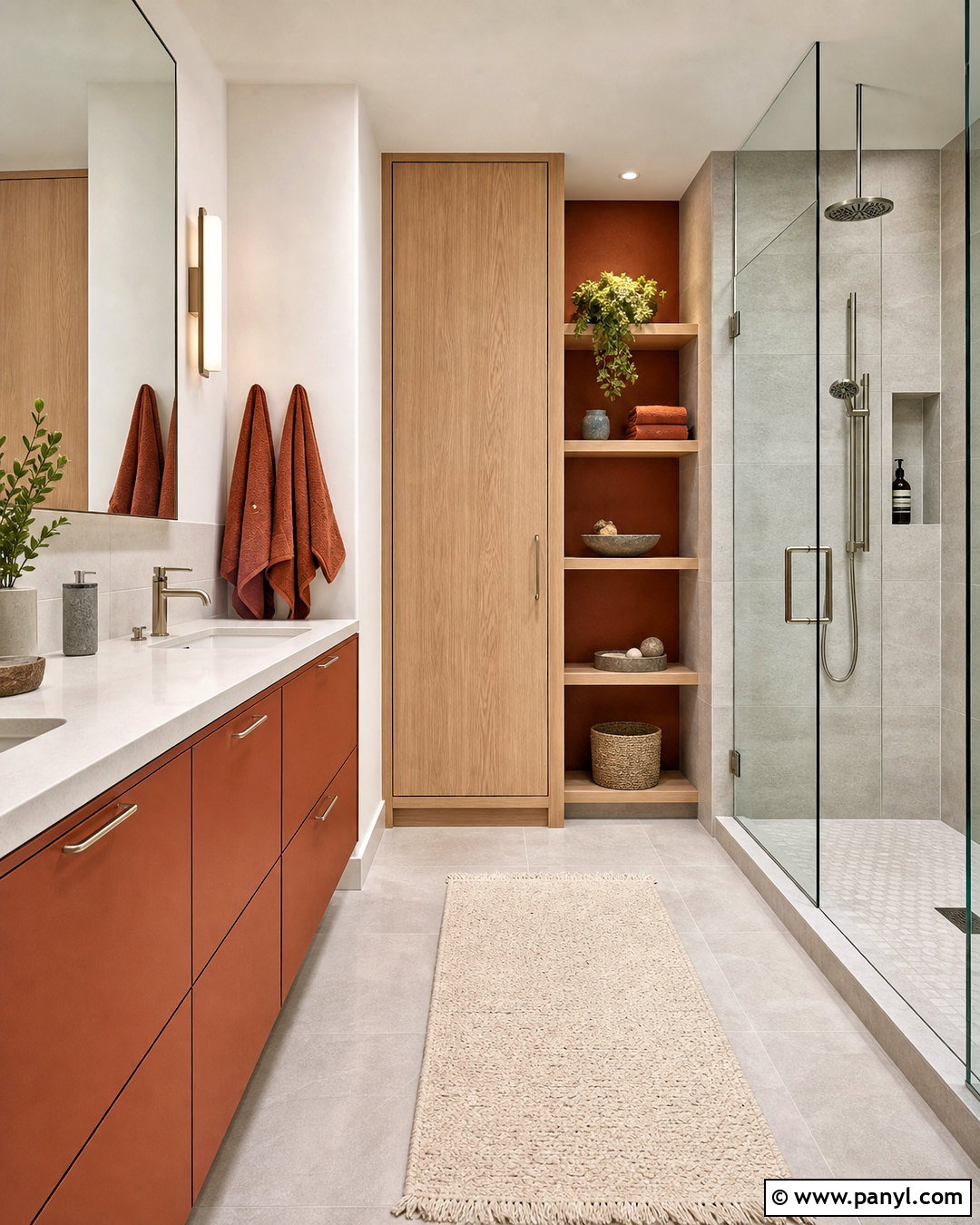
Soft gray cools rust and creates a balanced bathroom with a clean, contemporary character. Use large light gray porcelain tiles on the floor and shower walls to simplify the surfaces. Install a rust-colored vanity with flat-panel doors, a white countertop, and brushed nickel hardware. A frameless mirror and slim nickel sconces reinforce the modern look. Warm the space with a white oak storage cabinet and matching floating shelves. Rust and white towels can repeat the central color without adding visual clutter. Choose a clear glass shower enclosure and simple chrome or nickel fixtures to reflect light. A textured cream runner softens the hard materials. Finish with gray stone accessories, one leafy plant, and minimal artwork. The full design feels fresh, functional, and warmer than an all-gray bathroom.
19. Rust And Brass Dining Room
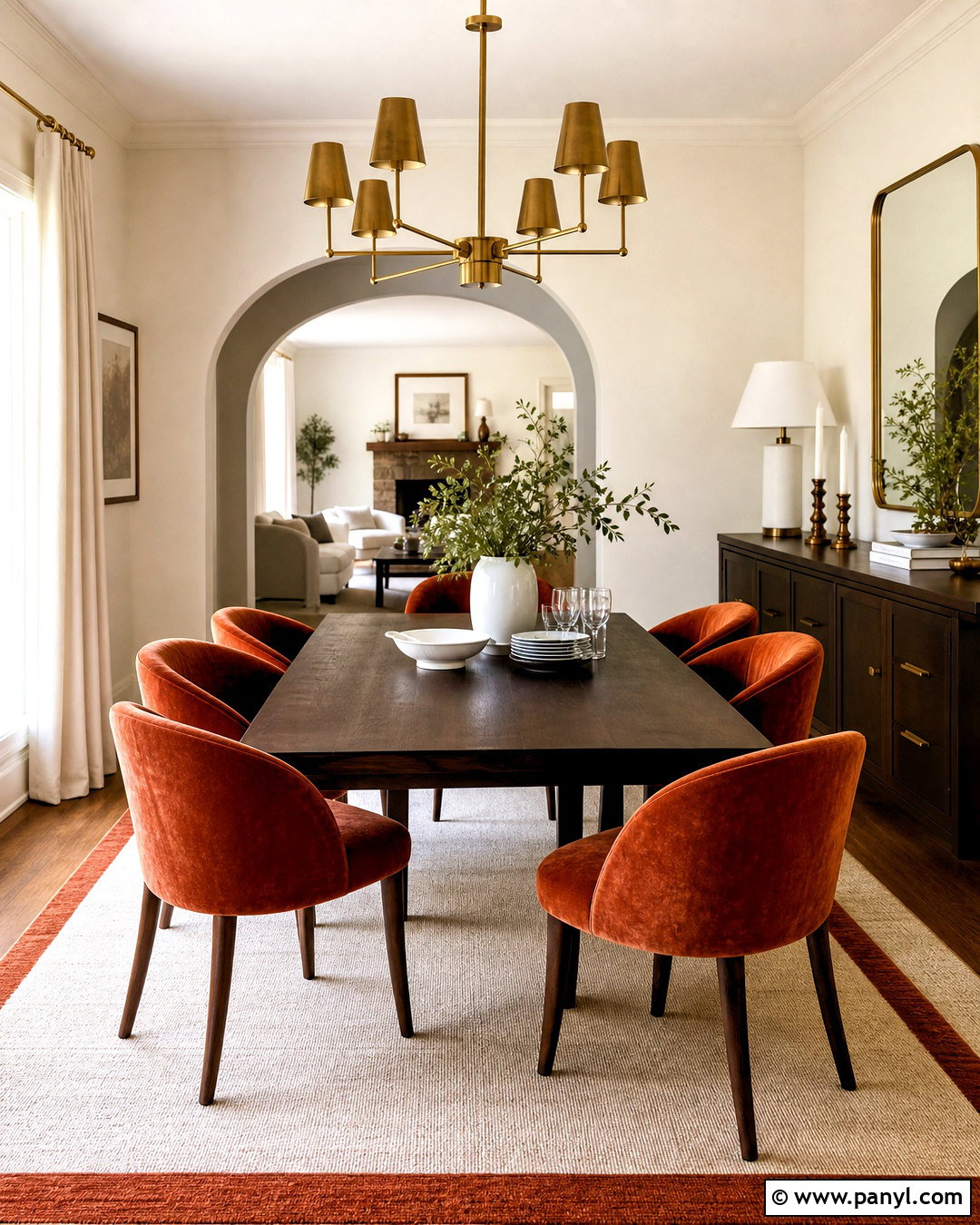
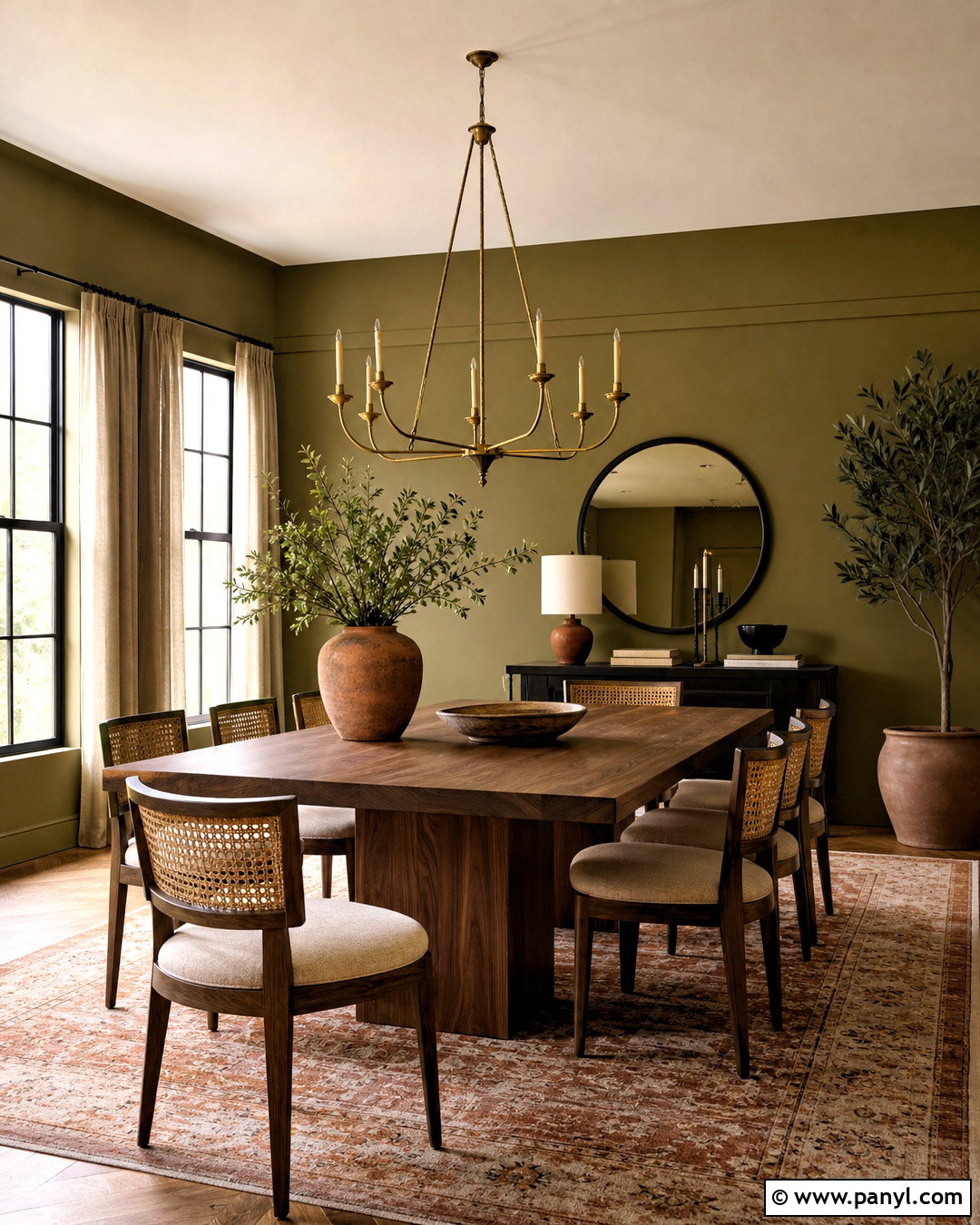
Brass enhances rust’s warm undertones and gives a dining room an elegant glow. Keep the walls soft ivory so the metallic and earthy elements remain clearly defined. Choose rust velvet dining chairs around a substantial dark oak table, then hang a large brushed brass chandelier above the center. A cream rug with a subtle rust border should extend beyond the chairs for comfortable movement. Add a dark wood sideboard with brass hardware and an oversized mirror that reflects natural light. Linen curtains in warm white maintain a relaxed balance against the richer finishes. Use brass sparingly through candlesticks, picture frames, and cabinet details rather than covering every surface. White ceramics, clear glass, and simple greenery complete this coordinated dining room, making it suitable for casual meals and more polished gatherings.
20. Rust And Terracotta Sunroom
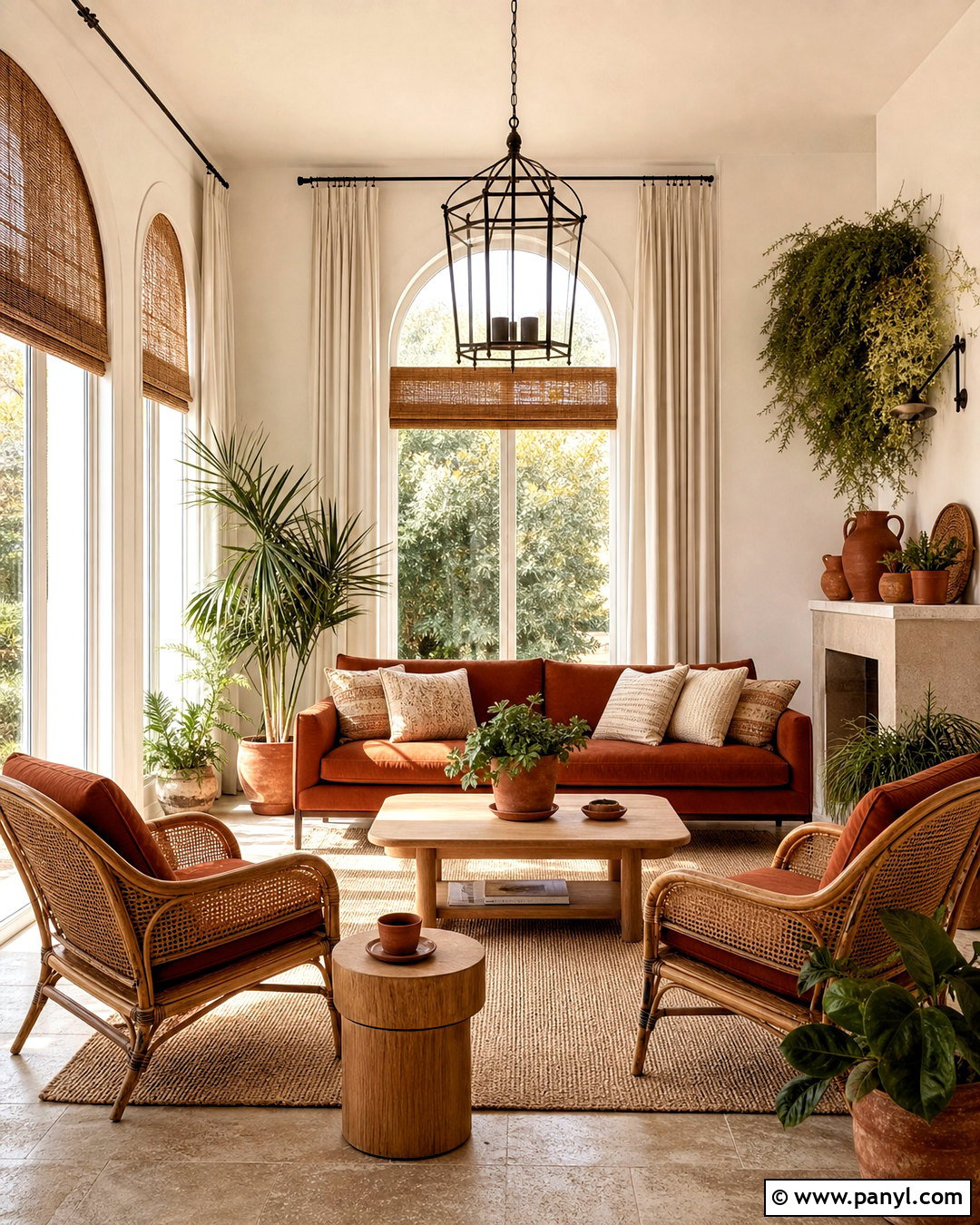
Rust and terracotta can share one sunroom when their similar tones are separated by cream, pale wood, and natural greenery. Use creamy white walls and light stone flooring as the fresh foundation. Place a rust linen sofa along the longest wall, then add terracotta lounge chairs with woven cane frames. A large jute rug defines the seating area while keeping the tonal palette relaxed. Use pale oak side tables, off-white curtains, and woven shades to filter strong sunlight. Terracotta planters filled with palms, herbs, and trailing plants strengthen the indoor-outdoor atmosphere. Add cushions in clay, rust, sand, and ivory, varying their textures rather than introducing many new colors. The finished sunroom feels sunny and cohesive, with enough neutral space to distinguish each warm earth tone.
Conclusion:
The most successful 20 rust color combinations use contrast, texture, and thoughtful repetition to make this earthy shade feel intentional. Cream, beige, greige, and white create light, adaptable rooms. Sage, olive, and forest green bring out rust’s organic character. Navy, teal, cobalt, and dusty blue provide cooler contrast, while blush, lavender, and mustard create more expressive palettes. Materials are equally important. Walnut, oak, linen, velvet, stone, brass, and woven fibers give each combination dimension. Before committing, test your chosen rust shade beside the room’s flooring, furnishings, and natural light. Then repeat it in two or three purposeful places. This simple approach creates a balanced room that feels warm, complete, and visually connected.

Related Ideas and Inspiration:
Leave a Reply