
Dark gray interior doors create depth, contrast, and architectural character without feeling as severe as solid black. They can sharpen a plain hallway, define an open floor plan, or give builder-grade doors a more custom appearance. The best results come from treating each door as part of a complete palette. Wall color, trim, flooring, hardware, lighting, and nearby furniture should all support the deeper finish. Current applications range from charcoal Shaker doors with crisp white casing to streamlined flush doors that blend into color-drenched walls. () Warm woods and brass soften cool gray, while black accents produce a cleaner contemporary effect. Use the following 20 dark grey doors interior ideas to find a coordinated look that suits your home.

1. Dark Grey Doors With White Trim
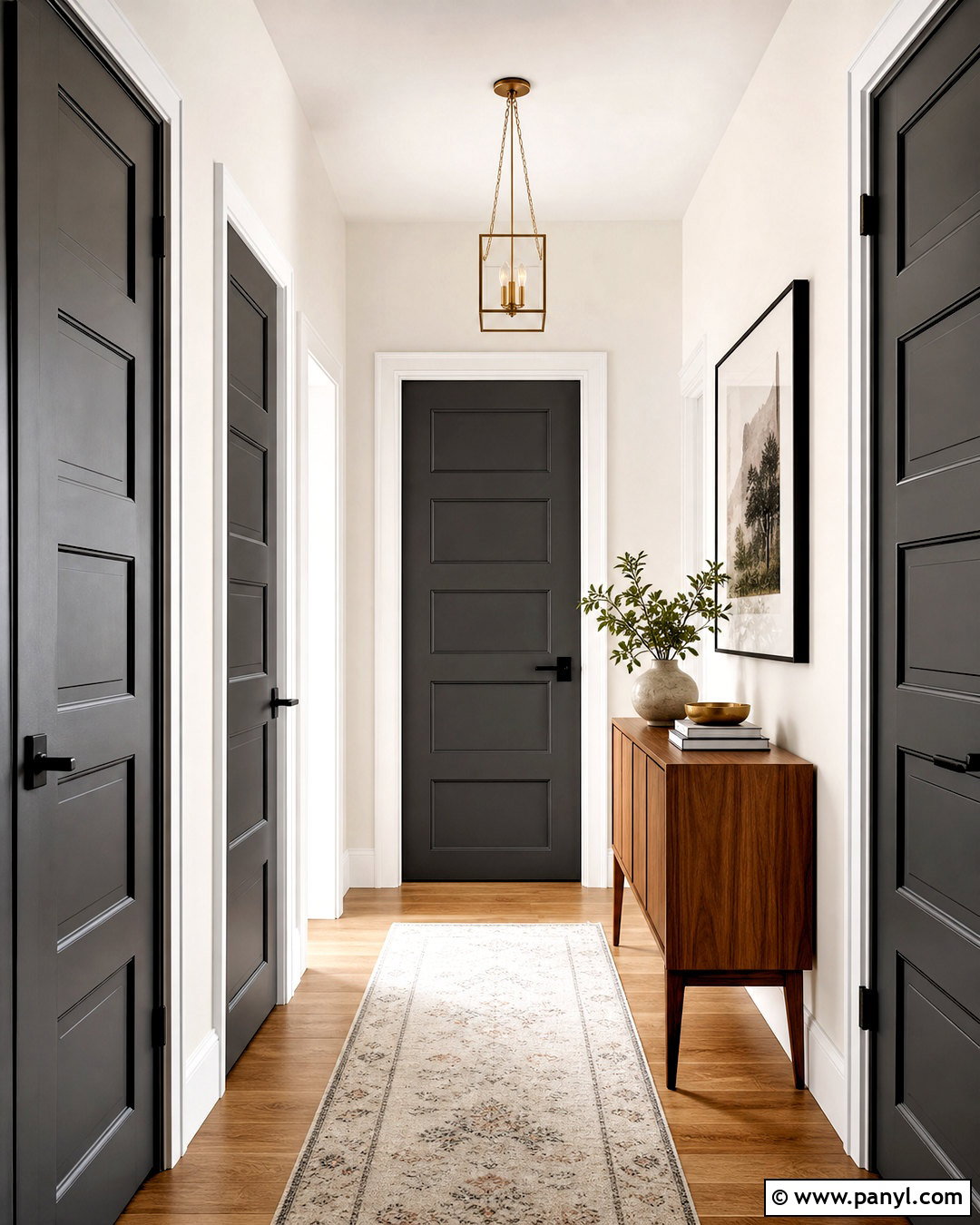
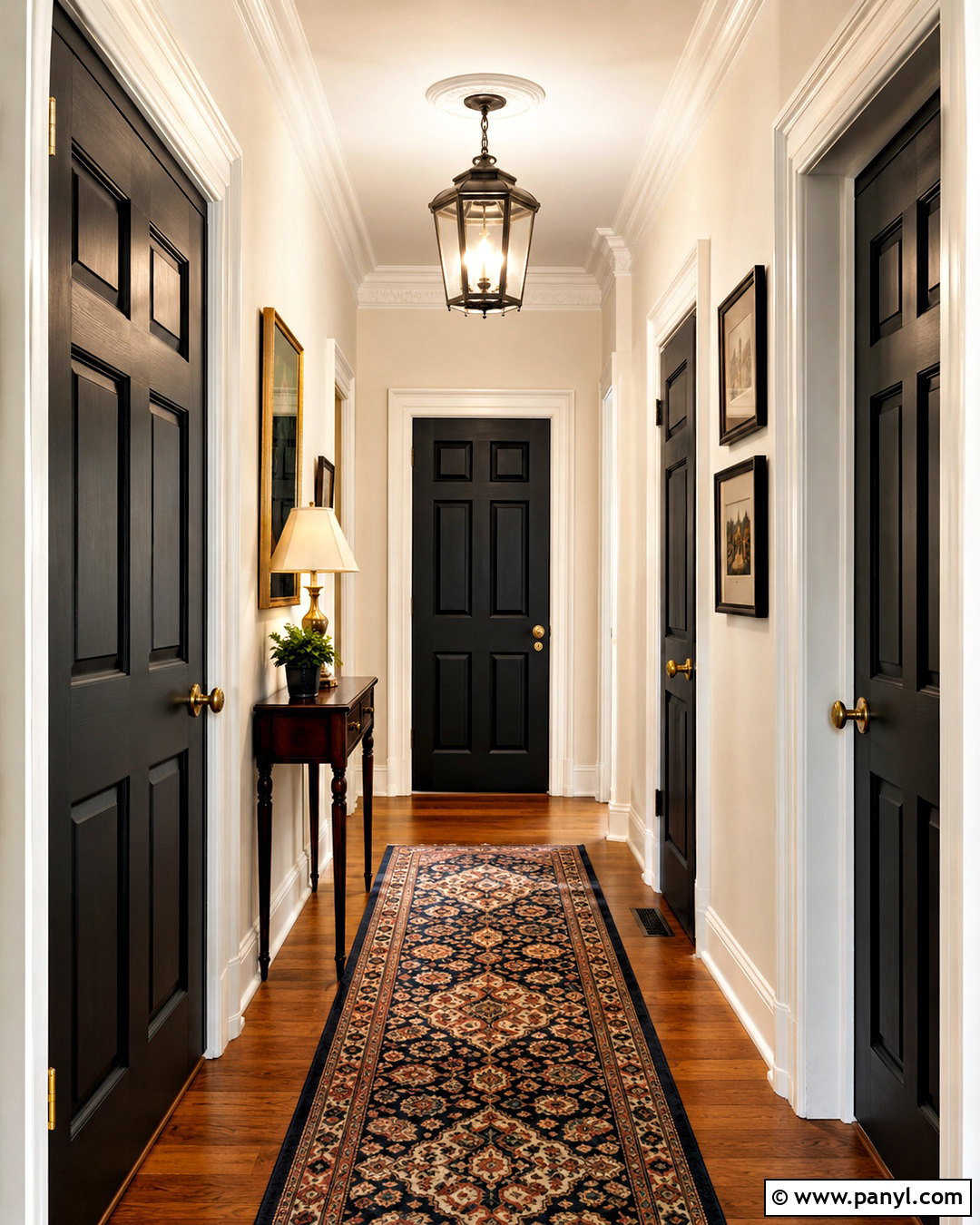
Crisp white trim gives dark gray doors a clean, finished outline that works especially well in hallways and open living areas. Choose a deep charcoal with a neutral undertone rather than a blue-heavy gray. Paint the casing, baseboards, and crown molding the same soft white to create consistency. Warm white walls will keep the contrast noticeable without making the space feel cold. Complete the room with medium oak flooring, a slim wood console, and simple framed artwork. Matte black levers create a streamlined look, while aged brass adds warmth and a traditional note. This pairing can give ordinary paneled doors more architectural presence and helps connect classic millwork with relaxed contemporary furniture. ()
2. Dark Grey Doors With Matching Trim
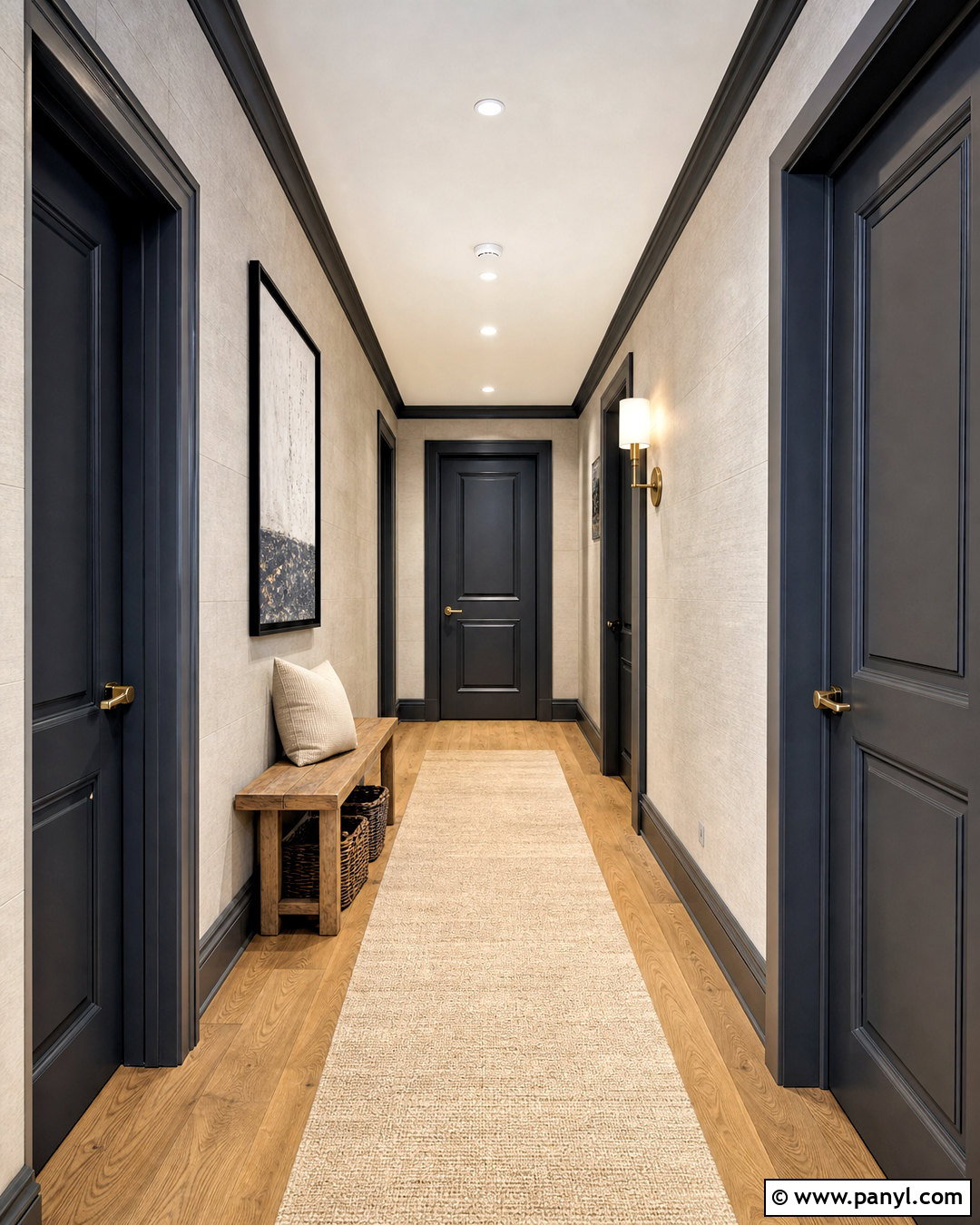
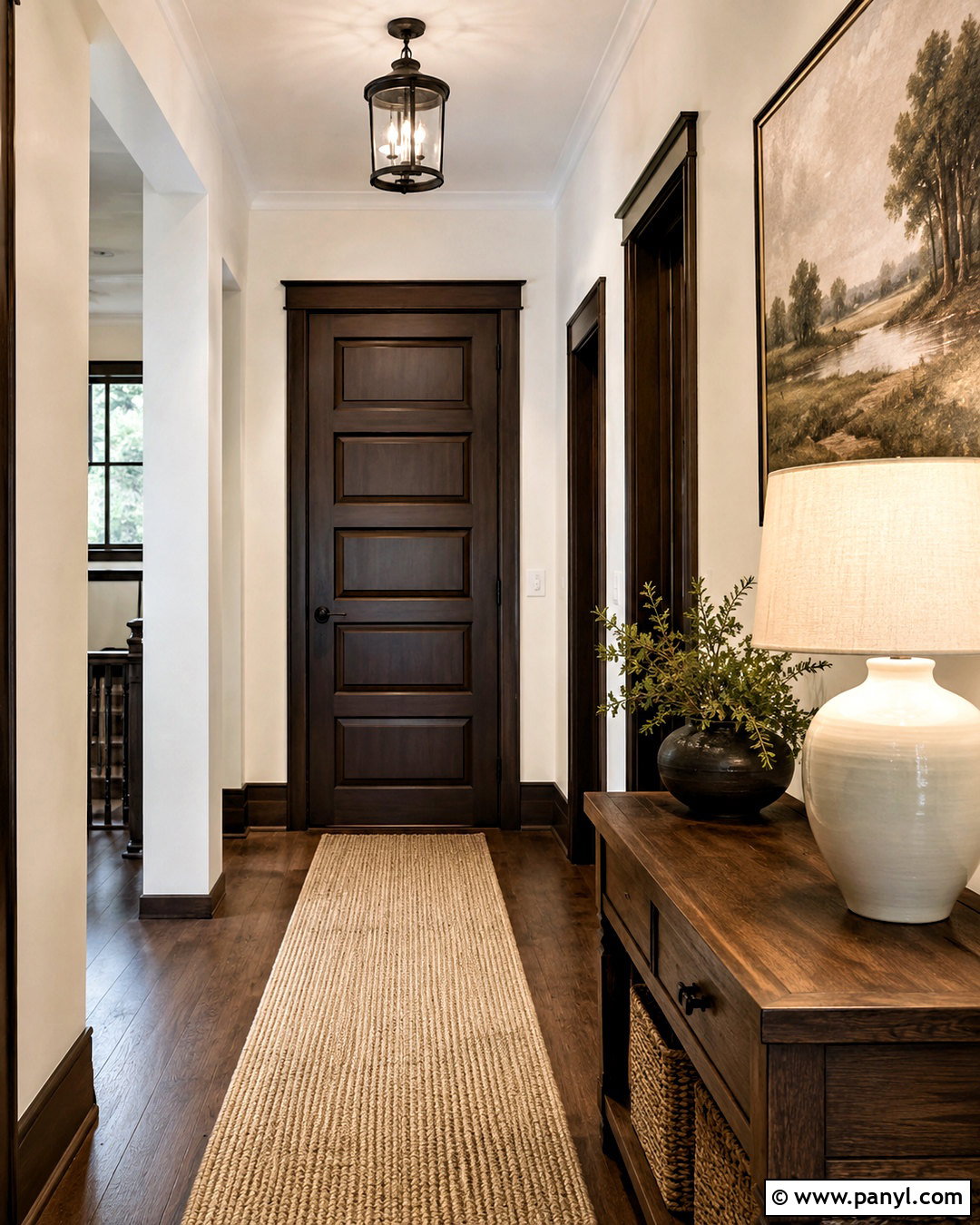
Painting the doors and surrounding trim the same charcoal gray creates a bold, built-in appearance. This approach works particularly well in a long hallway where numerous white doorframes might otherwise make the walls look busy. Keep the main walls warm white, pale stone, or light greige so the dark millwork has enough breathing room. Carry the gray onto the baseboards for a fully grounded effect, or leave them light for a slightly softer transition. Natural oak floors, a washable cream runner, and woven baskets prevent the scheme from becoming too formal. Select simple satin brass levers and warm ceiling lights. The coordinated trim transforms standard doors into one continuous architectural feature rather than a collection of separate openings.
3. Dark Grey Doors With Greige Walls
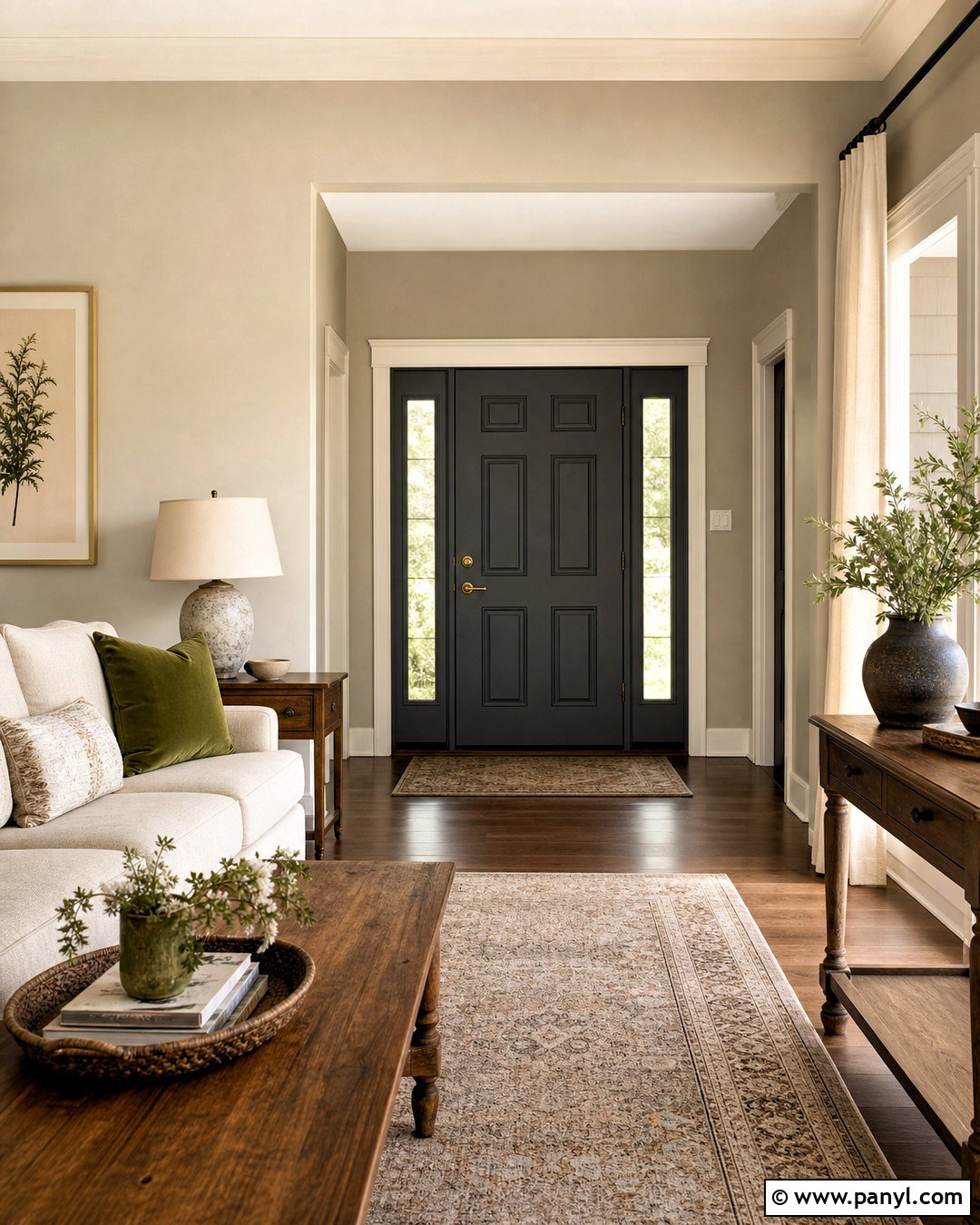
Do you want contrast without a sharp black-and-white effect? Pair dark gray doors with warm greige walls for a softer, layered neutral interior. Look for a charcoal with subtle brown undertones so it relates naturally to the wall color and wood flooring. Paint the trim a warm off-white to separate the two grays and keep every edge looking intentional. In the adjoining living room, use an oatmeal sofa, walnut side tables, ivory curtains, and textured taupe pillows. A muted rust throw or olive ceramic lamp can introduce a small amount of earthy color. Brushed brass hardware provides gentle warmth. This balanced palette feels comfortable in transitional homes because it combines traditional paneled doors with modern, understated furnishings.
4. Dark Grey Doors With Brass Hardware
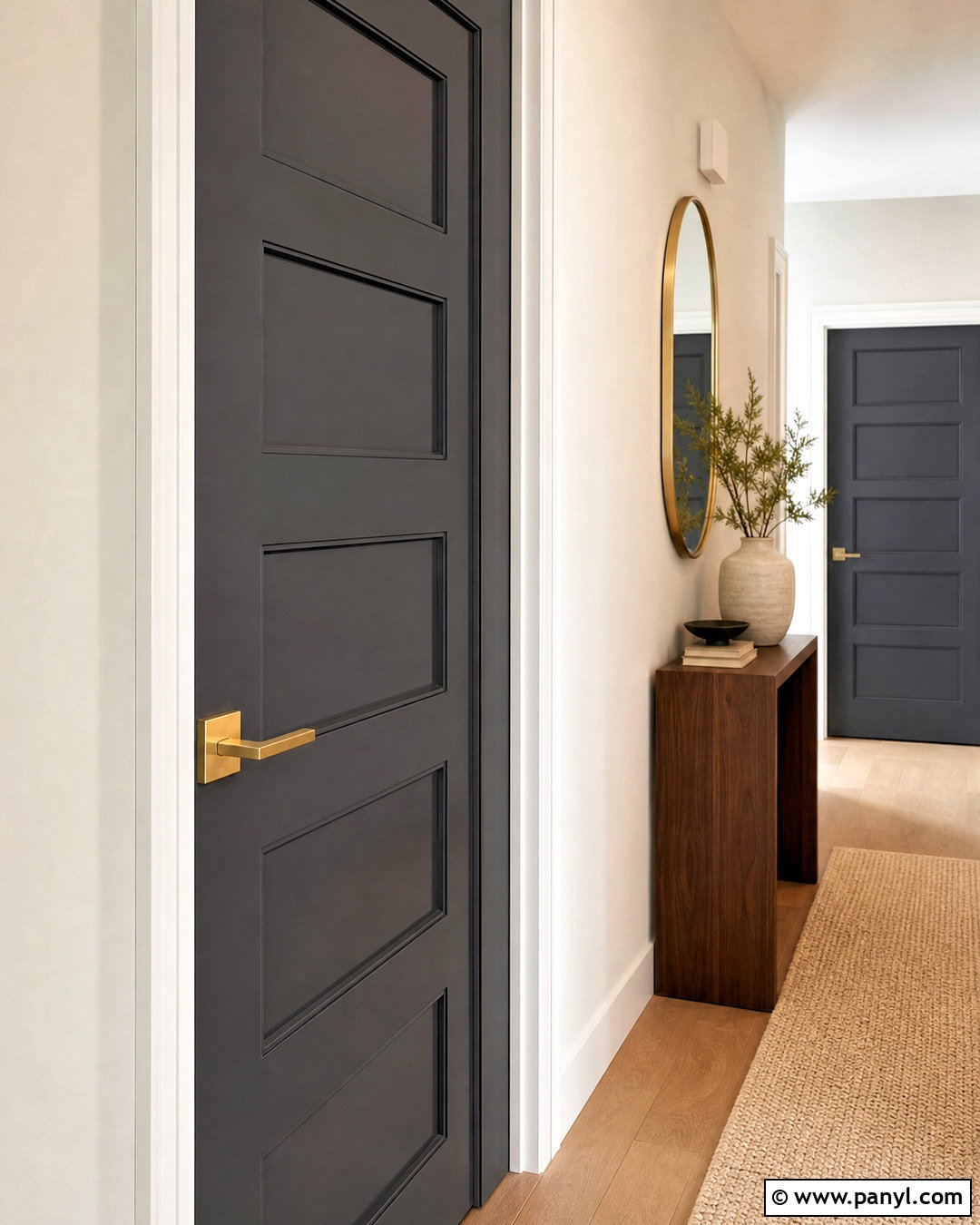
Warm brass hardware makes a charcoal door feel decorative rather than heavy. Select a muted satin or antique brass finish instead of highly polished gold, then repeat it on nearby lighting, cabinet pulls, or picture frames. Five-panel Shaker doors are particularly effective because the simple grooves provide dimension without competing with the metal. Surround them with creamy walls, warm white trim, and honey-toned oak flooring. A narrow hallway can be completed with a walnut console, a rounded mirror, and a neutral flat-weave runner. Limit brass to a few coordinated details so the finish feels deliberate. The warm metal contrasts naturally with cool gray paint and can bridge the door color to beige textiles, brown furniture, and natural woven accessories. ()
5. Dark Grey Doors With Matte Black Hardware
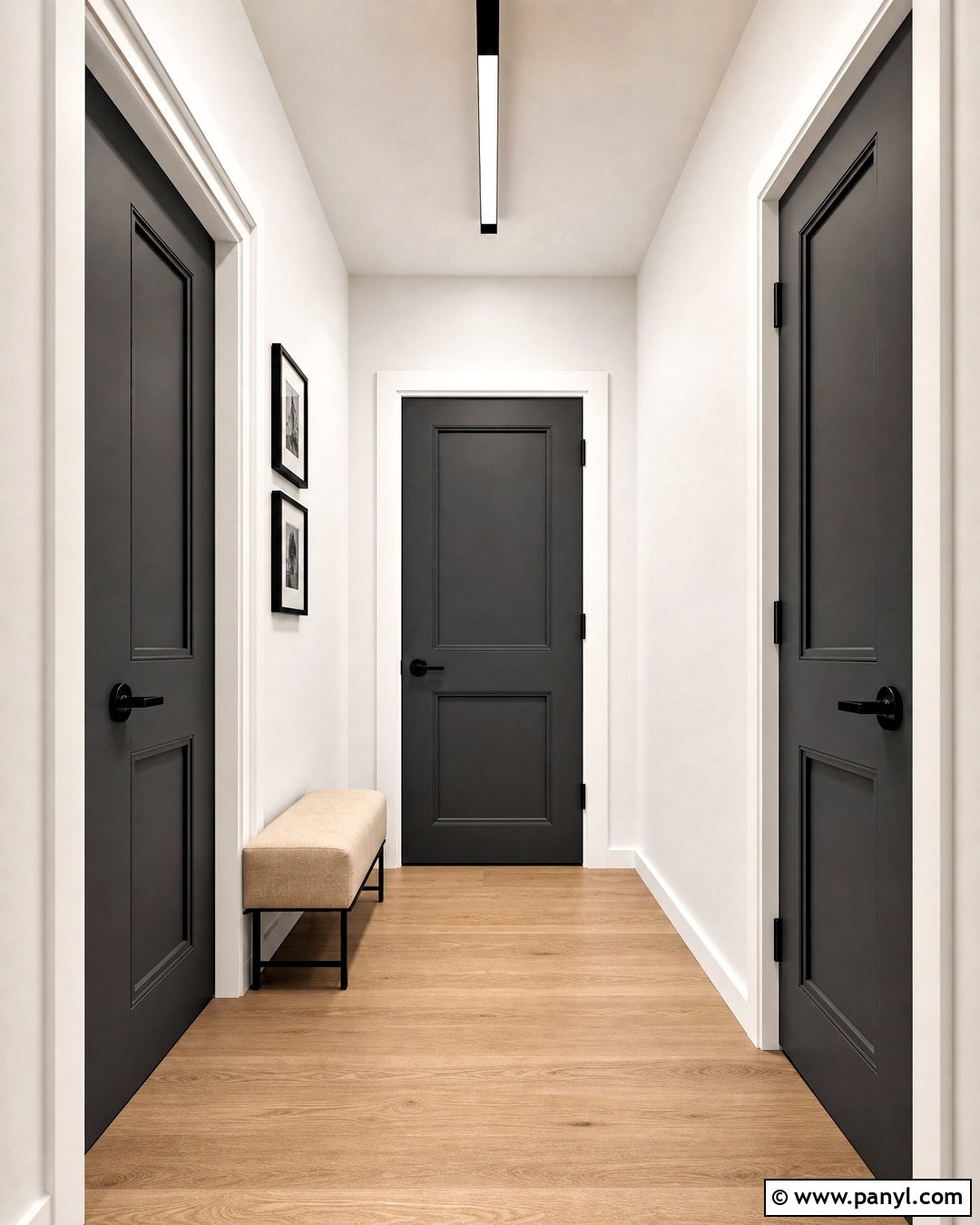
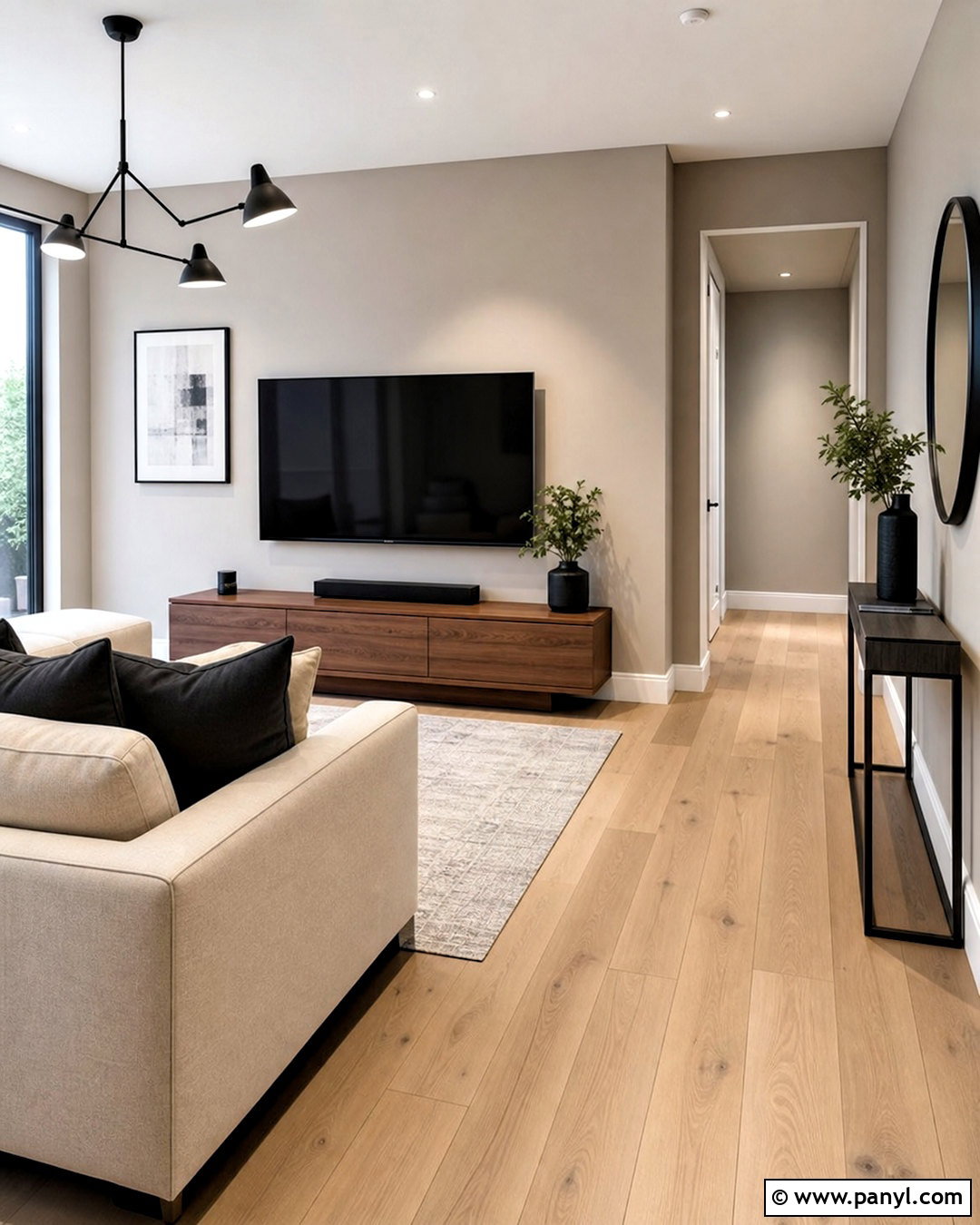
For a crisp modern interior, combine dark gray doors with matte black levers and hinges. The hardware will blend closely with charcoal paint, allowing the door’s panel pattern and proportions to become the main focus. Use streamlined three-panel doors with square casing for a clean architectural look. Soft white walls provide contrast, while light oak floors stop the room from feeling too stark. Repeat matte black on a linear ceiling fixture, thin picture frames, and one metal side table. Keep large furniture pieces light, such as a cream sectional or pale gray upholstered bench. This scheme works best when every visible metal finish is controlled. Too many competing chrome, bronze, and brass accents can weaken the simple, graphic effect. ()
6. Dark Grey Doors With Light Oak Floors
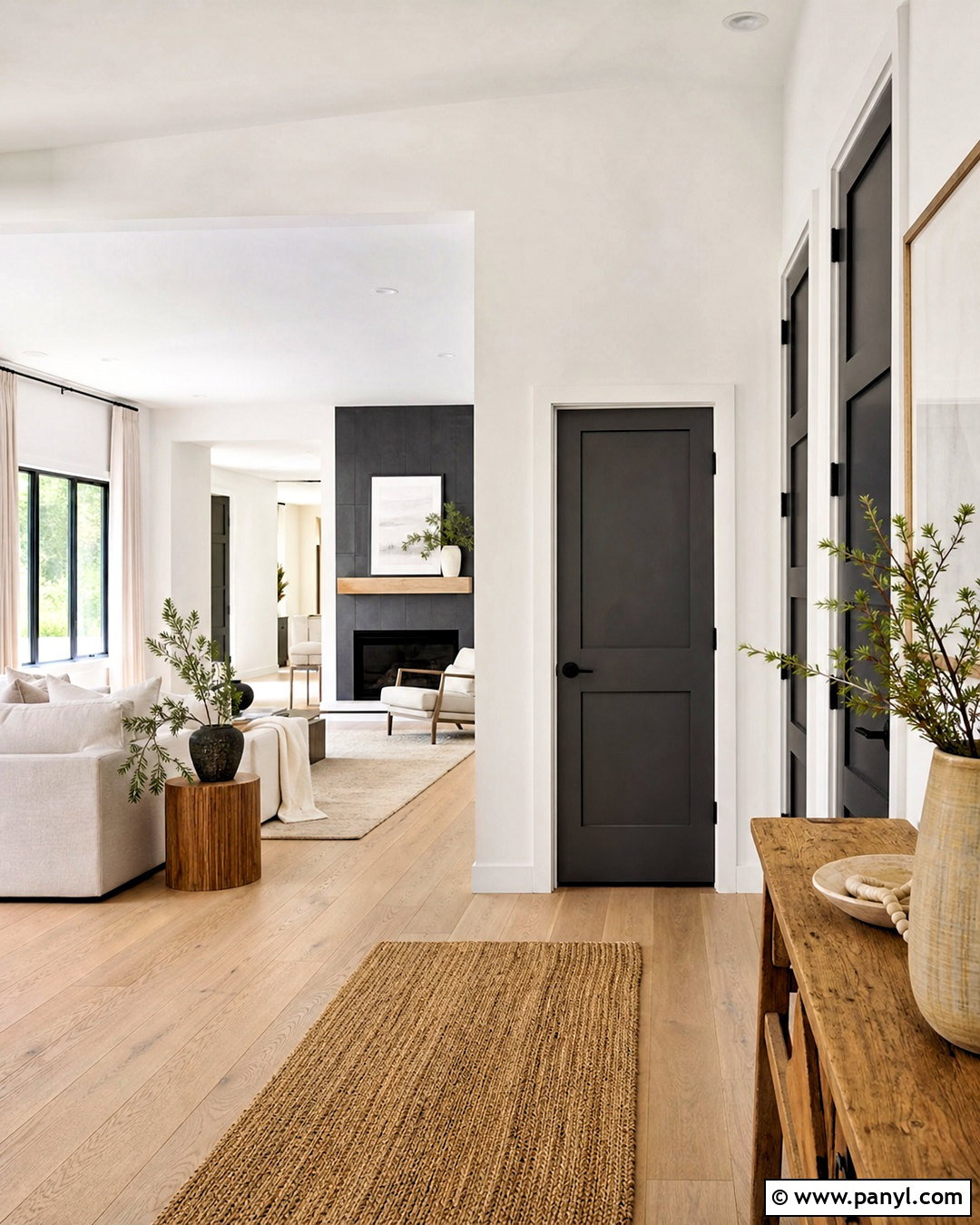
Sunlit oak flooring brings an inviting natural quality to deep charcoal doors. Choose a gray with a balanced or slightly warm undertone, then surround it with ivory walls and straightforward white casing. The pale grain of white oak reflects light around the room, helping the doors look substantial without visually shrinking the space. Continue the natural palette with an oak console, a woven runner, linen curtains, and a large ceramic vase filled with simple greenery. Black levers and a black-framed mirror add definition without introducing another strong color. In an open floor plan, repeat the same dark gray on every visible interior door. That repetition creates rhythm and gives the connected living, dining, and hallway spaces a cohesive finish.
7. Dark Grey Doors With Dark Wood Floors
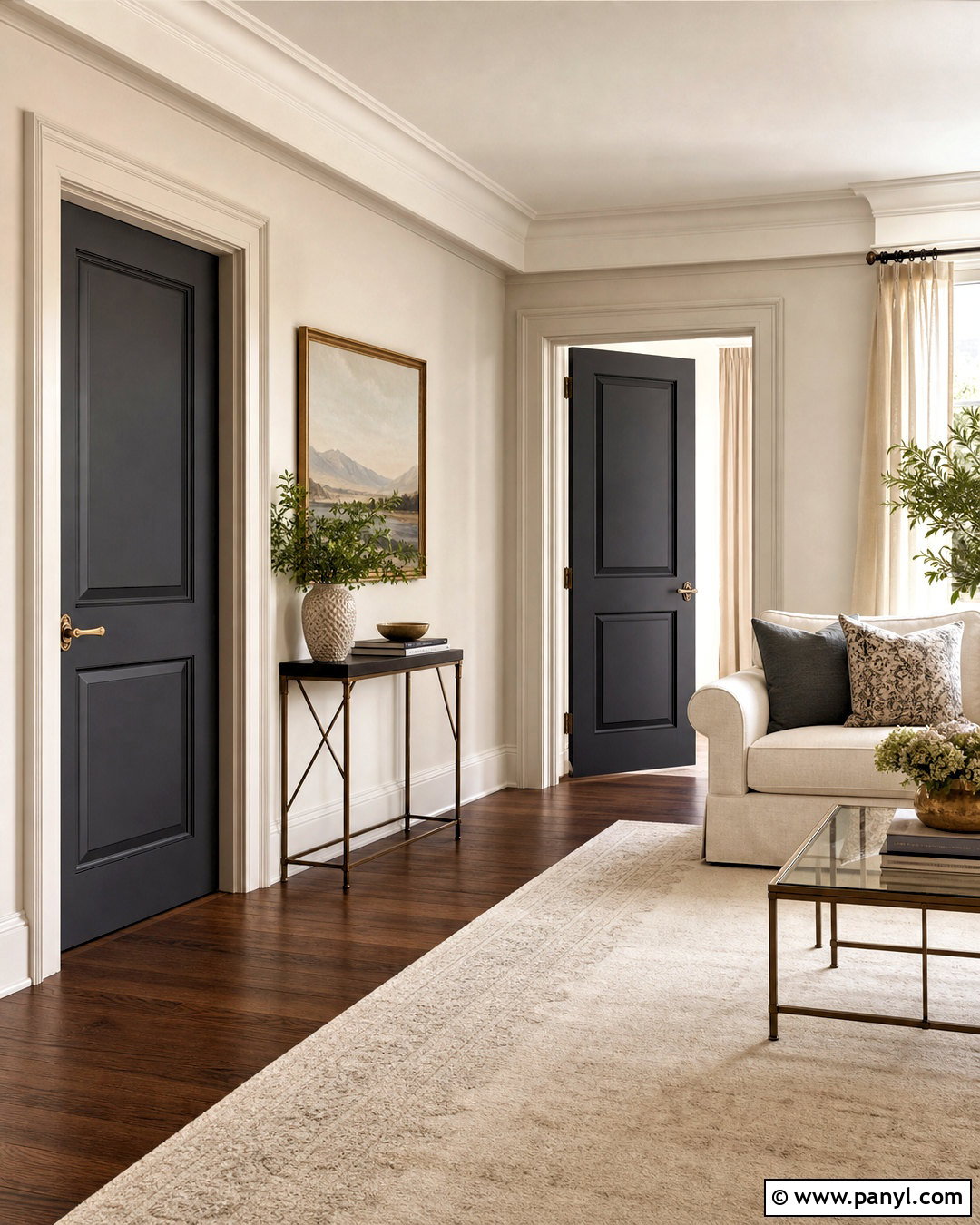
Rich wood floors and dark gray doors can look elegant together when lighter surfaces are added for balance. Choose a charcoal that is clearly gray rather than brown, allowing it to stand apart from walnut or espresso flooring. Warm white walls, wide ivory casing, and a pale area rug will prevent the lower half of the room from becoming visually heavy. Furnish the space with a cream sofa, a glass coffee table, and light linen curtains. Antique brass levers and warm metal lamps provide subtle highlights against the door. This palette is especially effective in a traditional living room or formal hallway. Keep bulky dark furniture to a minimum, and use layered white lighting to reveal both the door panels and wood grain.
8. Dark Grey Shaker Doors
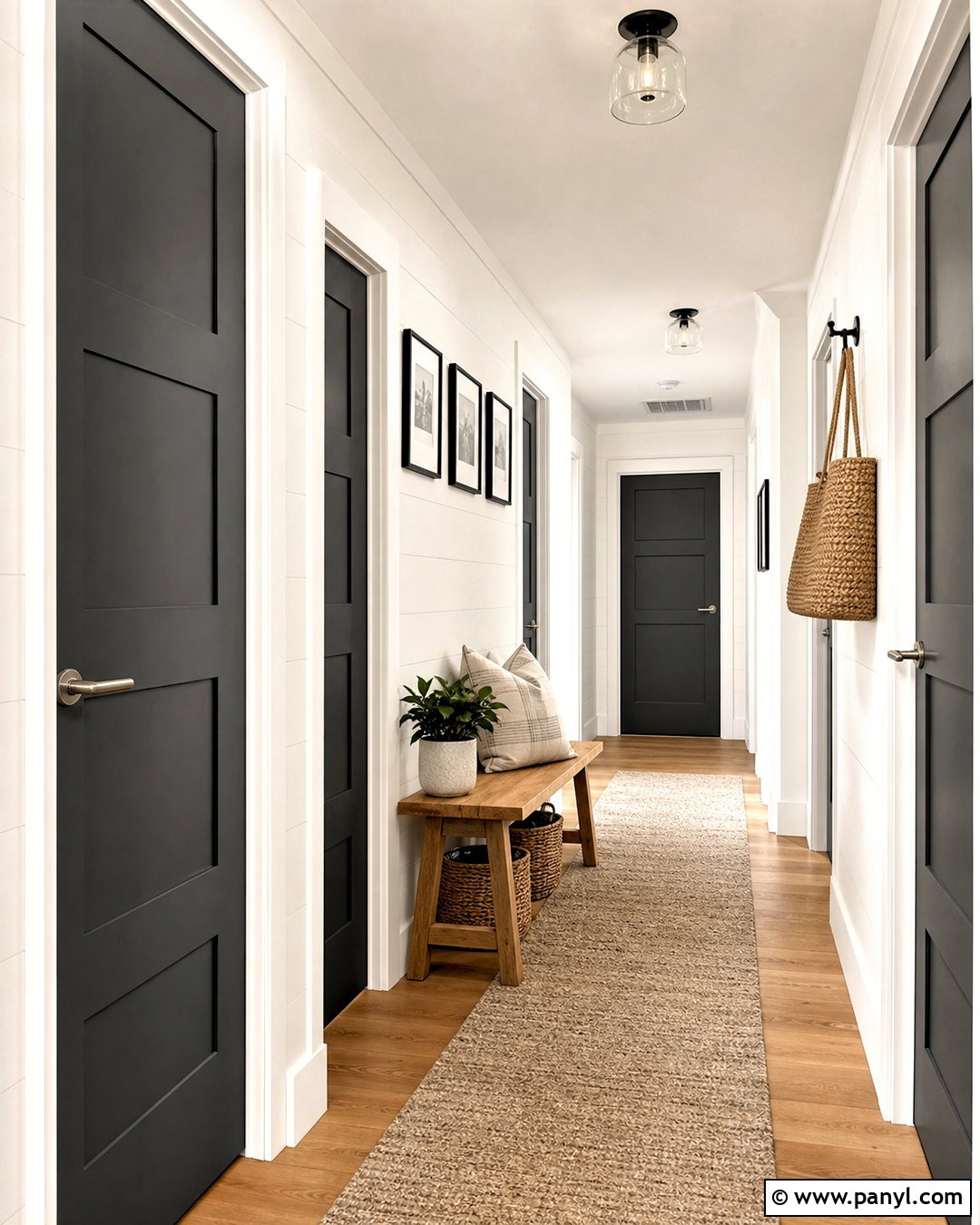
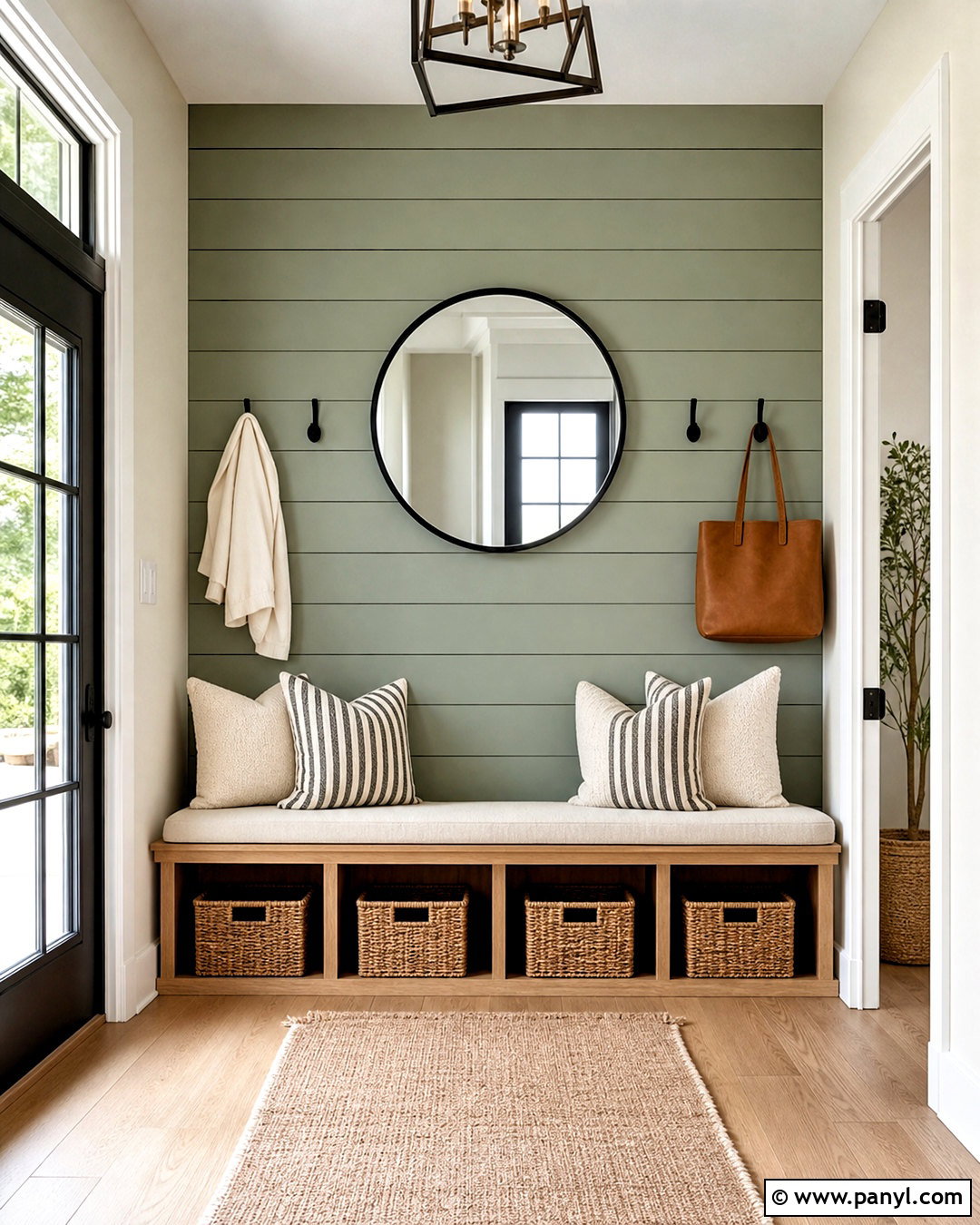
Shaker doors offer a simple way to introduce dark gray while maintaining a timeless interior. Their clean recessed panels suit modern farmhouse, transitional, Craftsman, and contemporary homes. Use two- or three-panel doors throughout a connected hallway for a consistent architectural rhythm. Pair the charcoal finish with warm white walls, flat white casing, and natural oak or medium walnut flooring. A long neutral runner can visually soften multiple dark doors and reduce the corridor effect. Add a wooden bench, woven baskets, and black framed prints for practical decoration. Satin nickel levers make the gray feel lighter, while brass creates more warmth. Keep the surrounding millwork uncomplicated so the strong geometry of the Shaker panels remains clear and visually balanced.
9. Dark Grey Flush Doors
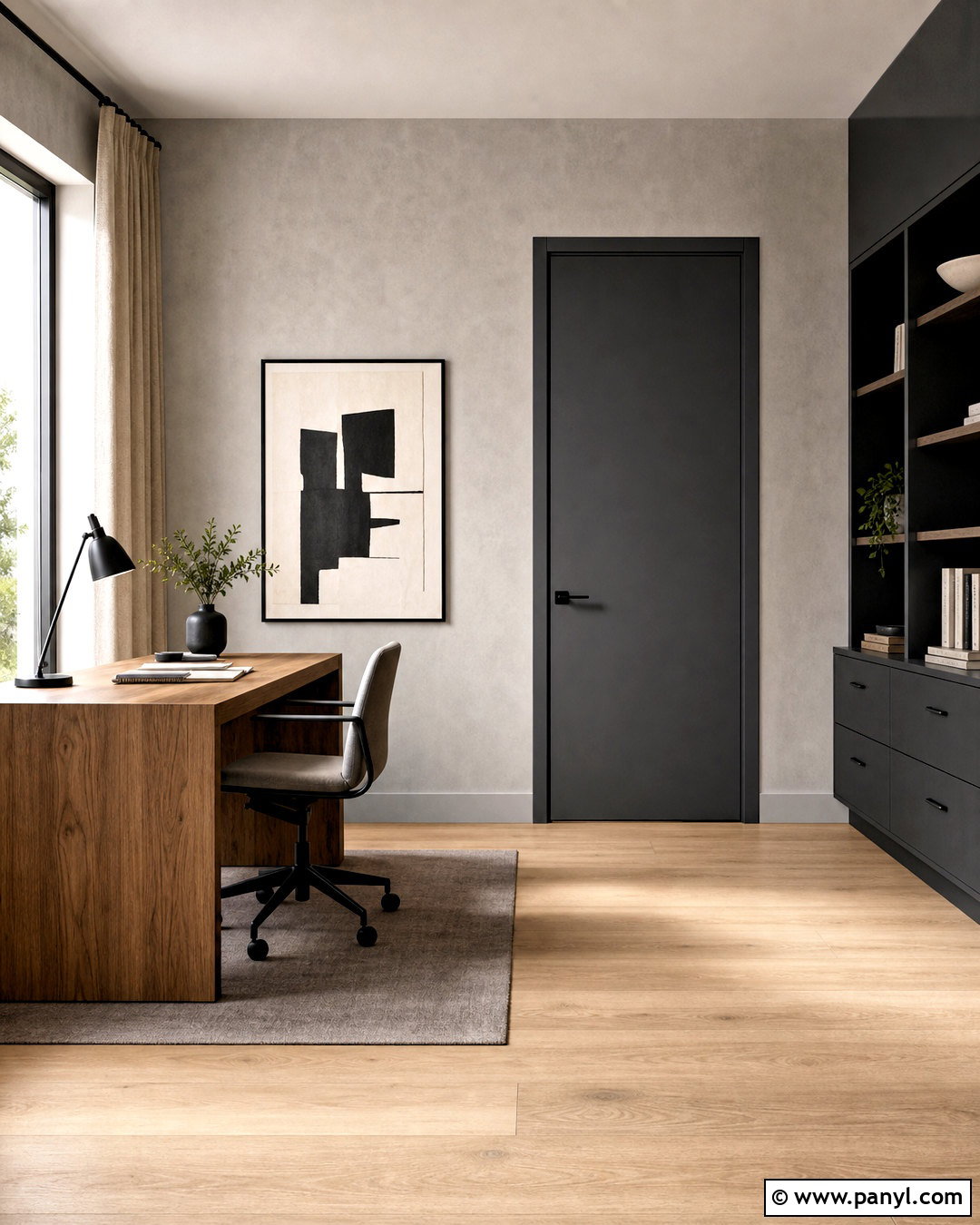
Smooth flush doors are ideal for a minimalist room where clean surfaces matter more than decorative molding. Paint the door and slim casing the same deep gray, then place them against pale concrete-colored walls. Concealed or low-profile hinges will strengthen the streamlined effect, while a simple black lever keeps the hardware unobtrusive. Use wide-plank light oak floors, low modern furniture, and plain linen curtains to add warmth. In a home office or media room, echo the charcoal color on built-in cabinetry without covering every wall in dark paint. A large abstract artwork can introduce clay, cream, or muted green. The result should feel quiet and precise, with the door appearing as an integrated part of the architecture rather than an ornamental feature.
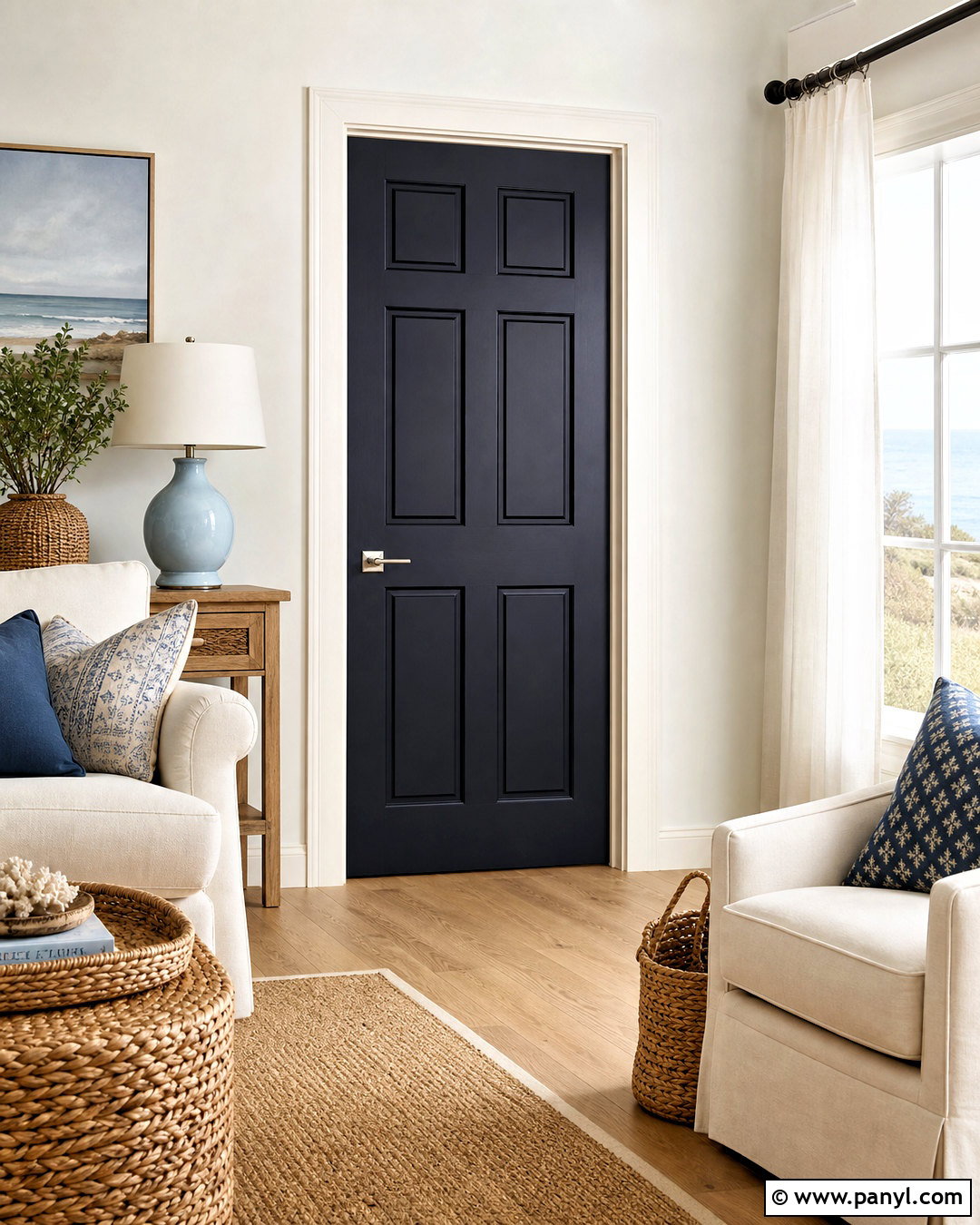
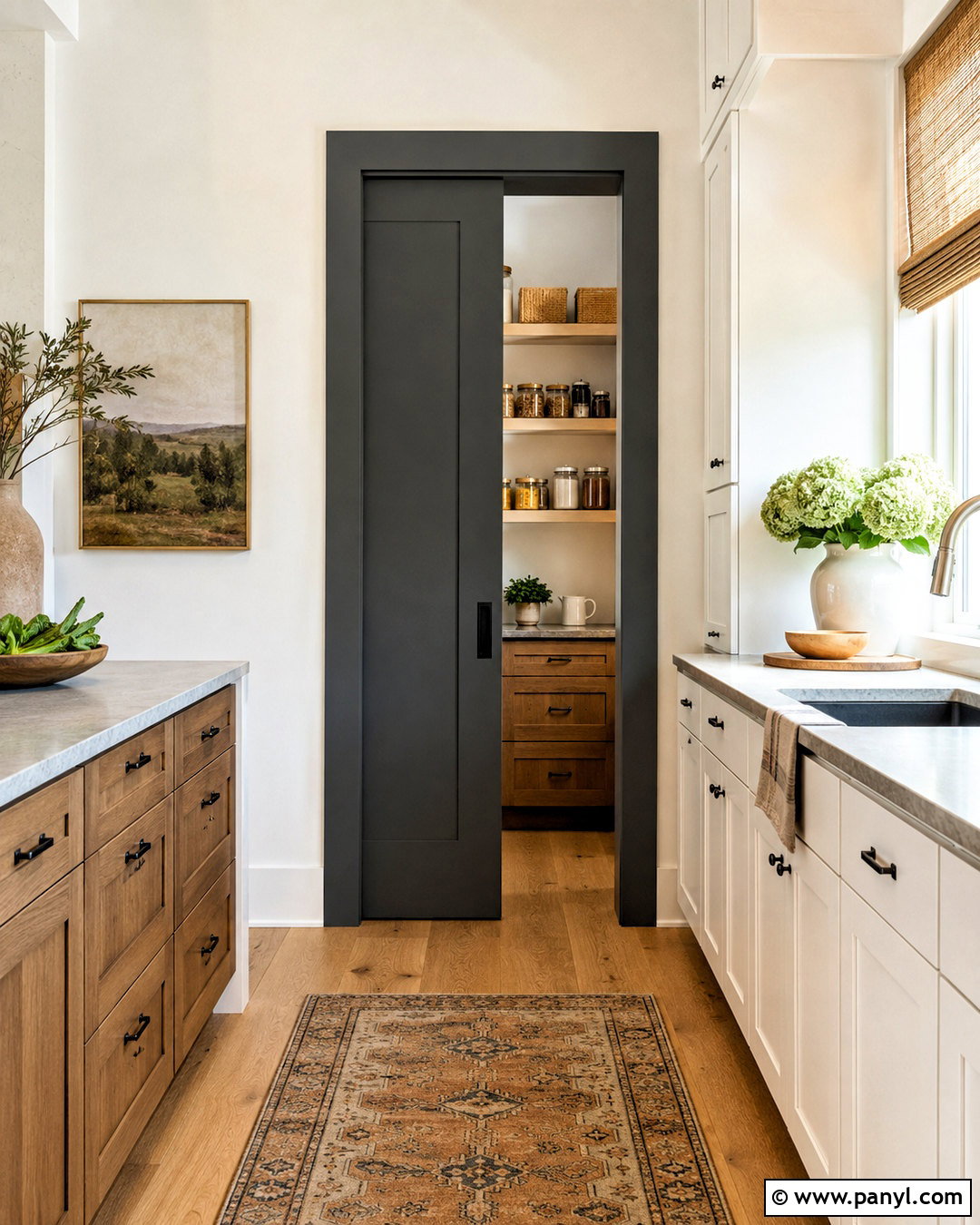
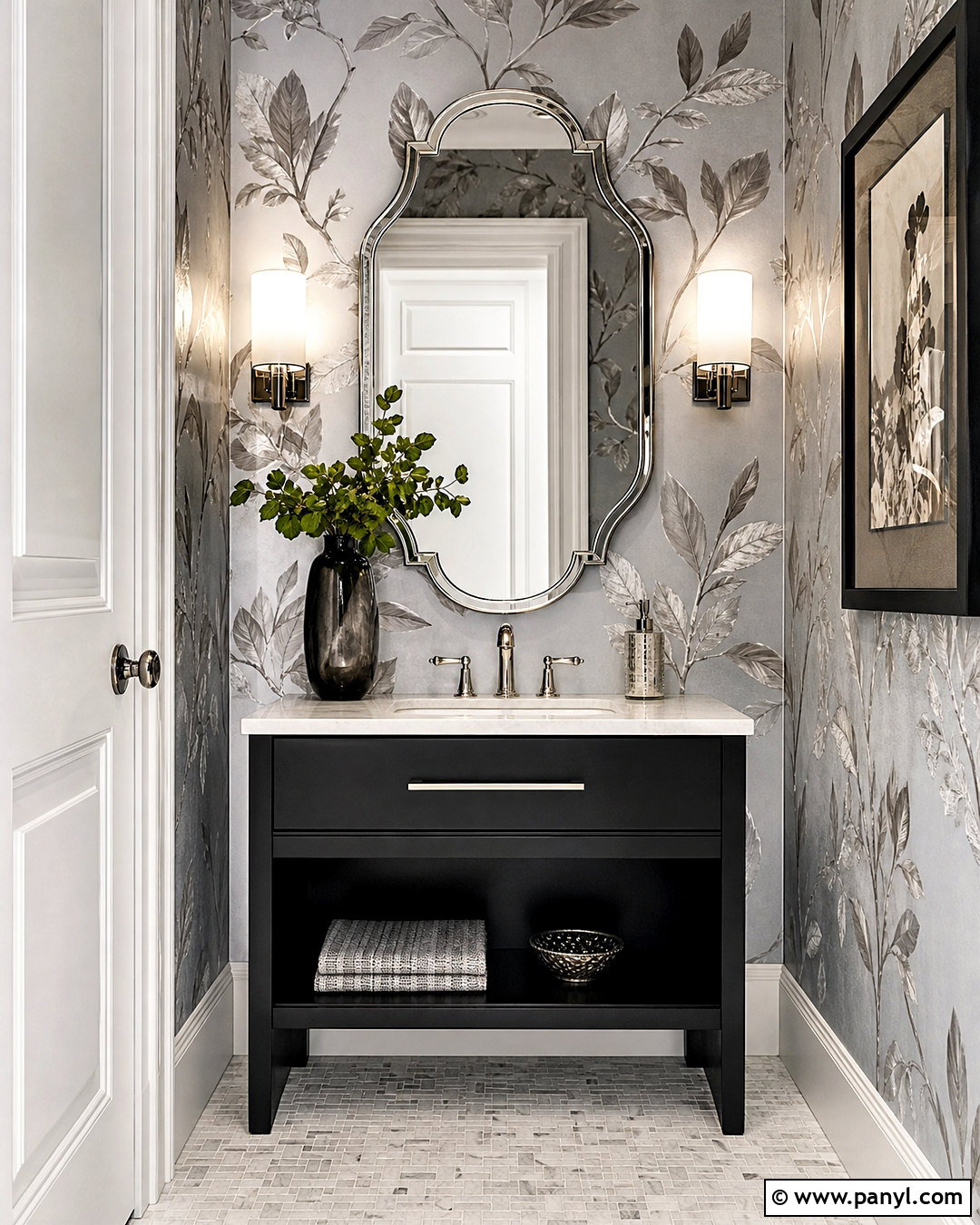
10. Dark Grey French Doors
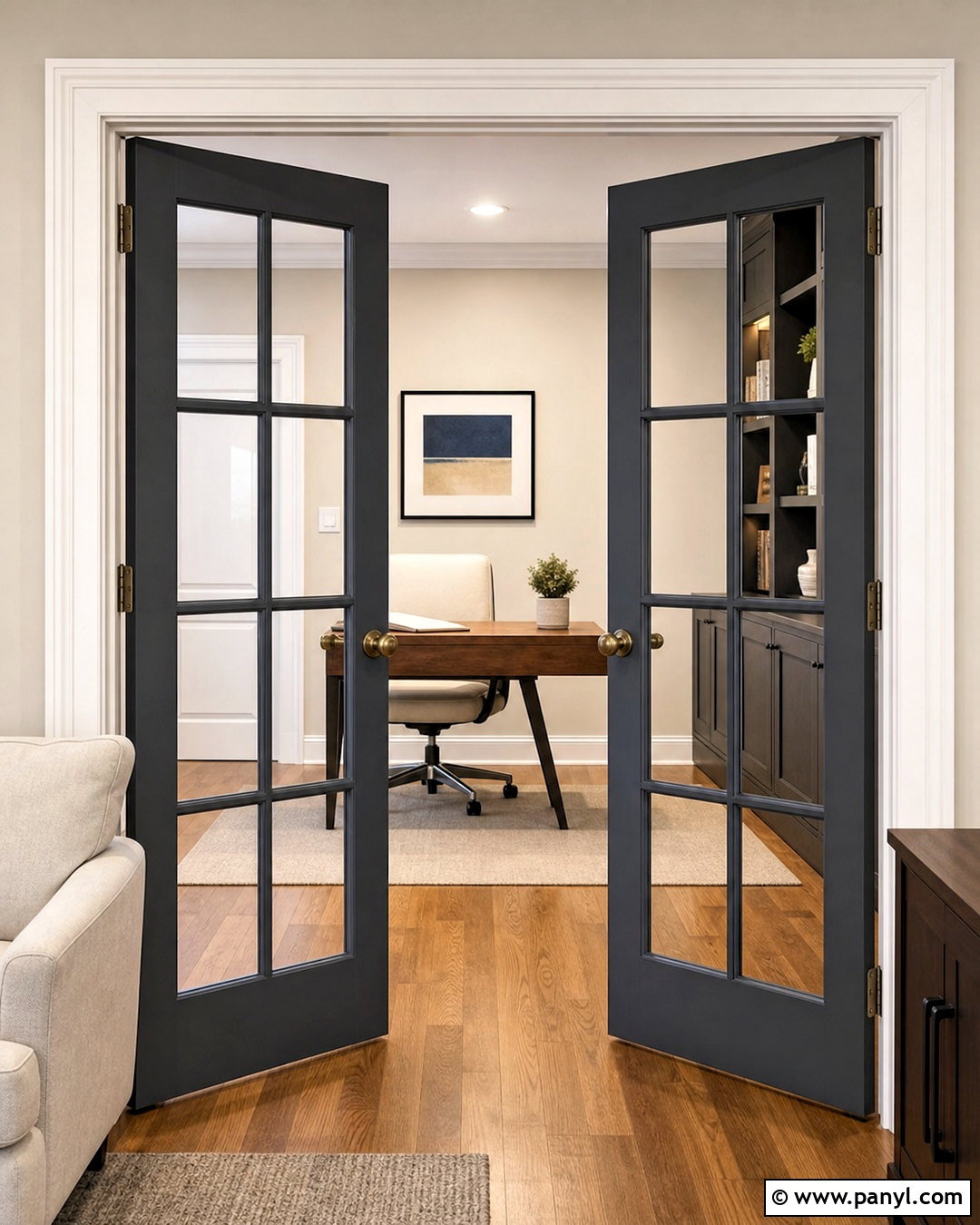
Glass-paneled French doors feel more grounded and contemporary when their frames are painted dark gray. Use them between a living room and home office, where the glass can share natural light while still defining each zone. Choose clear panes for openness or reeded glass when more visual privacy is needed. Cream walls and white trim create a bright surround, while medium oak flooring connects both rooms. Furnish the office with a walnut desk, a textured ivory chair, and closed storage to keep the view uncluttered. Brass knobs add warmth and make the doors feel slightly traditional. Repeat charcoal in small details, such as a desk lamp or curtain rod, so the French doors belong to the complete interior instead of looking like an isolated feature.
11. Dark Grey Double Doors
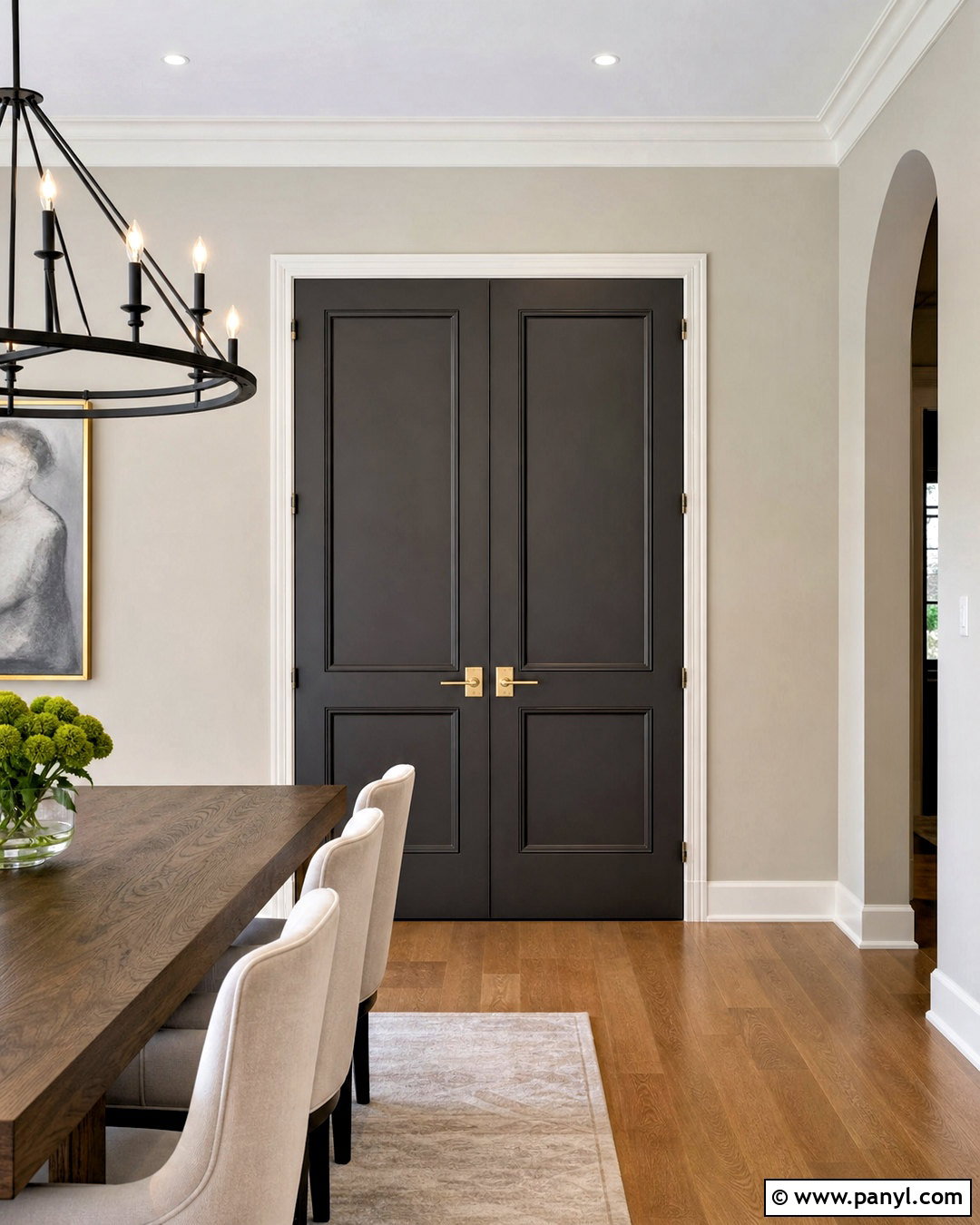
A pair of dark gray doors can turn a wide opening into an impressive focal point without requiring elaborate decoration. Select tall, symmetrical paneled doors and paint the casing the same charcoal for a substantial built-in effect. Pale greige walls and warm white baseboards will soften the contrast. Inside the adjoining dining room, use a natural wood table, cream upholstered chairs, and a simple black chandelier. Satin brass levers or round knobs bring warmth to the center of the composition. Leave enough open wall space around the doors so their scale remains clear. This treatment works well for dining rooms, home offices, or primary bedrooms, where double doors can provide a stronger sense of arrival and better visual separation from busy living areas.
12. Dark Grey Sliding Barn Door
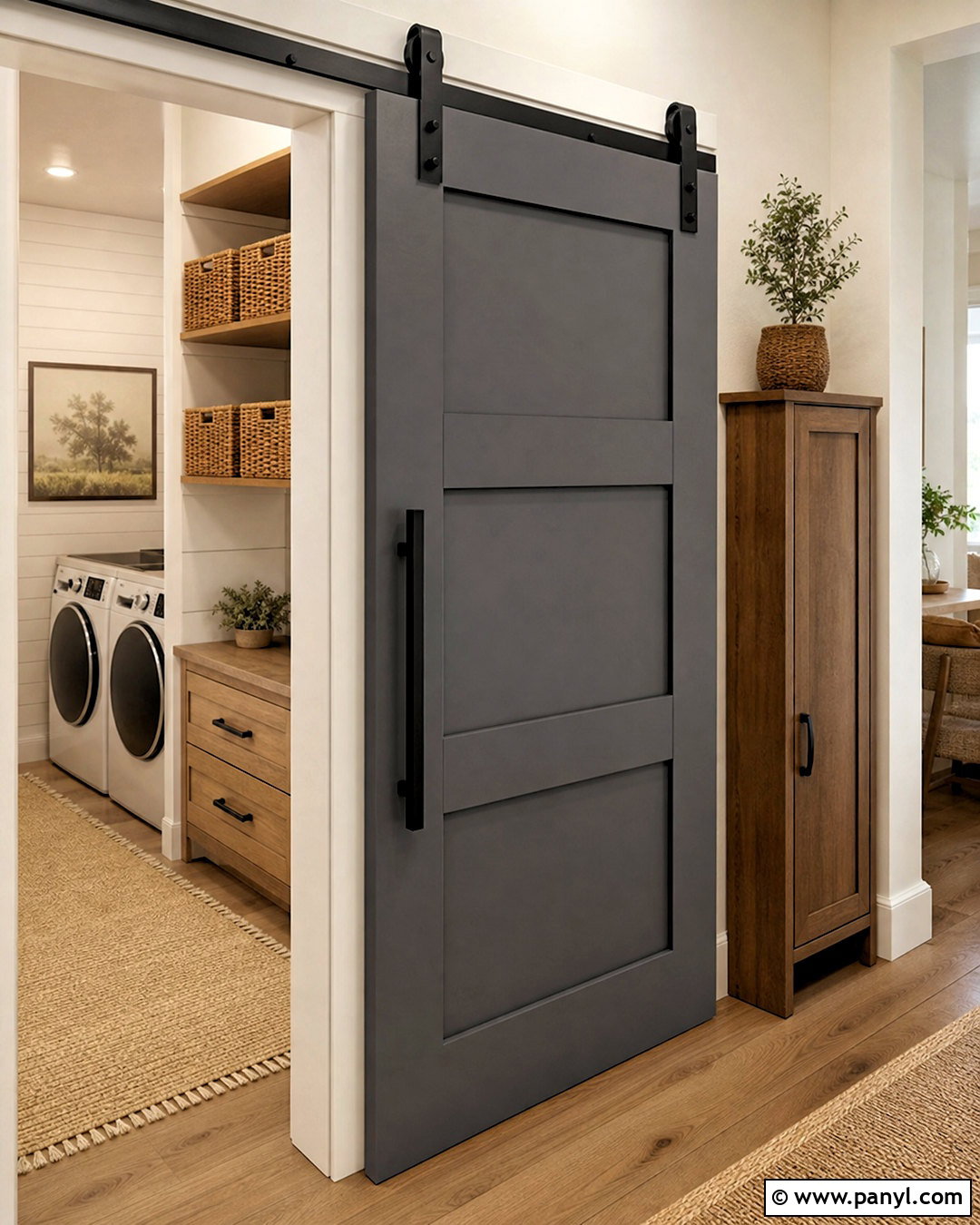
A dark gray barn door can feel refined rather than overly rustic when it has a clean Shaker pattern and restrained hardware. Use a wide single door to close a pantry, laundry room, or home office. Mount it on a simple matte black rail, then coordinate the handle and nearby light fixture with the same finish. Warm white walls and pale oak floors will balance the large charcoal surface. Add a narrow wood cabinet, woven storage bins, and a neutral runner to complete the passageway. Avoid distressed paint and oversized metal brackets if you want a more current result. The door needs enough blank wall space to slide fully open, so plan furniture placement and switches before selecting its width and track location.
13. Dark Grey Pocket Door
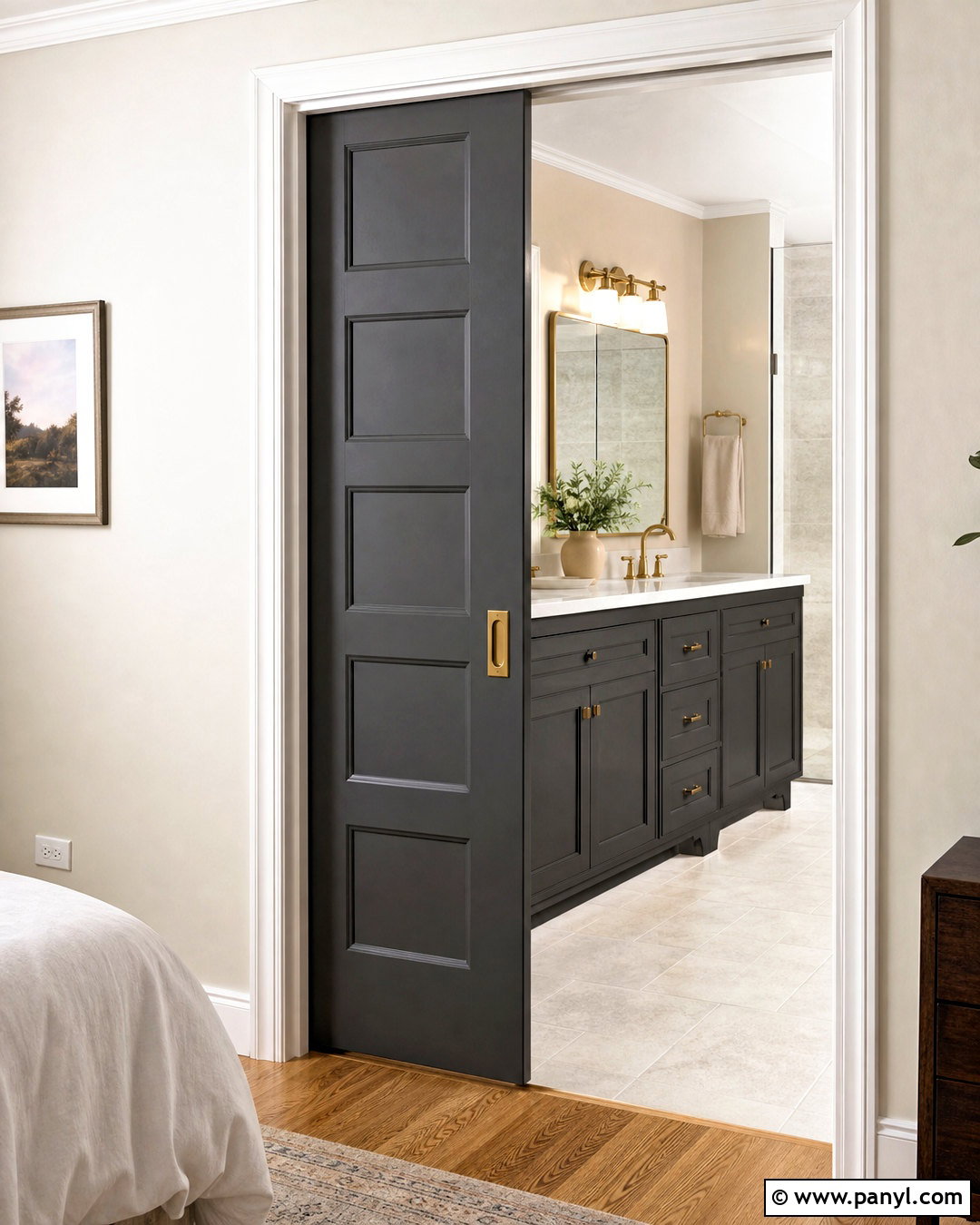
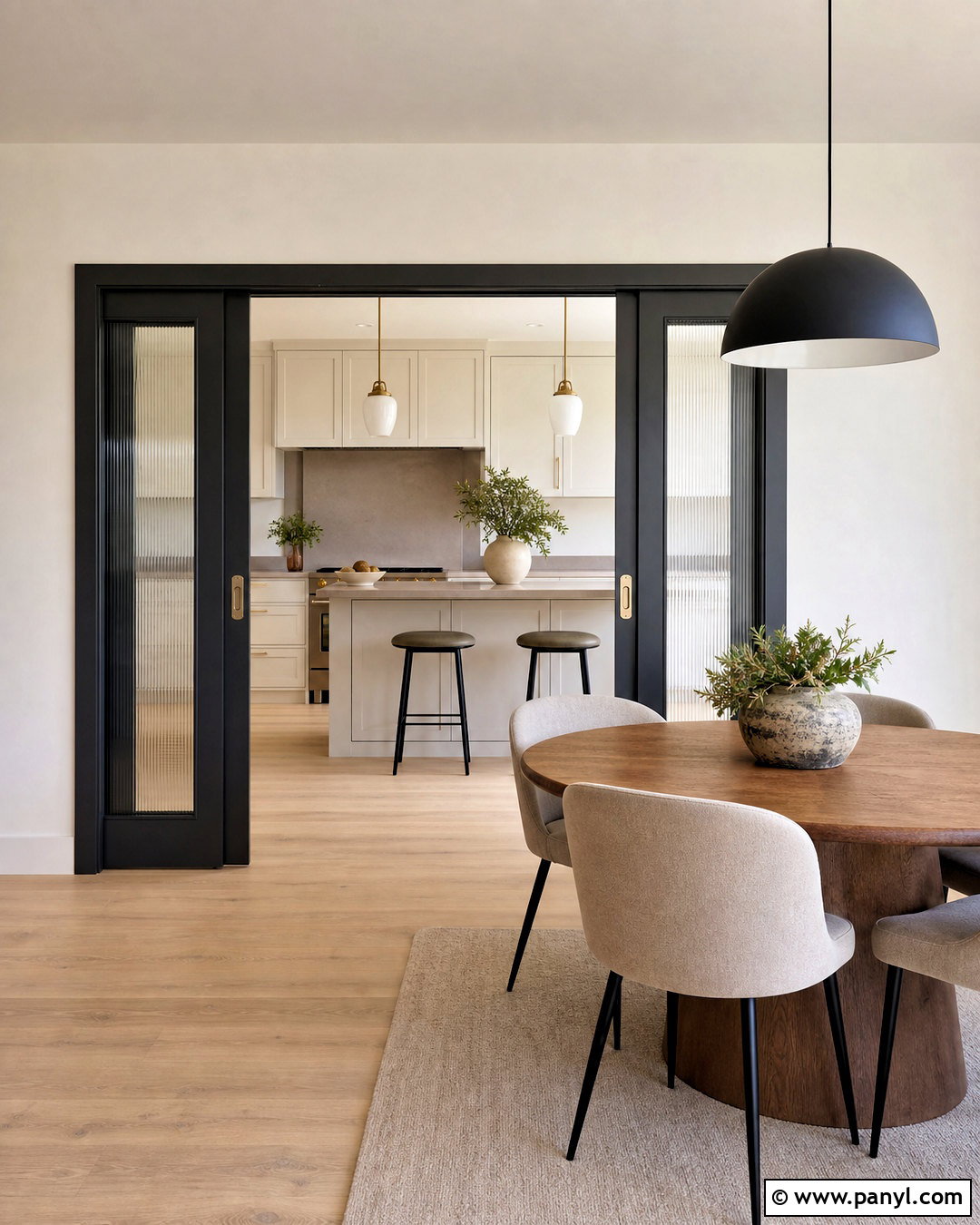
When floor space is limited, a dark gray pocket door provides color and function without requiring a swing area. Use one between a small bathroom and bedroom or between a pantry and kitchen. A five-panel design adds enough detail to make the door noticeable when closed, while a recessed brass pull keeps the surface neat. Pair it with soft cream walls, matching white trim, and warm oak flooring. In the bathroom, repeat the charcoal color on the vanity and introduce white stone counters, pale tile, and brass fixtures. This repetition helps the door connect with the entire room. Make sure the pocket cavity and hardware operate smoothly before painting, since dark finishes can make chips around frequently touched edges more visible.
14. Dark Grey Bedroom Door
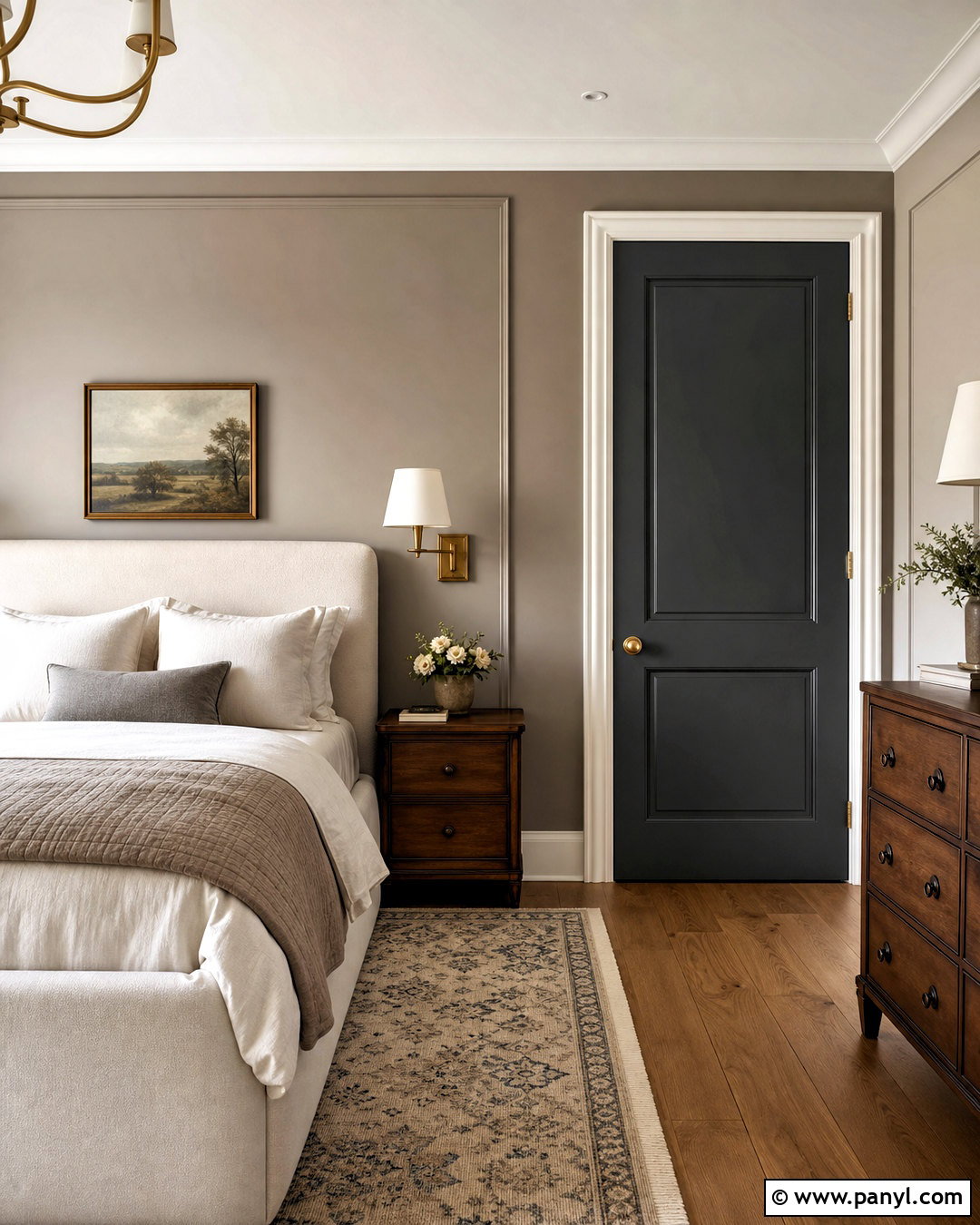
A dark gray bedroom door can anchor a calm, layered retreat when its color is repeated in small amounts around the room. Pair a charcoal paneled door with warm white trim, pale mushroom walls, and medium oak flooring. Dress the bed in ivory linen, taupe quilts, and one deep gray lumbar pillow. Walnut nightstands and brass sconces will introduce warmth without distracting from the restful neutral palette. Use a wool rug with soft gray and beige patterns to connect the door to the center of the room. If the room is compact, leave the ceiling and curtains light. Painting only the door—not every wall—adds depth and definition while maintaining the open, bright quality needed for a comfortable bedroom.
15. Dark Grey Bathroom Door

Steam, pale tile, and bright fixtures create an ideal backdrop for a charcoal bathroom door. Select a durable satin or semi-gloss finish that is easier to clean than flat paint, particularly around the handle and lower panels. Pair the door with crisp white casing and soft greige walls outside the bathroom. Inside, use a dark gray vanity, white quartz counter, light marble-look tile, and brushed brass fixtures. A frameless mirror and clear glass shower enclosure will help the compact room feel open. Add warmth through a small oak stool, beige towels, and a woven bath mat. Repeating the door color on the vanity makes the scheme feel coordinated from both sides while the abundant white surfaces keep the dark gray from dominating.
16. Dark Grey Pantry Door
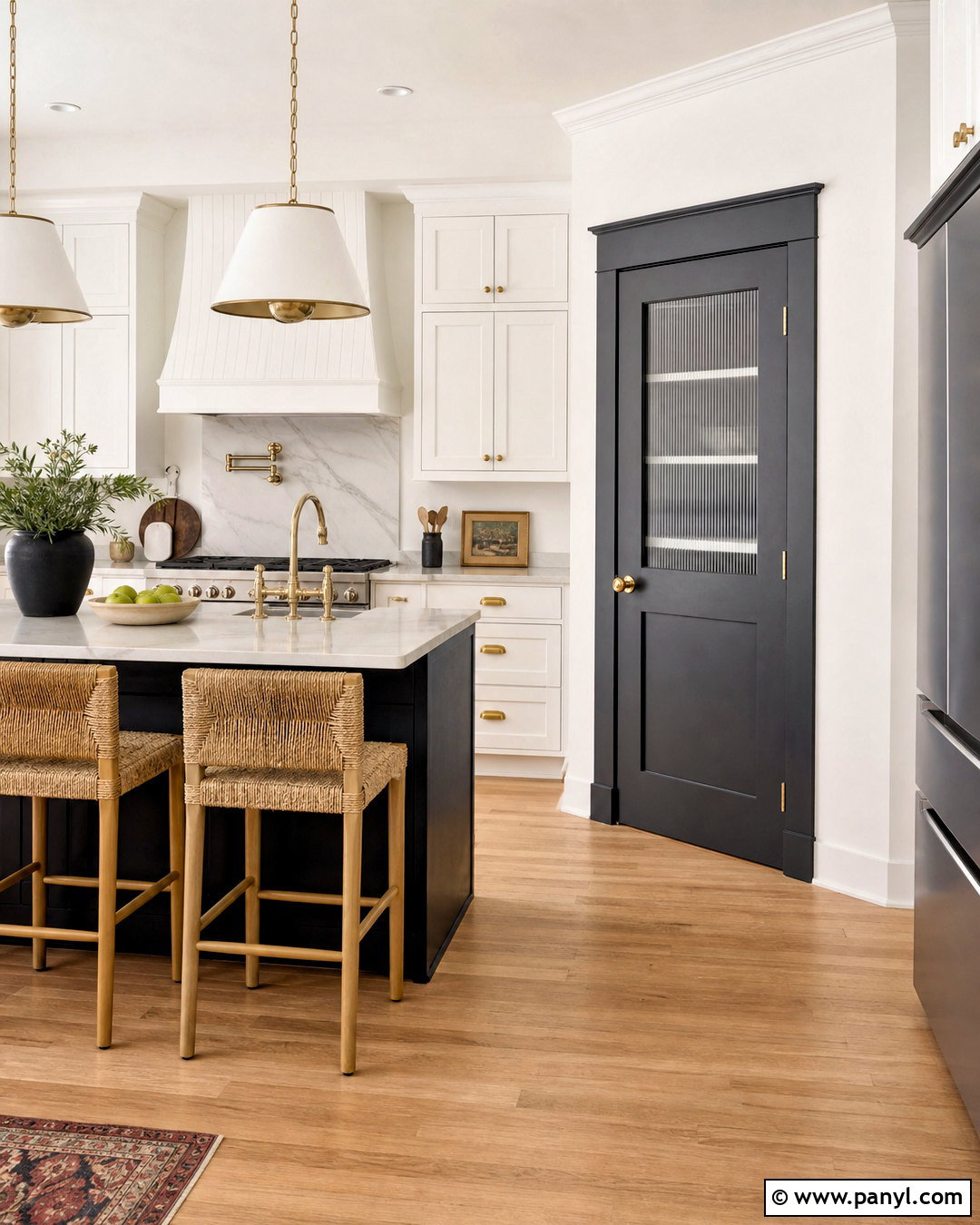
A charcoal pantry door can provide a strong visual anchor in a bright white kitchen. Choose a simple Shaker door with reeded glass or a solid upper panel, depending on how much stored food you want visible. Paint the door and casing the same dark gray, then repeat the color on the island base for balance. White perimeter cabinets, warm quartz counters, and light oak floors will keep the kitchen inviting. Use aged brass pulls across the cabinetry and a matching pantry lever to connect every surface. Woven counter stools and cream pendant shades can soften the sharp contrast. Keep adjacent walls uncluttered so the dark doorway reads as an intentional component of the kitchen layout rather than an unrelated painted accent.
17. Dark Grey Home Office Doors
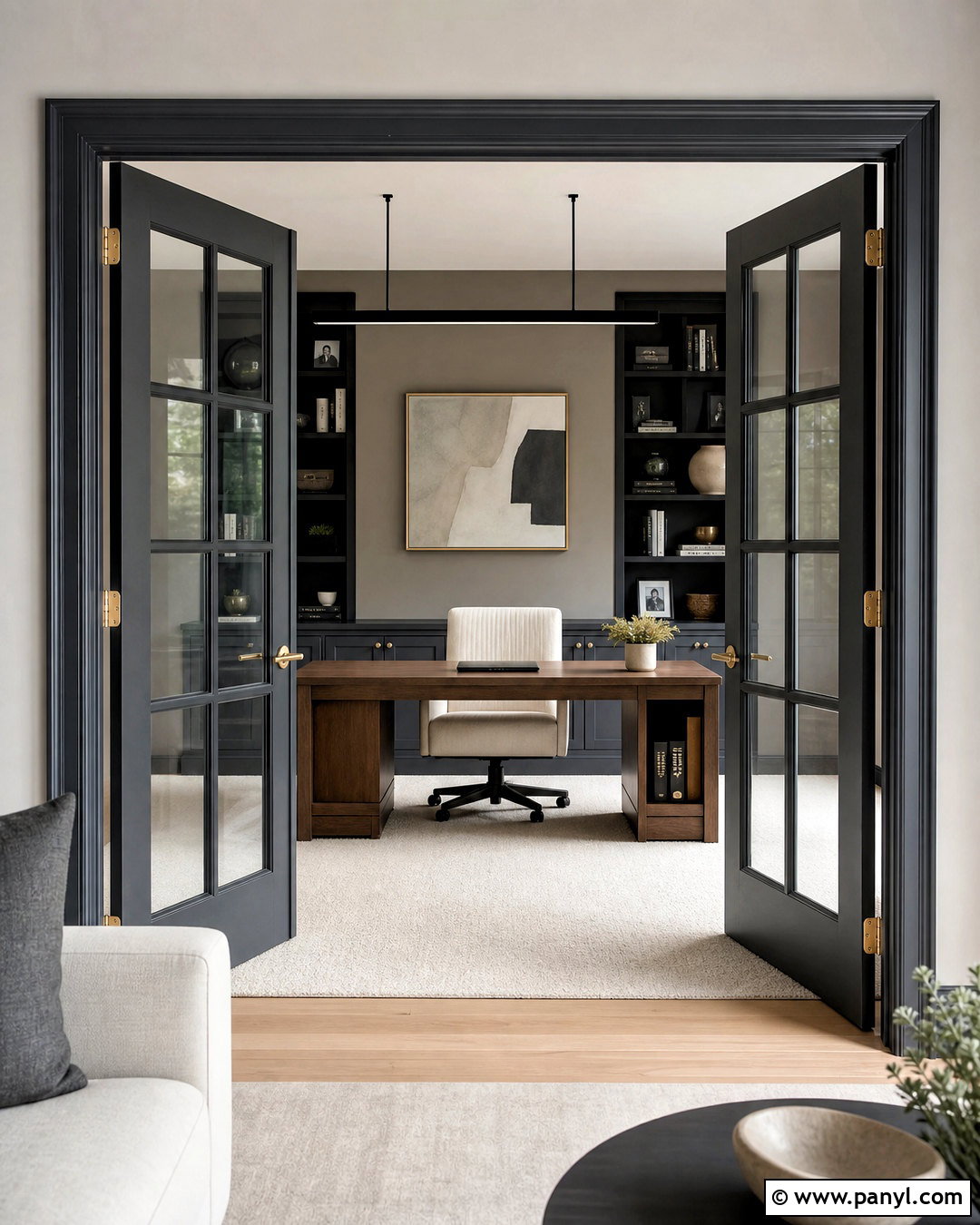
Dark gray doors give a home office a clear boundary while establishing a focused, professional atmosphere. Install glass-paneled double doors so daylight can reach the hallway and the room remains visually connected to the house. Use charcoal frames, clear glass, and slim brass levers. Inside, position a walnut desk in front of light greige walls and add a cream upholstered chair, closed charcoal cabinets, and an ivory area rug. A black linear light and simple landscape artwork can complete the restrained palette. Keep cords, paperwork, and equipment inside concealed storage because everything remains visible through the glass. Repeating the door color on the built-ins gives the office depth and creates a complete design that feels intentional from the adjoining living area.
18. Dark Grey Hallway Doors
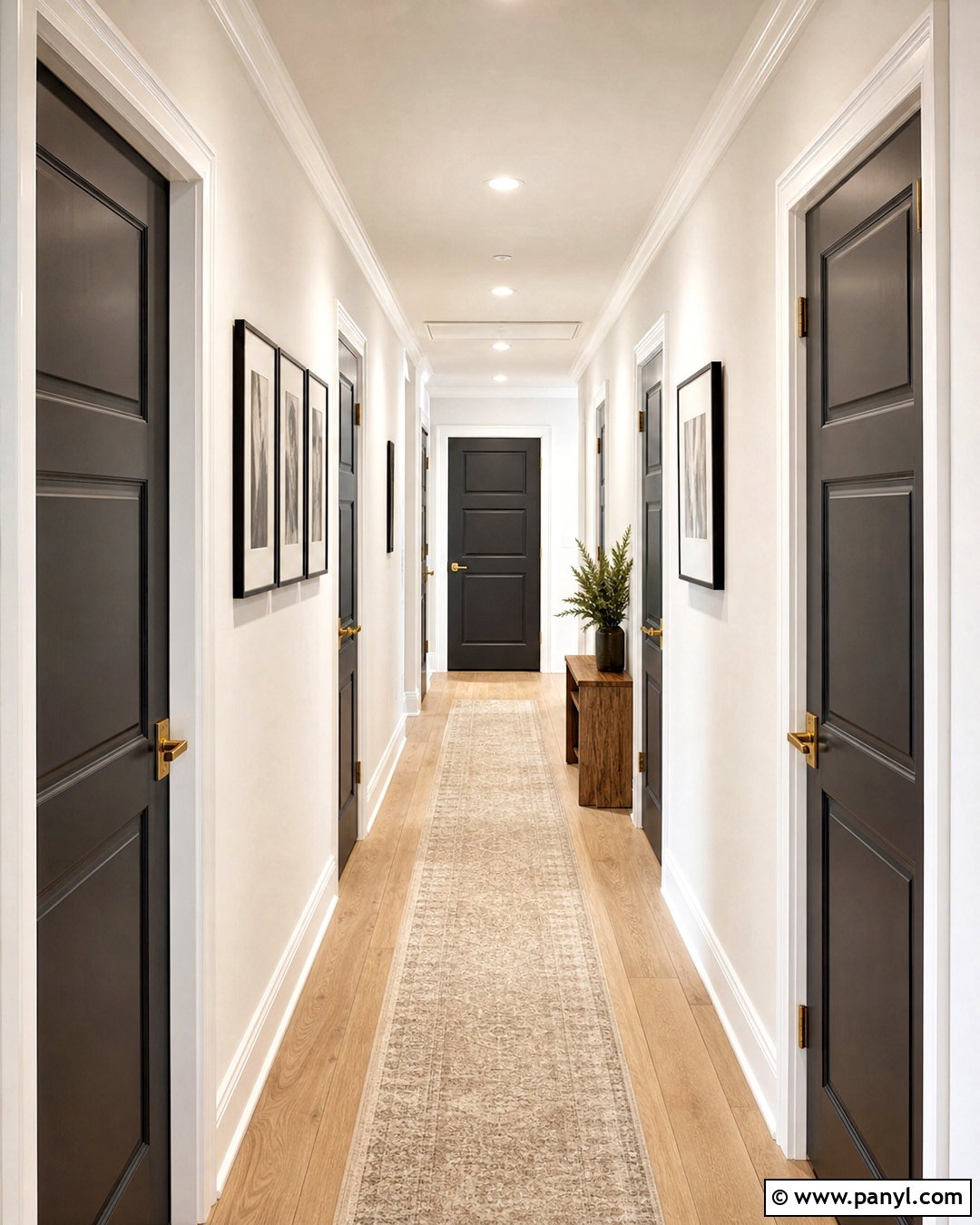
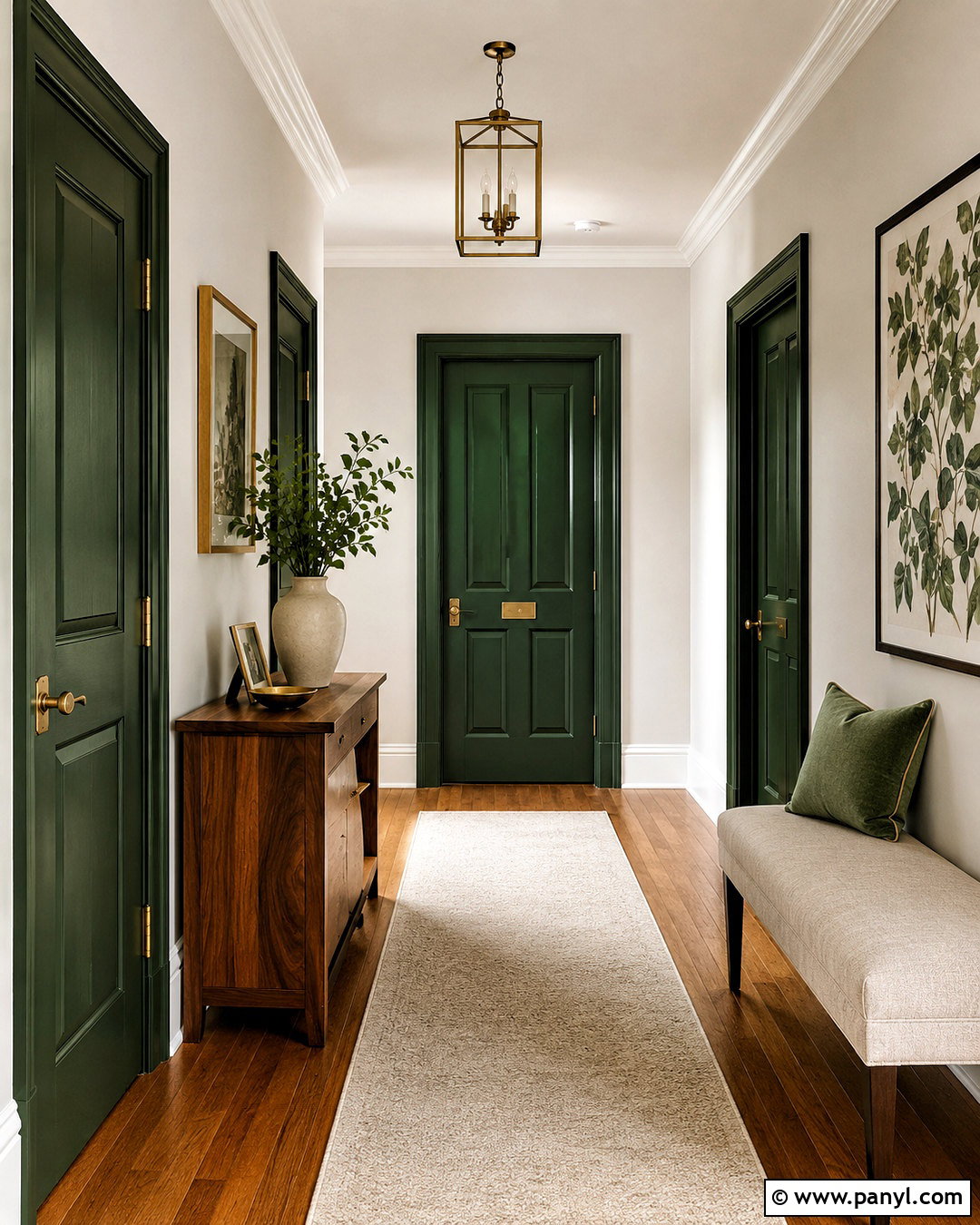
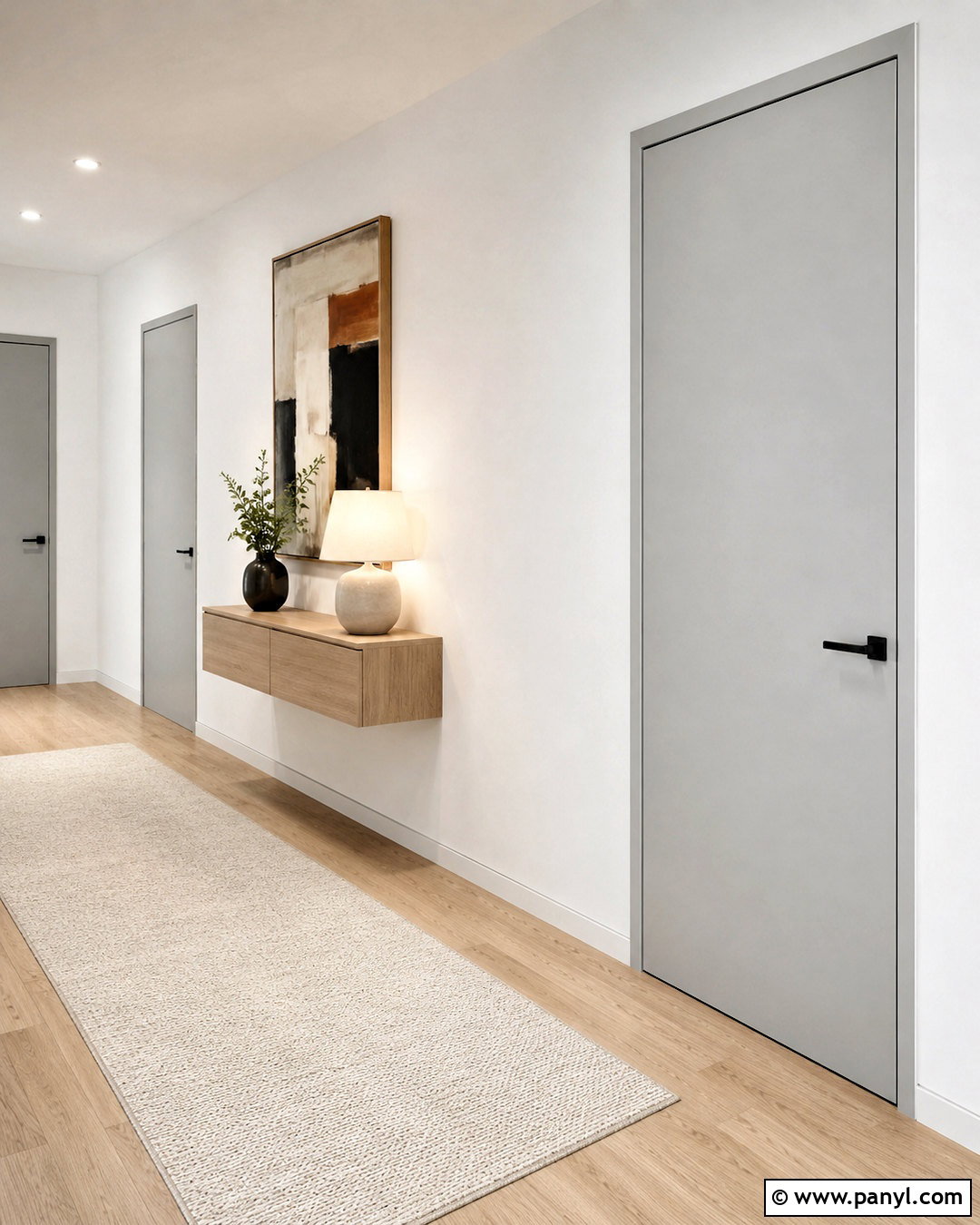
A hallway lined with several doors needs a carefully controlled palette to avoid looking crowded. Paint every door the same charcoal gray, but keep the casing, baseboards, and walls in one warm white. This creates consistent dark shapes against a simple light background. Choose matching door styles and hardware throughout, even if the rooms serve different purposes. A long beige runner, light oak flooring, and flush ceiling lights will brighten the passage. Add one slim console or bench only where the hallway is wide enough for comfortable movement. Brass levers can warm the repeated gray surfaces, while black levers create a sharper look. Finish with a small collection of evenly spaced artwork so the corridor feels decorated but remains visually calm.
19. Dark Grey Doors With Color-Drenched Walls
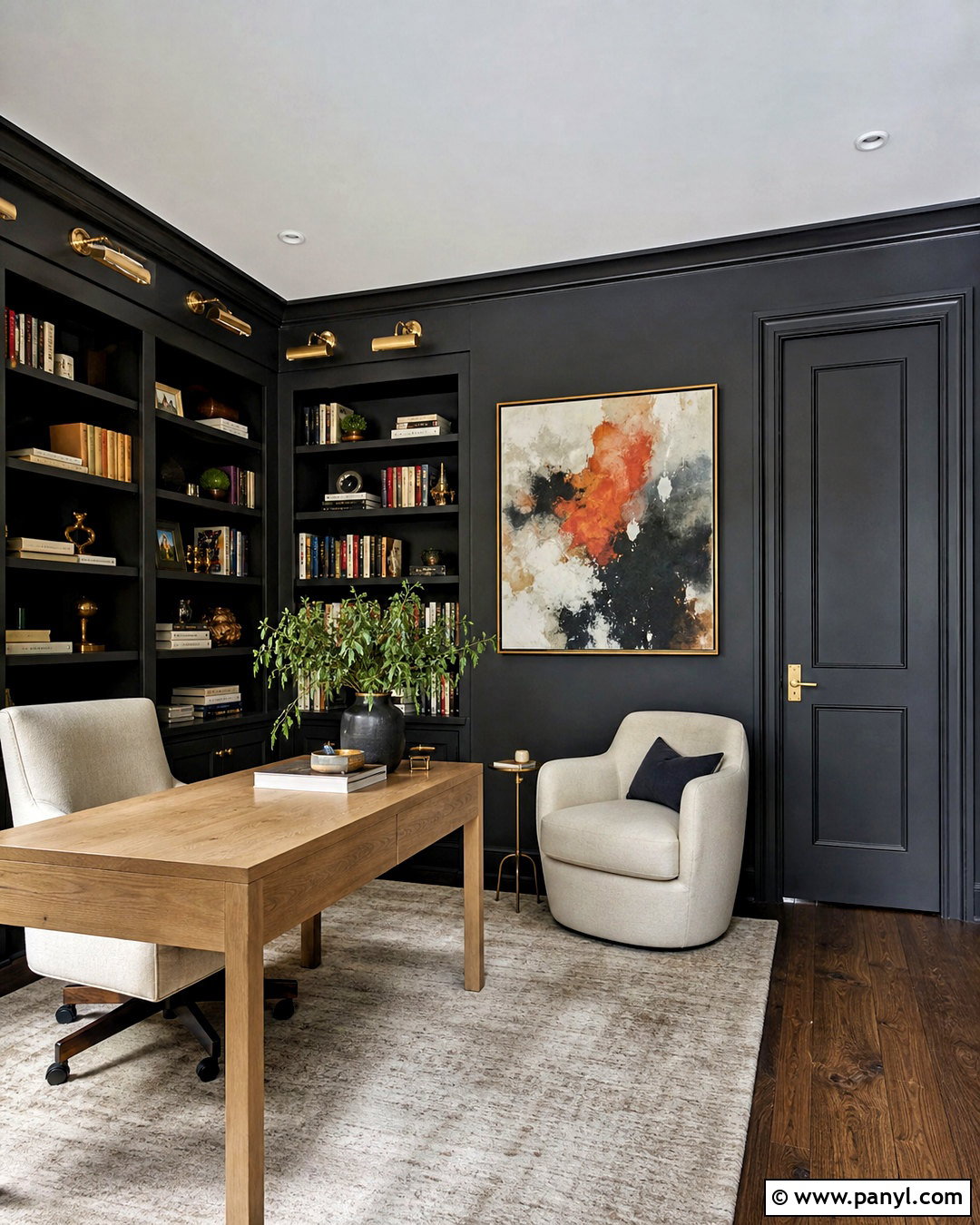
For an enveloping interior, paint the door, casing, walls, and baseboards in the same dark gray. This color-drenched treatment works best in a library, media room, powder room, or compact home office where a cozy atmosphere is welcome. Select a matte wall finish and a more durable satin finish for the door and trim, even though the color remains consistent. Introduce contrast through a light oak desk, cream sofa, ivory rug, and white ceiling. Brass lighting and hardware will reflect warmth against the deep background. Add one large artwork rather than many small accessories. Good daylight and layered lamps are essential because the surfaces absorb more light. The completed room should feel immersive, deliberate, and comfortably furnished rather than empty or overly dark.
20. Dark Grey Doors With Natural Wood Accents
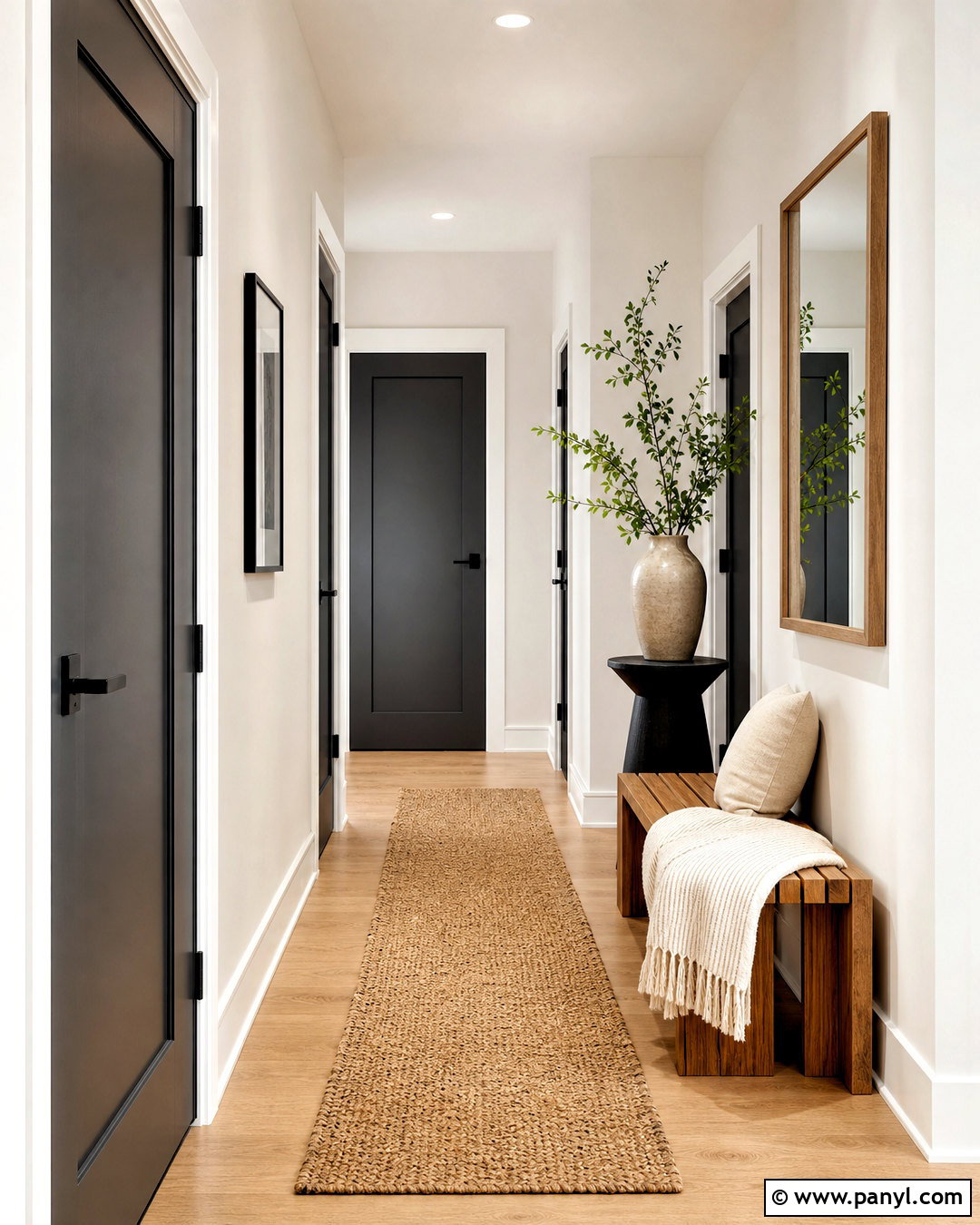
Natural wood can soften dark gray doors and make a neutral interior feel more welcoming. Start with charcoal Shaker doors, warm white walls, and simple matching white casing. Bring in white oak through the flooring, console table, picture frames, and a slatted bench. Use linen curtains, a jute runner, and cream upholstery to add lighter texture. Black levers provide clean definition, while a handmade ceramic lamp and green branches introduce relaxed character. Keep the wood species and stain tones reasonably consistent so the room does not become visually scattered. This complete palette suits Scandinavian, organic modern, and casual transitional homes. The charcoal doors provide structure, while the warm grain and tactile materials prevent the finished space from feeling too cool or industrial.
Conclusion:
Well-planned dark gray doors can make ordinary rooms feel more polished, architectural, and connected. Begin by studying the natural light and existing undertones in your walls, floors, and furniture. Then choose a charcoal that coordinates rather than competes. White trim provides crisp contrast, matching trim creates greater drama, and color-drenched walls deliver an immersive effect. Hardware also changes the mood: brass adds warmth, black feels modern, and satin nickel offers a quieter transition. Most importantly, repeat the door color or hardware finish elsewhere so the choice feels intentional. From glass office doors to space-saving pocket doors, these 20 dark grey doors interior ideas offer practical ways to build a complete, cohesive home palette.

Related Ideas and Inspiration:
Leave a Reply