
Choosing **What Color Carpet Goes With Repose Gray Walls** starts with understanding this flexible paint color. Sherwin-Williams describes Repose Gray SW 7015 as a light gray with soothing warmth, making it compatible with warm, cool, and balanced flooring palettes. () Cream, beige, greige, taupe, and mushroom carpet create a soft transition, while charcoal, navy, and muted green deliver stronger contrast. Lighting matters because carpet fibers and wall paint can shift throughout the day. Furniture, trim, wood finishes, and adjoining floors should also guide the choice. Always compare large carpet samples against the painted wall before ordering. The complete room combinations below provide practical answers to **What Color Carpet Goes With Repose Gray Walls**.

1. Cream Carpet With Repose Gray Walls
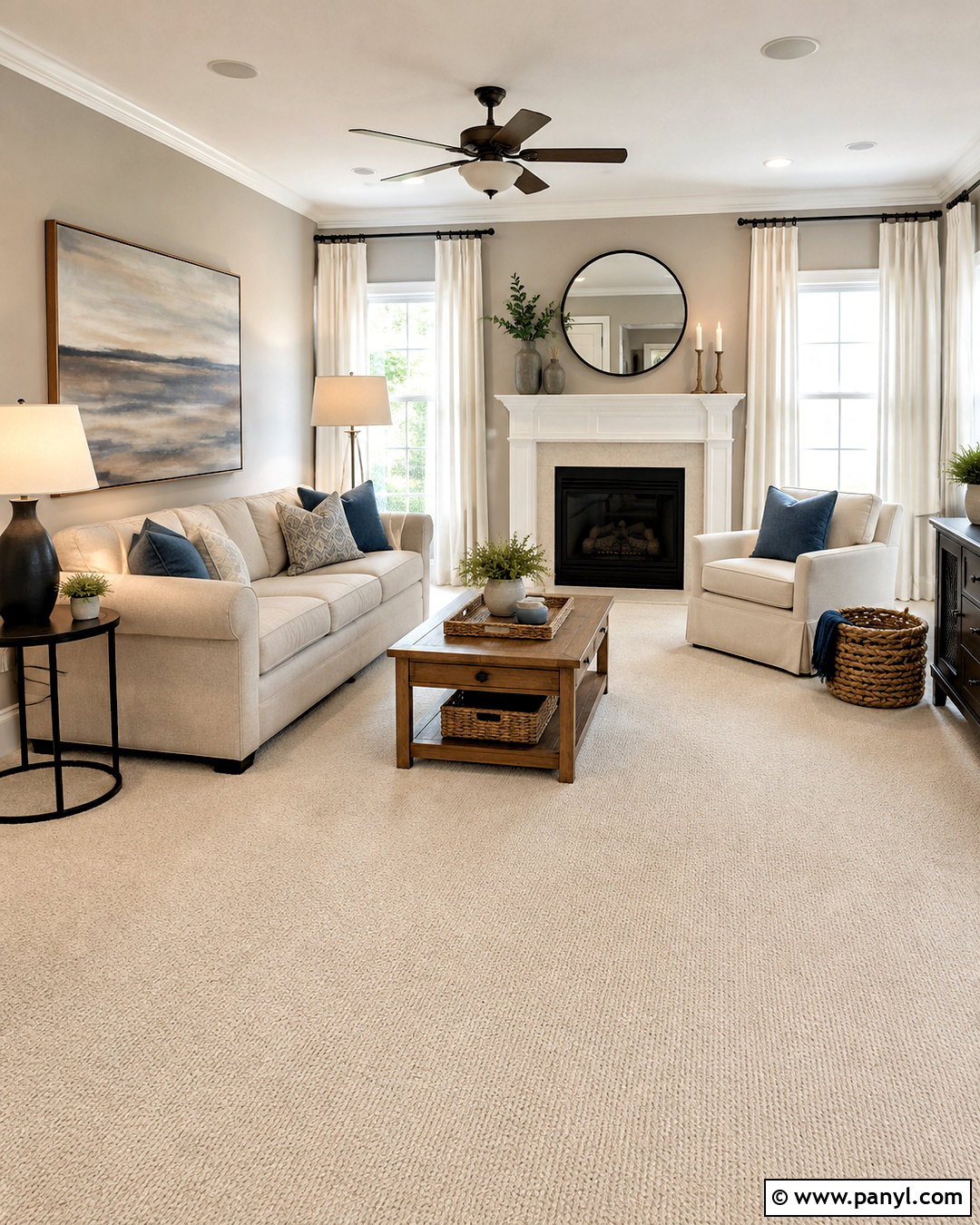
Cream carpet gives Repose Gray walls a brighter, softer appearance without creating a harsh white-on-gray contrast. Choose a warm cream with subtle beige fibers rather than a yellow or icy undertone. In a living room, pair this combination with an oatmeal sofa, medium oak coffee table, and off-white linen curtains. Add black metal lighting and muted blue pillows to provide definition. Crisp white trim keeps the edges looking clean, while woven baskets and natural wood prevent the palette from feeling overly formal. A dense, low-pile carpet is practical for busy family spaces because it looks tailored and is easier to maintain. This complete scheme works especially well in rooms with limited daylight or smaller windows.
2. Warm Beige Carpet With Repose Gray Walls
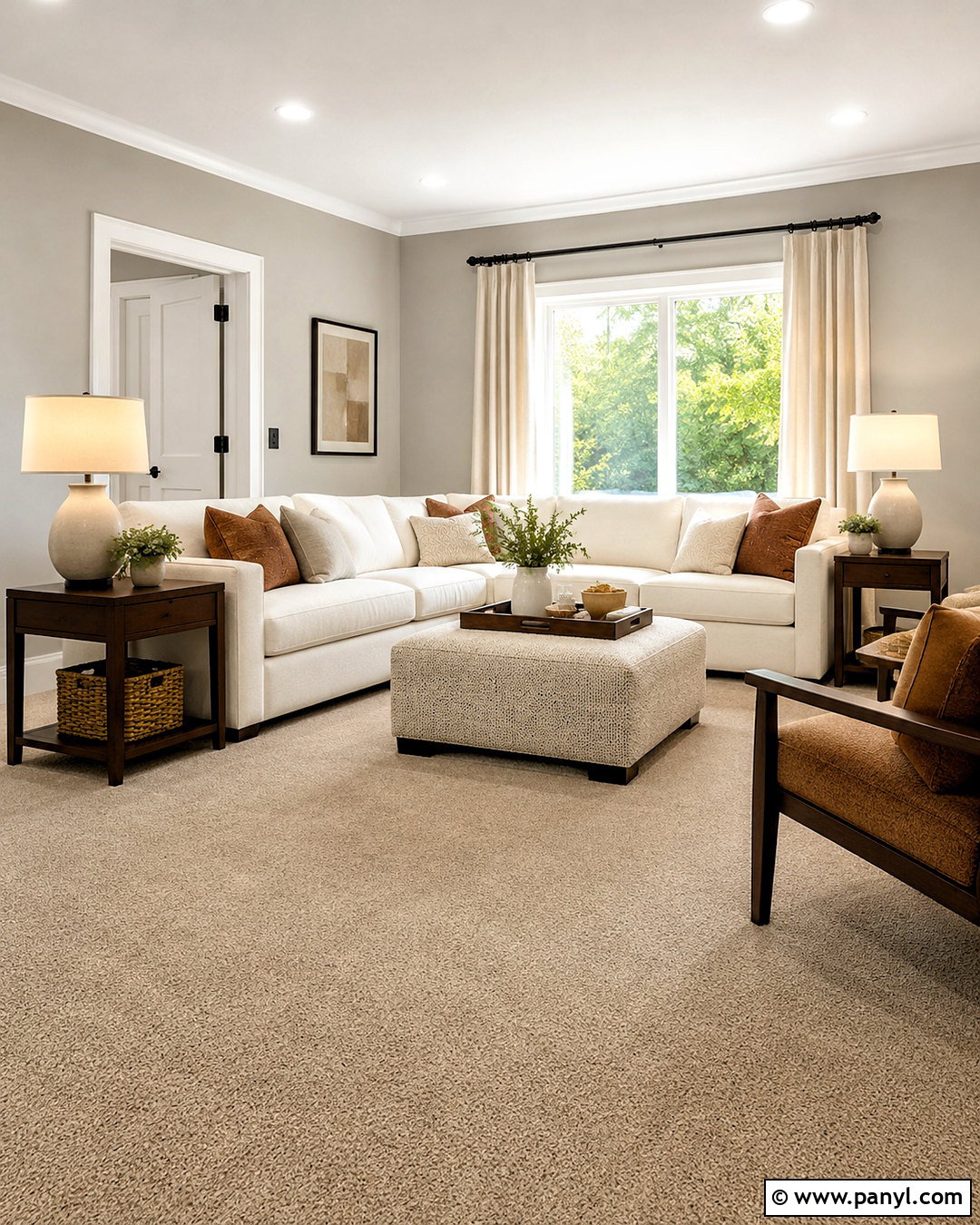
Warm beige carpet balances the cooler side of Repose Gray and gives the room a comfortable, welcoming foundation. Look for beige with a subdued tan or oatmeal base instead of strong gold tones. Complete the room with a warm white sectional, walnut side tables, and a large textured ottoman. Terracotta pillows, ceramic lamps, and cream drapery add warmth without fighting the gray walls. If the room connects to hardwood flooring, select a beige carpet that relates to the wood’s natural brown tones. White trim and matte black hardware create a neat transition between surfaces. This palette is particularly useful in north-facing rooms, where Repose Gray may appear cooler and benefit from warmer flooring and furnishings.
3. Greige Carpet With Repose Gray Walls
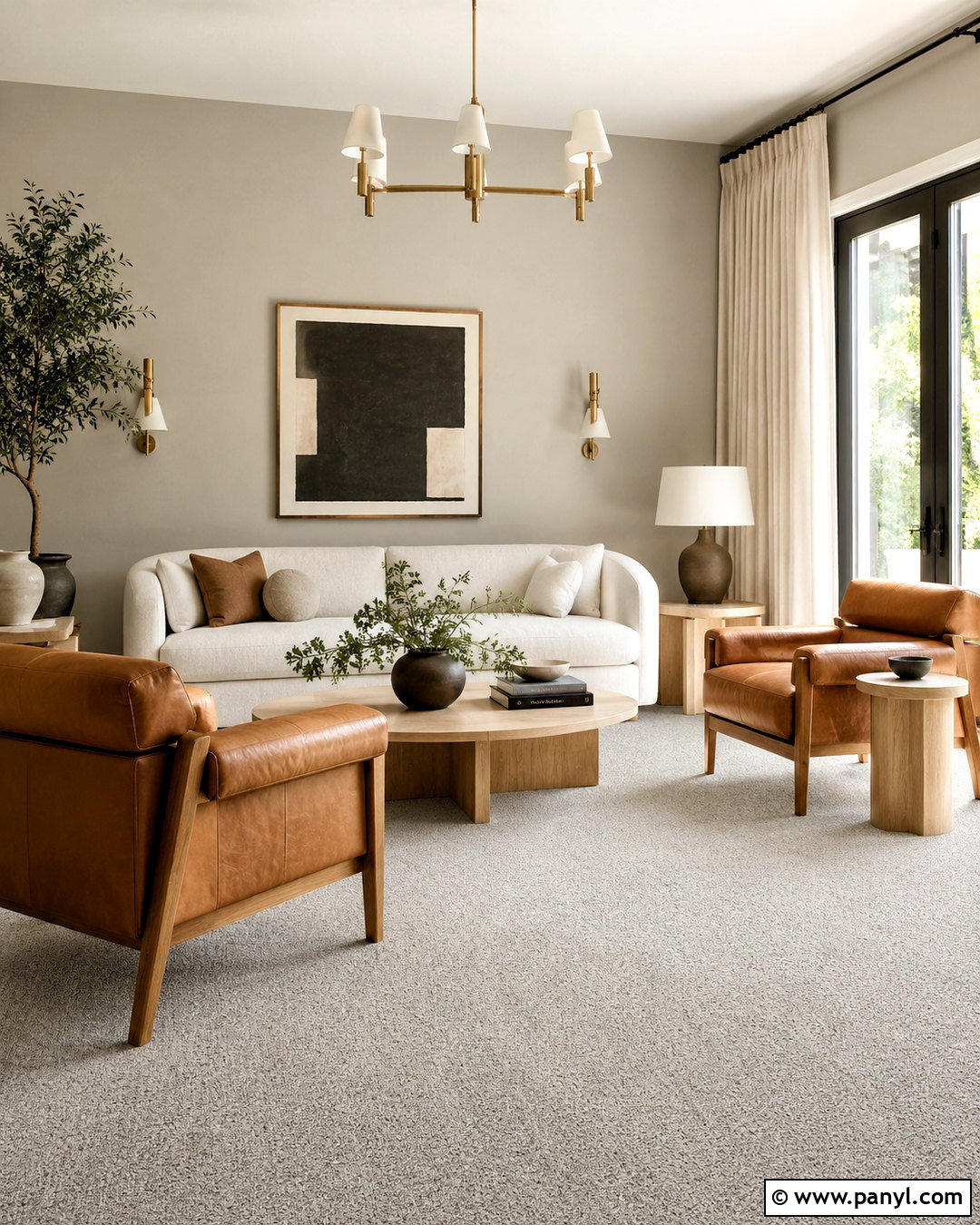
A greige carpet creates a smooth, coordinated transition between Repose Gray walls and the floor. The best option includes both warm beige and soft gray fibers, giving the surface more depth than one flat color. Choose a carpet slightly darker than the walls so the room does not look washed out. Furnish the space with a creamy boucle sofa, light oak tables, and textured linen curtains. Add caramel leather chairs or cognac accent pillows for contrast. Brushed brass lighting introduces subtle warmth, while charcoal artwork creates structure. This balanced room works for transitional and contemporary interiors because it connects warm and cool finishes. A heathered greige carpet also helps disguise everyday lint, footprints, and minor discoloration.
4. Light Taupe Carpet With Repose Gray Walls
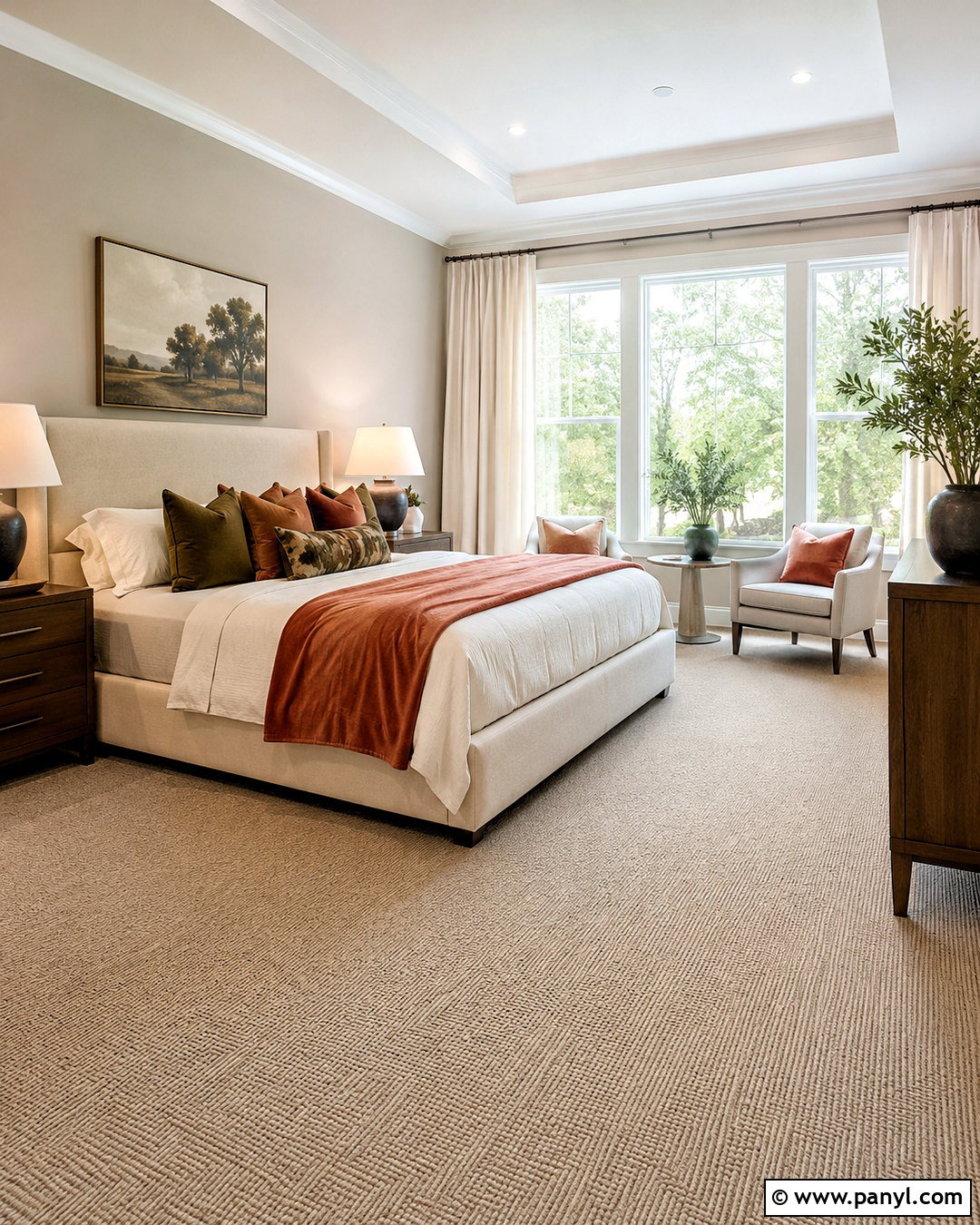
Light taupe carpet introduces gentle brown depth while keeping the room neutral and open. Because taupe can lean pink, purple, gray, or brown, compare samples directly against Repose Gray in the actual room. A brown-based taupe usually creates the easiest, most natural pairing. Build the design with an ivory sofa, walnut furniture, and warm white curtains. Add muted rust, olive, and charcoal accents through pillows, artwork, and pottery. A softly patterned taupe carpet can define the floor without competing with the wall color. Keep the ceiling and trim clean white to maintain freshness. This finished look feels especially appropriate in a primary bedroom, formal living room, or quiet den where layered neutrals should look comfortable rather than stark.
5. Mushroom Carpet With Repose Gray Walls
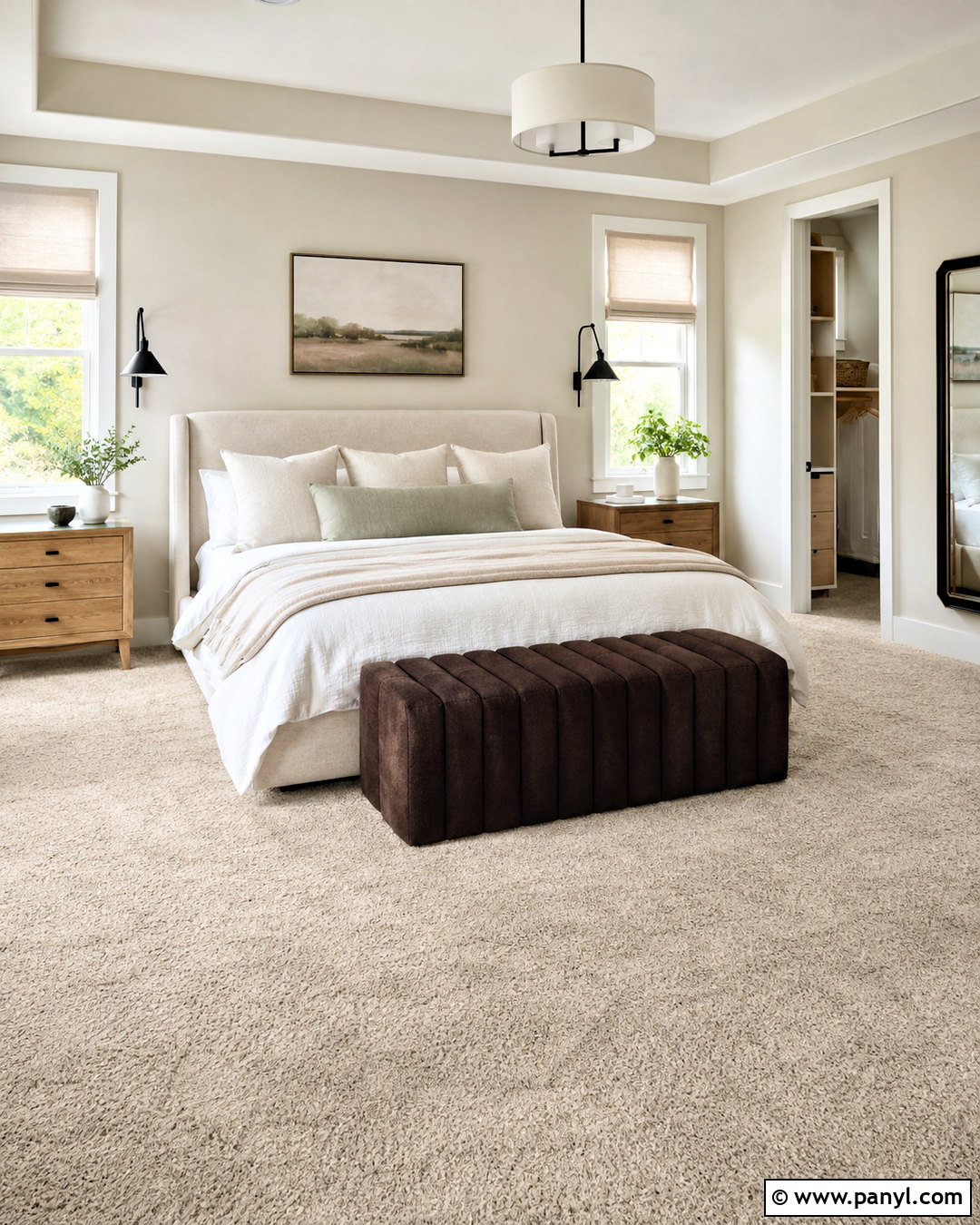
Mushroom carpet sits comfortably between beige, brown, and gray, making it one of the most forgiving partners for Repose Gray walls. Select a medium-light mushroom tone with subtle variation instead of a solid flat finish. In a bedroom, use an upholstered oatmeal bed, warm oak nightstands, and layered ivory bedding. Introduce chocolate brown through a bench or small dresser, then add muted sage pillows for soft color. Linen Roman shades and simple black sconces complete the balanced palette. The mushroom floor provides enough contrast to outline the room while preserving a calm feeling. It also connects easily with both warm wooden furniture and cool metal accents, allowing the space to change without requiring new carpet whenever the decor is updated.
6. Oatmeal Carpet With Repose Gray Walls
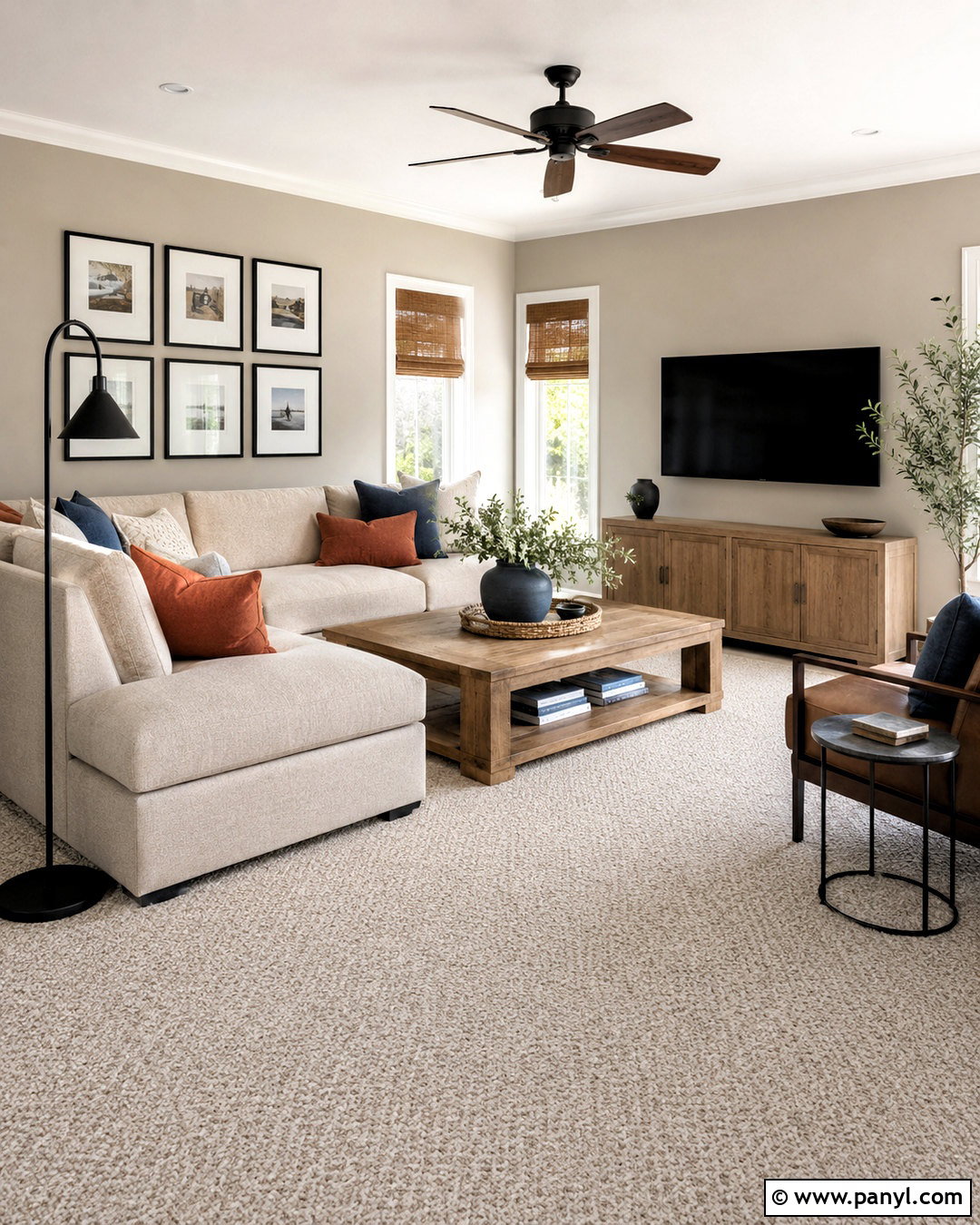
Oatmeal carpet creates a relaxed, natural backdrop that warms Repose Gray without making the room noticeably beige. Its lightly flecked appearance adds useful texture, especially when the walls and larger furniture pieces are solid colors. Pair this carpet with a flax-colored sectional, pale oak media console, and woven wood shades. Use dusty blue, clay, and ivory pillows to establish a soft but varied palette. A black floor lamp and dark-framed artwork prevent the neutrals from blending together. Choose a loop or textured cut-pile construction to strengthen the casual, organic character. This complete look suits family rooms, upstairs lounges, and bedrooms where comfort matters, while still appearing polished enough to coordinate with white trim and modern furniture.
7. Sand Carpet With Repose Gray Walls
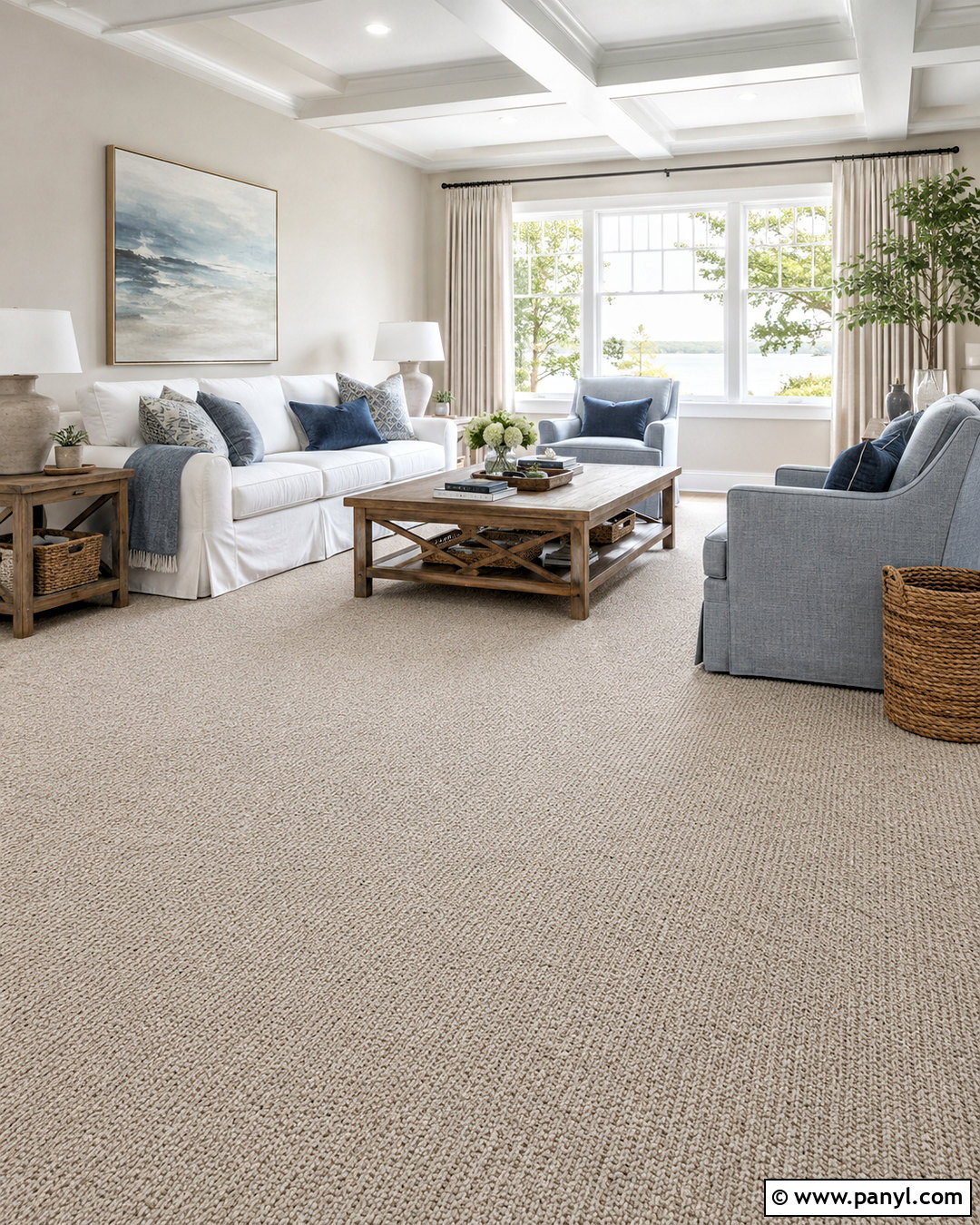
Sand-colored carpet brings gentle warmth to Repose Gray walls and creates an airy, coastal-influenced room without requiring obvious nautical decor. Choose a quiet sandy beige with gray undertones, avoiding carpet that looks strongly yellow or orange. Complete the space with a slipcovered ivory sofa, weathered oak tables, and pale blue-gray armchairs. Natural linen curtains, woven baskets, and ceramic lamps add texture. Keep accessories simple, using soft navy, faded denim blue, and warm white in small amounts. A subtle textured carpet gives the floor movement similar to natural fibers while remaining soft underfoot. This scheme works particularly well in a sunny living room or guest bedroom, where daylight can reveal the warmth in both the walls and flooring.
8. Ivory Carpet With Repose Gray Walls
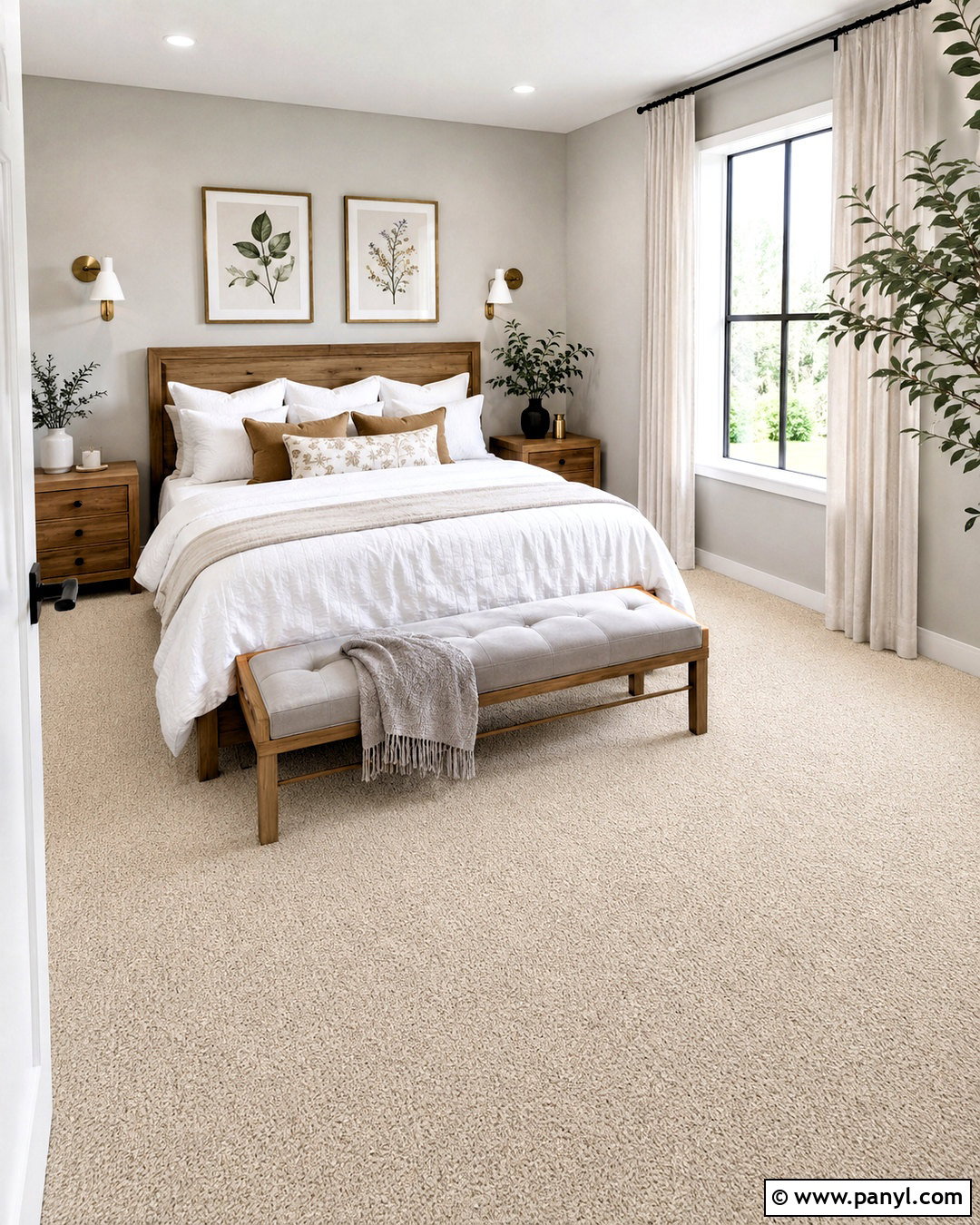
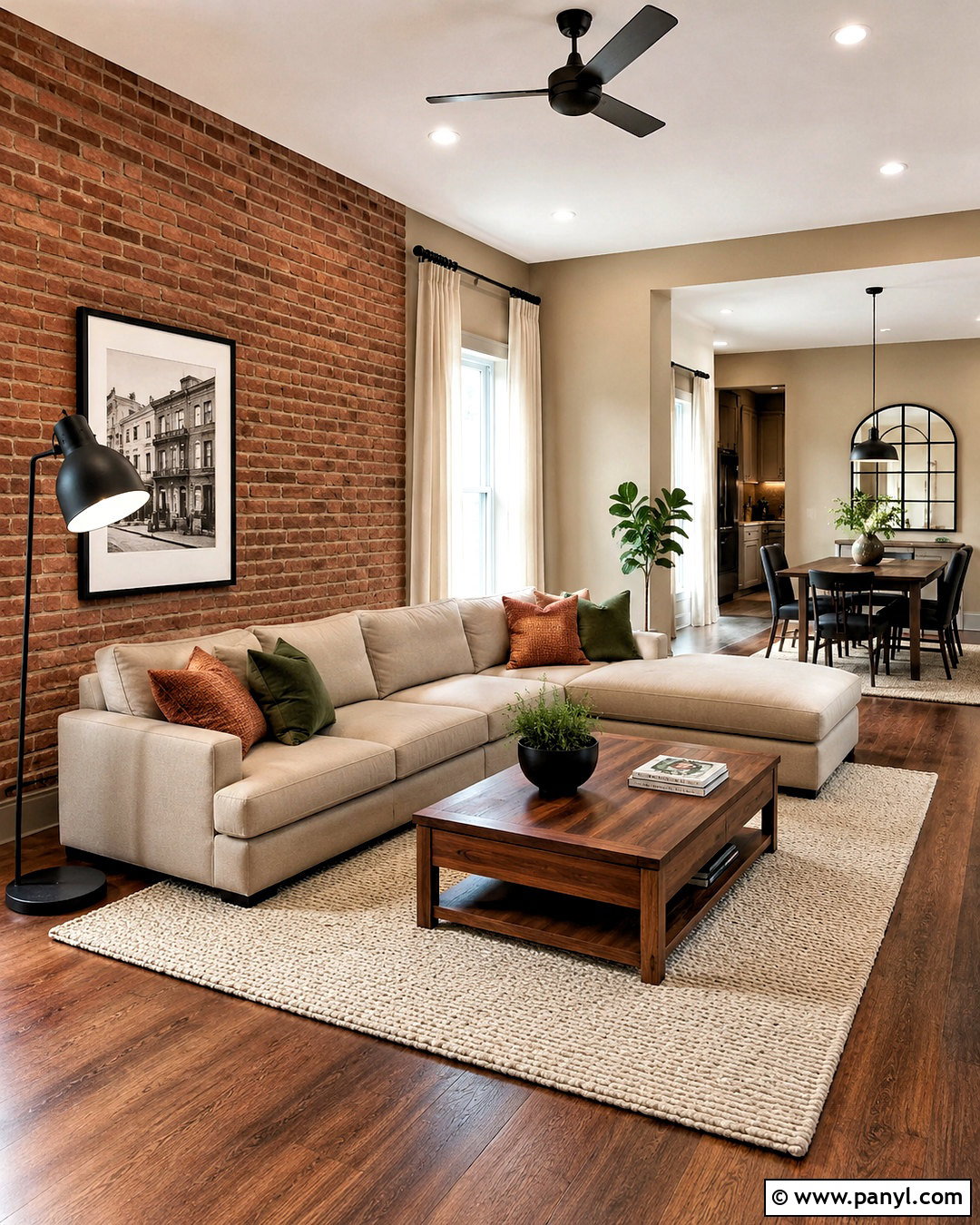
Ivory carpet offers the lightest and cleanest contrast with Repose Gray walls, making a small room appear more open. Choose a warm ivory rather than a blue-white shade so the flooring relates to the warmth within the paint. In a low-traffic bedroom, pair it with a natural oak bed, white bedding, and a soft gray upholstered bench. Add camel-colored pillows, brushed brass sconces, and simple botanical artwork. Full-length linen curtains can match the carpet closely, creating an uninterrupted visual line from floor to window. Because ivory reveals dirt more easily, use a durable, stain-resistant construction and place washable runners near entrances. The finished room feels calm and refined while retaining enough natural texture to avoid a sterile appearance.
9. Light Gray Carpet With Repose Gray Walls
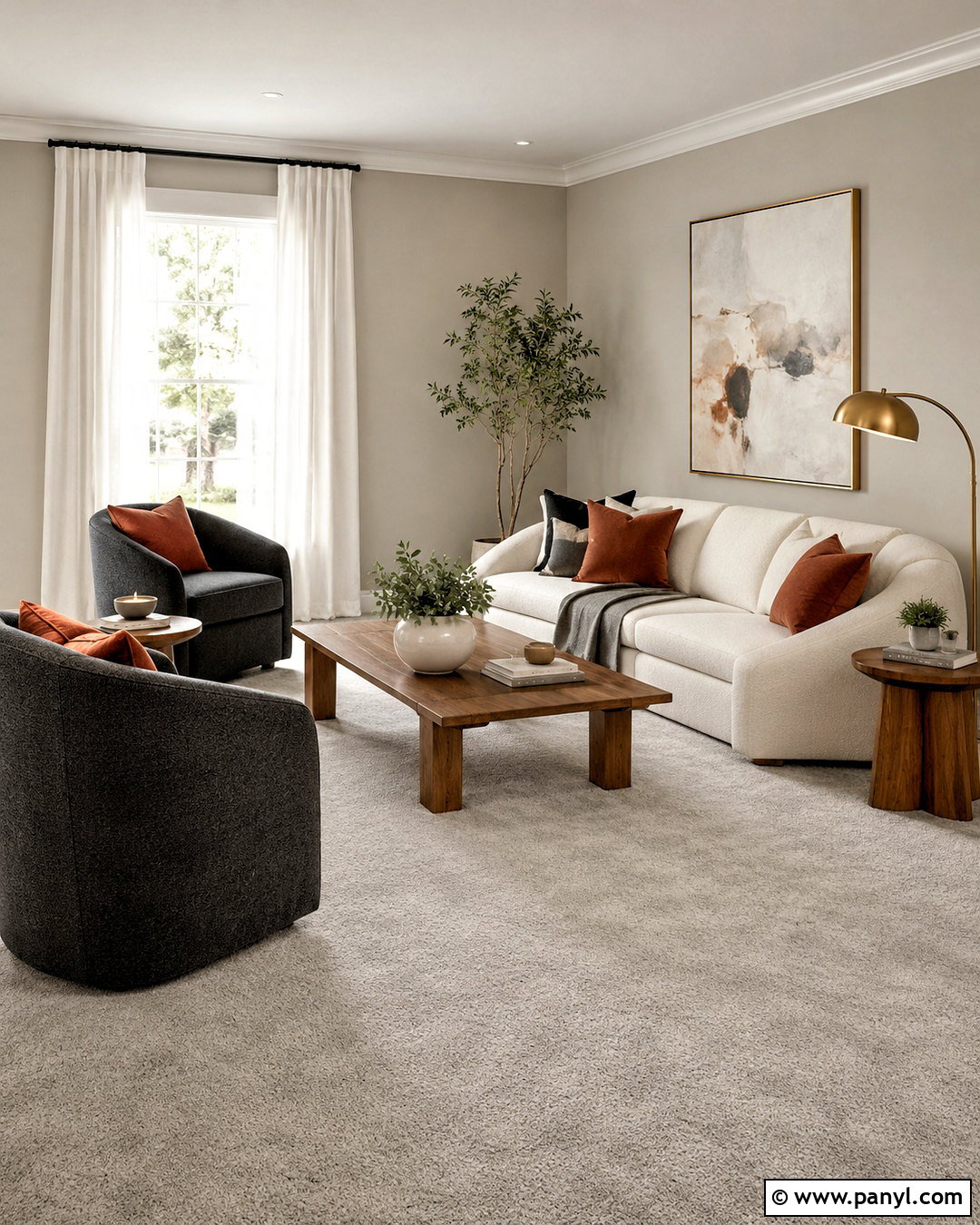
Light gray carpet can create a sophisticated tonal room when its undertone relates closely to Repose Gray. Avoid blue-silver carpeting, which may make the walls look unexpectedly warm or slightly green. Instead, choose a soft warm gray floor that is a few shades darker than the paint. Add a cream sofa, medium walnut tables, and charcoal accent chairs to establish clear layers. Rust-colored pillows and brass lighting can warm the palette, while white curtains keep it bright. Include varied textures such as boucle, wool, linen, and smooth wood so the gray surfaces do not feel flat. This monochromatic approach works best in rooms with strong natural light and enough contrasting furniture to separate the floor, walls, and architectural details.
10. Medium Gray Carpet With Repose Gray Walls
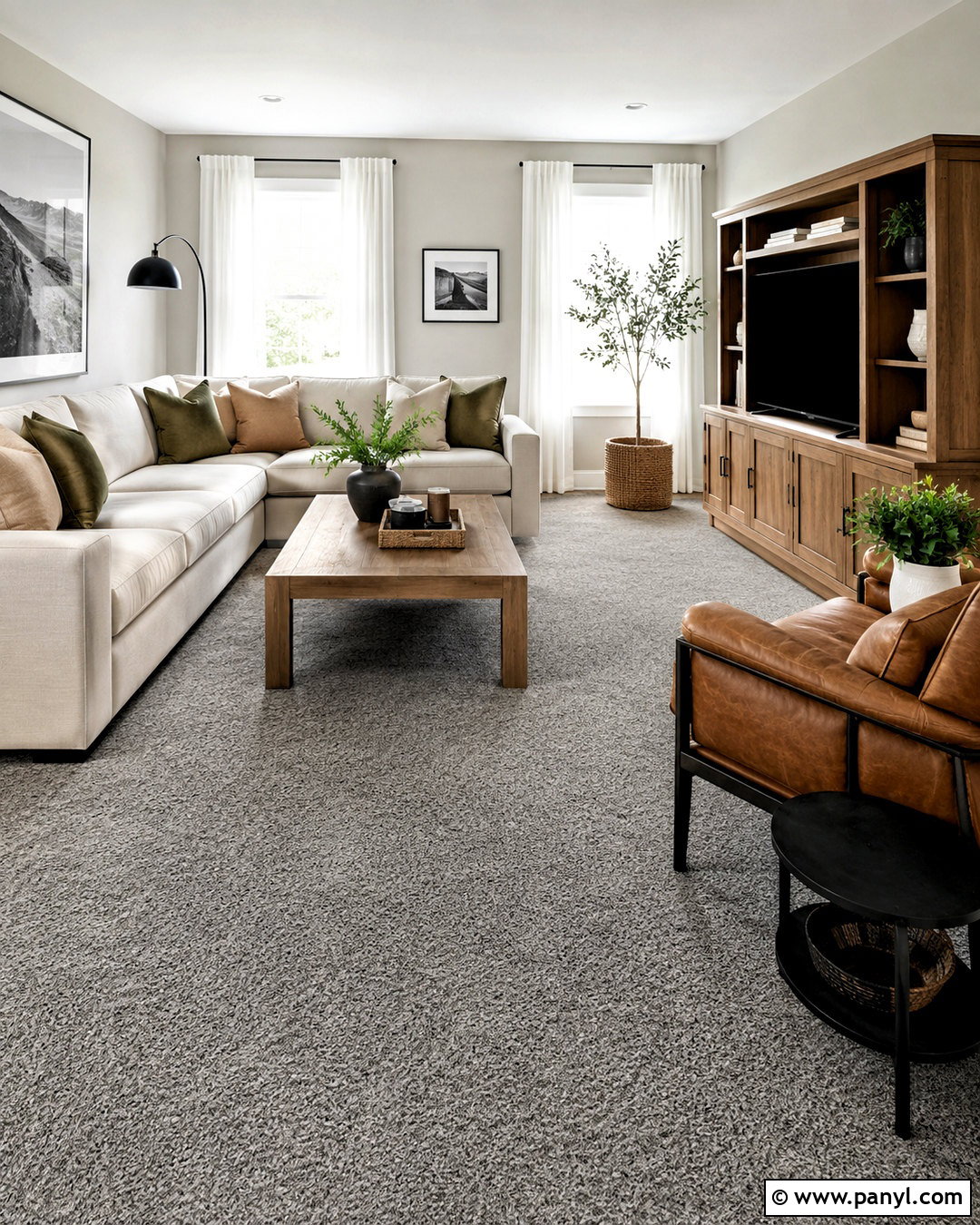
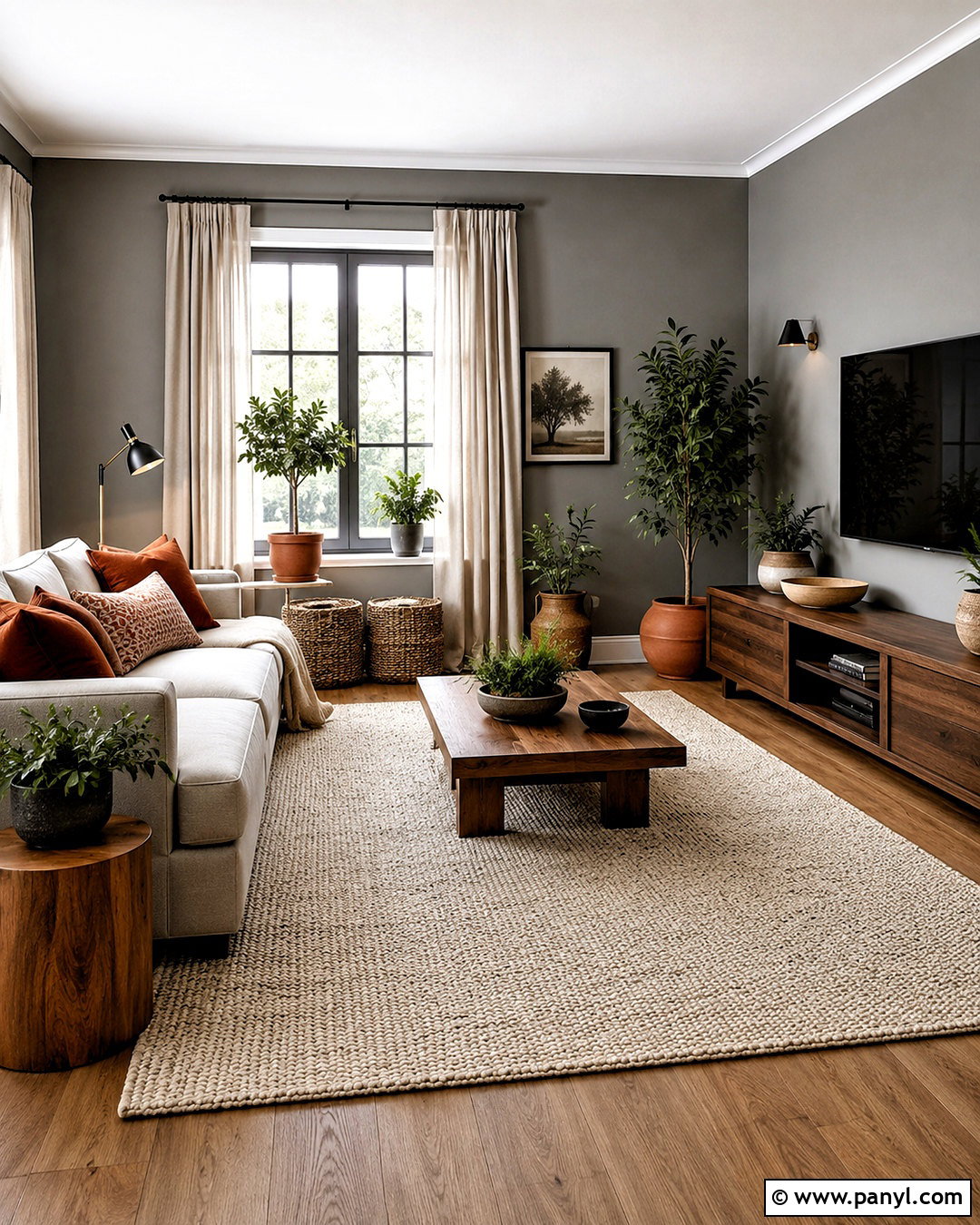
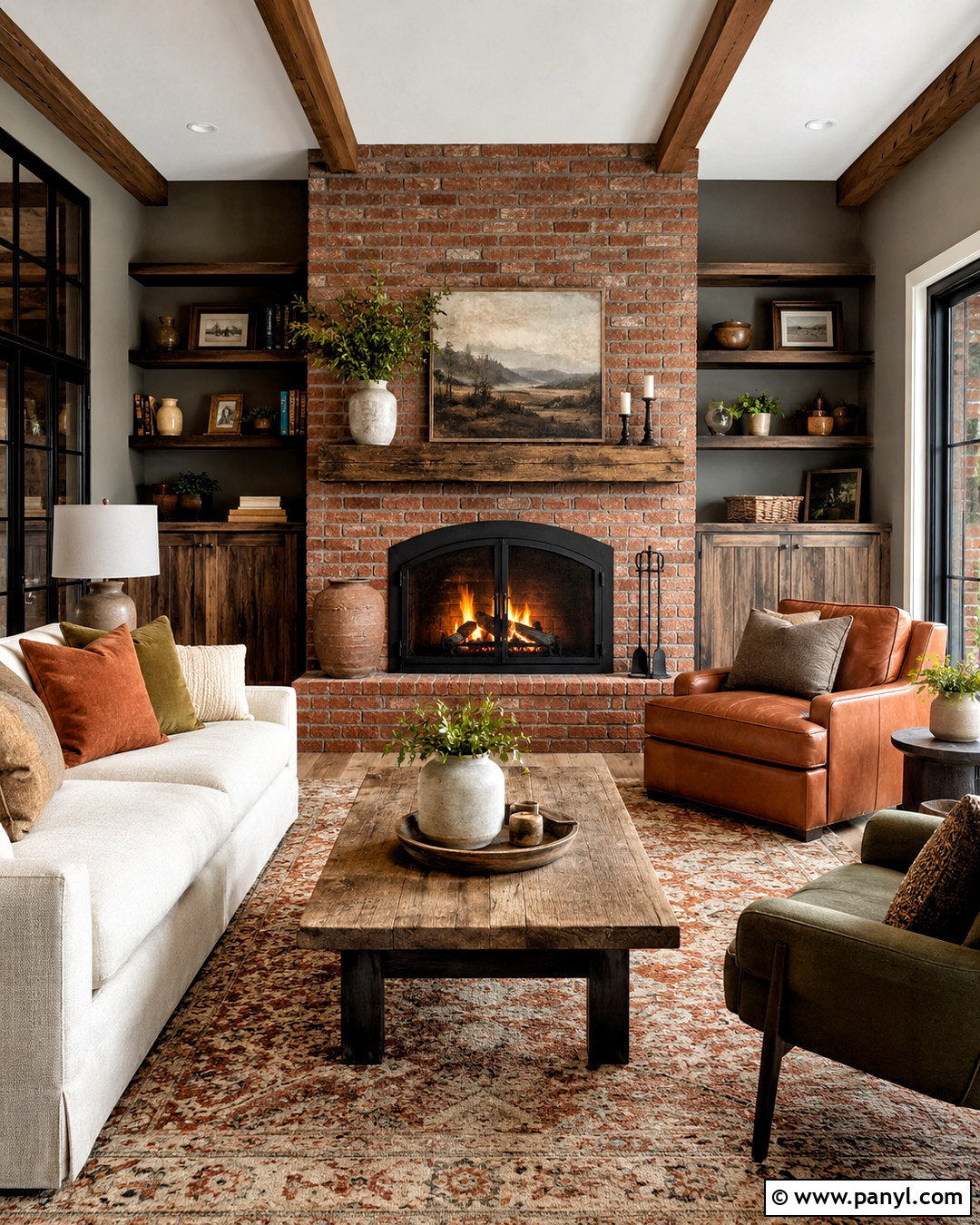
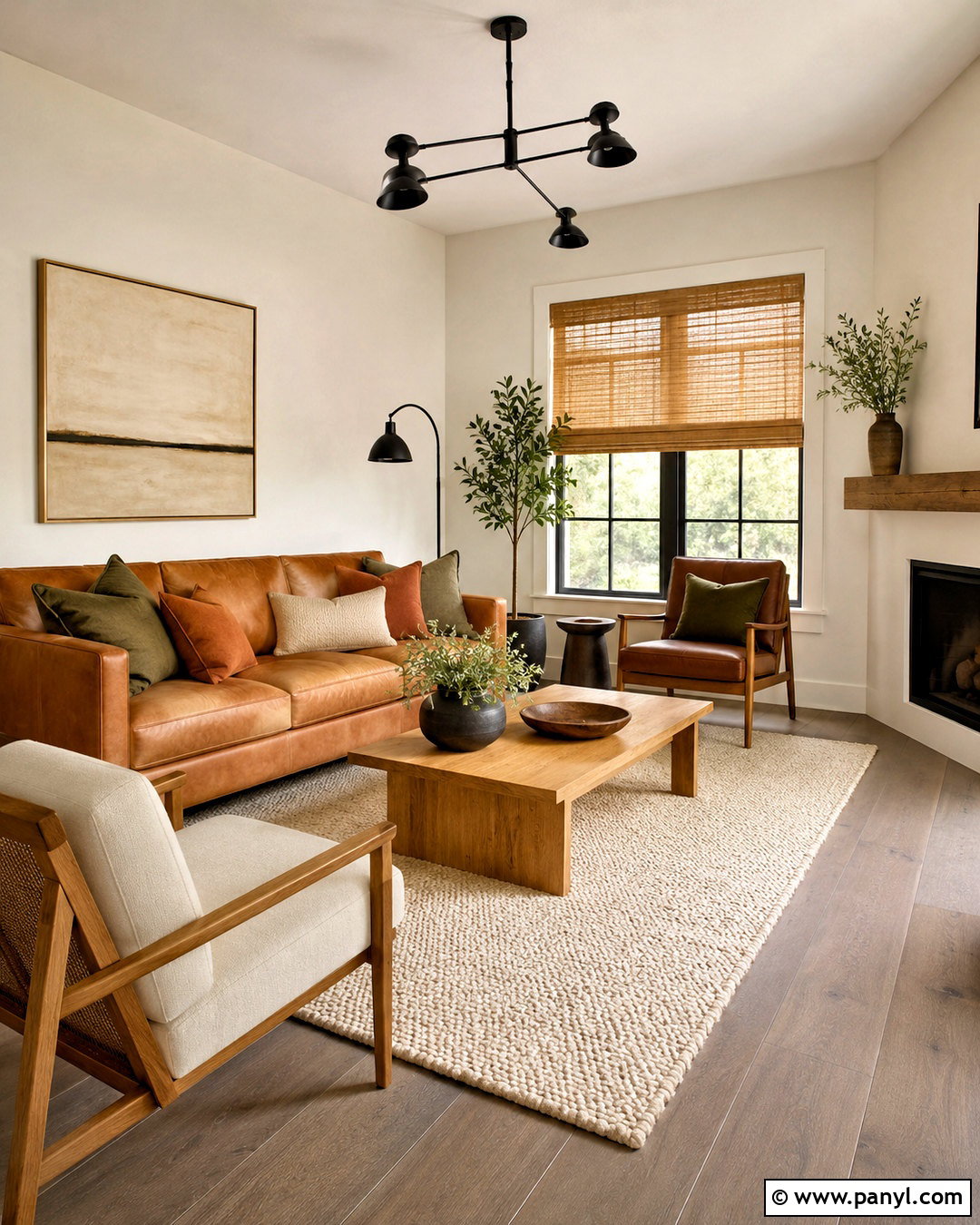
Medium gray carpet provides practical contrast and gives Repose Gray walls a noticeably lighter appearance. Select a balanced warm gray with softly blended fibers rather than a dark steel tone. In a family room, combine it with a large ivory sectional, cognac leather chair, and medium oak entertainment unit. Use black curtain rods and picture frames to connect the deeper floor to the rest of the room. Pillows in olive, tan, and cream bring warmth, while white curtains soften the overall effect. A textured cut pile can conceal vacuum marks and everyday wear more effectively than a perfectly smooth surface. This scheme works well in high-use areas because the flooring feels grounded, yet the walls keep the room from becoming too dark or heavy.
11. Charcoal Carpet With Repose Gray Walls
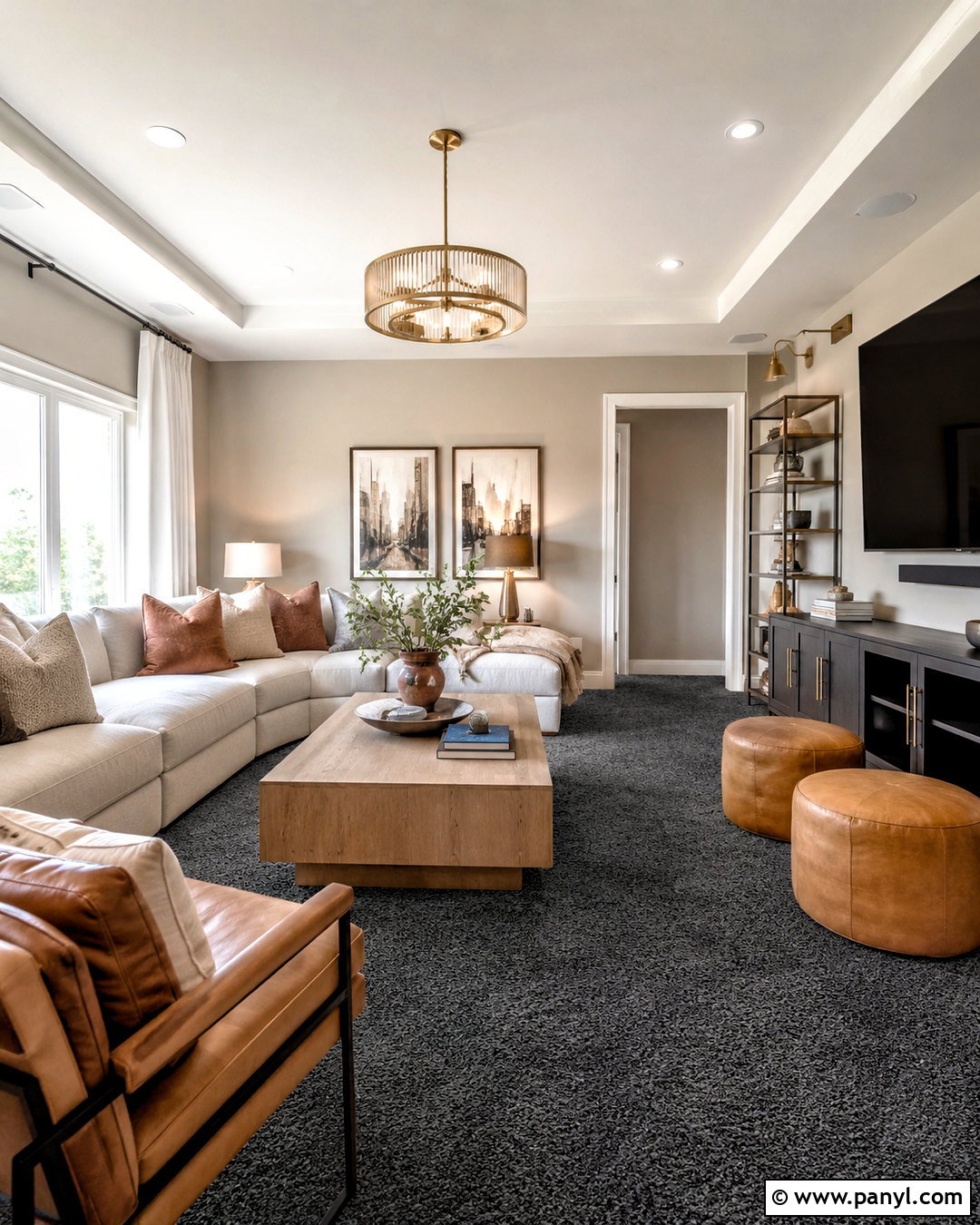
Charcoal carpet creates bold separation beneath Repose Gray walls and suits rooms that need a grounded, dramatic foundation. Choose a softened charcoal with warm gray fibers instead of a nearly black carpet, especially in an average-size room. Balance the dark floor with a cream sectional, pale oak tables, and full-length white curtains. Add camel leather, muted rust, and warm brass accents to keep the space inviting. A large light-colored coffee table helps break up the dark flooring at the center of the room. Use strong overhead lighting and layered lamps so corners remain bright. This high-contrast design is effective in media rooms, home offices, and spacious living rooms where pale carpet would be difficult to maintain or feel visually insubstantial.
12. Blue-Gray Carpet With Repose Gray Walls
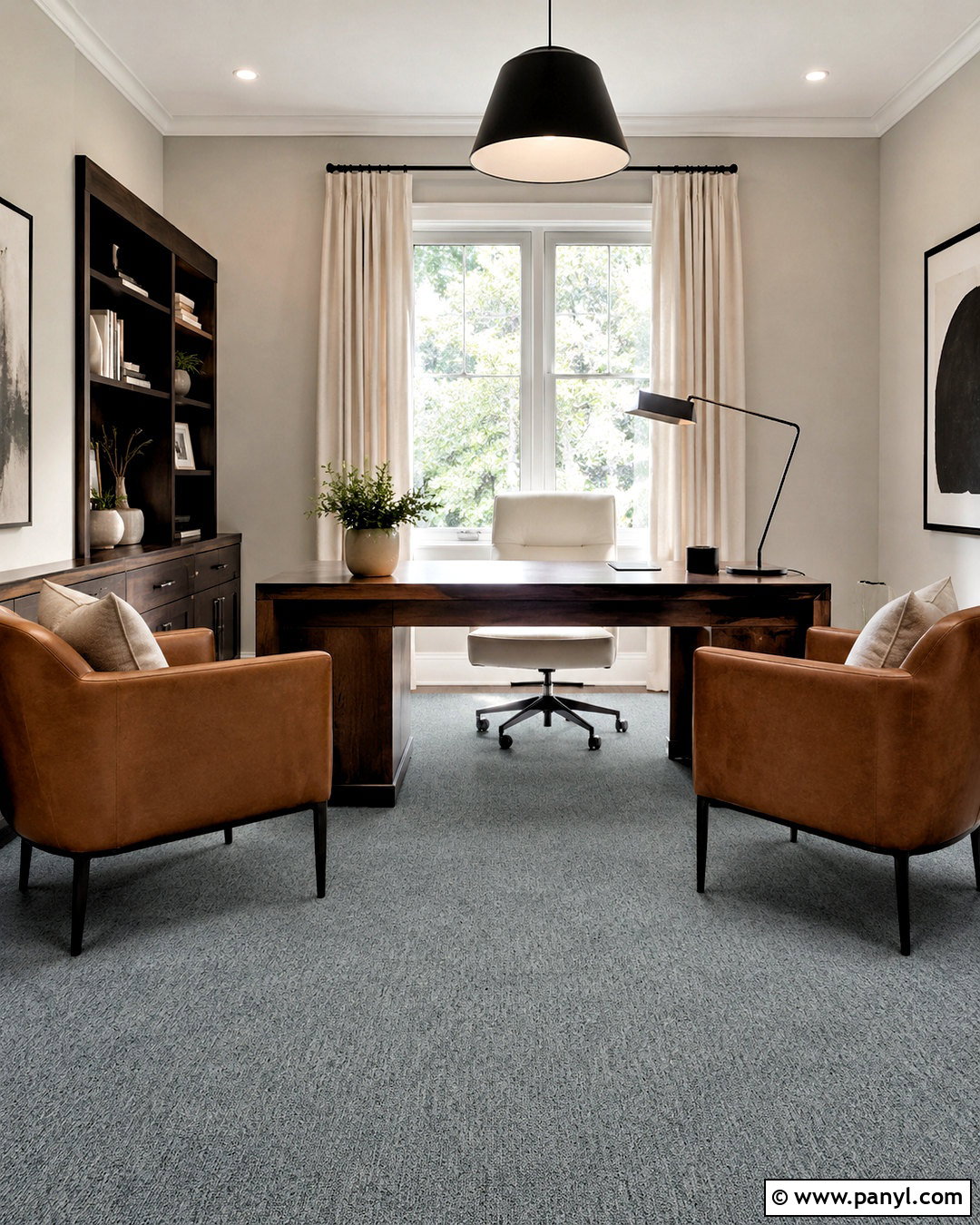
Blue-gray carpet highlights the cooler character of Repose Gray and creates a quiet, composed room. Select a muted slate-blue blend rather than bright blue carpet, which could overwhelm the neutral walls. Furnish the space with a warm white sofa, walnut console, and two camel leather chairs. Add cream curtains and textured pillows that repeat blue-gray, taupe, and ivory. Brushed nickel or matte black lighting will support the cooler flooring, while warm wood prevents the room from feeling chilly. A subtle heathered carpet is easier to coordinate than a completely solid blue-gray surface. This complete palette works beautifully in a home office, guest bedroom, or formal sitting room where understated color should be visible without becoming the room’s dominant feature.
13. Navy Carpet With Repose Gray Walls
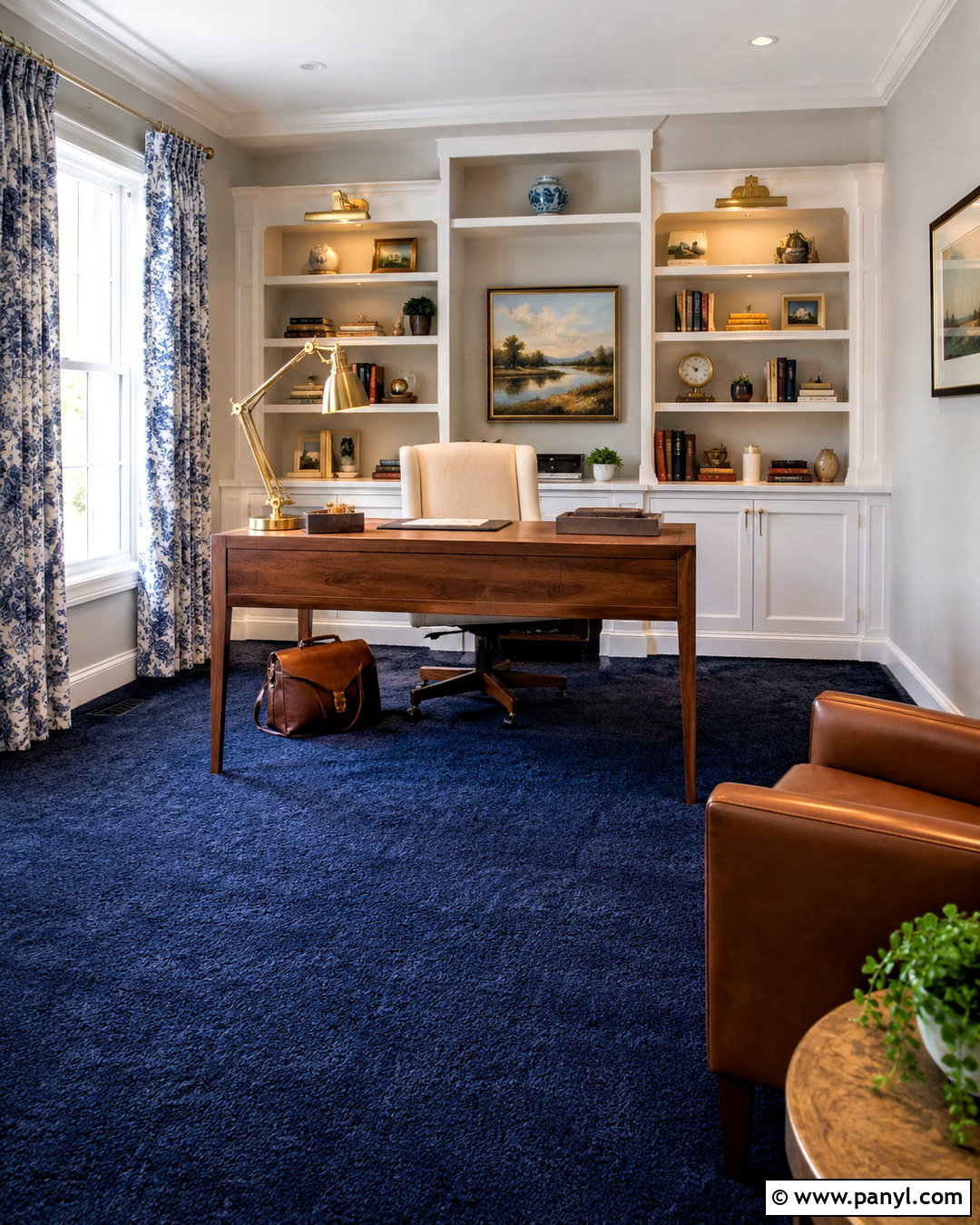
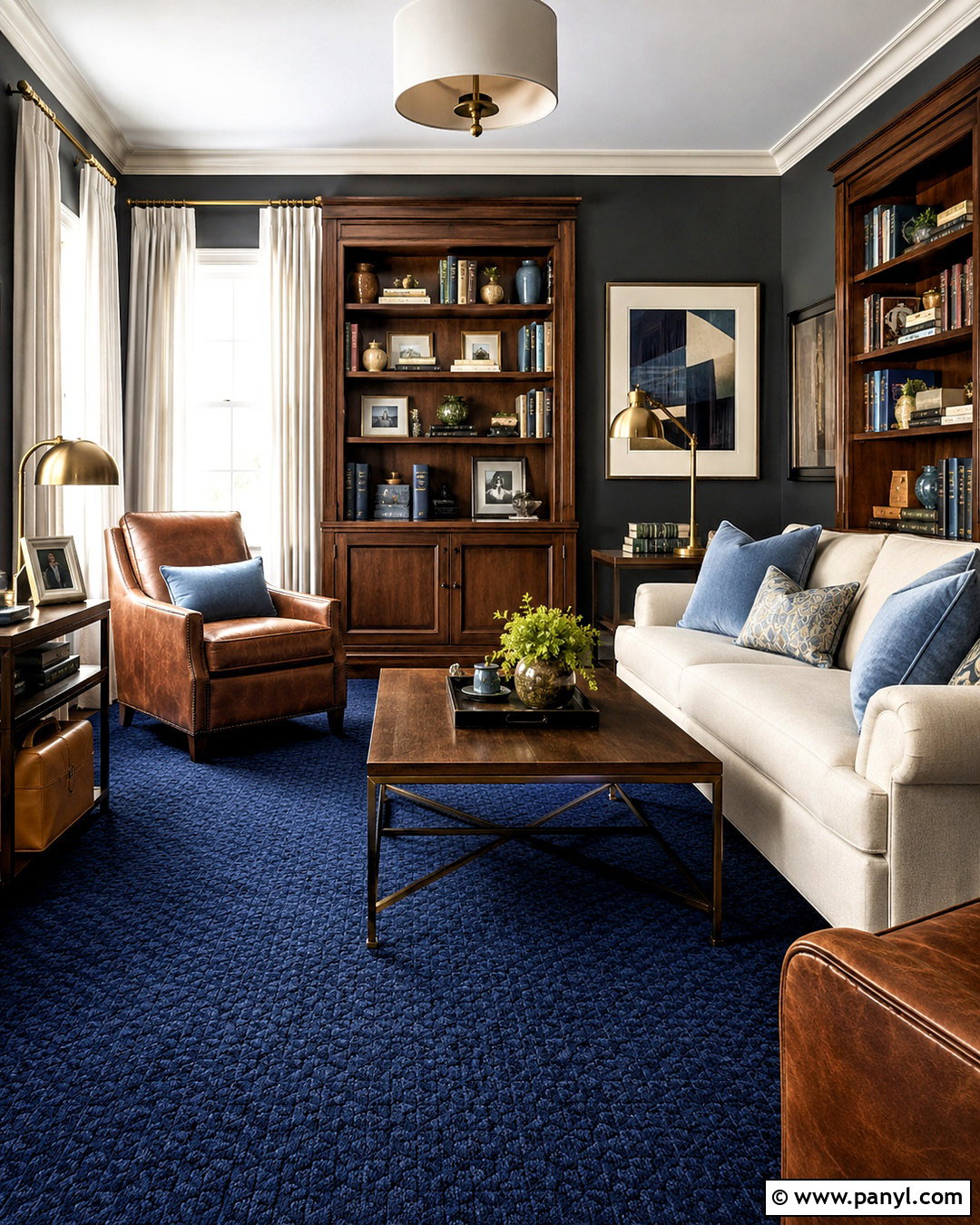
Navy carpet creates a confident, high-contrast room while allowing Repose Gray walls to function as a calm neutral backdrop. Use a deep, slightly softened navy rather than an electric or royal blue. In a home office, pair the carpet with a medium walnut desk, cream upholstered chair, and white built-in shelves. Brass lighting and warm leather accessories add richness, while blue-and-ivory curtains connect the wall and floor colors. Keep larger furniture light to prevent the lower half of the room from becoming too visually heavy. A dense low-pile navy carpet looks tailored and supports rolling furniture better than a deep plush construction. This combination also works in bedrooms when balanced with white bedding, natural wood, and a few warm tan accents.
14. Sage Green Carpet With Repose Gray Walls
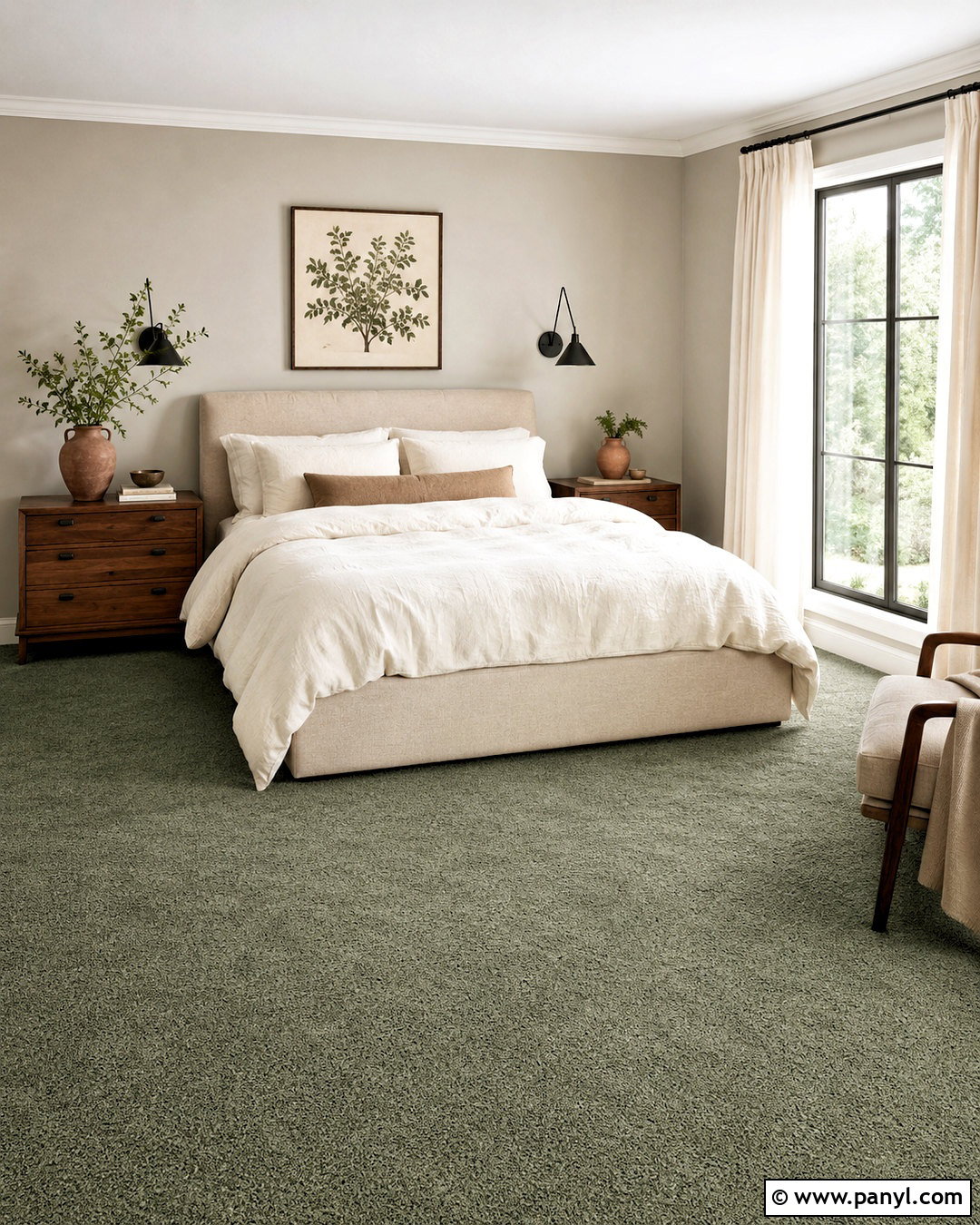
Sage green carpet gives Repose Gray walls a natural, restful partner while maintaining a muted overall palette. Choose a gray-green sage with low saturation, avoiding bright mint or yellow-green flooring. Complete a bedroom with an oatmeal upholstered bed, warm walnut nightstands, and ivory bedding. Add cream curtains, black sconces, and small terracotta accents to provide warmth and definition. Botanical artwork can connect the green floor to the wall area without making the theme overly literal. A finely textured carpet will appear more versatile than a flat solid color, especially as daylight changes. This full room combination works well where you want gentle color underfoot but still need flexibility for neutral furniture, wooden finishes, and seasonal bedding updates.
15. Olive Green Carpet With Repose Gray Walls
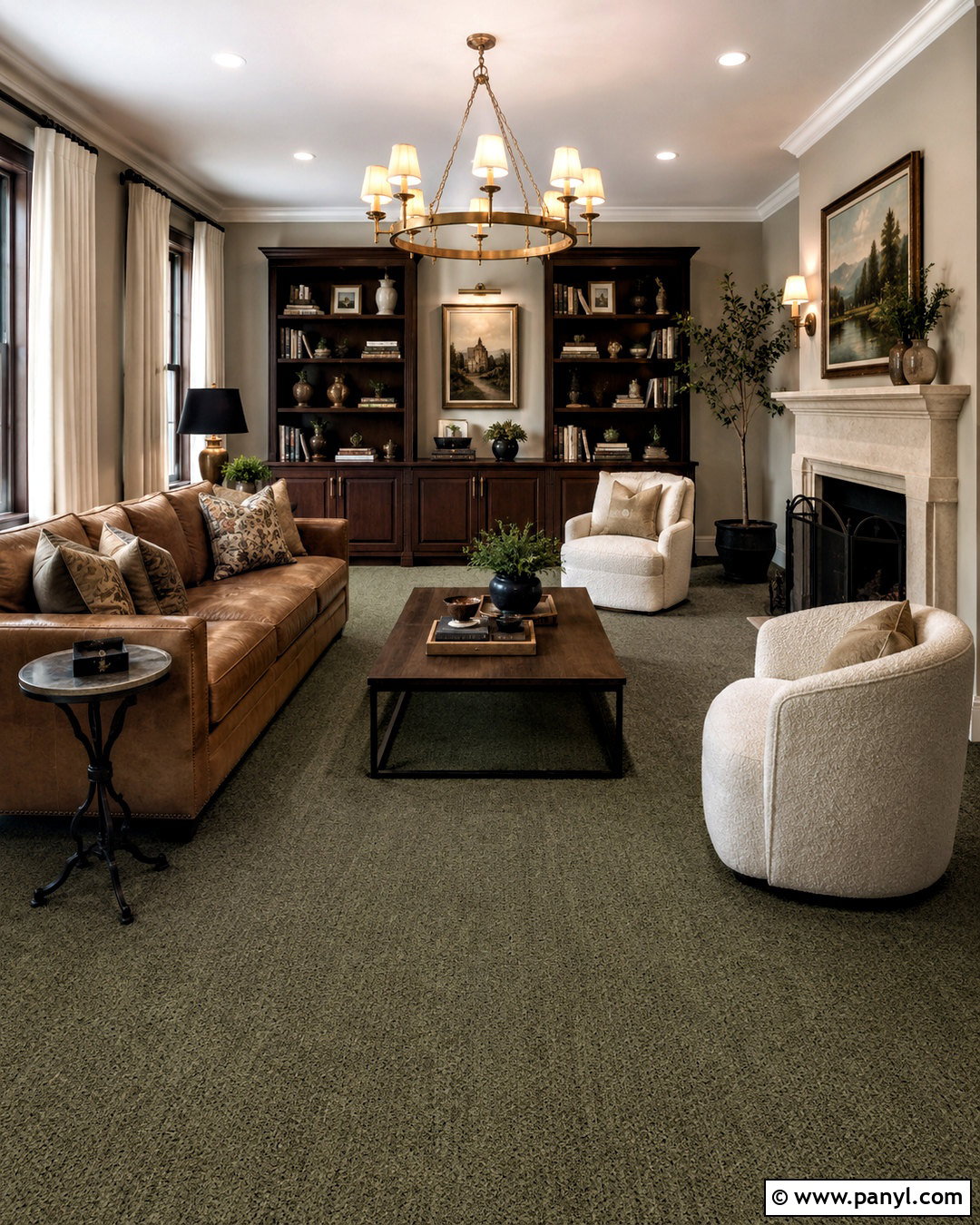
Olive green carpet produces an earthy, grounded look that makes Repose Gray feel warmer and more dimensional. The most versatile choice is a subdued olive with brown and gray undertones rather than a bright grassy green. In a cozy den, add a camel leather sofa, dark walnut bookcases, and a cream boucle chair. Use off-white curtains to brighten the room, then repeat olive through small pillows or patterned artwork. Antique brass lighting and black metal details complement the deeper floor. Keep the ceiling, trim, and doors light so the space remains balanced. This combination suits rooms with plenty of natural texture, including wood, linen, leather, and pottery, creating a complete organic palette that feels established rather than overly trendy.
16. Dusty Blue Carpet With Repose Gray Walls
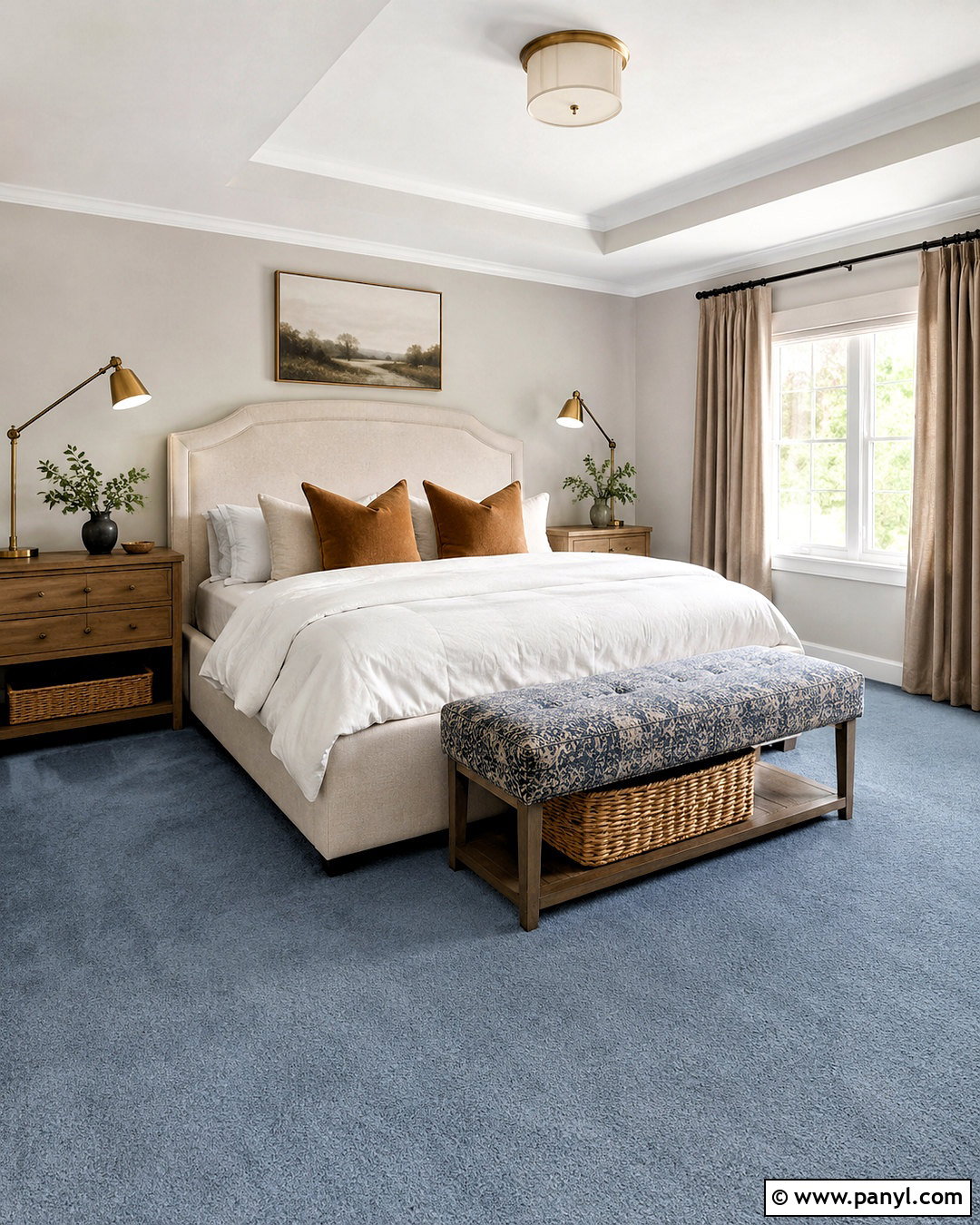
Dusty blue carpet introduces soft color while preserving the peaceful character of Repose Gray walls. Look for a muted blue containing visible gray, which will coordinate more naturally than turquoise or powder blue. Design a guest room with a cream upholstered bed, white bedding, and natural oak nightstands. Add warm taupe curtains, cognac decorative pillows, and brushed brass lamps to counterbalance the cool floor. A patterned blue-and-ivory bench can repeat the palette without making it feel themed. Keep the remaining accessories simple and warm, including woven baskets and neutral artwork. This finished room feels fresh but not overly colorful. It is especially effective in bright spaces where natural light clearly separates the dusty blue carpet from the warm gray walls.
17. Soft Brown Carpet With Repose Gray Walls
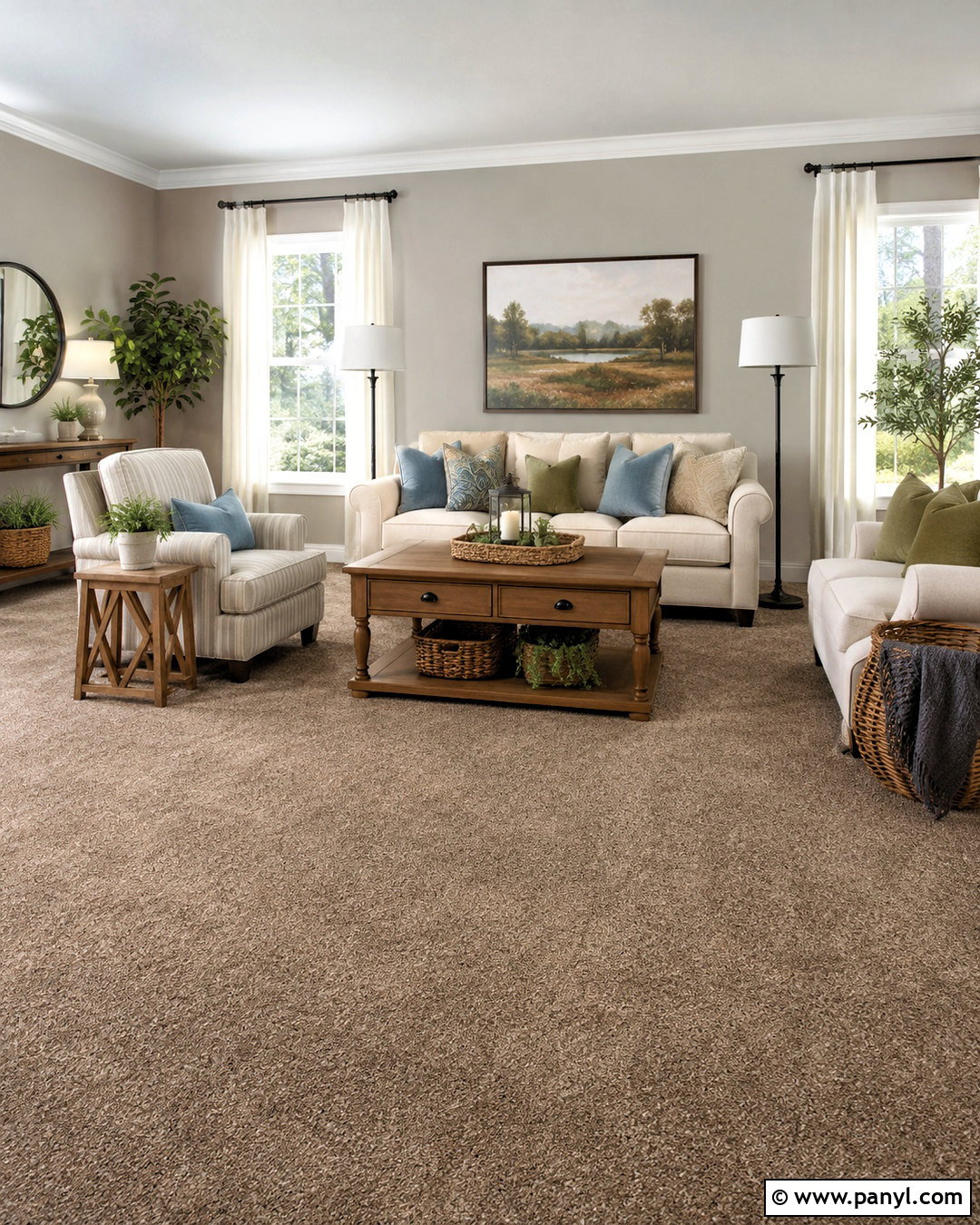
Soft brown carpet adds richness beneath Repose Gray walls and creates a comfortable foundation for traditional or transitional interiors. Choose a medium cocoa or muted brown with gray undertones, steering away from orange or reddish carpeting. Pair the floor with a cream sofa, warm white curtains, and a substantial oak coffee table. Introduce muted blue and olive pillows to lighten the brown-gray combination. Black iron lamps and framed artwork add crisp definition, while woven baskets repeat the floor’s natural warmth. A textured brown carpet is also practical in frequently used rooms because it can conceal everyday marks. The complete palette works particularly well in homes with darker wood trim, exposed ceiling beams, or adjoining hardwood floors that need a visually connected transition.
18. Camel Carpet With Repose Gray Walls
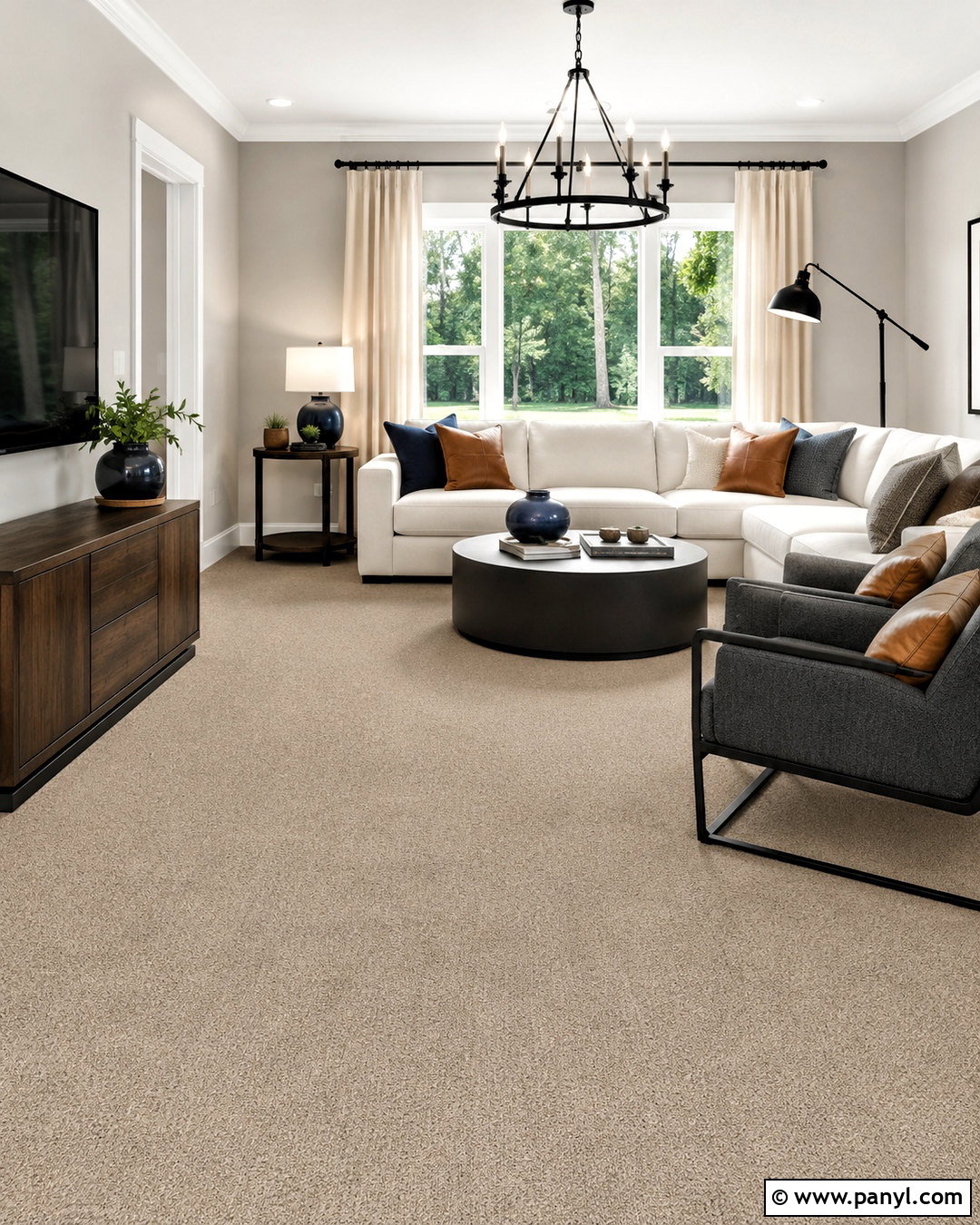
Camel carpet creates a warm, tailored contrast that keeps Repose Gray walls from feeling cool or plain. Select a toned-down camel with beige and brown fibers instead of a bright golden tan. In a living room, use an ivory sofa, walnut media cabinet, and two dark gray accent chairs. Cream curtains soften the windows, while black metal lighting provides structure. Repeat the camel tone through leather pillows or a small ottoman, then add muted navy accessories for controlled color. White trim will give the wall-and-floor combination a cleaner edge. This finished scheme feels polished and welcoming, particularly in rooms with limited northern light. The warmer floor also provides a natural bridge between Repose Gray walls and medium or dark wooden furniture.
19. Blush Beige Carpet With Repose Gray Walls
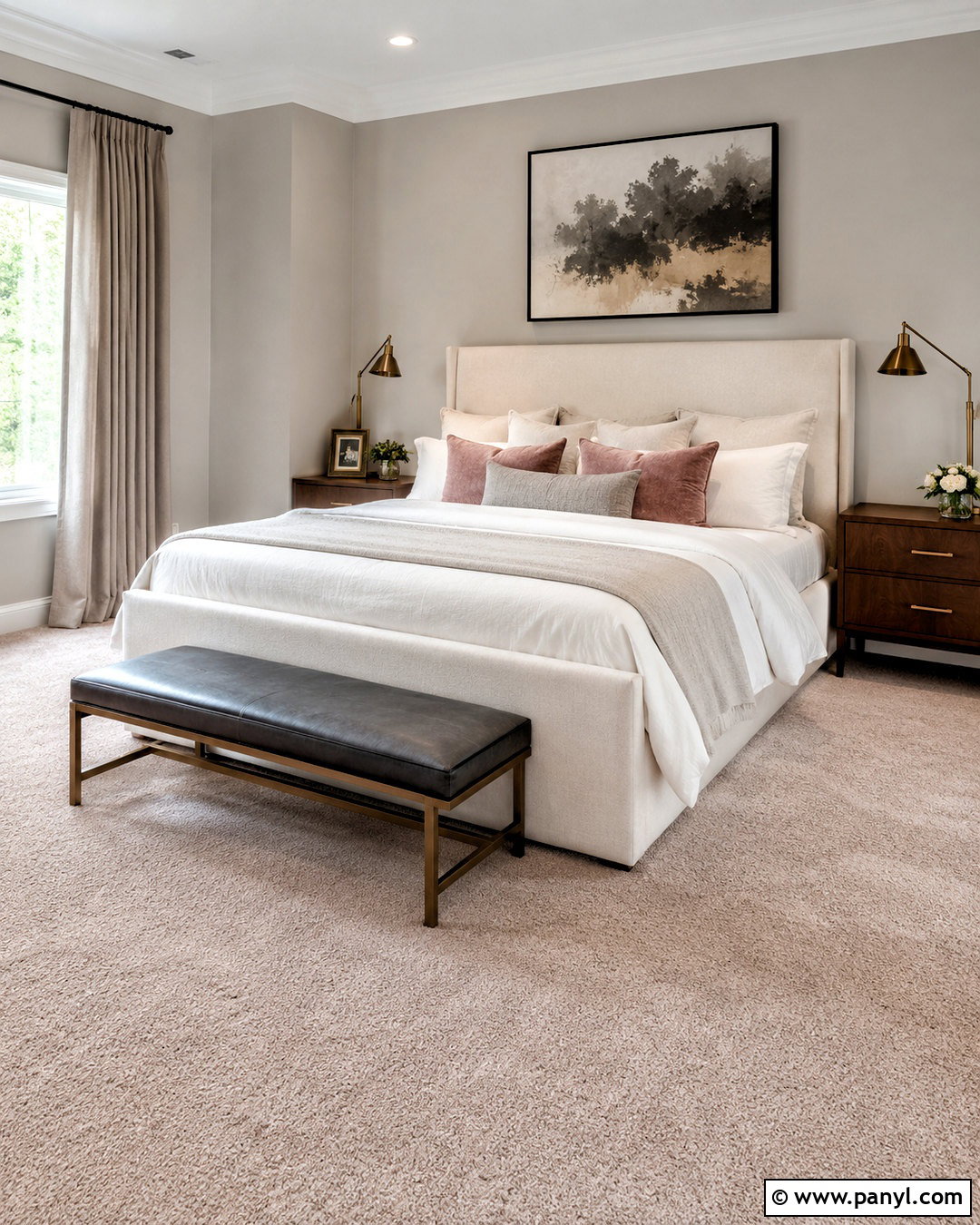
Blush beige carpet can soften Repose Gray walls and create a gently warm room without looking distinctly pink. Choose a dusty, muted shade with beige and gray mixed into the fibers. Complete the bedroom with an ivory upholstered bed, walnut nightstands, and layered white bedding. Add taupe curtains, muted rose pillows, and antique brass lighting for a cohesive finish. Charcoal artwork or a dark bench provides necessary contrast and keeps the palette from becoming overly delicate. Avoid bright pink accessories, which may exaggerate the carpet’s rosy undertone. A heathered or lightly patterned construction will make the color easier to live with. This room design works well for anyone who wants warmth and subtle personality while keeping the major furnishings neutral and adaptable.
20. Gray And Beige Patterned Carpet With Repose Gray Walls
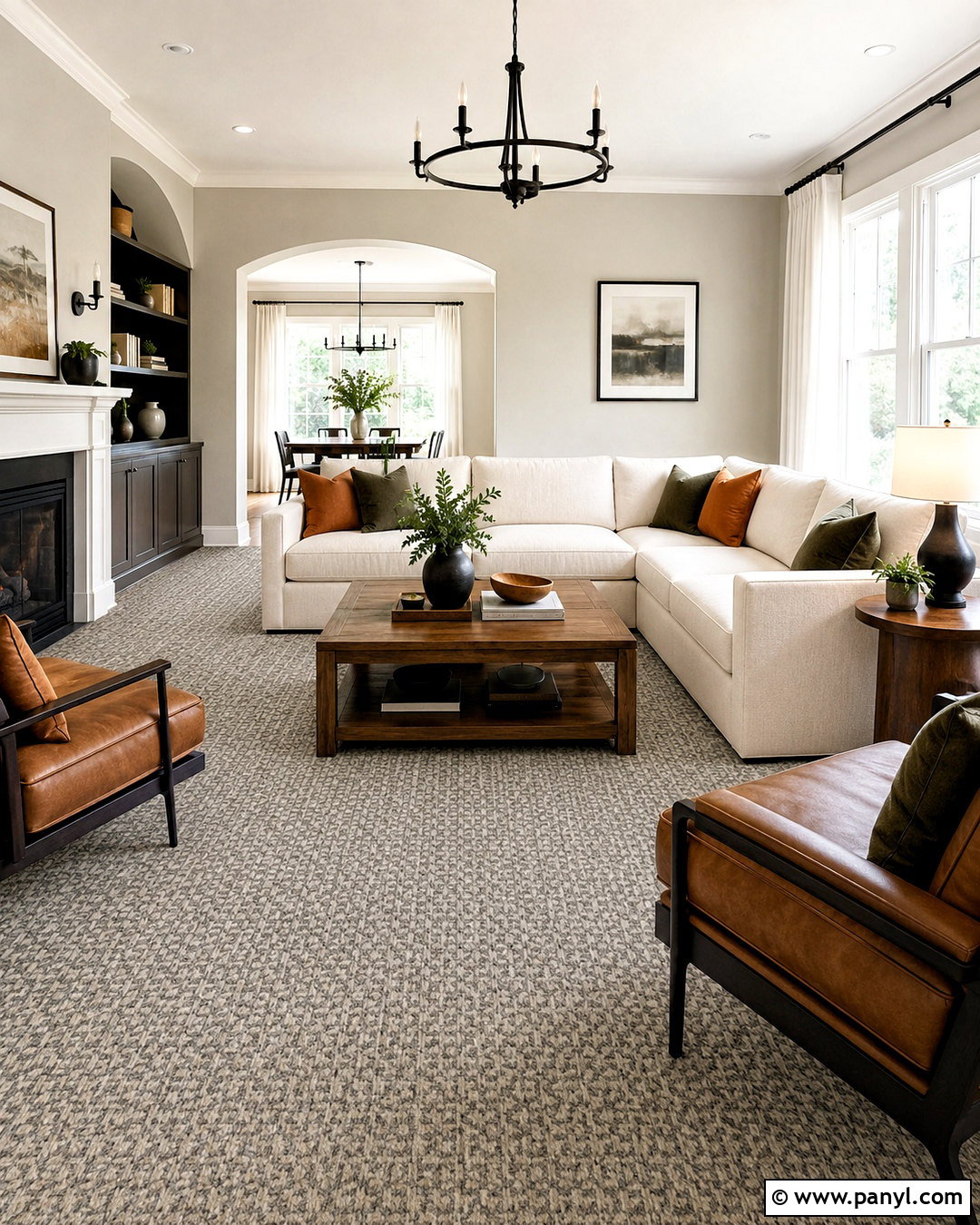
A gray and beige patterned carpet provides the most flexible bridge between Repose Gray walls, wood furniture, and mixed neutral decor. Choose a small-scale geometric, striated, or organic pattern rather than a high-contrast motif. The pattern should contain warm gray, beige, and a small amount of cream, with one gray close to the wall color. Build the room around a cream sectional, walnut tables, and camel leather chairs. Add white curtains, black lighting, and pillows in muted olive and rust. The varied carpet surface gives the neutral room more depth and can disguise everyday wear. This coordinated design is ideal for stairs, family rooms, and open upstairs areas where the flooring must connect several spaces and furnishing colors.
Conclusion:
The best answer to **What Color Carpet Goes With Repose Gray Walls** depends on the room’s lighting, furnishings, and desired level of contrast. Cream, oatmeal, sand, and ivory keep the palette light, while beige, greige, taupe, and mushroom add balanced warmth. Medium gray and charcoal provide stronger definition. Muted blue, navy, sage, olive, and blush bring personality without overpowering the walls. Before making a final decision, view large carpet samples beside the paint during morning, afternoon, and evening light. Compare them with trim, furniture, and nearby flooring as well. Choosing a slightly textured or heathered carpet can add dimension and make the complete room easier to maintain.

Related Ideas and Inspiration:
Leave a Reply