
Choosing what color walls with gray floors can feel tricky because gray flooring often carries hidden blue, green, violet, or brown undertones. The right wall color should connect with that undertone while also balancing the room’s light, furniture, and overall mood. Warm whites and earthy neutrals can soften cool flooring, while blue, green, and charcoal create a more dramatic look. Before committing, place large paint samples beside the floor and check them during the morning, afternoon, and evening because changing light can shift how both surfaces appear. Undertone alignment and contrast are key to making floors and walls feel intentionally coordinated. () The complete room schemes below provide practical answers for what color walls with gray floors.

1. Warm White Walls With Gray Floors
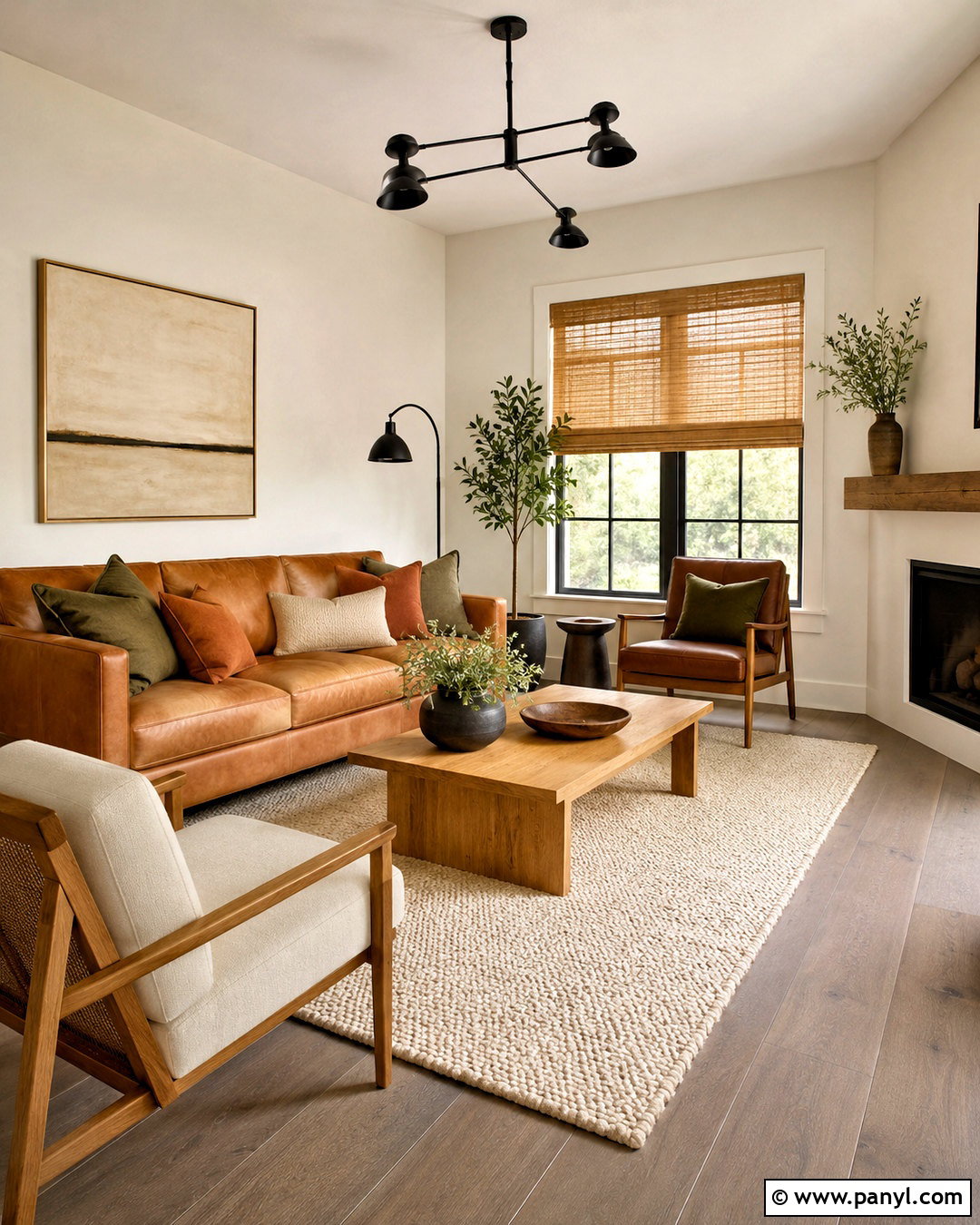
Warm white walls offer a clean, flexible backdrop without making gray floors feel cold or overly industrial. Choose a creamy white with a subtle beige undertone rather than a sharp, blue-based white. In a living room, combine this pairing with a camel leather sofa, natural oak coffee table, ivory wool rug, and woven window shades. Black lighting and picture frames add crisp definition, while rust and olive pillows bring controlled color. Keep the trim in the same warm white with a slightly glossier finish for a seamless transition. This complete palette works especially well with medium or dark gray wood-look flooring because the lighter walls brighten the space while warm furniture creates balance.
2. Soft Cream Walls With Gray Floors
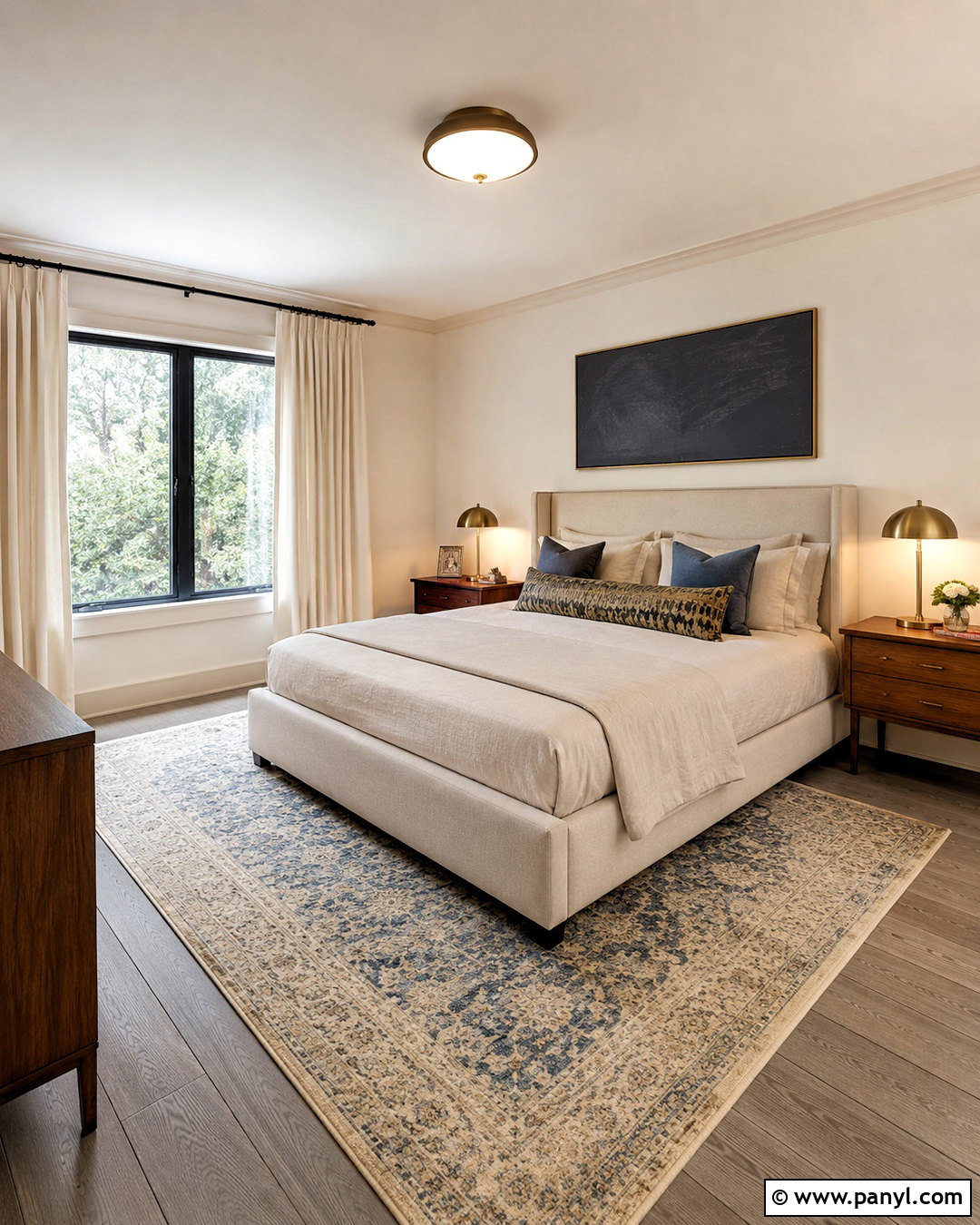
Soft cream walls can transform cool gray flooring into a warmer, more welcoming foundation. This combination suits a comfortable bedroom with an upholstered oatmeal bed, walnut nightstands, linen bedding, and antique brass lamps. Add a large ivory and muted blue rug so the warm walls and cooler floor feel connected rather than separate. Off-white curtains should hang close to the ceiling to emphasize height and spread natural light. Use medium wood finishes instead of orange-toned wood, which may compete with blue-gray flooring. A few charcoal accents, such as framed artwork and a bench, repeat the floor’s depth. The finished space feels relaxed and layered while avoiding the flat appearance of an all-gray room.
3. Light Greige Walls With Gray Floors
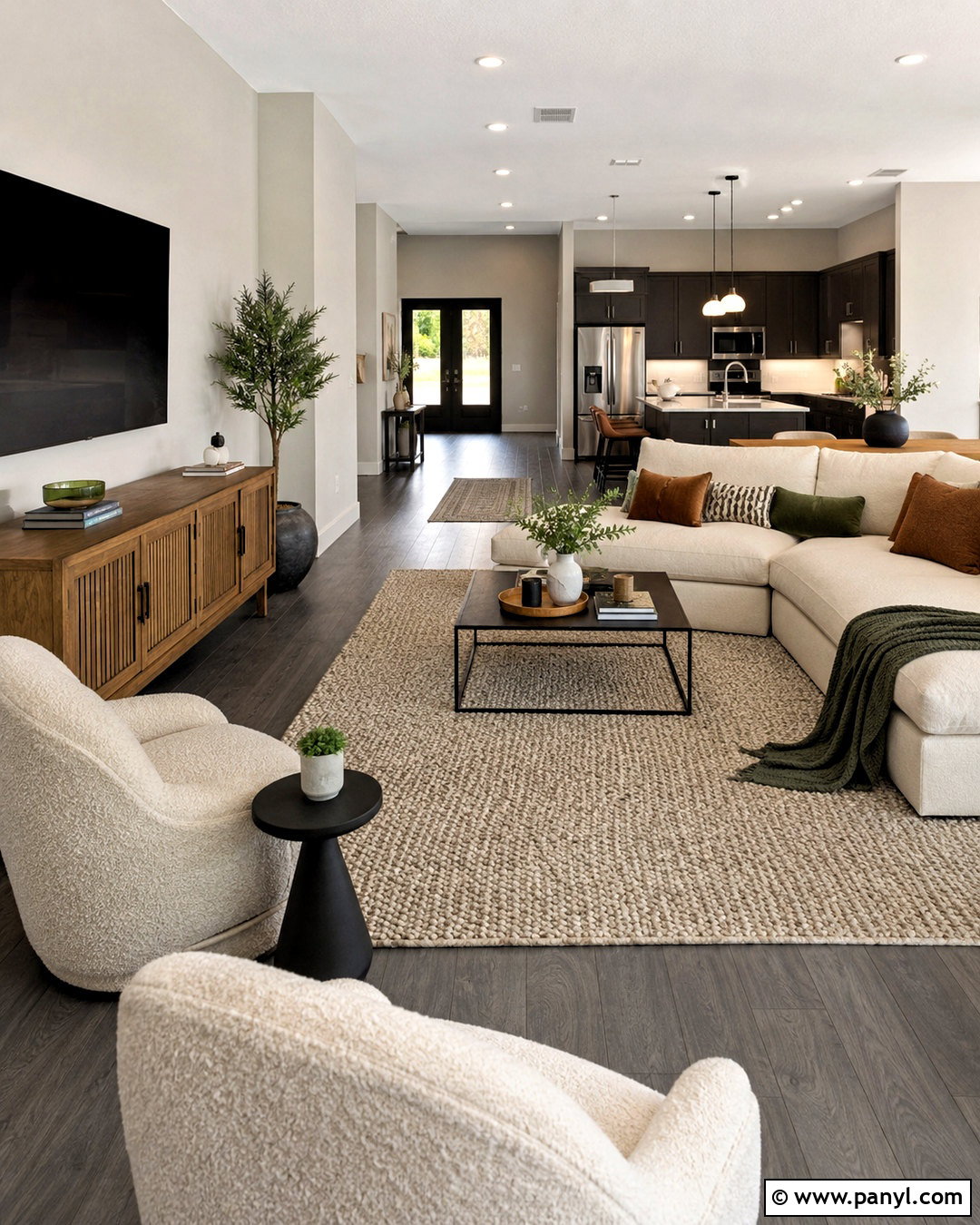
Light greige walls blend gray and beige, making them helpful when flooring falls between warm and cool. Build a complete open-plan living room around this quiet background with a cream sectional, medium oak media cabinet, black metal coffee table, and textured beige rug. Include cushions in tobacco brown, muted green, and soft black to create contrast without introducing too many unrelated colors. Paint the trim a warm off-white so the greige remains visible. This approach works best when the wall color is noticeably lighter than the floor. If both surfaces have the same value, the room can appear flat. Varied materials such as boucle, linen, wood, and matte metal give the restrained palette depth and personality.
4. Warm Beige Walls With Gray Floors
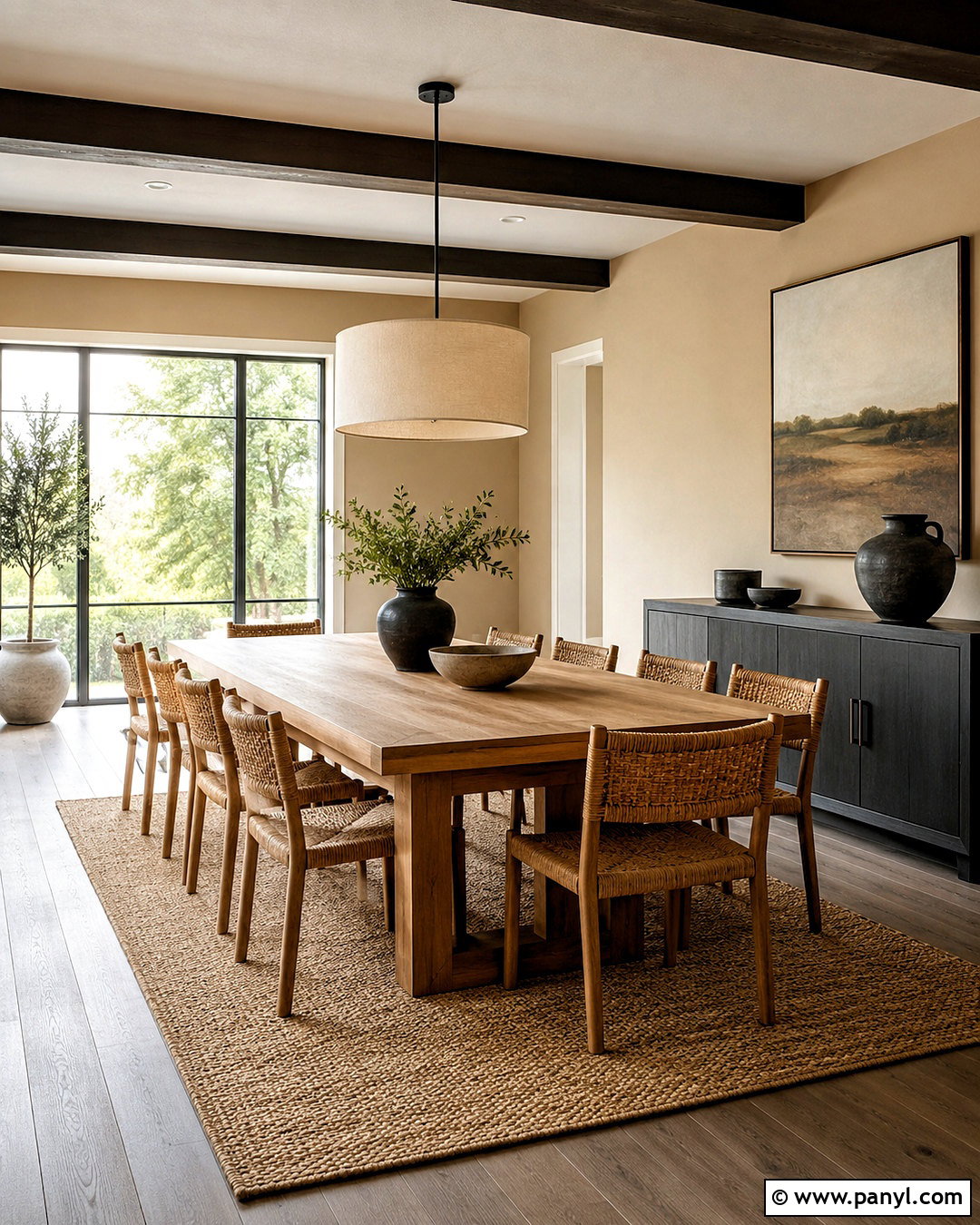
Could gray flooring work in a warm, organic room? Warm beige walls make that transition surprisingly easy. Use a sandy beige with limited yellow or peach so it complements the gray rather than fighting it. In a dining room, pair the walls and floors with a solid oak table, woven dining chairs, a natural jute rug, and a large linen pendant. Matte black chair legs and curtain rods can repeat darker streaks in the flooring. Finish the room with simple ceramic vessels and muted landscape art containing gray, brown, and cream. The natural textures become the visual bridge between the warm walls and cool floor. This complete scheme feels contemporary, comfortable, and suitable for everyday family dining.
5. Taupe Walls With Gray Floors
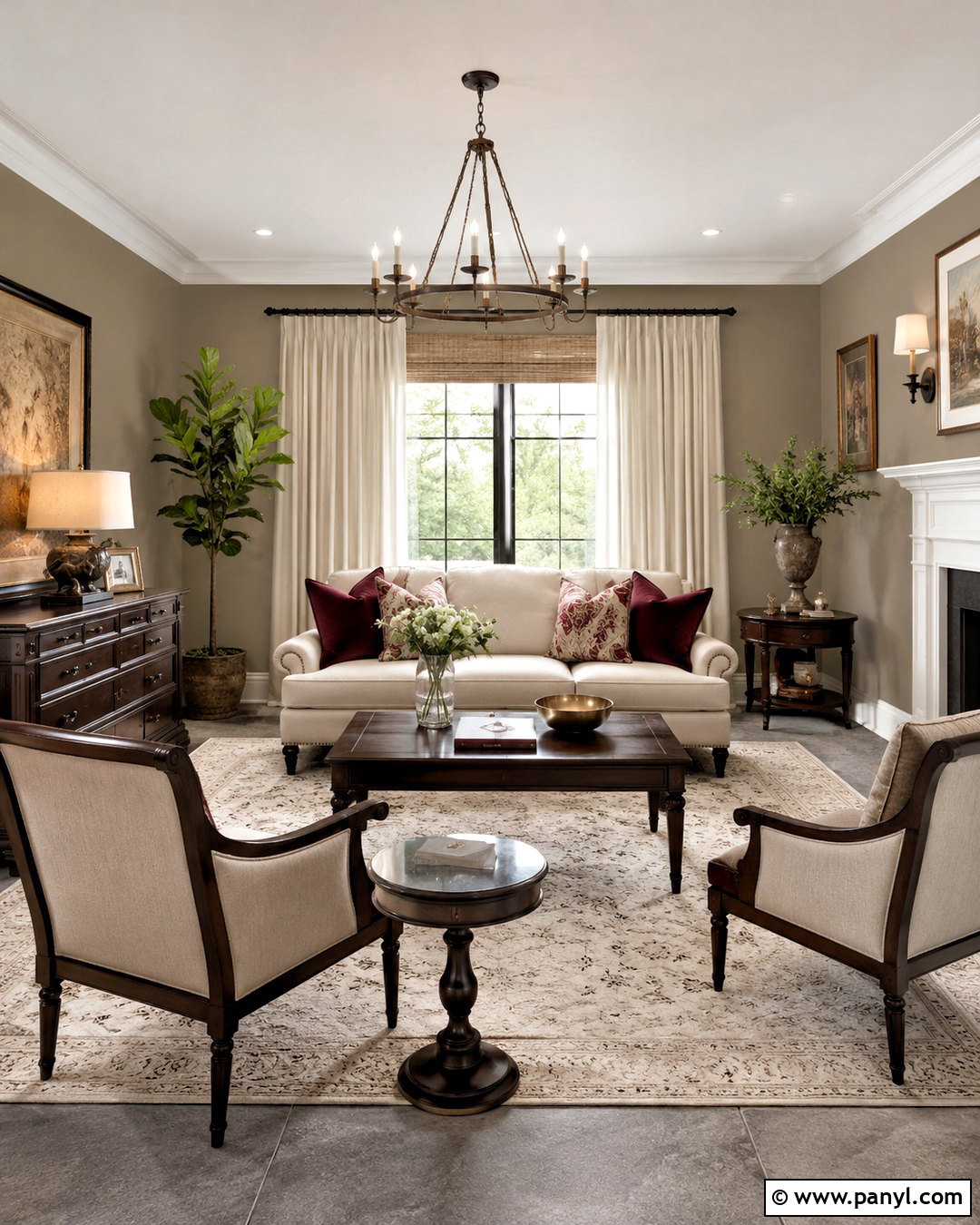
Taupe walls create a sophisticated middle ground when gray flooring has noticeable brown or mushroom undertones. For a polished sitting room, choose a light-to-medium taupe and layer it with an ivory sofa, espresso wood tables, bronze lighting, and a cream rug with a subtle gray pattern. Deep plum or burgundy cushions can add richness without overwhelming the neutral base. Use soft white on the ceiling and trim to keep the room from becoming too dark. Taupe is particularly useful with gray tile or stone-look flooring because both surfaces share an earthy quality. The finished design should include plenty of textile contrast, such as velvet, linen, and wool, to prevent the closely related neutral colors from appearing dull.
6. Pale Sage Green Walls With Gray Floors
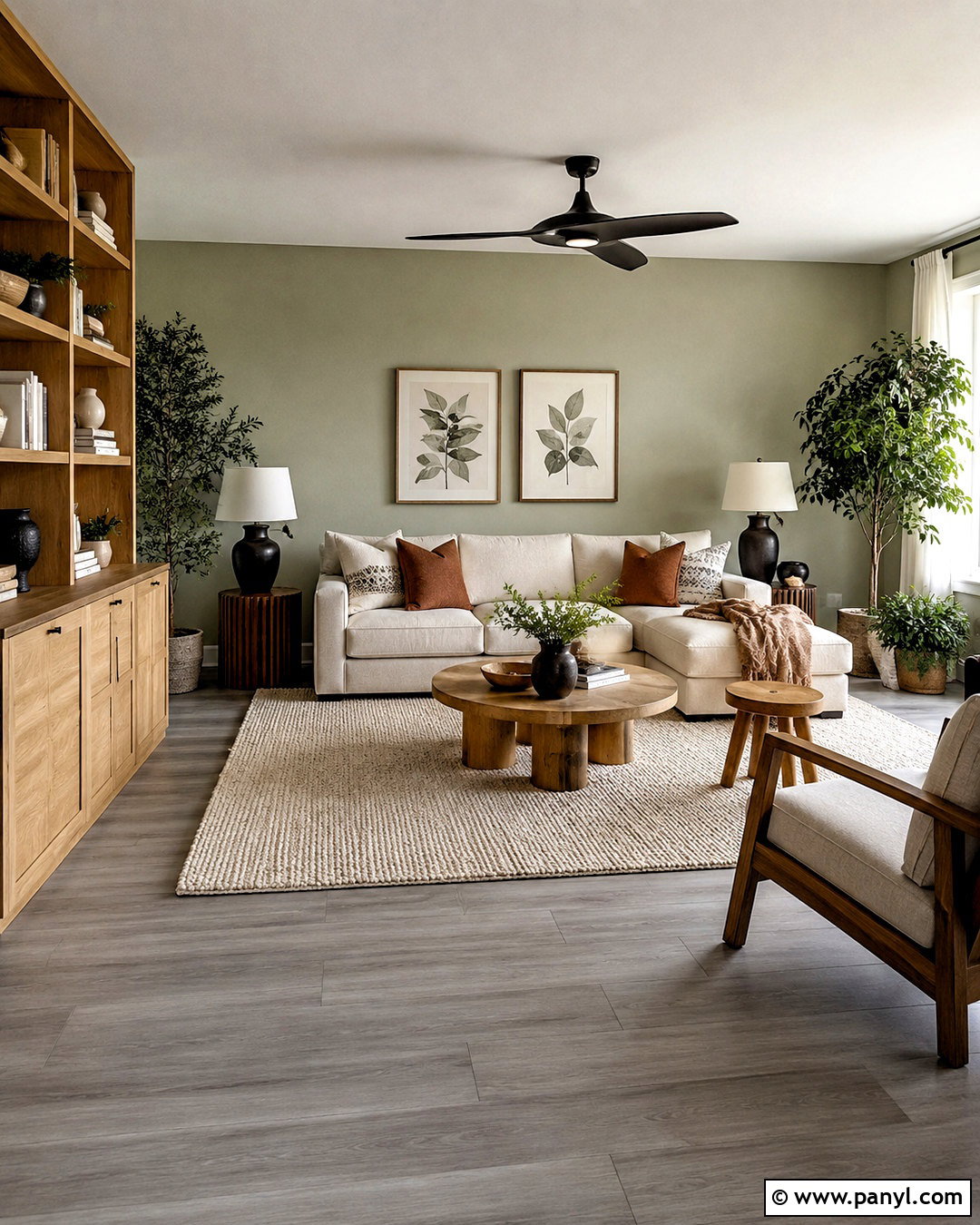
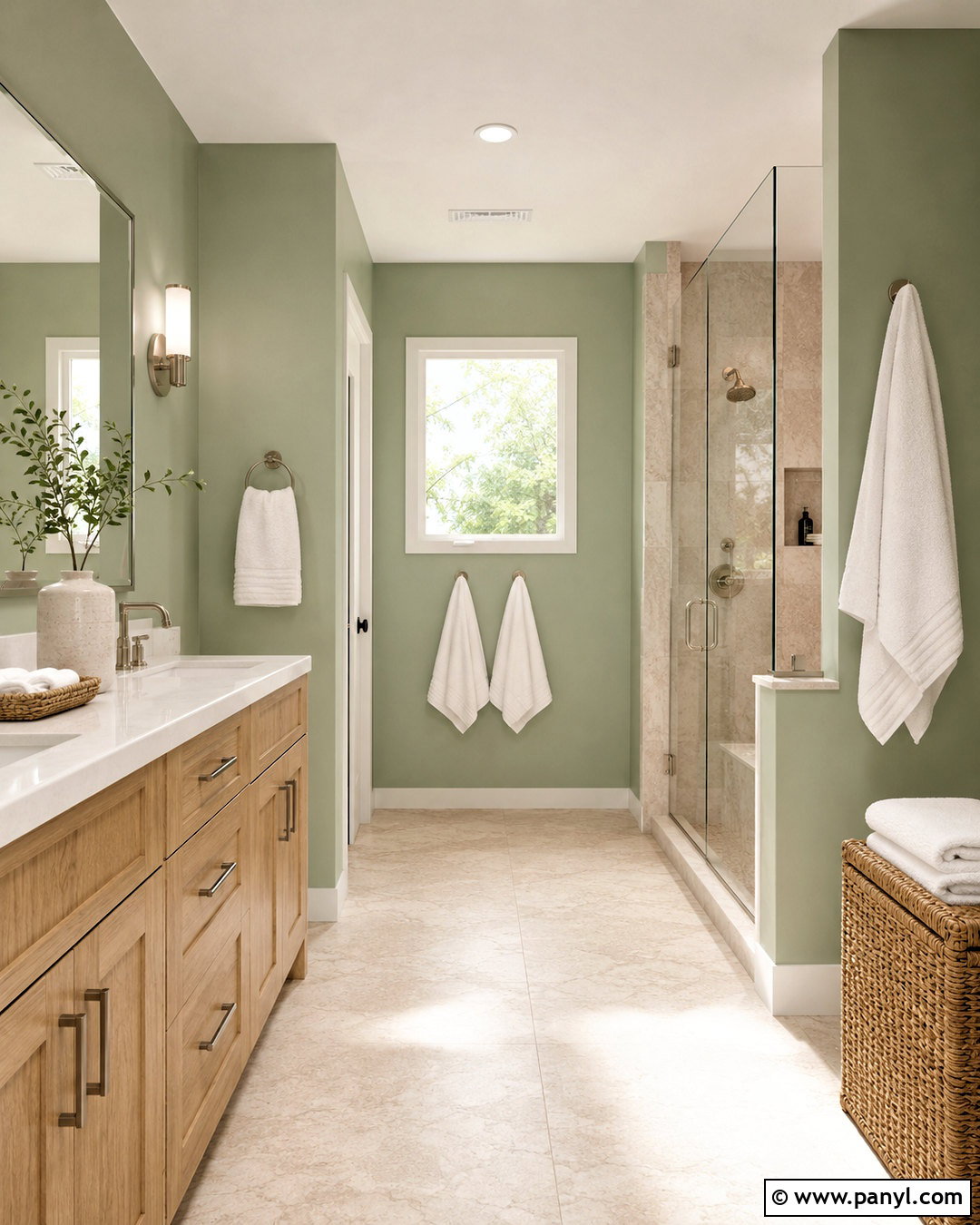
Pale sage green walls bring gentle color to gray floors while maintaining a calm, neutral feeling. Create an organic modern living room with a warm ivory sofa, light oak shelving, a chunky cream rug, and rounded wood tables. Choose sage with gray undertones so the walls relate naturally to the flooring. Add clay-colored cushions, black ceramic lamps, and a few leafy plants for depth. Warm white curtains and simple botanical prints keep the room light without making it overly themed. This pairing is especially effective with medium gray laminate or wood-look planks. The green softens their manufactured appearance, while natural materials make the floor feel more like weathered stone or aged timber within the overall room.
7. Olive Green Walls With Gray Floors
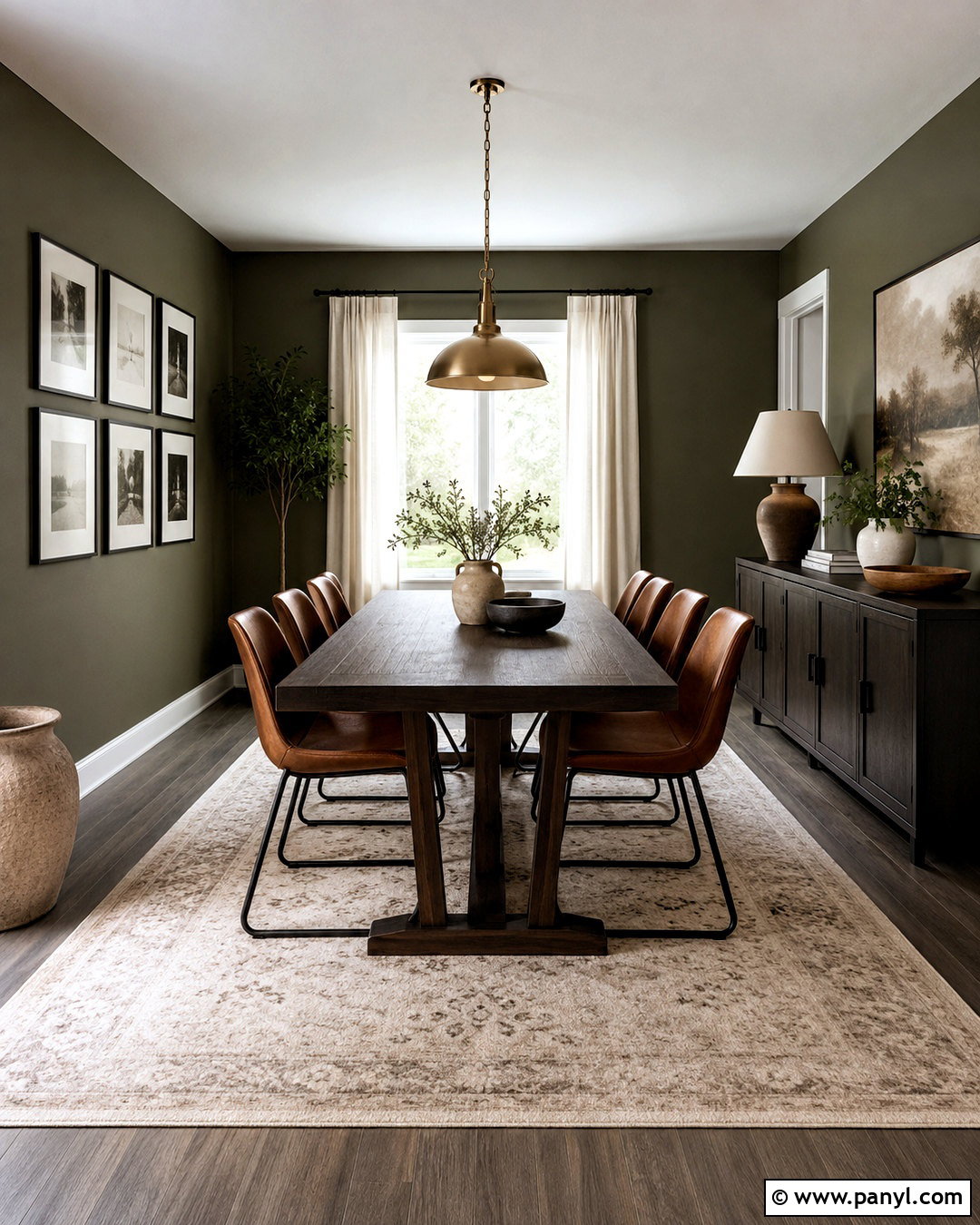
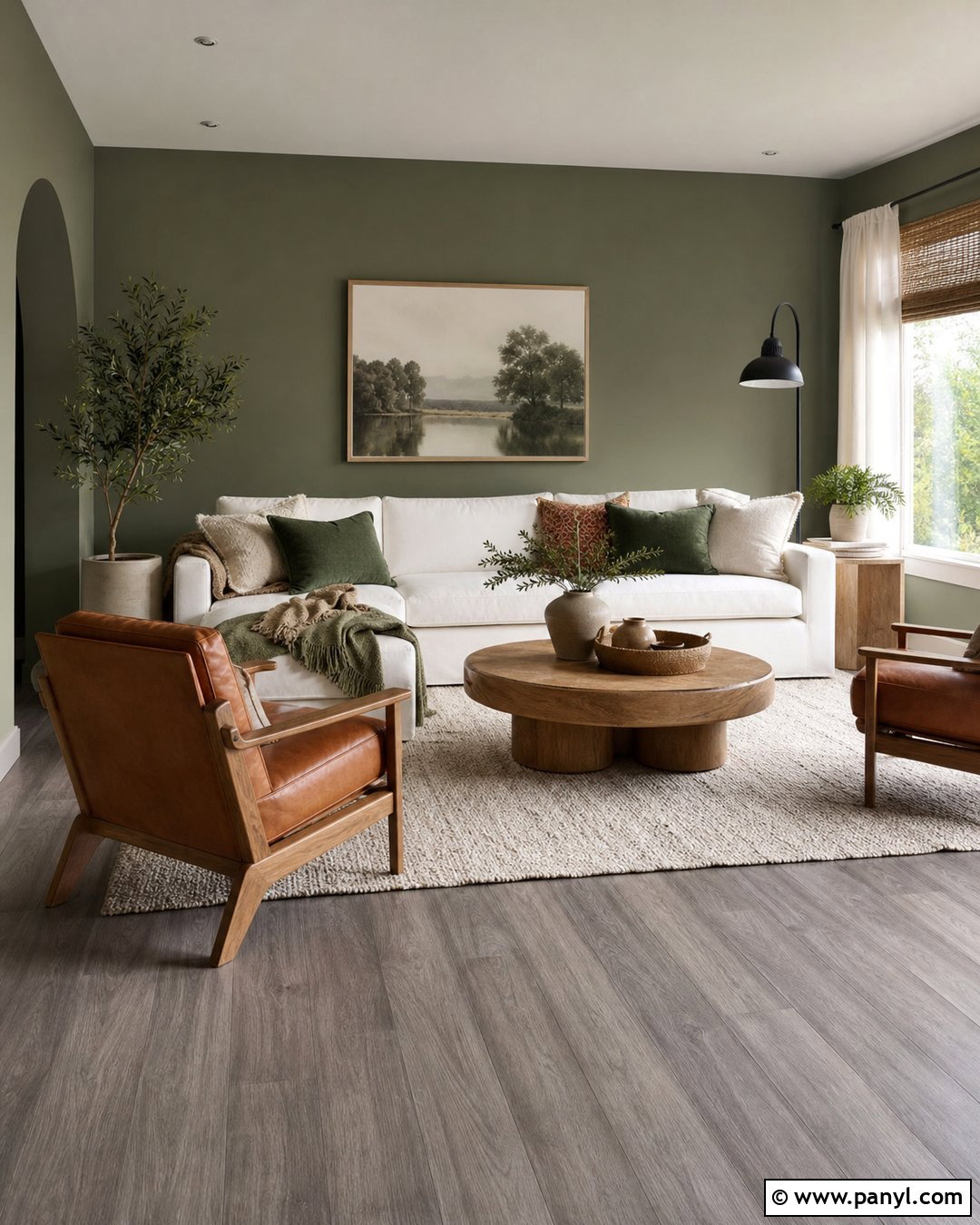
Olive green walls can give gray flooring a rich, grounded character, especially in a dining room or home library. Select a muted olive rather than a bright yellow-green. Pair it with a dark walnut dining table, cognac leather chairs, an ivory patterned rug, and aged brass lighting. Cream curtains and pale artwork prevent the deeper wall color from absorbing too much light. Black accents, including cabinet hardware or narrow picture frames, connect with charcoal variations in the floor. Consider carrying the olive paint across all walls for a cohesive effect rather than limiting it to one small feature wall. The result is warm, collected, and dramatic, yet the gray floor keeps the earthy palette looking clean and current.
8. Forest Green Walls With Gray Floors
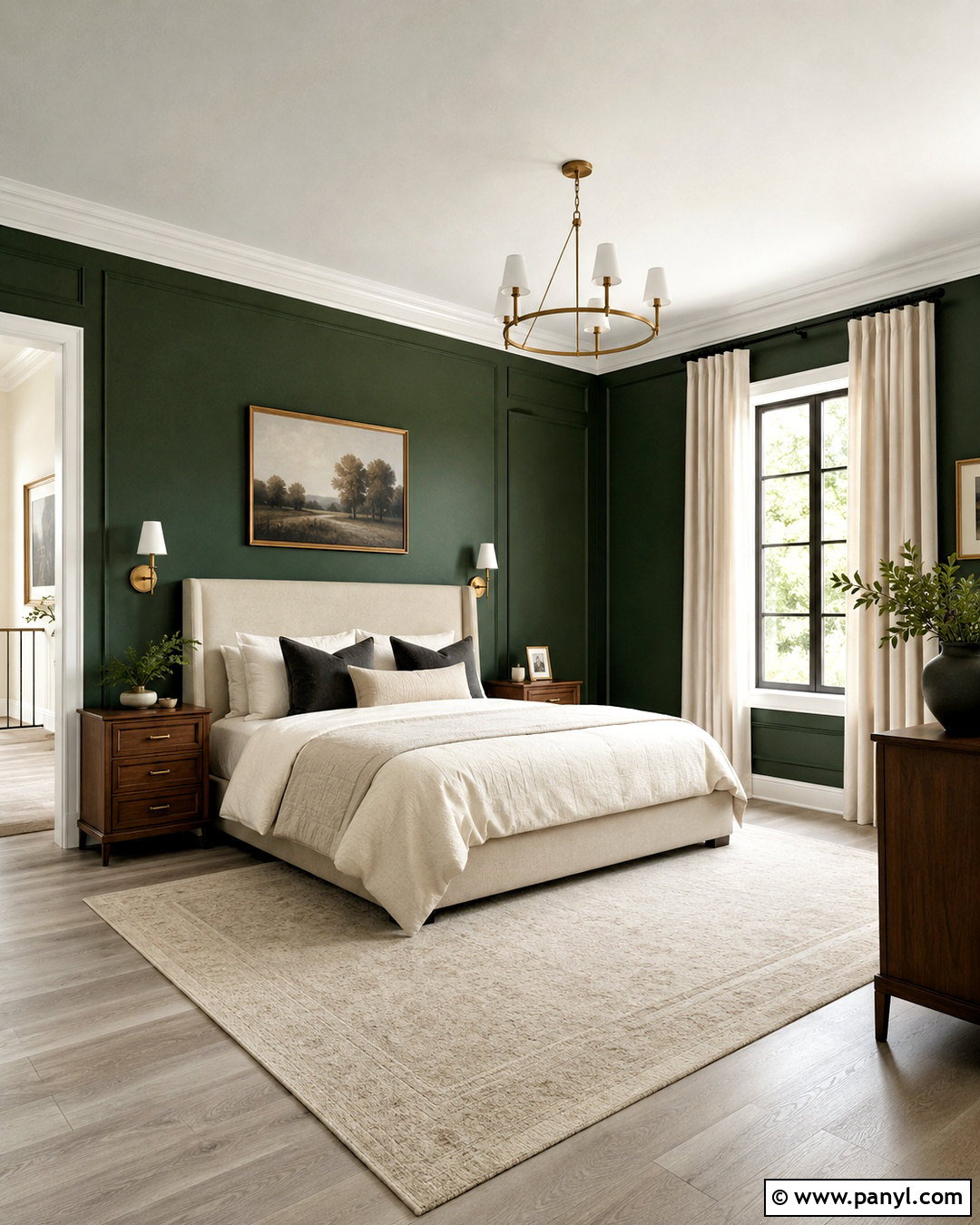
Deep forest green walls provide bold contrast against pale gray floors and can make a bedroom feel sheltered and refined. Balance the saturated walls with an oatmeal upholstered bed, crisp cream bedding, medium walnut nightstands, and a large ivory rug. Add brushed brass sconces for warmth and charcoal linen pillows to repeat the flooring. Keep the ceiling and trim soft white so the green feels framed rather than heavy. Full-length neutral curtains will soften the transition between dark walls and bright windows. This scheme works best in a room with good natural light or layered artificial lighting. The pale flooring reflects brightness upward, while wood, linen, and brass prevent the green-and-gray combination from feeling cool or overly formal.
9. Dusty Blue Walls With Gray Floors
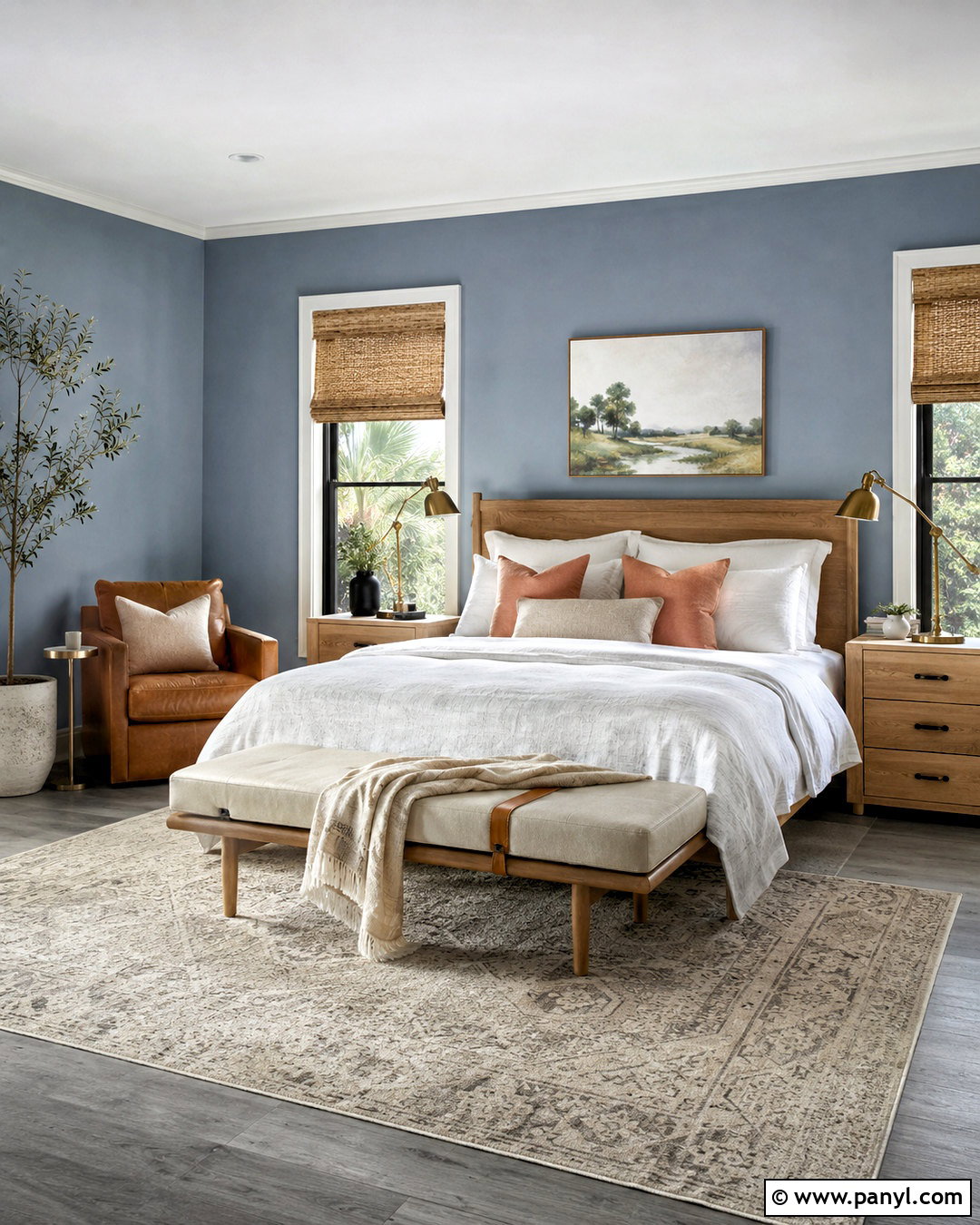
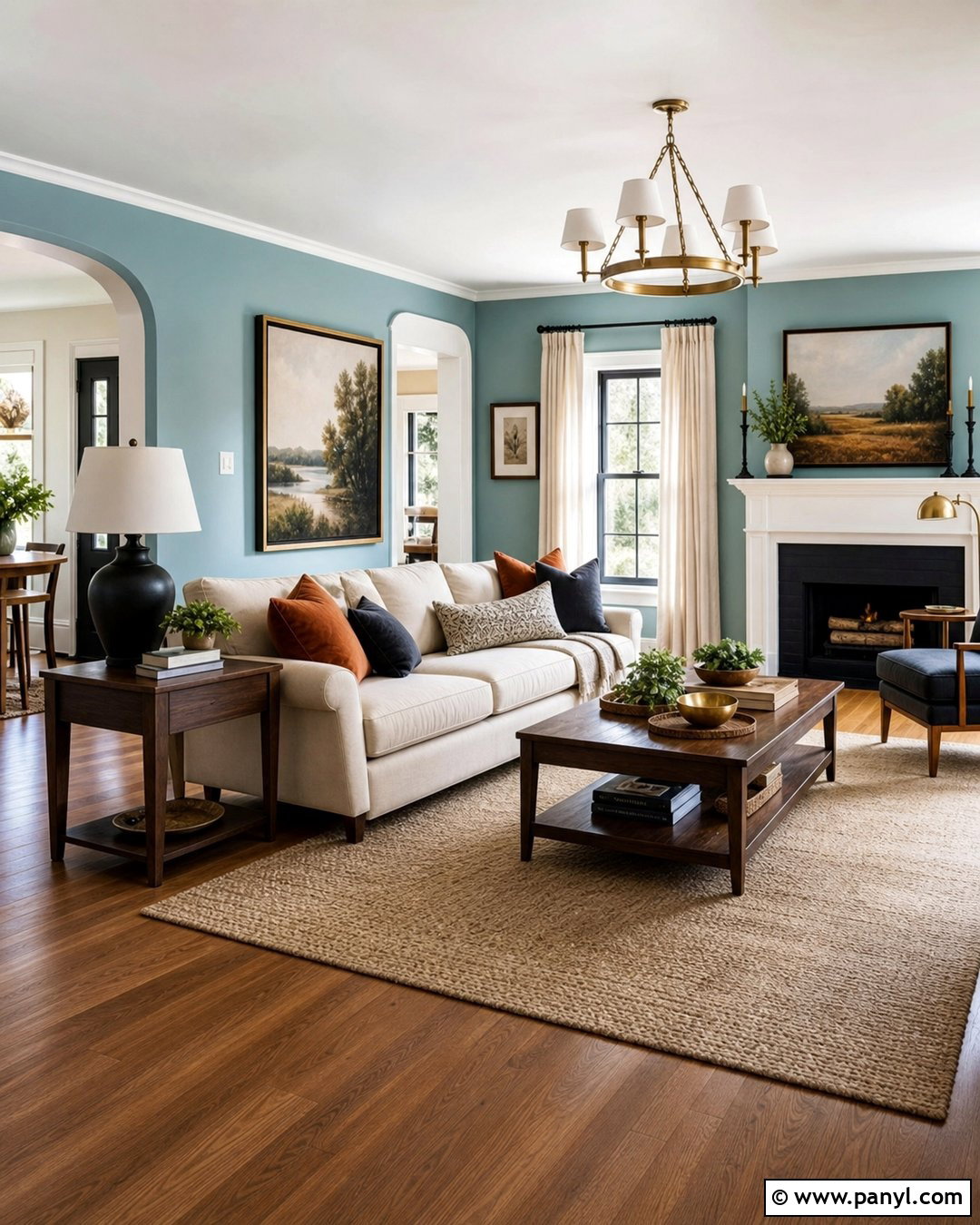
Dusty blue walls pair naturally with gray floors when both colors have softened, muted undertones. Use this combination in a restful bedroom with a light oak bed, white linen bedding, a beige upholstered bench, and a cream rug containing faint blue-gray details. Introduce warmth through woven shades, tan leather drawer pulls, and antique brass bedside lamps. Avoid filling the room with more blue furniture because that can make the palette feel overly coordinated. Instead, add small accents in rust, camel, or muted coral. Soft white trim provides a clean boundary around the blue. The completed space feels airy and relaxed, with the warmer natural materials balancing the cool relationship between the walls and flooring.
10. Navy Blue Walls With Gray Floors
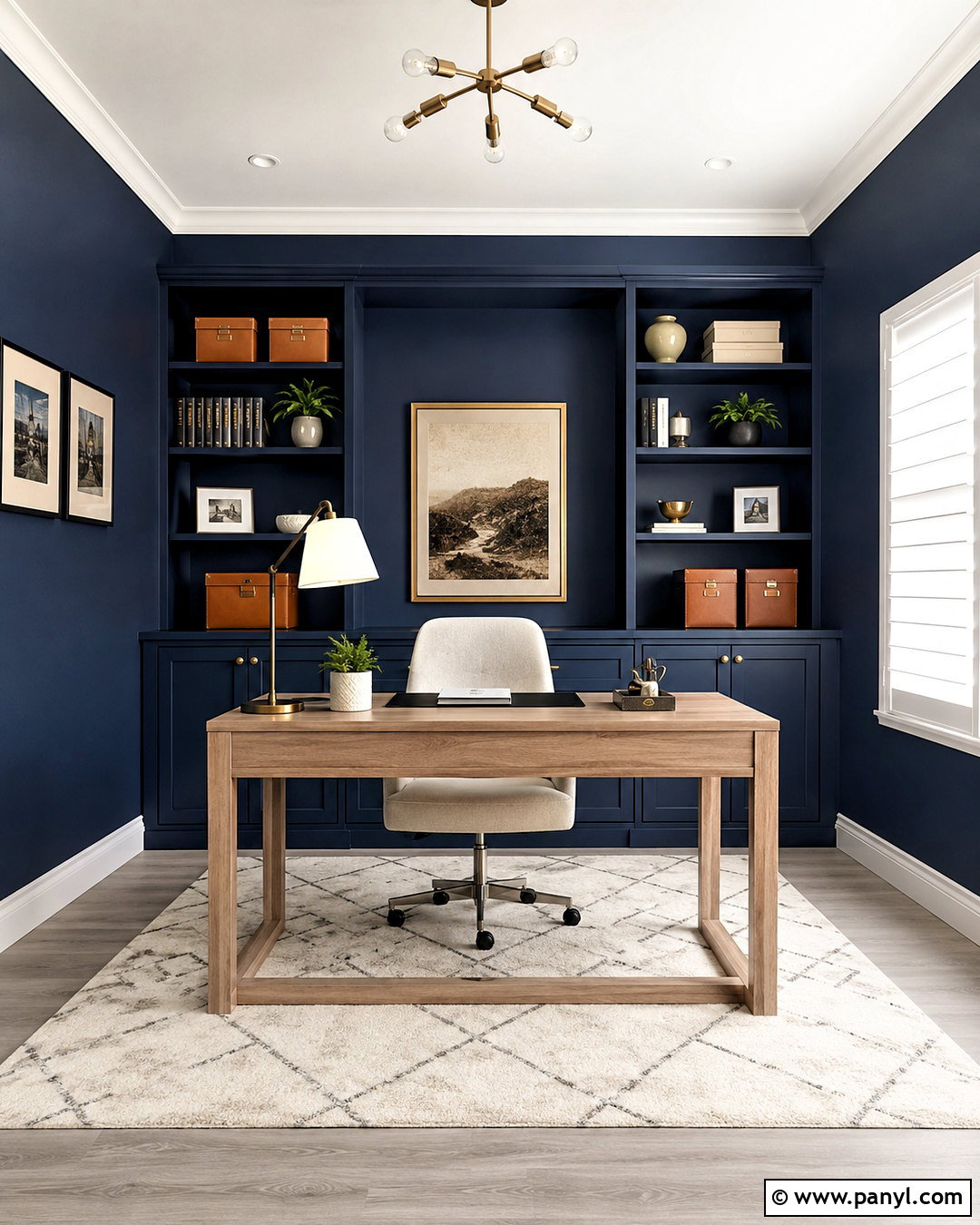
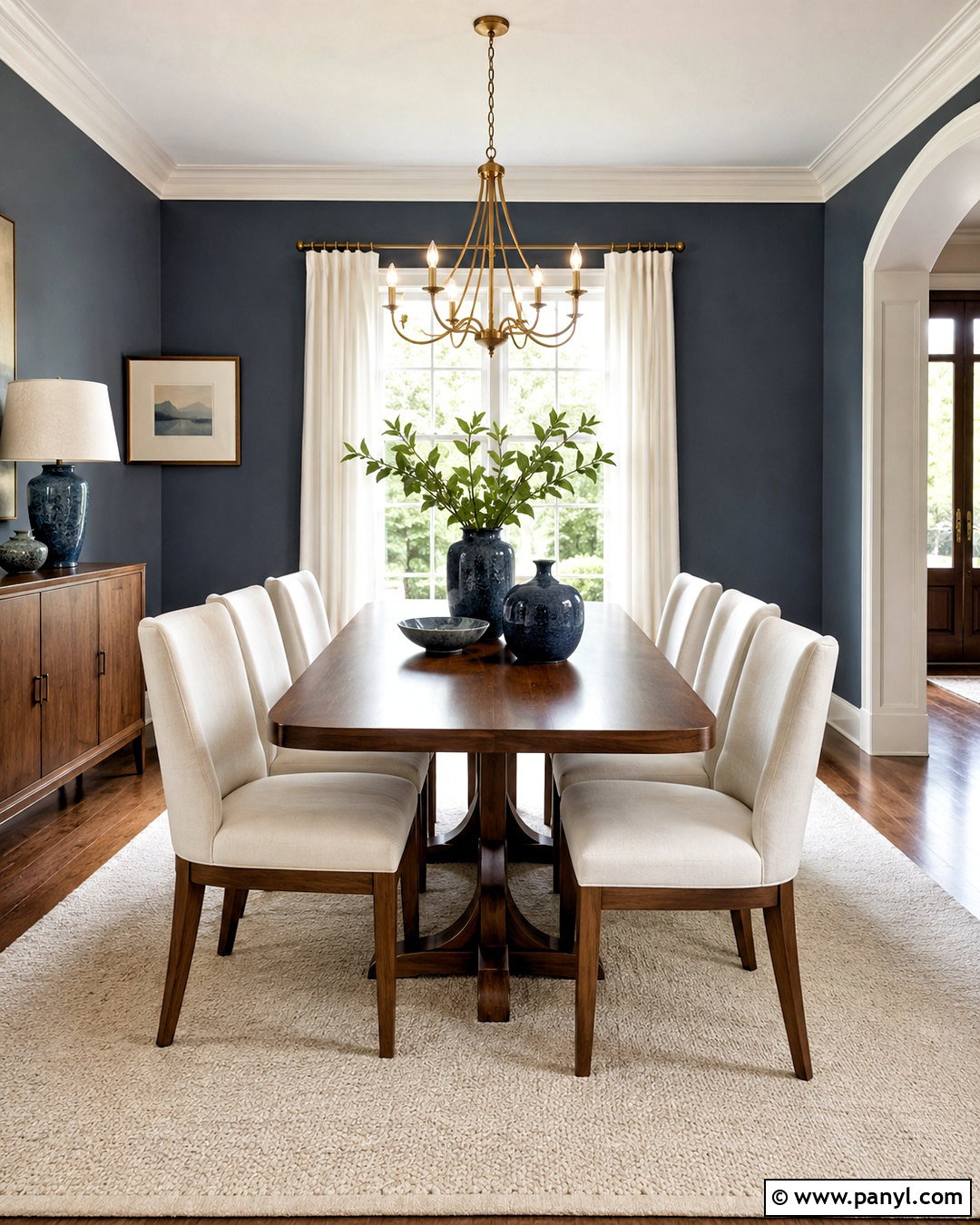
Navy walls and light gray floors create a crisp, high-contrast room with plenty of visual depth. In a home office, use navy across every wall and balance it with a light oak desk, cream upholstered chair, and ivory geometric rug. Built-in shelves painted the same navy produce a streamlined, intentional background. Add brass hardware, a warm white desk lamp, and tan leather storage boxes to soften the cooler colors. White trim can look striking, but a slightly creamy white is usually easier to coordinate with wood furniture. Keep window treatments light and simple. The completed office feels focused and polished, while the pale gray floor prevents the dark blue walls and cabinetry from making the room feel closed in.
11. Blue Gray Walls With Gray Floors

Blue-gray walls create a tonal scheme that works when there is enough contrast between the vertical and horizontal surfaces. Choose a pale, smoky blue-gray for walls above medium or charcoal flooring. In a coastal-inspired living room, include a slipcovered cream sofa, weathered oak tables, a natural fiber rug, and off-white curtains. Use navy pillows sparingly, then introduce warmth with cognac leather, woven baskets, and light wood accessories. Paint the trim a clean but not icy white. Avoid selecting a wall color that matches the floor exactly because the boundaries of the room may disappear. A lighter wall shade, varied fabrics, and warm natural textures create a layered design that feels peaceful rather than monochromatic.
12. Blush Pink Walls With Gray Floors
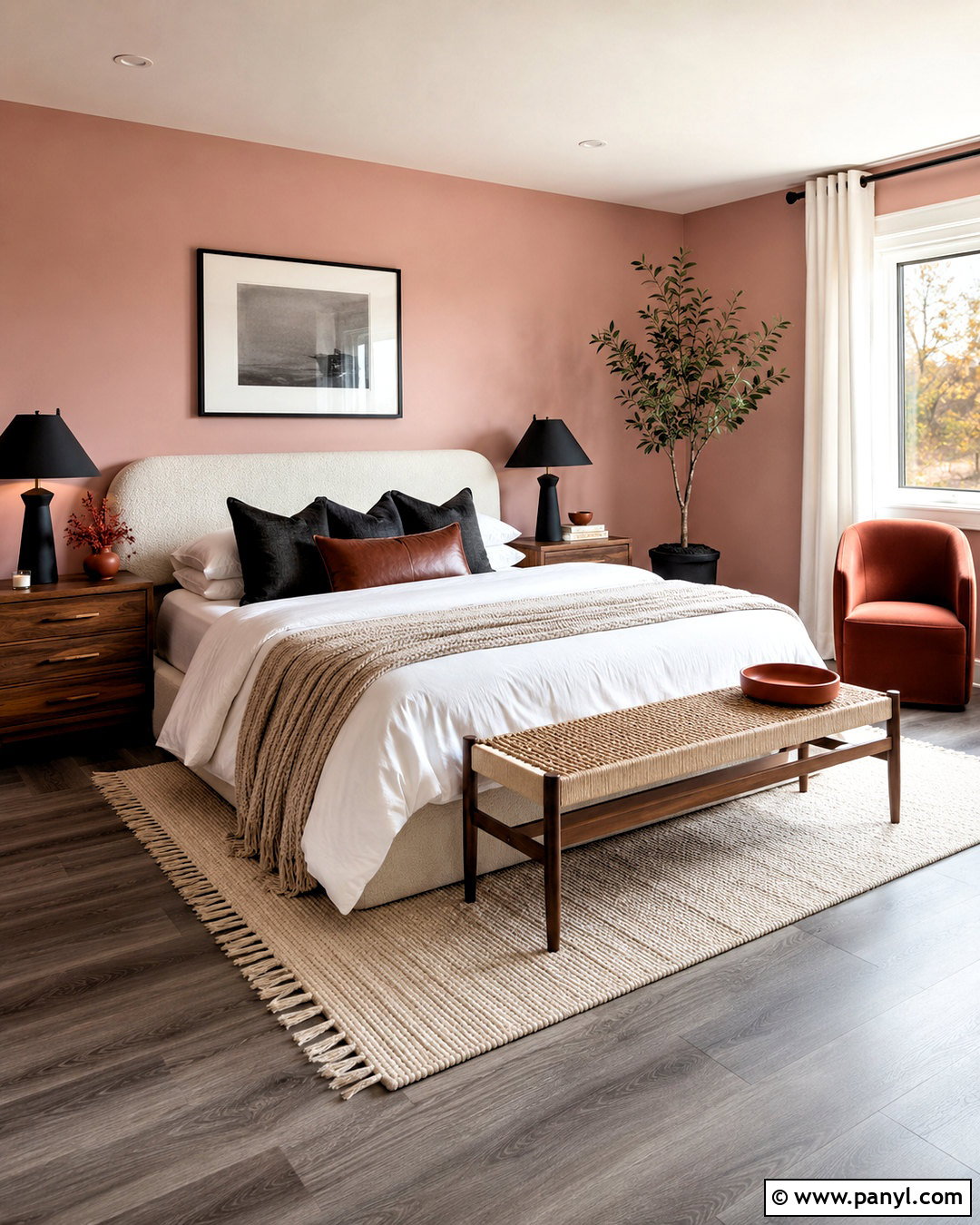
Soft blush walls offer a warm, subtle contrast to cool gray floors without making the room look overly sweet. Design a balanced bedroom with a cream boucle headboard, walnut nightstands, white bedding, and a large ivory rug. Ground the pink with charcoal pillows, black-framed artwork, and a matte black ceiling fixture. Rust or terracotta accents can deepen the warm side of the palette, while off-white curtains maintain brightness. Choose a dusty blush with beige or gray undertones rather than a clear bubblegum pink. This allows the wall color to function almost like a warm neutral. The completed space feels comfortable and grown-up, with gray flooring providing structure beneath the softer walls, textiles, and curved furniture.
13. Muted Mauve Walls With Gray Floors
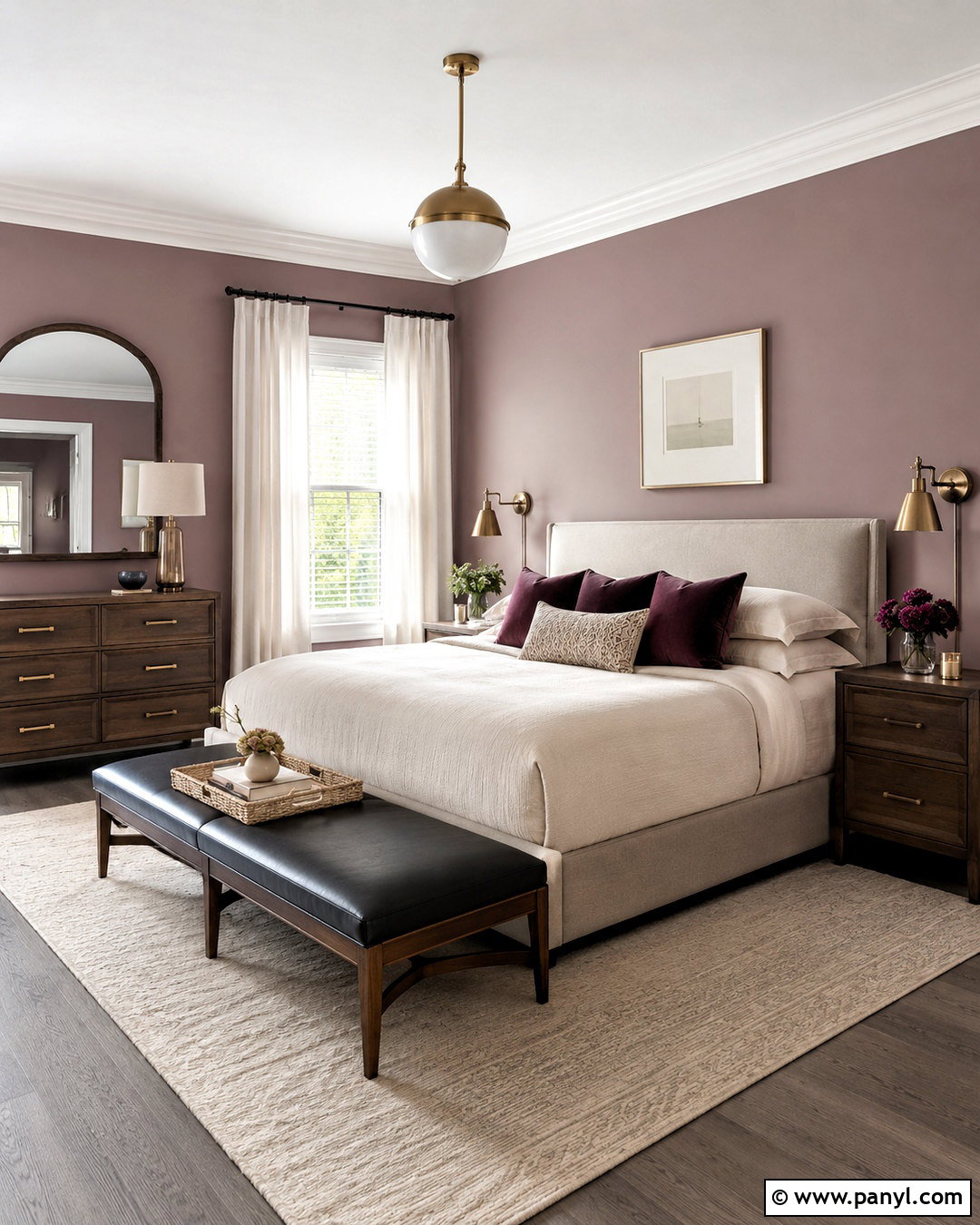
Muted mauve walls are an expressive option for gray floors with violet or blue undertones. Create a sophisticated guest room using dusty mauve paint, a warm gray upholstered bed, cream bedding, dark walnut furniture, and an ivory rug. Add antique brass lamps and small accents of deep plum to enrich the palette. Keep curtains and trim warm white so the room remains bright and approachable. Mauve can shift dramatically under different bulbs, so use warm-white lighting that does not exaggerate its purple side. When coordinated carefully, the wall color draws out subtle complexity in the floor. The complete room looks layered and distinctive without relying on loud patterns, bright colors, or excessive decorative accessories.
14. Pale Lavender Walls With Gray Floors
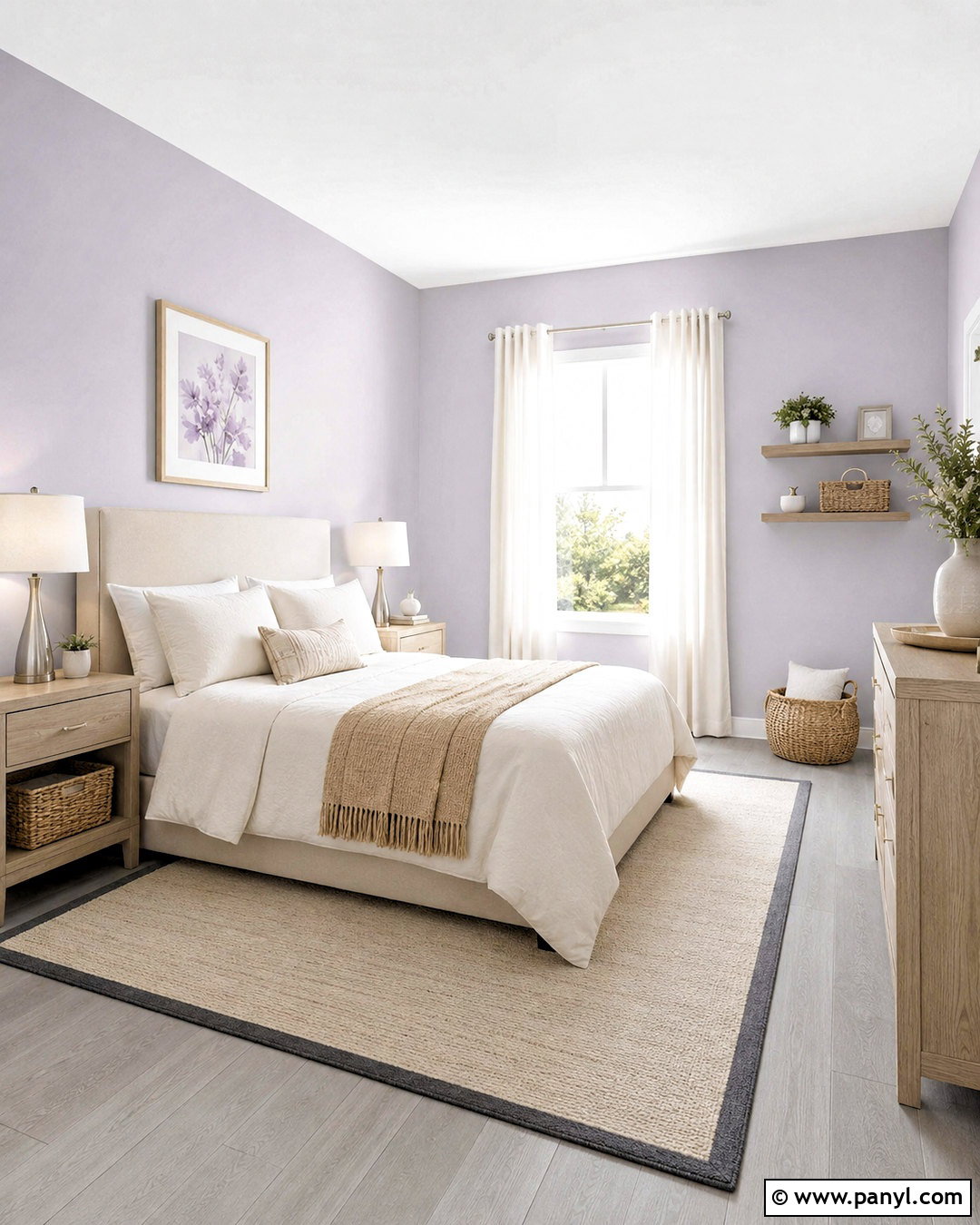
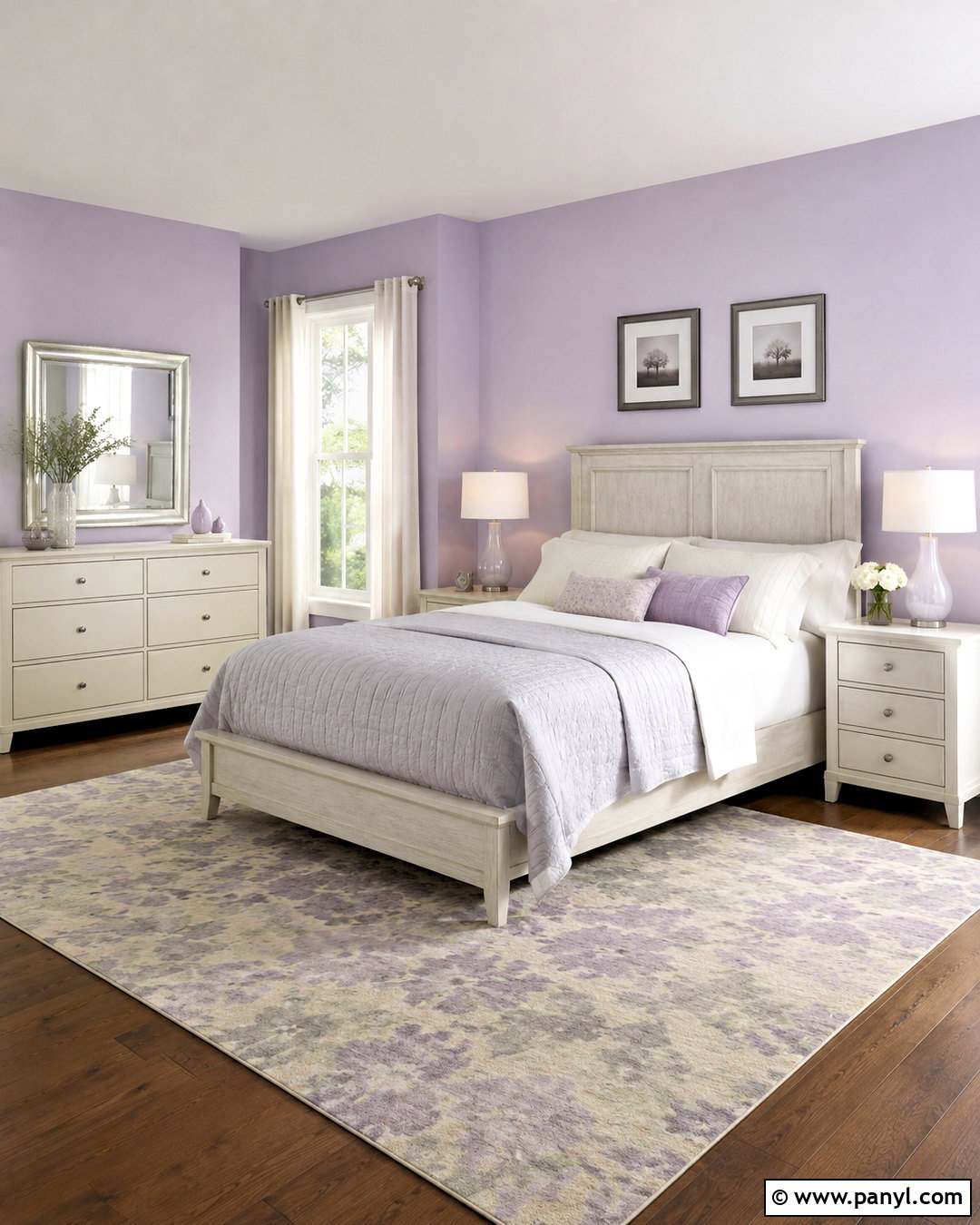
A whisper of lavender can make a room with gray floors feel soft, fresh, and quietly colorful. Choose a pale lavender-gray rather than a sugary pastel. In a small bedroom, combine it with an ivory bed, light ash wood nightstands, white linen curtains, and a cream rug edged in charcoal. Brushed nickel lighting can reinforce the cool palette, while a camel throw and natural woven baskets supply necessary warmth. Keep decorative pieces minimal and repeat lavender only once or twice through subtle artwork. Bright white trim gives the walls a clean outline. This complete scheme works particularly well with light or medium gray flooring, creating a gentle transition between colors while maintaining an open and uncluttered appearance.
15. Terracotta Walls With Gray Floors
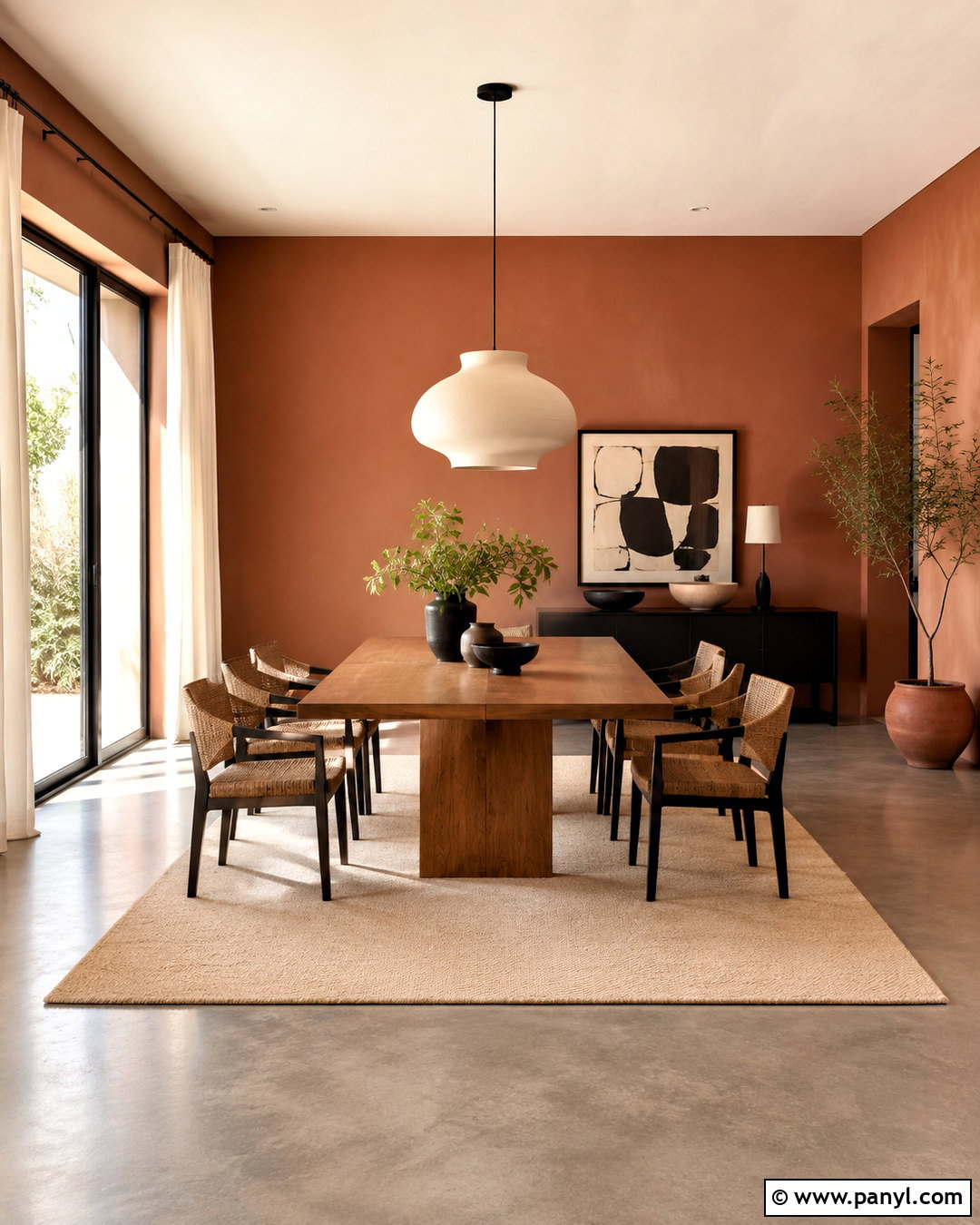
Terracotta walls can counteract the chilly effect of gray flooring and create a warm, earthy interior. In a dining room, use a muted clay-red paint with a medium oak table, woven seats, a cream flat-weave rug, and a sculptural off-white pendant. Add charcoal ceramics and black metal accents to connect the room back to the floor. Linen curtains in warm white will soften the strong wall color and reflect light. Terracotta works particularly well when gray floors have a neutral or slightly warm undertone. If the flooring appears strongly blue, choose a softer, browner clay color instead of vivid orange. The finished space feels welcoming, natural, and colorful without losing the grounding effect of the gray foundation.
16. Muted Peach Walls With Gray Floors
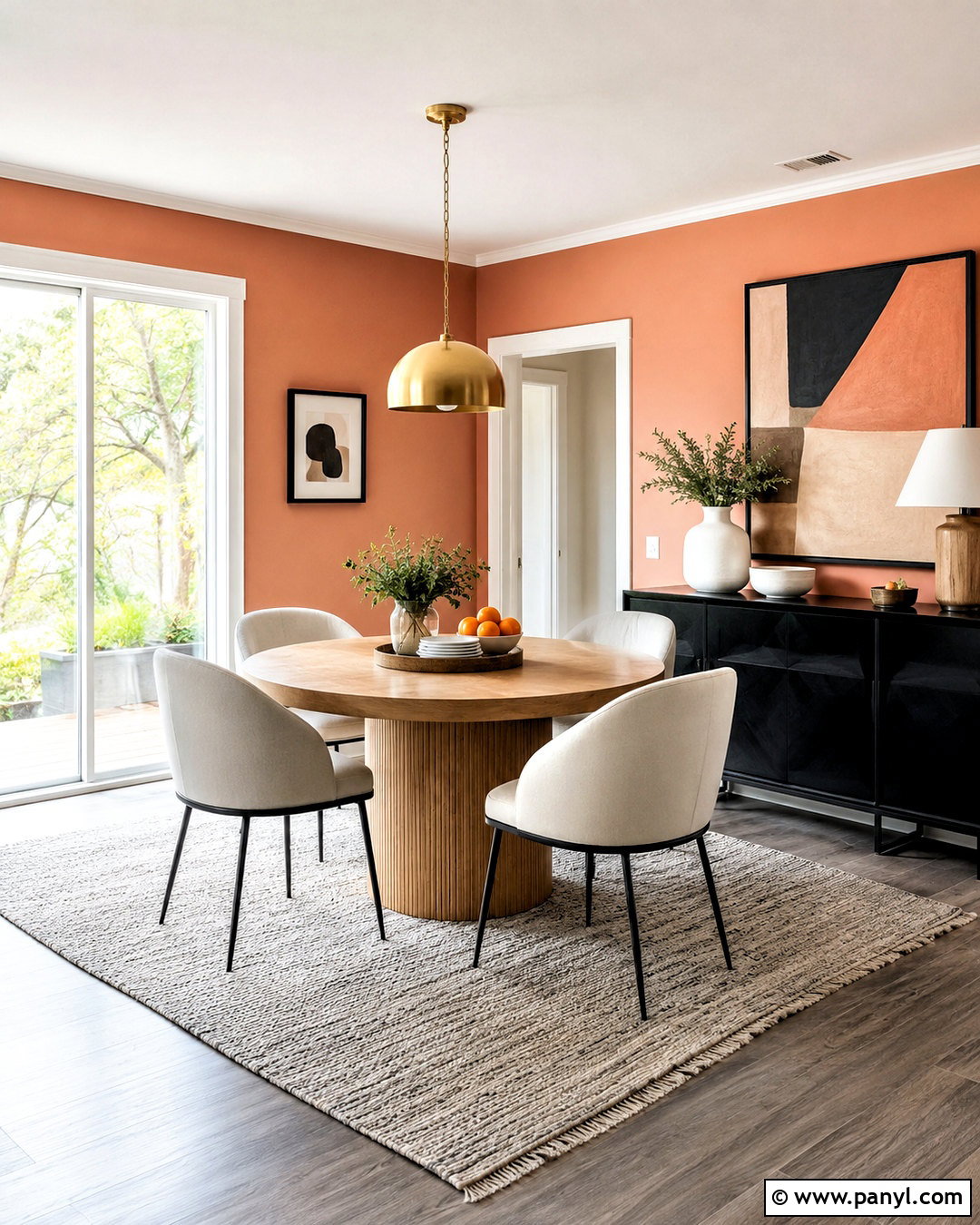
Muted peach walls introduce warmth and brightness while remaining softer than terracotta. Build a cheerful breakfast room with pale peach paint, a round natural oak table, cream upholstered chairs, and a light gray woven rug layered over the flooring. Use white trim, simple brass lighting, and artwork containing peach, charcoal, and beige. A narrow black cabinet or console can repeat the darkest marks in the floor. Select a peach with dusty beige undertones rather than a bright orange cast. This helps the walls coordinate with gray without creating a harsh temperature contrast. The complete setting feels sunny and friendly, making it useful in rooms with limited natural light where gray floors might otherwise look flat, cold, or overly prominent.
17. Butter Yellow Walls With Gray Floors
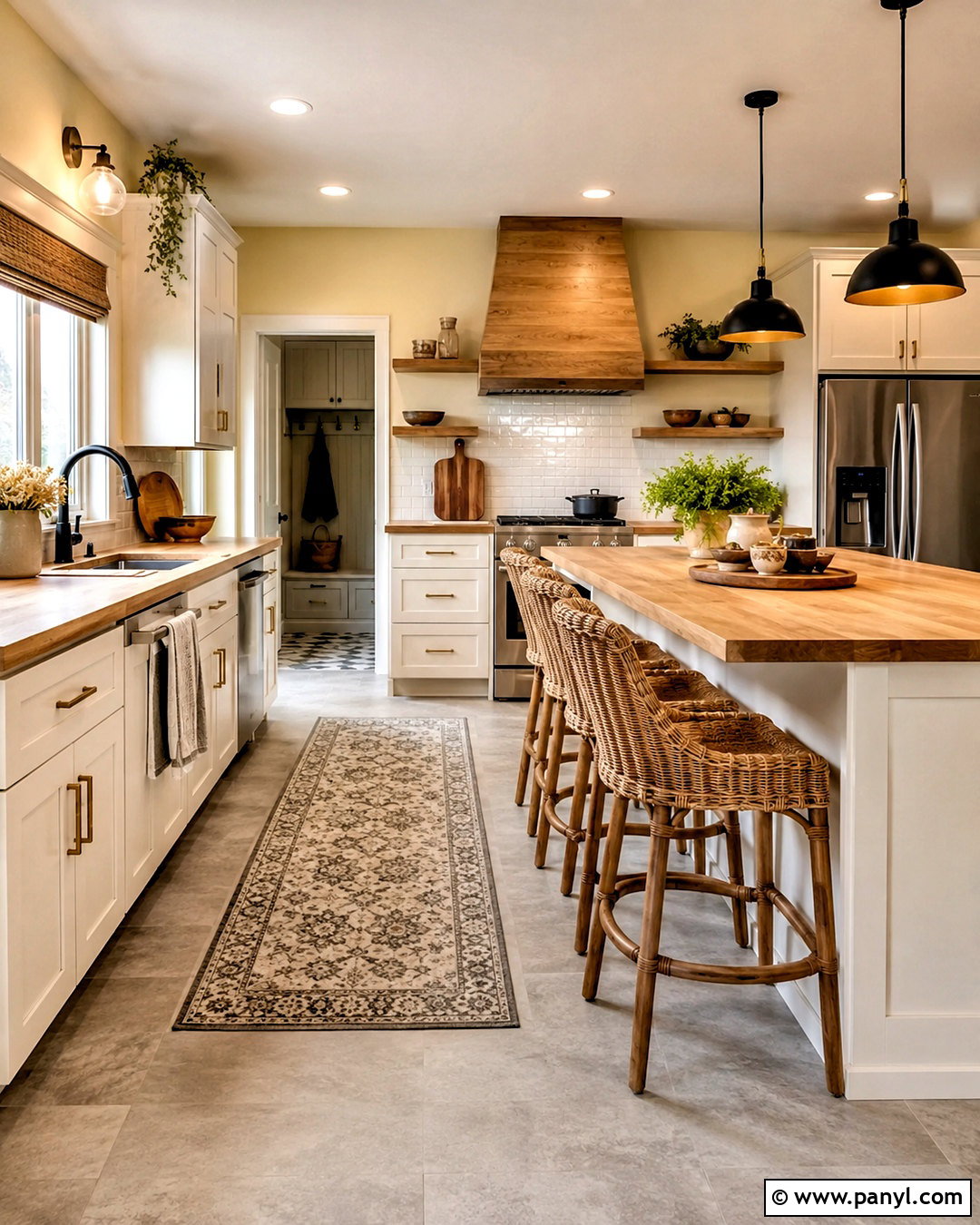
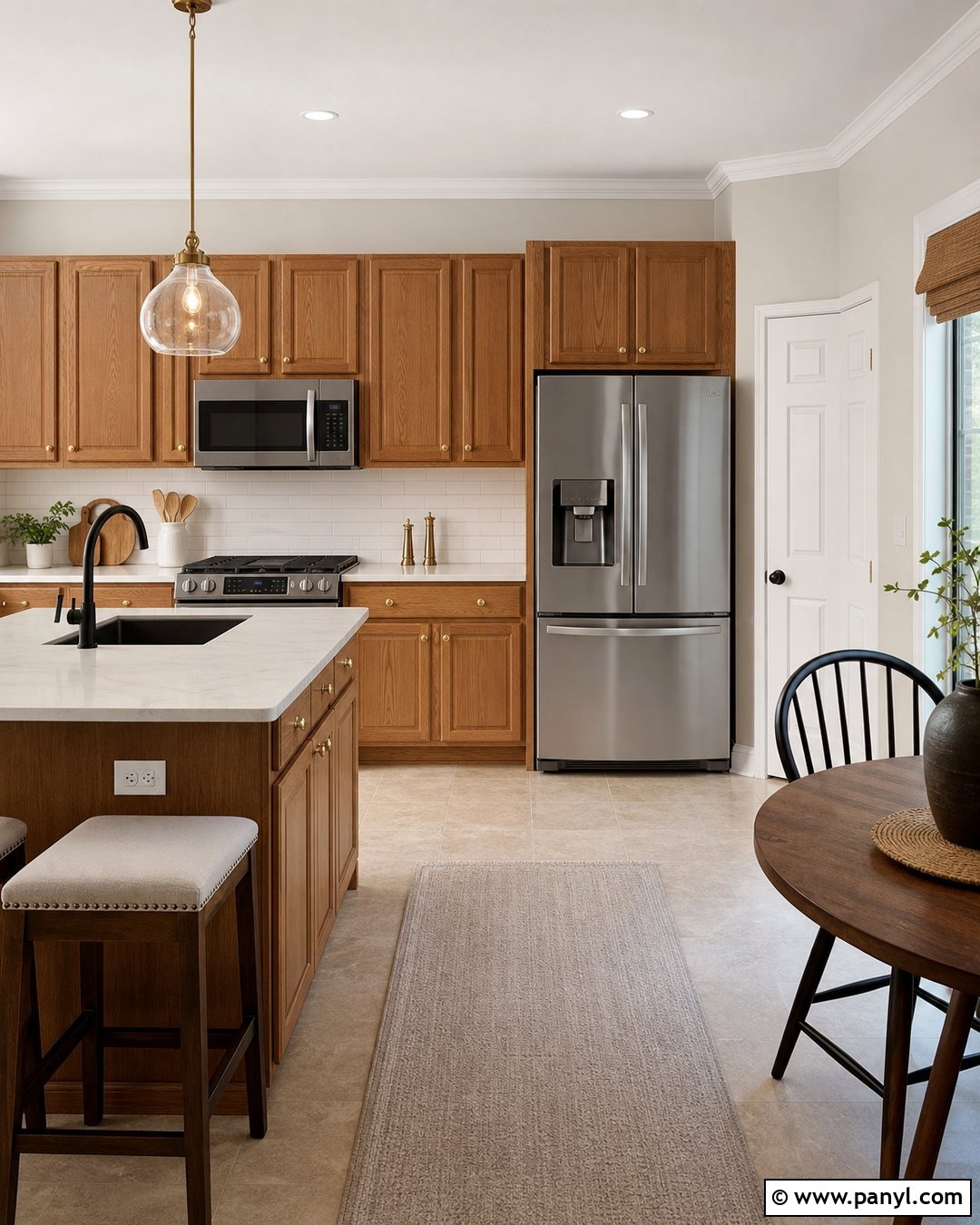
Butter yellow walls bring gentle energy to gray floors, especially in a kitchen or breakfast area. Choose a creamy, desaturated yellow that looks warm without becoming neon or overly traditional. Pair it with soft white cabinets, light gray flooring, butcher-block counters, brushed brass hardware, and woven counter stools. A small patterned runner containing gray, cream, and muted yellow will connect the main surfaces. Introduce matte black through lighting or window frames for definition. Keep the backsplash simple, such as warm white tile, so the room does not become visually busy. This completed kitchen palette feels bright and welcoming. The neutral floor moderates the yellow, while wood and brass reinforce its warmth throughout the space.
18. Charcoal Walls With Gray Floors
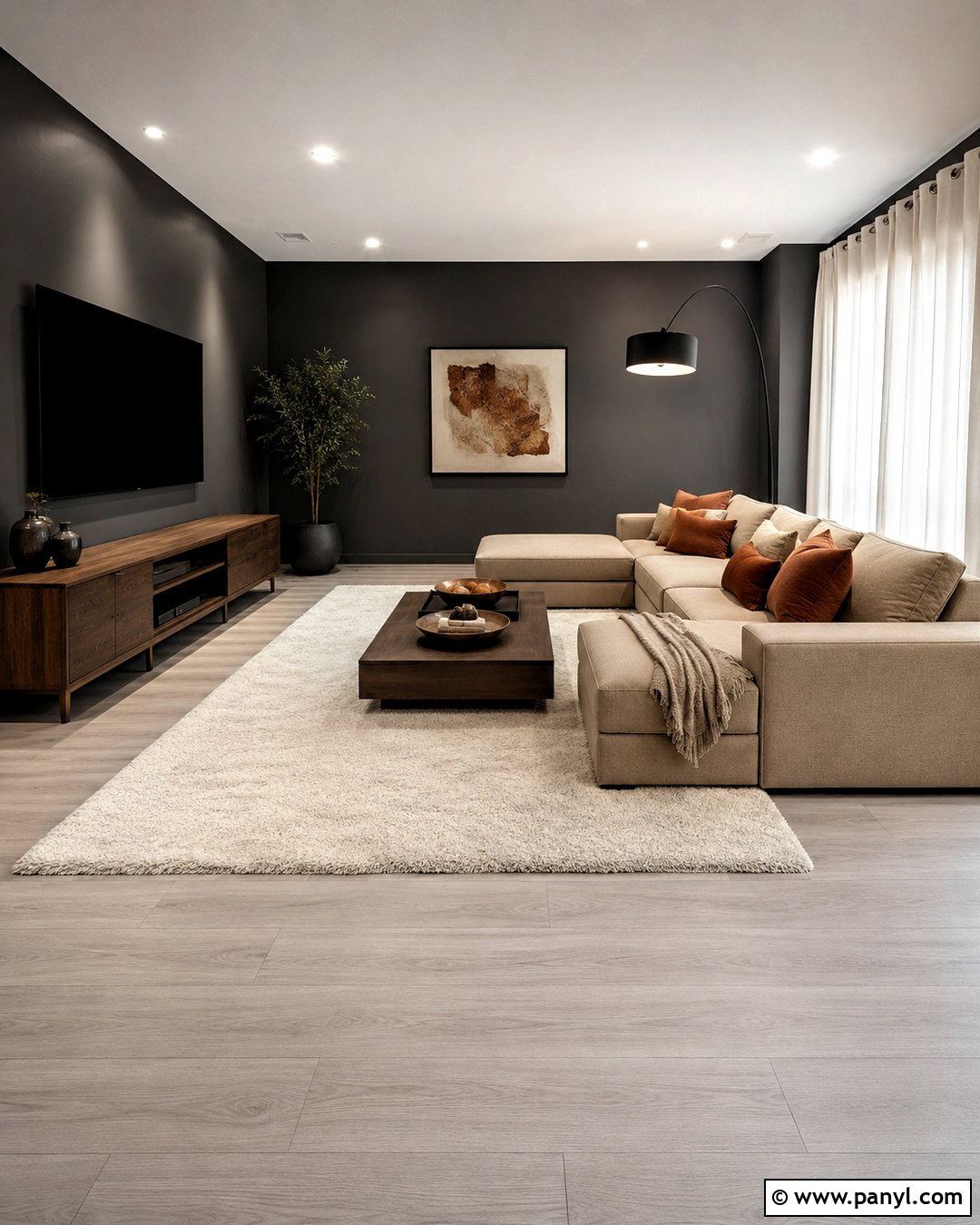
Charcoal walls can work beautifully with pale gray floors when the room includes strong value contrast and adequate light. Create a modern media room with deep charcoal walls, a warm beige sectional, walnut media storage, and an oversized cream rug. Add rust-colored pillows, black metal lighting, and soft white curtains to keep the dark background from feeling severe. Consider painting the trim charcoal as well for a smooth, enveloping effect, while leaving the ceiling warm white. The gray floor should remain several shades lighter than the walls so the room retains visual structure. This full scheme feels dramatic but comfortable because warm upholstery, wood grain, and tactile fabrics break up the darker gray surfaces.
19. Soft Black Walls With Gray Floors
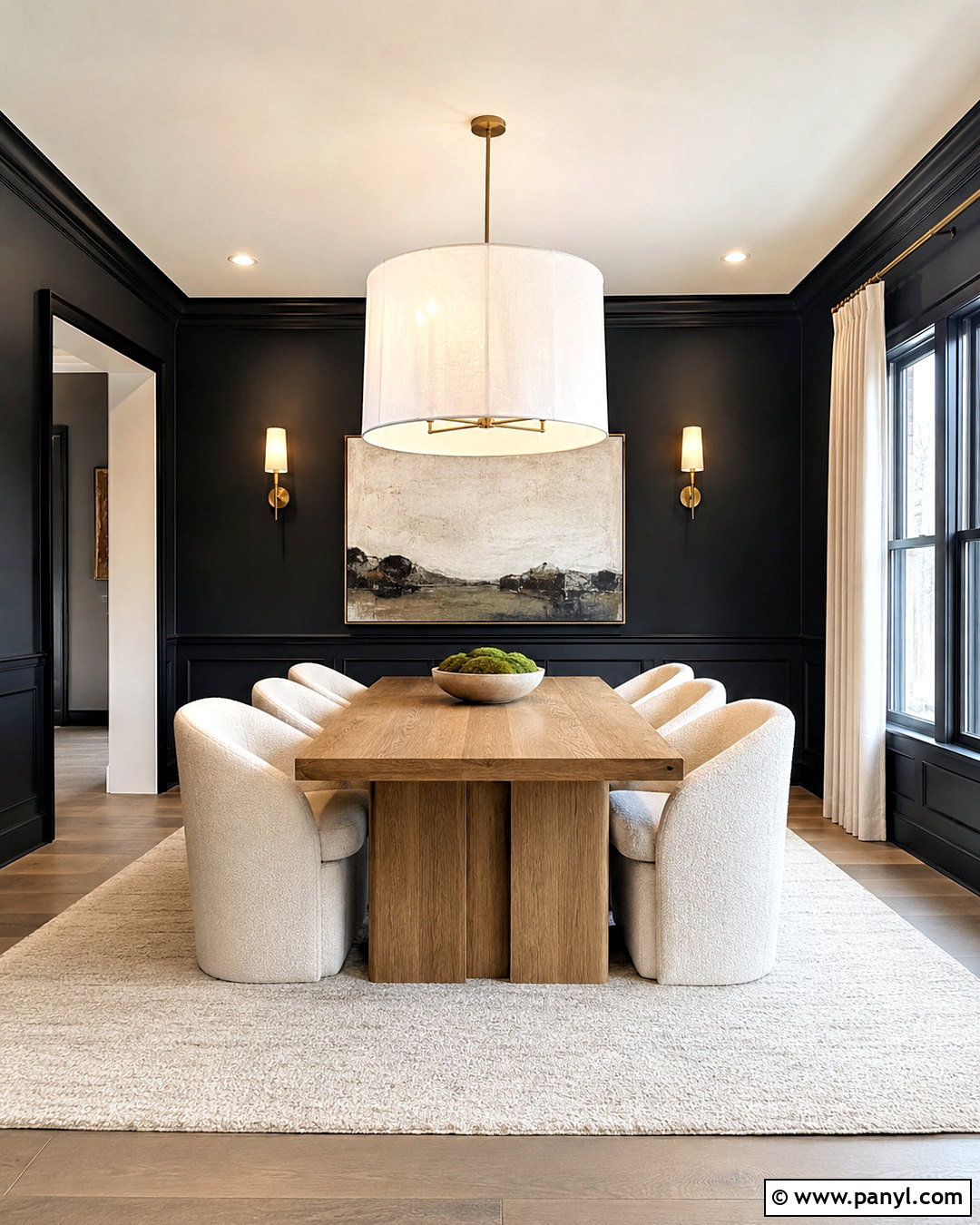
Soft black walls produce a bold, graphic backdrop for light gray flooring without requiring a completely monochromatic room. In a formal dining space, pair the dark walls with a pale oak table, cream bouclé chairs, an ivory rug, and a large linen pendant. Use warm brass hardware and oversized neutral artwork to brighten the walls. Soft black with brown or charcoal undertones is usually easier to live with than an absolute jet black. Paint the trim the same color for a seamless finish, then keep the ceiling warm white. The light floor reflects brightness and separates the furniture from the dark envelope. The resulting room feels modern and intentional, with natural materials making the strong contrast more comfortable and approachable.
20. Light Gray Walls With Gray Floors
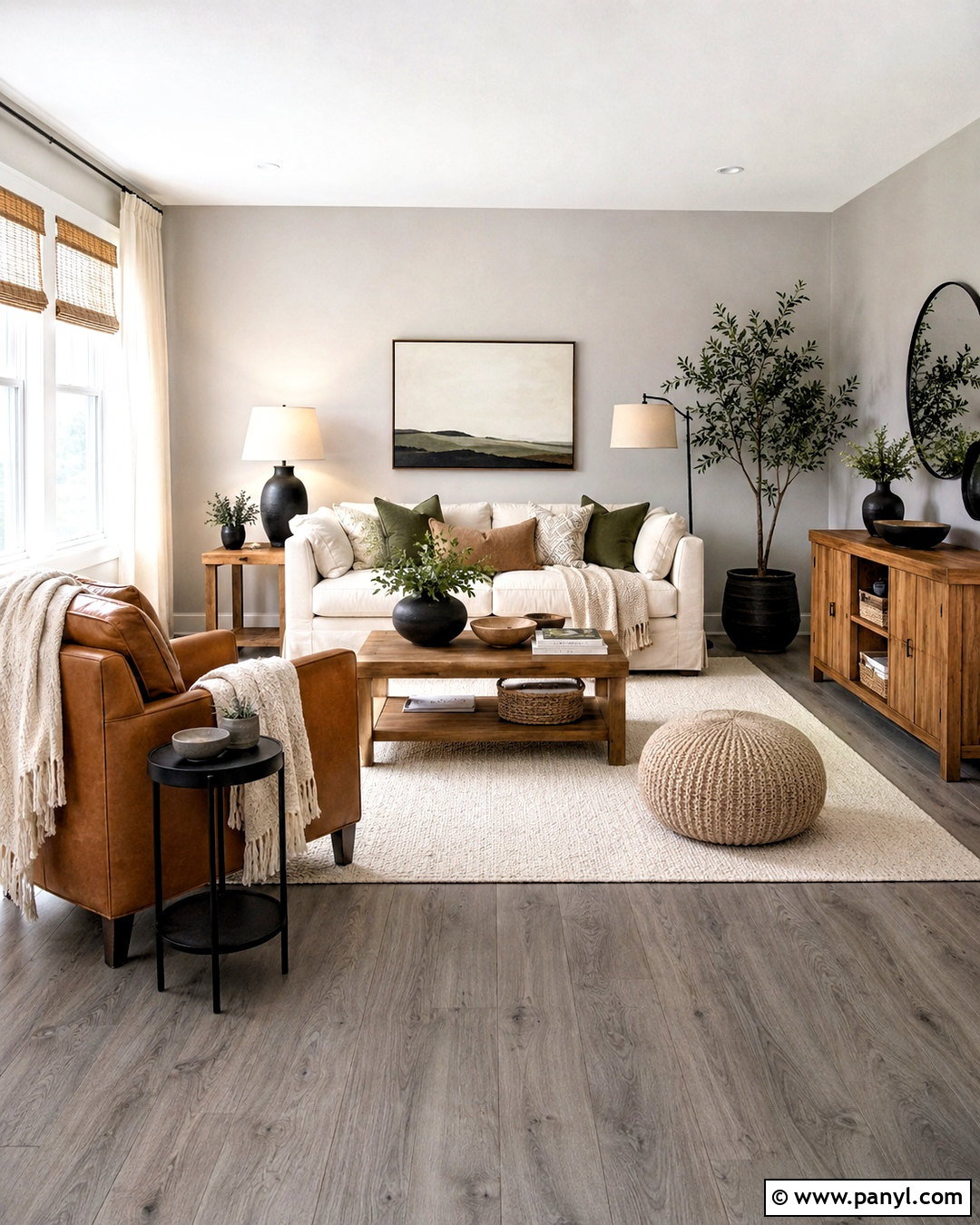
Light gray walls can coordinate with gray floors, but the finished room needs variation in undertone, value, and texture. Choose walls that are distinctly lighter than the flooring and share its warm or cool direction. For a serene living room, combine pale gray walls with medium gray floors, a creamy sofa, warm oak furniture, and a thick ivory rug. Add camel leather, muted green pillows, woven shades, and black accents to break up the neutral surfaces. Avoid gray furniture that matches either the wall or floor too closely. The complete palette should contain warm materials and several shades of off-white. This layered approach makes a gray-on-gray room feel deliberate, dimensional, and comfortable instead of cold or unfinished.
Conclusion:
Deciding what color walls with gray floors begins with identifying whether the flooring leans warm, cool, or neutral. Warm white, cream, beige, and greige offer dependable flexibility, while green, blue, blush, terracotta, and yellow introduce more personality. Dark navy, charcoal, or soft black can also work when lighter furnishings and strong illumination balance them. Whatever color you prefer, build the entire room around it rather than treating the walls and floors as separate decisions. Rugs, wood tones, textiles, metals, trim, and lighting should connect the two surfaces. Test large samples directly beside the flooring at different times of day. This simple step helps reveal undertones and prevents expensive color mistakes. ()

Related Ideas and Inspiration:
Leave a Reply