
Dark wood flooring gives a room depth, character, and a strong visual foundation, but the surrounding palette determines whether it feels balanced or overly heavy. When deciding what color walls go with dark wood floors, start by studying the floor’s undertone. Espresso and gray-brown boards often suit cooler shades, while walnut, mahogany, and reddish stains usually coordinate better with warmer paint. Natural light, room size, trim color, and furniture also matter. Lighter walls create an open contrast, while saturated colors can produce a cozy, dramatic effect. Coordinated rugs, upholstery, window treatments, and lighting help connect the entire room rather than leaving the walls and flooring visually separated. () Here are 20 complete room looks that answer What Color Walls Go With Dark Wood Floors.

1. Warm White Walls With Dark Wood Floors
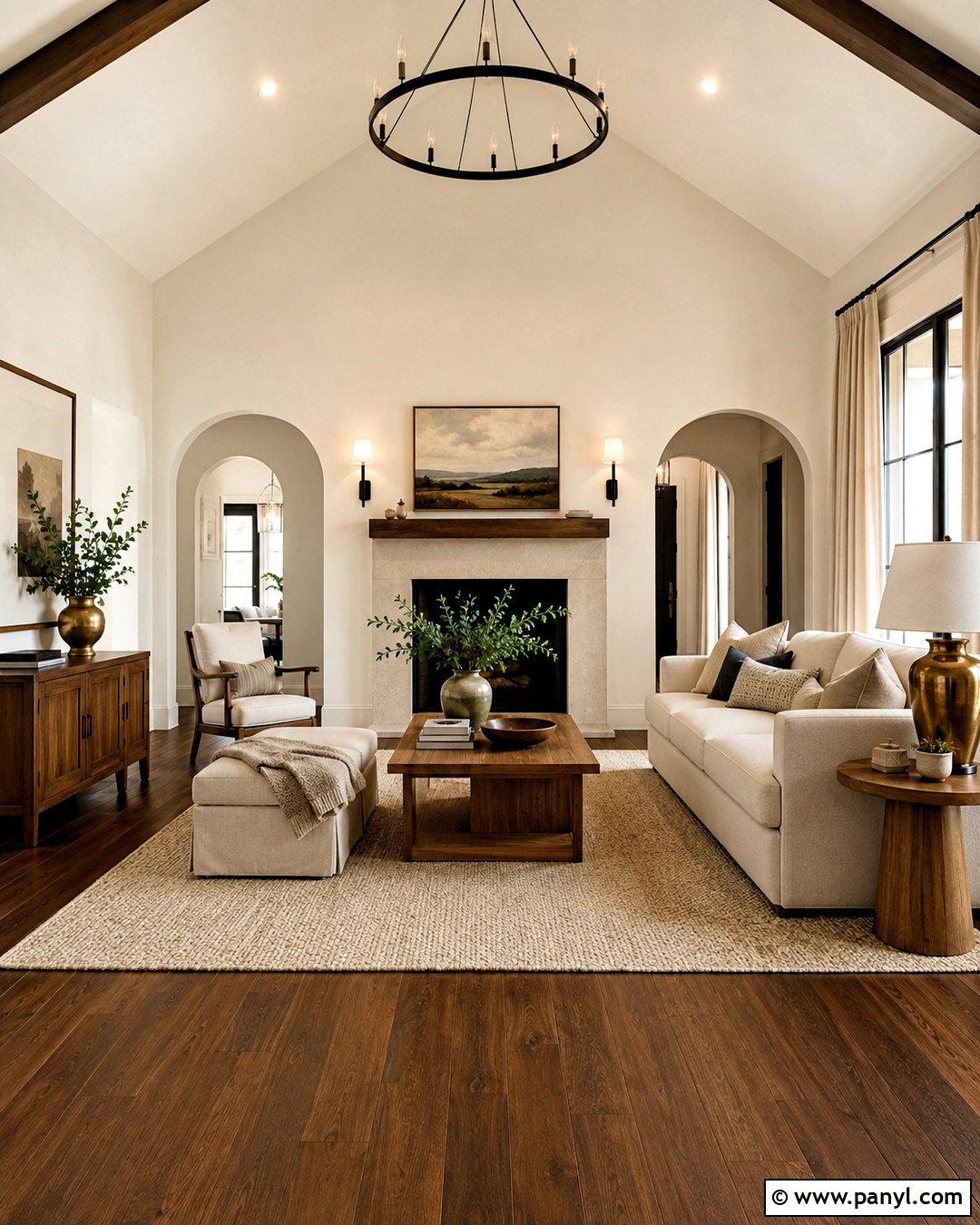
Warm white walls create a bright, welcoming contrast against espresso, walnut, or dark oak flooring. Choose a white with subtle cream or beige undertones rather than a sharp blue-white, especially when the floor contains reddish or golden notes. Complete the room with a large oatmeal rug, a light beige sofa, and medium-toned oak accent furniture. Linen curtains soften the windows without reducing daylight. Matte black lighting adds definition, while aged brass accessories bring warmth to the dark flooring. Keep the baseboards and ceiling in the same warm white for a clean transition. This complete palette works especially well in living rooms, open-concept spaces, and bedrooms where you want the flooring to feel rich but not visually overwhelming.
2. Cream Walls With Dark Wood Floors
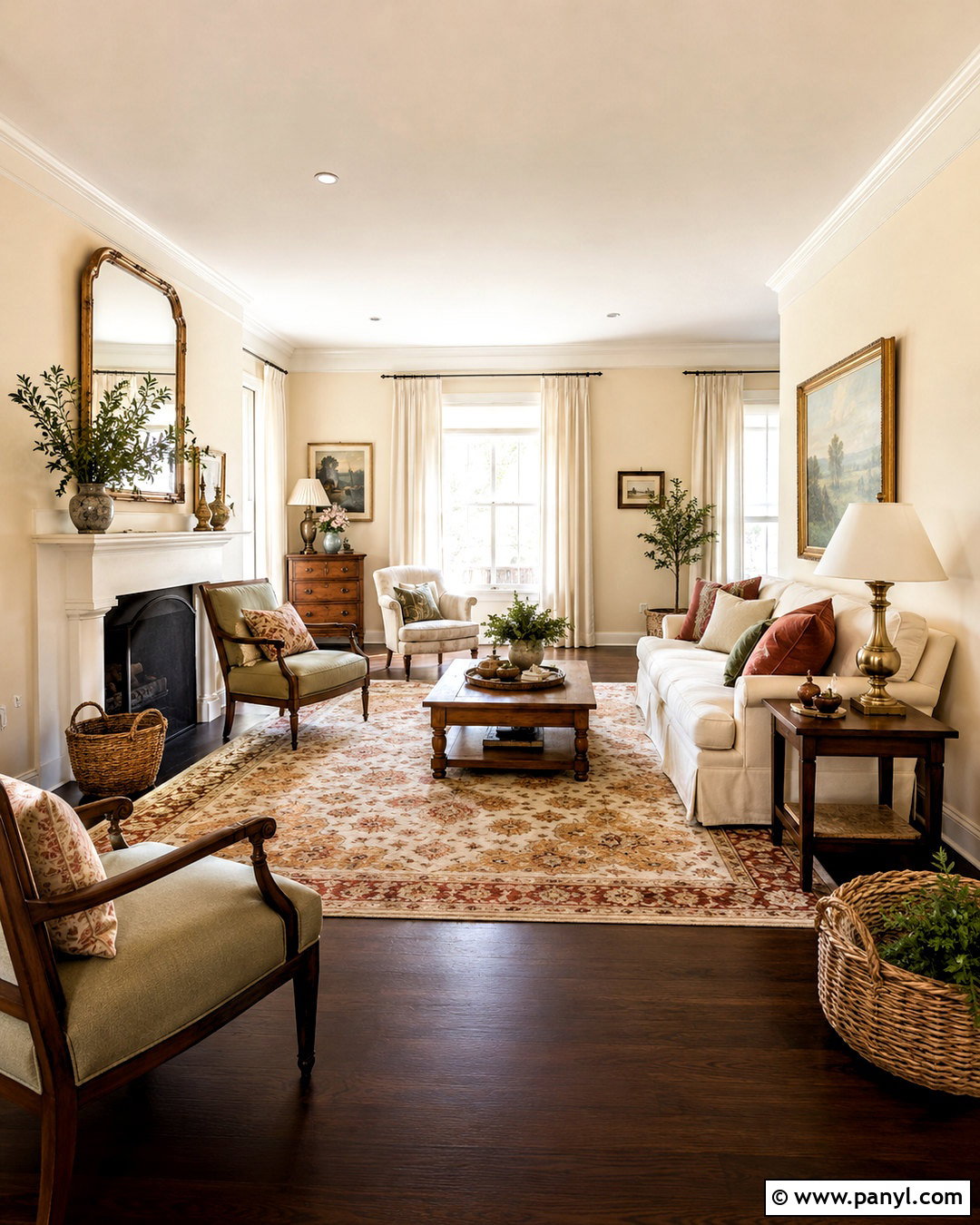
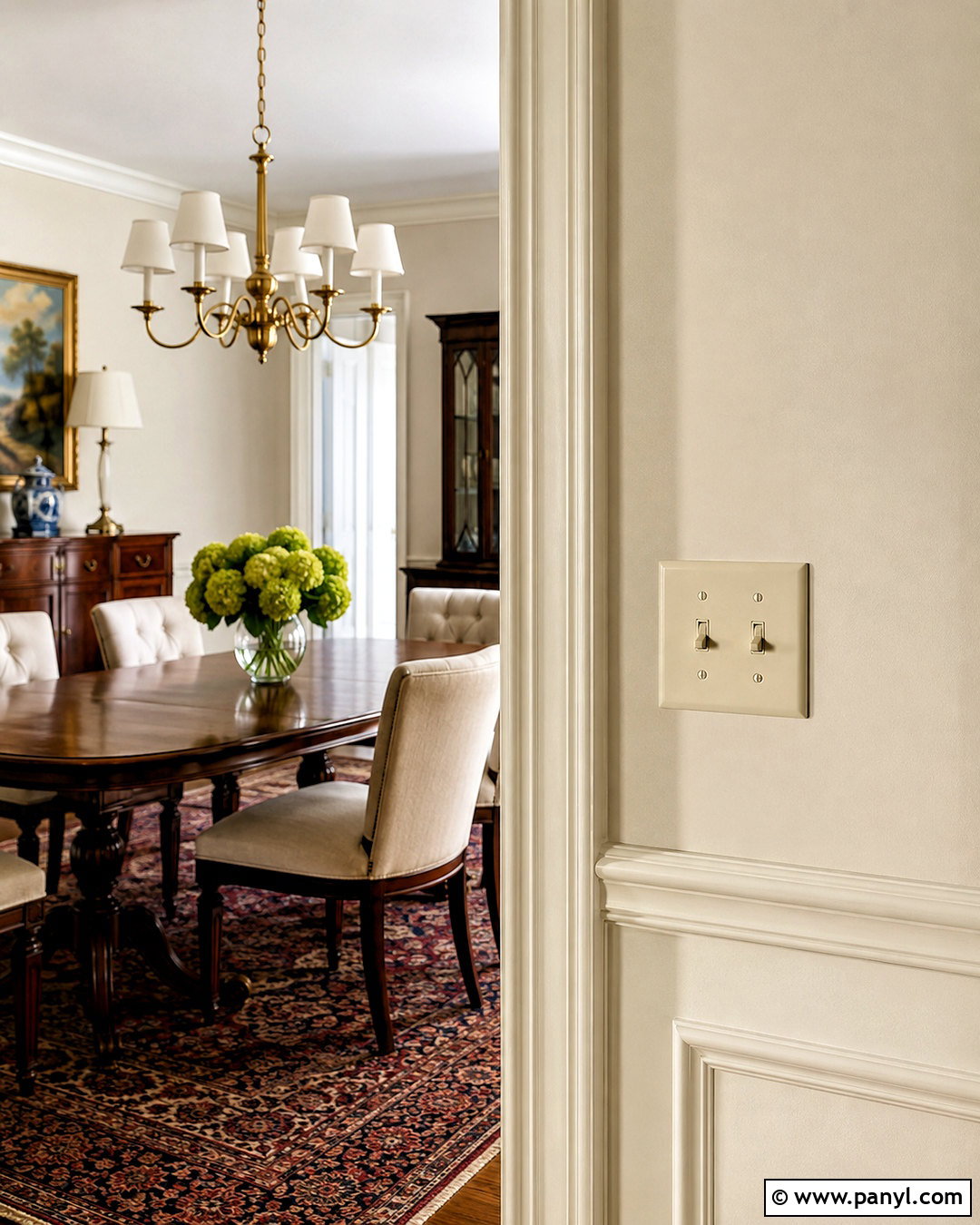
Cream walls enhance the warm character of dark brown floors while making the room feel softer than bright white would. This combination works beautifully with traditional, transitional, farmhouse, and relaxed contemporary interiors. Use an ivory or natural linen sofa, warm wood tables, and an area rug containing cream, taupe, and muted rust. Add antique brass lighting and woven baskets for another layer of warmth. Curtains in an off-white fabric should closely match the walls, helping the windows appear taller and wider. To prevent the palette from looking yellow, introduce small touches of charcoal or matte black through frames, lamps, and furniture legs. The final room feels comfortable, coordinated, and light without competing with the natural grain of the floor.
3. Soft Greige Walls With Dark Wood Floors
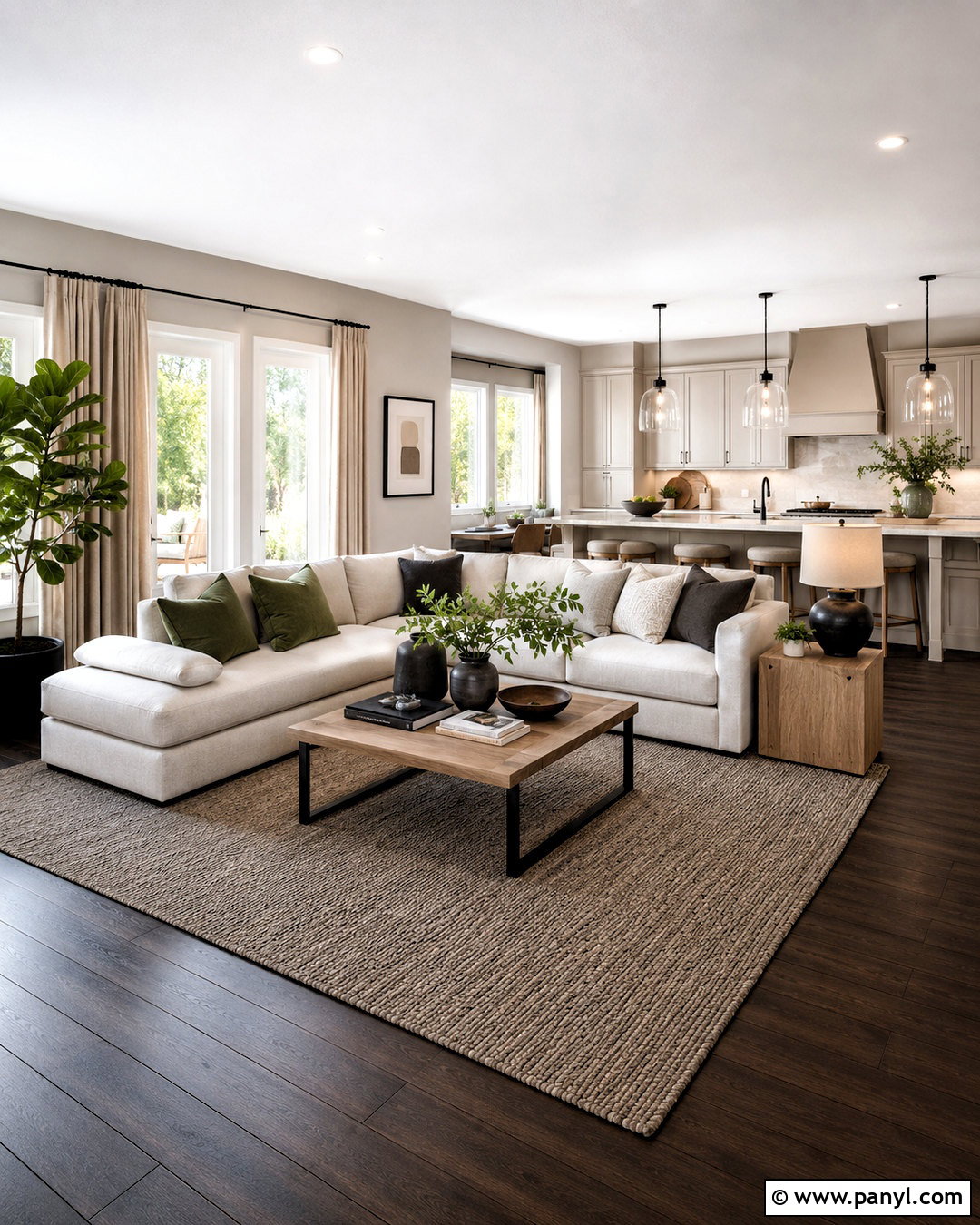
Soft greige offers the warmth of beige with enough gray to create a fresh, modern look. It is particularly useful when dark wood floors contain both warm brown and cooler charcoal undertones. Furnish the room with an ivory sectional, a textured light taupe rug, and pale oak or walnut tables. Black metal details can echo the deepest tones in the flooring without making the room feel too dark. Add muted green pillows, simple ceramic decor, and natural linen curtains to keep the palette relaxed. Crisp off-white trim gives the walls definition and separates them from the floor. This complete scheme works across living rooms, dining areas, and hallways, making it a practical choice for homes with continuous dark flooring throughout several connected spaces.
4. Light Beige Walls With Dark Wood Floors
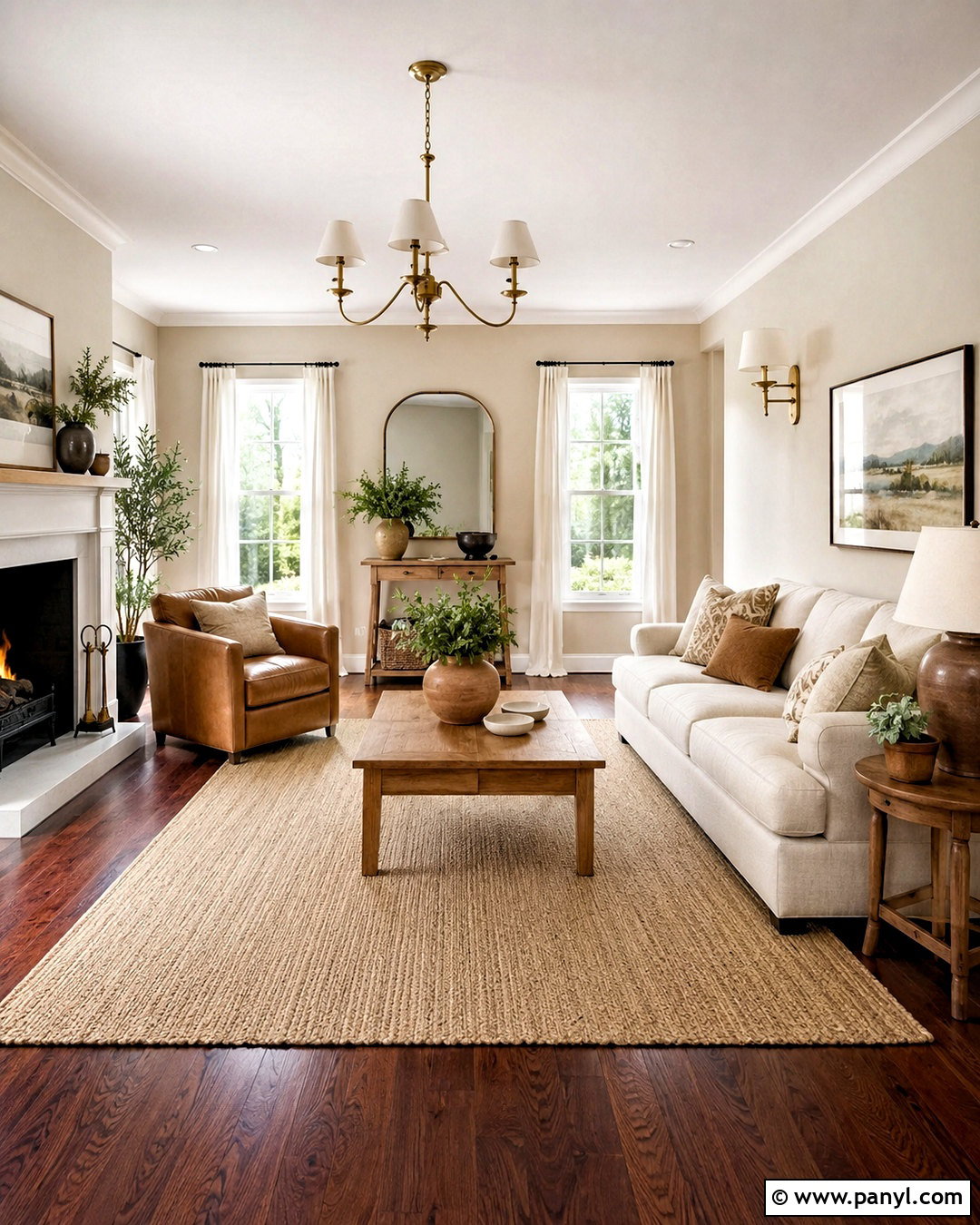
Imagine a comfortable room where warm beige walls meet deep chocolate flooring and every material feels naturally connected. Light beige is ideal for dark floors with red, amber, or golden undertones because it supports their warmth without matching them too closely. Build the room around a cream sofa, camel leather chair, and a large ivory-and-tan rug. Add medium oak furniture to create a gradual transition between the pale walls and dark flooring. Soft white curtains, brushed brass fixtures, and pottery in warm earth tones complete the space. Avoid using too many dark brown furnishings, which could make the lower half feel crowded. The resulting look is welcoming, timeless, and especially effective in family rooms, dining rooms, and traditional open-plan interiors.
5. Light Taupe Walls With Dark Wood Floors
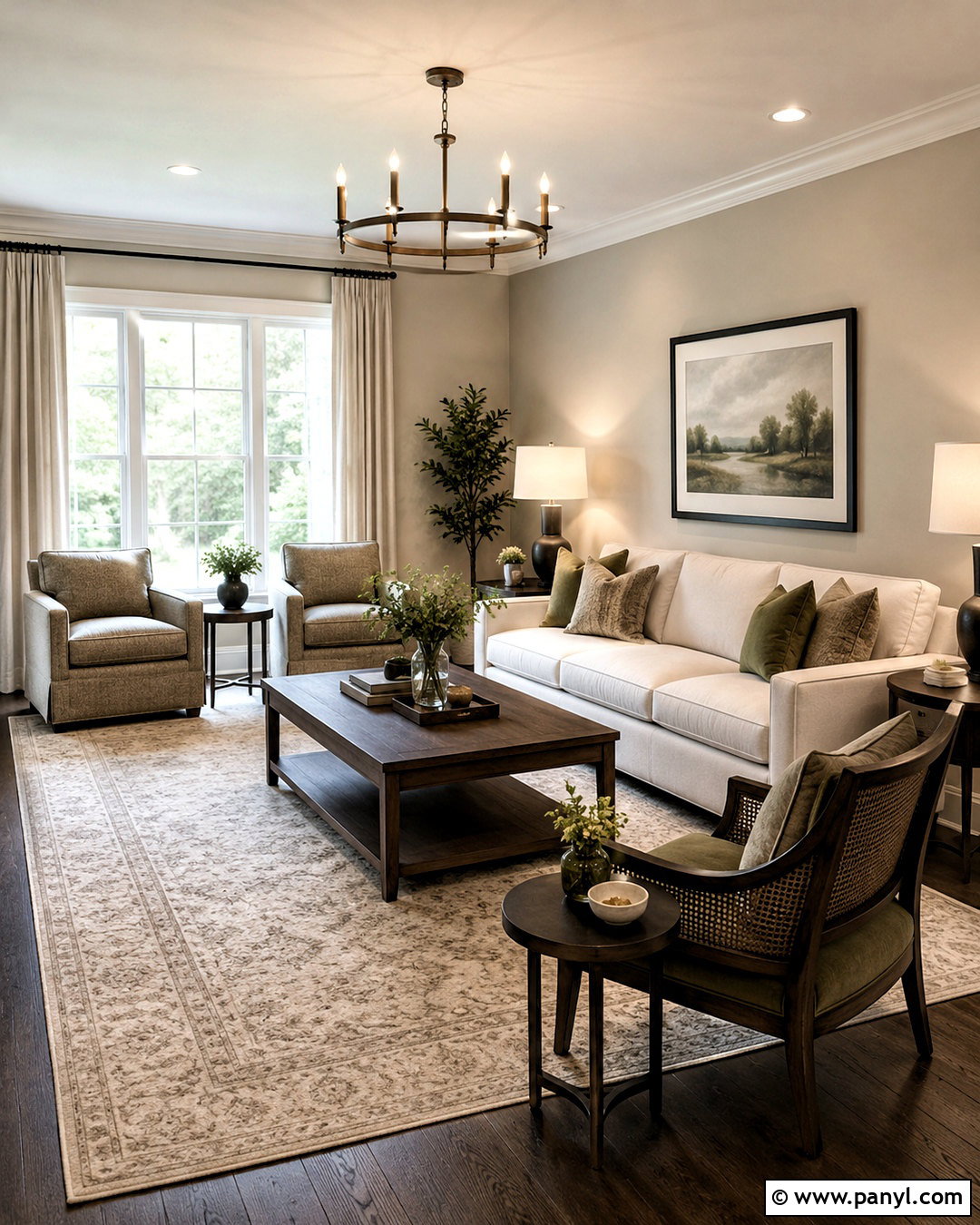
Light taupe walls bring quiet sophistication to a room with dark wood floors. Unlike basic beige, taupe usually carries a subtle gray or brown base that coordinates naturally with walnut and espresso finishes. Create a complete layered look with an off-white sofa, mushroom-colored chairs, and a pale patterned rug large enough to expose a border of flooring. Mix dark walnut furniture with lighter upholstered pieces so the room remains balanced. Bronze lighting, cream curtains, and black picture frames provide crisp accents. For additional color, use muted olive, dusty blue, or clay-colored accessories in small amounts. This palette is particularly effective in formal living rooms and bedrooms where a calm, tailored atmosphere feels more appropriate than a high-contrast black-and-white design.
6. Pale Gray Walls With Dark Wood Floors
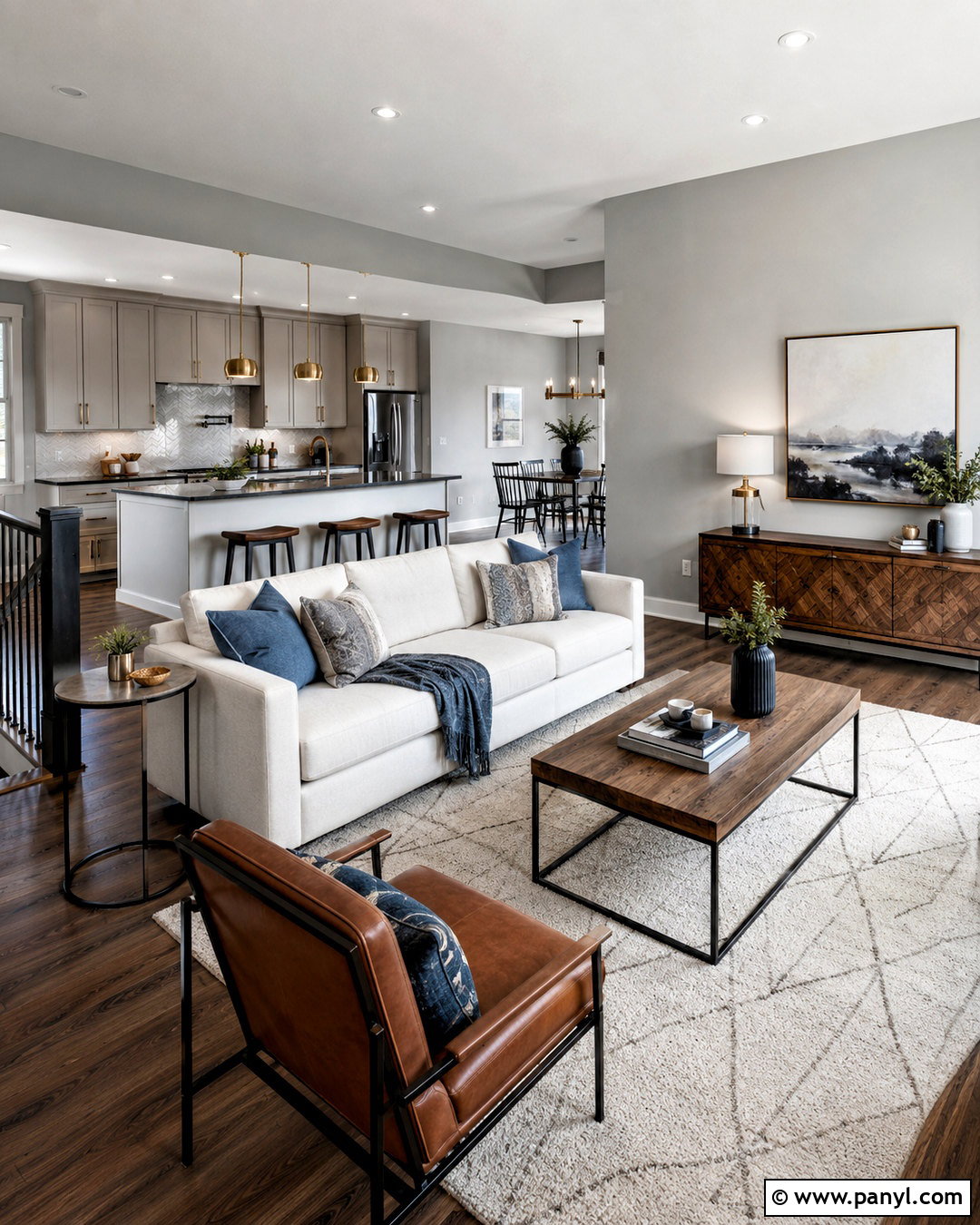
Pale gray walls can give dark wood flooring a cleaner, more contemporary appearance, especially when the boards have neutral or cool undertones. Select a soft gray that remains light throughout the day rather than one that turns icy blue in shaded corners. Pair it with a white or light gray sofa, a cream geometric rug, and streamlined furniture in black metal and medium walnut. White trim creates a sharp boundary above the flooring. Introduce warmth through cognac leather, woven textiles, and brushed brass lighting so the room does not feel sterile. Blue-gray pillows and simple abstract artwork can reinforce the cooler palette. This finished scheme suits modern living rooms, home offices, and dining spaces with generous windows and uncluttered architectural lines.
7. Cool Gray Walls With Dark Wood Floors
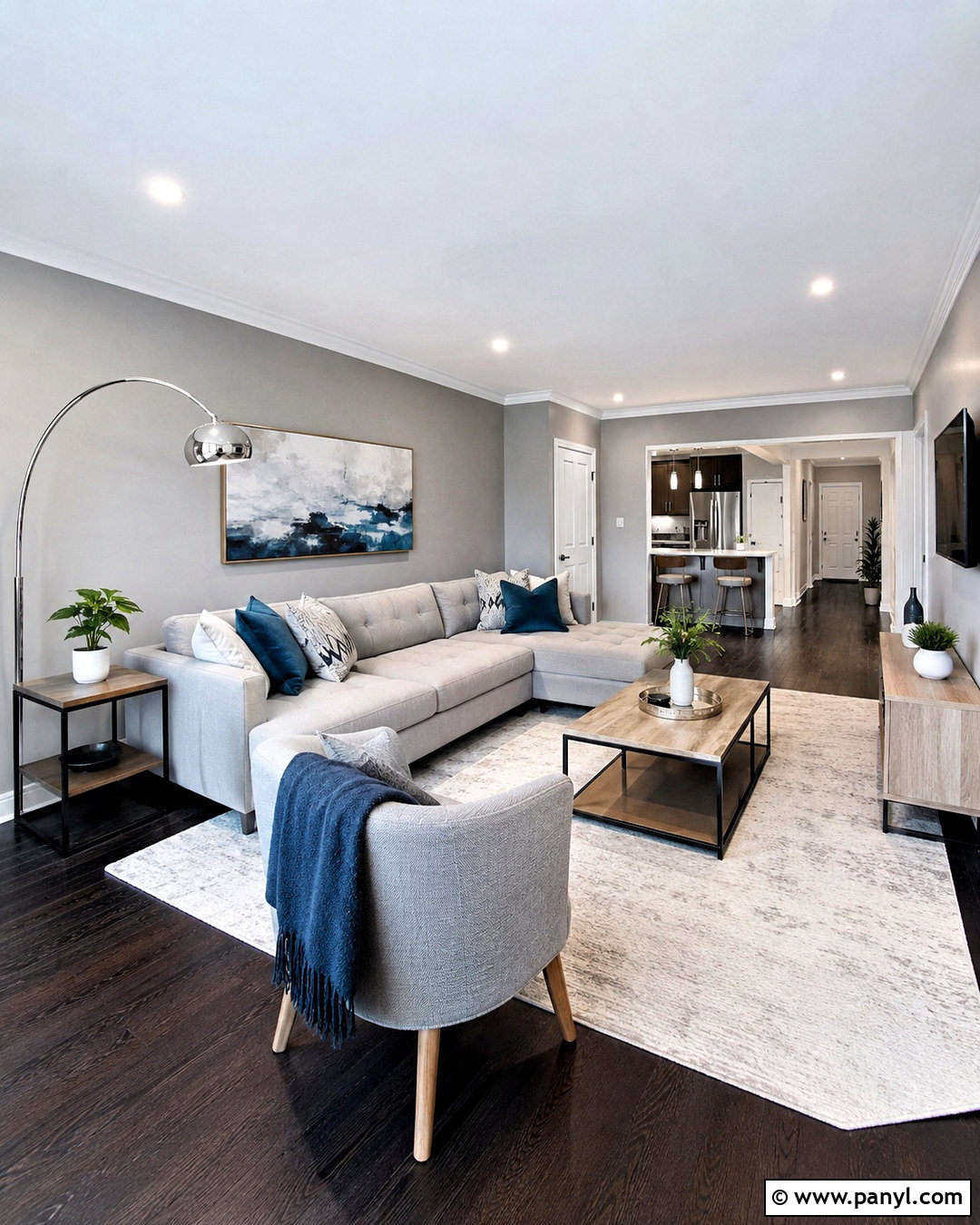
For dark espresso or nearly black floors, cool gray walls create a polished urban look. The key is choosing a medium-light gray that provides clear contrast rather than a deep charcoal that absorbs too much light. Furnish the room with a light gray sectional, a large ivory rug, and sleek black-framed tables. Add a few pale wood accents to break up the darker finishes. Chrome or brushed nickel lighting supports the cool color direction, while blue and white textiles keep the room crisp. Hang oversized artwork with white backgrounds to brighten the walls. White baseboards should remain visible between the gray paint and dark flooring. The overall room feels structured and modern, making this combination suitable for apartments, offices, and minimalist living areas.
8. Blue Gray Walls With Dark Wood Floors
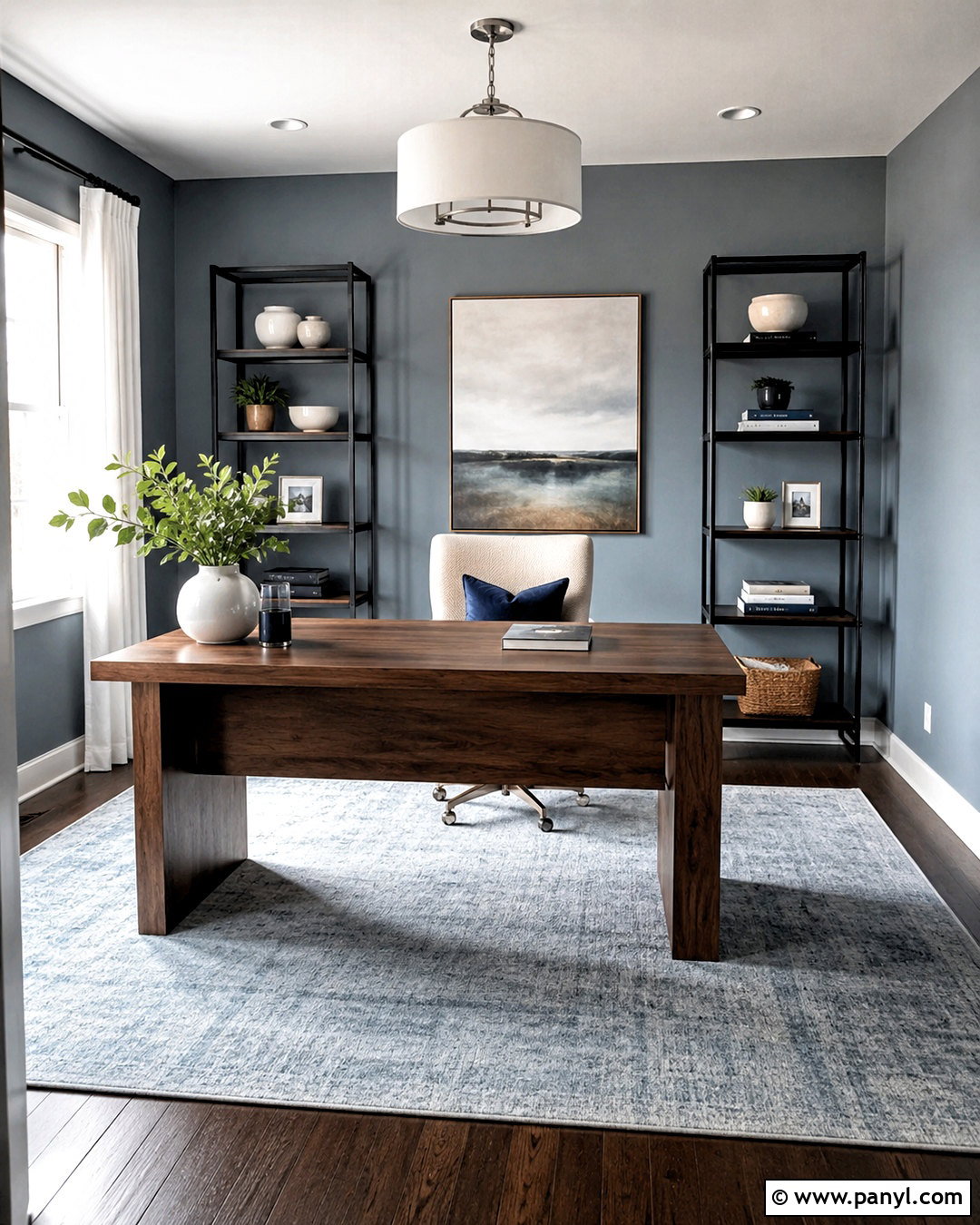
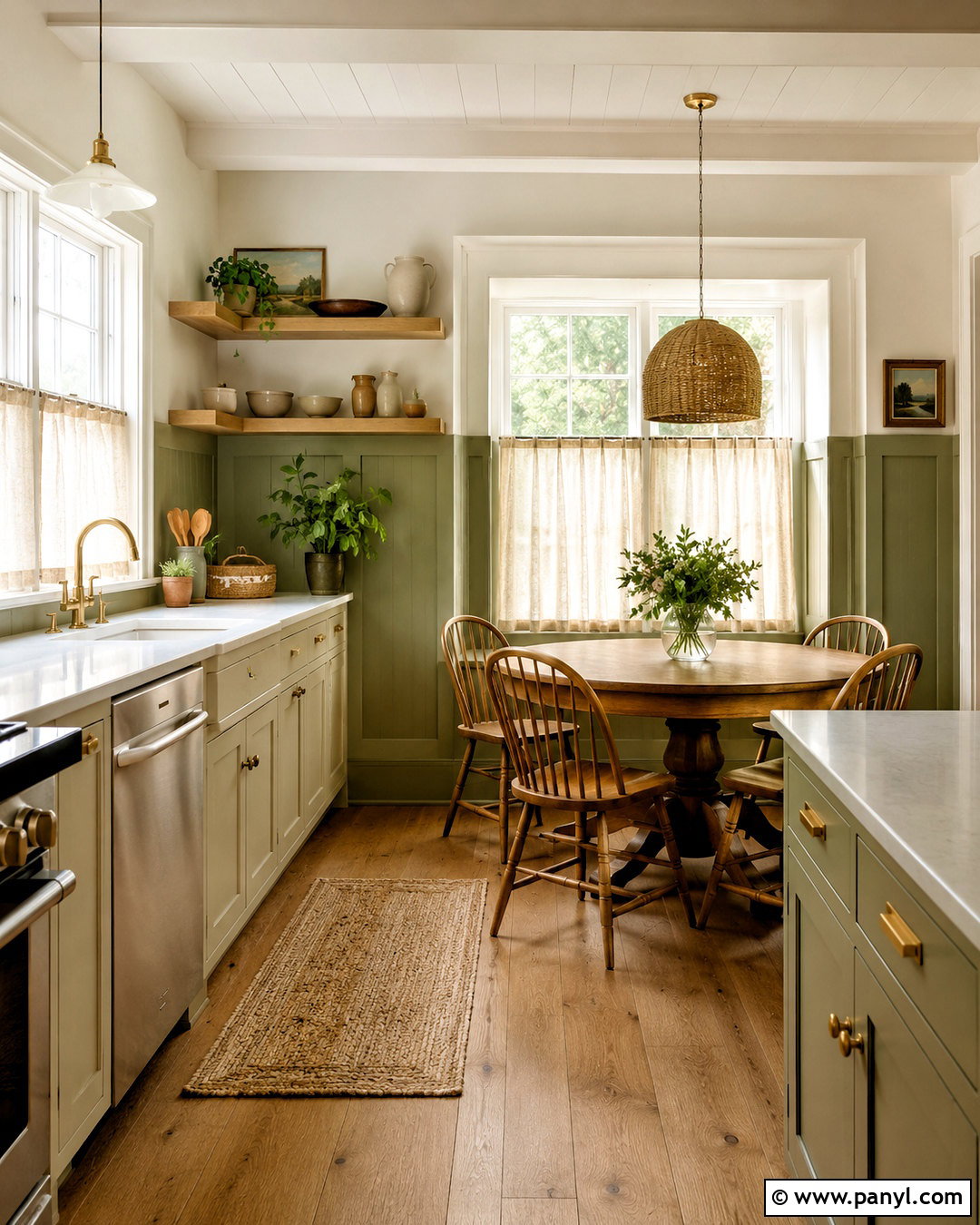
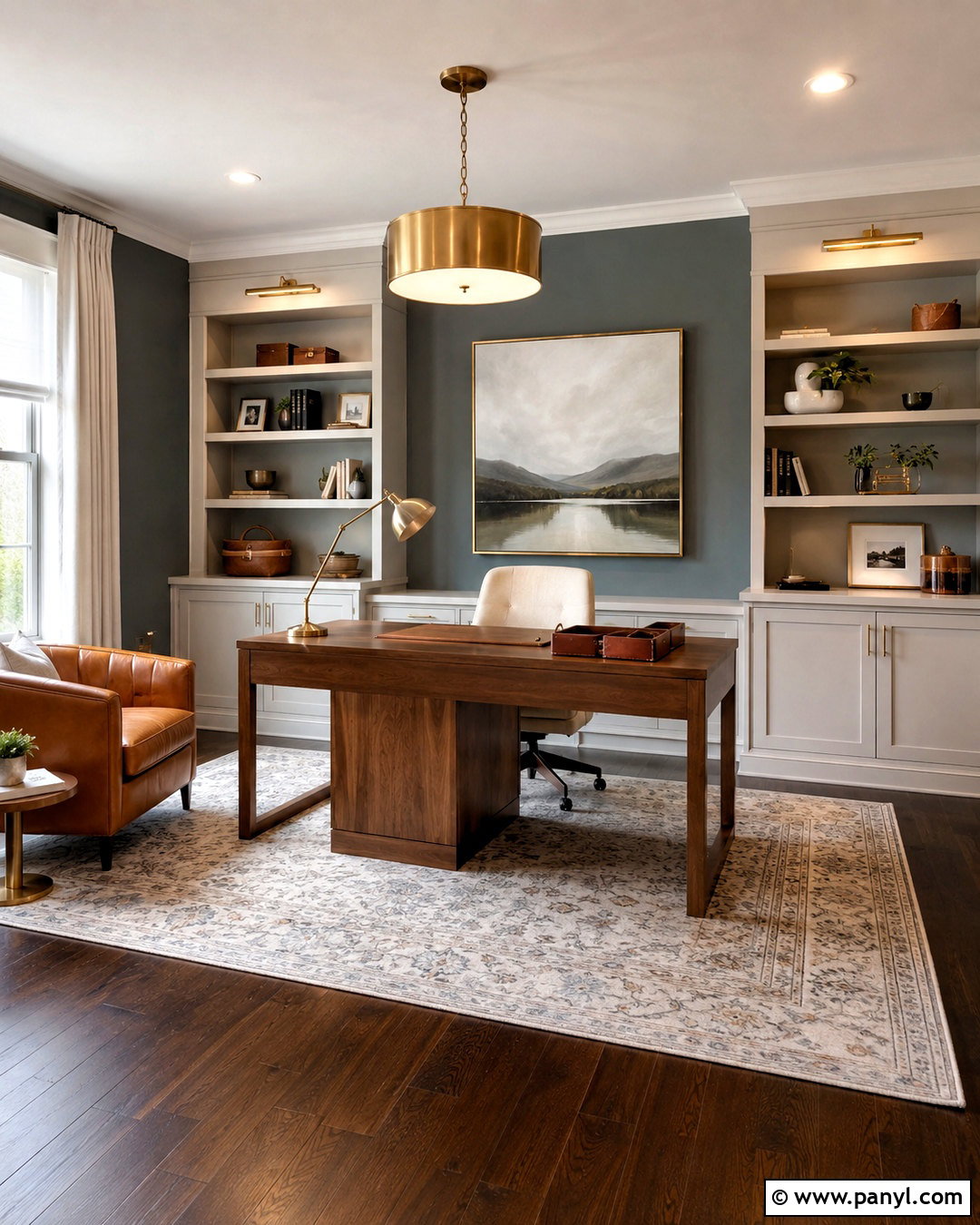
Blue-gray walls provide color without overpowering the depth and grain of dark wood floors. This muted shade works best with cool brown, ebony, or smoke-stained flooring. Build a calm room with a cream sofa, a pale blue-gray rug, and furniture combining walnut tops with matte black frames. White curtains and trim brighten the perimeter, while navy pillows create a deeper connection to the walls. Introduce natural texture through a woven ottoman, linen upholstery, and handmade ceramic pieces. Brushed nickel or soft brass fixtures can both work, depending on the floor’s undertone. The finished design feels peaceful but not plain. It is an excellent option for bedrooms, home offices, living rooms, or dining spaces that receive balanced natural daylight.
9. Pale Blue Walls With Dark Wood Floors
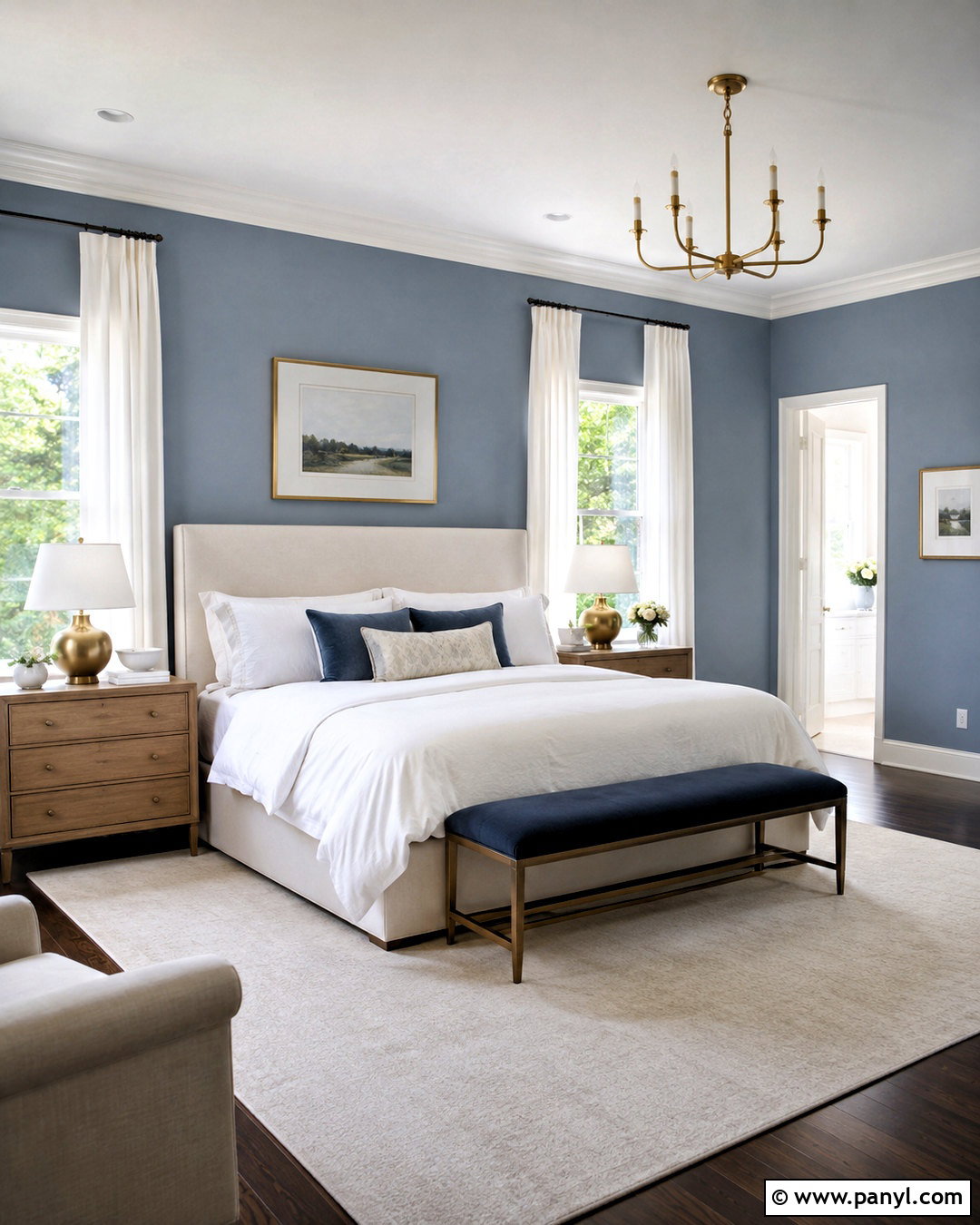
Pale blue walls can make a room with dark wood flooring feel airy, restful, and pleasantly contrasted. Choose a dusty or slightly gray blue instead of a sugary pastel. Complete the look with white trim, an ivory upholstered bed or sofa, and a large cream rug that reveals enough flooring to frame the room. Light oak nightstands or side tables create a gentle bridge between the light walls and deep floor. Use navy in small doses through pillows, artwork, or a bench, then add brushed brass lighting for warmth. White linen curtains maintain the bright atmosphere. This coordinated scheme is especially effective in bedrooms and sitting rooms, where the pale blue adds softness while the dark floor provides structure and visual stability.
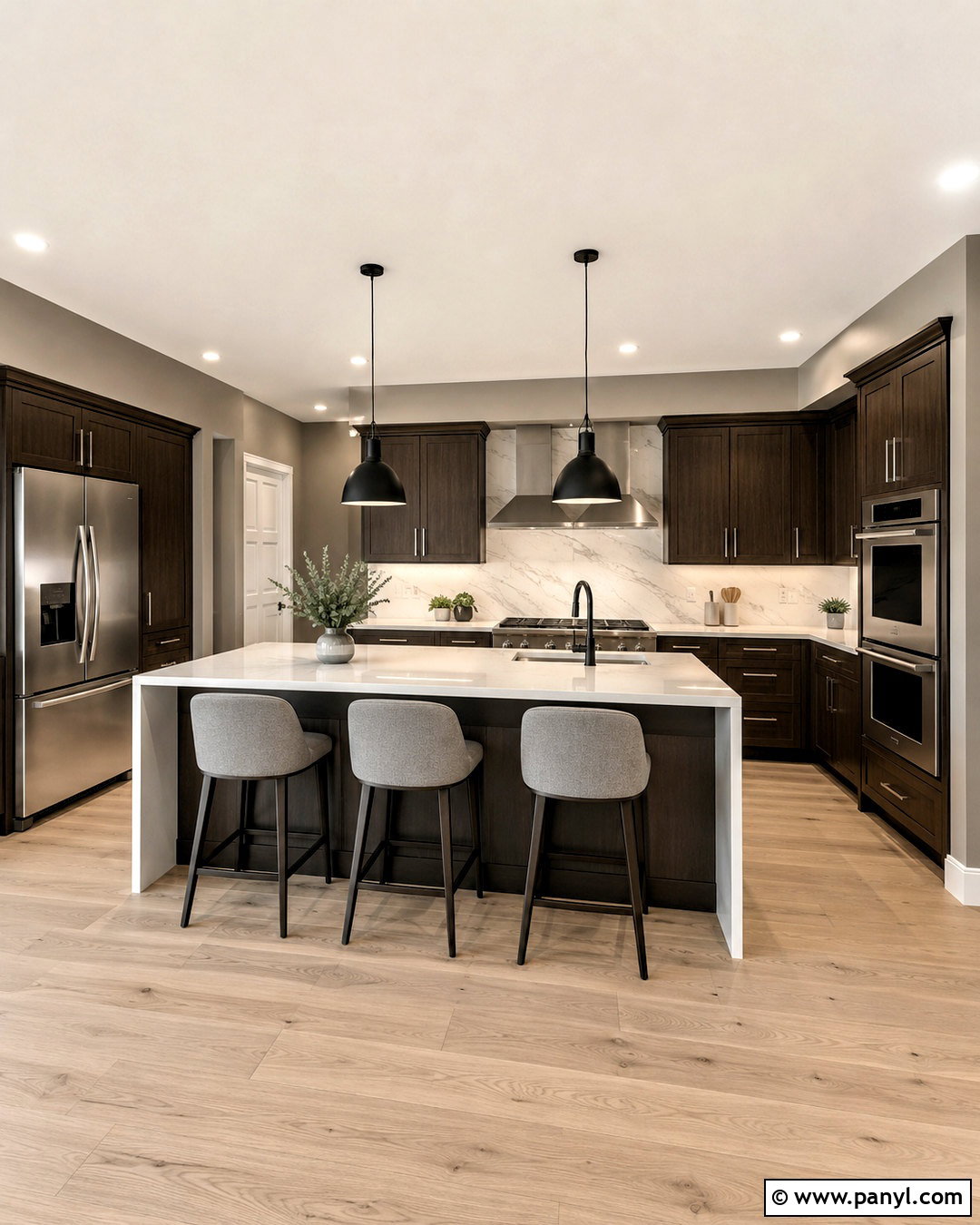
10. Sage Green Walls With Dark Wood Floors
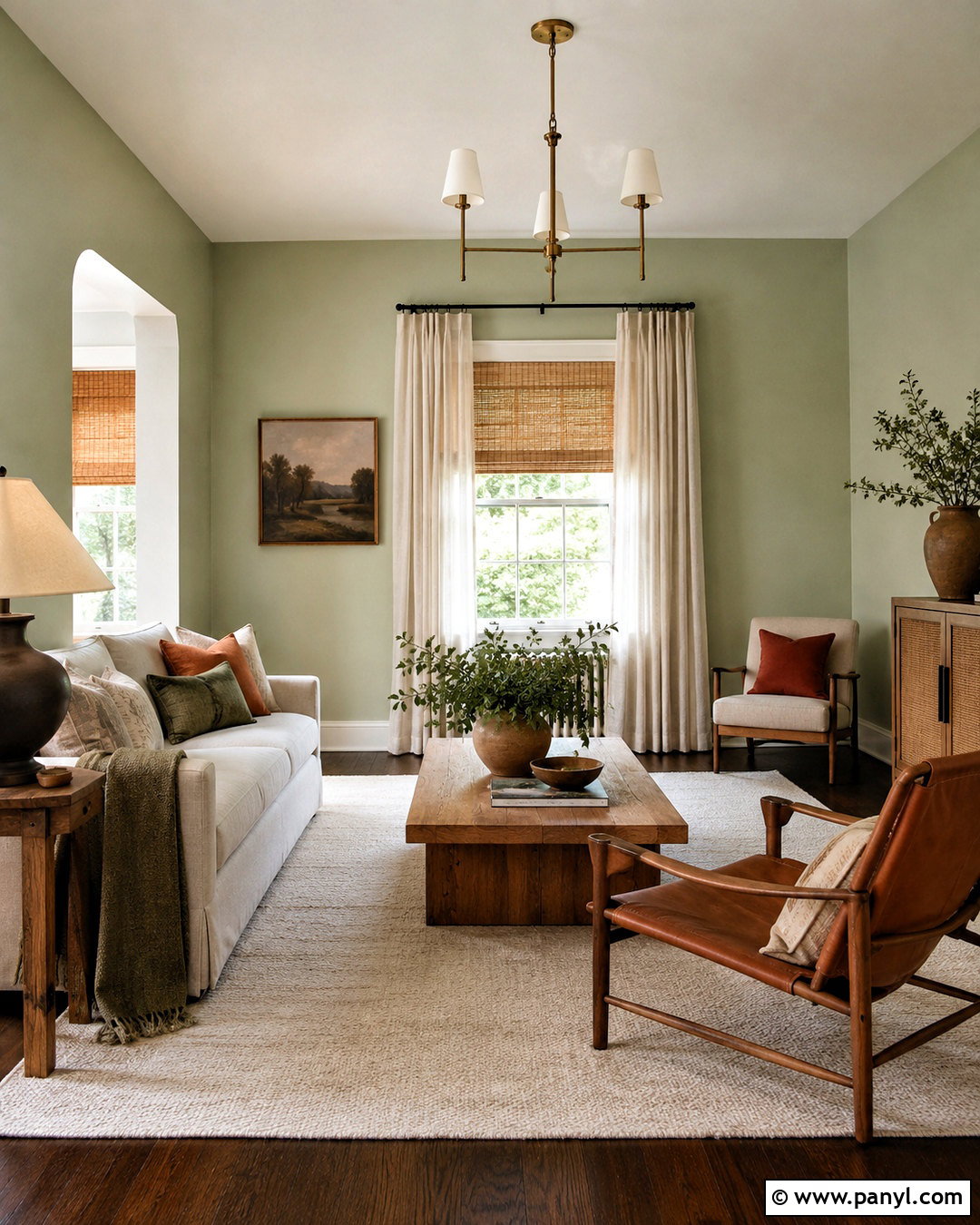
Sage green walls bring an organic quality to dark wood floors and work particularly well with walnut, mahogany, and rich brown stains. Choose a muted sage with gray or beige undertones so it feels calm rather than overly colorful. Furnish the space with a natural linen sofa, a warm ivory rug, and tables in medium oak or dark walnut. Woven shades, ceramic lamps, and leafy plants support the nature-inspired palette. Add aged brass or black fixtures for subtle definition. Cream trim keeps the green from feeling heavy and highlights the architecture. Rust, tan, and muted gold accents can appear in pillows and artwork. The complete room feels grounded and comfortable, making this combination ideal for living rooms, bedrooms, dining rooms, and home offices.
11. Olive Green Walls With Dark Wood Floors
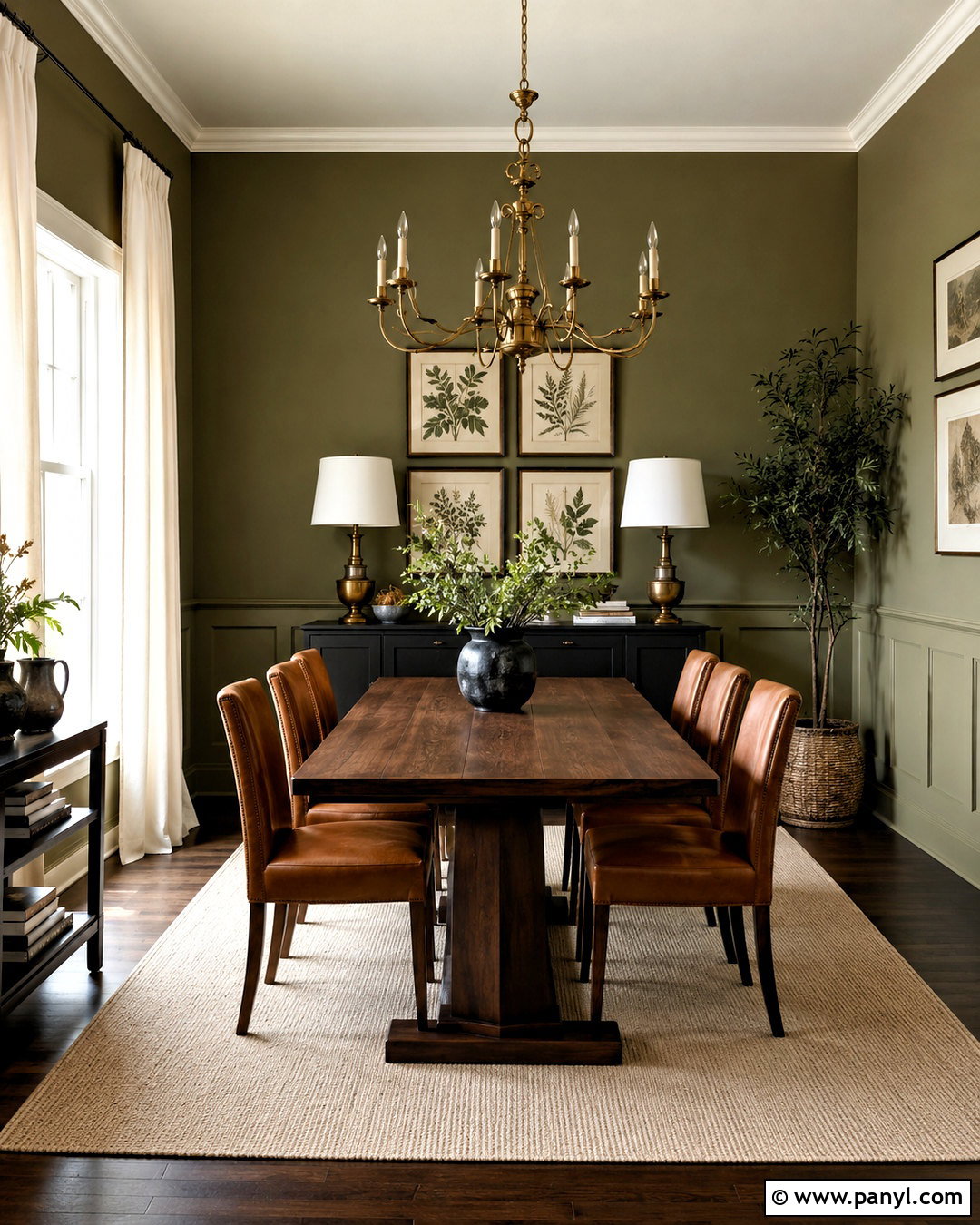
Would you prefer a richer, more enveloping room without painting the walls nearly black? Muted olive green delivers that depth while complementing the earthy character of dark wood flooring. Use the color in a dining room, library, or well-lit living room, then balance it with cream trim and a broad light-colored rug. Choose a camel leather sofa or upholstered dining chairs, dark walnut furniture, and antique brass lighting. Linen curtains in warm ivory will reflect daylight and soften the stronger wall color. Add botanical artwork, pottery, and small black accents for structure. Keep the ceiling pale to prevent the room from feeling compressed. The finished look is cozy and refined, with enough light elements to preserve visual balance.
12. Muted Teal Walls With Dark Wood Floors
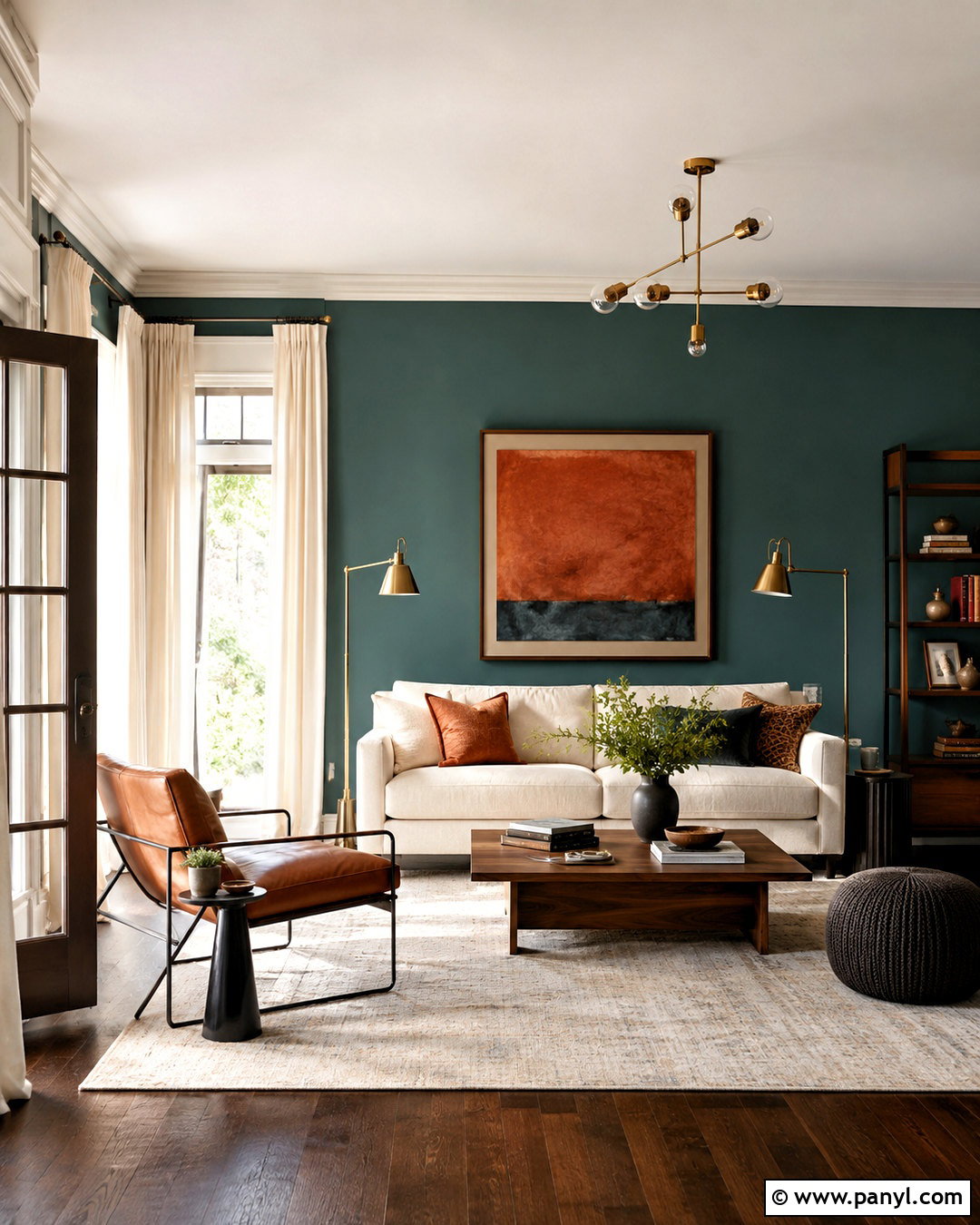
Muted teal creates an expressive but livable backdrop for dark brown floors. Look for a softened blue-green rather than a bright tropical shade, and use it in a room with good natural or layered artificial light. A cream sofa, light neutral rug, and walnut coffee table establish the main furnishings. Introduce cognac leather through an accent chair or ottoman to connect the cool walls with the warm floor. Brass lamps and picture lights add elegance, while white trim frames the stronger color. Keep curtains light and simple so they do not compete with the walls. Artwork can include ivory, rust, and blue-green tones. This complete look works especially well in dining rooms, offices, and living spaces that need personality without excessive decoration.
13. Dusty Rose Walls With Dark Wood Floors
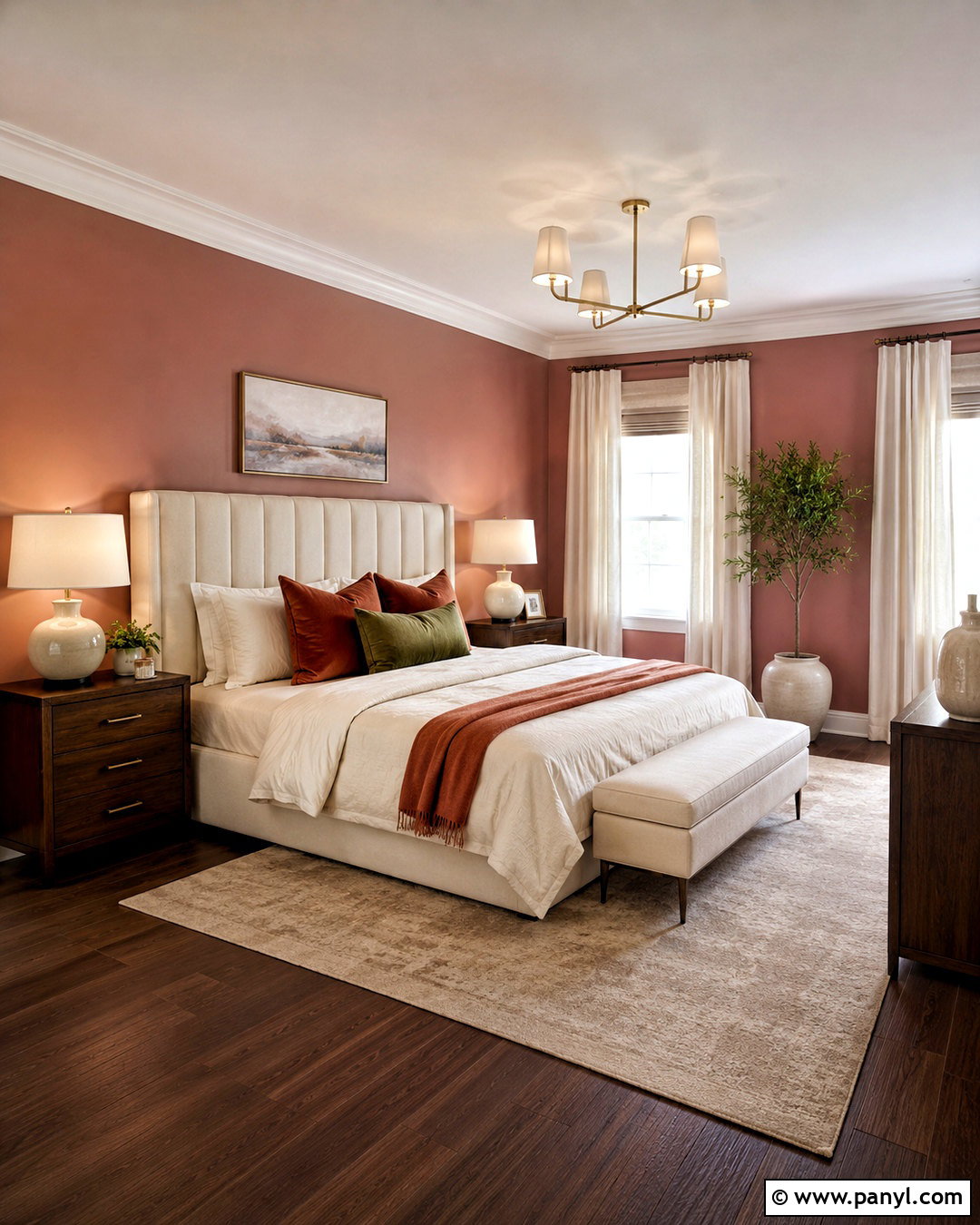
Dusty rose walls soften the visual weight of dark wood floors and create a warm, welcoming room without feeling overly sweet. Select a muted rose containing beige, clay, or gray undertones. Pair it with an ivory sofa or upholstered bed, a cream-and-taupe rug, and walnut furniture that echoes the floor. Warm brass lighting highlights the rosy walls, while white or soft cream trim keeps the design fresh. Introduce rust, burgundy, and muted green through pillows or artwork for a mature layered palette. Natural linen curtains and simple ceramic decor prevent the space from appearing too formal. This completed scheme is well suited to bedrooms, reading rooms, and elegant living spaces where a subtle touch of color can replace predictable beige or gray.
14. Soft Peach Walls With Dark Wood Floors
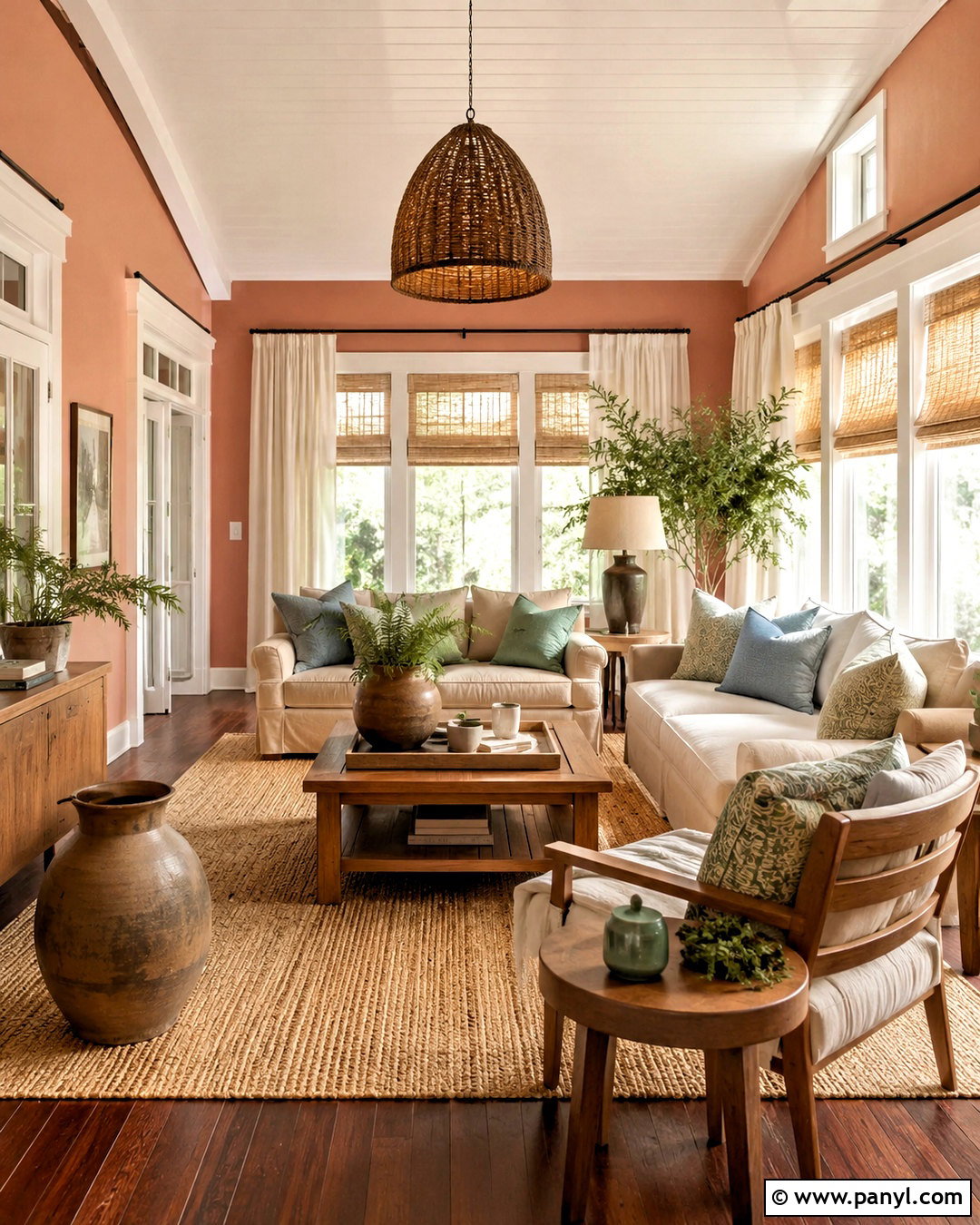
Soft peach walls give reddish or warm brown floors a sunlit, inviting appearance. The best shade is pale and earthy, with enough beige to keep it from looking bright orange. Build the room with cream upholstery, a natural fiber rug, and medium-toned wood furniture. Add soft green or muted blue accents to provide gentle contrast with the peach. Woven shades, linen curtains, and handmade pottery reinforce the relaxed atmosphere. Brushed brass or aged bronze lighting works naturally with the warm palette. Keep the trim creamy white and avoid strongly yellow accessories, which could make the room feel overly warm. The finished look is comfortable and cheerful, making it a useful choice for breakfast rooms, bedrooms, sunrooms, and casual family living spaces.
15. Terracotta Walls With Dark Wood Floors
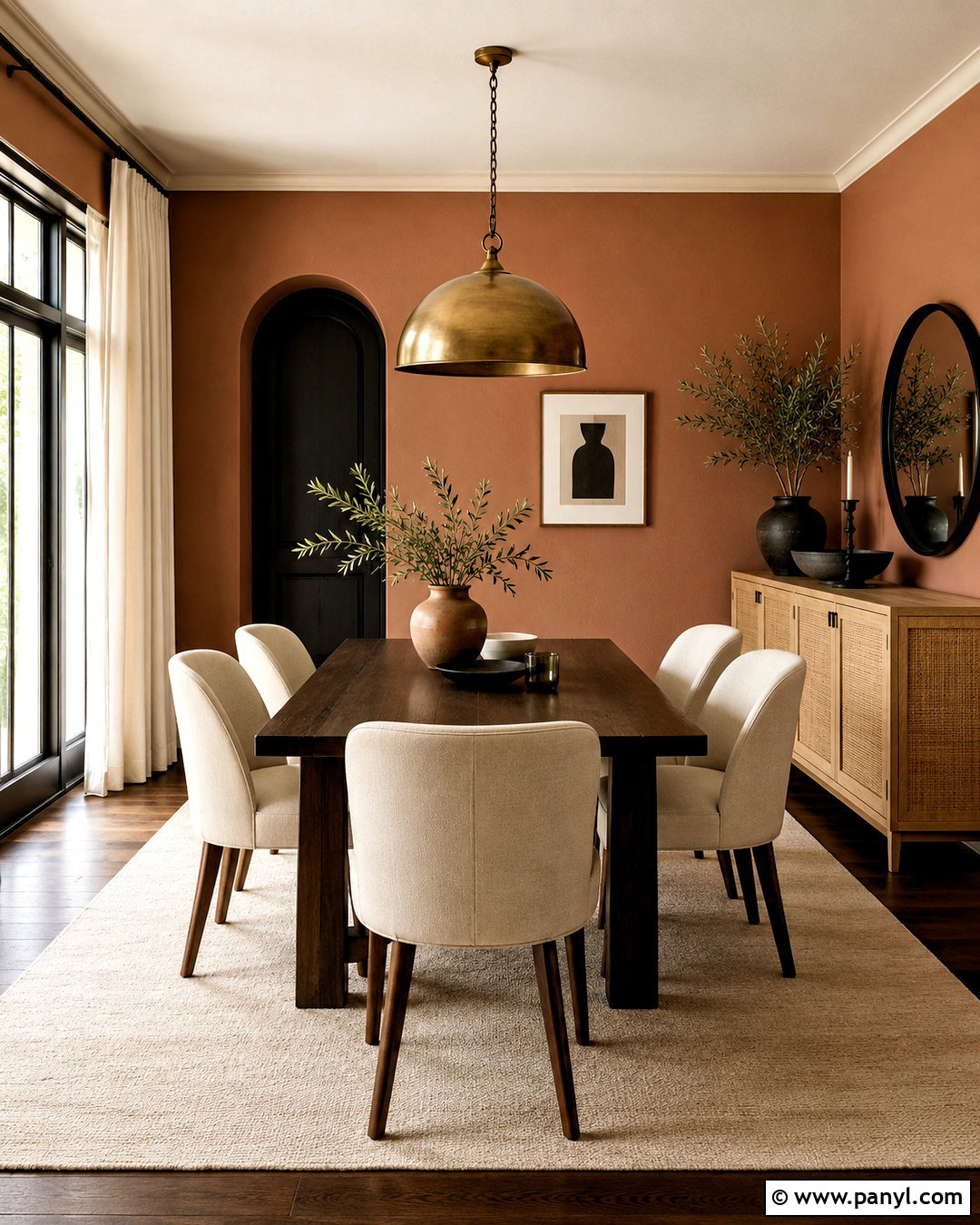
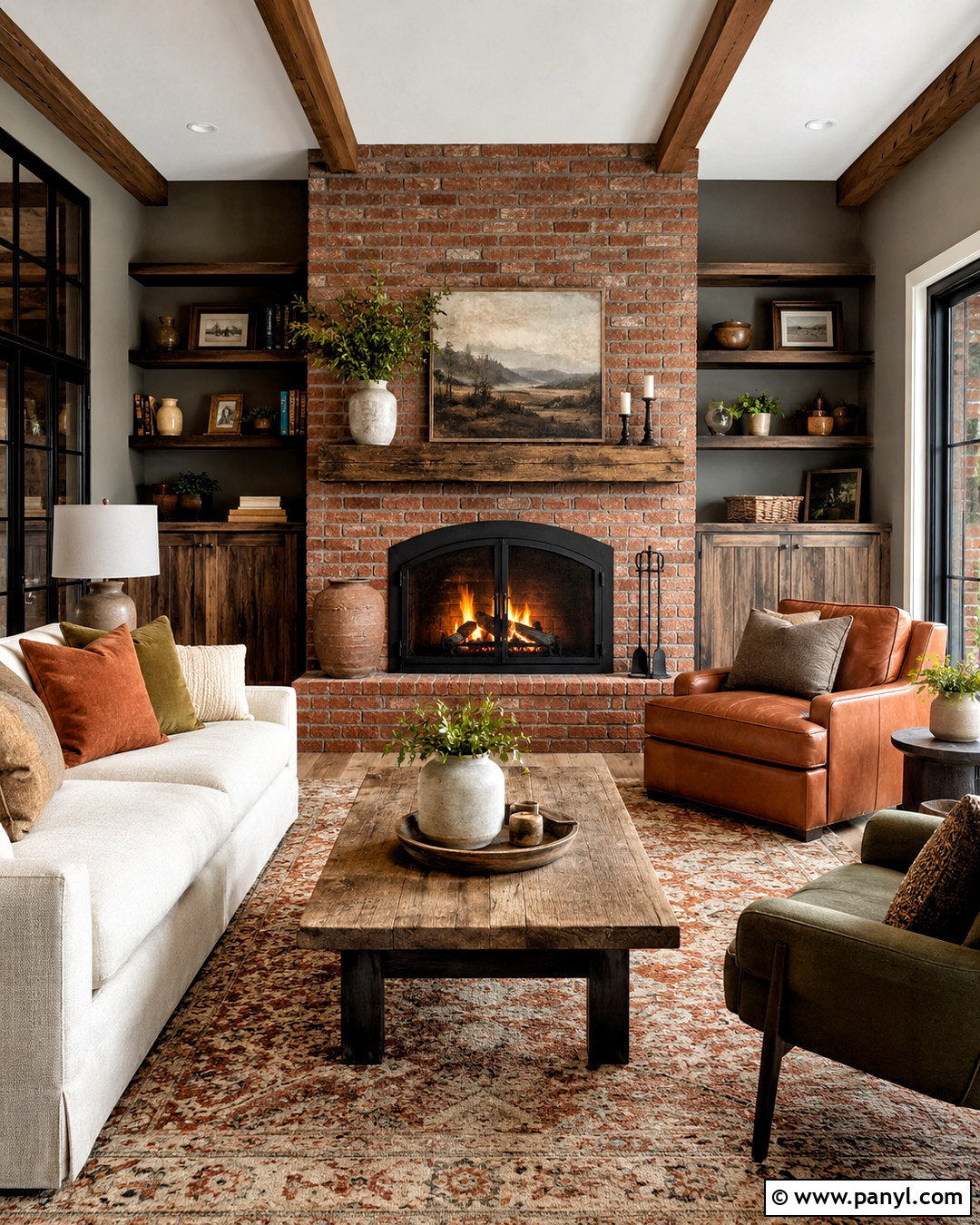
Terracotta walls create a rich, earthy room that celebrates rather than minimizes dark wood flooring. Choose a softened clay tone, and reserve this stronger palette for a dining room, office, bedroom, or living space with adequate light. Balance the color with a large cream rug, ivory curtains, and light neutral upholstery. Dark walnut furniture can repeat the floor, but include woven cane, pale oak, or natural linen to introduce contrast. Matte black accents sharpen the rustic warmth, while aged brass lighting adds a softer glow. Use olive green, beige, and charcoal in the artwork and textiles. A pale ceiling and cream-colored trim prevent the room from becoming visually enclosed. The final design feels warm, grounded, and intentionally layered.
16. Mustard Yellow Walls With Dark Wood Floors
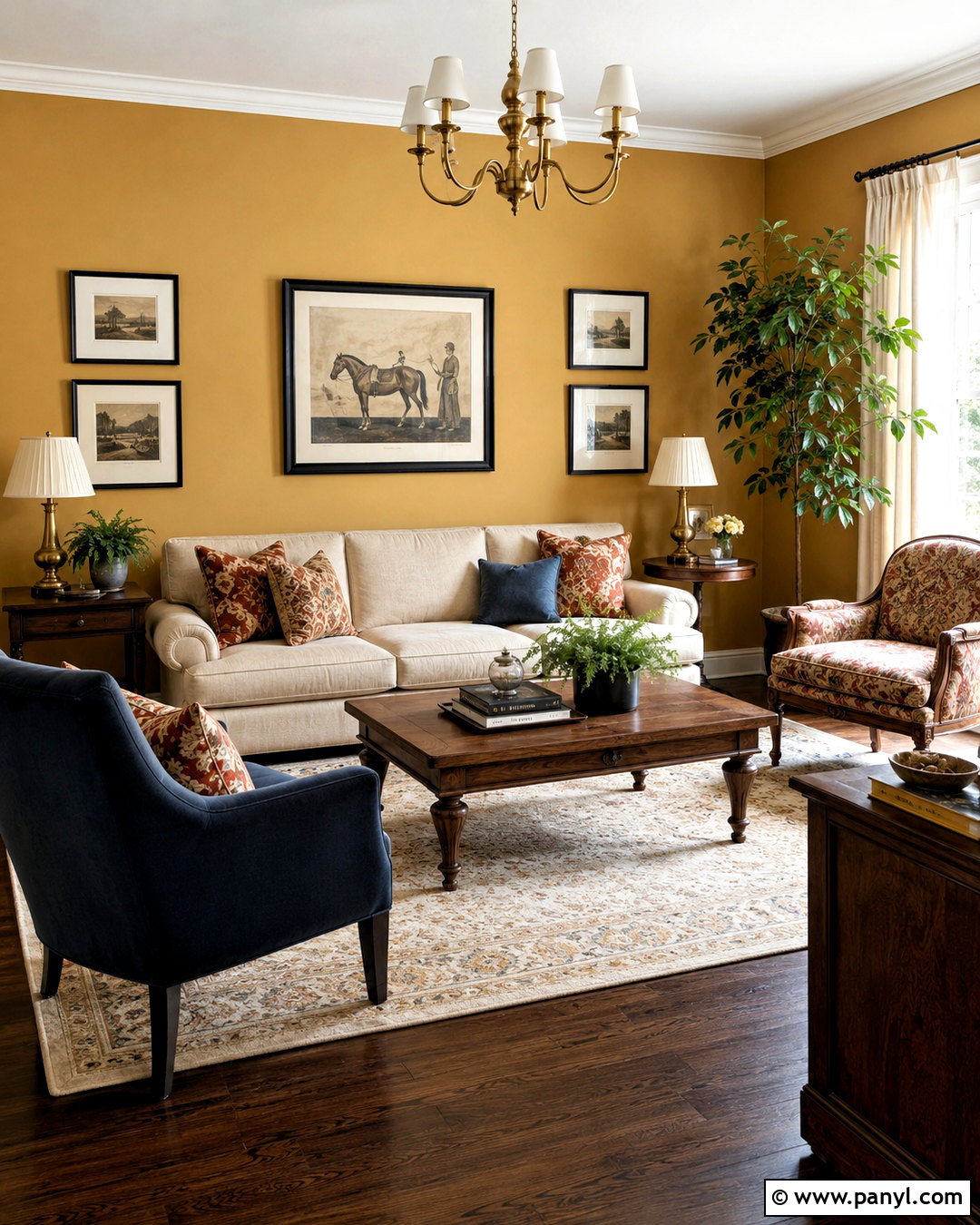
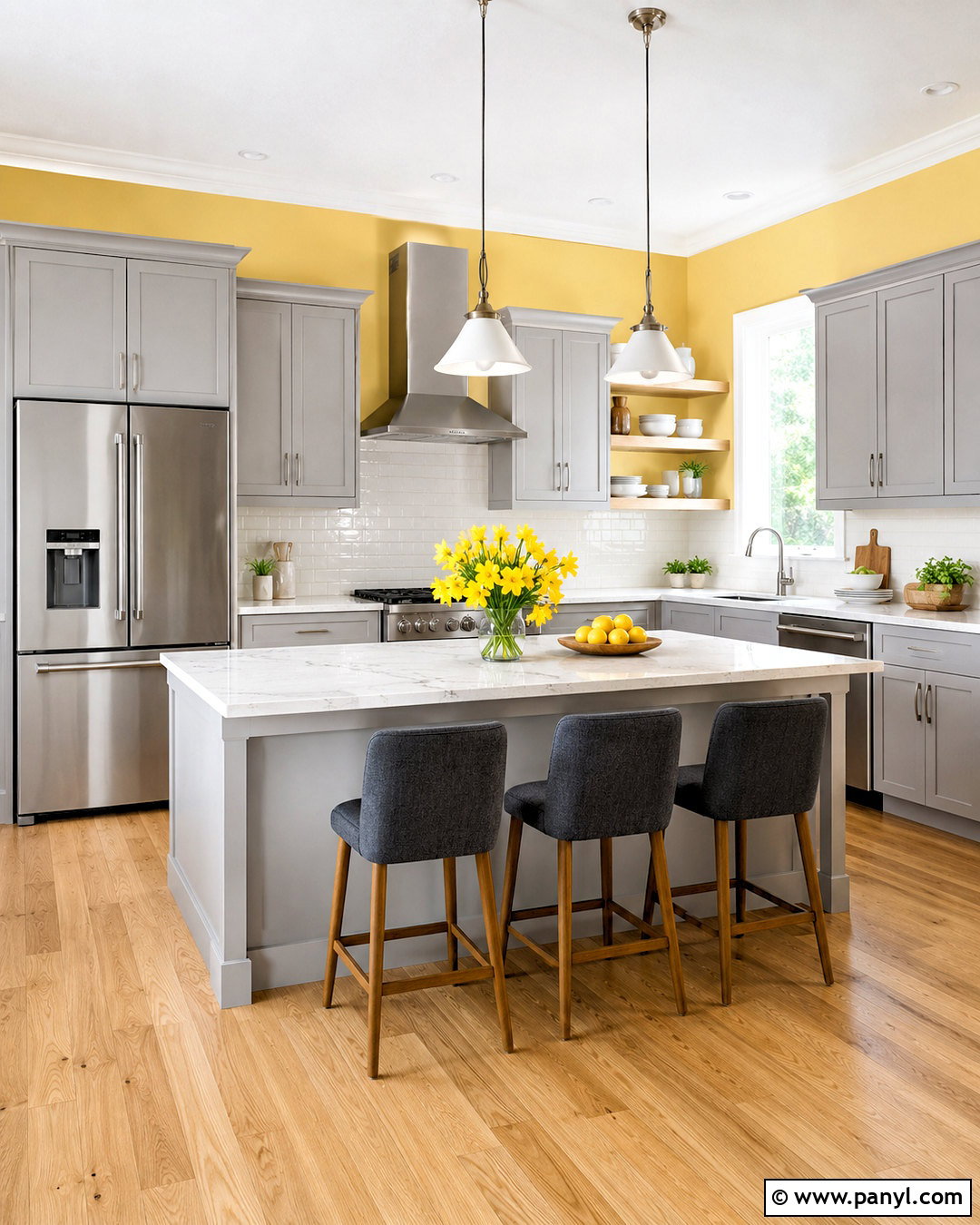
Muted mustard walls can bring warmth and character to dark wood floors, especially in traditional or eclectic rooms. Choose a softened ochre-based yellow rather than a bright primary shade. Complete the space with an ivory rug, a cream sofa, and dark walnut furniture. Add navy or deep green upholstery through one substantial accent chair to balance the yellow. Black frames and hardware give the design definition, while antique brass lighting works naturally with the golden wall color. White or warm cream curtains brighten the windows and prevent the palette from becoming too dense. Keep decorative accessories limited to pottery, books, and patterned textiles in rust, blue, and beige. This finished room feels energetic and collected while allowing the dark flooring to remain an elegant foundation.
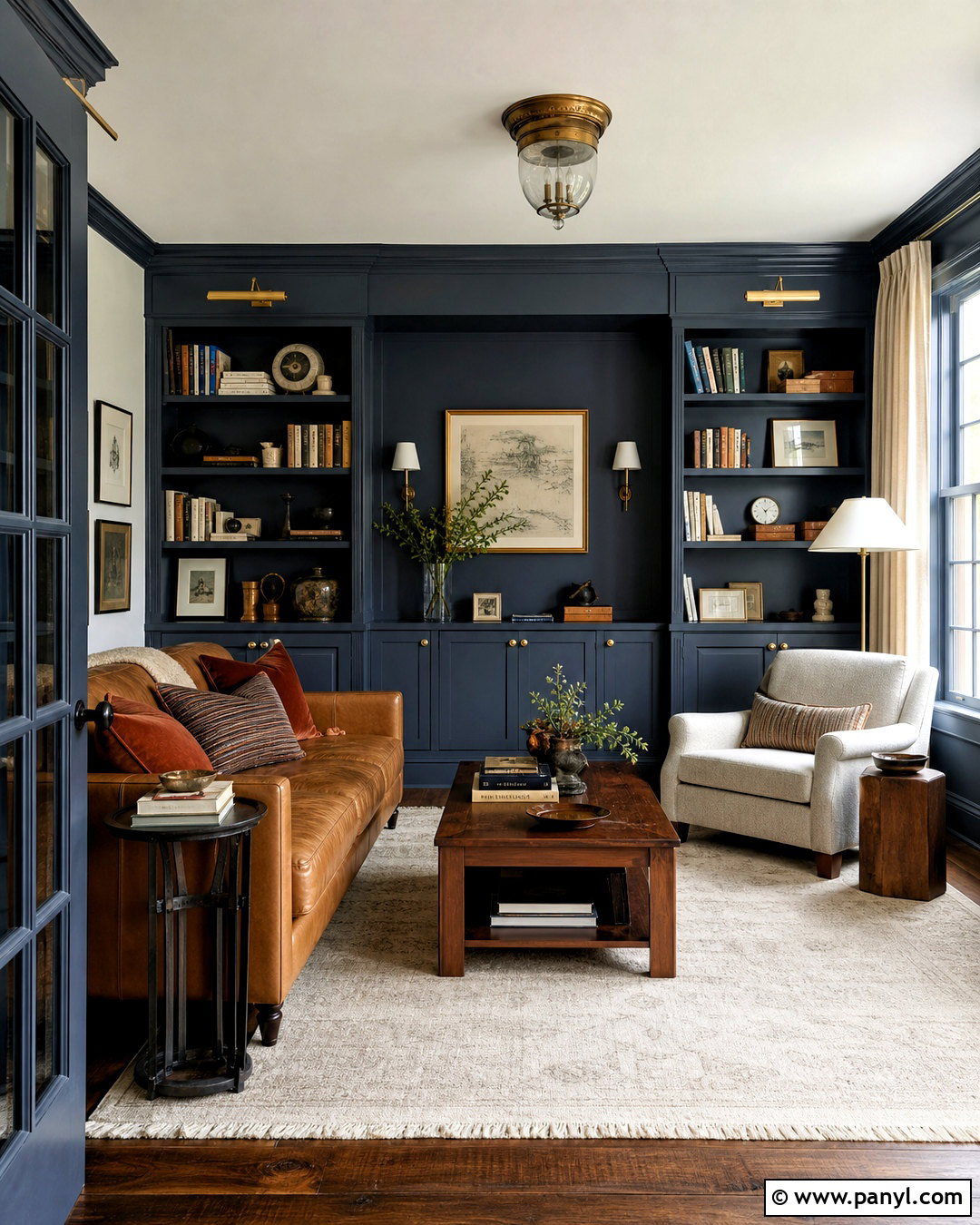
17. Deep Navy Walls With Dark Wood Floors
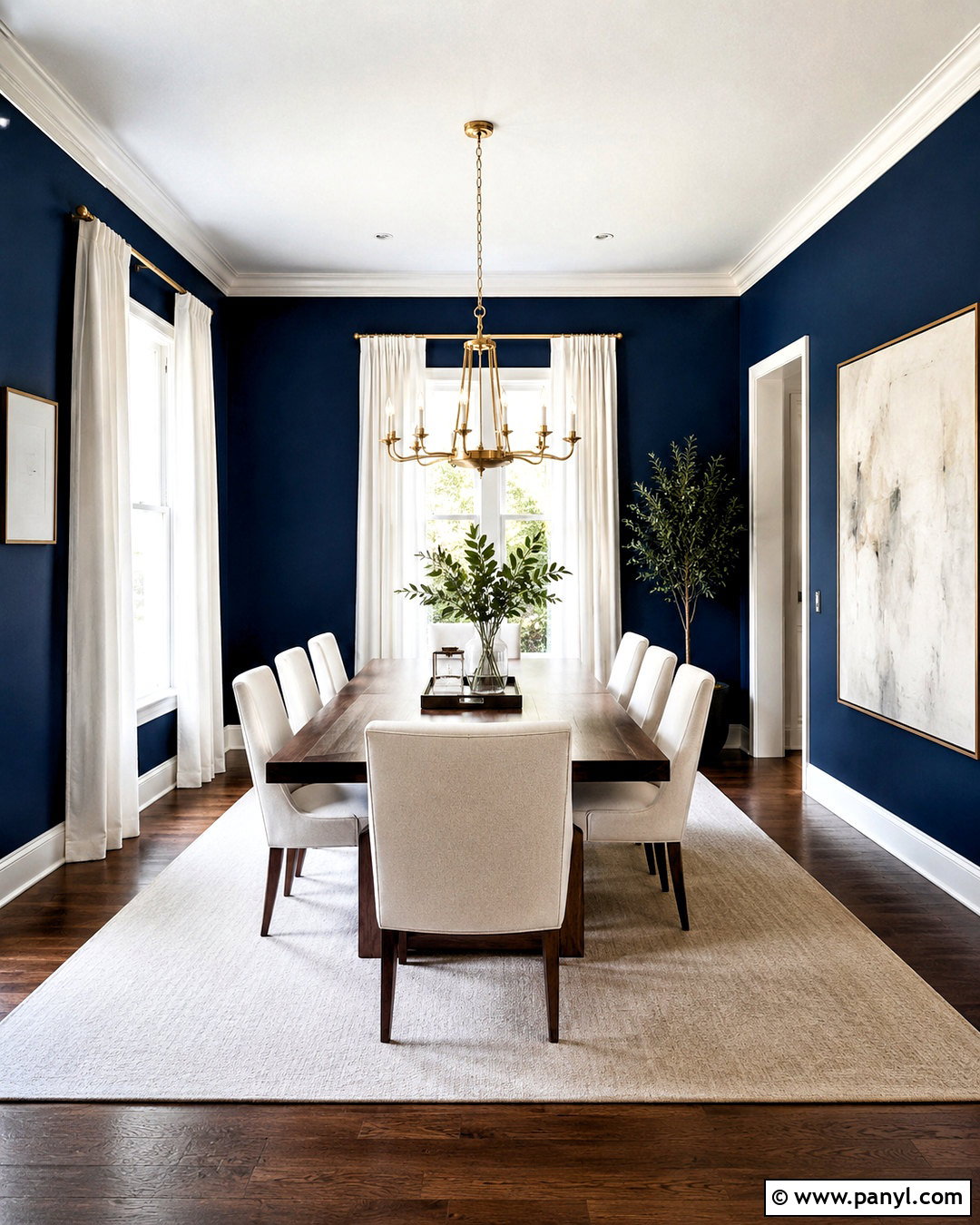
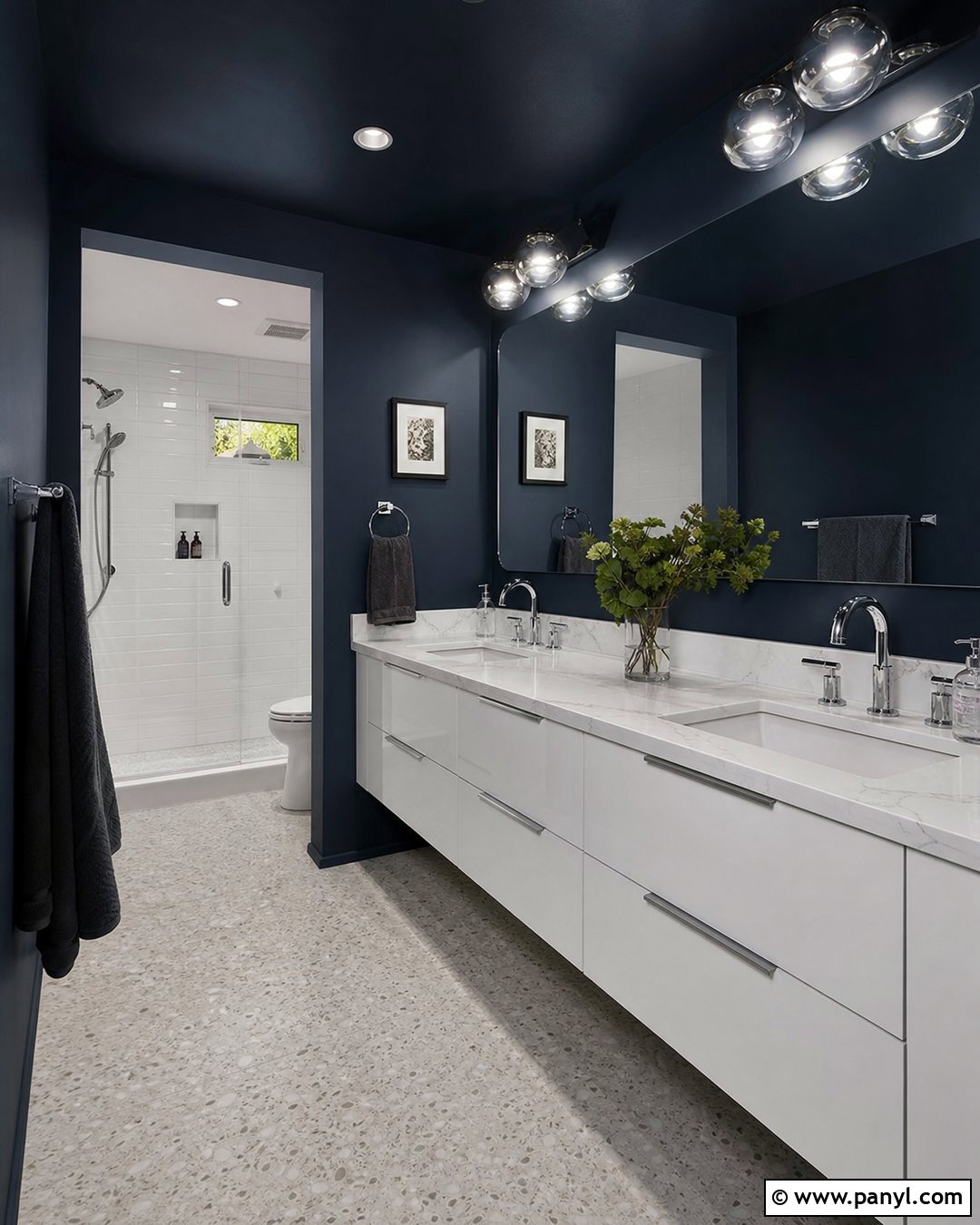
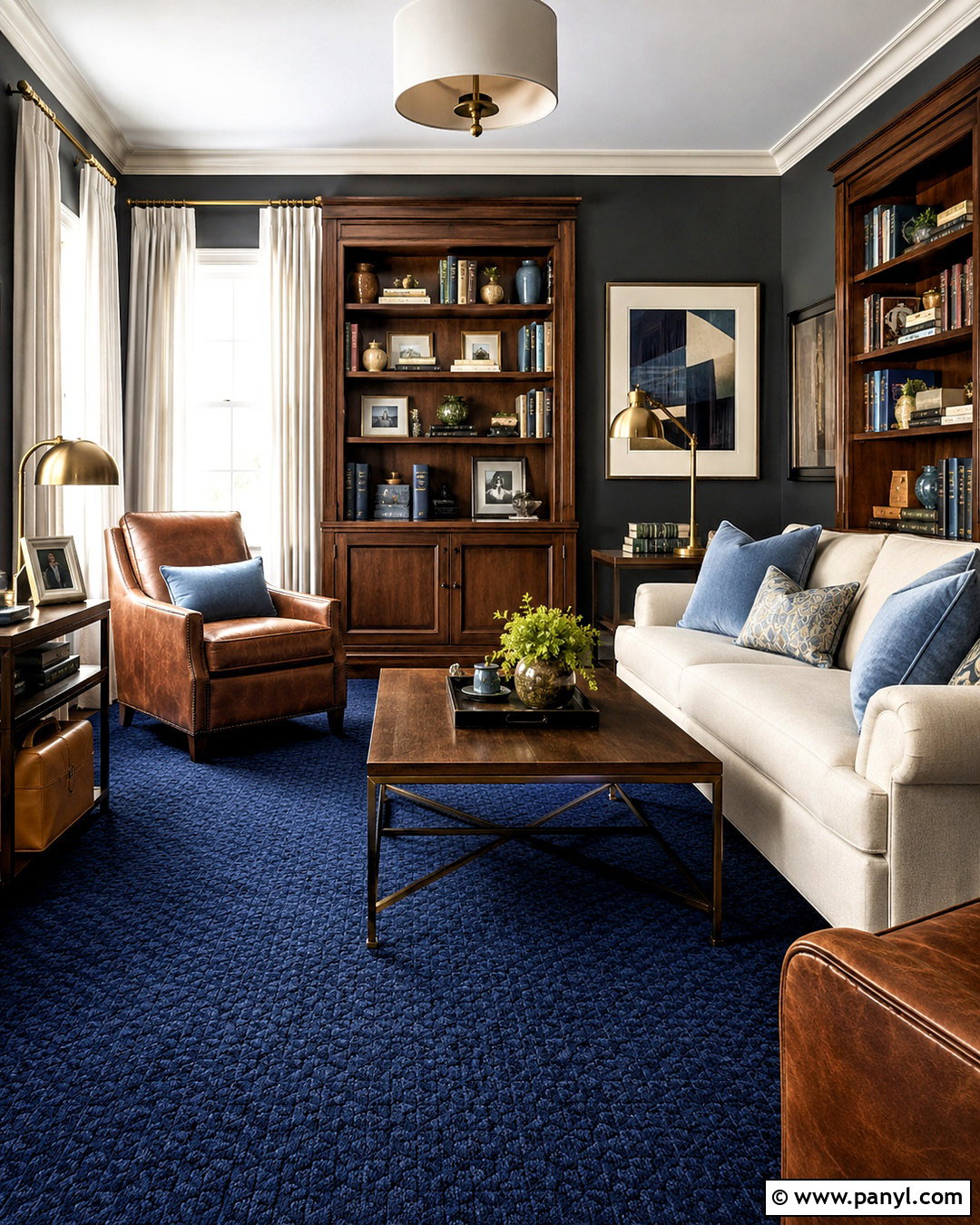
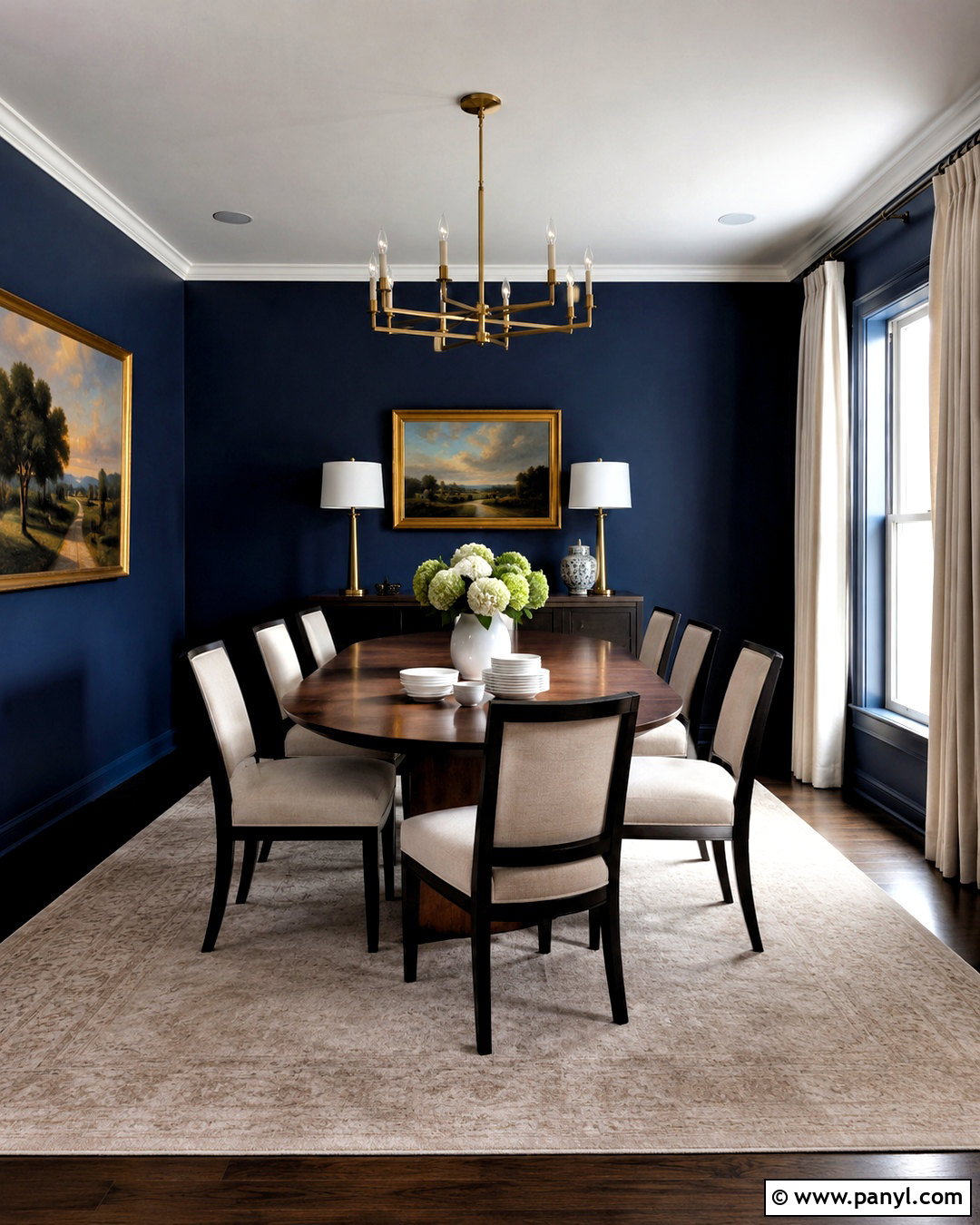
Deep navy walls and dark wood floors form a dramatic combination that works best when the rest of the room provides clear contrast. Use this palette in a dining room, office, bedroom, or living room with large windows and strong layered lighting. Add a generous ivory rug, a cream sofa or light upholstered chairs, and white curtains. Walnut furniture creates continuity with the floor, while polished or aged brass fixtures stand out against the navy. Paint the trim and ceiling a clean warm white to outline the architecture and keep the room from feeling closed in. Include artwork with broad pale backgrounds and minimal dark accessories. The completed room appears sophisticated and intentional, proving that dark walls can work with dark flooring when lighter surfaces remain prominent.
18. Charcoal Walls With Dark Wood Floors
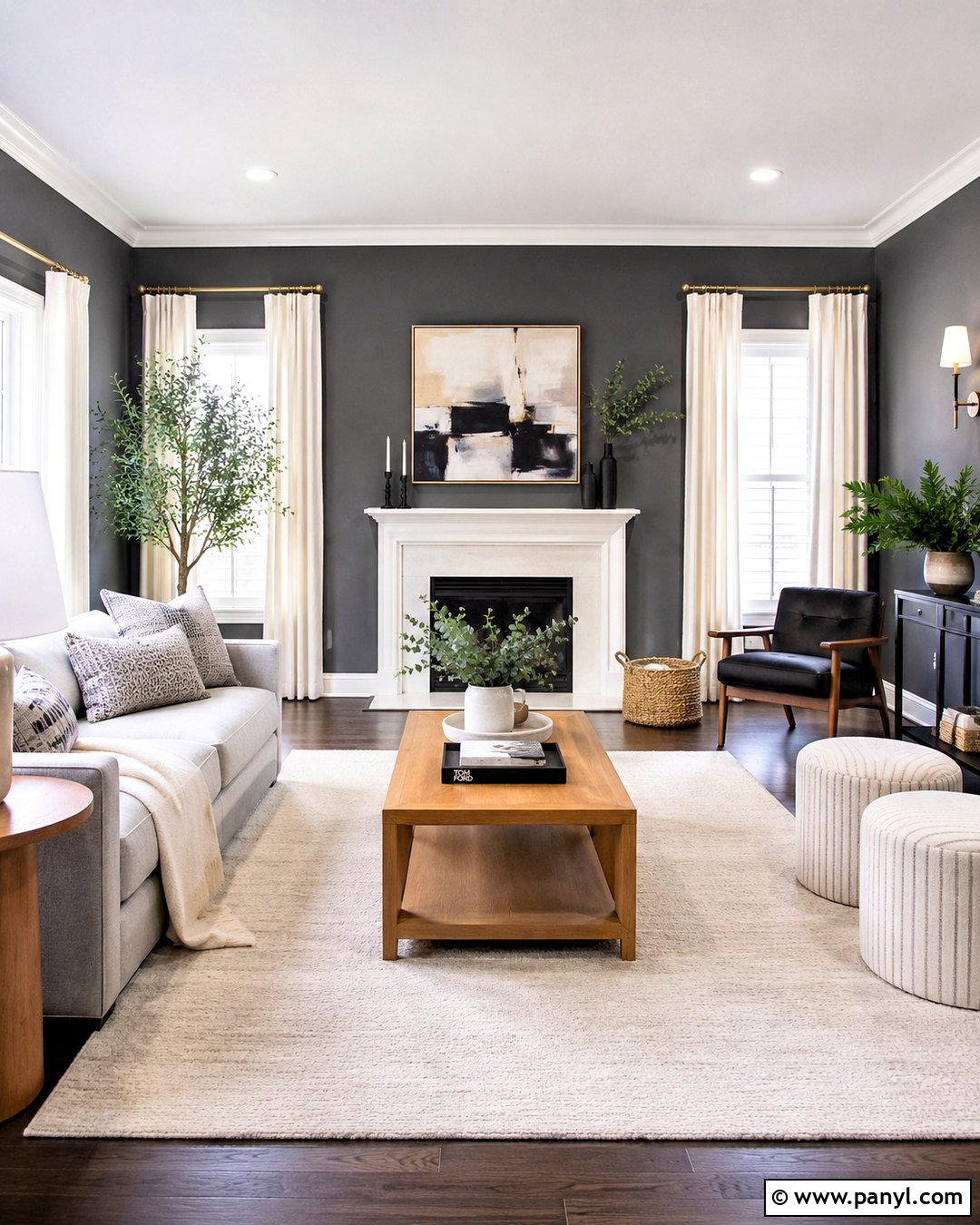
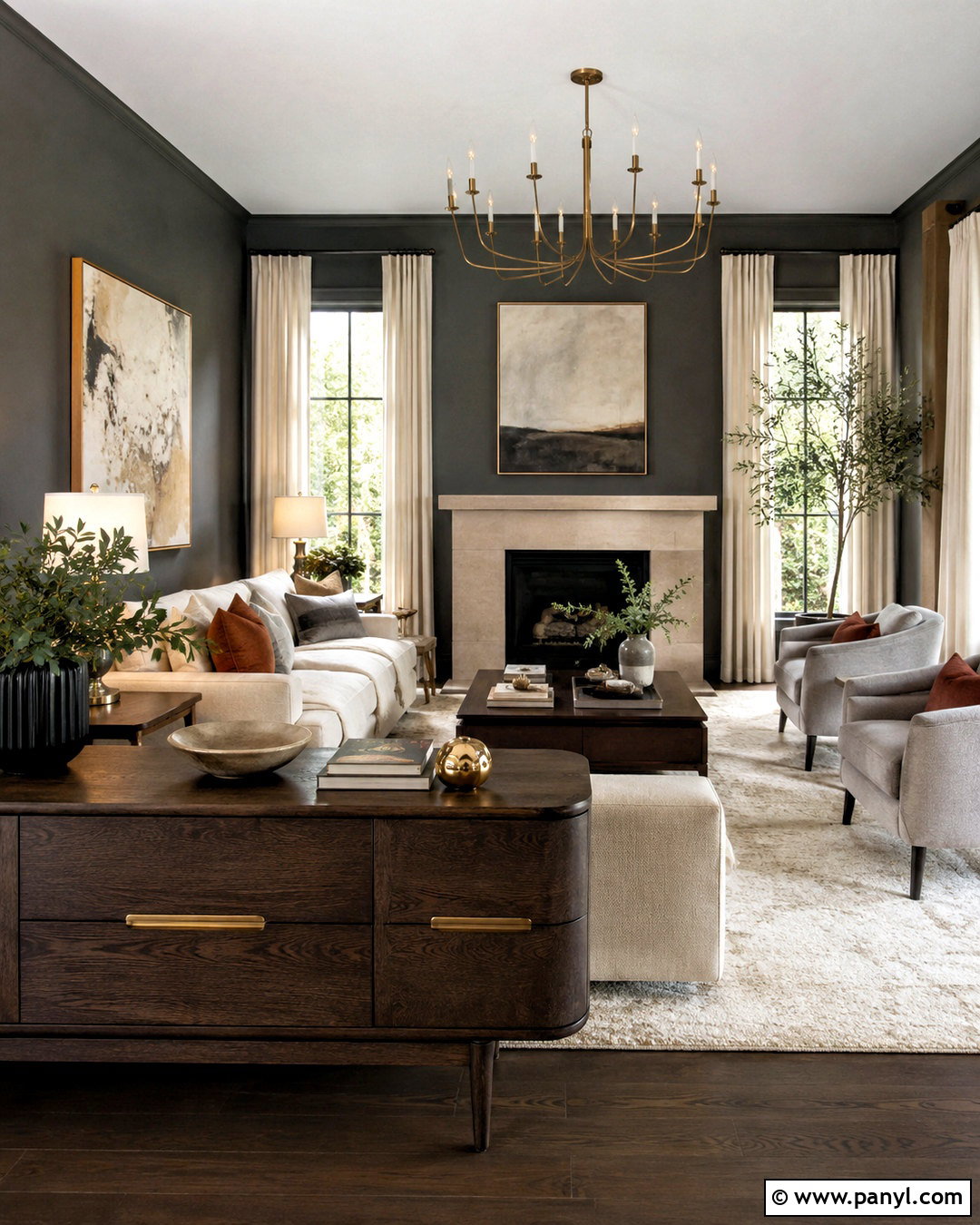
Charcoal walls offer a tailored, monochromatic look with ebony or espresso floors, but thoughtful contrast is essential. Choose a charcoal that is noticeably lighter than the flooring and use it in a room with good daylight or multiple light sources. Furnish the space with a pale gray sofa, ivory rug, and cream curtains that extend from ceiling to floor. Add light oak furniture to break up the dark brown and gray surfaces. Matte black hardware can remain minimal, while brushed brass fixtures introduce necessary warmth. White trim and a white ceiling create visible boundaries around the deeper walls. Finish with large-scale artwork, soft gray textiles, and a few green plants. The result feels modern, cozy, and balanced rather than shadowy or severe.
19. Forest Green Walls With Dark Wood Floors
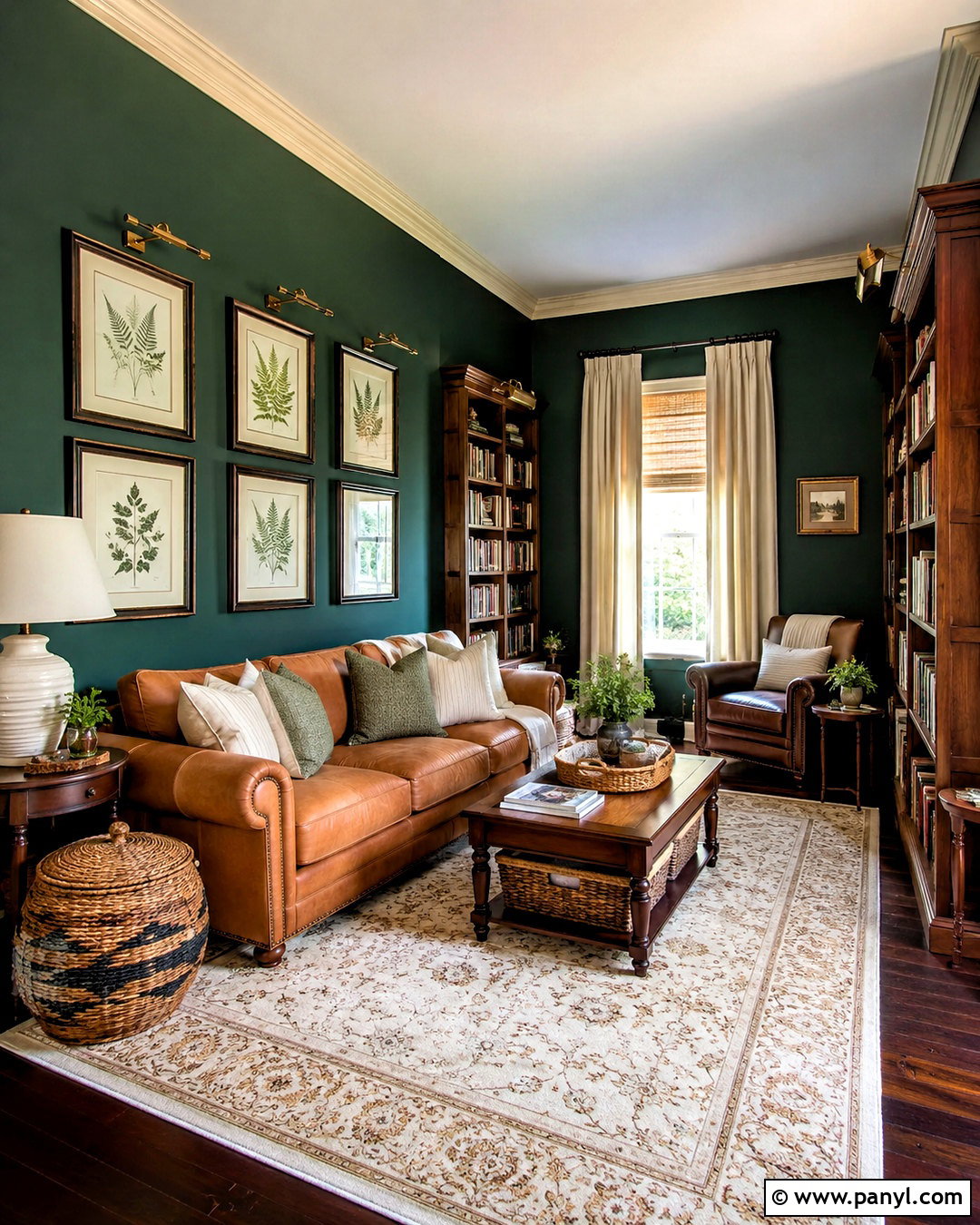
Forest green walls create a classic, enveloping backdrop for dark walnut or mahogany flooring. To make the combination livable, surround the deeper surfaces with cream, tan, and warm metallic accents. Place a large ivory patterned rug beneath a camel leather sofa or a dark wood dining table with light upholstered chairs. Use cream curtains and matching trim to frame windows and doors. Antique brass lighting complements the green and emphasizes the warm undertones in the floor. A pale ceiling keeps the room visually open, while botanical prints and natural woven materials reinforce the organic palette. This complete design is especially effective in libraries, dining rooms, offices, and formal living spaces where a rich atmosphere feels intentional and appropriate.
20. Burgundy Walls With Dark Wood Floors
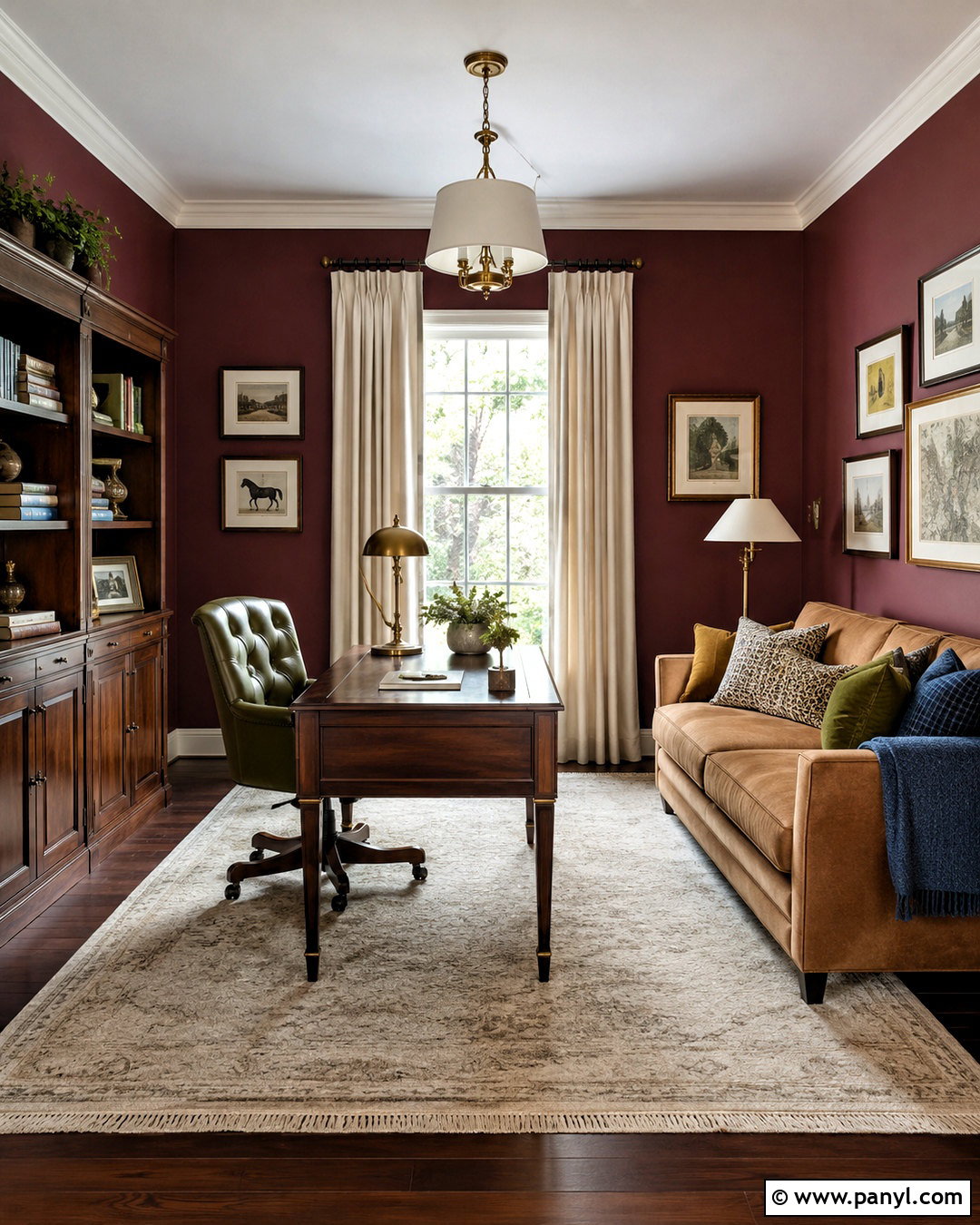
Burgundy walls can turn dark wood flooring into the foundation of a warm, heritage-inspired room. Choose a muted wine-red with brown or plum undertones rather than a bright red. Balance the deep palette with a substantial cream rug, light linen curtains, and an ivory or camel upholstered sofa. Dark walnut furniture will feel cohesive, while antique brass lamps and picture lights provide contrast against the burgundy. Keep the ceiling and trim warm white to clearly frame the walls. Add olive green, dusty blue, and beige through artwork and patterned textiles, but avoid filling the room with additional dark red pieces. This finished look suits dining rooms, studies, and formal living spaces where rich color, traditional materials, and comfortable lighting can work together.
Conclusion:
Understanding What Color Walls Go With Dark Wood Floors begins with undertones, lighting, and the atmosphere you want to create. Warm white, cream, greige, and light beige offer dependable contrast for bright everyday spaces. Sage, blue-gray, dusty rose, and muted teal introduce color while remaining easy to decorate around. Deeper shades such as navy, forest green, charcoal, and burgundy can also succeed when balanced by pale rugs, upholstery, trim, and curtains. Before committing, place large paint samples beside the flooring and examine them during morning, afternoon, and evening light. Then coordinate the furniture, textiles, metals, and wood tones as one complete design. That approach will produce a room that feels balanced, comfortable, and thoughtfully connected.

Related Ideas and Inspiration:
Leave a Reply