
Choosing the right feature wall can give a room focus, depth, and personality without requiring a complete remodel. These 30 Feature Wall Colours range from restful earth tones to dramatic jewel shades, making it easier to find a palette that suits your lighting, furniture, and decorating style. The strongest results come from treating the wall as part of a complete room scheme. Consider the surrounding paint, flooring, upholstery, wood finishes, artwork, and lighting before committing. Dark colors can create an intimate focal point, while softer tones bring gentle definition to smaller or brighter spaces. Always test a large sample during the day and under your usual lamps. Explore the complete, practical room looks below to find your favorite among these 30 Feature Wall Colours.

1. Navy Blue Feature Wall
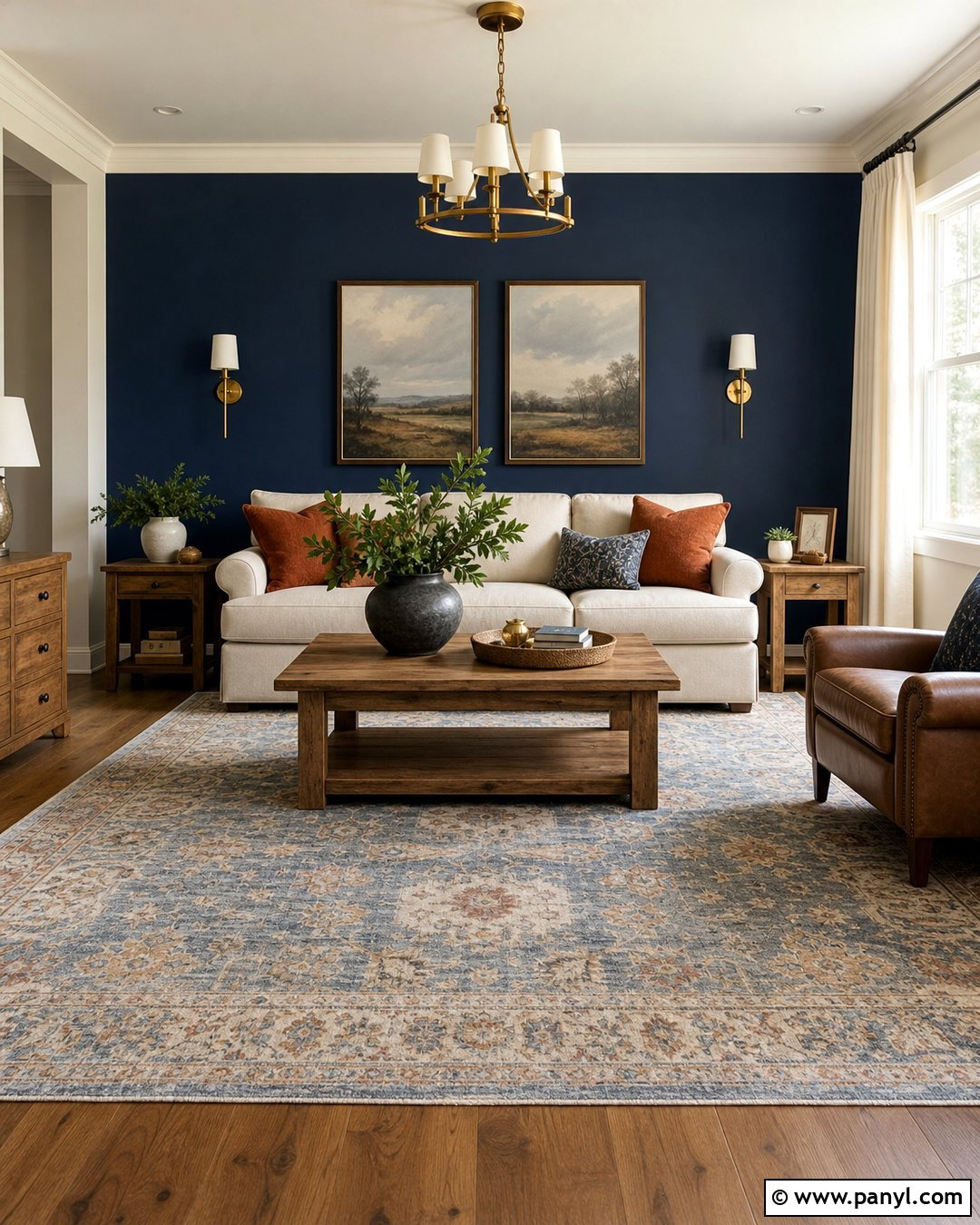
A navy blue feature wall can anchor a living room while keeping the atmosphere calm and polished. Place it behind a light oatmeal sofa so the furniture stands out against the deep background. Paint the other walls warm white rather than brilliant white, which can create overly sharp contrast. Add a medium-oak coffee table, cream curtains, and a faded blue-and-beige rug to connect the palette. Brushed brass lighting introduces warmth, while rust-colored cushions prevent the scheme from feeling too cool. Hang one large landscape print or a balanced pair of framed pieces above the sofa. This complete look works particularly well in rooms with generous daylight, pale flooring, and simple furniture that allows the strong feature color to remain the main focal point.
2. Forest Green Feature Wall
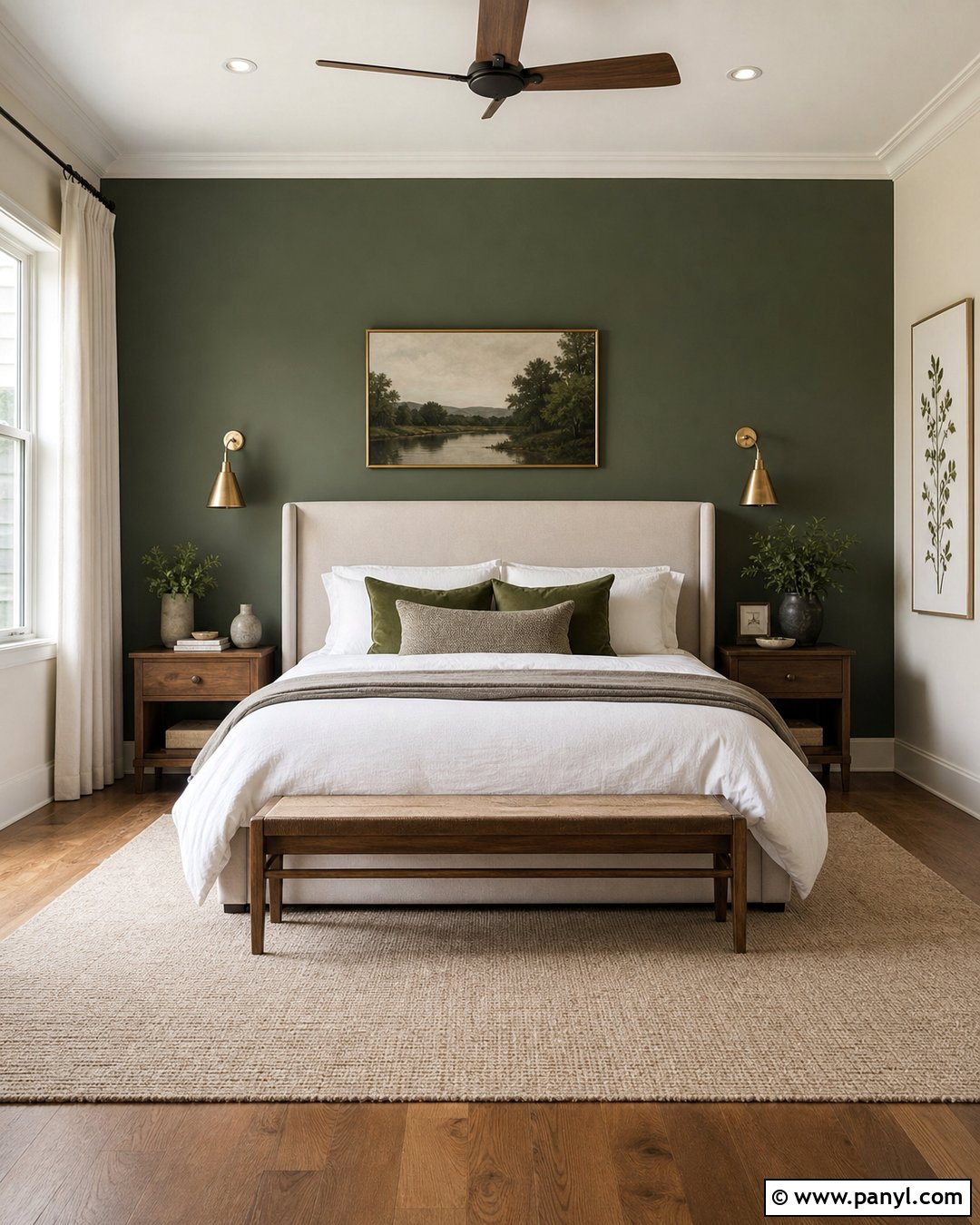
Imagine a cozy bedroom where a forest green feature wall frames the bed and gives the entire room a restful, grounded feeling. Pair the green with warm ivory on the remaining walls and choose an upholstered oatmeal headboard for soft contrast. Walnut nightstands bring out the natural undertones, while antique brass sconces add a gentle glow. Layer the bed with white linen, moss green pillows, and a muted botanical throw. A beige wool rug keeps the floor light and prevents the dark wall from making the room feel heavy. Finish with simple black-framed artwork and one healthy indoor plant near the window. Keeping the furniture symmetrical and the accessories restrained makes this rich color feel intentional, comfortable, and suitable for both traditional and modern homes.
3. Sage Green Feature Wall
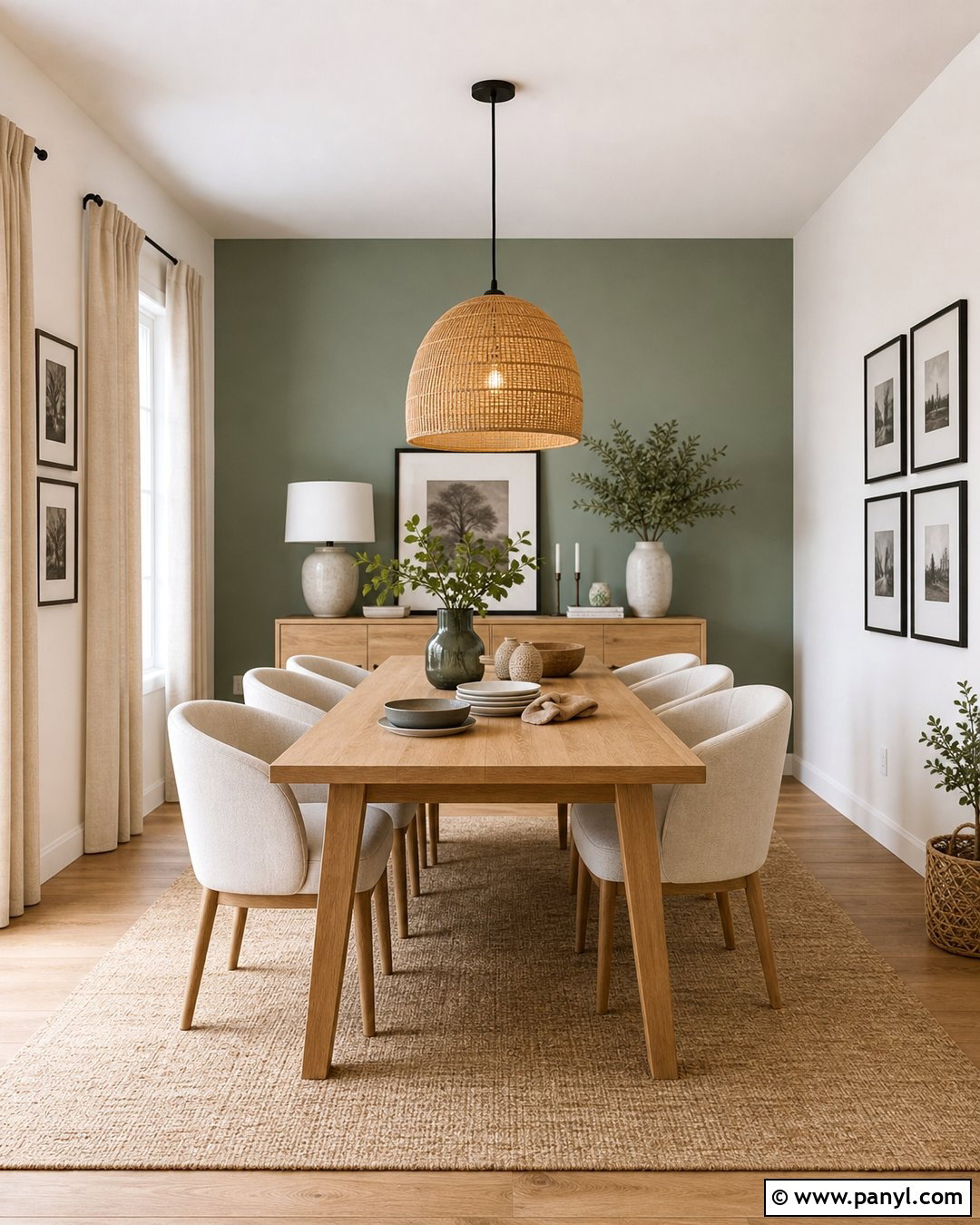
For a soft and welcoming dining space, a sage green feature wall provides color without overwhelming the room. Use it behind a natural oak dining table with curved chairs upholstered in cream or light beige. Warm white paint on the surrounding walls will maintain an airy background, while a woven pendant light reinforces the relaxed, organic character. Add linen curtains, a low oak sideboard, and simple ceramic tableware in ivory and muted brown. A washable flat-weave rug can define the dining area and introduce a subtle pattern. Black picture frames or slim black chair details supply enough contrast to sharpen the gentle palette. This complete scheme is especially useful in an open-plan home because sage blends smoothly with common neutral kitchen and living room finishes.
4. Olive Green Feature Wall
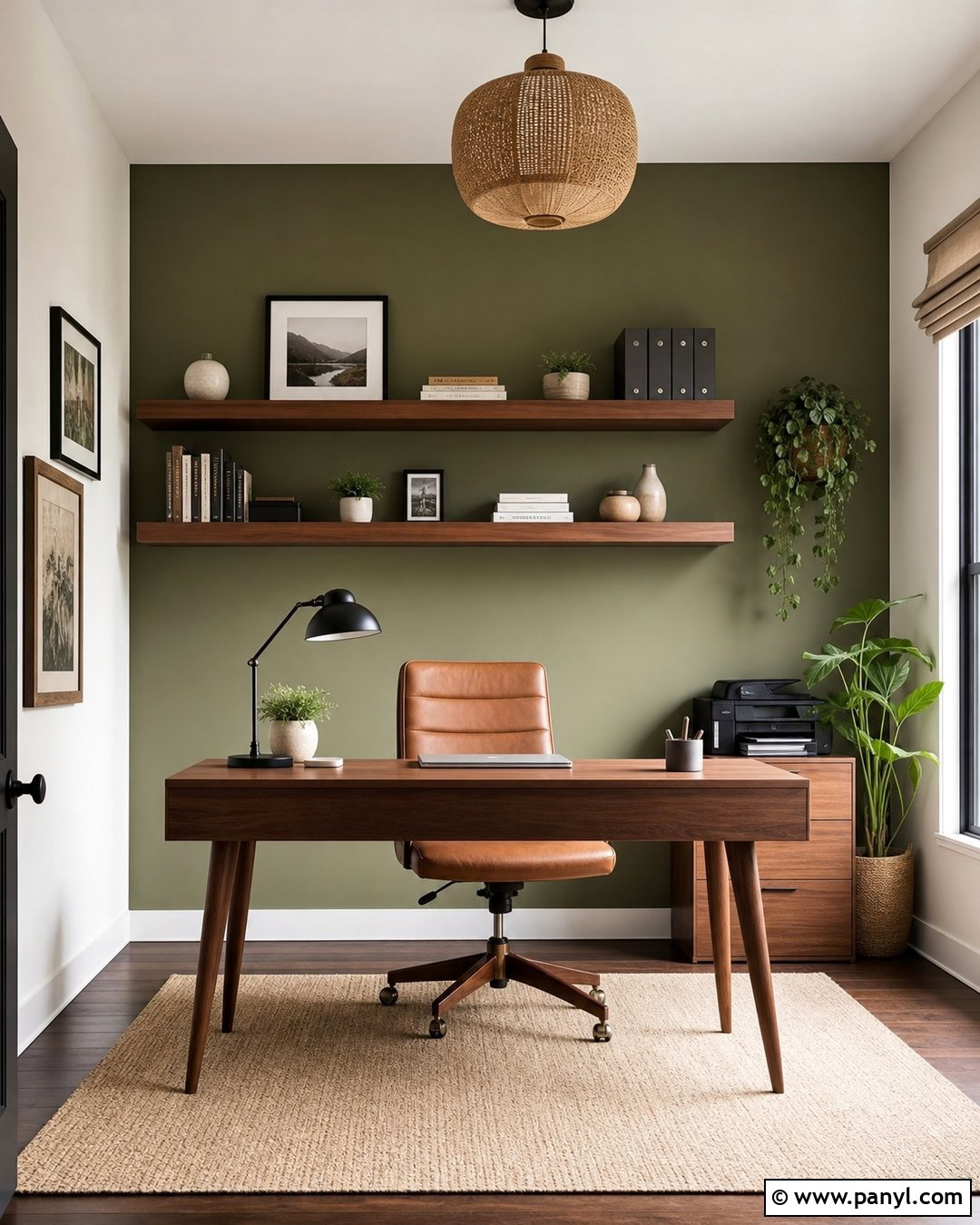
An olive green feature wall can turn a plain home office into a focused and sophisticated workspace. Position a streamlined walnut desk against the colored wall, then add floating shelves in the same wood for a built-in effect. Keep the remaining walls creamy white and choose a warm beige rug to soften the floor. A tan leather desk chair, matte black task lamp, and dark bronze accessories create a practical palette with an understated vintage influence. Display only a few framed prints, books, and ceramic containers so the wall remains visually organized. If the room lacks strong natural light, choose a medium olive rather than an almost-black shade. White curtains and a pale ceiling will reflect light around the room, balancing the deeper, earthy backdrop.
5. Emerald Green Feature Wall
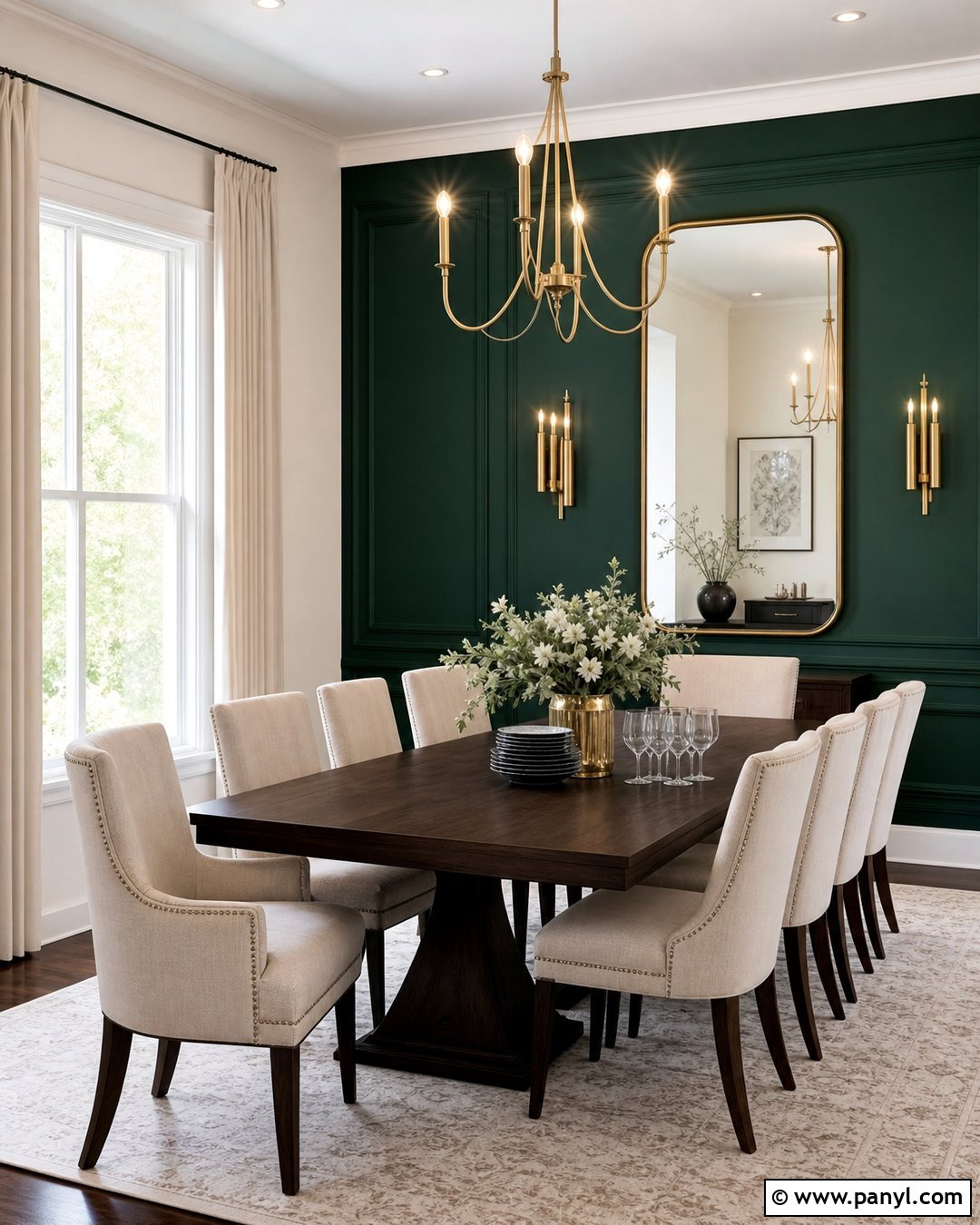
Could your dining room handle a richer, more dramatic color? An emerald green feature wall creates an elegant background for gatherings when it is balanced with warm materials and uncluttered furnishings. Place a dark walnut dining table in front of the wall and surround it with beige upholstered chairs. Soft cream on the other walls keeps the jewel tone from dominating every surface. Add a sculptural brass chandelier, velvet green seat cushions, and an ivory rug with a restrained geometric pattern. A large gilt or brass-framed mirror can reflect daylight and make the color appear more luminous. Keep window treatments simple and pale. With dark wood, metallic warmth, and light textiles working together, emerald feels refined and inviting rather than loud or overly formal.
6. Teal Feature Wall
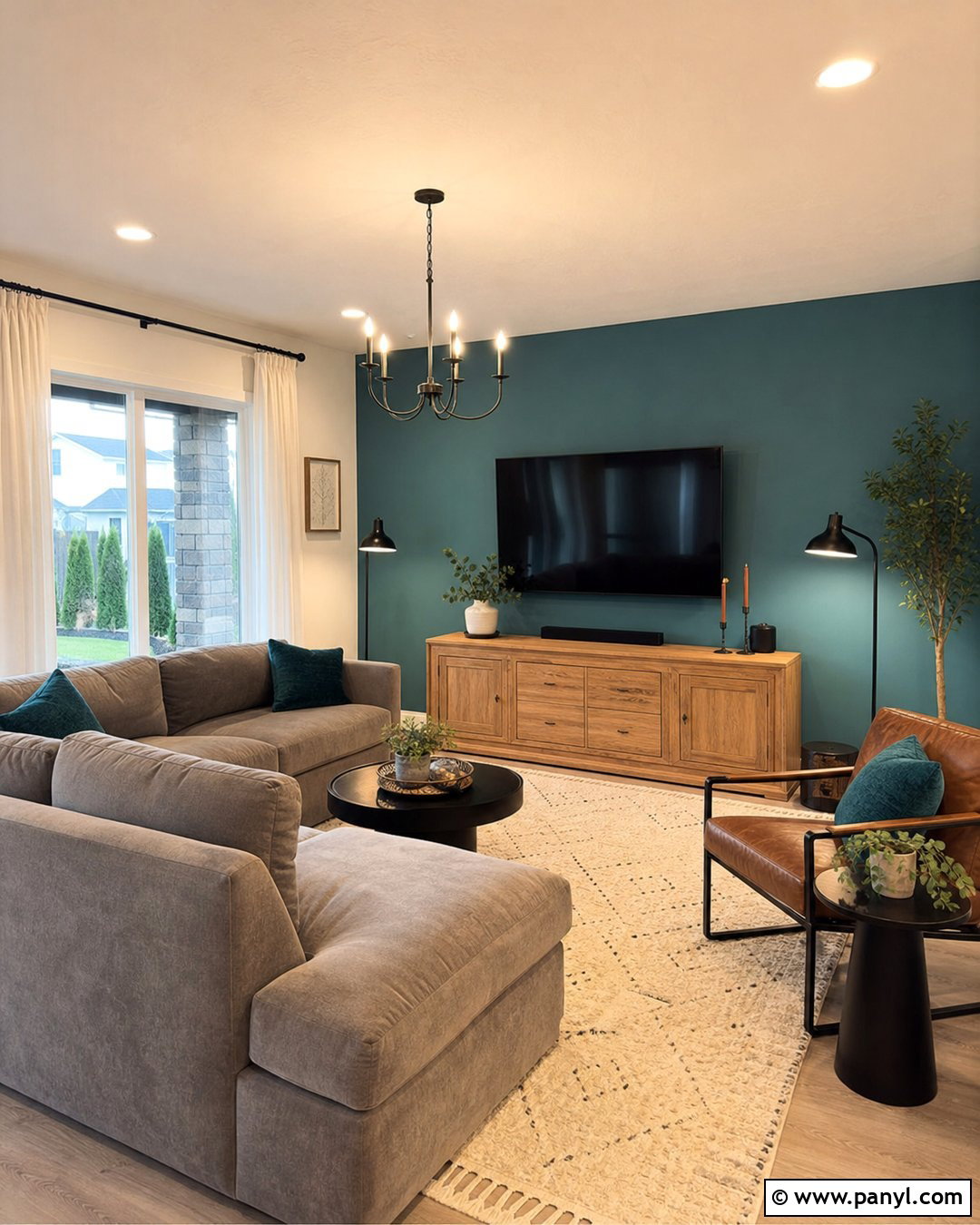
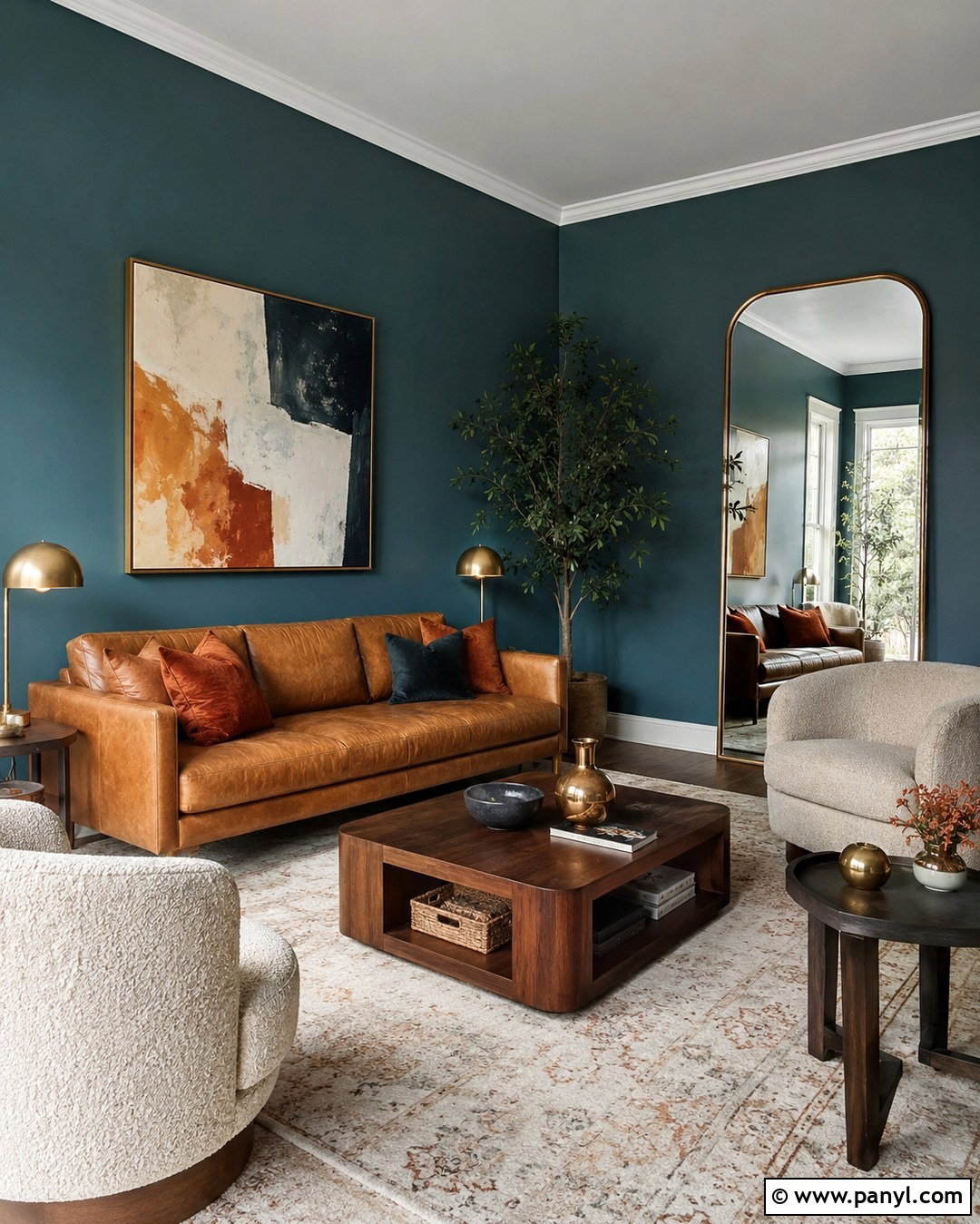
A teal feature wall brings fresh energy to a family room while remaining easier to live with than a brighter turquoise. Use the wall behind a low media console in natural oak, with a warm gray sectional positioned opposite. Repeat teal through only two or three smaller details, such as patterned cushions or a ceramic vase. Off-white surrounding walls, pale curtains, and a cream rug will keep the room open and balanced. Introduce cognac leather through an accent chair or ottoman to warm the blue-green color. Black metal lighting and simple framed artwork give the room clean definition. Hide cords and limit shelf decor around the television so the strong wall looks purposeful. The completed scheme feels colorful, comfortable, and practical enough for everyday family use.
7. Powder Blue Feature Wall
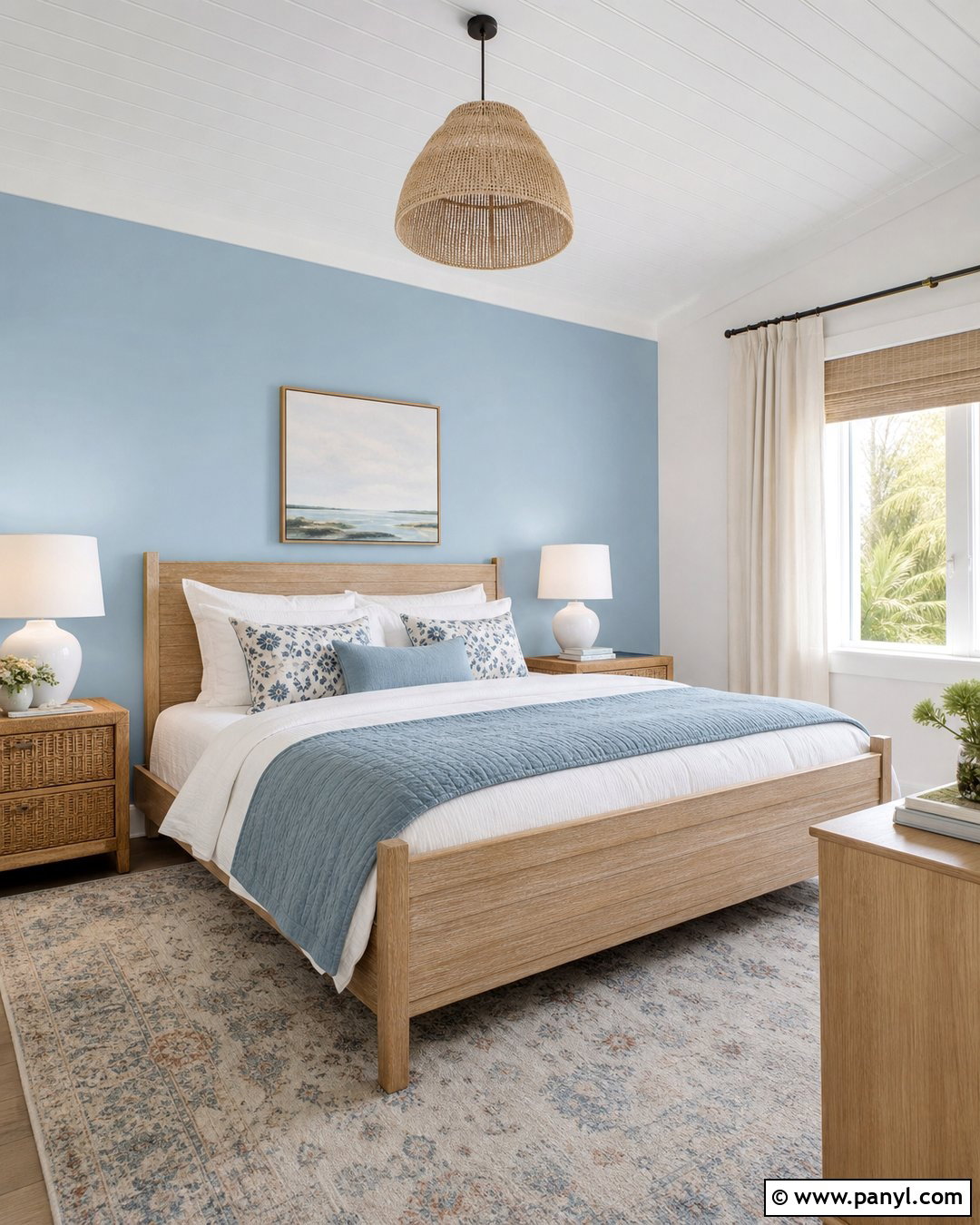
Soft powder blue can define a guest bedroom without making it feel cold or overly themed. Paint the wall behind the bed, then use a warmer off-white across the remaining surfaces. A light oak bed frame, white cotton bedding, and a quilt in dusty blue and beige create gentle layers. Add woven nightstands, ceramic lamps, and natural linen curtains to bring warmth and texture into the palette. A faded floral or striped rug can connect the blue wall to the neutral flooring. Instead of filling the wall with small decorations, hang one substantial framed print above the headboard. Pale blue works best when the room includes natural materials and slightly creamy whites. The finished bedroom will feel bright, restful, and thoughtfully prepared for visitors of any age.
8. Cobalt Blue Feature Wall
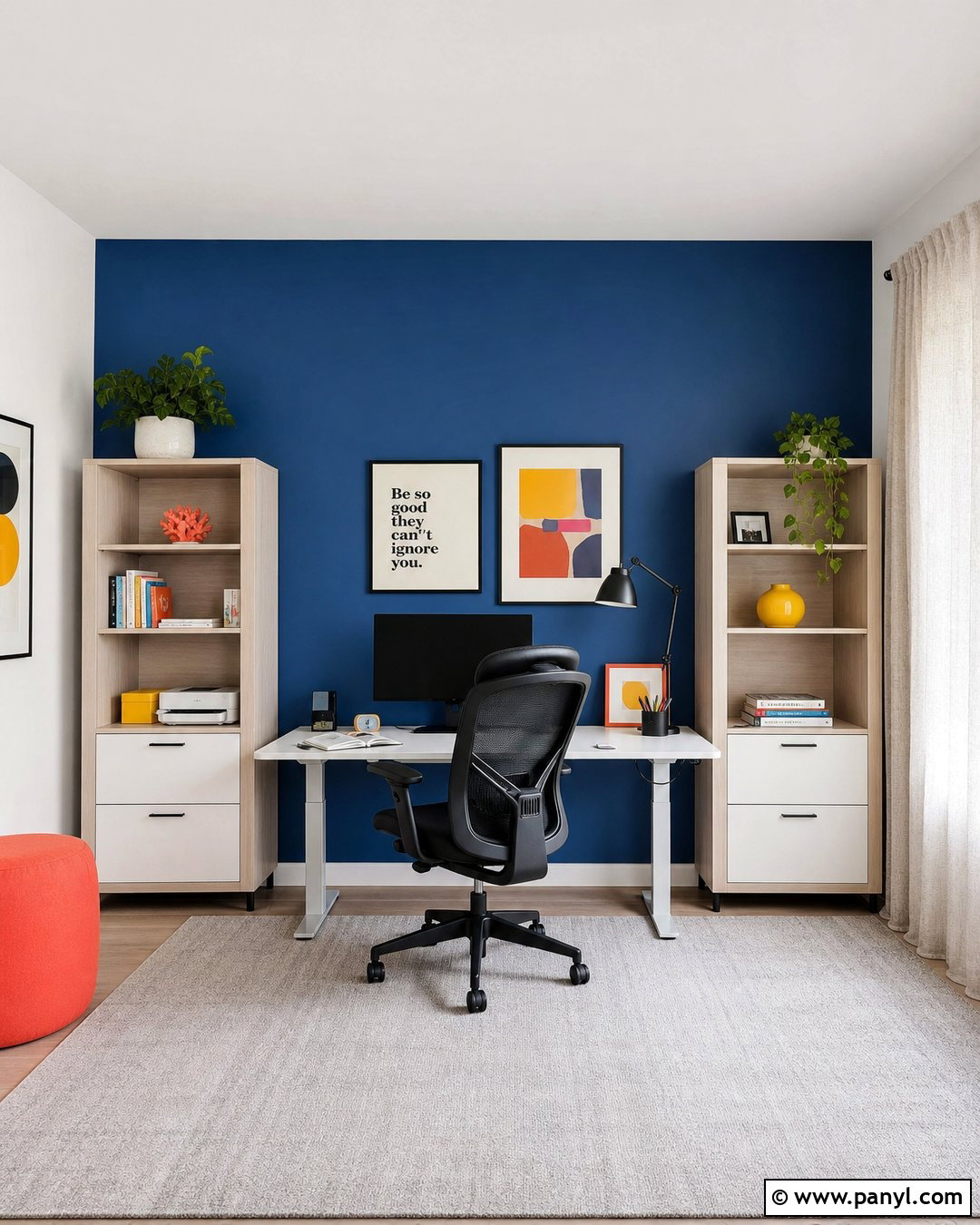
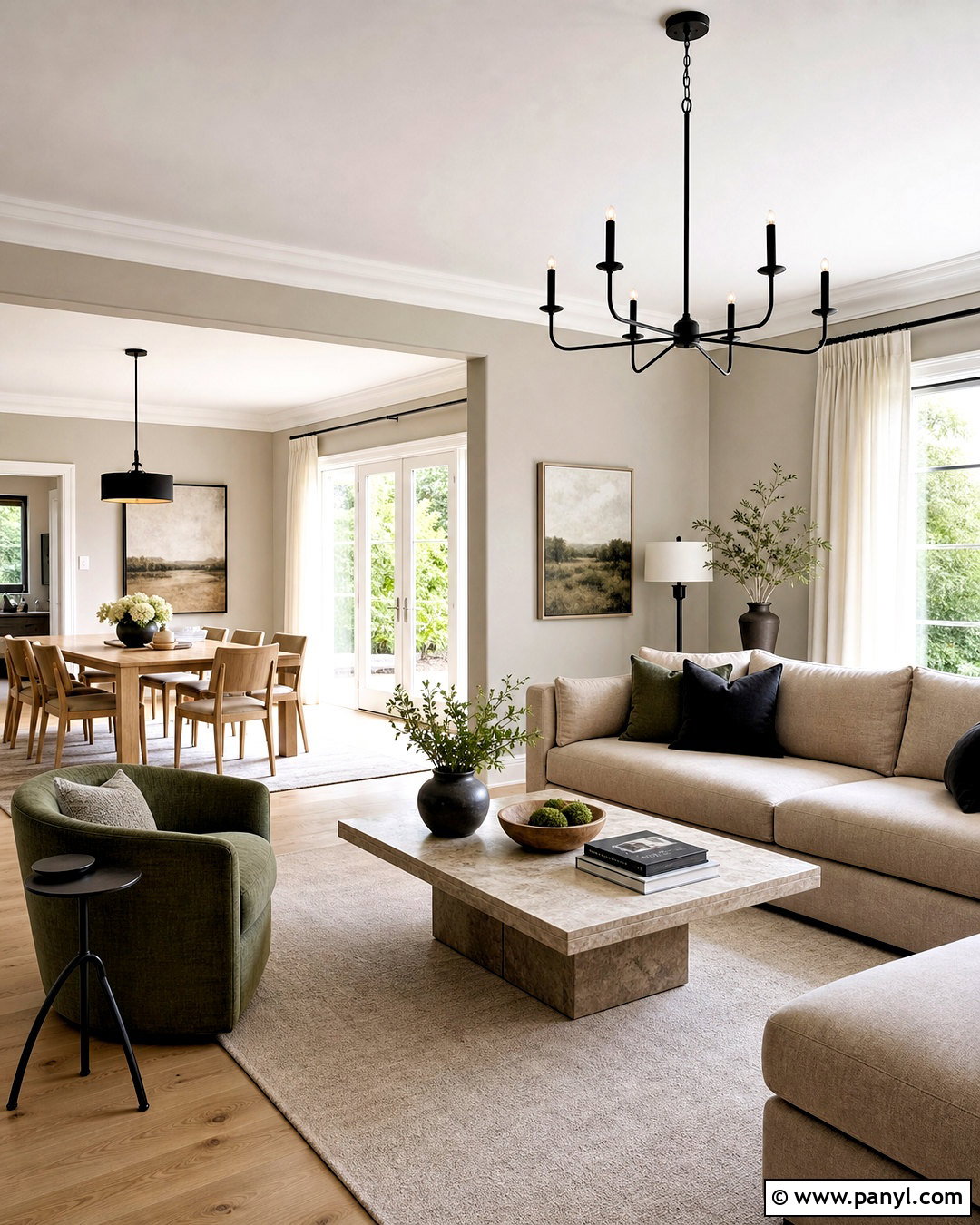
A cobalt blue feature wall gives a creative studio or energetic home office a crisp, confident personality. Place a white desk and pale wood storage cabinets against the saturated background to create clear visual contrast. Keep adjacent walls clean white, but soften the space with a light gray rug and natural linen curtains. Introduce small accents in coral, yellow, or red through artwork and desk accessories, limiting them so the room stays organized. A black adjustable task light and a simple ergonomic chair make the setup functional rather than decorative only. Open shelving can display neatly arranged books and supplies in neutral containers. Because cobalt is highly noticeable, strong daylight and balanced artificial lighting are essential. The overall room should feel stimulating, contemporary, and easy to work in.
9. Slate Blue Feature Wall
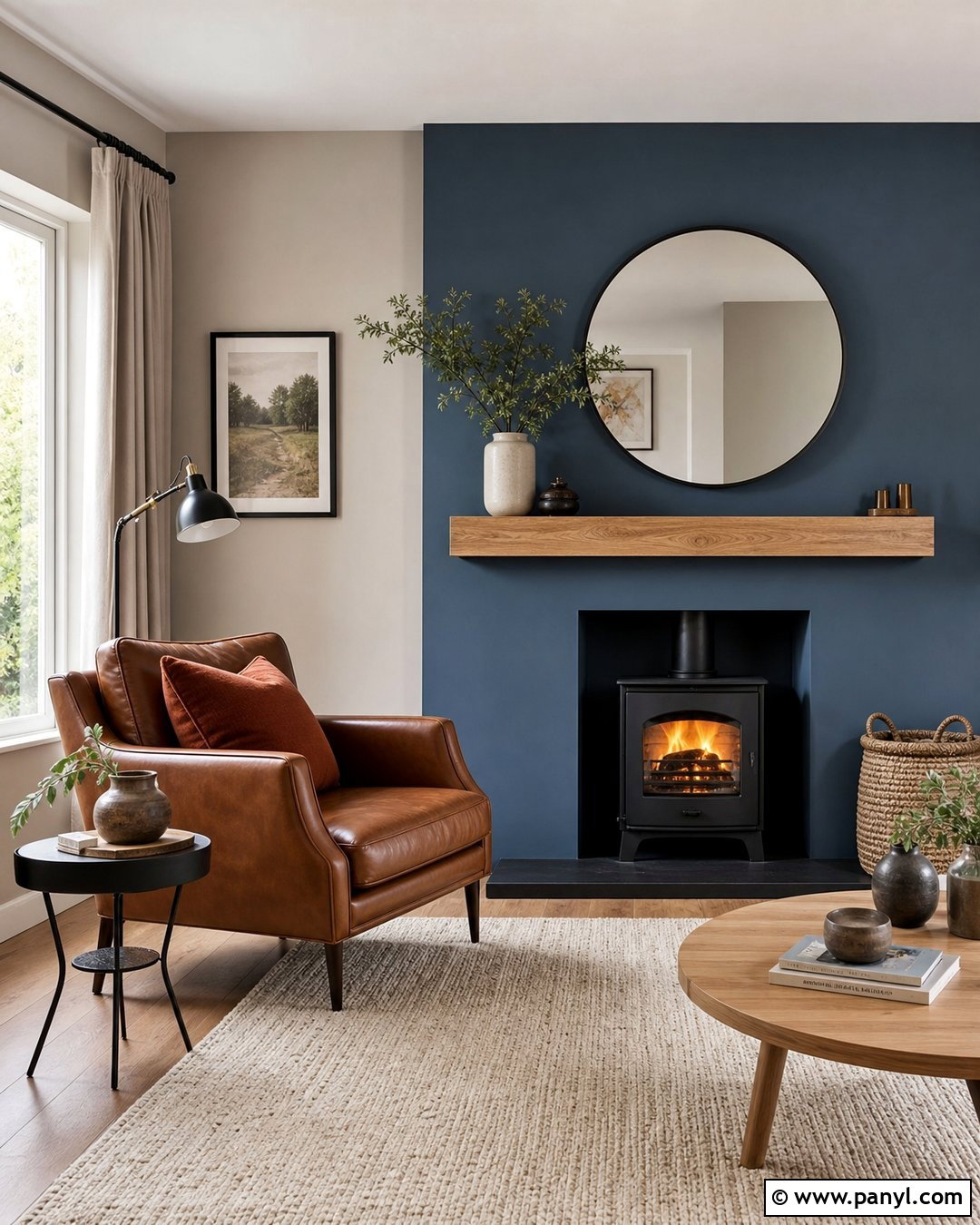
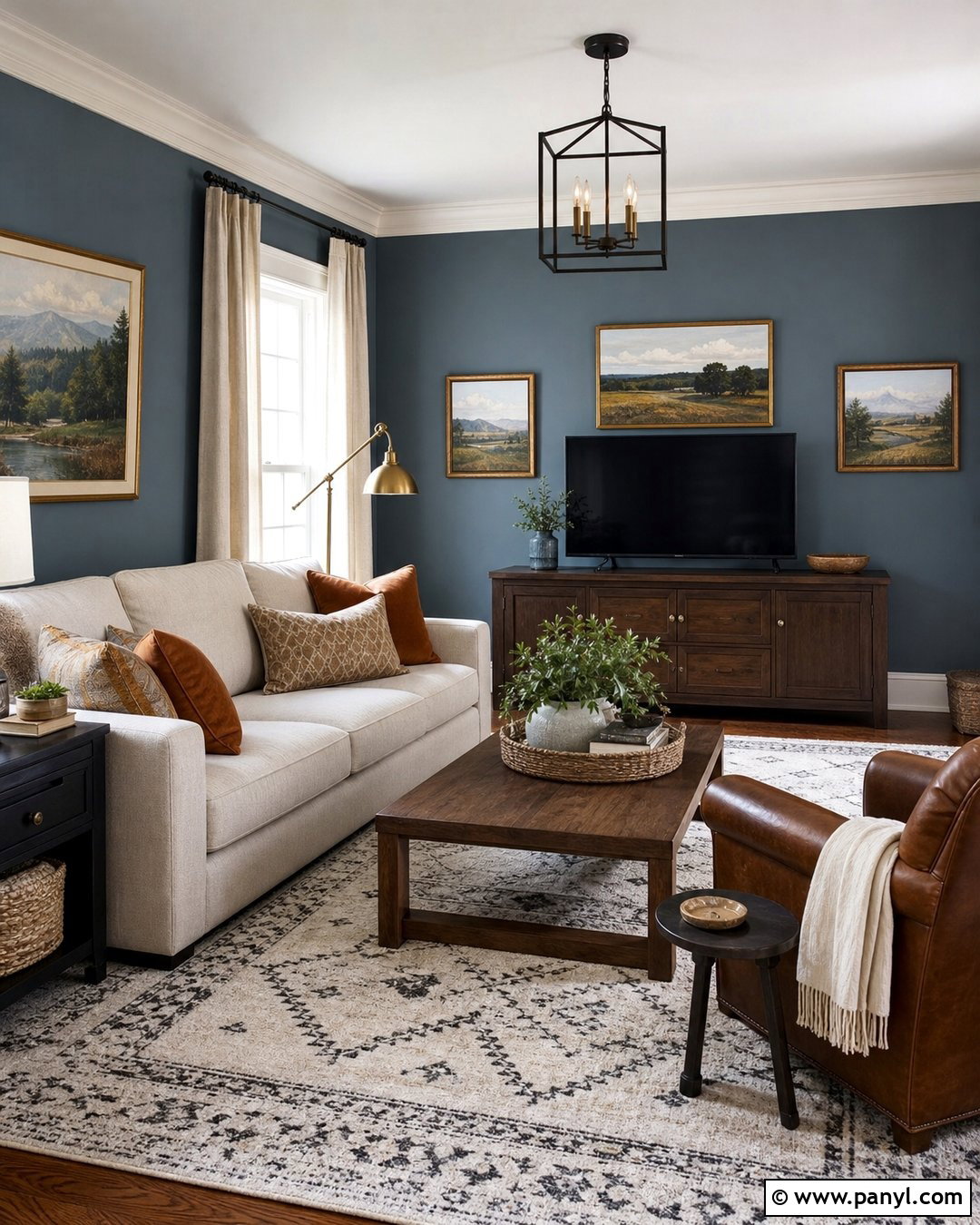
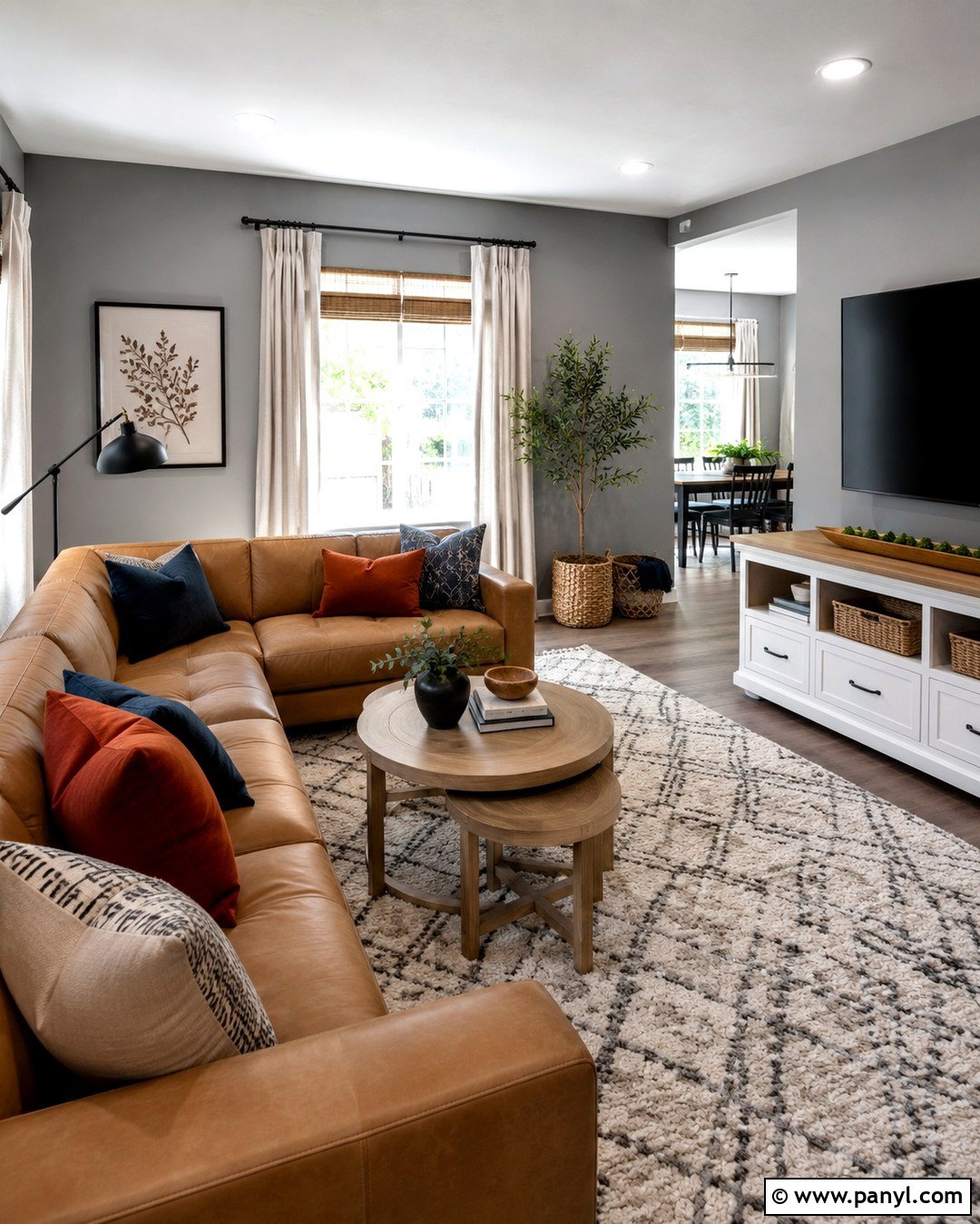
Slate blue offers a quieter alternative to navy for a relaxed living room or reading area. Apply it behind a compact fireplace, bookcase, or main seating arrangement to strengthen an existing focal point. Pair the wall with soft greige on surrounding surfaces and choose a camel leather sofa or chair for warmth. Medium-tone oak flooring, an ivory wool rug, and linen curtains keep the palette natural and comfortable. Add cushions in muted blue, cream, and rust, then finish with matte black lighting and simple pottery. Slate blue contains gray undertones, so it blends especially well with stone and weathered wood. Warm lamp bulbs and tactile fabrics prevent the scheme from appearing flat. The finished space feels collected and calm, with enough contrast to remain visually interesting.
10. Charcoal Gray Feature Wall
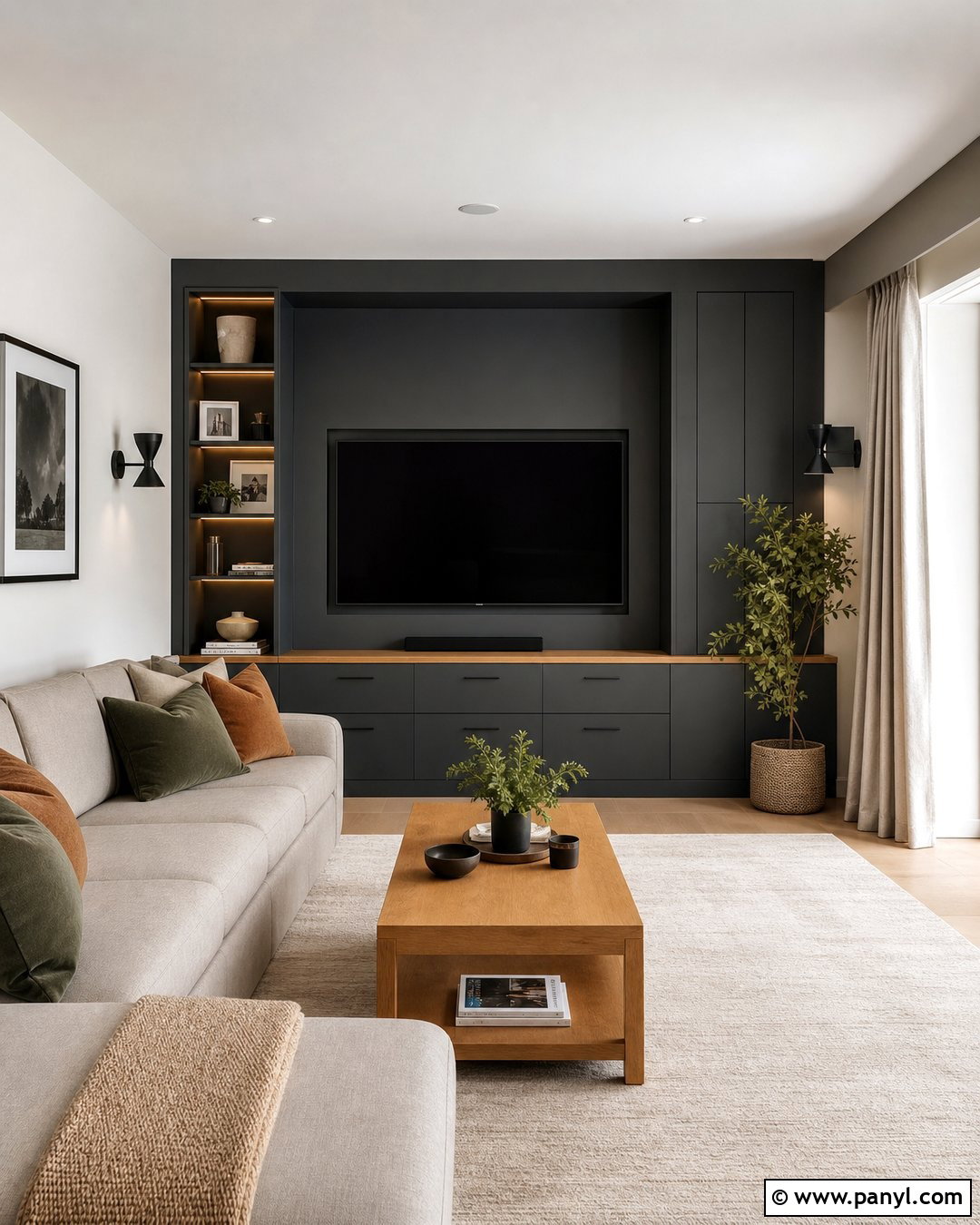
For a modern media room, a charcoal gray feature wall reduces visual distraction and gives the television area a clean, integrated appearance. Continue the color across simple wall-mounted cabinets or narrow molding to make the whole installation feel deliberate. Choose warm white for the other walls and introduce a light taupe sectional to prevent the room from becoming gloomy. A pale rug, oak coffee table, and textured cream curtains add softness and brightness. Use dimmable black sconces beside the media zone, but maintain good general lighting elsewhere. Cushions in camel, ivory, and muted olive can warm the gray palette. Avoid filling the charcoal surface with unrelated decor. A streamlined console, concealed cables, and a few carefully selected objects will create a comfortable, polished room for daily viewing.
11. Soft Black Feature Wall
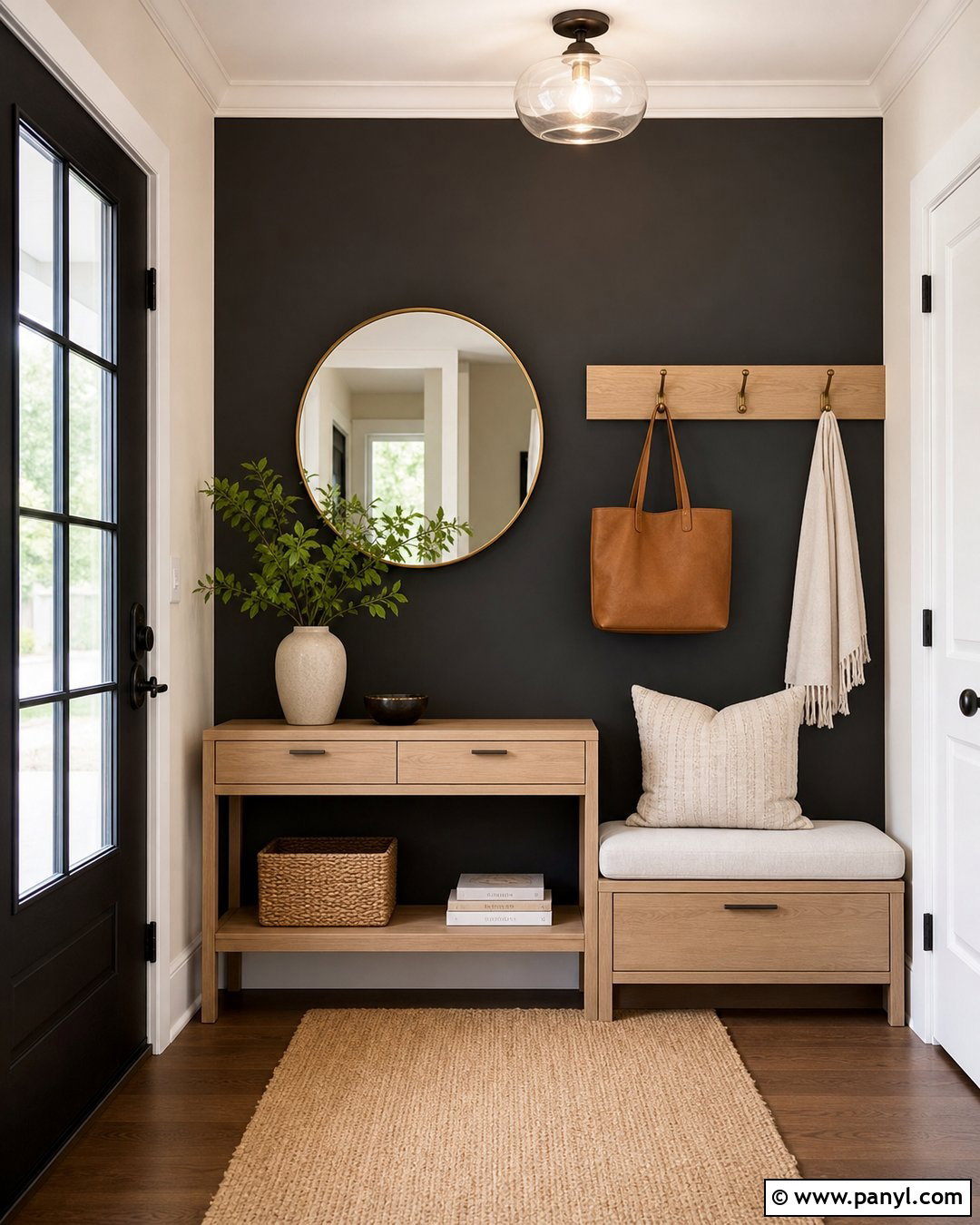
A soft black feature wall can make an entryway feel architectural, even when the space is relatively small. Choose an off-black with brown or charcoal undertones and use it behind a slim console table or built-in bench. Paint the other walls warm white, then add pale oak flooring or a natural jute runner to lift the scheme. A round brass-framed mirror reflects light and breaks up the dark surface, while a cream bench cushion provides practical contrast. Include closed storage for shoes and hooks in matte black or aged brass. One table lamp and a simple vase are enough decoration. Bright overhead lighting is important in an enclosed hallway. When balanced with light wood, woven texture, and reflective metal, soft black looks sophisticated rather than severe.
12. Chocolate Brown Feature Wall
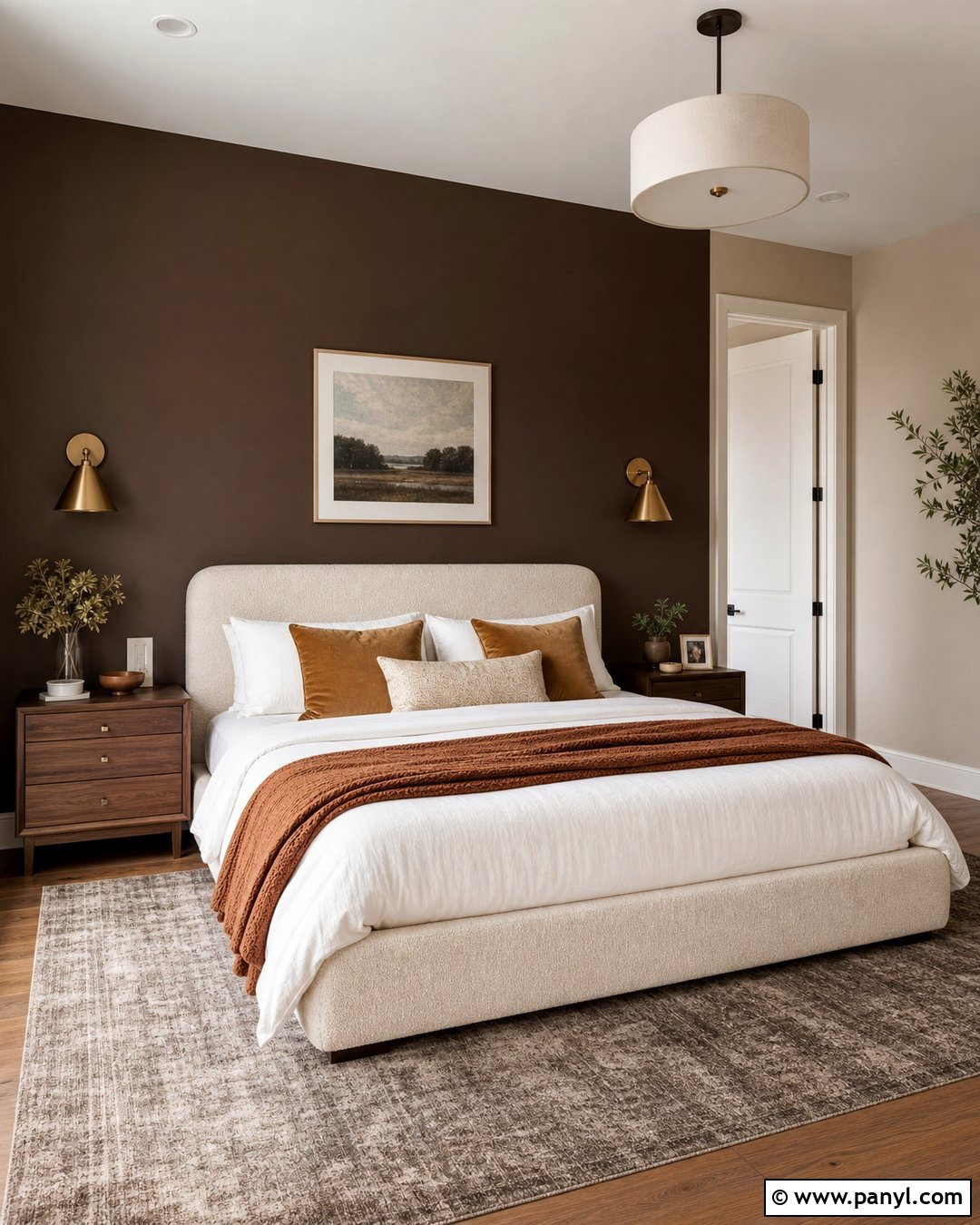
Chocolate brown creates a warm, cocooning feature wall that works beautifully in a bedroom with plenty of soft texture. Position a cream bouclé or upholstered bed against the wall and paint the other surfaces a gentle beige. Walnut nightstands will blend naturally with the background, while white bedding keeps the center of the room bright. Layer caramel pillows, a rust throw, and a taupe rug for a tonal finish. Brass wall lights add subtle shine without disrupting the earthy mood. Choose simple abstract artwork with cream, brown, and muted red details. If the room has dark flooring, use larger pale rugs and lighter curtains to maintain balance. This complete scheme feels rich and restful, offering drama through depth of color rather than sharp contrast or elaborate decoration.
13. Terracotta Feature Wall
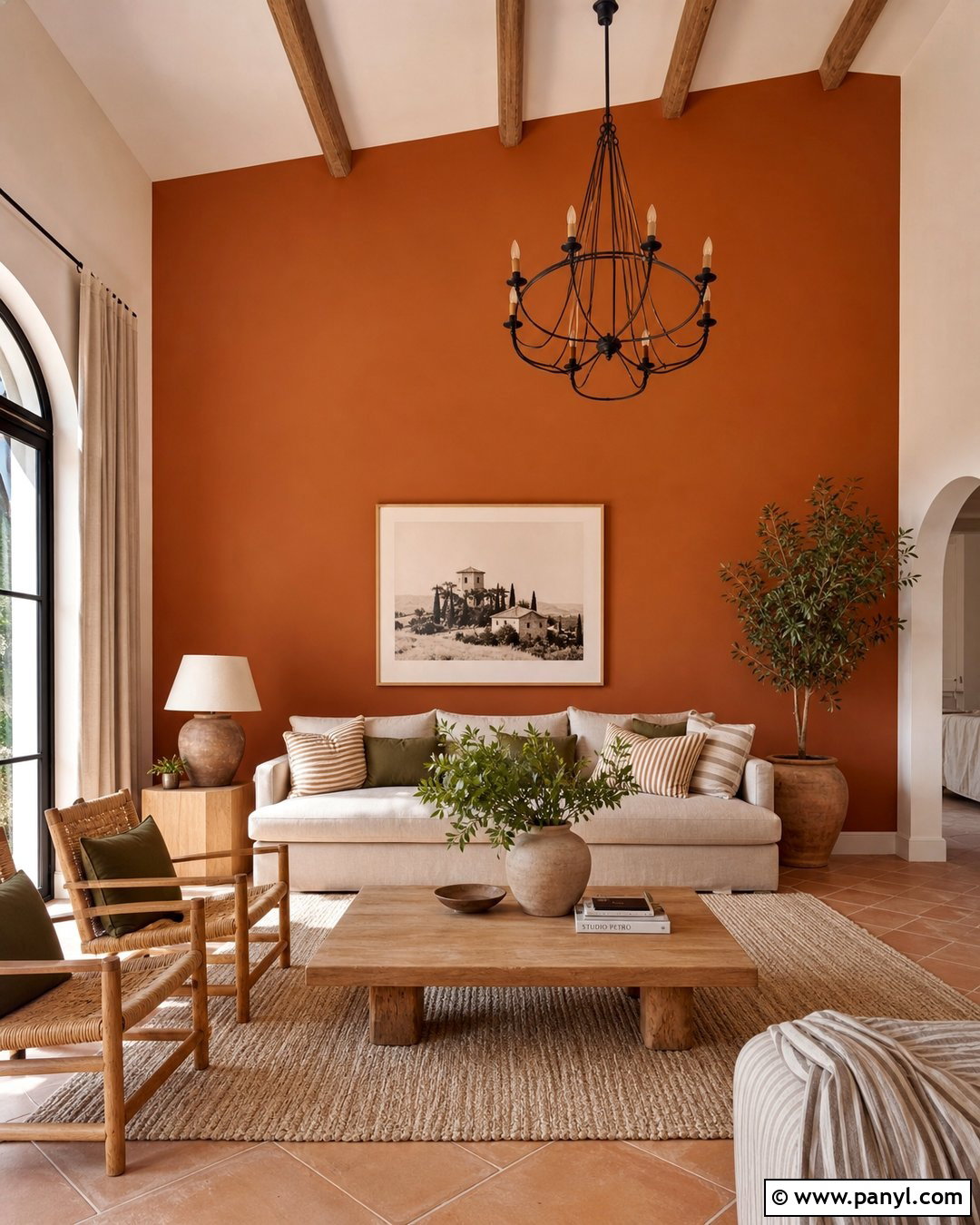
Warm and sunbaked, a terracotta feature wall can give a living room an inviting Mediterranean character. Place it behind a flax-colored sofa and complement it with warm white walls, natural oak furniture, and a cream woven rug. Add olive green cushions, striped linen textiles, and handmade-looking ceramics to strengthen the earthy palette. Black metal accents, used sparingly through a floor lamp or picture frames, provide clean definition. Hang one oversized abstract piece containing sand, rust, and charcoal tones instead of several small items. Sheer curtains allow daylight to soften the wall throughout the day. Terracotta works especially well with warm flooring and rooms containing natural texture. The completed look should feel relaxed and layered, with furniture and accessories supporting the wall instead of competing against it.
14. Burnt Orange Feature Wall
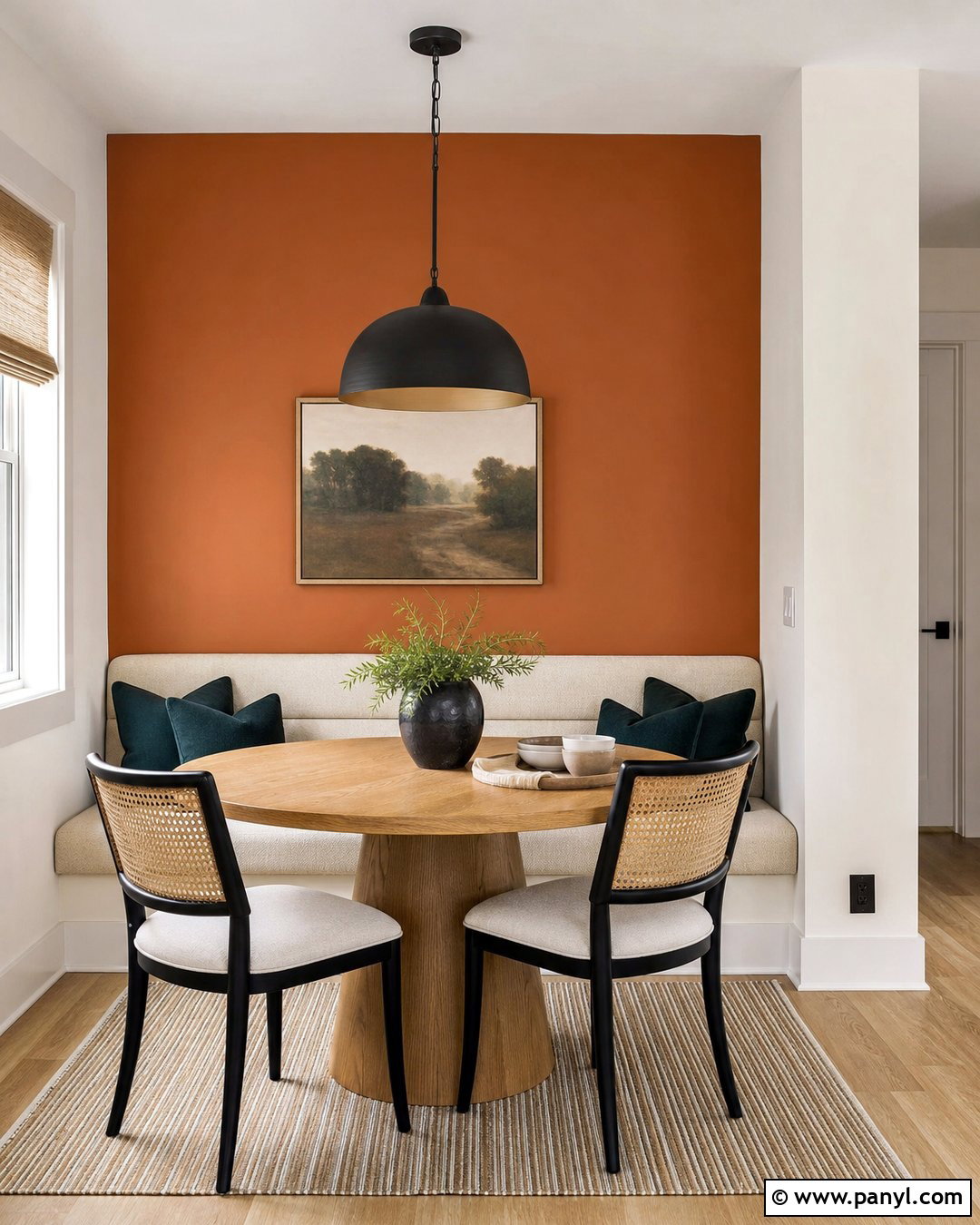
A burnt orange feature wall can transform a casual dining nook into a cheerful destination for meals and conversation. Use the color behind a built-in banquette or compact round table, then keep the surrounding walls creamy white. Pair the orange with an oak tabletop, cane-backed chairs, and seat cushions in oatmeal fabric. A small pendant in matte black or aged brass creates a defined center above the table. Introduce dark teal through a few pillows or a framed print for controlled contrast. A striped beige rug and simple linen shade soften the harder surfaces. Because burnt orange is energetic, avoid repeating it across too many accessories. Let the wall provide most of the color while wood, neutrals, and one cooler accent create a balanced and usable breakfast area.
15. Clay Pink Feature Wall
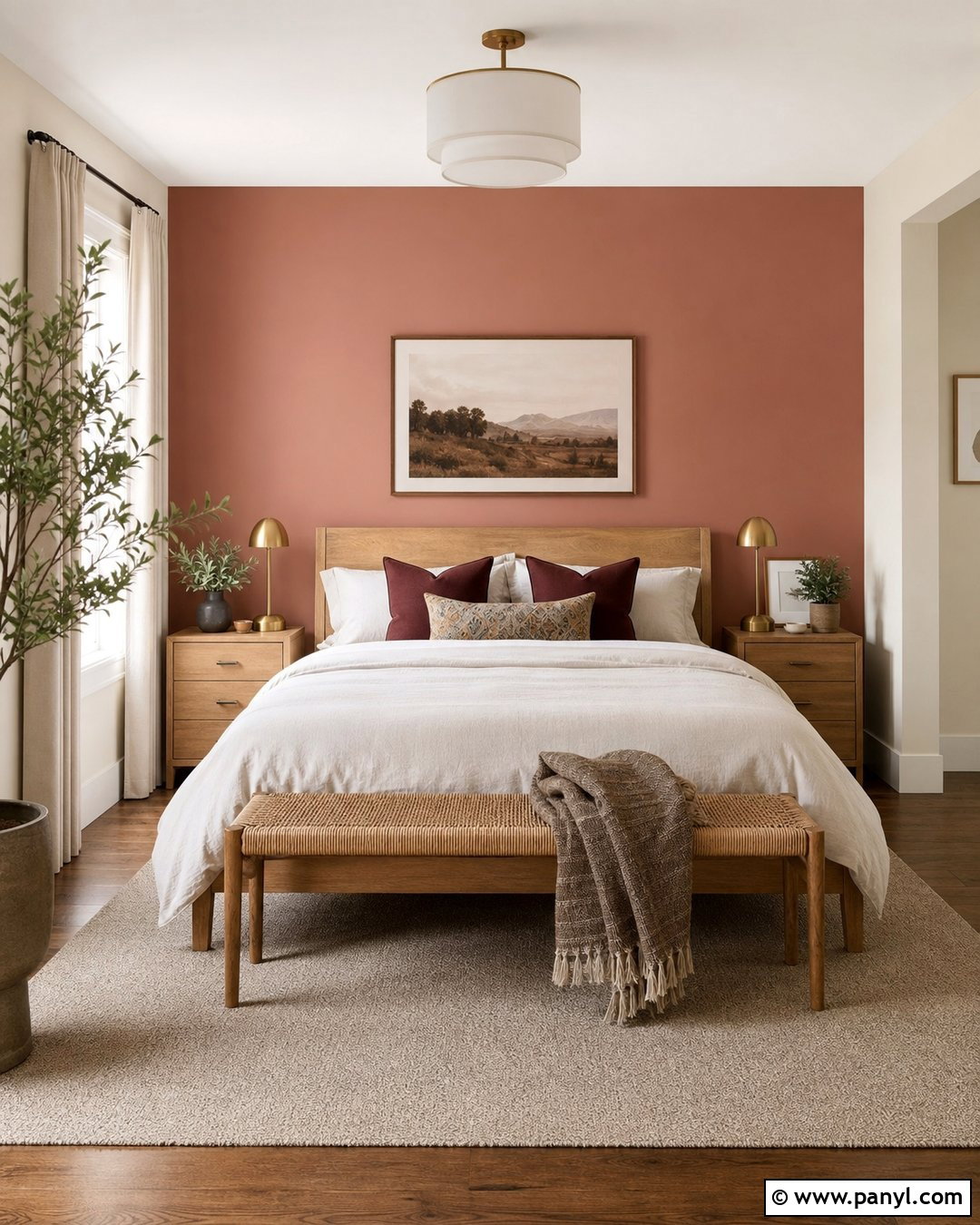
Clay pink brings warmth to a bedroom or dressing room without looking overly sweet. Select a dusty, brown-based pink and place it behind a natural wood bed or low upholstered headboard. Use warm ivory on the remaining walls, then layer the bed with white, taupe, and muted burgundy textiles. A cane bench, oak nightstands, and a beige wool rug create an easy connection to the wall’s earthy undertones. Add brushed brass lamps and one dark wood mirror to give the gentle palette more structure. Linen curtains should remain pale and simple, allowing daylight to reveal the color’s subtle changes. Avoid shiny pink accessories or heavily coordinated decorations. The most successful finished room will feel grounded, calm, and adult, with clay pink acting almost like a warm neutral.
16. Dusty Rose Feature Wall
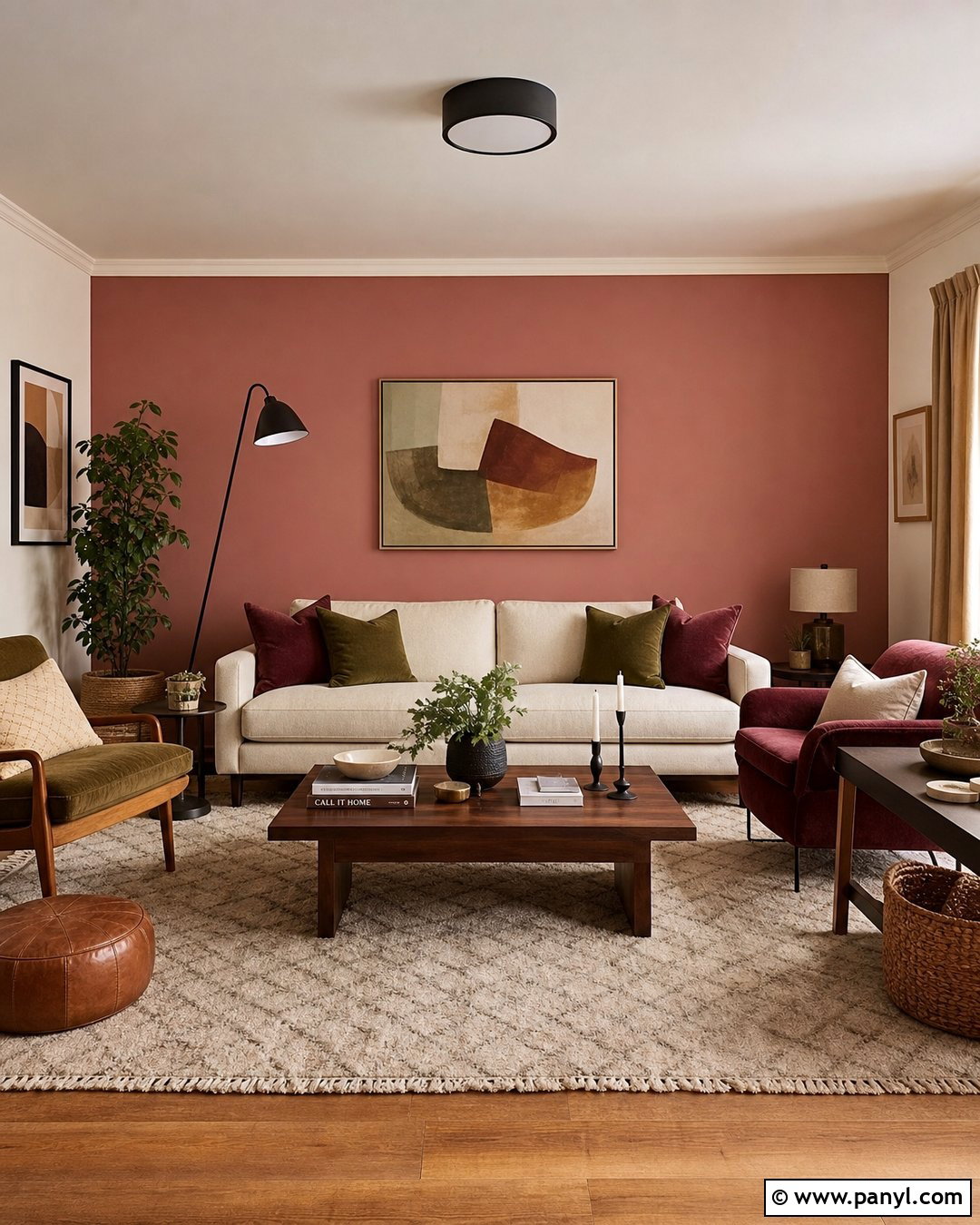
Dusty rose can create a graceful living room when paired with strong shapes and practical neutral furniture. Paint the wall behind a cream sofa, then add a medium-gray or oatmeal rug to establish a calm foundation. A walnut coffee table and black metal floor lamp prevent the palette from becoming too delicate. Repeat the wall color through one patterned cushion, but bring in deeper burgundy and soft olive for greater dimension. Warm white paint on adjacent walls maintains brightness, while full-length beige curtains make the room feel taller and more complete. Artwork can combine muted pink, brown, and charcoal in a simple abstract composition. By balancing rosy color with dark wood, black accents, and relaxed upholstery, the completed room feels warm and contemporary instead of overly decorative or youthful.
17. Burgundy Feature Wall
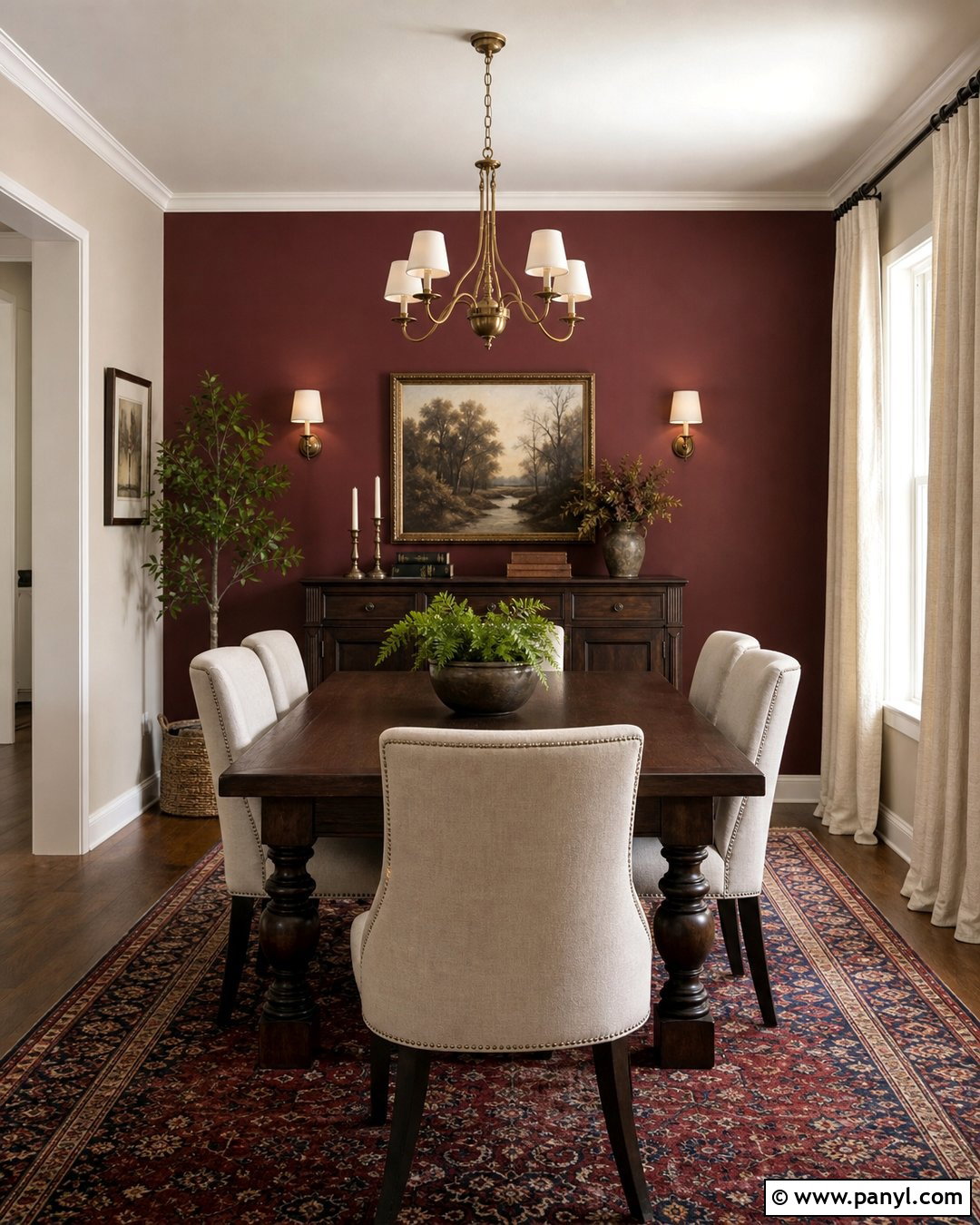
A burgundy feature wall makes a dining room feel intimate, layered, and ready for long evening meals. Use it behind a sideboard or fireplace rather than on a wall interrupted by several doors. Pair the rich red with mushroom-colored surrounding walls and a dark oak dining table. Upholstered chairs in oatmeal or camel will lighten the center of the room, while aged brass lighting adds a warm reflective element. Choose a vintage-style rug containing burgundy, beige, and muted blue to connect the entire palette. Cream curtains and pale artwork keep the wall from looking too dense. A few dark green branches in a simple vase add natural contrast. With sufficient daylight and balanced neutral surfaces, burgundy becomes a sophisticated background rather than an overpowering block of color.
18. Plum Feature Wall
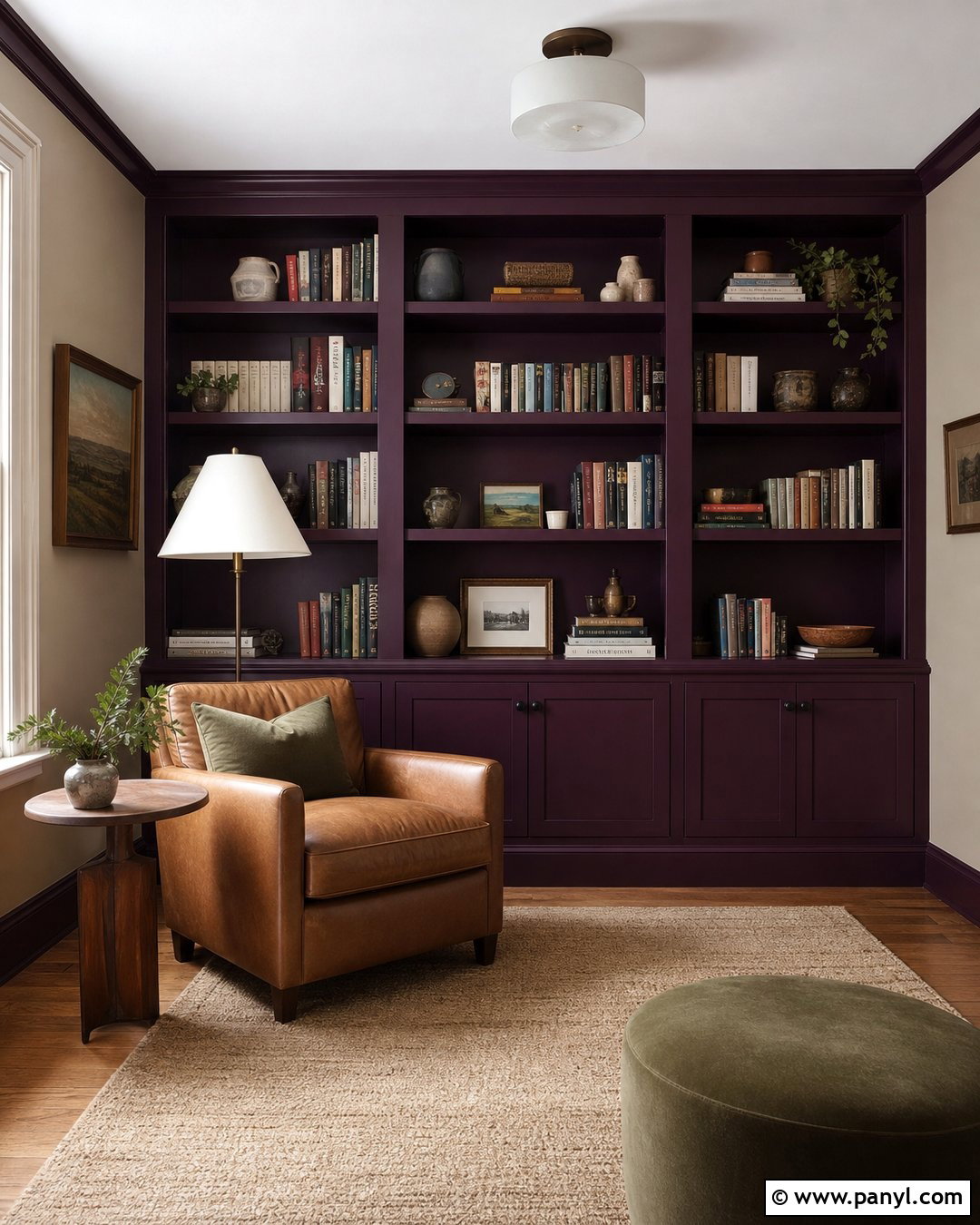
Plum can give a home library or reading room a distinctive sense of comfort. Apply it to the wall behind built-in shelving, painting the shelves in the same shade for a unified, custom appearance. A camel leather chair, walnut side table, and cream floor lamp will stand out clearly against the purple background. Keep the other walls pale taupe and place a soft beige rug under the seating area. Add books, small framed pictures, and ceramic objects in a restrained arrangement, leaving some shelf space open. Muted rose and olive cushions can complement plum without creating a strongly purple theme. Natural linen curtains will filter bright daylight and soften the contrast. This complete reading space feels personal and luxurious while remaining practical, organized, and comfortable enough for regular use.
19. Aubergine Feature Wall
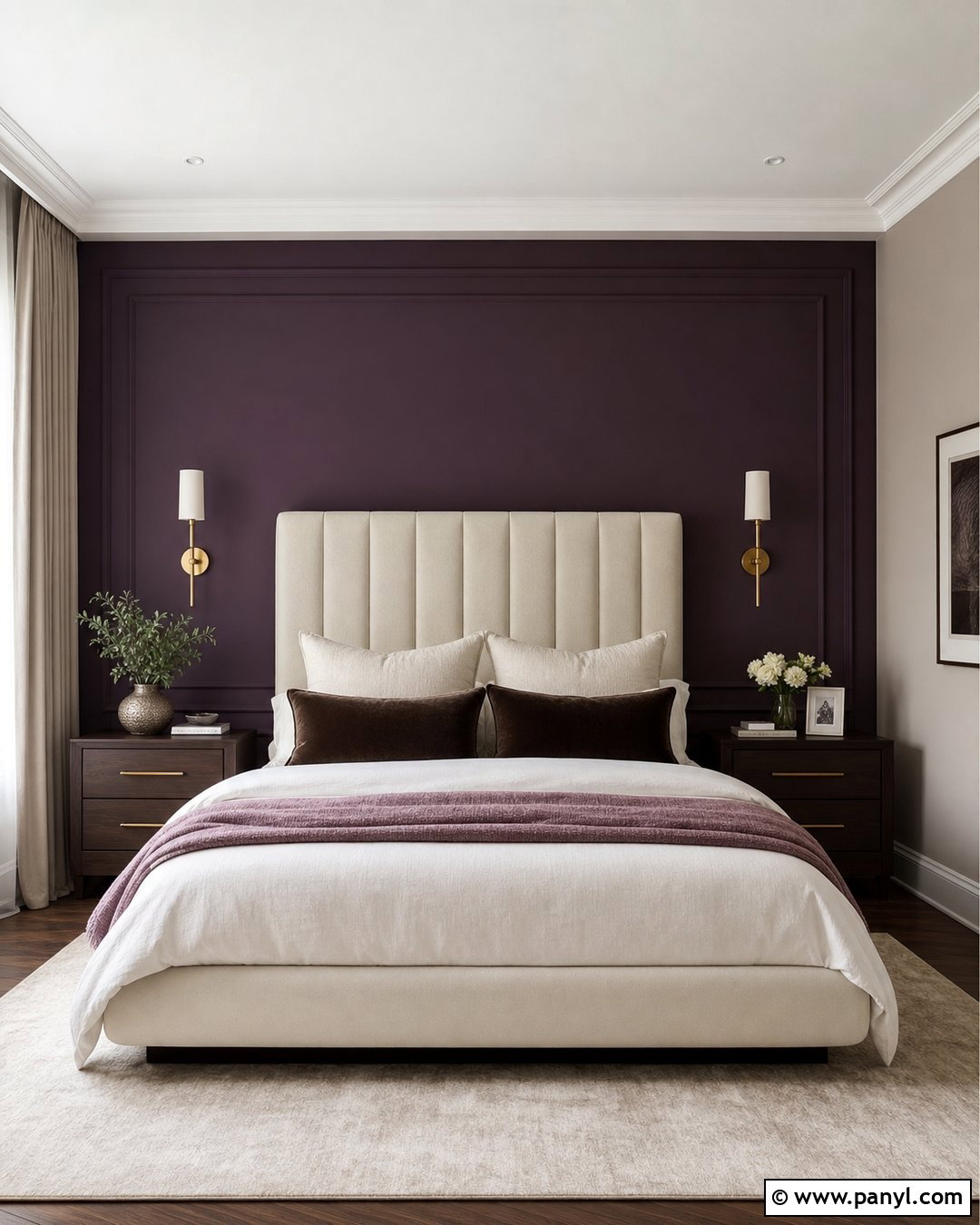
For a dramatic primary bedroom, an aubergine feature wall offers deep color with more warmth than charcoal or navy. Center a tall oatmeal headboard against it and use soft mushroom paint on the remaining walls. Dress the bed in ivory linen, chocolate brown pillows, and a muted mauve throw. Dark walnut nightstands and brass sconces support the richness of the wall, while a large pale rug keeps the floor visually light. Choose artwork with cream backgrounds and thin dark frames so it remains visible without competing. Full-length taupe curtains complete the enveloping palette. Aubergine can appear almost brown in warm light and more purple in daylight, making sampling essential. With balanced lighting and restrained styling, the finished bedroom feels restful, elegant, and comfortably intimate.
20. Mustard Yellow Feature Wall
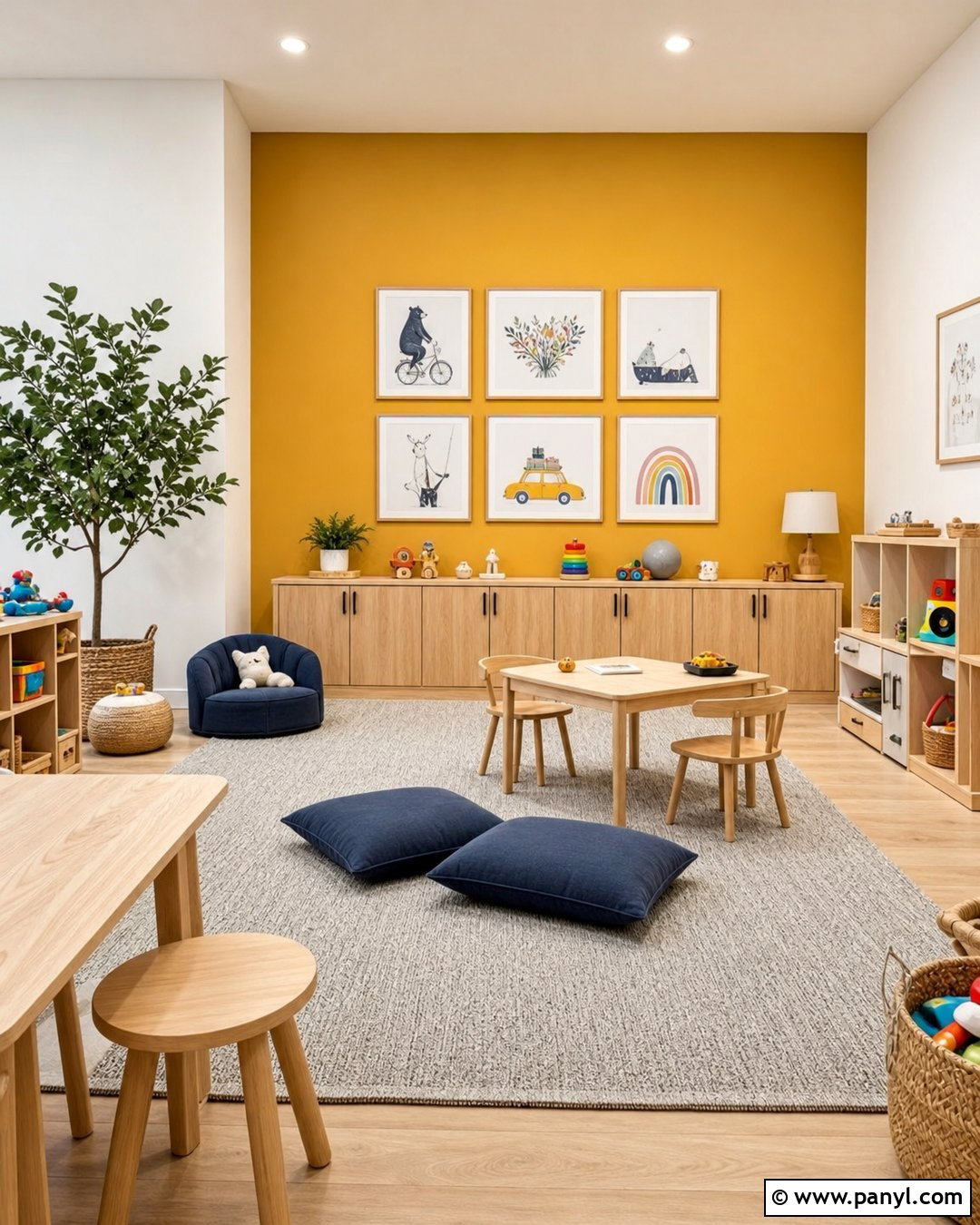
A mustard yellow feature wall can brighten a playroom or family space while still feeling grounded. Use it behind low white or pale oak storage cabinets, allowing toys, books, and craft supplies to remain neatly contained. Paint the other walls soft white and add a washable gray-beige rug across the main activity area. Introduce navy through floor cushions, storage bins, or a compact reading chair to balance the warm yellow. Natural wood furniture and woven baskets keep the room approachable and practical. Choose simple framed illustrations with clear shapes and a limited palette rather than filling the wall with many small decorations. Good daylight will make mustard feel lively, while warm lamps soften it in the evening. The complete room should be playful, organized, and adaptable as children grow.
21. Butter Yellow Feature Wall
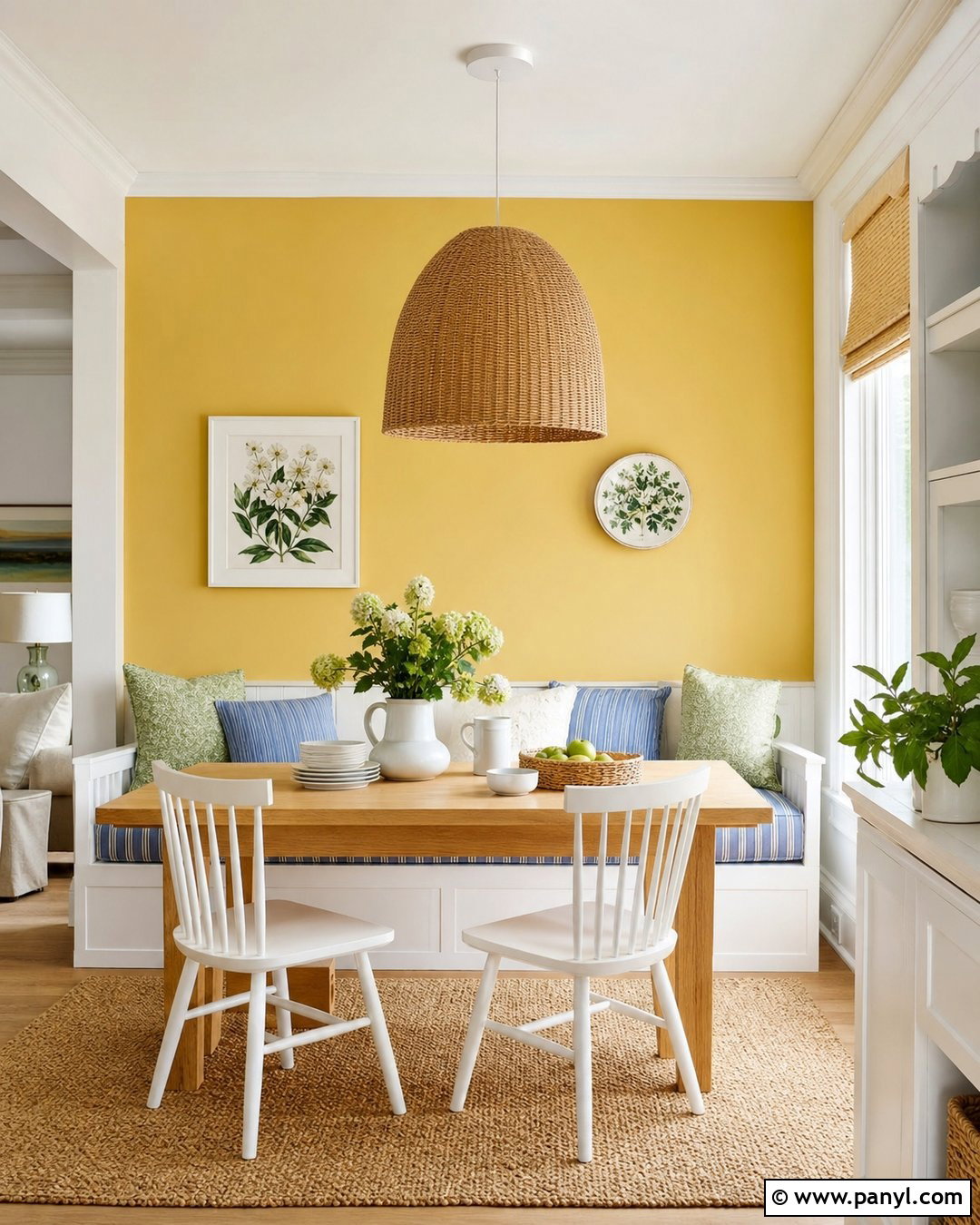
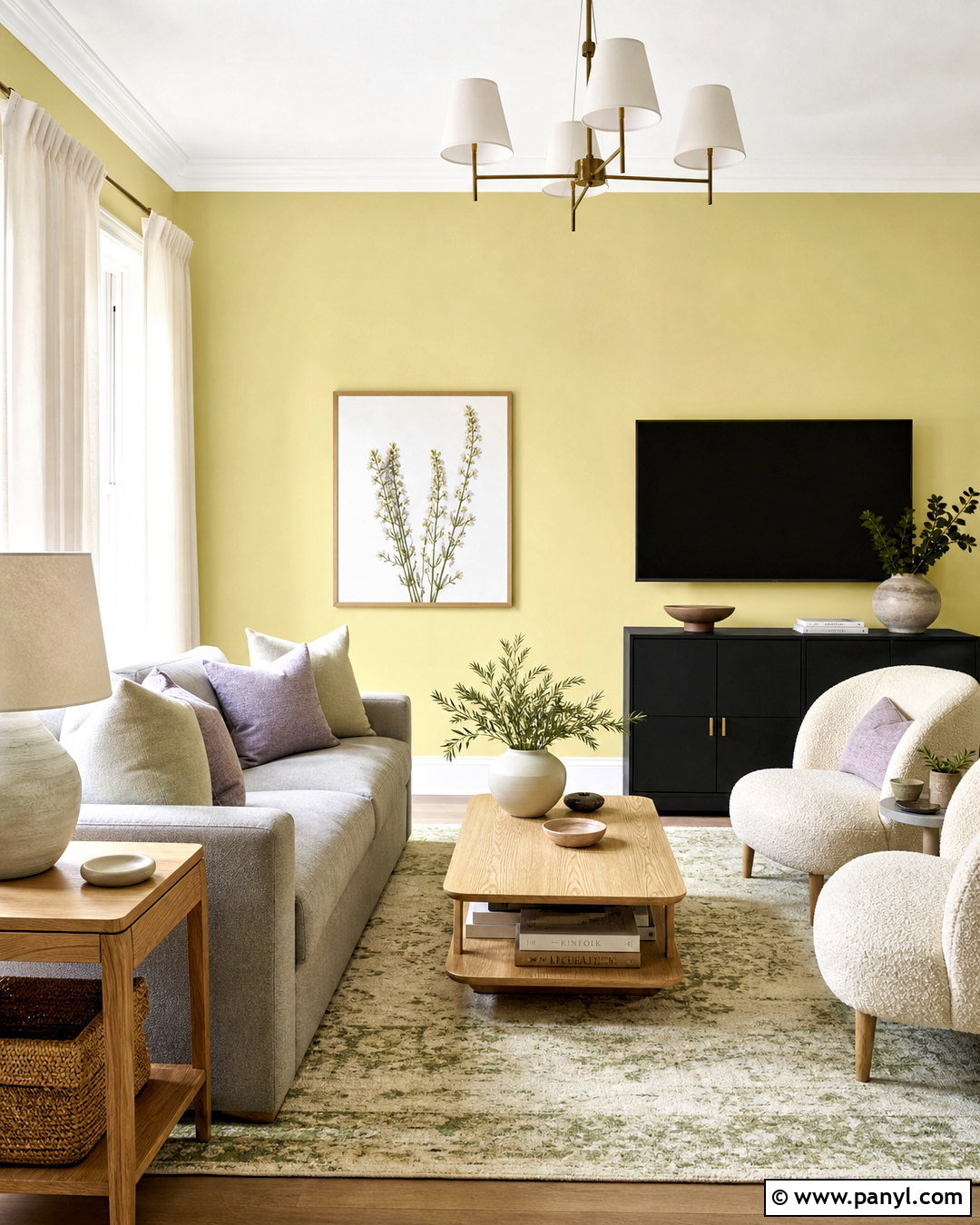
Butter yellow offers gentle warmth for a breakfast room, small kitchen nook, or sunlit dining area. Paint the wall behind a simple banquette in this creamy shade, then use warm white throughout the surrounding space. Pair it with a light oak table, white spindle chairs, and cushions in soft blue ticking stripes. A woven pendant and natural fiber rug reinforce the relaxed, cheerful character. Add a few ceramic pieces in white and pale green, keeping counters and shelves mostly clear. Butter yellow reflects light more softly than a strong lemon shade, making it suitable for spaces used early in the day. White curtains or woven blinds maintain brightness. The finished nook feels sunny and welcoming without relying on bold patterns, glossy finishes, or overly coordinated yellow accessories.
22. Greige Feature Wall
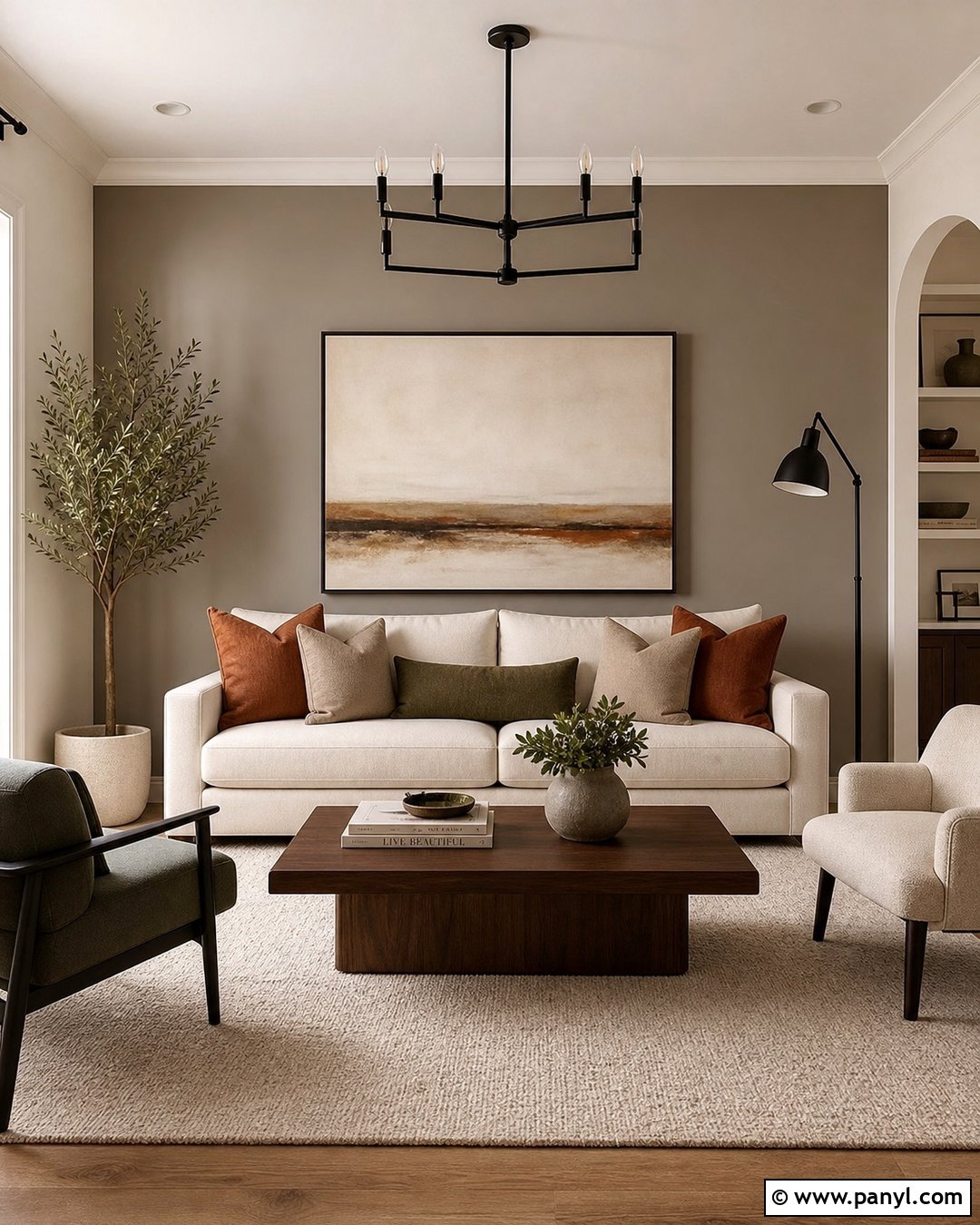
A greige feature wall creates subtle depth in a neutral living room without introducing an obvious accent color. Select a medium greige that is noticeably deeper than the warm white used on the remaining walls. Position the sofa against the feature wall and choose upholstery in ivory, camel, or a slightly lighter beige. Add a walnut coffee table, black floor lamp, and textured cream rug to give the tonal palette stronger definition. Cushions in taupe, rust, and muted olive introduce quiet variety. Large artwork with soft abstract shapes can provide a focal point while staying within the understated scheme. Greige changes considerably under different light, so test it beside the flooring and upholstery. The completed room feels layered, comfortable, and timeless rather than plain or unfinished.
23. Taupe Feature Wall
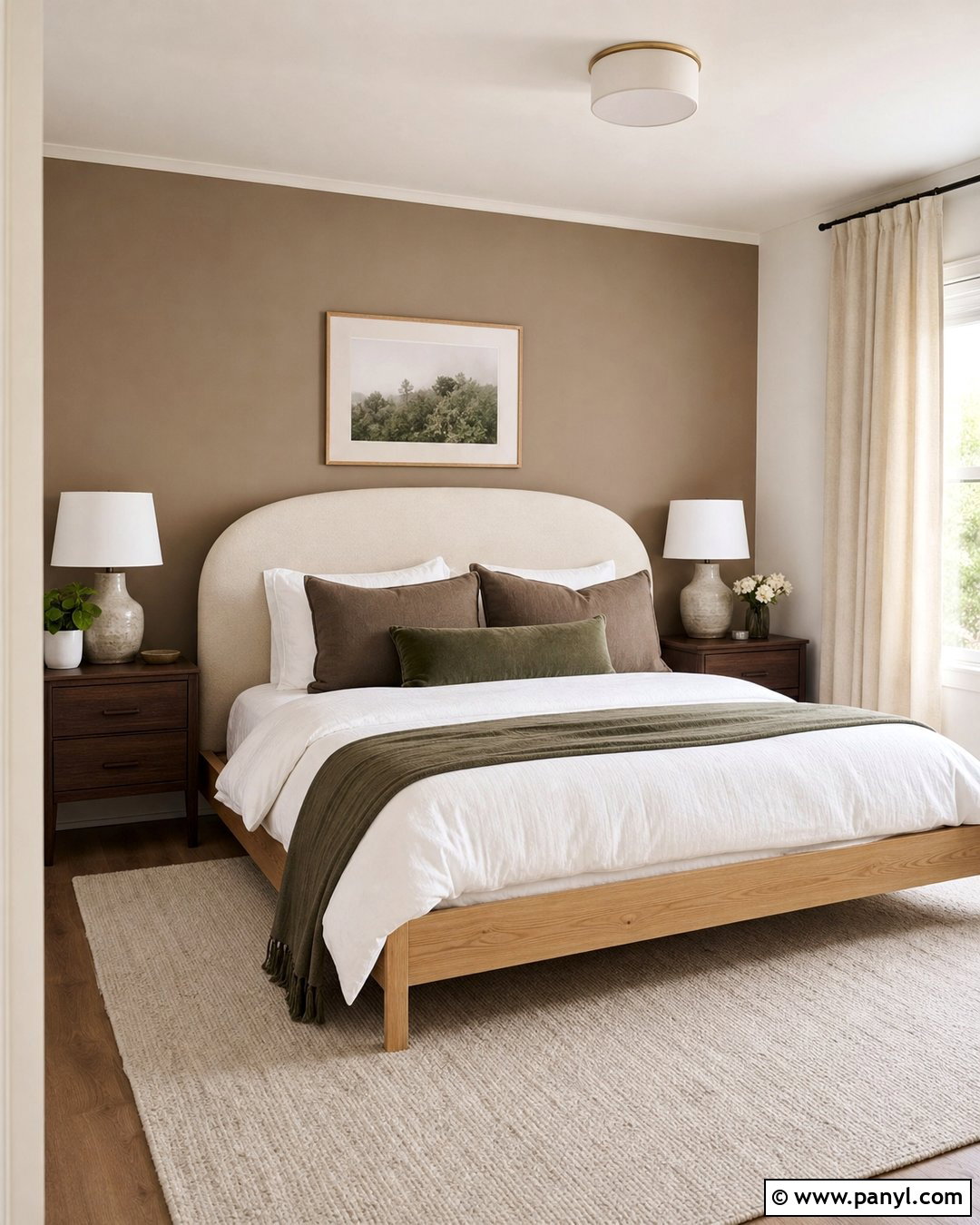
When a bedroom needs more warmth but not a bold statement, a taupe feature wall offers an easy solution. Use it behind a light oak bed with a curved cream headboard, then paint the other walls a soft off-white. Layer white bedding with mocha, beige, and muted olive pillows for natural depth. Add walnut nightstands, ceramic lamps, and a large ivory rug to soften the room. Black curtain rods and slim picture frames provide small points of contrast. Choose linen curtains in a shade close to the surrounding walls so the windows feel tall and uncluttered. Taupe works best when its undertone relates to the flooring and wood furniture. The completed bedroom will appear calm and cohesive, with enough tonal contrast to make every material visible.
24. Warm Beige Feature Wall
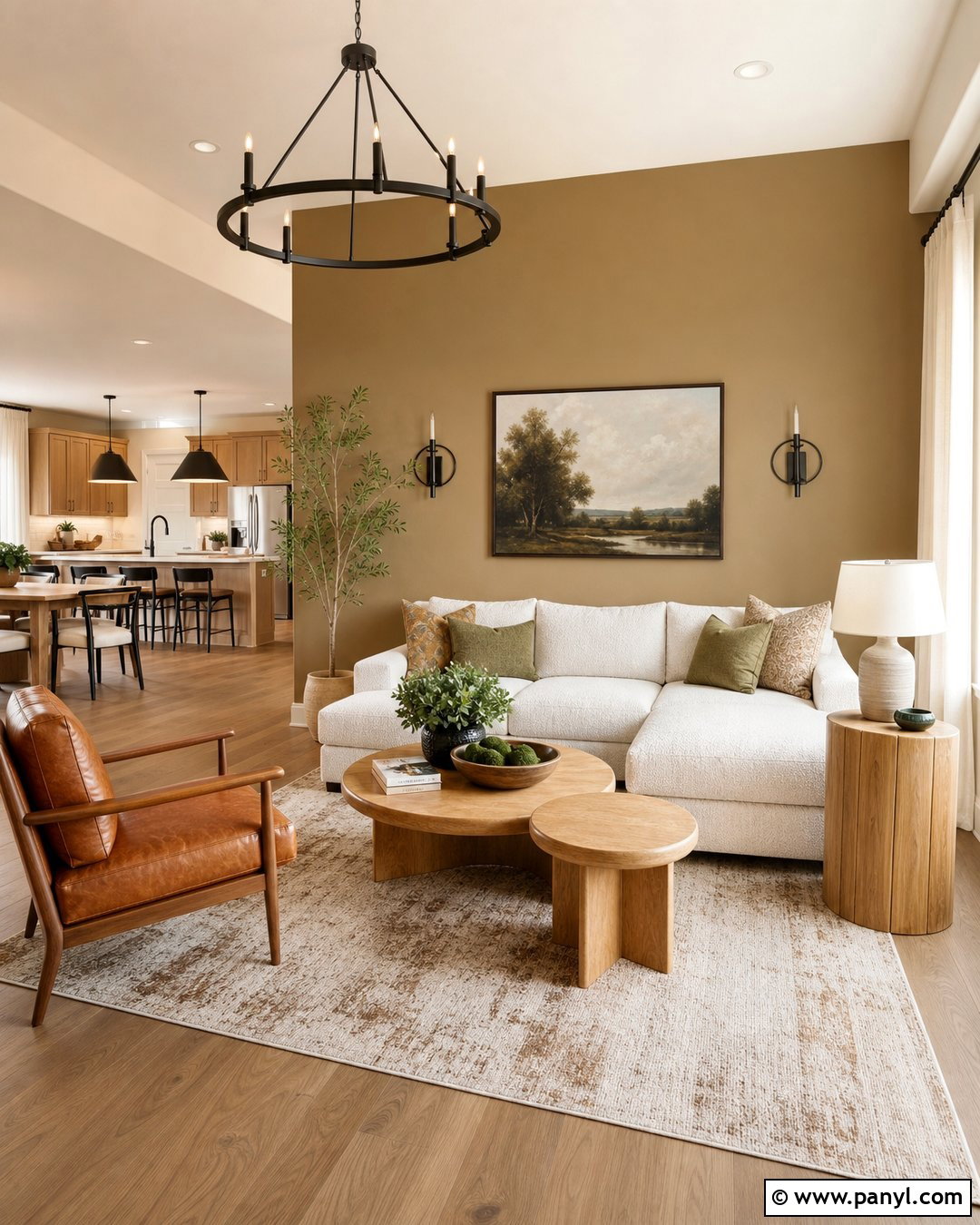
A warm beige feature wall can make an open-plan living space feel more defined without interrupting its visual flow. Paint the wall behind the main seating group one or two shades deeper than the surrounding cream walls. A textured white sofa, caramel leather chair, and light oak tables create a comfortable tonal arrangement. Use a large rug combining ivory, beige, and soft brown to connect the furniture. Add dark bronze lighting, linen curtains, and a few olive green accessories for contrast. The feature wall can hold one oversized artwork or frame a simple fireplace, giving the area a clear purpose. Because the color difference is gentle, texture becomes especially important. Bouclé, woven fabric, wood grain, and pottery prevent the finished neutral room from looking flat.
25. Caramel Feature Wall
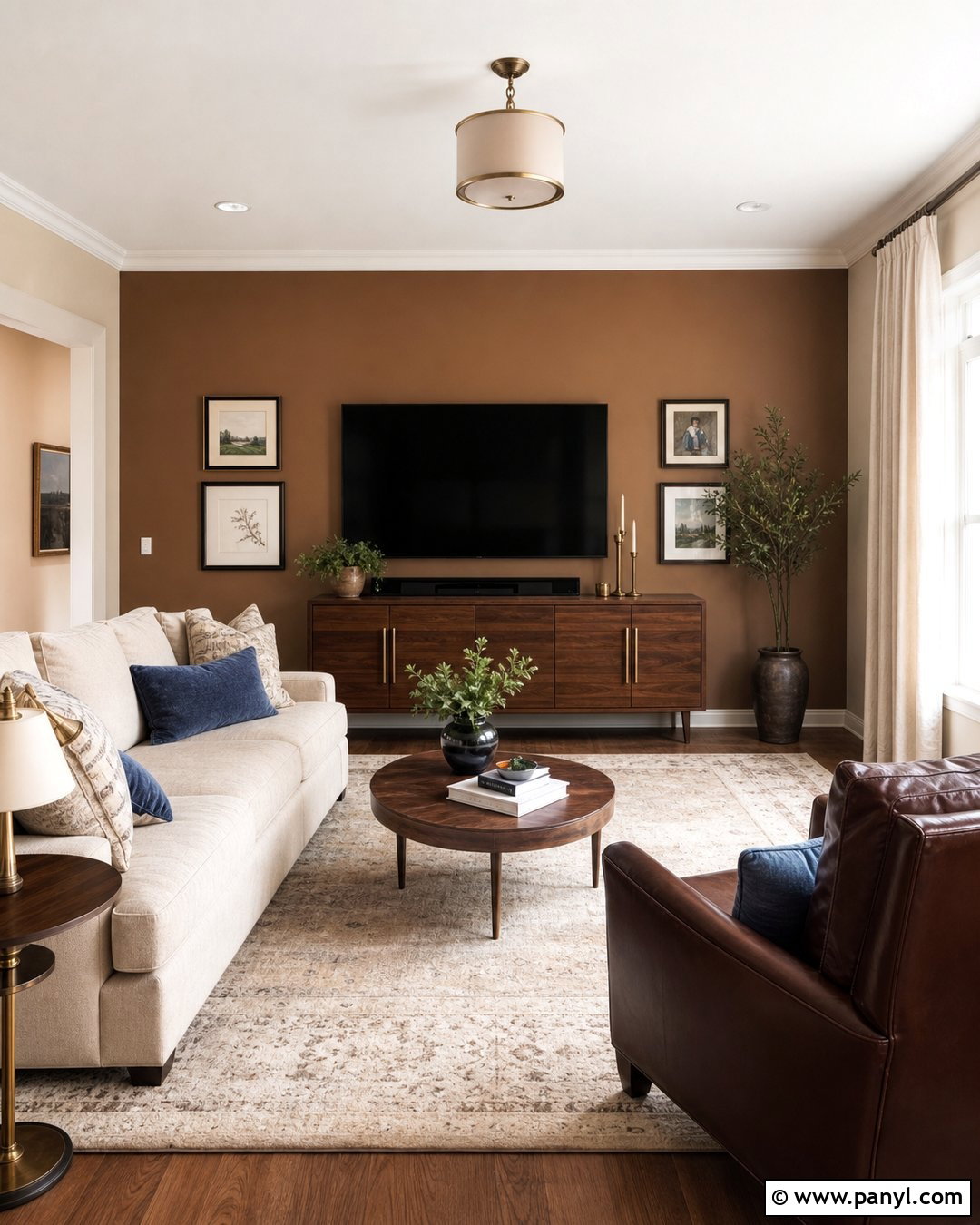
Caramel is an appealing feature wall color for a cozy den, especially when paired with cream upholstery and darker wood. Apply it behind a bookcase, sectional, or low media console to create a warm visual anchor. Keep the adjacent walls light beige and use an ivory rug to brighten the floor. A chocolate leather chair, walnut table, and aged brass lamp strengthen the layered brown palette. Introduce muted blue through cushions or a patterned throw, providing a cool counterpoint without disturbing the relaxed mood. Artwork with cream mats and dark frames will remain clear against the caramel background. Soft curtains and several well-placed lamps are important in a smaller den. The finished room feels comfortable and familiar, yet more refined than a simple all-beige interior.
26. Crisp White Feature Wall
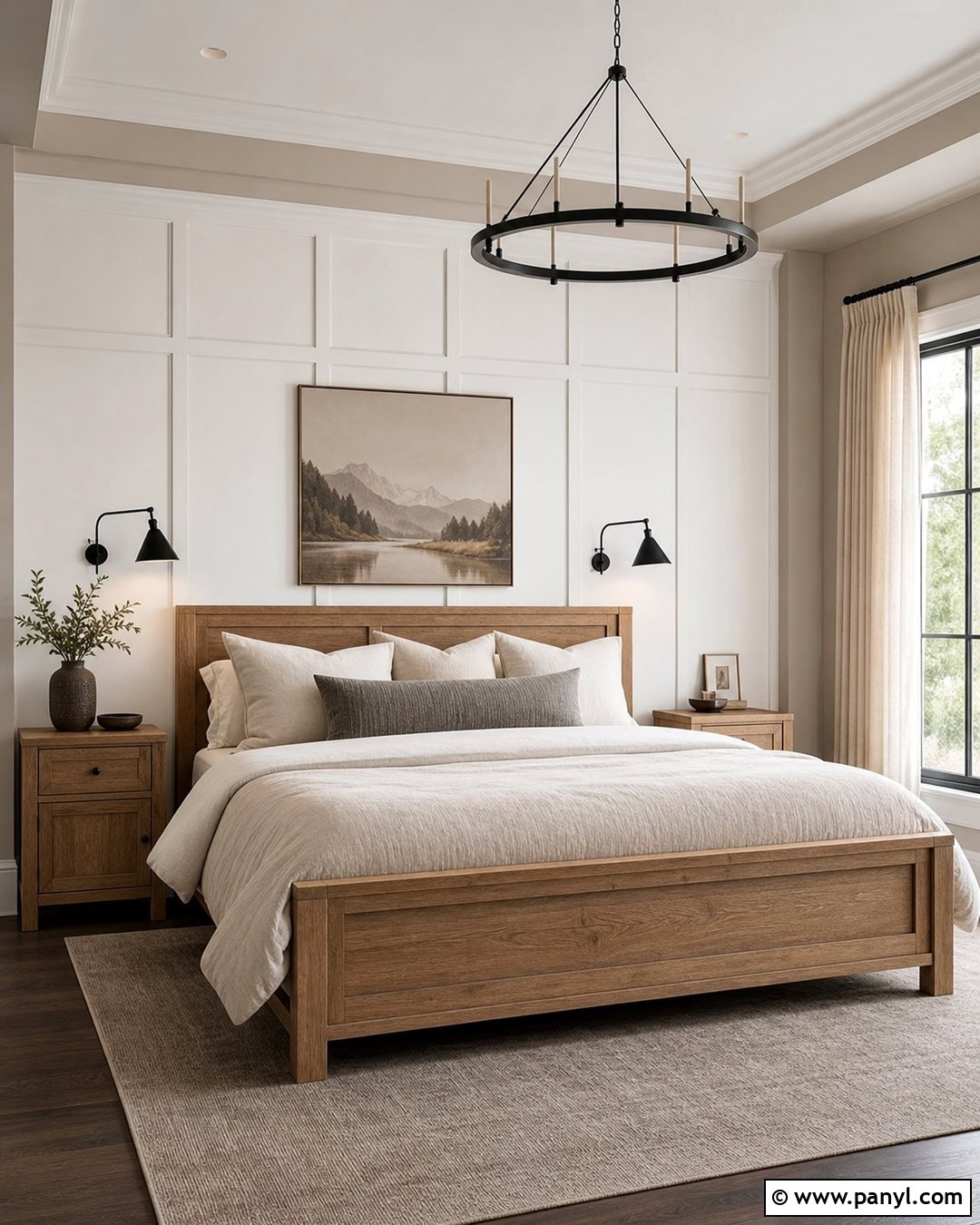
A crisp white feature wall may sound subtle, but it can become striking when texture and architecture provide the contrast. Create a white paneled wall behind the bed, fireplace, or dining table, then paint the surrounding walls a gentle warm greige. The difference will outline the feature while preserving a bright, spacious feeling. In a bedroom, pair the wall with an oak bed, oatmeal bedding, and black reading sconces. Add a taupe rug, linen curtains, and one oversized neutral artwork to complete the arrangement. Use the same clean white on the ceiling and trim for continuity. This approach works well in homes where bold paint feels unsuitable. Shadow lines from molding, natural wood grain, and dark metal details give the completed neutral room enough depth and character.
27. Lavender Feature Wall
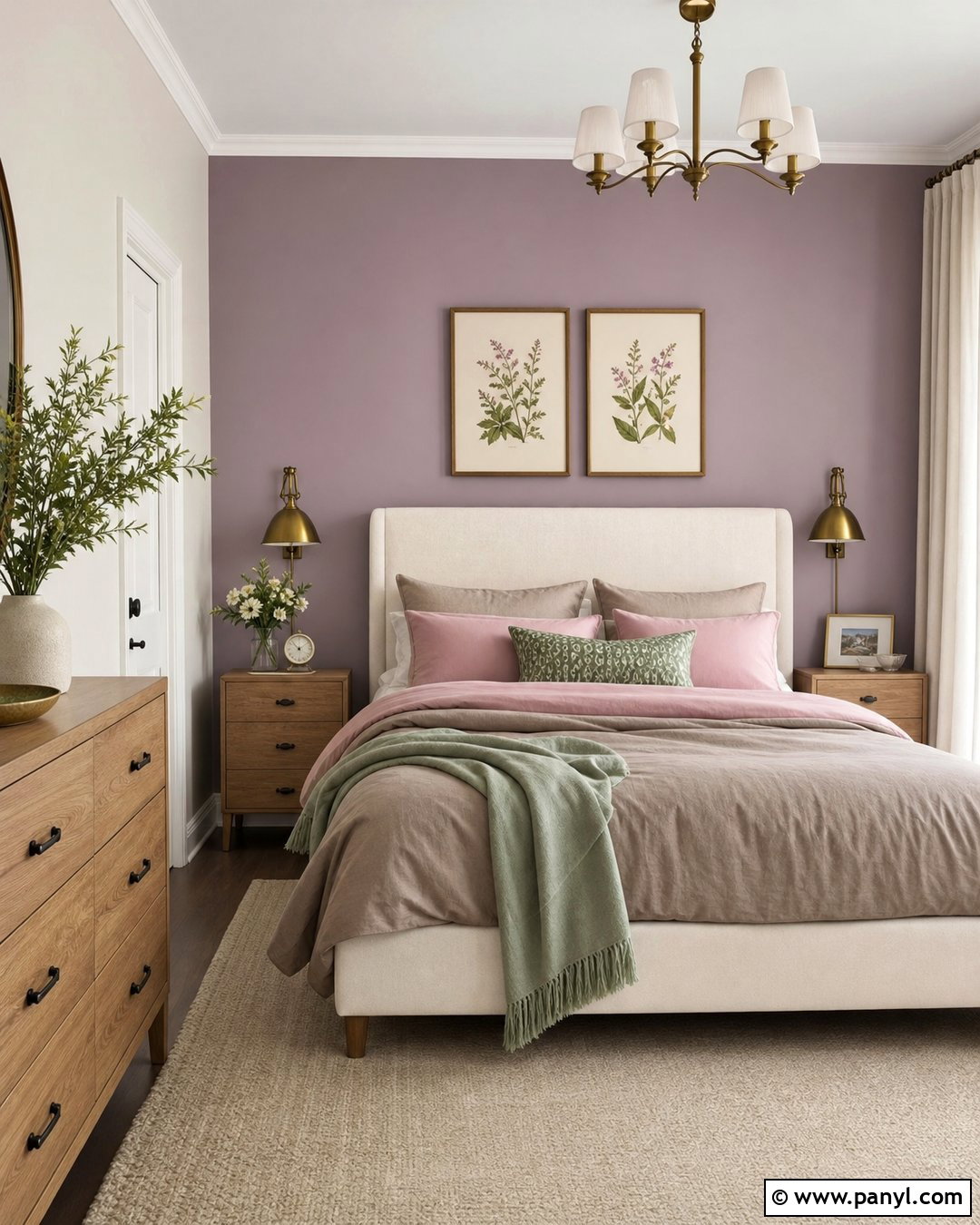
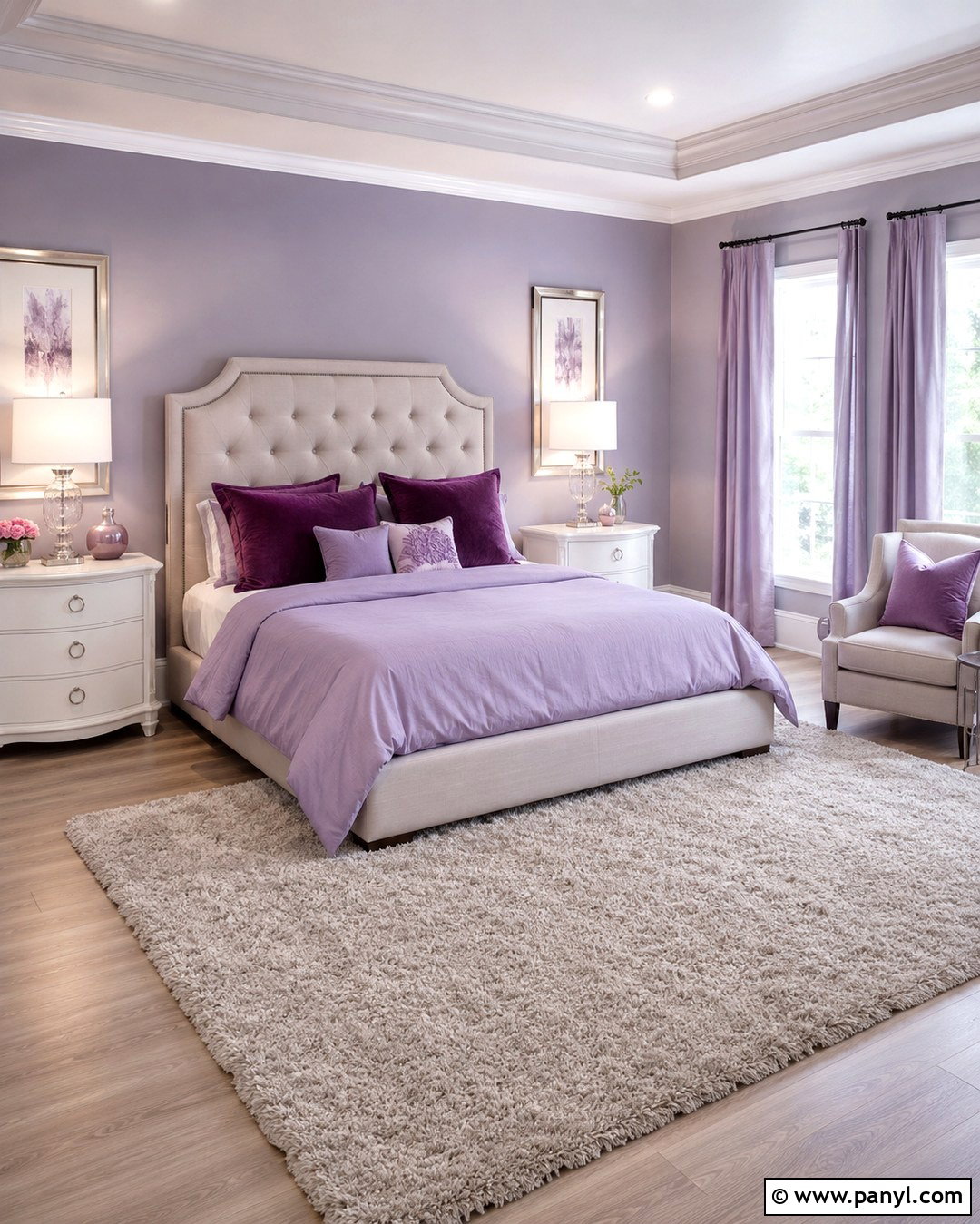
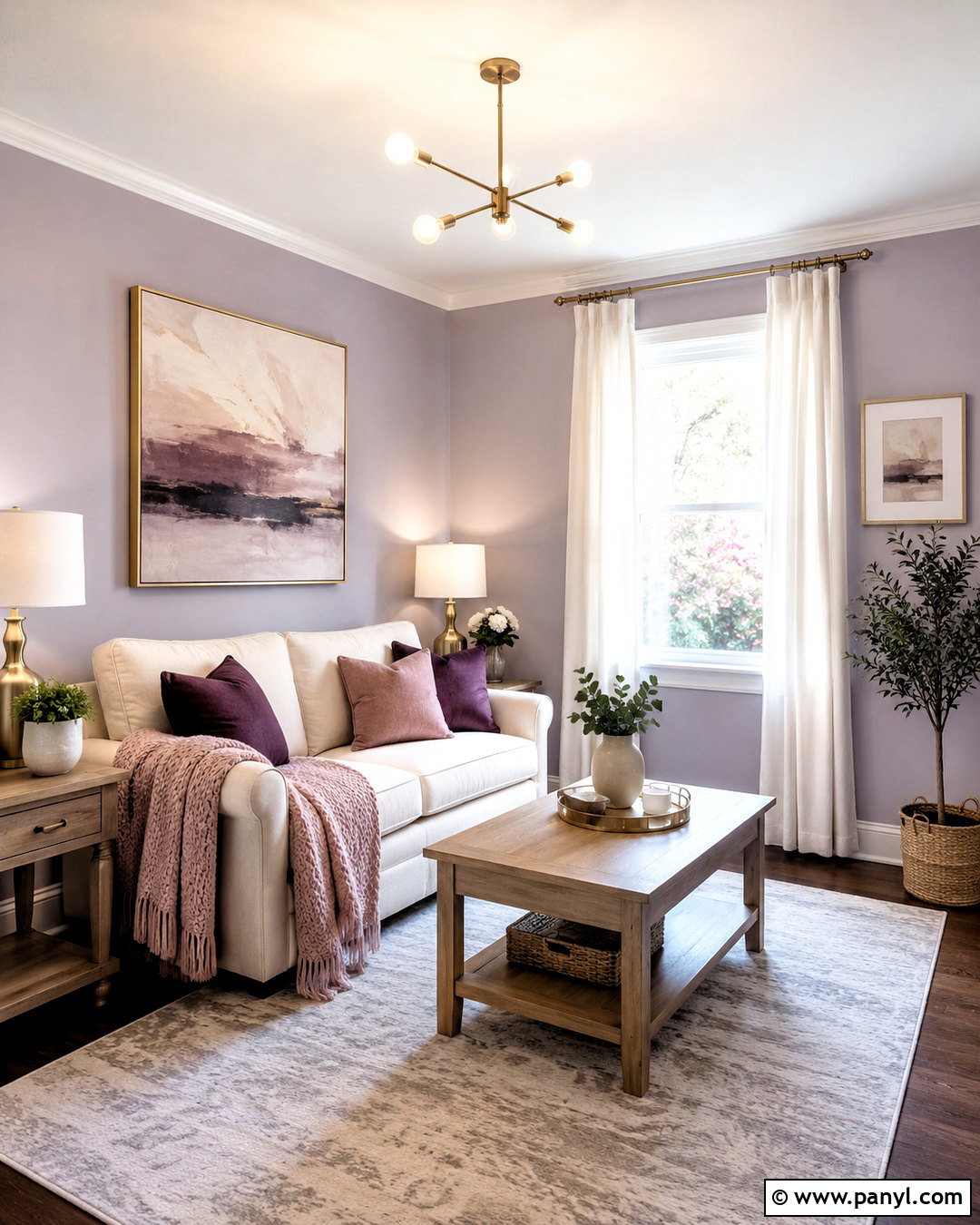
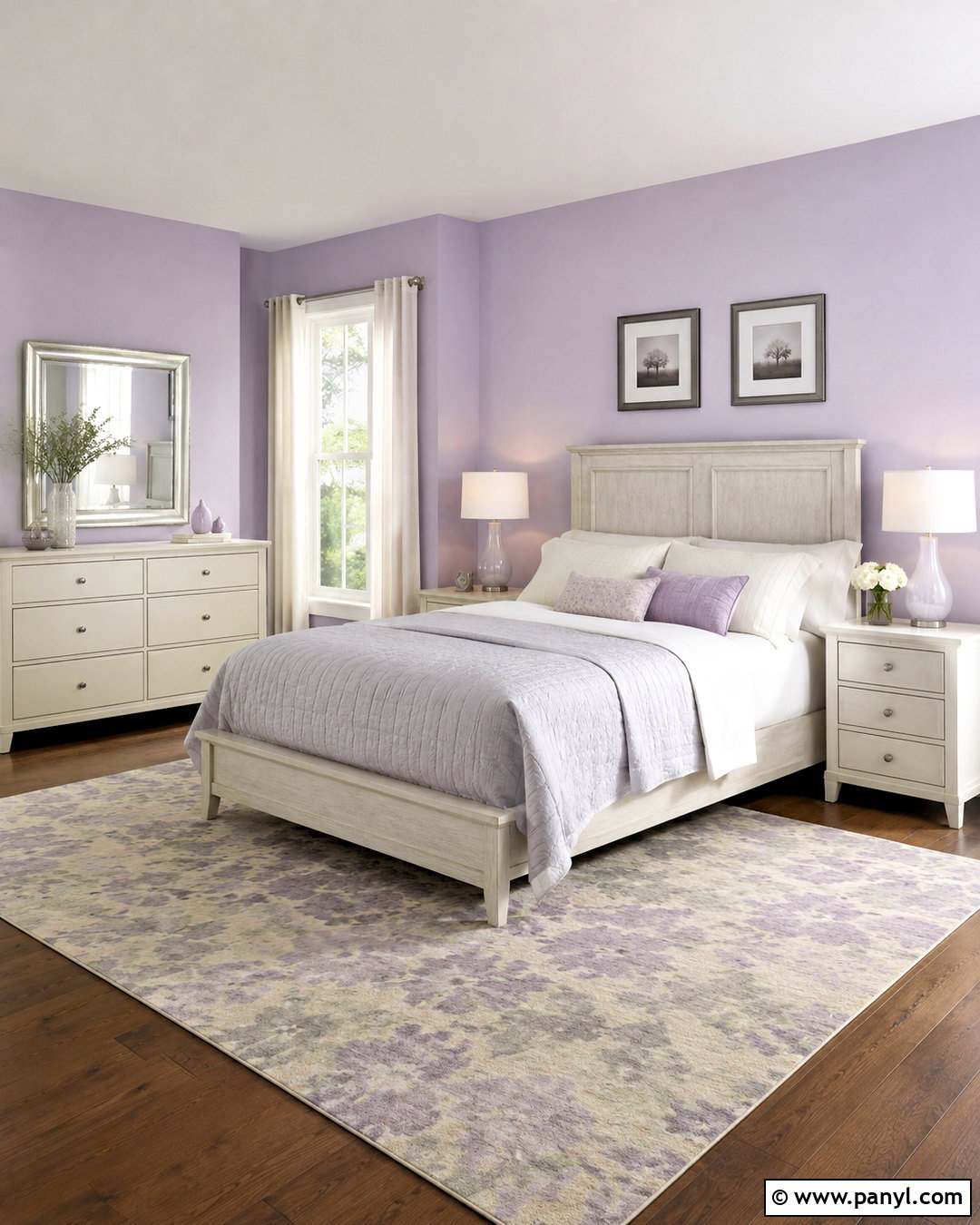
A muted lavender feature wall can create a peaceful guest bedroom or reading room when balanced with warm, earthy neutrals. Choose a gray-based lavender rather than a bright purple and place it behind a cream upholstered bed or sofa. Paint the remaining walls soft ivory, then add light oak furniture and a beige wool rug. Bedding or cushions in taupe, dusty rose, and muted green will make the wall feel connected to the complete palette. Use antique brass lighting for warmth and hang simple botanical prints in dark wood frames. White or oatmeal linen curtains allow plenty of natural light to enter. The resulting room feels gentle but not childish, with lavender adding quiet personality while neutral materials keep the space comfortable, versatile, and easy to update.
28. Coral Feature Wall
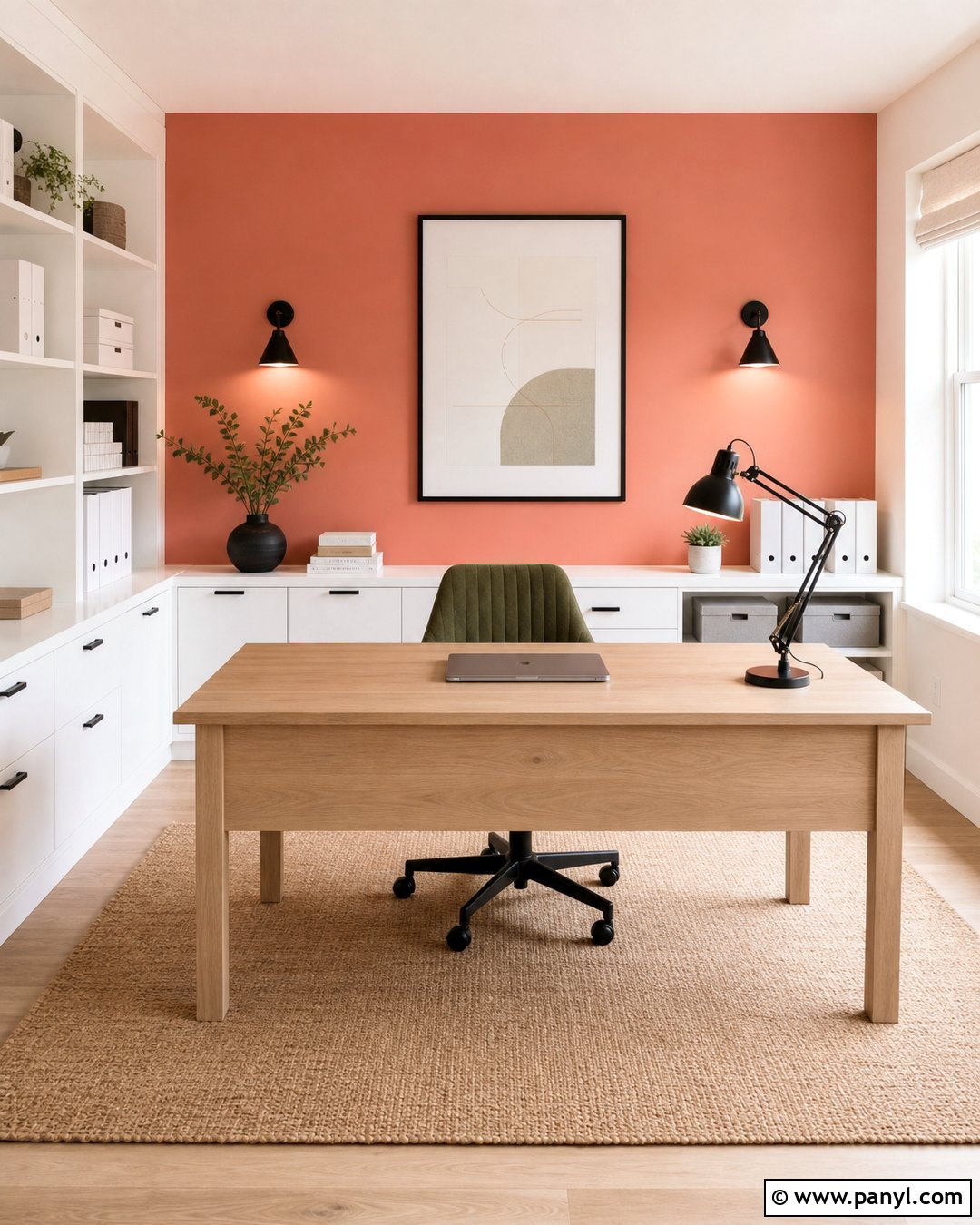
A coral feature wall gives a compact home office or craft room an upbeat, welcoming appearance. Choose a softened coral with pink and orange undertones, then balance it with white built-in storage and a pale oak desk. Use warm white on the other walls and cover the floor with a light beige flat-weave rug. A sage green desk chair or cabinet introduces an attractive complementary color, while matte black lighting keeps the scheme crisp. Keep supplies inside labeled drawers or plain storage boxes so the wall remains the main visual feature. One large framed print and a small plant provide enough decoration. With bright daylight, natural wood, and restrained accessories, coral feels energetic without becoming distracting, creating an inspiring room that still supports focused, organized work.
29. Brick Red Feature Wall
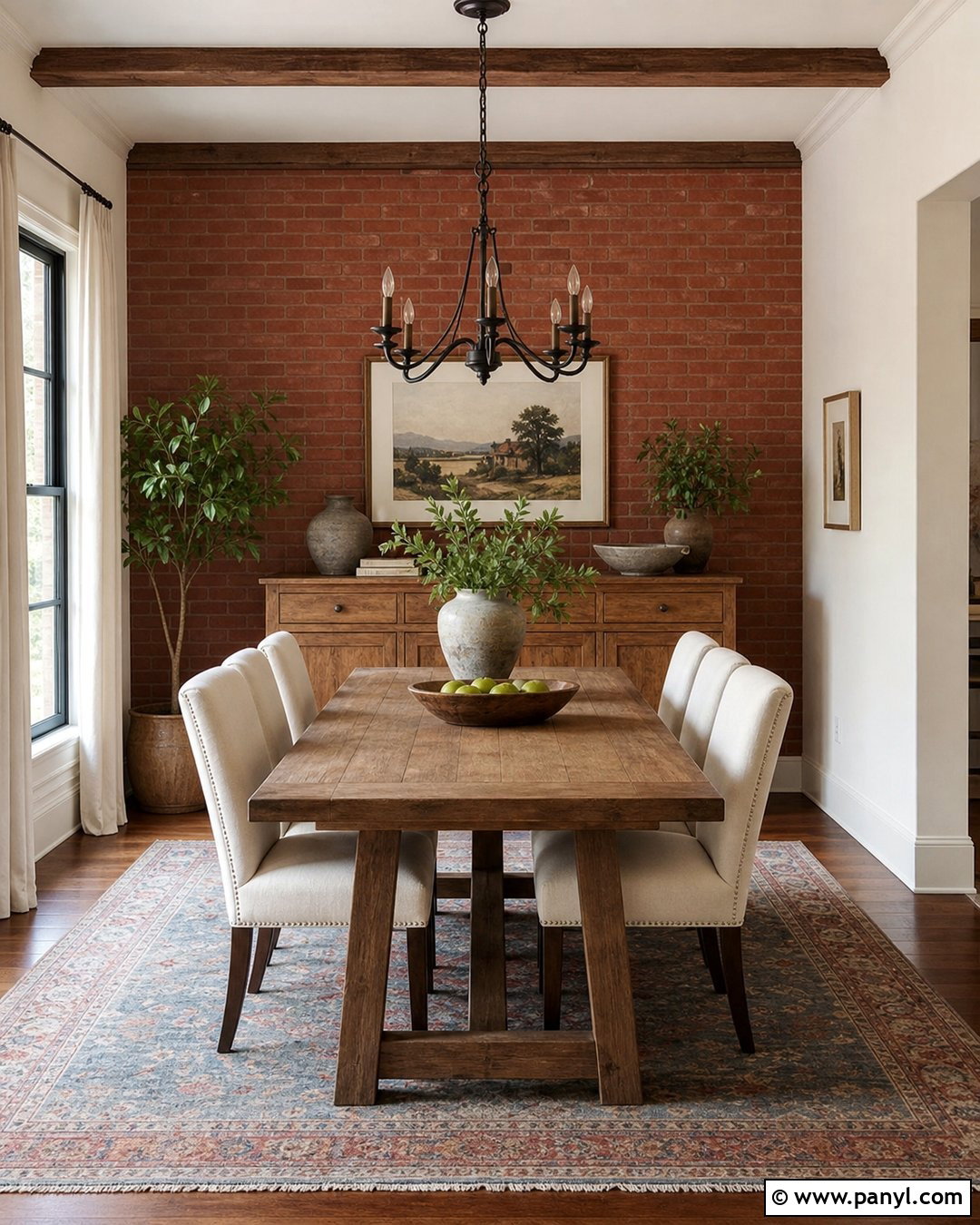
Brick red creates a grounded, welcoming feature wall in a dining room, entry, or traditional living area. Unlike a bright primary red, this earthy version pairs naturally with wood and woven materials. Use it behind a medium-oak sideboard, then paint the remaining walls warm ivory. Add a rustic oak dining table, cream upholstered chairs, and a patterned rug containing faded blue, brown, and red. Black iron lighting provides definition, while off-white curtains soften the strong wall. Decorate with a large landscape painting, simple pottery, and leafy greenery rather than numerous red accessories. Brick red works especially well beside warm flooring and natural stone. The completed room feels established and comfortable, combining traditional warmth with an uncluttered layout that suits everyday modern living.
30. Mint Green Feature Wall
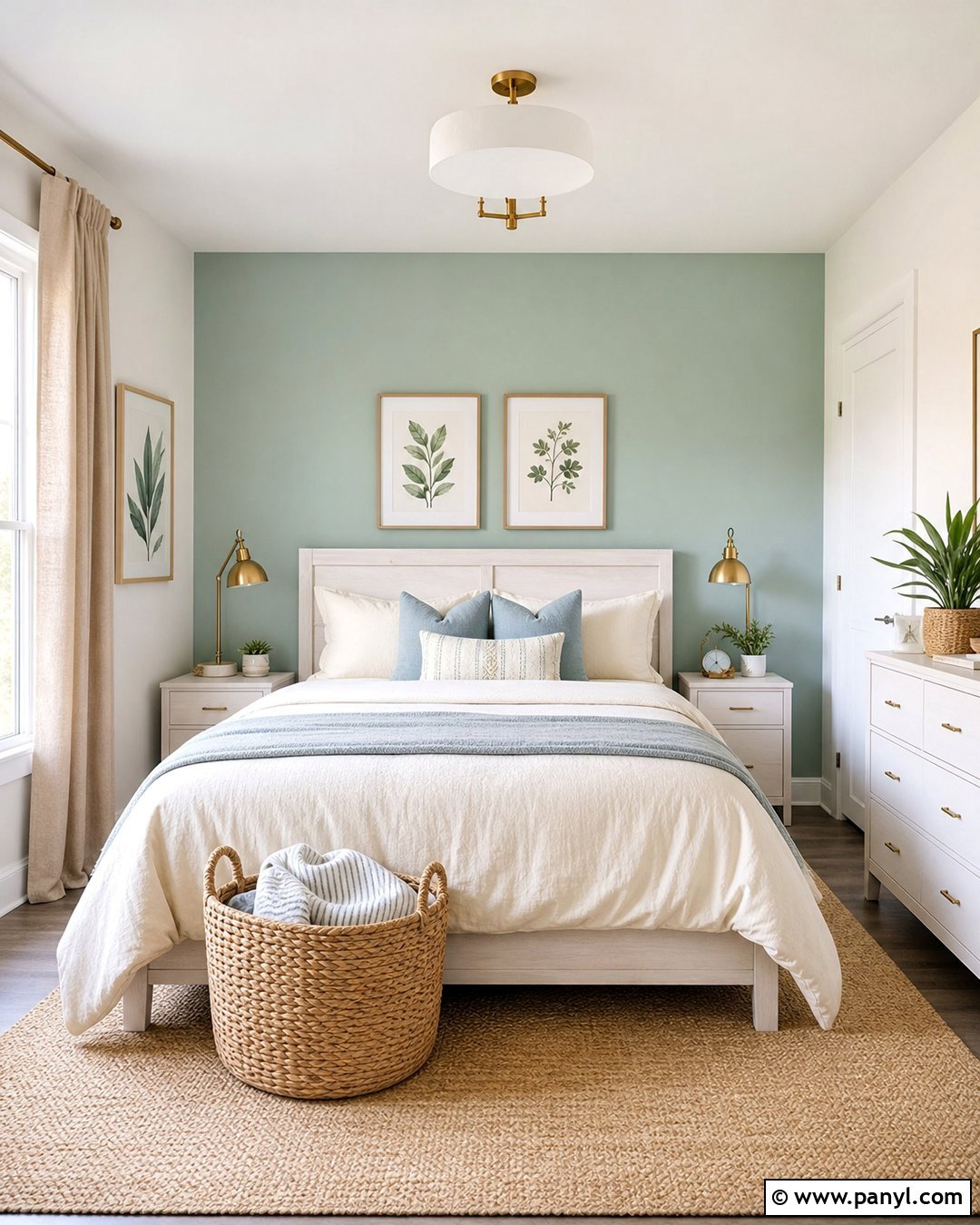
Fresh mint green can brighten a small bedroom, nursery, laundry room, or casual workspace without making the area feel cramped. Select a muted mint with a slight gray undertone and pair it with warm white surrounding walls. For a bedroom, position a white oak bed against the feature wall and add cream bedding, pale blue cushions, and a light beige rug. Woven baskets, natural linen curtains, and simple white furniture keep the palette airy. Use brushed brass or light wood lighting instead of cold silver finishes. A few framed botanical prints can connect the color to the room’s natural textures. The completed look feels clean and cheerful, with enough warmth from wood and fabric to prevent mint from appearing clinical or overly cool.
Conclusion:
The best feature wall is not simply the boldest surface in a room. It should strengthen the layout, highlight a natural focal point, and connect with the furniture, flooring, textiles, and lighting around it. These 30 Feature Wall Colours show how deep blues, earthy greens, warm neutrals, jewel tones, and softer pastels can support very different moods. Before painting, compare large samples beside your permanent finishes and observe them in morning, afternoon, and evening light. Select a wall with a clear purpose, such as framing a bed, sofa, fireplace, dining table, or workspace. When every element supports the same palette, a feature wall feels cohesive, useful, and intentionally designed.

Related Ideas and Inspiration:


Leave a Reply