
Upstairs carpet can make bedrooms, hallways, landings, and stairs feel quieter, warmer, and more connected. The best **upstairs carpet ideas** balance appearance with practical details such as pile height, fiber type, stain resistance, and traffic patterns. A soft carpet may suit a peaceful primary bedroom, while a dense, low-profile weave usually works better in a busy hallway. Color also matters because natural light can vary significantly across the second floor. Warm neutrals create an easy flow, earthy colors add personality, and subtle patterns help disguise everyday wear. Whether you want one continuous carpet or coordinated flooring between rooms, the following complete looks provide practical **upstairs carpet ideas**.

1. Warm Greige Upstairs Carpet
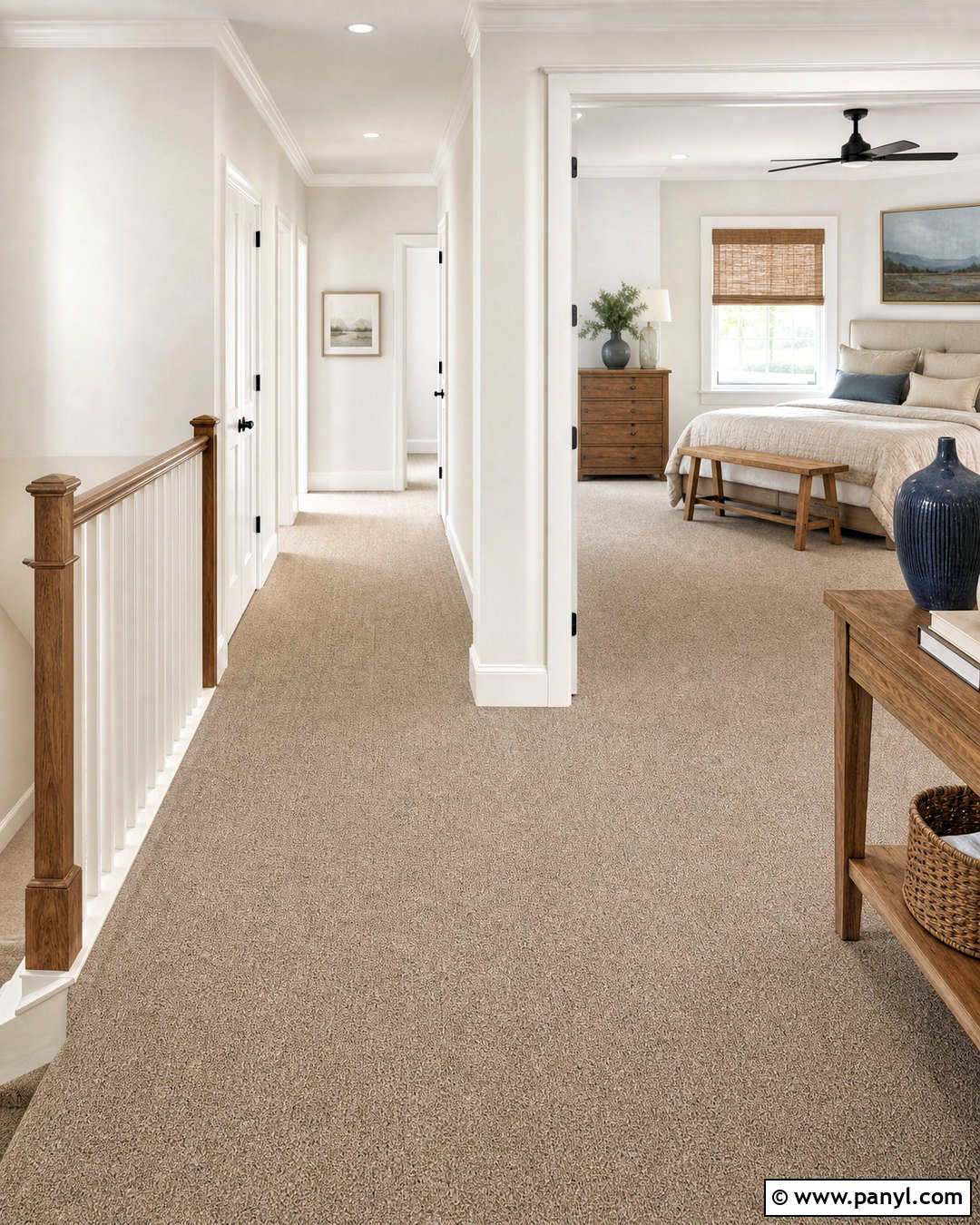
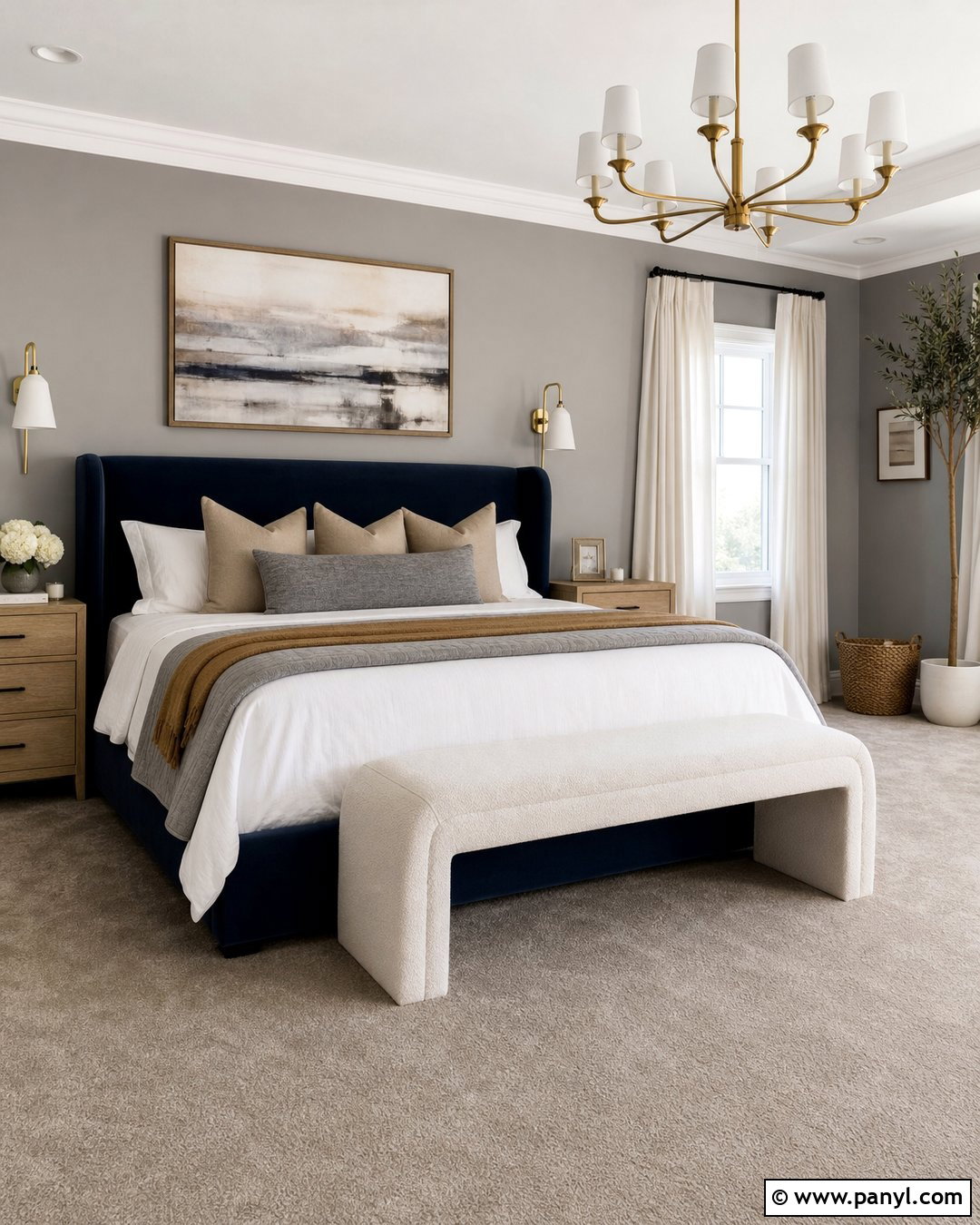
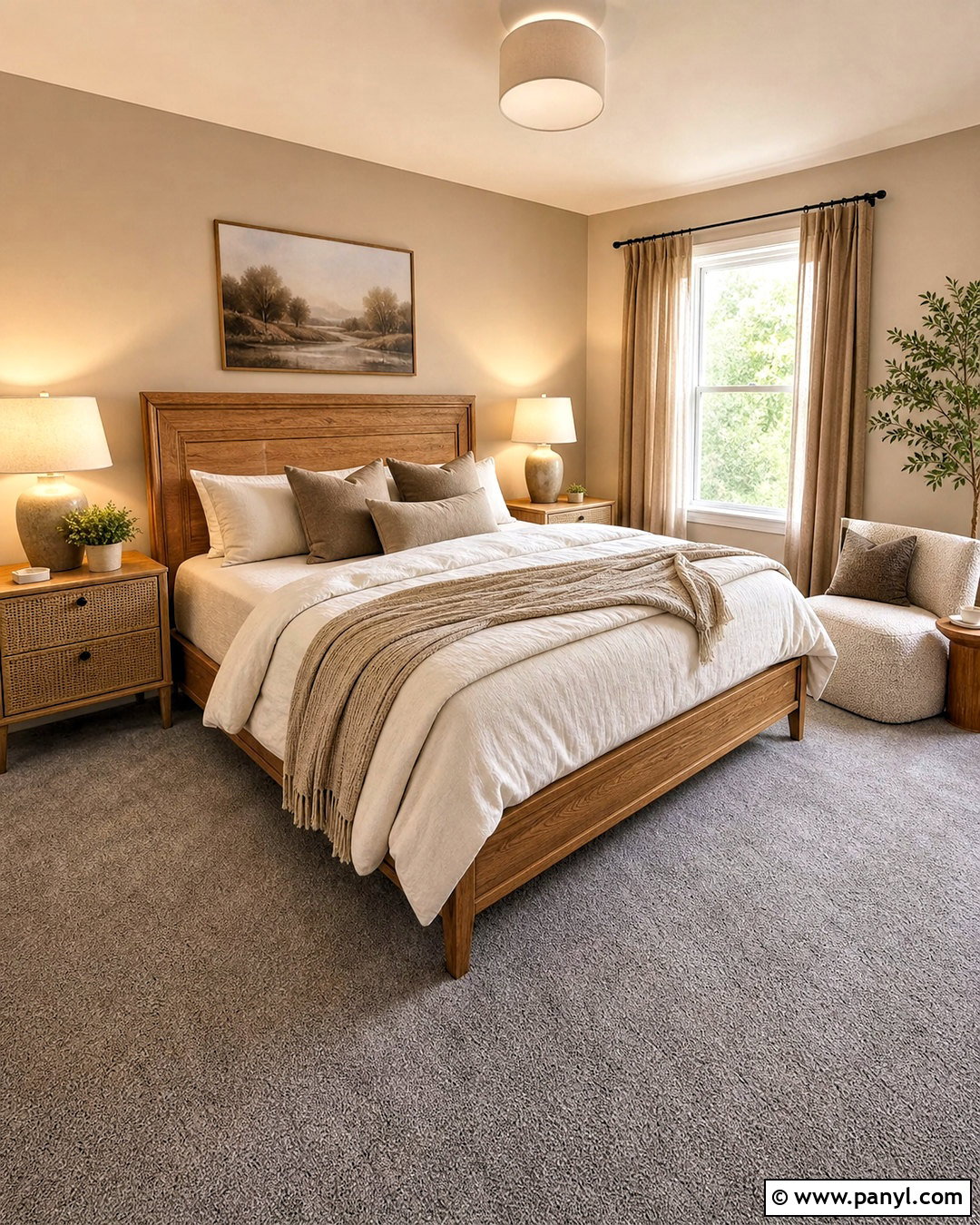
Warm greige carpet creates a calm foundation that connects bedrooms, the hallway, and the landing without looking flat. Choose a medium-light shade with beige undertones rather than a cool silver gray. A dense, low-pile texture will handle regular traffic while keeping the upstairs comfortable. Pair it with creamy white walls, natural oak furniture, and matte black door hardware for balanced contrast. In bedrooms, add oatmeal bedding, muted blue accents, and woven window shades. Continue the same carpet through the hall to make a smaller upper floor feel larger and more unified. Use an upgraded cushion beneath it for softness and sound control, especially near children’s rooms or a home office.
2. Oatmeal Wool Upstairs Carpet
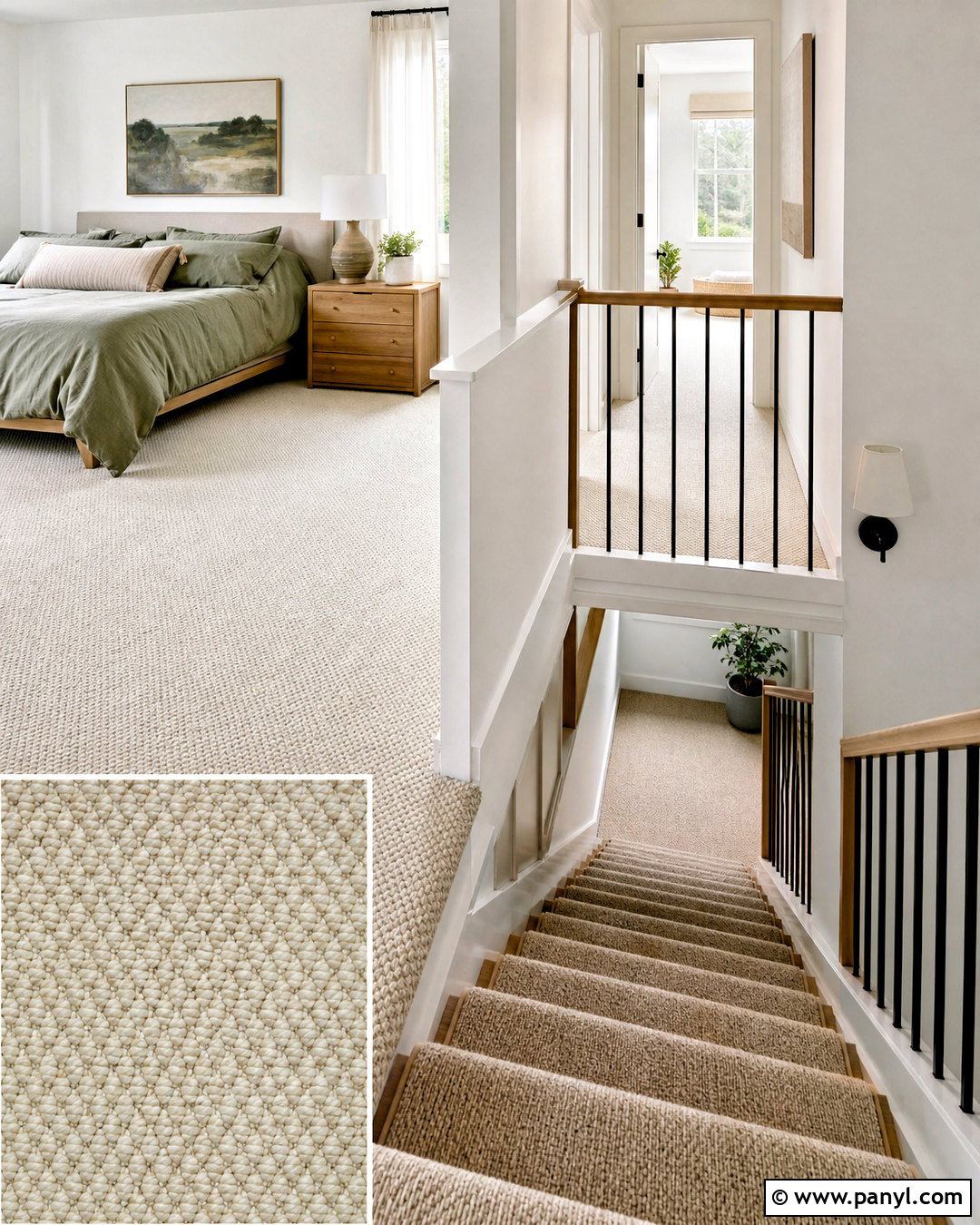
Imagine stepping onto a soft oatmeal wool carpet every morning. This natural-looking choice brings warmth to an upstairs area while remaining refined enough for traditional or modern homes. Select a tightly constructed loop or low cut pile in a creamy oatmeal tone with slight color variation. Continue it through the bedrooms and landing, then use the same material as a fitted stair runner with matching neutral binding. Soft white walls, light oak nightstands, linen curtains, and sage green bedding complete the relaxed palette. Because wool can create a polished, substantial appearance, keep the surrounding decor simple. Add washable runners only where extra protection is necessary rather than covering the carpet’s appealing texture throughout every room.
3. Textured Taupe Upstairs Carpet
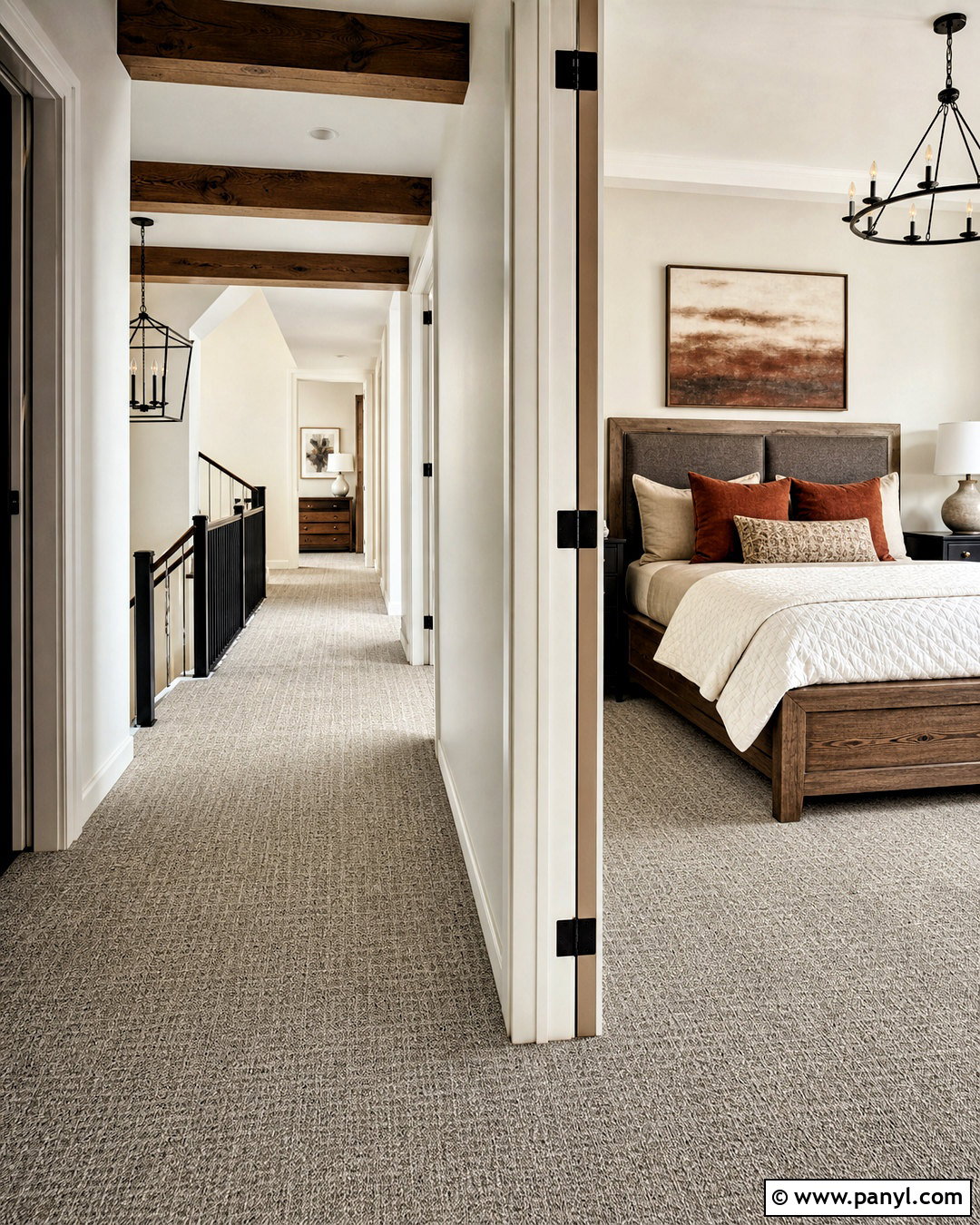
A textured taupe carpet offers more depth than plain beige while remaining easy to coordinate with changing decor. Look for a subtle ribbed, crosshatch, or tonal pattern that can disguise footprints and everyday traffic in the hallway. Use the carpet continuously across the landing and bedrooms for a tailored, uninterrupted appearance. Warm white walls and medium walnut furniture bring out its brown undertones, while black lighting adds a crisp modern edge. Layer the bedrooms with ivory bedding, rust-colored pillows, and simple ceramic lamps. On the staircase, keep the pile low and dense for a cleaner fit around each tread. The finished upstairs feels comfortable, grounded, and practical without relying on a bold floor color.
4. Light Gray Upstairs Carpet
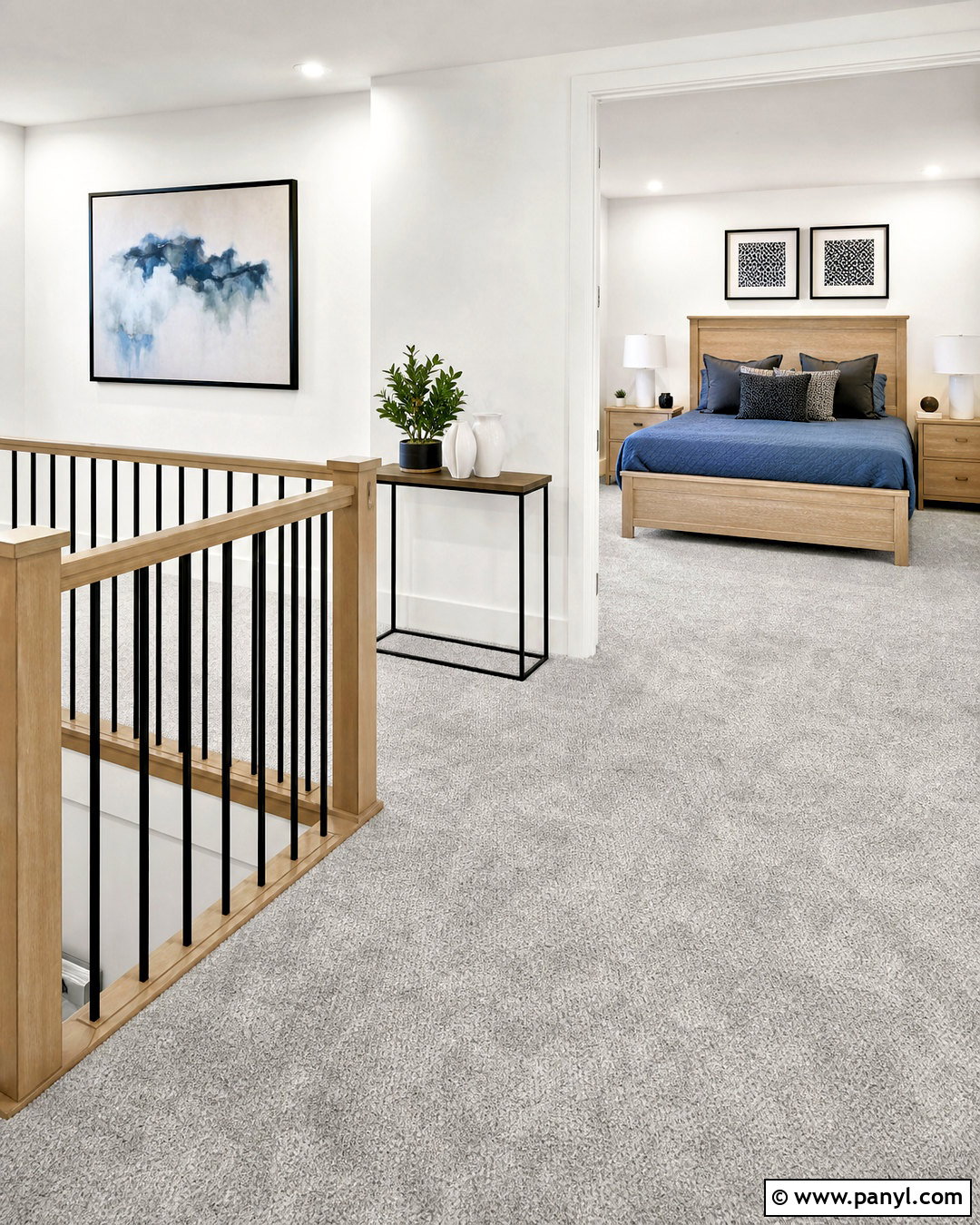
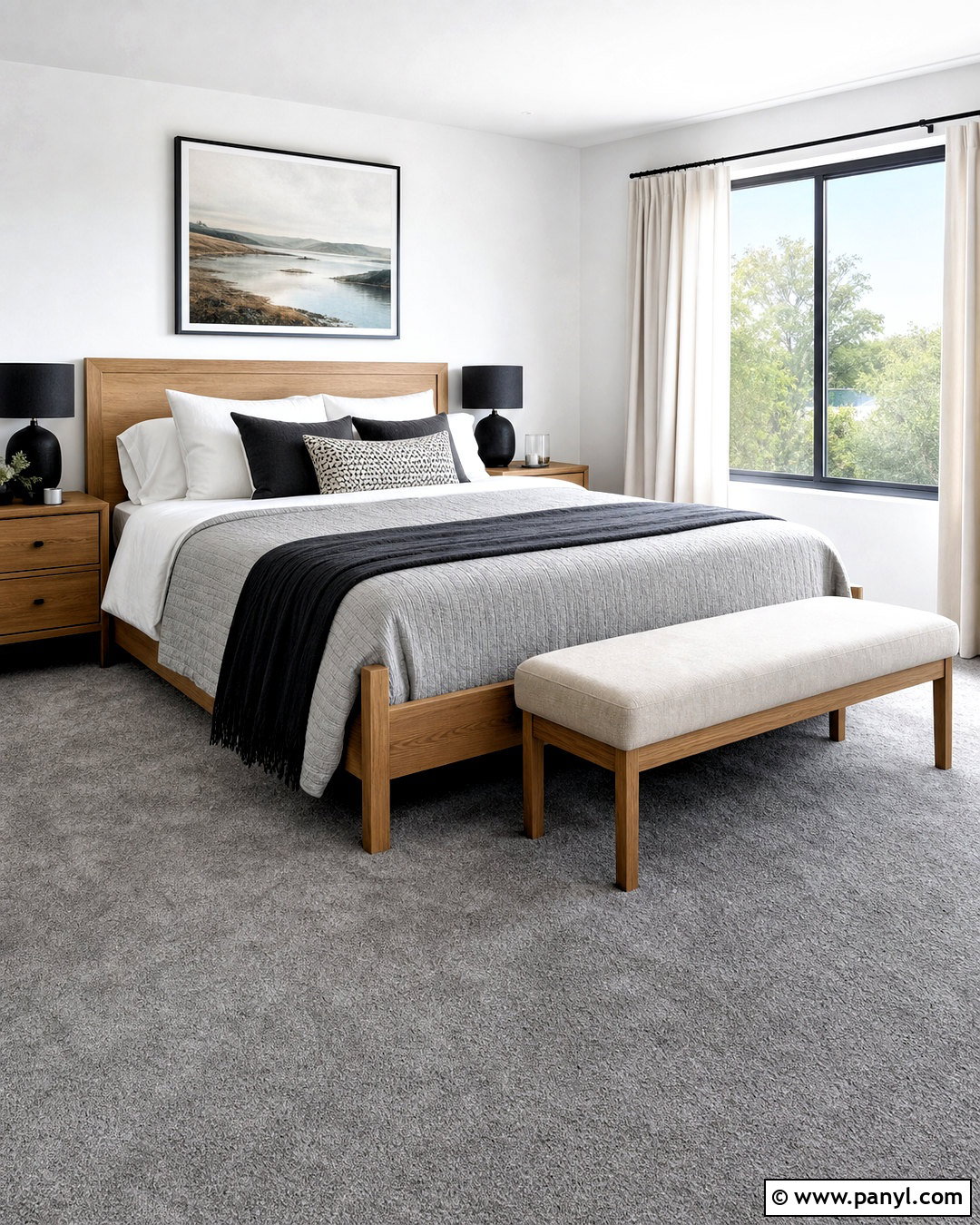
Does your upstairs have cool white walls or limited natural light? A light gray carpet can brighten the space while giving it a clean, contemporary direction. Choose a soft dove gray with a slightly mottled surface so lint, seams, and tracks are less noticeable. Pair it with white-painted trim, pale wood furniture, and brushed nickel or matte black hardware. Dusty blue bedding and charcoal accent pillows will repeat the carpet’s cooler tones without making bedrooms feel colorless. Continue the carpet into the hallway, but use a durable low pile rather than an overly plush finish. Framed artwork, a slim console, and bright ceiling fixtures complete a fresh upstairs design that still feels welcoming and comfortable.
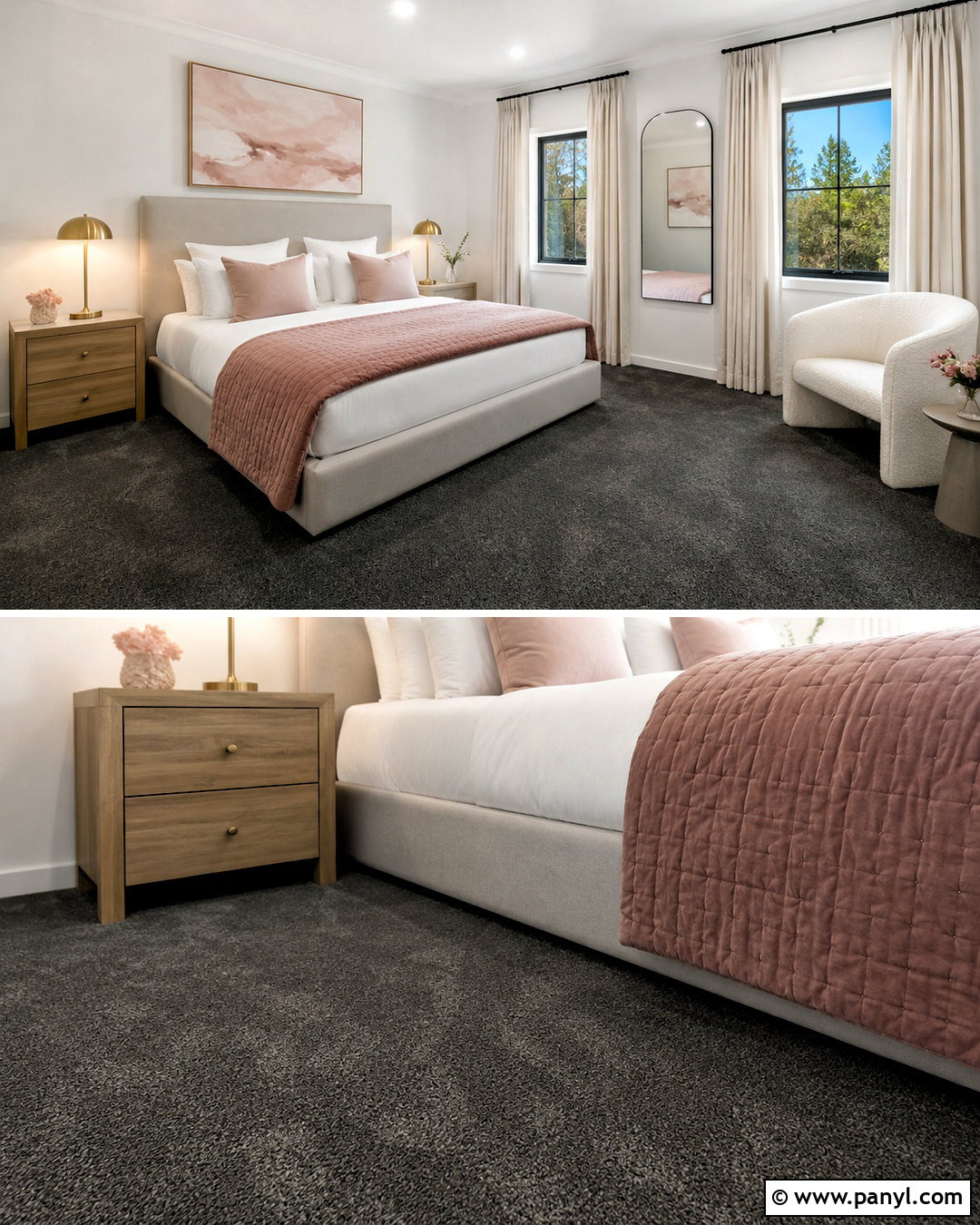
5. Charcoal Upstairs Carpet
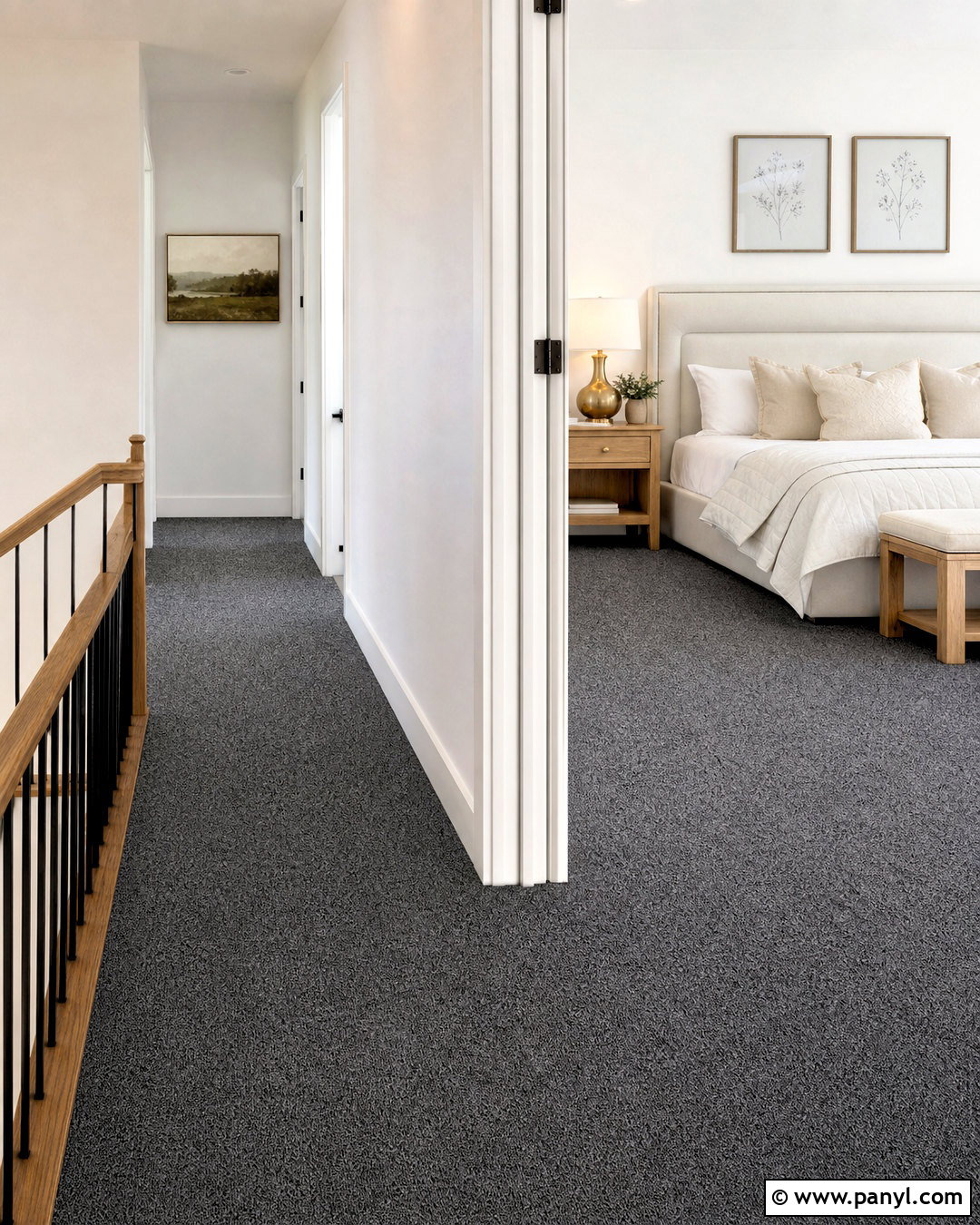
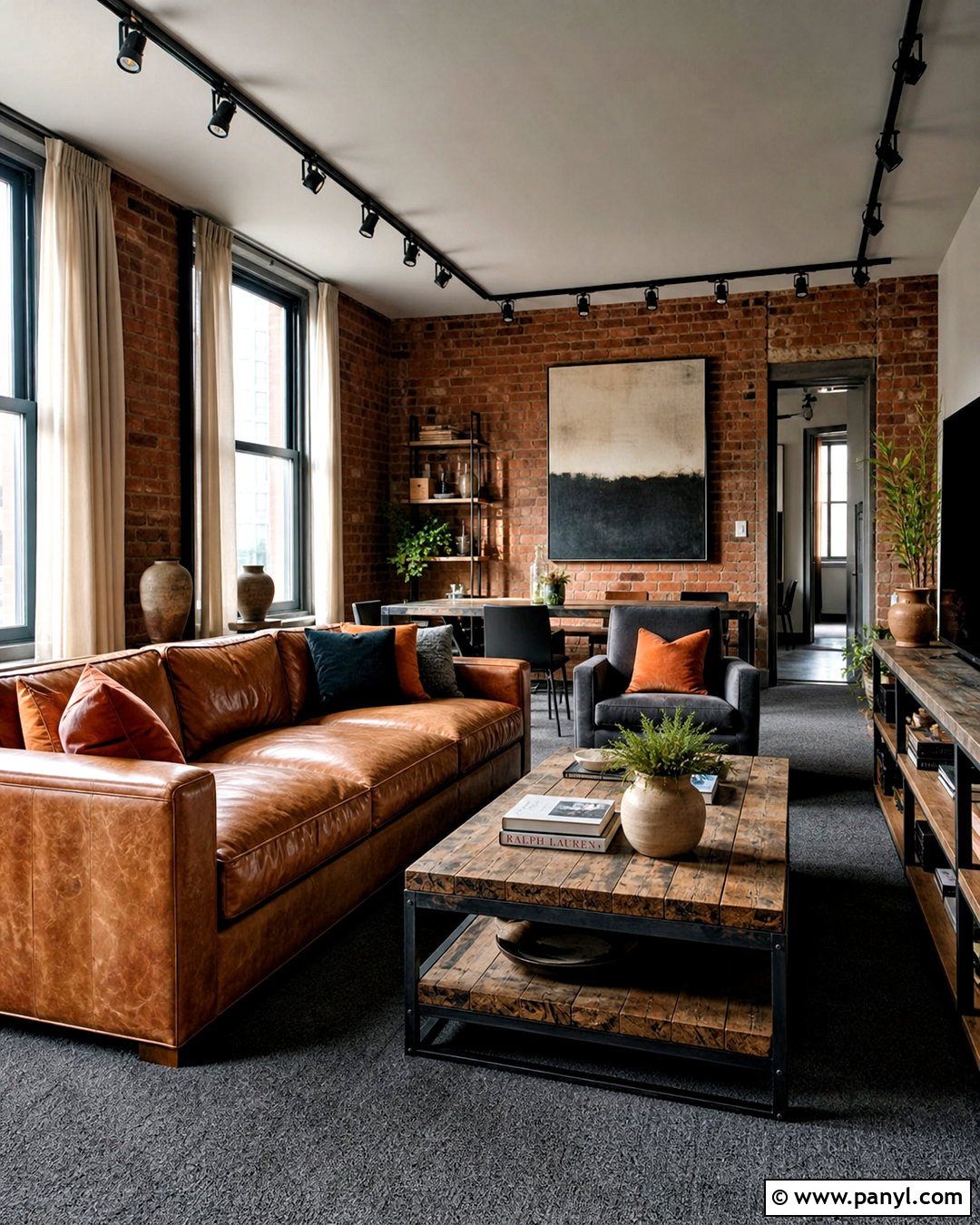
Charcoal carpet can turn a bright upstairs into a dramatic, polished retreat. It works particularly well in homes with large windows, white walls, and light-colored furniture. Select a heathered charcoal rather than a solid black-gray because tonal fibers hide lint and daily wear more effectively. Keep the pile low through the hallway and stairs, then add softness in bedrooms with thick ivory bedding and upholstered headboards. Pale oak dressers, white trim, and brushed brass lamps prevent the deeper flooring from feeling heavy. Continue one carpet color across the entire level to create a deliberate, seamless design. This darker foundation is also useful in busy family spaces where very pale carpet might require frequent spot cleaning.
6. Flecked Beige Upstairs Carpet
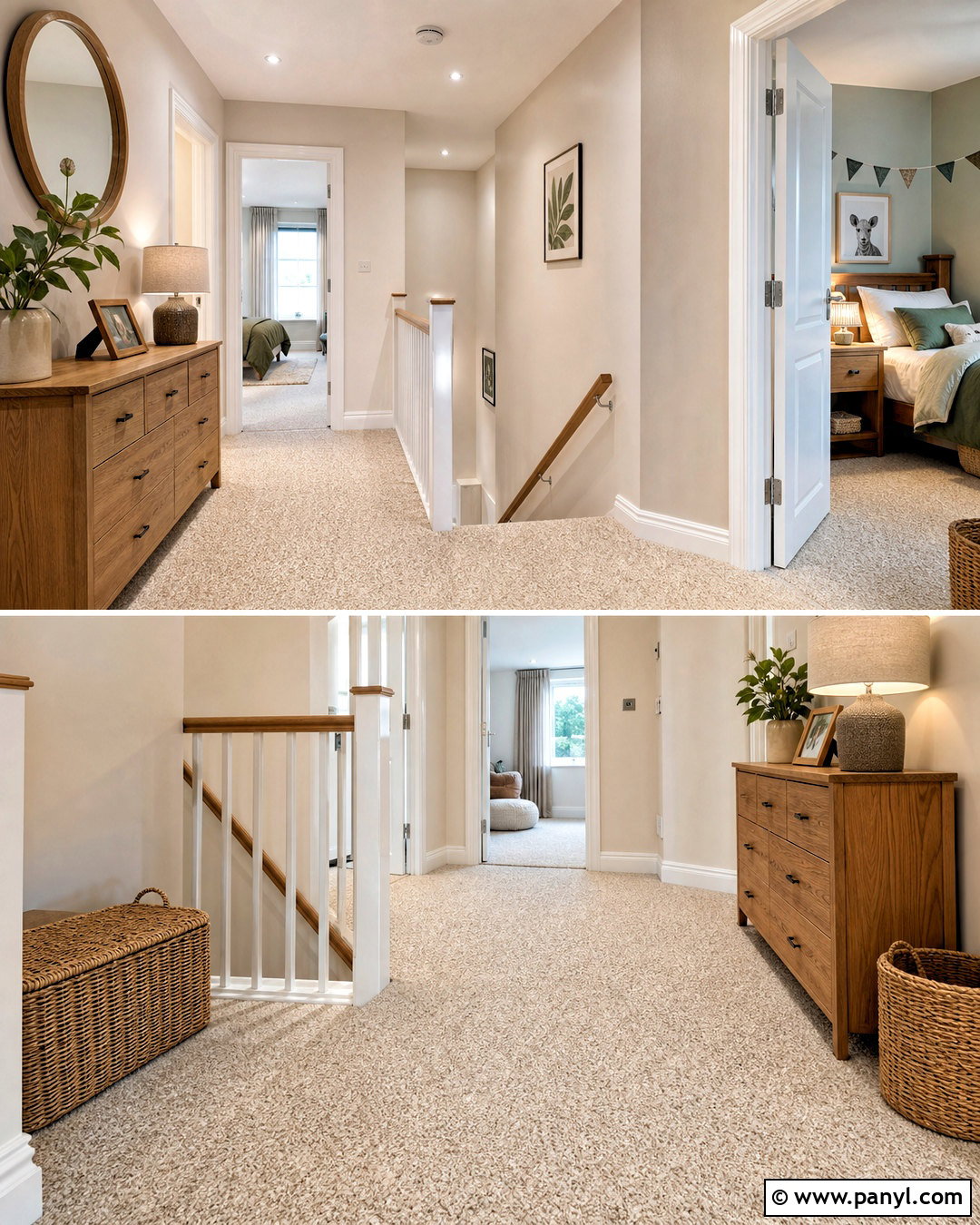
Flecked beige carpet is a sensible choice when the upstairs must handle children, guests, or frequent foot traffic. Choose a warm sand-colored base containing small taupe and cream fibers instead of sharply contrasting dark specks. The mixed coloring adds visual movement and helps everyday debris blend into the surface between cleanings. Use a dense, stain-resistant construction throughout the bedrooms, hallway, and stairs for consistency. Pair the carpet with soft ivory walls, medium oak furniture, and muted green or blue textiles. Woven baskets and natural linen curtains reinforce its casual character. Keep hallway furnishings minimal so the floor reads as one continuous surface, making the upper level appear open, coordinated, and comfortably lived in.
7. Sage Green Upstairs Carpet
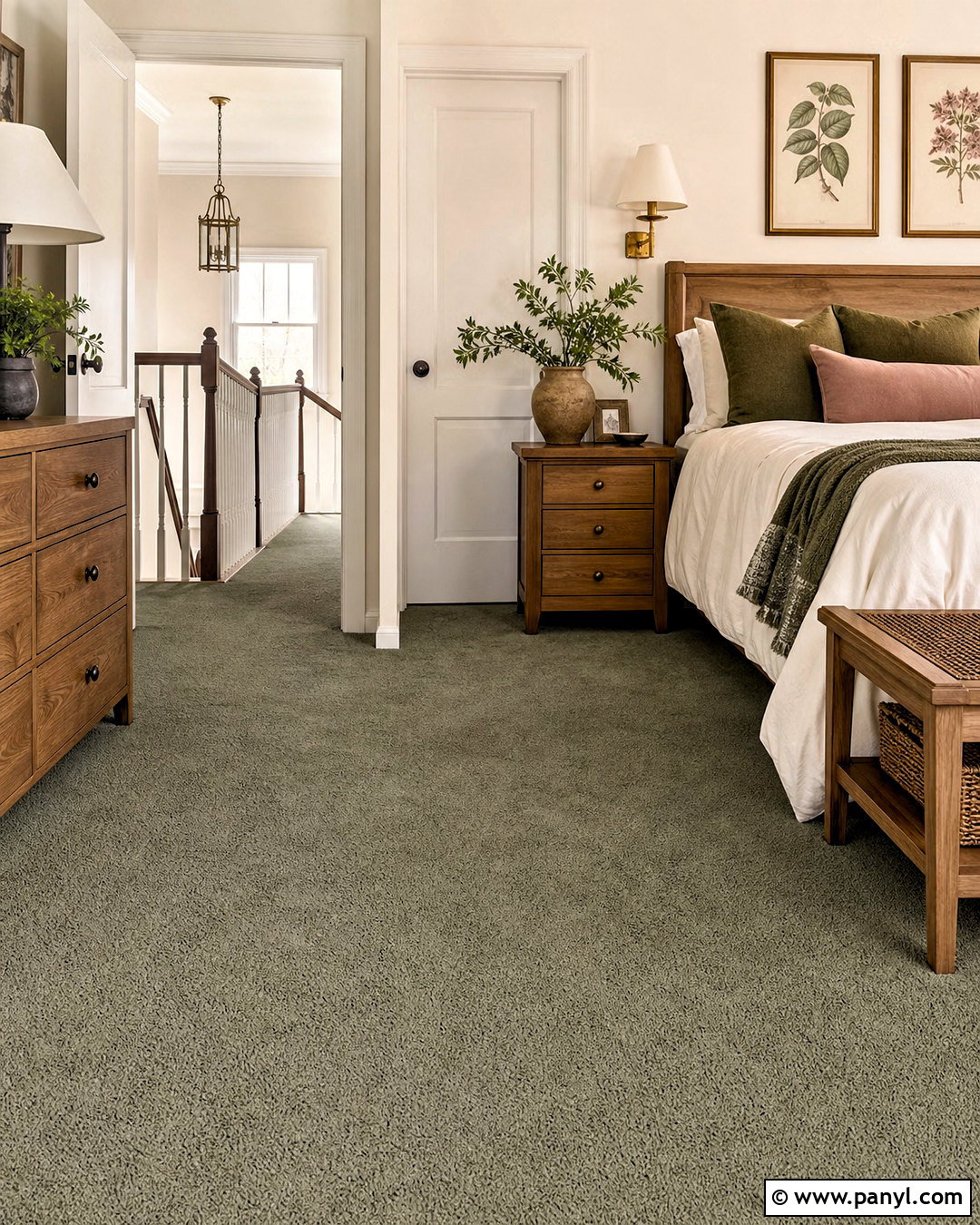
Muted sage green carpet gives an upstairs floor gentle color without overwhelming the rooms. Select a gray-green shade in a low, velvety cut pile or tight loop texture. It pairs naturally with warm white walls, oak furniture, woven shades, and aged brass lighting. In the primary bedroom, layer cream bedding with olive and dusty rose accents. For children’s or guest rooms, repeat the sage through patterned curtains or small decorative pieces rather than matching every surface. Continue the carpet through the landing for a cocooning, connected result. White doors and trim will keep the hallway crisp, while botanical artwork adds personality. The completed design feels restful, earthy, and distinctive while remaining easy to decorate over time.
8. Deep Navy Upstairs Carpet
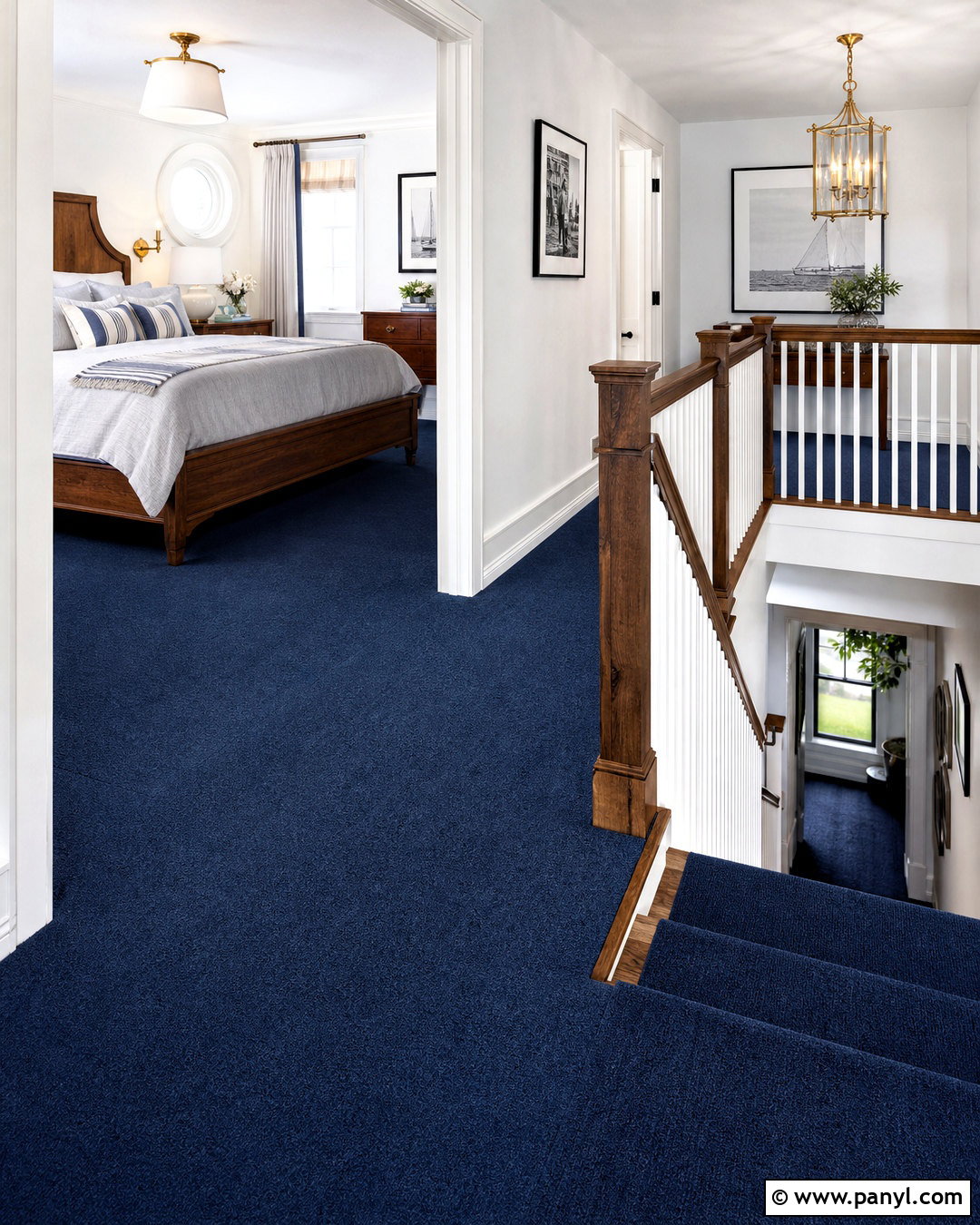
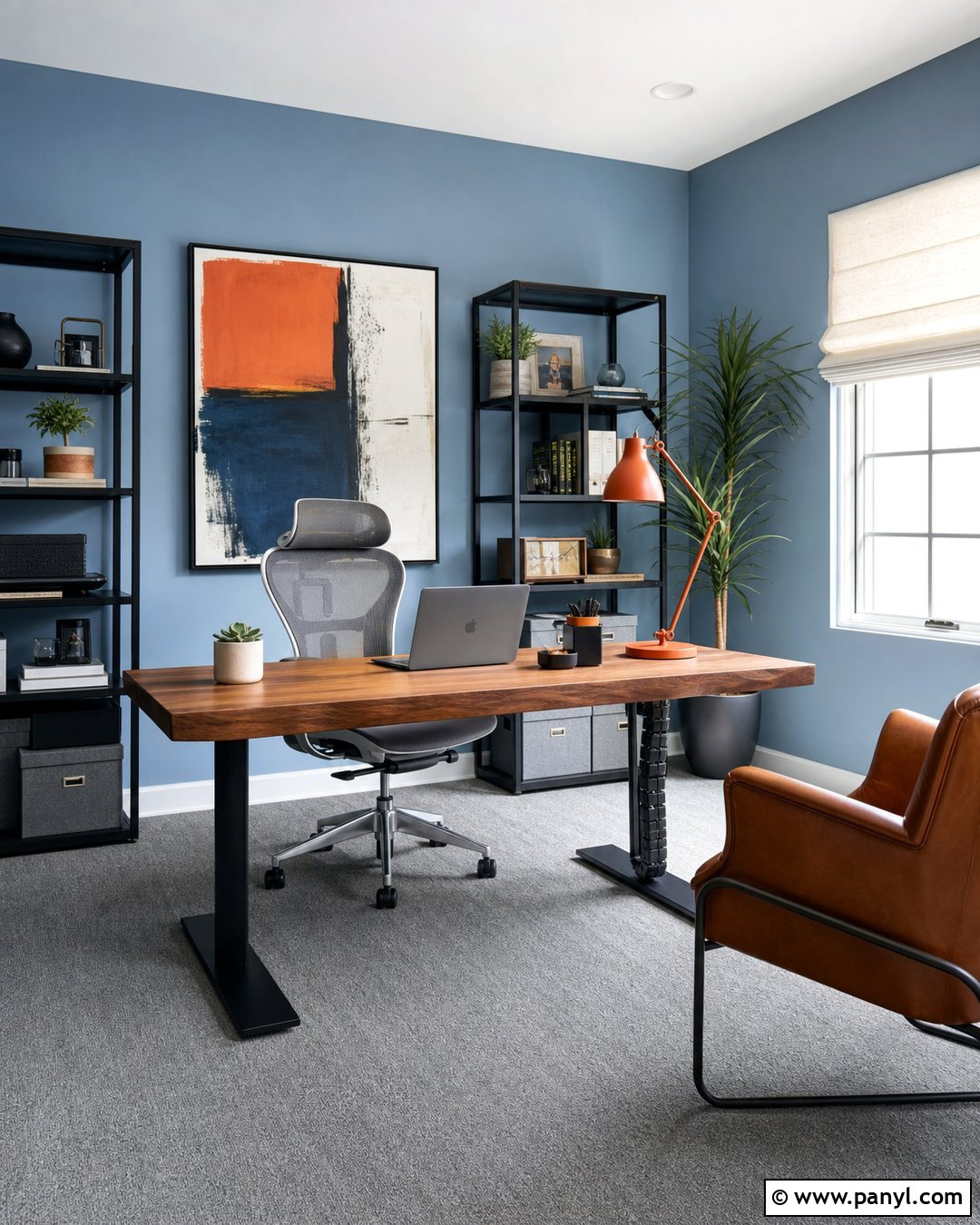
A deep navy carpet creates a tailored upstairs design with more personality than standard neutrals. Choose a dense, low-profile weave with subtle tonal variation so the color feels dimensional under bright lighting. Crisp white walls, medium walnut furniture, and warm brass fixtures provide a classic supporting palette. In bedrooms, balance the dark floor with white or light gray bedding, striped pillows, and natural linen curtains. Carry the carpet across the landing and down the stairs as a runner with narrow navy binding. Keep hallway artwork light and simple to avoid visual heaviness. This complete scheme works especially well in coastal, traditional, or transitional homes where strong blue can function almost like a versatile neutral.
9. Dusty Blush Upstairs Carpet
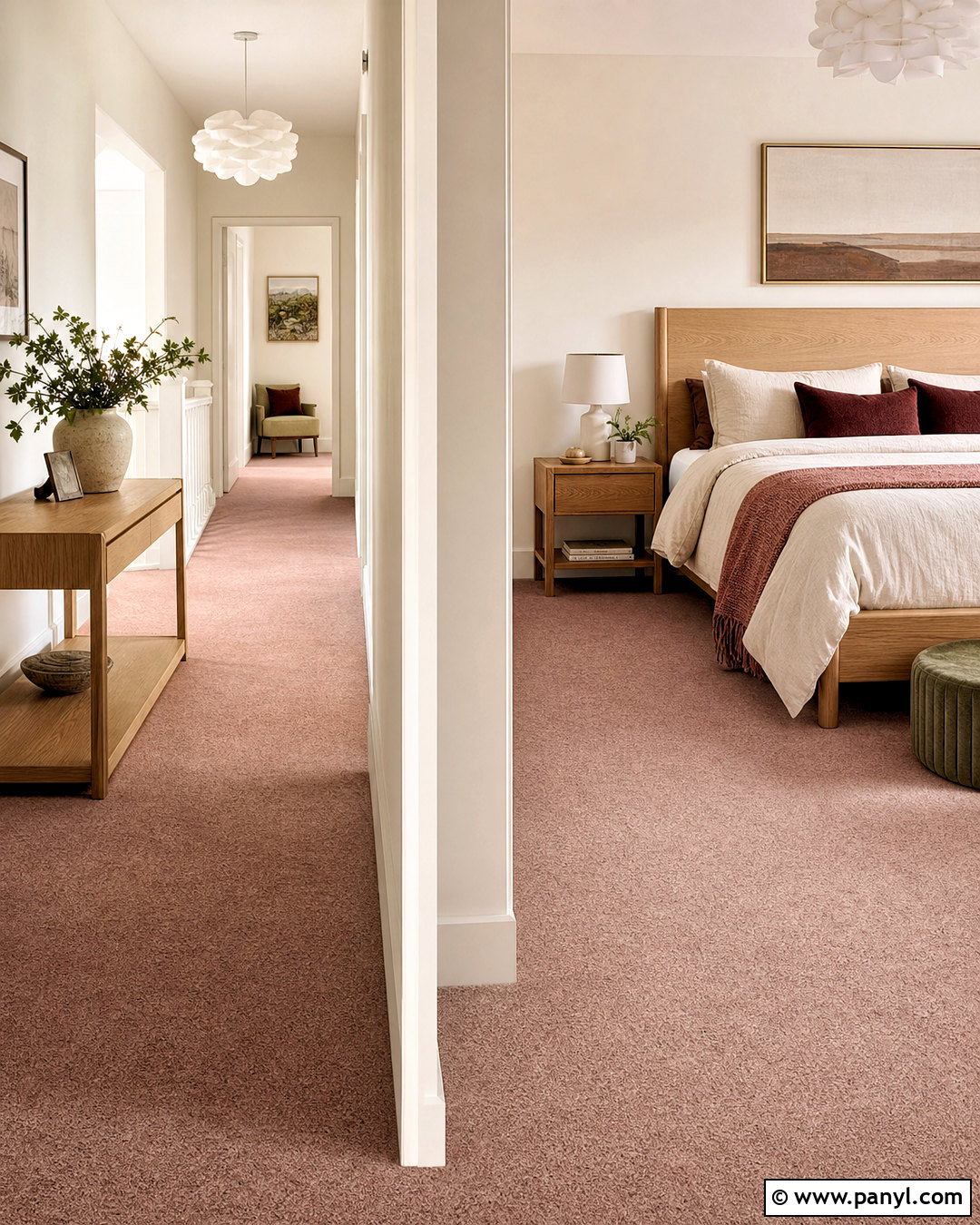
Dusty blush carpet can feel surprisingly grown-up when its pink tone is softened with beige or gray undertones. Use it across a bedroom-focused upper floor to create a warm, quiet atmosphere. Pair the carpet with creamy white walls, light oak furniture, linen bedding, and small accents in burgundy or olive green. In the hallway, add a simple wooden console and sculptural white lighting rather than overly decorative accessories. A low, dense pile keeps the color looking tailored and makes transitions around doorways easier to finish. If the stairs are visible from the main level, install the blush carpet as a centered runner over natural wood treads. The final result feels soft and expressive without becoming overly sweet.
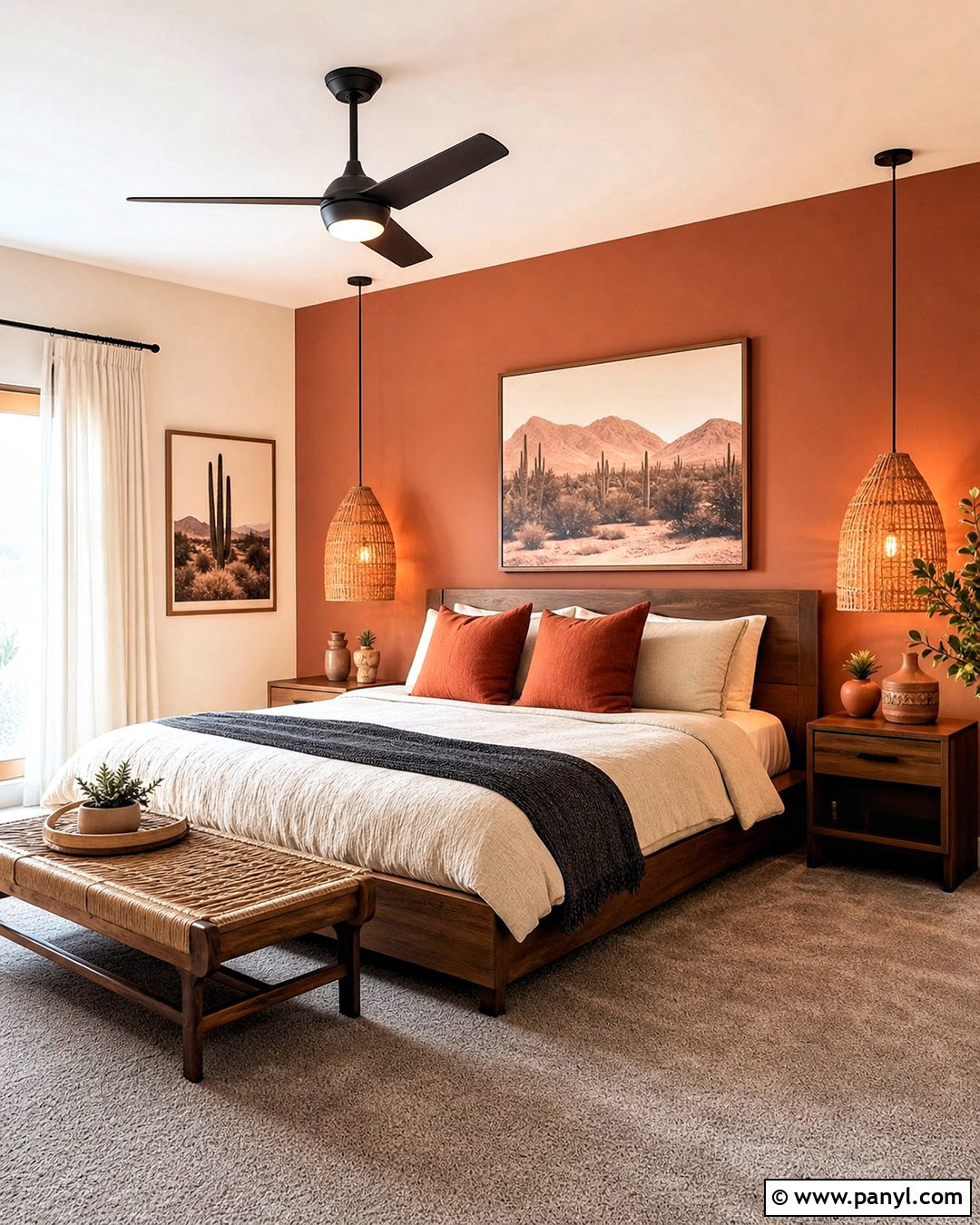
10. Terracotta Upstairs Carpet
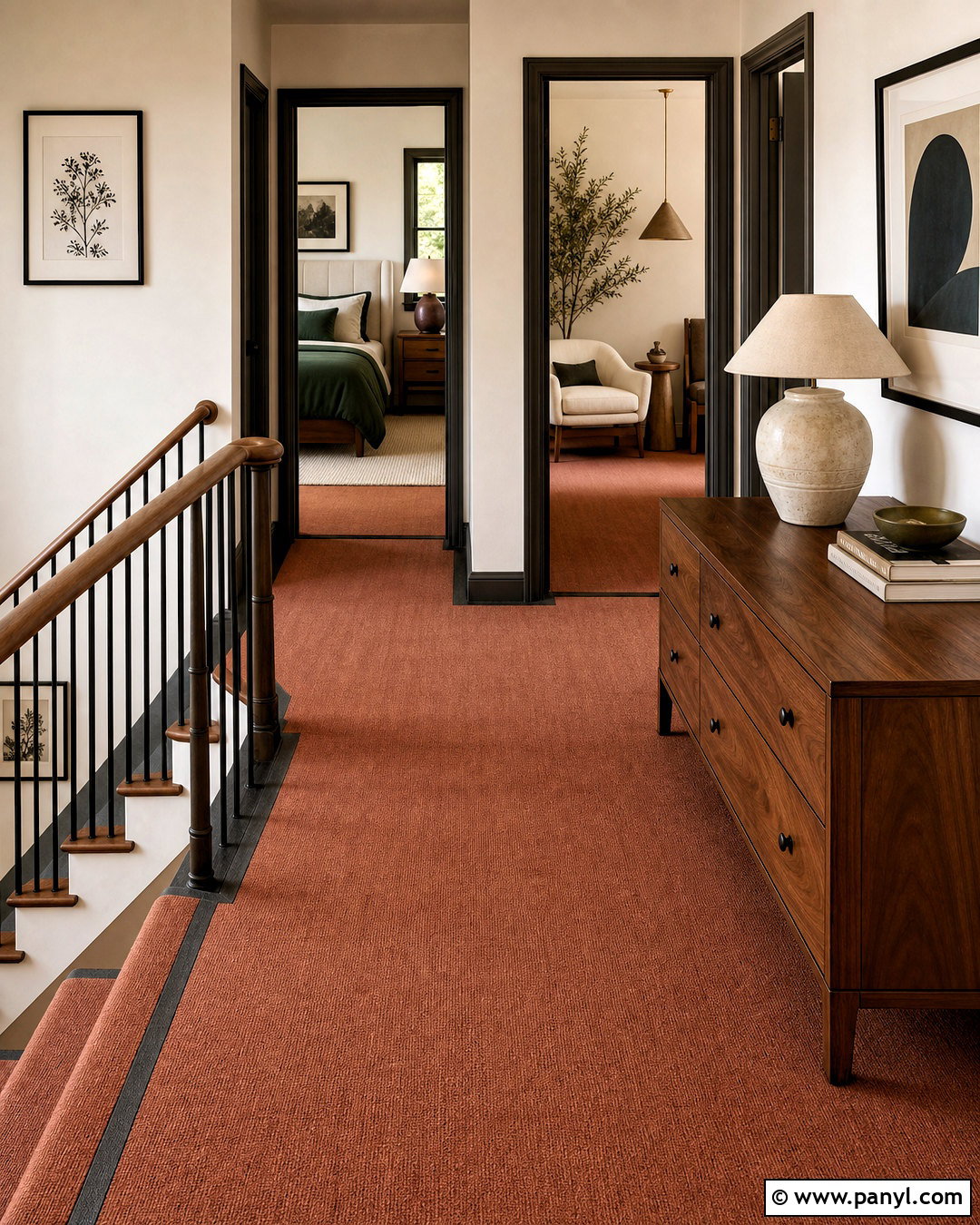
For a cozy upper floor with genuine character, consider muted terracotta carpet. Choose a clay-inspired shade that leans brown rather than bright orange, preferably in a compact textured weave. Warm white walls, walnut furniture, and cream upholstery will soften the richness of the flooring. Introduce deep green bedding, black-framed artwork, and handmade ceramic lamps to create a complete earthy palette. Continue the carpet from the landing into the bedrooms, but keep doors and baseboards white for a clean boundary. On the staircase, use matching carpet with dark neutral binding and exposed wood edges. This grounded design works especially well in homes influenced by Southwestern, Mediterranean, or relaxed contemporary interiors without requiring elaborate architectural changes.
11. Herringbone Upstairs Carpet
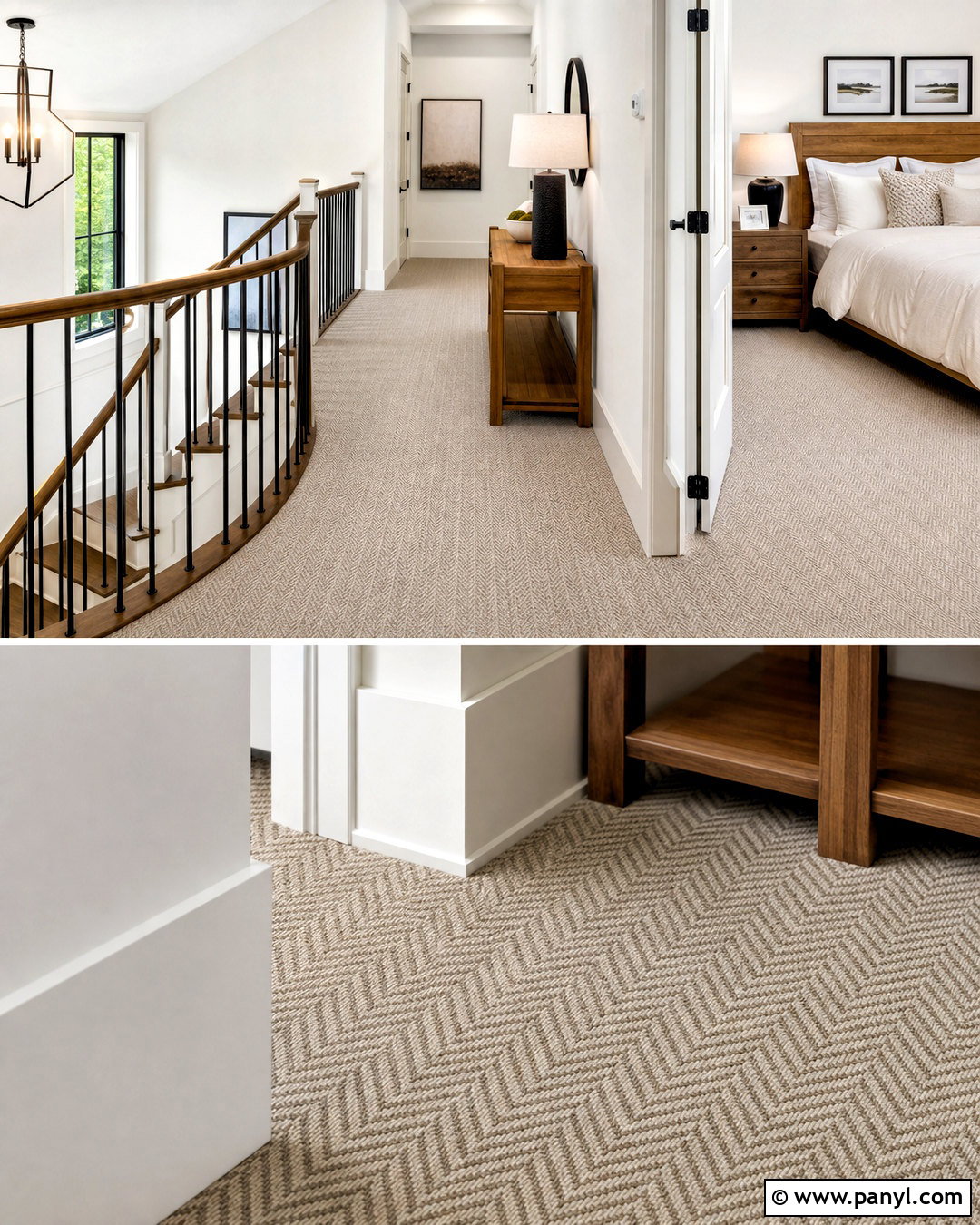
A small-scale herringbone carpet introduces pattern while keeping an upstairs floor sophisticated. Select a tight wool or wool-blend weave in beige, taupe, or soft gray so the directional pattern remains subtle. Run it continuously through the hallway and bedrooms, carefully aligning the design at doorways for a professional appearance. White walls, warm oak furniture, and streamlined black lighting allow the floor to become the main decorative feature. Use solid bedding and simple curtains instead of adding several competing patterns. If the same carpet covers the stairs, position the herringbone vertically to emphasize the staircase’s upward movement. The overall look feels detailed and intentional, yet neutral enough to support future paint colors, furniture, and seasonal textile changes.
12. Plaid Upstairs Carpet
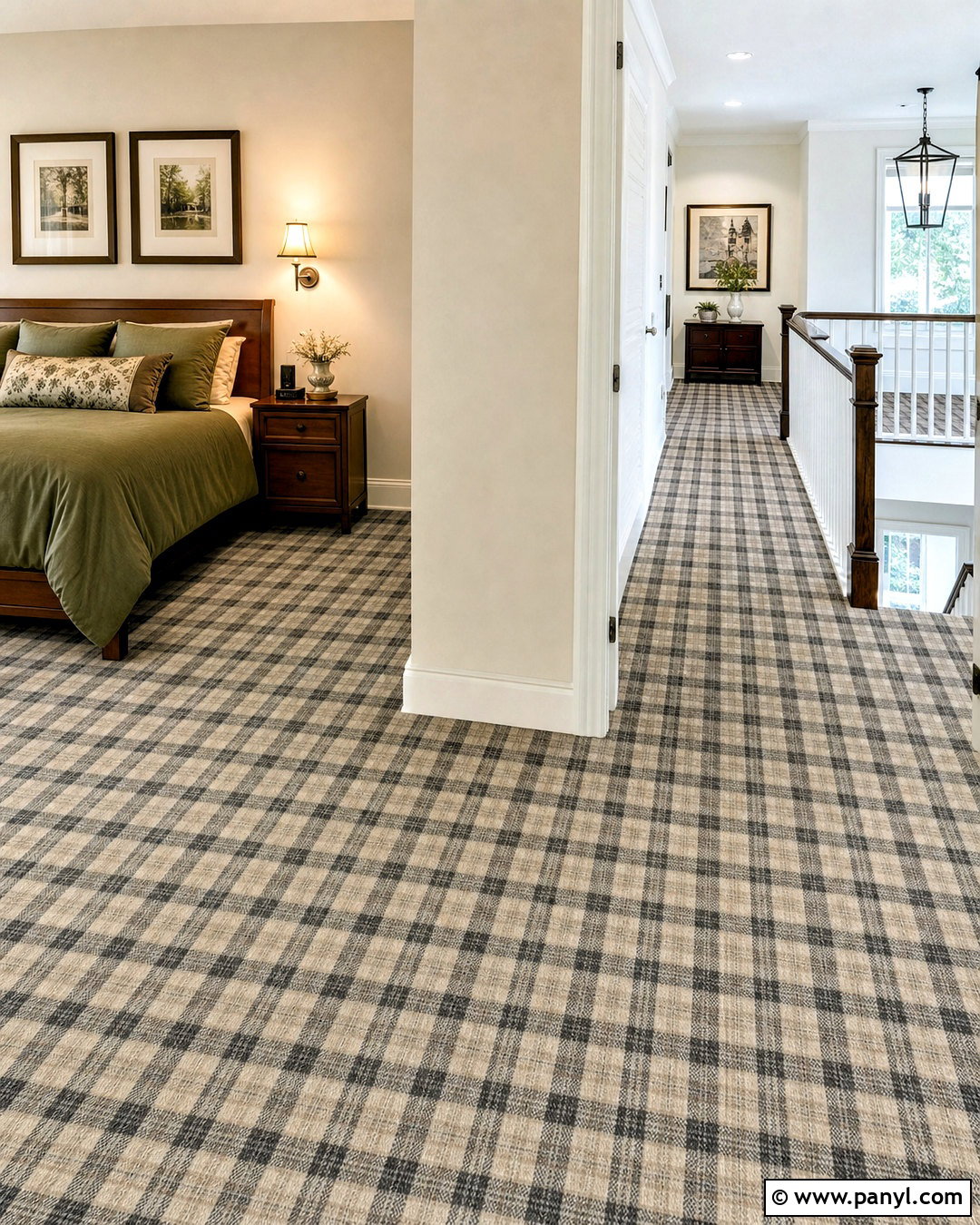
Plaid carpet can give an upstairs hallway and bedroom suite a comfortable, tailored appearance. Choose a restrained pattern combining taupe, charcoal, and cream rather than a high-contrast multicolor design. The repeat should be small enough to work neatly across narrow landings and standard stair treads. Pair it with warm white walls, walnut or painted furniture, and solid bedding in cream, gray, or muted green. Traditional picture frames and simple shaded sconces will support the pattern without making the area feel themed. Continue the plaid into a guest room or home office for visual continuity, while keeping other bedrooms in a coordinating solid carpet if desired. Precise professional installation is important because crooked lines are immediately noticeable.
13. Striped Upstairs Carpet
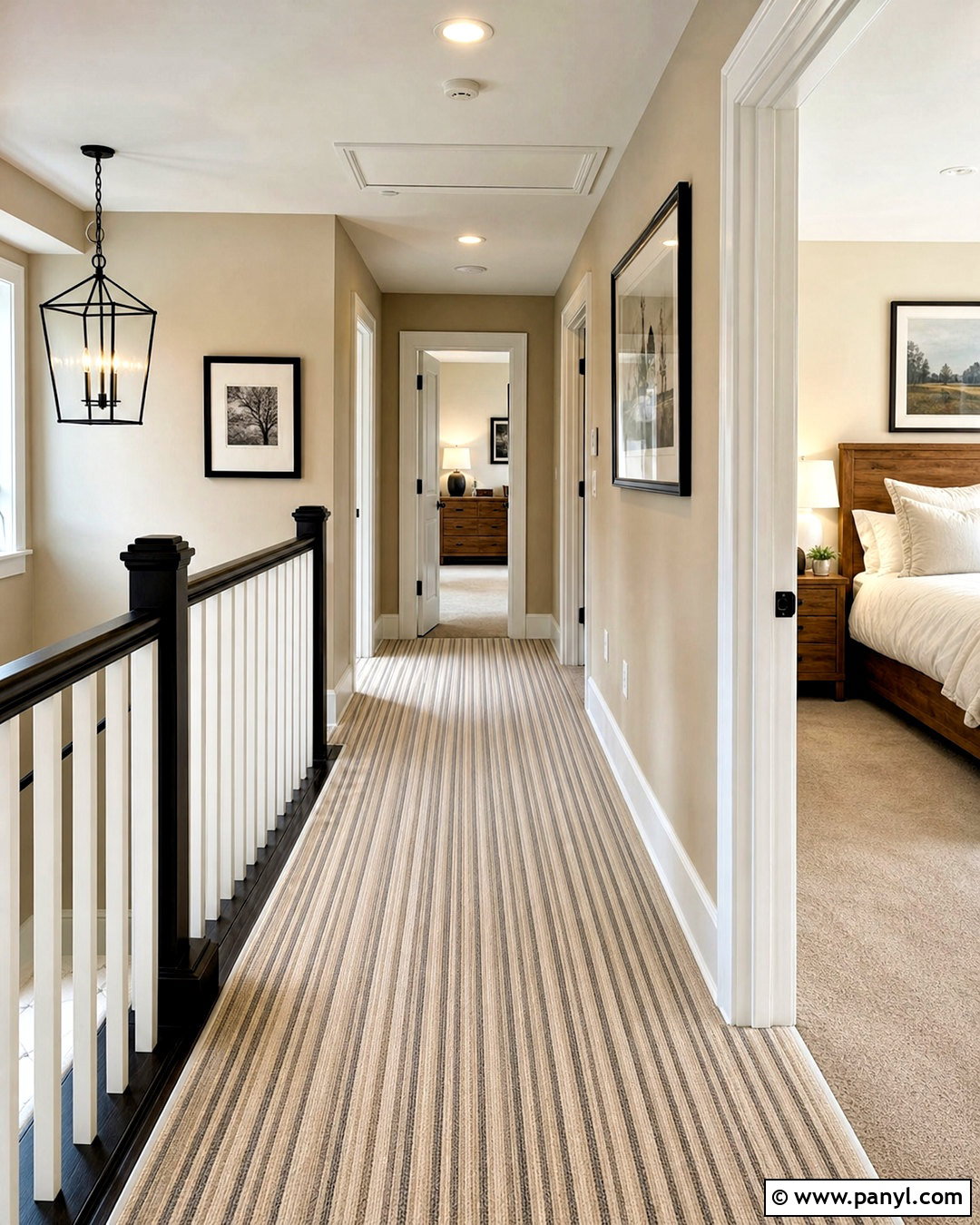
Striped carpet visually lengthens a hallway and creates natural movement along a staircase. Select narrow, low-contrast stripes in oatmeal, tan, and soft charcoal for a flexible look that will not dominate adjoining bedrooms. Position the lines lengthwise down the hall and vertically over stair treads to guide the eye through the space. Use solid warm greige carpet inside bedrooms if a fully striped floor feels too busy, joining the materials cleanly beneath each doorway. Cream walls, oak furniture, black-framed artwork, and understated linen bedding complete the design. Keep the landing uncluttered so the stripe remains crisp and visible. This approach gives the upstairs more energy while preserving a comfortable, practical, and coordinated finish.
14. Geometric Upstairs Carpet
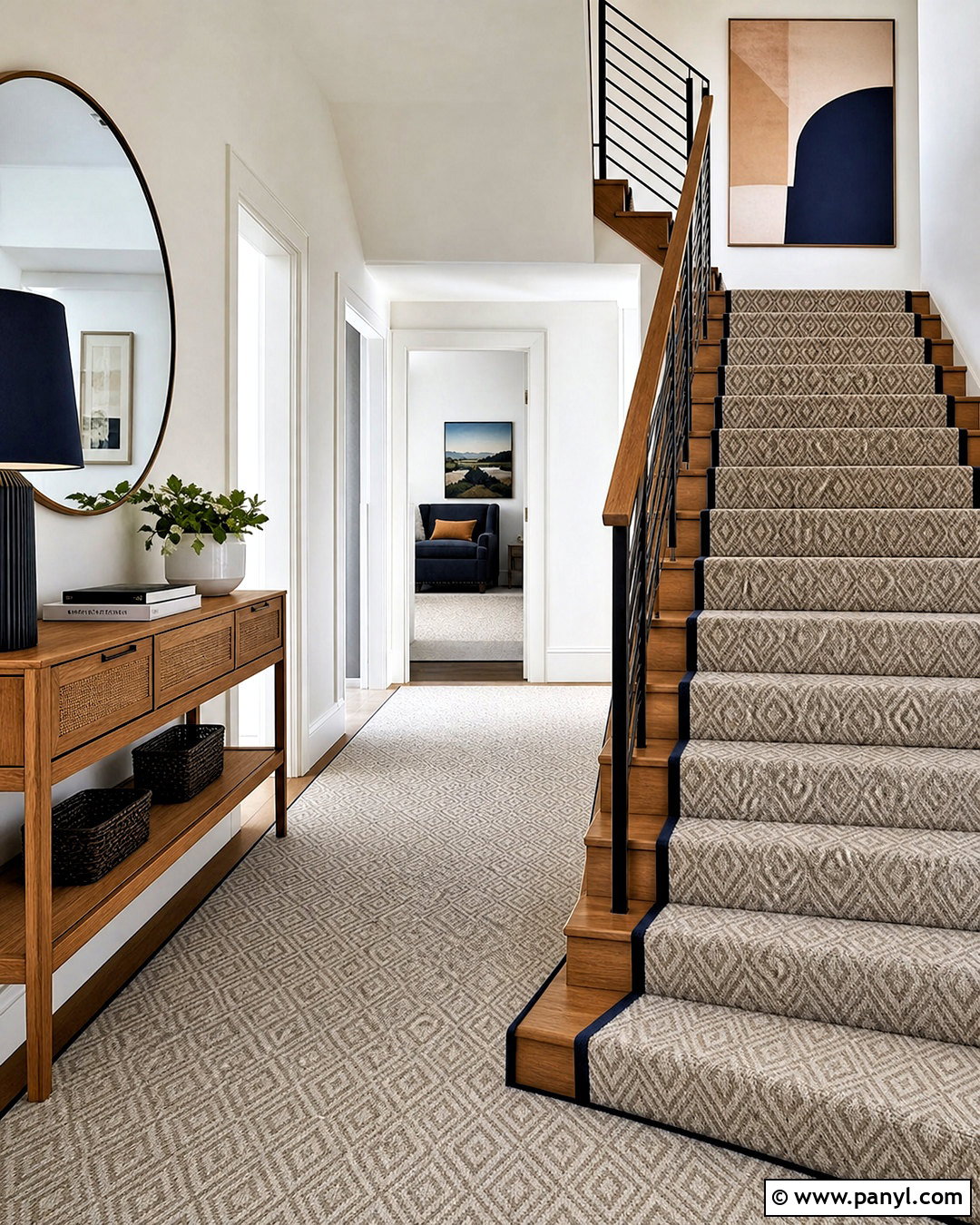
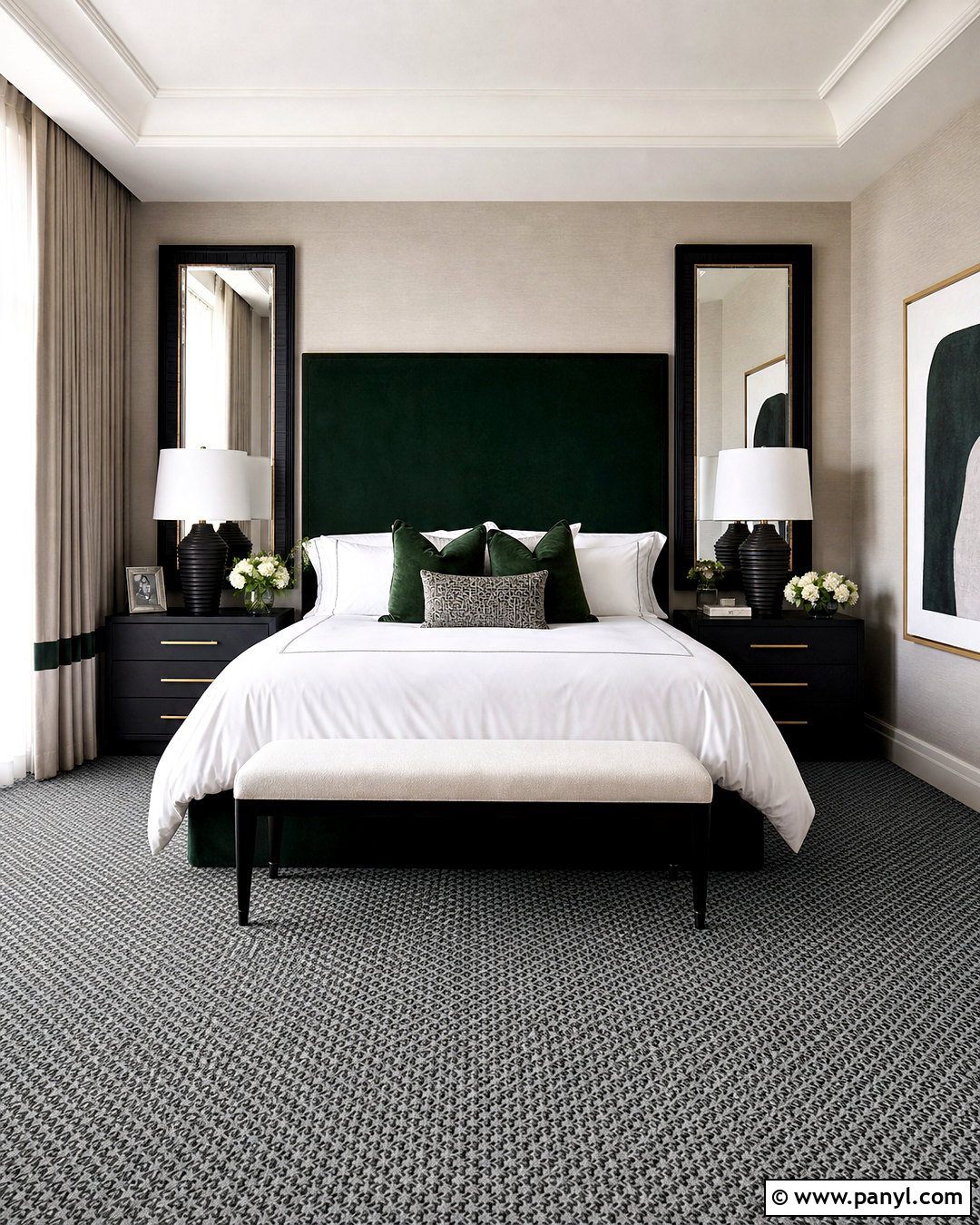
A tonal geometric carpet can bring definition to an upstairs area without depending on bright color. Look for a small diamond, lattice, or grid pattern created through texture rather than strong color contrast. Warm taupe and cream combinations work well across hallways, guest bedrooms, and home offices. Pair the flooring with plain white walls, natural wood furniture, and solid textiles in rust, navy, or sage. On the stairs, use the patterned carpet as a runner with dark binding, leaving painted or wooden edges visible. Choose a compact pile so the design remains clear around corners and tread edges. The complete look feels contemporary and detailed, while the repeating pattern helps conceal light wear in heavily traveled areas.
15. Natural Sisal Look Upstairs Carpet
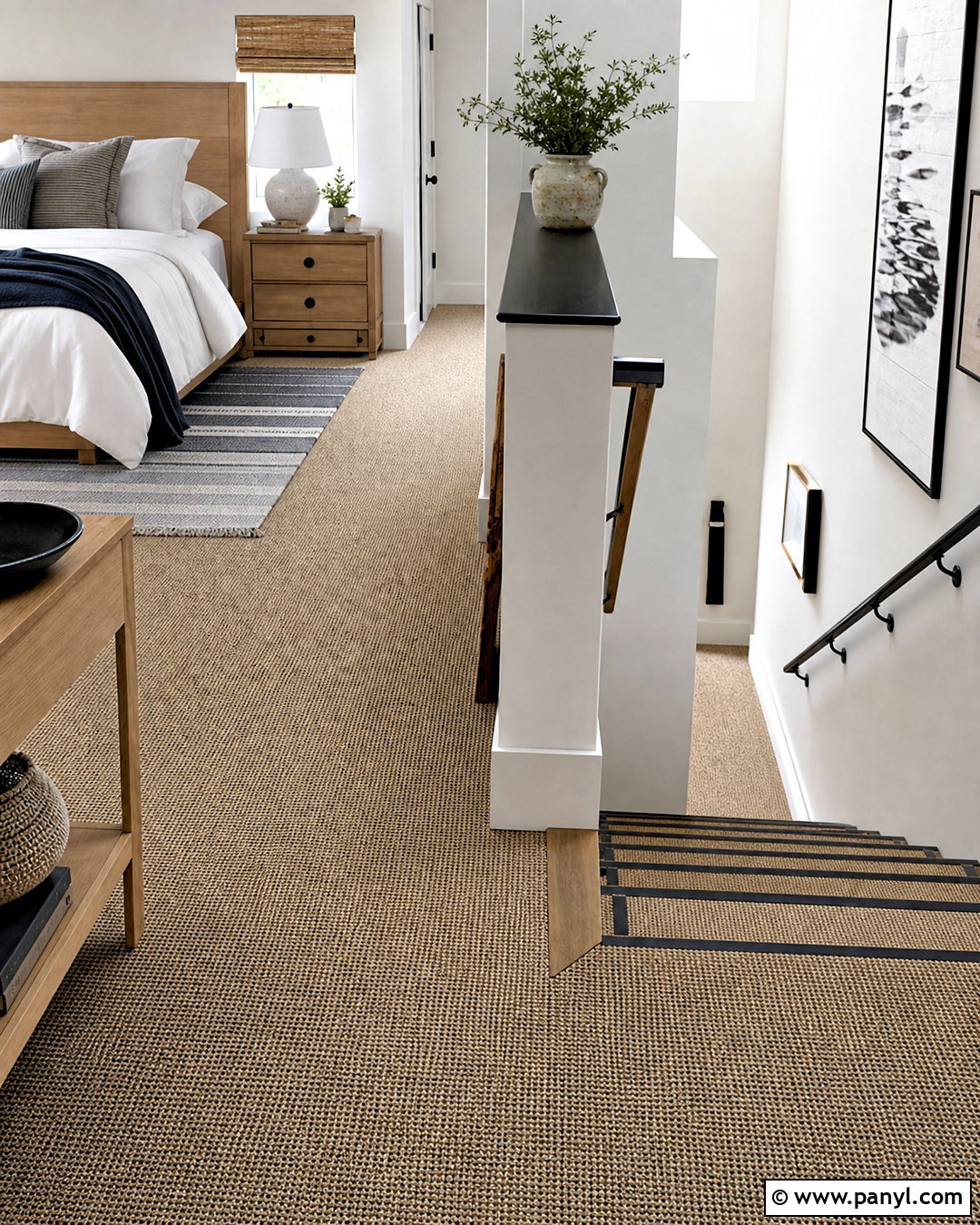
Sisal-look carpet provides relaxed texture without requiring every homeowner to use a coarse natural fiber. Choose a soft synthetic or wool-blend carpet with a tight woven appearance in tan, flax, or light brown. It should feel comfortable enough for bare feet while remaining sturdy through the landing and stairs. Combine it with warm white walls, pale oak furniture, black accents, and cotton or linen bedding. Add woven shades and simple ceramic decor to strengthen the natural palette. A dark brown or charcoal border on the stair runner can create a crisp, finished edge. The entire upstairs will feel airy and casual, with enough texture to add interest even when the bedrooms use simple furniture and minimal decoration.
16. Plush Bedroom Carpet With Coordinated Hallway
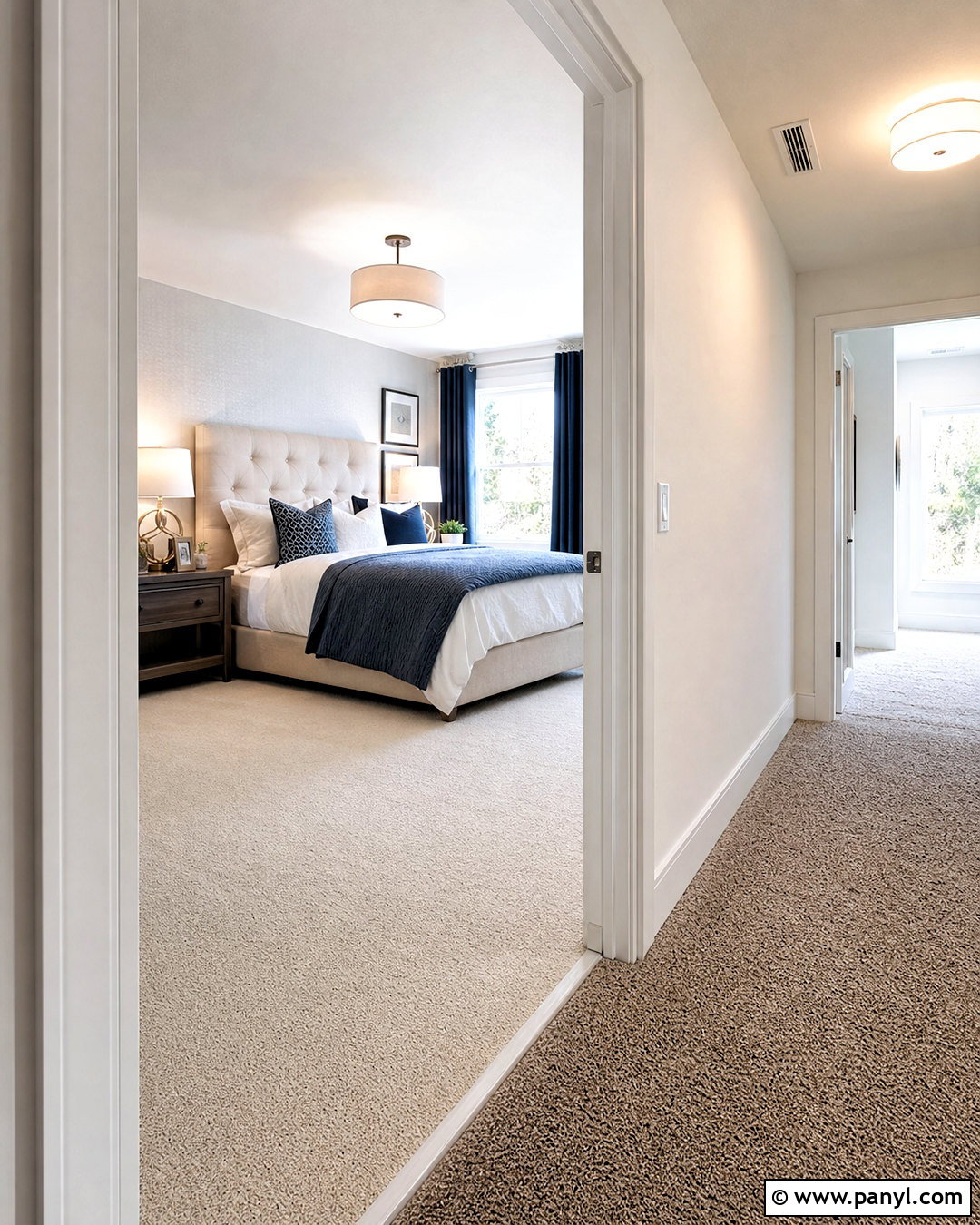
Not every upstairs area needs the same pile height. Use a plush, soft carpet in the bedrooms and a denser coordinating version in the hallway and on the stairs. Keep both carpets within one color family, such as warm ivory in the rooms and heathered beige in the traffic zones. Place the transition directly beneath closed doors so the change looks intentional from either side. Upholstered headboards, layered cotton bedding, and full-length curtains enhance the bedroom’s comfortable feel. In the hall, use bright walls, simple lighting, and minimal furniture to maintain an open path. This combination delivers luxurious softness where it matters most while providing a firmer, more practical surface in hard-working parts of the upper floor.
17. Pet Friendly Upstairs Carpet
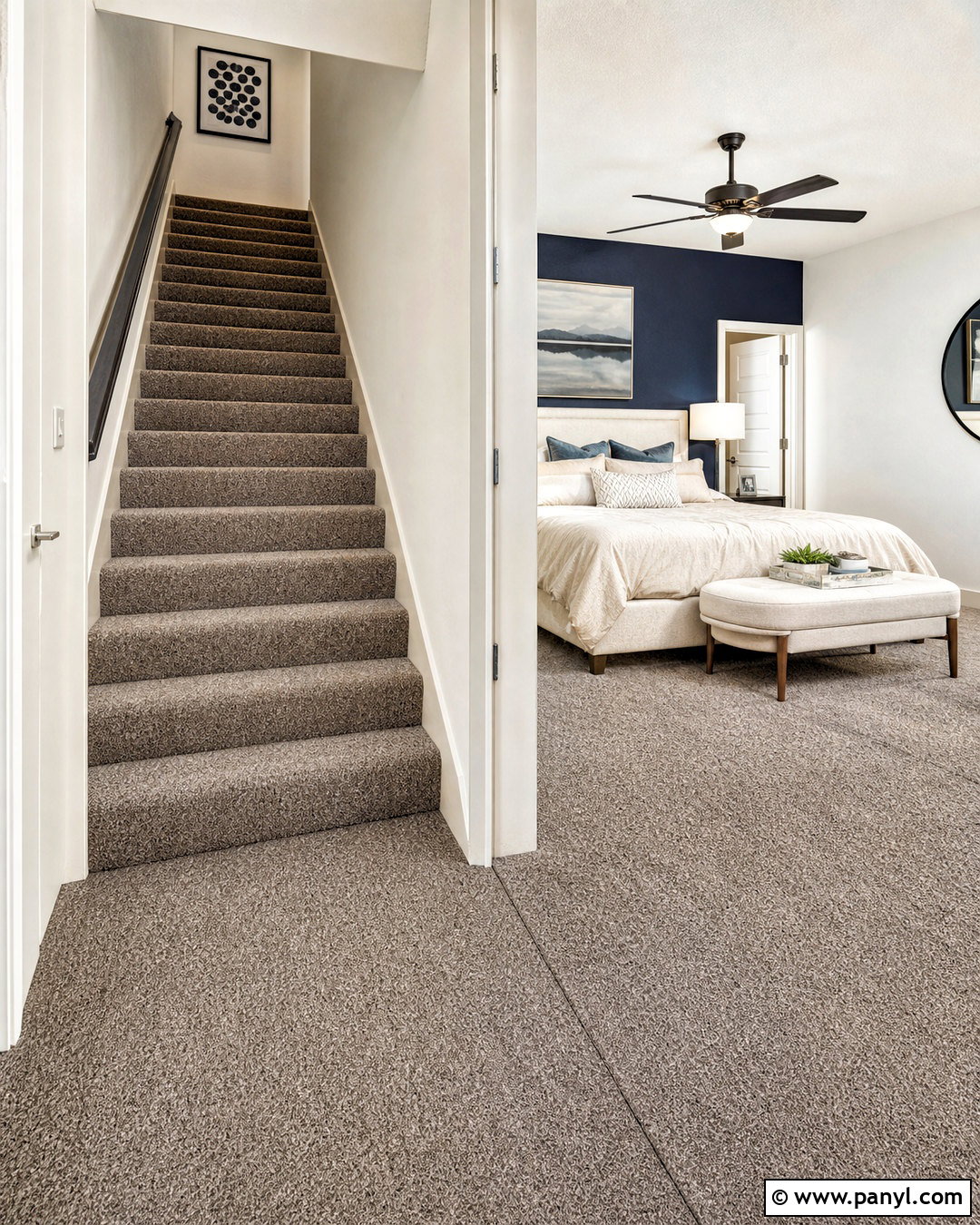
A pet-friendly upstairs can still look polished and coordinated. Start with a dense, low-pile carpet in a medium taupe, warm gray, or flecked brown that is close to the pet’s fur color. Choose a stain-resistant fiber and avoid large loose loops that could catch claws. Continue the same carpet through bedrooms and the hallway to eliminate awkward transitions. Pair it with washable bedding, performance-fabric benches, closed storage, and durable painted furniture. A tightly fitted stair installation adds traction, while a quality cushion helps soften footfall and household noise. Keep a washable mat near any upstairs balcony or bathroom. The completed design feels comfortable and attractive while supporting easier vacuuming, spot care, and everyday family life.
18. Kids Upstairs Carpet
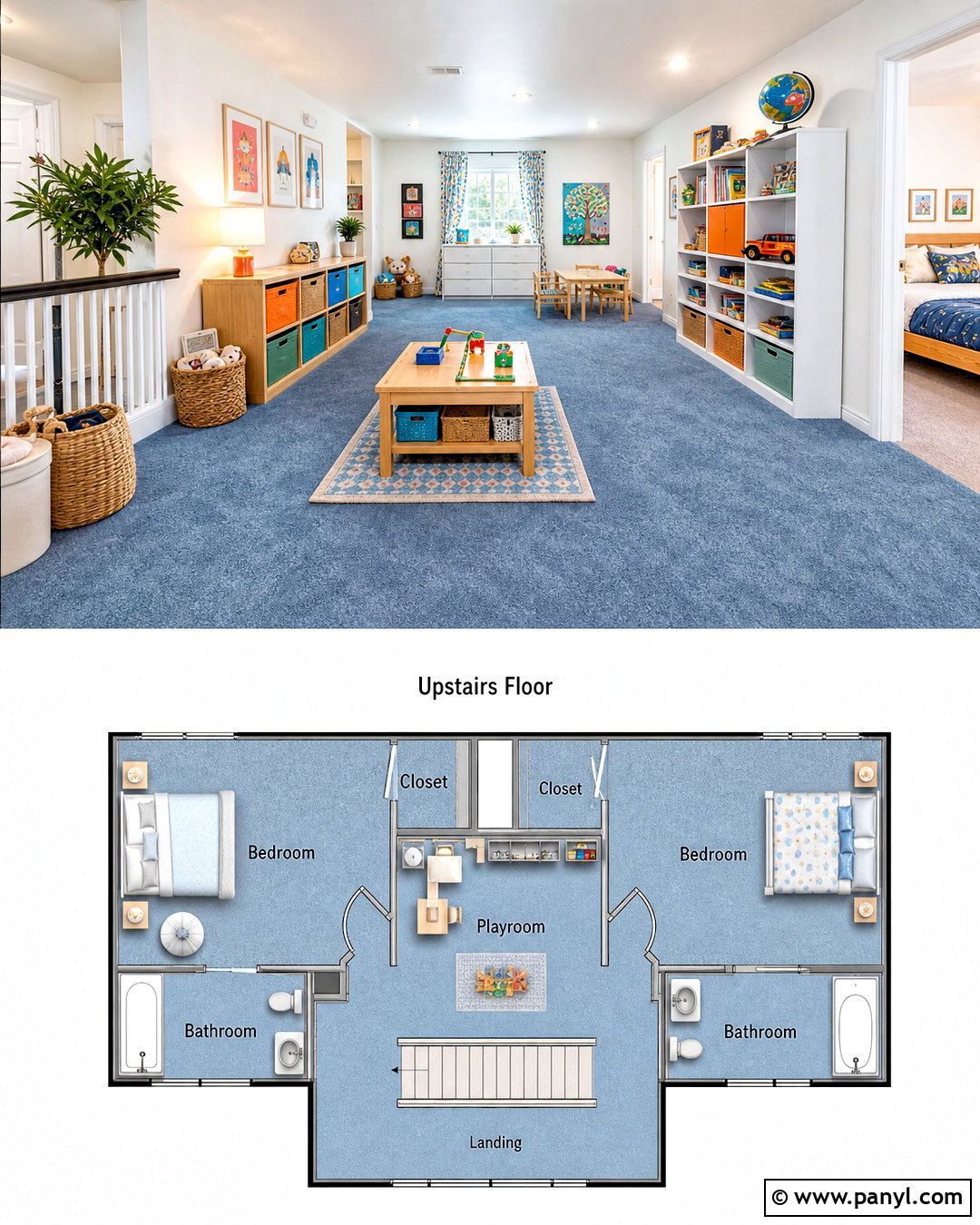
For an upstairs shared by children, begin with a durable multitone carpet in medium beige, soft gray, or muted blue. A subtle speckle or small-scale pattern can hide crumbs and minor marks better than a perfectly solid pale surface. Use the same carpet across bedrooms, the playroom, and the landing to create a unified background for changing decor. Add white walls, colorful storage cabinets, washable curtains, and simple wood beds. Keep floor cushions, toy baskets, and low bookshelves against the walls so walking routes remain open. Select a supportive carpet cushion for quieter play and greater comfort. The finished upper floor feels cheerful and practical, yet the restrained carpet color allows each child’s room to have a different theme.
19. Hotel Inspired Upstairs Carpet
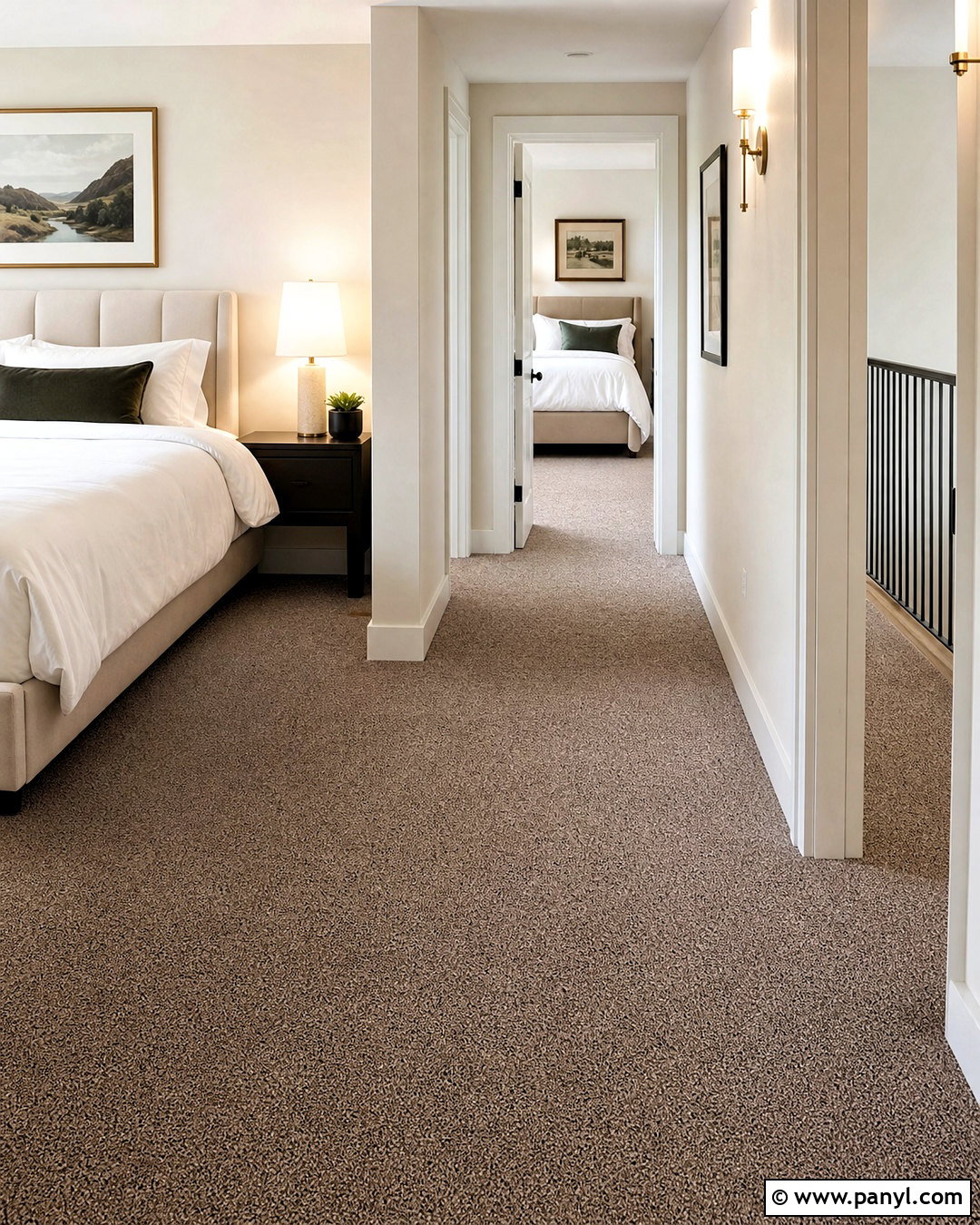
A hotel-inspired carpet scheme can make the primary suite, guest room, and hallway feel calm and deliberately finished. Choose a dense cut pile in mushroom, warm gray, or soft mocha with very little visible texture. Continue it from the landing into each bedroom for a seamless, quiet appearance. Pair it with upholstered headboards, crisp white bedding, floor-length curtains, and matching bedside lamps. In the hallway, use warm white walls, framed neutral artwork, and evenly spaced wall sconces. Keep furniture symmetrical and surfaces uncluttered to reinforce the composed atmosphere. An upgraded cushion adds softness and helps reduce sound between levels. The overall upstairs feels restful and elevated without requiring expensive statement colors or complicated floor patterns.
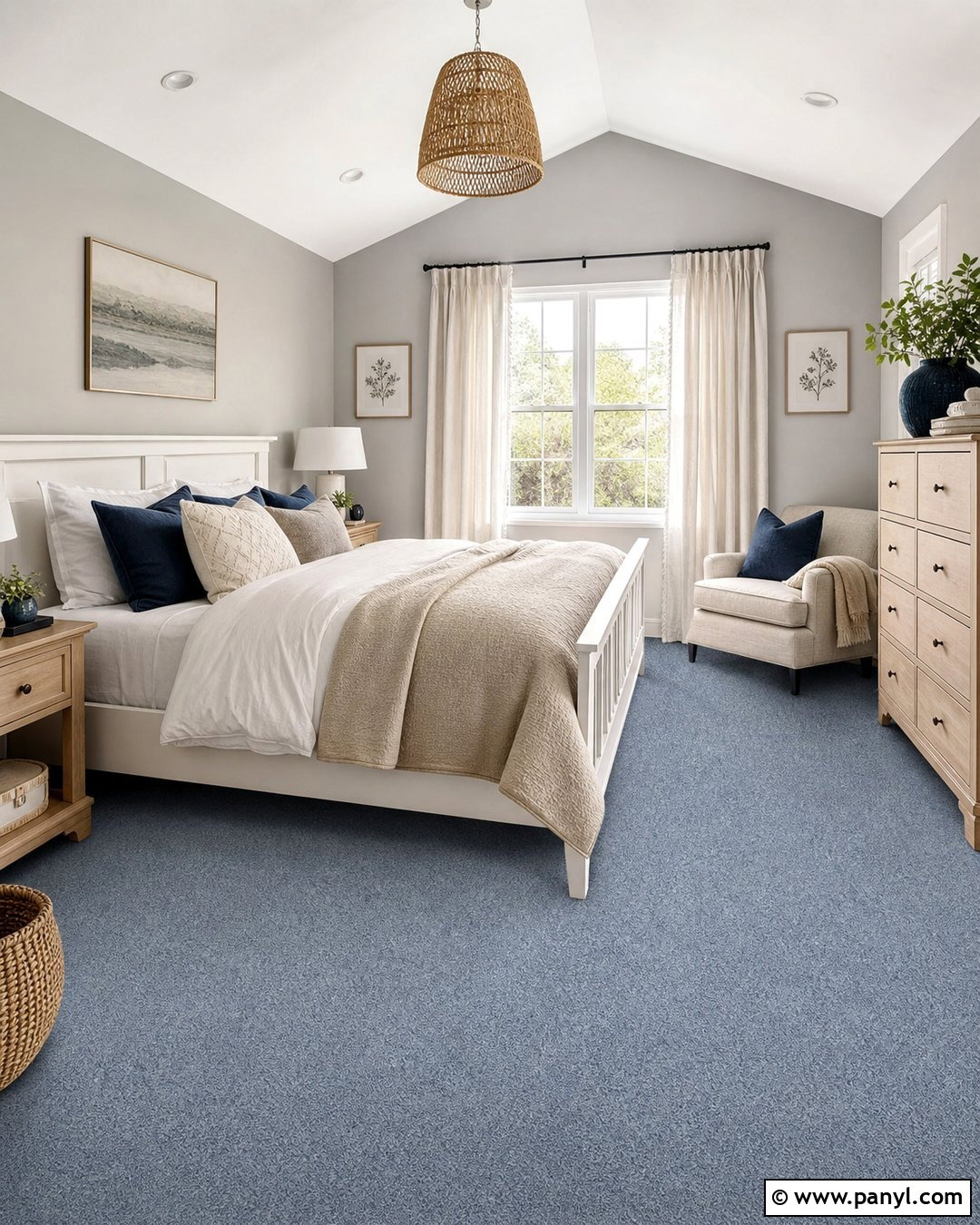
20. Coastal Blue Upstairs Carpet
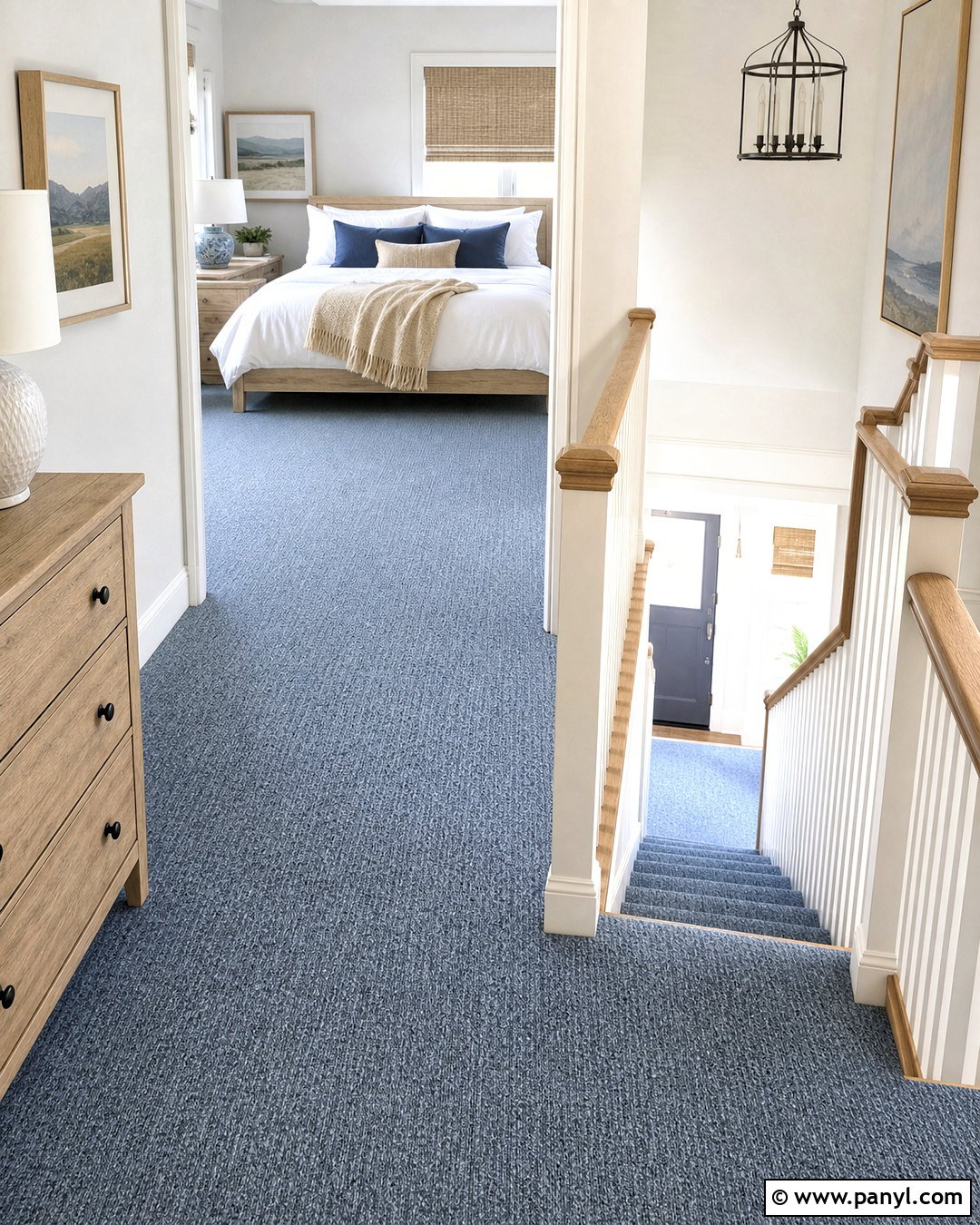
Soft coastal blue carpet creates a fresh upstairs without making the home feel heavily themed. Choose a dusty blue-gray shade in a tightly twisted or subtly textured pile. Pair it with bright white trim, pale oak or white-painted furniture, and natural woven shades. Bedrooms can feature crisp cotton bedding, sandy beige throws, and small navy accents for depth. Continue the blue carpet through the hallway and onto the stairs, where white spindles and a natural wood handrail provide clean contrast. Avoid obvious nautical decorations; use simple landscapes, striped textiles, and ceramic lamps instead. The completed upper floor feels bright, relaxed, and connected, with enough muted color to make every room memorable while remaining easy to update.
Conclusion:
The right upstairs flooring should support the way every room is used while creating a smooth visual connection between bedrooms, hallways, landings, and stairs. These **upstairs carpet ideas** range from practical flecked neutrals to richer navy, sage, blush, and terracotta palettes. Before selecting a carpet, compare samples in morning and evening light. Check the fiber, density, stain protection, cushion, and stair suitability as carefully as the color. Continuous carpet can make a compact level look larger, while coordinated textures can give bedrooms extra softness. With thoughtful materials, clean transitions, and a consistent palette, upstairs carpet becomes an important part of the complete home design rather than a basic background surface.

Related Ideas and Inspiration:
Leave a Reply